July-October 2026 | ISSUE NO. 17




July-October 2026 | ISSUE NO. 17
July-October 2026 | issue NO. 17
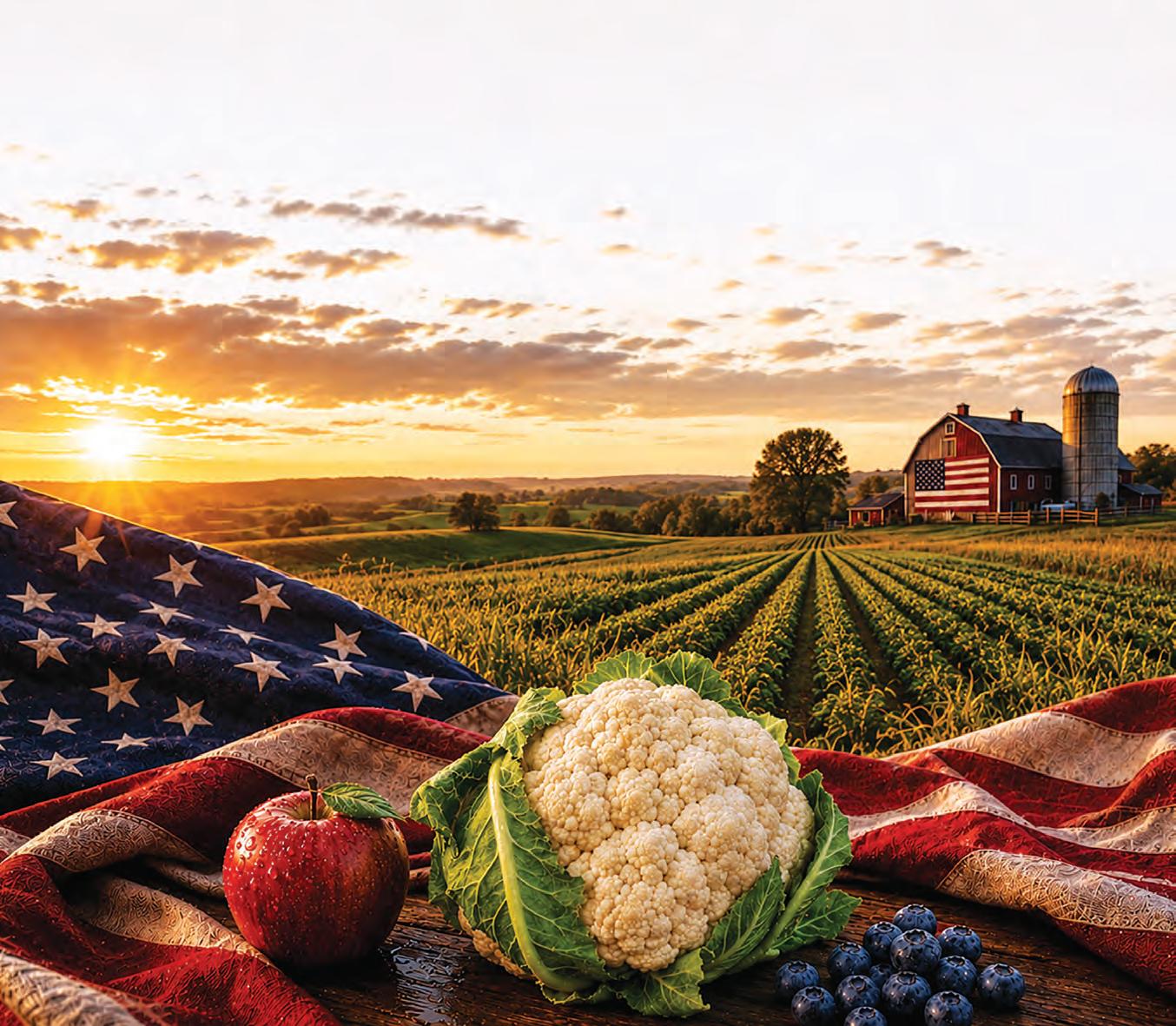
As we look ahead to America’s 250th anniversary, this issue is dedicated to celebrating the people, products, and stories that have helped shape our country’s agricultural legacy.
Throughout this edition, we reflect on the history of American agriculture, the produce staples found in kitchens across the country, and the innovation that continues to move our industry forward.
You’ll also find a spotlight on our Berry & Tropical Department, a closer look at our banana and avocado ripening program, and a few more tidbits from across the business.
We hope this issue offers a meaningful look at where we’ve been, what we’re building today, and the people who continue to carry our industry forward.
Anton Marano & Damon Marano


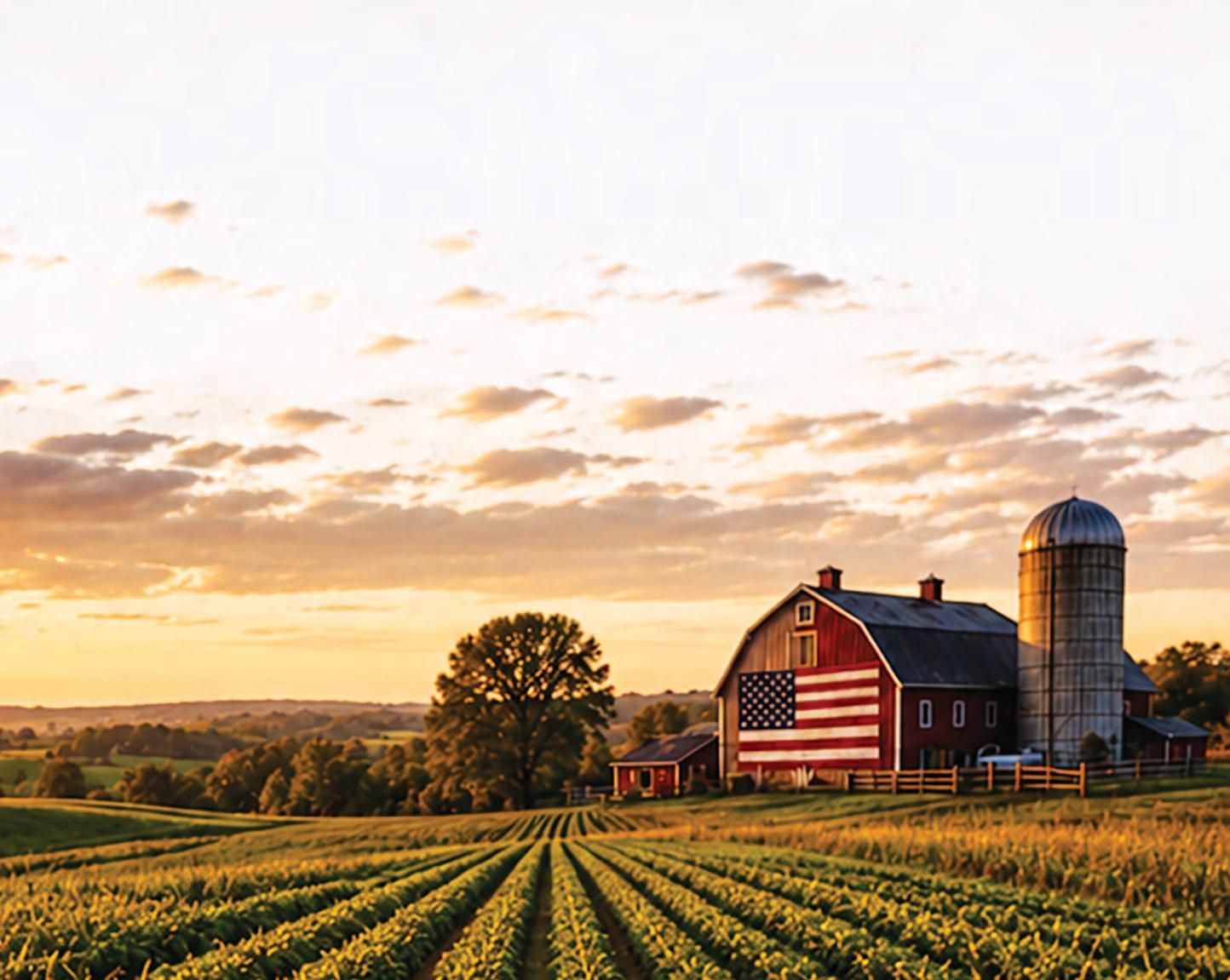
As the United States approaches its 250th anniversary, we reflect on the people, industries, and values that have helped shape the nation. The produce industry embodies hard work, strengthened by innovation, and has been carried forward by generations of growers, distributors, families, and entrepreneurs.
Long before the nation was founded, Native American communities cultivated the land with knowledge and care. Their agricultural practices, including the “Three Sisters” of corn, beans, and squash, reflected balance, cooperation, and respect for the land.
As America grew, farming evolved with it. New crops, tools, markets, and trade routes helped make produce central not only to daily life but also to commerce. Later, railroads and refrigeration transformed the industry, allowing fruits and vegetables to travel farther, last longer, and reach more families across the country.
Through every era, progress has depended on people willing to work hard, take risks, and build something for the next generation.

The industry is driven by innovation and sustained by strong partnerships. From farms to distribution centers, from local markets to global supply chains, it represents a constant drive towards growth and opportunity.
While we celebrate 250 years of America, we also celebrate the generations who cultivated its fields, built its markets, and believed in its promise. Their legacy lives on in every harvest and every partnership. May we continue to honor that legacy by supporting one another, embracing progress, and carrying forward the values that brought us here.

In 1914, Onofrio Marano, Anthony Marano’s father, came to America in search of a better life, carrying with him courage, sacrifice, and hope.
His legacy lives in the generations that followed and in the values that continue to guide the company today.
We honor his journey — and the journeys of all those who pursued the American Dream through resilience, hard work, and faith.
May the spirit of Onofrio Marano, and all who came to this land in search of a better future, inspire us to cherish, protect, and strengthen the promise of America for generations to come.

We live the “Marano” Way. We take pride in what we do. We pay attention to the details. We are passionate. We are “family”.
The Berry & Tropical Department handles some of the most delicate, fast-moving produce in the business — berries, bananas, plantains, papaya, pineapple, avocados, grapes, and asparagus. We stay motivated, accountable, and disciplined in the way we work, focusing on the details that keep product fresh, consistent, and right for our customers and growers.
We treat the product like it’s ours because we take pride in protecting its quality, its reputation, and the relationships behind it.
This edition, we’re highlighting members of AMC’s Berry & Tropical Department and the insight they bring to some of the most dynamic and perishable categories in produce.


Kevin Gubitz
Vice President of Berry & Tropical Department and Strategic Initiatives
| 12 years with AMC
Grapes are my favorite commodity because of the innovation taking place across the category. What makes this especially impressive is the time and expertise behind it. Developing a successful new produce variety can take nearly two decades, making innovation in our industry a long-term commitment.

Brad Hadraba
Commodity and Sales Manager, Berry & Tropical Department and Food Service
| 13 years with AMC
The journey bananas take from the plantation to the consumer is incredibly complex. From harvesting and shipping to ripening and final delivery, the category requires extensive infrastructure and careful monitoring.

Rob Heotis
Sales Professional, Berry & Tropical Department
| 6 years with AMC
I work closely with avocados and have come to realize that managing avocados requires a great deal of strategy, from ripening and sizing to quality and market timing. The goal is always to ensure customers receive the product at the ideal stage.

Anton D. Marano
Sales Professional,
Berry & Tropical Department
| 4 years with AMC
Hass avocados are my favorite commodity because of their versatility and health benefits. One thing I’ve learned is that once produce is harvested, transportation, storage, and timing become critical to maintaining quality every step of the way.

Mike Lata
Vice President of Berry & Tropical Department and Strategic Initiatives
| 11 years with AMC
Over the past two decades, the avocado category has seen tremendous growth. Increased education around ripeness and preparation has improved the eating experience and helped drive demand.

John Stamas
Commodity and Sales Professional, Berry & Tropical Department
| 10 years with AMC
I enjoy the fast pace of the strawberry market and the strong demand surrounding one of our department’s top-selling items. Right now, what many people don’t realize is the number of steps, costs, and labor involved behind the scenes to deliver fresh, consistent product to stores every day.

Erik Martinez
Commodity and Sales Professional, Berry & Tropical Department
| 6 years with AMC
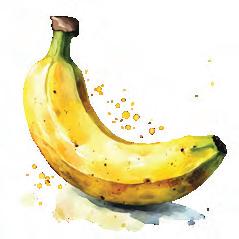
Specializing in tropical fruit sales has given me a deep appreciation for bananas. While they may seem simple, bananas require careful coordination of ripening, temperature control, timing, and inventory flow. Ripening bananas is truly an art, where even a one-degree change can impact flavor, color, and timing.

Justin Brice
Sales Professional, Berry & Tropical Department
| 2 years with AMC
Costa Rican pineapple is one of my favorite commodities because of its exceptional sweetness and flavor. Recently, market conditions have been tighter in strawberries, pineapples, and blueberries, although several categories are beginning to improve.


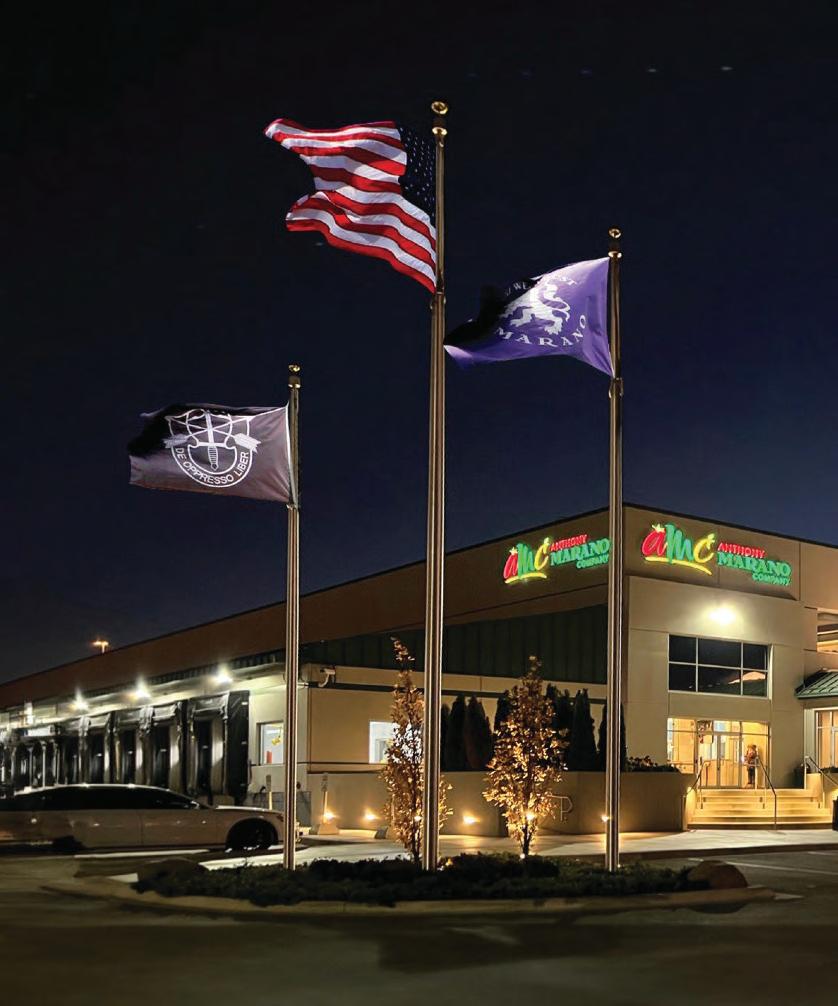
“... it all started with a first step, despite not knowing what the future would hold.”
Anton J. Marano,
Chief Executive Officer

If our company can draw anything from our nation’s history, it is that it all started with a first step, despite not knowing what the future would hold. That is true for both our nation and the Anthony Marano Company.
This year marks not only our nation’s 250th anniversary, but also my 10th anniversary as CEO, having taken the reins with my brother in 2016.
Looking back, I had no idea how this journey would unfold. But there were a couple of ideas I was certain about.
One was how to evolve the Anthony Marano Company into the next generation of who we are: a company marked by innovation and excitement, and a place where our employees enjoyed coming to work and bringing others with them. The other idea I had was that for the company to grow into that vision, I needed help, even if I had no idea what that help, or our journey, would look like. Honestly, it wasn’t my genius to write a plan — a plan that I would likely abandon anyway.
What I did know was that the first thing we needed to do was simply start. I believe the first step in doing anything is the most critical. Just take action. Our first step was, at the time, a bold one. We built a first-ever executive team that was tight and aligned on our purpose, our behaviors, and how we would win. Then, we attacked things with a relentless pursuit. There were plenty of opportunities, and we stayed

Anton J. Marano Chief Executive Officer
with them until we started to achieve our desired results. We gained confidence and momentum, and momentum is a powerful force. Looking back, in the first half of my first decade as CEO, we took those early steps, stuck with things even when we didn’t know what would come next, and got good at what we were doing.
In the second half of my first decade, we have continued to stick to the journey. We favor people who are hungry, humble, and smart. Most of our people, most of the time, not only know our purpose, but believe a better life opportunity exists for them at Anthony Marano. We focus on putting the right people in the right place, with the right backpack — their role and responsibility. We move with urgency, and we talk about moving with urgency. Our mindset has evolved beyond just being good. We aspire to be excellent-to-elite, and we want to be held to that standard.
I frequently remind our people that perfection is not the goal. Progress is. And it all started with the first step. That is what we celebrate this summer for our nation: a bold first step taken 250 years ago.
Happy Birthday, USA
Ripening plays an important role in delivering quality produce. The right stage of ripeness can make a meaningful difference for customers, which is why we have invested in state-of-the-art ripening rooms in both Chicago (25 Rooms) and Atlanta (8 Rooms).
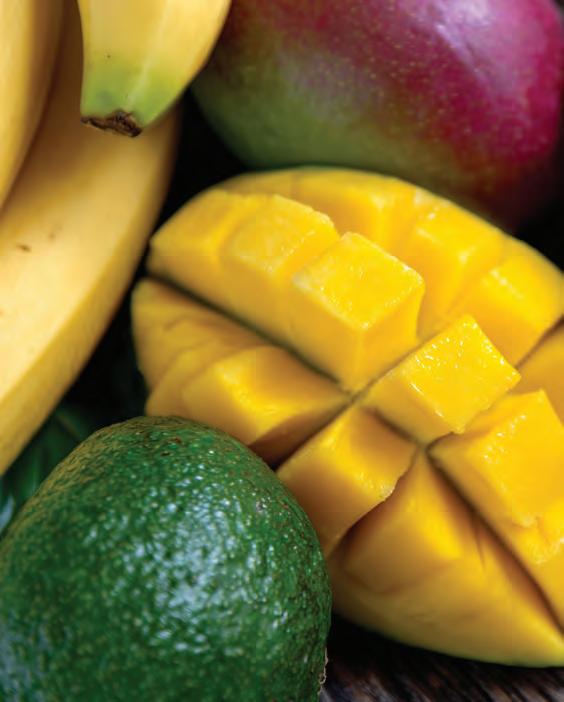
We ripen avocados, bananas, and mangos in-house, giving customers more flexibility and consistency across some of the most time-sensitive commodities in produce. Each item requires attention, planning, and care because ripeness affects not only appearance, but also flavor, texture, shelf life, and overall consumer experience.
Every detail matters throughout the ripening process. Temperature, humidity, airflow, timing, and careful handling all play a role in the final quality of the fruit. While the process requires technical knowledge, the purpose is simple: to support customers with products that are fresh, consistent, and ready for the way they do business.
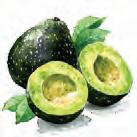
As avocados have moved from a specialty item to an everyday staple, customers need more than supply alone. They need a product that arrives at the right stage for their stores, their shoppers, and their merchandising plans.
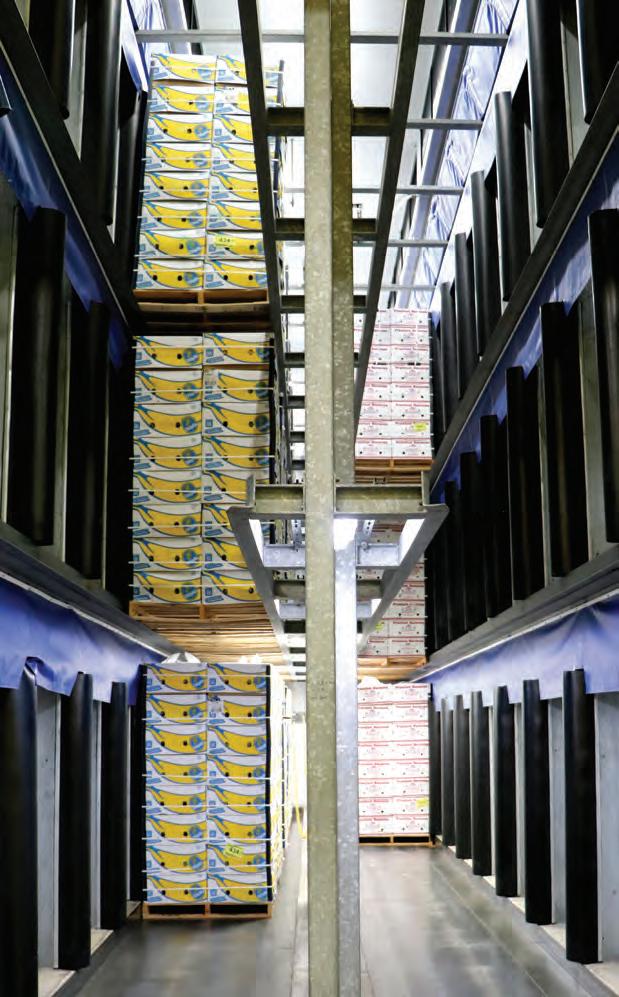
We ripen avocados, bananas, and mangos in-house to help customers receive fruit at the stage that best fits their needs — from firmer fruit for longer shelf life to readyto-eat product for immediate display.
Firmer fruit, ready-to-eat fruit, or something in between.
Ripeness impacts flavor, texture, shelf life, and the consumer experience.
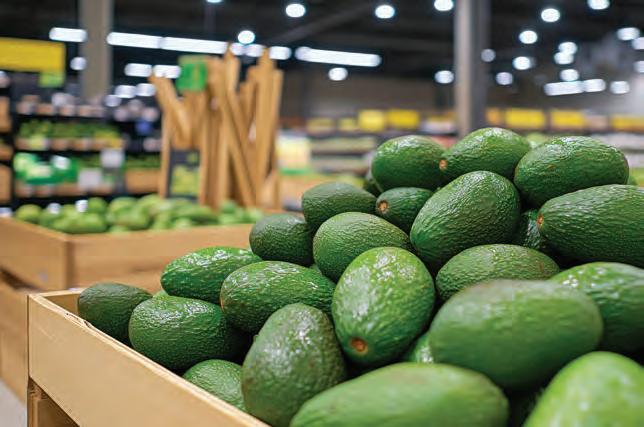
Avocados by the numbers U.S. avocado availability per person tripled from 2000 to 2021, reaching more than 8 pounds per person.
Imports now account for about 90% of domestic supply, compared with about 40% in the early 2000s.
(USDA Economic Research Service Data)
Current domestic supply 90%
It was probably in grade school when I learned that George Washington once crossed the Delaware River. For some reason beyond my curiosity or remembrance, I couldn’t tell you exactly why he crossed the Delaware River. It was much later in life when a more curious version of myself started to really dig into our military history that I understood exactly why. What I discovered was that General Washington led one of our country’s first special operations raids that was more about achieving a psychological advantage than a military victory.

By Rick Van Arnam Executive VP of leadership, team development and strategy
The raid took place on Christmas night 1776, well after the first shots of the Revolutionary War were fired on April 19, 1775, and almost six months after the Declaration of Independence was signed on July 4, 1776. By this time, the Continental Army was in retreat after a series of defeats or stalemates in New York from Long Island to White Plains. The city of New York had also been lost. Morale was low; many troops had deserted, and the prospect of losing the war was real. Wintry weather had set in, and there wasn’t much optimism in the ranks nor in the Continental Congress.
General Washington was in a real pickle, and this was reflected in a letter he penned to his brother. He wrote, “If every nerve is not strained to recruit the new army with all possible expedition, I think the game is pretty nearly up . . .You can form no idea of the perplexity of my situation. No man, I believe, ever had a greater choice of difficulties, and less means to extricate himself from them.”
Despite the dire musings to his brother, Washington had a few things in his favor. First, his Army held some experience from battle – it was capable. Further, it had recently increased in size as some soldiers had returned to the ranks. Lastly, he felt a sense of urgency to act as many of the enlistments were due to expire on December 31st. If he was going to seize an opportunity, he had to do it immediately, and thus hatched a surprise attack on Christmas, betting the defenders would be anticipating a night of rest.
Washington had a target. It was Trenton, New Jersey, where 1,500 Hessian soldiers, German troops for hire, manned a garrison. Trenton lay on the other side of the Delaware River from Washington’s position. To attack Trenton, he would have to lead his troops across the river at night, travel by foot about ten miles, conduct the raid, and re-cross the river, returning to his position. The original plan included three river crossing sites. He was also bringing across heavy artillery pieces. It was a daring operation and a bold decision. Complicating everything, the weather decided to have a say, and it wasn’t in Washington’s favor.
Cold temperatures, high winds, ice, and precipitation slowed the crossing. Instead of landing on the New Jersey side around midnight, Washington’s troops were delayed until the early morning hours of December 26. The delay put the element of surprise at risk and increased the chance that his army could be exposed in daylight.

As the operation unfolded, Washington had fewer troops available than planned. He adjusted quickly, dividing his force into two flanking columns and positioning artillery where it could control the main roads. Hessian outposts were identified early and overrun, though not before they alerted the main force.
The Hessians attempted to respond, but Washington’s troops pressed the advantage. American forces targeted officers and disrupted enemy leadership. Artillery and infantry worked together, helping secure a much-needed victory.
The result was significant. The Hessians lost 22 men, more than 80 were wounded, and about 900 were captured. Washington’s Continental Army suffered only a handful of casualties. But the greater impact went beyond the numbers.
The victory at Trenton gave Washington’s men renewed confidence. It showed that they could stand against trained European troops. It provided badly needed supplies. Most importantly, it offered hope at a time when the cause for independence was in real danger. The War for Independence would continue for several more years, eventually ending with the Treaty of Paris in 1783. But without Washington’s bold decision at Trenton, the war may have taken a very different course.
More than two centuries later, the crossing still offers a lesson that connects to the way we work at the Anthony Marano Company. Progress often requires urgency, confidence, and a willingness to act when conditions are difficult. We may not have drawn our approach from Washington’s crossing, but we are proud to believe in a similar bias for boldness.
At AMC, we know that waiting for perfect conditions is not always an option. Sometimes, success depends on recognizing the moment, trusting the team, and moving forward with purpose.
“
“If every nerve is not
strained to recruit the new army with all possible expedition, I think the game is pretty nearly up...”
George Washington, December 12, 1776
Sources:
1. (Curran, Jonathan) - Washington “Crossing the Delaware.” The National Museum of the United States Army, www.thenmusa.org/articles/crossing-the-Delaware Accessed April 2026.
2. George Washington’s Mount Vernon. - “10 Facts About Washington Crossing of the Delaware River.” www.mountvernon.org/George-Washington/the-revolutionarywar/washingtons-revolutionary-war-battles/the-TrentonPrinceton-campaign/10-facts-about-washingtons-crossing-of-the-Delaware-river Accessed April 2026.
Washington's success was built on a bias for urgency, disciplined planning, and the courage to adapt when conditions changed.
At Anthony Marano Company, we bring that same mindset to our clients – moving decisively, solving problems, and creating value when it matters most.
BOLD PLANS. ADAPTABLE TEAMS. MEANINGFUL RESULTS.

Fresh produce is no longer just a part of the plate – It is helping define how consumers eat today! Eating habits are shifting from three traditional meals to smaller, more frequent occasions, creating new opportunities for produce as a snack, meal solution, and everyday staple.
Convenience
Ready-to-eat, easy-to-use formats
Bold Flavor
Global inspiration and crave-able eating experiences
Everyday Versatility
Produce that works across snacks, meals, and mini meals
Added Benefits
Nutrition, energy, fiber, and functional value
Today’s produce value is defined by more than affordability. Consumers are also looking for nutrition, flavor, versatility, convenience, and a better overall eating experience.
We have to think about our value in terms of fueling America, snacking, and meal-making… those are what consumers consider relevant today as they eat smaller and more frequent meals.
— The Packer, Fresh Trends 2026
Retail and food service are increasingly connected by the same consumer expectations: convenience, flavor, quality, and fresh inspiration.
For retail: snack-able formats, meal solutions, value-added produce
For food service: bold flavors, premium ingredients, reliable supply
Gen Z and millennials are driving interest in specialty, premium, organic, local, and branded produce. Fresh Trends 2026 highlights: & 25% 55% 17% 16% of Gen Z purchased premium strawberries of Gen Z purchased jumbo blueberries purchased sweet snacking peppers of Gen Z of Millennials
Local continues to matter, with 36% of consumers saying locally grown produce influences purchase decisions.
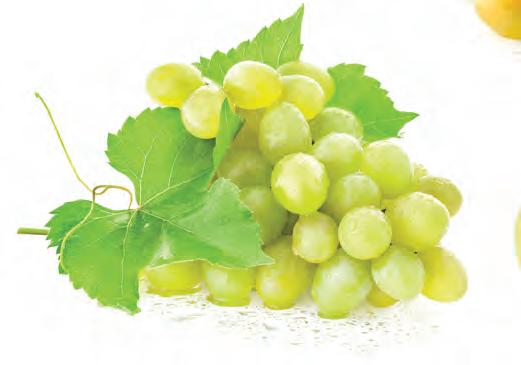
Brand recognition is also growing. Products like Cotton Candy grapes and premium strawberries show the power of clear naming, consistency, and storytelling.
An All-American
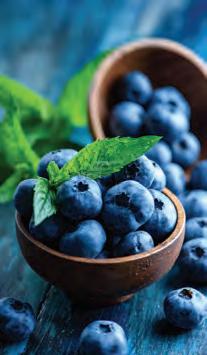
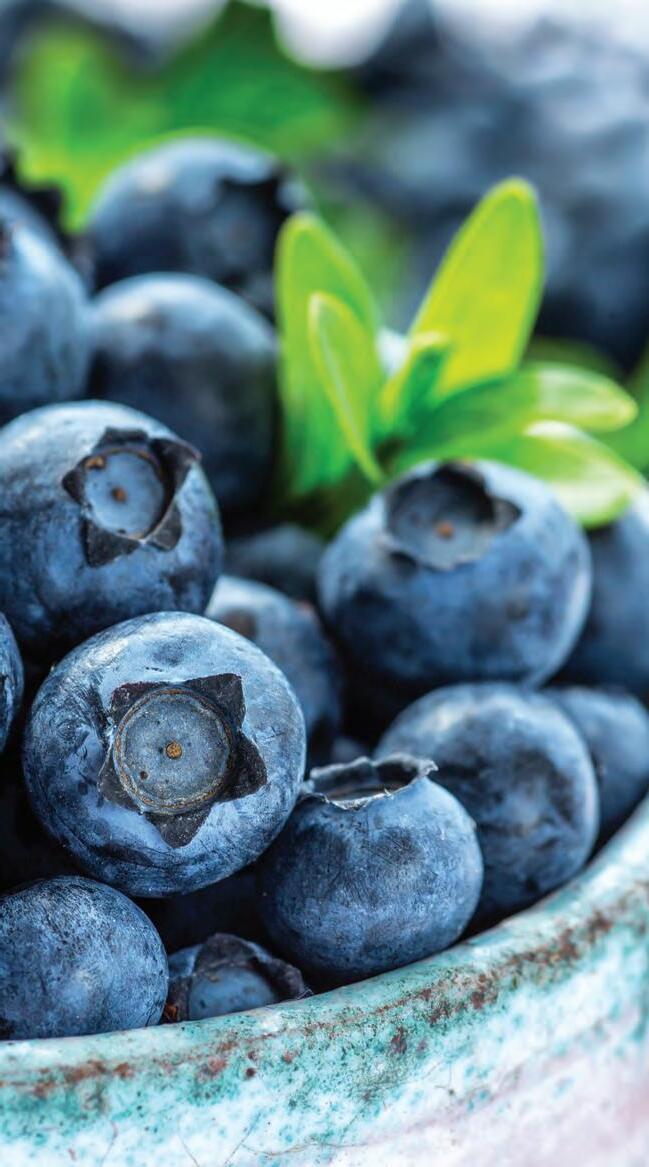
The United States continues to lead blueberry innovation through improved varieties, better flavor, expanded availability, and strong year-round demand. These advancements keep creating new opportunities across the produce industry.
Rooted in North American history and first commercially cultivated in the U.S., blueberries have grown into a produce staple celebrated for their flavor, versatility, and widespread consumer appeal.
born here. grown here. loved everywhere.
Today’s blueberries are built for the modern shopper — premium, snack-able, and available beyond traditional seasons.
Jumbo, snack-able berries Crisp textures consumers love Sweeter, more consistent flavor
Extended-season genetics
Climate-adapted varieties


Blueberries thrive across multiple U.S. growing regions, creating a reliable yearround domestic supply. From the Southeast to the Pacific Northwest, each region contributes unique varieties and harvest timing that help maintain consistent quality and strong retail programs.





Blueberries also remain a favorite among health-conscious consumers thanks to their strong nutritional appeal:
High in antioxidants
Supports heart and brain health Low calorie, nutrient dense
Where heritage meets innovation. Blueberries combine American roots, premium quality, nutrition, and dependable supply — creating a category that continues to connect regions, seasons, and consumers.
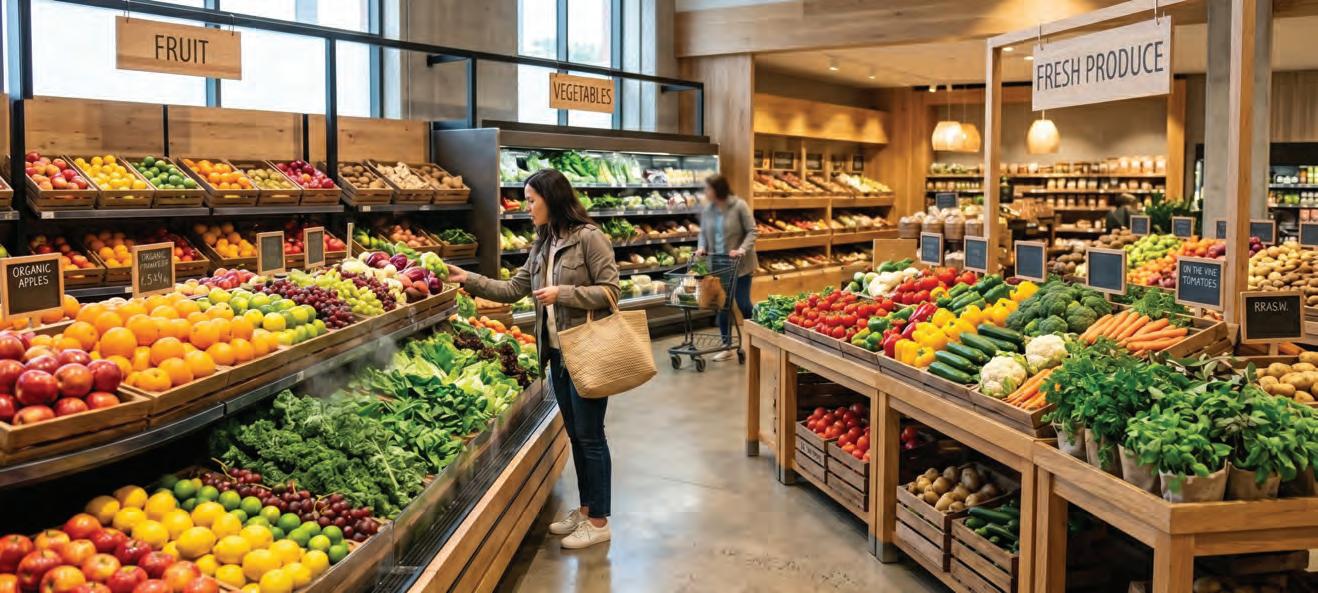
In today’s competitive retail environment, the produce department remains one of the most powerful drivers of store traffic and sales. For produce buyers and grocery leaders, the challenge is no longer just about sourcing quality product; it’s about presenting it in a way that captures attention, inspires purchase, and maximizes value per shopper.
One of the most effective and often underutilized tools in produce merchandising is color. Research shows that color influences more than 60% of consumers’ purchasing decisions (VanVranken, 2019). Simply put, shoppers buy with their eyes first. A well-merchandised display can immediately signal freshness, quality, and abundance, before a customer even picks up an item. For produce departments, this creates a major opportunity to guide purchasing behavior through intentional visual design.
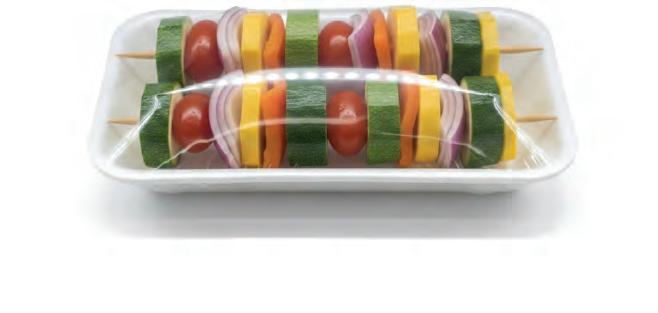
Beyond color, bundling is another powerful way to increase basket size and simplify the shopper experience. Today’s consumers are looking for convenience, and produce departments are uniquely positioned to deliver it.
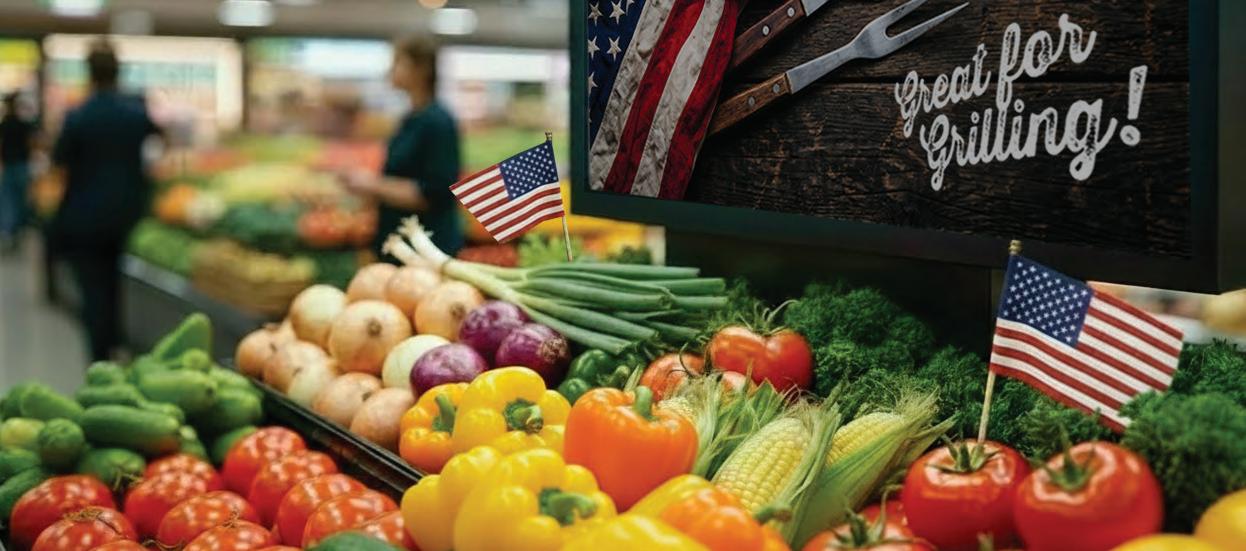
Grilling bundles are a strong seasonal example. Pairing peppers, onions, corn, and zucchini with skewers or marinades transforms individual items into a complete solution. Instead of selling four separate SKUs, retailers are offering a ready-to-use experience that saves time and adds value. Bundles not only drive incremental sales but also position the produce department as a destination for meal inspiration, not just ingredients.
For buyers and department managers, the takeaway is clear:
• Presentation matters just as much as the product itself.
• Color blocking creates clean, organized, and visually appealing displays.
• Grouping produce by color naturally draws shoppers’ attention.
• Well-designed displays help customers navigate and shop more intuitively.
• Simple merchandising techniques can elevate any produce department.
The most successful produce departments think beyond individual displays and focus on telling a cohesive story.
• Themes can include seasonal promotions, color-focused displays, or meal solutions.
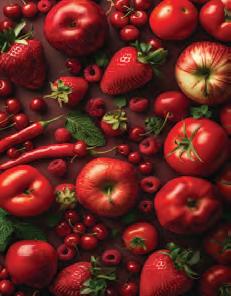
RED SET: Tomatoes, strawberries, red peppers, and apples.
Communicates: ripeness, energy, and flavor
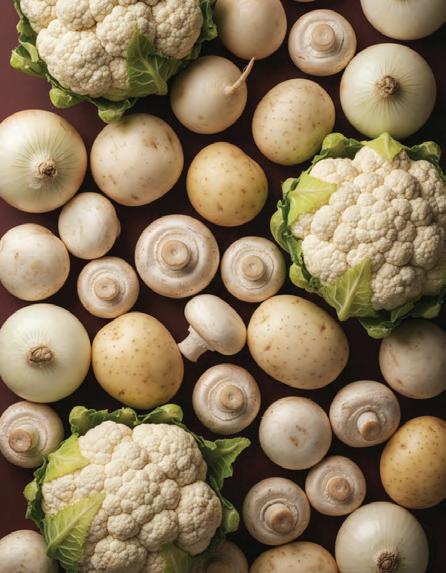
white SET: Cauliflower, onions, mushrooms, potatoes, and turnips
Highlights: versatility
• Concepts like grilling, snacking, or entertaining help create purposeful displays.
• Curated merchandising creates a more engaging shopping experience.
• Strong displays connect products with practical uses and inspire purchase ideas.
• Effective merchandising answers the shopper’s question: “What can I do with this?”
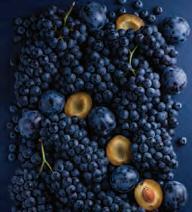
Blueberries, plums, and concord grapes
Adds: contrast and a sense of premium appeal
Source: (Richard VanVranken, 2019). “Colorful, Smart Produce Displays Appeal to the Senses and Drive Sales.” https://www.growingproduce.com/vegetables/colorful-smart-produce-displays-appeal-to-the-senses-to-drive-sales/
Modern menus have traveled across continents, cultures, and generations to become indispensable staples in food service operations. Their journey reflects a rich history of cultivation, trade, and culinary influence that continues to shape kitchens around the world.

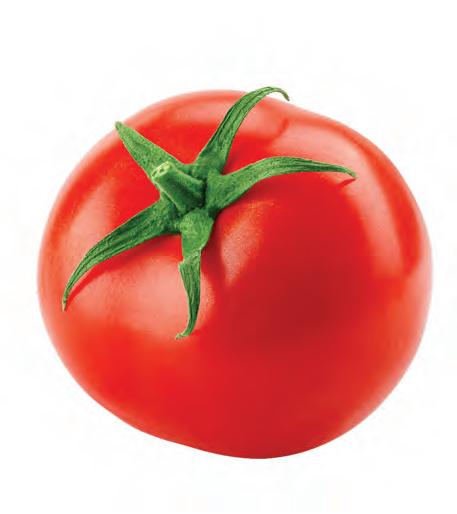
Origin: Trace back to western South America, with domestication and cultivation tied to Latin America before it spread widely through global trade.
It is hard to imagine American kitchens without tomatoes. They show up in sauces, salads, sandwiches, salsa, soups, and backyard burgers.
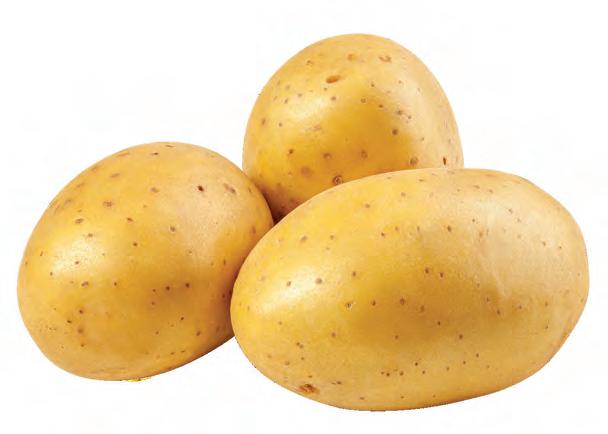
Origin: High in the Andes, potatoes were domesticated by Indigenous communities in the Andean region and later reshaped diets around the world.
Today, they are everywhere — baked, mashed, fried, roasted, chipped, shredded, and served alongside everything from breakfast to dinner. Smithsonian highlights the potato’s deep roots in the Americas and its journey across continents, making it one of the most influential staples in global food history.

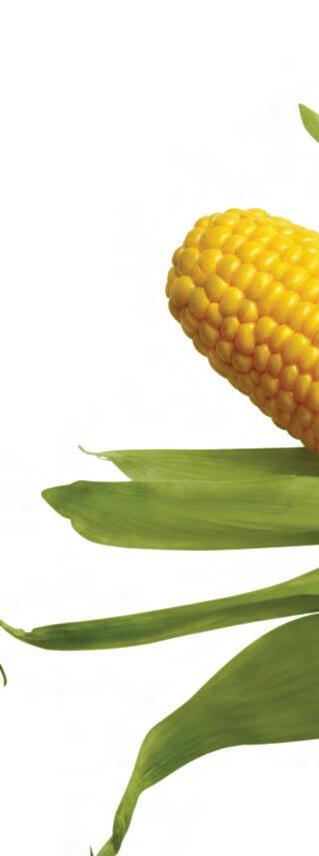
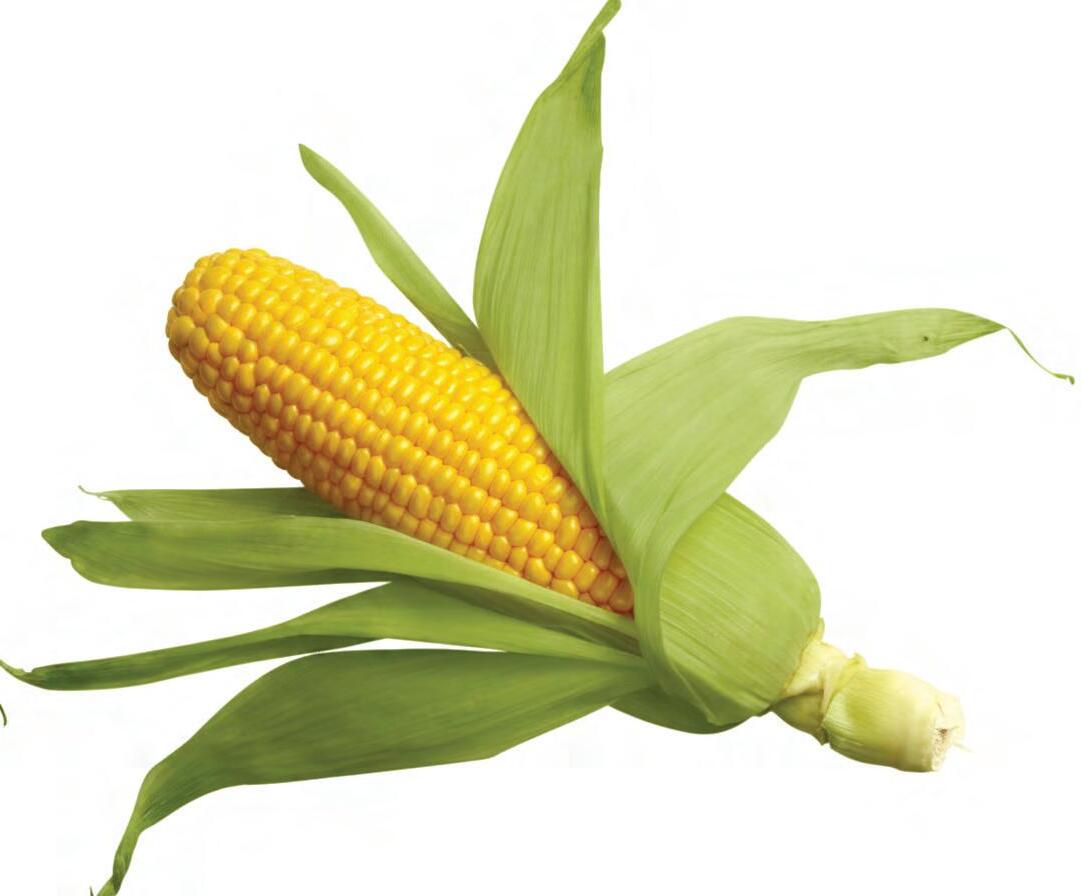
Origin: Early domestication is tied to Mexico and the broader Meso-American region, where it developed from Teosinte into one of the world’s most important crops. Smithsonian research notes that corn’s domestication story stretches back thousands of years and continued as it spread through Central and South America.
Few ingredients are as deeply woven into the food history of the Americas as corn. Corn appears in
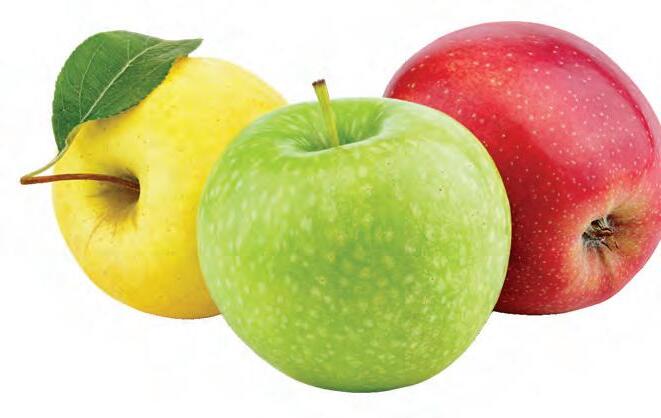
Origin: While apples were not native to North America in the same way as many Indigenous crops, orchard culture became a major part of early American agriculture. The National Park Service notes that from 1600 to 1800, fruit introductions and orchard development were common across the colonies and Spanish missions, with seedling apple orchards especially widespread.
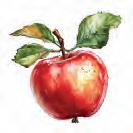
Apples feel timeless in American kitchens, packed in lunches, baked into pies, pressed into cider, sliced with peanut butter, or added to salads.


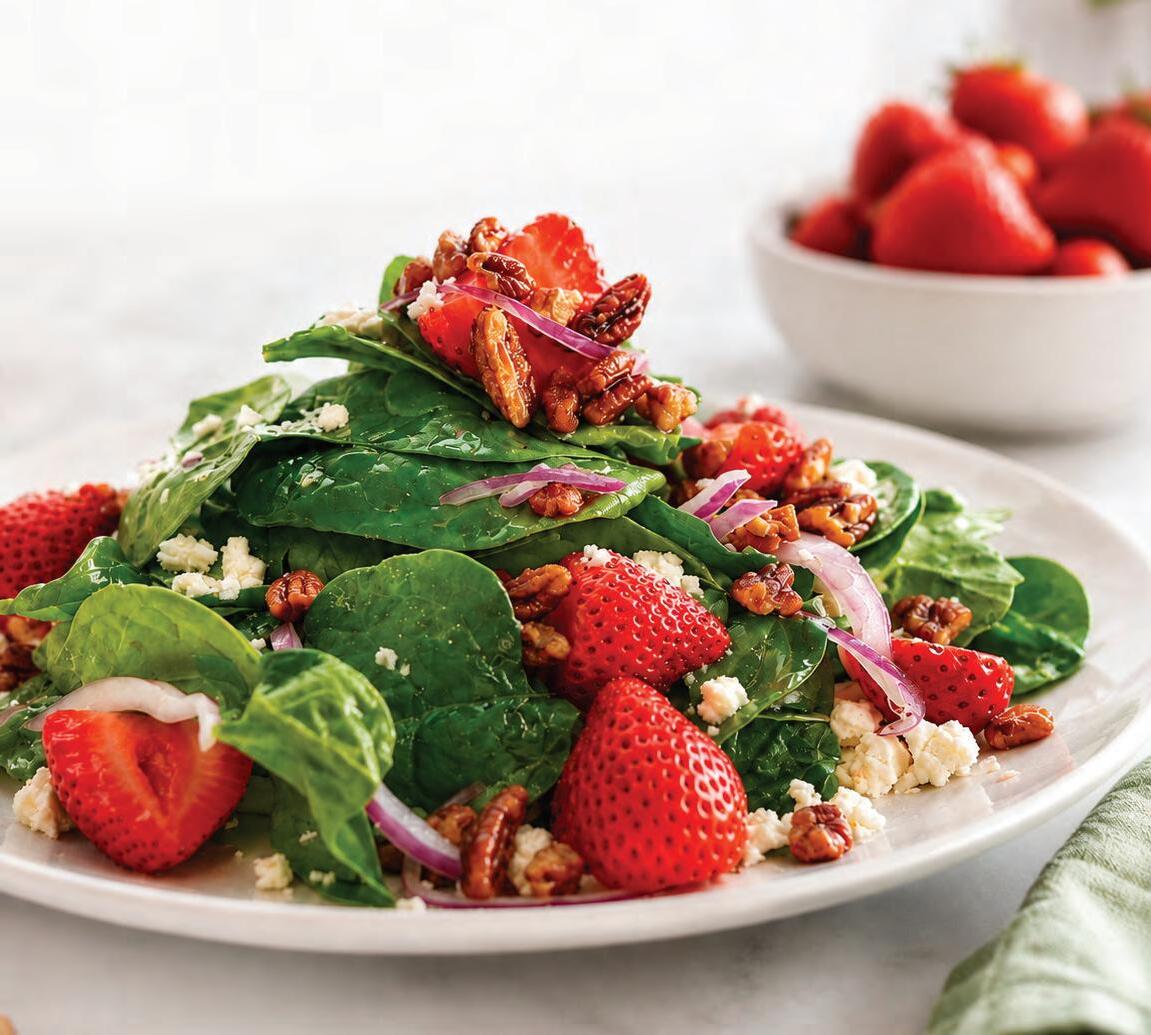
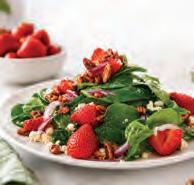
1 cup fresh strawberries, rinsed, tops removed, and sliced
6 Tbsp. apple cider vinegar
6 Tbsp. water
1-1/2 tsp. kosher salt
1-1/2 tsp. sugar (2 tsp. if the berries are tart)
1/4 to 1/2 tsp. black pepper corns
1/8 tsp. vanilla extract
1/2 tsp. crushed red chili flakes (1/4 tsp. for a milder version)
6-8 fresh mint leaves
8oz (about 226.8 g) fresh spinach
1/4 small red onion, julienne
1/4 cup crumbled goat cheese
1/4 cup toasted pecans, chopped
1/2 cup pickled strawberries, sliced
Dress with pickling juice and extra virgin olive oil
1. Add everything except berries and mint to a pot, and bring to a boil, simmer until sugar and salt are dissolved.
2. Cool until slightly warmer than room temp and add berries and mint.
3. Let sit in an airtight container in the refrigerator for at least 48 hours.
Sweet berries, crisp greens, creamy feta & candied pecans

Classify each commodity: Native, American Origin, or Adopted American.
Test your produce knowledge. For each commodity, decide if it originally came from what is now the United States.