lOMoARcPSD|62239921
GASTROINTESTINAL
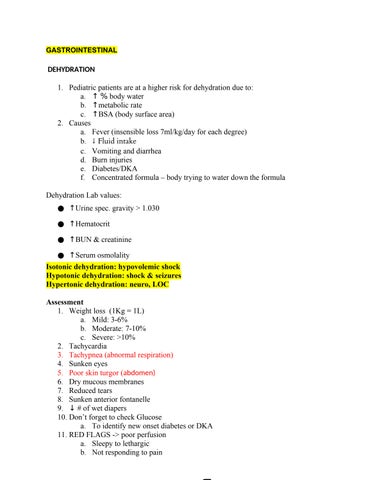
DEHYDRATION 1. Pediatric patients are at a higher risk for dehydration due to: a. ↑ % body water b. ↑metabolic rate c. ↑BSA (body surface area) 2. Causes a. Fever (insensible loss 7ml/kg/day for each degree) b. ↓ Fluid intake c. Vomiting and diarrhea d. Burn injuries e. Diabetes/DKA f. Concentrated formula – body trying to water down the formula Dehydration Lab values: ● ↑Urine spec. gravity > 1.030 ● ↑Hematocrit ● ↑BUN & creatinine ● ↑Serum osmolality Isotonic dehydration: hypovolemic shock Hypotonic dehydration: shock & seizures Hypertonic dehydration: neuro, LOC Assessment 1. Weight loss (1Kg = 1L) a. Mild: 3-6% b. Moderate: 7-10% c. Severe: >10% 2. Tachycardia 3. Tachypnea (abnormal respiration) 4. Sunken eyes 5. Poor skin turgor (abdomen) 6. Dry mucous membranes 7. Reduced tears 8. Sunken anterior fontanelle 9. ↓ # of wet diapers 10. Don’t forget to check Glucose a. To identify new onset diabetes or DKA 11. RED FLAGS -> poor perfusion a. Sleepy to lethargic b. Not responding to pain
lOMoARcPSD|62239921
c. d. e. f.
Delayed capillary refill (>2 seconds) Hypotension Cyanosis Cool peripheries/mottled
Therapeutic Management 1. Identify and treat cause 2. Monitor child’s weight closely a. 1 kg = 1 L 3. Fluid replacement is the primary goal a. Oral replacement for mild to moderate i. Electrolyte drink (Pedialyte or diluted Gatorade) ii. 2-5 ml every 2-3 minutes / over 4-6 hours iii. Contraindications of giving oral fluids: 1. Decreased LOC 2. Tachypnea b. IV replacement for severe i. Bolus (NS or LR) 1. 20 mL/kg isotonic fluid over 20-30 minutes ii. Maintenance fluids: 24hr 1. Weight-based 2. 1-10 kg: 100 ml/kg 3. 11-20 kg: 1000 ml + 50 ml/kg for each kg >10 kg 4. > 20 kg: 1500 + 20 ml/kg for every kg > 20kg 4. Monitor neurological status 5. Monitor cardiovascular status 6. Strict intake and output measurements (weight & diapers) 7. Monitor electrolytes Increased Fluid Needs: ● Fever ● Vomiting/ ↓ intake ● pyloric stenosis ● Cystic fibrosis ● Tonsillitis ● Herpes stomatitis ● Diabetes Insipidus Decreased Fluid Needs: ● Congestive heart failure ● Syndrome of inappropriate antidiuretic hormone (siadh) ● Fluid overload (post-operatively)
● ● ● ● ● ● ● ●
DKA Burns Diarrhea Shock Tachypnea Radiant warmer Phototherapy Post-op Bowel repair
● With Increased intracranial pressure ● Mechanical ventilation ● Renal failure
lOMoARcPSD|62239921
Diarrhea: ● baseline weight/height & daily ● No fruit juice, soda, jello ● Replace K+ (if needed) + urine output Constipation: ● Probiotics (Yogurt with bifidobacterium) are effective for children w/constipation Hirschsprung Disease - the Spring is sprung ● congenital absence of ganglion cells (peristalsis) in the colon and / or rectum, resulting in the patient not able to pass stool creating a backup ● Aganglionosis= absence of ganglion cells = no motility ● S/S: ○ poor feeding, diarrhea, lack of meconium, foul smelling ribbon-like stools, bilious vomiting, abd. distention, chronic constipation ○ hx of bowel perforation, sepsis, shock ● E. coli infection occurs ● Treatment: surgical removal of aganglionic part of bowel to relieve obstruction & restore normal bowel function. Re-anastomosis later on ● Labs: CBP, CMP, rectal biopsy ● Measurement tape will be left under the patient to avoid pain ● Temporary colostomy - teach about ostomy care ● Toilet training after age 2 Gastroesophageal Reflux ● ● ● ●
gastric into esophagus -> weakness/dysfunction of sphincter delay gastric emptying Can lead to Aspiration pneumonia S/S: ○ Irritability, failure to thrive, freq. spitting up, weight loss ● Nursing Care: ○ sitting up position, smaller frequent meals, burp several times during feeding (every oz), thicken foods/formula with larger nipple, moms to avoid caffeine, smoking/alcohol, chocolate, avoid obesity, feeding tube (NG) for severe GERD ● Meds:
lOMoARcPSD|62239921
○ H2 receptor antagonists ■ Ranitidine (Zantac) ■ Cimetidine (Tagamet) ■ Famotidine (Pepcid) ● Mechanism of Action: Suppresses meal stimulated Acid secretion ○ Proton pump inhibitors ■ Esomeprozole (Nexium) ■ Lansoprazole (Prevacid) ■ Omeprazole (Prilosec) ■ Pantoprazole (Protonix) ■ Rabeprozole (Aciphex) ● Mechanism of Action: Suppresses meal stimulated Acid secretion ● Surgery: Nissan Fundoplication - permanent for chronic ○ G tube/button until area healed Hyperbilirubinemia ● Occurs due to ↑ circulating erythrocytes at birth - from mom ● Key treatment = fluids/feeding & bilirubin lights/blanket, bilirubin levels, eye protection ● S/S: ○ Jaundice, kernicterus (toxin in the brain) ● Nursing care: ○ hydrate, I/O, labs, bilirubin lab every 6 hours (turn lights off when checking labs), check IV’s every hour for infiltration Giardiasis (intestinal parasite disease) ● Transmission: person to person, water, feces, & animals ● S/S: ○ Severe abdominal cramps, N&V, diarrhea ● Diagnosed with stool sample ● Medication: Furazolindone ○ Mechanism of Action: Broad spectrum for Protozoals, staph, shigella, Ecoli ● Prevention: Drink ONLY clean bottled water when camping/hiking Enterobius vermicularis (Pinworms) ● Pinworm Eggs ingested or inhaled → intestines →hatch → anus → more eggs → severe rectal itching ● S/S: Abdominal pain, vomiting, diarrhea, butt itching ● Transmission: hand to mouth ● Prevention: HANDWASHING!!! Clean toys etc., fluids ● Dx: Tape test (best to do at night) ● Medication: Mebendazole ○ Mechanism of Action: Blocks worms glucose uptake, kills worms
lOMoARcPSD|62239921
Acute Appendicitis ● ● ● ● ●
● ● ● ● ●
Inflammation of appendix w/ hardened fecal material Mucous secretion blocked →pressure buildup in lumen → compressed blood vessels, ischemia, ulceration, and necrosis or perforation Assess: ○ H&P, physical exam, assess pain & rebound tenderness (McBurney's Point), fever, No deep palpitations! S/S: ○ fever, abd. pain @ RLQ, hypoactive bowel sounds, constipation/diarrhea, vomiting, pain, no pain = rupture, + psoas sign (raise right leg with/ resistance), obturator (supine with knee bent & rotate knee out) Labs: CBC (↑ WBC), Leukocyte Esterase, PT/PTT, UA, and US & sometimes CT with contrast Management: rehydration, NPO, antibiotics and THEN surgical removal of the appendix (appendectomy), NG, ambulate, incentive spirometer (lower temp by 1 degree after use), No heat! NO LAXATIVES OR ENEMAS!!!!! Pain →No pain → Severe pain = Ruptured appendix = surgery stat! Meds: antibiotics, flagyl, morphine,
Crohn's Disease (upper) Inflammation of the entire GI tract: ● healthy parts mixed with inflammed ● mouth to the anus ● most often affecting the terminal ileum Symptoms: ● abdominal pain with cramps ● Diarrhea ● weight loss ● Fever ● Anorexia ● Rectal bleeding, and perineal discomfort Ulcerative Colitis (lower) Continuous inflammation of the lining of the colon & rectum S/S: Ulceration, Bleeding (frank), edema, pain Treatment Chrons & Ulcerative TX: immunosuppressants, rest bowel (TPN) Medications: ● 5-Aminosalicylates (Mesalamine) ○ Mechanism of Action: Antinflammatory works topically in colon