BEATRICE BIZOT
TEIXINT HORITZONS
28 / 11 / 2025 - 17 / 01 / 2026
Textos
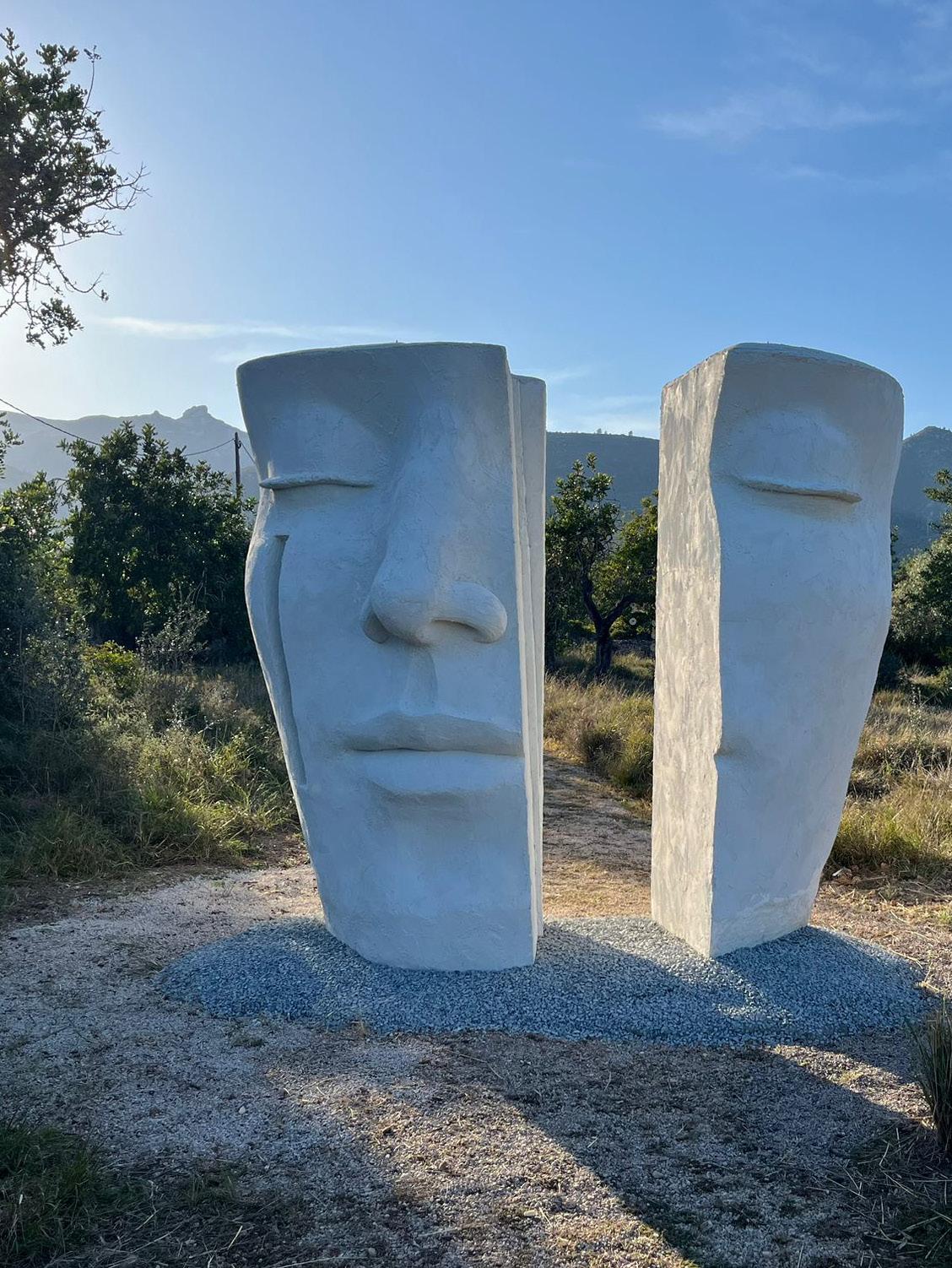
Portes Ciment blanc, Parc d’escultures i galeria Art-Contemporary, a La Ràpita, 2023
Pepa Quinteiro, directora
Campoamor, 2, 43202 Reus Tel. +34 666 674 996
www.anquins.com
Horaris: de dimarts a divendres, d’11 a 13.30h i de 17 a 20h dissabtes: d’11 a 13.30h
Open Tuesday to Friday from 11:00 to 13.30 and from 17:00 to 20:00 Saturday from 11.00 to 13.30
L’APPEL DU MONDE
“El rostre se’m fa present, i no puc ser sord a la seva crida ni oblidar-lo; és a dir, no puc deixar de sentir-me responsable de la seva miseria” escrivia el filòsof Emmanuel Levinas al seu llibre “Humanisme de l’autre homme”.
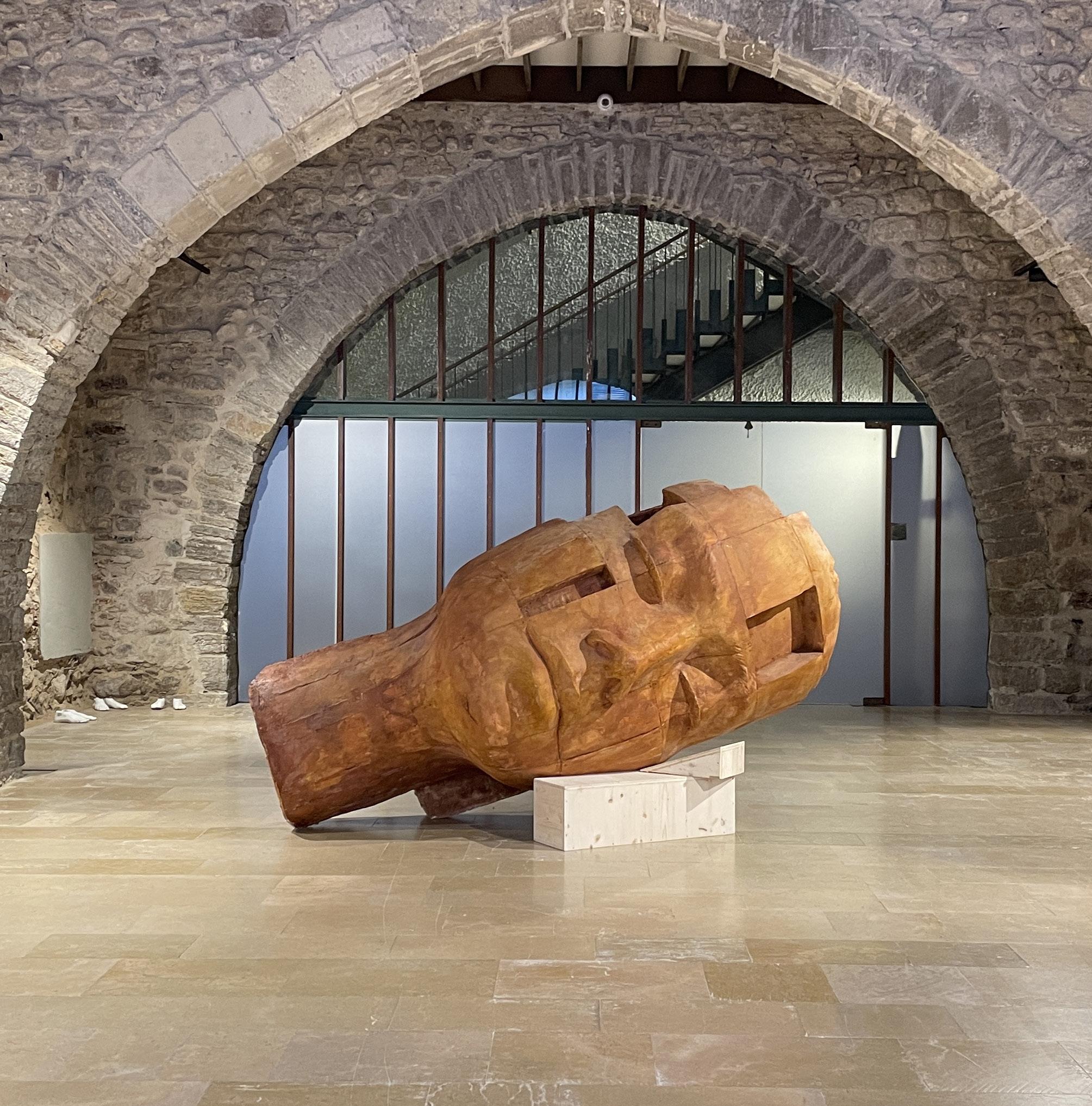
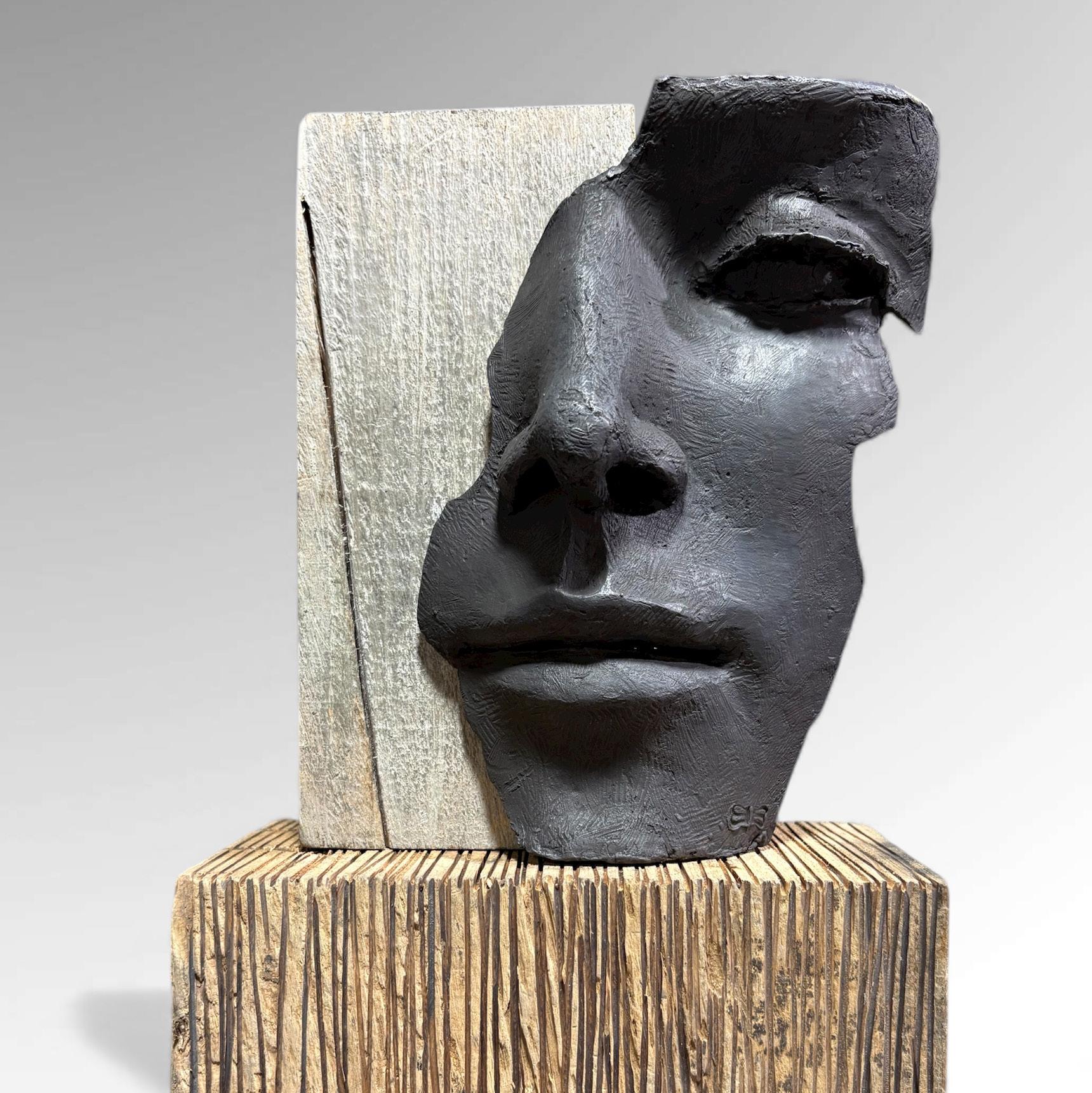
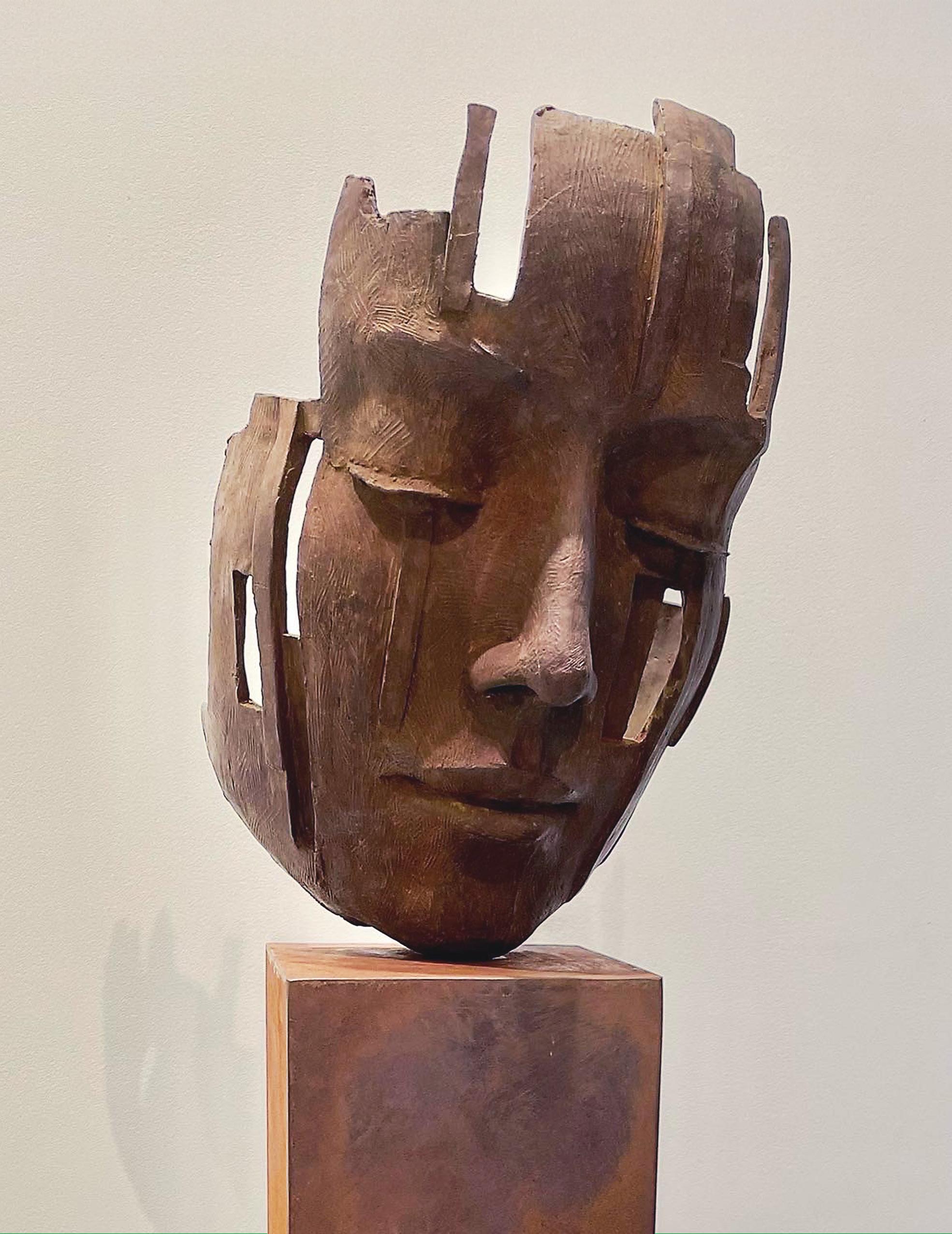
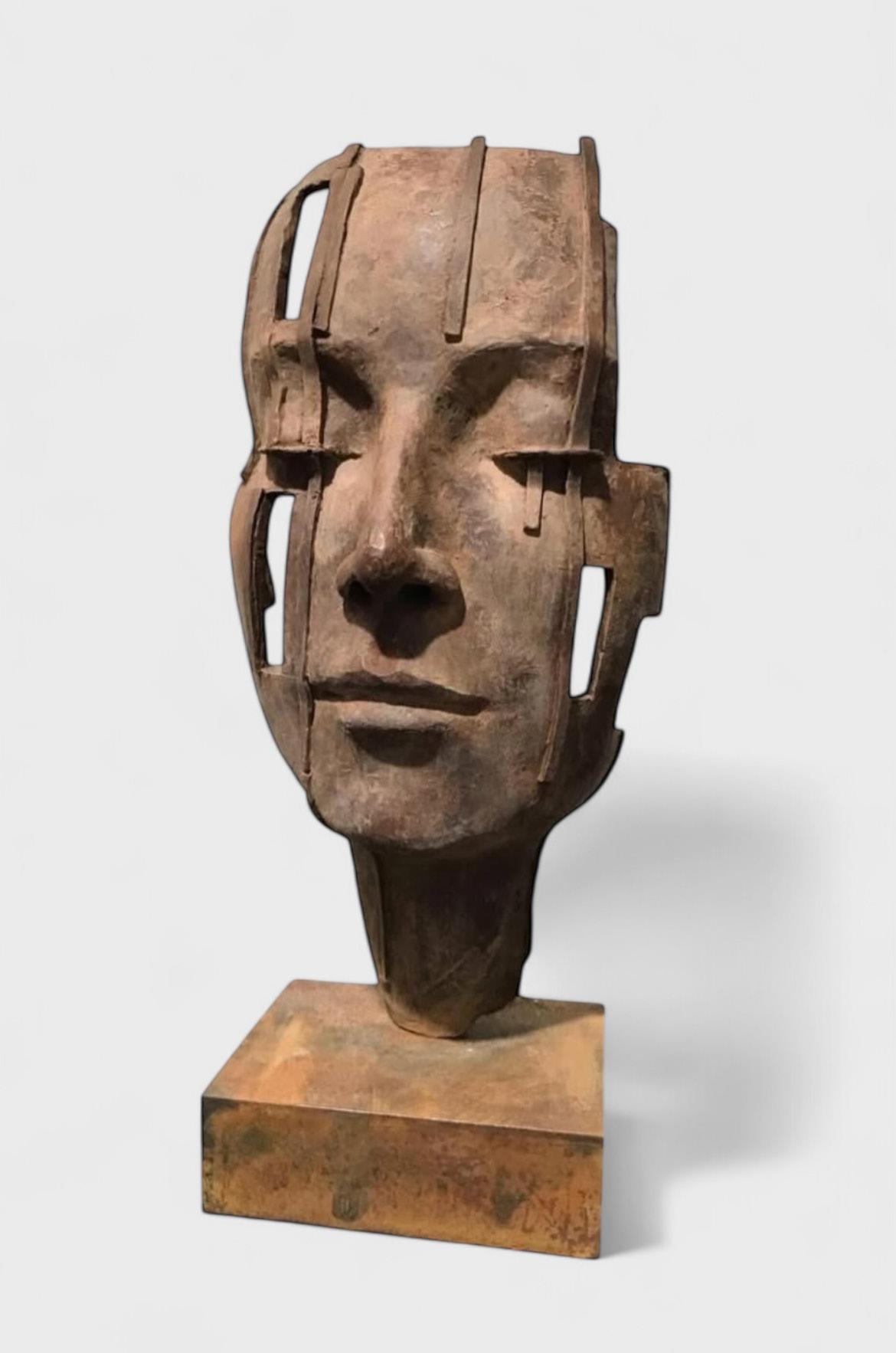
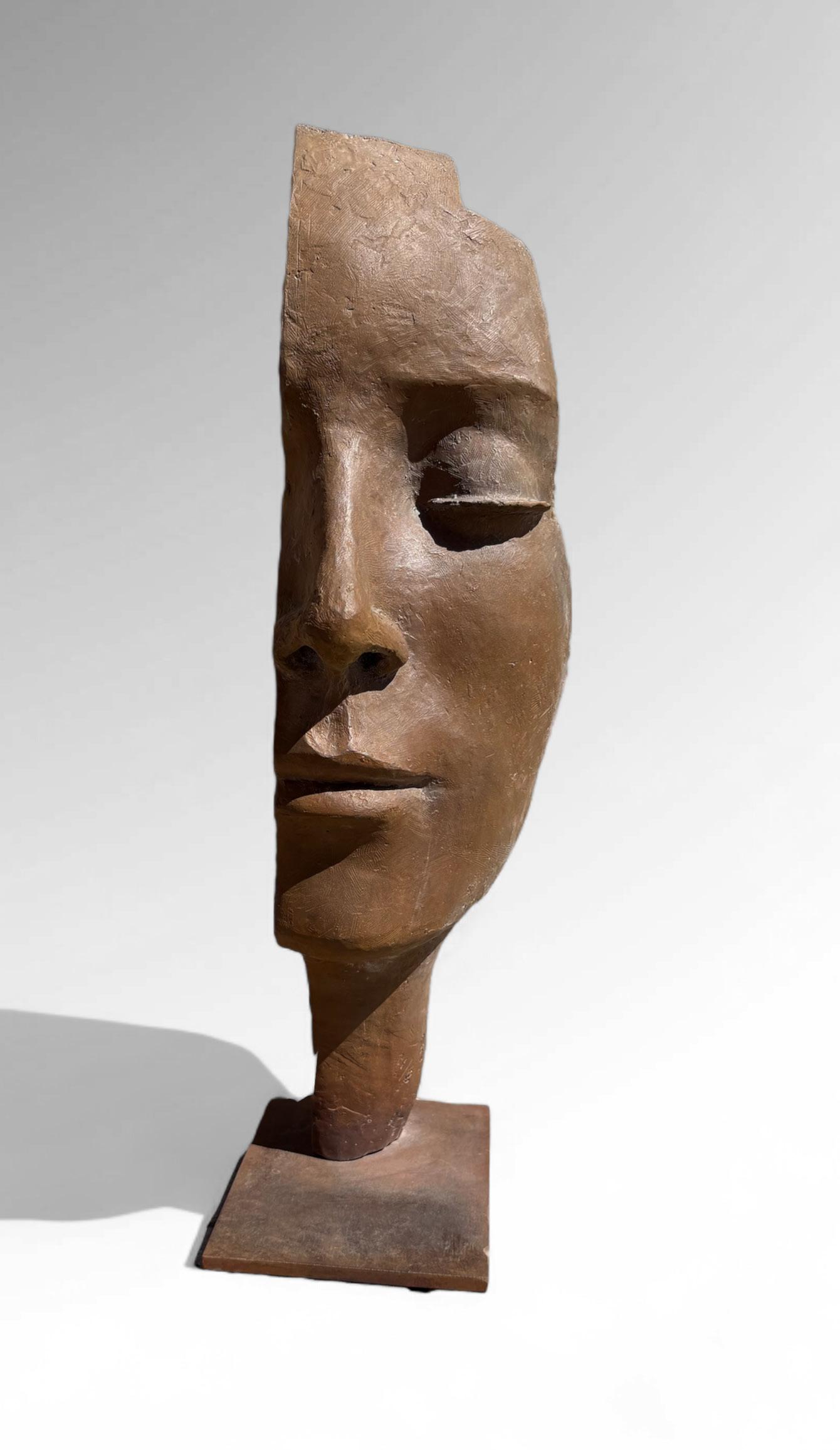
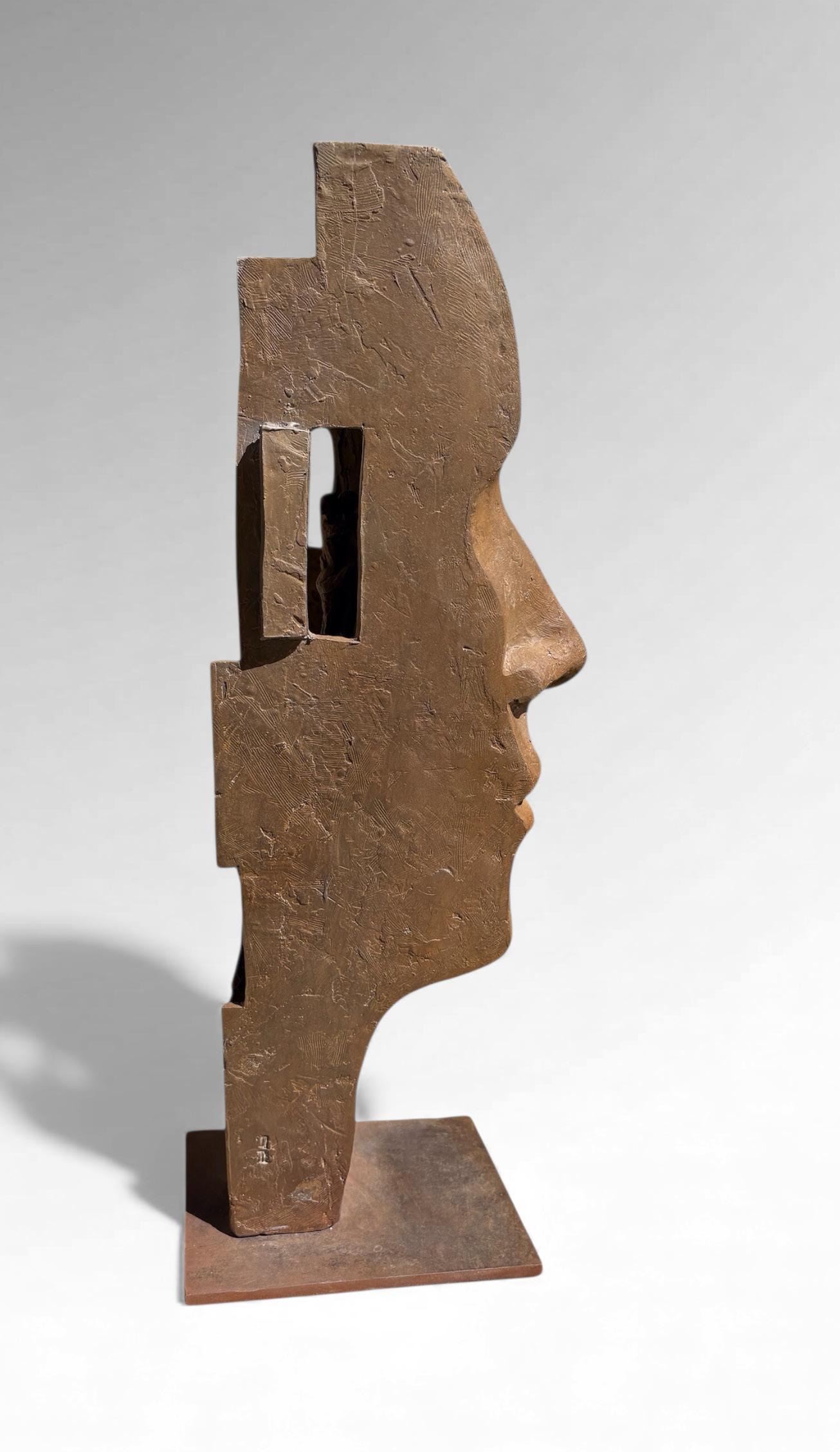
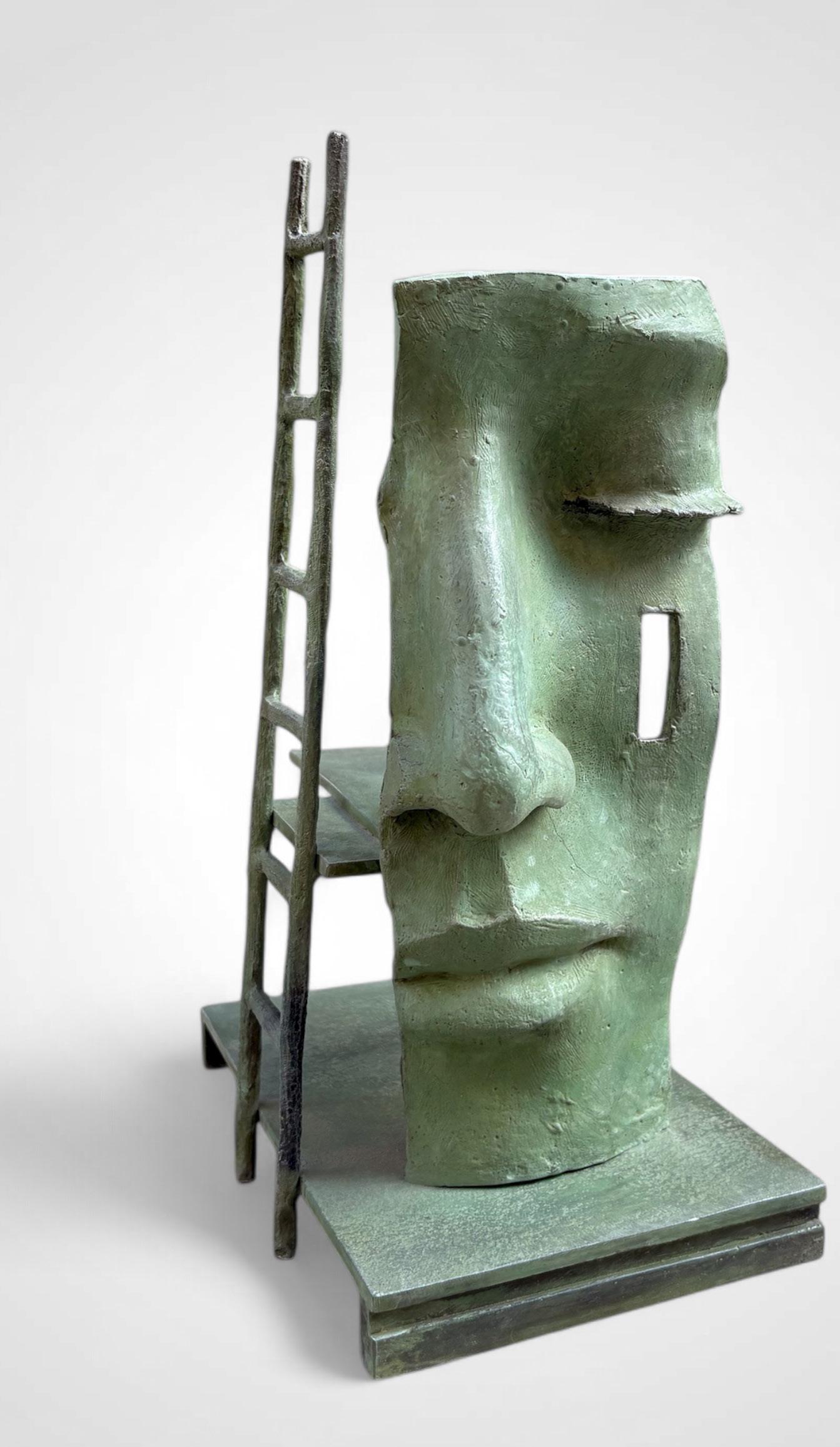
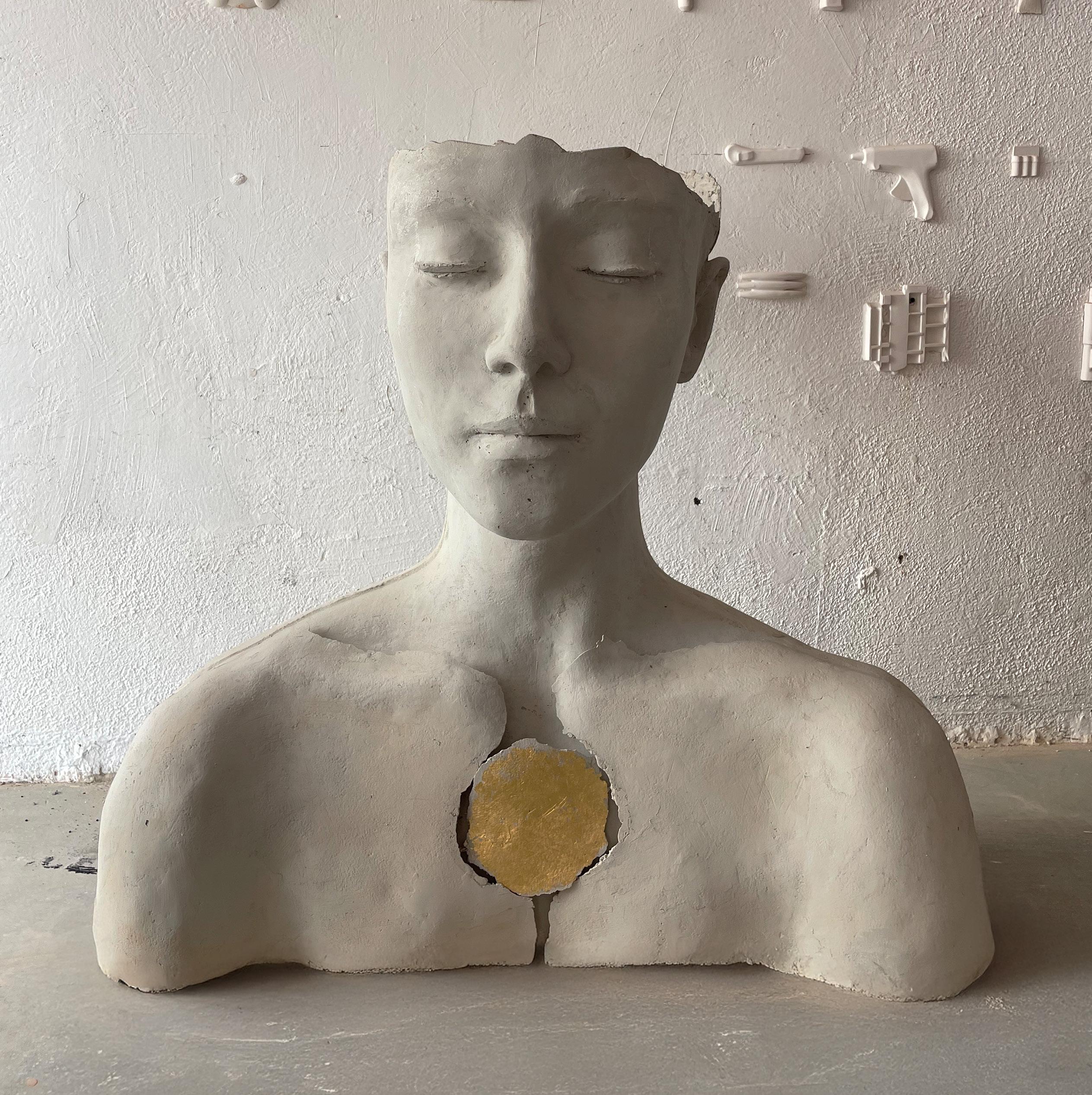
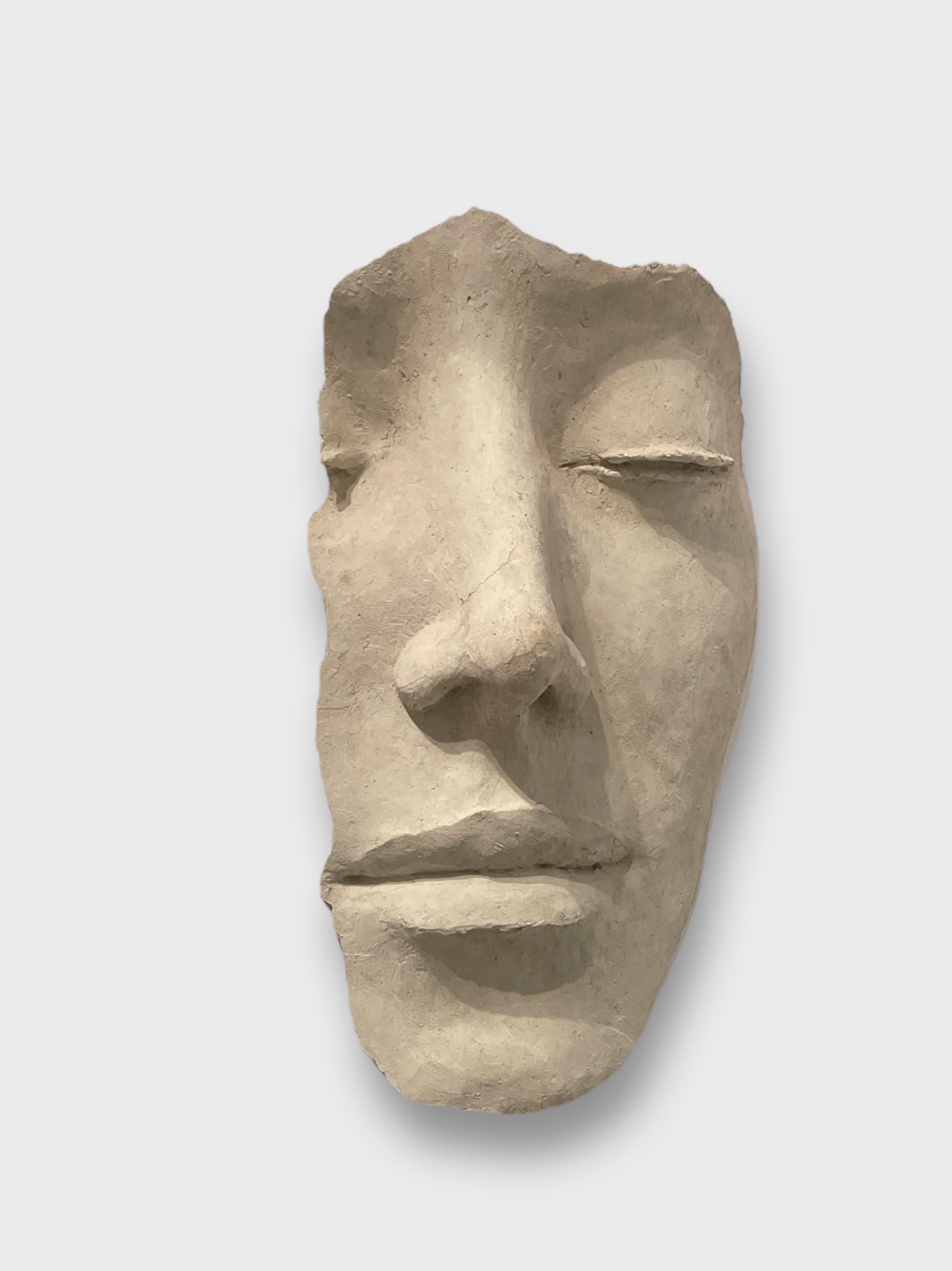
Enfrontats als rostres esculpits de Béatrice Bizot, tan oberts en la seva aparent generositat com opacs en el seu misteri contingut, és impossible no sentir aquesta crida formulada per Lévinas. Alguna cosa ens convoca, ens reclama, ens abraça, quan mirem aquests rostres de mirades apagades, d’ulls closos que ens travessen. Si no fos per la gràcia dels seus trets, seria per la densitat d’interrogants que contenen allò que ens commou profundament.
L’efecte inquietant d’aquests rostres rau en l’art de ferhi vibrar emocions oposades, de la serenor a la inquietud. Com si un rostre de Botticelli es confongués amb un de Munch, superposant-se en una hibridació singular, fora del temps però al cor mateix de la història de l’art.
Sense voler enunciar cap veritat massa afirmada sobre el món ni sobre la manera com el mirem o hi trobem el nostre lloc, les escultures de Béatrice Bizot tradueixen simplement —i ja és molt— la intensitat de les nostres esgarrifances i agitacions existencials. Com si continguessin en elles mateixes, a través d’un ressò poètic, la impossibilitat de ser transparents a nosaltres mateixos i de deixar-nos portar per un afecte d’un sol sentit.
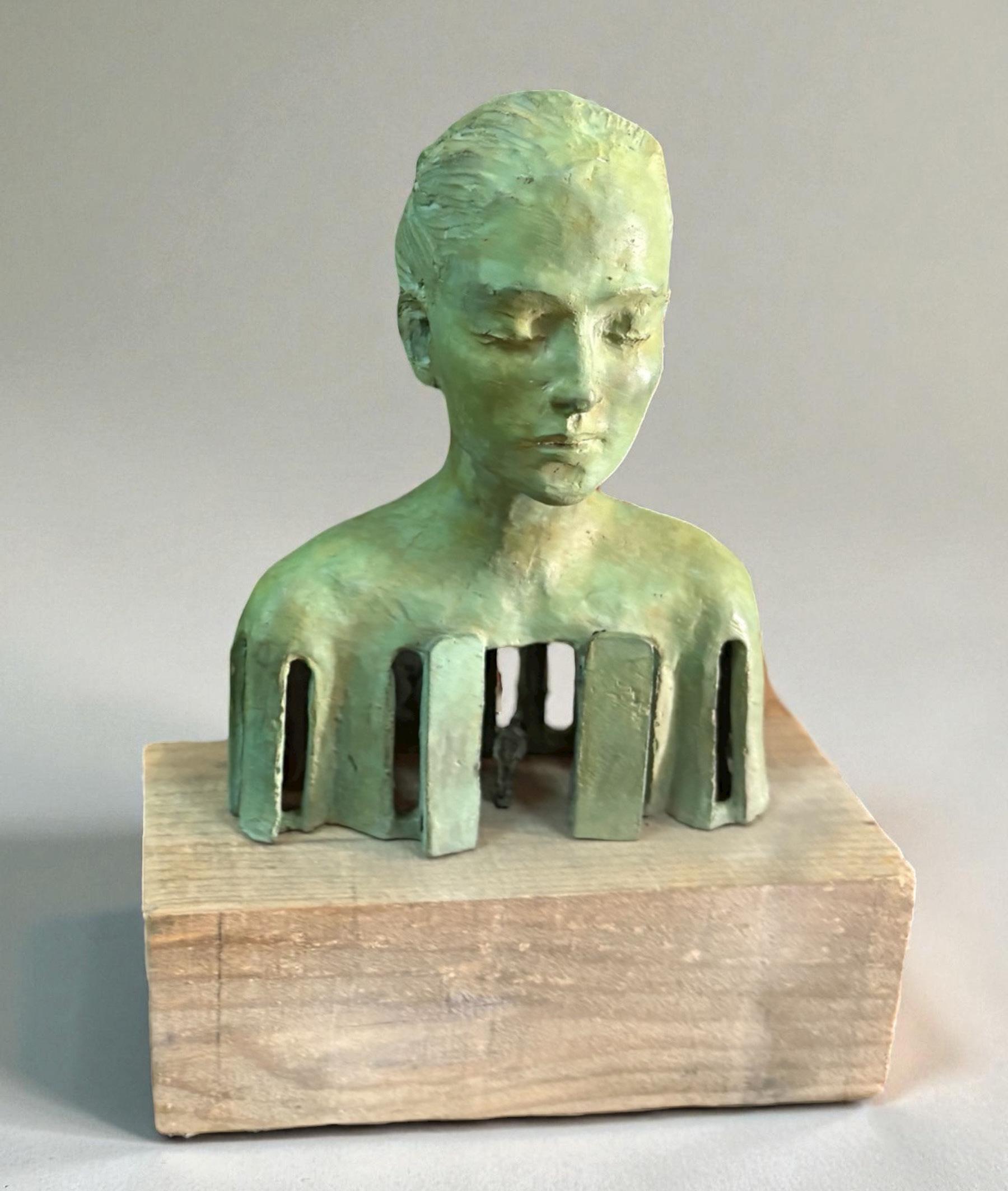
La potència del llenguatge plàstic de Béatrice Bizot, a més de permetre desplaçar-se dins del seu propi espai creatiu, prové de la seva atenció dialèctica a la noció de moviment, de circularitat, de contradicció i també d’ equilibri. El conjunt de les seves escultures expressa la necessitat de conjugar la urgència i la paciència en els moviments de la vida, de fer lloc tant a la puressa com a l’impuressa, a la duresa i la lleugeresa, a la delicadesa i a la brutalitat, a la superfície i a la profunditat, a l’exterioritat i a la interioritat. No es tracta tant d’una associació dels contraris com d’una rearticulació, en el gest artístic, de tot allò que ens determina: tant la matèria com l’esperit, el buit com el ple. Els rostres incomplets, ens recorden que, malgrat els materials sòlids i duradors que els constitueixen —bronze, formigó, fusta—, tot és fràgil, efímer i amputable.
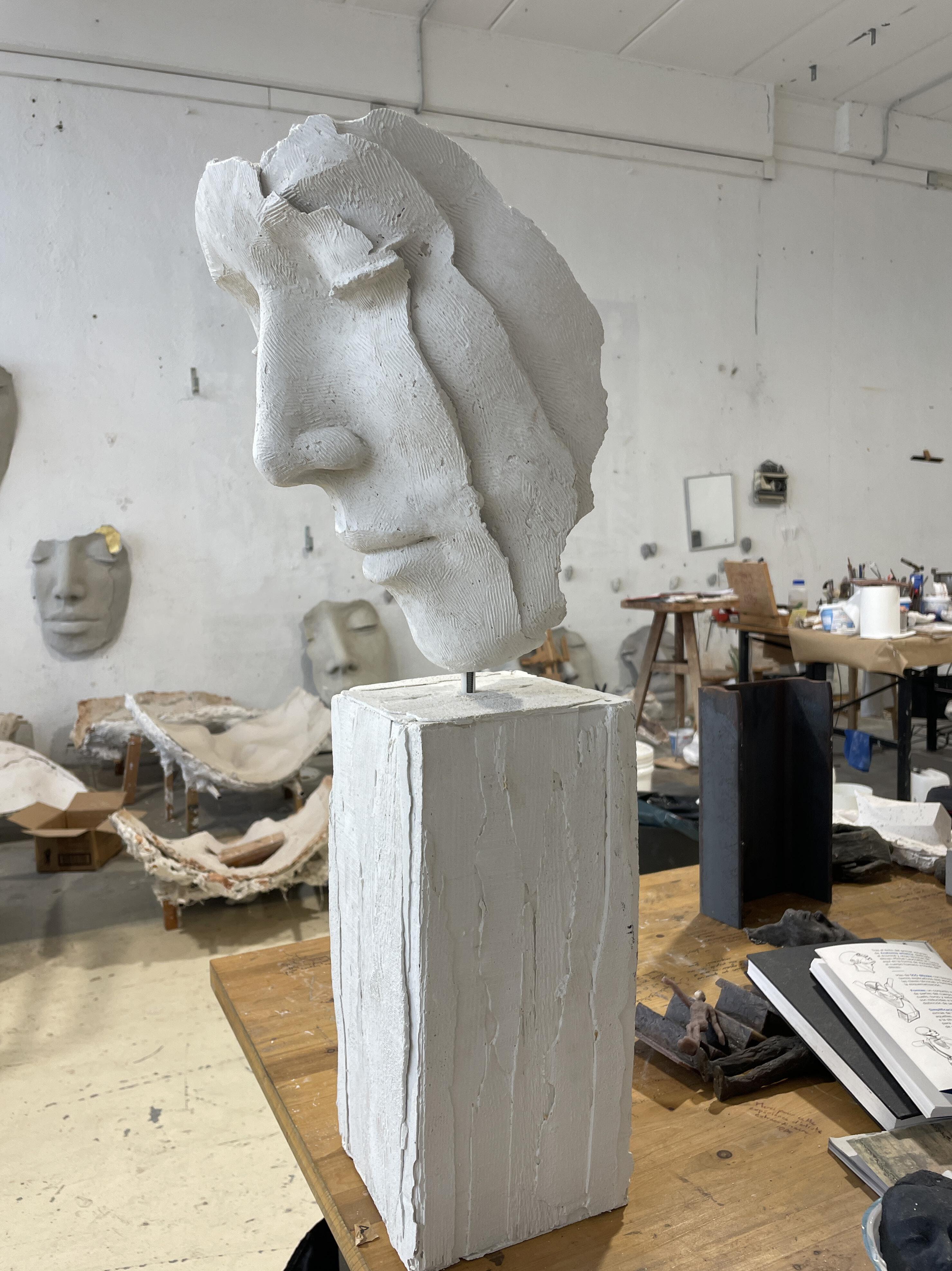
Hi ha sovint en les seves peces un buit, un forat, una obertura, una esquerda. I totes aquestes perforacions no esperen més que ser omplertes. La mirada del visitant podria, potser, assumir aquest gest d’ompliment —com una manera de connectar-se amb el gest de l’artista. La suavitat del ciment, tant de la seva matèria com del seu color, ens evoca la innocència, la bellesa, la puresa, alhora que suggereix la inacabada promesa d’aquestes qualitats.
A banda de l’obsessió pel buit, l’artista no deixa de treballar sobre l’alteració dels cossos i del temps, com si els seus objectes, rostres i meitats de cossos restessin atrapats en l’impuls d’una construcció, d’un esdevenir. És aquest mateix esdevenir identitari el que travessa l’obra plàstica de Béatrice Bizot, on el temps —més encara que l’espai— constitueix la matèria primera.
Jean-Marie Durand Crític d’art
“The face imposes itself upon me, without my being able to remain deaf to its call or forget it—I mean, without my being able to cease being responsible for its misery,” wrote the philosopher Emmanuel Levinas in his book Humanism of the Other. Confronted with Béatrice Bizot’s sculpted faces— as open in their apparent generosity as they are opaque in their inward mystery—it is impossible not to hear the call that Levinas describes. Something summons us, solicits us, holds us, when we stand before these faces with extinguished gazes, closed eyes that nonetheless pierce us. If not for the grace of their features, it is the density of questions contained within them that so deeply unsettles us.
The disturbing power of these faces lies in their ability to make opposite affects vibrate at once—from serenity to unrest. As if a face by Botticelli had merged with a face by Munch, superimposing themselves in a singular hybridization, outside of time yet at the heart of art history. Both one and the other, one after the other, one within the other—the two attitudes unfold in the very form of the sculptures exhibited here, through a wide amplitude of gestures, from the monumental to the minute, from the tragic to the sentimental.
Without attempting to set forth any firmly stated truths about the world and our ways of looking at it or finding our place within it, Béatrice Bizot’s sculptures express—simply, and that is already much—the intensity of our tremors and existential agitations. As if they contained within themselves, like a poetic echo, the impossibility of being transparent to ourselves or of being carried entirely by a single, unambiguous affect.
The strength of Béatrice Bizot’s visual language, beyond its ability to shift within its own creative space, lies in her dialectical attention to movement, circularity, wandering, contradiction, and balance. Her entire sculptural body of work seems to express nothing other than the necessity of combining urgency with patience in the movements of life, of making room for the pure as much as the impure, the hard and the soft, the raw and the cooked, delicacy and brutalism, surface and depth, exteriority and interiority. It is less a matter of associating opposites than of rearticulating, through the artistic gesture, everything that determines us—matter and spirit, void and fullness alike.
The incomplete faces, like the detached legs separated from the rest of the body, remind us that despite the solid and enduring materials from which they are made—bronze, concrete, wood—everything remains fragile, ephemeral, friable. There is often, in her pieces, a void, a hole, a breakthrough, a breach. And all these perforations await only to be filled. The gaze of the viewer could perhaps assume this act of filling—as a way of connecting with the gesture of the artist.
The softness of the cement, both in its material and in its color, evokes innocence, beauty, purity, just as it signifies the incompleteness of their promise. Beyond her obsession with openings, the artist continuously works on the alteration of bodies and of time, as if her objects, her faces, her half-bodies were caught in the momentum of construction, of becoming.
Beyond her obsession with emptiness, the artist continually works on the alteration of bodies and time, as if her objects, faces, and halves of bodies remained caught in the impulse of a construction, of a becoming. It is this very becoming of identity that runs through the plastic work of Béatrice Bizot, where time—more than space—constitutes the primary material.
encara que l’espai— constitueix la matèria primera.
Jean-Marie Durand Art critic
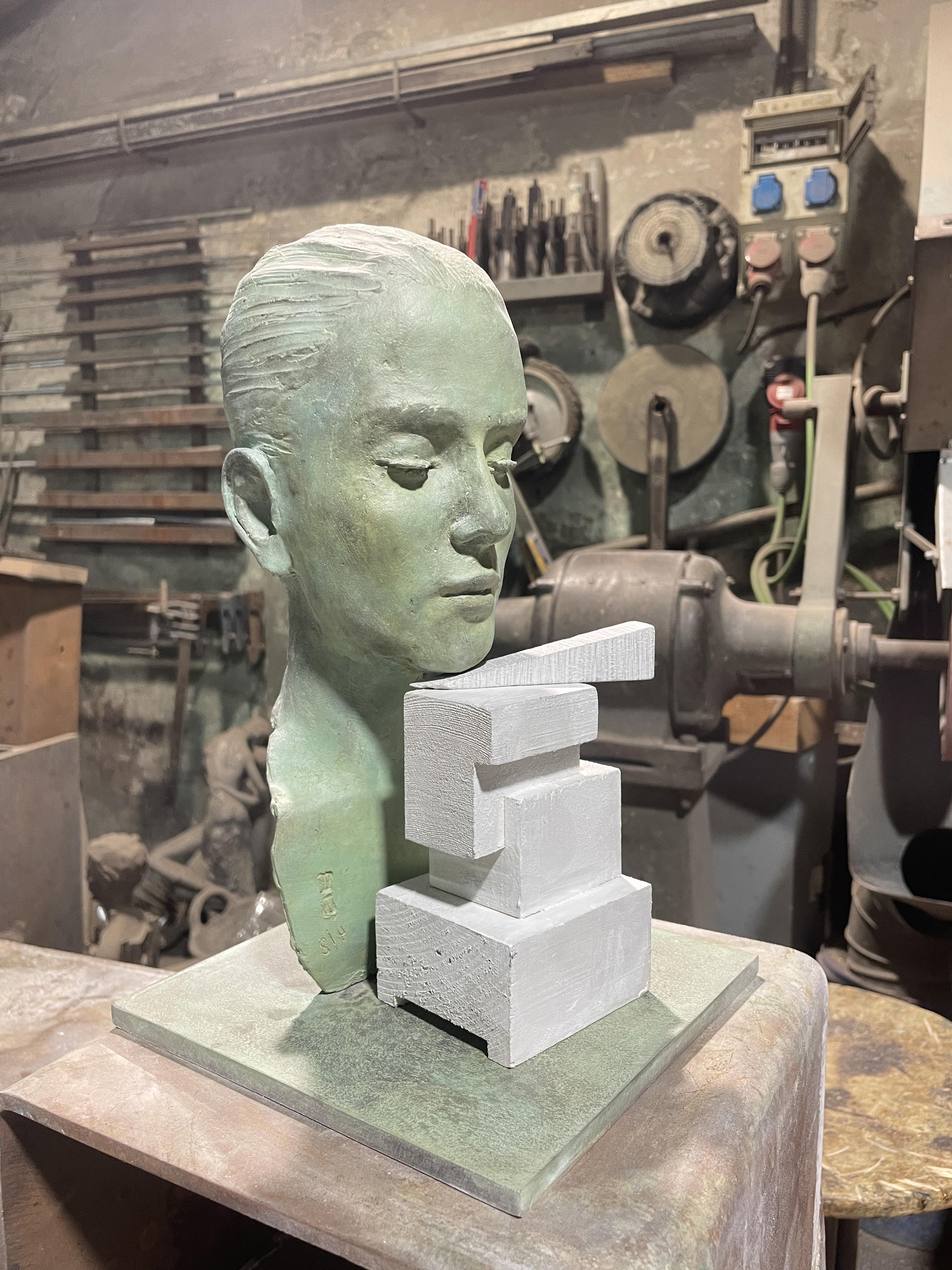
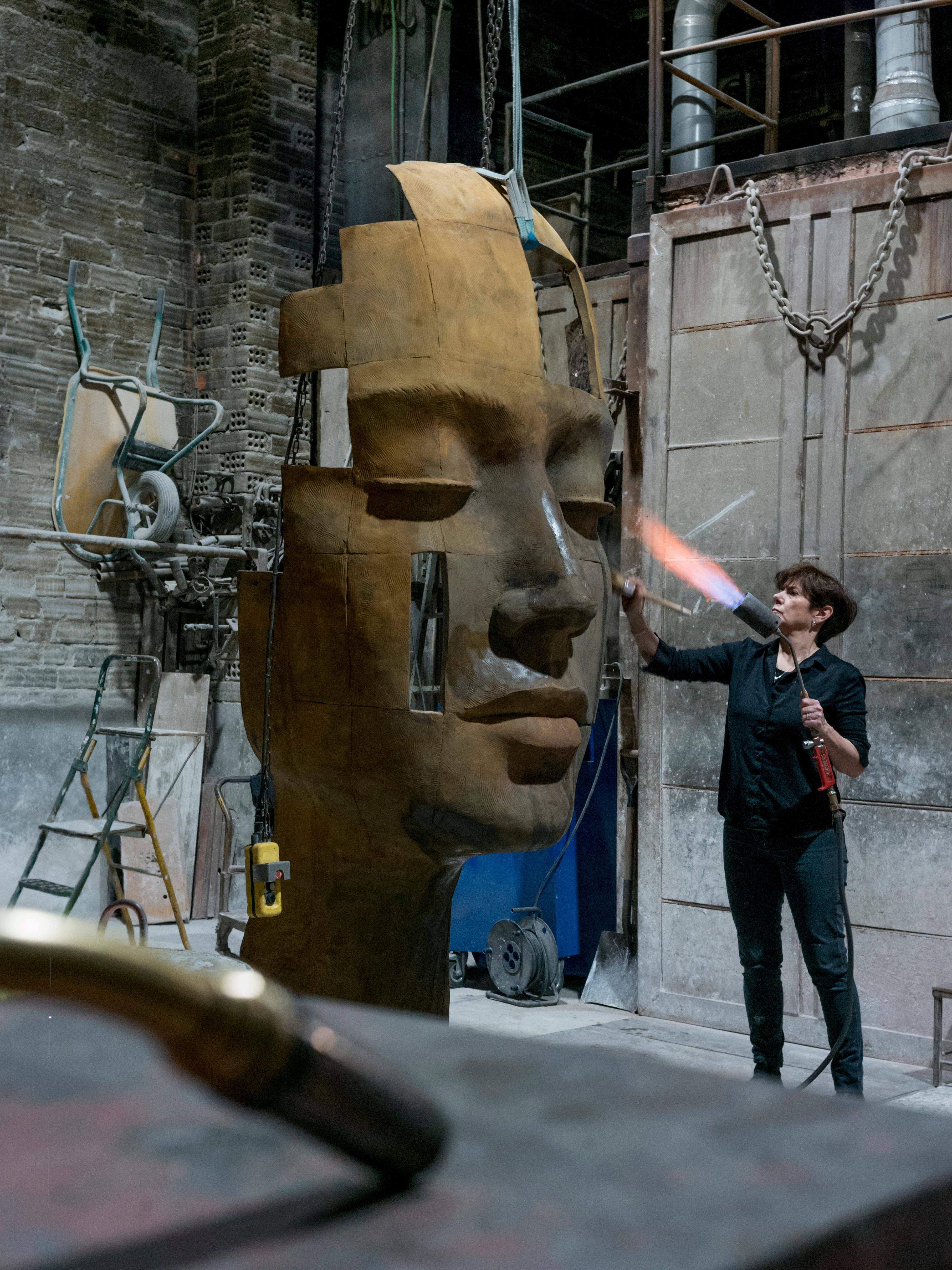
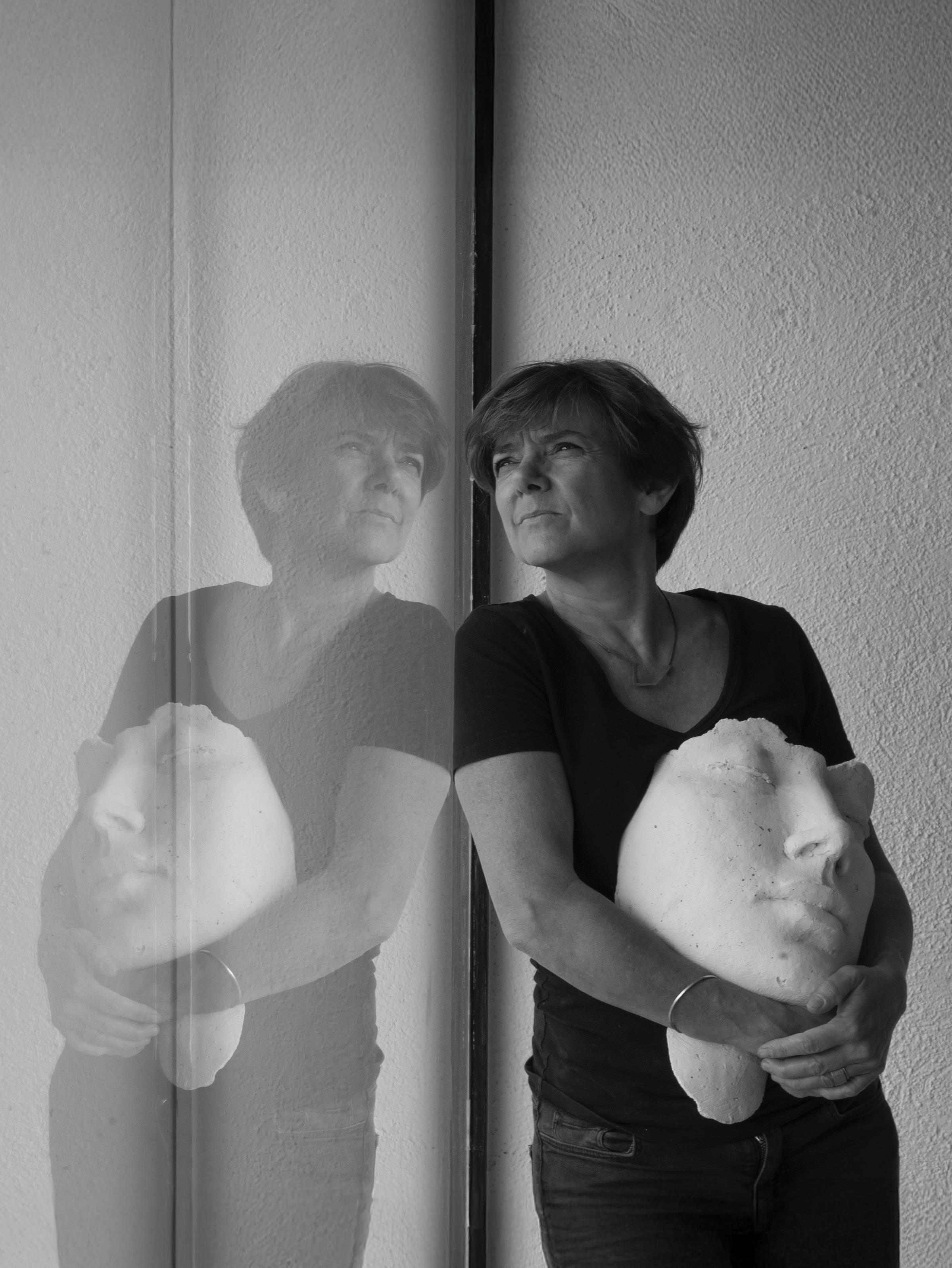
Béatrice Bizot a la Foneria Ginfer patinant l’escultura pública de Salou, “Arquitectura de la Pau” 2024
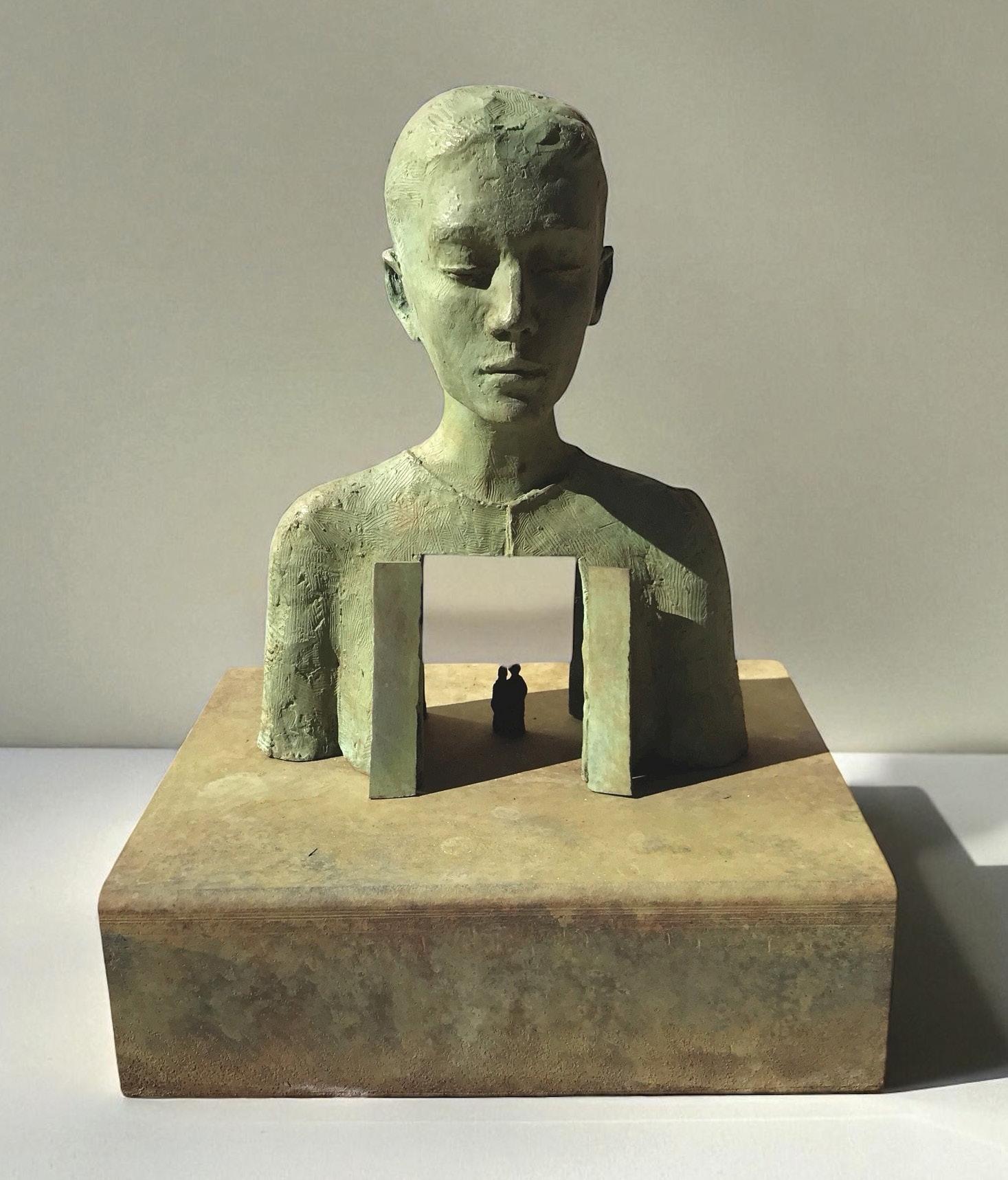
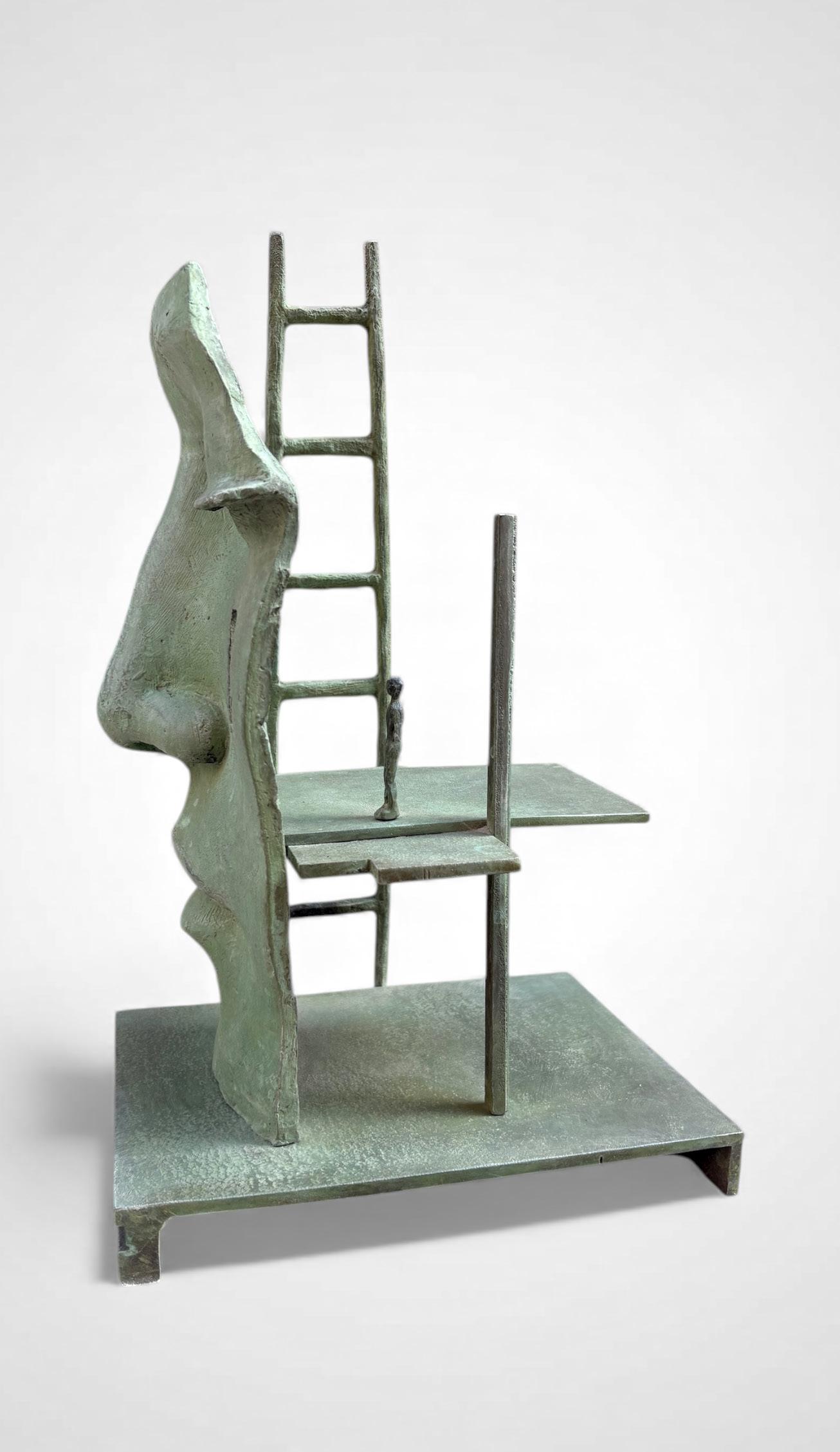
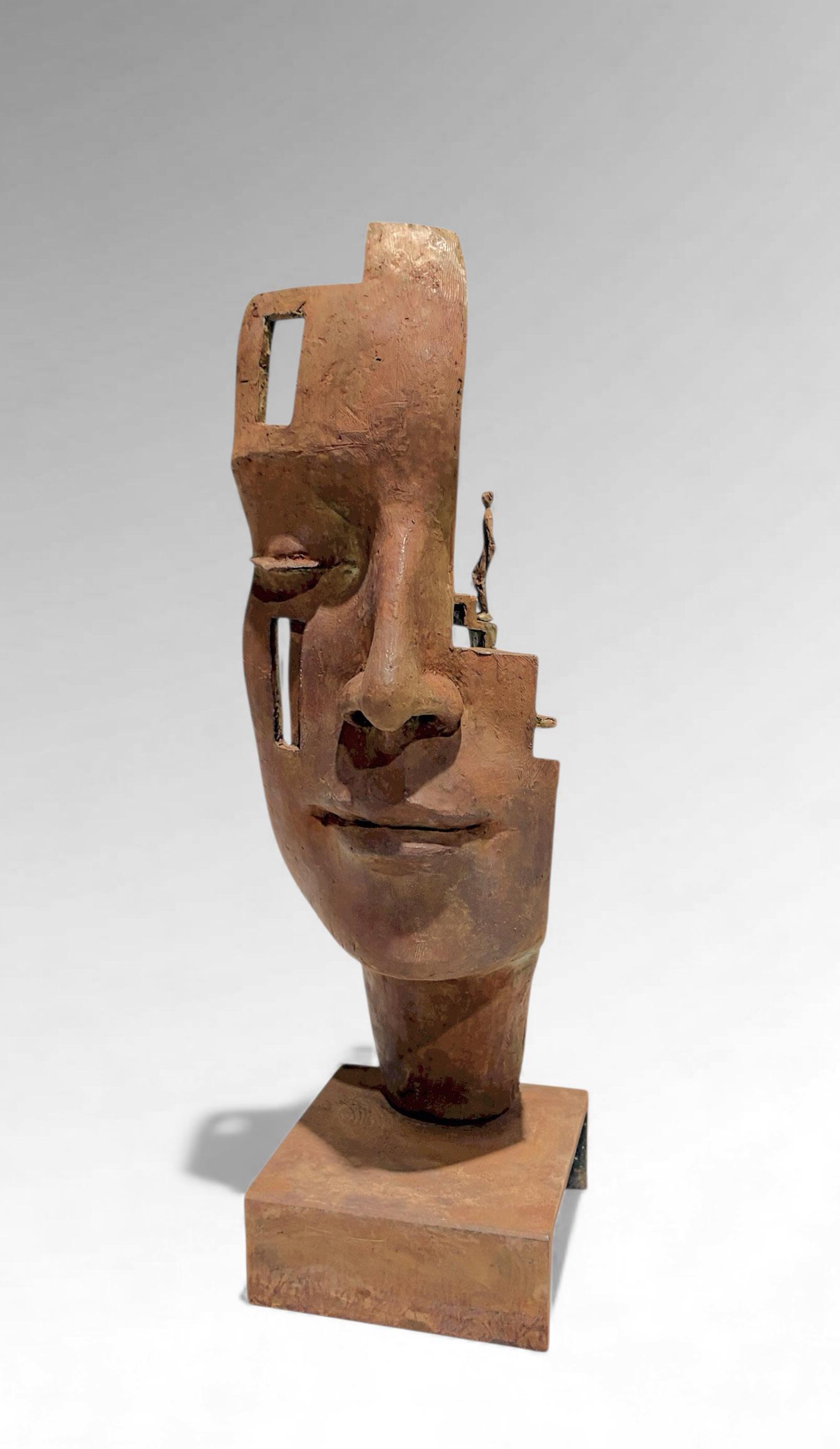
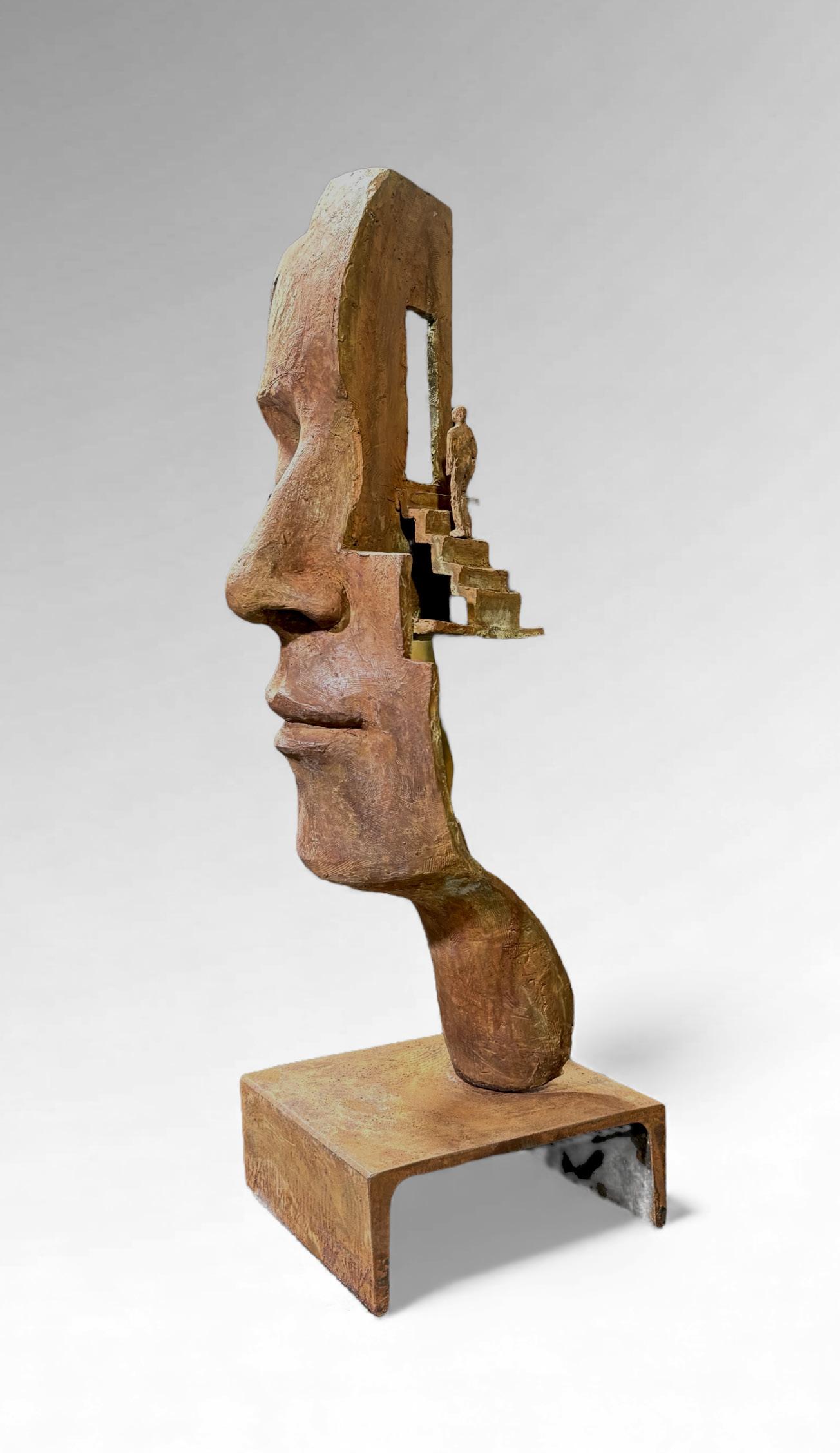
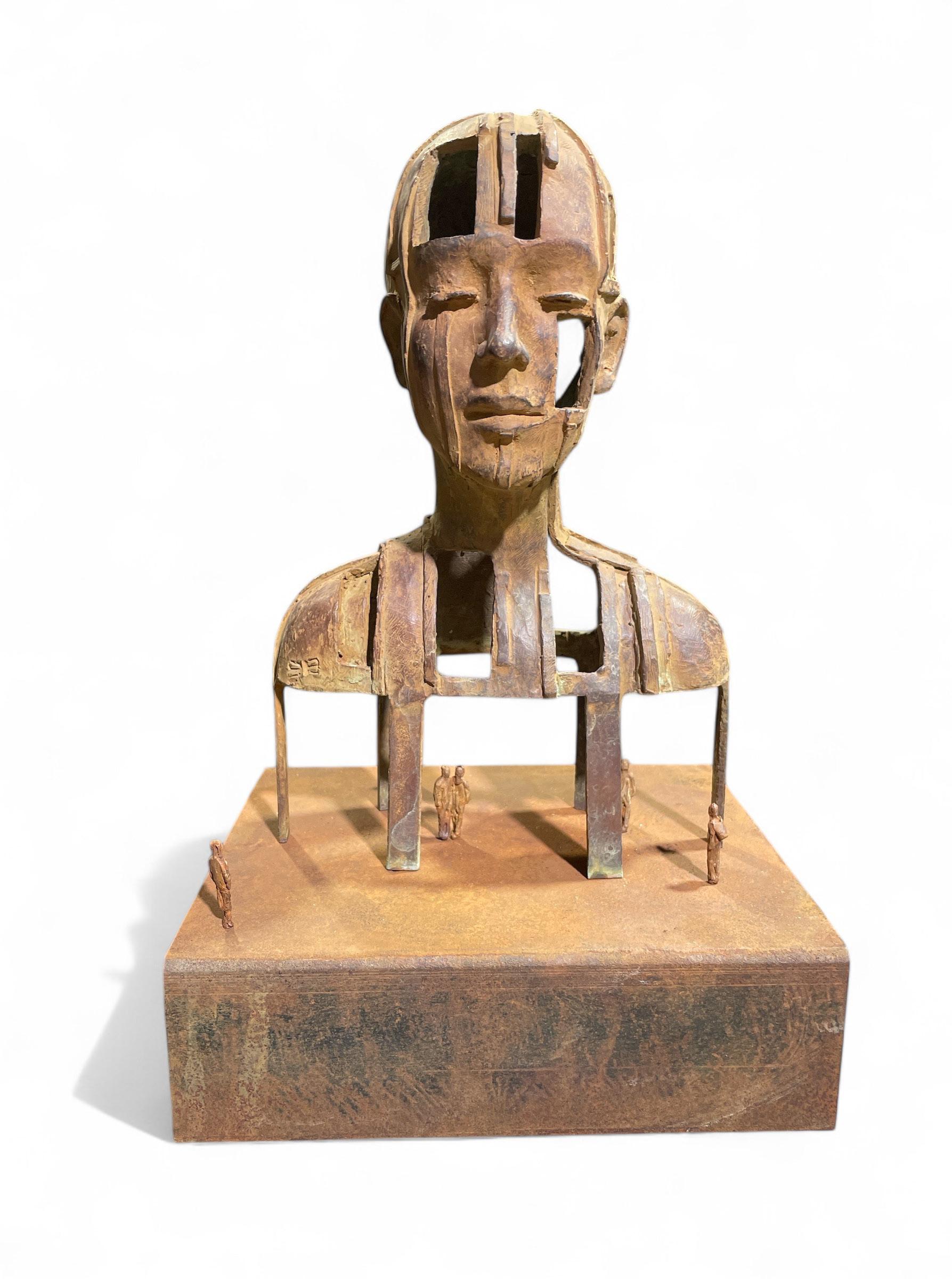
Arquitectura dream
Bronze i bas d’acer | 60 x 24 x 24 cm
i or |
Béatrice Bizot, Milà, 1966
Artista francesa establerta a Tarragona, Catalunya des del 2004, després d’itinerancies entre Estats Units, França i Itàlia. Estudia escultura a la Universitat de Belles Arts de Brera, a Milà, i al Delta College de Michigan. Més recentment, ha ampliat la seva formació a l’Escola d’Art de Tarragona.
Va realitzar obres públiques per varies ciutats a Espanya i recentment va crear una escultura per a la basílica de la Sagrada Familia a Barcelona.
Es membre de la Reial Academia de Belles arts de Sant Jordi de Barcelona.
French artist based in Tarragona Catalonia since 2004, after years spent in the United States, France, and Italy.
She studied sculpture at the Brera Academy of Fine Arts in Milan and at Delta College in Michigan. More recently, she continued her training at the Tarragona School of Arts. She has created public sculptures for several cities in Spain, and she recently produced a sculpture for the Sagrada Família Basilica in Barcelona.
She is a member of the Royal Academy of Fine Arts of Sant Jordi of Barcelona.
Selecció d’Exposicions Individuals | Selection of solo exhibitions
2025 “Teixint horizons” – Galeria Anquins, Reus
2022 “In Materia” – Galerie Insula, París (França)
“(De)construcció” – Galeria Anquin’s, Reus
2020 “Empreintes” – Galerie Insula, París (França)
“Empremtes” – Centre de Lectura de Reus, Cicle d’Art Contemporani
2019 “Territoris confluents” – Galeria Anquin’s, Reus
2018 “Innerlandscapes” (amb Ramon Cornadó) – Museu d’Art Modern, Tarragona
Instal·lació pública “Homenatge a Xavier Dupré” – Circ romà de Tarragona
2017 “Édifices Éphémères” – Galerie Insula, París (França)
2015 “Codis” (amb Lluc Queralt) – Galeria Anquin’s, Reus
“De(s)constructions” – Galerie Insula, París (França)
2014 “Veus silencioses a la ciutat” – Universitat Rovira i Virgili, Tarragona
2013 “Korespondáž” – Museu d’Arquitectura, Wroclaw (Polònia)
2012 “Formigó desarmat” – Galeria Pinyol, Reus “Korespondáž” – Veletržní Palác, Museu d’Art Modern i Contemporani, Praga (Rep. Txeca)
2011 “Passages” – Galerie Insula, París (França)
2010 “Bronzes et ciments désarmés” – Galeria Lee, París (França)
2007 “Extracte de la ciutat” – Galeria Carme Espinet, Barcelona
2006 “Ciutat blanca” – Museu d’Art Modern, Tarragona
2004 “Rencontre” – Espace Culturel Saint-Pierre des Minimes, Compiègne (França)
Fires d’art i exposicions col·lectives | Art fairs and group exhibitions
2025 Art Basel Volta – Insight Artspace
AAF Boston (EUA) – Insight Gallery
AAF Hamburg – Galeria Anquins
AAF Vienna – Galeria Anquins
Art Karlsruhe – Galeria Anquins
2024 “Context Art Miami” – Miami (EUA), Insight Gallery
AFF Art Fair – Austin (Texas, EUA), Insight Gallery
“Premi d’escultura” – Fundació Vila Casas, Can Mario, Palafrugell
“Amb veu de Dona” – Galeria Anquin’s, Reus
AAF Berlin (Alemanya) – Galeria Anquin’s
2023 “Insula 15 ans” – Galerie Insula, París (França)
ART Karlsruhe – Karlsruhe (Alemanya), Galeria Anquin’s
AFF Art Fair – Nova York (EUA), Insight Gallery
“Spanish artists in Tokyo” – Gallery Nayuta, Tòquio (Japó)
“Tros de Dona” – Museu Terra. Espluga de Francolí
2020 “Parlem Contemporani?” – Convent de les Arts, Alcover
“L.A. Art Show” – Los Ángeles (Califòrnia, EUA), Galeria
Anquin’s
2019 “Els Ports, Natura i Art” – Parc Natural dels Ports, Horta de Sant Joan
Biennal d’Art Contemporani – Museu d’Art Modern, Tarragona
“Double Jeu” – Jardins d’Etretat, Etretat (França)
Fira d’Art de Bodensee (Àustria) – Galeria Anquin’s
“Plural femení” – Museu d’Art Modern, Tarragona
“Del gris a l’Oxyd” – Torre Vella, Salou
Biennal d’Art 2012 – Museu d’Art Modern, Tarragona
Premis i mencions | Awards and mentions
2012 Menció honorifica XXXVI Premi “Julio Antonio” escultura
Biennal d’Art Museu d’Art Modern Tarragona.
2011 Galeria Pinyol, Accessit d’escultura 19 Premi TELAX.
1997 Best of show for sculpture. Women’s Work Art Exhibit del Center for the Arts de Midland, Michigan EEUU.
Merit award for sculpture. Midland Artist Guild, Michigan EEUU.
Blasy Electric award for sculpture. Great Lakes Art exhibition. Center for the Arts de Midland, Michigan EEUU.
Obra publica | Public works
2025 Creació escultura de Sant Roc – Sagrada Família, Capella de l’Assumpta
2024 “Arquitectura de la Pau” – Plaça de la Pau, Salou “Passage” – Art Contemporary Sculpture Parc, La Ràpita
2022 “La dona d’aigua” – Rentadors de Montbrió del Camp
2021 “Les portes de la memòria” – Homenatge a les víctimes de la guerra civil, Vila-seca
2018 “Homenatge a Xavier Dupré” – Capçalera del Circ Romà, Tarragona
2010 “L’homme qui marche” – Tanatori de Torredembarra
2007 “Mar, Finestra, Plaça” – Barri del Serrallo, Tarragona
Col·leccions | Collections
Basílica de la Sagrada Família – Capella de l’Assumpta
Museu d’Art Modern de Tarragona
Museu de la Reial Acadèmia de Belles Arts de Sant Jordi
Fons d’Art del Port de Tarragona
Col·lecció del Center for the Arts, Midland (EUA)
Arxiu Nacional – Praga (República Txeca)
Col·leccions privades a França, EUA, Itàlia, República Txeca i Espanya
Amb el suport de:
Campoamor, 2, 43202 Reus
Tel. +34 666 674 996 www.anquins.com
Horaris: de dimarts a divendres, d’11 a 13.30h i de 17 a 20h
dissabtes: d’11 a 13.30h
Open Tuesday to Friday from 11:00 to 13.30 and from 17:00 to 20:00 Saturday from 11.00 to 13.30
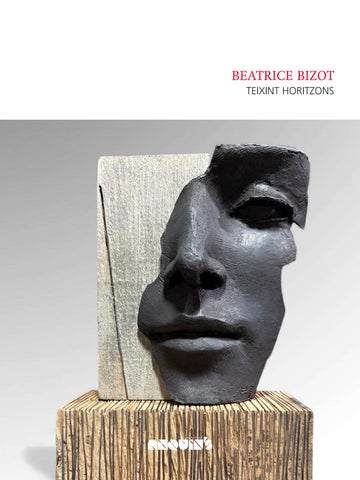
Coberta: Le regard | Bronze | 36 x 22 x 15 cm
A baix: Instal.lació en el