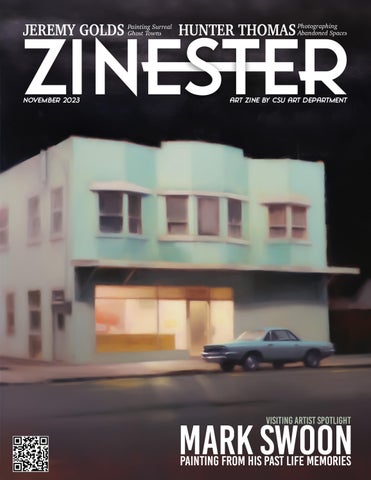
MARK SWOON UNVEILING SHADOWS
In the bustling heart of New York City, an artist named Mark Swoon has emerged, captivating audiences with his evocative and controversial paintings. Swoon, known for his mastery of oil paints, delves into the depths of his past life, weaving a chilling narrative through scenes of his haunting memories as a serial killer. This enigmatic artist is currently a visiting presence at Columbus State University, sparking both fascination and unease among the art community. Mark Swoon's work is a departure from the conventional, as he fearlessly confronts the darker recesses of the human psyche. His paintings, vivid and rich in detail, depict locations from his troubled past where he committed heinous acts. It is a bold exploration of the connection between art and the artist's inner demons, inviting viewers to grapple with uncomfortable truths. The ethical implications of Swoon's subject matter have inevitably sparked debate within the art world. Some argue that art should serve as a mirror reflecting the depths of the human experience, even the darkest aspects. Others, however, question the responsibility of the artist when it comes to potentially glorifying or sensationalizing criminal behavior. Columbus State University, known for fostering creativity and pushing boundaries, has welcomed Mark Swoon as a visiting artist. This decision has prompted discussions about the role of universities in providing a platform for controversial art. While some believe that such art challenges societal norms and encourages dialogue, others argue that it may be triggering for those who have been affected by similar acts of violence. In an exclusive interview, Swoon defends his artistic choices, stating that his intention is not to glamorize or justify his past actions but rather to confront the demons that have haunted him. He sees his art as a form of therapy, a cathartic process through which he can exorcise the ghosts of his past. Art has always been a medium through which individuals grapple with their experiences, both personal and collective. Mark Swoon's paintings force us to confront the uncomfortable reality that art can be a mirror reflecting the darkest corners of the human soul. As viewers, we are challenged to separate the art from the artist and engage in a thoughtful exploration of the boundaries and responsibilities inherent in artistic expression.
As Mark Swoon's work continues to provoke and push the limits of acceptability, it prompts us to question the role of art in society. Can art be a redemptive force, allowing individuals to confront and transcend their past? Or does it risk glorifying actions that should remain condemned? The answers are as complex and nuanced as the strokes of Swoon's oil paint, leaving us to grapple with the uneasy intersection of art, morality, and the human experience. As viewers step into the Illges Gallery, they are immediately confronted with the sheer scale and intensity of Swoon's work. The details within the painting are both mesmerizing and unsettling, capturing the essence of a moment frozen in time. The restaurant, depicted with meticulous precision, becomes a haunting backdrop that invites contemplation about the artist's journey and the complexity of the human psyche. Swoon's choice of oil as his medium adds depth and texture to the canvas, allowing the play of light and shadow to amplify the emotional weight of the scene. The strokes are bold and deliberate, conveying a sense of urgency that transcends the boundaries of traditional art. As
the audience navigates the sprawling canvas, they find themselves immersed in the artist's attempt to reconcile with his past, urging us to question the capacity of art to serve as a vessel for redemption and self-discovery. The Illges Gallery's decision to host such a provocative piece inevitably sparks conversations about the role of universities in showcasing art that challenges societal norms. Does this painting sensationalize violence, or does it provide a raw and unfiltered perspective on the complexities of human nature? The debate unfolds within the gallery's walls, underscoring the importance of art as a catalyst for dialogue and introspection. Mark Swoon's colossal painting serves as a powerful reminder of the transformative potential of art. As viewers grapple with the discomfort elicited by the subject matter, they are also prompted to reflect on the boundaries of artistic expression. The Illges Gallery becomes a space where the lines between morality and creativity blur, inviting us to consider whether art can transcend the shadows of the past and illuminate a path towards understanding, empathy, and ultimately, redemption.