
TABLE OF CONTENTS
Cameos
Under de-Globalization Where Lies the Future of International Students’ Mulitcultural Identities
Redling’s Lasting Impact on Wealth and Opportunity
Experiencing a New Culture at Home
Seahawks Superbowl Victory
Evolution of Women’s Basketball
Daring to Explore Path of Peace
Insights on ICE Walkout at AWS
I.M.Pei: Failure that Make Thousands of Victories
Quick and Delicious Cinnamon Rolls
The Line: Too Much, Too Soon
Luxury Above, Labor Below
Artist Spotlight : Emily Boitano
Discovering the Killer in the Kemper: Clue
Volleyball Club: Set, Spike, Play
Cameeeow: The Undead Cat on the Internet
Artist Spotlight: TT Nguyen
Winter Olympics 2026: Highlighting the Outliers
Experience Balkan Buisine: Alma Review
Portland Art Museum
Saving the Dreams of Youth Through Art: Shamsia Hassani
Spreading Hope
MUN Period Product Promotion
Remember to attend the Carnival of Games
Mark your Calendar for the Upcoming BIPOC Market
Dear Readers,
LETTER FROM THE EDITORS STAFF
This spring Inkwell had the amazing opportunity to explore together outside of Tacoma. We went on a three day adventure to Portland, Oregon and immersed ourselves in the food, art and culture that the city had to offer. On this trip we went to the Portland Art Museum, the Hopscotch immersive art exhibit, walked along the waterfront, visited the Nike campus, explored Powell’s books, wandered in the Japanese gardens, and shared many wonderful meals.
In this Changing Gears issue you will read about some of our adventures!
Throughout this issue we explored some international viewpoints such as a cover on the outlier events of this year’s Winter Olympics, global concerns, influential artists and architects and more! We looked into new places and explored new perspectives. In this edition we have something for everyone!
As Red Tie editors, this is our final issue with Inkwell! We wish the Green Ties good luck and look forward to seeing how Inkwell continues to grow.
Thank you for reading,
Peyton, Masha, Eisha (class of 2026), Maria (class of 2027)
Masha Kotelnikov: Editor in Chief
Eisha Ahmad: Editor in Chief
Peyton Matthews: Editor and Social Media Design Coordinator
Maria Dorner: Design Editor and Assistant Editor
Cooper Dicks: Assistant Editor and Articles
Chloe Yoo: Assistant Social Media Design Coordinator, Articles
Gabe Droubay: Articles and Assistant Editor
Jaena Han: Articles
Cayden Laynor: Articles
Presley Jones: Articles
Kaya Parker: Articles
TT Nguyen: Articles
Minh Nguyen: Articles
Luc Sun: Articles
Guest Writers: Candy Liu, Abby Bowden, Solomon Kim
Guest Photographer: Ruby Mahler, Annie Green
Cover photo credit: Chloe Yoo- taken in Tacoma
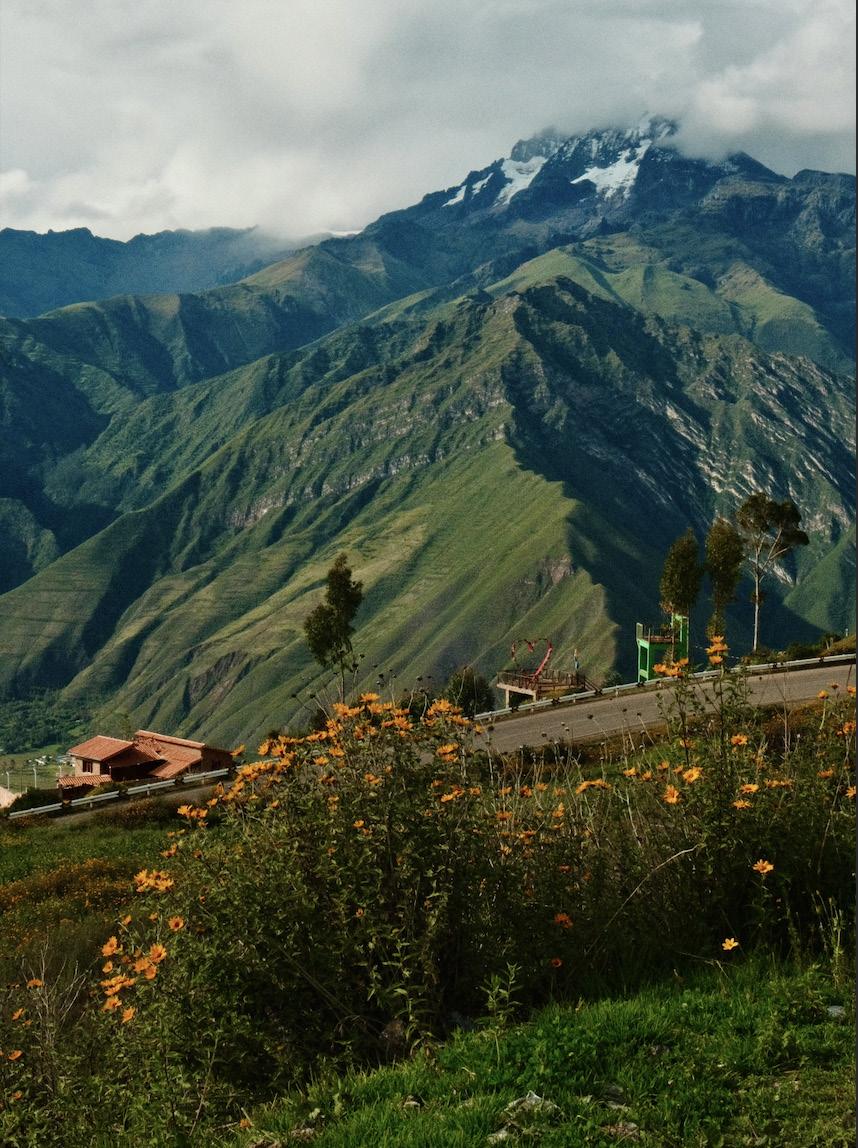
Back Cover photo credit: Chloe Yoo- taken in Peru
CAMEOS
Inkwell wanted to shift from the local focus in our last issue to a global one. We wanted to investigate and give voice to more international locations, ideas, innovations and concerns. We hope these cameos spark curiosity and a desire to learn and experience more of the world.
Traveling with Intention
Presley Jones
If you want a fun, exhilarating and intriguing place for intentional travel, Japan is the place for you!
Japan feels like stepping into a world where everything is intentional. Everything, such as items you use everyday, are carefully designed so it feels like stepping into a futuristic world where everything is advanced and high tech.
Yoyogi park in Tokyo Japan is a beautiful place to visit and is free of charge! The park provides gorgeous scenery with the beautiful cherry blossoms and the lively free spirited atmosphere.
Although Japan is a beautiful place to visit today, the record breaking heavy snowstorms of Japan and the cold weather the country is experiencing are causing severe disruptions as of late January 2026. This causes hazardous driving conditions, thousands of stranded passengers and risks of power outages.
Despite these tragedies happening in Japan, the citizens can help by volunteering at food shelters and also providing emergency preparations. If you don’t live in Japan you can still help by donating to organizations such as the Japanese Red Cross Society to help the people in need of food and shelter in Japan.

Beauty Blooming in The Unprecedented: La Sagrada Família
Chloe Yoo
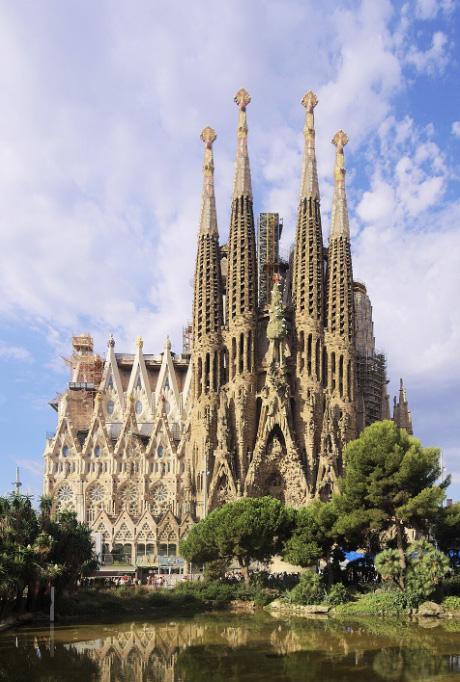
Its rich history the dedication of its architect Antonio Gaudí are what defines la Sagrada Família as the symbol of modernism in Barcelona.
Basílica de la Sagrada Família, also known as Sagrada Familia, is one of the most unique Catholic Churches in the world. Going through construction for over a hundred years, the church is well known for its distinctive design, religious symbolism, and the accentuated beauty under natural light. The religious references throughout the church reflect Barcelona’s cultural identity as a historically Catholic city.
When Gaudi took over the construction in 1883, he carried out a drastic transformation with his unique structural design. The church now thoroughly incorporates features of the natural world displayed through curves on the wall and columns in the nave that resemble trees with their branches.
If a stunning structure embellished with intricate details is what you are looking for, Barcelona has its Sagrada Familia to deliver an unforgettable and remarkable experience.

https://www.architecturaldigest.com/story/la-sagrada-familia-everything-you-need-to-know https://www.casabatllo.es/en/antoni-gaudi/sagrada-familia/
Yoyogi Park
The Thwaites “Doomsday”
Glacier
Gabe Droubay
How one glacier could cause sea levels to rise 65cm, and what scientists are doing to prevent it.
The Thwaites Glacier, also known as the Doomsday Glacier, is the widest and one of the largest glaciers in Antarctica. However, it’s not its size that is potentially detrimental to many human lives, it’s the alarming rate at which it’s melting.
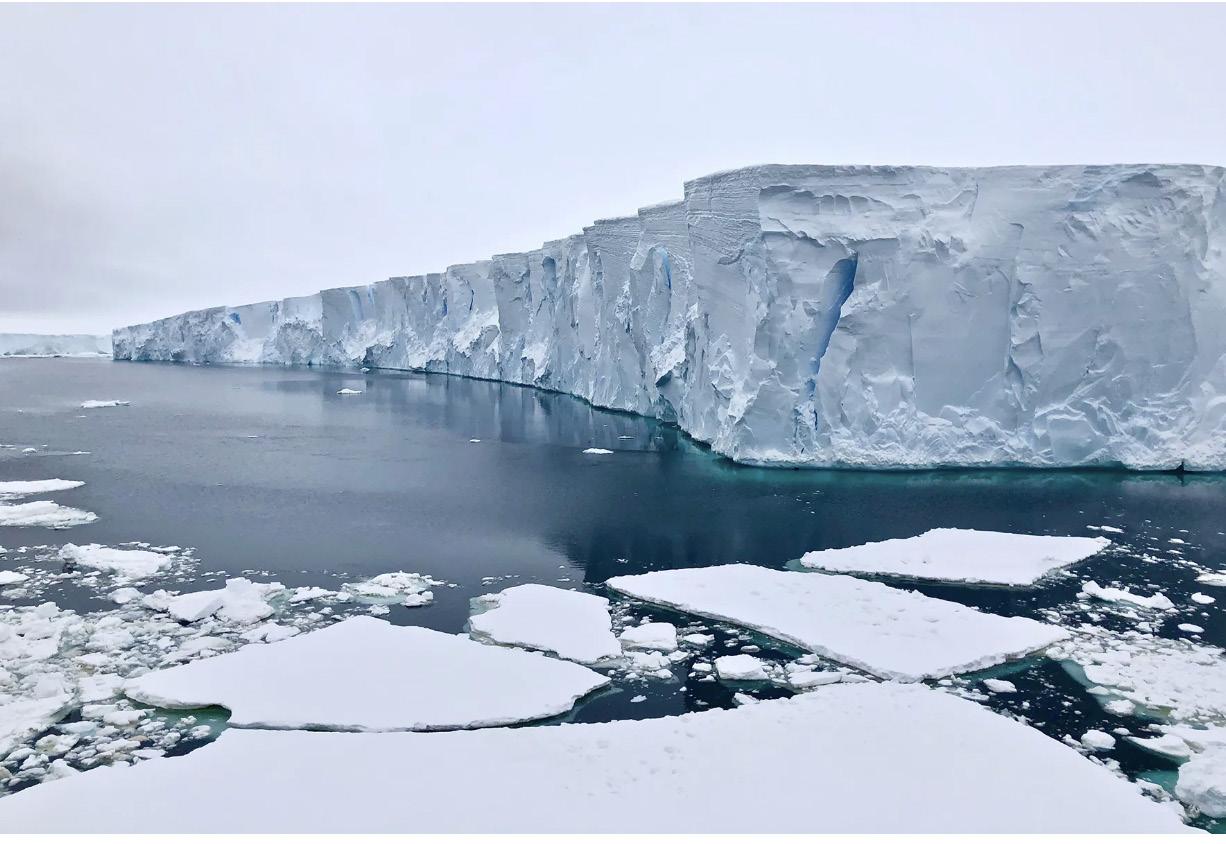
At over 190,000 square kilometers, the Doomsday Glacier is approximately the size of Great Britain, and is already contributing 4% of the yearly sea level rises seen around the world. While this melting is partially due to human pollution, the main cause is much deeper, literally.

The Thwaites Glacier sits atop a warm water ocean, causing it to melt from underneath. Scientists from Great Britain and South Korea have dug down into the glacier using hot water drills, attempting to learn more about how exactly the warm water ocean is causing melting one thousand meters below the
surface. It is already known that if the glacier fully melts, it will raise sea levels a staggering 65 centimeters, making the scientists job crucial as for every centimeter water levels rise, around 6 million people are exposed to coastal flooding (Gilliver, Euronews).
One potential solution to limit sea level rise is building a wall around the glacier. The Seabed Anchored Curtain Project aims to prevent the warm water ocean from melting the underside by building a physical barrier in the form of a wall, as “a reduction in greenhouse gases alone will not be enough to stabilize the ice sheet” (Gilliver, Euronews). Engineers and researchers from Cambridge University, Dartmouth College and many other universities are already collaborating to design this “curtain” that is projected to be 80km long.
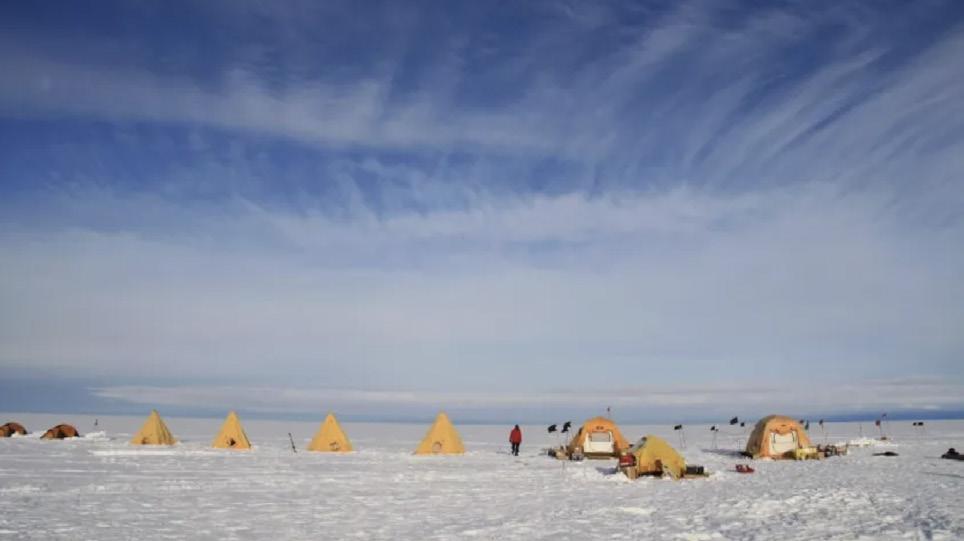
https://nsidc.org/our-research/featured-projects/international-thwaites-glacier-collaboration
While this one glacier could completely disrupt humanity if left on its own, with all of the recent scientific advancements that have been made, the chance of catastrophic events occurring due to it is decreasing significantly.
To find out more, check out the links below


https://futurism.com/future-society/doomsday-glacier-instruments https://www.euronews.com/green/2026/02/04/doomsday-glacier-is-melting-faster-than-wethought-can-a-150-metre-wall-stop-it-flooding-e https://www.rollingstone.com/politics/politics-features/antarctica-thwaites-glacier-howfast-will-it-melt-1168437/ https://nsidc.org/our-research/featured-projects/international-thwaites-glacier-collaboration https://thwaitesglacier.org/
Glacier Offshore Research
Twaites Glacier Collaboration
Escape to Victoria B.C.
Maria Dorner
Only a day’s drive and ferry ride away, Victoria B.C. is the perfect spot for a weekend escape or a longer getaway. As the capital of British Columbia in Canada, Victoria is a stunning city with so many amazing things to see and learn about.
If you’re interested in learning more about the area and its history, you can check out the amazing Royal BC Museum, or learn more about local indigenous culture. You can also dive deeper into the local culture by taking a visit to one of the many restaurants or shops in the city, or attend the popular Tea at the Empress hotel. Near Victoria features the stunning Butchart Gardens, a beautiful place to see stunning flowers and spend time in nature. If spending time in nature is your idea of fun, then there are numerous hiking trails and whale watching opportunities for people to take.
Victoria B.C. is a stunning city with activities for everyone, and if you’re looking for your next adventure, this island should be at the top of your list.

https://www.destinationgreatervictoria.com/travel-media/story-ideas/first-timers-guide-to-victoria https://butchartgardens.com/
A
Quick Summary on Kazakhstan
Masha Kotelnikov
Kazakhstan is a large country located in Central Asia known for its lush landscapes, beautiful mountains, and rich natural resources. One popular landscape is Lake Kaindy. It has beautiful turquoise waters and tree trunks poking out of the lake, making it an extremely unique and scenic destination for travelers in Kazakhstan.
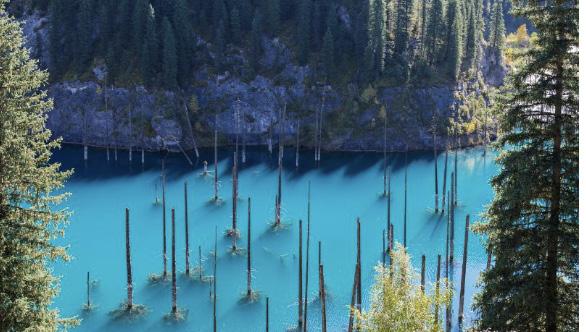
A Brief History; In 1991, Kazakhstan gained independence from the USSR, but plays a fundamental role in its region due to gas, rare mineral density, and oil. Astana is the capital city, but Almaty has the largest cultural and economic presence. Recently, Kazakhstan has experienced rapid economic growth, and has since eased large wealth disparities.
The vibrant culture, rich history, and enchanting environment make Kazakhstan an exciting travel destination, and learning opportunity!
Sources https://www.bbc.com/news/world-asia-pacific-15263826 image:https://justgoexploring.com/destinations/places-to-visit-in-kazakhstan/
Wild Madagascar Eisha Ahmad
Fireworks fill the air and families fill the streets in Madagascar during the yearly Alahamadi Be, a cultural festival celebrated entering the Malagasy New Year.

This event lasts for two days in March where traditional music plays and the locals decorate their homes in bright lights illuminating the country. Alahamadi Be is just one of the events you can experience if you visit Madagascar, a country home to many diverse traditions and cultural events.
The Avenue of the Baobabs is a renowned sight, a dirt road native to Madagascar, full with 800 year old Grandidier Baobab trees, famous for reaching 30 meters in height and being the country’s first natural monument.

This place highlights the beauty of the country and is reflective of the unique biodiversity and climatic variety in the landscape, with 90% of its wildlife found nowhere else on Earth. Namely, the Mouse Lemurs are the nation’s cutest creators and they inhabit many rainforests in the area. The Fossas are another unique animal in the land and are known as Madagascar’s top predator.
Add Madagascar to your bucket list if you want to experience a culture and environment like nowhere else you’ve been!
https://michaelandmax.weebly.com/ https://rove.me/to/madagascar/avenue-of-the-baobabs
The Ever-Changing Flow of Science and Art
Minh Nguyen
Science and Art were thought to always be on an opposing spectrum to one another, but the ArtScience Museum in Singapore brings those two fields to collide. Their exhibitions are a continuous chain of new galleries that feature innovations in art forms, or art depictions that are only possible through technology.
One of the more intriguing exhibitions that was featured was the microsculptures magnified gallery. Consisting of an array of magnified insects, it enlarges the beauty that nature gifted those creatures for a spectacular experience. Another exhibition that demonstrates the blend of technology and art beautifully is Nox: Confessions of a Machine. Short for Non Human Excellence, NOX features interactive game stations, locative sound and videos that bring the experience of a smart city where AI took control.
All of these exhibitions, and more, are constantly cycled and renewed with increasingly exciting and amazing works of art and science, all at the ArtScience Museum in Singapore.

https://strictlysingapore.com/singapore-artscience-museum/https: www.marinabaysands.com/museum.html

Click the
From Ancient to Connection Luc Sun
Egypt, far from being considered the stereotypical ancient Egypt, is a modern Islamic country that lost most of its mythical form. Currently known as the Arab Republic of Egypt, it spansthe northeast corner of Africa and southwest corner of Asia via the Sinai Peninsula.
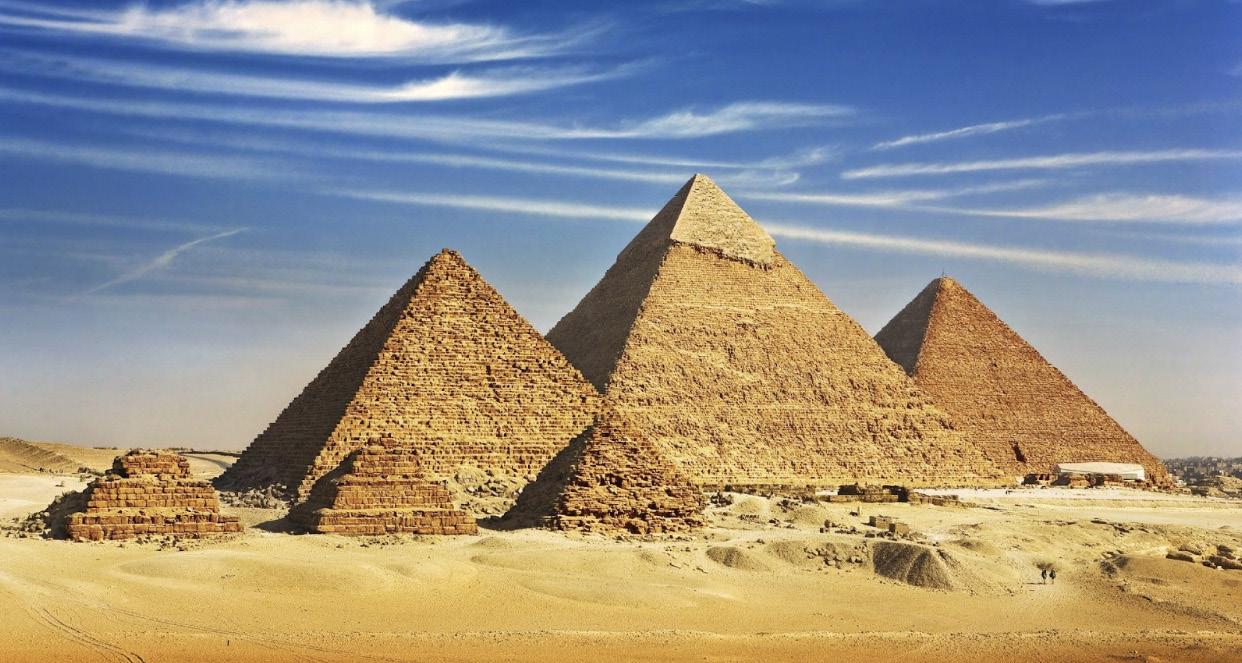
Modern Egypt creates a contrast with its older, mysterious form hidden in the river of history still shimmer in the form of historical ruins and history textbooks. The Great Pyramid of Giza lay in the sands, telling the story of the myths under its gigantic tomb. On the Nile, the water floats from south to north, all the way into the Mediterranean Sea, with deltas left on its pathways.
From the perspective of modern Egyptians, Egypt relies on historical architecture as a form of economic tourism but they acknowledge a new form of religion, had already become a state with a combination of culture: an RNA named culture combines with another chain of it given the name modernize.
An ArtScience Museum exhibition.
link to explore the ArtScience Museum in Singapore
You Know You’re in Good Hands: Vietnam’s Golden Bridge
Ethan Ngo
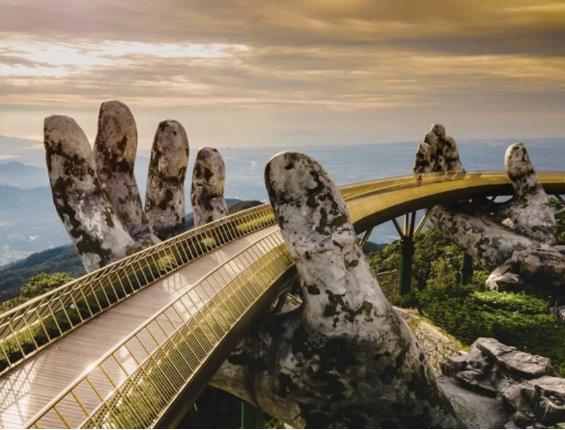
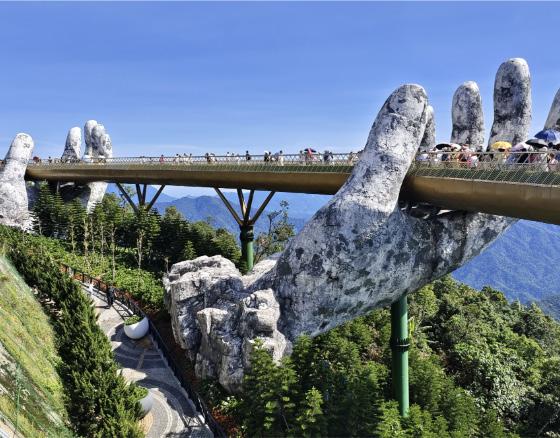
In Vietnam, Ba Na Hills near Da Nang, Vietnam’s Golden Bridge is a pretty popular tourist attraction, one of many that have been opening since 2018. Being lifted by two giant stone hands, the bridge really showcases the creativity in Vietnam and represents its tradition and imagination.
Vietnam has had a rise in tourism activity since its borders reopened, and the Golden Bridge is one of its top attractions out of many other beautiful places.
Visitors can choose to ride a cable car through the mountains,walk across the bridge above all the grounds, and explore nearby gardens. Vietnam is also famous for its street food and traditional music, showing its history to the outside.
What makes the Golden Bridge insightful is how it connects to both the past and the present. The hands look old, but the bridge is new, showing how Vietnam respects their history and renovates them.
Step Out of Your Comfort Zone: Korea Cayden Laynor
Have you ever wondered where you should go for your next trip to step outside your cultural comfort zone?
South Korea is a beautiful country with a fascinating culture as well as stunning nature and food. Though a modern city they still cherish and respect their ancient history through architecture, city design, art and food. The food in Korea highlights their diverse culture with street food (Myeongdong), fresh seafood at Busan’s Jagalchi Market, and Korean BBQ. Having traditional food for tourists is important to share culture that can make tourists feel closer to Korean culture as well engaging them with trying new things.
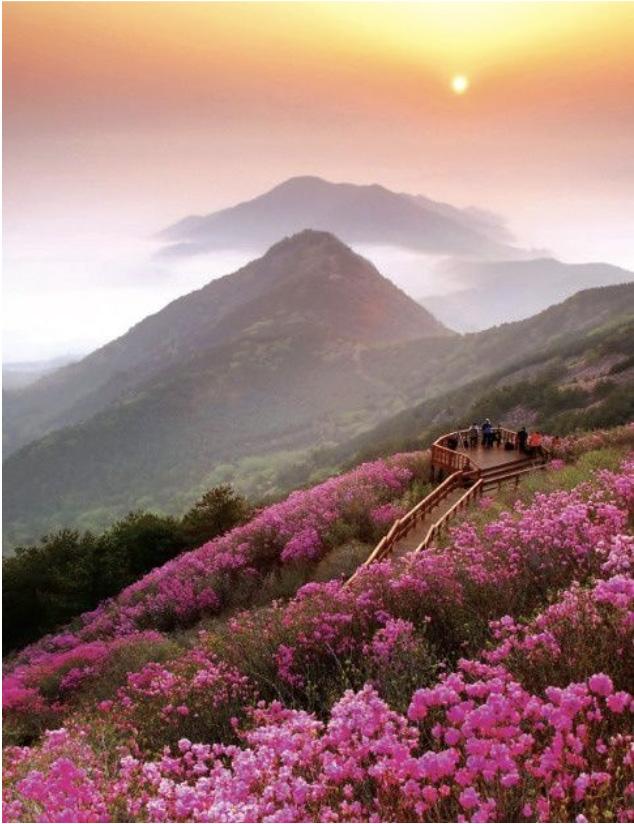
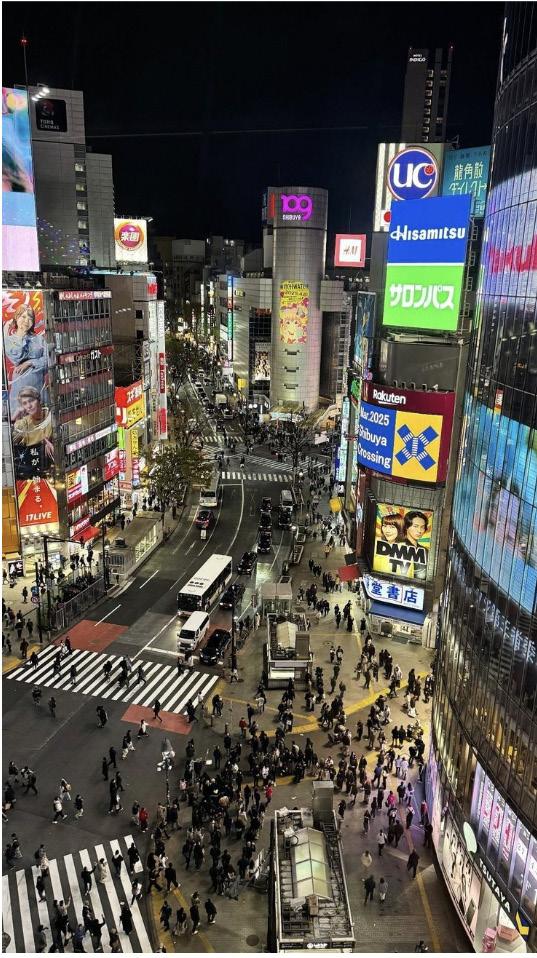
In the city of Seoul (Gangnam, Hongdae) you can experience modern Korea of shopping malls, concerts, and restaurants such as K-pop, K-drama, and K-fashion such as Korean style makeup and K-pop style clothing. Nature is a big draw for tourists. Visiting the volcanic landscapes of Jeju Island, hiking, Seoraksan National Park, and relaxing on the beaches of Busan would be a great way to see Korea outside of the city.
Korea is helping the world today by pioneering comprehensive AI regulation to ensure ethical, safe, and innovative technology development.
Korea is also leading eco-friendly initiatives, such as adopting a Green New Deal, banning public financing for foreign coal projects, and developing advanced robotics for accessibility.
Korea strengthens the semiconductor supply chain and advances digital twin technology, fostering sustainable, AI-driven productivity solutions worldwide. AI is an issue in this world for the environment and animals, hurting their environment and having habit loss. Having Korea help with this problem helps inspire other countries to also help as well.
Sources: Cho, Willy. “How South Korea Is Building an AI-powered Future for Everyone.” The Microsoft Cloud Blog, 24 June 2025, www.microsoft.com/en-us/microsoft-cloud/blog/2025/04/24/how-south-korea-is-building-an-ai-powered-future-for-everyone/#:~:text=What%20sets%20South%20Korea%20apart,create%20practical%20value%20across%20sectors.
Route, Rachel En. “10 Things the World Can Learn From South Korea - Rachel En Route.” Rachel En Route, 20 Dec. 2018, www.rachelenroute.com/10-things-the-world-can-learn-from-south-korea/#:~:text=When%20it%20comes%20to%20recycling,read%20this%20article%20by%20Korea4Expats.
Route, Rachel En. “10 Things the World Can Learn From South Korea - Rachel En Route.” Rachel En Route, 20 Dec. 2018, www.rachelenroute.com/10-things-the-world-can-learn-from-south-korea/#:~:text=When%20it%20comes%20to%20recycling,read%20this%20article%20by%20Korea4Expats.
From Retirement to Podium:
Alysa Liu
TT Nguyen
Four years ago, after the 2022 Beijing Olympics, the sixteen year old Alysa Liu, a US figure skater announced that she was going on a hiatus due to severe burnouts, she lost enjoyment for the sport, and a desire to experience life outside of intense training. Now she’s back at the Milan-Cortina Olympics. She seems like a different person than the one who skated in Beijing. Her hair is stripped like a racoon’s tail (she adds a ring to her hair every year like a tree, she explained), she gave herself a frenulum piercing, anddescribes her goal in skating as a desire to connect with the crowd to transmit a deep feeling.
On February 19, 2026, Liu, 20, successfully brought home the gold medal with a flawless performance at the Winter games. Going down in history as the first American to win Olympic Gold in figure skating in the last 24 years since 2002. Finishing with 226.79 points, she upstaging Japanese teammates Kaori Sakamoto and Ami Nakai, who took silver and bronze and it is this score that would ultimately give her an Olympic title and end the long drought for US women.
The Unsilenced: Women in Afghanistan Jaena Han
It seems like the world of an Afghan Woman gets smaller and smaller each day. Women and young girls are experiencing an extreme state of violence and lack opportunities for education, work, freedom, and basic human rights due to the nation’s economic collapse, and the oppression coming from the takeover by the Taliban.



While students in America often complain about assignments at school, girls in Afghanistan are wishing for simple clothing that doesn’t stifle or restrict them each time they leave the house. They are not allowed a legal education, or representation. They are living a life with a voice, but unable to speak, thoughts they are not allowed to express, and dreams they’re not allowed to have.
https://www.smartbrief.com/original/gold-medalist-skater-alysa-liu-human-connection-is-what-im-all-about

There are some ways to help these women and girls in crisis even here in the United States. According to the International Rescue Committee (IRC), one can support them with donations and funding. Simply being involved in campaigns or just choosing to be aware of the current circumstances can help women in Afghanistan.
For more information visit the link

Discover a Hidden Gem
Peyton
Matthews
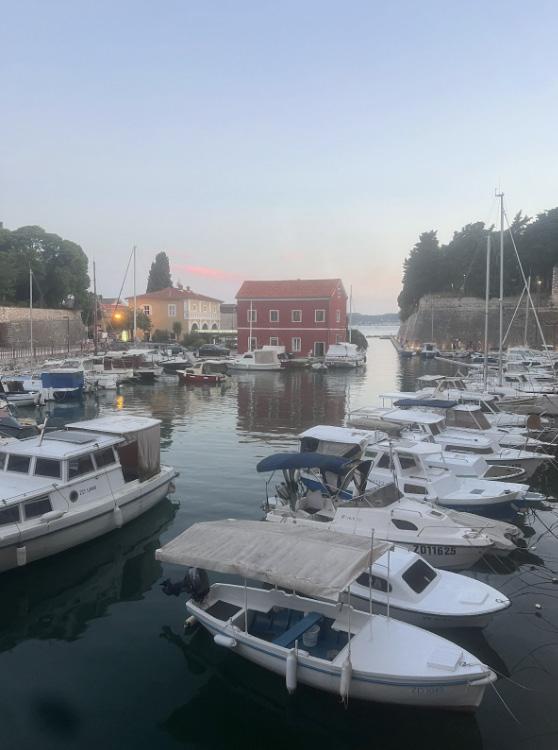
Old town Zadar in Croatia has reported their highest levels of tourism in 2025. Over 16 million tourists during all twelve months of 2025 came to soak in the sun, swim in the beautiful Adriatic, and embrace the rich culture. Croatia only gained its independence in 1991 and has since become a very popular tourist destination.
Zadar is a very historical town home to many Roman ruins that are easily accessible to the public. Its outer walls have been labeled a UNESCO World Heritage Site due to the impressive structural aspect as well as the beauty. No cars are allowed in the town center in order to preserve the ancient marble streets. It is home to many beautiful harbors and is a popular destination for sailors who like to explore the archipelago of islands just off its coast. It is a lesser known destination within Croatia and is not as populated as cities like Dubrovnik or Split.
Another draw to Zadar is the wonderful cuisine, seafood is a large aspect of their traditional dishes as they sit on the Adriatic sea. All over the town center there are dozens of small restaurants serving sardines, octopus, and many types of fish all giving you a different taste of Croatia.
The quaint town of Zadar is full of wonderful things to see, do, and explore! From waterfalls to public art installations and even the markets down by the harbor each experience invites you to explore the beautiful Croatian culture.
Life in the Driest Place on Earth Cooper Dicks
Hidden in the shadow of the Andes lies what is often called the driest place on planet earth. With that title you’d expect a barren wasteland. However, Chile’s Atacama Desert is actually one of the most beautiful and surprisingly biodiverse places on earth.
The Atacama Desert is the ultimate getaway for any traveler. If you’re interested in historic sites and ancient culture, the town of San Pedro de Atacama is a perfect destination. It is considered the archeological capital of Chile, featuring an ancient village and a 12th century stone fortress.
Nature lovers can find all kinds of geological features including geysers, giant sand dunes, rock formations, and salt flats. And in terms of plants and animals, the Atacama is full of incredible species. Three species of flamingos inhabit the sprawling salt flats, feeding on brine shrimp and algae. Llamas, alpacas, and vishachas (a close relative to the Chinchilla) also thrive in the high altitude environment. In terms of plant life, the Atacama features a variety of unique species including specialized cacti that thrive in fog. The desert also experiences a “blooming desert” phenomenon every 3–10 years, featuring over 200 species of flowers.
Make sure to add it to your list for a future visit!

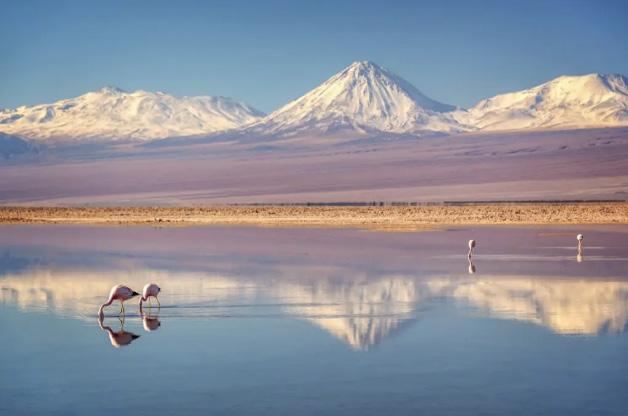
The Atacama has a beauty that is truly timeless. As the world around continues to change gears, this
Photo credit: Peyton Matthews
The Atacama’s iconic salt flats, home to 3 species of flamingo.
unique isolated wonderland continues to operate largely without human interaction. If you get the chance, I’d highly recommend experiencing its beauty for yourself.

https://www.nationalgeographic.com/travel/article/explore-chile-atacama-desert-stargazing https://www.journeylatinamerica.com/destinations/chile/places-to-visit/atacama-desert/when-to-go/
Land of Extremes: New Zealand
T.T. Nguyen
New Zealand isn’t just your typical vacation destination, the nation doesn’t just have beautiful landscapes but also they’re known worldwide for their adventurous spirit. Unique to New Zealand, black water rafting takes place underground rather than on open rivers.
The Waitomo caves are home to this signature experience. Visitors float on rubber tubes through subterranean streams while in near complete darkness. These caves are home to bioluminescent glowworms, creating a beautiful cosmic ceiling above the dark waters.

https://www.tripadvisor.com/AttractionProductReview-g616349-d11450234-Black_Water_Rafting_
Another adventure experience to explore is Zorbing. Zorbing is one of New Zealand’s most iconic attractions. Originating from Rotorua, it involves running and tumbling downhill inside a giant inflatable human hamster ball, either dry or water filled. Visitors can
choose to run and roll down a straight course or more unpredictable zigzag courses, testing their balance and athleticism as they tumble or stride within theinflated sphere.. It’s a mix of chaos, speed, laughter and overall pure fun.

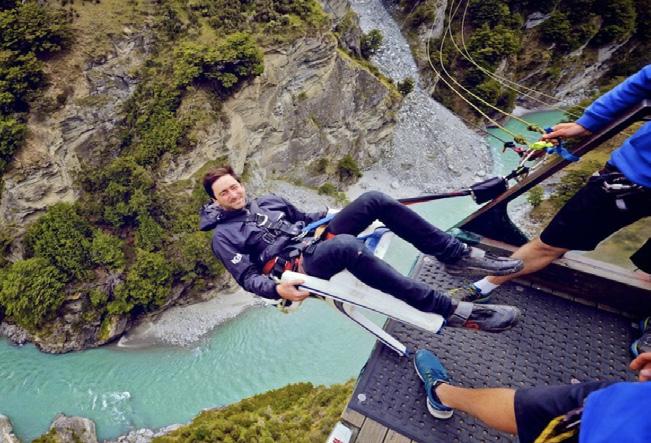
https://www.theroadtrip.co.nz/blog/canyon-swing-queenstown/
Canyon Swinging in Queenstown is also considered one of the more intense adrenaline experiences. Designed purely for true adrenaline junkies, the
thrill here is unmatched. Riders would launch themselves off a cliff platform, backward, forward, strapped to a chair, before free-falling for 60 meters down into a deep canyon. It’s a bucket list thrill for sure.
While you’re there, Aoraki / Mount Cook, the highest mountain in New Zealand, located within the national park of the same name, in the Canterbury region is definitely worth a visit. Not only that it is visually stunning, but Mount Cook also reflects and represents New Zealand’s wilderness focus and nature; it symbolizes the nation’s rugged beauty, adventurous spirit, and deep Māori heritage. To Māori, to be specific, the Ngāi Tahu iwi, Mount cook is considered a sacred ancestor, representing the physical link between heaven and earth and a cornerstone of indigenous identity.

Visit New Zealand, a country filled with beautiful landscapes, fascinating adventures, amazing history and native culture. Go there if you’re interested in diverse cultures, or if you seek new adventures.
Photo credit Archer
Photo Credit: Archer
Under de-Globalization: Where Lies the Future of International Students’ Multicultural Identities? Candy Liu
For many years, international students came to the U.S. anticipating cross-cultural exchange and the opportunity to build their multicultural identity - the ability to belong to more than one cultural community while remaining open to diverse perspectives. This expectation was shaped by the hyper-globalization of the 1990s and the global impact of U.S. soft power, combined with the reputation of the American educational system. It encouraged tremendous amounts of international students to study in the U.S. annually.
However, with de-globalization and the recent political changes, this ideal for multiculturalism began to disintegrate. To understand how and why these changes are affecting the international student population in Annie Wright and other schools, I interviewed Ms. Abby, the Director of International Admissions of Annie Wright Schools, and nine international students from different backgrounds.
At the macro-level, the changes in politics and economy are clearly reshaping international education. According to the interview with Ms. Abby, there has been a significant decline in the number of international applications to schools across the U.S. For example, applications coming from Indian students to U.S. universities have reduced by approximately 60%, while applications from Chinese students to both high schools and universities across the country have experienced a 67% drop. Numerous reasons have caused the decline, including not only the visa issue, but also the changes in social sentiment within the U.S. and the inflationary pressure caused by global economic fluctuations and trade wars.
These changes directly affect people’s lives at an individual level. Many interviewers expressed their anxiety about the uncertainty, immigration policies, the news, and public opinion. For instance, a Vietnamese
student mentioned that it is difficult to renew an F-1 visa as one must return to the embassy in Vietnam to handle the matter. This process is costly, time-consuming and risks being denied entry and being unable to re-enter the U.S for various reasons. As a result, students have become anxious and even choose not to go home during breaks. Others also described feeling uncertain and powerless in dealing with procedures by the U.S. Immigration and Customs Enforcement.
Traditionally, studying in the U.S. implies a sense of openness, diversity, and cultural exchange, especially in the context advocated by globalization. However, what is the international students’ perception toward in the current context? Would it still be possible for a student to create a multicultural identity by studying abroad? Interestingly, students I interviewed reported that their sense of belonging to their original culture had become stronger. They reported that the gap between expectations and reality has played a role. In their expectations, the U.S. as a society would be a very open and welcoming multicultural society. However, the feeling of being uncertain and an outsider might lead them to rely more on their identical cultural communities. On campus, they might spend more time with people of the same language and background, as it would give them a sense of comfort and security.
Ms. Abby also noted that, because of the pandemic, the way in which people socialize has changed. Students are now accustomed to staying in their comfort zones and heavily rely on phones for communication. Nevertheless, having direct conversations with people from different cultures is essential for developing a multicultural identity.
Despite these challenges, various students pointed out Annie Wright has provided a platform for socialization. Various clubs, in/after school programs,
tie color activities, no-phone policy, and retreats contribute to various cultural communication and foster friendships. These supportive networks can mitigate the uncertainties of the macro trends, enabling individuals to maintain their expectations for multiculturalism and foster students’ sense of community.
Ultimately, while deglobalization and political uncertainty are altering international mobility, both international students and schools still have agency. By actively engaging in cross-cultural dialogue within our community, students can build on the opportunities for multicultural understanding, rather than being pessimistically limited by the uncertainty that surrounds us.
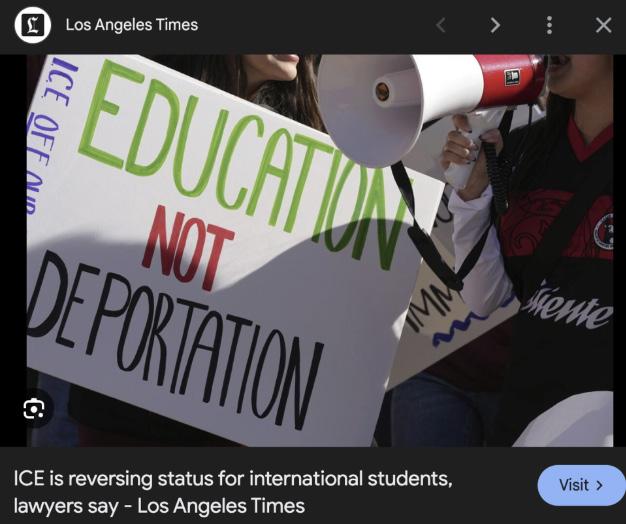


Abby Bowden
The Lines that Built Inequality: Redlining’s Lasting Impact on Wealth and Opportunity
Redlining refers to government backed discriminatory mortgage lending practices originating from maps created by the Home Owners’ Loan Corporation that outline urban areas with literal lines to depict the perceived risk level of crediting in specific neighborhoods.
Although redlining was outlawed decades ago, its effects continue to shape the narrative of housing inequality and wealth disparities in the United States. Following the Great Depression, the federal government sought out a way to grow back up the housing market by ensuring that lenders felt secure enough to give out mortgages. To achieve this, new agencies were created including FHLB, and its predecessor the Home Owners’ Loan Corporation. The HOLC was intended to be an objective, data-based organization that would appraise properties and make residential security maps that included all major U.S. cities.
The maps of different urban neighborhoods were outlined and given a grade based on the risk level of lending to individuals living in that area. This design ultimately was quite subjective by coincidingly looking at non-housing attributes like predominant race, ethnicity, and immigration statuses. The lowest rated neighborhoods were outlined in red and were almost entirely African American communities. In 1930 before the maps were created, African Americans made up 14.6% of the later classified “D” hazardous neighborhoods. By 1980 the African American population in those areas rose to 46.2%. This corroborates a direct correlation between the creation of a system and the reinforcement of inequality over time.

In interviews conducted for my Global Politics Internal Assessment, I spoke with Professor Yerena at the University of Washington Tacoma and Tasha West-Baker from the Tacoma Urban League. Through both of my discussions, a clear theme that emerged was the distinction between equality and equity. Equality is treating everyone the same regardless of circumstances, while equity accounts for historical disadvantages. Current policies in place to address housing inequality only work to create equal and fair treatment for everyone. These programs do not work because when they were implemented, those minority groups who had been so heavily impacted can’t benefit from these policies like those who had never been set back. Even key legislation passed by congress including the 1968 Fair Housing, 1974 Equal Credit Opportunity, and 1977 Community Reinvestment Acts promote fairness without entirely identifying systematic barriers that produce impacts on generational wealth building for marginalized communities.
A Home owners’ Loan Corporation (HOLC) map of Chicago illustrating how neighborhoods were graded based on perceived lending risk. Image courtesy of the Federal Housing Agency.
Instances of prejudice, injustice, and racial inequality originating from redlining are still present through homeownership and wealth accumulation despite decades passing. Much higher subprime loans and foreclosures have greatly impacted Black homeownership and obstructed the ability to build generational wealth. This context has also resulted in weakened credit confidence, stable property values, and upward mobility. These outcomes are derived from deliberate policies that intentionally isolated and excluded African Americans.

Exploring Horizons Inkwell Staff
The effects of labeling the land that people of color occupied as “hazardous” is much larger and persistent than what is ever publicized. The use of racist profiling in the housing and banking systems has led to such large deficits in wealth in comparison to their white counterparts. An openly racist system created during the peak of economic vulnerability has created a vicious cycle of oppression. Because current policies primarily focus on equality rather than equity, they fail to address the deep consequences of redlining. Meaningful change requires targeted solutions that acknowledge this history and actively work to alter its adverse impacts.

A diagram depicting the gap in housing levels between Black and White Americans in King County. The image shows a larger theme of increased housing disparity despite redlining and racial discrimination in housing being outlawed. Source: Douglas S. Massey in their article “The Legacy of the 1968 Fair Housing Act”.
Experiencing New Culture at Home
Cayden Laynor
Have you ever wanted to experience a different culture from the comfort of your home state? Try considering Uwajimaya, a huge Asian market full of food, gifts, and beauty
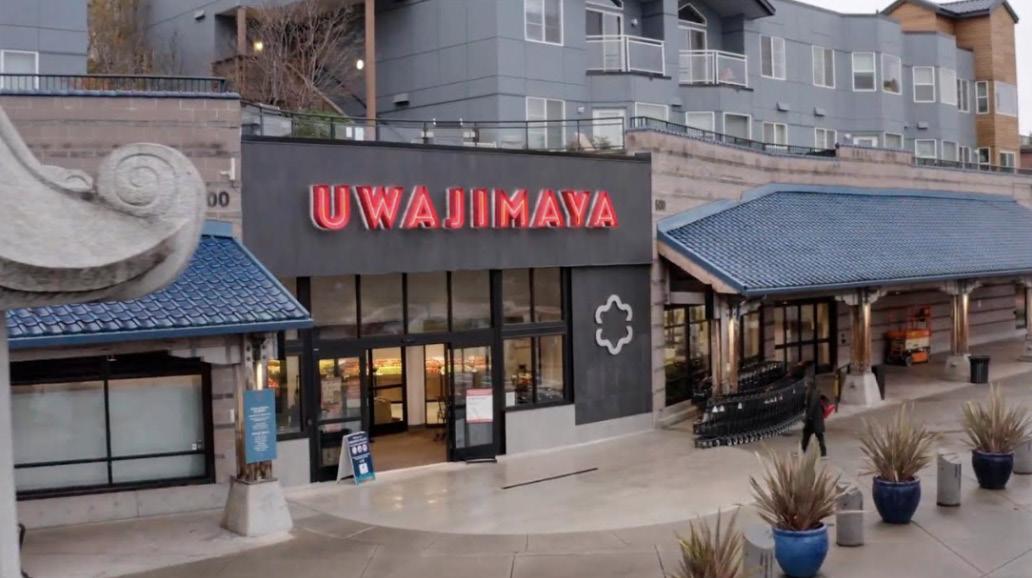
Uwajimaya is located at 600 5th Ave S, Seattle, WA, covering 35,000 square feet of Asian specialty products along with 96 years of history according to the Uwajimaya website, This a must-see destination in Seattle. Uwajimaya offers food, and other products, from several different Asian cultures. Trying new foods is a great way to step out of your comfort zone, and Uwajimaya offers a plethora of options! (Image 4)
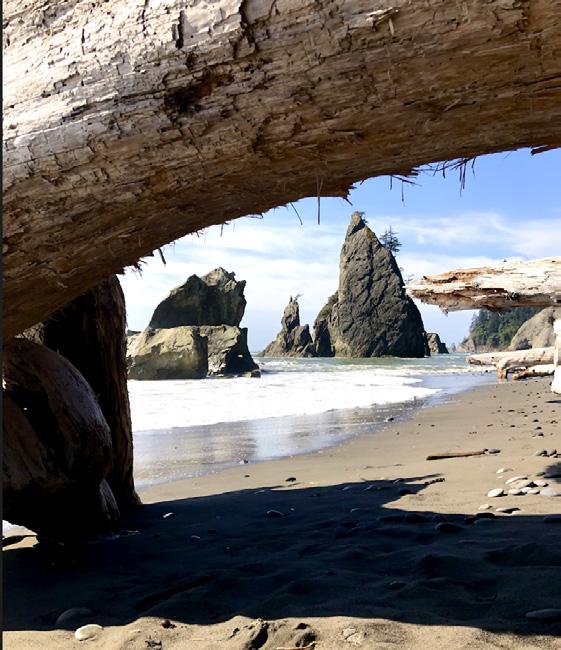
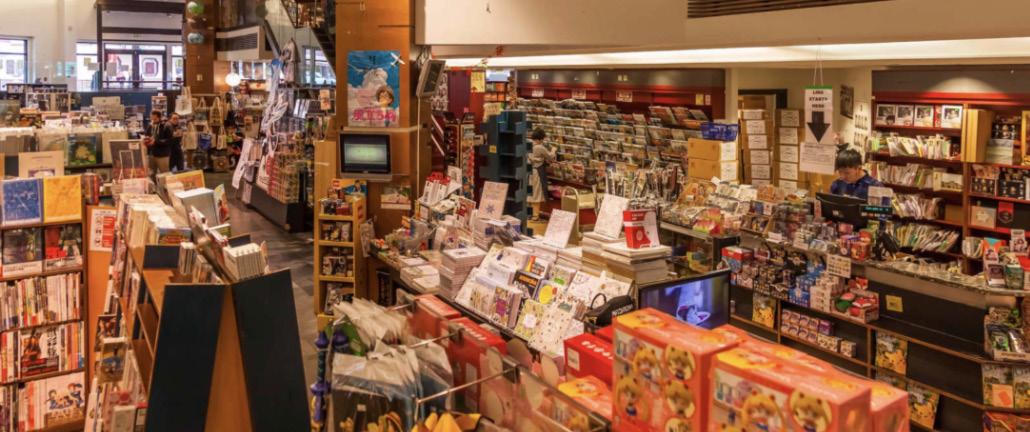
Uwajimaya isn’t just a market, it’s also a book and gift store. They sell Japanese literature, manga and Japanese teaching books. They hold small gifts that are a great option as gifts for friends and family. (image 1)
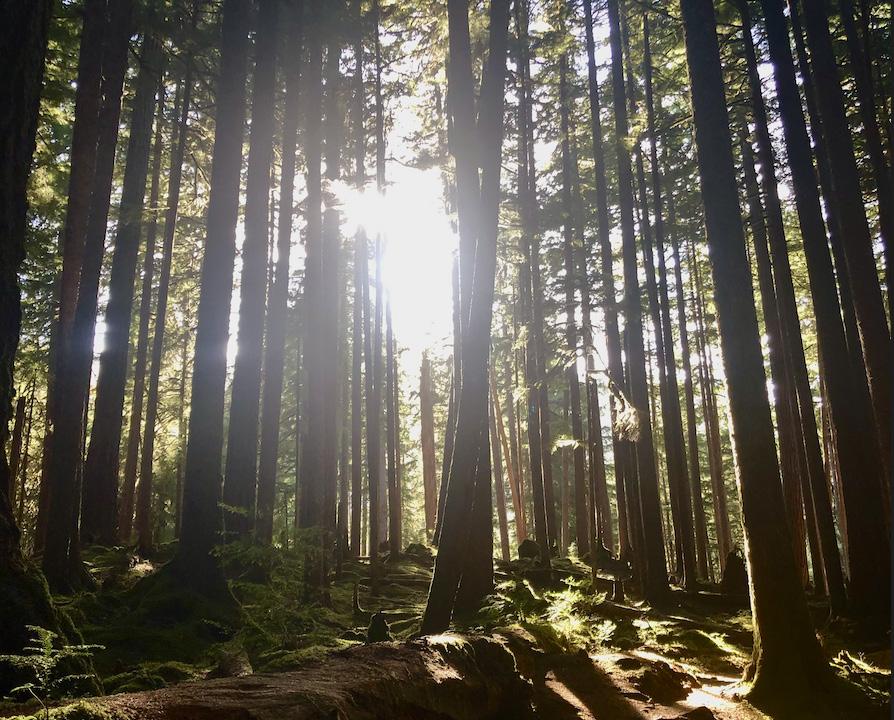
This store also holds many different events! For example, story time for children in the book store, and shopping events with good deals, such as senior tuesdays for 10% off, and college students can shop during the evening every Friday for 10% off as well! The decorations in the store,immerse customers into different Asian cultures as well as the vintage looking gifts like plates and house decoration from Japan. (Image 2)
They also have food stands built into the store! They have a boba shop and a dumpling shop inside, enhancing the customer experience! Coming from someone who is Japanese, Uwajimaya is the best Asian market I have been to, and I really feel like I’m in Japan! They do a great job of representing Asian cultures respectively.

Sources:
Uwajimaya. “Seattle Asian Market and Grocery Store | Uwajimaya.” Uwajimaya, 5 Jan. 2026, www.uwajimaya.com/visit/seattle.
Kinokuniya Bookstore – Uwajimaya Seattle. www.uwajimayaseattle.com/retailer/kinokuniya-bookstore.
Seahawks Superbowl Victory
Cooper Dicks
The last time the Seahawks won the Super Bowl was in 2013. I was 5 years old, and I remember it like it was yesterday. However, in the past few years I began to wonder if I would ever see my beloved Seahawks there again. They fired their coach Pete Carroll, who had led the team to their first ever championship after a few mediocre seasons. They then traded their Pro Bowl quarterback Geno Smith the year later. It seemed as if the fate of the franchise was entirely dependent on the success of their young head coach, Mike McDonald, along with new quarterback Sam Darnold.
To the surprise of many, they delivered magnificently. Under McDonald, the defense was ranked number one in the league in key metrics like points allowed, run defense, and defensive efficiency. Darnold led the offense to a top ten ranking, with star wide receiver Jaxon Smith-Njigba leading the league with 1,973 receiving yards and winning offensive player of the year. All of this combined for one of the most exciting and successful seasons in Seahawks history and a super bowl victory. They became the first team in NFL history to avoid turning the ball over in the post season, which is just one of the reasons they were so dominant. Running back Keneth Walker III won Super Bowl MVP, carrying the team with 161 yards.
The city of Seattle celebrated this victory with a parade, which an estimated 1 million people attended. Although I wasn’t able to attend it seemed like a truly unforgettable experience. Hopefully the team can maintain the momentum and build on their success next season.



Seahawks Super Bowl Parade. USA Today.
Sam Darnold celebrating the Seahawks Super Bowl victory. NPR.
The Evolution of Women’s Basketball
Presley Jones
The WNBA league is widely underrepresented in the sports industry, often players are taken advantage of and overlooked by the commissioners of the league. The WNBA has been battling CBA (Collective Bargaining Agreements) negotiations for some time now, and with that conflict comes constant debate over what the players deserve. Due to inequity of pay between WNBA and NBA players, two players, Naphessa Collier and Breanna Stewart, decided to create a whole new league: Unrivaled. This league began in 2024 and provided the opportunity for players to receive a more equitable wage for their hard work and achievements. It allows them to have a stationed practice center. The season for Unrivaled runs between the months of January to March while the WNBA runs between the months of May to September. Unrivaled is stationed in Miami, Florida in the newly constructed Sephora Arena.
This is unlike a regular WNBA league, Unrivaled consists of 8 teams, Breeze, Hive, Laces, Lunar Owls, Vinyl, Phantom, Mist, and Rose, whereas the WNBA consists of 13. The game functions as a 3 on 3 play with each quarter being 7 minutes Except the fourth quarter which is untimed. Whatever team is up by the end of the 3rd quarter, in order to win the game the team must reach that score by eleven points.
Sephora Arena is smaller than most with a capacity of 850 people, this has become a huge problem for the league due to the high demand for tickets to these games. Since Unrivaled has grown quickly in numbers and popularity, the tickets for the game have become hard to find. To help resolve the issue of the limited space and tickets this year, Unrivaled decided to travel to Philadelphia to host a game at Xfinity Arena that hosts a larger audience of 21,500 people. The games that took place with the teams were Breeze vs Phantom and Lunar Owls vs Rose. Phantom and Lunar owls walked away with the win! The attendance of those games broke numerous records such as the highest attendance record in women’s basketball history with over 21,490 people with only 10 seats unfilled.
With so many people in attendance it was truly eye opening for many women’s basketball players and fans This is an important topic for the league to send a clear and concise message to commissioners that the players
deserve more pay, because people need to understand that the league’s success is built on the players.

Philadelphia was chosen as the location for this game not just for the stadium capacity, it also was to capitalize on the city’s massive love and enthusiasm for basketball. With the game being in Philadelphia it was a great way to spark revenue because of the city’s lasting interest in basketball.. The game was able to generate $2 million in revenue, including $1 million from tickets and $400,000 from merchandise, proving the viability of the 3-on-3 league’s road-show model (The New York Times). Another reason this was a smart choice was because the new expansion 2028 team of the WNBA will be in Philadelphia so it was a way to give the city an insight on how the excitement of having a new team will function. Being able to have this game in Philadelphia was a sentimental moment for some of the players from there to be able to go back home with their families and connect with old friends.
As CBA negotiations are still undecided, Unrivaled has made a proposal. If they can’t come to a consensus for the CBA that they were to continue Unrivaled year round. They are doing this for better training opportunities, a more stable environment and higher pay opportunities. Unrivaled is truly the beginning of the recognition Women’s Basketball players deserve.
Daring to Explore
Kaya Parker
Traveling is a topic many people have mixed feelings about. They may be concerned regarding many things like safety, costs, worries about home. On the other hand, traveling can invite growth, experiences of new cultures, meeting new people, reducing stress, and exploring new opportunities. Online, we see things that can be biased and carry stereotypes about different countries that may operate differently than our homes. Sometimes on television information with bias can be shared tainting others views regarding these countries (“Challenging and Changing Perceptions through Travel ”).
It’s easy to think of travel as something that is scary, or something that may make us uncomfortable. In reality, most of the opinions influencing these ideas can be formed from misinformation, or harmful stereotypes about a country caused by closemindedness.I have travelled to a couple places people have said they are unsure about or a lot of bias has been spread such as Rome, and Colombia. After I travelled to these places, I saw just how amazing they are. Despite hearing many rumors about safety, health, environments, and etc, which proved to be false (“Challenging and Changing Perceptions through Travel ”). But in all truthfulness, travel is something to be admired, and explored.
For example, an article called “Why Travel Is Important”, by Jonathan Look Jr., talks frequently about what you gain such as knowledge, freedom and understanding of other cultures. “Instead of building walls and barriers to understanding, we should be searching for common ground, celebrating our differences and encouraging humankind to be more tolerant of each other.” This quote greatly embodies how important travel can be, how taking a risk can be beneficial. It’s a great way to think about traveling if you are going into it for the first time.
In Rome I have found many things to be over emphasized, like for example many people had warned me about pick-pocketing, and theft. While yes it is something to be wary of, but in the large group I was in nothing occurred as everybody was very careful and cautious with their belongings. It ended up being one of
the most memorable travel experiences. In travelling it’s good to be cautious but still have an open mind about things, letting yourself get immersed in different cultures, while still keeping in mind of your surroundings. It is the same for Jamaica, and Colombia, where both have many preventive notions about safety. But in reality many prove to be false if you take the precautions needed.
Travel can provide many benefits, and help others gain experience in different areas. For some, travel can be used as a way for people to step out of their comfort zone and take a risk on new things. It is important to do research regarding where you travel too, it is good to get a deeper knowledge to increase your experience, safety, and be aware of your surroundings and be considerate to cultural expectations.

https://www.themercuryville.com/en/checklist-before-traveling-abroad/
Sources
Jonathan Look Jr. “Why Travel Is Important Today More than Ever.” Forbes, 25 Sept. 2018, www.forbes.com/sites/jonathanlookjr/2018/09/24/why-travel-is-important-today-more-than-ever/.
Weiner, Eric. “Why Travel Should Be Considered an Essential Human Activity.” National Geographic, 8 Sept. 2020, www.nationalgeographic.com/travel/article/ why-travel-should-be-considered-an-essential-human-activity.
“Challenging and Changing Perceptions through Travel |.” The Travel Camel, www. thetravelcamel.com/changing-perceptions-through-travel/.
A Path of Peace
Kaya Parker & Cayden Laynor
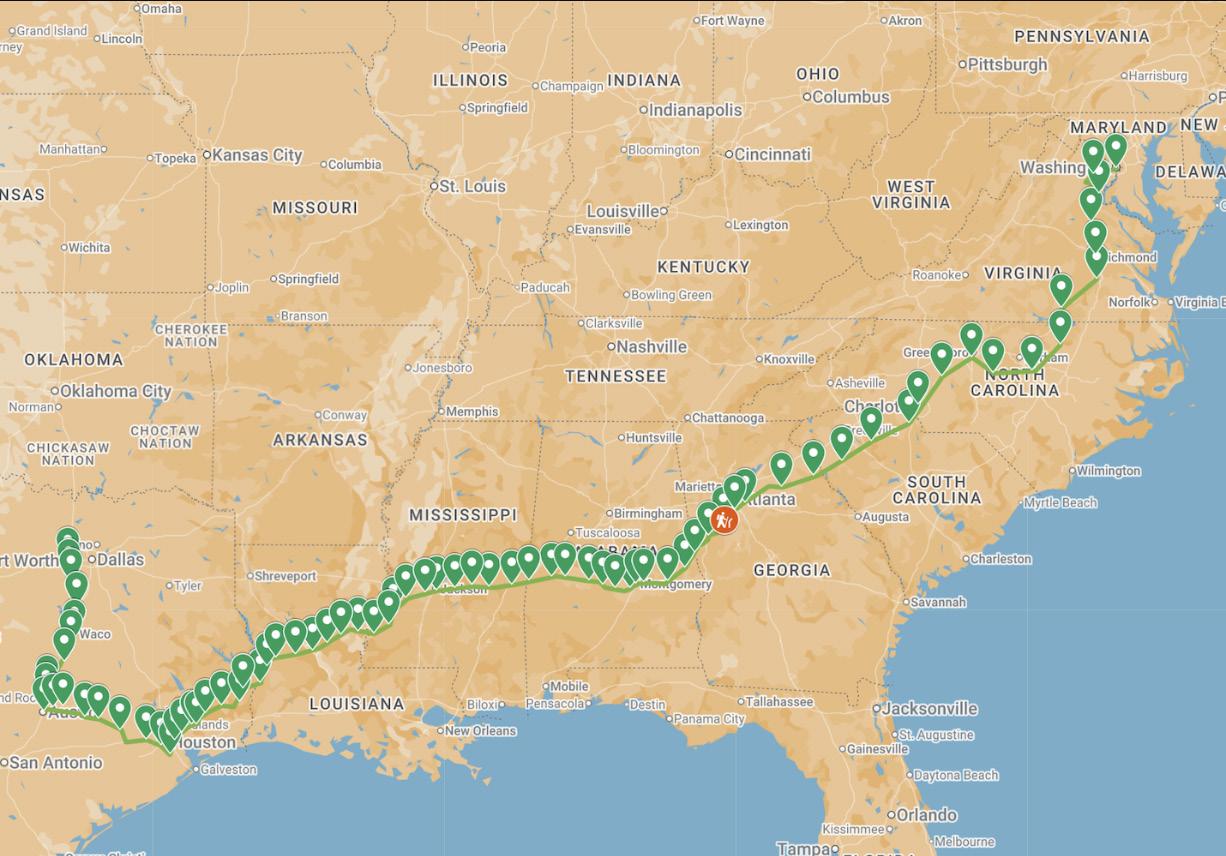
A group of almost two dozen Theravada Buddhist Monks, along with their rescue dog from India, Aloka, have completed a 108 day walk for peace. They started from Texas, and ended in Washington D.C. to promote peace, and unity.
The Monks are a group of people, mainly composed of men, who dedicate themselves to religious, or spiritual practice. They stay close as family and have a strict daily schedule. They spend their days praying, working, and studying religion.
Being a Monk requires a lot of commitment in their daily lives. Monks pledge to live simple, disciplined lives, free from excessive worldly possessions and pleasures. Monks follow different religions, such as Catholic and Orthodox traditions, as well as Buddhism and Hinduism. Monks follow a strict fasting routine, as for eating in the morning and at lunch, as well as no food in the afternoon. Monks typically rely on receiving gifts from people like medicine, food, clothes, and daily uses like books and pens. This is important because foster mutual interdependence between the monastic and lay communities, allowing monks to focus entirely on spiritual practice while laypeople gain merit
Throughout the 2,300 mile walk, these Theravada Buddhist monks continued to spread the message of peace. They persisted in their journey through the cold winter weather; with their rescue dog Aloka, who some saw as a symbol of compassion, connection, and nonviolence (Ethos Veterinary Health). They even had others join and travel with them, inspiring many locals along the way. Even now, after the walk has ended, these monks’ message of peace and unity continues to spread throughout our communities.

https://www.wildmind.org/blogs/news/buddhist-monks-on-2300-mile-peace-walk-acrossus

https://www.tribuneindia.com/news/trending/alokathe-peace-dog-from-indian-streets-to-a-2300-milewalk-for-humanity/
Sources:
https://www.foxnews.com/faith-values/through-winter-storms-injurybuddhist-monks-finish-2300-mile-walk-peace-washington-dc
https://www.pbs.org/newshour/nation/walk-for-peace-concludesas-buddhist-monks-arrive-in-washington-after-15-week-trek#:~:text=15%2Dweek%2Dtrek-,’Walk%20for%20Peace’%20concludes%20as%20Buddhist%20monks%20arrive%20in,Washington%20 after%2015%2Dweek%20trek&text=WASHINGTON%20(AP)%20 %E2%80%94%20A%20group,safety%20for%20them%20and%20spectators.
Aloka the Peace Dog who walked with the monks
https://www.hindustantimes.com/trending/ us/aloka-the-peace-dog-indian-stray-dogjoins-buddhist-monks-for-walk-of-peaceacross-the-us-101767752408644.html
https://www.nytimes.com/2026/02/09/us/monks-peace-walk.html https://www.bbc.com/news/articles/c4g75wer084o
https://www.ethosvet.com/news-article/aloka-the-peace-dogs-journeyto-care/#:~:text=Aloka%20the%20Peace%20Dog%20is%20known%20 around,has%20touched%20countless%20people%20along%20the%20route.
The Monks Route on their Walk for Peace
Insight on the ICE Walkout at AWS
Presley Jones
The Ice Walkout organized by the Annie Wright student body on February 5th at 2:30 p.m. left a lasting impact on our school community. This is evident in the thoughtful feedback and insights graciously shared by members of our community. The walkout was organized with the intention of creating an impact that extended beyond our school itself. Overall, the responses we received suggest that the event resonated not only within our school, but also in the broader community. It was a powerful and meaningful opportunity for individuals to stand together and express what they believe in.
Student Reflections on the Walkout
Q:What is one thing you learned about yourself and your community during the walkout?
A: I learned about how connected we are as a community and what we can achieve when we work together.
A: I learned that there’s a lot of people in the community who are willing to stand up for what they believe in and do what they think is the right thing. Q: How do you feel the ICE walkout impacted the outside school community?
A: I think there was a good impact on the outside community, but I think that there was an impact that the high schoolers made on some of the middle schoolers. A couple of them came to the protest, and I think it really shows the unity of our community. We saw a lot of people while we were protesting, and it was really nice to see other people supporting us. Someone had a sign that said, “Honk if you hate ice.” and a lot of people were honking. It was just good to know that we were making a greater impact than just our school community.
A: I feel like the ice walk out was really good for the community, to see that we’re all in this together and we all have a belief that we feel strongly about. Signifying we should go fight for it, if we feel strongly about it. I really loved how the teachers and our school are on board, because it just shows how they respect our opinions and what we want to do.
A: I feel that it gave a chance for people to come together and express their feelings and perspectives on something so impactful in our lives today.
Q:What is your biggest take away from the walkout?
A: I think my biggest takeaway is I was really impressed by the amount of people who showed up for it. I was really grateful that so many people did, because at first there were some people saying, “Oh, I don’t know if this is going to be that impactful. We don’t know.” But I was really happily surprised to see how many people came out to support a cause they believe in.
A: Yes, people are going to be lashing out and maybe making fun of what you believe in, but if you believe strong enough, it’s going to override everything they do, Because you know who you are, and being able to stand up for who you are is just as important, even if you might get bullied for it.
A: It was a good time to learn from and talk to like- minded people who cared to show up and be a huge path on the effectiveness of the protest, meaning that because people came with the right intention it paved a good intention going into the walkout.
A: I felt good to feel like you were doing something that mattered. So that was pretty cool.
Q: At what moment did you feel like what you were doing was making a difference?
A: I think when we very first came out to the front of the school to all meet up, there were not that many people there, we were really intimidated,scared, and frantic. But I think once more people started showing up and we started walking and then mainly on our way back, we felt there were people around us who we could see supporting us. And once we came back, too,we could just see this huge group together and everybody was supporting. Also, there were people posting us on TikTok and people are reposting it. I think that felt impactful because it was adults that don’t even have any tie to Annie Wright, or don’t even know us, to know that it got out to them and that they felt it important to bring that to light.
A:The moment I saw all of us standing by the stoplight, all of us cheering, doing an echo and cars honking because those cars honking showed us that we were heard.
A: From the moment we started, I felt as if I was making a difference because even showing up can mean a lot.
I.M. Pei: Failure that Makes Thousands of Miracles
Luc Sun
When I took a quick look at the sponsor page for the exhibition, the icon of Bank of China (Hong Kong) emerged. Indeed, the contribution made by this world-famous architect is significant: the Bank of China Tower, which still stands on the skyline of Hong Kong, at the center of Victoria Harbour. The significance of the design of the tower itself has already become a legend in the educational context of architecture, on all scales in between. Furthermore, the impact of the building also leads to the wave of skyscraper construction in Hong Kong, but it still appears to be one of the most iconic ones when you look across Victoria Bay from the other side.

Pei is smiling at the camera as a successful & iconic architect
https://architectuul.com/architect/i-m-pei
Picture Bank of China
Hong Kong
https://pei-architects.com/wp-content/uploads/2024/04/boc_hk_exterior.jpg
of landmarks, but also significantly helped with tourism in both areas — the sharpened corner of the triangular design on the outermost wall draws tourists to physically lay their hands on it. On the other side of the Earth, the gigantic glass pyramid in front of the original palace of the Louvre made a radical connection between modern architecture and the historical eras. The underground areas beneath the fountains also maximized the space available for the exhibitions.

Picture of the Glass Pyramid of the Louvre Museum, considered to be the formal entrance of it.
https://cdn.britannica. com/74/250074-050-DD110B36/IMPei-designed-pyramid-Louvre-ParisFrance.jpg
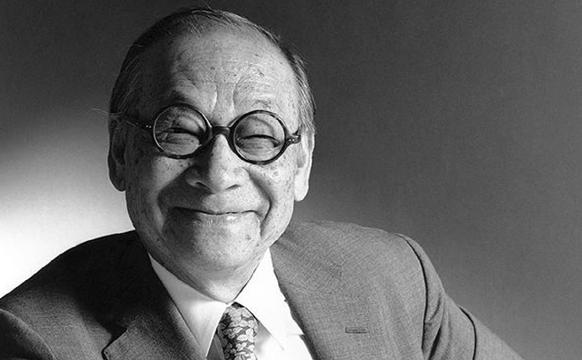
Pei didn’t limit his constructions to his country. In fact, he started his business in the US after transitioning from being a student. As well as being smart as a person, his family wealth also brought him enough possibilities. For example, the social relationships with the local governors brought opportunities for him to succeed in business. From the initial design of the National Gallery East Building in Washington, D.C., all the way to the reconstruction of the Louvre Museum in Paris, his stylish designs jump between a variety of inspirations. They have impacted the world not only by providing dozens
However, even such a great architect had faced moments of failure in his life. - “Decades before working on the plan for the construction of the National Gallery East Building in Washington, D.C., in the 1960s, he was commissioned to redesign downtown Oklahoma City, a city under suburbanization driven by massive highway construction, targeted urban renewal that razed downtown areas, and “white flight” to suburbs like Edmond, causing populations to shift outward”. The plan called for the demolition of hundreds of old downtown structures in favor of renewed parking, office buildings, and retail developments, in addition to public projects such as the Myriad Convention Center and the Myriad Botanical Gardens. It was the dominant template for downtown development in Oklahoma City from its inception through the 1970s. The plan generated mixed results and opinions, largely succeeding in redeveloping office buildings and parking infrastructure but failing to attract its anticipated retail and residential development. Significant public resentment also developed as a result of the destruction of multiple historic structures in the United States. Due to such situations caused by economic decline, as the scale of Oklahoma City’s economy had become negative in growth, and the leading event of suburban migration, the city sought modern-
ization through a wide scale of transformation. Up to this point, Pei’s plan, although it managed to propose demolishing much of the existing downtown fabric to generate spaces for wider streets, public areas, and more office towers for people to gather to work, the redevelopment proceeded much more slowly than expected, which led to large areas left blank. Considering the mismanagement of the whole plan, even Pei himself had considered it to be an error to be improved, and the most expensive lesson he had ever learned from his experiences.
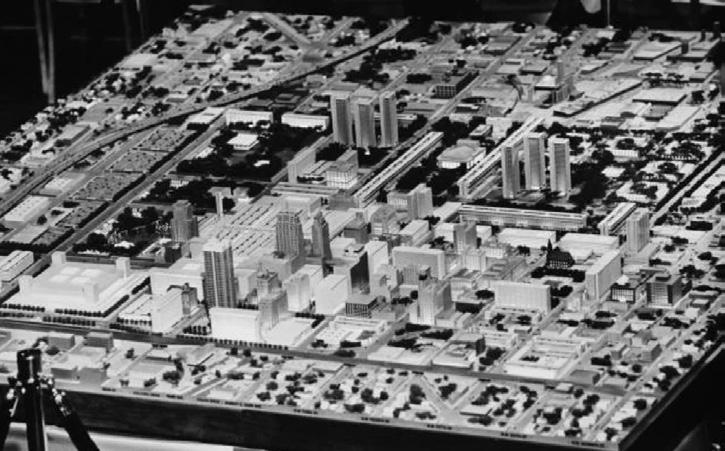
Image of the Pei Plan, as the models represented, is supposed to be how the city is going to be.
https://www.oklahoman.com/gcdn/authoring/2016/03/15/NOKL/ghnewsok-OK-5546732-5da1c138. jpeg?crop=3196,1805,x420,y0&width=3196&height=1805&format=pjpg&auto=webp
Back to where the article starts by the Victoria Bay, the contrast becomes clearer when revisiting his work in Hong Kong. The Bank of China Tower demonstrates Pei’s ability to transform structural necessity into symbolic power. This time, he chose not to revolve the environment, but designed the single building following the style of its surroundings. Its crystalline geometry and exposed triangular framework not only solved engineering challenges but also projected confidence and upward momentum, aligning with Hong Kong’s economic rise. Unlike the urban-scale intervention of Oklahoma City, this skyscraper concentrated its impact into a single, iconic vertical statement when viewed from the other side of the city.


How the Bank of China Hong Kong looks among a bunch of skyscrapers.
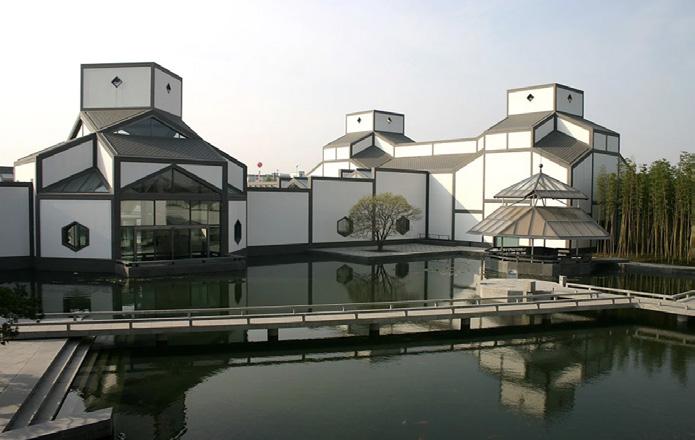
Later in his career, with the strong invoking feelings of his hometown, Pei returned to his cultural roots through the Suzhou Museum. Completed in 2006 near the classical gardens of his ancestral hometown, the project reflects a more restrained and contextual approach. White walls, dark roofs, geometric skylights, and carefully composed courtyards reinterpret traditional Jiangnan architecture through a modern lens, which appear to be similar to skyscrapers in their detailed corners. Rather than replacing history, as in Oklahoma City, the Suzhou Museum engages in dialogue with its surroundings, integrating contemporary design with cultural memory. Through these works, one can trace Pei’s evolution — from assertive modernist planner to a mature architect capable of balancing innovation with heritage.
Sources:
Suzhou Museum, before it opens to the public https://www.chinadiscovery. com/assets/images/hongkong/ hongkong-skyline/hong-kongskyline-788.jpg
“I. M. Pei.” Architectural, architectuul.com/architect/i-m-pei. Calder, Barnabas. “Louvre Pyramid | History, Description, & Facts | Britannica.” Www.britannica.com, 13 Oct. 2023, www.britannica. com/topic/Louvre-Pyramid. Lackmeyer, Steve. “I.M. Pei Legacy in OKC Mixed on His 100th Birthday.” The Oklahoman, Oklahoman, 24 Apr. 2017, www.oklahoman.com/story/business/columns/steve-lackmeyer/2017/04/24/im-pei-legacy-in-okc-mixed-on-his-100th-birthday/60603902007/?gnt-cfr=1&gca-cat=p&gca-uir=false&gca-epti=z1137xxe1137xxv000078&gca-ft=175&gca-ds=sophi.
Cheng Pei-kai. “Suzhou Museum: Why I.M. Pei Failed to Learn the Lessons of the Ancient Chinese.” ThinkChina - Big Reads, Opinion & Columns on China, Think China, 11 Sept. 2020, www.thinkchina.sg/culture/suzhou-museum-why-im-pei-failed-learn-lessonsancient-chinese.
“Landmark Exhibition Celebrating I. M. Pei’s Legacy Set to Debut in Hong Kong This June.” Pei-Architects.com, 2025, pei-architects. com/landmark-exhibition-celebrating-i-m-peis-legacy-set-to-debut-in-hong-kong-this-june/
Picture of Oklahoma City Downtown, circa 1950s
Quick & Delicious Cinnamon Rolls
Cooper Dicks
Soft, gooey, delicious, who doesn’t crave cinnamon rolls? The cinnamon roll is obviously at the top of the sweet treat pyramid.
The only problem is how long they take to makemost traditional recipes require a double rise, which is a time intensive process. This result takes nearly two hours, and for most that just isn’t practical, especially for a breakfast treat. No one wants to wake up at 5am just to prep their cinnamon rolls. That’s why a quick and easy cinnamon roll is a must have. This recipe accomplishes that spectacularly, keeping the cooking time low without sacrificing taste or texture.
Prep Time: 25 Minutes
Cook Time: 20 Minutes
Total Time: 45 Minutes Makes: 9 Rolls
Ingredients
Dough:
2 and 3/4 cups all-purpose flour
1/4 cup granulated sugar
3/4 teaspoon salt
1 package instant yeast (1 packet = 2 and 1/4 teaspoons)
1/2 cup water
1/4 cup milk
2 tablespoons unsalted butter
1 large egg
Filling:
1/4 cup salted butter softened
2 tablespoons ground cinnamon
1/2 cup brown sugar
1/4 cup heavy cream for drizzling over buns before baking
Glaze:
1 cup powdered sugar
1 teaspoon vanilla extract
2-3 tablespoons milk
4 ounces cream cheese room temperature
Instructions
Dough:
1) In a large bowl whisk the flour, the sugar, salt, and yeast together. Set aside.
2) In a small bowl combine the water, milk, and butter together and heat in the microwave until the butter is melted, about 30-45 seconds.
3) Use a fork to stir the liquid into the dry ingredients. Add the egg and knead by hand or with a stand mixer for 5-6 minutes, until the dough is no longer sticky. Form the dough into a ball and return to the bowl. Cover and let rest for 5 minutes.
4) Turn on the oven to 200 degrees fahrenheit. Spray a 9×9 pan with cooking spray and set aside.
Filling:
1) In a small bowl, combine the brown sugar and cinnamon.
2) Once the dough has rested, dust a clean surface lightly with flour and roll out the dough into a 15×9 inch rectangle.
3) Spread the softened butter over the dough and dust evenly with the cinnamon sugar mixture. Roll the dough up tightly and cut into 9 even pieces.
4) Place the rolls into the prepared pan and cover with plastic wrap or aluminum foil.
5) Turn off the warmed oven and place the pan of rolls inside. Let them rise for 20 minutes. After 20 minutes have passed, remove the foil or plastic and drizzle the ¼ cup of cream evenly over the top of the buns.
6) Return the buns to the oven and turn the oven to 375 degrees fahrenheit. Bake for 15-20 minutes, until the tops of the buns are golden brown.
Cream Cheese Glaze:
1) Beat the cream cheese, powdered sugar, vanilla, 2 tablespoons milk together until smooth. Add more milk as needed. Let the rolls cool for 20 minutes or so before spreading the glaze over the top.




Shifting into Spring Inkwell Staff




Recipe site below
Photo Credit Cooper Dicks
The Line: Too Much, Too Soon
Gabe Droubay
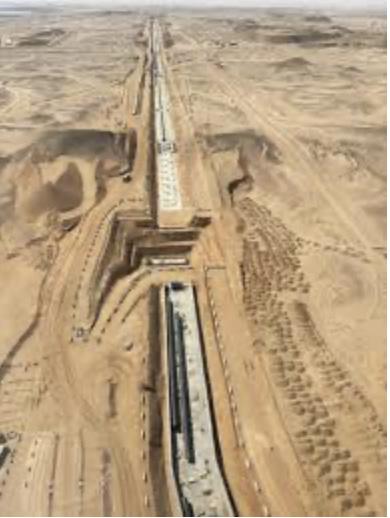
Saudi Arabia, already boasting many impressive structures and cities, turned their eyes to the future with their attempt to construct “The Line.” This 100 mile long, 200 meter wide megacity would be unlike anything the world had seen before.
The Line will run on 100% renewable energy and zero carbon emissions, all while housing an estimated 9 million people. Built within the dry Saudi Desert, The Line would have contained impressive feats of engineering and mechanical physics, such as a high-speed underground transport system aiming to connect the whole city (NEOM.com).
This said, these same innovative accomplishments have hindered the construction of The Line significantly, along with many ethical concerns. For example, with employees working upwards of 16 hour shifts (hrw.org), many have already passed away due to exhaustion. Also with shifts being this long, a decrease in mental precision can be seen, leading to deadly errors. Also, as The Line is to be built on such a massive scale within the desert, populations have been forcibly removed from building areas so the project could continue.
As well as intruding upon nomadic populations, The Line has also raised questions and issues regarding bodies of water in the arid location. Kansas University cites that as this megaproject was to be built near the Red Sea, “could potentially become detrimental to aquatic ecosystems.” (Lazos, KU). Given there are already less than ideal conditions surrounding the Red Sea (previous pollution, extreme temperatures, high humidity), these continued disturbances exemplified by the megaproject could potentially cause irreversible damage and pollution.
While this megaproject is incredible to think about due to its previously unseen concept and design, it was too ambitious for the present. Ethical and environmental concerns often compromised construction progress, causing significant delays in the estimated completion date (2.4km by 2030, done in 100 years (neom.com)). Before construction began, these
concerns (and many others, including labor rights and flaws in architecture) were given little thought by the Saudi government and the NEOM building group, and was one of the reasons the project was impacted so much.
While the completion would have been historic, it can be argued that the project should have been made when it could’ve been safely, humanely and swiftly completed. Throughout this project one thing has been made clear, hubris is indeed a flaw, as has been exemplified by the Saudi government in regard to this plan. The Scottish poet Robert Burns indeed captured this; “The best laid plans of mice and men often go awry.”

https://www.galaxus.at/en/page/the-line-why-saudi-arabias-ambitious-city-of-the-future-isnt-ideal-29510
Concept image of The Line, including a self-sustaining interior and reflective walls.
https://www.dezeen.com/2025/04/25/concrete-construction-progress-the-line-megacity/
Concept image of The Line, including a self-sustaining interior and reflective walls.
In-Article Sources: https://www.neom.com/en-us/regions/theline https://opentext.ku.edu/environmentalgeopolitics/chapter/analyzing-the-environmental-and-social-factors-of-the-saudi-arabian-project-the-line/ https://www.newarab.com/news/saudi-neoms-line-project-wont-be-finished100-years
https://www.hrw.org/report/2024/12/04/die-first-and-ill-pay-you-later/saudi-arabias-giga-projects-built-widespread
Luxury Above, Labor Below
Eisha Ahmad
Skyscrapers fill the skies amidst the new artificial islands that come up every year in Dubai, in the United Arab Emirates (UAE). This city is glamorized for its architecture and designer attractions including the Dubai Mall, the Palm Jumeirah, the famous Burj Khalifa and the Golden Dubai Frame. However, this overshadows a dark reality that is far less extravagant. The same people building these resorts are the ones who suffer through harsh working conditions and poor living spaces, a reality that Dubai doesn’t want you to see.
These lavish projects require workers, who are leased from surrounding economically dependent countries such as India, Pakistan, Bangladesh, Sri Lanka, and Nepal. All of these countries are contracted to the UAE to supply workers from the economically dependent areas of their countries, to be sent to Dubai and work on these grand skyscraper projects (Human Rights Watch, 2023). Workers are subject to harsh working conditions and the rampant hot temperatures across Dubai.
They cannot escape this system either, because of the Khalafa system sponsorship. This is an agreement that binds a migrant worker’s legal residency and employment status to a specific employer or project in the UAE. Hence, many workers develop an economic dependency to this system, which subjects them to many human rights violations (Yildirim, 2025). This includes receiving dangerously low wages, confiscating passports, and generally having limited labor rights such as excluding domestic workers from statutory labor protections. The sponsor holds legal responsibility for the migrant’s visa and wherever they live, so breaking the contract often results in the workers being held in detention or being deported (Human Rights Watch, 2023).
Although wealthy travelers have the chance to experience the designer estates and massive resorts, this opportunity isn’t shared with the workers. They are housed in labor camps, large facilities prioritizing fitting as many people as possible, regardless of violating space capacities. Namely, in Dubai’s two largest camps, Al Quoz and Sonapor, the typical accommodation is a
small room of 12 by 9 feet which sleeps as many as 8 as 12 workers sharing one room (Ruman, 2025). The country announces new projects, which demands more resources, and more workers and energy, ultimately cycling more people from surrounding dependent countries to be trapped within the Khafala system. This means, living conditions will only start to worsen, and will likely impose even more human rights abuses.
You can make a direct impact on some of these workers’ lives through Feed a Labour, an initiative set in the UAE that aims to send items in need and meals to the laborers that build Dubai. Since their launch in 2015, they have given over 5.5 million items to the community and grown their volunteer support to 600. If you’re ever on vacation in Dubai, you can distribute food items to laborers during their operational hours through joining as a member on their website!
If you want to go beyond donating, you can use your voice locally or online. Spread awareness of this issue and more information about the Khafala system and labor camps, and push for more ethical choices when it comes to travel and luxury consumption. You can help from home, as your help with attention and funding will keep putting pressure on the local government in Dubai that runs this system.

https://www.hrw.org/news/2023/12/03/ questions-and-answers-migrant-workerabuses-uae-and-cop28
https://soas.lau.edu.lb/news/2025/10/behind-the-scenes-international-law-and-human-rights-violations-.php
https://www.laboraccommodation.ae/ labor-camp-regulations-in-dubai-version-2025/


https://www.constructionweekonline.com/business/article-8480-nuzul-labourcamp-offers-better-quality-of-life
https://www.visitdubai.com/en/articles/best-places-for-dubai-skyline-views
Artist Spotlight: Emily Boitano
T.T. Nguyen
For our spring 2026 artist spotlight we’ll be focusing on Emily Boitano. She is a driven, creative, and admirable young violinist
Emily has been playing for around 14-15 years; she started playing the violin back when she was 4 years old. When we interviewed her about why she chose the violin as her instrument of choice, she answered: “I started it because my parents thought it was a good skill to learn, but later on I found it fun and decided to continue it.”
To Emily, the violin has definitely shaped who she is by teaching her patience and perseverance. Pieces take a lot of time and effort to learn and to sound good, that’s also another layer of mastery. It takes a great deal of dedication to refine a difficult part of a musical piece takes immense patience. According to her, playing the violin at times felt stressful but through overcoming each new challenge and perfecting varied refined techniques, she learned resilience and how improvement often takes time and effort.
She’s often inspired by people around her and pieces that are cool. She stated that: “When I hear a song or piece I like, it interests me to play my violin more to learn the piece. My friends also encourage me a lot and make playing my violin fun.”
As a violinist, she is mostly interested in Baroque or Romantic Style of music. “Having a large selection of fast paced pieces makes it interesting and fun to play” she stated. Performing within these different genres or styles, she can demonstrate more of her skills in maneuvering the bow, making each note sound even more impressive in each song.
The biggest challenge she has faced with the violin is performing in front of others. “I get really nervous which causes me to mess up even if I have played the piece a thousand times” she said. With the violin, even a small mistake in intonation or bow control
can be very noticeable, which puts more pressure upon the performer because even the smallest error seems hyperbolized.
Her proudest achievement with the violin was when she learned how to play Symphony No. 5 by Tchaikovsky. This symphony is a 40 minute long piece with many very challenging sections. To master these, she took each section slowly, applying different rhythms with different speeds to refine intonation of each note. Then she would slowly put it together to complete the piece.
Thank you, Emily for sharing your specialty on the Violin.

Photo Credit Emily Boitano
Discovering the Killer in the Kemper: Clue
Chloe Yoo
Was it Mrs. White or was it Professor Plum? When the curtains closed, the killers were revealed!
From February 27th to March 1st, the Annie Wright actors and actresses gave an outstanding performance for the season’s theatre production Clue. Constructed by a smaller group of cast members and a new genre of crime mystery, the play delivered a unique experience to the audience that filled the seats of the Kemper Theatre.
To represent the voices of the students who shined on stage and the stage manager of the entire theatre production who always dedicates herself to this job to make the best out of every performance, Inkwell sent a survey to collected as many perspectives as possible of the people who came together to complete Clue.

<Stage Manager Interview>
As a senior, you are heading toward the end of your journey as stage manager for the theatre production here at Annie Wright. What are some memorable moments you would carry with you even into your next journey outside of high school?
Annalise Ren ‘26: There are so many moments I’ll hold on to, like whenever I called a cue perfectly and felt the show click into place, all the preparation finally making sense. All of the behind the scenes chaos that the audience never saw, but me and the cast and crew
navigated together. Also the feeling of a show opening night after months of building it from scratch.
What’s one or two things you enjoy most about being the stage manager? What drew you to this position in the first place?
Annalise: What I love most is that being stage manager means I get to experience theater from every single angle. I’m there from the very first moment a show starts to take shape all the way through to the final performance. I get to work with student cast and crew, and also alongside adults who have so much knowledge and experience.
What’s the biggest challenge you’ve faced as stage manager and how did you overcome it?
Annalise: The biggest challenge was early on, when I had to direct juniors and seniors who were older than me. It felt intimidating to speak to them when I wasn’t sure anyone would listen. What actually made the difference was simply how I spent more time with them, and that made it much easier.
What’s your favorite production you worked on throughout the years and why?
Annalise: This is genuinely hard to answer because there are actually three that stand out to me. I’d have to say Clue because the cast is smaller, which makes everything feel more intimate and precise, and the sound cues are some of the most interesting and complex I’ve worked with. What really makes it special though is that it’s a show that made me want to laugh while knowing I absolutely couldn’t, because there were fifty more cues coming and I couldn’t afford to lose focus for a second. But I also have to mention Episode 26 from my sophomore year because it was the show I was most nervous about, and the lights were some of the most fun I’ve ever run. And then there’s Zombie Prom, which holds a
photo credit Ruby Mahler
completely different kind of place in my heart. An anonymous sound crew member also spoke of how they and I would just sing along to every single song together from the booth for every show which is super fun.
What’s something valuable you’ve learned from working as a stage manager?
Annalise: Stage managing taught me that every role matters, and that the show running smoothly is also invisible work done by people the audience never sees. I learned how to lead with patience, and that being organized is a form of respect for everyone else’s time.

What advice would you give to the next student wanting to become stage manager?
Annalise: This role is deeply time-consuming, so get ahead of your time management early. Assume your homework gets done after dinner. Take super detailed notes, because you will likely be the only person with full stage directions written down for both the cast and crew. And when you make a mistake on a cue, write it down, highlight it, so it doesn’t happen again. Most importantly, be patient with yourself. You might feel lost at first, and that’s okay!!! :)


<Cast>
Compared to previous productions that included more casts, how was the experience of working with a relatively smaller group of cast members for Clue?
Soren Solis Noriega ’29: It was easier to get more specific about micro-movements, character choices, tone, attitude, and what you are thinking at the moment. It’s also easier to keep track of what’s happening because there aren’t so many people you have to react to and absorb in the moment. Notes also got more specific and there were more because it was just less people to give notes to.
Griffin Snow ’27: I think having a smaller group allowed us to get more of a closer bond with each other so that we could work better together. Also, it helped us focus more on the fine details and make sure that the show was neat and tightened up.
Milo Goral ’29: Working with a smaller cast was definitely different, but I think it was a lot of fun. Less people does mean that you have to really rely on your own judgement and memory, which means more accountability; you have to know your scenes without hiding behind an ensemble. The flip side of that is that the show could be a lot more focused and polished than it would have been with a larger cast.
Bo Jinhong ’28: It was interesting, but I feel like it let us
connect more.

The characters in Clue seem to have very unique character traits. What did you do to get to know the characters better and really master their individuality?
Milo Goral ’29: One major source of inspiration was definitely the movie, but at the same time I feel that each of the characters were uniquely our own. I think that for whatever character you are playing, you will give it something unique. It is my opinion that acting is the process of fulfilling a role, yes, but that is done by accentuating certain unique traits of yourself.
Griffin Snow ’27: There were a lot of nuances and twists for my character in the show. Also, I feel like each character had a kind of stereotype to them, but those stereotypes added more layers to them at the same time. For example, my character had a stereotype of being a stuck up butler, but it was fun to explore all the other aspects of the character. To master his indi viduality, I took inspiration from the movie and the game while also adding a bit of my style to it as well.

Bo Jinhong ’28: I researched other portrayals of the character and then took aspects I wanted and thought would serve the production best to create my portrayal.
Soren Solis Noriega ’29: Well I looked at other productions and what they did as well as did research as to how my character reacts and thinks. I really got into mastering my character later in the rehearsal process, getting more into my thoughts and actually trying to act like I was there or was there that night and was actually my character.

Were there any specific techniques or strategies you had to include to perform the genre of murder mystery for this play?
Bo Jinhong ’28: Making sure to hit important plot points and words in lines, and getting used to screaming.
Soren Solis Noriega ’29: Mostly just thinking about where these characters are, who they are, and what is happening in the moment. This helped me think about how Mr. Green would think, act, and express himself in the moment.
Milo Goral ’29: For Clue, timing was a big focus. We needed to ensure that there was a feeling of suspense while still giving room for the jokes and comedic bits to land. We all had to work on delivering our lines in a manner that could set up an upcoming reveal without taking away from the importance of it.
What’s the greatest challenge you faced when preparing for your role in this play? How did you overcome it?
Griffin Snow ’27: Although they weren’t necessarily the hardest part of the whole production process, memorizing the lines and physical things were often challenging. Also, playing my character to the fullest and going all out, which are essential to play the characters, were hard at times because I had to put a lot of energy into it. But, those were honestly one of the most fun things to do as well.
Milo Goral ’29: The greatest challenge for me wasn’t memorizing lines or blocking, but this show did definitely throw some things at me that I had to overcome. One of the ways this show pushed me outside of my “comfort zone” was in playing the role of the singing telegram, a female role, which I had never played before. While this was very different for me, I came to really appreciate what was different about it and how it challenged me.
Bo Jinhong ’28: Fully understanding getting into character was hard, but after a lot of work and practice it kind of clicked better.
Soren Solis Noriega ’29: Memorization, movement (more specifically in the props aspect and pulling stuff out), but also in movement blocking on stage and reacting truthfully in the moment.

Of all the performances on stage in Annie Wright, which performance are you the most proud of and why?
Milo Grondin ’29: Out of all of the Annie Wright performances, I have to say that Clue was my favorite. One thing that this show captured very well was the foreboding mood, and I loved seeing that come to life
with the set and sound design. I think it made a very cohesive and put together show, one which was still faithful to the original story while adding to it in how the characters interact with this environment.
Soren Solis Noriega ’29: I think this one was the most challenging to get the hang of in terms of movement, lines, and blocking but Alice in wonderland tweedledum was my favorite because he was just so fun, especially when I did the brush ad.
Bo Jinhong ’28: Clue, because I feel like it’s probably the best play we’ve done the best on, everyone was sharp, had good chemistry and was in character.

What actor/actress inspires you the most and how do they motivate you to improve on your own performance?
Bo Jinhong ’28: Griffin Snow always motivates me to improve my performance with his energy
Milo Grondin ’29: I very much look up to my fellow actors and peers, Ronin and Soren. They are able to incorporate such unique and precise mannerisms into their performances which never fail to amaze me, and they always encourage me to do better. More than that though, I respect the sheer dedication and time that they put into their work.
Soren Solis Noriega ’29: If we are focusing on the school, which is mainly where I take inspiration off and focus on the most, it would probably be Laila because she is just so good at being in the moment and putting the energy out into the aether. Her projection is fantastic, and her character choices are great as well.
Photo credit Ruby Mahler
Volleyball Club: Set, Spike, Play
Ethan Ngo
Volleyball Club was founded last year by some of the Yellow Tie seniors who had fun playing volleyball together. Their initial goal was to create the club for entertainment within their friend group but the club has continued to grow. The club now plays at least three times a week with a group meeting every Sunday.
This club is open to all students who enjoy playing volleyball, who want to improve their skills, and also those who just want to have fun playing. Even though the club currently has 42 members on Instagram, only about 10 members regularly show up to play. Since many of our members are seniors, the club is actively seeking people who are eager to join.
The main challenge they have faced is scheduling. Most matches begin around 8:30 pm which would be difficult for day students to attend. Because of this, most of the current club members are dorm students, but they are still eager to expand their numbers to include day students and are willing to change the time schedule to do this.
The AWS Volleyball Club is a great opportunity to have fun and meet new people. New members are always welcome to join.
Here are a few anonymous quotes from club members describing what they enjoy about the games and practices.
“Members are really friendly and caring.”
“In this club, everyone is supportive of one another, and even beginners feel welcomed and encouraged. Each member has a strong sense of responsibility to help both the club and its members thrive. We can truly feel the strong passion for volleyball in this group, and it’s wonderful to share that together.”
“I was inspired to join because I enjoy volleyball, wanted to be more physically active and love all of our members.
“I joined the volleyball club because I enjoy playing
volleyball and wanted a way to stay active while also meeting new people who share the same interest in the sport.”
“What I like most is the teamwork and the fun atmosphere. Everyone supports each other, and it’s a great way to improve skills while enjoying the game.”
”People should join because it’s a fun way to stay active, learn volleyball skills, and meet new friends in a supportive environment.”
“We usually meet once or twice a week on basis but have additional sessions if members want to practice and work on improving their skills.”
Photo credits Ethan Ngo and Volleyball Club
Cameeeow- The Undead Cat on the Internet
Luc Sun
From ancient times, cats have been cultivated by people, which can be traced back to ancient Egypt, where there is a goddess of cats, named Bastet. People consider such adorable creatures to be trustworthy companions who are sent by gods to chase the rats out of the fields of agricultural goods. However, nowadays fewer people turn out to be living on farms, as the actual reasons for living with a cat turn out to be significantly altered.
When we consider adopting a kitten, the most obvious reason that pops into our mind is a simple one: they are adorable and less dependent on human beings, not requiring excessive care. Although this explains our motivation, some controversies about cats still exist in this world, as the case presented below:

From the published videos of a Chinese social media channeler (whose translated name is“White Gloves & Pets”), a cat named “Meowdeah” was recorded throughout the years 2020 to 2025. According to these recorded videos, the cat is bad to the bone: harassing, invading, fighting, and threatening other cats apparently became the most common behavior.
On September 11, 2024, the epic antics of this cat reached their climax. When the channeler locked Meowdeah in her room out of curiosity, she accidentally triggered the beastly side of him. Meowdeah hissed in front of the camera several times after climbing up to the shelf and then tried to smash it with his paws.
The situational stalemate between cat and camera lasted for hours, even though the hallway gate was left open. Finally, the evil cat was thrown out of the room with the channeler’s grandfather’s assistance, with wild scars left on the channeler herself as a result.

Meowdeah’s legend made him a symbol on the internet, a representative for all cats. People who had been debating whether cats can still reasonably be domesticated and not just desired for their cute appearances (which truly did attract some people).
Despite these opinions, I firmly believe the ability to distinguish between the nice and wild cats matters, as long as people still behave like such animals. The concept of pets was originally born to represent our responsibilities and entertain us, not to confront us with suffering-our own or those of our pets.
. Source of the pictures: https://www.bilibili.com/video/BV1iXXhYpEcw/?spm_id_ from=333.337.search-card.all.click&vd_source=ffe3595f645750b4c11cf7f66b2e6ad9
Artist Spotlight: TT Nguyen
A beatnik interview by Solomon Kim, defying the norm to highlight
artist voice and style
Solomon - So TT. Here we are, spending this bright sunny day in a dark and musty practice room underneath the stairs. Tell me, why are we here? What do you even do in here?
TT - Yeah so, I do a lot of piano down here. Sometimes it’s for Varsity Arts, sometimes in IB Music class, and other times just when I feel like it. I also sing a bit as well.
When did you start playing the piano?
I started piano in…was it first grade? Yeah, first grade. My family has a background in music, and my dad and grandpa wanted me to play piano because it would be a useful tool in music, especially when learning other instruments. Say you wanted to learn some chords on a guitar, then you would have to learn all these intricate finger contortions and a wide range of notes just to play a single song. The guitar requires an intricate and dynamic approach. It’s much easier to visualize notes on a piano since everything is laid out on a flat scale. It’s all in a line and intuitive, which makes it much easier to learn chords and songs and most of these chords are also transferable to other instruments.
But more than the usefulness of piano, I stuck with it through the years because I found it interesting. However, I did have a 5-year hiatus period because of a burnout.
Tell me a little bit more about your hiatus. What sort of challenges do you face in music?
My biggest challenge is with music theory… I suppose it’s like a love-hate relationship really. It’s a challenge for me, both creatively and mentally, but ironically it’s necessary for composing. Think about it like this, sometimes people experience writer’s block, but in music, it’s like an “artist’s block”, and you just can’t think of what to do or play. You need music theory to unlock the music, but you hate it because it’s so technical and difficult.
About the hiatus, there were times when I had a lack of motivation. I found music time consuming, and I found myself being drawn to different directions. But music soon became a passion for me because I could meet amazing people who share that passion like Simon Zhou.
The Berklee guy? I might’ve seen him somewhere… you play with him a lot?
Yeah, Simon and I did a performance with a few other students for Lunar New Year earlier. And I feel that he creates a strong backbone for the band because he really knows how to handle his own stuff. we can join in with whatever tempo and beat he sets, and from there you’re free to just focus on what you’re doing. I like that with him creating a consistent foundation, each of us is able to freely apply and highlight our skills. His rhythm with the drums ties us all together.
Tell me more about the music community in general.
I would say it’s really supportive. You can always find help from anyone without judgement, even if you’re just starting or a pro. I have to admit, you can sometimes find feuding between people, especially within bands, but good communication usually resolves it, and conflict generally means you’re bonding because you’re learning how to adapt to different people’s expectations and skills.
I see. TT, I want to hear some of your hot takes… KPop Demon Hunters, is it good or bad?
I like. Because of Zoey.
Who’s an overrated music artist?
Sabrina Carpenter. “Feathers”, “Espresso”, “Nonsense”, her songs rely too much on trends, they’re sort of in this weird middle ground between music and conversation. And they all seem extremely explicit for no reason, only there really to cause a reaction.I just don’t
think her music lives up to the amount of hype she gets. Personally, I think her persona is very manufactured, it lacks the depth and it feels like a sentiment to her Disney background. It is like she is trying to move away from her Disney roots but she is trying too hard because it will always be a part of her past. She seems to be emphasizing over explicit content to contrast this background but it seems like she is using this content only symbolically and not so authentically.
Ok, who’s underrated?
NIKI—she has really good R&B/funk music. It feels really modern, like it almost brings a feeling of youth to people. Each album also tells a different story using different styles: her debut album MOONCHILD is about starting out, about self growth, and coming of age, her 2nd album Nicole are re-imagined recordings of songs she originally wrote in her high school years in Jakarta, mainly about herself and the nostalgia of Jarkata, and her 3rd album Buzz takes on a more expressive side of her, an “honest reflection” of her early twenties, embracing the idea that life is messy and that you should her go of perfectionism.
Each of her albums explore something different in the topic and themes as well as the music styles. and many seem to be about specific moments in her life. There are significant stories behind the songs and albums and more dynamic skills and topics addressed.
Back to more normal questions now. What’s your favorite genre of music?
Somewhere in R&B soul, or jazz. The music is so free there, you can do whatever you want. I also like the vibe, it’s uplifting. R&B soul does a great job at this due to its usage of mellow guitar, blending a warm Rohdes piano into it, creating a comforting, low stress and free atmosphere.
Imagine you were in a world where there was no audience, no one to play for. What would make you keep playing?
I think, it’s that music is a life force for me, listening to and playing it keeps me going. I can’t really go a day without it, with music I just feel like myself.
On that note, do you think music shapes you or do you shape music?
Definitely music shapes me—I would probably be a different person if I never picked up piano.
What are you most proud of doing or learning in music?
There’s this piece by Franz Liszt called Liebestraum No. 3, which literally translates to “Dream of Love.” Apparently it was inspired by a poem, and overall it’s a difficult but beautiful piece with an equally beautiful history, well worth the effort it took to learn and perform it. The context and sound together made it more inspiring and fascinating.
Ok one last question. There’s probably some people out there that are wanting to pick up music, as a simple hobby or something deeper. What advice would you give to them?
If you ask me for advice regarding music, I’d tell not just you but everyone to pick up first on the piano. From personal experience, not only is it very beginner friendly, but it also doesn’t have a steep learning curve compared to other instruments like, for example: Guitar. Moreover, the piano is versatile, it is widely considered the “universal” instrument due to application to not only play as a solo instrument, used in a band performance, but it can mimic and replicate voices. If you ever want to switch to another instrument, the piano would be a great starting point for you since it will equip you with a comprehensive foundation of music theory, note reading (treble and clef), and it can give you a sense of rhythm when playing.

Photo credit Annie Green
Winter Olympics 2026: Highlighting the Outliers
The 2026 Olympics as a whole reveal how the Games are more than just a place for sport; they are also a jumble of politics, technology, and internet culture. This year’s Winter Olympics contained plenty of surprises, running from a random dog to a viral celebrity, controversial rulesets regarding politics to displeasure against artificial intelligence being used. It also represents the world of today. The voices and interests of the younger generations’ are starting to have a more influential effect on traditional reporting and coverage of the Olympics.
The 2026 Winter Olympics generated an unexpected viral star: a two-year-old Czechoslovakian wolfdog, Nazgul. Contrary to popular beliefs, Nazgul wasn’t just any stray animal: he was part of the Varesco family, a family who lived and ran a bed-and-breakfast near the Olympic venue. His owners had left to attend another Olympic event the day of the incident, and Nazgul became very upset to be left alone and stepped out of his fence along the same street he usually used to walk with them.
What ensued felt surreal: Nazgul sprinted onto the women’s cross-country skiing course during a team sprint qualifier and ran alongside a few athletes on the final stretch, even entering the official photo finish. Some competitors were surprised, not sure if the animal was dangerous, but others laughed off the moment, admitting they have spent some time playing around and enjoying the oddities. Race officials promptly moved in and removed him safely, but by that moment the damage (or rather the charm) was done.
The clip went viral, rendering Nazgul an unofficial Olympic mascot and underscoring how even tightly controlled international affairs can still be upended by something as plain and oddly wholesome as a dog just trying to follow his family.
Minh Nguyen

https://people.com/meet-nazgul-dog-who-crashed-2026-winter-olympics-race-11910145
On a more serious note, there is the Ukrainian skeleton competitor Vladyslav Heraskevych’s controversies. He got disqualified after trying to compete using a helmet with pictures of Ukrainian athletes and civilians killed during the Russia–Ukraine war. The International Olympic Committee (IOC) found this had infringed Rule 50, which prohibits political messaging during contests. Heraskevych refused to remove the helmet, even when offered suggestions like wearing a black armband to honor them instead, and was ultimately barred from competing. This set off worldwide discussion, because to many, the tribute was a moment of remembrance rather than protest, as this was an attempt to include the athlete who couldn’t participate in the Winter Olympics. In addition, Haiti was forced to remove the symbol of its founder, Toussaint Louverture, from its uniforms for similar “political-expression” reasons.
https://www.gpb.org/news/2026/02/12/ukrainian-olympian-disqualified-over-images-of-war-dead-on-his-
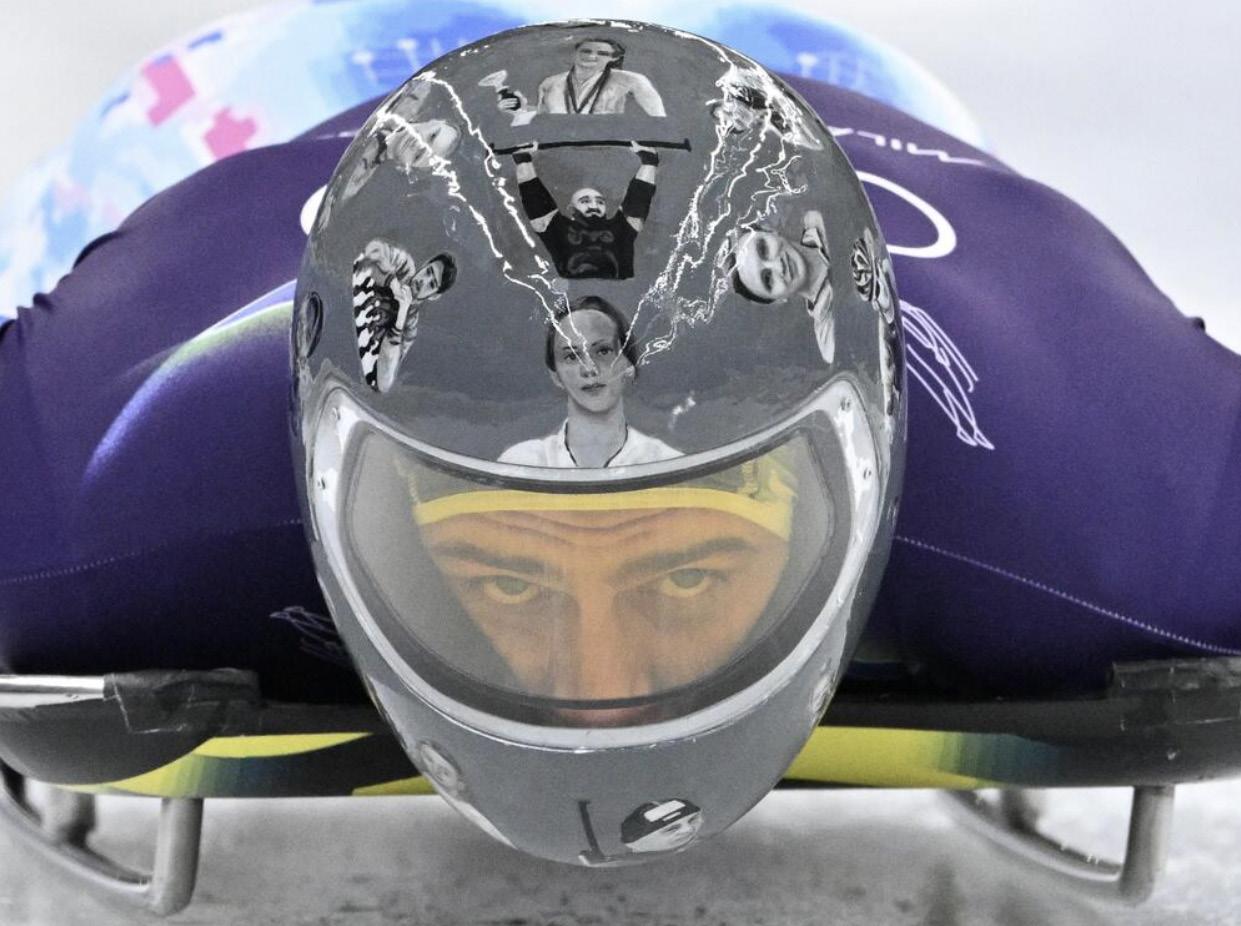
Artificial intelligence has equally played a major and widely condemned part in the 2026 Games. AI-generated graphics have been utilized in media and online sources related to the Olympics, but the reception has been extremely negative.
Much of the viewership said that the images appeared unnatural, poorly developed, or “soulless,” which diluted the legitimacy normally associated with Olympic storytelling. More troubling, AI-generated and manipulated images have also helped spread misinformation, featuring fake clips and edited footage involving athletes. This resulted in an influx of backlash against the Olympics, an event that showcases human accomplishment, and it shouldn’t get involved with the appearance of the many artificially created pieces that look cheap, uncanny or misleading as a way of doing things at the Olympics.
PDX Spring
Inkwell staff



https://www.yahoo.com/entertainment/tv/articles/winter-olympics-viewers-slam-ai-214540980.html?utm_

Amid the controversy, one genuinely exciting development has been the return of ski mountaineering to the Olympic program. Known as “skimo”, the sport sees athletes climbing up the mountain carrying their skis and skiing down afterwards. Incorporated back into the Olympics in 2026, it became popular on an international level, with special focus on alpine and endurance sports communities. It was introduced by the Olympic committee as a means of appealing to a younger audience and staying in line with changes to winter sports. Ski mountaineering has a unique quality as an offshoot of this, because of its emphasis on the harsh physical nature of the terrain, it’s the opposite of the commercial ski events or the heavily regarded ones at the Olympics.
And that concludes the outlier highlights of the Winter Olympics this year. We can only guess what will happen next.
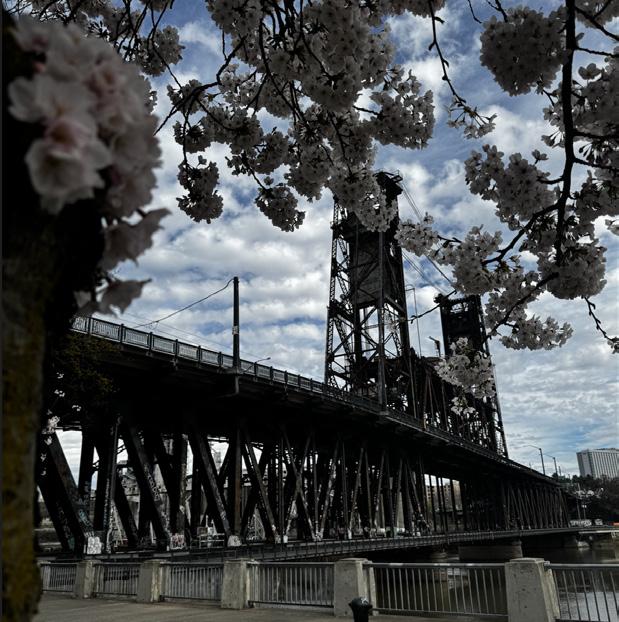
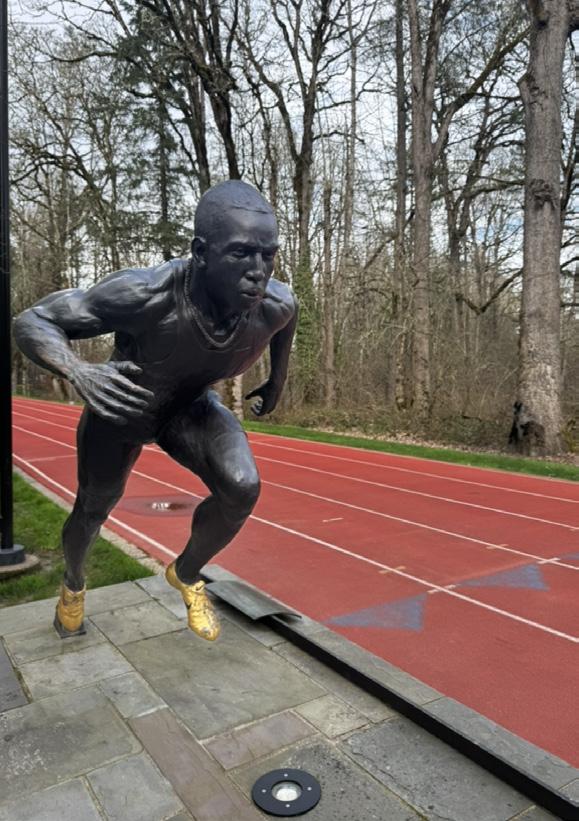

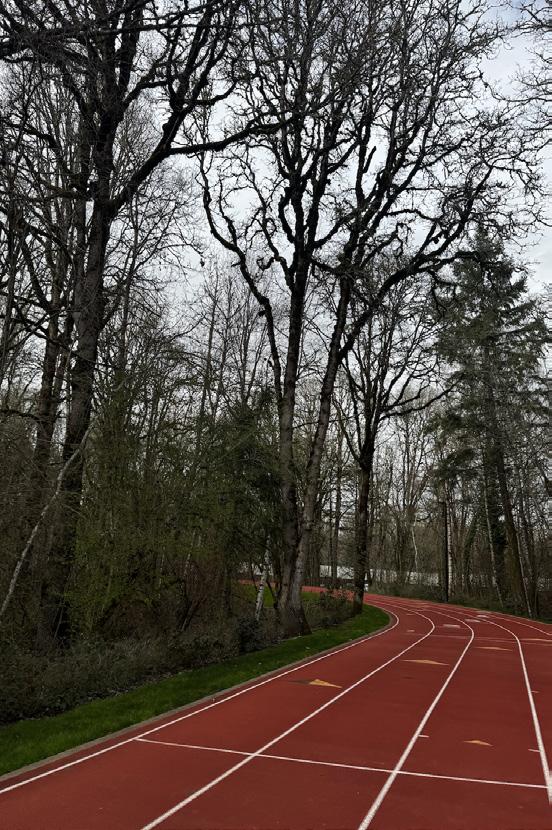
Experience Balkan Cuisine: Alma Review
Peyton Matthews
Vedran Jordan is the chef behind the Balkan seafood restaurant in Portland, Oregon - Alma. He combines the flavors from his childhood with the bountiful local ingredients from the Pacific Northwest to create a unique food experience designed to be shared.
Alma opened its doors in June of 2025 and has quickly become a spot you can not miss when visiting Portland. The menu is full of adapted traditional Balkan recipes passed down to chef Jordan by his aunt, mother, and grandmother, who are all from Sarajevo, Bosnia. Bowls piled high with clams and baskets full of warm pita bread quickly fill the table as everything on the menu has its own unique flavor profile that all works together to create an innovative menu full of things you must try.
During our visit to Alma, we were fortunate enough to try one of everything they had available. We started with a round of appetizers and ordered the pickle and cheese plate, grilled olives and feta, and plenty of rice pilaf for the table. The olives had a very intense smoky flavor with a bit of spice. Nevertheless, they paired nicely with the rich feta cheese. The rice pilaf was wonderful and went perfectly with every bite we had that evening.
The lamb shank is incredibly tender and melts in your mouth. It sits on a bed of Alma’s baba ghanoush. While this dip can often be a thick and chunky appetizer served with bread, this recipe was incredibly smooth, smoky, and full of garlic.
While Alma does lamb very well, in shank and kebab form, the true star of the menu is their seafood dishes. The fried calamari was lightly breaded, perfectly crispy, and full of rich spices, making it the perfect dish. They also serve grilled mackerel and octopus that both have a crisp outer layer that reveals a delish white meat inside. The octopus was cooked perfectly. A dish that can often be chewy was soft, tender and full of flavor. As a table, we shared two bowls of the manila clams “buzara” style. They were cooked in a garlic tomato sauce with a touch of spice, which made for a fun surprise.
Moving away from meats, Alma has a wonderful menu of vegetable options as well. We tried the Forest mushroom dish, the beet salada, as well as the Imam Bayildi, which is a roasted eggplant dish. The forest mushrooms were served in a mushroom jus and with a light sprinkle of goat cheese and herbs on top. The beet salada was made with beets done four ways: raw beets hand cut into small star shapes, thinly sliced and fried, puréed, and roasted. The combination of textures and flavors was impressive for a dish made out of only one ingredient.
The atmosphere of the restaurant was also wonderful, it was softly lit and the conversations from nearby tables filled the small space. The waitstaff were incredibly kind and knowledgeable about the menu. Any questions you may have will be answered, and the pairing recommendations were very helpful.
A night at Alma is not just a meal, but an experience that allows people to connect with the flavors in front of them and the people around them.
Make sure to give it a try next time you are visiting Portland!

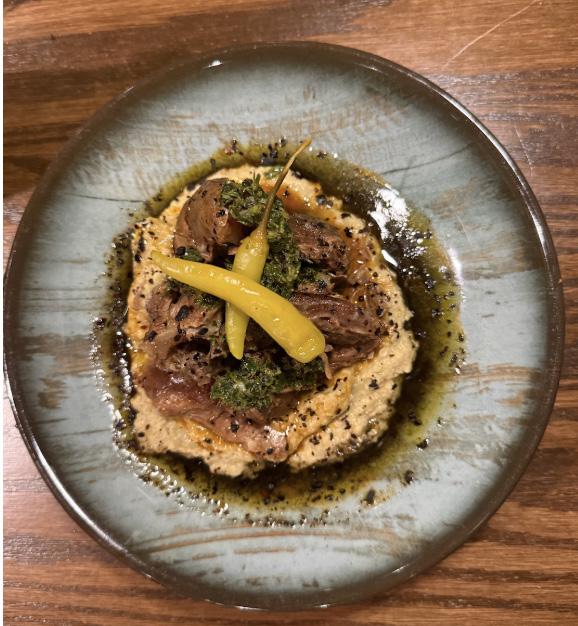
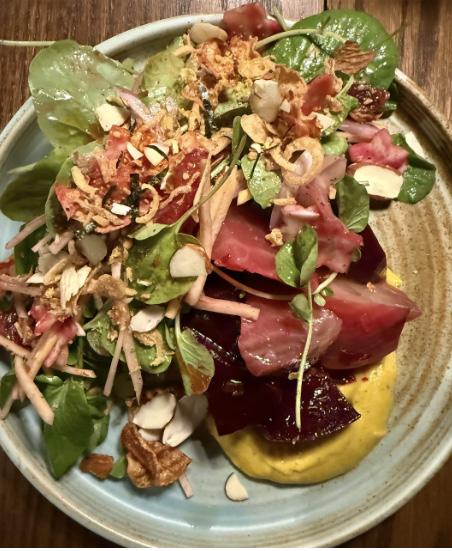

Photo Credit: Peyton Matthews
Portland Art Museum
Eisha
Ahmad
With each floor and exhibition feeling like walking into something new, the Portland Art Museum makes learning about the city’s art history immersive for all. As one of the oldest art museums on the West Coast, it features evolving exhibitions that display new things every year to show how Portland’s art culture keeps changing (PAM).
The museum has a dedicated section for displaying Native American art to recognize their underrepresented history. It emphasizes how their cultures evolved in Portland and in the Pacific Northwest region in general. Namely, a carved cedar indigenous canoe was put up for display and shows the cultural importance connected to the Pacific Northwest’s waterways. The first Native American item the Portland Art Museum discovered was also featured, showing the dedication the organization has of amplifying underrepresented voices in the Indigenous community.
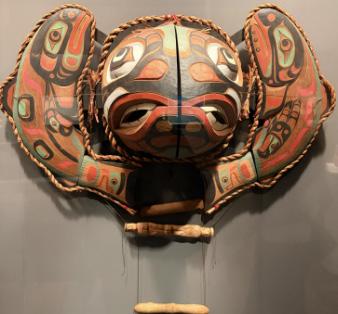


Another interesting feature of the museum is its showcase of glass artwork by artist Dale Chihuly. He is recognized for his glass sculptures and is widely known in the Pacific Northwest area and famously, many of his artworks are showcased locally in Tacoma’s Museum of Glass. In the Portland Art Museum, one of his signature pieces is showcased with abstract shapes and a bright red color that stands out in the exhibition. The medium itself being glass contrasts heavily to the museum’s other exhibitions of historical collections and European art.
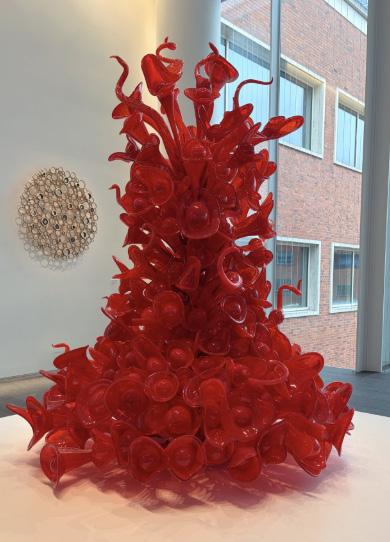
On another side to the many displays the museum offers, there are also interactive spaces that make the art more engaging to viewers. Interacting with certain displays with senses such as sound and touch makes the exhibitions’ messages be felt in a different way. Furthermore, the variety of ways in experiencing art makes it more accessible for younger audiences to understand and engage with.

Featuring 34 exhibitions from modern art to indigenous historical pieces, the Portland Art Museum tells the city’s story through multiple lenses. If you’re ever in the area make sure to stop by to learn more about Portland!
Photo credit: Eisha Ahmad
Sources:
https://portlandartmuseum.org/mission-and-history/
Saving the Dreams of Youth Through Art
Jaena Han
To raise awareness on current issues of Afghanistan, I would like to introduce you to Afghanistan’s first female graffiti artist, Shamsia Hassani.
Hassani, born in 1988, is known for her courageous voice in her street artworks. Her works have been showcased in various competitions around the world from Paris to even our neighboring state of Oregon.

Her work often explores themes of feminism, human rights, and the challenges against the restriction of the Afghan government. She is a significant figure in the history of Afghan women and feminism in general. It is well known how extremely difficult it is to speak up against injustice, especially when one’s voice in a community is constantly being suppressed.
Throughout oppression, violence, and regime change, Hassani continues to express her voice and that of many other females of Afghanistan.
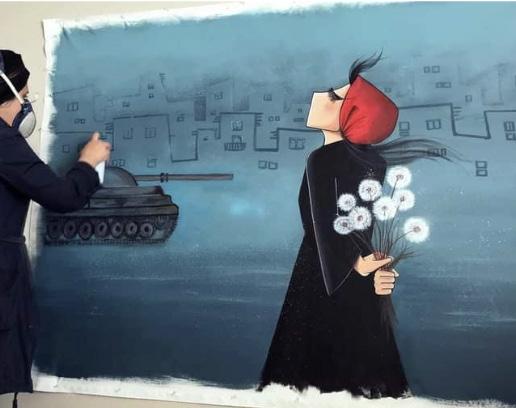
Hassani often uses the image of a girl, who represents both herself and all Afghan women. The girl is often portrayed with her eyes closed with no mouth to speak, symbolizing the current reality of womanhood in Afghanistan and their loss of freedom. In her artwork, the violence and maltreatment from the nation’s government is represented through her elements of an ominous being with a gun, or bars over a girl’s face that resembles prison bars.
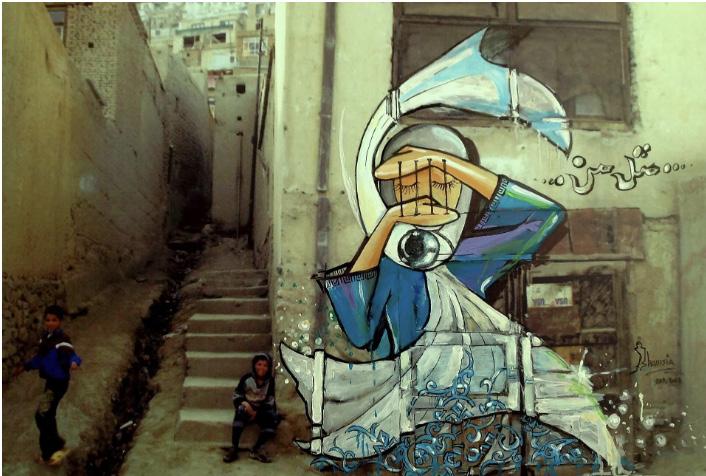


Hassani approaches the theme of oppression in two ways. She first shows specifically how the government strips women away from their identity, hopes, and dreams using symbolism. This approach is shown in the two paintings shown above, portraying a girl and her dandelion. These dandelions could be interpreted as a representation of everything that makes a woman herself, like her dream, passion and even family.
On the other hand, Hassani also paints the bravery of Afghan women. She doesn’t always portray these women as sad and hopeless, in some of her paintings, the girls are shown as strong and courageous, full of hopes and dreams even facing all the conflicts. In
another painting, one can see a girl dancing full of passion, stepping on top of a military tank that represents violence and war, and germs that represent the global issue of Covid-19.

Another example could be Hassani and her love for using the theme of music in her works. She uses the symbol of music, like a piano or a guitar, to represent the ideas of rebellion and dreams.

As the artworks of Shamsia Hassani gain further recognition, young girls in Afghanistan are inspired by her and her movement. Her artworks inspire viewers to think for themselves, to always remember that they are their own human beings, and that they are allowed to live just like any other children around the world.
Along with many other artists, her bravery and her artworks speak up for those who can’t, even if they are living in diaspora.
Currently, Shamsia Hassani is still safely but loudly spreading her movement in Los Angeles, California. She continues to paint her signature works within the figure of a girl. In 2025, she was involved in various international projects, one being a solo exhibition that happened in London, titled “The Dreamer”. You can find more of the information on her previous exhibitions on the official website of her partnering company, Street Art for Mankind.


Sources https://www.shamsiahassani.net/ https://www.widowsforpeace.org/all-news/shamsia-hassani-the-artist-who-dares-to-hope/ https://www.streetartbio.com/artists/shamsia-hassani/ https://qantara.de/en/article/graffiti-artist-shamsia-hassani-giving-voice-afghanistans-oppressed https://www.facebook.com/photo?fbid=136848995272834&set=pcb.136849245272809
Street Art for Mankind link
UNESCO Amplifying Women’s Voices Through Art
Spreading Hope
Chloe Yoo
This Spring season we all seem to be waiting on the journeys coming ahead. Inkwell believed this would be a good chance to inspire and be inspired by our community, so we asked the AWS Upper School students what they are looking forward to in the future.
Check out the responses submitted by our peers and think about what you would find hopeful in the upcoming year!
What is your greatest hope for the coming year?
Eisha Ahmad ’26: My greatest hope for the coming year is to pick up new hobbies such as gardening!
Anonymous: Senior privileges
Anonymous: Junior year
Kevin Nguyen ‘27: I hope to have a good time. Anonymous: To explore and experience new things, and see how I have grown over the past year.
Cooper Dicks ‘27: Have a happy and prosperous year.
Anonymous: Watching lots of sports games
Anonymous: I hope that I am less stressed, and that I get more hot chocolate.
Andy Nguyen ‘27: My three greatest hopes: Improving golf, seeing my old friends from primary school, and the Vietnam National Football team achieving major tournaments
Anonymous: Better football season and I get stronger in the gym
Molly Wang ‘28: I hope I can become more resilient in handling my mistakes.
Anonymous: To graduate and get out.
Anonymous: I hope I can control myself more so that I can do more work instead of spending time on doing meaningless things.
Caroline Overton ‘26: In a stage of transition to college, I hope to maintain the strong relationships I have built through AWS while also building new relationships and friendships elsewhere!
Kaydee Broadenax ‘29: Getting all As Liv Wenzel ‘27: My greatest hope is that for my Senior year I do as much as I can in the theater world, inside and outside of school!
Anonymous: Hopefully go to Argentina on exchange and do a bit of traveling.
Anonymous: I hope to expand my photography hobby into a serious job
Anonymous: I hope that by the end of this year I’ll be a multi-millionaire
Aaron Cook’28: I hope to transcend the pitiful plane of feeble mindedness that I embody when I lack time management.
Thor Qian’28: Move on and Keep 100%
Anonymous: I’m hoping to broaden my area of interest, and find a pathway that is best fit for me. I’d like to discover new genres of learning and gain a greater understanding of the world.
Anonymous: My greatest hope is to improve my math grade.
Anonymous: My greatest hope for this year is having more fun in 6th period English.
Anonymous: My greatest hope for the coming year is to achieve my rank of Eagle in Scouts
Josh Mathews’28: Get better at mathematics
Anonymous: I hope to see some beautiful scenery in Iceland.
Anonymous: I would like to get better at Mathematics.
Anonymous: Pass all classes
Anonymous: Football
Anonymous: I hope that I can work towards making myself feel like I’m deserving of a good life
Anonymous: My greatest hope is to finish the semester with a 4.0gpa
Anonymous: A greater understanding of math, to learn the intricate systems of equations.
Henry Jonasson’28: Get all A’s.
Anonymous: To have fun and enjoy time at school.
Anonymous: I hope to have a year as good or better than the past one.
Anonymous: I hope that I can play tennis free in the nearby tennis club.
Harrison Hill’28: I hope to start running, and to be more hopeful about things
Anonymous: Great food in future
Rowan Trelstad’28: I want to stay disciplined and excel in my sport, that is my hope.
Anonymous: My hope in the coming year is becoming better than last year, and I can add badminton to my sports.

Please Support Our MUN School Community Drive

Mark Your Calendars for May 9 AWS
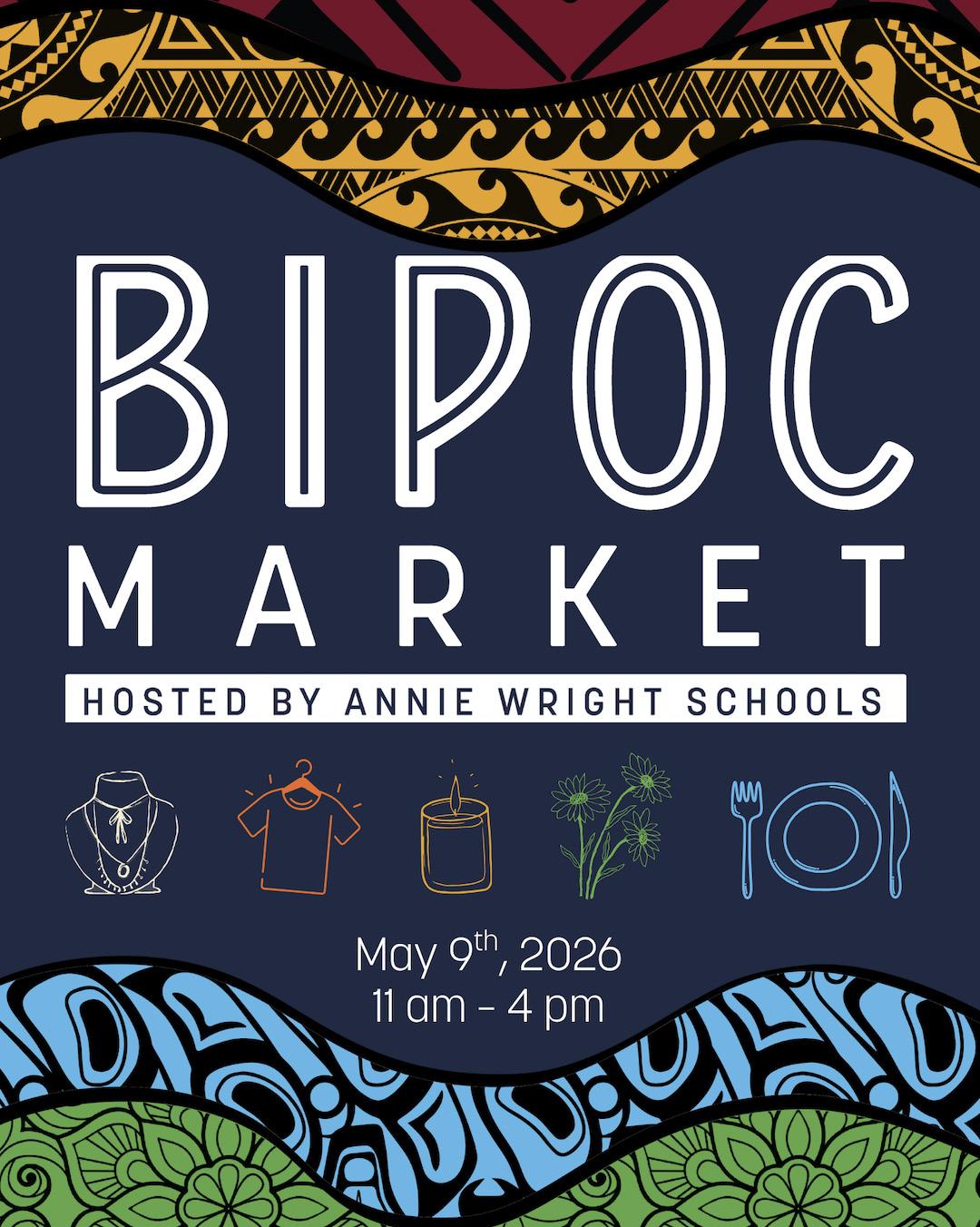
Don’t Forget to Drop by for the Carnival of Games!