THE OFFICIAL MONTHLY STAFF NEWSLETTER OF ANNIES HOUSE
“IT’S NOT JUST THE SUPPORT WE PROVIDE IT’S HOW WE PROVIDE IT, EVERY DAY, THAT MAKES THE DIFFERENCE ”
STEP INSIDE
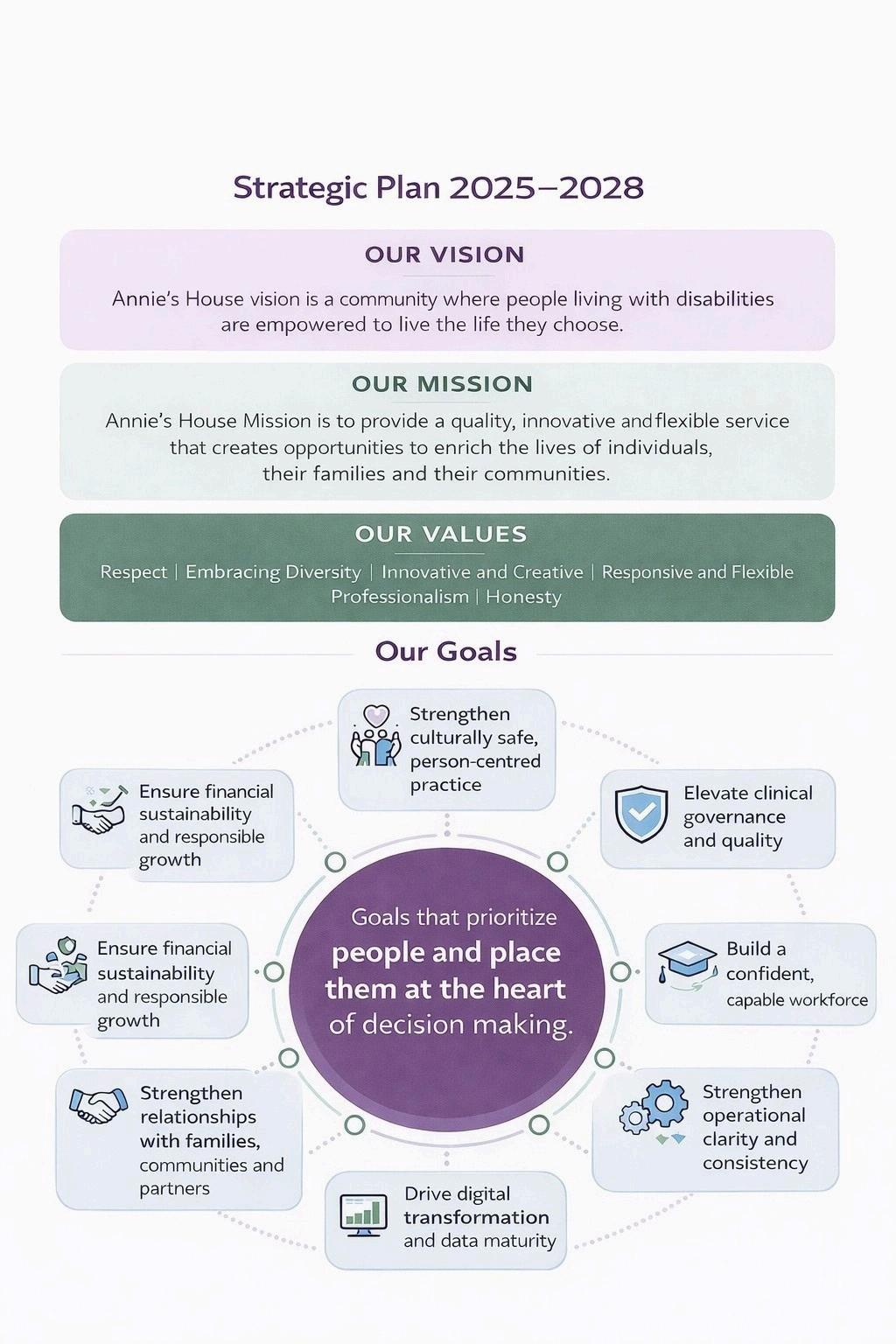
STATEGIC PLAN
CLINICAL CORNER
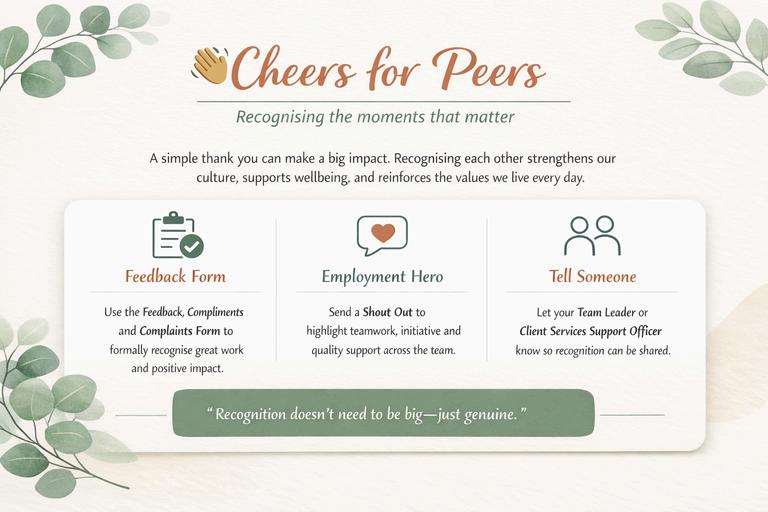
CHEERS FOR PEERS
CLIENT SUCCESS STORY
OPERATIONAL
SNAPSHOT
IMPORTANT UPDATES
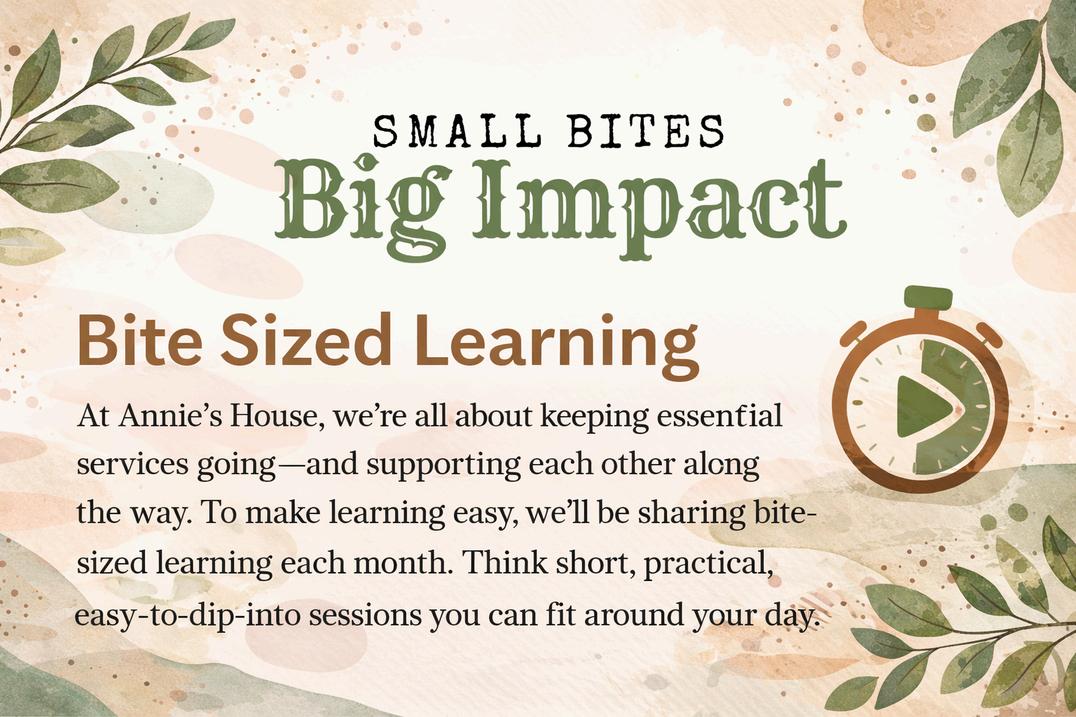
BITE SIZED LEARNING MORE
From the Director
As we move further into 2026, I want to recognise the incredible work happening across Annie’s House every day What stands out isn’t just the support we provide it’s how we provide it. The respect, patience and genuine care shown to participants reflects our values of dignity, belonging and growth in action
With the rollout of our new strategic plan, we are entering an exciting phase of organisational growth As more participants choose Annie’s House, it’s important we remain consistent, aligned and focused on delivering highquality, person-centred support.
This month, we ’ re placing a strong focus on consistency in practice and documentation Clear, accurate documentation supports safe care, strengthens communication, and ensures the best outcomes for participants
Thank you for the care, professionalism and commitment you bring every day the work you do truly matters
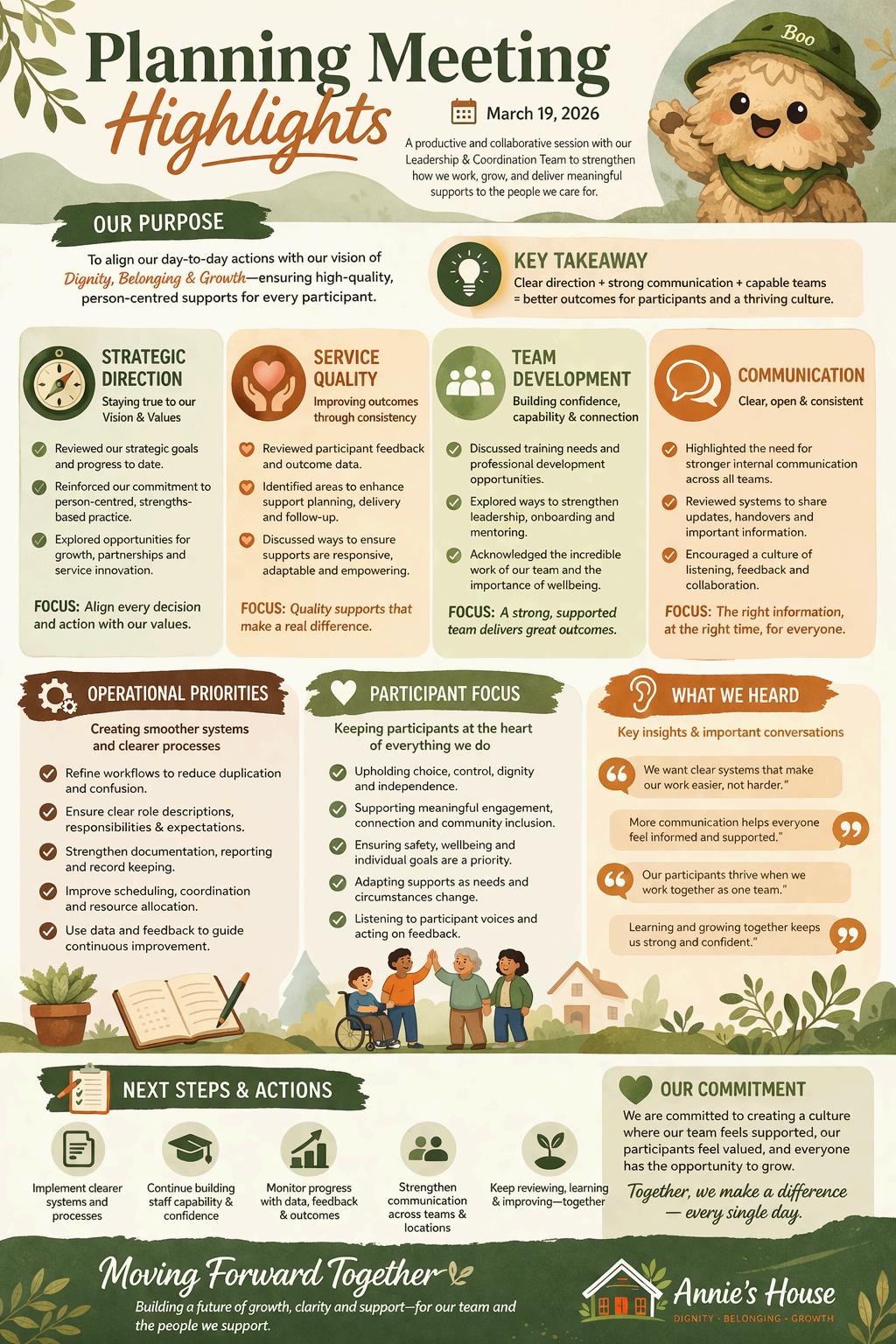
The Annie’s House Management Team met on 11 March 2026 to review progress, address emerging risks, and plan next steps across services, compliance, and staff support Below is a snapshot of the key updates
Planning, Systems and Governance
Service planning sessions are rolling out across the organisation, including quarterly all‐staff planning sessions and upcoming client and HUB planning meetings
Work is underway to introduce new reporting templates and small‐team meeting processes, helping improve consistency and clarity across departments
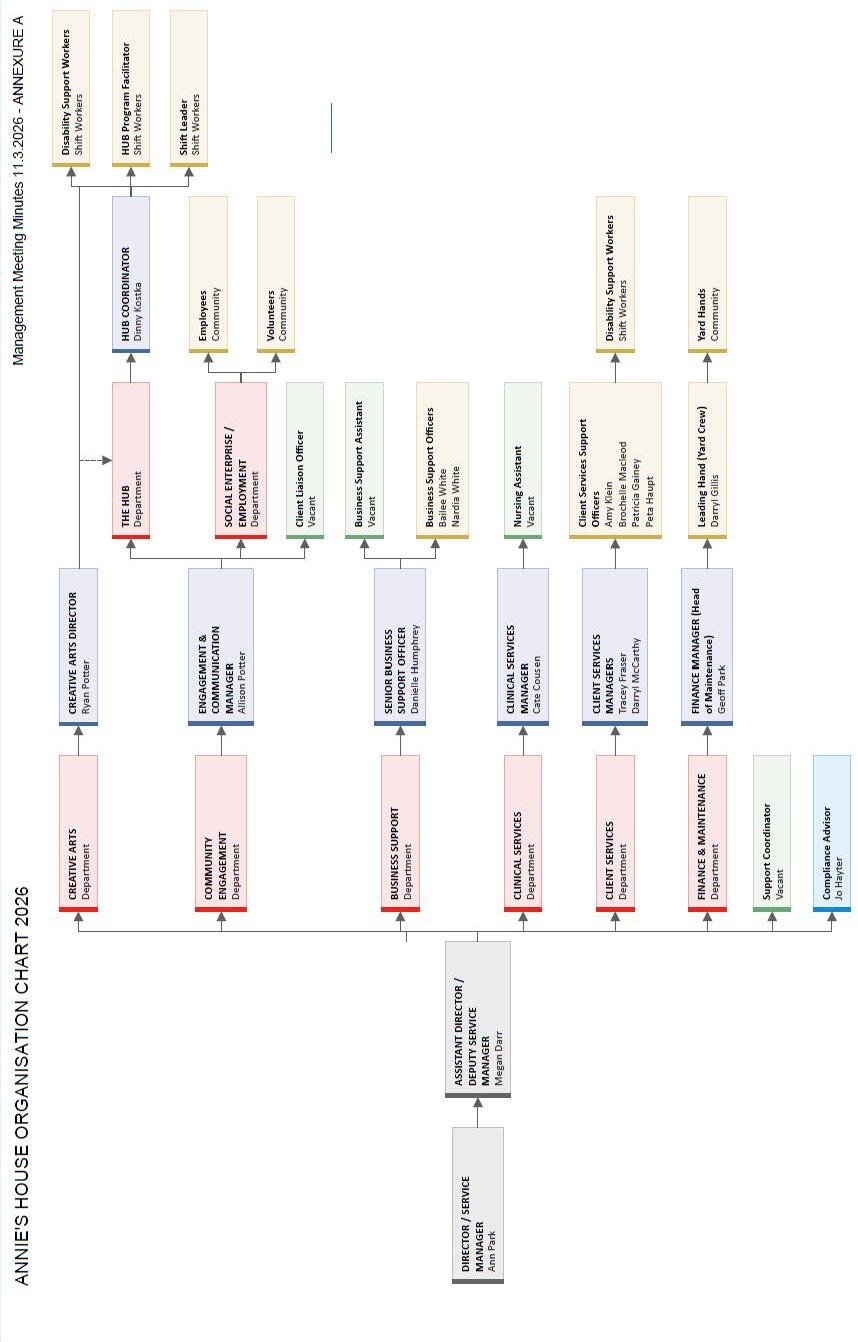
A new Delegation Framework is being developed to clearly align roles, responsibilities, training, and clinical oversight within the updated organisational structure
Quality, Safety and Compliance
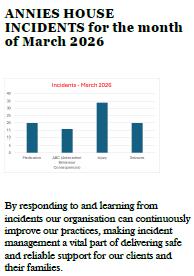
Incident, complaints, and restrictive practice trends were reviewed, with a strong focus on improving staff documentation, reporting accuracy, and supervision
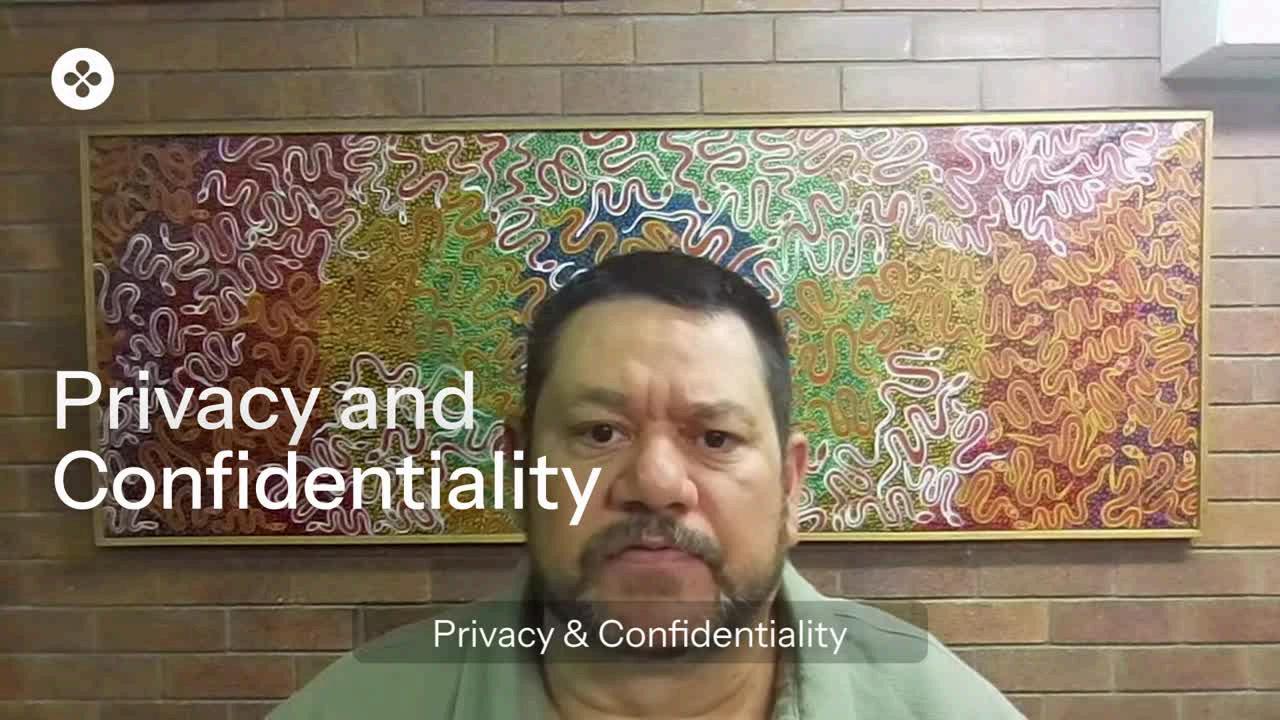
Additional emphasis is being placed on confidentiality, with targeted training planned to support best practice in small communities
Reviews of key plans and registers continue, including privacy audits, workplace inspections, emergency plans, and preparation for high‐intensity support certification
Child Safety and Continuous Improvement
Ongoing work is progressing to strengthen Child Safe Standards, including visible public commitments, staff training, and improved feedback pathways for children, young people, and families.
New improvement actions have been added to the Continuous Improvement Register, focusing on training, supervision, reporting, and safer group support practices
Staff, Training and Development
Several new staff members have joined Annie’s House, and recruitment is underway for a Business Support Assistant
Training priorities are set for the coming months, including case notes, privacy and confidentiality, and reporting, alongside continued PBSP and MAYBO training
Employment Hero is being expanded to support supervision, performance development, goal setting, and training compliance
Programs, Services and Community
The HUB continues to grow, with new participants, successful community engagement, and several grant applications and partnerships underway Website rebranding and consolidation of Annie’s House and The HUB are in progress
Legislative changes such as Payday Super and expanded Paid Parental Leave were noted in preparation for July 2026
The Management Team thanks staff for their ongoing commitment and engagement. These updates reflect our shared focus on safety, quality, and continuous improvement across Annie’s House.
C h a r t C h a r t
O r g a n i s a t i o n a l O r g a n i s a t i o n a l
As Annie’s House continues to grow and roll out our new strategic plan, every team member plays an important role in turning our goals into action
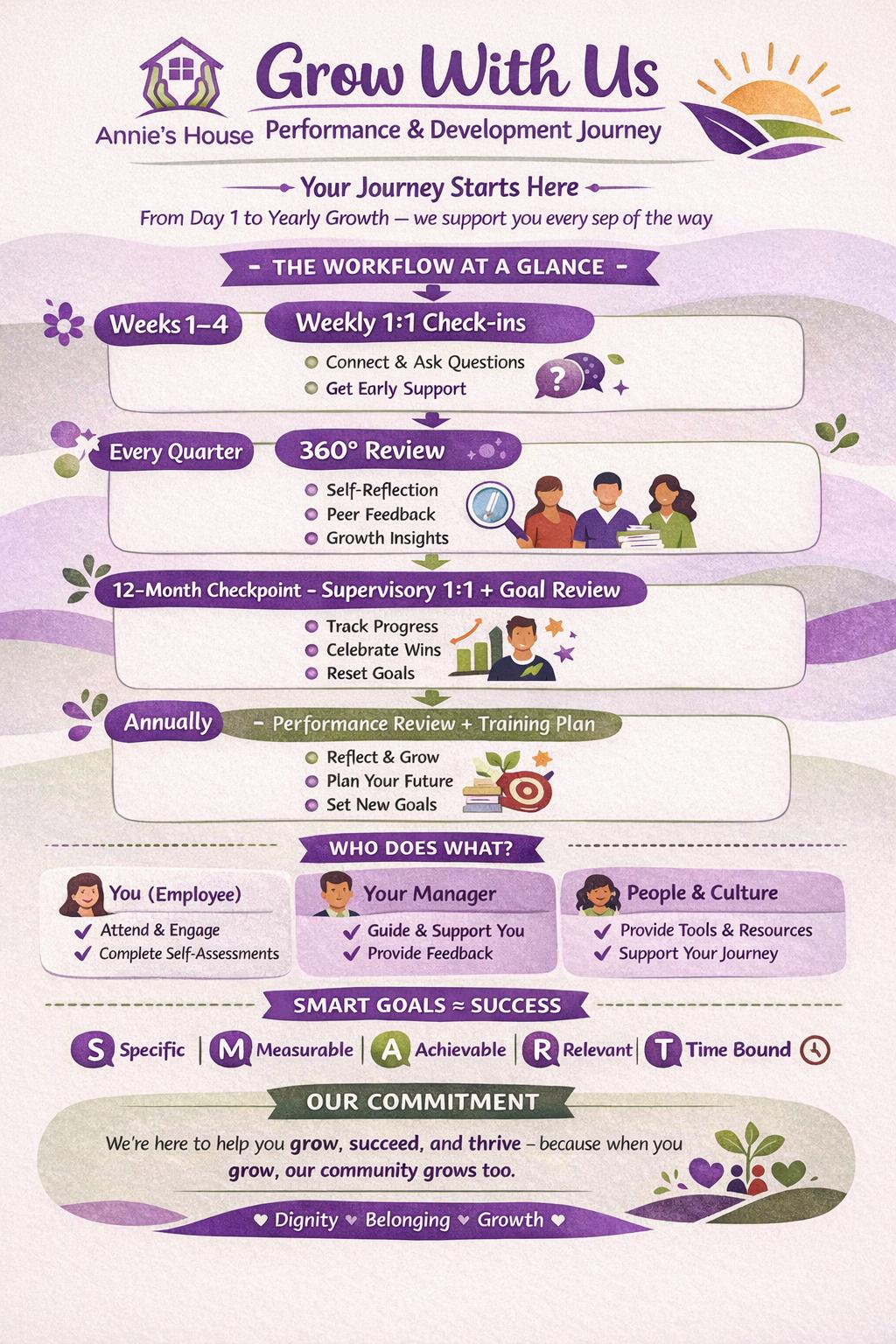
One of the most effective ways staff can contribute is by setting SMART goals in Employment Hero as part of supervision and performance reviews. These goals help align your day-to-day work with our broader organisational priorities ensuring we continue to deliver safe, high-quality, person-centred support.
In practice during your next supervision or performance review, take the opportunity to: set 3 SMART goals linked to your role; focus on areas such as documentation quality, participant outcomes, or skill development; review and update your goals regularly in Employment Hero. By setting clear, meaningful goals, we can all contribute to the continued growth and success of Annie’s House while delivering the best possible outcomes for the people we support.
Supporting Our Strategy Through SMART Goals
S – SPECIFIC: CLEAR AND FOCUSED (WHAT DO YOU WANT TO ACHIEVE?)
M – MEASURABLE: TRACKABLE (HOW WILL YOU KNOW IT’S DONE?)
A – ACHIEVABLE: REALISTIC AND WITHIN YOUR ROLE
R – RELEVANT: ALIGNED TO PARTICIPANT OUTCOMES AND ORGANIZATIONAL GOALS
T – TIME-BOUND: SET WITHIN A CLEAR TIMEFRAME
MATTERS
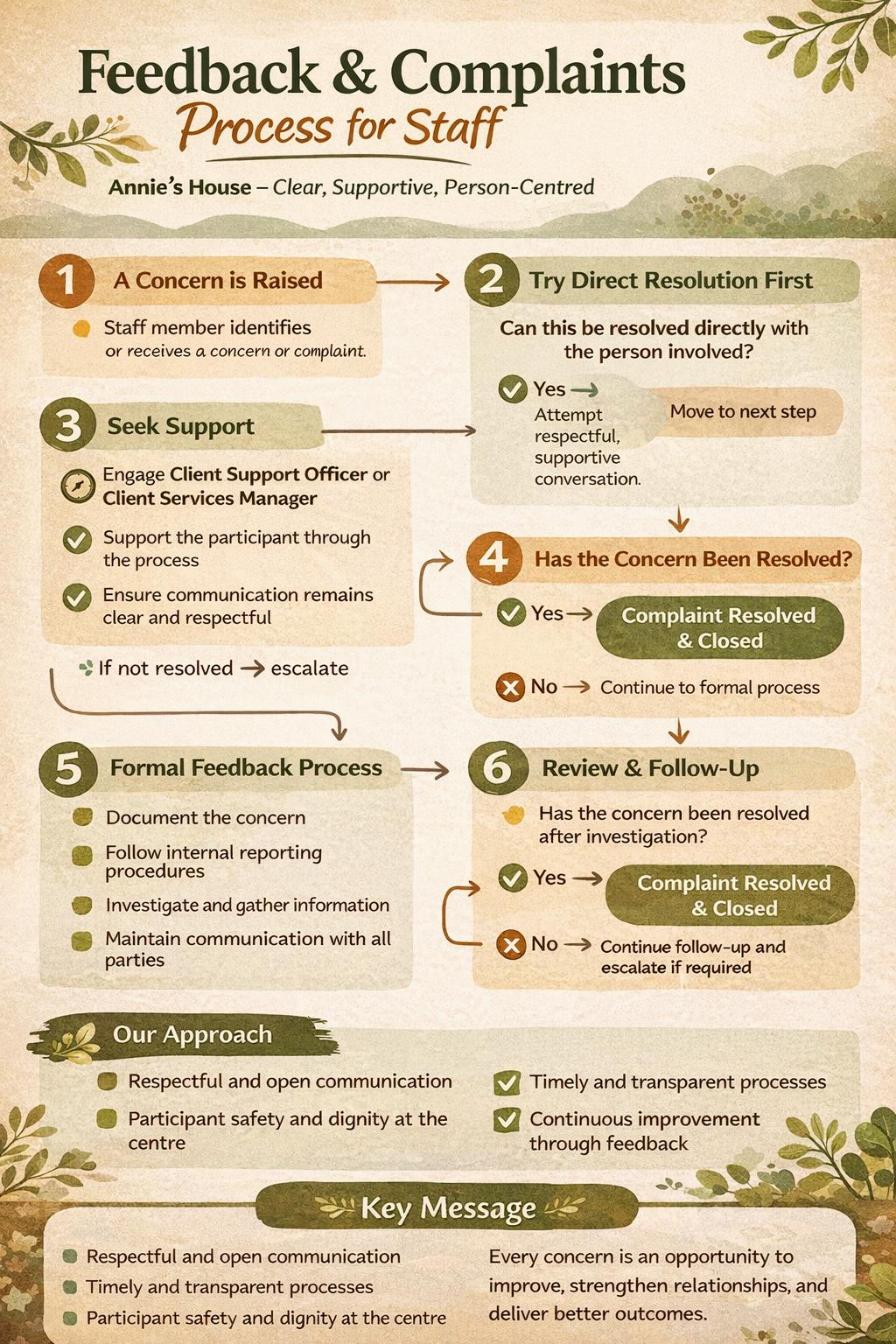
Annie’s House welcomes your feedback. Our Feedback, Compliments and Complaints
Form is a simple way to share what’s working well, recognise great practice, or let us know where we can improve. Your feedback helps us learn, grow, and continue providing safe, high‐quality support for everyone and we appreciate you taking the time to have your say.
Client-Specific PRN Procedures for Tier 2 and Tier 3 PRNs
These outline:
• When PRN can be used
• What criteria to check before giving
• What to monitor and when to escalate if a response is not optimal
S8 Medications
Some Tier 3 PRNs may also be Schedule 8 (S8) medications
These require strict storage, recording, and administration processes
Why These changes matter?
This approach:
• Supports staff in making safe, confident decisions
• Reduces risk to clients
• Takes the guesswork out of PRN use
• Provides clear steps to follow when it matters most
Final Note
PRN training will roll out after Easter
Client-specific procedures will be introduced as needed
So, that’s something to keep an eye out for - more to come soon!
If there’s anything you’d like me to cover in future Clinical Corner updates, please email me
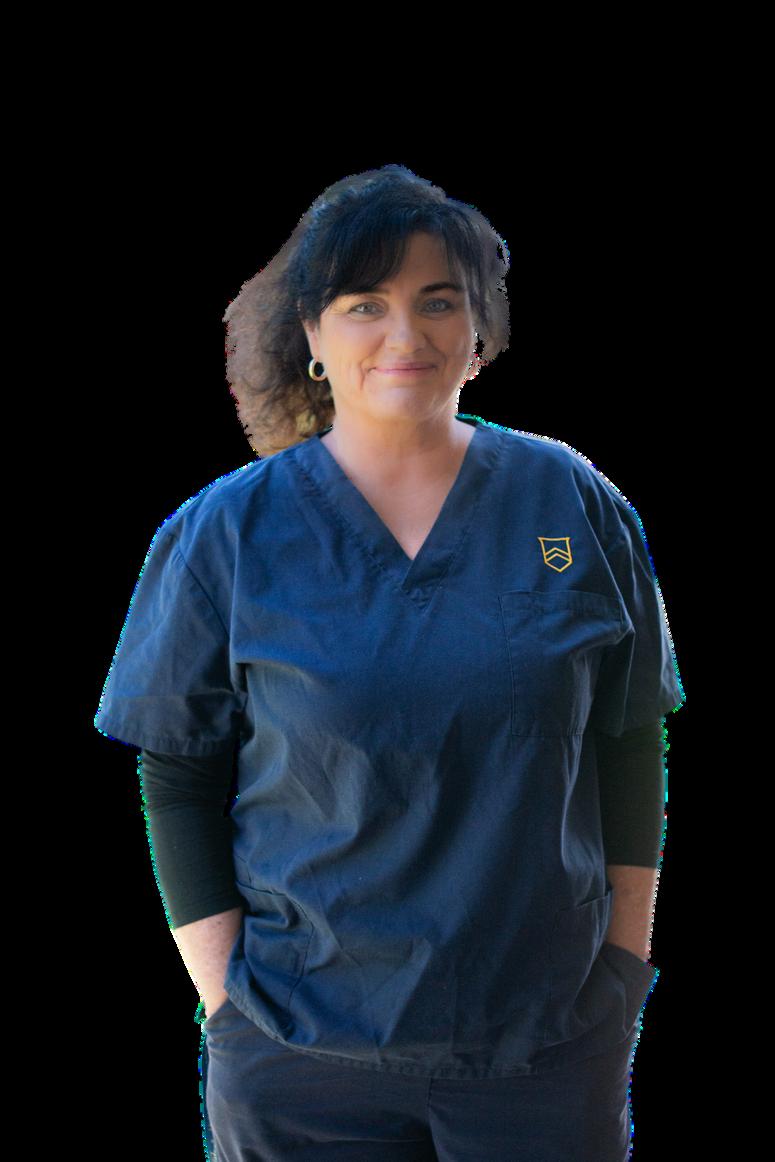
Until next time, Cate
EVERY BEHAVIOUR IS A
Hi everyone,
I’m really pleased to be continuing with Annie’s House as the Client Services Manager and MAYBO Facilitator at such an exciting time, as we move into a new year with a clear focus on excellence under our Strategic Plan
A key principle that underpins my approach to support is that every behaviour is a form of communication When we take the time to understand what someone is trying to express whether it’s a need, a feeling, or a response to their environment we’re better able to provide support that is respectful, safe and effective.
In my role, I’ll be working alongside you to build confidence and consistency in how we respond to behaviours of concern. This includes a strong focus on prevention, understanding triggers, and using deescalation strategies that prioritise dignity and wellbeing.
Through MAYBO training and ongoing support, we’ll be strengthening our approach by:
Building a shared understanding of behaviour as communication
Supporting proactive, person-centred strategies
Promoting safe and respectful responses
Increasing confidence when supporting complex situations
Understanding Restrictive Practices
Under the NDIS Act 2013, a restrictive practice is any action that limits a person’s rights or freedom of movement. These practices are tightly regulated to protect the safety, dignity, and rights of people with disability
There are five types of restrictive practices:
Chemical restraint – using medication to control behaviour
Mechanical restraint – using devices to restrict movement
Physical restraint – using physical force to control someone
Environmental restraint – limiting access to spaces, items, or activities
Seclusion – isolating a person in a room or area they cannot leave
Each month, we’ll unpack one of these in more detail to help build awareness and support best practice across our services.