






































FORTIFY YOUR PLANTS FOR IMPROVED NUTRIENT UPTAKE AND CROP RESILIENCY WITH WAVE




Even if you can’t stand the heat, you can still protect your canola elds from it. Wave biostimulant from UPL, your source for Interline® herbicide, improves nutrient uptake for enhanced plant vigor, growth and overall health. This easy-to-use, naturally derived abiotic stress mitigator increases pro t potential by reducing the costly effects of environmental stressors such as excessive heat, moisture and drought. Field trials have also shown up to six percent in yield increase.*


TAKE SOME OF THE STRESS OUT OF YOUR SEASON. ASK YOUR RETAILER ABOUT WAVE BIOSTIMULANT TODAY.





Plant growth regulators provide economic return.
Laying the foundation for a productive crop.
Coleoptile length matters.
cropping systems.
ON THE
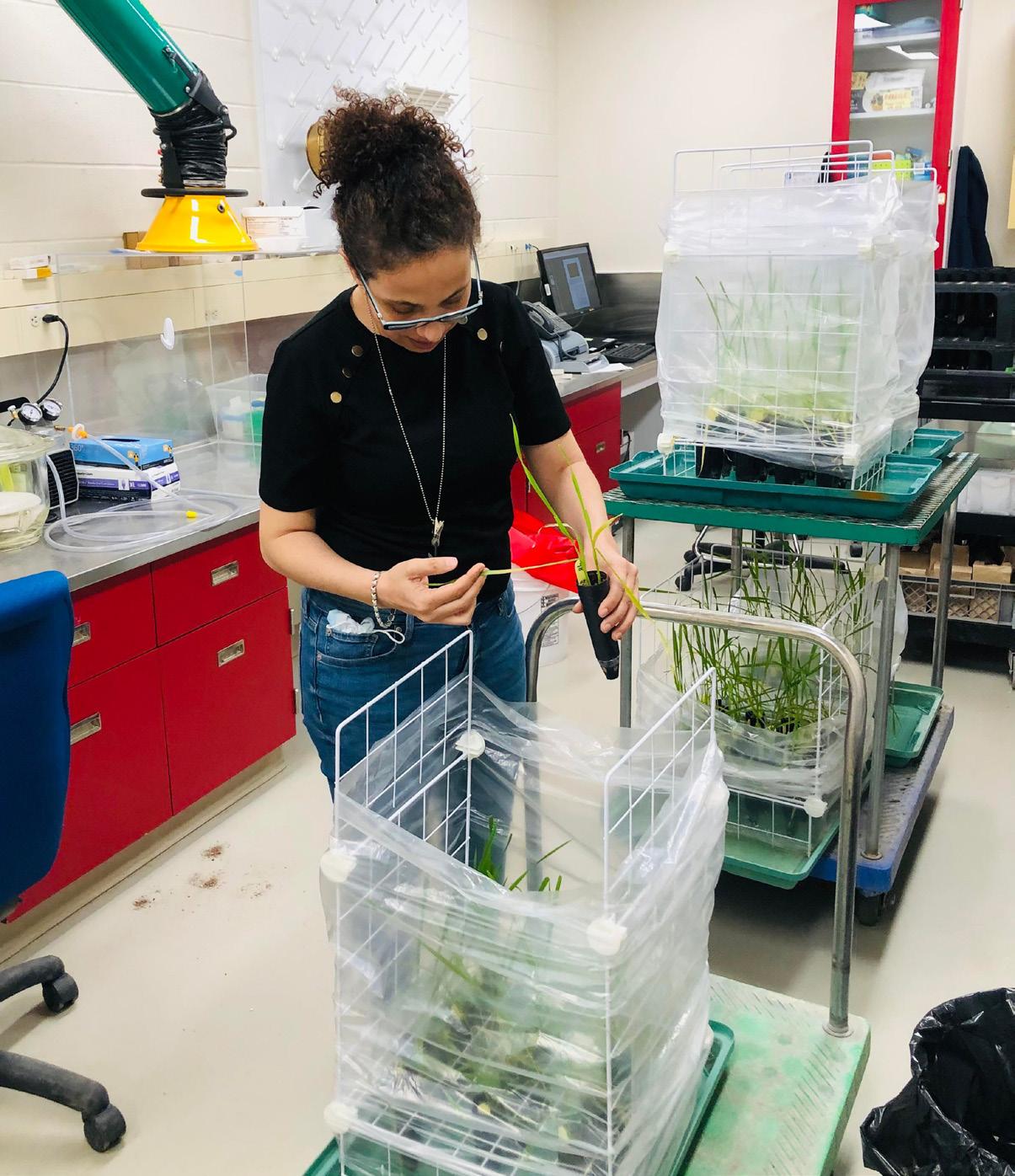
Aboukhaddour is studying changes in stripe rust in Canada over time, including changes in the fungus’s ability of overcoming different resistance genes in wheat. Photo courtesy of Reem Aboukhaddour, AAFC.


by Kaitlin Berger
It was a Saturday in May 2004 when my dad, my brothers and I drove through heavy rain to get to the local movie theatre to watch Shrek 2. As soon as we arrived, we received a frantic call from my Mom who had stayed behind on the farm: “Come home. A tornado just hit us.” Even though we ignored all speed limits, that twenty-five-minute drive home was one of the longest in my pre-teen existence.
Debris was strewn across our fields. Telephone wires were down. The equipment shop had nothing left but the concrete foundation. One of its doors was sticking out of the roof of the farmhouse and another was lying in one of our fields. A grain bin was wrapped around one of my favourite climbing trees and a 2x4 was driven into a tractor tire like a pin in a pincushion. The pool was scattered. The van was totaled. And the dog was nowhere to be found.
I’ve noticed the way these big challenges have ignited conversations...
Later that evening, the neighbours were already helping put a temporary roof on the house, and two days later, over three hundred friends and neighbours showed up on the farm with tractors and quads and chainsaws to help clear debris and fix as much damage as possible.
While none of us wished for the tornado to happen, the memory has always reminded me of the resilience of farmers and how challenges bring communities together - like nothing else.
It’s only halfway through the calendar year, with many days left in the growing season, but a lot has already happened that affects decisions on the farm this year – or in future years. In January, Agriculture and Agri-Food Canada announced their decision to close multiple research centres across Canada. Conflict in the Middle East has heightened fertilizer market challenges, and tariffs and trade uncertainty continues.
While none of us seek out obstacles (or destructive tornados), I’ve noticed the way these big challenges have ignited conversations. They drive farmers, researchers and policymakers to talk more. At the very least, they can be an opportunity to think about what we’re doing right and what we can do better in the future to ensure Canada continues to be a leading force in agriculture.
That’s what happened on our farm after the tornado. We expanded our driving shed that had been destroyed. We redid our house addition we built the year before. We took the opportunity to rebuild and be better.
P.S. We also found the dog hours after the tornado happened – jittery but mostly unscathed. If only dogs could talk.
@topcropmanager
@TopCropManager
|
Reader
(416)
| Fax: (416) 510-6875 Email: apotal@annexbusinessmedia.com Mail: 111 Gordon Baker Rd., Suite 400, Toronto, ON M2H 3R1
Editor KAITLIN BERGER (403) 470-4432 kberger@annexbusinessmedia.com
Western Field Editor BRUCE BARKER (403) 949-0070 bruce@haywirecreative.ca
National Account Manager QUINTON MOOREHEAD (204) 720-1639 qmoorehead@annexbusinessmedia.com
National Account Manager REENA UPPAL (437) 922-7359 ruppal@annexbusinessmedia.com
Account Coordinator JULIE MONTGOMERY (416) 510-5163 jmontgomery@annexbusinessmedia.com
Group Publisher MICHELLE BERTHOLET (204) 596-8710 mbertholet@annexbusinessmedia.com
Audience Development Coordinator LAYLA SAMEL (416) 510-5187 lsamel@annexbusinessmedia.com
Team Lead/Media Designer BROOKE SHAW
CEO SCOTT JAMIESON sjamieson@annexbusinessmedia.com
Printed in Canada ISSN 1717-452X
PUBLICATION MAIL




BY CAROLYN KING
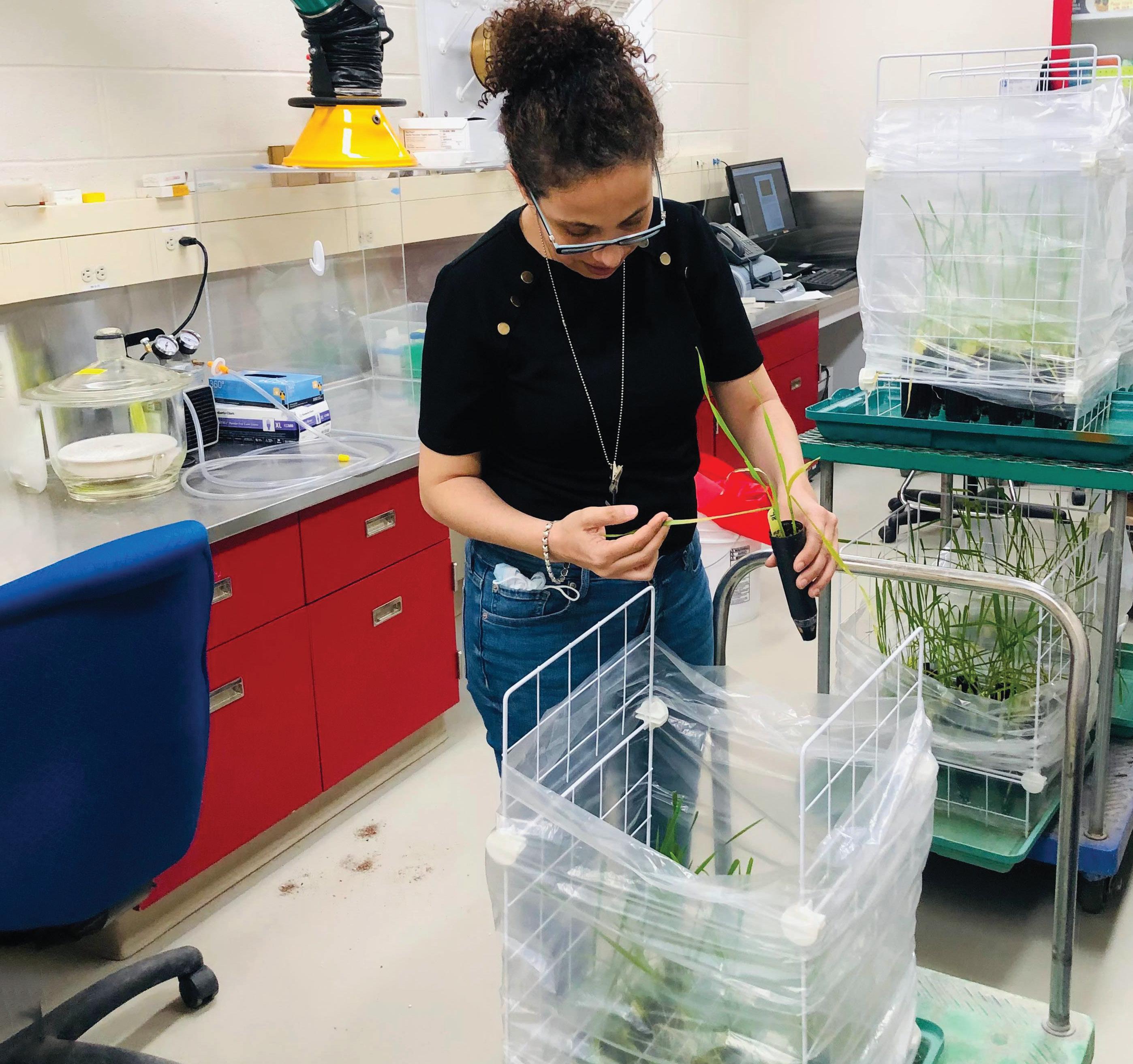
Stripe rust is an aggressive pathogen; it spreads easily and it keeps changing – hybridizing or mutating,” says Reem Aboukhaddour, cereal pathologist at Agriculture and Agri-Food Canada (AAFC) in Lethbridge, Alta. She is looking into how the fungus is changing over time so she can give Canadian wheat breeders and growers a heads-up.
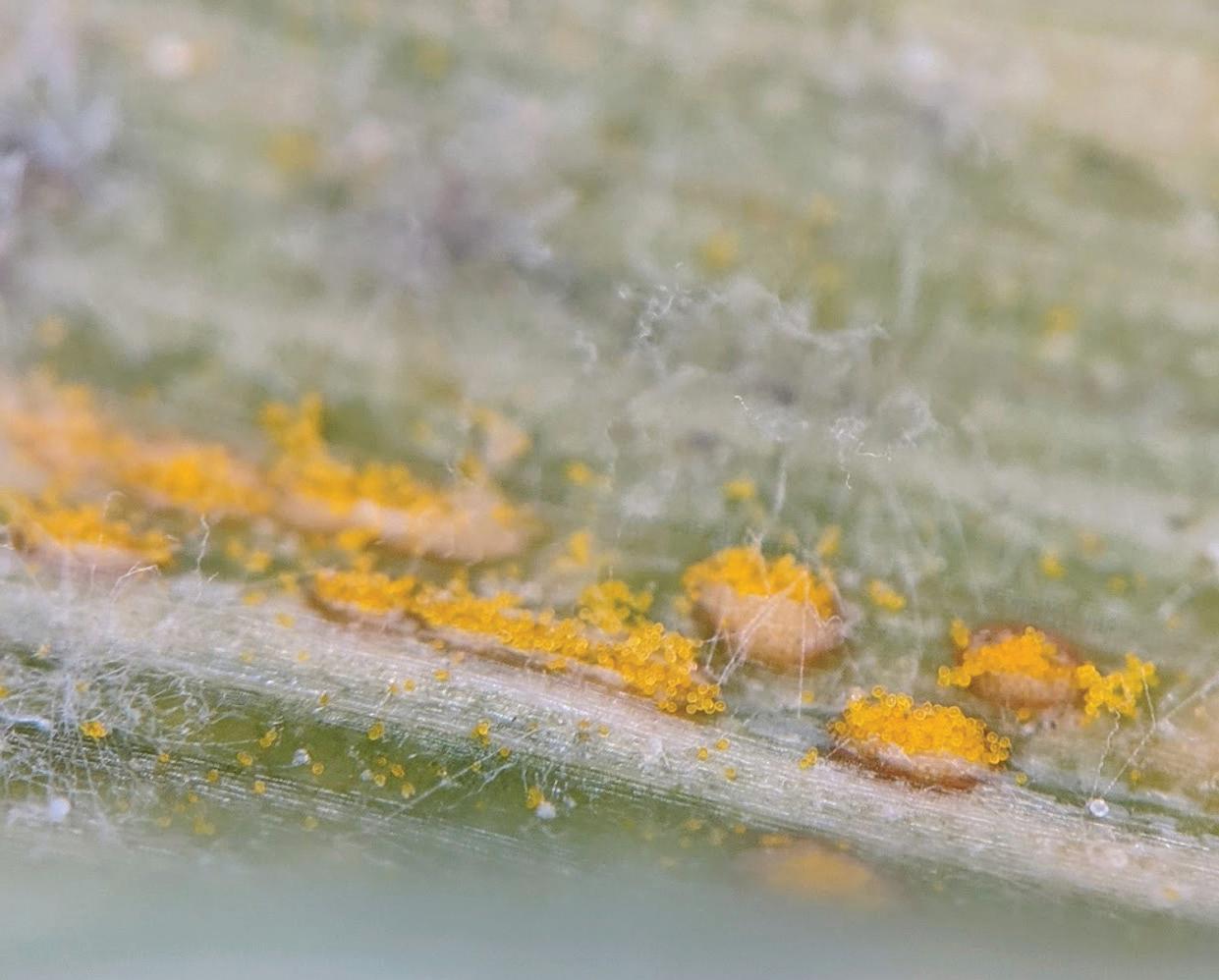
The disease can cause devastating yield losses in susceptible wheat varieties. It produces yellowy orange pustules on the leaves, with each pustule containing thousands of spores, and multiple infection cycles can occur in a single growing season.
“The spores are very small and can be carried for long distances by the wind and even on people’s shoes, clothes and so on. So, the pathogen can move easily across countries and continents,” notes Aboukhaddour.
Stripe rust spores blow into Canada each year from the United States, mainly following two wind pathways: one via the Pacific Northwest states (PNW); and the other via the Great Plains states. The fungus doesn’t usually overwinter on the Prairies because it requires a living host, but it is known to sometimes overwinter on winter wheat in Alberta if snow cover provides enough insulation.
It’s thought to mainly reproduce clonally in North America. Nevertheless, it has a genetically diverse population due to a high degree of mutation in its asexual reproduction process, as well as to incursions of spores from other regions and to hybridization (through fusion of hyphae from different stripe rust isolates). This diversity allows the fungus to quickly evolve and adapt, including overcoming control measures such as resistance genes in wheat varieties and fungicides.
While mutations produce stepwise changes in a few genes, incursions of new races from other parts of the
world have resulted in dramatic changes, as shown in studies by Aboukhaddour and others.
“In Canada, the pathogen was first identified in Alberta in 1918 and subsequently across the Prairies and British Columbia. It was not recognized to have an economic impact until the 1980s when it caused several outbreaks on irrigated soft white wheat in southern Alberta,” says Aboukhaddour.
ABOVE
Aboukhaddour is studying changes in stripe rust in Canada over time, including changes in the fungus’s ability of overcoming different resistance genes in wheat.
“However, the real concern with stripe rust in Canada emerged around 2000. Before 2000, it was mainly an issue in regions with humid conditions and cool spring temperatures up to about 12 C, like southern Alberta’s irrigated area and the PNW. Then an incursion of new races arrived in North America around 2000,” she explains.
“These new races could infect wheat at higher temperatures, even up to 18 C. And they had a wider spectrum of virulence, defeating more of the resistance genes in wheat cultivars back then.” As a result, these new races became the predominant stripe rust lineage, and stripe rust quickly became a significant threat well beyond the traditionally affected region.
Another remarkable virulence shift occurred in Canada around 2010 with new races that were able to defeat even more resistance genes.
“Most other cereal pathologists have stripe rust
collections starting from about 2005 or 2010 and beyond. But by chance, I inherited a collection of Canadian wheat stripe rust isolates going as far back as 1984. I was able to recover them and study them,” says Aboukhaddour. This unique collection is an important resource for her research, and she has been adding new isolates to it.
A few years ago, Aboukhaddour and her research group conducted a study of her 1984 to 2017 isolates to take a closer look at the pathogen’s changing virulence.
The isolates were collected in British Columbia, Alberta, Saskatchewan, Manitoba and Ontario. Many were from Alberta, which is a hotspot for stripe rust infection and race diversity due partly to its weather conditions that tend to favour the disease and to its close proximity to the PNW, another hotspot.
Aboukhaddour’s group tested the isolates on a set of 18 differential wheat lines. These lines are genetically identical except that each has a different wheat gene for stripe rust resistance, known as Yr genes. The race of a stripe rust isolate is determined by which of these Yr genes the isolate is able to defeat. She explains that this standardized differential set is used by labs around the world for comparisons. Most of these genes have been used in wheat varieties or breeding materials in many countries, including Canada.
The study’s findings showed Canadian stripe rust became more virulent from 1984 to 2017, with a jump in the number of defeated Yr genes around 2000 and then a further jump around 2010. Also, the average number of Yr genes that an individual isolate could overcome increased since 1984 from four to over 13.
The defeated genes include some commonly used in Canadian wheat
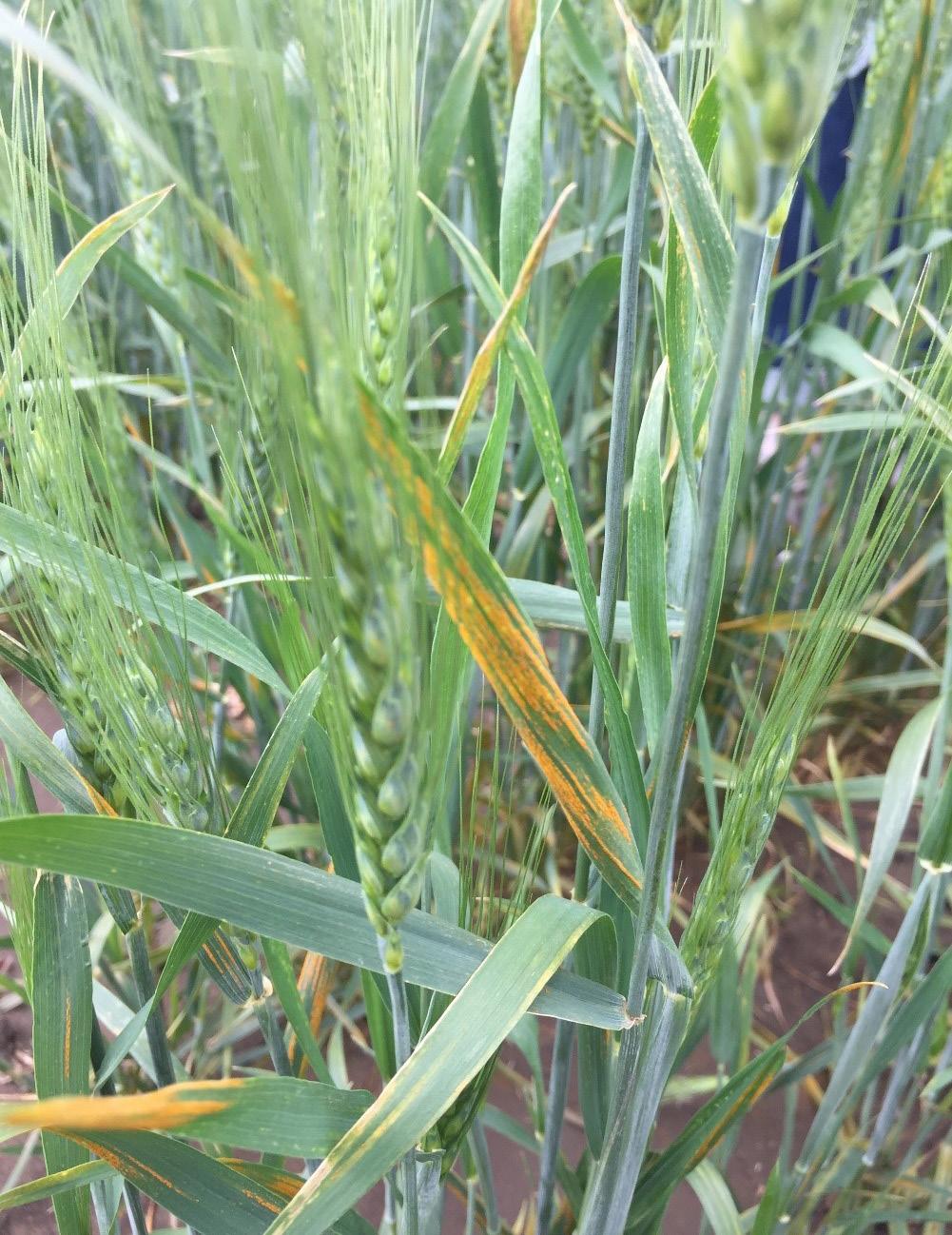
ABOVE The stripe rust fungus forms yellowy orange pustules that run in stripes parallel to the leaf veins.
varieties. Aboukhaddour notes that most of the defeated genes are major genes. Major genes provide race-specific disease resistance, which is really effective resistance, but it can break easily – within two or three years if a major gene for stripe rust resistance is integrated alone in a wheat variety. However, the differential set does not include all the Yr genes that have been identified by scientists. In particular, Canadian wheat germplasm includes race non-specific stripe rust resistance. This type of resistance may allow some disease symptoms to develop, but it can be durable.
Another key finding was that all of the 1984 to 2017 isolates were unable to infect Yr1, Yr5 and Yr15, and most were unable to infect Yr76.
Of the 89 races in the collection, 25 were the same as U.S. races, and 64 were unique to Canada, suggesting evolution of the pathogen at a local scale. The results also showed that the prevalent races in Canada and the U.S. were more similar to each other after 2010.
Aboukhaddour and her group are currently completing another study about stripe rust changes in Canada. One part of this study involved testing isolates collected from 2020 to 2024 on the Yr differential set.
They tested 52 isolates collected from wheat crops in Alberta, Saskatchewan, Quebec and Prince Edward Island. They also tested five isolates from cultivated barley and 16 from foxtail barley, which were all collected in Alberta.
Along with the 52 wheat isolates, four of the cultivated barley isolates were also able to infect the wheat lines. All these wheat-infecting isolates were classified into 23 races, including 16 new races. The new races were found in both western and eastern Canada. Alberta’s stripe rust population was especially diverse, with many of the previously identified races and new races.
“In general, most isolates were virulent to Yr6, Yr7, Yr8, Yr9, Yr17, Yr27 , Yr43 , Yr44 , YrTr1 and YrExp2,” she notes. “Yr1, Yr10, Yr24, Yr32 and YrSP conferred partial or regional resistance; for example, Alberta isolates defeated genes like Yr10 and Yr24, while in Saskatchewan those genes remain more effective. Yr5 and Yr15 remained undefeated by all isolates.”
According to Aboukhaddour, Yr5 and Yr15 have not yet been deployed in Canadian wheat varieties, probably due to breeding challenges. Both genes come from wild relatives of wheat, and cross-breeding with wild relatives is time-consuming and difficult. Also, Yr5 and Yr15 are major genes, so Canadian breeders want to keep these genes effective as long as possible by integrating them with other stripe rust resistance genes in a wheat variety, which also takes time.
However, she cautions that Yr15 has recently been defeated in the United Kingdom. Since this problem was discovered in spring 2025, it has spread further in Europe. She says: “Cereal pathologists everywhere in North America are looking out for it.”
CONTINUED ON PAGE 9
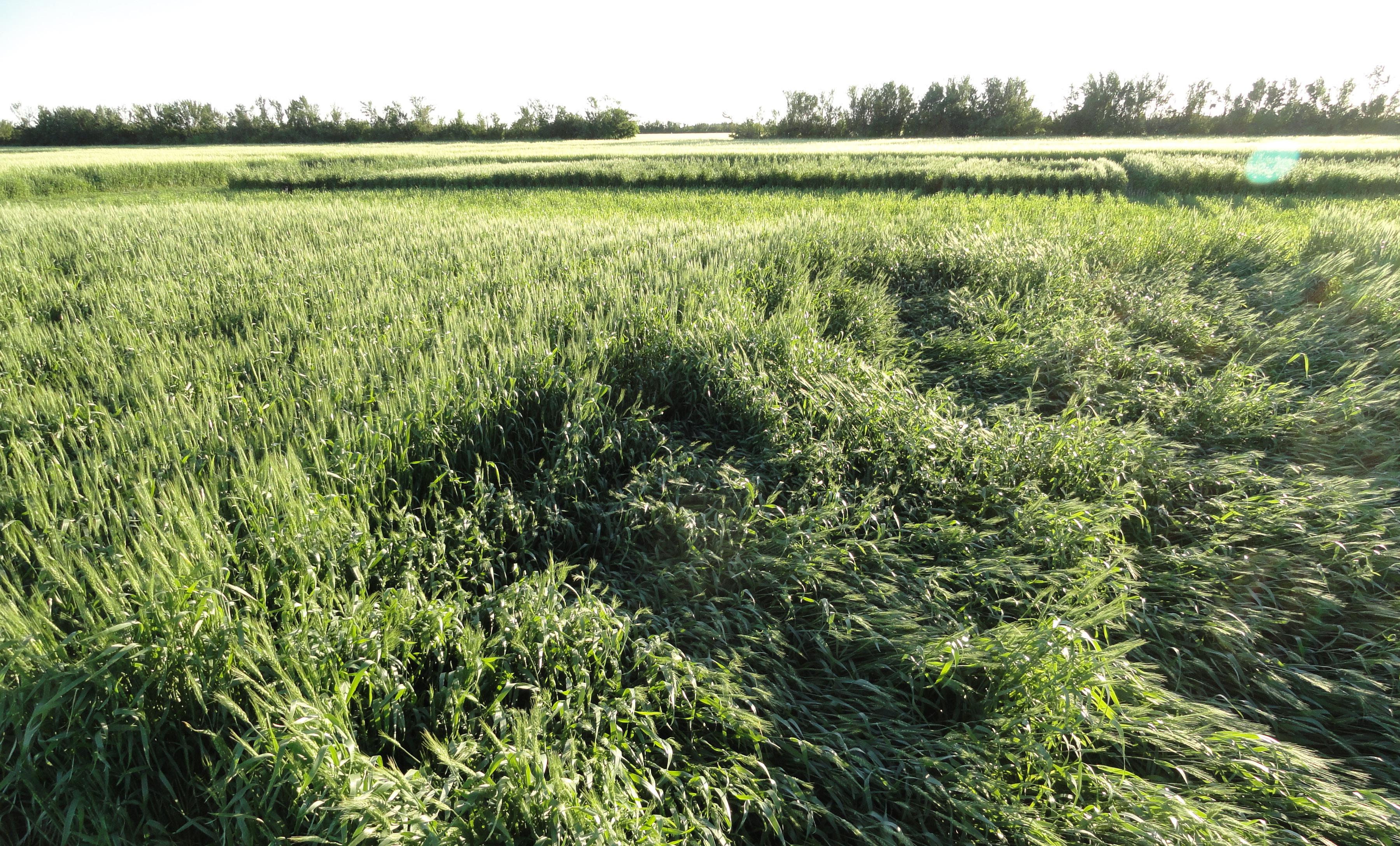
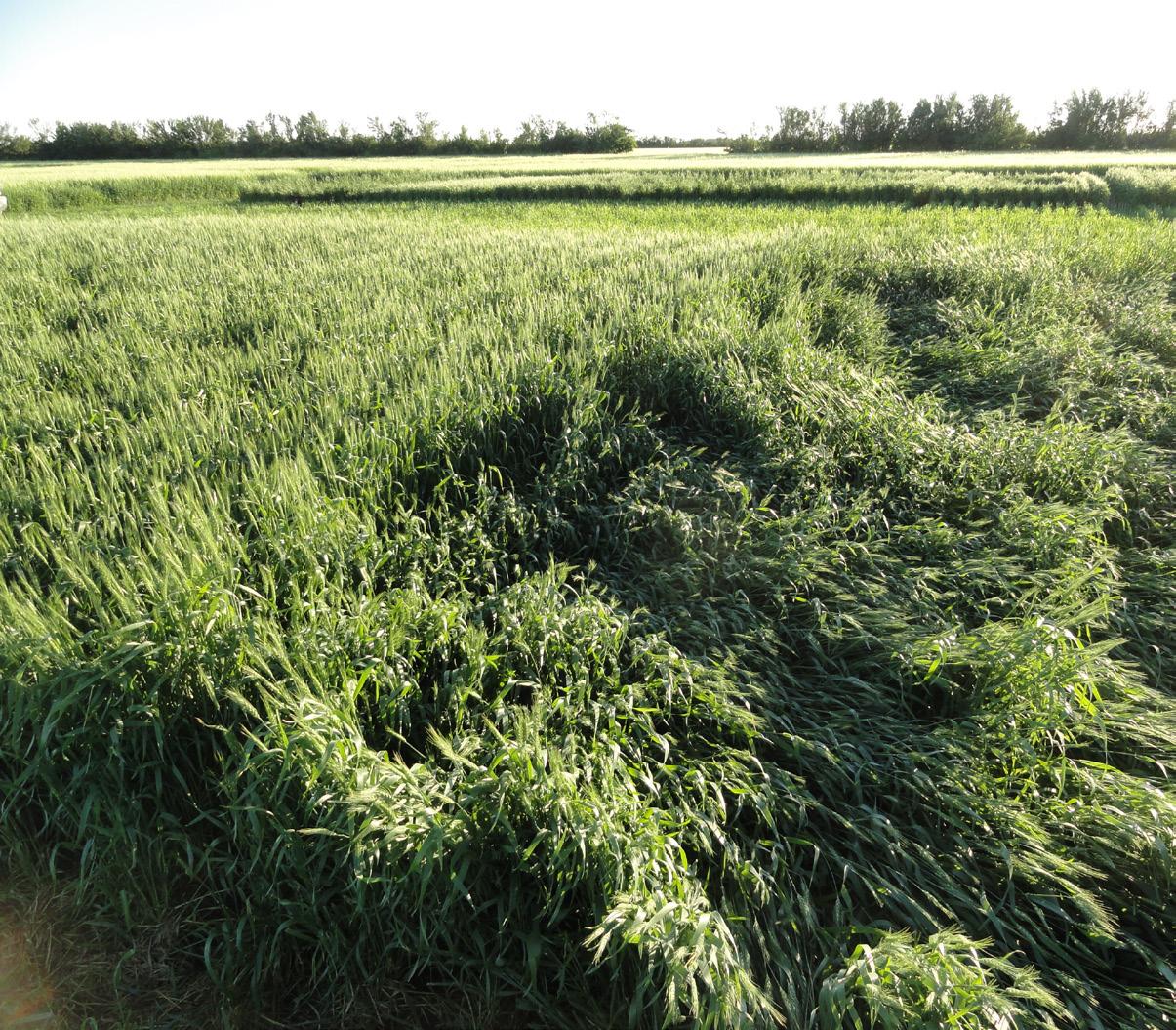
Under the right conditions, plant growth regulators provide an economic return.
BY BRUCE BARKER
Browse through a provincial seed guide, and lodging ratings for cereal varieties range from Poor (P) to Very Good (VG). But often there is an inverse relationship between lodging ratings and yield; higher yields often come with lower lodging ratings. Although lodging doesn’t always come with a yield penalty, lodging also contributes to quality and harvest issues. Over the years, research has looked at how plant growth regulators (PGRs) can be used as a tool to help manage lodging.
“We have a really long history of work with PGRs, going back to 2012,” says Chris Holzapfel, research manager at the Indian Head Agricultural Research Foundation (IHARF) at Indian Head, Sask.
Plant growth regulators are chemical compounds that reduce stem elongation to help prevent lodging. Manipulator 620 (chlormequat chloride) was first registered for application to western Canadian wheat in 2014 while Moddus (trinexapac-ethyl) was registered in 2020. Both products were first registered for wheat, and label expansions to include barley and oat came in subsequent years.
Holzapfel’s first experience with Manipulator was in 2012 when he
received a small sample and treated a trial being conducted for Engage Agro (now Belchim Crop Protection). Manipulator was sprayed on one-half of the plots where Unity VB hard red spring wheat was seeded. Unity VB was a strong yielder with midge tolerance, but relatively prone to lodging. The growing season was hot and wet, with major lodging and disease issues.
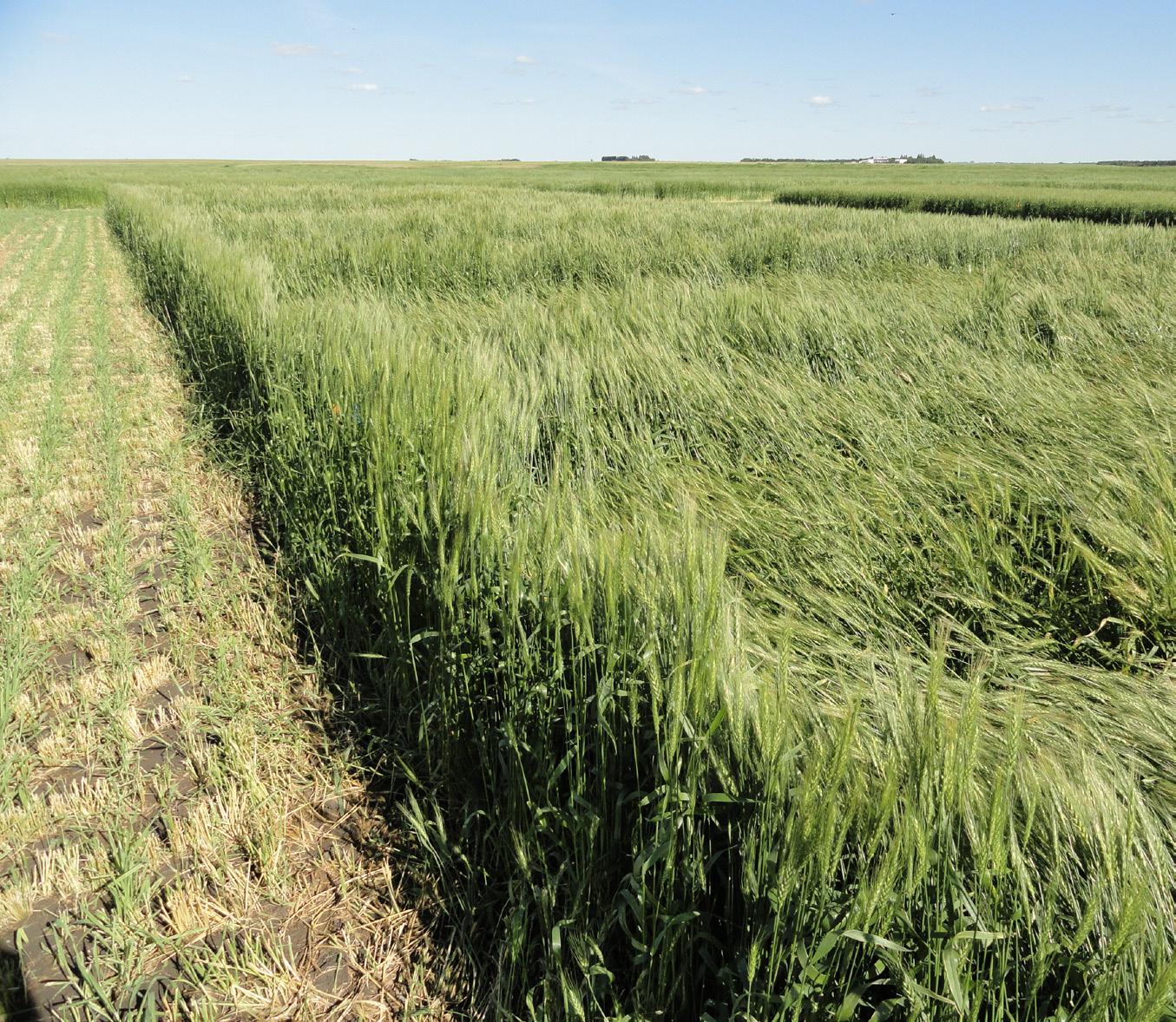
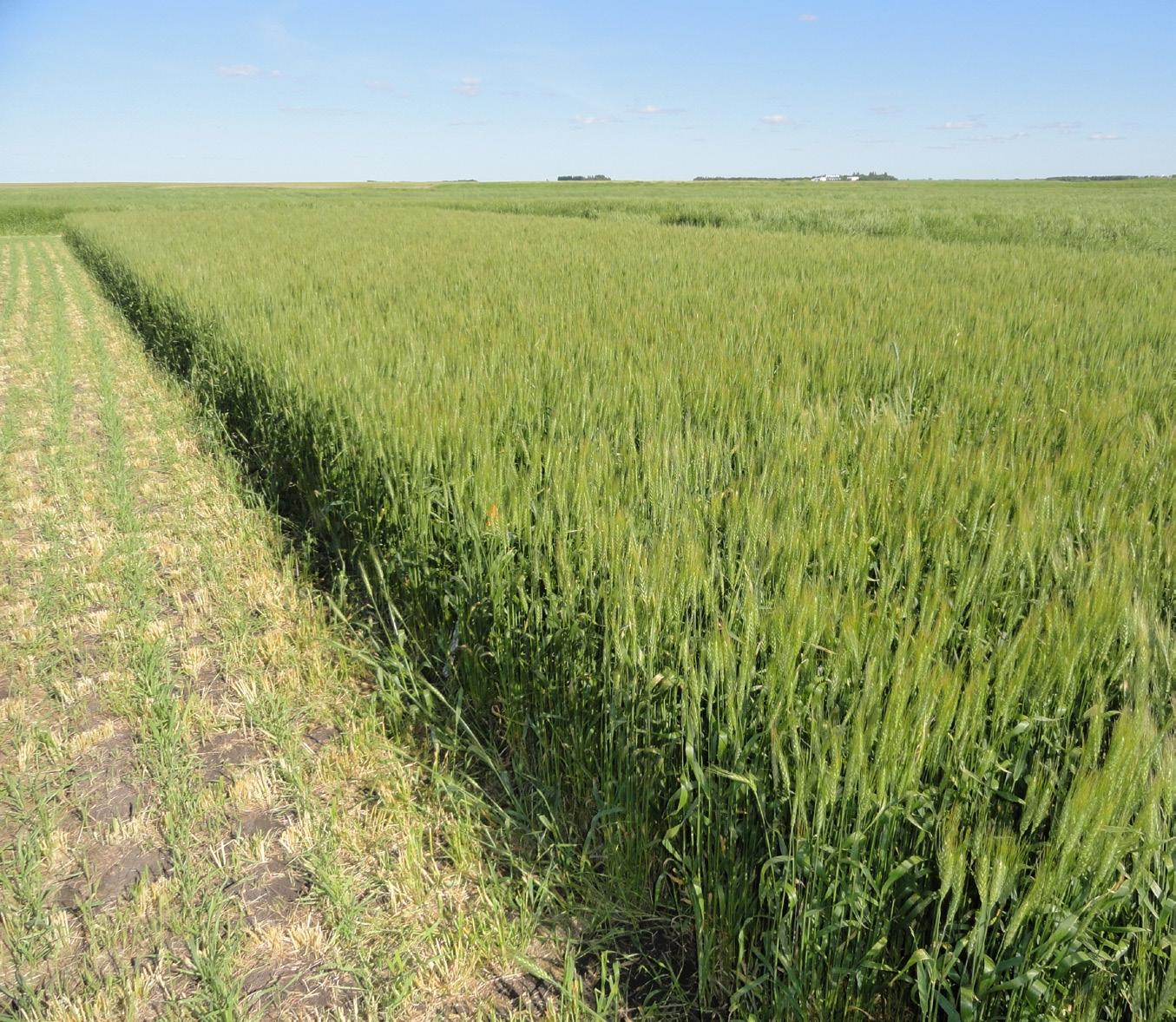
Application of Manipulator resulted in a 14 per cent reduction in height of 6 in (15 cm) and a 57 per cent yield increase of 19 bu/ac (1,278 kg/ha). “It wasn’t replicated but those were really exciting results that I thought set the bar pretty high, and got us excited about doing more work with these products,” says Holzapfel.
That early demonstration led to a three-year Belchim funded trial from 2013 to 2015. Plots were seeded to Unity VB wheat. The research included three fertility rates of 100-, 125- and 150-per cent of a base rate of 100-30-15-15 lb N-P2O5-K2O-S/ac (112-34-17-17 kg/ ha).
Four PGR applications of Manipulator (0.73 l/ac) were compared at application timings of Zadoks Growth Stage 21 (1st tiller), Zadoks 31 (1st node detectable), a split application at Zadoks 21 and 31 (0.5 x rate each time, 2013), Zadoks 39 (early flag, 2014 to
Barley stripe rust is less economically important than wheat stripe rust in Canada at present, but it is a serious concern in some other barley-growing regions, such as in South America. In both crops, the disease is caused by Puccinia striiformis. This fungal species has different forms adapted to different host plant species, including a wheat-adapted form, a cultivated barley-adapted form, and wild barley-adapted form. However, Aboukhaddour notes that these host boundaries can occasionally be crossed; for instance, you can sometimes find a stripe rust isolate from barley that can also infect wheat or vice versa.
Aboukhaddour included cultivated barley and foxtail barley stripe rust isolates in her 2020 to 2024 collection in part to find out if any of the isolates were able to cross the host boundaries. “I thought if some barley isolates are capable of crossing the host boundary with wheat, they might also be capable of hybridizing with wheat isolates, creating new races, and contributing to the overall diversity of the Puccinia striiformis population.”
For example, she had previously noticed that barley stripe rust can occur under conditions that are too hot and dry for wheat stripe rust. So perhaps hybridization between these two stripe rust forms might produce a population that could cause the disease in wheat under a wider range of growing conditions.
“We found that some of the isolates from cultivated barley could also infect certain wheat lines. In fact, two of the barley isolates defeated Yr1, even though none of the wheat isolates in this 2020 to 2024 study or my previous study were able to infect Yr1,” she says. “The foxtail barley isolates did not infect any of the wheat lines, but they did infect cultivated barley.”
Next, she wants to use these isolates to investigate non-host resistance, which is the resistance of an
entire plant species to a pathogen. “Non-host resistance is really strong and durable; it is usually involved in preventing early colonization of the plant. I want to use those barley isolates that also infect wheat and the others that do not, and try to pin down this non-host resistance as another source of durable resistance to stripe rust.”
Aboukhaddour’s current study also includes screening the 1984 to 2024 isolates for a mutation in a gene called Cyp51. Research in some other countries has found that a specific mutation in this gene is associated with resistance to Group 3 fungicides (demethylation inhibitor (DMI) fungicides).
Screening for this gene sequence is an easy way to check for the possibility of Group 3 insensitivity. “Luckily I did not find the mutation in our wheat-infecting isolates, but I did find it in one isolate from cultivated barley and one from foxtail barley,” she says. Her next step will be to confirm the resistance of these two isolates through greenhouse fungicide trials.
Aboukhaddour notes that U.S. researchers have recently found the Cyp51 mutation in some of their stripe rust isolates but mainly in ones from barley. “We need to be very alert for fungicide resistance because fungicides are one of the main tools for controlling stripe rust, and DMI fungicides are often used. However, from our results, I don’t feel there is a high risk here at present, but we must remain observant.”
Another part of Aboukhaddour’s current study used genomic analysis to understand the changes in Canadian stripe rust populations at the DNA level and how these
populations fit into global stripe rust lineages.
She explains, “Most of the Yr genes in the differential set are now defeated so the set is losing its power to discriminate between isolates, making it harder to track the pathogen’s incursions and changes. Also, screening isolates on these differential lines is really laborious. So, researchers are using different ways to genotype the pathogen population to see if the population in one region is similar to populations in Europe or East Africa or somewhere else.”
Aboukhaddour used what is called mating-type allele analysis to study the assembled genomes of 30 isolates from her 1984 to 2024 collection. This analysis confirmed the changing predominance of various stripe rust lineages in Canada due to lineages arriving from other parts of the world and to hybridization in North America. However, her findings suggest the origins of some of these lineages might be more complex than previously thought.
In addition, she has identified a novel lineage in some eastern Canadian isolates collected in 2022 and 2023 that signals a major shift in the pathogen population. Her findings indicate that it could be a completely foreign incursion from the Asian corridor or a hybrid between a common Canadian lineage and a foreign lineage from India or another Asian country.
Overall, Aboukhaddour concludes, “The knowledge resulting from our stripe rust research will help in using the different tools for managing this disease, whether it is breeding or the use of fungicides or tracing the movements/incursions of the pathogen.”
This research was funded by Alberta Grains, the Saskatchewan Wheat Development Commission, RDAR and AAFC.
BY BRUCE BARKER
Poor crop stands present a dilemma. Is it better to terminate the stand and start over despite the additional costs and reduced yields, or let it play out over the growing season and hope for the best?
“Reseeding is an economically difficult decision. It is stressful, emotional, risky and there is a lot at stake to make the right decisions,” says Darren Bond, farm management specialist with Manitoba Agriculture.
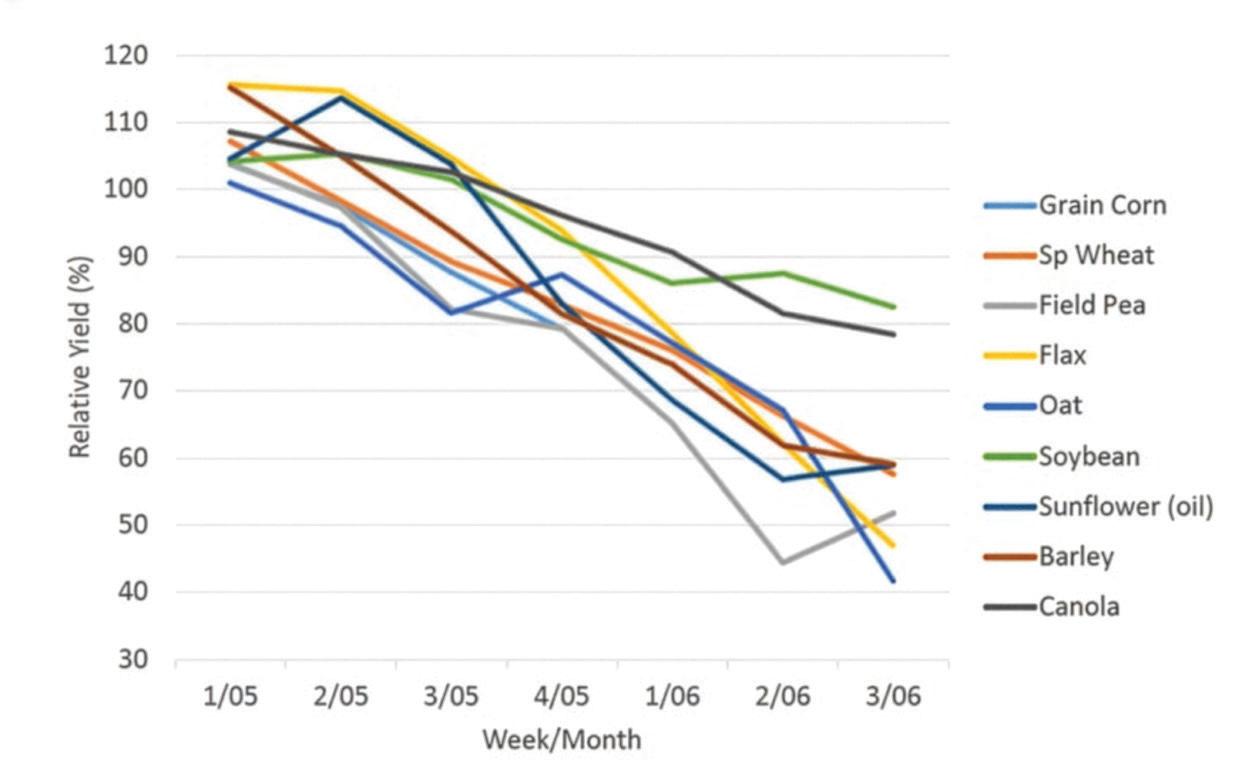
A major factor in the reseeding decision is the potential crop yield with later seeding dates. Manitoba Agricultural Services Corporation (MASC) data compares the average relative yield of various crops based on seeding date. For example, canola seeded during the first week of June in Manitoba yielded 70 per cent compared to canola seeded the second week of May.
Even with that knowledge, other factors such as crop insurance benefits and risk tolerance come into play. To help with the reseed decision, Manitoba Agriculture developed a Crop Reseeding Decision Tool, available for free on their website as an excel spreadsheet or webbased calculator at https://calculators.masc.mb.ca/ calculators/crop-reseeding-decision.
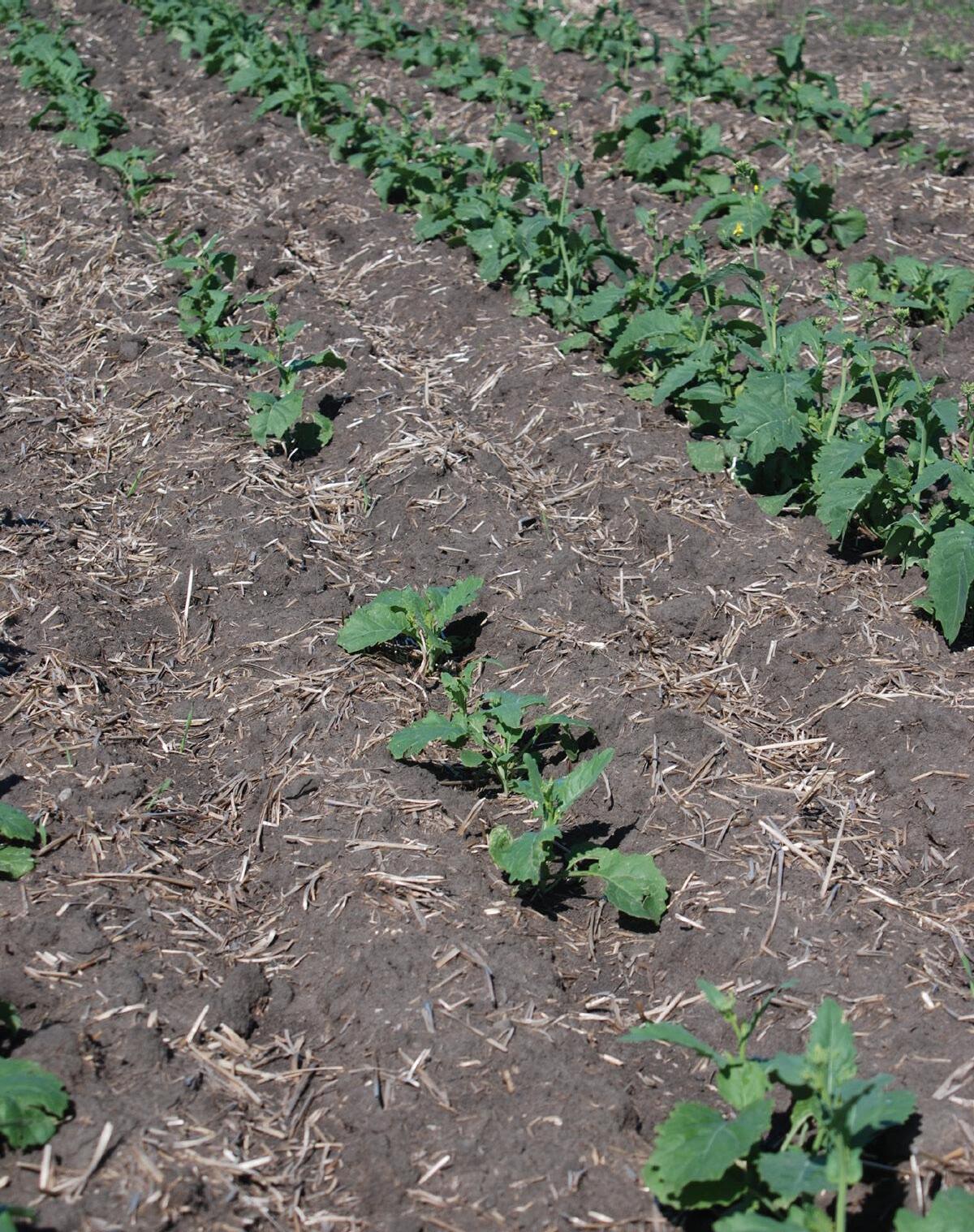
The decision tool allows Manitoba farmers to input their MASC risk area and coverage level. Estimated yield and market price of the original and reseeded crops are also entered. An important step, says Bond, is to go out and do actual plant counts in multiple locations in the field. Up to five plant counts can be entered into the calculator, which then estimates potential yield of the original crop and estimated gross revenue.
SEEDING DATE VERSUS AVERAGE YIELD RESPONSE 2010 – 2019
Data input also includes the reseeding date, seed company cost reimbursement (if any), and the machinery cost of reseeding. The calculator then automatically compares the estimated gross revenue of the original crop and the reseeded crop, and provides a ‘recommendation’ on whether it would be beneficial to reseed.
Bond says one of the key points of the calculator is that agronomic decisions to reseed can be made based on the economic climate, and that the decision tool helps to put those economics into perspective.
“There’s more risk. There’s the additional cost and if there’s not as much to be gained because of the commodity price, all of a sudden, we have to really think about whether this is worthwhile,” says Bond. “So again, the key point is economics, and it’s something that can change quickly so we have to be aware of that when considering agronomic decisions.”

Powerful pulse performance to maximize your yield potential— and test just how humble you can be.
Delaro ® Complete fungicide is your best first pass choice on pulses. Delaro Complete effectively manages both Anthracnose and Ascochyta Group 11-resistant biotypes. Its unique combination of three powerful modes of action are expertly formulated to provide broad-spectrum disease control for your pulse crops, helping to protect your yield potential and maximizing your return on investment. With performance like this, don’t be surprised if you need bigger bins. See how it performs at DelaroComplete.ca
2015), and an untreated control.
In 2013, a 17 per cent height reduction was observed at stem elongation (GS31) compared to the untreated control. Application at early tillering (GS21) resulted in a seven per cent height reduction. The split application had a height reduction similar to stem elongation, but the extra application cost meant that it was not beneficial.
In 2013, lodging was a major issue with the untreated control having lodging ratings of up to eight on the zero to 10 scale. Manipulator application at stem elongation and the split application essentially eliminated lodging. The early tillering application also significantly reduced lodging compared to the untreated control, but lodging was still substantial at the highest fertility level.
The highest yield increase of 17 per cent came from the stem elongation timing compared to the untreated control. The yield of the untreated control at the 150 per cent fertility rate was around 75 bu/ac (5,944 kg/ ha) compared to almost 90 bu/ac (6,053 kg/ha) with the same fertility rate at the stem elongation PGR application timing.
“Our yield responses were essentially a mirror image of the plant height responses with significant gains for all timings, but better results with the stem elongation and split applications compared to the early tillering timing,” says Holzapfel.
In 2014 and 2015, the split application was replaced with a single, full-rate application at early flag-leaf emergence (GS 39).
In 2014 there were similar height reductions with early tillering and stem elongation timings, with reductions of 14 to 16 per cent. The shortest plants with a height reduction of 23 per cent came from the early flag-leaf application timing. Lodging was quite severe in the untreated control, but was eliminated with PGR application at all timings.
Yield response in 2014 was similar to the height reduction responses. The highest yield increase came with the early flag-leaf timing with a 16 per cent increase compared to the untreated control, yielding about 90 bu/ac in the 125- and 150-per cent fertility treatments. This compared to seven per cent yield increase at early tillering and nine per cent yield increase at stem elongation.
A downside was the reduction in grain protein, falling from 13.7 per cent in the untreated control to 13 per cent when Manipulator was applied at early flagleaf. “Whenever we substantially increase yields with a PGR, there is a risk of lower protein. This is due to a dilution effect,” says Holzapfel. “We can see similar protein responses with fungicide on cereals when coupled with strong, positive yield increases.”
Results from 2015 followed a similar pattern as 2014 for this Belchim-funded trial.
Two subsequent 2015 Agricultural Demonstration of Practices and Technologies (ADOPT) trials at IHARF looked at the interaction between PGR and N fertilizer rate, and PGR and seeding rate, with Unity VB wheat. Manipulator was applied at stem elongation (GS31) in both trials. Nitrogen fertilizer rates were 6, 45, 90, 134 or 178 lb N/ac (7, 50, 100, 150 or 200 kg/ha). Seeding rates were 10, 20, 30, 40 and 50 seeds/ft² (100, 200, 300, 400 and 500 seeds/m2).
In the N rate trial, similar results were found for lodging ratings and yield as previous IHARF research. Lodging increased with increasing N rates, and PGR largely eliminated lodging. The overall average yield increase was seven per cent with PGR application, and yield peaked with 134 lb N/ac at around 75 bu/ac (5,044 kg/ ha).
For the seeding rate trial, lodging was relatively unaffected for the untreated control for the different seeding rates. Yield was also largely unaffected by seeding rate.
A subsequent trial from 2016 through 2018 looked at the response of different wheat varieties and wheat classes to Manipulator application at stem elongation (GS31). The wet growing conditions of 2016 resulted in
heavy lodging and disease, and the dry 2018 growing season resulted in low lodging and yield.
The varieties grown were Plentiful, Utmost and Carberry in the Canada Western Red Spring (CWRS) wheat class, Strongfield and Transcend in the Canada Western Amber Durum (CWAD) wheat class, and Elgin in the Canada Northern Hard Red (CNHR) wheat class. “Many of the specific varieties we tested have lost their relevance. However, the data illustrates the potential for differential responses due to both genetic variation and environmental conditions,” says Holzapfel.
In both 2016 and 2018, plant height reductions were reasonably consistent across the wheat varieties and classes. On average, height was reduced by 10 per cent in 2016 and 15 per cent in 2018. Lodging ratings varied widely with variety due to their genetic resistance to lodging. For example, Carberry was rated VG for lodging resistance, and did not lodge at all with or without a PGR application. Conversely, Utmost with a Good (G) rating had an untreated lodging rate of seven in 2016, and was reduced to three with the PGR application. Little lodging was observed in 2018.
Yield in 2016 was increased by an average of 10 per cent across the varieties. The yield increases were relatively consistent across wheat classes ranging from eight per cent to 11 per cent. Even in the dry year of 2018 with little lodging, some varieties showed a small yield increase.
In 2023 and 2024, Holzapfel was involved in research trials that updated CWRS varietal response to Manipulator and Moddus with current varieties. AAC Brandon (short, G), AAC Alida (tall, VG), AAC Redberry (tall, Fair (F)) and AAC Starbuck (short, F) varieties were grown at Agriculture Applied Research Management (AgriARM) sites at Melfort, Scott, Indian Head, Yorkton, Outlook and Prince Albert. The PGRs were applied at the recommended early stem elongation (GS30-32) at recommended label rates. Fertilizer rates for N, P, K and S were applied to target 1.5 times above recommended soil test rates to increase the risk of lodging.
Growing conditions in 2023 were hot and dry, and resulted in little lodging with ratings ranging from 0.0 to 0.5, and little PGR response at all locations. In 2024, wet spring conditions were followed by a hot and dry summer, and lodging ratings ranged from zero to 4.9 across locations. Applying a PGR reduced crop height at three of six sites and reduced crop lodging at one of six sites.
Application of PGRs did not increase yield at any site-years, as crop lodging was low in both years, and moisture conditions were usually below or near normal.
An economic analysis was conducted, and found that in 2023, applying a PGR was rarely economical resulting in a net loss in most cases. In 2024, applying a PGR increased net return at all sites for at least one variety. However, the profitability varied by site and variety.
PGR eliminated lodging and increased yield by 17 per cent.
For example, at IHARF, applying Manipulator to all varieties and applying Moddus to all varieties except for AAC Starbuck resulted in a net profit. At Yorkton, Manipulator on AAC Redberry and AAC Starbuck, and Moddus on AAC Redberry, AAC Alida and AAC Starbuck, were the treatments to demonstrate a net profit in 2024. Generally, the taller varieties with less lodging resistance were more likely to benefit from a PGR application.
Overall, Holzapfel says, based on research in which he’s been involved, both Manipulator and Moddus have performed well with consistent height reductions, protection against lodging where it was an issue, and frequent and sometimes quite substantial yield increases under good growing conditions.
“The greatest responses have come in high input systems and/or wetter environments,” says Holzapfel. “Responses to PGR have occurred across a range of crop types, classes and varieties. However, we can expect greater benefits when used on those that are more prone to lodging.”
BY CAROLYN KING
Dry spring weather in 2021 sparked a study to generate some practical information about Canadian Prairie wheat varieties to help growers and breeders deal with very dry conditions. At the time, Michelle Carkner and others in Martin Entz’s research group at the University of Manitoba (UM) were seeding wheat deeper than usual in order to reach moisture. “That got us thinking about the physiology of a wheat seedling and how we take for granted that we just seed as deep as we need to,” she says. “And that made me think about how in Australia they have to seed their wheat extremely deeply because they have extremely dry soil conditions.”
That led the UM research group to launch a study focused on wheat coleoptiles. “The coleoptile is the protective sheath that encloses the emerging shoot and first leaves when the seed germinates. The coleoptile is required for the plant to actually push through the soil surface. Then from that coleoptile growth, the first true leaves come out of the wheat seedling so that the plant can photosynthesize,” explains Carkner, who was a research associate in Entz’s group until recently and is now an assistant professor at the university.
A coleoptile stops growing once it pushes through the soil surface even if it has not reached its maximum possible length. Maximum coleoptile length depends on the wheat variety’s genetics. If a wheat seed is planted very deep and the variety’s coleoptile is not long enough to reach the soil surface, then the plant will die because it can’t photosynthesize.
Carkner notes that Australia has been conducting a lot of research on coleoptile length, including developing wheat varieties with long coleoptiles that would enable seeding depths around 14 centimetres (cm) (5.5 inches; in). Fortunately, Prairie growers do not normally need to seed that deep to reach moisture.
But what are the coleoptile limits on how deep Prairie wheat growers could seed in a very dry spring? Until this study, we didn’t know; Carkner found almost no previous research comparing coleoptile lengths in Prairie wheat varieties. “We thought, why don’t we look at this?” she says, “if we are going to be seeding into drier
conditions with climate change and the variable, unpredictability of seeding conditions, we should generate this data for our popular and upcoming wheat varieties."
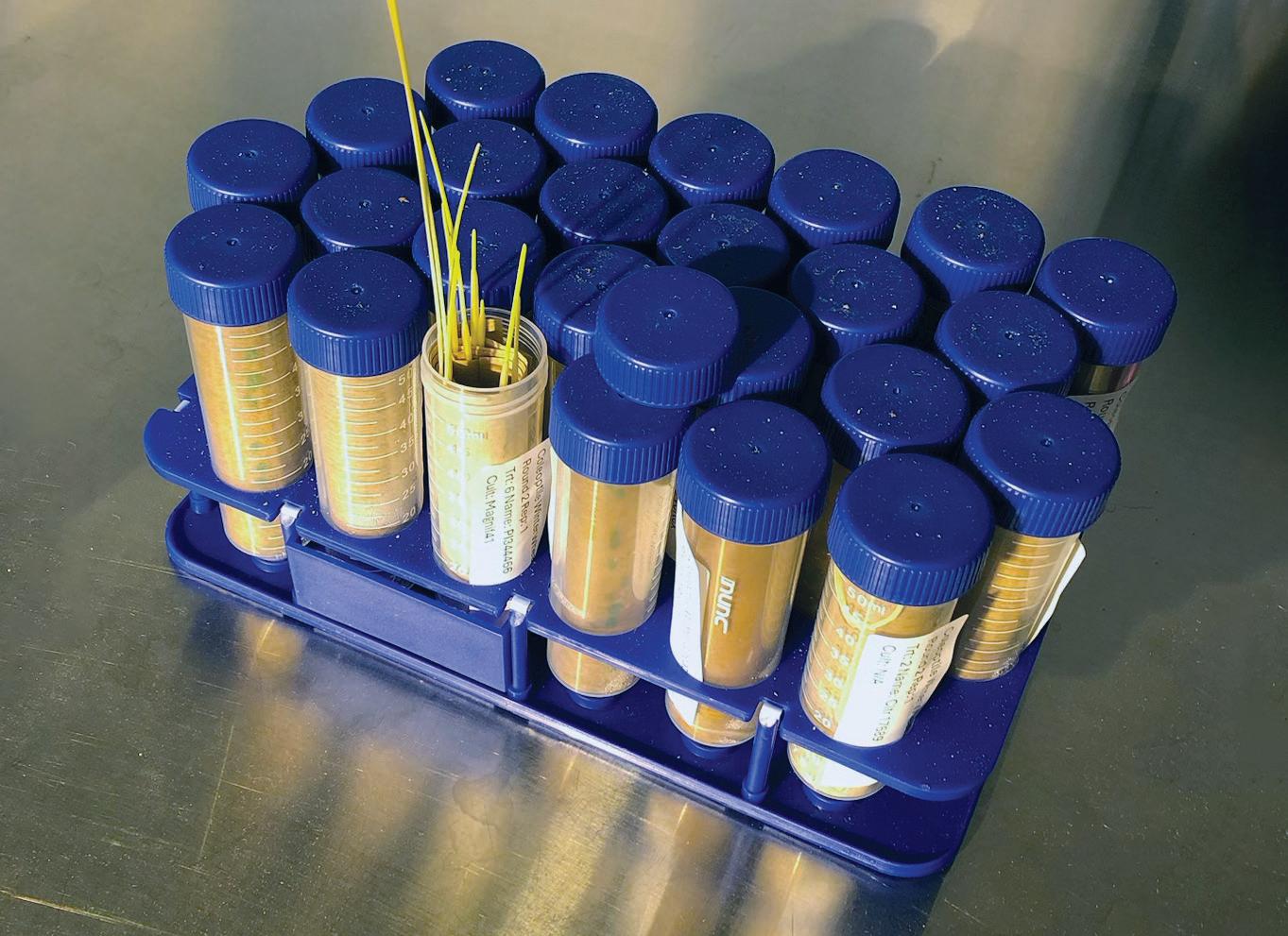
ABOVE To determine the coleoptile lengths of a set of Prairie wheat varieties, the seeds were placed on germination paper, which was then rolled up, inserted in a tube, and placed in a growth chamber for seven days.
Some research in other regions has found that shorter wheat plants tend to also have shorter coleoptiles, which could have implications for breeding semi-dwarf varieties. Semi-dwarf varieties are popular because of advantages like higher yields and greater resistance to lodging, but if drought becomes an increasing concern in the years ahead, growers may need semi-dwarf varieties that also have longer coleoptiles.
Wheat breeders use reduced height (Rht) gene variants, or alleles, to develop shorter stature plants. RhtB1b and Rht-D1b are the most common Rht alleles and are used in wheat varieties in many countries including Canada. Carkner explains that studies in other countries have shown that these two alleles tend to be associated with shorter coleoptiles.
However, she also notes that certain alternative Rht alleles, like Rht8, Rht13 and Rht18, are reported to confer shorter plant heights without impacting
coleoptile length, due to differences in when the genes are turned on and off at different physiological stages.
The UM researchers wanted to find answers to questions like these: How well do the relationships between plant height and coleoptile length found in other countries apply to our Prairie wheats? Is it true that our semi-dwarf varieties have short coleoptiles, and what does that mean for our breeding goals? And how might alternative alleles like Rht8, Rht13 and Rht18 fit with our breeding needs?
The research group measured coleoptile length in 53 wheat lines. Those lines include 33 spring wheat varieties and 16 winter wheat varieties, which are commonly grown or upcoming Prairie varieties, and also four genotypes with alternative Rht alleles. This set of 53 lines encompasses a wide range of plant heights. Many of the varieties with short or intermediate plant heights have RhtB1b or Rht-D1b
To determine maximum coleoptile lengths of these wheat lines, the seeds were placed germ end down on moist germination paper. Each paper was rolled up and placed in a tube in a plastic holder to keep the seeds upright. The tubes were placed in a growth chamber for seven days. Then the papers were unrolled, and coleoptile lengths were measured. Plant heights were obtained from Seed Manitoba guides, variety descriptions and field data from breeding programs.
One of the study’s key findings is that coleoptile length and plant height are significantly correlated for the Prairie wheat varieties. In other words, in most cases, shorter wheat plants also have shorter coleoptiles.
But there are some exceptions. For example, AAC Brandon and AAC Starbuck both have a plant
height of 81 cm, but AAC Brandon’s coleoptile length is 9 cm and AAC Starbuck’s is 6.8 cm.
Another key result is that the Prairie wheat varieties in this study differ quite a bit in coleoptile length. The shortest spring wheat coleoptile is 5.2 cm long and the longest is 10.8 cm. Carkner notes: “That is quite a big difference when you are thinking about the depth of seeding.” Coleoptile lengths for the winter wheat cultivars range from 6.6 to 9.7 cm.
In addition, the researchers found that the presence of an Rht allele does not always mean the plant has a short coleoptile; for instance, AAC Brandon with its 9 cm coleoptile has Rht-B1b. Also, the lines with the alternative alleles (Rht8, Rht13 and Rht18) have longer coleoptiles than many of the other varieties in the study.
The 2025 paper by Carkner and her colleagues about this research includes a table with the coleoptile lengths and plant heights for the 53 wheat lines.
For seeding wheat into dry seedbeds in the spring, Manitoba Agriculture recommends a planting depth of 1.5 to 3 in, placing seed only deep enough to reach moisture.
The shortest coleoptile length in the UM study is 5.2 cm (2.0 in), and most of the coleoptiles are between 7 cm (2.7 in) and 9 cm (3.5 in).
So, in a very dry spring when seeding into moisture takes your seeding depth down towards the maximum recommended depth of 7.6 cm (3 in), coleoptile length is a factor to consider.
However, Carkner points out that Prairie farmers do not normally seed much deeper than 6.4 cm (2.5 in) and almost all the varieties in the study have coleoptiles longer than that. Even so, the study’s coleoptile
Data sourced from Table 1 in Carkner et al., 2025. Semi-dwarfing alleles in Canadian wheat cultivars result in shorter coleoptiles but exceptions exist. Canadian Journal of Plant Science, Volume 105.
data can give growers more confidence around seeding depth decisions. “If you know your variety’s coleoptile is 8 cm long and you know you don’t have to seed that deep to reach moisture, then you can have more confidence about deep seeding. Just having the confidence that you can seed deeper into moisture is possibly more important than not seeding as deep and not seeding into moisture and then the rain doesn’t come.”
The table above lists some options for growers who are interested in a wheat variety that is not too tall but has a fairly long coleoptile.
If the UM study did not include the wheat varieties of interest to you, then Carkner provides this general advice: “If you have dry seeding conditions and you have to seed a little deeper, then maybe you want to grow a variety that is a bit on the taller end, rather than something that is quite short.”
Carkner hopes the study could motivate the addition of a coleoptile length column in Seed Manitoba and in the Saskatchewan and Alberta seed guides. The study’s results could also be very useful for Prairie wheat breeding programs. “The popular and upcoming varieties do differ quite a bit in coleoptile length. So, if increasing coleoptile length is a goal of a breeding program, we now have some data to go from in terms of making appropriate crosses going forward,” says Carkner.
As the first screening report of coleoptile length in Prairie wheat varieties, this UM study provides practical information that wheat growers need now when encountering very dry seeding conditions and that breeders can use in developing varieties with longer coleoptiles for the future.
The study was funded by Manitoba Crop Alliance (MCA) and the Sustainable Canadian Agricultural Partnership (Sustainable CAP).
University of Saskatchewan researchers explore accelerated cropping systems.
BY JOEY SABLJIC
Is it possible to squeeze more productivity out of the typically short Prairie cropping season? That’s what a team of researchers from the University of Saskatchewan (USask) have explored through a concept known as “accelerated cropping systems”(ACS)where growers can get three crops in two years, with only two seeding passes.
Dilshan Benaragama, assistant professor at the University of Manitoba’s (U of M) Department of Plant Science, who worked alongside Chris Willenborg, plant science professor at USask, says accelerated cropping systems offer a new twist on double-cropping systems - specially adapted for Prairie growing conditions. “One of the biggest things with double-crop systems is that timing is very important. The day length and time for growing crops is much shorter in Western Canada. So, we don’t have the opportunity to grow one crop after another,” he says.
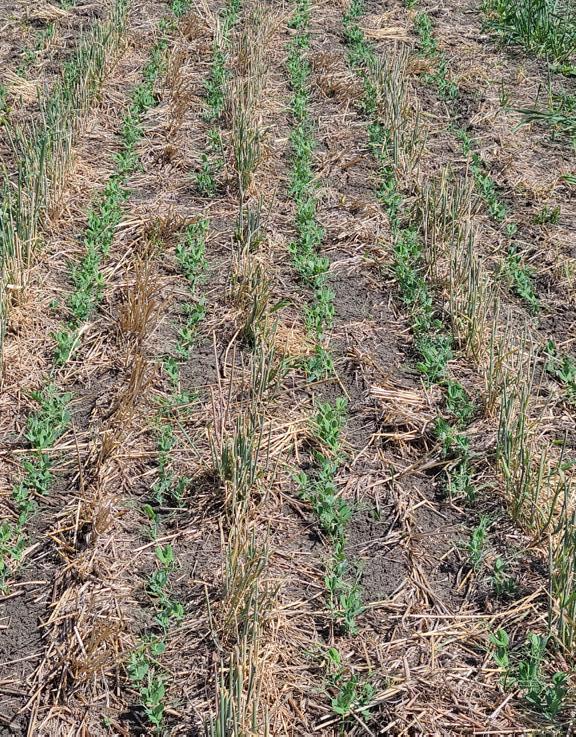
In the first year of an ACS, spring wheat and a winter triticale or fall rye are seeded together in alternating rows. The spring wheat grows normally and is harvested at the end of the season. Meanwhile, triticale (or fall rye) remains vegetative and overwinters. “ACS differs slightly from typical double-crop systems, as both crops were seeded simultaneously in the spring, eliminating additional seeding operations in the fall,” explains Benaragama. Then, in the spring of the following year, the winter cereal crop is harvested early for silage.
Later that spring, a second crop is seeded into the winter crop’s stubble. Benaragama says the researchers looked at several second-year crops, including barley, peas, Argentine canola and Polish canola. “This system keeps the soil covered nearly all year round, and so our idea was that you could improve productivity, have less soil erosion and have some weed suppression effects as well,” says Benaragama.
Wild oats are still among the most competitive and
costly weeds to manage across Western Canada. Additionally, Benaragama notes that up to 69 per cent of wild oat populations tested on the Prairies show herbicide resistance.
ABOVE
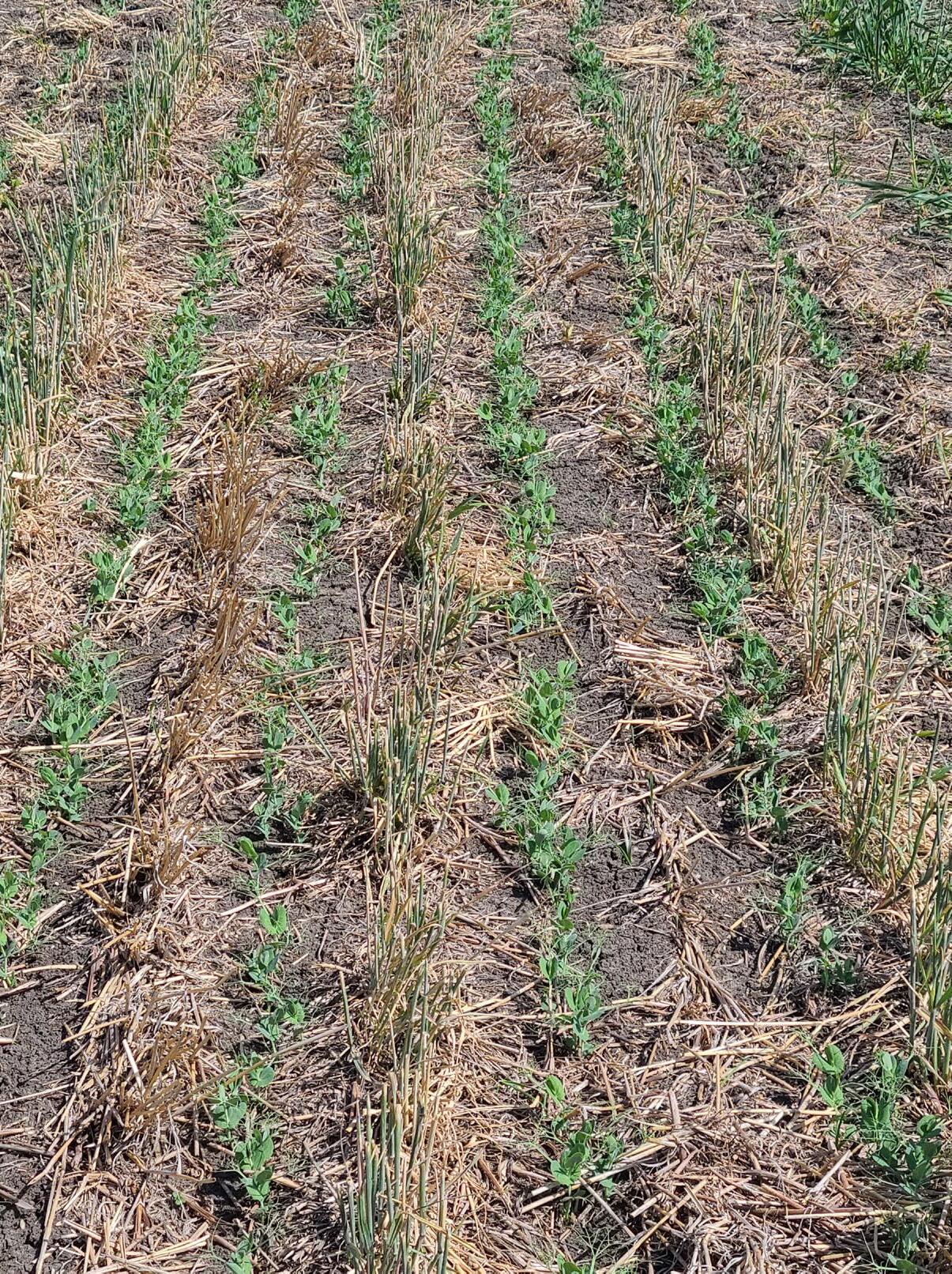
Researchers compared three-crop ACS rotations with traditional, cereal-based two-crop rotations.
“We believe that ACS can offer short-term diversification and improved crop competition, he says. “And when you cut that fall crop for silage in the second year, the thought is you’re cutting wild oat heads as well and helping deplete the wild oat seeds added to the seed bank.”
FROM CONCEPT TO FIELD TRIAL: PUTTING ACS TO THE TEST
Farm-scale field trials ran between 2017 and 2020 near Saskatoon, Sask. where the researchers compared three-crop ACS rotations with traditional, cereal-based two-crop rotations. “What we were looking at specifically was overall yield, biomass and weed management in the second year; that’s where we’d actually see the results,” explains Benaragama.
One of the researchers’ most important findings was that second-year grain yields dropped following the winter silage crop. Barley, peas and Polish canola all performed better when seeded after wheat alone,
rather than after wheat that was intercropped with fall rye or triticale. The researchers also found that Argentine canola responded especially well, showing stable yields whether it followed wheat alone, or the wheat and an intercropped fall cereal.
Overall, grain yields in ACS rotations were an average 63 per cent lower than the traditional wheat-based rotation. “A big reason for the lower yields could be related to delayed seeding and moisture stress,” says Benaragama. “Those tended to be much drier years than normal, and three crops in a high-intensity system are essentially competing for the same resources.”
Even though second year grain yields dropped with ACS, the addition of the silage crop boosted overall productivity. When the researchers added up total production – grain plus silage – they found that ACS increased total yield by 27 per cent compared with a straight wheat-based rotation. In other words, ACS actually produced more biomass per acre over the two years, even if individual grain crop yields were sometimes reduced.
ACS also delivered on helping suppress wild oats, with the researchers seeing 26 per cent lower weed density in second-year crops following a wheat and winter cereal intercrop. That said, Benaragama points out that reduced weed seed returns often came down to specific crop combinations, and where the wheat-plus-winter-triticale system proved most effective.
The question remains: Do accelerated cropping systems make sense from a profitability perspective? The answer, says Benagrama, is a mixed bag.
While the researchers found that standard two-crop rotations provided higher returns overall, ACS fared the best economically when barley or Argentine canola were used as the second-year crop. “The problem is – even though we add the high productivity in the form of silage, grain is always going to get you more money,” says Benaragama. “A monocrop system was more efficient in terms of yield and profitability. But in terms of land use and weed management, there’s trade-offs.”
ACS, he adds, could end up being a useful – and economical – tool if growers are struggling with Group 1- and 2-resistant wild oats, and need a way to cut down on weed pressure without jacking up input costs.
While ACS aren’t a full-on replacement for standard crop rotations, they can bring value for growers that may be looking to add silage into their grain systems, increase cropping intensity and suppress wild oats through crop competition.
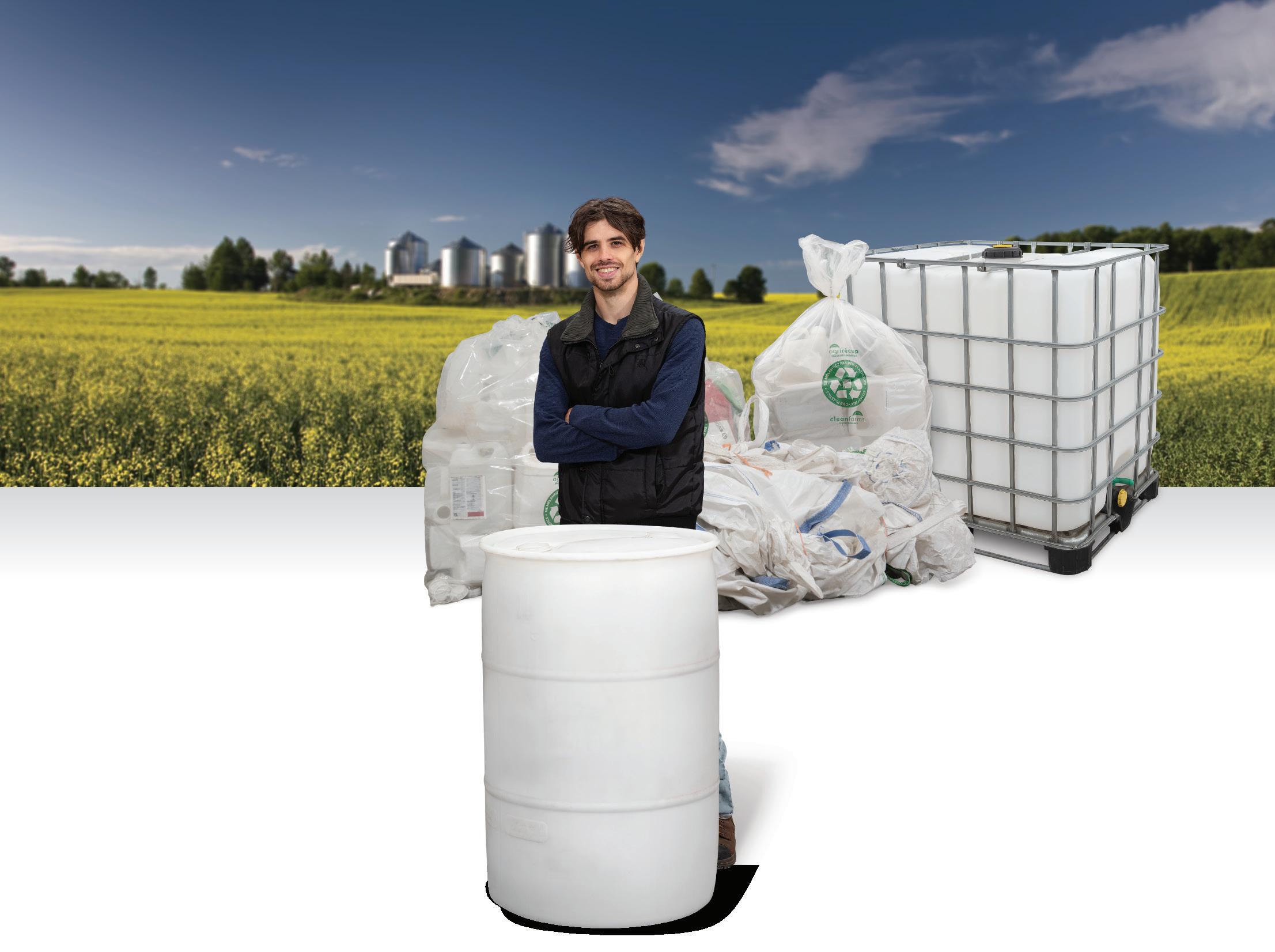
Laying the foundation for a productive crop.
BY BRUCE BARKER
What does it take to grow a high-yielding winter wheat crop? Good genetics, the right environment and optimum agronomic management: G x E x M for short.
“Why does winter wheat around Lethbridge yield 20 per cent more than spring wheat? It’s because it avoids the typical heat and drought stress during its critical growth stage. So, anything over 30 degrees Celsius in July results in floret abortion and reduced yield for spring wheat,” says Brian Beres, research scientist with Agriculture and Agri-Food Canada (AAFC) at Lethbridge, Alta.
While winter wheat may avoid environmental heat
ABOVE Brian Beres has researched winter wheat agronomics for 25 years.
stress during its critical growth stage, in addition to selecting the best genetics, Beres says paying attention to agronomic management goes a long way towards maximizing yield. He has been conducting research on winter wheat agronomics going back 25 years.
When Beres first started researching seeding rates, the average seeding rate was around 25 seeds per square foot (250/m2), but that seeding rate rarely resulted in an ideal plant stand of 20 plants/ft2 (200/m2). Research at Lacombe, Alta. and Lethbridge in 2002 through 2004 found that a seeding rate of 45 seeds/ft2 (450/m2)
was the rate that consistently led to spring plant stands above 20/ft2.
“At that point, I was proposing that 450 per square metre was probably your sweet spot. So, just a little over two bushels per acre if you’re thinking in volume,” says Beres. However, he also cautions that growers should calculate seeding rate based on thousand kernel weight (TKW) of the seedlot to target that plant stand. The variety-specific TKW can also change with environment – think irrigated conditions versus rainfed.
“We often can’t demonstrate a yield advantage when going higher than 300 seeds per square metre, but in addition to the insurance it provides for optimal plant establishment, the intangibles also kick in around increased weed competitiveness, greater uniformity and a shorter canopy that facilitates fungicide efficacy and earlier harvests,” says Beres.
Beres used to get asked about using a seed treatment – a lot. Research conducted from 2011 through 2013 with 26 site-years across the Prairies looked at the economic value of using a seed treatment and the interaction with seeding rate. It compared a weak agronomic system of low seeding rate with no seed treatment to a high seeding rate with a dual fungicide/ insecticide seed treatment.
The economic analysis factored in an additional weed control cost for the 20 seeds/ft2 seeding rate, compared to no additional cost for the more competitive higher seeding rate of 40 seeds/ft2. “We taxed the weaker system with additional herbicide inputs as eventually we felt the system would suffer from a more robust weed seed bank over time given the lesser competitive ability,” he says.
The results showed that the lowest net returns came from the low seeding rate without a seed treatment. The other treatments of low seeding rate/seed treatment ($148/ha), high seeding rate without seed treatment ($154/ha), and high seeding rate/seed treatment ($143/ha) had similar net returns.
“If you start off with a stronger agronomic system, and add in a seed treatment, I would probably, if it penciled out, be doing that to help with system stability. Why? Abiotic factors, to our surprise. It was actually the enhanced resistance to abiotic stress that was most notable with the addition of a seed treatment, not necessarily the biotic factors they are designed to address,” says Beres.
Multiple research studies have been conducted across the Prairies on nitrogen (N) fertilizer strategies. One
“Why does winter wheat around Lethbridge yield 20 per cent more than spring wheat? It’s because it avoids the typical heat and drought stress during its critical growth stage."
experiment conducted at five locations from 2006 to 2010 looked at N application treatments of 100 per cent side-band, 100 per cent spring-broadcast, and 50 per cent side-band plus 50 per cent spring-broadcast. Nitrogen formulations included urea (46-0-0), urea plus urease inhibitor (Agrotain), urea plus urease plus nitrification inhibitor (Super U), polymer-coated urea (environmentally smart nitrogen; ESN), and Urea Ammonium Nitrate (28-0-0; UAN).
Similar yield and net returns occurred for all placement, timing and fertilizer types but with a few exceptions. AC Radiant hard red winter wheat yielded lower with spring broadcast ESN. Spring broadcast urea also yielded slightly less, but was higher than spring broadcast ESN. Net returns were also lower with ESN spring broadcast.
In a follow-up experiment, the Agrotain treatment was removed and additional application methods included 100 per cent fall side-band, 50 per cent side-band plus 50 per cent late fall broadcast, 50 per cent sideband plus 50 per cent early spring broadcast, 50 per cent side-band plus 50 per cent mid-spring broadcast, and 50 per cent side-band plus 50 per cent late spring broadcast.
Again, there were few differences in yield and net return between N source, placement and timing. Side-band plus late spring broadcast ESN resulted in lower yield and net return compared to SuperU and urea. “The negative results for ESN outside of seed-placed or banded application are expected but we included it to keep our treatment structure balanced, and to show why we wouldn’t recommend broadcast ESN as it can struggle to imbibe water for hydrolysis initiation if stranded in the thatch layer,” says Beres.
Based on these two experiments, urea and UAN applied without an enhanced efficiency fertilizer (EEF) were more sensitive to environmental variation across the sites. Agrotain and SuperU were good options for applying during seeding or broadcast in-crop in the spring with relatively low risk of a yield penalty compared to urea side-banded at seeding.
Split applications of N when combined with urease or urease plus nitrification inhibitors were also better for yield and protein content.
Another research study conducted over five years from 2013 through 2018 looked at liquid UAN ( 28-0-0) application with and without enhanced efficiency fertilizers. It was conducted at two irrigated sites in
southern Alberta, four dryland sites in Alberta, and at Brandon, Man. UAN was split-applied with 50 per cent of N side- or midrowbanded at seeding and 50 per cent applied in-crop in early-spring (Feekes 4) with or without a urease inhibitor, a nitrification inhibitor, and a urease plus nitrification inhibitor. These treatments were compared to a polymer-coated urea side-banded at seeding and a full rate of untreated urea broadcast early-spring.
This research found that using liquid UAN treated with a urease inhibitor in a 50-50 split application had high, stable winter wheat yield with adequate protein. The EEFs did not reduce greenhouse gas emissions.
A similar study to the UAN research was conducted with urea fertilizer. Application timing treatments compared were all N side-banded at planting, 30 per cent side-banded at planting plus 70 per cent broadcast in-crop in late-fall (split-applied late-fall), and 30 per cent side-banded at planting plus 70 per cent broadcast in-crop in early-spring at approximately the Feekes 4 growth stage (split-applied early-spring). A 0-N control was also included at each site. The same EEF fertilizer treatments as in the UAN study were compared.
Under irrigation, the dual urease/nitrification inhibitor had the highest yield. Yield was similar for all N timing/placement treatments. Dryland yields were highest when all the N was side-banded at planting. All N sources produced high and stable yields when 100 per cent banded at planting except the polymer-coated urea which had slightly higher yield instability. Greenhouse gas emissions were highest with untreated urea split-applied in early-spring, with more than double the N2O emissions compared to when it side-banded at planting.
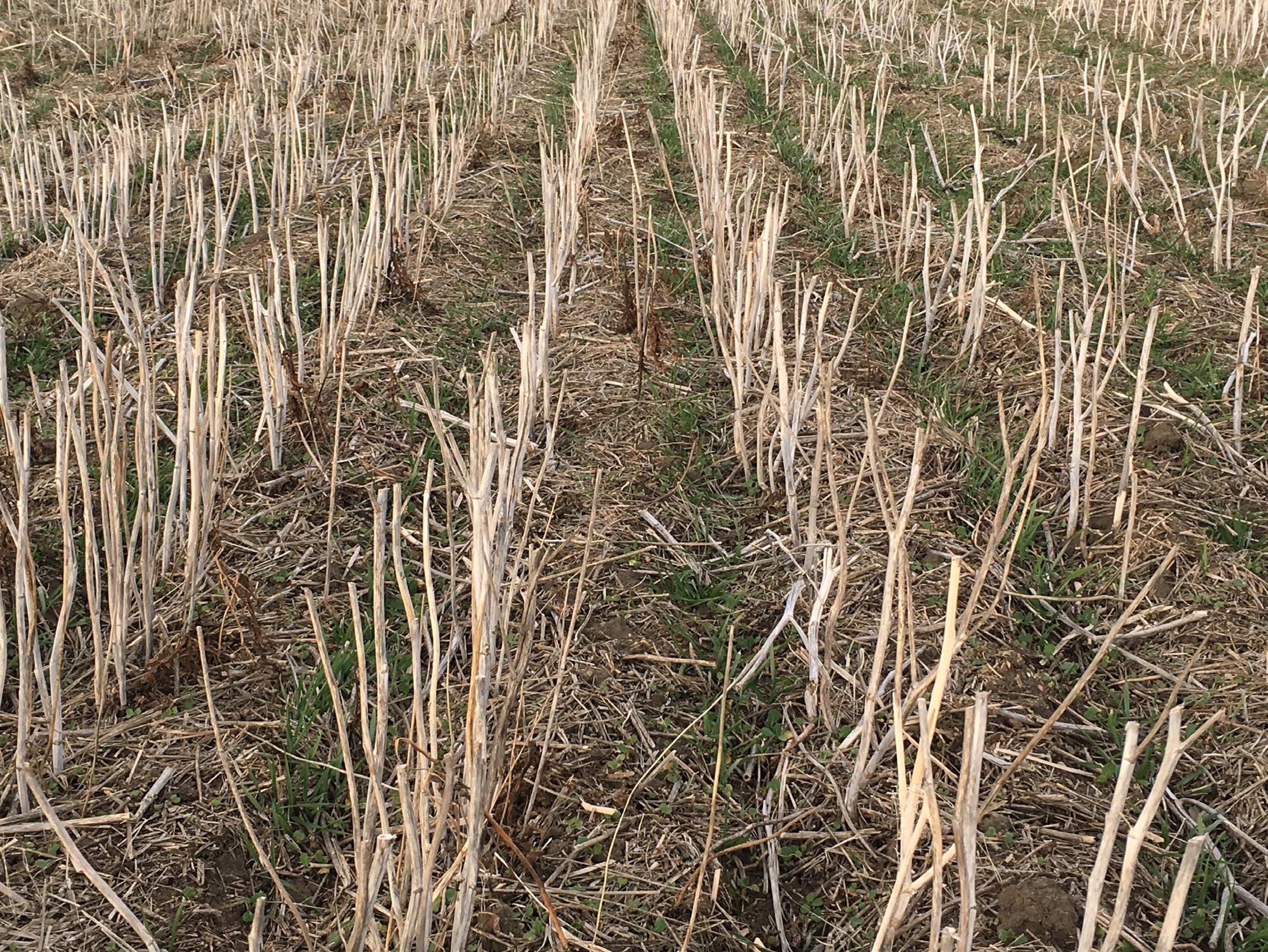
RIGHT Seeding into straight-cut canola stubble yielded lower than into windrowed canola.
“We get asked about timing and placement a lot, but the research shows there is flexibility for a grower depending on what works best for on-farm logistics. The only exception may be in higher productivity zones where split applications can at times provide superior outcomes,” he says. “As for EEFs, the dual or even just a urease inhibitor did often impart improved yield stability and at times greater yield, so from a farmer perspective, I encourage the decision to centre on what is reasonable insurance to pay for yield protection and if the EEFs only increase the N cost by five to seven dollars per acre, then it starts to be a compelling consideration.”
Beres led a research project that looked at weed management in winter wheat from 2018 through 2022 at four locations across the Prairies. AAC Wildfire, a hard red winter wheat with short stature, strength, good winter hardiness and high grain yield, was used in the research.
Weed control treatments included pre-plant glyphosate, pre-plant glyphosate mixed with pyroxasulfone plus carfentrazone-ethyl (Focus herbicide), no in-crop herbicide, fall-applied 2,4-D at ZGS13-14 (mid-October), fall-applied 2,4-D plus a spring-applied in-crop herbicide.
The pre-plant glyphosate alone or in a tank-mix with Focus herbicide had the statistically highest yields around 81 bu/ac (5.4 t/ha).
In-crop herbicides were unnecessary, Beres says, because of winter wheat’s highly competitive nature. The research used a high seeding rate with a dual insecticide/fungicide seed treatment. Eliminating
the spring in-crop herbicide application contributes to a total savings of a combined herbicide and application cost of $25/ac ($62/ha).
The weed control research project also included an incrop fungicide component. Treatments compared include a check without an in-crop fungicide, one application of prothioconazole plus tebuconazole (Prosaro XTR) at ZGS60 (beginning of anthesis), and two applications of prothioconazole plus tebuconazole at ZGS32 (second node detectable) and ZGS60.
The two in-crop fungicide applications had the highest yield of 83 bu/ac (5.58 t/ha). This was followed by the single fungicide application at 81 bu/ac (5.45 t/ha) and the lowest yield was with the no in-crop fungicide at 78 bu/ac (5.25 t/ha).
“My takeaway from this research is that it yet again reaffirms that there is less reliance on herbicides in a winter wheat system, but one application of a fungicide is almost a pre-requisite in most environments and a second could be warranted if the penultimate leaf is showing signs of disease.”
Plant growth regulators (PGRs) and their impact on winter wheat yield and quality was another topic that Beres investigated from 2014 to 2017 across the
Prairies. Moddus (Trinexapac-ethyl) was applied at two application rates to Flourish and Moats winter wheat varieties at Feekes 5 and 7 growth stages. Flourish is a hard red winter wheat variety with reduced height, and high straw strength and lodging resistance. Moats is a high-yielding but relatively tall hard red winter wheat variety with ‘Fair’ lodging resistance.
For Flourish, application of the PGR did not statistically affect plant height or grain yield. The results were different for Moats, where crop height was reduced by 3.2 inches (8 cm) at the Feekes 7 application stage (full rate), and the statistically highest yield was when the PGR was applied at Feekes 7 at both application rates.
Overall, the Moddus application increased grain yield by three to eight per cent, while reducing plant height by five to 10 per cent. Plant height reduction was greatest when Moddus was applied at Feekes 7. The full dose was most effective in
pre-harvest herbicide in canola (pre-harvest), pre-plant herbicide for winter wheat (pre-plant), and pre-harvest plus pre-plant herbicides (pre-harvest plus pre-plant).
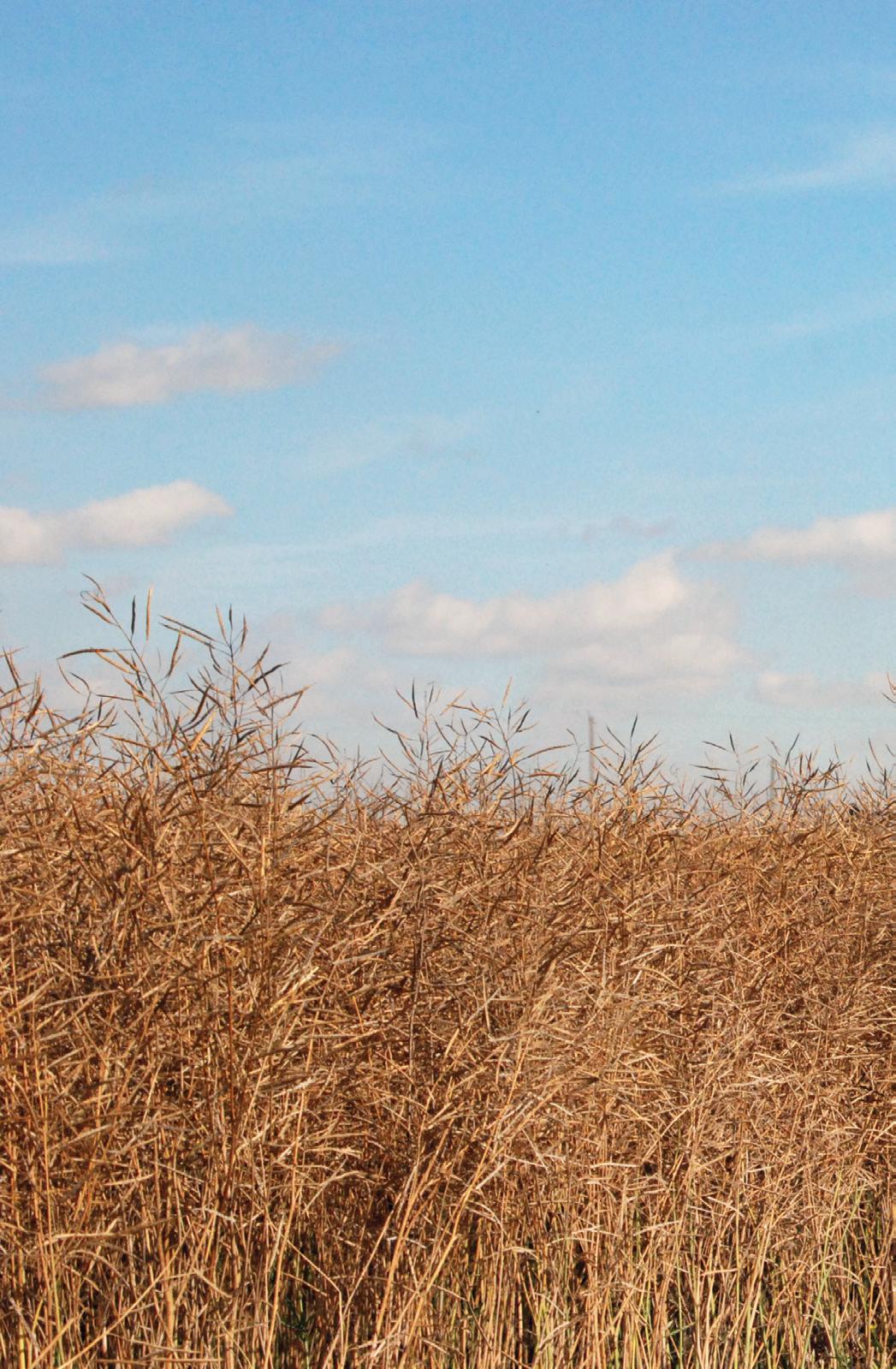
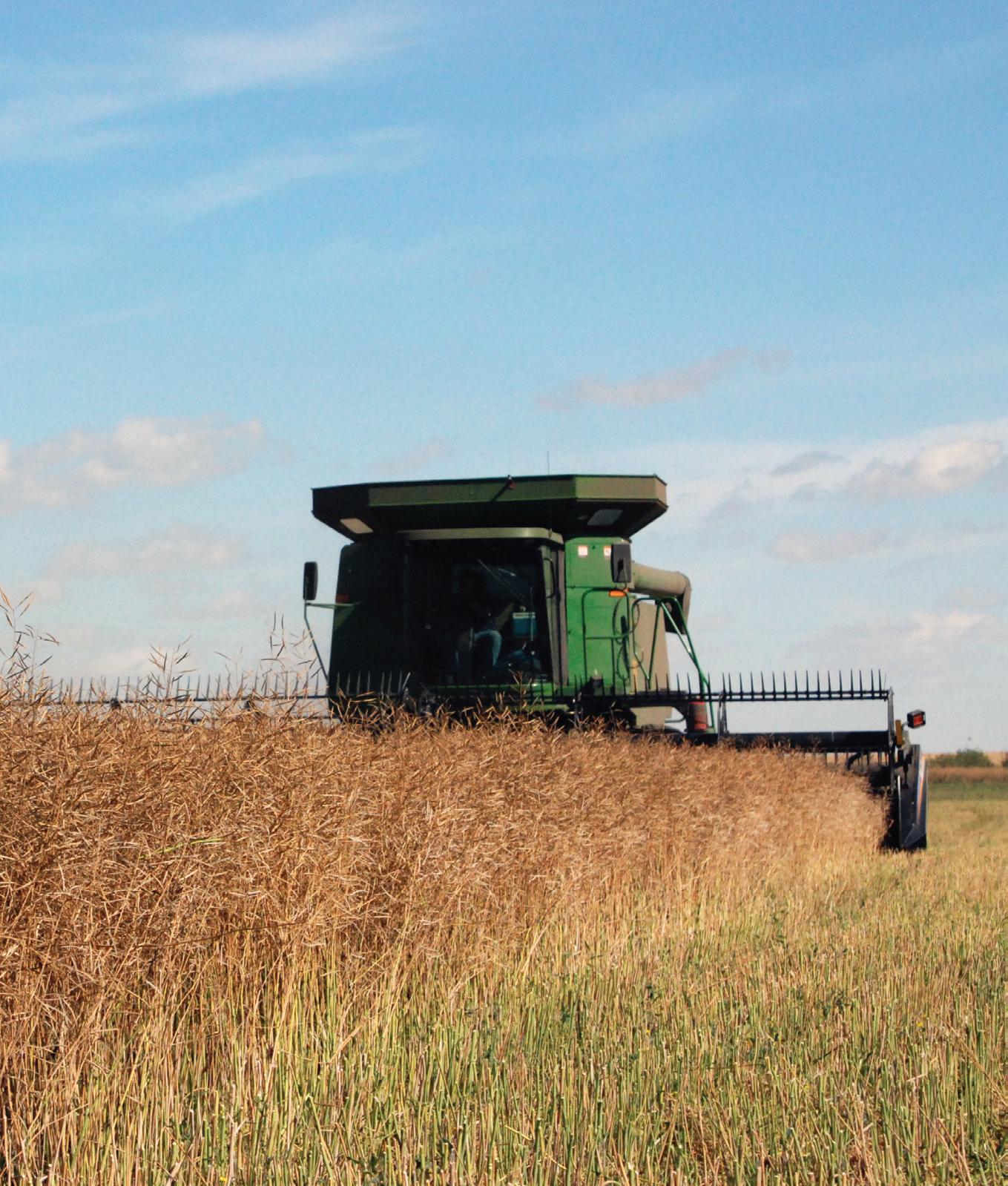
The pre-harvest herbicide treatment was applied by a swather retrofitted with an on-board sprayer during the windrowing operation using a tank mix of Heat LQ herbicide (saflufenacil) plus glyphosate. The pre-harvest herbicide was applied at 60 per cent seed colour change for the straight-cut treatment. The pre-plant herbicide treatment was a pre-seed burn-off treatment with Focus (pyroxasulfone) prior to winter wheat seeding.
Beres says that straight cutting canola resulted in lower winter wheat yield the following year. Yield stability analysis found that high and stable winter wheat yields were achieved with applying pre-harvest herbicides while swathing with an on-board sprayer or in combination with a pre-plant herbicide. There was also a slight yield advantage following the earlier hybrid. The research also reinforced that a pre-harvest plus pre-plant herbicide eliminated the need for an in-crop winter wheat herbicide in the spring.
reducing crop height. The researchers reported that “the findings suggest that there is a role for PGRs in winter cereal production systems, provided the magnitude of crop responses justifies the added input costs.”
Canola is often considered the gold standard stubble crop that winter wheat is sown into in the fall. Beres looked at how to optimize canola harvest timing and crop sequencing in a research project from 2018 to 2022. An early- and late-maturing canola variety were grown at 16 site-years across the Prairies. Three harvest timings compared were early windrowing performed at 40 per cent seed colour change (early-timing), conventional windrowing performed at 60 per cent seed colour change (conventional-timing), and straight cutting at 10 per cent seed moisture (straight cutting).
Herbicide treatments included a
“The credit, or blame, for this innovation actually goes to Jim Halford, inventor of the ConservaPak air drill and a farmer from Indian Head, Saskatchewan. Jim brought me to his farm and showed me the concept in real time and at farm scale, so we built the science around it to provide the proof of concept,” says Beres. Another study looked at what crops winter wheat could be seeded into. The research was conducted across the Prairies from 2018 to 2022. Rotational crops studied were soybean, lentil, field pea, faba bean, canola, flax and oat. While canola is typically thought of as a good rotational crop because of its snow trapping potential, winter wheat following soybean and lentil significantly outyielded canola. Soybean and lentil yielded 59 bu/ac (3.94 t/ha) and canola yielded 54 bu/ac (3.64 t/ha). Yields on field pea and faba bean were similar to canola. The lowest yields were flax at 53 bu/ac (3.53 t/ha) and oat at 54 bu/ac (3.60 t/ha).
Beres says it is counter-intuitive to the idea of snow-trapping, but the winter wheat yield benefits from a lower-residue pulse crop were proven again in this study – just like some of our previous work led by Byron Irvine (retired AAFC). That said, Beres urges growers not to give up on canola since he observed benefits from it persisting beyond the first year.
“I look at maximizing yield through the lens of a G x E x M framework, and if we are smart about how we weave together all the components in the management piece and then combine that with proper genetics, we can create a synergistic situation that allows us to attain that yield potential of winter wheat,” says Beres.
Research found that saline soils could be returned to productivity.
BY BRUCE BARKER
White-crusted, salty, saline soils have plagued agriculture for thousands of years, and even contributed to the downfall of civilizations. While Prairie agriculture isn’t teetering on the brink of collapse because of salinity like the fall of the ancient Mesopotamia, salinity is an ongoing concern for some Prairie farmers. Estimates put about nine per cent of Prairie agricultural land at moderate, high or very high risk of salinization.
“Can we get something to grow? With the new emphasis on carbon sequestration, what is the nature and impact on carbon storage in these soils?” asks Jeff Schoenau, soil scientist with the College of Agriculture and Bioresources at the University of Saskatchewan (USask) in Saskatoon, Sask.
In semi-arid regions on the Prairies, salinity occurs when subsurface ground water moves upward in the soil profile, carrying naturally occurring salts to the surface. These salts typically include calcium (Ca), magnesium, sulphates and chlorides. Salinity is measured by electrical conductivity (EC) in decisiemens per square metre (dS/m). Soils less than 2 dS/m are classified as non-saline, 2 to 4 dS/m as slightly saline with sensitive crops affected, 4 to 8 dS/m as moderately saline with most crop growth affected, and above 8 dS/m as severely saline with only tolerant plants surviving.
Schoenau led a research study that started in 2017 to see if a moderately saline site could be brought back to productivity using AC Saltlander green wheatgrass
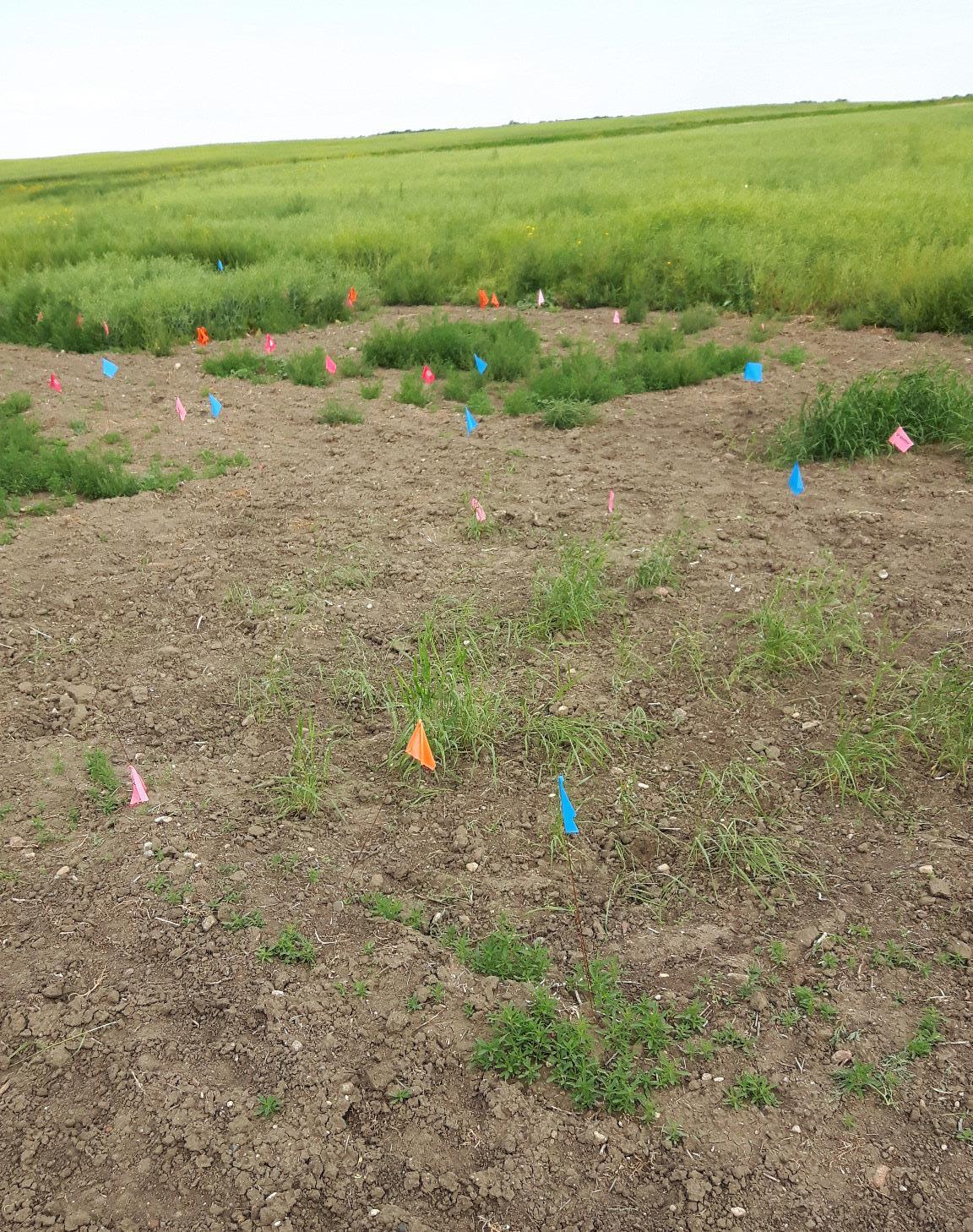
alone or with three added organic amendments. The objectives were to assess wheatgrass yield and nutrition over six years, and how soil salinity and soil organic carbon were affected by the establishment of AC Saltlander with organic amendments.
The research was conducted in the Brown soil zone near Central Butte, Sask. on both non-saline and saline locations in the field. The non-saline site plots had an EC ranging from 0.297 to 0.315 dS/m in the 0- to 24-in (0 to 60 cm) soil profile. The saline site was rated as moderately saline with an EC of 6.29 to 6.75 dS/m in the 0- to 24-in profile. Soil organic carbon was similar between the two sites, ranging from 0.93 to 1.47 per cent. Soil pH was slightly above 7.0.
“The available nutrients were higher at the saline site because of reduced crop removal from poor crop growth over the years. Soil organic carbon was similar because native salt-tolerant vegetation, followed by foxtail barley and kochia growth after cultivation, likely helped maintain the organic matter in the soil,” says Schoenau.
Organic amendment treatments included leonardite at 8,921 lb/ac (10,000 kg/ha), humic acid at 178 lb/ac (200 kg/ha) and composted manure at 8,921 lb/ac (10,000 kg/ha), along with an untreated control. Leonardite is a soft, oxidized lignite coal rich in humic acids. The treatments were applied in the spring of 2017, followed by seeding of AC Saltlander into the amended treatments.
All sites received a blanket application of 45 lb nitrogen (N)/ac (50 kg N/ ha), and 18 lb P2O5/ac (20 kg/ha) prior to treatment.
Stand establishment of AC Saltlander was much better on the non-saline site than the saline site. Similarly, forage yield was much higher in the first year in the fall of 2017 at around 4,460 lb/ac (5,000 kg/ha) on the non-saline site compared to about 892 lb/ac (1,000 kg/ ha) on the saline site. At both sites, the organic amendments had no impact on forage yield.
Nutrient uptake was measured for N, phosphorus (P), sodium (Na) and Ca in the fall of 2017. Uptake of all nutrients was much higher in the non-saline plots because of the higher yield. The organic amendment treatments did not have an impact on nutrient uptake in either the saline or the non-saline plots.
In the spring of 2018, the leonardite treatment had slightly higher soil organic carbon mass at both the non-saline and saline site. However, in the saline site, it was also statistically similar to the composted manure treatment.
Soil pH and EC was measured in the fall of 2018, and the organic amendment treatments had no significant effect on either soil parameter.
By the fall of 2019, yield on the two sites was almost the same. The fall biomass yield on the non-saline site was 2,466 lb/ac +/- 565 lb (2,765 kg/ha +/- 633 kg). The saline site yield was 2,331 lb/ac +/- 925 lb (2,613 kg/ha +/- 1036 kg/ha).
“Can we get something to grow? With the new emphasis on carbon sequestration, what is the nature and impact on carbon storage in these soils?”
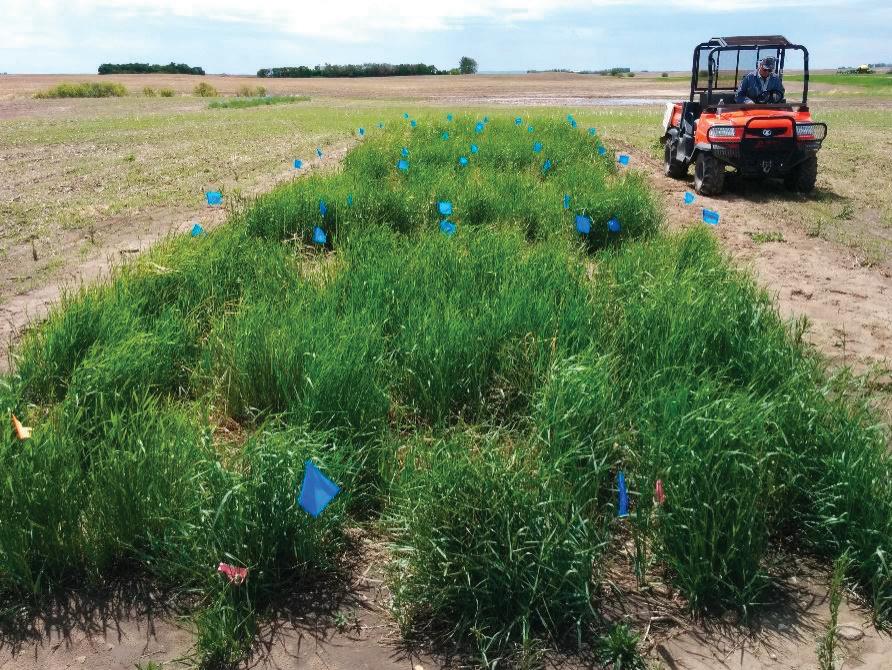
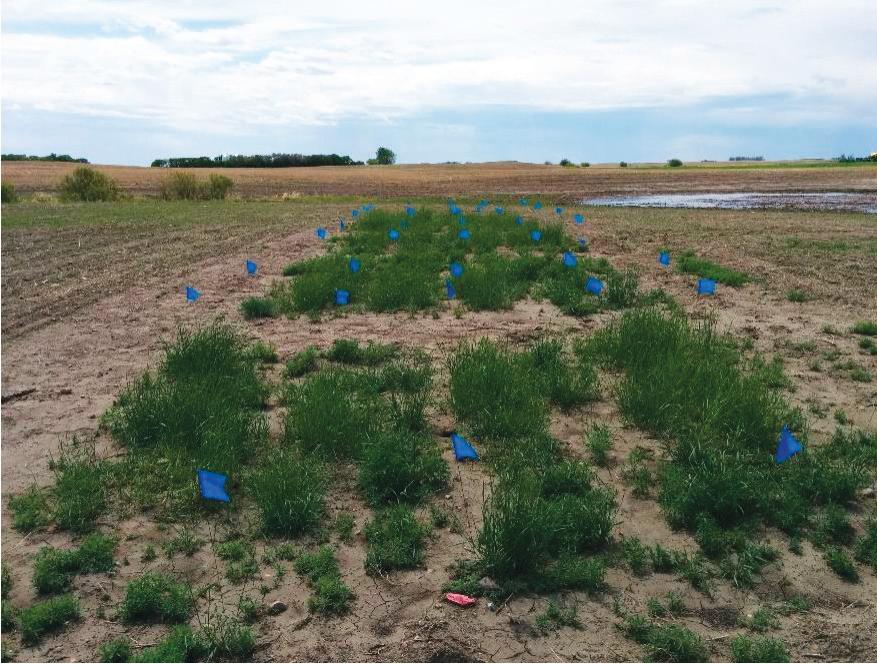
“Difference in forage growth on non-saline and saline soils was diminishing in subsequent years. The green wheatgrass was catching up on the saline site. Roots of salt-tolerant grass, once established, can use shallow ground water and residual nutrients,” says Schoenau. “We were getting a palatable forage to grow well on salt-affected land.”
Even more encouraging, by August 2022, the forage biomass yield on the saline site had surpassed the non-saline site. The saline site yield was 3,220 lb/ac +/- 525 lb (3,609 kg/ha +/- 588 kg) compared to 2,200 lb/ac +/- 503 lb (2,466 kg/ha +/- 564 kg) on the non-saline site.
There was a trend for the soil amendments to increase yield, but it was not consistent or statistically significant. The addition of leonardite significantly increased total soil organic carbon mass in the top 6 in (15 cm) because it is resistant to decomposition. Removal of the Ca, Mg and Na salt cations in the forage harvest was negligible compared to the total amount of salts in the profile.
June 2018 one year after
After six years, root biomass was significantly higher in both the saline and non-saline sites compared to adjacent spring wheat crops. This was explained by greater root mass produced in the AC Saltlander green wheatgrass plots compared to the annual wheat crop.
“Overall surface soil salinity was lower in 2023 than in 2017, and that may partly reflect the grass helping to lower the water table,” says Schoenau.
Schoenau has plans for several follow-up studies. One is looking at a salt-tolerant alfalfa/wheatgrass mix from Bill Bilegetu’s forage development program at the USask’s Crop Development Centre. A second is looking at the termination of the AC Saltlander plots and seeding back to an annual crop with yield and soil properties monitored for the following two years.
Be aware of market risks.
BY BRUCE BARKER
The buyer is always right. That’s the premise behind the Keep it Clean program that highlights the crop protection products and crop combinations that may cause market risks. The program has been updated for 2026 with several new cautions for growers.
“The Keep it Clean program was developed to help protect market access for Canadian growers,” says Krista Zuzak, director of crop protection and production with Cereals Canada. “Since a significant portion of our cereals, pulses and canola is exported, meeting the standards of importing countries, including their tolerances for pesticide residues and contaminants, is essential. Canadian wheat alone is exported to over 80 countries, which shows just how many important markets can be impacted.”
Keep it Clean was originally started by the Canola Council of Canada (CCC), and 2026 marks the tenth year of partnership between the CCC, Cereals Canada and Pulse Canada. The partnership helps streamline and simplify messages growers receive, and makes the best use of resources to maximize impact. Other participants in the program include the Prairie Oat Growers Association (POGA) with funding through the Sustainable Canadian Agricultural Partnership (Sustainable CAP).
To safeguard the marketability of Canadian crops, the program has five tips. The first is to use acceptable pesticides only. “Although a pesticide may be registered in Canada on a certain crop type, there can be market access issues caused by the residues of this pesticide and maximum residue limits (MRLs) in place in export markets,” says Jeff English, vice president of public affairs with Pulse Canada.
The program’s website, keepitclean.ca, has product advisories that caution growers when to avoid using a product even though it may be registered on a specific crop. The website also cautions them to consult their grain buyer before using the product. The program uses a red X symbol to signify that the product should not be used, or an amber exclamation symbol to recommend consultation with grain buyers.
“Requirements in our export markets, such
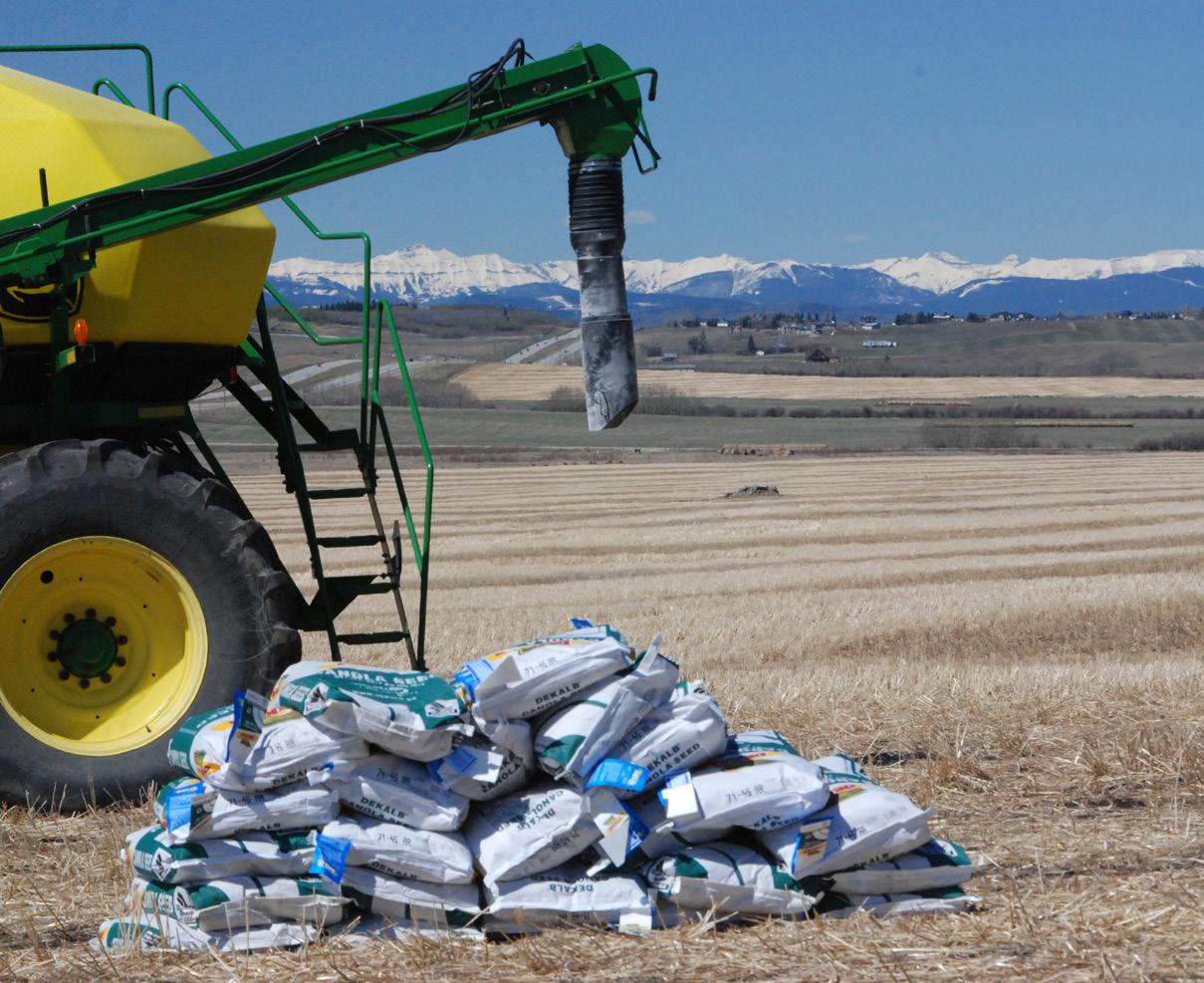
ABOVE One component of the Keep It Clean program is to only use registered canola varieties to help safeguard the marketability of Canadian crops.
as maximum residue limits, can change from year to year,” says Curtis Rempel, vice president of crop production and innovation with CCC. “The 2026 Product Advisory provides growers and crop advisors with the most up-to-date information on crop protection products that can create market risks.”
For example, growers are encouraged to consult their grain buyer to ensure pre-harvest glyphosate is an acceptable use on chickpea, green lentil, pea, oat, wheat, faba bean, dry bean and barley for food or feed. Malt barley buyers will not accept grain treated with pe-harvest glyphosate, so that is communicated on the product advisory.
This year, there are changes to the advisory for fluopyram on barley. Previously, growers were advised to not apply fluopyram on malt barley due to missing and misaligned MRLs in key export markets. Since last growing season, missing or low MRLs have been established or are proposed, so advice to growers has changed.
“Growers can apply fluopyram to barley for food or feed without issue. For malt barley, the advisory has changed from red or ‘do not use’ on Keep it Clean, to amber or ‘be informed’. This means malt barley growers should talk to their grain buyer to ensure it will be accepted if treated with fluopyram. Your grain buyer has the best understanding of the end markets for your crop,” says Zuzak.
The second tip is to always read and follow label directions. This means the product should not only be registered on a specific crop, but also that pesticide applicators need to follow the correct application rate and to apply the product only at the recommended crop stage.
It’s also important to follow the product’s pre-harvest interval (PHI). PHI is the number of days between spraying and swathing or straight cutting the crop. This will ensure that the active ingredient has enough time to break down in the plant and not leave unacceptable residues behind. Keep it Clean has an interactive PHI calculator that calculates the PHI for a given crop and pesticide product.
Crop disease, such as blackleg in canola and Fusarium head blight in cereals, can also cause market access issues. The Keep it Clean program has tips on how to control these diseases to help reduce market risk.
Storage of crops also brings several market risks. Grain bins need to be free of treated seed and animal protein like blood meal and bone meal. The insecticide
malathion should never be used to prepare bins for canola storage. Its residue can last for months so canola should not be stored in a bin that has been treated with malathion in the current growing season. Only use approved bin treatments such as diatomaceous earth on cereals.
Finally, only deliver what you declare. When delivering to a licensed grain company, growers are legally required to complete a Declaration of Eligibility for Delivery of Grain to confirm that the grain they are delivering is of a variety that is eligible for the kind of grain being sold. Grain buyers may also require a commercial declaration that indicates the crop was not treated with specific crop input products to ensure it meets the requirements of our export markets. They may also set out obligations and penalties associated with the commercial declaration such as being held liable for the costs associated with contamination of a bin or shipment.
The program has a list of deregistered canola varieties that should not be grown or delivered to an elevator or grain handler. The website indicates that growing registered canola varieties is an important part of assuring our export customers that the oil and meal quality, biotech traits and disease resistance in our canola supply meets their requirements.
Given the importance of western Canadian growers’ export markets, significant resources have gone into the Keep it Clean program to help reduce market risks. Zuzak explains: “We always recommend that growers speak with their grain buyers to ensure the products they are using are acceptable to both domestic and export markets.”
26_002786_Top_Crop_Western_Edition_MAY_JUN_CN Mod: April 6, 2026 9:43 AM Print: 04/14/26 page 1 v2.5




by Bruce Barker, P.Ag
The Lygus genus is a diverse group with over 11,000 species, but four species are important pests on the Prairies: L. lineolaris, L. keltoni, L. elisus and L. borealis. Common hosts include canola, faba bean, soybean, sunflower, and many other crops and weeds.
Lygus bug feeding during the pod stage of faba bean is particularly damaging because the piercing mouth parts cause hull perforations, seed discolouration and pitting. This can lead to seed quality downgrading.
A research study led by entomologist Sean Prager at the University of Saskatchewan and Teresa Aguiar-Cordero was conducted to assess Lygus abundance in faba bean and the interaction with cumulative growing degree days (GDDs), geography and precipitation. The objective was to develop a better understanding of the population dynamics of the pest as influenced by environment.
Surveys were conducted from 2019 to 2023 to assess the incidence and severity of Lygus infestations in faba bean across Saskatchewan. They were done in conjunction with the Saskatchewan Pulse Growers, the Saskatchewan Ministry of Agriculture, and the Entomology Laboratory of the University of Saskatchewan.
Sweep net sampling was conducted when 20 per cent of faba bean pods had reached typical length (BBCH 72). Ten samples per field were collected along a ‘W’-shaped transect pattern. The number of fields sampled varied by year ranging from a low of 11 fields in 2022 to 23 fields in 2019.
Life stage, adult species and adult sex were identified for the collected Lygus.
Maximum and minimum temperatures, total precipitation, total days of precipitation and cumulative growing degree days were collected during the survey period from Environment Canada’s climate database. Soil climatic zones and crop district were included in the assessment of environmental drivers on Lygus infestations. Statistical analysis was conducted to see how these factors affected Lygus species and abundance.
Species analysis revealed trends in Lygus species. Lygus lineolaris favoured warm and wetter environments, except in very wet soils. Lygus elisus had reduced abundance in the moist Black soils zone in high

moisture conditions, but the research found that it may tolerate a wider range of environmental conditions. Lygus borealis also preferred warm and wet environments, but these environments had a negative effect on abundance in the Grey and moist Black soil zones. Lygus keltoni abundance was greater with higher precipitation and the interaction with cumulative growing degree days, but populations fell in the Grey and moist Black soil zones under high precipitation.
While GDDs was not a significant factor in overall Lygus abundance, it did have a strong positive effect for L. lineolaris and L. borealis with higher GDDs increasing abundance.
Year and crop district significantly influenced species composition. Year explained 22.77 per cent of the variation in species, and the year by crop district interaction explained 40.74 per cent of species composition.
There was a significant interaction between total precipitation and Grey and moist Black soil zones, indicating that more rainfall meant lower Lygus abundance.
The researchers anticipated that crop district would be a significant factor in Lygus populations, since the field studies often took part in different crop districts each year. In many cases, faba bean were the last green crop available, and Lygus movement from other maturing crops was likely.
There was a significant interaction between total precipitation and Grey and moist Black soil zones, indicating that more rainfall meant lower Lygus abundance in these zones.
The researchers concluded that “the significant interaction between the year and crop district underscores the importance of considering both temporal and spatial dynamics when examining Lygus distributions. This suggests that management strategies must be flexible and account for local crop conditions.”
Future research into the role of overwintering plant hosts, natural enemies, and biotic and abiotic environmental factors could also improve the understanding of the impact of Lygus on faba bean, and could improve pest management strategies in the future.
The research was funded by the Saskatchewan Pulse Growers (SPG), Western Grains Research Foundation (WGRF) and the Saskatchewan Ministry of Agriculture.
Bruce Barker divides his time between CanadianAgronomist.ca and as Western Field Editor for TopCropManager. CanadianAgronomist.ca translates research into agronomic knowledge that agronomists and farmers can use to grow better crops. Read the full research insight at CanadianAgronomist.ca.


Help your crop stay strong through whatever the season brings with YaraAmplix biostimulants, including PROCOTE OPTIMIZE and OPTITRAC — backed by 10 years of R&D, 55 years of formulation expertise, and a commitment to proven performance that supports grower profitability, no matter the forecast.
Only available from leading crop input retailers.