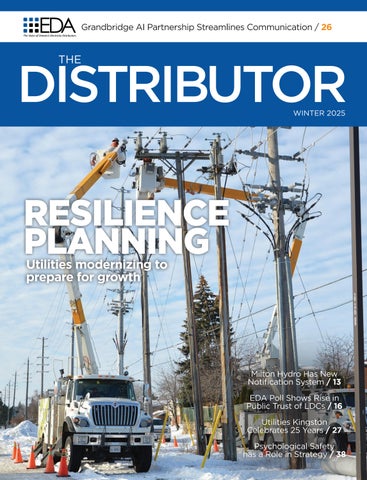
RESILIENCE PLANNING
modernizing to prepare for growth








FROM THE CHAIR
Resiliency is Key in Everything
We Do
As we head into winter, resiliency remains top of mind. This year, much of Canada, particularly southwestern and southeastern, Ontario, faced drought-like conditions that continued into fall. Changing climate patterns are creating more extreme events, and local distribution companies (LDCs) must be ready to protect the grid. The March 2025 storm reminded us how swiftly our work can be disrupted and how committed our teams are to restoring power and helping communities recover.
Ontarians share these concerns. The EDA’s summer 2025 public opinion poll found 77 per cent worry about extreme weather, 76 per cent about cyber attacks and 67 per cent about meeting future demand. Encouragingly, 89 per cent of Ontarians trust their local utility and 82 per cent are satisfied with service. Nearly half also support shared funding between taxpayers and customers to strengthen grids for climate resiliency and future demand.
The EDA communicated these results to members, government, regulators, and the public. Understanding public sentiment confirms we are on the right track. We must continue to deliver reliable and customer-oriented service while looking for unique options to fund grid upgrades.
This fall, the EDA Board approved our new multi-year Strategic & Action Plan. Guided by the vision to “shape the future for LDCs to be the premier service providers to Ontarians in the evolving energy sector,” the plan aligns with provincial and federal priorities and builds on our “Solving-Grid-Lock” vision. It is anchored by three pillars:
1. Secure LDC’s role in the energy transition as economic drivers
2. Promote association value to members
3. Ensure financial & corporate sustainability I look forward to advancing this work.
Our recent district meetings reinforced the continued importance of resiliency whether it’s weather, cyber threats or regulatory barriers. These gatherings of top notch professionals always spark valuable exchanges of ideas and collaboration among LDCs.
Finally, resiliency extends beyond infrastructure. As leaders, people are always our first priority and we must continue to nurture and protect our biggest asset.
As we move into the holiday season and close out 2025, may you enjoy your preferred festivities with your favourite people.


Sincerely,
Janice McMichael-Dennis President and CEO, Bluewater Power, and Chair of the Electricity Distributors Association
The Electricity Distributors Association (EDA) publishes The Distributor for its members and stakeholders. All rights to editorial content are reserved by the EDA. No article can be reproduced in whole or in part without the permission of the EDA.
PUBLISHED WINTER 2025 FOR:
Electricity Distributors Association
3700 Steeles Avenue West, Suite 1100 Vaughan, ON L4L 8K8 www.eda-on.ca
EDA STAFF CEO’S OFFICE
Teresa Sarkesian, President and CEO
Natasha Galati, Executive & Administrative Assistant
POLICY, GOVERNMENT AND CORPORATE AFFAIRS
Ted Wigdor, VP, Policy, Government & Corporate Affairs
Derek Nardone, Director, Corporate, Government & Public Affairs
Brittany Ashby, Senior Regulatory Affairs Advisor
Rudra Mukherji, Senior Regulatory Affairs Advisor
Antonio Brieva, Senior Advisor, Government & Stakeholder Relations
Tina Wong, Senior Policy Advisor
MARKETING, COMMUNICATIONS AND MEMBER RELATIONS
Mike Chopowick, VP, Marketing, Communication & Member Relations
Marica Macura, Director, Member Relations
Lesia Kostecki, Senior Membership Services Advisor
Kimberly Hicks, Senior Manager of Communications & Marketing
Alec Mackinnon, Communications Coordinator
FINANCE AND ADMINISTRATION
Tamara Orlova, Chief Financial Officer
Arlene Klemmer, Accounting Clerk
Matthews Joseph, Senior IT Analyst
Chrissan Pascal, Business Support Specialist
PUBLISHED BY ANNEX BUSINESS MEDIA, 111 Gordon Baker Road, Suite 400, Toronto, ON M2H 3R1 (416) 442-5600
annexbusinessmedia.com
Agreement #: 43526108
ADVERTISING SALES
Media Edge
nanciep@mediaedgepublishing.com


Alectra Utilities and Enova Power Clean Energy Projects Receive Federal Boost

Pictured from left to right at the funding announcement: MPP Rudy Cuzetto, Mississauga-Lakeshore and Parliamentary Assistant to the Minister of Energy and Mines; Tim Hodgson, Minister of Energy and Natural Resources, and Alectra Utilities CEO Brian Bentz.
The federal government announced in August it is funding a total of $13 million for five clean energy projects to support modernization and both Alectra Utilities and Enova Power are benefiting.
The Honourable Tim Hodgson, Minister of Energy and Natural Resources, made the announcement in Markham. Three projects are being awarded to LDCs:
Alectra receives $6 million for a project that would allow customer-owned devices such as solar panels and batteries to access and benefit from electricity markets. An additional $149,645 will allow them to share knowledge from their demonstration project and to collaborate with international partners.
Enova receives $750,000 to operate a distribution-level electricity market using AI-based load forecasting and network constrained optimization. It will allow qualified customers to take a more active role in helping balance local electricity demand and generation. Enova partnered with Ontario-based clean-tech startup GridS2 and has launched this pilot project.

Seen from left to right: Jeff Quint, Manager of Innovation and Energy Management, Enova Power Corp.; Minister of Energy and Natural Resources Tim Hodgson, Enova President and CEO, Greig Cameron; Enova’s Nimish Bhatnagar, CEO, GridS2 and Bala Venkatesh, Chief Technology Officer Grids2.
LEADERSHIP CHANGES IN THE SECTOR
KELLY MCCANN, INTERIM CEO, NT POWER
NT Power announced that Kelly will step into the role of interim Chief Information Officer, replacing Stuart Smith. She previously worked as NT Power’s VP of Customer & Employee Experience. Kelly brings significant expertise and sector knowledge to the company’s operations team and her leadership record and commitment to NT Power’s vision prepare her to guide the team through this transition.
STUART SMITH, VICEPRESIDENT, IT & CHIEF INFORMATION OFFICER, LONDON HYDRO
London Hydro is pleased to welcome Stuart Smith back to the utility as new Vice President, IT & Chief Information Officer. Stuart previously held roles from Business System Analyst to Director, Solution Architecture. Since his time at London Hydro, Stuart held roles as Chief Information Technology Architect with Bruce Power and VP of Information Technology at NT Power.
JESSICA TRACEY, VICEPRESIDENT, LEGAL AND GENERAL COUNSEL, BLUEWATER POWER
Jessica recently took up her new position at Bluewater Power. She comes from Lerners LLP in London. Jessica previously worked as general counsel at a large utility in British Columbia. She has “utility excellence” in her blood: her dad Ray Tracey is a wellknown retired CEO in the sector.
Read the media release
Read the media release
Read the media release

PUC GOLF TOURNAMENT RAISES $30K FOR MENTAL HEALTH
The community of Sault Ste. Marie benefited from the second annual PUC Charity Golf Tournament. A total of 144 golfers raised $30,000 for the Canadian Mental Health Association of Algoma. This couldn’t have happened without the 20 volunteers who ensured the day went off without a hitch.
LEADERSHIP CHANGES IN THE SECTOR
CAROLYN CALWELL, CHIEF EXECUTIVE OFFICER, ONTARIO ENERGY BOARD
Carolyn Calwell is appointed as Chief Executive Officer of the Ontario Energy Board (OEB). She has deep energy-sector expertise spending the last four years as the OEB’s Chief Corporate Services Officer and General Counsel. She is committed to evolving energy regulation and delivering on the Minister of Energy and Mines’ Integrated Energy Plan Directives.
GEOFF OWEN, CHAIR OF THE BOARD OF DIRECTORS, ONTARIO ENERGY BOARD
Geoff Owen is appointed as Chair of the OEB’s Board of Directors. Geoff has sat on the board since 2024 and has been acting chair since April 2025. He is familiar with the OEB’s evolving mandate, strategic insight and commitment to the organization. He will be instrumental in delivering the Integrated Energy Plan.
CARLA Y. NELL, BOARD OF DIRECTORS, ELECTRICAL SAFETY AUTHORITY
TERESA SARKESIAN HONOURED WITH THE 2026
CANADA’S CLEAN50 AWARD
EDA’s President & CEO Teresa Sarkesian is a recipient of Canada’s Clean50, an award recognizing 50 people who have made the greatest contributions to advancing Canada’s clean economy over the past two years. The award was presented in Toronto during a summit where award winners came together for an award presentation and collaboration during a one-day summit to tackle critical sustainability challenge together. Sarkesian is recognized for her outstanding leadership in the Traditional Energy category. For more information on Clean 50 visit: www.clean50.com.

Carla Y. Nell is appointed as a new board member with the Electrical Safety Authority. Carla’s experience in the electrical sector is vast. She is the Executive Vice-President, Corporate Relations, Engagement and Strategy for the Independent Electricity System Operator. She has also worked in the private, public and not-for-profit sectors.
Read the media release
Read the media release
SECTOR SCAN
CALDWELL FIRST NATION INVESTS IN HYDRO ONE’S NEW TRANSMISSION LINE
Caldwell First Nation is investing in Hydro One’s Chatham to Lakeshore Transmission Line that will generate 400 megawatts of clean electricity and increase the reliability and resiliency of the region’s hydro network.
The First Nation, located in Leamington on the north shore of Lake Erie, calls the investment a landmark equity investment that marks a new chapter of Indigenous economic empowerment and infrastructure partnership.

GRANDBRIDGE EMPOWERS KIDS WITH DONATION
Grandbridge Energy recently donated $2,500 to KidsAbility Centre for Child Development to support children experiencing challenges with feeding and swallowing. The donation supports the customers and community pillar of their Strategic Plan and reflects their commitment to building healthier, stronger and more resilient communities.
ELEXICON ENERGY INC. SHAREHOLDERS TO INVEST $62M IN LOCAL GRID
In September, stakeholders of Elexicon Energy Inc. agreed to invest more than $62 million of additional equity to enable the local distribution company to make infrastructure improvements to meet the needs of their local communities. The towns of Whitby, Clarington, Belleville and Ajax agreed to a memorandum of understanding that will support the nearly 200,000 customers in Durham Region in receiving safe and reliable energy.
LEADERSHIP CHANGES IN THE SECTOR
MITCH PANCIUK, PRESIDENT AND CEO, ONTARIO ONE CALL
Ontario One Call Board of Directors announces a new President and CEO of Ontario One Call. Mitch has strong public sector leadership as former councillor and mayor of Belleville where he championed key initiatives such as housing, infrastructure and healthcare recruitment. He is also a seasoned entrepreneur and a current Corporate Director with Hydro One.

MICHAEL W. RENCHECK, BOARD OF DIRECTORS, HYDRO ONE
Michael W. Rencheck is appointed to the Board of Directors with Hydro One. His experience spans four decades as a trusted leader and advisor with a strong track record of driving operational excellence, strategic growth, governance and financial performance in the energy industry.

Diversified utilities can drive value for the entire community.
Local distribution companies can lead innovation in their communities. When it comes to electricity as well as other crucial utilities, a diversified portfolio of energy and infrastructure assets, owned and controlled by municipalities, can drive value for all stakeholders.
If you’re looking to understand your strategic alternatives, mitigate risks, review financing capacity and investigate potential investments – our advisors can support you every step of the way.
Resilience in a Changing Climate: Oshawa Power on the Front Lines
Oshawa Power has adapted its response to grid stressors by hardening its grid, investing in grid modernization, and strengthening its role in local and provincial mutual aid networks.
This is in response to Ontario LDCs facing a new operating reality where traditional grid design is being stressed by the gradual strain of climate change, with the associated sudden impacts of severe weather events. Infrastructure is damaged, service is disrupted, and restoration efforts put to the test.
RESPONDING TO EXTREME WEATHER
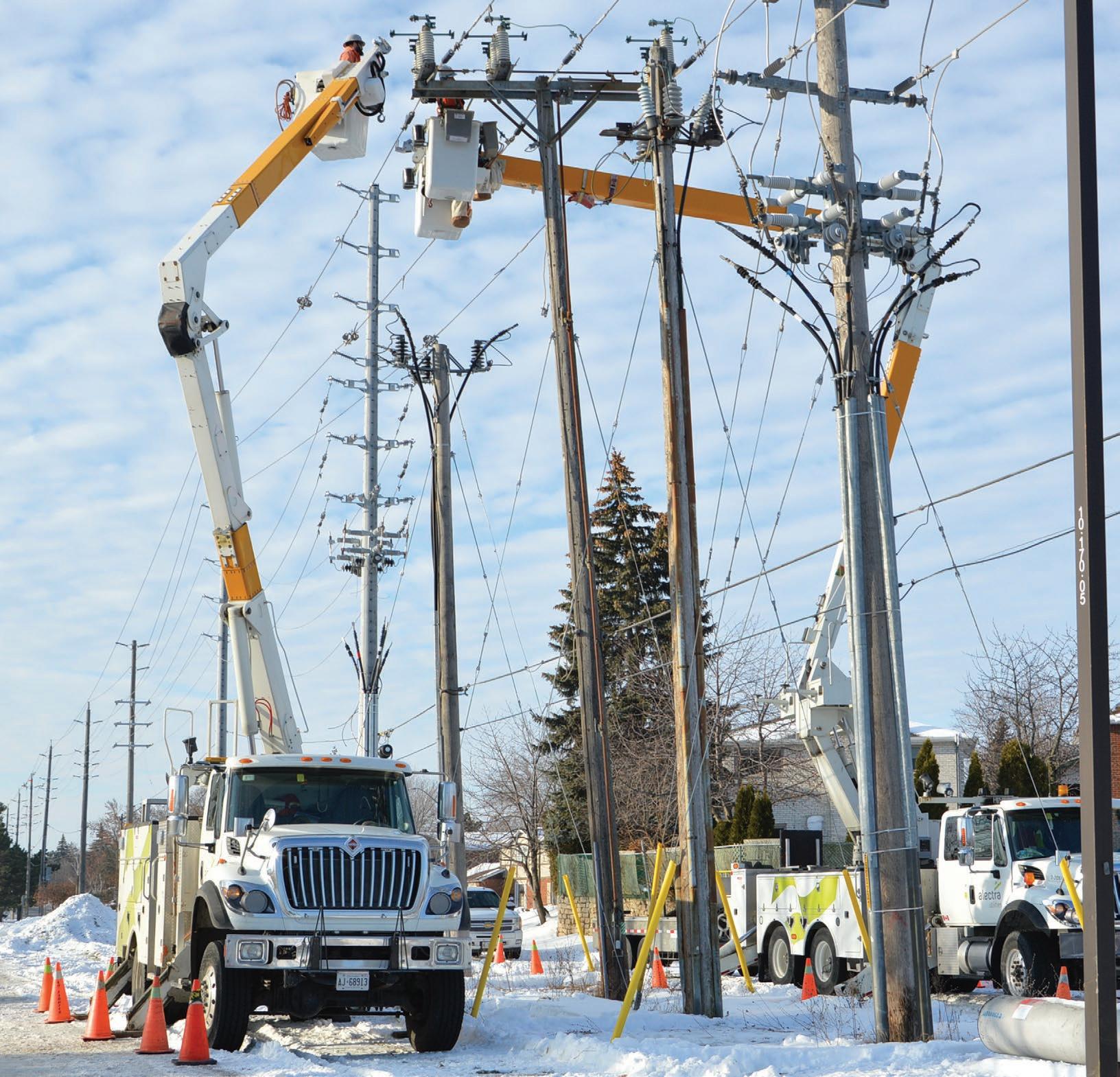
The March 2025 ice storm was a reminder of the vulnerability of local grids across Ontario with accumulating ice and extreme winds causing widespread outages across the province. Facing service disruption in our city, Oshawa Power’s first priority was restoring power to customers across our own territory. Once restoration was complete within Oshawa, line crews were deployed to support Hydro One in neighbouring territories as part of the Hydro One Mutual Assistance Plan.
The impacts of climate change and Oshawa’s location on the shores of Lake Ontario increase the frequency of exposure to lake-effect weather, including high winds, snow, and freezing rain. At the same time, our city’s rapidly expanding population, and associated electrification, is creating new pressures on our grid. This combination of climate stress and a growing population requires sustained investment in grid resilience that will allow Oshawa Power to better withstand disruptions while allowing rapid recovery should they occur in its version of the next-gen grid.
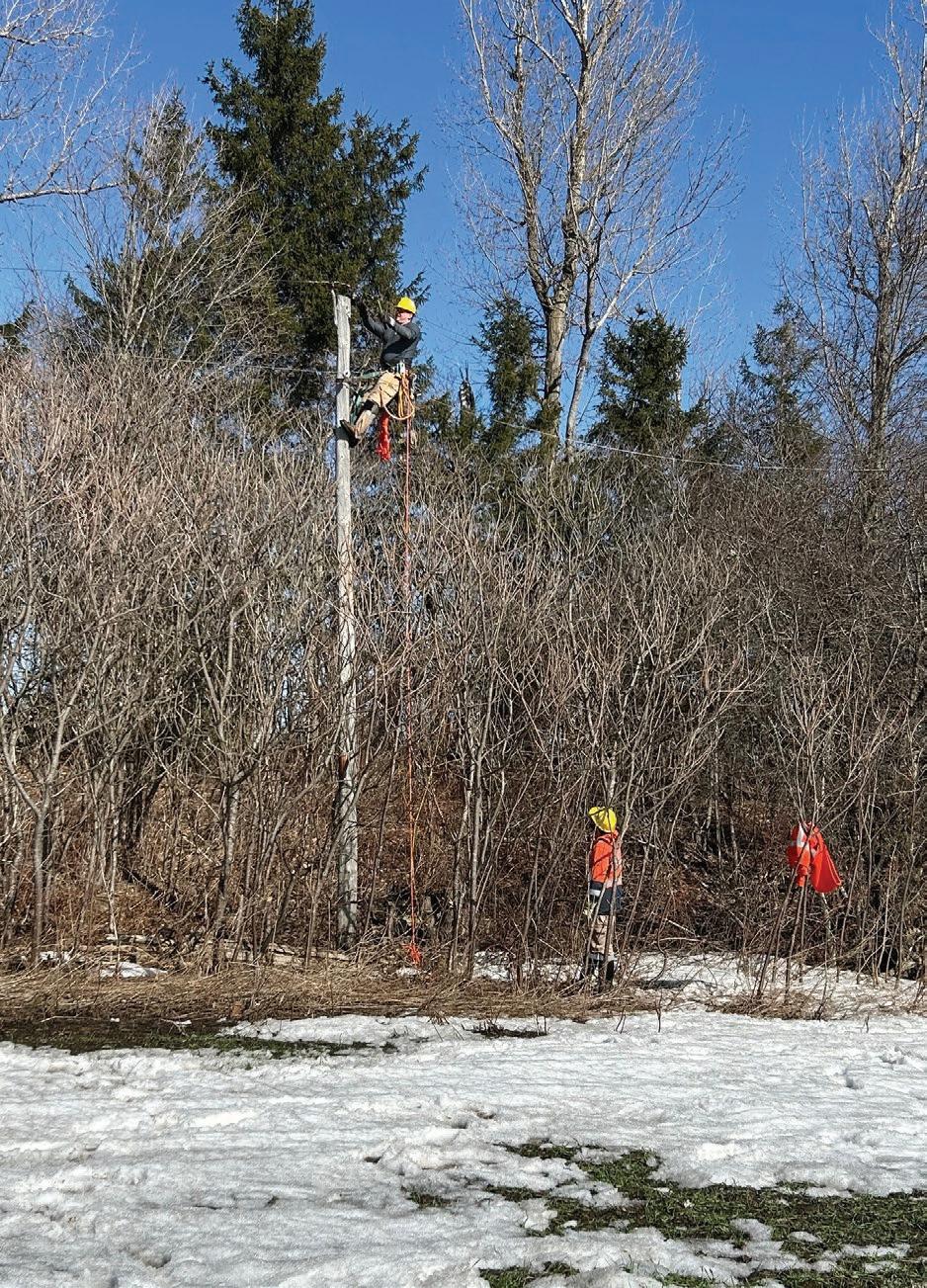
Oshawa Power continues to invest in local grid improvements designed to minimize exposure and reduce outage frequency and duration.
MUTUAL ASSISTANCE AS A RESILIENCE STRATEGY
Oshawa Power is proud to participate in two mutual assistance networks: the Hydro One Mutual Assistance Plan and the South Central Ontario LDC Mutual Assistance Plan. These agreements enable LDCs to access additional labour resources during emergencies by providing crews and technical expertise when called upon.
For residents in Oshawa and across neighbouring territories, participation in these programs means faster restoration when local resources are stretched. For utilities, this also allows crews to gain valuable experience working under challenging conditions. Knowledge flows between participating LDCs, improving readiness across the region. Mutual aid networks have become an essential tool for managing the increasing risk of extreme weather events.
GRID INVESTMENTS
Resilience requires more than restoration capacity. Oshawa Power continues to invest in local grid improvements designed to minimize exposure and reduce outage frequency and duration. Fault Location, Isolation, and Service Restoration (FLISR) automation and SmartGrid integration allow fault locations to be identified quickly with remote switching rerouting power in seconds. These technologies reduce the impact of outages and accelerate service restoration when faults occur.
Additionally, modernized substation designs continue to add intelligence, building in redundancy that, along with disciplined vegetation management, allow the impact of weather related damage to be mitigated by reducing grid vulnerability under extreme weather conditions.
During this year’s ice storm, these investments allowed Oshawa Power to
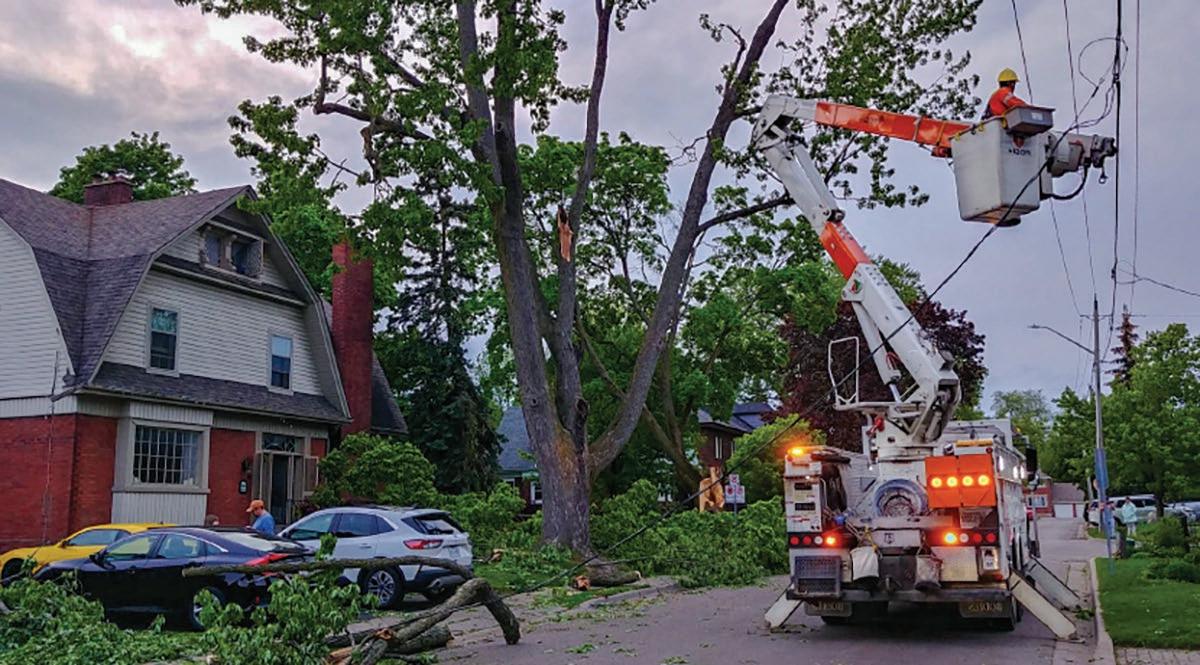
The impacts of climate change and Oshawa’s location on the shores of Lake Ontario increase the frequency of exposure to lake-effect weather, including high winds, snow, and freezing rain.
reduce the number of customers affected while restoring service to those impacted quickly, keeping critical services online.
WORKPLACE AND SAFETY
A resilient grid stretches beyond infrastructure, requiring employees who are prepared to respond. Oshawa Power’s Emergency Preparedness Plan (EPP) and ongoing high-voltage restoration training ensure our crews are trained to act with intention during these events. Mutual aid deployments reinforce these skills with hands-on experience in large-scale restoration scenarios.
This training and experience, combined with our culture of valuing the safety of our employees and community, has allowed Oshawa Power to surpass an important milestone of 1.5 million work hours without a Lost-Time Injury even while working under the most challenging conditions.
LOOKING AHEAD
With its customers expecting more, resilience is embedded in Oshawa Power’s 2026-2030 Strategic Plan and Distribution System Plan. Future investments will focus on climate-ready infrastructure and expanded automation that allow us to meet environmental challenges head on. Mutual aid partnerships will continue to play an integral part in our climate-readiness strategy.
Oshawa Power’s continued approach to resilience combines local investment, regional collaboration, and a strong safety culture. The result is a grid that is better prepared to mitigate the impact of these challenges and a utility that is ready to support peers across the province when the next storm arrives.
“This was a good job. I swear since moving to Oshawa seven years ago, there have been far fewer instances of lack of power than any place I have lived. And far shorter outages. Oshawa Power crews are bang on!”
- Oshawa Power
Customer via X
Powering Even Better Communication
Milton Hydro’s
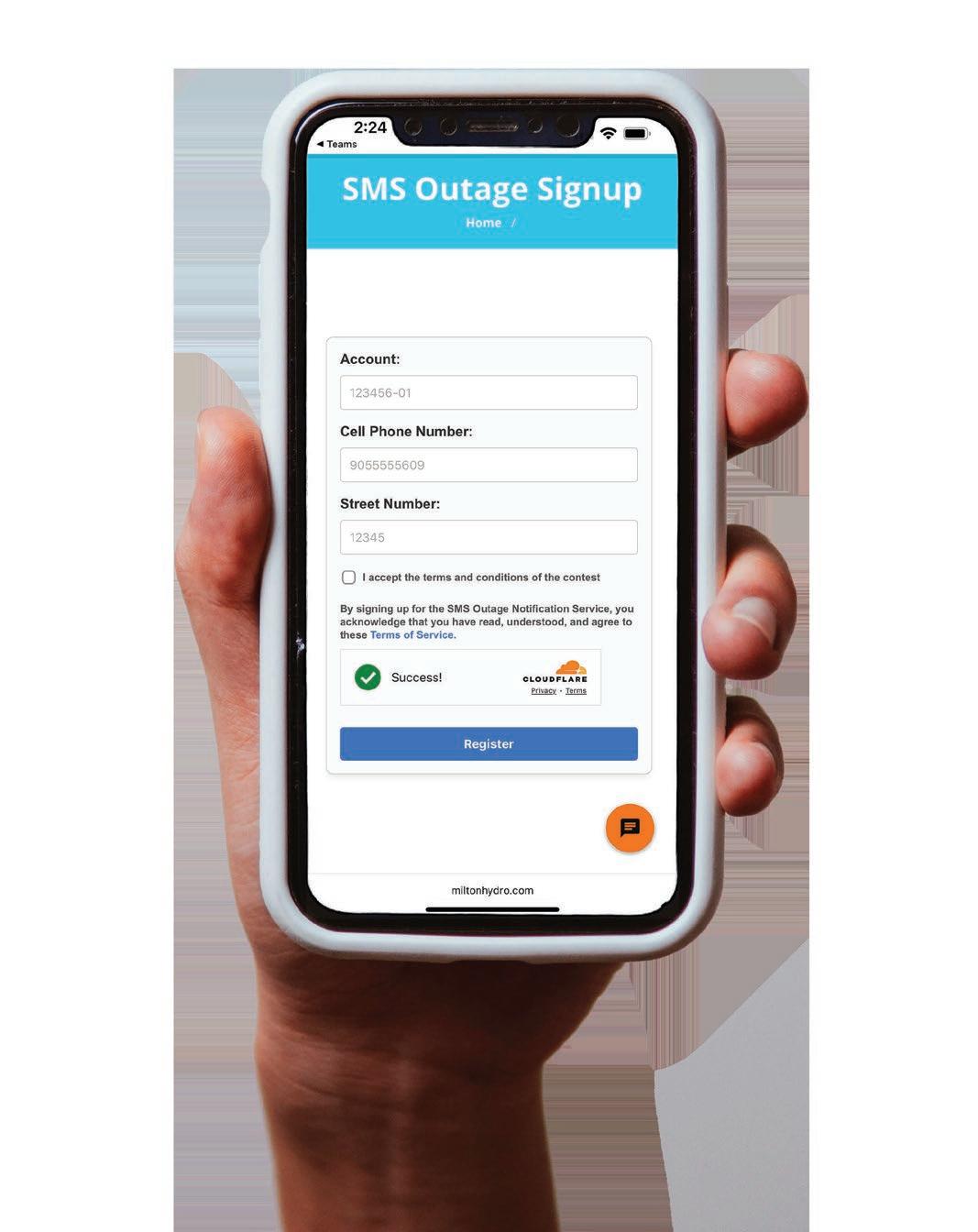
SMS Outage Notification System:
Real-time alerts, directly to customers’ phones

Instant, location-specific outage notifications
Updates from initial outage to full restoration
Planned maintenance alerts to help you prepare
Multiple numbers per account for household coverage
Secure, privacy-protected messaging
Why it’s a gamechanger:
•Enhances customer experience with direct, reliable communication
•Integrates seamlessly with smart grid and control room operations
•Provides peace of mind during power interruptions

MILTON HYDRO

Powering Better Communication:
Milton Hydro Building Stronger Customer Connection with Pilot SMS Outage Notification System

Real-time, direct communication enhancing customer experience
Milton Hydro takes major step forward in customer communication with the in-house development of its new SMS Outage Notification System — designed to deliver timely, location-specific outage information directly to customers’ mobile devices.
Milton Hydro has a strong record of minimizing service interruptions and while every effort is made to avoid outages, some are unavoidable due to factors such as weather events, vehicle accidents, or animal contacts. In such cases, prompt outage notifications are essential, they reassure customers that we are aware of the issue
Customers who opt in receive text message alerts whenever a sustained outage occurs at their service location.
and working to resolve it as quickly as possible.
As part of a broader effort to modernize communication channels, the team recognized the need to go beyond their live outage map and traditional updates on X (formerly Twitter). With many customers moving away from social media platforms, they saw an opportunity to create a more reliable, direct, and accessible solution.
The SMS service integrates seamlessly with Milton Hydro’s smart grid infrastructure, control room operations, and communications team workflows. Customers who opt in receive text message alerts whenever a sustained outage occurs at their service location — whether unexpected or planned for maintenance. Each message provides critical updates, from the initial outage notification to cause details, estimated restoration times, and confirmation once power is restored.
“Customers expect clear, timely updates on the channels they use
The SMS service integrates seamlessly with Milton Hydro’s smart grid infrastructure, control room operations, and communications team workflows.

most,” said Troy Hare, President and CEO, Milton Hydro. “Building this system internally allows us to tailor it to our operations and ensure it delivers meaningful, real-time information.”
The utility launched a pilot program in summer 2025 to gather feedback from customers and refine the service before a full rollout to their 44,000+ customers proceeds. The response to the pilot was
overwhelmingly positive, with customers particularly interested in the ability to add multiple phone numbers to their account to ensure that all household members receive notifications. Once fully deployed, the SMS system will offer another layer of communication, ensuring customers are always informed and prepared during outages – one message at a time.



www.capgemini.com/ca-en/industries/energy-and-utilities
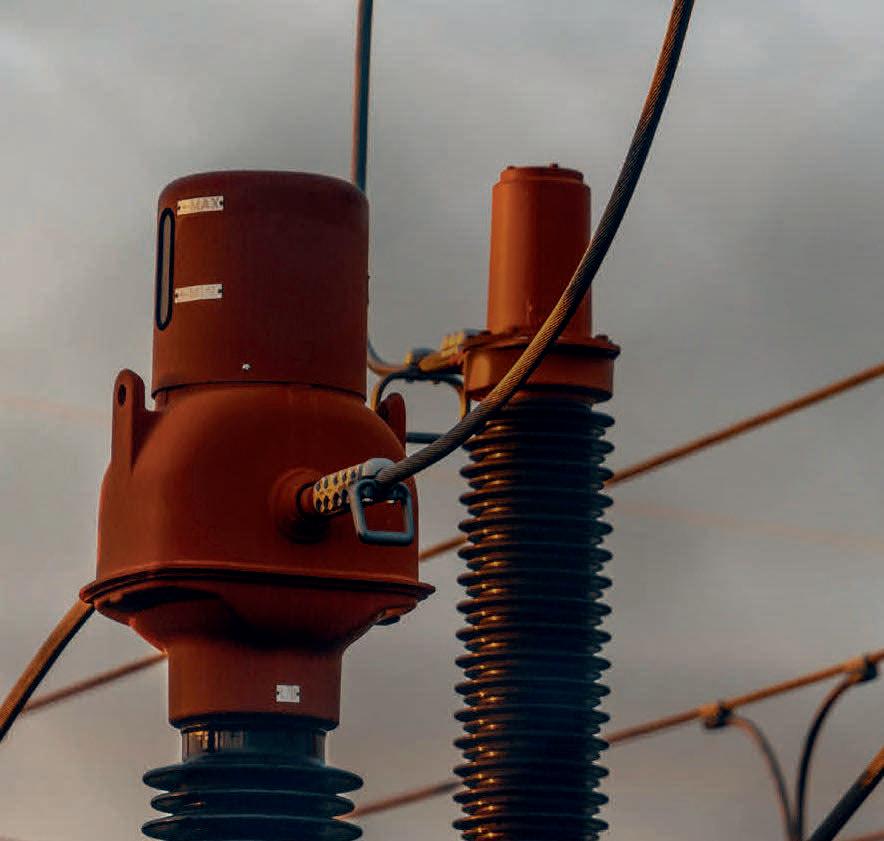
Advanced Monitoring.
Uninterrupted Securi .
Proven Reliabili .



BENEFITS AND FEATURES
Clean Energy
• Methanol/EFOY fuel cell and solar powered
• 94% reduction in CO2 vs Diesel Generator
AI-powered Camera Analytics
•Remote monitoring, event based surveillance

Designed to operate in Canadian climate
Energy on demand vs. Overproduction
•Lower operating costs and less fuel consumption
Proudly Canadian Made




Public Trust in Local Utilities Surges as Ontario Looks to the Future
Public confidence in local electricity utilities is climbing as Ontario prepares for a surge in electricity demand. An EDAcommissioned poll in the summer of 2025 surveyed 2,000 Ontarians: 82 per cent are satisfied with their local utility and 89 per cent trust their provider. These levels outpace most other essential services.
Building on Success
UTILITIES EMERGE AS TRUSTED PARTNERS
Success
Local utilities now rank among the most trusted public services in Ontario. They are positioned right behind fire, water, and waste collection, and well ahead of gas, telecommunications, and police. Within the electricity sector, they lead all other entities, marking a 17-point rise in trust since our 2022 survey. Strong performance ratings in safety, reliability, billing accuracy, payment flexibility, and outage response further underscore this trust.
INVESTMENT EXPECTATIONS ARE CLEAR
Ontarians view the most immediate challenges facing the province’s electricity system as growing electricity demand, cyber attacks and extreme weather.
Trust their local electricity utility, edging out generators, regulators and government.
Ontarians gave strong performance ratings on:
EDA research* reinforces the $105-120 billion investment needed to strengthen local electricity grids. Are
Investing in the
The majority of Ontarians view the immediate challenges to the electricity system as:
Growing Demand Cyber Attacks
Ontarians gave strong performance ratings on:
Investing in the Future
The poll also reflects growing public awareness of Ontario’s energy challenges. Eighty-five per cent of Ontarians said it’s important to invest in grid upgrades to meet future demand and support electrification. Currently only electricity customers (ratepayers) support investments to local grids.
Ontarians support a shared approach to funding between electricity ratepayers and taxpayers.
• 44 per cent support ratepayers and taxpayers sharing the cost of in grid upgrades to meet future demands
• 47 per cent support ratepayers and taxpayers sharing the to cost of in grid upgrades to ensure resiliency to extreme weather
How
How
is it that electricity distribution grids are
89% their local electricity utility, edging out generators, regulators government.
Investing in the Future
Ontarians gave strong performance ratings on: SAFETY
These views reinforce the need for in-depth conversations to address capital and funding required for the estimated $106–$120 billion needed for distribution infrastructure outlined in the EDA’s Solving Grid-Lock vision paper.
This public sentiment is aligned with the province’s Integrated Energy Plan that provides a framework for critical infrastructure required to support future energy needs due to forecasted housing growth, expansion of EVs and data centres as part of the energy transition.
BUILDING THE FUTURE TOGETHER
To move forward to next steps of investing in the electrical grid to support modernization, Ontarians support public consultations to prepare for needed critical infrastructure through a combined process that brings local electricity utilities, municipalities, and electricity regulators to the discussion tables.
Are satisfied with their local electricity service.
The poll results highlight not only strong trust and satisfaction, but also clear public alignment with sector priorities. Ontarians view their local utilities as leaders and essential partners in keeping power reliable and safe and modernizing the grid to power Ontario’s future.
Building
Support
of Ontarians view the immediate to the electricity system as:

Supporting Grid Resilience: Insights from the OEB’s RPQR and VASH Initiatives
By Nancy Marconi, Acting Chief Operating Officer, Ontario Energy Board
Ontario’s electricity system is undergoing rapid transformation, driven by rising demand and evolving customer expectations.
According to the Independent Electricity System Operator (IESO), electricity demand in the province is expected to grow by 75 per cent by 2050, driven by electrification, population growth and a growing economy.
At the same time, Ontario is experiencing more frequent and severe weather events that include ice storms, heat waves and flooding.
Together, these pressures are reshaping how electricity is planned, delivered and regulated. In response, the Ontario Energy Board (OEB) has been modernizing its regulatory framework to drive improvements in distribution system reliability and utility performance, ensuring Ontario’s electricity system remains responsive to evolving customer needs.
We’ve done this work—with your support— through the OEB’s Reliability and Power Quality Review (RPQR) and Vulnerability Assessment and System Hardening (VASH) projects.

Chief Operating Officer, Ontario Energy Board
ADVANCING RELIABILITY THROUGH RPQR
Since 2021, the OEB’s overarching RPQR initiative has been advancing how reliability is measured and reported. In collaboration with technical experts that include electricity distributors and consumer groups, RPQR identified key gaps and developed targeted recommendations. The EDA and many of its members have actively contributed to the RPQR Working Group, offering practical insights that helped shape the initiative’s direction and outcomes.
Building on this foundation, the OEB has taken concrete steps over the past year to support improved reliability across Ontario’s distribution systems. These actions include:
• Modernizing reliability reporting
• Listening to customer expectations
• Strengthening distributor communication during major weather events
• Enhancing the approach used to set reliability performance targets
MODERNIZING RELIABILITY REPORTING
As Ontario’s electricity landscape evolves, the OEB has recognized the need to modernize how reliability information is collected, reported and understood. It follows that a key objective of the RPQR was to improve consistency and transparency of reliability reporting. Improved reporting is intended to support meaningful comparisons across distributors and to inform planning and investment decisions. Through the RPQR, the OEB worked with industry experts—like the EDA and its members—to address inconsistencies in reporting practices and align reliability metrics with the expectations of today’s electricity consumers.





To support this modernization, the OEB introduced a series of targeted improvements:
• Updated Reporting and Recordkeeping Requirements: Clarifies definitions for major events, loss of supply events and interruption cause codes. These changes, effective in 2023, have improved consistency and accuracy in reliability reporting.
• Voluntary feeder-level reporting: Provides deeper insights into localized outages, helping identify reliability-focused investment opportunities while being mindful of regulatory burden.
• Guide to Addressing Electricity Distribution Power Quality Issues: Establishes a consistent approach for addressing power quality issues across Ontario, helping distributors and customers better understand and respond to problems, like voltage fluctuations and harmonics, that can lead to electrical equipment malfunctions or failures.
Nancy Marconi, Acting
• Enhanced Distribution Supply Point Interruption Reporting: Improves transparency around loss of supply events caused by upstream outages to further improve the consistency of reliability data across the province. This enhancement encourages collaboration between host and embedded distributors to help identify opportunities for reliability-focused investments and deepen understanding of reliability issues affecting end-use customers.
LISTENING TO CUSTOMER EXPECTATIONS
In 2024, the OEB heard directly from Ontarians and small businesses about their experiences during major storms. Through this survey engagement, we understood that:
• More than 90 per cent of respondents emphasized the importance of receiving estimated restoration times during outages.
• Customers emphasized the need for timely, clear communication to make informed decisions about safety, operations, and contingency planning. Informed by their feedback and expectations, we developed new rules for electricity distributors to improve transparency and responsiveness.
IMPROVING COMMUNICATION DURING SEVERE WEATHER
In March 2025, the OEB amended the Distribution System Code (DSC) to set new requirements related to customer-focused activities throughout major weather events. Effective May 2025, these include:
• Minimum standards for customer communications before and during severe weather events, including providing and updating (as required)
estimated restoration times
• Additional communication protocols for communicating with critical customers
Starting with rebasing applications filed in 2026 for rates effective in Ontario is experiencing more frequent and severe weather events that include ice storms, heat waves and flooding.
• Enhanced communication requirements for high-impact, low-frequency events where more than 48 hours is required for the distributor to restore service to at least 90 per cent of affected customers.
SETTING RELIABILITY PERFORMANCE TARGETS

2027, the OEB will apply a new approach to setting reliability targets. This method goes beyond historical averages and includes performance trend analysis and results from a new reliability benchmarking model.
This forward-looking model encourages continuous improvement and supports investment planning aligned with customer needs.
INTEGRATING CLIMATE RESILIENCE: THE VASH INITIATIVE
The OEB’s VASH initiative complements the RPQR by embedding climate resilience into distribution system planning. Like the RPQR, this work was shaped by a consultation process. Input from the EDA and distributors ensured the final report and its accompanying Vulnerability Assessment and Benefit-Cost Analysis toolkit reflect practical realities, regional diversity, and sector-specific needs that support effective and locally responsive planning.
The final VASH Report and Toolkit,
Since 2021, the OEB’s overarching RPQR initiative has been advancing how reliability is measured and reported.
released in October 2025, provides support for distributors preparing their applications with practical resources to:
• Identify system components most vulnerable to extreme weather
• Conduct risk-based vulnerability assessments
• Evaluate hardening options using a standardized benefit-cost analysis framework
The OEB heard from you that flexibility can help reduce regulatory burden. In response, distributors can choose between the following options when considering investments that support resiliency: a standardized methodology using the VASH Toolkit, including climate projections and value-of-lost-load metrics, or a distributor’s own approach, provided they meet OEB criteria.
These tools help ensure that investments in resilience are cost-effective and aligned with the value customers place on reliable service.
Together, RPQR and VASH represent a comprehensive strategy to enhance Ontario’s electricity distribution system. RPQR strengthens reliability reporting and customer engagement, while VASH embeds climate resilience into planning and investment decisions.
The OEB remains committed to working with EDA members, distributors, and consumers to refine regulatory tools and support a distribution system that is resilient, responsive, and aligned with customer expectations in the face of a changing climate.








Keeping Safety at the Centre of Ontario’s Energy Future
By Josie Erzetic, President & CEO, Electrical Safety Authority
Ontario’s energy landscape is undergoing a profound transformation. With electricity demand projected to grow 75 per cent by 2050, Local Distribution Companies (LDCs) are at the forefront of enabling new housing, supporting growth and modernizing infrastructure.
This period of change brings opportunity, but its success hinges on public confidence the transition is carried out safely. Assuring ourselves of safety will depend on coordinated planning, robust training and education around safety procedures, as well as trusted partnerships across the sector.
INDEPENDENT OVERSIGHT BUILDS TRUST
As Ontario’s electrical safety regulator, the Electrical Safety Authority (ESA) plays a vital role in maintaining that trust. Independent oversight gives the public confidence that safety remains a top priority.
It’s been more than 25 years since ESA was part of Ontario Hydro and, over that time, we have evolved into much more than an inspection agency. We see ourselves as safety partners whose role is to foster compliance by leading with education.
Since becoming CEO in 2022, I have focused on strengthening ESA’s partnerships across the province’s energy system. Whether it’s with utilities, Licensed Electrical Contractors (LECs) or other safety-focused organizations, collaboration is essential to driving successful and safe outcomes. Our aim is to be a regulator that enables progress, not stand in its way.
We work closely with LDCs to find practical solutions that support their objectives. From consultations on the Ontario Electrical Safety Code to planning for emerging technologies, ESA remains committed to collaboration. Nowhere is this more apparent than during severe weather events.

The campaign is delivered through multiple channels — from partnerships with LDCs and construction firms to jobsite safety presentations.
EMERGENCY RESPONSE IN ACTION
Severe weather continues to test the balance between speed and safety. The recent ice storms caused extensive damage across Ontario, leaving more than one million customers without power and triggering a multi-week restoration effort. ESA mobilized quickly, working with LDCs and LECs to support safe restoration.
Our team dedicated more than 2,200 hours to storm response. Our Customer Service Centre extended its hours to manage the surge in permit requests, responding to Ontarians in difficult circumstances with professionalism and compassion. More than 50 inspectors expedited site visits to ensure repairs were completed safely. In total, we completed:
• 2,965 inspected notifications
• 1,355 site visits
• 2,915 connection authorizations
We partnered with utilities to amplify critical safety information, such as helping Ontarians stay safe around downed lines. These efforts underscore the need for coordination and investment in emergency readiness between ESA and LDCs. In fact, our Regional General Managers and utility colleagues are now discussing how to improve our processes so we can better coordinate for future events.
A DATA-DRIVEN APPROACH TO PREVENTION
ESA uses data strategically to reduce electrical risk and focus our efforts where they can have the greatest impact.
That includes programs like Risk-Based Oversight (RBO), which helps us to allocate our inspection resources to higher risk installations. Simply put, the data helps us differentiate between lower and higher risk installations so we can focus more effort where the risk is higher.
We also use data to shape our public awareness campaigns. These insights are drawn from multiple sources, including our Ontario Electrical Safety Report, the Workplace Safety and Insurance Board, Skilled Trades Ontario, and ESA’s own records of permits, infractions and the nearly 700,000 inspections we conduct annually.
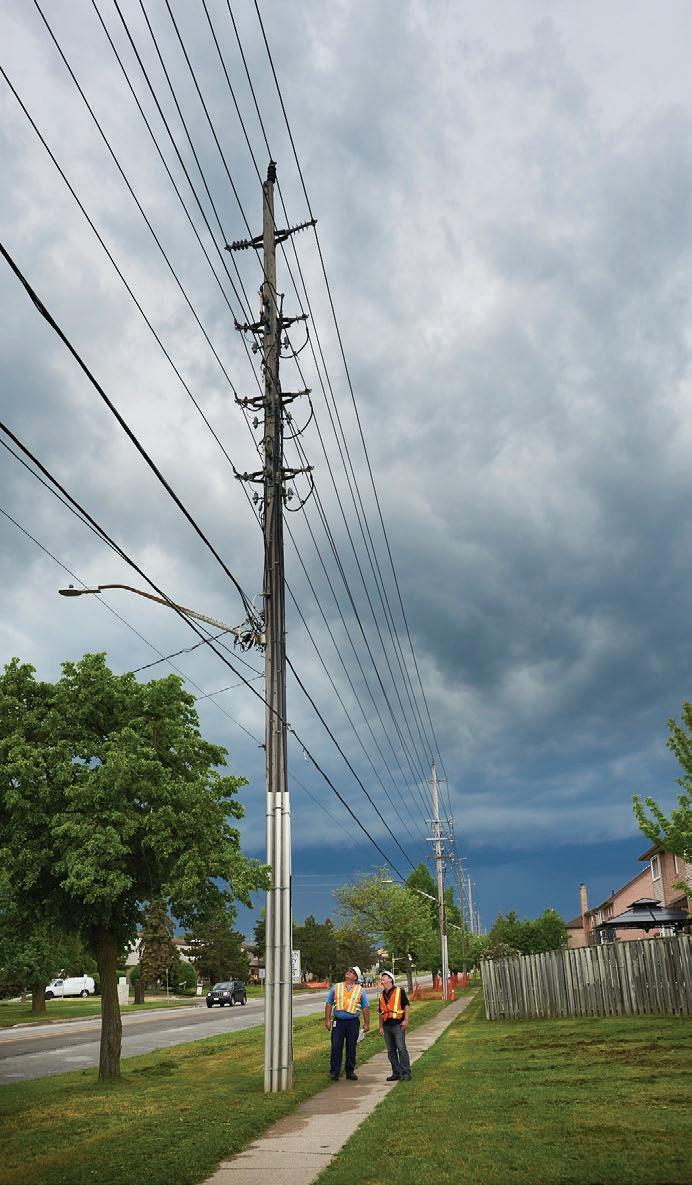
For example, our data consistently shows that men aged 18 to 39 are most at risk of powerline contact. To help prevent these incidents, ESA runs an annual Powerline Safety campaign targeting occupational and non-occupational audiences, including construction and landscaping workers, as well as young men involved in DIY projects.
The campaign is delivered through multiple channels — from partnerships with LDCs and construction firms to jobsite safety presentations and customizable materials utilities can share with customers and crews. It also includes public outreach through online media, billboards and radio.
Campaign resources are there for LDC use and can be accessed through ESA’s LDC portal.







Our team dedicated more than 2,200 hours to storm response.
SUPPORTING SAFE INNOVATION


ESA also works to support the safe deployment of emerging technologies, including distributed energy resources and microgrids. Through technical guidance in our bulletins, we help ensure new connections are compliant and safe. Bulletins are available online at: ESAsafe.com/Bulletins.
We also support safely energizing new subdivisions through early engagement and inspection readiness. And, as the grid modernizes, we’re enabling the safe adoption of technologies like advanced metering infrastructure, automated switching and voltage optimization.
LOOKING AHEAD, TOGETHER
ESA’s ability to adapt and lead depends on the strength of our partnerships.
As we move forward, our role remains clear: work alongside LDCs and our sector partners to champion safe innovation, strengthen resilience and protect Ontarians from electrical harm.
COMMERCIAL CORNER
By Peter Vickery, Chair, EDA Commercial Member Steering Committee
Fostering Collaboration and Innovation at EDA’s 2025 District Conferences

Ontario’s electricity distribution sector continues to thrive through collaboration, innovation, and shared leadership. These principles were front and centre at the EDA’s 2025 District and Annual General meetings. Held across the Western, Northeastern/ Northwestern, Upper Canada/Georgian Bay and Niagara Grand Districts, these gatherings brought together local distribution companies (LDCs), industry leaders, and stakeholders for a dynamic exchange of ideas, insights, and strategic direction.
EDA’s Commercial Members are vital to the success of these district events, through their sponsorship, presentation of ideas and solutions, and their attendance and participation. Highlights include:
The Western District AGM, hosted at Windsor’s Ambassador Golf Club, opened with a networking breakfast followed by district business updates. EDA President & CEO Teresa Sarkesian delivered a timely organizational update, while representatives from NextStar Energy, Brent Pye and Sung Park, shared insights into utility planning and innovation. The Western District’s popular Power of Golf Fore Charity event raised $82,500 for the Windsor Cancer Centre and Fight Like Mason, expressing the LDCs’ commitment to community engagement and relationship-building.
Western District’s Power of Golf Fore Charity Tournament co-hosted by ENWIN Utilities Ltd. and Essex Powerlines Corp raised more than $85,000 for Windsor and Essex charities.
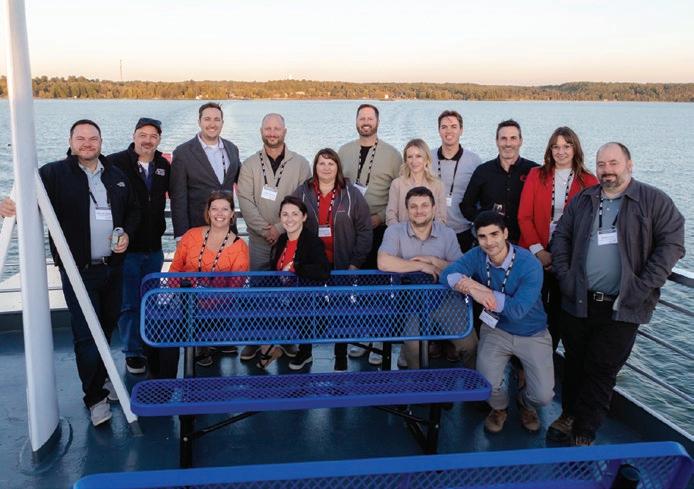

North Bay, the Northeastern and Northwestern Districts Fall Conference spanned three days of rich programming. The event featured keynote speaker Pinball Clemens, whose message of leadership and community uplift inspired everyone. Teresa Sarkesian’s EDA Update reviewed regulatory challenges, while sessions led by Doane Grant Thornton, SenPilot, and BLG focused on trends and opportunities for the hydro utility sector. A session by John Avdoulos of Essex Power explored the evolution of LDCs into Distribution System Operators (DSOs). The conference included a scenic Lake Nipissing cruise and dinner, offering attendees a relaxed setting to strengthen professional ties.
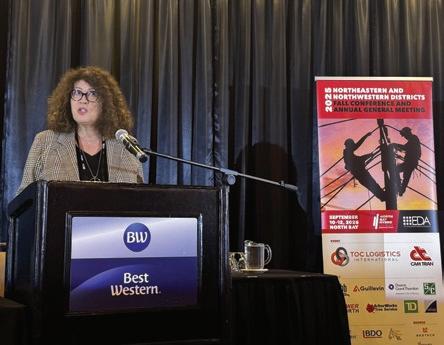
Teresa Sarkesian delivers her association update to members attending the Northeastern and Northwestern meeting in North Bay.
Attendees of the Northeastern/Northwestern District meeting enjoyed a cruise on Lake Nipissing.
In
Pinball Clemens, former player, coach and Grey Cup Winner was the keynote speaker at the Northeastern and Northwestern District meeting in North Bay.

WHO WE ARE
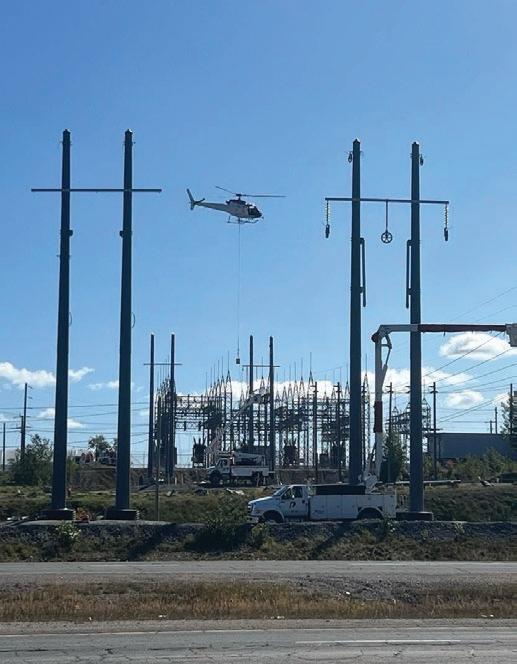
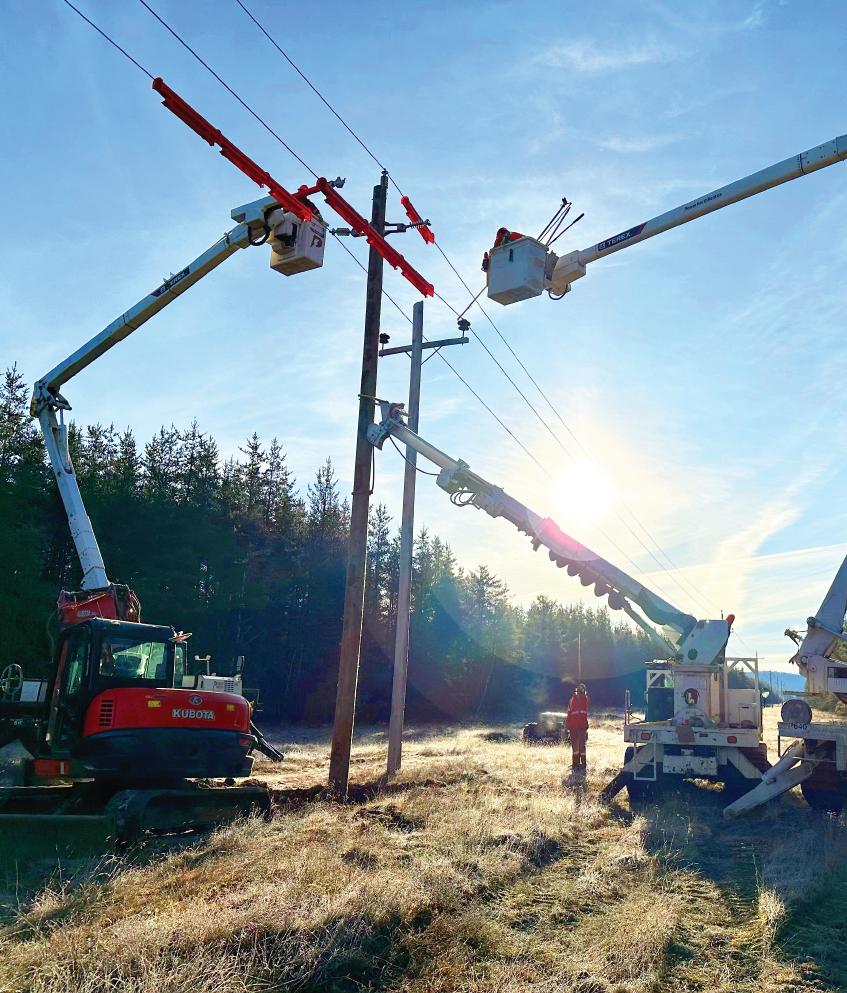
PowerNorth provides leading solutions in Transmission, Distribution, Substation, Emergency Response, and Equipment Rentals across the Mining, Utilities, and Renewables sectors. Headquartered in Sudbury, Ontario, we work nationwide with industryleading expertise.
WHY CHOOSE US?
PowerNorth delivers efficient, precise, and results-driven solutions with top industry expertise. Committed to excellence, we uphold the highest standards of safety, skill, and communication through a reliable and progressive approach.


Transmission
Transmission
Transmission
69kV-500kV Overhead and Underground
69kV-500kV Overhead and Underground
Distribution
4kV-44kV
69kV-500kV Overhead and Underground
New Construction
69kV-500kV
Maintenance
New Construction Maintenance
Distribution
4kV-44kV
4kV-44kV
Substations
Substations
Substations New
New Construction Maintenance
Fiber Optic Installation, Testing, Splicing
Fiber Optic Installation, Testing, Splicing
Fiber Optic Installation, Testing, Splicing
Energized Structure and Insulator Replacement
Energized Structure and Insulator Replacement
Energized Structure and Insulator Replacement
Construction Management
Construction Management
Substations
Fiber Optic Installation, Testing, Splicing Live Line Techniques
Construction
Construction Management
Powerline Vegetation Management
Powerline Vegetation Management
Powerline Vegetation
Management
Qualified Dedicated Observers
Qualified Dedicated Observers
Qualified Dedicated
Observers
Route Design/Selection Engineering Design Inspections
Route Design/Selection
Route Design/Selection
Engineering Design Inspections
Detailed Aerial
Detailed Aerial Patrols Testing and
Detailed Aerial Patrols
Testing and Commissioning Decommissioning
Construction Management
Powerline Vegetation Management
Qualified Dedicated
Storm
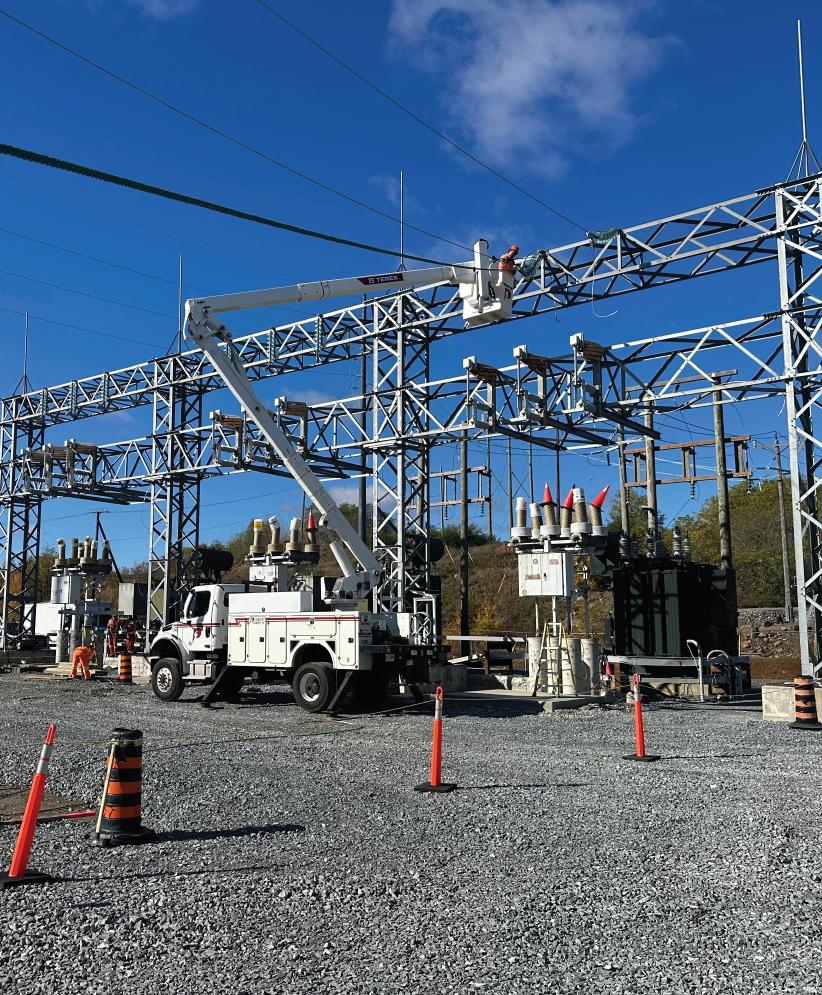
Powering What’s Next: GrandBridge Energy’s Pursuit of Innovation and Customer Connection
GrandBridge Energy is taking a transformative step toward the future of customer service through an AI co-innovation partnership with BHC Canada and POWERCONNECT.AI. The project aims to elevate customer responsiveness and operational efficiency, reinforcing GrandBridge Energy’s commitment to lead through innovation.
Using POWERCONNECT.AI’s advanced platform, the program will enable GrandBridge Energy’s customer service team to respond to inquiries quickly and accurately while automating time-consuming back-office tasks. These efficiencies will allow front-line customer service representatives to focus on what matters most, supporting customers.
“We’re proud to take an innovative approach by putting AI to work for our customers,” said Tyler Tracey, Vice President, Customer Experience & ITS, GrandBridge


GrandBridge Energy is a progressive Ontario utility serving 115,000 customers in Cambridge, Brantford, and the County of Brant and North Dumfries Township.
Energy. “This program will give customers rapid access to information, insights and programs that help them manage and reduce their energy costs. It will also allow them to simulate how different rate options could impact their energy bills.”
The three-year, multi-phase program will expand in stages, with each milestone building on previous successes. Once fully operational, customers will have access to POWERCONNECT.AI’s full suite of support tools, including conversational interfaces and digital chat functions.
“We’re delighted to welcome GrandBridge Energy into our growing community of co-innovation partners,” said Steve Dawson, CEO, POWERCONNECT.AI. “Our goal with every partner is to build AI use cases that address real business challenges and deliver tangible value.”
“Our goal with every partner is to build AI use cases that address real business challenges and deliver tangible value.”
The AI co-innovation program is one of several initiatives advancing GrandBridge Energy’s multi-year strategic plan focused on people, customers and community, innovation, and growth. The utility’s recent technology investments reflect a strong customercentric approach from implementing a live chat feature on its website’s outage pages to launching a VoIP phone system that streamlines communication and enhances accessibility.
“Leading with innovation means continuously improving the customer experience,” added Tracey. “AI and modern communication tools are helping us create a seamless balance between digital convenience and genuine human connection.”
GrandBridge Energy is a progressive Ontario utility serving 115,000 customers in Cambridge, Brantford, and the County of Brant and North Dumfries Township.
Utilities Kingston Leads with Reliability and Innovation
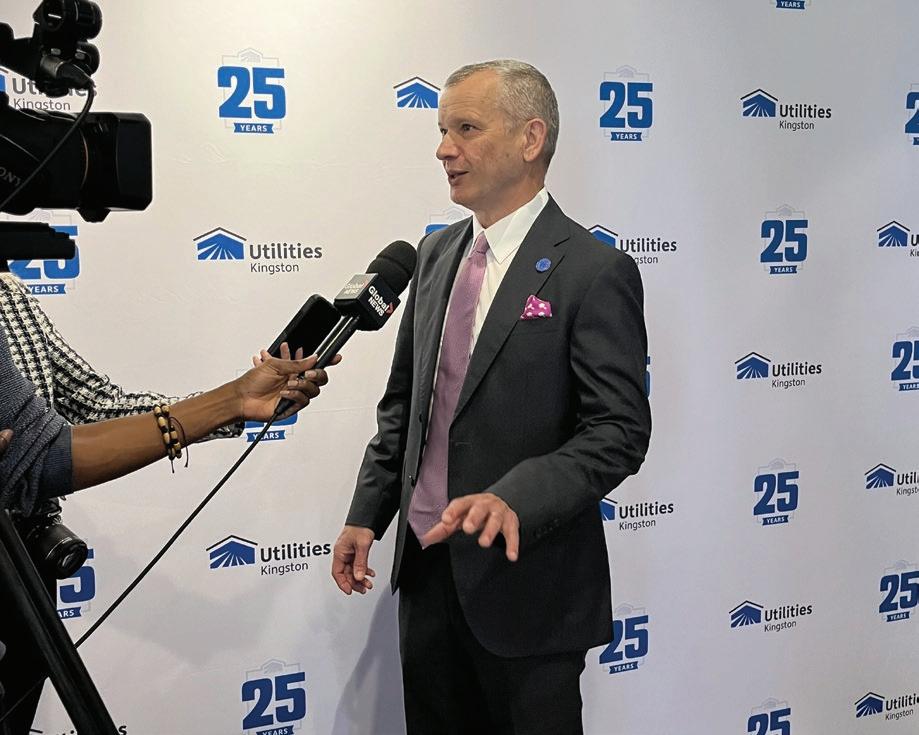
As Utilities Kingston celebrates its 25th anniversary as an integrated multi-utility company, its legacy as a trusted electricity distributor continues to shine. For over a century, Utilities Kingston has played a vital role in powering Central Kingston, delivering safe and reliable electricity to more than 28,000 customers on behalf of Kingston Hydro.
With a robust infrastructure that includes more than 5,000 distribution poles, 34 substation transformers, and nearly 700 km of overhead and underground lines, Utilities Kingston exemplifies operational excellence. Its commitment to reliability is evident in its consistent performance and proactive investments in system upgrades and modernization.
What distinguishes Utilities Kingston is its unique multi-utility model—integrating electricity, water, natural gas, and broadband services under one organization. This approach not only streamlines service delivery and infrastructure planning but also enhances customer experience by offering a single point of contact for multiple essential services. Importantly, it ensures that operational decisions remain locally driven, reflecting the needs and priorities of the Kingston community.
A PROVEN TRACK RECORD OF RELIABILITY
Utilities Kingston’s performance metrics speak volumes. According to the Ontario Energy Board’s 2024 Scorecard, Kingston Hydro achieved:
• 100 per cent of new residential and small business connections completed on time
• 100 per cent of scheduled appointments met on time
• 85 per cent of customer calls answered within 30 seconds
These results underscore the utility’s dedication to customer service and operational reliability—key pillars of its distribution strategy.
INVESTING IN INFRASTRUCTURE AND INNOVATION
A prime example of Utilities Kingston’s commitment to reliability is the recent modernization of Municipal Substation No. 1, located in a heritage building in downtown Kingston. Completed in 2023, this multi-year project involved the replacement of aging 44 kV transformers, breakers, and switches, along with upgrades to bus protection

CEO David Fell at the 25th anniversary event.
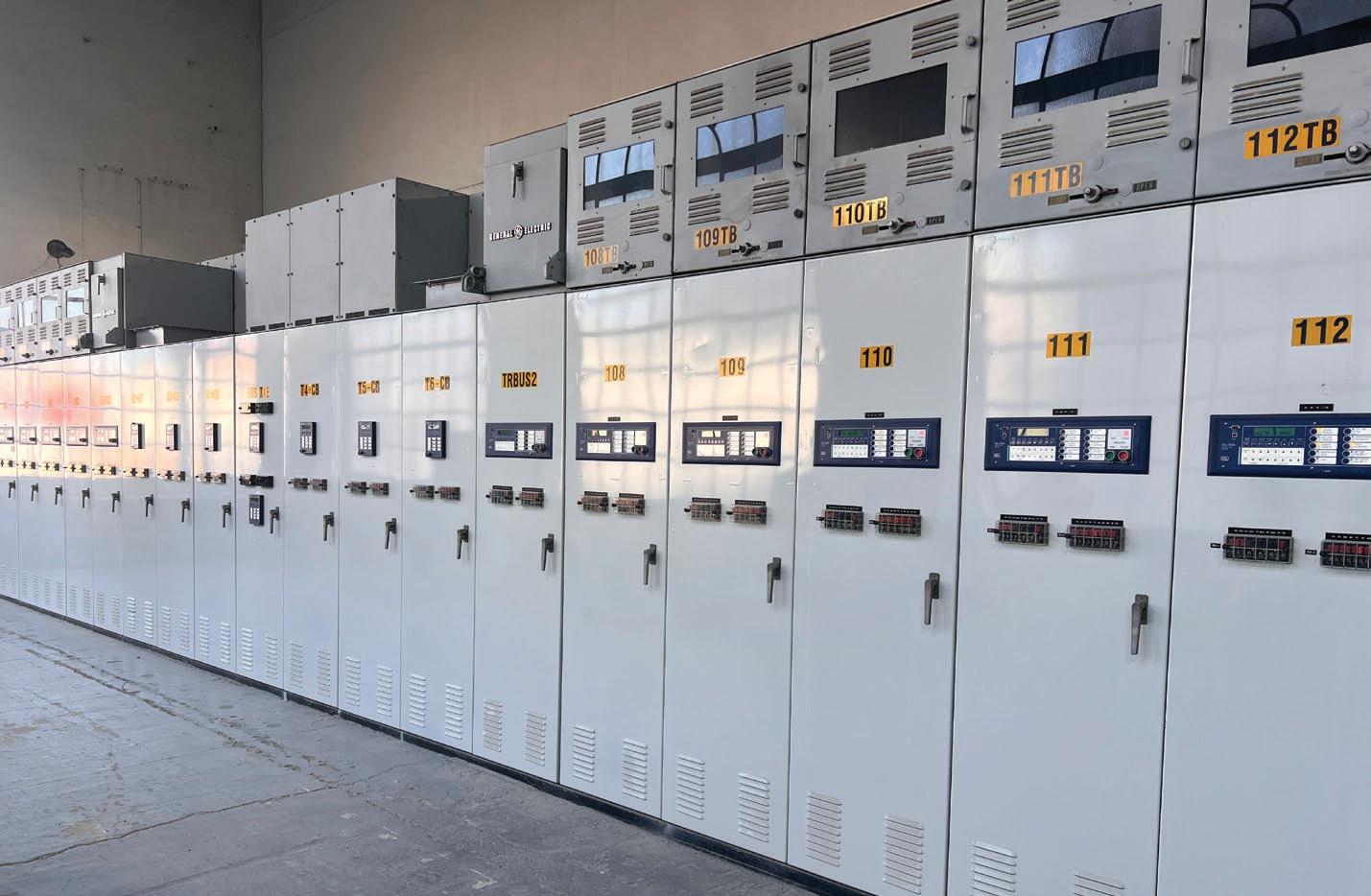
systems. The installation of new heating and cooling systems further enhances the substation’s operational resilience.
Utilities Kingston also plays a strategic role in regional electricity planning, collaborating with other local distribution companies to support long-term energy reliability and economic development across Eastern Ontario.
SUSTAINABILITY AND CLIMATE LEADERSHIP
Looking ahead, Utilities Kingston embraces sustainability as a core value. The creation of a Sustainability and Climate Action Branch marks a significant step toward reducing greenhouse gas emissions

As Utilities Kingston celebrates its 25th anniversary as an integrated multiutility company, its legacy as a trusted electricity distributor continues to shine.
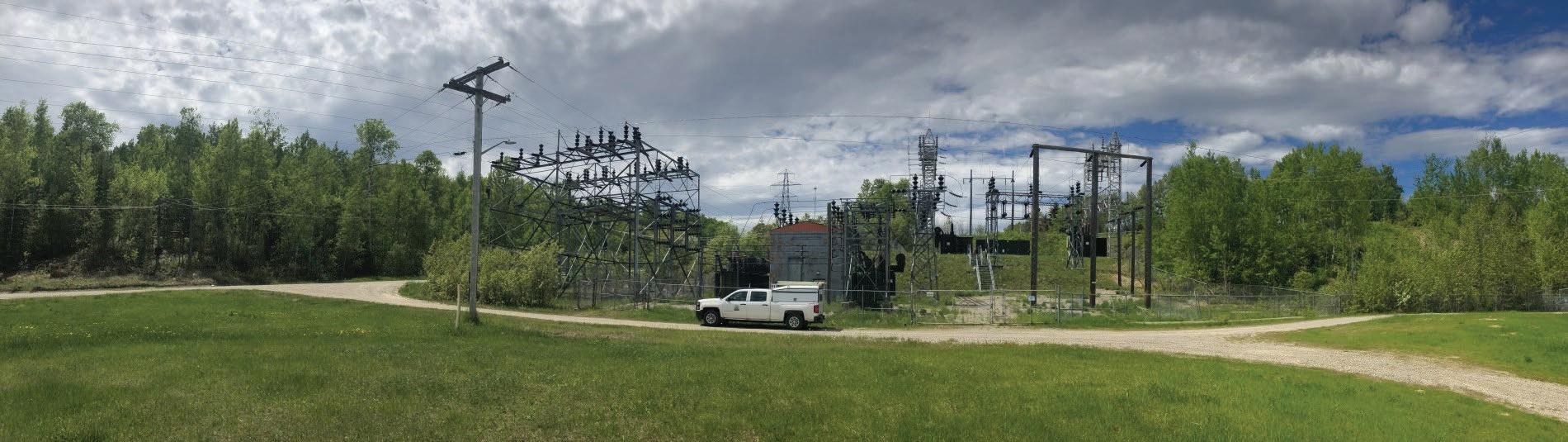


and building climate-resilient infrastructure. Through its Climate Action Leadership Plan, the utility is advancing conservation programs and energy efficiency initiatives that align with provincial and municipal climate goals.
A VISION FOR THE FUTURE
“Reaching our 25th anniversary is about more than looking back. It’s also about preparing for what comes next,” said David Fell, President and CEO, Utilities Kingston. “This milestone reflects the commitment of our employees and the strength of our partnerships, and it sets the path forward as we continue to serve Kingston with innovation and care.”
As Kingston grows, Utilities Kingston remains steadfast in its mission to deliver reliable, sustainable, and customer-focused electricity services. Its integrated model, community-first approach, and forwardlooking strategy position it as a leader among Ontario’s local distribution companies, powering not just homes and businesses, but the future of the region.
Strengthening the Grid for a Changing Energy Landscape
By Sandra Pedro, Utility Director, ABB and Dominique Tardif, Utility Portfolio Manager, ABB

When looking at grid resiliency, a key stress on Ontario’s grid is the more frequent extreme weather events such as consecutive high heat days, tornadoes, wildfires, ice and winter storms.
Ontario is Canada’s second largest province covering 1.8 million square kilometres. In this vast geography, the influence of the great lakes and the northern latitudes result in widely varied climates, from subarctic climate to a warm, humid continental climate. From one end of the province to the other, Ontario experiences many types of weather anomalies, creating a need for various mitigation strategies for all four seasons.
Another stress on the grid is the continued increase in energy demand. The federal government (Natural Resources Canada, 2024) estimates that as Canada electrifies and decarbonizes, demand for

Utilities are leveraging innovative technology to help identify, contain and recover from outage situations.
electricity could double.
With increased use comes the need for more generation, which causes yet another stress on the grid. The need to decentralize energy resources and bring generation closer to where it is needed most often in the form of a renewable source is challenging traditional infrastructure. Federal and provincial governments are investing heavily into renewable energy to meet growing energy demand, as well as 2035 and 2050 emissions targets.
This year alone, British Columbia and Ontario have launched significant procurements, Hydro-Quebec contracted 1,550 MW of wind in January, and both Nova Scotia and Alberta received renewable investments for multiple projects. These investments highlight the urgency of modernizing a grid that was not designed for today’s fast-changing, high-demand, and volatile climate landscape. Utilities are required to strategically prepare and not only upgrade current infrastructure to be more resilient but also prepare for faster recovery time.
Disruption to the grid is inevitable. The true measure of resilience lies in the grid’s ability to respond, recover and operate under stress. This can be achieved with a focus on hardening the grid, digitizing the grid and leveraging technology to assist in recovery scenarios.
1950-2000:
Electrification
Supply grows 10x to meet new demand
2000-2020: Decarbonization
Electricity sector emissions intensity drops by 60% (now more than 80% emissions-free)
2020-2050:
Electrification + Decarbonization
Demand to roughly double while removing remaining emissions
HARDENING THE GRID
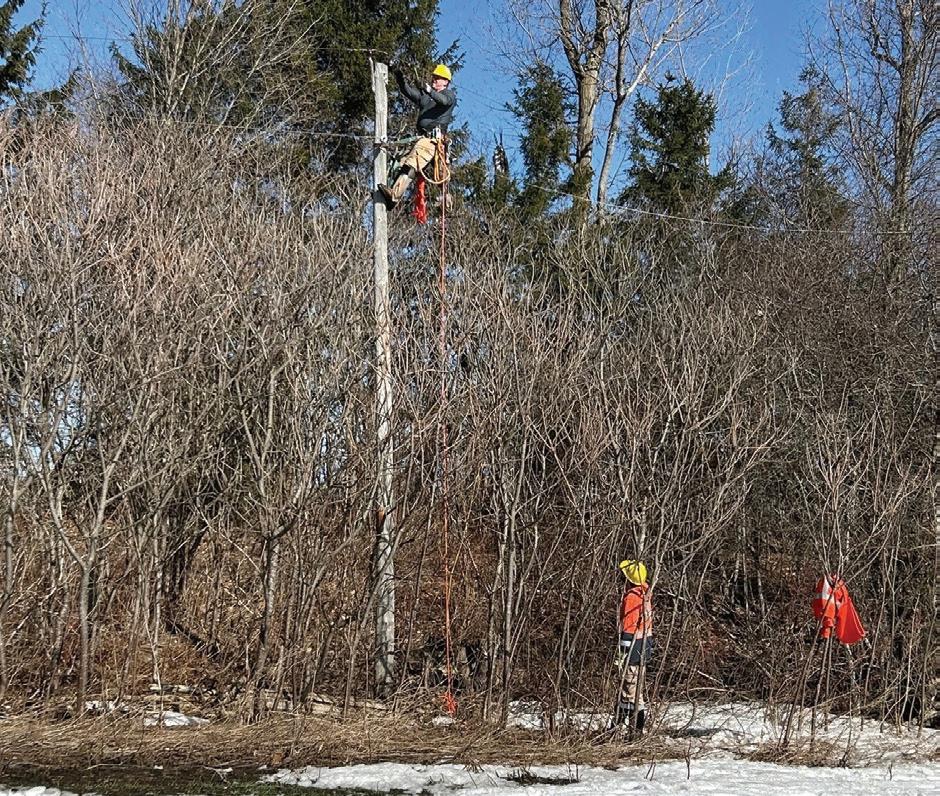
Hardening the grid is about deploying solutions that allow the infrastructure to withstand physical and electrical stress. Solutions include underground electrical lines and assets using ethylene propylene diene monomer rubber connectors and solid dielectric switchgear with robust short-circuit fault ratings wherever possible. These resilient assets must perform while completely submerged or in harsh environments, and last for decades requiring little to no maintenance. Where above ground infrastructure is needed, we can leverage breakaway links that allow lines to effectively disconnect from the pole and fall to the ground de-energized in the safest way possible. This allows for a very quick recovery since minimal damage is experienced at the pole and lines do not require a new termination. Such technologies are critical to help harden the grid.
DIGITIZING THE GRID
The modern grid needs to be able to allow for bi-directional flow of energy and integrate many renewal or energy storage sources when needed. The only way to accomplish this is to digitize the grid to have real-time awareness and intelligent control. Utilities know this new modern grid needs to be ready to support what is to come over the next 50 plus years.



Federal and provincial governments are investing heavily into renewable energy to meet growing energy demand, as well as 2035 and 2050 emissions targets.
LEVERAGING ADVANCED TECHNOLOGIES
Utilities are leveraging innovative technology to help identify, contain and recover from outage situations. Artificial intelligence (AI) can be used to put predictive maintenance plans together to help minimize unexpected aging asset failures. Modular switchgear allows for in-field retrofit and repairs. During an outage AI-enabled protection and control assets can help triangulate outages and reconfigure to minimize downtime. The use of drones to provide real-time views of grid and asset conditions for remote areas of the province is a must. Recovery scenarios should minimize service interruptions and bring the power back up as quickly as possible.
PREPARING FOR THE FUTURE
There is a clear understanding that climate instability is the new normal. Extreme weather events across Ontario are expected. Electrification, decarbonization, population growth and political and sociological changes are directly impacting the demand on the grid, creating a need for more traditional and distributed electricity generation.
The grid of tomorrow must be able to adapt and withstand daily operational stresses, anticipate continued demand and leverage technology for fast, smart, agile performance. By investing today, Ontario can help ensure a strong, reliable and future-ready energy foundation for decades to come.


Engineering the Future of Clean Energy
As Canada accelerates its energy transition, Artelia Canada stands as a trusted engineering partner empowering utilities, developers, and governments to deliver the next generation of energy projects, from commercial and utility-scale solar and BESS to hybrid hydro and green hydrogen systems.
With a legacy of excellence across 45 countries and 200 offices, Artelia brings global innovation and local expertise to shape the sustainable energy landscape of tomorrow.

• BESS (Battery Energy Storage Systems)
• Hybridization (Hydro Power + BESS)
• PV Solar & Wind-Utility Scale
• Long-Duration Energy Storage
• Storage & Power-to-X Solutions
• Nuclear New Build, SMRs & Refurbishment

• Hydroelectric Generation Projects
• Power Networks & Interconnections
• Contract Administration & Site Supervision
• EPC & Turnkey Solutions
• Transmission & Distribution (T&D)

SECTOR SCAN
TORONTO HYDRO ELECTRIFIES NEW ISLAND
See social media post
Toronto Hydro recently celebrated the opening of Biidaasige Park as part of the creation of Ookwemin Minising, Toronto’s newest island. They worked closely with the City of Toronto, Waterfront Toronto for more than seven years of planning, engineering and infrastructure to ensure the new island was electrified. The project included major relocation and connection projects and the installation of new underground hydro ducts and multiple new river crossings with bridge-attached duct banks.
HYDRO ONE NAMED ONE OF CANADA’S BEST EMPLOYERS FOR COMPANY CULTURE
Forbes released their annual list of Canada’s Best Employers for Company Culture and Hydro One was named in the top 100. This recognition speaks volumes to Hydro One’s dedication to building a fair and inclusive workplace.
LAKELAND HOLDING LTD. HOLE-IN-ONECONTEST SUPPORTS SOUP KITCHEN
A friendly hole-in-one contest at Lakeland Holding Ltd.’s annual Golf Partner Appreciation Day raised $1,500 for The Table Soup Kitchen Foundation, a charity serving food in Huntsville. Lakeland topped up the donation with an additional $1,000 donation in addition to non-perishable food items attendees brought to the golf tournament.

HYDRO OTTAWA SUPPORTS PROGRAM TO EQUIP STUDENTS WITH SUPPLIES
As students headed back to the classroom, Hydro Ottawa equipped children living in the Ottawa Community Housing Corporation with school supplies as part of the Pack-a-Sack program. It’s the third year in a row that Hydro Ottawa has purchased backpacks and essential supplies to students in need to support their sense of belonging, confidence and opportunity to succeed. It wasn’t just a donation, Hydro Ottawa was not only a key sponsor, but employees were also on hand to pack backpacks in advance of the school year.
LONDON HYDRO AND AECON TAKE HOME SAFETY AWARD
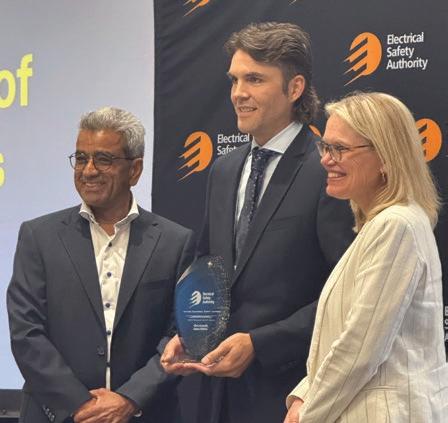
Congratulations to two EDA members, London Hydro and AECON Utilities, who were honoured with awards at the annual Electrical Safety Authority awards held in September. London Hydro received the Consumer and Home Safety award for its School Electricity Safety Program, which has brought safety to the classrooms for more than 30 years. Last year alone, the program reached 6,200 students in 33 schools, delivering lessons that evolve with today’s safety needs. Chris Connelly of Tristar Electric Inc. (Aecon Utilities) received the Powerline Safety Award for leading an operator safety program that led to a 40 per cent drop in near-miss incidents and zero recordable injuries. The awards are significant because nominations come directly from ESA inspectors who are in the field daily.


FOR LOCAL CHARITIES
This year, the fifth annual Charity Golf Tournament raised $350,000 for seven local community organizations including: Ajax Pickering Hospital Foundation, Bethesda House ON, and Epilepsy Durham Region. So far, the tournament has raised $1.1 million for local charities.
Elexicon also donated $5,000 to support their mission to fight hunger in the community. The donation was made at the annual Feed the Need in Durham Empty Bowls event. The program supports 65 hunger relief programs that have shared two million pounds of food each year to those in need.
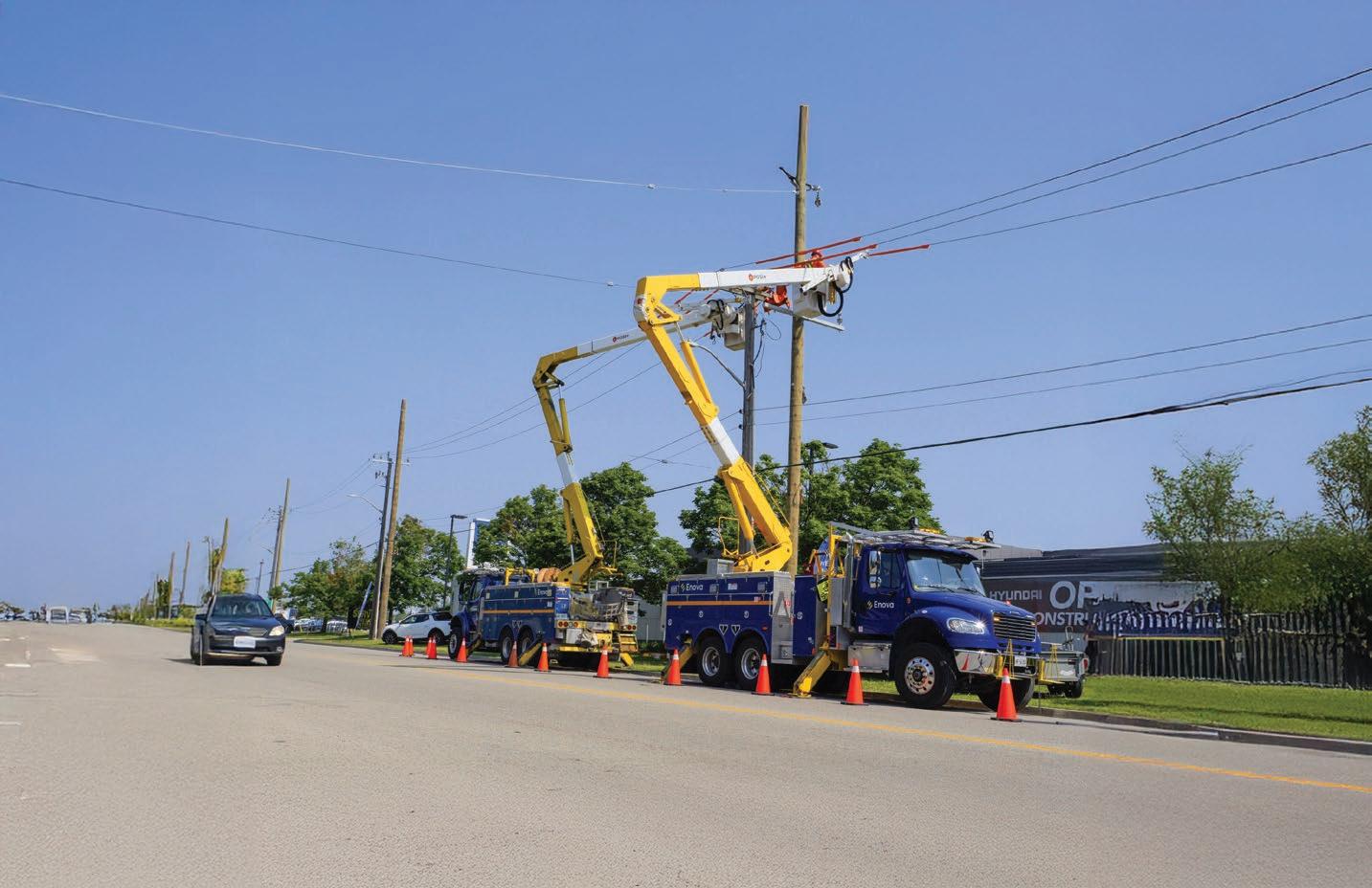

ELEXICON CORPORATION DONATES MORE THAN $350K
Read the media release
Read the media release
Chris Connelly accepts his award.
London Hydro award winners
COMMERCIAL CORNER
GrandBridge Energy CEO and President Sarah Hughes asks a question after Teresa Sarkesian’s presentation to the Niagara Grand District meeting. CONTINUED FROM PAGE 23
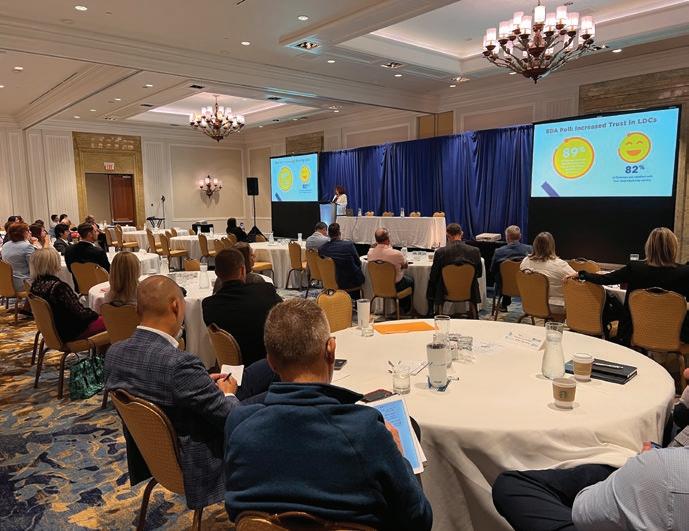
Meanwhile, the Upper Canada and Georgian Bay Districts convened at the JW Marriott in Muskoka for a two-day conference blending strategic dialogue with networking. Chairs Igor Rusic and Rob Koekoek opened the event, followed by an EDA update from Janice McMichael-Dennis and Teresa Sarkesian.
Sessions tackled pressing topics such as collective agreement negotiations, AMI 2.0 deployment, CEO succession planning, and customer experience metrics. Notably, David Drewery from the University of Waterloo presented research on Gen Z work values, offering actionable insights for talent strategies. This conference was generously sponsored by Commercial members Utilismart Corporation, Doane Grant Thornton, K-Line, along with Burlington Hydro, Milton Hydro, and Oakville Hydro.
Energy lawyer
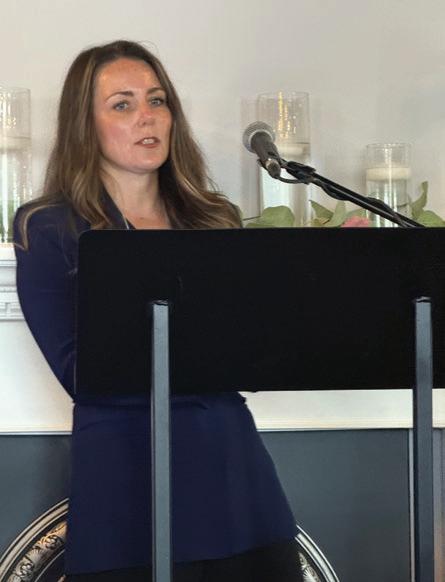
Sarah Diebel delivers an update at the Niagara Grand District meeting.

The EDA Niagara Grand District Annual General Meeting took place in early October in Stratford. Their annual general meeting kicked off the agenda followed by informative updates by Teresa Sarkesian. Guest speaker Lori Gallaugher from the Utilities Standards Forum addressed current challenges, including OEB independent assessments. Colm Boyle from Borden Ladner Gervais LLP shared regulatory insights and Sarah Diebel, Vice President, Sussex Strategy, introduced as Canada’s best lawyer for energy law, covered key topics such as demand projections, Premier Ford’s pause on data centre development, and local generation procurement. There was time for a networking dinner and show at the famous Avon Theatre.

Across all districts, the conferences demonstrated EDA members’ commitment to fostering collaboration, networking, and innovation. The diversity of speakers from utility executives and policy experts to academic researchers and motivational leaders underscored the multifaceted nature of Ontario’s electricity sector. Attendees gained not only technical knowledge but also strategic foresight and leadership inspiration.
These district meetings continue to serve as vital platforms for LDCs to align on shared challenges, celebrate successes, and shape the future of Ontario’s energy. With robust participation, engaging content, and meaningful networking support from our Commercial members, the 2025 conferences reaffirmed the EDA District Meetings as a catalyst for progress and unity in the sector.
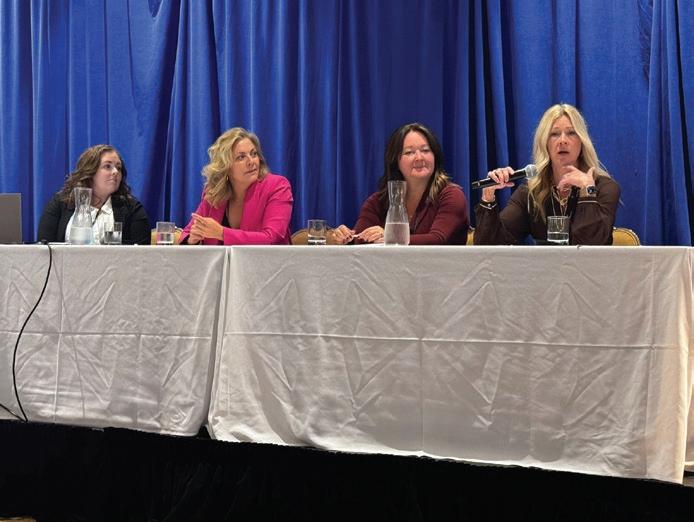
(Top) The Upper Canada and Georgian Bay District meeting featured a panel on collective agreement negotiations.
(Above) Teresa Sarkesian delivers an association update during the Upper Canada and Georgian Bay District meeting in Minett.
Teresa Sarkesian updates Niagara Grand attendees on the findings of EDA’s poll.

Turning Paper Bills into Community Impact
Alectra’s Ebilling Campaigns
Customer choices can spark meaningful change, and Alectra Utilities’ ebilling campaign proves how a simple decision can strengthen communities while advancing sustainability. Alectra has effectively encouraged customers to transition to paperless billing for more than five years. They’ve done this by aligning efforts with community initiatives and sustainability goals. This unique strategy has not only helped reduce Alectra’s environmental footprint but also fostered stronger community ties through impactful partnerships.
Alectra’s pandemic response campaign in 2020 involved donating to local food banks to meet increased need, and in 2021, supporting healthcare workers via the Frontline Fund, called “Go Online for our Frontline.” In 2022, Alectra teamed up
with Forests Ontario to launch the “Green Looks Good on You” campaign with the goal of planting 10,000 trees to help protect and restore green spaces. In each case, when a customer switched to ebilling, they had the chance to see the impact of their decision right in their own communities. The success of the campaigns highlighted the power of linking sustainability action with customer engagement.



FEEDING FAMILIES: ONGOING FEED ONTARIO PARTNERSHIP
Since 2023, Alectra has been turning paper bills into healthy meals with Feed Ontario to support residents across the province. When customers sign up for ebilling, Alectra donates to local food banks to help put meals on the tables of families in need. Alectra’s 2025 goal is to donate 50,000 additional meals to Feed Ontario and increase ebilling adoption to 50 per cent. What could easily be seen as a routine operational change becomes a shared act of giving – one that directly supports families across the province.
This creative campaign features an animation of a utility bill being folded and transformed into food-shaped origami, which switched to a holiday version in November. Customers are directed to sign up at: AlectraUtilities.com/GoPaperless.
This partnership has transformed ebilling into more than just a convenient service option; it has become a way for customers to join Alectra in building stronger, more resilient communities.
DRIVING RESULTS THROUGH STRATEGIC EBILLING INITIATIVES
Alectra’s community-minded approach to ebilling has achieved remarkable success, and the increase in customers switching to paperless billing reduces operational expenses of traditional paper billing and decreases paper waste.
In 2024, more than 56,700 customers switched to ebilling, which enabled Alectra to exceed its targets and increased the total number of paperless customers to more than 455,000. This growth generated significant benefits, including nearly $740,000 in savings on printing and postage costs, while diverting more than 600 kilograms of paper from landfills.
The campaign effectively communicated that each customer’s choice to adopt ebilling directly provided a meal to a family in their community. This compelling message drove engagement across digital advertisements, social media channels, and customer communications through email marketing, bill inserts, and websites. During the past five years, Alectra has helped provide more than 800,000 meals to Ontario families, while increasing ebilling adoption to more than 48 per cent.


LOOKING AHEAD: COMMITMENT TO CUSTOMERCENTRIC INITIATIVES
Alectra Utilities remains committed to exploring new ways to engage customers through sustainable and socially responsible initiatives. The paperless billing campaigns will continue to evolve, ensuring that customer needs are met while contributing positively to the communities served.
Alectra’s customer-centric approach to ebilling highlights the transformative power of combining corporate objectives with community impact and sustainability.



Strengthen your workforce with a strategy for psychological safety
In the energy and utilities sector, the pressure is mounting. As experienced workers retire and new talent proves harder to attract, the demands on existing teams continue to grow. The result? A workforce stretched thin—and increasingly at risk of burnout. Amid these challenges, psychological health and safety is emerging as a critical lever for building resilience, retaining talent, and sustaining performance. Organizations can take practical steps to support mental wellness at work—starting with strategy, leadership, and a commitment to change.
THE RISING TIDE OF WORKPLACE STRESS
Stress-related illnesses are increasing.
A psychosocial hazard assessment can help identify stressors such as high workloads, difficult conditions, and a lack of support.
According to the Canadian Mental Health Association, one in five Canadians will experience a mental health challenge in any given year. While awareness of mental health in the workplace is growing, many organizations still struggle to identify and address the root causes of stress at work.
The retirement of long-serving employees in the energy and utilities sector, is creating talent gaps. Attracting new talent to fill these roles, amid rapid change, evolving education requirements, and other pressures has led to heavier workloads and a greater risk of burnout for existing staff.
Mental health in the workplace is a shared responsibility. Both employees and employers play essential, complementary roles in fostering a healthy work environment.
The Canadian Standards Association’s (CSA) National Standard for Psychological Health and Safety in the Workplace supports the need for employers to create supportive environments through policies, practices, and resources that empower employees to engage in self-care and self-work. These steps are critical to building a resilient workforce and achieving better outcomes as the sector continues to evolve.



WHY PSYCHOLOGICAL HEALTH AND SAFETY MATTERS
Employees in the energy and utilities sector face unique psychological risks. The work is often high-pressure, conditions can be demanding, and support—whether from management or through training—may be lacking.
In these high-pressure sectors, many workers report experiencing moderate levels of personal and work-related burnout, along with strain in peer relationships. These patterns underscore the importance of proactive strategies to support psychological health and safety in the workplace.
Leaders must be equipped to recognize and reduce workplace stressors to avoid impacts such as reduced productivity, increased absenteeism, stress leaves, errors, and turnover. Taking an inclusive approach to psychological health and safety can also help attract new talent and enhance the sector’s appeal. A well-rounded strategy to support psychological health and safety can improve productivity, boost engagement, and strengthen workplace culture.
Invest in training that helps managers identify behaviours that may indicate employees are struggling with mental health challenges, such as frequent absences.
BUILDING A STRATEGY TO SUPPORT MENTAL WELLNESS
1. Assess the workplace environment
A psychosocial hazard assessment can help identify stressors such as high workloads, difficult conditions, and a lack of support. Start by surveying employees and initiating open conversations about pychological health. Be prepared to act on feedback and encourage ongoing dialogue. Given the complexity of this work, an external advisor can help assess and align psychosocial hazards and guide organizational change.
2. Review and strengthen your policies
Your workplace’s health and safety policies must include a statement about psychological health and safety to align with the Canadian National Standard of Psychological Health and Safety in the Workplace. But that’s only the baseline. Go further by addressing specific psychosocial hazards. For example, if work-life balance is a concern, consider implementing a right-to-disconnect policy. Monitoring the impact of these changes through ongoing workplace assessments can help you determine if your policies are effectively addressing psychosocial hazards. It is recommended to conduct these assessments every two years. While these changes take time to show results, it is a significant investment in the overall success of your organization.


100 YEARS OF QUALITY & RELIABILITY IN T&D HARDWARE.

3. Provide training to management Managers play a pivotal role in supporting employee mental health and psychological safety. Invest in training that helps managers identify behaviours that may indicate employees are struggling with mental health challenges, such as frequent absences. This equips them with the skills to intervene, provide support, and offer prevention. Training also helps reduce stigma and fosters a culture of openness around psychological health and safety.
4. Implement wellness and resilience programs
Offer resources and programs that ensure employees have access to mental health resources to meet their needs. For example, employee and family assistance programs can provide early intervention and therapy. Many organizations are also expanding benefits to offer more robust mental health coverage. Consider how you can enhance your offerings and ensure employees are aware of them.

1 in 5
According to the Canadian Mental Health Association, one in five Canadians will experience a mental health challenge in any given year.
COMMUNICATION KEEPS CONVERSATION FLOWING
Communication is the key to ensuring that employees are aware of the benefits and options that your organization provides to support their psychological health and safety. Open conversations also help create a work environment where employees feel comfortable asking for support if they are struggling and using the benefits your organization provides. Open dialogue helps normalize mental health conversations and encourages employees to seek support when needed.
TAKE THE NEXT STEPS
For more information about how to foster psychological health and safety within your organization, contact MNP’s People Advisory Services team. Our team has a wide range of experience and takes a clinical approach toward helping you create an effective strategy tailored to the unique needs of your energy and utilities company.
Gord Chalk, MBA, CMC, is the Consulting Leader for Energy and Utilities at MNP. Reach him at gord.chalk@mnp.ca to learn more.
Melanie Fix, BComm, is the National Leader for People Advisory Services at MNP. Reach her at melanie.fix@mnp.ca to learn more.
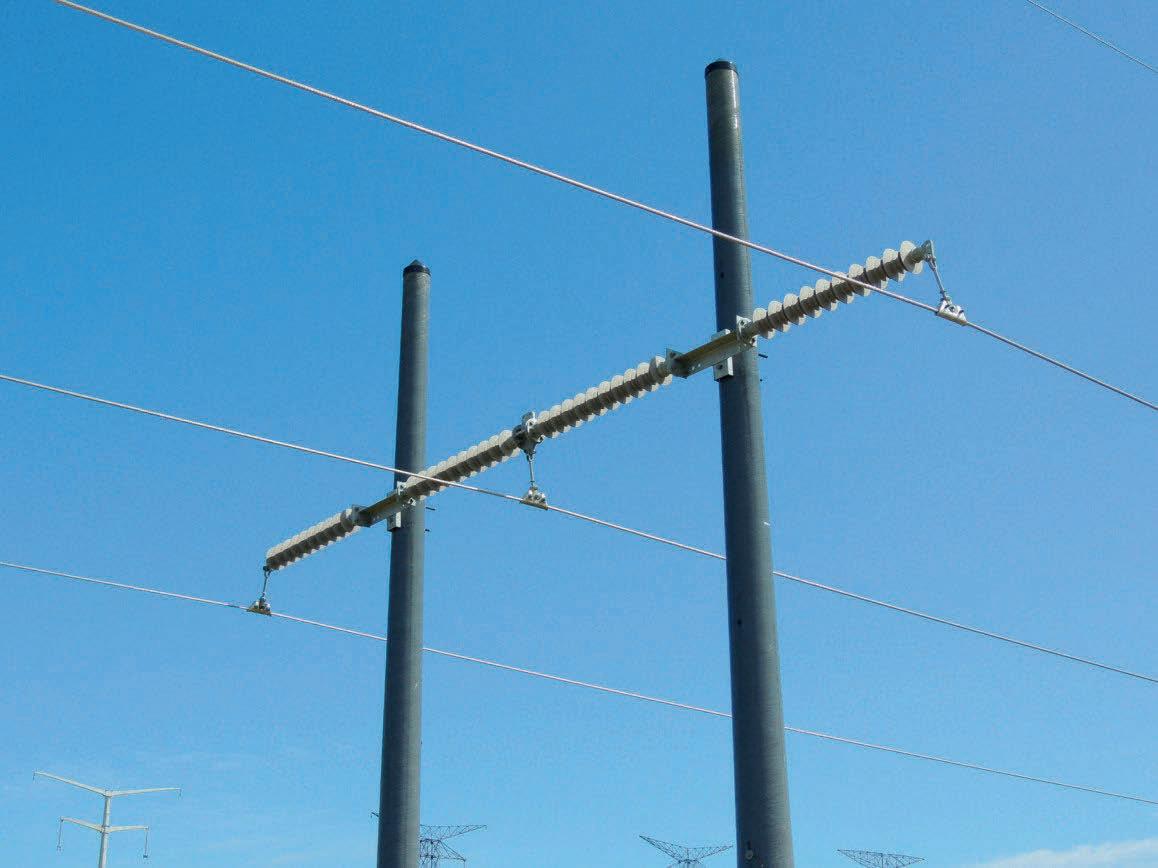
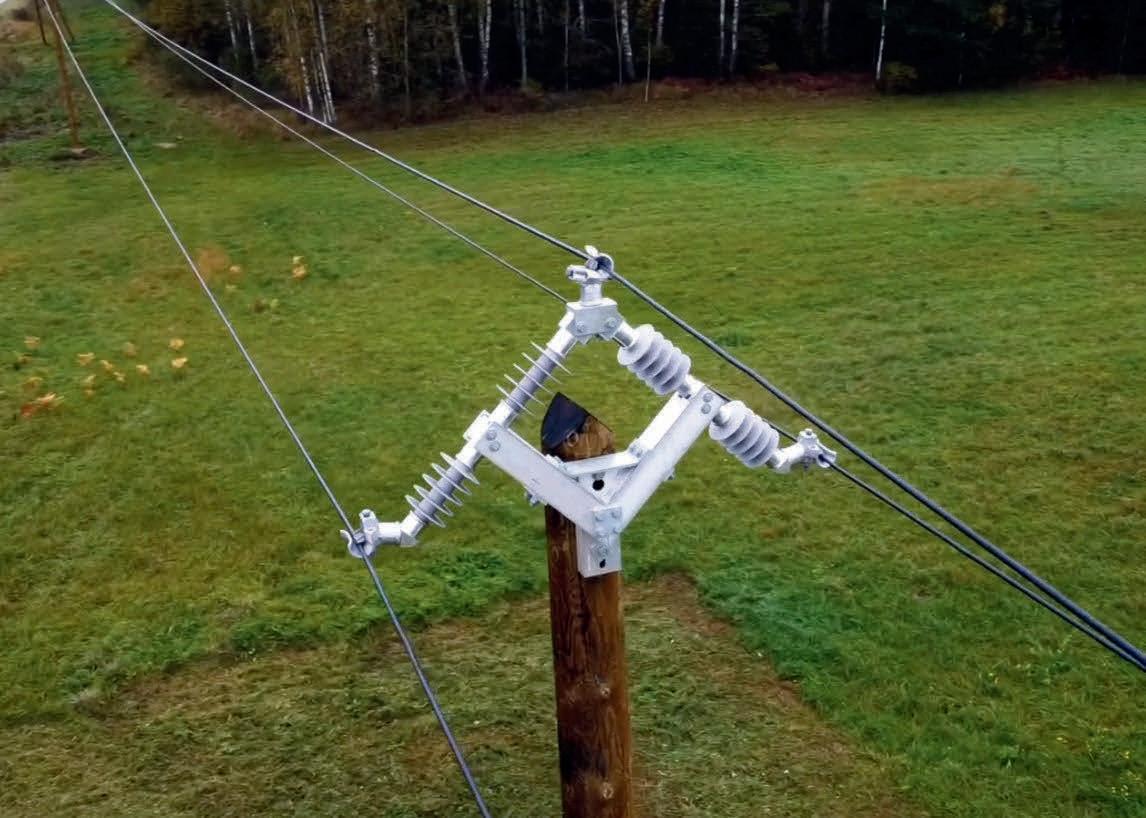
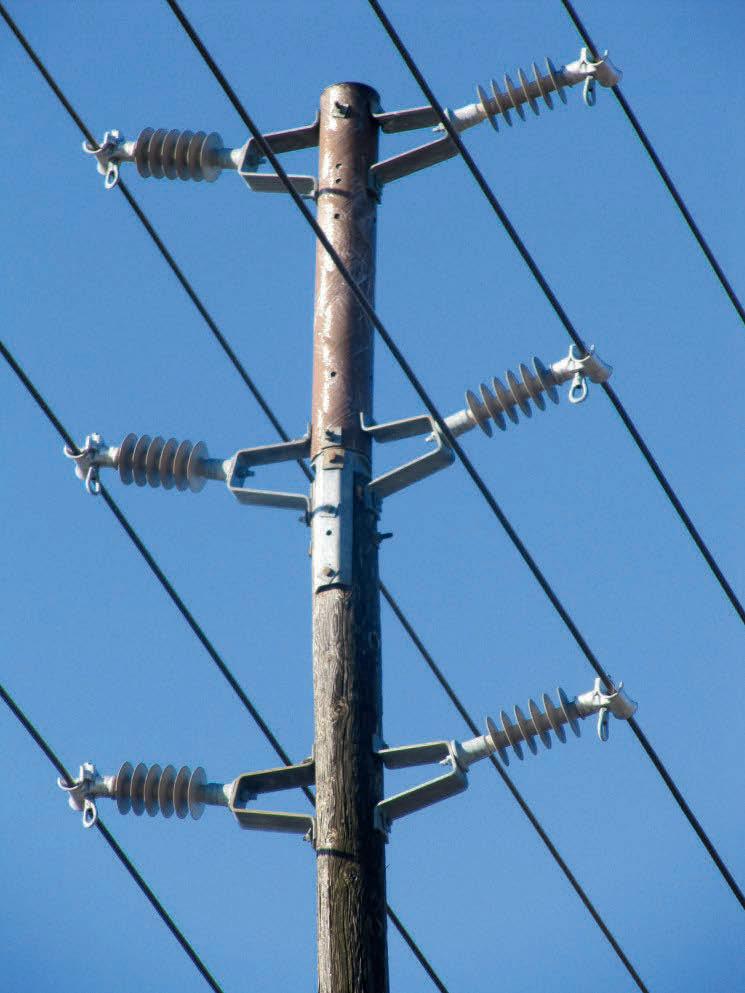
K-LINE INSULATORS LIMITED
INNOVATIVE CANADIAN MANUFACTURER OF HIGH QUALITY, HIGH PERFORMANCE, SILICONE RUBBER INSULATORS SINCE 1983.





CONDUIT CLIP
Arlington’s time-saving flexible spring steel wire or flange support. Available in multiple sizes
flexible metallic tubing, armored cable, portable cables, control tubes and communications cable.
Arlington’s time-saving flexible spring steel clips are the answer wire or flange support. Available in multiple sizes they also support flexible metallic tubing, armored cable, portable cables, control tubes and communications cable.
• For EMT, rigid, ENT, IMC, aluminum conduit and metal-sheathed cables
• For EMT, rigid, ENT, IMC, aluminum conduit and metal-sheathed cables
• Easy NO TOOL installation






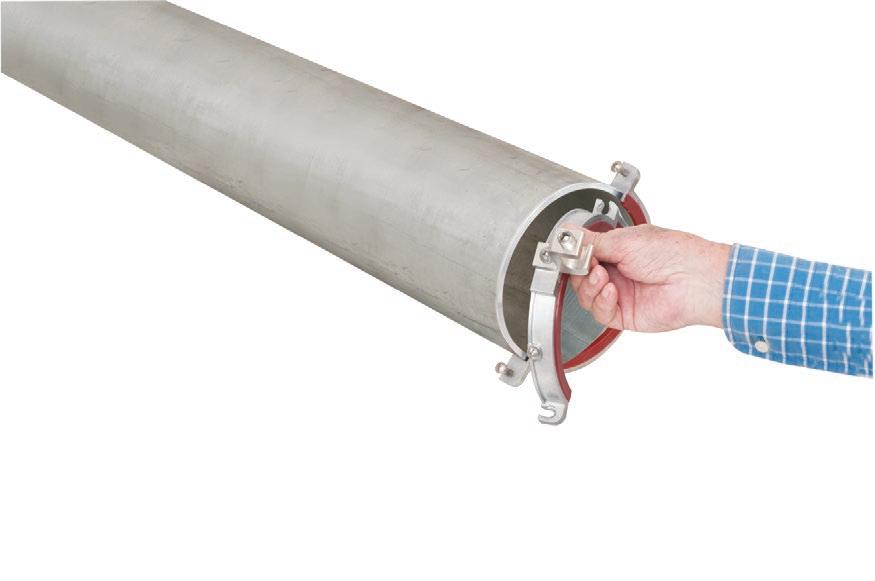
S PLIT
GROUNDING BUSHINGS
GROUNDING BUSHINGS



Get convenience and time-savings with Arlington’s 550 series zinc diecast – and NOW 5 and 6 inch ALUMINUM diecast split grounding bushings ...Split to allow the addition of a bushing BEFORE or AFTER cables are installed in threaded or unthreaded metal conduit. Great for tight spaces!
Get convenience and time-savings with Arlington’s 550 series zinc diecast – and NOW 5 and 6 inch ALUMINUM diecast split grounding bushings ...Split to allow the addition of a bushing BEFORE or AFTER cables are installed in threaded or unthreaded metal conduit. Great for tight spaces!
• Ships Assembled – In 1/2” to 6” trade sizes for Steel or Aluminum IMC and RMC
• Ships Assembled – In 1/2” to 6” trade sizes for Steel or Aluminum IMC and RMC

• Compatible with 2-1/2" to 4" EMT

• Compatible with 2-1/2" to 4" EMT Loosen side screws, to allow bushing to pivot around installed cables

Oakville Hydro Takes a Digital Leap Towards Community-led Energy Innovation
How one utility is reimagining the customer experience and empowering their community in the energy transition
With Ontario’s energy demand expected to grow 75 per cent by 2050, businesses and residents are looking for ways to supplement the existing grid. At the same time, more sustainable energy solutions are now available. Homeowners now have several options to upgrade their energy systems. With so many choices, and little guidance, it can feel overwhelming to know where to start.
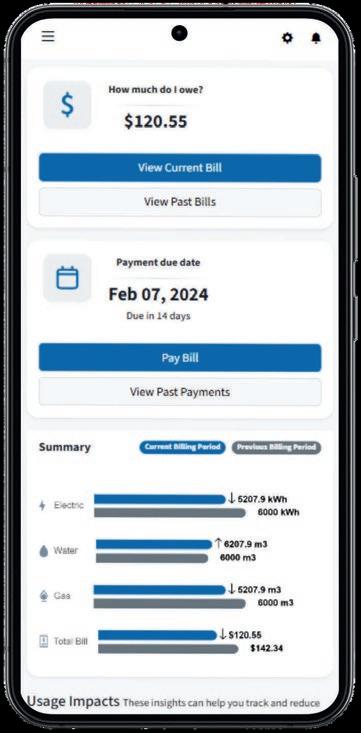
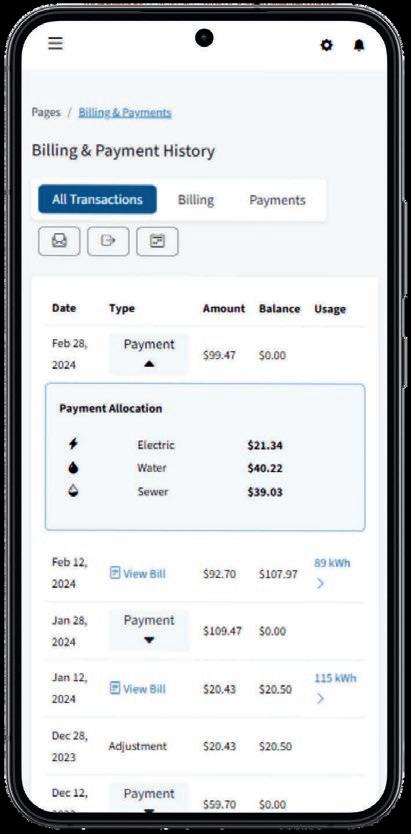
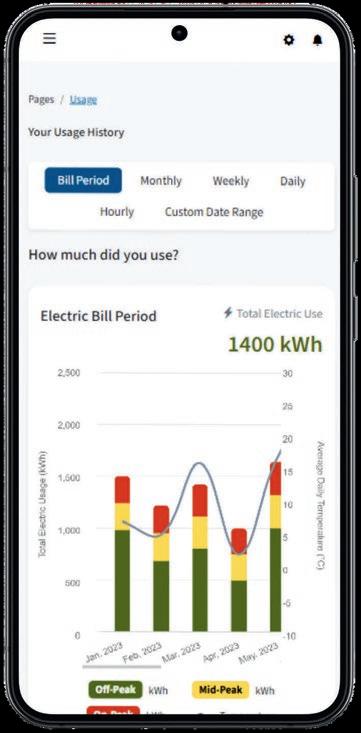
Oakville Hydro saw this gap and took action. The EcoShift App, developed in collaboration between Oakville Hydro and Fare Vostro Energy Solutions Inc., provides residents and small businesses in the Town of Oakville with a practical way to engage in the energy transition—right from their mobile devices. Supported by the Ontario Energy Board’s Innovation Sandbox Challenge, EcoShift is among the first platforms in Ontario to combine real-time energy insights, clean technology education, and behavioural engagement in a single, user-friendly application.
In 2024, The Ontario Energy Board (OEB) awarded EcoShift funding through its Innovation Sandbox Challenge, which provided $1.5 million to six innovative energy projects.
EcoShift was designed to support broader adoption of clean technologies like EV chargers, rooftop solar, and heat pumps by making energy insights accessible, personalized, and actionable. It provides users with real-time alerts about abnormal
“By supporting more informed energy choices and accelerating the adoption of clean technologies, platforms like EcoShift contribute to a more flexible, efficient, and lowcarbon electricity system,” said Jeff Mocha, Chief Operations and Electrification Officer at Oakville Hydro.


energy usage, pathways to reduce their consumption, and up-to-date information on available government incentives. A unique feature— My Electrification Journey—allows users to visualize their own progress toward adopting sustainable technologies.
Beyond energy data, EcoShift also aims to build a sense of engagement. The app includes a community discussion board where users can share knowledge and experiences, as well as gamified challenges that encourage everyday actions to reduce energy use. These interactive features help demystify the energy system and foster more inclusive participation in sustainability efforts.
By integrating customer behaviour, analytics, and clean-tech education, EcoShift offers a model for how digital platforms can support community-level change—while also informing industry best practices for demand-side management, electrification planning, and customer engagement.
The development and launch of EcoShift highlight the value of innovation in enabling new tools that align with Ontario’s energy goals. As LDCs look to play a larger role in facilitating decarbonization, initiatives like EcoShift demonstrate how digital solutions can bridge policy, technology, and real-world impact.
To learn more about Oakville Hydro, and EcoShift, visit their website: oakvillehydro.com
ADVOCACY IN ACTION
EDA MEETS DAVID SMITH, MPP, SCARBOROUGH CENTRE

In September, EDA’s Derek Nardone, Director, Corporate, Government & Public Affairs, met with David Smith, MPP for Scarborough Centre. MPP Smith is also the First Vice-Chair, Standing Committee on Public Accounts, the Parliamentary Assistant to the Minister of Energy and Mines, and previously served as Chair of Standing Committee on Government Agencies.
The EDA raised important policy recommendations on the role of LDCs in advancing grid modernization, emphasizing the need for streamlined regulation and continued investment in smart grid technologies and infrastructure upgrades. We also highlighted how LDCs enable economic growth and investment in Ontario through innovative projects, reliable delivery of affordable power, and fast connections for new customers.
BILL 40 SUBMISSION: STRATEGIC GROWTH AND GRID STABILITY
In its response to Ontario’s proposed Bill 40 and its proposed amendments to the Electricity Act and Ontario Energy Board (OEB) Act, the EDA supports a shift toward a more coordinated energy system. This submission supports:
• Managed Growth for Data Centres: Clear criteria for connecting large energy-intensive facilities, such as data centres, to protect grid reliability.
• Deferral and Variance Accounts: Proposed amendments to the OEB Act would allow LDCs to track and recover increased procurement costs due to new trade restrictions.
• Economic Growth as a Regulatory Objective: Adding “economic growth” to the mandates of the Independent Electricity System Operator (IESO) and OEB empowers LDCs to make strategic investments in grid modernization.
• Scoped Procedural Policies: Clarifying the Ontario Energy Board’s internal processes enhances regulatory consistency, benefiting LDCs navigating complex adjudicative environments.
What matters:

Navigating a smarter, modern electrical grid
Powering our world has never been more challenging. It’s no longer enough to simply provide reliable electrical power. We have to be smarter about how we do it. From generation to transmission and distribution, we need to solve for the whole system. Increase efficiency. Upgrade an aging grid. Incorporate alternative energy resources. Migrate to automated utilization. Address cyber threats. Protect personnel. At Eaton, we’re already creating the answers for today’s power hungry world. And beyond. Our innovative products, intelligent power system designs and experienced engineers can help you tackle increasing demands on the power grid.
JANA MOSLEY SHARES INSIGHTS AT ONTARIO ENERGY NETWORK PANEL
The Ontario Energy Network (OEN) recently hosted a networking luncheon featuring Toronto Hydro CEO Jana Mosley. Moderated by EDA’s President & CEO Teresa Sarkesian, the conversation covered a lot of ground focusing on her vision for managing the energy transition. Mosley also spoke about how utilities such as Toronto Hydro are handling the additional strain on the grid due to extreme weather events.
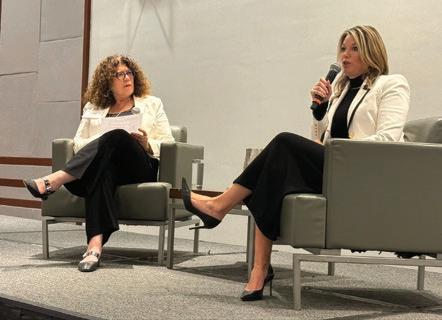
TERESA SARKESIAN MODERATES AT ELECTRICITY TRANSFORMATION CANADA CONFERENCE
This fall, EDA’s President & CEO Teresa Sarkesian moderated a panel at the Electricity Transformation Canada 2025 conference. Joined onstage by Phil McKay of Canadian Renewable Energy Association, Eldrich Rebello of Natural Resources Canada, and Jayna Sweeney, VP of Finance and Strategy of Essex Powerlines Corporation, the panel dove into exciting new DSO models that create opportunity for more clean energy deployment while improving grid stability and empowering consumers.
Teresa Sarkesian moderates a panel discussion at Electricity Transformation Canada 2025 in October.
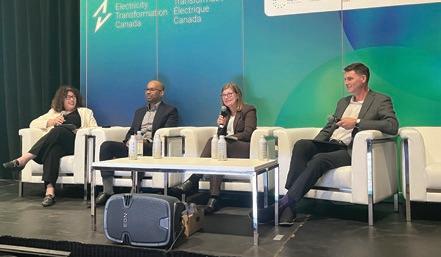
MPP David Smith with EDA’s Derek Nardone
Read the full report
Teresa Sarkesian moderated a conversation with Jana Mosley at an OEN networking luncheon.
PREPARING LOCAL UTILITIES FOR A NEW ERA
In its Distribution System Operators (DSO) Capability submission to the OEB, the EDA laid out a comprehensive vision for the evolution of LDCs into fully functional DSOs. As Ontario’s energy system evolves, with more distributed energy resources (DERs), electrified transportation, and smart technologies, the EDA recommends that LDCs must be empowered to actively manage local grids.
Key recommendations include:
• Clarify the DSO Role: The EDA calls for a clear regulatory framework that defines the responsibilities and capabilities of DSOs, including real-time system monitoring, DER integration, and local market facilitation.
• Enable Investment and Innovation: To fulfill DSO functions, LDCs need access to capital and regulatory flexibility to invest in advanced grid technologies, data systems, and workforce development.
• Coordinated Planning: The EDA emphasizes the importance of aligning DSO development with broader energy planning efforts, including the Integrated Energy Plan and OEB modernization initiatives.
By formalizing the DSO model, Ontario can unlock the full potential of its distribution sector, enhancing reliability, better serving customers, and supporting the province’s energy transition.

FEDERAL PRE-BUDGET SUBMISSION: UNLOCKING CAPITAL AND INCENTIVES
The EDA’s submission to the House of Commons Standing Committee on Finance outlines four key recommendations to bolster LDCs’ capacity to meet rising electricity demands:
• Sustain Funding for the Smart Renewables and Electrification Pathways Program (SREPs): Continued support for grid modernization and DERs ensures LDCs can meet electrification needs sustainably.
• Expand Canada Infrastructure Bank (CIB) Access: By including distribution infrastructure and lowering financing thresholds, more LDCs can access capital for critical upgrades.
• Reform Investment Tax Credits: Including smart grid and two-way power flow technologies in Clean Economy ITCs would incentivize cost-effective distribution investments.
EDA’s President and CEO Teresa Sarkesian had a productive meeting with the federal Privy Council Office where she highlighted this federal pre-budget submission and advocated for expanded eligibility to these and other sources of funding to support infrastructure improvements in our sector.

CONNECT LEARN LEAD

EDIST is the electricity distribution sector’s must-attend event for 20+ years. Join 1,000+ industry professionals for three days of learning, innovation and networking.
35+ sessions across expanded streams
5+ topic areas: Regulatory | Operations | Engineering | IT & AI | Sustainability & Decarbonization
100+ exhibitors showcasing innovative
Improved mobile app for instant
and equipment

Read the full report
Read the full report
Upcoming EDA Events

PEOPLE CONNECTED
November 4, 2025 | Hilton Mississauga/Meadowvale
EDA’s one-day symposium on future-proofing your workforce with strategies for retention, resilience & results.


EDIST 2026
January 20-22, 2026 | Westin Harbour Castle, Toronto Ontario’s premier electricity conference features five content streams, 35 speaker sessions, and a larger exhibitor floor. Topics include sustainability, regulation, operations, engineering, and IT/AI. Join 1,000+ professionals for learning and networking.
Save the Date
EDIST 2027
January 18-21, 2027 | Westin Harbour Castle, Toronto
ENERCOM 2027
March 21-22, 2027 | Fairmont Royal York, Toronto
Awards Gala 2027
March 22, 2027 | Fairmont Royal York, Toronto
The Electricity Distributors Association (EDA) has a slate of exciting events planned through 2028. Be sure to mark your calendars and join us for these dynamic gatherings that showcase the best of Ontario’s electricity sector. For more information visit: eda-on.ca/ EVENTS.

ENERCOM 2026
March 22-23, 2026
| Fairmont Royal York, Toronto Ontario’s leading forum on the future of electricity distribution. Hear from industry leaders on regulation, innovation, and customer experience. Includes networking receptions and strategic insights for executives and emerging professionals.



EDA AWARDS GALA
March 23, 2026
| Fairmont Royal York, Toronto Celebrate excellence in Ontario’s electricity sector. Join us for an evening of recognition, networking, and celebration following ENERCOM.

ENERCOM 2028
March 19-20, 2028 | Fairmont Royal York, Toronto
Awards Gala 2028
March 20, 2028 | Fairmont Royal York, Toronto
The Power Workers’ Union: The Voice of Ontario’s Electricity Sector Workers
The Power Workers’ Union (PWU) takes great pride in representing the large majority (over 15,000) of the men and women who work in Ontario’s electricity production and delivery sector.
Our members work hard, 24 hours per day, 7 days per week, to ensure that electricity customers have the power they need when they need it.
The PWU is the voice of electricity workers in Ontario. Since the initial electrification of homes and businesses in our province, the PWU has continuously worked to set and improve the standards for public and worker electrical safety. We continue to negotiate the best in sustainable wages, benefits, and working conditions for the highly skilled workers in our industry.
We work closely with our employers to help them build and operate vibrant, successful business operations in changing times, and we work with government and regulators to foster electricity policy development that works for customers, electricity businesses, and employees.
Take a look at the Power Workers’ Union—we think you’ll like what you see.
To learn more about us, please go to www.pwu.ca.


Shaping the Future of Energy & Infrastructure
Serving the infrastructure, energy, gas and electricity distribution, and telecommunications sectors nationwide, we are trusted to deliver innovative and reliable solutions that not only meet client needs but consistently exceed expectations. From concept and design to engineering, comprehensive field and construction services, our integrated solutions deliver excellence on time and on budget, safely and with quality.
Visit OEC.CA to find out more or email us at info@oec.ca to get started.