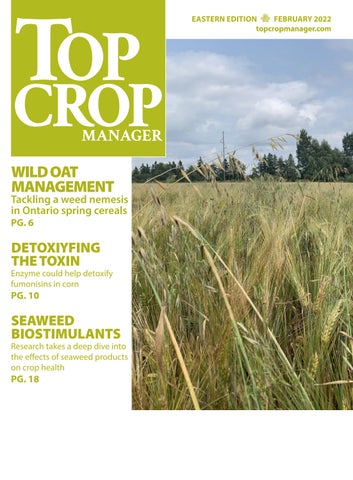
Research takes a deep dive into the effects of seaweed products on crop health
PG. 18
Acuron & on & on & on
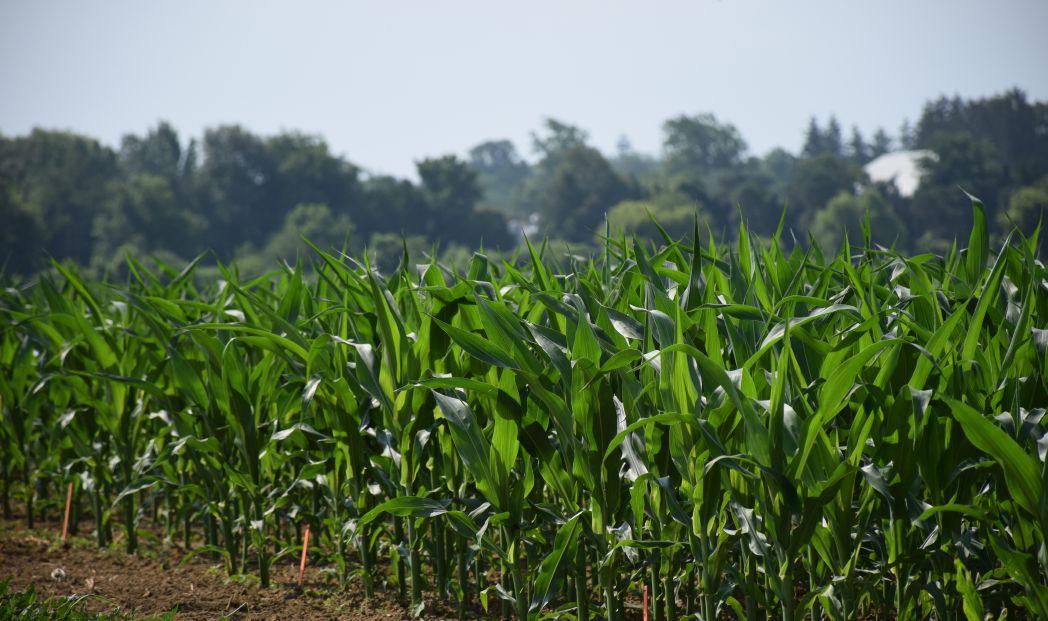
Don’t waste time looking back and second-guessing. With flexible spray timing and the best-in-class control of the toughest grass and broadleaf weeds, Acuron® herbicide helps you maintain your momentum from pre-emerge, to six-leaf…and on!
To learn more, visit Syngenta.ca, contact our Customer Interaction Centre at 1-87-SYNGENTA (1-877-964-3682), or follow @SyngentaCanada on Twitter.
6 | Tackling a weed nemesis in spring cereals
Seeking new options for wild oat control in Ontario.
By Carolyn King
10 | Detoxifying the toxins
Enzyme discovery could help detoxify fumonisins in corn.
By Julienne Isaacs
18 | Seaweed biostimulants for crops
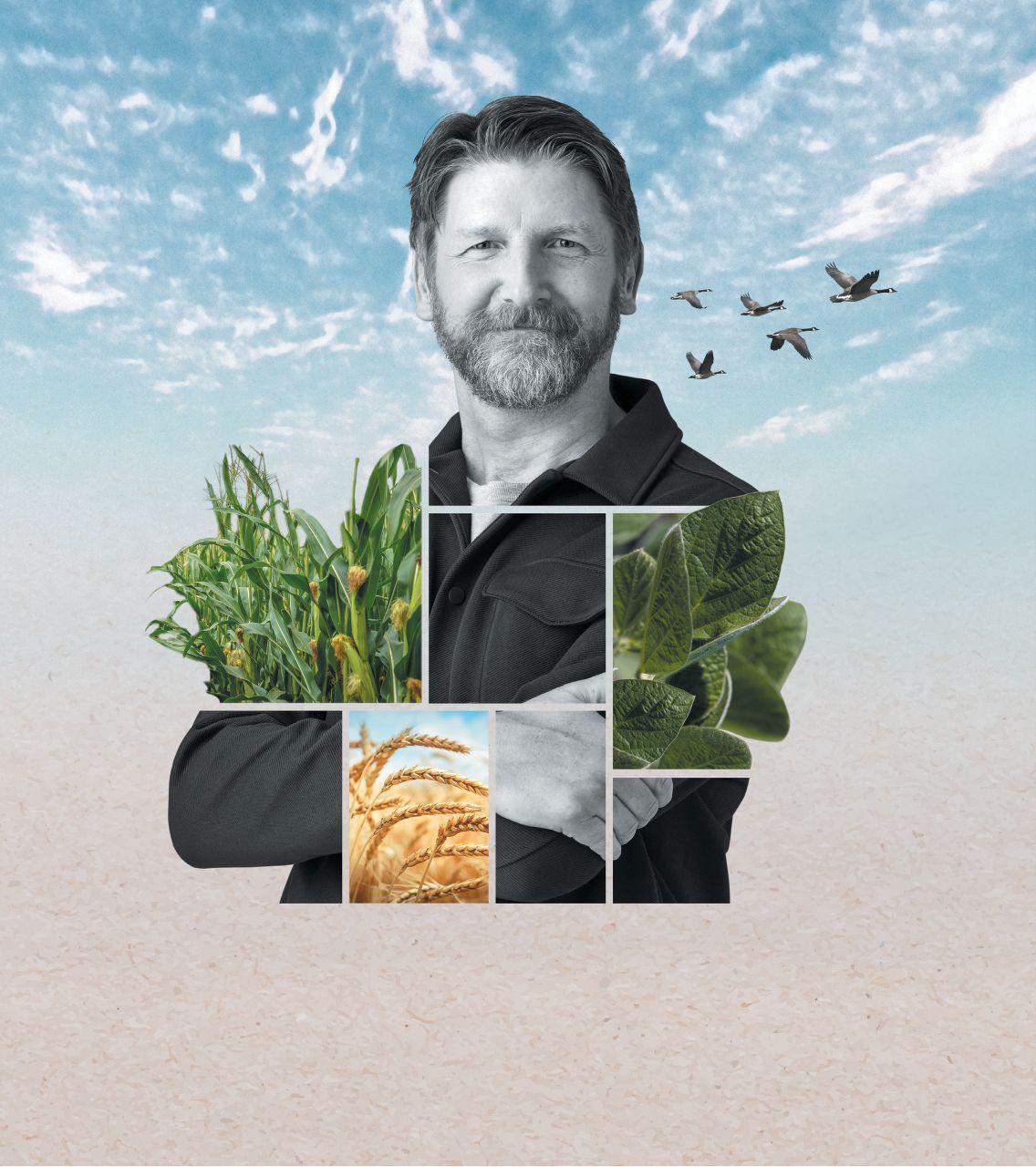
Research takes a deep dive into the effects of seaweed products on crop health.
By Carolyn King
Carolyn King
Julienne Isaacs
ON THE WEB
U OF G LAUNCHES FREE FARM BUSINESS MANAGEMENT SKILLS TRAINING
Free farm business management skills training, ranging from farm business planning to maintaining mental health, will be offered through a new, self-paced, virtual course. The University of Guelph’s “Foundations in Agricultural Management” online certificate course will enable farmers to brush up on their farm business management skills. TopCropManager.com
ALEX BARNARD EDITOR
It’s the first issue of a new year as you prepare for a new growing season – so why not introduce a new editor? Hi, I’m Alex – newly minted editor of Top Crop Manager East. It’s nice to meet you!
I’m thrilled to be in this new position after working on the magazine for two years in a more behind-the-scenes way, though those of you who listen to Inputs, the podcast by Top Crop Manager might be familiar with me.
I’ve lived most of my life in southwestern Ontario, so driving past fields of corn, wheat and soybeans is an essential part of the summer landscape for me – a way of measuring the time until school returns or summer ends by the crop’s maturity.
It’s been illuminating to find out more about the many challenges involved in field cropping – from pests and diseases, to soil fertility and water management, to the effects of weather and climate, to international trade and the impacts of global trends on local farms. The past two years have been exceptionally difficult due to the pandemic’s shifting regulations and effects on markets and supply chains, too.
Watching the resilience, adaptability and ingenuity of field crop farmers in Eastern Canada has been inspiring – they’re clearly traits that are present even when the world isn’t vacillating between shut-downs and reduced capacities. For all the challenges farmers face, there are solutions or management options being developed or already available – and growers and agronomists are constantly working with researchers, trying new things or improving on older methods.
Take this issue, for instance: our cover story by Carolyn King, found on page 6, features the University of Guelph’s François Tardif and OMAFRA’s Mike Cowbrough looking into new management options for wild oat. This weed quickly develops herbicide resistance and is a major issue for spring cereals in the Prairie provinces, but since most Ontario farmers grow winter cereals, there’s hasn’t been much local research on it. Now that spring cereals are more often grown in Ontario, these researchers are looking for options to best control the weed and proactively prevent or slow resistance development.
On page 20, read about the Living Labs Ontario project. In one trial, Greg Vermeersch of VanMeer Farms near Tillsonburg, Ont., is conducting a side-by-side, field-scale comparison of double-cropping and relay cropping using winter barley and soybeans. His trial plays host to a variety of AAFC research scientists looking at the soil’s chemical properties and microbial community, pollinators and wireworms, and the effects of the two cropping systems on soybean cyst nematode populations. Through these collaborative projects, farmers, researchers and other partners have come together to advance agricultural innovation by developing on-farm trials in real conditions.
While I haven’t been able to meet as many of you as I would’ve liked at events and crop walks due to the pandemic, I’m looking forward to making up for lost time once we can all get together in person once more.
In the meantime, if you have any ideas for the magazine or thoughts you’d like to share, please don’t hesitate to reach out. I’ve learned a lot in my two years here, but that has proven that I still have a lot to learn. As you are the experts in your field(s), I’d be honoured if you’d share your knowledge and wisdom with me.
topcropmanager.com
TACKLING A WEED NEMESIS IN SPRING CEREALS
Seeking new options for wild oat control in Ontario.
by Carolyn King
Wild oats are a growing concern in Ontario spring cereals due to increasing resistance to the few herbicides registered for this use. Fortunately, a project is underway to find alternative herbicides.
“Normally, wheat and barley are very competitive crops and they are pretty good at excluding weeds. But wild oat, being a spring cereal itself, is very adapted to compete in this environment. That’s why it is probably the number one weed in spring cereals,” says François Tardif, a professor in the department of plant agriculture at the University of Guelph.
“In Ontario, wild oats are sort of a minor weed because they are not a problem in winter wheat, corn and soybeans. However, in areas of the province where spring cereals are more important, people have been seeing a slow increase over about the past decade in the prevalence of wild oats that are getting harder and harder to control.”
He notes that Group 1 herbicides have been the go-to choice for
effective wild oat control in spring cereals for many years. However, with ongoing use of these products, resistant populations have been gradually developing. Some Group 2 herbicides are registered in Ontario for wild oats in spring wheat, but not in spring barley. Other jurisdictions with many more acres of spring cereals, like Western Canada, have more registered products.
Given the increasing reports of suspected wild oat resistance in Ontario, Tardif and Mike Cowbrough, weed management specialist for field crops with the Ontario Ministry of Agriculture, Food and Rural Affairs (OMAFRA), started looking into what could be done. In 2018 and 2019, they did some preliminary studies to get a better understanding of the problem.
Then in 2020, Tardif initiated the current project to test a wide range of grass herbicides in spring wheat and spring barley in the field. The aim is to identify new options that effectively control re -
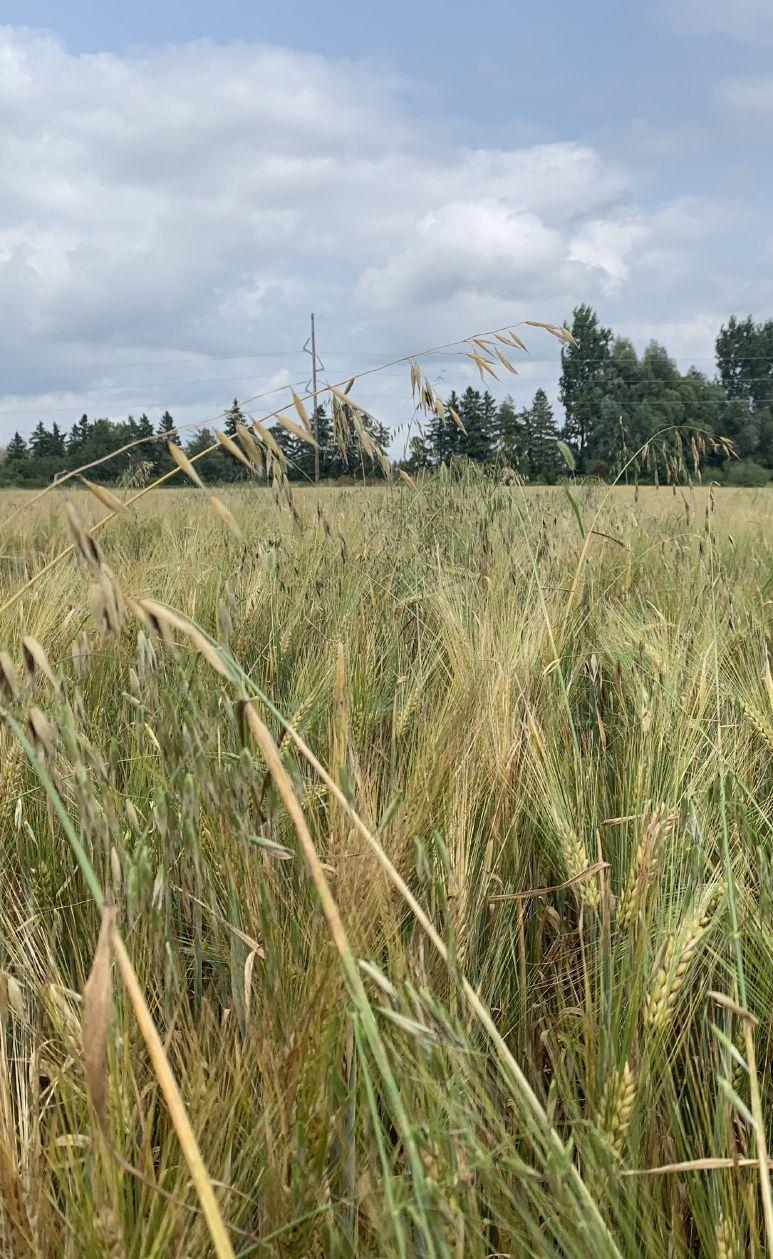
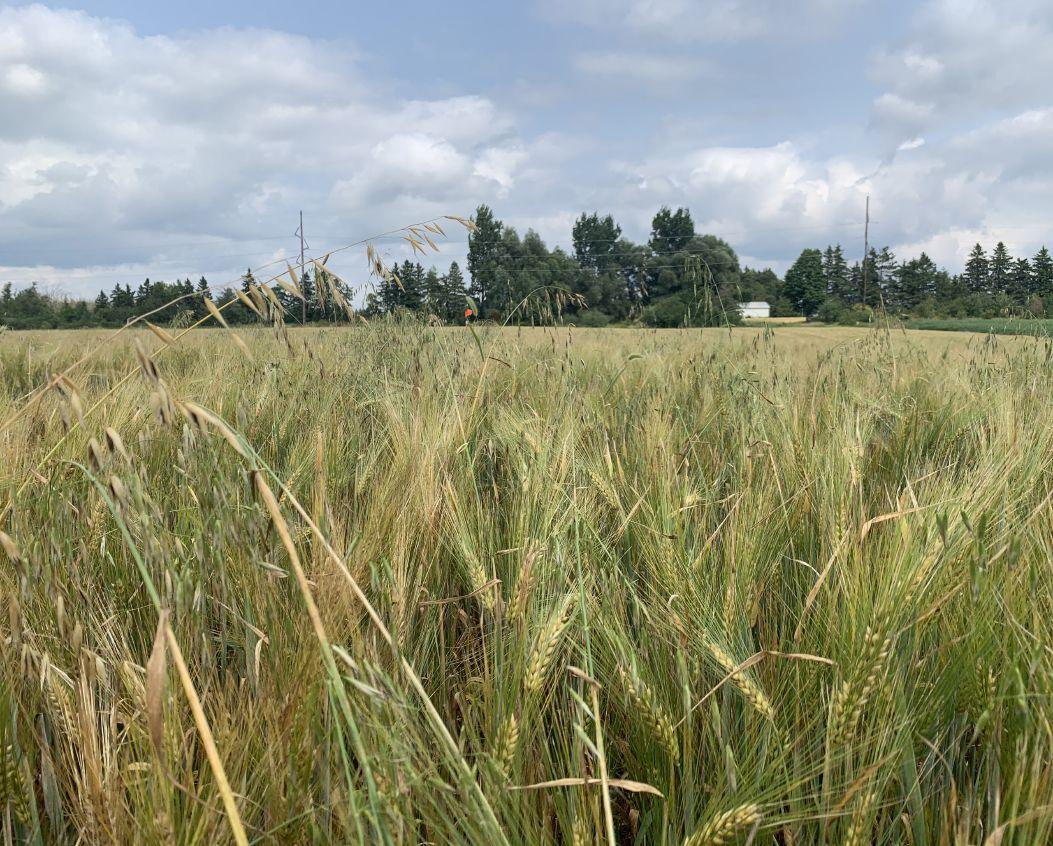
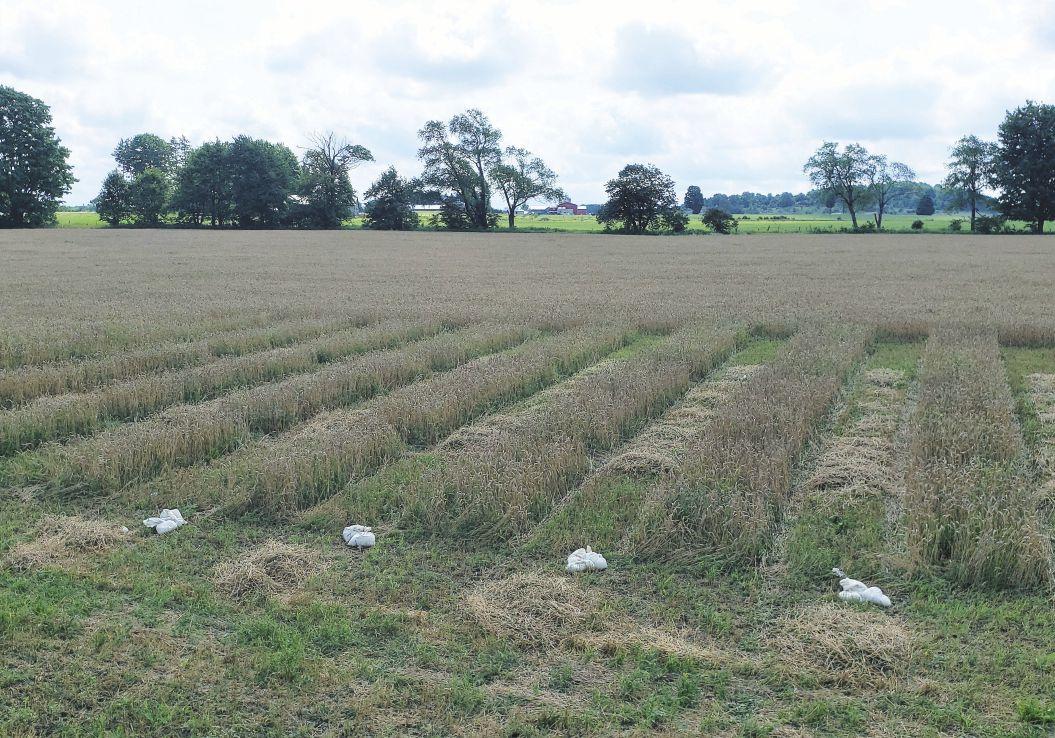
ABOVE: An untreated control plot in the trial in Orangeville, Ont.
sistant wild oats with minimal crop injury for possible registration in Ontario.
Grain Farmers of Ontario is the main funder of Tardif’s project; Valent, Corteva, FMC and Gowan are also providing some support.
About the resistance
Farmers, crop advisors and herbicide company representatives send wild oat samples suspected of being herbicide-resistant to Tardif’s lab for testing. The tests are confirming that a majority of these samples are indeed resistant. Most samples are resistant to Group 1 herbicides, some are resistant to Group 2, and some are resistant to both.
Normally, wheat and barley are very competitive crops and they are pretty good at excluding weeds. But wild oat, being a spring cereal itself, is very adapted to compete in this environment. That’s why it is probably the number one weed in spring cereals.
Some of the samples with Group 1 resistance are resistant to one or two – but not all three – of the Group 1 chemical families, known as the “fops” (such as fenoxaprop), “dims” (such as tralkoxydim) and “dens” (such as pinoxaden).
“We have found that the samples mostly tend to be resistant to fenoxaprop, which is the active ingredient in Puma. Most of them are also resistant to Achieve, which is tralkoxydim. We see some resistance to Axial (pinoxaden), but it is not as widespread; it is a newer active [agent], acting differently on the target site,” Tardif explains.
“So, in theory, a farm could have wild oats that cannot be controlled by Puma, but Axial could work. However, you still need to be careful because we know resistance is lurking in the background, and could increase pretty quickly.” Even if most of the wild oats in a field are currently susceptible to Axial, repeated use of the product over time will soon leave only plants that are resistant to it.
About the project
Tardif and his research group searched in various jurisdictions for herbicides to include in the trials. For instance, some of the products are registered for wild oat control in spring cereals in Western Canada but are not registered in Ontario due to its much smaller market for these products. A few of the products included in the trials are registered in other countries.
“We tried to look outside of Groups 1 and 2 but there are few products that are very effective,” he notes. “I looked at what they have in the U.S., Australia, Europe, but there wasn’t much. And sometimes we couldn’t get access to the products they are using. For instance, I saw a product being used in Australia, but the manufacturer said there is no plan to introduce this product in North America so they wouldn’t give it to us for our trials.”
Nevertheless, Tardif and his group have put together a long list of products, including pre-emergence and post-emergence products, and active ingredients from Groups 1, 2, 14 and 15. As well, they are evaluating various combinations of the products.
Tardif’s project involves small-plot trials. The primary intent is to conduct the trials on farms where the farmers have reported issues with controlling wild oats. However, as with many things in our lives these days, the project’s 2020 trials had to do a pandemic pivot.
“In spring 2020, we were lined up to do a couple on-farm trials. But, out of an abundance of caution, we decided not to go on those farms to respect the safety of the farmers and their staff,” Tardif
explains.
“Instead, we did a couple of trials in spring wheat and barley at our research stations at Elora and Woodstock. Since we don’t have wild oats at those locations, we planted the spring cereals and then added tame oats as a surrogate weed species. Tame oats respond pretty much the same to herbicides as wild oats, although tame oats don’t have the same seedbank life and other bad characteristics of wild oats.” These 2020 trials allowed Tardif’s group to collect field data on things like how the herbicides affected the crop – wheat and barley plants – and the oat plants.
“In 2021, we were able to do two on-farm trials, so we are back on track. And we will continue the on-farm trials in 2022,” he says.
One field site is near Flesherton and the other is near Orangeville. “The co-operating farmers have had issues with wild oat control using Group 1 and 2 herbicides so it is strongly suspected that there are resistant wild oats at those sites,” he notes. “We took samples of the wild oats, and we’ll be testing them this winter to confirm the actual status of their resistance.”
Tardif and his group are collecting data on things like wild oat biomass, crop injury, crop grain yield and wild oat seed yield. They are currently analyzing the data from 2021.
He observes, “We have some products that gave pretty good control of wild oats, but sometimes they also caused crop injury. We want to find that balance between limited crop injury and good wild oat control.”
If the trials find some products that perform well, then Tardif can provide the data to the product’s manufacturer in case the manufacturer is interested in pursuing registration in Ontario through Canada’s Pest Management Regulatory Agency (PMRA).
Into the future
“The most immediate benefit from this project is that potentially we’ll be able to identify herbicides that could be registered here,” Tardif says.
A wider choice of products would help farmers to control wild oats that are resistant to today’s products, countering the yield-limiting impacts of the resistant weeds. More herbicide choices would also give farmers more options for herbicide rotations, helping to slow the development of further resistance problems in wild oats.
By evaluating various combinations of the herbicides, the project may also identify herbicide strategies that farmers could adopt.
According to Tardif, a longer-term benefit of the project is the potential for research advances through increased collaboration.
“This project also puts wild oats research in Ontario on the map. That way, when there are national efforts for wild oats research, we can team up with researchers from Alberta, Manitoba and Saskatchewan. Those are the provinces with the greatest wild oat problems, so those researchers have a lot of experience and interest in wild oat management,” he says.
“By working with them, we can have a more comprehensive approach to the problem. What we are looking for in those future projects is to have not only herbicide control strategies but also other control strategies, such as cultural management approaches.”
Adding non-chemical methods to wild oat management strategies is another important way to slow the development of herbicide resistance. One cultural option is to use a more diversified crop rotation.
“For instance, depending on where they are, farmers could have a four-crop rotation with corn, soybean and canola in the rotation,” Tardif says. “Although this will not eliminate wild oats, some herbicides in those other crops could help contain the weed’s population
and reduce the seed bank input. It’s when you have a short rotation relying mostly on spring cereals that you could have problems because you don’t break the cycle of wild oats.”
The Resistant Wild Oat Action Committee’s website also includes several other cultural options, such as increasing crop seeding rates, planting the crop early so it gets going before the wild oats, and targeting fertilizer placement so it feeds the crop and not the weeds.
But the problem of herbicide resistance in wild oats won’t be going away anytime soon. In other jurisdictions, where wild oat resistance has been a serious problem for a longer time, wild oat populations have developed resistance to more and more active ingredients.
Tardif explains that researchers in those regions are experimenting with other techniques to help suppress the weed. These range from: methods to reduce the number of wild oat seeds going into the seed bank, such as chaff management or clipping off the wild oat seed heads before they set seed; to very precise inter-row tillage early in the growing season; to spraying the soil with a product that induces all the wild oat seeds to germinate at the same time and then tilling or applying a non-selective herbicide to the field. He adds, “With these experimental options comes the question of the cost; is it affordable?”
“We have some products that gave pretty good control of wild oats, but sometimes they also caused crop injury. We want to find that balance between limited crop injury and good wild oat control,” Tardif says.
Hopefully, the need for such options in Ontario spring cereal crops is a long way off. But if Ontario researchers can take part in such studies, the province’s growers will have more tools in their toolboxes if and when the need arises.
Tardif’s wild oat herbicide trial in Flesherton, Ont. PHOTO
2022 Ontario Potato Conference
Wednesday, March 2ND
SCHEDULE:
10:00 a.m. ET
Battling the Blackleg complex successfully
Ian Toth, James Hutton Institute, Scotland, UK
10:30 a.m. ET
Black dot - the silent, early yield robber: Epidemiology and management
Julie Pasche, North Dakota State University
11:00 a.m. ET
Experiences with minimum tillage on potatoes
Homer Vander Zaag, H.J. VanderDer Zaag Farms Ltd.
BREAK
1:00 p.m. ET
Climate change: How heat impacts potatoes at different growth stages
Mike Thornton, University of Idaho
1:30 p.m. ET
Dealing with Linuron shortage in 2022
Darin Gibson, Gaia Consulting
DETOXIFYING THE TOXIN
Enzyme discovery could help detoxify fumonisins in corn.
by Julienne Isaacs
Every Canadian grain farmer has heard of Fusarium, a collection of fungal species that can cause Fusarium head blight (FHB) and severely impact yields in corn, wheat, barley and other small grain crops.
FHB can carry unpleasant side-effects, including contamination of grain with mycotoxins that are dangerous to human and animal health. At the top of the list of mycotoxins of concern to Canadian farmers is deoxynivalenol (DON), or vomitoxin. Grain afflicted with DON can be downgraded or rejected at the elevator.
Canadian producers might not have heard of fumonisins, a group of toxins naturally produced by species of Fusarium, including Fusarium verticillioides and Fusarium proliferatum. Fumonisins are a serious concern globally, particularly in Europe, Asia and South America, South Africa and parts of the U.S. But scientists at Agriculture and Agri-Food Canada’s London Research and Development Centre say Canadian farmers may become acquainted with fumonisins before long.
“We’re concerned about them because as the climate changes, some of the Fusarium species that make fumonisins could move further north,” says Mark Sumarah, an AAFC-London research scientist.
Justin Renaud, a chemist in metabolomics and analytical chemistry, says fumonisins first affect the plant itself, damaging it so the fungi can take over. Serious human health consequences, including cancer and birth defects, are linked to the consumption of grain products contaminated with fumonisins.
Because of this, fumonisins are strictly regulated, particularly in
Europe and North America, where Sumarah says they’re closely monitored. In Canada, Sumarah and Renaud have developed monitoring tools to keep tabs on the presence of fumonisins.
But in practice, the economic burden of mycotoxin testing falls on farmers; and if fumonisin contamination in a grain shipment were to exceed thresholds set by Environment Canada, farmers would suffer the fallout.
So it’s farmers who ultimately benefit most from the researchers’ discovery: an enzyme that detoxifies fumonisins in contaminated grain.
Detoxifying the toxin
Several years ago, Sumarah was working on a different mycotoxin, Ochratoxin A, which is produced by species of the fungus Aspergillus
“All around the world, Ochratoxin A is a major contaminant of wine. But we had no data on Niagara or B.C., so we were looking at the risk of Canadian wine producers having this product in their wine,” he says.
“I isolated the fungi and looked for this toxin in grapes. We found that a number of these Aspergillus species were able to make fumonisins, new ones that hadn’t yet been reported. All fumonisins have a nitrogen atom that’s responsible for toxicity. These ones had an
ABOVE: Researchers have discovered an enzyme that detoxifies fumonisins in contaminated corn grain.
oxygen atom that replaced that nitrogen atom,” essentially detoxifying it, he says.
Sumarah started to wonder whether the same principle might work in fumonisins, to keep the toxin from destroying the fungus.
Renaud suggested using London Research and Development Centre’s new mass spectrometer to analyze fumonisins. “The instrument lets us look for anything that has a fingerprint of a fumonisin. Instead of saying, ‘Show me the fumonisins,’ we can say, ‘Show us anything that looks like a fumonisin.’ We found two types of non-toxic fumonisins: they were missing this critical atom that’s responsible for toxicity,” Renaud says.
“We started hunting for the mechanism that the fungi that made the toxin was using to detoxify the toxin.”
Sumarah and Renaud brought the finding to Chris Garnham, a biochemist and structural biologist who had just started his own lab at the Centre.
“It was right up my research alley,” Garnham says. “I was interested in enzymes and how they function at the molecular level and I was interested in finding an enzyme that had a significant impact.”
Garnham relied on a few “old school” techniques to get results. “I relied a lot on my undergraduate biochemistry training to isolate enzymes from crude extracts,” he says. “We grew the fungus in large batches, and enriched it for the activity that was responsible for converting the toxic fumonisin into a non-toxic form. We did different treatments to that culture, and finally enriched it enough to identify the enzyme within a mixture of other enzymes using the mass spectrometer.”
At the beginning of this process, Garnham’s “crude soup” looked
like tar or coffee grounds, he says. By the time it was purified to contain non-toxic fumonisins, it was a clear fluid.
Renaud says since then, the team has modified that sequence, improving the activity of the enzyme to make it more heat-stable and pH resistant. They’ve also filed a patent on its use for the detoxification of fumonisins.
The patent is necessary so the enzyme can be commercialized, Renaud says. A Canadian industry partner, Lallemand, intends to use the enzyme as a feed additive to detoxify fumonisins in the gut of the animal. How it will be used in human food and biofuel markets isn’t yet determined.
In the meantime, Sumarah, Renaud and Garnham have turned their attention to detoxification mechanisms for other mycotoxins.
“Any major mycotoxins that pose economic risk are ones that we’re interested in,” Garnham says.
Corn inoculated with Fusarium Verticillioides.
UNCOVERING MYCORRHIZAL MYSTERIES
Research shows plants can influence the genetics of their symbiotic root fungi.
by Carolyn King
Soil fungi called arbuscular mycorrhizal fungi (AMF) are found pretty much everywhere in the world, forming beneficial relationships with most types of land plants, including most crop species. Yet we still have a tremendous amount to learn about these fungi. That’s where Nicolas Corradi and his research group at the University of Ottawa come in.
Their research is shedding light on the often-weird biology and genetics of AMF. And Corradi is hoping to work towards applying their discoveries to some practical issues.
“An arbuscular mycorrhizal fungus forms spores, and from those spores come hyphae – their arms, if you like – that grow in the soil. At some point, those hyphae will encounter a root, penetrate the root and then form what we call an intraradical system [within the plant’s root] that will benefit both the fungus and the plant in different ways,” explains Corradi, an associate professor in the university’s department of biology.
In this symbiotic relationship, the fungus’s hyphae grow beyond the root into the surrounding soil to gather nutrients, such as phosphate and nitrate, and water for the plant, resulting in better plant growth and higher yields. In exchange, the plant gives the fungus carbon sources, generally lipids and sugars, that the fungus cannot produce by itself. The symbiosis also helps the plant to better tolerate environmental stresses and pathogens.
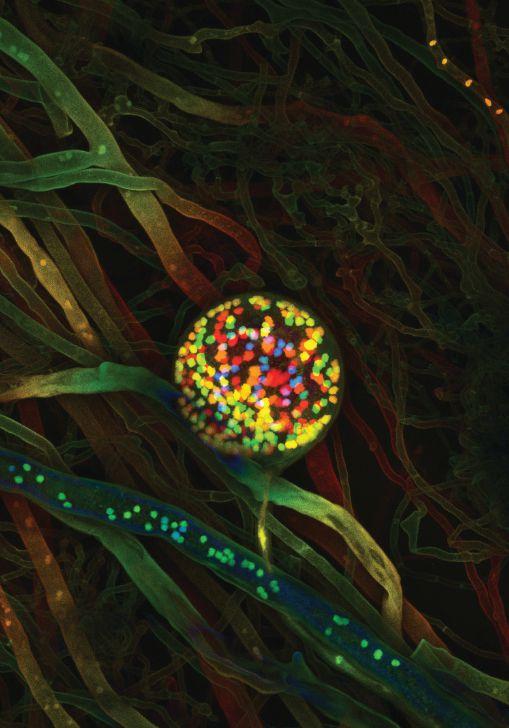
One of the weirdest things about AMF is that each cell in one of these fungi can contain thousands of nuclei.
“In most organisms, each cell has one nucleus. Arbuscular mycorrhizal fungi have the largest number of nuclei found within one cell; [in all the life stages of an AMF], there are hundreds to thousands to potentially millions of nuclei within one large cell,” Corradi says. “And it is really unclear why they have so many nuclei within a cell.”
His fascination with AMF started about 20 years ago when he embarked on his PhD research about these remarkable fungi. Currently, Corradi often collaborates on AMF research with other scientists, particularly Franck Stefani and Jeremy Dettman from Agriculture and Agri-Food Canada (AAFC). Vasilis Kokkoris, who was a postdoctoral researcher in Corradi’s group until recently, conducted much of the analyses involved in several of the group’s recent AMF studies.
“Completely bizarre”
In 2016, Corradi’s group made the fundamental discovery that AMF actually have two types of strains, known as homokaryons and dikaryons. In the homokaryons, the thousands of nuclei in a
cell are largely all the same genotype. In dikaryons, two genotypes are present in a cell’s nuclei.
He points out that many other fungi have homokaryon and dikaryon stages in their life cycles. In most of these other fungi, there is only one nucleus per cell for most of the fungus’s life cycle. These homokaryons are able to reproduce asexually, releasing spores that are the same genotype as the parent. But then when the homokaryon fungus encounters another homokaryon fungus that is compatible sexually, they exchange nuclei and, in some cases, form dikaryons in which each cell has two nuclei, one from each parent.
The researchers think the AMF dikaryons are probably formed
PHOTO COURTESY OF VASILIS KOKKORIS.
ABOVE: A multinucleate spore of an arbuscular mycorrhizal fungus.
Do you know an influential and innovative woman involved in Canadian agriculture?
We’re looking for six women making a difference in Canadian agriculture. Whether actively farming, providing agronomy or animal health services, or leading research, marketing or sales teams, we want to honour women who are driving Canada’s agriculture industry.
Gold Sponsors: Platinum Sponsor: Bronze Sponsor:
as a result of sexual reproduction, like the dikaryon stages in the life cycles of these other fungi.
“So, the process [to form dikaryons] is not unique,” Corradi says. “What is unique about AMF dikaryons is that they have thousands of nuclei from one parent and thousands of nuclei from the other parent in a cell; that is completely bizarre, completely unique.”
The discovery of the two types of AMF strains is an important step forward in understanding the AMF life cycle. But Corradi notes, “These fungi are very difficult to work with. We are still trying to grasp which AMF homokaryons are potentially compatible to produce a new dikaryon, although we have been working on it for four years.”
“My grad student is working with various potato varieties, some that are very ancestral and some that are very domesticated,” Corradi explains. “First, we want to see whether homokaryons are better than dikaryons or vice versa in terms of plant growth. Also, since having two parents gives a higher genetic diversity than having one parent, we want to test my hypothesis that having higher genetic diversity would allow better adaptation to different environments.”
Plants can influence AMF genetics
Corradi’s group has recently published other surprising findings about AMF dikaryon genetics. Some of those findings relate to the ratio of the two genotypes in the nuclei.
You might guess that 50 per cent of the nuclei would be the genotype of one parent and the other 50 per cent would be the other parent’s genotype. But the researchers discovered that this is not always the case.
Arbuscular mycorrhizal fungi have the largest number of nuclei found within one cell; [in all the life stages of an AMF], there are hundreds to thousands to potentially millions of nuclei within one large cell.
Could dikaryons make better inoculants?
Following up on the discovery of the two types of AMF strains, the researchers compared several dikaryon and homokaryon strains of Rhizophagus irregularis, an AMF species that is commonly used for crop inoculants.
They determined that the homokaryons and dikaryons behave in quite different ways.
“We found, for example, that the dikaryon strains grow very slowly at first; they have a hard time germinating. [The homokaryon spores germinate more quickly.] But when the dikaryons start to germinate, they actually grow much faster, and their hyphae expand over much larger areas than the homokaryons,” Corradi notes.
The researchers suspect that the dikaryons’ larger and more branched hyphal networks could provide greater benefits for the plant host. With these larger networks, the hyphae can reach farther into the soil as they seek out nutrients. “Therefore, we think the dikaryons can help plants access more nutrients as compared to homokaryons.”
Their experiments also indicate that AMF dikaryons perform better than AMF homokaryons across a range of plant hosts. In contrast, the homokaryons tend to be quite beneficial for certain plant species but not for others. These findings suggest one reason why studies sometimes find that the same AMF inoculant improves yields of some crop types but not others.
Given the potential for better nutrient access and benefits for a wider host range, the researchers hypothesize that AMF dikaryons would make better and more reliable inoculants than AMF homokaryons. Corradi is on the lookout for companies who might be interested in partnering with his group to investigate this possibility.
One of his graduate students has already started some greenhouse experiments to compare AMF dikaryons and homokaryons in relationship with different crop species.
For instance, in one of the strains they studied, the ratio of the two parents is 80 per cent to 20 per cent. “I thought, how is that even possible? But the data is very consistent,” Corradi says.
Then, in one of their 2021 papers, they reported on their discovery that the plant host can modify the relative proportion of the two genotypes in the dikaryon.
“For example, if you use carrot as the host plant, you find that there are a certain proportion of nuclei with genotype A and a certain proportion with genotype B in the dikaryon. However, if you use a chicory host, then the relative abundance of the genotypes changes quite dramatically and quite significantly,” he explains.
“We don’t really know what’s driving this change. But we think it is probably due to the plant’s need for the protein products produced by some of the nuclei but not the other nuclei. We think that certain plants probably need more proteins from genotype A and other plants need more proteins from genotype B. So that leads to a change in the relative proportion of these nuclei within the fungal cell.”
At present, Corradi does not know if these discoveries might have relevance to agriculture, but he can see some potential applications. He suggests one possibility: “Let’s say we manage to identify how a plant can benefit from one genotype being more abundant than the other. Then we could possibly use that to our advantage to create, for example, AMF strains that have more of one genotype than the other and then use those strains to help plant growth in certain ways.”
For Corradi, it’s exciting to be working with such peculiar organisms. “Every day I’m blown away. It is really hard work, but it is amazing. And every day there is new data, and sometimes it is so crazy that I think, ‘This is too good to be true, too crazy to be true,’” he says.
“We publish our data all the time, and all our data are available for everybody to see and re-do the analysis if they want to. And we always try to prove ourselves wrong by using different datasets and different techniques that are completely independent. … It’s very rewarding – and a big relief, of course! – when a completely different method proves perfectly the crazy results that we found using another method.”
“We are just grasping the tip of the iceberg here,” Corradi concludes. “There is still so much to be understood about these fungi.”
PLATINUM SPONSOR
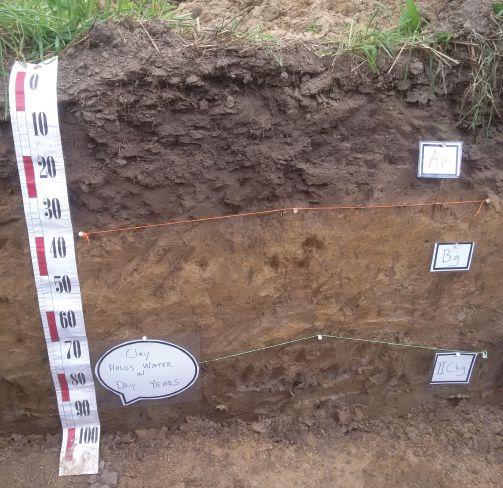
ONTARIO TOPSOIL 40 PER CENT DEEPER THAN IN 1950
Deeper topsoil means a dilution of carbon stocks and lower organic matter content.
by Julienne Isaacs
It was 2016, and Ontario Ministry of Agriculture, Food and Rural Affairs (OMAFRA) scientists Adam Gillespie, CJ (Jim) Warren and Daniel Saurette were out digging pits to characterise soils when they noticed something unexpected.
“The plow depth was 30 centimetres everywhere,” says Gillespie, now an assistant professor in the University of Guelph’s School of Environmental Sciences. “Anytime we calculate carbon storage, [we estimate] the plow depth [at] 15 centimetres – a six-inch plow depth – as opposed to what we were really seeing, which was a foot.”At the time, Gillespie, Warren and Saurette were working on revamping the province’s soil maps. The most recent soil maps before they embarked on the project dated back to the 1990s, pre-GPS, Gillespie says. Most United States Department of Agriculture (USDA) soil maps have a scale of 1:25,000, but Canada lags behind; most of Ontario’s maps have a scale of 1:50,000, meaning they are more general, with less detail.
When it became clear that the 30-cm plow depth was not localised to just a few fields, but seemingly a trend, Warren assigned a summer student the task of meticulously going through old soil reports published for the province, looking for data on Ap (or cultivated topsoil) horizon depth and soil organic matter in the A horizon.
The team used available data dating from 1950 through to the data they collected in the late 2010s – although Gillespie says Ontario didn’t run any soil survey activities between the 1990s
and 2015, and data from those years was missing.
When they analysed the information, the three found that organic carbon concentrations declined from 2.85 per cent to 2.34 per cent in Ap horizons between 1950 and 2019, while horizon depths increased by 40 per cent.
They also showed that by adding up the soil carbon stored in that deeper topsoil, total carbon may be constant or increasing. While this sounds like soil might be sequestering more carbon, this isn’t exactly the good-news story it seems to be, Gillespie says.
“We saw that we’re diluting carbon in our topsoil,” he says. “Implements are getting bigger, the weight is going up, and in agricultural soils the tillage is just more aggressive.”
If the topsoil was originally four- to six-inches deep 70 years ago, now the plow layer is much deeper and the Ap horizon includes low-carbon subsoil, Gillespie explains. Dilution of organic carbon within the deeper plow layer might significantly contribute to decreases in the topsoil’s organic carbon concentration.
“The bottom line is that we’re tilling deeper, and incorporating subsoil into the topsoil, which is a dilution,” Gillespie says. “Some people might ask, ‘What’s the big deal? Isn’t it good news that carbon stocks appear to be unchanged or increasing?’”
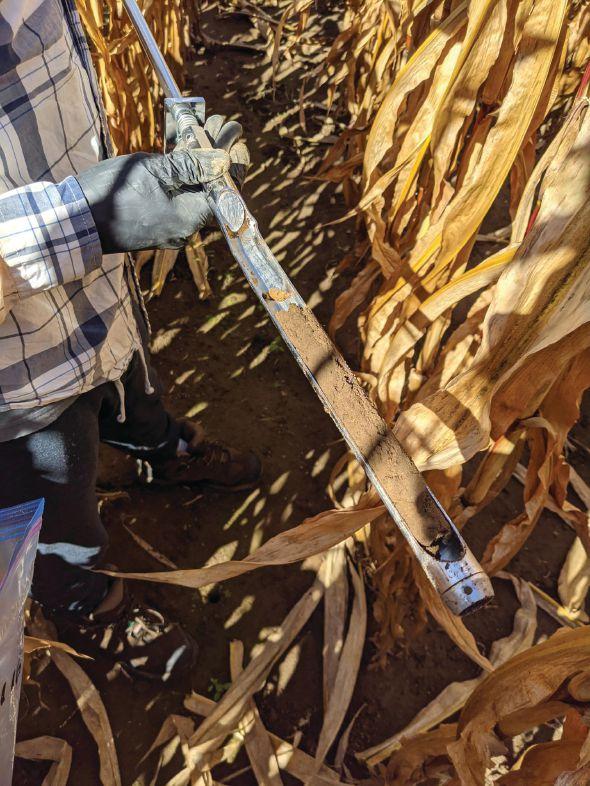
ABOVE: “Anytime we calculate carbon storage, [we estimate] the plow depth [at] 15 centimetres, a six-inch plow depth, as opposed to what we were really seeing, which was a foot,” says Adam Gillespie.
But the benefits of organic matter don’t depend on the stock, but rather the concentration. “Sure, you’ve got the same amount of carbon in the topsoil, but it’s diluted, so nutrient content, benefits to soil structure and water holding capacity are reduced,” he says.
Cutting into the subsoil also means, necessarily, erosion.
Gillespie says he isn’t about to make recommendations to farmers based on the study’s findings.
“One of the things I’m learning as I go through this career is that everybody has their own reason to till – if you’re an organic farmer, that’s a good way to control weeds, and in some places you can’t get away with minimum-tillage. I don’t think there’s a zero-tillage message in the paper,” he says.
The main takeaway, he adds, should be the fact that while many reports are made on the basis that topsoil is six-inches deep, that’s not actually what topsoil looks like in the province. It’s probably a lot deeper.
“We also want to point out that if you’re thinking about carbon loss, the carbon loss isn’t as bad as you think, because it’s diluted somewhat. But from an operational point of view it’s not benefiting you as a farmer if it’s diluted. Don’t give up if you’re trying to build organic matter, especially if you think you have the same stocks as before. It means you still have room to grow.”
In part because of the study’s results, Gillespie and his col-
leagues are putting together a monitoring program.
“When we were starting to put together the new maps, one of the things that amazed me is that people said, ‘We already have soil maps. Soils don’t change.’ [But] soils do change, and with GPS we’ll be making better maps,” he says.
The team will conduct semi-regular resampling of agricultural soils across Ontario to capture topsoil depth and soil organic matter among other things to help farmers make healthy soil decisions.
six inches deep, that’s not actually what topsoil looks like in the province, according to Adam Gillespie.
CROP MANAGEMENT
SEAWEED BIOSTIMULANTS FOR CROPS
Research takes a deep dive into the effects of seaweed products on crop health.
by Carolyn King
Despite anecdotal evidence of the benefits of using seaweed on crops, scientific research on the topic has lagged behind – an issue which Balakrishnan Prithiviraj aims to remedy.
“Seaweed has been used in agriculture for hundreds of years. But prior to 2005, it was very difficult to find any scientific literature on it. People were using seaweed and seeing the benefits, but most of the reports were in the regular media without any science backing up the claims,” explains Prithiviraj, part of Dalhousie University’s department of plant, food, and environmental sciences.
Prithiviraj and his research group have been filling that science information gap since 2005. That was when he came to Nova Scotia as an industry research chair through an arrangement between the provincial government and Acadian Seaplants Limited, a Nova Scotiabased seaweed company.
“When we started studying seaweed effects on plants, it was a clean slate; we didn’t know what to expect,” he notes. Their initial work revealed that seaweed products – which include whole seaweed extracts, containing thousands of different compounds, and specific compounds isolated from seaweed – act as plant biostimulants.
“During the course of our studies, we found that, even at very low concentrations, seaweed extracts and compounds will enhance a plant’s ability to tolerate stresses like water stress, heat stress and cold stress. We got quite excited about the results. And after 15 years, I am still trying to dig deeper and deeper to find out how it actually works.”
Prithiviraj has been leading diverse studies into the molecular mechanisms behind seaweed’s crop benefits, which range from improved drought tolerance, to decreased disease, to better nutrient-use efficiency. The research results are published in scientific journals, helping to advance scientific understanding. The findings have contributed to developing new seaweed products and to determining how best to apply the products.
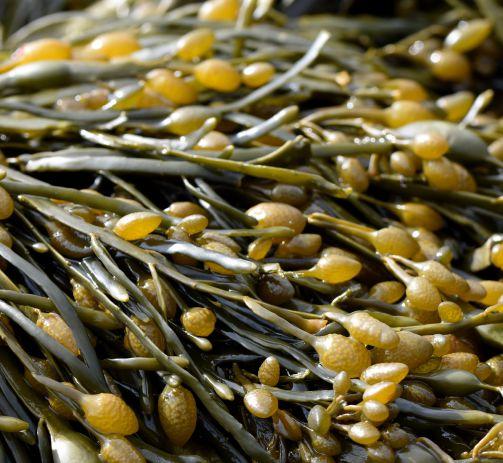
Many of Prithiviraj’s studies involve extracts of a seaweed species called Ascophyllum nodosum. “Ascophyllum nodosum grows only in the northern Atlantic Ocean. On the North American side, it grows from Maine northwards to Nova Scotia, Newfoundland and Labrador. On the European side, it grows from northern France to Norway and Iceland,” he explains.
“In the marketplace, Ascophyllum nodosum is the most commonly used seaweed, although other seaweed species are catching up. It is also one of the most researched seaweeds as a biostimulant.”
Prithiviraj’s plant studies initially used the model plant Arabidopsis – a small plant with a small genome – to delineate the effects of seaweed products. A few years later, he and his research group also started working with horticultural crops and field crops. The following
examples summarize just a few of these studies.
Better drought tolerance in soybean
Various studies by Prithiviraj’s group show that seaweed extracts, especially an Ascophyllum nodosum extract (ANE) that they have tested quite a lot, will enhance drought tolerance in different plant species.
In a recent soybean study, they treated half the soybean plants in a growth chamber with the ANE. Then they withheld water to all the plants until the plants were nearing complete shutdown due to a lack of water – at which point they applied water to all the plants. The ANE-treated plants had less wilting during the drought conditions and were better able to recover in the post-drought stage.
“When we looked at how the extract imparts drought tolerance in soybean, we found that it elicits the synthesis of certain enzymes as well as the expression of drought-response genes in the plant,” Prithiviraj explains. “What that means is the extract primes the plant to be more tolerant to drought stress, thereby protecting the plant, which helps protect the yield.”
Reducing FHB in wheat
“In 2007, one of my first graduate students examined the effects of seaweed on disease tolerance. She applied the seaweed extract as a root drench, then waited for a couple of days and then infected the
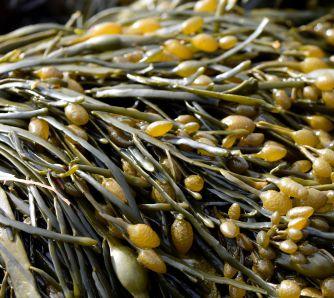
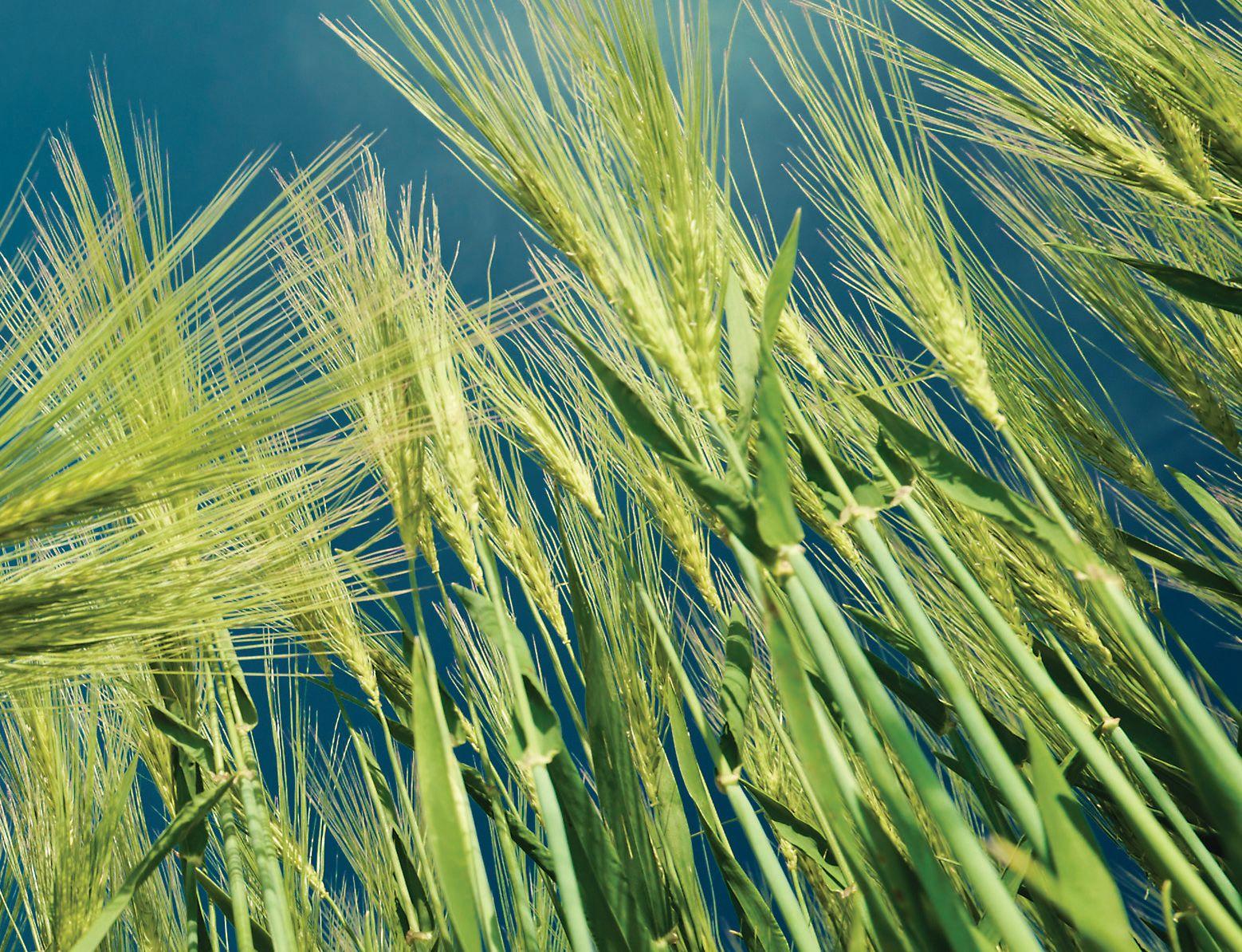
Many of Prithiviraj’s studies involve extracts of a seaweed species called Ascophyllum nodosum.
PHOTO
plants with bacterial and fungal pathogens. The treated plants had significantly reduced incidence and severity of disease, even for diseases of the shoots,” Prithiviraj says.
They determined that one of the main ways the treated plants fought the pathogens was by producing antimicrobial compounds. Those compounds reduced the pathogen’s growth and sometimes even killed the pathogen.
“In the last few years, Fusarium head blight (FHB) has been a daunting problem, so we thought, why don’t we look at it?” Prithiviraj says. “We didn’t know what to expect; our earlier research showed the ANE’s effect on the leaves, but we didn’t know what would happen in the heads.”
FHB is mainly caused by the fungus Fusarium graminearum. It reduces cereal yields and grades but its most serious impact is that the pathogen can produce mycotoxins that limit the end-uses for the grain. So Prithiviraj’s group collaborated with the Agriculture and Agri-Food Canada research centre in London, Ont., which has expertise in DON (deoxynivalenol) and other Fusarium mycotoxins.
The researchers tested an ANE in combination with chitosan, a sugar from shellfish shells that is used for disease management. They applied the two products alone and in combination as a drench to wheat seedlings inoculated with the pathogen.
The combination treatment proved to be more effective than either chitosan or ANE alone in fighting FHB in the adult wheat plants. Prithiviraj says, “We found that, at the right concentrations, the combination of the ANE and chitosan significantly reduced the incidence and severity of the disease, and to our surprise it drastically reduced the mycotoxin concentration. So that was very exciting.”
Their gene expression studies showed the combination treatment seemed to induce disease defence genes and enzymes in wheat plants.
Improved nutrient-use efficiency in corn
Another recent study evaluated the effects of an ANE on phosphorus uptake in corn. When Prithiviraj’s group applied the ANE under phosphorus-impoverished conditions, the treated plants did not show phosphorus deficiency symptoms and had higher phosphorus uptake than the untreated plants.
“We found that the ANE enhanced the plant’s ability to absorb phosphorus under normal conditions but also under stress conditions,” he notes. “When a plant is under stress, for example salinity stress, plant growth is compromised partly because of the direct effect of the stress on the plant’s physiology. But added to this, plants under stress also stop absorbing nutrients, leading to amplification of the stress.” Their research shows ANEs can help with both impacts by reducing the direct effect of the stress on the plant and by increasing nutrient absorption when the plant is under stress.
The researchers determined several mechanisms are involved in this response to the ANE. “One of these mechanisms is the effect on the microRNA in the plant. MicroRNA are small RNA that affect gene expression. In this case, the microRNA affect the genes in the plant that are essential for [maintaining the phosphorus balance within the plant],” Prithiviraj says. As a result, the ANE improves phosphorus-use efficiency in the plant even when phosphorus is present at very low concentrations. Now, Prithiviraj and his group are conducting a similar study with corn under low nitrogen conditions.
Enhanced beneficial relationship
Another one of Prithiviraj’s graduate students looked at the effect of an ANE treatment on the symbiotic relationship between a legume plant
and a species of arbuscular mycorrhizal fungi. These soil fungi are very widespread; they colonize the roots of most types of land plants and give various benefits to their host plant, such as increased nutrient uptake and improved stress tolerance.
The study’s results suggest the ANE had several positive effects on the fungus and its ability to form a relationship with the host plant. For example, the ANE treatment caused the plant to produce certain compounds that induced the hyphae – the filaments of the fungus – to produce more branches. Having more branches helped the fungus to increase colonization of the roots of the treated plants.
Prithiviraj thinks an ANE’s effects on a plant’s relationship with these fungi might be another mechanism through which the ANE imparts stress tolerance and increased nutrient uptake to the plant.
Antioxidants benefits
“When we apply a seaweed product to a plant, we see an increase in the concentration of antioxidants in the plant tissue. Antioxidants are known to protect the plant against abiotic stresses, pathogens and so on,” Prithiviraj notes. “That triggered my thinking that these antioxidants might have some benefits for people who consume the plant because antioxidants have tremendous human health benefits.”
As a first step in testing this hypothesis, one of his graduate students fed animals with seaweed-treated spinach. The treatment increased the antioxidants in the spinach and the animals fed with the treated plants had much higher stress tolerance. “So the seaweed treatment benefits the plants, and it also benefits the health of animals eating the treated plants,” he says.
In the future, if this benefit is confirmed through human clinical trials, then Prithiviraj thinks it could be important for seaweed companies, crop growers and consumers.
Looking ahead
Prithiviraj’s research group is working on various seaweed studies at present. For instance, one intriguing study is looking at the effects of a seaweed treatment on the microbiome in the soil surrounding the plant roots. Their results so far indicate the seaweed-treated plants have a greater number of beneficial microbes around their roots.
His group is also continuing to study abiotic stress effects of seaweed treatments. “That is the major work currently underway in my lab: to develop technologies to mitigate the effects of climate change on crops,” Prithiviraj notes. “Drought, excess water, and temperature extremes are increasing as a result of climate change, and seaweeds mitigate most of those negative effects on crops.”
Considering this stress reduction benefit along with other advantages, like improved nutrient-use efficiency and increased protection against diseases and insect pests, he says, “The common theme is that the seaweed products can enhance the sustainability of agriculture when deployed at the right time and right concentration.”
“At present, seaweed products are mainly applied on higher value crops like vegetables and fruits, especially small berries and fruit crops, because of the return on investment. But seaweed products are starting to find their way into row crops, like soybean and corn, in the United States. B.C. has been using these products for a long time, and they are getting traction in Ontario and Manitoba,” Prithiviraj notes.
“I see a great potential for increased use of seaweed products. Nowadays, we know more about how these products work and therefore how to apply them to get the maximum crop benefits. My own impression is that seaweed is going to get much wider use in field crops and row crops in the future.”
AN INNOVATIVE APPROACH TO ADVANCING INNOVATION
Innovative farmers and scientists team up in the Living Laboratories Initiative.
by Carolyn King
What happens when you bring together farmers, researchers and other partners to advance agricultural innovation? That’s what the Living Laboratories Initiative of Agriculture and AgriFood Canada (AAFC) is working on in regions across Canada. In Ontario, a key part of the initiative is a set of on-farm trials to codevelop leading-edge practices that make sense for farmers while making Canadian agriculture more sustainable.
“Living Laboratories is a national priority for AAFC. Four Living Labs are up and running now; they are in P.E.I., Manitoba, Quebec and Ontario. All of them focus on accelerating the development and adoption of BMPs – either beneficial management practices or better management practices – focused on priority agri-environmental issues,” explains Eric Page, a research scientist with AAFC in Harrow, Ont., who is co-leading Living Lab-Ontario (LLON) with Pam Joosse, an AAFC senior soil and nutrient management specialist.
Shared priorities and tasks
To begin LLON, AAFC held engagement sessions in 2018 and 2019 with Ontario agricultural and conservation organizations to discuss the Living Laboratories concept and how it could work in Ontario.
The participants selected the Lake Erie and Lake St. Clair watersheds in southwestern Ontario as LLON’s target region. A CanadaU.S. agreement commits both countries to reducing the amount of nutrients entering Lake Erie from urban, rural, industrial and agricul-
tural sources in the lake’s watershed. For LLON, the focus is on reducing soil and nutrient losses from agricultural lands. The participants also identified four agri-environmental priorities for LLON: soil quality, water quality, watershed management, and biodiversity.
The sessions also established the leadership and collaborations for carrying out LLON, with the Ontario Soil and Crop Improvement Association (OSCIA) taking the lead on behalf of Ontario farm and environmental organizations. “The initiative focuses on farmer needs and bringing in partnerships, and testing things in a real-life context. That really fits with what is at the heart of OSCIA,” notes Tracey Ryan, OSCIA applied research co-ordinator.
“Living Labs is an opportunity for AAFC and other federal ministries such as Environment and Climate Change Canada (ECCC) to work directly on farms, with researchers and farmers co-developing and testing innovations on real working farms right in the field. ... And it is an opportunity for different organizations to work together, enhancing each other’s capacity and knowledge, and sharing resources.”
The other organizations involved include the Ontario Soil Network (OSN), Ecological Farmers Association of Ontario (EFAO), Innovative Farmers Association of Ontario (IFAO), Essex Region Conservation Authority, Lower Thames Valley Conservation Authority, and Upper Thames River Conservation Authority.”
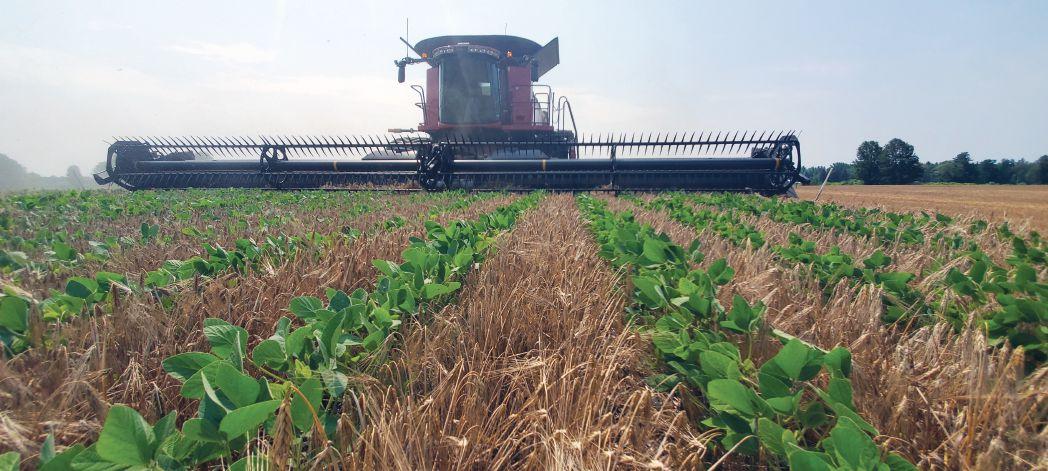
ABOVE: Harvesting winter barley in Vermeersch’s relay cropping experiment.
The LLON on-farm trials and research studies got underway 2020 and are slated to finish in March 2023.
Towards practical, economic, sustainable innovations
“The on-farm trials are a very important component of the Living Laboratories Initiative in that it accomplishes many things. One is to get in touch with farmers and their needs, and have farmers, stakeholders and scientists working together to solve problems on real working landscapes. Another is to directly involve farmers in addressing the problems of nutrient runoff and challenges with climate change and economic sustainability,” Page notes.
“The practices being evaluated in the trials are the ones that were of most interest to the farmers that we are engaged with. We asked OSCIA, IFAO, EFAO and OSN: Do you have farmers with innovative trials that they see as possible solutions to some of these agrienvironmental problems? Would they be interested in working with us on this type of project?”
IFAO selected Greg Vermeersch, Laurent (Woody) Van Arkel and Michael Groot; EFAO selected Brett Israel and Ken Laing; and OSCIA selected Henry Denotter. The trials conducted by these six farmers encompass conventional, ecological and organic production systems. They include innovations in field crop production, vegetable production, and even one that integrates rotational grazing with crop production. And the locations span the Lake Erie watershed from Essex County to the Waterloo region. The trials are knitted together by the notion of continuous cover through keeping living plants in the soil throughout the year and/or minimizing tillage.
The aim of the trials is to help the co-operating farmers develop, test and improve their innovative concepts and encourage other farmers in the region to increase the use of continuous cover on their own farms, using whichever approach works best for their own situation.
Relay vs. double-cropping trial
Greg Vermeersch, who manages VanMeer Farms in the Tillsonburg area, is interested in finding better ways to do things on the farm. He had tried double-cropping, but he wondered if relay cropping might be better. His Living Lab trial is a side-by-side, field-scale comparison of double-cropping and relay cropping using winter barley and soybeans. Both cropping systems offer a way to keep the soil covered with living plants from fall of one year to fall of the next year, but both systems have some production risks.
In double-cropping, soybeans are seeded immediately after harvesting the winter cereal, which is much later than regular soybean crops are planted. Double-cropping can work in southwestern Ontario if the weather co-operates – if the winter cereal can be harvested early enough, if moisture is adequate for soybean germination, if the killing frosts hold off until late fall. In relay cropping, soybeans are planted before the winter cereal is harvested, which means soybean is seeded at about the regular time. However, a lot of practical details need to be worked out to optimize production of both crops.
Some of the things Vermeersch would like to learn from his trial are: how double-cropping and relay cropping affect soil health, how the plant architecture of each crop affects production in the relay system, and what is the best time to seed relay soybeans.
For the double-cropping experiment, he solid-seeded winter barley at 7.5-inch spacing in fall 2020. He harvested the barley on July 15. Then he applied a burndown herbicide, and solid-seeded soybeans at 7.5-inch spacing and 180,000 seeds per acre. He chose a 2,700 heat unit soybean, a relatively short-season soybean for the area.
For the relay cropping experiment, he planted twin rows of barley at 7.5-inch spacing, but on 30-inch centres, in fall 2020. Then about April 27, he planted the soybeans in the strips between the twin barley rows, so the soybean rows were 30 inches apart. The strips for the soybean rows had about 1 to 1.5 inches of crop residue for weed suppression, and the soybeans were planted directly into that residue. He used a 3,200 heat unit soybean, a normal maturity for the area.
Vermeersch tried a 2.25-inch seeding depth for the relay soybeans, a little deeper than usual, which was intended “to keep the beans in the ground a little longer to avoid frost damage and to keep the beans from overtaking the barley because the barley was not very tall to begin with.” he says. “Planting deeper did delay emergence, but it probably caused some soil compaction in the seed trench from forcing the beans in that deep in maybe cold, wet soils. Next year, we’ll probably plant them not quite as deep and use less down-force on the planter.”
The relay barley was harvested in mid-July. “When we harvested the barley, we put tile over the cutter bar to push the soybeans down and not clip the tops, which worked pretty well. We could use something better in the future now that we know the concept works. We also learned that planting the relay soybeans really straight between the twin rows is very important. If they weren’t perfectly between, the tiles knocked over a bit of the barley crop as we were harvesting it.”
The Tillsonburg area had frost in mid-June after the relay soybeans and many regular soybean fields in the area had already been planted, but not the double-crop soybeans. “It was one of those flukes, once out of every 20 years, a late frost like that,” Vermeersch says. “We had a lot of frost damage on about 80 per cent of the trial of the relay beans, which delayed the damaged beans by about two or three weeks.”
He adds, “Out of all the soybean acres in the area, some of the
Greg Vermeersch and his Living Lab on-farm trial.
worst damaged were the relays. In the relays, there is probably less moisture because the barley crop is there, and all the trash that we left let less heat in. So, I think relay soybeans have potentially high risk with high rewards – a double-edged sword.” The soybean yield data and the economic analysis for his 2021 trial are still to come.
Scientists’ roles
Andy van Niekerk is the project co-ordinator for Vermeersch’s trial and the other two IFAO trials and acts as a bridge between the farmers and scientists. “I’m a certified crop advisor and I have some experience with field research and scientific rigour. So, I’m kind of an interpreter – I speak researcher and I speak farmer.,” he says.
Van Niekerk helps with the trials in several ways, including co-ordinating scientific activities so the co-operators don’t have to deal with a lot of calls from everyone involved in data collection. Several AAFC researchers are working on studies of Vermeersch’s trial: soil scientists are monitoring the soil’s chemical properties and microbial community to look at these characteristics under relay versus double cropping; Entomologists are monitoring traps for pollinators and looking at non-chemical ways of reducing wireworm pressure; A nematologist is examining the effects of the two cropping systems on soybean cyst nematode populations; And an economist will work with Vermeersch to assess the costs and benefits of the two cropping systems.
Van Niekerk also provides input to co-operating farmers on trial design. In late summer 2021, Page and van Niekerk asked Vermeersch what did and didn’t work and how the process could be improved, discussing things like seeding rates and soybean maturities to help with his planning for this fall and next spring. This approach is a little different than a scientific study where researchers would keep the same plot treatments for all the years of the study to ensure repeatability.
“Our job here is to help Greg work the kinks out of the cropping system in such a way that it is economically sustainable,” Page explains. “Then our scientists can weigh in a little bit on the environmental pros and cons.”
Ideas for improving co-development
While the farmers’ innovations are being developed, tested and improved, the Living Lab approach itself is being developed, tested and improved by the trial participants.
The co-development process has been challenging, especially in summer/fall 2020 when Vermeersch was planning the first year of his trial. Van Niekerk says, “Because of COVID, we couldn’t visit in person, and we weren’t quite used to working in a COVID atmosphere yet. Also, the concept of co-development is really new for all of us. We are continually trying to tweak and improve our methods in codevelopment and collaboration, but we’re learning together.”
“It is a steep learning curve, understanding everybody’s roles, what their needs are, and what our needs are, and everybody is learning their way through this,” Vermeersch notes. “We were expecting a lot of support and a lot of farm visits, and I don’t think that came to fruition. And COVID changed a lot of things – sitting down at the kitchen table is obviously better for working out a plan than being 100 kilometres away and trying to do it over multiple Zoom screens. But we’re in the early stages of Living Labs, and hopefully it can grow into something with less red tape and more back-and-forth between researchers and farmers, trying to solve problems and answer questions at both ends.”
“I’ve learned that we need more regular conversations, even if it is just five minutes, to see what is going on,” van Niekerk says. “And I
think more face-to-face time between the scientists and the farmers would help. Scientists have reservations about suggesting outcomes without scientific proof, while farmers are used to making decisions without complete information.” More discussion between scientists and farmers might find a way across this difference in perspectives.
“I’ve also learned that we need a few more repetitions in the trial, not just one comparison,” van Niekerk notes. “My goal is to help Greg answer the question: is relay more profitable than double cropping? But we’re also trying to maintain some scientific rigour because we want these best management practices we’re developing to be [repeatable, scalable] practices that could be adopted by other farmers.”
Despite the initial challenges, the co-development concept has promise. “I certainly have appreciated getting out and being in touch with farmers and the different organizations,” Page says. “I have learned a tremendous amount from even the limited amount of participation that I have been able to have.”
“When farmers are stepping out to try innovative ideas there is a lot of unknown risk – this [federal] funding helps to mitigate some of that risk,” van Niekerk adds. “It helps when someone else is in that space with them and helping them determine whether it’s worth going further down that new road.”
“Hopefully with some time, the Living Lab approach will be a valued asset to help speed things along with other farmers and researchers,” Vermeersch says. “This approach is an opportunity for both sides to learn and solve real issues that innovative farmers are challenged with. We all want to learn and improve. We have the equipment and the lands to do it, and they have the knowledge and resources to help bridge that gap [from concept to reality].”
Other components of LLON
Along with the on-farm trials, LLON has watershed-based research, socio-economic research, and education/outreach components.
“The watershed component makes up a lot of the work that the researchers are doing in the initiative. ECCC and AAFC are working with the conservation authorities, evaluating and monitoring what is happening on the farm and how that is translating into the watershed’s overall water quantity and quality parameters,” Ryan says, adding that this component includes a long list of research activities, including: surface water quality and quantity monitoring, land management surveys, remote sensing of cover crops and soil disturbance, and biodiversity studies on topics like aquatic microbial and invertebrate communities.
“The socio-economic component includes field- and farm-scale work as well as broader-scale studies. We are trying to provide some detailed field-scale and farm-scale economic analyses that can feed back to the farm co-operator, and that could also be rolled up into larger information pieces which can be used for knowledge and tech transfer, but also used in larger studies about why do people adopt, what needs to happen, and are there ways to predict adoption.”
OSN is leading the engagement, education and outreach component, with IFAO, EFAO and OSCIA taking active roles.
LLON will end in March 2023, but AAFC is using the Living Labs approach in its new programs – AAFC’s Agricultural Climate Solutions program, which aims to develop and implement farming practices to address climate change, will include a national Living Lab network.
“I think there is a great future for the Living Lab approach,” Ryan says. “It brings together a diverse group of players and engages different levels of thinking and ways to approach a problem –that brings you to a better solution than just thinking about it by yourself.”
Take your farm everywhere you go with John Deere Operations Center™. As a complete management tool, Operations Center allows you to see near real-time data, assign jobs to operators and even make adjustments, all from your mobile device. You can also share valuable insights with your trusted contacts, helping you analyze your performance and make a plan for next season. It’s your way of farming, plus the confidence and control you need to Gain Ground+ See what you have to gain : JohnDeere.ca/GainGround 1,962 ACRES. AND
Maximize crop potential with Utrisha™ N nitrogen efficiency biostimulant.
Utrisha N provides a sustainable, alternative source of nitrogen that reduces dependency of nitrogen uptake from the soil and ensures the plant has access to nitrogen all season long. An effective solution for many crops including canola, corn, wheat, and soybeans, Utrisha™ N provides crops a unique way to capture nitrogen throughout the season, helping plants reach their yield potential.
Visit your retailer today to order Utrisha™ N for 2022.