Evaluating the sustainability of different land-clearing practices in northern Ontario.
PG. 6
SUPPRESSING WEEDS WITH COVERS
Can roller crimping take off in Ontario?
PG. 10
6 | What’s the best way to go from forests to crops?
Evaluating the sustainability of different land-clearing practices in northern Ontario.
By Carolyn King
10 | Suppressing weeds with covers in sweet corn
Roller crimping is popular in the U.S. Can it take off in Ontario?
By Julienne Isaacs
12 | Challenging times for glyphosate Can agriculture learn to live without the “unicorn” product? Does it have to?
By Julienne Isaacs
WEB
Grain Farmers of Ontario (GFO) has donated $2-million to the University of Guelph to support a new GFO Professorship in Field Crop Pathology at the university’s Ridgetown Campus. A faculty member will be appointed this year in the department of plant agriculture within the university’s Ontario Agricultural College (OAC).
ALEX BARNARD EDITOR
BETTER THAN BEFORE
What do you want from the coming year?
This is our first issue of 2023, so while the time for New Year’s resolutions may be past, it remains a time of reflection on the previous year and consideration for the growing season ahead.
Goal-setting can be difficult in agriculture, with so many variables beyond your control. It’s tempting to think about determining success by yield – and for good reason, as that’s the main metric that nets bragging rights and puts money in the bank. But a stretch of bad weather or major weather event at the wrong time can put the kibosh on record-breaking yield aspirations faster than you can say “looks like rain.”
You may have heard of SMART goals – the acronym stands for specific, measurable, attainable, relevant and time-bound. It’s a set of parameters to make sure you’re not setting yourself up for failure or disappointment right off the bat.
The time-bound factor is probably the easiest to determine; you can use the entirety of the 2023 growing season, whenever that ends for you. Or you can choose a specific month or something a little more vague, like “once harvest is complete.”
Consider: “I want to increase my corn yields.” Well, okay – how? By how much? And is that amount reasonable? Breaking down a goal into its constituent parts can point out weaknesses in the plan or help you consider what might be more realistic.
Saying you want to grow 200+ bushel per acre corn is great. But if your average yields are closer to 150 bu/ac, is it reasonable to think you can push that number up by 33 per cent or more in one growing season? What measures will you take to make it happen? With the uncertainty of fertilizer costs and availability, on top of factors like insect pests, disease, weeds, timing and weather, which differ from region to region and year to year, is this the year to push yield expectations sky-high?
So, with a little consideration and running the numbers on what’s doable for you, the goal could be “I want to increase my corn yields by X per cent from Y bu/ac to Z bu/ac (based on what’s realistic for my field) during the 2023 growing season by doing a soil test to determine my soil’s nutrient needs and balancing them with inputs through variable-rate management.” Wordy, but it hits all the SMART goal parameters and will be easier to track and reflect on come November.
And remember – setting a goal isn’t only about achieving it. Adages like “shoot for the moon; even if you miss, you’ll land among the stars” or “it’s not the destination; it’s the journey” may have been rendered a bit cheesy through repetition, but the sentiments have merit. Whether you accomplish exactly what you set out to do, do better than you did before, or completely bellyflop and take only lessons and some bruised pride from the experience – you tried something with the intention of improvement. A well-crafted plan is always worth trying. And, come this time next year, you’ll be that much better equipped to try again.
WHAT’S THE BEST WAY TO GO FROM FORESTS TO CROPS?
Evaluating the sustainability of different land-clearing practices in northern Ontario.
by Carolyn King
Changes in climate are increasing opportunities for agricultural expansion in northern Ontario, and that will involve conversion of forested land to crop production. But land conversion is a big undertaking. It takes a lot of time. It takes money. And there are multiple ways you can go about it,” notes Amanda Diochon, an associate professor and terrestrial biogeochemist at Lakehead University.
“Farmers really want to protect and enhance their soils. So, they are trying land-clearing practices that keep more soil and more soil organic matter on their fields. In the longer run, that should help their organic matter stores and soil health, but other issues can crop up. Farmers are trying these approaches because it makes sense [for their soil], but at the end of the day, does it ‘make cents?’ We don’t know yet.”
That’s why Diochon is leading a project to examine the end results of different land-clearing methods in northern Ontario in terms of soil health, environmental sustainability and economic profitability.
The project’s funding is from Grain Farmers of Ontario (GFO), Natural Sciences and Engineering Research Council of Canada (NSERC) Alliance, and Lakehead University Agricultural Research Station (LUARS). Diochon is working on this project with Dave Morris, a soil scientist at the Ontario Ministry of Natural Resources and Forestry, and Emily Potter at the Northern Ontario Farm Innovation Alliance (NOFIA), a project partner.
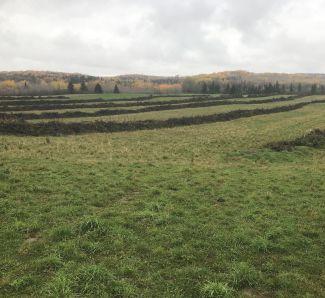
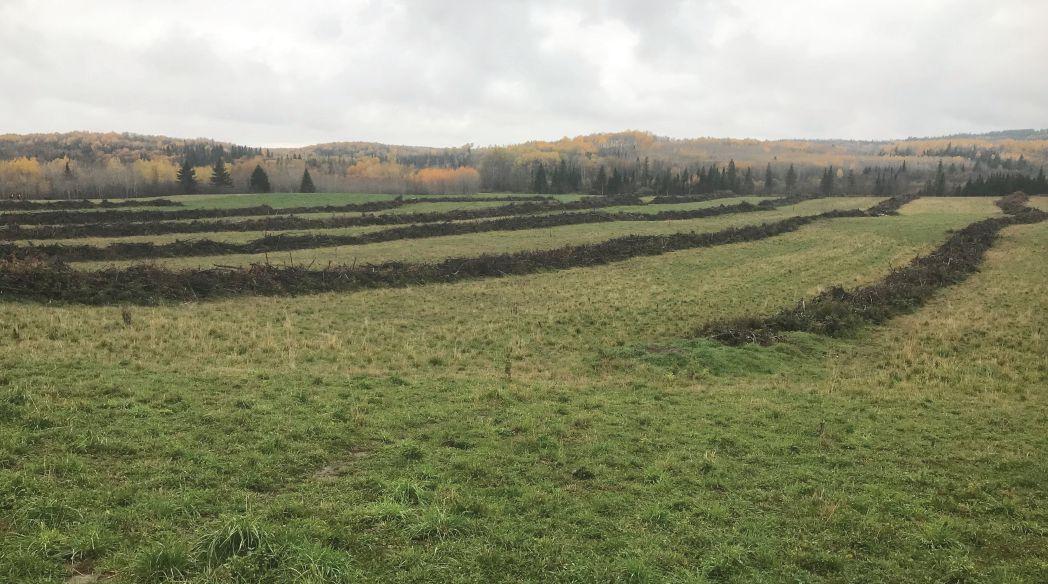
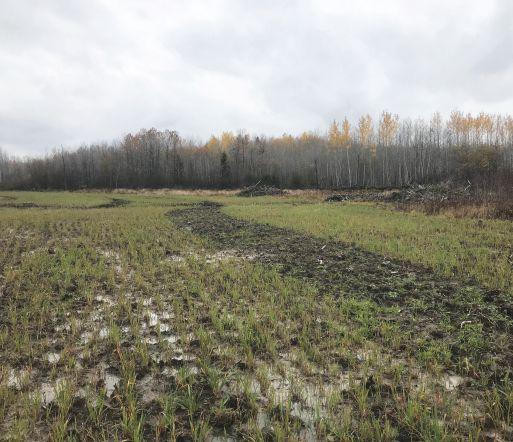
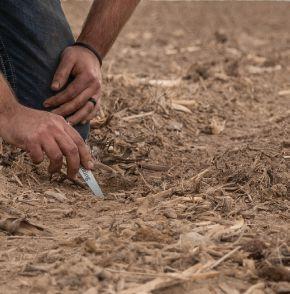
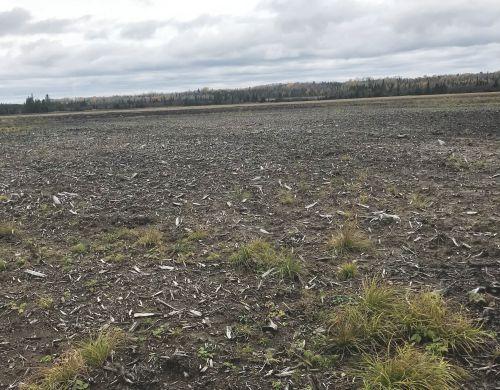
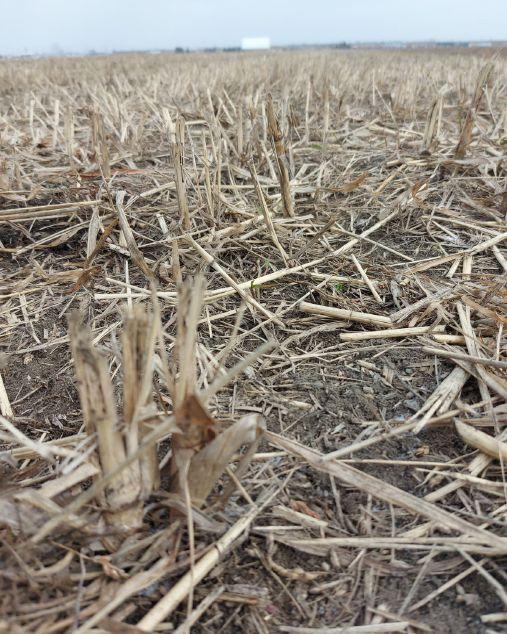
TOP: An example of conventional clearing where the woody material is windrowed.
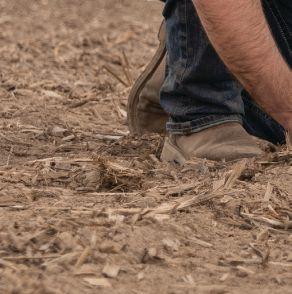
MIDDLE: An example of conventional clearing where the woody material is pushed to the side of the field.
FOR FARMERS WHO BELIEVE IN BETTER.
ACCURACY TOOLS YIELD EQUIPMENT PERFORMANCE
PROFITABILITY SEED PLACEMENT FUTURE VISIBILITY
MANAGEMENT STEWARDSHIP CROP EMERGENCE
SEASONS RELATIONSHIPS SOIL HEALTH WATER USE
Believing in better is a mindset to pursue excellence in everything you do. It’s welcoming opportunities to improve your farm and knowing that your best season is simply a starting point for this season. Precision Planting is for farmers like you who Believe in Better.
Land clearing and organic matter
“With any land conversion – and this is not limited to northern Ontario – there is typically a decline in soil organic matter contents,” Diochon notes.
“With conversion of forest to agriculture, you’re going to see about a 30 per cent decline in soil organic matter on average.”
As growers know, soil organic matter is important for good soil structure, water infiltration, water-holding capacity and nutrient cycling, which all contribute to a soil’s ability to support crop growth. Consequently, soil organic matter loss can have both economic and environmental impacts for farms.
The amount of organic matter loss is influenced by which particular land-clearing practices are used. Diochon’s project is comparing conventional land clearing and land clearing with mulching, which are the two main approaches being used by northern Ontario farmers these days.
She outlines in broad terms what is involved in each approach. “Conventional clearing involves first harvesting any trees that are worth money. Then you [use a bulldozer to] shear off the residual woody material and pile it up or remove it from the site. You could bring the cleared area into crop production in a year conventionally by shearing everything off and pushing it over to the side of the field. That, of course, is going to be really hard on your soil [especially if the bulldozing step removes a lot of topsoil].
“With mulching, you also start by taking anything that’s worth any money off the site. Then a mulcher goes in and grinds up the remaining aboveground biomass – the trees, shrubs and stumps left behind. And then that mulched material is incorporated into the soil. So, with mulching you’re keeping more soil and more organic matter on the field.”
Within both of those approaches, Diochon is seeing a lot of variation in what farmers are doing across the region. “Based on what I’ve been hearing from farmers, it really comes down to who is doing the work, and how much money you have to spend on it.”
For example, in conventional clearing, sometimes the woody material is piled up and left to decompose, and sometimes the piles are burned and then the burnt material is redistributed across the field. In mulching, different mulcher heads can give somewhat different results. As well, some mulching operators do more intensive mulching than others. She says, “On some fields, the mulched material looks almost like wood chips. In other cases, you’ve got lengths of wood.”
Diochon notes, “Mulching can be viewed as being a way to bring land into production faster. But I’m not sure if that’s the case.”
Although mulching adds more woody material to the soil, even conventional clearing leaves a lot of wood in the soil from the tree roots. And woody biomass material has implications for nutrient availability.
“Wood has a wide carbon-to-nitrogen ratio. That means farmers need to apply more nitrogen to break wood down,” she explains. “So, in the short term, to maintain crop yields, a mulched field will probably require more nitrogen fertilizer than if it had been cleared conventionally. What that means at the end of the day to profit margins is still up in the air.”
She adds, “It’s not necessarily a negative thing to have to apply extra nitrogen fertilizer. I would argue that you would recover some of that nitrogen. The nitrogen is taken up by the soil microbes while they are decomposing the wood. So [when the wood has been broken down], the nitrogen should come back to you in your soil’s bank of nitrogen.”
Assessing sustainability
To some extent, Diochon’s project is building on an earlier study by the Temiskaming Crops Coalition, Cochrane Soil and Crop Improvement Association, Ontario Soil and Crop Improvement Association, and NOFIA. That study compared different methods for converting forested land to agricultural production. It resulted in various recommendations and a Land Clearing Guide for northern Ontario farmers (available at nofia-agri.com).
Diochon’s project is looking at some of that study’s recommendations and also digging into the longer term effects of the two landclearing approaches at locations across northern Ontario.
“The project’s goal is to identify land-conversion practices for agricultural expansion in northern Ontario that maximize profitability and promote economic and environmental sustainability,” she explains.
“To achieve that goal, the project is tackling three objectives: to quantify and compare the effects of different land-clearing practices on soil health and soil organic matter stores; to identify some best management practices for land clearing that maintain and enhance both soil health and crop yields; and to probe into the land-clearing options from a profit margin perspective to identify economical ways to increase the agriculturally productive land base of the province.”
One part of the project involves sampling northern Ontario fields that have been cleared over the last 10 years. According to Diochon, this past decade is when a lot of clearing has been happening in the region and also when mulching has become a more common approach.
“We want to see what farmers have been doing and what the effects are on soil health, and to learn from them about what’s worked and maybe what hasn’t,” she says.
In collaboration with interested farmers, her team has sampled the soils at 10 conventionally cleared fields and 10 cleared fields with the mulch incorporated into the soil. Each of those fields has been paired with a forested area next to the field, which has also been sampled.
The sites are in: the Rainy River area; north of the New Liskeard/ Temiskaming Shores area; the Algoma District; and the Thunder Bay area.
They collected the samples from the top 15 centimetres (six inches) of the soil, using the Ontario Ministry of Agriculture, Food and Rural Affairs (OMAFRA) sampling protocol – the same protocol farmers use when sampling for soil fertility testing.
The team is currently analyzing those samples to determine the effect of the land-clearing practices on soil organic matter levels and other characteristics related to soil health.
The other part of the project will involve a greenhouse or field trial
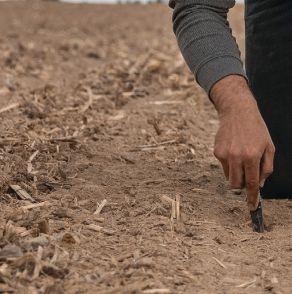
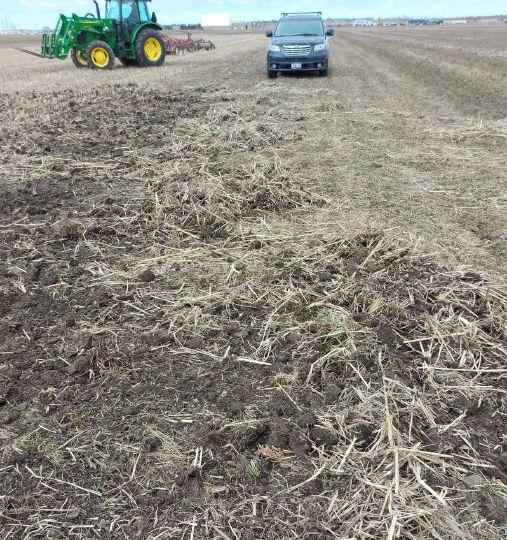
An example of land clearing with mulching, showing wood chips in the mulched soil.
to compare the different land clearing options under various crop rotation treatments and fertilizer treatments, looking at the effects on soil health, soil organic matter levels, input costs and crop yields.
Wood incorporation and fertilizer
Diochon is currently finishing up the analysis from another one of her land-clearing studies. This LUARS-funded study was a greenhouse trial that she set up to look into questions like: Does it matter how much wood you incorporate into the soil? How well do the standard fertilizer recommendations work for soils where wood has been incorporated?
“The Ontario fertilizer recommendations work well for a soil that has already been in crop production. But when you have incorporated wood into the soil, applying fertilizer based on what the soil test tells you is not cutting the mustard. I think that may be because of the effects of the decomposition of the wood and the nutrient demands of the organisms that are doing the decomposition,” she notes.
“One of the goals of this greenhouse trial was to see if there is an increase in the size of the microbial community and changes in nitrogen availability in soils where wood has been incorporated.”
For this trial, Diochon and her team first conducted an inventory at a forested site to estimate the amount of aboveground woody biomass available to be incorporated if that site were cleared.
The greenhouse trial’s main treatments were: zero, 25, 50, 75 and 100 per cent of that woody biomass incorporated into soil collected from the site.
Within each of those main treatments was another set of treatments: no fertilizer; fertilizer; lime and fertilizer; and wood ash and
fertilizer. The fertilizer was applied at the OMAFRA-recommended rate based on the soil test. The liming and fertilizer treatment was included because the soil was quite acidic. The trial looked at the yields from four successive barley crops.
Although there was quite a bit of variability in the results, the overall finding was that the more wood you incorporated, the more the barley yield decreased.
Diochon will be looking at the data to see how long the barley yields remained depressed after wood incorporation.
Interestingly, the lime and fertilizer treatment actually resulted in the lowest barley yields, whereas in theory it should have had the best yields. Diochon hypothesizes that the increased pH in the limed treatments was better for the microbial community, so their numbers were higher and they increased their competition with the plants for the nutrient supply. If that’s the case, then liming plus higher fertilizer rates could have increased the barley yields.
She also suspects the reason why the yields were better with the wood ash plus fertilizer treatment than the lime plus fertilizer treatment was because wood ash contains phosphorus and potassium, which may also be limiting.
Considering the complexities involved in her research to develop recommendations for crop rotations and fertilizer rates under different land clearing practices, Diochon is very impressed by farmers who are pioneering mulching practices on their own farms.
“Farmers really care about their soils, and they recognize the value in protecting their soils. That’s why they are trying these different approaches. It’s challenging from a research perspective to try and figure out what’s best. They’re living it.”
WIN UP TO
AgExpert helps manage farms from your fields to your finances—including fuel expenses. To help with those, AgExpert is giving away three fuel gift cards. Learn how to enter at agexpert.ca/fuelyourfarm or scan the QR code.
SUPPRESSING WEEDS WITH COVERS IN SWEET CORN
Roller crimping is popular in the U.S. Can it take off in Ontario?
by Julienne Isaacs
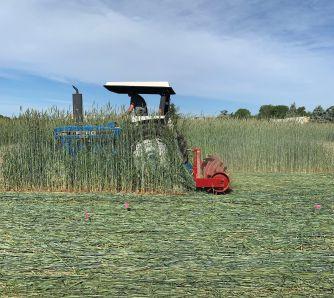
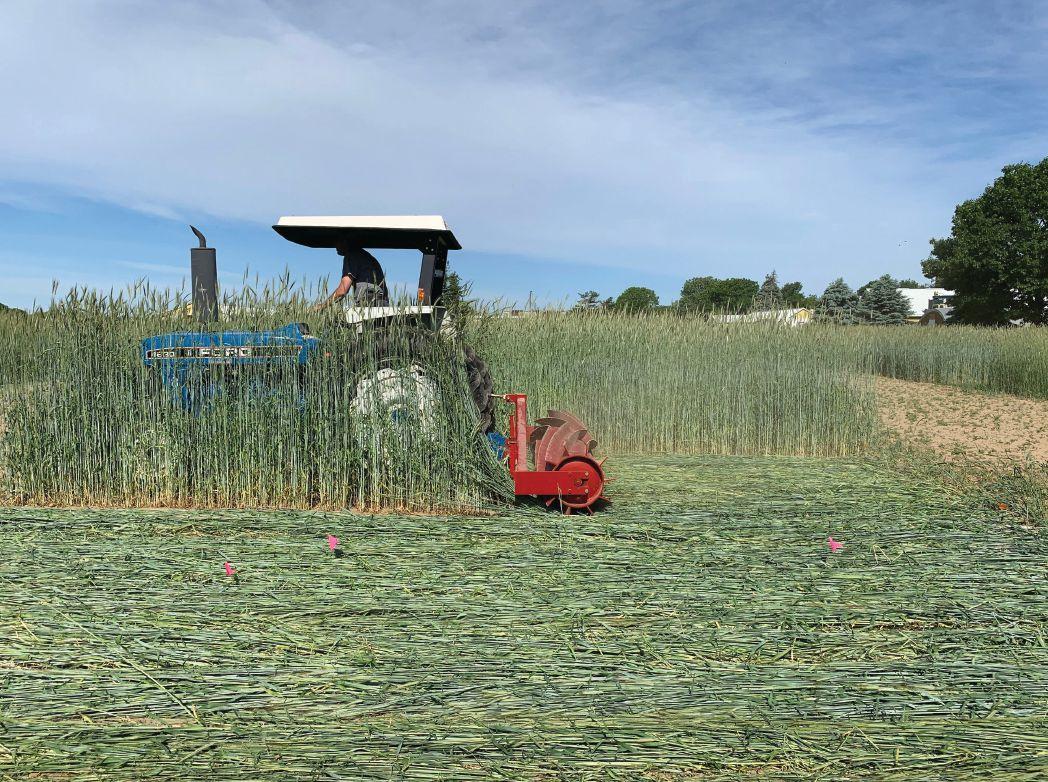
Roller-crimping a fall-sown cereal rye cover crop is a popular practice in some parts of the United States: it’s an effective weed suppressant and it saves a herbicide application.
But it’s not as popular in Canada, says Hayley Brackenridge, an organic research specialist for Agriculture and Agri-Food Canada (AAFC).
This is partly because research on roller crimping as a weedcontrol strategy is lacking north of the border, Brackenridge says. Producers are understandably leery about investing in new equipment without assurance it’ll pay off. There are alternatives to buying tractor-pulled or mounted roller crimpers outright, though.
“There’s a barrier to adoption because you have to invest in the equipment, but some producers who have bought it are looking at loaning or cost-sharing it,” she says. “Companies that bring it into [Canada to] sell are doing demonstrations for producers to test it before they buy it.”
When it comes to research, the data is slowly rolling in. In 2022, Brackenridge published her master’s thesis at the University of
Guelph on management practices for producers aiming to use rollercrimped fall rye as a weed suppressant in sweet corn, co-supervised by Francois Tardif, a professor in the department of plant science at the University of Guelph, and Robert Nurse, an AAFC research scientist.
As part of the study, Brackenridge conducted two trials. One looked at three seeding rates for two rye cultivars, one standard and one early maturing. The second evaluated rye planting directions (north-south versus east-west) and roller crimping directions.
Brackenridge says she opted to focus her work on sweet corn due to the crop’s popularity in Ontario, and because it can be sown late without sacrificing profitability.
Study design and results
The study took place between 2019 and 2021 at three AAFC sites across the country: Agassiz, B.C.; Harrow, Ont.; and St. Jean-sur-
TOP: Roller crimping of cereal rye performed by Jeff McCormick, farm foreman at the AAFC Harrow Research and Development Centre.
Richelieu, Que., although each year the trials took place in different fields within each location.
In each location, a local standard rye variety was compared to Elbon, a southern U.S.-developed winter cereal rye, at three seeding rates: 150, 300, and 600 seeds per square metre (seeds/m2). There were also weedy and weed-free no-rye control plots.
Brackenridge also opted to compare treatments with and without post-emergent herbicide applications.
Rye cover crops were terminated via roller crimping when plants reached a stage between 50 per cent anthesis and early milk stage. Brackenridge opted to use three-metre-wide rear tractormounted roller crimpers filled with water. Six days following termination, corn was planted with no-till planters directly into the crimped rye.
Brackenridge says seeding rates between 300 and 600 seeds/m2 seemed to be most effective in terms of weed control.
“The increase in weed control by mid and high seeding rates may be attributed to their higher biomass and ground coverage compared to the low seeding rate,” she writes in her thesis. “Increased cover crop biomass has been shown to increase ground coverage, which improves weed control.”
Interestingly, weed control improved with seeding rates between 300 and 600 seeds/m2, Brackenridge notes, but there was no statistical difference between the mid and high rate. In other words, producers can assume that 300 seeds/m2 is adequate.
“Three hundred [seeds per square metre] is based on the typical rate that people would sow rye as a cover crop,” she says. “[It was] good to see that result, that [the highest rate is] not necessarily required, because that will save producers a lot of money.”
Recommendations and next steps
Although there was a positive correlation between mid and high seeding rates and weed control, neither rate – 300 or 600 – provided enough weed control to prevent yield loss in sweet corn.
Even so, Brackenridge says there are still appreciable benefits to the system.
“Future research should test the feasibility of applying postemergent herbicides to control weeds after roller crimping,” Brackenridge concludes her thesis. “Combining roller-crimped rye with post-emergent herbicide could create an effective integrated weed management program that reduces chemical inputs and builds soil health and stability.”
One experiment, where roller-crimped rye was combined with a post-emergent herbicide, performed really well, she says.
This means producers could potentially eliminate use of a preemergent herbicide and start to reduce reliance on chemical inputs.
“It doesn’t produce completely clean, high yields on its own, but having a combination is beneficial,” says Brackenridge. “It reiterates the value of integrated pest management – you can’t rely on one system exclusively. It’s combining multiple systems that will give us the best results.”
In terms of varietal differences, Brackenridge notes use of the earlier-maturing variety Elbon offered no benefit to weed control or yield, partly because local standard varieties provided higher biomass.
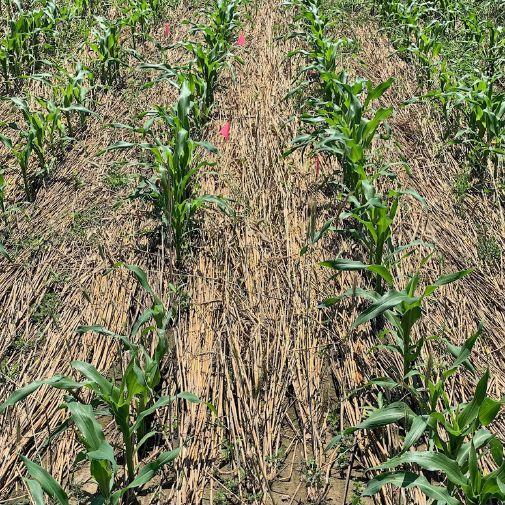
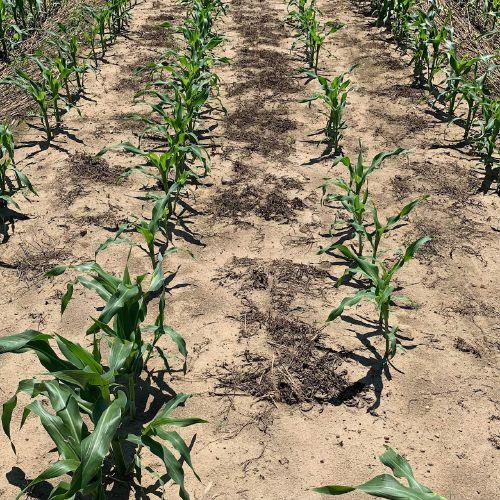
Sweet corn in roller crimped cereal rye (cultivar Hazlet) sown at 600 seeds m2, four weeks after planting.
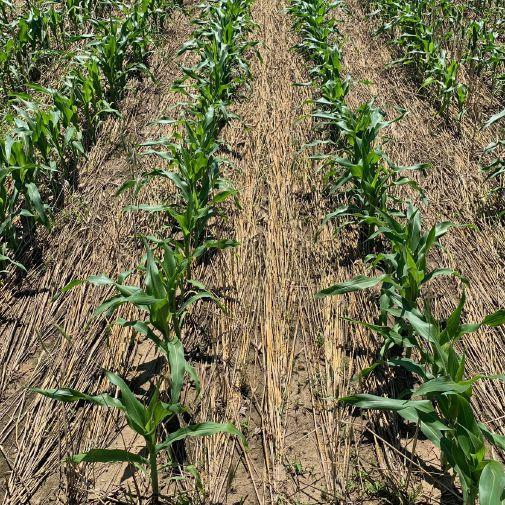
Sweet corn in roller crimped cereal rye (cultivar Hazlet) sown at 600 seeds m2 with post-emergent herbicide, four weeks after planting.
Sweet corn in no-rye control plot with post-emergent herbicide, four weeks after planting.
CHALLENGING TIMES FOR GLYPHOSATE
Can agriculture learn to live without the “unicorn” product? Does it have to?
by Julienne Isaacs
Few agricultural products have global name recognition like glyphosate. The broad-spectrum, systemic herbicide has been in use since 1974, when Monsanto commercialised it under the trade name Roundup.
According to a 2017 Health Canada document on the reevaluation of glyphosate, it’s the most widely used herbicide in Canada. Around the world, its use is on the increase, according to 2022 market reports.
Glyphosate is a kind of “unicorn” product thanks to a variety of factors, says Eric Page, a research scientist with Agriculture and Agri-Food Canada (AAFC). Glyphosate is easy to use and inexpensive. There are few other chemistries that have the same efficacy three seasons of the year – as a pre-emergent burndown product, in-crop on glyphosate-resistant crops, and as a pre-harvest aid.
“[For] pre-seed burndown we have only a single alternative product, glufosinate,” says Page.
Because of this, glyphosate is almost never completely cut out of a weed management program: what happens more often, he
says, is that producers keep it in the same use pattern while adding other products to control escapes.
“So maybe where your burndown used to be seven dollars an acre, you’re having to add more expensive products to get back that efficacy. But glyphosate is still the bedrock of that,” Page explains. “Analogously, if you move into in-crop applications, we’ve seen the development of next-generation herbicide tolerance traits, and [those are] stacked on top of resistance to glyphosate in corn and soy.”
Page, with AAFC research scientist Robert Nurse, gave a presentation on challenges facing glyphosate at last year’s Co-operative Program in Research and Technology for the Northern Region (Procinorte), a trilateral network comprising the federal agriculture departments of Canada, the United States and Mexico.
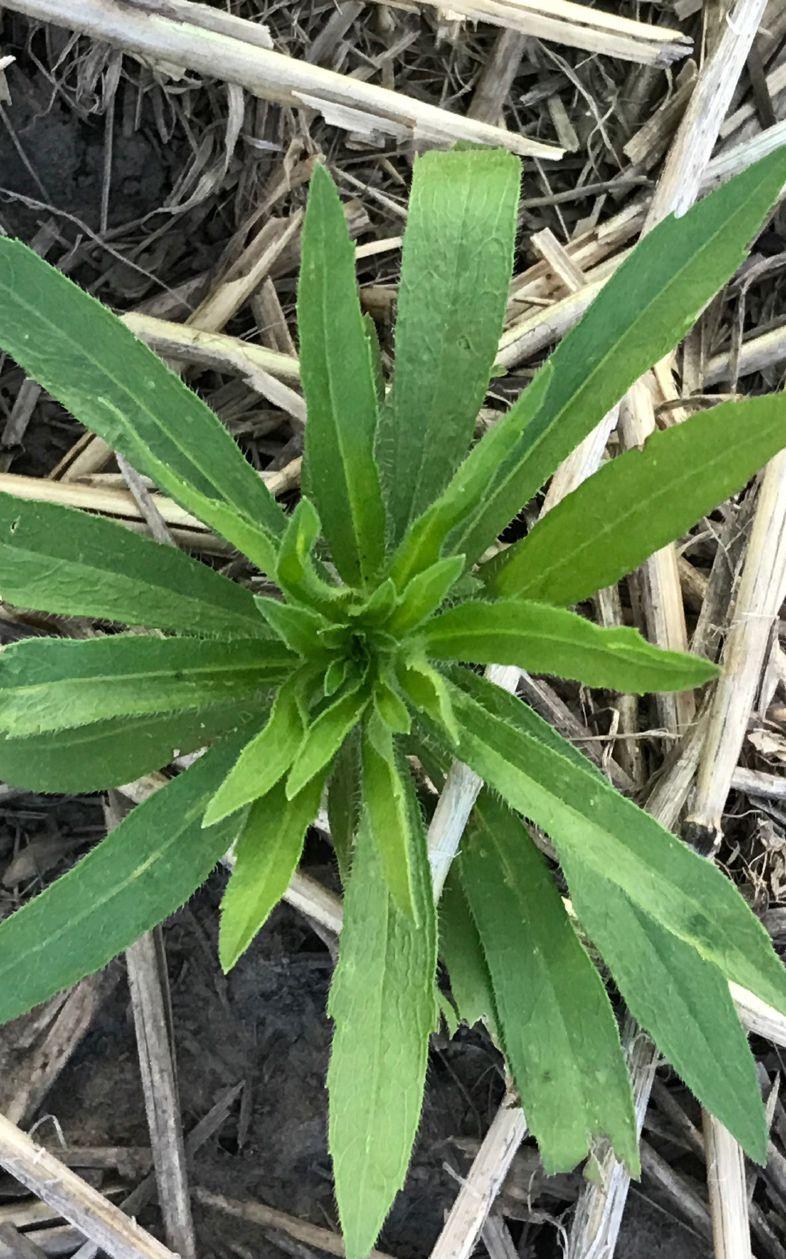
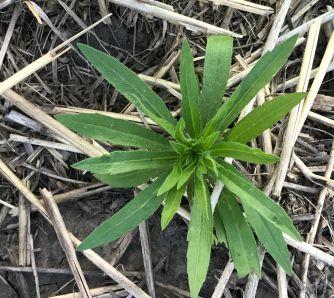
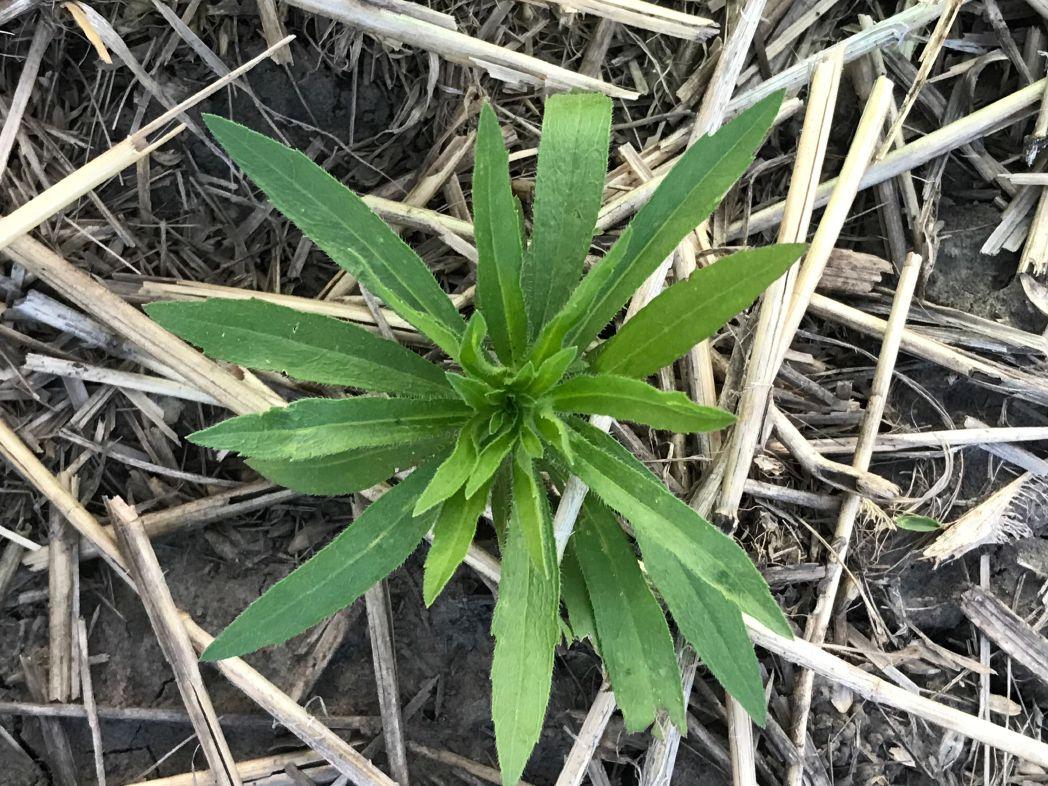
Thanks to its ubiquity, glyphosate resistance continues to ABOVE: Canada fleabane is a problem across North America and other parts of the world; glyphosate-resistant Canada fleabane is widespread.
spread in Canada, Page and Nurse stated in their presentation.
Between 2013 and 2018, to name just one example, the percentage of kochia in Manitoba that showed a level of resistance to glyphosate jumped from one per cent to 58 per cent.
Alternatives
A recent research study conducted by University of Guelph scientists Peter Sikkema, Nader Soltani and others, which aimed to estimate potential economic losses due to glyphosate-resistant (GR) weeds in Ontario, concludes, “the annual loss of farm-gate income from GR volunteer corn would be $175 million, $104 million from horseweed, $11 million from waterhemp, $3 million from giant ragweed, and $0.3 million from common ragweed, if these are left uncontrolled in the main field crops grown in Ontario, for a total of $290 million.”
But there are significant costs associated with adjusting weed management programs to prevent major crop losses due to the presence of glyphosate-resistant weeds, the authors add. “This study estimates that glyphosate-resistant weeds would reduce the farm-gate value of the major field crops produced in Ontario by $290 million annually if Ontario farmers did not adjust their weed management programs, but with increased herbicide costs of $28 million and reduced crop yield loss due glyphosate-resistant weed interference to five per cent the actual annual monetary loss in Ontario is estimated to be $43 million annually.”
Apart from costly issues with resistance, glyphosate has an image problem. Page says that, due to public attention to the question of glyphosate’s safety for the environment and human health,
changes in public tolerance for crops that are exposed to glyphosate have impacted value chains.
Page says the problems plaguing glyphosate are well-documented and understood. The identification of alternatives is a far more difficult task.
In their presentation last year, Page and Nurse reviewed a host of possible alternatives, including chemical (the use of multiple modes of action and a possible return to older modes of action), biological (genomics), cultural (cover crops, intercropping and rotation) and physical or mechanical (tillage, harvest weed seed control, robotics and electrocution or lasers).
In recent years, Agriculture and Agri-Food Canada has placed a strong emphasis on the latter option. Alberta AAFC scientist Breanne Tidemann’s work on harvest weed seed control, including the Harrington Seed Destructor, is one example.
Nurse’s investigation of electrocution treatments for weed control is another. Weed electrocution research has been ongoing in Europe and the United States for a few years; in Missouri, it’s been investigated as part of a glyphosate-resistant waterhemp control strategy. Nurse is looking at applications in dry edible beans.
The goal of all this research isn’t to completely remove glyphosate from the picture, but rather to keep the product in use as part of an integrated management package.
“One pillar of integrated weed management is chemical control rotation or alternatives,” says Page. “That’s important because it provides a short-term solution for addressing the farmer’s problem: they have an escape, they need to manage it.”
SANDBAGS
HIGH-YIELDING BEANS.
EXPLORING AMF INOCULANT OPTIONS
Could you boost your crop’s beneficial fungi – and your yields – with your own farm-grown fungi?
by Carolyn King
Communities of helpful fungal species called arbuscular mycorrhizal fungi (AMF) occur naturally in most soils around the world, including crop fields. Research shows these fungi can provide vital benefits to plants. Some crop growers are trying to enhance the pre-existing AMF community in their fields by applying commercial mycorrhizal inoculants.
Now, a northern Ontario project is looking into the possibility of on-farm-produced AMF inoculants and seeing how they compare with commercial inoculants.
“Mycorrhizal fungi are considered obligate symbionts – they completely rely on their host plant for all the carbon they need. The fungi return this favour by providing their host plant with better access to nutrients, especially phosphorus and some other more slowly mobile nutrients,” explains Pedro Antunes, the lead investigator on this project.
AMF can form mutually beneficial relationships with most types of land plants, including crops like wheat, corn and soybeans. This symbiosis involves the fungus colonizing a host plant’s root, growing inside the root, and developing thread-like fungal arms known as hyphae. The hyphae grow beyond the root and explore the soil to acquire nutrients for the plant.
In addition to nutrient acquisition, AMF can provide other perks to their host like increased water access and greater disease tolerance, as well as soil quality benefits like higher soil organic matter content and improved water-holding capacity.
However, some agricultural practices, like using intensive tillage, applying high rates of inorganic fertilizers and growing non-host crops, such as canola, have the potential to degrade a field’s native AMF community.
Antunes, Maren Oelbermann and Joshua Nasielski put together the concept for this field project. All three scientists have agricultural backgrounds, but each brings a different perspective to the research.
Antunes leads the Plant and Soil Ecology Lab at Algoma University, with research interests that include AMF. He also notes, “I’m working in northern Ontario in an area where we are seeing a lot of agricultural fields come back into production. With climate change and the movement of agriculture toward northern latitudes, we have to really rethink how to utilize our soils in a sustainable way.”
Oelbermann leads the University of Waterloo’s Soil Ecosystem Dynamics Lab. “My research area is about soil science in terms of carbon and nitrogen dynamics, greenhouse gases, and general soil health and soil quality aspects,” she says. “I also like to look at the broader picture in terms of how this can all be done in a more sustainable way.”
Nasielski, who heads the Northern and Eastern Ontario Agronomy Research Group at the University of Guelph, brings a crop-science viewpoint to the project. “Greenhouse studies have demonstrated increases in plant growth and yield when AMF products are added. But I am skeptical about how well that translates to a more agronomic context,” he says.
“I think this project is a really interesting, rigorous field test to see if these AMF inoculants can help a farmer out in the real world. A lot of other AMF studies have not looked at grain yield; they might just look at total growth after a couple of weeks. But this project is measuring yields, and moreover, two of our sites are on actual farms.”
Oelbermann, Antunes and Nasielski are thesis advisors to Rachel Boucher, an MSc student at the University of Waterloo who is carrying out the project.
The project team grew some sorghum-sudangrass, a highly mycorrhizal crop, to produce their own locally adapted inoculum.
HARVEST GOOD DATA AND THE YIELD WILL FOLLOW.
Unlock your operation. Now in its 10th year, John Deere Operations CenterTM is more powerful than ever, allowing you to track, analyze and plan for the days — and seasons — ahead. Operations Center also integrates with a host of other platforms, including Climate FieldViewTM, meaning you can keep farming your way. It’s your all-in-one platform for healthier crops, improved yields and better profits.
Project outline
This project is assessing whether a commercial AMF inoculant or a farm-grown AMF inoculant is more effective and sustainable when a soybean crop is grown after canola, under northern Ontario conditions.
The project’s fieldwork took place in 2021 and 2022 at three locations: two on-farm locations east of Sault Ste. Marie, and one location at the Ontario Crops Research Centre in New Liskeard (OCRC-NL).
Nasielski explains that the project targeted northern Ontario locations in part because soil-test phosphorus – which is a measure of plant-available phosphorus – tends to be lower in this region than in southern Ontario.
“In northern Ontario, reclaimed lands, older hay fields, and newly cleared lands can have astoundingly low soil-test phosphorus levels –5, 6, 7 or 8 parts per million. If these farmers build up their soil-test phosphorus levels by applying phosphate fertilizer, it would be very expensive, with the costs of buying, transporting and spreading the fertilizer,” he says.
“So, instead of raising soil-test phosphorus by adding phosphate, can we make the phosphorus that is already in the soil more available to the plants? That is what AMF can do.”
Oelbermann adds, “This research is a way to look at how we can make ourselves less reliant on commercial phosphorus products, which are going to run out at some point, and see if we can get a longterm, sustainable, locally produced source of phosphorus.”
In 2021, the project team grew canola on the main plot site at each location.
“Plants in the mustard family, like canola, don’t form associations with mycorrhizal fungi. So, we hypothesized that after canola, mycorrhizal abundance and diversity in that soil would go down, and the crop after canola may not receive as much benefit from AMF symbiosis,” says Antunes.
“And we hypothesized that, if we could augment or re-augment the
abundance and diversity of the mycorrhizal fungi in that soil by adding an inoculant, then the crop after canola would benefit.”
Also in 2021, the team grew sorghum-sudangrass on a small plot next to the main plot site in order to grow their own AMF inoculum.
Sorghum-sudangrass is a highly mycorrhizal crop. “It provides a lot of carbon to mycorrhizal fungi and it has a very extensive root system. As a result, the soil becomes full of AMF propagules [spores, hyphae and colonized roots, which can be used to propagate AMF]. In fungal collections around the world, when you want to maintain mycorrhizal fungi, you usually use this species,” says Antunes.
“Sorghum-sudangrass is also a very good grass species to grow as a forage crop in northern Ontario. Our thinking is that you could get a two-for-one special: a forage crop and increased mycorrhizal potential.”
In 2022, the team planted the main site to soybean. They implemented three primary treatments: a commercial AMF inoculant; the on-farm-produced inoculant; and a control plot with no inoculant.
Within each of these treatments, they compared three other treatments: 100 per cent of the Ontario recommended rates of phosphorus and potassium; 50 per cent of those rates; and a control with no fertilizer application.
The commercial inoculant was a granular formulation containing a single AMF species that is widely used in such inoculants. Following the product’s label, they applied the inoculant in-furrow at a rate of 0.57 grams per square metre.
For the farm-grown inoculant, the team collected a little of the sorghum-sudangrass plot’s topsoil, which contained the plant’s roots and the soil around the roots.
Only a small amount of this AMF-rich soil was needed to match or exceed the number of AMF spores in the commercial inoculant. According to their tests, the inoculum from the sorghum-sudangrass plot had around 139 spores per gram of soil. They applied it at a rate of 555 grams per square metre, which works out to about 77,000 spores
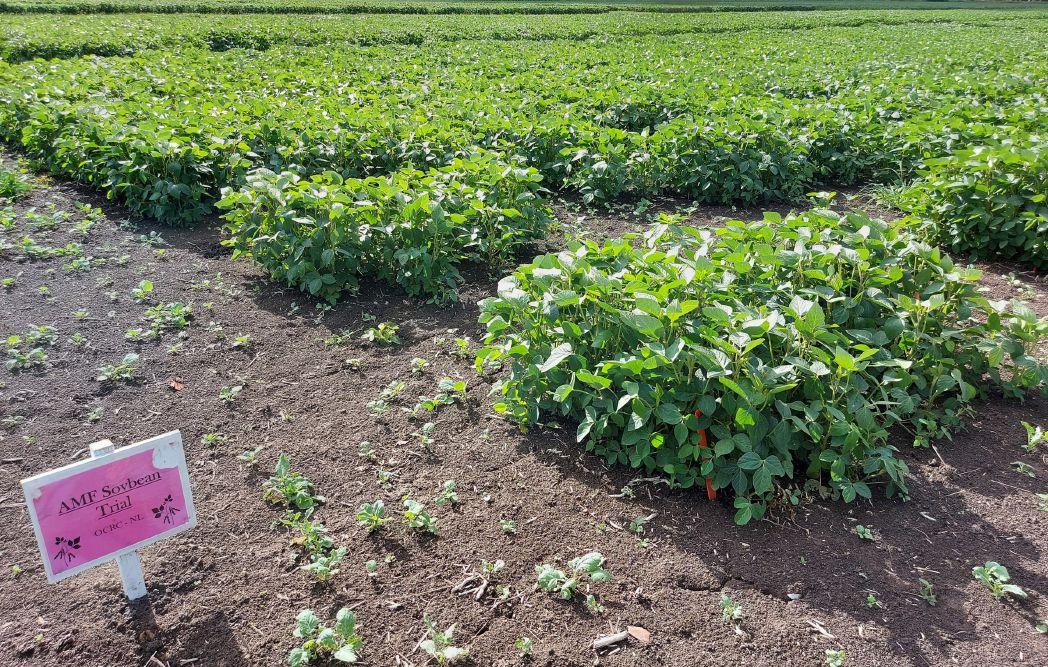
These plots at New Liskeard are part of a project comparing an on-farm-produced mycorrhizal inoculant and a commercial inoculant, applied to soybeans grown after canola.
Give crops the nitrogen they need when they need it.
Envita® is the leading nitrogen-fixing biological that turns the entire plant – including leaves and roots – into a nitrogen-fixing powerhouse. From corn and soybeans to cereals and horticulture crops, trust Envita to fill the nitrogen gap and ensure this essential nutrient is available in the right place at the right time – all season long.
For more information, visit Syngenta.ca/Envita, contact our Customer Interaction Centre at 1‑87‑SYNGENTA (1‑877‑964‑3682), or follow @SyngentaCanada on Twitter.
added per square metre. In comparison, the commercial inoculum applied at the label rate added about 80 spores per square metre.
They spread the AMF-rich soil in a thin layer on top of the plots and lightly raked it into the plot soil. “The soybean seeder was able to incorporate this inoculum further, bringing it even closer to the seed. Then we got rain a few days after, helping to spread the spores a bit more,” Boucher notes.
They monitored soybean growth, measured soybean biomass, grain yield and quality, assessed crop health using NDVI (normalized difference vegetation index, which is based on reflected light), conducted a weed census, and measured canopy light. They also collected soil samples to determine nutrient levels and microbial biomass, root samples to assess AMF colonization throughout the season, and plant tissue samples to measure the crop’s nutrient uptake.
Inoculant pros and cons
Antunes points out that commercial inoculants and on-farm produced inoculants each have their own pros and cons.
For example, commercial inoculants usually contain a single AMF species isolated from its own particular set of growing conditions. So, a commercial product’s effects are influenced by how its specific AMF strain responds to a particular field’s specific pre-existing microbial community, soil and weather conditions, crop and weed types, and so on.
That likely contributes to the difficulty in predicting how well a commercial inoculant will perform in a specific field. For example, research shows that in some situations, a commercial inoculant could result in higher crop yields. In other situations, the inoculum could fail to even become established. And in some other situations, it could be a ‘weedy’ strain that out-competes more beneficial local AMF species for symbiosis with the crop.
In contrast, on-farm-produced AMF inoculants have multiple AMF species and those species are locally adapted.
“A number of studies demonstrate that the mycorrhizal fungi that are indigenous to a particular soil and particular set of plants seem to provide the best benefits to the plants in their local soil,” notes Antunes.
“Even if we are growing crops introduced from other parts of the world, with no match between the plants and the local AMF, at least on-farm-produced AMF have a match between the fungi and the local soils in that local environment.”
The team collected a little of the mycorrhizal-rich soil and roots from the sorghum-sudangrass plot to spread it on the soybean plots.
Having multiple local species could also be helpful in responding to changing conditions, like different crops in the rotation and changing weather-related stresses.
The direct costs of the two types of inoculants will depend on various factors. For a commercial inoculant, there would be costs to purchase and apply it. For the farm-grown AMF, assuming you are already growing sorghum-sudangrass for forage, there would be some costs to harvest a little of the AMF-rich soil and spread it. As well, the harvested soil might contain plant pathogens and/or weed seeds.
In addition, of course, either or both types of inoculants might provide economic and environmental advantages compared to the control plots, such as higher soybean yields and lower inorganic fertilizer needs.
Next steps
Now that the project’s field work is finished, Boucher is busy analyzing the data. The team is keen to see how all the pros and cons of the inoculant options balance out in terms of net benefits for soybean production after canola.
“I don’t think we can recommend any specific practices based on this project. It’s more basic, first principles kind of work,” says Nasielski. “But from the response we’ve been getting from presenting this research to farmers, I think they appreciate the learning points, even though it will take a lot more thinking [and experimenting] to develop any specific recommendations.”
Antunes agrees. “This project is a first step in a series of sustainable agriculture studies that need to be done.”
The researchers have several ideas for next steps in this research. For instance, Oelbermann notes the importance of testing the inoculants in different crops and different climatic regions, and of finding ways to minimize soil removal from the sorghum-sudangrass plot.
Nasielski is especially interested in how best to harvest only the sorghum-sudangrass root balls. “The root balls, plus the small amount of soil attached to them, have most of the AMF. At present, we are moving a lot of soil with the root balls.” He wonders if some type of existing field equipment could be modified to separate the root balls from most of the soil.
“We could also look into the underlying factors that affect if and how long the commercial inoculant strains persist in the soil, because it seems to be really context-dependent,” Boucher adds. “And we could examine how the microbial community is altered by adding these inoculants and then how those alterations affect the plants.”
The results of these further studies will help in putting together more of the information that farmers need when making decisions about using AMF inoculants.
This project is funded through the Ontario Agri-Food Research Initiative. In addition to Antunes, Oelbermann, Nasielski and Boucher, the project has a large group of advisors, collaborators and assistants including: Adrian Unc (Memorial University), Lynette Abbott (University of Western Australia), Nathan Mountain (OCRC-NL), Melinda Drummond (OCRC-NL), Mikala Parr (Rural Agri-Innovation Network (RAIN)), Miranda Hart (University of British Columbia-Okanagan), Sebastian Belliard (Ontario Ministry of Agriculture, Food and Rural Affairs), David Thompson (RAIN), Emily Potter (Northern Ontario Farm Innovation Alliance), and Diana Gonzalez Nava (MITACS Globalink intern from Mexico).
you know an influential and innovative woman involved in Canadian
We’re looking for six women making a difference in Canadian agriculture. Whether actively farming, providing agronomy or animal health services, or leading research, marketing or sales teams, we want to honour women who are driving Canada’s agriculture industry.
Platinum Sponsor:
Gold Sponsors:
Bronze Sponsor:
and submit your nomination. DEADLINE: MARCH 31, 2023
SPECIAL CROPS
COOKING WITH COVERS
A roundup of cover crop resources and new research for Ontario.
by Julienne Isaacs
Keep it simple” – that’s the mantra that begins Soils at Guelph’s new three-part miniseries, “Cooking with Covers.”
The series is meant to underscore three basic principles of cover cropping for first-time or new practitioners: keep it simple, make it pay – and don’t go it alone.
“[The videos] are a way to get advice that’s fun and simple, and to be that starting point for people who haven’t thought about cover crops yet much,” explains Heather White, Soils at Guelph’s knowledge mobilization and communications co-ordinator.
Below, find a roundup of a few other new or improved resources on cover cropping focused on field crop production in Ontario.
University of Guelph
Cover crop “recipes”
Together with the Midwest Cover Crops Council, Soils at Guelph researchers have authored four cover crop “recipes” to help new users get started. midwestcovercrops.org/statesprovince/ontario/
The business of cover cropping
Soils at Guelph researchers collaborated on a new report from the Greenbelt Foundation that looks at the business case for soil health, presenting a range of net returns for six different management practices, including cover cropping. greenbelt.ca/business_case_soil_health
New “spheres” research
University of Guelph researcher Laura Van Eerd recently published an open-source scholarly review of the effects of cover cropping on the Earth’s biosphere, lithosphere, hydrosphere and atmosphere.
“Overall, the review results suggest that cover crops increased subsequent crop yield, increased SOC (soil organic carbon) storage, increased weed suppression, mitigated N2O emissions, reduced wind and water erosion, suppressed plant pathogens, and increased soil microbial activity and wildlife biodiversity,” the paper concludes. doi.org/10.1016/j.scitotenv.2022.159990
Agrobiodiversity in southern Ontario
A new, open-source publication from University of Guelph researchers Aaron Berg, Katherine Shirriff and Krishna Bahadur K.C. looks at the rate of adoption of cover crops in Ontario’s corn and soy regions.
The study authors found that, “despite the benefits of cover crops, ... most of the current corn and soybean operations are not incorporating cover crops into the rotation.” Adoption of cover crops is higher in northern Ontario than in southwestern Ontario. doi.org/10.3390/agronomy12020415
Midwest Cover Crops Council
Updated field guide
The third edition of the MCCC’s Cover Crops Field Guide, updated in October 2021, is available at midwestcovercrops.org/other-resources/.
Decision tool
MCCC hosts a cover crop decision tool on its website, which allows producers to sort through possible cover crop options based on location and goals. midwestcovercrops.org/covercroptool/
Agriculture and Agri-Food Canada
Species selection research
A new, open-source publication from AAFC research scientists Andrew McKenzie-Gopsill, Sylvia Wyand and others in Charlottetown investigates the importance of species selection in cover crop mixtures. The authors examined 19 different cover crops seeded as monocultures and 19 mixtures composed of varying species for their impacts on weed suppression and biomass production. doi.org/10.1017/wsc.2022.28
OMAFRA
Cover crop fact sheet
OMAFRA maintains a detailed cover-cropping fact sheet, including Ontario-specific information on crop types as well as management advice for producers. omafra.gov.on.ca/english/crops/facts/cover_crops01/covercrops.htm
Strip tillage fact sheets
OMAFRA has released two fact sheets on strip tillage in Ontario. “Strip tillage in Ontario: The basics” offers a basic management guide for those new to the practice, while “Strip tillage in Ontario: Making it work” gets into the nitty-gritty of common strip tillage questions. fieldcropnews.com/2022/07/new-strip-till-factsheets-for-ontario-farmers/
Other resources
Soil health videos
Farm and Food Care Ontario has released a series of videos on soil health, including series on strip tillage and soil management. farmfoodcareon.org/farming-and-the-environment/soil-health/
Mentorship program
Farmers for Climate Solutions is recruiting mentors for its Farm Resilience Mentorship (FaRM) program to offer producers advanced cover cropping expertise. farmersforclimatesolutions.ca/learning-hub
Bayer is a member of Excellence Through Stewardship® (ETS). Bayer products are commercialized in accordance with ETS Product Launch Stewardship Guidance, and in compliance with Bayer’s Policy for Commercialization of Biotechnology-Derived Plant Products in Commodity Crops. These products have been approved for import into key export markets with functioning regulatory systems. Any crop or material produced from these products can only be exported to, or used, processed or sold in countries where all necessary regulatory approvals have been granted. It is a violation of national and international law to move material containing biotech traits across boundaries into nations where import is not permitted. Growers should talk to their grain handler or product purchaser to confirm their buying position for these products. Excellence Through Stewardship® is a registered trademark of Excellence Through Stewardship.
ALWAYS READ AND FOLLOW PESTICIDE LABEL DIRECTIONS. It is a violation of federal law to use any pesticide product other than in accordance with its labeling. NOT ALL formulations of dicamba or glyphosate are approved for in-crop use with products with Roundup Ready 2 Xtend® soybeans. NOT ALL formulations of dicamba, glyphosate or glufosinate are approved for in-crop use with products with XtendFlex® Technology. ONLY USE FORMULATIONS THAT ARE SPECIFICALLY LABELED AND APPROVED
You’ve always done what’s right for you — for your farm and for your soybeans. At UPL, we respect that independent spirit and want you to know we’ll be there for you when you need smart, innovative solutions that make sense for your operation. Talk to your UPL rep or retailer to learn more or visit uplcanadaeast.ca to see our entire soybean portfolio.