VIDEO SURVEILLANCE
A look into the products, technologies and solutions shaping the market


Image: shansekala / iStock / Getty Images

A look into the products, technologies and solutions shaping the market
As cameras become smarter and more useful to their owners, integrators are the experts they will look to for guidance
By Andrew Snook
The evolution of artificial intelligence (AI) combined with video analytics is offering significant improvements when it comes to video surveillance.
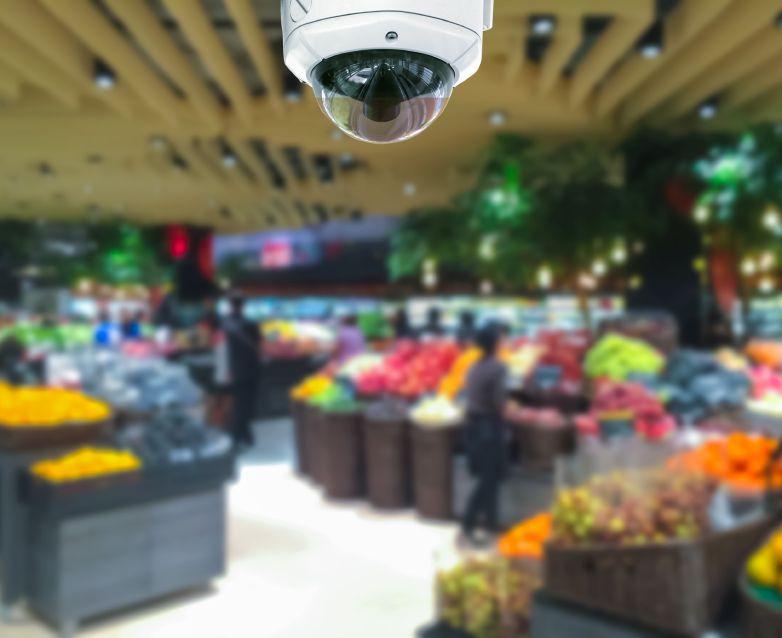
“Video analytics provides a useful aid to manned surveillance. It can provide live alerts, for example, a person entering a perimeter; or analysis of recorded video – for example, search for a person wearing a red top,” says Jon Cropley, principal analyst, Novaira Insights.
“Apart from security applications, it can also aid with business intelligence. For example, counting the number of people entering a store or monitoring queue lengths.”
“Now the dealer can offer an ongoing service and have an ongoing relationship and take better care of that customer.”
— Dean Drako, Eagle Eye Networks
AI has played a significant role in the optimization of video analytics in recent years.
“The number of real-world applications that AI and analytics can feasibly solve is both rapidly expanding and providing needed improvements in accuracy,” says Jammy DeSousa, associate director, product manager, Johnson Controls.
But how is AI guiding these technologies and how much of this is occurring within the actual device versus the cloud?
“It depends on the supplier. The way that products are designed, it all depends on what you’re trying to achieve,” says Greg Tomasko,
applications engineering leader for Honeywell Building Technologies (HBT).
“In my experience, there’s a lot of analytics that are being driven now out to the edge, and that was influenced by a lot of the camera manufacturing around the world just getting smarter and faster and more powerful in their chipsets.”
DeSousa says that in today’s market, to be a leading manufacturer you must offer an AIenabled camera device in your portfolio.
“Today’s camera technology presents computing power that is easily suited for very powerful video AI. In the future, we can foresee hybrid architectures where cloud hybrid platforms could take data analysis to another level. However, for the time being, camera-based AI is in its golden moment,” he says.
One company that does run most of its AI in the cloud is cloud video surveillance company Eagle Eye Networks. Dean Drako, CEO of Eagle Eye, says this gives his company tremendous advantages.
“We transmit most of the video to the cloud all the time,” Drako says. “AI in the cloud is better, because it means that Eagle Eye is maintaining the servers, maintaining the models, keeping it up to date. We can upgrade it, keep it running, and it’s no headache for the customer.”
Cropley says a range of architectures are available to deliver video analytics.
“It is unlikely one single approach will win out entirely with different approaches for different scenarios. It is likely hybrid architectures including a combination of the edge, an onpremise server or NVR, [and] in the cloud will become a popular approach for the deployment of video analytics,” he says.
“Considerations when designing the mix between these approaches include processor requirements in the camera, camera lifecycles and barrier to adoption to cloud.”
Cropley says his company estimates that almost 20 per cent of network video surveillance cameras featured edge hardware accelerated deep learning (AI on the camera) in 2022, and this percentage will grow quickly over the next five years.
But what does this mean for the systems integrator that installs the camera network and how does this affect their ongoing relationship with their client?
In the case of integrators installing HBP cameras, which have had many of the latest applications built into the units, Tomasko says they become a much more powerful partner.
“We manufacture these products, so it’s not my team that’s out there pulling wire and hanging cameras. We want to make sure it’s open and scalable and flexible enough to deploy in 90 to 99 per cent of the applications available,” Tomasko says.

“When the customer asks, ‘What about analytics? How can I get more intelligence?’ The response from the integrator doesn’t have to be, ‘Oh, we’re going to have to redesign, and we’re going to have to talk about bandwidth and processing.’ It’s, ‘That feature is in your camera. Why don’t you just turn it on?’ We can show you that value, and it makes [the integrator] a more powerful partner to their customers because they don’t have to have such a steep learning curve to jump over the analytics barrier.”
DeSousa adds that it demonstrates that the systems integrator is up to date on modern technology and practices.
“It also reinforces the trust in the relationship between the systems integrator and end user,” he says.
Cropley says increasing use of the cloud in video surveillance systems can mean changes to the role of systems integrators.
“Software updates and upgrades are currently often part of this role. However, many of these can be provided remotely through the cloud,” he says.
Drako says some of the dealers adapt to this change very well, while others struggle with it.
“The big change is that you have an ongoing relationship with your customer,” he says. “In the historic situation, the customer would call up and say, ‘Hey, we need we need 200 cameras installed and we want AI, and we want this, we want that.’ And you want to bid on this, and the customer will get three bids, pick one of them, a vendor will come out and install all this stuff, wire it up, turn it on, train the customer a little bit and head off. The customer might call them if they want to add a camera, delete a camera.
“But in the case of a dealer or installer providing a cloud system, they’ve got an ongoing relationship with that customer. Every month that customer is paying them to operate the system, because it’s all in the cloud. And the dealer or the reseller can offer additional services. We’ll make sure the cameras are running. We’ll
monitor that everything is operational. We’ll automatically come out and fix stuff when a camera breaks. Now the dealer can offer an ongoing service and have an ongoing relationship and take better care of that customer. That’s better for their business, because it means they have a stronger relationship with the customer and a continuous revenue stream.”
Drako says this is also better for the customer because they do not have to deal with the headaches of keeping the system running because the dealer is managing that.
“Eagle Eye takes care of the operation and the upgrades of the software and maintenance, and the dealer can take care of kind of the on-site maintenance — cleaning the lenses, fixing wires that go bad, hanging new cameras for the customer, and maybe making configuration changes for the customer, configuring the analytics or the AI to do what the customer wants,” he says.
When the AI gets involved, the configuration and setup, and the integration into the customer’s ecosystem becomes a lot higher, Drako says.
“If you’re integrating cameras at a construction site, and they detect that someone’s not wearing their safety hat or their safety vest, then the system is notifying somebody. And so, the customer is actually interacting with the system on a daily basis. They’re going to have things that need to be enhanced or adjusted, much more so than in a traditional video surveillance system that’s not using AI. And so, the dealer ends up with a much stronger bond with a customer, more trust and a better long-term business,” he says.
“It makes the upgrades, bug fixes and security a lot better, too. The cloud takes away all of those concerns from the customer and the dealer. The dealer doesn’t have to be scared of cybersecurity anymore.”
Maintenance and upgrades of cameras have always been a plague of the security industry, but

there has been increased interest from clients looking for enhanced cybersecurity.
“In general, once you put a reader on the wall, or a camera in the corner, it stays there until it fails. It’s not an investment centre. For most businesses, they’re not making money on their security system. So, we’ve had to get creative on how we describe the power of surveillance, security, video, access control, intrusion, from a return-on-investment standpoint,” Tomasko says.
“But the threats today are not the same as the threats we had 15 years ago. It’s not so much that someone’s trying to break through your front door with a hammer or crowbar. They’re trying to break through your digital barrier.”
The number of hacking incidents has spiked since the onset of the COVID-19 coronavirus pandemic, so companies are putting more resources into trying to protect themselves from digital threats.
“That has forced companies to take a bigger interest in keeping their systems up to date, to keep on upgrading, to encouraging installers to say, ‘We need to be at the latest, or near latest firmware or hardware.’ Because cameras from 15 years ago, they may have used nonsecure methods,” Tomasko says.
“And if your hardware wasn’t up to spec …
“It is likely hybrid architectures ... will become a popular approach for the deployment of video analytics.”
— Jon Cropley, Novaira Insights
that’s a lever to now upgrade. So, we’re seeing a lot more budget and understanding of upgrades from that cyber or IT space, because they have to protect not only their physical walls, but their digital walls as well,” Tomasko says.
DeSousa adds that the long-term implication for maintenance and upgrades to AI-enabled edge-based technology should be minimal.
“As long as you are following current IT and cybersecurity policies, these technologies should already be receiving regular firmware updates. These same updates that carry cyber patches and critical fixes are also the vehicle utilized to deliver updates to AI models,” he says.
“These updates can not only offer continuous improvements to model accuracy and per-
formance but will sometimes include new AI classifications and capabilities.”
AI drivers
From the user’s standpoint, what are some of the biggest trends driving demands for the different features of AI? They want to do more with less.
“They want to get smarter with how they spend their time. The result of the success of security is we’re not seeing fewer and fewer cameras being installed in businesses, we’re seeing more and more.… Once you install the first camera, that’s the hard one. Once you get one in, you want four, you want 12, you want 100. All you’re thinking about is those areas you’re not seeing,” Tomasko says.
“What does that mean? It means it can get overwhelming very quickly for operators or people who have to look at the system.
“If a casino, for example, or a utility, have 5,500 cameras throughout their properties, how do you watch all that video? What AI has given us, not only from a video analytics perspective but also from an entire machine learning and digital perspective behind the video, is more directed events and incidents where if one thing happens, we’re sending screwdrivers. If something else happens, we’re sending security guards and law enforcement.”

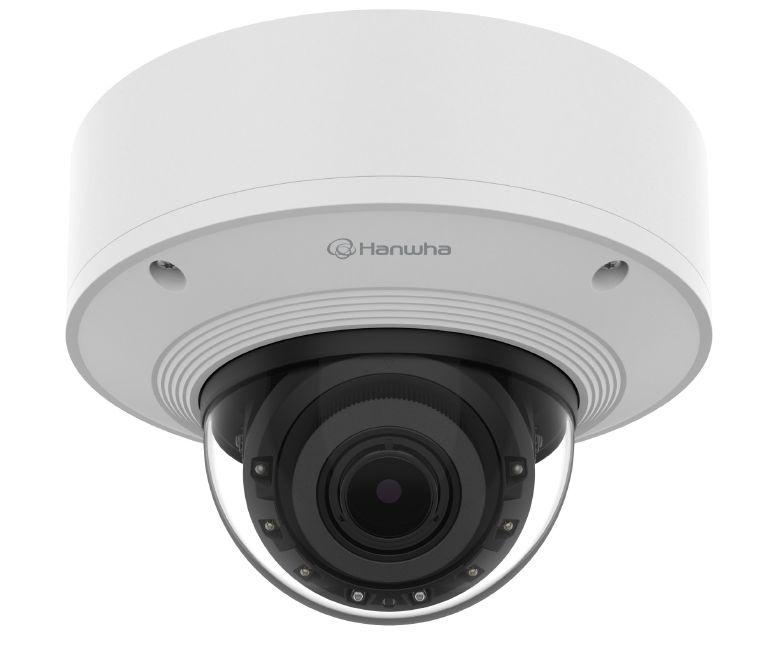
The Hanwha Vision SolidEDGE system addresses an industry need for efficient, scalable, and cost-effective surveillance solutions, combining a dome camera, an embedded WAVE VMS server and onboard Solid State Drive (SSD) storage into one system.
The SolidEDGE solution is available in two models, the PNV-A6081R-E1T (1TB onboard storage capacity) and PNV-A6081R-E2T (2TB), both delivering high-quality, reliable video surveillance without a complicated setup.
With SolidEDGE, any organization, especially smaller operations with multiple locations, can deploy self-contained systems while fully realizing the potential of edge storage, multi-camera recording, remote access, and on-premise security system management. This cloud-managed solution allows users to easily customize and grow their surveillance systems based on their specific needs.
Deploying a system with the capabilities of SolidEDGE traditionally required a separate server, more wires, a larger installation footprint, higher installation costs and a system that was hard to manage.
The SolidEDGE camera system runs the full capabilities of Hanwha’s WAVE VMS on the edge. A single SolidEDGE camera can connect to and record up to five additional cameras for a total number of six cameras on each EDGE system Also, up to 30 servers can be merged with SolidEDGE through WAVE Sync, giving users incredible flexibility.
One sample scenario is putting a primary SolidEDGE camera over the register in a retail location, with another camera positioned toward the front door. The user can build from there with cameras at various positions. Other systems would have to put another edge recording camera at each location. Instead, with SolidEDGE, users can put Hanwha cameras in other form factors at that front door and be able to record back to the primary SolidEDGE camera. That’s how it easily becomes a camera system with multiple cameras attached to one main storage location.

As that same shop grows and expands to multiple locations, SolidEDGE grows along with it. The unique addition of WAVE Sync allows easy cloud-based remote access and system expansion. If a franchise has three or four locations, they can connect them and have a unified platform to view everything.
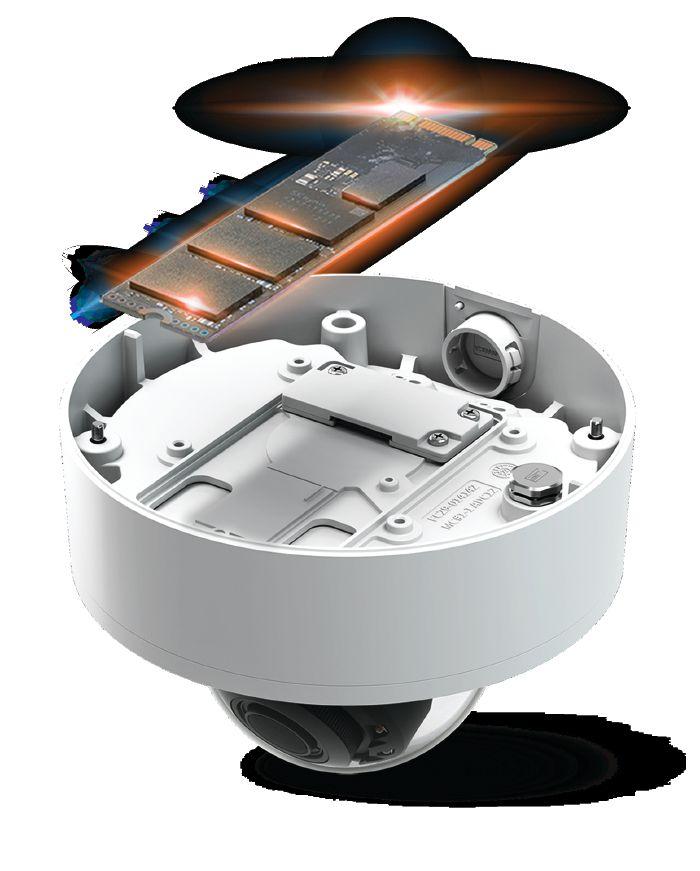
SolidEDGE uses a rugged, industrial-grade Solid State Drive as opposed to commonly used SD cards or hard drives. Hanwha Vision purposely chose a storage solution that is ruggedized to function as a stable security camera whether it is installed on the side of a building, or in a vestibule where it’s regularly exposed to the elements and temperature variations. It’s a high throughput storage solution that delivers
higher performance and greater reliability.
The SolidEDGE solution includes an SSD Status Management feature, which can be accessed from the camera web viewer and provides information on the health of the SSD drive. The SolidEDGE camera also delivers enhanced cybersecurity: TPM 2.0 (FIPS 140-2 level 2 certified), Device Certificate (Hanwha Vision Root CA, pre-installed), Secure OS/boot/storage, and Verified FW forgery.
Hanwha Vision’s SolidEDGE is truly a serverless system, offering painless setup and endless possibilities.
For more information about SolidEDGE or the full line of Hanwha Vision solutions, visit www.hanwhavisionamerica.com

Serverless surveillance, painless setup, endless possibilities.
The first true serverless, cloud-managed surveillance solution.
Streamline your surveillance with SolidEDGE, combining a dome camera, WAVE VMS Server, and up to 2TB of onboard SSD storage in one intelligent device. Eliminate complex hardware setups and scale your multi-camera recording capabilities using a secure, customized, and flexible system structure.
That’s the SolidEDGE from Hanwha Vision.

We sat down with three security experts to discuss the latest trends in video surveillance in the retail industry. Read on to hear what the following leaders in the field have to say: Mr. Doug Sales, Senior Director, Commercial Systems Sales at GardaWorld Ontario and West, Mr. Patrick Soo, Director of Sales, Canada at Alarm.com, and Mr. Gordon Hebb, Director, Canadian Intrusion Sales at DSC/Qolsys/Sur-Gard.
How does GardaWorld approach securing retail environments from a technology perspective?
Mr. Doug Sales: Ultimately, we take a layered approach to retail security, since it requires the integration of several technologies. And there is no single silver bullet; each store requires its own specific solution. We are a systems integrator, so GardaWorld Security Systems partners with software companies and manufacturers that
complement what we offer, and take everybody’s services—whether it’s alarm monitoring, video monitoring, video verification, or access control. We then integrate whatever is needed to deliver holistic solutions to help our clients thrive. All the technologies have to work together and talk to each other.
When it comes to CCTV and retail stores, is it just about shrink and preventing theft?
Mr. Sales: Shrink is always top of mind within any retail environment and how to manage it. But the latest camera analytics and software technolo-

gies allow us to do so much more. For example, hot spotting and traffic counting to determine where to place merchandise in the store to help increase profitability. And an increase in sales reduces your shrink, so it’s a bit of an art and a bit of a science.
Mr. Patrick Soo: Exactly. It’s not just about shrinkage, reducing crime, and protecting assets and employees. It’s also looking at business optimization using heat mapping, people counting, queue monitoring, and enhancing the customer experience.
We’re using video analytics to increase op-
Ultimately, we take a layered approach to retail security, since it requires the integration of several technologies.
— Mr. Sales
erational efficiencies. Store owners are getting answers to big questions, such as: When do you need to increase your staffing? When are your peak times? What are customers looking at? Where do you want to drive sales? All those things are really becoming a part of the video system, and it’s becoming more than just protecting people and assets; it’s about optimizing efficiency.
Let’s talk about video analytics and what that means for the retail industry.
Mr. Soo: Video analytics, artificial intelligence and machine learning are certainly real buzzwords within our industry right now. And I think more than just trends; these technologies are really shaping the future of video surveillance and technology, and the companies that provide the richest video analytics will win.
How do intrusion devices integrate with CCTV systems and video analytics?
Mr. Gordon Hebb: A lot of people don’t realize the synergy between intrusion devices and video. When you start mapping things together, you have a verified activity that you know needs attention. Incorporating additional devices like water and temperature detection take the security solution to the next level.
What are your thoughts on business owners wondering how to justify spending the money on an integrated retail security system?
Mr. Sales: It was always difficult only through shrink to justify a new store operation with the whole package, including intrusion devices, CCTV and access control. But now that other business units within the retail community, such as the marketing team and operations teams, are deriving benefits from the installation of these technologies, it’s an easier sell within a retail solution. That speaks to the capabilities of CCTV now compared to 10 years ago—and that speaks to the industry looking for assistance in managing their businesses through the technologies.
Mr. Soo: Video adoption has always been very high on the commercial side. But recently with

Patrick Soo Director of Sales, Canada at Alarm.com

Hebb Director, Canadian Intrusion Sales at DSC/Qolsys/Sur-Gard
Very few business owners realize the potential of putting all the products together until they experience it.
— Mr. Hebb
the advent of machine learning and video analytics, it’s just become a lot more affordable and a lot more user friendly. It just works. You’ve filtered out all these false positives. Now we’re providing the very meaningful and important data that our customers are looking for.
Mr. Sales spoke earlier about how GardaWorld integrates different systems and technologies to deliver optimal solutions for clients. How do retail clients respond once they discover the benefits of these integrated systems?
Mr. Hebb: Very few business owners realize the potential of putting all the products together until they experience it. Once you do one retail
The future is really exciting right now in terms of technology, and the explosion of AI and machine learning.
— Mr. Soo
store properly, as soon as the business manager or the business owner who owns multiple, they want to see it in every one of their units after that because they’re saving money and cutting costs. They know that their buildings are open on time. Visual verification allows the business owners and managers to know exactly who opened the business during and outside of regular business hours. They know if there’s any unusual activity that needs attention.
Essentially, they’re in touch with their business, whereas before they probably had no idea that people were coming in in the middle of the night or something odd was happening. So there are a lot of benefits that come together that make people want to ask, “Can you do that in my other 50 sites?”
Mr. Soo: The future is really exciting right now in terms of technology, and the explosion of AI and machine learning. And it’s just the beginning.
For more information about GardaWorld Security Systems, visit garda.com/protection.



Together, Hikvision solar cameras and wireless bridges create effective, 24/7 security solutions for challenging, standalone sites where electricity and internet are non-existent.
Great technology solves problems, providing effective and efficient solutions that save time and energy and make tasks easier. With this in mind, Hikvision delivers the power of remote solutions for customers who need security in out-of-the-way and non-powered locations.
Remote locations call for unique solutions.
Whether you’re looking to monitor and secure expansive farmland, far-off oil fields or a protected forest, each location comes with a unique set of challenges. You might be dealing with extreme low light, punishing winds or heavy snowfalls.
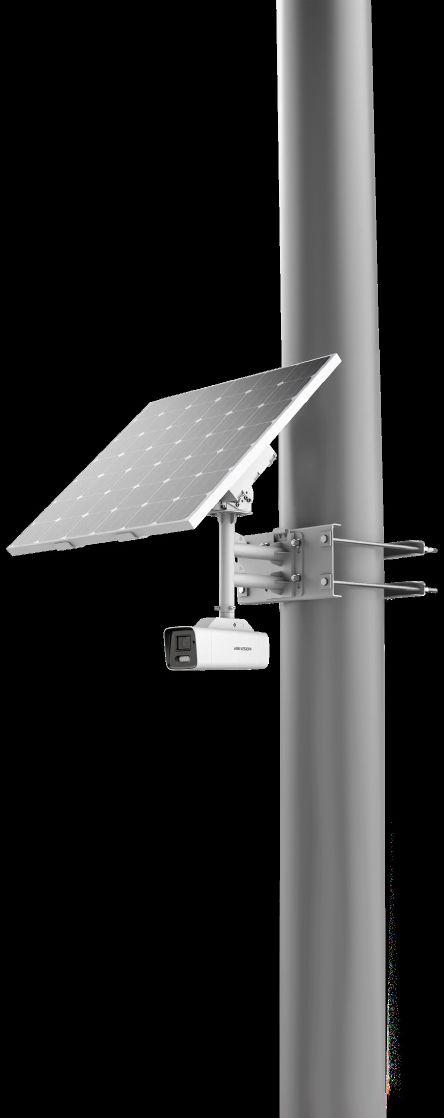
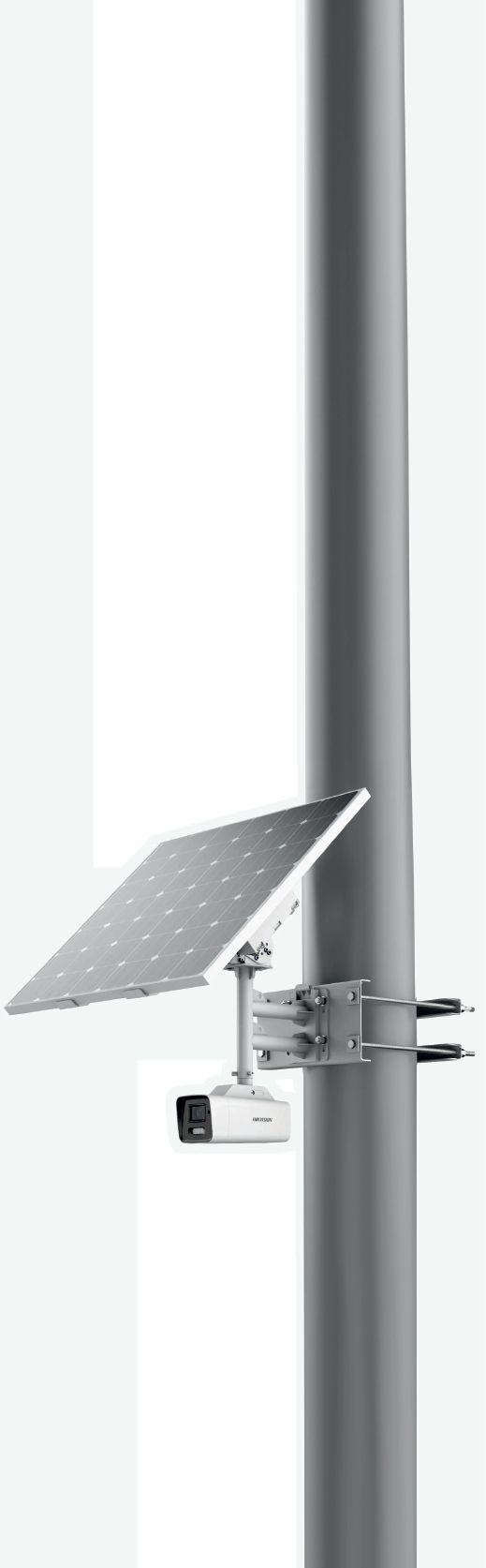
Hikvision’s solar-powered security cameras harness the sustainable power of the sun to enhance security in areas where power supplies and Ethernet cables don’t reach. A sustainable security option, the solar camera kits can be installed easily–no electrical wiring needed. With the built-in battery, users can enjoy up to 7 days of continuous operations in the absence of direct sunlight.
Each kit is sturdy and stable, with a changeable Canadian climate in mind. They are resistant to water, wind and corrosion. While ordinary batteries can lose power or become inoperable in winter, especially at higher altitudes, Hikvision’s batteries operate in low temperatures. The solar-powered cameras are equipped with ColorVu technology for sharp detail and colour imaging, providing clear images even in low-light situations.
Pair these workhorse cameras with Hikvision’s wireless bridges to create effective security solutions that stand up to extreme elements and don’t rely on local power or a nearby router.
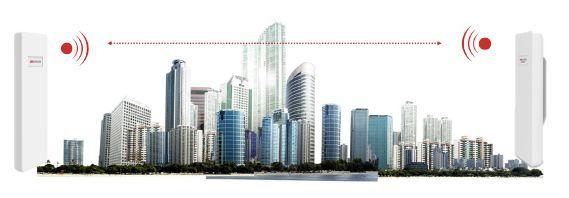
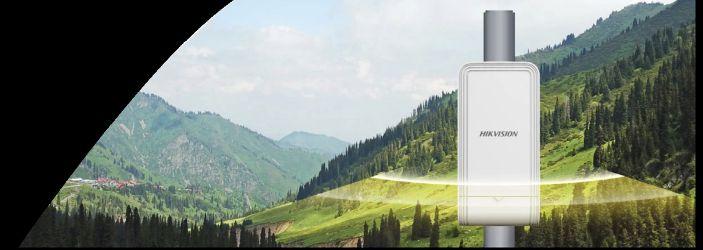
Need wireless over a vast distance? A wireless bridge can help.
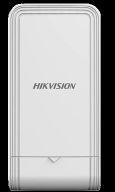
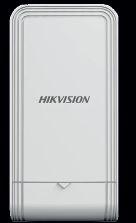
A wireless bridge can be used to build up communication between two or more networks without wired connections. Hikvision’s 5Ghz 867Mbps outdoor wireless bridge boasts up to 5 km long-range transmission, with adjustable transmission power up to 22 dBM. With flexible network topology, users can bridge from one point to another or one point to multi-points (up to four locations). Hikvision’s all-in-one solar energy solutions are easy to mount and install.
No need to get wrapped up in electrical wires and network cables. Lightweight and professional, the design makes set-up possible without mechanical equipment. A simple mounting bracket allows end users to
mount the unit to a post or similar object quickly. With the power of solar energy and using 4G technology or wireless bridges, expensive site modifications for electricity and data wiring are a thing of the past.
With the power of solar energy and using 4G technology or wireless bridges, expensive site modifications for electricity and data wiring are a thing of the past. Colour security imaging 24/7 for even the most difficult terrain. Problem solved.


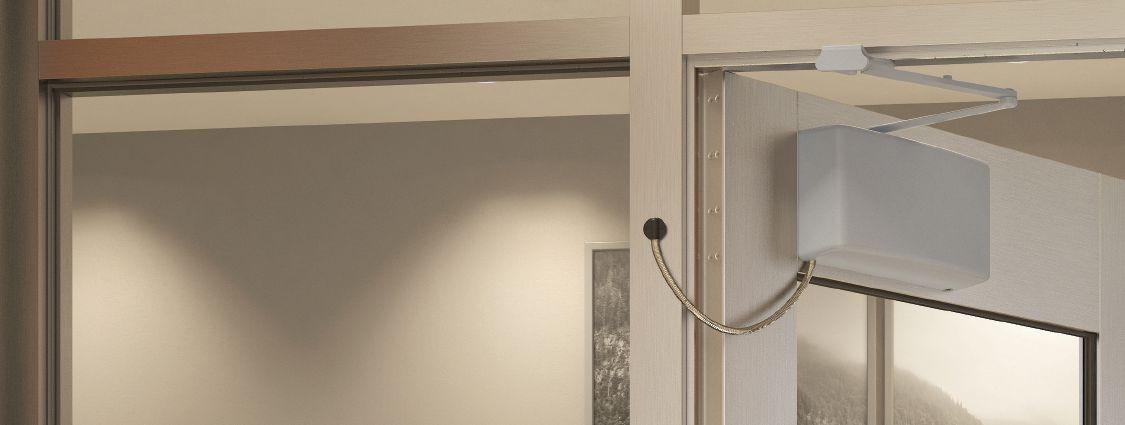
6400 Series COMPACT™ Automatic Operator
Touch less. Spend less.
Easily update existing doors into accessible doors with Allegion and IDN-Canada. As the demand for accessible doors continues to grow, so do the options to address it. IDN-Canada would like to feature the LCN 6400 COMPACT operator.
In the realm of commercial and institutional buildings, efficient and reliable door operation is crucial. The Allegion LCN 6400 COMPACT™ Series Operators have emerged as a ground-breaking solution, revolutionizing the door automation industry. With their advanced technology, durability, and convenience, these operators are redefining the way we interact with doors.
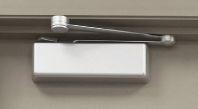
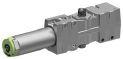
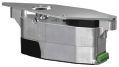
The LCN 6400 COMPACT™ Series low-energy operator is a simple and cost-effective solution that enables facilities to automate more openings for touchless access and accessible operation. The modular design is unique and allows the reuse of an existing LCN 4040XP mechanical closer. The electrified module connects with a mounting plate and just four screws and drives open the mechanical closer. The simplicity of this solution reduces the cost, labor and
complexity required to automate an opening. In this article, we delve into the remarkable features and benefits of the Allegion LCN 6400 COMPACT™ Series Operators, highlighting its impact on enhancing accessibility and security.
The Allegion LCN 6400 COMPACT™ Series Operators have brought a significant transformation to the door automation industry, redefining the way we interact with doors in commercial and institutional buildings. These operators offer advanced technology, durability, and convenience, making them efficient and reliable solutions for touchless access and accessible operation.
The COMPACT™ Series low-energy operator stands out as a simple and cost-effective solution, allowing for the automation of more openings while minimizing complexity and labor requirements. Its unique modular design enables the reuse of existing hardware, specifically the LCN 4040XP mechanical closer, further enhancing cost savings.
The performance of the COMPACT operator is built upon the trusted 4040XP Series mechanical closer, offering adjustments such as regulation valves for main and latch speed. This facilitates standardized maintenance operations and ensures consistent and reliable door performance.
The COMPACT operator is available in various configurations, providing flexibility for retrofit applications and compatibility with existing 4040XP Series Closer cylinders. It complies with important industry standards and certifications, including UL10C, UL325, UL228, and ANSI Standard A156.19 and A117.1.
With user-friendly electronic features and power management capabilities, the COMPACT operator offers convenience and versatility. It allows for electronic programming through a user interface, provides feedback during the calibration process, and supports additional peripherals such as RF receivers and transmitters.
At IDN-Canada, the Allegion LCN 6400 COMPACT™ Series Operators are readily available, reflecting our commitment to offering the best and most innovative products in the industry.
Whether for touchless access, accessibility, or efficient door automation, the COMPACT operator is a reliable and effective solution that meets the diverse needs of commercial and institutional buildings.
The brands you want, the service you’d expect and the products you need. IDN-Canada prides itself in providing top tier customer service from coast to coast. Stocking products at our 9 locations. Working with the best in class vendors.
For more information including price and delivery click here: https://www.idn-inc.ca/information
Youtube video link >>> https://youtu.be/BdZq7q7IBNs
Simple + Cost Effective Solution



In an increasingly interconnected world, the convergence of physical and electronic security has become a critical aspect of safeguarding individuals, organizations, and assets. This integration acknowledges the complex nature of security threats and the need for a comprehensive approach that combines both physical and electronic measures. One effective way to achieve this convergence is through the utilization of a professional services model. This essay explores the significance of converging physical and electronic security and outlines how a professional services model can enhance overall security effectiveness.
The convergence of physical and electronic security is essential due to the evolving nature of security threats. Traditional physical security measures alone are no longer sufficient to combat modern-day risks. With the rise of digital technology and interconnected systems, electronic security has become equally important. By merging these two realms, organizations can create a holistic security approach that addresses vulnerabilities across physical and digital domains.
The professional services model provides a framework for achieving the convergence of physical and electronic security. It involves engaging specialized security professionals who possess expertise in both domains. These professionals collaborate to develop comprehensive security strategies tailored to the specific needs of an organization. The model encompasses various stages, including risk assessment, planning, implementation, and ongoing monitoring and evaluation.
a. Risk Assessment: Security professionals assess the organization’s vulnerabilities, considering both physical and electronic aspects. This analysis helps identify potential threats and vulnerabilities, enabling the development of targeted security measures.
b. Planning: Based on the risk assessment, a comprehensive security plan is devised, outlining the integration of physical and electronic security measures. This plan considers factors such as access control, surveillance systems, intrusion detection, cybersecurity protocols, and incident

response procedures.
c. Implementation: Security professionals work closely with the organization to implement the planned security measures. This may involve installing surveillance cameras, access control systems, firewalls, and conducting employee training on security protocols.
d. Ongoing Monitoring and Evaluation: The professional services model emphasizes the importance of continuous monitoring and evaluation to ensure the effectiveness of security measures. Regular audits and assessments help identify any gaps or emerging threats, enabling timely adjustments and updates to the security strategy.
Adopting a professional services model for the convergence of physical and electronic security offers several benefits.
a. Expertise: The model leverages the knowledge and skills of security professionals who possess expertise in both physical and electronic security and often specialize in one particular field - like network architecture or development and integration. While there is an upfront cost to utilizing the expertise of a professional service team, they help to reduce capex and opex expenses in the long run. Relying on a professional services team ensures a comprehensive approach and reduces the risk of oversight or gaps in security measures.
b. Customization: The professional services model allows security strategies to be tailored to the specific needs of an organization. This cus-
tomization ensures that security measures align with the organization’s goals, assets, and risk tolerance.
c. Integration: By converging physical and electronic security, the model facilitates seamless integration of security systems, ensuring they work together harmoniously to enhance overall security effectiveness.
d. Adaptability: The model enables organizations to adapt their security strategies as new threats emerge or technological advancements occur. This flexibility ensures that security measures remain up to date and relevant.
The convergence of physical and electronic security is essential in today’s interconnected world. By utilizing a professional services model, organizations can effectively integrate these two domains and create a comprehensive security approach. This model offers expertise, customization, integration, and adaptability, leading to enhanced security effectiveness.
As security threats continue to evolve, it is imperative for organizations to embrace the convergence of physical and electronic security through the implementation of a professional services model to mitigate risks and protect their assets effectively. If you’re looking for an experienced professional services team to secure your system and reduce risk, rely on BCD as your trusted professional service advisor on your current or upcoming projects. Visit www.bcdvideo.com/professional-services to learn more.
Jason Glover, Vice President of Sales, BCD


The security industry’s most trusted source for IP video data infrastructure solutions
Guaranteed calculations and performance
Warranties that lower total cost of ownership
Certified & validated VMS performance
Pre- and post-sales technical support
Averaging 3 days to ship globally
Secure build cycle