VIDEO SURVEILLANCE
A look into the products, technologies and solutions shaping the market

Sponsored by:

A look into the products, technologies and solutions shaping the market
Sponsored by:
Replacement cycles hinge on a number of factors, including compliance, budget and appetite for new features
BY ANDREW SNOOK
While some users will keep security equipment like cameras and access control systems in service almost indefinitely, others are more attentive to replacement cycles.
For a company like ADSS, a national systems integrator whose clients primarily operate in the public sector, adoption of new technologies is sometimes slow-going.
“ The end user does not want to get rid of their equipment for a fancy feature set if it’s working,” explains Andrew Lauzon, president of ADSS, which operates offices in Montreal, Toronto, Ottawa and Atlantic Canada.
Meeting compliance requirements will generate some equipment cycling in government buildings, however, most of the investments in the latest security features will take place when full replacements of systems are needed.

Whether
on-prem, cloud or hybrid, adoption of new systems varies according to the user’s needs and budget
“When they’re going to look at a new deployment, then they’re going to look at AI capabilities, what kind of analytics it would have. But replacing compliant functional hardware, we don’t see it much,” Lauzon says.
Getting budget approval to replace working equipment can be difficult for security departments in any sector due to spiking costs in equipment since the COVID-19 pandemic.
“It’s hard for them to justify it unless it doesn’t meet compliance,” says Lauzon.
Some of the latest system features that interest companies include ways
to obtain information that would be useful across multiple departments.
While government facilities may be less likely to invest in the latest features, retail companies have been showing increased interest in what newer security applications can offer them.
“A lot of that is the business experience of security practitioners being able to communicate with leadership that there is a return on investment, that there is help on the risk management side of things. Rather than just being a cost centre, there are additional tasks that can
be leveraged using security infrastructure,” explains Gio Santoro, professional services specialist at SoloSquid, a professional services and custom development agency based in Paris, Ont.
He adds this is more prevalent on the retail side, where companies are more receptive to getting traffic numbers, heat mapping, and other features that more current model security cameras are able to provide. “They are looking for ways to leverage that metadata,” Santoro says.
One of the keys to getting more companies to buy into the ROI of installing new security technologies is by adding different stakeholders to the conversation.
“I think if you can start to bring in some of those other stakeholders, whether it’s marketing, operations, or other people within that organization, you can kind of shift the conversation, and then you start opening up budgets in other departments where it’s now not seen as a cost centre, but something that adds value to the business,” says Jason Kloss, president of SoloSquid.
One trend that has been taking place for several years across many security departments is the move to cloud-based systems or a hybrid combination of on-premises and cloud-based systems.
ADSS has been selling cloud access control for over a decade. Lauzon says these systems are a win-win for the company and their clients.
“Too many times with the on-premises systems, the servers aren’t being patched, or you have a smaller system, where you have a compact computer in the closet that’s never been backed up,” he says. “I’m a really big fan of the cloud systems.”
There are other concerns that security departments need to consider when deciding on cloud, on-prem or hybrid systems, Lauzon notes. “For the video surveillance, I definitely prefer a hybrid model, because I don’t think cloud scales well for large end users with on-site security,” he says. “If you have a hospital with 600 cameras, it’s hard to put that all on to the cloud, and then you have the live viewing constraints and latency as well. So, I think hybrid makes sense for the enterprise video surveillance market . But as far as access control, I think cloud is the way
“Often, we talk about AI and data, but I think a lot of the time the challenge is, what do we actually want to do with that data?”
— Jason Kloss, SoloSquid
to go — bandwidth is very minimal You don’t have to worry about servers, redundancies, remote access — it’s just so much easier to manage.”
C osts for on-prem servers are also pushing companies towards using more cloud-based solutions.
“We’ve seen a huge increase in server costs just because of some of the RAM shortages and things like that happening in the industry. And then also, now you’re seeing servers that need to have these beefy GPUs built in them to run some of these AI applications and video analytics applications. So, those costs are going up,” Kloss says.
“ I think that’s helping to shift that conversation from everything needs to be on-prem to some of that being shifted and allocated into the cloud, and doing some of that process in the cloud, or doing some of that processing on what I’ll call ‘the true edge,’ which is inside of the camera itself, or inside of the door controller — taking that horsepower out of that beefy server.”
When new software upgrades are added, it can sometimes lead to companies cycling out older equipment.
“When you have a small system, say five doors, eight doors, that makes sense. You have to cycle out all the hardware, but you’re giving them a new type of system that is going to fix their needs, whether it’s mobile passes, a new feature set, or maybe their server needs to be replaced,” Lauzon says. “I find for the smaller sites, it’s definitely a lot easier to replace that hardware. It’s more when you’re getting into those enterprise level systems where that’s a bit of a tough sell, when you’re affecting hundreds of doors.”
While some new software solutions can spark the need to replace aging equipment, other solutions being brought forth complement existing systems.
For the video side of their business, Toronto-based integrator A.C. Technical Systems installs a health monitoring system in addition to what’s provided by
the equipment manufacturer. The health monitoring system generates proactive alerts for potential equipment issues that A.C. Technical Systems staff will then call their clients to schedule a remote or on-site diagnostic review.
“Let’s say a hard drive went outside of its bandwidth parameters. We immediately contact the customer to schedule a service call,” explains Dominic Burns, president and CEO of A.C. Technical Systems. “We’ll have a technician remote into the site to verify the issue, then schedule a site visit with a new hard drive.”
Santoro says a lot of customers have come to realize that investments in security hardware are not a “one and done” anymore. As these technologies become more heavily entrenched in the operational technology (OT) umbrella, companies have become more aware of the need to properly maintain their systems.
“I think that customers are more cognizant and more willing for even simple things like firmware updates or software updates. That’s a lot of what we do on the systems maintenance side, and end users are much more receptive to that, rather than just letting sleeping dogs lie,” Santoro says.
While the decision to keep technologies until they finally break down may be good for the budget, those technologies aren’t necessarily doing an adequate job addressing security needs. Some security departments will use the same access control and cameras for over 15 years.
“I think in some ways it would be easier to force the end user to adopt the current technology for their own security,” Lauzon says. “There’s still a lot of clients using prox cards in Canada. Unless you force them to switch by not meeting compliance or obsolete hardware, the classic ‘if it works, don’t touch it’ is still strong in our industry.”
Preventative m aintenance programs may be part of the reason that some equipment continues to operate well, although the majority of companies do not perform
preventative maintenance on their security equipment, notes Burns.
“I continue to be surprised on a regular basis at how large enterprise accounts do not see the value of preventative maintenance until there is a major issue,” he says. “When there is an issue this usually leads to crisis management and finger pointing. Many ACTS clients require a comprehensive PM agreement to ensure their security equipment will always be in working order. A preventative maintenance agreement with clearly defined expectations guarantees peace of mind.”
When it comes to new technologies and systems coming into health-care facilities, weapons detection systems are currently being evaluated by some sites as potential security enhancements.
“There is an interest within the healthcare vertical to evaluate weapons detection systems at the entrance of emergency departments,” Burns says. “We have a few test sites deployed we’re evaluating.”
One of the areas where security replacements are trending is in the adoption of mobile access control.
“Whether it be for visitor management or just to manage their team in general, the mobile passes are definitely a sell point that makes sense for them to change their hardware to be able to use this,” Lauzon says.
Other technology adoptions he expects will garner increasing interest from clients are direct-to-cloud intercoms — which will force some companies to switch out old phone systems — and direct-to-cloud access cameras. “I think that’s going to be the next big push in the industry,” Lauzon says.
In the end, companies will need to focus on what the customer wants to gain from their security solutions as they continue to make new investments.
“Often, we talk about AI and data, but I think a lot of the time the challenge is, what do we actually want to do with that data? What do we want to do with that application to get the desired outcome? Why are we counting people? I think sometimes getting beyond just the feature on a spec sheet and going into the outcomes of what’s actually being delivered is a tough thing to get to,” Kloss says.

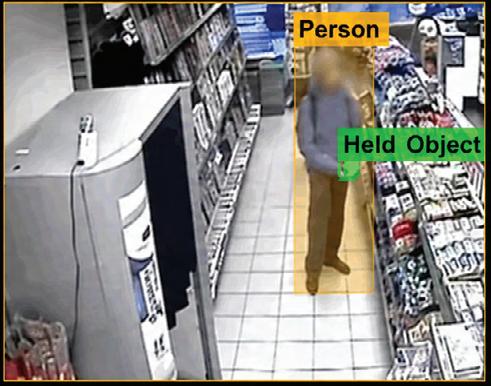
Canadian retailers are facing a more aggressive and complex security landscape than ever before. Theft is more organized, shrink is rising, and incidents increasingly impact staff safety. According to the Retail Council of Canada and the Loss Prevention Research Council, retail shrink costs Canadian businesses approximately $9.2 billion each year, and more than three-quarters of loss prevention professionals report an increase in violent shoplifters. Retail security can no longer rely on recording events after the fact. It must help prevent loss, protect people, and support consistent response across locations.
Most retailers already have cameras, but many systems still function as passive recorders. They help confirm what happened after a theft, but they rarely give teams the visibility to act in the moment. Replacing every camera is often costly and disruptive. ECAM’s Camera Takeover Program offers a practical path forward. By connecting to existing camera infrastructure, ECAM can turn passive video into an AI-enabled, monitored security network without major downtime, rewiring, or full system replacement.
ECAM Theft Detection AI focuses on identifying highrisk behaviors in real time, not just movement. It combines behavior intelligence, motion and tracking intelligence, and item awareness to help distinguish everyday shopping from meaningful risk. Instead of relying on basic motion alerts, the system can identify actions such as concealment gestures, handto-jacket movements, scan avoidance, partial item returns, or items that disappear from view. Loss prevention teams do not need more noise. They need clearer signals, earlier alerts, and better context so they can focus on situations most likely to affect safety, shrink, and operations.
AI does not replace guards or loss prevention teams. It makes them more effective. It helps them work with better information. ECAM’s AI-powered live video monitoring can surface potential threats in real time, while trained monitoring teams verify events, reduce false alarms, and escalate based on clear protocols. On site, GardaWorld security professionals provide the human presence technology cannot: deterrence, judgment, de-escalation, incident management, and investigations. The strongest model is not cameras instead of guards. It is a fully integrated system. It is AI, monitoring, guarding, and loss prevention working as one connected system.
As a GardaWorld company, ECAM brings AI-driven live video monitoring into a broader retail security strategy. Its solutions include site analysis and system design, advanced surveillance, live remote monitoring, video guard tours, and ongoing system support. For retailers, this creates a more complete model: existing cameras can be modernized, risks detected earlier, events verified remotely, and guards or loss prevention teams directed with greater clarity.
Retailers do not need more complexity. They need security that is easier to manage, faster to act, and scalable across every location. ECAM’s AI and monitoring solutions help traditional guarding and loss prevention teams move from reacting after incidents to stopping them in real time. For multi-location retailers, that shift can mean more consistent protection, smarter use of resources, and a stronger path to real resilience.
Learn how ECAM helps retailers reduce theft and improve safety at ecam.com.
Real-time monitoring.
Smarter detection.
Faster response.

Detect suspicious behaviour in real time
Support loss prevention with AIpowered alerts
Monitor existing cameras without replacing them
Reduce noise and focus on meaningful risk
Enable faster response through live remote monitoring
Improve visibility across stores and locations

By Peter Strom, President & CEO, March Networks and VIVOTEK
If you’ve walked into any of Canada’s top five banks this week, or used one of their ATMs, there’s a strong chance March Networks technology was part of the picture: our network video recorders, hosted Command Enterprise platform, purpose-built ATM cameras, or any third-party camera our platform supports. The same is true at many of Canada’s biggest retailers and transit operators.
Across these environments, video has quietly become one of the largest, fastest-growing data sources inside the business. And one of the least exploited.
I often say data is the new oil. Nowhere is that truer than in video. The gap between what video can deliver and what most organizations get from it is the most important problem in our industry. It’s also the reason March Networks and VIVOTEK came together under Delta Electronics earlier this year.
The infrastructure has caught up. The intelligence has to.
For two decades, industry investment has flowed primarily to the edge: more cameras, higher resolution, better optics, edge processing, and cloud connectivity. That work matters. But infrastructure alone doesn’t answer the questions customers ask. Where is loss happening, and why? Which branches are operating outside policy? Why did this incident take eight hours to investigate instead of eight minutes?
These are not camera questions. They are intelligence questions, and they require
“Data is the new oil. Nowhere is that truer than in video.”
— Peter Strom, President & CEO
a different kind of engineering: analytics that work in production, video correlated with transaction and operational data, platforms that scale across thousands of distributed sites, and AI that surfaces what matters without burying operators in noise.
Why this combination, and why now
VIVOTEK, headquartered in Taipei with a 25-year history, brings deep camera and edge-AI expertise from one of the world’s most consequential hardware ecosystems. Our parent, Delta Electronics, is one of Taiwan’s most respected technology companies, with decades of investment in power, automation, and intelligent infrastructure. March Networks, based in Ottawa for 25 years, brings the enterprise VMS, business intelligence, and cloud video platforms that some of the world’s largest financial and retail customers run on.
Together, under Delta’s Building Automation Business Group, they cover the full path from camera to decision, combining Taiwan’s hardware depth with North America’s software and services backbone.
For dealers and integrators, the implications are straightforward. One account-
able partner across the stack. Tighter integration between hardware and software roadmaps. Continued openness to third-party cameras, because no serious enterprise customer is single-vendor. And a sustained R&D investment, with more than 300 engineers across four global R&D centres, including Ottawa.
Our direction is consistent with where the most sophisticated customers are already pushing us: connect the ecosystem, turn sight into insight, and extend intelligence everywhere they operate. That’s the thesis behind our 2026 roadmap, and it’s how we’ll measure our own progress.
The fundamentals of this industry haven’t changed. Customers want fewer surprises, faster answers, and clearer accountability. What’s changing is how much video can do if the intelligence layer is built for it. That’s the work in front of us, and it’s why this combination made sense.
• 25 years headquartered in Ottawa
• Customers in 70+ countries
• 300+ engineers across 4 global R&D centres
• Trusted by global banks, retailers, and transit operators
• Backed by Delta Electronics, a global Taiwan-headquartered technology leader