
Serving Installers, Dealers and Integrators Across Canada




Traka expands in Canadian market
The ASSA ABLOY company has added more resources for customers and partners p. 7
Security Canada
Central photo gallery
Highlights from CANASA’s final Security Canada showcase and expo of 2024 p. 8
Alarm companies countdown to 3G sunset
Industry







Hall of Fame 2024
This year’s inductees, Anita Brunet, Mark Cup and Robert Mowles, share memories of career highlights, challenges and opportunities
18 3G sunset is almost upon us
The Canadian alarm industry sounds a warning to customers as the end of 3G support may only be months away
By Christine Wong
hosts first annual job fair at
is driving integration By
Lessons Learned Share deals vs. asset deals: the game has changed By
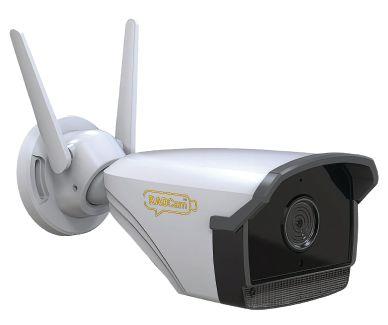
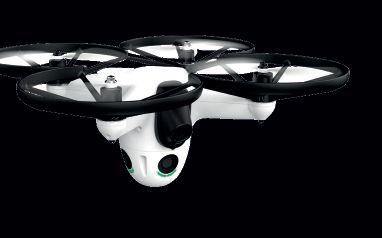
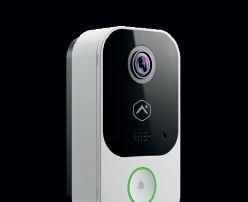
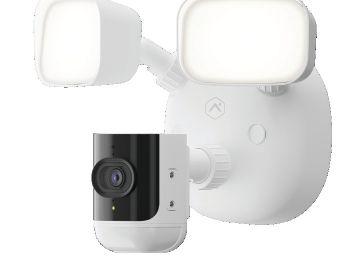
RADCam, an AI-powered “Talking Security Camera,” offers all the features of traditional residential security cameras (monitoring, detecting and recording activity) while adding layers of security and concierge services.
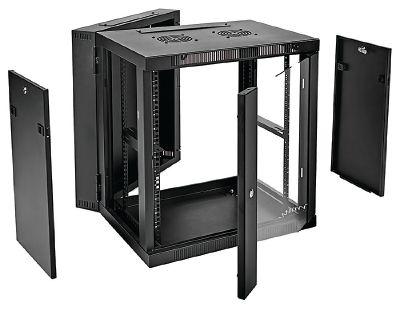
ShowMeCables has introduced a line of black wallmount swing-gate racks. The swing-gate enclosures and open-frame racks have a rear frame that mounts to a wall.

OBy Neil Sutton
f all the stories we’ve covered in 2024, one that seems to come up again and again is the lack of skilled labour available to the security industry.
This issue has been examined in columns and features (read the article in the last edition of SP&T News if you missed it) and is a topic that seems to arise whenever I’m conducting an interview for an article or simply engaging in casual conversation with a security professional.
As far as I can tell, one of the biggest reasons for this persistent issue is a general lack of knowledge. The public simply doesn’t realize this industry exists in any substantial form, so it isn’t on anyone’s radar when they’re mulling career options while still at school.
first career fair this year in order to connect recruiters and security companies with potential job applicants.
A recent survey, conducted by Leger and commissioned by Classic Fire + Life Safety, indicates there is strong support amongst Canadians for the skilled trades. More than three-quarters of survey respondents said they would encourage their children to enter a trade.
“Industries of every stripe struggle to match job vacancies with qualified applicants.”
To most people, security is a guard uniform or a camera mounted on a wall. They wouldn’t consider that there’s an infrastructure that supports uniformed guards or the surveillance industry. And why should they? Most people I meet in security fell into their careers. Either they had ambitions to join law enforcement and discovered security along the way, or simply responded to a job opening.
One of the positive reasons we have devoted a significant amount of coverage to this topic this year is because there is actually some progress being made. The Canadian Security Association (CANASA), for example, has devoted time and resources to forming relationships with colleges in order to develop and promote security and alarm technician programs. They also hosted their
So while there is hope, the security industry can collectively do a lot more. Exhibiting at career fairs, making staff available to guest lecture at college programs, and writing job ads that appeal to a wider audience are just a few of the possible approaches.
The security business is definitely not alone in its staffing situation. Industries of every stripe struggle to match job vacancies with qualified applicants. But as a parent, I can attest that the generation coming into the labour force in a few years is far more likely to consider career options that weren’t really visible to my generation or the ones that followed it.
As a parting thought for 2024, all of us at SP&T News would like to extend our thanks to our friend Patrick Straw, who is retiring as CANASA’s executive director at the end of the year. SP&T has enjoyed a strong and productive partnership with CANASA under his leadership, and we wish him all the best as he starts a new chapter in his life.
@SecurityEd


READER SERVICE
Print and digital subscription inquiries or changes, please contact Shawn Arul, Audience Development Manager Tel: (416) 510-5181 • Fax: (416) 510-6875 Email: sarul@annexbusinessmedia.com
Mail: 111 Gordon Baker Rd., Suite 400, Toronto, ON M2H 3R1
published 5 times in 2024 by Annex Business Media. Its primary purpose is to serve as an information resource to installers, resellers and integrators working within the security and/or related industries. Editorial information is reported in a concise, accurate and unbiased manner on security products, systems and services, as well as on product areas related to the security industry.
Editor, Neil Sutton 416-510-6788 nsutton@annexbusinessmedia.com
Group Publisher, Paul Grossinger 416-510-5240 pgrossinger@annexbusinessmedia.com
Publisher, Adam Szpakowski aszpakowski@annexbusinessmedia.com
Associate Publisher, Jason Hill 416-510-5117 jhill@annexbusinessmedia.com
Media Designer, Graham Jeffrey gjeffrey@annexbusinessmedia.com
Account Coordinator, Kim Rossiter 416-510-6794 krossiter@annexbusinessmedia.com
CEO, Scott Jamieson sjamieson@annexbusinessmedia.com
EDITORIAL ADVISORY BOARD
Patrick Soo, Alarm.com Floria Chiu, Telus Custom Security Systems Stephen Karchut, Alarmtech Val Michetti, HID Frank Pietrobono, RSPNDR
111 Gordon Baker Rd, Suite 400, Toronto, ON M2H 3R1 T: 416-442-5600 F: 416-442-2230





































Beauty company gets integrated security make-over

The “Babor Beauty Cluster” is a production and R&D facility operated near Babor Beauty Group headquarters in Germany. Approximately half a million jars, tubes and ampoules are filled there daily, and logistics and shipping are also handled on site.
The 60,000 sq.-m. plant utilizes a smart solution from Bosch Building Technologies which integrates fire protection, intrusion alarm and access control systems, and a video security solution. AI-based surveillance analyzes every captured image and only triggers an alarm if conditions based on predefined rules are met.
The safety and security systems of both the Babor Beauty headquarters and production facilities have been integrated into Bosch’s Building Integration System 360 platform.
The centralized management platform provides control of all building systems, enabling Babor’s operations and management team to respond efficiently to security-related events.

U.K. fire services collaborate on control room
Four fire and rescue services (FRS) in the U.K. have selected a shared control room solution that allows them to operate both independently and as a collaborative services hub.
The platform, deployed by Motorola Solutions, will be used by Hereford and Worcester FRS, Shropshire FRS, Cleveland Fire Brigade and Country Durham & Darlington FRS. Together they operate 77 fire stations, covering a population of 2.5 million people.
The shared platform encompasses an integrated communication control system (ICCS) for call taking, computer aided dispatch (CAD) and data recording.
“Our control room is an essential function and the first point of contact to our communities in any emergency situation,” said Jon Pryce, chief fire officer, Hereford and Worcester Fire and Rescue Service, in a statement.



• SAFR from RealNetworks has appointed Charisse Jacques as its new president. Jacques brings her experience in AI and associated technology to the security industry.
• Michael Martin has joined
seals

Zoos Victoria and Parks Victoria in Australia embarked on a wildlife conservation and preservation project to monitor seals on protected haul-out structures in the middle of Port Phillip Bay.
To monitor the seals, the project called for surveillance systems capable of meeting the needs of a remote location in a harsh marine environment.
The situation required a standalone system powered by solar energy, with 4G LTE connectivity and a large lithium power pack to ensure continuous operation. The surveillance system also had to provide high-resolution, real-time video feeds to the shore, where the Marine Response Unit operates, and be remotely controlled and managed. A PTZ camera was needed to detect entanglements like fishing line and rope, as well as any injuries sustained by the seals.
Manufacturer VIVOTEK provided a comprehensive solution to meet these needs, integrating advanced speed dome cameras with AI-powered systems to enhance wildlife conservation.

Speco Technologies as national sales director.
• Dele Adetunji, who began his career at Hall Telecommunications in 2018 as territory manager, has been appointed director of sales.
January 7-10, 2025 International CES Las Vegas, Nev. www.ces.tech
February 13, 2025
Security Summit Canada Online www.sptnews.ca
March 31 - April 4, 2025 ISC West Las Vegas, Nev. www.iscwest.com
April 30, 2025
Security Canada East Laval, Que. www.securitycanada.com
May 6-8, 2025
Canadian Technical Security Conference Banff, Alta. www.ctsc-canada.com
June 9-10, 2025
Security LeadHER Detroit, Mich. www.securityleadher.org
June 11, 2025
Security Canada West Richmond, B.C. www.securitycanada.com
June 16-19, 2025 ESX Atlanta, Ga. www.esxweb.com
Sept. 29 - Oct. 1, 2025 GSX New Orleans, La. www.gsx.org


• Michael Callaghan has been named Eagle Eye Networks regional sales manager, Western Canada.
• Morse Watchmans announced the appointment of Jordan Andrews as sales manager.
Andrews’ mandate will include global sales efforts.
• AMAG Technology has recently appointed Chris Meiter as vice-president of global business development for video solutions.

The ASSA ABLOY company planned its Canadian expansion a year ago based on feedback from channel partners
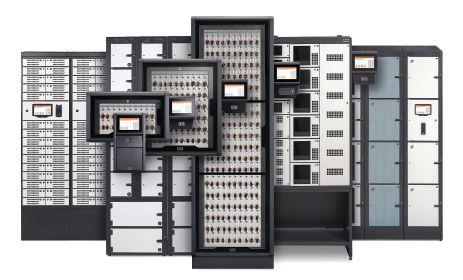
Traka, an ASSA ABLOY company, has expanded its presence in Canada with a dedicated staff and more resources for customers and integration partners.


Traka, which is part of ASSA ABLOY Global Solutions, develops technology for digital and physical access management control, such as electronic key cabinets and smart lockers.
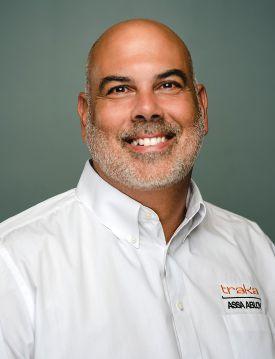
“We wanted to really focus our efforts more on customer service, support and delivery (in Canada),” said Danny Garrido, president of Traka Americas, of the recent expansion.
“We’ve had a presence (in Canada) for a few years, working
Traka’s product lineup includes electronic key cabinets and smart lockers
through some of our sister companies at ASSA ABLOY. We really wanted to get a little deeper into the Canadian market. We’ve seen demand grow for Traka over the years, so we wanted to make sure that we’re meeting those needs and that we understood what Canadian organizations need,” Garrido told SP&T News.
Traka has hired a dedicated staff in Canada to help manage sales, technical support and product deployment, with personnel located in Toronto, Calgary and Vancouver. Previously, the company’s Canadian partners worked with Traka offices in the U.S. or through other ASSA ABLOY companies in Canada.
The plan to grow in Canada came into focus about a year ago, said Garrido, based on direct feedback from Canadian channel partners.
“We’re seeing that demand reciprocated. We’ve already seen a significant uptick in quoting activity,” said Garrido, adding that there has been increased interest in Traka products across Canada and from markets including education, hospitality, gaming, mining and transportation.
“We knew this was going to be a logical next step,” he said.
— Neil Sutton
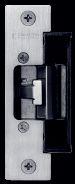
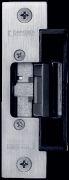
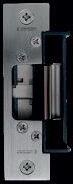
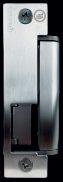
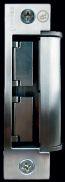
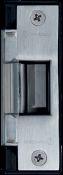
We understand that you need a good reason to buy a different strike. Get it wrong and you could end up losing money or even a customer. But Camden is always your right choice. The right features, value, and performance - together with the best quality and warranty in the industry. Even better, Camden strikes are always in stock, our customer service is second to none, and we never ask for multiple price increases over the year! Contact your local Camden distributor today!
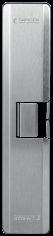

CX-EPD1289L & CX-EPD1289L-BK




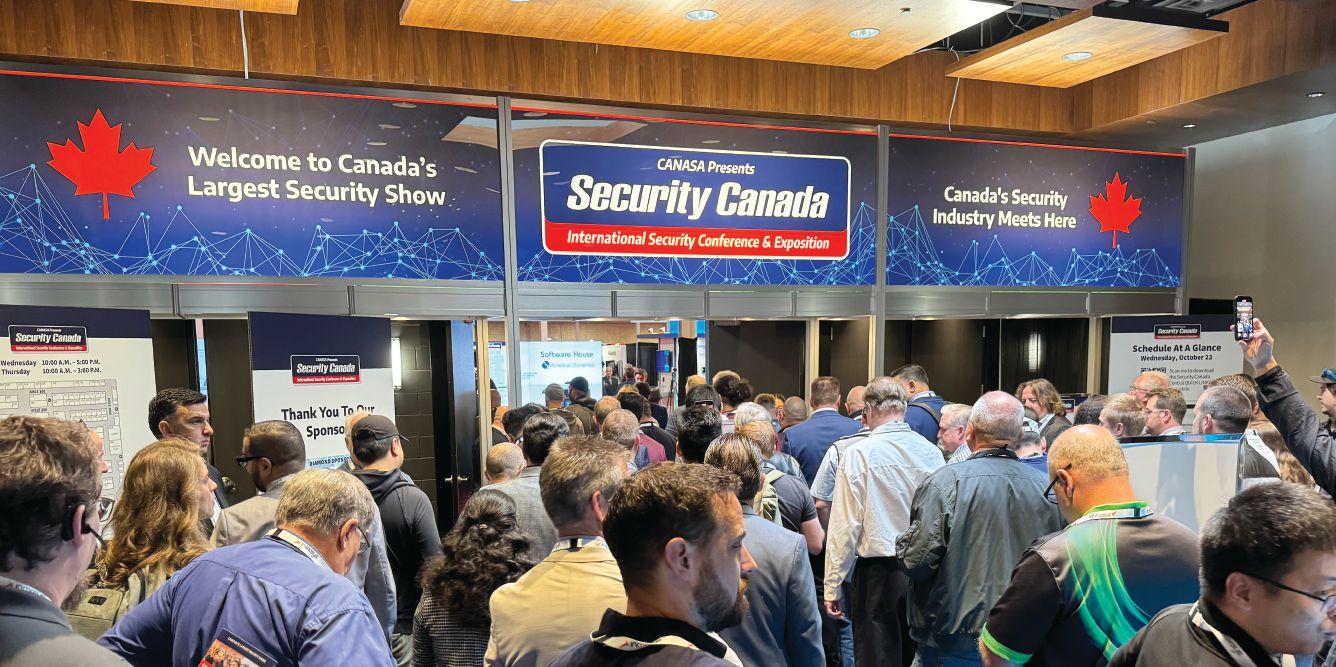
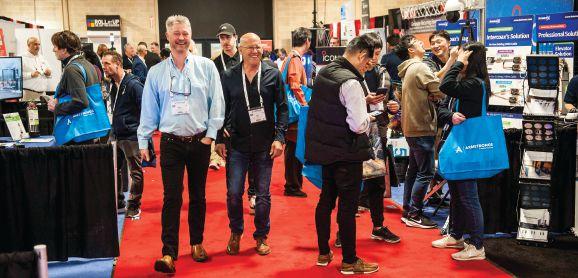
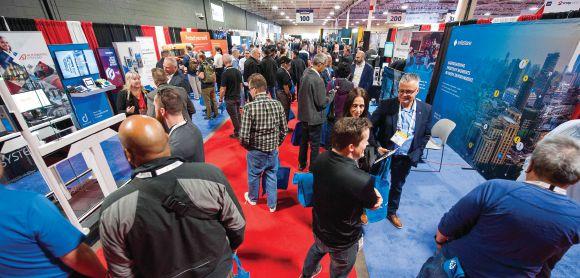
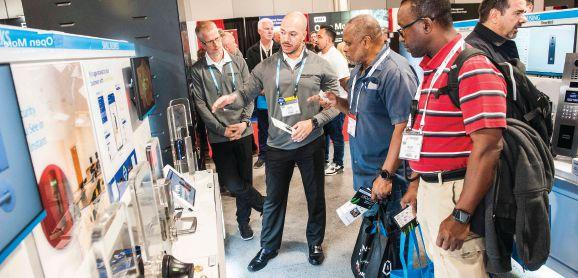
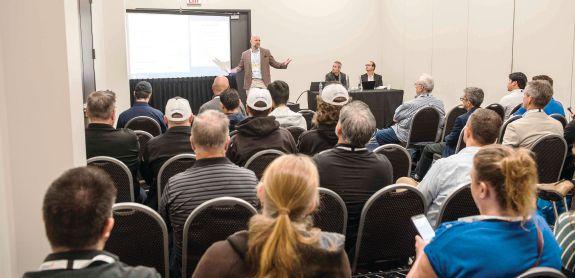
he Canadian Security Association (CANASA) held the final Security Canada show of 2024 in Toronto on Oct. 23-24 with a record number of attendees, exhibitors and education sessions.
CANASA also hosted its first annual job fair at Security Canada Central this year, connecting recruiters and companies with job seekers and students looking for security industry experience.
The first of three 2025 Security Canada events will begin in Laval, Que., on April 30, with two more shows to follow throughout the year in Richmond, B.C., on June 11 and in Toronto on Oct. 22-23.
Visit www.securitycanada.com for show updates.

By Patrick Straw
As the year is quickly coming to a close, CANASA’s fall programs recently concluded with the latest edition of Security Canada Central (SCC), which was held Oct. 23-24 in Toronto.

As usual, Steve Basnett, CANASA’s director of trade shows and events, and his team did an excellent job with some upgrades to the show to enhance the experience for both vendors and guests. When the doors closed on Thursday, we had achieved another record for attendance with an increase over last year of about eight per cent.
On day two of SCC we held our first job fair with hiring agencies and interested companies
meeting with potential employees for the security industry. Attendance was good and, with a little work, we will make this a part of Security Canada moving forward.
Just prior to SCC, we held our bi-annual National Monitoring Station Symposium. This event encourages leaders in the security monitoring sector to get together for presentations and open discussions about all aspects of the industry. I am pleased to say it was very well attended this year and the program was excellent.
With the changes to foreign student rules in Canada, many colleges and universities are re-adjusting to find ways to keep up with the demand for education in a vastly different funding model. This is spawning
micro courses or elective opportunities which may be good for security integrators who are looking for technicians. We are hopeful that by working with some of these schools, the security component can be built into an existing electronic technician course and we will provide information on the opportunities available to these students upon graduation.
If you are planning on exhibiting at any of the three Security Canada shows in 2025, registration is now available. I would suggest signing up quickly, as they all sold out this year and we are expecting the same result again next year.
Enjoy the rest of the autumn and stay safe as winter rolls in.




IBy Roger Miller
Security Canada Central was an opportunity to glimpse the future and a reminder to keep up with new releases
enjoy attending the annual Security Canada Central show in Toronto, as do many of my colleagues.
It is the one time of year we have the opportunity to see the latest products as well as visit with the manufacturers. Relationships are often built or strengthened at these events.
“The days of installing something that won’t be accessible over a network are fading into the past.”
While I was speaking with the manufacturer’s product representatives, including some of the engineering team members from the U.S., I could hear how passionate they are about their new products.
They care about innovations that make their products better for the installers as well as the end users. They are always working on the next generation of releases, refining what we are installing today and trying to improve on them. They also clearly enjoy talking to the people who sell and install their equipment, which is you.
During these conversations, it occurred to me that we should all have that level of passion for customer service and know the products we’re installing to the best of our abilities. We know “it comes in a box” but do we really know how to maximize the performance of each piece of hardware or software we purchase for installation? Customers depend on their service providers for technical expertise, which places responsibility on both sales and installation teams to know their products’ capabilities.
These security products protect everything from your neighbour’s cottage to critical infrastructure. Installing security equipment requires continual learning. Taking the time to be fluent in their capabilities can be the difference between being a professional or not.
The evolution of these products was apparent at Security Canada. I noted more booths related to the networking and cyber-connectivity of security hardware than ever before. The days of installing something that won’t be accessible

over a network are fading into the past, requiring a wider scope of knowledge for everyone. Security professionals shouldn’t be deterred by these changes, but encouraged by the opportunities to expand their businesses. New technology should be seen as a revenue stream and another reason to be engaged in learning.
In addition to new products at Security Canada, there were new services. There were more cloud offerings than I’ve seen in the past — again these are possible new revenue streams. Access control, CCTV and security systems all have cloud-based services that can be marketed to your customers. These new approaches may require you and your team to learn more, but they also come with significant rewards. While the cloud isn’t always an option for everyone, it has become the norm for many.
The message at Security Canada was pretty
clear: there are a lot of new opportunities waiting for you. Some of them will be with the products or brands you’ve used for years and others will be new to you. Regardless of the product, learn how it works, learn how to maximize the performance, then take it to your customer. You’ll both be better off for it.
This year’s SCC also added a little something special to the gathering: an opportunity to say thanks and offer retirement wishes to Patrick Straw as he steps down from his role as the executive director of the Canadian Security Association (CANASA).
Patrick’s tenure in this role is an example of how to lead an organization. Maybe we can all learn something from his time at CANASA.
Roger Miller is the president of Northeastern Protection Service Inc. (www.protectionpartner.ca)

TBy Victor Harding
An adjustment to the tax rules earlier this year has meant big changes for alarm company deals and the sale of accounts
hanks to our Liberal government, the situation for sellers of security businesses has been made much more difficult.
Now more than ever, selling shares will be the way to go — even though alarm account buyers in particular have always liked to buy just the accounts rather than shares.
“Since the tax increase was announced, business people and economists have said it will discourage entrepreneurship.”
Many of you will know that as of June 2024 the Liberals increased the amount of a capital gain in a sale of any assets (including alarm accounts) that is to be included as taxable from 50 per cent to 66 per cent.
While this may not seem like a big deal, my accountant tells me that this increase will mean a seller of assets in general will pay an extra nine per cent more than they did prior to this increase. Asset deals were already much more heavily taxed than a share deal. This change will just make it worse.
Since the tax increase was announced six months ago, business people and economists have said that it will discourage entrepreneurship and the overall ability to raise money in this country. This is not something that Canada needs to be doing at any time, especially not now when our average GDP/capita growth rate is falling behind most OECD countries.
It is possible that a future Conservative government would rescind this latest increase in capital gains tax, so one theory suggests that if you don’t have to sell right now, wait for a year.
As an offset to the increase in tax for asset deals, the government did increase the one-time capital gains exemption for the sale of shares of a Privately Controlled Canadian Corporation to $1,250,000 from where it was at about $950,000. This should drive sellers to seek share deals more than ever.
This increase in capital gains tax will have

a big effect on alarm companies looking to sell because right now in Canada most of the bigger buyers of alarm accounts do not like to buy shares. Why is this? It is partly because the buyer cannot write off the purchase price against future income (let’s call this the loss of the tax shield) when buying shares and partly that share deals are generally more costly to do.
Also, there is more due diligence required, a lengthier purchase agreement to be agreed to and the cost to wind the company structure up afterwards. Strangely enough, most buyers of fire and guard companies are okay with buying shares.
I personally think there is both a need and an opportunity for some of the bigger buyers of alarm accounts to move with the times and agree to do share deals. If I was a seller of alarm accounts right now and had say 1,000 accounts, I would hold out for a share deal. The after-tax, take-home pay difference between a share and asset deal is just too great now.
I experienced the effect of this change in capital gains taxation recently. When looking at an initial offer from a buyer, I thought the extra multiples being offered for an asset deal would make the asset deal the favoured route to take. However, the company’s accountant made it clear that a share deal was going to be much more favourable. The share sale benefit was so great that the buyer had to change gears and of-
fer to buy shares.
Then the next issue hit me. How much of a multiple reduction (due to the loss of the tax shield for the buyer) can a seller of shares expect to experience from an informed buyer as compared to an offer to buy assets?
Conventional wisdom was that the expected discount for a share deal was about 5-6 x Recurring Monthly Revenue (RMR). This discount was made up of the a) loss of the tax shield that occurred in buying shares and b) the extra time and risk involved in buying shares.
However, when talking to the same informed tax accountant about how much the loss of tax shield should be, I was surprised to hear that in most cases it should be no more than 2-3 x RMR, which is much smaller than I thought. Added to this tax shield reduction is the extra time and risk in doing a share deal. In total it became clear that from a financial point of view the total reduction for a share deal was closer to 3-4 x RMR at most. Whether alarm account buyers will accept this rationale is another matter.
One thing for sure is that unless alarm account buyers change their ways and start looking at doing share deals, sellers of alarm accounts are going to get hurt big-time when selling their accounts in an asset deal.
Victor Harding is the principal of Harding Security Services (victor@hardingsecurity.ca).
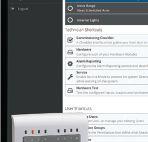
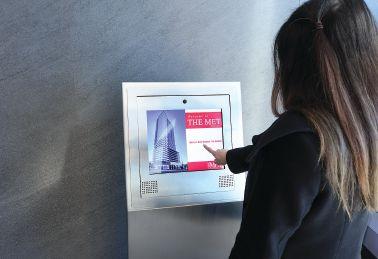
Nestled just 30 minutes from the bustling heart of Toronto, in the rapidly growing hub of Vaughan, Ontario, The MET Condos stand as a beacon of modern, multifamily residential living. With its 35-floor tower boasting over 500 suites, complemented by 62 townhomes and a suite of luxurious amenities, The MET is setting new standards not just in design, but in security and technology integration as well.
In an era where urban development is synonymous with complexity, The MET Condos faced the challenge of selecting a security system that was not only robust for today’s needs but also adaptable for the future. Enter The Citywide Group, a leader in building solutions, who partnered with ICT to deliver a cutting-edge security infrastructure. “ICT isn’t strictly about providing cutting-edge access control,” says Adam Perrin, CTO of The Citywide Group. “It’s also about the relationship and reliability of their team in design, implementation, and troubleshooting.”
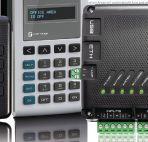
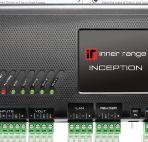
The MET’s security architecture revolves around the Protege GX platform—an innovative solution that seamlessly integrates multiple security features into one cohesive system. This platform is future-proof, offering mobile credentials that fit effortlessly into the smartphone-centric lifestyle of today’s residents. With the Protege Mobile App and Bluetooth-enabled keys, residents experience the ultimate convenience and connectivity. Perrin notes, “The convenience and simplicity of having your security credential on your phone is a feature more and more end users are requesting.”
The integration of mobile technology extends beyond convenience. It ensures security and efficiency by simplifying key management for property managers. Multi-technology tSec readers support both mobile keys and fobs, allowing for easy management of access rights during tenant turnovers. Property managers can issue and revoke mobile credentials remotely, eliminating the need for physical key exchanges.
Beyond access control, The MET’s Protege GX platform enhances daily operations with its

user-friendly interface. The complex array of features is simplified onto a single status page using custom floorplans, which concierge staff find invaluable for orientation and quick response. Integrating CCTV images directly onto this dashboard allows for instant visual verification, and enhances security and response times.
]A frequent challenge in high-density residential areas is managing parking access. The MET overcame this by employing ICT wireless receivers and 4-button remote fobs to control parking garage doors. This setup ensures that only verified residents can access their designated parking, preventing unauthorized use and enhancing security.
The MET’s security solution is a testament to the foresight of its developers and the expertise of The Citywide Group. “We have the long-held philosophy that our suppliers must provide high-quality goods and services at competitive prices that add value to our business and meet the expectations of our
customers,” Perrin emphasizes. “Every aspect of these market requirements and expectations is met by ICT.”
As Vaughan continues to grow, The MET Condos and its residents can rest assured that their security infrastructure is not only robust but ready to evolve with the changing urban landscape. The Protege GX platform ensures that The MET remains at the forefront of secure living, offering peace of mind to its residents and a scalable solution that adapts to future needs.
Experience ICT Protege Wireless Locks and the power of one credential for any door. To find out how you can make multifamily security easy, contact ICT today.
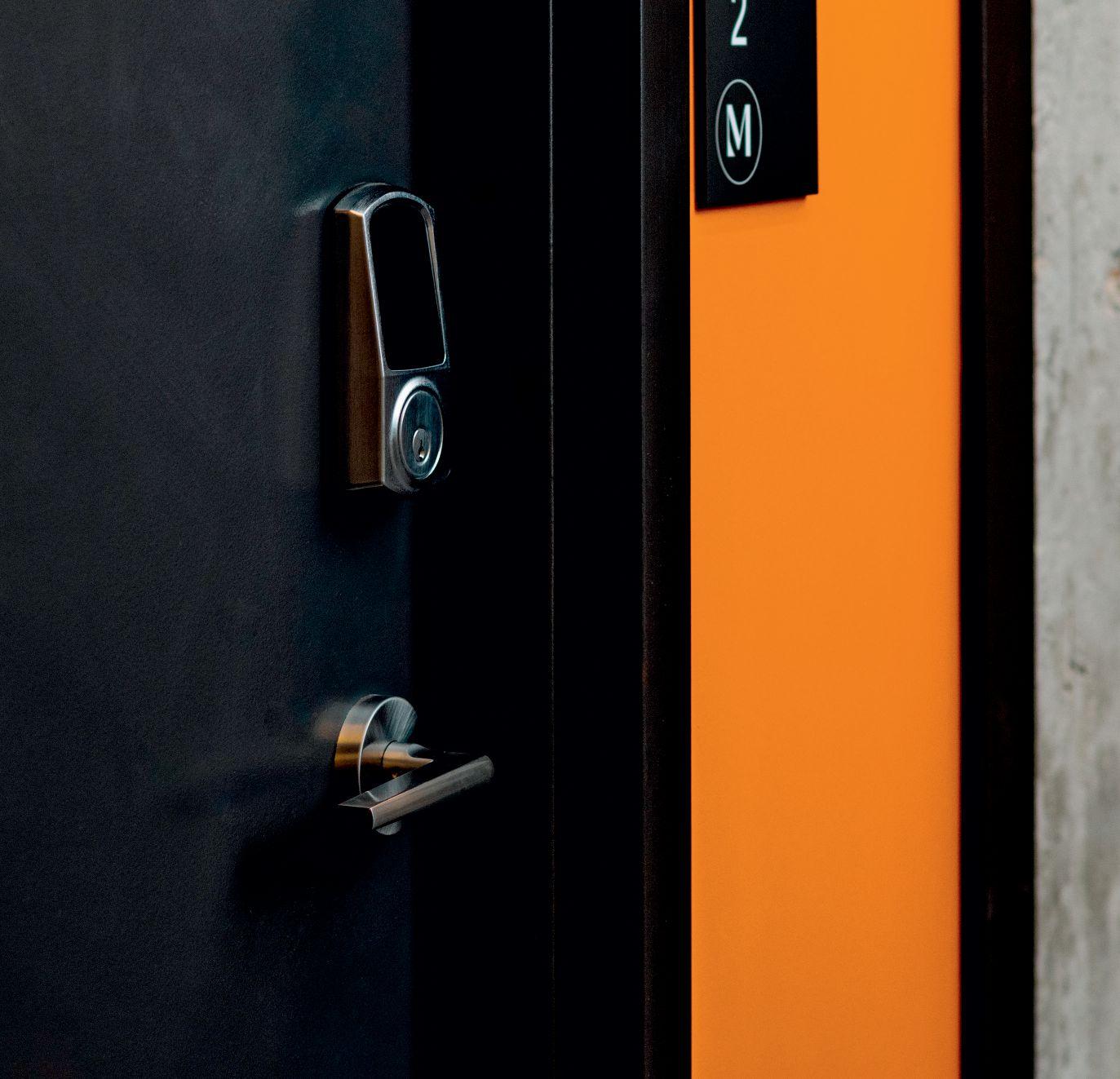
Introducing ICT’s new Protege Wireless Locks, where modern design meets advanced security. Just one credential is needed for simple access from the perimeter to the penthouse. With wireless and hardwired doors, visitor entry, mobile app, and more – ICT has the complete multifamily solution. Cartridge mortise and deadbolt available to order now. Pat
Alvaro Senior Vice President, Canada

A decade ago, we created the SP&T News Hall of Fame to showcase security professionals who have helped to raise the profile of the industry and improve it through their years of service.
For the 10th annual awards, we put the spotlight on three
more professionals who exemplify the qualities that continue to make this industry great: dedication, entrepreneurship and a commitment to learning. Please join us in congratulating this year’s inductees, Anita Brunet, Mark Cup and Robert Mowles. (Profiles by Neil Sutton)
Approaching her 35th year in the professional security industry, Anita Brunet is just as excited to be a part of it now as she was back in 1990.
Brunet moved to Canada from her native Ireland with her family in the 1980s and started working at the counter at distributor Arius immediately after high school. She was recruited by Tri-Ed Distribution five years later as its second employee in Canada.
Brunet has basically worked for the same company ever since, though the logo on her business card has changed a few times. It currently says WESCO as a result of its corporate acquisition of Anixter just over two years ago. (Anixter acquired Tri-Ed in 2014.)
She attributes her longevity in security to her ability to adapt to different environments and willingness to integrate new ideas. Over the decades, she has seen both technology and service delivery models shift dramatically.
The industry has also experienced wave after wave of corporate consolidation, meaning a product developed by one company today may belong to another tomorrow. These are just the realities of the business and Brunet views change as means to explore new opportunities and meet new people.
“It’s never boring,” she says. “If it’s not a new boss or a new company, it’s a new product or a new technology that’s coming out. I think

“My work here is not done, by any means.”
it helps you grow as a leader. You become a chameleon after a while. It’s been easy to roll with it over the years.”
Brunet’s gift for networking and ability to take on new challenges was evident from the very beginning of her career. Her bosses at Arius encouraged her to get involved with the Ca-
nadian Security Association (CANASA), so she joined the local B.C. chapter.
Still a teenager at the time, she was a revelation to the much older and decidedly male chapter executive. With her capacity to learn quickly and engage fully with association business, she quickly became a fixture at CANASA. In 2003, she was voted B.C. chapter president, the first woman to take on the role.
Brunet says CANASA has been integral to her overall career success. She recommends association membership to anyone who’s looking for new ways to engage with the industry and grow their career. “That’s where you learn everything. Anything you need, there’s usually someone who’s willing to help and wants to help you,” she says.
Becoming CANASA’s national president for two-year term in 2021 was a “full-circle moment” for Brunet.
“Thirty years ago, I couldn’t have seen that coming, but all that networking and having to persevere through some of the difficulties of being the only female in the room, I think that’s made me a stronger person in my own business. I really believe that’s what helped to catapult me into my position today. I don’t think I would be in my role at WESCO if it wasn’t for my role at CANASA.”
Last year, she was recognized with CANASA’s highest honour, the R.A. Henderson Award
which is given to a CANASA member “who has demonstrated extraordinary achievements within the security industry, and who has made significant contributions to the advancement of the interests of the entire industry,” according to the association.
Brunet took on a new challenge at WESCO in 2022, promoted to vice-president of U.S
branch security and locking solutions. After more than three decades pursuing a security career in Canada, taking on a major American role almost felt like starting over, she says.
While still operating from her home in B.C., Brunet is now leading a much larger sales territory in the U.S.
She jokes that her American counterparts are
In some ways a manufacturer’s representative operates as a microcosm of the security industry: representing a range of completely different but in most cases complementary security brands.
Running a rep firm also requires a broad industry knowledge and the right mix of sales and customer support skills.
When Mark Cup established Access Direct Sales in Montreal with business partner Mike Jamieson in 1991, these rules were still unwritten and the electronic security industry was in its infancy.
Cup trained to be an electrician in the early 1980s, but with work in short supply he found himself installing security and alarm systems to
make ends meet. He met Jamieson at the same alarm company and the two decided to pool their resources and set up Access Direct. “We didn’t even know what a rep firm did,” says Cup. “There were very few at the time.”
Initially, they kept the business going by borrowing money from family and supplementing their income with subcontract work. Eventually they began to pick up new clients, assessing product lines based on their technical merit and market potential. “Most of the lines we took were starting at zero,” says Cup.
Paolo Polano joined Access Direct as a business partner in 1994. Jamieson is currently the CEO of Raytec Systems.
sometimes taken aback by her direct approach and frankness but says her new role is “the best of both worlds.”
She says in the past two years, she has been energized by meeting new people and taking on new responsibilities. “This U.S. job got me to another level of excitement. My work here is not done, by any means.”



As is common for rep firms today, Access Direct works with a variety of different security companies and product types. Cup looked for clients in discrete categories like CCTV, access control, intrusion, etc., to avoid any potential conflicts of interest. It requires a fluid approach, says Cup, as manufacturers tend to grow by adding new product lines or acquiring other companies.
“You kind of learn as you go along. We started off asking a lot of questions and making mistakes like anybody else would. Experience really does help. We always had to stay on top of the next trend in technology and learn it,” says Cup, who has seen different technology trends rise and fall over his 40-plus years in the business.
“We were right in the middle of the big-
“We came up through this industry during some very exciting times.”
gest change our industry will probably ever see when we went from analogue to digital. That was the game-changer,” he says.
Cup maintains that the primary role of a success manufacturer’s rep is to be an extension of the company it is representing. “I think from a day-to-day perspective, it’s really no different than what a dedicated sales person does for a company. We really have the same goal and work in tandem with them,” he says.
Smaller clients may not have the resources
For every entrepreneur and independent business owner, there comes a sink or swim moment.
For Robert Mowles, it came a few years after he set up his Aartech business.
Back in 2002, Mowles saw a gap in the home automation market and thought he could help fill it. Smart home technology was relatively new, as was e-commerce, but Mowles believed Canadians would soon embrace both.
Mowles established Toronto-based Aartech Canada with a single product line, which he stored and shipped from his home. “Like many small business stories, it was literally started in my basement on a shoestring budget,” he says.
Mowles kept his day job for the first few years while he got Aartech off the ground. “I continued on, trying to not wake my family in the middle of the night while I was packing boxes,” he says. “I was the president, chief executive officer, shipper, customer service... I was driving to pick up orders... all of it.”
Mowles says he knew when the time was right to take the plunge and pursue Aartech full-time. “I sat down and did some math and I thought I could give it a crack. That was over 20 years ago, and here we are today.”
As Aartech expanded its product offerings, the company required more room for inventory. At first, that meant operating out of a bigger basement when the family moved house. Eventually Mowles moved Aartech into a commercial space that had just enough room for product storage and a small office.
After a few more years operating Aartech as a consumer-facing business, Mowles says he received some sage financial advice and added a wholesale business to the retail. He established a new division called Aartech Pro that could sell

“We treat our customers the way we want to be treated.”
products to installers and dealers.
There’s a “huge learning curve” between selling direct to consumers and selling through a channel, he says. The former tends toward opportunity and one-off sales, while the latter is about building relationships and repeat business.
While it may seem like a conflict to sell direct to the consumer and sell through a dealer, Mowles has discovered that none truly exists. There will always be a group of consumers who prefer to buy and install equipment themselves (the DIY market), and those who would rather buy from a dealer and have a professional manage the installation.
There is a sliding scale between both markets — once a product passes a certain threshold of price or complexity, the DIY market begins
to hire their own sales personnel, particularly in a country as vast as Canada. A rep firm can act as their proxy and help them increase their visibility. Larger manufacturers will also look to rep firms as an adjunct to their own sales teams, and as a means to push their brands even further into the market. Cup maintains that companies that treat rep firms as a true part of their organization have always been more successful than the ones that keep them at arm’s length.
Access Direct now has a dozen brands in its portfolio and currently has a team of seven full-time staff, with offices in Montreal, Ottawa, Toronto and Vancouver. “It’s been a lot of fun. I work for myself but I have to answer to 12 different bosses,” says Cup. “We came up through this industry during some very exciting times.”
to shrink and professional installers end up with the lion’s share of the business. Operating both direct and channel-based businesses, Mowles has seen this dynamic in action. He often refers new business to professional installers via an Aartech lead-sharing program.
“We get inquiries from retail customers who don’t know what they need or don’t know how to get from point A to point B and we connect them with installation partners,” he says.
In the 22 years since Mowles set up his online business and kept inventory in his basement, clearly a lot has changed. For one thing, there was very little competition in the early 2000s. Now, every flavour of smart home gear is available online. But, the explosion of DIY and the ubiquity of big box stores and online retail has actually had a positive impact on the home automation and security markets, argues Mowles. Today’s consumers are far more product-savvy and they are fully aware of what’s available. “It actually drives demand and drives adoption,” he says.
In the intervening two decades, Mowles has moved into a much larger warehouse and hired staff to help out with operations. He also started hosting Aartech Pro exhibitor events about five years ago, providing his suppliers an opportunity to showcase their products and inviting dealers to get a closer look at new technology. “I think it’s a great combination of getting people together and appreciating our customers,” says Mowles. “We treat our customers the way we want to be treated as the customer. That’s what we give back.”
Mowles hasn’t taken Aartech’s longevity or success for granted. Stocking almost 100 different brands today, he says he still enjoys running the business, and is planning on expanding into a new warehouse as Aartech continues to grow.











The Canadian alarm industry sounds a warning to customers as the end of 3G support may only be months away

By Christine Wong
When 3G service ends in Canada several months from now, it could disable thousands of security and fire alarm systems – and hit service providers with an avalanche of upgrade requests.
Canadian telecom carriers are ending 3G support to continue their rollout of 5G networks. When that happens, residential and commercial alarm systems that use 3G cellular won’t be able to communicate with security monitoring services.
The alarms may ring on-site where they’ve been installed, but no alert will reach monitoring stations.
“It’s very possible that on the (3G service) wind down date, some alarm customers could
lose communication if they’re only relying on a cellular connection,” says Gordon Hebb, director of intrusion sales for Canada and the eastern U.S. at Johnson Controls, a manufacturer of alarm systems hardware.
Rogers sent a letter to some of its corporate customers earlier this year that it planned to decommission its 3G wireless network on March 31, 2025. (A FAQ page on Rogers’ website has since announced the planned retirement date for its 3G network is July 31, 2025.) Bell and Telus haven’t announced exact shutdown dates of their own, but are widely expected to phase out 3G by the end of next year.
All 3G service in the U.S. was sunset by the end of 2022. In Canada, no one knows for sure if 3G will be suddenly shut off like a tap or gradually decommissioned. When 2G service was sunset in Canada at the end of 2021, it kept working for
“You can’t do a firmware upgrade or a software upgrade. You have to remove that physical device and put in a new device.”
— Gordon Hebb, Johnson Controls
a while, reportedly because many government agencies needed more time to phase it out of their operations, recalls Kevin Leonard, COO of Huronia Alarm and Fire Security. Based in Midland, Ont., the company sells and installs alarm equipment and provides monitoring services.
While there’s no definitive data on how many Canadian alarm system customers could be affected when 3G ends, it could be in the “thousands,” according to Patrick Straw, executive director of the Canadian Security Association (CANASA).
Based on the industry’s traditional estimate that approximately 20 per cent of all homes have an alarm system, “you’re probably looking at millions of clients” in the residential market alone, says Leonard. He adds that about 10 per cent of his firm’s total customer database runs on 3G since “a lot of our systems are Rogers-based radios.”
At Mississauga, Ont.-based Vipond, customers who still have 3G fire and intrusion alarm monitoring panels will be affected by the situation. That’s about 30 per cent of Vipond’s monitoring customers in Ontario, mostly “much older legacy accounts,” says Jessica Tanan, a business development leader at Vipond’s security segment.

Businesses in Canada’s security and fire alarm sector have just a few months left to explain the potential danger to their customers, perform thousands of technical upgrades, and ensure they have enough hardware components to meet a potential surge in service calls as the deadline approaches.
Why can’t Canadian alarm companies just go ahead and upgrade all the 3G systems out there? First, those alarms were installed more than a decade ago. Second, the hardware that must be replaced (a control panel, a cellular communicator, or a whole system unit) with LTE technology resides on the customer’s property, not at the monitoring station end.
“You can’t do a firmware upgrade or a software upgrade. You have to remove that physical device and put in a new device,” Hebb explains. “It could be an all-in-one alarm panel in a residential home. Or it could be a communicator in a business that is a standalone board connected to another panel.”
That means monitoring companies must
“Our goal is to educate our clients … and hopefully get them upgraded in time.”
— Kevin Leonard, HuroniaAlarm and Fire Security
proactively take the lead, notifying their 3G alarm customers that their system will stop working, and that all or part of it needs to be replaced with an LTE upgrade. Spreading the word to customers is a massive, industry-wide undertaking.
For months now, CANASA has been engaging with its members on the issue through webinars and social media, urging them to notify customers as soon as possible so they have enough time to install upgrades.
“You kind of have to prepare for the worst,” says Leonard. “Our goal is to educate our clients, let them know this is coming, provide them with the cost estimate, and hopefully get them upgraded in time.”
The worst case scenario for the industry would be thousands of 3G alarm systems shutting down without customers even realizing it. There’s another risk, too: if upgrade requests flood in from customers right before the decomissioning deadline, there may not be enough LTE units on hand to meet the surge in demand, or enough technicians available to install them.
“It’s a bit of a challenge trying to get some customers to react to it because they kind of look at it and go, ‘Well it’s working now, let’s wait till it dies.’ The problem is if you have 500 or 1,000 (systems) all die at the same time, it becomes a real challenge because everyone wants everything (replaced) right away,” says Leonard.
Straw says smaller firms could scramble to complete all the upgrades required by their clients.
“Small companies are the ones that I think are going to be hurt the most. Some have built up hundreds of accounts over 20 or 25 years. But because they’re only three- or four-person companies, they don’t have 15 service guys to go out (and do upgrades),” he says.
Vipond started focusing on customer outreach back in April. Though Vipond has a central monitoring station, it contacted past monitoring partners to get a list of accounts still using 3G. It also launched a social media campaign and sent personalized emails to customers, emphasizing the need to schedule upgrade installations as early as possible.
“It’s about making sure we set the expectation with the customer that we need at least one or two weeks’ notice. We need to know their (upgrade) timeline because that helps us too, for scheduling our technicians,” says Tanan.
To avoid an inventory shortage, Vipond also pre-ordered some upgrade install kits well ahead of the deadline. Companies that make, sell, and distribute upgraded hardware are also doing their part.
“We need to prepare as a manufacturer. So we’ve ramped up production and our inventory of LTE communicators in order to meet that demand,” says Hebb.
Tanan says most 3G customers notified by Vipond are grateful the company is giving them an early heads up about the change so they can upgrade their systems in time. According to Leonard however, some clients suspect it’s an unnecessary upsell.
“It’s kind of like your car dealer saying you need a new car. So the perception is always ‘they’re trying to sell me the greatest and latest thing and I may not need it,’” says Leonard.
To dispel that notion, Leonard plans to show his customers the letter Rogers sent out to many of its clients, as proof the threat to 3G alarm systems is legitimate.
Instead of hitting its customers with a sudden lump sum expense, Vipond tries to defray the upgrade costs for some customers by spreading them out over the remaining years of their existing monitoring contracts.
“We would work with them to budget the upgrade costs, setting up a new agreement with them moving forward that includes the upgrade costs,” says Tanan.
How much will all of this cost the alarm industry itself?
Tanan says Vipond won’t have to hire extra technicians or outsource upgrade work because it recently added new field technicians to maintain its regular headcount.
Leonard acknowledges, however, that at his firm “it’s not really costing us more money, it’s taking up time where we could be doing other projects. So it’s a bit of a challenge.”
Educating customers as early and clearly as possible will be crucial to keep clients’ alarm systems working and ensure a smooth transition for the industry over the coming months.
“It’s really about businesses doing the best they can with the resources they have to hopefully get through it,” says Straw.
Christine Wong is a freelance writer based in Toronto.
Robotic
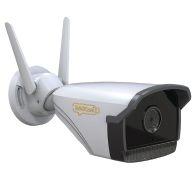
RADCam, an AI-powered “Talking Security Camera,” offers all the features of traditional residential security cameras (monitoring, detecting, and recording activity) while adding layers of security and concierge services. With advanced analytics, RADCam captures data through its camera and microphone, allowing the system to analyze and respond to scenarios in near real-time. www.radsecurity.com
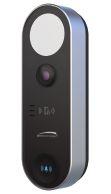
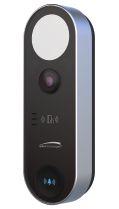
The Speco Video Doorbell (O2DB1) is a Wi-Fi-enabled smart device featuring a wide-angle lens, twoway audio, built-in card reader, as well as infrared (IR) and LED lights for low-light performance. The Video Doorbell supports Speco’s advanced analytics, enabling commercial businesses and homeowners to leverage the latest AI-enabled algorithms to perform everything from object detection, audio analytics and facial recognition to alarm verification, in real-time. www.specotech.com
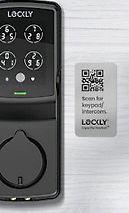
Key features of the Virtual Intercom include: real-time video communication; remote unlocking (unlock doors remotely or send single-use offline access codes); guests can connect by scanning a QR code; and geo-fencing. The Virtual Intercom is available as part of LocklyPRO’s subscription plans. www.locklypro.com
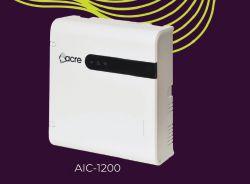
The acre Intrusion AIC-1200 control panel, featuring bi-directional wireless communication, delivers reliable communication across all connected devices and connects to the entire acre XBUS periphery portfolio. It also supports up to 65 zones. With this release, acre also introduces two new wireless motion detectors: the 2-Way Wireless PIRCAM External and Indoor. www.acresecurity.com










Canada’s






i-PRO
i-PRO announced the launch of its In-Car Video Rear/Side Camera, the WV-VCR40W. A component of i-PRO’s ICV4000 in-car video system, the new camera is suited for law enforcement agencies, first responders and armed forces seeking wide-angle coverage and high-resolution capture of video from the back seat, side, or rear window of a vehicle. The WV-VCR40W features AI-enabled human detection within the camera to automatically trigger recordings of critical events. Two edge AI detection modes are available: In-Vehicle Human Detection and Human Approach Alert. www.i-pro.com

Genetec
Genetec announced a new collaborative intelligence feature for its AutoVu Cloudrunner vehicle-centric investigation system. Collaborative intelligence facilitates the sharing of ALPR data between partnered organizations such as local police departments, private businesses and community groups. Organizations manage who can share and access ALPR data, ensuring sensitive information is protected. The platform offers tools for managing discoverability and an audit trail. www.genetec.com
STI’s diverse line of AC/heated enclosures and covers offers the means to secure important equipment and electronics outdoors or in exposed environments such as warehouses, storage units and more. While the weather fluctuates, temperature-controlled covers and enclosures keep the inside of the cabinet cool or warm, and the appliance operational. They allow devices to be mounted in temperatures exceeding normal parameters or areas suffering from damaging temperature conditions.
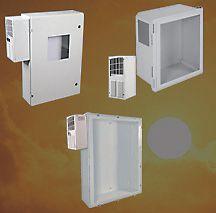
www.sti-usa.com
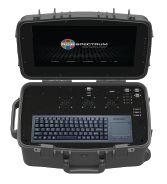
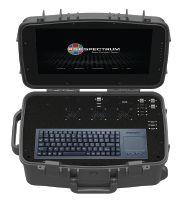
The IPX Flyaway Kit, a complete, miniaturized mobile control room, provides a suite of display and communication capabilities in a rugged, deployable enclosure. The IPX Flyaway Kit is designed for command-and-control applications, combining real-time, low latency video processing, multi-signal encoding/decoding, built-in plus external display, and secure wireless connectivity. The IPX Flyaway Kit includes RGB Spectrum’s Zio Video-over-IP platform. www.rgb.com
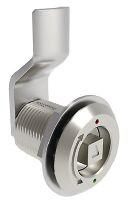
Southco has launched the E3 Compact MIM compression latch. The company reimagined the E3 with a shorter head (4mm vs. the normal 6.4mm), 180-degree ergonomic actuation, and visual indicators machined into the latch and colour-coded to show when it is open or closed. The new compact E3 is manufactured using metal injection molding (MIM), lowering manufacturing costs and passing them on to the customer, states the company. The final product is polished for a low-profile look. www.southco.com
Infinite Electronics
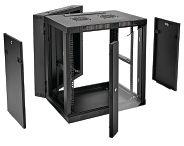
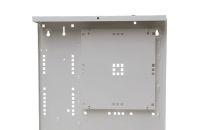
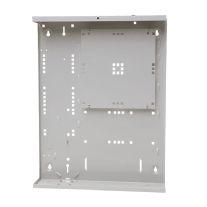
ShowMeCables has introduced a line of black wall-mount swing-gate racks. The swing-gate enclosures and open-frame racks have a rear frame that mounts to a wall. Hinges on one side of the rear frame allow the entire unit to swing out from the wall for quick access to cables and ports on the back of components. The racks are offered in two main designs: enclosed cabinets or open-frame racks. The enclosed cabinets have capacity options of 6U, 9U or 12U. The new swing-gate open-frame racks come in 9U, 12U or 15U.
www.showmecables.com
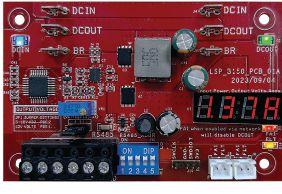
The B150 Intelligent StepDown Converter is designed for dual voltage in a single enclosure. The B150 power conversion module provides a user-selectable voltage output for FlexPower Unified Power Solutions. The B150 stepdown converter offers an additional voltage in a FlexPower system by converting a higher input voltage to a lower output. Primary power for the B150 comes from a LifeSafety Power power supply, which the B150 adjusts down to a user-defined range.
www.lifesafetypower.com
BioEntry W3 is an AI-powered facial authentication device designed for high-security environments. The BioEntry W3 is designed with data privacy with its display-free design and secure ‘Template on Mobile’ (ToM) authentication method. The display-free design prevents facial images from being shown on a screen, instead communicating the authentication result through LED indicators and text. Equipped with a Secure Element (SE) chip, the BioEntry W3 encrypts all data, and stores encrypted data and cryptographic keys in an isolated environment. BioEntry W3 is suited for both indoor and outdoor environments.

www.supremainc.com