














By Neil Sutton
By Yaron Zussman
By James Careless

By Neil Sutton
By Yaron Zussman
By James Careless

WBy Neil Sutton
hen we announced Dean Drako, CEO of Eagle Eye Networks and chairman of Brivo, was going to be our keynote speaker at Security Summit Canada a few years ago, I received several inquiries and questions from security industry contacts.
One of them in particular piqued my interest: Dean Drako also makes cars — we should talk to him about that. We never had that car conversation after his keynote, but I did make a mental note to ask him about it in a future interview.
Two years later, I finally got around to it. A bit of an automotive fan myself, I was certainly curious to speak to someone who builds fast cars and also to get the perspective of an entrepreneur with multiple and diverse business interests.
I’ve spoken to Drako on several occasions, typically when one of his security companies has released a new innovation or signed a major deal, but my most recent interview with him focused almost exclusively on his automotive company Drako Motors and its two releases to date: the Drako GTE and the Drako Dragon, both limited run, high-performance, all-electric vehicles.
It was fun to explore a completely different industry and ask questions about torque and top speeds, but I also wanted to learn more about Drako’s approach to building companies. Speaking to him, it was clear that he applies the same level of enthusiasm to all of his ventures,
whether they’re cloud-based surveillance systems or luxury SUVs.
Most of us don’t have the wherewithal to pursue multiple business enterprises, but one of the major takeaways from my conversation with Drako was the value of being open to new experiences and developing a variety of interests. The lessons he learns from each of his companies are applicable across all of them.
I also had the opportunity to speak to our Hall of Fame inductees for this year and you can read their profiles in this issue. I’ve known each of them for well over a decade, but you learn new things in the context of interviewing a person about the totality of their work experience.
I didn’t know that Patrick Soo had worked in Hawaii, nor Paul Swan in the U.K. I also didn’t know that Jacquelyn Davies had experienced so many aspects of the industry, from alarm monitoring to systems integration. In hindsight, it’s not that surprising since she conveys such a well-rounded understanding of security in all of its varieties and flavours.
I hope you will join us in congratulating each of our Hall of Famers this year. There are many great security leaders deserving of attention and it’s a privilege to be able to tell you some of their stories and share their wisdom.
@SecurityEd

READER SERVICE
Print and digital subscription inquiries or changes, please contact Shawn Arul, Audience Development Manager
Tel: (416) 510-5181 • Fax: (416) 510-6875 Email: sarul@annexbusinessmedia.com
Mail: 111 Gordon Baker Rd., Suite 400, Toronto, ON M2H 3R1
Your Partner in Securing Canada Security Products & Technology News is published 5 times in 2023 by Annex Business Media. Its primary purpose is to serve as an information resource to installers, resellers and integrators working within the security and/or related industries. Editorial information is reported in a concise, accurate and unbiased manner on security products, systems and services, as well as on product areas related to the security industry.
Editor, Neil Sutton 416-510-6788 nsutton@annexbusinessmedia.com
Group Publisher, Paul Grossinger 416-510-5240 pgrossinger@annexbusinessmedia.com
Publisher, Adam Szpakowski aszpakowski@annexbusinessmedia.com
Associate Publisher, Jason Hill 416-510-5117 jhill@annexbusinessmedia.com
Media Designer, Graham Jeffrey gjeffrey@annexbusinessmedia.com
Account Coordinator, Kim Rossiter 416-510-6794 krossiter@annexbusinessmedia.com
President/COO, Scott Jamieson sjamieson@annexbusinessmedia.com
EDITORIAL ADVISORY BOARD Patrick Soo, Alarm.com Floria Chiu, Telus Custom Security Systems Stephen Karchut, Alarmtech Val Michetti, HID Frank Pietrobono, RSPNDR
111 Gordon Baker Rd, Suite 400, Toronto, ON M2H 3R1 T: 416-442-5600 F: 416-442-2230
PUBLICATION MAIL AGREEMENT #40065710
Printed in Canada ISSN 1482-3217


contact our circulation department in any of the four ways listed above.
Annex Privacy Officer privacy@annexbusinessmedia.com Tel: 800-668-2374
No part of the editorial content of this publication may be reprinted without the publisher’s written permission. ©2023 Annex Publishing & Printing Inc. All rights reserved.
Annex Publishing & Printing Inc. disclaims any warranty as to the accuracy, completeness or currency of the contents of this publication and disclaims all liability in respect of the results of any action taken or not taken in reliance upon information in this publication.


Fire-rated doors and hardware work together to slow or stop the spread of flames and smoke in the event of a fire. With fail secure operation to maintain a safe path of egress and heavy-duty stainless steel construction necessary to withstand the intensity and duration of the fire.
HES has a fire-rated solution for your application:
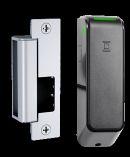
ES100 Series Wireless Integrated Electric Strike
Universal Electric Strikes
The most versatile way to retrofit an opening with real-time online access control.
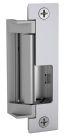
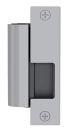
1006 Series
The strongest, most versatile electric strikes available for cylindrical and mortise locksets.
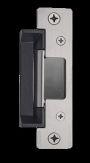
5300 Series
Compact, high-performance solution for limited space applications with cylindrical locksets. NEW
Preload Capable Electric Strikes
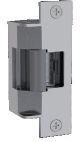
7501 Series
Ideal for applications with preload conditions.
hesinnovations.com
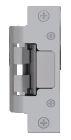
4500C Series
Low-profile, heavy-duty, firerated solution for installation in 2” UL 10C fire rated frames.
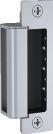
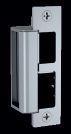
1500 Series TM | 1600 Series TM
The most advanced electric strike, offering dynamic integrated adjustability and field configurable options for cylindrical and mortise locksets.
Concealed Electric Strikes Surface Mounted Electric Strikes
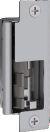
8300 Series | 8500 Series
Concealed, no-cut solution for cylindrical or mortise locksets.
Watch for this icon throughout the catalog and on packaging.

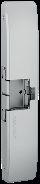
9500 Series | 9700 Series
Low-profile, surface-mounted, no-cut solution for exit devices.
When Dean Drako encounters a problem, his natural inclination is to fix it.
He says this has been the guiding philosophy behind the creation of most of his companies.
As one of the founders of online security solutions firm Barracuda Networks 20 years ago, he wanted to address some of the shortcomings of email. He’s best known in the physical security world for his work with Eagle Eye Networks and Brivo — he founded the former and acquired the latter — to develop and market cloud-based solutions to an industry that didn’t have a wealth of options.
“All of the companies are about solving the problem that was in front of me and me saying, ‘I bet other people have a similar problem and would like a solution.’ So let’s make it into a company and get out there,” says Drako.
He applied this same perspective to one of his other passions, the automotive world.
Growing up in Detroit, Drako was surrounded by car culture.
“That’s what makes the city go round,” he says.
He briefly worked in the auto industry in the 1980s, and enjoys racing and rally driving. A car lover who has spent a lot of time behind the wheel, he couldn’t help but see what he says is a flaw in modern

“All of the companies are about solving the problem that was in front of me.”
— Dean Drako
automotive design — a lackluster approach to software integration.
“I was always disappointed with the electronics architecture and the lack of software architecture,” he says.
Drako saw an opportunity to develop better software for cars that was fully integrated and started an R&D project for an operating system that could run a car more effectively and efficiently.
“How would that work? How would it communicate with all the components?” Drako figured the quickest and best way to find out

was to design a prototype vehicle to run the software, and a new company was born.
Co-founded by Drako and business partner Shiv Sikand, Drako Motors was established in California in 2013. In 2019, the company debuted a fully electric supercar, the limited edition Drako GTE. With a quad motor architecture (one for each wheel), the car delivers 1,200 hp with a top speed of 331 kph (206 mph). The vehicle is clearly built for speed, but the design also places a premium on superior handling and road safety, says Drako.
“We can apply a different level of power in each of the four wheels with a very complicated software system — a lot of sensors and a lot of math and a lot of algorithms that have been developed over 10 years,” explains Drako.
“The original vision was, we can make a better driving car, because we can have each wheel individually controlled, and we can make amazingly good software for
a car by integrating all the systems into one system. And solve the problem of software in the car,” he adds.
Last year, Drako Motors debuted the Drako Dragon, a luxury electric SUV featuring Italian design and gullwing doors. The Dragon is also built for speed with the same four-motor configuration this time delivering a combined 2,000 hp and a 0-60 mph time of less than two seconds. Trackcapable, Drako says it is a comfortable ride and practical enough for commuting and trips to the grocery store. The gullwings also make it incredibly easy to get in and out of.
Drako says he didn’t originally set out to make a car (or two) but the original automotive software conundrum also opened a new opportunity.
Describing cars as one of his passions, Drako says he’s also very passionate about security and is committed to his pursuit of innovation in that industry. Regardless of the end product, the lessons learned from creating software and building an enterprise can be applied to any endeavor, he says. If that endeavor happens to be a very fast car, then that’s OK too.
— Neil Sutton

LPR in the City of New Orleans
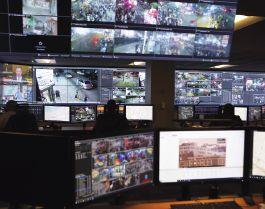
The City of New Orleans has deployed Genetec’s AutoVu Cloudrunner in its Real Time Crime Center (RTCC).
The New Orleans RTCC uses Genetec Omnicast VMS to manage 1,000plus cameras in the city and has also deployed 150 AutoVu SharpV ALPR cameras. Sixteen AutoVu Cloudrunner cameras have now been installed with another 22 to come.
“The historic nature of the French Quarter made implementing technologies challenging. Since Cloudrunner isn’t hard wired, it gave us the flexibility to deploy cameras where we couldn’t before,” said Ross Bourgeois, New Orleans RTCC director, in a statement. “Today, we can gather additional licence plate reads and query suspect vehicles that are entering and exiting in the area.”
AutoVu Cloudrunner also allows operators to collect, analyze and store vehicle information such as colour, type, make, model as well as behaviour analytics.
Beauty brand eyes new surveillance IDIS has partnered with French cosmetic and beauty brand Yves Rocher.
Yves Rocher required a new video solution to reduce shrinkage, drive sales and improve customer service. IDIS, together with Secom Türkiye, replaced the retailer’s mixed surveillance environment with a 5MP IR fisheye camera, managed via IDIS Center in the stores and IDIS Solution Suite (ISS) Expert VMS at Yves Rocher’s head office. Footage is recorded locally on a four-channel IDIS DR-2504P NVR. Each store is also equipped with a compact IDIS AI Box for Retail for analytics functions including people counting, queue monitoring, heat mapping and occupancy monitoring.
“Our new, advanced video and analytics solution from IDIS now gives us an exciting foundation for further innovation,” said Can Egemen Yalçın, IT manager for Yves Rocher, in a statement.


• Peter Lintzeris was promoted to director of sales for Milestone Systems Canada.
• At Cansec Systems Rick Steger was promoted to vicepresident and Minh Nguyen
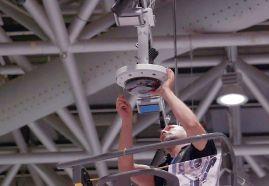
To enhance visitor safety and protect priceless artworks, the Grimaldi Forum Monaco (GFM) has selected security solutions from i-PRO.
As a venue for conferences and cultural events, the Grimaldi Forum, located in the city-state of Monaco, hosts more than 100 events annually, drawing over 250,000 people a year.
Aiming to enhance security, Philippe Martin, director of safety, fire and risk prevention at the GFM, turned to Monaco-based systems integrator MES I2S Security to install over 100 i-PRO cameras, including fisheye and multi-sensors with AI-based analytics.
“We were looking for a solution that would help us manage the number and flow of visitors while ensuring the security of the premises,” said Martin in a statement.
GMF has implemented i-PRO’s Scene Change Detection, an analytic that alerts security teams to anomalies within the camera’s field of view, among other apps.

was promoted to manager of product planning.
• Travis Firth was promoted to vice-president, JCI, intrusion products for North America.
• Radiant Logic has appointed
January 9-12, 2024
International CES Las Vegas, Nev. www.ces.tech
February 15, 2024
Security Summit Canada Online www.securitysummitcanada.com
April 9-12, 2024
ISC West Las Vegas, Nev. www.iscwest.com
April 23-25, 2024
Canadian Technical Security Conference Calgary, Alta. www.ctsc-canada.com
April 24, 2024
Security Canada East Laval, Que. www.securitycanada.com
May 15, 2024
Advance: Women in Security Online www.canadiansecuritymag.com
June 3-6, 2024
ESX Louisville, KY www.esxweb.com
June 19, 2024
Security Canada West Richmond, B.C. www.securitycanada.com
June 24-25, 2024
Security LeadHER Phoenix, Ariz. www.securityleadher.org


Jeff Tishgart, vice-president, global partners and alliances, to lead its partner program.
• Speco Technologies has added to its tech support team including technical support
manager Andrew Persoff
• Camden Door Controls announced its entry into the Latin American market, appointing new regional sales manager William Mejia.

With expertise in monitoring, billing, and administration along with funding programs, wholesale monitoring, and account acquisition – we’re here to help your business thrive at any stage.
› Cash flow to fund your growth
› Support loading and servicing alarm customers
› Access to quality products, reliable suppliers and dealer pricing
› Stable and predictable funding
› Investment in inventory, staff and marketing
› Access to new lines of business
Get in touch today to see how we can help your business. 1-888-786-4620 dealer.program@securtek.com
› Turn equity into cash
› Remove administrative complications
› Stable, predictable cash flow while maintaining ownership
› Maximize your payout
› Experienced buyers and smooth transitions
› Continued service and support for your customers
The success and longevity of Transglobal Systems of Canada (TSOC) is due to a combination of factors, says company president Imran Hasan: an ideal blend of skillsets from the family members who own the business and the ability to adjust to technology trends while still staying true to the company’s vision.
Mississauga, Ont.-based TSOC turned 40 this year — a significant milestone, especially for a company in the networking infrastructure and communications business. “So much has happened over the last four decades. We’ve been fortunate to be a part of that journey,” says Hasan.
Hasan immigrated to Canada from Pakistan with his parents and brother in 1973. His father, M.H. Barni, “risked everything to come to Canada and wanted the best for his next generation,” says Hasan.
The family settled in Ontario, with Barni working as a mechanical engineer at the University of Waterloo, then the Ministry of Health in Oshawa.
Seeing opportunities in the telephony market, Barni established TSOC “basically from the trunk of his car,” says Hasan. As the company grew, it moved into the family’s basement, then when it got too large for the house, into a warehouse space in Mississauga.
TSOC purchased its own building in Mississauga, with offices and inventory space, in 1993, and eventually acquired the building next door. “That was about the time that the telephone companies were decentralizing, so it was an opportunity to supply these small companies and the independent telephone companies across Canada,” says Hasan.
Hasan worked at the company warehouse part-time doing shipping and receiving while attending high school. He moved into sales and customer service, “then one day putting on a suit and knocking on doors and meeting people.”
Hasan says his father entrusted him with a lot of responsibility at a very young age. He remembers travelling to Hong Kong for business at age 21 and had to convince the driver picking him up at the airport that he was actually old enough to represent the company.
But the hubris of youth served him well. With plenty of exposure to the business as a teenager, he felt ready to step into management as a young man. He says wasn’t fazed by the scope of his role and leaned on his people skills to foster relationships with manufacturing partners.
“Over time, we were able to prove to each other that we can work together. We’re cultures apart, we’re generations apart, but at the end of
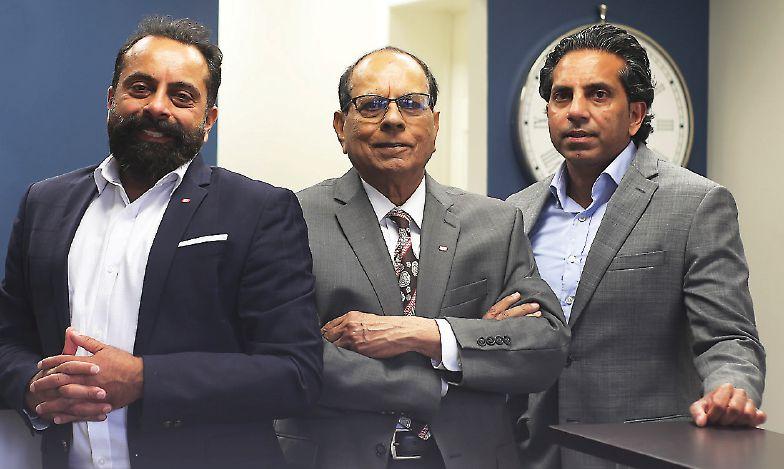
the day, we understand the speed of business,” says Hasan.
Hasan says he learned a few tough lessons along the way, including the best way to manage inventory and credit in the event that a reseller partner was late paying their bills. He also says he was lucky to meet the right advocates and advisors, including a bank manager who dispensed some sage financial advice.
“You might be a good generalist and you might be able to specialize in one thing — maybe my one thing is building relationships with people — but when it comes to other aspects of a business, you need people who can guide you and help you navigate through those uncertain and challenging times,” says Hasan.
Hasan’s brother Norm, who is a year-and-ahalf younger, joined the company full-time after attending university.
At this point, in the mid-90s, the communications and networking world was changing as the internet was in its ascendancy. On Norm’s suggestion, TSOC was registered as a domain name in 1996.
“We saw that whole convergence of voice, video, data and security all being transmitted through one medium,” says Hasan. “I just think we were at the right place at the right time when we started to see the changes.”
A crucial strategy for TSOC has been the ability to embrace the new while not throwing out the old. The company stocks a broad mix of modern cabling products and adapters but also keeps legacy equipment like telephone handset cords in inventory.
“There’s thousands and thousands of customers out there who still have phones, whether it’s a hospital or a hotel, and they need to replace the cords,” says Hasan, adding that stocking a wide range of different products also allows them to be a single-source supplier to a variety of customers.
“We’re finding a resurgence in legacy products,” says his younger brother Norm. “People can’t find the products.”
Forty years on, TSOC is an efficient but flexible operation, which has been key to its ability to survive through multiple economic recessions and a pandemic. The ideal combination of the family’s skills — technology, operations and relationship-building — has also helped the business grow over the decades.
Hasan says his father, at age 85, is still involved in TSOC, and the brothers look to his technical expertise, which was the initial spark for the business in the first place. “Necessity is the mother of invention, and that’s dad in a nutshell,” says Hasan.
His father is also a model of how to continue to work through all phases of life, he adds. “You don’t have to retire, you can keep doing it at a different pace.”
The next chapter of TSOC is unwritten, with a new generation of Hasan children also working part-time in the business. As technology trends come and go, Hasan is confident that the network infrastructure business will continue to thrive.
“We’ll see what the future holds,” he says.


With smart functionalities and powerful technologies, Smart Hybrid Light Cameras with ColorVu create a powerful solution for critical security video monitoring, every hour of the day and night.
You can’t see in the dark. But your security camera can!
Capturing crystal-clear images in low-light conditions has always been a challenge in the security monitoring industry. Hikvision’s Smart Hybrid Light Cameras with ColorVu technology offer a powerful new solution to a long-time problem.

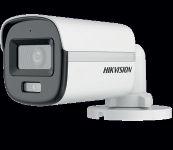
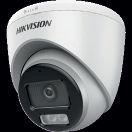
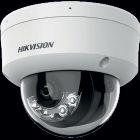
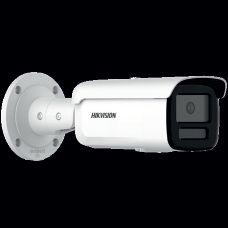
Intelligent light. Full colour at night. Smart Hybrid Light Cameras bring together powerful technologies, including ColorVu, Super Confocal and Smart Hybrid Lighting. These unique features make for cameras with advanced capabilities and amazing reliability.
ColorVu technology ensures excellent colour imaging in ultra-low ambient light, even without supplemental lighting.
Super confocal lens technology allows different light wavelengths to travel along the same path through a set of specially designed lenses, improving focus. It is designed with precision at the micron level, allowing for sharply focused,
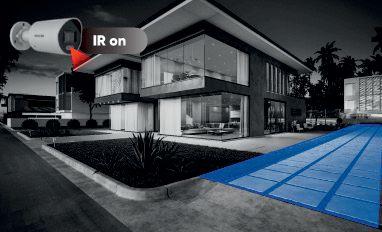
When there is no target in the area, the infrared light turns on
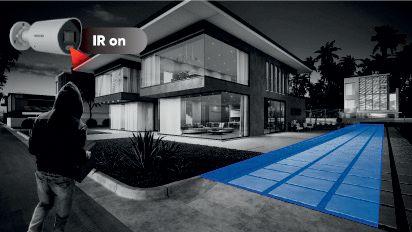
high-definition images with an F1.0 large aperture.
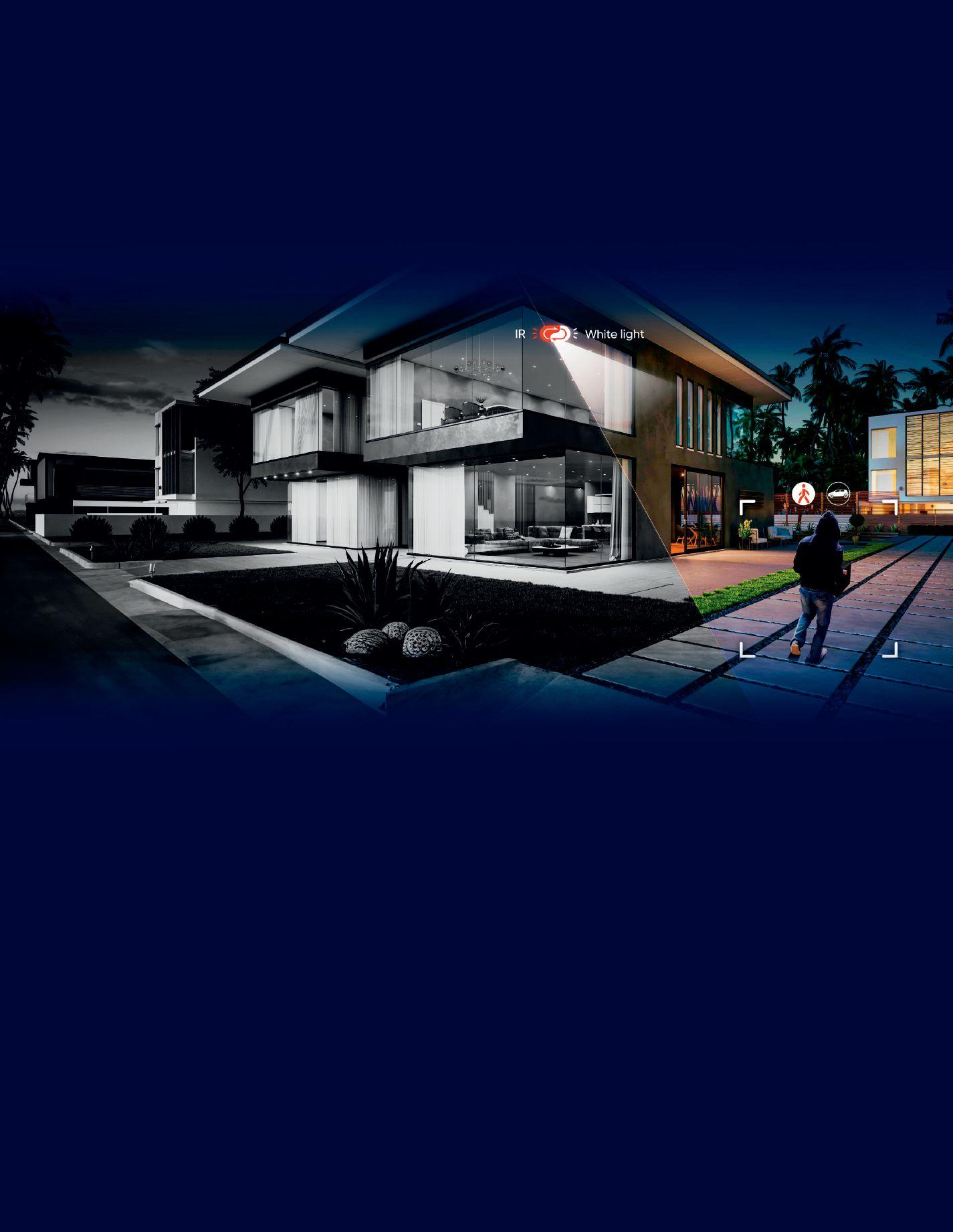
Smart hybrid lighting renders colour, black and white or motion-triggered colour imaging to suit virtually any need in any setting. IR mode offers black and white imaging in darkness.
In White Light mode, the camera uses a visible light to ensure continual colour imaging overnight. With Smart mode, the camera only employs visible light when triggered by the detection of a person or vehicle.
AcuSense technology enables classified object detection. Motion Detection 2.0 distinguishes persons and vehicles from other objects in the
When a car or person appears, the white light turns on

environment, focusing on security threats with efficient video searches. Live Guard* deters trespassers with visual and auditory warnings while sending remote notifications.
Compared with conventional cameras, Smart Hybrid Light Cameras render clear colour imaging for longer periods of time throughout the day and night.
New Smart Hybrid Light Cameras feature exceptional low-light performance and just might be a critical addition to your security system.
*on selected models
When the car or person leaves, the camera switches back to the infrared light.

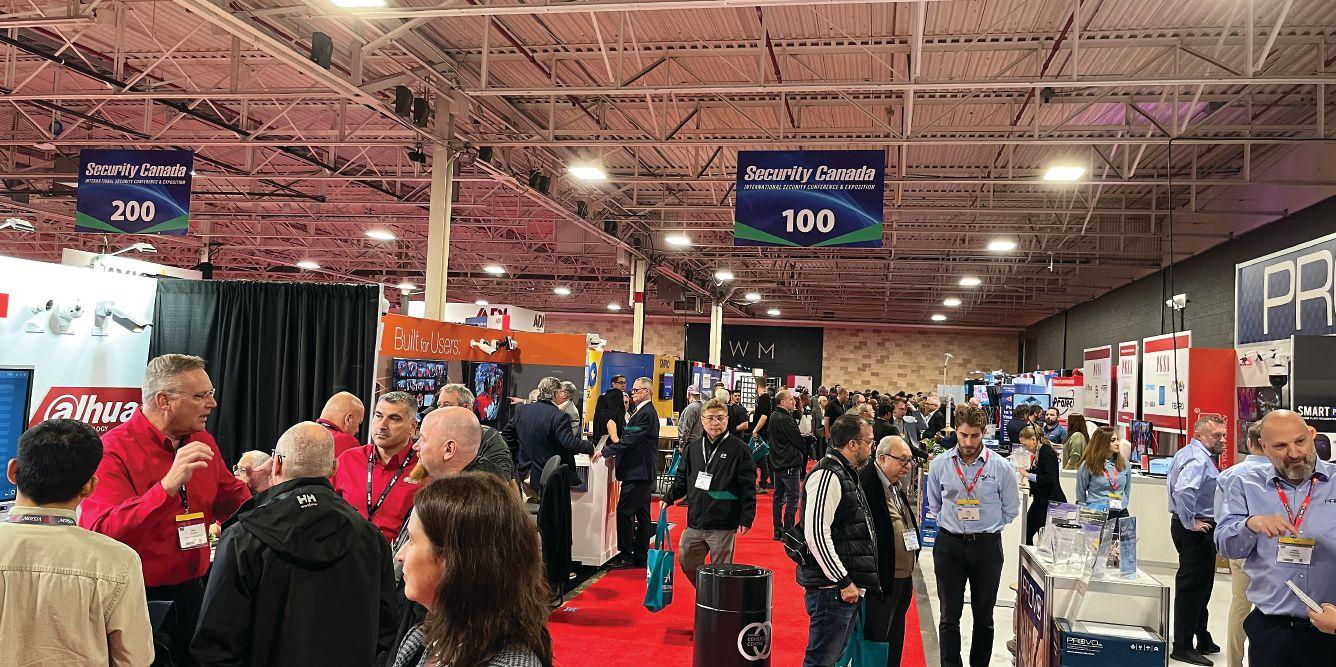
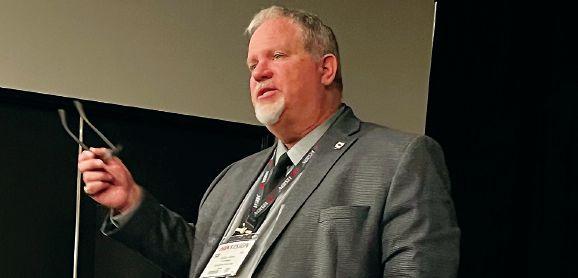
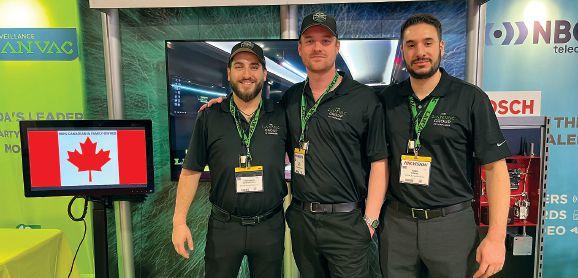
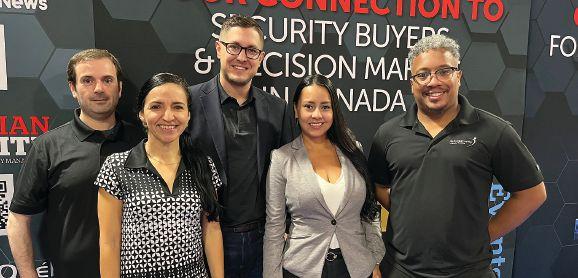
The Canadian Security Association (CANASA) capped off 2023 with its annual Security Canada Central conference and trade show, held Oct. 25-26 in Toronto. The event showcased more than 150 companies and offered educational opportunities, drawing more than 2,700 attendees. The Security
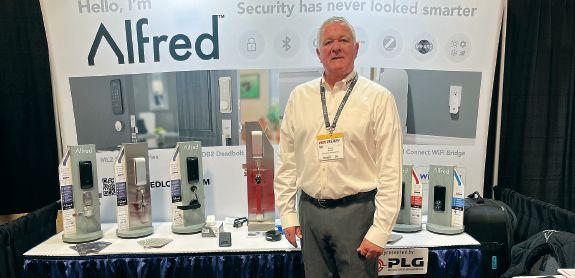
Canada event series returns April 24, 2024 with Security Canada East in Laval, Que., followed by Security Canada West in Richmond, B.C., on June 19 and then back to Toronto for Security Canada Central on Oct. 23-24. Visit www.securitycanada.com for show updates.
By Patrick Straw
Security Canada shows were strong this year, and members showed their support for local charities
Volunteers are the heart of our organization and I want to take this opportunity as the year is winding down to thank each and every one of them.
The help we get from our Regional Councils, Committees and our Board of Directors is immeasurable. These people come from all facets of our industry and we could not do what we do without their commitment.

Our Security Canada shows again demonstrated amazing vendor support and rising attendance starting in Laval, Que., then in Vancouver and last month in Toronto. At Security Canada Central this year, we launched a new partnership between the Central Ontario Regional Council and Food Banks Mississauga. I am happy to say that over a ton of food was
“Volunteers are the heart of our organization and I want to take this opportunity to thank every one of them.”
donated as well as a generous cash donation. We learned a lot and intend to expand on the program next year.
All of our golf tournaments this year had a charity represented and the generosity of our attendees was evident at each one. It is very rewarding to all when we can have a great networking event and help out those less fortunate than ourselves.
A priority for CANASA is to work with educational facilities to help populate the shortage of technical people in the security industry. We are
talking to several colleges about “micro credential” courses which are focused training programs available in a shorter period of time than a full college course. CANASA members in any province who have information or contacts in the local colleges or technical schools, please share them with us so that we can get involved and assist.
This year also saw a lot of new and existing members joining our committees and councils. I encourage all of you to get involved. I think I can safely say that volunteers value their experience — it opens up a whole new perspective on our industry outside of the daily routine.
During the holiday season, I hope that everyone is able to spend some quality time with family and friends. Thank you all for your support.


WBy Roger Miller
As security providers, we must be able to assure customers of confidentiality and integrity, as well as great service
orking in the security systems world is unique in many ways. We have the privilege of being allowed inside people’s businesses and homes throughout the country, and trusted with their personal and business information.
It is something we do on a daily basis and most of us rarely give a thought to the level of privacy with which we are entrusted. I have frequently seen service vans parked with installation details, completed monitoring agreements or other documentation on the dash, seat or other visible surface.
“We need to think about the level of trust that is assigned to us.”
This applies to everyone from the newest employees at independent security installers right up to the corporate folks at the national integrator level. Everyone in your company is equal in this responsibility, from your administration staff to the person dispatched to perform the work. We need to think about the level of trust that is assigned to us and respond accordingly.
First and foremost, everyone who has access to personal or confidential information must be required to sign an acknowledgement of confidentiality. While this alone cannot prevent someone from breaching confidential information, it does convey the responsibility of your company and the employees to protect client information. While it may transfer the onus to the employee to a degree, your company also bears a level of responsibility.
Depending on the nature of your contractual obligations, you may opt to seek legal advice to compile an appropriate confidentiality agreement. It should be noted that a confidentiality agreement is different than an NDA (non disclosure agreement) which is traditionally used to protect companies from employees sharing information specific to business for competitive purposes.
Next, we have to consider that the work we do is in sync with protecting the confidentiality of our clients at all levels. Depending on the
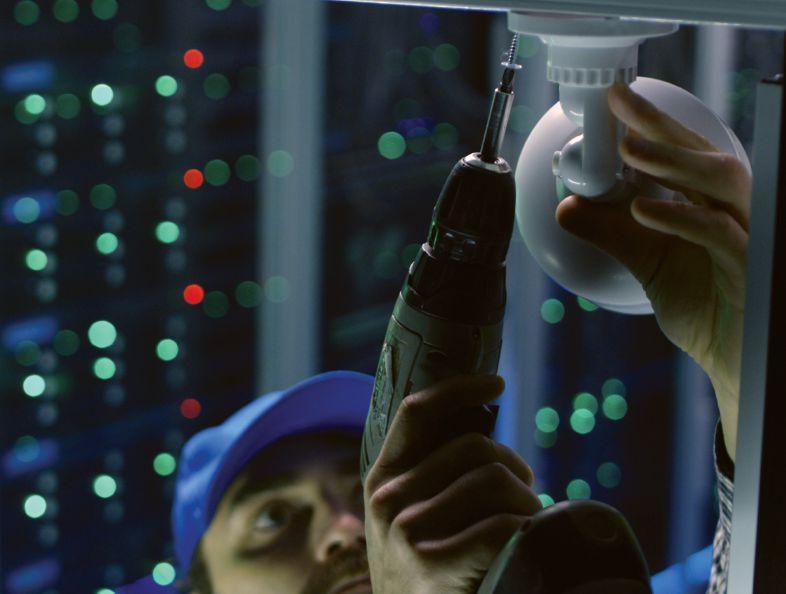
nature of the client, their security levels may increase. An individual homeowner deserves the same protection as a corporate or government entity, although corporate and government organizations typically have established security protocols which your company is required to follow. The absolute basics you need to consider would be:
• Determine confidentiality or security requirements prior to the installation
• Establish and program passwords, not using manufacturer defaults
• Advise clients of any inherent security issues you are aware of
• Protect your client account information within your company
• Recommend installation of security updates or patches for software and hardware
• Ensure devices are compliant, based on client requirements
• Provide solutions based on the needs of your client from both an operational and a functional security position
As I stated above, these are very basic considerations. Keeping security in mind is the ob-
jective in the services we provide.
Many companies provide their client with a service agreement, or SLA. This is a useful tool in clarifying the expectations from both parties. SLAs also provide the opportunity to fix security flaws or bugs that may lead to a breach. With many commercial security products on the market today you have to purchase an SLA to access tech support from the manufacturer. I encourage the use of an SLA where it benefits both the client and service provider.
Much like organizations that have daily safety talks, we need to have security talks. Do employees know how to protect their clients? Do they know what is to be protected? Do they know what to do if there is a breach? Are they trained in your security protocols? The answer to all of these questions needs to be yes
Technical hardware or software might be what we do but security is what we provide. The installation of a security system should enhance your client’s security, not compromise it.
Roger Miller is the president of Northeastern Protection Service Inc. (www.protectionpartner.ca)

IBy Victor Harding
Good information and organization helps deals move along efficiently, benefiting all parties
thought it would be useful to look at an actual deal to see what we can learn.
This deal concerns a very well-run alarm company based in Canada that was somewhat unique in that it had both very good recurring monthly revenue (RMR) and substantial installation revenue.
The owners hired my firm to help them sell. Although we never discussed why we were hired, I think it was for the following reasons:
• Although they ran their security company very well, they did not know much about the process of how to sell the company.
• They thought I would know most of the better buyers.
• They wanted someone in their corner to fight for and protect their interests.
They were very good clients. They listened to me, but on a couple of important occasions pushed back on me, which was good. They were able to get me all the information I needed to create a decent selling package for them quickly. Equally important, they completed the very time-consuming but absolutely critical acquisition spreadsheet reasonably quickly.
I had the selling package finished and out to an initial list of potential buyers in four to six weeks. We had immediate interest from at least five different buyers.
The owners and I soon realized that, all other things being equal, the best deal for them was one that had the following aspects to it:
• A share deal to take advantage of their onetime capital gains exemptions.
• A price that combined an attractive multiple on their monitored accounts and some extra value for their installation revenue.
• A deal where the buyer took over as much of their existing operation as possible. This would minimize attrition and severance and give the buyers the best opportunity to not lose the seller’s installation business.
Within three months of signing this client up, we had the bidding down to two main bidders both of which gave us good offers including extra money for the installation business. One offer was an asset deal, the other a share deal.
It was very important that we had two good

offers, not just one, because it gave the sellers some leverage. The asset deal buyer switched their offer to a share deal at the last minute and that made the choice of buyer tougher.
In the end, we went with a local competitor who was in the seller’s market we felt could look after the monitored accounts best and pick up more of the installation business. Watching this decision unfold made me realize even more how important it is to have some continuity of personnel on a deal and for the buyer to have a local presence.
Please note on the offer we accepted we actually had two buyers which was unusual. One national buyer bought the monitored accounts in an asset deal from a local dealer of theirs while the local dealer bought the installation revenue and provided the share deal. This turned out to be a great combination and one that I as a broker would like to reproduce.
It took the buyer and seller a couple of iterations before we got the letter of intent (LOI) right for both sides. This is not unusual. It’s much better to get the key issues sorted out then, before both parties are committed to an LOI. Taking the time at the LOI stage made getting the final share purchase agreement much easier to agree to.
We then entered due diligence phase. All parties agreed we had about two months between the signing of the LOI and the proposed closing date: roughly one month for due diligence and another month to get the share purchase agreement agreed to and signed.
You would be surprised how fast those two months go. At this stage it is my job as the
broker to try to keep the process moving. Often at this point the sellers are just anxious to get the deal done. Getting a draft of the share purchase agreement with lots of time before closing is critical. I like to have three weeks to review this document.
As it turned out, the share purchase agreement was very well written indeed and did not delay us at all. On top of that the two owners of the seller and the two owners of the local buyer were working together very well to help close the deal.
Here is my overall summary of the process and the deal:
• It took eight months to complete from start to finish. Given the two buyers and the fact we were doing a share deal, that is fairly quick.
• We managed to get a share deal and a good price for the accounts at the same time. We also got extra value for the installation revenue.
• The buyer we ended up doing the deal with was, in my mind, the right buyer in the end, but not necessarily who the seller thought would get the deal in the beginning.
• It is hard to beat local presence in a buyer.
• Like most deals, this deal took the most time for the buyers and sellers after the letter of intent had been signed.
It was a good deal to broker because all parties had done deals before and were experienced.
Victor Harding is the principal of Harding Security Services (victor@hardingsecurity.ca).
In the fast-paced world of apartment living, one word echoes louder than ever: intelligence. The multi-dwelling unit (MDU) industry in North America is witnessing a transformative wave as smart building technologies reshape the rental landscape. As property managers, building owners, and developers strive to meet the ever-evolving expectations of tenants, one thing is clear: staying ahead of the game means embracing the future today.
In the race for resident retention and profitability, keeping attuned to the latest trends is key. Modern renters now expect the same level of convenience, high-tech amenities, and security in their apartment buildings as they do in other aspects of their lives. To thrive in this competitive market, property managers must deliver an exceptional living experience that aligns with these evolving expectations.
One of the cornerstones of the intelligent building revolution is the unification of fragmented systems such as HVAC, lighting, surveillance, intruder alarms, and access control. When managed independently, these systems create inefficiencies and are more open to exploitation from outside actors who may seek to leverage potential vulnerabilities.
The transition towards unified management and ultimately a more seamless tenant experience, in line with these evolving expectations, is enabled by innovative technologies like Protege GX from ICT. Acting as the central nervous system of the building, it seamlessly integrates these systems to create a secure and efficient living environment for today’s modern tenants.
Security is paramount for today’s renters. Smart access control technology, extending from entrances to common areas and individual apartments, has emerged as a key driver of tenant satisfaction and increased

peace of mind for property managers. In fact, 86% of millennials are willing to pay 20% more for a dwelling with smart tech, such as electronic access, smart keyless locks, interconnected doorbells, mobile-controlled security, voice-activated assistants, and other IoT devices.
Electronic locks, accessible through highsecurity mobile credentials and dedicated apartment apps, offer tenants a heightened sense of control over living spaces.
Unified access control and building management systems are not merely a trend - they are the cornerstone of the intelligent building movement, enabling higher occupancy rates, increased rental yields, and long-term profitability. Protege provides a level of control and convenience that aligns perfectly with the expectations of modern renters.
As the pace of apartment construction accelerates, the multifamily industry is on the cusp of a transformation that will redefine the future of living. Intelligent building technologies, with unified access control at their core, are driving the shift towards higher rental occupancy and rental yield.
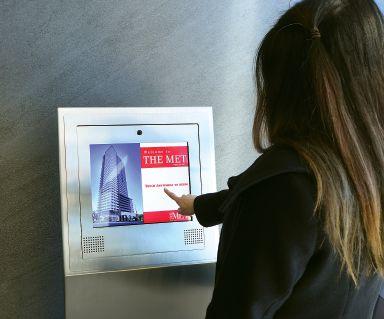
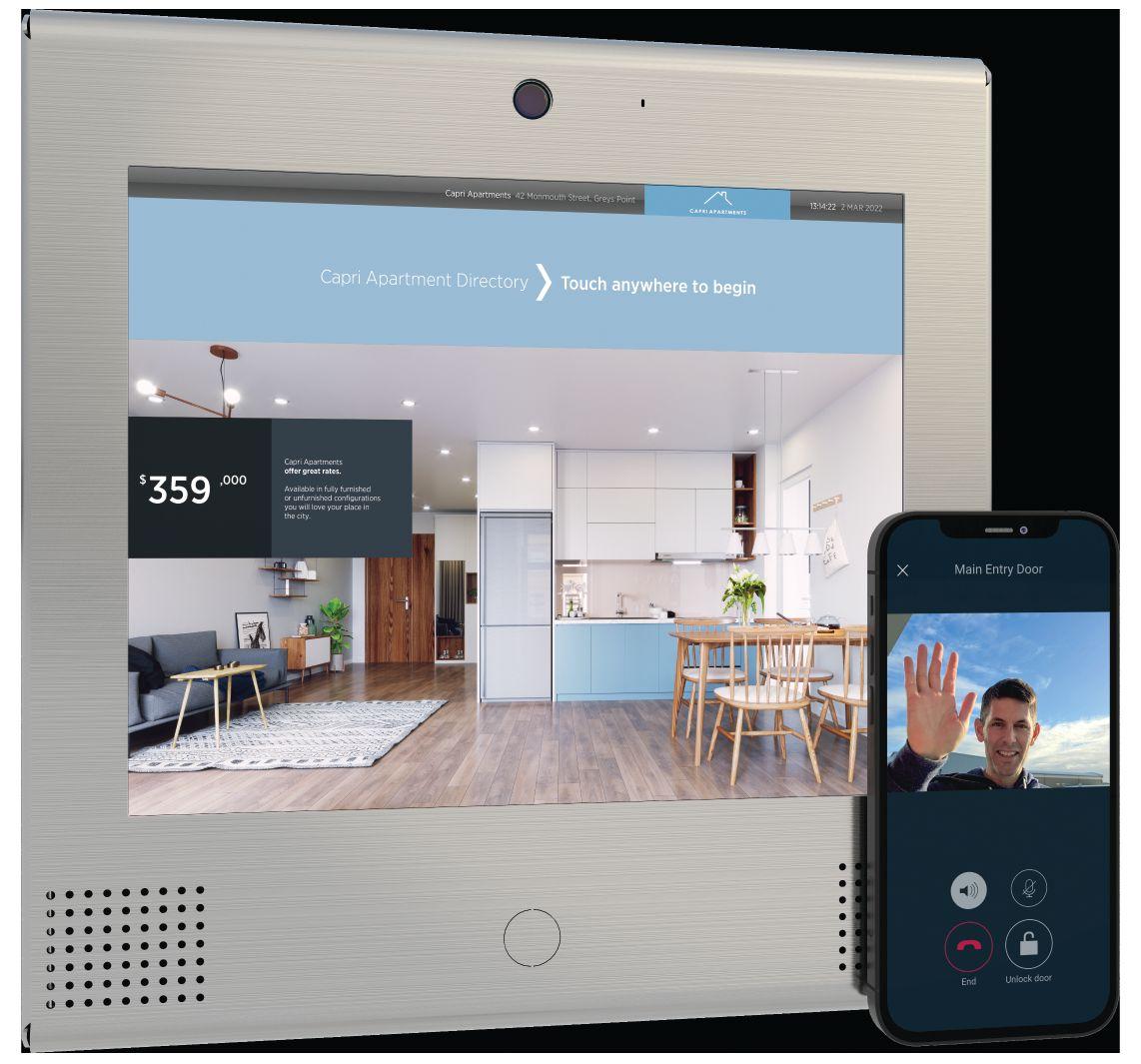
From the perimeter to the penthouse, ICT offers a truly unified solution for seamless high-security movement and absolute peace of mind for residents and leasing agents alike. All you need is the building and ICT will supply the rest. The future of living is here. It’s intelligent, secure, and accessible like never before.
From the perimeter to the penthouse, ICT offers a truly unified solution for seamless high security movement and absolute peace of mind for residents and leasing agents alike. All you need is the building and ICT will supply the rest.
The SP&T News Hall of Fame was established in 2015 to showcase industry professionals who have devoted their careers to raising the profile of the security industry and exemplify the best it has to offer.
For the ninth annual awards, we are shining the
Paul Swan
Listening to Paul Swan talk about his 40-plus years in the security industry, he’ll remember a name from the past, then make a mental note to give them a call and say hi.
This happens on several occasions during the interview with Swan, who values business relationships as the bedrock of his successful career.
When a name pops into his head, Swan smiles, digresses from his train of thought and shares an anecdote.
“To me, business is all about relationships,” says Swan, speaking from his home in B.C. “The people that you meet along the way and the friendships that you gain.”
Swan is a familiar face in the Canadian security industry, having worked in leadership roles at some of the biggest distributors in the business.
Swan, a Canadian, first discovered the industry in the U.K. after a post-college backpacking tour
spotlight on three such individuals: Paul Swan, who recently retired from the industry, Jacquelyn Davies and Patrick Soo. Please join us in congratulating them as we share some of their career highlights and plans for the future.
around Europe in the early 80s. With British grandparents, he was able to work there and joined Clifford & Snell as a sales engineer, selling sirens and signaling products, until an opportunity with Toronto-based Pace Safety Systems brought him back home to Canada a few years later.
Swan established himself in the Toronto area, taking roles with locksmith Scanex International, then Royal Monitor Systems, working with industry stalwarts (and previous Hall of Famers) Peter Garnham and Patrick Straw. Swan would go on to co-own a security integration company with Straw (who is currently the executive director of the Canadian

Security Association) for several years before moving over to the distribution side of the business – a decision that would shape the balance of his career.
Swan joined ADI Canada in 1997 first as director of marketing,
“To me, business is all about relationships.”
then vice-president of sales.
After a stint with ADI, Swan moved to Tri-Ed Distribution, which separated from its parent company Tyco and was owned by two different private equity firms before becoming part of the Anixter organization in 2014. In the Tri-Ed days, Swan reported to Pat Comunale, another legendary figure in the distribution landscape (“We keep in touch,” notes Swan).
Anixter was eventually acquired by distribution giant Wesco in 2020. Swan would stay on for a few more years, helping to manage aspects of the US$4.5 billion merger from the Canadian end.
Over the decades of his career, Swan says he’s seen some significant change in security, the technology being the most obvious indicator. “The product continues to do what it did, but the technology has advanced in huge leaps and bounds,” he notes. More than that, the industry has drawn larger and larger companies into its orbit through investments and acquisition. As a result, new ideas and new talent have followed, and the in-
dustry has adopted an increasingly corporate mentality. End users and consumers have also become much more informed, he says, and experts on security equipment in their own right.
While some of the “mom and pop” personal touch has been replaced by big enterprise, security remains a people-first business, says Swan. “At the end of the day, it’s all based on relationships,” he says, noting there have always been friends and allies he can reach out to for advice, regardless of their company or job title.
Swan is now more than six months into retirement and enjoying every minute of it. He says his garden and golf game have both benefited from the extra attention. He also spent a month in Europe this summer, with more travel plans on the horizon.
It’s too soon for him to start missing his work routine, but he will admit to missing the more social aspects of business life. Old friends and acquaintances are only a phone call away and Swan plans to keep in touch.
Jacquelyn Davies, Vice-president, Canadian operations, Bosch Security Systems
Jacquelyn Davies has gained expertise in almost every area of professional security, from alarm monitoring to integration to representing or working directly with some of the biggest brands in the business.
She has taken some wisdom and knowledge from each of those experiences during her almost 30 years in the security industry, but there’s a common thread throughout. “I’ve always thought that protecting people and assets is important,” she says. “We’re not just selling products, we’re selling peace of mind. What I’m doing is protecting people and making their lives safer.”
Davies came to security in the

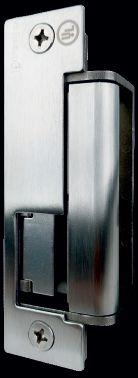
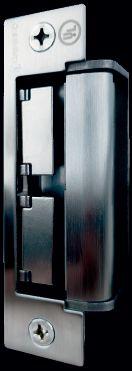
You asked for new strikes that combine high quality with a new level of flexibility, performance, and value. Camden has answered with two new strikes for cylindrical and mortise locksets that include:
» FREE Single or Dual Latch Monitoring!
» FREE 3 Hour Fire Rating! (Fail Secure Only)

mid-1990s as a sales rep with Silent Witness, a B.C.-based CCTV company that became part of Honeywell through acquisition in 2003. Through the 90s and early 2000s, she worked with a variety of companies including Paladin



CX-ED1689L-4
Low Profile Strike with (4) Faceplates
CX-ED1799L-8
Dual Monitor Strike with (8) Faceplates



Security, AlarmGuard with husband Ken Hall, then LRG North, the Canadian division of the manufacturer’s rep firm LRG based in Texas.
Davies stepped into the product world full-time as Canadian sales manager for On-Net Surveillance Systems Inc. (OnSSI) before moving over to Bosch Security Systems eight years ago and is currently vice-president of sales for Canadian operations.
Davies says that each new experience represents a learning curve, particularly as the technology has evolved over the years. Working with a well-known brand like Bosch also means she has fostered relationships and partnerships with people and organizations throughout the security ecosystem, including distributors, integrators and end users.
“What I’m doing is protecting people and making their lives safer.”
While the security industry still needs to take some strides towards inclusivity and attracting newcomers, Davies says she has found it to be a welcoming and supportive environment.
The Canadian security market in particular is a tightknit community, and Davies has established herself as an integral member. “That’s part of the beauty of it. You really meet everybody,” she says. “I’ve always felt at home in the industry.”
In addition to serving a higher purpose of protecting people through the provision of security solutions and services, Davies says the market has also proven itself to be remarkably robust — both
Patrick Soo, Director of national sales, Canada, Alarm.com

If you want to get a good sense of Patrick Soo’s approach to the security business, ask him about his first experience.
In 1991, Soo heard about a job opening for a commercial sales rep at Chubb through an employment agency. The agency, however, advised against applying because they felt he didn’t have the necessary experience. Soo, who was working as an office supplies salesman at the time, had a different take on the situation. “I called Chubb directly, got the interview and got hired on the spot,” he says.
Soo has spent the last 30-plus years in the security industry, approaching every interaction and
in terms of its economic viability and ability to sustain professionals with rewarding careers. “It has a lot of integrity and it has a lot of good people,” she says.
As someone who has taken on a variety of leadership roles in her career, Davies says she’s in a position to give back and pass along some wisdom and encouragement. Her exposure to different aspects of security also means she has developed an informed and well-rounded view of how the business operates.
“I’ve gone through a transformation of developing my own sales skills and learning how to develop people and bring out the best in them,” she says.
Over the years she has been involved in security, she has seen it grow in technical sophistication (she started off in 90s selling videotape changers) and develop a more cohesive ecosystem, with effective partnerships between hardware and software vendors.
End users are also asking the right questions and their technical knowledge and appreciation has developed to a very high standard. Davies says most of her interactions today, outside of her company and team, are with this group.
“Now I spend most of my time with end users,” she says. “I don’t want to sell you product, I want to understand what kind of pain you’re having and how I can help you fix that. If I can’t, then I’ll put you in the direction of someone who can. It’s really an evolution of how we’ve done business.”
opportunity with the same tenacity.
Based in Vancouver, he spent five years with Chubb, working on its monitoring business as Western Region manager before taking positions with Honeywell, ADT then Monitronics.
In 2002, Soo moved to Honolulu, Hawaii, to set up a Monitronics dealership. He says that experience gave him a true appreciation of what it takes to build an alarm business. “I understand their perspectives, their challenges,” he says. “I know what keeps them up at night. I have a lot of respect for guys that can do this well, because it’s not easy.”
He returned to Canada five years later as director of Canadian operations for Monitronics. In 2010, he accepted a role with 2GIG as a Canadian manufacturer’s representative (2GIG subsequently became part of Nortek, which was acquired by Nice in 2021).
In 2014, Soo moved over to Alarm.com, and is now approaching
his 10th anniversary with the company. As director of national sales, Canada, Soo was Alarm.com’s first Canadian employee — the company now employs seven people with responsibilities in the Canadian market.
Soo says there is a “phenomenal culture” at Alarm.com and he considers the company to be a leader in technology. “We’ve got a lot of momentum and we offer a very high level of support,” he says.
Soo had a serious health setback last year when he received a cancer diagnosis and took a leave of absence to pursue treatment. Time away from work was also a period of reflection and reassessment of life goals and he credits his employer with supporting him throughout the treatment process.
“I feel that they put me ahead of the business, and that’s something that I’ll never forget,” he says.
“I have a lot of friends in this industry, and it’s something I’m really proud of. Something that I learned from having cancer, it’s not what you have, it’s who you have. Those relationships, to me, are more valu-
“I have a lot of friends in this industry, and it’s something I’m really proud of.”
able than anything else that I own.” Soo is now back at work fulltime and fully enthusiastic about the future of the security industry.
“I read a long time ago, the best way to predict the future is to create it,” he says, referencing some of the recent major advancements in security such as artificial intelligence, predictive analytics, and proactive video monitoring.
“Seeing crimes and preventing crimes before they happen is something that we could never conceptualize before now.... I think that’s something that’s really going to be at the forefront of where we take video analytics,” he says, adding that this level of technology will be available to commercial businesses first, but will eventually be accessible to the residential market as well.
The technology will also help to address one of the major pain points for security, he says — false alarm rates. Another issue the industry needs to address head-on is cybersecurity — protection of customer data should be a paramount concern, says Soo.
Overall, he predicts great things ahead and lots of opportunity for growth, particularly through international markets. “There’s a lot of potential out there,” says Soo.


A technology solution that helps address the needs of critical infrastructure and high-security facilities
By Yaron Zussman
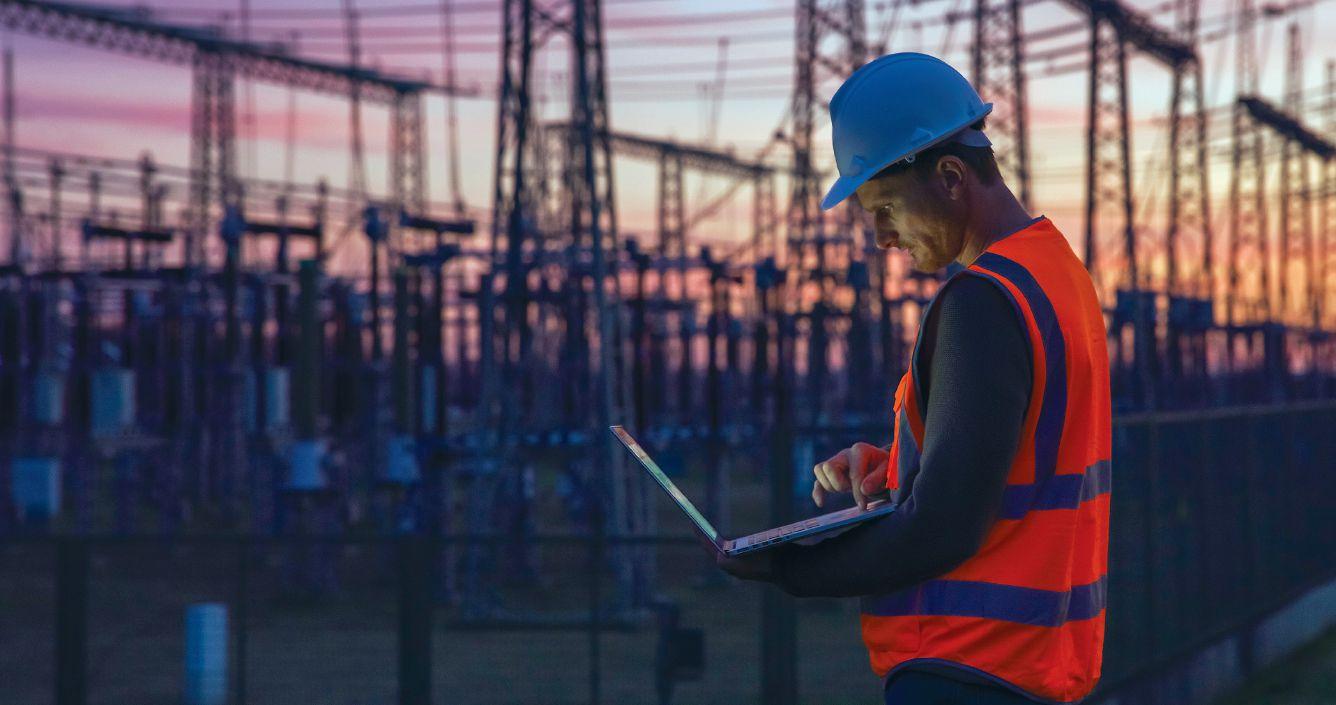
Utility organizations, like other critical infrastructure sites, are faced with ever-present challenges to protect their facilities, people and assets.
Whether the locations are power generation plants, substations, water treatment facilities or solar farms, utilities must be prepared to protect against a multitude of dangers, including vandalism, equipment theft and the growing threat of domestic terrorism.
A recent spate of attacks in the United States on electrical substations, for example, is calling renewed attention to vulnerabilities in critical infrastructure security.
In particular, questions are being raised about the protection of these smaller, ancillary facilities, which can be cost-prohibitive and challenging for organizations to fully protect.
Depending on the size of the utility organization, these sites can number in the hundreds and are often located in remote areas, far from the main communications infrastructure. This can leave the site vulnerable to copper thieves or vandals who destroy a circuit breaker or transformer, which can require repair and replacement of parts and result in the costly disruption of services to utility customers.
Fencing and traditional CCTV coverage have long been mainstays for perimeter protection but can quickly become expensive when providing coverage for large installations or significant deployments, such as for substations or cellular tower clusters. These costs are reflected not only in the hardware and related infrastructure but also in installation costs such as trench-
“Radar with AI can detect threats in all weather conditions and can also classify the detected threat.”
ing, poles, electrical and network wiring.
With a limited field of view, many pole-mounted cameras are needed in order to obtain 360-degree perimeter protection. While using analytics can help automate detection and streamline monitoring operations, installation costs for camera-based systems are still high and require regular lens cleaning and maintenance to make sure the analytics are correctly calibrated and optimized for detection.
The combination of existing technologies such as ground-based radar detection — used for decades by utility organizations — with technology breakthroughs such as artificial intelligence (AI), has created new solutions that leverage the reliability, accuracy, ease of installation and low operational costs of radar and the visual capabilities of pan/tilt/zoom (PTZ) cameras and AI-infused video software.
These solutions are gaining recognition because of their ability to protect utility assets at a fraction of the cost of traditional solutions. Radar with AI can detect threats in all weather conditions and can also classify the detected threat as
local wildlife or a potential intruder.
A single radar unit and PTZ camera combination can provide a wider field of view for detection and replace multiple cameras using video analytics. This can translate to significant cost savings when considering the infrastructure requirements of large perimeter camera deployments — cameras, poles, cabling and communications, and power infrastructure, as well as those associated with nuisance and false alarms, due to the radar’s reliability of detection and classification of potential threats.
For end users, fewer cameras also mean lower bandwidth costs and equipment maintenance expenses over the lifetime of the system.
The system is able to detect a potential target before it reaches the fence line, providing a system alert and directing a PTZ camera to the target’s location. After the AI-enabled analytics classifies the target as human, animal, vehicle or bike, software integrated into an organization’s video management platform can send an alert to operators of a verified event. This integration also enables organizations to centrally monitor detection events from a network of remote sites where radar is deployed.
Because a security breach has both financial and safety consequences, utilities need to protect their facilities to ensure the integrity and availability of essential services.
As utilities review their security options, radar is proving to be a cost-effective and reliable solution that can provide greater perimeter coverage than surveillance cameras alone.
Yaron Zussman is the general manager of Magos America (www.magosys.com).


Examining the state of biometric access technology in a post-pandemic market

By James Careless
The COVID-19 pandemic shook up the security industry in several ways, and biometric access technology was one area where it had a big impact.
The reason? “While biometrics have been in use for many years, the pandemic accelerated certain trends and led to changes in the types of biometric scans being used, as well as the adoption of the technology,” said Vito Fabbrizio, managing director of HID’s biometric business unit.
This being said, “we have not found COVID to be a major impetus for the adoption of biometric scans,” noted Chad Asselstine, president of Fire Monitoring of Canada, a professional alarm monitoring and security integration services provider. “We continue to see cards and fobs as the primary methods of credential, with dual authentication (credential plus keypad) remaining more prevalent for high security locations.”
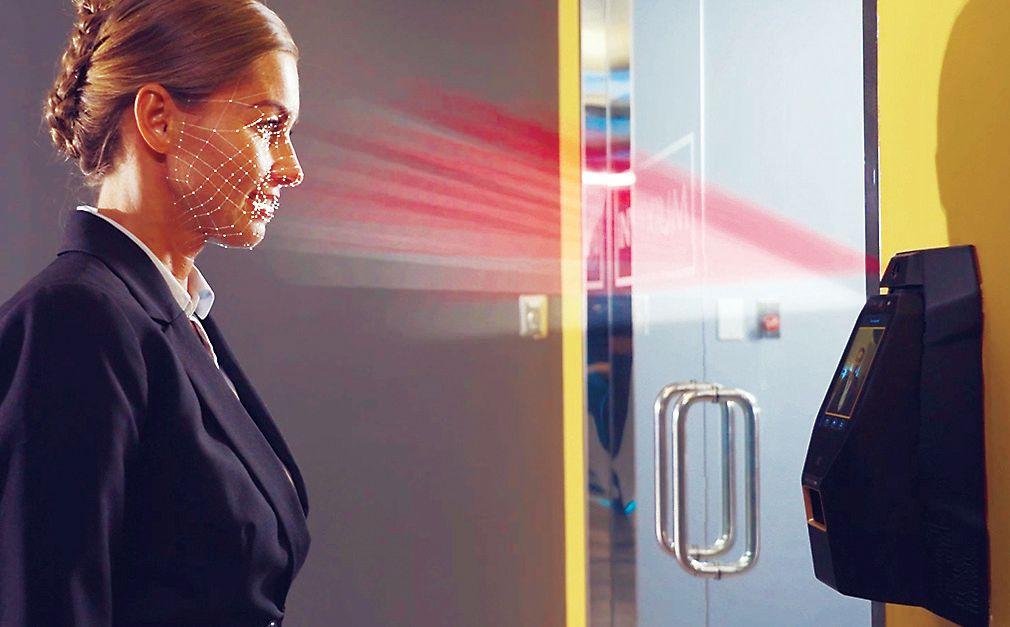
The push to counter the spread of COVID-19 took many forms, including a move from touchbased to touchless systems wherever possible. When it came to biometric access systems in this context, “many organizations recognized a need to move away from fingerprint readers out of concern that surfaces could be a vector for transmission of the virus,” said Lyndell Kline, regional sales manager with Boon Edam. Taking the place of fingerprint readers were facial recognition systems, which could leverage biological differences between individuals using cameras rather than touchpads.
For companies such as Toronto-based Invixium, this unexpected shift changed the direction of the biometric access industry in short order.
“I would say 90 per cent of our revenue in 2019 came from selling fingerprint-based biometric solutions,” said Invixium CEO and president Shiraz Kapadia.
“Then COVID happened and all of a sudden — I would say almost within a week — the whole adoption of fingerprint-based biometrics went on hold because nobody wanted to touch anything. People were even afraid of hugging their loved ones, let alone touching a community device like a fingerprint scanner.”
On the positive side, the abrupt drop in fingerprint access systems was offset by a surge in sales in facial recognition access technology. “I would say that a decade’s worth of adoption for face recognition happened in a span of one to two months thanks to the pandemic,” Kapadia said.
“Biometric access systems have been gaining ground due to their increased accuracy.”
— Vito Fabbrizio, HID
“It was that rapid, it was that fast, and people didn’t call it face recognition: It was called ‘touchless biometrics.’ So a technology that had no prominence before COVID within a span of two months became extremely prominent — probably the de facto biometric when it comes to access control and workforce management — because you didn’t have to touch anything. I don’t think that the rapid adoption of such an amazing technology would’ve happened if COVID-19 had not happened.”
Facial recognition wasn’t the only beneficiary of COVID’s touchless revolution. According to Kline, many companies looked for other ways to make all their entrances completely touchless.
For example, “some considered retrofitting existing manual swing doors with low-energy, electric operators, which are typically used with wide doors for disabled and wheelchair access,” she said. “However, while this may appear to be a simple solution, automatic swing doors create opportunities for tailgating, as they must open to a full 90 degrees and then close again quite slowly to allow time for disabled entry and to comply with building codes.”
Across the board, the demand for biometric access control systems is strong today.
“According to a Precedence Research study, the
global market for biometric technology was estimated at $46 billion in 2022, and is projected to reach approximately $163.91 billion by 2032, with a compound annual growth rate of 13.6 per cent during the period 2023 to 2032,” said Kline. These sales include fingerprint access systems, whose adoption is rebounding as COVID fades away. “Yes, fingerprints took a dip and facial recognition became very prominent,” Kapa-
dia said. “But now that COVID is over, fingerprint demand has come back. What’s different now is that the demand for facial recognition systems is at the same level.”
There are many reasons for the booming biometric access technology market. “With a biometric system, there is no need to carry keys or credentials, which can be shared, copied, or lost,” said Kline. “Users do not need to remem-

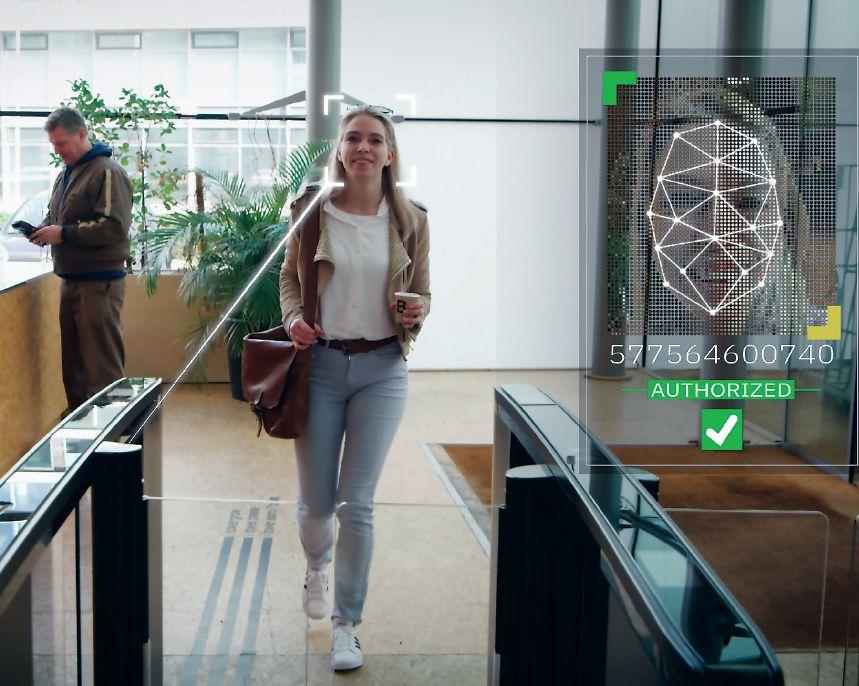
ber their PIN or password. Most important, the physical characteristics of each identity are 100 per cent unique, ensuring higher levels of overall security than other forms of access technology.”
“Biometric access systems have been gaining ground due to their increased accuracy and the demand for more secure and contactless access control,” Fabbrizio agreed.
“However, the adoption of access technology is highly context-dependent, and organizations often choose the method that best suits their specific needs, budget, and security requirements. Moreover, the adoption of biometric access systems can vary significantly depending on the region, industry, and specific application. Generally speaking, we see a steady adoption of biometric access solutions across the globe with certain areas accelerating in the adoption of these solutions. Contactless biometric solutions are providing the highest growth rate.”
At the same time, biometric access technology is not dominating the entire security industry. Take the alarm monitoring/notification sector served by Fire Monitoring of Canada. “It is very low in our market,” said Asselstine. “We utilize it more when we have an integration into an HR platform for payroll management.”
Privacy concerns have also been a barrier to the adoption of biometric access solutions, but these concerns are being addresses by best practices that deliver friction-free “privacy protection by design,” Fabbrizio said.
“These best practices include picking the right biometric for the use case and scenario, making sure you go with a vendor that gives you choice — whether finger, face, or behavioural — for various use cases, and selecting a modular
approach that will help customers be ready to implement the optimal level of security and privacy protection for these use cases.”
While not everybody is moving to biometric access control yet, the trend seems to be going in that direction.
“Certainly, the most expansive adoption of biometric technology to date has been the incorporation of facial and fingerprint recognition into smartphones,” said Klein.
“This has been beneficial in that it has helped to condition the population to the convenience and general use of this technology. Today, facial recognition has been incorporated into various use cases at airports for security screening, gate check-ins, baggage screening, and passport control in international terminals. In addition, biometric scanning checkpoints are currently being used by the U.S. Customs and Border Protection to verify the identifications of some foreign travelers crossing both southern and northern U.S. borders.”
“Biometric access technology is being used in various markets and industries around the world,” added Fabbrizio. These markets include corporate and office environments, government and law enforcement, health-care facilities, schools and colleges, banks, hotels, power plants, data centres, health and fitness facilities, airports and transportation hubs, cars/trucks, and even homes. “Some homeowners use biometric locks for their houses to enhance security and convenience,” he said.
Biometric access technology is also being integrated into existing security. This is because
“Now that COVID is over, fingerprint demand has come back. What’s different now is that the demand for facial recognition systems is at the same level.”
— Shiraz Kapadia, Invixium
“the combination of security entrances, physical access control systems (PACS), and biometrics provides a trifecta solution that transcends traditional security,” said Kline.
“By integrating the brute force of a security entrance such as a full height turnstile or a security revolving door with bullet-resistant glass, the intelligence of a PACS solution, and the identification and authentication accuracy of biometrics, facility management and security personnel can leverage the data generated from such solutions for a multitude of applications.”
The payoff from such integrated security systems is profound. “Beyond providing superior security access/egress control and management at perimeter and high security interior locations within a facility, these integrated secured entry solutions also facilitate emergency management operations, time and attendance, occupancy compliance, building HVAC and lighting management, and more,” she said. “This further increases the overall ROI of integrated secured entry solutions across other enterprise operations, further validating the necessity and cost justification for these installations.”
COVID-19 has certainly affected and altered the adoption rate of biometric access technology worldwide. So what’s next?
“Without question, biometric technology is here to stay,” said Kline.
“In general, we see this technology gaining more adoption across many use cases, with the fastest growth in contactless technologies,” Fabbrizio said. “There also is steadily growing adoption of contact technologies now that people have moved on from their pandemic concerns.”
“I do think that there will be a place for biometric facial recognition down the line,” said Asselstine. But he cautioned that current adoption may be limited as “customers are not ready for it just yet.”
“Biometrics is the only way to prove that you are who you say you are,” Kapadia concluded. “So as the world becomes more and more insecure — as humans trust each other less and less — I see biometrics becoming more and more prominent.”
Gallagher
Command Centre v9 includes enhanced integrations with wireless access control solutions; Aperio, SALTO and IDEMIA Biometric access control devices; as well as KONE elevator systems, plus improvements to the Bulk Configuration Tool. Command Centre v9 enables Open Supervised Device Protocol (OSDP) for all supported IDEMIA biometric readers. Cybersecurity is enforced with all supported IDEMIA readers having OSDP secure channel enabled by default.
security.gallagher.com
Rex Plus, the electronic watchdog alarm, provides a way to deter burglars without the responsibility of owning a real dog. With electronic radar eyes, Rex can “see” through doors, walls and glass. When movement is detected, he starts to emit sound. The closer an intruder gets, the more frequent the barking becomes. As the intruder backs off, the barking decreases in frequency, stopping completely when movement is out of range. Rex also offers a siren or a pleasant greeting. Choose features by adjusting the switch on the back of the unit.
www.sti-usa.com

Q-Track combines Quanergy’s long-range 3D LiDAR sensors with advanced perception software for proactive awareness in dynamic environments. The LiDAR sensors emit a low-power, eye-safe laser, measuring the time it takes for the laser to complete a round trip between the sensor and an object. The resulting aggregate data is then used to generate a 3D point cloud image, providing both spatial awareness and depth information to identify, classify, and track moving objects in real-time.
www.quanergy.com
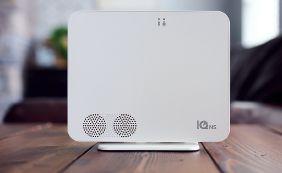
The IQ4 NS (No Screen) Security and Smart Home System provides the quality customers expect from the IQ Panel 4 platform, but at an entry level price, according to the company. The IQ4 NS features PowerG range and reliability. Connectivity with Z-Wave 800 Series enables smart home and automation features. The system comes with a built-in UL rated siren with 24-hour backup battery, built-in speaker for chimes, custom text to speech and language translation. These features make the system suitable for many applications.
www.johnsoncontrols.com
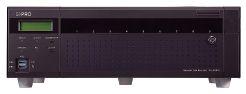
i-PRO
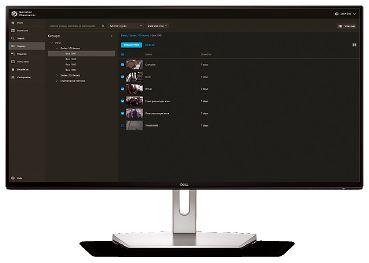
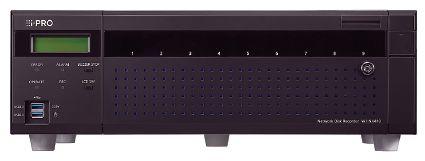
The NX Recorder series offers connectivity with a wide range of camera brands. The NX Recorder series includes three different models and an additional extension unit. A new, built-in remote monitoring feature enables security professionals to watch over premises from any location from a browser or mobile device. In addition, the new NVRs support up to 18TB hard drives per slot for a maximum capacity of 972TB. Enhanced cybersecurity features include FIPS 140-2 Level 3 compliance and GlobalSign certificate pre-installation. www.i-pro.com
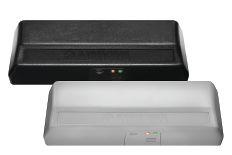
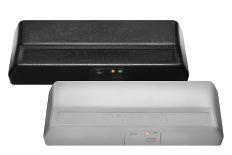
The AC-2DM-B controls and unlocks the door it is mounted near, including another door within 500 feet. It can store up to 100,000 user credentials locally and up to 50,000 events. An integrated infrared motion sensor can be used to allow immediate egress. An on-board LCD status screen shows users if access is granted (green) or denied (red). The two-door controller includes two Wiegand inputs, two outputs available with integrated power, and two solid state dry contact relay outputs. www.aiphone.com
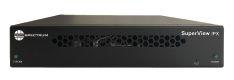
The QuadView IPX is a high-performance 4K multiviewer that allows users to display up to four video signals in customizable layouts on a single screen. The SuperView IPX offers similar capabilities, enabling users to display up to seven video signals on a single screen. It shares all the advanced features of the QuadView IPX, making it suited for demanding mission-critical applications. Key features include: 4K 60Hz input and output resolutions; four HDMI 2.0 I/O ports; H.264 and H.265 decoding and display capabilities; multiple control options, including browser-based GUI, Telnet and RS-232. www.rgb.com
Genetec
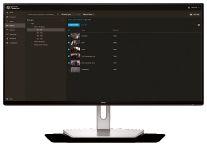
Genetec Clearance now enables the remote retrieval of video recordings from physical security systems across transit agency sites and fleets to help speed up investigations. The capability is enabled by the integration of Clearance with the Genetec Security Center Fleet Monitoring module. Using a browser-based system, agencies can now link all their on-board and landside data into a unified solution to manage evidence and streamline the sharing of recordings.
www.genetec.com








































































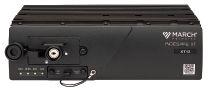
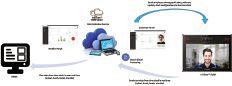
The new RideSafe XT IP NVR switches to low-power mode when buses are out of service and records directly to the NVR’s SD card, based on configurable rules around parameters such as motion. This allows for around-the-clock recording coverage, with multiple cameras recording from multiple angles. The AI-enabled analytics detect the difference in motion of people versus animals or even weather, so that video is recorded only when necessary. RideSafe XT uses NVIDIA System on Chip (SoC) technology, and leverages a hardened Linux operating system. www.marchnetworks.com
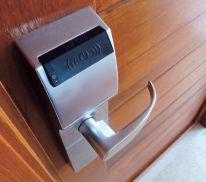
Iris ID introduces IrisTime Management Service (iTMS) Cloud. Designed to automate integration between time clocks and HRMS, IrisTime iTMS Cloud converts transactional data in real time information. The initial rollout of iTMS Cloud provides Iris ID resellers and clients with the opportunity to securely manage employee information through a reseller or client web portal, according to the company. The self-service web portal allows review of transactional data, employee information, and management of the data to a HRMS, as well as management of the IrisTime iT100 time clock. www.irisid.com
Milestone announced the upcoming release of a new camera-to-cloud deployment option for its Milestone Kite VSaaS software.

Milestone Kite Camera to Cloud VSaaS works with a series of Axis cameras pre-installed with AI-based Axis Object Analytics. All computing, recording and video storage takes place on the cameras, which connect directly to the Milestone Kite cloud. Camera to Cloud is suited for businesses with multiple locations with a small number of cameras at each site. www.milestonesys.com
VOSKER
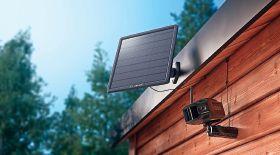
The V300 Ultimate is a rugged cellular-connected security camera that provides on-demand live video streaming for immediate viewing, motion-activated video recording with instant notifications and cloud management and storage. VOSKER’s remote camera solution can operate in locations without Wi-Fi or electricity, as it only needs a 4G LTE cellular network for connectivity. The combination of the camera and included solar power bank delivers a minimum of six months of autonomy. www.vosker.com