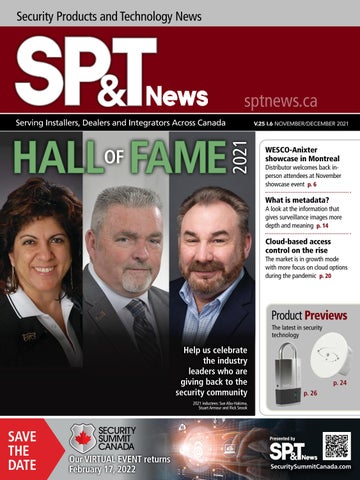
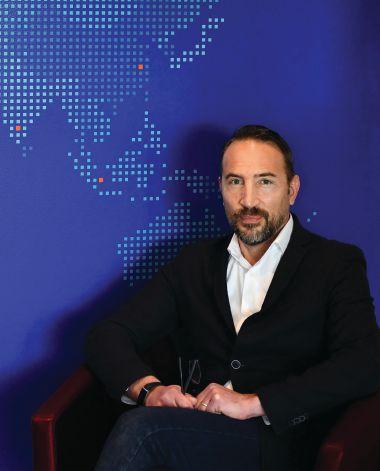
2021 inductees: Sue Abu-Hakima, Stuart Armour and Rick Snook
20 Cloud-based access poised for growth
The market has drawn a lot of interest, particularly during the pandemic, but there are still a few hurdles before mass adoption
By Madalene Arias
16 Hall of Fame 2021
SP&T honours three outstanding security industry contributors, Sue Abu-Hakima, Rick Snook and Stuart Armour By
Neil Sutton
Sounders and beacons
• WESCO-Anixter welcomes in-person attendees at Montreal show
• Nortek acquisition expands Nice portfolio
• March Networks outlines growth prospects with Delta
10 SP&T@25 Opportunities for industry growth By Philippe Bouchard
12 Lessons Learned The ins and outs of selling shares By Victor Harding 14 Camera Corner What is metadata? By Colin Bodbyl
Full slate of Security Canada shows planned for 2022 By Patrick Straw
EDITOR’S LETTER
TBy Neil Sutton
Recognizing dedication
his issue of SP&T News marks our seventh annual Hall of Fame, and in that time, we’ve recognized more than 20 professionals for their dedication to the security industry and support for its community.
Over the years, I’ve interviewed many of those inductees as part of our Hall of Fame coverage and profiles, and in each case I’ve learn something new about them.
“Each
This year, I spoke to Sue AbuHakima about her distinguished career in academia and entrepreneurship, Rick Snook about his tenacity and passion for the security industry, and Stu Armour about all the lessons he’s learned over the years and how they continue to serve as a guide for industry improvement and customer service.
Each of our three winners has also made considerable efforts to volunteer their time for a variety of pursuits and causes, including industry associations like the Canadian Security Association (CANASA) and ASIS International, and charitable causes.
When I spoke to Rick, he was getting ready to regrow his moustache in support of the annual Movember men’s health event.
On another note, I was pleased to be able to include an in-person trade show update in this issue.
WESCO-Anixter hosted a showcase event in Montreal in early November with 46 exhibitors and more than 300 people across the security and telecom-
munications industries in attendance. You can find our report on p.6 and view additional show floor photos on our website (www.sptnews.ca).
CANASA has also announced three in-person trade shows for 2022, starting with Quebec in April, followed by Vancouver in June and Toronto in October. (Further details are available in Patrick Straw’s CANASA Update column on p.15.)
The security industry is one that seems to thrive on in-person networking and connections, so it’s gratifying to see a return to form and a full conference schedule ahead of us.
It’s hard to believe it’s been almost two years since the COVID-19 pandemic was declared. In that time, we’ve learned what can be achieved through virtual interaction and education opportunities as the trade shows we were used to became a practical impossibility.
I’ve been able to participate in many more meetings and conferences across Canada and in other parts of the world as a result.
Looking ahead to 2022, I anticipate we’ll take these lessons with us and find a balance that offers the best possible elements of in-person and virtual networking opportunities.
My 2022 certainly looks like it will include a lot more travel, so I’ll see you on the show floor.
@SecurityEd
READER SERVICE
Print and digital subscription inquires or changes, please contact Barb Adelt, Audience Development Manager Tel: (416) 510-5184 Fax: (416) 510-6875
Email: badelt@annexbusinessmedia.com
Mail: 111 Gordon Baker Rd., Suite 400, Toronto, ON M2H 3R1
Your Partner in Securing Canada Security Products & Technology News is published 6 times in 2021 by Annex Business Media. Its primary purpose is to serve as an information resource to installers, resellers and integrators working within the security and/or related industries. Editorial information is reported in a concise, accurate and unbiased manner on security products, systems and services, as well as on product areas related to the security industry.
Group Publisher, Paul Grossinger 416-510-5240 pgrossinger@annexbusinessmedia.com
Associate Publisher, Jason Hill 416-510-5117 jhill@annexbusinessmedia.com
Editor, Neil Sutton 416-510-6788 nsutton@annexbusinessmedia.com
Media Designer, Graham Jeffrey gjeffrey@annexbusinessmedia.com
Account Coordinator, Kim Rossiter 416-510-6794 krossiter@annexbusinessmedia.com
COO, Scott Jamieson sjamieson@annexbusinessmedia.com
EDITORIAL ADVISORY BOARD Victor Harding, Harding Security Services Carl Jorgensen, Titan Products Group Antoinette Modica, Tech Systems of Canada Anna De Jager, TAG Dispatch Roger Miller, Northeastern Protection Service Sam Shalaby, Feenics Inc.
111 Gordon Baker Rd, Suite 400, Toronto, ON M2H 3R1 T: 416-442-5600 F: 416-442-2230
PUBLICATION MAIL AGREEMENT #40065710 Printed in Canada ISSN 1482-3217
please contact our circulation department in any of the four ways listed above.
Annex Publishing & Printing Inc. disclaims any warranty as to the accuracy, completeness or currency of the contents of this publication and disclaims all liability in respect of the results of any action taken or not taken in reliance upon information in this publication.
PROTECTING YOU BEHIND THE SCENES
The power driving the system for detection, signaling, emergency egress and more.
YOUR BRAND FOR FIRE POWER
LINE CARD
Nice expands portfolio with Nortek Control acquisition
Nice’s recent acquisition of Nortek Control is expected to dynamically increase the Italian company’s presence in North America and improve synergies within its now expanded product portfolio, according to Nice Group deputy CEO Luca Longhin.
Nice announced its acquisition of Nortek Control from Melrose Industries in October. The deal is valued at US$285 million and represents the company’s largest investment to date. “We always considered North America as
WESCO-Anixter held its Montreal Showcase event on Nov. 5, the first in-person trade show in Canada for the company since October 2019 due to COVID-19 restrictions.
The event featured 46 exhibitors and drew more than 300 attendees — a mix of security integrators, consultants, engineers, datacom and telco professionals, and end users.
The show opened at 8:30 a.m. and concluded at 3 p.m. Lunch was also served. In addition to exhibits, five seminars were available covering cabling, audio solutions, connectivity, technology convergence and
“We want to play as one company, one team in this market.”
— Luca Longhin,Nice
a very important market for us,” said Longhin, who is based in Seattle, in a recent interview with SP&T News. “Now, with this acquisition, this is really the centre of the strategy for the future development of Nice.”
Nortek is the latest in a series of acquisitions for Nice. The company acquired Seattlebased HySecurity Gate — a manufacturer of automation systems for industrial and commercial gates — in 2016.
In 2018, Nice acquired Poland-based smart home technology provider FIBARO and became the majority owner of California-based Abode Systems, which offers home security and home automation solutions. In 2019, Nice acquired Quebec-based Micanan Systems, a garage door operator manufacturer.
Through the acquisition of Nortek, Nice will further expand its product offerings to include brands such as 2GIG, ELAN, Linear, MightyMule, Proficient, SpeakerCraft, Gefen, Xantech, Panamax, Furman, numera, and IntelliVision.
“Combining the technology that we have between Nice and Nortek, we are able to really
smart building solutions.
“We downsized a bit (from 55-plus exhibitors in a normal year) but I wanted to show the industry that while we remain safe, we
offer a huge number of solutions for the residential application and the home and building [market],” said Longhin.
The acquisition also brings with it a healthy boost to Nice’s R&D capabilities, effectively doubling its capacity. Longhin said he expects this will accelerate the company’s product development cycle, improving its time-to-market for new products.
Nice also aims to achieve higher levels of integration between all the products it now offers, which include smart home, security, and home and building automation. Longhin said that customers and partners will both benefit from this approach.
“The game-changer from all the acquisitions is related to the connectivity that we are able to offer among all the different products that we have,” he said.
“We’ve started an integration plan so we want to for sure align some processes — we want to play as one company, one team in this market. We think this is very important for the future success of this acquisition. We want to be sure that for our dealers and our end users we are able to give value with this acquisition.”
Nortek’s product set, which was mostly sold in the North American market, will likely be available internationally through Nice’s global channel partnerships, added Longhin. Likewise, there are gaps in the North American market that Nice hopes to fill. For example, Nice launched a sun-shading solutions business unit (roller blinds, shutters, shades and automated solutions) at the beginning of this year. “From our point of view, there is a huge space in this market,” said Longhin.
— Neil Sutton
can restart the machine after two quiet years,” said Anixter regional manager Yves Simard. “What a success!”
“The Montreal sales team did a phenomenal job planning and promoting this event,” added Gary Mistak, vice-president and general manager, communication & security solutions. “The manufacturer community was overwhelmingly supportive and a big shout out to the staff at the Montreal Aeroport Marriott Hotel for doing their best to keep everyone organized and safe! This event was a huge success for the communications and security industry in Canada.”
Luca Longhin, Nice
LINE CARD
Applications
Video management for cannabis facilities
Brigid Farm, based in Saco, Maine, has provided cannabis products for more than a decade. The company recently expanded to include multiple grow fields, an edible manufacturing facility and two retail stores.
Brigid farm selected Salient Systems’ CompleteViewVMS for remote access to and centralized management of video from all of the company’s locations.
“Given the heightened security concerns in the cannabis industry, and the unique security needs for our different locations, we were looking for a robust VMS that could help us easily monitor all of our operations from anywhere,” said Brett Messer, owner and general manager of Brigid Farm, in a statement.
The company also selected CompleteView for its ability to integrate with licence plate recognition, point-of-sale software and seed-to-sale tracking software.
Appointments
Rochester development selects access control
Parcel 2 is a five-story, 106,000 square foot mixed-use development project in downtown Rochester, N.Y.
Co-owners Buckingham Properties and Butler/Till selected an AMAG Technology access control solution and will install a Symmetry Access Control system integrated with Allegion’s Schlage LE wireless locks. Butler/Till, a media and communications agency, will occupy three floors and also install AMAG’s Symmetry GUEST visitor management system.
Using the software-partitioning feature in Symmetry, security is managed separately for the residential tenants who occupy the upper floors.
“Having the ability to manage the business and residential areas separately using Symmetry was a huge reason we selected AMAG’s Symmetry system,” said Darin Price, development manager, Buckingham Properties, in a statement.
• Southwest Microwave announced the appointment of Don Bradfield as president. Bradfield was previously general manager of the company’s microwave products division.
• Farpointe Data has promoted long time employee Francisco Alcala to sales manager North
U.K. universities share security support
The Manchester SafeZone Alliance enables three U.K. universities (the University of Manchester, the University of Salford and Manchester Metropolitan University) to provide reciprocal support to each other’s staff and students.
The universities are utilizing SafeZone from CriticalArc.
In the event of an emergency, help is available to SafeZone users. With the SafeZone app on their phones, students and staff are directly connected to the appropriate security team or first responder. The closest responder will be notified and dispatched to the scene. Only when an individual calls for help is the identity and location of that person shared with the university’s security team.
“Student and staff well-being is always the top priority for all three universities,” said Dr. Sam Grogan, provice chancellor for student experience at the University of Salford, in a statement.
America. Alcala originally joined Farpointe in 2008 as a production intern.
• The Monitoring Association announced that Morgan Hertel officially began his twoyear term as the organization’s president on Oct. 14 immediately following TMA’s 2021 virtual annual meeting.
January 5, 2022
Connections Summit Las Vegas, Nev. www.parksassociates.com
January 5-8, 2022
CES Las Vegas, Nev. www.ces.tech
Jan. 30 – Feb. 3, 2022
BICSI Winter Conference and Exposition Orlando, Fla. www.bicsi.org
February 1-3, 2022
Critical Infrastructure, Protection and Resilience North America
New Orleans, La. www.ciprna-expo.com
February 17, 2022
Security Summit Canada Online
www.securitysummitcanada.com
March 22-25, 2022
ISC West Las Vegas, Nev. www.iscwest.com
April 20, 2022
Security Canada East Laval, Que. www.securitycanada.com
June 22, 2022
Security Canada West Vancouver, B.C. www.securitycanada.com
• WeSuite announced the promotion of Samantha Perry to director of sales. Perry began her career at WeSuite in 2014 as a sales account executive and was promoted to senior account executive in 2019.
• Ruland Dahnke was recently appointed the new head of marketing at video security
specialist Geutebrück headquartered in Windhagen, Germany.
• The Continental Automated Buildings Association (CABA) has appointed Greg Walker as CEO. Walker succeeds Ron Zimmer who recently retired after more than 23 years of service with CABA.
Don Bradfield Francisco Alcala Morgan Hertel Samantha Perry Ruland Dahnke Greg Walker
March Networks outlines growth prospects with Delta
Under new ownership, Ottawa-based March Networks anticipates it will be able to accelerate its growth plans.
The proposed acquisition, announced in October, will see power and thermal man agement solutions compa ny Delta acquire March Networks from Infinova International in a deal val ued at US$114 million.
The Delta acquisition will bring financial scale and flexibility, said Net Payne, chief sales and marketing officer for March in an interview with SP&T News. That flexibility will “help us accelerate our growth. That’s what we’re excited about.
“They are a very disciplined, well-run company and they are looking to grow in the video space. I think the idea is they can use us as a platform to continue to accelerate their presence in the video market,” added Payne.
Net Payne, March Networks
veillance technologies,” noted Ping Cheng, CEO of Delta, in a statement.
Delta said in a press release announcing the acquisition that March Networks will continue to operate from its Ottawa headquarters and under the current management structure.
“From Delta’s perspective, the intent is for us to operate as an independent entity. They are committed to executing the strategy that we [bring to them],” said Payne.
“I think the bigger picture is, we will be likely to accelerate our product pipeline and our investments in cloud.”
Delta also said it expects the addition of March to be complimentary to its existing building automation solutions business. “Security being an integral element of smart cities is boosting the global demand for video sur-
Payne added there is “opportunity for us become a part of their building automation function.” But March will continue to focus on its video expertise, and the markets it serves, including banking, retail and transit.
Delta is already the majority owner of another surveillance company, VIVOTEK, via a 2017 transaction.
“I think there will be technology synergies between us (March and VIVOTEK) where we will be able to leverage some of the portfolio that they bring to market,” said Payne, but noted that there are “no concrete plans to bring the organizations together.”
The March Networks acquisition is subject to certain closing conditions, including regulatory approvals.
— Neil Sutton
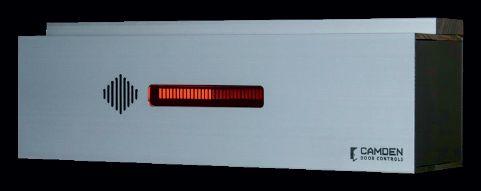
CX-DE1200 Series Single and Double Door delayed egress magnetic locks are designed to provide the best performance and value in healthcare, childcare, retail, and institutional applications.
FEATURES
• Single and double door models
• Advanced features include auto sensing voltage, alarm type (voice or piezo), activation sensor, and anti-passback
• Multiple voice languages
• A range of models to meet NFPA, BOCA and local AHJ requirements
• Range of compatible accessories
By Philippe Bouchard
Opportunities for industry growth
Today, distribution offers a complete solutions focus for customers and partners
SP&T News is celebrating its 25th anniversary this year. We’ve invited guest columnists to share their memories of the past 25 years of the Canadian security and alarm industry — how far we’ve come since 1996 and where the industry might be headed next.
In 1996, when I started out as a distributor representative at ADI Global, the job was very simple: plan an appointment using a hand-written agenda and a paper map and call each client over the phone to confirm.
Next, visit each customer with a stack of catalogues, data sheets and a box full of product samples. With an order pad and price list in hand, ask the customers to place an order. After three days on the road filled with client meetings, I would return to my office to process the orders with a promise of a five to seven day delivery time. Funny memories.
In 2021, communication methods have changed enormously. Clients are reachable 24/7 through a slew of options: phone, Teams, text, social networks and email; and they are more knowledgeable than ever, receiving their product education on-demand through different platforms. Twenty-five years ago, there were no manufacturing agents in the field of security. Now, they help facilitate the sales process and are great allies in distribution.
Today, security distribution is distinguished by financing, 24-hour service (anytime pickup), training centres, a personalized IP camera programming service, and a platform that provides access to purchases (such as a web portal). Training, support (both before and after-sales) and webinars are all integrated into our offers, in addition to supporting each client in the development of his or her business. We continually develop win-win situations by supporting each client.
Adapting to COVID
Due to the challenges of the pandemic, we need to plan more at every level. With a global shortage in computer chips, customers are facing price rises and shortages in CCTV products, networking equipment, motherboards and alarm panels. Production is back to normal now, but with a current lack of components, we need to adjust to those changes.
Plan your purchase months in advance for
“We continually develop win-win situations by supporting each client.”
large integration projects. Delivery times are now provided by manufacturers with a purchase order — some specialized items can take three to six months lead time. But the great news is that the security market is growing eight to nine per cent annually (according to Research and Markets) and will follow that trend for the next five years.
The pandemic has also shed a new light on working conditions. Employees are demanding more flexibility in their hours and in choosing where they work from. Top performers are being solicited non-stop. The notion of productivity is being redefined as we speak — all of which translates into salary and benefit adjustments.
Yes, the times they are a-changin’ sang the great Bob Dylan. This is why an organization like the Canadian Security Association can be of tremendous value to all who are on the front line of change and can serve as a platform to exchange and learn from one another.
The Canadian Security Association
I have had the incredible opportunity to occupy several mandates within CANASA, including the national presidency and as a local chapter board member. Fully supported by my employer, I consider it an immense privilege to have been a part of CANASA’s evolution since 1996.
With its mission to “create and maintain a professional environment for members with the tools and standards to enhance the safety and security of all Canadians,” I was compelled to join as a volunteer. I truly believe that providing our business experience and sharing our network with the association is a great thing for the industry.
Being surrounded at the board meeting table with industry leaders is inspiring and motivating! Experience it for yourself — volunteer and be part of the solution! In the face of so much change, never has the time to come together been so important.
Philippe Bouchard is senior account manager, Eastern Canada, ADI Global (www.adiglobal.com) and a national past-president of the Canadian Security Association (www.canasa.org).
1 OSDP is a real global standard approved by the Security Industry Association (SIA) and International Electrotechnical Commission (IEC), open to use by any manufacturer.
2 OSDP provides a guideline for interoperability among various companies’ access control and security products, such as card readers and door controllers.
3 OSDP offers the option of encrypted communications between reader and door controller, independent of any encryption between credential and reader.
4 OSDP is built on the RS-485 serial transmission standard, needing just four conductors.
10 THINGS ACCESS CONTROL CUSTOMERS MUST KNOW ABOUT OSDP
7 OSDP is more cyber secure than the most common access control communications protocol.
8 OSDP provides secure communications by specifying FIPS-197 encryption (AES).
5 OSDP offers point-to-point and multi-drop topologies.
6 OSDP provides a true bidirectional protocol, addressing business requirements for secured and confidential authenticated messaging.
9 SIA provides a guide to find and explore verified OSDP products that meet its standards.
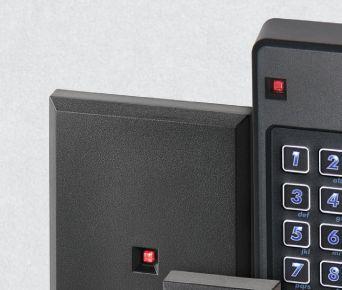
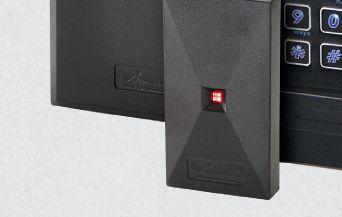
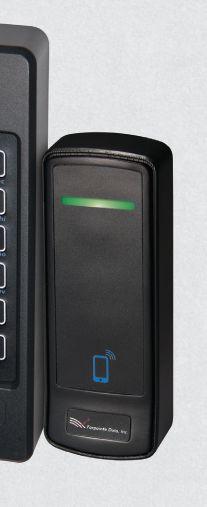
10 Farpointe Data is honored to be among the first three manufacturers to have earned the SIA’s new OSDP Verified mark on its mobile, contactless smartcard and proximity solutions. Plus, these readers are fully potted and IP67-rated!
LESSONS LEARNED
MBy Victor Harding
The ins and outs of selling shares
Know the difference between asset and share deals before selling a company
ost of you know that when you sell your company, whether it is an alarm, integration, fire or guard company, the sale will either be a sale of assets or shares and that each is a completely different sale process and agreement. Talk to your accountant to understand the difference.
“Share sales are done every day in Canada.”
Some of you will know as well that as a Canadian citizen/taxpayer you each ( including your partner in life) have access to a one-time capital gains allowance that now totals $890,000 towards the sale of the shares of a Privately Controlled Canadian Corporation (PCCC).
If you own your company, it is likely that it is a PCCC but it may not qualify for the capital gains exemption. There are very strict rules in place governing which PCCCs qualify to give their owners access to the capital gains exemption if and when the shares are sold. Here are the key rules:
• When you sell the shares of your PCCC, 90 per cent of the fair market value (FMV) of the assets in the company at the time must be “active” and being used in the business. Goodwill, often the largest asset in the business, can count as being an active asset.
• The shares of the PCCC being sold have to be held or owned by the persons claiming the tax allowance throughout the 24 months immediately prior to selling.
• Finally, throughout the 24 months immediately preceding the sale, more than 50 per cent of the FMV of the PCCC’s assets must be assets active being used in the business. This is the trickiest of all the rules.
It is imperative that anybody who is considering a sale of shares of their company to access this one time capital gains exemption talk to their accountant well before starting the sale process. It is very easy to be offside on one of the three rules stated above. Often a company has to “purify” their balance sheet to rid themselves of passive assets like excess cash and then have to wait for two years before selling. There is very good reason to take the extra steps to make sure your company qualifies.
$890,000 of tax free purchase price for each shareholder is a huge win which makes selling shares a very attractive option. To put this into perspective I have calculated that for a seller selling a block of say 1,500 alarm accounts generating $50,000 of RMR, a buyer would have to pay a multiple of 43X in an asset deal to equate to a share deal at 37X. There is not room to spell out what gets taxed in each type of deal but suffice to say this gives you some guideline.
However the facts on the ground are that now many of the bigger buyers of alarm accounts in Canada will not buy the shares of the company that hold the accounts. Not only does this often mean a smaller return to owners from the sale of their monitored accounts but selling that alarm company may be the only chance that the owner gets to use his or her capital gains exemption. It therefore goes to waste.
What are the reasons given by these buyers who will not buy shares? Many will not give you a reason or the person you interact with in doing the deal simply does not know. I have heard a series of silly reasons.
Firstly, there is the tall tale that the buyer is worried about buying undisclosed liabilities in buying the shares. Frankly, this is nonsense. Share sales are done every day in Canada in all kinds of industries, including the security industry, without any liability concerns. Moreover, it is easy to insert clauses in any share purchase agreement and take a small, short term holdback to deal with undisclosed liabilities.
It is true that most times doing a share deal is slightly more complicated, time-consuming and expensive to do than doing an asset deal. The operative word is slightly. It is not nearly as complicated, time-consuming and expensive as many of the bigger buyers of alarm accounts will tell you.
There are some guidelines to go by when considering a share deal. The deal does need to be big enough to justify the extra time and expense in doing it. I tell my alarm clients that they have to have at least 1,000 accounts and 1,500 would be even better.
Secondly, I like the process of taking all the other assets and liabilities out of the company before selling it. The buyer just buys the goodwill or accounts.
Thirdly, don’t balk if the buyer inserts a small, short term holdback into the deal to cover any possible undisclosed liabilities. We are talking amounts like $25,000-$50,000 being held for three to six months.
Finally, sellers of shares have to realize that in some or most cases you will get a smaller upfront price (but a higher tax home amount after tax). This is primarily because buyers of shares cannot write the purchase price off after unlike with asset deals.
The Canadian alarm industry would better off if more buyers were prepared to buy shares.
Victor Harding is the principal of Harding Security Services (victor@hardingsecurity.ca).
By Colin Bodbyl
What is metadata? CAMERA CORNER
MWithout it, video surveillance would not contain the same meaning or value
etadata is data about data. It sounds confusing, but it does not need to be. Metadata plays a critical role in the video surveillance industry, and without it we would not have video analytics or AI, the innovations that are shaping the industry today.
“Thanks to AI, enormous volumes of descriptive metadata are being created.”
The easiest way to think about metadata is to compare it to a real world experience. Pretend you found a box with an old painting in it. You might wonder who painted it, where it is from, and who owned it. Without this information, you do not know what the painting is worth or what you should do with it. The information you are missing is not actually part of the painting, but without it the painting is a lot less meaningful.
This is exactly how metadata works for digital files. It is information about the file, or data (information) about data (the file). Without metadata, digital files would be completely disorganized and useless to most. To solve the problem of organization, digital files use metadata, which is divided into three categories: descriptive, structural and administrative.
Pretend you examined the painting and found the artist’s name signed in the corner, that would be descriptive data. It acts as a description of the painting, telling you it is a work of art from a certain painter.
Now imagine you flip over the painting and on the back it says 2/5, meaning the artwork is part of a series of five paintings with this one being number two in the series. The series number represents structural data — it indicates how this object is organized and where it belongs in the complete set of paintings.
Finally, as you inspect the box the painting came in you see a series of shipping labels with different addresses on them. You now know the history of where that painting has been, which is administrative data, the type of information that tells you the when and how of an object.
The painting analogy is a great method for thinking of metadata in the offline world.
Of course, the digital version of that same analogy could be done using digital photos. In fact, if you have ever tagged someone in a digital photo, you have created a small piece of descriptive metadata.
In video surveillance, metadata is vital to sorting and searching the enormous volume of video data that is collected every day. In its simplest form, administrative metadata is attached to every video file, so the system knows exactly what time it was created. In addition, camera IDs are a form of structural metadata that allows the systems to associate the video clip to the correct camera. While both administrative and structural metadata are the foundations of video data management, descriptive data is where things have become the most interesting.
Thanks to AI, enormous volumes of descriptive metadata are being created that can be attached to video files to make them infinitely more valuable. AI can identify object
types, along with their individual properties like colour, speed, direction of travel and more. This information is attached to each video file in the form of descriptive metadata and enables the advanced search functionality available in today’s surveillance systems. Want to find the man in the red shirt traveling south on a bicycle? Simply search the metadata.
Without metadata our industry would not be what it is today, and video surveillance footage would simply be a linear recording of events, no different to how we once collected footage on VCR tapes.
Thanks to metadata, we can quickly analyze large volumes of video data in a fraction of the time it would take without it, and while data about data sounds like a terrible definition, it’s a lot easier to understand than most people would think.
Colin Bodbyl is the chief technology officer of Stealth Monitoring (www.stealthmonitoring.com).
By Patrick Straw
Full slate of Security Canada shows planned for 2022 CANASA UPDATE
The Canadian Security Association (CANASA) is very excited about the recent launch of our 2022 Security Canada trade show and conference schedule.
Security Canada East will take place in the newly renovated Sheraton Laval. We are looking forward to connecting with our partners in the Quebec market. Our tentative schedule for this show is April 19-20. While several months away, this show is now 80 per cent sold out and we are expecting it to be completely sold out shortly. If you have not received our prospectus, please contact Steve Basnett, director of trade shows and events, at sbasnett@canasa.org.
Security Canada West will take place in Vancouver at the Sheraton Vancouver Airport Hotel. This convenient location is a change from previous years and we are very excited about this move. We are also very pleased to advise that this show has completely sold out.
Mark off June 22, 2022 in your schedules. We will be promoting the registration process early in the New Year.
Security Canada Central will be back at the Toronto Congress Centre on Oct. 19-20. While this show is almost a year out, it is currently 60 per cent sold out. As Canada’s largest and most successful security trade show and conference, the remainder of the show will sell out fast! You can also download a full prospectus at www.canasa.org.
All of our regional councils are back up and running with a full schedule and we are looking forward to scheduling educational and social activities starting in the New Year. These regional councils are located across the country and give us representation for B.C., Northern and Southern Alberta, the Prairies, Quebec, the
Atlantic provinces and four councils in Ontario. If you are interested in getting involved, please contact us for more information.
CANASA also has many committees made up of volunteers from of every region in the country. These committees are: Membership, Monitoring Station, Ethics, By-Law and Policy, National Working, Education, Executive, Scholarship and Sister Liaison. If you are interested in participating in one of these initiatives, please contact us at the CANASA office. We are very proud of the commitment and production from all of these groups — they are constantly working for the betterment of our industry.
Patrick Straw is the executive director of CANASA (www.canasa.org).
Patrick Straw
HALL OF FAME 2021
SP&T’s Canadian security industry Hall of Fame was founded in 2015 to recognize professionals who have made a difference in the industry through a combination of skills and also their capacity to give back. In 2021, for the seventh annual edition, we spotlight three individuals who have built businesses, volunteered their time to industry or charitable causes, and championed the value of the security industry as a great place to work. Please join us in recognizing this year’s inductees, Sue Abu-Hakima, Rick Snook and Stuart Armour.
Sue Abu-Hakima, co-founder and CEO, Alstari
“I think one of the keys to our success has always been innovation.”
Alifelong entrepreneur and tech visionary, Sue Abu-Hakima was researching and writing about artificial intelligence well before the term entered the public consciousness and decades before it became fashionable in the security industry.
Abu-Hakima knew early in her career that she wanted to make a serious impact on Canada’s technology landscape. As an undergraduate studying engineering at Montreal’s McGill University in the early 1980s, she was asked to complete a writing exercise describing her interests in case recruiters came calling.
“I said I wanted to build robots,” says Abu-Hakima. “From that age, I was already thinking science fiction.”
Upon graduation, Abu-Hakima went to work at Bell-Northern Research (BNR), a telco R&D company jointly owned by Bell Canada and Northern Telecom. “They said to me, how would you like to have a job where you just sit there and invent services?” recalls Abu-Hakima. Her work began with the creation of speech and character recognition ap-
plications until she moved over to AI research.
Abu-Hakima pursued an AI-focused master’s degree program at Ottawa-based Carleton University while continuing her work at BNR. She later accepted a position at the National Research Council of Canada where she worked on several projects including the application of AI to help diagnose jet engine issues. Abu-Hakima continued to pursue her academic career, earning a PhD, also at Carleton.
Abu-Hakima’s research and NRC projects led to her first start-up AmikaNow!, which married her knowledge of telecommunications and AI, developing communications software. The company was acquired by digital security and credentials company Entrust in 2004. Abu-Hakima remained with the company until 2007 until she formed her second start-up, Amika Mobile, with co-founder Ken Grigg, who became the company’s CTO.
Amika Mobile, a mass communications and notification company, was born of a perceived need in the market, she says. Abu-Hakima’s brother, who was running a Silicon Valley company at the time, suggested that colleges and universities were looking for emergency notification technology integrated with Wi-Fi systems. Tragedies like the Virginia Tech shooting of 2007 also illustrated the value of fast and ac-
curate emergency messaging.
Amika Mobile launched its first products in 2010 with funding and testing support from Innovative Solutions Canada. The company’s products evolved over time in response to client requests for tighter integration with other security systems such as surveillance, access control and gunshot detection.
(Profiles by Neil Sutton)
“I think we saw the industry go through a real evolution through the 10 years with Amika Mobile — for the better,” says Abu-Hakima. “We did see more and more integration with communications and messaging capabilities for emergency alerting.”
Amika Mobile was acquired by critical communications company Genasys, based in San Diego, Calif., in 2020. Abu-Hakima remained with the company as vice-president of operations and business development until she exited earlier this year.
“I think one of the keys to our success throughout the two start-ups, and me personally as well, has always been innovation,” says
Abu-Hakima. “It’s always the catch-me-if-youcan features, at the end of the day. I’ve always been very good at synthesizing the market (looking at market forces vis-à-vis product development) and listening to our customers.”
Throughout her career, Abu-Hakima has volunteered her time, serving as a board member on non-profit organizations and several university advisory boards. Most recently, Abu-Hakima volunteered for the Ottawa chapter of ASIS International, serving as chairperson.
She has been recognized for her work with numerous awards from associations such as the Canadian Advanced Technology Alliance and the Women’s Executive Network. In 2011,
Abu-Hakima was named to the Order of Ontario and in 2012 received the Queen Elizabeth II Diamond Jubilee Medal.
Abu-Hakima is also a staunch advocate of female entrepreneurship, noting that women are woefully under-represented in Canada’s entrepreneur community. “Fifty per cent of your population is women, so start funding women,” she says. “You need these resources.”
Abu-Hakima is currently writing a book about her experience as an entrepreneur and working on her third start-up, Alstari, which means “awesome” in Esperanto. The company will focus on AI in security, leveraging the expertise she has developed over her 35-year career.
Rick Snook, business development manager, Axis Communications
“I continue every day to learn something new about the industry.”
Rick Snook is a self-described “security enthusiast.”
He lives and breathes the industry, has a broad network of colleagues (a security friend in every city to have coffee with, he says), and, after 38 years in the business, isn’t interested in slowing down.
Snook came to security in a roundabout way. He was originally an apprentice machinist and wanted to be a tool and die maker. But it was difficult to get a job in that field in the midst of the recession of the early 1980s, he says.
In September of 1983, he found work at the Alliance Group (then known as Bond-Ray Protection), which was a distributor for the Alliance Security franchise group.
“The great thing about that group was, you learned all the things about supply chain, about the technical aspects of security. Then you learned about how to do installs and service,” says Snook.
With on-the-job training and a crash course in the security business, Snook bought one of the Alliance Group’s franchises based in Guelph, Ont., with a business partner and renamed it Brass Security Systems.
“During that time is where my interest in the security industry in general really took off,” says Snook. “I wanted to set myself apart when I entered the security industry.”
The U.S.-based National Burglar and Fire Alarm Association offered a level 1 security installers course, so Snook and his team drove to Batavia, N.Y., to sit the course and take the exam.
“I started to promote the company as the first company in Canada with certified installers by the NBFAA. That was really where it broke through,” says Snook.
Snook also started volunteering for the Canadian Security Association (CANASA), first at the local chapter level then provincial. He became in-
volved with CANASA’s education committee and “that’s when things really started to flow.”
With fellow CANASA members Mark Fairley and Dave Currie (a 2016 SP&T News Hall of Fame inductee), Snook helped to design CANASA’s first alarm technician course, known to this day as the ATC.
Snook served in several roles at CANASA, including Ontario chapter chair, Ontario vice-president, then national president in 1998.
“I got exposure to so many people in the security industry,” says Snook, adding that the relationships and knowledge he developed during that time were instrumental to the growth of his business. “I got equally as much back as I put in.”
In 2001, Snook sold Brass Security and joined CANASA full-time as director of education. He wanted to make the ATC1 and ATC2 (by then there were two technician courses) available digitally on-demand. In those days, that meant recording them onto DVD disks. The flexibility of that approach allowed people to take the course on their own time, says Snook.
Snook stayed on with CANASA for two years. In 2004, he was recognized for his contributions to CANASA with the R.A. Henderson Award, conferred annually to a “member who has demonstrated extraordinary achievements,” according to the association.
Snook took a break from security for a while, working in the construction industry. He returned in 2010 as Eastern regional manager for integrator Cobra Integrated Systems. In 2013, he moved over to Stanley Security Solutions as district sales manager, and accepted a role with his current employer, Axis Communications, in 2015.
Snook was hired at Axis as key account manager and is currently business development manager for banking and retail. He is effusive in his support for Axis, noting that the company distinctively values its employees. “Axis is a family of individuals and the greatest group I’ve ever worked with,” he says.
Snook has thrown himself into the role as a specialist in banking and retail, earning CPTED (Crime Prevention Through Environmental Design) 1 and 2 certifications as well as a Loss
Prevention Qualified (LPQ) certification from the Loss Prevention Foundation. He also holds an Axis Certified Professional (ACP) from his employer, and a Physical Security Professional (PSP) certification from ASIS International.
Snook recently returned to association volunteerism, joining the ASIS International Toronto chapter as communications chair. He has also held the treasurer position on the chapter executive, and was recently appointed as chapter chair.
In addition to his security industry involvement, Snook is also an avid supporter of several charitable organizations. He participated in the Ride for SickKids, raising more than $1,500 for Toronto Sick Kids Hospital last August. At the time of publication, Snook was re-growing his signature moustache, raising money and awareness for the annual Movember campaign, an organization that supports men’s health issues.
With 38 years of security industry experience behind him, Snook says he’s very much looking forward to celebrating his 40th anniversary in the business. He says he continues to find new challenges in the industry, which helps to keep him engaged. “I continue every day to learn something new about the industry,” says Snook. “I never stop learning.”
Stuart Armour, sales and operations manager, Affordable Security Systems
“[Security has] broadened my horizons both professionally and personally.”
Stuart Amour is grateful for the security industry.
“It’s given me 35 years of continuous employment,” he says. “It’s broadened my horizons both professionally and personally.”
He first discovered security in the 1980s in a video rental store where one of his friends worked.
Affordable Security Systems, based in Burnaby, B.C., rented a part of that video store and sold primarily DIY alarm equipment.
In the mid-80s, there were only a few major providers in the market and a residential security system cost about $5,000 at the time, explains Armour. “A one-zone panel with a key that turned it on and off,” he says.
Affordable Security primarily sold its DIY equipment to alarm installers, electricians and telco technicians who did some extra work installing home alarms as a side business.
“I’d always tinkered, so that was where my initial technical skills came from,” says Armour, who got his start at Affordable working with car alarms before graduating to home security systems.
“I started helping out in the store and selling equipment to guys who would come in and say, ‘I want to put a system in, but I have no idea how to do it.’ We would wire up these panels on the bench, basically and show them how to hook up the contacts, the motions and how to wire in the keypad. We’d run the whole system on the bench, and then they would take it away. That’s where my wiring and troubleshooting skills came from.”
The company began to generate more interest from contractors looking to have new houses prewired for security systems. Armour started doing rough-in work on construction projects, both residential and small commercial. “One thing led to another. Our projects got bigger. The more you do, the more you learn,” he says.
At the time, training opportunities were sparse and often rudimentary, says Armour, so it was a matter of learning on the job, or apprenticing with an experienced installer.
This began to change as the industry matured, and equipment suppliers offered more technical training on products and integration.
“As our company grew and we took on larger projects, I had to expand my product knowledge,” says Armour.
“There’s a lot of good info offered by the different manufacturers and distributors. If people want to participate, there’s constantly training available for different manufacturers’ products. I started attending seminars on new intrusion panels, new card access panels…”
With his growing industry experience, Armour began to move away from installing equipment to more of a management role around sales, systems design and organizing technicians — “putting the right people on the right project based on their skillset,” he says.
Armour also got more involved in the Canadian Security Association (CANASA). He started attending local CANASA meeting events in the early 1990s, finding camaraderie with fellow security professionals who bonded over similar workplace challenges.
Over the years, Armour has escalated his role at the association. Serving as B.C. chapter president, he also had a seat on the national board and spoke out about provincial interests and concerns. “I tried to bring a B.C. flavour to the table and comment on what was happening out west,” he says.
Overall, B.C. and the west has been well-represented at CANASA, he says, noting that several national presidents have come from B.C., including the current president Anita Brunet. Armour continues to serve with CANASA in a variety of roles, including as a council representative for the British Columbia Regional Council, committee chair for the National Strategic Planning Committee and as a member of the Scholarship Committee. He also serves on the National Board of Directors and National Executive Committee. In 2019, he received the Regional Council President’s Award. Security technology, and in
many ways the industry itself, has become more sophisticated over the years but what remains steadfastly important to Armour is the ability to deliver a solution to the customer that meets their needs and ultimately provides peace of mind.
“I want to continue to grow Affordable to be a leader for security and integration,” says Armour. “I want to be able to sit down with each client and design something that meets exactly what they want to have.”
Photo by Charles Britt
CLOUD-BASED ACCESS POISED FOR GROWTH
The
market has drawn a lot of interest, particularly during the pandemic, but there are still a few hurdles before mass adoption
By Madalene Arias
Cloud-based Access Control as a Service (ACaaS) has held up during the pandemic as a cost-efficient alternative and is projected to grow significantly, but the technology still has a ways to go.
According to the ACaaS Global Market Trajectory and Analytics for 2021 report, published by Global Industry Analysts Inc., the entire market was valued at US$789.6 million in 2020 and is projected to reach US$3.6 billion by 2027.
Brivo Inc. was among the 98 cloud-based companies featured in the market overview.
To explain the evolution of the cloud access control market, Brivo founder and CEO Steve Van Till described the classic product adoption curve. “You get the very early— not even adopters — but experimental folks and then you get the early adopters, and then you cross the chasm. Then you get the early majority, late majority, that whole progression,” said Van Till.
According to Van Till, ACaaS is in the early majority adoption stage.
He added that the last five years have shown a shift in attitudes towards cloud-based security and with this a higher rate of adoption and growth.
He credited property technology for this recent shift, adding that this sector has received $100 million in investments over the last five years.
“What is relevant to access control and security is it has really cemented in end users’ minds the value of our property to the cloud,” said Van Till.
“This whole notion that life inside the building is going to be better if it’s connected to cloud and mobile services — this is what’s really different about the past five years.”
But in comparison to the adoption rates of enterprise applications in fields like human resources, marketing and finance, Van Till
“This whole notion that life inside the building is going to be better if it’s connected to cloud and mobile services — this is what’s really different about the past five years.”
— Steve Van Till, Brivo
said that cloud-based access control is lagging behind.
He wrote in an email to SP&T that a decade prior, many other industries except security systems and smart building technologies transitioned to the cloud. The security industry is beginning to follow along in that trend, but it is behind by five or 10 years.
According to Van Till, three or four different sources within the cloud-based security industry have reported cloud penetration of 10 to 15 per cent, while enterprise software is at 85 per cent.
Special projects manager at ACRE Operating Group Dave Barnard said as far as security is concerned, they have seen the most success with cloud adoption in alarm system companies and surveillance companies.
Other areas where Barnard said he has seen cloud-based security do well is residential buildings and latch key shops like storage facilities.
“They no longer want to deal with brass keys but prefer to give access cards to their tenants to deal better with situations where a tenant leaves a property or doesn’t pay their bills. They can just disable the card remotely,” said Barnard.
He said ACRE still offers on-premise solutions as they remain the most prevalent. European companies have been using cloud-based services from the ACRE brand for 10 years now. Just five years ago, ACRE introduced to North America a “true-cloud” product from its portfolio, though its adoption in the U.S. has yet to mature as it has in Europe, said Barnard.
Impact of COVID-19
Lucas Ingala, Watchmen Security Services founder and CEO in Kansas City, Mo., said the coronavirus pandemic has brought with it more funding towards what he called “warehousing” as it became crucial for online retailers to coordinate shipments all over the country.
While the commercial class A office has “slowed down,” with traditional in-office jobs becoming remote, Ingala said that companies remain vested in the protection of these spaces in anticipation that they will eventually “fill up” again.
According to Van Till, such workspaces
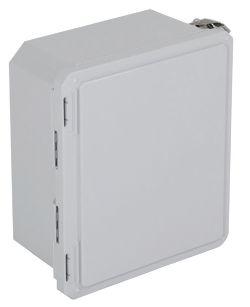
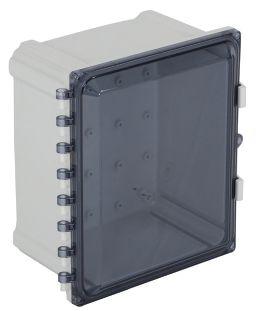
Waterproof enclosures protect devices indoors or outdoors. Choose from polycarbonate or fiberglass, in a variety of sizes.
· Non-metallic polycarbonate or fiberglass enclosures · Wireless friendly Lockable Variety of sizes · Opaque or see-through door Options include: heaters, A/C, filter fans and more!
remain protected though in a different way, and how they are filling up looks different than before the pandemic.
Van Till said that companies not already using the cloud for their security systems quickly became frustrated once stay-at-home orders came into effect, so the pandemic became a major driver in pushing the security systems of those companies onto the cloud.
“They couldn’t see occupancy levels, they couldn’t see who was coming and going and said, ‘You know, I have been putting off going to the cloud,’ I am going to go now,” said Van Till.
Working from home and the introduction of flex or hybrid work schedules has also driven up the use of co-workspaces among various corporations, and in turn this has driven up cloud access-controlled doors per square foot, explained Van Till.
An office is typically 6,000 square feet, and this usually means there are three access controlled doors. According to Van Till, the front door will be controlled through the cloud along with one or two others leading to rooms with confidential information as those found in financial or HR settings.
In a shared office environment with flexible workspaces, Van Till said nearly every room has access control.
“You might have 30-plus doors controlled in that same 6,000 square feet. That’s higher density,” said Van Till.
He also said this is a more permanent result of the COVID-19 pandemic and he expects an increase in this type of environment as more members of the workforce adopt co-working
spaces and hybrid schedules.
Sam Shalaby, CEO of cloud access control provider Feenics, said adoption of cloudbased security during the pandemic was more of a knee-jerk reaction. Efforts to contain the spread of the coronavirus made it increasingly important to know who was going in and out of a building at any given time. Moreover, contactless features became more popular as part of the ideology to prevent the spread of germs by reducing surface contact wherever possible.
“This touchless philosophy increased the adaptation a little faster, but we have always had it,” said Shalaby.
“In some places, facial recognition became very convenient for visitor management,” he added.
Shalaby said Feenics is currently working with pharmaceutical companies, schools and the federal government as they transition to the cloud.
Still, the adoption rate is not happening as quickly as some would like to see.
What is holding back the cloud?
There are many reasons security management functions better in the cloud than on premise, according to Shalaby.
One main reason, he said, is that someone is always taking care of the cloud. There are backups, system upgrades, redundancy and many other features that benefit the end user.
Shalaby said on-premise security systems run on servers that are typically forgotten after they have been installed.
“They don’t update it, they don’t upgrade the servers, they only react to it when some-
“Touchless philosophy [in access control] increased the adaptation a little faster.”
— Sam Shalaby, Feenics
thing fails,” said Shalaby.
It is also more cost-efficient to pay for a cloud service as needed than to invest in IT infrastructure, he added — one of the key reasons small and medium-sized companies make up the earliest adopters of the cloud.
But others are simply afraid or do not see the point of changing from traditional, on-premise systems.
“It’s the unknown. Some customers don’t know what the cloud is. When you tell them ‘cloud’ they say ‘Oh, you mean some people might have access to my stuff?’”
He said it is up to the integrators to address any concerns customers have and to educate them to erase fears.
As the head of an integration company, Ingala has encountered the various layers of hesitation over transitioning to the cloud.
“The fear of it is, ‘I don’t know what’s going to happen. I might lose customers. I might tick off my staff’—all those questions. The main emotional driver is fear, and the logical part of it is ‘why don’t we just wait until its fully adopted and then we’ll transition,’” said Ingala.
Barnard described how the technology itself can become an obstacle as end users interested in cloud-based security may not be the most computer savvy. Currently, ACRE is working on the development of a step-by-step guide to help end users with their cloud services.
Future projections
Despite hesitancy among end users, one key driver that continues to propel cloud-based security forward is the convenience of mobile devices.
As Van Till explained, people are using them for shopping, banking and engaging with the security systems of their living spaces.
Van Till said clients who express that they want to create a more mobile security experience in commercial or residential buildings have implied they will be adopting a cloudbased system, as there isn’t a single app on an iPhone or Android that isn’t connected to the cloud. Mobile is easier to implement against a cloud backend.
“Today, everybody is so used to the cloud in their personal life — banking, buying things — that people don’t even think in a consumer setting, ‘Is it in the cloud or is it not in the cloud?’ One of the only places you get people asking that question is right here in the security industry,” said Van Till.
“I think the time that people even think about the distinction is quickly fading into history.”
Product Previews Fire & Life Safety
Fire detection cameras
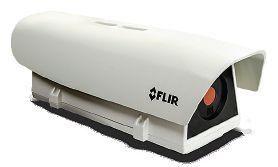
Teledyne FLIR
The FLIR A500f and A700f Advanced Smart Sensor ruggedized thermal cameras feature high-temperature detection for extreme environments paired with on-camera analytics and alarm capabilities — suited for industrial early fire detection or outdoor condition monitoring applications. For early fire detection, the A500f and A700f thermal cameras can identify increased temperatures related to potentially dangerous conditions. Both cameras feature Flexible Scene Enhancement technology. They can also identify heat anomalies from mechanical problems early. www.flir.com
Sprinkler family
Johnson Controls
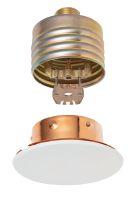
Series RFII-C Royal Flush II Quick Response Concealed Pendent sprinklers are UL Listed and are specially designed for long, narrow spaces and offer a maximum coverage area of 28-feet by 10-feet (8.5 meters by 3.1 meters). These sprinklers are intended for use in NFPA-13 compliant automatic sprinkler systems. The Series RFII-C 5.6 K-factor Royal Flush II Quick Response Concealed Pendent sprinkler features a concealed design, allowing for uninterrupted aesthetics in hallways and corridors. The 3-mm bulb-type sprinkler features a flat cover plate which hides the unit. www.tycofpp.com/corridor
NAC power extender
Altronix
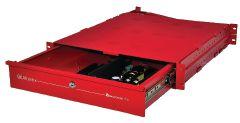
Altronix introduces the latest additions to its NAC Power Extenders with a rack solution suited for installations where wall space is limited. R1002ULADA offers 2-Class A or 4-Class B outputs and model R1042ULADA offers 4-Class A or 4-Class B outputs. Both provide 24VDC at 10A and interface with virtually any Fire Alarm Control Panel. Outputs can be independently programmed for steady, temporal code 3 or strobe synchronization, as well as repeating a specific signal utilizing Input to Output Follower Mode. www.altronix.com
Sounders and beacons
E2S Warning Signals
Protective cover STI
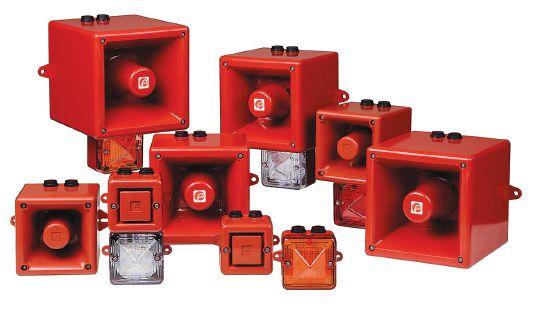
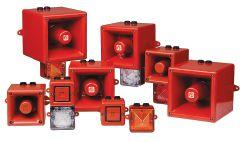
The latest iteration of the AlertAlarm, the AlertAlight and the Sonora families are now available. The AlertAlarm and AlertAlight products now contain the standard E2S set of 64 international alarm tones and 4 remotely activated stages/channels. The A100 sounders and the AL100 combined units now produce up to 110dBA. The A105N/AL105N now utilizes a new enclosure design with threaded cable entries to simplify installation. A112N/ AL112N and A121/AL121 type products now contain the latest in Class D amplification. www.e2s.com
Integrated security suite Honeywell
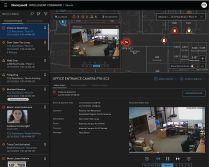
Pro-Watch 5.5 is the latest iteration of Honeywell’s Pro-Watch Integrated Security Suite.Honeywell Pro-Watch Intelligent Command, a user interface that allows organizations to construct a security system with total situational awareness via the integration of video and access control solutions, can now be upgraded to Pro-Watch 5.5. This upgrade enables operators to respond to alarms or incidents by providing actionable intelligence including a unified alarm view with maps and associated video that includes Standard Operating Procedures (SOPs) to be followed, enhancing compliance with advanced reporting and reducing security risks. security.honeywell.com
Mass spec device
908 Devices
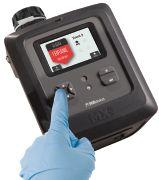
The MX908 with Aero enables real-time monitoring for aerosolized threats, including aerosolized chemical warfare agents, fourth-generation agents, pharmaceutical-based agents, opioids and more. The MX908 provides immediate actionable results to guide response protocols for responders, including chemical and hazmat teams, law enforcement, and international customs agents. The handheld device can now detect and identify a broader range of cathinones and cannabinoids as well as select phenylethylamines. www.908devices.com
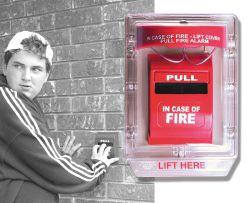
STI’s Stopper II (STI-1100) protective polycarbonate cover fits over manual pull stations and when lifted, a loud warning horn sounds locally. Immediate attention is drawn to the area. It offers protection against false fire alarms, physical damage (both accidental and intentional), dust and grime and does not restrict legitimate alarms from being activated. The Stopper II is UL/cUL Listed and ADA Compliant. Three year guarantee against breakage of polycarbonate in normal use (one year on electro mechanical and electronic components). www.sti-usa.com
Smart sensor
IPVideo Corp.
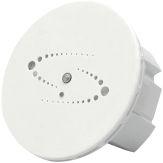
Version 2.5 of the HALO IOT Smart Sensor provides both a real-time air quality and health index and sends alerts when either index falls into danger zones. HALO 2.5, in conjunction with HALO Cloud, provides a dashboard displaying all air quality and health index events. With a single device HALO provides: building health monitoring, indoor air quality monitoring, vape detection, THC detection, gunshot detection, emergency key word alerting, audible alerting, light/occupancy alerting, chemical alerting, VOC alerting, tamper alerting as well as temperature, humidity and pressure alerting. www.ipvideocorp.com
Product Previews The latest in security technology
Video analytics
Milestone Systems
Milestone’s XProtect Rapid REVIEW is an intelligent video analytics solution that allows security operators and investigators to efficiently search through hours and hours of video recordings. Powered by BriefCam video analytics technology, XProtect Rapid REVIEW enables accurate, cross-camera video searches and filtering, based on an expanding suite of classes, attributes, behaviours and visual layers that help investigators pinpoint people, objects, and behaviours of interest. VIDEO SYNOPSIS technology gives the operator the ability to visualize objects simultaneously that appeared at different times within the video. www.milestonesys.com
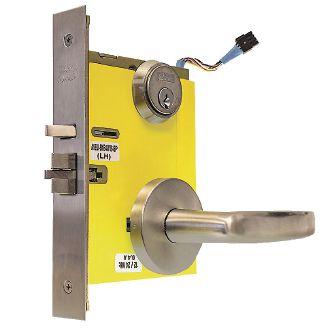
Electrified locks
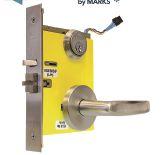
Marks USA
Lectra Electrified Locks are suited for stairwell doors, mantraps, hospitals and receptionist buzz-in applications. They are available in both mortise and cylindrical solenoid-operated locks in 12 or 24 VDC. Durable, Grade 1 Lectra locks feature easy installation, concealed latches for greater security, and fail-safe and fail-secure models. Lectra mortise models offer various modes of operation and lock information such as Request to Exit (REX) and key override switch and/or latch bolt sensor. Lectra locks are ADA-Compliant, meet ANSI/ BHMA 156.2 and are UL listed for a three-hour fire rating. www.marksusa.com
Keyless access
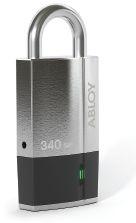
Abloy Oy
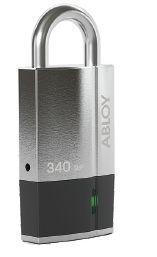
ABLOY CUMULUS is a platform for keyless access, combining hardware products with secure access and management applications. The CUMULUS range of keyless, online access solutions — from mobile keys and padlocks to upcoming electric locks and controllers — can be administered with any software tool that suits the customers’ needs. CUMULUS will first be aimed at select markets in Europe and Southeast Asia. More markets will be added gradually.
www.abloy.com
Longwave infrared camera
Teledyne FLIR
PTZ cameras
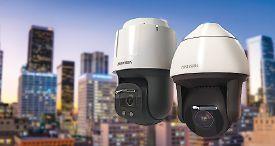
Hikvision
The Tau 2+ is the highest sensitivity longwave infrared (LWIR) Tau 2 camera from Teledyne FLIR. With the same Tau 2 mechanical, electrical and optical interfaces, the Tau 2+ is a drop-in replacement, but with a 1.5 times sensitivity improvement and an entirely redesigned image processing engine. With a noise equivalent differential temperature (NEDT) of less than 25 mK (milliKelvin) the Tau 2+, offers improved detection, recognition, and identification (DRI) performance. The Tau 2+ image processing algorithm provides clearer thermal details in challenging environments. www.flir.com
Mini-domes
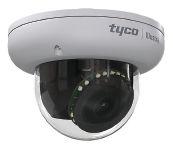
Illustra
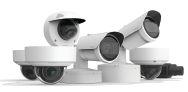
Johnson Controls announced the launch of Tyco Illustra Pro Gen4 2MP, 4MP and 8MP Edge-AI mini-domes. This new line of cameras provides organizations with the capability to respond to incidents faster as AI enhances the speed and accuracy of forensic searches. Events can be narrowed to classes such as a person, car, bus, motorcycle or bicycle. Settings can be adjusted on each camera with a variety of analytic rules that notify security or business owners when people or objects are detected. Smart features such as smart wide dynamic range automatically scans the video scene and adjusts contrasting and overall scene balance without operator intervention. www.illustracameras.com
Two-door controller
Kantech
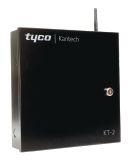
The Tyco Kantech KT-2 integrates into OpenBlue, the dynamic platform for building solutions from Johnson Controls. The KT-2 can be used as either a standalone system or integrated with the EntraPass Security Management Software to leverage Wi-Fi connectivity. The KT-2 supports two readers, ioModules and other KT controllers such as the KT-1 and KT-400. When paired with Kantech ioSmart readers, the KT-2 provides endto-end encryption. The KT-2 door controller includes a five-year warranty. www.kantech.com
Hikvision introduces the new DF8 Series of IR PTZ cameras, launching with three new models. The DF8 PTZ Camera offers a 1/1.2-inch sensor with 4K resolution and 42x optical zoom lens to enable wide area surveillance. Larger sensors provide a higher level of detail in darkness. Gyroscope image stabilization maintains a stable image when the environment has strong winds or other instability. Intelligent features include a deep learning algorithm to identify humans, vehicles and other objects, as well as an Intelligent Rapid Focus function to position the camera rapidly and accurately on a target. www.hikvision.com
Retail solution
March Networks
March Networks has introduced a new mobile order pickup solution for retailers and QSRs that alerts operators in real-time to customers arriving for curbside pick-up. The solution uses an AI-powered analytic, available in March Networks’ ME6 Series IP cameras. When paired with Searchlight for Retail software, the solution allows businesses to also capture data analytics on curbside deliveries. Searchlight, available as a cloud service, combines video surveillance with point-of-sale (POS) transaction data and business analytics for exception-based reporting and faster loss prevention investigation times. www.marchnetworks.com
Product Previews
Smartphone app
Invixium
IXM Mobile is a smartphone app with features designed for healthy access. This new mobile platform extends the company’s flagship solution, IXM TITAN, and enterprise-grade software, IXM WEB. IXM Mobile offers five licensed features: remote face enrollment, digital card or QR code as contactless credentials, a custom attestation questionnaire, and vital signs screening. IXM Mobile is free to download from the Apple App and Google Play stores. Enterprises will need to purchase a license to enable each sub-app for its staff or visitors. www.invixium.com
Two-axis joystick APEM
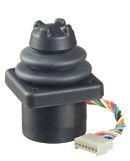
The XS series is a two axis Hall effect joystick featuring a reduced panel height to provide precise fingertip control. At less than 45mm, the XS allows for unimpeded access to other devices located on the control panel. This compact, low profile design reduces the risk of inadvertent operation as well as damage when mounted in handheld mobile devices that are prone to accidental drops. The XS series includes redundant Hall effect sensors for more than 10 million operations, is IP66 above panel sealed and is considered Sil2 compatible. www.apem.com
Camera with AI
Hanwha Techwin
The new X-Core AI and X-Plus AI series feature Hanwha’s advanced artificial intelligence (AI) and deep-learning technologies. The new cameras offer AI-based object detection for false alarm reduction analytics, AI-enhanced image quality and edge-based business intelligence. The X-Core and X-Plus cameras feature a suite of license-free, in-camera analytics that improve operator efficiency for both real-time event notification and post-event search.
www.hanwhasecurity.com
Access control terminal
Suprema
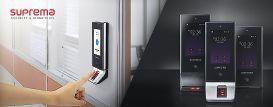
The X-Station 2 access control terminal now supports fingerprint authentication. Suprema launched four models of X-Station 2, a next-generation terminal that supports a variety of authentication methods from mobile access cards to RFID cards, QR codes and barcodes. The newest X-Station 2 model comes equipped with a fingerprint recognition module. Features of X-Station 2 include: fraud prevention via authentication photos using a builtin camera; a four-inch touch screen; up to 500,000 users can be stored and processed. www.supremainc.com
Product Previews The latest in security technology
Video wall controller
VuWall
The VuScape VS10 Video Wall Controller is designed for small to medium size video wall deployments, powering up to 16 displays. It can be used as a destination or to capture and manage hybrid AV, IP, and IT sources, including web pages, RSS feeds, VNC, and more, allowing them to be encoded and distributed in an AV-over-IP-only infrastructure. The VS10 can also be used as a complete video wall processor. It features four 4K outputs, allowing it to be used as a KVM workstation; decode ADDERLink ipeps+; integrate with Milestone and Genetec video management systems; and decode IP cameras, websites, and local applications. www.vuwall.com
Cloud manager
IDIS
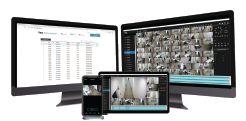
IDIS Cloud Manager gives users control of their surveillance operations using their chosen web browser on desktop, laptop or mobile devices for secure cloud access. Once the system is in the IDIS Cloud Manager, users can remotely set up recorders and cameras and check the status of network access for sites and devices, all from an intuitive dashboard. Authorized operators can then securely access the system to view live, playback, receive alarms and push notifications, quickly screen, print or backup, and export video clips. They can search up to 64 channels simultaneously via time lapse, event, text-in, or simple time movement.
www.idisglobal.com
Smart locking system
SALTO
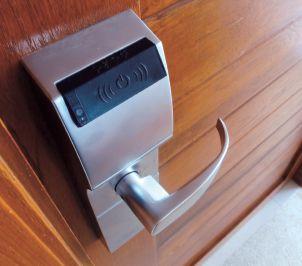
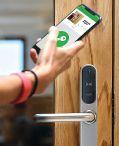
The XS4 Original+ is embedded with SALTO’s BLUEnet real-time functionality and SVN-Flex capability, that enables SALTO standalone smart XS4 Original+ locks to update user credentials directly at the door. Compatible with the array of SALTO platform solutions including SALTO Space data-on-card, SALTO KS Keys as a Service cloud-based access solution, and SALTO’s JustIn Mobile technology for digital keys. The XS4 Original+ also includes RFID Mifare DESFire, Bluetooth LE, and NFC technology functionality. www.saltosystems.com
Conferencing bars
Biamp
Parlé audio and video conferencing bars are a line of professional-grade audiovisual conferencing solutions for small to medium-sized rooms. Parlé conferencing bars combine Beamtracking microphones, smart loudspeakers, advanced signal processing, an optional 4K camera and Biamp Launch. The family of conferencing bars includes the ABC 2500 Audio Bar, which features Biamp Audio Intelligence. The VBC 2500 Video Bar adds a 4K ePTZ camera featuring Biamp Video Intelligence. www.biamp.com
PoE transmission devices
Dahua Technology
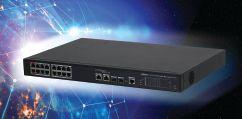
Dahua Technology is rolling out a new generation of Power over Ethernet (PoE) transmission devices. These PoE 2.0 switches from Dahua come in 16-port and 24-port gigabit models, both designed for field transmission applications and high-definition video. Features for smarter management include PoE Watchdog, Intelligent PoE, and non-blocking video transmission. Both the 16-port switch (DH-PFS4218-16GT2GF-240) and the 24-port switch (DH-PFS4226-24GT2GF-360) have two gigabit uplink combo ports in addition to the PoE ports, and support Layer 2 PoE, PoE+, Hi-PoE, and PoE++.
PLC interlock controller
Dortronics
Sensor fusion engine
Senstar
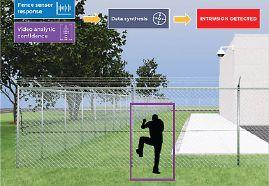
Senstar’s new sensor fusion engine synthesizes data from multiple sensors to generate actionable information. The Senstar sensor fusion engine accesses low level data to intelligently characterize potential risks and data synthesis enables the system to achieve levels of performance that exceed those of the individual sensors. When signal response data from outdoor sensors is synthesized with video analytic data, nuisance alarms are virtually eliminated while maintaining the system’s high probability of detection. www.senstar.com
Monitored pulse fence
Gallagher
www.dahuasecurity.com
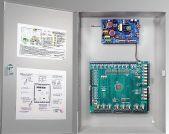
Dortronics’ 48900 PLC Interlock Controller is a cost-effective solution for implementing door interlock and mantrap systems with up to nine doors. In operation, unlocking or opening one door automatically secures other designated doors within the interlock group. The fully integrated single-board solution provides installers with complete control of all operating and configuration options. The 48900 Series PLC Interlock Controller integrates with virtually any access control system utilizing dry contacts. www.dortronics.com
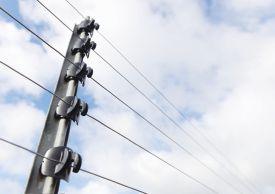
Gallagher’s Adaptive Thresholds enables sites to adapt dynamically to environmental changes, minimising false alarms while maximising the detection capabilities of Monitored Pulse Fences. Adaptive Thresholds allows a Fence Controller to dynamically adapt to the local conditions. It achieves this by adapting the alarm threshold at a percentage of the return voltage, so that when a gradual voltage drop occurs due to environmental conditions, the threshold will adapt with it so that it will not trigger an alarm. security.gallagher.com
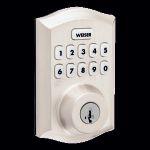
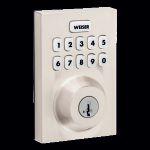
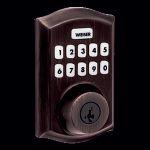
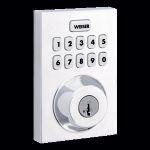
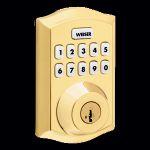
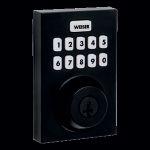
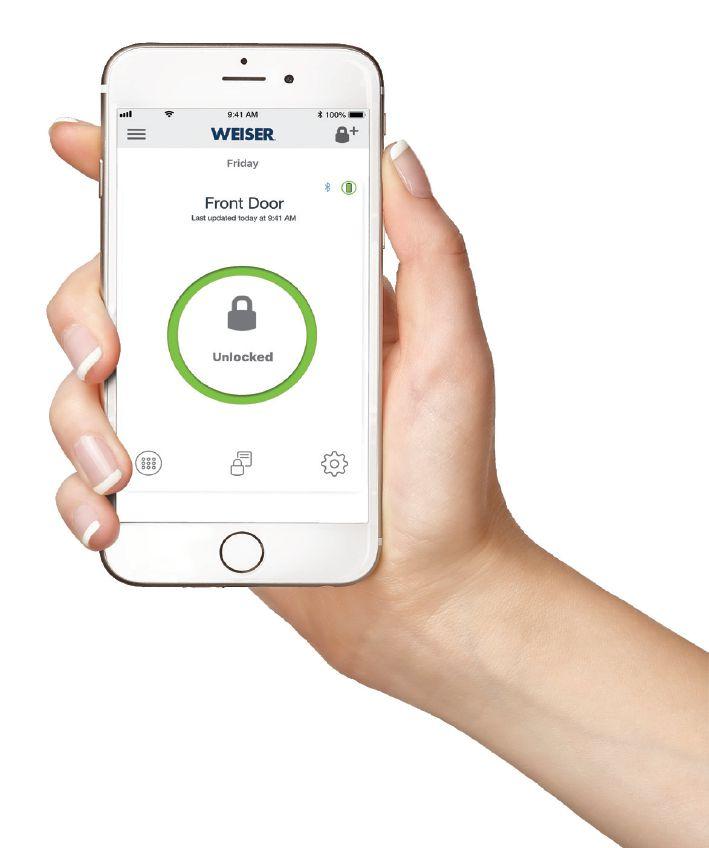
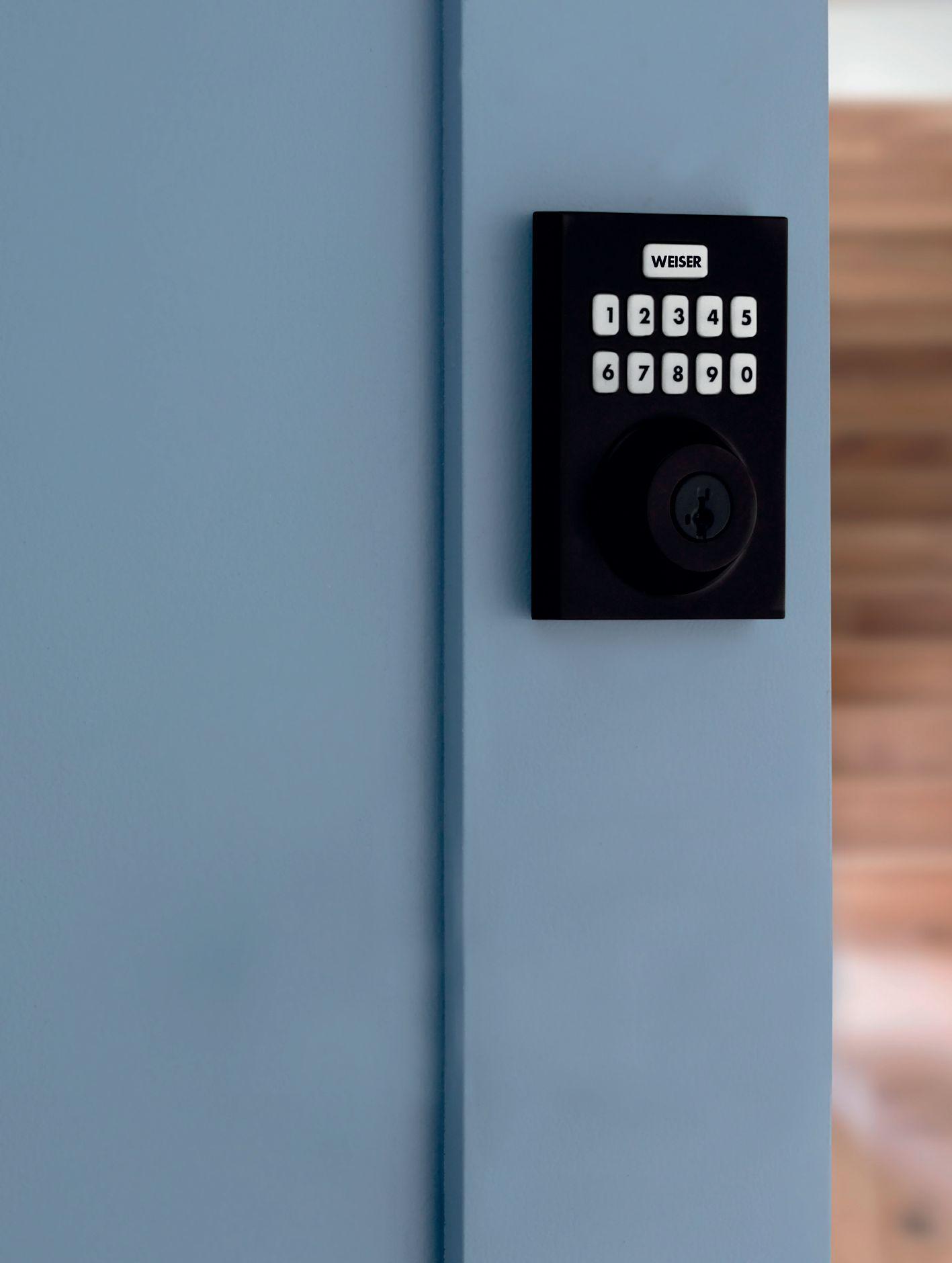
WEISER MOVES INTO THE FUTURE
Coming Fall 2021, with our new Home Connect 620 smart lock, we are moving into the future by utilizing the new ZW700 chip and a faster gearbox that improves battery life and faster latch operation.
The ZW700 chip offers many different enhancements to this product offering including: