




Prioritizing











Alanna Fairey
Neil Sutton



WBy Neil Sutton
hen I started doing research for the smart buildings article featured in this issue (see p.20), my first thought was to expand on some of the technology articles we’ve published in the last year.
Those articles examined some of the rapidly shifting trends that have emerged in the last 15 months or so, with technologies like touchless and mobile access, cloud-based architecture, and remote surveillance experiencing an uptick in interest and demand due to the pandemic.
What better way to bring them all into focus than to see how they work together in a smart building environment? That was my premise as I reached out to sources and started to conduct interviews.
In large part, that all went according to plan and hopefully you will see that reflected in the article. But what I was somewhat unprepared for was the extent to which the smart buildings market is still a nascent one.
Access control, surveillance and intrusion systems are increasingly intertwined — at least for larger-scale deployments — one reinforcing the other to mutual benefit. It makes sense, for instance, that an end user might want to check that an access point is functioning optimally through a combination of reviewing logs and visual confirmation over surveillance. There are certainly solutions in the market today that can accomplish that and more (read about an example on p. 10).
Building controls are successfully talking to each other — security systems interacting with environmental
systems or elevator dispatch — but that’s really just the tip of the iceberg. What I learned from talking to the experts featured in the article is there is potentially a lot more to come.
To some extent, smart buildings were put to the test during COVID-19 — asked to function securely and effectively when largely vacant, yet still be able to pivot quickly if people came back to work. But I was reminded during these conversations that the pandemic is an event spanning a year or two. Buildings last for decades.
Commercial property and how people utilize work spaces may be affected by pandemic trends long after all willing adults have received their second vaccine dose, but the smart building vision will continue well into the future. Whether that means more mobile or app integration, increasing cloud adoption, or a technology advancement that hasn’t even been thought of yet, integrators who bring the right mix of skills to the table can expect to be busy for a long time to come.
Our cover story this issue on electric vehicles is also future-focused. And again, it feels like we’re at the beginning of a trend that is likely to affect a growing proportion of the professional security community over the coming years. Whether you’re driving to a customer site in a fully charged vehicle or tweaking a building system remotely, be prepared to adapt to this changing market and enjoy the ride.

@SecurityEd


READER SERVICE
Print and digital subscription inquires or changes, please contact Barb Adelt, Audience Development Manager Tel: (416) 510-5184 Fax: (416) 510-6875
Email: badelt@annexbusinessmedia.com
Mail: 111 Gordon Baker Rd., Suite 400, Toronto, ON M2H 3R1
Your Partner in Securing Canada Security Products & Technology News is published 6 times in 2021 by Annex Business Media. Its primary purpose is to serve as an information resource to installers, resellers and integrators working within the security and/or related industries. Editorial information is reported in a concise, accurate and unbiased manner on security products, systems and services, as well as on product areas related to the security industry.
Group Publisher, Paul Grossinger 416-510-5240 pgrossinger@annexbusinessmedia.com
Associate Publisher, Jason Hill 416-510-5117 jhill@annexbusinessmedia.com
Editor, Neil Sutton 416-510-6788 nsutton@annexbusinessmedia.com
Associate Editor, Alanna Fairey 416-510-5228 afairey@annexbusinessmedia.com
Media Designer, Graham Jeffrey gjeffrey@annexbusinessmedia.com
Account Coordinator, Kim Rossiter 416-510-6794 krossiter@annexbusinessmedia.com
COO, Scott Jamieson sjamieson@annexbusinessmedia.com
EDITORIAL ADVISORY BOARD Victor Harding, Harding Security Services Carl Jorgensen, Titan Products Group Antoinette Modica, Tech Systems of Canada Anna De Jager, TAG
F: 416-442-2230
PUBLICATION MAIL AGREEMENT #40065710 Printed in Canada ISSN 1482-3217


Annex Publishing & Printing Inc. disclaims any warranty as to the accuracy, completeness or currency of the contents of this publication and disclaims all liability in respect of the results of any action taken or not taken in reliance upon information in this publication.



Colin Doe talks about his life “after security” but his latest role with a Toronto software company is in some ways reconnecting him with the industry.
Doe was the president and CEO of systems integration firm Veridin Systems Canada for 15 years. Veridin was acquired by Avante Logixx in 2018 and Doe joined Vizetto, a maker of digital workspace and presentation software, a year later as the company’s COO (chief operating officer or as Doe prefers, chief optimism officer).
“We elevate your presence and we engage your audience.”
— Colin Doe,Vizetto
Vizetto’s platform, Reactiv Suite, is designed to “make your meetings memorable,” according to the company tagline. First developed as a software solution for interactive whiteboards, the company pivoted at the start of the pandemic and created a laptop version as well, making it easier for remote workers to adopt. Reactiv Suite runs on top of popular video conferencing software, like Zoom or Microsoft Teams, but allows for what Doe says is an advanced level of interaction where sharing of documentation or multimedia (everything from building floorplans to education tools) is at a premium and the presenter remains central to the meeting. “Any platform where you can share a screen, we can use,” says Doe. “That’s what our goal is — to engage people back into a meeting, make the meetings memorable and give the presenter presence…. We didn’t need to re-invent the wheel…we just had to put the rubber on the wheel, which is what we do.”
The Reactiv platform utilizes existing video communication tools but anything shared over Reactiv never leaves the user’s own network, says Doe, adding an extra layer of security assurance.
Vizetto has a North American distribution partnership with Synnex, as well as global channel partners in Ricoh Canada, Optoma and Newline Interactive, which are all makers of display technology. Vizetto’s product suite officially launched this year and has been tested across

several markets, including universities and doctor’s offices, as well as security companies.
“We spent most of 2020 beta testing with some key clients,” Doe explains. “We have about 1,800 users using the software. That fed back a lot of information to us. We fixed a lot of bugs and built a whole quality assurance team…and we’ve refined the product with features that clients asked for.”
Doe says a number of security companies have seen the product “and they’ve all agreed that their sales teams benefit from things like this.”
Doe says he’s well positioned to understand the requirements of security service providers, having been in that business himself for almost 30 years. In fact, any company that integrates technology — like security, IT, A/V or any mix therein — will often share common challenges and opportunities when it comes to meeting customer needs. “I know what the pain points are from interacting with clients,” he says.
The software company he works for now, while in many ways different from Doe’s previous professional life, also follows a recurring monthly revenue (RMR) model, which is one he knows well.
The pandemic has shone a spotlight on remote collaboration tools — and many vocations seem

destined to include a remote component well into the future.
“Prior to the pandemic, our 10-year plans became one-year plans. We accelerated. We pivoted from our original thought,” says Doe, who adds that the term “collaboration” is sometimes misapplied and over-used.
“Everyone talks about collaboration all the time, but nobody has a good definition of what that is,” he says. “We said right from the beginning, we’re not a collaboration tool, we’re a presentation tool, period…. We elevate your presence and we engage your audience. We’ve found ways within our software that we can do those things really well.”
The long-term goal for Vizetto, says Doe, is to reach 100 million Reactiv Suite users by 2028.




U.S. health network deploys integrated security solution

SSM Health, which operates 23 hospitals across Illinois, Missouri, Oklahoma and Wisconsin, has deployed a solution to mitigate safety and security risks.
The health network is using Motorola Solutions’ Safe Hospitals, which combines video and analytics; command centre software; and critical communications solutions to help its hospitals detect and analyze events, as well as communicate and respond to any situation. For example, Avigilon cameras with analytics can detect if a car driven by a banned individual has entered hospital grounds, triggering an alert to security personnel equipped with MOTOTRBO two-way radios.
“We can move quickly from detection to action to mitigate disruptions to our operations and patient care. The benefits of this are felt across the organization,” said Todd Miller, SSM Health regional director of security, in a statement.

An Ireland-based provider of safe deposit boxes authenticates its customers’ identity using biometric verification technology.
Merrion Vaults, which operates facilities in Ireland, Scotland and England, is replacing fingerprint recognition systems with iris readers from Iris ID. According to Seamus Fahy, director, Merrion Vaults, the upgrade was well-timed during the pandemic. “It’s a simple, easy process for them to swipe an access card and then look into the reader with nothing to touch. The entire process takes a few seconds to complete,” said Fahy in a statement.
According to Iris ID, its Iris iCAM7S system readers provide a mirror interface with colour-alignment indicators and capture iris images up to 15 inches away.
Merrion Vaults partnered with U.K.based Aditech, which was able to remotely set-up and configure the system.
Mall moves from analogue

The National Mall in Washington, D.C. has deployed a security infrastructure to improve safety for its nearby historical monuments visited by more than 35 million people annually.
The project was initiated in 2019 by Convergint Technologies with the National Park Service and United States Park Police, and utilizes technology from 11 security industry partners, including Axis Communications.
The initiative expands security coverage, upgrading technology from legacy systems, and providing real-time information and communications.
Phase one of the project includes enhancements to centralized monitoring, intercoms and public address, and moving from analogue to IP cameras. Phase two will include the addition of more IP-based cameras connected to headquarters in order to improve situational awareness.



• Digital Watchdog has announced the appointments of DW field engineer, Julian Garcia and DW sales engineers, Joseph Koehl, Bobby Dick and Rafael Saenz
• Tina D’Agostin has been appointed to CEO at Alcatraz
AI. D’Agostin was previously the company’s chief revenue officer.
• Robotic Assistance Devices (RAD) has hired Christopher Almonrode as vice-president, security and industry. Mark Folmer was promoted to COO of RAD in March.
June 15-17, 2021
ESX Virtual Experience Online www.esxweb.com
July 19-21, 2021 ISC West Las Vegas, Nev. www.iscwest.com
August 22-26, 2021
BICSI Fall Conference Las Vegas, Nev. www.bicsi.org
September 27-29, 2021 GSX Orlando, Fla. www.gsx.org
October 4-6, 2021 ESA Leadership Summit Frisco, Tex. www.esaweb.org
Image: Sean Pavone / iStock / Getty Images Plus
October 7, 2021 Canadian Security Honours Online www.canadiansecuritymag.com
October 9-13, 2021
TMA Annual Meeting Maui, Hawaii www.tma.us
November 17-18, 2021 ISC East
New York City, N.Y. www.isceast.com


• Montreal-based VuWall has appointed Pierre-Yves Desbiens as COO/CFO, responsible for finance, accounting, business intelligence, legal, human resources, and business operations.
• Hanwha Techwin has
appointed C.H. (Choong Hoon) Ha as the new president of Hanwha Techwin America.
• DITEK announced the promotion of Wendy Gattis to CEO. Gattis was previously the company’s COO.
Buoyed by “positive momentum and an optimistic outlook,” ISC West has revealed the line-up for its forthcoming trade show and conference event, scheduled for July 19-21 in Las Vegas, Nev.
“The entire ISC West team is excited to welcome back the industry in-person.”
— Mary
Beth Shaughnessy, ISC West
The annual security industry event, which pivoted to a virtual platform last year in light of the pandemic, is predicting it will return to a physical event with approximately 50-60 per cent of its 2019 attendance levels.
“Not counting exhibit staff and speakers, this would estimate to around 10,000 core security and public safety professionals, while still providing a diverse and comprehensive range of solutions and exhibitors on the expo floor,” stated the organization in a press release. Event registration is currently open and offers in-person and virtual attendance packages.
According to ISC West, those scheduled to attend include representatives from American Integrated Security Group, ASAP Security, BlackRock, City of Los Angeles, Department of Homeland Security, IBM, Lockheed Martin, MGM Resorts International, Molson Coors Beverage Company, National Football League (NFL), Nextgen Integrated Solutions, Siemens, Travelers Insurance, and Utah Transit Authority.
An estimated 400-plus exhibiting brands will appear on the show floor, according to event organizers, about 35 per cent of which will be exhibiting for the first
time. At press time, confirmed companies included: 3xLogic, ADT Commercial, Alarm. com, Allegion, Alula, Alvarado (a dormakaba Group company), Axis Communications, Axon, Alcatraz AI, Anno.Ai, Digital Monitoring Products, Genetec, Napco Security Technologies, Paxton Access, Skydio, and Seagate Technology.
“The entire ISC West team is excited to welcome back the industry in-person to Las Vegas this year. It’s been a very long 15 months, but as one of the first major security events to take place since 2019, we’re ready to safely get back to business,” said Mary Beth Shaughnessy, ISC Event Director, in a statement.
“Our customers’ health and safety is of utmost importance to us, and we’ll be taking proactive steps and implementing new guidelines and policies to help support a safe experience for our customers to network face-to-face with industry peers. We look forward to working with Mission 500, the SIA Women in Security Forum, SIA RISE, and other industry partners to converge the industry together. As this year’s event motto states, ‘Safety. Security. Health. It re-starts here with ISC West.’ — we truly believe in this statement and cannot wait to accelerate market recovery together in Las Vegas!”
The conference’s education track has also confirmed 65+ sessions, including a COVID-19 Response & Public Safety and Health track, and more than 115 speakers. “SIA is excited to reconnect in-person with so many members and partners at this year’s ISC West,” said Don Erickson, CEO, Security Industry Association, ISC West’s premier sponsor.

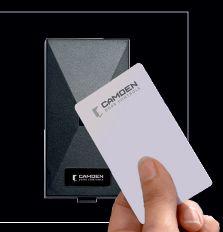

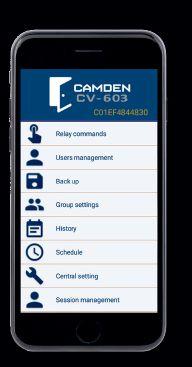
CV-603 series is an app-based (Apple® and Android®) wireless Bluetooth® managed access control system that is designed for ‘best in class’ security of doors and gates, with up to 2,000 users.


Axis Communications recently hosted its 14th annual press breakfast for security media — virtually, due to the pandemic — offering some insight into several new or upgraded technologies across its surveillance and access control portfolios.
For example, the company is planning to introduce version four of its Axis Camera Application Platform (ACAP) later this year. According to the company, ACAP 4 is designed to offer developers more opportunities to build solutions for Axis devices and will leverage open APIs. A press release states that version 4 supports most Axis hardware and “bridges the gap between edge and server or cloud. It also allows developers to use the edge for building faster, more scalable and more efficient solutions that fully utilize Axis devices.”
During the press event, Axis Communications vice-president, Americas, Fredrik Nilsson referred to the update as potentially “a game-changer in the area of video analytics and intelligence.”
In addition, the company introduced Axis Camera Station Secure Entry, a new capability included in the latest release of its Axis Camera Station video management software. The software provides what the company calls video-verified access control, linking door control logs with video recordings. The system is designed to work with Axis’s A1601 Network Door Controller

and Axis card readers, managing up to 128 doors per server and up to 10,000 cardholders.
“We’re still video first, but we’re listening to the customers’ feedback in integrating access control,” commented Nilsson in regards to the company’s access control ambitions.
Axis also demonstrated its new Live Privacy Shield, a camera technology that will mask human subjects that appear in surveillance by blurring their image or occluding them in a shadow.
Scott Dunn, Axis senior director of business development, solutions and services, showcased the technology in a remote “sports report” from Foxborough, Mass., home of the New England Patriots
— an appropriate setting since the technology may be useful for large venues looking to implement a privacy policy for public-facing cameras. (According to Axis, the privacy shield can be removed in the event of an incident investigation, and can be configured to limit access to the full recording.)
Nilsson provided an update on Axis’ body-worn camera devices, introduced last year, indicating that the technology has found a multitude of uses in addition to law enforcement. “We’ve had many successes in that space,” he said. “We’ve certainly seen a lot of examples... anything from applications in health care to using body-wearable in warehouses.”
Nilsson said the technology
The Zigbee Alliance recently announced an organizational rebrand to the Connectivity Standards Alliance (CSA).
Established almost two decades ago, the Alliance’s mission to date has been “to simplify and harmonize the IoT,” according to a statement announcing the rebrand.
“The Alliance’s technologies are built on solid foundations: openness principles, a common data model, and the expertise of member companies from across the industry.
With this, the Alliance is elevating its brand identity to better align with this role in shaping the future of the IoT by creating worldwide standards that impact the market.”
The Alliance comprises more than 350 member organizations and 3,000 member individuals. In 2020, more than 560 Zigbee technology devices were certified, up 30 per cent from the previous year. More than half a billion Zigbee chipsets have been sold; almost four billion are expected to ship by 2023.
has also been used in retail for curbside pick-ups during the pandemic as well as for campus security.
Axis has also launched Axis Case Insight in the past year, a cloud-based evidence management solution (on the Microsoft Azure platform) that integrates with its body-worn cameras. A new capability for the body camera is the ability to start recording as soon as it detects a wearer has fallen down or unholstered a weapon.
In a Q&A session following the product presentations, Nilsson directly addressed the Axis view of attending or participating in live, in-person events in the future.
“In general, we truly believe that [meetings] between people bring a totally different level of collaboration and trust. What we’ve done throughout the pandemic is maintained that trust and those relationships, but if we want to grow — and we’re a company that has growth ambitions — we have to be out there; we have to be live with existing customers and partners, and meeting new customers and partners.”
He added that Axis personnel have conducted some of their external meetings in building parking lots during the pandemic for safety reasons “but I believe many of the events will come back... because people crave that interaction.”
— Neil Sutton
“This year is historic for the Alliance as our growth and efforts flourish with the demand for smart home and building connectivity,” said Tobin Richardson, president and CEO of the Connectivity Standards Alliance, in a statement.
The Alliance said it will retain the Zigbee technology brand and continue to develop Zigbee technology. The organization also announced a second brand: Matter, formerly known as Project Connected Home over IP (CHIP).

By Virgil Reed

Consumers have more information at their fingertips than ever before — pay attention to their needs
SP&T News is celebrating its 25th anniversary this year. We’ve invited guest columnists to share their memories of the past 25 years of the Canadian security and alarm industry — how far we’ve come since 1996 and where the industry might be headed next.
What were you doing in 1996? I was dancing the Macarena, watching Seinfeld and sold computers at Future Shop. We had some really “powerful” technology back then: Windows 95, Pentium 133mhz processor, 14” CRT monitor, and a dial-up modem to send faxes and connect to this thing called the internet. All for about $3,000. Great deal, eh!
“Our opportunities skyrocketed and now we receive thousands of qualified leads a year.”
I joined ADT Security in 1998 as commercial sales representative and had no prior knowledge of the security industry. My first task was contacting customers to upgrade their alarms with EEPROM memory to the DSC PC1550. I also sold black and white CCTV systems (colour was a premium surcharge) that recorded onto VHS tapes and DOS-based access control systems.
There wasn’t a formal training program at the time and I’m thankful the experienced staff at ADT took the time to answer my never-ending questions. If I needed more information on a product, I read through a printed manual, or called the manufacturer’s rep or technical support. There was also a great magazine I read cover to cover: SP&T News! Congratulations on 25 years! In 2000, I went out on my own and launched Reed Security at our local Homeshow. Things were pretty slow in the beginning and we committed to a $15,000/year advertisement. What was that yellow book called again? Oh right… the Yellow Pages! We also purchased the Henderson’s Directories, which published a book with the names of homeowners as well as address, phone numbers and occupation.
Our weekly fax-blast to businesses generated a few opportunities. We tried a few months

of radio, but eventually pulled our spots due to high costs and lack of results. I distinctly remember the advertising rep letting me know “it’s really hard to measure and track the results, we need to make assumptions.”
After a few years in business, we created our very own low budget website (and it looked it, too). Instead of driving prospects to call us, we sent everybody to our website.
"All of these platforms allow small businesses to engage with existing clients, target new ones and scale up."
Our digital presence let prospects know who we were, what solutions we provided and why they should give us an opportunity. It also provided some legitimacy and allowed us to compete with much larger competitors.
Then came a game changer — Google Search, Adwords, Reviews and Analytics. A digital-savvy local security provider could affordably convert prospects, connect with clients and build brand loyalty. Our opportunities sky-rocketed and we now receive thousands of qualified leads a year. Today, I can tell you exactly who
our clients are and how they connect with us via Google Analytics.
Then came Facebook, YouTube, Twitter, Instagram, LinkedIn and MailChimp. All of these platforms allow small businesses to engage with existing clients, target new ones and scale up.
Twenty-five years ago, customers were acquired via door to door soliciting, advertising and word of mouth. The same applies today, but prospects and clients now have more power to influence buying decisions.
Google and social media allow your customers and employees to post comments and reviews. If you care about your clients and the solutions you provide, you’re awesome! But if you provide poor service, ignore reviews and make no effort to keep clients happy, you’re not! Would you deal with a company that has a twostar average review rating on Google?
My future predictions? Security companies that pay attention to the employee experience and customer experience, and use real-time data will continue to thrive. More baby boomers will retire and there will be many acquisition opportunities. Consumers will continue to love payment plans. Be prepared to adapt quickly.
Virgil
Reed is the founder and CEO of Reed Security (www.reedsecurity.com).

TBy Victor Harding
Selling a company can be a bumpy road, but with the right preparation you can smooth out the ride
here are almost no deals I have done over the last 12 years which have been silky smooth from beginning to end.
Selling your company is almost always a bumpy ride that will test your patience and commitment. But here are some things you can do to make the ride a little easier.
“Make sure you are selling for a good reason — something beyond just the money.”
First, make sure you are selling for a good reason — something beyond just the money, like a retirement or another business venture. Those who sell just for the money are almost always disappointed. In my best deals, the owner committed mentally and emotionally to something other than the purchase price.
Secondly, make sure you are really committed to sell, otherwise when the bumps come — and they will come — you may be deterred and decide to back away. The problem with doing this is you almost never do as well the second time around.
Third, have your “ducks in a row” in regards to your books and, if you are an alarm company, your monitored accounts before you sell. This means having three years of financial statements prepared by your outside accountant The last two years should show good financial results. If you are selling accounts, make sure you have signed contracts, your panels programmed to your lines (not directly to the station’s lines) and monitoring rates above $25/ month. It is amazing what a good impression having well-constructed financials showing good results can have on a buyer.
Pull a team together in advance and let them know you are selling. By team I mean, at a minimum, your accountant and your lawyer. The buyer will likely have a team of advisors on their side. You need your team and everybody’s input can be useful. Make sure the lawyer you are using has closed deals before.
Bite the bullet and hire a broker or intermediary to help you sell. But make sure the broker knows something about your industry and

has closed deals. Brokers know the process for selling small businesses, which you probably do not. They will do most of the work of selling your business while you continue to run it. They will provide a rough valuation if you don’t already have one.
Also, having a broker helps maintain confidentiality. Moreover, they can provide objectivity when you are not in tune with what a buyer is asking. And what many do not realize is that having a broker increases the chances of actually getting the deal closed in a shorter period of time, and almost always increases the selling price. Talk to someone who has used a broker and you will see why it is a good idea.
Next, get a proper valuation on your business. Security companies often have a significant amount of recurring monthly revenue which is valued more highly than regular installation or service revenue. Many Chartered Business Valuators undervalue RMR.
Be realistic about your expected purchase price. Most owners over-value their businesses. Small businesses are generally valued anywhere from three to five times their annual earnings. To get multiples in the six to eight times earnings, you have to be a $10-$20 million dollar company in terms of revenue with good margins and an attractive growth rate.
If you have all these pieces in place then you have the basics. From here, it is important to prepare yourself for the process.
Selling a business takes time — longer than
you think. I don’t think I have sold even the simplest of businesses in under four months. Several businesses have taken me 18 months to sell. Whether you are selling the business on your own or using the broker, think about spending well over 100 hours on the deal. I have spent more than 200 hours on many deals.
On balance, I suggest to owners of fire, guard and integration businesses that they should allow nine months to complete a sale. A sale of monitored accounts can be less.
Prepare yourself for bumps along the way. A buyer may not like something about your business or will want to dig into some aspect of it that will seem irrational to you at the time. Or your first sorties into the market may turn up lousy offers.
Some buyers will turn out to be tire kickers who are not seriously interested in buying at a fair price but rather looking for a big bargain. A good broker can spot them a mile away. You will need resilience to get to the finish line along with a good deal of patience.
Finally, don’t expect to get your purchase price paid all up front at the closing, particularly in these days with COVID still around and increased perceived risk to most buyers. Be prepared to take a hold back, an earn-out or some form of seller financing. Selling your company is a process. Prepare yourself in advance by taking the steps mentioned above.
Victor Harding is the principal of Harding Security Services (victor@hardingsecurity.ca).

TBy Colin Bodbyl
Don’t let surveillance cameras, or other devices, be a weak link on the network
he video surveillance industry has suffered from several high-profile data breaches in the last few years. While the data that was exposed through these breaches is of particular concern, learning from these events and understanding them can be key to preventing future occurrences. Cybersecurity is a complicated field and cannot be over simplified, but the following are three key threats facing the video surveillance industry today and some simple measure to prevent them.
“Even a simple user or employee error could result in a significant breach.”
Malware and viruses are the most well recognized threat to any computer system, and video surveillance products are no different. Anti-virus software can clash with video management software, making Windows-based recorders vulnerable when not configured properly. As such, some integrators avoid anti-virus altogether. To reduce the risk of malware attacks and viruses, integrators can leverage several common network practices to restrict the recorder’s exposure to external threats. Integrators can also focus on deploying Linux-based appliances, which are less vulnerable to viruses. Finally, if integrators are installing Windows-based recorders, they can follow the VMS provider’s instructions on how to configure an anti-virus software as to not negatively impact the VMS functionality.
Distributed Denial of Service (DDoS) attacks are less about data loss and more about bringing down a business or website. In DDoS attacks, hackers use thousands of unsecured devices to connect to a single network simultaneously. This overwhelms the target network and can bring down servers, websites or entire businesses.
DDoS attacks are typically used as a form of protest against a company or organization. Video surveillance systems are rarely on the receiving end of these attacks, but instead are leveraged to create the required army of attacking devices. Hackers typically take control of thousands

of IP cameras which they discover on the internet and access using default or otherwise simple passwords.
Once hackers have a large enough number of cameras under their control, they direct the cameras to send non-stop digital requests to the target’s website or server — ultimately overloading the target until they are able to block the requests. The easiest way for integrators to prevent their products from becoming participants in a DDoS attack is simply to remove any default credentials from the camera and ensure any new credentials use strong passwords.
Stolen credentials are by far the most common type of breach affecting the industry today. User credentials are stolen from a compromised device or other service, after which they are used to allow hackers access to user accounts. Depending on the level of access the credential reaches, hackers could potentially gain access to company-wide databases that store confidential employee or customer data.
While it sounds complicated to steal credentials, it is surprising how many times a breach begins with an employee or user openly sharing their credentials on non-secure or otherwise publicly accessible forums.
The biggest challenge with preventing sto-
len credential attacks is that it requires educating employees and customers about how to protect their own information. Probably the most effective method of preventing a stolen credentials breach is by using multi-factor authentication (sometimes called 2FA).
Multi-factor authentication requires users to provide a second layer of information after entering their initial password. This is usually a random code that is sent in real-time over SMS or through an authentication app to the user’s phone after they enter the initial password. Unfortunately, very few video surveillance products support multi-factor authentication, but it is likely something we will see more of soon.
The video surveillance industry is growing and the products it provides are gaining more mainstream attention. As this happens, these same products become more popular targets for malicious attacks. Cybersecurity is almost impossible to perfect, and no matter how secure your platform is, even a simple user or employee error could result in a significant breach. No company is immune to cyber-attacks, but taking some simple measures can significantly reduce exposure to them and ultimately better protect the industry’s customers and its reputation.
Colin Bodbyl is the chief technology officer of Stealth Monitoring (www.stealthmonitoring.com).
By Patrick Straw
We encourage new members to join us and help support the work we do for the Canadian security industry
Almost halfway through 2021 and it has been a very busy start for the Canadian Security Association. We recently completed our election process which occurs on a regular cycle to determine our Board of Directors and our Regional Councils. Our Board of Directors are all volunteers from across Canada and work with the staff to determine the direction of our organization and to assist in the process. A big thank-you to any Board or Committee members who are not returning. Your commitment to CANASA has been invaluable, especially considering the challenges we have faced over the past 15 months. We will be publishing the new Board and Council member’s names after our AGM on June 16. We always encourage our members to get involved in our various committees and councils. If you are interested in learning more about volunteering at CANASA, please contact me at pstraw@canasa.org.

CANASA is embarking on an ambitious membership drive to bring a more varied mix of security professionals into our association: security directors, IT security personnel, cybersecurity companies, guard companies, lock companies and government security professionals. We encourage our members to invite colleagues across various security businesses to contact us for more information on the benefits of membership.
Some great volunteer work by our education committee is getting us closer to the completion of the upgrade of the Alarm Technician Course offered by Centennial College. We are working on the final modules and much of the work has been passed on to the college for input into their software for final implementation. Conestoga College in Waterloo, Ont., is also completing the development of the Security
Technician Course which will be endorsed and fully supported by CANASA. We are very excited about this initiative to help feed the need for skilled technicians in this booming industry. Several companies have stepped up to assist in the procurement of both intellectual property and supplies for the course. As soon as we have a detailed timeline on the college taking registrations, we will publish that information.
On behalf of all CANASA members, we want to pay special tribute to all the first responders who have done an incredible job across Canada in the past year of COVID-19. This includes many in the security industry who have had to make significant changes to the way they get the job done to continue to protect Canadian families and businesses. We are all forever in your debt and want to acknowledge your efforts.
Patrick Straw is the executive director of CANASA (www.canasa.org).
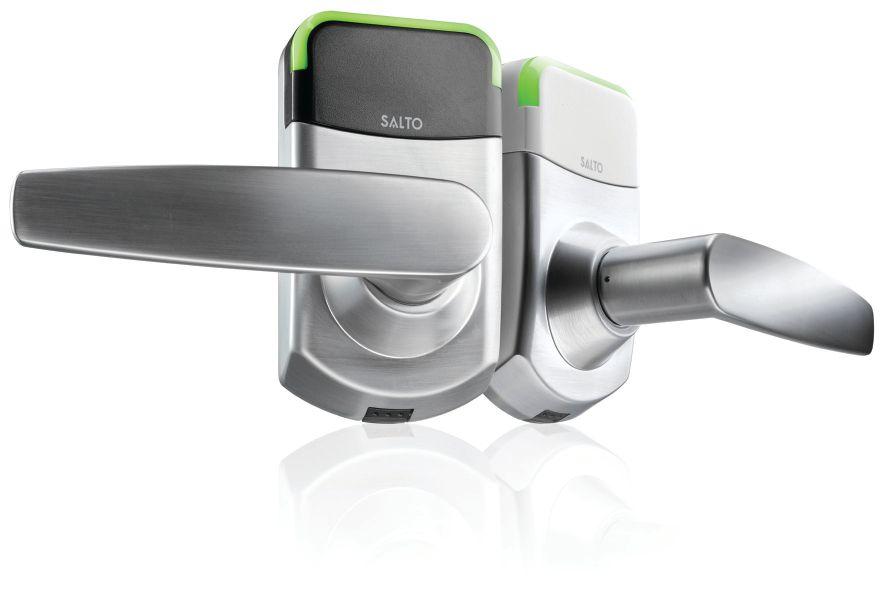
SALTO’s easy to install products, like the XS4 Mini, make it simple for locksmiths and security pros to upgrade and replace mechanical-key-operated locks with the latest in electronic access control. Learn more at saltosystems.ca

By Alanna Fairey
With electric vehicles (EVs) and fleets expected to be mandated in the coming years, security companies are already turning to electrification.
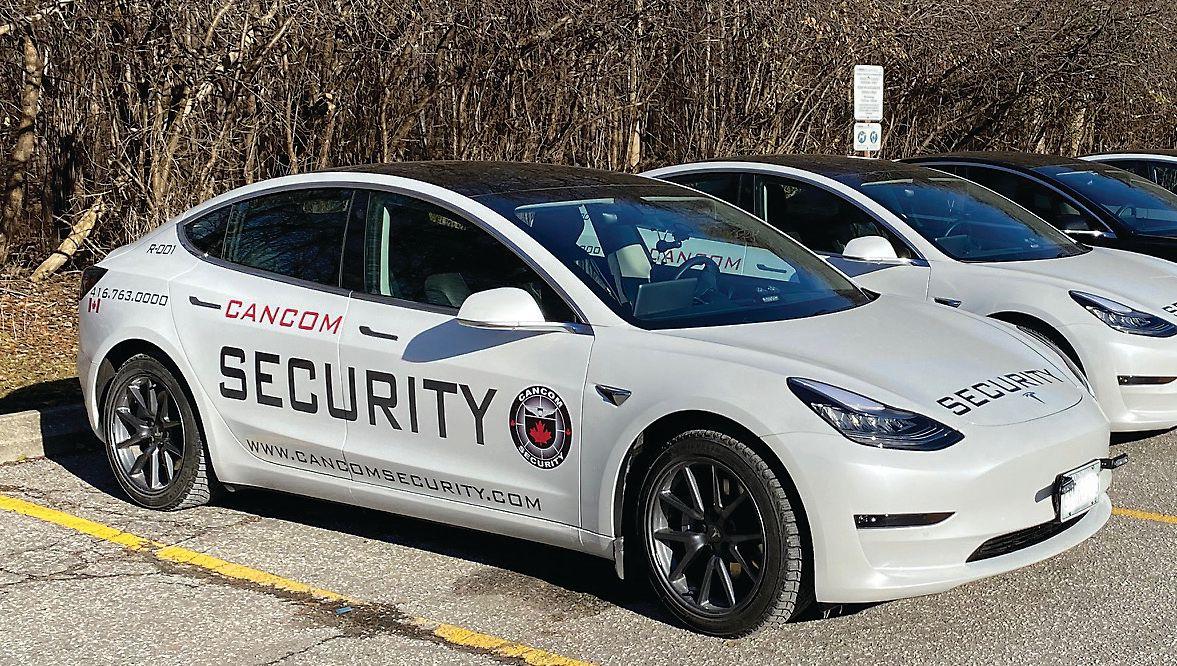
In the summer of 2020, Cancom Security Services made a fleet purchase specifically for the company’s alarm response and control services in the Greater Toronto Area (GTA). Paul Baziuk, Cancom’s vice-president of sales, shares that the fleet was a necessary purchase.
“We had some gas vehicles that were high mileage, and they were getting expensive to repair and keep on the road,” Baziuk says. “Our CEO made a tough decision to invest the capital in four Tesla Model 3s last June, and we put
those on the road immediately.
“Hand-in-hand with that we installed three Tesla high power wall chargers at our office, so that during downtimes and shift changes, the cars could just charge.”
Baziuk adds that if the company needs faster charging, their drivers can go to one of the Tesla superchargers that are scattered across Toronto, which includes the Cadillac Fairview properties
“This appeals to clients and this also satisfies a social contract.”
— George Forward, Commissionaires Newfoundland and Labrador
“where we can add miles fairly quickly –– you can charge 80 per cent of the battery’s capacity at the superchargers within 20 minutes.”
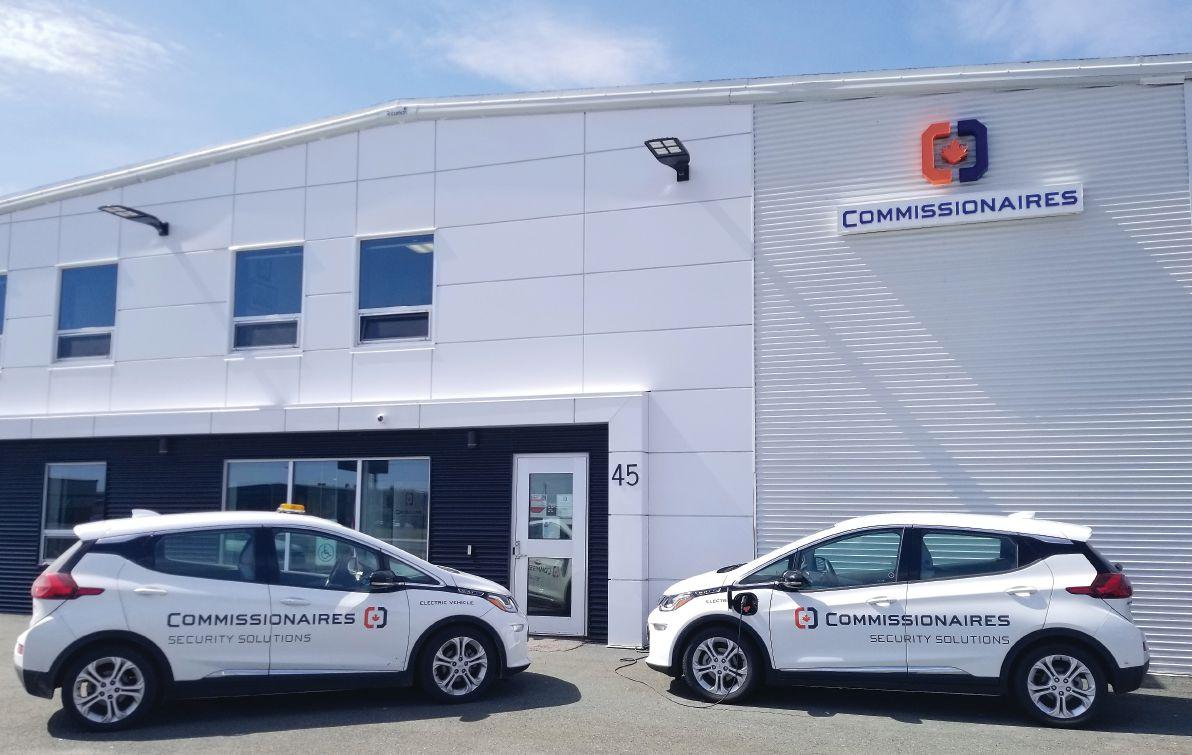
Commissionaires Newfoundland and Labrador purchased its first Chevy Bolt EV back in 2019. According to CEO George Forward, the purchase was done to not only demonstrate their ISO 14001 commitments, but also to make a statement.
“Newfoundland is an oil producing region with a long tradition of extracting raw resources for economic gain, but we are also populated by a people who, more than most, value their environment,” Forward says.
“We wanted to tackle this dichotomy of values by showcasing to our clients and the community that we do what we have to do, but we can do it cleaner.”
Security companies can reap the benefits of transitioning to electric fleets from a cost and efficiency standpoint.

Amanda Kung, research analyst, Parks Associates, says that the growing EV market, rise in consumer interest in sustainability, and the U.S. Department of Energy’s investments to reduce carbon emissions, are all topics of consideration for security companies that are considering a transition to their patrol fleets.
“The addition of EVs can help reduce costs with less maintenance and no fuel expenses and attain corporate sustainability goals,” Kung explained in an emailed statement.
“Although companies may be concerned with long distance usage, current average EV ranges are good for local usage in well-defined areas, such as neighborhood security patrol units.”
Halifax-headquartered distributor Graybar Canada recently partnered with Campbell, Calif.-based EV infrastructure company ChargePoint Inc. to provide EV solutions for businesses.
Bryan Jones, business development manager, intelligent building solutions, Graybar Canada, says that interest in EV solutions has been high amongst customers, whether they work in security or not.
“I’m fielding somewhere between two to three inquiries per day on charging stations, which tells me that there’s interest in providing these kinds of solutions for their employees,” Jones says. “The first year of offering, we sold $10,000 worth of EV related equipment. Last year we sold a million, and this year we’re already on track for two million.”
Prior to joining Graybar, Jones had his own
security business with 78 technicians on the road. Jones says that whenever his technicians would come to him regarding issues with their gas vehicles, it would cost money to do the repairs and ultimately would result in him losing time on projects.
For this reason, Jones feels that security companies would benefit from investing in EV fleets.
“Technicians rely on their service vehicles, and so their business is run out of their trucks,” Jones explains. “If you have a truck off the road, it’s downtime for your project, its downtime for your technician, and typically as a security tech-
nician, you’re not going to one location, you’re probably going to three or four.”
Jones adds that when security companies invest in electric fleets “those costs are gone; you no longer have to account for people’s per kilometer and having them keep a log for CRA…it’s a cost that is effectively eliminated.”
With 18 cars in their fleet in Toronto, Baziuk shares that Cancom’s decision to invest in the Tesla Model 3s was ultimately because the company wanted lower operating costs, which he describes as being the “No. 1” positive result since making the electric switch.
“If you removed the gas expense alone,
“Although companies may be concerned with long distance usage, current average EV ranges are good for local usage in well-defined areas.”
—Amanda Kung, ParksAssociates
which is huge in itself, that’s pretty significant. Then you remove the fact that the vehicle no longer needs oil changes, that’s also significant. And then you look at the other things: it has no exhaust and the brake system lasts longer because of regenerative braking these cars when they slow down. Those are some pretty, pretty significant things. We did a lot of research.”
While Forward agrees with Baziuk that the switch to electrification has been economically smart and sustainable for Commissionaires, he notes, however, that EVs are only feasible in the greater St. John’s area.
“Charging stations and their scarcity are such that outside of the Avalon Peninsula and certainly away from the Trans-Canada Highway, there are few options to quickly charge to ensure a workable turnaround to get the vehicle back on patrol,” Forward explains. “Certainly, this will be addressed in time as more and more charging stations are established but for now, we are constrained by a lack of infrastructure.”
Forward also adds that the other obstacles Commissionaires is facing with full fleet electrification are options and cold weather dependability.
Currently, there are few options on the market in Newfoundland other than e-sedans in certain sites, because of role, function and road conditions, Forward explains. “We need high-clearance vehicles with a towing capability. This means a large pick-up and while hybrids are emerging, we may have a wait before we see electric pickups,” Forward says.
“We have sites in Labrador and batteries do not fare well in minus 40. Again, that is changing so as time goes on, we hope to get access to more robust, dependable and powerful EVs, but in the meantime, we are bound to the internal combustion engine for a while yet.”
Back in April, Prime Minister Justin Trudeau promised to slash Canada’s greenhouse gas emissions by 40 to 45 per cent over the next nine years. Similarly, U.S. President Joe Biden recently announced his commitment to electrification in 2030.
With this push for automotive manufacturers to make the switch to electric vehicles, it seems all but inevitable that more and more security companies will see their fleets become electric in the near future.
Baziuk shares that Cancom has received such positive feedback from staff and clients about their Tesla Model 3s that the company is considering more purchases in the future to replace the remaining gas cars that remain in their fleet.
“We will make that change over the next 12 to 24 months because of the cap costs on the specific Tesla Model 3,” Baziuk says. “There’s other electric vehicles out there but the Model 3 we will standardize on for Ontario, and out West, which we have expanded to. And it just makes sense, because of where the market’s going, the operating cost reduction.”
Concludes Baziuk: “We like the vehicle –– we’re happy with it. We’ve had zero issues, and we are just over 40,000 kilometres on each of those vehicles, so far.”
Forward agrees that the industry will continue to move towards electrification, especially as the vehicles evolve, and provide better and cheaper options.
“Running vehicle fleets is exorbitantly expensive –– [having electric fleets] saves money. This appeals to clients and this also satisfies a social contract. And I think we’re not going to have a choice, as this will eventually be legislative,” Forward concludes. “It’s a no-brainer.”



Clever building systems and good integration helped some businesses better manage the pandemic. The future may be more promising as a result
By Neil Sutton
The way buildings and office spaces have been used in the last year has been very much tied to the evolving pandemic situation.
Offices closed or reopened or closed again depending on jurisdictional health requirements and company policies. With the end of the pandemic possibly in sight, these facilities may be able to start planning for more permanent employee access, while still factoring in lingering work-from-home policies for some of their workers.
Throughout the COVID-19 saga, smart building technologies have helped to carry building operators forward.
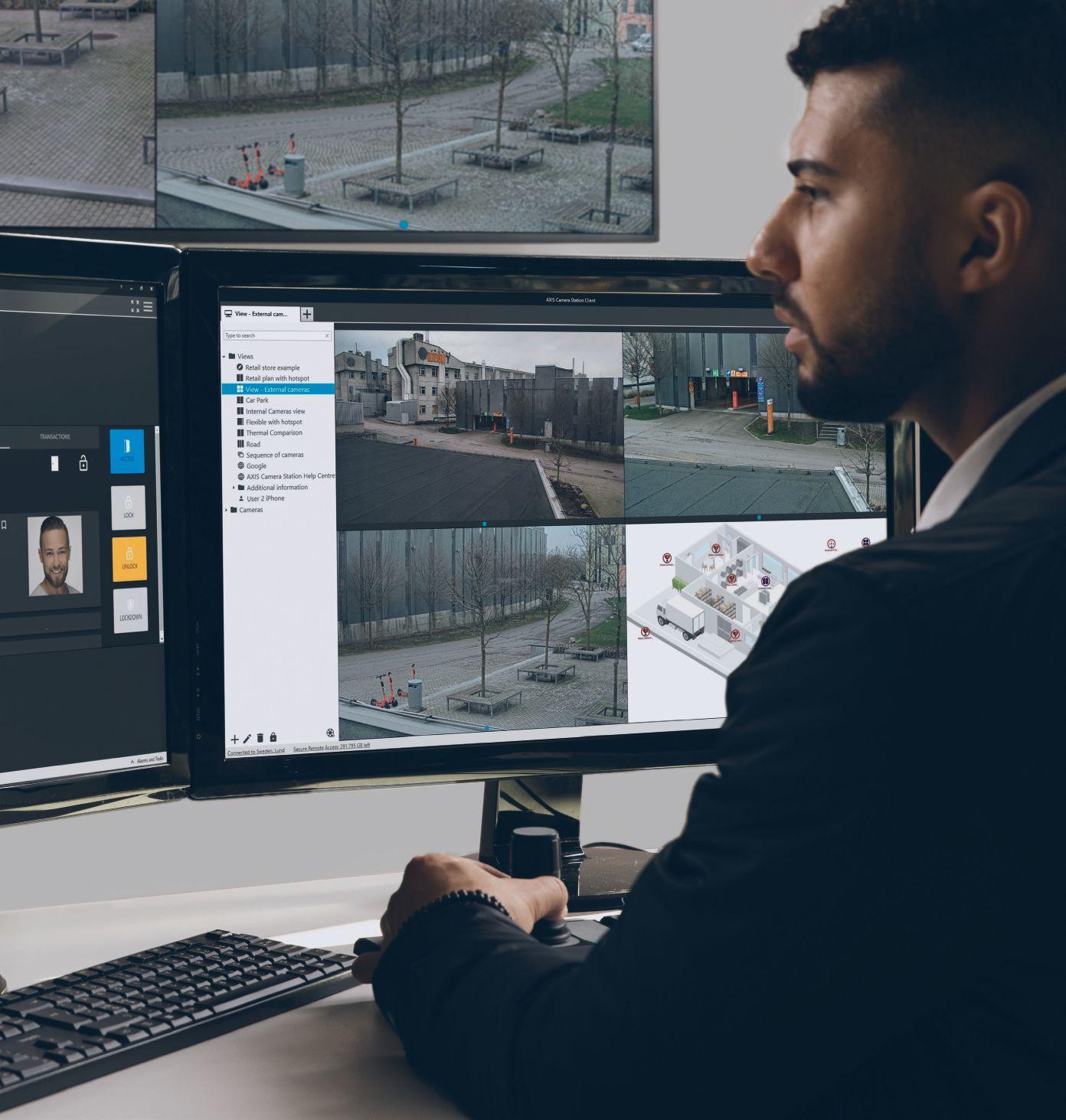
Tighter and more efficient integration of surveillance, access control, intrusion, lighting, parking and environmental controls allows those
systems to leverage each other’s strengths while generating useful data for building owners.
“We’re definitely seeing more integration between physical security systems and wider business systems,” explains Owen Kell, senior IoT research associate, Memoori. “In terms of IoT and how it fits into the world of smart buildings, it’s through these integrations with previously siloed data sets that you start to get ‘more than the sum of its parts’ value generation.”
The security ecosystem — specifically video, access control and intrusion — was already coming together quite successfully, says Tom Mechler, regional marketing manager, intrusion
and access control, Bosch Security Systems.
“An alarm system or intrusion system is very good at reporting events. In the case of video surveillance, we’re seeing the improvement of video content analysis,” he says.
“By integrating an intrusion system with a surveillance system, you get that ability to report these events. An access control system can tell you where people are, and who’s going where, and should they be there? The intrusion system can tell the other two systems, ‘I’m armed, so nobody should be here.’”
Adds Paul Garms, director of regional marketing, video systems, Bosch: “These things are all coming together where you’ve got very powerful sensors generating vast amounts of data. There’s got to be software behind this that’s then triggering actions like alarms or, even better, giving you some predictive ability.”
“We’re definitely seeing more integration between physical security systems and wider business systems.”
— Owen Kell, Memoori

Knowing where people are in a building generates useful information in terms of optimizing HVAC and energy usage. That type of information is also tailormade for implementing a building occupancy policy during COVID-19, when a building manager really needs to know how many people are inside a facility at any given time.
The ability to access this data and manage systems from a remote location also means a building operator can implement security policies at a distance. “Remote access is really important,” says Mechler. A building that can be managed remotely needs fewer people on-site to manage it.
During the pandemic, this is particularly advantageous. And while these systems weren’t necessarily built with a pandemic lockdown in mind, in many cases they were “already flexible enough to handle these new requirements. There’s going to less people [in the office] at certain times, and there’s going to be more flexible hours, and we’re going to be using our buildings differently,” he says.
Knowing who is in a building and at what time can help facilities plan other services,
“There’s a big opportunity out there for integrators and manufacturers like us.”
— Paul Garms, Bosch Security Systems
such as cleaning or catering, more effectively, adds Kell. “It’s also through more partnerships, more open APIs, and data-sharing between previously siloed building systems that’s enabling this kind of thing to happen,” he says.
As much as building technology can be integrated successfully to realize efficiencies inside a facility, hosting some systems, like access control, in the cloud creates a different set of dynamics.
In some ways, the cloud has changed the relationship between the systems integrator and the customer, says Jason Ouellette, director of technology and business development, Johnson Controls. In some cases that customer may have a more direct relationship with a vendor as the host of a solution.
“Adapting to those changes and how integrations work is, I think, also vitally important,” says Ouellette.
“Some of the hosted side of it becomes easier for the integrator. They get to really focus more on the field deployment, potentially offering services for the managed aspect of things over the hosted, because that part’s resolved. It allows them to differentiate themselves and provide services in a different way.”
Systems integrators are traditionally very strong on the operational technology (OT) side but may have some catching up to do on the information technology (IT) side, argues Kell.
Physical security systems like surveillance cameras, for example, must be installed with the network — and cybersecurity — in mind. “It’s an understanding around cybersecurity and the implications of adding new nodes to the network and making sure that security policies are maintained across the organization. Those are the two main areas that the OT guys need to skill up on,” he says.
But it cuts both ways: those more skilled in IT will still need to step up their game on the operational side. “It’s the melding of those two worlds that’s the key challenge.”
With vaccinations on the rise and COVID numbers declining in most places, a return to “normal” seems possible soon. But whatever “normal” is, it’s not likely to be exactly the same as life pre-pandemic.
“We will get back to where we’re having meetings, working in teams and we’re solving problems on a whiteboard together. Those things are going to happen. But we won’t get back to where everybody’s in an office 40 or 50 hours a week and then they go home. There will be some
change,” suggests Mechler. But the flexibility of building technology — which in many cases was put through some major trials during the pandemic — can allow that to happen more easily.
Pandemic-readiness, i.e. the ability to move from “normal” to a potential lockdown or other emergency measure with minimal disruption, could actually be a key differentiator for a building operator or tenant in the future, says Ouellette.
“If I’m offering space in a building for a company…I want to be able to put people at ease that, when you’re here, you’re going to be safe,” he says. “Those are going to be ways that you can now leverage as a competitive advantage to attracting talent and doing business.”
Some security technology has become “supercharged” as a direct result of the pandemic, says Kell — particularly contactless and biometric access control, along with mobile access and apps that can integrate a variety of different building services. Those are likely to continue to have an impact long after we pack away our masks and worry less about social distancing.
But smart building integration, particularly complex integration that engages multiple systems, is still in its infancy.
“I think there is a lot of that going on, but I think it’s early days. I would anticipate as things move forward, you’re going to see a much deeper level of integration and improvement on its capabilities,” says Ouellette.
Adds Kell: “There’s so many diverging factors influencing this whole thing. Overall, the digitization of building assets and the value to be derived from the IoT in smart buildings is still in the very early stages.”
Garms agrees. “There’s a ways to go here, but I think we’re on that path. It’s recognized that there’s a big opportunity out there for integrators and manufacturers like us. A lot of technology that’s making that possible is cloud connectivity and different sensors that we can bring together.”
The future of work is unwritten, and how or where people do their jobs a year from now, or 10 years from now, is difficult to predict.
There are some who may crave a return to the workplace and closer interaction with their co-workers. And others who will cling to the home office where the commute is a staircase and the nearest cubicle mate is the family dog.
Likely, we’ll see a mix of these approaches and some flexibility between the two. If smart building technology has in any way eased these transitions during the pandemic, its future should be interesting to watch and integrators who stay on top of the trends may reap the rewards.


By Neil Sutton
Fire Monitoring of Canada (FMC) is a St. Catharines, Ont.-based business with offices across the province serving customers across Canada.
FMC operates a ULC-listed monitoring facility and offers a range of services including fire and security monitoring, fire inspections and systems integration.
SP&T recently spoke with Kevin Allison, FMC’s president, about the company’s experiences during the pandemic, the lessons it can take forward and how the security industry overall has managed to survive, and in some cases thrive, during a difficult 15 months.
SP&T News: What has been your experience of the pandemic as a security service provider?
Kevin Allison: Our industry is luckier than most — we have been deemed essential. I think customers recognize that. From our perspective, during the first part of the lockdown, a year ago versus where we are now… it was a lot different.
There was a lot of uncertainty with the pandemic, what we can and can’t do, the lack of PPE, things like that really impacted people’s ability to work and our ability to get stuff done.
In 2020, a lot of our installation work was either put on hold or shut down. A lot of suppliers had problems getting product, so we had to really maneuver our schedule a lot to build around those projects. It allowed us to catch up on our service queue during that time.
Once we came out of that first lockdown around May, a lot of our customers became more PPE equipped and more adept with social distancing and mask-wearing — they became more comfortable with us doing work throughout the various forms of lockdowns that we’ve gone through.
“We work with customers to make their systems work for them.”
We’ve been able to outfit our own people with PPE and get testing done that allows us to maintain safe working environments. I think the other thing that we realized during that first lockdown was that it was really a chance for us to reset a little bit and review our processes — how we were going about completing installations and service calls and inspections. And how we’re communicating internally to our own people and externally to our customers. [The time] allowed us to refine our communication to customers and improve on what we were doing. I think now we’re seeing the benefit. [It was] half a step back to take two steps forward.
Obviously there’s room for improvement. It’s a ongoing, refining process all the time. Hopefully when we emerge from [the pandemic] we can come out with a better set of processes in place.
SP&T: FMC acquired Bulldog Fire & Security about three years ago. How has that integration been for you?
KA: I think with any acquisition, you always have challenges, but overall, it’s been positive for us. It’s been great working with the people at Bulldog. We operate as one organization now. A large majority of our sales now are turning into those integration opportunities because we have the experience with it.
It’s not just customers calling us and saying, “Hey I want an integrated security system,” it’s taking an opportunity, whether it’s fire monitoring or cameras or card access systems, and having our sales people work in a consultative way with our customers to build on those ideas that the customer might have. It’s a consultative approach; it’s not “This is what I have,” it’s “What are your
needs?” We work with customers to make their systems work for them.
SP&T: Have you been able to continue installing systems while in some cases buildings might be empty during the pandemic?
KA: We have had those opportunities present themselves. If customers have fewer people in the building, because a lot people are working from home, they recognize [they] can move forward with an idea. I think people have recognized that if they don’t have a lot of people [in the building], they do need to secure the space.
SP&T: What are your greatest recurring revenue opportunities today?
KA: With acquiring Bulldog, part of their business was the fire alarm business — installations, upgrades and annual inspections. It’s a natural fit for us and a growth opportunity. Certified fire alarm monitoring continues to be a growth opportunity for us. We can provide a faster response time to various communities throughout the province.
We’re really looking towards building more RMR out of the systems we provide, whether it’s something like Hattrix [hosted access control], Alarm.com…. there are RMR opportunities with cameras, whether that’s health monitoring, environmental monitoring and things like that. Particularly when people aren’t in the building everyday, finding those opportunities to [remind customers] that we can provide those services for you. You can building recurring revenue growth but also help the customers at the same time. Fully integrated systems is an area where we really want to grow, and build more RMR opportunities from those.

SP&T: Are there any lessons you can take away from the last year and apply to the future?
KA: We couldn’t have done what we’re doing now without our people. They have been fantastic in terms of adapting.
We’ve had to make a lot of adaptations to how we work and we how operate. I definitely appreciate all our people and their ability to really adapt to a really difficult situation.
We were pretty lucky in that many years ago we transitioned a ton of what we do to digital. Our technicians don’t use paper in the field, our sales people are able to work remotely — we’re able to do a little more internal integration, whether that is our service and sales departments, so they can work together remotely.
Several years ago, we made that transition. That’s one area that I think [the security industry] could work on.
Even with us, there’s still areas for us to improve. The ability for our technicians to work independently with accountability so they’re not reliant on coming into the shop every day [unless] there’s a need for them to pick up parts for a job. They’ve had to work a little bit more remotely than they’ve had to [previously].
That involves working a little bit more with our suppliers, and more communication back and forth to make sure we’re being as efficient as possible.
Also [communicating] more with customers and what they can provide to us ahead of time, so there isn’t as much on-site coordination. That level of coordination so you make everything as seamless as possible… working with the customer and having good communication so they understand what they need to provide and what we’re going to provide.
Schneider Electric Square D Devices are available in two aesthetics. The X Series switches offer interchangeable face covers, providing flexibility to adapt to any interior décor without the need to access the wiring, while the connectivity features provide personalization and help save energy. The XD Series consists of a premium range of modern cover plates that mount easily on X Series switches and receptacles. The cover plates snap onto the X Series device allowing homeowners to update their look and colour. Square D Wiring Devices offer connectivity through Wi-Fi or z-wave, allowing users to control their lights remotely using the Wiser Home app. www.se.com/ca
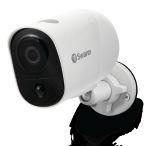
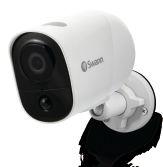
The Xtreem Security Camera is 100 per cent wireless and can mounted and set up anywhere indoors or outdoors. With a battery life that lasts up to six months, the camera comes with features including 1080p full HD video, two-way talk to greet guests or warn off intruders, Swann’s True Detect heat and motion-sensing technology, and a weatherproof design. Swann has also announced a 100-day free trial period of the Secure+ Service Plans, which includes up to 60 days of cloud storage, more alerts, vehicle and pet detection, extended warranty and more. www.swann.com
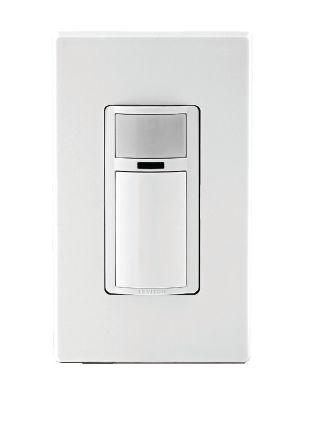
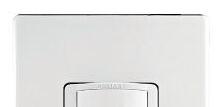
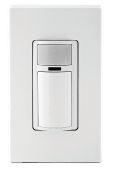
Leviton’s line of Decora Motion Sensors are designed to provide users optimal management of lighting and motor loads with enhanced detection functionality for accurate switching. The new occupancy and vacancy sensors offer flexible single pole or 3-way installation options, wiring with or without a neutral conductor, and a slim profile for easy installation. The sensors use passive infrared (PIR) detection to monitor a room for occupancy through a segmented lens. www.leviton.com/sensors

• 50% discount on Alarm Technician Course (ATC)
• Educational resources
• Discounts on business products and services
• Free contract templates for all provinces
• Discount on RBQ and BSP bonds
• Monitoring Station resources
• Networking/golf events
• Exhibitor discounts at Security Canada
• Advocates for members and the industry

The Model 523RX Security Shutter is a UL-325 listed door and operator system for securing exterior access to residential properties. The Model 523RX Security Shutter offers an aesthetically pleasing security system due to its extruded aluminum curtain and compact and visually appealing design that comes in a variety of finish and slat options. The security shutter door is available up to 16’ high x 12’ wide and has a two year limited warranty on its parts, components and finish. For additional security, cylinder locking options are also available. www.wayne-dalton.com

1 OSDP is a real global standard approved by the Security Industry Association (SIA) and International Electrotechnical Commission (IEC), open to use by any manufacturer.

2 OSDP provides a guideline for interoperability among various companies’ access control and security products, such as card readers and door controllers.

3 OSDP offers the option of encrypted communications between reader and door controller, independent of any encryption between credential and reader.

4 OSDP is built on the RS-485 serial transmission standard, needing just four conductors.



7 OSDP is more cyber secure than the most common access control communications protocol.

8 OSDP provides secure communications by specifying FIPS-197 encryption (AES).
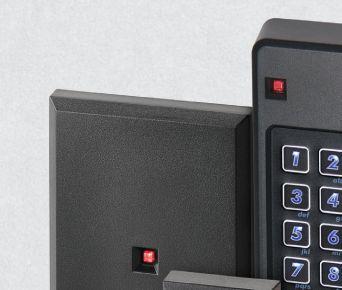
5 OSDP offers point-to-point and multi-drop topologies.

6 OSDP provides a true bidirectional protocol, addressing business requirements for secured and confidential authenticated messaging.




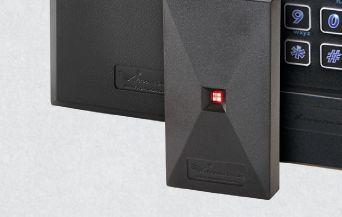

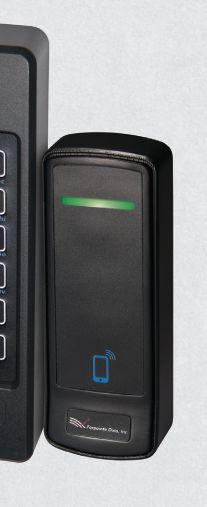

9 SIA provides a guide to find and explore verified OSDP products that meet its standards.
10 Farpointe Data is honored to be among the first three manufacturers to have earned the SIA’s new OSDP Verified mark on its mobile, contactless smartcard and proximity solutions. Plus, these readers are fully potted and IP67-rated!
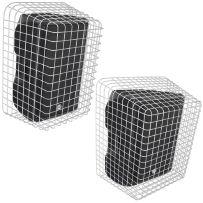
STI’s heavy-duty 9-gauge Speaker Guards are constructed with corrosion resistant polyester coating and are suggested for areas where abuse is severe or it is imperative speakers continue to operate. The cages protect speakers and other large devices against theft, vandalism and damage. Brackets, screws and anchors are provided. Several additional wire guard models and sizes are available for smoke detectors, motion detectors, emergency lights, clocks, cameras and more. www.sti-usa.com
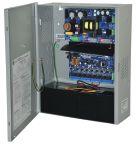
Altronix has launched an enhanced line of eFlow power supply/charger kits that provide 12 and 24VDC simultaneously for locking devices and peripherals. They are equipped with fused, or PTC protected outputs that are individually selectable to provide necessary power for a wide range of access control panels, door locks, ancillary devices and more. Models also feature bi-colour LEDs for instant visual voltage verification and embedded LINQ network power management technology. The new eFlow power supply/ charger kits provide selectable 5VDC, 12VDC and 24VDC outputs. www.altronix.com
Iris ID
SAFR version 3.4 introduces new passive liveness detection and anti-spoofing features, for both masked and unmasked faces. SAFR’s AI-powered liveness detection can quickly (within 0.3 seconds) and accurately (95.27% True Positive Rate) verify that a real, live person is in front of any standard RTSP or USB camera, and not a photo or video clip. SAFR now provides SMS alerting functionality for Windows customers and integrated out-ofthe-box for cloud customers. www.safr.com/liveness

Iris ID announced Information Controls Inc. has integrated its TimeTerminal time clock app to work with the IrisTime iT100, Iris ID’s customizable and contactless time and attendance platform. TimeTerminal’s cloudbased software creates a wide variety of employee functions and features for the iT100, including customizable attestation questions, daily wage advancements, department transfers and timecard review. Using its dual biometric iris and face recognition reader, the iT100 provides authentication of employees standing up to two feet away. www.irisid.com



























Seamlessly
VEHICLE DIAGNOSTICS
Avoid
FAMILY DRIVING
Get



VEHICLE SECURITY
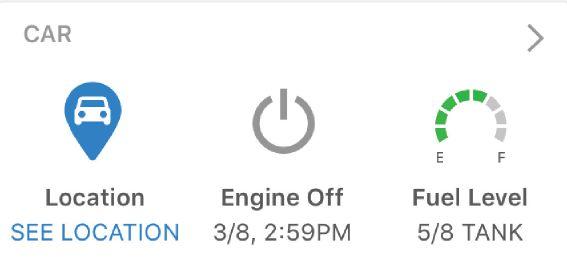
Track vehicle location 24/7 and receive unexpected movement alerts
Tyco Kantech
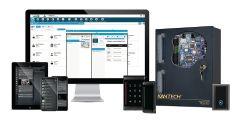
Tyco Kantech EntraPass security management software version 8.30 features additional support for Tyco DSC PowerSeries intrusion alarm panels, including enhanced support for EntraPass web macOS functionality, cybersecurity updates and other optimizations. Aditional support for the Tyco DSC PowerSeries alarm panel family includes a fully functional virtual keypad, with the same functions, navigations and emergency keys as the physical Tyco DSC intrusion alarm panels. This enables system operators to perform intrusion functions remotely from an EntraPass workstation. www.kantech.com
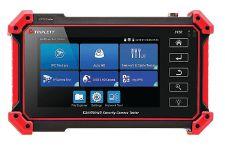
The 8150 CamView5 IP Pro is a high-resolution, all-in-one security camera tester with Wi-Fi hotspot. The CamView5 IP Pro is designed for the installation and maintenance of IP cameras, analogue cameras, TVI, CVI, and AHD cameras, as well as for testing 4K H.264 /H.265 video. The CamView5 features HDMI output and a built-in WiFi hotspot for easy connectivity with Wi-Fi-connected cameras. With its combination of a 5” touch screen and key buttons, the CamView5 IP Pro is user-friendly. The CamView5 unit supports ONVIF PTZ and analogue PTZ control and is compatible with more than 30 protocols. www.triplett.com
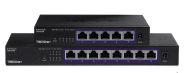
The 8-Port Unmanaged 2.5G Switch (TEG-S380) and the 5-Port Unmanaged 2.5G Switch (TEG-S350) are the latest additions to TRENDnet’s Multi-Gigabit Networking Solutions family. Both switches include 2.5GBASE-T RJ-45 ports, which allow users to achieve up to 2.5Gbps over existing Cat5e (or better) cabling. These multi-gigabit switches feature a durable metal housing, as well as a fanless design. For installation flexibility, the 2.5G switches are constructed to be mounted on the wall or placed on a desktop. These TRENDnet switches are IEEE 802.3bz compliant. www.trendnet.com
Dahua Technology
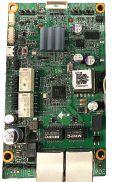
TOA Canada has developed the N-SP80SB, a SIP compliant hands-free Voice over IP (VoIP) PCB board. The primary feature being the capability to transform already mounted or to be installed analogue speakers into network compatible devices. Utilizing standard SIP protocols, the board can integrate with external SIP compatible systems through a SIP server and Peer-to-Peer configuration when a server is not present. Achieve installation by mounting the SIP board behind the speaker. TOA Canada’s SIP board is compatible with major audio codecs and has a built in Acoustic Echo Canceller (AEC). www.toacanada.com
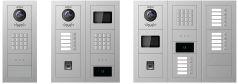
The Dahua 2-Wire IP Video Intercom System allows tenants, property managers, and owners to manage keyless entry and visually communicate in real time with visitors. Each outdoor station includes a 2MP camera with up to 1080p resolution, and IR operation with a wide vertical and horizontal field of view. The non-polarized 2-wire cabling system with bus-based cascading technology improves cable utilization rate, reducing power supply wiring. This new system also supports standard Ethernet for flexibility if 2-wire is not available. Dahua Intercom devices are compatible with SIP 2.0 for Internet conferencing, telephony, event notification, and instant messaging. us.dahuasecurity.com

Delta Scientific announces the successful testing of its Model DSC635, a single shallow foundation bollard design that stops and destroys a 15,000 (6.804 kg) pound test truck with less than two feet (0.6 m) of static penetration and 6.14 feet (1.87 m) of dynamic penetration. The simulated bomb load remained intact and contained on the truck bed. The test vehicle was traveling over 80 kph. The truck was stopped and completely disabled. The DSC635 bollard has a height of 44 inches (111 cm) and a diameter of 15.75 inches (40 cm) with a cover. Delta’s bollards can be furnished with an array of decorative covers. www.deltascientific.com
Hanwha Techwin
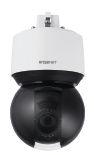
Hanwha Techwin has expanded and updated its line-up of PTZ cameras to include six new models. The cameras are available in 4K/6MP/2MP resolutions with 25x/40x optical zoom ranges to fit any use case. Featuring the Wisenet 7 chipset, the new models include three IR models (XNP-9250R, XNP8250R, XNP-6400R) and three non-IR models (XNP-9250, XNP-8250, XNP-6400). The new PTZ Plus cameras are 65% lighter than conventional PTZ cameras, according to the company, and include a re-designed twist-lock mounting feature.
www.hanwhasecurity.com
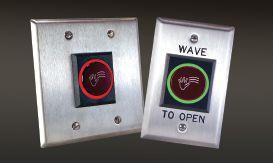
Dortronics’ 5278 Touchless Proximity Switch utilizes optical infrared technology, and the imbedded sensors pick up motion within a 4” range. A simple wave of the hand activates the switch. No hand contact is required. The illuminated LED ring allows for visibility under low light conditions. A red LED signifies standby mode and turns green when activated. The company’s 6612 Request to Exit Motion Sensing Door Release offers fast, accurate detection with easy field adjustments, plus range and sensitivity controls. The slim design allows mounting of the unit above any door. www.dortronics.com




























































































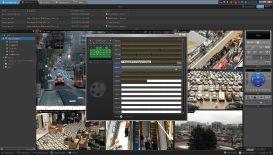
Genetec
Security Center v 5.10 allows more system components to run in the cloud, reducing the gap between cloud and on-premises security systems. Taking a step further towards unified, enterprise Video-Surveillance-as-a-Service (VSaaS) the new version of Security Center Omnicast enables the seamless use of tiered cloud and on-premises storage to manage short- and long-term video archives. Sipelia Communications Management, the module that enables SIP-based communications, has also been enhanced to offer support for cloud-based deployment.
www.genetec.com
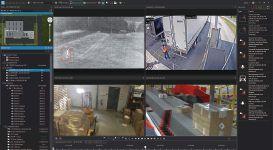
Senstar
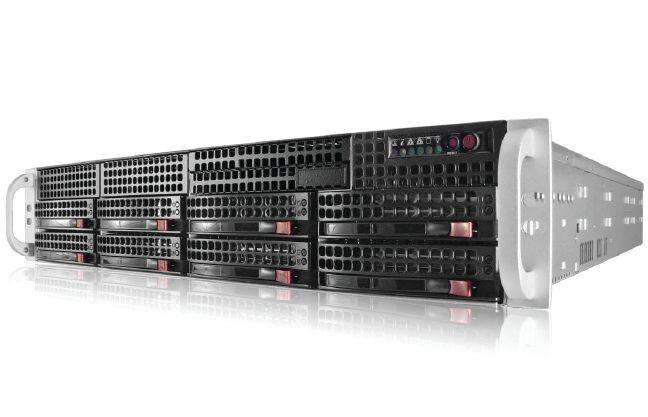
Senstar Symphony Common Operating Platform with sensor fusion engine is a modular solution. In addition to being an open, scalable video management system, it includes access control and perimeter intrusion detection modules. The modular design of the platform allows each function — video management, video analytics, security management, access control, and perimeter intrusion detection — to be used on its own and to coexist with third-party systems. The same Senstar Symphony software runs on all servers, making it simple to expand computing resources by adding additional hardware.
www.senstar.com
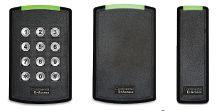
E-Access Readers for Continental’s E-Access Embedded Access Control line feature fast transaction times (under a second), Wiegand and OSDP support, automated credential issuance and no-touch Bluetooth mobile credentials. Several models are available for standard and mullion applications, and also with digital keypad. E-Access is Continental’s self-contained embedded solution, requiring no software to load, and is scalable to 256 doors. It offers hybrid access control in a cloud-based system, with the advantages of an on-premise access. www.cicaccess.com
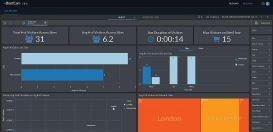
BriefCam
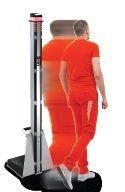
Cellsense Ultra with Xact ID intelligent detection technology features software algorithms and machine learning to boost all-around detection performance while introducing data collection, reporting, and systems integration. Cellsense Ultra offers its users Xact ID, an intelligent detection platform underpinning the software algorithms, machine learning, and sensor design. The technology also features zone indication with LED light indicators to improve secondary screening efficiency, improved mitigation of environmental interference, and data collection and reporting. www.metrasens.com
Johnson Controls has announced the introduction of eight additions to its Tyco Illustra Flex camera series. With enhanced image processing, improved low-light capability and secure boot protection against cyber-attacks, the new NDAA compliant Illustra Flex Gen3 cameras are designed to provide high performance, cost-effective solutions. Illustra Flex Gen3 cameras provide a choice of bullet, indoor mini-dome, outdoor mini-dome and compact camera formats. The new 3MP models will supersede existing Gen2 3-MP Illustra Flex cameras. The 8MP (4K) models feature a built-in suite of intelligent video analytics and complement 4K Flex Gen2 cameras.
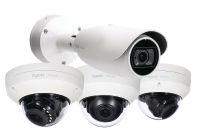
www.illustracameras.com

The Capri Lectern is built for functionality and features a scratch-resistant melamine finish available in 12 different colours and edge banding trim in 11 different colours. The lectern includes a 24”w x 18”d reading table with paper stop and a shelf for a water bottle. The unit is lightweight at 40 lbs., ships flat and assembles in 15 minutes with no tools. Four glides are available for easy positioning and with felt pads to protect surfaces (optional casters are also available). www.ampli.com
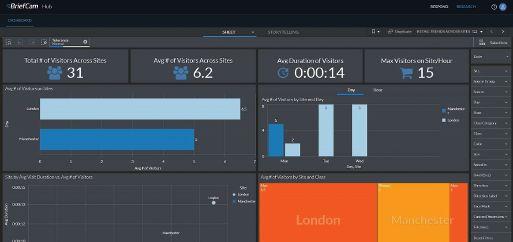
BriefCam v6.0 introduces the new deployment option of a multi-site architecture. This enables businesses with multiple, distributed locations to view aggregate data from all remote sites to uncover trends across locations and boost real-time alerting and response. BriefCam v6.0 unlocks valuable insights hidden within volumes of video content across multiple locations, making video searchable and actionable. Businesses can aggregate and compare such features as visitor paths, dwell time, customer demographics, and traffic hotspots. BriefCam v6.0 also features an improved face recognition engine.
www.briefcam.com
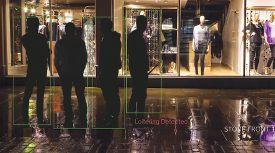
The Anti-Loitering System features an AI-based object detection system that can detect people or vehicles and trigger pre-recorded, scenario-specific voice messages to deter loitering. Designed to tackle after-hours perimeter control challenges, the Anti-Loitering System can be customized to play different notification messages depending on location and dwell time. Video recordings associated with the autonomous Anti-Loitering System are stored locally on the camera or as part of a larger video system. The system is customizable and can support additional automated actions such as triggering auxiliary lighting. www.interfacesystems.com
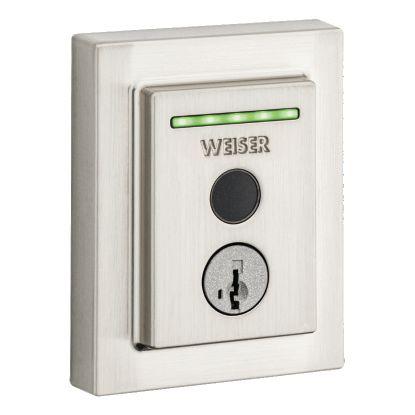
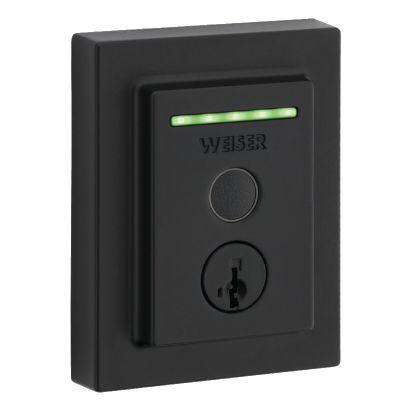

1 UNIQUE FINGERPRINTS
WI-FI ENABLED
• Up to 100 fingerprints/50 users
• BHMA Grade 2 certified
• 256-bit AES encryption encryption security
• Featuring SmartKey Security™ - protecting against advanced break-in techniques
• No hub required by connecting directly to your home Wi-Fi network