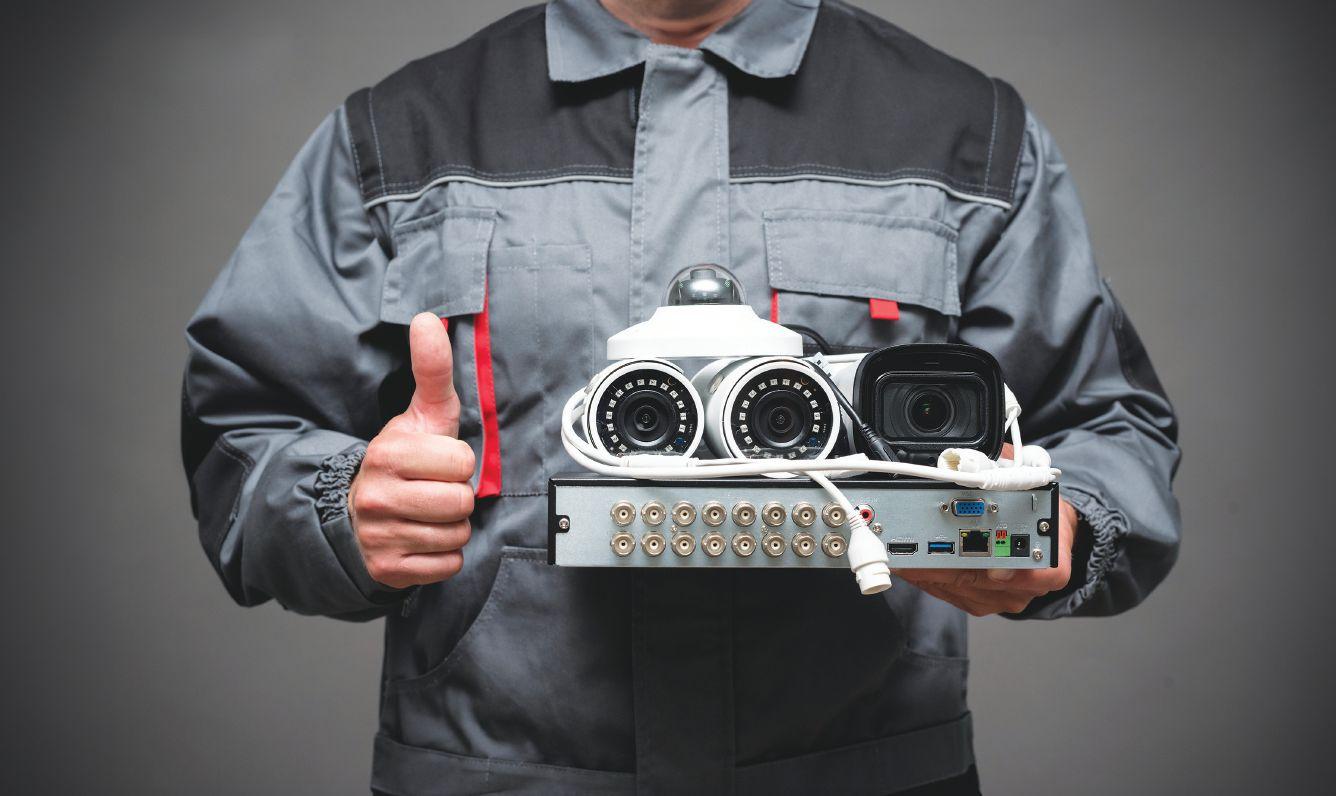
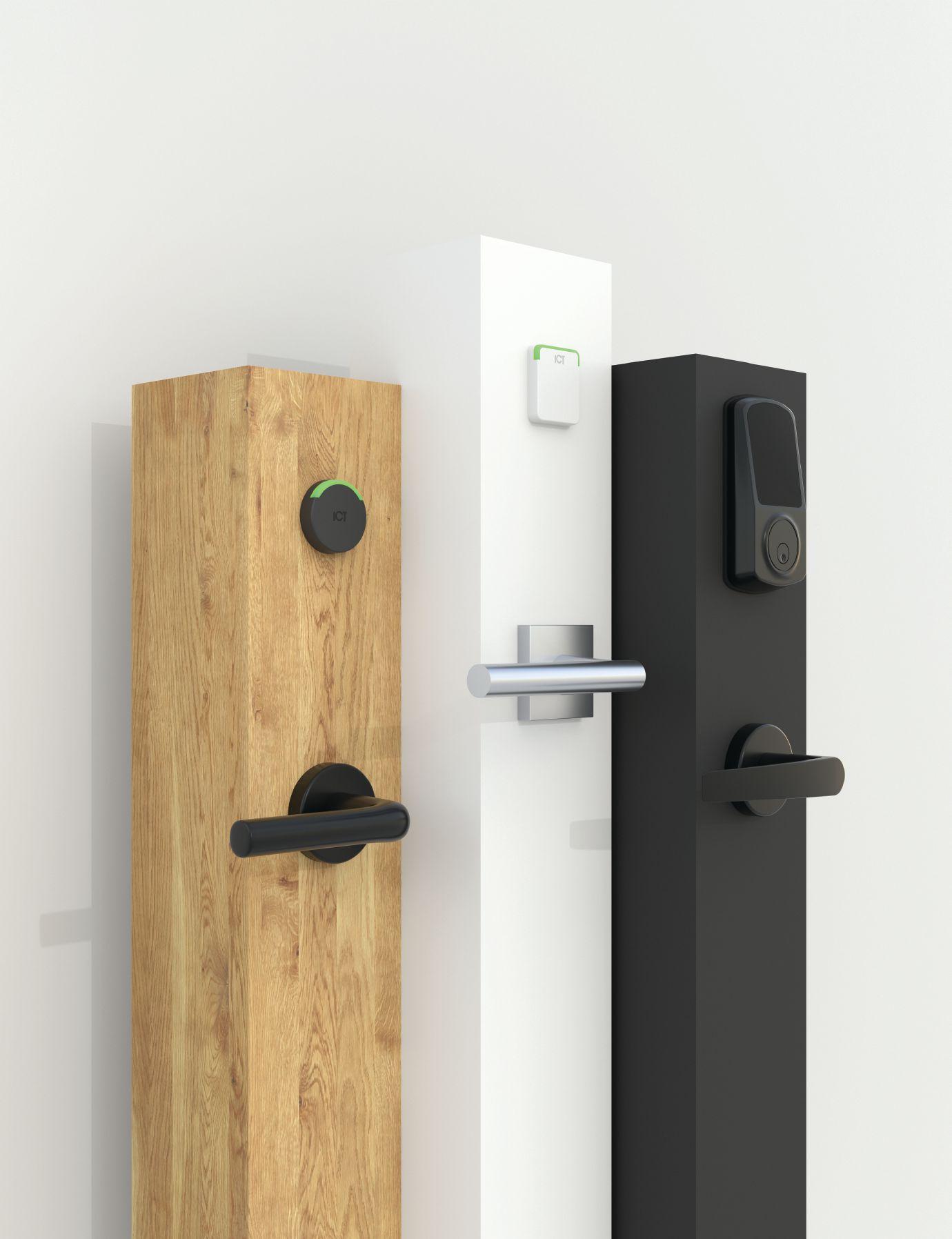
Serving Installers, Dealers and Integrators Across Canada
Security Summit Canada 2024 recap Experts discuss AI, cloud and building successful business relationships p. 6
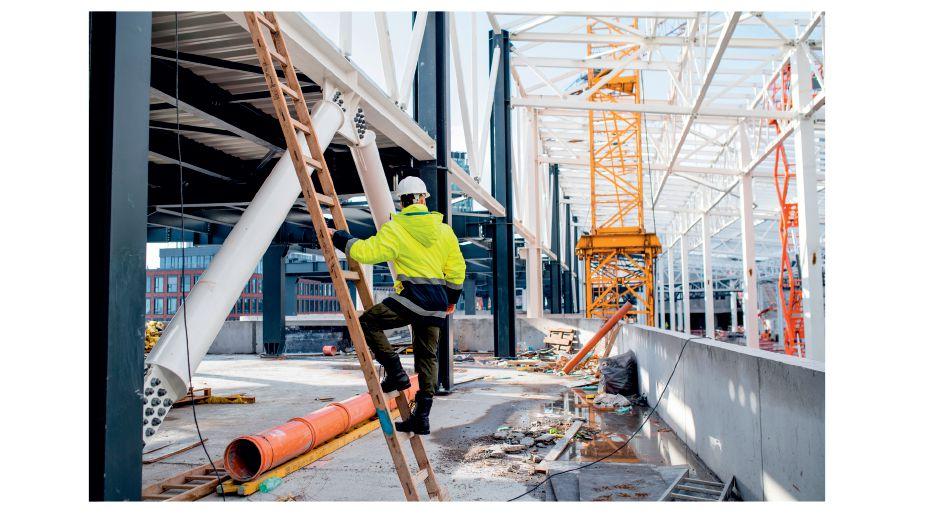
Finding and hiring qualified personnel
Advice on attracting and keeping the best employees for your company p. 12
How gunshot detection systems work
What you need to know about installing and managing this technology p. 22
By James Careless
By Yanik Brunet
EDITOR’S LETTER
WBy Neil Sutton
Acclimatizing to the cloud
The security industry’s adoption of hybrid
terminology is making the transition easier for some end users
hile I was doing some research on the cloud for this column, I delved into some of the older stories we’ve published on the subject.
One from eight years ago was remarkable in that I think we could have published it today and it wouldn’t feel completely out of place.
End users quoted in the article spoke about managing risk, “turnkey solutions in the cloud,” and hybrid environments (a mixture of on-premise and cloud).
What I found most interesting about the article is that one security department wasn’t necessarily moving to the cloud to streamline their operations, but because other departments within their organization had already begun to adopt cloud solutions and there was some subtle pressure to do the same.
reassurance that would sit well with most risk-adverse security managers.
Hybrid is also a term that covers the full gamut of deployments — whether you have five per cent or 95 per cent of your systems in the cloud, you’re running a hybrid architecture.
It’s not just end users who are warming to the idea of the cloud. Integrators have also had to change their mindset (and skillset) in order to get up to speed with this new hybrid world.
“There is a growing recognition that cloud is taking its place.”
Security end users aren’t typically known to be early adopters or technology evangelists simply because those things rarely go hand-in-hand with risk management. I think it’s the acceptance of the term “hybrid” that has allowed the security industry to take some larger steps lately towards cloud adoption, and it’s certainly one that many vendors lead with today.
The idea of moving your security systems off your premises and on to someone else’s must seem radical (especially in the early days of cloud), but doing it gradually, in a hybrid fashion, provides a level of
At Genetec’s press briefing for its new Security Center SaaS suite (see p. 10), the company highlighted some key findings from its State of Physical Security 2024 report that point to a growing acceptance of cloud and hybrid environments, especially in the last few years. That same report indicates that integrators are rising to these new challenges, particularly in Canada and the U.S., where they “are ahead of the curve when it comes to cloud adoption.”
I’m sure in another eight years we’ll still be publishing stories about the cloud, and perhaps even discussing some of the same issues that were raised in 2016. But I think it’s clear that attitudes are changing and there is a growing recognition that the cloud (or hybrid) is taking its place as an environment that can meet the needs of end users and integrators alike.
@SecurityEd
READER SERVICE
Print and digital subscription inquiries or changes, please contact Shawn Arul, Audience Development Manager
Tel: (416) 510-5181 • Fax: (416) 510-6875
Email: sarul@annexbusinessmedia.com
Mail: 111 Gordon Baker Rd., Suite 400, Toronto, ON M2H 3R1
Editor, Neil Sutton 416-510-6788 nsutton@annexbusinessmedia.com
Group Publisher, Paul Grossinger 416-510-5240 pgrossinger@annexbusinessmedia.com
Publisher, Adam Szpakowski aszpakowski@annexbusinessmedia.com
Associate Publisher, Jason Hill 416-510-5117 jhill@annexbusinessmedia.com
Media Designer, Graham Jeffrey gjeffrey@annexbusinessmedia.com
Account Coordinator, Kim Rossiter 416-510-6794 krossiter@annexbusinessmedia.com
President/COO, Scott Jamieson sjamieson@annexbusinessmedia.com
EDITORIAL ADVISORY BOARD
Patrick Soo, Alarm.com
Floria Chiu, Telus Custom Security Systems Stephen Karchut, Alarmtech Val Michetti, HID Frank Pietrobono, RSPNDR
PUBLICATION
Printed
ISSN 1482-3217 Your Partner in Securing Canada Security Products & Technology News is published 5 times in 2024 by Annex Business Media. Its primary purpose is to serve as an information resource to installers, resellers and integrators working within the security and/or related industries. Editorial information is reported in a concise, accurate and unbiased manner on security products, systems and services, as well as on product areas related to the security industry.
111 Gordon Baker Rd, Suite 400, Toronto, ON M2H 3R1 T: 416-442-5600 F: 416-442-2230
Trove™ Access Power Integration
eFlow™ Enhanced Power Solutions
Maximal™ Scalable Access Power
StrikeIt™ Panic Device Power & Control
Tango™ PoE Driven Access
Integrate Access Anywhere
Altronix manufactures the largest and most versatile portfolio of power solutions supporting controllers, peripherals, and lock hardware from the leading industry brands. Providing seamless integration that’s scalable for any size access control application. And adding our powerful LINQ™ network management platform lets you remotely monitor, control, and report power diagnostics from anywhere. We’ve got it all covered.
LINE CARD
Security Summit Canada recap: cloud and AI as business enablers
Finding a comfort level with new technology was one of the major themes at this year’s Security Summit Canada, whether that means integrating AI or cloud into your business at your own pace, or raising your level of awareness so you can at least figure out a starting point.
The annual Security Summit Canada virtual conference, held on Feb. 15, was sponsored by Alarm. com, System Surveyor, ASSA
ABLOY Opening Solutions and SecurTek Monitoring Solutions.
More than a dozen speakers offered their perspectives on hot technologies like AI, cloud and video monitoring, as well as how to successfully manage the relationships between end user, integrator and vendor.
Why cloud matters
The event kicked off with a keynote address, “Why Cloud Matters: Big Features, Big Future,” from Tim Palmquist, vice-president, Americas, Milestone Systems. In his session, Palmquist spoke about how the cloud is changing security systems, from the initial sale through to implementation and management.
Palmquist noted that there are “catalysts of innovation that unlock opportunity” within the security industry and the cloud is definitely a recent example of that. The pandemic helped to bring that into focus since it forced the industry to quickly adapt to new service delivery models.
“We can see that the pivot to VSaaS away from on-premise VMS is real and it has a big impact on where we’re going in the future,” he said. “[Cloud] is a tool that can help address those dynamic, evolving and changing
needs of our end customers.”
However, the move from on-prem to cloud isn’t a given, nor is it a smooth ride for everyone. There have been some concerns along the way, including cost and bandwidth.
“We recognize we have confusion in the conversation,” said Palmquist. “It’s difficult to land on what we agree on, but what we know is change afoot.”
A common approach, noted Palmquist, is a hybrid model where systems and data storage are managed through a combination of on-prem and in the cloud.
“This is a natural transition, and I think this will unfold for many years,” he said, adding, “I think it’s the best time in the world to be an end user right now for physical security and for video management. The flexibility of options that exist are absolutely amazing. There’s elasticity for compute and for storage.”
AI everywhere
Palmquist’s session on cloud was followed by a look at artificial intelligence from a practitioner who has spent more than 40 years
“I think it’s the best time in the world to be an end user right now for physical security.”
—Tim Palmquist, Milestone Systems
working in the field.
Sue Abu-Hakima holds an MA and PhD in AI studies and is the founder of several companies including her latest, Alstari.
AI is as old as computing itself, which began in the 1930s, said AbuHakima, yet recent advances have catapulted it into the public consciousness as it dominates conversations around business, science and culture.
“AI is pervasive in everything that we do — in our house, in our office, in our car, in our workplace, and all the communication networks that we use,” she said. “Everything that you touch today will have some
form of AI attached to it.”
AI can be used as a tool to attack cyber networks, she said, but it can also be used to fortify them.
“It’s already impacting cybersecurity,” she said. “We’re seeing breaches that we haven’t seen the likes of [before]. But it can also be used to strengthen your enterprise networks, to defend against new cyber-attacks.”
Abu-Hakima advised Summit attendees to investigate AI if they have not already. There are resources available to help decision-makers better understand the role of AI in the enterprise, including consultants, conferences and other education opportunities. “My best advice to you is embrace it, don’t fear it,” she said.
What clients want from their integrators
As technology evolves, so must the integrators who install and maintain it for their clients. In a panel discussion, a trio of end users provided their take on this process, as well as the changing nature of the relationship between customers and service providers.
The panelists included David Sulston, a security professional with
“Everything that you touch today will have some form of AI attached to it.”
— Sue Abu-Hakima,Alstari
more than 30 years of industry experience and Canadian Security’s 2022 Security Director of the Year; Helen Perry-Raycraft, corporate security specialist with the City of Saskatoon; and Luciano Cedrone, director of security and fire/life safety, at Toronto-based property management firm Triovest.
The relationship used to be quite one-sided, said Sulston, with the integrator as the undisputed source of information for all things security. But in more recent times, end users have increased their own understanding of systems and they have a deeper pool of knowledge to draw from.
“From the integrator perspective, you have to be aware that your client is getting smarter,” added Perry-Raycraft, who was also an integrator before joining the City of Saskatoon. “They can find resources. They can ask all the questions. You have to approach your client at that intelligence level.”
But while end users may have a better understanding today, they also must rely on the experts. As technology gets more complex and the feature-sets grow richer, they are looking to their integrators not only for their technical knowledge but for a broader understanding of how security technology will impact other key systems in the enterprise, said Cedrone.
The relationship between clients and integrators, as well as experts and other specialists in the field, has changed over time due to the general level of conversation that takes place between all security professionals, noted Sulston.
End users will also consult with each other and lean on their network of contacts for ideas and recommendations. “You’re effectively crowd-sourcing excellence,” he said.
Trends in video monitoring
The afternoon closed with a panel discussion on trends in video monitoring, moderated by Victor Harding, principal of Harding Security Services and author of the Lessons Learned column in SP&T News.
The panel comprised monitoring experts and practitioners Colin Bodbyl, vice-president and gener-
al manager, Stealth Monitoring; Daniel Cyr, CEO and general manager, Sirix Monitoring; and Bill Dietterle, president, BIL Security Services Canada.
The panelists agreed that video monitoring has made tremendous advances in recent years, but is still in its infancy, with plenty of growth potential ahead.
“We’re seeing new technologies come to market on the monitoring side, especially around the AI and analytics. But I think there’s still an enormous amount of opportunity there, and there’s still an enormous amount of changes we’re going to see in the near future as those technologies mature,” said Bodbyl.
“The technology has evolved so much that it allows us to have tools that [make us] a lot more efficient,” agreed Cyr.
Among the clientele for video monitoring today are car dealerships and construction sites, who use the service to monitor for potential criminal behaviour on the premises after hours.
Video monitoring has also been utilized for life safety purposes. For example, Bodbyl described a scenario in which a child was prevented from leaving his apartment building alone in the middle of winter. A monitoring centre operator noticed the child trying to exit by himself and alerted building staff. They were able to intervene and safely return the child to his family.
The panel also discussed the degree to which AI or advanced analytics can be relied upon to make judgement calls on whether a situation viewed on screen is an innocuous event or a potential crime in progress. The technology may be improving every day, but a skilled operator is still required to make those calls in most situations.
Dietterle said video monitoring is most effective when the technology and the operator are working together in harmony. “It’s like an orchestra,” he said. “It all has to be fine-tuned.”
All of the Security Summit sessions are available to view on-demand on the SP&T News website (www.sptnews.ca).
— Neil Sutton
NEW OUTDOOR STRIKES For Cylindrical Locksets and
RIM Exit Devices
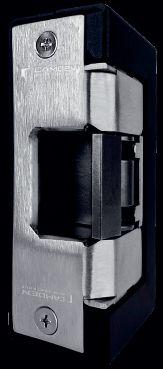
CAMDEN has just released the newest member of our family of market-leading electric strikes!
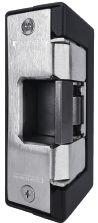
The CX-ED1959 Series outdoor-rated strikes are ideal for exposed perimeter doors and gates, and feature heavy-duty stainless-steel construction with an integrated ANSI square faceplate, and grade 1 performance. They include a heavy gauge, painted steel mounting box at no additional charge. All are backed by Camden’s hassle-free five-year warranty.
JOIN US AT BOOTH #7025
LINE CARD
Applications
Vehicles scanned before football playoff
As part of the preparations for the recent College Football Playoff National Championship, a security device was deployed to screen approximately 140 vehicles prior to the game.
The championship was contested between the Michigan Wolverines and Washington Huskies at NRG Stadium in Houston, Tex.
Intelligent Security Systems worked with integrator Unlimited Technology to deploy the SecurOS UVSS (Under Vehicle Surveillance System). A combination of buses, sedans, trucks and vans were scanned for a range of threats. Each vehicle also had their licence plate simultaneously read by SecurOS Auto.
“ISS’s undercarriage technology enhances security by removing the human factor from the screening process and increasing visual accuracy,” said Ellis D. Stafford, safety and security director, NRG Park, in a statement.
Appointments
Diamond facility in India now open
The Surat Diamond Bourse (SDB) in India is a 15-story complex for more than 65,000 diamond professionals and comprises over 7.1 million square feet of floor space.
The world’s largest single complex, SDB consists of nine towers with an independent customs office, international banking facilities and diamond-testing laboratories, among other businesses.
For its security purposes, the facility is using Gallagher Security’s site management platform Command Centre. Third-party integration capabilities include IDEMIA’s biometric readers, Verint C41 command application and single sign -on and IT management solutions.
The Surat Diamond Bourse includes more than 700 doors, 650 readers, and multiple system integrations for this project.
The official inauguration of SDB took place on Dec. 17.
• Gallagher announced the appointment of Merv Williams as chief marketing officer. Williams will lead the development and delivery of Gallagher’s global marketing strategy.
• Toronto-based Reillys Lock
AI-based video system captures harbour traffic
Scheveningen Harbour in the Netherlands is using an AI-based video security system to log vessels entering and leaving its waters.
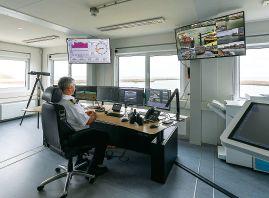
Located in the coastal city of The Hague, the harbour has deployed a customized video system from Bosch Building Technologies and partner BrainCreators that automatically registers and classifies shipping traffic.
Previously, this was accomplished manually and a control centre recorded approximately 80 vessels a day.
“The requirements for this project were very specific because the shipping traffic not only had to be filmed, but also registered and classified. The solution also had to provide information about the speed of travel,” said Niels van Doorn, senior manager, solutions and portfolio, Bosch Building Technologies, in a statement.
Project development and implementation took approximately 12 months.
and Security Systems recently welcomed David Spilak as the company’s new senior sales account executive.
• Till Reuter has been appointed as the new CEO of dormakaba.
• The Electronic Security
March 19, 2024 ADI Expo Toronto Mississauga, Ont. www.adiglobaldistribution.ca
March 27, 2024
Security • Police • Fire Career Expo Mississauga, Ont. www.emergencyservicesexpo.ca
April 9-12, 2024 ISC West Las Vegas, Nev. www.iscwest.com
April 23-25, 2024
Canadian Technical Security Conference Calgary, Alta. www.ctsc-canada.com
April 24, 2024
Security Canada East Laval, Que. www.securitycanada.com
May 15, 2024
Advance: Women in Security Online www.canadiansecuritymag.com
June 3-6, 2024
ESX Louisville, KY www.esxweb.com
June 19, 2024
Security Canada West Richmond, B.C. www.securitycanada.com
Association (ESA) has announced Jillian BatemanMcIntosh as its new chief operating officer.
• Acre Security has expanded its Feenics Cloud Access team with the addition of Praveen Dixit as its sales development
manager for the Eastern Canada region.
• Wavestore recently announced that Kim Loy, senior vice-president, now leads operations for the Americas with offices in Ottawa and West Palm Beach, Fla.
Merv Williams David Spilak
Till Reuter
Jillian Bateman-McIntosh Praveen Dixit
Kim Loy
Genetec appeals to channel partners with major update to Security Center
Montreal-based Genetec has announced a major upgrade to its flagship Security Center product, referring to it as a harmonization of its cloud offerings.
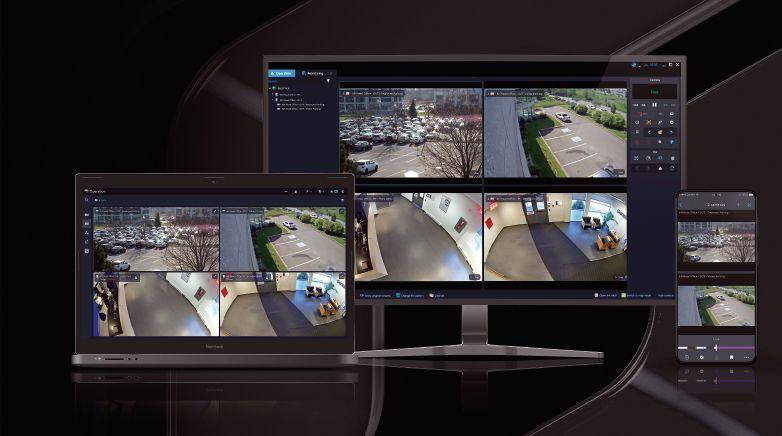
Called Security Center SaaS, the company says it will help end users and integrators alike make the most of cloud and hybrid environments while also introducing new features that both groups should appreciate.
The new suite combines access control, video management, forensic search, intrusion monitoring and automation. According to the company, it has been re-worked to optimize the product lifecycle from procurement to deployment to ongoing maintenance.
The company’s leadership, including Christian Morin, vice-president of product engineering and CSO; Andrew Elvish, vice-president of marketing; Michel Chalouhi, vice-president of global sales; and Pierre Racz, founder and president, introduced the new SaaS suite at a media event held at Genetec’s experience centre in Washington, D.C. (the “DCXC”).
Ubiquitous computing
A major selling point for Security Center SaaS is its ability to work effectively in hybrid environments. According to Mike Jude, research director, video surveillance and vision applications, IDC, who spoke to SP&T News after the event, this is a feature that is growing more popular amongst security end users.
“The SaaS solution, especially since it’s compatible with existing on-premise Genetec solutions, provides that migration path,” said Jude. “The user can implement SaaS and still keep what they’re currently using… You can migrate what you want to the cloud.”
Genetec’s latest research also indicates more of its clientele are splitting the security workload between on-premise and cloud.
In Genetec’s 2024 State of Physical Security Report, 44 per cent of end users indicated that over a quarter of their physical security environments are cloud-based or hybrid cloud, versus 24 per cent in the previous survey.
“It’s not about being cloud-first, it’s about being hybrid first,” said Morin.
Racz referred to the approach as “ubiquitous computing” adding that “we don’t care where the workloads are.” They could be on-prem, in a company’s data centre or a third-party data centre. “That’s the future,” he said.
Elvish compared the transition from on-prem to cloud-based security systems to the move from analogue to IP systems that started in earnest in the late 2000s. “I would argue we’re going through an even bigger change [now],” he said. “We’re in a period of rapid transition.”
Quoting Genetec’s report, Elvish said 39 per cent of channel partners are leading with cloudbased solutions and more than half (52 per cent) of channel partners offer cloud-based solutions to customers when they request it.
He said that, from a global perspective, U.S. and Canadian systems integrators are at the forefront in terms of cloud adoption.
Genetec has about 2,000 channel partners globally and repeatedly stated the importance of their relationship with these partners during the Washington press summit. According to the company, more than 99 per cent of its transactions are accomplished through the channel.
“The integrator is as much our customer as the end user,” said Chalouhi. “How you procure, install and maintain the product is a part of it as much as operating it.”
A new Genetec Portal is designed to make the quoting, ordering and deploying process easier for the company’s partners. “We want our partners to be able to order a system and within 10 minutes be able to configure it,” said Morin.
IA not AI
As an organization, Genetec has been preaching the value of cloud and the utmost importance of cybersecurity for years.
During Genetec’s last major press event in 2019, held at the company’s Montreal headquarters, Racz compared the public internet to untreated water. “The effluence of our civilization is leaking into our information supply,” he said.
Racz has not relaxed his stance on this. In fact, the first feature mentioned in the Security Center SaaS press release is “built with cybersecurity and privacy at its core.”
Racz is also keen to disabuse the security community of the notion that artificial intelligence represents the pinnacle of technical sophistication. He cautioned end users against wholesale adoption of AI systems and said AI hasn’t reached a point yet where it should be trusted to write code.
Back in 2019, before the world was completely in thrall of AI, Racz spoke of Genetec’s focus on “intelligent automation” over artificial intelligence and he reiterated the distinction between the two approaches at the 2024 press event.
“What is intelligent automation? You let the computer do the heavy lifting but you put the human in the loop to make the judgements and to supply creativity,” he said.
Genetec has imbued this “IA” approach into aspects of Security Center SaaS, including user queries. Racz said the interface uses “prompt engineering” to narrow down ambiguously stated questions from the user and map them to specific criteria.
Security Center SaaS will be available starting in April.
— Neil Sutton
Security Center SaaS
ADI recognizes suppliers at awards event LINE CARD
ADI Global Distribution announced the recipients of its 2023 Supplier Awards, recognizing Digital Watchdog as Supplier of the Year for North America and DSC for Best Sales Support in Canada.
ADI acknowledged its suppliers across multiple categories including: Operations, Marketing Support, Digital Support, Sales Support, New Product of the Year and Rookie of the Year. The distributor says its suppliers are evaluated based on revenue, sales support, marketing initiatives, inventory results and feedback from ADI’s sales leadership team.
“The ADI Supplier Awards exemplify the unwavering commitment, outstanding performance and collaborative spirit that define our supplier relationships,” said Marco
Best Sales Support, Canada: DSC
Cardazzi, vice-president of marketing, ADI in a statement. “We congratulate all the 2023 supplier award recipients on this well-deserved recognition and look forward to our continued success together.”
“Receiving the ADI Supplier
of the Year for North America award is truly an honour,” added Wade Thomas, president, Digital Watchdog. “ADI continues to be an important partner for us, as we rely on their distribution channels, sales teams, and marketing and digital
support to help expand our reach and strengthen our brand across the industry. Thank you for this recognition, which further fuels our drive for excellence.”
2023 ADI Supplier Award Winners
Supplier of the Year: Digital Watchdog
Best Operations Support: TRENDnet
Best Marketing Support: dormakaba
Best Digital Support: Honeywell Fire Solutions
Best Sales Support – United States: ProdataKey
Best Sales Support – Canada: DSC
New Product of the Year: Turing SkyShield
Rookie of the Year: QSC
PRACTICAL SECURITY
OBy Roger Miller
Addressing the labour shortage
Numerous industries have been affected by the lack of skilled workers and security is no exception
ver the course of the past four to five years, challenges in society have created opportunities for security professionals in almost all disciplines of the industry.
Our ability, or our inability, to capitalize on these opportunities has been affected by the availability of labour and product to a large degree. What used to be simple became cumbersome.
“You cannot expect to retain qualified staff without being a competitive employer.”
Now that we are seeing the post-COVID light, some of our world has reverted to the era before the pandemic. Our business partners have inventory, our manufacturers can usually provide us an accurate ETA on orders, and there are new products rolling into the market. Life is good again! Or is it?
In almost every profession in Canada there is a labour shortage and the security industry is no different. At almost every business function I’ve attended over the past two years there is one common conversation — we can’t find staff.
Staff for every position is at a premium. From frontline labour to highly skilled field or administrative positions, there are not enough people to fill the jobs available. This isn’t strictly about wages. Large organizations with $100K jobs are struggling as much as entry-level positions. Doctors, nurses, police officers, teachers, truck drivers and almost every other field are not able to recruit enough qualified people.
We have to direct our efforts in new ways. It means the cost of providing services will be higher, since shortages drive the cost of labour higher.
For company owners and managers who have been reluctant to move the needle on your billing rates for service, it is time. You cannot expect to retain qualified staff without being a competitive employer. You may not have to pay the most, but you have to know the local market and be competitive in your compensation package.
Wages and benefits are one aspect of recruiting; other aspects include working conditions,
environment, safety and more. More than ever, employees have the ability to find a work-life balance and just being able to speak openly to their manager means a lot to them.
Now that we’ve established that offering a competitive compensation package with a strong work culture and safe environment is important, where do we find the people? This will entail looking outside of your normal recruiting sphere to find candidates who may not have all of the qualifications you are looking for. If we look at the traditional security systems installer, they either attended an electronics program or they were hired from a competitor. We need other strategies.
First, you have to identify the “must haves” on your list of requirements. Can they meet the physical demands of the job? Are they willing to start at the most basic level and work their way up? Would they represent your company the way you want them to?
There will always be employees in other fields that can learn new skills. Is it the person at
the service station you frequent who isn’t afraid to get their hands dirty? What about the building maintenance person who might be looking for a change? Folks who are used to working with their hands, climbing ladders, and have a general aptitude for learning how to use those skills can be invaluable to us as new candidates. We just have to look outside the box to find them.
Once you find that new candidate, it is up to you to develop them by creating an internal program that fits your business. To facilitate this you will require a more senior person in your company who will spearhead the development with the new folks.
By using measurable steps it shouldn’t take long to have this new person at a functional level that will free up more senior resources for higher level tasks. Developing depth in your team takes longer, however doing nothing isn’t an option.
Roger Miller is the president of Northeastern Protection Service Inc. (www.protectionpartner.ca)
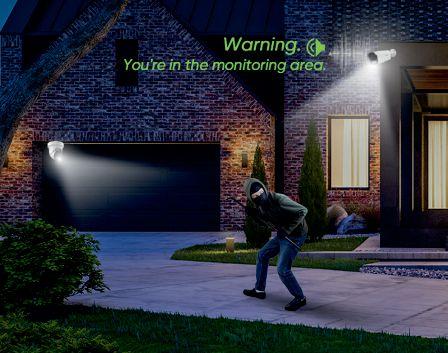
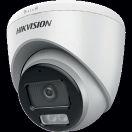
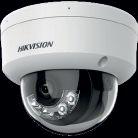
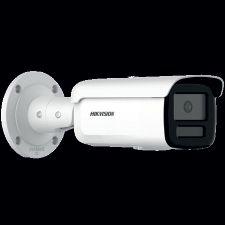
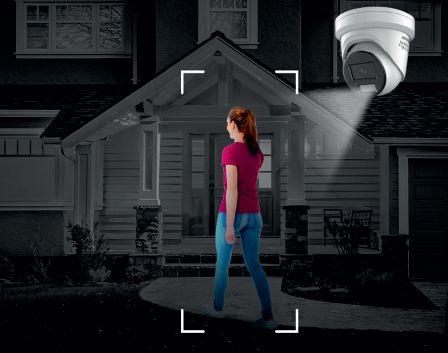
With smart functionalities and powerful technologies, Smart Hybrid Light Cameras with ColorVu create a powearful solution for critical security video monitoring, day or night.
Sharper focus with super confocal lens
True colour details, even in low light
Proactive visual and audible warnings White light on only when needed
Smart Hybrid Light Cameras come in 3 lighting modes
Colour images of people and vehicles, day and night
LESSONS LEARNED
SBy Victor Harding
What a broker can do for you
Security businesses may be sold without using an intermediary, but the seller could be missing out
ecurity businesses can be — and are being — sold without using a broker every day and in many cases the owner appears to be quite happy with the result. The potential problem here is, without a broker, many of these owners simply don’t know how the deal could have possibly been improved.
“A broker should identify the strengths of the business being sold.”
Could the price have been higher? Could the payment terms have been better? Could they have got a share deal instead of an asset deal and saved significant taxes?
Alas, having been a broker to the alarm industry for 15 years, I am reconciled to the fact that out of every 10 sellers, two or three will go their way and sell without a broker. Such is life. Without disclosing any confidential information, let me tell you about some deals that appeared to me to be “less than perfect,” meaning I don’t think the owner maximized their take home pay. I should mention that in each case there may have been extenuating circumstances I was not aware of that dictated the route they took.
• An attractive block of alarm accounts was sold in an asset deal with a 20 per cent holdback. In hindsight, I believe a much more tax-effective share deal was possible which would have saved the owner significant money.
• A large block of accounts was sold using a broker who knew nothing about the value of alarm accounts. The buyer is still talking about the great deal they got.
• Some time ago a successful alarm company was sold with no broker involved. In this case, it is not clear that other buyers were even approached. I was actually shocked when I heard about this transaction.
• Another Canadian mid-sized security company was put up for sale using a very reputable banker on the deal. I saw the selling package and, in my opinion, it did not hit the key points that most security alarm buy-
ers would look for simply because the banker did not know the industry.
While this article may appear a little self-serving (as I am a broker) this is an important enough subject that I think everybody should know about the benefits of using a broker or pitfalls of not doing so:
1. A broker should tell the owner what their company is worth before it is sold. Owners should never sell without some good idea of what their business is worth.
2. A broker should identify the strengths of the business being sold and highlight them in the selling package sent to prospective buyers. Owners don’t always know what their strengths are.
3. A broker should canvas the market widely to find buyers. The stats indicate that a wide search for buyers almost always produces higher prices in the end.
4. A broker will handle all the correspondence and calls back and forth with buyers and the owner, allowing the owner to continue to run the business.
5. A broker can help keep the deal confiden-
tial. The buyers’ calls and emails are coming into the broker’s office, not the owner’s.
6. A broker is there to be “in the owner’s corner” to help offset the team often in place on the buyer’s side.
7. A broker is there to iron out any glitches along the way, and believe me there are glitches in every deal.
8. Deals without brokers pushing to get them done can often flounder or take much longer.
9. Brokers should be there to review all the offers, any Letters of Intent and the final Purchase and Sale Agreement.
10. Deals done with brokers almost always return more to the owner even after the broker’s commission, as counter-intuitive as it may seem.
There is a reason why you use a broker to sell your house, your cottage, your boat or any other large asset. The assumption is that a broker will know the market and should be able to bring the best buyers to the table. The same is true for selling a business.
Victor Harding is the principal of Harding Security Services (victor@hardingsecurity.ca).
By Patrick Straw
First stop is Quebec for Security Canada CANASA UPDATE
Security Canada will kick off in April, with many more CANASA events to follow in the summer months
This year is shaping up to be another record-breaking one for the Canadian Security Association (CANASA) and our Security Canada trade shows and conferences.
Our first two events in Laval, Que. (April 24) and Richmond, B.C. (June 19) have record booth sales, selling out almost immediately. You can register to attend both of these events at securitycanada.com.
Our flagship show in October in Toronto is almost sold out and will be soon. Last year, we had record attendance at all three events and we expect the same for this year. Don’t miss these opportunities to see the latest in security technology and
attend one of the many training sessions that accompany each show hosted by our vendor partners.
CANASA’s regional councils are off to a great start this year as we work with local members to put on events to facilitate training, networking and comradery within our industry. Our Atlantic Regional Council hosted two successful breakfast meetings in Halifax and Moncton in early February with two exceptional guest speakers from the RCMP and the Halifax Regional Police who addressed crime trends in their communities and what we can all do to prevent becoming a victim.
Be sure to watch for postings on other events that are being organized across Canada.
Also keep a watch for postings on our regional golf tournaments for 2024. Our regional councils will be hosting tournaments in their area as follows:
• B.C. Golf Tournament: Thursday, June 20, immediately after Security Canada West
• Atlantic Golf Tournament: Tuesday, June 25
• Central Ontario Golf Tournament: Wednesday, July 10
• Eastern Ontario Golf Tournament: Thursday, August 15
• Golden Horseshoe Tournament: Thursday, September 12
• Quebec Regional Golf Tournament: Thursday, September 19
Make sure to sign up and we hope to see you at CANASA sponsored events this year.
Patrick Straw is the executive director of CANASA (www.canasa.org).
Patrick Straw
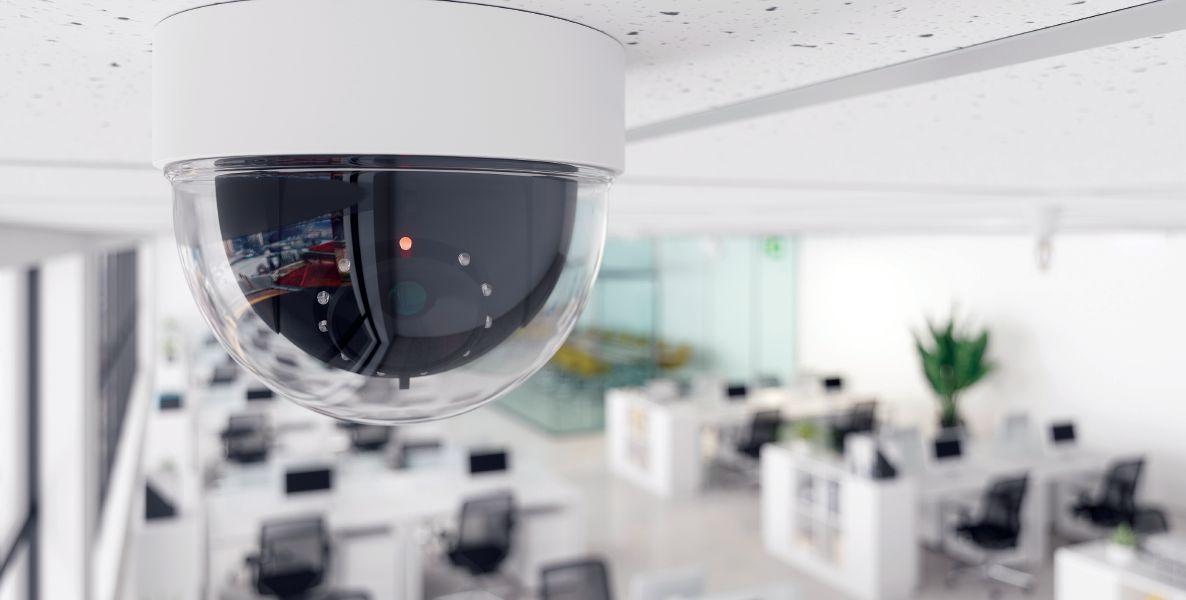
KEEPING CAMERAS AT PEAK PERFORMANCE
Wear and tear is inevitable over a camera’s lifespan, but there are steps you can take to extend that life and optimize operational parameters
By James Careless
Security cameras are at the heart of modern security systems.
This is why maintaining security cameras properly is absolutely vital. Here are the most common physical and digital issues that affect security cameras, and how to deal with them.
Physical issues and solutions
Depending on their location and function, security cameras may endure a wide range of physical challenges while continuing to do their jobs.
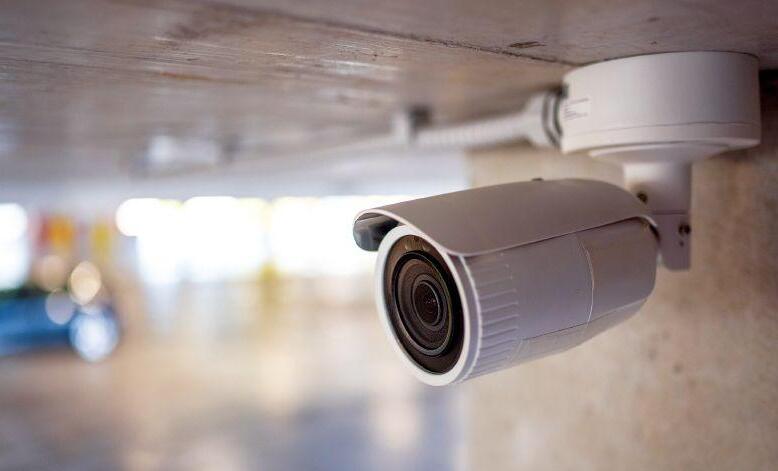
For instance, outdoor cameras have to withstand water, temperature and wind extremes; accidental damage; overexposure to sunlight and sun-induced heat; plus a host of other issues.
“Physical damage can also occur due to vandalism, corrosion elements in harsh environ-
“Optimizing the lifespan means selecting the right camera for the job.”
— Rui Barbosa, i-PRO
ments such as salt spray, or industrial cleaning with harsh chemicals,” says Rui Barbosa, i-PRO America’s manager of surveillance products.
Badly executed outdoor camera placement can exacerbate these issues, resulting in “poor or blurred camera views, blocked views due to foliage growing or animals and insects interacting with the camera, or otherwise poor lighting,” says Joelle Grunblatt, chief marketing officer at Ai-RGUS, a company that makes an artificial
intelligence software solution designed to help with security camera system maintenance.
Meanwhile, “poor placement of indoor cameras can lead to increased interaction with people that could cause tilting the camera, scratching the lens during maintenance and cleaning, or otherwise obstructing the camera view with signage,” she says. In both situations, poor placement can also hinder accessing the camera for maintenance and repair.
Addressing these physical issues from a maintenance standpoint starts with prevention, namely by purchasing rugged, high-quality cameras.
“Like most things in life, you get what you pay for,” Barbosa says. “Optimizing the lifespan means selecting the right camera for the job from a reputable manufacturer with a proven track record of durability. Manufacturers have
varying levels of warranty and support so it’s important to do your homework.”
Putting security cameras inside environmentally-appropriate protective housings also makes a preventative difference, as does choosing the appropriate cameras for the requirement.
For example, “do not select indoor-rated cameras for outside use,” says Arijeet Mukherjee, Johnson Control’s head of product support, access control, and video solutions (ACVS) engineering. If you cannot avoid doing so, “use proper outdoor housings, and apply silicone sealant around the connections and joints of the camera housing to avoid moisture and water ingress,” he says. “Create drip loops in the camera cabling to prevent water from traveling along the cables and entering the camera housing.”
Proper placement and installation
Then there’s camera placement. “When planning the camera installation, especially the ones at height, always keep a provision to make sure they can be serviced at a later stage,” Mukherjee says. “All cable-laying should be done in such a way that in the future if a situation arises, we can pull the cable back and replace it with a new one. The same goes for accessibility of power supply or any other junction boxes.”
On the subject of cabling and installation, it is vital to do terminations properly and to ensure that they are protected from environmental and usage-generated damage as much as possible. “The most common reason for degraded image quality or noise in the image is improper terminations,” explains Mukherjee.
“It is imperative that the termination of the camera cabling is proper on both the camera and POE switch/power supply end.” And don’t forget surge protectors: “Camera damage because of no surge protection” is completely avoidable, he says.
So install surge protectors to prevent over-
“Adopt policies to update passwords, have a strong password policy, and keep firmware up to date.”
— Joelle Grunblatt,Ai-RGUS
load damage to cameras, add in a UPS (uninterruptable power supply) so that abrupt shutdowns do not cause damage to camera circuitry, and make sure that the entire installation has been properly grounded.
If all of the above has been done correctly, then the physical maintenance requirements for your security cameras during their operational lifespans will be reduced —- but not eliminated. Like a car, security cameras need to be inspected, cleaned and serviced on a regular basis, because wear-and-tear happens in all instances.
“The standard operating procedure should include cleaning of the camera lens, cabling/ terminations and connectors regularly,” Mukherjee says. As well, operators should take the time to visually inspect their cameras on a regular basis. Weekly or even daily inspections are a good idea, to spot damage that may have occurred recently due to storms or humans and remedy it promptly.
Cameras are digital devices
Although they are physical objects, today’s security cameras are also digital devices. As such, the issues that can occur with digital devices need to be kept in mind and dealt with.
Rule 1: Keep a close eye on your cameras’ picture quality. After all, “the goal of a camera is to capture a certain field of view and therefore, it is important to adopt policies to ensure that the camera contin-
ues to provide the desired image,” says Mukherjee. Fortunately, “software exists to automatically identify camera view problems and this includes identifying problems such as blur, block, tilt, glare and low-light,” he says. Still, it is wise to keep reference images on file for each camera — ideally captured when the unit was newly installed and in top condition — so that these can be compared to the camera’s current picture quality during regular inspections, physical cleaning and maintenance.
Here’s another digital maintenance trick to know: When it comes to poor image quality, a degraded night view can be caused by a “low quality and incompatible power supply,” Mukherjee says. To avoid this, he advises buying security cameras that can capture clear images at 0 lux, or using external IR illuminators for those that cannot.
As well, “proper maintenance will help keep night image quality intact,” says Mukherjee. “And use a proper power source which can energize all the IR LEDs or illuminators.”
Rule 2: Digital security cameras are data-driven devices in a world where everything has connectivity and a software component. As such, one of the best maintenance-oriented ways to keep them running properly is by applying the updates, says Grunblatt.
A second smart idea is to purchase cameras that are capable of automatically updating themselves. The reason: “An update needs to be tested and be verified to work with other software in use (e.g., a VMS or NVR),” she says. “This is very time-consuming, so using software that can automatically push these updates, once approved, can be a very big time saver.”
Applying updates is also an effective cybersecurity maintenance measure. We’ve all seen movies where the “hacker” takes control of security cameras for nefarious purposes. Ensur-
ing that your cameras, and indeed your entire security system, is constantly being updated as required is a good way to foil such plots, and to deter cyberattacks in general.
“The most common reason for degraded image quality or noise in the image is improper terminations.”
—Arijeet Mukherjee,Johnson Controls
When cameras are not updated or left with old firmware, “this leaves a vulnerability,” Mukjerhee says. “So it is imperative that we keep the cameras up-to-date. Failing to update the camera firmware regularly can result in missing out on crucial security patches and bug fixes. So check regularly for and apply firmware updates provided by the camera manufacturer.”
One final benefit of update maintenance is getting access to feature enhancements. As security vulnerabilities are identified, camera manufacturers update the firmware and software to close those opportunities for security leaks, and when they do, they tend to include new features that allow their cameras to do more than before.
Rule 3: To protect and maintain the security of your security cameras, have a comprehensive, systems-wide cybersecurity system in place and constantly maintained. Granted, as Grunblatt says, keeping a “security camera system cybersecure” is
“very time consuming” but it needs to be done. “It is recommended to adopt policies to update passwords, have a strong password policy, and to keep firmware up to date,” she says. “Not doing so could lead to the possibility of a hack, for example, if default passwords are used or if wrong passwords attempts are not limited, or if a certain firmware version is known to have a critical vulnerability with a known exploitation method.”
“Hacking is ever-present, but having proper features, protocols and best practices in place should prevent any breaches or exploitations,” says Barbosa. “The nature of IoT and IP cameras is such that regular updates will almost certainly be required to maintain secure systems.”
This is why choosing “manufacturers with a continuous and robust improvement program”
will help keep your devices “cyber-secure with the latest standards such as FIPS 140-2 Level 3 from NIST,” he says. “After all, if it’s robust enough for the NSA, FBI and DOD, it’s probably good enough for your organization.”
The bottom line
According to the experts, buy the best quality and most appropriate security cameras for their assigned tasks, install and protect them properly, update their firmware/software regularly and on schedule, and keep them clean, dry and in top physical condition through regular inspections from start to finish. These are the maintenance tips that will deliver the best quality and most performance from your security cameras over time.
With expertise in monitoring, billing, and administration along with funding programs, wholesale monitoring, and account acquisition – we’re here to help your business thrive at any stage.
Launch
› Cash flow to fund your growth
› Support loading and servicing alarm customers
› Access to quality products, reliable suppliers and dealer pricing
Growth
› Stable and predictable funding
› Investment in inventory, staff and marketing
› Access to new lines of business
Get in touch today to see how we can help your business. 1-888-786-4620 dealer.program@securtek.com
Simplifying
› Turn equity into cash
› Remove administrative complications
› Stable, predictable cash flow while maintaining ownership
Selling
› Maximize your payout
› Experienced buyers and smooth transitions
› Continued service and support for your customers
UNDERSTANDING GUNSHOT DETECTION
With concerns about firearm-related crime rising, security dealers can educate themselves about technology options available to their clients
By Yanik Brunet
Much like its neighbour to the south, Canada has been subject to a growing number of deaths involving firearms. Statistics Canada reports that homicides linked to shootings showed a five to seven per cent increase year-on-year from 2018 to 2021. The year 2022 however, was a different story as the rate jumped 15 per cent over 2021.
And while the number of firearm-related violent crimes represents only 2.8 per cent of police-reported violent crime in Canada (based on 2020 StatCan data) security professionals would be well served to understand what technologies are available to mitigate the impact of a gun violence event.
Send critical information to first responders
Law enforcement will begin their search at the last reported location of an assailant. But when gun violence occurs, relying on bystanders or employees to call
emergency services can lead to confusion and delays — delays that give the assailant more time to spread violence and possibly escape the scene.
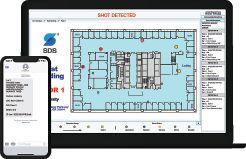
The value of gunshot detection systems is that security and law enforcement can automatically receive real-time, accurate gun violence location and tracking data during a period of intense confusion and panic.
How gunshot detection works
Gunshot detection starts with the sensor. Outdoor detection solutions typically rely on specially calibrated microphones mounted on buildings or utility poles to locate the acoustic signature of a gunshot. Multiple sensors are required as triangulation is used. Indoor gunshot detection sensors will also use acoustic detection, but they should not require triangulation and their components are calibrated differently to compensate for the different acoustical patterns that occur in a building.
High-quality indoor gunshot detection sensors should use dual-mode verification. This involves capturing and evaluating the two physical signals of a firearm discharge: the muzzle flash or infrared signal and the acoustic signal. An alert is only sent if these two characteristics are verified. Outdoor systems may not have this capability.
Best-in-class gunshot detection sensor offerings will provide customers with the highest level of detection accuracy and manufacturers should offer independent third-party testing to demonstrate quality.
It can be difficult for customers to envision the true financial and psychological cost of a false alert until they have one at their school or business. Trying to save money by selecting an inferior sensor can create enraged customers who, at a minimum, may suddenly find themselves facing reputational, employee or public relations issues. But the sensor is just the start.
Out-of-the-box, gunshot detection systems must also provide a means to communicate and display the sensor’s data in a way that is both easy to see and distribute. Software that provides visual tracking as well as text and email capabilities are now standard.
When covering large buildings or organizations with multiple buildings across different
“As with fire alarm systems, gunshot detection systems should be tested at least once a year.”
campuses, a “breadcrumb trail” of information that can be sent to first responders is invaluable. These systems should also seamlessly integrate this information with the customer’s other security technologies.
Choosing an experienced vendor with certified integrations with leading access control, VMS or mass notification solutions reduces project risk and allows the dealer to focus more on working with the customer to develop and deliver what they really need: a fully autonomous, preprogrammed response to a gun violence event.
Assessing solutions
While dealers may not have time to thoroughly assess a security product, service providers should allocate some time to investigate the technical approach employed by the manufacturer. As previously noted, reputable gunshot detectors should provide third-party testing results to showcase their ability to detect gunfire
across various conditions while maintaining the lowest possible false alert rate.
Certifications from federal agencies, such as the U.S. Department of Homeland Security’s SAFETY Act program, are also a strong signal of product excellence. To obtain a “red seal” of SAFETY Act approval (a Certified product, as opposed to Designated, or a Developmental Testing and Evaluation/DT&E) a manufacturer must be able to produce not only test data, but also supply several verifiable customer references with installations dating back two years or more.
What’s more, to stay on the SAFETY Act registry, the renewal process is extensive, which is why it is not uncommon to see technologies with expired designations on the DHS website. Renewal is a six to 12 month process requiring new test data and follow-ups with customers to gauge the product’s performance in the field from an end-user perspective.
Gunshot detection is not new and when looking at the landscape of gunshot detection providers you will see that many have come to market and then vanished. Dealers should perform rigorous due diligence on both the company’s standing in the industry and the core technology in use.
For example, does the sensor incorporate
acoustics with additional technology to help reduce false alerts? If not, are there environments where the technology will not work well or is it excluding any types of ammunition from detection?
Furthermore, collaborating with a manufacturer with a track record of assisting diverse industry verticals — such as enterprise, federal and education — ensures that the support team associated with the product can adeptly navigate resellers through each Request for Proposal (RFP) and contribute to their success when securing contracts.
There is valuable information locked away in the minds of the sales engineers of leading manufacturers and they should be available to help dealers design a cost-effective solution and reduce potential project headaches. Ultimately, leading manufacturers can offer valuable insights from past projects, instilling confidence with end users.
Certain dealers may worry that gunshot detection solutions are exclusively tailored for “high-end” clients and might not be financially feasible for smaller customers. Manufacturers are cognizant of this, and dealers should not hesitate to ask — once the project’s scope has been established — if there are discounts available for clients such as schools and nonprofits.
There is a common misconception in the
“A ‘breadcrumb trail’ of information that can be sent to first responders is invaluable.”
marketplace that a lot of sensors are needed to protect a building or campus. This is not the case. In most cases, only a few key areas, like entry ways, cafeterias, or main hallways need to be monitored. SDS, for example, recommends starting out with just a few sensors and then expanding only as needed once the customer becomes more familiar with the technology and can see its benefits.
Recurring revenue for dealers
Dealers may not be aware of this, but gunshot detection systems can provide a recurring revenue opportunity. As with fire alarm systems, gunshot detection systems should be tested at least once a year. And while reputable manufacturers offer sensors that report malfunctions or tampering immediately to their monitoring systems, an annual testing or maintenance contract should be part of every dealer’s sales agreement. Having a gunshot detection system installed on-site enables the dealer to initiate
a security assessment conversation from a unique perspective. For instance, has the client undergone a recent security audit? If yes, what were the audit’s recommendations concerning an active shooter situation? Simple questions like these can open the door for a more holistic discussion to addressing security threats — and showcase the dealer’s advanced service offerings and expertise.
Educate and advise your customers
Legislation, education and deterrence are all tools to reduce the availability of illegal firearms and give pause to those who want to commit gun violence. Unfortunately, each of these valuable tools is subject to fluctuations in funding, changes in political climate and the creativity of criminals.
As security professionals, we are all familiar with the concept of defence in depth or using a layered approach to security. We know that there is no one tool or protocol that will keep everyone safe from a specific threat 100 per cent of the time. Gunshot detection is a mature, reliable, life safety technology that can mitigate the impact of a gun violence event.
Yanik Brunet is the vice-president of global sales for Shooter Detection Systems (www.shooterdetectionsystems.com).
Product Previews Access Control
PoE door controller
Aiphone
The AC-2DM-B controls and unlocks the door it is mounted near, including another door within 500 feet. It can store up to 100,000 user credentials locally and up to 50,000 events. An integrated infrared motion sensor can be used to allow immediate egress. An on-board LCD status screen shows users if access is granted (green) or denied (red). The two-door controller includes two Wiegand inputs, two outputs available with integrated power, and two solid state dry contact relay outputs. Another four additional inputs are also available. www.aiphone.com
Fingerprint recognition
Suprema
BioStation 2a is a deep learning-based fingerprint recognition solution. BioStation 2a has adopted an AI processor, NPU (Neural Processing Unit), optimized for deep learning, delivering accurate and fast fingerprint recognition. Through deep learning, the ability to extract templates from low-quality fingerprints, such as those that are noisy or distorted, has significantly improved by 30% in accuracy, states the company. BioStation 2a offers a range of credential options including fingerprint, RFID, and mobile access (BLE/NFC). www.supremainc.com
Access kiosk
HID and Olea Kiosks
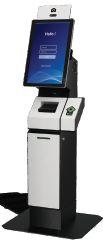
The HID U.ARE.U Camera Identification System can now be incorporated into the Olea HYPERMODULAR Kiosk. Olea selected HID’s system for notable features including: ethically trained with AI to reduce matching bias; ‘In-the-Wild’ recognition (capture and authentication regardless of variances in lighting, backgrounds, pose, expression, etc.); security and privacy with on-device biometric processing. Olea developed the kiosk in response to market demands for customizable kiosks for the security and access control space. www.hidglobal.com
Biometric readers
Telaeris
Smart deadbolt
SALTO Systems
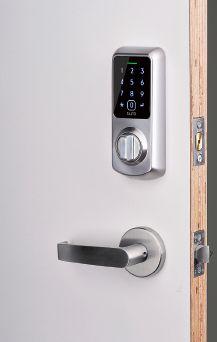
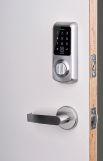
The SALTO DBolt Touch offers a retrofit and smart locking solution for upgrading mechanical deadbolt locks in the multi-family residential market. The smart keypad reader enables PIN-based entry for residents and visitors. For users who require a physical credential, the DBolt Touch series supports smart RFID key cards. Property managers and residents can use a smartphone – including Apple Wallet – to access a property’s various doors, amenities and individual units. www.saltosystems.com
Proximity cards
IDSecurityOnline.com
IDSecurityOnline.com has added a new line of proximity cards with an extra smooth card surface which can be personalized with black text and shipped within two business days. The QuickShip line of products includes printable cards, fobs and clamshell cards. The company offers proximity cards with and without magnetic stripes and also carries cards in PVC and composite PVC/PET construction. An organization’s name can be added for personalization with a maximum of 35 characters. www.IDSecurityOnline.com
Outdoor rated strikes
Camden Door Controls
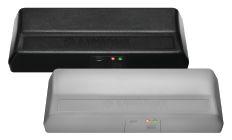
The XPID Series handheld badge and biometric readers are now shipping with the latest Android 13 OS. Telaeris‘ XPressEntry XPID series handheld badge and biometric readers enhance access control by providing a flexible, mobile solution. Handheld badge verification provides security with handheld authentication to control access to and manage any secured space plus entry/ exit tracking. Security with biometrics and multi-factor authentication delivers enhanced identity authentication in high security areas. www.telaeris.com
Access software update
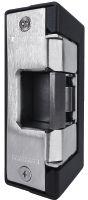
Camden has expanded its line of outdoor rated (gate) strikes to include a new CX-ED1959RM model designed for use with RIM exit devices, with standard or Pullman latches. This complements the existing CX-ED1959-MB model, designed for use with cylindrical locksets. The CX-ED1959 Series outdoor-rated strikes are suited for exposed perimeter doors and gates and feature heavy-duty stainless-steel construction with an integrated ANSI square faceplate, and grade 1 performance. They include a heavy gauge, painted steel mounting box at no additional charge. www.camdencontrols.com
GARDiS access software version 2.6 includes new features such as integration with CCTV VMS platform Hanwha Vision, bringing a host of CCTV and VMS features to GARDiS, and integration with the Calms Visitor Management Platform. GARDiS version 2.6 also includes a number of other enhancements: video verification; video recording playback; enhanced badge design options; automated reports update; and more. www.tdsi.co.uk
Product Previews The latest in security technology
Thermostat protectors
STI
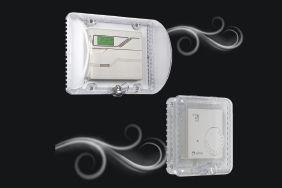
STI’s Thermostat Protectors with a metal key lock (STI-9110) or turn lock (STI-9102) help protect thermostat and energy sensors. The covers mount directly over units to prohibit unwanted access yet allow authorized use with the provided key. Molded of clear, heavy-duty polycarbonate material, these sturdy covers are recommended by the company for areas where abuse is a problem. The frames are designed with slots to allow easy air flow, yet an inner wall prevents tampering with dials and levers.
www.sti-usa.com
Ethernet extender
Antaira Technologies
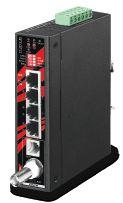
Antaira Technologies has released its IVC-4011-T-V2 Industrial Ethernet Extender for upgrading existing xDSL-infrastructure analog cabling up to 1.2 kilometers. Used in pairs, this device delivers 200/100Mbps asymmetric backbone bandwidth. The IVC-4011T-V2 makes it possible to link two LANs located nearly a mile apart over a long distance point-to-point LAN connection, according to the company. The IVC-4011-T-V2 applies an advanced switching architecture offering four RJ-45 Gigabit Ethernet ports, along with the flexibility of an asymmetric or symmetric Ethernet-over-VDSL connection. The IVC-4011-T-V2 is housed in an IP30-rated metal enclosure and can handle temperatures of -40° to 75°C.
www.antaira.com
School lockdown kit
Morse Watchmans
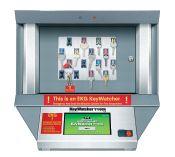
The Emergency Key Grab (EKG) Kit is Morse Watchmans’ proprietary electronic key control system and includes additional materials and support required to provide first responders with fast, secure access to keys. With the KeyWatcher Touch System, critical school keys are securely stored within individual compartments with each key uniquely assigned and tracked using the included SmartKeys and KeyRing. With a unique PIN code or other designated credential, responding officers or school resource officers can retrieve the required keys. www.morsewatchmans.com
Audio monitor panel TOA Canada
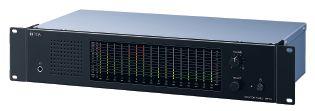
The MP-16 is a professional audio monitor panel, capable of monitoring up to 16 channels at a time. This product was designed to monitor audio signals within a PA system both visually and aurally. According to the company, the product features both ease of use and configurability, including reliable system installation, daily services operations, periodical maintenance services, emergency trouble shootings, and more. This is paired with either the built-in monitor speaker or headphone output for users to test and troubleshoot. www.toacanada.com
Laser projector
BenQ
The new BenQ LH650 4,000-lumen 1080p laser projector delivers twice the pixel density (PPI2) of an average WXGA classroom projector, according to the company, and over two million total pixels on a 100” screen. With 90% Rec. 709 coverage for colour accuracy, HDR10 for video, lower power consumption, centralized software management, and a three-year unrestricted warranty with special education-only pricing, the LH650 is designed with sustainability in mind featuring recycled plastic, a small form factor, and less e-waste. www.benq.com
AI-based PTZ SightLogix
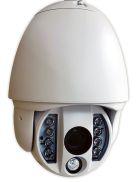
SightLogix has released an enhanced version of the SightTracker PTZ, a smart AI-based camera that automatically zooms and follows outdoor intruders. The PTZ automatically tracks targets without latency or network delays. These new features are available to existing customers through a firmware update, and will be included on all new SightTracker PTZ cameras shipped from the factory. SightTracker PTZ works with SightSensor thermal detection cameras. By re-centring the target up to 10 times per second, the SightTracker PTZ keeps the intruder in clear view with zoomed-in detail. www.sightlogix.com
Safety wearable
Blackline Safety
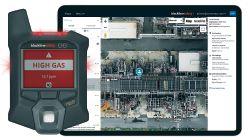
Blackline Safety announced an upgrade to its G6 single-gas detector, which now features the same real-time connectivity as the G7 product line. Additional new features include an emergency SOS that workers can trigger in critical situations to get help, and an expanded suite of data and reporting analytics. The device also supports indoor location technology. G6 is a connected single-gas detector that uses instant cloud connectivity and location technology to help companies better protect their workers in industrial environments where exposure to toxic gases and hazards are common risks.
www.blacklinesafety.com
Cloud solution for NVRs
VIVOTEK
VORTEX Connect is a new feature integrated into VIVOTEK’s latest generation Network Video Recorders, allowing users to connect to NVRs and simultaneously utilize VORTEX cloud services. With features including high-resolution imaging, advanced AI analysis and remote management, VORTEX facilitates enterprises in transitioning to operational cloud solutions, says the company. VORTEX Connect is compatible with VIVOTEK’s new series of NVRs, including ND9326P, ND9426P, ND9542P and ND9442P. VIVOTEK is also gearing up to launch VORTEX Connect PRO. www.vivotek.com
Product Previews The latest in security technology
Fixed gas detector
Teledyne Gas & Flame Detection
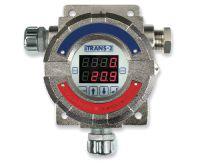
The iTrans 2 fixed gas detector provides one or two points of detection from a single head, with both readings shown on the standard-issue LED and display. Gas sensors are mountable directly to the transmitter or remotely. For detection of explosive and toxic gas, or oxygen, the iTrans 2 accepts infrared, catalytic bead or electrochemical sensors. In addition to the lower explosive limit sensor range, the iTrans 2 is configurable with a 0-100% volume methane infrared sensor for bio-gas applications and CO2 infrared sensors ranging from 0.5% to 100% volume. www.teledyne.com
VMS
Qognify
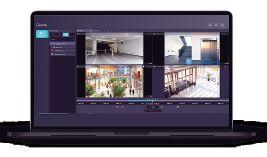
A new component of VMS 7.4 is Qognify Web Client, which leverages the latest streaming technology and places live viewing and playback capabilities in the hands of operators. Investigations are also accelerated through improvements to the forensic search tool QogniFinder, which now supports metadata streams from Axis and Bosch cameras, as well as through a new suite of AI-based video analytics. Powered by SAIMOS technology and available for purchase alongside Qognify VMS 7.4, these include perimeter security, counting, object detection, fire/smoke detection, face recognition and gender/age analysis. www.qognify.com
USB-C hub
C2G
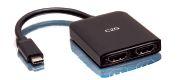
Suited for graphic design, spreadsheet analysis, and digital signage applications, the C2G hub allows a USB-C-enabled device to connect to two HDMI-enabled displays for video mirroring, video extension, or viewing a single video image across two displays. The C2G C2G54540 USB-C to Dual HDMI MST Hub enables users to increase productivity by configuring the hub to work as a splitter with the same video image on each display, extending a video image to multiple displays, or expanding a video image by joining multiple monitors together as one display. The hub supports resolutions up to 4K (3840 x 2160) at 60Hz when connected to a single or dual display. www.cablestogo.com
LED display cover STI
STI’s vacuum formed LED Display Cover helps guard a range of devices against vandalism, as well as dirt, dust and grime. Vacuum formed from PETg, food grade and chemical resistant material, the cover is resilient to most acids, alcohols, salts, hydrocarbons, mineral oils and petroleum. The cover mounts to the wall directly through the product mounting holes. Indoor use is recommended, but the cover can be used outdoors where there is low sunlight exposure. The LED Display Cover is backed by a three-year guarantee against breakage in normal use. www.sti-usa.com
Lifestyle projector
LG Electronics
Network video recorders
March Networks
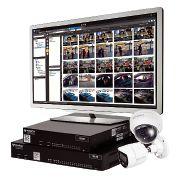
Essential Line (EL) Network Video Recorders are tailored for multi-site businesses requiring up to 16 cameras per location. Both EL models – the EL08 and EL16 –come fully licensed for all channels and do not require annual software maintenance fees. The EL NVRs are compatible with March Networks’ Command Enterprise VMS software and are integrated with Searchlight Cloud. With a hardened Linux Operating System, the EL-Series is cyber-secure with end-to-end encryption and NDAA compliance.
www.marchnetworks.com
Fire detection solution
The LG CineBeam Qube (model HU710PB) 4K model is capable of projecting 4K UHD (3,840 x 2,160) resolution images measuring up to 120 inches. Equipped with an RGB laser light source and LG’s image refining technologies, the new model features a 450,000:1 contrast ratio and 154 per cent coverage of the DCI-P3 colour gamut. LG’s 4K projector comes with Auto Screen Adjustment, which has an auto-focus feature that automatically optimizes image placement and size. www.LG.com
LED signal tower
WERMA
The eSIGN LED signal tower is now available in white. Thanks to electrical modules combined with the latest LED technology, various signalling modes with multiple colours, brightness levels and illuminated images can be implemented. Variable fill level displays or full-surface signalling can also be implemented. Its applications range from simple visual warnings or optical-acoustic alarms to status, fill level or fault indicators, material status or building security. The eSIGN also offers flexibility with its two different sizes: 15 or 9 segments, with or without siren, standard 24 V version with configuration transfer via USB or with IO-Link technology. www.werma.com
Bosch Building Technologies
The Aviotec 8000i IR camera is a video-based fire detection solution. Enhanced AI algorithms allow for greater reliability and accuracy in distinguishing real fire situations from false alarms. The alarm, based on an actual fire, or trouble signals, can be transmitted to a local network, or by two relays, also to the central fire panel. Trouble signals could for example result from a tilted camera, a blocked lens or a power failure. The new camera increases fire safety by providing fire protection with its integrated infrared (IR) illuminator. The IP 67 housing, IR-illuminator, new 4-megapixel sensor and motorized lens are all integrated into one unit. boschbuildingsolutions.com
Product Previews The latest in security technology
LPR camera series
ISS
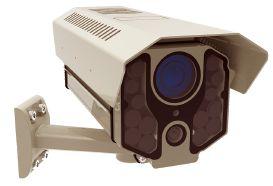
Purpose built for licence plate recognition applications, the SecurOS Motus Pro 702 camera series is available in four different models – 702-E (IR), 702-E (WL), 702-S (IR) and 702-S (WL). While both the Motus Pro 702-E and 702-S series are available with built-in and remotely configurable infrared (IR) or white-light (WL) illuminators, the 702-E line also includes the capability to run SecurOS Auto LPR software at the edge to provide on-board class, colour, make, and model recognition at speeds of up to 250 kph. The Motus Pro 702 series an features IK10-rated aluminum enclosure.
www.issivs.com
Audio receivers
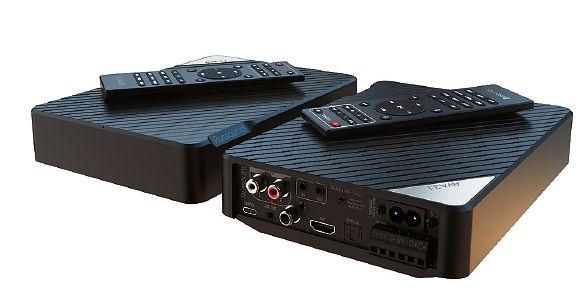
Russound
Russound has released AVA-Series Mini Audio Receivers (MiniAVRs). The AVA2.1 and AVA3.1 Mini-AVRs are designed for custom installation specialists, providing compact, plug-and-play amplification for 2.1 and 3.1 audio systems with Audio Return Channel (ARC) HDMI. Both models include a fully integrated Class-D amplifier with digital inputs, 100240V 50/60Hz universal power supply for installation nearly anywhere, built-in Bluetooth 5.0, dedicated subwoofer output with gain control, and an IR remote control and external receiver. The flexible receivers pair with existing soundbars or speaker setups.
www.russound.com
Multiviewers
RGB Spectrum
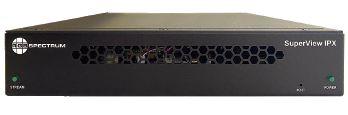
The QuadView and SuperView IPX multiviewers support IP and local baseband sources. The QuadView IPX supports up to four resizable windows containing any IP or baseband content combo. The SuperView IPX supports up to four resizable IP and four resizable baseband sources. www.rgb.com
Edge AI cameras
IDIS
Able to accurately distinguish between humans, vehicles, and other objects, the new IDIS Edge AI camera range reduces false alarms, according to IDIS. The plug-and-play, NDAA compliant cameras are equipped with the up to 98% accurate IDIS Deep Learning Engine on the edge. Twelve new models are being launched across North America, including 2MP and 5MP bullets, domes and turrets, models featuring NIR Lightmaster technology, and outdoor models with built-in heaters. www.idisglobal.com
Digital matrix mixer TOA Canada
In collaboration with Crestron and a software developer, TOA Canada has announced the release of a Crestron 3 and 4-series SIMPL# module suite for the M-8080D digital matrix mixer. Controlling the M-8080D through the intuitive Crestron panels permits even non-technical persons to quickly adjust the DSP’s performance for their business audio requirements, according to the company.
www.toacanada.com
Self-adhesive mount
CableEZ
The CableEZ Self-Adhesive EZMount allows users to secure a cable to a display without the need for tools or infrastructure changes. The EZMount is suitable for portable TVs, concrete walls, and locations where traditional cable installations are impractical or undesired. Designed for schools, offices hotels and more, it protects connections on portable displays, preventing accidental disconnections or damage. EZMount attaches to the display using 3M’s VHB tape for a secure connection. www.cableez.com
Privacy application
Robotic Assistance Devices
SelectBlur is a standalone desktop application designed to enhance privacy and security when distributing and publicizing events captured on video. SelectBlur allows clients to selectively blur faces in video footage, enabling the privacy of individuals who are not the focus of the surveillance. The application supports almost any video format and operates entirely on the desktop. One of the key features of SelectBlur is its ability to process videos quickly and securely, making it a suitable tool for distributing footage without compromising the privacy of uninvolved individuals.
www.radsecurity.com
Gunshot detection data
Shooter Detection Systems
ResponderLink from Shooter Detection Systems (SDS) sends gunshot detection data to a 24/7 call centre, removing the burden of data collection and reporting from employees or security staff who may themselves be at risk. A highly trained call centre professional will then take the responsibility of coordinating the response between 911, first responders and the customer via a shared real-time dashboard, detailing building location, room, and sensor data.