Security Summit Canada highlights Annual conference delivers insights into topics ranging from diversity to alarm deals p. 6
Optimize security systems data
Help your customers realize the full potential of their security technology p. 20 Latest trends in building technology
Access control, surveillance and maintaining harmonious relationships with tenants p. 22
Rebecca Adler-Greenwell
Jason Chiu
EDITOR’S LETTER
TBy Neil Sutton
Customer service priorities
he best way to get an answer is to first ask the question.
SP&T News recently reached out to a variety of security professionals (integrators, vendors, a research consultant and an end user) and asked them for some input on modern technology trends and the enduring value of customer service.
The responses, of course, were varied, depending on the point of view of the respondent and where they sit in the security ecosystem. I like to publish these types of Q&As every year or two to get a sense of where the industry is right now and where it might be headed in the next few years.
The Q&As are always valuable exercises. It feels timely to do this right now, since most of the major concerns that troubled us during the pandemic are in the rear-view mirror and we’re firmly focused on the future.
Some highlights include David Sime’s (of Paladin Technologies) take on the potential impact of using AI tools like the ubiquitous ChatGPT to help draft communications with clients.
David Sulston, security director at Oxford Properties and the 2022 Canadian Security magazine Security Director of the Year, expressed some excitement over the potential of new surveillance tools but also cautioned technology developers to be mindful of their privacy implications.
There’s also Erin Mann of Latch, and an Emerging Leader award winner in 2022, who urged a relentless
focus on customer service throughout the sales process. Whether your interest lies in technology developments, service improvements or big picture issues like economic drivers, you’re sure to find a few nuggets of wisdom in this issue’s cover feature.
In addition, the March/April issue features a recap of our recent Security Summit Canada — you can also find all the event sessions available on our website at www.sptnews.ca/virtual-events.
We try to provide fresh content for the Summit year after year. In 2023, it was a session on optimizing surveillance tools for retail, the importance of diversity and inclusion when it comes to building a successful business, and a panel of industry insiders addressing alarm business valuations. We’ll be back with another Summit in 2024. What would you like to see? Reach out and let us know.
I would also like to acknowledge the amazing contributions of Colin Bodbyl over the nine years he has been writing for SP&T News. His Camera Corner column represents a comprehensive archive of all things surveillance, as well as related topics like monitoring, AI, cybersecurity and much more.
This issue will be Colin’s final column for SP&T as he takes on a larger role within the Stealth Monitoring organization. We would like to thank Colin for sharing his knowledge and expertise with our readers all these years and we wish him all the best.
@SecurityEd
READER SERVICE
Print and digital subscription inquiries or changes, please contact Shawn Arul, Audience Development Manager Tel: (416) 510-5181 • Fax: (416) 510-6875 Email: sarul@annexbusinessmedia.com
Mail: 111 Gordon Baker Rd., Suite 400, Toronto, ON M2H 3R1
Your Partner in Securing Canada Security Products & Technology News is published 5 times in 2023 by Annex Business Media. Its primary purpose is to serve as an information resource to installers, resellers and integrators working within the security and/or related industries. Editorial information is reported in a concise, accurate and unbiased manner on security products, systems and services, as well as on product areas related to the security industry.
Editor, Neil Sutton 416-510-6788 nsutton@annexbusinessmedia.com
Group Publisher, Paul Grossinger 416-510-5240 pgrossinger@annexbusinessmedia.com
Associate Publisher, Jason Hill 416-510-5117 jhill@annexbusinessmedia.com
Media Designer, Graham Jeffrey gjeffrey@annexbusinessmedia.com
Account Coordinator, Kim Rossiter 416-510-6794 krossiter@annexbusinessmedia.com
President/COO, Scott Jamieson sjamieson@annexbusinessmedia.com
EDITORIAL ADVISORY BOARD
Victor Harding, Harding Security Services Carl Jorgensen, Titan Products Group Antoinette Modica, Met-Scan Canada Anna De Jager, TAG Dispatch Roger Miller, Northeastern Protection Service Sam Shalaby, Feenics Inc. 111 Gordon Baker Rd, Suite 400, Toronto, ON M2H 3R1 T: 416-442-5600 F: 416-442-2230
PUBLICATION
Annex
taken in reliance upon information in this publication.
LINE CARD
Security Summit Canada: Technology, diversity and alarm deals
This year’s Security Summit Canada covered a wide variety of topics, including the influence of AI and metrics on surveillance technology, the importance of diversity and inclusion in building a security business, and the factors that contribute to the successful sale of alarm accounts.
The virtual event was held on Feb. 16 with an online audience from Canada, the U.S. and overseas. Event sponsors included GardaWorld, LANVAC, SALTO Systems, simPRO, ASSA ABLOY and SecurTek Monitoring Solutions.
The Summit kicked off with a presentation from Matt Robertson, a loss prevention professional who spent nine years with Sears Canada before joining retail automation provider Focal Systems almost five years ago. He is currently their senior vice-president of global operations.
Robertson’s presentation showcased examples of how surveillance cameras can be combined with AI tools to improve both retail operations and loss prevention. The session was also an opportunity to review some of the major pain points retailers are experiencing today, such as inflation, food waste/spoilage, an overwhelming amount of data to process, and retail theft. The latter is particularly rampant, he noted, with some retailers putting goods under lock and key in an effort to curb shoplifting.
According to Robertson, Focal Systems has developed a small, low-cost camera that can be securely attached to store shelves and gathers data 24/7/365.
The cameras are placed about eight feet apart. For a big box retailer, for example, 400 would be deployed in a single store location. (Focal has installed more than 200,000 of these devices globally.)
AI, combined with camera hardware, “allows you to move forward and make decisions smarter and faster,” he said. The technology will automatically detect low stock and deliver that data instantly, replacing the need for manual inventory processes. It can also detect loss prevention issues such as “shelf sweeps” (shoplifters clearing an entire shelf of goods), as well as health and safety concerns such as blocked exits.
“It is possible to leverage cameras that are cheap and small and easy to use to do things that take us beyond what we ever thought would be
imaginable before,” said Robertson. He advised enterprises to take the plunge with AI, whatever their business. The sooner they start, the sooner it will have a positive impact on their operations.
Robertson’s session was followed by “How Inclusion & Diversity benefits company culture and business success,” led by Yaruba Tate, vice-president of inclusion and diversity at global integrator Convergint Technologies.
Convergint’s diversity initiatives have been underway for the last six years, said Tate. A 20-year Convergint veteran, Tate took on his current role about two years ago.
He initially met with executive leadership and helped establish an I&D council at Convergint to plan a roadmap for the future. “Our vision was to become the most equitable and inclusive global service provider by leveraging diverse talent and creating a culture where all colleagues can achieve their maximum potential,” he said. “Once we got the vision in place, it was key for me to be able to communicate the ‘why’ to leadership.”
Convergint’s I&D vision was aligned with a business case, financial goals and growth ambitions. “These were all the things that were truly going to make us a better organization and make us a better service provider,” said Tate.
Strategic objectives also included: recruiting talent from outside the industry; increasing representation of women and people of colour; and cultivating and expanding relationships with diverse suppliers.
Bringing in employees with backgrounds other than security benefited the organization through the infusion of new ideas and fresh perspectives, said Tate. Creating a safe environment where voices can be heard and “ideas can bubble up” was also one of the program’s ambitions.
Tate described a journey that started with slogans and ideas and progressed into practical implementation and ultimately opportunities for employees, both current and new. At each stage, it was important to set goals and measure progress.
“You know the old saying: Whatever gets measured gets done,” he said.
The afternoon closed with a roundtable discussion on “Maximizing multiples when selling your alarm accounts,” moderated by Victor Harding, principal of Harding Security. Panelists included: Emily McGlenen, director, Acquisition Centre of Excellence, Telus Smart Security & Automation; Chris Welling, director, business development, SecurTek Monitoring Solutions; Henry Edmonds, president, The Edmonds Group; and Patrice De Luca, PDL Consultant.
The panel examined a variety of issues pertinent to both buyers and sellers of alarm accounts, including the relationship between RMR (recurring monthly revenue) and customer attrition.
Attrition is a key factor when assessing a company’s value, noted Edmonds. “Attrition captures a lot of things,” he said. “The quality of the customers... the quality of the service they’ve been receiving... the competitiveness of the rate that you’re charging.”
“It’s a multitude of many different elements,” added McGlenen, “but churn and RMR are definitely at the top.” She noted that it is important to consider the level of service the customer was offered by their previous alarm provider and how that lines up with the acquirer’s own customer service.
Welling agreed with this point, remarking that customer service can vary greatly between providers. “As we all know, in this industry, there’s no bible. Everybody gets from A to B but everybody gets there differently,” he said.
There are other factors to take into account when valuing a company, said De Luca, who noted that customers with life safety (smoke or CO detection, for example) typically have lower than average attrition. The presence of home automation will also tend to reduce attrition.
The panel covered a series of related topics, such as how alarm dealers should best prepare if they are contemplating the sale of their business, and the influence (or lack therein) of the pandemic on the M&A market in alarm and security services.
The complete panel, plus the two previous presentations and all of the Technology Brief sessions, are available on-demand on the Security Summit Canada website.
IPX360 to distribute Luminite Electronics in Canada, U.S.
Milestone celebrates 25th anniversary
Milestone Systems was founded in a Danish basement by John Blem and Henrik Friborg Jacobsen in 1998 with approximately US$11,500 in seed financing. Twenty-five years later, the company has annual revenues of over US$140M and employs more than 1,200 people.
According to the company, its VMS product, XProtect, first became available in Canada in 2002. Outside of its headquarters near Copenhagen, Milestone’s global office locations now include the U.S., Singapore, Bulgaria, Mexico, Australia, India and the United Arab Emirates.
“During the early 2000s, together with three or four other companies, we revolutionized the security industry by leading the transformation from analog to IP
(digital) technology,” said Thomas Jensen, the company’s CEO since 2020, in a statement. “Looking ahead, we are preparing to innovate again. We see a future in which data-driven video technology is a game-changer that will help to make society safer and a better place for us all to work and live.”
Milestone Facts:
• Milestone traces its origins back to an idea for transferring financial data from the stock exchange
• The company added a human rights clause into its end user licence agreements in 2009
• The first version of Husky, Milestone’s hardware product, debuted in 2013
• Milestone was acquired by the Canon Group in 2014
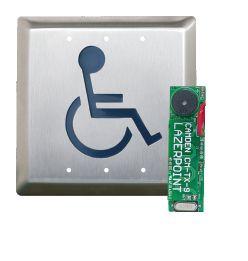
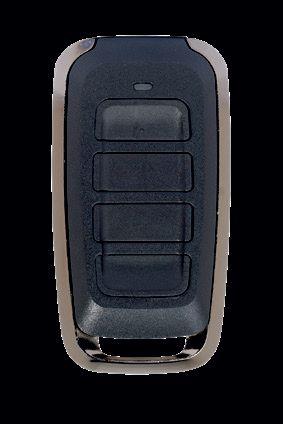
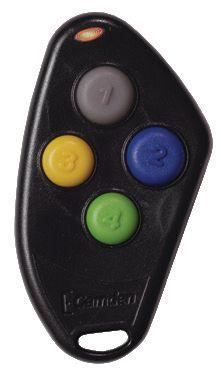
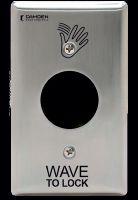
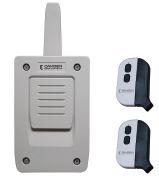
Camden offers the perfect wireless solution for any door control project, including ADA compliance, high-security encryption, the option for HID and HID iClass coils, and the widest selection of relay or Wiegand output receivers.
LINE CARD
Applications
Utah school district deploys video platform
Granite School District in Salt Lake City has selected the CompleteView video management platform from Salient Systems to deploy in more than 130 schools, administrative offices and other facilities.
Granite School District, which is one of the largest in the U.S, will connect more than 5,000 cameras to CompleteView with the help of its integrator partner, Utah Yamas Controls, based in Draper, Utah. According to Salient, the system will help protect 60,000 students and 7,500 staff members.
“School districts such as Granite not only require a robust platform for surveillance but one that can also accommodate new innovations in school security and operational efficiency technology,” said James Stephens, western regional sales manager, Salient Systems, in a statement. “By leveraging CompleteView’s open platform approach, the district will not be limited to specific camera vendors, analytics providers, or other thirdparty integrations they might like to implement.”
Appointments
People-counting in Japan
The City of Ise, Japan, was conducting a traffic flow investigation once a year mainly through manual observation. To improve traffic analysis, the city planned to combine traffic flow data with IP cameras and AI.
VIVOTEK SC8131 Stereo Counting
Network Cameras were installed at seven locations in downtown Ise, including shopping areas and a historic restaurant, offering a comprehensive 3D people flow counting solution.
Through machine learning, the camera’s analytical ability will be continually optimized. Video images will be converted into data and provided to shops and stores as references for store layout and promotion, enabling business decisionmaking and enhancing operational efficiency.
VIVOTEK partnered with ForceMedia to ensure integration and also co-operated with local company EBILAB to integrate weather conditions, people flow characteristics and event influences.
Surveillance expansion for Brazilian transit
São Paulo Metrô in Brazil has deployed the SecurOS FaceX solution from ISS (Intelligent Security Systems).
The solution is utilized on a transit line with approximately 1,400 cameras deployed across 18 stations and two railyards.
New cameras are also being installed on several other train routes. In 2021, ISS began work on the most recent expansion of the metro’s security system, which is intended to cover 55 additional transit stations over the next few years and create a surveillance footprint that includes more than 5,000 cameras.
The monitoring system is connected to a centralized control centre that enables real-time detection of suspicious activity and triggers alerts. It also provides object identification and tracking, as well as intrusion detection, detection of missing persons and passenger flow counts while meeting national data protection regulations.
• ISS has appointed Charles Vancheri as associate director of distribution partnerships for North America.
• Erin Mann, manager, Canada, Latch, has expanded her responsibilities to include the role of channel enablement manager for Latch’s North American business.
• NorthPoint Sales, a Torontobased manufacturer’s representative firm, has hired Ryan Gallagher as an
March 28-31, 2023 ISC West Las Vegas, Nev. www.iscwest.com
• Edmonton-based Incident Xpress announced the appointment of Dana Adams to the position of vice-president of business development.
• Bruce Bianco has joined
ACRE as the new general manager of Canadian operations.
• Ann Murphy has been named as SALTO Systems NA marketing manager for Canada.
Charles Vancheri Erin Mann Ryan Gallagher Dana Adams
Bruce Bianco
Ann Murphy
Big Picture and Details in one view.
• Panning & tilting
• Auto tracking
• Panoramic views
• Close-up views
• AI analytics
• Smart linkage
• Low-light imaging
• Weather resistance
• Live Guard
• Cost Effective Technology
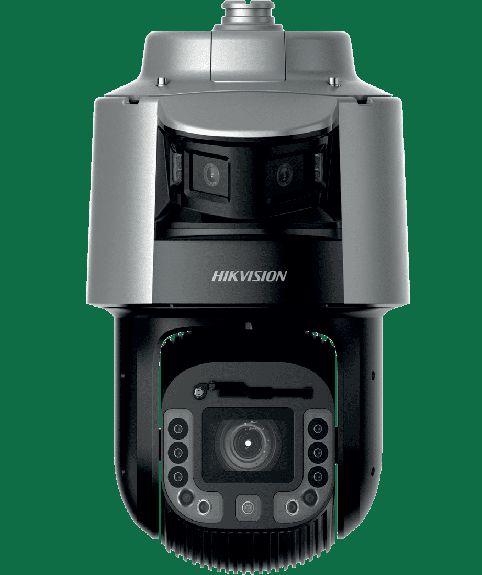
The TandemVu technology features Hikvision’s next-generation camera design, integrating multiple lenses in one unit to provide big picture and small details in tandem.
Equipped with this technology, our new TandemVu PTZ cameras keep the overall view even during the pan, tilt, and zoom maneuvers. Users will see everything and miss nothing at any given instant, getting great situational awareness from the moment they set the camera up.
LEARN MORE
Security ONE invests in Alarm Systems
Security ONE Alarm Systems, based in Leamington, Ont., recently announced a majority equity investment in Belleville, Ont.-based Alarm Systems.
Chris Neumann, president and CEO, Security ONE, said the investment opens up new opportunities for the company and will provide a base for future expansion.
He added that Security ONE has continued to grow organically and has conducted a series of small acquisitions over the last decade, but Alarm Systems represents its largest investment to date.
The deal makes sense for a number of reasons, said Neumann, particularly in terms of Ontario geography. Security ONE’s home base of Leamington is located near Windsor in the west; Alarm Systems has a customer base
“We now have a truly provincial network and we’re looking to add to it.”
— Chris Neumann, Security ONE
that stretches from the GTA to Ottawa. The combination of the companies means they can collectively cover markets across the province.
“We now have a truly provincial network and we’re looking to add to it,” said Neumann in an interview with SP&T News.
“We are excited to welcome Security ONE Alarm Systems as a majority equity partner,” said Kristin Crowe, president of Alarm Systems and an SP&T News Hall of Fame inductee, in a statement. “Their expertise and resources will be a valuable asset as we look to continue to grow and innovate
in an ever-changing competitive landscape.”
“We’ve known Alarm Systems and Kristin for close to a decade,” added Neumann. “We were looking to expand. We always had ambitions to grow.”
The combined organization comprises a staff of about 120 employees serving more than 20,000 residential and commercial customers. Neumann said his company’s customers are roughly a 50/50 split between residential and commercial. The latter is experiencing the fastest growth but “we’re still very active in the residential space.”
Alarm Systems recently cele-
Commercial Intrusion
Just Got an
Upgrade
brated a half-century in business. Neumann said the Alarm Systems name and branding will be retained to recognize that heritage. “It has 50 years of history. They’ve built up a tremendous reputation over those years,” he said.
The companies will be able to capitalize on synergies, such as combined purchasing power and shared resources, said Neumann. He added that Security ONE’s offerings in the MPERS space could also be expanded to include Alarm Systems’ customers.
For example, Security ONE supports a wrist wearable product with smart watch capabilities and two-way voice. On the commercial side, Neumann anticipates further growth in its proactive video monitoring business.
— Neil Sutton
By Colin Bodbyl
External factors that are shaping surveillance CAMERA CORNER
Camera technology has come a long way, but the next big steps may come via other industries
Iwould like to talk about external influences on the security industry that I enjoy tracking and believe could have a big impact on its future.
Privacy and regulation
Politicians and governments around the world are now heavily involved in the regulation of both privacy laws surrounding surveillance and the specific products allowed in their country or region. While Canada has taken a less aggressive stance on these topics, it is certain to follow suit eventually. As more countries put pressure on suppliers to meet certain requirements, we can expect to see manufacturing shift across the globe and with it, changes to prices, quality and innovation.
GPUs
Graphics processing units (GPUs) are the backbone of machine vision AI but have also been a key component in the mining of cryptocurrencies. With cryptocurrency mining moving towards a new technology — called application specific integrated circuits (ASICs) — demand for GPUs has dropped off and prices have followed. This is in turn reducing the cost of AI, both on premise and in the cloud. As GPU costs continue to drop in the coming years, AI will become cheaper to deploy. This will allow surveillance vendors to not only make AI more of a standard offering, but also enable new innovations which were previously difficult to justify with the cost of GPUs.
Solar power
The two largest cost drivers of a video surveillance system (outside of the cameras) are power and internet. Both require extensive cabling which, when combined with the labour required to run cables, has a significant impact on the overall cost of a project.
Cameras can be solar-powered, and many options already exist for achieving this, but they are either costly or not reliable. The main driver behind this is the cost of battery technology. Lithium-ion batteries (the technology that powers cell phones and electric cars) are small and versatile, but also expensive. Lithium-ion is also difficult to ship due to safety regulations and is
“One thing is for certain, this industry is not slowing down.”
not ideal for environments where temperatures go below freezing.
Fortunately, the battery industry is innovating at record speed to keep up with the growth in demand for electric cars. Any progress in battery technology that can overcome the current limitations faced by car manufactures will ultimately benefit the security industry and make it much easier to support solar-powered cameras.
Mobile internet
Once power can be generated locally using solar energy, the only remaining reason to run cabling is for internet connectivity. Cellular technology is constantly improving, and with the introduction of 5G, running security cameras on cellular is easier than ever. Prices, however, need to come down for any integrator to be able to justify a single mobile internet connection for every camera on a site. This will change eventually, both reducing installation costs and making it more practical to use cloud-based surveillance technology.
Storage costs
Finally, storage costs continue to drop and out-
pace the needs of most surveillance systems. As these costs come down, cloud services will become cheaper, further reducing the need for onsite equipment. For cameras with built-in storage, manufacturers will eventually be able to move away from SD cards completely, instead using much more reliable solid-state drives which today are only found in premium camera models.
The industry continues to evolve, but where the limits in the past were based on camera technology, today factors external to the industry might have an even bigger effect. Political changes could drive the industry in a direction we never expected, while innovation in technology dependencies could make systems both cheaper and more accessible for many. It is difficult to predict what the video surveillance industry will look like 10 years from now, but one thing is for certain, this industry is not slowing down, and the future is bright.
In closing, this will be my last column for SP&T News. Writing this column has been an absolute pleasure. It has challenged me to explore complex topics and study the industry I love. I was honoured to be given the opportunity to write for SP&T in 2014 and will always be proud of the work we published together.
Colin Bodbyl is vice-president and general manager, Stealth Monitoring (www.stealthmonitoring.com).
Launch Your Business
You acquired a security company or expanded into the alarm industry
Your business is a growing concern and you need cash flow to fund your growth
You need support when loading and servicing alarm customers
You need access to quality security products, reliable suppliers and dealer pricing
Grow Your Business
Your current dealer program is limiting your growth
You need stable and predictable funding
You need to invest in inventory, staff and marketing
You want access to new lines of business
Simplify Your Business
You’ve built a successful business and now it’s time to reap the benefits of your hard work
You need to turn equity into cash for life’s special moments
You need to remove administrative headaches (billing, collections)
You need stable and predictable cash flow but retain ownership of your business
Sell Your Business
You’re ready to live your dreams
You need to maximize your payout
You have a time-line and you need an experienced buyer who will navigate a smooth transition to the finish line
Your customers need world class monitoring with continuing service and support
LESSONS LEARNED
BBy Victor Harding
Anticipating the M&A market for 2023
Deals were closing frequently in 2022 — expect the trend to continue this year
y now most of my readers should assume that if deals can close throughout the pandemic then there is almost nothing that can stop deals from closing.
It is true that deals continued to happen all across the security industry in 2022. It is good news that people, capital and companies continue to want to invest in the security industry and that most parts of our industry are showing growth. We should be thankful for both of these facts.
My own brokerage business and my reading suggests that the alarm and guard sectors appeared to be the busiest for deals in Canada this past year.
“The alarm and guard sectors appeared to be the busiest for deals.”
The alarm industry
Aside from the bread and butter smaller deals that happen year in and year out, there were some larger deals done in 2022. Telus bought Vivint’s large block of accounts in Canada. Like the ADT Canada-Telus deal, which closed in 2019, this is another example of a large U.S. player selling their Canadian operations to a Canadian company.
Carrier Global Corp. sold Chubb Fire and Security worldwide operations to APi Group Corp. based in Minnesota.
Securitas, originally known as a worldwide guard company, bought Stanley’s electronic security business. GardaWorld, based in Montreal, and also originally a guard company, bought Liberty Security based in Edmonton to establish a base in the electronic side of the industry outside Quebec. Finally, AvantGuard, part of the U.S.based Becklar company, bought Armstrong’s National Alarm Monitoring based in the Maritimes in a move to expand their wholesale operations across North America.
During 2022, the blocks of alarm accounts between 1,000 and 5,000 in Canada were almost all done by the usual buyers in the Canadian alarm industry: Telus, a.p.i., Securex Financial and SecurTek. Mostly these blocks came up for sale because the owners wanted to retire. This
baby boom retirement trend will continue in 2023. It is only when we get down to the smaller blocks, 100-500 accounts, that regional and smaller players within the alarm industry show up as buyers.
It is noteworthy that the vast majority of alarm deals done over the last 10 years in Canada regardless of size have been done by what we call “strategic” buyers as opposed to “financial” buyers like private equity or private investors. Sellers should note this. Strategic buyers are larger players in the same industry and they are generally doing what they call “tuck-in acquisitions.”
Very little private equity or family office money bought into the alarm industry in the last year. The alarm industry is lucky to have these larger strategic buyers because they often pay more than private equity, they generally have lines of credit already set up and most importantly they have experience in doing deals. It is always easier doing a deal with an experienced buyer.
There is no doubt that the mover and shaker in the alarm industry in Canada these days is Telus. The other buyers are having to up their game or simply not get any deals done. As a result of all this, if you have more than 300 accounts, I would argue this is a very good time in Canada to be selling! Who knows how long these higher multiples will last.
What about this year? Even with interest rates climbing in 2023 and Canada being threatened with a small recession, I don’t see any of this buying activity slowing up.
The guarding industry
The reasons for the sale of guard companies vary but the issue of finding and replacing
guards to fill contracts is greater today with the labour market being as tight as it is. The annual turnover in the guarding industry is always high but today employers are having to work harder and pay more per hour to find entry-level guards. Also, there is the issue of raising your prices on the customer side to keep up with the rising cost of labour.
The good news is that there is a handful of larger guarding companies in Canada looking to acquire other guarding companies. There are economies of scale in the guarding industry plus the opportunity to acquire regional or national accounts as customers if you can show that you have the ability to handle the business.
The largest deal in the guarding industry worldwide was the Allied Universal deal to buy G4S including its operations in Canada. This potentially adds Allied Universal to the list of potential buyers in the future in Canada. Closer to home, SSC Security Services out of Saskatchewan bought the guarding side of Avante Logixx, called Logixx Security, to establish itself as a major player in the industry and someone to watch. (I personally like the messages coming from their CEO.) Much like on the alarm side, most of the deals in the guarding industry are being done as strategic buys by larger players in the industry.
My sense is that to be attractive to the big, national buyers on the guard side you have to have to be doing almost $10 million in annual revenue. There are other industry players looking to buy the smaller guard companies ($2- $7 million) as well but I have found there are a lot of “tire kickers” in this space.
Guard deals take longer to complete than alarm deals and deals being done by buyers new to acquisitions will take longer to do. I sense there is more turmoil in the guard space and I think 2023 will see several sellers in the market and buyers there to snap them up.
Overall, most sectors in the security industry have been quite resilient over the last few difficult years. Although 2022 was somewhat slower than 2021, there were still lots of deals done. I don’t see that changing much in 2023.
Victor Harding is the principal of Harding Security Services (victor@hardingsecurity.ca).
By Patrick Straw
Major initiatives underway CANASA UPDATE
t is busy times at the CANASA office. We are in the process of elections for our regional councils across the country and for our board of directors which are scheduled to be completed by June. We have had an amazing response from association members who want to get involved — not only with our regional councils but also with our working committees.
Applications are also being accepted now for participation in our scholarship program. We are very proud of this program — it enables us to assist those on a path to a successful career or someone who wants to enhance an existing career by upgrading their skills through education. If you are interested, visit www.canasa.org for all the details or contact me directly. We extend a special thank-you to Johnson Controls, Liberty Security and Wesco for supporting and sponsoring our program this year, and we look forward to handing out cheques right across the country.
Security Canada
Security Canada is ramped up and ready to go after a very successful reboot in 2022. Booths for both Laval, Que., in April and Vancouver in June sold out in record time and we are months ahead of schedule in preparation for Canada’s largest security show in October in Toronto.
There are still booths left, but I can assure you they will sell out before the summer. If interested, contact me at pstraw@canasa.org or Steve Basnett at sbasnett@canasa.org.
Steve has done an excellent job this year and we have added some new features to allow attendees to view an interactive floor plan for better scheduling while visiting our shows.
Conestoga Alarm Technician Course
Speaking with Don Willis, program coordinator for the Protection, Security and Investigation
program at Conestoga College, I was pleased to hear that last year they had 180 enrollments in this program. Registration for the Spring Semester opened Feb. 27. We encourage future students as well as employers to check the program out.
Why join CANASA?
We are working continuously to offer enhancements to our industry through education, networking, social events and Security Canada, which brings the industry together to do some serious business.
We are also involved behind the scenes representing our industry with the Canadian Association of Chiefs of Police, the Ontario Solicitor General’s office, ULC, and other groups in the country that affect our industry.
If you are part of the industry and you are not a member, I would love to chat with you.
Patrick Straw is the executive director of CANASA (www.canasa.org).
Patrick Straw
HOW TO SUCCEED IN 2023
We asked experts from across the security industry to offer advice, tips and opinions to help us make sense of the year ahead.
In the security industry, technology is continually being re-evaluated and upgraded, while the importance of great customer service remains a constant. SP&T News recently reached out to a group of security professionals and asked them: What should security integrators, dealers and related industry professionals be thinking about this year to ensure customer satisfaction and results?
The advice that came back covered everything from a solutions-focused sales approach to taking stock of economic trends and understanding how they will ultimately affect your customers’ appetite for change.
Tracy Larson, President and Co-Founder, WeSuite
Eliminate surprises! We’re still dealing with a lot of uncertainties in the market.
There are labour shortages, supply chain issues and quickly rising prices. Everyone understands that. However, security integrators must still meet customers’ expectations. Those problems can’t become an excuse for inaccurate quotes and missed installation deadlines.
Security integrators must communicate with
customers, upfront, the possible challenges a project may face and establish mutually agreed upon plans to address them.
For example, are they willing to substitute parts if availability becomes an issue? Would they prefer partial project delivery even though labour will cost more? Is there an absolute deadline by which the system must be installed? The integrator must understand where there is room for flexibility and where there isn’t. Then, they must quote in a way that takes all of these considerations into account. Sales software can help. It makes it much easier to quote various options, add contingency pricing, and generate comprehensive proposals with current terms and conditions, substitution clauses and pricing expiration dates.
Highly detailed quotes benefit everyone. The client understands exactly what to expect, while accounting and operations have clear guidelines for proceeding. Ultimately, the only surprises should be good ones, like the project delivered ahead of schedule and under budget!
“The integrator must understand where there is room for flexibility and where there isn’t.”
—Tracy Larson,WeSuite
Zoran Trgacevski, District Sales Manager, Canada, i-PRO
Cybersecurity continues to be a big part of the industry conversation at all levels.
Particularly for IT departments, it’s top of mind. Recent breaches like the one at a major hospital in Toronto keep the topic in the news, and people are doing their research. While NDAA compliance isn’t required in Canada, we’re seeing this come up in RFPs and conversations. This focus speaks to the convergence in security and IT infrastructure and the need to firm up that chasm.
The other driving concern among security professionals is the need to do more with less. We see two areas of advancement rising to help organizations achieve that goal — advanced analytics at the edge and multi-sensor cameras.
While the ability to pinpoint people and vehicle by attributes in seconds versus hours is a huge advancement over simple analytics, the game changer is that this advanced AI is now available at the edge — which means there can be significant cost savings and simplification in terms of server hardware. The move away from single lens fixed cameras to multi-sensory PTZs speaks to the availability of security infrastructure that takes up less space and covers more ground, requires less cable and fewer licences. These give organizations more value in a smaller footprint.
Max Burgess, Director of Global Business
Development, BCD
What happens if any item in your surveillance solution fails? Are you prepared to handle any situation that comes up? In order to ensure that your customer is satisfied with the results, you need to make sure your system design is fully protected over the entire span of your warranty. Customers who are short-sighted and only focus on the cost up front tend to run into more maintenance and warranty issues in the long run. You want to make sure you are asking your suppliers and manufacturers the correct questions to avoid any potential loopholes down the road if a failure were to occur. Rarely do solutions have zero issues over the course of their warranty, but the more proactive you can be, the more likely you will have a satisfied customer, which will lead to repeat business.
Elizabeth Parks, President & CMO, Parks Associates
Security providers need to be thinking about retaining their current customers, offering new value-added services, and attracting the DIY segment.
Parks Associates shows younger generations are more likely to self-install, while Boomers and older prefer professional installation. Gen Z, Millennial, and Gen X respondents strongly prefer DIY solutions to pro installation. Gen Z and Millennial respondents have become accustomed to shopping and completing purchases without talking to sales or customer representatives. DIY solutions allow purchases to be completed with more price transparency online.
“As the housing market slows, professional security providers will need to look to other avenues to attract new subscribers.”
— Elizabeth Parks, Parks Associates
Security dealers should offer their DIY customers add-on services. Parks Associates research of 10,000 U.S. internet households show DIY customers with higher interest in subscribing to a variety of add-on services than customers with professionally installed security.
Security providers are adding value to traditional monitoring services with new lines of business. Vivint, Alarm.com, Ring and ADT all have vehicle monitoring solutions on or coming to the market. Cybersecurity services are another hot area of interest to both segments but require the development of new expertise or partnering with cybersecurity providers.
Recent advancements in video analytics, specifically face recognition software, provide another opportunity for new revenue streams for providers. Google and Wyze currently monetize face recognition capabilities for video devices. With consumer demand for advanced video analytics strong, much of the market will want to capitalize on these opportunities.
Consumers are experiencing exceptional rises in the cost of living, and high interest rates continue to depress the housing market. As the housing market slows, professional security providers will need to look to other avenues to attract new subscribers. Parks Associates shows seven per cent of pro-install security systems were acquired because “it was already in the
house I moved into.”
Under these circumstances, security providers seek growth from several avenues:
• M&A: Large security providers and monitoring centres seek to acquire smaller ones. ADT acquired IOTAS to power its growth in the MDU market. Vivint was acquired by NRG. Growth by acquisition is in full force and expected to continue in 2023.
• Monitoring expansion: Providers are expanding into new areas such as solar, vehicle security, video storage, professional monitoring, etc. Ecobee, Brinks, ADT, Google and Amazon all have made recent moves that cross the energy-security divide, while players like Notion have added professional monitoring service options for their customers.
• Intelligent systems: Smarter systems improve the value proposition of home security systems. AI, video analytics and add-on smart home devices increase system pricing, open after-sales opportunities and drive higher-priced service tiers.
• Partnerships: ADT received an astounding US$1.2B investment from StateFarm, signaling the end of insurers’ tepid smart home trials and real investment in the possibilities of a smarter, risk-averse home.
In 2023, expect residential security providers to continue to push the envelope on product innovation and services they provide in order to increase revenue in a market of slowing adoption.
Robert Harman, Director of Sales, North America,
Ajax Systems
Dealers/integrators need to continue to stay up to speed to make sure they are offering their customers the right solutions. Consumers expect ease of use, aesthetically pleasing devices — and both while offering technology that reduces false alarms. For example, the advancements in visual verification combined with ease of deployment have made it easy to offer technology that significantly reduces false alarms. Within seconds, both the end user and central station can have multiple snapshots of what caused the sensor to go into alarm, helping to decide what action should take place. In addition, you can quickly have visual verification of smoke during a fire alarm and can share with the applicable parties. I strongly recommend you stay close to your industry associations, central stations, distributors and manufacturing partners to ensure you are armed with the latest information.
David Sulston, Director of Security, Oxford Properties
(Security Director of the Year 2022)
From an end-user perspective, perhaps the most important consideration is the ability to solve a problem the client is encountering in new and innovative ways. Physical security measures play a crucial role in ensuring the safety and security of users in various settings, including homes, offices and public places. Over the years, there has been a shift in the way physical security is approached, and it has a significant impact on user experience.
The key drivers we are seeing post-pandemic are the decline of resources, both financial as well as available workforce. The possible solution is the integration of physical security measures with technology. This integration allows for real-time monitoring, remote access control and automated alerts in the case of security breaches. However, this integration also raises concerns about cyber threats and data privacy.
The ability to track an individual’s (or group’s) current and historic movement, behaviour and activity has the potential to greatly improve security, but it also raises new security and privacy concerns that must be addressed.
With the ever-changing legislative decisions related to privacy as well as the exponential growth of potentially invasive technology, the ability to walk the fine line between the protection of assets while staying attentive to solutions that may simply not be palatable to the public, will be a significant value-add to consumers and the public at large.
Sam Smith, Solutions Developer, Delco Security (SP&T News Integrator of the Year 2022)
In 2023, we expect to see a lot of old trends continue to evolve plus some new trends become more predominant. Of course, cloud storage and AI are expected to continue to produce novel ways to manage security. Cloud storage will move processes off site, reducing on-site IT and hardware requirements. AI will move some of the mundane tasks from humans to machines, freeing up human resources.
One of the existing trends expected to con-
tinue to grow and evolve is the use of mobile credentials. Using both mobile devices like smartphones and smart watches are offering new ways to provide identity verification to security systems without issuing physical cards or other traditional RIF devices.
Another technology that is expected to continue to grow is biometric verification. Biometric verification has evolved from simply hand or face geometries to AI-driven analysis of facial patterns, gait and other forms of biometrics that do not require touch. AI systems are trained on how to recognize various forms of identity falsifications and biometrics, through cameras, can move verification from being just a one-time authentication as you enter a building to continuous verification as you move through any camera view.
Wireless technologies is another expected trend. As 5G ramps up with improved security protocols, expect to see wider use of 5G-enabled IoT devices to further augment security systems in ways that might be very different and exciting.
Achieving customer satisfaction can best be accomplished by prioritizing the customer experience at every interaction. A deep understanding of customers is central to a successful customer experience strategy. Companies need to conduct qualitative customer insights, market research and competitive analysis to build a well-mapped and supported customer journey. Understanding the needs, wants and requirements of the customer helps organizations tailor their product and service offerings appropriately. Rarely generating the same buzz as other best practices, a commitment to customer experience ensures that customers have a positive experience with your people, products and services during both preand post-sale moments. Creating feedback loops
“Creating feedback loops for customers is critical to ensure your product is performing well and filling a need.”
— Erin Mann, Latch
for customers is critical to ensure your product is performing well and filling a need, also allowing internal teams to ideate and iterate on improvements that will help the end user.
David Sime, Executive VicePresident, Technology, Paladin Technologies
Fundamentally, our industry protects assets. However, it is built on relationships. Who knows who, and who do I trust? What technology solves my business problems and who has used it successfully before? The human element of the channel, from the manufacturer to the customer, is fundamental. As anyone who has participated in this industry knows, there is also rigor in most procurement processes. Sometimes the rigor is valid due diligence, and sometimes it’s checking boxes. AI like ChatGPT will disrupt this interaction this year. When a buyer is asking you to “describe” a process, or a quality program, or even your delivery plan, a marginally passable response can be churned out by these tools in a few keystrokes. I don’t condone using these tools, but they will be used. If you’re going to use AI to support your technical writing, use it as a tool and don’t depend on it. Use AI to inspire content, not to create it. Don’t be the first of many to get caught doing so.
“The human element of the channel, from the manufacturer to the customer, is fundamental.”
— David Sime, PaladinTechnologies
Strategies for direct marketing and cold call emails will also change. Especially for sales that exist in the “long tail of the market” (high volume, low value). As an end user, how do you distinguish interactions from an AI script? Our industry will be encouraged to leverage and enforce more reliance back to our roots and real human interaction.
I encourage end users to be mindful of the content that is being pushed out to you daily. Read and interact with intention. When Bob sends you an email and it doesn’t sound like Bob sent it, Bob’s reputation is ruined. We remain a relationship-based industry that leverages technology to solve complex problems. Let’s not forget the humanity in it all.
Sanjay Challa, Chief Product Officer, Salient Systems
The ongoing debate of open vs. closed systems will continue to influence end-user buying decisions in 2023. The choice between interoperable solutions and proprietary systems is often about whether end users are looking for a turnkey solution compared to a more custom best-of-breed and tailored solution. Smaller and mid-market companies will likely be more interested in the turnkey solutions provided by a single vendor, while enterprise-level companies traditionally gravitate toward investing in customized solutions that are more likely to address their unique security challenges.
This dynamic will most likely impact the deployment patterns of video surveillance systems — completely on-premise, hybrid or cloud-based — that we will see in 2023. This is driven primarily by the move to cloud, but the broader trend is the amount of effort it takes to deploy, monitor and maintain the video surveillance system. Because the cloud requires less total cost of ownership and cloud access
can be intuitive, it is driving interest for solutions that can be hosted in the cloud. This also opens up a growing number of opportunities for the role of the integrator as part of the rise of cloud and Video Surveillance as a Service (VSaaS) offerings.
Yaron Zussman, General Manager, Magos Americas
The shift in economic conditions over the last year will have definite impacts on the landscape of startups in the security market. The “free money” we have seen from investors has funded many new entrants in the market, particularly in the AI space, which has inflated valuations. Integrators can expect to see some of these companies, particularly those with weak business models previously buoyed by investors, struggle in 2023.
It remains to be seen whether these economic conditions will have any meaningful impact on the explosion of AI and Machine Learning in security, as the growth of those
technologies in the market is already well underway. This is driving new levels of false alarm reduction for end users, in particular for perimeter detection, with more sophisticated ways to classify potential threats, improved alerting and better overall system monitoring.
Leo Levit, Chairman, ONVIF Steering Committee
We are seeing increased demand from end users to integrate video into larger IoT systems. In particular, building automation systems are becoming more mature and see huge value in surveillance cameras as a sensor to provide more information to the overall system. There is currently not a lot of standardization in this area, but it is an area where ONVIF specifications can help pave the way with interoperability and camera connectivity.
Helping to drive this demand is also the development of new chipsets that are making cameras more powerful and a more valuable contributor as part of the multiverse of sensors within a building.
MAKING THE MOST OF SECURITY SYSTEMS DATA
Today’s technology is capable of generating a vast amount of information. Here’s how to help your customers unlock its full potential.
By Rebecca Adler-Greenwell
Organizations of every type and size are often looking to make more informed decisions.
Rather than implementing a new information gathering system, many are now looking to analyze the data already being collected by their physical security systems.
Security departments are often sitting on an immense amount of data collected by video cameras, access control devices and other connected physical security devices. Whether on the edge or the server, analytics can transform this information into smart, actionable insights. The results can be used to not only improve security but also many other business functions, including effi-
ciency, operations, customer service and revenue generation.
For systems integrators, this ability to access and use data from physical security systems can create many new opportunities to develop a more meaningful, long-term relationship with customers, adding value that competitors will find hard to match. In addition to the foundational work of installing cameras and sensors, integrators can suggest new technologies or training to help customers identify ways to use their system to gain the insights they need to make better business decisions.
Helping your customers maximize their investment in security systems
Clarity of intention is key to get-
ting the most out of a security system’s available data. Deciding what information is most important and meaningful helps to cut through the immense volume of data and possibilities. As an integrator, you can take input from the customer and help them recognize the data that is most meaningful for their goals.
When your customers are first considering a new system, they may only be looking at the ways it can be used for certain functions. You can partner with the customer to show how their system can potentially do more than they initially considered and help them reach additional business goals.
By discussing these goals early in the process, you can better un-
derstand the customer’s reality and lay the groundwork to continue working together, knowing what is most important to them.
Throughout the process, you can guide the customer by asking the right questions to help them realize the potential of their system to provide insights and actionable data.
Your customers may not always be up to date on the latest possibilities for their system. Your team can help explain new advances in security software features.
Then, you can help the customer find a solution that will provide access to the data they are seeking and present it in an easy-to-read format, such as a visual dashboard or graphical report. This can help
you and your customer identify and track the key performance indicators (KPIs) that matter most for their goals.
Configure and optimize your customers’ system implementation
A key step in a comprehensive system design that provides actionable information is identifying all the stakeholders and users of the system at the beginning of the process. After all, it may not be only the organization’s security team who could benefit from accessing the data collected by the system.
Team members in maintenance, marketing, operations, IT or even human resources may have their own uses for the data collect-
“Maintenance, marketing, operations, IT or even HR may have their own uses for the data collected by video cameras.”
ed by video cameras, sensors and access control systems. Bringing more stakeholders to the table near the start of a project illustrates that this is a holistic solution that brings value beyond security.
Data analytics such as foot traffic can help the marketing team see what areas are most frequented. People counting tools can help determine which queue lines are the longest so the operations teams can plan appropriate staffing. As a systems integrator, you can help the customer recognize new possibilities from their security software.
As your relationship with your customers grows, you may even consider suggesting additional devices and software solutions to better address their needs. An open architecture, well-configured system can be expanded to add more data points without overwhelming the operator by filtering out irrelevant information. If multiple departments are using the system, you can even help your customer create different dashboards for different groups, so each team can focus on what’s most important to them.
Best practices to use and manage security system data
Although technology today is getting better at automating certain processes, human intelligence is required at every step of the way. An operator is needed to define what data counts, how it should be tabulated, and validate that the data collected is in fact what is needed to meet the desired outcome.
An operator also needs to identify and systematize the steps of all automated processes, script the standard operating procedures (SOPs) that define how to respond to different kinds of scenarios, and, of course, make judgment calls when required. That’s why it is important to design systems that improve operator efficiency and make it easy for your customers to onboard new staff and maintain consistency.
As the amount of sensors and resulting available data grows, there is potential for an operator to be
overwhelmed with notifications if the system isn’t configured to filter out irrelevant information. By implementing more sophisticated logic, a systems integrator can help the customer limit notifications to those that match certain criteria. This helps your customer identify actual problems amid ordinary events, while also avoiding operator burnout.
For example, people sometimes accidentally leave doors open. Implementing sophisticated logic, you could limit notifications from those accidental events and only send alerts when the door is forced open and someone also crosses through, or if the door is open without having someone badge the lock within the last five minutes. Combining these kinds of if-then rules with well-constructed SOPs makes it easier for operators to react efficiently and effectively when necessary.
A modern, unified system can also collect data that will help your customer forecast when it’s time for preventative maintenance. The result of fewer breakdowns and system interruptions due to mechanical issues could offer a huge value in operational efficiency. For example, an access control system could notify operators when a door opens and closes a certain number of times and reaches a threshold for required maintenance.
Operators can work with an integrator to define what to track and when to trigger a maintenance call. They can also identify who should receive those notifications and what process they will need to follow.
Often, SOPs are developed by the client, but some full-service systems integrators have added this to their portfolio of services. Others have developed relationships with consultants that they can refer and collaborate with on implementation. Your software partners may also have examples of SOP templates that you could share with customers as an example or adapt for your own needs.
Benefits for integrators
When systems integrators help customers realize a return on invest-
ment using actionable data from their security systems this leads to long-term account retention and increased profitability. Likewise, the most successful integrators today know that taking the time to ensure customers are equipped with the training and expert assistance they need to use their system to its full capabilities saves time in the long run and improves the customer experience.
Taking steps to truly understand a customer’s business goals and developing the expertise to translate that into well-designed and efficient systems helps you become a trusted advisor. The sheer variety, velocity and volume of data we have at our fingertips today can be overwhelming. The integrator’s industry knowledge and close relationship with their customers makes them a valuable resource to help customers cut through the complexities of the vast amount of data and become clear about the questions they seek to answer or the goals they have.
They can then help customers identify which data is most relevant, how to gather that data, and what workflows and SOPs can be put in place to maximize a return on investment through their security system. This can best be achieved through a unified platform that allows all systems to operate together seamlessly and presents the resulting data through a single user interface.
Look to manufacturers for the support they offer. Some provide tools or service offerings to complement the resources you offer. These can address different aspects of the customer lifecycle such as system design and configuration, upgrade assistance, health and safety checks, or upgrade planning to determine the scope and mitigate potential risk factors. They can also help you with support, services, certifications and training to get the most out of the systems you install.
Rebecca
Adler-Greenwell is the senior channel enablement manager, North America, Genetec (www.genetec.com).
EMERGING TRENDS IN BUILDING MANAGEMENT
Effective property management combined with comprehensive security solutions makes for a more harmonious relationship with tenants
By Jason Chiu
Property managers today have many responsibilities and there’s a lot at stake in terms of risk.
They must ensure the security of their property, its ongoing maintenance, and address the concerns of their tenants while ensuring their safety. Some condominiums in Canada have almost 800 units and keeping track of the entire building along with its tenants can become incredibly complicated.
To efficiently oversee the many aspects of a building’s continued smooth operation, it is essential to streamline security, maintenance and tenant feedback. If a property manager can refine even one of these three factors, then they can give the other two increased attention and consideration. To start with the simplest of the three: here’s how property managers can streamline tenant feedback.
Tenant
concerns
According to studies, the most common complaints put forward by tenants are related to common area upkeep, disorganized management, no response to maintenance concerns, security issues, poor lighting, and lack of preven-
tive maintenance. Of these concerns, disorganized management is what will inevitably make other issues worse. An organized property manager can effectively receive and address tenant concerns in reasonable time, and these concerns often cross over into security and maintenance issues.
There should be numerous, simple ways for tenants to reach out to management or staff regarding any concerns they may have. Property managers can also take the initiative to contact tenants proactively to ascertain any difficulties they might be facing. If the approach is not too formal, then tenants feel valued and heard. If tenants feel valued and heard, then half the battle has been won and it is time to finish things off by resolving their issues.
Resolve issues quickly and be responsive
An excellent property manager is not just one who resolves issues in an instant. Some complaints are more complex or require more involved solutions which may take an extended amount of time. Keeping tenants up to date regarding their concerns is also incredibly important. If a complaint is taking longer to address, but the tenant is not being kept up to speed, then they won’t know what’s going on and will likely become increasingly frustrated. For some, just having the knowledge that their issue has been acknowledged
“Modern building management technology can make security simple and centralized.”
and is being worked on is enough to assuage their concerns.
For example, if maintenance issues are a common complaint, then property management should have professionals prepared to perform the necessary repairs and upkeep work. Most often, delays in complaint resolution are due to a lack of availability of relevant industry workers who can solve maintenance-related problems. Once tenants feel their concerns have been heard, and a system has been established for tracking the status of issues and the resolution, property managers can design a comprehensive maintenance plan.
Maintenance
If proper and regular maintenance is performed, your building’s safety, structure and security will be improved. Failure to conduct proper maintenance can lead to not only tenant dissatisfaction, but a decrease in building security. If aspects of building security, such as lights, intercoms, access units, locks, or answering units are not correctly maintained, they could malfunction and put the safety of a building’s tenants at risk.
If tenant feedback is properly and swiftly addressed, maintenance is regularly scheduled and performed, then remaining responsibilities for the property manager are around building security measures. Modern building management technology can make security simple and centralized for property managers and allow them to focus on the other important aspects of running their building effectively and within budget.
Modern building management solutions
Leading companies in the building management industry offer complete portfolios for MDU installations, including intercoms, answering units, access units and more. An entire building could be outfitted with a single company’s high-quality offerings or could instead integrate new products into their existing building management systems.
One of the most effective ways to increase building security is through the installation of a robust access control system. Modern systems limit who can enter the building and can enforce specific limitations for different entrances and timeframes.
For example, they might lock the service elevator entrance overnight, even for registered residents, but allow access during the day during reserved hours. All kinds of people come and go through condos, such as guests of residents, repairmen, deliveries and other services. A professional property manager must maintain a careful balance between security and hindering the lives of residents.
Intercom systems
Modern, premium intercom systems are making residents’ lives easier than ever. They are also efficient for property managers, as they are easy to install, easy to configure and easy to maintain.
Top-level offerings are water-resistant, dust-resistant and vandalism-resistant. Necessary software updates can be provisioned through a centralized application, and there is no longer the need to run proprietary analogue cables of all different types throughout a building. Modern solutions can be connected via regular ethernet cable, which will provide power and connectivity on an IP network. Even if running cable is too difficult, perhaps in an older building, there are now LTE solutions which can be installed, granting residents access to crisp, two-way voice communication with visitors without the complications posed by cable installation work.
Intercom systems can be compatible with a dedicated mobile application, which enables residents to see who is requesting entry to their unit, even on the go. If a resident is expecting a visitor, but is away from home
and running late, they can still receive notifications from their building’s intercom system and remotely allow guests entry. A resident could be in another country, and still grant unit access to a delivery courier bringing them an important package. Since they receive a high-definition video feed on their mobile device, they can clearly see who is trying to gain entry and turn away unfamiliar faces if necessary. Modern intercoms also come equipped with video cameras capable of infrared night vision, enabling residents to recognize visitors even in total darkness. These advances offer increased security over simple buzzer or call-based intercom systems, as they can easily identify exactly who is requesting access to their unit and turn them away accordingly. Even if an MDU has a modern intercom but chooses to forego installing modern answering units for every resident, an image of a visitor’s face can be seen through a mobile companion application or delivered via email to the resident.
This freedom of choice, while still offering powerful security solutions and convenience for residents, is what makes modern building security solutions more attractive than ever. The ability to install LTE units to avoid running ethernet cable has already been touched on, but it is possible to upgrade the intercom system without installing answering units, or just install secure access units along with an intercom, and so on. The flexibility provided by modern building security solutions is one of their biggest selling points, as it grants property managers of new and old properties the ability to increase security incrementally. If a building already has answering units installed, they can upgrade their existing intercom and secure access systems and integrate them with existing solutions. The concept of upgrading an entire building using a complete portfolio of products initially sounds like a daunting and expensive task but being able to pick and choose what is most important and achievable for a MDU at a given time is invaluable.
Answering systems
Modern answering units and systems have evolved far beyond receiving a phone call and inputting a button press or rushing to the front door to respond to a buzz from the lobby. Current, high-quality products offer luxurious displays that can receive calls, connect to a video intercom to show residents who is trying to gain entry, and even integrate with home automation systems.
Video from answering units can be viewed as needed, allowing residents to review missed calls along with an image of the caller. Modern answering systems come equipped with touchscreens which enable simplified setup, use and configuration. Units provide high quality audio and video, allowing residents to carry out clear conversations and accurately identify visitors.
Installation of modern answering units is a breeze, with top-level offerings connected and powered via a single ethernet cable. If new cabling can’t be installed, certain companies offer Wi-Fi enabled versions which can accommodate older buildings and allow for quicker installation processes.
Units can come equipped with Android OS support, which allows for easy installation of third-party applications, such as smart home control or monitoring applications. This means a resident can control lights, blinds, thermostats and other smart home devices, all from their answering unit. They can also, through a mobile companion application, access their answering unit remotely to utilize all its features, including watching past video footage and reviewing missed calls, from anywhere in the world.
Secure access systems
As a property manager, who can access the building and when they can access the building are two of the most important factors in keeping a building secure. Traditionally, this took the form of hundreds of physical keys, which must be catalogued and kept track of to ensure an uninvited guest does not gain unauthorized access to the structure. Modern access systems have begun utilizing RFID cards which can grant access to the building and be remotely deactivated if lost or stolen. This offers better security but is still bogged down by the need to physically distribute cre-
“If security is supported by integrated network solutions, then property managers can devote more time to maintaining the quality of a building.”
dentials and replace them if an authorized user loses them. This could also lead to situations where authorized users are unable to enter their unit, if they happen to forget their card at home, for example.
The emerging trend in secure access systems is the transition to mobile access systems, which can open doors much faster through pre-authentication technology, detect when an authorized user is approaching a door as opposed to leaving a door or simply sitting near an entrance, and operate on secure Bluetooth channels using AES-128 and RSA-1024 encryption keys. These access units eliminate the need to distribute physical credentials or RFID cards, as they can be opened with fingerprints, PIN codes and mobile devices. If a contractor is coming to perform repair work, their mobile device can be authorized before they arrive, and deauthorized after the work is done to maximize convenience and minimize security risk.
Complete control and monitoring
The biggest benefit to modern building security solutions is their centralized quality. From one station, and one piece of software, an entire building can be managed and overseen, down to each individual intercom and access unit. Top companies offer software solutions that are available as a virtual machine, which means they can be easily scaled and deployed to any server
WOMEN IN SECURITY
regardless of operating system.
Centralized device management enables a property manager to manage access to the building and monitor the status of access control units in real time. Firmware updates can be pushed in bulk with just a few clicks, ensuring continuous optimal performance and security of all devices. The software will grant access to detailed logs and instant alerts which can be sent via email or appear in the software itself. If an incident has taken place, relevant figures can be granted full access to camera logs at specific timestamps to review footage and better understand chosen events. Visitors can be granted credentials or time-limited access to individual areas remotely, and an audit trail can be kept for compliance purposes.
Streamlining operations with end-to-end solutions
Ultimately, if a property manager chooses high-quality, intelligent technologies that can be easily installed, maintained and integrated then they’ve made their job more straightforward, and the lives of their residents more comfortable. In the case of upgrading an entire building with brand new devices in every residential unit is too expensive or complicated, then reputable surveillance companies may offer solutions which can be easily integrated with existing hardware and software.
The total security of the building can be monitored from a single server running administrative software, with the ability to allow specific individuals access to areas at certain times, and remotely allow visitors access to the building. If security is supported by integrated network solutions, then property managers can devote more time to maintaining the quality of a building and quickly responding to tenant concerns. Both are conducive to a safe living environment.
Jason Chiu is the Professional Services Group Manager, Canada, with Axis Communications (www.axis.com).
Product Previews Access Control
Access and power integration solutions
Altronix/TDSi
Altronix has partnered with TDSi, a supplier of integrated access control solutions, to offer new access and power integration solutions that are UL294 listed for access control systems. Altronix Trove1 series supports TDSi’s GARDiS access controller modules which are DIN Rail mountable while combining Altronix power distribution options that are customizable to support multiple controllers and locking devices. Pre-configured kits are also available. www.altronix.com
Iris readers
Iris ID
Iris ID says its IrisAccess iCAM 7S Series of Advanced Multifactor Biometric Iris Readers are tested and verified to meet the SIA OSDP Secure Profile communications standard for access control security and interoperability. Bidirectional communication inherent with OSDP solutions allow the readers to talk directly to the centralized management platforms. Currently, the Iris Access iCAM 7000S, iCAM 7010S, iCAM 7101S, and iCAM 7111S solutions have all been OSDP Secure Profile Verified. www.irisid.com
Electronic locker system
Morse Watchmans
SmartKey electronic locker systems are a solution for securing, tracking and controlling access to larger objects. Set up SmartKey Locker systems as a personal metal locker storage space for one or multiple users. SmartKey metal locker cabinets are engineered for complete interactivity with other business systems such as access control. www.morsewatchmans.com
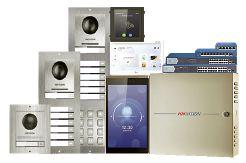
Video intercoms Hikvision
Hikvision access control and video intercom product lines include entryway and internal intercom stations using IP or two-wire communications, single and multi-door access controllers, and a variety of both smart managed and unmanaged PoE networking switches. The intercoms also work with video security cameras and can be centrally managed via the HikCentral VMS. Applications for these products include single family residences, multi-family apartment and commercial buildings. www.hikvision.ca
Product Previews Access Control
Access control platform
Sielox
Sielox has enhanced its Pinnacle 11.0 Access Control Platform with pre-emptive intelligence. Hundreds of user-selectable filters provide users with real-time data on virtually every aspect of access activity and system status. These enhanced capabilities are available to new and existing Pinnacle users with current support agreements. Pinnacle 11’s innate intelligence allows users to leverage pre-emptive data and advanced notifications for a range of applications. Pinnacle 11.0 is immediately available for upgrading existing systems as well as for new installations.
www.sielox.com
Data centre security
Boon Edam
Security revolving doors and mantrap portals installed at a data centre lobby can detect unauthorized entry attempts, including piggybacking and tailgating to prevent unauthorized access in real-time, and triggers a visual, audible and electronic notification via the PACs. Security mantrap portals equipped with biometric multifactor authentication technology enforce a confirmed single entry by means of an overhead sensor system called StereoVision. Once a user presents their credentials and the door opens, StereoVision scans the compartment, verifying the user is alone.
www.boonedam.com
Wireless relay receiver
Camden Door Controls
Camden introduces its CM-SR Series standalone 2 channel wireless relay receiver and encrypted fobs. CM-SRX2 relay receivers support up to 30 transmitters. IP65 weather-resistant, they feature a built-in antenna for mounting both outdoors and indoors. The two Form C contacts are rated 1 A @30 VDC. CM-WTX2 ultra compact fobs are 868 Mhz. transmitters with high security rolling code, with 19 trillion combinations. The CM-SRFM2 system kit includes one high security stand-alone wireless receiver and two transmitters. www.camdencontrols.com
Lockdown system
IPVideo
Sentry ERS is a lockdown system with K-12 schools and campus environments in mind. With the push of the lockdown button on the base unit, the entire school lockdown protocol is initiated. This includes doors locking, PA announcements and activation of strobe lights throughout a facility. Audible lockdown messages are played, location beacons are provided, police dispatch is notified, and push notifications are sent out to security. Each unit comes with a dedicated mobile smartphone. www.ipvideocorp.com
Hydraulic gate operator
Nice
Nice announces the next generation of SlideDriver from HySecurity: SlideDriver II hydraulic gate operator. The latest iteration utilizes the new SmartTouch 725 control board. With over 20 added features, including an improved user interface, the revamped controller delivers smart capabilities to the SlideDriver II, while offering integration with the HySecurity Installer App. Through the app, users have the ability to connect wirelessly with the controller to change settings, make adjustments and run diagnostics. www.hysecurity.com
Door controller Gallagher
Gallagher announces their solution for single door access control, the Controller 7000 Single Door (C7000 SD). The new device is compatible with existing sites using the Gallagher Controller 6000 and security site management software, Command Centre. The C7000 SD retains capacity to manage new features added in future Command Centre releases, including Command Centre Web, Gallagher’s web-based security management system. It is designed to plug into the ethernet and sit discretely on the wall above the door or in the ceiling space. The C7000 SD supports five million users with a single credential. security.gallagher.com
Swing handle solution
EMKA and iLOQ
The EMKA Group and iLOQ have partnered to develop a smart and secure access man agement solution for swing handles used with outdoor housings and telecommunica tions cabinets. The iLOQ S50 half cylinder lock is fully integrated into the swing handle. The lock is opened using the power from an NFC-enabled smartphone making it a battery-free solution. Access rights to open the lock are sent to an app running on a smartphone. NFC technology, combined with cloud-based SaaS, PKI, mutual authentication and strong AES-256 encryption, has enabled iLOQ and EMKA to produce smart locking technology.
www.iloq.com
AI-assisted access control
Vintra
Vintra announced a new module for its Vintra Fortify platform. Vintra Guard, available as an additional module for Vintra Prevent, enhances real-time monitoring and enterprise alerting by incorporating video-based identity verification for access control management. Initially integrated with the C•CURE 9000 Security + Event Management System (other integrations will be introduced in 2023), Vintra Guard will automate two-factor identity verification for C•CURE users, incorporating video analytics into a powerful access control system to automatically detect unauthorized access. vintra.io
Product Previews The latest in security technology
Copper cabling systems
Leviton
ATLAS-X1 SST: The global Cat 6A UTP structured cabling system features ATLAS-X1 jack modules and SST cable, suited for mission critical applications. EXTREME SST: The enhanced global Cat 6A UTP structured cabling system features EXTREME jack modules and SST cable for enterprise, government or smart building applications. EXTREME 6: A global Cat 6 structured cabling system that features EXTREME jack modules, Cat 6 cable, and is ideal for commercial applications.
www.leviton.com
NVRs i-PRO
i-PRO announced its new NU-Series network video recorders, NDAA compliant with intel CPU. The models are available in 4, 8 and 16 channel configurations with in-built PoE(+) power and a slim form factor. The NUNVRs work with i-PRO’s or any other manufacturer’s cameras, needing only to be plugged into an HDMI monitor. The new line also brings AI-based analytics to small and medium businesses. More powerful analytics for complex uses can be achieved with i-PRO Active Guard, in combination with a PC and WV-ASM300 management software.
www.i-pro.com
VMS
Qognify
Qognify VMS 7.2 comes with extended support for body-worn video, additional functionalities to support investigations, and a new web client architecture. In addition to supporting further video sources, Qognify VMS 7.2 offers new enterprise-class capabilities to simplify investigations and enhance privacy. Cameras, maps and layouts can now be provided with logical labels and thus be grouped accordingly. Qognify now also provides cloud storage offerings.
www.qognify.com
Industrial-grade gateways
Moxa
The AIG-100 Series of industrial-grade gateways support data conversion and reliable transfer from Modbus TCP/RTU/ASCII devices to Azure, AWS and MQTT cloud platforms. The benefits of the cloud can be extended from the plant floor to remote field sites where sensors, meters and inverters collect data critical to the IIoT’s convergence of operational technology with information technology. To bridge the IT/OT gap, the gateways have built-in traffic monitoring and diagnosis tools. www.moxa.com
Product Previews The latest in security technology
Perimeter detection
Magos Systems
Blue Force GPS tracking leverages GPS technology to recognize authorized personnel as “friendly forces” when their presence is detected by the Magos radar. Using a dedicated application installed on the mobile device carried by security personnel, the Magos MASS+AI management software correlates GPS data from the device with radar detection data and signals to security system operators that the person is not a threat. “Friendly” status can be easily added or revoked in the MASS+AI software or in an organization’s integrated video management software (VMS) platform.
www.magosystems.com
Power amplifier
Bosch
The PRM-4P600 is a multi-channel power amplifier for driving sound systems in commercial installations. With a total amplifier power density of 600 watts and full flexibility over its four channels, the PRM-4P600 fits small to mid-sized commercial installations, such as retail stores, restaurants, and more.
The PRM-4P600 features an industrial design housed in a robust enclosure that takes only 1RU of rack space and requires minimal ventilation space. Designed as a convection-cooled power amplifier, it operates silently, making it suitable for quiet environments. All the amplifier’s channels can be driven in 4 ohms, 8 ohms, 70 V or 100 V without compromising the available output power.
www.boschsecurity.com
Video bar
Hall Technologies
Mercury is an all-in-one conferencing and collaboration tool. The video bar offers wireless screen presentation capabilities, camera auto tracking, speaker tracking, and presenter tracking. The HT-MERCURY is a video bar with an ultra-wide angle 4K AI camera, microphone and speaker featuring wireless screen presentation capabilities. It includes a built-in Wi-Fi module and offers multiple connection options, including AirPlay, Miracast, Smart View, HT-Voyager and physical HDMI and USB-C ports. Connecting to the HT-MERCURY using any of these methods can project the video from the connected device to the connected display.
www.halltechav.com
Digital menu boards
CrimsonAV
Crimson’s indoor/outdoor mounts offer a method of communicating a brand’s products and services with their customers via a mounting solution. The product line can include a single display panel solution, and scale up to as many displays as needed for a location, according to the company. The outdoor Digital Menu Board (DMB) solutions are robust with IP56 ratings for temperatures of -20F to 122F and are wind load rated up to 140 mph. QSR options were made to support Samsung 55” OHF displays within high-impact steel structures. www.crimsonav.com
AI security system
VIVOTEK
Videoscope
Teledyne FLIR
The Extech HDV700 High-Definition Videoscope brings to market a versatile device to support automotive, building inspection, plumbing, manufacturing and HVAC personnel with camera probe options for inspecting difficult-to-reach areas. With a selection of eight easily-maneuverable, narrow and waterproof (IP67) probes, professionals can inspect pipes, air ducts and more, thanks to the various fixed and articulating probe options. Weighing only 705g, the HDV700 allows for comfortable, single-handed inspection via the colour capacitive touch screen.
www.flir.com
Push buttons
VIVOTEK’s AI security system, VAST Security Station , is available to users in three tiers: VSS Lite, VSS Standard and VSS Professional. VSS Lite is the base tier and free to use, VSS Standard is designed to be cost-effective for SMEs, and VSS Professional is geared for medium to large enterprises. VSS offers a range of advanced network security management tools. VSS is a surveillance platform that combines advanced AI and edge computing technologies to achieve accurate facial recognition and vehicle detection in real-time by integrated cameras, according to the company. www.vivotek.com
Cloud fire platform
Johnson Controls
SafeLINC is a cloud-based data-hosting infrastructure that gives users the ability to remotely access and gather actionable data from their suite of fire alarm control units. SafeLINC provides users with a cloud-connected gateway and a cloud application platform accessible via web browsers and native iOS and Android mobile apps. The SafeLINC gateway device is installed into Autocall 4007ES, 4010ES and 4100ES fire alarm control units by adding a card. Once connected to the internet, the gateway sends data from that specific control unit to the Johnson Controls Fire Detection Cloud Platform. www.autocall.com
STI
STI’s Stopper Station push buttons aid in rapid response to critical incidents. The multipurpose push buttons are available in six colours, with 10 button activation choices, and standard or custom labeling (in virtually any language). Optional illumination allows users to easily find the push button when lights are turned off for safety reasons or while in a dark corridor. The 12-24 volt LED insert illuminates red, green or white. Several tough polycarbonate protective covers with or without a siren are available. Buttons are listed to UL and cUL standards and are ADA Compliant. www.sti-usa.com
Audio for high ceilings.
AXIS C15 Network Pendant Speaker Series
AXIS C15 Network Pendant Speaker Series make audio announcements smart and easy. With two different sizes, these all-in-one solutions offer easy installation and are ideal for mounting in high ceilings. Multipurpose and easy to integrate, they can be used to make general live or prerecorded voice messages, deliver safety instructions, proactively warn off intruders and to play background music.