HID’s head of mobile outlines the future of proximity cards and what’s next for credentials p. 7
How to grow business relationships
Your and your company’s success depends on a much larger ecosystem of contacts p. 10
ULC redundancy requirements for central stations
Monitoring facilities explain how they’re getting ready for the 2025 deadline p. 18
14 Top 10 Under 40
For
FEATURES
18 Countdown is on for central stations
Canadian monitoring stations outline their business plans and technology upgrades as the new ULC redundancy requirements are set to take effect By
Neil Sutton
lock
EDITOR’S LETTER
WBy Neil Sutton
Mobile access on the rise
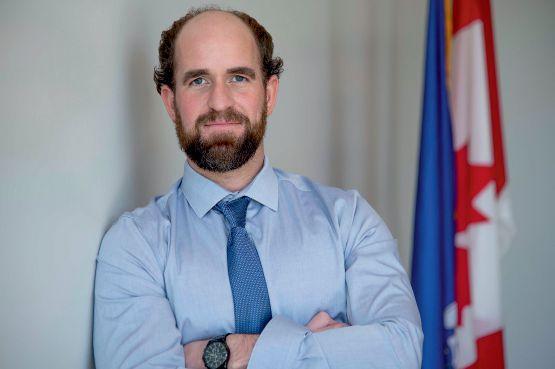
hen I recently conducted an interview with Sanjit Bardhan, HID’s head of mobile, we spoke about many issues affecting the evolution of access control, including the future of plastic access cards.
I remember first learning about mobile credentials close to a decade ago and the technology seemed to be off to a slow start. SP&T News even published a cover story in 2019 called “Are smartphones opening doors?”
Here we are five years later and the market has apparently shifted. Keycards still vastly outnumber mobile credentials as means to open doors, but in a few more years that will probably no longer be the case. (Read the full story on access control trends and HID’s latest physical security report on p.7.)
with Bardhan was his acknowledgement that while mobile devices may be the future of access control, plastic cards aren’t likely to disappear any time soon. It can take a long time for people and organizations to shift over to new technology and infrastructure, depending on their appetite for change and willingness to make the necessary investments.
“College campuses are an early adopter of mobile credentials.”
There are a variety of factors influencing this transition, including cost, ease of use (few people forget their phones at home, but cards are a different matter), and sustainability (fewer cards means less plastic).
The security industry witnessed a similar transition from analogue to IP cameras. It took a number of years for us to reach the point where the latter began to outnumber the former, but once they did, there was no looking back.
That said, legacy technology can be incredibly resilient and tends to hang on stubbornly for years, even decades, after some people have effectively written it off.
What I found most interesting about my discussion
Nostalgia and an appreciation for the physicality of objects can also prolong their lifespan, in some cases leading to a resurgence in popularity (think vinyl records or mechanical watches). While I doubt anyone will mourn the eventual loss of their keycard, you can never underestimate people’s attachment to “things,” no matter how trivial they might seem. One factor that is helping to hasten the future of digital credentials is their use in college and university campuses. In our discussion, Bardhan pointed out that post-secondary campuses are an early adopter of mobile technology and as more students enter the workforce, their expectation will be they receive a similar credential to access their place of work.
Speaking of the future of security, make sure you check out our annual Top 10 Under 40 feature in this issue and read the comments from all of this year’s winners. If you want to know what the future holds, they are definitely the right people to ask.
@SecurityEd
READER SERVICE
Print and digital subscription inquiries or changes, please contact Shawn Arul, Audience Development Manager
Mail: 111 Gordon Baker Rd., Suite 400, Toronto, ON M2H 3R1
Your Partner in Securing Canada Security Products & Technology News is published 5 times in 2024 by Annex Business Media. Its primary purpose is to serve as an information resource to installers, resellers and integrators working within the security and/or related industries. Editorial information is reported in a concise, accurate and unbiased manner on security products, systems and services, as well as on product areas related to the security industry.
Editor, Neil Sutton 416-510-6788 nsutton@annexbusinessmedia.com
Group Publisher, Paul Grossinger 416-510-5240 pgrossinger@annexbusinessmedia.com
Publisher, Adam Szpakowski aszpakowski@annexbusinessmedia.com
Associate Publisher, Jason Hill 416-510-5117 jhill@annexbusinessmedia.com
Media Designer, Graham Jeffrey gjeffrey@annexbusinessmedia.com
Account Coordinator, Kim Rossiter 416-510-6794 krossiter@annexbusinessmedia.com
CEO, Scott Jamieson sjamieson@annexbusinessmedia.com
EDITORIAL ADVISORY BOARD
Patrick Soo, Alarm.com Floria Chiu, Telus Custom Security Systems Stephen Karchut, Alarmtech Val Michetti, HID Frank Pietrobono, RSPNDR
111 Gordon Baker Rd, Suite 400, Toronto, ON M2H 3R1 T: 416-442-5600 F: 416-442-2230
PUBLICATION MAIL AGREEMENT #40065710
Printed in Canada ISSN 1482-3217
Annex Publishing & Printing Inc. disclaims any warranty as to the accuracy, completeness or currency of the contents of this publication and disclaims all liability in respect of the results of any action taken or not taken in reliance upon information in this publication.
LINE CARD
Applications
Heathrow’s security infrastructure managed from central platform
London Heathrow Airport handles approximately 80 million passengers and 14 million tons of goods annually.
The airport has deployed Genetec Security Center to bring its IP security systems onto one unified platform. Initially a 2,000-camera deployment in 2016, the security system has since quadrupled and current incorporates video, access control, LIDAR, analytics, LPR, and more. Genetec solutions are also used to monitor over 150km of baggage belts and facilitate the daily entry and exit of more than 150,000 vehicles.
Genetec Security Center currently supports 90 different stakeholder groups at Heathrow working across 110 control rooms. Customized dashboards enable teams and third parties, such as police, airlines and retailers, to focus on specific tasks. For example, some operational staff are given the tools to monitor passenger flow and are automatically notified when security lines grow too long.
Appointments
Toronto Zoo selects mass notification platform
The Toronto Zoo has selected the Everbridge mass notification system to help safeguard its more than 1,000 permanent, part-time, seasonal and volunteer staff, as well as to be available to alert the zoo’s approximately 1.3 million guests per year.
The zoo is home to roughly 3,000 animals and spans 500 acres.
Everbridge’s mass notification system broadcasts critical information and alerts across multi-channel communications including SMS, email, desktop alerts, and voice, according to the company.
“Guest and employee safety remains paramount at the Toronto Zoo, and Everbridge offers the sophisticated solutions we need to help us protect our staff, visitors and zoo community, while rapidly communicating vital information during an emergency,” said Dolf DeJong, CEO, Toronto Zoo, in a statement.
• Nice announced the appointment of Senthoor Navaratnam as the chief product officer for North America.
• Hardip Sohi-Bains has joined Milestone Systems as the company’s chief people and culture officer.
• i-PRO appointed Gerard Figols as chief product officer, responsible for driving product strategy globally.
Casino resort deploys 600-camera system
The new GoldenEye Hotel and Resort located on the Bulgarian and Turkish border is using a 600-camera video surveillance solution from IDIS.
The camera system provides visibility over gaming tables and public areas, a real-time monitoring platform and options for AI analytics.
The solution, installed by partner Volga Elektronik, covers the casino, hotel and parking facilities.
The set-up includes a combination of IDIS 12MP Super Fisheyes, 8MP IR and 5MP IR dome cameras, which allows for surveillance of all internal areas, plus targeted coverage of priority locations such as cashier cages and slot machines. According to IDIS, gaming tables can be monitored in detail, with operators able to identify card suits and quickly detect any suspicious activity.
External areas, including parking bays and entrances, are covered using IDIS 5MP IR bullet cameras and 2MP IR PTZs. The system also comprises seven 64-ch NVR recorders, and IDIS Solution Suite VMS and Critical Failover.
September 12, 2024
ADI Expo Vancouver Vancouver, B.C. www.adiglobaldistribution.ca
September 23-25, 2024 GSX Orlando, Fla. www.gsx.org
October 5-9, 2024
TMA Annual Meeting U.S. Virgin Islands www.tma.us
October 8, 2024
Canadian Security Honours Toronto, Ont. www.canadiansecuritymag.com
October 8-9, 2024
Securing New Ground New York, N.Y. sng.securityindustry.org
October 10, 2024
ADI Expo Ottawa Ottawa, Ont. www.adiglobaldistribution.ca
October 22-24, 2024 Sector Toronto, Ont. www.sector.ca
October 21-22, 2024 CANASA Monitoring Symposium Toronto, Ont. www.canasa.org
October 23-24, 2024 Security Canada Central Toronto, Ont. www.securitycanada.com
• Montreal-based Genetec announced the appointment of Jason de Souza as the new managing director for Latin America & the Caribbean (LATCAR).
• Shawn German recently joined Ajax Systems as the territory sales manager for Eastern Canada.
• TOA Canada has appointed Warren Strem as its new national sales manager. Strem was previously a TOA regional sales manager.
Senthoor Navaratnam Hardip Sohi-Bains
Gerard Figols
Jason de Souza
Shawn German Warren Strem
HID outlines major access control trends, including mobile adoption
HID recently released its 2024 State of Physical Access Control Report, identifying five of the major trends shaping access control.
The report, which was produced by IFSEC Global in partnership with HID, is the result of a survey conducted with more than 1,200 security professionals globally. The survey took place between November 2023 and January 2024.
The trends are as follows:
1. Mobile access and digital ID are set to become ubiquitous
The report indicates almost 40 per cent of organizations are actively using mobile identities.
2. Open standards are driving the smart buildings phenomenon
Report data indicates that about half (48 per cent) of responding organizations have access control systems in place that, to some extent, can be used to monitor building usage throughout the day.
3. Sustainability is becoming a greater influence on business decisions
About two-thirds (63 per cent) of respondents said that those with responsibility for sustainability within their organizations are consulted or have some influence on decisions to do with upgrading access control systems.
4. The rise of AI
According to the survey, 38 per cent said they are looking to incorporate artificial intelligence or machine learning into their access control systems (though the same number were also not sure what the benefits were).
5. The growing role of biometrics
By 2031, the worldwide market for biometrics is expected to reach US$136B while the global facial recognition market alone is predicted to grow to more than US$16B by 2030, up from US$3.83B in 2020.
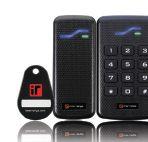
HID launched its first mobile credential platform about 10 years ago. Sanjit Bardhan, vice-president and head of mobile, HID, said that the technology has experienced remarkable growth since then, especially in the last few years.
CAMDEN IS DOOR CONTROLS
The pandemic certainly spurred adoption, as downloading a credential on a mobile device became preferable to picking up a plastic keycard from an office location.
Post-secondary education campuses are early adopters of mobile credentials, and as students graduate and enter the workforce, they are bringing their familiarity with the technology with them, noted Bardhan.
“Over the last couple of years it’s become a lot more prevalent, because the markets are moving. Demand is shifting from organizations to the actual end user of the device,” Bardhan told SP&T News.
At present, physical keycards still vastly outnumber mobile credentials by an estimated 200:1 but Bardhan said he expects that ratio to shift quickly. By 2032, it could be 1:1.
He also said he expects mobile and keycards to co-exist for decades to come.
— Neil Sutton
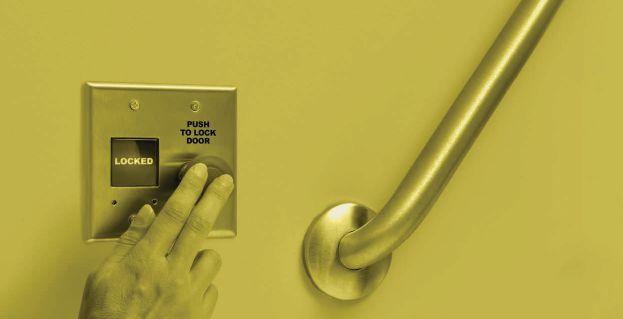
CAMDEN IS THE PROFESSIONAL’S CHOICE FOR ADVANCED DOOR CONTROL!
From a basic interface for a telephone entry system, to advanced multi-door mantrap, and everything in between, Camden offers the right solution at the right price – backed by the best warranty in the industry.
CX-33PS: CONTROL RELAY & 2 AMP POWER SUPPLY CABINET
CX-EMF-2 MULTI-FUNCTION RELAY CX-12 PLUS DOOR INTERFACE RELAY
CAREERS AT CAMDEN
Canada’s leading manufacturer of door activation, locking and control products offers a place where employee success is encouraged, recognized, and rewarded.
Submit your resume today to careers@camdencontrols.com
Sanjit Bardhan, HID
LESSONS LEARNED
LBy Victor Harding
What to know about changes to the capital gains tax rules
If you are selling a business or alarm accounts, carefully consider what these tax changes could mean for you
et me state my bias up front: I am not a big fan of our current federal government.
In my view, they are anything but business-friendly. Regardless, you need to be aware of their latest tax change.
“You should definitely talk to your accountant before you pull the trigger to sell.”
Effective June 25, they have changed the rules regarding the inclusion rate for capital gains taxes on the sale of assets by an individual, a business or a trust.
I will quote directly from a directive from the Department of Finance and then explain it below.
One half of a capital gain is currently included in computing a taxpayer’s income. This is referred to as the capital gains inclusion rate. The current onehalf inclusion rate also applies to capital losses.
Budget 2024 announced an increase in the capital gains inclusion rate from one half to two thirds for corporations and trusts, and from one half to two thirds on the portion of capital gains realized in the year that exceed $250,000 for individuals, for capital gains realized on or after June 25, 2024. Individuals (except for most types of trusts) would have access to a reduction when calculating their total income that would effectively decrease the inclusion rate applied to their capital gains under the $250,000 threshold from the basic inclusion rate of two thirds to one half.
Prior to June 25, if the “assets” (as opposed to the “shares”) of a business or owned by an individual were sold, only 50 per cent of the calculated capital gain was considered taxable.
Effective June 25 that inclusion rate was increased to 66.6 per cent. My accountant has told me that this change means an average effective tax increase of nine per cent overall.
Just to be clear, the calculated capital gain is arrived at by deducting the capital cost of the asset to the owner (an individual or a business) from the selling price of the asset.
In fairness to the government, they have inserted two “goodies” into this tax increase which can make it more palatable.
First if an individual (not a business or a trust) sells an asset such a cottage or a publicly traded stock or bond, the first $250,000 of the capital gain is included at the old inclusion rate of 50 per cent.
Secondly, if it is the shares of a business or a trust that is being sold and if that business qualifies for the one-time capital gain exemption for the shares of a Canadian Controlled Private Corporation, the government has raised the tax-free amount of the shares being sold to $1,250,000 effective immediately.
My opinion is right now the last thing Canada needs for its economy is another tax increase.
We here in Canada right now have one of the slowest growth rates in terms of GDP (Gross Domestic Product) per capita of any of the 38 countries in the OECD.
When you see the term GDP per capita, think your standard of living. Ours is actually declining while the U.S. is increasing. What’s more, everything I read indicates that increasing this inclusion rate for capital gains will likely scare away incremental investor money for new businesses and technology.
How does all of this affect us in the security industry? Well, if you are selling alarm accounts out of your alarm company after June 25, the chances are you had to do an asset deal (because buyers of alarm accounts almost always like to do asset deals) which means you will be paying more tax on the resulting deal.
In my mind, this change makes it that much more important when selling that you try whenever you can to do a share deal.
Interestingly enough, almost all the deals I have done for fire, guard or integration companies have been share deals. These deals tend to be larger deals.
I also read that many owners are delaying the sale of their cottages, publicly traded shares or even alarm accounts in hopes that a new federal government could be elected in 2025 and would reverse this change in taxation. In the meantime, if the market for alarm accounts works correctly, maybe the buyers of alarm accounts will increase their price for doing alarm account deals to offset this tax increase.
You should definitely talk to your accountant before you pull the trigger to sell.
Victor Harding is the principal of Harding Security Services (victor@hardingsecurity.ca).
SECURITY CANADA
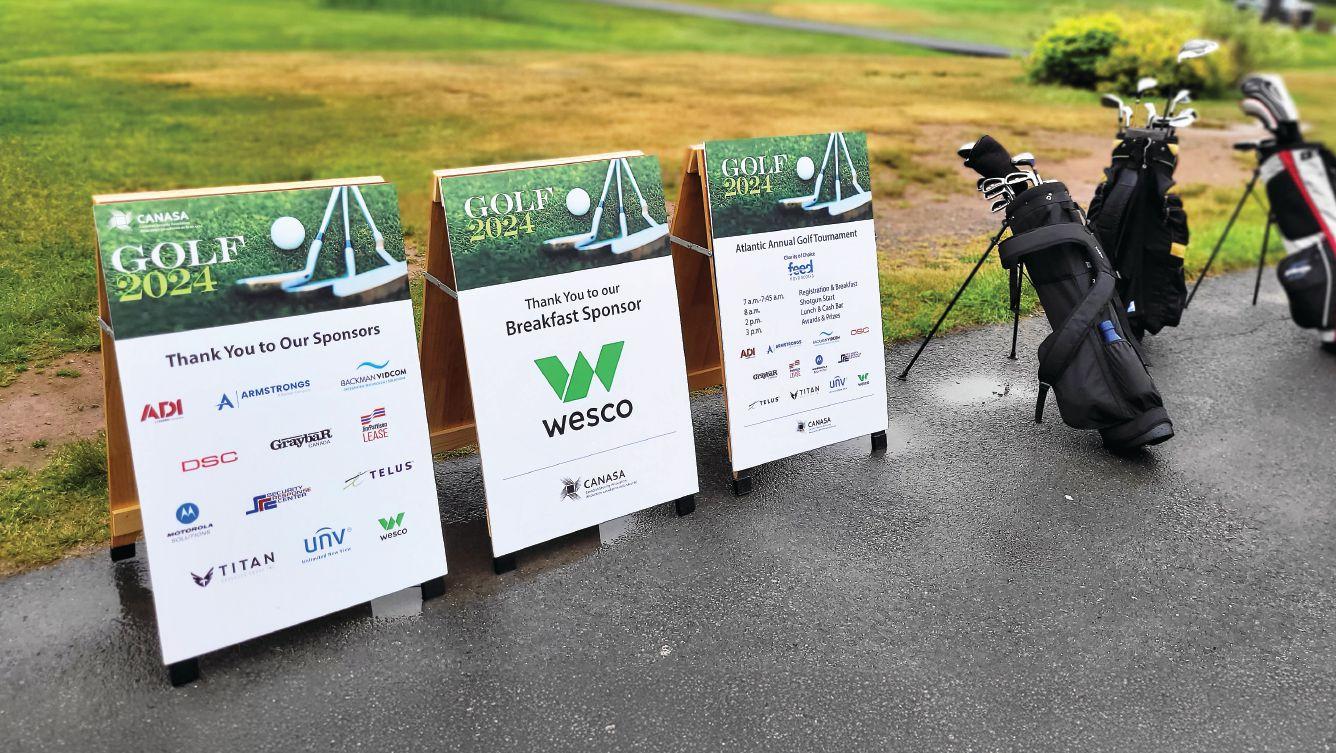
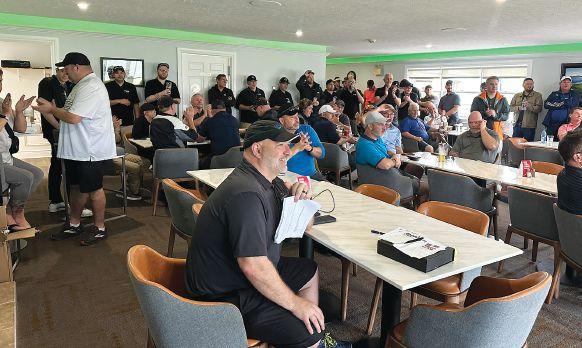
CANASA golf back in full swing
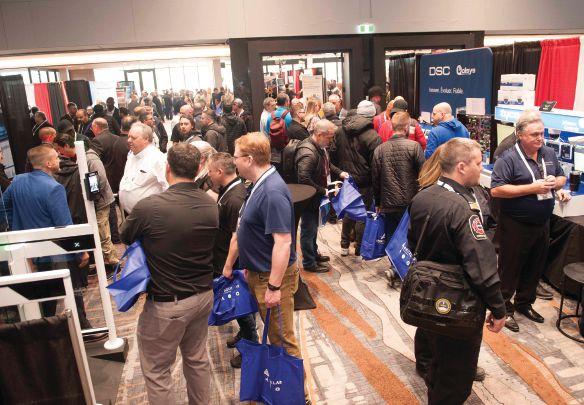
The Canadian Security Association (CANASA) hosted its first 2024 Security Canada conference and expo back in April in Laval, Que. The exhibit floor was sold out and the event drew record attendance, according to CANASA. The next Security Canada (www.securitycanada.com) event will be held Oct. 23-24 in Toronto. Until then, CANASA will be hosting golf tournaments and other events across Canada throughout the summer. Check the CANASA website (www. canasa.org) for details.
B.C. Regional Council golf tournament (in partnership with the ASIS Pacific Chapter): (from left) Greg Rojem, Visual Verification Systems; Kyle Robidoux, SafeWatch; Ceres Silva, Eagle Eye Networks; and Bryan Sweeney, Atom-22 Integrated Systems
Security Canada East in Laval, Que., drew record attendance this year
Central Ontario Regional Council golf tournament: Bob Smith, national president (left); Patrick Straw, executive director, CANASA
The Atlantic Regional Council’s tournament was held June 25 at the Grandview Golf & Country Club in Nova Scotia
PRACTICAL SECURITY
IBy Roger Miller
Network your way to success
Developing professional relationships will help you build your business and your body of industry knowledge
n previous columns I’ve talked about some of the challenges facing our industry such as training, employee retention and the complexity of the work being done by system technicians as a whole. This time, I’d like to talk about one of the more positive aspects of our industry: relationships.
“Don’t be afraid to engage others — we’re a pretty accommodating group.”
I was very fortunate to become involved in security at a young enough age when I could learn from a very strong group of leaders. From them, I learned the value of business relationships and I hope that in some ways I’ve been able to demonstrate the same level of support for people who are still learning in the industry.
My advice to anyone in the industry is to build relationships with your counterparts, strategic partners and competitors where possible. In a nation as large as Canada it is unlikely that any one person or organization will have resources in every corner of the country when needed.
For that matter, with the current labour market, it is unlikely that most organizations have the resources needed in most cities. We need to be aligned with others who share the same core values as we do, so we can build off each other’s strengths.
In any given day you will speak to your distribution partners, manufacturers’ representatives, sub-contractors, and other people key to your business. Your success at times may depend on your relationships with this group of business associates — get to know them. We have won bids by capitalizing on the relationships we have with manufacturers and distribution partners.
A few years ago I was interested in learning new processes so that we could improve our model. I reached out to a colleague in Ontario who welcomed me to see their operation and understand how his company does things. It was an invaluable opportunity to see how other organizations function — one that I would not have without a positive relationship.
During the pandemic, many industry profes-
sionals relied heavily on the relationships they’d built prior to lockdowns. With travel restrictions preventing companies from sending representatives outside their province of residence, for the most part, a lot of sub-contracting of work became the only viable solution.
Our firm benefitted from previously established relationships we’d had for years by providing consulting and installation services to organizations who were unable to travel. There were many important national projects that were able to continue throughout the pandemic due to those relationships.
If you are somewhat new to the security industry, it can be challenging to reach out to folks you don’t know. If there is an industry social event, Security Canada show or hosted training, I would encourage you to attend and meet some of your colleagues in a social setting.
Also, consider joining the “Canadian Security Online” Facebook page, and follow SP&T News and Canadian Security across their websites and social media platforms. These online interactions will introduce you to many leaders in the industry — quite possibly they can become some of your most important resources.
Don’t be afraid to engage others — we’re a
pretty accommodating group. You’ll meet some really great people who have a lot of knowledge to share. In most regions there are opportunities to serve in some capacity on the regional council for the Canadian Security Association (CANASA) where you’ll meet some of your region’s most experienced professionals.
The benefits of building relationships is not unique to electronic security professionals. In addition to my current role on the CANASA National Board, I’ve held positions with other industry associations. When I was the president of the Atlantic Chapter of the Council of Private Investigators, we relied extensively on the support of our peers throughout North America who had specific knowledge in a given field. By developing these professional relationships, you are effectively expanding your depth of knowledge through theirs.
Regardless of how you do it, I encourage you to build relationships with your industry colleagues. They have a lot of knowledge to share with you, and in turn they will benefit from your knowledge.
Roger Miller is the president of Northeastern Protection Service Inc. (www.protectionpartner.ca)
CANASA UPDATE
By Patrick Straw
CANASA aims to help fill security roles
The Canadian Security Association is leading an initiative to match candidates with job opportunities
Art Katsaga, a volunteer with our Ontario Regional Council, has spearheaded an exciting initiative to introduce various specialty recruiters to our industry and to try to help with the shortage of personnel, particularly in the technical services. Thank you, Art, for your continued hard work on this project.
Art and I have been hosting seminars with recruiting staff to help them identify the skills that are needed to become eligible for a possible job with a security company. We are keeping the criteria pretty loose so that anyone with a technical education or background, even if in another service, can consider this as something to apply for.
Some of these recruiters specialize in assisting new Canadians. We have already seen some resumés with specific security industry installation and service experience from other countries.
We are in the process of rebuilding our website — the new site will have a landing page for us to post resumés that are sent to us and also to post jobs for our member companies that are looking.
What do we need from you? Everyone says they are short of technical personnel, however when I ask for specific companies to identify themselves I only receive responses from four or five of them. I am hopeful that this article will make it easier for companies to let me know what they are looking for and I can add your company on to the list. Just email me at pstraw@canasa.org.
Job fair At SCC
During the second day of Security Canada Central in October we are going to be hosting a job fair
in one of the meeting rooms at the Toronto Congress Centre. Many of these recruiters will be there and they are interested in meeting companies who need help recruiting. There will also be students coming from some local colleges who have taken similar courses. Please make a note of this so that when you come to SCC you can pop in on day two.
Summer activities
We are well into our Regional Council golfing season. So far we have had tournaments in Halifax, Vancouver and Ajax, Ont., and all were very well attended. Even more importantly, we have been using our golf tournaments to assist local services that provide help to those in need. In the first three tournaments, we have donated more than $14,000 to this important cause.
Patrick Straw is the executive director of CANASA (www.canasa.org).
October 23 - 24, 2024
Patrick Straw
ADAPTIVE REUSE REVOLUTION
Transforming commercial spaces into multifamily solutions
At the start of 2024, office vacancies in downtown Toronto reached an unprecedented high of over 17%. Meanwhile, Canada faces a significant housing crisis, with a need for 5.8 million new housing units by the decade’s end –this only became more evident when the end of 2023 saw less than 1% of available rentals able to meet the criteria of being both vacant and affordable.
It’s no wonder that federal and provincial governments are investing in adaptive reuse.
What is adaptive reuse?
Also known as conversion, adaptive reuse is the repurposing of an existing building for a means other than which it was originally built or designed for – such as converting an old hotel into an apartment building.
Types of buildings converted in 2023:
Time
As the saying goes, “time is money,” and this is especially true when it comes to property development and management where getting a tenant in as quickly as possible is crucial. Don’t want to wait for your new build? Good news — while new developments usually take 4-5 years, conversion projects average just 2.5 years, including the permitting phase.
Money
Save yourself valuable CapEx. New builds in North America generally cost US$350 per square foot but can reach upwards of $450 per square foot in major cities like Toronto and Vancouver. On average adaptive reuse typically costs 16% less than new build projects. Operating costs are improved as well, thanks to apartment vacancy rates being half of average office vacancy rates.
Sustainability
Top cities for future apartment conversions:
• Toronto
• Montreal
• Metro Vancouver
• Calgary
As climate change escalates, so do the pressures on carbon heavy industries to curb their emissions. Building operations account for a third of Canada’s carbon footprint and as a result, the sector has major reduction targets that they must meet.
Reduce, reuse, recycle. Studies show that repurposing an existing building produces 50-70% less emissions than new builds. This can make your building stand out and attract tenants, which is important when 60% of renters are actively seeking environmentally friendly apartments and 17% say they wouldn’t rent an apartment that doesn’t embrace sustainable practices.
Meeting these goals has been made easier with the federal government’s Budget 2021 commitment, which offers funding that can be used for commercial to residential conversions.
Transformative approach for multifamily
Adaptive reuse is a transformative approach to solving the twin challenges of commercial vacancies and housing shortages. By converting existing structures into multifamily units, we can breathe new life into our cities and create vibrant, sustainable communities.
Explore ICT’s adaptive multifamily solutions now at https://info.ict.co/spt-multifam
Key benefits of adaptive reuse
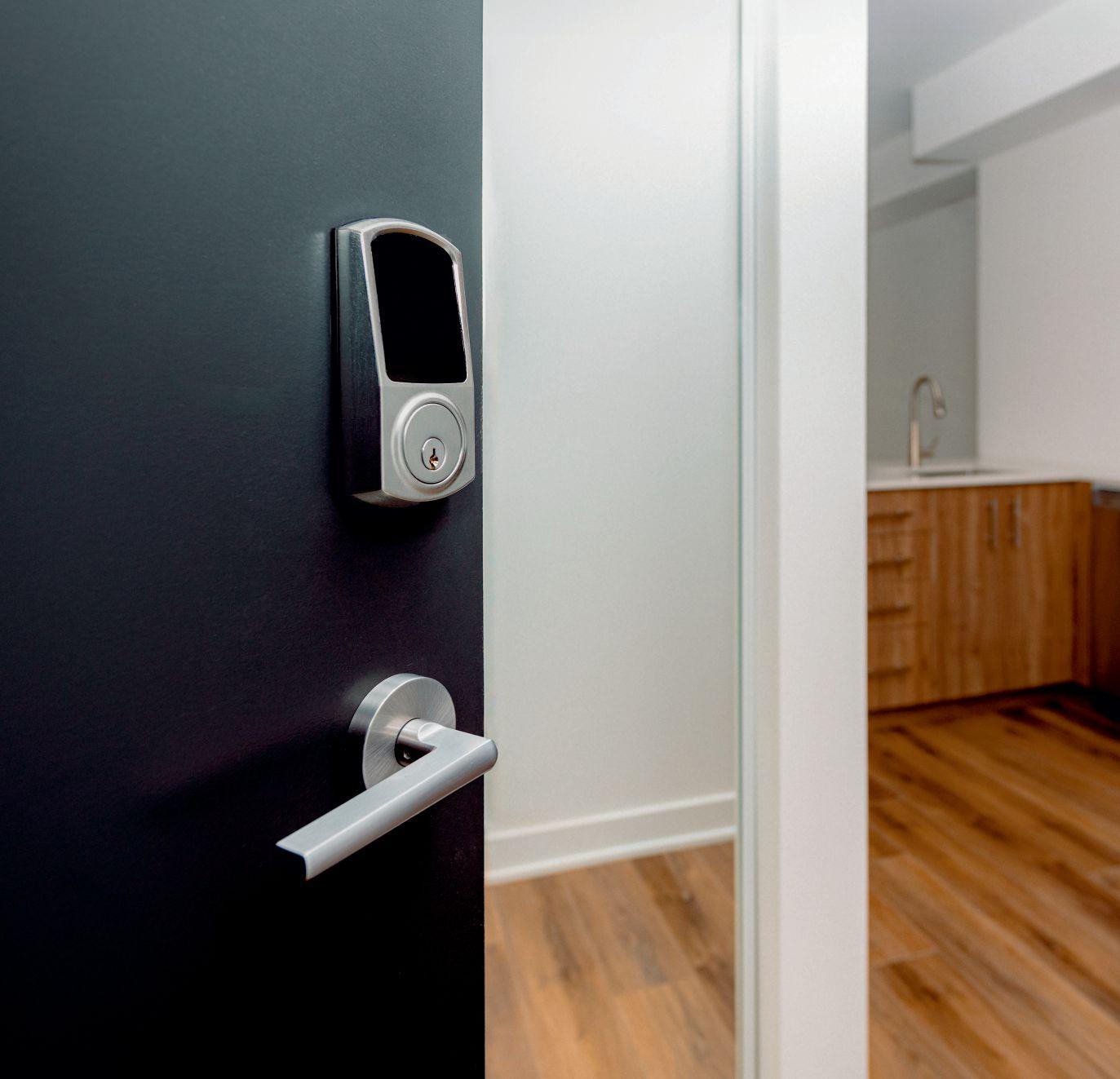
Introducing ICT’s new Protege Wireless Locks, where modern design meets advanced security. Just one credential is needed for simple access from the perimeter to the penthouse. With wireless and hardwired doors, visitor entry, mobile app, and more – ICT has the complete multifamily solution. Cartridge mortise and deadbolt available to order now.
Pat Alvaro Senior Vice President, Canada
TOP 10 UNDER 40
For 2024, we asked recipients to tell us about their earliest experiences in the security industry and the best parts of their typical work day.
For our annual Top 10 Under 40 list, SP&T News is pleased to spotlight the accomplishments and success stories of a variety of security professionals across multiple disciplines. Whether they work in systems integration, manufacturing, monitoring or channel solutions, these professionals share some commonalities such as vision, ambition, a devotion to customer service and an appreciation of the security industry itself. Please join us in congratulating this year’s winners. SP&T’s Top 10 Under 40 list is sponsored by Digital Watchdog.
Ryan May Director of operations, residential & SMB, GardaWorld Security Systems & Technology
Years in the industry: 11
What drew you to the security industry?
I started in the industry as an installation technician with a residential door-knocking program during my summer break from university. What attracted me initially was the money and the opportunity to see our beautiful country by travelling coast to coast. Now I view it as a rapidly involving tech-adjacent industry with a lot of great people to network with and build relationships with. It’s a prevalent industry, but it feels small because there isn’t a lot of cross-over with other industries so professionals seem to stay in the industry even if they change roles.
What is the best part of your work day?
I love watching my team have successes — both
big and small. So much of my management team’s day is comprised of “firefighting,” yet I push them to improve their areas in a strategic manner whenever they’re not solving day-today problems. When that struggle yields measurable differences, I feel proud to have played a part in their growth and achievements. I know that, as a leader, my success is defined by how much success I can foster in others.
Anna Semenina Director of product management, Mircom Technologies
Years in the industry: 7
What drew you to the security industry?
The security industry is one of the most overlooked sectors and certainly does not receive the recognition it deserves. Many professionals in the industry, including myself, found themselves here somewhat inadvertently rather than intentionally pursuing it.
However, in the end, it appealed to me for two key reasons. Firstly, there’s a fundamental sense of purpose in developing products that protect lives and property. Knowing Mircom’s fire and security systems give people peace of mind and can make a real difference in an emergency is incredibly motivating.
Secondly, the security landscape is constantly evolving. New threats emerge and technology advances, creating a continuous challenge to develop innovative solutions. As a product leader, I find the intellectual challenge and opportunity to stay ahead of these curves incredibly stimulating.
“There’s a fundamental sense of purpose in developing products that protect lives and property.”
— Anna Semenina
What is the best part of your work day?
The best part of my work day is undoubtedly the collaborative brainstorming sessions with our talented engineering and product management teams. We have a group of incredibly passionate individuals dedicated to creating the most robust security and life safety solutions possible. Witnessing that collective effort come together to deliver exceptional results is truly fulfilling. Seeing our team’s innovative security solutions come to life and knowing that these solutions are actively protecting our clients’ lives and their assets is incredibly motivating. It’s a constant drive to stay ahead of evolving
threats
30
JS (Jean-Simon) Leduc Vice-president, business development, Sirix Remote Live Monitoring
Years in the industry: 11
What drew you to the security industry?
I started as a nightshift operator in a monitoring station, managing alarms and ensuring safety. My passion for the industry truly ignited when I attended a CANASA show to distribute brochures at our booth.
Interacting with industry professionals and learning about the latest technologies and trends was captivating. The dynamic nature of the security field and the sense of community I felt at the CANASA show made me realize this is where I belonged. From that moment, I knew I wanted to be part of an industry that plays such a critical role in protecting people and assets.
What is the best part of your work day?
Building relationships with dealers is the highlight of my day. Each interaction is an opportunity to strengthen our partnership and work collaboratively on solutions. I get goosebumps when a dealer wins a contract, because a win for them is a win for us.
Celebrating these successes together fosters a sense of community and shared purpose. The connections and trust we build are incredibly rewarding and fuel my passion for the industry. It’s this human connection and the ability to contribute to others’ success that make my work day special and meaningful.
Xiaoyi Weng
Territory sales manager, JCI
Security Products
Years in the industry: 20
“It’s extremely important to start off each day with a clear focus and purpose.”
— XiaoyiWeng
self with new skills and the opportunity to grow. Often times, DSC, a local security manufacturer, had career postings at our college, and attracted a large number of RCC graduates. Security seemed to be a unique and diverse industry with plenty of opportunities. I knew there would be a place for myself after post-secondary studies.
What is the best part of your work day?
One of my favourite parts is assessing and reflecting on what was accomplished throughout the day. I feel it’s extremely important to start off each day with a clear focus and purpose. Reflecting at the end of each day helps me with a positive start to the next.
Thomas Leslie
Regional sales representative, Titan Products Group
Years in the industry: 10
What drew you to the security industry?
The security industry is more than just a career choice for me, it’s a legacy that spans four generations in my family. From my great-grandfather, Boniface (Burt) Harman, who worked for Dominion Electric Protection, to my grandfather, John (Jack) Harman, who was a trailblazer in the industry and instrumental in building DSC into what it is today, and my father, Paul Leslie, who began as a technician and later excelled in sales, I’ve been surrounded by this industry since I was young.
nology, my partners trust me to guide them through the ever-evolving landscape of cutting-edge innovations. I cherish the opportunities to learn about the latest developments and to build deep friendships beyond the daily grind.
Devin Lafrance Head of client service & technical support, Alarme Sentinelle
Years in the industry: 1
What drew you to the security industry?
Studying at Radio College of Canada (RCC) in 2002, we often had guest speakers who presented various career opportunities in electronics and engineering. I wanted to engage in a career path in which I can apply my studies, yet challenge my-
I’ve always admired my father’s ability to effortlessly build enduring relationships and his unwavering integrity, which contributed to his remarkable 30-plus year career. He is my hero, and naturally, I chose to follow in his footsteps. Even as a child, I would pretend to close business deals and would swap his name on business cards with mine. What has kept me committed to this industry all these years is the people. It’s a community where you can forge deep connections and achieve significant success.
What is the best part of your work day? Connecting with people is the highlight of my day. Amidst the rapid advancements in tech-
What drew you to the security industry?
Many are drawn to the security industry because it offers a sense of purpose and responsibility in safeguarding people, assets and information. My situation was particular, to say the least. I was looking to change industries and was fortunate enough to enter one that offered a wide range of services. As someone who thrives on learning and embracing new challenges, the security industry was an ideal fit for me given its dynamic and ever-evolving nature.
“The security industry was an ideal fit for me given its dynamic and ever-evolving nature.”
— Devin Lafrance
What is the best part of your work day?
One of the most rewarding aspects of my work day is that I have the opportunity to interactively engage with my team. This allows a positive tone to be set and it also fosters collaboration between my peers and I, which I find incredibly fulfilling.
Another aspect of my work day involves tackling challenges head-on which creates room for significant progress on demanding projects. There is a deep sense of satisfaction that comes with overcoming different obstacles through the completion of daily tasks, as it grants the opportunity of seeing tangible results.
Continuous efforts towards achieving a successful end result and progressively seeing the team’s hard work come to fruition is a gratifying feeling in itself. The great team dynamic that Sentinel offers its employees allows us to advance toward a common goal: making every project a success! 39 31 27
I wouldn’t say I was particularly drawn to the security industry as a young marketing and communications professional. I sort of tripped and fell into this industry like many others do! My career began on a simple one-year contract that quickly turned into my greatest life decision to date. What has continued to draw me to the security industry, and building technology all these years later, is being able to solve problems for our clients.
In nearly a decade of my life, there hasn’t been one year that has been the same and I am always learning from the team. By trade, I was not an overly technical person, but I remain in awe of the technical teams I get to work alongside of. They are the reason I am who I am today, and we are always collaborating on ways in which we can grow stronger together, learn from our partners, and provide true partnership to our clients. That’s what keeps me going!
What is the best part of your work day?
The people I work with have truly shaped me into the person I am today. My team, and the Paladin teams at large have held me accountable, inspired me, and pushed me to be my best self each day. I owe so much to them. Even when I know my day is going to be stressful or overwhelming, I know that someone is going to make me laugh and that’s the best part — having fun while we’re building something together.
Casey Burnstad
Project manager, Delco Security
Years in the industry: 13
What drew you to the security industry?
Security started for me when I was young, helping my father with home installs. He has been in the industry for 30-plus years and I have followed the same path. From there, I made my way to my first big low voltage job at Fort St. John Hospital in B.C., while working and fo-
“We are always collaborating on ways in which we can grow stronger together.”
— StephanieWhalen
cusing on the voice, data and fibre side of things. From there I kept working my way up. Security really caught my attention. Working with Delco, I saw how security, technology and integration touches all aspects of jobs nowadays.
What is the best part of your work day?
The best part of a work day is the people I work with and the vast range of knowledge that surrounds me and keeps pushing me to learn and succeed.
I can’t narrow the best part to a singular activity as every day is different — that is one of the best parts of the job. The fact is that you don’t always know what’s going to be entailed, or what new jobs you’ll get to work on.
As technology is updated, we learn new ways to implement solutions and make the customer experience better and more seamless. Seeing a project go from the planning stages to a set of drawings, to all the systems coming together through team effort and hard work makes it all worthwhile. The best part of any project is the final result when the client moves in and you see all the systems come together.
Jason Booij CEO, OmniTech Solution Services
Years in the industry: 16
What drew you to the security industry?
I grew up in South Africa, where crime is rampant. We had a home invasion when I was 14. I didn’t feel safe and I didn’t want others to experience that event. That kickstarted my curiosity and passion to keep people safe. As my career progressed, the idea of leveraging technology to create safer environments fascinated me. I wanted to make a tangible impact by preventing crime and ensuring peace of mind for people, businesses and communities.
What is the best part of your work day?
The best part of my work day is interacting with my team and clients and solving security challenges. Collaborating with talented professionals who share the same vision and en-
thusiasm for security is incredibly rewarding. Additionally, hearing positive feedback from clients about how our solutions have made a real difference in their operations or personal safety is immensely satisfying. It reinforces the purpose of our work.
From a young age, I was fascinated by technology and its potential to solve complex problems. This curiosity led me to pursue electrical engineering, where I discovered the critical role security plays in protecting assets, people and information.
When I joined PBX Engineering 12 years ago, I was drawn to the Integrated Security Business Unit because of its dedicated focus on creating comprehensive security solutions. The opportunity to work on diverse projects — from securing ports and airports to designing systems for correctional facilities, power switchyards and transportation hubs — allowed me to combine my technical skills with a mission to enhance safety and security.
I have also been involved in projects for transit facilities, industrial security, bridges and tunnels, rail yards, and government buildings. Each project presents unique challenges and requires tailored solutions, making the work both exciting and rewarding. The dynamic nature of the security industry, with its constant evolution and challenges, continues to inspire me every day.
What is the best part of your work day?
The best part of my work day is the collaborative problem-solving sessions with my team and clients. Whether it’s conducting a security assessment, designing an integrated security system, or troubleshooting issues, these interactions are where ideas are exchanged, and innovative solutions are born. Working closely with a team of highly skilled engineers and seeing our designs come to life in real-world applications is incredibly rewarding. It’s also fulfilling to mentor junior engineers, helping them develop their skills and watching them grow into confident professionals.
For more insights from the SP&T News Top 10 Under 40 check out the article on our website, www.sptnews.ca.
COUNTDOWN IS ON FOR CENTRAL STATIONS
Canadian monitoring stations outline their business plans and technology upgrades as new ULC redundancy requirements are set to take effect
By Neil Sutton
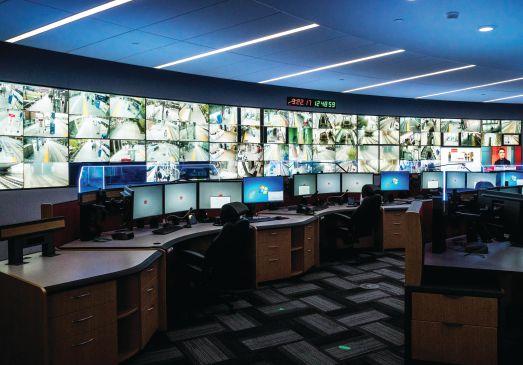
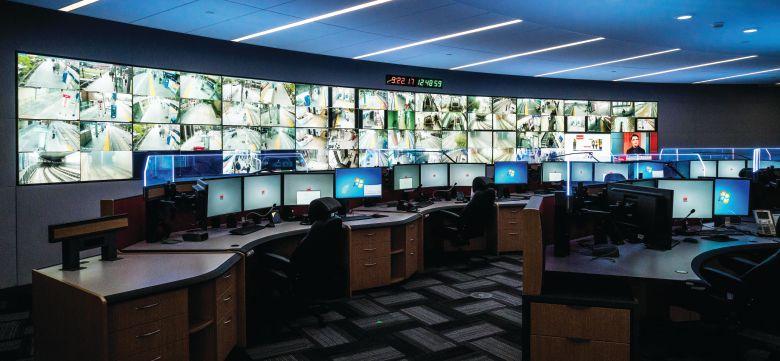
With ULC’s new redundancy requirements for Canadian central stations set to come into effect in January 2025, monitoring providers have been making the necessary adjustments to their own operations in order to comply.
Introduced approximately five years ago with a 2025 deadline, the new regulations outline the requirements for redundant intrusion signal receiving centres and fire signal receiving centres necessary for compliance to CAN/ULC-S301 and CAN/ULC-S561.
In a 2022 CANASA National Monitoring Centre Symposium presentation given by Alan Cavers, who was engineering manager at ULC at the time, the redundancy requirements were outlined as: “A physical location that is able to provide all of the essential functions of a signal receiving centre, should an automated signal receiving centre become unable to process signals.”
As such, “a minimum of two signal receiving centres shall be provided in compliance with the applicable requirements of the standard.”
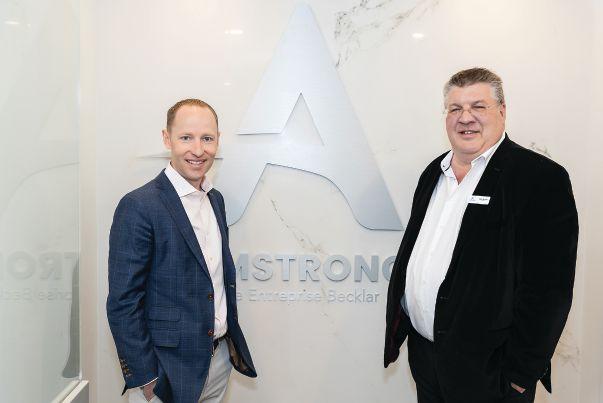
Dan Small, president of third-party monitoring firm Armstrongs, says “these new ULC requirements represent probably the biggest change in the monitoring industry in Canada in decades. There have been technological changes, but as far as regulations go... it’s certainly the most impactful,” he says.
“In the past, redundancy was built into the central itself in redundant receivers. This is really the first development in requiring automatic redundancy in dealing with signal traffic and also not having it housed in one location. You need two locations now,” explains Small of the new ULC requirements.
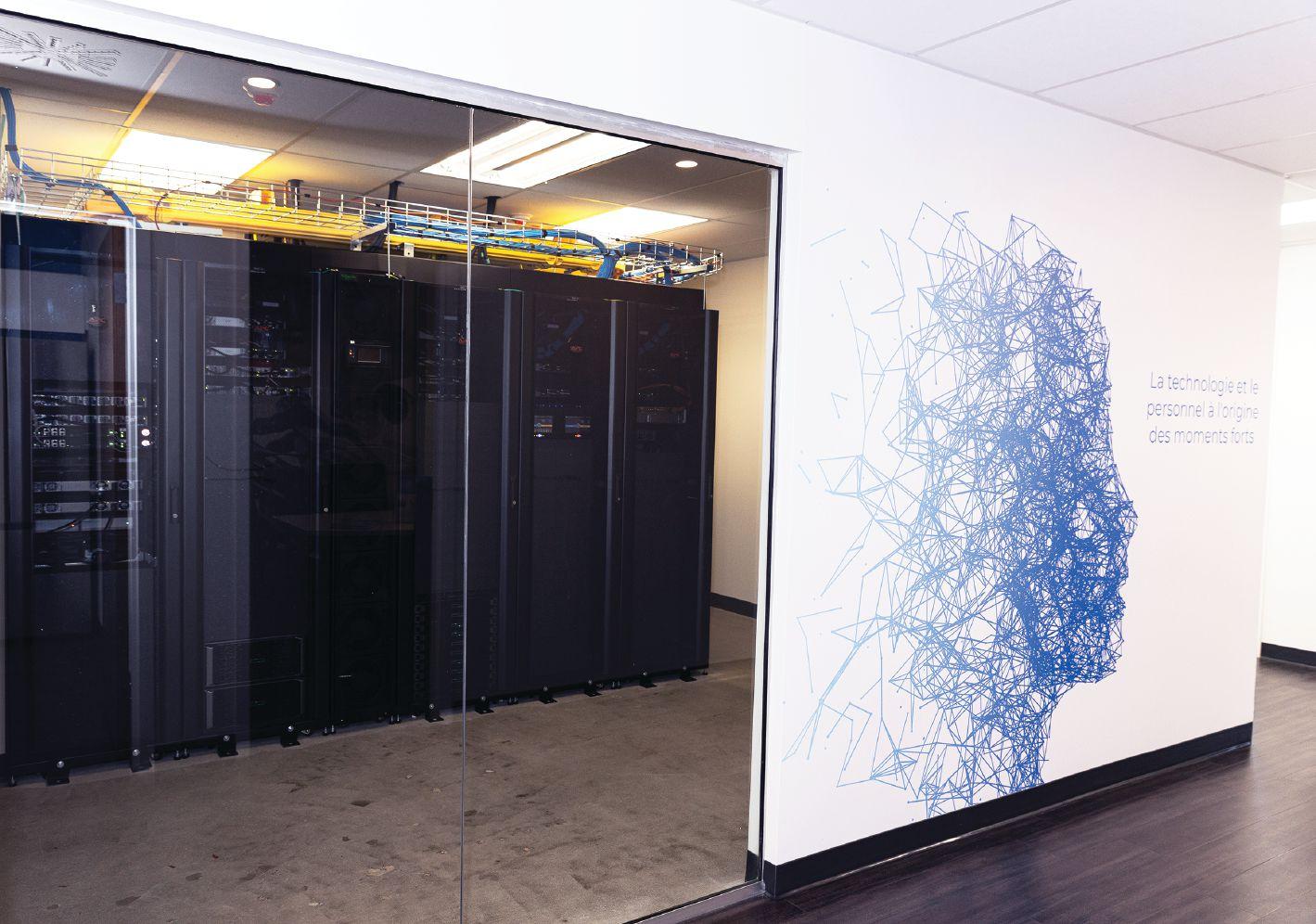
Armstrongs operates monitoring facilities in Edmonton, Dartmouth, N.S., and recently opened a new station in Laval, Que. The latest facility represents a more than $3-million investment on the part of Armstrongs’ parent organization Becklar.
B.C.-based Paladin Technologies also opened a new monitoring facility in recent months. The company now has two ULC-certified stations: one in Victoria and the newest one in Ottawa (Paladin also operates a satellite station in Vancouver).
“The intention behind [the Ottawa station] was it would provide us with the geographic redundancy to match the ULC requirements,” explains Allison Tuke, director of monitoring operations. “Doing so gave us much more stability over geographic regions and it allows us to be able to be much more resilient in our service offerings to our customers.”
Third-party monitoring provider Lanvac Surveillance currently operates ULC-certified stations in Montreal and Toronto. Lanvac’s Stephanos Georgoudes says the company strives to go above and beyond ULC standards and is already in compliance with the incoming redundancy regulations. It is, however, building a second monitoring station in Montreal with plans to have it fully operational towards the end of the year. “Our thought was, although we have the [station] in Toronto, we wanted to have another closer to
home. So now we’ll have three ULC-listed central stations in total redundancy along with a few remote locations across Canada,” he says.
A positive change for monitoring
Chris Currie, president of Security Response Center (SRC), says the new specifications requiring redundant sites will ultimately be a boon to the monitoring industry and have been a long time coming. SRC currently operates monitoring stations in Belleville and Sarnia, Ont.
“It’s fantastic having the redundancy requirement in place. It’s something that should have always been there,” he says.
“To put all of your eggs in one basket with one monitoring station probably wasn’t the right way to go about doing it, but that’s the way it was done for so many years until ULC started talking about the new requirements back in 2020.”
The change, however, may be a difficult pill to swallow for monitoring operations that don’t have the resources to set up a second site.
For some monitoring providers, where ULC-certified accounts only make up a small portion of their business, it might make more sense to outsource them to a monitoring provider that is already in compliance rather than undertake the upgrade investment themselves, explains Currie. He says he has seen an uptick in SRC’s third-party monitoring business as the 2025 deadline approaches.
Paladin Technologies recently opened a new monitoring station in Ottawa. The facility received its ULC certification in March 2024.
“For other companies, they have to pick the business case that’s right for them,” he says. “We’re bringing on new dealers all the time.... They want to leverage our infrastructure, they want to leverage our software, they want to leverage our two monitoring stations that have the redundancy to satisfy the requirements of ULC.”
Cliff Dice, CEO of monitoring infrastructure provider the New
DICE Corp., says he has also seen a swell of interest in his company’s services. He says DICE can provide the infrastructure that would allow Canadian monitoring stations to meet the ULC redundancy regulations if they currently don’t have the capacity to do it themselves. DICE operates facilities in Bay City and Marquette, Mich., and owns a Canadian carrier (phone company and ISP) called IPtelX, which can also offer Canadian partners private
fibre for data transfer.
“If you don’t want to provide all the infrastructure — the servers, the networks, the building — and you want somebody to do some heavy lifting for you, then you can have us turn your servers up, your PBXes and give you your internet connection and all you have to do is have the PCs and the people,” he says.
He says a number of Canadian stations have looked to DICE for some or all of these services. “We’ve had quite a few and there’s more transitioning to us… I think a lot of these central stations were probably pushed to their limit for IT and technology support.”
Next-level monitoring
The ULC redundancy requirements are part of a larger wave of change that was already coming to the monitoring industry. Small from Armstrongs says the new regulations are “forcing the industry to reinvest and rethink how we’re doing things.”
The new Laval station “was designed as a highly redundant na-
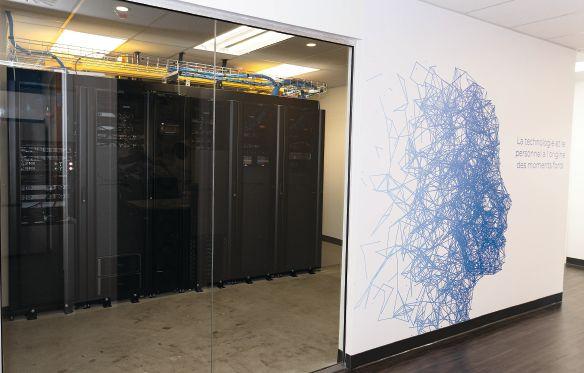
tional data centre to provide a Canadian-based facility as the primary home for all our receivers and the storage of Canadian subscriber information,” he says. “Knowing we had to work on this technology and what we had in our existing stations, there had to be an investment in that. [The station] was designed with that in mind.”
Having a new station “gives you the opportunity to make sure you’ve got the best security posture — cybersecurity is obviously a real threat these days,” says Paladin’s Tuke. “It also allows us to be able to look at the receiver equipment and make sure that we are in a position to be able to diversify over GSMs and over IPs and away from the POTS traffic.
“You need the new technology in order to keep current. Certainly, doing the refresh in Ottawa has also allowed us to do a refresh of our centre in Victoria.”
CANASA will host its next National Monitoring Station Symposium, which is held bi-annually, on Oct. 21-22 in Toronto.
Armstrongs, a wholesale monitoring company, recently opened its latest monitoring station in Laval, Que.
Come Grow With Us!
Canada’s leading manufacturer of door activation, locking and control products offers a place where employee success is encouraged, recognized, and rewarded. We pride ourselves in supporting career development, a healthy work-life balance, and in offering industryleading compensation. Camden has immediate job openings in a variety of positions at our Mississauga head office.
Submit your resume today to careers@camdencontrols.com
Product Previews Locks & Doors
Cabinet lock
Camden Door Controls
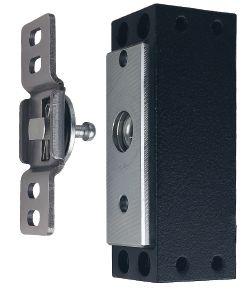
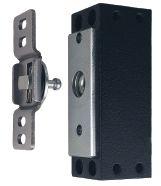
The CX-EPD0009 magnetic cabinet lock is a high-security lock for almost any enclosure door, such as computer cabinets, refrigerators, lockers and retail display counters. This 12V or 24V magnetically operated lock has a holding force of 440 lbs. and is water-resistant. The CX-EPD0009 is also designed to withstand up to 5lbs. of preload pressure without binding. This magnetic cabinet lock can be front or side mounted with swing or sliding doors and drawers. www.camdencontrols.com
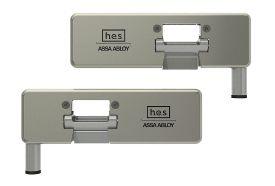
Electric strike ASSA ABLOY
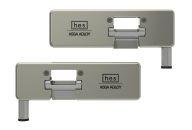
The HES 9100 Electric Strike for Tubular Vertical Rod Exit Devices introduces efficiency for single glass door applications. With its low-profile design, the 9100 ensures simplified retrofit installation, eliminating the need for frame alterations. Featuring integrated adjustability for optimal latch positioning, adaptable voltage sensing technology, latchbolt and strike monitoring, and exceeding Grade 1 standards, the HES 9100 Electric Strike also meets UL outdoor rating requirements. www.hesinnovations.com
Keyless access lock
Codelocks
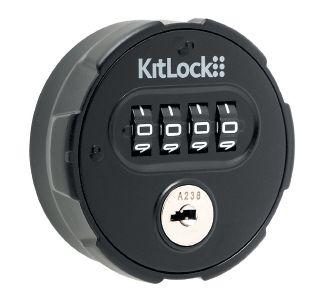
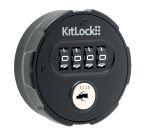
Codelocks has introduced public functionality to its KL10 KitLock by Codelocks. The mechanical lock now provides multiple users with keyless access to shared storage at public facilities like gyms, sports centres, spas, retail stores, offices and shared workspaces. The KL10 is designed for easy use and is accessible via a four-digit code. www.codelocks.us
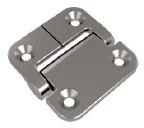
Flush-mount hinge Southco
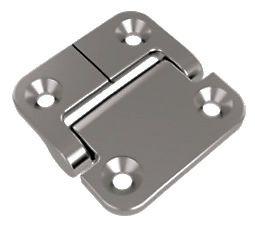
The E6-73 Stainless Steel Constant Torque Hinge provides the benefits of a torque hinge in a low-profile, corrosion-resistant package. It offers high torque for heavy-duty applications while maintaining its low profile. These hinges ensure that panels never slam shut, even when users let go, according to the company. The barrel-down design of the E673 hinge provides a continuous smooth surface when the panel is closed. www.southco.com