Security Products


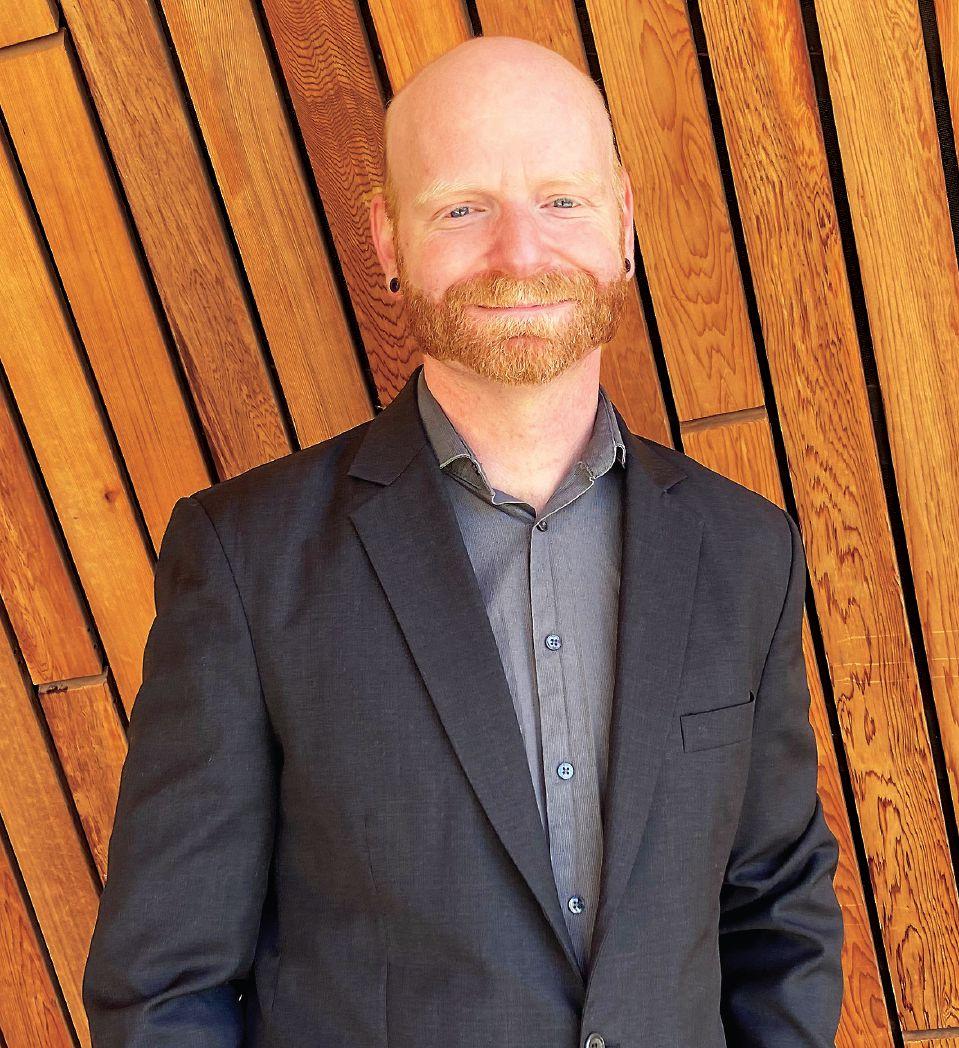








SBy Neil Sutton
ometimes life can feel like a crossword puzzle. Some answers you know for sure and the rest you fill in based on educated guesses and accumulated knowledge. But, unlike crosswords, you’re never truly finished.
Our annual Top 10 Under 40 is also a work in progress. This year’s Top 10 features professionals from across the security spectrum — including manufacturing, monitoring and systems integration — at various stages of their careers.
I always feel like I learn something new from each of SP&T’s Top 10 recipients.
After reading the responses this year, for example, it’s clear that work-life balance is a very personal thing. There’s no “right” way to do it, only what’s right for you.
We also asked the Top 10 to tell us what task they look to accomplish first in the morning. Again, this is something that can vary depending on your role, and whether or not you’re a morning person, but exercise, daily checklists and coffee were common answers. (I am particularly partial to the last one.)
Responding to a question about what they enjoy about their roles in security, a number of answers reinforced what most of us already intuitively know about the industry — at its heart, it’s about taking care of people.
While it’s definitely a business — with revenue targets and a bottom line like any other business — it’s
one that focuses on providing customers with a safe environment and peace of mind. It’s only natural that security professionals should take a measure of pride in what they do and some satisfaction from doing it well.
Perhaps the most interesting responses this year came from the last question: How do we encourage more young people to join the security industry?
Many of the answers mentioned the level of innovation that is happening in security and the transformative power of technologies like Artificial Intelligence. Others focused on the need for training and mentorship programs, the role of colleges and education institutions in preparing the next generation of professionals, and the potential for career advancement.
In almost all cases, outreach and promotion is the key to drawing new talent to security — educating the labour market that it is a growth industry with boundless potential.
I encourage you to read all the responses from this year’s winners. Our annual Top 10 Under 40 is a celebration of young achievers in security, but it is also an exercise in thought leadership.
In the puzzle of life, it’s comforting to know that many of the answers are already out there. Please join me in congratulating our 2023 winners.


READER SERVICE
Print and digital subscription inquiries or changes, please contact Shawn Arul, Audience Development Manager Tel: (416) 510-5181 • Fax: (416) 510-6875 Email: sarul@annexbusinessmedia.com
Mail: 111 Gordon Baker Rd., Suite 400, Toronto, ON M2H 3R1
Your Partner in Securing Canada Security Products & Technology News is published 5 times in 2023 by Annex Business Media. Its primary purpose is to serve as an information resource to installers, resellers and integrators working within the security and/or related industries. Editorial information is reported in a concise, accurate and unbiased manner on security products, systems and services, as well as on product areas related to the security industry.
Editor, Neil Sutton 416-510-6788 nsutton@annexbusinessmedia.com
Group Publisher, Paul Grossinger 416-510-5240 pgrossinger@annexbusinessmedia.com
Associate Publisher, Jason Hill 416-510-5117 jhill@annexbusinessmedia.com
Media Designer, Graham Jeffrey gjeffrey@annexbusinessmedia.com
Account Coordinator, Kim Rossiter 416-510-6794 krossiter@annexbusinessmedia.com
President/COO, Scott Jamieson sjamieson@annexbusinessmedia.com
EDITORIAL ADVISORY BOARD Patrick Soo, Alarm.com Floria Chiu, Telus Custom Security Systems Stephen Karchut, Alarmtech Val Michetti, HID Frank Pietrobono, RSPNDR





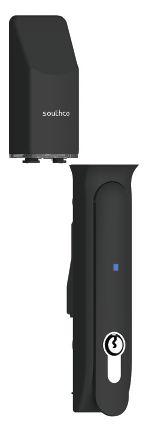
• Strength & Reliability: Independently verified cycle and strength testing proves an extended life.
• Security: Enjoy unbeatable protection against vandalism and unauthorized entry, thanks to the multiple enhanced security features that provide unparalleled resistance.
• Aesthetics: Attractive, minimalist design featuring many levers and architectural finishes to blend with any décor.
• Sustainable: Make a positive environmental impact by reducing product replacements, thanks to these devices' long life and high post-consumer recycled content.
The PE80 Series is the next generation of exit devices. Designed with innovation in mind, the powerful and exquisite exit device introduces new and enhanced features. Ideal for environments that require maximum strength and durable security solutions, all configurations (rim, mortise, surface vertical and concealed vertical rod) exceed ANSI/BHMA Grade 1 requirements.
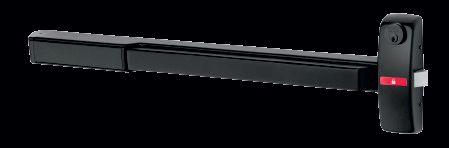
Experience the future of exit devices with their cutting-edge design and advanced features.
Engineered to perfection, this exit device is the epitome of elegance, choice for sophisticated environments. What's more, all configurations (rim, mortise, and concealed vertical rod) surpass the stringent ANSI/ BHMA Grade 1 requirements. Elevate your space to new heights with the PED4000 Series.
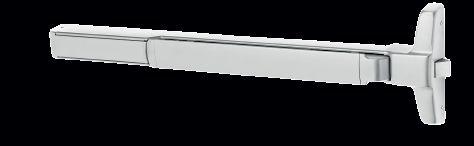
strength, and durability, making it the perfect
The future-ready Corbin Russwin PED5000 Series is the ultimate exit device designed for modern needs. Experience a new level of sophistication and reliability with its enhanced features.
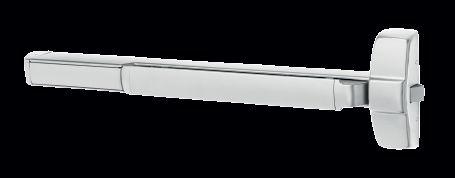
Crafted to perfection, this exit device is the perfect choice for elegant environments seeking unparalleled strength and durability. In fact, all configurations (rim, mortise, surface vertical, and concealed vertical rod) surpass the rigorous ANSI/BHMA Grade 1 standards. Elevate your space with this exceptional exit device solution.
Telus marked a significant milestone in the development of its home security business earlier this year, reaching one million customers in Canada and growing.
“Since launching Telus SmartHome Security in 2018, we’ve become the largest and fastest growing security and automation provider in Canada,” says Jim Paikos, vice-president, customer experience evolution, Telus. “In that journey over the past five years, we’ve seen significant growth while also providing exceptional customer service experience that has earned us accolades.”

(Telus SmartHome Security was acknowledged in the home security category of Brandspark’s “Most trusted awards” two years in a row.)
A major step in the evolution of Telus’ home security business was its acquisition of ADT Canada in 2019. Several other acquisitions have followed in the intervening years, adding customers and critical mass to the company’s SmartHome division.
“Our customer base continues to grow across the country, both organically and through acquisitions,” says Paikos. “We’ve been very active on the acquisition front, ranging from buying entire companies to buying books of business and customer bases. There’s been lots of discussions with players in those markets. We continue to have those discussions and welcome those discussions.”
In terms of organic growth for its home security customer base, Paikos says Telus has seen significant gains in its home turf of B.C., as well as in Alberta.
In Eastern parts of Canada, Telus may still be best known as a mobility provider, says Paikos, but the company is working to increase brand awareness of its other offerings, including smart home services. “We are seeing lots of momentum in some of the other markets. Ontario and Quebec would obviously be the biggest ones,” he says.
He attributes some of that growth to the range of services Telus is able to bring to market, as well bundling opportunities that customers
can take advantage of. “Customers really like the breadth of services that we offer and that’s helping us drive more market awareness organically as well,” he says. “We’re looking to offer Canadians more ways to protect themselves and their families and their businesses.”
The range of Telus’ services now includes SmartWear Security — personal safety devices disguised as bracelets, keychains or pendants equipped with a hidden button that will text the user’s GPS location to a group of contacts and/ or a Telus monitoring team. The company also offers a PERS LivingWell Companion health service — with wearable medical alert devices that are monitored with 24x7 support and fall detection — as well as online security services to help customers protect their identity.
Earlier this year, Telus also announced a collaboration with Amazon Web Services (AWS) for a new smart living solution designed to help consumers reduce the complexity of installing and managing multiple connected devices in the home. The solution will leverage cloud-based technology and AI to allow those devices to be managed through a single Telus app.
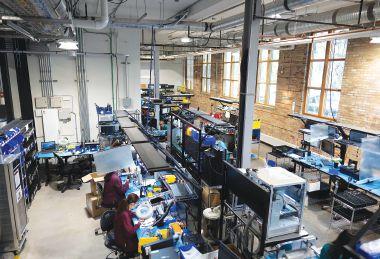
Blackline Safety announced that it has expanded its manufacturing capacity at its Calgary headquarters.
The expansion is expected to increase Blackline’s production capacity by 30 to 50 per cent.
The company says its global customer base has grown to 1,800, with 150,000 workers protected by the company’s safety wearables across North America, Europe, Middle East, Australia and New Zealand.
“Amid the rising demand for our products, the expansion enables us to assemble increased volumes of products on site and maintain
Blackline’s industry-best lead times for order fulfillment,” said Kevin Meyers, COO, Blackline Safety, in a statement.
“Our customers depend on Blackline to keep their workers safe, and we are committed to ensuring product availability and reliability to meet the needs of our growing user base as we transform the industrial workplace through state-of-the-art technology.”
Blackline’s manufacturing area is now more than 11,850 square feet on the main floor of its headquarters, representing an increase of almost 50 per cent.
Space was freed up as a result of more Blackline employees choosing a hybrid work model, and by moving the company’s development facilities to the building’s second floor.
Advancements in Artificial Intelligence (AI) and edge computing for video analytics will drive the global installed base of video surveillance cameras to 1.2 billion in 2030, according to ABI Research.
“By harnessing new advancements in AI and edge computing, all areas of a business can consider surveillance cameras as intelligent Internet of Things (IoT) devices that can gather data and issue alerts without human intervention,” said Lizzie Stokes, IoT hardware & devices and IoT networks & services analyst at ABI Research.
“The surveillance cameras on the market today are smarter and more powerful than their predecessors, prompting more companies to view cameras as accurate sensors that can predict human behaviour.”
According to ABI, marketing and HR departments are investing in smart video solutions for operational efficiency. Cameras are being used to track customer satisfaction and to monitor employee safety. Other uses for smart cameras

include the detection of defective products on factory floors and to optimize road traffic.
The surveillance market is also benefiting from a wider assortment of technology such as body-worn cameras.


“The video surveillance industry experienced higher growth a decade ago and has since grappled with international disagreements, privacy concerns and the threat of increased regulation. Though the market is maturing now, it has the potential to be transformed by new, value-adding use cases and form factors,” added Stokes.
Further findings are available in ABI Research’s Video in IoT: Trends, Use Cases, and Connectivity Technology analysis report.
Altronix, a provider of power and data transmission solutions for the security industry, announced the appointment of Omnitech Solution Services as its representative in Canada.
Omnitech Solution Services is based in Vancouver and has more than 50 years of experience in the security industry.
“We are excited to partner with Altronix … and bring their innovative and reliable solutions to our partners across Canada,” said Jason Booij, president and CEO, Omnitech Solution Services, in a statement.
“This partnership will allow us to provide customers with a broader range of products that meets their needs while maintaining our com-
mitment to quality and service excellence.”
Altronix also appointed FM Valenti to support its customers in the northeastern U.S.
“As we continue to expand our portfolio of products that deliver new and innovative solutions for the security industry, it is critical for us to have an outstanding team of local, experienced, professional sales reps delivering the support our customers deserve,” said Alan Forman, president, Altronix.
“FM Valenti and Omnitech are now part of our extended family to fulfill our commitment, providing Altronix customers with the highest levels of service and product support.”
Camden
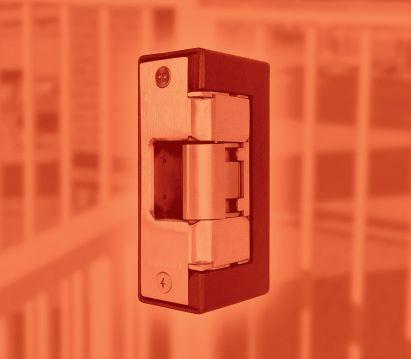
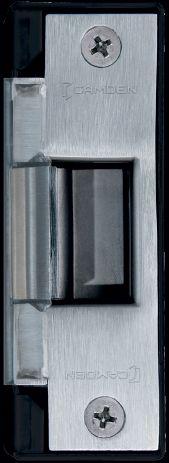
CX-ED1959-MB
Outdoor Rated Strike for Gates & Exterior Doors

CX-ED1959-MB Grade 1 strike for cylindrical and mortise locksets (without dead bolts) offers the best strike quality and performance. The heavy duty stainless steel construction and universal design delivers unparalleled application flexibility, and is perfect for exterior doors and gates. Heavy-gauge steel surface mounting box included.



European energy group installs thermal cameras
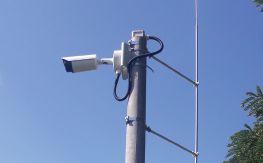
The MVM energy group’s portfolio covers the domestic energy system in Hungary. It also operates in Austria, the Czech Republic, Croatia, Slovakia, Romania, and other parts of Europe.
MVM had 14 photovoltaic power plants that needed to be protected while also protecting the privacy of neighbouring residents.
Due to the adjacent residential settings, traditional security technology such as fence detection and outdoor CCTV could not be used. The MVM security team deployed Hanwha Vision thermal cameras as a way to protect its assets while adhering to GDPR stipulations. More than 100 cameras were installed.
“It was a natural choice when we realized that on these sites we couldn’t use fence protection, infrared, or microwaves to detect intruders. With the thermal cameras, we could rest assured that no personal data would be gathered,” said Tamás Tánczos, security engineering, MVM, in a statement.

Restaurant company provides franchisees with security solutions Franchising company BRIX Holdings chose Interface to deploy 24x7 monitoring, business intelligence and other solutions for all of its franchise locations, including Red Mango Cafe, Friendly’s, Pizza Jukebox and several other outlets.
Interface’s solutions enable BRIX franchisees to have access to a technology template that can be replicated at any number of locations.
Interface’s “network-technologyin-box solution” includes prefabricated, tamper-proof network cabinets with switches, routers, firewalls and connectivity.
“One of the bonuses of being a BRIX franchisee is that we help standardize critical technologies and make it as simple as possible so that the franchise operator can focus on the business,” said Carissa DeSantis, CTO, BRIX, in a statement.
Interface will work with BRIX to leverage the restaurants’ security cameras to provide operational information for franchise operators.



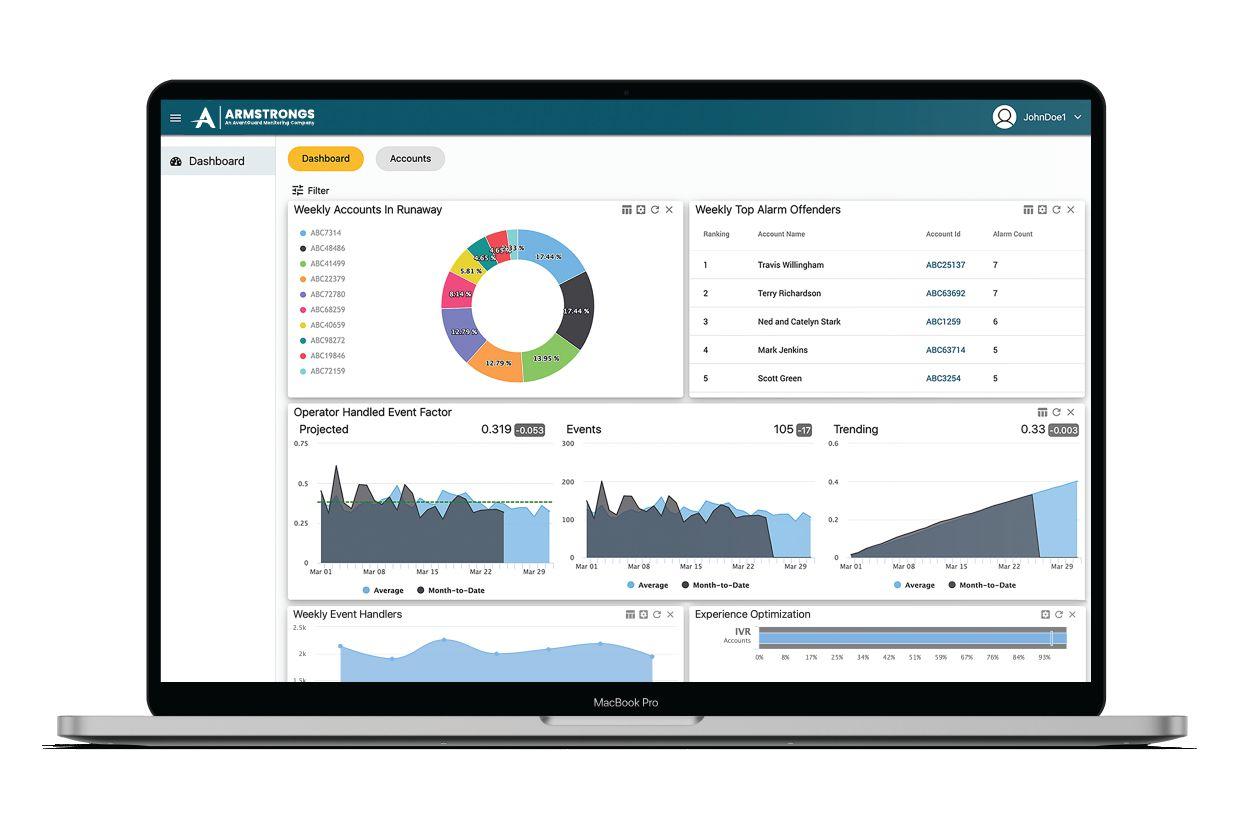
• Armstrongs has appointed Andrew Munro to its dealer care team as a technical account specialist.
• Gallagher Security announced that Nour Muqatash has joined its team as a technical
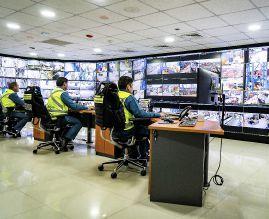
The Port of Valparaiso, Chile’s second busiest port, has installed a video wall processor for its command and control centre.
An increase in cruise and freight activity necessitated an enhancement in monitoring and response capabilities.
Systems integration partner Convergint selected RGB Spectrum’s video processor to power a video wall of 33 HD displays comprising a 130-square-foot display surface.
The video processor supports IP streams, DVI/HDMI and 3G/HD-SDI, and provides real-time acquisition of visual data including computer feeds, surveillance video, RFI sensors on vessels, access control systems, news and weather, and more.
For collaboration purposes, the processor allows for the sharing and distribution of its data sources via LAN or WAN to anywhere on the network. With a Zio Mobile App, users can view these streams on remote devices.

business development manager, based in Montreal.
• Steve Lubin recently joined Johnson Controls as strategic accounts manager for Canada.
• AMAG Technology has hired Ann Marie Mansfield as
August 17, 2023
CANASA Eastern Ontario Regional Council golf tournament Ottawa, Ont. www.canasa.org
September 11-13, 2023
GSX Dallas, Tex. www.gsx.org
September 14, 2023
CANASA Golden Horseshoe Regional Council golf tournament Mount Hope, Ont. www.canasa.org
September 21, 2023
ADI Expo New Westminster, B.C. www.adiglobal.com
September 21, 2023
CANASA Quebec Regional Council golf tournament
Notre-Dame-de-l’Île-Perrot, Que. www.canasa.org
October 8-12, 2023
OPSTech Meeting Lafayette, La. www.tma.us
October 17-18, 2023
Securing New Ground New York, N.Y. sng.securityindustry.org
October 25-26, 2023
Security Canada Central Toronto, Ont. www.securitycanada.com


its new director, commercial excellence.
• Artificial Intelligence Technology Solutions announced that Holley Hunt has joined its subsidiary Robotic Assistance Devices as vice-president of strategic partnerships.
• i-PRO announced that it has appointed Antoinette King as director of regional sales east and head of cyber convergence.
You’ve worked hard to build a successful company and now it’s time to take things to the next level. If you are considering selling your security monitoring business, or looking for a partner to help you grow, there are plenty of advantages to joining forces with SecurTek.
SecurTek provides a viable exit strategy for business owners who are looking to retire, move on to other ventures, or simply cash out on their investment. SecurTek’s acquisition program allows you to sell your business while still retaining your independence and continuing to operate as a dealer within the SecurTek network.
With a proven track record of success, SecurTek offers you the assurance that your legacy and hard work will be in good hands.
Since 1999, SecurTek has provided commercial and residential security, video, and medical monitoring services to customers throughout Canada (excluding Quebec). With monitoring stations in Yorkton, SK and Winnipeg, MB, SecurTek serves over 90,000 customers across the country. And we’re not stopping there. Our plan is to continue growing through acquisitions and dealer recruitment, so if you’re thinking about selling, give us a call because we’re buying.
We have over 200 independently owned dealer partners across Canada. We work closely with retail, wholesale, and servicing dealers to ensure that our customers have access to the best equipment and services in the industry. And unlike some other companies, we don’t compete against our dealers for sales. Instead, we provide ongoing cashflow opportunities to help our partners remain competitive.
We’ve grown our business development team to have stronger regional support. It means faster response times with a clear understanding of your market challenges, no matter where in Canada your business calls home. You’ll have the support you need transitioning into the SecurTek family.
SecurTek is proven to be stable and resilient in an industry that is constantly evolving. Like you, we’ve faced and overcome many challenges. That experience and expertise will help us navigate the future.
SecurTek has established strong relationships with industry partners, including manufacturers, suppliers, and service providers. That often means better pricing, more extensive product offerings, and other benefits that can help you remain competitive in your market.
We’ve learned to be efficient and can help you with the tools and resources you need to manage your businesses more effectively.
Increase your revenue and stay competitive.
If you’re a retail dealer, you’ll benefit from our stable dealer program that has been in place for over 20 years. You’ll continue to be an owner/operator, and we’ll be your partner, not your boss. You’ll have less restrictive dealer territories and more freedom to sell the equipment you want. Plus, you’ll receive preferred pricing on equipment to help you stay competitive.
SecurTek can provide retail dealers with access to a wide range of products and services, including monitoring services on POTS, alternative communicators (cellular or IP), video monitoring, medical alert, lone worker solutions, and guard services.
You will be able to offer your customers a comprehensive range of security solutions, positioning you as a one-stopshop for all their security needs.
Provide your customers with top-tier services.
Wholesale dealers can take advantage of our billing and collecting services. We can sell services like alarm.com to your customers, and you’ll have more control over the end-to-end customer experience. You’ll also benefit from competitive pricing and a quick onboarding process.
There’s value working with a Canadian company.
No matter what type of dealer you are, you’ll be partnering with a Canadian-owned and operated company that is wellfunded and has a stable dealer program in place. A company that understands the unique needs of this market. You’ll be able to keep your own identity and brand, and you’ll still be your own boss. And best of all, you’ll be able to cash out on your business while still operating independently as a dealer.
So, if you’re looking to sell your security monitoring business, or partner, there’s no better partner than SecurTek Monitoring Solutions. We offer the best in security, video, and medical monitoring services, and we’re committed to providing exceptional customer experiences.
Take your security monitoring business to new heights with SecurTek Monitoring Solutions. With our proven track record, stable dealer programs, and commitment to exceptional customer experiences, there’s never been a better time to join forces and achieve incredible success together. Contact us today to learn more about how we can help you take your business to the next level!
Reach out to: dealer.program@SecurTek.com

CBy Victor Harding
There are advantages to pursuing a share deal, but carefully consider the financial picture before taking steps
onventional wisdom on the “shares versus assets” question is that, as a seller you should almost always strive for a share deal because you can get up to $913,000 of your purchase price tax free if you have not already used any of your capital gains exemption.
This tax-free number goes up every year by the Cost of Living increase. And if you have more than one family member owning shares, you can double or triple that tax exemption. There is no doubt that selling shares is generally a much more tax effective way of selling, particularly for smaller companies.
However, there are important hurdles the Canada Revenue Agency (CRA) puts in place for those who want the capital gain exemption from selling shares.
First, your company has to be a Canadian Controlled Private Corporation (CCPC). It can’t be publicly traded, a partnership or a sole proprietorship.
Secondly, as a CCPC, it has to qualify for the capital gains exemption when the shares are sold. Qualifying is not automatic.
To qualify for the exemption:
• Ninety per cent of the assets of the company need to be used in business operations at the time of the sale. The CRA does not want the company to be loaded down with passive assets like investments. Owners will often have to “purify” their balance sheet of passive assets before selling.
• Fifty per cent of the company’s assets have to be actively used in operations in Canada over a 24-month period.
• The owners selling the shares must own the shares for at least two years before they sell.
I tell my clients who want to take advantage of their capital gains exemption that they have to check with their accountant before we go too far down the path of the sale. Not all CCPCs qualify for the exemption.
If you have sold the shares of your company and the sale qualifies for the capital gains exemption, when filling out your personal tax return you calculate your capital gain by deducting the Adjusted Cost Base of the shares being sold from total

purchase price to arrive at the capital gain. (When selling a company where monitored accounts are the largest asset, often the Adjusted Cost Base of your shares is any cost that is incurred in buying or originating the monitored accounts in the first place. Unfortunately, for many alarm dealers this adjusted cost base is next to zero.)
Moving on with the sale of shares, 50 per cent of that capital gain is called the taxable capital gain and is taxable at the shareholder’s personal tax rate. If the capital gain exemption comes into play then it is applied against the taxable capital gain to reduce the size of the taxable capital gain.
If an asset deal is done, then not only does the seller have to pay the capital gains tax on the sale of the assets in the company in the year the assets are sold but the seller has to pay another tax in moving the proceeds out of the company.
In my practice, which focuses on small and medium-sized alarm, integration, fire and guard companies, it is interesting to note that the only segment where share deals are not prevalent is with alarm companies and the sale of monitored accounts, particularly to the bigger buyers.
There are two reasons why. First, share deals are more time-consuming and legally more expensive to do. Secondly, often the bigger buyers want to be able to write off the purchase price, which they cannot do when buying shares. The bottom line is it is harder to get a share deal when selling monitored accounts. Interestingly enough, smaller buyers of companies with monitored accounts will often do a share deal.
So, share deals are the preferred way to go but there are strings attached. As mentioned,
share deals give up more complicated agreements of purchase and sale and generally cost a little more legally to get done. Secondly, some buyers of shares will lower their price (as compared to an asset deal) because they do not get the tax writeoff from the purchase price. Thirdly — and this is important and often not understood by sellers — buyers of shares generally expect to get all the fixed assets required to operate the business being sold included in the purchase price along with some working capital.
With asset deals, the buyer specifies exactly what assets they are going to buy and will pay for each asset bought. This improves the purchase price in asset deals.
Sellers often don’t realize that when selling shares, they will have to leave working capital in the company when they sell. Working capital here means the net of all current assets less current liabilities. This has to be a positive number at the closing date. One of the biggest issues negotiated in a share deal is the actual amount of working capital that has to be left by the seller in the company.
Share deals are the way to go if you can get one but know that there are strings attached and some asset deals can almost make up for the tax benefits of the share deal. This has been my experience as a broker serving the security and alarm industry in Canada. Whatever you decide to do, seek the appropriate advice from your legal and accounting professionals.
Victor Harding is the principal of Harding Security Services (victor@hardingsecurity.ca).



ABy Roger Miller
Staying up-to-date on new technology will ultimately improve your client relationships
s security integrators, we are frequently asked to identify the most appropriate or latest technology to address a specific safety or security concern based on client needs.
“We continuously need to consider new ways of thinking.”
Often, this specific request must be integrated with legacy security technology. This may mandate compatibility of the two systems, which poses other challenges. Understanding the client request as well as the options for a solution is critical to your success. As we worked through the pandemic, the challenges we faced also resulted in opportunities for our industry. It created new ways of thinking that will exist long after the pandemic. We continuously need to consider new ways of thinking so we push ourselves to a higher standard.
Some of the specific products that were in demand due to pandemic-related challenges were:
• Hands free door operators
• People counting and tracking
• Licence plate recognition (LPR)
• Thermal (from fevers to literal hot spots)
• Remote access to security software / hardware
• Integrated GPS
• Protective shields or barriers
• Interview rooms (audio and video for law enforcement)
• Metal detection
During the peak of the pandemic, we were trying to understand how we can use technology to the benefit of our clients but without the ability to meet one-on-one with the product representatives or colleagues. Each of the above listed solutions required us to develop our knowledge in the moment. We are all busy, so finding time to learn about new products created its own challenge, but one that had to be addressed. The pandemic fueled the need for security technology and personnel but also resulted in
the supply chain gaps. We had never experienced such widespread supply chain issues with security products before. Historically, there have been times we could not procure a certain piece of hardware on occasion, but not being able to buy off-the-shelf products was completely foreign to us. This was other challenge and another learning experience for the industry.
When your client talks to you about AI, video analytics, systems integration or other technology that tends to be defined by a product manufacturer, the onus is on you, the integrator, to make sure you understand your client’s expectations.
I have worked with clients who wanted “video analytics” but then as you dig into their perception of what it means, they frequently have a different interpretation. I once met with a group of people from the same organization who all wanted video analytics, but they each had a different understanding of what it was. It turned out they were not even looking for video analytics.
Seize the opportunity to fully understand what they are asking for so you can deliver a solution appropriate to their needs. Providing solutions for your client is not just a source of revenue — these are often life safety systems that must perform as intended when they are
needed most. Each one of these specific requests requires an equally specific solution. We can only provide that solution if we understand the need, know our technology capabilities and have developed a relationship with the manufacturer or channel partner.
Look for training opportunities from manufacturers or associations. The Canadian Security Association (CANASA), for example, delivers valuable education sessions, so take advantage of them. It always amazes me that we have such easy access to this leading-edge technology!
Our work is often complex, time-consuming and sometimes without the financial compensation we anticipated. However, your client has placed trust in you to provide professional advice and service — the same level of service and expertise you would expect from your accountant or business advisor.
Building your knowledge of current technology will help to develop and maintain your business. Failing to develop your knowledge will inevitably have a negative affect. Can your business grow, or even survive, using yesterday’s technology?
There will be times when we cannot meet the client’s expectations, but it is better to discover this before the sale than after.
Roger Miller is the president of Northeastern Protection Service Inc. (www.protectionpartner.ca).


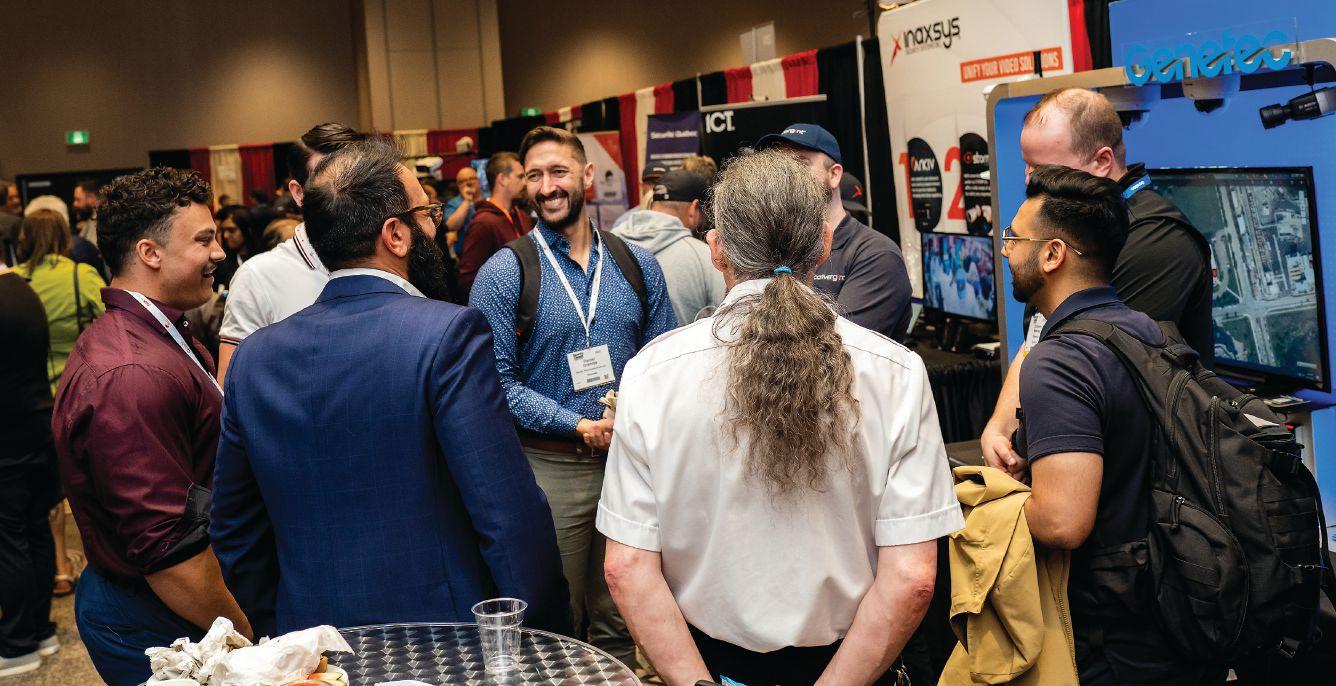
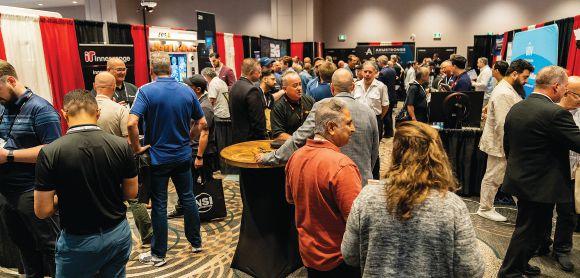
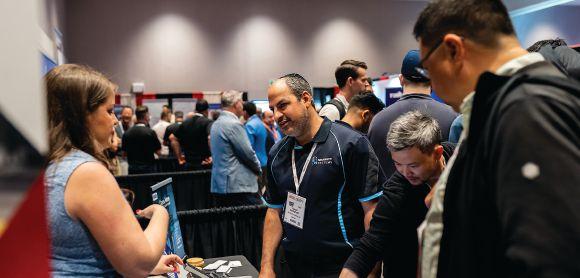
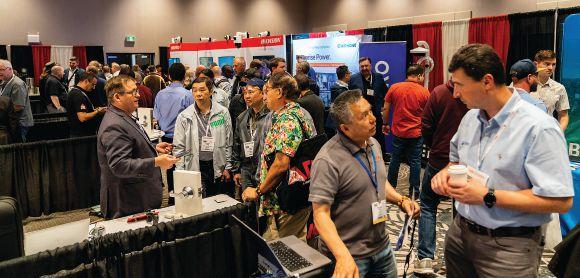
The Canadian Security Association (CANASA) hosted Security Canada West in Richmond, B.C., in June, offering a combination of networking, education, a trade show and the association’s annual general meeting.
Attendees gathered from across the Pacific Northwest to see the latest security products and solutions, including surveillance, access control, monitoring and smart home technology. CANASA also hosted a golf tournament at Hazelmere Golf and Tennis Club in partnership with the ASIS Pacific Chapter.
SCW is the second of three trade shows offered by CANASA this year. Security Canada East was held in April in Quebec. The next show on the calendar is Security Canada Central, CANASA’s two-day event, coming to Toronto on Oct. 25-26.


By Patrick Straw
CANASA’s B.C. trade show receives strong industry support and sets the stage for a new board of directors
After a very successful Security Canada East in Laval, Que., in April we saw record attendance and vendor support at our June 14 Security Canada West trade show and conference in Richmond, B.C.
Immediately following Security Canada West, we held our AGM and appointed a new board of directors.
The board, representing CANASA nationally, will work with CANASA staff to continue our growth as an association. Thank you to all who have accepted the responsibility on our behalf.
Executive Committee
• Bob Smith, president
• Neil Jones, vice-president
• Brahm Ptack, treasurer
Directors
• Scott Young, GardaWorld Security Systems (Alberta)
• Roger Miller, Northeastern Protection Services (Atlantic)
• Stuart (Stu) Armour, Affordable Security Systems (B.C.)
• Anna de Jager, TAG Dispatch (Ontario)
• Helen Perry-Raycraft, City of Saskatoon (Prairie)
• Daniel Cyr, Sirix (Quebec)
• Brahm Ptack, Central Security BPG Ltd. (monitoring)
• Luke Raymond, Inaxsys Security Systems (vendor)
• Tracy Chamzuk, Best Built In
• Neil Jones, Johnson Controls
• Shelley McQuigge, Paladin Technologies
• Bob Smith, Alliance Security Team
At our AGM, CANASA’s most prestigious award for outstanding contributions to our industry was presented to Anita Brunet, who has just completed her term as president of our board. Anita has contributed to our industry and association for decades, championing diversity, integrity and professionalism. She is always willing to step up and take on a new challenge on behalf of the Canadian security industry.

CANASA would also like to thank the board members who are leaving this year: Anita Brunet (past president), Jonathan Metcalfe, Trask Dittburner, Kevin Leonard and Al Cavers.

We are very excited about Security Canada Central in October. Thanks to great work by Steve Basnett, CANASA’s director of trade shows, we sold out our initial offering of booths. Steve has worked with the venue to add a few more. If you would like more information, visit www.canasa.org.
Patrick Straw is the executive director of CANASA (www.canasa.org).

With the release of Protege X, a next generation cloud-based security platform, ICT Country Manager - Canada, Pat Alvaro explains the benefits and background behind this offering.
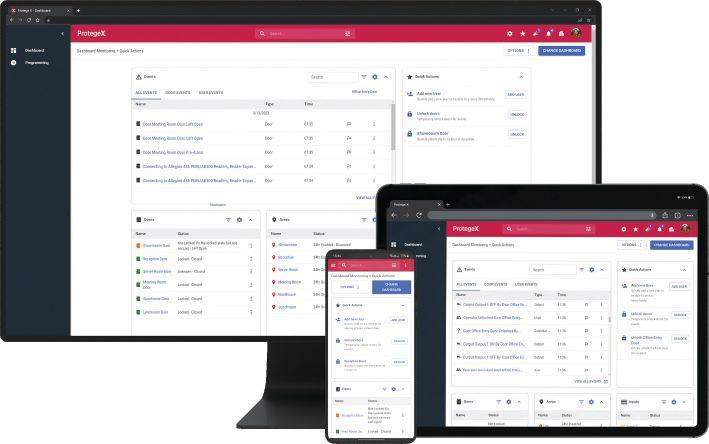
As we transition to an increasingly online world, this presents new challenges for the security industry and the organizations we protect. In response, we’ve been developing Protege X, our cloud-based security solution. This cross-platform access control and intrusion detection ecosystem is designed to deliver future-proofed flexibility for businesses looking to protect their online data and physical assets.
A key benefit of Protege X is that the cloud-based solution negates the need for multiple competing systems, simplifying programming and implementation, management, and control.
One of the most exciting features is the ability to bring numerous properties together under a single secure instance in the cloud. Using a retail chain as an example; In Protege X, individual storefronts would be identified as managed locations, while the group of locations would be classified as a central place.
For security installers, a single managed place is easy to maintain and protect. And, as Protege X is built to scale with ease. If the chain opens another branch, you simply add a controller to the new location, connect to the cloud server to download the programming, and you’re ready to go.
Having centralized controllers makes for easy system management. It’s now possible to manage users and access rights from a single user portal.
You can monitor and control sites from a smartphone using the Protege Mobile App –giving complete visibility and control over all locations, from anywhere.
This makes a cloud solution an increasingly
popular option, as it breaks down the technology barrier for users who simply want external access to their security system.
The ability to deliver updates via the cloud removes the need for time-consuming site visits and means no more waiting for the latest features or security settings. Installers can also pre-program the Protege X system before hardware is installed, improving efficiency.
Centralized programming removes the inherent security risks associated with multiple user databases as here’s no need to duplicate programming and databases across multiple on-location controllers.
And with data storage and backup now living in the cloud, customers get peace of mind, knowing their precious information will stay safe.
Damian Butters, Chief Technical Officer at ICT says, “We started with a guiding principle that the most important aspect of Protege X would be protecting all information that’s in the cloud. This is
vital so organizations can trust that their data will stay secure.”
As a world-leading cloud provider, Microsoft Azure offers multiple layers of protection. These encompass multi-factor authentication, the zero-trust security model, and state-of-the-art data encryption technology. This is why we selected Azure to host the Protege X cloud servers and protect invaluable customer data.
While some businesses may still prefer to keep their security on-premise, we cater for this with our Protege WX and Protege GX platforms. But the addition of Protege X to our product line means that we can continue to meet the needs of our customers while providing additional options for those looking to take advantage of the cloud in a way that fits their business model.
Whether it’s for a single property or a growing business, Protege X offers value in scalability and provides multiple benefits for customers.
To see Protege X in action, visit the ICT Team at Security Canada Central in Toronto this October.
Protege X is a next generation cloud-based, cross platform access control and intrusion detection ecosystem, designed for businesses that demand future-proofed flexibility.
ICT’s latest innovation has a simple to manage subscription-based model, and is backed by a limited lifetime* warranty.
*Terms and conditions apply.

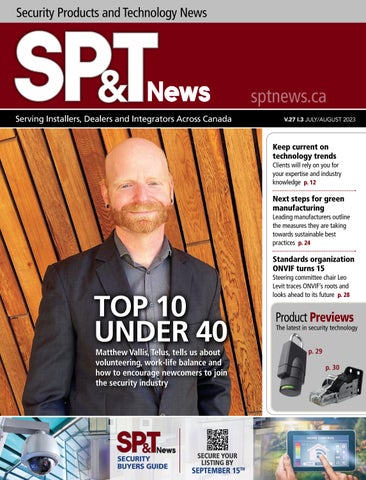
Young security professionals tell us how they set priorities and offer advice for maintaining a successful work-life balance

What does it take to be included in the SP&T News annual Top 10 Under 40 list?
It’s not always years in the business or the number of credentials you have earned. Arguably, it’s a positive attitude and a willingness to keep learning. This year’s recipients come from different corners of the security industry but they all have those qualities in common.
We asked the 2023 Top 10 Under 40 to tell us more about what motivates them, what gets them going in the morning, and what advice they have to encourage potential newcomers to join the security industry.
Please join us in congratulating this year’s winners. SP&T’s annual Top 10 Under 40 list is sponsored by Digital Watchdog.

36
Kunal Kumar
Channel sales executive, video, Ontario, Avigilon (Motorola Solutions)
What is the first task you take care of in a typical working day?
The first task I take care of on a typical working day is usually checking my emails, calendar and todo list to plan out my day and prioritize tasks.
What do you enjoy most about the security profession?
Being a techno-commercial security professional, I enjoy the challenge and variety that the security profession offers. It’s both intellectually stimulating and rewarding to work on solutions for security issues and to be able to protect people and organizations from malicious actors. I also appreciate the opportunity to learn new skills and stay up-to-date on security trends and technology.
Do you have any tips for achieving a successful work-life balance?
1. Set realistic goals and expectations.
2. Prioritize the most important tasks first.
3. Make time for yourself and family.
4. Take regular breaks throughout the day.
5. Create a schedule and stick to it.
6. Set boundaries between work and home.
7. Learn to say “no” when needed.
8. Delegate tasks whenever possible.
9. Exercise regularly to reduce stress.
10. Make time for leisure activities.
can the
industry
The security industry can draw more young people and newcomers to the profession by providing more attractive entry-level positions and internships, as well as offering educational opportunities for those interested in the field.
Additionally, the security industry can engage in active outreach to potential employees, such as attending professional conferences and job fairs or engaging in social media marketing. Furthermore, the industry should emphasize the diverse career paths and job growth potential available in the profession, as well as the opportunities to work on meaningful projects and develop valuable skills.
I am part of the ASIS Toronto Chapter education committee and mentorship program as well as a part-time faculty member at Toronto Business College.
Take a chance to give back to your profession and discover fresh perspectives, ideas and approaches.

Jessica Tanan Security sales and business development, Vipond
What is the first task you take care of in a typical working day?
Before I turn on my computer or make any calls, I take the time to work on my mindset and practice mindfulness, which has significantly impacted my overall well-being and productivity.
Writing down my goals and visualizing the kind of day I want to have helps me to clarify my objectives and provides a roadmap for my actions. Gratitude helps me cultivate a positive outlook, even in difficult situations, and enhances my interactions with my colleagues and customers.
By striving to do better than yesterday, I’m actively seeking growth and personal development with the support of my incredible team and leadership. My commitment to learning enables me to adapt to new challenges and provide an overall better service to our customers.
What do you enjoy most about the security profession?
Ensuring the safety and well-being of others within our communities is what I enjoy the most about the security profession. It gives me a sense of purpose about protecting people, property or sensitive information using our cutting-edge technologies. The security profession can be fast-paced and dynamic, with no two days being the same. From conducting risk assessments and implementing security measures to responding to incidents and managing emergencies, the profession can offer a diverse range of tasks and challenges. As more women make their mark in a traditionally male-dominated industry we can continue to inspire other women and contribute to a more inclusive and diverse security profession.
Do you have any tips for achieving a successful work-life balance?
I’ll turn off my work mobile after work hours and on weekends. Employees at Vipond are encouraged to take their PTO for the year to recharge and reset. Asking for help and support when you need it can help alleviate stress and create more time for yourself.
Learning to say no when you feel overwhelmed or when additional commitments would interfere on your personal time is another example of setting boundaries without feeling
guilty. You can use your personal time to engage in activities that bring you joy and relaxation, whether it’s spending time with loved ones, pursuing hobbies (hiking and being in nature is key for me) or practicing self-care.
How can the security industry draw more young people and newcomers to the profession?
Raising awareness about all the cutting-edge technologies that help keep our communities more secure can draw more young people and newcomers to the profession because of the potential for growth, advancement, and specialization in areas such as cybersecurity, physical security, risk management and AI. By educating young people and newcomers about the demand for skilled professionals and collaborating with educational institutions there can be progress in the development of security related courses or certifications that provide a clear pathway into the profession.
Young people are often drawn to industries that offer opportunities for creativity and problem-solving. Establishing mentorship and apprenticeship programs that provide practical learning experiences and guidance for young individuals entering the profession is another way to increase awareness and help attract and retain new talent.



Taylor Wolsey National director of operations, GardaWorld Security Systems and Technology
What is the first task you take care of in a typical working day?
My first personal task: Exercise. It is only in the last few years that I consistently start my day this way. I knew it was something I wanted to make part of my routine, but I kept finding reasons or excuses not to. It is liberating to now be consistently hitting my health goals. I highly recommend it.
My first task at work: Remember where we are going. I review my personal vision of where I can see our company. I then review large projects that are part of the journey towards making the vision into reality. With this perspective, I then proceed with the daily tasks, emails, meetings, emergencies, needs and support of customers and staff. I made the mistake early in my career of leading others while forgetting where we are going, and it is not a feeling I want again.
What do you enjoy most about the security profession?
Technology! The security industry simplifies complex solutions, protects clients, and provides data for the customer to make informed business decisions. Technology allows the agility required to be both proactive and reactive to a solution. Customers now expect that we not only understand but embrace the best technology solution specifically modified to their needs and wants.
Do you have any tips for achieving a successful work-life balance?
When you are at work, be at work; when you are with family, be with family. It is simple, but true. Commit to the task at hand, eliminate distractions and be intentional with your time. When required, it is good to work late nights or attend to emergencies, but when you have completed the task at hand, be done and be intentional in your other responsibilities. Currently, I am striving to follow this in my personal life as I balance work, being a husband, raising four daughters, and volunteering in the community. It is a challenge, but this tip has been helpful for me.
How can the security industry draw more young people and newcomers to the profession?
Creativity and transparency. Technology con-
tinues to evolve; today’s youth have embraced it and use it to simplify or increase enjoyment of their lives. Too often as leaders we stifle their creativity in using technology. To avoid this, it is essential to be transparent as to the “why” behind what we do.
As leaders, if we cannot truly justify and explain the reason “why” we do what we do then we must embrace creativity with technology and create the change. We must embrace what makes us uncomfortable and be leaders that empower, document, implement and optimize our team’s creativity. As we do this, the next generation will be attracted to our industry as a place where they can not only make a good wage, but also have the impact that brings purpose to a career.

Nichole Tymchuk National sales coordinator, Convergint
help create a successful work-life balance is how to place realistic expectations on tasks in a priority sequence. Learning to triage your daily, weekly, and monthly tasks is an organizational skill that takes time to develop and a necessary fortitude to implement and stick to.
This also includes creating boundaries for yourself around your personal availability, especially in such a fast-paced and high-demand environment.
Working beyond the scope of a typical workday for a project that needs to be completed is required at times, but doing this consistently shouldn’t be standard as it increases your burnout factor. Lastly, I think it’s important to find something to do in your personal life that you are passionate about or enjoying doing.
How can the security industry draw more young people and newcomers to the profession?
We could all benefit from educating the next generation about how our industry is already touching their lives and they are a part of it without even knowing it yet. We live in a world where every day, more and more information becomes available online. More access to technology comes with a steadily increasing risk and a need to keep that technology safe from digital threats.
What is the first task you take care of in a typical working day?
In my role at Convergint I am responsible for supporting the sales and leadership teams across all of our business segments in Canada, so my first task of the day is mental preparation. I already know my schedule in advance, but with a team as large as ours and with locations spanning all time zones, it’s imperative that I check my Teams and Outlook for anything new. This includes messages or emails from our colleagues or partners that might require immediate attention. Once my calendar and to-do list is confirmed, I immediately caffeinate and start working on my high priority items for the day.
What do you enjoy most about the security profession?
What I enjoy most about the security profession is that the technology is always progressing and there are constantly new developments in both technology and our capabilities. This allows us to be part of an evolutionary process that provides our customers with solutions to support their business in the safest and most efficient manner possible. By successfully achieving our co-operative goals, we also ensure that our valued customers can focus more of their time on their specific business needs.
Do you have any tips for achieving a successful work-life balance?
One of the biggest things that I’ve learned to
Having a co-op or development program in place is crucial to attracting new people to the industry. This allows them to be able to learn about the business while being able to adapt the skills they have already developed to align to our industry. In addition to this, ensuring that they know what career opportunities and paths are available to them will allow them to be set up to have a long and fulfilling career. For example, Convergint has our CDP (Convergint Development Program) where recent grads join us and are able to complete a six-month development program, spending time with each department to learn the ins and outs of our industry before joining their local team as a full-time member of the sales or operations teams.

Rachel Garr Director of administration, a.p.i. Alarm
What is the first task you take care of in a typical working day?
My work days usually start the same way. I get to the office, sit down with a tea and start going through all the reports that I received from the day before. I then check in with other man-
agement to see what’s going on and if there’s any issues we need to address. I’m big on lists, so next I’ll write down the three main things I need to get done that day.
What do you enjoy most about the security profession?
I take pride in being involved in an industry that is focused on helping people protect themselves, their loved ones and their property. The industry is filled with challenges, but it is also very rewarding.
Do you have any tips for achieving a successful work-life balance?
Achieving a successful work-life balance can be challenging, especially in a 24/7 industry like ours. However, I try to handle it by focusing only on work when I am at work and dedicating time to my children when I am at home. I keep my phone out of reach and trust if it is something urgent, someone will call.
How can the security industry draw more young people and newcomers to the profession?
I think the security industry needs to continue to innovate. The industry is constantly changing and applying new technologies, like artificial intelligence, will ensure that working in the industry stays rewarding and exciting for newcomers.

Chris Neumann President & CEO, Security ONE Alarm Systems
What is the first task you take care of in a typical working day?
A good day for me starts with some version of movement/exercise to get my body and mind ready for the day. I also enjoy the early morning moments with my daughter, son and wife before the day kicks into high gear. To shift into work mode, I like to review my calendar to re-prioritize my day and check in with our leadership team to see where I can support them that day.
What do you enjoy most about the security profession?
First and foremost, it is a very rewarding profession. The services our team delivers provide incredible peace of mind for our customers, aid in deterring crime and in many incidents, save lives. Combine that with exciting technology
that is ever-evolving, great people and a recurring revenue business model — it’s a perfect recipe for a great career.
Do you have any tips for achieving a successful work-life balance?
I think it is Jeff Bezos who talks a lot about work-life integration versus balance. Balance inherently indicates a trade-off, either in your personal life or work, depending on which way the scale shifts. I tend to view this similarly in the sense that if things are going well at home, you come to work with more energy and vice-versa. Ultimately, it is up to the individual to ensure their work role and family/personal commitments can be integrated in a way they deem successful.
How can the security industry draw more young people and newcomers to the profession?
I think it is an under-the-radar industry that definitely does not get enough credit. It seems like most industry professionals, similar to myself, “accidentally” found themselves in our industry and did not intentionally seek it out. I’m hopeful as the industry grows and programs with post-secondary schools gain more traction, word will spread and it will become more of a planned career destination.


Matthew Vallis Senior consultant, smart buildings, Telus
What is the first task you take care of in a typical working day?
Typically, the first thing I do on a working day is make a coffee; then I check my emails and meeting calendar. This helps me identify priority items as well as review and prepare for any meetings I may have throughout the day. After checking these items, I go to the gym. During my morning exercise routine, I leave my cell phone in the locker so I can have distraction-free “unplugged” time. I also use this time to think about my daily priorities and put together a “plan of attack” so I can accomplish the tasks I want to get done each day.
What do you enjoy most about the security profession?
I have always enjoyed the technology and how it is constantly evolving to meet the needs of the customer. When I first started in the security industry it seemed like the approach was “How do we use technology to keep the bad people out?” Most systems were clunky, inefficient and not really all that user-friendly for the people who managed the systems or those who had to use the space the systems were protecting. Now, there has been a fundamental shift in the security industry where customers are looking for integrated platforms that are easy to manage and maintain while still providing the security they require.
Do you have any tips for achieving a successful work-life balance?
Yes, don’t be afraid to unplug. When I first started in the security industry I always carried my work phone on me and took my laptop everywhere, even on vacations. I would constantly be answering emails or working on items in the evenings, weekends and even on vacation (I never used my Out of Office). This unfortunately led to people contacting me outside of working hours because they knew I would answer my phone or emails. Slowly I began to realize that I was no longer enjoying my free time. Now, I have set working hours for myself and quite often I will leave my work phone on my desk when I go out and do activities (unless I know there is a priority item). Also, I highly recommend having a hobby. Something that has absolutely nothing to do with work.
How can the security industry draw more young people and newcomers to the profession?
I think the biggest thing the security industry can do to attract young people and new talent to the profession is more awareness that there are lots of careers with a secure future in the industry. When I tell most people who are outside the security industry that I work in a security profession they immediately think I am either a security guard or an IT person who works in cybersecurity. One of the mandates that I am the proudest of implementing as chair for ASIS Chapter 162 Calgary & Southern Alberta is “Attend your first ASIS Chapter event for free.” This has encouraged existing chapter members to bring out new employees or those new to the security industry to events so they can see what the industry is all about and to meet some of the experienced professionals who can share their success stories.

Mitch Kovach Pro installer/solutions provider, Alarmtech
What is the first task you take care of in a typical working day?
The first task I take care of in a typical day would be arriving at the office and ensuring any parts I need are packed and ready to go. I also discuss any upcoming jobs and ask any questions I may have about work orders for the day.
What do you enjoy most about the security profession?
What I enjoy the most about the security profession is the opportunity to come into people’s homes and provide solutions for homeowners based on their issues or concerns they may be having. I also enjoy solving problems regarding security systems, diagnosing issues, and having the ability to repair or solve them.
Do you have any tips for achieving a successful work-life balance?
My tips for achieving a successful work-life balance would be to set priorities in both your work and personal life and determine how you should allocate time for both. It is also important to be able to disconnect and have time for yourself.
How can the security industry draw more young people and newcomers to the profession?
I believe the security industry can draw young
people and newcomers by engaging them on social media platforms and embracing the various technologies that are emerging. It is also important to let young people know that there are various positions in the industry that provide exciting and fulfilling careers with a high likelihood of growth and gained knowledge.

Mikaël Lavergne Territory sales manager – Eastern Canada, JCI Security Products
What is the first task you take care of in a typical working day?
Even if I look at it before going to bed, the first thing I do is consult my schedule and traffic conditions, to make sure I did not miss anything and that the proper timing is scheduled in between appointments. We should never assume that every day will be the same and we must be able to adapt daily. By doing this task every morning, I can react quickly to avoid scheduling conflicts with my clients, thus also preserving my relationships.
What do you enjoy most about the security profession?
The challenges are never the same which encourages me to learn and evolve on a constant basis. For example, our customers enjoy people who think outside the box to provide a complete solution to their needs. You could simply answer the client’s questions, but if you’re able to anticipate their next questions and provide them an answer before they ask, then you’ll be ahead of the game!
Do you have any tips for achieving a successful work-life balance?
My advice for maintaining a good work-life balance is to prioritize developing yourself in your current role. If you focus on learning and improving yourself, you will become much more efficient with your time, thus leaving more time for your personal life. As some would say, work hard – play hard, but not necessarily the way we thought about it originally!
How can the security industry draw more young people and newcomers to the profession?
By continuing to bring new technology to market, not only for end users but also for those who sell and install the products. Cutting-edge technology attracts young people, no matter the position!
We tend to forget that it starts with technicians. Most young technicians would rather program an alarm system through a phone app than an alarm keypad. When I meet students at trade shows, they are all impressed by today’s technology, but they tell me they are learning on 20-year-old security systems. I think we need to help find solutions for schools to offer new technology courses within their budget.

Ediz Kemal
General manager, Tone-Gar Group of Companies

What is the first task you take care of in a typical working day? What makes this line of work exciting is I never have a typical work day. However, I do believe the first task you take care of sets the tone for the rest of your day.
I try to start my day with a clear plan and prioritize tasks based on their importance and urgency. Starting my day with a focused and organized approach helps me set my day up for success.
What do you enjoy most about the security profession?
As a security professional, I have come to realize that this industry is more than just a job, it is a passion. What I most enjoy about the security industry is the thrill of constantly being challenged and the opportunity to make a difference in people’s lives. It all comes down to people helping people. Every day presents new challenges and opportunities to learn and grow from.
The security industry provides a sense of purpose that is hard to match. Knowing that the work I do helps keep people and the communities we serve safe gives me a sense of pride and accomplishment. It is a rewarding feeling to know that my contributions make a positive impact on society.
Do you have any tips for achieving a successful work-life balance?
In today’s fast-paced and demanding world, finding a balance between work and personal life can be challenging. However, it is essential for everyone’s overall well-being and happiness.
I prioritize and set boundaries, manage time effectively, and ensure to take care of my mental health. In a leadership role, it is essential to create a workspace where mental health and wellness is prioritized for all.
How can the security industry draw more young people and newcomers to the profession?
The security industry is in need of fresh talent and innovative ideas to keep up with ever-evolving threats. To draw more young people and newcomers to the profession, it is crucial to embrace modernization and showcase the exciting opportunities that lie within this field. By highlighting advancements, the potential for career growth, and the critical role security plays in our community, we can inspire the next generation to join us. The security industry offers a unique and fulfilling career path for those who are passionate about keeping our society safe.
It is a field that requires dedication and hard work, but the rewards are well worth it.
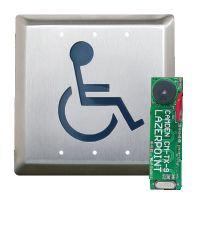
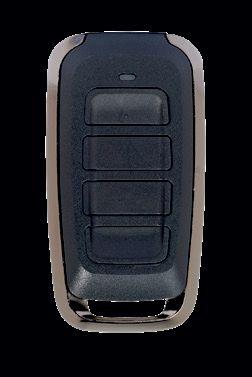
CV-WTX2H/4H 868Mhz. transmitters with HID iClass SE

Lazerpoint RF™ One, Two & Four button 915Mhz. wireless transmitters
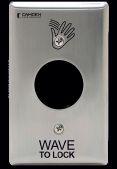
SureWave™ Battery powered 915Mhz. wireless switches
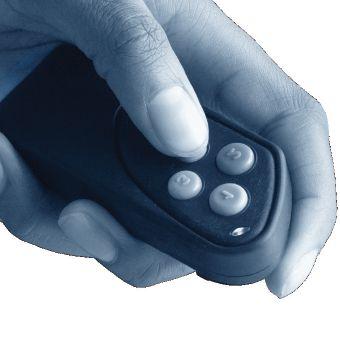
Camden offers the perfect wireless solution for any door control project, including ADA compliance, high-security encryption, the option for HID and HID iClass coils, and the widest selection of relay or Wiegand output receivers.

From fundamental changes in how products are made to energy management when they are deployed, security companies are taking important steps

By James Careless
It is one thing to talk about providing security customers with environmentally friendly/sustainable products and services.
It is another to “walk the talk” by taking actions that adhere to this commitment.
Axis Communications and HID are two companies taking sincere action in making their security products greener.
“HID’s 2023 State of Security and Identity Industry Report revealed how important sustainability has become to its partners, end users and security and IT personnel across a range of titles, organizations and industries,” explained Travis Hensley, HID’s global sustainability manager.
“More than 90 per cent of approximately 2,700 total respondents in HID’s March 2023 report cited sustainability as an important issue. Among integrators and installers, 76 per cent of respondents said their customers believe sustainability is increasingly important, and 62 per cent said it is ‘very important’ or ‘extremely’ important to their customers.”
Faced with such strong customer direc -
“Sustainability in the security industry is a big investment in the future of the environment.”
—Travis Hensley, HID
tion, HID knows what it and other security solutions providers have to do.
“It is important that access control and identity management solutions are aligned with sustainability requirements to reduce environmental impacts,” Hensley said. “Sustainability in the security industry is a big investment in the future of the environment.”
Axis Communications is another company that has made commitments to sustainability. Axis has signed on to the United Nations Sustainability Plan, said Keith D’Sa, the company’s country manager in Canada.
“A lot of people think of sustainability in terms of just the environmental impact. Es -
sentially, ‘how much energy are you using? Do your products use diesel trucks for transportation, and are they using chemicals in the actual components of the product?’ But it also covers cybersecurity, diversity and inclusion, and human rights. It’s quite encompassing,” said D’Sa.
Want to be greener? Take a look at how much power your security cameras are consuming, suggested D’Sa.
“What most people don’t realize is the largest energy consumption in a security surveillance system is actually due to the cameras,” he said. “These cameras are essentially protecting premises and large enterprise businesses, and therefore they’re running 24x7, which means that they’re drawing a ton of energy.”
A number of options exist for cutting camera power consumption. They included replacing existing cameras with lower-power options, reducing the number of cameras required by coming up with better camera placement — so that











fewer cameras can provide the necessary coverage — and adding solar power for daytime operations to reduce overall electricity consumption.
Reduce power consumption on the network Today’s security cameras are networked, and moving their data across those networks takes power. One way to reduce this power usage is through a data compression technology from Axis called Zipstream.
“It actually reduces the amount of bandwidth being used for video data transport, which reduces the traffic on the network, thus saving power,” D’Sa said. “It also significantly reduces the amount of storage required to maintain your retention policy. A lot of enterprise businesses will say, ‘Well, I need six months of recorded video.’ By using our Zipstream technology, we can realize up to 90 per cent savings in storage, which in turn is better for the environment longer term.”
Make credentials greener
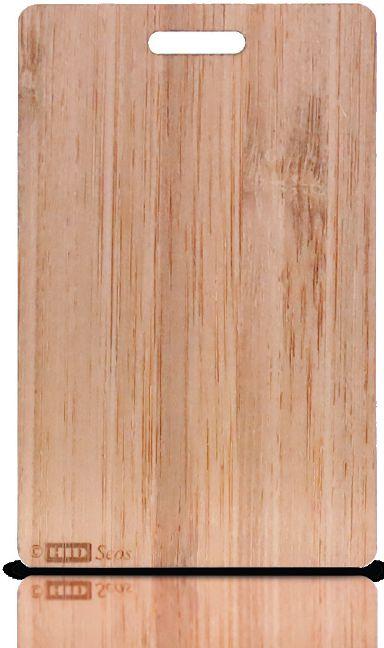
HID has come up with a green access card solution called Seos Bamboo, which is made from sustainably sourced bamboo instead of PVC. This credentialing solution is part of HID’s Seos security line and is the first in a range of physical access security Eco Cards.
“Introducing highly secure access cards made from bamboo — a renewable resource that grows quickly and requires less water and pesticides than traditional card materials — demonstrates HID’s continuous innovation without compromising security and customer experience,” said Hensley. “The bamboo card offers an additional option for sustainability within the physical access ecosystem, as it supports a more eco-friendly value chain in areas where physical access cards are still required.”
In addition to making access cards greener, HID’s Seos Bamboo cards can help their users attain green building certifications, including the internationally accepted Leadership in Energy and Environmental Design (LEED), the Building Research Establishment Environmental Assessment Method (BREEAM), and the Zero Waste to Landfill certification.
Another way to make access cards greener is to do away with them physically and move credentialing to users’ smartphones. “HID has made significant progress in adopting mobile credentials to eliminate or decrease the use of plastic cards,” Hesley said. “These digital credentials not only improve convenience and as mobile devices are constantly connected, can be issued or managed or revoked online, but also saves time and resources.”
Of course, not all customers will feel comfortable relying on mobile credentials. This is especially true in hospitals and other places where it is essential to see a visible card on a clip or lanyard.
Nevertheless, “mobile credentials’ co-existence with physical cards will at least reduce what has become hundreds of millions of plastic cards
sold annually,” said Hensley. “Each weighs five grams and has a carbon footprint of 21 grams (CO2 per card being calculations based on assumptions from industry standards), equating to plastic waste of 2,700 tons and an overall carbon footprint of 11,400 tons. The move to bamboo cards will also help reduce this waste and footprint problem.”
Axis Communications has set goals for the reduction and eventual elimination of Brominated and Chlorinated Flame Retardants (BFR/ CFR) and Polyvinyl Chloride (PVC) in its products, according to D’Sa.
“In 2022, roughly 65 per cent of our products that we launched were PVC free and roughly 90 per cent were BFR/CFR free,” D’Sa said. “We have a long-term goal to be 100 per cent BFR/CFR and PVC free by 2025.”
To achieve this goal, Axis Communications has instituted a grading system to rank its suppliers’ environmental practices, to ensure that they are meeting this company’s sustainability standards. “In the future, all of our component manufacturers must meet our requirements for sustainability,” said D’Sa.
When security systems are automated to align with actual 24/7 usage patterns, the power they consume can be reduced. “Further, when access control systems are integrated with building automation systems, there are even more opportunities to improve sustainability,” Hensley said.
“This is a significant trend as energy management and building automation systems
increasingly combine heating and cooling, access control, lighting and other sensors. These systems reduce energy consumption based on building usage and how services like HVAC and lighting can be adjusted for energy efficiency and cost savings.”
For companies such as HID, the challenge is to combine effective security control with responsible energy consumption, so that both principles work together to their customers’ benefit. “As access control and identity management solutions are designed with sustainability in mind, businesses will be able to save resources while ensuring the highest level of security possible,” said Hensley.
It takes a lot of power to run premises-based security software, along with the materials and power used to build those servers and operate them. Moving security systems into the secure cloud can eliminate both of these resource eaters, while delivering a faster, more integrated and accessible solution to security customers. This is why HID has moved access control to the cloud, “which can deliver seamless experiences while simplifying processes and reducing resources,” Hensley said.
“Adding location services to these systems also helps advance the sustainability cause by providing real-time, actionable occupancy data for process optimization. Data from HID’s 2022 State of Physical Access Control report validates this sustainability trend. It showed that the most common way to monitor occupancy data for optimizing efficiency and making better-informed building-usage decisions is through the organization’s access control system.”
The data gathered by HID’s 2022 State of Physical Access Control report bears out this conclusion. According to HID’s research for this report, 42 per cent of respondents used their access control systems to determine rates of actual employee occupancy in order to evaluate office space needs, ensure desk space was available when needed, and determine how best to manage hybrid work demands. Thirty-four per cent also used these systems to understand visitor occupancy on their premises.
“Another benefit of combining cloud-based access control with location-services capabilities is that the data it generates can also be used to help streamline and improve the accuracy of sustainability compliance monitoring and reporting,” said Hensley.
Security companies can help to satisfy their customers’ demand for sustainable solutions by selecting products and services made and managed in an environmentally responsible way. Better yet, they can do so secure in the knowledge that “going green” in no way degrades their customers’ current levels of security protection.











































































By Neil Sutton
Appointed as chair of the ONVIF steering committee in 2021, Leo Levit’s tenure includes a major milestone: the organization’s 15th anniversary.
Established in 2008, ONVIF was founded by its three original members: Axis Communications, Bosch Security Systems and Sony. ONVIF now comprises about 500 members and offers five levels of membership (full, contributing, registered affiliate, user and observer member).
ONVIF’s mission is to “provide and promote standardized interfaces for effective interoperability of IP-based physical security products.”
Accordingly, it has developed seven profiles, covering everything from surveillance systems to access control, and its members have collectively released more than 25,000 profile-conformant products.
“Our work is certainly not done yet,” said Levit when the organization turned 15 earlier this year.
“As the industry continues to adopt video analytics, Artificial Intelligence, cloud and IoT, the role of ONVIF as a provider of standardized interfaces in these domains will only become more relevant.”
SP&T News reached out to ONVIF and Levit to find out more about those next steps. Levit responded to questions via email.
SP&T News: What has the organization learned in the last 15 years in terms of evolving standards (and adding new ones) that make the technology experience more positive for both installers and end users?
Leo Levit: We have seen that over
“Continuing to listen to the needs of the industry will always be vital to the success of ONVIF.”
the last 15 years, standards that gain acceptance and adoption in the market are those that have truly evolved from the needs of the industry. Collaborating with different partners, embracing consensus among competitors, and focusing on the things the industry actually needs to grow have been crucial for success.
Interoperability between different systems and devices has become increasingly important, and ONVIF is well-positioned to continue to develop standards that enable seamless integration between products from different manufacturers.
Continuing to listen to the needs of the industry will always be vital to the success of ONVIF. A good example of this is Profile M, which addresses the booming video analytics market and new opportunities for integrators in this area.
Profile M enables integrators to build analytics applications in a much easier way by interpreting analytics metadata and events in a standardized way. This enables the parts of the system to automatically understand each other, creating a positive technology experience for both installers and end users.
SP&T: What are ONVIF’s greatest accomplishments?
LL: Our greatest achievement has been to reach the milestone of more than 25,000 products that conform to ONVIF profiles.
This is a manifestation of the importance of standards because it means that end users and systems integrators have a very, very broad range of products to choose from to build systems with interoperable components, regardless of the manufacturer.
I think this is the greatest marker of the success of ONVIF as an organization and the path that we are on. The number of products and our number of members — around 500 companies that represent a majority of the video surveillance market — is something ONVIF should be very proud of.
SP&T: Were there any unforeseen developments? Did ONVIF adopt an unexpected stance or assume a role that was unthinkable 15 years ago?
LL: The pandemic was the most unforeseen development and made us rethink how a global organization can function in an environment where physical meetings were impossible.
Like many organizations, ONVIF learned from this and actually made it through this time quite well.
What has really held true over the last 15 years is our mission and vision. Even though the industry has changed quite dramatically, we are still committed to the same principles that we defined at the beginning: providing standardized interfaces for interoperability for IP physical security products.

SP&T: How will the rapid development of AI and cloud-based infrastructure continue to affect ONVIF standards?
LL: As a standards organization in this industry, we need to help facilitate the industry’s adaptation of these new technologies and continue to embrace interoperability between different components in the surveillance system.
The rise of AI and cloud technology certainly does affect us and it is giving us additional opportunities to expand the scope of ONVIF, including those that incorporate AI and cloud-based infrastructure. This will include specifying how metadata and events generated by AI and analytics devices can be communicated and stored in the cloud, as well as how these devices can authenticate and communicate with other parts of a hybrid system.
Profile M is our first attempt to specify analytics and metadata and events sent from analytics devices to help solve interoperability issues with analytics and AI.
SP&T: What’s next for ONVIF? The industry has changed a lot since its creation. What might the next 15 years look like?
LL: It’s really difficult to predict the next 15 years! The industry is changing so rapidly and it’s challenging to anticipate which technology advances will be adopted that far into the future. I do know that the future of ONVIF is to play a very important role in the security and surveillance industry, expanding our standardization efforts into the different parts of the cloud, where the pace of development is higher than ever before.
The Neoxx G3 electronic padlock features a special armoured case with a double-layered structure, and integrates RFID, Bluetooth LE, and NFC technologies. In addition, the Neoxx G3 features SALTO SVN dataon-card and BLUEnet wireless network capable core technologies onboard. Due to BLUEnet wireless advanced capabilities, the padlock can read, receive, and write information via a smart card or real-time communications over the air. The padlock also includes SALTO JustIN Mobile technology, which provides users access with an iOS or Android smart device. www.saltosystems.com
Camden Door Controls has introduced a surface mount RIM strike with preload. This CX-EPD1289L grade 1 surface mount RIM strike with latch monitoring also offers a “Universal” strike design, with both UL security and fire listings. The patented design of these new CX-EPD1289L RIM strikes enables them to operate with up to 15 pounds of preload pressure. This eliminates the need for future service calls for doors that go out of alignment after the strike is installed, states the company. www.camdencontrols.com
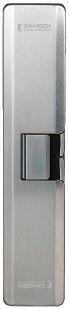

The Southco H3-EM electronic locking swinghandle is specialized for data centre racks and similar applications and has a variety of access control options, such as RFID readers, that can be freely interchanged and combined. The H3-EM uses the same single hole mounting system as a traditional H3 swinghandle latch, so users can replace their existing latches without replacing the entire door. www.southco.com
Schlage says the Encode Plus Smart WiFi Deadbolt lock is among the first to support Apple’s latest enhancement to the HomeKit experience with home keys capability. With home keys in Apple Wallet, consumers can tap to unlock the Schlage Encode Plus deadbolt using their iPhone or Apple Watch. The deadbolt can also be managed by the Schlage Home app. The Encode Plus will be available for purchase exclusively at The Home Depot.
www.schlage.ca

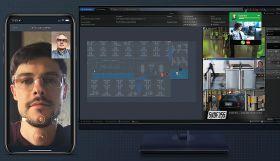
The latest version of the SIP-based Sipelia Communications Management system is now integrated in the Genetec Mobile app. According to Genetec, security staff can make and receive calls, broadcast messages on PA speakers and trigger standard operating procedures from the Genetec app on their mobile phone. With Sipelia Mobile, operators can call emergency services and reach team members or outside contacts via an audio or video call using the address book. They can also use audio/video verification to grant or deny visitor access, or open parking gates. www.genetec.com

The System Clean Up Utility feature is available with the Sielox Pinnacle 11.0 Access Control Platform. The System Clean Up Utility feature enables a cleanup of invalid or outdated access control data. By utilizing the Utility feature, system administrators can address neglected or overlooked access data such as expired cardholders, duplicate access levels and inactive cardholders. Within the Pinnacle Access Control Platform, there are eight tests that can be selected from the utility that identify risky access data, including unused access levels, duplicate access levels, inactive cardholders and more. www.sielox.com
The FLIR E8 Pro provides a 3.5-inch touchscreen with FLIR Ignite Cloud connectivity within the same pistol-grip form factor as legacy E8 series thermal cameras. Through the touchscreen, users can share captured images with colleagues, partners and clients over Wi-Fi, including with onscreen annotations to highlight findings. Images can then be loaded to the FLIR Ignite Cloud. The FLIR E8 Pro offers thermal and visual detail by pairing a 5 MP digital camera with a thermal camera via the FLIR patented Multi-Spectral Dynamic Imaging (MSX) capability. www.flir.com
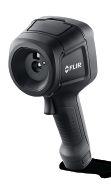
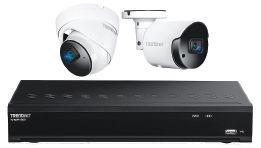
Axis Communications
AXIS P1468-XLE is an impact- and weather-resistant fixed camera which delivers image quality in 4K resolution under any light conditions, through Lightfinder 2.0, Forensic WDR, and OptimizedIR. P1468XLE has been designed in line with North American and European directives for equipment intended for use in potentially explosive atmospheres. By design, the camera is unable to provide sufficient energy to ignite gas or dust in the atmosphere to cause an explosion, therefore removing the need for any traditional explosion-protected enclosure. www.axis.com
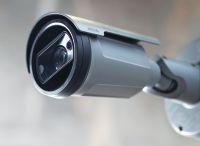
TRENDnet has launched a new set of PoE cameras and NVR that are TAA and NDAA compliant. The Indoor/Outdoor 5MP H.265 WDR PoE IR Network Cameras are available in bullet or fixed turret form factors, models TV-IP1514PI and TV-IP1515PI respectively. Each camera supports 5MP HD video, night vision, one-way audio, and an outdoor IP66 weather rating. The two new cameras launch with an 8-Channel H.265 4K PoE NVR (TV-NVR1508). The NVR will auto-recognize and power the TV-IP1514PI and TV-IP1515PI PoE cameras once they are connected. www.trendnet.com
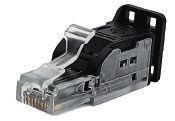
The Cat6A PoE Type 4 Connector (p/n 106260) satisfies both the Cat6A specification and meets the requirements for PoE Type 4. The connector is rated up to 90W of power and running PoE across all four pairs. It also features a two-piece design, only requires basic wiring tools to terminate and is compatible with cables ranging from 6.0mm to 8.5mm and conductor sizes of 26 AWG to 23 AWG. Additional features include: Cat6A certified for Patch and Permanent Link; unshielded twisted pair; IDC Terminal style contacts for wide range of conductor sizes; UL 94V0 rated housing. www.platinumtools.com
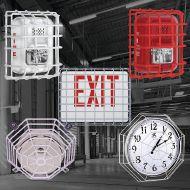
Constructed of tough, 9-gauge steel wire coated with corrosion resistant polyester, stainless steel, or cold-rolled steel, STI’s cages help ensure protected devices are operational, according to the company. They also help decrease maintenance costs, reduce time spent replacing broken or stolen units, and waiting for parts to arrive. STI offers wire guards in numerous models and sizes to protect smoke detectors, horns/strobes/ speakers, clocks/bells, exit signs, motion detectors, clocks, speakers, and more. Several units are UL/cUL Listed. www.sti-usa.com
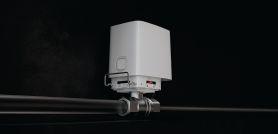
WaterStop is a water shutoff valve with remote control. The device consists of a valve and a electric actuator that shuts off the water automatically, by command from the Ajax app or a button pressed on-site. The actuator works on batteries for up to three years and can shut off the water in seconds. A command to do this is delivered by the Jeweller radio protocol that has a range of up to 1,100 meters and features encryption, frequency hopping and jamming detection. All the electronic components are protected against overheating and can work at an ambient temperature of up to 60°C. WaterStop can be installed on a pipe with a water temperature of up to 120°C. ajax.systems