Serving Installers, Dealers and Integrators Across Canada
Canadian Security Association awards nine students scholarships to help with education costs p. 6
When should security systems be upgraded?
There are many reliable indicators that equipment has reached the end of its useful life p. 14
Finding balance between cloud and on-premise There are advantages to both approaches to managing security data and systems p. 24
By Glenn Basale
EDITOR’S LETTER
OBy Neil Sutton
Welcome to the Top 10
ne of the projects I enjoy working on most at Canadian Security (sister brand to SP&T News) is the annual Top 10 Under 40, which is now in its fourth year.
It was only natural we reintroduce Top 10 Under 40 to SP&T
What I have noticed over the years that our Top 10 program has been active is the enthusiasm it generates among recipients. There is a genuine appreciation of the recognition, and a readiness to share their insights and aspirations.
This year’s SP&T recipients are no different in that regard. As you might expect from a group of motivated young professionals, most of their days begin before the sun rises with emails and planning activities (as well as coffee and exercise).
When asked what they enjoy most about the security industry, responses included team-building, employee development, problem-solving and educational opportunities.
A significant number of the Top 10 are also c-suite business leaders and entrepreneurs. With that comes the challenges of running an operation, the stress of difficult decisions, and often long hours (hence the early risers). But there are also the rewards of business success, mentoring staff and client satisfaction.
Many of the respondents offered their perspectives on the importance of superior customer service, and
how vital it is to prosperity and growth. But more than that, there is a broad recognition that security services help to keep customers safe, either by averting a crisis or providing a swift response in the event of one. The phrase “peace of mind” came up a few times.
The Top 10 also discussed a topic that is central to SP&T’s mandate: the rapid evolution of security technology and all the business opportunities that come with that.
In some cases, that could mean bringing new solutions to the table for clients or pursuing lines of business that were barely even possible a few years ago.
A final observation I will make here about the Top 10 is that there is also a commitment to community, either through the provision of essential services or volunteering time with local groups and security associations. A willingness to give back won’t necessarily show up on a balance sheet, but it will always pay dividends in the long run.
Please take the time to read through all of our Top 10 Under 40 responses. I guarantee you will discover a nugget of wisdom you can apply in your own business or working life.
We’ll be back with Top 10 Under 40 in 2023, so if you know a deserving security professional, keep them in mind when we re-open nominations next spring.
@SecurityEd
Print and digital subscription inquiries or changes, please contact Shawn Arul, Audience Development Manager Tel: (416) 510-5181 Fax: (416) 510-6875
Email: sarul@annexbusinessmedia.com Mail: 111 Gordon Baker Rd., Suite 400, Toronto, ON M2H 3R1
Your Partner in Securing Canada Security Products & Technology News is published 6 times in 2022 by Annex Business Media. Its primary purpose is to serve as an information resource to installers, resellers and integrators working within the security and/or related industries. Editorial information is reported in a concise, accurate and unbiased manner on security products,
Editor, Neil Sutton 416-510-6788 nsutton@annexbusinessmedia.com
Group Publisher, Paul Grossinger 416-510-5240 pgrossinger@annexbusinessmedia.com
Associate Publisher, Jason Hill 416-510-5117 jhill@annexbusinessmedia.com
Media Designer, Graham Jeffrey gjeffrey@annexbusinessmedia.com
Account Coordinator, Kim Rossiter 416-510-6794 krossiter@annexbusinessmedia.com
COO, Scott Jamieson sjamieson@annexbusinessmedia.com
EDITORIAL ADVISORY BOARD Victor Harding, Harding Security Services Carl Jorgensen, Titan Products Group Antoinette Modica, Met-Scan Canada Anna De Jager, TAG Dispatch Roger Miller, Northeastern Protection Service Sam Shalaby, Feenics Inc.
DOUBLE-PLAY COMBO!
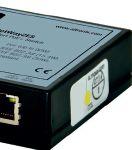
FLEXIBLE PoE SOLUTIONS – by ALTRONIX
Deploy two security devices with a single cable, ensuring all your bases are covered.
NetWay3012P – PoE Adapter/Converter
• Provides PoE+ (30W) and 12VDC simul taneously
• Supports IP cameras, external microphones, IR illuminators and more…
• Powered via PoE
NetWay2ES – 2-Port PoE+ Splitter
• Provides PoE+ over 2-ports (60W)
• Supports IP cameras, illuminators, access devices and more…
• Powered via PoE
LINE CARD CANASA awards annual scholarships
The Canadian Security Association (CANASA) recently awarded nine scholarships collectively worth $14,000 to help the recipients offset the costs of tuition and encourage them to further their education pursuits.
The scholarships were awarded to:
• Shelby Armour (British Columbia)
• Balraj Dhaliwal (British Columbia Institute of Technology)
• Scott Opichal (Northern Alberta)
• Shane Renolds (Prairie)
• Michel Deveault-Labelle (Quebec)
• Samantha Edwards (Southwestern Ontario)
• Moaiz Javed (Central Ontario)
• Emma Clark (Eastern Ontario)
• Quentin Hickey (N.S. Community College)
The CANASA National Scholarship Program is available to the dependents of individuals who are employees of a CANASA member. In order to qualify for consideration, applicants must either be enrolled in a post-secondary institution (or meet the admission requirements of such an institution) or engaged in a continuing education program.
“We are looking for candidates that help drive the future of this industry with passion,” notes CANASA on its website.
Applicants also had to submit a 500-1,000 word essay based on a topic relevant to the security industry, such as the role of security technology to help mitigate risk, or the skills required to become a successful security professional.
Essays were judged by a Scholarship Selection Committee comprised of representatives from
CANASA Regional Councils across Canada.
“As a child of someone in the security industry, I have been indirectly involved my entire life and I am extremely grateful for this opportunity to be a part of the scholarship program,” said Shelby Armour, the B.C. scholarship recipient. “I would like to thank CANASA for this scholarship that will help me to continue my studies at the University of British Columbia.”
“Security systems have always fascinated me,” added BCIT scholarship recipient Balraj Dhaliwal. “This scholarship has helped me in building more interest and gaining more knowledge about its implementation in the real world.”
The scholarship program is supported by sponsors Central BPG, Johnson Controls and Liberty Security (a GardaWorld Company).
Freedonia: systems integration driving security market growth
According to a recent Freedonia Group report, systems integration is the fastest growing segment of the global security services market.
The report, which considered the market through to 2026, attributed this growth to smart technology and building automation systems, both of which are providing integrators with business opportunities. The report also looked at guard services, alarm monitoring services and cash-in-transit, as well as other related security services such as consulting and investigations.
“As far as the growth of system integration goes, this is something that’s been going for a while and we’ve been looking at for a while,” said Freedonia analyst Elliott Woo. “It’s been growing really quickly all through the past decade, and with the increasing technological sophistication — in all sectors of the industry — we expect that to keep going.”
home security systems,” said Woo.
Woo also noted the amount of consolidation happening in the systems integration field, with a number of major players growing through acquisition. The report highlighted Convergint Technologies, for example, which has acquired integration firms and expertise, as well as achieving significant organic growth. The acquisition of G4S by Allied Universal in 2021 was also mentioned as an example of security industry consolidation and growth.
Another major shift in the security market is the melding of physical and digital. According to Freedonia, the line between them “is becoming increasingly blurred, and security service providers are increasingly being called on to develop new technological capabilities.”
The vast majority (95 per cent) of customer opportunities for systems integrators continue to come from the non-residential sector, according to the report. However, residential is coming on strong due to the growth and availability of smart home technology.
“The residential side is definitely still growing and it probably will keep growing quickly and expanding as more people invest in electronic
A decade ago, “you’d think about cybersecurity for your website, your passwords and your email… now you have all these physical objects which are digitally integrated,” explained Woo.
“In a commercial [setting] you’ve got your access control for your building, you might have building automation services, the HVAC system might be automated. Now your digital systems are actually affecting the physical world,” he added.
— Neil Sutton
Shelby Armour Balraj Dhaliwal Scott Opichal
Michel DeveaultLabelle
Shane Renolds
Samantha Edwards Moaiz Javed Quentin Hickey Emma Clark
Elliott Woo, Freedonia
Launch Your Business
You acquired a security company or expanded into the alarm industry
Your business is a growing concern and you need cash flow to fund your growth
You need support when loading and servicing alarm customers
You need access to quality security products, reliable suppliers and dealer pricing
Grow Your Business
Your current dealer program is limiting your growth
You need stable and predictable funding
You need to invest in inventory, staff and marketing
You want access to new lines of business
Simplify Your Business
You’ve built a successful business and now it’s time to reap the benefits of your hard work
You need to turn equity into cash for life’s special moments
You need to remove administrative headaches (billing, collections)
You need stable and predictable cash flow but retain ownership of your business
Sell Your Business
You’re ready to live your dreams
You need to maximize your payout
You have a time-line and you need an experienced buyer who will navigate a smooth transition to the finish line
Your customers need world class monitoring with continuing service and support
LINE CARD
Applications
Biopharma company selects video management system
Qognify announced a global video management system (VMS) rollout project with biopharmaceutical company Boehringer Ingelheim.
Boehringer Ingelheim, which has a global footprint of approximately 180 sites, elected to standardize its approach to hardware and software roll out. The company was able to significantly reduce deployment time, according to Qognify, for new CCTV instances, reducing project cost and time.
Based on a competitive exercise — which involved 200 questions addressing IT security, system expandability and reliability of operation — Boehringer Ingelheim selected Qognify’s Cayuga VMS for the multi-site deployment. Physical testing was also conducted by the end users and technical team.
The VMS supports the majority of network cameras available, states Qognify, and can manage all camera feeds, supporting both on-site and remote video monitoring.
Appointments
Ethernet switches support anti-drone shield
Antaira Technologies has partnered with a Utah airspace and defence company to implement technology to counter the entry of illegal drones into a restricted airfield.
Antaira LMX-1202G-SFP-T
Gigabit-managed Ethernet switches were deployed inside pillars around the airspace. According to Antaira, the switches permitted a ring network to be easily configured. The switches link IP cameras, computers and drone detection radar systems to the airport’s central control station.
With a combination of radar and high-resolution video, the airport’s “3D shield” is designed to act as a countermeasure that detects unauthorized drones.
Once detected, security personnel are alerted and a “net drone” is deployed to catch and retrieve rogue drones. This approach prevents a rogue drone from crashing on any bystanders and the drone may be retrieved for identification purposes.
• Allegion announced that John H. Stone succeeded David D. Petratis as president and CEO, effective July 11.
• Qognify has announced the appointment of Yaniv Toplian as its new vice-president of
Cloud
locking solution for containers
Tampa, Fla.-based BOS Construction Solutions (BOS CS) is securing its new container model with a digital access management solution from iLOQ.
The new container, called the BOS DOT, was originally designed for the delivery of A/C units and related supplies, but serves a variety of other uses as well, such as storage at construction sites, after-hours pickups and returns, and courier services. Access rights to the units’ locks are managed using iLOQ’s cloud-based SaaS platform, shared remotely to an NFC-enabled smartphone running the iLOQ app. Access rights may be granted, updated and cancelled as circumstances change. The cylinders and optional padlocks are opened using the phone’s NFC, making them battery-free.
“BOS Construction Solutions prides itself on representing products with cutting-edge technology covering both engineering and sustainability,” said Kari Honkaniemi, CEO, BOS CS, in a statement.
research and development.
• Cawamo, a technology company that offers AI-based video analytics, has appointed Josiah Dawes as the company’s new vice-president of sales for the Americas.
Calendar
September 12-14, 2022
GSX Atlanta, Ga. www.gsx.org
September 20, 2022
ADI Expo Vancouver New Westminster, B.C. www.adiglobaldistribution.ca
September 25-29, 2022
BICSI Fall Conference Las Vegas, Nev. www.bicsi.org
October 6, 2022
Canadian Security Honours Online www.canadiansecuritymag.com
October 6, 2022
ADI Expo Ottawa Ottawa, Ont. www.adiglobaldistribution.ca
October 18, 2022
Monitoring Station Symposium Toronto, Ont. www.canasa.org
October 18-19, 2022
Securing New Ground New York, N.Y. sng.securityindustry.org
October 19-20, 2022
Security Canada Central Toronto, Ont. www.securitycanada.com
Oct. 29 – Nov. 2, 2022
TMA Annual Meeting Marco Island, Fla. www.tma.us
• BriefCam, a provider of video content analytics solutions, has named Liam Galin as its new CEO.
• Skip Burnham has been promoted to national sales manager at Dortronics
Systems. Burnham joined Dortronics in 2016.
• Interface Systems announced that Brent Duncan, the company’s president and COO, has been appointed as chief executive officer.
John H. Stone Yaniv Toplian
Josiah Dawes
Liam Galin
Skip Burnham
Brent Duncan
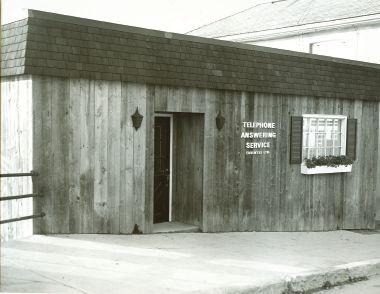
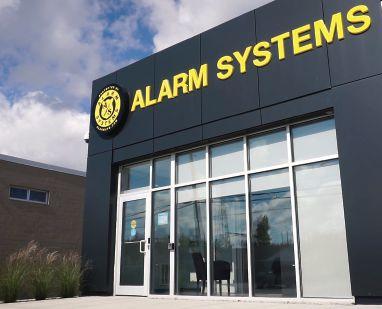
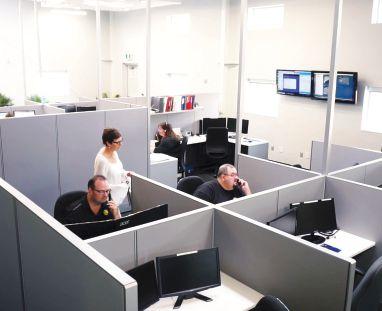
Alarm Systems celebrates 50 years in business
Alarm Systems is celebrating its 50th anniversary, serving the Quinte, Ont., region since 1972.
The company provides custom design, as well as installation and monitoring of security and life safety solutions. For a limited time, Alarm Systems is offering 50 per cent off select indoor/outdoor security cameras and video doorbells for residential and commercial customers in recognition of its golden anniversary.
“Our heart and soul is security and life safety,” said Kristin Crowe, president of Alarm Systems, in a company statement. “Our success is a direct result of the incredible people and partners who make up our team and the fabulous customers who have placed trust in us to protect the people and things they love. Community is one of our core values. As we continue to expand to better meet the needs of our customers, we look forward to another 50 years serving this region.”
Alarm Systems’ evolution over 50 years of business, from the 1970s to present day.
SECURITY CANADA
ACROSS THE NATION
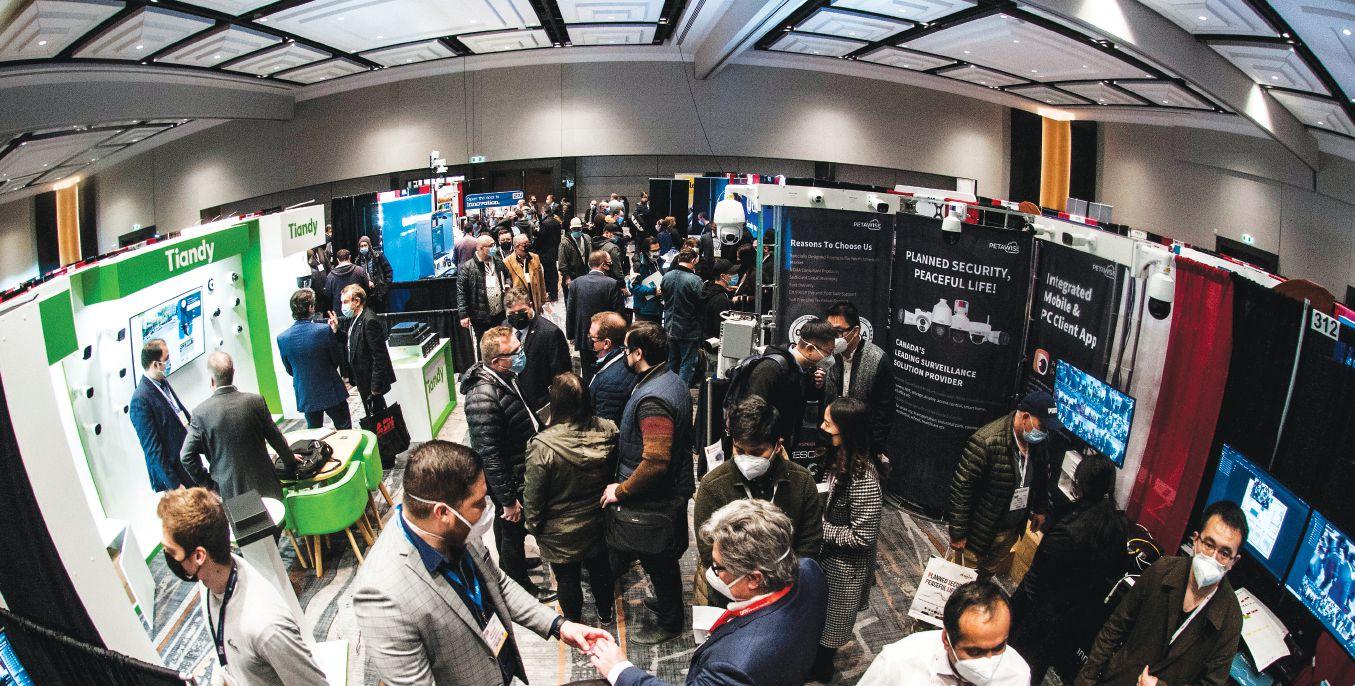
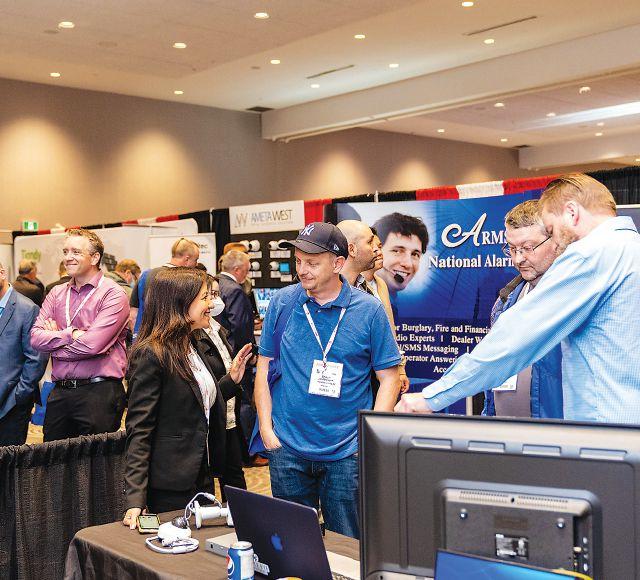
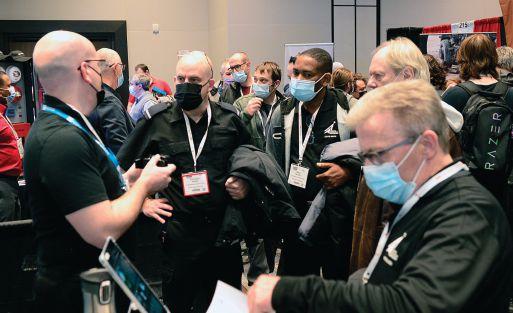
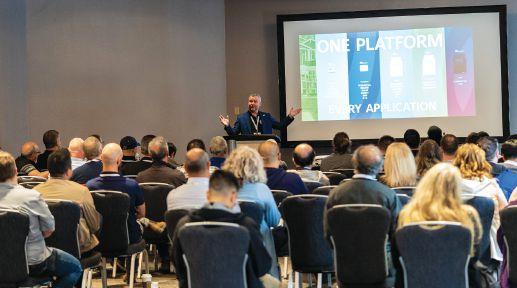
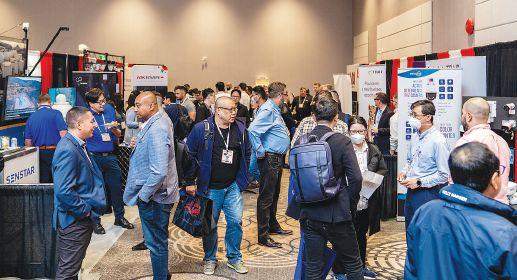
The Canadian Security Association (CANASA) has held the first two of its Security Canada shows for 2022 — Security Canada East was held in Laval, Que., in April and more recently, Security Canada West, in Richmond, B.C., in June.
The West show was held in a new venue for the event, the Sheraton Vancouver Airport Hotel. According to CANASA, attendance for this in-person showcase rebounded very close to pre-pandemic levels, exhibit space was sold out, and several manufacturers held well-attended education sessions which were included free to attendees with registration.
CANASA will host the National Monitoring Station Symposium in Toronto on Oct. 18. Security Canada Central, also in Toronto, immediately follows on Oct.19-20 (visit securitycanada.com for registration details).
Security Canada West
Security Canada East
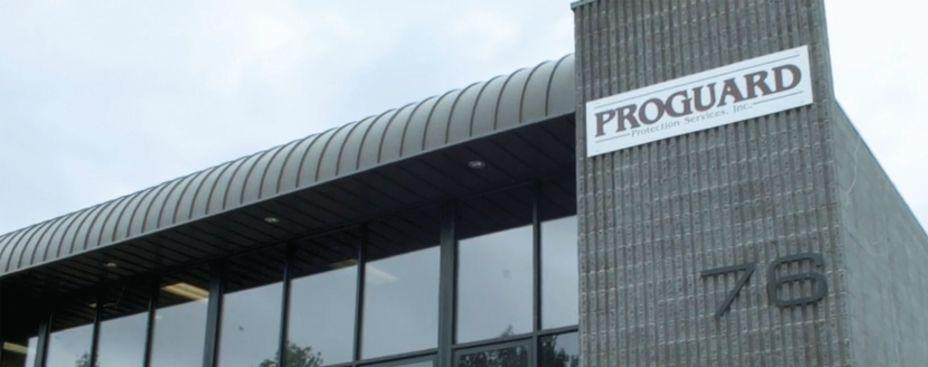
CASE STUDY: Proguard Protection Services
“Since implementing [simPRO], my profit margins have increased over 10% in just the last year.”
- FRANK BAUER, CEO
THE CHALLENGES
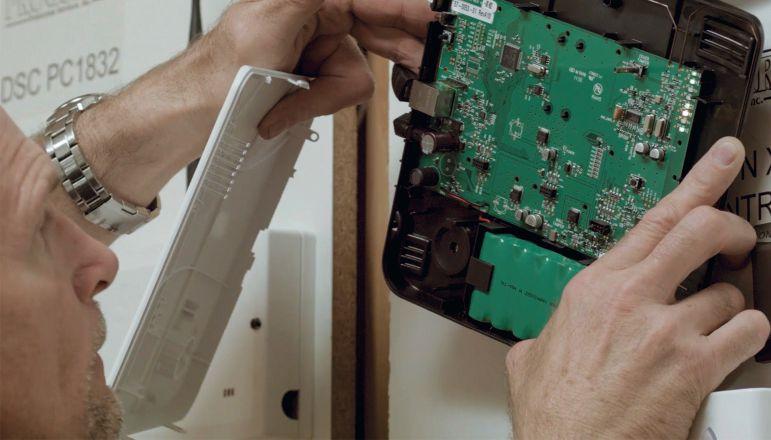
Before Proguard Protection Services chose simPRO, the business used a combination of paper-based systems and software. But their software didn’t integrate with their accounting programs, and lacked both a mobile app for their technicians and features for vehicle maintenance reporting.
“What got us started in looking for a software program was that I felt like the company was hitting a ceiling of growth where we weren’t able to get to the next level,” Proguard CEO, Frank Bauer said. “...finding a good software program was the key to
helping us get to that data-strong technology to base our company on and help our company grow.”
THE RESULTS
“We can share the information that’s needed, we can send it from one department to another very easily, and it’s a task-driven form of communication,” Frank said.
With simPRO up and running, productivity also increased.
“I would say on any good day we could get maybe five billable hours out of an eight-hour paid day. With simPRO, we’re now seeing six to seven hours on an eight-hour day because it allows
After just one year on simPRO, Proguard saw massive business growth, with: 14% increase in sales 6% increase in clients 10% increase in overall profit margin
us to streamline the process of scheduling,” Frank said.
“With simTRAC and simPRO together, we’re able to use just a few clicks of the mouse to see who the closest technician is to a call, and we can look immediately to the inventory and see if they have the parts they need to do that call,” Frank said.
“It gives all of the information to the technicians’ hands, and we can send the right guy to the right job when we need to.”
“This means I don’t have to send the guy all the way across town to spend ten minutes on a project when I could’ve sent someone who was five minutes away.”
WORD OF ADVICE?
Look to simPRO to grow your business.
“The fact that we’ve implemented a software program to the strength that we have with simPRO means that I’m ready to grow for the next five or ten years…that’s a huge step for any company that wants to play in this market and be a contender for someone who is either going to acquire other businesses and bring them in, or is eventually going to sell their company and get out,” Frank said.
LESSONS LEARNED
TBy Victor Harding
The role of working capital in acquisitions
The amount that may be ear-marked as part of a deal greatly depends on the type of company being sold
he importance of working capital took on a new meaning for me when I started brokering share deals for fire, guard and integration companies.
Just when I thought a particular deal was all wrapped up, the buyer raised the issue of how much working capital was to be left in the company when the deal was closed. Truthfully I had not realized this was an issue and I certainly did not fathom just how complicated this issue could get. I now understand that working capital is not just important when operating a business but also when you go to sell. And as a seller, if you are not careful, you can leave significant amounts of money “on the table” in working capital.
Most of us realize how important having adequate working capital is to operating a business successfully. Without working capital, an owner may not be able to pay their staff on time, buy the inventory necessary to run the business, pay their payables on a timely basis, and so on. Owners should take some or all of the following steps to ensure they have enough working capital:
• Make sure the business is properly capitalized in the beginning
• Go to the bank to get a line of credit
• Try to collect receivables faster
Common sense suggests that if working capital is important to owners operating their business, then it is reasonable to assume that it will be equally important to a buyer when buying that same business.
Let’s define working capital. Working Capital is the net of Total Current Assets less Total Current Liabilities where current assets are generally seen as cash, accounts receivables, inventory and prepaid expenses less short term bank debt, account payables, accrued liabilities and customer deposits or deferred revenue. Classic business theory says that a good working capital position is where the ratio of total assets to total liabilities is 2 to 1.
So we know having adequate WC is essential to running a business successfully. But what’s it got to do with the selling of a company? The reality is that the amount of working capital to be left in a business when it is sold does factor into the selling process of most, but perhaps not all, deals.
Sellers need to realize that they will most
likely have to give up some or all of their receivables and inventory to cover their payables and accrued liabilities and give the buyer some extra WC to run the business. The key question revolves around just how much the seller has to give up.
Before we get into the actual amounts lets spell out where working capital typically figures in the sale of security companies. My experience is it factors more when a sale of shares takes place than a sale of assets because in a sale of shares, the buyer is taking over the complete business with staff and everything whereas in a sale of assets the buyer can pick and choose what they want to buy and seldom buy existing liabilities.
Secondly, working capital plays a bigger role in the sale of fire, guard and integration companies because, a) when you are buying one of these three types of companies, share deals are done more often and b) working capital plays a bigger role than in the sale of alarm accounts. Whether it be a share sale or asset deal, buying alarm accounts does not require the buyer needing that much extra working capital. The buyer is not usually taking on that much extra staff or added expense.
So how does working capital enter deals? The buyer’s rationale is that if they pay a sum to a seller to buy their fire or guard company, they do not want to have to write a big cheque the second day they own the business to provide working capital so the company can operate. This seems very fair to me but you would be surprised at how many owners are shocked when they are told that they have to give up a portion, sometimes a large portion, of their re-
ceivables and inventory free of charge. How much working capital has to be left in the company and what is included in the definition of working capital? These are the two questions that buyers and sellers wrestle with in completing a deal. Having had to handle these two issues several times in completing deals I have this advice to all sellers:
• Work towards setting a working capital target in actual dollars and try to get this issue settled as early as possible in the deal process — if possible, before a Letter of Intent is agreed to.
• Deferred revenue and customer deposits are often included in the definition of WC and can be a tricky item in negotiating WC targets. Most buyers of alarm accounts will want all the deferred revenue included in the calculation which can increase the WC requirement significantly. I usually bargain for some, not all, of the deferred to be included.
• Don’t let the buyer talk you into using an average of what WC was in the company over the last 12 months. An average amount has nothing to do with what is actually required. Most owners of small companies don’t spend that much time optimizing their working capital. They leave extra cash in the company for months on end and don’t always collect their receivables as quickly as they could. They also leave more money wrapped up in inventory than they need to. Calculate what working capital is really required to run the business, not what just happens to be there.
• The amount of working capital required to be left varies greatly on the type of business being sold.
• I have seen certain rules of thumb used to arrive at the amount, such as 10 per cent of sales or two months of expenses, but even these are not as good as actually figuring out what really is required.
• While the seller should be wary of not leaving too much in the company when they sell, they should also not crater the deal by holding out too stridently for a certain WC number or create a lot of bad will early in the new ownership period over a few thousand dollars of working capital.
Victor Harding is the principal of Harding Security Services (victor@hardingsecurity.ca).
By Patrick Straw
Fall events bring us together CANASA UPDATE
After two successful showcase events, the Monitoring Symposium and Security Canada Central are coming up soon
We have now completed two of three of our Security Canada trade shows and conferences. In my last column, I reported on our very successful event in Laval with our partners in Quebec.
Security Canada West was held June 22 at our new host location, the Sheraton Vancouver Airport Hotel in Richmond, B.C. The venue was well received by our guests and we sold out all of our exhibit space. Attendance was very near to pre-pandemic numbers and by all accounts, the show was a huge success (see p.10 for photos). We are also working on expanding exhibit space at the same facility for the 2023 Security Canada West show.
and networking. A special thank-you to Steve Basnett, our director of trade shows, and Erin Marsden, board liaison, for exceptional work on making these events run perfectly.
Booths are selling fast for our showcase event in October in Toronto, Security Canada Central. If you are interested in exhibiting, I suggest you get in touch with Steve soon as we expect this show is going to sell out as well. Steve can be contacted at sbasnett@canasa.org.
Monitoring Symposium
On Oct. 18, CANASA will be hosting our sixth Monitoring Symposium just prior to Security Canada Central.
Scholarship Program
Thanks to generous contributions from Central BPG in Montreal, Johnson Controls and Liberty Smart Security we were able to offer our scholarship program for all of the regions in Canada. These outstanding recipients have all received their cheques and are working towards completing their studies (see p.6 for more details).
Golf Tournaments
We still have several golf events coming up, so please check our website to see if you can make any of them. Hope to see you there.
Our B.C. golf tournament, held with our partners at ASIS the following day at the Mayfair Lakes Golf and Country Club, was also sold out and was an exceptional day of fun
This year’s symposium reflects the concerns shared by many monitoring companies affected by challenges from COVID, cyber-attacks, new ULC requirements, and prioritizing alarms with the AHJ community.
As we head into the heart of summer, we wish you all safe and healthy holidays. I can’t wait to see many of you at upcoming events. Thanks to all of our supporters, vendor partners and my board of directors and staff for keeping us on a path of recovery.
Patrick Straw is the executive director of CANASA (www.canasa.org).
Patrick Straw
CAMERA CORNER
By Colin Bodbyl
The inevitability of upgrades
Surveillance equipment will have to be replaced eventually for a variety of good reasons
When a business purchases a surveillance system, they rarely plan for its eventual replacement.
Some systems are modular in that the network video recorder (NVR), cameras and switches could all be replaced independently of one another. In other cases, cameras operate as all-in-one solutions paired with a cloud video management system (VMS). In either scenario, the onsite hardware will eventually need to be replaced, but timing that upgrade can be challenging.
There are a handful of common reasons why any technology would need to be replaced or upgraded, and they are no different for surveillance products. Every technology will suffer from some downtime, but when that downtime becomes a frequent occurrence, it could be time to upgrade. Finding the root cause of the downtime is a critical first step. Network surveillance systems can suffer from outages due to damaged cabling, failing connectors or bad switches. Sometimes simply replacing or repairing a component can delay a costly replacement of the entire system.
As you add or replace components, you may start to experience compatibility issues. Surveillance systems tend to be stable in the condition they were originally installed, but if over time
“Cybersecurity is often an overlooked reason to upgrade.”
you start to add newer model cameras that your NVR or VMS is not able to support, you may be forced to upgrade.
Even in situations where a VMS can support a newer camera after a software update, you may find that breaks support for older cameras on the site and leads to a domino effect of issues. With enough devices mixed in over a long period of time it is not uncommon to experience compatibility issues that ultimately require a major upgrade to fix.
Cybersecurity is often an overlooked reason to upgrade. A surveillance system could run for a decade without problems, but manufacturer support for those devices is likely to expire during that time. Once firmware or software updates are no longer available, those devices become security risks. Cyber criminals are constantly finding new ways to access and take advantage of networked devices.
Manufacturers of those devices release regular patches or updates to secure them against the latest cybersecurity risks. When support is ended for a device, so are those updates. Even if
the device is otherwise problem-free, the longer it goes without an update or patch the more of a security risk it becomes.
The final reason to upgrade is to acquire new features. It is easy to believe that software updates would add the latest features to every device, but it is not that simple. Software is advancing at record speeds, but it needs equally powerful hardware to run on. A camera or NVR that you purchase today is unlikely to be capable of running the most advanced software on the market five years from now. As a result, you will eventually find the only way to access the latest features is through a hardware upgrade.
Surveillance systems have been known to run for several years without failure, but that does not mean they never need an upgrade.
Even if the system is not suffering outages, you may run into compatibility issues while adding new devices. You could also find manufacturer support for certain devices has ended, creating a cybersecurity risk for an otherwise functional system. If none of these reasons drives an upgrade, there will always be new features, and the only way to access them will be by upgrading to the latest and greatest product.
Colin Bodbyl is the chief technology officer of Stealth Monitoring (www.stealthmonitoring.com).
TOP 10 UNDER 40
Young professionals tell us what they enjoy most about the security industry and offer some advice for those just getting started.
Ground-breaking new technology, ideas and approaches are no doubt helping to move the security industry forward, but it’s the people who make it all possible.
SP&T News is pleased to spotlight 10 young security professionals from a cross-section of the professional security industry, including alarm services, guard companies, integration and consulting.
We asked each of these Top 10 Under 40 winners to tell us more about their day-to-day lives working in the industry, what they enjoy most, what their further career goals are, and what advice they would share with people who are just starting out.
Please join us in congratulating this remarkable group of security professionals. We’re sure you will agree, the future is in good hands.
Rob Grant Principal and senior systems engineer PBX Engineering
What does your typical day look like?
Tell us more about your security roles and responsibilities.
I lead a multi-disciplinary team of nine engineers with a focus on physical security assessments, and the design of integrated security systems and network solutions. Our main objective is to assess a client’s needs and develop a purpose-built solution that is optimized for their individual challenges and business requirements.
Depending on the state of development for each project, daily tasks can range greatly, including completing site security assessments, holding
“Taking the project from an initial thought all the way through to completion is very rewarding.”
— Rob Grant, PBX Engineering
system requirements workshops, preparing capital plans and long-term budgeting, completing detailed designs, providing technical support during tender, and overseeing construction.
Multiple projects are underway at any given time, so daily tasks can jump between phases of project development as you focus on different projects.
As the business unit manager, my roles are focused on supporting our engineers and supporting client needs. A portion of my day is filled with client meetings and construction coordination meetings. The rest of the day is dedicated to providing technical expertise to colleagues, developing planning and technical documentation, performing project management duties, business development, and providing strategic direction.
What do you enjoy most about working in the security industry?
As a design engineer, I get to work with the client through the entire lifecycle of a project, from the initial threat / security assessment, through to concept development and budget planning,
and into detailed design and construction.
In many cases, we are also responsible for completing post-integrator testing and secondary validation of the installed systems. Taking the project from an initial thought all the way through to completion is very rewarding. Further, due to the large range of technologies and applications within the security industry, each project has unique attributes and intricacies that makes every project intriguing in its own way.
Most of our designs involve the complex integration of multiple sub-systems, which requires you to take a deep dive into the software capabilities to ensure a seamless integration. Designing in the security industry is never dull.
What are your career goals for the future and how do you plan to achieve them?
My main career goal for the next several years is to enhance and expand the PBX Integrated Security Business Unit to become even more prominent in the development of Western Canada’s critical infrastructure security posture. Our team currently consists of nine engineers, ranging from senior design engineers to recent hires.
I’m motivated by the idea of helping to develop each of their careers individually while also expanding the business unit’s presence. Consulting should be a people-first industry, and by fostering this I feel we can grow great talent and attract new up-and-comers.
What have you learned about the security industry during your career and what advice would you pass on to newcomers?
The security industry encompasses a vast spectrum of topics that requires a wide range of knowledge, and no single person can be a technical expert in all aspects of the field.
My advice to a newcomer would be to develop an understanding of the wide breadth of topics, but to specialize in a subset and augment your skillsets with those of others around you. A strong team can go further together than a single person can do alone.
Christian Strike Founder & CEO Vigilant Security Services Inc.
What does your typical day look like? Tell us more about your security roles and responsibilities.
There is no such thing as a typical day for me,
“I enjoy providing people with peace of mind.”
— Christian Strike,Vigilant Security Services
which is in part why I love my work so much. Some days I am in uniform working alongside our incredible employees while other days I am in business attire or a suit working in the office or meeting with new clients. Although the CEO wears many hats, especially in a small to medium-sized business, the most important role I have is to provide leadership. I recognize it’s important I lead both from behind and from the frontline where our value is created. When I am not working at Vigilant, I also spend a significant amount of time volunteering with the Canadian Coast Guard Auxiliary as the Marine Unit Captain with the Huron & Area Search and Rescue.
What do you enjoy most about working in the security industry?
People. I enjoy providing people with peace of mind, working with people in crisis and providing an extra umbrella of safety to our community. I enjoy the variety of different industries we service: hospitals, social housing, residential, retail, etc. The variety keeps our business exciting and challenging. I also very much enjoy mentoring our new generation of security professionals. I have been a Use of Force instructor with Stay Safe Instructional Programs for nearly seven years, which provides me with the opportunity to educate not only our own staff but the staff of other agencies and in-house security programs all over Southern Ontario.
What are your career goals for the future and how do you plan to achieve them?
I plan to continue to lead the great people of Vigilant Security for the remainder of my career. We have a major challenge ahead of us, to maintain our very high level of quality while also growing our business. This is an area where most security agencies fail — choosing quantity over quality. I think we’ve found the secret sauce to success in this area, though. I would also love to join more organizations/boards in my community where I could perhaps donate some of my experience.
What have you learned about the security industry during your career and what advice would you pass on to newcomers?
I’ve been working in private security long enough to watch the professionalization of the industry. This is no longer an industry of stereotypical minimum wage and low-skill workers. Society and our clients demand more of us as organizations and those who haven’t kept up are
finding themselves quickly being pushed out. I would suggest that this industry will give back what you put into it. If you expect things to be handed to you just for attendance you may be disappointed. If you take the plethora of training courses which are now available to this industry while also bringing the right attitude, then this industry has no ceiling. Like many, I started as a security guard at 18 years old, originally wanting to pursue a career in policing.
I worked for every major agency trying to find my happy place and gained as much experience as I could along the way, accepting more challenging roles and eventually positions in management until I founded Vigilant Security Services. This has been a 15-year journey and I would suggest to anyone who is looking to create a similar path they should not seek shortcuts but more challenges.
What does your typical day look like?
Tell us more about your security roles and responsibilities.
My day-to-day tasks vary, as I wear a lot of hats in my role as office manager and have many responsibilities.
I start every day off by giving our field technicians their service calls for the day at our team meeting. Throughout the day, I spend my time troubleshooting and programming alarm panels using AlarmNet360 and Compass; answering customer inquiries via phone calls and emails; scheduling service calls and new installations; data entry; and, gathering equipment for service calls and installations. I’m also responsible for keeping the company’s safety procedures up-todate, as well as hiring and training office administration employees.
What do you enjoy most about working in the security industry?
The thing that I enjoy most about working in the security industry is being able to provide a service that offers our customers peace of mind and helps them feel safe and secure. From the burglar and life safety equipment that our company installs in residential and commercial properties to the friendly and professional customer service that we provide, ensuring that our customers feel comfortable and happy with our service plays a big part in why I enjoy working in the security industry.
Brittany BarnesDugas Office manager Roger’s Security Systems Inc.
What are your career goals for the future and how do you plan to achieve them?
My career goal for the future is to become a partner of Roger’s Security Systems Incorporated. Roger Barnes, my father, started this company the year I was born and ever since I was a young girl, I’ve always dreamed of walking in his footsteps.
I understand that owning a company comes with a lot of responsibility and hard work, so I plan to achieve this by expanding my knowledge in the technical side of our company through training, growing my skills, making informed decisions and gaining new perspectives through the mentorship that I have with my father. Also, utilizing these new skills and information to improve the operation and efficiency of the company.
What have you learned about the security industry during your career and what advice would you pass on to newcomers?
Over the past six years, I have learned that the security industry is growing at a very fast pace, in terms of the number of new manufacturers, suppliers and companies that are around today. I have also learned that manufacturers in the security industry are creating more technologically advanced
and technician/end-user friendly systems in order to keep up with the needs of today’s society. I would pass on the following advice to newcomers: find a mentor who is willing to teach you the ins and outs of the security industry; don’t be afraid to ask questions; and attend as many security industry conventions and events as you can in order to help expand your network connections.
Josh Garr, 39 President a.p.i. Alarm
What does your typical day look like?
Tell us more about your security roles and responsibilities.
After an espresso or two, I’m typically on the phone or reviewing emails with the company’s management and helping plan our next moves.
We are becoming more and more a technology and software driven business and I spend a good deal of time learning what’s coming next and how we can take advantage of it. Then I’m meeting with any mixture of clients, vendors or suppliers, which is usually the balance of my day. I started my career in a sales role and I enjoy that aspect of business the most which is why I still deal directly with clients I brought into the company over 10 years ago.
“Never take no for an answer when trying to win.”
— Josh Garr, a.p.i.Alarm
What do you enjoy most about working in the security industry?
Not only do I enjoy the aspect of helping to save people and property, but it’s also a great business. It has its challenges that come with running a 24/7 operation, but the pros have always outweighed the cons. The industry is constantly changing and the advantages coming with AI,
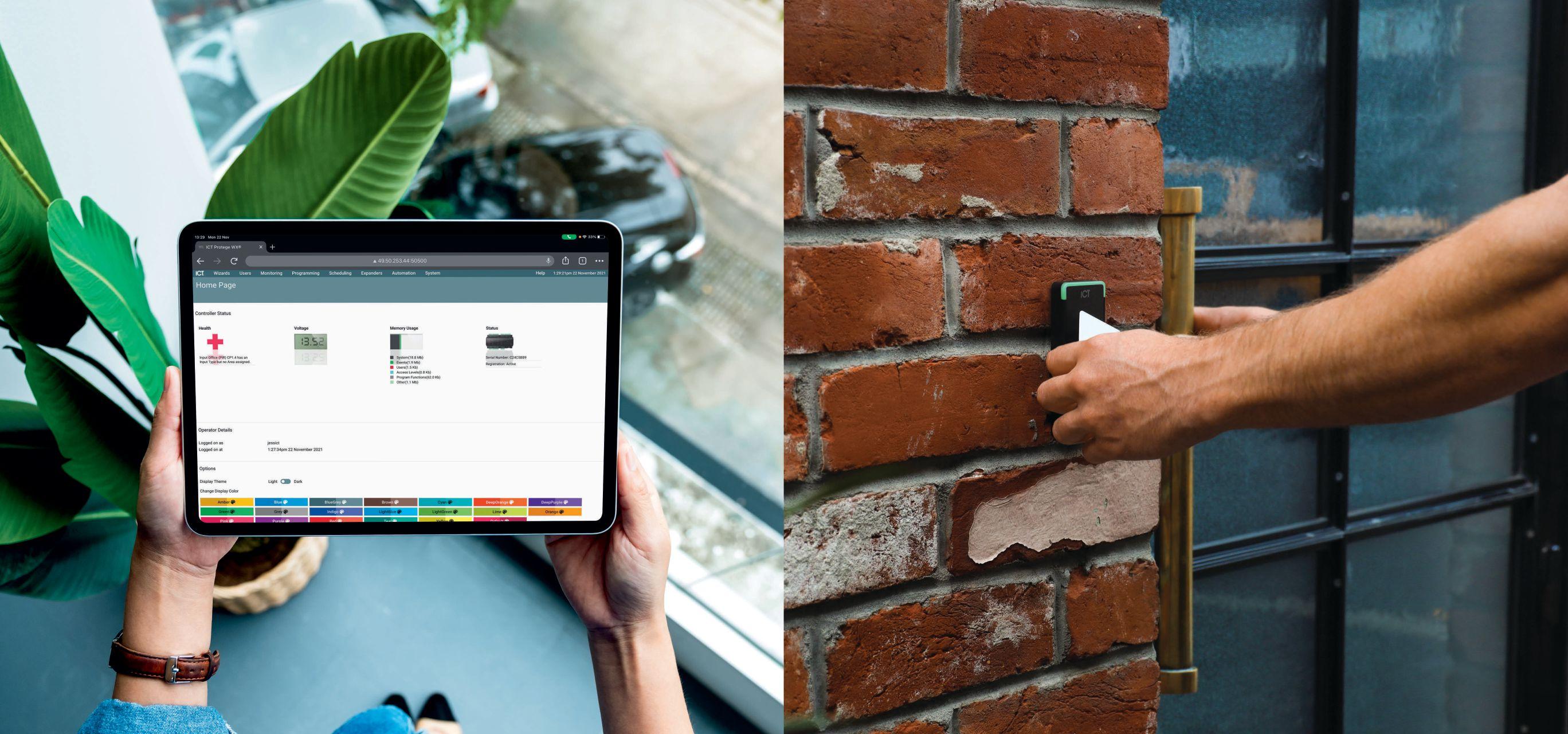
Protege WX is a flexible, all-in-one, web-based platform that integrates access control, intrusion detection, and building automation into one unified solution.
Place the o ce in your pocket. Configure, control, and monitor your system from anywhere, at any time, with the browser-based interface and intuitive wizard-driven site configuration.
and
machine learning and a wide range of tools that we are implementing are going to be huge for us. That gets me excited as we become more and more of a technology-driven company.
What are your career goals for the future and how do you plan to achieve them?
[My goals are] to focus on continuing to expand and grow the company. We have been very successful in Canada and have a great company that has seen significant growth over the years. We are very aggressive in the M&A space as we continue to win deals. We are also continuing our expansion south of the border and that should drive a lot of our growth in the years to come.
What have you learned about the security industry during your career and what advice would you pass on to newcomers?
I had a great mentor who taught me a lot about the business, the industry at large and the concept of hard work. Once you take out anything specific to this industry that is unique to security itself, it is no different than any other. It all comes down to the basics of hard work and sacrifice — never take no for an answer when trying to win. My advice to newcomers is to work hard, put in the hours needed to get your job done, and never let a no discourage you from keeping your head up and moving forward.
Jordan Stam Owner/operator STAM Security Controls
What does your typical day look like? Tell us more about your security roles and responsibilities.
My day usually begins with checking and responding to emails, and getting things prepared for the day’s jobs. Depending on our current projects, some days we are installing new systems, some days are more dedicated to service calls. As the owner of the business, I also make sure my technicians have the support they need on their jobs, as well as attending meetings with customers and providing training to end users on their systems.
What do you enjoy most about working in the security industry?
From the perspective of an owner-operator that is very much involved in the day-to-day instal-
“I love being able to go out and meet new people.”
— Jordan Stam, STAM Security Controls
lations and service calls, I really enjoy servicing and troubleshooting older equipment. It is always a great feeling when you solve a difficult problem after spending time researching and troubleshooting the problem at hand. I’ve also never been one for an “office” style job, so I love being able to go out and meet new people.
What are your career goals for the future and how do you plan to achieve them?
For me, the most important thing for my career goals is being able to maintain our quality service and customer care. A lot of other companies focus on trying to expand aggressively, and invest heavily in marketing and such, which unfortunately often ends with poor customer care. I prefer to let my work speak for itself, and always strive to take care of the customers as best as possible. As a second-generation locksmith that was heavily influenced by my family in the business, I was always taught to make sure you are there for your customers, day and night, which is something that I have always taken seriously.
What have you learned about the security industry during your career and what advice would you pass on to newcomers?
Easily one of the most important things I would pass on to anyone new in the industry is never stop learning. The moment you as an owner or technician stop learning will be the moment you fall behind. There are lots of resources available to us, from things like SP&T News, which features useful articles, to online forums, and even just networking with others in the industry, being able to ask questions and share ideas with one another.
24
and physical security divisions. I regularly deal with our manufacturer and supplier relationships. I also coordinate our installation work and direct our project managers on scopes of work. In addition, I supervise our government contracts and ULC Certified installations.
What do you enjoy most about working in the security industry?
The industry is rapidly evolving. There is so much to learn as there are new technologies coming out every day. Sometimes it is hard to keep track of all the innovation, but this makes it exciting and keeps our customers engaged. I am always on the hunt for new and exciting products and software to keep Protection Plus at the leading edge of security solutions.
“The learning never stops. I continue to learn every day.”
— Brandon Baum, Protection Plus
What are your career goals for the future and how do you plan to achieve them?
My career goals are to keep Protection Plus at the forefront of residential and commercial security. I hope to take over the company from my parents one day. They started Protection Plus in 1994. Since then, we have made huge strides in the industry, and I hope to continue that growth.
What have you learned about the security industry during your career and what advice would you pass on to newcomers?
Brandon Baum Chief security officer Protection Plus Inc.
What does your typical day look like? Tell us more about your security roles and responsibilities.
As CSO, I am responsible for our locksmith
The learning never stops. I continue to learn every day. Having said that, there are two main lessons I would pass on. Firstly, you must make sure you are dealing with reputable manufacturers and suppliers. Some Canadian provinces do not require special permits and/or licensing to operate in electronic and physical security. It is easy to get caught up in a good deal. However, when dealing with something as sensitive as people’s safety, you must make sure you know with whom you are dealing. This also applies to working in the security industry. Secondly, our industry is full of knowledge and information. Make good connections and talk to people. You would be surprised how many people are willing to share their wisdom (even to competitors) to make the industry better as a whole. If you are willing to help others, they will always return the favour.
Bryan Sweeney Founder & CEO Atom-22 Integrated Systems Inc.
What does your typical day look like? Tell us more about your security roles and responsibilities?
I’m the founder and CEO of Atom-22 Integrated Systems Inc. I’m responsible for overseeing the company vision and drafting/executing a plan to realize our team’s goals. I also engage with our customers in a sales and system design role. This affords me the opportunity to get out of the office and build close relationships with our clients and partners (which has been paramount to our success). And my work in large commercial low-voltage and security system design keeps me in touch with modern systems and their architecture. This has played a pivotal role in professional development and ensuring that I remain technical and well-versed as an integrator. I’ve always enjoyed being as hands on as possible when the opportunity presents itself. I take great pleasure in working closely with members of my team and making the time to engage with the products and technologies that we supply and install for our clientele. Beyond that, I also volunteer at various industry organizations. I’m actively involved with CANASA, ASIS, and the local universities and colleges that offer low-voltage and security technician courses in Canada.
What do you enjoy most about working in the security industry?
The diversity of the ever-changing landscape. The progress of technology continues to march on and shows no signs of slowing. This is a
wind that all good integrators must continue to correct course for. I’ve always loved the fact that those in our industry must become life-long learners and continue to adapt to new technologies. I thoroughly enjoy seeing the modern tech products that were once a work of science fiction become a reality, and then deploying those solutions for our clients. As we invent new technologies, protocols and security devices, the range of applications where we can utilize this tech continues to grow as well. I actively lean into the opportunity to forge a new path or invent new ways to secure and connect our world with the latest tech available to us at any given time.
“Work hard, invest in the relationships with your clients and co-workers, and stay curious.”
—
Bryan Sweeney,Atom-22 Integrated Systems Inc.
What are your career goals for the future and how do you plan to achieve them?
I have several goals that I’m working towards, and I’ll undoubtedly have other targets and aspirations that I take aim at the very minute my goals of today have been realized. I do have a few goals that will remain constant though. I’d say the two most important to me are: 1) continue to bring to market a truly superior product, experience, and level of service for Atom-22’s clients; and 2) ensure that I’m always the leader my team needs and deserves.
Both will require investments in the relationships that make our company strong. We’ve always had a technical depth and held our installations to an uncompromising high standard, but it has been my experience that taking the time to really listen to our clients and team members, and actively trying to do right by them, has paid the highest dividends. A stronger community is the goal. We simply go further and are more successful when everyone is invested in our mutual success.
What have you learned about the security industry during your career and what advice would you pass on to newcomers?
It’s so important to keep learning and taking in new information. Everything you know about any given system architecture today could be completely irrelevant in five years. Conversely, I find information that I’ve absorbed about one product or brand may translate or prove useful in a completely different vertical or area of industry. Work hard, invest in the relationships with your clients and co-workers, and stay curious.
31
to see the career development of these individuals that started their careers with Baig Security.
I aspire to create and maintain long-term healthy relationships with my clients. For me, the delight of positive feedback is second to none. It lifts the spirit to hear good things about the services, security solutions and guards that we provide. I enjoy making sure that Baig Security has a positive impact on the environment by deploying innovative and paperless solutions.
What are your career goals for the future and how do you plan to achieve them?
My career goal is to ensure Baig Security is Ontario’s No. 1 security guard employer by 2025.
emails. Then I’ll pack up all my stuff for the day and head in around 7:30 or 8:00. My days are sporadic, but very full. They involve answering a ton of phone calls and emails for various reasons, like technical support or requests for service. I drive around, meet clients and discuss solutions and recommendations. On bigger projects, you can find me at site walkthroughs and meetings. I respond to emergency calls when all of the technicians are booked up solid.
I get to play with some of the new stuff, beta-testing. After I’ve done all that (after 5 p.m.) I’ll decompress by doing some Shotokan karate and learning Japanese. Outside of that I take a fair number of phone calls after-hours.
Muhammad
Baig People leader Baig Security
“For me, the delight of positive feedback is second to none.”
— Muhammad Baig, Baig Security
What does your typical day look like? Tell us more about your security roles and responsibilities.
My typical day varies depending on the business needs and the urgency of different situations or tasks as they come up.
Generally, I start my workday by replying to emails and voicemails. I follow up with the human resources and operations team regarding security staffing and scheduling-related topics. I follow up and assist the sales team with service proposals.
For the remainder of the day, I deal with security-related issues on sites, provide consultancy, perform site evaluations and offer recommendations about security solutions.
What do you enjoy most about working in the security industry?
I enjoy the impact my work and business have on the community. This includes my security guards, clients and the environment.
Watching the growth of my security officers fuels my desire to continue working in the security industry. There have been many instances where I have hired and trained students that have recently completed their education and it is very exciting
I hope to achieve this by continuing to provide our employees the opportunity to grow with the business, by treating everyone with respect, paying competitive wages and providing the proper tools/training to advance in their careers.
I plan to incorporate growth and an agile mindset as part of my business motto which will further ensure security guards are empowered and equipped to make the right decisions while ensuring integrity and honesty.
What have you learned about the security industry during your career and what advice would you pass on to newcomers?
The best advice I can give anyone is that you can make a career out of any job. Just because you are starting at a wage or a position doesn’t mean you will be at that forever.
As you learn more skills and develop more knowledge, security can be an amazing career! If you want to achieve success, whether it’s a security or any career, invest in yourself and be prepared. You will be rewarded.
Investing in yourself can be as simple as purchasing security equipment, uniforms and tools, or as complex as participating in and becoming involved in your community, your fitness, taking courses or learning new skills.
Matthew Cormier Design manager Centurion Alarm & Lock
What does your typical day look like? Tell us more about your security roles and responsibilities.
I usually wake up around 5 a.m. and start my day off with some stretching, coffee and
“I want to lead a team of happy employees who are proud of where they work.”
— Matthew Cormier,Centurion Alarm & Lock
What do you enjoy most about working in the security industry?
Solving puzzles is my favourite thing to do. I started in security doing identity fraud investigations and travelled a long way to security system design and installation, but my passion is still sourced in unraveling a solution by exposing the true motive for the request for “better security” and what that means to each unique client.
What are your career goals for the future and how do you plan to achieve them?
I would like to own and operate my own security business. I love cutting-edge technology and making it function and integrating it in ways unspecified from the manufacturer. I want to lead a team of happy employees who are proud of where they work. Keeping others well paid in a job they love to do and love to be skilled at. I would also like to be more involved in the security sector.
What have you learned about the security industry during your career and what advice would you pass on to newcomers?
The biggest lesson I can impart to anyone considering security is “consume information.” I have helped a few newbie installers in my time and if I had a nickel for every time I have heard “there’s a lot more to this than I thought,” I could almost afford a litre of gas. I love to learn, which I think is essential in this sector due to changing standards and technology.
Stephen Karchut Owner/leader Alarmtech
What does your typical day look like? Tell us more about your security roles and responsibilities.
My typical day starts at either 5 or 6 a.m. – depending on if I go to the gym. Following that, I go to my office and begin prepping the day for my field technicians. I create their work orders, do the previous day’s invoices, answer customer emails, and check for late tests and activity logs. This is all done before 7:30 a.m. Our technicians get to the office around 8 a.m. and start their day. When I have the time, I bench test the equipment for the field technicians. I do most of the quoting for the company, so I am often out of the office during the day. This means that I must find time to
do vendor reconciliations, payroll and other financial and operational paperwork throughout my week.
What do you enjoy most about working in the security industry?
I enjoy the fact that I create a safe, secure environment for homeowners and business owners. Family, pets, staff, guests, customers, and the public all deserve to have a sense of security… no matter where they are. It is an uncomfortable feeling to not be safe at home or at work. We at Alarmtech understand the need for safe spaces and our mission is to enable every space to be a safe space.
“Our mission is to enable every space to be a safe space.”
— Stephen Karchut,Alarmtech
What are your career goals for the future and how do you plan to achieve them?
Since I own my company already, I will talk
about my company goals. I am looking for 4060 per cent year-over-year growth, training my lead technician to come inside to be my operations manager, and recruit more dedicated, trustworthy people into the alarm and security industry.
It is my vision to create a company that empowers its staff to have the autonomy to make decisions that impact day-to-day operations to create the best possible customer experience.
What have you learned about the security industry during your career and what advice would you pass on to newcomers?
First, I would say to anyone wanting to enter the security industry, they should do so with an open mind.
While we may not be as glamorous as you might see on TV, we are an industry that is always looking for that hidden talent, that bright individual who can excel in our field. Learning a company from the ground up is the best way to succeed in our industry. I have learned to always ask questions; knowledge is power, and the more knowledge you possess will put you that much further ahead.
BRITTANY BARNES-DUGAS
A BALANCED APPROACH
Cloud-based or on-premise surveillance? Ultimately, the design must fit the customer’s needs
By Glenn Basale
There are many reasons why cloud connectivity, IoT and advancements in network camera technology have transformed on-premises surveillance into a smart, interconnected system of cameras and sensors.
Add to that out-of-the-box-ready recording solutions complemented by a surveillance workstation that is preloaded with video management software, and voila! The result is a balanced end-to-end monitoring solution to better protect the public and businesses.
Most industries today have either redundant components or backups on-premise or in the cloud for various parts of their surveillance systems. The reasoning behind this is management: some things are simpler to manage on-premise and some in the cloud. However, there are certainly some antiquated systems out there that have a hard time migrating to fully utilize the cloud or even being on-prem because they were built strictly for one or the other.
Physical security systems like video cameras, intercoms and audio, and sensors (I/O devices and people counters) account for one
component of the elements required to fully protect and secure. Then there’s the duties and responsibilities of all staff including IT, corporate policy, and facility and security personnel. They require appropriate training and a solid understanding of the technology, processes, and laws and regulations. Add to that cloud connectivity, and now you have the capacity to collect and process data to derive powerful insights that can aid in security and operational directives.
This full suite of physical, behavioural and digital helps businesses better manage their security, be prepared for potential disruption, and make smarter decisions.
Prepare for and respond to an incident on premises
It’s easy to see why on-site technology takes precedence. It can help the security team by providing early warning of an evolving incident. Such upgrades like network video cameras with on-board or edge analytics can offer benefits to both cloud and on-prem systems because the computing is done at the camera or IoT device level. Analytics allow visibility and detect various incidents, for example shattered glass, loud noises and suspicious pack-
ages. Edge-based processing can package the video data and send an alarm to a receiving centre, security and incident response teams or emergency services for instant review.
Security teams need to think and act quickly to save lives — this is vital, and technology empowers this approach by being a force multiplier. During an evacuation, triggering an automated sequence of security responses that feed through a building’s on-site management system helps to move people from one location to safe zones by signaling designated pathways. Concomitantly, access is restricted to other zones of the site.
Basically, when it comes to surveillance, it’s usually a combination of what the business needs. What features are required? Video storage can be on-prem or in the cloud. Analyzing video in the cloud is also possible. In the end, it’s how to design a system that works for the end customer.
To give an example, a customer may require storage redundancy to meet some type of law or regulation, and rather than have it onprem where it is another hardware box onsite to manage, they could put that component into the cloud. But with that comes different costs and potential changes in the infrastructure.
“Cloud technology really proves its worth during times of disruption.”
Cloud security provides flexibility
Cloud technology really proves its worth during times of disruption. We experienced this during lockdowns that brought a surge in video conferencing platforms. This resulted in people implementing change in a flash and with confidence that a problem was well-managed.
The cloud has transformed businesses across many industries. It can instantly scale, be managed from one central locale, and provide visibility to the entire company. Consider CCTV — it now forms part of a wider IoT dimension where connectivity and customization thrive.
What’s helpful to businesses when using cloud-based video surveillance as-a-service (VSaaS) coupled with access control as-a-service (ACaaS) solutions, is that together they offer complete flexibility. The entire system can be built around an “as-a-service” operational expenditure (OpEx).
Real-life scenarios show the system can be easily deployed via an existing IT network, customized, and even scaled up or down to directly match dollar value to the operational need and business problems. Additionally, the full system is up-to-date and online, supported by the latest security software and firmware upgrades.
A real-life data centre scenario requires a hybrid approach
Having both cloud and on-prem surveillance is truly a “best of both worlds” system. If a company
has a cloud setup, they can access it quite easily from any location. With an on-prem solution, if connectivity goes down, they continue to work, and the system is still up and running. It’s beneficial to have some redundancies in place on both sides.
Consider data centres, for example, where a zero-trust strategy needs to be adopted. Data centres are critical infrastructure that countries, cities, and the economy depend on, and any disruption to them can have severe repercussions. Their essential role and the value of the data they contain makes them a target for both physical and cyber-attacks.
These self-contained sites are recognized by bad actors as valuable commodities, and sophisticated efforts are made to gain both physical and digital access. In this case, it is essential that, regardless of location and security personnel, surveillance technology should secure the facility from threats from the perimeter to the core server room.
With physical theft and digital disruption, a multi-layered and integrated approach to security is key. On-site network video surveillance, audio and cloud-based solutions that provide analytics provide many flexible benefits to help data centres rise to the challenge.
Strong partnerships support end-to-end solutions
Over the next few years, we’ll start to see a need to move major data points in a much easier fash-
ion between on-prem and cloud systems — especially when taking data from analytics and statistics to paint a bigger picture for users.
We can create a sophisticated system by tying more together. As our systems grow and the amount of data we generate grows, we can then analyze this more robust data. When we do this, we can identify trends that will help us in various ways. Businesses could see when systems go down, have a spike in traffic, or notice certain objects in a camera’s view and their frequency. A lot more opportunities present themselves when all data can be captured and analyzed from one location to help make decisions from operational and security standpoints.
“Companies should invest in intelligence and not spend on security.” What is meant by this statement? To shed old paradigms, cameras should be thought of less as the “be all and end all” security device, and more as an integrated mix of end-to-end solutions that, when used in synergy with data captured from multiple sources, can produce helpful insights for businesses and help automate their decision-making. Companies should work with providers that have an open system and can integrate with other partner solutions to get the best results. If they cannot source everything from one manufacturer, then look to one that is open-minded and works with a large partner network. Essentially, partnerships are key.
In the end, security is just one beneficial vessel, while cloud is at the heart of the system. A company should consider both as it provides added value and overall easier management.
Glenn Basale is a solutions engineer with Axis Communications (www.axis.com).
Product Previews Home Automation
Home health & safety
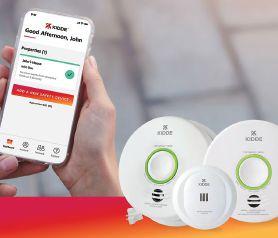
Kidde
Kidde’s suite of home health and safety devices comprises fully integrated solutions that enable whole-home detection of smoke, carbon monoxide, indoor air quality issues, water leaks and frozen pipes. Kidde’s HomeSafe technology connects these Wi-Fi enabled devices and their expanded sensing capabilities to the Kidde app, providing instant notifications of home safety threats. www.kidde.com
Decorative brackets
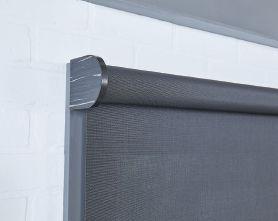
Legrand
Legrand’s Shading Systems Designer Series of decorative brackets and hembar endcaps are available in a wide range of finishes. Designed to fit 2.6-inch and 3.3inch universal and open-roll adjustable brackets, the decorative brackets slide on to completely conceal mounting brackets from the outside without interfering with the mounting surface. The Designer Series hembar endcaps offer a redesigned, modern shape to complete the look and provide a consistent finish. Designer Series decorative brackets and hembar endcaps are available in 15 new finish styles across three collections: Premium, Glass and adorne. www.legrand.com
Video platform
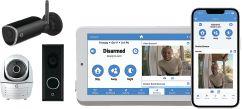
Alula
Alula’s video platform features new camera models, AI-based object detection, enhancements to video clip navigation and viewing in the Alula Smart Security App and advanced video capabilities through the new Slimline Touchpad PRO. Three new cameras have been added to Alula’s video portfolio: an outdoor bullet, a smart doorbell camera and the Indoor 360. All three cameras deliver a high-definition viewing experience, motion detection, extended Wi-Fi range and night vision. www.alula.com
Wi-Fi cameras and doorbell
NAPCO Security Technologies
Visitor management dormakaba
The NAPCO HD video Wi-Fi cameras and doorbell offer features including Night Vision or New Ultra StarLight Night Vision, 2-Way Talk and HD resolution video, up 30fps@2.0MP (1920x 1080). Integrate cameras with New Gemini Security/Video/Access and iSecure Connected Home Alarm Apps, or use Standalone iBridge Video App, to offer accounts access from anywhere, from any smart device. www.napcosecurity.com
Smart deadbolt Schlage
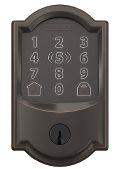
With home keys in Apple Wallet, consumers can tap to unlock the Schlage Encode Plus deadbolt using their iPhone and Apple Watch. With a Schlage Home Key in Apple Wallet, homeowners don’t even need to unlock their iPhone or Apple Watch to open their lock, and with Power Reserve (supported on iPhone XS or later and Apple Watch Series 4 running watchOS 8 or later), even if the iPhone needs to be charged, they may still be able to tap to unlock for up to five hours after their iPhone battery runs out. www.schlage.ca
Wireless video doorbell Abode
dormakaba’s new Community software Resident Visitor Management feature provides convenience for multihousing properties. With the Resident Visitor Management feature and the enhanced BlueSky mobile app, property managers can enable busy residents to provide temporary access to both perimeter and common areas by creating and sharing mobile keys or PIN codes. Mobile keys can also be sent for access to interior unit locks. Residents can create and manage PIN codes including single use, date and time specific use, or multiple use access.
www.dormakaba.com
USB-C cable
C2G
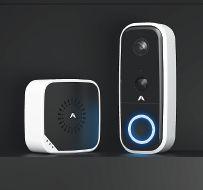
The Abode Wireless Video Doorbell is a battery-powered doorbell camera featuring a simple, wire-free installation process. The compact, Wi-Fi enabled, HD 2K video doorbell camera features an IP65-rated weatherproof housing and mounts directly and securely to the door via the included, lockable installation bracket. Once mounted, the Abode video doorbell can be leveraged for live-view and two-way communication with anyone at the door and has a tactile push-button for standard arrival notification. When upgraded with an Abode Standard or Pro plan, the wireless video doorbell is capable of recording video clips to the cloud if motion or a person is detected, or record a short video clip when the doorbell is pushed. Designed to operate in extremely-low light conditions, the Abode Wireless Video Doorbell includes a built-in Starlight sensor that enables full-colour night vision capabilities. goabode.com
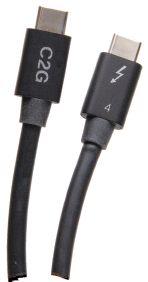
C2G’s Thunderbolt 4 USB-C Cable delivers up to 40Gbps to or from a Thunderbolt 3- or Thunderbolt 4-enabled port. It’s a solution for transferring large amounts of information, whether uploading or downloading data, in a very short amount of time. For example, it’s capable of transferring a 5GB file in about a second. It can connect to a high-speed 10 Gigabit Ethernet network or connect two computers over a peer-topeer network, allowing for the transfer of large volumes of data from one PC to another. In addition, users can daisy-chain up to five Thunderbolt 4 devices or six Thunderbolt 3 devices for flexible configurations. With Alt mode, the cable can stream video and audio with full DisplayPort 2.1, including multistreaming. www.cablestogo.com
Product Previews The latest in security technology
9mm camera
Bosch
Bosch has introduced the MIC IP fusion 9000i 9mm camera, offering a wide thermal view to increase the level of security in perimeter detection applications. Equipped with a 9mm lens, the new camera expands the current MIC IP fusion 9000i line-up of AI-powered security solutions. Specifically designed for short range perimeter security at critical sites, the MIC IP fusion 9000i 9mm camera delivers full 360-degree coverage in 30 seconds. The camera is protected by full metal housing. www.boschsecurity.com
Server cabinet locks HES
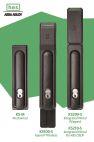
HES is expanding its range of server cabinet locks to include Open Supervised Device Protocol (OSDP) and mechanical options. These innovations are designed to help protect physical assets, data and access to critical infrastructure networks. The KS210 is the newest server cabinet lock along with the enhanced HES KS200 integrated access control swing handle server cabinet lock, which uses Wiegand (200) communications; the new KS-M Mechanical Server Cabinet Lock; and the current KS100 integrated wireless model featuring Aperio technology. www.hesinnovations.com
LED display cover STI
Video wall processor
RGB Spectrum
This enclosure helps guard a range of devices against vandalism, as well as dirt, dust and grime. Vacuum formed from PETg, food grade and chemical resistant material, the cover is resilient to most acids, alcohols, salts, hydrocarbons, mineral oils and petroleum. The cover mounts to the wall directly through the product mounting holes. Indoor use is recommended, but the cover can be used outdoors where there is low sunlight exposure. www.sti-usa.com
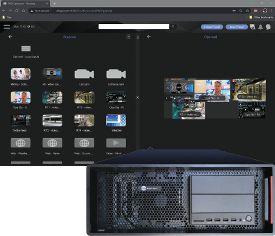
The new Zio 4000 is a full-function video wall processor with advanced networking capabilities. It is available as a stand-alone video wall solution or integrated with the company’s AV-over-IP distribution platform. The Zio 4000 can simultaneously display multiple video sources onto any size video wall or even across multiple walls, with various size models supporting from 2 to 128 displays. www.rgb.com
Product Previews The latest in security technology
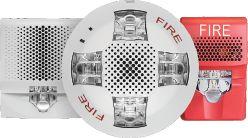
Notification portfolio Edwards
Edwards introduced the newest addition to its Genesis LED notification portfolio, outdoor notification appliances. Designed specifically for extreme weather performance, the Genesis LED outdoor appliances are engineered to withstand high-pressure water spray, rain, sleet and snow while maintaining their horn, strobe and speaker functionalities. Edwards also introduced new features to EST4, its premier fire and emergency communications system. www.edwardsfiresafety.com
Integrated solutions
Hikvision
Hikvision provides an extensive offering of access control and video intercom products and accessories designed to accommodate the most demanding solutions. The wide range of available products includes card readers, access controllers, video intercoms, biometric multi-modal authentication readers, enrollment stations, magnetic locks, push-to-exit (PTE) buttons, and key cards and fob credentials. Also available is Hikvision’s extensive line of video intercom solutions that can be used for standalone operation or integrated with other Hikvision access and video products and software platforms.
www.hikvision.com
Security management system
LenelS2
OnGuard security management system version 8.1 provides major updates including more fully featured browser clients, modernized desktop clients, deeper integration with the Magic Monitor unified client and Milestone video management systems, support for scripted cloud deployments and more. The OnGuard 8.1 system provides usability enhancements and enterprise-focused features to many of the most used browser clients such as OnGuard Credentials and OnGuard Visitor. V. 8.1 also includes new functionality for automated cloud deployment and remote system maintenance. www.LenelS2.com
Wireless switches
Camden Door Controls
The CM-336 Series of battery operated 915MHz wireless switches features a Lazerpoint RF transmitter. The new switch replaces Camden’s CM-330 models and delivers up to four years of battery life based on 100 activations per day. The switches offer a wireless range of up to 300 feet. They are available in a selection of narrow, square and round faceplates and come with retrofit mounting box conversion kits. www.camdencontrols.com
Strobe beacons E2S
E2S has added the GNExB2X05 and STExB2X05 5 Joule (5W) Xenon strobe beacons to its GNEx corrosion resistant GRP and STEx stainless steel families. Suited for all fire, gas and general signaling applications in hazardous locations, they are SIL1 compliant as standard and can meet SIL2 requirements using E2S’s interface monitoring module. The upgraded new electronics gives the GNExB2X21 21 Joule and STExB2X21 21 Joule increased light output of 1,115.57 Candela.
All versions now feature A4 316 stainless steel lens guards as standard. The GNEx and STEx ranges include Xenon and LED beacons, alarm sounders, PA loudspeakers, Ex d junction boxes and SIL2 compliant call points and push buttons.
www.e2s.com
Design and quote projects
Covid Inc.
Small form radar Magos Systems
The SR-150 radar is suited for smaller sites looking to implement enhanced radar detection and larger locations that need to fill a gap to address a dead zone in their perimeter protection. The SR-150 provides 150 meters of coverage, including up to 30 degrees of elevation coverage and 120 degrees of azimuth coverage. By combining the Magos MASS solution with AI, the SR-150 reduces nuisance and false alarms. The SR-150 integrates with major VMS platforms, physical access control systems and PTZ brands. www.magosystems.com
Access control in the cloud Genetec
The Synergis Cloud Link PoE-enabled IoT gateway for access control provides a gateway to a cloud or hybrid deployment. The Synergis Cloud Link IoT gateway has embedded functionalities that keep an organization’s access control running even when connection to the server is down.
Providing integrators with the ability to design, lay out, and prepare cost estimates for custom AV wall plates and rack panels, Panel Spec 2.0 allows integrators to design and quote projects via a browser-based application. Users can choose from a large variety of connectors including feedthrough, keystone, pigtail, and Neutrik in standard single- or double-gang configurations. Plates are available in aluminum or stainless materials with anodized or powder coat finishes and a variety of colour options. The process offers custom CNC machining and direct graphic printing of custom and standard templates and connectors. www.covid.com
Synergis Cloud Link features enhanced cybersecurity such as encrypted user data, Secure Boot, and an EAL6+ industry gold standard Secure Element that stores cryptographic elements. A single Synergis Cloud Link device can support up to 256 readers and electronic locks, 600,000 cardholders, 150,000 offline events, as well as monitor hundreds of zones and alarms.
www.genetec.com
Product Previews The latest in security technology
Video wall management
VuWall
Version 3.2 updates to VuWall’s TRx visualization and video wall management software adds a new plug-in for Genetec Security Center and an enhanced user interface and performance. In addition to third-party interoperability, TRx version 3.2 includes improved UI reactivity and performance. With TRx, organizations can manage an unlimited number of devices and perform multiple tasks simultaneously. www.vuwall.com
Wall plate transmitter
Hall Technologies
The Discovery Series offers 4K extension with flexible USB and HDMI capabilities for software video conferencing and audio extraction. According to the company, these kits were designed specifically to address signal extension for multiple participants in classrooms, huddle spaces, or conference rooms. Discovery is an HDBaseT Wall Plate Transmitter, and Receiver kit that pairs natively with soft-codec video conferencing applications such as Zoom, Teams, Skype, WebEx and more. The Discovery Series is available now in both 1 Gang and 2 Gang wall-plate transmitters and pair with a universal Discovery receiver. www.halltechav.com
PTZ cameras i-PRO
i-PRO announced the addition of AI to its PTZ (pan, tilt, zoom) cameras and a revamp of the entire PTZ range, adding a total of 35 new cameras. The PTZ cameras also feature a new modern design in a smaller form factor that is similar in size to many dome cameras. The S-Series cameras include a built-in AI processor enabling advanced automatic tracking. The cameras, equipped with cybersecurity, can run two different Deep Learning AI applications at the edge of the network, reducing load and server infrastructure costs. www.i-pro.com
Videoscope
Teledyne FLIR
The FLIR VS80 high-performance videoscope is outfitted with a 1024×600 high resolution seven-inch touchscreen display and is available in seven different kits with the option to purchase waterproof, ultra-slim probes. Probe options include a two-way articulating probe; a four-way articulating probe; a plumbing spool probe; single HD and dual HD visible camera probes; and a general-purpose thermal camera probe. www.flir.com
Wireless deadlatch
Adams Rite
Adams Rite is expanding its product line with the introduction of the DL100 Wireless Deadlatch — an advanced, aluminum-stile electrified deadlatch with Aperio wireless technology. The DL100 combines electrified locking hardware with an access control system in standard aluminum-stile doors. The DL100 uses low-energy motorized EcoLatch actuator technology for silent operation and provides a MultiCLASS SE contactless card reader that supports 125 KHz and 13.56 MHz credentials, with optional support for BLE or NFC Mobile Access.
The DL100 offers a real-time Door Position Switch (DPS) monitor, Request to Exit (REX) and battery health monitoring and control. www.adamsrite.com
AI-enabled cameras
March Networks
Incorporating advanced system-on-chip (SoC) technology from Ambarella, the ME8 Series IP Cameras use Deep Neural Network processing power to accurately detect both people and vehicles. This built-in intelligence is combined with next-generation security analytics and 4K ultra high-definition (HD) resolution. Organizations can choose from two distinct ME8 Series models: The ME8 IR Dome, an indoor/outdoor dome camera featuring a 3.611mm motorized P-Iris lens, and the ME8 IR DuraBullet, a bullet camera purpose-built for outdoor use and also featuring a 3.6-11mm motorized P-Iris lens. www.marchnetworks.com
Connected lock Onity
Onity announced the introduction of connected capabilities for its small-form-factor Serene lock. The all-in-one connected Serene lock uses a small form factor to combine both design and DirectKey mobile access technology. The Serene lock now delivers a set of features that enhance operational efficiency and customer experience, while providing preventative maintenance insights. In addition to enhanced functionality, the connected version of the Serene lock also includes a wall reader and repeater. www.onity.com
Building automation system
Johnson Controls
Johnson Controls announced an update to Metasys, the company’s Building Automation System (BAS). Metasys’ design integrates HVAC and non-HVAC systems into one platform. The Metasys 12.0 release is designed for fast troubleshooting in the field. Metasys 12.0 improves system security by following the new BACnet Secure Connect (BACnet/SC) interoperability standard for current IT security protocols, helping to further secure communications among Metasys IP components. Metasys 12.0 offers MQ Telemetry Transport (MQTT) support for next-generation network engines to exchange Metasys data with popular IoT platforms and applications across the system. www.johnsoncontrols.com