To mark our 25th birthday, SP&T News reached out to five industry veterans for a conversation on the remarkable years past and what may lie ahead for security
• Eagle Eye Networks hires Canadian manager, outlines market growth
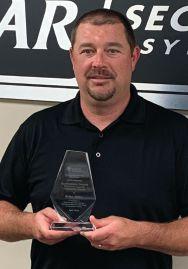
• Alarm Systems, SRC form monitoring partnership
• EyeQ launches video enhancement technology
• CANASA announces new board, executive, regional council leaders
• Lumeo’s analytics builder offers flexibility, says CEO
By Alanna Fairey
Brunet, National President, CANASA
for the future of our industry
your potential
MMarking a major milestone
y job is generally to look out for what’s current in security and what’s around the corner: new technology, industry trends and how dealers, integrators and end users are making the most of what’s out there.
But it’s nice once in a while to take a step back and see how far we’ve come, particularly when you’re marking a milestone like 25 years.
In every issue so far this year, we’ve featured commentary from some of the security industry’s icons — people who have been in the business since the ’90s (or earlier) with no plans of slowing down anytime soon. In this issue, we take a deeper dive into some of the industry’s history via a panel of experts I spoke to just over a month ago.
I didn’t want this to be just a stroll down memory lane, so I challenged our panel to identify a few things they miss about security in the ’90s and 2000s and a few things they definitely don’t. We also talked about what’s working well in security today and the areas where improvement is still needed.
When I started working at SP&T, almost 14 years ago, IP-based security tools were just coming into their own. The transition from analogue to IP maybe didn’t happen as rapidly as some had predicted but it certainly came on strong in the last decade. Likewise, there was buzz around analytics when I was first finding my feet in the industry. A lot of those early promises didn’t pan out but today it’s hard to imagine a surveillance or access control offering that doesn’t come with a complex feature set. You can also have your choice of
whether you would like to leverage those features on premise, in the cloud, or a combination that best suits your purposes.
The other side of the equation is the incredible amount of attention that has been paid to cybersecurity concerns in recent years. Network-based systems require protection and constant care. We’ve all read the horror stories about compromised technology and hacked databases.
This, of course, is not only a concern for purveyors and users of security systems but any business tool that relies on the internet (which is to say, pretty much all of them).
Some of these concerns about cybersecurity were voiced in the roundtable, but what I enjoyed most about that discussion were the tales of camaraderie, trust and engagement — not only with customers but partners and sometimes even competitors.
If there’s one thing I’ve learned about security, it’s really a people business. Technology is on the leading edge, but it’s about protecting people, and increasingly about enabling them by allowing them to feel safe.
Thank you to all the readers who have come along for our 25-year journey — whether you’ve been with us since 1996 or this is your first issue. And thank you to the many, many industry professionals who have contributed to our success over the years.
The last five years especially have been exciting to watch in terms of the industry’s development and I can’t wait to see what’s next.
@SecurityEd
READER SERVICE
Print and digital subscription inquires or changes, please contact Barb Adelt, Audience Development Manager Tel: (416) 510-5184 Fax: (416) 510-6875
Email: badelt@annexbusinessmedia.com Mail: 111 Gordon Baker Rd., Suite 400, Toronto, ON M2H 3R1
Your Partner in Securing Canada Security Products & Technology News is published 6 times in 2021 by Annex Business Media. Its primary purpose is to serve as an information resource to installers, resellers and integrators working within the security and/or related industries. Editorial information is reported in a concise, accurate and unbiased manner on security products, systems and services, as well as on product areas related to the security industry.
Group Publisher, Paul Grossinger 416-510-5240 pgrossinger@annexbusinessmedia.com
Associate Publisher, Jason Hill 416-510-5117 jhill@annexbusinessmedia.com
Editor, Neil Sutton 416-510-6788 nsutton@annexbusinessmedia.com
Media Designer, Graham Jeffrey gjeffrey@annexbusinessmedia.com
Account Coordinator, Kim Rossiter 416-510-6794 krossiter@annexbusinessmedia.com
COO, Scott Jamieson sjamieson@annexbusinessmedia.com
EDITORIAL ADVISORY BOARD Victor Harding, Harding Security Services Carl Jorgensen, Titan Products Group Antoinette Modica, Tech Systems of Canada Anna De Jager, TAG Dispatch Roger Miller, Northeastern Protection Service Sam Shalaby, Feenics Inc.
F: 416-442-2230
PUBLICATION MAIL AGREEMENT #40065710 Printed in Canada ISSN 1482-3217
Annex Publishing & Printing Inc. disclaims any warranty as to the accuracy, completeness or currency of the contents of this publication and disclaims all liability in respect of the results of any action taken or not taken in reliance upon information in this publication.
PROSERIES
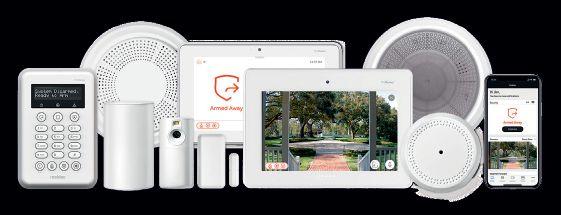
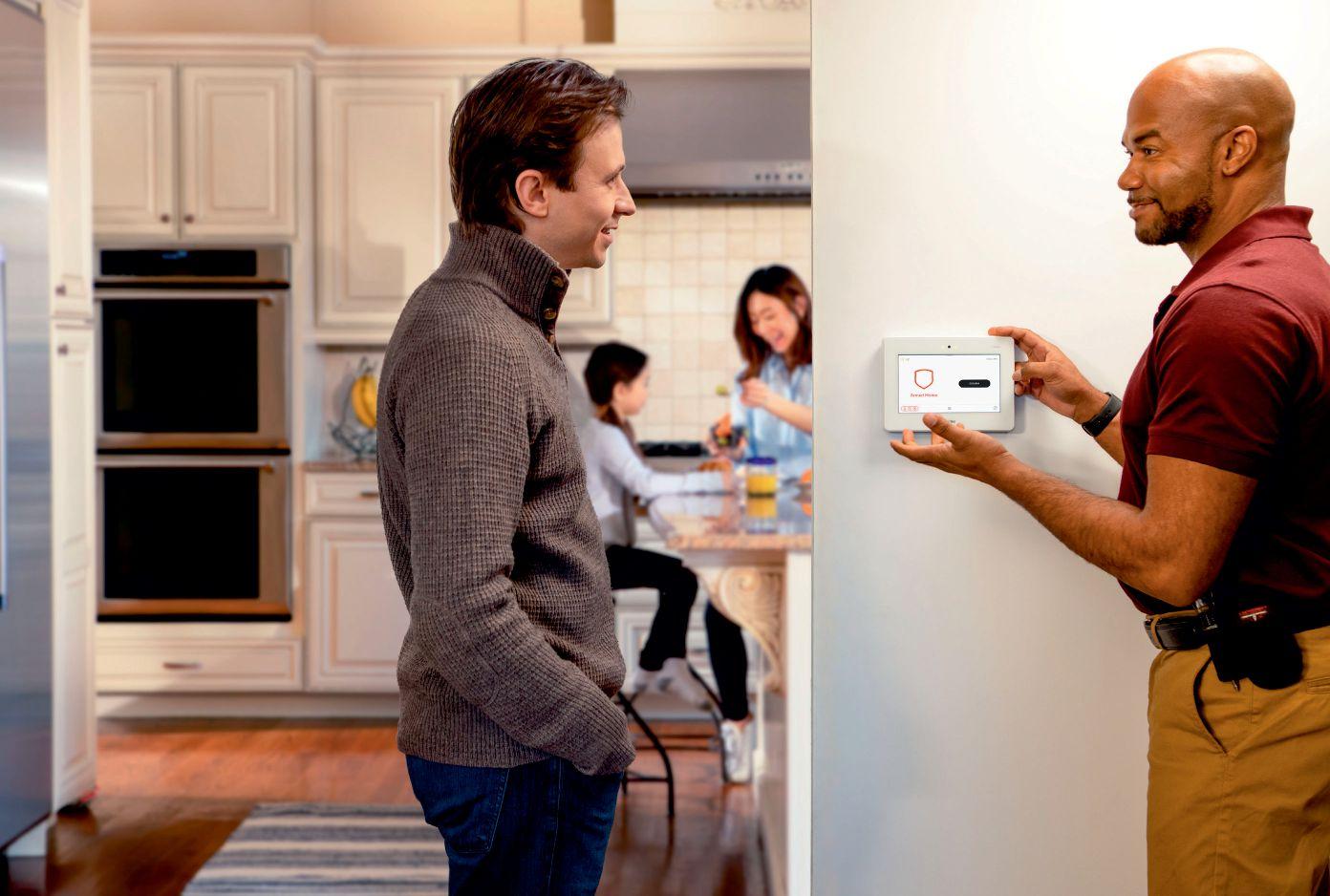
ProSeries our ultimate smart security system. With its innovative modular design and builtin Amazon Alexa, ProSeries brings security, life-safety and smart control together in one simple platform. ProSeries can be operated, programmed, upgraded and maintained locally or remotely, and is designed with a consistent programming and consumer interface making it easy to learn, quick to install, simple to maintain.
All this together so dealers can win more customers, keep them longer and drive profits.
To find out more, visit resideo.com/stayinformed
LINE CARD
Eagle Eye Networks hires Canadian manager, outlines market growth
Eagle Eye Networks is expanding its presence in Canada with the addition of a new national sales manager and a plan to grow its channel footprint here.
Eagle Eye president Ken Francis said the cloud video surveillance company has expanded its global reach in the last 18-24 months “in spite of the headwind from COVID,” with growth in Latin America, the Middle East, Southeast Asia, Australia and Europe.
Canadian growth was originally part of a 2022 objective, said Francis, who joined the company five years ago as employee number 17 (it is currently an organization of about 265). Those plans moved up a year when the company hired Ceres Silva as sales manager for Canada in April.
Silva, who has previous sales leadership experience in the Canadian surveillance market, is tasked with expanding the Eagle Eye channel here.
Eagle Eye’s existing footprint in Canada includes a data centre, which opened in Montreal in 2015 (one of 11 globally), and approximately 35 dealers. Francis said he anticipates that number could grow to more than 100 dealers in the next two years.
“This is how we’ve been successful everywhere else in the world: find somebody that’s done this before — somebody that’s built a channel in the region — and then build an organization around them,” said Francis, explaining Silva’s pivotal role.
“I like to focus on reseller companies that have really great project management, because they deliver the best customer experience.”
Historically, the company has had better market penetration in Western Canada, so initial growth will focus more on the East in major centres like Toronto and Montreal, said Francis. The company is also developing a French language version of its Eagle Eye VMS.
“I like to focus on reseller companies that have really great project management, because they deliver the best customer experience.”
— Ken Francis,Eagle Eye Networks
Eagle Eye has been growing at a rate of 2x annually for the last five years, according to Francis. The pandemic has not altered that trajectory — Eagle Eye’s global revenue almost doubled during the pandemic and the company had a record first quarter in 2021.
The pandemic may have demonstrated the advantages of cloud systems, but this is a technology that was already in its ascendency.
“There’s something going on in the market where the transformation from on-site systems to cloud systems is really accelerating. The acceleration is caused by IT leaders moving all of their systems into the cloud, not necessarily because they got a phone call from Eagle Eye,” said Francis.
There is a new premium on systems that can be operationalized and maintained remotely. That type of infrastructure was advantageous during COVID lockdowns and the move towards working from home in greater numbers.
“We are benefitting a lot from what’s hap-
pening in the marketplace,” said Francis.
Francis said company founder Dean Drako recognized a long time ago that a transition from on-premise to cloud would take place. Drako established Eagle Eye in 2012 and acquired access control cloud provider Brivo in 2015.
“It had already happened with ERP (enterprise resource planning) and CRM (customer relationship management) and other back office commercial enterprise systems. We are right in the throes of it now,” said Francis.
The next frontier for Eagle Eye is stepping up the AI-based capabilities of its cloud platform. According to Francis, the technology can already support relatively simple tools like people-counting but there are plans to dramatically increase AI sophistication to include elements such as people and object recognition.
“Our biggest investment over the next 18 months is going to manifest itself in what the market calls AI feature sets,” he said.
— Neil Sutton
Canadians care about their IoT
Based on research published in July by NordVPN, Canadians are exercising caution when it comes to the IoT devices they have at home.
The company surveyed 7,000 people across seven different countries: Australia, Canada, France, Germany, the Netherlands, the U.K. and the U.S.
According to the results, of the Canadians surveyed, 92 per cent have an IoT device in their home, and nine out of 10 of those people are taking measures to protect those devices.
“As the research shows, the more devices people own, the more vulnerable and thus careful they usually are. Manufacturers surely
have to take responsibility for the safety of their products, but users play a big part in their own cybersecurity,” said Daniel Markuson, a digital privacy expert at NordVPN, in a statement.
Canada compared favourably to most other nations in terms of attitude towards protecting IoT devices, ranking above both the U.K. and the U.S.
Across the survey results, opinions varied over who should be responsible for device protection: 41 per cent of users said manufacturers and 56 per cent saw it as their own responsibility. Markuson’s device protection advise includes reading the privacy policy, creating sophisticated passwords and keeping devices patched.
Ken Francis, Eagle Eye Networks
Ceres Silva, Eagle Eye Networks
LINE CARD
Alarm Systems, SRC form monitoring partnership
Belleville, Ont.-based Alarm Systems and Sarnia, Ont.-based Security Response Center (SRC) recently announced a monitoring partnership.
Chris Currie, president of Damar Security Systems and SRC, said he and Alarm Systems president Kristin Crowe have known each other for years and there are similarities between the two organizations that make them a natural fit for a partnership.
“There was a lot of good synergies already in place,” said Currie in an interview with SP&T “Once we had initial discussions about [Alarm Systems] coming over to SRC for their monitoring, that’s when the conversation started.”
Crowe described the experience as “the stars aligning and the dots connecting.
“Our stations operate on the same monitoring software,” she said. “Folding our station into SRC’s existing network, including our team of experienced signal receiving operators, is a winwin for everybody.”
Speaking on behalf of SRC, Currie said the company invested in its monitoring infrastructure to make sure that all of their dealers have access to the best of the best in regards to technology.
“Alarm Systems is going to have access to that infrastructure now, and we’re also going
to have more operators online as well,” Currie explained. “We brought over seven operators from Alarm Systems … and we’ve got additional staffing. It’s just going to be an all-around better situation for clients.”
Crowe said that Alarm Systems now has enhanced offerings for their customers — an advantage now available through their partnership with SRC.
Crowe added that working alongside Currie and his team has been a positive experience, as well. “When a particular issue or obstacle is presented, the team at SRC says, ‘OK, how do we tackle this, let’s work through this,’” Crowe said. “They really are a pleasure to work with. I’m very
excited about this new partnership.”
Asked about the benefits they would like to see for Alarm Systems and SRC, Crowe and Currie’s answer was simple: growth for both companies.
“We’ve got common values, and we’ve got common goals,” Crowe explained. “We are both looking to grow our existing customer base and become a stronger presence in the industry and the communities that we serve.”
With Alarm Systems celebrating 50 years in 2022, Crowe said the company has a number of long-term loyal customers and they are “thrilled to be protecting many new customers.”
“Offering both commercial and residential customers leading edge technology and automation is critical,” Crowe explained. “Our supply chain partners have assisted us in achieving this at the customer site. Our recent partnership with SRC has now enhanced our offerings for monitoring.”
Currie added, “We’re continuing to provide the great level of service that all of the customers have come to expect out of Alarm Systems when they were doing the monitoring, and SRC now that we’re doing the monitoring. Ultimately, we just want to make sure that they’re taken care of and looked after.”
— Alanna Fairey
EyeQ launches video enhancement technology
EyeQ Imaging, a Calgary-based digital imaging company, has developed an AI-based technology that could be useful to the security industry.
EyeQ recently expanded into providing automatic photo correction for some of the largest printing labs across the world.
“Once we infiltrated that market, we’ve expanded so that our technology can now be implemented anywhere,” said Sarah Lefebvre, director of marketing, in a recent interview with SP&T News
With two decades of photo editing, Lefebvre said that the company was then able to take those skills and move into the artificial intelligence (AI) space.
EyeQ recently launched Perfectly Clear Video, an AI video enhancement technology, into its global markets.
Perfectly Clear Video uses AI to automatically enhance videos and offers a new way to combat limitations businesses face such as low-quality cameras, bad lighting and complex
editing sliders.
Perfectly Clear Video automatically applies the same types of adjustments that professional retouchers would do.
While the technology has not yet been licensed to a security business, Lefebvre believes that Perfectly Clear Video will serve a purpose for the industry.
“That will be really huge for security because there are certain times of day that you can’t control [and] certain lighting conditions that are out of your control.”
Lefebvre envisions the Perfectly Clear Video solution being useful for circumstances where cameras are set up outdoors and get a bit of a glare, or shadows obscure the person in the video.
“When you think automatic video correction, it can be more like appraising or quality,” Lefebvre explained. “But because we’re using AI, we’re able to target specific parts of the video. One thing that would be really useful for the security industry is that this video technology can automatically brighten a face in a backlit setting.”
Looking ahead, Lefebvre said that EyeQ’s top priority is to continue looking for businesses to be able to license the Perfectly Clear Video solution and then push it out to their consumers and users.
“I’m really excited about this –– to be able to be licensed, and I think that once it is, it will be a huge improvement and upgrade,” Lefebvre concluded.
— Alanna Fairey
EyeQ screenshots before and after (image courtesy EyeQ Imaging)
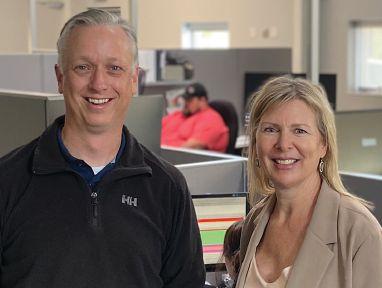
Chris Currie, president, Damar Security Systems / Security Response Center; Kristin Crowe, president, Alarm Systems
STAY INFORMED, STAY CONNECTED.
Altronix LINQ™ Technology provides real-time system data – assuring your customer’s security, while increasing your RMR. Stay alert, resolve issues and control power from anywhere over the network.
LINE CARD
Applications
Boats and drones in Illinois
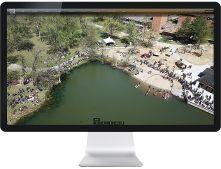
Southern Illinois University (SIU) has integrated drones with its existing Ocularis video management system from Qognify for operational, safety and security benefits.
Drones were used to capture images of SIU’s annual Great Cardboard Boat Regatta but projecting a live stream on-screen presented a number of technical challenges.
Qognify “steered us to a much simpler and no-cost way to stream drone footage in real-time, securely, and with low latency,” said Luke Schemonia, an FAA certified commercial drone pilot and Building Automation Technician II at SIU, in a statement.
Working with Qognify, SIU was able to provide real-time aerial footage from the lake for the first time in the regatta’s 46-year history. Today, their drone program ranges from active shooter tests, evidence sharing, monitoring, maintenance, and mapping, to counting migrating waterfowl.
Appointments
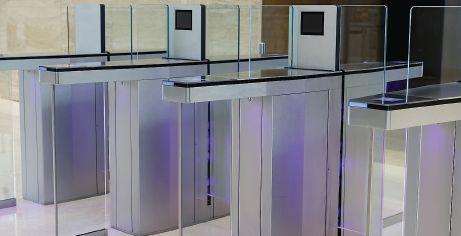
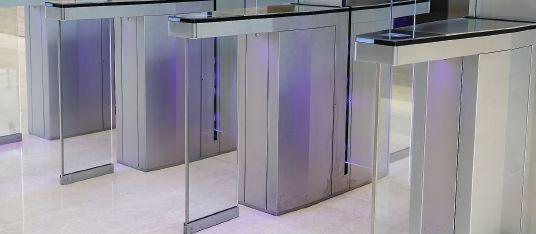
New doors for The Cube
The Cube, a smart commercial building in Berlin, Germany, is 10 stories tall and has an all-glass, mirrored look.
Built on both sides of Berlin Central Station in the district of the Europacity, The Cube was the vision of 3XN Architects. The facility houses various tenants and includes features such as a ground-level food market and office lobby, underground parking, indoor gardens, a rooftop terrace, and optional conference areas. Floor to ceiling windows provide natural light and ventilation.
Boon Edam was commissioned to install four Crystal TQ manual revolving doors to save on energy consumption and blend in with the existing glass facade. According to the company, the doors operate under the principle of “always open, yet always closed,” maintaining a constant seal between the exterior environment and interior building lobby.
• SALTO Systems has named Ron Shafferas the North America vertical business leader, education. Shaffer has previously served SALTO as a business development manager and solutions architect technology director.
• George Cikalo joins Qognify’s North America team as a
strategic account manager, serving the Northeast U.S. and Eastern Canada. Qognify recently added four additional sales staff serving North America.
• Interface Security Systems announced that it has appointed Brian Garavuso as its chief technology officer.
Seagate deploys security infrastructure globally
To secure its global campuses and offices, Seagate Technology Holdings has deployed Genetec Security Center.
The deployment includes Security Center; Genetec Omnicast IP video management system (VMS) to manage more than 1,150 cameras; Genetec Synergis IP access control system (ACS) to manage more than 22,000 card holders; Sipelia to manage communications between intercoms and security operations, and Seagate’s own Exos X 5U84 mass capacity storage system.
All sites are connected using the Genetec Security Center Federation feature to centralize monitoring, reporting and alarm management.
The solution enables Seagate to pull in up to 1.3 petabytes of high-definition video in a single disk enclosure.
August 22-26, 2021
BICSI Fall Conference Las Vegas, Nev. www.bicsi.org
September 27-29, 2021 GSX Orlando, Fla. www.gsx.org
October 4-7, 2021
ESA Leadership Summit Frisco, Tex. www.esaweb.org
October 7, 2021
Canadian Security Honours Online www.canadiansecuritymag.com
October 9-13, 2021
TMA Annual Meeting Maui, Hawaii www.tma.us
November 7-11, 2021
TMA OPS-TECH Charlotte, N.C. www.tma.us
November 17-18, 2021
ISC East New York City, N.Y. www.isceast.com
December 2, 2021
Focus On Healthcare Security Online www.canadiansecuritymag.com
Garavuso will be responsible for leading Interface’s product development, engineering, and information technology services.
• Robin John has joined WeSuite’s sales team in the newly created role of inside sales consultant.
• Biamp has appointed Charlie
Hughes as principal engineer within the Electroacoustics division. Hughes recently led his own consulting company, Excelsior Audio.
• Paladin Security has appointed recently retired Vancouver Police Department Superintendent Steve Eely as director effective July 1.
Ron Shaffer George Cikalo
Brian Garavuso Robin John Charlie Hughes Steve Eely
CANASA announces new board, executive, regional council leaders
The Canadian Security Association conducted its Annual General Meeting virtually on June 16, 2021, marking the last day of the 2019-2021 term in office. Regional council presidents were recognized for completing their two-year terms and Gordon Hebb was recognized for his two years of service as the association’s National President. CANASA also elected its 2021-2023 board, including the executive team, as well as leaders of the regional councils. (See p. 30 for a Q&A with new National President Anita Brunet.)
2021 Award Winners
2021-2023 board, executive team and regional council leaders
Anita Brunet, President
Neil Jones, Vice President
Brahm Ptack, CPA, CA, CFE, Treasurer
Stuart Armour, Executive Committee Member
Bob Smith, Executive Committee Member
Alan Cavers, Board Member
Daniel Cyr, Board Member
Jonathan Metcalfe, Board Member
Trask Dittburner, Board Member
Luke Raymond, Board Member
Helen Perry-Raycraft, Board Member
Kevin Leonard, Board Member
Roger Miller, Board Member
Atlantic Regional Council
David Smith, President
Chris Joseph Carpenter, Vice President
British Columbia Regional Council
Tony Ursan, President
Luke Malcolm, Vice President
Central Ontario Regional Council
Trask Dittburner, President
Thomas Leslie, Vice President
Eastern Ontario Regional Council
Bob Smith, President
Stephen McMullen, Vice President
Golden Horseshoe Regional Council
Joseph Rossano, President
Michael Polo, Vice President
Northern Alberta Regional Council
Khalid Najmeddine, President
Logan Marynowich, Vice President
Patti Jones, Past President
Prairie Regional Council
Tara Webber, President
Lisa Boyer, Vice President
Quebec Regional Council
Chantal Bélanger, President
Dominique Bougie, Vice President
Gaetan Bordeleau, Vice President
Daniel Cyr, Secretary/Treasurer
Southern Alberta Regional Council
Barry Paisley, President
Darryl Sinclair, Vice President
Southwestern Ontario Regional Council
Brian Gibbs, President
Angelo Bucciarelli, Vice President
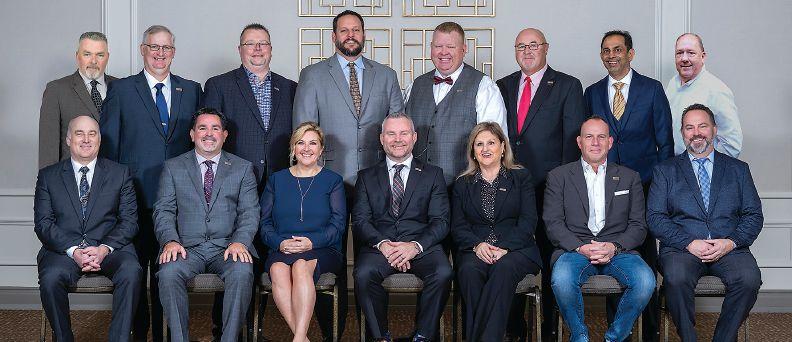
The 2019-2021 National Board. Front row (left to right): Brahm Ptack, Bob Smith, Anita Brunet, Gordon Hebb, Mary Vella, Trask Dittburner, Fred Munn. Back row (left to right): Stuart Armour, Kevin Leonard, Neil Jones, Ellery Demedash, Jonathan Metcalfe, Patrick Straw, Ron Jagmohan, Alan Cavers
Trask Dittburner, Central Ontario
Tara Webber, Prairie
David Smith, Atlantic
Patti Jones, Northern Alberta
Tony Ursan, British Columbia
Chris Izatt, Eastern Ontario
Brian Gibbs, Southwestern Ontario
Gordon Hebb was recognized for completion of his National President term.
Barry Paisley, Southern Alberta
Chantal Bélanger, Québec
Joseph Rossano, Golden Horseshoe
Lumeo’s analytics builder offers flexibility, says CEO
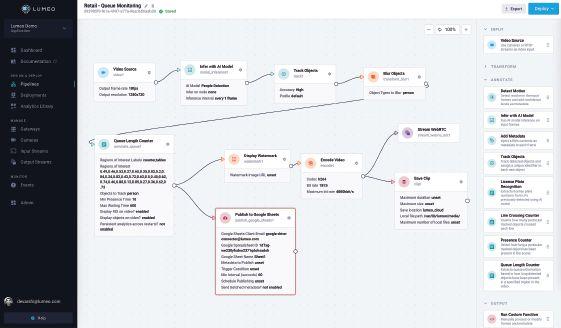
Lumeo says its “no code” video analytics builder delivers analytics via a dragand-drop, customizable platform with no technical skills required.
The company’s platform was recognized as the winner of this year’s Best New Product Award at the New Product Showcase, presented in June by the Security Industry Association (SIA) and ISC West.
“When we started the company, we really wanted to empower businesses and developers to be able to create custom analytics,” explained Devarshi Shah, co-founder and CEO, Lumeo, in an interview with SP&T News. “This is a great recognition of our ability to essentially enable an industry to go off and build their own thing and do the right thing for their customers.”
Companies face challenges when building and integrating video analytics into their security architecture, said Shah, who has more than 20 years’ experience in the technology space, with two previous venture-backed start-ups.
“There’s a lot of grunt work that you’ve got to do. So we said, what if we could enable businesses to drop analytics into that portfolio of products that they’re building, or tools that they can use to solve their own problems? And how do we make it easy so that you don’t
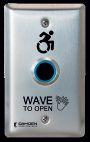
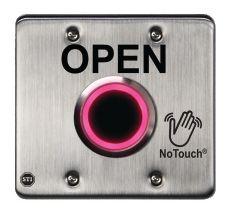
CM-222 Series
Touchless Switches
ValueWave™ economy switches now include blue/green illumination.
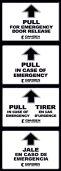
CM-700U S eries
‘Universal’ Pull Stations
Our Blue Pull Stations now include a ‘Universal’ English, Bilingual and Spanish label set.
require 20 rocket scientists to be able to pull it off?”
Lumeo integrates with offthe-shelf cameras, is priced at $10 per month per camera and will be sold primarily through the channel. Analytics can be built and customized by users or they can choose from a library of existing analytics. Customers could include camera manufacturers, software providers, Fortune 500 companies, and integrators and other solution providers. The solution can be run on the edge, on a private cloud or on Lumeo’s cloud for an additional fee.
Shah acknowledged that there are already a number of video analytics available on the market, but stated that one of the major advantages Lumeo offers is flexibility, particularly in this time of rapidly changing needs. He cited the example of social distancing analytics, which became popular when the pandemic became a major concern for enterprises in early 2020.
“A lot of the fixed analytics that are already out there — they may do one thing well, but from a business standpoint…businesses are starting to look at cameras and their camera investments as more than just security use-cases,” he said.
— Neil Sutton
CV-603 S eries
Access Control System
An app-based wireless Bluetooth® system designed to provide door & gate security, up to 2,000 users.
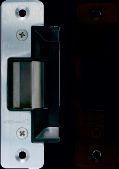
CX-ED1309
Electric Strike
Now available with ANSI round faceplates in brushed aluminum or dark bronze finish.
CV-WR S eries
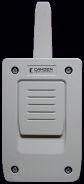
Wiegand Receiver
Designed to interface with existing access control systems for both long and short applications.
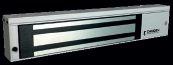
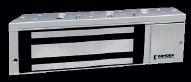
Magnetic Locks
UL1034 & UL294 Listed
Our 600lbs. & 1,200lbs. magnetic locks are now UL1034 & UL294 listed.
SHIPPING : 85% Next Day!
: Standard 2 Days!
Lumeo Analytic Builder (Image courtesy Lumeo)
LESSONS LEARNED
IBy Victor Harding
25 years of alarm deals
The alarm industry looked a little different during the 90s, but today RMR is still the bedrock of the business
n honour of SP&T News’ 25th anniversary, I am going to focus on how alarm company acquisitions have changed over the last 25 years.
I completed my first purchase of alarm accounts in 1996 while working for Alliance Security. The deal involved about 150 accounts bought from an Alliance dealer in London, Ont.
“The alarm account acquisition market has done quite nicely.”
At the time, some dealers were falling behind in their wholesale monitoring payments to us. This was primarily because the pricing for alarm systems had dropped significantly over the preceding 12-18 months. For the first time ever, dealers were offering a basic system for next to free in exchange for a three-year monitoring contract. What amazed me was how quickly this new low-down pricing affected a typical dealer’s cash flow. It only took about six months of sales and a dealer could already be behind in their monitoring bills.
By 1996, larger Canadian alarm companies had already started to buy alarm accounts in bulk. They quickly recognizing the hidden value that alarm monitoring had, i.e. high-margin recurring revenue that had a potential life span of eight to 10 years on average. Put that recurring monthly revenue (RMR) into a Return on Investment template and it quickly became obvious a buyer could pay anywhere from 24 to 36 months of RMR and still make a good return. This was the basis of the M&A market for alarm accounts. American private equity got into the act quickly and bought into a couple of the larger Canadian alarm companies.
That year was also about the time that authorized dealer programs began to spring up — first in the U.S. — based on the same principle as bulk acquisitions. Pay a dealer a multiple of monitoring revenue of anywhere from 24 to 36 months in exchange for a new three-year monitoring contract. Soon there were several high-volume marketing companies selling and installing 100 new systems per month in exchange for large amounts of money paid to them monthly.
As can often happen when growth is emphasized over profitability, some of the bigger Cana-
dian buyers of alarm accounts started to pay too much and spent not enough time on managing their attrition. Multiples in the late 1990’s went up to the high 30s; attrition climbed to 10 per cent and above.
But despite some setbacks, the bulk buying and dealer programs has carried on from 20002020 primarily because there were dozens of alarm companies out there as potential acquisition targets. If you were an owner being offered $800,000 for your 1,000 alarm accounts, it was too tempting an offer to ignore.
How have alarm account deals changed over the last 10 years? Truthfully more has stayed the same than has changed. Most deals now deduct the fixed line costs of cell or Alarm.com from the gross RMR before calculating the purchase price. Most deals take some kind of deduction for deferred revenue. And finally most deals take a 1015 per cent holdback for attrition.
However, it is important to note this market for accounts would have developed more if it was not so difficult for a midsize alarm company to get access to acquisition financing to grow their account base.
For the most part, the Canadian chartered bank system does not attach much value to alarm RMR. Not so in the U.S. where there are many sources of financing. This has bothered me so much over the years that I began working with one of the Canadian chartered banks to help them understand the unique value of alarm RMR. Allow me to comment on a couple of other
practices that have developed in the last five years or so. I think it’s unfair that so few of the bigger buyers today will buy the shares of alarm companies. This was not the case 20 years ago. The difference in take-home pay between a share and asset deal for a seller today is enormous (well over 30 per cent) and for alarm account buyers to deny an owner the opportunity to use their one time capital gains allowance is grossly unfair, in my view. Take a small hold-back to cover undisclosed liabilities if you must and lower your multiple offered a little to reflect the fact that you cannot write off the purchase price — but do the share deal. In the fire and guarding industries, share deals are done all the time.
Secondly, I don’t like the U.S. approach of having every single account contracted. For many years, some of the larger companies operating in Canada bought account bases where some or even many of the accounts were not contracted and nothing bad happened. Buyers generally have liability insurance and if necessary, can contract the accounts after.
Finally, I think billing most of your accounts annually (as opposed to using monthly PAP) is antiquated, and I don’t agree with buyers taking a full deduction for deferred revenue on their deals.
But in summary, the alarm account acquisition market, just like SP&T News, has done quite nicely over the last 25 years.
Victor Harding is the principal of Harding Security Services (victor@hardingsecurity.ca).
By Patrick Straw
Planning for the future of our industry CANASA UPDATE
A preview of some of the major initiatives CANASA has in the pipeline, including a safe return to in-person gatherings
A promising future
As the world transitions back to “business as usual,” the Canadian Security Association is very excited about our ambitious plans for the future of our industry and our association.
Under the leadership of our new board President, Anita Brunet, we will be working to prioritize diversity and inclusion in all of our activities and to be transparently representative of Canadian society as a whole. Promoting engagement that is ethnically, gender and age appropriate will strengthen our industry and help us to attract new people to our committees and councils.
Our last pre-COVID event was our “Women in Security” panel, which was very well received and was our most attended regional event in four years. Regardless of which sector of the security industry you are in, we look forward to having you involved. Contact me at any time for a chat about how you can participate (pstraw@canasa.org).
Education successes
After an enormous amount of work from our education committee, led by Ron Jagmohan of Resideo, the finishing touches are being put on to the modernization of CANASA’s ATC (Alarm Technician Course), in partnership with Centennial College in Toronto. Centennial is currently uploading the content into their own system and we are expecting the finished product to be available for full review by the end of July/early August. The commitment by our committee members to complete this over the last two years has been incredible and an inspiration.
Conestoga College in Waterloo, Ont., is also getting close to the launch of their Security Technician Course. This will be a fully CANASA-endorsed program and we are confident it will be a valuable resource for companies to fill the many positions requiring people power.
Activities
Through to the end of 2021, we are expecting
that our regional councils will be able to hold informal “get-together” events once the pandemic restrictions are clarified and lifted in most provinces. All of our regional councils are very excited about the chance to socialize and network face-toface after almost two years. The Quebec Regional Council is in the process of organizing a member golf event for late September.
The future of security
While all of the traditional security sectors are very busy across Canada, there are a couple of growth areas that are going to significantly change the way companies invest for their protection.
In 2022, it is estimated that worldwide over $170 billion will be spent on cybersecurity. This is a staggering amount, but it emphasizes the changing landscape and the perception of the biggest threats to corporations and institutions.
Successful security integrators are going to have to be able to accommodate this requirement in their own offerings. The result will be many creative partnerships between the traditional security industry and the IT world. This will then fuel the growth of managed security services. Remote management and monitoring of security functions is projected to grow to approximately $40 billion in 2022.
Membership in CANASA
I’m proud of our association’s success over the last year, particularly in providing more opportunities for meaningful engagement for our members and sponsors, introducing innovative programming formats and topics. Thanks to our collective efforts every week, we are welcoming new members to our association from quite a diversified portfolio of security functions.
If you are not a member of CANASA yet, we hope you will consider supporting our association and our industry in Canada. We are working for you and for our future.
Patrick Straw is the executive director of CANASA (www.canasa.org).
Patrick Straw
By Richard McMullen
Finding your potential
The security industry is filled with people willing to share their time and expertise
SP&T News is celebrating its 25th anniversary this year. We’ve invited guest columnists to share their memories of the past 25 years of the Canadian security and alarm industry — how far we’ve come since 1996 and where the industry might be headed next.
Congratulations, SP&T News, on the occasion of your 25th anniversary.
This milestone has caused me to reflect on my own time in our industry.
Like many, I began working for a small alarm company, in a monitoring station in the early 1980s. This was a rewarding experience for a student. I was able to learn, develop and progress, having many opportunities and guidance along the way.
Pioneers helped to shape the broader industry and certainly this young fellow who was just embracing a working world.
This industry is full of kind, generous people willing to help develop others. These early interactions helped me develop my own leadership and mentoring skills.
I was fortunate to have many wonderful leaders help me along my journey. These included my own family members (Tom and Don) who supported and guided me along the way. John Aiken was the general manager at Golden Triangle Alarms when I first began working in the industry. He took a chance on a young student with no real industry experience or skills to offer.
Not long after starting, we learned that the company was being sold to Honeywell Amplitrol. I found myself at a crossroads and was offered employment with another small alarm and security company, Pro-Tech Security and Investigations. Thankfully, Pro-Tech offered a rich environment to learn and develop.
Opportunities were plentiful in those days and I thrived with support from our leadership team of F. Glen Hagan and Bevan McGarry. They grew a small security firm into an integration and alarm company with many successful projects.
More importantly, they developed people and helped many move forward to successful leadership roles in law enforcement and our industry.
I returned to Honeywell and continued there for 14 years, until ADT acquired the
“Volunteering is an incredible opportunity to contribute to the community.”
Canadian business operations of Honeywell Protection Services in 2000. Leaders like John Pistilli, Ron Gagnon, Mario Morin and others helped me embrace new challenges while continuing to learn.
ADT offered exciting opportunities while working with many lifelong industry leaders. We had a great mix of experienced technicians and others who took immense pride in their work. Along the way, I worked with some incredible folks.
In 2007 I joined Fleming Communications Inc. (FCi) to help build and develop our security line of business.
I was fortunate to spend time volunteering with our Ottawa CANASA chapter, eventually being elected to lead our Ontario chapter and in 2015, elected to become the National President. While the experience was not without its challenges, I thoroughly enjoyed my term with CANASA. Giving back to the industry was a rewarding experience.
I was also fortunate to develop some life-
long friendships with other likeminded CANASA volunteers and industry icons. Volunteering is an incredible opportunity to contribute to the community. I also began volunteering with our local Crime Stoppers program, eventually becoming president of our National Capital Area Crime Stoppers program in 2013.
Tremendous technology advances have certainly had a significant impact on our industry. We have come a long way from protecting premises with foil, direct wire communications and two zone alarm panels.
I cannot imagine what the next quarter century will bring. One constant will be change. We have all embraced change along the way and I hope the industry will continue to thrive and develop.
I am confident in the outstanding people who make a living helping others remain safe at home, work and play. Thank you to the entire team at SP&T News for helping to connect our industry with impactful stories and education over the last 25 years.
Your contribution to the success of the industry has been much appreciated. Congratulations!
Richard
McMullen is partner, security solutions, Fleming Communications Inc. (FCi).
CAMERA CORNER
VBy Colin Bodbyl
A brief history of surveillance
Driven by constant innovation, what we once knew simply as CCTV has come a long way
ideo surveillance technology has changed immensely over the last 25 years, but so have customer expectations.
In the late ’90s, surveillance systems were more commonly referred to as CCTV, or closed-circuit television. These closed systems operated independently of any other technology or software. If a user wanted to view the recordings from their cameras, they needed to do it through the recording device or by watching the VHS tape on a standard VCR. Today customer expectations are very different, in many cases due to their experiences with consumer products from outside the security industry.
In 2002, a surfer in California was looking for a better way to film himself out on the waves when he invented the GoPro. While GoPro was primarily marketed towards athletes, it opened the world’s eyes to new possibilities. Workers in dangerous or sensitive jobs could now record their every action through a bodyworn camera. Two years later, the first police body-worn cameras were implemented in the United Kingdom. Today body worn cameras are one of the fastest growing segments in video surveillance, with police forces around the globe requiring them for every officer.
HDTV may be one of the most memorable consumer innovations from the last 25 years. Unfortunately, the invention of HDTV worsened the gap between what consumers were accustomed to seeing on TV and what they received from their surveillance systems. Video surveillance had gained a reputation for creating grainy low-quality images that made it impossible to identify a suspect. When HD surveillance cameras finally came to market, manufacturers began racing one another to release new cameras with progressively higher resolutions. Today, video surveillance cameras can support resolutions far higher than most consumer TVs and the industry is finally starting to shake that old reputation.
In 2008, Google launched Google Cloud, a suite of cloud computing services. Over the next few years, there were a handful of cloud video surveillance startups, many of which struggled to gain traction given the high costs of cloud computing. In 2015, Google released Google Photos, a free cloud service that al-
“Customers today expect the same features from their surveillance system that they get through their smart TV.”
lowed for unlimited photo and video storage on Google’s cloud servers. The widespread publicity of its launch brought on a flood of questions from surveillance users asking why they couldn’t backup all their surveillance footage to the cloud for free. Of course, this was not possible and even Google Photos had limitations on its free service, but it did start a new conversation in the industry. Since then, several pure and hybrid cloud surveillance products have found success. The popularity of cloud services for video surveillance continues to grow and it is undoubtedly a key part of the industry’s future.
Perhaps no single product has influenced change and innovation in the security industry over the last 25 years as much as the mobile phone. The invention of the smartphone started a race to build the best mobile app for
every possible need. The surveillance industry suddenly found customers asking for access to their cameras from a smartphone. Large manufacturers and small independent developers alike started developing mobile video surveillance apps in a race to keep up. Today, it would be unheard of to offer a system without one. In fact, beyond simple camera viewers, mobile apps are now an integral part of the industry and are used for everything from system design to troubleshooting and customer support.
Innovation in the surveillance industry has been remarkable over the last 25 years. No longer closed-circuit, video surveillance systems now integrate with an endless list of devices and software applications. Many of the innovations we witnessed over the last 25 years were driven by a change in customer expectations, largely due to products from outside the security industry. Customers today expect the same features from their surveillance system that they get through their smart TV. Since there seems to be no slowing down the consumer electronics space, the surveillance industry can expect this trend to continue to drive innovation for another exciting 25 years to come.
Colin
Bodbyl is the chief technology officer of Stealth Monitoring (www.stealthmonitoring.com).
Anniversary Roundtable
HOW FAR WE’VE COME
Five business leaders recently met with SP&T News for a virtual discussion about the Canadian security industry’s legacy, growth, challenges and prospects
To mark the occasion of SP&T News’ anniversary, we assembled a panel of experts to take the pulse of the security industry. After 25 years, there’s a lot to talk about.
In June, SP&T editor Neil Sutton met with five individuals via a video chat to debate the issues of the day, reflect on security life in the ’90s and early 2000s, and get a sense of where we might be going next, particularly in light of a difficult 18 months due to the pandemic.
Participants included: Kim Caron, director of business development, Armstrong’s National Alarm Monitoring; Chris Currie, president, Damar Security Systems and Security Response Center; Roger Miller, president, Northeastern Protection Service; Iain Morton, executive vice-president, Paladin Technologies; and Kevin Leonard, chief operating officer, Huronia Alarm & Fire Security. This conversation has been edited for concision and clarity.
SP&T News: As the security industry has evolved over the years, is there anything that makes you say, “I’m glad I don’t have to deal with that anymore!”
Kim Caron: The first thing that comes to mind is, I’m glad I’m not on call anymore — 24 hours a
day, seven days a week, 356 days a year. For many years...
Chris Currie: I think of this on the alarm communications side. There’s no more DVACS, no more direct wire, no more McCulloch or any of that sort of thing. And hopefully in the very near future, there won’t be any more dialers and everything will just be cellular and IP-based. It’s made things like redundancy and routing of signals in the event of an outage a lot easier, with everything being IP-based.
Iain Morton: I think, building on Chris’s point about IP, the whole migration of the industry from analogue to IP has been a benefit. I think it’s allowed us to move forward and come into the 21st century and thin out some of the quality issues that perhaps the industry had a few years ago, and build greater proficiency. [That] allows us
to attract higher talent people with more technical experience and greater leadership experience. I would say also the customer base has changed. The clients we work with largely are educated, they’re credentialed, they have their CPP (Certified Protection Professional), they’re ASIS members, they make sound decisions, they have a strong network.
Roger Miller: One of the big differences, at least in our market — we worry less about the flyby-night companies. There’s always been some of those companies in the industry where the ethics or integrity or professionalism just wasn’t there. Through the process in the last few years of mergers and acquisitions, a lot of those folks have gone by the wayside, because our clientele are asking for more professional service and demanding more from all of us.
Kevin Leonard: The change in equipment over the last while has changed [the security industry] quite a bit. You don’t seem to have the same number of false alarms.... And a lot of the programming issues that you used to have where you would send a technician out, you can now do remotely. Even
“I think we should give kudos to the security industry as a whole. We have given a good impression — and rightly so — to end users that we know what we’re doing.”
— Kim Caron,Armstrong’s NationalAlarm Monitoring
SP&T: On the other side of the equation, is there anything that’s changed through the process of industry maturation that you miss today?
Currie: Speaking from the monitoring side of things, when we make a call to let somebody know that there’s an alarm event, nobody’s answering
a lot of the time it is turning into being a false dispatch. The plus side of it is, though, it’s forcing us as monitoring stations to try to find ways to communicate with the customer — sending text messages, the interactive chat app between the keyholder, the responder and the monitoring station operator. It’s in line with what customers expect from a service provider today.
Security is almost like a commodity — it’s an add-on to your communications package. You get your TV, you get your internet and you get your security with it. I think the industry has changed to being less of a profession and in some respects more of an option. It makes it tough to compete in that marketplace when that’s what you’re up against.
SAY GOODBYE TO MECHANICAL KEYS
SALTO’s easy to install products, like the XS4 Mini, make it simple for locksmiths and security pros to upgrade and replace mechanical-key-operated locks with the latest in electronic access control.
Learn more at saltosystems.ca
Kim Caron, Armstrong’s National Alarm Monitoring
Chris Currie, Damar Security Systems & SRC
Roger Miller, Northeastern Protection Service
Iain Morton, Paladin Technologies
Kevin Leonard, Huronia Alarm & Fire Security
The 2021 Ford F-150
The F-150 that’s tougher, smarter, and more productive than ever before.
Your business is your top priority, so when you’re looking for a truck, you don’t want to settle for second-best. You want a truck that offers best-in-class*,† capability to help you get the job done, plus class-exclusive^ features that make every job easier. You want the Ford F-150, the 2021 North American Truck of the Year.
Re-engineered from the ground up, and redesigned both inside and out, the F-150 delivers toughness and innovative technology to help change the way you work.
BEST-IN-CLASS FOR YOUR BUSINESS
When Ford set out to redesign their best-selling truck, they didn’t cut corners. It’s why the 2021 F-150 offers best-in-class* max. available towing of 14,000 lbs., and best-in-class† max. available payload of 3,325 lbs.
There’s also a new class-exclusive^ 3.5L PowerBoost™ Full Hybrid V6 that offers the most torque ever in an F-150. And delivers maximum available conventional towing of 12,700 lbs.‡
POWER WHERE YOU NEED IT
The 2021 F-150 is also available with class-exclusive^ Pro Power Onboard™ which offers exportable power on demand in 2.0 kW/2.4 kW/7.2 kW options. So, when you need to power up your equipment on the worksite, you can plug it directly into your F-150.
YOUR SMART NEW OFFICE
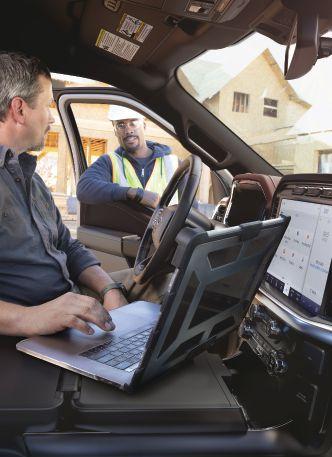
We know that when you use a truck for business, it’s also your mobile office. The all-new interior of the F-150 is designed to help keep you productive, connected, and comfortable, no matter how long your day lasts.
It comes standard with SYNC®4** and has an available 12” Touchscreen giving you complete control of all the innovative tech in the F-150. From enhanced voice recognition, to cloud-based connectivity, your new office will work harder than ever before.
The 2021 F-150 is also available with a new stowable shifter and centre console that folds down to create an Interior Work Surface for your laptop or even a quick lunch.
BUILT TOUGH FOR YOUR BUSINESS
Tougher and smarter than ever before, the F-150 is designed to work as hard as you do. When you’re looking for the best to help you build your business, you want the truck that’s Built Ford Tough. The 2021 F-150. Part of F-Series, Canada’s best-selling line of pickup trucks for 55 years‡‡
LEGAL
Vehicle may be shown with optional features.
* Maximum towing on 2021 F-150 SuperCab 8’ box and SuperCrew 4x2 with available 3.5L EcoBoost, Max Trailer Tow Package. Class is Full-Size Pickups under 8,500 lbs. GVWR. Max towing varies based on cargo, vehicle configuration, accessories, and number of pessengers. Towing and payload are independent attributes and may not be achieved simultaneously.
† Maximum payloadn on 2021 F-150 Regular Cab 8’ box 4x2 with available 5.0L V8 engine and Max Trailer Tow and Heavy-Duty Payload packages. Class is Full-Size Pickups under 8,500 lbs. GVWR. Max payload varies and is based on accessories and vehicle configuration. See label on door jamb for carrying capacity of a specific vehicle. Towing and payload are independent attributes and may not be achieved simultaneously.
^ Class is Full-Size Pickups under 8,500 lbs. GVWR.
‡ When properly equipped.
** Some mobile phones and some digital media players may not be fully compatible. Don’t drive while distracted. Use voice-operated systems when possible; don’t use handheld devices while driving. Some features may be locked out while the vehicle is in gear.
‡‡ F-Series is the best-selling line of pickup trucks in Canada for 55 years in a row based on Canadian Vehicle Manufacturers’ Association statistical sales report up to year end 2020.
Best-in-class max. available payload of 7,850 lbs*
Max. available diesel towing of 37,000 lbs**
Best-in-class‡ max. available payload of 3,325 lbs
Best-in-class† max. available towing of 14,000 lbs
When you’re building a business, you need the best. The 2021 Ford Super Duty is a powerful business partner. Designed with productivity in mind, the all-new Ford F-150 – with its available Tailgate Work Surface comes ready for the worksite, and its class-exclusive^ available Pro Power OnboardTM offers exportable power on demand to help keep you running until the job’s done.
Anniversary Roundtable 25
Morton: What really hadn’t arose...is the constant cybersecurity concerns: ransomware, phishing, mass denial of service. It’s so interruptive to our operations. The amount of internal investment companies have to do on security is crazy. The benefit of that is it does make you to focus on this area and become proficient at it and raise your game. I personally am not an expert in it, but I just wish there was a more standardized and cohesive way that these threats can be addressed by internet domain standard writers and others who play a role in carrying all that traffic.
Miller: Earlier I alluded to mergers and acquisitions improving the professionalism of the industry with bigger companies eliminating some of the competition that was less professional. By the same token, those mergers and acquisitions at every level — the dealer level, the manufacturing level, the distribution level — have shrunk the number of individuals and companies within the industry. Those relationships that were built with those individuals — some of those folks have retired or moved on or are part of a bigger corporate culture... Everybody has to practise due diligence instead of a handshake and say, “We’ll get this done for you.” And that’s not just in security industry...that’s right across the board. And not that due diligence is wrong — we’re all professionals here — due diligence is appropriate, but we all have trust.
If I do business with Kim’s organization, I trust that whoever I’m dealing with is going to support me. Our clients don’t have that same luxury because they have to do their due diligence.
Although it’s a professional industry, I think there’s a little bit of fatigue that’s gone on. And maybe that’s in part because of our age group. We’ve seen a lot of folks we’ve relied upon and have relied upon us that are aging out or retired or their jobs have been eliminated. I just think those long-term relationships that we worked so hard to build are less important now than they were 10 years ago.
SP&T: How has the image of the security industry changed over the years?
Morton: My very first sale was a little alarm system. I think people thought that’s all I did as a living. I think awareness of our space was low... it wasn’t a matter surrounding people every day in their daily lives.
It is good maybe for us, but it’s unfortunate for society in general that cameras proliferate everywhere, card access throughout buildings, layer after layer of security — people are just used to it. It’s a normal practice. I think that helps [customer] conversations to be easier, the services to be more saleable. People are no longer asking me, “What do you do again?”
SP&T: The view of front line security has changed a lot — perhaps even more so during the pandemic.
Morton: The concierge/night watchman view [has changed]. People now get into that industry with diplomas, credentials, licences and background checks. They’re held accountable. We’re having the same thing on the technician side. You need certifications and qualifications. It’s good, from a standards standpoint.
Miller: I would agree with everything Iain said. But I think, especially during the last 18 months of COVID, people have learned to rely on us for things that they might not have traditionally looked to the security industry for. That could be everything from technology to general consulting on “How do we make our place more secure?” We went through extremes of people having to worry about their businesses and being shut down for months and everybody having to work from home, to managing the number of people that are working inside the business and “How do we secure it remotely?”
There’s been a lot of reliance, I think, on the security industry. And the industry has responded whole-heartedly to those challenges.
Caron: I think we should give kudos to the security industry as a whole. We have given a good impression — and rightly so — to end users that we know what we’re doing. So when they get security, they don’t question security anymore. It goes back to our longevity. It goes back to the “foil” days when we put a system in for $3,000. What’s happened now is it’s overlaid now with automation, looking at your cameras [on your phone], etc. They’re not really questioning
security anymore, they’re asking, “What else do I get?”
Leonard: In the last 20-30 years, the image of the industry has changed in different directions. I still remember when I went to quit my old job 30 years ago. I was in the appliance repair business and my boss said, “The alarm industry is a luxury industry. That won’t last.” I think that was the way it was seen. It was something rich people could afford and no one else could. To tell you the truth, I didn’t know anyone who had an alarm system. Then it became a little more mainstream and you saw more of the bigger players in the industry.
I think now we’re at a point where it’s not just security we’re offering, we’re offering integration with door locks and cameras. It’s a different thing that we’re providing. We still think of ourselves as being security, but I think myself and a lot of the stations [represented on the panel] have probably saved more homes with environmental sensors.
Currie: The image of the security industry has improved significantly, almost to the point where we’re at the same calibre as a network professional. Network technology plays such an important role in pretty much everything that we do. We need to be able to have conversations with the IT pros at our customers’ locations and we need to be able to talk intelligently about it.
SP&T: What has surprised you about this industry? What didn’t you see coming?
Leonard: The industry has been talking about selfregulation for 20 or 25 years and it’s yet to happen. We’re one of the few industries that can call up
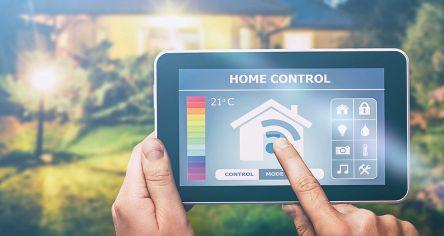
The cloud and IP-based security technology have changed the way systems are installed and managed.
Anniversary Roundtable
moving forward with some sort of verified protocol, you would have figured that video verification would have taken off.
I think probably one of the biggest problems as to why is there’s no real magic bullet out there on the market to integrate video with intrusion. There’s been a few different things to come along the way, but most of it’s kind of clunky to set up, requires a lot of additional wiring and relays and that type of thing. It hasn’t really garnered the attention of the installing companies.
There are some manufacturers out there that are starting to do video verification through integration at the network level. I still think there’s a huge opportunity for this to really come to fruition.
Caron: I get asked about {video verification] once a week. Everybody wants to know about it. They want information on it. I think our industry doesn’t grow, doesn’t move, until we have the technology. I concur with Chris. We haven’t seen that “Here’s your video verification system and this is how it’s going to work.” Until that happens, it’s just not there.
SP&T: What is the state of training and education for the industry right now?
Miller: It’s becoming a challenge to get people to come into the industry and grow within the industry. When I came in, there was a lot of opportunity that I saw and I was able to jump on those opportunities and work my way up. I started at the ground level as a security guard. I had great success and I wouldn’t change any of it. As we grow, I think it becomes more difficult to spot those individuals. I think the opportunities are there; the key is for us as managers and industry leaders to spot those folks and bring them along with us.
Caron: It’s going to be very interesting just finding the workforce in general. I think when we get back to it [after COVID] and opening up slowly, there will be people who have re-evaluated what they want to do and how they want to do it.
Morton: We’re willing to bring younger people in, people with less of a deep resume, people who don’t have that training or background or diploma you might used to have looked for. We train them. We’re looking for attitude, good character, trustworthiness, reliability — all those assets that everyone would look for. We’re not that fixated on where you came from.
I think it has to be a multi-part commitment to invest in — outside certifications where required, an internal investment in shadow time, training time, putting them together with senior techs and getting them real-world exposure.
Leonard: The hardest thing that we’ve had [is] to get people who want to work with their hands. And it’s not just our industry, it’s any trade. If you talk to electricians out there or plumbers, people are having trouble finding people who work with their hands. We have to figure out how we make what we do fun and interesting. I think some of the things that we’re doing now with integration and home automation is a little more fun... I think those types of things may help, but it’s an uphill battle. I think COVID has convoluted that, so we’re all going to have to think differently about how we bring people in and how we get them to stay. If somebody stays for two or three months and then moves on because they want to do something else, you have to retrain all over again. You’ve got to factor that into the cost of bringing people in.
Caron: And the smaller you are, the harder it is to do that. For bigger companies, it’s easier. With small guys like this industry is built on, it’s hard to do that.
SP&T: Where is the industry heading next, especially in light of the last 18 months of the pandemic?
Caron: What I will say about our industry is, we’re not 100 per cent recession proof, but we did OK through this. The factor I keep hearing about that’s changed our industry is the big conglomerates coming in and shaking the market. As players come in and stay in now — which it sounds like they are, because they want the reoccurring business.
So our industry needs to adapt or change to either work with them or diversify in some way.
We can’t compete the way they compete because we don’t get the price breaks they get. So the pressure is really put on us to do more for a lot less. Our industry has to diversify a little, or look outside of the box.
We’ve given the workforce a different outlook [through working from home]. They really like it and they’re productive. So how are we going to integrate that change? That will be the next 12 months — figuring all this out.
Currie: The big question is, what does come next? We’ve polled our staff and surveyed them as to where they’re at with working from home and probably a good 75 per cent of them love it. They want to continue working from home. There’s the middle of the pack that want to come back in and there’s some at the complete other end of the spectrum. That’s the biggest challenge that we, as business owners, are going to have to face in the next six to eight to maybe 12 months.
Miller: I think our future looks bright. The service providers — whether it’s the monitoring stations, the integrators, the guard companies... the security industry has really stepped up and adapted during the pandemic. We’ve been there when people vacated their businesses or couldn’t get to their homes because they have a residence in another province. We were there. Everybody on this panel today, all the people behind us in our organizations. We adapted to meet their needs. Our clients have taken notice of that and they’re now saying, “What else can you do?”
Everybody on the panel has been able to thrive and pivot when other businesses weren’t doing so well. Based on those factors, our future looks bright.
Remote work may become an expected perk rather than a health-based necessity as we exit the pandemic.
Back to the
BIG SHOW
As the pandemic winds down, security expos are transitioning back to live events
By Alanna Fairey
As the general population continues to increase its vaccinations against COVID-19, security show organizers are making the transition from virtual to live events.
ISC West was moved twice in 2020 due to COVID concerns before ultimately staging a virtual-only event in October. By November, ISC West announced its plan to return to a live event in Las Vegas in July with a virtual portion for those unable to attend in-person.
Will Wise, group vice-president, security, public safety, transportation, and casino gaming at Reed Exhibitions (the show’s organizer), said that at the beginning of the new year, there was much chaos and uncertainty in the United States, citing the violence and civil
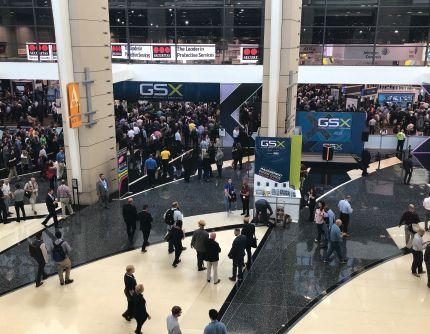
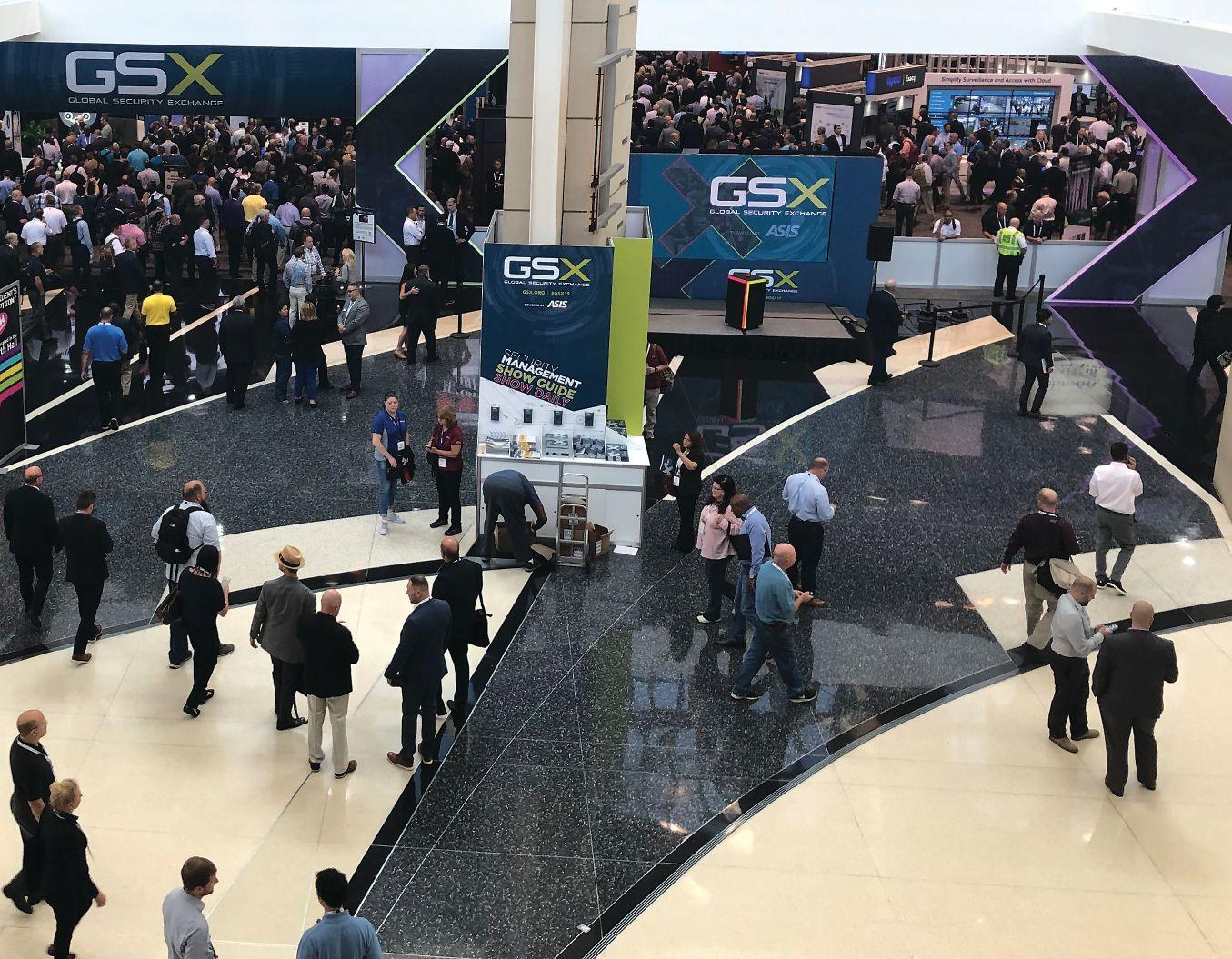
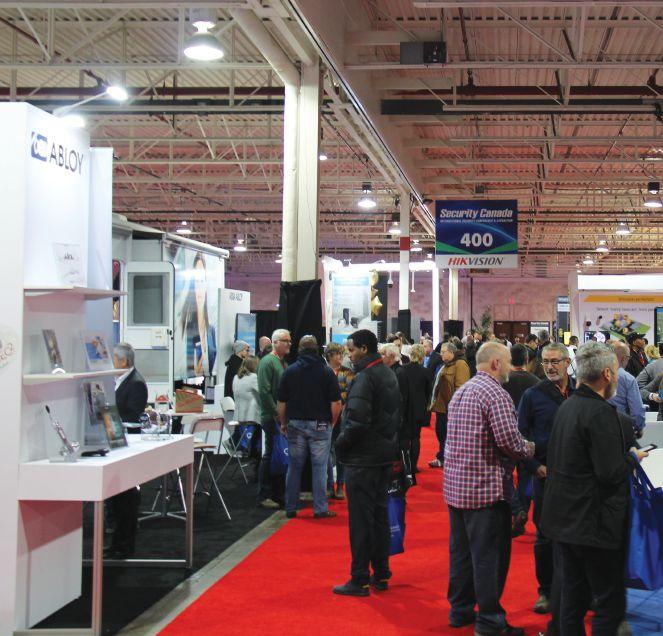
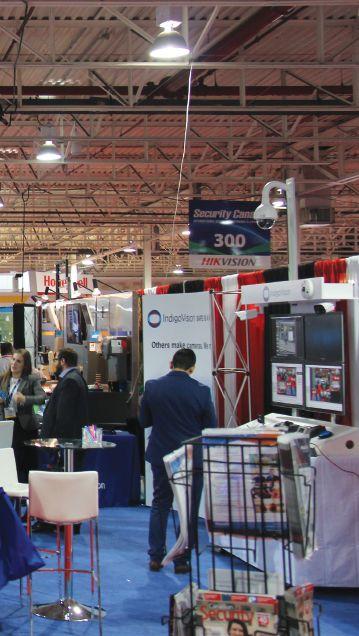
Attendees file into the exhibit hall at the last GSX in-person show, held in Chicago in 2019.
unrest that came post-election.
“As the Biden administration took over, everybody had their fingers crossed for a way better vaccine rollout getting things calmed down,” Wise told SP&T in the weeks prior to the July event. “At that time, I was not sure what was going to happen, and if we’re going to be able to pull off doing the event later this year.”
However, Wise said that by early March, the vaccination rollout was going very well and the organization was then able to confidently build a roadmap for the upcoming ISC West show.
“At that time too, frankly, the states like Nevada where we do the event, had a smart, balanced approach. They had metrics for event organizers,” Wise said.
In a similar vein, Global Security Exchange (GSX) 2021 will be a hybrid event taking place Sept. 27-29 that will offer a digital experience on the GSX online platform as well as an in-person event at the Orange County Convention Center (OCCC) in Orlando, Fla.
“The ASIS International Global Board of Directors and ASIS staff
deliberated on this issue extensively,” said Amy Peters, senior director, events at ASIS International in an emailed statement. “We looked at global, national and regional public health updates, recommendations and pandemic guidelines for events; vaccination progress nationally and worldwide; and, we reviewed how health and safety is being addressed by our host site, the Orange County Convention Center.”
The Canadian Security Association (CANASA), recently announced plans to return to live events in 2022, starting in April in Montreal. Two shows will follow in Vancouver and Toronto. CANASA hosted two virtual Security Canada conferences during the pandemic — in December 2020 and June 2021.
“We’re probably not going to do another virtual show in December, which originally we thought might have been a possibility,” CANASA executive director Patrick Straw said. “Instead, what we probably are going to do is offer our vendor partners a series of weekly webinars like we have been doing for the last little while. We’ve been
great collaboration with its national executive and board of directors and they frequently discuss the future of their events during meetings.
“We take them on a step-bystep basis based on what’s the next thing that we’re going to be doing for the remainder of this calendar year. It’s very likely that there won’t be any face-to-face events,” Straw explained. “Unless later in the year some of the regional councils want to have an informal golf event or something like that.”
Hybrid approach
Acknowledging that there are attendees and vendors who are not ready for in-person events just yet or their companies are still vigilant about travel restrictions for their employees, Wise said that ISC West will make virtual platforms a priority.
getting good turnout to them, and that really is the best route for us to go for the rest of this year.”
Straw said that CANASA has a
“I do think people have appreciated having a lot of online education and contents during this time,” Wise said. “We are going to have the ISC virtual platform running. We are basically going to have almost all of the in-person sessions also available online for the audience — for those people internationally or that can’t travel, [they] can check that out during those dates or later on-demand.”
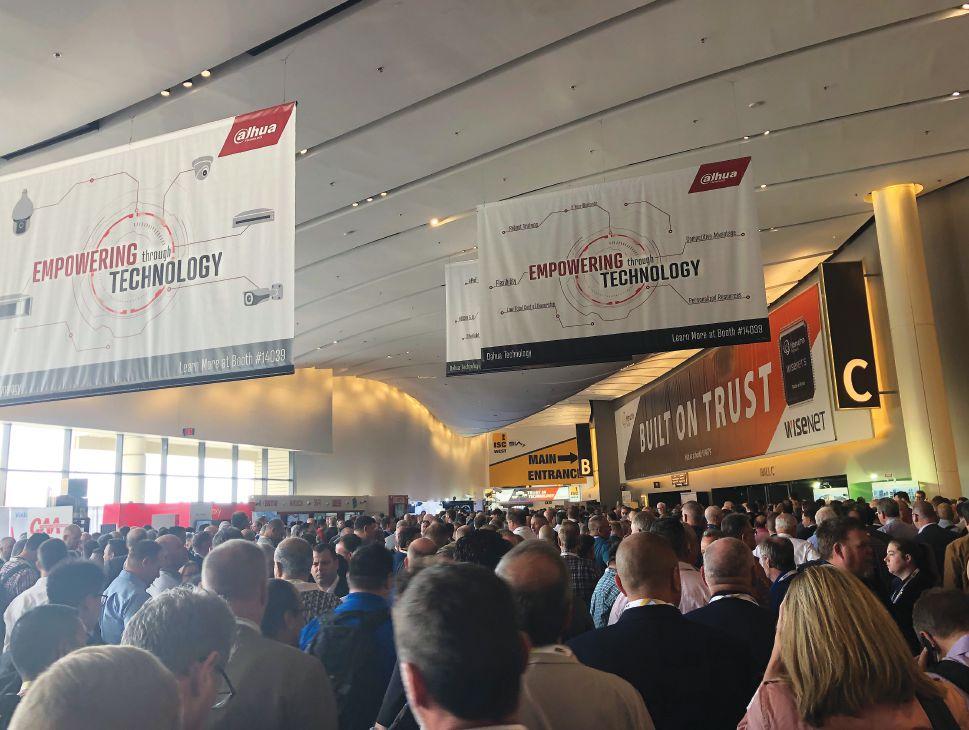
Crowds gather in the Sands Expo in Las Vegas in 2019 for ISC West
CANASA says Security Canada will return to in-person showcase events in early 2022.
“You cannot replace the face-to-face element of walking around, or as I call it, the serendipity of meeting people in the hallway.”
—
Will Wise, ISC West
Added Wise: “We also feel like now digitally, we’re arguably going to do even more highlights from the show, some live streaming, breaking news today… [we have] more of that broader broadcast mentality than before.”
While many have been itching to return to in-person trade shows and events, attendees have enjoyed the virtual platforms.
Peters observed that ASIS’s online content was a major force in driving attendance, explaining that in 2020, 92 per cent of their participants stated that they thought their education sessions were “timely and of a high quality.”
“Having our content available until the end of the year for All-Access registrants was a significant plus, as 89 per cent of those attendees surveyed said that they planned to listen to education sessions following our event, highlighting the importance of personalization versus a one size fits all approach.
“Our content is strong and received well by security professionals because it is developed by security professionals for security professionals.”
Safe planning
As it is with most things related to COVID-19, the decision to transition to live events was not taken lightly.
According to Peters, the health and safety of GSX attendees, exhibitors, speakers, sponsors, staff and vendors is the top priority for ASIS International and the organization is working to ensure that everyone will feel safe at the venue.
“The OCCC is one of the largest venues in the U.S. to receive the Global Biorisk Advisory Council (GBAC) STAR accreditation, recognized as the third-party gold standard in cleanliness and disease prevention,” Peters explained. “The OCCC is collaborating with Orlando Health — a premier, established health-care system — to create a ground-breaking medical concierge program for conventions. The OCCC will continue to evaluate its response and consult with health and industry experts to ensure the implementation of rigorous biorisk protocols in response to the ongoing health emergency.”
To further ensure the safety of those attending, ASIS has partnered with Safe Expo — service provider for pre-event health planning support, on-site implementation, and post-event health monitoring — as an additional precaution to ensure a safe and healthy environment for those attending GSX 2021 in person.
Regarding ISC West, Wise shared that the majority of the spring was filled with contingency planning, which included frequent communications with other event organizers on what protocols need to map to CDC regulations, noting that regulations vary by state.
“These last couple of months,
we have been able to say that we can go full speed ahead [with an in-person event],” Wise related. “But we made sure we’re doing it right. We’re very fortunate that all the resorts in Las Vegas are very disciplined, so our venue partner Sands Expo in the Venetian [Resort] have incredible protocols for health and safety and hygiene.”
Acknowledging the varying opinions of vaccines, Wise said that the No. 1 priority has always been to make sure that the event is safe for everyone.
For patrons who are fully vaccinated, they do not have to wear a mask, indoors or outdoors. However, those not vaccinated were expected to wear a mask throughout the duration of ISC West.
“There’s frankly no national U.S. policy on [mandating a negative COVID test],” Wise explained. “We are following CDC guidelines and the state guidelines, so there’s not a requirement of showing a negative test or vaccination, so it’s this interesting balancing act.”
“Our content is strong and received well by security professionals because it is developed by security professionals for security professionals.”
—Amy Peters,ASIS International
Virtual wisdom
With the recent re-emergence of live events, organizers have had time to reflect over the last year and a half since they had to pivot to virtual events.
Peters said that some of the key lessons learned had to do with focusing on the experience, which she said was integral to ASIS’s approach.
“We develop and design our events around the user experience, so we are constantly asking ourselves, ‘How we can make our event come alive on screen for our global participants?’” Peters said. “GSX 2021 is a testament to that sort of design thinking and has served us extremely well. It is also what has
differentiated us from many other events.”
When asked about her hopes for a return to in-person events, Peters said, “My main hope is that our audience appreciates the unique event that will be GSX 2021 and that they took full advantage of our in-person and digital offerings.”
Straw said that CANASA has the virtual event format “down to a science,” and the organization learned a lot about organizing virtual trade shows, particular the planning that has to go in ahead of time.
“We did a lot more coaching for the second [virtual event] than the first one,” Straw explained. “If you have a virtual booth and no-
body knows who you are and you haven’t marketed yourself ahead of time, it’s very difficult to have a really positive experience.
“We did a couple of social events in the big Zoom format at the end of both [virtual events] that were pretty successful. We had two or three pages of people on it, and I can tell you that everybody was like, ‘Okay, this was great.’”
Wise said he is excited for the ISC West show to feel like it did prior to the pandemic, knowing that there will be a deeper appreciation for the event.
“You cannot replace the faceto-face element of walking around, or as I call it, the serendipity of meeting people in the hallway,” he said. “…I think the learning and the community within security and public safety is pretty awesome. Everybody is really committed to promoting wellbeing for their communities and companies and there’s been even more appreciation for that, too.”
WEISER MOVES INTO THE FUTURE
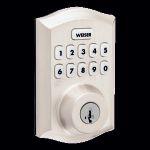
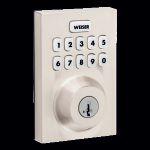
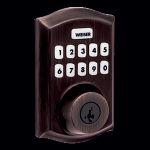
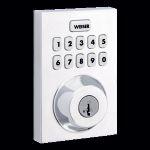
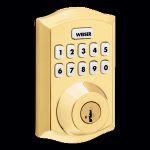
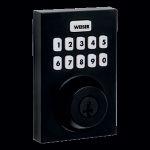
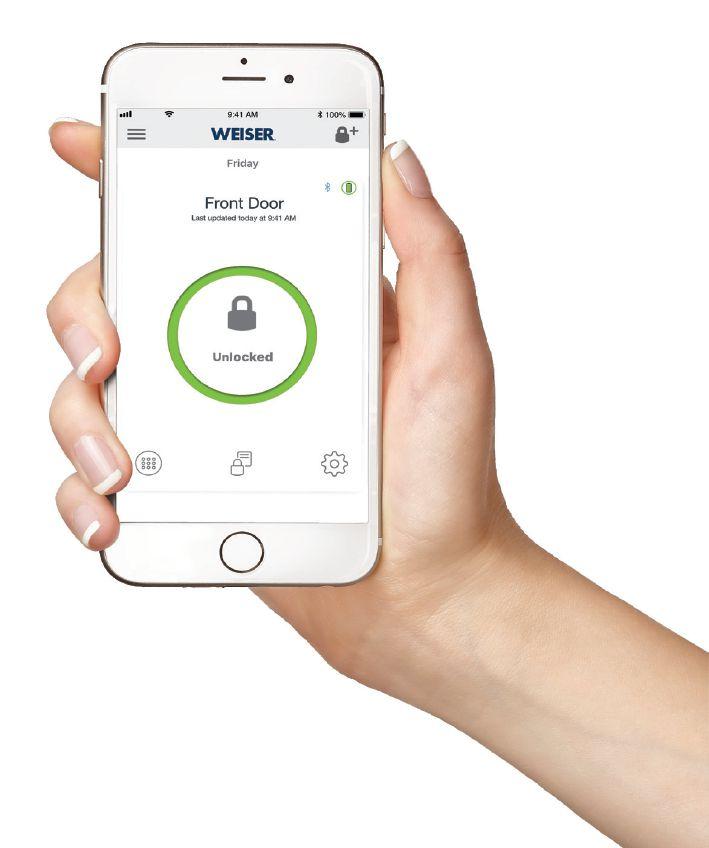
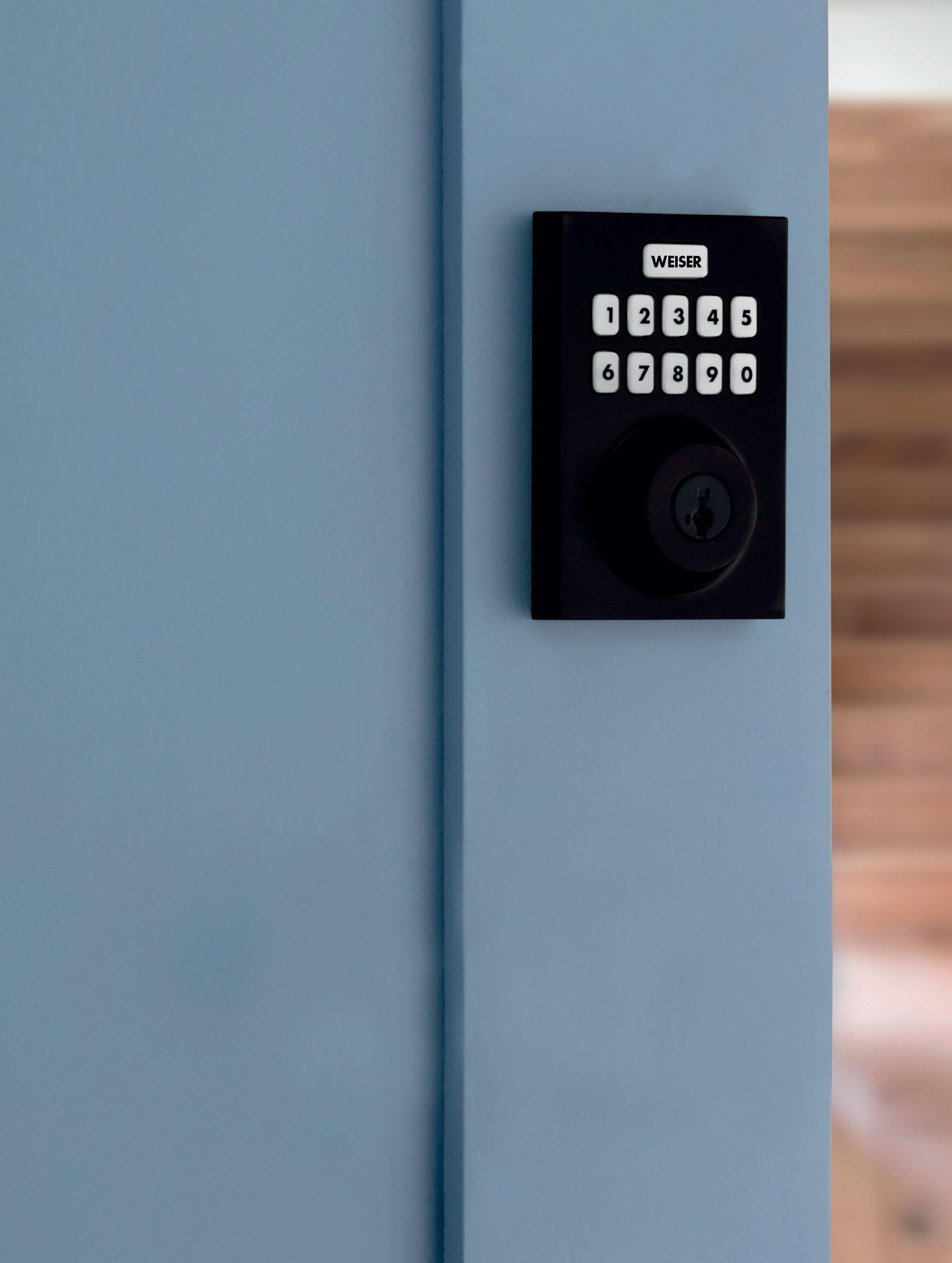
Coming Fall 2021, with our new Home Connect 620 smart lock, we are moving into the future by utilizing the new ZW700 chip and a faster gearbox that improves battery life and faster latch operation.
The ZW700 chip offers many different enhancements to this product offering including:
• SmartStart, the easy and fast way to get system setup and running
• 250 User Codes and Non-Access Code enablement
• Improved Wireless Range
• Extended battery life
SmartStart
• Enroll devices by scanning a QR code
• Can be done before panel and devices are powered up or installed
• Easier and faster way to set system set up and running
Availability
• Coming Fall 2021
• 10-digit interface
• Traditional finishes include Satin Nickel, Venetian Bronze and Brass
• Contemporary finishes include Satin Nickel, Polished Chrome and Matte Black
QA &
Ainita Brunet, a security professional for more than 30 years, and currently vice-president of security solutions, Western Canada, Wesco-Anixter, was recently elected as National President of the Canadian Security Association.
SP&T News reached out to Brunet recently and asked her to outline some of her main agenda items during her two-year term. Brunet responded to questions via email.
SP&T News: How long have you been involved with CANASA and what roles have you served in before?
Anita Brunet: I first began volunteering with CANASA in 1993, and I was voted in as the first female president for the B.C. chapter in 2003. During my tenure as B.C. president, I also served on the national board as the representative for our B.C. members, and was chair of the national charity and membership committees.
I was instrumental in forming a partnership with ASIS International and CANASA in B.C. When attendance for our respective chapter events and golf tournaments was dwindling, combining the efforts of both associations was a great way to bolster attendance but also create an opportunity to network and build relationships between members.
I’m happy to see that other chapters have followed suit and continue this practice today! My latest role (2019-2021) was that of vice-president on the national executive board, and when I was nominated for the role of National President, I proudly accepted. I’m thrilled to give back to an industry that has been very good to me.
SP&T: What does your role look like now as National President?
AB: The next challenge will be steering CANASA through the sec-
Anita Brunet National President, CANASA
By Neil Sutton
“I’m thrilled to give back to an industry that has been very good to me.”
ond phase of this pandemic, which involves reopening and rebuilding our resources. Although the previous boards could not have predicted this crisis, they did a fantastic job streamlining costs, shifting how we deliver support and services to our members despite the shortfall in revenues. I want to ensure this board does the same for our future boards. We understand the work that’s needed to rebuild and we are all up for that challenge.
SP&T: What are the major issues before CANASA today in terms of serving its members and the security industry at large?
AB: Many member companies have projects that they have a difficult time completing on time due to labour shortages of skilled technicians. It’s vital to our membership that we provide educational resources, particularly on the technical front. We are currently in the process of a complete overhaul of our online Alarm Technician Course (ATC) and we have been working with a college in Ontario that will be putting out a comprehensive security technician program later this year.
Additionally, we are reviewing our Security Canada conference programs and schedules to ensure the venues are available and can accommodate us. As things begin to re-open we have decided to focus on three in-person shows in Quebec, B.C. and Ontario. I’m excited for the manufacturers, distributors, monitoring stations and integrators to reconnect, network and get up to speed on the latest technologies. It can’t have been easy for the manufacturers to show the same excitement over a new product using
Zoom or Teams as they would have in person. I’m sure everyone is just as excited as I am for the in-person shows.
SP&T: What is CANASA doing well today?
AB: We have the highest engagement ever with our membership, thanks in part to our Facebook page. We started the CSIO Facebook page (Canadian Security Industry Online) in early 2020. The timing could not have been more perfect with everyone working from home and increasing their online presence.
It’s a place for our industry to connect, a resource for trainings, a place to post job opportunities, to ask for technical assistance as well as share industry humour. During the pandemic, we had amazing participation with all of our committees. A great example of this would be our Monitoring Station Committee which is comprised of companies across Canada that run monitoring facilities.
They have been working together to help each other out with best practices, etc., when dealing with the issues around working from home. All of this had to be done in conjunction with ULC regulations.
SP&T: What could be done better?
AB: We need to grow our association to be more inclusive of all types of business which work under the umbrella of “security.”
We are working to attract cybersecurity, IT security, guards, investigators, and many more. There is strength in numbers and we as an industry will have a stronger voice when we represent broader, more diverse segments of security.
SP&T: What have you (and CANASA) learned about the role of an association during a crisis like the pandemic?
AB: COVID really showed just how tightknit our industry is. The pandemic created supply chain issues making it difficult to complete projects. It was amazing to see members connecting from coast to coast, assisting each other with hard-to-find parts when needed.
We were extremely lucky that we had such a strong executive team and a tight collaboration with the executive director and CANASA staff. That connection was tested when we had to pivot and make hard decisions to keep the association alive — and make them in a very timely fashion. It speaks volumes that we were able to make structural changes without affecting our service levels.
SP&T: What are your personal goals during your term as president?
AB: Our volunteer members are becoming more diverse which is exciting. Diversity brings new ideas, fresh insights and differing perspectives which makes us stronger as an association. I’d love to see this diversity continue to grow and develop. I am also passionate about seeing more women get involved at the national and local levels. I hope to speak with many of our female members across the country and share with them the benefits of getting involved with this great association.
Something else that I feel strongly about is attracting new talent into the industry. The need to feed the labour stream is vital to our industry’s success.
Coming from distribution and working closely with the security integrators, I hear daily how the shortage of installers is hurting their business. Most subcontractors are kept very busy and cannot keep up with the demand.
Product Previews Access Control
Map view enhancement
ProdataKey
ProdataKey introduces the latest enhancement to its Pdk io software interface: Map View. The Map View feature allows users to upload custom maps and arrange device icons onto floorplans, making it possible to view and control each door’s status while looking at the full system layout on their phone, tablet or laptop. Multiple maps can be created for a single location, representing buildings, rooms, floors, or other areas. By linking maps together, users may navigate from one to the next, mimicking how they would physically travel through the site. JPEG or PNG images may be used for map images. www.prodatakey.com
Mobile credential DMP
DMP announced the release of its SR3 Bluetooth & Proximity Reader for use with existing 125 kHz cards or via a mobile credential deployed within the DMP Virtual Keypad app. Once credentials are assigned, users automatically receive an email with instructions on how to log in to Virtual Keypad to begin using their mobile credentials immediately. From purchase to issuing, the new mobile credentials are electronically and instantly transmitted to the user. Any number of the mobile credentials can be purchased and managed directly from DMP’s administrative portal Dealer Admin and instantly assigned to customers. www.DMP.com
Access control readers
Nortek Control
The new Linear BT135-W Access Control Reader and Linear BT125-W Access Control Reader integrate Bluetooth Low Energy (BLE) technologies providing users intelligent, contactless and secure access control in a slim design that fits into any office or building environment. Users are able to pair the Linear BT135-W Reader with the new Linear 13.56 Megahertz (MHz) smart cards and key fobs. Plus, the Linear BT125-W Access Control Reader offers backward compatibility with current Linear 125 kilohertz (kHz) Prox cards and key fobs.
Electronic padlock SALTO Systems
www.linear-solutions.com
Swing door operators
dormakaba
dormakaba’s new ED50LE and ED100LE low energy swing door operators can automate new or existing manual swing doors with a push plate, wave plate, or other knowing act actuator device. This product is suited for interior or exterior use in a variety of medium to heavy duty (600 lbs. door) settings. Features include: integrated hardware power supply and relay; built-in door position status, indicating door open or door closed; close and latch in case of power loss (adjustable closing speed on loss of power); hardware pre-load functionality for reliable operation; built-in system interface for connection to any access control system. www.dormakaba.us
Drywall frames Mesker
The new DW Series Hollow Metal Drywall Frames from Mesker, part of dormakaba Group, offers quick installation with the corner locking system. The top corners “lock” together to avoid the need for fasteners often seen in traditional drywall frames. The new corner design does not require screws for fire rating. Additionally, it ships with a primed finish only, allowing the user to apply their own finish that best matches their facility. The DW Series frame features a 16-gauge, galvanized steel frame for enhanced strength, corrosion resistance and added security. It offers a UL and Intertek Fire rating of up to 90 minutes and is certified by the Steel Door Institute (SDI). www.meskerdoor.com
Access control readers
Identiv
Identiv’s Primis Access Control Readers support both smart card and proximity-based credentials. Primis entry-level readers are designed to work in the government or commercial space and are suited for any environment that: uses multiple credential populations (i.e., proximity and smart card); needs to migrate from one credential technology to another; or requires support for single-site, multi-tenant access control systems. Primis Readers support low-frequency (125 kHz) proximity credentials, tags, and fobs, and high-frequency (13.56 MHz) credentials, including MIFARE and DESFire. www.identiv.com
The SALTO Neoxx Padlock enables users to benefit from the advantages of electronic access control where previously it was only possible to use a mechanical locking solution (i.e., perimeter or fire access gates, industrial equipment yards and residential storage areas). The SALTO Neoxx Padlock offers a solution for utility providers and property services that need an additional level of security to control specific doors, like gates or storages. SALTO Neoxx G4 electronic padlock is a high-security padlock made of hardened steel with a removable shackle model option, which can be completely detached from the padlock body. www.saltosystems.com
Two door controller
Camden Door Controls
Camden Door Controls has launched its CV-603 2 Door Bluetooth Access Control System. This app-based system is designed to provide ‘best in class’ security of doors and gates, with up to 2,000 users. The intuitive programming app is Apple and Android compatible, with easy to use system set-up, user administration, downloadable audit trail and data back-up. The CV-603 two door controller includes inputs for readers, door position switch, and REX device, and two outputs for electrified locking or alarm signal devices. A built-in 433Mhz. receiver supports two button wireless key fobs. www.camdencontrols.com
1 OSDP is a real global standard approved by the Security Industry Association (SIA) and International Electrotechnical Commission (IEC), open to use by any manufacturer.
2 OSDP provides a guideline for interoperability among various companies’ access control and security products, such as card readers and door controllers.
3 OSDP offers the option of encrypted communications between reader and door controller, independent of any encryption between credential and reader.
4 OSDP is built on the RS-485 serial transmission standard, needing just four conductors.
10 THINGS ACCESS CONTROL CUSTOMERS MUST KNOW ABOUT OSDP
7 OSDP is more cyber secure than the most common access control communications protocol.
8 OSDP provides secure communications by specifying FIPS-197 encryption (AES).
5 OSDP offers point-to-point and multi-drop topologies.
6 OSDP provides a true bidirectional protocol, addressing business requirements for secured and confidential authenticated messaging.
9 SIA provides a guide to find and explore verified OSDP products that meet its standards.
10 Farpointe Data is honored to be among the first three manufacturers to have earned the SIA’s new OSDP Verified mark on its mobile, contactless smartcard and proximity solutions. Plus, these readers are fully potted and IP67-rated!
Product Previews Access Control
Bored lock
ASSA ABLOY
ASSA ABLOY Group brands
Corbin Russwin and SARGENT announce the release of their premium bored lock that is certified to surpass ANSI/BHMA Grade 1 requirements. Marketed as the Corbin Russwin CLX3300 Series and SARGENT 10X Line, the lock offers vandalism resistance. The lock chassis design supports all cylinder formats — from fixed to interchangeable core — to minimize user inventory stocking requirements. The lock is available in an array of finishes and a variety of decorative levers. The push-turn button also prevents damage that can occur if the button strikes a door stop or wall. www.assaabloy.com
Cloud application
Abloy Oy
ABLOY OS INCEDO connects the management of all mechanical, electromechanical and digital ABLOY solutions into one cloudbased application. By providing tracking and intelligent key management, customers can prevent unauthorized key access and improve operational efficiency. The range of solutions that can be connected to ABLOY OS INCEDO includes, for example, PROTEC2 CLIQ key-based digital cylinders, a variety of digital access devices and a wide selection of mechanical key management features. ABLOY OS INCEDO is licensed and delivered to customers on a SaaS (Software as a service) basis.
www.abloy.com
Gate kits
Codelocks
Codelocks introduces its Gate Panic Hardware Kits as part of its Gate Solutions by Codelocks. The Gate Box Kits contain all components required for installation, and can include a surface-mounted exit device. These kits provide an access control solution for fenced perimeters and outdoor spaces. They are available with selected locks from the Codelocks Mechanical, Electronic and Smart Lock ranges. Available locks include the CL400, CL500, CL600, CL5200 and CL5500, and are suitable for installation on four different types of fencing. www.codelocks.us
Intelligent terminal
Suprema
Biometric door controller Matrix
X-Station 2 is a versatile intelligent terminal with credential options of mobile access, QR and barcodes as well as RFID cards and PIN. The terminal is compatible with most types of existing RFID cards including EM, MIFARE, iCLASS, DESFire and FeliCa, but also lets users go card-less by offering mobile credential options including QR codes and barcodes. The terminal can read QR codes and barcodes composed of up to 32 ASCII code strings issued on Suprema BioStar 2 or 3rd party systems. X-Station 2 can also communicate with NFC and BLE signals. www.supremainc.com
Reader controller Allegion
The Schlage RC reader controller combines Pure IP access control technology pioneered by ISONAS with Schlage’s intelligent hardware and credentials. The Schlage RC complements the broader Schlage ecosystem, including the Schlage NDE and LE wireless locks, for a complete interior and exterior solution. It is also compatible with Schlage credentials, including 125 kHz proximity, 13.56 MHz smart, 2.4 GHz mobile and NFC. The Schlage RC is a hardware solution for perimeter applications where access control software is used to manage doors across single or multiple sites. It integrates easily with open Physical Access Control Software (PACS) systems. www.allegion.com
Cylindrical lock
PDQ
The SF Series Grade 2 Standard Duty Cylindrical Lock is a cylindrical lock solution suitable for multi-family, senior living, student housing, and light commercial applications. The SF shares common levers and finishes with the company’s Grade 2, SD Cylindrical and CL Interconnected locks, so it’s possible to mix and match for a uniform look. Four functions include Privacy, Passage, Entrance, plus Single Dummy, and there are five designer levers to choose from, as well as six architectural finishes including black. The unit retrofits all major manufacturers’ door preps. www.pdqlocks.com
Matrix COSEC ARGO is a next-generation biometric door controller with a 3.5” IPS Touchscreen LCD. This device is designed for offering multiple applications such as access control, time-attendance, cafeteria management and job processing & costing. It is also designed to withstand challenging outdoor conditions. Key features include: mobile-based access; Wi-Fi or PoE+ IT infrastructures; Bluetooth-based credentials; auto push event data; 50,000 users and 5,00,000 event storage capacity; access control and auxiliary device interfaces; and third party reader support. www.matrixaccesscontrol.com
Interlock controller
Dortronics Systems
The 48900 PLC interlock Controller from Dortronics Systems is a solution to properly sequence and help maintain sterile operating conditions in interlocked areas with up to nine doors. The 48900 series is a fully integrated single-board access control solution that provides installers with complete control of all operating and configuration options without complex software or programming. When the 48900 Series PLC interlock Controller is integrated with a combination of electronic locks, waterproof wash-down switches, and LED indicators, facilities are able to maintain sterile operating conditions within protected areas. www.dortronics.com
Product Previews The latest in security technology
Anti-tailgating
Alcatraz AI
The Alcatraz AI Rock solution detects tailgating by identifying, in real-time, an individual as he/ she approaches an entrance and identifies whether the individual has been authenticated. If an unauthorized user follows an authenticated user through a door, the solution will identify that user as a tailgater, and an alert is sent and logged into the access control system, along with a still picture of the unauthorized person. To prevent tailgating, the solution can be configured to send an alert to the access control system in the form of a unique credential that can only give access to authorized users.
www.alcatraz.ai
Fire detection cameras
Teledyne FLIR
The FLIR A500f and A700f Advanced Smart Sensor ruggedized thermal cameras feature high-temperature detection for extreme environments paired with on-camera analytics and alarm capabilities — suited for industrial early fire detection or outdoor condition monitoring applications. For early fire detection, the thermal cameras can identify increased temperatures related to potentially dangerous conditions. Both cameras feature Flexible Scene Enhancement (FSX) technology found on Teledyne FLIR K-Series handheld firefighting devices. www.flir.com
Thermostat protective cover STI
The Thermostat Protector with key lock helps protect thermostats and energy sensors. The cover mounts directly over the unit to prevent unwanted access, yet allows authorized use with the provided key. Molded of clear, 1/8 inch thick, heavy-duty polycarbonate material, this cover is suggested for areas where abuse is a problem. This may include vandalism, accidental damage or tampering by staff, clients, customers or students. The cover is useful for thermostats located in waiting rooms, break rooms, restaurants, cafeterias or any other public areas.
www.sti-usa.com
Gunshot detection
3xLOGIC
This gunshot detection solution features a dry contact that allows it to be integrated into existing security systems. Rather than utilizing microphones, infrared sensors, or complex analytics, the self-contained device relies on concussive force recognition sensors to detect gunshots. With a detection radius of 75 feet and 360-degree coverage, offering 15,000 cubic feet of coverage per device, the solution minimizes the number of gunshot detection sensors required. The gunshot detection solution offers ceiling and wall mount options and features a die-cast aluminum casing. www.3xlogic.com
Touchscreen display
Johnson Controls
Cord connectors
SCHURTER
SCHURTER expands its portfolio of rewireable IEC cord connectors, series 4782 (C13, 70 °C) and 4781 (C15, 120 °C), to include gray and white versions in addition to black. The added colours allow for distinguishing between multiphases in data centres. The detachable cord connectors are suited for small series builds with varying cable lengths and country-specific plugs, that would otherwise require large order minimums. A protective cable guard with a diameter of 8.5 mm or 10 mm is pre-assembled at the factory. The screw terminals accept cables with cross-sections between a minimum of 3 x 0.75 mm²/18 AWG (0.82 mm²) and a maximum of 3 x 1.5 mm²/14 AWG (2.08 mm²).
www.schurter.com
Multi-imager camera
Johnson Controls unveils new 8-inch (20-cm) colour touchscreen displays for the company’s Autocall 4100ES and 4010ES fire alarm control units. Each ES TSD can display eight colour-coded events simultaneously. The resistive touch screens and buttons are compatible with gloves. Users can switch between two programmed languages (with six currently available language options) for faster response times. Users can display custom logos and contact information. A key lock prevents unauthorized access to the system. The 4100ES and 4010ES control units with touch screen displays are code compliant for North American usage, including ULC for Canada. www.johnsoncontrols.com
Wall cabinets
Video Mount Products
The “Switch Depth” (p/n ERVWC-5U20) and “Server Depth” (p/n ERVWC-5U36) low profile vertical wall cabinets are now available. These enclosures have been designed to securely mount EIA standard rack equipment in an out of the way place such as a back office, closet, or anywhere that has limited floor space and needs a way to secure equipment in a location that is accessible by many. The ERVWC-5U20 (28.8in. H x 25.6in. W x 9.75in. D) and ERVWC-5U36 (42.75in. H x 25.6in. W x 9.75in. D) both have 150 lb. weight capacities. www.videomount.com
Bosch Security Systems
Bosch introduces the new Flexidome multi 7000i camera family offering IR and non-IR models that provide 12- or 20-megapixel resolution to deliver multi-directional overviews. These overviews are combined with built-in AI to support predictive solutions in wide-area coverage applications. Every image sensor can be configured independently with up to 16 video analytics rules, enabling customers to decide what to focus on per scene. The cameras’ builtin Intelligent Video Analytics (IVA) and Camera Trainer, both forms of AI, use metadata to add sense and structure to captured video footage.
www.boschsecurity.com
Unmanaged network switches
TRENDnet
The 8-Port Unmanaged 2.5G Switch (TEG-S380) and the 5-Port Unmanaged 2.5G Switch (TEG-S350) are new additions to TRENDnet’s Multi-Gigabit Networking Solutions family. Both switches include 2.5GBASE-T RJ-45 ports, which allow users to achieve up to 2.5Gbps over existing Cat5e (or better) cabling. These multi-gigabit switches feature a durable metal housing, as well as a fanless design. For installation flexibility, the 2.5G switches are constructed to be mounted on the wall or placed on a desktop. These switches are IEEE 802.3bz compliant and backward compatible with legacy hardware. www.trendnet.com
Time and attendance software
IrisID
Ontario-based Manusonic has integrated its time and attendance software with the IrisTime iT100. Manusonic’s software adds a broad selection of functions and features to the iT100 through integration with payroll, human resources, accounting, job costing and other customized end-user systems. The iT100 uses dual biometric iris and face recognition readers, enabling authentication of employees as they clock in and out from up to two feet away. The authentication process takes about a second.
www.irisid.com
Touch screen
TRU-Vu Monitors
Sprinkler family
Johnson Controls
The SRMHETRWP-15C is a rugged, industrial-grade 15” Sunlight Readable touch screen. With 1,500 nits brightness, this model is 5-6 times brighter than standard screens. It is ideal for use in direct sunlight. An automated ambient light sensor dims and brightens the screen based upon ambient light conditions. The corrosion-resistant, waterproof stainless steel enclosure withstands rain, sleet and snow. It will operate in temperatures from -22° to +185°F.
www.tru-vumonitors.com
Johnson Controls announces the expansion of its Tyco corridor sprinkler family with the launch of the Series RFII-C Royal Flush II Quick Response Concealed Pendent sprinkler. These UL Listed sprinklers are specially designed for long, narrow spaces and offer a maximum coverage area of 28-feet by 10-feet (8.5 meters by 3.1 meters). These sprinklers are intended for use in NFPA-13 compliant automatic sprinkler systems. The Series RFII-C 5.6 K-factor Royal Flush II Quick Response Concealed Pendent sprinkler features a concealed design, allowing for uninterrupted aesthetics in hallways. www.tycofpp.com/corridor
Product Previews The latest in security technology
Network testing
Platinum Tools
NetXpert XG2 provides 10G speed certification over copper and fibre and complete network testing over copper, fibre and Wi-Fi systems. A feature is the XG2’s future upgradeability, with new firmware able to be loaded by the end-user via USB or Wi-Fi. Features and specifications include: Cable qualification to IEEE standards; complete reporting in multiple formats; full colour seven-inch touchscreen; rechargeable, upgradeable lithium battery pack; field-replaceable RJ45 port, dual SFP+ ports, USB port. Dimensions: 9.75in. x 7in. x 3in. Weight: 2.65 lbs. www.platinumtools.com
Security management system
Johnson
Controls
Johnson Controls is introducing the reimagined web-based client for the Tyco Software House C•CURE 9000 security and event management system. With enhanced functionality for alarm monitoring, users are able to perform personnel administration and alarm monitoring for their C•CURE 9000 system from anywhere, using any PC with a web browser or tablet. With the Event Viewer, operators can prioritize urgent alarms and recognize patterns and anomalies with analytical event bubble images that are reflected in importance by colour and size.
www.swhouse.com
Video management platform
American Dynamics
The latest version of Tyco American Dynamics victor and VideoEdge video management systems offer accelerated deployment, more powerful analytics, and optimized video management and control. Offering more powerful camera features, enhanced analytic capabilities and new configuration tools and workflows for faster deployment and reduced operator fatigue, the victor and VideoEdge 5.7 offers more intuitive camera management, simplified site management and more robust cyber security features in a modernized interface. www.americandynamics.net
Managed switch portfolio
Wireless addon module
Moxa
Moxa has released the MXview Wireless addon module for its MXview industrial network management software. MXview streamlines network management by visualizing networks. The new module fulfills the different requirements of both static and dynamic wireless applications in smart manufacturing. With reliable network communications and real-time network management from a single pane of glass, business owners can focus on operational efficiency and maximum system uptime. www.moxa.com/MXview
Sounders and beacons E2S Warning Signals
The latest iteration of the AlertAlarm, the AlertAlight and the Sonora families are now available. Upgrades have been introduced to both the enclosures and electronics. The AlertAlarm and AlertAlight products now contain the standard E2S set of 64 international alarm tones and 4 remotely activated stages/channels. First and second stage tones can be set individually, permitting greater flexibility in tone choice. Voltage supply ranges have been extended to assist with product selection whilst current in-rush has been minimized. Pluggable, duplicated terminals facilitate Class A wiring and reduce installation time.
Ethernet adapter kit
Altronix
www.e2s.com
The PACE1KRT is a long-range Ethernet adapter kit that transmits data and power via twisted pair (shielded or unshielded). These units provide network transmission over two conductors in hard-to-reach locations such as elevators and other industrial environments. The new Pace1KRT Long Range Single Pair Ethernet Adapter Kit includes the Pace1KR Receiver and Pace1KT Transceiver. The Pace1KR Receiver is powered via any PoE midspan, such as the Altronix NetWay series to pass PoE/PoE+ to the Pace1KT transceiver over single pair up to 1000m. www.altronix.com
Hikvision
The new Hikvision EI Smart Managed Switch portfolio includes features such as advanced visualized topology, network health monitoring and real-time alarm notifications. The new IEEE 802.3af, IEEE 802.3at PoE compatible Hikvision switches are available in 4, 8, 16, or 24 port configurations rated at 100 Mbps. Visual Topology Management provides a 2D visual layout of networked devices when used with Hikvision’s iVMS-4200 or HikCentral camera and system management platforms. The visual topology feature provides a convenient view of an entire network of connected devices. www.hikvision.com
Intrusion detection Senstar
The Senstar LM100 perimeter intrusion detection and deterrence system uses wireless self-healing mesh communication network technology to relay intrusion information enabling the system to operate in a coordinated fashion. When networked, the LM100 reports intrusion attempt locations to the site’s security management system. Optimized for use with camera surveillance systems, the LM100 provides localized, uniform lighting along the fence line. Uniform coverage lets cameras operate with a higher dynamic range, ensuring illumination while avoiding the generation of dark silhouettes in front of bright backgrounds. www.senstar.com