Serving Installers, Dealers and Integrators Across Canada
Helping clients through networked troubleshooting has become the new norm
iLOQ targets Canadian expansion
Industry veteran Frank Hayes to lead Finnish company’s new business in Canada p. 6
SP&T@25
A new column series debuts to mark our 25th year of security industry news and views p. 9
Privacy at home
Residential security cameras remain popular, but how are they
The Latest IP Technology Dealers Corner Thousands of Independent Dealers Personalized Customer Service
24/7 Monitoring 365 Days a Year
• Wholesale Monitoring
• Interactive Services
• Video Monitoring
• Managed/Hosted Card Access
• Advanced Web Services
• Acqusition and Funding Program
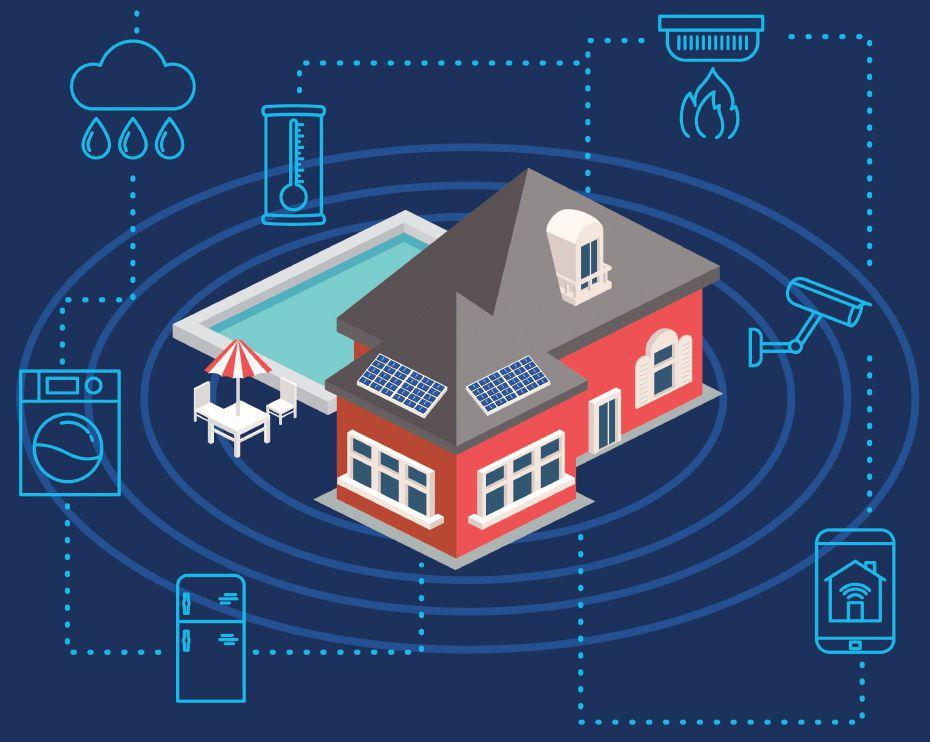
Already an emerging trend, the pandemic has created even more demand for remote service options and troubleshooting.
By Alanna Fairey
By Alanna Fairey
EDITOR’S LETTER
ABy Neil Sutton
Security resolutions for 2021
s 2020 drew to a close, SP&T News reviewed a number of year-end lists and predictions for 2021 from security industry companies and related organizations. There were more than I can remember seeing in previous years, which is something I will attribute the current pace of change in the industry, as well as an almost universal desire to put 2020 in the rearview mirror. Predictions came from organizations such as Hanwha Techwin, Interface Security Systems, Stanley Security, Genetec, Hikvision and CABA (the Continental Automated Buildings Association). These are the most common themes I drew from their reports.
Privacy and cybersecurity
Almost every trends list I’ve read includes these two security pillars. To me, they are two sides of the same coin. They’ve been on every “must-do” list for at least the last five years, but each year the urgency is ratcheted up a notch. Whether the issue is one of compliance with a local or federal regulation or a promise to help customer maintain the integrity of their data (client information, stored video, etc.), providing a high level of cyber assurance is job 1.
Artificial Intelligence
For years I was skeptical of this trend because I believed the term AI was being applied to security technology more as a buzzword than a substantive innovation. But it’s impossible to deny that AI has come a long way in a very short time. However you define it, there is now more intelligence, more automation and more sophisti-
cated analytics available in the network (or cloud) or on the devices themselves than there has ever been before. A number of the predictions that addressed AI also mentioned the role of business intelligence. For more on BI, I direct you to Colin Bodbyl’s column in this issue (p.12).
Trust and customer service
These two are really just extensions of cybersecurity combined with interoperability. Whether you’re a homeowner trying to add another security device to a network or a satellite office reporting data back to your HQ, you want your infrastructure to work. If it doesn’t work, you want to know who to turn to quickly, or have some confidence that the problem is something you can troubleshoot yourself. A line from CABA’s recent report really gets to the heart of the matter: “As more and more smart devices invade the home, demand for a single, centralized user interface intensifies.” Users want their technology to work, and they are more than willing to invest in a system that can help them accomplish this simple but sometimes elusive goal.
Other trends mentioned in recent reports include the cloud, convergence, 5G, Zero Trust (a cybersecurity concept that goes all-in on verification), facial recognition, the migration of residential security providers to commercial opportunities, and touchless access control.
I fully expect most of these trends to continue well beyond 2021. That customer service one never goes out of style.
@SecurityEd
READER SERVICE
Print and digital subscription inquires or changes, please contact Barb Adelt, Audience Development Manager Tel: (416) 510-5184 Fax: (416) 510-6875
Email: badelt@annexbusinessmedia.com
Mail: 111 Gordon Baker Rd., Suite 400, Toronto, ON M2H 3R1
Your Partner in Securing Canada Security Products & Technology News is published 6 times in 2021 by Annex Business Media. Its primary purpose is to serve as an information resource to installers, resellers and integrators working within the security and/or related industries. Editorial information is reported in a concise, accurate and unbiased manner on security products, systems and services, as well as on product areas related to the security industry.
Group Publisher, Paul Grossinger 416-510-5240 pgrossinger@annexbusinessmedia.com
Associate Publisher, Jason Hill 416-510-5117 jhill@annexbusinessmedia.com
Editor, Neil Sutton 416-510-6788 nsutton@annexbusinessmedia.com
Media Designer, Graham Jeffrey gjeffrey@annexbusinessmedia.com
Account Coordinator, Kim Rossiter 416-510-6794 krossiter@annexbusinessmedia.com
COO, Scott Jamieson sjamieson@annexbusinessmedia.com
EDITORIAL ADVISORY BOARD Victor Harding, Harding Security Services Carl Jorgensen, Titan Products Group Antoinette Modica, Tech Systems of Canada Bob Moore, Axis Communications Roger Miller, Northeastern Protection Service Sam Shalaby, Feenics Inc.
Toronto, ON M2H 3R1 T: 416-442-5600 F: 416-442-2230
Inc. All rights reserved.
Annex Publishing & Printing Inc. disclaims any warranty as to the accuracy, completeness or currency of the contents of this publication and disclaims all liability in respect of the results of any action taken or not taken in reliance upon information in this publication.
LINE CARD
Frank Hayes leads iLOQ’s expansion into Canada
Frank Hayes mulled the idea of retirement when he stepped away from the security industry in 2019, but in his mind it was always more of a break than a departure.
Frank Hayes, iLOQ
The veteran of companies like ASSA ABLOY, DSC and RBH Access Technologies left to pursue some personal goals and travel (he clocked 12,000 km on a bicycle in the summer of 2019), but when iLOQ came calling last year, he was more than willing to get back into the game.
“At 61, I decided I wasn’t done
with the security industry,” says Hayes, who officially joined iLOQ as Canadian country manager in November 2020.
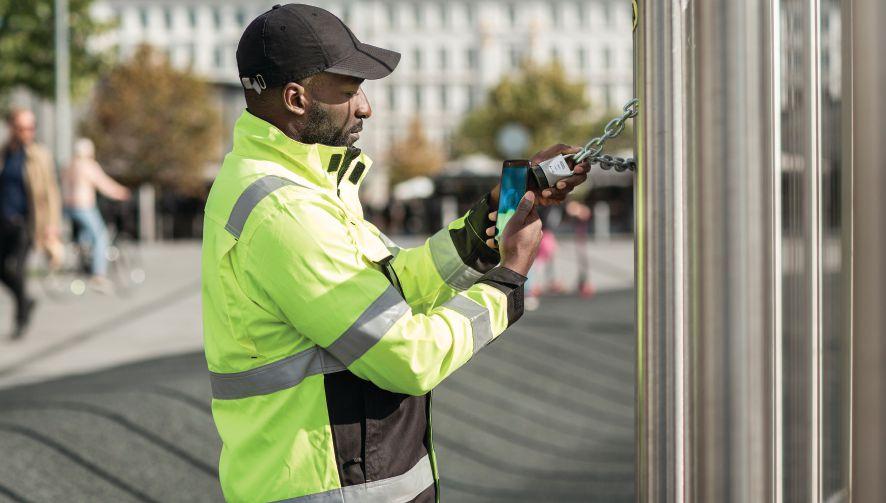
The Finnish access control company was founded in 2003 and went to market in 2007 with a battery-free digital locking mechanism that generates power through the action of pushing the key into the lock. “There’s no battery in the key, no battery in the lock and yet it’s an electronic solution,” explains Hayes. In 2017, iLOQ introduced a smartphone digital credential that can activate a lock via NFC (near-field communication). The solution is also battery-less, utilizing the smartphone itself as a power source. The smartphone product now accounts for about 50 per cent of iLOQ’s domestic business, says Hayes.
The company operates offices in Finland, Sweden, Denmark, Norway, Germany, the Netherlands, France and Spain. Canada represents its first market opportunity outside of its established presence in Europe, says Hayes.
Hayes says his plan is to devel-
op a channel to go to market with product over the coming year. He aims to build a network of 40-50 dealers across Canada, utilizing a mix of direct-to-locksmith and distributors in order to reach end users. The technology is particularly suited to critical infrastructure and utilities, such as water treatment plants, cell towers and hydro facilities, says Hayes, where a padlock or door lock might not be touched for years at a stretch; the battery-less solution removes any concerns that it will still be operational. “You might not visit this padlock for three years, but you have no worries, because there’s no battery in it,” he says.
The other major market for iLOQ is multi-dwelling units and multi-family housing, he says.
Hayes has commenced iLOQ’s entry into Canada, selling the NFC S50 padlock platform into critical infrastructure assets. The company still has some technology hurdles to overcome in North America, however — chiefly the development of an ANSI platform that will interoperate with hardware here. Hayes estimates that it
will be ready in time for 2022; his efforts this year should ensure that the distribution channel is ready to go when the time comes “and [we can] feed our way into the market.”
Since emigrating to Canada from his native Ireland in the 1980s — on a one-way ticket and a do-or-die attitude — Hayes has built a career and reputation in the access control market here.
In December 2019, he was named to SP&T News’ annual security industry Hall of Fame. At the time, he was in the process of stepping away from the industry. “People have advised me to slow it down, take a deep breath and make the most of the time off at the moment and get fully recharged, but I don’t doubt that within the coming months I’ll be picking or looking at doing something,” he told SP&T News at the time.
Now Hayes finds himself with a new opportunity and a new company without having met any of its managers or personnel faceto-face. Hiring and recruitment practices have adjusted during the pandemic, when in-person meetings are the rare exception and generally discouraged due to ongoing social distancing policies. All of his meetings are conducted via web conferencing tools, as has become the custom, but that has not dampened his enthusiasm for his return to the security industry.
“iLOQ’s growth continues as planned, even during these challenging times,” said iLOQ president and CEO, Heikki Hiltunen, in a company announcement when Hayes was first hired. “We look forward to introducing the benefits of our innovative technology to the Canadian market and wish Frank great success on fulfilling iLOQ’s goal of making life accessible also on an entirely new continent.”
—
Neil Sutton
LINE CARD
Applications
Hilton Surfer’s Paradise Hotel & Residences, with 178 guest rooms, has upgraded its room access using VingCard Signature RFID door locks with Mobile Access.
Paul Briggs, sustainability & projects coordinator at Schwartz Family Co., which owns and operates the property, said the upgrade helps ensure “greater property-wide security while meeting guest demands for instant and social distancing-compatible service. It also represents an opportunity to provide guests with a personalized experience that many increasingly expect...”
Guests can access their rooms as soon as they arrive at the hotel by placing their smart device within proximity of the appropriate Bluetooth Low Energy (BLE) reader. According to ASSA ABLOY, the RFID locks also eliminate the risk of keycard cloning. RFID communicates with in-room thermostats and lighting to adjust settings based on room occupancy.
Appointments
Video analytics in Mexico
The city of León, Mexico, has selected a video intelligence provider to help improve city safety and security, and to help prevent the spread of COVID-19.
Integrator MER Group Mexico will install its in-house software to the city’s network for smart urban management. Viisights software will also be integrated into the solution. According to the company, its technology utilizes advanced behavioural analytics technology which can differentiate between human behaviours like hugging and fighting, as well as detect the presence of face coverings.
Adding analytics capable of automatically detecting potential threats to an existing video infrastructure “provides tremendous security, safety and cost advantages while enabling the city of León to leverage prior investments,” said Segev Hostik, MER Group Mexico CEO in a statement.
Spain-based security provider Setelsa Security has chosen SAFR from RealNetworks to provide face-based biometrics for its clients in the U.K., Spain, Portugal, Mexico and Argentina. Through the partnership, Setelsa will integrate SAFR’s AI-based computer vision technology — face detection, face recognition, and mask detection — into its secure access solutions. According to SAFR, its recognition accuracy for masked faces now exceeds 98.85 per cent, meaning subjects do not need to remove their PPE in order to be recognized at an access control point. It can also detect spoofing attempts via static images. The initial focus of the partnership will be to deploy a combined access solution for a banking sector client.
• Hikvision Canada has appointed Jeff Munday as regional sales manager. Based in Winnipeg, he will team up with Prairies RSM Barry Paisley to support Manitoba and Saskatchewan.
• Brian Rumohr is the new
regional sales manager for 3xLOGIC in Western Canada. 3xLOGIC also announced Chinnette Cannida as senior product marketing manager for North America and David Galante as senior director of global product management.
Security • Police • Fire Career Expo Online www.emergencyservicesexpo.ca
June 15-18, 2021 ESX Louisville, Ky. www.esxweb.com
July 19-21, 2021 ISC West Las Vegas, Nev. www.iscwest.com
August 22-26, 2021
BICSI Fall Conference Las Vegas, Nev. www.bicsi.org
September 27-29, 2021 GSX Orlando, Fla. www.gsx.org
Oct. 4-6, 2021
ESA Leadership Summit Frisco, Tex. www.esaweb.org
November 17-18, 2021 ISC East New York City, NY www.isceast.com
• Allegion has appointed Tim Eckersley as senior vice-president of Allegion International.
• Ron Virden has joined dormakaba’s Access Solutions Americas segment as senior vice-president, Entrance
Systems & Interior Glass.
• Sage Integration has named Jim Geyer as its new vicepresident of sales.
• Nortek Control announced the promotion of Jeff Shaw to senior director, product management.
Brian Rumohr Tim Eckersley Ron Virden
Jim Geyer
Jeff Shaw
Jeff Munday
Australian hotel utilizes RFID locks
Biometrics partnership
By Anita Brunet
A quarter century of distribution
Mergers may have altered the landscape, but the net result is a more mature security industry
SP&T News is celebrating its 25th anniversary this year. We’ve invited guest columnists to share their memories of the past 25 years of the Canadian security and alarm industry — with a focus on how far we’ve come since 1996 and where the industry might be headed next.
Smoke in hand, Vic strolls into Tri-Ed to pick up an order that he had faxed over earlier that day — his stack of Sony VHS security surveillance tapes is ready for pick up.
“Without a doubt, women have influenced and helped change the face of our industry.”
Twenty-five years ago, I couldn’t have imagined the changes that were to unfold within the security distribution space and within our industry.
At that time, a major distributor had just closed its doors for good, and Tri-Ed Distribution had emerged, opening 10 branches coast to coast.
It’s hard to imagine today, but we only had one product line for sale when we first opened. However, it didn’t take long before we supplied 300+ vendors. I clearly remember the day we sold our first DVR for $24,000! Boy, did we celebrate. Today, we would need to sell over 50 units to hit that number.
In 2014, Tri-Ed Distribution was acquired by Anixter and Anixter was acquired by Wesco last year — the most recent of many distributors acquired over the last 25 years. The synergy of the combined teams has proved to be a winning formula.
Many equipment manufacturers have also been acquired and rebranded over the years, most of which you wouldn’t recognize today. Their intellectual properties and technology are likely embedded into products still in use, their engineers and creators on the verge of retirement from the company that had acquired theirs.
Back then, home alarms were mostly hardwired, and were very costly, which created a significant barrier to entry for potential customers. This changed drastically once recurring revenue became part of the sale.
Large companies entered the marketplace using their deep pockets to completely subsidize the upfront cost of a home security system, banking solely on monthly revenues to build equity.
Today, with affordable systems and better technology, we still only have a 25-30 per cent saturation rate in home alarm systems. The evolution of the smart home and DIY will continue to propel our industry.
Analogue cameras were the standard and I distinctly remember when IP made its debut. There was doubt in its longevity from some of the CCTV manufacturers. It did take a while to catch on, but as more cost-effective technology translated into better image quality and ease of use — and field technicians gained experience — IP video was here to stay.
The ability to discern important clips through video processing or integration and remote access, to cloud-stored video from a phone, had an amazing impact and greatly expanded the marketplace. It is hard to fathom today technicians being paid for a service call to go on-site, review hours of time-lapse video through a multiplexer to help find a perpetrator, but that was how it was.
Technology and business models are not the only aspects of the industry that have evolved around us.
One manufacturer, catering to a male audience, thought shipping their products with calendars and posters of scantily-clad women was a great coup. That idea didn’t age particularly well with more women entering the security industry. Without a doubt, women have influenced and helped change the face of our industry, bringing a dimension that was lacking in its infancy.
Change is inevitable. While it’s sad to see the names disappear over the years, mergers and acquisitions have brought a level of professionalism and standards to our industry that was lacking 25 years ago. The industry has created product offerings and services that are better than ever. As the barrier to entry is eroding and big tech is lurking around, I think we will still be relevant as an industry for years to come.
I’m happy to say Vic has quit smoking and even learned how to “Zoom.” I no longer have to unroll the thermal paper from the fax machine and decipher his handwriting. He has placed his order online and the product is sitting in a 24/7 locker where it can be picked up at his leisure.
Anita Brunet is vice-president of Western CanadaSecurity Solutions, Anixter Canada (www.anixter.ca).
LESSONS LEARNED
WBy Victor Harding
The year ahead in M&A and valuations
The pandemic, the economy, demographics and low interest rates will all play a role in 2021
e should all count our blessings that we are in this industry. Not only is security generally less vulnerable to yearly economic ups and downs but we seem to have weathered the COVID-19 virus and the accompanying shutdown better than most.
“Buyers look at the past, but buy the future.”
Although we don’t have Canadian statistics available, I think M&A in general was down in the security industry, like most others, in 2020. I heard of very few integration and fire companies changing hands. Interestingly enough, I have read that although volume was down, valuations generally held. Based on what I hear from my contacts, some owners in the fire and integration sectors have been reluctant to put their company up for sale because they feared getting low-balled on price — a perfectly natural reaction. However, the alarm account market for M&A has been quite active throughout the pandemic. I am working on several alarm account deals now.
So what can we expect from 2021 in terms of M&A and valuations in general? Here are some early predictions:
M&A will come bouncing back: There almost has to be pent-up demand in the security M&A market just like many others. Owners who were worried about selling in 2020 will likely put their company on the market starting in the second or third quarter of 2021. I have potential clients who have told me they are waiting until the virus is past us before selling. Everything you read says there is a great deal of private equity money on the sidelines looking to be invested. By the end of 2021, M&A could be very busy. If it is a seller’s market right now, in nine months’ time the pendulum will swing back to buyers.
Acquisitions will be justified because organic growth is difficult. The shutdowns have made organic growth tough in various parts of the security industry. It is still very difficult to get into homes at all. Businesses that have been hit hard by the virus are not likely to pick 2021 to do a major security upgrade. Acquisitions in these situations may be replacing organic growth.
Sellers will have to illustrate the effect of the
virus to buyers. If a seller has been affected by the virus, they will need to show the buyer exactly what that effect has been and that they are recovering. Buyers look at the past, but buy the future, so sellers are going to have to “normalize” their 2020 earnings to show the effect of the virus and take even greater care in preparing their forecasts for buyers to review.
M&A is going digital: Zoom will replace on-site visits in deals, even after the virus leaves us, and why not! Zoom saves us all an enormous amount of time and money. More and more, entire deals will close without the buyer actually meeting the seller in person. Due diligence will be done remotely and online using Dropbox. Security companies that have proven themselves in the online world will be in greater demand. If a security company can’t sell online as well as in person, it will be at a disadvantage.
Some buyers will remain cautious: Economic slow-downs, like what we have seen with the virus, will make some buyers cautious. Setting up financing may be more difficult and timeconsuming through 2021. We will likely see longer pay-outs, bigger hold-backs and more earn-outs. One buyer told me he actually dropped his recent offer because he was worried about the third wave! The virus has made revenue forecasts much more important.
There will be a flight to quality: In 2020, buyers snapped up the top notch companies quickly, but the less desirable were left behind. This trend
will likely continue through 2021. You don’t want to put a company with problems on the market now.
The Baby Boom Exit is speeding up: The Boomer generation, born between 1946 and 1964, is a large bubble in Canadian demographics. I am a Boomer. Someone born in 1955 is now at least 65 years old. If they own a security business, they will soon be talking about an exit. I truly believe that we will be experiencing a higher number of owners wanting to exit their security businesses over the next five years. Three of the deals I am working on right now are happening because the owners are in their 60s or 70s and want to retire.
Extra government stimulus, low interest rates and a buoyant stock market will help make deals happen: Our federal and provincial governments are dumping vast amounts of extra money into the economy. Some of this stimulus will make deals happen. Secondly, we have been promised by the central banks that our ultra-low interest rates will be with us for at least the next two years. This helps deals to happen. Finally, our buoyant stock market propels people to spend and helps in those deals where equity is part of the purchase price.
All in all, 2021 should be a very active year for M&A in the security industry in Canada with the second half of the year probably being better than the first.
Victor Harding is the principal of Harding Security Services (victor@hardingsecurity.ca).
Positive outlook CANASA UPDATE
By Patrick Straw
While there are still many challenges facing us due to the ongoing pandemic, all indications are that the security industry continues to function at a very high level.
Membership
While we have membership attrition every year due to retirements and acquisitions, this was offset considerably with 41 new member companies, allowing us to keep our membership very stable. It is exciting to see cybersecurity and IT companies joining the CANASA family, recognizing our role in the Canadian security landscape. These companies are also bringing new partnership opportunities for traditional security companies, which will benefit the public we serve and create new revenue streams. We have also benefited from the explosion of touchless products and temperature detection technology, fulfilling the need for safer versions of entrance tools.
Security Canada
Many of you have been asking about the Security Canada program for this year. After our successful virtual show in December, we have a suite of virtual and hybrid activities planned for 2021. Working with our Board of Directors, we have decided to wait a few more weeks before assigning time lines to these activities. As soon as these decisions are made, we will be posting news on social media and heavily promoting them. We are also continuing our weekly webinar series.
Education
CANASA’S Education committee has been working to complete our upgrade of the Alarm Technicians Course in partnership with Centennial College. We expect to have the changes completed in early February, at which time they will be sent to the college for implementation. This has been an enormous undertaking and we cannot thank all of the volunteers enough. We are also awaiting the com-
pletion of the Security Technicians course that Conestoga College is working on. We are hopeful that this will be available by the end of 2021.
Upcoming Elections
CANASA is looking for individuals interested in becoming National Board members with a commitment to ensure that the association is governed with excellence and vision. Nominations are due on March 17. In accordance with our by-law, the new Board will be ratified at the June Annual General Meeting. If you are elected, your two-year term will begin with a meeting on the day following the AGM.
I think it is fair to say that last year required quick and strategic decisions for all of us. The banding together of the CANASA family across Canada was truly remarkable. To our members, Board of Directors, regional councils, committees and staff, well done and thank you!
Patrick Straw is the executive director of CANASA (www.canasa.org).
Patrick Straw
By Colin Bodbyl
Surveillance smarts CAMERA CORNER
When most people think of video surveillance systems, they automatically think of security, but surveillance cameras can be used for much more than just security.
The COVID-19 pandemic has spawned innovative new AI that uses the video from surveillance cameras to monitor for compliance with social distancing and mask requirements. While this may appear to be a significant leap for the industry, this type of AI has been around for several years.
“While the value of this data is obvious, it is also a very competitive space.”
Business intelligence or BI data is information collected by technology which is then used to guide the strategy of a given company. An example of this would be a technology that counts the number of vehicles in a big box store parking lot. Daily or monthly changes in the number of vehicles that visit the store could indicate if they are experiencing an increase or decrease in sales. This data could in turn be used to forecast earnings reports which is extremely valuable to financial analysts and investors. With the obvious value of this data, it is no surprise that video surveillance companies have been trying to find a way to use surveillance to collect BI data for several years now.
Simple applications where video surveillance can be used to collect BI data include object counting and heat maps in retail applications. More advanced features include gender or age recognition. In these examples, the data
is valuable to marketing teams who may use that information to guide changes to the layout of a store, or the products they sell based on the demographics and behaviours of their customers.
While the value of this data is obvious, it is also a very competitive space. Surveys, loyalty cards, or membership programs collect this same information and with a much higher accuracy level than video surveillance AI. While video surveillance offers a passive method for collecting this data, engaging customer through an active method is not overly complicated and usually renders better results.
In more recent years, video surveillance companies have attempted to collect BI on human behaviour where the people of interest would not otherwise participate in an active solution. One example is tracking the level of compliance with
working hours or safety protocols such as what percentage of people are wearing a hardhat or safety vest on a construction site.
In these applications, the value of this data is far more unclear. Knowing that only 80 per cent of workers on a construction site are wearing their protective gear might be concerning, but even if that leads to more oversite which increases that number to 90 per cent, an obvious financial return is difficult to recognize.
Social distancing and mask compliance AI has managed to overcome some of these key challenges. Unlike people counting and demographic data, social distancing and mask compliance is very difficult, if not impossible, to analyze in real-time with other technology. In addition, the potential fines and implications for business owners who do not
comply with these regulations are obvious and can quickly justify the investment in a video surveillance system to collect this data.
The business intelligence market is valued at over $20 billion and is growing rapidly. The video surveillance industry seems like it could be a key contributor to that growth with the enormous volume of video data collected each day. However, several leaders in the space have tried and failed over the years to sell business intelligence products at a large scale. The recent pandemic has forced those companies to rethink how we use video surveillance for business intelligence and could just be the boost they need to drive long overdue growth in the space.
Colin Bodbyl is the chief technology officer of Stealth Monitoring (www. stealthmonitoring.com).
Remote service options have become more popular in an era shaped by the COVID-19 pandemic
By Alanna Fairey
In a year of social distancing, the COVID-19 pandemic has kickstarted the need for remote troubleshooting for dealers and integrators.
Patrice Samuels, senior analyst, consumer technology, Parks Associates, says that remote integration and troubleshooting services were starting to take off prior to the pandemic, but a lot more providers have started to embrace them as a strategy going forward, given the strict guidelines about physical distancing.
“The technology has been here for some time but, of course, it takes a lot of time for a business to embrace a whole new technology because they have to integrate it in their back-end systems,” Samuels says. “What the video remote solutions are facilitating is the ability for the customer to show [dealers or integrators] the physical product in the home and the dealers are then able to make recommendations about what’s wrong and
“There are a lot of things that we can remotely fix to save the client money.”
— David Koziel, Northern Alarm Protection
how to resolve the issue.”
Adds Samuels, “COVID-19 really drove the need for this [remote troubleshooting] service.”
Ahead of the trend
While the pandemic may have given some vendors and dealers the push they needed to make the switch to remote troubleshooting, there have been many who were way ahead of the trend.
Richmond Hill, Ont.-based Northern Alarm Protection Co. Ltd. was offering remote integration and troubleshooting services for their clients before the pandemic hit. David Koziel, Northern Alarm Protection president and CEO, says that this remote troubleshooting feature was a value-added service for their clients.
“Our clients have always found the need or the value added in regards for us to remotely access their systems,” Koziel explains. “There are a lot of things that we can remotely fix to save the client money, and especially in our industry, security can’t wait.”
Koziel says that when COVID-19 was declared a pandemic and the lockdown was first announced back in March 2020, it was business as usual for Northern Alarm Protection.
“Different sections of our disciplines like access control, alarm systems,
“Customers do not have to pay a two-hour minimum service call, they do not have to pay a truck charge.”
—Peter Soet,Axis Systems Group
and CCTV have been able to go online, and we’ve been able to automatically start offering this to our clients,” Koziel says. “We’re not getting individual calls asking, ‘Do you do this?’ We already do this.”
Similarly, Burnaby, B.C.-based Axis Systems Group has seen that there is an expectation to be able to access systems through remote support.
“Clients did not want us to come to the site and they were more motivated to look at this is as a solution because they prefer to not have us come to their property,” says Axis Systems Group business development manager Peter Soet. “It made them wake up to the possibility of removing it from being on-site and allowing us to make these improvements for them to host their servers for them.”
Soet shares that his technicians are able to remotely service their customers using applications such as TeamViewer. Soet also stresses the importance of having a strong network connection that would also protect the privacy of their clients.
“We can do [remote troubleshooting] with a Virtual Private Network (VPN) connection through the internet, which has a secure connection to ensure that the customer’s data is protected,” Soet says.
On-site essentials
Although dealers and integrators have quickly adjusted to remote troubleshooting for their clients, there are situations that still require on-site inspection and it is not possible to handle the situation remotely.
“There’s still obviously going to be door strikes and card readers that will fail and cameras that will fail and they need to be physically changed,” Soet describes. “There’s definitely a fair bit of service — physically installing for new systems and pulling wire require onsite inspections.”
Koziel says that in order to be compliant with ULC standards for fire and intrusion detection, technicians must complete mandatory inspections on-site. This includes checking sprinklers, fire alarms and burglar alarms.
“These inspections absolutely are still mandatory. You still have to go do our test as per code in regards to the other gamut of services related that we cannot do remotely,” says Koziel.
Other tasks that cannot be done remotely often have to do with fixing faulty equipment and physical labour.
“You’ll always have equipment that does eventually go down, whether it’s a power surge, whether just longevity of equipment, and it cannot be reset remotely,” Koziel ex-
plains, “There will always be in our industry the need for us to attend, just with all of the remote connectivity.”
However, Koziel says that it is up to the client if they wish to have a technician come on-site to fix the problem.
“There’s a lot of things that we can diagnose and advise remotely, so it is totally client’s choice,” Koziel reiterates. “There always will be the need to go on-site, but with the remote diagnostics, we can always advise on the situation.”
Cost savings
While the COVID-19 pandemic will not last forever, the remote troubleshooting trend may continue to serve a purpose for dealers and integrators.
Samuels predicts that remote troubleshooting will still be offered as a service, as it reaps benefits not just for customers, but for dealers and integrators as well.
“It’s really costly for a company to drive out to a home and sometimes they might get there and discover they don’t have the proper equipment or everything they need but eventually have to make an appointment and work out the logistics to go again,” Samuels says. “The COVID-19 pandemic has really accelerated companies’ interest in these and pulled the trigger for them to adopt these solutions.
“I do think many of them will be leveraging them going forward because of just simply how [much it] can save them.”
Soet agrees that remote troubleshooting will continue through 2021, as time and money are the two of the biggest factors in decision-making for any business. Soet points out that “customers do not have to pay a two-hour minimum service call, they do not have to pay a truck charge — they’re just paying a 15-minute remote tech support charge.”
Service flexibility
Koziel shares that Northern Alarm Protection has received a number of requests from their customers for live remote system diagnostics.
The biggest takeaway of offering remote troubleshooting during COVID-19 for Koziel is the willingness to adapt and being flexible in finding ways to serve their clients.
“Our industry is extremely unique and is built on trust,” Koziel concludes. “With trust comes relationships, and automatically showing that we care for our clients by being able to diagnose remotely, and explain to them why we do have to go to the site and being prepared, certainly gives them the peace of mind that we do legitimately care for them.”
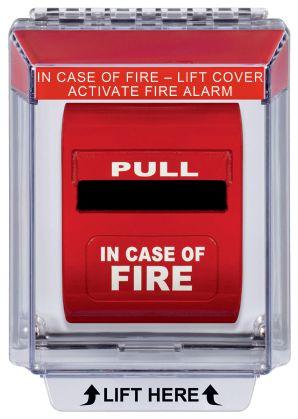
Covers are Proven Effective for Over 40 Years Polycarbonate covers and buttons help prevent vandalism and accidental activation, without restricting legitimate operation.
THE SMART HOME PRIVACY IN
Consumers have embraced residential security cameras, but there are calls for them to do their homework before buying
By Alanna Fairey
The residential security camera market has remained on a positive trajectory during the pandemic and recent workfrom-home trend, but privacy concerns about home surveillance continue to arise.
According to Blake Kozak, senior principal analyst, smart home, of London, U.K.based Omdia, some home security camera brands such as Arlo, Google Nest and Ring have suggested that they have actually grown their markets more in this past year than in previous years.
“That trend is predominantly due to people being at home more or people shifting their disposable income to things like home improvements, and renovations and so on,” says Kozak in a recent interview with SP&T News “Despite the pandemic and decline, this [home security camera] space is still quite strong.”
According to consumer data from Addison, Tex.-based market research and consulting
firm Parks Associates, there has been a general increase in consumer concerns about security and privacy. Research indicates that 79 per cent of consumers are worried about the possibility of data security or privacy-related issues and 55 per cent are most concerned about being victims of identity theft. Other concerns for consumers include hackers gaining access to their devices, data theft over a home network, private information being made public, as well as companies selling their customers’ personal data to other companies.
Kozak adds, “We saw a few examples last year where a few home security camera brands like Ring had experienced security breaches where people were being able to see their cameras. As well, some people on their Google Home hubs were getting other people’s camera feeds.”
Consumers often buy into the convenience of internet-enabled home security cameras according to David Shipley, CEO of Fredericton, N.B.-based cybersecurity firm Beauceron Security and a digital privacy advocate. He says, “The
promise of internet-enabled security cameras is the ability to quickly log in to the system wherever you are and see what’s going on and that convenience drew a lot of people to platforms like Google’s Nest, or Amazon’s Ring systems.”
However, Shipley warns that “these firms’ offerings really did not push some of the fundamental security settings that is enforcing multi-factor authentication and preventing password reuse — and that has resulted in a lot of problems for everyday consumers.”
Amazon did not respond to a request to comment, while Google declined to comment for this story.
According to reports, Amazon’s Ring has more than 400 partnerships with U.S. police services. The program gives police more resources to solve crimes, but Shipley argues that some consumers feel uncomfortable about these partnerships and have begun to voice their concerns.
The discomfort comes from the fact that the camera company now has numerous pilot programs that grant police potential access to consumers’ cameras in order to help with ongoing investigations.
While Ring has previously said in a company statement that the police do not automatically have access to Ring video streams, Shipley says that the partnership has put a spotlight on
privacy and access to home security footage.
“[This partnership] is disconcerting for a lot of civil liberties and privacy advocates all of a sudden turning private citizen’s external cameras into part of a police centre network … because there are questions around the judicial oversight.”
Shipley also notes that vendors such as Arlo have started to enforce two-factor authentication as a default, but he believes that there are significant privacy concerns regarding home security cameras that consumers need to be more cognizant of before purchasing and installing them in their homes.
“Consumers should be asking vendors really hard questions, such as ‘Do you have multi-factor authentication? Where is the data being stored and who gets access to it, and for what purposes?’” Shipley says. “If you think about how easy it is to keep the software updated on the camera and prevented from being hacked with vulnerable software, that’s also an important consideration.”
2021 and beyond
Looking ahead, Shipley says he would like to see more government regulations put into place to protect the privacy of the consumer.
“I think the average consumer still is woefully undereducated and under informed by
“Consumers should be asking vendors really hard questions, such as ‘Do you have multi-factor authentication?’”
— David Shipley, Beauceron Security
the vendors about really what’s going on with these devices and we’re still going to see strug gles with that until we see better privacy laws here in Canada,” Shipley says.
Shipley notes that the Consumer Priva cy Protection Act (CPPA), introduced by the federal government on Nov. 17, is currently going through the legislative process, but he also says he would like to see more account ability and improved security measures for consumers.
Kozak predicts that, from a software per spective, manufacturers will do their due dil igence in ensuring that their home security cameras cannot be breached or compromised.
“I think we’ll see some announcements from end-to-end encryption, we’ll see more in terms of dashboards and being able to actually monitor who is actually logging into your account,” Kozak says. “Amazon Ring in the past has done things along those lines and dashboards to a more thorough peace of mind in terms of how these cameras will be used, and when and by whom.”
In January 2021, Amazon Ring announced that video end-to-end encryption is rolling out to all eligible Ring devices.
According to the company, the feature is launching as a technical preview, and customers can share feedback on the feature via the End-to-End Encryption page in Control Center within the Ring App.
“With End-to-End Encryption, customer videos are further secured with an additional lock, which can only be unlocked by a key that is stored on the customer’s enrolled mobile device, designed so that only the customer can decrypt and view recordings on their enrolled device,” states the company’s blog post.
Acknowledging that smart internet connected cameras will always be a commodity because of the convenience and comfort that they can offer consumers, Shipley hopes that in the future, consumers will be diligent about their research into the potential privacy risks prior to installing a home security camera.
“I would just advise consumers to think and shop smart,” says Shipley, adding that potential users should consider “some of the pros of working with a dedicated security company where that’s their business model, versus trying to do it yourself with these devices.”
QA &
Katrine White, president and CEO, SecurTek Monitoring Solutions
By Neil Sutton
Katrine White recently joined Saskatchewan-based SecurTek Monitoring Solutions as the organization’s new president and CEO. The company operates two ULC-listed monitoring stations in Canada, with a network of more than 65 dealers and in excess of 100,000 residential and commercial customers.
White is a veteran of SecurTek’s parent organization SaskTel, most recently serving as the telco’s vice-president of consumer sales and solutions. SP&T News recently spoke with White about her new appointment, the experience she brings from her telco roots and her assessment of the security and monitoring landscape as we enter a new year.
SP&T News: Tell us more about your background in the telco space.
Katrine White: I’ve been in the telecom business for almost 20 years. I’ve had a variety of different roles with increasing responsibility across the consumer portfolio in marketing, sales and channel management: mobility products, on the wireline side (home phone, internet and TV) and our smart home products as well.
I have a long history and experience with in-home products and mobility products and a lot of experience working with partners as well, in particular our dealer partners. I strongly believe in customer experience, everything from the development of products and services, to the way that we sell them and support them. Customers want to trust the company they buy from and have increasing expectations. They want their experience to be easy — easy to buy and easy to use, and affordable. A lot of the world now is rethinking how you do that for the customer, regardless of the product and service.
“I think MPERS is going to continue to grow and take off.”
As far as security, home automation and health and wellness goes, it’s a little newer to me. As part of the SaskTel suite of products and with SecurTek being a subsidiary, I certainly have experience in that world as well, but I will submit that I have a lot to learn. That’s what’s exciting about this role — it gives me an opportunity to take the experience that I have and marry it up with the Internet of Things (IoT) world.
SP&T: Do you see more interaction between the telephony/internet side of the business and home security services?
KW: I absolutely think that there’s opportunities for us to partner and get closer and really leverage the strengths. I think the other part that’s apparent, and we fight it every day, is the competition. Whether you’re looking at the internet providers or the wireless providers or security providers, there’s a very strong, competitive marketplace in each of those realms. It’s very hard to win and keep the customer just within one line of business. You’re typically competing on price and speed or other elements of the service offering. The secret sauce is about figuring out how you bring those pieces together in some way to differentiate yourself in the market, deliver what the customer wants and have a stickier proposition.
SP&T: How has the pandemic affected your business?
KW: We’ve been extremely committed to figuring out the health and safety and the wellbeing of our employees, first and foremost, and our customers and our partners. We’re definitely complying with, and watching closely, all the
provincial regulations in Saskatchewan. From a customer’s perspective, our dealers are doing a number of different things. If they are going into the home, it’s about making sure we’re qualifying their situation with a set of COVID questions. It’s about wearing PPE in the home, whether that’s masks or gloves, and ensuring there’s distancing in place. I’ve heard in the industry that some people are dropping equipment off and walking the customer through an install. I know that we’re doing that with our internet installs and TV installs. I expect that it can certainly be done with security and smart home as well.
SP&T: Has the mix of business changed during the pandemic?
KW: There has definitely been a slowdown across the board in both the residential and the business side. One of the things we do have is a deferral payment program for customers as well. So if they are having trouble paying their bills, we do have an option for them to spread their payments out for 12 months. The short answer is, there’s definitely a slowdown on both sides of the house. We have to watch and see what is going to happen here economically over the next little while. We’ve brought our forecasts down as it relates to all of that. I still think that the services that we offer, from a security and smart home perspective, are ones that customers value, both at the commercial and residential level.
SP&T: Do you think that business practices or customer preferences during the pandemic will persist post-pandemic?
KW: I think that, in terms of a change in behaviour, there’s like-
ly to be more of an uptick in DIY type of monitoring and less of a desire for the fully monitored service with a contract. I think the customers and the industry were already evolving a little bit in that direction. Maybe it changes the model a little bit as we go forward to something that’s not an always-on model. Maybe professional monitoring is something customers want from a turn-on, turn-off perspective. I also think customers are going to want to interact with their providers more online and through self-serve portals than go into a retail environment. There’s an ongoing interest and value in monitoring, but people want more online options.
On the commercial side of the house, there’s a lot of opportunity there with respect to alarm monitoring… video and access also present revenue opportunities for us. There’s lots of opportunities to look at cost savings by using those types of applications instead of more traditional methods which are typically related to people and paper.
SP&T: What is the opportunity in health monitoring and personal emergency response (PERS)?
KW: I think there’s huge opportunity in personal emergency response. We have an aging population that has much more of an interest in wanting to age in place, as opposed to moving to some kind of retirement home. In these COVID times, that’s probably amplified even more so. We just launched a medical alert product, Mobile Medical Alert, and we think there’s lots of opportunity to market to the parents and the children of the parents.
It just gives one peace of mind about how their parents are doing and where they’re at… without having to call or go to their home. I think mobile personal emergency response (MPERS) is going to continue to grow and take off.
For over three decades Altronix has earned its global reputation for the highest quality and reliability, offering exceptional power and data transmission solutions engineered and manufactured exclusively in the USA –all backed by the best customer support and our unique lifetime warranty. And we’re stronger than ever. As we continue to grow and the industry evolves, rest assured you can always trust your security to Altronix.
Product Previews Intrusion Detection
Video guard station Aiphone
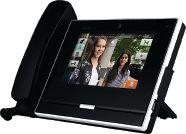
The IXG-MK IP Video Guard Station provides visitors a way to call a building’s concierge, receptionist, or security guard directly from the entrance station. The IXG-MK offers a seven-inch touchscreen for clear video identification, video communication between guard stations, call recording, and the ability to forward calls directly to a tenant. Those screening visitors can choose either hands-free (VOX) or full duplex (handset) communication. Touching the key button will activate the door release associated with the connected entrance station or door station. The IXGMK can have up to 9,999 units in its address book.
www.aiphone.com
Security management system
LenelS2
OnGuard security management system version 8.0 provides major updates including integration with the Magic Monitor unified client, rich interactive maps, a new modern reporting engine, cybersecurity enhancements and more. The OnGuard security management system is an advanced solution in Carrier’s Healthy Buildings Program, and provides features like occupancy management, enhanced access control and proactive screening solution. The OnGuard 8.0 system integrates with the Magic Monitor client, a Windows and MacOS client. www.LenelS2.com
Self-closing hinges D&D Technologies
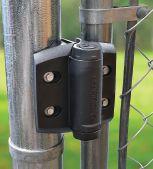
The TruClose ROUND Heavy Duty line includes two heavy-duty hinge options that self-close gates up to 154 lb from a complete 1800 swing. The self-closing hinges are maintenance-free and will not rust, bind, sag or stain. Right- or left-handed gate-swing installation is made simple with the included fasteners and a tension adjustment from both ends of the hinge barrel. The updated contemporary Series 3 body design includes internal stainless steel spring and components and side fixing legs for alignment and added fixing strength. www.us.ddtech.com
Upgraded VMS
Qognify
The new Ocularis 6.0 includes map-driven operation and a bi-directional interface enabling security operators to monitor and respond to incidents faster by removing the need to switch between several systems. Ocularis 6.0 incorporates automatic updates, improved video sharing, camera and security upgrades. Ocularis 6.0 provides operators with the capability to retrieve and visualize status information from other security systems, such as access control and intrusion detection. A new bi-directional interface enables access points to be controlled directly from Ocularis, with plugins available for third-party access control systems. www.qognify.com
Facial authentication Alcatraz
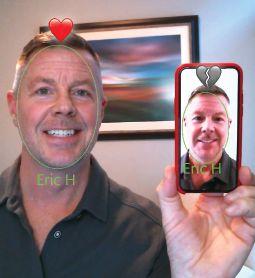
New features of the Rock 3D facial authentication include tailgating notification and mask detection. The Rock distinguishes an authorized user from an unauthorized user as they approach an access point or door together and can be set to immediately alert upon the attempt at unauthorized access. Another feature, facemask detection, was added in response to increasing mandates calling for businesses to require all occupants to wear masks. The Rock detects whether a user who is seeking access is wearing a facemask. The Rock is not used for surveillance and does not covertly or non-cooperatively collect or store images of individuals who have not enrolled in the system.
www.alcatraz.ai
Vehicle barrier
Delta Scientific
Command centre software Gallagher
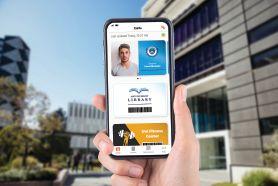
Command Centre v8.40 security and site management software introduces the Mobile Connect Digital ID. Gallagher’s Digital ID removes the issuance of physical photo ID cards, instead providing a secure, on-phone and digital alternative through Gallagher Mobile Connect. Digital ID streamlines ID provisioning with the ability to issue and revoke IDs remotely. Real-time updates with Command Centre keep IDs up to date. Enhancements to Gallagher’s Monitored Pulse Fence help to maximize detection capabilities while minimizing false alarms. www.gallagher.com
POE intrusion detection
Southwest Microwave
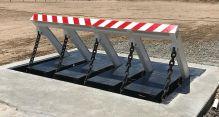
The new shallow foundation M50/P1 DSC550 Open Frame vehicle barrier was tested to the new ASTM F2656-20 standard which measures the penetration level from the leading edge of the barrier versus the back-side of the barrier like the previous standard. The DSC550 features a shallow foundation of 24 inches (61 cm). The DSC550 provides an emergency fast operation of 1.5 seconds for electro-mechanical and 0.75 seconds for hydraulic operations. Also provided: touchscreen controls with data-logging and custom programming. www.deltascientific.com
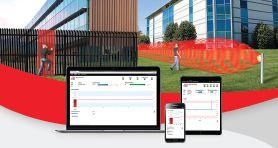
The INTREPID MicroPoint-POE-S Fence Detection System. employs proprietary digital signal processing algorithms to precisely locate intrusion attempts to within 1.1m while ignoring harmless disturbances caused by wind, rain or vehicle traffic. MicroPoint-POE-S couples MicroPoint fence sensor performance with secure TCP/IP network integration via a single Ethernet cable for power and data transmission. MicroPoint-POE-S features Sensitivity Leveling, a calibration process that adjusts for variations in fence fabric or tension to deliver uniform detection along the protected fence line. www.southwestmicrowave.com
Product Previews The latest in security technology
Surge protection
DITEK
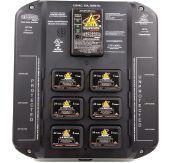
DITEK announced the launch of a new electrical surge protection solution for fire alarm systems. The DTK-120X12 combines protection for 120V system power with protection for up to 12 low voltage circuits to eliminate unnecessary damage caused by electrical surge events. The DTK-120X12 base is designed to be wall mounted and hardwired, and includes the 120VAC power surge protection unit with dry contacts for remote monitoring of surge protection status. The 120VAC module also has LEDs for visual confirmation of status, as well as a loud audible alarm. www.diteksurgeprotection.com
PoE+ switch
Luxul
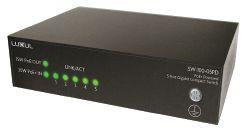
Luxul introduced a new five-port PoE+ powered Gigabit switch with PoE pass-through. The SW100-05PD is powered by a PoE+ switch or injector — eliminating the need for a power supply. The SW-100-05PD features a dedicated PoE+ input port, a passthrough Gigabit PoE port capable of powering a PoE/802.11af device up to 15 Watts — such as an IP camera, control system interface, or AV-over-IP receiver — and four additional non-PoE Gigabit. The unit offers a durable metal enclosure and includes attachable rubber feet for desktop mounting, mounting wings with keyhole features for surface mounting, and magnetic feet for easy mounting to metal surfaces. www.legrandav.com
Licence plate recognition VIVOTEK
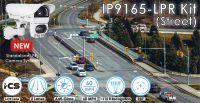
With the adoption of snap-in corresponding IR LEDs and a built-in headlight filter, the street monitoring camera system solution, IP9165-LPR (Street) licence plate recognition kit, delivers results for licence plate recognition in both the highest levels of glare and in the darkest hours of the night. Empowered with VIVOTEK LPR Scene Mode,, which provides different exposure levels to avoid overexposure in some lighting conditions, the kit can capture clear plate images from the vehicles moving at speeds of up to 90 kph.
www.vivotek.com
Sensors and hub OVAL Digital
Wire guard
STI
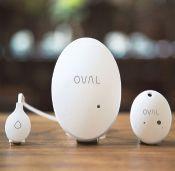
The OVAL Smart Home 5-in-1 multi-function smart sensor system includes two OVAL Sensors and the OVAL Hub. In partnership with the Amazon Launchpad program, OVAL availability will continue to expand globally. OVAL provides real-time monitoring, detection and alerts to changes in motion, light, temperature, humidity and water without the use of cameras or microphones. By alerting users in real-time to everything from open windows to water leaks, the company says OVAL helps prevent theft, accidents and property damage.
Wireless conference system TOA Canada
www.meetoval.com
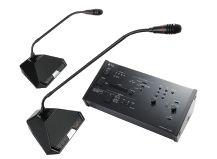
TOA’s TS-820/920 infrared wireless series conference system provides secure infrared communication and voting capabilities for vital corporate meetings. Recordings are stored in the internal storage or external USB memory and easily accessible with TOA’s management software accessed through a PC.
One key improvement in this iteration is the enhanced Feedback Suppression that incorporates a seven-point filter to minimize feedback. The limited open mics feature supports well-organized meetings, avoiding disorganized remarks.
www.toacanada.com
Electronic lock
SALTO
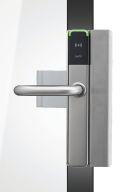
The SALTO XS4 One Deadlatch electronic lock is part of the XS4 platform, adding a new design with a new built-in reader. It includes the latest electronic components — RFID (MIFARE DESFire and HID iCLASS Seos), BLE (Bluetooth Low Energy), NFC (Near Field Communication) — which enables compatibility. The reader is available in black and white, has a narrow profile and is designed to fit most aluminum-framed doors. Using smart keys and mobile technology with the SALTO XS4 One DL allows users to manage access rights. www.saltosystems.com
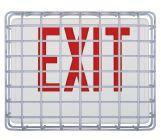
The Exit Sign Damage Stopper offers protection for signs against vandalism and accidental damage. Constructed of tough, 9-gauge steel wire coated with corrosion resistant polyester, the wire guard helps reduce maintenance costs. The cage is suited for areas where abuse is severe or it is imperative devices continue to operate for the safety of building occupants. Suggested for gymnasiums, exit signs in remote locations, unsupervised areas and more, the guard helps decrease maintenance costs, reduces time spent replacing broken or stolen units, waiting for parts to arrive, etc., says the company. Four models are available.
www.sti-usa.com
Low light solution
Dahua Technology
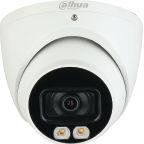
A new addition to Dahua’s line of security cameras is Whitelight LED Night Color technology. Night Color cameras use high-performance image sensors and do not require a True Day Night IR cut filter. Instead they use a high-performance sensor and ISP, as well as an achromatic large aperture lens. This light-sensitive technology allows the camera to capture more available light, creating full-colour images with high detail. Night Color requires at least 1 lux of ambient or artificial light. White-light LEDs are built into Dahua’s new 4MP ePoE Night Color Network Dome Camera (N45EJ62). www.dahuasecurity.com
Product Previews The latest in security technology
Fisheye camera
Hanwha Techwin America
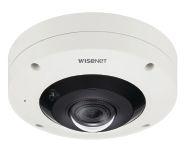
The XNF-9010RV is an ultra-high-resolution fisheye camera with 12MP sensors, and is equipped with Wisenet 7, which offers extreme WDR, noise reduction, onboard dewarping and enhanced cybersecurity features. The XNF-9010RV fisheye camera can provide 360° monitoring with a single camera and stereographic lens to offer high quality images. The enhanced WiseIR (infra red) allows users to adjust the IR level of the images’s centre and edge regions independently for different monitoring environments, minimizing light over-saturation caused by the movement of objects or reflections on walls. www. hanwhasecurity.com
Face mask detection
Intelligent Security Systems
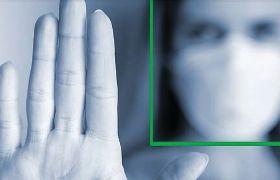
The SecurOS Face Mask Detection (FMD) solution is designed to help organizations safely and quickly restore, maintain and further protect operations. SecurOS FMD automatically detects when an individual attempts to enter a facility without wearing a face mask where required, and alerts administrators. ISS FMD is built using advanced neural network-based algorithms to deliver high accuracy with real-time detection, and works with any camera, using off-the-shelf computers, while eliminating the need for any special GPU cards. issivs.com/COVIDresponse
Keypad
Sargent and Greenleaf (S&G)
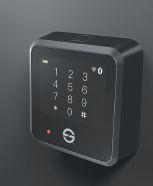
The I-Series Keypad fits standard safe lock keypad footprints. A brushed black aluminum casing houses a biometric finger scan and LCD touchscreen, with impact-resistance and durability. The screen exceeds UL impact protocol. Through the S&G secure mobile app with advanced encryption, consumers, banks and businesses have access to instant upgrades. Features and functionality are customizable and immediate. The I-Series Keypad supports three methods of entry: touchscreen keypad, biometric finger scan or touch-free mobile app. www.sargentandgreenleaf.com
Electronic locks
dormakaba
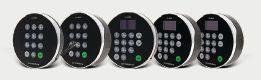
dormakaba has refreshed its line of LA GARD electronic locks and keypads, including firmware functions and software. The LA GARD 700 Series includes: an integrated keypad display for ease of operation; easier programming on a large scale; improved battery life and quicker exchange; updated software for robust management; and mobile access with BLE key fob as second credential or time-delay override. The LA GARD 700 Series product line allows users to start with its standard model and scale forward by replacing the control unit. The whole lock does not need to be replaced in order to gain access to the advanced functions in each tier.
Storage cabinets
AmpliVox Sound Systems
www.dormakaba.com
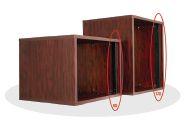
AmpliVox Sound Systems has introduced new ready-to-assemble cabinets for uncluttered storage of electronic components. The economical, Made-in-the-USA cabinets ship flat and assemble easily with included hardware. There are two sizes – Model RC8002, 16”H x 21”W x 18”D that accommodates standard 8U rack rails, and Model RC1202, 23”H x 21”W x 18”D, that accommodates standard 12U rack rails. The cabinets are designed to match current décor, with a choice of oak, mahogany, or black melamine. Other options include a door with lock, and casters (two locking, two non-locking.) AmpliVox also manufactures fully-assembled rack cabinets with a full range of features, in 12U and 21U sizes. www.ampli.com
Security shutter
Wayne Dalton
Anti-ligature locksets
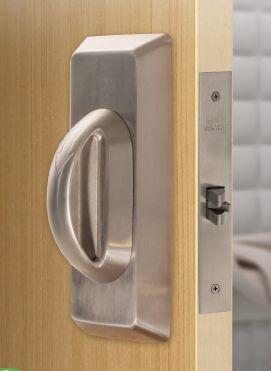
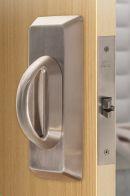
Marks USA New to the LifeSaver series, the 5-Point Ligature-Resistant Slide Behavioral Health Models are Grade 1 anti-ligature locksets, available in cylindrical and mortise. The solid stainless steel handle slides down freely in the locked or unlocked position and is tamper-proof. They meet the latest BHMA 156.34 Anti-Ligature trim standard, accepted by OMH, NYS Office of Mental Health Patient Safety Standard and are JHACO approved. They are also available with GermAway anti-microbial finish, a built-in germ barrier & special antimicrobial finish. www.marksusa.com
The Model 523RX Security Shutter is a UL-325 listed door and operator system for securing exterior access to residential properties. This door system is designed to be installed at the driveway access from the street or entrance to residential properties in high traffic areas, preventing unwanted access. The security shutter door is available up to 16’ high x 12’ wide and has a two-year limited warranty on its parts, components and finish. For additional security, cylinder locking options are also available. www.wayne-dalton.com
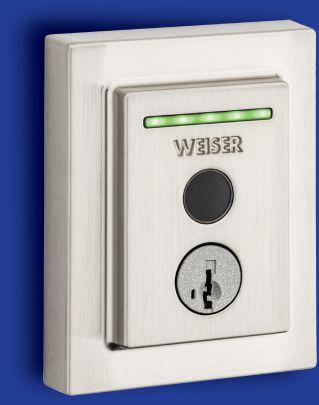
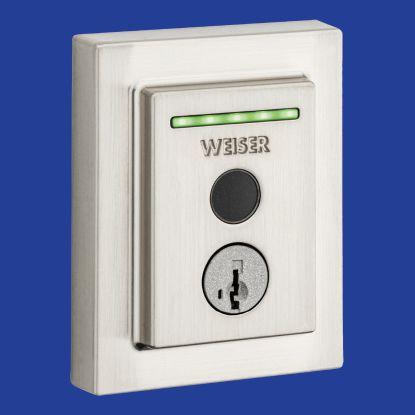
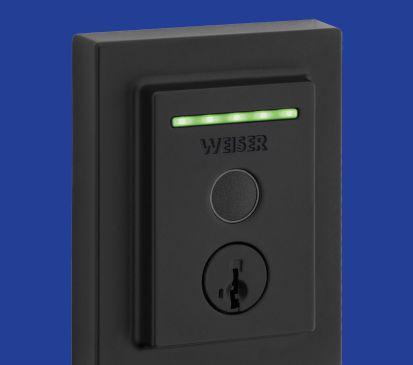
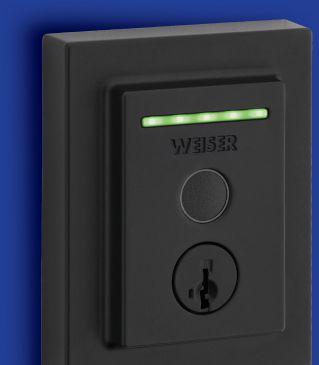
WI-FI ENABLED SMART LOCK WITH FINGERPRINT ACCESS
1 UNIQUE FINGERPRINTS
WI-FI ENABLED
• Up to 100 fingerprints/50 users
• BHMA Grade 2 certified
• 256-bit AES encryption encryption security
• Featuring SmartKey Security™ - protecting against advanced break-in techniques
• No hub required by connecting directly to your home Wi-Fi network
• FREE text & email notifications • FREE unsupervised openings & closings • FREE report distribution for you and your customers