HOME AUTOMATION
A look into the products, technologies and solutions shaping the market
Sponsored


Image: Hispanolistic / E+ / Getty Images

A look into the products, technologies and solutions shaping the market
Sponsored
hen a fire strikes, there’s no room for compromise. Whether they know of its exis tence or not, employ ers and employees count on the fire detection system and associated alarm communicator at the heart of a building’s life safety system to keep them protected.
Security and life safety integrators want a reliable communicator that’s 5G-ready, reduces installation and service issues and increases RMR.
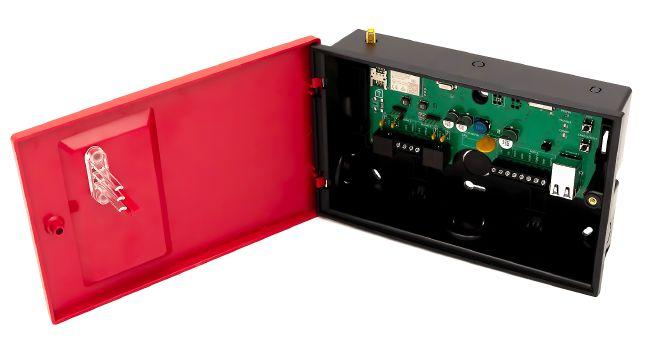
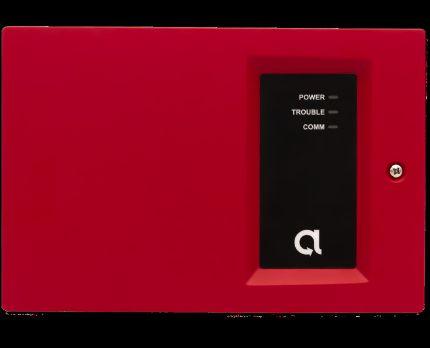
Meet the all-purpose, full-featured BAT-Fire communicator from Alula. It fulfills most everyone’s fire system communication needs while building on Alula’s history of developing award-winning products and services.
The universal BAT-Fire communicator supports virtually all commercial fire alarm panels via Contact ID or programmable inputs/outputs. For panels that support Contact ID, simply connect the BAT-Fire via its dual Tip & Ring Dial Capture, configure the communicator, and the system is ready to go. For panels that do not support Contact ID, the BAT-Fire comes with flexible inputs/outputs that can be used for communicating signals from dialer-less FACPs.
The communicator can be configured to meet all local regulations and has received UL certification as a commercial fire and burglar system communicator (UL864 10th Edition, ULCS559, UL1610, ULC-S304). It has also been approved by the Fire Department of New York, and California State Fire
Previously, integrators may have needed multiple communicators to provide redundant communication paths. BAT-Fire offers dual-path communications (cellular and IP) to ensure it does its job when needed. What good is a communicator that doesn’t work during an emergency? If needed, you can turn the cellular radio on or off, something other communicators can’t do.
Save on maintenance calls
Rolling a truck for every service call is expensive. BAT-Fire reduces on-site service calls by offering remote troubleshooting – eliminating the need for many service visits. BAT-Fire enables remote programming and managed over-the-air firmware upgrades. Some jurisdictions and applications require that someone be onsite for device updates. In those instances, over-the-air upgrades aren’t applicable. If technicians are required to be on-site, send them off knowing the problem and ensuring they carry the right equipment to complete the job. BAT-Fire also offers at-a-glance system status via front panel LEDs.
Integrators also save time validating battery calculations as BAT-Fire can be powered from the panel at 12V or 24V, using less current and ending the need for a different power supply or a higher capacity backup battery. If a separate power supply is needed, Alula has one that gets the job done.
Integrators understand the time and expense required to upgrade a fire communicator for each new generation of cellular service. Skip the next and inevitable 4G sunset with BATFire’s UL-approved CAT-M1 technology that’s 5G ready.
BAT-Fire also comes with Alula’s industry-best five-year warranty, so integrators and property owners feel confident their time and money are well protected.
RMR is a critical component of any integrator’s or dealer’s business. That’s why BAT-Fire was designed with RMR in mind. A good example is the device’s four programmable inputs or outputs that enable monitoring auxiliary building systems such as HVAC and sprinkler flow control. That’s a good source of recurring revenue.
Ease of installation, remote diagnostics, fewer maintenance calls and RMR opportunities were part of the grand plan when Alula engineers sat down to design an innovative and reliable fire communicator. According to Dave Mayne, Alula’s Chief Revenue Officer, BAT-Fire wasn’t rushed to market.
“We took our time designing BATFire to meet the needs of a proven, mature and established market,” he said. “BAT-Fire offers features that help reduce the total cost of ownership and reduce the complexity of fire communicator installations.”
Learn more about BAT-Fire and the rest of Alula’s complete solutions for SMB and residential applications.
The ideal solution for system integrators who want a versatile, dual-path fire communicator with four programmable input/outputs.
$99 SERVICE CREDIT on all Alula panels & communicators alula.com/service-credit
Near-universal FACP compatibility with dialer-capture and point-capture FACPs.
Operate at either 12V or 24V and use minimal current to ensure your backup power requirements can be met.
Eliminate the inevitable LTE/4G sunset by installing a fire communicator that’s 5G-ready.
Sole path cellular, IP, or dual-path communications.
Supports 12V and 24V FACPs
CAT-M1 cellular is 5G-ready
Supports Contact ID reporting format
Four programmable input/outputs
Alarm capture via phone line interface or standard alarm outputs
UL certified for usage in commercial burglary and fire applications
If you are currently providing 800 services to your alarm dealers today why not add KeepYourIP™ to your existing portfolio of services and promote the ability to move clients as needed when and if they decide to change. Even if you decide not to participate in our partner program you might consider working with KeepYourIP to minimize the dependence on ISP’s.
Centralized management through our online portal will enable your monitoring center to reroute alarm signals from an IP receiver to another IP receiver at an alternate location in less than 15 minutes in the event of a disaster.
If you change your Internet Service Provider you will be able to do so without having to bring inconvenience to your alarm dealers or the cost of sending technicians out to change to the new IP provided by your ISP.
Alarm companies understand that the best way to protect their business against potential losses from signal unreliability is by implementing a solution that allows them to keep their own IP address.
KeepYourIP™ is the only company with a secure forwarding service that allows alarm companies to program their own IP address – and, communicate their IP alarm panels to central station monitoring receivers – all without the customer’s awareness.
With the Keep Your IP solution, alarm companies can:
• Easily control how subscriber alert signals get routed.
• Control the destination of where the signal terminates to.
• Be more competitive and scalable.
• Experience faster, cleaner routing with total customer confidence.
KeepYourIP offers the first and only IP data forwarding service designed exclusively for the electronic security industry. It’s the number portability that alarm companies have always wanted, long before the technology existed. Now, the technology exists — and it’s only available from Keep Your IP.
KeepYourIP™ has deep experience supporting central station brands across the security industry. Contact us anytime for more information or assistance or visit our website: www.KeepYourIP.com

University Medical Center in Salt Lake City, Utah, has contracted with Mountain Alarm, a leading regional provider of comprehensive security and life-safety products and services, for a complete upgrade of its fire alarm system. The project incorporates a total replacement of the alarm system, supporting electrical wiring infrastructure, and new head ends to bring all buildings together within a common Fire Command Center. Mountain Alarm General Manager Boyd Ferrin and Outside Sales Representative Kirt Blackburn relied on WeSuite sales management software to simplify the design and quoting processes for this particularly complex system.

Supply chain issues also impacted the quoting process. “I’ve been in this business for 34 years, and I’ve never experienced such a hard time getting parts or seen prices increase so quickly,” says Ferrin. “There are many variables on this job, and sometimes we’ve had to change plans if we can’t get a part. That’s most easily done using a program like WeSuite. It’s integrated with our accounting platform, so when we upload parts and pricing from our vendors, which is now happening more frequently than ever, it appears within the WeSuite quoting software instantaneously.”
The hospital is a five-story building that required over 400 new devices, including smoke detectors, audio visual devices, monitor modules, fan relay shut downs, duct detectors, and head-end workstations.
“Beyond the high device count, we also had to quote labor, chargeable items like drawings and permits, recurring monitoring fees, and electrical subcontractor labor. Putting this all together in a spreadsheet system would have been overwhelming. Plus, as changes to our plans occurred, it would have been exceptionally challenging to maintain and manage without WeSuite.
“With WeSuite, we built the job using different folders for each building and certain elements, like per head end and the work handled by the electrical subcontractor. We could break out different sections for the University to review separately or show it combined as one complete job, with minimal effort on our part.”
Ferrin stresses, “We needed to take care of our fiduciary responsibility to the University, which is a non-profit. With WeSuite, we have the flexibility to change margins on parts or reduce the overall price. There were many ways we adjusted pricing to save the University money while remaining within our established discount range.”
WeSuite’s flexible and robust platform can handle any type of quote, from simple to highly complex, but its many features are consistently easy to master. Blackburn, who joined Mountain Alarm just shy of two years ago, says, “After a month of using it, I was a pro. So many processes are automated; it’s just a matter of learning which little button to press.”
Compared to the software Blackburn used for quoting at his previous employer, also a systems integrator, he says, “I used to use three different sets of software every time I had to do a change order. What used to take me an hour and a half, I can do in 20 minutes with WeSuite because everything is all in one place. Just in time savings, that’s awesome.” Ferrin ads, “When we put together a proposal, we can lay everything out with all the parts, we know our margins, and we can work with a checklist built into the software that makes sure everything is complete.
“When designing and quoting a project like this, WeSuite ensures that we represent ourselves to the client in the most professional way possible. The Medical Center system took us a year and a half to build. I can’t imagine how we would have handled it without WeSuite to keep everyone connected and on track.”

False alarm reduction, employee retention and improved relationships with police responders are just some of the positive outcomes of advanced software
By Brian Baker
Artificial intelligence-based technology is helping some of Canada’s leading central monitoring stations improve customer service and handle more business without adding employees. And more AI capabilities are on the horizon.
We recently asked three leading station representatives about the technologies in use, the benefits, and expected breakthroughs over the next few years.
The executives included:
• Aleksei Bulavko, research, development and production manager, Ra-
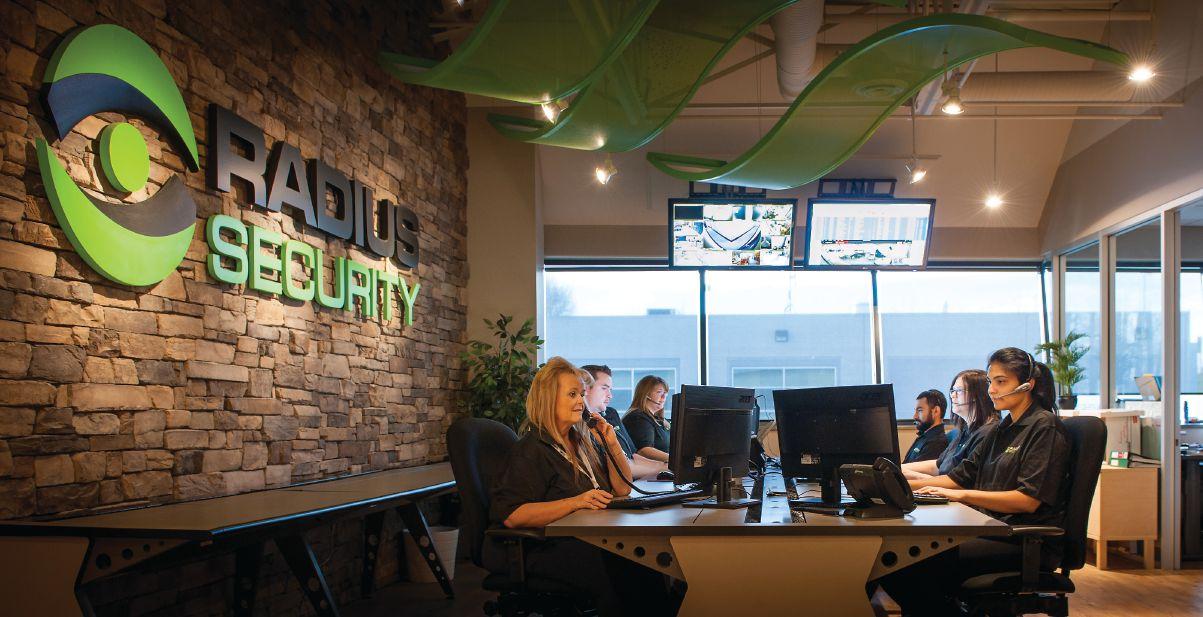
dius Security. Radius provides monitoring services across Canada and the Dallas-Fort Worth and Austin, Tex., areas from its Vancouver-based command centre.

• Daniel Cyr, chief executive officer of Sirix, a Laval, Que.-based provider of video monitoring, perimeter control and remote control of specialized equipment, for authorized integrators in Canada and the U.S.
• Fredy Ramsoondar, private investigator for Edmonton-based GPS Security Group, providing western Canada customers with video monitoring, hu-


man guards, security audits and planning and emergency services.
Camera-based analytics, introduced about 20 years ago, offered motion-based alerts that highlighted potential criminal activity at a monitored site. However, there was a problem — up to 98 per cent of alarms received were caused by non-critical activities such as wind-blown foliage or stray animals. Later, server-based analytics enabled the quick location of events after they occurred.
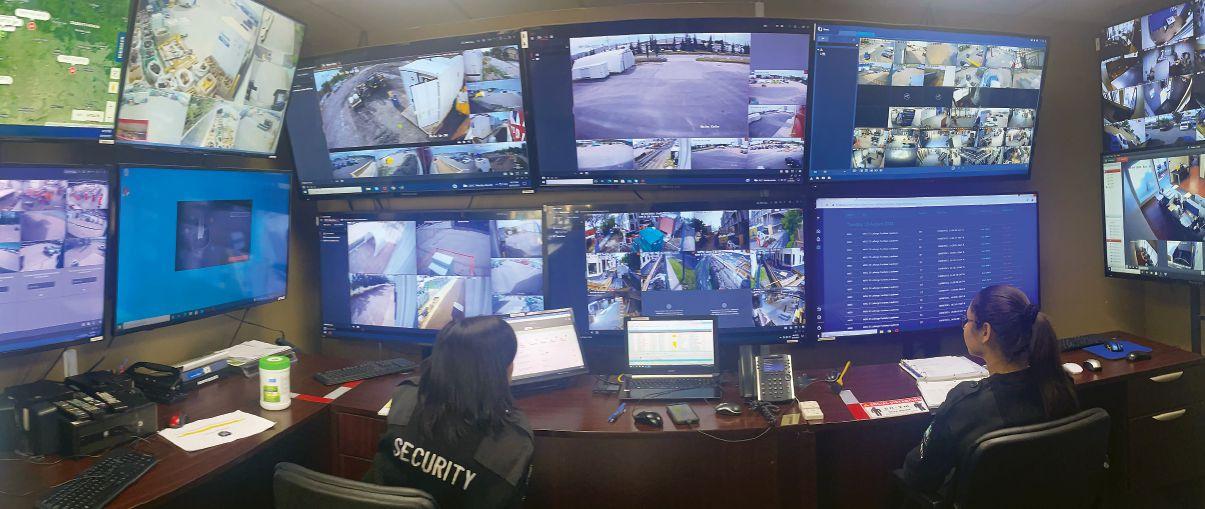
New artificial intelligence-based software eliminates more than 90 per cent of false alarms by focusing on real-time images of humans and vehicles captured by surveillance cameras. All three executives agreed this is a game-changer for the remote video monitoring industry.
Cyr said Sirix previously declined to accept customers if the analytics they were using weren’t advanced enough. That’s no longer a problem with the advanced AIbased software Sirix now uses.
“Today, the software enables us to monitor virtually any site while receiving fewer false alarms,” he said. “Now we focus on the services we offer and worry less about the equipment we’re monitoring. This helps us grow our business.”
GPS’ Ramsoondar called the new software platforms “essential” to his business as they keep station operators focused on successfully handling true alarms.
“False alarms significantly reduce the time our staff spend verifying the validity of each alert,” he said. “We monitor more than 1,000 cameras each night and now we’re confident we won’t miss the events that matter to our clients.”
Here’s a brief look at how false alarm reduction software is created and works once deployed.
Neural networks within the AI-based software “learn” in a similar way as a human brain. In this tedious and time-consuming deep-learning model, the software is shown millions of sample images of people. Over time, and with human corrections, the software becomes more accurate, recognizing people wearing hats, glasses and varied clothing. Vehicles are added in a similar process.

In the field, alarm-generated video is transmitted to cloud-based software, which eliminates non-actionable activity and sends true alarms to a monitoring station in a process that takes about a second. The software continues increasing its accuracy with use. Also, intelligent video analytics don’t get tired or lose focus, maintaining their accuracy throughout the day.
Radius Security’s Bulavko said he appreciates cloud-based software as it requires no extra devices at the Radius station or on a customer’s property and it’s easy to add cameras as the business grows.
The three executives agreed that employee burnout from handling false alarms leads to retention issues. Cyr said Sirix spends three months training new operators to perform the job the way he wants it done. Altogether, the training costs equal a year’s salary for an operator.
“I can’t afford a high turnover rate — that’s the No. 1 thing I worry about,” he said. “Any business is only as good as its employees, so we try to make our operators’ jobs as easy as possible. The improvements we make for our employees are important.”
He gave an example of a monitored car
dealership that attached small flags to each vehicle to draw customer attention. When the wind blew, the Sirix station would get as many as 200 alarms a night, driving operators “crazy.” False alarm reduction software eliminated the alerts.
Ramsoondar said GPS provides a financial incentive for each operator successfully resolving an alarm. He said there was never any intention to replace operators with software. Now, any redundant GPS operators work in other areas of the company to help build the business.
Law enforcement organizations often were burned by false alarms, dispatching officers to a site only to find nothing happening. Today, video monitoring stations work hard to develop and maintain a strong relationship with local law enforcement.
Bulavko said when his operators call law enforcement to dispatch officers, they also can provide a four-digit code enabling officers to use in-vehicle laptops or mobile phones to view an online site map and live video events from the site. Officers learn how many people are involved and if anyone is openly carrying a gun or another weapon.
The executives offered opinions on what they see as the next monitoring centre uses of AI-based software. Ramsoondar predicts more filtering capabilities. For example, he said station operators would know a person was a member of a client’s team by identifying a distinctive yellow jacket they wore.
“We’re also hoping for predictive or behavioral capabilities that might catch a criminal event before it happens,” he said. “Software could highlight someone repeatedly walking back and forth or loitering in an area as someone casing a facility.”
Bulavko sees big data as a growing and valuable asset for predicting events.
“Computers are much better and faster at detecting patterns than humans,” he said. “Looking at the data gathered from entire sites, or a single camera over the years, we’ll be able to predict which days and times are most likely to have more alarms and schedule our staff accordingly. Rather than wait for a surprise, we’ll prepare in advance.”
Also, Bulavko said advanced metrics,
including the number and type of alarms coming into a station and an operator’s response time, helps managers make many operational decisions. Often, customers want a dashboard enabling them to follow activities.
Cybersecurity is another potential service stations may offer. Ramsoondar said GPS is completing compliance with ISO27001, an international standard for security management systems used to maintain security for assets such as intellectual property and financial and employee data.
“Once we’ve implemented the program, we’ll assist our clients with their IT systems with an eye on how they’ve structured cybersecurity,” he said. “We’ll provide IT audits and recommendations on ways to enhance security.”
Bulavko said he expects greater acceptance of remote guarding, which offers virtual camera-based patrols to monitor intrusion, fire and other activities. The service also includes two-way audio talk downs and recorded messages to engage with intruders before calling law enforcement.
Integrators can generate recurring rev-
enue selling service contracts from Sirix. Cyr said the company monitors its online connections to end users’ devices, checking for camera and server failure and blocked and misaligned camera views.
“Every day, we remotely check on camera and server health and deliver a report to our integrator customers, helping keep them ahead of problems,” Cyr said. “All the integrators need to do is add their logo and mark up the fee providing a source of RMR.”
AI-based technology is changing how remote video monitoring centres function, making operators more efficient and saving time and resources in other business areas. Technology advances promise even more uses soon. However, it may be years before monitoring centres fully realize the promises of AI technology.
Brian Baker is chief revenue officer for U.K.based Calipsa (www.calipsa.io), a provider of deep learning-powered analytics for false alarm reduction. GPS Security Group, Radius Security and Sirix use Calipsa’s FAR technology platform.