

The Monitoring Association (TMA) is in the midst of developing a new Alarm Validation Standard (TMA-AVS-01) designed to provide central stations and first responders with a greater level of certainty as to whether an alarm signal constitutes a real emergency or not.

The alarm and security industry has been confounded by a high level of false alarms for decades, with some jurisdictions reporting false alarm rates of 95 per cent or higher. TMA and the committee that is currently working on the Alarm Validation Standard hopes to address that issue and help responders make more informed decisions by better utilizing the trove of data that today’s security and alarm systems can generate.
“What we’re trying to do is restore public safety confidence in intrusion detection, burglar alarms and such security systems,” said Jay Hauhn, a committee member and former TMA CEO and executive director.
When an alarm is tripped, a signal is received by a central monitoring facility, but there is often a raft of other data that may be generated, including video and audio. When available, information is typically examined after the alarm event has taken place. The goal of the proposed validation standard is to use that data, as well as other existing information, to quickly produce a classification that could help responders understand the type and criticality of the emergency they are facing.
In the event of an alarm signal, “we look and see what data is available with respect to that burglar alarm activation and use that data to put a confidence classification together to determine the probability of a crime in progress,” explained Hauhn. That score would be communicated immediately to a 9-1-1 centre or emergency communications centre. “We’re trying to provide them with additional information that will help them set their response policies.”
Many modern automobiles are equipped to report relevant and timely sensor information in the event of a crash, such as the speed the vehicle was travelling, airbag status, position on the road, etc. “We’re trying to duplicate that philosophy in intrusion detection,” said Hauhn. “It goes without saying that we’re becoming a data centric world — everything we do is data driven.”
Alarm.com, for example recently introduced its Ambient Insights solution, which according to a company press release, is able to recognize activity around a property and “delivers contextual information to monitoring stations in the event of an alarm. Monitoring stations can use this real-time data to prioritize alarms and dispatch police, fire or emergency medical services to properties faster.”
“Ambient Insights for alarms, in conjunction with The Monitoring Association’s proposed Alarm Validation Standard, will provide significant opportunities to make it possible for alarm responders to make better-informed decisions,” said Alicia Burns, public safety technology alliance manager for Alarm.com, in a statement.
“This could be a paradigm shift in the way alarms are dispatched.”
— Mark McCall,Alarm Validation Standard committee
The standard was first proposed as a working group within the Partnership for Priority Verified Alarm Response (PPVAR), an organization that promotes the value of alarm validation and verification. It was again raised in TMA’s long-range planning meeting in 2020, and now consists of a committee of more than 40 members, including stakeholders from across the alarm industry, such as central stations, equipment manufacturers, software developers and public safety representatives.
“There’s no question the strength of this standard is in the diversity of the people that are part of the committee. The input that we’ve had from public safety has been invaluable. Ultimately, they are the consumer of this standard... Their input has been critical and will continue to be critical as we move forward,” said Mark McCall, a committee member and director of global monitoring, Stanley Security. “When you can look public safety in the eye and say, ‘Does this help you?’ When we can have that immediate feedback from them, it’s just hard to put a value on that.”
“I’ve been involved in a lot of standards over the years but this is the most diverse group,” added Larry Folsom, vice-president, monitoring technology, ADT and a PPVAR board member.
Committee meetings began over a year ago, and the group currently meets biweekly. “We’re at the point now where we’re starting to put standards language down on paper and debate it, update it and edit it,” said Hauhn.
Beyond the reams of data that modern alarm systems can generate, the group is also taking into account other information that could contribute to the effectiveness of the standard. “We’re also trying to bring in as much technology that’s out there that may not be the traditional technology the central station looks at as well,” said McCall, adding that everything from weather reports to local crime statistics could also be used to bolster the classification system.
“This could be a paradigm shift in the way alarms are dispatched and how we receive that information and translate that into a response strategy,” added McCall.
The committee aims to release the draft standard for public comment in October, with the goal of having the American National Standards Institute (ANSI) publish by year end. Hauhn anticipates that the standard will be rolled out in the U.S. first, but said there is potential for adoption across North America in the future.
— Neil Sutton
Belleville, Ont.-based Alarm Systems and Sarnia, Ont.-based Security Response Center (SRC) recently announced a monitoring partnership.
Chris Currie, president of Damar Security Systems and SRC, said he and Alarm Systems president Kristin Crowe have known each other for years and there are similarities between the two organizations that make them a natural fit for a partnership.
“There was a lot of good synergies already in place,” said Currie in an interview with SP&T. “Once we had initial discussions about [Alarm Systems] coming over to SRC for their monitoring, that’s when the conversation started.”
Crowe described the experience as “the stars aligning and the dots connecting.
“Our stations operate on the same monitoring software,” she said. “Folding our station into SRC’s existing network, including our team of experienced signal receiving operators, is a win-win for everybody.”
Speaking on behalf of SRC, Currie said the company invested in its monitoring infrastructure to make sure that all of their dealers have access to the best of the best in regards to technology.
“Alarm Systems is going to have access to that infrastructure now, and we’re also going to have more operators online as well,” Currie explained. “We brought over seven operators from Alarm Systems … and we’ve got additional staffing. It’s just going to be an all-around better situation for clients.”
Crowe said that Alarm Systems now has enhanced offerings for their customers — an advantage now available through their partnership with SRC.
Crowe added that working alongside Currie and his team has been a positive experience, as well. “When a particular issue or obstacle is presented, the team at SRC says, ‘OK, how do we tackle this, let’s work through this,’” Crowe said. “They really are a pleasure to work with. I’m very excited about this new partnership.”
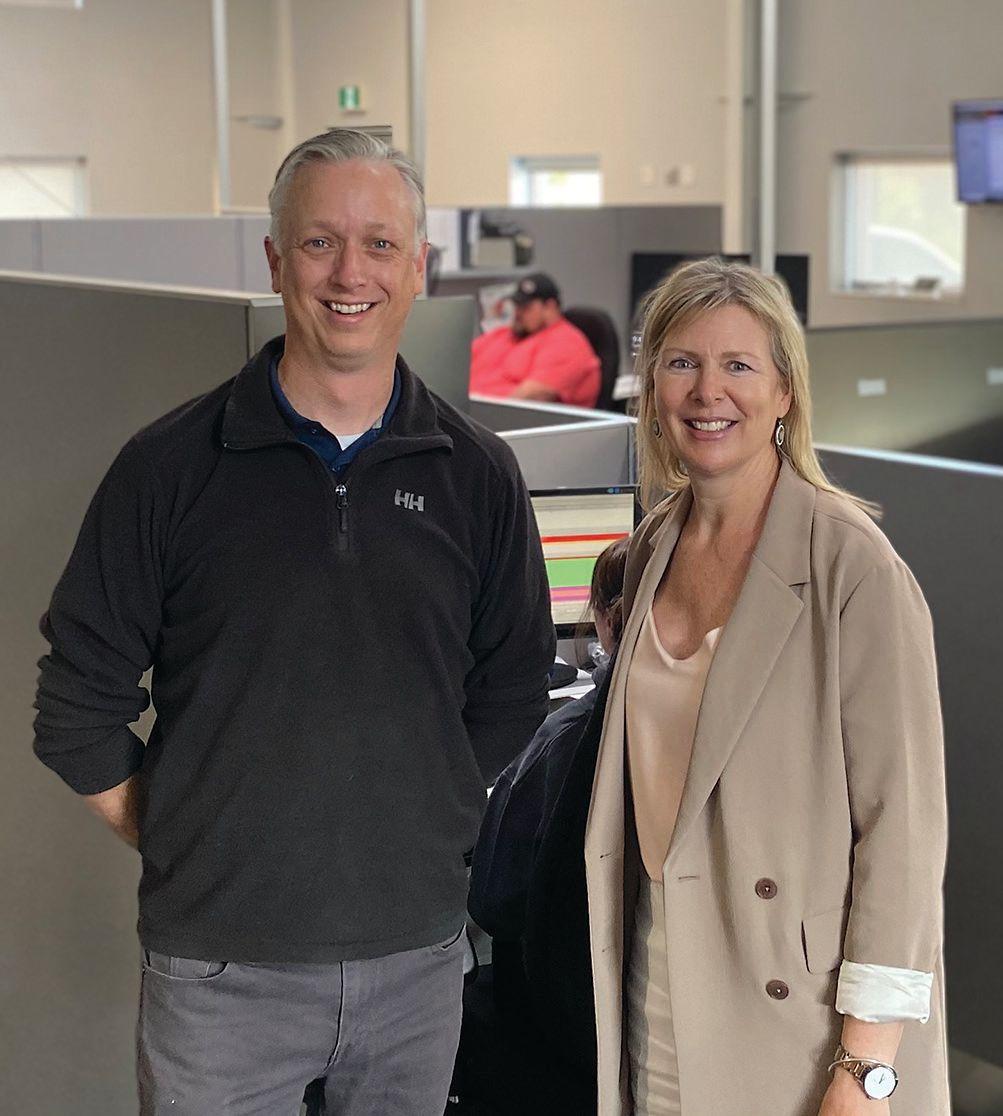
Asked about the benefits they would like to see for Alarm Systems and SRC, Crowe and Currie’s answer was simple: growth for both companies.
“We’ve got common values, and we’ve got common goals,” Crowe explained. “We are both looking to grow our existing customer base and become a stronger presence in the industry and the communities that we serve.”
With Alarm Systems celebrating 50 years in 2022, Crowe said the company has a number of long-term loyal customers and they are “thrilled to be protecting many new customers.”
“Offering both commercial and resi-
dential customers leading edge technology and automation is critical,” Crowe explained. “Our supply chain partners have assisted us in achieving this at the customer site. Our recent partnership with SRC has now enhanced our offerings for monitoring.”
Currie added, “We’re continuing to provide the great level of service that all of the customers have come to expect out of Alarm Systems when they were doing the monitoring, and SRC now that we’re doing the monitoring. Ultimately, we just want to make sure that they’re taken care of and looked after.”
— Alanna Fairey
If you are currently providing 800 services to your alarm dealers today why not add KeepYourIP™ to your existing portfolio of services and promote the ability to move clients as needed when and if they decide to change. Even if you decide not to participate in our partner program you might consider working with KeepYourIP to minimize the dependence on ISP’s.
Centralized management through our online portal will enable your monitoring center to reroute alarm signals from an IP receiver to another IP receiver at an alternate location in less than 15 minutes in the event of a disaster.
If you change your Internet Service Provider you will be able to do so without having to bring inconvenience to your alarm dealers or the cost of sending technicians out to change to the new IP provided by your ISP.
Alarm companies understand that the best way to protect their business against potential losses from signal unreliability is by implementing a solution that allows them to keep their own IP address.
KeepYourIP™ is the only company with a secure forwarding service that allows alarm companies to program their own IP address – and, communicate their IP alarm panels to central station monitoring receivers – all without the customer’s awareness.
With the Keep Your IP solution, alarm companies can:
• Easily control how subscriber alert signals get routed.
• Control the destination of where the signal terminates to.
• Be more competitive and scalable.
• Experience faster, cleaner routing with total customer confidence.
KeepYourIP offers the first and only IP data forwarding service designed exclusively for the electronic security industry. It’s the number portability that alarm companies have always wanted, long before the technology existed. Now, the technology exists — and it’s only available from Keep Your IP.
KeepYourIP™ has deep experience supporting central station brands across the security industry. Contact us anytime for more information or assistance or visit our website: www.KeepYourIP.com
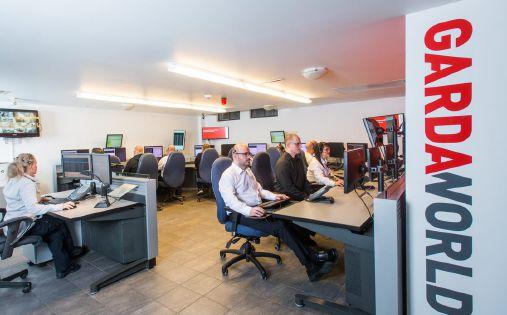
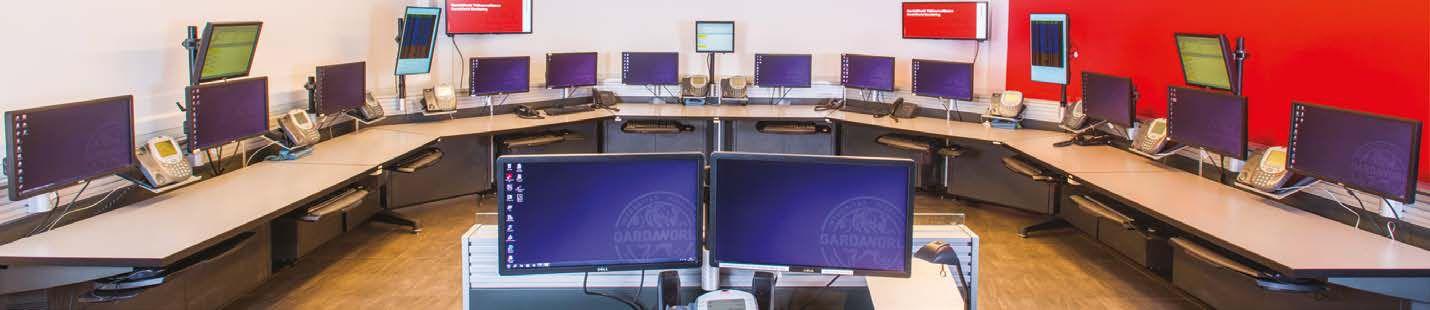
GardaWorld Monitoring is an alarm monitoring centre specializing in video surveillance, alarm signals and dispatching emergency services for security companies across Canada. With over 40 years of experience in the alarm industry, our management team has built a passionate and highly disciplined team of security experts.
In September 2021, we expanded the GardaWorld Monitoring service offering by integrating a completely dedicated account management team for our third-party partners, led by Josée St-Jean, Director of Partner Services. Formerly the Director of our Monitoring Station, Josée’s over 25 years and expertise in the industry provide her with a deep understanding of monitoring operations and the technology required to maintain operational integrity. This experience, coupled with her dedication to fostering and growing relationships to their utmost potential, make Josée the perfect fit for this role. She has already introduced an elite level of customer experience through this new direct line of contact with our Monitoring partners, with room to embrace new partnership opportunities.
Behind this great leader, is a strong and knowledgeable team, offering improved communication levels and implementation of industry best practices. Our technology combined with a solid hands-on approach is a win-win for both GardaWorld and our partners.
The GardaWorld Monitoring difference
Here’s what you can expect from GardaWorld Monitoring services:
• Extensive protection against unforeseen events: Our redundant facilities, software and equipment are designed
to provide consistent, top-quality service, and are supported by multiple alternative power supplies in the event of a power outage.
• Our stability as a business: As the largest private security firm in the world, GardaWorld has the knowledge, skills and resources to deliver the quality of service that has earned us our reputation. Our established brand can also be a powerful asset to assure your customers of the seriousness of your service offering.
• Bilingual, qualified and professional staff: From carefully selecting personnel to ongoing training, advantageous compensation and recognition plans, nothing is left to chance when it comes to providing you with committed, competent and courteous teams who will treat your customers with professionalism.
• A wide range of solutions and technologies: We support a very wide range of communication technologies to grant you the utmost flexibility and we constantly add new options that will allow you to expand your range of services.
• Key services to support your business: Our services are listed on the neighbouring page. We can activate new customers 24 hours a day, 7 days a week, giving you the flexibility to manage your business according to your schedule.
• Experience in all sectors: We monitor +60,000 customers across multiple sectors, including residential, commercial, industrial and institutional properties. Our monitored sites include school boards, city halls, water pumping stations, farms, greenhouses, elevators, data centres, car dealerships and pharmaceutical laboratories.
• ULC-approved monitoring centre: Our monitoring centre is approved for fire and burglary by the Underwriters Laboratories of Canada (ULC), which means that we meet the highest standards of performance and employee training.
Choose GardaWorld Monitoring to ensure your clients’ safety and support them with courtesy and professionalism. Josée and her team are ready to help you reach your monitoring program’s full potential.

• Monitoring by landline, Internet, cellular communicator or DVAC link
• Medical alarm monitoring and two-way voice intervention
• Video surveillance with cloud hosting and analytics
• Access to your client files via the web/mobile application
• Activity reports and open/close signal reports via email or SMS
• Direct billing service and first-level technical support to your customers
• Virtual guard: verification of each camera at specific times
• GardaWorld mobile patrol units for alarm response or prevention patrolling

Five business leaders recently met with SP&T News for a virtual discussion about the Canadian security industry’s legacy, growth, challenges and prospects
To mark the occasion of
SP&T News’ anniversary, we assembled a panel of experts to take the pulse of the security industry. After 25 years, there’s a lot to talk about.
In June, SP&T editor Neil Sutton met with five individuals via a video chat to debate the issues of the day, reflect on security life in the ’90s and early 2000s, and get a sense of where we might be going next, particularly in light of a difficult 18 months due to the pandemic.
Participants included: Kim Caron, director of business development, Armstrong’s National Alarm Monitoring; Chris Currie, president, Damar Security Systems and Security Response Center; Roger Miller, president, Northeastern Protection Service; Iain Morton, executive vice-president, Paladin Technologies; and Kevin Leonard, chief operating officer, Huronia Alarm & Fire Security. This conversation
has been edited for concision and clarity.
SP&T News: As the security industry has evolved over the years, is there anything that makes you say, “I’m glad I don’t have to deal with that anymore!”
Kim Caron: The first thing that comes to mind is, I’m glad I’m not on call anymore — 24 hours a day, seven days a week, 356 days a year. For many years...
Chris Currie: I think of this on the alarm communications side. There’s no more
DVACS, no more direct wire, no more McCulloch or any of that sort of thing. And hopefully in the very near future, there won’t be any more dialers and everything will just be cellular and IP-based. It’s made things like redundancy and routing of signals in the event of an outage a lot easier, with everything being IP-based.
Iain Morton: I think, building on Chris’s point about IP, the whole migration of the industry from analogue to IP has been a benefit. I think it’s allowed us to move forward and come into the 21st century and thin out some of the quality issues that perhaps the industry had a few years ago, and build greater proficiency. [That] allows us to attract higher talent people with more technical experience and greater leadership experience. I would say also the customer base has changed. The clients we work with
“I think we should give kudos to the security industry as a whole. We have given a good impression — and rightly so — to end users that we know what we’re doing.”
— Kim Caron,Armstrong’s NationalAlarm Monitoring






Roger Miller: One of the big differences, at least in our market — we worry less about the fly-by-night companies. There’s always been some of those companies in the industry where the ethics or integrity or professionalism just wasn’t there. Through the process in the last few years of mergers and acquisitions, a lot of those folks have gone by the wayside, because our clientele are asking for more professional service and demanding more from all of us.
Kevin Leonard: The change in equipment over the last while has changed [the security industry] quite a bit. You don’t seem to have the same number of false alarms.... And a lot of the programming issues that you used to have where you would send a technician out, you can now do remotely. Even sometimes on your phone you can fix a lot of these issues. If there’s an issue with a wire, a lot of times you can replace it with a wireless device. As far as the equipment goes, there’s a lot of things that we had to deal with 30 years ago that techs maybe don’t have to worry about quite as much [today].
SP&T: On the other side of the equation, is there anything that’s changed through the process of industry maturation that you miss today?
Currie: Speaking from the monitoring side of things, when we make a call to let somebody know that there’s an alarm event, nobody’s answering their phones anymore. We’re not calling land lines, we’re calling
enforcement and a lot of the time it is turning into being a false dispatch. The plus side of it is, though, it’s forcing us as monitoring stations to try to find ways to communicate with the customer — sending text messages, the interactive chat app between the keyholder, the responder and the monitoring station operator. It’s in line with what customers expect from a service provider today.
Leonard: I think Do-It-Yourself, now that everything’s gone wireless, is easier to install, but almost anybody can install it now... Especially during the pandemic, they were self-installing these systems.
I think that’s changed the opportunity for us. Security is almost like a commodity — it’s an add-on to your communications package. You get your TV, you get your internet and you get your security with it. I think the industry has changed to being less of a profession and in some respects more of an option. It makes it tough to compete in that marketplace when that’s what you’re up against.
Morton: What really hadn’t arose... is the constant cybersecurity concerns: ransomware, phishing, mass denial of service. It’s so interruptive to our operations. The amount of internal investment companies have to do on security is crazy. The benefit of that is it does make you to focus on this area and become proficient at it and raise your game. I personally am not an expert in it, but I just wish there was a more standardized and cohesive way that
acquisitions improving the professionalism of the industry with bigger companies eliminating some of the competition that was less professional. By the same token, those mergers and acquisitions at every level — the dealer level, the manufacturing level, the distribution level — have shrunk the number of individuals and companies within the industry. Those relationships that were built with those individuals — some of those folks have retired or moved on or are part of a bigger corporate culture... Everybody has to practise due diligence instead of a handshake and say, “We’ll get this done for you.” And that’s not just in security industry...that’s right across the board. And not that due diligence is wrong — we’re all professionals here — due diligence is appropriate, but we all have trust. If I do business with Kim’s organization, I trust that whoever I’m dealing with is going to support me. Our clients don’t have that same luxury because they have to do their due diligence.
Although it’s a professional industry, I think there’s a little bit of fatigue that’s gone on. And maybe that’s in part because of our age group. We’ve seen a lot of folks we’ve relied upon and have relied upon us that are aging out or retired or their jobs have been eliminated. I just think those long-term relationships that we worked so hard to build are less important now than they were 10 years ago.
SP&T: How has the image of the security industry changed over the years?
Morton: My very first sale was a little alarm
system. I think people thought that’s all I did as a living. I think awareness of our space was low... it wasn’t a matter surrounding people every day in their daily lives.
It is good maybe for us, but it’s unfortunate for society in general that cameras proliferate everywhere, card access throughout buildings, layer after layer of security — people are just used to it. It’s a normal practice. I think that helps [customer] conversations to be easier, the services to be more saleable. People are no longer asking me, “What do you do again?”
SP&T: The view of front line security has changed a lot — perhaps even more so during the pandemic.
Morton: The concierge/night watchman view [has changed]. People now get into that industry with diplomas, credentials, licences and background checks. They’re held accountable. We’re having the same thing on the technician side. You need certifications and qualifications. It’s good, from a standards standpoint.
Miller: I would agree with everything Iain said. But I think, especially during the last 18 months of COVID, people have learned to rely on us for things that they might not have traditionally looked to the security industry for. That could be everything from technology to general consulting on “How do we make our place more secure?” We went through extremes of people having to worry about their businesses and being shut down for months and everybody having to work from home, to managing the number of people that are working inside the business and “How do we secure it remotely?”
There’s been a lot of reliance, I think, on the security industry. And the industry has responded whole-heartedly to those challenges.
Caron: I think we should give kudos to the security industry as a whole. We have given a good impression — and rightly so — to end users that we know what we’re doing. So when they get security, they don’t question security anymore. It goes back to our longevity. It goes back to the “foil” days when we put a system in for $3,000. What’s happened now is it’s overlaid now
with automation, looking at your cameras [on your phone], etc. They’re not really questioning security anymore, they’re asking, “What else do I get?”
Leonard: In the last 20-30 years, the image of the industry has changed in different directions. I still remember when I went to quit my old job 30 years ago. I was in the appliance repair business and my boss said, “The alarm industry is a luxury industry. That won’t last.” I think that was the way it was seen. It was something rich people could afford and no one else could. To tell you the truth, I didn’t know anyone who had an alarm system. Then it became a little more mainstream and you saw more of the bigger players in the industry.
I think now we’re at a point where it’s not just security we’re offering, we’re offering integration with door locks and cameras. It’s a different thing that we’re providing. We still think of ourselves as being security, but I think myself and a lot of the stations [represented on the panel] have probably saved more homes with environmental sensors.
Currie: The image of the security industry has improved significantly, almost to the point where we’re at the same calibre as a network professional. Network technology plays such an important role in pretty much everything that we do. We need to be able to have conversations with the IT pros at our customers’ locations and we need to be able to talk intelligently about it.
SP&T: What has surprised you about this industry? What didn’t you see coming?
Leonard: The industry has been talking about self-regulation for 20 or 25 years and it’s yet to happen. We’re one of the few industries that can call up a police department and send them to somebody else’s property and not have to be licensed to do that. One of the things that’s surprised me is we’re still able to do that.
Some of the trends that have come and gone: I don’t know how many people still do two-way voice. It seemed to be popular for a while. It doesn’t seem to be as popular now. Even video verification. We’ve talked about
that many times. The challenge has always been, it’s a great idea but can we actually make it work in the monitoring station? We know that somebody’s outside the house, but are they supposed to be there?
I think what surprises most of us is, I don’t think 30 years ago that people would have thought that the copper that comes into our house for a phone call would be useless at this point. Maybe it was coming and we just didn’t realize it. Now, nobody has a phone line in their house anymore.
I think the other part is biometrics. Face detection, I think, is one of those things that’s coming along. It’s kind of interesting that 20 years ago, you may have thought that nobody would have been carrying an access card, but we still are. Those are the types of things that surprise me.
Miller: Twenty years ago, we didn’t have clients concerned about cybersecurity. It wasn’t an issue. Today, almost everything we do — as an integrator — has cybersecurity at the front end. We’re meeting with IT people and corporate security to get everybody on the same page. That’s a big driver for us: cybersecurity in integrated systems.
Morton: There’s always fads and you have to be disciplined about jumping all in on those fads. If you look at the beginning of the pandemic and thermal cameras...those are not medical devices; they do not replace the other pandemic tools that are out there and public guidance.
One thing that I would say I was surprised didn’t happen in any bigger way than it has already is adjacent businesses/sectors coming into ours. We’re seeing a bit of that but I don’t think it has hurt our market share across the board. In fact, many of them back out again. They deliver a project, but they can’t deliver the service our customers expect from us. Only if you’re fully committed to what your services are will you be very good at it, I think.
Caron: The surprise for me was the video doorbell. I didn’t know that that would fly like it has. People are hot for that commodity. The thing that’s different about us now is we are so reliant on so many things before it comes to us. We’re talking about the
internet, what internet are they using, what’s the next step, cellular... MPERS is supposed to be great [but] it’s as good as the network. People are really relying on this medium and they get very frustrated if it does not work.
Currie: For me the biggest thing that didn’t pan out, or at least hasn’t panned out yet, is video verification. With all of these municipalities moving forward with some sort of verified protocol, you would have figured that video verification would have taken off.
I think probably one of the biggest problems as to why is there’s no real magic bullet out there on the market to integrate video with intrusion. There’s been a few different things to come along the way, but most of it’s kind of clunky to set up, requires a lot of additional wiring and relays and that type of thing. It hasn’t really garnered the attention of the installing companies.
There are some manufacturers out there that are starting to do video verification through integration at the network level. I still think there’s a huge opportunity for this to really come to fruition.
Caron: I get asked about {video verification] once a week. Everybody wants to know about it. They want information on it. I think our industry doesn’t grow, doesn’t move, until we have the technology. I concur with Chris. We haven’t seen that “Here’s your video verification system and this is how it’s going to work.” Until that happens, it’s just not there.
SP&T: What is the state of training and education for the industry right now?
Miller: It’s becoming a challenge to get people to come into the industry and grow within the industry. When I came in, there was a lot of opportunity that I saw and I was able to jump on those opportunities and work my way up. I started at the ground level as a security guard. I had great success and I wouldn’t change any of it. As we grow, I think it becomes more difficult to spot those individuals. I think the opportunities are there; the key is for us as managers and industry leaders to spot those folks and bring them along with us.
Caron: It’s going to be very interesting just finding the workforce in general. I think when we get back to it [after COVID] and opening up slowly, there will be people who have re-evaluated what they want to do and how they want to do it.
Morton: We’re willing to bring younger people in, people with less of a deep resume, people who don’t have that training or background or diploma you might used to have looked for. We train them. We’re looking for attitude, good character, trustworthiness, reliability — all those assets that everyone would look for. We’re not that fixated on where you came from.
I think it has to be a multi-part commitment to invest in — outside certifications where required, an internal investment in shadow time, training time, putting them together with senior techs and getting them real-world exposure.
Leonard: The hardest thing that we’ve had [is] to get people who want to work with their hands. And it’s not just our industry, it’s any trade. If you talk to electricians out there or plumbers, people are having trouble finding people who work with their hands. We have to figure out how we make what we do fun and interesting. I think some of the things that we’re doing now with integration and home automation is a little more fun... I think those types of things may help, but it’s an uphill battle. I think COVID has convoluted that, so we’re all going to have to think differently about how we bring people in and how we get them to stay. If somebody stays for two or three months and then moves on because they want to do something else, you have to retrain all over again. You’ve got to factor that into the cost of bringing people in.
Caron: And the smaller you are, the harder it is to do that. For bigger companies, it’s easier. With small guys like this industry is built on, it’s hard to do that.
SP&T: Where is the industry heading next, especially in light of the last 18 months of the pandemic?
Caron: What I will say about our industry
is, we’re not 100 per cent recession proof, but we did OK through this. The factor I keep hearing about that’s changed our industry is the big conglomerates coming in and shaking the market. As players come in and stay in now — which it sounds like they are, because they want the reoccurring business.
So our industry needs to adapt or change to either work with them or diversify in some way. We can’t compete the way they compete because we don’t get the price breaks they get. So the pressure is really put on us to do more for a lot less. Our industry has to diversify a little, or look outside of the box.
We’ve given the workforce a different outlook [through working from home]. They really like it and they’re productive. So how are we going to integrate that change? That will be the next 12 months — figuring all this out.
Currie: The big question is, what does come next? We’ve polled our staff and surveyed them as to where they’re at with working from home and probably a good 75 per cent of them love it. They want to continue working from home. There’s the middle of the pack that want to come back in and there’s some at the complete other end of the spectrum. That’s the biggest challenge that we, as business owners, are going to have to face in the next six to eight to maybe 12 months.
Miller: I think our future looks bright. The service providers — whether it’s the monitoring stations, the integrators, the guard companies... the security industry has really stepped up and adapted during the pandemic. We’ve been there when people vacated their businesses or couldn’t get to their homes because they have a residence in another province. We were there. Everybody on this panel today, all the people behind us in our organizations. We adapted to meet their needs. Our clients have taken notice of that and they’re now saying, “What else can you do?”
Everybody on the panel has been able to thrive and pivot when other businesses weren’t doing so well. Based on those factors, our future looks bright.
Armstrong’s National Alarm Monitoring first U LC alarm monitoring station was built in Chipman, NB in 1994. It opened with 1800 accounts. With a growing foothold in the industry, Armstrong’s began to rev up their marketing machine, with the focus, initially, being the New Brunswick region. In 1996 it turned its attention on expanding to the rest of the Maritimes. In 1997 a small daytime monitoring station was opened in Dartmouth, NS. This quickly grew into a full-time station. By 2002 Armstrong’s had outgrown its leased facilities in Dartmouth and decided to build its own facility in the quickly growing Burnside Industrial park in Dartmouth. The monitoring service moved into its new building in November 2002. Chipman, at this point, had primarily become Armstrong’s administrative facility. In 2003, Armstrong’s made a resurgence into the New Brunswick market with the opening of a completely bilingual monitoring station in Moncton, NB.
Armstrong’s National Alarm Monitoring first U LC alarm monitoring station was built in Chipman, NB in 1994. It opened with 1800 accounts. With a growing foothold in the industry, Armstrong’s began to rev up their marketing machine, with the focus, initially, being the New Brunswick region. In 1996 it turned its attention on expanding to the rest of the Maritimes. In 1997 a small daytime monitoring station was opened in Dartmouth, NS. This quickly grew into a full-time station. By 2002 Armstrong’s had outgrown its leased facilities in Dartmouth and decided to build its own facility in the quickly growing Burnside Industrial park in Dartmouth. The monitoring service moved into its new building in November 2002. Chipman, at this point, had primarily become Armstrong’s administrative facility. In 2003, Armstrong’s made a resurgence into the New Brunswick market with the opening of a completely bilingual monitoring station in Moncton, NB.
In 2019 Armstrong’s purchased Consolidated Monitoring in Edmonton, AB. Armstrong’s commitment to monitoring services across Canada continues with our latest acquisition in the spring of 2021 of Surveillance Plus in Montreal, QC, making it our fourth full time monitoring station in Canada.
In 2019 Armstrong’s purchased Consolidated Monitoring in Edmonton, AB. Armstrong’s commitment to monitoring services across Canada continues with our latest acquisition in the spring of 2021 of Surveillance Plus in Montreal, QC, making it our fourth full time monitoring station in Canada.
We believe in providing quality service that each of our dealers and their customers can rely on. Armstrong’s has been a developing success story. Today Armstrong’s has over 150 staff members and proudly boasts a client base coast to coast across Canada, and supports hundreds of dealer companies with thousands of employees combined nationwide.
We believe in providing quality service that each of our dealers and their customers can rely on. Armstrong’s has been a developing success story. Today Armstrong’s has over 150 staff members and proudly boasts a client base coast to coast across Canada, and supports hundreds of dealer companies with thousands of employees combined nationwide.
We believe that monitoring should be your last worry and we have worked hard to achieve a strong customer service and quality response reputation. Our dealers are our partners and we understand what quality monitoring can add to their reputation.
We believe that monitoring should be your last worry and we have worked hard to achieve a strong customer service and quality response reputation. Our dealers are our partners and we understand what quality monitoring can add to their reputation.

•Dealer Billing
•Dealer Tech Support
•Dynamic Call Display
•Live Operator Answering
•Bilingual Services
•Lone Worker Monitoring Solution
•Video Verification Services
• CHeKT Professional Visual Monitoring
• PERS / MP ERS


It’s getting tougher to play in the alarm market and it is becoming necessary for independent alarm dealers to offer equipment plus service bundles to remain competitive. Gone are the days when you bill the customer for equipment, installation and travel up front. This means that you need a lot more operating capital to buy equipment and pay salaries while you collect the revenue in small monthly increments.
By joining SecurTek’s Dealer Program, you can gain access to funding and assistance for billing, collections and first tier customer and technical support. This leaves you to focus your resources on sales and installation.
We’re strong enough to be flexible – We are fortunate to have the financial backing of SaskTel, with over 113 years of history, more than $1.2B in annual revenue and more than 1.35M customer connections. This allows us to be flexible and provide predictable, stable funding for our dealers.
With over 22 years in the security industry, SecurTek monitors nearly 100,000 customers from Victoria to St. John’s. Our Dealer Program is tried, tested, and proven, but we listen to, and trust our dealers, and we are open to continually improving our Program.
We can be trusted - We have two redundant monitoring stations in Winnipeg, MB and Yorkton, SK, and have achieved and maintain the Five Diamond Designation from The Monitoring Association. Our stations are both ULC-listed for the monitoring of commercial burglary, financial and fire as well as the installation and support of all three.
We leverage SaskTel’s high availability Tier 3 data centres with 99.99% uptime and with redundancy in communications lines, hardware, and software to minimize the impact of failures and minimize downtime.
SecurTek is held to the highest standards of privacy, confidentiality, safety, security, and employee welfare. SecurTek undergoes regular independent IP and Cybersecurity audits and has implemented solutions to detect, prevent and remove malware, cyber attacks, intrusions, phishing attempts, and other information security breaches. We are 100% PCI Compliant, meaning we follow the rules laid out by the Payment Card Industry. Our employees follow a formal Code of Business Conduct and are trained to ensure the protection of personal information.
We are serious about maintaining the trust of municipalities, authorities and first responders, by doing everything we can to reduce false alarms and minimize the waste of resources and taxpayer dollars. SecurTek utilizes enhanced action patterns, video
verification, 2-way voice and multi-hit verification to reduce false dispatches, and we provide guard response for customers who want it, where available.
We take some of the work off your hands – and this allows you to reduce your overhead and spend your money on the things that generate income.
Friendly, knowledgeable customer care staff are available to field general queries from customers as well as answer questions regarding the operation of their system, details of their billing, permit inquiries, account update requests, name changes, address changes, moving options, and upgrade options.
Trained attendants are ready 24/7 to provide consistent monitoring and technical support with a goal of resolving customer issues. When situations arise, which can only be resolved by a dealer visit, or if the customer requests one, staff will send a service maintenance ticket to the dealer.
SecurTek takes care of the account billing and collections through a variety of payment options, and we own the bad debt. Delinquent accounts are pursued diligently. For dealers not set up to take customer payments directly, we can offer “billing-onbehalf of” services. Dealers itemize all the billable amounts, and for a nominal fee, we will bill and collect from the customer on your behalf.
We are ready- to sign up new dealers - and we are ready to acquire accounts across Canada.
• Current dealer program no longer meeting your needs? Our Dealer Program is worth a look.
• Need some one-time funding for working capital or a growth investment? We will purchase a portion of your accounts and you can join our Dealer Program to continue servicing those accounts and be paid an ongoing monthly residual.
• Thinking of selling your business but want it to keep operating? Consider selling the operations to your children or your staff and sign the business up as part of our Dealer Program.
• That allows you to withdraw the equity from your customer assets, and the business continues operating with funding from our Dealer Program. Enjoy your wealth while your legacy continues, and your staff and your customers continue their relationships.
• Ready to cash out and retire or reinvest in other business ventures? We can help you maximize the value of your equity with a professional, confidential, and private bulk sale of your customer assets or business.
Talk to us about your goals and how we can help.