CENTRAL STATIONS
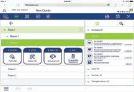
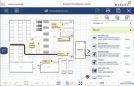

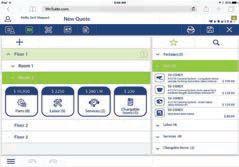
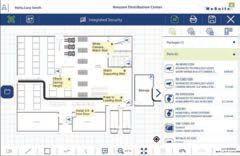

Darwin Lin, Assistant Controller at leading national security integrator, Paladin Technologies, knew there must be a way to automate the complex, variable tax calculations that are a part of every job his company quotes. He reached out to WeSuite, manufacturer of the WeEstimate sales management software used by Paladin, to see what could be done. Mr. Lin, along with Tracy Larson, WeSuite’s President and Founder, talk about how they worked together to develop WeSuite’s new Location Tax Module.
How did this collaboration come about?
Ms. Larson: Darwin reached out to us and said, “Hey, we’re in Canada and we need to estimate and quote taxes in a different way. We’re challenged because we have multiple tax rates and tax types during a sale, and if we don’t get it right, we can lose a lot of money.”
Mr. Lin: That’s right. It was critical that our sales team have software at their disposal that could automatically identify the applicable tax rates based on the location of the work quoted. We needed to ensure compliance with tax regulations by jurisdiction to limit risk and avoid margin erosion that could occur due to omissions or errors from manual input.
Could you describe the development process?
Ms. Larson: It was a very dynamic, collaborative effort. We started with a series of scope and discovery meetings between WeSuite’s senior developers and Darwin. He was a great contact for us because he really understood the tax needs and the software, including how it would interact with Paladin’s accounting platform.
During discovery, we defined and prototyped as much as we could, but until we actually move into development, it’s nearly impossible to understand the full scope. It’s complicated for both parties. Adding a “simple feature” can affect many other aspects of software functionality in unforeseen ways. A single calculation may be applied in many places. We’d get to a development review point with Darwin, and he’d recognize details not thought of prior. The process is collaborative. Darwin would test with us in a sandbox. Then,
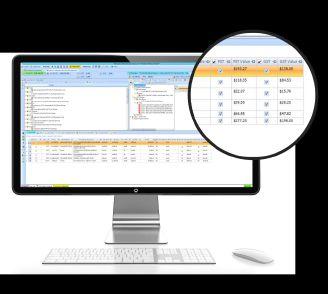
we’d refine the items to better address needs.
We also discussed what information should be included in customer-facing proposals and contract documents to bring features from estimating to presentation.
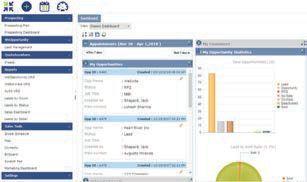
Mr. Lin: We’re really pleased with its many features, particularly its ability to automatically calculate consumption taxes at the individual item level or through application to an entire quote. Under Canadian Consumption Tax Legislation, the requirement to charge tax may vary based on the products sold, or the application of such products on a job site. WeSuite was able to provide us with the flexibility to manually override the application of tax at the itemized level to ensure compliance in all scenarios. The new module also provides automatic, real-time updates to the entire quote when tax rates are adjusted or individual prices are changed.
Ms. Larson: It’s super easy! Thanks to Darwin and the Paladin Technologies team, the heavy lifting is done. The only thing we need to customize is how each customer wants their documents to look; sales information to be seen and handling of their unique corporate branding. We’ve built enough flexibility into the software to tackle the various tax scenarios our Canadian customers may throw at it. All of us at WeSuite are very proud to add this best-in-class functionality to support our neighbors to the north.
WeSuite is the leading sales management software solution that’s purpose built for security product and service providers. Learn more at wesuite.com.













With home visits at a minimum due to the pandemic, alarm and security companies are finding new ways to connect with customers
By Alanna Fairey
Several alarm companies have come to the same conclusion: the Do-It-Together (DIT) trend has accelerated since the COVID-19 pandemic.
DIT is a variation on the DIY (DoIt-Yourself) trend in security, but instead of consumers buying security equipment from a retailer and installing it themselves, the alarm company sells the equipment, helps the homeowner through the install (though they still “do it themselves”), and offers a professional monitoring option.
Chris Currie, president of Ontario-
based Damar Security Systems, says that when the company had its annual planning session back in early March, DIT was not part of the conversation.
Two weeks later, when COVID-19 was declared a pandemic, Damar Security Systems started to roll out DIT services.
“It’s completely enhanced or increased its level of importance,” Currie says. “It’s funny how it’s just completely changed the direction that we were heading in at the time.”
While the topic of DIT security may not have been discussed at Damar Security Systems’ annual planning meeting, Currie shares that the company has taken
the position that there is always going to be a market out there for them to come and professionally install a security system for customers, in addition to a demographic of customers that would want to do it themselves.
With the pandemic making customers anxious about strangers coming into their homes, Currie says that Damar Security Systems promptly adjusted their business model to accommodate DIT offerings.
“Now we’re looking at just trying to strike that balance between people that want security but are apprehensive about having outsiders coming into their home for their business,” Currie says.
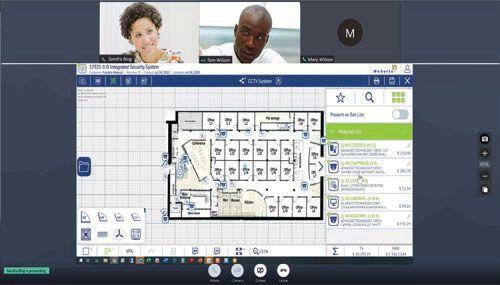
“If the customer is not comfortable doing it by themselves, we’re right there with them using FaceTime, Skype or Zoom to help walk them through it.”
— Chris Currie, Damar Security Systems
“The only reason why we went with a DIY design type direction was to try and facilitate those that just weren’t comfortable having people come into the house all the time [but] they still kind of wanted that professional system.”
Gordon Hebb, vice-president of sales at Wilsons Security, which has offices across the Maritimes, shares that the security industry started to adapt to DIT/DIY technology back in 2013, but says that he never saw it being a hit with mainstream companies. Now, in the midst of COVID-19, he says he has seen a switch.
Echoing Hebb’s sentiments, Morgan Hertel, Rapid Response Monitoring’s vice-president of technology and innovation, shares that what has changed is the kind of customer buying — and installing — their own home security systems.
“What you’re seeing now in the DIY space is consumers that either couldn’t afford or just worked in a place to be able to do that or didn’t want an extensive system — they just wanted something that was better than nothing,” Hertel says. “The overall market is growing. It’s not necessarily taking away from one or the other.”
Since its sudden rise in popularity, DIT security has resulted in a number of alarm companies accommodating the needs and requests of their customers.
According to Currie, Damar Security Systems has changed the way that they approach a sale — they provision the security system gear before it goes out to the customer.
“We’re programming it all up, inhouse testing it and shipping it out to the customer to install themselves,” Currie says. “If they’re a little bit more mechanically inclined, the customer can use a drill,
screws and anchors.”
Currie says that once life gets back to normal, Damar will be checking in with their customers to make sure the alarm is working to their satisfaction.
Although the customers are installing the security system themselves, Currie shares that he and his team are still happy to assist from afar. “I’m using this as an opportunity to add other additional devices at that point, too,” Currie says. “If the customer is not comfortable doing it by themselves, we’re right there with them using FaceTime, Skype or Zoom to help walk them through it.”
When it comes to utilizing pro installers for commercial jobs and leaving some home security installations for the homeowners, Hebb says that Wilsons Security would “absolutely” consider this.
“I think it’s important as a company to offer all the services so you’re adapting to the clients’ needs,” Hebb explains. “If a client is capable enough to install it on their own, then we should allow them the ability to be able to do that,” he says, provided that the client receives an appropriate level of professional support and guidance throughout the process.
In the case of commercial clients, Hertel says the size of the job may determine whether professional installers are preferred or not.
“What we’re seeing with the DIY is getting into the small commercial, in a strip centre — front door, back door, couple of motion detectors type of installation, not necessarily large industrial commercial warehouse type space,” Hertel says. “But certainly the smaller mom-andpop kind of bakery stores are starting to entertain the idea of a do-it-yourself.”
Whether the DIT security trend will have an impact on customer loyalty is up
for debate.
“It still remains to be seen at this point because it’s all still pretty fresh and new, to us at least,” Currie says. “But I can see having clients become more sticky if they’ve got more invested in the system — something that they have installed themselves.”
It’s too early to know whether or not DIT security is the future of monitoring.
Hebb believes that even though the trend has increased and changed recently, the demand will depend on the market.
“I think it’ll be a smaller portion and a little bit more in the residential market than in obviously the commercial market,” Hebb says. “I don’t think we’ll see installations in the commercial market.”
Hertel shares similar sentiments about the future of the monitoring industry, as he believes that the professional installation space is thriving.
“The typical traditional professional space is continuing and doing well,” Hertel says. “This is just coming in alongside it as an option. So for those people it’s another option that’s going to add to it.”
Noting that there are a number of big players in the market today, Hertel predicts that some significant innovation will come out of those organizations.
“It’s going to force the professional guys to step up their game a little bit and be able to support similar technology that you’re going to see over the next few years, which is good for the industry in general,” Hertel says.
Looking ahead, Currie is confident that DIT security will remain as an offering for Damar Security Systems. However, he adds that the company will always continue to professionally install technology for their customers.
“There is a segment of the market that they’re just not interested in and doing it themselves, and I think that’s the market that we’re still trying to go after,” Currie concludes. “But we’re trying to strike that balance between those that want that, but don’t want people to be coming into their homes right now. I think it’ll definitely still carry on into the future.”

An Interview with Cliff Dice, President, CEO, & Founder of DICE Corporation
With the prevalence of do-ityourself home monitoring, extreme weather events, and the COVID-19 pandemic, choosing the right alarm, video and interactive monitoring and event management platform, as well as a cloud hosting partner, has never been more important for central monitoring stations. DICE Corporation president and CEO Cliff Dice reflects on DICE’s 35th anniversary, the company’s flagship Matrix Monitoring software, and what the company is doing to help central stations meet upcoming ULC requirements.
You also offer a streamlined version of your Matrix Monitoring software. How does this differ from the traditional solutions you are known for?

Congratulations on 35 years! What are you most proud of as you look back on nearly four decades in the alarm industry?
With so many advancements in technology and the way the industry has evolved and adapted using our solutions, there is a lot to be proud of. I would have to say our biggest and most rewarding achievement has been the success of our Matrix Monitoring alarm and event management software. We’re known as the industry standard for our automation technology and have won many awards for providing innovative solutions that our users count on to power their central stations. It’s always very rewarding hearing success stories and how we’ve been able to partner with our clients to develop solutions that meet their needs.
Our mission has always been to offer custom solutions and the highest level of customer service to anyone who needs our services. Although Matrix Monitoring is the best solution for central stations, we understand the financial burden many small to medium-size centrals are facing today with the impact of do-it-yourself home monitoring solutions and industry consolidations. We recently introduced Matrix Lite which runs on our platform, includes an embedded PBX, and delivers the same power and capability of Matrix Monitoring without all of the bells and whistles larger central stations require. For example, we recently equipped an independent central station with Matrix Lite and they are operating for approximately $700 CAD a month and still benefit from the reliability of DICE. It’s a great opportunity that we’re pleased to be able to offer.
With the upcoming ULC requirements, many central stations are looking for cost-effective solutions to remain in compliance. What are you doing to assist your customers?
We are preparing all of our customers to stay in compliance with the upcoming ULC data center standards, which require all central stations – whether you have hundreds of accounts or thou-
sands – to have two data centers. For most this is not feasible financially and would probably cost millions of dollars, so we are now providing our Canadian customers with redundant data center options that meet these new standards and will eliminate most of the upfront overhead costs that would be required to build a second data center. In fact, DICE Corporation is the first data center in Canada and the largest in the United States. This is something that will impact everyone and we can even assist non-DICE users, although the process is simpler using Matrix. Now is the time to start thinking about your options and our team is here to answer all of your questions.
Business continuity planning has received a lot of interest this year. What should central stations do to stay connected during challenging circumstances?
We’ve been assisting customers with disaster recovery and business continuity for years, but between helping central stations transition to remote working due to the pandemic to helping monitoring centers maintain operations after severe weather events, this has been our busiest year yet. Planning is key to a smooth transition. With cloud infrastructure and the right procedures in place, we can help you maintain your essential operations with minimal downtime. We just assisted a central station during Tropical Storm Isaias that lost power. The transition was seamless, which goes to show how versatile our solutions are during unexpected situations.


Sprinklers
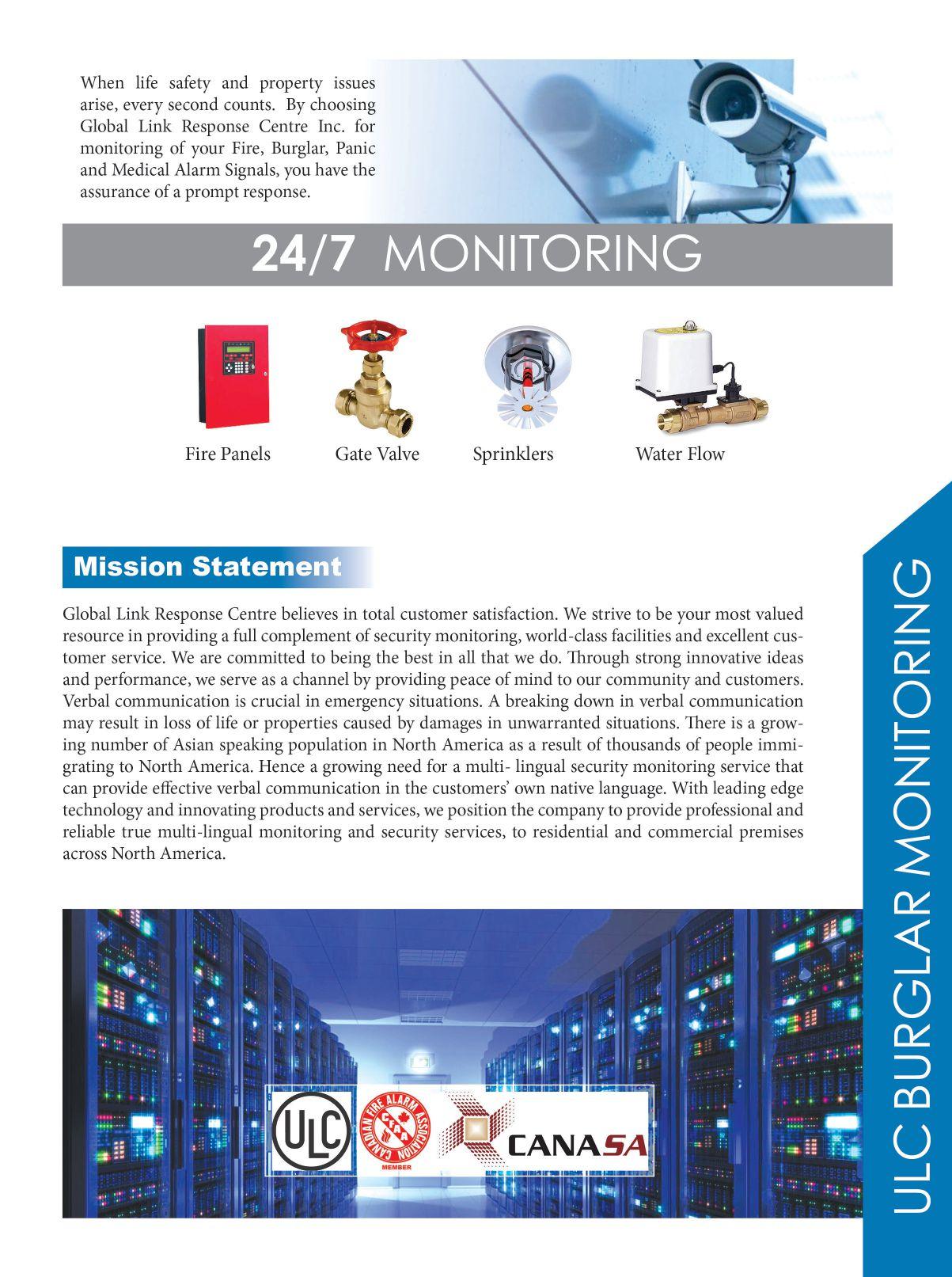

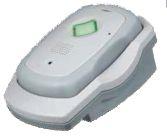
Flow Personal Safety & Wellness / Lone Worker Devices Medical Alert




SP&T News and CANASA engaged with Canada’s security community to find out how the pandemic has affected revenue, operations, work from home policies, travel and more
Most businesses have had to weather a rough patch due an economic blip, a sustained downturn, or an unforeseen supply or labour issue, but a global pandemic is basically new territory.
Life since mid-March has been one long learning curve as organizations adjust their business practices, customer relationships, product mixes and service levels to cope with some very challenging circumstances.
SP&T News reached out to the security community across Canada recently in co-operation with the Canadian Security Association (CANASA). SP&T readers and CANASA members were invited to take a 15-question anonymous survey covering everything from business impact to travel preferences to online engagement and community support. The survey was available to take for three weeks (June 18 to July 9) and there were a total of 99 respondents.
The respondents identified their companies as follows:
Dealer - 23%
Systems integrator - 55.5%
Monitoring station - 20%
Manufacturer - 17%
Guard company - 7%
Consultant - 11%
Distributor - 7%
Manufacturer’s representative - 5%
Vendor/Manufacturer - 17%
Other - 4%
Respondents were permitted to choose multiple lines of business. (For example, approximately a quarter of the respondents


who identified as systems integrators also identified as dealers.) They also selected the areas of business/markets they serve with the majority indicating commercial (97%) and residential (72%). Government/public sector ranked high (67%), as did health care (57%) and education (59%). A minority of respondents (9%) indicated other markets such as cannabis, automotive, aviation, food and communications.
In terms of their geographic reach, respondents answered across the board. One in five (20%) said they operate both in Canada and overseas; a similar number (18%) said they operate across Canada. One in three (32%) said locally/regionally and just over one in 10 (12%) said provincially. Not surprisingly, company size also varied greatly. Almost half (47%) work for companies that employ 20 people or less and about a third said their company employs more than 100.
In the broadest terms, security is often regarded as a recessionresistant industry but it has certainly not been exempted from the pandemic.
Across all respondents, 77% said that they have experienced a decrease in business since the pandemic hit in March. That number fluctuates slightly depending on the type of business responding to the question. For example, based on survey results, 82% of integra tors, 91% of dealers, 75% of central stations, 86% of distributors and 70% of manufacturers said their business has decreased.
Have you seen a decrease in business since the pandemic started in March?
Yes – 77% No – 23%




The only serious outlier is guard companies. Seven per cent of respondents identified as guard companies and reported a very different scenario. Only 28.5% of them said they had experienced a reduction in business.
While not part of this survey, the demand for guards to help manage grocery stores and other retailers that were open during lockdown, as well as commercial buildings, hospitals and other institutions has been well documented. (For more on this topic, refer to the column written by Winston Stewart, CEO of Wincon Security, in the summer issue of Canadian Security magazine, sister publication to SP&T.)
In terms of the impact across the businesses that said they had experienced a reduction in revenue, 42.5% said their revenue had dropped by 20% or less; 38.75% said the impact was 20-40% of revenue and the remainder (18.75%) said the impact was 50% or more.
More than half of respondents (54.5%) indicated that they had laid off or furloughed employees as a direct result of the pandemic.
Of those who said yes, 38% said that 10% or fewer of their employees had been affected and 19% said that more than half of their workforce had been laid off or furloughed.
Approximately 57% said they plan to rehire personnel when the economic situation improves. Fourteen per cent said no. The remainder did not know.
While the layoff picture is troubling, some businesses suggest they may be through the worst of it and have been able to hire staff back. Several respondents indicated that their furloughs were already complete — in a few cases, the temporary lay-offs lasted six weeks — and the employees are back at work. Another said they were con-
Are there areas of your business that have experienced an increase in interest since the pandemic?
Video surveillance - 55%
Remote monitoring - 29%
Touchless access
control/biometrics - 32.5%
Antimicrobial solutions - 7%
Visitor management/Temperature checks - 44.5%
Frontline personnel - 14.5%
Other - 20.5%
sidering a change to their business model and employing fewer staff overall. One respondent said they had adjusted their employee work-week to four days a week while still keeping the business open five days a week. On a positive note, at least one respondent said that their business was actively growing and they are recruiting for new staff.
The pandemic has resulted in a number of new or modified safety needs which, to a large extent, the security industry has been able to fill.
The majority of respondents (83%) said at least one area of their security business has grown since the pandemic. The most common answers were video surveillance (55%), visitor management/ temperature check stations (44.5%), touchless access control (32.5%) and remote monitoring (29%).
The security industry has also come together as a community to help one another out during these difficult times. More than half of respondents (56.5%) said they had consulted with other security businesses to share best practices. Respondents who indicated in the positive said they had spoken with “industry leaders” or had connected through organized associations and groups such as CANASA.
Patrick Straw, executive director of CANASA, stated in his last CANASA Update column (SP&T June/July 2020 issue) that the organization’s Facebook group, Canadian Security Industry Online, has received tremendous support from security organizations across Canada, who are coming together to share advice.
One of the defining characteristics of the pandemic is the number of people who formerly occupied office spaces and are now work-
ing from home. The security industry was declared essential in the early stages of the pandemic, but has still participated in the work from home (WFH) movement on many levels.
Some respondents said they had already established a structured WFH program before the pandemic. Another shared that employees who had been sent home to work during the pandemic missed the dynamics of working in an office environment. For some, administrative positions could feasibly be accomplished from home but others required an on-site presence due to job role requirements.
Responses were evenly split regarding the issue of government financial assistance — 42% said yes they had received financial aid and 42% said no. However, about 6% said they had applied for assistance at the time of the survey but had not received it yet. About 9% were unaware as to whether their company had applied for assistance or not.
About a third of respondents (32%) said they would engage in work travel (conferences, seminars, training, etc.) if able, although most said travel would be limited to their province or Canada. Almost the same number (31%) said their company was currently engaged in an employee travel ban and about 36% said they preferred not to travel at this time.
The vast majority of respondents (85%) said they had attended webinars or virtual events since the pandemic. Several respondents also specified that they had engaged in meetings via popular video conferencing and calling apps like Zoom, Microsoft Teams and Skype.
Are you planning to rehire these personnel when the economy improves?