New report shows Canada’s trade infrastructure needs a re-think.
18 Quarry Tech goes live again!
Popular one-day forums coming to Calgary and Halifax.
22 Building promises
What the Ontario Throne Speech means for the construction industry.
25 Fifty years of innovation
Astec celebrates half a century of success.
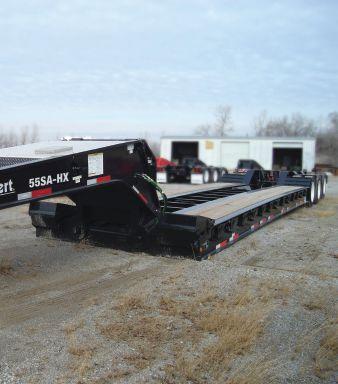
27 Know your trailer’s true capacity
To select a trailer that will require the least amount of maintenance, provide the greatest lifespan and deliver the highest possible return on investment, it is vital to understand the trailer’s true capacity.
The value of close to market
Public education campaigns are sorely needed
When it comes to our construction sector, Canadians need close to market building materials. This is especially true when it comes to aggregate. But all too often, politicians seem to turn a deaf ear to this fact.
Why? Are they scared of the NIMBY groups? Or perhaps, they think it’s too politically damaging to support aggregate operations around the larger urban areas where they so desperately want to tap into the large numbers of voters who reside there. Are pits and quarries really viewed in such a negative light? Perhaps by some members of the public. But I strongly believe that the bigger issue negatively affecting the aggregate industry is a lack of understanding of its importance to our daily lives by politicians and the general public.
While public education campaigns about the need for close to market aggregate (and other products and services) by the industry haven’t always been the strongest, I believe that’s changed over the past decade. Associations have been commissioning some interesting reports to try and educate the public on the value of close to market for the construction sector.
The first one I can recall reading during my time covering the construction sector was published in 2012 by the Residential Civil Construction Alliance of Ontario titled, "Eglinton LRT Project: Estimated Costs and Impacts of Addressing Excess Construction Soils." This report focused on the potential costs involved in transporting the massive volumes of soils during the first phase of construction of the Metrolinx Eglinton Crosstown Light Rail Transit Project. The cost for trucking out the excess soils was expected to range from $65 million to $100 million.
The reason for the cost? Municipalities close to Toronto didn’t want the city’s soil, so some of it had to be transported far from the city to be disposed. Think that cost sounds crazy for simply transporting
soil? Now consider that the maximum cost of diesel in 2012 was $1.23/litre compared to its peak in 2022 of $2.36/litre (according to GlobalPetrolPrices.com).
As much as I found this report fascinating, and wrote about it for the B2B publication I was editing at the time, I didn’t hear anything about it in the mainstream media. I remember telling friends and family about these estimated costs, and nobody I spoke with had heard about this. I couldn’t help but feel like more needed to be done to get this kind of news picked up by mainstream media and consumed by the general public.
Over the past five years, I’ve started to see more campaigns pop up directed at educating the general public about the importance of close to market construction materials and services, which I find very promising. They are largely being led by the aggregate associations, which is fantastic.
OSSGA, ASGA and BCSSGA have all launched campaigns to help educate the public on the important roles that aggregate plays in their day-to-day lives, and have been voices for the importance of close to market aggregate. Most recently, OSSGA commissioned a report titled, "The Long Haul," which was written by the Ontario Chamber of Commerce. It focuses on the dwindling reserves in the Greater Toronto and Hamilton Area and the potential costs associated with this issue (read all about it on page 30).
The facts surrounding the cost savings of close to market aggregate are available for the general public, so why isn’t it more of a hot-button issue? Is there another way the industry could be communicating the importance of this to the general public? If you have some thoughts on the subject, send me a note at asnook@annexbusinessmedia.com. I’d love to hear your thoughts on this important issue.
www.rocktoroad.com
ANDREW snook
Single-Source Supplier Advantage
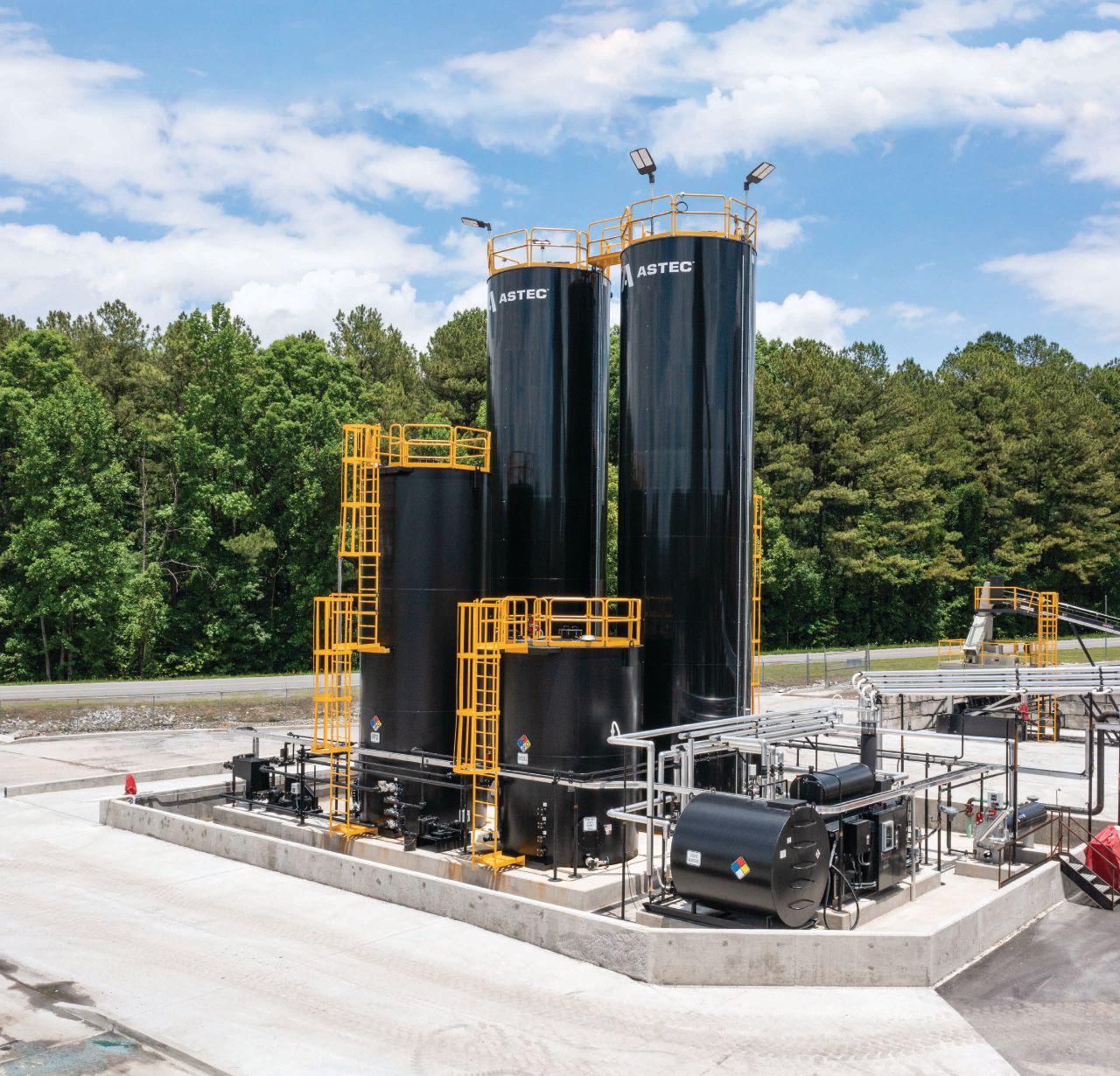
Astec provides a significant advantage as a single-source supplier for the diverse products and services involved in building and maintaining an asphalt mixing plant.
Astec liquid AC storage tanks, tank farms, and heating system controls, feature high quality construction and unmatched efficiency. We offer a variety of sizes and configurations that can be fully customized. Optimize your asphalt storage tanks and hot oil heaters with the addition of the Recon® mobile monitoring system to receive status updates on a smart phone, tablet or PC.
BCCA receives first-year apprenticeship funding
The BC Construction Association (BCCA) has received over $21 million in funding from Canada’s Apprenticeship Service to enable small and medium sized employers in B.C.’s construction industry to hire and register first-year apprentices.
An employer with fewer than 500 employees in B.C.’s construction industry can receive financial incentives for hiring new employees or registering existing ones as first-year apprentices in 39 Red Seal trades.
Participating employers will receive $5,000 for hiring or registering any worker. An additional $5,000 will be received if the worker self-reports as a woman, new Canadian, LGBTQ+, Indigenous, a person with a disability, or a visible minority, which contributes to much-needed workforce diversity. Employers can receive payments for up to two first-year apprenticeship positions per year during the two years of the drive, for a maximum of
(L to R): Knowledge Keeper Florence Dick from the Songhees Nation, Honourable Kamal Khera, Canada’s Minister of Seniors, Linda Ryan, BCCA Apprenticeship Services Program Manager, Chris Atchison, BCCA president.
$40,000 per employer.
“B.C.’s construction industry is in a vice grip right now, and it’s tightening,” says Chris Atchison, BCCA president. “Employers are dealing with rising costs, material shortages, increased taxes, mandatory sick pay, labour shortages, and late payments. It can be costly to hire and train new apprentices, and especially in this climate,
Terex MP acquires ProAll
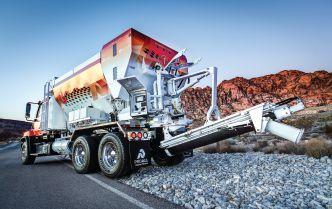
Terex Materials Processing (Terex MP) recently announced the acquisition of Canadian company ProAll, a specialist producer of mobile volumetric concrete mixers.
ProAll’s history traces to companies that were originally founded in the mid-1960s.
The company was initially an importer of volumetric mixers into Canada but has since grown into a leading producer of volumetric mixer products for the North American and global markets. Today, the company employs 170 people and is experiencing the strongest demand in its history. ProAll’s main production is based in Olds, Alta. It also operates a service and installation site in Keller, Texas.
ProAll’s products are designed for business owners who seek to combine stateof-the-art technology with the flexibility and reliability in concrete delivery that only a volumetric mixer can bring. ProAll’s
to Road magazine is
$40,000 can go a good distance to alleviating some of that cost burden.”
Employers can spend the financial incentives at their discretion. For example: hiring bonuses, gear and work apparel, childcare costs, offsetting business taxes, offsetting costs of mandatory sick leave, training and mentoring, raises for field or office staff, safety equipment, or new technology. As part of the service to employers, BCCA will provide culture training via its Builders Code program, and mentorship support through its new Building Builders initiative.
B.C.’s construction industry is approximately 95 per cent male and continues to face a skilled workforce shortage during a time of high demand for construction services. Most employers are small, with 90 per cent employing 20 workers or less.
In addition to the financial incentives, the BCCA will conduct a major promotional campaign to attract new talent to the industry.
equipment delivers make-to-order concrete that improves the quality and efficiency of end-customer operations while making many smaller and more specialized pours both more possible and more affordable.
ProAll will join Terex Advance and Terex Bid-Well in Terex MP’s concrete sub-segment. Together, these businesses represent a commitment by Terex to increasing its participation in North America’s growing construction markets and in meeting growing infrastructure needs. ProAll also adds an international dimension to what, to date, has been a primarily North American business area for Terex.
REBUILDING CANADA’S TRADE CORRIDORS
BY ANDREW snook
New report shows Canada’s trade infrastructure needs a re-think
> A recent report from the Canada West Foundation (CWF) has highlighted the consistently declining confidence in Canada’s trade infrastructure and the country’s ability to deliver goods and services.
The study, “From Shovel Ready to Shovel Worthy: The Path to a National Infrastructure Plan for the Next Generation of Economic Growth,” was written by John Law, a Senior Fellow at the CWF and a recognized leader in Canada’s transportation and infrastructure sector who has played a significant role in the development of national and interprovincial transportation policy.
The study describes the need to return to an “intelligencebased, long-term national plan” for trade corridor infrastructure rather than fund projects based on whether they are shovel ready.
“Especially in times of crisis like the recent COVID-19 pandemic, the country needs a go-to list to make intelligent, productive choices to invest instead of spend public funds. Beyond economic considerations, a shovel worthy national infrastructure plan is also the means to seriously address the challenges posed by climate change and prevent or mitigate harms to marginalized
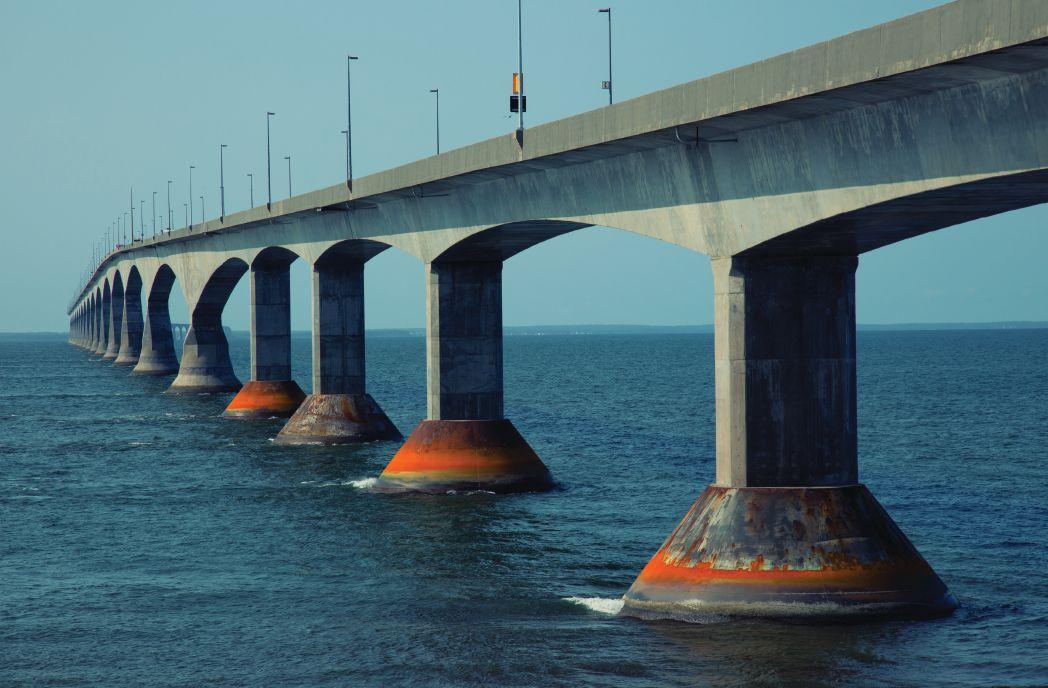
The report describes the need to focus on "shovel worthy" projects.
Photo credit: Anne Richard/Adobe Stock.
From Reduction to Shaping
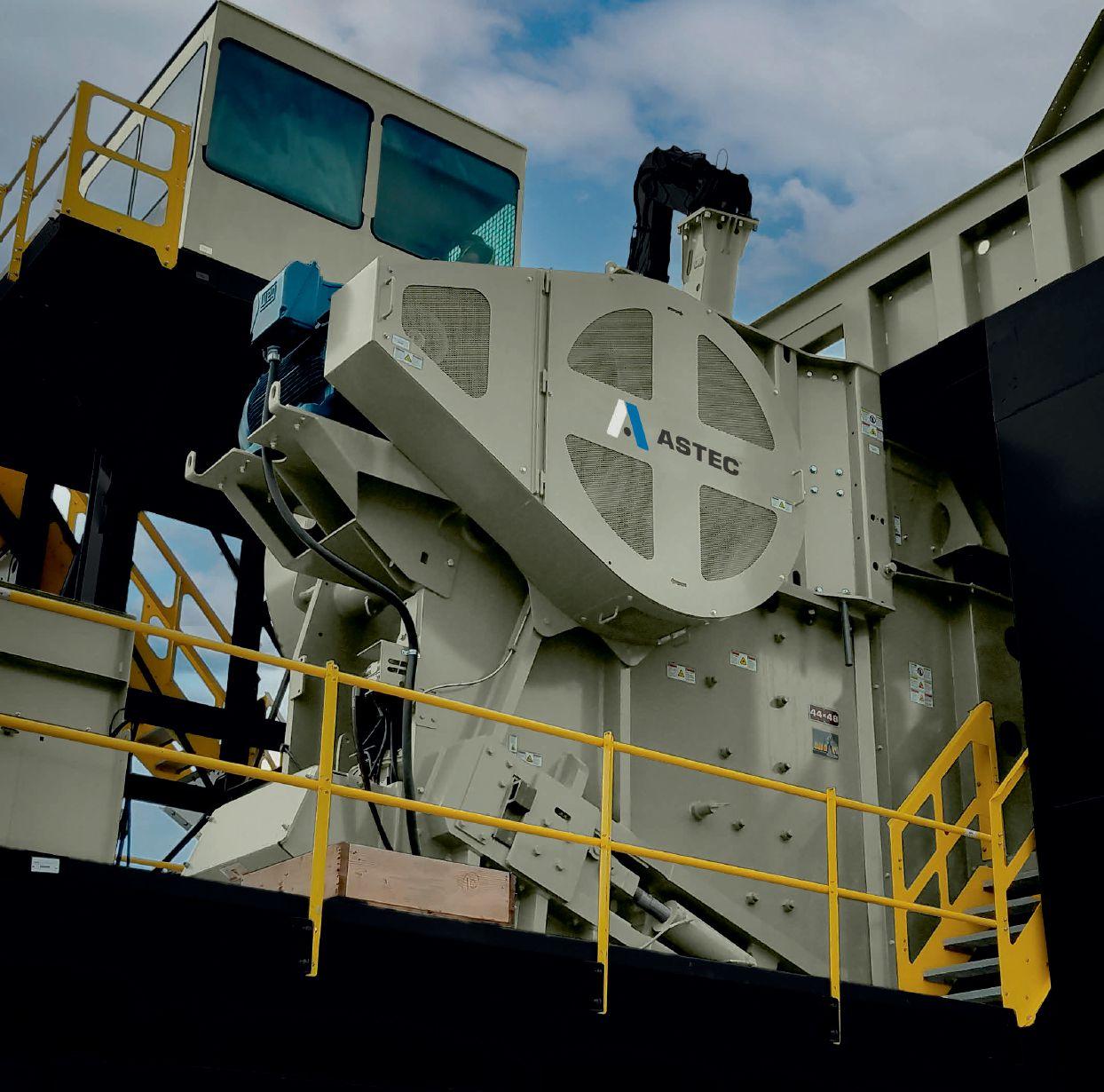
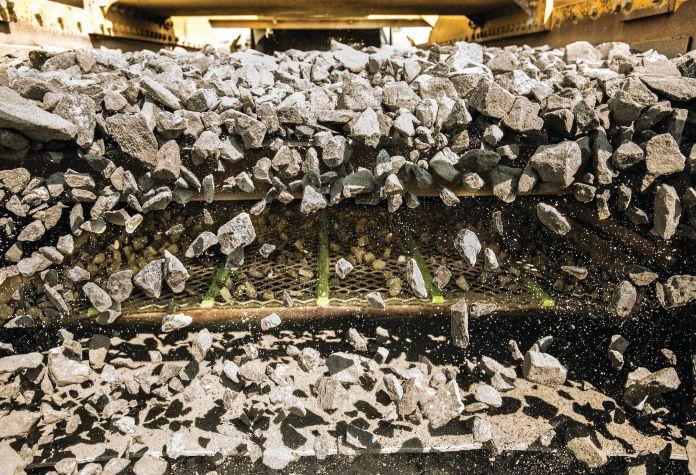
Your ability to turn virgin material and waste product into high quality aggregates requires equipment with unmatched power and precision. From reducing shot rock to sizing and shaping fine sand, we design and manufacture the most versatile and efficient crushers. Not sure what you need? Let our experts partner with you to apply the ideal solution.
BUILT TO CONNECT
communities. Incorporating strategic climate and social criteria on a serious, thoughtful a priori basis can help ensure that long-term, dramatically more costeffective responses to the challenges of a changing environment and protecting vulnerable communities are pre-established as a guide to infrastructure decisions,” the report states. “Likewise, a shovel worthy approach better assures that equity concerns and national priorities are given life that extends past the political cycle. A shovel worthy plan will not solve all that ails trade infrastructure in Canada but ensuring that the full range of issues and impacts of these investments are considered in a thoughtful, serious and consistent manner will significantly improve our prospects and build public confidence that money is invested instead of spent.”
Chris Lorenc, president of the Western Canada Roadbuilders & Heavy Construction Association (WCR&HCA), says that Canada’s political leaders need to view the issue of the country’s declining trade corridor infrastructure as a matter of national concern.
“Something as basic as understanding the historical role that trade has and continues to play, in our country's economic
and social growth is not being treated with the seriousness it deserves and requires and that hurts our national interests,” he says. “Approximately 65 per cent of our gross domestic product (GDP) is tied to trade. Just under 2 million jobs, direct jobs, are tied to trade. We are three times more dependent on trade than our largest trading partner, the United States. We rely on the United States for 75 per cent of our trade. Our next largest partner is China, which is around 12 per cent. And we're seeing changes in the global economy.”
We're seeing not only domestic users of our trade gateways saying in alarming consistency that the poor condition, the inefficiencies of moving products to and from a market, is our biggest impediment to growing our business; we're seeing the same kind of negative applied to Canada's reputation at the World Economic Forum, which is the place where you don't want to be developing a bad reputation.”
Lorenc says Canada’s governments for too many years have followed the shovelready approach, but should transition to shovel-worthy project approach.
“Shovel ready is ‘Just get the project out.’ It often ignores shovel worthy, which is an investment-based, long-term, strategic
approach to investing in trade gateways and corridors to grow our nation,” he says.
According to World Economic Forum data, from 2009 to 2019, confidence in Canada’s infrastructure has fallen from 10th in the world to 26th overall. (it has fallen to 32nd for transportation infrastructure) . At the same time, investor confidence in Canada has steeply declined with 90 per cent of Canadian executives stating, “aging supply-chain infrastructure and insufficient capacity were the top challenges in our transportation industry.”
An overwhelming majority of Canadian executives (80 per cent) recommend that a comprehensive strategy be developed for Canada’s trade corridors.
“There are all kinds of explanations that can be given, but at the at the end of the day, it boils down to raw politics. We need to encourage a political focus on the nation's best interests including economic and social.
He adds that current funding for trade corridor infrastructure is nowhere near the necessary levels for Canada’s $1.3-trillion trade program.
“Canada recently announced $600 million over seven years, of which approximately $150 million is related to data
According to World Economic Forum data, from 2009 to 2019, confidence in Canada’s infrastructure has fallen from 10th in the world to 26th overall. Photo credit: pink candy/Adobe Stock.
collection. Data collection and improvement are important, but that only leaves $450 million over the next four years or so to invest in national trade infrastructure needs, which fails to address national interest,” Lorenc says.
He says other regions of the world, such as Australia, New Zealand, Thailand, U.K., Europe, the U.S. are making significant investments in trade infrastructure. They recognize the importance of having a trade gateway and corridor system that moves people to jobs and products to market. They are investing in a manner that supports national economic, social and security interests.
“They recognize that if you can't move it, you can't sell it; you can’t grow the economy; you can’t sustain existing jobs nor provide the platform upon which to create new jobs. Without a strong economy you risk national security interests and cannot maintain nor enhance global influence.
The federal government should be encouraged to build upon the lessons of the Asia Pacific Gateway & Corridor Program and the recent National Infrastructure Assessment work to propel investment that builds our country.
While some countries have been able to define a 20- to 25-year development strategy for their infrastructure and trade corridors, Canada lacks one, Lorenc says.
“Other countries are investing strategically. Other countries are defining through legislation, ‘What are our key infrastructure assets?’ Other countries are defining through legislation, ‘What are our key natural resources that we should protect from foreign acquisition as a matter of national security?’ Canada lacks that approach.
SEVEN RECOMMENDATIONS
The Canada West Foundation report laid
out seven recommendations as initial building blocks for Canada’s first national plan for trade corridor infrastructure:
1. Define Canada’s national trade corridor network to put all levels of government and industry on the same page.
2. Bring the private sector to the table as an ongoing contributor of sophisticated supply chain expertise and front-line operational experience to complement the best features of public-sector policy.
3. Apply criteria of national significance to guide the planning process and decision-making.
4. Develop an “evergreen,” decades-long pipeline of national infrastructure projects.
5. Undertake regular assessments of infrastructure projects in relation to established criteria.
6. Begin a new forward-looking approach to the collection of data and use of forecasting and modelling tools.
7. Coordinate the communications of domestic infrastructure working groups and aggressively share progress on the above recommendations with industry and foreign customers.
“While the objectives in this report are specific, the exact means and mechanisms to achieve them have been deliberately afforded flexibility to allow customization and refinement by the key stakeholders,” the report states. “However, this approach does imply an important convenor role for the federal government to facilitate coordination efforts among key stakeholders. Cooperation and meaningful participation must receive priority to avoid exacerbating table fatigue or perceptions of pre-ordained outcomes that discourage engagement.”
The report also notes that the need to move swiftly on creating a proper plan to
address Canada’s trade corridor infrastructure deficits has been exacerbated by the supply chain issues stemming from the global COVID-19 coronavirus pandemic.
While process will be important, moving quickly and decisively is even more critical:
“As important as trade infrastructure was for the well-being of Canadians preCOVID, it has become more so as the country looks to emerge from the supply chain shadow of the pandemic. There has arguably never been a time in recent memory where key stakeholders in industry and government are better aligned around the need for collective action,” the report states. “The rapid emergence of pent-up global demand, projections for a near-term return to growth driven by an expanding global middle class in Asia and a potential new commodity supercycle are the best and surest opportunities to fund economic recovery in Canada. But the path to realize these opportunities literally and figuratively runs through the country’s supply chain trade infrastructure.”
Lorenc says there needs to be principled national policies that focus on building the nation.
“At the end of the day, it's investment in our country’s economic, social and security interests. An investment in trade enabling infrastructure generates the highest rate of return. For every dollar invested in trade, depending on the asset, it can generate anywhere between $1.30 and $1.90 in the same year,” he says.
Canada’s future is very much linked to how strategic we are in investing in trade, in what has materially shaped who we are and can yet become as a country. “That’s how important trade is,” said Lorenc.
To read the Canada West Report, visit: https://cwf.ca/research/publications/newreport-from-shovel-ready-to-shovel-worthy.
Current funding for trade corridor infrastructure is nowhere near the necessary levels for Canada’s $1.3-trillion trade program. Photo credit: edb3_16/Adobe Stock.
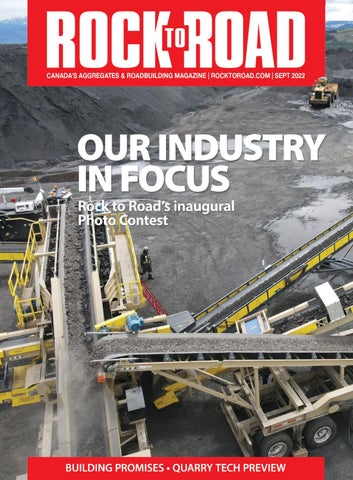
OUR INDUSTRY IN FOCUS
BY STAFF report
Rock to Road’s inaugural Photo Contest
> A huge thank you to all of our readers who submitted photos for Rock to Road’s inaugural photo contest. We received some fantastic shots that showcase this great industry.
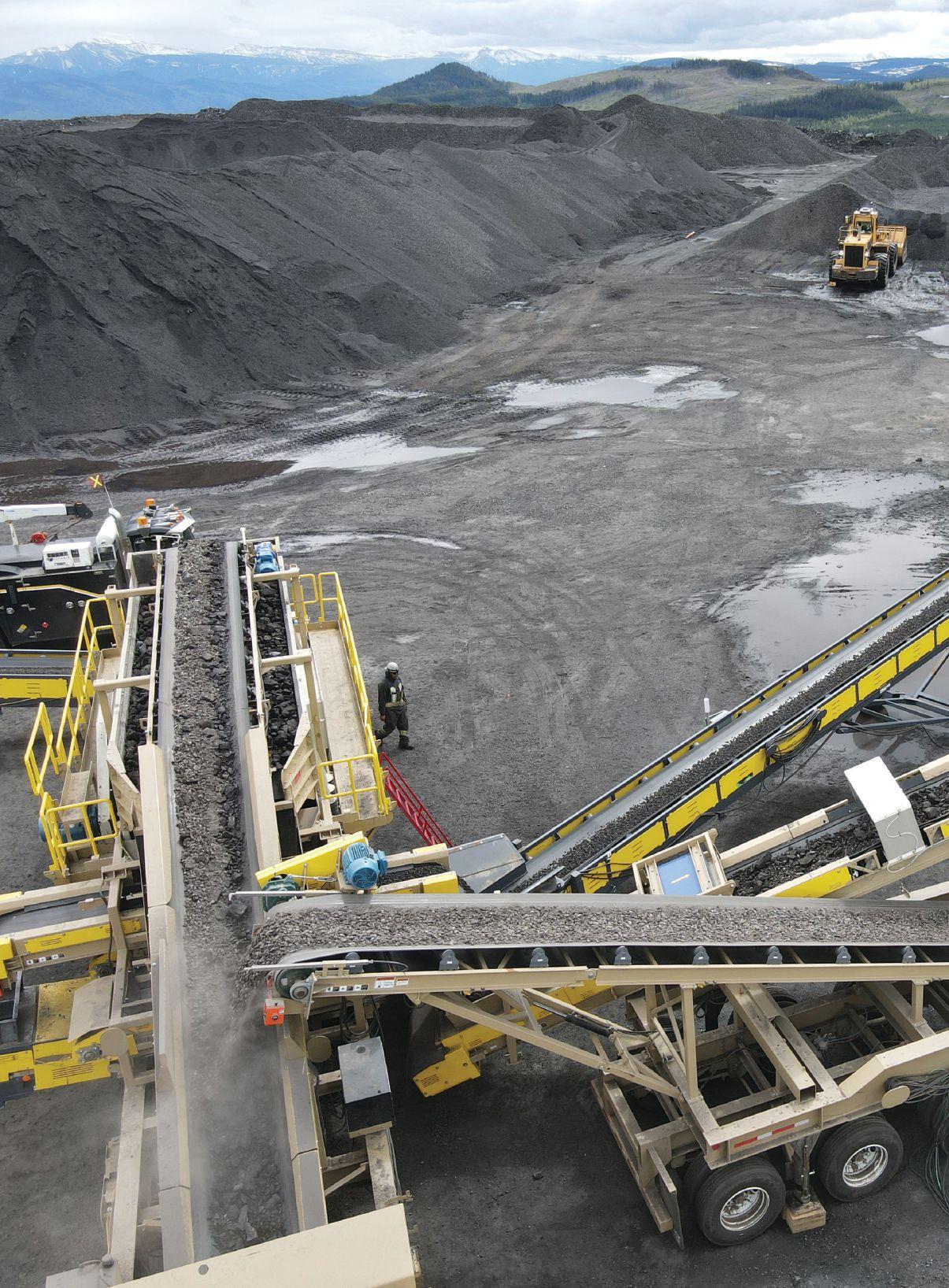
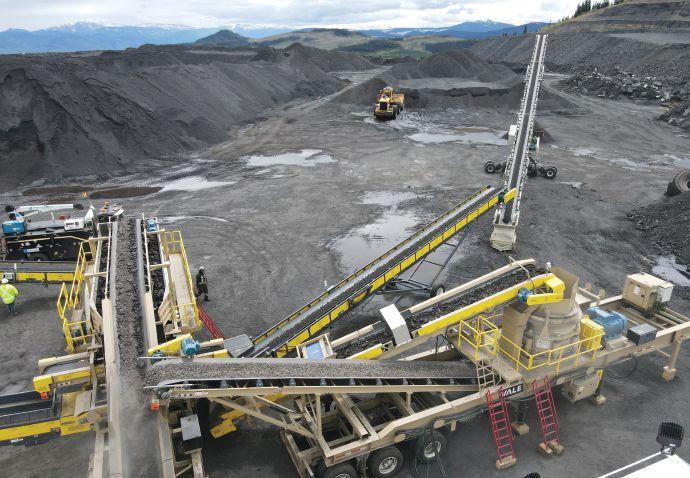
A special congrats to Lonetrack Equipment for taking the winning photo, as chosen by a panel of graphic designers.
Stay tuned for announcements for next year’s photo contest. In the meantime, if you see a great photo opportunity, feel free to snap it and send it to Rock to Road editor Andrew Snook at asnook@annexbusinessmedia.com. All photos submitted will be considered for the 2023 Photo Contest.
HALIFAX, NS – OCTOBER 13TH, 2022 CALGARY, AB – OCTOBER 18TH, 2022
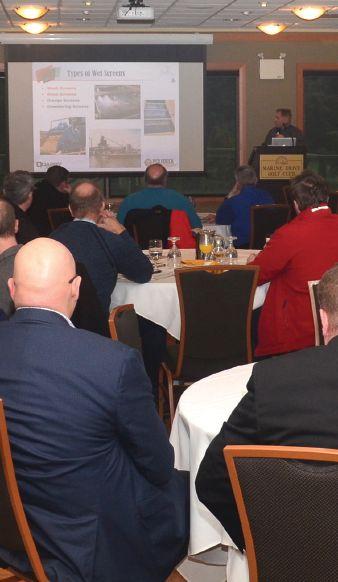
Rock to Road is excited to announce that Quarry Tech is back live and in person in 2022! These popular one-day forums focused on the optimization of quarry and pit operations will be coming back to Calgary and Halifax this fall.
Quarry Tech is an exclusive event for quarry and pit owners and operators that will offer attendees case studies and panel sessions presented by industry experts covering a wide variety of key industry-specific topics.
The call for proposals to present at both Quarry Tech forums will be opening soon!
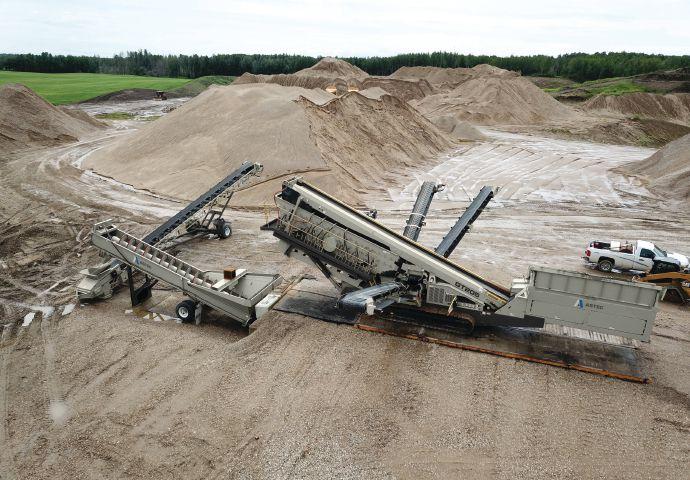
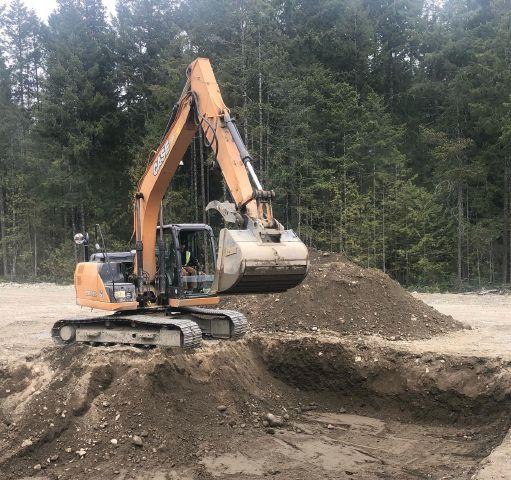
This is an image of a GT 205 track wash plant with a 36” sand screw and a 50-ft. conveyor making concrete sand in Vancouver Island, B.C. Submitted by Astec Industries.
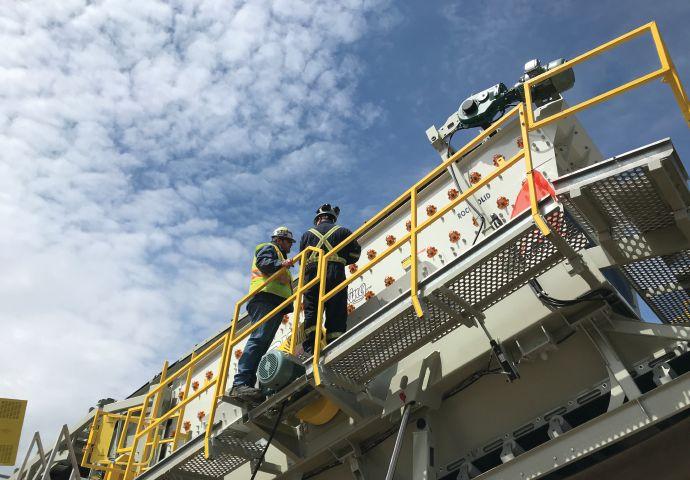
Haver & Boecker Niagara screening equipment being used in an Ontario mining and aggregates operation.
submitted by Haver & Boecker Niagara.
This photo is from the Vancouver Island University Heavy Equipment Operator training program in Nanaimo, B.C. The program has been in operation training students for almost 70 years.
Submitted by Kevin Levins of Vancouver Island University.
Photo
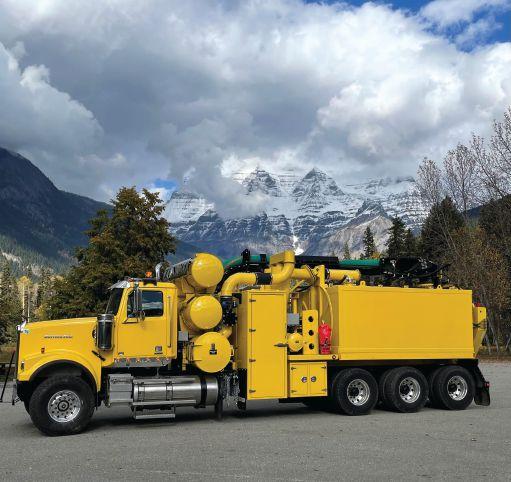
This photo was taken of a new Western Star 4900 Westech Wolf Hydrovac enjoying its first day on the job on Mount Robson in B.C. Submitted by Kris Engler of Zenco Hydrovac Excavation Ltd.
WINNER
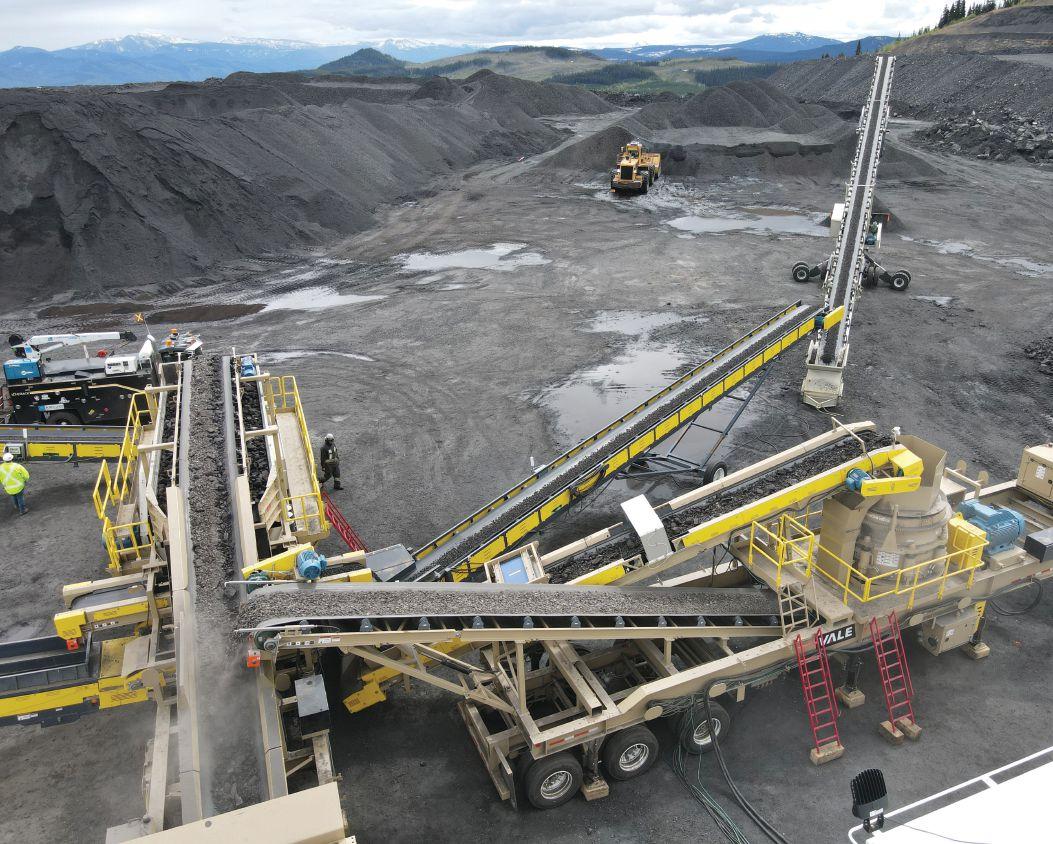
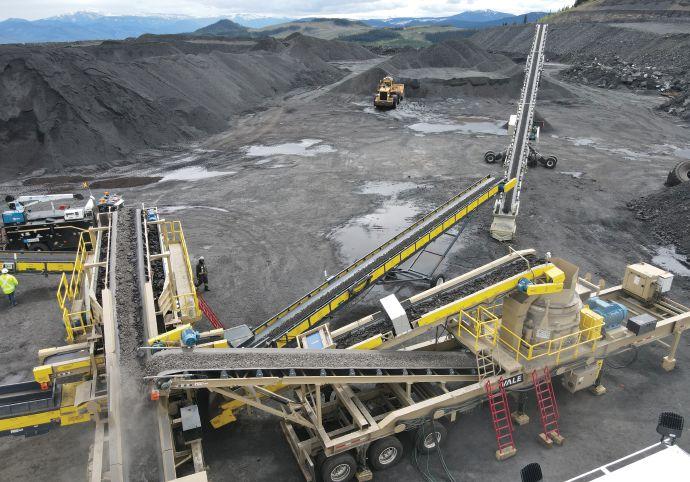
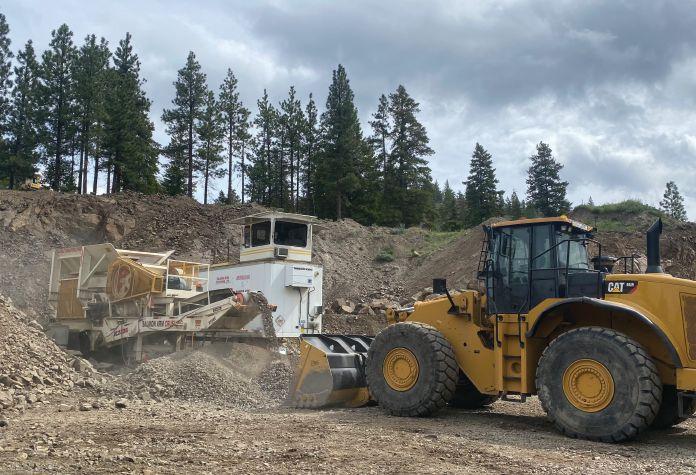
From design to build and commissioning on a remote site in Chetwynd B.C., Lonetrack Equipment worked closely with the client to design a crush spread that would meet the short season and high crushed ton total needs. The KPI 3055 Jaw feeds directly into the 7203 Feeder Screen and is close circuited with the JCI K400 cone plant all powered by the custom Lonetrack Powervan. Submitted by Dawson Sloan of Lonetrack Equipment.
Dol Hydroseeding Inc. hauling limestone from the Walker Severn Quarry in Orillia, Ont. to a customer.
Submitted by Sandi Dermott of Dol Hydroseeding Inc.
Flex-Mat screens being used in aggregates production in Quebec.
Photo submitted by MAJOR.
Custom crushing at a Brett Meding's quarry making 3" SGSB and 1"WGB for the local fish hatchery in Merritt, B.C., which was damaged by the floods in November 2021.
Photo submitted by Simon Rizzardo of Salmon Arm Crushing, a division of Emcon Services Inc.
This little guy came to us compliments of Bill Gowdy of SLR Consulting. It is of the banding of a three-week-old Saw-Whet owl from a nest box at the Lafarge Berrymoor Pit as part of a biodiversity program in Drayton Valley, Alta.
SHOW PREVIEW
Quarry Tech goes live again!
Popular one-day forums coming to Calgary and Halifax
Rock to Road’s educational forums are returning to live event formats this October in Calgary and Halifax. Quarry Tech is a one-day workshop focused on the latest technologies designed for optimizing quarry and pit operations. This one-day event, exclusively for quarry and pit owners and operators, will offer attendees case studies and panel sessions presented by industry experts covering a wide variety of topics.
Seats are limited so register now! For more information, visit www.quarrytech.ca.
QUARRY TECH HALIFAX
October 13, 2022 - Alt Hotel Halifax Airport
8:00 A.M. TO 9 A.M. REGISTRATION AND NETWORKING BREAKFAST
Pick up your name badge and show guide at the registration desk and enjoy breakfast compliments of Rock to Road.
9:00 A.M. TO 9:45 A.M.
KEYNOTE SPEAKER
MEANINGFUL CONSULTATION
What is it to be meaningful?
First person to ask is your better half… Have you ever tried to give your partner a present without wrapping it first?
Have you ever shopped for your kids at the airport just prior to boarding?
Have you ever forgotten to phone your Mom on a special occasion?
Well, if you answered yes to any of these, you understand where I am going with this discussion…
In 2005, the tiny First Nation of Mikisew Cree took Canada to court in relation to the need to consult…you need to understand this Supreme Court of Canada decision and others in order to avoid “your” day in court…
Speaker: Lawrence Aimoe, CEO of Upshimuskwa Consultants Inc.
9:45 A.M. TO 10:30 A.M. USING CONVEYORS TO LOWER COST PER TON
So, you've decided to upgrade your quarry with some new conveyors. Smart choice! Especially considering current challenges with gas prices, transportation bottlenecks, and citizen concerns. This short course will cover a few topics to ensure your new aggregate conveyors will reduce cost per ton at your quarry. Topics include stockpiling techniques, material segregation, conveyors versus haul trucks, and new applications for conveying technology.
Speaker: Phil Garinger, Equipment Territory Manager, Canada, Superior Industries.
agenda / speakers
10:30 A.M. TO 11 A.M. NETWORKING BREAK
11 A.M. TO 11:45 A.M. LIFECYCLE OF A SCREEN, MANAGED: GET THE MOST OUT OF YOUR MACHINE.
Screening material is a crucial part of most aggregate operations. A properly run screen can run so well that it is forgotten amongst other priorities, while a troublesome screen can be so taxing on an operation and seriously hurt its bottom line. This presentation aims to help the aggregate operators think of screening as a relatively predictable part of their operation and help stay ahead of any problem units in their screening circuit.
Speaker: Tod Eberle, Director of Aggregates, Polydeck.
11:45 A.M. TO 12:00 P.M. SUPPLY CHAIN OUTLOOK FOR 2023
Rock to Road’s editor Andrew Snook will offer a brief outlook on Canada’s supply chain in 2023 sharing insights from industry experts.
Speaker: Andrew Snook, Editor, Rock to Road.
12:15 P.M. TO 1:30 P.M. NETWORKING LUNCH
1:30 P.M. TO 2:15 P.M. NEW TRAINING AND MONITORING METHODS FOR CONVEYOR OPERATIONS
Innovating new ways to teach new or inexperienced employees about conveyors along with a new way to monitor conveyor performance.
Speaker: Tom Coleman, Territory Manager, New England and Atlantic Canada, Flexco.
2:15 P.M. TO 3:00 P.M. MAXIMIZING CONE CRUSHER PERFORMANCE
Every producer wants peak crushing performance, but not every producer knows how to achieve it. Getting there may require just a few tweaks – or even a total rebuild. To remain at peak levels requires
proactive maintenance practices, combined with expert consultation and continuing education. When operations truly maximize cone crusher performance, the perpetual paybacks include lower cost per ton, greater plant uptime, increased production capacities of highly saleable material and reduced maintenance and wear costs. Speaker: Seth Wheeler, Territory Sales Manager, Western Canada and U.S. Mountain West, Superior Industries.
3:00 P.M. TO 3:30 P.M. NETWORKING BREAK
3:30 P.M. TO 4:15 P.M.
BANK SWALLOWS:
A THREATENED SPECIES IN PITS AND QUARRIES
Bank Swallows are Aerial Insectivores or birds that eat insects while flying. As a group, Aerial Insectivores are declining faster than any other bird group in Canada. Bank Swallows require loose piles of sand, soil, or gravel with a slope of at least 70 degrees for nesting, like those found in pit and quarry operations. This presentation will discuss Bank Swallow life history, habitat requirements, and ways to limit potential harm to this threatened species. Speaker: Heather Polowyk, Bank Swallow Conservation Coordinator, Birds Canada.
LAWRENCE AIMOE
Lawrence Aimoe was born in Flin Flon, Man. He has had a very deep interest in his own Indigenous roots and studied Sociology and Native Studies at Brandon University where he obtained his degree. Lawrence spent a vast amount of his time working in Indigenous communities throughout Canada. His role as one of Canada’s first trained Indigenous crisis negotiators provided him with the opportunity to utilize his knowledge and understanding of Aboriginal cultures to find peaceful resolutions to dynamic situations. He has worked with a very diverse group of people over his thirty two years with provincial and federal governments including the Solicitor General of Canada, Assembly of First Nations, US Homeland Security, to name a few. He holds a Master’s Degree in Adult Education, and was awarded the Queen’s Jubilee Medal and Alberta
Centennial Medal for service to Canada and Albertans. Lawrence created the Aboriginal Consultation Office for the Government of Alberta as the Executive Director. He has had the opportunity to work with corporations as they undertake meaningful consultation with First Nations and Metis communities. Lawrence taught Indigenous Studies as a professor. Lawrence is the CEO of Upshimuskwa Consultants Inc.
TOM COLEMAN
Tom Coleman has been the Territory Manager with Flexco for New England and Atlantic Canada for 16 years. He holds an MBA from the University of New Hampshire; a Bachelor of Applied Science from University of Southern Maine, School of Business; and a Bachelor of Fine Arts from the School of the Art Institute of Chicago.
TOD EBERLE
Tod Eberle is the Director of Aggregates at Polydeck. He has a wealth of knowledge and experience in aggregate operations with more than 20 years of experience in the aggregate and building materials industry.
PHIL GARINGER
Phil Garinger is the Equipment Territory Manager for Canada for Superior Industries. Before joining Superior in 2018, Phil had a 10-year career at ELRUS Aggregate Systems, as well as a career in engineering, including mechanical design and teaching.
HEATHER POLOWYK
Heather Polowyk is the Bank Swallow Conservation Coordinator for Birds Canada. She has studied forest bird species at risk, monitored the foraging behaviour of Aerial Insectivores over wetlands, and assisted with a captive breeding program for Loggerhead Shrikes. Now, she coordinates the Atlantic Canada Bank Swallow Working group, a group of stakeholders working together to help conserve Bank Swallow populations.
ANDREW SNOOK
Andrew Snook has been an editor on Rock to Road since 2015 and has covered various segments of the construction sector since 2011. Snook’s articles have earned him three B2B National Magazine Awards and two international B2B writing awards.
QUARRY TECH CALGARY
October 18, 2022 - Radisson Hotel & Conference Centre Calgary Airport
8:00 A.M. TO 9 A.M. REGISTRATION AND NETWORKING BREAKFAST
Pick up your name badge and show guide at the registration desk and enjoy breakfast compliments of Rock to Road.
9:00 A.M. TO 9:45 A.M. KEYNOTE SPEAKER MEANINGFUL CONSULTATION
What is it to be meaningful?
First person to ask is your better half… Have you ever tried to give your partner a present without wrapping it first?
Have you ever shopped for your kids at the airport just prior to boarding?
Have you ever forgotten to phone your Mom on a special occasion?
Well, if you answered yes to any of these, you understand where I am going with this discussion…
In 2005, the tiny First Nation of Mikisew Cree took Canada to court in relation to the need to consult…you need to understand this Supreme Court of Canada decision and others in order to avoid “your” day in court…
Speaker: Lawrence Aimoe, CEO of Upshimuskwa Consultants Inc.
9:45 A.M. TO 10:30 A.M. MAXIMIZING CONE CRUSHER PERFORMANCE
Every producer wants peak crushing performance, but not every producer knows how to achieve it. Getting there may require just a few tweaks – or even a total rebuild. To remain at peak levels requires proactive maintenance practices, combined with expert consultation and continuing education. When operations truly maximize cone crusher performance, the perpetual paybacks include lower cost per ton, greater plant uptime, increased production capacities of highly saleable material and reduced maintenance and wear costs.
Speaker: Seth Wheeler, Territory Sales Manager, Western Canada and U.S. Mountain West, Superior Industries.
10:30 A.M. TO 11 A.M. NETWORKING BREAK
11 A.M. TO 11:45 A.M. LIFECYCLE OF A SCREEN, MANAGED: GET THE MOST OUT OF YOUR MACHINE
Screening material is a crucial part of most aggregate operations. A properly run screen can run so well that it is forgotten amongst other priorities, while a troublesome screen can be so taxing on an operation and seriously hurt its bottom line. This presentation aims to help the aggregate operators think of screening as a relatively predictable part of their operation and help stay ahead of any problem units in their screening circuit.
Speaker: Alex Caruana, National Manager for Canadian Aggregates, Polydeck.
11:45 A.M. TO 12:00 P.M. SUPPLY CHAIN OUTLOOK FOR 2023
Rock to Road’s Editor Andrew Snook will offer a brief outlook on Canada’s supply chain in 2023 sharing insights from industry experts.
Speaker: Andrew Snook, Editor, Rock to Road.
12:00 P.M. TO 1:30 P.M. NETWORKING LUNCH
1:30 P.M. TO 2:15 P.M. COMPREHENSIVE GROUNDWATER MONITORING
This session will offer a look at Lafarge Canada’s comprehensive groundwater monitoring operations at its aggregate production site in Calahoo, Alta.
Speaker: Bill Gowdy, Technical Director of Aggregates, SLR Consulting.
2:15 P.M. TO 3:00 P.M. QUARRY OPERATIONS VISIBILITY
This session will focus on executive-level quarry operations visibility.
Speaker: Karl Lemke, Strategic Account Sales Manager, LOADRITE.
3:00 P.M. TO 3:30 P.M. NETWORKING BREAK
3:30 P.M. TO 4:00 P.M. AN UPDATE ON THE COMMUNITY AGGREGATE PAYMENT LEVY
The Alberta Sand & Gravel Association’s John Ashton will talk about the Community Aggregate Payment Levy. He’ll describe the ambitious goals the program had to bridge the divisions between the aggregate industry and how it went wrong. He’ll finish with the decade-long push to get it right and the prospects for its future.
Speaker: John Ashton, Executive Director, ASGA.
4:00 P.M. TO 4:30 P.M. HIGH-FREQUENCY AND MULTI-FREQUENCY SCREENS
Topic: TBA
Speaker: John McGimpsey, Regional Sales Manager – Northwest, Astec Industries.
speakers
LAWRENCE AIMOE
Lawrence Aimoe was born in Flin Flon, Manitoba. Lawrence has had a very deep interest in his own Indigenous roots and studied Sociology and Native Studies at Brandon University where he obtained his degree. Lawrence spent a vast amount of his time working in Indigenous communities throughout Canada. His role as one of Canada’s first trained Indigenous crisis negotiators provided him with the
opportunity to utilize his knowledge and understanding of Aboriginal cultures to find peaceful resolutions to dynamic situations. He has worked with a very diverse group of people over his thirty two years with provincial and federal governments including the Solicitor General of Canada, Assembly of First Nations, US Homeland Security, to name a few. He holds a Master’s Degree in Adult Education, and was awarded the Queen’s Jubilee Medal and Alberta Centennial Medal for service to Canada and Albertans. Lawrence created the Aboriginal Consultation Office for the Government of Alberta as the Executive Director. He has had the opportunity to work with corporations as they undertake meaningful consultation with First Nations and Metis communities. Lawrence taught Indigenous Studies as a professor. He is a PADI Divemaster and scubas around the world as much as possible. Lawrence is the CEO of Upshimuskwa Consultants Inc.
JOHN ASHTON
John Ashton has served as the Executive Director of the Alberta Sand & Gravel Association since 2016. He previously worked as a Director at the Legislative Assembly of Alberta and in the labour movement. He has also worked as a consultant and educator in government relations and field organizing.
ALEX CARUANA
Alex Caruana is the National Manager for Canadian Aggregates at Polydeck. Alex Caruana is a Civil Engineer with 15 years of experience in the industry, starting in Quality Control for Dufferin Concrete while undertaking his degree at Ryerson University in Toronto. After graduating, Alex moved into Dufferin Aggregates working at various pits & quarries in a variety of roles, eventually serving as Strategic Advisor for the company’s senior leadership. With a passion for variety and travel to different plants, Alex joined Polydeck in April 2013, growing the brand’s recognition in Canada. Recognized as “Top 10 Under 40” by Rock to Road in 2014, and “Member of The Year” by the Ontario Stone, Sand & Gravel Association for 2020, Alex has grown to be a valuable resource to his customers any time they have process and screening issues.
BILL GOWDY
Bill Gowdy is currently the Technical Director of Aggregates for SLR Consulting. Bill is a graduate of Queens’ University and Sir Sandford Fleming College in geology and has 35 years of experience in the geology and environmental fields. He has worked in the throughout Canada and several overseas countries. For the last 22 years Bill has been based in Edmonton managing aggregate resource assessments, geological modeling, permitting, reclamation, environmental management systems, groundwater monitoring, community relations and biodiversity projects. Bill has frequent interaction with the public, municipal and provincial government regulators on sand and gravel issues and is often asked to provide aggregate education and operations tours.
JOHN MCGIMPSEY
John McGimpsey is the Regional Sales Manager (Northwest) for Astec Industries.
ANDREW SNOOK
Andrew Snook has been an editor on Rock to Road since 2015 and has covered various segments of the construction sector since 2011. Snook’s articles have earned him three B2B National Magazine Awards and two international B2B writing awards.
SETH WHEELER
Seth Wheeler joined Superior Industries at the dawn of the manufacturer's crushing and screening revolution in 2015. Today, he's a trusted territory sales manager in Western Canada and throughout much of the U.S. Mountain West. Wheeler works alongside
R6 R6 IMPACT CRUSHER
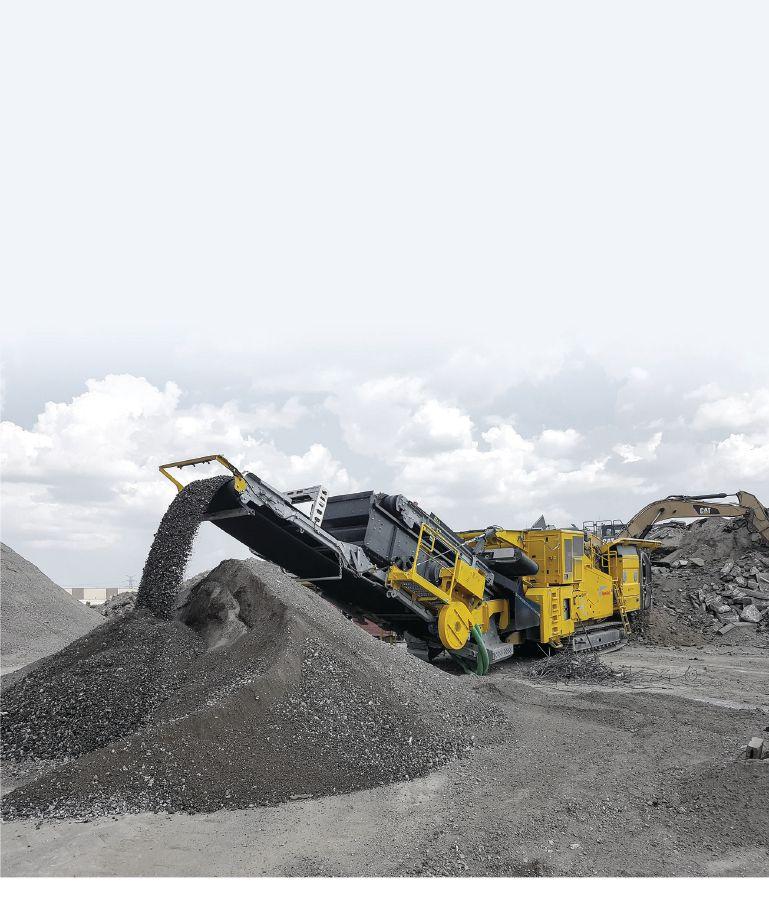
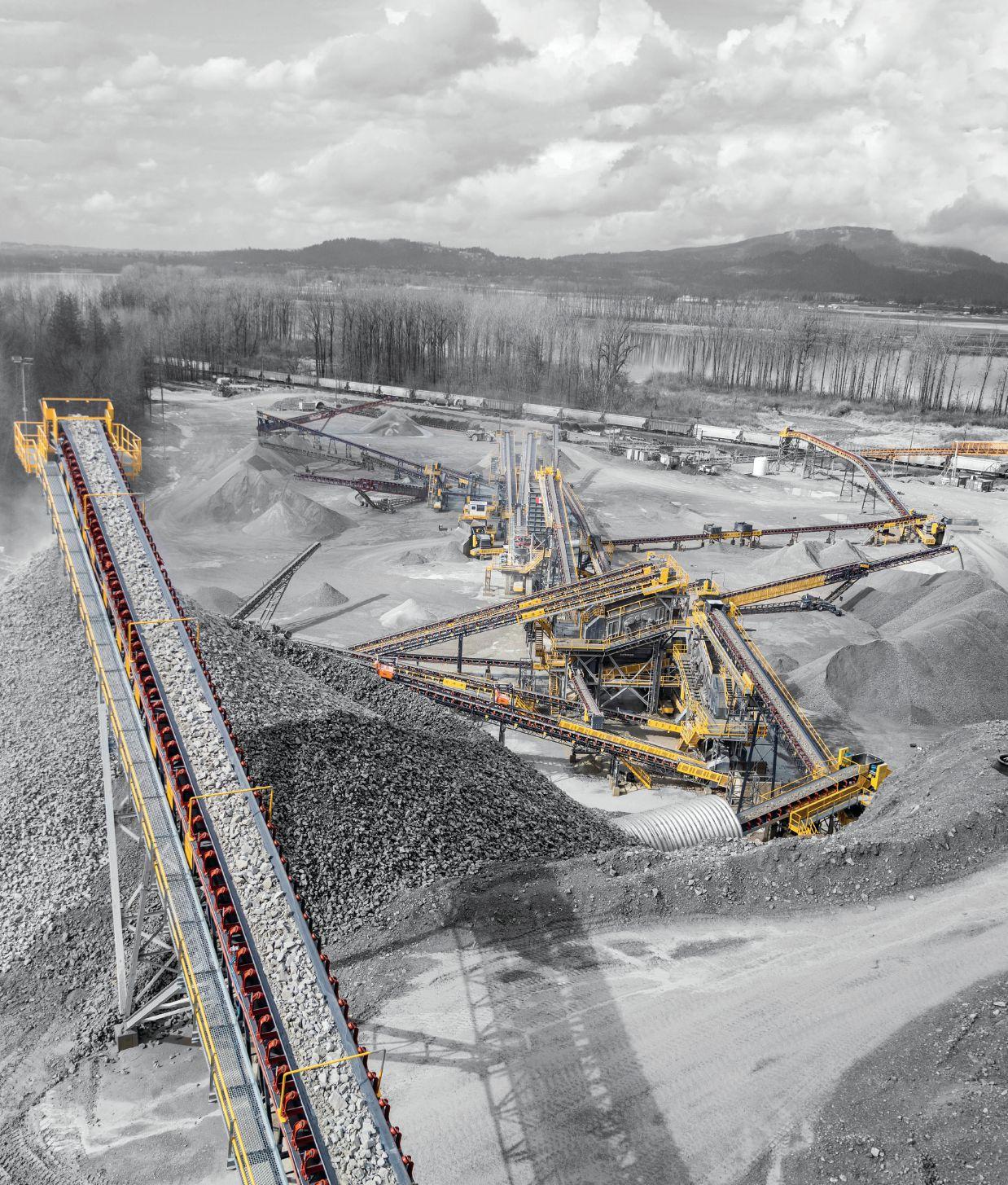
Converting waste products and virgin materials into high-quality aggregates requires equipment that is engineered to perform. Unrivaled in performance, the Keestrack R6 mobile impact crushing plant is designed with state-of-the-art technologies, innovative controls, and a heavy-duty mobile design. This is where portability meets performance.
BY JAMES careless
BUILDING PROMISES
What the Ontario Throne Speech means for the construction industry
> The Province of Ontario’s August 9, 2022 Throne Speech, which was delivered by Premier Doug Ford, had lots of promises for the construction industry, thanks to statements such as “Your government is investing a historic $86.6 billion over the next 10 years to build and expand roads, highways and transit infrastructure across Ontario,” and “Your government is also making the largest investment in the province’s history to build and expand hospitals across Ontario”.
But what do these promises actually mean, in terms of specific projects and money to be spent? To find out, Rock to Road contacted the relevant ministries associated with Ford’s promises to get the facts. Here’s what they told us.
Photo credit: rzocky2803/Adobe Stock.
HEALTH AND LONG-TERM CARE
The Ontario Ministry of Health was the only government agency that did not respond to our repeated requests for information. And so the Premier’s assertion that “Communities like Brampton, Windsor, Ottawa and Niagara – places that have for years been advocating for health infrastructure that meets the needs of their growing regions – will soon see shovels in the ground” was not qualified in dollars and cents for Rock to Road readers.
However, the Ministry of Long-Term Care did come through with specifics. “We are investing $6.4 billion to build 30,000 net new long-term care beds by 2028 and 28,000 upgraded beds across the province,” said Ministry spokesperson Mark Nesbitt. “As of July 2022, there are 31,705 new and 28,648 upgraded long-term care beds in the development pipeline. Right now, there are 364 long-term care projects in the development pipeline. Of these 28 projects are under construction.”
THE RING OF FIRE
“Located approximately 500 kilometres
northeast of Thunder Bay and covering about 5,000 square kilometres, the Ring of Fire is one of the most promising mineral development opportunities in the world and represents a transformative opportunity for multi-generational development,”“ Premier Ford declared on Aug. 9. “By working collaboratively with First Nations partners, the province is now in the late stages of environmental assessments and design work to build the first two sections of the road to the Ring of Fire.”
To make this happen, “Our government has committed close to $1 billion to support the planning and construction of the proposed all-season roads and other projects including high-speed internet, road upgrades and community support,” said Dylan Moore, spokesperson with the Ministry of Northern Development, Mines, Natural Resources and Forestry. “We know the federal government’s recent budget committed to supporting critical minerals mine development and infrastructure to access areas of critical minerals potential, such as the Ring of Fire,” he added. “Our government is
anticipating that the federal government will provide a financial contribution to unlock the critical mineral deposits in the Ring of Fire.”
HIGHWAYS AND ROADS
Roads were a big ticket item in the Aug. 9 Throne Speech. “Your government is investing a historic $86.6 billion over the next 10 years to build and expand roads, highways and transit infrastructure across Ontario,” Premier Ford said. Here’s a rundown of the projects that were mentioned by the Premier, as provided by Ministry of Transportation spokesperson Dakota Brasier.
Highway 413 and The Bradford Bypass: “Work is underway on environmental assessments, and preliminary design activities,” said Brasier. “Timelines and budget for construction will be established once this work is completed.
Widening Highway 3 from two to four lanes between Essex and Leamington: “Contract 1 from Ellis Sideroad easterly to east of Essex County Road 23 was awarded in October 2020 and is targeted for completion in 2023,” she said.
Roads were a big ticket item in the Aug. 9 Throne Speech with the Province of Ontario stating it will be investing $86.6 billion over the next 10 years to build and expand roads, highways and transit infrastructure across Ontario. Photo credit: Lorne/Adobe Stock.
“Contract 2 from east of Essex County Road 23 easterly to Essex County Road 34 is currently in the procurement phase for design and construction. Timelines and budget for construction will be established once this work is completed.”
Twinning the Garden City Skyway bridge along the Queen Elizabeth Way over the Welland Canal: “The Garden City Skyway project is being delivered in two phases,” said Brasier. “Construction approval and funding for Phase 1, of the new Garden City Skyway twin bridge, was provided in Spring 2022. The Request for Qualifications (RFQ) and Request for Proposals (RFP) are anticipated for release in Summer 2023. Construction of Phase 2, rehabilitation of the existing bridge, will commence after all QEW traffic is shifted onto the new bridge (Phase 1).”
Rebuilding more than 21 kilometres of Highway 101: “Highway 101 through the City of Timmins is a municipal road that receives provincial funding because it is a designated Connecting Link,: she said. “Construction details for this project, including timelines, will be managed by the municipality.”
Expanding the Toronto subway system and expanding the GO train
system: “Ontario’s subway plan includes the Ontario Line, the Scarborough Subway Extension, the Yonge North Subway Extension and the Eglinton Crosstown West Extension,” said Brasier. “Planning, procurement and/or early construction activities are underway. Each project will be procured separately through various contracting strategies and procurement models according to their own schedule.”
“Ontario is also making critical investments to transform the GO Transit rail network into a modern, reliable and fully integrated rapid transit network,” she added. “Work to support GO Rail Expansion and Extensions projects is underway, with individual projects in different stages of the project lifecycle.”
THE STRONG MAYOR SYSTEM
Premier Ford announced that the province intends to implement a ‘Strong Mayor’ system in Toronto and Ottawa – giving mayors more clout to push projects through resistant municipal councils – in order to speed up housing construction. This change is part of the government’s plan to see 1.5 million new homes built over the next 10 years, with a third of that taking place in Toronto and Ottawa.
“The changes proposed in the Strong Mayors, Building Homes Act would give the mayors of Toronto and Ottawa the ability to move provincial priorities forward, deliver budgets and select leaders,” explained a spokesperson for Steve Clark, Minister of Municipal Affairs and Housing. “This will empower municipal leaders to work more effectively with the province to reduce timelines for development, standardise processes and address local barriers to increasing the supply of housing.”
The key point of this Act if passed: According to the Toronto Star, “Only a two-thirds vote of council could overrule a ‘strong mayor’ on major matters.” In fact, “A ‘strong mayor’ could veto any bylaw passed by councillors if it interferes with a provincial priority” such as boosting housing starts.
FINDING MORE SKILLED WORKERS
“Ontario is facing a historic labour shortage in the skilled trades as many of those currently working in the sector near retirement age,” said Anu Dhar, spokesperson for the Ministry of Labour, Immigration, Training and Skills Development. “That is why the government is making an unprecedented investment of more than a billion dollars over the next three years in the skilled trades to reduce harmful stigma and increase expanding training opportunities ... To ensure everyone who wants to work can get the training they need, the Ministry of Labour, Immigration, Training and Skills Development (MLITSD) is also investing in programs that cover participant costs such as transit passes, childcare, and other living expenses.”
The Province is also trying to bring in more skilled workers from outside Canada. To do this, they are “calling on the federal government to increase the province’s ability to select economic immigrants and provide Ontario with a larger allocation under the Ontario Immigrant Nominee Program (OINP), so we can select the skilled workers and the skilled trades workers that the province’s economy needs,” Dhar said.
“Ontario has the jobs,” said Premier Ford during the Throne Speech. “The world has the talent.”
Note: For those people wanting to read the Throne Speech for themselves, the complete text can be found online at https://news.ontario.ca/en/ speech/1002230/together-lets-buildontario.
To be able to open up mining opportunities in the Ring of Fire, the Province of Ontario has committed close to $1 billion. Photo credit: Pavel Cheiko/Adobe Stock.
BY ANDREW snook
FIFTY YEARS OF INNOVATION
Astec celebrates half a century of success
> It is often said that great ideas start with a couple of people sitting around the kitchen table having a chat. This was exactly how Astec Industries was formed.
On Aug. 9,1972, Dr. Don Brock came up with the concept for Astec with Norm Smith, Al Guth, Gail Mize and Mike Uchytil, after the five friends sat around Mize’s kitchen table and developed a five-year plan for this exciting new business venture.
“You can only imagine the kind of the excitement, the adrenaline, the risk, that goes with these types of things,” says Astec CEO and president Barry Ruffalo.
Fast-forward to present day and the Chattanooga, Tenn.-based company is celebrating its 50th anniversary as a global, billiondollar manufacturer of equipment for road building and construction-related projects with more than 4,100 employees worldwide.
“What a great story. The fact that they went from humble beginnings to a $1 billion-plus global revenue business is impressive,” Ruffalo says.
He adds the key to Astec’s success all these years has been its focus on customers and customer-based solutions.
“We’ve done that by being devoted to our customers, listening
to them, innovating groundbreaking products to meet their needs, and providing best-in-class customer service,” he says. “I think this really is a testament that if you take care of your customers better than anybody else, good things will come.”
Not only surviving, but thriving over 50 years, comes with its ups and downs for every business, and Astec is no exception.
“The 50 years we've gone through weren't always easy. We had to rely on customers, and customers had to rely on us, to get us to this point,” Ruffalo says.
The company underwent significant expansion over the next few decades, through a combination of strategic acquisitions and the development of proprietary products and solutions.
“Astec is known for manufacturing market-leading equipment for ‘rock to road’ customers,” Ruffalo says. “Customers with rock crushing and screening plants, hot mix asphalt facilities, concrete plants, and those that used road construction products for paving and milling and horizontal grinding. “But there were a couple of acquisitions that didn't fit that rock to road value proposition from a customer perspective, so we divested those. We bring value through engineering knowledge, technical expertise and listening to customers to deliver rock to road solutions. This focused approach is an important element of our growth strategy,” he adds.
There have been many major milestones over the past 50 years that could be highlighted. A few of them include taking the company public in 1986, and more recently, acquiring RexCon in 2017.
“That was our first opportunity to take Astec from being focused on aggregate processing and asphalt to also providing concrete solutions. It was a big move,” Ruffalo says. “Over time, our customers have grown into offering both asphalt and concrete as the market has consolidated and our customers have diversified what they offer their customers. Since then, we have also added the Con-E-Co and BMH talent and product solutions to our portfolio, making us a leader in the concrete space as well."
Another big move recently made was the rebranding of its 16 subsidiaries under the ASTEC brand.
“That was also a big milestone. Both the branding and, separately, the change of going from 16 independent companies to one, where we're really leveraging more around product types and product ranges versus individual companies,” Ruffalo says.
“We took the best of each one and put them together into a product portfolio, which is really a market leader.”
When the COVID-19 coronavirus pandemic was declared in 2020, many companies struggled to adapt and some were forced to close permanently, but Astec has charged through it.
“When the pandemic hit, no one was really ready for it. We were deemed an essential business, so we implemented pandemic health protocols, and I’m proud we found a way to serve our customers, grow our revenue, and increase our profitability under difficult circumstances. Not too many companies could claim that, especially with capital equipment manufacturers. And so again, I think that was a testament of us being focused on our customers and building that customer relationship and trust and respect in delivering products,” Ruffalo says.
He adds that customer-focused mindset and culture comes from the top of the company and flows all the way through the organization to the shop floor.
The toughest aspect of navigating the pandemic has been dealing with the reoccurring supply chain issues around the globe.
“Like many heavy equipment manufacturers, the supply chain has been difficult for us, too. But what's interesting about that is in Q2 of 2022, we delivered a record number of shipments for the second quarter over the history of our company. And so, even with our supply chain issues, we're finding ways to get products to our customers,” Ruffalo says.
One aspect of Astec’s business that has certainly helped keep operations running smoothly is that most of their customer base is close to home.
“About 80 per cent of our revenue is in the United States and 20 per cent is international. And I would say that when you think about our supply chain, it reflects that, generally,” Ruffalo says.
So, what are the company’s goals moving forward? Well, no matter what the plans are, they always include their customers.
“We want to always keep customer at the centre of everything we do, that's important to us,” Ruffalo says. “Operating as OneASTEC with a common purpose makes us a stronger, more efficient company and sets us up for long-term profitable growth. We’re focused on filling gaps in our products lines that add value to our customers. Ultimately, we want to find ways to grow globally, either organically or through acquisitions.”
There have been many milestones over the past 50 years, including taking the company public in 1986, and acquiring RexCon in 2017.
At Astec, a customer-focused mindset and culture comes from the top of the company and flows all the way through to the shop floor.
BY TROY geisler
KNOW YOUR TRAILER’S TRUE CAPACITY
It is vital to understand a trailer’s true capacity to maximize ROI
> A trailer is never just a trailer. It can be manufactured to many different specifications, but the end result should always be an ideal trailer for an operation’s specific loads. To select a trailer that will require the least amount of maintenance, provide the greatest lifespan and deliver the highest possible return on investment, it is vital to understand the trailer’s true capacity. There are five contributors to capacity ratings, and each can be varied to meet a carrier’s specifications. To select the right trailer, operators should consider these factors:
LOAD CONCENTRATION
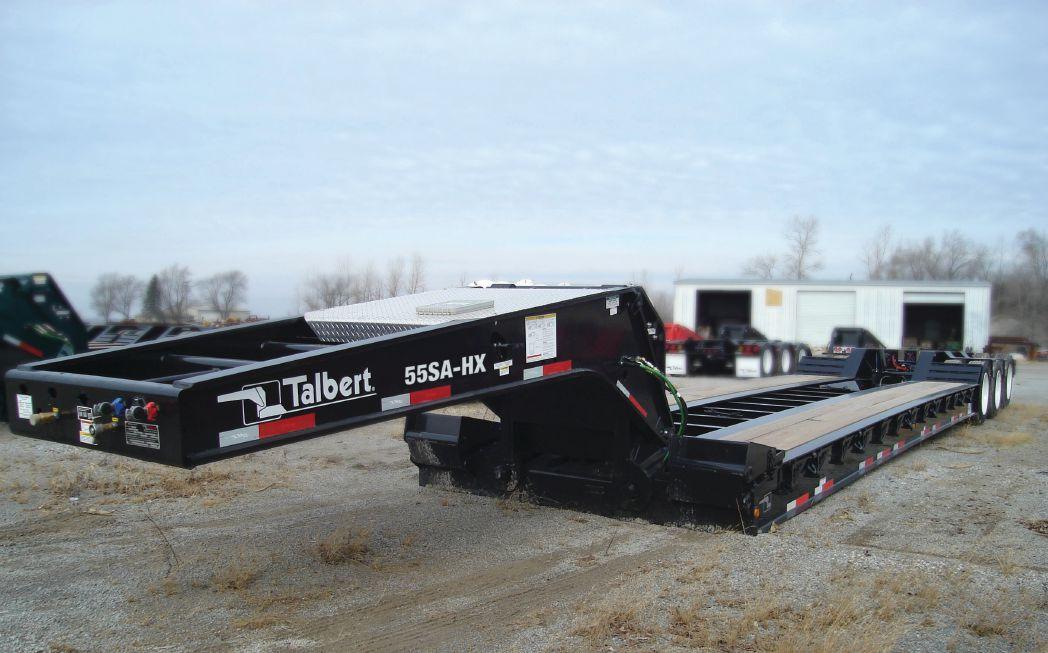
There are no industry standards when it comes to determining capacity ratings. To ensure maximum utilization, operators need to pay special attention to load concentration, or the length of the deck that can handle the rated weight. Obviously, a 50-ton lowbed can haul 50 tons. But how much of the deck those 50 tons occupy is just as important as the weight itself. While one
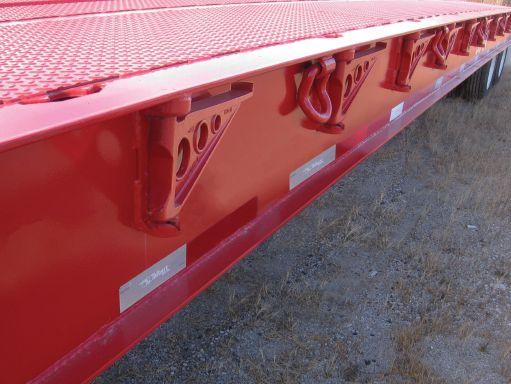
ABOVE: To make an apples-to-apples comparison, consider one 50-ton lowbed alongside another 50-ton lowbed. Because, just as a trailer is never just a trailer, not all 50-ton lowbeds are created equal.
Apitong decking provides a tougher, longer lasting wood in comparison to other varieties, such as oak or pine. Tightly woven and incredibly dense, apitong is less susceptible to chipping and cracking and provides some amount of traction in comparison to a smooth metal surface.
trailer might need the entire 26 feet to be rated at 50 tons, another can handle that same weight in half the deck length. Since loads are rarely 26 feet long, these ratings give a more realistic indication of the concentrated loads the trailer will be able to handle safely and without structural failure.
LOAD DISTRIBUTION
How a load is distributed over the deck and the number of required axles is also an important consideration when selecting the right trailer. Axle weight laws and regulations vary from province to province, so fleet managers and operators should work with manufacturers to define the best trailer for the cargo and the best axle configurations to maximize the load in their area of operation.
There are many options for achieving the best possible weight distribution over the axles, depending on the specific state’s regulations and the nature of the load. For example, carriers can vary gooseneck lengths in the front, alter the distances between axles and axle groups, move the load closer to one end or the other, or use a jeep dolly to add extra axles. However, these options must be included in the initial trailer design — simply adding them afterward risks the structural integrity of the trailer and the safety of operators and the public.
SPEED
Another capacity determinant is speed. While some manufacturers rate their trailers at 55 mph, others rate them at 65 mph. The slower a rig travels, the less added weight or stress is placed on the trailer. This is due to the fact that, while road dynamics such as potholes, railroad tracks and so on still come into play, the impact on the trailer decreases along with the speed.
SAFETY
A trailer’s safety rating also comes into play when discussing capacity. A safety rating is an indicator of how much stress a trailer can safely handle. It encompasses factors such as the strength of the raw materials used in the trailer’s construction and how the beams and cross members are configured.
The widely accepted average magnification of payload weight on a trailer due to road dynamics is 1.8 to 1 ratio.
For the most capacity and smallest impact on the trailer weight, some manufacturers use a T1 material with 100,000 psi minimum yield. T1 has maximum strength versus ductility, and equates to a lighter, stronger trailer frame over other materials.
However, on any given haul, stress on the trailer can go above that level multiple times. If no cushion is built in to handle those spikes in stress, there is potential for long-term, progressive structural damage. That’s why some industry-leading manufacturers use a ratio of 2.5 to 1, which is considered an ample cushion for even the most extreme road dynamics a trailer might encounter.
Not only does the safety rating tell a carrier how strong his trailer is, it’s also a very good indicator of potential life. Typically, the greater the difference between the static design safety factor and the dynamic 1.8 average multiplier, the longer a trailer’s useful life expectancy.
MATERIALS
Safety factors are strongly related to the quality of the components incorporated into the trailer, such as steel and the deck material.
There are several options when choosing steel, but for the most capacity and smallest impact on the trailer weight, reputable manufacturers use a T1 material with 100,000 psi minimum yield. T1 has maximum strength versus ductility and equates to a lighter, stronger trailer frame.
A trailer’s decking is continually exposed to the elements, making durable decking with a long wear life crucial. Tightly woven and incredibly dense, apitong decking provides a tougher, longer lasting wood in comparison to other varieties, such as oak or pine. It’s also less susceptible to chipping and cracking and provides some amount of traction in comparison to a smooth metal surface.
HELP TO BE HAD
Purchasing the right trailer can be complicated, but there is help available. Many manufacturers have experienced staff who can help select a trailer with the optimal combination of load concentration, load distribution, speed and safety rating for specific applications and load types. Knowing a trailer’s true capacity will help ensure an investment that leads to a long, smooth ride.
Troy Geisler is the vice-president of sales and marketing for Talbert Manufacturing. He has more than 15 years of experience in trailer sales, including more than five years with Talbert.
> OCTOBER 5-6 OCA Construction Symposium & Trade Show OTTAWA, ONT. oca.ca
> OCTOBER 13 Quarry Tech HALIFAX, N.S. quarrytech.ca
> OCTOBER 18 Quarry Tech CALGARY, ALTA. quarrytech.ca
one more load The Long Haul
A look at the impact of dwindling reserves
A project that was over a year in the making finally became public in July with the publication of "The Long Haul," a report authored by the Ontario Chamber of Commerce (OCC). The study was commissioned by OSSGA in the spring of 2021 to look at the impact of dwindling reserves on the cost and availability of construction materials in the Greater Toronto & Hamilton Area (GTHA).
The study found that that within 10 years, all crushed stone will have to travel from 110 kilometers away — 75 km more than the current average travel distance — resulting in higher costs, higher GHG emissions and more likely than not, longer project completion times.
“This report demonstrates the importance of the aggregates industry for Ontario and the impacts of longer haul distances, as well as the many benefits associated with close-to-market aggregate production” the report says. “Longer haul distances raise costs for construction and infrastructure, burn more fossil fuels, and generate higher emissions.”
The GTHA consumes the largest share of aggregates in Ontario, averaging 73 million tonnes per year. For several decades, there has been a consistent decline in the number of nearby quarries, and new sites are not being licensed to replace existing ones. The GTHA is increasingly relying on pits and quarries located farther away from market.
Without new quarries licenced in the GTHA, the costs of transporting the basic building materials for
homes, buildings and roads will more than double, increasing the costs of construction. The OCC report calculates that this will cost the GTHA a further $169 million annually in increased transportation costs.
“By 2041, the GTHA is projected to consume another 1.5 billion tonnes of aggregates,” the study concludes. “Combined with inflationary pressures, rapid population growth, and economic growth, the increased transportation costs will have considerable budgetary impacts on all levels of government.”
With at least 4 million more people expected to call Ontario home in the next 20 years, a huge infrastructure gap is looming, with the need to build more roads, hospitals, schools and homes. The study provides interesting but also disturbing data, and the real purpose of the report is to drive change in public policy.
This is why we have been asking for a public policy review to remove restrictions from close-to-market aggregate, while fully enforcing the rigorous provisions of the Aggregate Resources Act, the Endangered Species Act, the Environmental Production Act and the 21 other pieces of legislation the industry must comply with.
Hopefully this report will help get the aggregate industry on the radar of policy makers at Queen’s Park. OSSGA hopes the report will help raise awareness of the importance of the industry to Ontario’s future and result in changes so that the industry is able to meet those challenges.
To view a copy of the report visit ossga.com.
A LONG WAY TOGETHER
WHEREVER YOU ARE, BKT IS WITH YOU
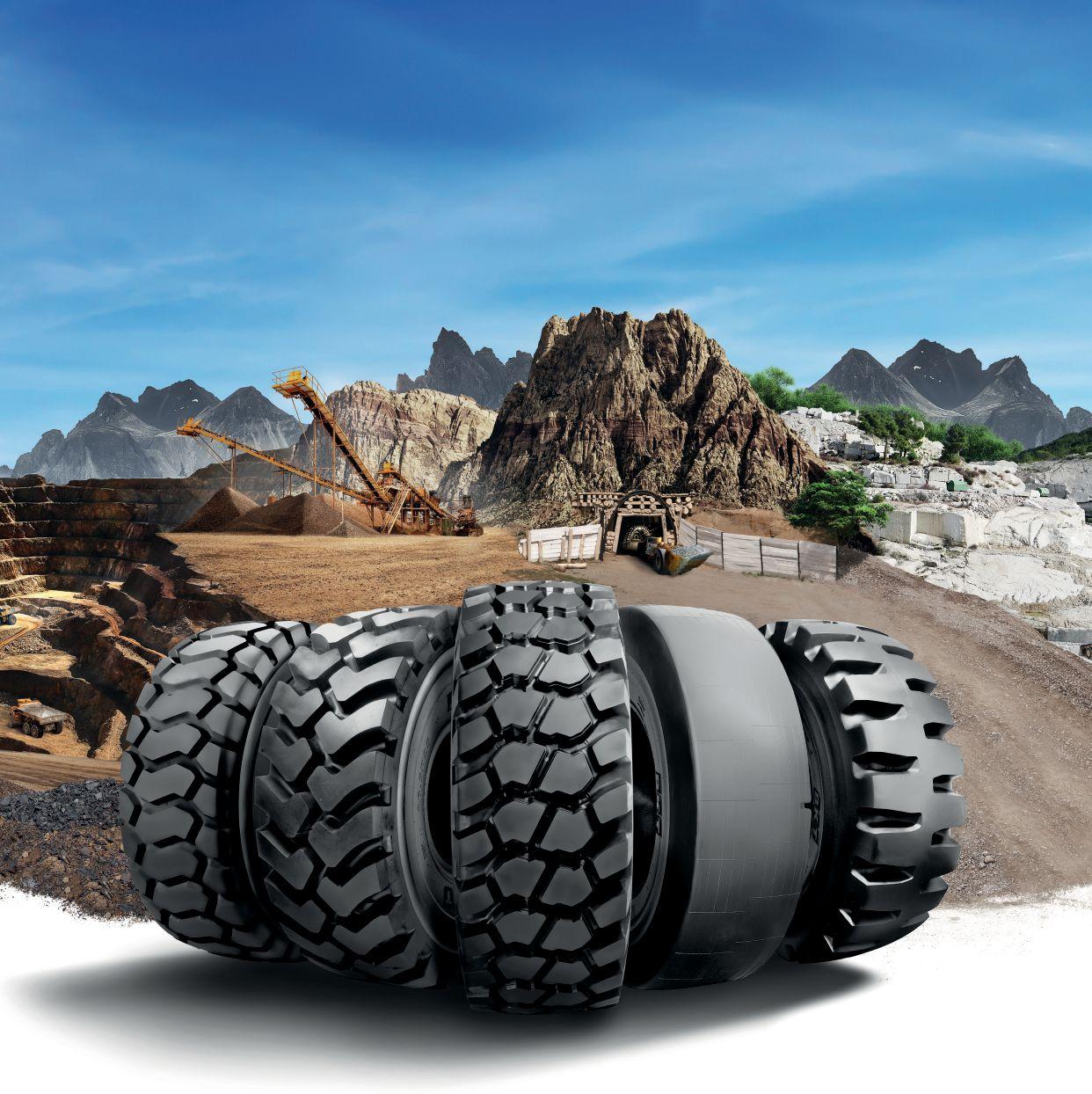
No matter how challenging your needs, BKT is with you offering a wide range of OTR tires specifically designed for the toughest operating conditions: from mining to construction sites.
Sturdy and resistant, reliable and safe, able to combine comfort and high performance. BKT is with you, even when work gets tough.