








celebration of 10 young professionals who are crushing it in the industry.
celebration of 10 young professionals who are crushing it in the industry.

We’re
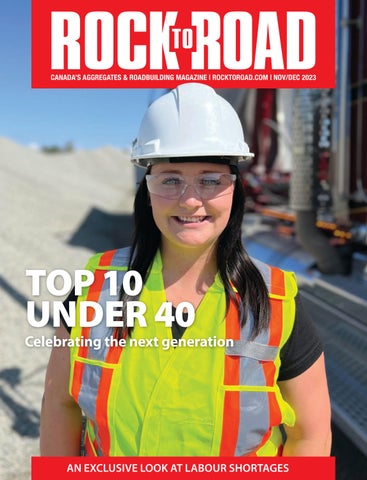
Every year Rock to Road celebrates the accomplishments of young professionals making their mark in the industry with our Top 10 Under 40 section, and this year's honourees are exceptional.
All 10 of our winners were nominated by you. Nominations were made through the Rock to Road website and via email over the summer and into September. It was exciting to read the passionate way friends, managers and colleagues described our nominees, all of whom deserved every bit of praise they received.
While we could only choose 10 people for this issue, I want to thank everyone who nominated someone and everyone who was a nominee. Choosing just 10 recipients was difficult. With so much talent in every corner of this industry, that can only mean good things for what's to come. Our future looks bright indeed.
Talking to our winners, I was keenly aware of their excitement and passion for making the industry their own.
Working on sites across the country and tackling a multitude of issues – everything from better ways to work within environmental regulations, to better representation for women, to transforming dispatching to create more real-time efficiencies – these young leaders represent a future full of exciting possibilities for everyone.
Sharing ideas keeps the industry moving forward and I encourage you to read through our Top 10 Under 40 section in this issue and bring the amazing ideas of these young professionals back to your organizations to help your business navigate the changes that are coming.
I know you'll be as excited as I was to read about the incredible work these young professionals are doing.
er been clearer that hiring challenges are holding us back.
Getting workers, young or old, on job sites has been a challenge for years, and one that's not getting any easier.
This month we looked at the hiring and retention problems we're facing and what experts recommend companies do to help mitigate the shortage of workers. We also spoke to government officials to find out how they're working to get good employees into good jobs and what they're planning to better support the industry.
I can't wait to see you there! ELIZABETH
Writing about younger workers making their own way in the industry, it has nev-
You can read all about that, plus the latest on precision milling technology and winter maintenance tips, all in the pages of this month's Rock to Road.
It's almost 2024!
It seems like just yesterday we were talking about summer plans, and while I contemplate where the time went, we're already making plans for next year's events.
Rock to Road is proud to be presenting not one, but two Quarry Tech events next year.
We heard you – we know you couldn't take a moment away during the unseasonably warm fall we've had, so we moved Quarry Tech Kanata to February 2024 to better accommodate busy schedules.
We're excited to share the latest information the industry has to offer, along with some excellent networking opportunities, in Kanata, Ont. Feb. 7 and we hope you can join us.
If you're on the west coast, don't worry, we've got you covered. On Feb. 22, Quarry Tech is making its way to Abbotsford, B.C. with the same great line-up and all the latest information to keep your operation moving forward.

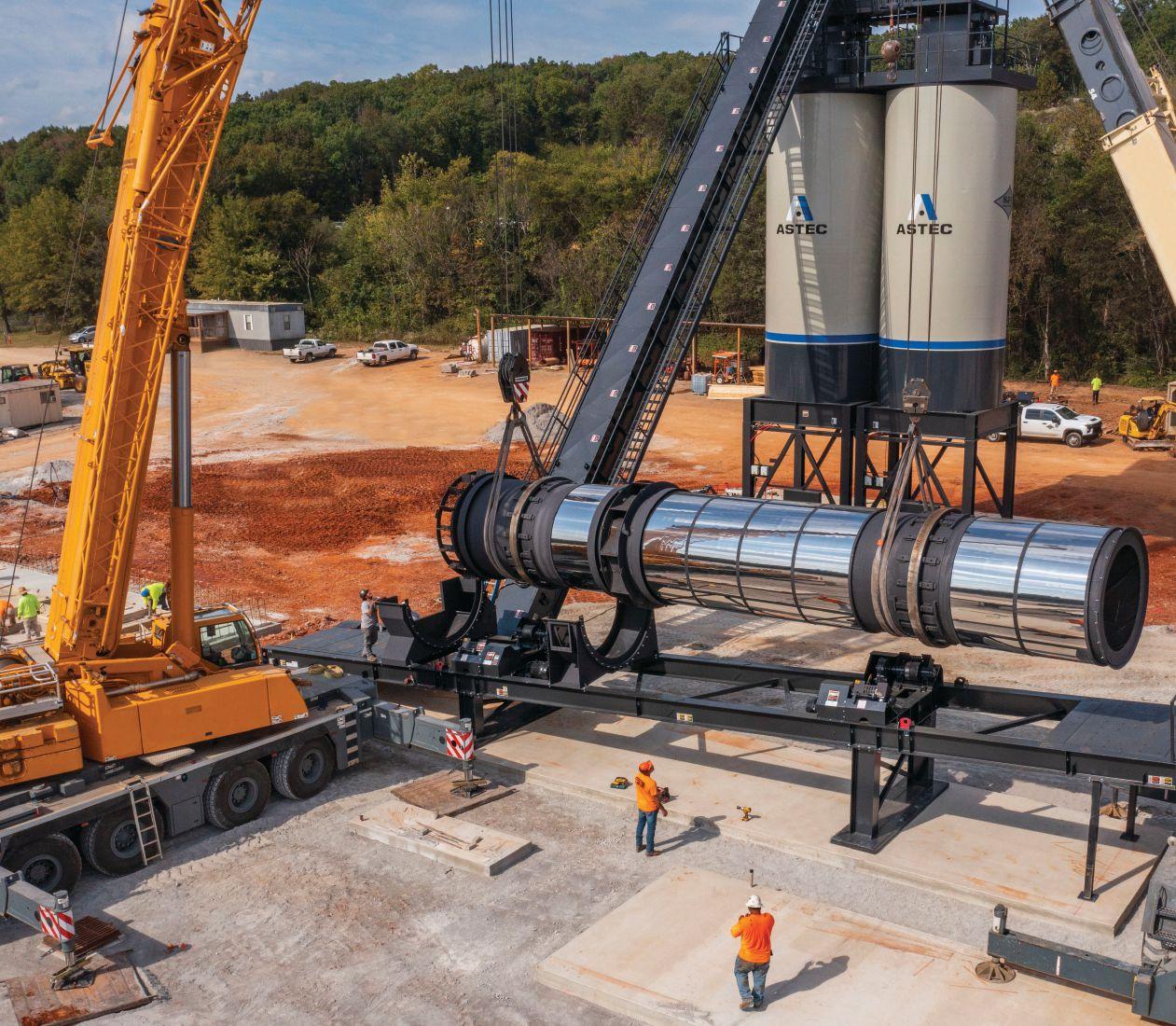
Astec’s commitment to its customers extends beyond making the sale.
From the beginning, our service team has provided construction services for the equipment we build. Astec construction and relocation services for asphalt plants include plant and equipment installs, plant tear-downs and moves, silo repairs, and industrial piping and tank farm installs.
Efficient planning minimizes downtime, local regulations and permits also play a key role. Astec has an extensive history and experience with permitting and regulations. Safety, efficiency, and compliance are paramount throughout the process.

Alberta high school students are getting more opportunities to gain meaningful experience in the trades through career-based programming.
The Government of Alberta announced its expansion of the dual credit grant program for the 2023-2024 school year. The grant money will total $3.6 million distributed across 47 school authorities to create new dual credit programming or expand existing dual credit classes.
The program provides career-based courses to students in Grade 10, 11 and 12, giving them an opportunity to earn credits that count towards both high school and a post-secondary certificate, diploma or degree. The courses also give
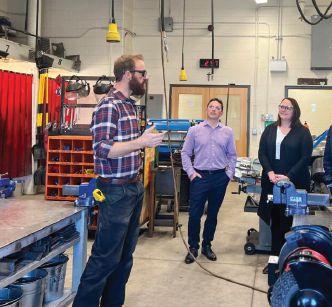
students an opportunity to learn career skills before graduating.
New or enhanced dual credit opportunities in the trades include carpentry and
welding apprenticeships, among others.
Alberta Minister of Education Demetrios Nicolaides says the program will help give students needed skills to transition into the next phase of their life, while provided much needed workers to an economy overburdened by a labour shortage.
“Alberta Education is committed to empowering students to pursue various career paths to support success inside and outside the classroom,” he said.
“Enhancing these opportunities is essential to encouraging high school completion and building a skilled, educated and engaged workforce to support Alberta’s growing economy.”
Two men accused of conspiracy to rig bids on public works proj ects were formally charged in the Court of Québec on Oct. 24.
Richard Dionne and Richard Labelle stand accused of con spiring to rig bids on work being done on Highway 50 – since renamed Autoroute Guy‑Lafleur – in the Gatineau region of Québec in 2021.
At the time of the alleged conspiracy both men worked for the Coco Asphalt division of Coco Paving Inc., where Dionne was the general manager of Sales for Québec and Ontario and Labelle was the sales manager for Québec.
The Competition Bureau of Canada says it turned up evidence Dionne and Labelle conspired to undermine the competitive process by agreeing to rig bids submitted in response to a call for tenders from the Ministère des Transports du Québec. The charg es were laid under the bid rigging provisions of the Competition Act and the conspiracy provisions of the Criminal Code.
Individuals convicted of bid rigging could face up to 14 years in prison and possible fines.

Michael Lindsay will remain the president and CEO of Infrastructure Ontario (IO) for the next three years.
The extension his appointment was ap proved by the board at their September meet ing and became effective when Michael Lind say’s previous appointment ended Nov. 1.

Prior to being appointed to his current role in 2020, Michael Lindsay served as IO’s president, project delivery and focused on supporting public and private partnerships, also known as P3’s.
The Ontario Minister of Infrastructure, MPP Kinga Surma, com mended Michael Lindsay for his strategic and operational leader ship during his first term.
Plans for his second term include promoting greater diversity, equity and inclusion among the agency’s workforce, and to institute a framework to ensure a consistent approach to asset resilience, en ergy efficiency and accessibility.


BY JACK burton
A look at continued struggles with labour shortages and the path forward
> Workforce shortages are currently a nation-wide concern, with the Canadian Survey on Business Conditions (CSBC), a quarterly report from Statistics Canada forecasting the expectations of businesses from across the country’s various sectors, showing that no matter the industry or province, staffing squeezes continue to be an issue.
“One of the questions we ask [in the CSBC] focuses on obstacles that businesses are going to face in the short term, whether that be costs, demand, supply chain, and obviously, labour,” said Chris Johnston, an analyst at Statistics Canada and co-author of the report. “Specifically, about one in every two business expects to face some labour-related obstacles, whether that’s workforce shortages, recruitment or retaining skilled employees.”
Despite the country-wide consistency of these trends, the contributing factors and future outlooks specific to the construction and quarrying sectors’ relationship to labour proved to be notably more intricate and, in certain cases, severe.
Specifically, across the construction sector, the CSBC for the second quarter of 2023 revealed these issues to be more pronounced relative to other industries.
“The construction sector has slightly more challenges across the board,” said Shivani Sood, an analyst for Statistics Canada and co-author of the report. “The trend we saw was that, for the construction sector, these issues were a little bit higher than other industries.”
The survey found more than 40 per cent of employers across the construction industry expected recruiting skilled employees to be a notable obstacle over the next three-month period, with this figure placing the industry among the top five sectors grappling with this issue.
While both the construction and the mining, quarrying and oil and gas extraction sectors are facing similar personnel challenges, the labour realities present in each market have operational impacts notably distinct from one another.
Professionals in the construction industry, according to the report, felt that
in these sectors is vital to not only keep operations moving forward, but for the continued financial health of the organizations and institutions that comprise these markets.
Ryan Montpellier, executive director for the Mining Industry Human Resources (MIHR) Council, shared that personnel shortages in the quarrying and mining sector have wide-ranging bottom-line impacts, affecting organizational areas extending from people to projects.
“It’s definitely hitting the bottom line. We’ve seen hiring costs increase, and companies are having to hire more people in HR, talent acquisition and recruitment,” Montpellier said. “What it’s also having an impact on is projects or expansions of existing quarries. All of those things are either being delayed or just cancelled outright, because it’s difficult to find the right people.”
As the baby boomer generation reaches retirement age, many markets stand to be affected by the volume of workers they will need to replace. Hiring trends in the quarrying and mining sector over the last several decades, however, have only
“About one in every two business expects to face some labour-related obstacles, whether that’s workforce shortages, recruitment or retaining skilled employees.” – Chris Johnston, an analyst at Statistics Canada
the inability to expand their workforce was and would continue to negatively impact the deliverability of projects, both on-time and on-budget. For the mining, quarrying, oil & gas extraction sector, the impact of these shortages was more organizational than operational, creating difficulties in finding and retaining suitable talent.
“Generally, what we saw was that the construction sector was more likely to indicate that the challenges they had were more related to their ability to grow and function, whereas the mining, quarrying, and oil & gas extraction sector indicated that their labour issues were much more direct, impacting their staff and the way that people work,” said Sood.
Securing the next generation of workers
exacerbated this big-picture issue.
“What makes mining and quarrying a bit unique is where we feel the labour market tightness, and it’s a little bit more than other sectors,” Montpellier said. “Our sector is old and aging: we hired a lot of baby boomers in the 80s and 90s, and mining didn’t have a whole lot of hiring in the 2000s and 2010s, so we’re now seeing this much older workforce leave, with not a lot in the middle.”
Montpellier sees the lack of access stemming from the often-rural nature of quarrying and mining as another contributing factor to the industry’s labour gaps. Given the remote locations of most mines and quarries, many projects do not have the privilege of using the urban centres that younger generations of workers are congregating to as viable talent pools.
“A big part of it is that we're seeing
youth tending to migrate into large urban centers,” said Montpellier. “In rural Canada, we're not building communities around mines the way we used to.”
With the majority of worksite locations across the mining and quarrying sector leaving organizations with a notably leaner selection of potential workers compared to other trades, the struggle to fill in the cracks left by retiring workers is only compounded.
“We don’t have mines where we have population density. Even when we’re talking about large-scale industrial projects such as large open pits, we’re still operating from a very small labour market compared to Canada’s urban areas such as Toronto, Montreal and Vancouver,” Montpellier said. “So, we’re already starting from a bit behind.”
The remote locations of mines and quarries also means the sector is rarely afforded the day-to-day exposure that other industries have as an opportunity to showcase their importance. Given the largely behind-the-scenes nature of this work, those new to the labour market lack the awareness of the sector’s importance that can be needed to view it as a viable career path.
“Another big thing is a lack of awareness,” said Montpellier. “People don’t see mining in their day-to-day while growing up the way they see construction, healthcare, policing or manufacturing. That lack of awareness of career opportunities is something unique to us, but also something we’re really trying to push through and raise awareness about.”
Visibility might be key in turning the tides on current labour woes, but it’s important to know what, exactly, employers should be making visible to their prospective workforce. For Julie Davis, vice president of people strategy for the Association of Equipment Manufacturers (AEM), it’s a solid company culture that she sees as deserving of this spotlight.
The opportunity for potential employees to see an organization made up of engaged workers who want to be there can be a direct path for attracting the right talent, Davis believes, especially from younger generations traditionally underrepresented in these sectors.
“A positive work environment, one that supports diversity, inclusion, good communication and employee growth and development – I think that those are
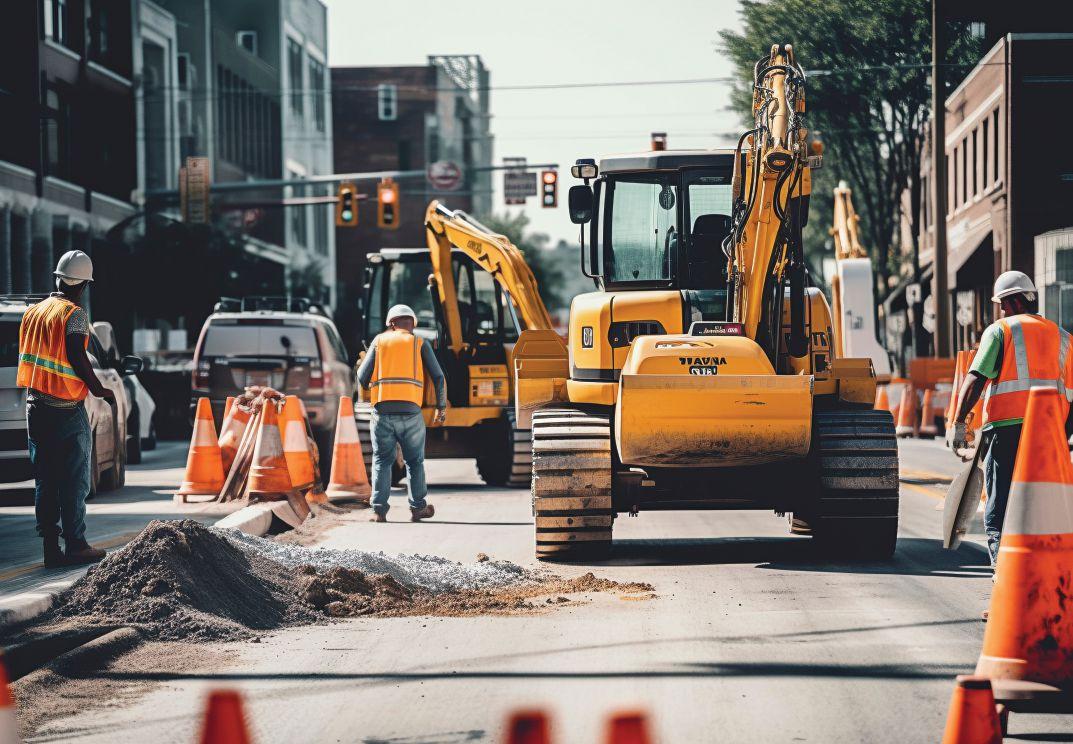
all part of the evolving expectations of the younger workforce,” said Davis. “It really makes a difference. When someone has choices of where to work, they’re going to look at what kind of culture each company has.”
If a solid company culture can be the tiebreaker in a wide-open job market, then now more than ever, organizations should be looking at what needs to change in their own workplaces to create that environment. Though construction’s many sectors may be looking for the right people to bring in from the outside, it’s by looking within the organization where Davis sees the solution.
By approaching the construction market’s labour issues from a retention-minded standpoint, focused on cultivating an environment that provides its workers with a sense of value, organizations are not only more likely to keep talent, but have them become advocates for their employer and the supportive work environment they have built.
“Always start with retention, which really does begin with that understanding
of the opportunities that you have within your current culture,” said Davis. “That means having those conversations with your employees, and not just assuming that you know what's going on.”
This open line of communication allows employees to feel supported and heard, while also providing employers with the insight necessary to address any gaps or areas of concern needed to build an engaged and motivated workforce.
“You really need to get a sense of where those challenges are,” Davis said. “After that, it’s about really looking at how you can begin to build that culture.”
Though the variety of work that comprises the construction industry means that there is no one-size-fits-all solution to building the best company culture, Davis highlights leadership, communication and flexibility as values that all have significant potential to move the needle in attracting and retaining talent.
“First of all, leadership is where culture begins, and I think communication is also key. Listening to employees is a strong, top factor: Are you in conversation
with your employees? Are you listening and acting on their feedback?” said Davis. “I also think that after COVID, loud and clear, we’ve heard that creating some form of flexibility in schedules is really important for work-life balance, especially as we look at how to add diversity to our workforce.”
Working alongside AEM’s 1,000-plus members, Davis has noticed a pattern of answers that employees seek out over their first few years with a new organization: while the first year is about learning the role, the second year is more concerned with the employee learning about their company. By the time year three rolls around, employees are trying to learn what, in the long run, their company can do for them.
According to Davis, the average period a worker 35 years or younger stays at a role currently stands at 2.8 years. To solve the construction industry’s labour issue, she believes that employers need to become better at providing their workers with a solid answer to that three-year question.
“If you don't have something that you're willing to give or invest in your employee, and you don't have a culture that really speaks to growth and development for them, they're going to move on and find that next opportunity for development – even if it's not with you,” she said.
While there are changes employers can make across their operations and organizations to curb the current labour issues in the construction and quarrying sectors, a number of initiatives are also being introduced on the legislative level by governments across the country.
Ontario’s position as Canada’s largest sand and gravel producer, while also being in the starting stages of an infrastructure push on an unprecedented scale from the Ford administration, makes the labour issues of their roadbuilding and quarrying sectors more acute and demanding of immediate solutions.
“The biggest economic challenge facing Ontario is the labour shortage,” said Monte McNaughton, Ontario’s former Minister of Labour, Immigration and
Training & Skills Development. “Construction is a big challenge right now, with about 75,000 jobs going unfilled. We need 100,000 construction workers over the next 10 years if we want to build projects on time and on budget, and to build the ambitious infrastructure plan we have as a government.”
The Ontario Ministry of Labour’s solution to this need for workers, not only in the construction industry, but across all skilled trades, has involved a robust campaign including career fairs and initiatives such as the Ontario Youth Apprenticeship Program and the Skills Development Fund; all of which share the goal of increasing the visibility of these potential career paths and access to the requisite training for them.
In the opinion of the Ministry, this hard work is definitely paying off. “We’re gaining a lot of momentum around the skilled trades, I hear it when I'm out meeting with parents and educators, and touring schools about this focus on the trades. We've really changed the conversation,” McNaughton said.
From this changed conversation has come a promising shift regarding the future
of Ontario’s skilled trades workforce. This summer, the province showed a record year-over-year increase in apprenticeship registration numbers, recruiting more than 27,000 workers into apprenticeships, and among this a 30 per cent increase in apprenticeship registrations from female-identifying workers.
The need for skilled workers across construction and other sectors may be a top priority for Ontario, but the Ministry’s approach to their trades push is concerned with more than just bringing the numbers up or getting shovels in the ground – for McNaughton, it’s also about providing the younger generation with an opportunity to do work that they’re proud of.
“I have a neighbour, he's almost 60 years old, he’s [worked on] public and private sector infrastructure projects for his entire career. He literally loads up his three grandsons, and he'll drive around and point to a project he once worked on and say, ‘I built that,’” said McNaughton. “I think that's one of the best things that I hear every single day from people in the trades – that they're damn proud of what they build.”

BY ANDREW snook
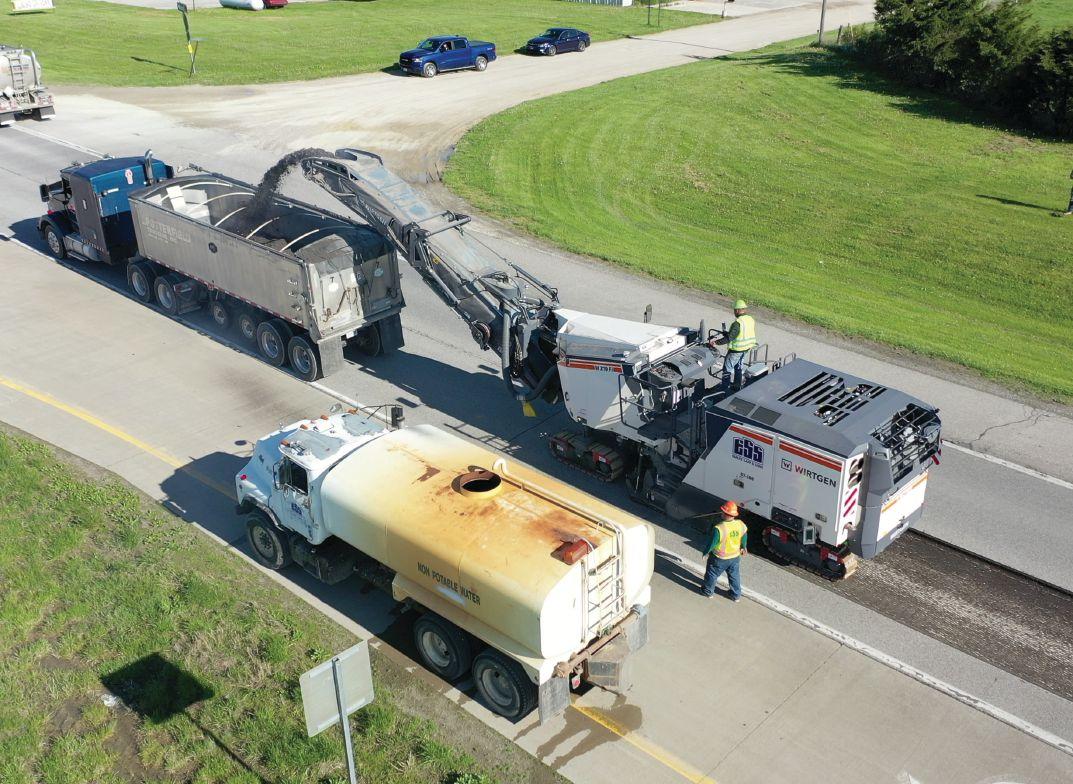
What you need to know about the latest milling equipment
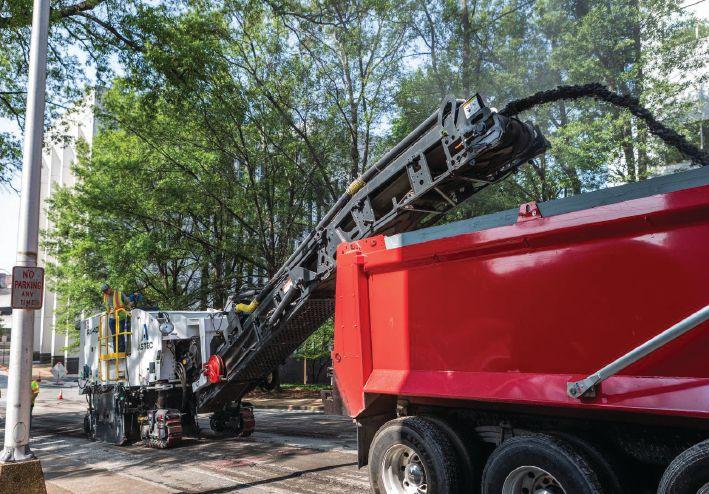
> When it comes to milling equipment, the needs and demands each contractor has can vary from job to job. However, there are some common needs that original equipment manufacturers (OEMs) have identified for many of their customers. One of the biggest drivers for investment for certain milling technologies is the level of experience of a company’s crew. Less experienced crews value a simpler machine says Raleigh Harrelson, product verification and validation supervisor for Astec.
“Often times, with smaller contractors, the main necessity is ease-of-use. They most likely don’t have a fleet of employees who are familiar with milling machines,” explains Harrelson. “They need a machine with a low learning curve to get things moving quicker.”
Tom Chastain, milling product manager for Wirtrgen America, says having milling equipment in the fleet that is operator friendly will help companies speed up their hiring processes, alleviating some labour stresses brought on by an increasingly difficult time for finding and hiring experienced milling machine operators.
“Having milling machines that are operator friendly is critical. By creating Mill Assist, Wirtgen has developed a solution that allows the operator the option of preselecting settings to let the machine automatically adjust the speed of the engine and milling drum, the traction drive, the water system and the machine’s ground speed,” Chastain says. “It allows the operator to be more productive with less experience, providing high quality and production, while lowering the machines CO2 footprint.”
While ease of use features are popular with most contractors, those that have a large pool of experienced operators to draw from will often have different priorities when assessing new milling equipment to purchase, including transitions over obstacles and other things that might be in the way.
“Larger contactors who have more resources at their disposal are more focused on a machine’s production,” Harrelson says. “Horsepower is part of that production need, but not all of it. The ability to quickly transition over structures; transition in and out of the cut, is critical. Once the machine steps in and starts moving, the horsepower component of production is fairly easy to achieve, but a contractor who has learned to transition quickly and accurately is ahead of the game. When you start a cut, the machine had to do it correctly to maintain the grade and it there are manholes or any other obstructions that can’t be milled, you have to pick up, move over and then step back in. Getting through those transitions quickly is what makes these contractors stand out.”
One of the newer technologies that contractors have gained a lot of value from is the evolution of grade controls.
“Precision grade control is a must for milling contractors. Leveling systems especially developed for cold milling machines use operating panels that are intuitive and easy to operate. They are fully integrated into the machine control system and enable a high degree of automation. This allows operators to avoid obstacles, like manholes, and get right back into the cut.” Chastain says.
He adds that 3D has become increasingly relevant in the milling space.
“3D, when correctly set up with the machine, can further automate the job requirements like cutting depth, and
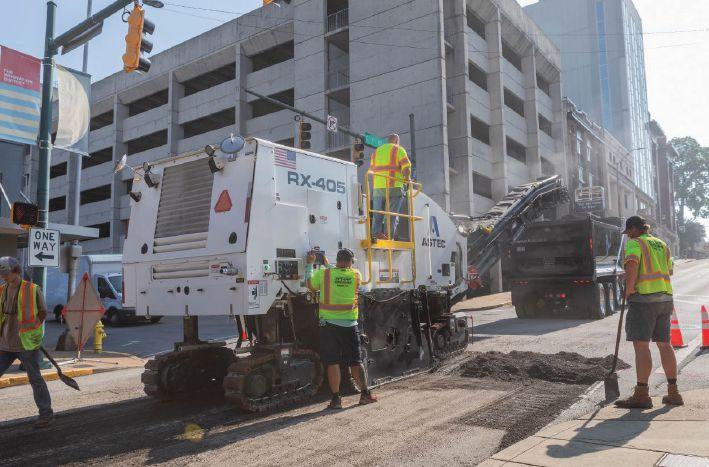
road profile. It’s important to have a system that can easily interface with a variety of manufacturers’ 3D systems,” Chastain says. “Wirtgen LEVEL PRO ACTIVE offers a simple and field-tested 3D system interface with the 3D kit.”
Contractors are extremely interested in automation within milling machines, looking for any equipment features that can efficiently replace manual processes.
“Accurate automation can be a timesaver in the milling process. Anything from automated controls to slope and grade automation that can help crews mill more efficiently and effectively is a win. OEMs are always innovating to help with ease-of-use,” Harrelson says.
To ensure long life for milling equipment, using a proper maintenance schedule for the equipment is key.
“Drum maintenance is critical to maintain a healthy milling machine. As the teeth rotate, it wears on the holder faces and, after a season or so, there is additional maintenance that must be performed, depending on how many hours were put on
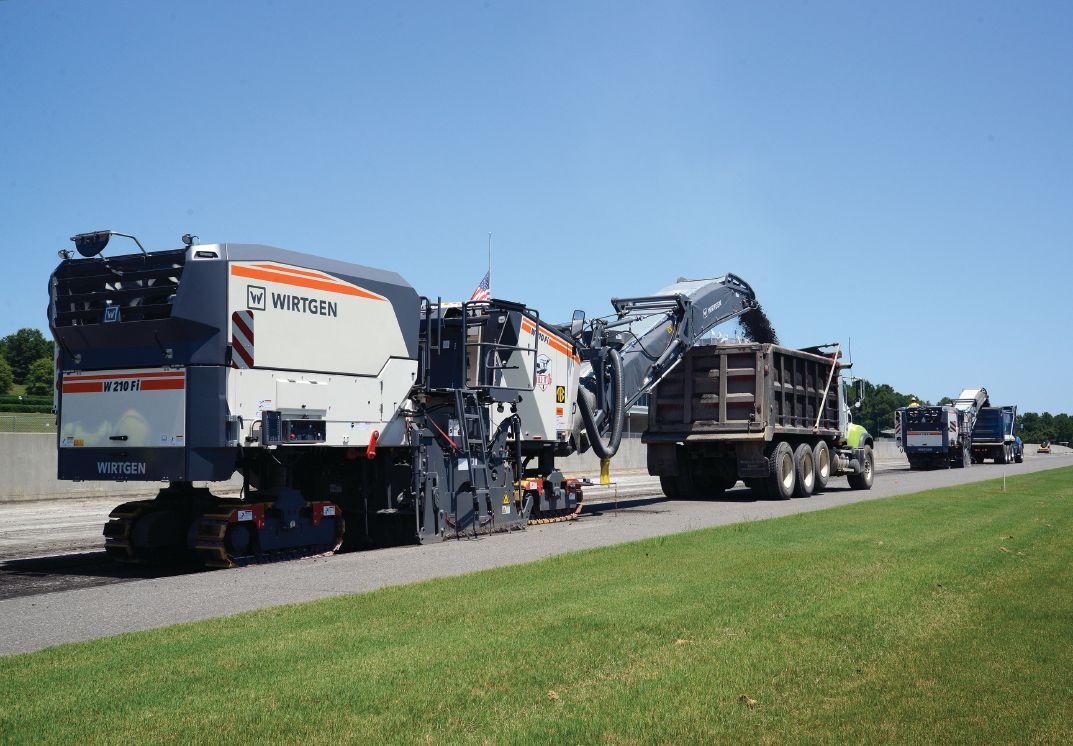
the machine. You may also need to go through and rebuild holders in the machine. Maintaining a healthy mill goes beyond daily upkeep, we need to think long term and prioritize maintenance," said Chastain.
In addition to maintaining the usual suspects – drums, holders, teeth, bearings, oil filters, DEF systems – Chastain says maintaining and cleaning the conveyor belts is also vital.
“A lot of the time we just look at the outside of the conveyor belt for damage, when in reality, for doing proper maintenance, you need to check for buildup of material on the heads and tail pulleys,” he says.
"The abrasiveness of the material that gets packed on those pulleys can delaminate the belt from the inside. Wirtgen has robust, yet easy to clean conveyor systems, with buildup protection in mind.”
Chastain adds that the addition of new technologies and features has meant that maintenance has become easier on most milling machines, which is a big help to the crew at the end of the day.
“Making the maintenance on these machines easier is a big factor because after you put in 12 to 14 hours in the beating sun all day, the last thing you want to do is change teeth, grease the machine, etc. To making things easier on the crew, maintenance points have been
milling machine goes down, it’s not just the milling machine. It’s the pavers, the rollers, and the asphalt plant,” Chastain says.
Preparing for a breakdown in advance, including having back-up componants already on site, can help alleviate some
“If it’s a mill-and-fill situation and the milling machine goes down, it’s not just the milling machine. It’s the pavers, the rollers, and the asphalt plant,” — Tom Chastain, milling product manager for Wirtrgen America
centralized, like slide out filters for ease of change,” he says.
One of the most important things to remember when it comes to maintaining milling machine equipment is that any unplanned downtime can bring an entire operation grinding to a halt.
“If it’s a mill-and-fill situation and the
of the downtime, making repairs easy and preventing a wait for back-ordered componants.
“Back-up components help prevent downtime on projects and using the machine display, the operator can see what the issue is, and how to resolve it,” said Chastain.
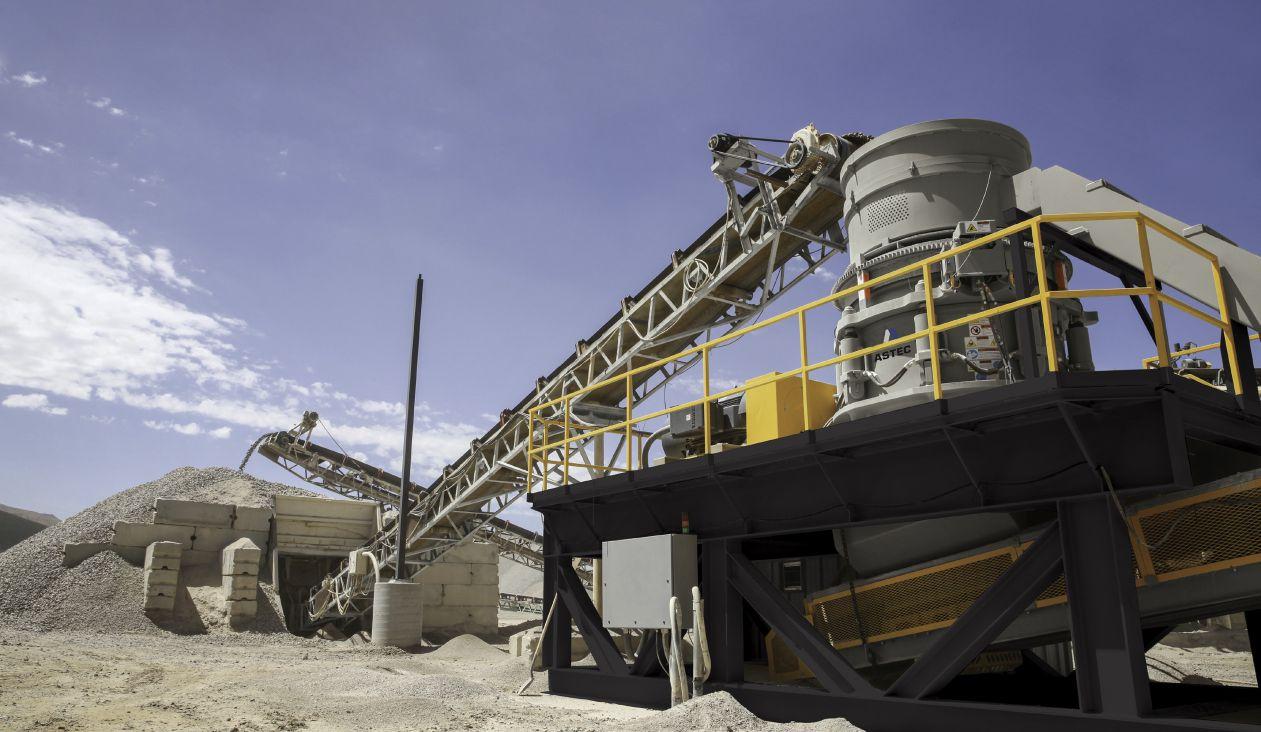
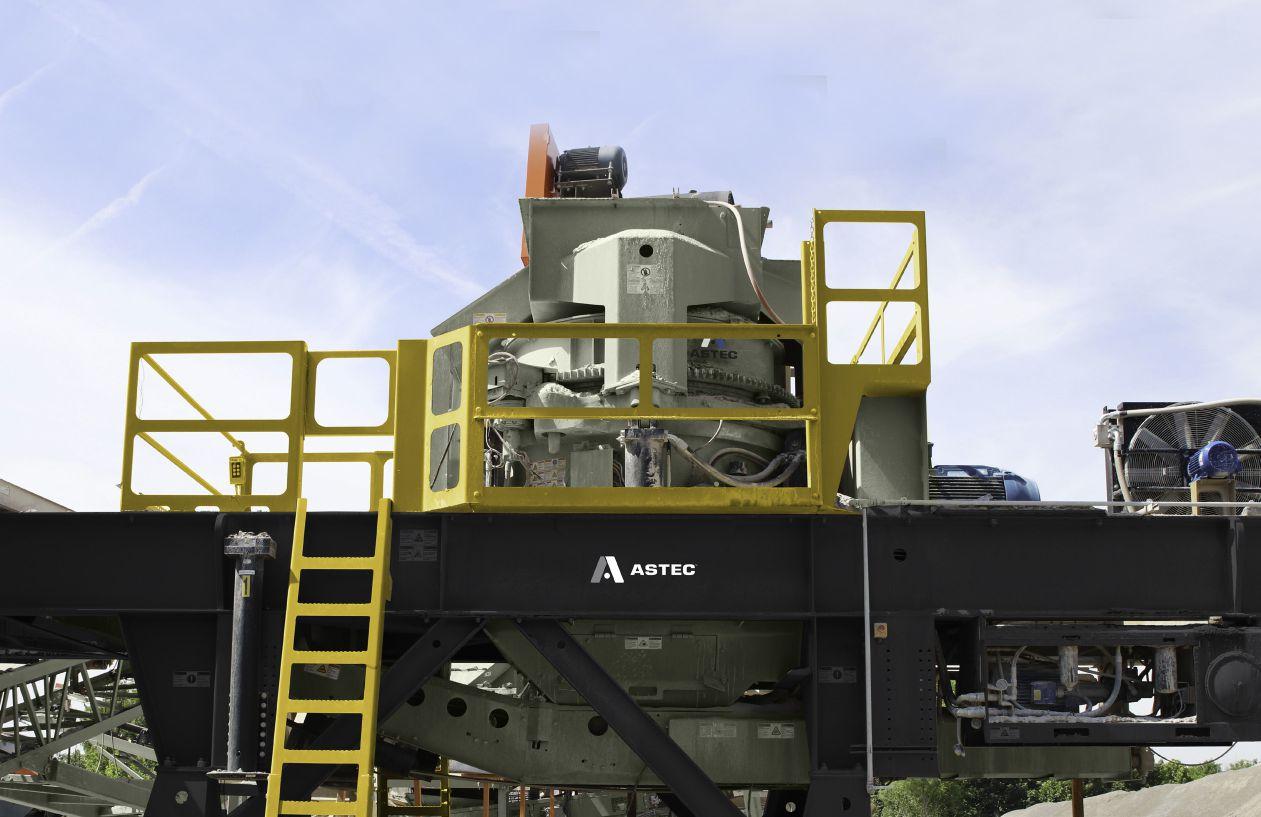
With the Kodiak ® and Titan® cone crusher lines, Astec has rounded out one of the most comprehensive cone crusher offerings on the market. With innovative technology and industry-leading capabilities on both roller bearing and bushing cones, our line is unmatched and unstoppable. View our Kodiak and Titan cones.
BY WILM schulz, Haver & Boecker Niagara service manager
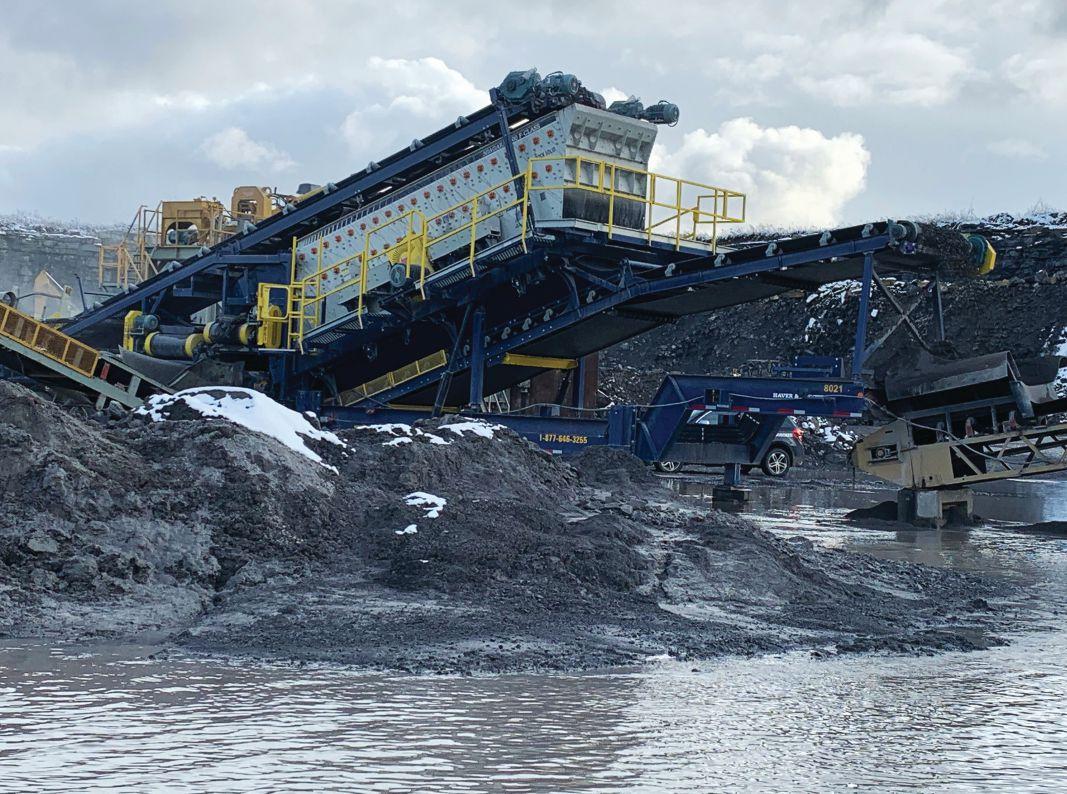
> While vibrating screens are built for the harsh conditions in which they’re used, there are best practices to ensure they continue to perform despite the season. Whether your plant shuts down for the winter or you continue to operate throughout, winterizing and preventative maintenance best practices will help ensure equipment longevity and maximum performance, in addition to making the most of any scheduled winter downtime. Not doing so could mean expensive breakdowns and repairs down the road.
If you shut your plant down for the winter, as is the case for many operations in cold climates, proper winterizing is essential to a smooth and successful spring start-up. Operations should


winterize equipment when temperatures are regularly below freezing.
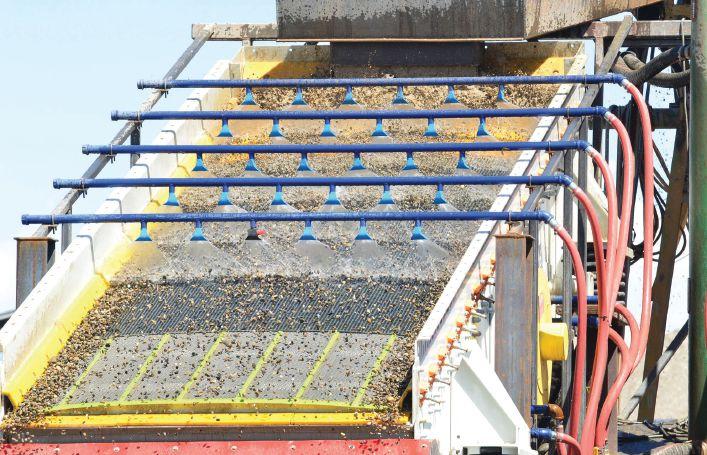
The wash plant is the first place to start. Make sure to drain all of the water lines on the rinse screen to prevent freezing that could damage or burst pipes. Do the same thing with dedicated washing systems. Draining is usually as simple as allowing the water to flow out of the equipment, though crews can be more thorough by blowing out the lines and pump with dry air.
Next, flush vibrating screen lines with grease to remove contaminants from the bearings and slingers. Though it would be beneficial to cover a vibrating screen for the winter, it simply isn’t feasible for most operations. However, action should be taken to protect screen media from the elements and decrease the potential for rust and deterioration that could weaken the screen media. Move any extra screen media or components that may be on the ground nearby to a space out of the elements. The media could be covered with a tarp or placed in a storage container.
Although vibrating screens don’t require a lot of extra attention during the winter, a little TLC can go a long way. Just like with a car, operations should allow the equipment to run for about 10 minutes before use to warm up the system. If temperatures are below -10 C then standard grease should be replaced with a grease that can handle the lower digits, such as EP1. Monitor and remove snow and ice build-up and clear the area around the
screen before beginning for the day to maintain proper operation. Though unlikely, the weight of significant ice on the machine could affect the equipment’s balance and performance.
Whether it’s regular scheduled downtime or the equipment is shut down for the season, winter is a great opportunity to fully inspect equipment, train workers and make any changes that might improve performance and component longevity.
The best value is to partner with the equipment OEM for a service visit and inspection. As the manufacturer, they know what to look for and can give valuable insight on how to improve processes and increase productivity. OEMs often set up a regular servicing schedule where they visit the operation, evaluate equipment performance and provide recommendations. Certain OEMs will perform the complete analysis all while the equipment is in operation, thereby increasing the operation’s uptime.
OEM-certified service technicians from some OEMs will start with a vibration analysis on the vibrating screen to look for problems easily missed by the human eye, such as a hairline crack in the side plate or twisting that will affect the machine’s longevity. These systems measure machine stroke and other vibration data to determine the equipment’s health. Abnormalities in the data can help pinpoint problems so that they can be addressed quickly to avoid downtime.
Work with the technician to check for any damage or otherwise visibly broken components on the vibrating screen. Listen while the equipment is running for unusual noises, such as loose tension rails. Also, look for broken or excessively worn screen media. The screen media scrap pile can be a great place to identify common problems and diagnose how to fix them. For example, broken wires might indicate a need for a more durable media. Shiny hooks could indicate improper and loose installation, resulting in the screen media moving back and forth. Pegged or blinded media may mean a need for more open area, tapered openings or a different type of screen media. Upon completion of the visual inspection, an OEM certified service technician can often provide recommendations to improve machine performance and minimize unscheduled downtime. The recommendations could range from polyurethane liners for tension rails or cross beams to improve durability, to alternative screen media to address specific screening issues. They will also point out any parts or repairs needed.
It's also important to use components from the original equipment manufacturer. Though fabricated parts are cheaper, there is no way to guarantee they are built to the exact OEM specifications. A tension rail that is even a millimeter off can cause early screen media breakage and other component failures over time.
The off-season also provides a great opportunity to focus on inventory management and training. Talk to an OEM or certified dealer about refresher training on screen media installation and maintenance. Proper installation improves longevity and uptime and therefore increases profits.
The dead of winter is a tough time for both workers and equipment. Whether halting production for the year or trudging through the snowy season, maintenance and proper storage is critical for maximum performance over the winter and into the spring. Talk to a trusted processing equipment manufacturer for best practices for winterizing and operating throughout the winter. Nothing beats having an expert look over the machines and taking the guesswork out of deciding what will allow the process to run at its maximum potential. The result could mean a productive winter and peace of mind.
Wilm Schulz is the head of Haver & Boecker Niagara’s North American service team as parts and service manager.
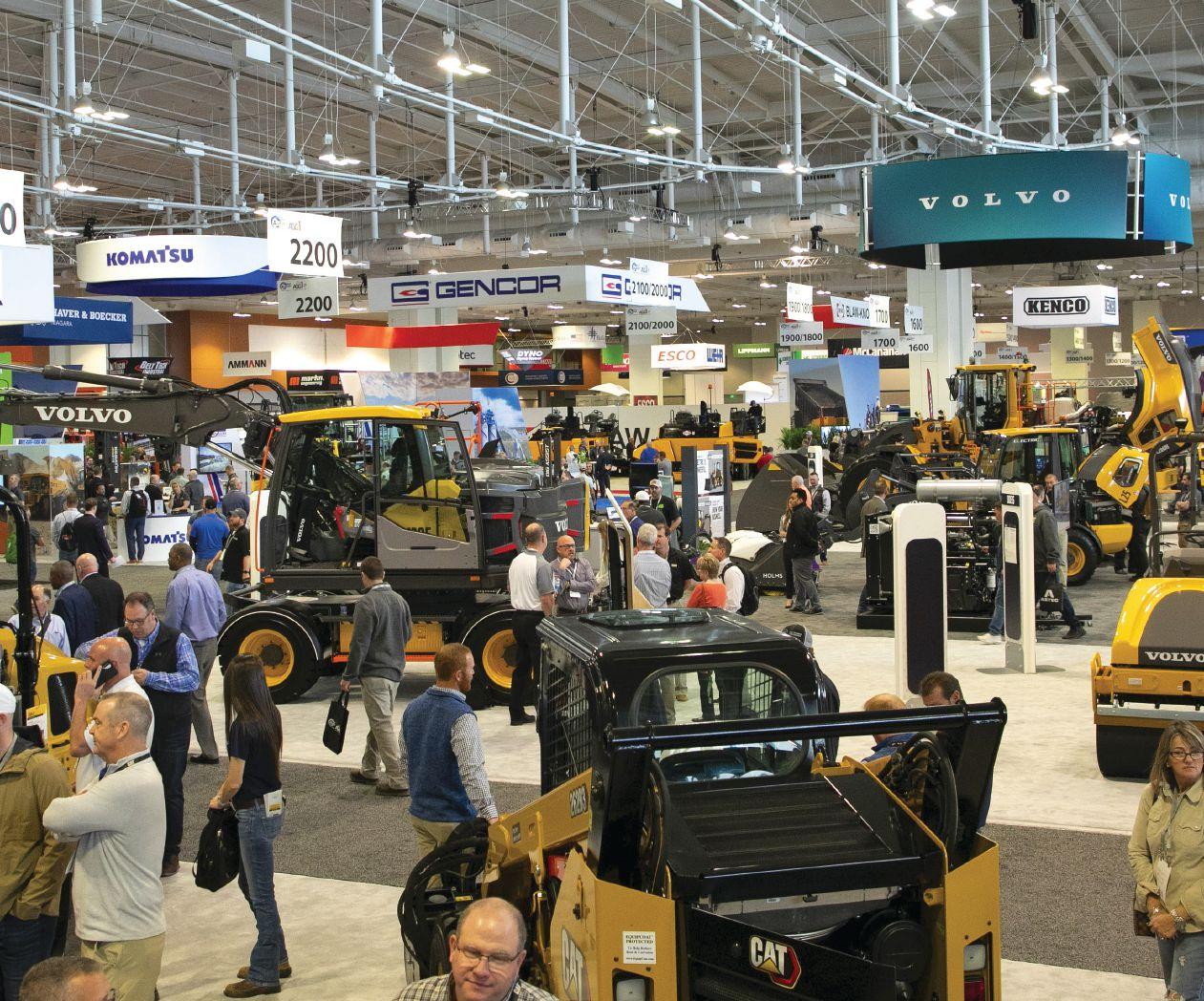
“World of Asphalt is a great place to bring together new technology, along with industry ambassadors to highlight the future of asphalt.” — Earl Roberts, W-L Construction & Paving
March 25-27, 2024 | Nashville, Tennessee
Use promo code PARTNER20 to save 20% off admission
For these young workers, learning is the key to success.
> Every year Rock to Road recognizes young professionals demonstrating exceptional leadership qualities in the industry, through our Top 10 Under 40 awards program. Honourees are nominated each September by those in the field recognizing their outstanding work and are selected by Rock to Road staff.
This year we had the privilege to sit down with the winners and talk to them about their careers, their outlook for the future, and why they love working in the industry.
Congratulations to this year’s winners!
DAWN MITCHELL, 31
Customer service logistics manager
Lafarge Canada Inc.
Dawn Mitchell is bringing the 21st Century to Lafarge Canada’s aggregates dispatch division. The customer service logistics manager got the company to trade their traditional pen and paper method to a cutting-edge software platform, effectively taking the whole dispatch process digital.
The new system includes real-time GPS tracking and data analytics, that allow dispatchers to see slow-downs and correct them before they become a problem. Mitchell is proud of her team’s accomplishment.
“We have successfully transformed our entire dispatch process. We're able to see where our trucks are at all times throughout a map of the Lower Mainland (of British Columbia), and from there, we're able to grab that data,” Mitchell said. “It trickles down to
BY ELIZABETH BATE AND JACK BURTON
the customer as well, because we’re being proactive, rather than reactive. Instead of having a customer call and say, ‘hey, where's my material?’ we can say, ‘oh, we already know where it is. We can see that truck.’”
In addition to providing drivers and customers with peace of mind, the new system has resulted in a reduction of fullcycle, on-site and in-pit loading times.
Mitchell’s career with Lafarge started a decade ago, but she’s never imagined working anywhere else because of the opportunities available at the company.
“When I started, I started in an entry level position. I’ve had a really great experience with my managers and everybody in the company being able to provide growth opportunities,” she said. “I'm always intrigued to learn new things. Everybody I’ve

worked with has always given me the opportunity to learn new things. And when I'm looking for more things to develop myself personally, I'm able to vocalize that to all my previous managers. that I've had beforehand. That's really what's kept me interested in Lafarge as a company.”
Mitchell also stays engaged at Lafarge by sitting on several committees, including sitting as the chairperson for her office health and wellness committee and serving as an ambassador for the Women of Western Canada affinity group.
Mitchell says being an engaged part of everything from onboarding to ensuring those in her department have an open forum to address concerns informs her leadership style, helping her to create a good environment for others coming up in the company.
“I always want to be able to foster that open communication and making sure that all of my people feel heard, and that they know that they can bring up ideas, concerns, and just have that kind of like inclusive environment where we can all kind of collaborate, brainstorm, problem solve together,” she said.
“One of the aspects that I really love about this role is that I'm able to invest a little bit more time than I would have in previous roles to my team's growth and development and making sure that we're continuing to always grow on a day-to-day basis. I think like little growth leads to big growth.”
That kind of open communication with
her team comes from the years of personal growth and development Mitchell has had in her career. When asked what advice she would give her younger self, she says communication is key.
“Don't be afraid to speak your mind and speak up. If you have an idea that you think is something that is impactful to the business, never be afraid to speak up for that because you never know what other people are thinking and how you can collaborate with other people. Always communicate your ideas and just stay true to yourself.”
STACIA SHARMA, 34
Mine manager, GVA Aggregates –Ward Road Quarry & Abbotsford gravel sales
Lafarge Canada Inc.
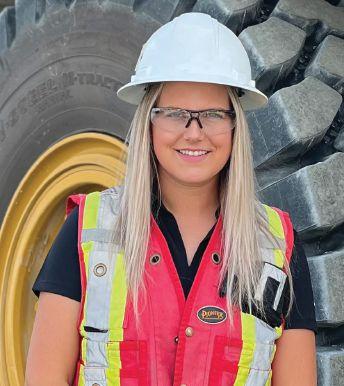
At just 34 Stacia Sharma has climbed up to impressive heights, working in the field in the male-dominated quarrying industry. She credits her commitment to hard work and advancement for getting her to where she now, despite the obstacles she’s faced along the way.
When Sharma started at Lafarge, she was just 19. “It was my second job ever,” she says.
At such a young age Sharma was sure she was taking a job to get her through school. Once she found her place at Lafarge, however, she realized she’d found a long-term future with the company.
“When I started, I didn't know what I wanted to do. As I started progressing through the company — I never did finish any school —I really enjoyed all the opportunities that I was given and the training and the development and all the different experiences that I was able to, to have through staying with Lafarge,” she said. “Being able to grow has also been really nice. There are tons of opportunities, lots of support, training, development. Never, never a dull moment, that's for sure. Everything's always changing and it allows for you to grow with those changes.”
Keeping up with a job Sharma call dynamic and fluid, making every day different, is part of what attracts her to the work she does. Taking on leadership roles, including with the Women of Western Canada affinity group, helps Sharma make an impact for future generations.
“I know that everybody's experiences are different. This really allows me to network
with other women in the company and help mentor some of the younger, newer, less experienced women that are coming into the company and give them like a safe place to feel heard, and also give them advice and kind of share what has helped me,” she said.
Working with women in the industry to ensure they not only feel safe and comfortable coming to work, but to create a space where they can grow, thrive and make a
bigger impact is important to Sharma, but getting to a stage where she feels comfortable taking on this kind of role wasn’t easy.
“People are definitely thankful we that we do it,” she says of the committee. “I think it's hard to get people to kind of buy into it, because when you talk about being in a male dominated industry, you don't want to stand out. So, when you join these kinds of committees, where you attend these kinds of events, you're almost saying you don't belong. So, it’s just been cool to watch people become more accepting of it, and just the engagement and the growth that we've had has been really cool.”
Sharma continues to see a future for herself at Lafarge, wanting to take advantage of the company’s size to grow into new areas.
“I think for me being able to see the other side of the business more on like the sales and commercial side would be a move that I'd want to make,” she said. “I also think that is one thing that I love about this company, you have that option to be able to jump from operations to sales and get a really good, rounded view of how the business works.”



IAN EDWARDS, 38
Vice President responsible for global sales
MAJOR
Ian Edwards has only been with MAJOR since 2019, but has moved quickly up the ranks of the company’s sales force. Despite the speed with which he’s achieved his position, Edwards says his nomination for the “Top 10 Under 40” came as a surprise.
“It is quite humbling. It’s very kind,” he said.
Edwards says that kind of recognition is just one example of what it’s like to work for MAJOR, with colleagues recognizing one another’s achievements, being supportive and proud of the group.
“There's a lot of energy within the organization. People really want to foster growth, not just as an organization, but for each individual within the building, we want everyone to do better, to be better to grow to have multiple opportunities in their careers in their lives, professionally and personally,” he said.
Before taking the job at MAJOR, Edwards was director of sales for a multinational company in the electronics industry. He says he made the switch to aggregates because he recognized the potential for growth and the potential of the people here.
“A lot of people, you know, tend to say, ‘the aggregate industry, the mining indus-
try, it's not that sexy. It's not that appealing,’” he said. “That may be true to some, but it's not true to everyone. I'm very much intrigued by this industry. I saw an opportunity here.”
Edwards says he’s lucky to have landed at MAJOR and is excited to learn from the company’s president Bernard Betts.
“I have much to learn; I'm not someone who tries to pretend that I know more than I know,” he said. “You learn something new every day and I have a great mentor in Bernard Betts. I want to spend the next five to 10 years learning from him and continuing to grow.”
Edwards credits some of his success to Betts and the company fostering a culture of learning and growth, especially as the world changes. Shortly after he joined MAJOR, Covid-19 hit causing many to adopt a new remote work lifestyle, something Edwards says he’s had to adapt his leadership style around.
“There’s investment in education in programs and there are a lot of different entities we can use to further our education, whether it be through mineral processing, mining, aggregate, or understanding, leadership functions. The world is changing and a lot of people work at home. So, how do you manage and lead a team that is less seen every day and more at home?” he said. “So, there's a lot of investment on our side in terms of that growth and that leadership, to make sure we feel like we're continuing to grow and work together.”
Learning is a theme in Edwards’ career, something he says is key to moving up and is a crucial piece of advice he’d like to pass on to other young people in the industry.
“I know it may sound silly, but be curious. I really came into this industry with curiosity, I wanted to learn, I wanted to understand and I really pushed myself to learn as many different things as I could about the industry,” he said.
“So, really be curious about what you can learn. And I still am four years later, I'm still in that same situation. I continue to learn; there's a magnitude of things to learn.”

TREVOR DONALDSON, 34
Tri-city aggregate manager Lafarge Canada Inc.
For the last 14 months, Trevor Donaldson has been the aggregate manager at the Lafarge Cambridge, Ont. plant, the latest move in a nine-year career with the company.
“It definitely has its challenges and all that, but it keeps me on my toes. What I really love about it is no day is the same, every day is something different,” he says. “I'm never in a routine. I'm constantly being challenged and constantly having to try and think outside the box.”
Donaldson says the varying routine is part of what makes the job fun.
“The more knowledge I get with the plant, financials and most important people managing, the more it helps change my management style,” he said. “I'm challenged with new conflict and complicated situations every day. So constantly learning and growing is helping change my way of thinking, as well as my resource pool for trying to solve problems.”
Donaldson says he’s noticed a shift in the age of the industry’s workforce, as new, young faces enter the job market. He’s passionate about passing on his expertise to those that are coming after him, maintaining that work environment he loves for the next generation.
“The workforce is very green and new. My goal is to help train and progress the next workforce of young people coming up and give them the skills, knowledge and tools to be able to succeed in their jobs.”
One of the pieces of advice Donaldson is
passing on is to keep an open mind when it comes to where your career might take you.
“I started off in quality control, research and development. And to be honest, it was my number one hated class while I was in college. And that's what I started off doing,” he said. “But now I've taken that stepping stone and grew into a position that I'm enjoying, and I look forward to and what I want to continue to get better at. So, keep an open mind with what is presented to you, by your company, or even life in general, then take that and making the most of it.”

Sustainability and environment manager
Lafarge Canada Inc.
“I mean, it's an honor. I feel a little bit like I have impostor syndrome,” Mat Kavanagh laughs when he’s asked about being named on of Rock to Road’s Top 10 Under 40.
It’s just 8:30 a.m. in British Columbia when Mat Kavanagh sits down to talk about his work, but he’s already been up for hours. With a young child, and a position that’s ever-changing, Kavanagh is up early.
“My favorite part about the job, without question, is the diversity of it,” he says. “I mean, working for Lafarge and just as, as an environmental manager overall, it gives
you opportunities to work in readymix, concrete aggregate mining, major mines work at the cement plant, work in asphalt plants, so every day is, is truly different.”
Kavanagh believes being able to get a little bit of expertise and all the disciplines helps him to create “synergies” between the different groups and join experts from different areas.
“Bringing people together, keeping the diversity alive, and getting to put my hands are chosen many, many pots, is what makes it such a great position,” he says.
Kavanagh, who says he’s privileged to be one of the few in the industry working in the field he went to school for, joined Lafarge after years as a consultant in Alberta. He considers himself lucky to be able to work on projects that allow him to be proactive about making a positive impact on the environment.
“I find with environmental consulting, a lot of the time the consulting firms will get a call when something bad has happened, or when they did something down that is that is contaminated. Moving to that inhouse consultant role helps us be proactive and eliminate those things from even happening in the first place,” he said.
“Originally, I just wanted to do something in environment to stay outside because I love the outdoors. It just rolled into ‘hey, what can I actually get out and do and be more proactive about preventing contamination, making sure we have sustainability targets and making sure that as a major industrial company we're reducing our environmental impact.”
Kavanagh says the key to being able to make that impact and do his job well has been making connection between different groups of people and leveraging their expertise to create a result that is bigger than the sum of its parts.
“I think what makes me relatively useful at my job is that relationship building and the ability to actually put teams together. I'll be the first to admit if I don't know something, but I always try and find someone that does know and loop them into the conversation. I think leadership style is really just keeping things open.”
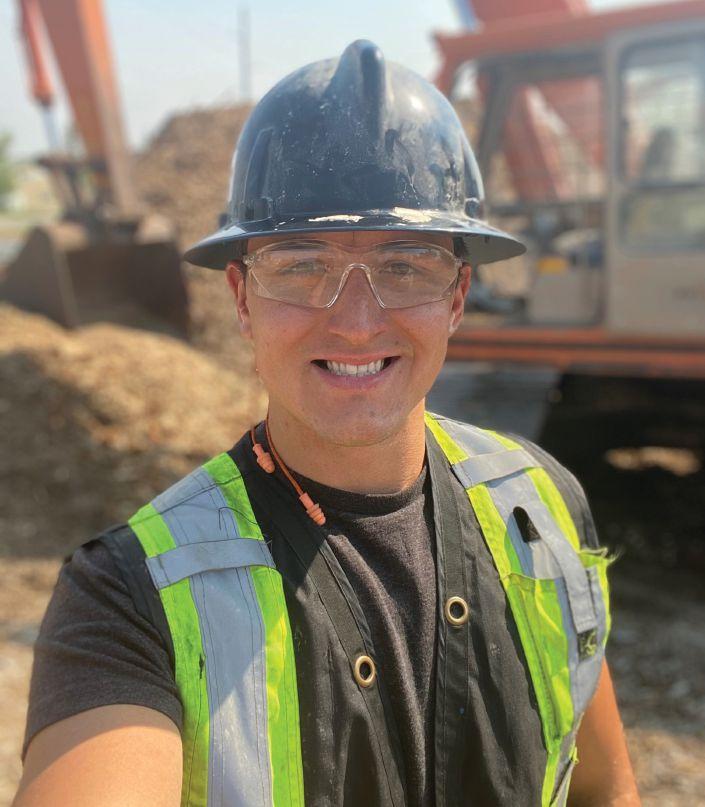
Mitchell Williams knows that there’s two sides to every sale – while currently a technical sales representative for processing equipment distributor LYNUM Progressive Industries, his years before that were spent in on-site aggregates operations, leaving him with a valuable firsthand perspective that can recognise and fulfill the needs of not only his company, but its clients.
LYNUM represents 13 companies and distributors in addition to owning two manufacturing facilities, and Williams sees his role with them as less about moving their products, and more a responsibility to provide clients with the solutions for a job well done: "It's about finding out what
the customer needs and being of service to them," he said.
Williams’ unique background has played a key role in his ability to connect with these needs. After training in power engineering, he began his career at a frac sand plant, eventually working his way up to a managerial role overseeing a team of 10 in manufacturing silica sand.
Following this, Williams moved to Australia, with this change in scenery also bringing a change in career. During his time down under, Williams began working in sales, and upon his return to Canada, was eager to carve out an opportunity that integrated this new passion with his previous experience in the materials sector.
“When I was in Australia, I fell in love
with the sales industry,” Williams said. “So, when I came back, I wanted to combine the two: the operations experience and my technical background as a power engineer, and the new sales skills that I learned over there.”
After returning and setting out on this new path, a major detour emerged: within days of Williams joining LYNUM, the world as it existed changed in response to the COVID-19 pandemic. Despite these new challenges, Williams praised his then-new employer for supporting his success amongst unprecedented circumstances.
“I have to give them a lot of credit – they had every right to get rid of me, I didn’t meet anyone at the company [in person],” he said. “But they did a very good job training me and introducing me to customers online.”
The overall support that Williams received from LYNUM as he re-entered his former industry from a new sales perspective has been a highlight for him in this role. Williams said that LYNUM has made it clear that for them, his value goes beyond numbers or sales targets.
“They're by far the most caring company that I've worked for,” said Williams. “The owner, Erik Lynum, came to Calgary one time when I was early in my career, and asked me to go for dinner. He said, ‘Look, I just want you to enjoy your time here. I want you to do me a favor: if you’re not having fun here, if you ever have an issue, I want you to come to me and we'll work through it.’”
As the world once again readjusts, this to the return to more on-site and face-to-face work, Williams has found his hands-on background in aggregate and plant operations to be an essential tool in identifying and empathizing with the needs of this clients.
“Going into a mine or aggregate site and meeting with the plant manager can be a little intimidating after two years of sitting on your couch,” said Williams. “But, because I've been a foreman and a plant operator, I understand the value of having a guy who actually cares about your operation, not just making a quick sale – it's more about getting you up and running. Through that, the relationship just builds naturally.”
MOHAMED MOUSA, 35 Director of operations Dufferin Aggregates
Mohamed Mousa believes creating the right environment to attract workers means creating a culture that values and respects young people, like himself. The engineer says he hopes more workers have the same experience he did when joining Dufferin Aggregates, a division of CRH.
“I think attracting people to our industry in general has been a greater challenge especially in recent years. Attracting young people is even a greater challenge. Younger people may have different needs and interests and It is up to our industry to make the work environment and establish a culture that can attract and retain talent,” he said.
“I personally joined CRH young, and I was fortunate to be supported by a team who helped me get to where I am today and will continue to support me to get to where I need to be. I strongly believe a good culture where employees feel welcome, treated with respect, and feel that they are being heard is extremely important.”
That kind of support is what Mousa calls a ‘people first’ culture, one that ensures people throughout the team are included in decision making, and not just those at the top.
“My favorite part of the job is the interactions with many people at different levels of the organization as well as other colleagues from the industry. I also enjoy dealing with different challenges. Things are never stagnant for me and that

motivates me to work hard and serve my team,” Mousa said.
Mousa joined the industry because as a civil engineer, he sees the impact aggregates have at every stage of construction.
“Aggregates is an essential construction material and the aggregates industry is interesting, as it touches a wide variety of dis-
ciplines within civil engineering,” he said.
The young professional says he’s stayed in the industry because of the support he gets from his coworkers and teammates, pushing him to be a better leader.
“I think as long as I remain open to respect and hear all perspectives and opinions from all levels, that gives me knowledge and experience in becoming a better leader who will make sound decisions,” he says. “It keeps me positive is when I see a team that is working to help one another and supporting one another.”
As his career progresses, Mousa aims to help shape how certain parts of the industry operate, including adopting the latest in technology, another area he says will help drive recruitment.
“It is time for our industry to adopt technology in becoming more efficient and more interesting for young talent to join our industry and applying their skills to enhance efficiency,” he said.
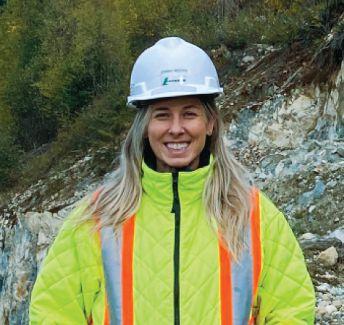
JEMMA MOORE, 35 Reserve and mining manager Lafarge Canada Inc.
You won’t catch Jemma Moore at a nine to five job in an office. The young engineer says working in quarries and pits appeals to her sense of adventure, giving her something new to look forward to every day.
“There's such a wide variety, no two days are the same and that really appeals to me,” she says. “The people in this industry are just some of the greatest people to work with. They just make the job.”
Moore has been in the industry for a decade, using her drive to get to where she is today.
With a master’s degree in engineering and a degree in international business, the combination of hard work and ambition has gotten Moore the notice of those around her, including her superiors. Now that she’s managing her own team, Moore says she hopes she can be as good a leader as her mentors have been to her.
“I've been so fortunate, and in my career, I had some of the best managers and mentors around me and I’ve just learned so much from them. They’ve given me so many opportunities to grow and to learn and I feel like it's so important now to give to others,” she says.
For Moore that means pushing those around her to be the best they can be.
“I have quite high expectations, I think, for myself and for the team. But like I say, I think it's because I have such good managers and mentors, I've got a lot to live up to and I want to pass it on to other people,
so we can continue to be the best that we can be.”
Learning to lead by example, for Moore, has meant learning to stand out and help the industry solve its challenges with gender inequality from the inside out.
“As the young female in the industry, I wanted to be one of the lads, which is just a ridiculous thing to say, but when I started, there were five of us and I was the only female. So, I kind of just molded into the guys. When opportunities came to work on women in construction groups, I didn't want to participate in that because I didn't want to single myself out,” she says of her first couple of years out of school.
“As I've gone through my career and understood the inequalities between women and men in this industry, I feel like it's so important now, and I am part of a lot of women's groups because I understand it more.”
When asked for advice, Moore says she tells those she mentors not to be afraid of
standing out.
“My one piece of advice to someone starting in this industry is you've really got to make your own path. And there's so many opportunities in this industry, there's so many opportunities. You could just sit there and just do your job, or you could make other people aware of where you want to go and what you want to do.”
Crushing Foreman
Arro Crushing Ltd.
Dale Martin didn't start out wanting to be in a leadership role, but when his friend, boss and owner of Arro Crushing Ltd., Jared Kuepfer, asked him to take on the role of crushing foreman eight months ago, he couldn't say no. Now Martin says he's learning to be a manager as he goes.
“That's probably something I'm still working on. I'm still trying to figure out how to be a good leader, just trying to do better every day,” he says. “I'm just watch-
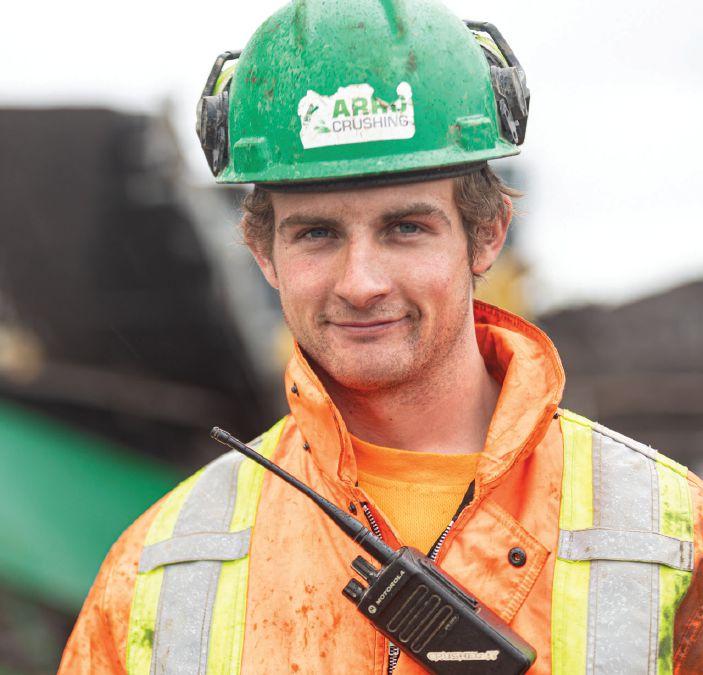
ing the team grow and trying to get trying to figure out what kind of work they're capable of doing or want to learn to do and then I try and get them to do that kind of work.”
That kind of responsibility was the last thing on Martin's mind when he started at Arro about 18 months ago.
”I left my old job, because I thought I was getting too much responsibility," he laughs.
Taking on the new role doesn't bother him though, knowing he has the trust and support of life-long friend Kuepfer who asked him to come on board at the company.
“Dale has shown incredible talent leading a crushing crew,” Kuepfer says. “He's a very driven individual and will never settle with anything but a high standard of workmanship.”
Kuepfer says that determination is what makes Martin stand out in any role he chooses, but for now he says he doesn't see himself anywhere else.
“My favorite part about the job is probably running an excavator, and trying to see how many times a day we can get on the ground,” he said. “Every day is a new day. So just trying to do better than the day before and see what kind of improvements you can make either personally or for the company, or on the crusher. I'm just always trying to do better.”
Martin says working outside in the sunshine with good friends makes all the hard work worth it.
“I love working out in the sunshine and working side by side with a bunch of guys,” he says.
When he's in the cab by himself, he prefers to have his headphone on, keeping up with the world around him.
“I listen to a lot of podcasts.”
For now, Martin is focusing on the job in front of him, although he doesn't rule out taking the same path as Kuepfer and maybe owning his own company one day.
“As of right now, that looks pretty big to me, but it might happen. I don't know,” he says.

she says deserves a bigger focus.
When Carly Holmstead was referred to her role at the Ontario Stone, Sand & Gravel Association (OSSGA) she knew almost nothing about the aggregate industry. Working in the non-profit sector, Holmstead had gained communications experience working for a women’s shelter. Now, a year later, she says she can’t imagine a better industry to work in.
“Everybody is so welcoming, and so eager to help you learn and grow in the role, and just in the industry and know and understand the nuances of everything. The last year has been really fun.”
One would think Holmstead’s role of promoting the industry and Ontario’s aggregate producers would mean a lot of time behind a desk, but she enjoys taking a more hands-on approach to her position.
“My favorite part of the job is just getting out and being in the pit or the quarry or in a rehabilitative area, and just seeing the process happening,” she said. “Working for the association, you get such a high-level breakdown of how things operate, but then when you're actually standing there and seeing how things are going it’s so incredible.”
Holmstead’s role recently has included work on studies about a growing topic in the industry — rehabilitation. It’s an area
“It’s not a topic that’s talked about enough. When I'm driving down the road and thinking, ‘that was that a rehab site, you don't even know because it blends in so well,’ I just find that to be such a fascinating part of the industry,” she said.
Another passion project for Holmstead is prompting the industry to young workers, specifically young women.
Holmstead is working to bring more ideas to the table to help women, including the possibility of creating working groups to support women in the industry, and creating more available resources for women facing specific issues.
“There isn’t a lot of resources for women in aggregates. While the numbers of women in the industry is growing, it's not growing as rapidly as it probably could or should,” she said.
In addition to working for more resources and equity for underrepresented groups, Holmstead takes her role promoting the industry seriously.
“I want the community to understand that aggregate isn't necessarily harming you or doing as much damage as they believe that it is doing and trying to push the message that we care about the environment and we care about what happens to it after aggregate is extracted,” she said. “I'm really pushing to hit a younger demographic, which has been pretty successful in the last few months, which is really awesome.”


Rock to Road is excited to announce Quarry Tech is coming to the Ottawa region for 2023!
Quarry Tech is an exclusive event for quarry and pit owners and operators that will offer attendees case studies and panel sessions presented by industry experts covering a wide variety of key industry-specific topics.
Are you interested in presenting at Quarry Tech? The call for proposals to present at future Quarry Tech forums is open now! Email ebate@annexbusinessmedia to apply.


Why reducing sound and vibration noises on your jobsite may build positive community relations.
Aggregate and road construction industries play a vital role in Canada's growth, but their environmental impact, particularly sound and vibration, raises concern among the public. The absence of sound and vibration regulations in Canada leaves operators with limited guidance. Still, they can take proactive steps to minimize exposure to the public and make projects run more efficiently.
The absence of federal regulations leads to variations in sound and vibration management practices across provinces, making it challenging for operators and the public to navigate. To address this, regulators must establish standardized, detailed guidelines that consider the industries' unique challenges.
Many provincial regulations detail time constraints rather than sound and vibration limits, which can lead to disturbances. With increasing population densities and people living in proximity to these projects, public quality of life needs to be balanced with development.
Here are some methods that can help control sound and vibration from aggregate and road construction projects:
• Site Planning: Choose locations away from residential areas, schools, and sensitive receptors to minimize disruptions.
• Equipment and Technology: Invest in quieter equipment and methods, utilizing vibration-dampening materials and sound-reducing features.
• Operating Hours: Minimize work hours to reasonable times and avoid nighttime operations in residential areas, if possible.
• Community Engagement: Regularly engage with the local community to address sound and vibration concerns, provide updates, collaborate on solutions, and provide them with your management plans.
• Complaint Procedure: Establish a clear complaint procedure for the public to report sound and vibration concerns and response timelines.
• Drop Heights: Use minimal drop heights to reduce impulsive sound. Implement measures like cushioning materials to minimize impact sound.
• Reverse Alarms: Equip all machinery with low sound level and broadband reverse alarms (or use strobe lights, where allowed by occupational health safety regulations) to reduce/eliminate that sound and give it a more pleasing characteristic.
• Staff Training: Train staff in low sound-generating techniques and emphasize the importance of minimizing sound emissions during operations.
• Regular Maintenance: Ensure equipment is regularly maintained to prevent sound level increases due to wear and tear.
• Sound and Vibration Monitoring: Conduct regular sound and vibration monitoring to assess compliance with guidelines and address issues promptly.
• Traffic Direction: Vary the direction in which traffic arrives and leaves the site to distribute sound and vibration more evenly between the receptors to the access route.
Collaboration between regulators and industry stakeholders is crucial to develop and implement standardized guidelines for sound and vibration management, ensuring a better quality of life for all Canadians. Having an experienced acoustics and vibration consultant involved at the feasibility stage of projects is essential for the construction and aggregate industries. These experts are crucial in accurately assessing sound and vibration levels and helping operators understand their environmental impact. With their specialized knowledge, consultants can provide valuable insights and proactive control recommendations, enabling companies to minimize disturbances, comply with regulations, and build positive relationships with the community.
Dan Clayton, Technical Discipline Manager for Acoustics & Vibration at SLR Consulting, offers over 15 years of global hands-on experience, particularly within the mining, aggregate, transportation infrastructure construction, energy, and building design sectors. His passion for making things work in the realm of acoustics, noise, and vibration is key to helping both residents, developers, and operators.
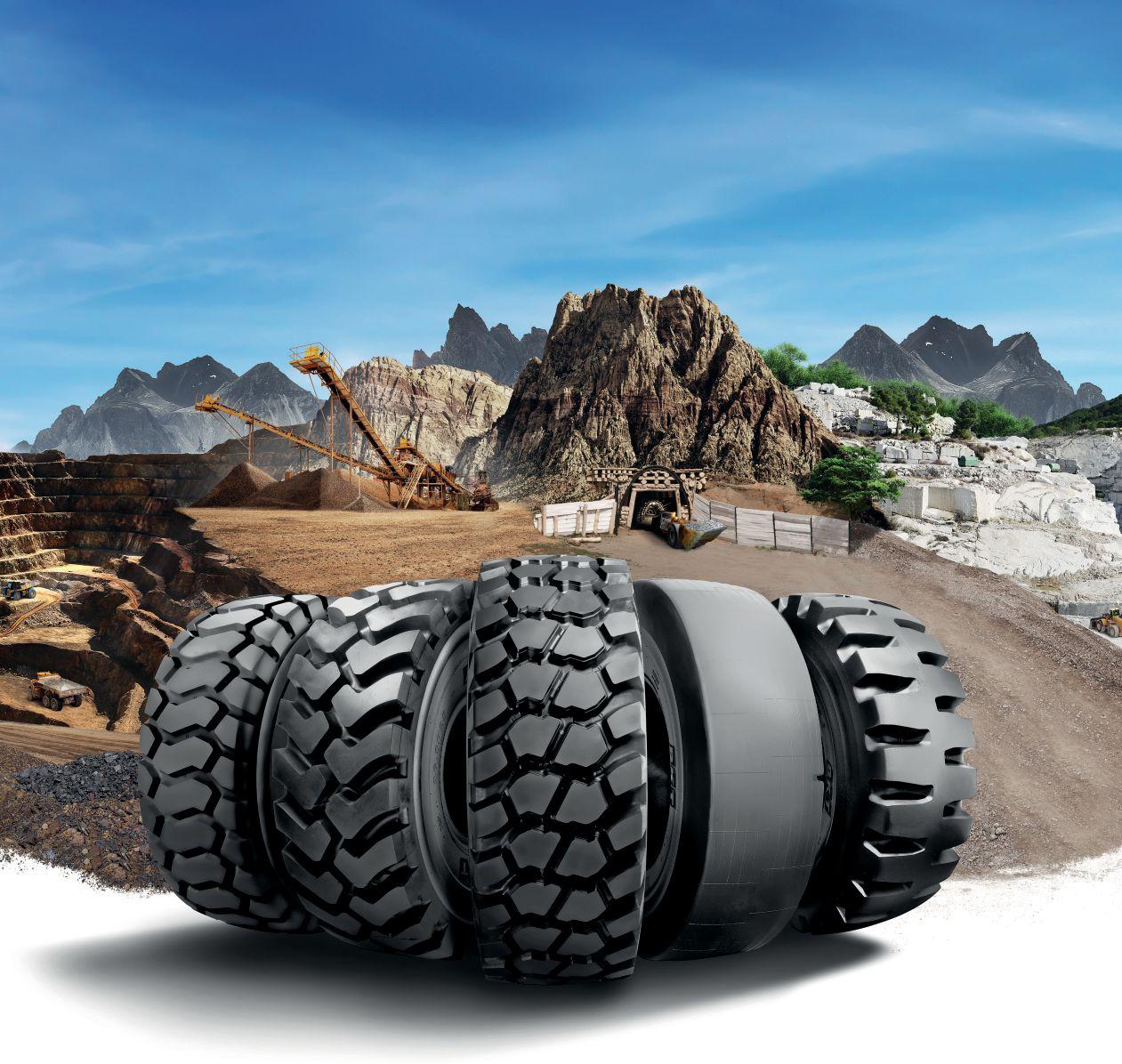
No matter how challenging your needs, BKT is with you offering a wide range of OTR tires specifically designed for the toughest operating conditions: from mining to construction sites.
Sturdy and resistant, reliable and safe, able to combine comfort and high performance. BKT is with you, even when work gets tough.
THE MOBICAT MC 110 EVO2 AND MOBICONE MCO 90 EVO2
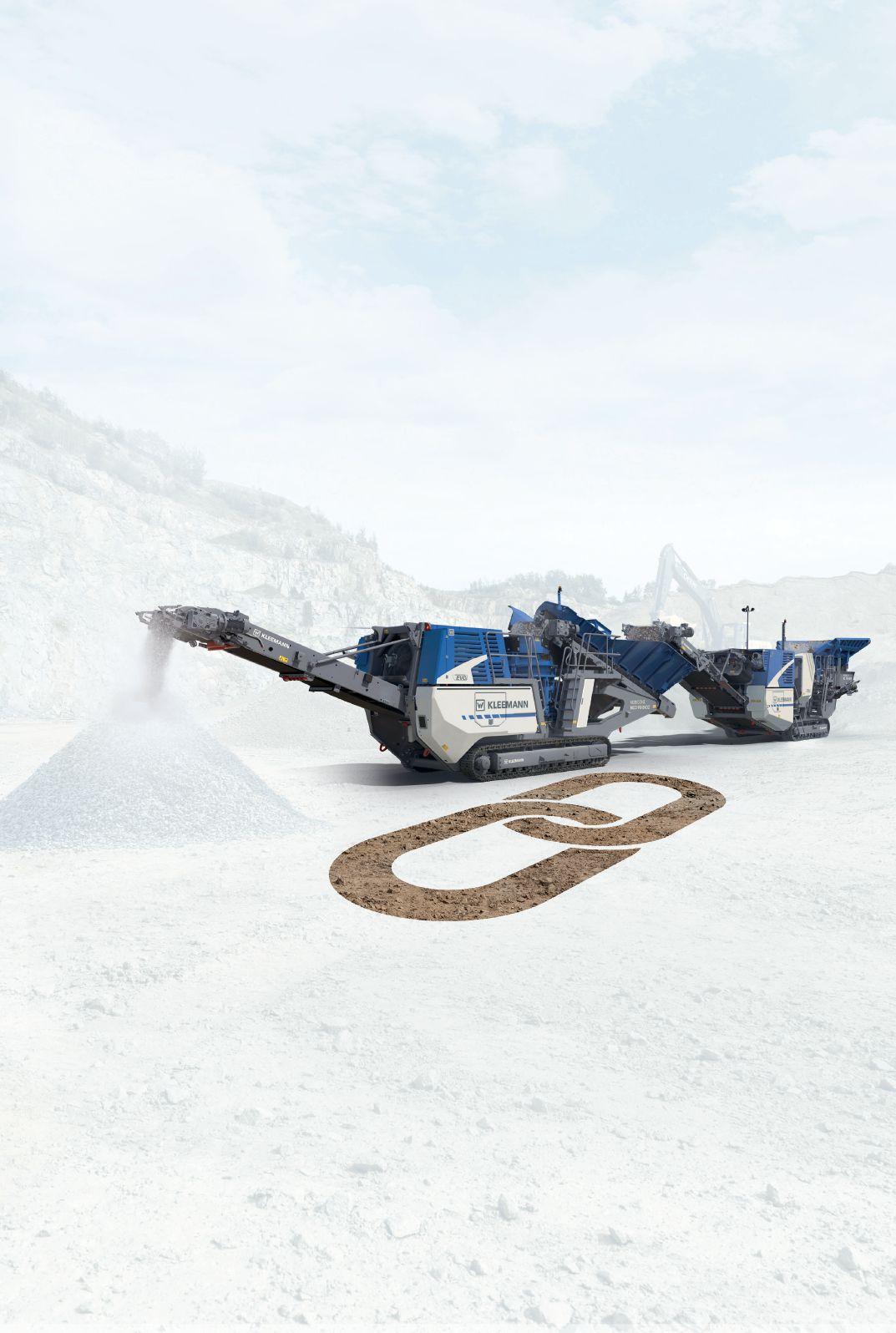
TEAM PLAYERS THAT WORK TOGETHER INTELLIGENTLY AND STRENGTHEN EACH OTHER. In linked plant combinations, th e M OBICAT MC 11 0 EVO2 jaw crusher and the MO BICONE MCO 90 EVO2 con e cru she r really flex th eir muscles. SPECTIVE makes both plants easy and intuiti ve to operate. Also, an advanced dr ive concept ensures greate r efficiency with lower consumption. Maximum throughput is achieved thanks to the material flow concept coordinated via line coupling across bo th crushin g st ages. Go for the perfect team!
www.wirtgen-group.com/evo2-line-kleemann