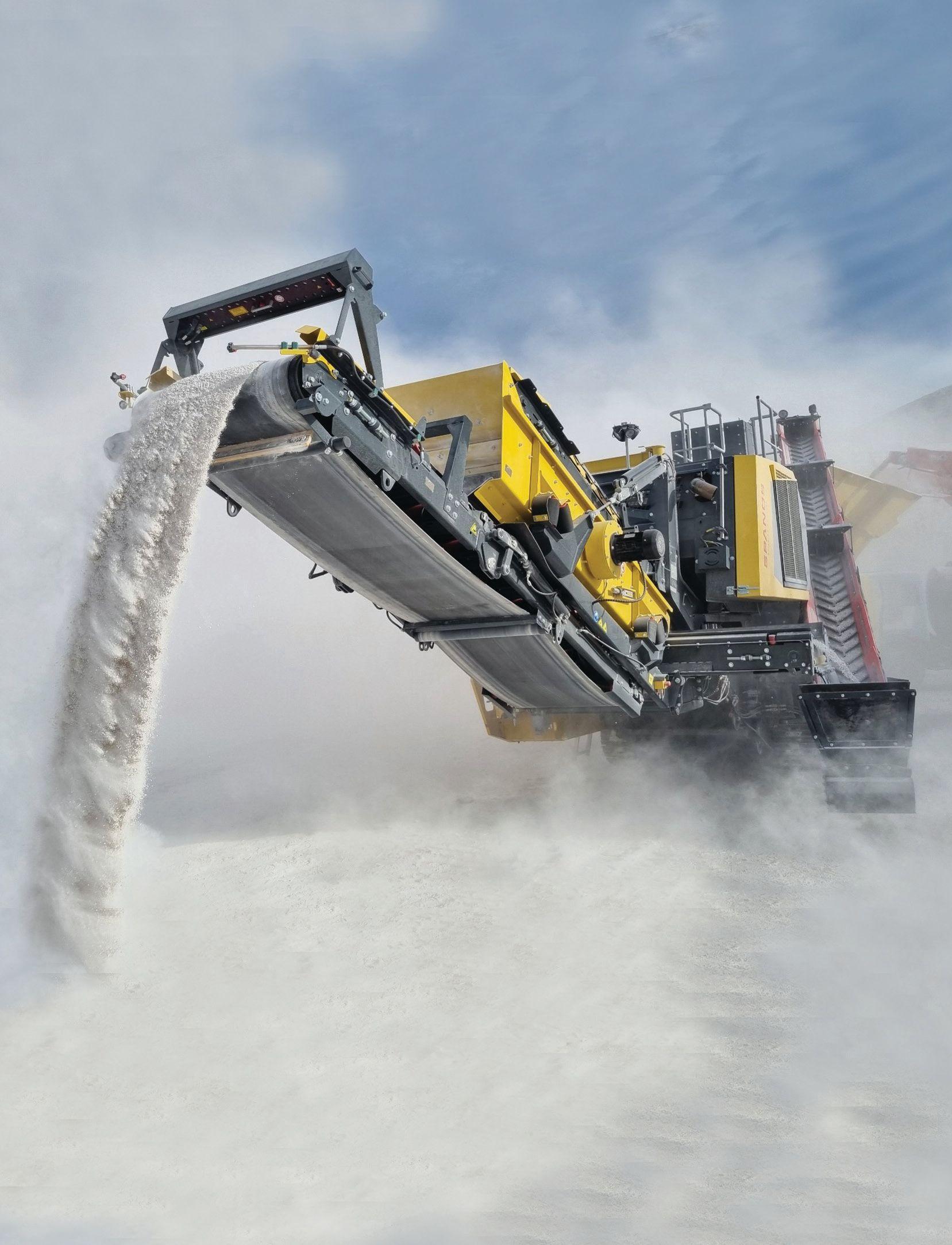
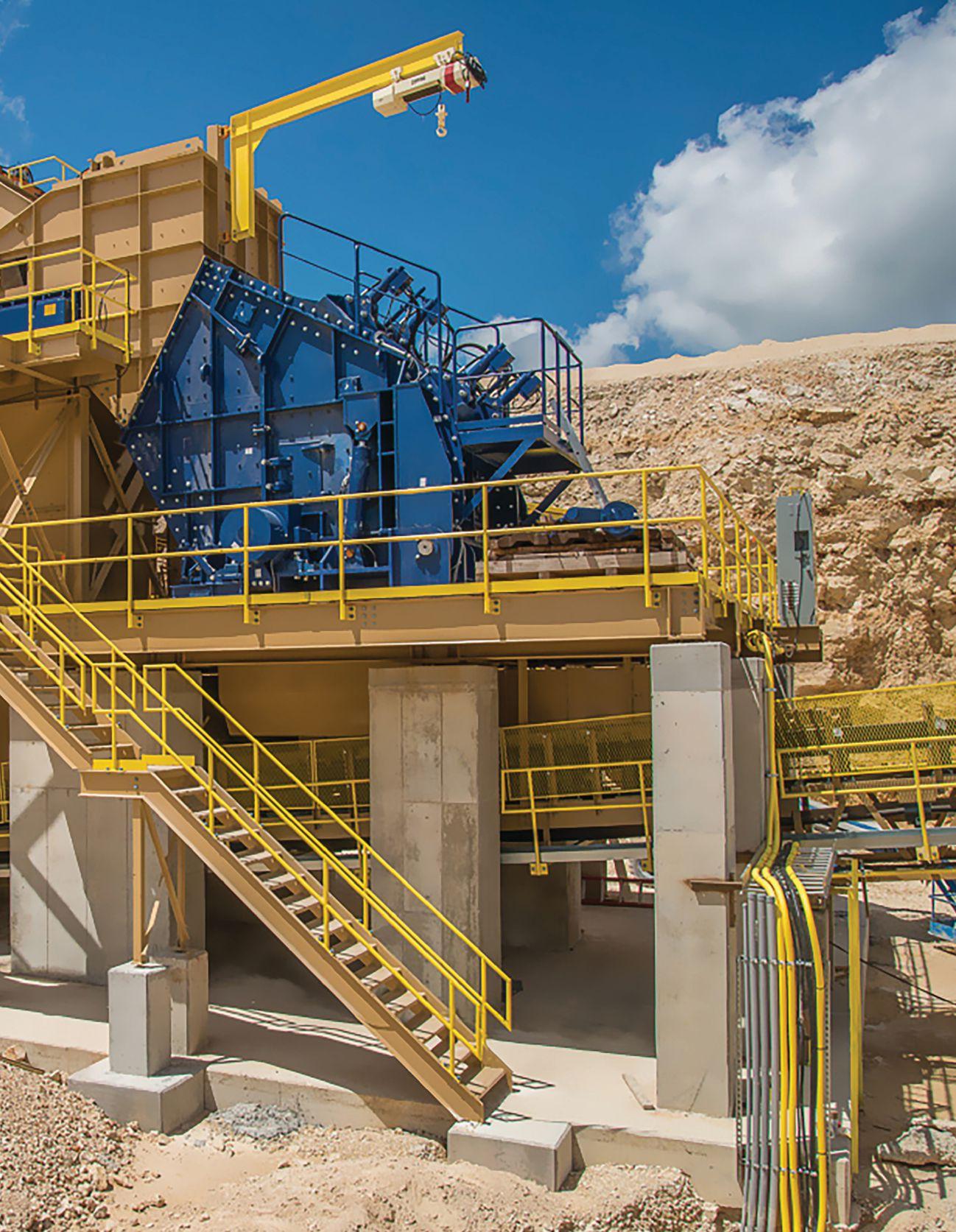
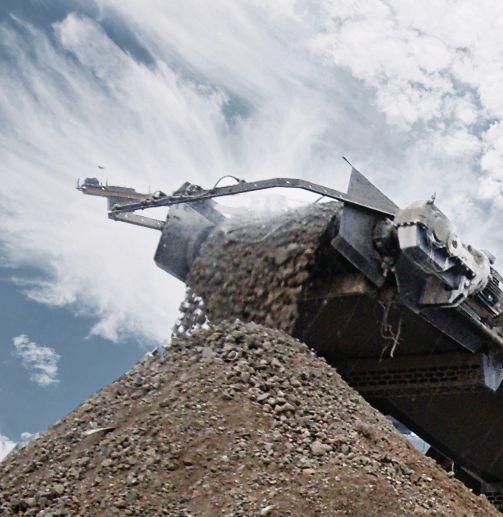
Since 1946 the name HAZEMAG has been linked with many accomplishments in impactor design and control technology. Today’s impactor is different. It’s better. It’s more user friendly, and it’s easier and less expensive to maintain. It offers optimum and continuous control over product size, and can do much more. In fact today’s impactor, the Hazemag Impactor, can do things never before possible. With over 70 years of experience in design and application of impactors, the future of impacting technology is now here.
Win against product demand with expanded crushing options and applications.
12 Monumental project
Construction on the $4.15-billion Highway 99 Tunnel Program in British Columbia is moving along.
16 The cost of poor screening
Unnecessary crushing from poor screening can eat away at your operation’s profits.
18 10 ways to get the most out of your mix
OAPC mapped the path to asphalt excellence at the annual Good Roads Conference.
22 Paving the way in Ontario
A deep-dive into the findings of the 2024 Ontario Municipal Paving Forecast.
24 Preventative maintenance for peak productivity
The right condition monitoring system can minimize downtime and maximize ROI.
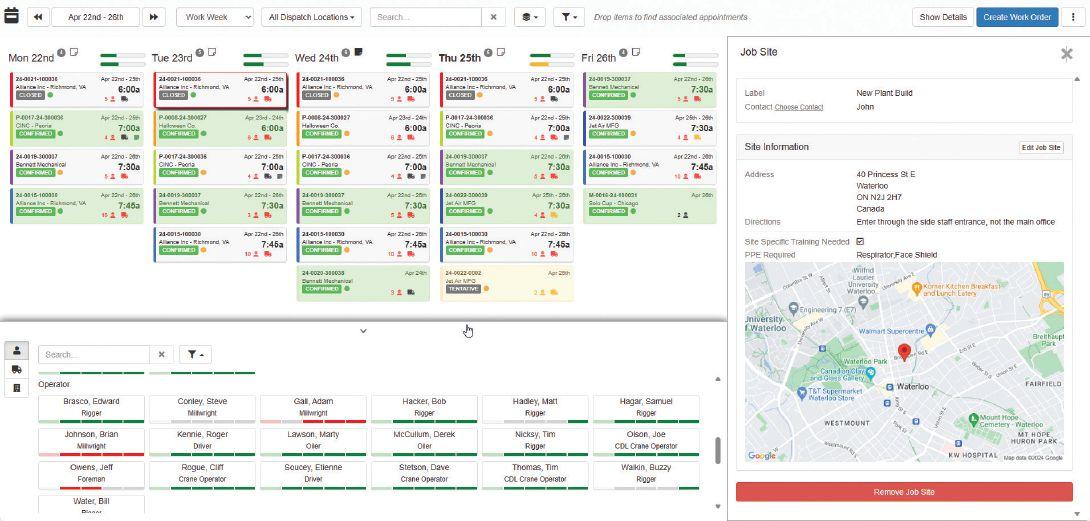
26 Software on the move
Exploring software solutions for more efficient transportation.
Help us, help you
Technology is changing the world, but what won't change is the value of connection
My first media job came during my college internship back in early 2001.
A small community newspaper in Bancroft, Ontario suddenly found itself without a reporter and, as a student interning at a sister paper about an hour away, the editor asked if I wanted to spend a few days a week in Bancroft.
It was a great gig.
They put me up in a motel, covered all my meals and, best of all, provided me a weekly paycheck.
For the next couple months, I spent each Monday to Wednesday as a fulltime reporter. I was thrilled.
From crime, local politics, business news and event coverage, I wrote and took photos about anything and everything happening in that community.
Bancroft is a small, happy place, removed from large urban areas and, at the time, had a population of only a few thousand people in and around the town. In truth, it's not much larger today.
Back then, the community was able to support two weekly newspapers with heavy page counts and a radio station. There were also quite a few other smaller newspapers littering the communities within a two-hour radius.
Although my time in Bancroft was brief, I still think about it from time to time. That's in part because as I moved on in my career, many of the newspapers I stopped at along the way have since been shuttered. But what newspaper still remains? Bancroft.
Why?
Well, as technology evolved, and peoples' reading habits along with it, something else changed that was more fundamental. Too many media outlets forget their mandate was to serve the community. It sounds simple, but with the technological changes driving people online, many companies opt-
ed to chase page views and instead of trying to educate the community about what was happening with where they lived and worked. An article about a theft may bring in plenty of eyeballs, but an article examining why there has been a rise in thefts will create loyaly and trust in readers.
It's difficult to stop technological advances. We may all gripe about the impact smart phones have had on our society, but are you prepared to hand your phone over?
What matters is how we use that technology to serve our overall goal.
I've thought about this recently because our own publication is not immune to the problems of this evolution. We are trying to understand how to continue to reach you, our reader. With so many options for people to digest content, how do we best serve it up to them? There are print materials, websites, videos, podcasts, et cetera.
But the bigger question is, what do we serve up? What do you want to read (or listen to)?
What I know for sure is that it’s important to remember we exist to educate you, the reader, about what is happening in our community. As long as that remains our guiding light, we can figure out the rest.
Which is where you come in. I know you are busy – you may not have much time for even yourself. But, it would be very helpful for us if you could take a few minutes to send me an email (mlacey@annexbusinessmedia.com).
Let me know what is impacting your operation, the issues that keep you up at night, and the problems you face that need solutions.
But most importantly, tell me what you want to read more about (and what you would like to read less of).
@RocktoRoad
MIKE lacey
NEW IntelliPac ™ Moisture System
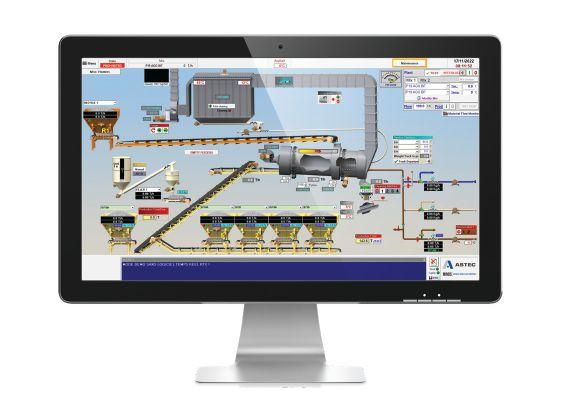
Astec paves the way for sustainable, innovative asphalt plants. The new IntelliPac Moisture System is a revolutionary solution that integrates seamlessly with Astec control systems. This provides unparalleled, real-time visibility into virgin aggregate moisture content. IntelliPac empowers operators to optimize mix design, minimize energy consumption, and reduce environmental impact. With Astec, you get superior asphalt production – better for the environment, better for your business.
BUILT TO CONNECT
ORBA names new director of public affairs
The Ontario Road Builders’ Association (ORBA) has named Steven Crombie as the association’s new senior director of public affairs.
In this role, Crombie will leverage his years of experience across Ontario’s construction industry and public affairs world to drive advocacy efforts on behalf of ORBA’s membership and the province’s transportation infrastructure sector at large, according to a press release.
Crombie joins ORBA from the Ontario Sewer and Watermain Construction Association and the Greater Toronto Sewer and Watermain Contractors Association, where he served as manager of government relations and public affairs.
In a statement, ORBA said they will continue to prioritize government and stakeholder relations to deliver on a range of advocacy goals.
Those goals include predictable funding,
McCloskey names new sales director
McCloskey International has appointed Eric Teague as its new sales director for the Americas, Oceania and Pacific markets, effective March 25.
Teague will lead the regional sales teams, sales development and dealer growth for McCloskey International through overseeing sales activities in Canada, the United States, and Central and South America, as well countries in the Oceania and Pacific region.
Teague has 30 years of experience in North America's heavy construction equipment sector, with past roles covering all facets of the business on both the OEM and distributor sides.
“My passion is helping grow strong distribution channels and building a brand," said Teague.
project de-risking, workforce development and sustainability.
“Steven is well-positioned to support ORBA and its members in hailing in a new era of growth and success for the transportation infrastructure industry in Ontario," said Walid Abou-Hamde, ORBA’s CEO.
"I am grateful to have him on the team as we continue charting a new path for the association."
Astec expands concrete equipment offerings across dealer network
As of April, all Astec concrete dealers now offer the company’s entire line of concrete production equipment, including options across their CON-E-CO, RexCon and BMH sub-brands.
The expanded offering brings portable and stationary concrete batching plants, plant upgrades and related batching accessories into a single sales channel, now providing concrete producers with a range of solutions from a single trusted source.
RexCon’s Model S batching plant, along with the entire product range of Astec’s CON-ECO and BMH concrete equipment brands, will now be offered across the company’s dealer network. Photo: Astec
“This expansion is all about providing even greater value to our customers,” said Chris Frost, Astec’s vice president of sales.
Rock to Road magazine is circulated free of charge to qualified individuals holding management and supervisory positions with companies engaged in the aggregate, roadbuilding, ready-mix concrete and asphalt production industry in Canada. The Publisher reserves the right to determine qualification. Paid subscriptions are available. Canada: $36.75 per annum including G.S.T. (six issues*); U.S. and Overseas: $60 US. *Includes annual Buyers’ Guide issue. Please send change of address with label from your last issue. All subscription correspondence must include your title/position, company name and address, postal code and telephone number.
Eric Teague
Maximum Efficiency
Most Reliable
Unmatched Support
Crushers provide expanded options and applications to help producers meet growing product demand
> The role of crushing equipment in meeting infrastructure’s appetite for aggregate cannot be overstated, with a recent report from Fact.MR showing the the global crushing machine market to currently stand at $6.35 billion USD.
From roadways to residential projects, this increase in infrastructure initiatives only furthers the operational need for crushing solutions, with a compound annual growth rate of 7.5 per cent set to drive the crushing equipment market up to a projected value of $13 billion USD by 2033, according to the report.
However, growth can be felt well beyond these numbers, as new technologies and upgraded solutions in the crushing market are offering producers a variety of ways to answer this need for high-yield –and high-quality – construction materials.
MORE WAYS TO CRUSH
BY JACK burton
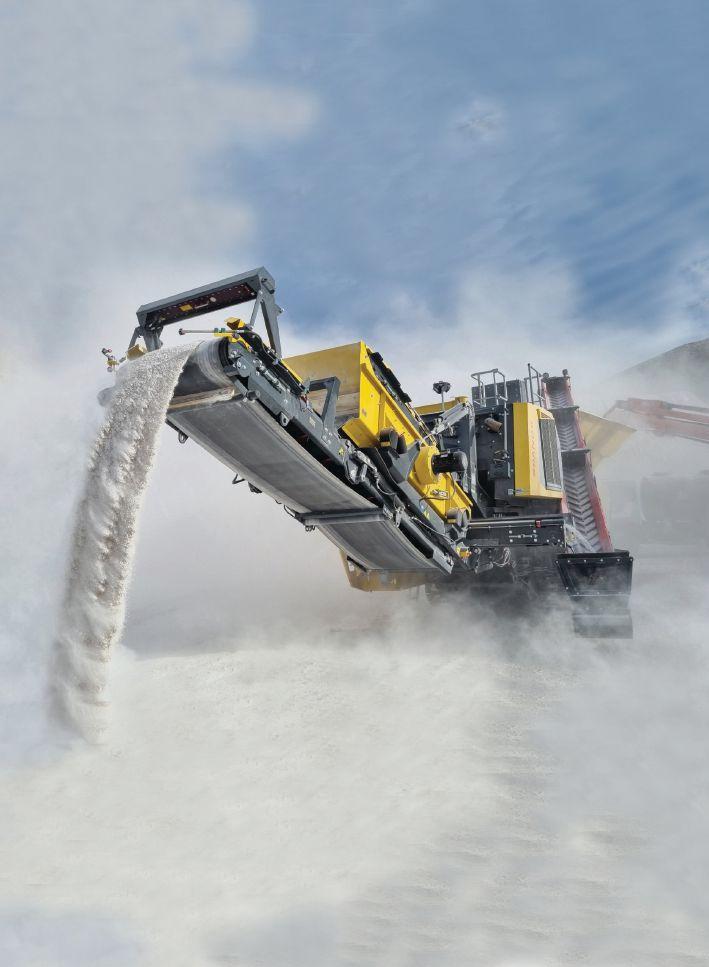
The Keestrack I4e helped Lafarge transform their reject pile into high-quality product on a concrete sand operation in Greece.
Photo: Frontline Machinery
CRUSHING DEMANDS
Higher aggregate demand means less aggregate resource supply, with this depletion having high-cost operational effects. Scarcity can be particularly felt in the sand and manufactured fines sector, according to Crissy Ram, Frontline Machinery’s senior director of marketing and business development.
“Sand demands are increasing significantly, while natural resources are reducing,” said Ram. “Forecasts show the demand for sand will grow by 45 per cent over the next four decades, primarily driven by construction and urbanization.”
Helping producers navigate and adapt to this increase in both demand and cost is the Keestrack I4e reversible mobile impact crusher, a machine designed to maximize the quantity – and quality – of yields by, among other solutions, combining secondary and tertiary crushers into a
single machine.
“Manufactured fines and sand products are expensive products: they’re expensive to produce, and as a result, they’re expensive out there in the market,” said Ram. “There are a lot of sites out there that have this pile of reject material that, with the I4e, can now be now used to produce a high-grade, quality product.”
By allowing producers to integrate reject material into their workflow or reduce the number of machines required in the production processes, the I4e presents a direct solution for all stakeholders in curbing the costs of producing manufactured fines, Ram explained.
“What was historically seen as waste or reject material can now be used for the production of manufactured fines, and as a result, you’re not having to deplete current natural resources – in fact, you’re able to leverage a product that you already
have on-site toward the production of sand.”
Ram shared an account of the I4e’s use in one of Lafarge’s concrete sand processing operations in Greece, where the machine proved its impact and maximized the company’s yield by repurposing its would-be reject material into high-quality aggregate at high-rate speeds.
“The crushing rejects – a four to 25mm material – were screened out in the final process. That was then fed into the I4e, and crushed down to a zero to four mm material, their finished product, at production rates of about 90 to 100 tons per hour,” she said.
A FINE GAME-CHANGER
In addition to manufactured fines processing, the I4e has proven itself globally across a diverse range of applications, including the processing of natural sand
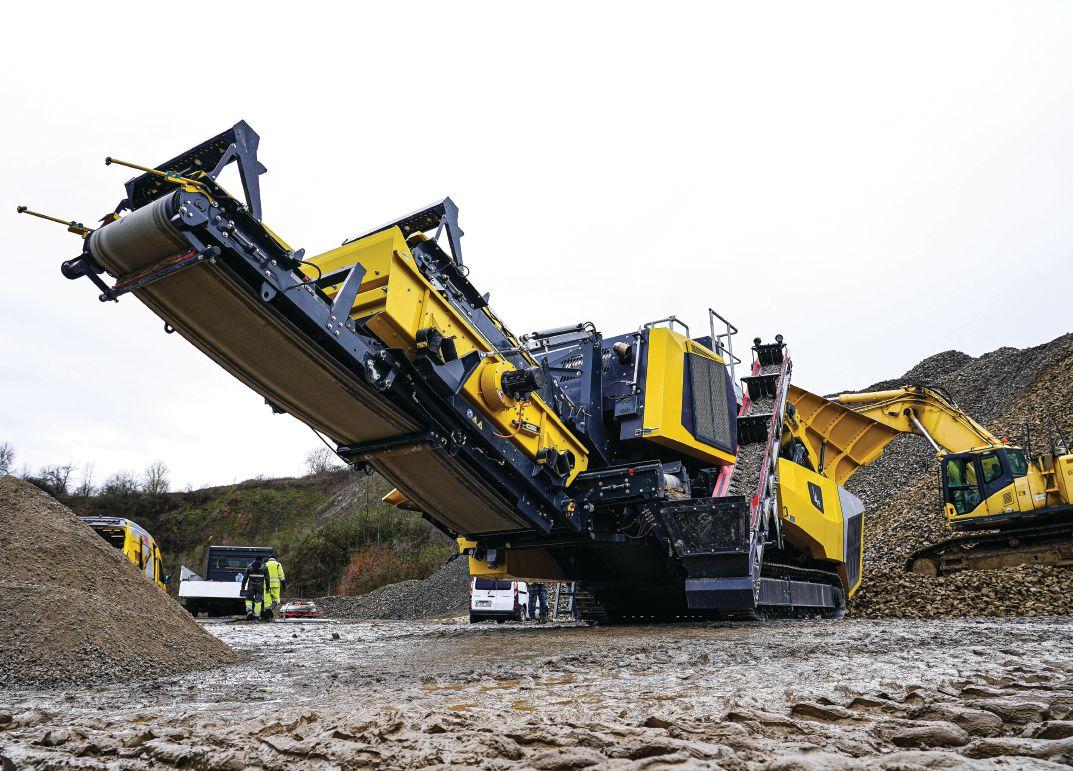
The Keestrack I4e, which features increased feed size, energy savings and high production capacity, is set to land in Canada through Frontline Machinery this spring. Photo: Frontline Machinery
"Sand demands are increasing significantly, while natural resources are reducing. Forecasts show that the demand for sand will grow by 45 per cent over the next four decades, primarily driven by construction and urbanization.”
- Crissy Ram, senior director of marketing and business development at Frontline Machinery
A LONG WAY TOGETHER
WHEREVER YOU ARE, BKT IS WITH YOU
No matter how challenging your needs, BKT is with you offering a wide range of OTR tires specifically designed for the toughest operating conditions: from mining to construction sites. Sturdy and resistant, reliable and safe, able to combine comfort and high performance.
BKT is with you, even when work gets tough.
such as limestone and granite, steel slag processing and asphalt recycling.
This diversity is also found in the I4e’s features. Aside from combining secondary and tertiary crushing features into a single machine, the I4e also has a high production capacity ranging from 11 to 250 t/h, a reversible rotor and blow bars along with a 30 to 40 per cent increase in energy savings compared to cone and vertical shaft impactor (VSI) crushers.
Ram also highlighted the I4e’s high reduction ratio of 1 to 12 and a near-unprecedented feed size that accommodates dimensions well beyond industry standards; which broadens load compatibility and eliminates the need for secondary crushers and pre-processing steps.
“The I4e can handle a feed size up to about 250mm, whereas most autogenous 'rock on rock' VSIs have a max feed size of 50mm,” she said. “This size eliminates the need to pre-process material before the final stage, and by extension, the need for a secondary crusher.”
With the first Canadian I4e headed to Frontline this spring, the dealer has educated the market through showcases from Keestrack’s CEO and product & applications support manager, Johann Prüwasser, at the BC Stone, Sand & Gravel Association’s annual conference and the CIM Connect Expo in Vancouver.
“What really excites us is to be able to bring this new, innovative technology to the Canadian market, one that’s already been used throughout the globe and across various applications,” said Ram. “It brings a vast amount of benefits to the market, and I think ultimately, it’s going to be a game changer in the manufactured fines industry.”
SUPPLYING SOLUTIONS
For Superior Industries, a changing and growing market is just another opportunity to expand and diversify its services and product line to better serve its mission of meeting the dynamic needs of its clients, especially considering current supply chain squeezes.
“When it comes to Superior, we’re always listening to the customer,” said Jarrod Adcock, Superior’s crushing product manager. “Right now, there’s a big focus on the supply chain, which has meant expanding our vendor network:
both diversifying it and increasing it, to provide wear parts and service in the timeliest manner.”
Accommodating current supply chain congestion goes beyond parts and servicing for Superior, with the company also integrating the operational impacts of these issues into the design and range of its products to maximize quality and production for all crushing needs.
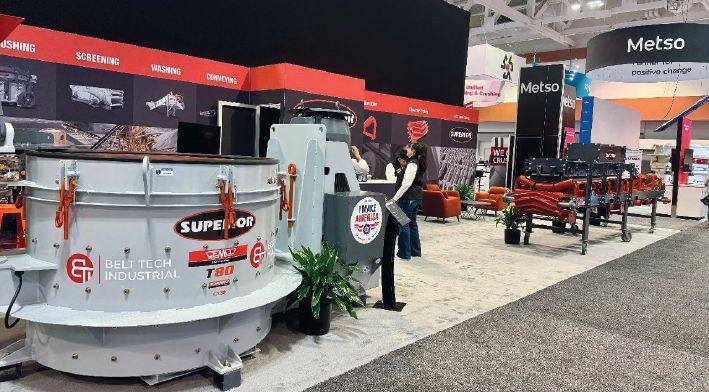
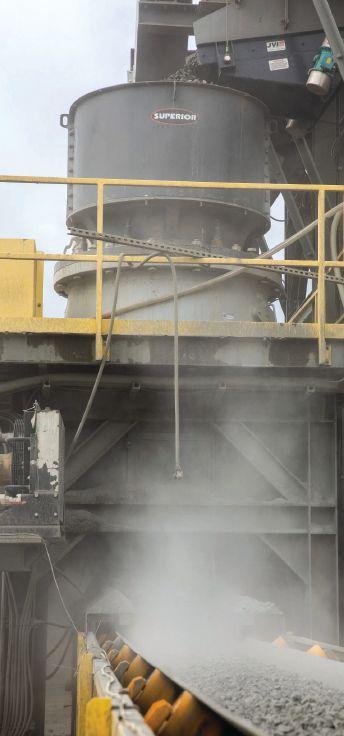
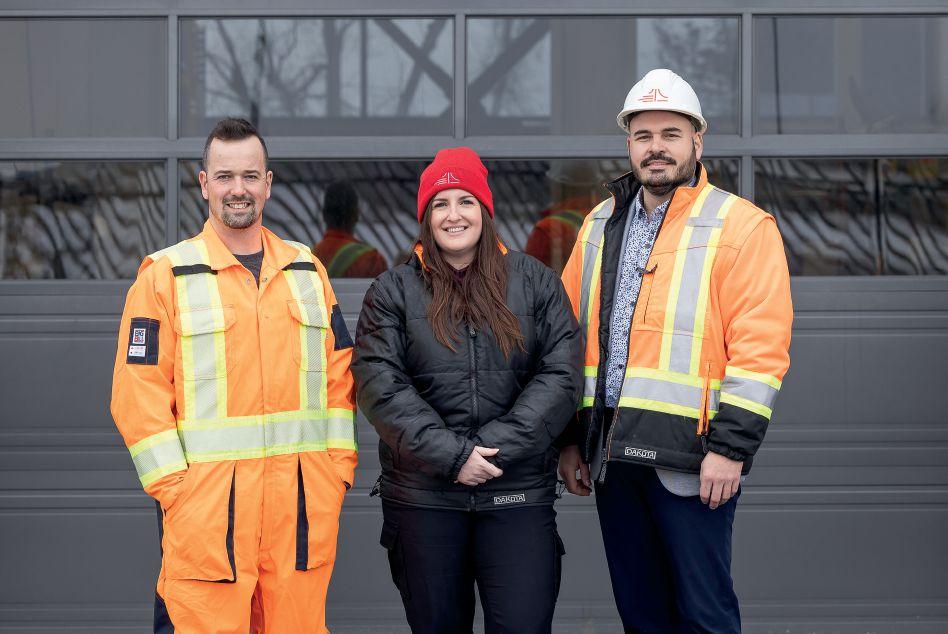
This value was reflected in the company expanding its line of cone crushers last year, which saw the launch of the Dakota and Endeavor cone crusher models at CONEXPO.
“With the Dakota and the Endeavor, it’s about providing a slightly different experience for end users, where one might be more suitable for their applications versus the other,” said Adcock. “Through listening to our customers, we felt that we could better our portfolio and capture a wider range of application-specific needs.”
The Dakota model is a roller-bearing style cone crusher that builds off Superior’s Patriot crusher, but with a series of bearings included inside the machine to rotate the crusher during the production process.
“When we designed the Dakota, we pulled a lot of the features from our proven Patriot DNA and incorporated those in, like the hydraulic tramp system,” said Adcock. “The Patriot has a very strong, proven system. Incorporating that into the Dakota has allowed us to maximize the hold-down force of the machine.
Again, it goes back to that point of a higher percentage of sellable product.”
Departing from the design of the Dakota and Patriot, the Endeavor spider bushing cone crusher features a spider cap holding the top of the main shaft in place. This equips the Endeavor with one of the strongest main shaft styles in the world of cone crushers, Adcock said.
This design also ensures consistent feed size throughout the liners’ entire lifecycle, instead of the usual loss of feed opening that comes from liner wear.
“On a screw-top style machine, you lose feed opening as you wear down the liners. But the way the Endeavor operates, you’re able to maintain that feed size throughout the entire life of the liners, so it can take a constant feed size throughout its entire life.”
Both the Dakota and Endeavor models ship standard with Superior’s in-house Vantage automation system and are built to process a range of materials including ore, quarried stone, river gravel, recycled concrete, fractured gravel and Super Pave products.
VSI MASTER-MINDS
Superior expanded its reach in serving customers’ diverse needs with the acquisition of New Mexico crushing mainstay Cemco in August of last year, with this merged team now standing as one of the top think-tanks for VSI knowledge across the sector, said Adcock.
“As a whole now, combining both teams, we have one of the strongest VSI
teams in the industry: we have multiple individuals with thousands of installs across the world, with both the application knowledge and the know-how,” Adcock said.
Superior now offers Cemco’s V-Twin VSI crusher among its products. Suited for portable plants, Adcock expressed excitement over the V-Twin’s seamless integration into Superior’s line, and the expanded array of crushing configurations the company now has at its fingertips.
“We’ve had our Valor [VSI] crusher line since about 2016, and this just entirely expands the amount of configurations that we can give customers to minimize costs and maximize the product,” he said. “The Cemco line has a countless amount of crusher configurations for each model, which allows us to adapt and apply machines for very specific, niche applications.”
Following their acquisition of VSI manufacturer Cemco last year, Superior Industries officially showcased the Cemco V-Twin as part of its crushing range at this year’s World of Asphalt/AGG1. Photo: Superior Industries
Superior Industries’ Endeavor spider cone crusher is one of two expansions the company made to its cone crusher line last year. Photo: Superior Industries
MONUMENTAL PROJECT
Construction on the $4.15-billion Highway 99 Tunnel Program in British Columbia is moving along
BY GRANT CAMERON
> A long-awaited and much-anticipated mega-project to replace the George Massey Tunnel in British Columbia, one of the most congested roadways in the Lower Mainland, is a step closer to reality.
A contract for the work is expected to be awarded this year, with construction starting in 2026 and completion set for 2030.
The tunnel is the main component of a $4.15-billion Highway 99 Tunnel Program which also entails replacing the existing two-lane Steveston Interchange with a new five-lane structure. The $87.5-million interchange is under construction and on track for completion in 2025.
The four-lane tunnel does not presently meet modern highway design or seismic standards for carrying Highway 99 under the Fraser River. Sections at both ends of the tunnel need upgrades to improve safety and traffic flow for vehicles, transit, cyclists and pedestrians.
The 60-year-old crossing is a primary highway and major north-south connector for the movement of vehicles and goods between Delta and Richmond. Replacing the thoroughfare will improve safety for travelers and provide better protection against seismic events.
Work on cycling and transit improvements along the Highway 99 corridor are already nearing completion, including an extension of bus-on-shoulder lanes. The bus-on-shoulder lane has been extended southbound between Highway 17A and Ladner Trunk Road. Northbound, the bus-on-shoulder lane
The George Massey Tunnel's replacement will be an eight-lane immersed tube tunnel with three general-purpose lanes and a dedicated transit lane in each direction. The tunnel will feature a separate multi-use path for pedestrians, cyclists and other active transportation options. Rendering: BC Ministry of Transportation and Infrastructure.
has been extended between Ladner Trunk Road and 80th Street.
“We are moving ahead on delivering improvements for the thousands of people who rely on this crossing each day, and for better goods movement across the region,” Transportation and Infrastructure Minister Rob Fleming said in a statement. “Advancing the new tunnel will also increase trade to the United States and support a vital link to the Vancouver International Airport.”
During a press conference, Fleming said a new crossing to replace the George Massey Tunnel will improve traffic flow
and make travel by transit, walking and cycling more convenient, without costing commuters hundreds of dollars a year in unfair tolls.
CROSSING WILL BE EIGHT LANES
The new crossing will be a toll-free, eightlane immersed tube tunnel with three general-purpose travel lanes and a dedicated transit lane in each direction. The tunnel will feature a separate multi-use path to support pedestrians, cyclists and other active transportation options.
The project also includes replacing the existing Deas Slough Bridge and the
addition of a southbound general-purpose lane on Highway 99 between Westminster Highway and Steveston Highway.
With the new tunnel and approaches in place, traffic will flow smoothly at 80 kilometres per hour, unlike the current average of 30.
A decision on the preferred proponent to design the tunnel and construct the project’s early works will be made in late spring.
Through this Design Early Works Agreement, the project design will be finalized and readied for construction. The finalized design and cost submission will culminate in a Design Build Agreement.
According to the B.C. Minister of Transportation and Infrastructure, the province is using a Progressive-Design Build with Target Price model.
“This procurement model allows for a transparent and collaborative approach to design progression and agreement on project costs and risks between the province and preferred proponent,” the ministry said in a statement prepared for Rock to Road. “It requires an open-book approach to develop and audit the estimate between the province and preferred proponent – all within the estimated project budget of $4.15 billion.”
Three bid teams are in the running for the project: Cross Fraser Partnership; Daewoo-GS JV; and Fraser River Tunnel Constructors.
The project is also advancing through the Environmental Assessment process. Assessment work began in 2021 with extensive field work and engagement with the public, interested parties and 25 First Nations. The team is currently preparing the project’s application for an Environmental Assessment Certificate (EAC).
TUNNEL'S SEISMIC FEATURES
The tunnel is being built 40 metres upstream from the existing crossing, which will stay open until the new one is ready. It will be designed and constructed to current seismic standards and be able to withstand earthquakes as large as magnitude nine.
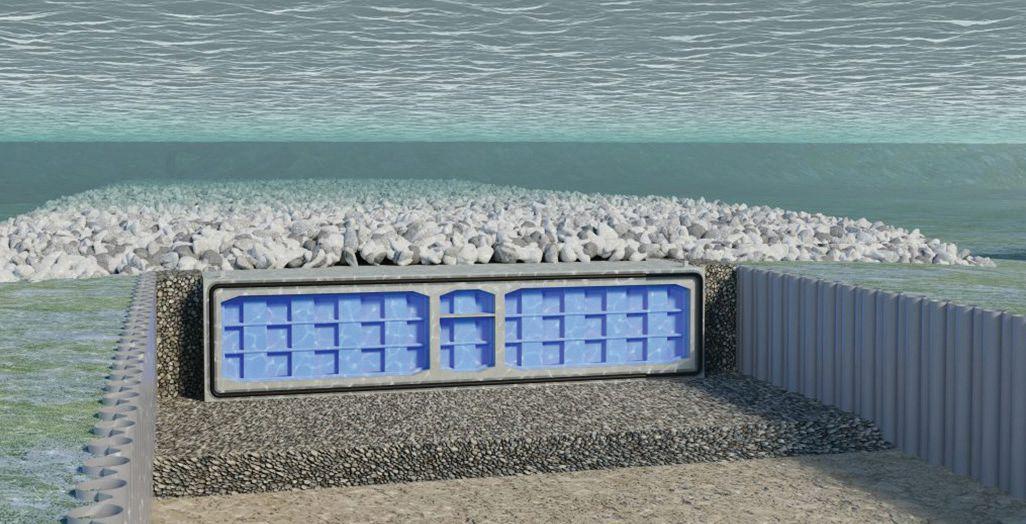
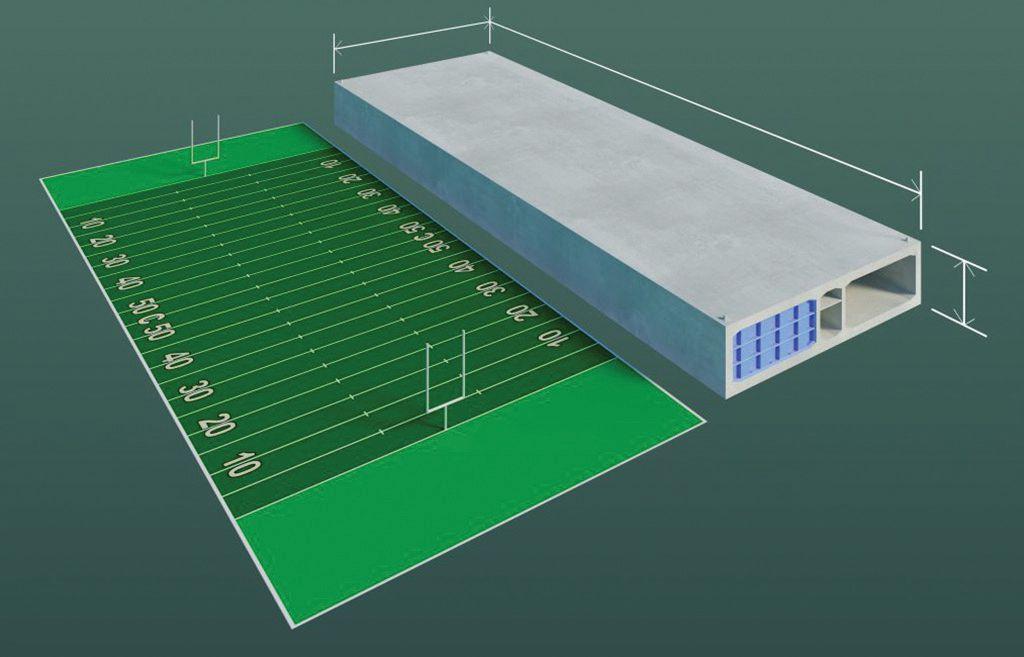
The underwater crossing will be made of six tunnel sections, each about 130 by 45 metres or the size of a football field. Each element will weigh approximately 60,000 tonnes.
The tunnel sections will be made on Deas Island to promote efficiency and reduce construction traffic in the region. They will be stored until the riverbed is ready, then guided into position by tugboats.
While the sections are built, a machine will dredge a trench at the bottom of the river. The trench will then be prepared for a section to be lowered into place.
Cables that span the river will secure the tunnel sections before they are carefully lowered into place. Special tanks within the sections will be filled with water to help lower the tunnel into position.
Once the tunnel section is in place, gravel will be added to the sides to secure it. Large boulders will be placed on top of the sections to protect them in the future. The immersion process will be repeated
six times to lower each element.
As part of the project, the team is exploring the option of filling the existing tunnel with sand and leaving it in place, instead of removing it after the new tunnel is in service. The existing tunnel will be retired, as several factors limit its service life. Leaving the existing tunnel in place may reduce impacts to the river and marine traffic.
TUNNEL OPENED 65 YEARS AGO
Construction on the original tunnel began in March 1957, with it opening in May 1959 as a four-lane crossing called the Deas Island Tunnel. The cost of the project at the time was about $16.6 million.
The tunnel carries a four-lane divided highway under the south arm of the Fraser River estuary, joining the cities of Rich-
Each underwater crossing consists of six tunnel sections, each about the size of a football field.
mond to the north with Delta to the south. It is the only road tunnel below sea level in Canada. The tunnel was the first to use immersed tube technology in B.C. The crossing is 629 metres long and made up of six precast concrete sections.
The project has been in the works for a number of years, with the province working with Indigenous groups, local governments and stakeholders since 2018 to identify the right project for the region. An eight-lane immersed tube tunnel was
endorsed by the Metro Vancouver Board.
In July 2019, the COWI-Stantec team was hired to provide feasibility-level technical services and conceptual-level design to define the technical elements of different bridge and tunnel crossing options, as well as improvements to the approaches on Highway 99.
The team shortlisted three crossing concepts from 18 potential options. The design dealt with interconnected traffic operations, drainage and constructability challenges in a high-traffic corridor, geometrics constrained by available right-of-way, freeway ramps, poor geotechnical conditions, and environmentally-sensitive areas.
As part of the project, three transit and cycling projects were completed in 2023. Work continues at the Steveston Interchange, where dedicated transit lines will be installed in each direction. Flatiron Constructors Canada Ltd. began the interchange work in 2022.
Current and upcoming work at the interchange includes ground densification, installing stone columns and pile driving to support piers for the new interchange.
CRUSHING
Each tunnel section will be built on Deas Island and guided into position by tugboats.
THE COST OF POOR SCREENING
BY SERGE raymond
Unnecessary crushing due to poor screening can eat away at your operation’s profits
> Efficient crushing is a critical factor in a screening plant’s profitability.
Crushers are a significant investment, both to own and to operate, and the entire process depends on the crusher to work effectively. But what often goes unnoticed – and frankly, undiagnosed – is the effect that poor screening can have on an operation’s profits. Inefficient screening silently tallies up costs as material is needlessly recirculated through the crusher.
To maximize a processing plant’s efficiency, this unnecessary crushing must be minimized or eliminated. Plant operators must understand how recirculation hurts profitability, and what they can do to minimize it.
If the screen box is not doing its job well, material that should have fallen through the screen media ends up circulating back to the crusher to be crushed again. Recirculation is hard to detect and even harder to measure, making it difficult to put a value on. It can wreak havoc on an operation’s bottom line, but never be identified as the problem. There are a number of ways it can cost
Crushers are a significant investment to both own and to operate, and the entire process depends on the crusher to work effectively, says MAJOR's product specialist Serge Raymond.
Photo: MAJOR
a plant money.
The obvious consideration is wear and tear on the crusher. Crushers are expensive to fix and replace, up to three times the cost of replacing a screen box. Material recirculated through the crusher accelerates the machine’s retirement, bringing that replacement expense to bear more quickly than would have been required.
Unnecessary work for the crusher also hastens its service intervals and depletes wear parts more quickly. No matter the crusher type – impact, cone or jaw – material recirculation causes the wear parts to be replaced more often, and without benefit of adding revenue to the business.
One of the biggest issues of recirculation is lost revenue. Near-size material is the most valuable to an operation and this issue reduces the amount being produced. The producer winds up taking a double hit: one from the expense of crushing the material a second time, and another from the loss in revenue and reputation from producing less near-size material.
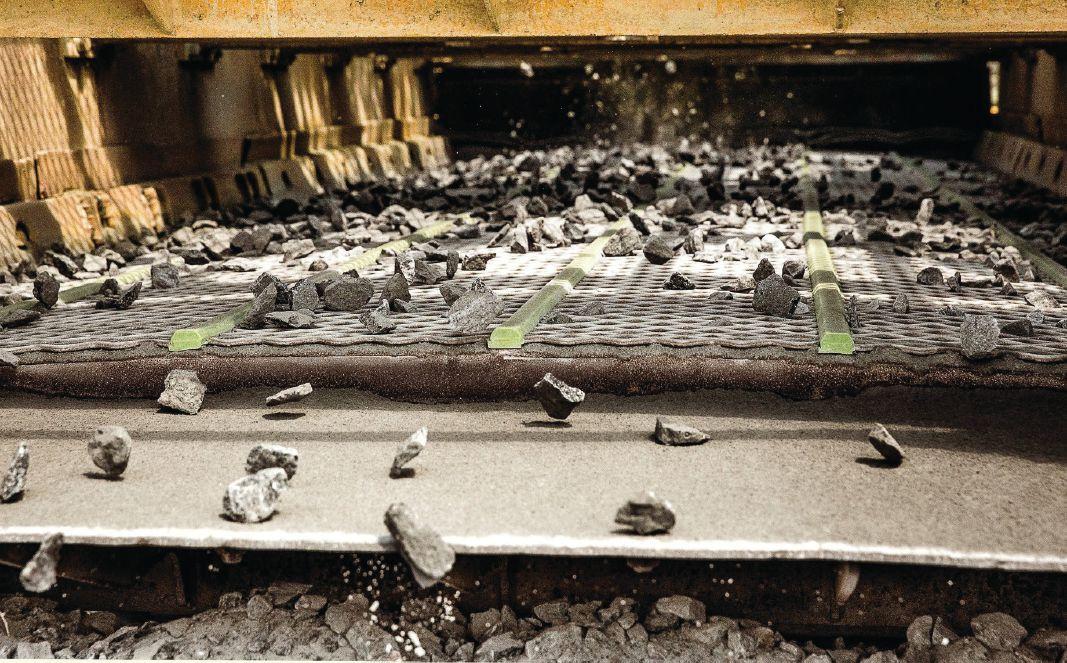
Screen media choice is often the single biggest factor in improving screening efficiency. Most media falls short in delivering efficient stratification. Some producers use high-vibration wire screens, which are strategically designed to promote material stratification and offer exceptional screening performance.
High-vibration screen media magnifies the screen box’s own vibration. Independently-vibrating wires run along the full length of the screen media, increasing the vibration frequency. Consider that a typical screen box vibrates between 600 and 1,200 strokes per minute, with highfrequency machines reaching in excess of 4,000. Because high-vibration screens vibrate independently of the screen box, the wires can reach frequencies of 6,000 to 10,000 cycles per minute – up to 13 times greater than that of a standard vibrating screen with traditional media.
High vibrations accelerate material stratification, causing coarse material to rise to the top of the material bed faster. Fines and near-size materials come in contact with the screen much faster. This, combined with a wide material spread from the extreme vibration, puts fines and near-size material in contact with the screen for a much longer time period, drastically improving the screen’s effec-
tiveness and reducing material unnecessarily sent back to the crusher.
High-vibration screen media can be a game-changing solution for operations struggling with productivity. Recirculation is a frustrating drain on efficiency, racking up crushing costs and diminishing the
quality of the final product. Reducing or eliminating recirculation with more efficient screening is a relatively low-investment solution for a potentially high-dollar problem.
Serge Raymond is a product specialist at MAJOR.
To truly maximize a processing plant’s efficiency, unnecessary crushing must be minimized or eliminated. To do this, plant operators must understand how recirculation could be hurting their profitability, and what they can do to minimize it. Photo: MAJOR
10 WAYS TO GET THE MOST OUT OF YOUR MIX
BY JACK burton
> Celebrating its 150th year, the Good Roads Annual Conference landed at Toronto’s Fairmont Royal York from April 21 to 24.
The event connected municipal leaders with key suppliers and decision-makers in all things transportation infrastructure, with a trade show floor of 120-plus booths as well as appearances from provincial political leaders such as Premier Doug Ford and the Ontario Liberal Party’s Bonnie Crombie.
The Ontario Asphalt Pavement Council (OPAC) presented a panel discussion on hot-mix asphalt (HMA) best practices for maximizing project effectiveness and road longevity in its technical briefing session titled “The Quality of Asphalt in Ontario.”
Photo: jimfeng / E+ / Getty Images
OAPC’s board chair Steve Manolis, of GIP’s materials engineering division, past chair Peter Hamstra of Dufferin Construction and vice chair Christopher Campbell of Imperial Oil were joined by Middlesex, Ont.’s county engineer Chris Traini to explain and explore a list of the top 10 ways to get more durable asphalt pavements.
1. DO YOUR HOMEWORK
For Peter Hamstra, knowledge is power in ensuring durable asphalt mixes. Before making any decisions, he recommended collecting a solid foundation of data on the project at hand, including the existing conditions, ideal thickness and the appropriate mix for the project’s goals.
“Starting by doing a proper pavement design is the first thing: understanding your subsurface, what the soil type is and the drainage is important,” said Peter Hamstra. “If it’s a rehab or an overlay, you need to look at the existing pavement layer to see what’s going on there – is it rutting, is it cracking? These are all things that will help to determine the type of treatment that you’re going to do, and what type of mix you need.”
Result-driving data is not just limited to pre-project circumstances, but should also be based on the long-term intentions of the project and the appropriate maintenance, said Hamstra.
“The other thing is thinking ahead about your future maintenance on this road: what are you anticipating this road is going to need in 10, 20 or 30 years? Will it be something that you’re going to want to mill and resurface? Is it something that you’re going to do a cold recycle on?”
2. ENCOURAGE MIXES THAT HAVE HIGHER ASPHALT CONCRETE (AC) CONTENT
Chris Traini spoke to the decades of experience – and success – that Middlesex County has experienced in applying HMA mixes with a higher AC ratio.
“We’ve seen a marked improvement in the life of our asphalt pavements, especially in our rural areas, where the small bump in the cost of providing a richer asphalt mix gave us an extended life in years – in some cases, five to seven years of additional life, on average. That means we’re seeing roads we don’t have to touch for 20 to 23 years.”
This increased longevity, Traini explained, comes from the protective benefits that increased AC provides against common sources of wear, such as weather and extended UV exposure.
“The enemy to the durability and longevity of asphalt pavements is the sun and its ultraviolet light, and the breakdown it causes over time,” he said. “If you have a well-constructed road, a small bump in your AC content can prevent the types of deficiencies we see in our pavements generally caused by the degradation of the asphalt itself.”
3. SPECIFY A FINER GRADATION FOR YOUR MIX TYPE
Another adjustment to HMA mixes for extra mileage on your road projects is selecting finer sizes of aggregate when possible, said Steve Manolis, especially when a higher AC content is also being employed.
“We found through experience that finegraded mixes, using smaller aggregate sizes, can be more durable and crack-resistant than their coarse-graded counterparts,” Manolis said. “One of the big reasons for
this is that we can put a more effective amount of asphalt cement content into a fine-graded mix.”
While finer aggregate excels as a sidekick to higher AC ratios, these mixes also support durability by allowing a high degree of compaction to be applied, according to Manolis.
“The other really important reason is that fine-graded mixes can be compacted, and are easier to compact than coarse-graded mixes. Compaction is hugely important to the pavement’s longevity: a well-compacted road is less permeable to air and less permeable to water, as these elements are less able to penetrate the pavement and cause the damage process.”
4. DON’T OVERHEAT THE MIX
“I think that one’s pretty self-explanatory: just don’t do it,” joked Traini.
Despite providing the ‘H’ in HMA mixes, keeping the heat below a highdegree threshold can prevent a range of longevity problems, including premature oxidization and cracking, he explained.
“The thing to understand about hot
Middlesex county engineer Chris Traini and OAPC board members Peter Hamstra, Steve Manolis and Christopher Campbell discussed how to maximize durability in your HMA mixes at this year’s Good Roads conference, with Doubra Ambaiowei moderating the panel.
mix asphalt paving is the key component – they’re hot. We need to dry our aggregates so that they effectively bind to the liquid, and we need to heat up our liquid asphalt high enough that its viscosity allows it to mix with the aggregates. But that extra heating you put in the liquid can be detrimental to the life of the liquid: you’re adding oxygen and making the asphalt a little bit more brittle.”
Being mindful of temperature can help in avoiding these high-heat drawbacks, but Traini also recommended looking toward using warm-mix asphalt (WMA) when possible, such as on late-season projects.
5. INCLUDE ADEQUATE SURFACE PREPARATION IN THE PLANS
Proper time for surface preparation and examination is key in ensuring optimal smoothness in the finished roads, said Hamstra.
“Any good road builder will realize that the surface mix you put on is only as good as what’s underneath it,” he said, adding that contracts should ensure that preparation processes can be carried out to an adequate degree.
Following a number of pre-project steps before adding the mix, such as proper slop-
ing, base solidity, examining for potential rutting and surface consistency and removing any loose materials, all make for a better asphalt application process and more importantly, a smoother road.
6. ENSURE ADEQUATE BOND
Proper tack coat application, according to Manolis, “really is one of the simplest and most cost-effective ways we can employ to extend pavement [lifecycles.]”
By strongly bonding each layer, proper tack coat application increases performance and mitigates durability issues such as premature cracking and improper compaction. Manolis referenced studies from across North America that showed the impact of poorly-bonded layers on premature cracking, along with how strong bonding creates crack resistance.
“Spraying the tack coat, which acts as a glue on the surface of the asphalt layer before being overlaid with the second lift, bonds the two layers together, and really makes them a strong and cohesive unit that resists cracking,” he said.
7. PROVIDE PROPER PAVEMENT DENSITY
Compacting the mix to the appropriate density supports durability across a number
of practices, including proper coating application and creating the air space in the pavement needed for the material to adjust and adapt to weather effects, explained Chris Campbell.
“Obviously, HMA and WMA are combinations of aggregates, liquid and fillers that are all mixed together. Within that mixture, there are gaps and holes, and those holes are important, both in the sense that some liquid will get in there to ensure proper coating, but also, we need some of that air space so the liquid can expand and contract depending on the temperature and climate,” he said.
When miscalculated, an overly-loose density in the mixture can be too permeable and lead to increased oxidization and aging. For Campbell, finding the sweet spot means looking at the particulars and conditions of the mix, tools and demands of the location.
“It’s about ensuring you understand what your mix design needs are for your area, that you understand the materials you’re using – the liquid type, and how the liquid interacts – and also the equipment you’re going to use in the field, the compaction methods the contractor is bringing to the table and the environment you’re trying to compact in.”
Using finer aggregate blends in your mixes can help you get the most out of the compaction process, said the OAPC's board chair, Steve Manolis.
Photo: Nastasic / E+ / Getty Images
8. PRODUCE MIX THAT IS UNIFORM AND CONSISTENT
A good road begins at the plant, according to Peter Hamstra, who emphasized that consistency in the production process creates consistency in mixes and, more importantly, road performance.
“On the production side, we need to make sure that we’re running our plants consistently without a lot of starting and stopping, through things like making sure that your mixing speed is consistent with the material speed that’s coming into the plant, so you don’t have to stop making sure that your lay-down speed on the site is also consistent.”
Consistency in the production and output rate of plant-side mixing processes may support consistency in end results, but Hamstra highlighted that their impacts must also be tested for both before and after the mixing process.
9. USE RAP RESPONSIBLY
This focus on testing and quality assurance extends into the use of reclaimed asphalt pavements (RAP). When using RAP, Manolis urges all stakeholders to conduct proper testing to ensure the consistent results and
yields necessary for it to be viewed as a viable alternative.
“The design methodology and technology is fairly well understood. But the real key to this is a strong quality management program, both from the producer and the contractor side, and also on the municipality and owner side, to ensure that the mix is produced as per design.”
By ensuring that RAP is properly used to create good, durable roads, the industry can guarantee the enjoyment of RAP's fiscal and environmental impacts for years to come.
“It really is one of the most complex issues that we have, both for the industry and I think for all business owners today,” Manolis said.
“The good news is it’s technically possible to incorporate appropriately-reclaimed asphalt pavement into pavements to achieve long-lasting and durable roads. This also has improved economic and environmental benefits.”
10. COMPLETE QA TESTING AND INSPECTION
Investing in qualified technicians and inspectors to carry out proper quality assurance and inspection processes can help
avoid a number of headaches regarding the long-term health of the road, along with any potential contract disputes arising from pavement performance, said Campbell.
“I can tell you that for a relatively small investment, [at Imperial Oil] we have likely prevented hundreds of claims or hundreds of challenges with our Canadian contractors by being able to provide a review in less than half a day of the AC content and the gradation of the asphalt that’s being placed on our roads,” Campbell said.
Imperial Oil’s QA strategy is multipronged, leveraging both the responsibilities of roadbuilding personnel and the goals of the project to ensure any problems in mix consistency are immediately dealt with, instead of deficiencies caught at the last minute setting projects back in both time and costs.
“We trained our inspectors to also act as lab techs, and we’ve dedicated resources to take asphalt samples first thing in the morning on a project, take them back to our shop, do a burn to determine AC content and do a gradation,” he said.
Christopher Campbell spoke of the benefits his company has seen from integrating on-site personnel into the quality assurance process.
Photo: kozmoat98 / E+ / Getty Images
A deep dive into the findings of the 2024 Ontario Municipal Paving Forecast Paving the way in Ontario
> The Municipal Paving Forecast study, an ongoing initiative since 2016, is driven by Good Roads’ commitment to serve as the vital link between stakeholders in road and infrastructure matters. Spearheaded by Good Roads, this annual survey provides critical insights into the state of municipal paving. Looking into the key findings from the 2024 Municipal Paving Forecast study, there's plenty to learn about, including the total paving tonnage across Ontario, paving sustainability practices and trends in Ontario, variations on standards specifications, and geographical analyses of total RAP available and total RAP consumed in 2024.
PROJECTED USE OF 1.2 MILLION METRIC TONNES OF HOT-MIX ASPHALT
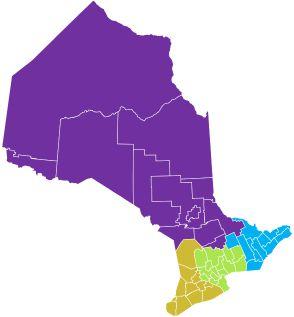
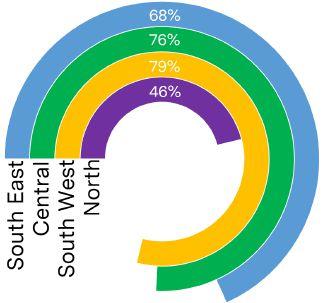
As we set our sights on 2024's construction season, Ontario municipalities are projected to utilize a staggering 1.2 million metric tonnes of hot-mix asphalt (HMA) in their ongoing efforts to construct and maintain a robust network of roads. It is worth noting that the 1.2M tonnes only accounts for municipal capital and maintenance projects, and does not account for paving completed by land developers or the Ministry of Transportation of Ontario. To put this into perspective, this quantity of asphalt would be sufficient to pave the Ontario 401 highway a remarkable four times over. The graphic below illustrates the 2024 paving forecast broken down by four distinct geographical regions: north, central, southwest, and southeast.
This comprehensive survey draws on the input of an impressive 55 municipalities throughout Ontario, encompassing feedback from all major municipalities which account for 47 per
cent of the urban population in Ontario. Compared to the previous year, we note a 4 per cent uptick in paving tonnage among southwest municipalities, while northern municipalities show a decrease of 13 per cent in paving tonnage, central showing a decrease of 7 per cent, and southeast showing a decrease of 9 per cent. Overall, we observe a 5 per cent decrease in HMA paving tonnage across all Ontario municipalities when compared to the previous year’s paving season.
A POSITIVE DIRECTION TOWARD SUSTAINABILITY
In 2024, Ontario municipalities continued to make considerable strides towards sustainability through utilizing deferent recycling and green technologies. Such efforts in 2024 are projected to result in offsetting a staggering 1M metric tonnes of CO2 through the use of:
• 114,053 tonnes of Recycled Asphalt Pavement (RAP)
• 613 km of in-place recycling
• 353,908 tonnes of warm-mix asphalt (WMA)
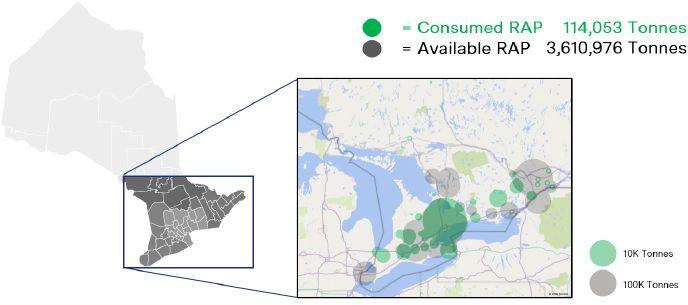
According to the 2024 Ontario Paving Report, Ontario has a substantial 3.6 million tonnes of RAP across 94 facilities, of which municipalities are projected to utilize 114,053 tonnes in 2024 resulting in estimated savings of $15 million for taxpayers.
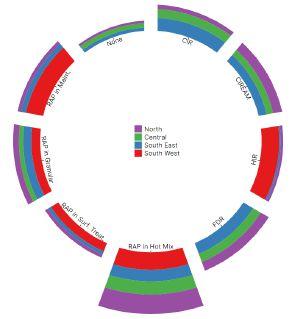
At present, 71 per cent of Ontario municipalities have permitted the use of RAP, with an increasing number of municipalities embracing this ecofriendly technique, evidenced by at least seven municipalities amending their specifications to accommodate RAP in the past four years. Notably, the data presented in this chart derives from feedback provided by 185 municipalities across Ontario, with a comprehensive
MUNICIPALITIES KEEP POTHOLE REPAIRS IN-HOUSE
Municipalities conduct comprehensive studies to effectively manage their road assets, employing various preservation and rehabilitation techniques. However, a shared practice among them is the frequent repair of potholes to comply with the Ontario Minimum Maintenance regulation. On average (excluding outliers), each municipality fixed 3,700 potholes in 2023. Including all responses, Ontario municipalities collectively fixed 0.5M potholes in 2023, with 89 per cent of municipalities relying on in-house maintenance crews to fix these potholes. Explained by higher truck traffic, the central zone has seen the most potholes per lane kilometers compared to other regions, as shown in Figure 5.
INDUSTRY SHIFT TOWARD ECOFRIENDLY PRACTICES CONTINUES
In conclusion, the findings of the 2024 Municipal Paving Forecast study shed light on the tireless efforts of Ontario municipalities in paving and maintaining their road networks. With a projected utilization of 1.2 million metric tonnes of hot-mix asphalt (HMA), municipalities are poised to tackle the challenges of infrastructure upkeep in the upcoming construction season.
The commitment to sustainability is evident through the adoption of recycling and green technologies, anticipated to offset a significant amount of CO2 emissions. The increasing acceptance and utilization of Recycled Asphalt Pavement (RAP) underscores the industry’s shift towards eco-friendly practices.
breakdown of these results observable in Figure 3 above.
Meanwhile, Figure 4 shows a spatial representation of the available RAP and consumed RAP in 2024. It is worth mentioning that Good Roads’ studies on quantifying RAP in Ontario, which started in 2019 and lead to the publishing an annual Paving and RAP report, have inspired the Ministry of Transporta-
tion of Ontario (MTO) to consider using 100 per cent cold RAP mixes, relying on the data supporting the availability of abundant quantities and widely-spread RAP stockpiles.
MTO recently completed a trail project on Highway 3 on Cayuga that successfully used 100 per cent cold RAP mix in the base course, with the Ministry reporting promising results for the project.
As road management continues to evolve, municipalities remain dedicated to preserving and enhancing the infrastructure that connects Ontario. Through ongoing studies and collaboration, they look to meet the demands of both present and future generations and ensure safe, efficient transportation networks for all.
Check out the entire report at: https://goodroads.ca/wp-content/ uploads/2024/04/2024-Good-Roads-RAPReport.pdf.
Amin Mneina is Good Roads' senior specialist of technical programs & research.
Figure 4- Municipal Consumed vs. Available RAP in Southern Ontario
Pavement Recycling Techniques in Ontario Municipal Paving
Figure 3: Municipalities Allowing the Use of RAP in their Specifications.
Figure 5- Distribution of the 519K Potholes Fixed by Ontario Municipalities in 2023
Potholes per Lane km
Preventative maintenance for peak productivity
Choosing
a condition monitoring system to minimize downtime and maximize ROI
> As the saying goes, a watched pot never boils.
So, instead of idling by the stove, go gather the meal’s ingredients. That can yield a bubbling pot upon your return, enhancing efficiency. While the idea of leaving things alone applies to many activities beyond cooking, it is not an effective approach to the screening process within mineral processing environments.
Undetected issues with vibrating screens can allow out-of-spec material to pass through, in addition to causing further damage over time. Plus, any downtime for repairs can lead to production losses.
It’s not viable for operators to monitor vibrating screens all the time. Fortunately, a condition monitoring system takes this task off their hands, ensuring screens stay healthy without constant attention.
PROACTIVE PERFORMANCE OVER REACTIONARY REPAIRS
Any mineral production plant faces the challenges of maintaining the uptime of its equipment while reduc-
ing the cost of corrective maintenance. The information that condition monitoring systems provide can therefore be an invaluable asset to quarry and mine managers. However, not all systems are made equally.
Most available options on the market are reactive, and unable to prevent unscheduled shutdowns and costly reductions in output. This is typically because these systems send only very specific information, and often in a format that is difficult for operators to understand.
Condition monitoring systems that stand out from the pack use modern algorithms and artificial intelligence to monitor the health of the vibrating screens on-site. These condition monitoring systems use their advanced technology to forecast the equipment’s dynamic condition, as well as predict necessary maintenance and provide critical downtime alerts. They can identify common types of failures such as lubrication faults, contamination and bearing damage, as well as loose or broken structural parts of the vibrating screen body. Over time, a condition monitoring sys-
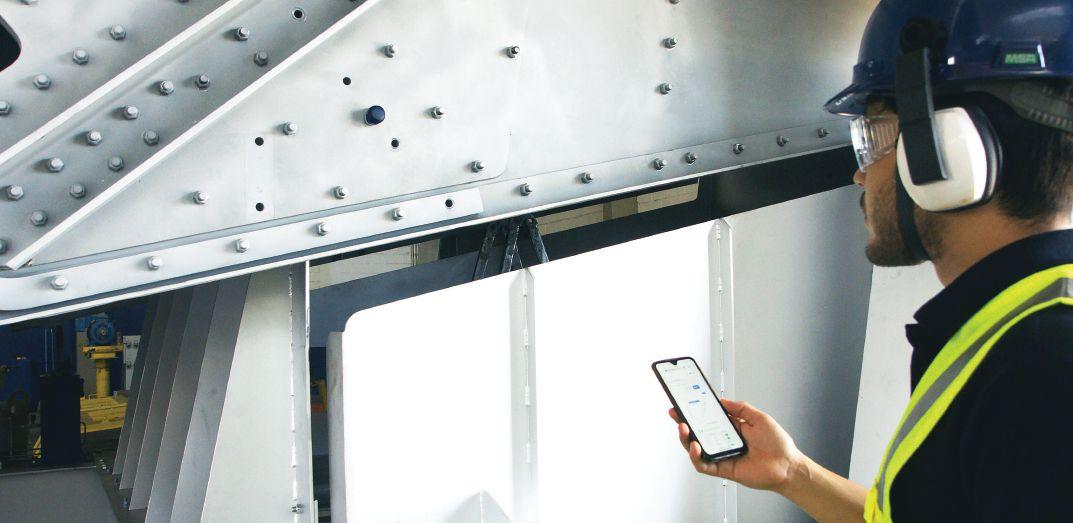
Condition monitoring systems offer around-the-clock equipment surveillance through permanently installed sensors that can be installed at any time on the equipment. Photo: Haver & Boecker Niagara
Thiago henrique buoso
tem should be getting “smarter” by using its artificial intelligence to improve the accuracy of the alerts it sends.
Understandably, purchasing any monitoring system can seem like an additional cost on top of other operational expenses. However, it is important to note that a well-chosen condition monitoring system almost eliminates unscheduled downtimes, significantly reduces corrective maintenance hours and increases equipment performance. Typically, most operations encounter an average of one significant issue each month, with a total of 10 to 12 per year. In some cases, just one critical alert effectively pays for an entire three years of a condition monitoring system. And when you consider that certain condition monitoring systems prevent critical failure for just 22 dollars per day, it’s hard to refute that the investment is worth the reward.
DIAGRAMING THE DIAGNOSTICS
While monitoring systems for vibrating screen bearings are common in the market, more advanced options offer 24/7 equipment condition monitoring through permanently-installed sensors on both the bearings and the body of the vibrating screens. Although sensor configurations are customizable, the typical setup involves four body sensors placed on each corner of the vibrating screen with the addition of two bearing sensors. For larger screens, eight body sensors and six bearing sensors are used. In just one day, it is possible to install sensors on multiple machines in case of a plant stoppage. Since receptors do not require the screen to be stopped, they can be installed any time.
Once installed, condition monitoring quickly gets to work scanning the vibrating screen for deviations that may lead to damage or loss of production. From there, artificial intelligence predicts the dynamic conditions of the equipment. For many operations, maintenance time is optimized by noting probable causes of potential failure of the equipment such as loss of stiffness or uneven spreading of material feed on the screen media. Last but not least, customer focus is central to high-quality condition monitoring by providing easily-interpreted information every five minutes.
Not only can information be provided continuously, but it can be accessed
online and remotely. While these systems are compatible with any Wi-Fi network, integrating data via cable or Application Programming Interface is a good backup in case of any outages. Other benefits of high-tier condition monitoring systems include quality hardware such as industryleading sensors, as well as a long battery life of more than two years.
Condition monitoring is most effective for 24/7 operations, as well as those processing high-priced materials, working in aggressive or hazardous environments or with a small maintenance team. Partnering with an OEM-certified technician is a cost-effective first step toward identifying whether such a system is the best fit for your operations.
ALL-INCLUSIVE INSPECTION
Countless companies have thrown their hat in the ring with a condition monitoring system to gain the business of producers. Some of these companies specialize only in technology, with no direct aggregate or mining connections. Others are OEMs that serve these industries, but have limited coverage or service capabilities after initial installation. Those who rise above are manufacturers with the complete package: the equipment and extensive industry knowledge, an experienced team that offers insight and service to customers and a condition monitoring system with the features those customers need to stay competitive.
Part of the value of condition monitoring systems lies in the service received from the OEM. Even the best systems require a human element when questions arise or training is required
Considering the history and experience level of a manufacturer in selecting a condition monitoring system will save time and prevent future headaches. Start by looking at whether the company has dedicated experience in the mining and aggregates industries, what their customer service commitment is like and their territory coverage. A global company with an expansive service team is more likely to be able to send someone for a consult, to troubleshoot or to install sensors on a new screen than a regional company without that depth of personnel.
Having a deep bench and industry expertise is half of the equation, but the
technology and condition monitoring system itself also plays a vital role. The best manufacturer will not just sell you the system, but offer a comprehensive evaluation experience for your production plant. In these cases, an in-depth, eight-point inspection can be provided to thoroughly assess the efficiency of your operation. Diagnostics are often the first step, which can involve impact tests, vibration analysis and condition monitoring. Impact tests ensure that each machine is properly calibrated to avoid operating in resonance, while vibration analysis examines the real-time health of vibrating screens by detecting irregularities. Condition monitoring elevates these results by not just identifying and fixing current issues, but emergent ones. The remaining steps of the inspection can involve using the manufacturer’s expertise in processing equipment, engineered screen media, original parts, rebuilds and upgrades, services, plants and process engineering to inspect customers’ screening processes in order to recommend best practices for processing proficiency.
Reputable manufacturers will ensure that all information to install the condition monitoring system is available before components are shipped, so the customer’s personnel can install the system themselves. However, it is good to consider the presence of an OEM technician to help during that process for troubleshooting and ensuring all personnel have proper access and training on the system.
DON’T LET PRODUCTION PROBLEMS BOIL OVER
While a pot on the stove does require an occasional glance, mineral processing equipment needs more immediate attention. Smaller issues like wear or damage to the vibrating screen, when not caught quickly, can lead to bigger production headaches – and losses – later on. Finding the right system and manufacturer to partner with can provide the strongest ROI and ensures keeping up with – or beating out – the competition.
Thiago Henrique Buoso is a project and sales engineer for Haver & Boecker Niagara’s Diagnostics and Aftermarket Department. He has more than 15 years of industry experience.
The market is full of software options to improve transportation management SOFTWARE ON THE MOVE
> A wide variety of industries are moving toward increased efficiency and automation, with the gravel, aggregate and roadbuilding industries proving no exception.
A key tool to help make processes more efficient and reduce costs is transportation management software (TMS). These tools can help streamline, simplify and even automate some of the key facets of your business. Rock To Road spoke with representatives for companies that offer TMS (and the technology such systems are based on) to learn more about the options available.
SAP
Formed in 1972 as Systems Analysis Program Development, SAP’s promotional material boasts that their software "established the global standard for enterprise resource planning software." The current generation of their software is SAP S/4Hana Cloud.
“What that means, is we’re looking at things that you’re selling – services or products – to whom, your ability to invoice, bill, receive funds, park the funds someplace, the assets you’re going to need to run your business, and the proper ability to budget and care and feed for those assets,” says SAP industry advisor Dave Blatner. “If we think of trucks in terms of hauling, they’d be tractors and trailers, dump trailers, what sizes, et cetera. And there’s all kinds of things in the portfolio, including the world of telematics.”
Blatner notes that they have now
BY MATT JONES
moved into realms beyond telematics, such as smartwatches that monitor heart rates, blood pressure and other factors. Such technology could be used to alert a driver if they are becoming drowsy.
“If you were a trucking company moving gravel, or maybe you were the gravel pit that had taken an order from a toll road or some authority, ‘I need X number of feet of this grade of rock,’ how do you accept that order?” says Blatner. “And how do you measure the material as it’s leaving your yard?”
SAP’s software covers traditional transportation management as well. Looking at the example of the Ontario’s 407 toll road authority, Blatner notes that a key consideration would be where is the best mine to source gravel from, and what are
the load bearing limits of the roads that the trucks must travel on.
“And if you’re the operator of the pit, as the truck comes in, we know its empty weight, as it goes out we know its full weight, and we can start to, almost daily, incrementally bill,” says Blatner. “At the same time, you have the ability to use high-speed imagery to look at the condition of the truck, and could sense that perhaps the truck left without the tarp cover across the back. So, the ability to send a driver an alert and let them know they need to put the tarp roller down. So you can bring that safety aspect into it.”
Blatner notes that what makes SAP’s offerings stand out is the incrementality, which allows for significant flexibility for
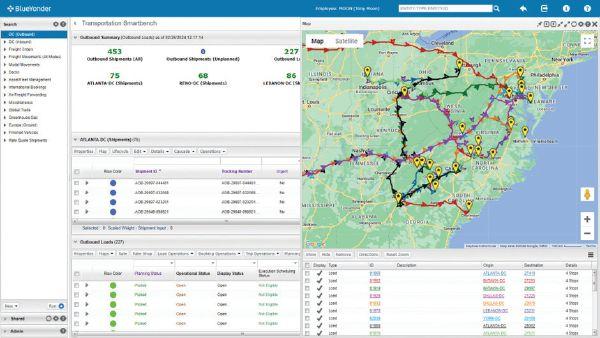
Transportation management software can help companies find efficiencies and streamline processes. Photo: Blue Yonder
Software such as WrightPlan allows users to manage dispatching in great deal of detail, among other functions.
all companies involved, as well as their incorporation of Esri technology to help manage and track assets.
CRADLEPOINT – A LOOK UNDER THE HOOD
While the other companies Rock to Road spoke to develop software and systems, Cradlepoint is the developer of the base technology that many such systems rely upon.
“We’re the plumbing for these [types of] applications,” says Cradlepoint vice president and general manager, Jason Falovo.
While the company started with providing failover – offering a wireless backup network at a point of sale, to prevent losses if an internet connection falters – the company has now made a third of their business in mobility. They build cellular routers which go inside vehicles to provide a Wi-Fi connection, which are often used by police forces to connect body cameras or counting fares on public transit.
“And where we started to see it used more is in heavy equipment manufacturing,” says Falovo. “It started, from my perspective, around asset tracking. With the value of these vehicles, somebody taking them off the lot is quite costly. At its base root, our technology does GPS
tracking.”
Rock to Road should note that Cradlepoint’s technology powers the TMS of companies such as Forward Thinking, but they are not necessarily the driver behind the other TMS services mentioned in this article. Forward Thinking employs Cradlepoint’s tech for GPS, as well as connecting sensors for tracking maintenance and other applications. The technology can also be used for ‘geofencing’ – constricting vehicles to a specific area.
“What we’re working on today is, as consumers are moving more and more to wireless and cellular and seeing the benefits of 5G and the freedom it provides, we want to make sure its secure,” says Falovo. “We’re doing that with a product called NCX – it’s our security platform. The ‘internet of things’ connections are mostly wireless, and you have to have security posture in place to take care of that. So we’re focusing on security because we know consumers are going to cut the cord.”
WRIGHTPLAN
WrightPlan launched in 2009 and emerged from the need for managing operations software in the construction industry. Its VP of operations & customer experience, Randa Fernandes, says the company’s founder and CEO, Michael
Cox, had heard of construction companies using pen and paper-based systems and spreadsheets, and wanted to develop a software solution.
“It was an iterative approach,” says Fernandes. “It started with solving for quoting needs and estimating, and evolved into managing project scheduling, dispatch and so forth. It truly has been an evolution and a journey as we build this product lockstep with our customers.”
WrightPlan is a centralized software tool for administrative staff and field operators. Every step, from estimation, quoting and invoicing, are incorporated into the system.
“The biggest thing that we do is we are eliminating data entry at every step,” says Fernandes. “When you start with WrightPlan, and you get your estimation and project quotes in, that same data carries forward through all the way to invoicing so it’s less clicks, giving you more efficiencies during the day.”
Fernandes says the software has allowed some of their customers to get quotes out in a matter of minutes, while reducing misquotes and other losses which occurred due to human error. The system also incorporates all the costs of labour and equipment into its calculations. In the end, it is very easy to look
Photo: WrightPlan
over all aspects of your projects to see where costs may have gone over or under.
For potential customers in the gravel and roadbuilding sectors, WrightPlan is highly customizable. While some businesses in the sector may only be interested in using the system to manage scheduling and dispatch, they may also find value in operations management tools for project tracking.
“We are highly configurable and customizable,” says Fernandes when asked what makes WrightPlan stand out. “We cater to your workflow, we take the time
“As consumers are moving more and more to wireless and cellular and seeing the benefits of 5G and the freedom it provides, we want to make sure its secure. The ‘internet of things’ connections are mostly wireless, and you have to have security posture in place to take care of that. So we’re focusing on security because we know consumers are going to cut the cord.” - Jason Falovo, vice president and general manager of Cradlepoint.
to listen, we take the time to understand, and then we give you a tool that meets your needs. And being SAS-based cloud technology, we can be accessed from anywhere in real time.”
BLUE YONDER
Blue Yonder’s Supply Chain Execution solutions incorporate a variety of options, including transportation and warehouse management systems.
Ann Marie Jonkman, Blue Yonder's vice president of global industry strategy, says their platform can help any business that runs product from one site to other locations. Their solutions are applicable to almost any industry, she explains.
“From growing bananas and fresh fruits to hospital deliveries to navigating gravel roads, maintenance, dust and construction, our solutions can connect, collaborate and align your transportation needs,” says Jonkman. “Our solutions are horizontal across all industries.”
Blue Yonder has been developing its TMS for more than 35 years, and is constantly focused on innovating.
Jonkman recommends using their software to digitize planning and labour, as the software can collect data points from a variety of aspects to determine possible efficiencies.
“Since there is digital data available, you are able to perform optimization of routes, labour crews and deliveries,” says Jonkman. “And that optimization serves driving less, saving time for your employ-
ees, and generating an improved carbon footprint.”
The company’s software focuses on three stages – digitization, automation and optimization.
The next step for the software is a new solutions that incorporates predictive AI to compare your business’ historical data with other information, such as weather forecasts and road conditions, to find even more efficiencies.
“We’re launching new cognitive execution solutions in the near future that incorporates both predictive and generative AI,” says Jonkman.
“Say I’m automatically sending a signal to a local gravel company where I’m going to buy,” she explained. “I’m going to be six hours late, but I have a commitment to buy 'X' inventory and deliver it to my customer. I’m automatically sending a signal to buy something, while giving a real-time update of my driver’s location, which will allow the inventory to be ready when the driver arrives to pick it up.”
While this software, even when predictive AI is incorporated, won’t automatically place orders, she statated that it will drive efficiency by preparing an order so that a human can quickly sign off on it.
Jonkman says that what makes Blue Yonder’s offerings stand out is their product innovations, their drive to connect the end-to-end supply chain and their ambition for the future.
Cradlepoint’s Jason Falovo describes his company’s technology as the ‘plumbing’ that makes transportation management software work.
Randa Fernandes of WrightPlan says a key focus of their software is eliminating human errors in data entry.
>JUNE 11-13 Canadian Crane Rental Association annual conference
WINDOR, ON
www.ccra-aclg.ca/2024ccra-conference-windsor-on
> JUNE 20-22 CIQ Congress 2024 TORONTO, ON www.ciqs.org
> SEPT. 22-25 TACConf
VANCOUVER, BC
www.tacconf.ca
> SEPT. 24-26
MINExpo
LAS VEGAS, NEVADA www.minexpo.com
> NOV. 10-13 Canadian Technical Asphalt Association conference
EDMONTON, ALBERTA www.ctaa.ca/conference/
> DEC. 4-6
The Building Show
TORONTO, ON www.informaconnect.com/ the-buildings-show/
one more load Cutting corners won't pay
There is substantial value in exceeding minimum regulatory requirements
While it is always important in the aggregate industry to be fiscally prudent with lean operating margins, there are components of maintaining or even reducing expenditures that do not make sense and can be highly detrimental, more costly, or even suspend operations.
It is well understood by the majority of operators that the bar has been raised substantially on environmental requirements, and public and regulatory scrutinization has become just part of doing business. There are increasing baseline requirements, ongoing monitoring and closure requirements, and projects require supporting information to secure municipal, provincial or federal regulatory approvals. Much of the driving force behind the more onerous requirements is public activism, and the quantity, quality and availability of information surrounding operations needs to be transparent and stand up to public and regulatory scrutiny. Often, producers are reluctant to undertake studies or monitoring unless regulatory bodies impose minimum requirements. However, there can be substantial value, not only in meeting a minimum standard, but in exceeding those requirements and taking a more holistic approach that stands up to scientific rigor and scrutinization.
AVOID COSTLY LEGAL CHALLENGES
The lack of supporting information or consistent monitoring data for both new and historical operations can lead to speculation on the potential environmental impacts, leading to costly and protracted legal challenges. Additionally, credibility and public relations issues may arise. There are numerous documented cases in the public record where such challenges have occurred. For example, a homeowner’s water supply might exceed regulatory guidelines even before nearby work begins, but without a baseline for comparison, proving this can be challenging. Initial and ongoing monitoring data plays a crucial role in identifying exceedances before operations commence or in assessing whether the environmental parameters are being maintained, increased, or possibly even improved over time. Without supporting baseline and ongoing monitoring, speculation can run rampant. Local or even national media may report on the situ-
ation without access to all the facts. Once the genie is out of the bottle, it is challenging to put it back in.
DON’T PUT REGULATORS IN A DIFFICULT POSITION
Regulators often face intense scrutiny and political pressure to reject almost any and all applications, whether in new, ongoing or expanding operations. While there are no guarantees in securing the necessary regulatory approvals for any operation, it is essential to have sufficient background information and prepare an application that is as technically sound as possible to raise the probability of securing the approval. At the end of the day, the regulators must be able to justify and defend their decision to issue the required approvals, potentially even in court. If they have partial or incomplete information, it puts the regulator in a difficult position to issue an approval, and not to mention, also erodes the credibility an aggregate company has with the regulators and the public. Appeals and challenges to the issuance of approvals don’t always target the producer directly. Instead, they question the decision-making process of regulatory bodies in granting approvals with incomplete information or insufficiently-addressed concerns. Similarly, if concerns of the public are not adequately addressed, then credibility, and trust can be called into question, and speculation ensues.
Certainly, not everyone will be satisfied with the outcome when a producer is issued the required approvals to operate. However, many issues or concerns can be resolved to the satisfaction of the regulators and the public through rigorous scientific evaluation. The onus is on the producers to provide sufficient, technically-sound information to support operations and to engage technical experts in relevant areas as needed. Failure to do so can result in protracted timelines, spanning years or even decades, or an outright denial to operate.
William (Bill) Gowdy is a geologist with 35 years of experience in the aggregate, geology, mining, reclamation, and exploration fields throughout Canada and overseas. (USA, Indonesia, South Africa, Mexico, Panama).
Powerful performance. Application versatility.
MOBISCREEN MSS 802 EVO
IMPRESSIVE FROM A TO Z. Thanks to its robust design and extensive range of screen linings, the MSS 802 EVO can easily adapt to changing locations and new operating conditions – making it ideal for a wide variety of applications. The coarse screening plant features an intuitive system control that reduces the risk of operating error. And all relevant functions can be operated from a safe distance for increased work safety. The MOBISCREEN MSS 802 EVO –the heavy-duty, versatile solution in natural stone and recycling.