The Réseau express métropolitain (REM) Transit Project in Montreal.
There have been several recent high-profile cases where aggregate operations have been called into question even years after the site became active.
An overview and a guide.
Major heavy equipment showcase moves Into Espace Saint Hyacinthe
Infrastructure and immigration key to building Ontario.
Constructing a low-carbon future
Industry is finding its way to sustainable best practices
Many of the technologies and practices
I’ve found the most exciting to write about over my years on this publication have been related to ways the construction sector has been improving on its sustainable practices.
The first live event I covered for the magazine took me to Slippery Rock, Pennsylvania in 2015, where I learned about a water conservation technology for a piece of washing equipment produced by Haver & Boecker. It was in early April, and it was cold! It probably didn’t help that I got a little too close to the equipment while it was being demoed and got fairly soaked. I can still recall turning the heater to the max in my car and it taking me over an hour to warm the chill out of my bones. Still, it was a great introduction into the efforts being made by some OEMs to help their customers reduce their environmental impacts.
In 2017, I spent my birthday walking through a landfill in St. Albert, Alta. for another story for the magazine. I met up with members of Rock Crusher Recycling to learn about their crushing operation, which was creating tens of thousands of tons of recycled concrete for use in various projects. Since that time, I’ve covered a variety of stories involving concrete recycling, which will only continue to grow in popularity as companies and governments look for ways to reduce their environmental impacts and lower their overall emissions.
A year later, I toured the Lafarge Canada Richmond Cement Plant in Richmond, B.C. and learned about how it was being retrofitted to able to use low-carbon fuel materials.
These are just a few of the projects I
have been lucky enough to learn about up close over the years.
This past month, I attended CONEXPO-CON/AGG 2023, and was excited to learn about more sustainable practices and technologies, and it didn’t disappoint!
The one product I was eager to learn about more than any other on display was courtesy of global steel manufacturer SSAB.
In 2021, the Swedish-based company produced the first-ever fossil-free steel for a customer by utilizing a technology that is decades old, but was never used at an industrial level (learn more about it in the CONEXPO-CON/AGG Show Report on page 12).
Learning the company is in the process of retrofitting some of its mills with this technology, and developing new mills that will only use this technology really impressed me. SSAB’s efforts to create fossil-free steel will push other manufacturers to do the same, and this will likely result in a huge drop in overall emissions worldwide, as steel is actually the byproduct of the steel making process (CO2 is the main product produced in the traditional steel making process).
For me, this is an incredibly important moment in the history of the construction sector. Combined with the efforts of companies like the Holcim Group to retrofit its cement production facilities and meet aggressive sustainability goals, OEMs efforts to produce more sustainable equipment, and the rise of aggregate recycling, I feel like the sector is on the right path towards more sustainable practices and a low emissions future.
And that’s good news for everyone.
BUILT TO CONNECT
Sustainable Innovation
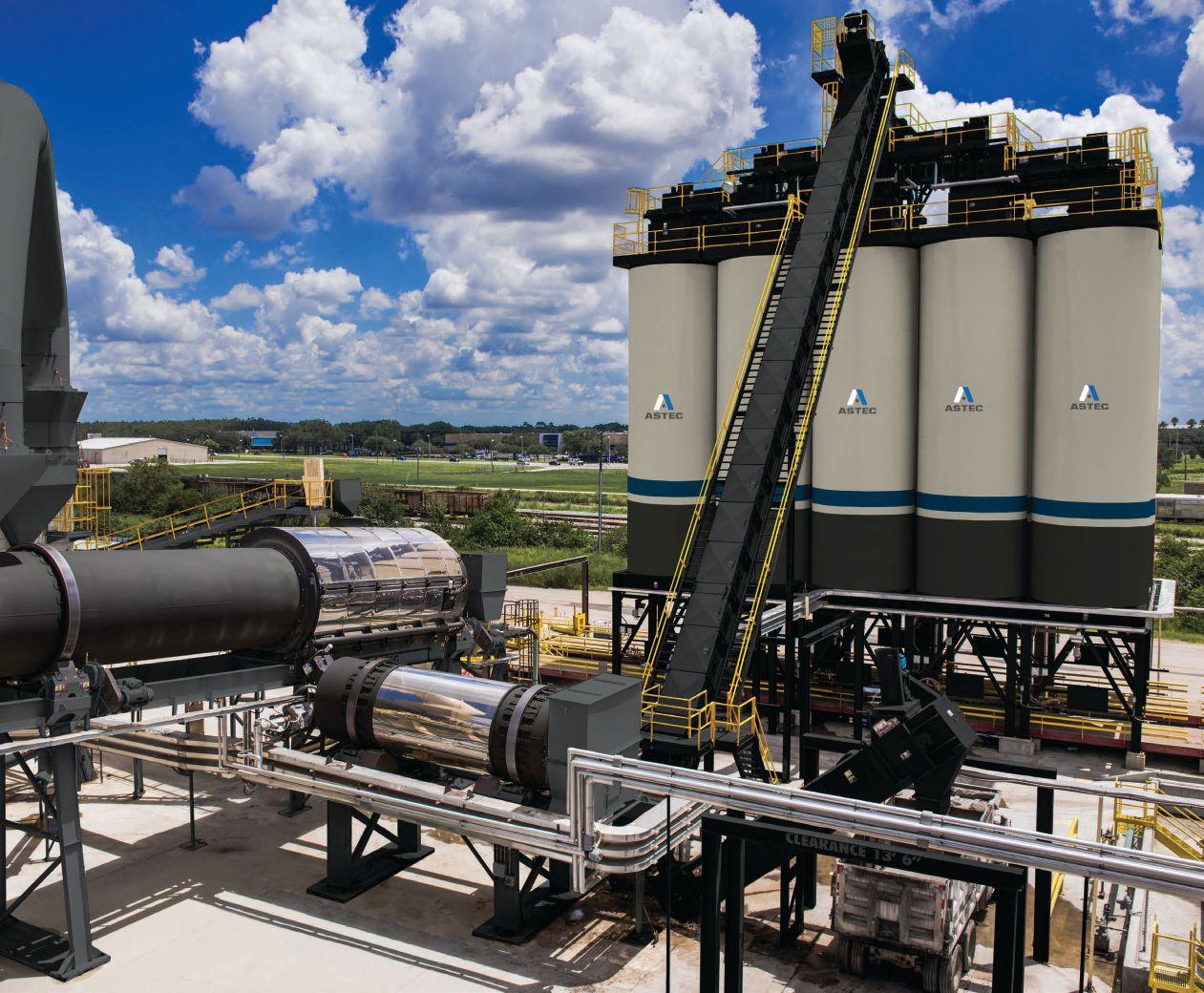
As a decades-long leader for asphalt plant innovation, Astec has introduced numerous products contributing to sustainability. From the Double Barrel® dryer/mixer introduced in 1988 to the debut of the high RAP Double Barrel XHR in 2016. In addition to these industry-changing products, Astec also leads in sustainability with our warm mix system, the V-PAC stack temperature control system, low emission burners, and blue smoke systems.
Astec is well-equipped to carry our culture of innovation into the future. Our dedication to sustainability includes new product development teams and an on-staff product manager for sustainability.
Reach out to learn more about how we can help you meet your asphalt plant sustainability goals.
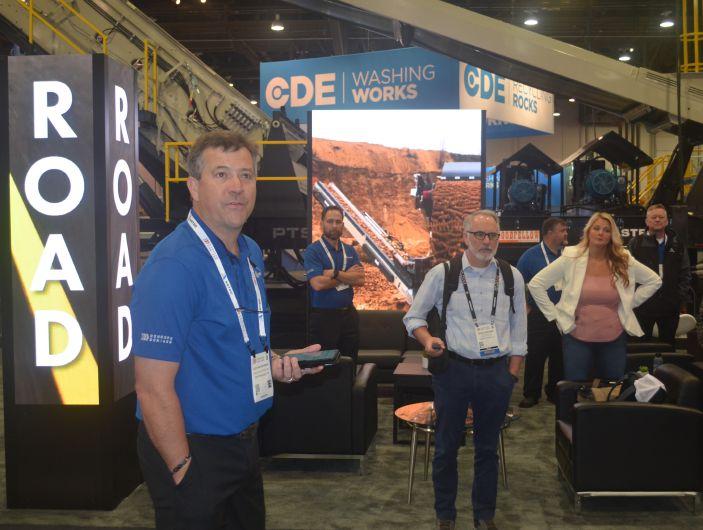
CDE promotes Sarah Corr as new vice-president of Americas
CDE recently promoted Sarah Corr as its new vice-president in the Americas.
Effective this April, the promotion is the latest in a series of recent announcements made by the company as it continues to invest in the region, localizing further, building infrastructure and expanding its team.
In recent weeks, CDE launched a fresh call for talent as it strengthens its team, announcing the appointment of industry expert Joe Teague as its new vice-president of sales.
Sarah has vast knowledge of the Americas market, consulting across multiple industries with significant time spent in market even before joining CDE where, most recently, she served as its head of marketing. With a keen focus on relationship development and client servicing in previous roles, Sarah knows the importance of customer relations, staying close to customers, and understanding their needs. She joins the senior leadership team along-
side Teague and director Darren Eastwood.
In her new role, Sarah will directly input into the strategic direction and growth of CDE in the region as well as leading the in-country sales, operations and aftercare teams as CDE continues to respond to increased demand for its state-of-the-art washing solutions. She will identify opportunities for growth and strengthen CDE’s ties with partners, suppliers and representatives in the industry.
AEM releases Portable Rock Crusher and Slipform Paver Manuals
AEM recently announced a pair of new safety manual titles, offering its members and the customers they serve more userfriendly and easily accessible content on safe practices to use when operating and maintaining machinery. The new Portable Rock Crusher and Slipform Paver manuals provide up-to-date and industry-consensus resources that encourage safe equipment operation.
AEM’s safety materials are consensus documents that are developed, reviewed and approved by committees empaneled by AEM, and they represent best practices for the industry.
To view the full line of materials, visit safetymaterials.org.
With extensive experience in the field and in the management of multidisciplinary teams, Sarah will also oversee the development of CDE’s centre of excellence in DallasFort Worth, Texas, its expanding footprint in the market and its growing team.
“I’m excited to take on this new role for CDE,” Corr says. “Our team in the Americas has proven itself time and again as our customer base continues to grow. I want to continue that great work and be a champion for our industry. This is an industry that’s extremely innovative, one that offers many opportunities. I’d like to shine a light on that for people who may not have considered it before, including women. Our company purpose is to create our best world, a ton at a time and that’s exactly what I intend to do. I look forward to working collaboratively with Darren and Joe and the great team we have to provide the resources, opportunities and environment to deliver performance and profitability for CDE and its customers.”
Volvo CE appoints new head of operations
Kamel Sid, who has held the position of acting head of operations since last September when Jean Marc des Courieres retired from the position, is responsible for the smooth running, efficiency, quality and output of Volvo CE’s global operations.
“I am thrilled to continue working with our many passionate and committed colleagues in operations and together drive our transformation agenda,” he says.
“After six months as acting head of operations I am delighted that Kamel has agreed to join the executive management team as a permanent member. He has wide experience both inside and outside the Volvo Group and will play an important role in taking our operations organization to the next level at this time of transformation and change in our business,” adds Melker Jernberg, president of Volvo CE.
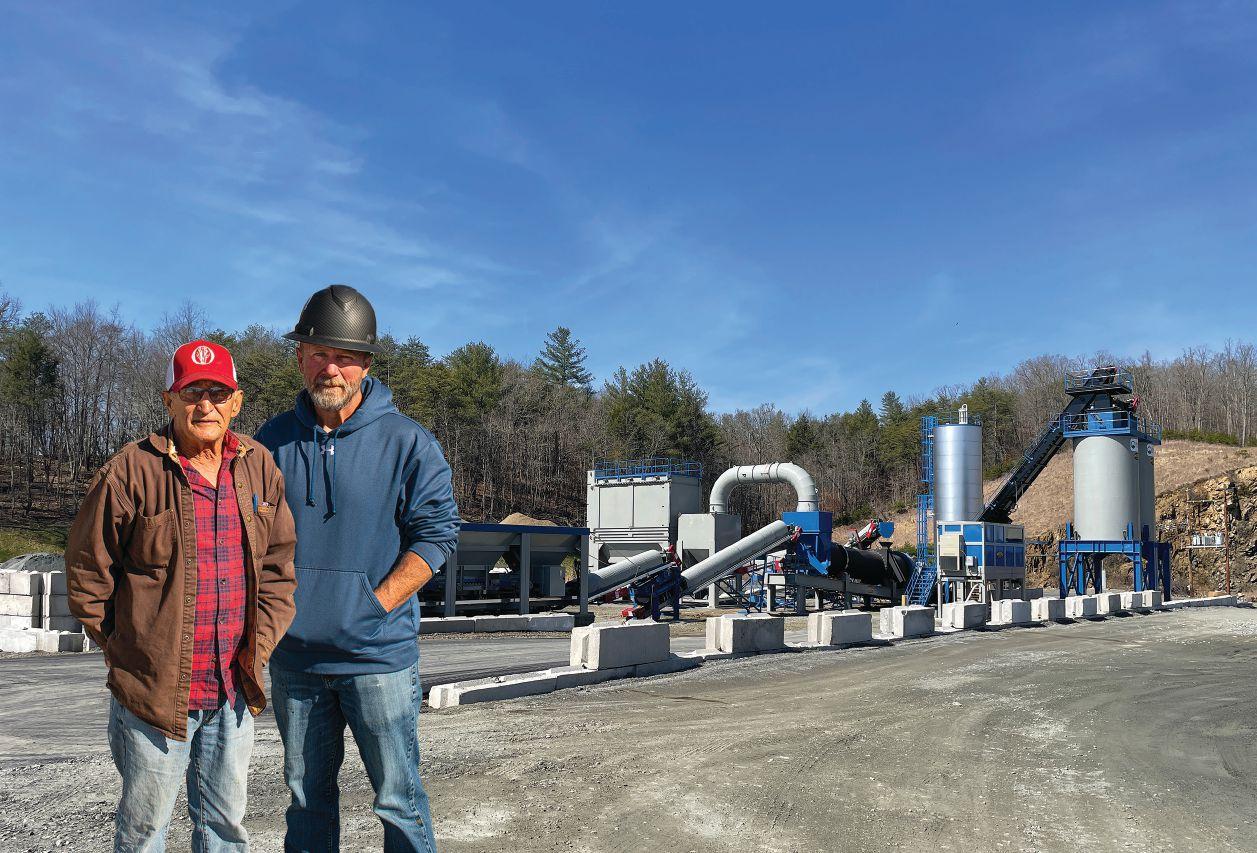
Donnie & T.J. Reed, Madison Asphalt
ONE FOR THE RECORD
BY JAMES careless
> Montreal’s Réseau express métropolitain (REM) project is truly one for the record books. Now under construction, this automated, driverless electric railcar system will serve 26 stations along 67 km of raised, above-ground, and subterranean track. When completed, the REM will extend Greater Montreal’s railcar reach along four new lines to the west, north, and southeast, along with a direct link to the city’s YUL-Aéroport-MontréalTrudeau. The REM will also connect to the city’s existing 71 km Metro subway system via three station interconnects, and a fourth interconnect to the Réseau de transport métropolitain commuter rail line.
“The REM is the largest public transit project undertaken in
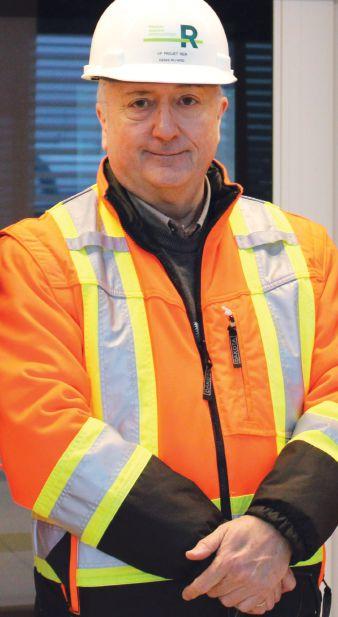
Québec in the last fifty years,” says Denis Rivard (P. Eng.), REM project vice-president. “This is also one of the largest automated driverless systems.”
THE NITTY-GRITTY
The money to build the REM is coming from the Province of Québec government ($1.283 billion), the Canadian government ($1.283 billion), and Hydro-Québec, which is investing $295 million to promote the electrification of transportation. The project’s contractors are SNC-Lavalin, Dragados Canada Inc., Groupe Aecon Québec Ltée, Pomerleau Inc., and EBC Inc. The architects are Lemay, Bisson Fortin, Perkins + Will, and Provencher Roy. The "Provision of rolling stock and systems and operation and maintenance" (RSSOM) contract was won by the Groupe des Partenaires pour la Mobilité des Montréalais (PMM), which is made up of Alstom Transport Canada Inc. and SNC-Lavalin.
The 67-km system encompasses 18.2 km of elevated track on the western line and 8 km of tunnels, including rehabilitating a 100-year old train tunnel under Mont-Royal and cutting a new tunnel to the airport. In addition to the 26 stations that are being built out of Quebec stone and wood – with lots of glass in the above-ground structures to take advantage of natural light.
“We have 14 parking lots and 11 big bus stations,” Rivard says. “We have also built five new bridges and three new maintenance centres. These centres are fully automated. The trains park themselves there at night, head to the training washing system in the early morning, and then drive themselves to work.”
CENTURY-OLD TNT TOPS THE LIST OF TUNNEL REHAB CHALLENGES
Without a doubt, rehabilitating and widening the 5-km tunnel under Mont-Royal tunnel to Montreal’s Central Station has been the most challenging part of the REM proj-
tion began, a detonation occurred,” stated the REM.info website. “Work was halted immediately, and thankfully no workers were injured. An investigation that took place following this unanticipated incident identified the cause: explosives from more than 100 years ago left behind in tubes drilled into the bedrock!”
Mindful that further explosive surprises could await them in the tunnel, the REM team took appropriate safety measures.
“We converted all of our drilling equipment to be operated remotely, and kept our workers at a distance of 500 metres,” Rivard says. “We now do the work using cameras, which makes it much more difficult to obtain precision.”
ect. Not only was the tunnel falling apart due to decades of road salt leaching in from above in the downtown section, but the original builder’s use of TNT to excavate its length left much to be desired by 21st century standards. It wasn’t just the roughness of the work that posed issues for the REM’s tunnellers – it was the unexploded sticks of dynamite left behind by the original builders in holes in the rock walls of the tunnel.
“In 2020, as the excavation of the platforms of the future Édouard-Montpetit sta-
The team also had to convert the tunnel’s deteriorated double arched entrance into a single opening. After months of analysis, they used the “Umbrella Method” to hold up the weight of the tunnel entrance. (The term Umbrella Method refers to a half-circle formed over an arch.)
First, a temporary retaining wall was built to reinforce the structure around the double arch using casings, allowing workers to remove the damaged areas of
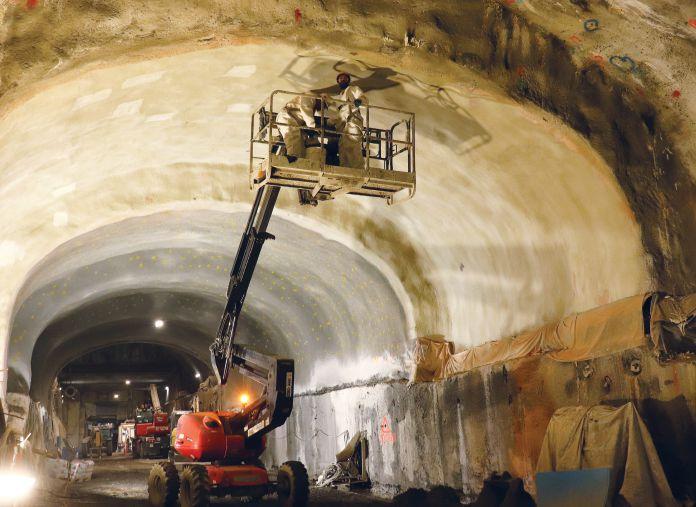
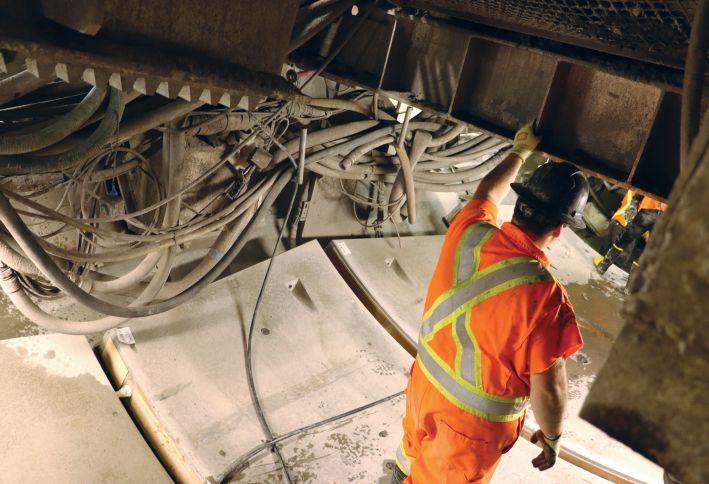
Crews work on the rehabilitating and widening the 5-km tunnel under Mont-Royal tunnel to Montreal’s Central Station.
Denis Rivard (P. Eng.), REM project vice-president.
the entrance walls. Next, the casings were removed and steel arches were installed to support the structure. With this in place, the REM team were able to demolish the central wall and build a new single arch entrance.
To ensure compliance with its design plans, the concrete thickness of the Mont-Royal tunnel interior was mapped and modelled in 3D using the “SOGUN Method.”
First, a LiDAR (Light Detection and Ranging) sensor and thousands of laser beams digitally mapped the tunnel’s surface. Next, the SOGUN’s computer compared the actual surface with that of the design. It then used its laser projection system to shine “different colours onto the tunnel walls to show where work is needed,” stated REM.info. “Along with highlighting small differences on the tunnel walls, numbers indicate how much concrete should be sprayed or removed.”
THREE OTHER CHALLENGES JUST AS DAUNTING
The Mont-Royal Tunnel isn’t the only underground effort undertaken by the REM Project team. They are also using an all-in-one tunnel boring machine (TBM) called Alice (named in honour of Canadian geologist and paleontologist Alice Evelyn Wilson) to dig a 3-km tunnel 30 metres below ground between the Technoparc sector and YUL-Aéroport-Montréal-Trudeau station. The TBM is designed to dig the tunnel at its face, remove the debris to the back using a conveyor belt, and install concrete wall casings to hold everything in place.
On the way to the airport, the TBM had to cut through soft, soggy marshlands. No problem: The REM Project team simply froze the ground using liquid nitrogen. This turned the marsh mush into rocksolid ice that could be excavated and lined before it melted.
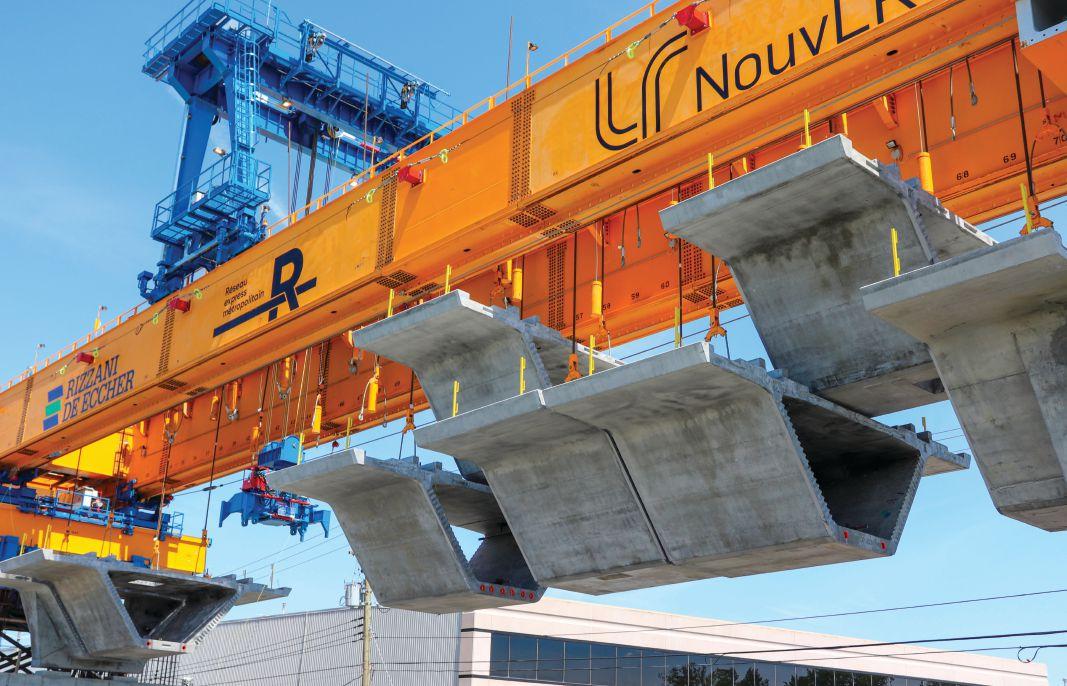
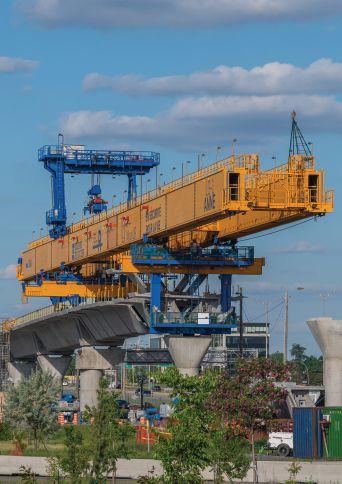
Then there was the 18.2 km of elevated track on the western line ending at Anse-à-l'Orme station. To build 16 km of the route, the REM Project team used a pair of 105-m long ‘launching gantries’, which was a first for Quebec. They rode the existing elevated track to lay succeeding precast concrete spans on prepared columns below. More than 4,000 factory-fabricated spans were laid ranging in
length from 30 to 40 metres.
“This system allowed a span to be laid and secured in just 24 hours, rather than the usual two-three weeks,” Rivard says.
Finally, there was the problem of building a two-track rail bridge across the Rivière des Prairies, which bisects Montréal and Laval. Since an existing railway bridge already spans this section of fast water, the REM Project team used that bridge’s piers as foundations for their own — significantly saving time and money without compromising safety. The bridge sections were then ‘incrementally launched’ into place. In this approach, sections are built first on the shore, then pushed out over the water and into place using the section of the bridge that has already been installed. Again, another timeand-money saver.
PUSHING ONTO COMPLETION
These are just some of the many challenges that the REM Project team has resolved as they push to complete the REM system. “The first trains are scheduled to depart in 2023 between Brossard and Central Station,” stated REM.info. “The segments heading to Anse-à-l'Orme and Deux-Montagne stations are scheduled to begin service at the end of 2024. Finally, the segment to the Montréal Airport is scheduled to open in 2027.”
For Denis Rivard and his team, the
scope and success of the REM project is a source of great personal pride.
“The reason why it's so fun to work on this project is because it's really outstanding,” he says. “When we are finished, the REM will be the longest driverless system in the world. Right now, Dubai holds that title at 52.1 km (according to the Guinness Book of World Records ) but we’ll be taking it from them.”
After the surprise detonation of old dynamite left there by the original builders of the tunnel, the REM team took appropriate safety measures.
The project includes 18.2 km of elevated track on the western line ending at Anse-àl'Orme station.
ALONGWAY TOGETHER
WHEREVER YOU ARE, BKT IS WITHYOU
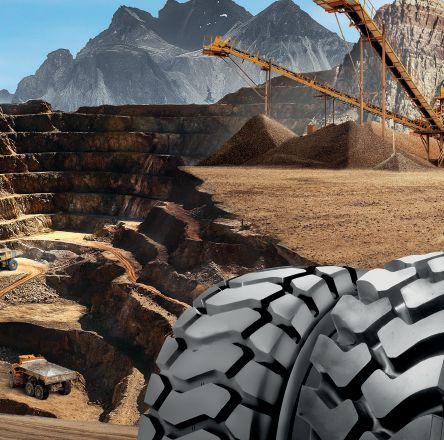
No matter howc hallenging yo ur n eeds, BKTi s wit hyou o ering aw id erange of OT Rt ires specifically designed for the toughest operating co n ditions: from mining toconstruction sit es.
Sturdy and re sistant,reliabl ea nd safe, able to co mbine comfort and high performan ce.
BKT is with yo u, even whe nwork gets to ugh.
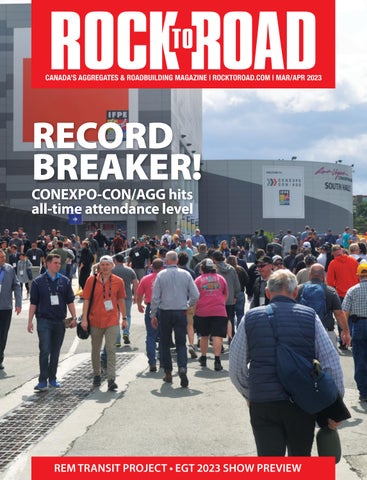
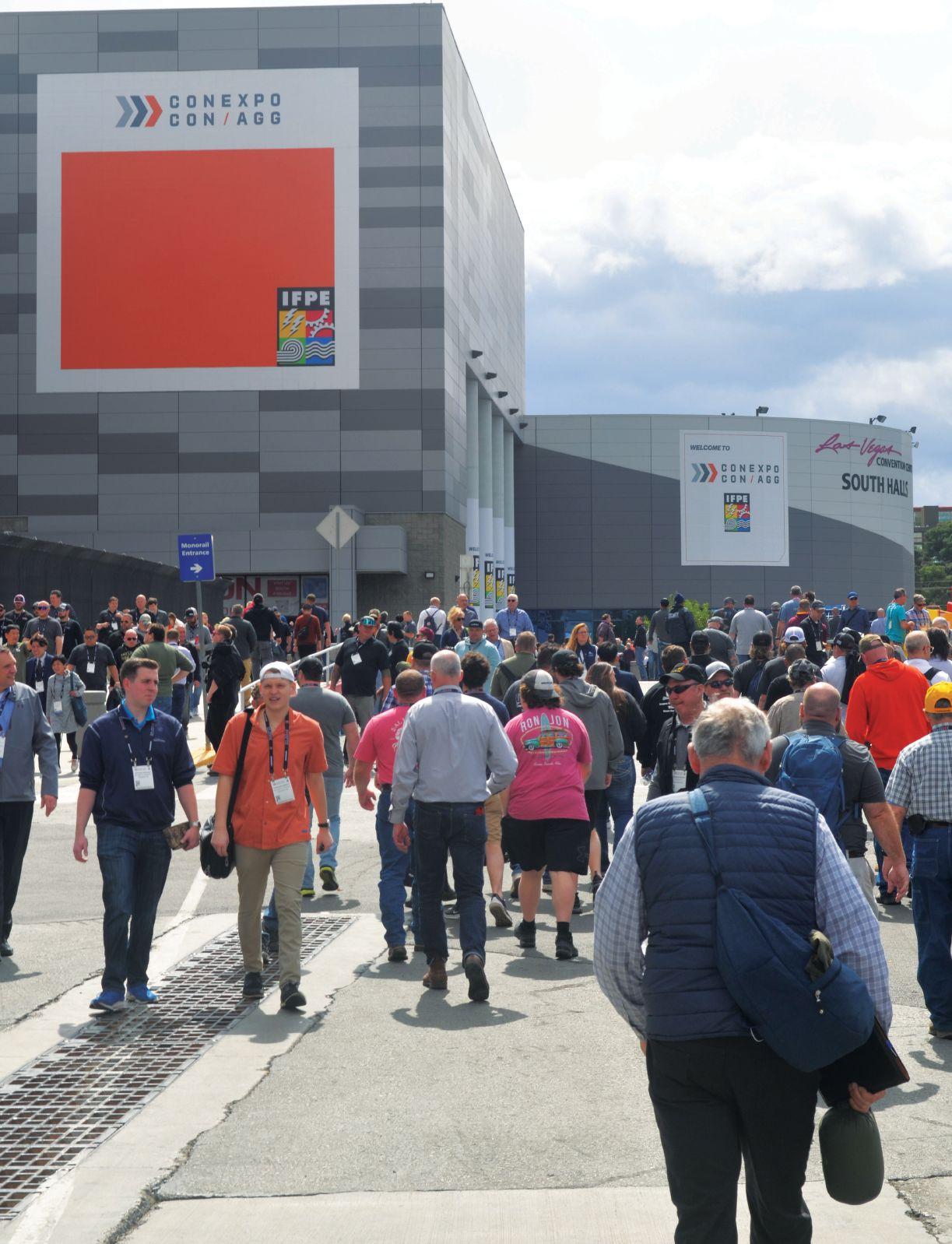
RECORD BREAKER!
BY ANDREW snook
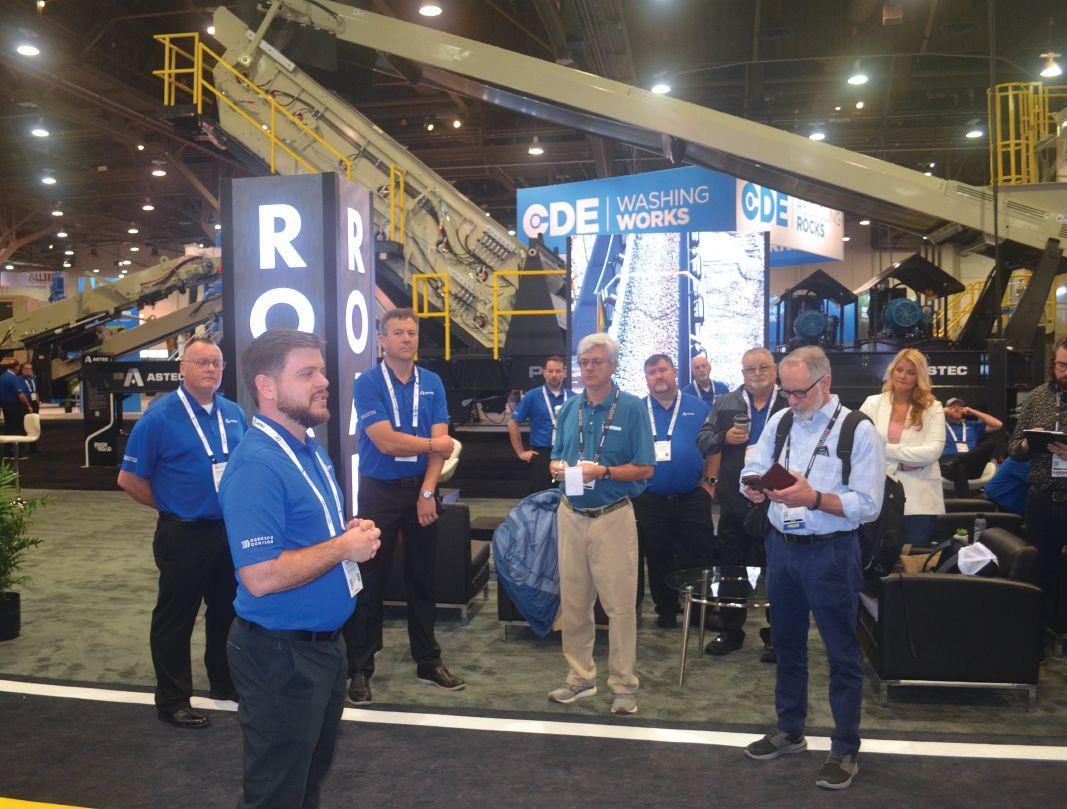
> There was certainly no pandemic hangover at the 2023 edition of the CONEXPO-CON/AGG show in Las Vegas this past March. In fact, it was quite the opposite. The triennial show rebounded from the 2020 edition of the show (when the COVID-19 coronavirus pandemic was declared mid-show) in incredible fashion with a record-breaking 139,000 in attendance. This year’s edition of the largest constriction trade show in North America certainly lived up to its name, showcasing more than across more than 3 million square feet off indoor and outdoor exhibit space.
The event had more than 24,000 international attendees registered from 133 countries. The educational component from the show had more an 91,000 badge scans from people attending vari-
ous sessions.
The next edition of CONEXPO-CON/ AGG will take place from March 3 to 7, 2026 at the Las Vegas Convention Center in Las Vegas, Nev.
To learn more about some of the thousands of technologies on display, Rock to Road spoke with various manufacturers active in the roadbuilding and aggregate industries. Here’s what they had to say.
FOSSIL-FREE STEEL
With global warming a major concern around the world, companies are trying to find innovative ways to reduce their CO2 emissions. Swedish steel manufacturer SSAB is one of the companies leading the charge.
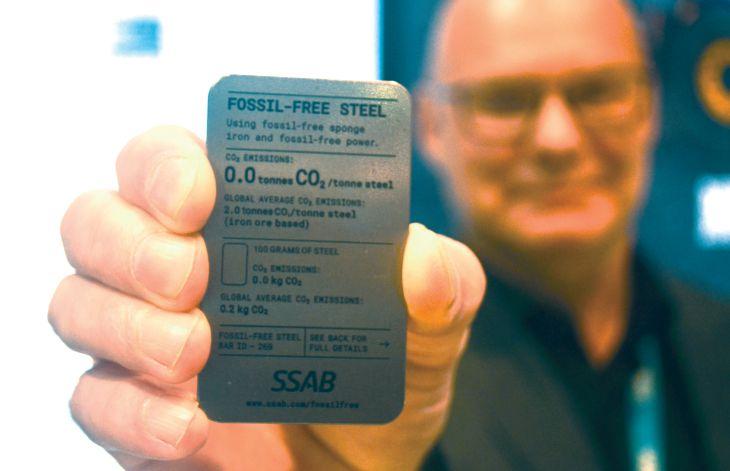
SSAB Stenx product manager Magnus Carlsson explained that steel isn’t the primary product created in the traditional steel-making process.
“Steel is actually a byproduct, because for every one tonne of steel we make, we make 1.6 tonnes of CO2, and SSAB has the cleanest operations in the world today,” he said, adding that some other steel manufacturers around the globe produce as high as 2.5 tonnes of CO2 for every one tonne of steel. “Just our company produces 10 per cent of the CO2 emissions in Sweden, which, of course, is not acceptable. So, we are switching to fossil-free operations.”
In traditional steel manufacturing, iron ore is converted into iron ore pellets, and then is placed into a blast furnace. In this process, the iron ore creates excess oxygen that needs to be removed from the steelmaking process.
“So, how do you take it away? You’ve traditionally put in carbon and coke and mixed it with limestone in a big furnace. And then, the carbon reacts with the oxy gen, and then you get CO2,” Carlsson ex plained.
In the new steel-making process, known as HYBRIT technology, SSAB still uses iron ore and iron ore pellets, but instead of go ing into a traditional furnace, the pellets are heated up using a combination of fossil-free electricity and hydrogen. The oxygen gas reacts with the hydrogen and the process produces water and hydrogen instead of CO2
The electricity being utilized in this pro cess in Sweden comes from a combination of water power, wind power, and a small
amount of nuclear energy. SSAB is in the process of replacing the furnaces in its mills with the hydrogen-fuelled technology.
“It’s quite costly and takes a lot of new equipment, but the properties of the steel will be same,” Carlsson said.
The technology being used in this process isn’t new, it’s been around for decades.
“It’s been around since the 1980s, but not at an industrial scale,” Carlsson explained.
In August of 2021, SSAB introduced its
first fossil-free steel based on HYBRIT technology to a customer. The company plans on introducing various steel grades to market at an industrial scale using its fossil-free technology starting in 2026 with two new production facilities operating solely using this manufacturing process by 2030.
SSAB Stenx product manager Magnus Carlsson displays a piece of SSAB's fossil-free steel at CONEXPO-CON/AGG 2023.
“It’s a little more expensive than making it as we do today, but so what. We cannot continue to introduce this amount of carbon dioxide, it’s not possible. Where will we end up?” he said.
ONE ASTEC
CONEXPO-CON/AGG marked the first time that all of Astec’s product offerings were on display under the OneAstec brand. The company has impressive displays totalling 30,000 sq. ft. of indoor exhibit space, as well as another 8,000 sq. ft. of outdoor exhibit space.
Astec’s new president and CEO Jaco van der Merwe kicked off the company’s CONEXPO-CON/AGG press event.
“Obviously CONEXPO is always a nice place to bring new products out. But this year, we are very excited about some of the equipment that we brought out, especially some of the new paving equipment and some of the new milling equipment that opens a very specific market segment for us,” he said.
Two of the products debuted were Astec’s new generation of highway class RP Pavers, the RP-175 and the RP-195 series track pavers. The new pavers were designed to offer simpler maintenance with features like new lightweight hoods and a redesigned track system. The pavers were also built with the operator in mind with a new,
top of the machine, blowing away from the operator and ground crew.
The company also had its full Astec Digital suite on display at the show. Over the past few years, Astec acquired Minds Automation Group and Grathwol Telematics to enhance its portfolio of digital solutions.
“Personally, I'm very excited about the platform that we’re busy developing in line with our rock-to-road philosophy. We will definitely be one of the suppliers in the industry that can supply our customers with digital solutions all the way from a quarry to the end product when we lay down a road,”
said van der Merwe.
Leading the charge for digital solutions is Eric Baker (page 12), who was recently named vice-president of Astec Digital.
“We've got a lot of integration work to do with our acquisitions, we've got a great product portfolio and a lot of extremely skilled and knowledgeable people on the team. I’m really excited to lead that team,” Baker said, adding that Astec Digital solutions are all about connectivity and driving all the controls that live on the equipment and plants, and bringing that into the cloud and giving access to their customers so they can leverage the rock-toroad value chain into a competitive advantage for themselves.
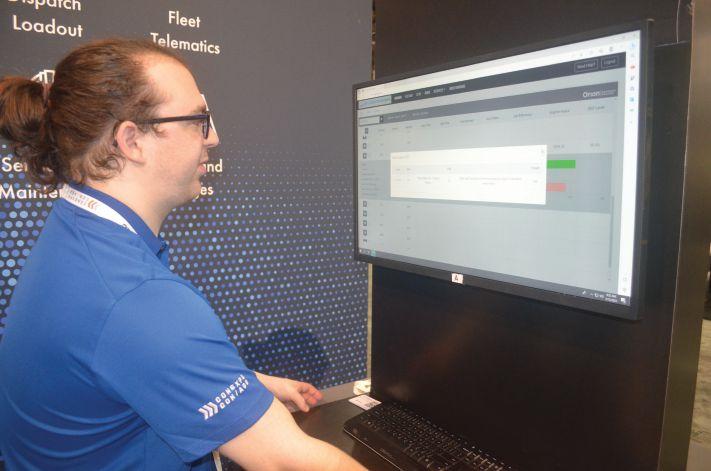
Astec Digital had a few different product offerings on display. The company’s basic telematics offering, which is designed as a high-level asset management tool, allows fleet managers to view where machines have been working and travelling and idling, maps of entire fleets and additional tools for managing alerts.
“We can set up things like alerts for precipitation, sever faults and start work alerts,” explained Jacob Rich, project manager for Astec. “The weather thing is really cool. It’s the best weather data you can get, and it gets right into the location of your machine.
CONTINUED ON PAGE 18
single fan cooling system (replacing a dual system) that allows the machines to run quieter and has been repositioned to the
Astec’s new president and CEO Jaco van der Merwe kicked off the company’s press event.
Astec project manager Jacob Rich takes Rock to Road through some of the features of Astec’s basic telematics offering, which is designed as a high-level asset management tool.
ROCK TO ROAD
What’s Next In Cold Planers
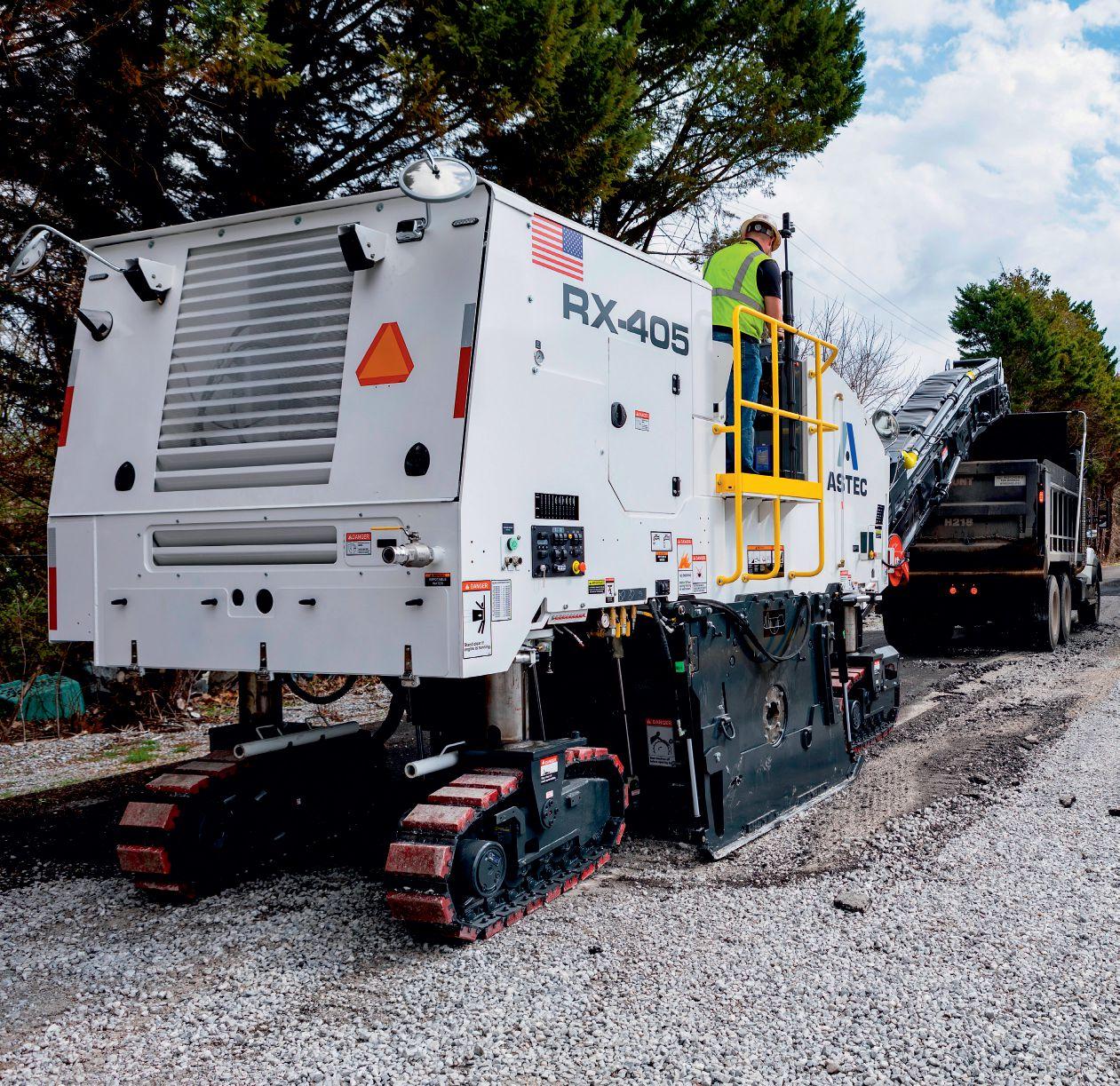
Introducing the nimble and powerful Roadtec RX-405 cold planer. A hinged cutter housing door makes for easy drum changes, while maintenance mode, with the drum indexer and belt lifter, simplifies regular tooling changes. Bring the same level of productivity you expect from Astec mills to smaller spaces with ease.
See the new RX-405.
SOUNDS ABOUT LOUD AS THIS
244 X-TIER
ABOUT AS THIS AD.
Our new electric lineup made a lot of noise in Vegas. Which is impressive, since they cut noise in half while keeping the same power. That means you can work overnight or indoors And we
So, if you're paving out in the middle of nowhere, it'll get you a forecast based on your location, not on the nearest city. So, you're always sure that if you're cancelling for rain, it's actually going to happen.”
The Guardian System was also on display, which allows users to view almost any switch or sensor on a machine in real time. The system is designed to be the closest thing a customer can get to a mechanic bringing their laptop out to a site.
“Through our web interface, we use it for our own service techs to diagnose problems. One of the big features of it is that sometimes there'll be something wrong with the machine that's a really easy fix, and they don’t want to pay a service tech $160 an hour, or whatever it costs, to drive out,” explained Astec’s Anthony Cattano, adding that sometimes the service technician can be six to eight hours away. “There have been situations where it was something as simple as a circuit breaker, and you just tell the operator what circuit breaker number it is.”
The system is also effective for providing preventative maintenance solutions that help prevent downtime.
“If we can tell them that a part is going to go out in the few weeks or month, then they can order those parts beforehand through the dealer. We are connected to our dealer network, so they will have that information available to contact the end user,” Cattano said.
NEVER IDLE
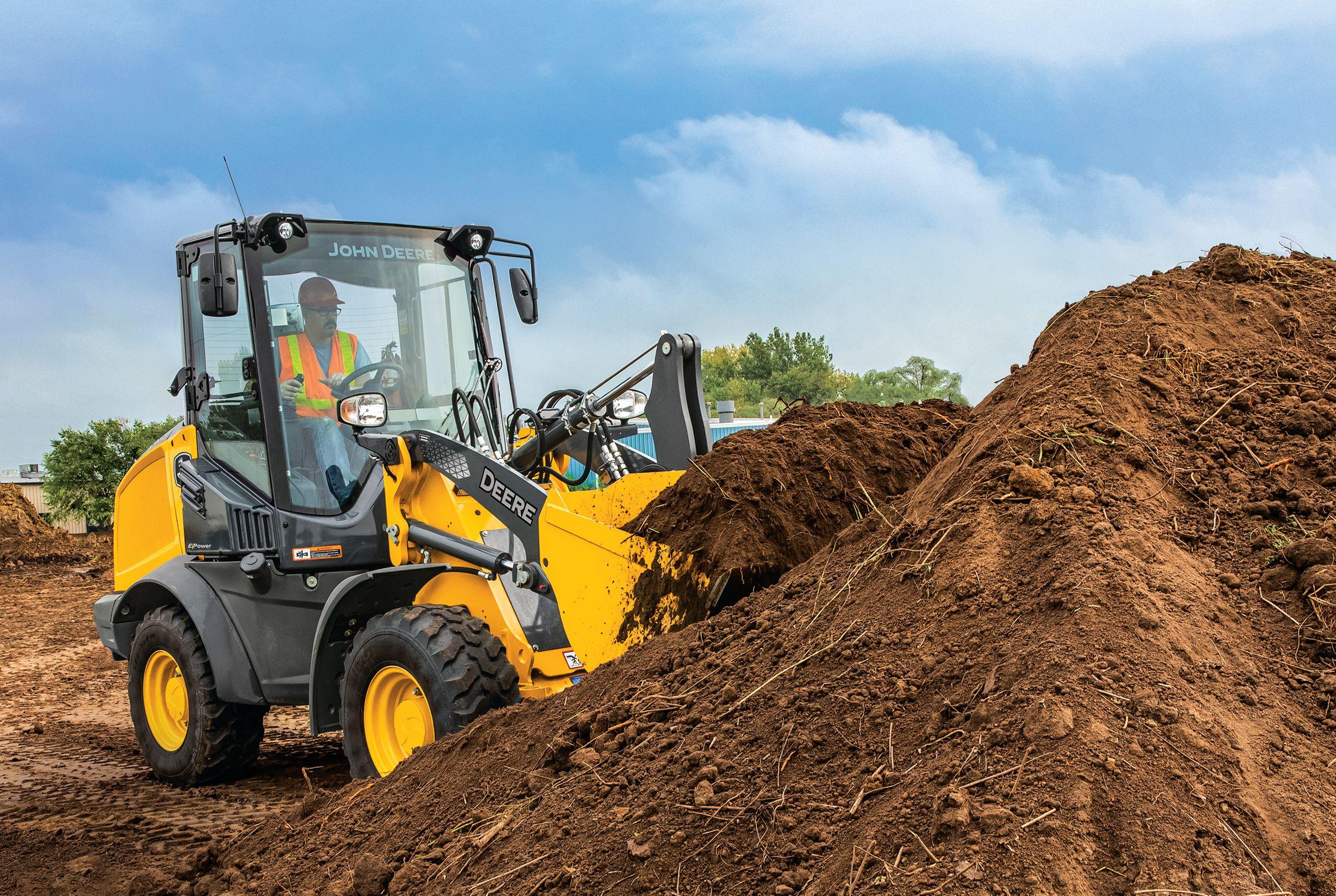
John Deere and the Wirtgen Group held its largest joint press event since Deere acquired Wirgten in 2017 for $5.2 billion. The two companies showcased their joint offerings across 70,000 square feet of outdoor exhibit space and an additional 10,000 square feet of indoor exhibit space.
Ryan Campbell, president of the construction and forestry division at John Deere Power Systems, kicked off the press event by discussing this year’s theme, “Never Idle.”
“What does that mean? Here at John Deere, we’re always listening, learning and innovating on behalf of our customers. We all understand the ever-increasing challenges our customers face and getting their essential work done. We are committed to making investments in technology, service and support of our world class dealer net-
work, and our industry-trusted equipment to make their jobs easier. We understand that our customers’ work doesn't stop and neither can we. We’ll build machines and solutions that are smarter, safer and more sustainable. No matter the size of the job, ’Never Idle’ is about the confidence of knowing that John Deere has your back.”
During the press conference, Jason Daly, vice-president of production systems, marketing and sales at John Deere, discussed a few new solutions including the Deere 904 P-Tier wheel loader equipped with the company’s new SmartWeigh payload weighing solution.
“This solution will deliver industry leading accuracy and dynamic weighing capabilities with ease of calibration,” Daly said. “What does that really mean for customers? What it's going to mean for our operators is that the customer is going to have simplicity. Customers are going to know the weight of the bucket each and every time. They're going to know the weight of the material in the bucket. They're going to know what product is coming back in carryback, so that the customers can charge that out to their customers, and ultimately, control the costs on the job site.”
Daly also discussed Wirtgen’s AutoTrac automation technology for the WR Series for cold recyclers and soil stabilizers.
“On our recyclers, it'll minimize the double passes and will minimize the overlap that we'll see on job sites. This will result in less fuel and less binder material being used, allowing customers to get the jobs done sooner and save costs along the way,” Daly said.
Luke Dribble, solutions marketing manager for John Deere, discussed the features of the Deere 1050 P-Tier dozer.
“There's been a couple of improvements that have helped gradability and balance to that machine,” he said. “We’ve actually introduced a solution that brings the blade a lot closer to the body of the machine. This machine also has our double-bogie undercarriage system on it that really improves ride quality. In fact, it reduces in-cab vibrations by up to 75 per cent.”
The 1050 P-Tier dozer is equipped with a JD14 engine and the hood has been rede-
John Deere and the Wirtgen Group held its largest joint press event since Deere acquired Wirgten in 2017 for $5.2 billion.
John Deere’s Jason Daly and Ryan Campbell discuss the company’s latest equipment during a press event at CONEXPO-CON/AGG 2023.
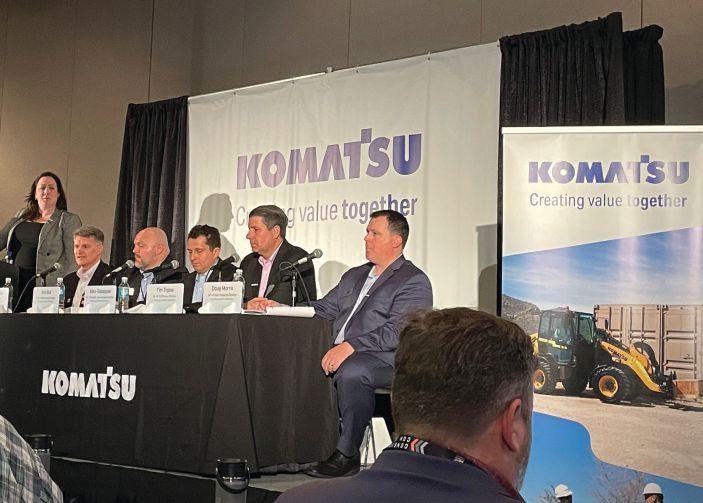
Komatsu's executive management team, including chairman and CEO Ron Schrader talk about the company's latest solutions, which address sustainability, labour shortages and more.
signed for improved operator visibility.
“Ease of use has also been enhanced on that machine. There's less hand movements required when changing directions, and we've added transmission presets that allow operators to switch back and forth more efficiently,” Dribble said.
Deere also introduced its new E-Drive (hybrid-electric) prototype machines at CONEXPO, which included the 744 X-Tier wheel loader. Dribble discussed the electric variable transmission and how it is what allows the machine to be a “true E-Drive solution.”
“There are two electric motors, an inverter and high-voltage cables on that machine, and that's really what manages the needed torque and ground speed and range for what a customer demands of this machine,” Dribble explained. “Whether it's loading trucks, going into piles, or whatever it's doing on a typical aggregate site, those motors and inverter are able to efficiently manage the power, which is directly fed from the engine, and from there, sent directly to the ground of the machines.”
Deere hopes to bring at least 20 electrified machines to market by 2026.
MEETING CUSTOMER NEEDS
Komatsu chairman and CEO Ron Schrader spoke to the press during the show about meeting the needs of customers by building equipment that focuses on addressing sustainability, labour shortages and more.
“As sustainability rises in importance, the need to remain safe and highly productive does not fall away. The challenges of labour shortages and a lack of trained operators and technicians further complicates things. I think the key question is how can our customers do more with less, more sustainably, without sacrificing their bottom line?” Schrader said. “People are looking at these challenges within the buckets of technology, innovation, sustainability goals and labour challenges.”
He said Komatsu sees opportunities to consistently support its customers by leveraging technology, automation, training, and a mix of on-machine and cloud-based solutions that are aligned to what custom-
ers need to stay profitable, work sustainably and find and retain a strong workforce.
“We are displaying a wide mix of tools to help our customers continue, or start, the advancement of these pursuits – effective technology implementation, more sustainable ways of working and optimizing their work,” Schrader said.
Michael Gidaspow, vice-president of products, service and solutions, discussed how Komatsu Smart Construction marks a fundamental shift in the company’s view, moving from a machine perspective to a jobsite perspective, and understanding how all the equipment fits into the total picture.
“Helping customers shift from manual,
disconnected processes to digitally connected, allows not only improvement within these individual processes, but a digital transformation across the organization as they start to see all the data in one place,” Gidaspow said. “Through the combination of smart construction solutions supported by telematics via My Komatsu, and the capabilities of intelligent machine control, customers can start to see larger opportunities for change, resulting in cost savings, more efficient use of time and equipment and increased productivity.”
He added that there are currently tens of thousands of workplaces globally using Komatsu Smart Construction and IMC (intelligent machine control) tools to enhance their equipment use and operational effectiveness.
Gidaspow said the aggregate sector is ripe for the adoption of innovative digital solutions, and discussed Komatsu’s Smart Quarry portfolio of solutions. The Smart Quarry portfolio has three offerings the company is promoting. The first is Study, which provides predictability for an optimal fleet recommendation.
“Komatsu experts analyze the customer’s operation and recommend fleet or operational changes to help the customers meet their goals. Think of it as a snapshot consultation,” Gidaspow said. “Next, with either a smartphone app or a low-cost telematics device, we can track a piece of equipment’s position over time to visualize load counts, cycle times, idling, inefficiencies, and providing effective fleet management and an overview of productivity from a hauling perspective. This solution is so flexible, it's easily at home on both construction or quarry sites.”
He then discussed Komatsu’s Site solution, which features dedicated hardware installed in any major model of machine.
“This brand-agnostic site management solution offers an in-depth understanding of production, fuel consumption, idle time, operator performance and more. Super powerful and comprehensive, there's isn’t a quarry or aggregate operation we don’t think that benefits from this tool,” Gidaspow added.
ACQUISITIONS AND ELECTRIFICATION
Terex had 15 machines on display for CONEXPO, nine of which were brand new
models since the 2020 edition of the event.
“Innovation is critical for us as we go forth bringing new products and services to the marketplace lifecycle development,” Terex president John Garrison told reporters at the company’s CONEXPO-CON/ AGG press conference. “We produce capital goods that last for a long time that interface with the customer throughout the lifecycle of that piece of equipment or that solution.”
Garrison touched on the importance of the continued electrification of equipment.
“It’s picking up steam everywhere. If you look at a company like us, about 60 per cent of the products that the [Terex] MP segment produces are offered in some form of either hybrid, or electric. And about 70 per cent of our Genie products are offered in some form of hybrid or electric – that train is leaving the station and it's accelerating as we go forward,” he said.
Garrison also discussed Terex’s acquisitions since the 2020 show, which includes Canadian company ProAll, based in Olds, Alta., which specializes in the production of mobile volumetric concrete mixers in 2021. That same year, Terex also acquired a new manufacturing facility in China for the production of Powerscreen equipment for the Chinese domestic market.
In 2022, Terex also acquired Steelweld Fabrications, a manufacturer of heavy fabrications for the production of parts for the company’s crushing and screening prod-
ucts; and purchased the assets of ZenRobotics Ltd., a company that manufactures robots that pick, sort, and recycle waste material.
During CONEXPO-CON/AGG, Terex Materials Processing (Terex MP) also announced that Terex Cranes would be split into two divisions: Terex Tower Cranes and Terex Rough Terrain Cranes.
“Since they are two completely different set of products, manufactured in two independent facilities, it makes sense to separate them to provide more focus and clarity. We have new brand identities for Terex Tower Cranes and Terex Rough Terrain Cranes and each business now has its own individual general manager who will execute independent growth strategies— broadening their specific product portfolio and expanding distribution partners for those products globally while enhancing support for their distribution network,” Terex MP president Kieran Hegarty later stated that in a press release. “We see a lot of potential for Terex Tower Cranes and Terex Rough Terrain Cranes."
Part 2 of the CONEXPO-CON/AGG Show Report will be published in the May/June issue of Rock to Road
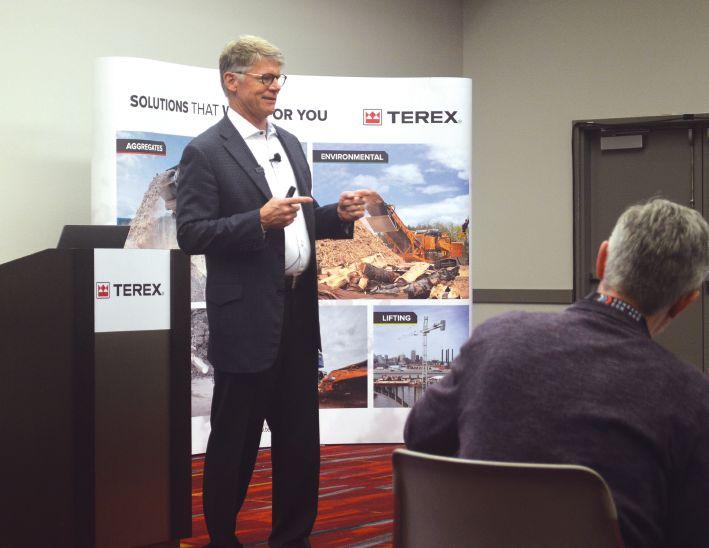
Terex president John Garrison speaks to reporters at the company’s CONEXPO-CON/AGG press conference about the Terex's most recent acquisitions and future goals.
The case for baseline groundwater monitoring
It's vital to have data from before operations began
A frequently uttered expression is “water is life.” All biochemical processes in plants, animals, and humans require water to function, and it is an integral part of the ecosystems that support us and a myriad of other species. Consequently, the public, environmental groups and regulators are very sensitive to any potential water issues surrounding aggregate operations. In recent years, this has led to a dramatic increase in public activism, regulatory scrutiny surrounding water, and heightened concerns for the potential impacts.
There have been several recent high-profile cases where aggregate operations have been called into question even years after the site became active. These complaints often crop up when residents test their wells and find contaminants at levels above the established regulatory guidelines. This is where establishing a baseline groundwater monitoring program comes in. If a company has no data to show what surface water or groundwater conditions were before operations began, then they have no way of proving or even knowing whether the issues were caused by their operations. The resulting speculation from the public and the media can be very damaging to a company’s public reputation. Even if the company conducts studies after a complaint is made, “the horse is out of the barn” and it can be challenging to set the record straight and claw back established opinions.
One significant case that highlighted the need for baseline studies occurred northwest of Edmonton in 1999, when permitting was attempted by aggregate producers. A lack of data and communication during public meetings sparked a volatile reaction from the public and surrounding municipalities. Permitting subsequently took over a decade to complete. It took years for the operations to re-build a rapport and credibility with stakeholders. To aid in the development of trust between the producers and the public, a transparent regional groundwater monitoring network was established. The monitoring well network provides long term data, trends, and documentation of impacts (or lack thereof) to groundwater quantity and quality. Crucially, it also provides evidence to identify where aggregate operations are not responsible for impacts identified. The annual groundwater monitoring reports are made available to everyone, which demonstrates transparency and builds trust between the producers, the regulators, and the public. This monitoring network has
now been operating continuously for 22 years and has alleviated many public and regulatory concerns.
Establishing baseline conditions not only aids in protecting producers from potential regulatory, reputational, and legal challenges, but also provides an understanding of how potential issues can be avoided or mitigated. Water chemistry can naturally exceed environmental criteria even before the onset of operations, so it is important to establish that up front. If elevated natural concentrations of a substance are already present, producers want to be able to confirm that operations are not causing or exacerbating those preexisting exceedances with ongoing monitoring.
Even with monitoring, concerns that water issues are associated with aggregate operations, an industrial activity, can persist. Sometimes resident well issues can potentially arise, however, the availability of extensive monitoring data for a site can aid in catching and mitigating disputes, as well as conclusively demonstrating whether the problems are attributable to aggregate mining operations, and when they are not. Additionally, regional monitoring well networks can aid in establishing a level of comfort for the public and regulators that operations are being scrutinized. This gives municipal and provincial regulators more confidence in supporting the approval of new extraction operations.
The bottom line is that baseline groundwater data and ongoing monitoring provides due diligence for producers and assurance of the generally low impacts of aggregate operations for regulators and the public. This knowledge is crucial for the smooth operation of current and future aggregate sites and in securing future regulatory approvals.
Bill Gowdy is the technical director of aggregates for SLR Consulting. He has 35 years of experience in the geology and environmental fields, including 22 years based in Edmonton managing aggregate resource assessments, geological modeling, permitting, reclamation, environmental management systems and groundwater monitoring. Robert Till is a hydrogeologist with over 20 years of experience in the geoscience sector. He is highly experienced in hydrogeological site investigation, wa-ter supply assessments, hydrogeological impact assessments, aquifer testing and sampling programs. He has worked on numerous projects for residential, federal, and industrial developmentsinCanadaandtheUnitedKingdom.
BILL gowdy
ROBERT till
BY ROBERT kennaley
An overview and a guide
> The first phase of Ontario’s new regulation for On-Site and Excess Soil Management, Regulation 406/19, (passed under Ontario’s Environmental Protection Act) came into force on January 1, 2021. Intended to ensure that excavated soils are treated as a resource to be beneficially reused wherever possible, unless a section 2 exemption applies, the Regulation applies to all “projects” (broadly to include among other things “any form of development or site alteration”), virtually any type of construction and the removal of liquid solid
MANAGING ONTARIO’S EXCESS SOILS
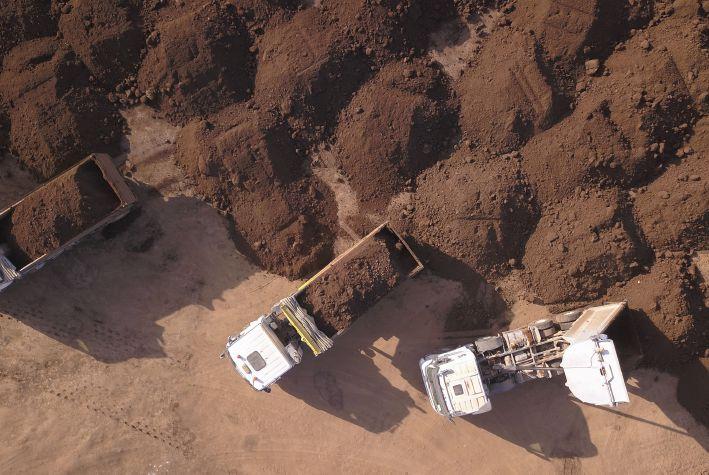
from a “surface body of water”. Further, any soil or soil mixed with rock which is removed from a project area is defined as “excess soil” and is deemed to be a “waste” and which cannot be reused, stored, transported or disposed of except as specified. The Regulation then sets out a complete code for the excavation and movement of excess soils between properties, imposing requirements for soil testing, transportation, temporary storage at processing sites or transfer facilities, the interim clean-up of soils, data tracking, re-use (on-site or at other sites) and disposal at a landfill or dump.
We have written on the structure and technical requirements of the Regulation elsewhere (see our website or search canlii.org in that regard). Accordingly, our focus in this article will be on how the risks associated with the Regulation can and should be assessed and managed in contracts and subcontracts. We have also prepared a two-page flow-chart guide, available on our website (www.kennaley. ca), which can be used as a filter to access the Regulation’s application and associated risks, from the project-planning stage through to the final placement of excess soils. If downloaded in pdf. format, that guide includes hyper-links to the various applicable statutes, sections, authorities and resources referenced. This article can be read in tandem with the guide to elaborate on the points made. We hope it will be helpful. The starting point for risk assessment lies in determining whether or not the Regulation applies. Section 2 provides that it does not apply in respect of excavations subject to O.Reg 347, certain pit or quarry operations, topsoil excavations permitted under the Aggregate Resources Act, certain peat extraction operations and “the final placement of excess soil on the bed of a surface water body”.
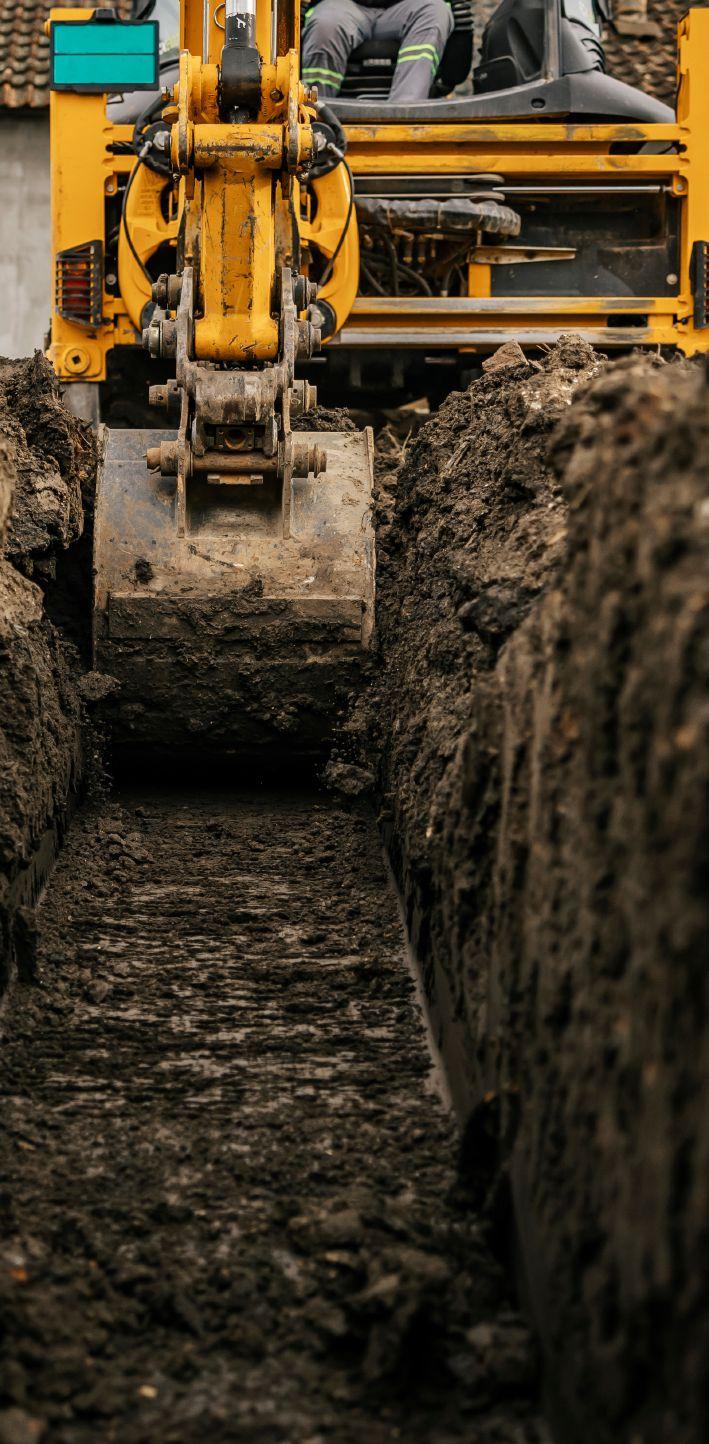
More significantly, perhaps, the Regulation only applies to soil (or soil mixed with rock) to be removed from a “project area” (being a “property or adjoining property on which the project is carried out”). Project planners and contractors might accordingly consider options to reduce or eliminate the need to remove soils, including alternative excavation methods (such as hyrdovac and trenching) or design options. Reuse of soils on site, however, will remain subject to other
applicable legislation including the Building Code Act, the Environmental Protection Act (inc. O.Reg. 347), the Planning Act, the Aggregates Resources Act, local municipal site-alteration by-laws and other site-specific instruments.
Particular care should be taken in relation to site alteration by-laws. This, because the authority of municipalities to pass such a by-law goes well beyond the scope of O.Reg 406/19: they can prohibit or regulate the placement of fill, the removal of topsoil, the altering of grades and the rehabilitation of a project site, (even where O.Reg. 406/19 would otherwise allow the activity). Furthermore, the terms and conditions of site alteration by-laws can vary widely across municipalities and many have been recently updated to (in part) manage the issues associated with O.Reg 406/19.
Accordingly, site alteration by-laws might impose much more restrictive requirements on the reuse or placement of materials on a project or disposal site. Significantly, for example, they might limit the options available to retain soils at the project site (through berms, etc.) or limit or negate the placement of any materials at a potential storage, processing or re-use site. In addition, however, site alteration by-laws and other municipally passed site specific instruments can, in some cases, lessen the impact of
O.Reg. 406/19 by allowing for the placement of large quantities, or lesser quality materials, then would be required by the Soil Standards established under the Regulation. Section s.4 of the Regulation more particularly establishes tables that essentially provide that the site by-laws or instruments will trump O. Reg. 406/19 as regards the quantity and quality of soils that may be placed at a re-use site.
While s. 2 provides exemptions to the entirety of the Regulation, other exemptions apply to various aspects of the Regulation. The most significant of these arise under s. 8(2), in relation to the requirement that a Notice be filed with the Excess Soil Registry in accordance with s. 8(1) of the Regulation. To recall, the filing of the Notice kickstarts the intensive assessment, reporting, materials tracking and record keeping requirements of O.Reg. 406/19. Pursuant to s. 8(2), however, no Notice needs to be filed where the circumstances set out in Schedule 2 of the Regulation apply or where a project leader entered into a contract for the management of excess soil from the project prior to January 1, 2022.
Compliance with O.Reg. 406/19 can be expensive and time consuming. Accordingly, where a s. 2 or s. 8(2) exemption applies, significant time and money can be saved. In addition, where a site alteration by-law or other site specific instrument applies,
comes both opportunity and an invitation to creative thinking.
the applicable soil related obligations might be significantly increased, or decreased, depending on the terms and requirements of same. A failure to identify a s. 2 or s. 8(2) exemption or applicable by-law or instrument can therefore lead to delays, increased costs and claims. Important questions accordingly need to be addressed at the tender preparation, bidding and contracting stages: Who is responsible to determine if exemptions or sitespecific instruments apply and when will the determination be made? Prudence dictates that the responsibility for, and timing of, these determinations be understood and set out in the Contract Documents. Prudence also dictates that, if an exemption is known to apply, this also be set out in the Contract Documents.
The importance of any possible s. 8(2) exemption is highlighted when we consider the significance of section s. 8(1)’s Notice filing requirement. Where no s. 2 or s. 8(2) exemption applies, and where excess soils is to be removed from a project area, s. 8(1) requires that the “project leader” file a Notice containing the information set out in Schedule 1 with the Excess Soil Registry. This information includes the project leader’s declaration that (among other things) she/he/it will “develop and apply all necessary procedures to ensure that all necessary steps are taken to ensure that this Regulation is complied with” and “ensure that excess soil from the project area will be disposed of in compliance with this Regulation”.
The “project leader” who files signs the declaration must accordingly be prepared to assume an enormous amount of responsibility. There can, however, be more than 1 project leader, which is defined as “the person or persons who are ultimately responsible for making decisions relating to the planning and implementation of the project.” Determining who will file the Notice and sign the declaration to take on the responsibility to ensure the Regulation is followed is accordingly critical to sound planning and cost control. No-one wants to find out others expected them to take on the responsibilities, at their cost. Prudence accordingly dictates that the determination of who must file the Notice and make the declaration be made early and set out in the Contract Documents to avoid confusion and delay.
The project leader who makes the declaration in the Notice must ensure that all necessary assessments, testing and reporting is undertaken by a qualified person. Subject to certain exceptions (set out at s.11(2), 12(3) and s.14), a qualified person (as defined under O.Reg 153/04) must be retained to prepare and/or oversee and update the following, in accordance with the Rules For Soil Management and Excess Soil Quality Standards, (the “Soil Rules”): a s. 11 assessment of past uses of the project area, (unless a phase one ESA under O.Reg 153/04 has already been prepared), a s. 12 sampling and analysis plan, a s. 13 excess soil
destination report and a s.15 report of any “immediate conditions” encountered.
Those responsible for planning should be aware that the requisite assessment, sampling, analysis and technical reporting will take time and money. Practically, much of it will have to occur pre-excavation. In addition, there may (and will most likely be) a shortage of available QPs to accommodate the new requirements on particular projects, given the increased workloads they will face in that regard. Prudence accordingly dictates that QP(s) are lined up and retained under contracts early, and that sufficient time and money for the requisite steps is allowed for.
As discussed elsewhere, and subject to limited exceptions, excess soils must be assessed and processed (if necessary), so that they will no longer be waste and then deposited for (no more than) a beneficial purpose at a suitable reuse site. Prior to final placement, they may at times be stored and/or processed and managed, on-or off-site. A “Beneficial Reuse Assessment Tool” (or
Reuse of soils on site will remain subject to other applicable legislation.
“BRAT”) is available to assist in the determination of how marginally impacted materials might be used at a re-use site.
The project leader who makes the declaration accordingly assumes substantial responsibility for the testing, movement and placement of excess soils, from excavation through storage, processing, transport and placement, in accordance with the Regulation and the Soil Rules which are incorporated by reference: s.3(2) establishes the conditions that must be met for excess soils to no longer be waste, while s.16 requires a tracking system and s. 28 requires records retention. Section s. 23 governs excavation, s.24 governs storage, ss.17 and 18 govern transport, s. 21 addresses off-site soil management and processing, s.20 governs the BRAT Tool, s.22 governs placement at landfills or dumps and s.25 governs processing at a waste transfer facility. The Soil Rules impose further, more detailed requirements in relation to all of the above. They also set out the standards that are to be applied (with some exceptions) in determining what soils can be placed where, and in what quantities, for a beneficial purpose.
Significantly, all of these responsibilities of the project leader can be assigned to others in contract, and then assigned to subtrades down the construction ladder. Confusion and contractual gaps, in relation to who-is-responsible-for-what, will lead to delays, claims and costs. No contractor or subcontractor wants to learn, post-bid, that others are relying on them to undertake any of these steps. Prudence accordingly dictates that who is responsible for which of these steps be set out clearly in the Contract Documents, and that the documents be consistent from the top of the ladder on down. Owners may wish
to prequalifying contractors to ensure they have the teams in place to manage the new requirements in a cost-effective way.
In addition, the overarching goal of the Regulation needs to be kept in mind. Towards keeping excess soils out of landfills, they are to be treated as a resource with a goal of ‘cleaning or drying them up’ through processing them (either on site or at a storage or processing site) and depositing them at re-use sites where they are needed for a beneficial purpose (only). Indeed, disposal of excess soils at a landfill will not be allowed come January 1, 2025 (subject to minimal exceptions). Clearly, if excavated soils have nowhere to go, there will be delays and potential claims. Again, demand may (and likely will) exceed supply. Prudence accordingly also dictates that storage, processing and reuse disposal sites be lined up and locked down, in contract, by whomever is responsible to locate them, as early in the process as is possible. In addition, of course, identifying who is responsible for these steps should be set out in the Contract Documents.
Finally, with the new Regulation comes both opportunity and an invitation to creative thinking. Given that the demand for QPs, storage sites, processing sites and re-use sites will continue to climb drastically, there are opportunities for service providers to meet those needs. Some will no doubt offer storage and processing services, while others will integrate those services into their own operations, toward vertical integration and a more streamlined, efficient, process. Others will no doubt re-imagine projects to keep soils on site or to create the need for imported soils from other projects as a ‘beneficial uses’ (through elevated grades, for example), perhaps at a fee and subject to other legislation including site alteration bylaws. In addition, there will be increased opportunities for hydro-vac and trenching contractors whose methods can reduce excess soils. Finally, municipalities and contractors/local associations might work together to draft site alteration bylaws or site-specific instruments which will provide increased flexibility for the placement of materials in accordance with the Regulation.
Robert Kennaley is Principal of Kennaley Construction Law.
EGT 2023 SHOW PREVIEW
BY MASTER promotions
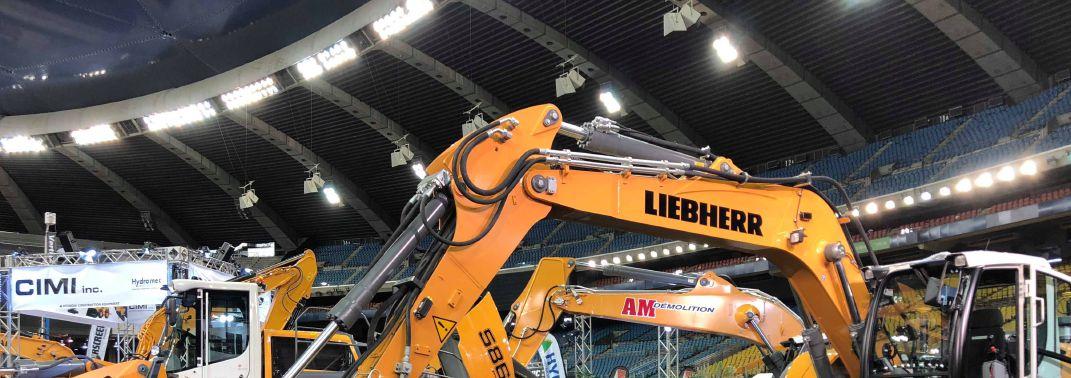
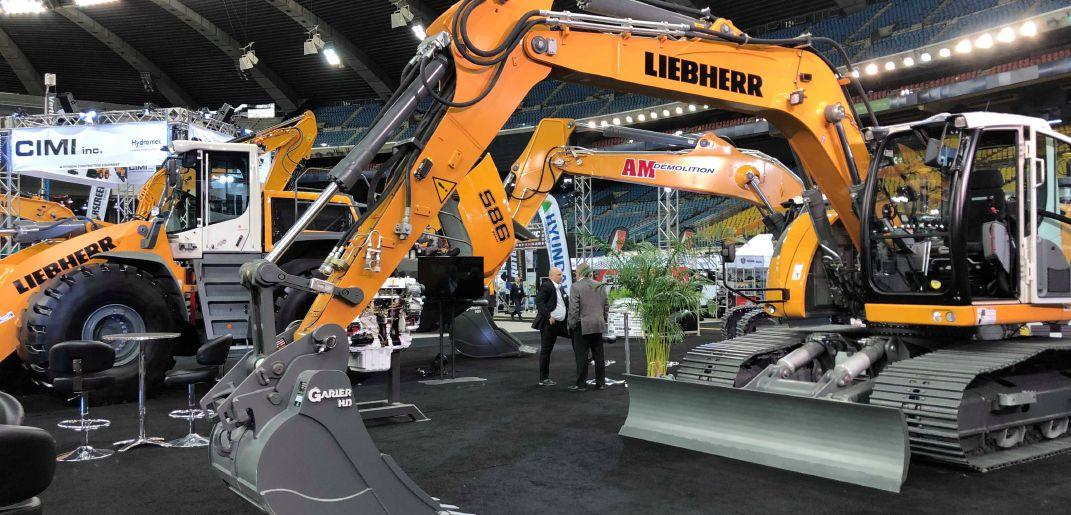
Major heavy equipment showcase moves into Espace Saint Hyacinthe
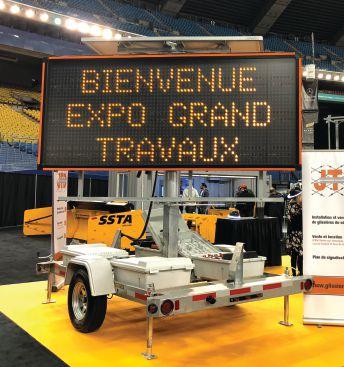
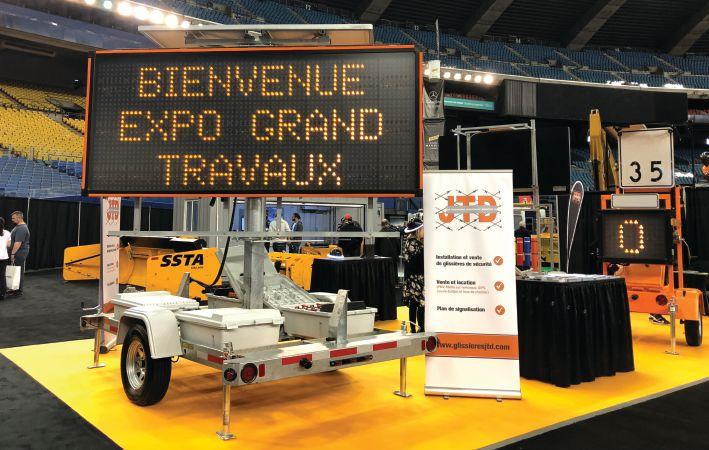
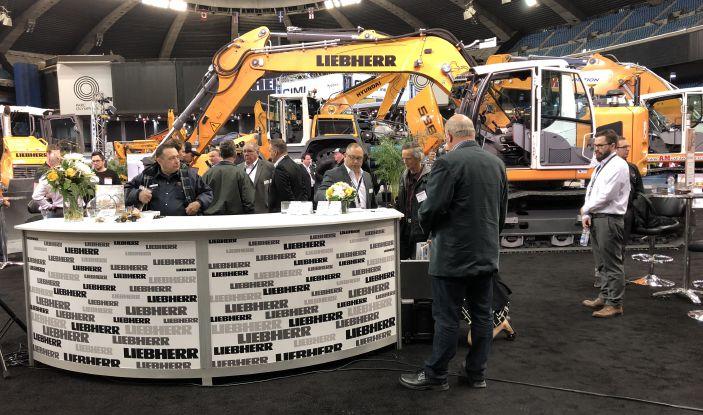
> Expo Grand Travaux is Eastern Canada’s largest heavy equipment trade show. Covering over 144,000 square feet of Espace St-Hyacinthe, this is a cutting-edge event for the industry. With major OEMs, dealers, and tons of big iron, Expo Grands Travaux will return to Quebec after a four-year hiatus this spring on April 21 and 22, 2023.
As a premier event in the construction industry, this show offers a unique opportunity for equipment manufacturers, dealers and prospective customers to connect. This event showcases the latest technology, equipment, and services available on the market, giving visitors a chance to explore new products and gain insights into upcoming trends.
“The heavy equipment industry has been growing significantly over the past few years,” says Mark Cusack, national show manager. “This event will round-out a full scope of the industry and allow for those face-to-face connections to be made again after a few years away.”
At the largest venue of its kind outside Quebec’s major cities,
talk to the hundreds of exhibitors signed up to take over the show floor.
An exciting feature visitors can plan to enjoy is the all-new DEMO ZONE to watch equipment live in action. Another highlight of the show will be the chance to see new equipment and technology up close. The industry is constantly evolving, and equipment manufacturers are always looking for ways to improve their products. This is a rare opportunity where all the region’s top dealers bring in their newest inventory to put in the spotlight.
Some of the key players already signed-up to exhibit are:
• AULT Equipment;
• Brandt Tractor Ltd.;
• Colvoy Equipment;
• GRYB;
• Horst Welding;
• Leibherr Canada;
• Marindustrial;
• PJC Industries;
• Pronovost;
• RMH Industries;
• Rototilt;
• SANY Heavy Machinery Canada;
• United Rentals;
• and many more!
Expo Grands Travaux’s presenting partner is BFL Canada. The show is also very pleased to have the endorsement of the ACRGTQ (Association des constructeurs de routes et grands travaux du Québec), APMLQ (Association des propriétaires de machinerie lourde du Québec Inc), Bitume Québec, & Paysagiste Certifie (APPQ). This event would not have the same success without the unwavering support of these organizations.
Espace Saint-Hyacinthe has many advantages including being in an easily accessible area, having quick highway access and ample free parking.
Location is vital to the success of the event with the range of equipment sizes being brought onto the show floor. After five years of success in Montreal, the move to StHyacinthe will only escalate the show’s growth.
“We are thrilled to be bringing this show to a new location,” said Shawn Murphy, show manager. “The purchases made, and business deals done in past years prove that the heavy equipment industry is only continuing to grow. A new space will bring a fresh perspective.”
Visitors span from all over Quebec with some attendees making the trip from Ontario, New Brunswick and beyond. Thousands of attendees will be given the opportunity to connect with experts, exchange ideas, and learn from peers within their profession. Expo Grand Travaux serves as an important forum for building relationships, unveiling new technology, and exchanging ideas on the latest trends. Professionals looking to stay on top of the cutting-edge advancements within the industry are encouraged to make the trip to
The show will be taking place on Friday, April 21 from 9 a.m. to 5 p.m. and Saturday, April 22 from 9 a.m. to 4 p.m. Registration for the event is now open and can be accessed on the official show website: egt.mpltd.ca.
Registering online in advance will allow for guests to skip the line and gain fast entry into the show. Registration is valid for both days of the event.
For further information on the event, contact Mark Cusack, national show manager, at mcusack@mpltd.ca or 1-888-4547469.
Up-to-date information is available on the show website (egt.mpltd.ca) or on the show’s Facebook page.
Visitors span from all over Quebec with some attendees making the trip from Ontario, New Brunswick and beyond. Thousands of attendees will be given the opportunity to connect with experts, exchange ideas, and learn from peers within their profession.
EGT will be taking place on Friday, April 21 from 9 a.m. to 5 p.m. and Saturday, April 22 from 9 a.m. to 4 p.m.
> APRIL 21-22 EGT 2023
MONTREAL, QUE. expograndstravaux.ca
> MAY 10-11 BCSSGA Conference RICHMOND, B.C. gravelbc.ca
> MAY 16-18 CRAC 2023 Conference VANCOUVER, B.C. crac-aclg.ca
> JUNE 22-24 CIQS Congress CALGARY, ALTA. ciqs.org
> SEPTEMBER 24-26 TAC Conference TORONTO, ONT. tunnelcanada.ca
> SEPTEMBER 26-28 The Utility Expo
LOUISVILLE, KY. theutilityexpo.com
> SEPTEMBER 26-28 SC&RA Crane & Rigging Workshop OKLAHOMA CITY, OK. scranet.org
> NOVEMBER 29 TO DECEMBER 1 The Building Show TORONTO, ONT. thebuildingsshow.com
605-668-2524
one more load Infrastructure and immigration key to building Ontario
Ontario's government must continue investing in infrastructure and the skilled trades labour force
Fulfil investments for new critical infrastructure, fund state-of-good-repair work for existing infrastructure, and reform the immigration system to welcome more skilled trade workers to Ontario. This was the Residential and Civil Construction Alliance of Ontario’s (RCCAO) message to the Government of Ontario as part of the 2023 provincial budget consultations.
Ontario is the most populous province in Canada and main driver of the country's economy. Its infrastructure is the backbone of its prosperity and quality of life for its residents. However, the impacts of the pandemic has created new challenges for critical infrastructure upkeep across the province. To ensure Ontario's continued growth and competitiveness, the government must continue investing in critical infrastructure and boosting the skilled trades labour force through training and immigration.
Realizing the expansion of Ontario’s transportation network detailed in Minister Mulroney’s Connecting the GGH: A Transportation Plan for the Greater Golden Horseshoe is crucial to achieving this. Not only will this significantly build on Ontario’s transit network, it will also add critically needed highway infrastructure such as the Bradford Bypass and Highway 413. In addition to these new builds, investing in state-of-good-repair work to upkeep existing infrastructure is essential.
Investing in critical infrastructure can attract new businesses and support existing ones. Companies rely on infrastructure to transport goods, communicate with customers and suppliers, and access markets. If Ontario's infrastructure is outdated or insufficient, it can deter companies from investing in the province and cause existing ones to move elsewhere. On the other hand, modern and efficient infrastructure increases Ontario’s competitiveness and supports economic growth.
To maximize the benefits of infrastructure investment, Ontario needs a skilled and diverse workforce. Unfortunately, there is a growing shortage of skilled tradespeople in the province.
Ontario’s workforce is aging. 86,000 people are expected to retire this decade. Studies show the province will need to hire, train and retain almost 100,000
workers to keep pace with demand and maintain the critical infrastructure all Ontarians rely on.
RCCAO commends recent measures by Minister McNaughton to address this. Training is crucial to ensuring that the next generation of skilled tradespeople is equipped with the skills and knowledge they need to succeed. The government’s investments today in apprenticeships, vocational training programs, secondary school, and community colleges to provide training opportunities for young people and workers looking to transition into the skilled trades will help over the long-term.
However, the scale of the issue requires that we also look beyond domestic policies and toward reforming the immigration system to help address Ontario’s critical labour shortage. Enacting immigration reforms to at least double the allocations for the NOC-C Pilot will have an immediate impact to expand industry’s capacity to meet the needs of the province and get more people working to help build Ontario.
The GTA is among the fastest growing regions in North America and expects to welcome an additional 2.8 million people over the next 25 years, with 58% of that growth destined for York, Halton, and Peel regions. This growth will increase demand for critical infrastructure on everything from water, housing, transit systems, highways and roads.
Investing in critical infrastructure and boosting the skilled trades labour force are two sides of the same coin. Without a skilled and diverse workforce, infrastructure projects will be challenging to complete, and the benefits of investment will be diminished. Similarly, without adequate infrastructure, it will be challenging to attract and retain skilled workers, reducing the province's overall economic competitiveness.
To address these challenges and realize the benefits, investments in Budget 2023 from both the province and federal government are critical. By prioritizing both infrastructure investment and skilled trades labour force development, Ontario can position itself for continued success in the years to come. It will be great for the economy, communities, and industry.