President & COO Scott Jamieson sjamieson@annexbusinessmedia.com
Printed in Canada
SUBSCRIPTION
RAStech is published as a supplement to Hatchery International and Aquaculture North America.
Occasionally, RAStech will mail information on behalf of industry related groups whose products and services we believe may be of interest to you. If you prefer not to receive this information, please contact our circulation department in any of the four ways listed above.
Welcome to the third edition of Solutions in RAS, RAStech’s annual resource guide produced in collaboration with our trusted brand partners in the recirculating aquaculture systems (RAS) sector. As always, the information in these pages is aimed at helping you and your RAS team raise healthy fish in the most efficient and cost-effective way.
This year’s edition includes strategies from experts in RAS design and engineering, plus solutions for achieving optimal water quality using the latest filtration and sterilization technologies. Our featured vendors also talked about innovations in RAS monitoring, oxygen management, fish handling, tanks and more. Each informative article in this issue is accompanied by the provider’s contact details for the readers’ convenience, so be sure to reach out to them with any specific questions about their technologies and services.
ur popular Executive Insight section makes a return in this issue (pages 16 & 17), where leading industry suppliers provide their perspective on what trends in technology they consider will shape the future of RAS farming over the next 12 months. As expected, artificial intelligence holds a common thread among this year’s responses.
While we all see RAS continuing to develop, it’s still unclear just how large a slice of the overall seafood production pie this technology will hold in future. It is certain that RAS is here to stay. But in what capacity? The technology has proven itself for raising fish juveniles. However, the “egg-to-plate” RAS story has plenty more exciting chapters to come, and our RAStech media team will be there every step of the way to report on these developments.
We hope you continue to enjoy our stories on RAStech, and find this year’s edition of Solutions in RAS a useful resource for your operations.
Jeremy Thain
Associate Publisher - Aquaculture Division
Annex Business Media
jthain@annexbusinessmedia.com
Made possible with the support of
COMPANY DIRECTORY
PR AQUA / 6-7
Smart modular systems help solve RAS ‘investability’ challenge
NOFITECH / 10-11
Modular RAS: Smaller footprint for bigger benefits
OXYGUARD INTERNATIONAL / 8-9
Ozone key to game-changing solution to purge off-flavour
LINDE /12-13
Beyond technology: Oxygen system maximizes fish health, farm profitability
FREA SOLUTIONS / 14-15
RAS made simple: Sensible solutions for success
FAIVRE / 18-19
Reliability key to success in RAS innovation
INNOVAQUA / 20-21
Integrated solution key to RAS efficiency, sustainability
AQUA ULTRAVIOLET / 22-23
Healthy water for healthy fish: UV sterilizer, filter combo offers optimal water quality in RAS
MERCK ANIMAL HEALTH / 24-25
Beyond medicine: Technology breeds healthy fish
ADSORPTECH /26
Oxygen generation achieves maximum reliability, highest efficiency, lowest lifecycle cost
OCTAFORM / 27
Building client relationships through expert support
SMART MODULAR SYSTEMS HELP SOLVE RAS ‘INVESTABILITY’ CHALLENGE
When it comes to commercial RAS farming, hitting the sweet spot where technology meets profitability is the ultimate goal.
RAS technology has evolved significantly from its early application in hatcheries to a well-established, integrated land-based aquaculture system that can grow fish from egg to harvest. With the technical hurdles effectively resolved, the biggest challenge for RAS producers today has shifted from technology to economics –and it’s an area that RAS engineering and technology firm PR Aqua is focusing on.
“We work with many customers on designs, and often they get stalled in the planning stage because they run up against the challenges of raising the funds to construct the facility and to operate it to a point where they’re flowing cash,” explained KC Hosler, general manager and chief technology officer of Nanaimo, B.C.-based PR Aqua. “It’s largely a capex issue more so than an opex issue.”
Historically, RAS farms have been designed and engineered from the ground up as a customized solution based on a client’s specific requirements and production targets. It’s a strategy that Hosler says needs to change if we are to make RAS more investable.
“While they might leverage the same concepts, the same processes, or the same pieces of equipment, the challenge with customized
designs is that they’re very much like prototyping. And prototypes have risks where you can’t leverage repeatability of design to help mitigate those risks and drive improvements in cost.”
SHIFTING PHILOSOPHY
Redefining the approach to the design and engineering of RAS requires looking at the process through an economic lens – from tank capacity to system scalability. Technology partners can play a significant role in this re-imagined paradigm, working in conjunction with producers.
This addresses not just the profitability, but investability of a RAS project. Mainstream investors have viewed RAS projects as carrying a high level of risk and businesses have the burden of proving out the feasibility of their project.
“It’s a complex thing to be rearing fish and creating a whole life-support system for them on land and there are many risks involved. These include biological risks such poor genetics or poor fish performance, process risks such as mechanical or electrical failure, or operational risks which may include operator error or mismanagement of the facility due to high complexity. When these are added together, RAS could be perceived as a high risk invest-
ment for people with capital,” Hosler said. And in the current economic climate of high interest rates and elevated inflation levels, investors are even more wary and may favour RAS projects that can show higher predictability and lower risk level, and effectively demonstrate a clear path to profitability.
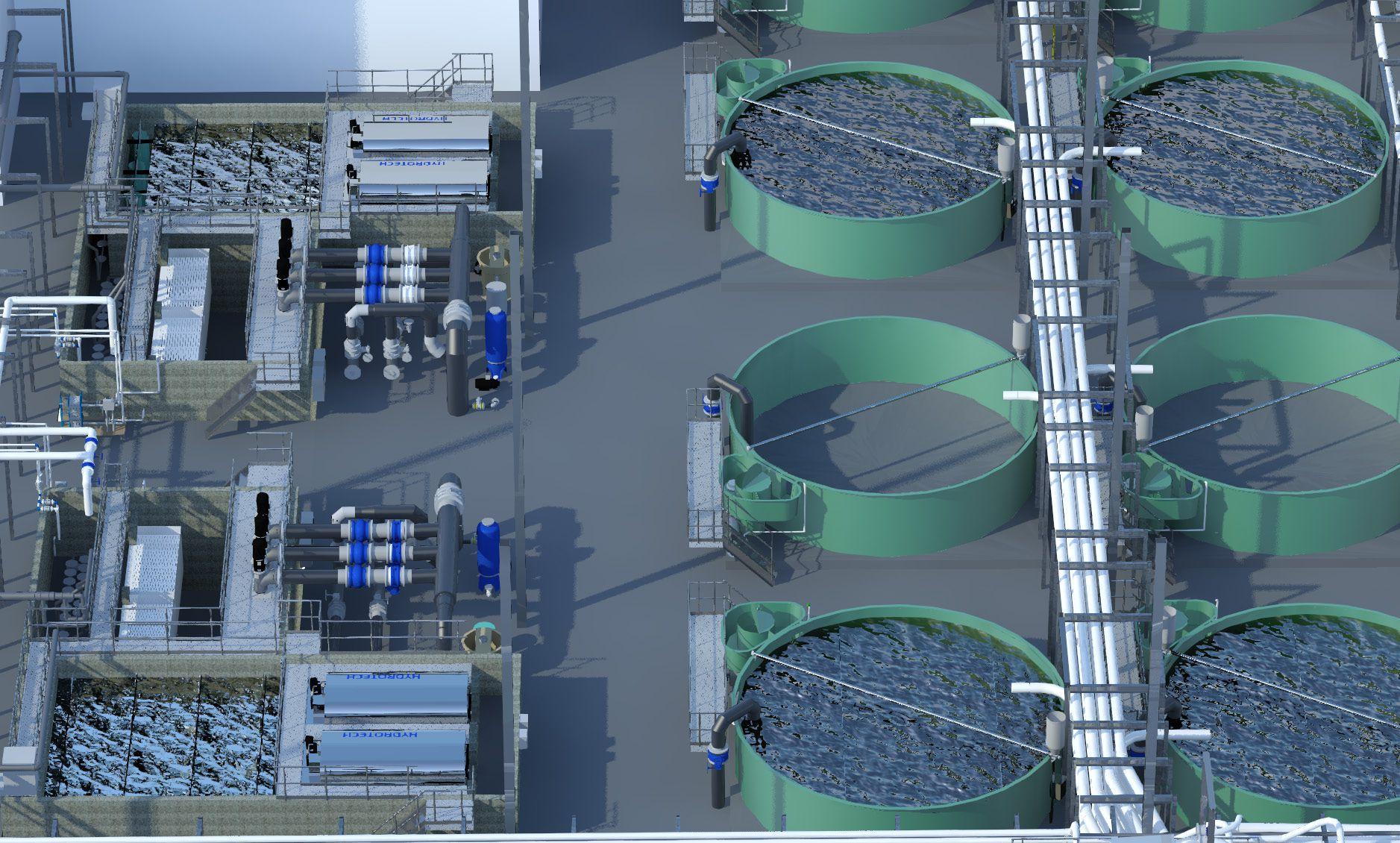
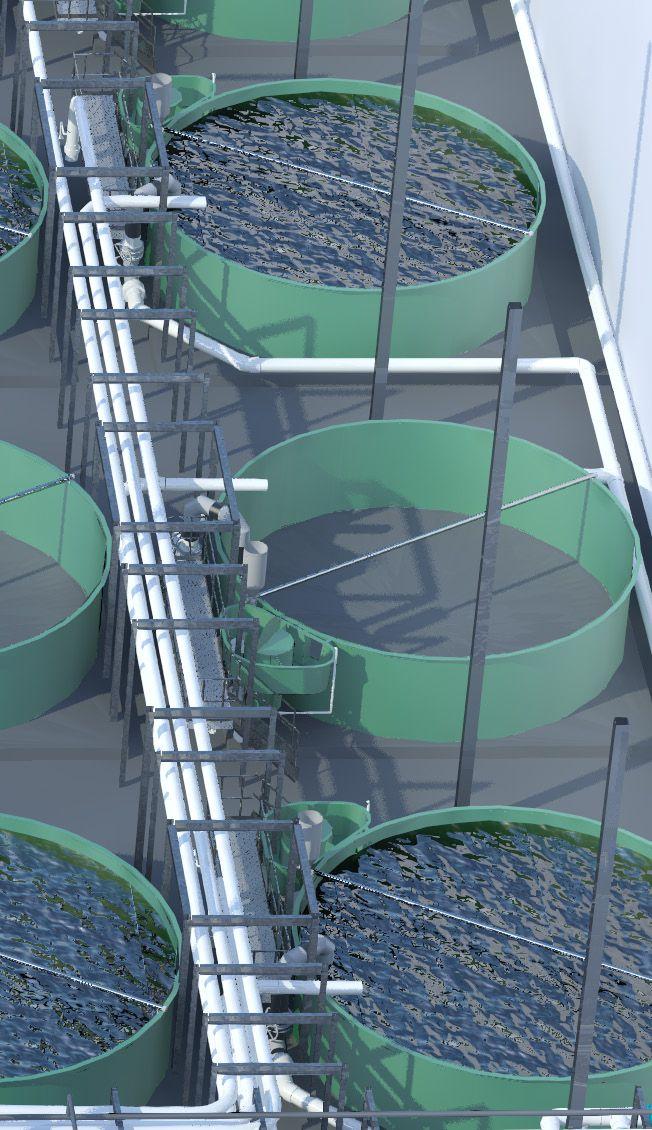
PR Aqua’s strategy leverages smart modular RAS designs that veer away from tailored solutions and move toward a more strategic approach that mitigates risks and drives operational efficiency for optimal output.
Hosler believes PR Aqua’s years of experience, as a technology partner and RAS knowledge leader, have put them in a strategic position to offer this value proposition.
STRATEGIC SOLUTION
PR Aqua has been in business since 1985, initially as an equipment provider for the local aquaculture sector in British Columbia. Its transition into an integrated RAS solution provider began in the mid-90s, and the company has since expanded, providing commercial RAS solutions across North and South America.
With nearly 40 years of experience under its belt, PR Aqua has seen the evolution of land-based aquaculture, both in its
failures and successes. These decades of insight, innovation and building client relations are driving the company’s resolve to go beyond technology and into a business mindset to help clients solve some of their biggest challenges.
“If we are able to bring more certainty to the capex and opex of these facilities while minimizing the risk, it can help,” Hosler said. “We’re trying to make RAS more investable.”
This shift is less about the technology and more about philosophy and mindset, Hosler added. “We’ve always designed in a modular fashion and we’ve always built larger-scale facilities with multiple RAS to limit risks. Some of what has changed is in our focus on bio-planning and how we can optimize culture tank volumes and treatment equipment to maximize production goals, rather than trying to custom design culture and treatment systems around a set production tonnage target.”
As an example, the production target might be 1,000 mt HOG, but by optimizing the bio-plan to maximize the operational capacity of the defined treatment systems, a farm may instead produce 1,200 mt HOG within the same capital investment.
PR Aqua’s smart, modular designs minimize the risks associated with highly customized RAS solutions. This strategy
optimizes capex-to-production ratio, leveraging standard building blocks to create bio plans that maximize efficiency, reduce capex/opex and produce optimal output.
“By working hard to develop smart RAS systems that are optimized from a constructability perspective, and then leveraging that solution again and again, you reduce the risk and uncertainty by using a design that has been validated,” Hosler explained.
The team at PR Aqua works with the client to create a farm design and production plan that leverages their smart modular RAS designs, ultimately driving a business plan that will satisfy investors – creating an investable RAS project.
THE SOLUTION
• Smart modular RAS designed to optimize efficiency, constructability, and capex/opex.
• Bio plans built to maximize farm output and productivity using standard designs rather than to deliver a predetermined production goal using custom designs.
• Continuous refinement and validation of standard designs to achieve the lowest risk and highest certainty of performance.
CONTACT:
KC Hosler / Ian Race
PR Aqua #4 - 5148 Metral Dr, Nanaimo, BC V9T 2K8 Phone: (250) 714-0141 www.praqua.com
OZONE KEY TO GAME-CHANGING SOLUTION TO PURGE OFF-FLAVOUR
Ozone has been used to purify water since the early 1900s, initially to treat municipal wastewater. Eventually, it was introduced as a water treatment system used in aquariums, swimming pools, drinking water, industrial process water and fish farms producing fish for human consumption.
Ozone is a powerful oxidizing agent that effectively targets organic matter, viruses, bacteria and parasites. It also targets off-flavour compounds, such as geosmin, and may introduce a new way to avoid the expensive and time-consuming purging of fish grown in recirculating aquaculture systems (RAS).
Ozone rapidly decomposes and turns to pure oxygen, giving rise to additional benefits in both the water environment and biofilter.
Research evidence has shown ozone provides promising advantages for water treatment in RAS facilities.
PURGING THE COSTLY PURGE
Geosmin, also referred to as off-flavour in fish, poses one of the biggest challenges for land-based fish farming. Solving this challenge would be a game-changer for RAS.
One effective way of eliminating the off-flavours is to treat the water with ozone.
However, ozonated water in large-scale RAS and flow-through fish farms comes with different challenges. If ozone is transported for long distances, it may be fully decomposed before even reaching the treatment site.
Historically, ozone generators have been big and complicated, necessitating the need for them to be placed far from the treatment site and led to the fish tanks through long pipes. This results in ozone degradation before reaching its target, rendering the treatment ineffective and expensive in RAS.
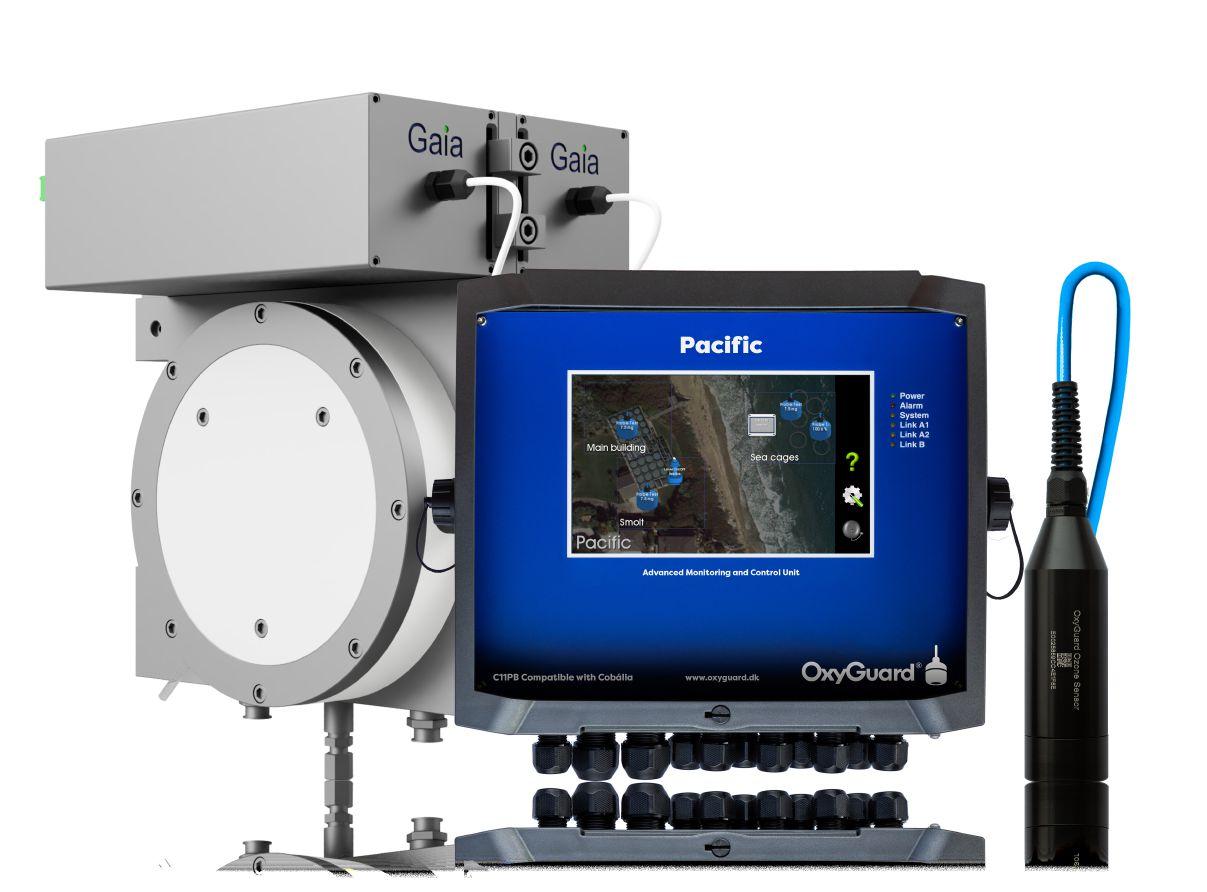
An optimal solution is the ozone generator, Gaia, developed by Water ApS. Gaia makes it possible to do the cleansing right by the fish tank. One big advantage of this system is that it works with the OxyGuard equipment, including the Pacific, a measuring, monitoring and control system, and the Ozone Sensor, which detects even the smallest amount of left-over ozone. Farm operators can even manage the system online with the digital farm management tool Cobália. Gaia is one of the most powerful and high-producing generators on the market. It is a modular ozone generator separated into smaller units working individually. The modular feature of the generator makes it possible to place the ozone generator directly at the treatment site and treat the water without loss of ozone. This makes the ozonation process more efficient and cost-effective.
THE SALTWATER CHALLENGE
Ozone chemistry in saltwater is more complex compared to that in freshwater, due to the higher concentrations of dissolved ions. Seawater naturally contains bromide ions, which are highly reactive to ozone. When ozonating seawater, bromide ion is oxidized to hypobromite, bromite and, eventually, bromate, which are of crucial importance since they have a long lifetime allowing several side reactions to occur. Hypobromite also reacts with ammonia and proteins to form bromamines. Both bromamines and hypobromous acid are toxic to fish, bivalves and crustaceans. To ozonate safely in salt water, it is important to ensure the presence of organic matter. As long as there is organic matter in the water, ozone will react with it first as it is much easier to degrade than anything else.
OxyGuard solved this challenge with the fast-reacting ozone sensor that can measure ozone directly in the water in real-time. By adding the ozone sensor to the system, it is possible to ozonate safely based on feedback from the sensor.
On top of this solution, OxyGuard developed a control feature for ozonation in the Pacific Control System, enabling automated control of the ozonation based on data from the sensor. The system has been tested through different developmental projects such as RASALT, where OxyGuard, in collaboration with the Technical University of Denmark (DTU), worked with data from the ozone sensor and the ozone generator to prevent brominated by-product for-
2. Bacteria develop flavoured substances such as geosmin, 2-methylisoborneol (2-MIB), and other compounds. Even extremely small amounts of these off-flavours lead to a muddy taste in the fish, making it unmarketable for human consumption. Today most of the fish from recirculating aquaculture is purged in clean water to flush out off-flavour. This is very costly, costing up to five per cent of the revenue.
mation. This data was achieved by connecting the sensor and the generator to the digital farm software, Cobália. Cobália is now developing a module specifically for safe and efficient ozonation control. The aim is to enable a capability to automatically turn the ozonation on and off based on feedback from the water matrix. This add-on will increase security and efficiency, making it easy and inexpensive to use.
OPTIMIZING FISH HEALTH
In ProBiOzon, another collaborative project between OxyGuard, DTU Aqua and primary producers, the effect of ozonation was tested on fish health and mortality in freshwater RAS. The results showed a general, overall improvement in fish health and resulted in lower mortality. It improves water quality by removing
FISHTANK
organic matter and helps the biofilter function through the supply of pure oxygen for ozone degradation.
In a new project, Bizon, led by OxyGuard, the entire system will be tested at full scale to see if ozonation could either completely or partially remove the need for purging. The Bizon project is expected to be concluded in 2026.
GAME-CHANGING SOLUTION
OxyGuard International and Water ApS have already implemented the system on several larger RAS. It is installed as a part of the entire water cleaning setup on the farms, targeting a substream of the recirculation water.
If the entire setup is effective enough to completely remove geosmin from the water, it will change the way we produce fish in RAS and the feasibility of RAS in general.
THE SOLUTION
An integrated, innovative system for the efficient use of ozone treatment to remove off-flavours in RAS
www.oxyguard.dk
OZONE CONE
HELIOS UV
GAIA OZONE GENERATOR
OZONE SENSORS
COBÁLIA Cloud based
Figure 1: An example of how it is possible to set up the system. The figure shows how the Helios UV Technology, produced by Water ApS, will degrade any remaining ozone.
Figure
MODULAR RAS: SMALLER FOOTPRINT FOR BIGGER BENEFITS
In the business of RAS, risk mitigation is a key element in a project’s feasibility and profitability.
Standardized, modular designs are one way equipment providers are helping RAS producers reduce their risks, lower their costs and increase the predictability of operations. Land-based aquaculture technology provider Nofitech was founded on this principle, borne out of an extensive knowledge of and experience in salmonid farming and designing RAS facilities.
“Standardization gives us the ability to deliver our systems faster and with less risk, since we have a good understanding of what is needed,” said Robert Hundstad, CEO of Nofitech, based in Trondheim, Norway. “Our customers appreciate the benefits of standardization as it reduces unwanted surprises about how the system works.”
Nofitech’s modular solutions, called ModulRAS, also allow for efficient and effective operator training, as operators are easily able to apply their knowledge from one module to the next, Hundstad added.
Established in 2011, Nofitech delivers standardized, state-of-the-art RAS modules with patented compact designs that respond to the needs of producers throughout the fish production lifecycle – from egg to smolt to post-smolt to grow-out to broodstock.
THE TECHNOLOGY
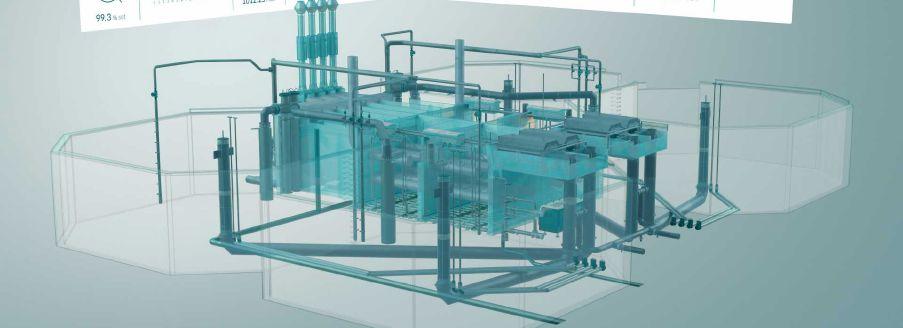
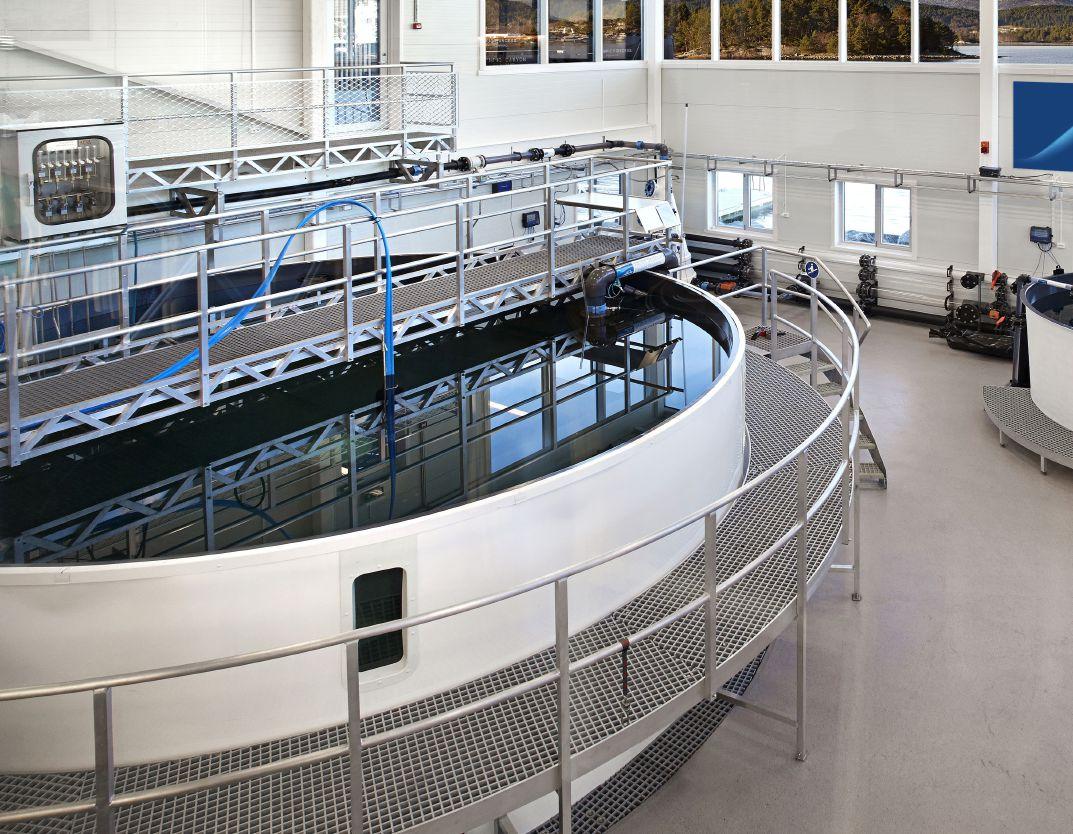
The ModulRAS design consists of four octagonal tanks sharing a common water treatment system. Designed to prevent the build-up of sediments, the system uses short pipelines and all surfaces exposed to water are coated with polyurea, which is a fast-hardening membrane, for durability and tighter water containment.
All components and structures use seawater-resistant materials. The system also features high-quality ventilation and dehumidification systems, and a fully insulated building sandwich panel walls to maintain a dry environment.
Key to Nofitech’s modular systems is their compact design that results in a more cost-effective and faster installation. As the RAS sector continues to face resource challenges and an increasingly regulated environment for land and water use, having a highly efficient system with a smaller footprint can make a big difference.
“Delivering standardized as well as costand resource-efficient systems with a small footprint help the customers manage these challenges,” Hundstad said. “We invest a lot in research to develop more efficient water treatment components and solutions for energy efficiency, and waste treatment and re-use.”
Nofitech’s smart systems also offer process control capabilities and alarm functions to ensure thorough monitoring and full control over water quality and other parameters needed for operational efficiency. These control systems can be managed on-site or remotely through a mobile device.
“The smart control system gathers all the data in the operation to improve fish welfare and production, by ensuring optimal conditions and early warning when there is an issue. In addition, we offer our customers an extensive training and support system to give them the best tools to manage production.”
Through the Nofitech Academy, the company offers on-site training, digital operations manuals and a series of e-learning courses for operations staff.
INNOVATION THROUGH RESEARCH
In RAS, technology moves fast and staying ahead of the curve is important for Nofitech. The company regularly collaborates with universities and research institutes to develop new technologies to improve RAS and address ongoing challenges faced by producers. One area of collaboration is in RAS waste conversion, to turn wastewater into nutrients for feed and fertilizer, Hundstad said.
“Innovation is key to stay ahead of our competitors by offering even smarter and more sustainable solutions for producing healthy seafood. Although the technology has developed quickly over the last decade, we know there is still a lot of potential for increasing production and reducing the
resources needed to produce fish in RAS – space, land, water, energy and nutrients.”
It’s a value proposition that also makes Nofitech an attractive place to work for people looking to be in the middle of aquaculture innovation and helping solve the industry’s biggest challenges.
Through all the technological advancements, Nofitech continues to be guided by its founding principles.
“Our focus is to deliver the best systems for the fish farmer, the fish and the environment,” Hundstad said. “We have smart and efficient solutions and are constantly developing to stay in the leading edge of the industry. But our focus remains the same: easy and safe operation, excellent fish welfare, with the bonus of high growth and low mortality, and high resource and energy efficiency.”
THE SOLUTION
• Compact, cost-efficient modular systems for de-risking RAS operations
• Smart digital control system for data-driven farm management and control
• Extensive training and support programs to develop operational expertise
CONTACT
Robert Hundstad
Pir I, 4, PB 1252 Torgarden 7462 Trondheim, Norway
Tel. +47 900 49 976
robert@nofitech.com
www.nofitech.com
BEYOND TECHNOLOGY: OXYGEN SYSTEM MAXIMIZES FISH HEALTH, FARM PROFITABILITY
In commercial RAS farming, fish health and profitability are almost synonymous. As land-based aquaculture facilities become much larger and more complex, the impact on fish health and welfare remains top-of-mind for producers.
Part of the business of RAS farming is ensuring that operational costs are held at bay. In a RAS environment, opex considerations are not just about the cost of maintaining the systems, technologies and personnel that run the farm. Fish health and welfare is also a significant, if not the most important, part of that dynamic.
“Operating costs are mainly determined by the plant concept,” said Rolf Heninger, director of water technology at Linde, a global industrial gases and engineering company. “Once the plant is built, it is challenging to reduce operating costs
without impacting fish health.”
Poor fish health can lead to higher mortality and slower growth, which all translates to reduced productivity. Exercising due diligence at the plant concept stage when designing RAS farms is ultimately essential to profitability, Heninger added.
A MILLENNIA OF INNOVATION
Founded more than 150 years ago, Linde has been a leading global supplier of industrial gases, and has developed technologies and equipment for the application of gases in a variety of industries, including aquaculture. Through the decades, Linde has built a high level of expertise in oxygenation systems for aquaculture, particularly in Norway.
The evolution and expansion of the Atlantic salmon farming sector created
opportunities for Linde to develop oxygenation systems for RAS farms. The company has worked with major salmon producers and equipment manufacturers all over the world, with an extensive knowledge base that goes beyond oxygenation systems and looks at the overall health of the farm and the fish.
Linde’s innovation within the oxygenation systems includes equipment with optimized and well-characterized gas dissolution and power efficiencies, and tank-mixing capabilities, to name a few.
“The size of RAS plants, either in construction or planning phase, has grown dramatically over the past few years following economies of scale,” Heninger said. “Our offerings have to follow this trend. Simply upscaling sometimes comes with its own limitations, so Linde is also
looking into new and innovative oxygenation concepts.”
The company takes into consideration not only oxygenation but the overall success factors of a commercial RAS farm, including efficient use of resources and promoting healthy fish.
“This strategy enables Linde to stay on equal terms with our customers and partners,” Heninger said.
HEALTHY SYSTEMS FOR HEALTHY FISH
Linde’s technologies support fish health and low operating cost at the same time. Linde’s work with freshwater and sea water systems represent a benchmark in oxygen dissolution efficiency. Linde helps RAS operators reduce energy consumption for recirculating while oxygenating the water by up to 80 per cent.
Linde’s SOLVOX® OxyStream system, used for in-tank sea water oxygenation, does not only require the lowest head pressure, it also generates appropriate tank hydraulics, supports collection of particles and aids in stripping of inert gases.
The system is a patented, all-in-one product, which oxygenates the water and evenly distributes it around the fish tank using an adjustable flow regime that aligns circulation speed with the fish species and size. SOLVOX Oxystream includes a
water flow indicator, which provides a quantitative overview of the water flow into each tank.
Through microbubbles, SOLVOX Oxystream not only allows for a highly efficient oxygen dissolution but also reduces the concentration of dissolved nitrogen and the total gas pressure of the water. This often eliminates the need for external degassing units. In addition, its low-pressure delivery mechanism makes SOLVOX Oxystream very energy efficient.
GLOBAL NETWORK
Linde also offers various emergency oxygenation support, and customers have come to rely on safety standards related to supply and dosing of oxygen.
Beyond the technology, reliability is also key to Linde’s oxygenation offering. As a global organization, with offices in multiple continents including North and South America, Asia, Europe and Africa, customers around the world benefit from a strong network of production plants and support systems.
“Being a gas supplier, Linde is interested in longyear business relations with customers. Linde is successful when our customers are successful and their plants meet the intended performance criteria. Hence, Linde is ready to contribute its knowhow to optimize the plant setup from the beginning,” Heninger said.
THE SOLUTION
• RAS oxygenation systems designed for the overall health of the farm and the fish.
• A technology partner with a long history of innovation.
• SOLVOX Oxystream is a patented, all-in-one product that lowers energy cost and improves efficiency.
In an already complex arena of land-based aquaculture, where high costs and little financing options continue to be a challenge, ‘keeping it simple and making it work’ may be the key to operational efficiency.
Denmark-based RAS equipment and technology provider FREA Solutions has always been guided by this principle. And the key to achieving simple technologies that work is the company’s commercial-scale RAS facilities, where new innovations are tested and optimized before going to market.
“High capex, high energy consumption and lack of proven technology can lead to difficulties in securing financing for RAS farms,” said Thorsten Vammen, general manager of FREA Solutions. “As a technology provider, we are constantly innovating to improve efficiency and reduce capital
and operating costs, but our approach to everything we do has always been to keep it simple and make it work.”
And it’s not just a catchphrase or marketing slogan; this approach embodies decades of experience that trace back to the company’s roots as a trout farmer.
FIRST MOVERS
Before FREA Solutions became one of Europe’s leading aquaculture technology providers, the company’s founder, Christian Ravn Jørgensen, began as a trout farmer. He was one of the first movers in Denmark to convert fish farms into partial or full recirculation systems. Forty years later, the company now operates a number of outdoor, partial or full RAS farms and a modern, commercial-scale indoor RAS trout production facility, all serving as test beds
for continuous technology enhancements and new product development.
“FREA Solutions has, during the past 30 years, worked with other trout farmers to upgrade their farms for improved production efficiency. Our company’s vast experience has been used to develop entire new trout farming solutions — all initially built, tested and operated on a commercial scale — before being offered to our customers,” Vammen said.
FREA Solutions is focused on trout farming in land-based systems, delivering products that are simple, easy to operate and maintain, energy efficient, and with “unmatched capex and opex profiles.” The company offers products that meet the requirements of RAS producers at whatever stage they are — from start-up to largescale.
MODEL FARMS
FREA’s commercial RAS facilities in Denmark comprise eight outdoor fish farms that produce a combined 1,500 tons of trout per year, and a large, state-of-the-art, fully recirculated trout production facility.
These RAS farms, operated through sister company Kærhede Dambrug ApS, are used as test facilities for new technologies developed by FREA Solutions. With rainbow trout as the primary production species, the facilities are able to test a variety of equipment and production systems, from flow-throughs to recirculation, and at all stages of the fish’s life cycle.
In addition to the eight test farms, FREA Solutions’ other sister company FREA A/S operates a fully advanced commercial-scale RAS production facility. This farm serves as a real-world application for all equipment and
technology developed by FREA Solutions, and has been operating since 2017, producing more than 2,000 tons of fish per year.
“Operating our own commercial-scale RAS facilities, FREA Solutions welcome customers and project investors to come and visit, reassuring themselves about the operational efficiencies of the FREA solutions,” Vammen said.
In addition, late-stage or existing RAS operators are also invited to FREA’s facilities in Denmark to receive operational training on the equipment and technologies, he added.
END-TO-END SOLUTIONS
FREA Solutions’ true and tested technologies fall under several categories, designed to provide RAS farms an array of offerings throughout the production cycle.
The company’s equipment solutions, such as feeders, oxygenation systems and water purification, to name a few, are designed to improve production efficiency and profitability of existing trout farms.
FREA Solutions’ concept solutions are focused on customers at the early stage of their RAS journey. These customers may start with a small production capacity, and gradually expand their operations as they gain more farming experience.
Large-scale commercial facilities with annual production capacities of 1,000 tons or more, also benefit from FREA’s farm solutions.
And lastly, FREA Solutions also offers modular systems for grow-out production facilities. These systems are ideal for growing trout to a harvest size of two to three kilograms. Each module is highly scalable with a production capacity of 100 to 120 tons, where additional modules can be added to increase the overall production capacity as cash flow allows.
“We focus on keeping it simple, and making it work,” Vammen said. “We cooperate with fish feed manufacturers and egg suppliers to take advantage of any possible productivity gains. We operate our own commercial-scale RAS facilities, enabling us to use this experience to improve and innovate new and improved farming solutions.”
THE SOLUTION
Simple, effective RAS technologies that are tested and proven through real-world applications.
CONTACT INFO
Thorsten Vammen
tnv@frea-solutions.com www.frea-solutions.com
EXECUTIVE INSIGHT
What current trends in innovation and technology will shape the future of RAS farming?
PAW PETERSEN
CEO, OxyGuard International
“In our ever-evolving aquaculture industry, many themes are still familiar: feeding, species, genetics, water quality, management and personnel. But there is a new headline: artificial intelligence (AI). Undoubtedly, AI holds significant promise within our industry. So far, it isn’t the solution to all challenges, and it will take time to implement. But it is a game-changer that will grow and be interesting to watch in the next few years.
A growing concern we need to sharpen our focus on is water quality. Here, an essential player emerges: ozone. Despite its three-decade presence in RAS, ozone has now become more accessible. Today, we can measure and control the ozonation process in the same way we have done with oxygen in the past 40 years. This will revolutionize farm building designs, improve water quality standards, lower the water usage in individual RAS setups, and ultimately help land-based fish farming to hit the target.”
JAMES FLAHERTY
President and CEO, Adsorptech
“The development of very-low-head, high-efficiency oxygen dissolution devices, for 5,000 and larger tons-per-year RAS farm volumes, would provide a RAS farm a significant opex improvement. These high-efficiency systems can lower the amount of power required to pump water and oxygen to higher levels. Significant device market growth will compound in other water treatment applications as well.”
ROLF HENINGER
Director of water technology, Linde
“The diffusion of salmon RAS farms into new geographies, such as North America and Chile, will demand new specialists in those regions. Also, the introduction of non-salmonid species into the RAS marketplace will inevitably bring a new set of challenges in order to optimize fish health and productivity.”
FRÉDÉRIC FAIVRE
Co-manager, Faivre Group
“RAS can benefit from current technological innovation, and among these trends, we can highlight a few.
Advanced monitoring systems: The use and implementation of advanced sensors for monitoring water quality, remote monitoring of breeding basins and artificial intelligence will enable immediate data feedback and real-time action to optimize farming conditions. Increased automation: RAS is moving towards more advanced automation, such as automated feeding, water quality control or biomass management (sorting, counting). This contributes to improving operational efficiency and reducing production costs. Use of artificial intelligence: AI will increasingly be used to analyze collected data, optimize and improve farming conditions in all aspects. I nnovative filtration systems: More efficient drum filters and water treatment systems to enhance water quality are some emerging technologies that are being explored.
Currently, like all machine manufacturers, we are evolving in communication, automation, and artificial intelligence technologies. Farmers will have the ability to communicate and control their farming machines from their smartphone or computer, accessing statistical data on daily or yearly activity.”
DIEGO GARCIA
Partner and manager, INNOVAQUA
“An emerging trend that will help shape the future of RAS is the development of artificial intelligence tools and their application in the sensorization of water parameters and equipment, as well as monitoring and automation of process components by predictive data analysis. Adaptation of management systems and production structures to larger fish sizes will also increase. RAS facilities will also benefit from improvements in the design and implementation of denitrification systems to reduce water consumption and the environmental impact of effluents, and more specific developments in discharge treatment as well as the reuse and assessment of waste.”
THORSTEN VAMMEN
General manager, FREA Solutions
“New technologies are becoming available, like artificial intelligence, better sensors, cameras and big data, that can improve fish health and performance. Also looking at the entire value chain, innovations that aim to convert waste streams to revenue streams to improve profitability will be a positive development in the RAS sector.”
RYAN VASAK
Vaki Key Accounts, US and Canada, Merck Animal Health, Aqua
“Data analytics and AI will certainly shape and consolidate the RAS industry in the coming years. Why? Because data analytics and AI will help fish farmers optimize their production processes, improve fish health, reduce conversion ratio, and reduce waste. By integrating predictive maintenance, it will also optimize the equipment durability, reducing risk and cost. But we need to overall remember who’s the boss of the whole system in the aquaculture industry: The fish.”
ROBERT HUNDSTAD CEO, Nofitech
“We think that more resource-efficient systems will develop, using less area, reduced CO2 emission footprint, with less energy and water to produce a lot more healthy protein, both in the sea and close to the markets. At the same time, we think that production needs to be shut off from the wild populations and the environment, and be forced to use other more sustainable resources for nutrients and energy. Optimizing fish growth on the resources used and recycling nutrients from the production will be a substantial contributor to this. The great tools currently being developed for big data collection and correlations make it obvious that digital solutions will help optimize resource use and production going forward. We are looking very much forward to be one step ahead in this development.”
KC HOSLER
General manager and chief technology officer, PR Aqua
“Over the past five years, many large RAS projects in North America have tried to raise capital and navigate different jurisdictional permitting processes with little to no success. Now that the cost of borrowing is less attractive and the fact that the RAS projects that have been built are falling short of achieving the production goals they were designed for, there needs to be a major shift in thinking. Re-focusing on smaller modular systems in the range of 2,000 to 2,500 tons will be easier to permit and finance while steadily improving the concept through repeatability. Gone are the days of the 20,000+ ton mega projects until we see some success in smaller scale systems proving we can grow fish profitably on land at scale. Only then will it be time for the return of mega projects.”
TONY PANTAGES
President, Octaform
“The great innovation I see in RAS farming isn’t equipment, technology or AI-based. It is the collaboration and dialogue between stakeholders, suppliers, engineers, scientists and operators that are building this important industry. Octaform is proud to be a part of that conversation.”
KATHERINE MILLER
General manager, Aqua Ultraviolet
“Technologies that work and are proven effective in solving some of the biggest challenges facing RAS farmers today will shape the future of this sector. Aqua Ultraviolet believes in keeping true to our principles of elevating the knowledge and expertise on our system to help our clients optimize all the benefits our products have to offer.”
RELIABILITY KEY TO SUCCESS IN RAS INNOVATION
Advancements in automation and monitoring systems will be crucial in maximizing efficiencies in RAS farms, resulting in a more sustainable and profitable aquaculture operation.
This is a big driver of recent innovations at Faivre, a global aquaculture equipment provider based in Baume-Les-Dames, France.
“Generally speaking, RAS producers would be interested in new innovations that can enhance operational efficiency, reduce costs, optimize water quality and introduce sustainable technologies,” said Frédéric Faivre, co-manager at Faivre Group.
INNOVATION WITH PURPOSE
Since the company was established in 1958, Faivre’s development has been rooted in responsive innovation – developing systems and equipment that not only leverage the latest technologies but, more importantly, delivers reliability and efficiency to the RAS farm.
This also means pursuing innovations that ultimately address specific challenges faced by RAS producers. These include advancements in filtration systems, environmental monitoring and automation.
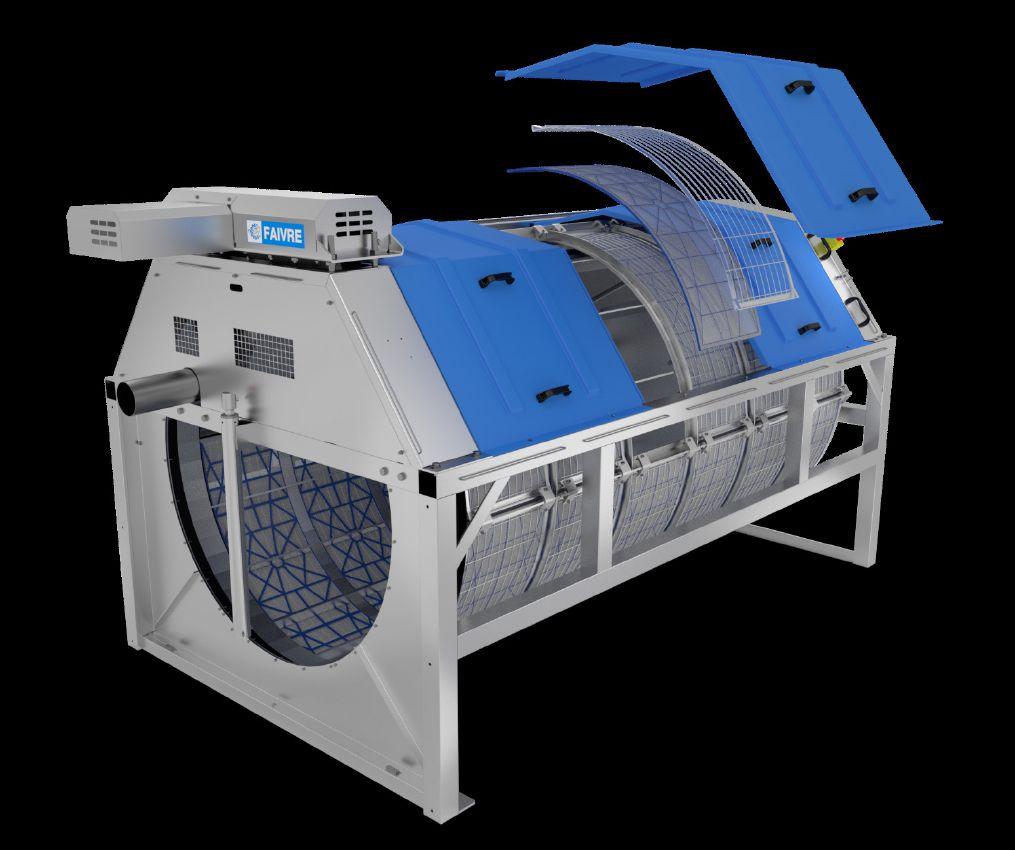
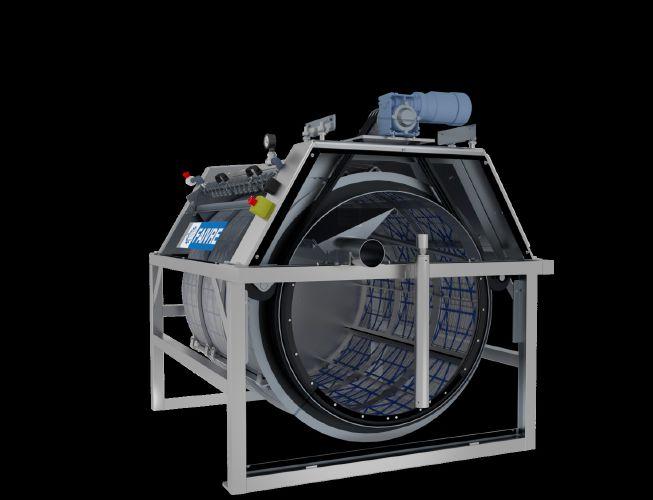
For example, when the company set out to develop its first drum filters in 1996, the main focus was to design a reliable mechanical drum filter that can capture suspended solids with very high efficiency.
The focus on reliability also expands to the supply chain, according to Faivre, where meticulous attention is given to the selection of suppliers and materials, whether it’s in choosing the right selection and grade of stainless steel materials, selecting globally recognized gear motor manufacturers, designing grease-free submerged bearing, or using stainless steel bearing without lubrication.
“Innovation in efficiency is manifested in our group through optimizing performance in terms of electricity consumption, rinse water consumption, and choosing the mesh for optimum filtration and strength,” Faivre said.
WEB WONDERS
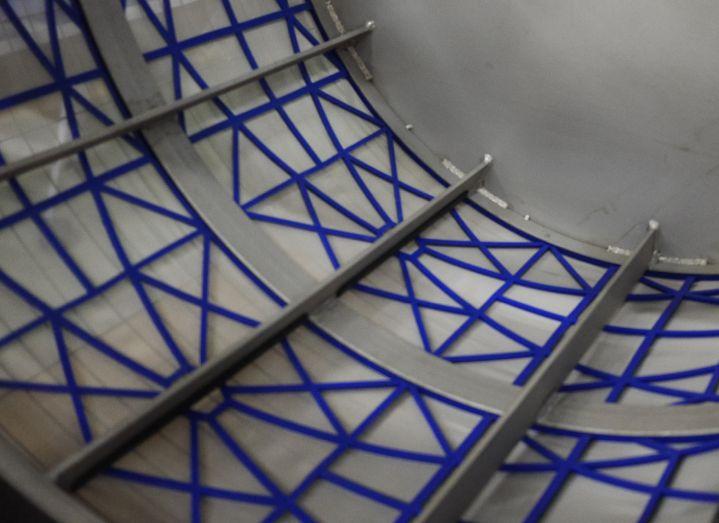
One of Faivre’s recent product innovations is the new Spiderplate, a patented mesh support that has undergone years of study and development. Inspired by the intricate and purposeful nature of a spider
Fish farming equipment Designer & Manufacturer since 1958
web, Spiderplate consists of a thermoplastic framework with triangular profiles, onto which nylon mesh is welded.
This design offers the advantage of having a large filtration surface because the mesh is welded on the peaks of the triangular profile. As a result, the surface of the weld has minimal impact compared to the total surface area of the mesh.
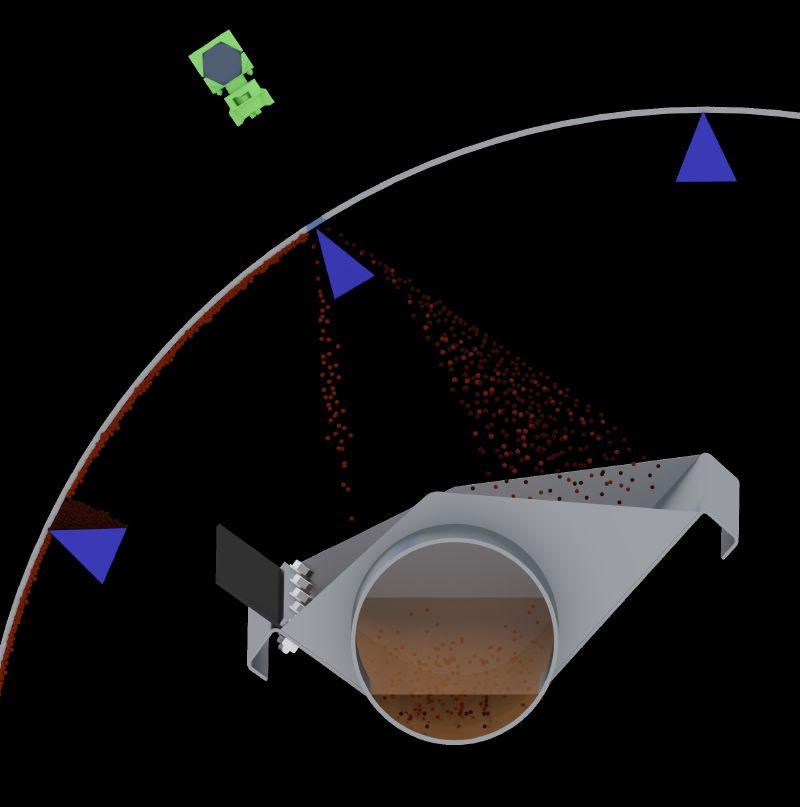
The triangular profile also helps improve cleanability, as foam or bacterial clusters do not adhere well to the triangular profile, and the rinsing system allows for regular wash of the mesh. Due to the structure of the plate with triangular profiles, the water uplift in the sludge evacuation channel is almost non-existent, resulting in minimal water losses in the RAS.
The thermoplastic material makes Spiderplate completely immune to corrosion. A study comparing the Spiderplate to standard stainless steel plates in the same RAS setup, with two filters side by side, showed that Spiderplate captures 30 per cent more suspended solid matter than other standard stainless steel plates.
“This innovation provides economic and ecological solutions by significantly reducing energy and fresh water consumption with less pumping. Not to mention all the other benefits of having water with fewer suspended solids,” Faivre said.
STRESS-FREE FISH
For several years now, Faivre has been working to expand its range of equipment offerings to provide RAS customers a comprehensive set of farming machines.
In addition to its drum filter range, the com-
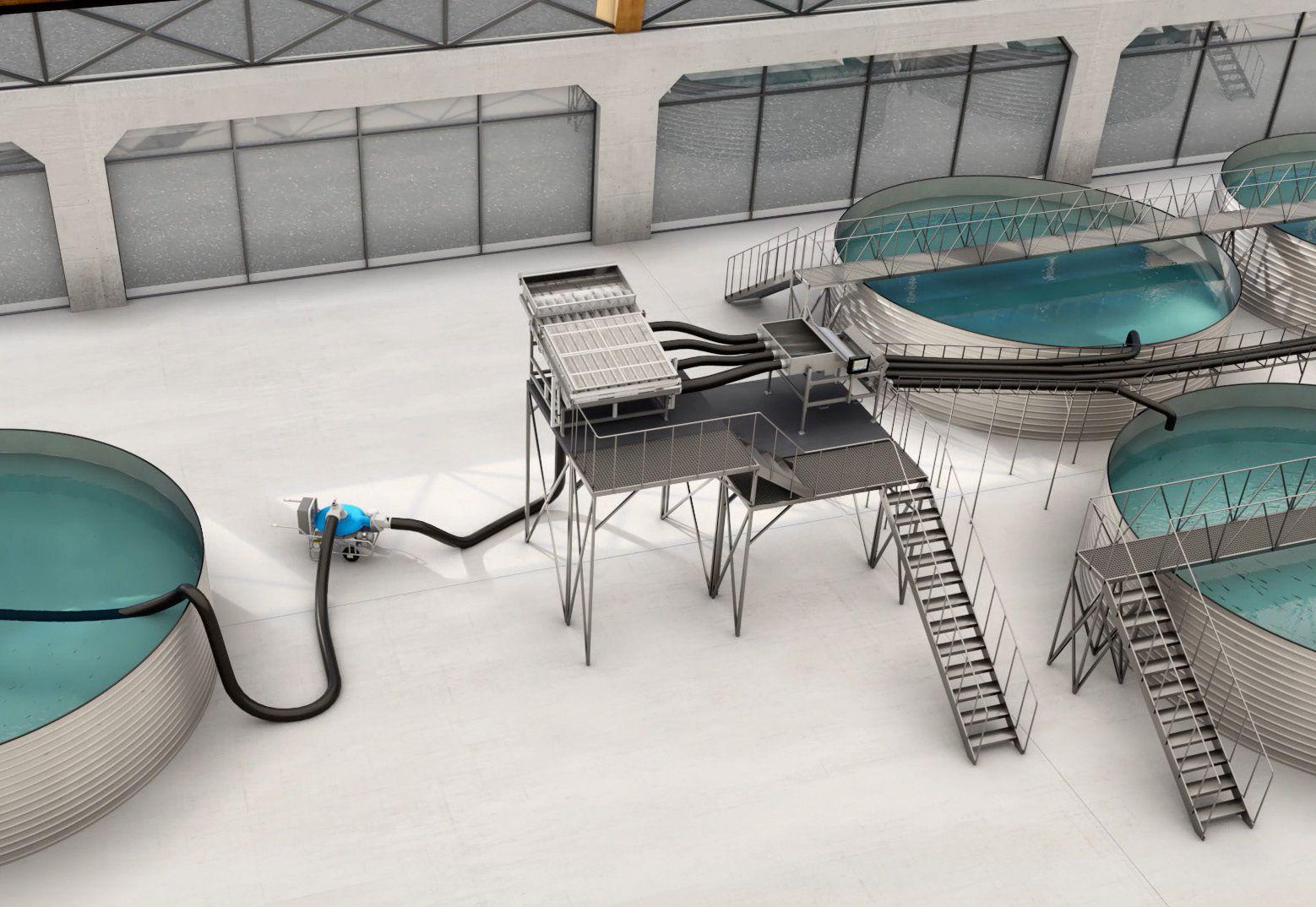
pany also offers a complete range of pumps, graders and counters that are sold separately or as part of a package, catering to fish sizes ranging from 0.2 g to 3.5 kg.
These equipment are compatible and work seamlessly with each other, and are controlled and powered by the same electrical cabinet. These features make for easy and convenient installation and operation.
Fish welfare is another important factor for Faivre when designing machines. The company uses cutting-edge technologies, such as simulation software, to ensure that every piece of Faivre equipment deployed in a RAS farm does not contribute to fish stress.
“Since the inception of Faivre, our concern has always been to put ourselves in the fish’s place. Our machines are designed not to stress the fish, and we are able to accomplish this through our deep understanding of the fish and our keen sense of detail,” Faivre said.
The company will soon launch a new product focusing on automation of the fish transfer operations, through its automated pumper, sorter and counter package. The sorter will adjust automatically based on the operator’s instructions, control the pump flow, and correct itself during sorting based on dimensions observed by the counters at the grader’s output.
Faivre also offers a range of solutions in the water management category, including four types of filters that come in 20 different sizes. This variety provides RAS farmers the flexibility to choose the filter that’s right for them and their environment, allowing them to optimize space for maximum efficiency. Faivre’s connected intelligent cabinet system also provides customers the option to monitor and maintain their machinery.
THE SOLUTION
• Innovation driven by reliability and efficiency.
• Fish welfare at the heart of equipment design
CONTACT INFO
Aubert Faivre FAIVRE Group
7 rue de l’Industrie 25110 Baume-Les-Dames, France
Email: info@faivregroup.com www.faivregroup.com
INTEGRATED SOLUTION KEY TO RAS EFFICIENCY, SUSTAINABILITY
When building and operating recirculating aquaculture systems, RAS farmers rely on the expertise and reliability of their equipment partners. This is the strength global aquaculture solutions provider INNOVAQUA brings to the table.
Based in Seville, Spain, Innovaqua has an international distribution network that provides comprehensive solutions to the aquaculture and water technology sectors. The company is backed by a team of experts with extensive experience in the design and implementation of projects that feature some of the most innovative technologies in the field.
“Our aim is to be a trusted partner for RAS farmers,” said Diego Garcia, partner and manager at INNOVAQUA. “We have the expertise and the technology capable of helping RAS farms solve all their technical problems through a comprehensive service anywhere in the world.”
DESIGNED FOR EFFICIENCY
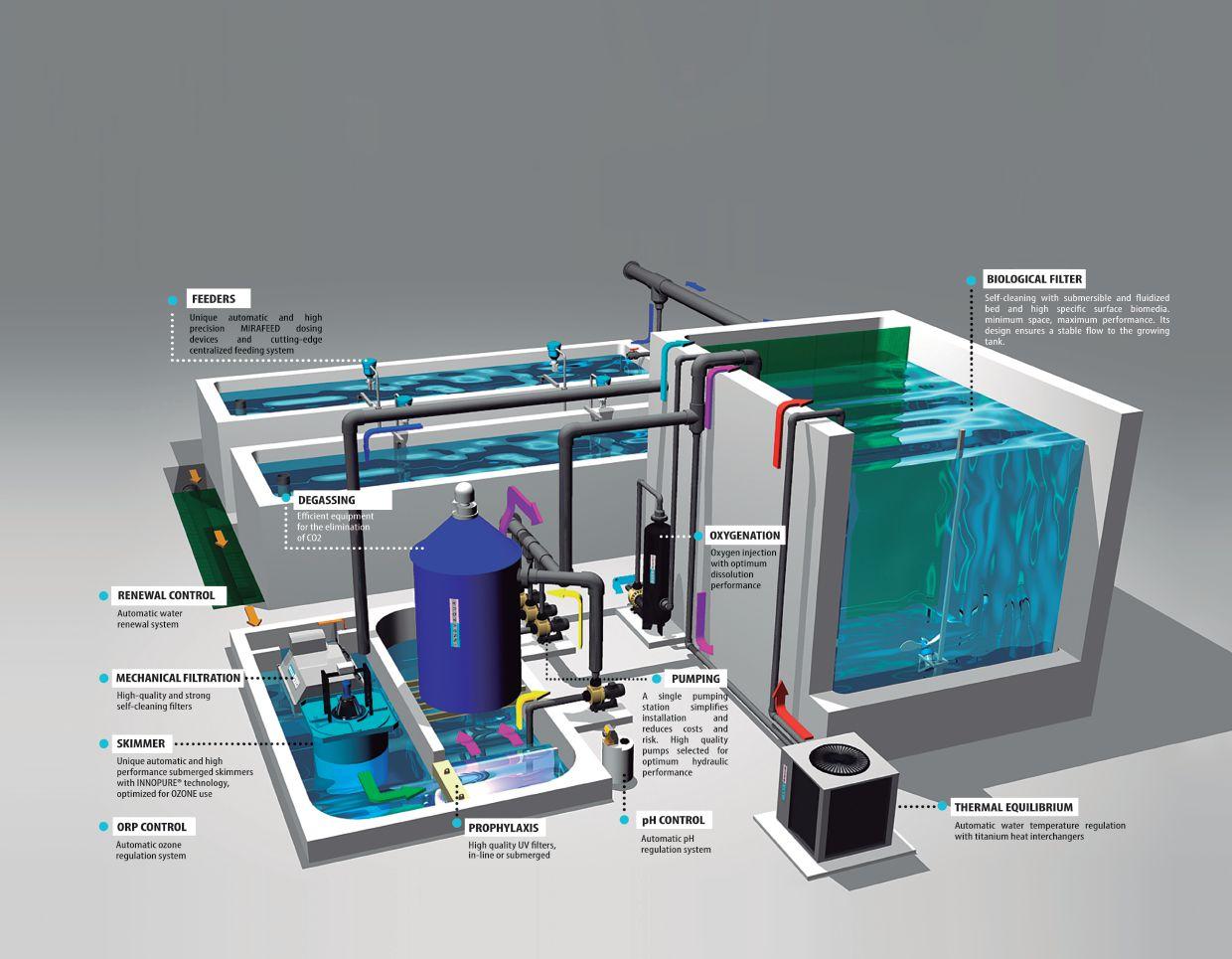
At the core of INNOVAQUA’s technology offerings is the iRASystem®, the culmination of INNOVAQUA´s long-standing experience in designing and installing recirculating aquaculture systems around the world. iRASystem® is an optimized system based on
the automated and controlled treatment of aquatic cultures, allowing for efficient water reuse. It is an integral solution to minimize water consumption, optimize production space and reduce energy and operational costs with maximum parameter control.
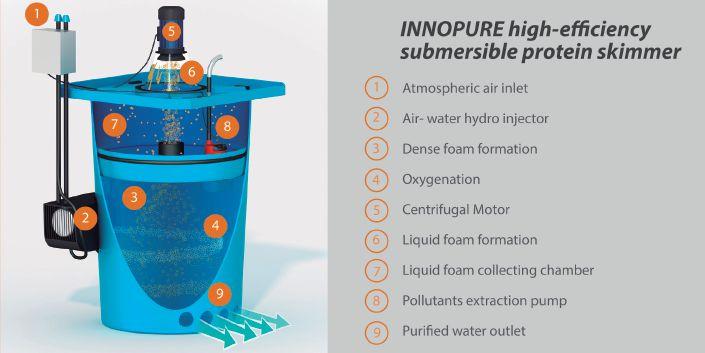
“iRASystem® achieves full effectiveness and efficiency by using the latest technology, materials and equipment of proven quality,” Garcia said. Some of these equipment are either exclusive to INNOVAQUA or designed, developed and manufactured in-house, such as Innopure, the company’s high-efficiency submerged protein skimmer.
INNOVAQUA’s iRASystem®
OPTIMIZING WATER, ENERGY AND SPACE
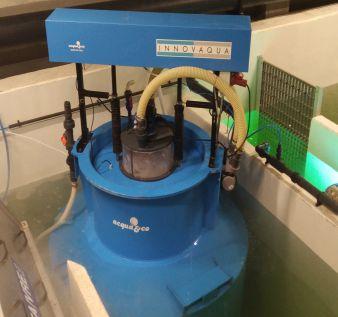
The exclusive and patented Innopure is INNOVAQUA’s high-performance submerged skimmer range that automatically adjusts foam formation, thereby minimizing water consumption. With this unique technology, automatic recirculating systems can be designed and installed with outstanding performance, while minimizing water and energy consumption, and optimizing space utilization.
Innopure® allows the iRASystem® to operate from only a single main pumping station, which significantly simplifies installation, reduces energy cost and maintenance.
Easy installation.
Depending on the flow rate, connection pipes or control valves can have large diameters that can be challenging to install. Innopure does not require these connection pipes or control valves, which facilitates easy installation.
Reduced energy consumption.
Because Innopure® is submerged and typically installed in the sump tank, there is no need to lift the water to be treated, therefore significantly reducing energy consumption. It’s an advantage that helps reduce a RAS farm’s efficiency and sustainability.
Optimized UV performance.
The installation in the sump tank also allows for easy installation upstream of a channel UV, optimizing UV performance by reducing water turbidity. This configuration is optimal for circuits with high flow rates by reducing the investment costs of installing a chamber UV.
This also increases the safety of the use of ozone in the skimmer as the channel UV can destroy possible residual ozone.
Water efficiency.
The ability to automatically control foam generation adjusts the water consumption to the foam production, which is typically related to feeding cycles. In addition, the flow of micronized bubbles, in countercurrent from top to bottom, centrifuged and again moved from the bottom towards the surface allows for an interchange of water-air that is definitely superior to any other protein skimmer.
The foam liquefying is made only with suction centrifugation, without adding any water, resulting in big quantities of high-density foam.
The Innopure® submerged skimmer allows the iRASystem to operate from only a single main pumping station for simplified installation, and reduced energy and maintenance cost.
High gas transfer rate.
The hydro injector is highly efficient and requires low power consumption, producing a very high air injection without pressure losses, resulting in a high gas transfer rate.
CONTROL AUTOMATION
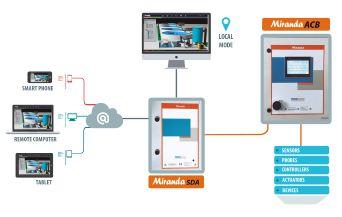
The iRASystem also includes full automation and control capability through the exclusive Miranda® system, which uses state-of-the art specific sensors,
some of them with unique self-cleaning mechanisms. Developed by INNOVAQUA, Miranda® enables RAS farms to monitor and manage, in real-time, the parameters and key features of machines, sensors and processes in a RAS system, either on-site or remotely.
“For RAS farmers, having visibility to your entire system is key,” said Garcia. “Miranda® is an excellent work tool for producers, managers and researchers, with its robust and reliable real-time monitoring and control features of the key parameters and elements of the facilities.”
THE SOLUTION
• An optimized system that minimizes water consumption, optimizes production space and reduces energy and operational costs with maximum parameter control
• Submerged protein skimmer that delivers outstanding performance, minimizes water and energy consumption, and optimizes space utilization
• Automated control system for monitoring and managing RAS systems, on-site or remotely
Diego Garcia Partner and manager
INNOVAQUA
Phone: (+34) 955 97 07 98
Email: innovaqua@innovaqua.com ww.innovaqua.com
HEALTHY WATER FOR HEALTHY FISH: UV STERILIZER, FILTER COMBO OFFERS OPTIMAL WATER QUALITY IN RAS
Good water quality is a critical element in a recirculating aquaculture system (RAS), providing optimal conditions for fish growth, health and welfare. Water clarity does not necessarily equate to water quality, either. It’s the health of the water that ultimately matters, said Tony Riggio, sales manager for Aqua Ultraviolet, a manufacturer of UV sterilizers based in Murrieta, California.
In RAS, the importance of maintaining good water quality is amplified by growing concerns about water scarcity and water conservation. Therefore, ensuring the best water sterilizer for the available water resource in a given RAS farm is key to business viability and sustainability.
UV or ultraviolet light is known as an effective mechanism to kill microorganisms in water such as bacteria, viruses and protozoa. In aquaculture, UV is used for water disinfection or sterilization, significantly reducing pathogen counts in incubation and rearing facilities. UV light is also used to destroy harmful residual ozone in the water, which can be toxic and fatal to the fish. UV light sterilizers are applied to consume the residual ozone in the bulk water prior to coming in contact with the fish.
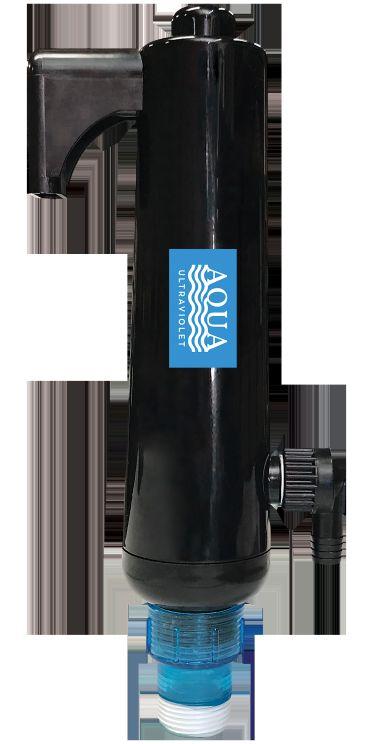
Aqua Ultraviolet offers an array of UV sterilizers, sanitizers and filters to help RAS facilities achieve optimal water quality.
UV STERILIZERS
UV sterilization is another piece of the healthy water puzzle. And with nearly four decades of expertise, Aqua Ultraviolet has perfected the science of UV sterilization. It has a wide range of sterilizers available, from small residential-grade units to large commercial ones.
“We spec by volume and flow rate, and if you get that right they work perfectly,” he said.
For example, the Classic 25 Watt — designed for smaller operations — can handle a flow rate up to 1,200 gallons per hour. The Classic 40 Watt works up to 2,900 gallons per hour. There are 11 models available in total that can handle anywhere from 650 to 7,200 gallons per hour.
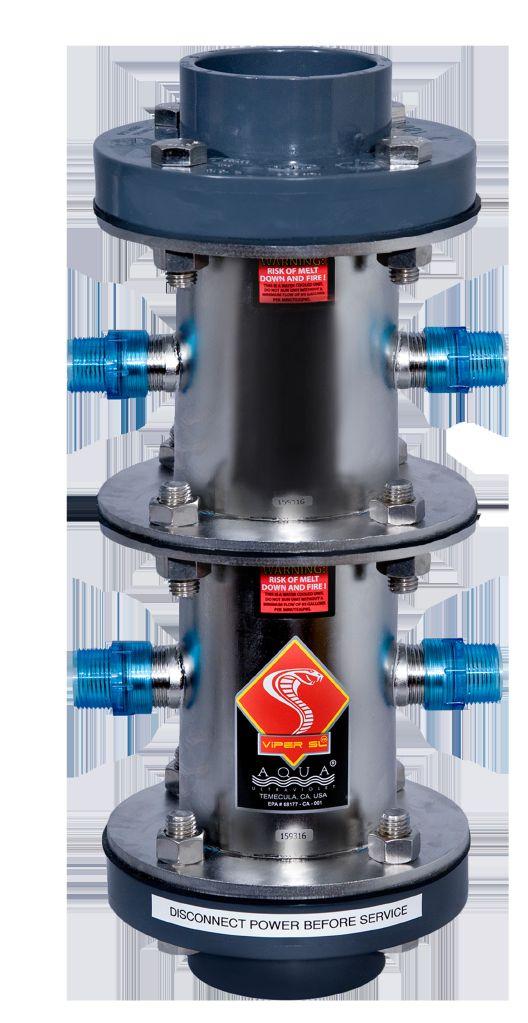
The Viper Series of sterilizers are designed for large commercial operations, and are built to disinfect faster with greater cell penetration capabilities. There are six models to choose from, ranging from the Viper 400 Watt Plastic to the Viper 1,200 Watt Stainless Steel.
The flow rates range from 17,500 to 52,500 gallons per hour and can steril ize tanks ranging from 14,400 gallons to 90,000 gallons. They also feature a compact body design, giving them a small footprint — which makes handling, installation and maintenance simple.
The ultraviolet light sanitizer emits a germicidal ray that alters, or disrupts, the DNA or RNA of single celled microorganisms. It’s a proven way to purify water and control algae, bacteria and protozoa.
Aqua Ultraviolet’s system eradicates the organisms without any harmful residuals, which controls the spread of fish disease, viruses and other harmful pathogens. And they work fast, cleaning the water in three to five days — sometimes overnight — and keeping it that way.
The powerful units have the same germicidal rays as the sun, only hundreds of times stronger and much more cost effective.
Performance is guaranteed when sized, installed and operated according to the instructions. And, because it’s a purely physical process, it does not alter the water chemistry, taste, smell or pH.
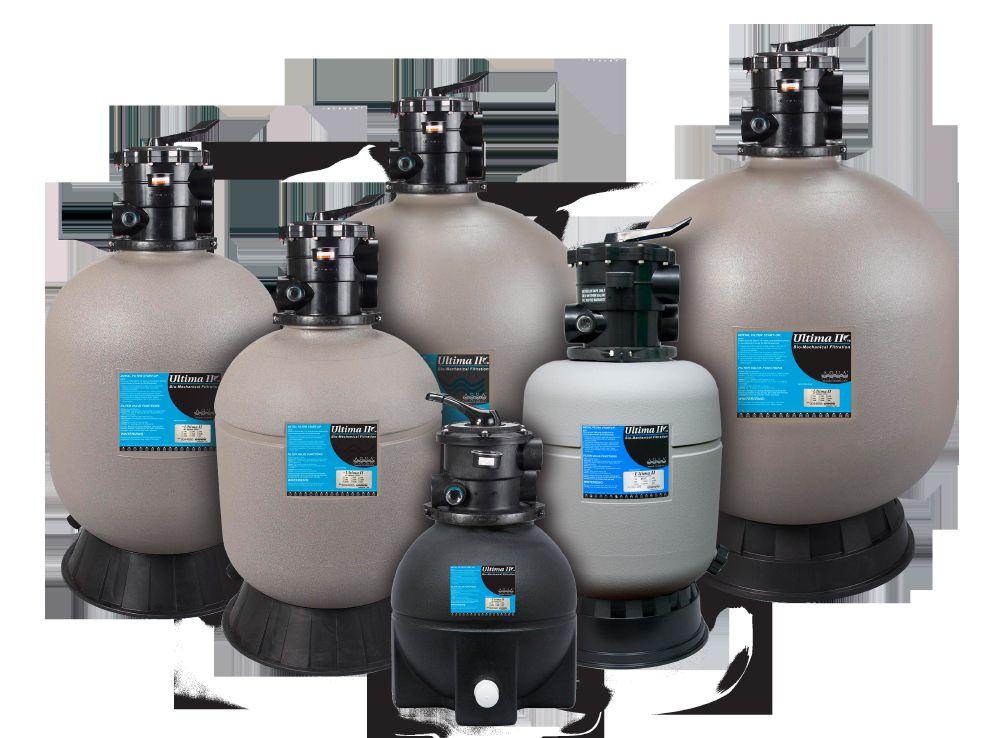
Combining the Ultimate II with the UV sterilizers creates an ideal pair to ensure a
high level of water quality for optimal fish growth and health.
“It’s a very simple closed-loop system,” said Riggio. “The pump is moving water to the filter, then into the UV and back to the RAS tank.”
ULTIMA II FILTERS
The Ultima II biomechanical aqua filter is designed to strip ammonia from the water, with nine different models designed for tanks anywhere from 500 gallons up to 60,000 gallons. In RAS, fish waste contains ammonia which can be harmful to fish.
“Inside of the filter is our bio-media that is our patent,” said Riggio. “It grows nitrifying bacteria that are needed to process waste, which is the ammonia that the fish create. High ammonia will burn their lungs, and they’ll be at the surface gasping for air.”
The Ultima II filters are also simple to clean. Simply set the valve to backwash and rinse, and the internal jets do all the work so operators don’t need to get their hands dirty.
BEYOND MEDICINE: TECHNOLOGY BREEDS HEALTHY FISH
Managing fish health and welfare is the most important aspect of any aquaculture activity. In a closed-loop, recirculating production environment, the stakes are even higher. It’s why real-time visibility into the health of the fish and the system is key.
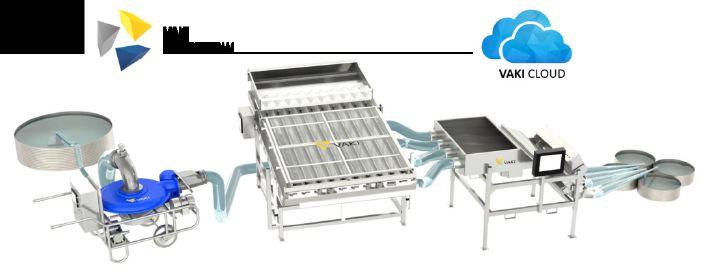
Merck Animal Health’s VAKI smart technology systems provide real-time monitoring capability to ensure fish health and welfare. At the core of this technology is the SmartFlow system, which provides RAS farm managers access to key data insights for more efficient planning and decision making, as well as increasing system automation.
“From a fish health perspective, water quality and limiting stress on fish are still the primary challenges facing RAS producers,” said Ryan Vasak, Vaki sales lead for North America. “While infectious diseases and pathogens can become problematic in RAS systems, many producers are very conscientious about biosecurity and system cleanliness.”
Vaki’s RAS-focused technology offerings include fish counters, fish graders and fish pumps. These devices can be controlled and finetuned through the SmartFlow System for increased efficiency and accuracy. Data from Vaki fish counters are stored remotely through the
Vaki Cloud, and can be accessed by authorized users from anywhere in the world to gather valuable insights and critical data about the health of the farm and the fish.
BIOLOGY MEETS TECHNOLOGY
Merck Animal Health has long recognized the role of technology in fish health management. The company’s evolution through more than 70 years in the animal health industry is testament to this. From decades of breakthroughs in veterinary medicine, vaccines and disease management, Merck Animal Health has successfully integrated technology innovations into its core offerings.
The company’s aquaculture division, Merck Animal Health Aqua, has grown significantly alongside the expanding global aquaculture industry, now offering a suite of solutions designed for RAS environments.
“As a leading biopharmaceuticals and technology solutions company, we are shaping the future of animal health and wellbeing by pioneering science, technology and insights-driven so-
lutions for a sustainable food supply,” Vasak said.
Merck Animal Health Aqua offers veterinarians and producers a wide range of veterinary medicines, vaccines and health management solutions and services, as well as an extensive suite of connected technologies that includes fish handling, identification, traceability and monitoring devices, with the overall goal of improving the health and well-being of aquaculture species.
“As part of our comprehensive portfolio that traces an animal’s entire lifecycle, our company provides real-time, actionable data and insights as well as veterinary medicines, vaccines and health solutions to help, improve or enhance animal management and health outcomes,” Vasak said.
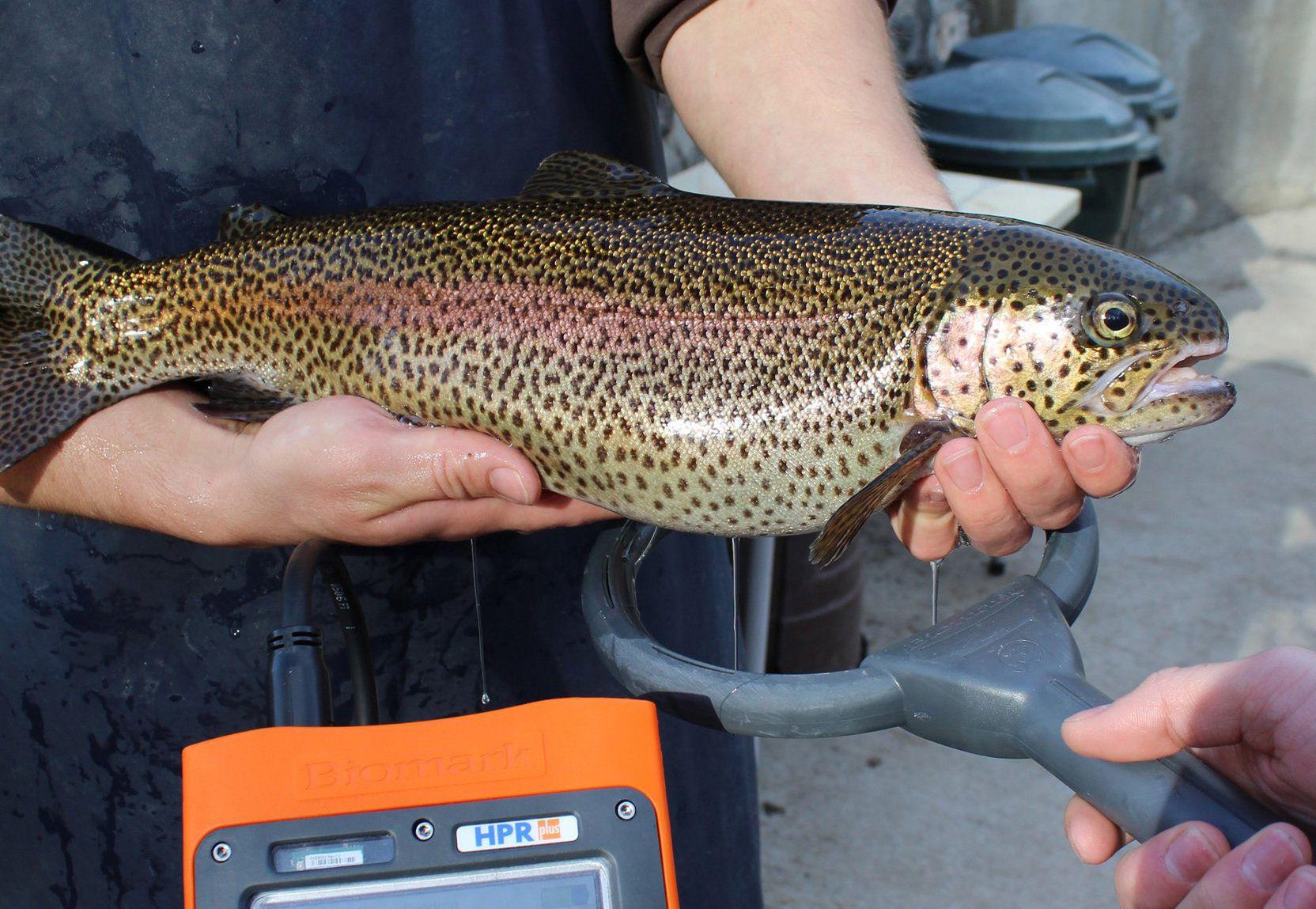
In addition to Vaki, Merck Animal Health Aqua also specializes in animal identification systems and custom passive integrated transponder (PIT) tag systems through the Biomark brand. In aquaculture, PIT tags are used to track and catalog broodstock and production fish. As with Vaki, these tagging and identification devices are managed and configured through the Biomark software.
Merck Animal Health’s Aquatic Gas Optimization (AGO) solutions deliver a revolutionary approach to enhancing the sustainability and performance of farmed seafood.
From oxygen infusion to carbon dioxide removal, the AGO portfolio is designed to enhance fish welfare while providing significant return on investment for aquaculture producers.
The Hyper InfusiO2n solutions feature a unique, efficient method of oxygen infusion. This technology extracts nitrogen and trace gasses, and replaces them with dissolved oxygen in a single step, and makes it immediately available for fish respiration.
“Because oxygen goes directly into the solution, it remains stable significantly longer than traditional diffusers, and can increase the concentration of dissolved oxygen up to 280 per cent without significant changes to total gas pressure,” Vasak explained.
Complementing Merck Animal Health Aqua’s biopharmaceutical and technology offerings is its team of knowledgeable and passionate individuals that customers can rely upon for the best service and support.
Underneath all the technologies and innovation, Merck Animal Health is guided by a common goal of improving fish health and welfare.
“The Merck Animal Health Aqua division strives to be a solutions provider for the aquaculture industry, and we recognize that land-based RAS systems are necessary to provide sustainable protein for our growing human population,” Vasak said.
THE SOLUTION
• Integrated innovations in biopharmaceuticals and equipment and systems technologies for improved fish health and welfare
CONTACT INFO
Ryan Vasak
Merck Animal Health Aqua Vaki North America ryan.vasak@merck.com biomarkservice@merck.com
Oxygen generation achieves maximum reliability, highest efficiency, lowest lifecycle cost
For most RAS producers, not all oxygen sources are created equal.
When asked what they want from their oxygen source, often the most obvious responses trend toward ‘low price.’ But the more experienced producers have come to recognize that ‘high reliability’ is the top priority.
“In a RAS farm, any disruption in oxygen supply, even if only for a brief period, can be catastrophic. Lack of oxygen results in fish mortality, which results in financial loss,” said James Flaherty, president and CEO of Adsorptech, a provider of RAS oxygen solutions based in Middlesex, New Jersey.
The need for reliability of oxygen systems in RAS farms has become even more apparent as RAS producers began to scale their systems. Historically, fish farms were typically smaller and liquid oxygen (LOX) was considered the most reliable oxygen source. However, as the size of RAS facilities grew in recent years (500 to 3,000 kg/hour of oxygen demand and more), the reliability of large LOX systems has decreased while the cost continues to increase – especially when the farm is far from the LOX source. The increased cost was further exacerbated by the global LOX supply shortfall during the COVID-19 pandemic, when even small amounts were hard to come by.
A RELIABLE SOLUTION
Onsite oxygen generation has emerged as an ideal solution that results in improved reliability because the equipment is dedicated to the specific site, unaffected by LOX supply/ demand and logistics disruptions. However, equipment failure and shutdowns due to regular maintenance are a big challenge with these systems. As a partial mitigation, a large backup LOX system can be installed. But this
approach can double the capital cost, and only partially avoids the LOX supply shortfall.
An alternative mitigation route is equipment redundancy, using two half-size onsite oxygen generators. This is a workable solution but economies of scale and doubling the maintenance and operation costs would increase the capital and operating requirements for a RAS farm.
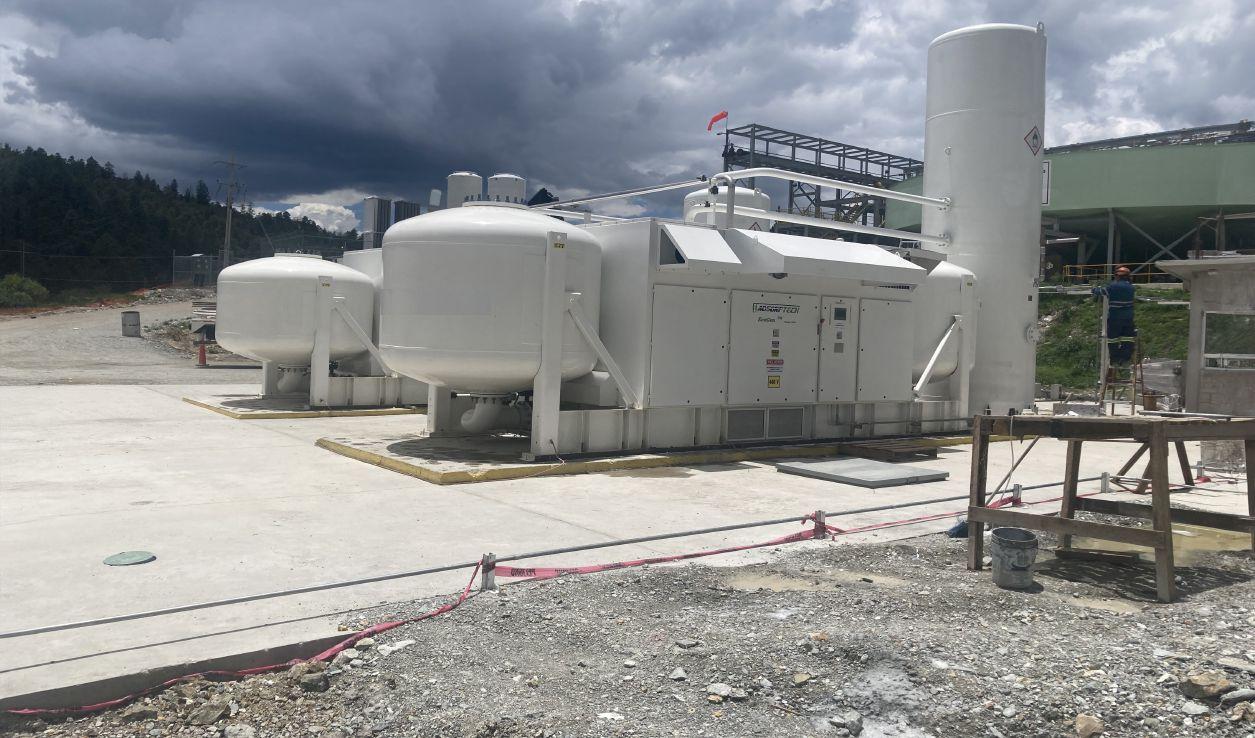
In response to these challenges, Adsorptech invented a unique technology – EcoGen Oxygen VPSA – with built-in, cost-effective redundancy that eliminates the negative impact of economies of scale.
“The RAS farm’s primary objective is to make money by growing and selling fish. To achieve sustainability, reducing the lifecycle cost of oxygen generation is an absolute necessity,” Flaherty said.
Having a low purchase price for onsite generators does not equate to low onsite generation cost or high reliability, Flaherty noted. “This is a woefully inadequate perspective.”
To achieve low lifecycle cost, RAS farms should consider both the capital and operating costs. Capital includes the initial purchase price, installation cost and other utility infrastructure, including a building. Operating cost includes power consumption, turndown ability, other utility requirements, maintenance costs, and backup LOX (when applicable). With power rates constantly increasing, power consumption represents the highest opex impact, followed closely by backup LOX.
Adsorptech’s EcoGen Oxygen VPSA achieves the lowest opex for RAS farms because it is one of the most energy-efficient oxygen sources in the world, and offers the best turndown power savings. EcoGen Oxygen VPSA requires no cooling water or refrigeration, and equipment maintenance is simple.
It also features less switching valves, automated flow, purity and pressure control capability with farm integration, and remote access operations/troubleshooting capabilities.
Through high reliability and low lifecycle cost, EcoGen delivers and improves RAS farm sustainability.
THE SOLUTION
Adsorptech EcoGen Oxygen VPSA delivers:
High reliability
• Exclusive site dedication
• Cost-efficient redundancy
Low lifecycle cost
• Highest power efficiency
• Maximum turndown
• Automated flow, purity and pressure control
• Lowest total installed capital
• No building requirement
• No cooling utilities required
• Less switching valves
• Low-maintenancecost components
• Remote operations and service support capability
James Flaherty
Adsorptech LLC Sales Office 21911 SW 97th Ct., Cutler Bay, Florida 33190 USA
+1 (908) 400-3153
james.flaherty@adsorptech.com www.adsorptech.com
Building client relationships through expert support
When planning and executing RAS projects, the knowledge and expertise of suppliers is as important as the products and systems being installed, and could make a huge difference in customer satisfaction.
This is why Octaform invests time and resources to ensure its people in the field are more than just project managing builds and installations but, more importantly, they are building lasting, positive relationships with customers through their knowledge and expertise.
Based in Vancouver, British Columbia, Octaform’s innovative stay-in-place concrete forming system has been providing RAS farms with high-quality, durable, efficient and environmentally friendly fish tanks.
Designed in Canada, Octaform’s concrete tank systems are deployed at RAS farms across the globe. The company’s commitment to excellence is consistently upheld throughout the organization and extends across the value chain, from consultants to contractors to clients.
“For us it’s all about meticulous planning,” said Troy Snyder, senior field services representative at Octaform. “Early engagement with the contractor is crucial for mapping out the project sequence. This enables us to optimize productivity and adhere to schedules effectively.”
As a former Octaform customer and with 28 years of industry experience under his belt, Snyder has been on both sides of the value chain – as a client and service provider. He is well aware that efficiency in project planning and implementation has never been more important today, as clients continue to be confronted with increasing costs of materials and tighten-
ing project timelines.
“Octaform’s capability to deploy multiple tanks simultaneously, and without the need to strip forms, has been a game-changer. This is not only translating to significant time and cost savings but, more importantly, allows our clients to kickstart production ahead of the curve,” Snyder said.
Rising or unexpected maintenance cost is another challenge facing RAS producers today, according to Dan Groeger, field services manager at Octaform. Groeger’s expertise in quality assurance management for large engineering and construction projects spanning 40 years, makes him a valued member of the Octaform team and an asset to clients.
Octaform’s maintenance-free, built-in PVC liner protects the concrete tanks from cracks, corrosion and leaks.
“The PVC liner is a unique value proposition for our customers,” said Groeger. “It eliminates concerns about re-application or issues like chips and cracks, providing long-term peace of mind. It will also help foster a healthy environment for the fish.”
Octaform’s support for clients and contractors goes beyond the planning stage. The company is invested in the success of each project, and ensures that field representatives are onsite providing best-practice training to contractors and technical support on every aspect of the project.
In this ever-evolving world of RAS aquaculture, the expertise and efficiency of suppliers and solution providers are key to advancing the sector’s progress and profitability.
THE SOLUTION
• Innovative stay-in-place concrete forming RAS tank system built for efficiency, durability and sustainability
• Dedicated project managers that supports contractors and clients throughout the project lifecycle
Callum Graham Business Development Manager Octaform
Tel. 604-408-0558 ext. 271
callum.graham@octaform.com www.octaform.com
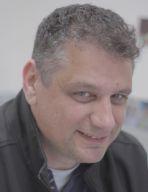
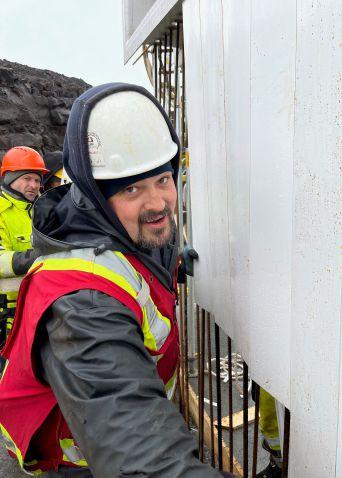
Top: Dan Groeger, field services manager
Below: Troy Snyder, senior field services representative