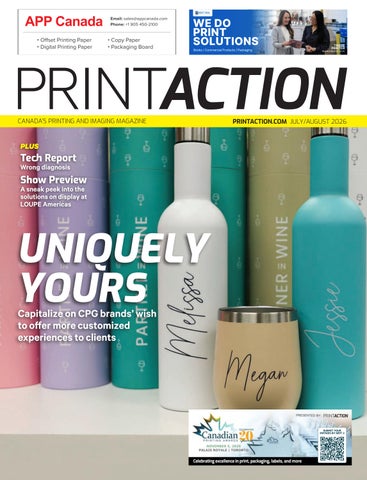
UNIQUELY YOURS
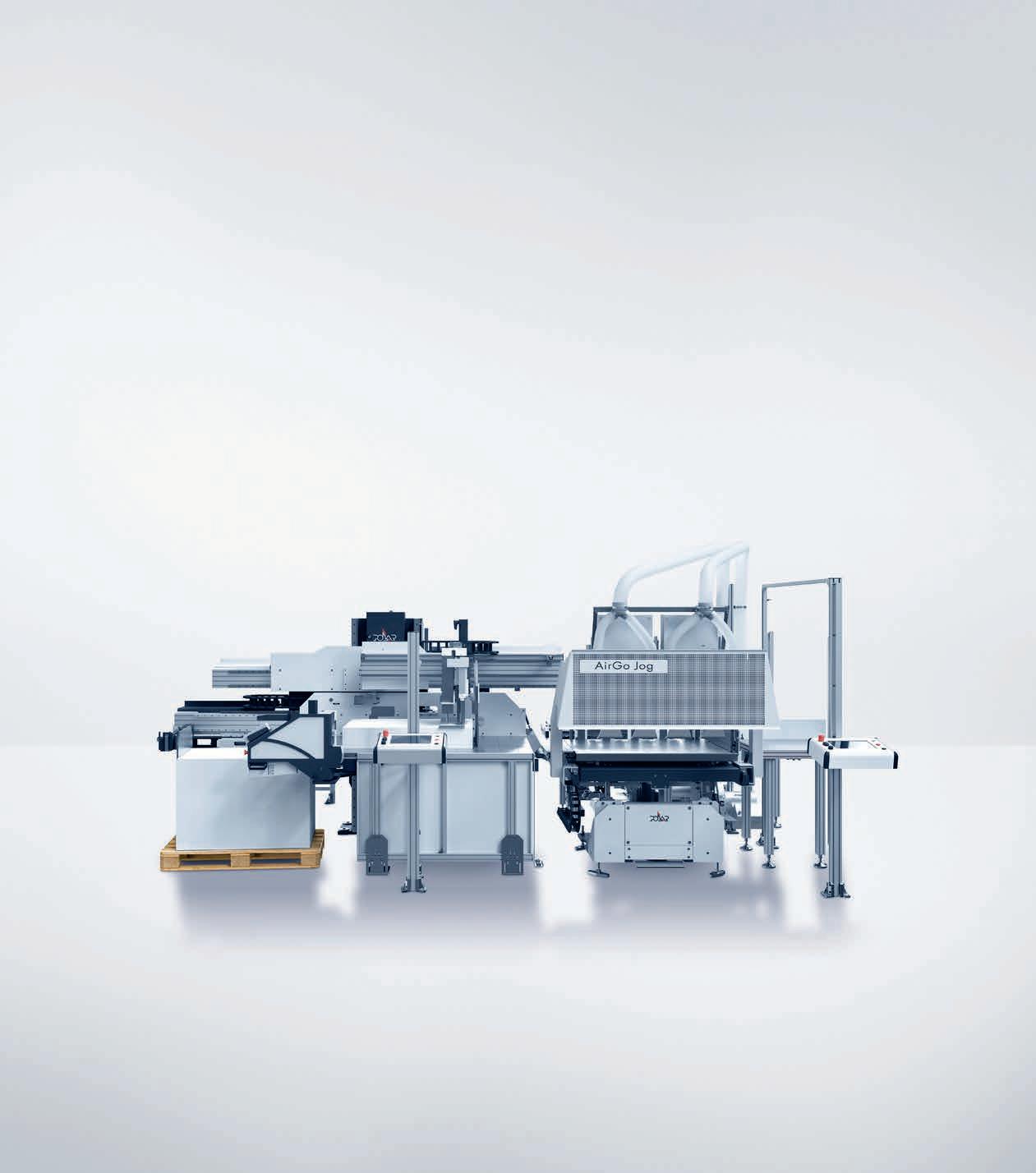
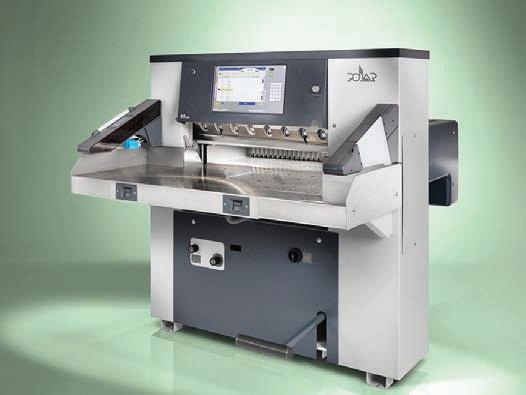
The POLAR AirGo Jog prepares entire cutting reams in just 90 seconds – fully automated, precise and operator‑friendly. As part of the HEIDELBERG portfolio, it sets new benchmarks in industrial material handling and integrates perfectly with cutting systems and PACE solutions.
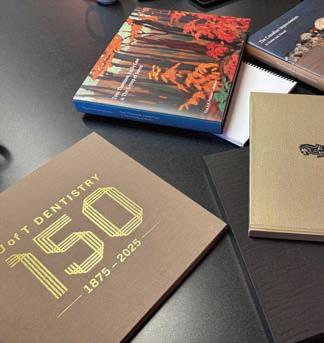
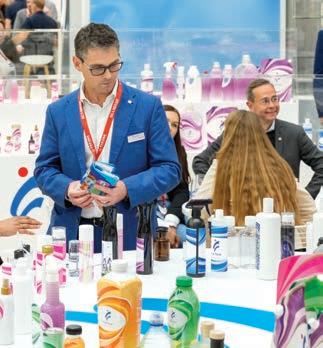
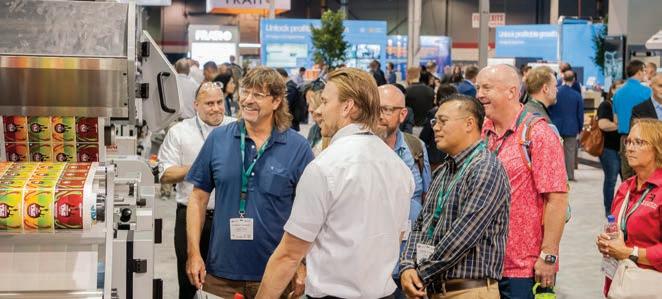
10 Alec Couckuyt Wrong diagnosis 12 15 17 20
ISSN 1481 9287. PrintAction is published 6 times per year by Annex Business Media. Canada Post Publications Mail Agreement No. 40065710. Return undeliverable Canadian addresses to: Circulation Department, 111 Gordon Baker Rd., Suite 400, Toronto, ON M2H 3R1. No part of the editorial content in this publication may be reprinted without the publisher’s written permission. © 2026 Annex Business Media. All rights reserved. Opinions expressed in this magazine are not necessarily those of the editor or publisher. No liability is assumed for errors or omissions. All advertising is subject to the publisher’s approval. Such approval does not imply any endorsement of the products or services advertised. Publisher reserves the right to refuse advertising that does not meet the standards of this publication. Printed in Canada.
Exper ts weigh in on how to benefit from demand for per sonalized print products
The 43-year-old Toronto-based boutique company has evolved from typesetting to full-ser vice commercial print
Sustainability and AI dominated conversations at Interpack 2026
The biennial labels and packag ing show is scheduled for Sept. 15-17 in Chicago
GAMUT
6 News, People, Installs, Calendar
SPOTLIGHT
11 John Hume Sr., founder, Hume Media
FROM THE EDITOR
4 Nithya Forces shaping corrugated packaging
CHRONICLE
8 Nick Howard
The transformation of John Dickinson Schneider
TECH REPORT
In its Global Corrugated Packaging: A Market Outlook report, Smithers forecasts corrugated packaging will return to modest growth after a period of high volatility. Value will headline growth in this sector rather than volume as consumers are purchasing less products than previously. The following six forces are reshaping the market:
• automation;
3B-sf
The amount of board Smurfit WestRock’s Pleasant Prairie site in Wisconsin produces.
• regulations;
• demand-side changes;
• e-commerce g rowth;
• consolidation; and
• geopolitics
According to Smithers’ analyst Eric Chartrain, each of these forces is reshaping the market on a permanent basis.
“None will reverse or fade once conditions normalise. Together, they’re resetting how value is created across the industry, which means producers need to adapt their strategy rather than manage through a downturn,” he said.
Big companies are investing in automation, which is widening the production cost gap between manufacturers. According to Chartain, top-quartile operators are running 20-40 per cent lower costs than bottom-quartile peers. For instance, Smurfit WestRock’s Pleasant Prairie site in Wisconsin produces 3 billion sf of board at roughly 60 per cent of conventional labour input, he explained, thanks to automation.
Consolidation is also helping large businesses find the capital for heavy investments. BTW every tier of the corrugated packaging sector is seeing consolidation. In 2024, Smurfit and WestRock merged to create one of the world’s largest packaging manufacturers. This was followed by the International Paper-DS Smith combination in January 2025 and Mondi’s €634 million acquisition of Schumacher. In the beginning of this year, International Paper made public its plans to create two independent, publicly traded companies. International Paper will comprise its current business in North America including legacy IP and DS Smith assets, and the EMEA Packaging business will comprise legacy DS Smith and IP assets in EMEA.
“During the past year, we have created two regional powerhouses with scale,
strong customer relationships, leading brands and talented teams,” said International Paper chair and CEO Andy Silvernail at that time. “The two businesses operate in distinct market environments and are at different stages of their transformation. We have learned a lot about how to create value in each region. The next right step in our transformation journey to achieve full value creation potential is to create two independent, regionally focused companies.”
At Interpack, much of the conversation centred around E.U.’s Packaging and Packaging Waste Regulation (PPWR), which enforces mandatory recyclability grading, EPR eco-modulation fees, a 40 per cent void-space limit, and PFAS bans. This consequential regulation will impact the corrugated packaging sector, but Chartrain pointed out that the industry has a structural advantage than other substrates because it roughly has a 90 per cent OCC (old corrugated container) recycling rate.
The COVID-era growth in online shopping continues unabated. As digital adoption increases in emerging markets, e-commerce will remain the highest-growth area for corrugated. This growth has also spurred innovation. Fitto-product packaging customizes boxes to the exact size of the products, thereby reducing the need for filler material. Additionally, the demand for lightweighted boxes for logistics purposes has increased the need for thinner but stronger board grades.
Geopolitical tensions can stunt growth. Per Smithers, tariff regimes alone could slow global packaging growth by up to 0.5 percentage points a year through 2030. Am I missing any factors that are driving growth in the corrugated packaging sector? Let me know. In the meantime, enjoy the summer.

NITHYA Editor nnithya@annexbusinessmedia.com
Reader Service
Print and digital subscription inquiries or changes, please contact Angelita Potal 416-510-5113 apotal@annexbusinessmedia.com Fax: 416-510-6875
Mail: 111 Gordon Baker Road, Suite 400, Toronto, ON M2H 3R1
Editor Nithya nnithya@annexbusinessmedia.com 437-220-3039
Contributing writers
Nick Howard, Treena Hein, Alec Couckuyt, Abhay Sharma
Associate Publisher Kim Barton kbarton@annexbusinessmedia.com 416-435-9229
Media Designer Curtis Martin cmartin@annexbusinessmedia.com
Account Coordinator
Emily Guimaraes eguimaraes@annexbusinessmedia.com 416-510-5118
Audience Development Manager Urszula Grzyb ugrzyb@annexbusinessmedia.com 416-510-5180
Group Publisher/Director of Production Paul Grossinger pgrossinger@annexbusinessmedia.com
CEO Scott Jamieson sjamieson@annexbusinessmedia.com
Subscription rates
For a 1 year subscription (6 issues): Canada — $45.61 +Tax Canada 2 year — $74.79 +Tax United States — $103.96
Other foreign — $202.61 Single Issue — $8.00 + Tax All prices in CAD funds
Mailing address
Annex Business Media 111 Gordon Baker Rd., Suite 400, Toronto, ON M2H 3R1 Tel: 416-442-5600 Fax: 416-442-2230
Occasionally, PrintAction will mail information on behalf of industry related groups whose products and services we believe could be of interest to you. If you prefer not to receive this information, please contact our Audience Development in any of the four ways listed above. Annex Business Media Privacy Officer Privacy@annexbusinessmedia.com 800-668-2384
ISSN 1481 9287 Mail Agreement No. 40065710 printaction.com


No matter the industry, volume, application, market, or price point, every press in the Canon inkjet portfolio is strategically engineered to deliver versatile solutions to help customers automate and scale their production for maximum efficiency.
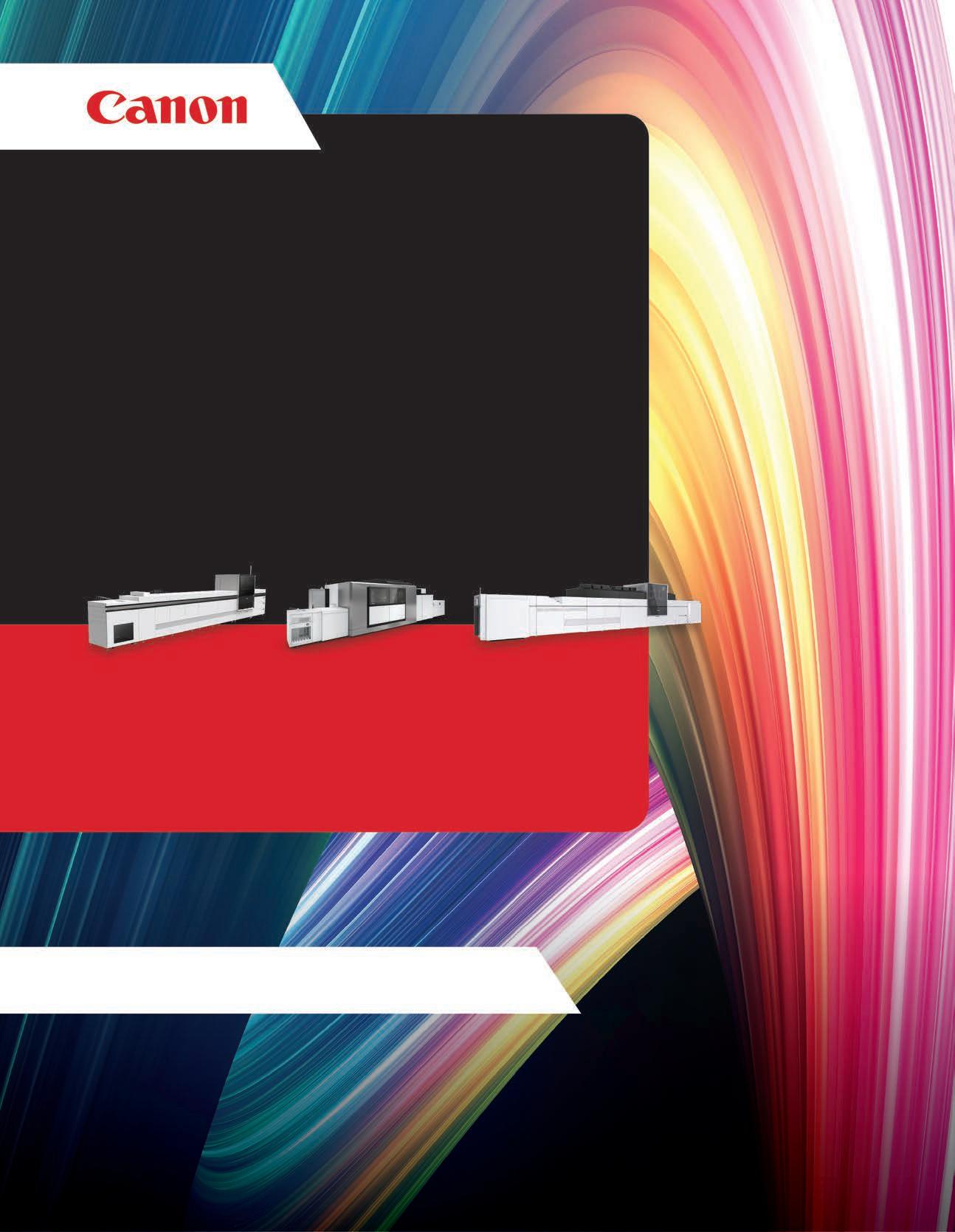
Canon varioPRINT iX1700
Exceptional quality and broad versatility. Speed and efficiency by design.
Explore the full inkjet portfolio at Canon.ca/production-printing MOVE FORWARD WITH
Canon varioPRINT iX3200
The ultra-versatile sheetfed inkjet press and proven market leader.
Canon varioPRESS iV7
The ultimate B2 sheetfed inkjet factory.
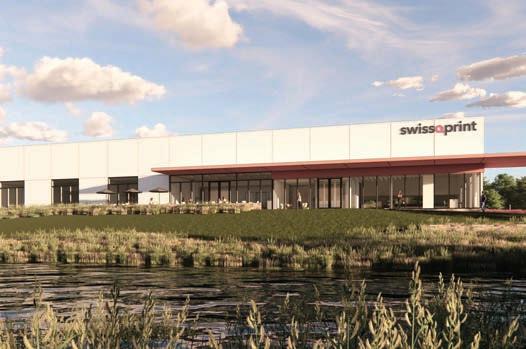
Nazdar acquires Fujifilm’s U.S., Canada, and Latin America screen and flexographic ink business. Nazdar confirms that all core product attributes will remain consistent following the acquisition. Product formulations, specifications, and manufacturing locations will not change, and current SDS/ TDS documentation will continue to be fully supported.
Heidelberg acquires Manro ‑ land’s service business and takes over the production of Polar presses and systems. Heidelberg already owned Polar’s technology, brand rights, sales, and service divisions. The collaboration between Heidelberg and Polar actually dates to the 1950s and has expanded over the decades.
After Manroland ceased operations in April, Heidelberg acquired its service and spare parts business. Additionally, Heidelberg has got the technology and IP property related to service and spare parts, as well as the Roland 900 / Cartonmaster in the large format sheetfed offset segment.
Postmedia will exit the flyer distribution business by Aug. 31, 2026. This decision will impact approx. 50 full-time and 200 part-time roles.
Veralto, Esko’s parent company, acquires GlobalVision. Headquartered in Montreal, GlobalVision provides AI-augmented inspection solutions. GlobalVision will be integrated into the Esko business.
TI Group acquires ReproArt Imaging. ReproArt specializes in large-format digital printing. This transaction will see the relocation of employees and equipment to the TI Group facilities. Further, TerraNova Partners, a Toronto- and New York-based investment firm, recently invested in TI Group.
Aug. 18, 2026
Book Manufacturers Institute Canadian Roundtable Montreal
Sept. 10, 2026
OPIA Golf Classic Milton, Ont.
Sept. 15-17, 2026
Loupe Americas Chicago, Ill.
Parker Pad & Printing marks eight decades of growth in Markham, Ont. To honour this milestone, the company will donate $80,000 to charitable organizations supported by its clients. Recipients include the CIBC Children’s Foundation, RBC Foundation, Heart for Africa, Haliburton Highlands Health Services Foundation, Covenant House, McDermott House Canada, the Heart & Stroke Foundation and Mastercard Canada Foundation’s EleV Program.

Regal Press Canada in Mississauga, Ont., has been sold to Joe Brevetti, a former general manager of Pristine Printing. Founded in 1978 by the Byramjee brothers, Marzi and Zavar, Regal Press prints magazines, journals, calendars, catalogs, presentation folders, sales literature, posters and labels. It also offers fulfillment and mailing services. The sale includes all the equipment including offset, letterpress, digital printer, as well as bindery machines including stitchers and mailing solutions.
The current executive management team, led by Tim Wood, CEO, will remain in place and become part of the company’s ownership structure, as partners Domenic Rubino and David Smith retire.
The Canadian Print Scholar ships partners with the College of the North Atlantic (CNA) to support students enrolled in CNA’s Graphic Communications diploma program. Through this partnership, Canadian Print Scholarships will help provide financial support to students preparing for careers in graphic communications, print, signage, design, digital production, and related sectors.

Past-president of the Association of Registered Graphic Designers and veteran designer Nicola Hamilton was recently recognized as an Emerging Leader for 2026 under the Entrepreneurship category by The Peak.
Transcontinental expands the Raddar mass‑media promotion‑ al platform across all of
Sept. 16-18, 2026
Sign Experience Canada Calgary
Sept. 23-25. 2026
Printing United Expo Las Vegas, Nev.
Sept. 30-Oct.1, 2026
FTA 2026 Fall Technical Conference
Atlanta
Sept. 30-Oct. 2, 2026
Paperboard Packaging Council 2026 Fall Meeting & Leadership Conference Lake Buena Vista, Fla.
Oct. 18-21, 2026
Pack Expo Chicago, Ill.
Nov. 5, 2026
Canadian Printing Awards Toronto
Canada. Raddar combines advertising and news content from Transcontinental customers into a single printed product delivered weekly by Canada Post. It offers customized targeting through more than 500 weekly versions, each typically covering approx. 20,000 households. Also, Transcontinental expands its partnership with Postmedia Network through 2030, as well as signs a three-year agreement with Glacier Media to print the Victoria Times Colonist.

Hybrid Software appoints Ralph Boer as northwest territory sales manager. In this role, Boer will work closely with customers and partners in Western Canada, Northern California, and the Pacific Northwest.
Boer brings more than 20 years of experience in the print and label sector, spanning print production, prepress technologies, and capital equipment sales. Throughout his career, he has built a strong track record selling flexographic, digital, and hybrid press solutions to label and packaging converters in the western United States and Canada. His industry experience includes 14 years with Mark Andy and, most recently, five-and-a-half years with Durst Image Technology.
Boer holds a bachelor’s degree in graphic communications from California Polytechnic State University, San Luis Obispo, and a mater’s degree in business administration from Pepperdine University. He is based in Northern California.

Standard Finishing Systems appoints John Kaliotzakis as territory sales manager for Canada. Kaliotzakis has had a long career in the print industry. He worked for 20 years as a field technician for KBR Graphics, one of the oldest independent printing equipment dealers in Canada, until the company closed its doors in early 2020. Kaliotzakis then moved to RM Machinery, a full-service supplier for the print industry with locations in New Jersey and Ontario, where he worked as a field service engineer. Kaliotzakis will represent all of Canada in his new position at Standard where he will report to Karl Belafi, the regional sales manager for Canada and the western U.S.
Muller Martini’s regional sales manager Frank Donnelly retired June 30, 2026, concluding a 45year career in the printing and finishing industry and nearly two decades with Muller Martini. Donnelly’s career began on the production floor as a general labourer feeding pockets in a bindery. Through dedication, technical expertise, and leadership, he advanced to operator, supervisor, bindery manager, and ultimately, pressroom manager. His progression through virtually every level of manufacturing provided him with a deep understanding of production processes, equipment, and customer needs. After spending 25 years in manufacturing operations, Donnelly transitioned into sales, joining Muller Martini as regional sales manager in 2007. As a former customer and advocate of Muller Martini solutions, Donnelly brought a unique perspective to the role, combining firsthand operational experience with knowledge of finishing technology and customer support.
Toronto-based Hume Media recently installed a Kyocera TASKalfa Pro 15000c.
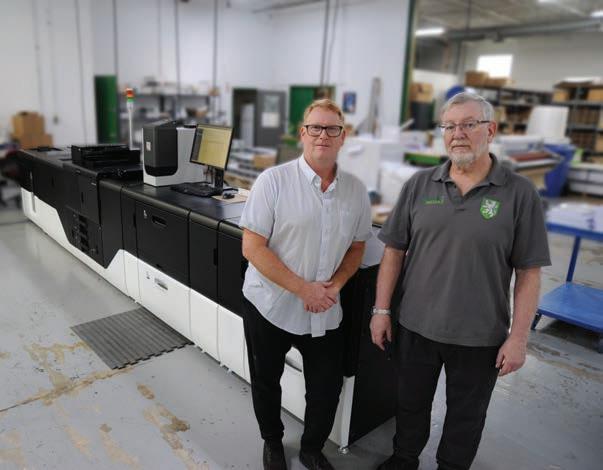
Acumen Visual Group, Markham, Ont., installs a new Canon Colorado M-Series (M5W) 64-in. roll-to-roll printer.
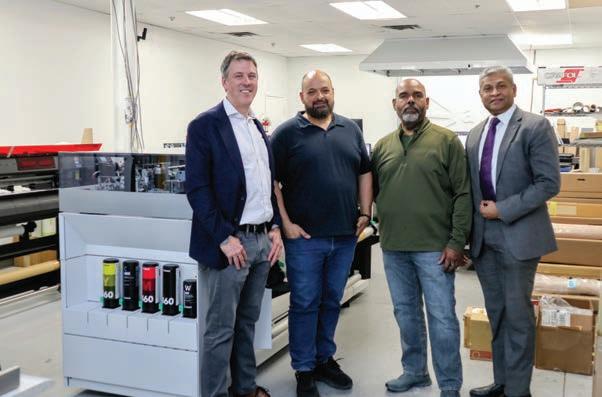
Burke adds a Komori GL 5 colour 40-in. offset press to its Calgary plant.
By Nick Howard
everal successful entrepreneurs began their journey in graphic communications. This includes Benjamin Franklin, one of the founding fathers of the American Republic, author Mark Twain, Milton Hershey, who founded Hershey’s, filmmaker Walt Disney, Bryan Donkin, the English engineer who perfected the papermaking machine and later developed the canning process, CNN founder Ted Turner, who took over his father’s billboard business, and Thomas Edison, who edited and printed his newspaper well before the record player and the light bulb were invented. Of course, the Harris brothers, although running a jewelry store, invented their way into becoming the world’s largest manufacturer of printing presses, which today is a massive company deeply involved in defence and aerospace. Even the mayor of my hometown of Oakville in Ontario started out running a typecaster. Rob Burton’s eyes lit up when he visited my museum, the Howard Ironworks Museum, and set his eyes upon one of the Linotypes there. In 2021, I received a phone call from a gentleman who was excited about a Gordon platen press in the museum. Jim Paul was calling from Libertyville, Ill., and represented Hollister. I explained the press wasn’t for sale, but Paul insisted. I then learned that Hollister was about to celebrate its 100th anniversary, tracing its roots to their founder, John Dickinson Schneider. Hollister is today a $1.4 billion business and a leader in ostomy products. Still, it all started in Chicago when, in 1921, Schneider, then a 23-year-old,
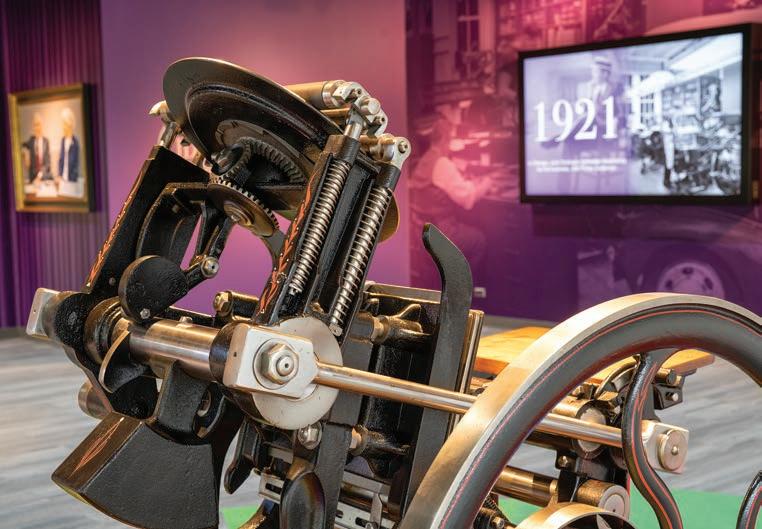
John Dickinson Schneider began his entrepreneurial journey with a
opened a printshop in the basement of his parents’ home. His press was the wildly popular Gordon, which was manufactured in New Jersey during the latter half of the 19 th century and invented by George Phineas Gordon.
Schneider’s motto of ‘Only first class is good enough’ attracted new customers year after year. Along with the skills of a printer, he was blessed with that rare quality of compassion. Schneider once noticed a destitute man in a tattered suit. He then took a vow that no one who works for him would ever be so impoverished. Even during the Depression, Schneider only laid off one employee. In 1938, Schneider fortuitously landed an exciting account: printing heirloom birth certificates for Franklin C. Hollister, which was a minor supplier to the medical community, offering products such as a newborn’s baby foot printer and Identiband bracelets. The relationship with Schneider grew quickly, and in 1948, the latter acquired Hollister.
By the early 1960s, Hollister had entered the ostomy business, which would revolutionize medical care for millions. This was followed by a slew of other medical appliances. All the while, the original John Dickinson Schneider company continued printing, now using offset presses (mostly made by Harris) to support the rapidly growing Hollister enterprise.
Upon Schneider’s retirement, he placed his shares in trust for Hollister’s employees. Today, Hollister is an employee-owned business headquartered in Libertyville with branches around the globe and approx. 4,000 employees.
The printing industry has been the cradle of many successes outside its realm of influence. John Dickinson Schneider is one alumnus who used his printing skills to make a difference in a completely new field.
NICK HOWARD, a partner in Howard Graphic Equipment and Howard Iron Works, is a printing historian, consultant, and certified appraiser of capital equipment. He can be reached at nick@howardgraphic.com.
It’s easy to get caught up in the day to day.
PRINTING United Expo gives you three days to look up.
See the latest technology. Explore new ideas. Meet the people who are moving print forward. And have the conversations that make you think di erently about your business.
Go home with a fresh perspective and ideas you can actually use.
SEPT. 23-25, 2026
LAS VEGAS, NV




The print industry’s talent crisis runs deeper than what HR can fix.
By Alec Couckuyt
sk a 25-year-old what they think of when they hear the word “print” and you will get a consistent answer: Newspapers, catalogues, something their parents subscribed to, something declining, or something belonging to a different era.
AThey are wrong. But they are not to be blamed for being wrong. The print industry has done a poor job of telling its own story, and that failure is now showing up in the talent pipeline. You cannot recruit effectively to an industry that hasn’t decided what it is.
The print industry is a digitally integrated, highly automated communications platform operating at the intersection of technology, brand, data, and media.
Modern print facilities run sophisticated colour management systems, AI-assisted workflows, robotics, variable data engines, and real-time production analytics. The output is physical, but the intelligence behind it isn’t analogue.
Print does not compete with digital media. It complements it. For instance, direct mail with embedded QR codes, packaging carrying augmented reality triggers, labels communicating supply chain data, and wide-format graphics that anchor retail environments designed around an omnichannel brand experience. This is not ink on paper. This is communications infrastructure.
The industry belongs in the same conversation as marketing technology, advanced manufacturing, and brand management. It must show up in this manner to career seekers, educational institutions, and the broader business community.
The skilled craftspeople who built this industry: offset press operators with 30 years of colour instinct, bindery specialists who could diagnose a folding problem by sound, and prepress veterans who understood every nuance of how a file would behave on a specific press, are retiring. And they are taking

irreplaceable knowledge with them.
Trade school programs and apprenticeships that once replenished the talent pool have largely disappeared. There are simply fewer institutions teaching these crafts at the level the industry requires. Those still teaching them are producing graduates in numbers bearing no relationship to the demand.
This is not a criticism; it is a structural reality. And it deserves to be named as one rather than managed around with the quiet hope that someone will figure it out. The classic talent pond is small, ageing, and no longer being stocked. This is a strategic challenge.
The answer is not simply to recruit harder from the same sources. It is to find a bigger body of water, and to ask honestly whether the same bait still works.
The wave of consolidations, acquisitions, and convergence reshaping the print industry is not just a technology integration challenge. It is a business transformation challenge. The companies navigating it successfully need people who can manage complexity, lead change, think cross-functionally, and operate comfortably in environments where the rules are being rewritten in real time. That profile does not exclusively live in printing schools or on press floors. It also lives in engineering faculties, business programs, technology disciplines, and adjacent industries sharing the same operational DNA.
There is a generation of talented people who would find the print industry genuinely compelling, if they knew what it actually was: sophisticated technology, tangible output, brand impact at scale, and business environ-
ment undergoing rapid and meaningful transformation. These are attractive propositions. The industry simply hasn’t packaged them that way.
The most effective strategic execution frameworks treat talent as a business-critical upstream variable. Before you can optimise operations, drive sales effectiveness, or manage financial performance, you need the right people in the right roles with the right capabilities. Talent readiness must precede strategic execution, not follow it. It is a trap I explore in my upcoming book on strategy execution: leaders invest heavily in strategy and assume the talent required to execute it will somehow materialize. It rarely does.
In the print industry, that assumption has been running quietly in the background for years. The technology investments are real and significant. The automation roadmaps are serious. But the human capital strategy should sit upstream of all of it.
The industry owes something to the craftspeople who built it, and the most meaningful way to honour that is to ensure there is a next generation capable of carrying it forward. The technology is advancing rapidly. The business models are growing increasingly complex. The only variable still lagging is the human capital strategy capable of matching both, and that is entirely within the industry’s control to fix.
ALEC COUCKUYT, is a business strategist, economist, published author, and speaker with extensive international management experience. He can be reached at aleccouckuyt@gmail.com.

Toronto-based Hume Media is a full-service media company providing solutions in printing, design, web-to-print, online ordering, mailing/distribution and warehousing. Founded in 1988 by John Hume Sr., Hume Media has built a reputation as a forward-thinking digital print provider. Here’s an excerpt from an interview with Hume Sr.
What is the state of the Canadian print industry?
JH: It’s kind of shaky. A lot of the big players seem to be bought out or consolidated with other companies. A lot of the small printers have disappeared. I’m a mid-sized printer and I’ve always specialized in digital printing. We’re experts at running variable printing, colour, books, and a lot of mailers. We used to have six to seven presses, and we got rid of them all. Now, we’re big time into inkjet printing, which is the future of digital printing. The quality is way different and better and they’re also more economical than older presses.
What attracted you to the print industry?
JH: I worked for Xerox for 10 years from 1973 to 1983 and then I worked for another person for five years. They decided to move and I decided to not move. Some of their clients encouraged me to start a business as they were looking for a printer. I haven’t looked back since then. Actually, one of the people I used to work
for wound up working for me. I grew the company from just being my mother, my son and myself to 40 employees. Now we have 29 staff members. COVID changed the world as well as how we run our business. We’re not as big as we used to be, but we’re still big enough for me.
How can the industry attract more young people?
JH: It is very difficult to find qualified people who know what we’re doing. We tend to find freshers and train them. It’s really a niche industry, and not a lot of people are aware of this kind of work. I would also advise companies to raise awareness about the industry in community colleges.
In such a competitive landscape, how can printers win more sales?
JH: We can win more sales by being very professional and service oriented. You got to find that person who can get out there and be told no 1000 times only to be told yes once. You got to have someone who can talk to people and try to win them over. Fortunately, we get referrals for major work because we’re known. We thrive on having 10 to 20 sizable clients for whom we do lots of work.
What are some of the biggest opportunities in the print industry?
JH: The future is high-quality inkjet printing. It is inexpensive and easy to use.
What do you think is the most exciting aspect of the printing industry today?
JH: Inkjet technology. This business is very interesting. Every day is different. Every project is different and challenging. Print is like arts & crafts class, different every day.
John Hume Sr.’s response was edited for length. For more Q&A Spotlight interviews, please visit www.printaction.com/profile.

Consumers seek products that feel unique to them, rather than mass-produced.
How to benefit from growing demand for personalized printed products
By Treena Hein
Smart print shops are laser-focused on the trend of personalization – as they should be due to rising demand. According to Marcin Majda, CEO of Antigro Designer, a print personalization software provider, three key factors are driving the trend in Canada. Two are the parallel growth of e-commerce and competition among brands. The other is rising consumer expectations. Simply put, today’s consumers (across age, gender and other differences) really like products and shopping experiences that feel unique to them, rather than mass-produced.
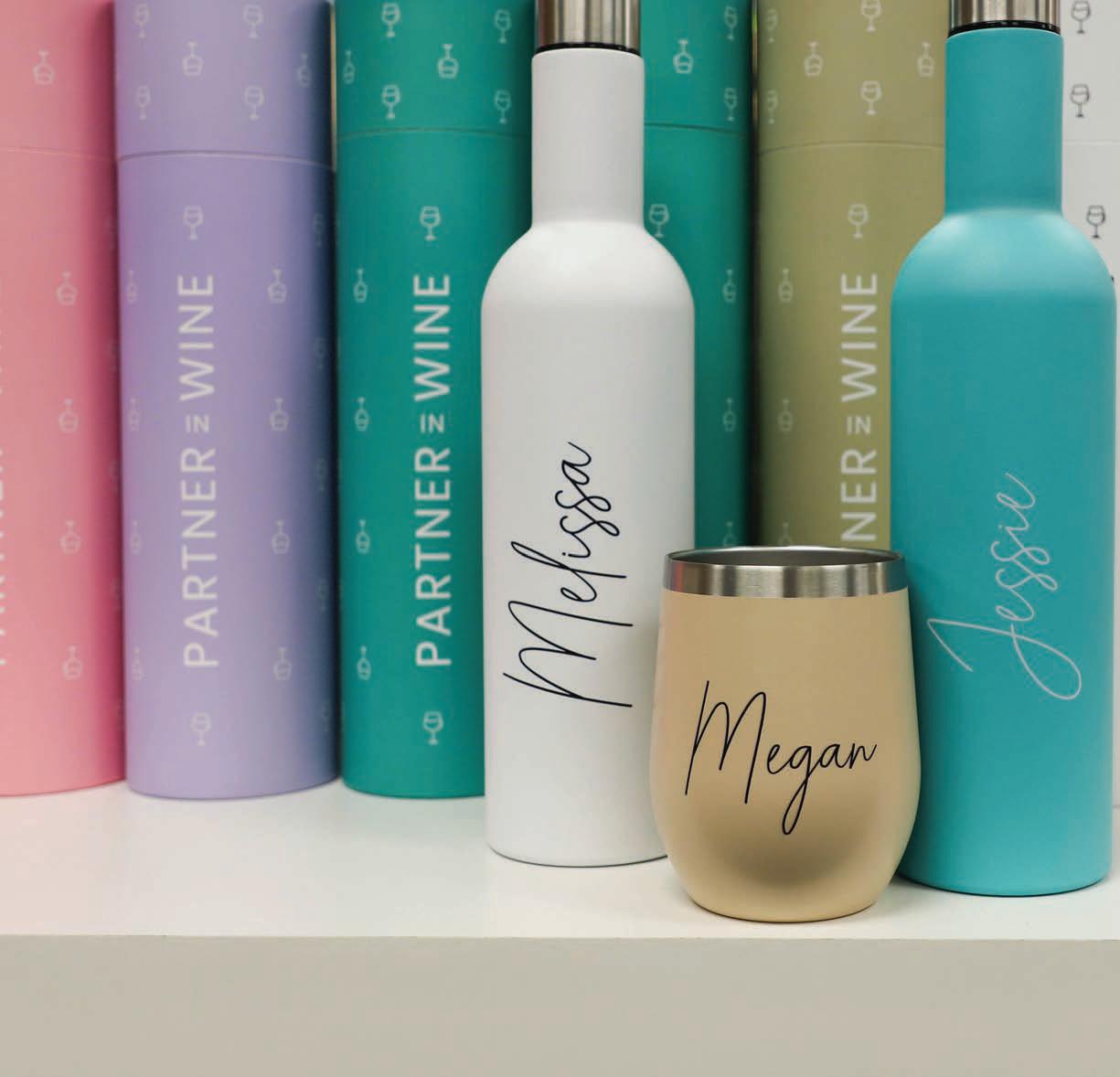
Looking at categories where personalization demand is particularly rising, Majda points to functional and gift-oriented products such as apparel, T-shirts, hoodies, drinkware, accessories, home decor, photo gifts and engraved items. But companies are also personalizing to make the most of their print marketing campaign budget.
That is, “a 200,000-piece run is still powerful,” says Audrey Jamieson, president of Marketing Kitchen in Markham, Ont., “but the brands getting the most out of it are breaking it into versions, each written for a specific person at a specific moment. Same campaign, entirely different conversation.”
By now – no matter what the printed item – print shop owners are well aware that personalization has grown well beyond the simple. It’s not just about inserting a person’s name or changing the colour palette.
“That’s the basic version of personalization,” says Joanne Gore, president at Joanne Gore Communications in Toronto. “The real opportunity is in using data to change the message, offer, image, location, language, product focus, call to action or next step.”
Gore points out that using data to increase relevance is especially critical in Canada, where markets are geographically broad, regionally diverse and “often more fragmented than people realize.” A message that works in downtown Toronto may land very differently in Atlantic Canada, for example. “That creates a real opportunity for printers who can help customers think beyond ‘one campaign for everyone,’” she says, “and move toward more relevant, segmented communication.”
This could take the form of personalized direct mail, targeted postcards, customized catalogues, versioned brochures, localized retail signage, event materials, labels and highly-targeted print pieces, says Gore – but smart print shops are also working with partners to connect these printed items to a ‘digital experience’ through the use of QR codes, PURLs, landing pages, trackable offers or automated follow-up.
Personalization of labels and packaging is growing too, as brands look to provide more customized, tactile and interactive experiences.
“Digital print, embellishments, foils, specialty coatings, dimensional effects, and specialty inks are helping brands create packaging that feels more targeted, premium and campaign-specific,” says Gore.
As with direct mail and the other items noted above, when you add in technologies like QR codes, RFID, NFC and blockchain-enabled traceability to customized packaging, it becomes much more. That could look like a connected brand experience, a product authentication tool, a sustainability story or a direct line to the customer.
Delving into the area of brand experience, Michael Barron, Western USA & Canada sales manager at
Personalization works very well for direct mail, brochures, event materials, labels and highlytargeted print pieces.
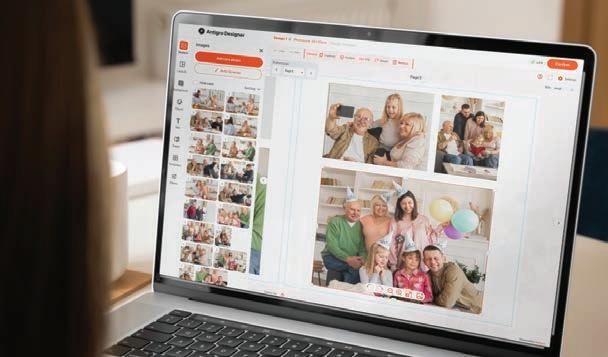
E-commerce, intense competition between brands and rising consumer expectations are increasing the popularity of personalized printed products.

$41.79B
The value of the Canadian e-commerce market in 2025.
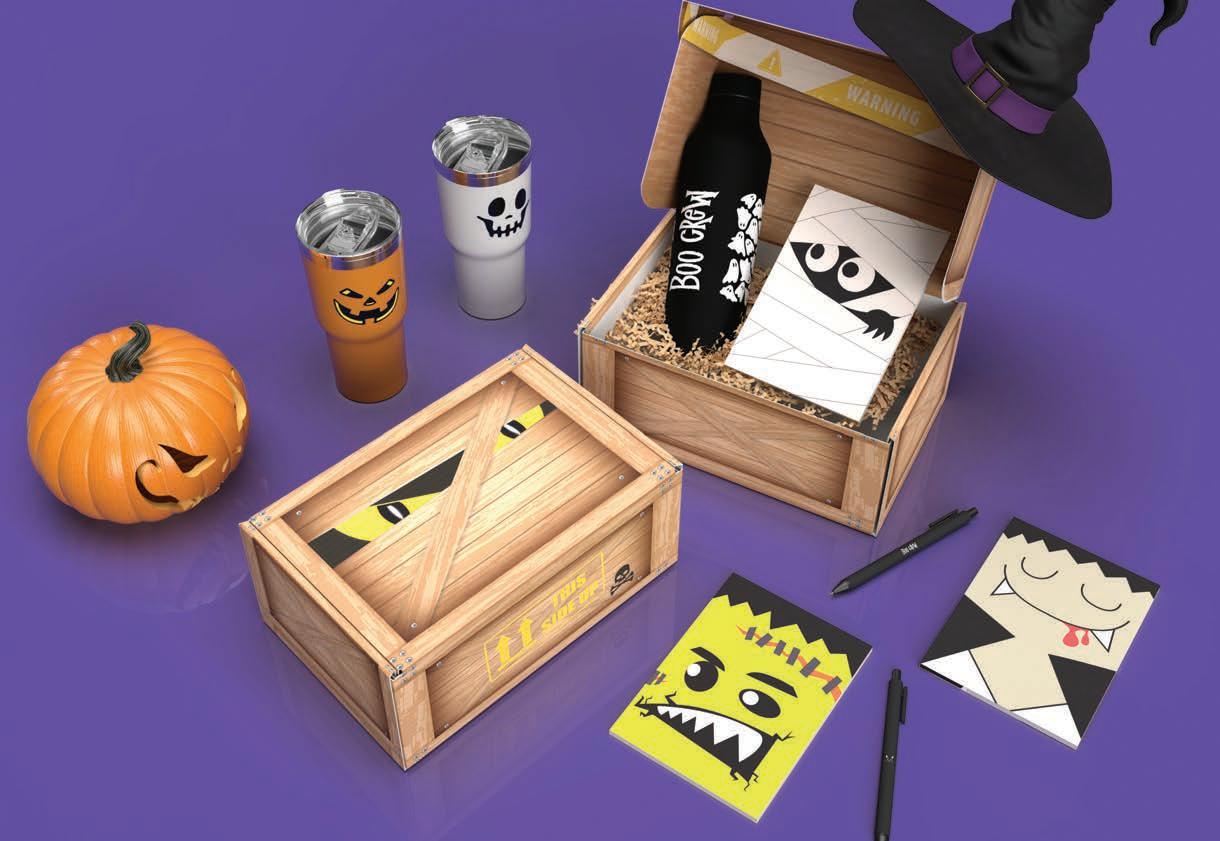
Inkcups, points to the increasing use of promotional printed items that increase the personal connection. This could include ‘event kits’ featuring custom-printed totes and drinkware, customized food or drink gift bundles, and offering in-person merchandise personalization experiences at events or in-store.
For those print shops owners eager to delve further into personalization, Barron points to direct-to-object inkjet printing as worthy of attention. Many print businesses, he says – not just in Canada but around the world – have already built either their entire production operation or new revenue streams around it.
“We’re seeing businesses investing in [this] technology to bring decoration of products in-house,” he notes, “and enable them to offer lower minimum order numbers.”
For those print businesses already decorating merchandise for the pro-
motional market, Barron advises that pivoting to personalization may require integrating the right software capabilities. However, for those in other print sectors, the next step may be to invest in the right equipment.
The possibilities are endless, as printers recognize personalization has the potential to create new products, says Barron, and not just increase the value of existing ones. One Inkcups customer, for example, had originally invested in direct-to-object printing to offer personalized drinkware in the gifting market, but soon recognized the opportunity offered by small batch packaging for independent businesses and for seasonal campaigns of larger brands.
“Yet another,” Barron reports, “is a distillery that brought direct-to-object bottle printing in-house to offer customized bottles as part of its bespoke offering.”
He adds that photo-printed products are particularly hot for two reasons. One is the fact that Canada is a
very e-commerce-savvy market (with more than 95 per cent of the population online and about 13 per cent of all retail sales being e-commerce). But secondly, technology is also evolving to enable photo printing on more complex items, leading to unprecedented opportunities.
For his part, Majda advises printers who want to benefit from the personalization trend to make it simple, fast and scalable. Shops that can reduce manual design work, support short runs and connect online customization with production workflows will be better prepared for the growing demand. He also advises “offering an intuitive online customization experience, mobile-friendly design tools, ready-made templates, realistic product previews and automated print-ready file generation for faster production.”
Gore agrees, noting that building or strengthening the workflows driving personalization, includes data hygiene, proofing, version control, automation, postal knowledge, privacy considerations, digital integration and reporting. She cautions in particular about proofing, because personalization only works when the details on the finished product are correct.
Gore also advises companies to position personalization as a business strategy and a customer engagement strategy, rather than treating it as a print feature.
As a first step, she recommends getting very comfortable talking about the customer’s customer.
“Who are they trying to reach?” she asks. “What do they know about them? What data do they have? What message will matter? What happens after the piece lands in someone’s hands? How will
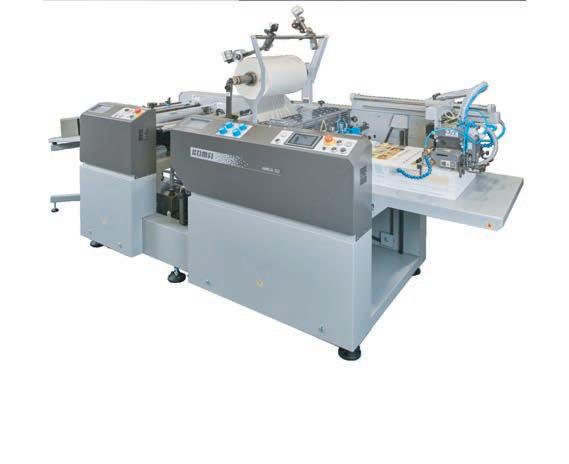
Designed & Manufactured in Czech Republic
B2 format in either Single Side or Double Side in 1 pass

the physical piece connect to the next action, whether that’s a scan, a visit, a purchase, a registration, a renewal or a conversation?”
It’s also critical in her view that printers create simple packages or examples that make personalization easy for customers to understand.
“Don’t lead with the technology,” says Gore. “Show use cases. A win-back postcard. A personalized event follow-up. A segmented fundraising appeal. A targeted new-mover campaign. A regional retail promotion. A QR-enabled packaging insert. A limited-edition label. A customized influencer kit. A personalized apparel or branded merchandise program. Make it easy for customers to see where personalization fits.”
And if printers are going to offer a ‘digital layer’ of personalization (QR codes, PURLs, landing pages, NFC, RFID or traceability features), they need to be able to help clients understand what happens after the interaction, says Gore. Gore advises discussing, for example, what data can be captured through the interaction and afterward, and what can be measured from that. Who follows up? And so on.
Gore believes the next phase of personalization will be all about usefulness. It’s currently seen as a production capability (How can we change the imagery? How can we print 5,000 versions?) but the focus needs to shift to the question of whether personalization actually makes the communication more relevant, more useful, more likely to drive action.
“The future is going to be about better strategy, better data and better alignment between print and digital,” she asserts. “We’ll see more triggered print, where a printed piece is generated based on a customer action, such as abandoning a cart, attending an event, visiting a webpage, renewing a service, making a purchase or becoming inactive.”
She predicts there will also be more of those ‘connected’ print experiences, where print becomes the entry point to a larger digital journey. She believes QR codes, PURLs, NFCs, RFIDs, trackable landing pages, automated follow-up and product authentication tools will continue to make print more measurable, interactive and relevant, in personalization and out of it.
AI-assisted segmentation and content creation will also grow, says Gore, but caution is required. AI can help teams move faster, identify patterns and support versioning, but it still needs clean data, clear messaging and human judgment, in her view. Otherwise, personalization “can quickly become inaccurate, irrelevant or just plain creepy.”
Amir Raziel, director of strategy and sustainability at HP Industrial Print, has similar thoughts.
“The next phase of personalization won’t simply be about producing more versions,” he says. “It will be about intelligently orchestrating the entire value chain, from AI-generated content and automated order intake through to production, fulfilment and delivery. At the same time, we’ll continue to see personalization expand into mainstream manufacturing as digital production becomes increasingly capable of supporting larger volumes across packaging, labels, books and commercial print. The ability to combine AI, workflow automation, and digital production will enable brands to create more relevant experiences while responding faster to changing market demand.”
Ultimately in Raziel’s view, print companies won’t succeed by simply making more personalization available to customers.
The successful one will be able to “combine data, automation and digital production into a connected manufacturing ecosystem,” he says, “that delivers individualized experiences efficiently, consistently and at industrial scale.”
The 43-year-old boutique company has evolved from typesetting to full-service commercial
By Nithya
oused in the historical Carpet Factory in Toronto, Moveable is a 43-year-old boutique printing company that began with typesetting and proofreading services to mainly advertising agencies and designers. In the late 1990s, with the advent of desktop publishing and small format digital printing, Moveable invested in a small Canon press and bindery equipment to meet their client’s printing needs. Now, Moveable has a full-fledged print shop with digital and offset printing as well as finishing services.
“That’s how Moveable evolved from 1983 till 2026, always driven by client needs. So, filling the need, and not so much being at the vanguard or pushing,” said Mel Gallardo, owner, Moveable. “We always take pride on the service and the quality, not so much the quantity. We’ve made a conscientious decision to keep our plant size small so we can provide the best service possible and the best quality possible without having to expand.”
Indeed, Moveable has been resilient as the industry went through many existential changes. They went from film to digital and survived the dotcom bust at the turn of the century, the 2008 financial crisis, COVID-19 pandemic, etc.
“We’re very resilient because our emphasis is always on service. And that cannot be monetized. We have
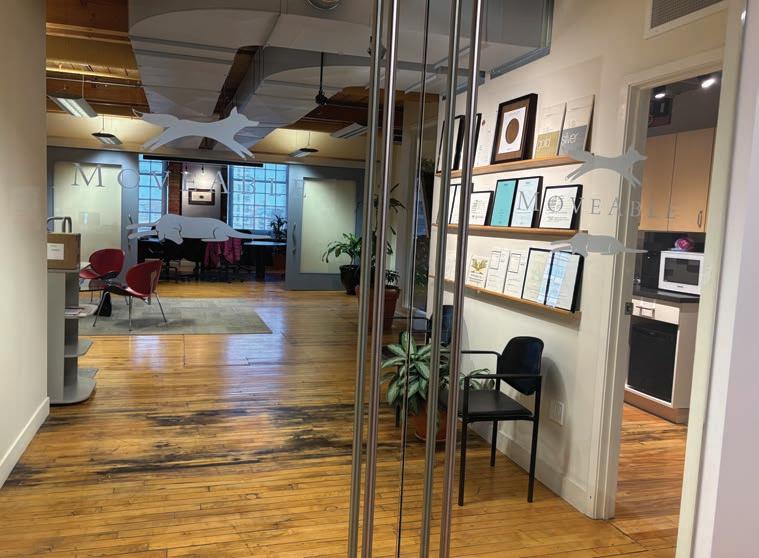
Moveable is a Toronto-based boutique printing company with digital and offset printing as well as finishing services.
never been, much to our detriment, sales driven. If you have clients that appreciate what you’re doing with them, and not for them, they come back year after year,” he said. We are obviously competitive when it comes to pricing, but we always try to go beyond that.”
The year when Moveable was established
During our meeting, Gallardo stressed that Moveable is highly service and quality oriented, characteristics that have helped them retain clients from the 1990s like BMO and Telus. Jonathan Gault, who began working there as business development specialist a few months ago, highlighted what he called the ‘Moveable treatment’ that clients usually experience.
“It’s a combination of retention and trying to get new business. We want to be a part of the university community, the arts community, and events in Toronto. That comes by being an active partner in those spaces,” he said.
For instance, Moveable has been a partner of the Association of Registered Graphic Designers (RGD) for 18 years, and print their brochures, catalogs, etc. They also help students with their projects. While these collaborations don’t offer monetary gains, Moveable sees them as an investment. Students are after all potential clients when they start working.
This way Moveable has been able to successfully evolve from typesetting, proofreading, and image colour correction to a full-fledged commercial printer at a strategic location. They still do a fair amount of typesetting and proofreading, but the volume isn’t the same as it was in the 1990s.
Originally built as a carpet manufacturing facility, the office complex where Moveable is housed features multiple buildings in the Liberty Village area of Toronto and is home to several ad agencies. The suites have
high ceilings, exposed brick and beams with large, operable windows that give them a rustic feel. The aesthetics strengthen Moveable’s appeal as a design-forward print shop.
“When Moveable was founded, this area was not the most developed area, so it was easy to find inexpensive rent. This was considered the west end of Toronto, and many of these buildings were abandoned. It was easy to maintain rent. As this area has evolved and become gentrified, more clients that were attuned to what we offer become tenants. We figured that the best thing to do is stay where our clients are,” explained Gallardo, who joined Moveable as an estimator nearly 30 years ago.
This has helped Moveable develop an eclectic clientele. TD, Telus, BMO, Bell are their corporate clients who they mainly help with typesetting, proofreading and colour correction. They also take care of most of the printed material needs of Revlon, University of Toronto, and private schools like Havergal College and York School.
Gallardo acknowledged there are challenges in the commercial printing industry. But a veteran like him sees opportunities and not just the hurdles.
“What we find is that there are now
greater opportunities than maybe 15 years ago. One of them is self-publishing. Before, a writer, illustrator, or a photographer had to commit to 5,000-1,000 units. We find now that we can still produce a nice casebound book and digitally print 50 to 200 copies,” he shared.
While the volume of content-driven printing material, such as newspapers, annual reports, magazine, is declining, Gallardo believes opportunities are aplenty in the printed marketing materials space mainly because a lot of the new generation wants to have something tactile.
“I’m still very optimistic about the print industry because of the inherent values of printing and the beauty of printing that cannot be replaced with an image or a screen,” he said.
“Pieces that art directors and designers want to put in front of a client, they are there, and more so than before. Maybe 10-15 years ago, it was easy to create a nice website or PDF, but it doesn’t carry the same weight of having a nicely printed piece in front of them.”
Gallardo shared an example from one of his university clients. They were trying to attract prospective students. Three years ago, their campaigns were only digital. Prospective students received marketing
emails. The university saw a massive decline in interest. Upon realizing they got a higher ROI when sending direct mailers, the client added printed campaigns to their digital marketing emails.
During our conversation, Gallardo acknowledged the labour issues are stifling growth in the printing industry. He recommended that companies shouldn’t wait for a perfect candidate with printing knowledge. Instead, they should hire people with certain qualities like commitment and resiliency and invest in them.
“I’ve brought in a number of new staff with very little knowledge about the printing industry. I always think if you are committed to us, if you are intelligent, and you have grit, we will teach you, we will invest in you, and you will see that it’ll pay off because you are really producing something tactile and permanent,” he shared.
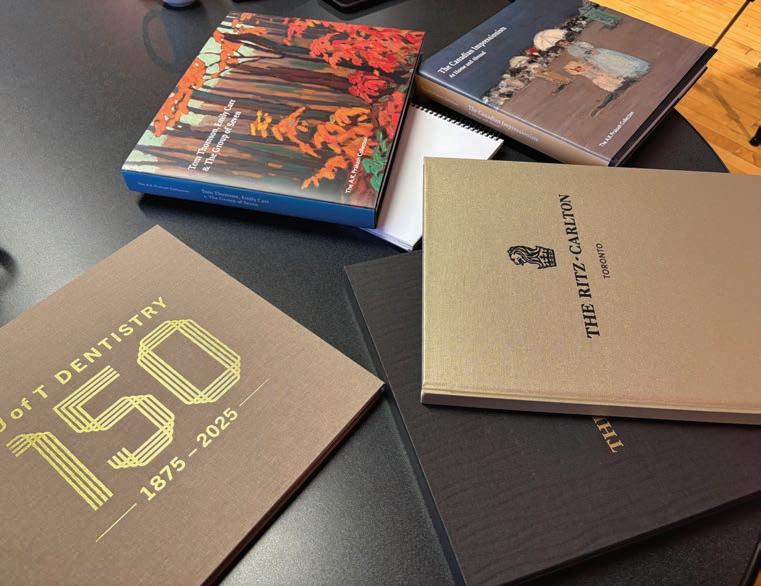
Samples of Moveable’s printed work on display in their office.
Before wrapping up the interview, I asked Gallardo if he had any concerns about the industry. He said, “We don’t toot our horn enough.”
He believes a good and well-designed printed piece has the potential to open the door to new opportunities. However, that requires strong marketing about the power of print, which, of course, requires collaboration between print shops, associations and industry stakeholders.
In Gallardo’s experience, artificial intelligence isn’t the great disruptor that it was thought to be. Moveable’s clients in proofreading and typesetting are asking them to sign contracts specifying that they are not using AI.
“They still want the human eyes to review their work, mainly because most of the work that we do for them has been reviewed for the past 20 years, so we know intrinsically their culture. We are also the guards of their lexicon, of their culture, and of their voice,” he said.
On the print side of the business, Gallardo is seeing an increasing use of AI-generated images, which is a concern. For one, illustrators of yesteryears are having a tough time justifying their rates. Further, AI-generated images are of poor quality and not print ready.
“They are flattened images that can’t be reproduced properly. There are a lot of glitches still,” he shared. “We are beginning to be more cognizant of the images that we are receiving” because clients are using AI to create images instead of asking professional illustrators.
By Abhay Sharma
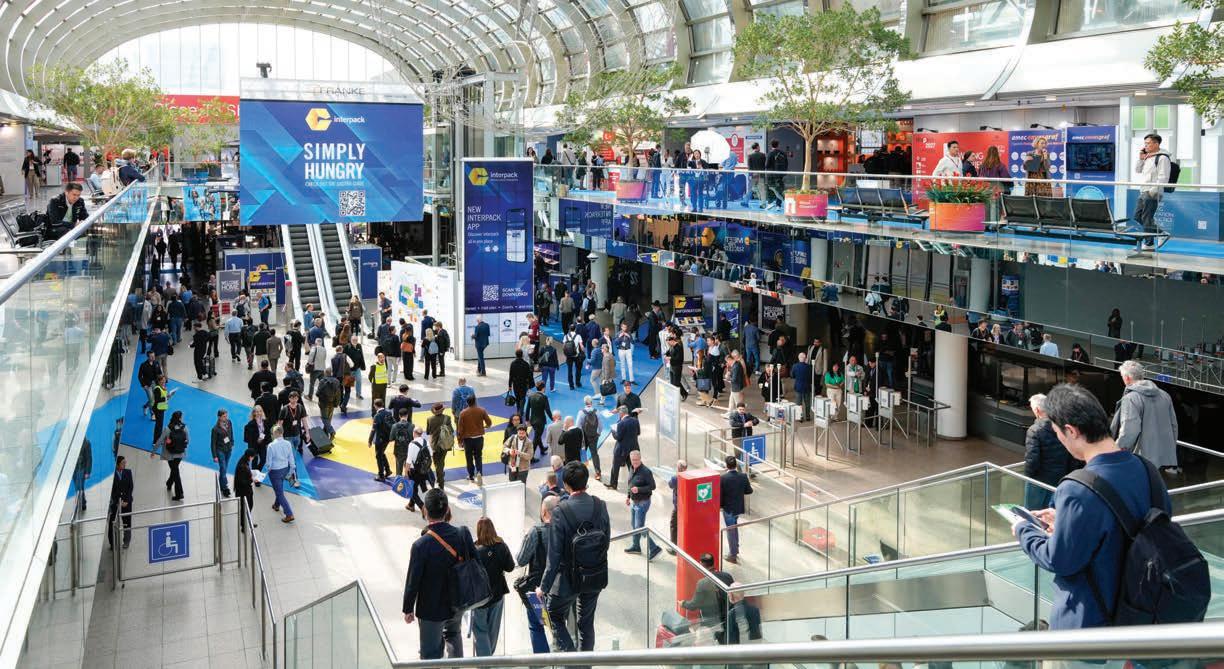
Interpack is the world-famous packaging show and was held for a week, May 7-13 at Messe Düsseldorf. Messe translates to fairground or convention centre, and every major German city has a Messe, so Messe Munich, Messe Frankfurt, etc. (Messe Düsseldorf will be familiar to printers, as Drupa is also held on this site, in these same halls.)
Interpack is a huge trade show covering all aspects of packaging, packaging processes and packaging materials. It takes place every three years in Düsseldorf and is a mecca
for everything from food packaging to pharmaceuticals. While Interpack has a European packaging focus, there were many attendees from North America.
The whole fairground, all the halls, were occupied by Interpack. Halls 1-4 showed processing and packaging technology for confectionery and bakery - chocolate, chocolate, and more chocolate. In this hall you could put on a few pounds just from breathing in the air! Halls 7-9 focused on packaging materials, Hall 8 had vendors involved in labelling and package printing. Halls 11-14 concentrated on processing and technology for food, beverages, and consumer goods. Comfortable shoes and a long walk led to Halls 15-18 to see specialized packaging technology for pharmaceuticals and cosmetics. Every aspect of packaging technology and materials was covered at Interpack.
Interpack 2026 in Dusseldorf opened on May 7.
The European trade organization, Food Processing and Packaging Machinery Association (VDMA), held a press briefing on the first day of the show. VDMA represents more than 400 different packaging equipment manufacturers, primarily in Germany, but also Italy and Europe. Christian Traumann, VDMA chair, spoke frankly about the impact of tariffs imposed by the U.S. and disruption its caused to the world order. Traumann suggested that “open markets bring people together”, and that globalization and free trade are good for modern economies.
Conversations at different booths often focused on the Packaging and Packaging Waste Regulation (PPWR) that came into effect in Europe in August 2026. The new regulation moves from national standards to uniform application across all 27 EU
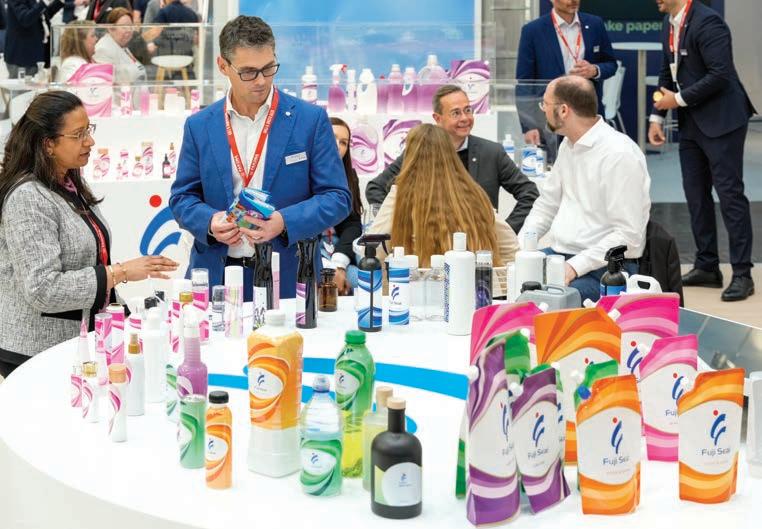
member states. The regulations are wide ranging and apply to all packaging (B2B and B2C) and packaging materials and packaging waste. The rules address labelling and traceability, long-term sustainability including recyclability, and mandatory requirements relating to recycled content (only some of these are to be enforced this August). Many discussions at the show related to the changes required in relation to the packaging life cycle.
On European supermarket shelves, there is a voluntary, traffic-light system for food, with coloured letters from A-E. In Canada, we are experiencing (starting from January 2026 and working through stocks) Health Canada’s Front of Packaging (FoP) regulations.
Packaging therefore has a number of country and language specific labelling requirements. Keeping track of these in different markets and detecting errors and omissions is easily handled by AI-powered software. GlobalVision had a booth advertising their software for automated proofreading and artwork inspection. Esko also showed alongside WebCenter a checking program called Comply. In an interesting turn of events, Esko acquired GlobalVision.
I spoke with Heidelberg CEO for web cartons, Felix Müller, and discussed how they are striving to become an end-to-end systems integrator for packaging production. Müller described collaboration with Metsä Board that allows them to consider fibre-based packaging, which brings benefits in terms of sustainability.
Pack-Smart from Concord, Ont., had a large system on the floor in Hall 8. Pack-Smart CEO Derek Dlugosh-Ostap explained how by using a form of braille-type debossing it is easier for high-end brands to authenticate and track their products. The machine was running on pre-produced packages.
Pack-Smart has a number of wellknown brand customers who use the system to securely identify and track their products.
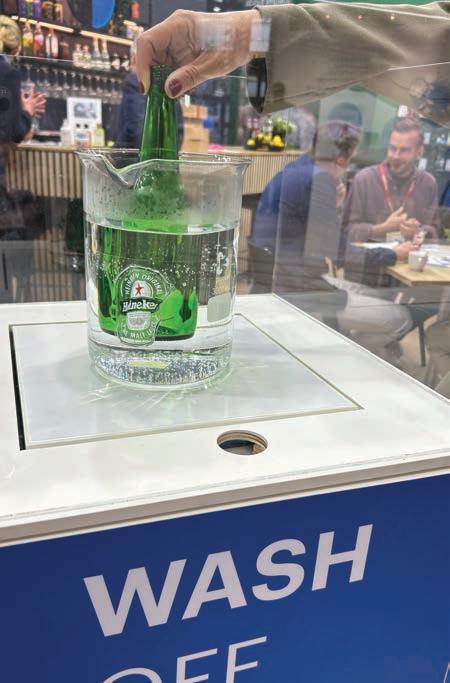
CCL label with HQ in Toronto and operations and production throughout Europe, showed a sustainable “WashOff” label, where a Heineken beer bottle label would shrivel and float off in warm water. The label detached easily without leaving any residue and could be skimmed off and easily dealt with. This saves water, time and money and enables the immediate reuse and refilling of the bottle.
AI was talked about in every area, even in process engineering and package filling. International presence from India and China was very prominent in all aspects of packaging materials and packaging products from disposable coffee cups to paper bags and pouches.
Interpack remains the world’s leading trade fair for processing and packaging, Interpack 2026 did not disappoint with many innovative solutions for a sustainable and future-oriented industry. The next Interpack will be in 2029. Expect more interest from the U.S. and Canada due to a new collaboration with PMMI, the U.S. organizers of PACK EXPO Las Vegas.
Dr Abhay Sharma is a visiting professor at the Munich University of Applied Sciences. He will return to his normal teaching position at the Toronto Metropolitan University in September 2026.


Labelexpo Americas, the biennial labels and packaging show is scheduled for Sept. 15-17 in Chicago
By PrintAction Staff
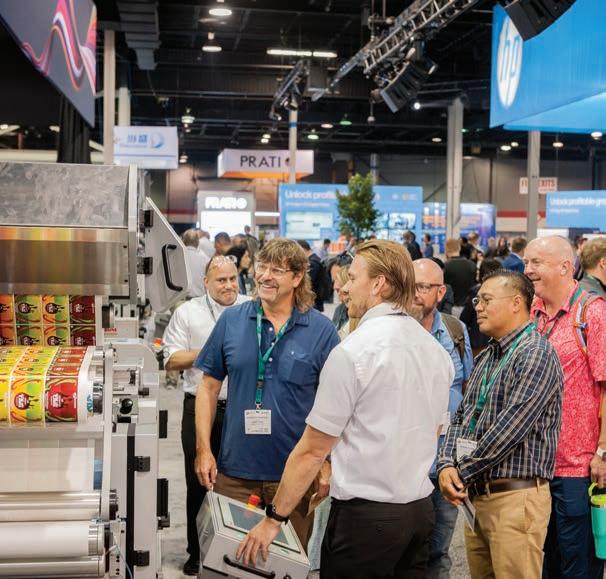
OUPE Americas (formerly Labelexpo Americas) is part of LOUPE Global (formerly Labelexpo Global Series), the hub for package printing and converting. The biennial show is the largest dedicated label and package printing event in the Americas. This year’s event returns to the Donald E. Stephens Convention Center, Chicago, Rosemont, from September 15-17.
LLOUPE is the global platform for the package printing industries, connecting business professionals in labels, flexible packaging, more specifically shrink sleeves and pouches, and in-line carton converting.
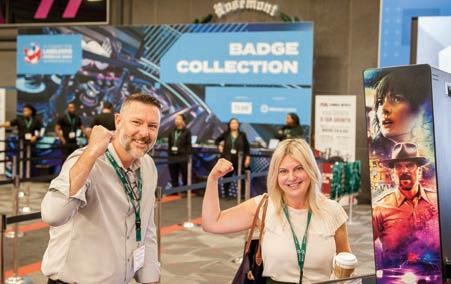
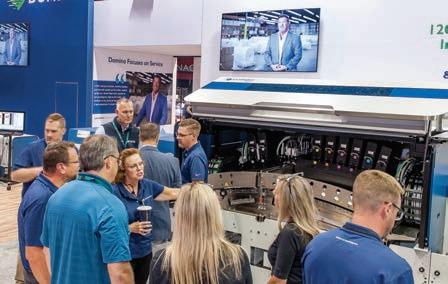
LOUPE Americas 2026 is expanding its education program, now covering two days of the event. As part of delivering an enhanced show experience for the label and package printing community, LOUPE Americas 2026 has introduced a new ‘access all areas’ education pass.
The new pass provides full access to all keynote presentations, breakout sessions, and hands-on workshops across the first two days of the show, plus unlimited access to the exhibit floor and show floor activities for all three days.
Education pass holders will benefit from comprehensive session summaries from the two-day conference program featuring key takeaways and overviews of each session, along with an executive summary of the full program – all easily accessible via a mobile phone, making the process as seamless as possible.
Each day of the two-day conference program begins with high-impact keynote presentations led by in-
fluential voices from across the value chain. These sessions focus on big-picture insights delving into current market trends, innovation landscape and competitive advantage.
Later in the morning, the program shifts to breakout educational sessions diving into the practical realities shaping converting businesses today. The content will cover automation, smart packaging, sustainability, workforce development, diversification into flexible packaging and folding cartons, and long-term business planning with an executive-level converter panel.
The morning sessions are then followed by practical workshops. Industry professionals will be able to experience AI deployment for label and packaging printing businesses and the impact of packaging design and materials on consumer choices.
Free to all LOUPE Americas attendees, the Spotlight Stage will be the platform delivering short sessions on new technologies implemented by some of the world’s leading industry suppliers.
The converter panel Navigating Growth, Change and Opportunity, featuring Dale Coates, CEO and president of TLMI, and Thomas Dahbura, president of Hub Labels, will explore workforce development and retention, practical AI implementation, succession planning in family and privately held businesses, and capex strategy in an uncertain economy.
For converters expanding beyond pressure-sensitive, the session on Understanding Flex Pack Materials and Pouching breaks down key material structures and the converting processes behind pouch production. The day concludes with a hands-on AI in Action workshop, where attendees will learn to build and customize an AI agent tailored to their specific business requirements.
On September 16, the program continues with keynote sessions delivering actionable intelligence on key industry trends. Mark Denzler, president and CEO of the Illinois Manufacturers’ Association, will address today’s manufacturing reality in North America and its implications for print and packaging operations, while Corey Reardon, president and CEO of Alexander Watson Associates (AWA), will deliver data-driven market insights for label and package printing professionals.
The day’s breakout sessions include The Talent Landscape: Navigating Today’s Labor Market presented by Claudia St. John, founder and CEO of the Workplace Advisors, offering actionable strategies to attract, develop, and retain talent amid labour shortages and evolving skill requirements. Inside M&A Activity in the Label Market, presented by Thomas Blaige, chair and CEO of Blaige & Company, examines private equity activity, strategic acquisitions, valuation trends, and how dealmaking is reshaping operational strategy.
The program concludes with a dedicated women’s roundtable, which is open to all attendees at no additional cost. The session will explore topics including career pathways and mentorship, community building and peer networks, personal branding and visibility, balancing work and life, and preparing future generations with essential skills.
With a renewed focus on industry connection, organizers are launching the LOUPE Americas Ambassadors Program, engaging renowned industry leaders across labels, flexible packaging, folding carton, market intelligence and sustainability.
On sustainability, partnerships have already been formed with IWS and Resource Label Group to collect and reprocess matrix waste.
Off the show floor, the inaugural “Loop to LOUPE Fun Run” will take place on the evening of September 14.
Tasha Ventimiglia, Americas group director at LOUPE Global, said, “For LOUPE Americas 2026, (formerly Labelexpo Americas) we have magnified our focus on connection and education. From audience-focused meetups for women and the next generation of leaders to enhanced workshops and conferences, we are creating
opportunities for the industry to network and make connections that truly matter in the Americas market.”
To register, please visit https://www.loupe-americas.com.
Attendees can get a firsthand look at the latest Roland DG package printing solutions, including devices for direct-to-object printing. Attendees can view advanced UV technologies, including the LSINC PeriOne, a highspeed, multi-item direct-to object UV rotary printer, and the RC-300 UV rotary printer, designed for short-run direct decoration of cylindrical and lightly tapered objects such as bottles, promotional items, and limited-edition packaging.
Roland DGA is also exhibiting at Printing United Expo 2026, held Sept. 23-25 in Las Vegas (North Hall & Central Hall, Level 1, Booth #C1545). At the Expo, Roland DGA will showcase the TrueVis large-format print and cut devices like XG-640, the VG4-540, and the new AG-640 latex printer/cutter. Attendees can also check out the VersaObject MO-240 benchtop UV flatbed printer as well as the DIMENSE DA-640, a
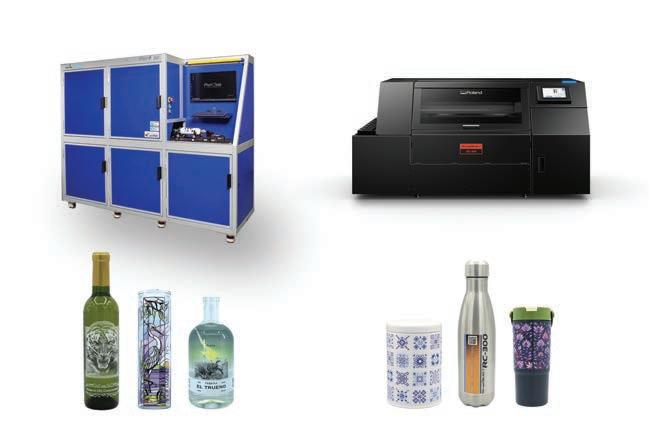
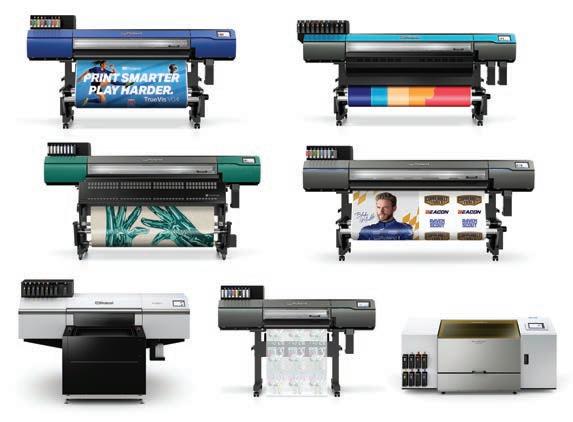
dimensional surface printer that produces textured wallcoverings, signage, etc. Other innovations on display include two new VersaObject UV printers for industrial printing applications: the IO-300 industrial flatbed printer and the RC-300 cylindrical printer, along with the LSINC PeriQ 360 multi-item direct-to-object rotary printer.
Graph-Tech USA (GTUS) will demonstrate its RFID and digital label production technologies. At the show, visitors will see the RFIDRunner in action. It can encode and print up to 10,000 RFID tags in less than 12 minutes.
The RFIDRunner incorporates a triple-Impinj architecture with dedicated modules for TID identification, encoding, and multiple quality and data verification checks. Graph-Tech USA will also demonstrate its LabelRunner digital imprinting system for labels and booklets based on the Rosas Maschinenbau Gazelle II platform and integrated with its eZ-Colorjet industrial inkjet printer. The system features 600 dpi four-colour UV inkjet printing with a maximum print width of 233 mm (9.17 in.), powered by seven Epson I3200 PrecisionCore printheads and integrated with the GT controller platform. The wider print area exceeds the 216 mm required to print two 4-in. labels together with a mark or reference number beneath them.
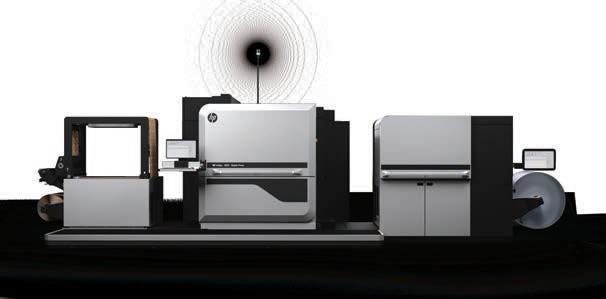
HP will showcase how its AI-powered, end-to-end print solutions are helping label and packaging converters unlock new levels of productivity, agility, and versatility. The HP Indigo 6K+ and 200K digital presses will be on display. They will also spotlight virtual demonstrations of the HP Indigo V12 digital press, the first press to utilize HP Indigo’s LEPx technology. The narrow-web label press can print at speeds of up to 400 ft per minute.
Hybrid Software will present its latest innovations for labels and packaging production at LOUPE Americas 2026, focusing on AI-assisted workflows, colour management, and high-performance rendering technology. The latest version of the PDF editor Packz introduces new AI-powered tools that assist operators with support, scripting, and custom actions directly within the prepress workflow.
Cloudflow features Cloudflow Matches, which uses a large language model to identify previously produced packaging jobs with similar text, barcodes, and image content, helping accelerate job preparation and reduce errors. Hybrid Software will also demonstrate jAImes, an AI-powered solution that automates the processing of customer emails and production requests.
The company will also highlight its expanding colour management portfolio for labels and packaging, including developments in spectral colour management, expanded gamut printing, and standards-based production workflows. For packaging visualization and design, Hybrid Software Brandz will demonstrate the latest version of iC3D, including enhanced asset management capabilities and support for native CF2 structural design files.
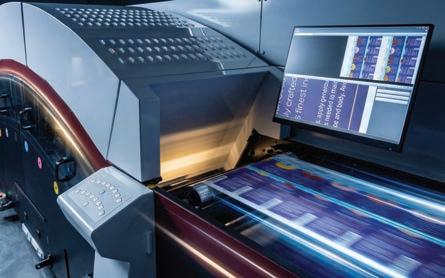
Mark Andy will place productivity at the centre of its presence at LOUPE Americas 2026. It will conduct live demonstrations of five technologies.
The Digital Pro Max will feature a configuration with two flexo print stations, a digital engine, and semi-rotary die cutting. The platform gives converters an accessible path into digital label production with inline converting capabilities.
The Digital Series HD HighSpeed 1200 delivers 1200 dpi print quality at speeds of up to 480 fpm. Available in configurations ranging from roll-to-roll production to a fully integrated hybrid platform, it supports high-speed variable data printing, inline decorating, and converting.
The Performance Series S9 combines speeds of up to 1,000 fpm with sleeve tooling, advanced drying capabilities, and automated production controls.
At LOUPE, the press will run pouch and form-fill-andseal applications. The Rotoflex VLI-440 is designed for high-speed inspection, slitting and rewinding. The VLI is well suited for film, film packaging and other tension-sensitive materials.
Mark Andy will also feature its recently launched SmartPress Program, which brings 80 years of engineering experience into a set of application-ready press configurations delivered in eight weeks, cutting the company’s standard delivery timeline in half. Available on the Pro Series, Evolution Series E5 and Performance Series P7 platforms, SmartPress enables converters to begin with a proven configuration developed for labels, film + label, or shrink + label production. Optional packages can then be added to support specific application requirements, including hot-air drying, UV curing, cold foil, sheeting and conveying, extended-run production, and faster changeovers.
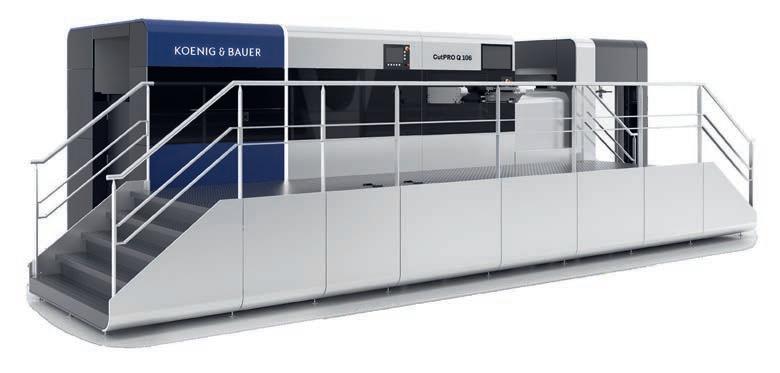

Learn more at koenig-bauer.com/en/products/postpress ... with the postpress portfolio engineered
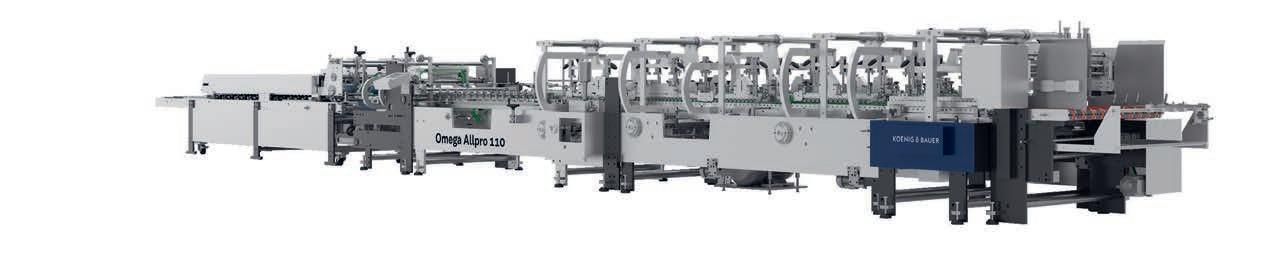
Achieve a perfectly unified workflow. Koenig & Bauer is driving innovation in folding carton and commercial finishing by bringing our legendary press engineering straight to your postpress floor. Our newly designed die-cutters, alongside our high-performance folder gluers, integrate your entire production with our workflow and digital ecosystem – we deliver total flexibility as your single, trusted partner.