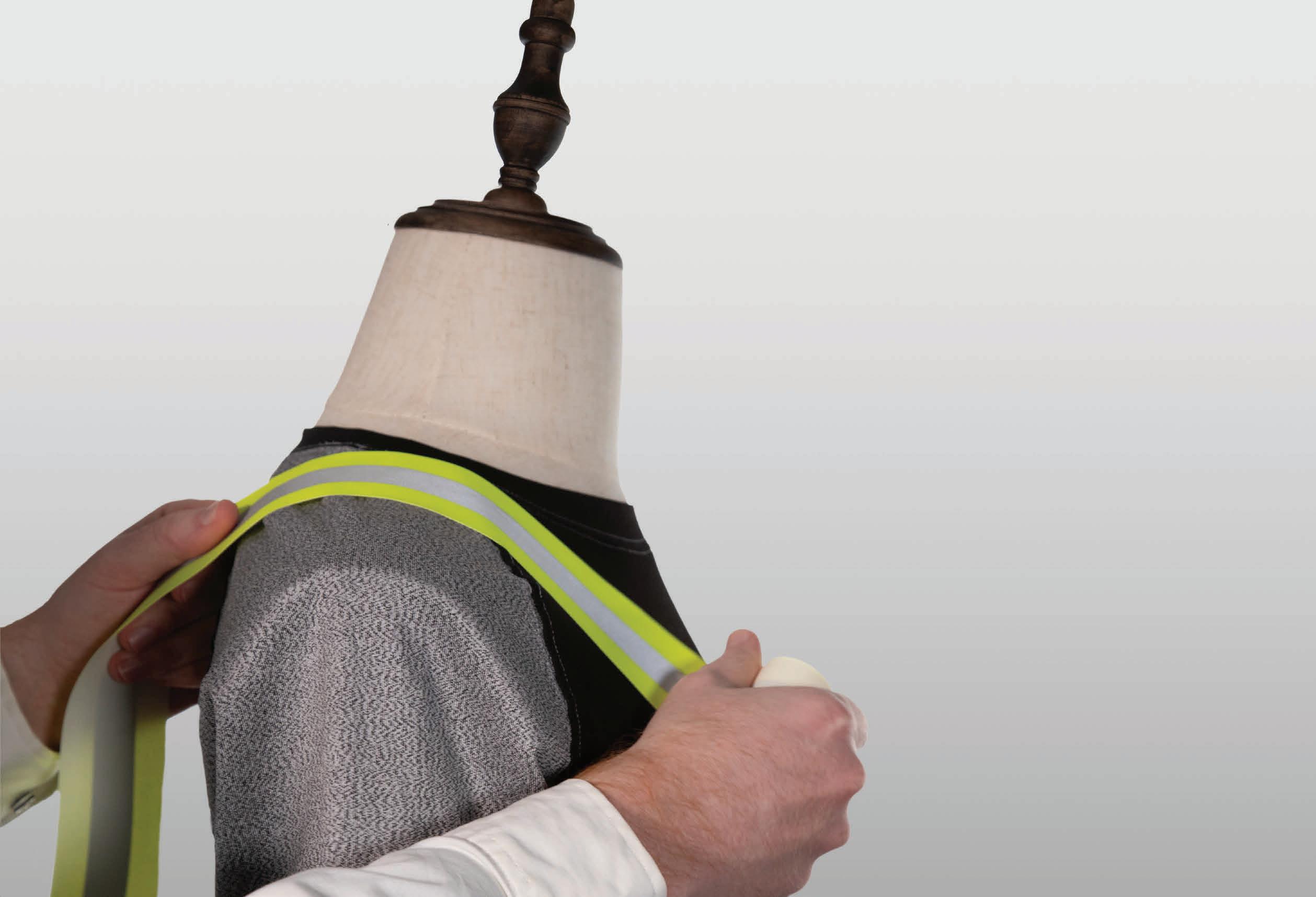
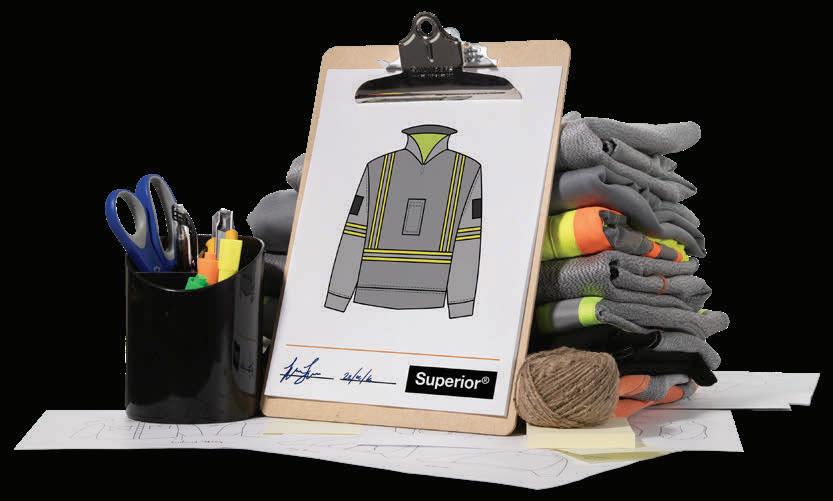
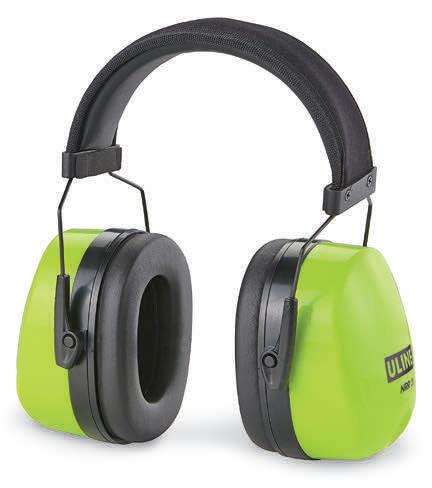
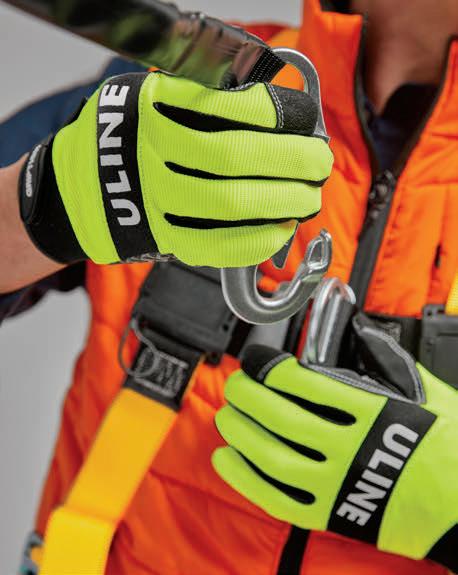
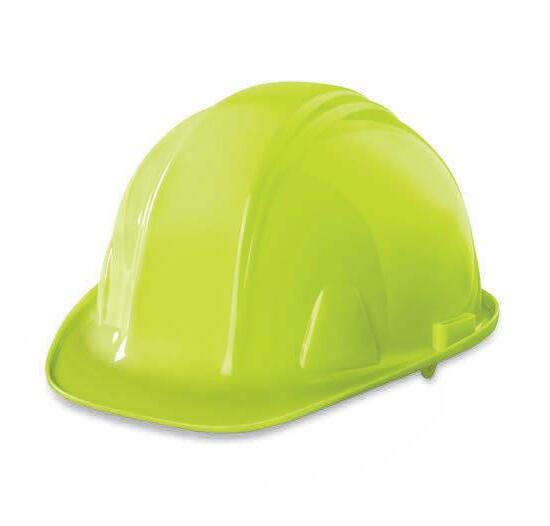
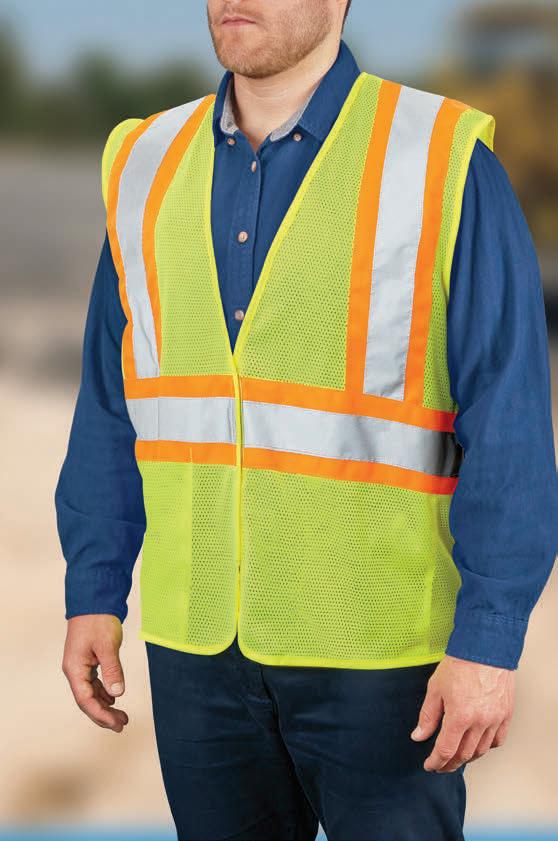
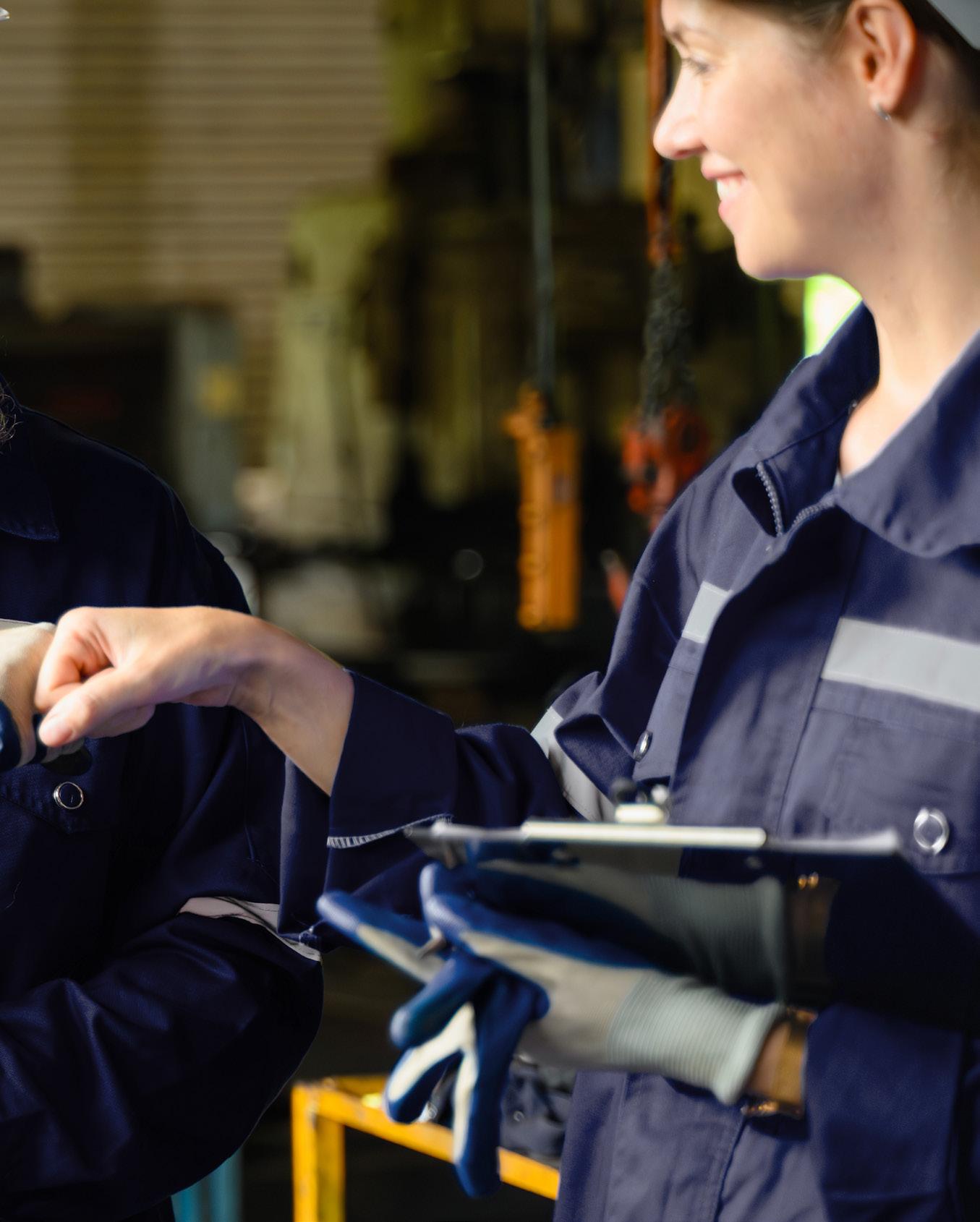
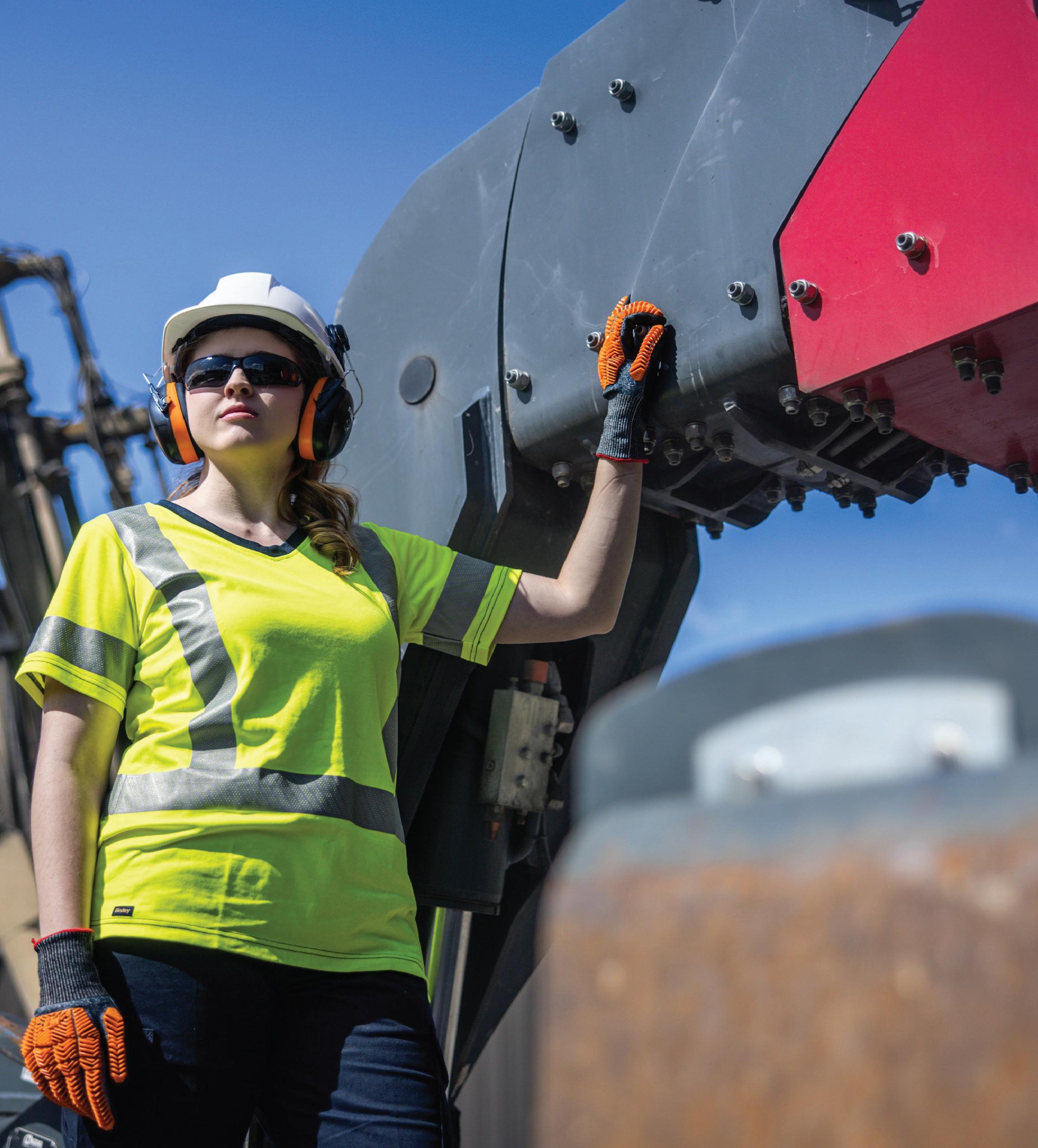
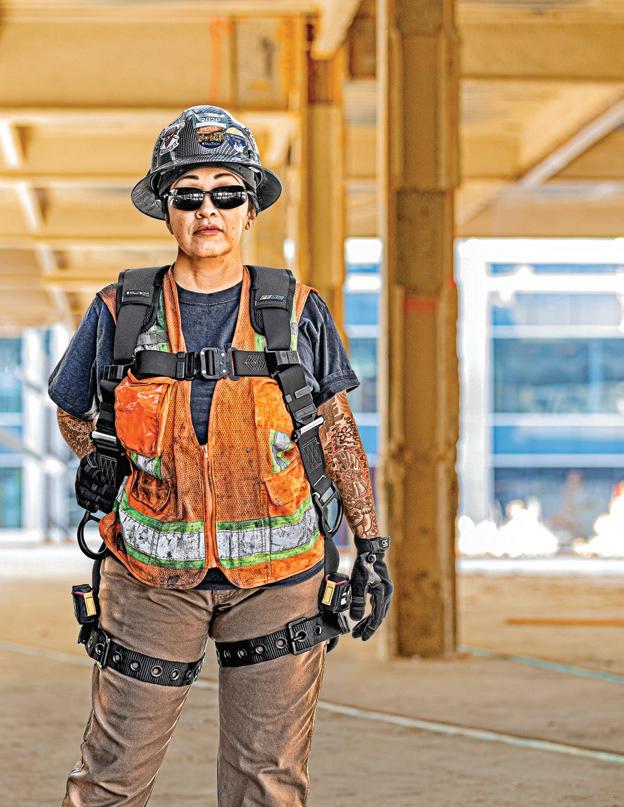
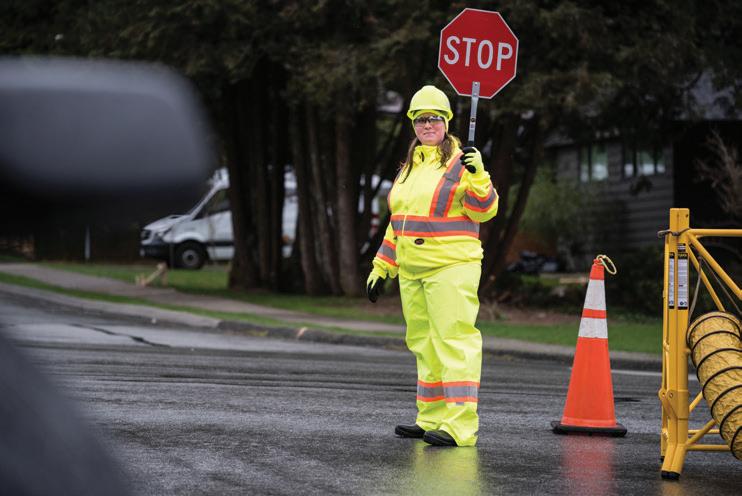
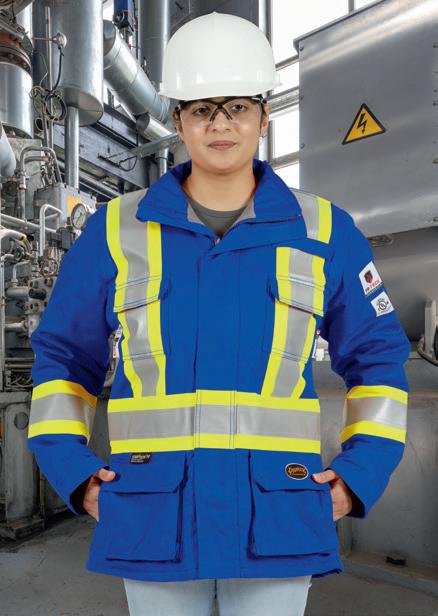
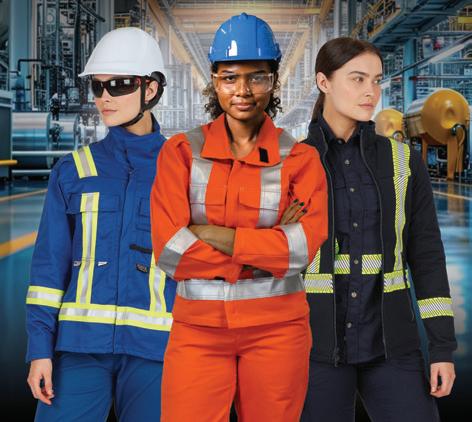
Add logos, reflective tape, pockets, name tags, loops, and more exactly where your team needs them
COLUMNS
07 | The Human Factors
Hotelling stations that work
10 | CCOHS Corner
Take a load off: Rethinking the seated workday
15 | Legal View
Bill 30’s impact on workplace health and safety in Ontario
19 | Safety Leadership
Manufacturing technology: Risk, reward and roadblocks
20 | Quarterly Check-in
The rising economic burden of mental health at work in Canada
TREENA HEIN
From the Editor
By Brandi Cowen
When safety messages match reality
Iwas roaming the streets of New York City on a recent vacation when I saw a sign that stopped me in my tracks. This wasn’t one of the 2,000 square-foot billboards lighting up Times Square, but rather a humble two-foot by three-foot sign affixed to the hoarding around a construction site in the city’s theatre district. It read: “Nothing you do on this site today will be as important as going home to your family and loved ones.”
Amid the visual chaos of a Saturday afternoon in the Big Apple, this simple message not only captured my attention but inspired me to whip out my phone and snap a photo.
I was still thinking about that sign 15 minutes later, as I slipped into my seat for a matinee performance in a busy theatre. I had so many questions about the company behind the sign that I pulled up its website on my phone and scrolled until the lights went down.
One week later, I can tell you about that company, its safety philosophy, and some of its most recent projects. Meanwhile, I can’t name a single brand I saw advertised on any of those flashy billboards in Times Square.
The sincerity behind the message is what first captured
EDITORIAL
ADVISORY BOARD
my attention. What held it, and continues to resonate days later, are the ways in which the company appears to act in support of that message. The words aren’t just a feel-good slogan on a wall – they’re a driving force behind how the organization operates. There’s power in that alignment.
To keep workers safe, leaders’ words are important, but their actions matter more.
Danger in the ‘say-do’ gap
A 2025 Resume Now survey of 1,000 U.S. workers found 86 per cent of respondents said company values were clearly communicated, but only 44 per cent said those values were consistently applied. The difference between those two figures is known as the “say-do” gap.
When the say-do gap creates a disconnect between what it should take to earn a promotion or raise and what it actually takes (e.g., being “liked” by a leader), it can lead to cynicism, disengagement, and turnover in the workforce.
But when it comes to safety, a say-do gap can lead to near misses, injuries and even fatalities. After all, if an organization claims to have a speak-up culture but leaders punish
Paula Campkin: chief safety officer, Energy Safety Canada
Marty Dol: president and founder, HASCO Health & Safety Canada
Cindy Moser: director of communications, Institute of Work & Health
Natalie Oree: prevention consultant, SAFE Work Manitoba
David Powers: EHS director (Atlantic), Sysco Canada
workers who raise concerns and report risks, many workers will register that disconnect and go silent. There’s danger in that silence.
One way to close the safety say-do gap is by building psychological safety – the shared belief that a team or environment is safe for interpersonal risk taking. In a psychologically safe workplace, employees are empowered to speak up, admit mistakes, ask questions, and propose new ideas without the fear of being embarrassed, punished or retaliated against.
To keep workers safe, leaders’ words are important, but their actions matter more. Consciously or not, workers constantly scan their environment for cues about what is truly valued. Communicating safety values isn’t about finding the perfect slogan; it’s about ensuring everyday decisions, leadership behaviours, and systems reinforce the message that safety comes first.
That small sign on a New York construction site stood out because it felt genuine. Safety messages pack power when they align with workers’ lived experiences. When they don’t, people notice. Sometimes, they stop talking.
In safety, silence can be costly.
Richard Quenneville: senior director of corporate services, T. Harris Environmental Management
Maureen Shaw: lecturer and presenter
Dylan Short: managing director, The Redlands Group
READER SERVICE
Print and digital subscription inquiries or changes, please contact Angelita Potal
Tel: 416-510-5113
Fax: 416-510-6875
email: apotal@annexbusinessmedia.com
Mail: 111 Gordon Baker Rd., Suite 400, Toronto, ON M2H 3R1
GROUP PUBLISHER Adam Szpakowski aszpakowski@annexbusinessmedia.com
CEO Scott Jamieson sjamieson@annexbusinessmedia.com
Printed in Canada ISSN 0827-4576 (Print) ISSN 1923-4279 (Digital)
PUBLICATION MAIL AGREEMENT #40065710
SUBSCRIPTION RATES
Published three times per year –Winter, Spring/Summer, Fall Canada $72.80/yr plus tax USA $101.92/yr CDN Foreign $168.48/yr CDN Single copy $19 CDN
Occasionally, OHS Canada will mail information on behalf of industry related groups whose products and services we believe may be of interest to you. If you prefer not to receive this information, please contact our circulation department in any of the four ways listed above.
Annex Business Media Privacy Office privacy@annexbusinessmedia.com Tel: 800-668-2374
All advertising is subject to the publisher’s approval. Such approval does not imply any endorsement of the products or services advertised. Publisher reserves the right to refuse advertising that does not meet the standards of the publication.
National report stresses Canada must move from safety awareness to action
A new report from Threads of Life is calling for a shift from safety awareness to meaningful action in workplaces.
The annual State of Safety Report, released on the National Day of Mourning on April 28, reveals that while attitudes toward workplace safety remain positive, progress in reducing incidents and fatalities has stalled. The findings point to a clear gap: organizations believe in safety, but too often fail to embed it into everyday practice.
“Awareness is not the issue, execution is,” said Eugene Gutierrez, executive director of Threads of Life. “We see strong belief in safety across Canada, but that belief must be reinforced through training, leadership, and culture if we want to see real change.”
According to the report, 73 per cent of organizations say they have safety training in place, yet fewer consistently build out their health and safety program with regular meetings, emergency procedures or workplace engagement.
Key barriers continue to limit progress, including understaffing, time constraints, and competing operational pressures. These challenges are making it difficult for organizations to prioritize ongoing safety training and culturebuilding efforts.
The report also highlights emerging pressures, including rising mental health challenges in the workplace, which are increasingly intersecting with overall safety performance.
Threads of Life is urging employers, policymakers, and industry leaders to focus on strengthening safety culture, investing in training, and ensuring accountability at all levels.
The surveywas conducted Feb. 26 to March 11 among a representative sample of 1,013 online Canadian business owners, hiring managers and decision-makers in English and French.
Many B.C. employers overlook risks of work-related driving
New research shows many B.C. employers overlook one of the most common and dangerous workplace hazards: driving on the job.
The average number of workers in British Columbia who die from work-related vehicle crashes each year.
A recent survey by Road Safety at Work found that 51 per cent of employers say work-related driving is not dangerous. Yet it’s the leading cause of traumatic work-related deaths in B.C.
“That gap between perception and reality puts workers at risk. Driving is one of the highest-risk activities many workers do during their shift,” said Trace Acres, spokesperson for Road Safety at Work. “There’s a real opportunity here for employers to close that gap by adopting practices such as setting clear rules for driving, training employees, checking that drivers have the necessary skills, and ensuring vehicles are safe.”
WorkSafeBC statistics for 2020 through 2024 show that an average of 21 workers die from workrelated vehicle crashes annually. Another 1,700 are injured and off work from work-related vehicle crashes every year.
The survey also found that a significant portion of employers don’t understand their drivingrelated safety responsibilities:
• Nearly one-third (32 per cent) didn’t know employers are legally responsible for the safety of employees who drive for work
• More than one-quarter (27 per cent) didn’t know that a vehicle used for work is considered a workplace under the province’s Workers Compensation Act
• Just over 40 per cent don’t provide driver orientation or onboarding for workers who drive for work
The research shows a pattern in how employers manage road safety. Many focus on immediate decisions, such as adjusting trips due to weather or driver fatigue. But fewer have longer term programs in place to help prevent crashes.
“Reacting to conditions on a given day is important,” said Acres. “But supervisors and workers may end up making split-second decisions that should be guided by policies, training, and oversight.”
Employers and people who drive at work can find free resources to help prevent driving-related incidents by visiting RoadSafetyAtWork.ca.
The survey was conducted among 300 employers across B.C. earlier this year.
BCRSP marks 50 years of safety certification with renewed call for title protection
The Board of Canadian Registered Safety Professionals (BCRSP) celebrated 50 years of safety certification in Canada at its 50th Anniversary Celebration Conference at Fallsview Casino Resort from May 10-12.
The conference brought together safety leaders, certified professionals, employers and partners to reflect on the evolution of occupational health and safety in Canada and explore the future of the profession.
Since 1976, the national body for certifying occupational health and safety professionals has helped professionalize the field through rigorous certification standards and continuous improvement. As it looks to the next 50 years, advancing title protection will be a key priority to strengthen confidence in safety expertise, support labour mobility and strengthen economic competitiveness and productivity.
BCRSP’s focus on title protection also comes at a key moment when federal and provincial governments are prioritizing reducing internal trade barriers and improving labour mobility. Given this shift, title protection becomes crucial to ensure consistent recognition of qualified occupational health and safety professionals across Canada.
“Safe and healthy workplaces are foundational to Canada’s economic future,” said Larry Masotti, BCRSP governing board chair. “If we want people and businesses to move more freely across the country, we need systems that make safety expertise clear, portable and trusted. Title protection is a common-sense next step — and BCRSP will continue working with
governments, employers and partners to move it forward.”
Currently, occupational health and safety requirements vary across Canadian jurisdictions, creating uncertainty for employers and practitioners. While provinces are taking steps to reduce red tape and modernize internal trade, inconsistent recognition of safety expertise remains a barrier to labour mobility. The challenge is not only whether workers can move between provinces, but whether safety standards and professional qualifications can move with them.
Title protection would help address this gap. While credentials such as the Canadian Registered Safety Professional (CRSP) and Canadian Registered Safety Technician (CRST) are already reserved for individuals who meet recognized standards of competence and ethics, the broader title of “safety professional” remains unprotected. As a result, anyone can claim to be a safety professional, even without certification.
“Title protection is not about creating barriers,” said Rebecca Chow, BCRSP vice chair. “It is about recognizing qualified professionals and making existing standards easier to understand and rely on. When credentials are clear, portable and trusted, everyone benefits.”
Ontario launches Canada’s first occupational exposure registry to protect workers
As part of its plan to protect Ontario workers and their long-term health, the Ontario government has launched Canada’s first occupational exposure registry (OER).
Scan the QR code
for OHS Canada’s exclusive interview about the OER with Ontario’s Minister of Labour, Immigration, Training and Skills Development.
The secure digital portal includes an easy-to-use self-tracker that allows workers to record and track exposure to hazardous substances in the workplace. The portal builds on the government’s work to strengthen workplace health and safety by taking action to increase awareness and reduce harmful exposures, while giving workers a secure record they can reference throughout their careers.
Workers can securely and anonymously submit exposure information through the online self-tracker in just a few minutes for one of 11 designated hazardous substances, such as asbestos, lead, mercury and silica. Workers can record details such as how their exposure occurred and what protective measures were in place, such as ventilation, training or personal protective equipment. Each submission generates a confirmation email and a record that can be downloaded.
Having better information about harmful workplace exposures will help increase awareness and empower workers to better understand hazards and take steps to protect themselves.
Occupational illnesses are often underreported or difficult to diagnose due to long latency periods between exposure and the onset of symptoms. By giving workers the tools to track their own exposures over the course of their careers, the registry can also support medical assessments if symptoms arise years after exposure.
The occupational exposure registry was first committed to in the Working for Workers Act, 2023
The Human Factors
Hotelling stations that work
By Carrie Taylor
Ten years ago, shared workstations were rare – we all came to work, stowed our running shoes under the desk, and got to work. Ergonomists could help employees adjust their workstations to suit their bodies, and, if needed, employers could provide a special chair or item to meet specific needs.
Today, many companies rent smaller offices and allow employees to work from home some of the time. Instead of setting up one workstation for a specific employee, employees are encouraged to set up a workstation at home and adjust the available equipment when they arrive at the office.
How have employees done setting up an ‘ergonomic’ home office?
Virtually every office worker was forced to set up a home office when COVID-19 hit. How well did they do, ergonomically? In general, not so well.
The good news was that many employers allowed employees to take their own chairs home to set up a home office. The chair is only half the picture, but it was a start.
An unfortunate observation: When people shop for home office equipment, they pay more attention to colour and texture than adjustability ranges and lumbar support.
Furniture for the home office market is built cheaper than corporate office furniture, and therefore does not provide the same features. Very, very few sit/stand desks, for example, will adjust low enough
for an average height male.
Read that sentence again: most sit/stand desks are too high, at their lowest setting, for half of all males and virtually all females.
Can hotelling be ‘ergonomic’ at the corporate office?
Let’s think some more about desk height. In general, the keyboard and mouse should be adjusted to seated elbow height when the chair is adjusted so the feet rest firmly on the floor. For most people, the top of the screen should be at eye height. A shared workstation needs to adjust in height to accommodate everyone from the smallest to the tallest worker.
Here are some magic numbers for you:
• At a sit/stand station, the keyboard/ mouse surface height should adjust between 57.5 and 123.7 cm (22.5 to 48.75 inches) to accommodate 95 per cent of the population. Very small and very tall users will find the keyboard too high while sitting or too low while standing,
and we’ll need to accommodate them individually. But most people will be able to adjust the keyboard to the correct desk height setting.
• At a sit/stand station, the top of the screen should adjust between 91 and 181.3 cm (36 to 71.5 inches) above the floor to accommodate 95 per cent of the population with single-prescription or no glasses. Again, that means that the smallest and tallest users won’t be able to adjust the screen where they need it. Many workers who wear multi-focal lenses will struggle to position the screen low enough to see it without neck strain. If furniture manufacturers only marketed desks and monitor arms that met these height range targets, we’d be in a much better position. The trouble is, it is much less expensive to build a desk that starts at 72 cm (28.5 inches) and adjusts upward to a reasonable standing height. To the untrained eye, this desk seems like a reasonable design; 72 cm is a common
Building hotelling solutions that work for real people
Well-designed and well-used workstations allow people to work productively, go home happy, and promote your company as a great place to work.
Carrie Taylor is the founder and principal ergonomist for Taylor’d Ergonomics Incorporated, a consulting company that recently celebrated its 30th anniversary. She is a Certified Professional Ergonomist in Canada and the U.S. Her team supports clients in all sectors with practical ergonomics consulting and training support.
The Human Factors
desk height, so it looks familiar. But it is much, much too high for comfortable typing, for almost everyone. Only tall workers will be comfortable at the low end of the adjustment range; everyone else will need a raised chair and tall footrest, or an adjustable keyboard tray attached to the desk.
Similarly, it’s mechanically challenging to design a monitor arm that goes up, down, side to side, and forward and back. (It doesn’t seem like it should be hard, but it is.) So, again, the cheapest monitor arms will work for some people, but won’t provide the adjustability required for multiple users at the same station.
Height is only one design parameter. A desk also needs to be deep enough to fit the legs of the tallest user, and to allow the most farsighted user to push the screen away to a comfortable viewing distance. And we didn’t even talk about choosing chairs with adequate adjustments.
Does furniture design really matter if the workers are not in the office every day?
One might argue that, because workers don’t come to the office every day, they can tolerate a less-than-ideal set up now and again. Of course, we don’t know how they work at home – the corporate office might be better than their home offices. And we don’t know what aches and pains workers have brought to work. Some workers start and end their day with an hour seated in a 1995 sedan, a subway, or a bus. Workers who arrive at work with a backache or neck pain, which may not have anything to do with work, will feel worse after they are gazing up at their screens, or hunching over their too-low standing desks.
And ergonomics is about more than just comfortable employees. If workers are adjusted well in furniture that fits, they can be more productive, produce better quality work,
If workers are adjusted well in furniture that fits, they can be more productive, produce better quality work, and are more likely to stay with the company.
and are more likely to stay with the company. Our own experience backs this up. Our assessment process includes a pre-assessment survey and a follow-up survey. After employees optimize the ergonomics at their workstations, their surveys show that they experience, on average:
• 69 per cent less discomfort
• 19 per cent more productivity
• Three per cent better quality
• 40 per cent improvement in engagement (less likely to voluntarily leave their job)
Accommodate the outliers
As we discussed earlier, even a desk that meets that 95 per cent range still excludes five per cent of the population for each design parameter. In an office with 100 people, you probably have at least five people that are not accommodated by really good furniture. Offer specialty items for these people to use, including a few smalland large-seat pan chairs, extra-tall and extra-short seats, extra-low and extra-high screens, and footrests in a range of sizes.
Encourage people who can’t get comfortable to ask for help so you can identify their needs and accommodate them appropriately. And then make sure that what they need is assigned to them and consistently available for their use.
Accommodate but also standardize
Making workstations as identical as possible helps to avoid disagreements. (“You’re in my desk!”) More
importantly, standardized equipment ensures that, no matter which desk and chair are assigned, the employee will know how to adjust them. Here’s an example that demonstrates the value in having one standard chair model. Many chairs offer seat pan angle adjustment; ergonomists often refer to the paddle for this feature as the “eject” button. When you pull on it, the seat pan bolts up at the back and down at the front, effectively ejecting the user. Unfortunately, it can be difficult to reset the angle; I’ve climbed up and put all of my weight on the back of the seat pan to get it back to a “normal” setting. (Who says doing office ergo assessments isn’t glamorous?) When this happens, the chair user becomes fearful of the chair adjustment features, and typically just uses the chair the way they find it. I know that the manufacturers didn’t intend to eject anyone from the seat, but they inadvertently caused anxiety around the adjustment paddles. Standardizing on one chair type (to the extent possible while still accommodating individual needs) allows people to gain confidence in adjusting the seat effectively and efficiently. We only need to find the “eject” button once, not every time we approach a new chair model.
Consider a reservation system if some workstations offer special features
No one wants to be kicked out of their desk unexpectedly, halfway through
a project. Workers may also want control over where they sit with respect to windows, traffic, and colleagues with whom they collaborate. They may prefer a quiet zone for some tasks. A reservation system allows a welcome measure of control over the work environment.
Technology integration
Docking to good quality monitors, charging solutions, and a solid internet connection can make a difference to a hotelling worker. If the job requires the use of a phone, ensure that the hardware and software work together, and that no one is holding a phone to their ear while typing. Provide enough screens to allow workers to see all of the work they need in front
of them, and make sure that the screens can be moved up, down, closer, and further away. If a laptop will be used as a screen, provide holders to ensure that the top of the screen is aligned with the other screens.
Most hotelling stations include screens, a keyboard, a laptop riser or docking station, and a mouse. If you expect employees to bring their own input devices and peripherals, then you’ll need to provide storage for them. Mice can hitch a ride between the office and home, but keyboards, laptop risers, and other peripherals don’t stand up to frequent transport.
Is good furniture enough?
Unfortunately, no. Even when
we provide furniture that adjusts perfectly, employees still need to be trained to use it. It’s a dreadful waste of resources to invest in high-quality furniture and then miss this last step. Provide annual ergonomics training, ideally specific to the furniture in your office, and then maintain a steady stream of awareness content throughout the year to reinforce the message.
Start-of-shift furniture adjustment needs to become part of the normal daily routine, just like logging in and putting lunch in the fridge. If workers are expected to be online and available immediately at the beginning of their shift, they won’t take 60 seconds or so to get their hotelling station set up appropriately for their bodies.
It’s a small but important thing: give people the skills and time to set up their workstations for a successful shift. And choose furniture that adjusts quickly and easily – a simple height display or memory button can shave a few seconds off the adjustment process and ensures a good fit every time.
Well-designed and well-used workstations allow people to work productively, go home happy, and promote your company as a great place to work.
For help with designing a hotelling office, please consult with a Certified Professional Ergonomist, invest in furniture that optimizes comfort and productivity, and provide support to encourage people to use it.
26_002799_OHS_Canada_Spring_CN Mod: April 9, 2026 9:35 AM Print: 04/28/26 page 1 v2.5
CCOHS Corner
Canadian Centre for Occupational Health and Safety (CCOHS)
The Canadian Centre for Occupational Health and Safety (CCOHS) promotes the total well-being — physical, psychosocial, and mental health — of workers in Canada by providing information, advice, education, and management systems and solutions that support the prevention of injury and illness. Visit www.ccohs.ca for more safety tips.
Take a load off: Rethinking the seated workday
Sitting is unavoidable in many modern jobs. Office workers spend much of their day at computers, while those in control rooms, call centres, laboratories, and assembly environments are often seated while performing detailed tasks. Because sitting appears less physically demanding than standing work, it can be easy to overlook as a health concern.
Sitting for long stretches of time can affect comfort, health, and overall well-being. Making seated work safer does not mean eliminating these tasks altogether. Instead, design work in ways that allow workers to change positions, stay comfortable, and move regularly.
Understanding why prolonged sitting is an issue is the first step in building healthier routines.
Sitting is a source of strain
Even though seated work requires less muscular effort than similar tasks done while standing, people who sit for long periods often report back pain, neck stiffness, muscle tenderness, and general aches. They may also experience numbness in their legs or develop varicose veins. Sitting jobs can contribute to muscle tightness, weakness, and fatigue over time. It’s also linked to broader health concerns that develop gradually, including Type 2 diabetes, heart disease, and poor mental
Because sitting appears less physically demanding than standing work, it can be easy to overlook as a health concern.
health, especially when workers remain seated for long, uninterrupted periods.
What happens to the body
To understand why prolonged sitting causes problems, it helps to look at what happens to the body during a typical workday.
When workers sit for extended periods, muscles in the trunk, neck, and shoulders must hold the body in a fixed position. This static posture creates continuous tension on muscles and joints. At the same time, limited movement slows blood circulation.
As blood supply decreases, muscles tire more quickly and become more vulnerable to strain. Even if their work isn’t physically demanding, workers may feel tired by the end of the day. Circulation in the legs can
also be affected. When blood flow slows, it may pool in the lower legs, leading to swelling, numbness, or discomfort. Seats that are too high or poorly adjusted can increase pressure under the thighs and make the problem worse.
Over time, limited movement can affect muscles, tendons, ligaments, and spinal discs. The neck and lower back are often most affected because they carry much of the tension during seated work.
Posture and workspace design
Posture plays a major role in how sitting affects the body. Poor positioning increases strain and accelerates fatigue.
Awkward posture often develops when the workspace does not support a balanced seated position. Work surfaces may be too high or too low, tools may be placed outside easy reach, or monitors may sit at an uncomfortable viewing angle.
Workstation design should support a neutral, upright posture with the spine vertically aligned. Workers should be able to keep their necks in a comfortable position when performing visual and computer tasks. Place the monitor slightly below eye level to help reduce strain.
Manual tasks should allow the arms and shoulders to remain relaxed. Position work surfaces close to elbow height to help prevent unnecessary
reaching or lifting. Foot-operated tasks should be placed directly in front of the worker to avoid twisting at the hips.
Overall, the workstation should support comfortable positions while allowing workers to change posture easily throughout the day.
The importance of adjustable seating
When it comes to chairs, one size does not fit all. People vary widely in height, body proportions, and preferences, so adjustable seating is a must.
A well-designed chair allows workers to adjust seat height, tilt, and the height and angle of the backrest. A supportive backrest helps maintain the natural curve of the spine, while proper seat height allows feet to rest comfortably on the floor or on a footrest.
In many cases, a footrest helps keep the knees at a comfortable angle and reduces pressure under the thighs.
Armrests can support the arms during certain tasks, but they should not cause workers to shrug their shoulders or prevent them from moving close to the work surface.
As with other workstation elements, chairs should be tested in real working conditions to ensure they support the tasks being performed.
Alternate between sitting and standing
Remaining in any one position
for too long, whether sitting or standing, can lead to discomfort and fatigue. Changing positions regularly helps reduce muscle strain and improves circulation. Workers who can move between sitting and standing are more likely to stay comfortable.
Adjustable sit-stand workstations offer flexibility by allowing workers to raise or lower their work surface.
Even in jobs that require standing, providing a chair for occasional rest can help reduce fatigue.
Job design and active breaks
Even well-designed workstations cannot prevent discomfort if a job requires workers to remain still for long periods. Job design plays a key role in reducing this risk. Whenever possible, tasks should allow regular movement and position changes. Schedule short activity breaks during the workday. Taking a five-minute walk or
doing moderate movements after every 40 to 50 minutes of sitting can help restore circulation and reduce fatigue. These breaks also activate the heart, lungs, and muscles.
Small changes in how work is organized can make a meaningful difference. Consider job rotation, assigning tasks that require movement away from the workstation, and standing and walking meetings.
Build awareness and prevent harm
Prolonged sitting often goes unnoticed because discomfort builds gradually, which can make it harder to recognize as a workplace hazard. It should be treated as a health and safety issue, rather than a matter of personal comfort. When sitting is included as part of job design, it becomes easier to address through policies, training, and daily routines.
Supervisors and health and safety representatives can reinforce the issue by including sitting and movement in safety
TRAINING
BUILT FOR THE REAL WORLD
JOIN US FOR A DAY OF HANDS-ON TRAINING, WITH A CHOICE OF FIVE COURSES:
• Working at heights
• Confined space entry
• Lockout/tagout
• Portable fire extinguisher training
• Standard first aid and CPR
talks, inspections, and hazard assessments. Review how long a person needs to remain seated to complete tasks and whether opportunities for movement exist to help identify where changes are needed.
Education and worker involvement
Provide education and training to help workers understand the health impacts of prolonged sitting and how to adjust their workstations properly. Training can also reinforce work practices that reduce fatigue, such as changing posture regularly and taking active breaks.
It is also important to involve workers. They understand their tasks and workspace challenges better than anyone else. When organizations include employees, they are more likely to identify practical solutions that work in real conditions. When workers help shape these solutions, they are also more likely to use them consistently.
SEPTEMBER 19, 2026 I MISSISSAUGA, ON LEARN MORE & REGISTER HERE
Fitting in
Here’s how you can ensure your workers are using properly fitted hand protection.
By Mike Straus
Basic hand protection programs stress two primary priorities: First, selecting the correct hand protection for the task, and second, the importance of wearing that protection. But where these basic programs fall short is in stressing the importance of fit.
Finding hand protection that fits your workforce isn’t as simple as going up or down a size. As the Canadian Centre for Occupational Health and Safety (CCOHS) reports, “Simply shrinking or enlarging the size of the personal protective equipment (PPE) does not consider the physiological differences between people.” That’s why occupational health and safety professionals must prioritize proper fit for hand protection – because if it doesn’t fit, it doesn’t protect.
“Hand protection isn’t one-size-fits-all,” says Amanda Nagib, occupational health and safety specialist with CCOHS in Hamilton, Ont. “You need to match the PPE to the job. Procuring the wrong glove can present challenges with fit, dexterity, and comfort.”
Daniel Cintula, product manager for Superior Glove in Acton, Ont., says there is growing regulatory pressure around improved-fit PPE: “At the end of 2023, the CSA released a research survey around Canadian women’s experiences with PPE in the workplace, and it ended up largely being focused on fit and availability. What’s interesting to me are the implications for fit across the board. We see a lot of differences geographically – where you’re from in the world has a big impact on your hand size and proportions of measurements, like the
protection isn’t one-size-fits-all.
length of your fingers.”
The CSA study in question found that 50 per cent of respondents said their PPE didn’t fit properly, and 28 per cent of respondents don’t wear all of the right PPE because of issues with fit. Furthermore, 38 per cent said they must use some sort of workaround to make their PPE fit.
“Comfort drives compliance,” Cintula notes. “If a glove isn’t comfortable, it’s a lot less likely to protect.”
On-the-job hand injuries in Canada
Laura Whitlock is the senior director of marketing and innovation for Watson Gloves in Burnaby, B.C. Whitlock notes that hand injuries are extremely common in the industrial sector throughout Canada, especially given the country’s status as a resource-heavy nation. Frequent injuries, Whitlock said, involve hand sprains, cuts, fractures, and crush injuries – often resulting from machinery, impact, or repetitive tasks.
According to the Association of Workers’ Compensation Boards of Canada, there were over 250,000 lost-time injuries in Canada in 2023; 50,000 of these were related to upper extremities, including hands.
Cintula notes that hand injury rates vary by industry, with food processing being one of the higher-represented industries in terms of annual hand injury rates.
Proper fit
Nagib notes that proper fit will depend on the glove type; proper fit isn’t the same for all gloves. Some gloves, she says, are meant to fit snug, while others are meant to be loose.
“An assessment should be done to find a suitable glove for the task,” Nagib explains. “This depends on hazard identification and risk control measures. You can visually assess the fit – if there’s excess material at the fingertip, or if the gloves are difficult to put on, it could be challenging for the worker. An abrasion-resistant glove will fit snugly, whereas a welding glove will have a lot more volume. It’s not one-size-fitsall.”
Cintula says that the key phenomena to avoid are binding and bunching. Binding, when a glove is so snug that it snags, catches, or prevents a full range of motion, is a sign that the glove is too small. Bunching, in contrast, is a sign that a glove is too large. If there is any gathering of material
Hand
Mike Straus is a freelance
Kelowna, B.C. His work has
Hoist,
in significant amounts that limit range of motion, Cintula says, that’s a sign that the glove is too large.
“Another sign that a glove is too large is a lot of excess material and overhang on the edge of your hand,” Cintula notes. “Generally, that means you need to size down because the overall width of the glove is too much for your hand. Another area to look at is finger length – if you have too much excess material at the tip of your finger, that’s pretty obvious.”
One sign of good or poor fit that people may not recognize, Cintula says, is overall finger length and ensuring the crotches of the glove meet the crotches of the hand. Another
sign? Where the palm of the glove ends. If the wrist seam on the glove is up a little too high, it will result in a poor fit – the glove will work itself off the worker’s hand every time the worker closes their hand.
While it may seem like ordering a size up or a size down – or altering the glove to fit -may result in a better fit, experts say this isn’t recommended. Whitlock notes that shrinking or enlarging a glove can result in distorted proportions, compromise the seams, and reduce durability and material performance properties. She cautions companies to avoid altering products –instead, she says, they should review glove manufacturers’ websites to see which sizing
the gloves come in, and choose fit appropriately.
Nagib notes that altering a glove fit can tamper with its efficacy, while Cintula explains that ensuring proper fit is more than just about alterations – it’s about proportions.
Improper fit may not look the same for everyone. Cintula says that the number one highlight that the glove is wrong is if the worker is doing something to improve fit, such as using tape or creating some sort of workaround to adjust their PPE.
“The other telltale sign you’ll see is a lot more dropped objects,” Cintula explains. “If you’re looking at your data, slower production and dropped objects – which could show themselves in injuries or damaged product – are real signs that you’re using poor-fitting PPE.”
Challenges in securing proper-fitting hand protection
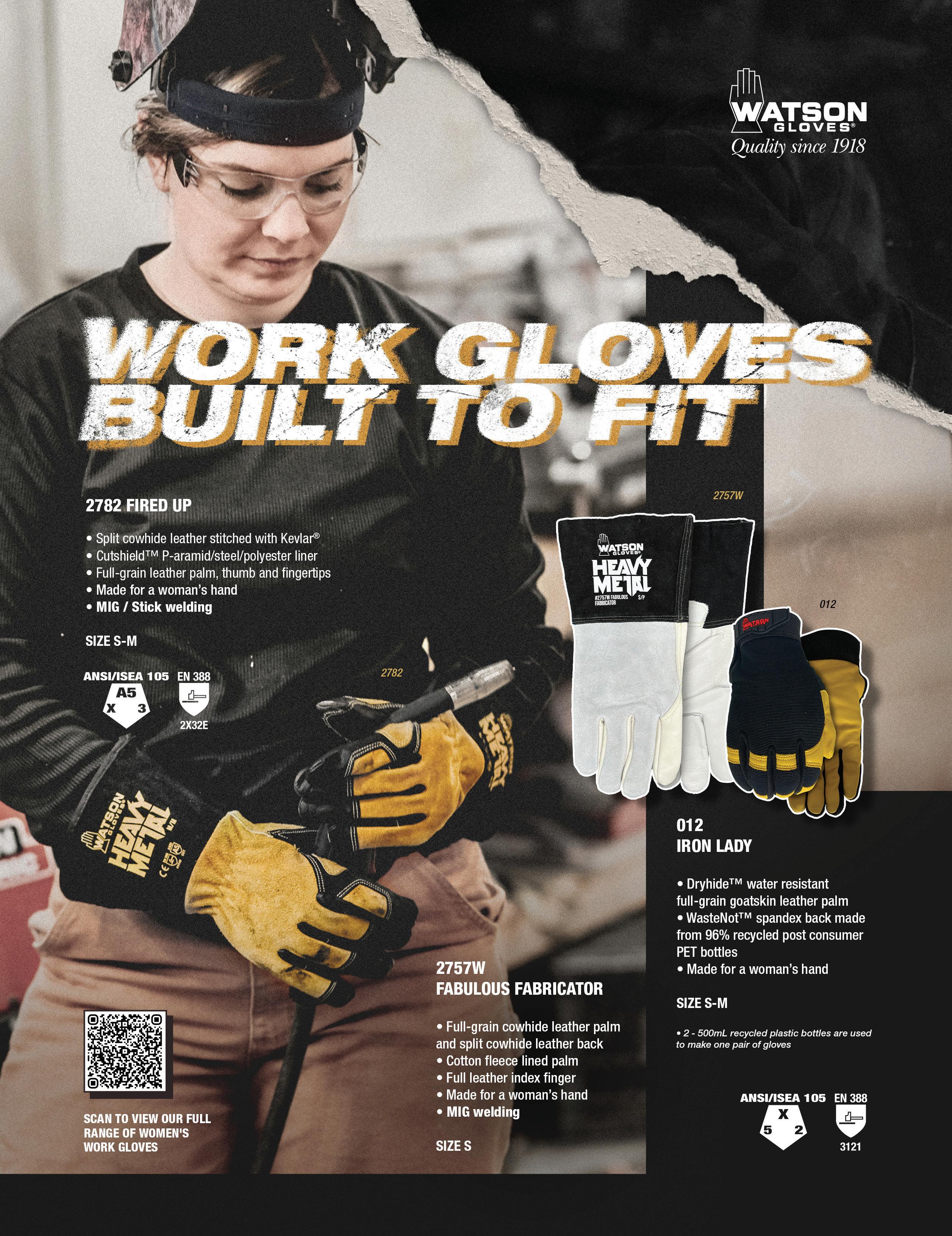
One of the most substantial challenges in securing properly fitting gloves that companies face is ensuring they have gloves for both men and women in their workforce. Whitlock explains that women generally have a narrower hand circumference, which means gloves for women must be more tapered and with a slimmer fit. Seamless knit glove sizes, she says, are generally universal, as they stretch and can mould to a worker’s hand.
“A size extra-small men’s glove would fit a woman’s-size small hand,” Whitlock says. “But a cut and sew glove generally needs specific smaller patterns created to perfectly fit a woman’s hand.”
Another challenge in securing proper-fit PPE is getting leadership buy-in to stock a broader range of hand protection products. Leadership, Whitlock says, is looking at the bottom line – purchases, inventory level, and costs. Whitlock notes that to overcome hesitation to stock more products, it comes down to providing added value. She also notes that there must be alignment throughout the supply chain, from manufacturers to distributors to end user customers: “By showing leadership they can save costs by reducing hand injuries, protecting their workers and not having to commit to purchasing large quantities of smaller sizes, this will help with buy-in to stock.”
Hand protection is what you make of it
Nagib says that protective gloves should fit well, be inspected regularly, and generally be in good condition. Cintula, meanwhile, notes that glove fit impacts businesses beyond injury rates – for instance, with employee retention. Employees who feel protected on the job are more likely to stay for the long haul. High-performance employees – and regulatory bodies –expect employers to stock hand protection products that fit their workforce, ensuring employees don’t need to use workarounds like duct tape to make their gloves fit. Businesses can reduce injury rates, improve employee retention, and drive down lost-time incidents by stocking a broader range of hand protection for male and female employees alike.
Legal View
By Norm Keith
The impact of Bill 30 on workplace health and safety in Ontario
On Nov. 27, 2025, Ontario’s Working for Workers Seven Act, 2025 (Bill 30) received Royal Assent.
Bill 30 introduces a wide range of amendments across several key statutes, most notably for occupational health and safety professionals, the Occupational Health and Safety Act (OHSA), and the Workplace Safety and Insurance Act, 1997 (WSIA). As of Jan. 1, all these new amendments have now come into effect.
Changes to the Occupational Health and Safety Act
(i) Accredited health and safety management systems
Bill 30 amends the OHSA to provide that accredited health and safety management systems are to be treated as equivalent for regulatory purposes. This provision is intended to ensure consistency in the recognition of safety systems across workplaces, such as the COR and ISO 45001 safety management systems.
(ii) Defibrillator reimbursement
Bill 30 introduces a reimbursement program under which eligible employers that are required to install an automated external defibrillator (AED) may receive reimbursement from the Workplace Safety and Insurance Board (WSIB) for the cost of one AED (up to $2,500) for every qualifying construction project. The OHSA and Construction Regulations currently require an AED to be installed and maintained on a construction project where (i) the project is expected to last three months or
Ontario’s Bill 30 introduces a wide range of amendments across several key statutes of interest to occupational health and safety professionals.
more; and (ii) 20 or more workers are regularly employed at the project. The reimbursement program opened on Jan. 1, and the last day to submit a reimbursement request is July 31, 2027.
(iii) New administrative penalty regime
Bill 30 empowers inspectors to impose administrative monetary penalties (AMPs) on individuals or organizations that contravene the OHSA or its applicable regulations. Notices of AMPs must include information about the nature of the contravention and the applicable penalty. Once an AMP is assessed and paid, not appealed, it will preclude regulatory prosecution for the same contravention in provincial offences court. The penalties will be
In addition, courts are authorized to impose fines of up to $750,000 per conviction where a party is found guilty of two or more counts of the same offence in a single legal proceeding.
enforceable as debts to the Crown, and the Minister of Labour may publish details about the penalties imposed. This mechanism is designed to promote compliance through a less adversarial approach than prosecution.
Changes to the Workplace Safety and Insurance Act
(i) False and misleading statements to the WSIB
Bill 30 amends the WSIA to strengthen enforcement and accountability measures. A new provision prohibits employers from making false or misleading statements to the WSIB in relation to any individual’s claim for benefits. Breaches may attract AMPs in addition to existing offence provisions.
(ii) Increased administrative penalties
Bill 30 imposes increased AMPs for failure to comply with premium payment obligations under the WSIA. In addition, courts are authorized to impose fines of up to $750,000 per conviction where a party is found guilty of two or more counts of the same offence in a single legal proceeding. Courts must also now consider aggravating factors when determining the appropriate penalties, including the employer’s prior convictions and history of non-compliance.
Key takeaways for employers
The Bill 30 amendments represent the continued evolution of Ontario’s labour and employment framework. Employers are strongly recommended to review and adjust internal policies and procedures to ensure compliance with the evolving legal landscape.
Thriving at work
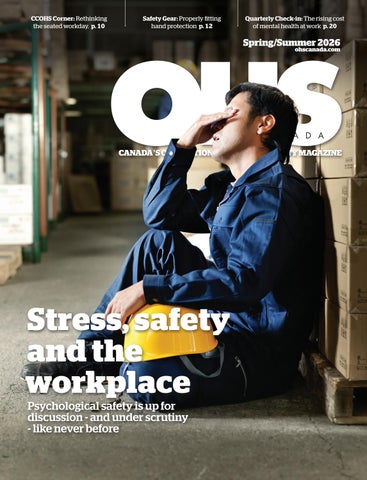
New findings on maximizing psychological health and safety as we navigate new challenges in and outside the workplace.
By Treena Hein
Workers are under a lot of stress these days. We are still recovering from the restrictions and other strains of the pandemic. Return-to-office mandates have come into effect, disrupting routines and changing workplace dynamics. And new challenges are also rearing up from both within and outside of work, including the rising cost of living, worries about job security due to increased automation and the use of AI, and global energy instability.
So, as Sandra Koppert, director of mental health advancement at the Mental Health Commission of Canada (MHCC), explains, “Creating and maintaining a workplace culture rooted in psychological [health and safety] is perhaps more important now than ever, as organizations and individuals face uncertainty and varying stressors. Whether these are work-related or external stressors, they impact the whole person.”
Koppert further notes, “We bring our whole selves to work, and employers have a duty of care to support workers. Workers who feel seen and supported through the workplace culture (including policies, procedures, training and engagement) perform better, which results in better outcomes for organizations in terms of productivity, retention and recruitment.”
Michael Cooper, vice-president of data and partnerships at Mental Health Research Canada (MHRC) concurs. Indeed, recognition that workers always bring outside stress to work is one of the four pillars he typically flags as the most important in promoting mental health in the workplace. His others are good policy, having middle managers who are skilled at helping support employees, and an understanding that all workplaces present psychological hazards that must be recognized and managed appropriately.
A range of solutions
Cooper is the main author of a recent MHRC survey and report on stress and burnout in the workplace, created in partnership with Workplace Strategies for Mental Health and Canada Life. The research found that some solutions are better than others to prevent burnout. Paid time off, the availability of “personal days” and flexible schedules were found to be more effective supports than social events or stress awareness programs. Reflecting on these findings, Cooper notes that “there’s no magic button” managers can tap to improve mental health in the workplace. Instead, he says it’s a matter of “simply listening to what is working and doing what you can to accommodate in providing those supports.”
Experts at the Institute for Work & Health (IWH), a non-profit in Toronto, agree. “I don’t think there is a single ‘silver bullet’ for employers to use to address the multiple sources of stress inside and outside of work,” says IWH president Dr. Peter Smith. He just published a new study with IWH research analyst Marta Pienkowski in which they found injury rates are lower in workplaces where employees feel their well-being is prioritized.
“My advice for employers is to think about their processes for how they identify psychosocial hazards, assess
Research shows that support from managers and co-workers alike has a strong impact on employee mental health.
the risk of these hazards, put in place controls and check that controls are effective. As long as they are genuinely committed to the process, and have put in place opportunities for consultation with their employees, this puts in place the structure for impactful changes to be identified and implemented.”
Smith and Pienkowski note that managers should communicate with transparency – sharing how they decided which psychosocial factors to address, what changes are being made and how the effectiveness of the changes will be determined. Employees should be given opportunities to be part of the process.
The MHRC research also found that support from managers (and co-workers) has a strong impact on employee mental health, but only about two-thirds of managers surveyed felt equipped to help their subordinates in this area. However, there are now more resources than ever at their fingertips. “There is so much training available to support various levels of team members,” says Cooper, including many resources available through the MHRC offshoot mental health support provider, Opening Minds.
There is also a national standard that provides guidance for managers in Canada, first commissioned and then launched by the MHCC in 2013, now called ASC/ CSA Z1003 Psychological Health and Safety in the
“We bring our whole selves to work, and employers have a duty of care to support workers.”
A big price tag for employers
A recent report from the CSA Public Policy Centre estimates that employers take on more than $110 billion in mental-healthrelated costs each year.
Workplace - Prevention, Promotion and Guidance . A second edition of the standard is currently being created in collaboration with the Canadian Standards Association (CSA) Group and will be released later this year. The standard was also updated in 2022 to reflect evolving research and best practices. Koppert says the standard “guides organizations in identifying psychosocial hazards, managing associated risks and implementing structures and practices.”
More about hazards
There have been several times experts in this article have mentioned psychological health and safety (PHS) hazards and risks in the workplace. So, let’s dig a little deeper with Olga Morawczynski, who was a panellist at the 2025 Psychologically Safe Workplaces Summit hosted by Talent Canada and OHS Canada. She is also the founder of Heal-3, a Canadian company that harnesses a large number of well-being practitioners to optimize workforce health in Canada and beyond.
Morawczynski explains that hazards (defined as anything that holds potential to cause harm) in the PHS sense range from excessive workload, exposure to trauma and unclear roles to lack of supervisor support and unmanaged conflict. When these structural hazards are not addressed, they increase psychosocial risk, she says, including the likelihood of burnout, anxiety, depression, errors, safety incidents and disability claims. These hazards should be addressed the same way physical hazards are addressed, says Morawczynski — they must be identified, their potential impact assessed and risk mitigation measures must be put in place.
She explains, “Leaders control workload, staffing, pace of change, decision rights and team climate. They are the primary lever for reducing exposure [to hazards], and at times, a key source of that exposure. Without leadership literacy on psychosocial hazards and risk, PHS strategies remain reactive and performative.”
Disclosure
One important way to boost psychological health and safety in the workplace is to ensure employees are
comfortable sharing their stresses and needs. This is not easy to do, as many workers are rightfully afraid that sharing challenges could lead to being looked over for a promotion, bullied as a troublemaker, or even being fired. Cooper stresses that even in 2026, “stigma, especially in talking about your own mental health challenges, remains pervasive in workplaces.”
He explains that some of the most effective ways to break down the barriers to disclosure are “to ensure middle management is there to listen (workers are more likely to disclose to them) and also to highlight champions in the organization who are willing to speak about mental health.”
Morawczynski explains it this way: “The objective is to normalize being human at work. When leaders appropriately acknowledge pressure, stress or difficulty, they send a clear signal that speaking up early is acceptable in the organization. That permission effect matters. When others raise concerns sooner and receive support sooner, outcomes improve, both for the individual and for the organization.” Silence at the top reinforces stigma, she says, and if employees don’t feel comfortable about challenges and therefore don’t receive support, the likelihood of disengagement increases, along with rates of extended leave, turnover, disability claims and more.
Managers can share challenges in various ways, in group settings or one-to-one. “It can be as simple as acknowledging a demanding period, naming the impact of workload, or recognizing that a situation has been hard,” Morawczynski says. “The key is authenticity within personal boundaries. Leaders should share to the level they feel appropriate and comfortable.”
But words must be paired with action. That means managers must be proactive in ensuring the organization itself is not exacerbating mental health challenges through how work is structured and managed.
In the end, a strong psychological health and safety program is a must, and it should offer flexible supports. Morawczynski
says this might include both traditional and newer support methods, including things like access to a financial planner if that’s what an employee needs, structured recovery programs, wellness retreats, cold plunging and more. “Expectations around support are evolving,” she says, “so benefit design should reflect that reality by offering choice and autonomy, rather than a single narrow solution.”
And also, in the end, we must not forget that mental health is shaped by both work and life circumstances. “Employers have direct responsibility for one and meaningful influence over the other,” Morawczynski explains. “The most effective approach integrates both.”
Join us for an unforgettable evening as we honour the leaders, innovators and organizations setting the standard in workplace safety.
The annual OHS Canada Honours gala allows you to learn from the best of the best, connect with visionary safety professionals, and celebrate the remarkable work that ensures every worker returns home safely at the end of the day.
Sponsorship opportunities are still available! Contact Silvana Maiolo - smaiolo@annexbusinessmedia.com - for more information.
Half and full tables are also available for purchase.
Safety Leadership
By Wayne Arondus
Manufacturing technology: Risk, reward and roadblocks
After 30 years in the manufacturing sector, I’ve seen the lightning speed of manufacturing technology advancement, and a growing divide as companies have struggled to keep up.
Canada’s tech adoption gap
In digital and automated technologies, manufacturers have access to undeniable new tools to reduce risk while increasing productivity. However, as of 2022, only two per cent of the industry had adopted robotics in their facilities, according to Statistics Canada’s Survey of Advanced Technology The impact is clear, with the Bank of Canada noting the country has fallen to the second-least productive country in the G7 as of 2024.
Generative AI upside and risk
Today, generative AI and large language models are set to transform the industry yet again. Canada’s industrial sector has just begun to explore the potential for AI to streamline work, increasing efficiency and productivity. And while caution is common, most companies have little understanding of the potential new risks AI and cybersecurity threats represent to intellectual property (IP), employee morale, security, and physical safety.
Across industries, AI is a due-diligence issue. AI decisions affect confidentiality and IP, operational continuity, and regulatory exposure long before they show up on the shop floor. So, leaders who treat AI as they would any other high-risk operational change have a much better chance of achieving productivity gains without creating new safety and cyber risk.
As companies adopt these tools, leaders also must govern how they work.
Safety implications: Where AI
helps and where it can harm
In safety, we need to consider how AI can
best support our health and safety programs – and how it might derail them.
Training and guidelines help your employees leverage the potential benefit of AI, while using it efficiently and safely. Understanding the risks of AI to intellectual property, cybersecurity, and safety is essential knowledge for every business leader.
AI can summarize policies and data in seconds – a helpful aid to busy safety professionals. But it can also fabricate details or cite the wrong sources. For safety-critical work, a qualified human is required to verify every output.
Every day, generative AI models are learning, changing, and adapting. And we also need to learn and adapt to refine the results – to transform the AI models we develop with care into efficient and productive tools.
Workforce implications: skills and roles
When I started in manufacturing, robots were little more than a dream because they were so cost prohibitive for the average manufacturer. Today, companies are deploying used and new robots and cobots at much more affordable prices to automate operations. And with developments in 3D printing, manufacturers can now take ideas and concepts to working models and designs at a rapid pace.
Automation is eliminating tedious, repetitive, and dangerous tasks, moving workers into roles that require more examination, thinking, and intuition. Ultimately, automation is helping to shape safer roles for the humans in our production processes.
As automation and AI are helping to engineer out many manual labour and repetitive administrative tasks, they are also increasing demand for skilled labour. Heavy manufacturers are now looking for candidates with degrees in mechanical and electrical engineering and those with extensive technical skills. Others are upskilling
and training employees to use new automated systems and perform routine maintenance as we make this historic shift.
This technology adoption is eliminating many unsafe jobs, creating new opportunities for upskilling, and attracting more highly skilled people to the industry. At the same time, it is introducing new areas of risk. To safeguard people and brand reputation, we are learning to look for risk in the intersection of people and robotics. We must consider new hazards in automated systems and the ever-growing risk associated with cybersecurity. And we need to address the very real risk of over-reliance on artificial intelligence that does not recognize the gaps in its own knowledge.
In the safety community, AI literacy and knowledge of automated systems is quickly becoming part of the essential skillset. Many of the same risks exist for practitioners: recognizing hazards in rapidly changing production environments; leveraging technology to keep people safe, while protecting these same people from technology errors; building critical thinking skills to leverage generative AI with healthy skepticism.
Next steps for leaders
The safest and most effective path forward begins with preparation. Define appropriate use cases for AI and, perhaps more notably, where its use is prohibited. Creating an AI usage policy is a critical step to protect the integrity of your IP.
Set clear expectations to require human validation for every safety-critical output. Update risk assessments as you implement new technologies. Document your cyber controls and, above all, train your people in AI literacy, confidentiality, and verifying AI-generated content.
The opportunity is huge. But proceed with eyes open, treating your implementation of AI as you roll out any new operational technology with a plan, effective controls, metrics, and a long-term plan for continuous improvement.
Wayne Arondus is the chief operating officer of the Manufacturing Safety Alliance of BC.
By CSA Group
CSA Group is a global organization dedicated to safety, social good and sustainability. It is a leader in standards development and testing, inspection, and certification around the world, including in Canada, the U.S., Europe and Asia. CSA Group’s mandate is to hold the future to a higher standard.
The rising economic burden of mental health at work in Canada
Canada is facing a rapidly growing economic burden as a result of poor mental health. A new report from the CSA Public Policy Centre, The Economic Cost of Mental Health in Canada, estimates the total cost has more than tripled since 2011, with much of that impact now felt in workplaces through lost productivity, disability claims, and workforce participation challenges.
The findings reveal that mental health is no longer only a healthcare issue, but also an economic and workforce issue that affects how organizations operate.
Olga Morawczynski, CSA public policy fellow and the report’s author, explains how the economic burden is shifting, why psychological health is increasingly linked to workplace safety, and how organizations can move from crisis response to prevention.
What is the economic cost of mental health in Canada, and how is that cost calculated?
The economic cost of poor mental health in Canada is estimated at about $180 billion per year.To put that in perspective, the previous national estimate from 2011 was $50 billion (roughly $67 billion in today’s dollars). While the two figures aren’t directly comparable due to differences in methodology, the overall trend is clear: the economic burden of mental health is rising significantly.
The report groups these costs into two main categories. The first are direct costs, which total about $70 billion and include spending across systems like healthcare, disability programs, social services, and the justice system. The second are indirect costs, estimated at $110 billion, which reflect the broader economic impact when people are unable to fully participate in the workforce. This includes things like reduced productivity, absenteeism, and people leaving the labour force altogether.
Where does the financial burden of mental health land?
Of the estimated $180 billion annual cost, roughly $110 billion (about 60 per cent) is absorbed within workplaces, making employers the single largest payer of poor mental health in Canada. Employers often pick up the slack where the public system falls short. Many frontline mental health treatments, such as psychotherapy and counselling, are not consistently covered under Canada’s publicly funded health system, so workers often access these services through employer-sponsored benefit plans.
But the largest cost impact is lost productivity. When mental health deteriorates, employees may be unable to work, may work at reduced capacity, or may leave the workforce altogether. Much of the economic burden sits with loss of productive capacity through absenteeism, presenteeism, and labour force exit.
What’s driving Canada’s mental health system to focus more on crisis response than prevention?
When people cannot access support early,
mental health conditions often worsen and can surface in crisis-driven parts of the system.
As a result, a growing share of mental health costs occur in emergency departments, policing, courts, correctional facilities, homelessness services, disability systems, and workplaces – settings that were never designed to support mental health needs.
This dynamic is often described as trans-institutionalization: when the healthcare system does not absorb the cost of treating mental illness early, the burden shifts to other institutions that manage the consequences.
If this trajectory continues, the economic burden of mental health in Canada is projected to reach $600 billion annually by 2050.
What is the connection between psychological health and physical safety outcomes at work?
Psychological health directly affects physical safety. When workers experience burnout, chronic stress, fatigue, or other
The economic cost of poor mental health in Canada is estimated at about $180 billion per year.
mental health challenges, it affects attention, concentration, reaction time, and decisionmaking – all essential for safe work.
As more individuals come to work under significant strain, the risk of errors, near misses, and incidents increases. Mental health may therefore be an important contributing cause in safety events.
However, this connection is often missed in how incidents are investigated. Safety investigations typically focus on physical hazards and procedural failures. If a worker falls from height, investigators will examine the equipment, procedures, training, and environmental conditions. But it’s also important to ask whether the worker was exposed to psychosocial risks and hazards and how to address these risks.
Without examining these factors, investigations may identify what happened but not fully understand why it happened, leaving key contributors to incidents unaddressed.
Employers are seeing an increase in psychological injury claims. What is driving that trend?
Since the COVID-19 pandemic, the total cost of psychological injury claims has increased by more than 90 per cent.
The average cost of a psychological injury claim ranges from $15,000 to $50,000. Wage-replacement durations can exceed 400 days – more than five times longer than the average physical injury claim. Across jurisdictions, workers’ compensation boards show that accepted psychological
injury claims are rising by about 10 per cent per year, and these cases tend to be far more complex and longer in duration than physical injury claims. Three factors are driving this trend.
First, presumptive legislation is expanding. In several high-risk sectors, particularly among first responders, if a worker is diagnosed with certain mental health conditions such as post-traumatic stress disorder (PTSD), it is presumed to be work-related, making it easier to access compensation.
Second, the range of occupations covered under these rules is growing, meaning more workers are now eligible to file psychological injury claims.
Third, awareness around mental health has increased significantly. Workers, particularly younger workers entering the labour force, are much more knowledgeable about mental health and about how work can affect it, meaning more issues that might previously have gone unreported are now being recognized and brought forward.
What does it mean to move from a crisis-driven model to a prevention-focused approach in workplace mental health?
Currently, only about 10 per cent of employer mental health spending is directed toward prevention, with most spent managing consequences such as disability claims and treatment after workers are already unwell. As a result, organizations often address problems later, when they are more complex and costly to resolve.
At a workplace level,
prevention begins with understanding psychosocial hazards before they lead to injury, absence, or claims. These hazards are tied to how work is designed, organized, and managed.
Some workers may face chronic workload pressure, long hours, or lack of control over work. Others may face exposure to trauma, violence, isolation, or persistent conflict. Once psychosocial hazards are identified, organizations must implement controls to manage them, just as they would with physical safety risks. This can include training leaders, managing workloads, adjusting how work is organized, and addressing other conditions that may contribute to mental strain.
Benefits also play an important role, as not all mental health challenges originate at work. Financial stress, family pressures, and other life circumstances can significantly affect a person’s mental health, so benefits need to be flexible enough to support a wide range of needs, from counselling and therapy to financial counselling, coaching, and other well-being supports that help individuals manage stress before problems escalate.
How are governments beginning to formalize psychological health and safety requirements, and what signal does that send to employers?
Canada’s national standard for psychological health and safety in the workplace, CAN/ CSA-Z1003-13/BNQ 9700803/2013 (R2022), provides organizations with a practical, evidence-based, voluntary framework to identify psycho -
social hazards, assess risk, and implement effective controls within their management systems. An updated revision of the standard is expected later this year, reflecting evolving best practices and emerging workplace realities.
At the same time, governments are beginning to move psychological health and safety from guidance to formal regulatory expectations. A clear example is in Quebec, where changes to occupational health and safety legislation have made psychological health a legal responsibility for employers. As of Oct. 6, 2025, under Law 27, the Act to Modernize the Occupational Health and Safety System, employers must identify, assess, and mitigate psychosocial hazards such as harassment, excessive workload, and workplace violence with the same level of diligence applied to physical hazards. Employers in Quebec must also implement preventative policies – organizations with 20 or more employees must establish health and safety committees that address these risks. Other provinces are moving in a similar direction, increasingly recognizing psychosocial hazards as part of occupational health and safety risk management.
Collectively, these developments present an opportunity for organizations to strengthen their approach to psychological health and safety. By identifying and managing psychosocial hazards early, employers can help prevent costly outcomes such as psychological injury claims, long absences, turnover, and lost productivity, while supporting a more resilient and engaged workforce.
Vancouver mining company fined $135,000 after worker injured
DMC Mining Services Ltd. has been fined $135,000 after a worker was injured while removing an extra power cable from the wall of a mine shaft in Victoria Mine, approximately 35 km west of Sudbury, Ont.
On Oct. 22, 2024, three workers were removing an extra power cable from the wall of a mine shaft while working on a suspended platform. The workers, working from the top down, decided to remove the cable by cutting the metal bands securing it to the shaft walls and coiling the cable on the platform.
To make room on the platform, one worker stood inside the coiled cable, creating a pinching hazard.
As they were finishing the task, the free end of the cable fell below the platform, causing the coil to tighten around the worker. The worker was injured as a result.
An investigation by the Ministry of Labour, Immigration, Training and Skills Development found that the company did not ensure workers removed the cable in a way that reduced risk, starting at the bottom and working up, and without standing inside the coiled cable. Therefore, DMC Mining Services Ltd. did not take every precaution reasonable in the circumstances for the protection of a worker, contrary to clause 25(2)(h) of the Occupational Health and Safety Act
In addition to the fine, the court imposed a 25 per cent victim fine surcharge as required by the Provincial Offences Act The surcharge is credited to a special provincial government fund to assist victims of crime.
Construction company and supervisors fined $130,000 total
after two workplace incidents
EllisDon Forming Ltd. and two of its supervisors have been fined a total of $130,000 after roof collapses at two worksites where the company was contracted to install CANAM Hambro D500 composite floor systems in London, Ont.
At the first project on July 22, 2022, Corey Jones, a supervisor employed by EllisDon Forming Ltd., was overseeing work on a penthouse rooftop. The roof had a unique layout that required a crossbracing detail that was not needed anywhere else on the project. This requirement was not clear to the supervisor on the design drawings, which resulted in the crossbracing not being installed.
While the workers were pouring concrete on the final section of the penthouse roof, the system started to move and then collapsed, causing the workers to fall to the level below. No workers were injured in this incident.
At the second project on Jan. 5, 2023, Matthew Thompson, a supervisor also employed by the company, was overseeing work on the upper floors of a residential apartment building.
The workers had completed the concrete walls on the 25th floor and installed the composite floor system on the 26th floor.
the QR code for the latest on occupational health and safety fines from across Canada.
That morning, the supervisor and other company staff carried out a prepour inspection. Once the inspection was completed, workers began pouring concrete. After most of the floor was poured, workers began levelling and finishing it. Before workers returned to pour the remaining section, part of the composite floor system collapsed, causing the workers on the 26th floor to fall to the level below. Four workers suffered minor injuries in this incident.
The court found EllisDon Forming Ltd. failed to ensure that every part of a project, including a temporary structure, was adequately braced to prevent any movement that may affect its stability or cause its failure or collapse.
Meanwhile, Jones and Thompson failed, as supervisors, to ensure workers worked in the manner and with the protective devices, measures and procedures required by section 89(2) of Ontario Regulation 213/91, contrary to section 27(1)(a) of the Occupational Health and Safety Act
A post-incident investigation by the company resulted in changes by CANAM Hambro to its D500 system and components, including further design details, which were implemented at both projects.
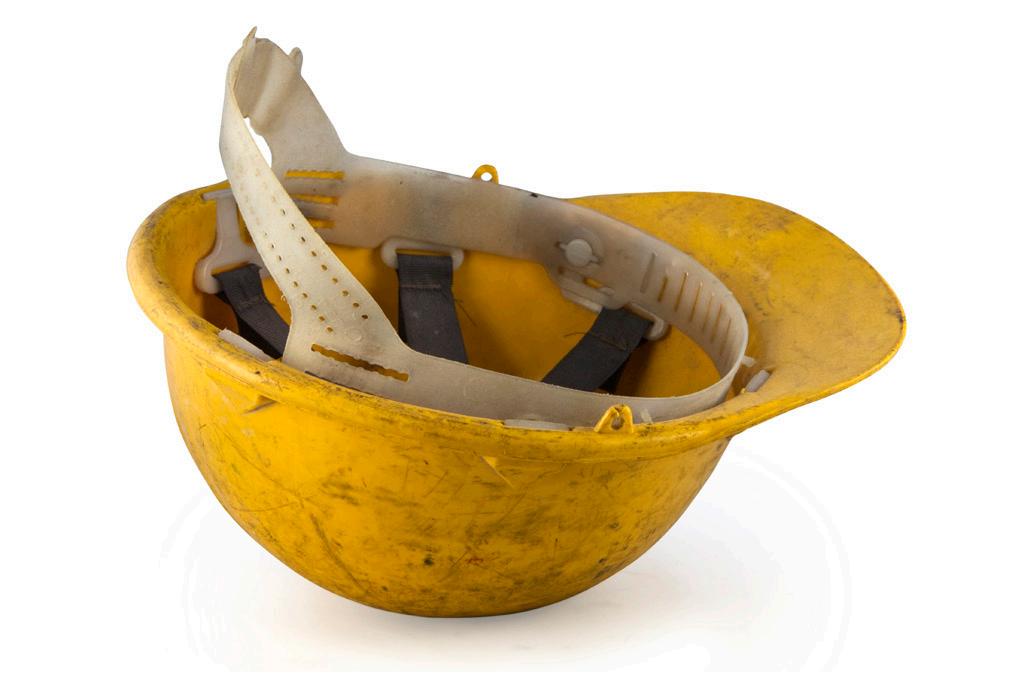
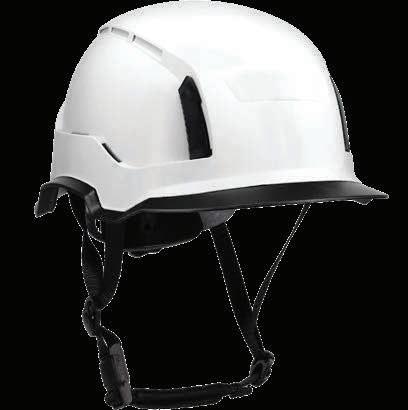
BUILT FOR HIGH-PERFORMANCE CONSTRUCTION WORK
Made in Canada. CSA certified. Lightweight design for all-day wearability. Features an industry-first removable full brim system, so the helmet adapts to the task, not the other way around.
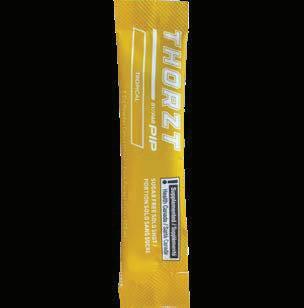
Solo Shots
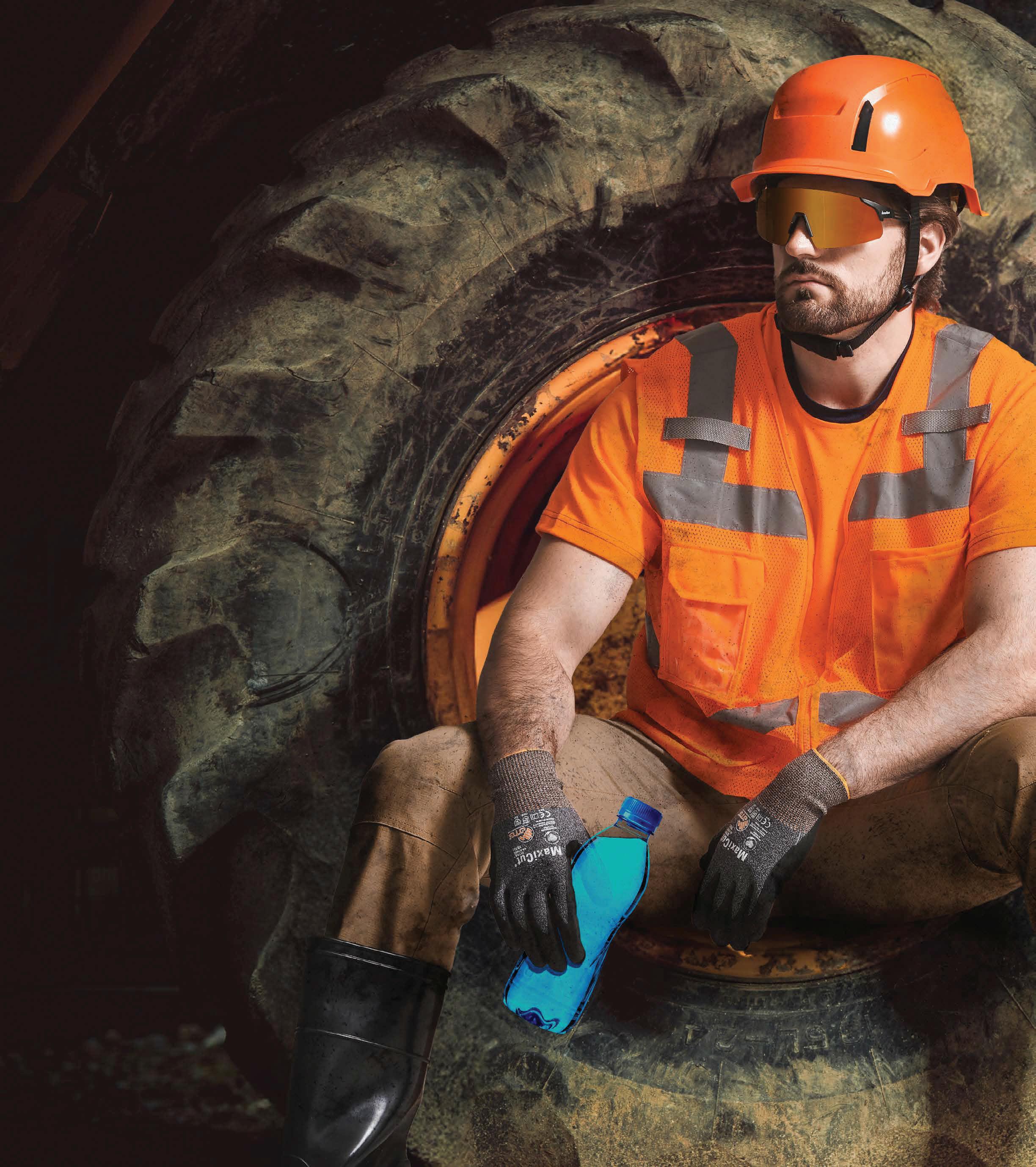
When the work gets hot, hydration matters. Single-serve electrolyte hydration designed to support performance on the job, and available in five flavors.
Two solutions. One goal. Help your crew stay sharp, work safer, and achieve more, every shift!