COVERAGE
A new Alberta government wants to rework legislation on farming safety insurance
CALCULATING SAFETY
Thoughts on evaluating workplace performance
FEELINGS
MATTER
How mental health relates to physical safety
DOUSING FLAMES
The value of FR apparel
EYES ON THE ROAD
Preventing driving accidents

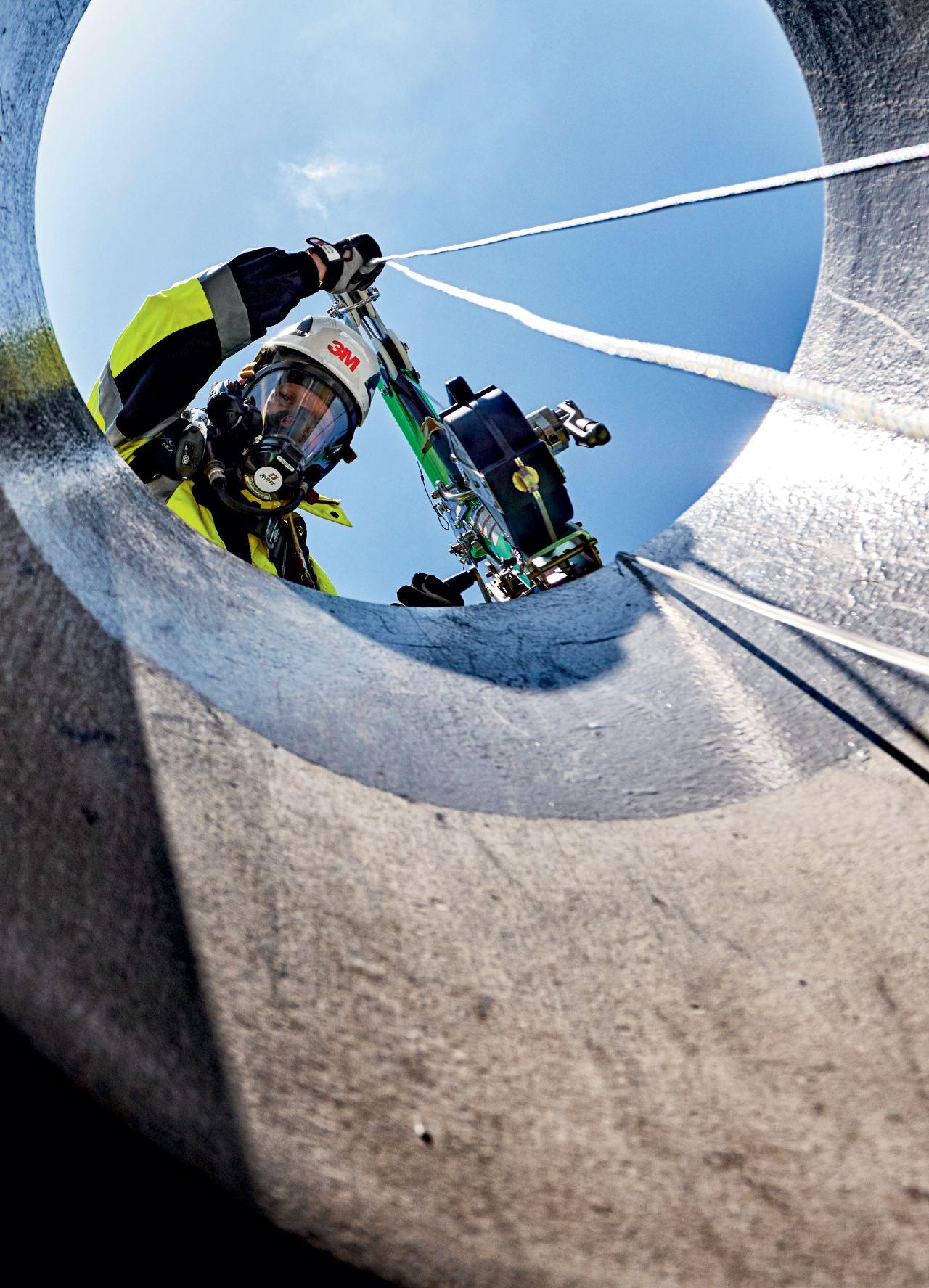
Prevent musculoskeletal disorders (MSDs)
Climb slopes of up to 6 degrees
Stop instantly thanks to the electromagnetic braking system



DONALEE MOULTON
ALAN QUILLEY
RENSIA MELLES
JEAN LIAN

A Delicate Balance
The François Legault government in Quebec has faced considerable controversy this year over the passage of Bill 21, unofficially known as the province’s “secularism law”, in June. This legislation prohibits all public workers in positions of authority from wearing any religious symbols, from turbans and hijabs to kippas and crosses. It covers a wide spectrum of workers, including teachers, police officers, prison guards, judges, lawyers and others.

On the most basic level, this law (for some) is clearly a form of workplace discrimination. Even if you’re an agnostic like me, it shouldn’t be hard to see that. It’s a violation of freedoms that should be protected. Workers of all faiths should have the right to wear these spiritual symbols if they choose, and denying them that right does nothing to discourage racial or religious bigotry and incivility among work colleagues. It also contradicts a key value of democracy, the separation of church and state — in the sense that the government is enforcing a total absence of religion, at least in work environments.
Yet a different approach to the issue surfaced on September 12, when the Quebec Court of Appeal ruled that Sikh truck drivers — presumably not part of the Bill 21 group — have to remove their turbans in order to wear safety headgear when required. Three drivers were seeking an exemption to their jobs’ requirement of donning hardhats when they left their vehicles at the Port of Montreal, due to their religious beliefs. But the Court decision deemed that workplace safety had to take precedence over freedom of religious expression in this case. The drivers’ employers, private trucking companies, had adopted the policy to protect the workers and to fulfill a legal requirement.
The trucking case suggests that the religious-symbol issue isn’t as black-andwhite as it seems. Does occupational health and safety trump religious freedom in certain cases? Under what circumstances is it more appropriate — and more morally sensible — to protect the worker’s body than to protect his or her cultural expression? Can you truly call it discrimination when the obvious intention is to save lives?
Perhaps “intention” is the key word here. Certain professions — construction, factory work, firefighting and so on — require protective headgear by law because they come with the hazard of falling objects striking a worker’s head and causing concussion, brain damage, or death. This risk affects everyone in those work environments, regardless of religious affiliation. Yet it’s hard to imagine many of the professions associated with Bill 21 — teaching or legal representation, for example — posing that same risk. In those cases, it’s much harder to justify the Quebec government’s sweeping move to wipe out religious wear in the workplace, and the intention appears more sinister.
Employers, and those who create employment laws, need to find a delicate balance between protecting workers’ safety and protecting their human rights. Everybody in the workforce needs to be treated and respected equally, and they also need to be equally safe. Without both, you can’t honestly call a workplace a safe space for all.

Vol. 35, No. 5 SEPTEMBER/OCTOBER 2019
ACTING EDITOR JEFF COTTRILL 416-510-6897 jcottrill@frasers.com
MEDIA DESIGNER MARK RYAN
ACCOUNT COORDINATOR CHERYL FISHER 416-510-5194 cfisher@annexbusinessmedia.com
CIRCULATION MANAGER JAY DOSHI 416-442-5600 EXT 5124 jdoshi@annexbusinessmedia.com
PUBLISHER PETER BOXER 416-510-5102 pboxer@ohscanada.com
GROUP PUBLISHER PAUL GROSSINGER pgrossinger@annexbusinessmedia.com
COO SCOTT JAMIESON sjamieson@annexbusinessmedia.com
EDITORIAL ADVISORY BOARD MEMBERS
DAVID IRETON, Safety Professional, Brampton, Ont.
AL JOHNSON, Vice President, Prevention Services WorkSafeBC, Richmond, B.C.
JANE LEMKE, Program Manager, OHN Certification Program, Mohawk College, Hamilton, Ont.
DON MITCHELL, Safety Consultant, Mississauga, Ont.
MICHELE PARENT, National Manager, Risk Management and Health and Wellness, Standard Life, Montreal, Que.
TERRY RYAN, Workers’ Compensation and Safety Consultant, TRC Group Inc., Mississauga, Ont.
DON SAYERS, Principal Consultant, Don Sayers & Associates, Hanwell, N.B.
DAVID SHANE, National Director, Health and Safety, Canada Post Corporation, Ottawa, Ont.
HENRY SKJERVEN, President, The Skjerven Cattle Company Ltd., Wynyard, Sask.
PETER STRAHLENDORF, Assistant Professor, School of Occupational and Public Health,Ryerson Polytechnic University, Toronto, Ont.
JONATHAN TYSON, Association of Canadian Ergonomists/Association canadienne d’ergonomie, North Bay, Ont.
Printed in Canada
ISSN 0827-4576 (Print)
ISSN 1923-4279 (Digital)
PUBLICATION MAIL AGREEMENT #40065710
CIRCULATION
asingh@annexbusinessmedia.com
Tel: 416-510-5189
Fax: 416-510-6875 or 416-442-2191
Mail: 111 Gordon Baker Rd., Suite 400, Toronto ON M2H 3R1
SUBSCRIPTION RATES
Published six times per year – Jan/Feb, Mar/Apr, May/Jun, Jul/Aug, Sep/Oct, Nov/Dec Canada $100/yr plus tax
USA $100/yr
Foreign $164.50
Occasionally, OHS Canada will mail information on behalf of industry related groups whose products and services we believe may be of interest to you. If you prefer not to receive this information, please contact our circulation department in any of the four ways listed above.
Annex Privacy Office privacy@annexbusinessmedia.com
Tel: 800-668-2374
No part of the editorial content of this publication may be reprinted without the publisher’s written permission © 2019 Annex Publishing & Printing Inc. All rights reserved. Opinions expressed in this magazine are not necessarily those of the editor or the publisher. No liability is assumed for errors or omissions. All advertising is subject to the publisher’s approval. Such approval does not imply any endorsement of the products or services advertised. Publisher reserves the right to refuse advertising that does not meet the standards of the publication.

Jeff Cottrill
$3.4 million
Amount of money that Transport Canada is investing to support more than 20 projects to improve railroad safety in Saskatchewan over the next year.
Source: Transport Canada
$1.7 billion
Estimated annual cost of preventable workplace injuries to the Atlantic provinces, according to a July 31 WorkSafeNB news release.
Source: WorkSafeNB
$265,000
Fine imposed on the Toronto Transit Commission on September 3, regarding a 2017 incident in which an employee was fatally crushed between a work car and pickup truck.
Source: Ontario Ministry of Labour

1. Call for Action: Saskatchewan Federation of Labour president Lori Johb has laid out four paths for the provincial government to tackle what she calls a “workplace fatalities and injuries crisis.” In a September 11 media release, Johb suggests expanded fundamental workplace rights and a new law requiring oh&S committees to file meeting minutes with the government, among other strategies. Source: Saskatchewan Federation of Labour
Number of time-loss days paid per 100 covered workers in Nova Scotia over the first quarter of 2019.
Source: Workers’ Compensation Board of Nova Scotia
2. Crass Candidate: Rick Wowchuck was reelected MLA for Manitoba’s Swan River riding on September 10, despite accusations of workplace harassment. His assistant accused him of showing her a cell-phone photo of nude women as a joke, on top of four other breaches of the Legislative Assembly’s respectful-workplace policy. Wowchuck apologized in a statement on September 5.
Source: The Canadian Press
3. Fresh Start: The Crown is appealing charges to the provincial Court of Appeal, regarding the death of a millwright in Cochrane, Ontario. Denis Millette, 52, died from acute cyanide intoxication in 2015 while working for Detour Gold. Charges against three Detour employees were dropped in 2017 due to delays. A hearing to reinstate the charges was scheduled for September 25 of this year.
Source: The Timmins Daily Press
4. Firefighters Honoured: The Canadian Fallen Firefighters Foundation held its annual ceremony on September 8 at the Canadian Firefighters’ Memorial in Ottawa. Among those commemorated this year were 13 Montreal firefighters and one from Nunavut who lost their lives. Many of these fallen workers passed away from cancer and other occupational illnesses.
Source: CTV News
5. Security Shortage: The president of the New Brunswick Nurses Union (NBNU) is calling on the provincial government to address an insufficient number of properly trained security guards in hospitals. President Paula Doucet cited 48 unfilled guard positions out of 91, with an 82 per cent annual turnover rate – which she called “a dangerous and unacceptable state of affairs” on September 10.
OCCUPATIONAL EXPOSURE LIMITS UPDATED
The National Health Commission in China has updated the occupational exposure limits (OEL) for the first time in about 12 years. Released on August 29, the update contains four OEL tables, including maximum allowable concentration and permissible concentration. The update will become mandatory for Chinese employers next April 1.
Source: ChemicalWatch
Source: CBC News

OH&S UPDATE
NWT AIRPORT UPGRADED
INUVIK – The federal government announced on September 4 that it is investing $150 million over a period of five years into the extension and modernization of the Inuvik Airport runway in Inuvik, Northwest Territories.
A news release from the Department of National Defence states that the project will involve extending the existing runway by 3,000 feet and modernizing the lighting, navigational, and militaryaircraft landing systems.
“It is critically important that the women and men of the Canadian Armed Forces have the infrastructure they need to train and perform their duties effectively,” says Harjit S. Sajjan, the federal Minister of National Defence, in a press statement. “This is especially true in the Arctic, where we face unique safety and security concerns as a result of climate change.”
Sajjan adds that the investment would keep Canadian Forces members “well-prepared and equipped to
respond to whatever challenges they might face in the future.”
The project is part of the government’s pledge to modernize infrastructure at all Canadian army bases and wings, as outlined in the Strong, Secured, Engaged national defence policy, while also maintaining Canadian sovereignty in the Arctic region.
Currently 6,000 feet long, the runway is used primarily for CF-18 operations to support Canadian sovereignty in the North and NORAD obligations, according to the release.
SPARKS INJURE WORKER
POND INLET – The Workers’ Safety and Compensation Commission (WSCC) has laid six charges against Tower Arctic Limited, under the Nunavut Safety Act, in response to an employee injury that occurred last year in the municipality of Pond Inlet, Nunavut.
According to a WSCC media release, the incident occurred on September 19, 2018, when the worker was using a
B.C. PHONE SERVICE OFFERS SAFETY INFO
RICHMOND – British Columbia’s occupational health and safety authority has expanded its toll-free phone service to connect workers and employers in the province to prevention officers more easily.
The Prevention Information Line now helps callers reach eight dedicated prevention officers with diverse specializations, according to a July 30 press release from WorkSafeBC. Workers and employers can report in multiple languages, since the prevention officers have access to interpreters.
“The purpose of this service is to enhance access to occupational health and safety information, improve response times and ultimately reduce injuries,” Jacqueline Holmes, WorkSafeBC’s manager of prevention field services, says in a press statement.
“No matter where they are located in the province,” adds Holmes, “workers and employers have direct access to WorkSafeBC prevention officers.”
WorkSafeBC launched the phone service to give people convenient access to information, guidance and resources regarding workplace safety regulations, rights, and respon-
handheld grinder to make cuts into the top of a metal barrel at the company’s shop/garage worksite. The grinder emitted sparks that ignited chemical residue within the barrel, resulting in an explosion that seriously injured the employee.
On August 28 of this year, the WSCC filed multiple charges against Tower Arctic Limited in the Nunavut Court of Justice in Iqaluit. The Commission alleged several violations of the Act and the Occupational Health and Safety Regulations.
The employer is accused of failing to do the following: take all reasonable precautions and adopting all reasonable procedures to keep every worker safe and healthy; arrange for the use, handling, storage, and transport of articles and substances in a way that protected worker safety; provide the necessary information, instruction, training and supervision to protect employee health and safety; ensure adequate, competent supervision of work being done; make sure that all of the supervisors had completed an approved regulatory familiarization program; and en-
sibilities. A worker can report incidents or unsafe working conditions, as well as request a worksite inspection or consultation; it is also possible to discuss any oh&s issue with a prevention officer.
Call volumes to the Prevention Information Line on oh&s issues have increased by approximately 20 per cent since the expansion earlier this year, the release noted. In the meantime, the average response time has decreased by 70 per cent.
Almost 50 per cent of these calls have been safety-related, WorkSafeBC states, while about 21 per cent dealt with bullying, harassment, and/or discrimination. In terms of industries, nearly a third of the inquiries have come from the construction sector, followed by healthcare at 8.1 per cent, manufacturing at seven per cent, and hospitality at six per cent.
While the hotline is open 24 hours a day every day, prevention officers are directly available on weekdays from 8:05 am to 4:30 pm, says WorkSafeBC. The toll-free number is accessible across Canada.
sure that the worker had been trained in matters necessary to protect his or her own safety on the job.
Tower Arctic was scheduled to make its first court appearance in the matter on September 9 in Iqaluit.
“The WSCC reminds all employers that their legislated worksite responsibilities include ensuring all workers and supervisors receive training, instruction and supervision necessary to ensure the safety of workers and the worksite,” the Commission states in the release, “and to have and maintain and occupational health and safety program that is current and relevant to the potential hazards at their worksite.”
MALL EVACUATED AFTER THREAT
SURREY – A shopping mall and surrounding businesses were evacuated late in the afternoon on August 25, following what the Surrey RCMP refers to as a “threat”.
RCMP frontline members responded to a report at Surrey Central Mall at about 4:00 p.m. that day, according to a news release from the force. Police quickly evacuated the businesses as a precaution and secured the scene. With the help of Integrated Police Dog Services, the RCMP cleared the area and deemed it to be safe, without any public threat.
“Surrey RCMP frontline members responded quickly and efficiently to ensure the safety of everyone present,” says Inspector Manly Burleigh, a duty officer, in a press statement.
“We treat every threat like this as real until proven to be false,” Inspector Burleigh adds. “Our members did an outstanding job responding to a potentially dangerous incident.”
Following the evacuation and inspection, police located and arrested an individual at a nearby residence.
Shopper Vincent Benjamin reported the closure and evacuation of the mall on his Twitter account as it was taking place, claiming an “undisclosed security issue” as the reason.
Benjamin also described the people present as “relatively peaceful and calm.”
TWO OFFICERS HOSPITALIZED
VANCOUVER – The Vancouver Police Department (VPD) has laid criminal charges against a 50-year-old man for assaulting two officers on August 21, sending both to hospital with non-life-threatening injuries.
A VPD press release offers scant detail about the incident, which took place near Sunset Beach in Vancouver. Police have charged local man Frank Pacella with assaulting a police officer, causing bodily harm to a police officer, resisting arrest, and escaping lawful custody.
Local news reports claim that Pacella bit and punched two female officers and attempted to take their firearms, after police were called to the area following reports of a man yelling and behaving erratically. The suspect reportedly fled when
?
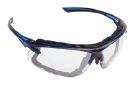
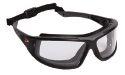
Looking for More Comfort & Fit DSI has it!
Very lightweight – less than 1 oz
9.5 base curve lens for better coverage
Exclusive anti-fog coating
Double injection temple arms and soft nose-piece to prevent slipping in hot and humid environments
Contemporary dual-lens design with half-frame
Available in Clear, Amber, Smoke and I/O Mirror lenses
Fits a wide variety of different faces




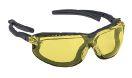
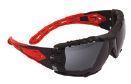


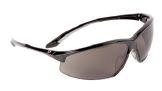
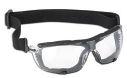
Call your local distributor for a FREE trial of the Hummingbird Eyewear and get more information on our full line of Sealed Eyewear

a bystander intervened, and police later subdued Pacella with a Taser. The officers suffered cuts and scratches to their faces and heads, while one officer’s arm was injured and the other’s finger was bitten.
Pacella was scheduled to make a court appearance on September 5 regarding the incident.
“No additional information will be provided at this time, as the matter is now before the courts,” the VPD release states.
POLICE DOG INJURES OFFICER
CALGARY – An officer with the Calgary Police Service (CPS) was accidentally injured by one of the Service’s dogs following a break-and-enter call.
According to a CPS news release, police responded to reports of an attempted break-in at an occupied residence in the northwest quarter of the city on August 16. The call brought several police units, including a canine unit, and several members of the force converged on the scene.
During the convergence, the Police Service Dog “had unintentional contact with a uniformed CPS member,” the release states. The officer was taken to hospital for injury treatment.
The CPS apprehended two suspected offenders during the incident, the release adds.
Local news reports say that the injured officer was bitten by the dog, and that he had serious injuries, but was in stable condition in the hospital. In addition, one of the two suspects was reportedly taken to a hospital as a precaution, following the use of a Taser.
“The investigation is ongoing,” the CPS states.
HYPOXIA INVOLVED IN CRASH
MOUNT RAE – Hypoxia, or in-flight oxygen deprivation, was a likely factor in a plane crash that killed a pilot and survey technician in Alberta last year, according to a recent investigation report from the Transportation Safety Board of Canada (TSB).
The incident occurred on the early afternoon of August 1, 2018, when an Aries Aviation International Piper PA-31 aircraft was descending towards Calgary/Springbank Airport Alberta following two hours of survey activities. According to the TSB report, which was published on August 1 of this year, the plane was 40 nautical miles southwest of the airport and 15,000 feet above seal (ASL) level when the right engine suddenly began operating at a substantially lower power setting than the left one was, for no apparent reason.
The aircraft departed controlled flight about 90 seconds later, at about 13,500 feet, the report states. The plane collided with terrain near the peak of Mount Rae, fatally injuring both occupants.
After investigating the crash, the TSB found that the pilot had not been using oxygen continuously while the plane was more than 13,000 feet ASL, even though a portable oxygen system had been active and available and using it was required by regulation. This may have resulted in hypoxia, which can affect pilot performance. The onset of hypoxia is often slow and gradual, so the pilot may not have recognized the symptoms of it.
“If flight crews do not undergo practical hypoxia training,” the Transportation Safety Board report states, “there is a risk that they will not recognize the onset of hypoxia when flying
WARRANT OFFICER CHARGED
WINNIPEG – A member of the Canadian Armed Forces (CAF) has been charged with sexual assault, regarding an incident that allegedly occurred during a military course more than 20 years ago.
A news release from the Department of National Defence (DND) states that the Canadian Forces National Investigation Service (CFNIS) laid the charge on August 29 against Chief Warrant Officer Duncan, Colin Stewart, who is currently a Regular Force member with 1 Canadian Air Division Headquarter Base in Winnipeg. Officer Stewart faces one count of sexual assault according to section 130 of the National Defence Act, pursuant to section 271 of the Criminal Code of Canada.
The accused was instructing in the course in Kingston, Ontario when the alleged offence took place during the summer of 1996, according to the release, which provides no further detail about the allegations. The incident was reported to the Military Police at CFB Edmonton in January 2017. On January 16 of that year, the CFNIS began investigating the allegations.
“The Canadian Forces National Investigation Service seeks to investigate and, where appropriate, lay charges
based on factual evidence, regardless of when the offence is alleged to have been committed,” says Lieutenant-Colonel Kevin Cadman, CFNIS’ commanding officer, in a press statement. “Much care is taken to investigate all matters of this nature, historical or otherwise, which is now before the courts.”
Lieutenant-Colonel Cadman adds in the statement that the CAF has a mandate to make the work environment safe from sexual misconduct.
“All members of the Canadian Armed Forces, whether they are part of Reserve Force or Regular Force, are expected to serve/behave in a respectful and professional manner at all times,” he says.
The matter is currently proceeding according to the military justice system, the CAF states. The date and location of a possible court martial is yet to be determined. As in all CAF cases, the accused is presumed innocent until proven guilty, the release adds.
A specialized unit with the CAF Military Police Group, the CFNIS investigates serious and sensitive matters related to DND property and employees and CAF personnel, both in Canada and abroad. The Service conducts its investigations independently without outside interference.
above 13,000 feet without continuous use of supplemental oxygen.”
The TSB also notes that there was no flight-data recorder or cockpit voice recorder on the plane. These were not required by regulation. The aircraft was equipped with a flight-data monitoring system with a camera, which gave the investigators ample information to understand the underlying factors of the accident, the TSB adds.
“The weather information collected during the investigation identified that the loss of control was not due to in-flight icing, thunderstorms, or turbulence,” the TSB states in the report.
NONPROFIT RATES FREEZE
TORONTO – The Ontario Ministry of Labour (MOL) announced on Sept. 25 that it is freezing workplace insurance rates for nonprofit organizations in the province.
A news release from the MOL states that the Workplace Safety & Insurance Board (WSIB) was planning to increase workplace-safety insurance rates for nearly 2,700 nonprofits, including daycares, charities, and women’s shelters.
“These organizations are run by dedicated people and often operate on shoestring budgets,” says Monte McNaughton, Ontario’s Labour Minister, in a press statement. “That’s why we asked the WSIB to take this measure. Because it’ll help valuable community-based organizations that serve Ontario’s most vulnerable citizens.”
An additional 1,600 organizations will see their rates reduced, the MOL claims.
PRINTING INJURY NETS FINE
KITCHENER – A company that manufactures steel nails was fined $50,000 on August 12, after submitting a guilty plea, following a critical worker injury that occurred early last year.
The incident occurred at the Kitchener facility of THS Industries Ltd. on January 17, 2018, according to a news release from the Ontario Ministry of Labour (MOL). A THS employee
was installing a rubber, flexible printing plate on an Automatic Flexo printing machine that day, while a co-worker was operating the machine controls. As the second worker could not see the first one at the other side of the machine, the first worker was pinned between two rollers, severely injuring him.
An inspection by the MOL determined that the injured employee had not received sufficient information, instruction, or supervision on safe operation of
the printing press, the release stated. This was a contravention of Section 25(2)(a) of the provincial Occupational Health and Safety Act.
Justice of the Peace Ralph Cotter ordered THS to pay the fine at the Kitchener provincial-offences court, as well as a 25 per cent victim fine surcharge credited to a special provincial government fund to assist crime victims.
This was not the first oh&s conviction for the company, according to the

MOL. On April 13, 2016, THS left a machine unguarded, which resulted in an MOL stop-work order on the equipment. Staff used the machine before the order was lifted, but no one was injured. THS was fined $20,000 for this incident on April 10, 2017.
CONVICTION FOR LOGGING DEATH
THUNDER BAY – A year and a half after a worker was killed in a logging accident north of Lake Superior, the Ontario Ministry of Labour (MOL) has fined the employer $80,000.
An MOL news release states that a D & G Logging Ltd. employee was at work near Long Pond Road in the Big Pic Forest, north of Wawa, when the incident took place on January 15, 2018. The employee was working on a Quadco delimbing machine, which is for removing tree branches. The worker was repairing a leak on the hydraulic cylinder on the machine’s boom, which was mounted on a CAT excavator. The boom was suspended, but not blocked, to prevent it from moving as the hydraulic line was being removed from the cylinder, and the employee was positioned over the machine base and under the boom in order to reach the hydraulic hose from the back of the cylinder.
As the worker was removing the hose, according to the MOL, the pressure that was holding the boom in the elevated position released suddenly. The boom dropped and crushed
the worker between itself and the machine cab. The resulting injuries killed the employee.
The MOL subsequently deemed that the boom had not been blocked or otherwise immobilized to stop it from moving after the machine had been removed from service. D & G had breached section 25(1)(c) of the Ontario Occupational Health and Safety Act, by failing to ensure the implementation of the measures and procedures in section 75 of Ontario Regulation 851, the Industrial Establishments Regulation.
On July 29 of this year, Judge Zelda N. Kitchekeesik ordered the employer to pay a fine of $80,000, following a plea of guilty, in the provincial-offences court in Thunder Bay. D & G was also ordered to pay a 25 per cent victim fine surcharge on top of the fine.
D & G is based in Kapuskasing, Ontario, which is located near Manitouwadge.
REPORT EXPLORES MINING GEAR
TORONTO – A new report by Toronto consulting firm Deliotte, in collaboration with nonprofit innovation centre Norcat, examines the safety benefits of wearable technology in the mining industry.
Published on July 18, “Future of Mining with Wearables: Harnessing the hype to improve safety” discusses the oh&s and environmental advantages of mining safety gear and how to leverage the technology to achieve better outcomes for mining entities globally.
“As declining ore reserves push mines to greater depths and increasingly remote locations, new technologies are being developed to cut costs, decrease risk, and drive productivity,” the 14-page report’s introduction reads. “Wearables – clothing, gear and other accessories incorporating computer and advanced electronic equipment – are one set of emerging solutions driving productivity, but are also critical in ensuring mining executives are equipped to address [oh&s] challenges.”
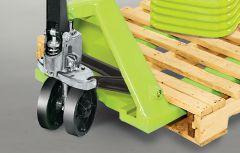

The introduction adds that wearables have evolved into key enablers in addressing four important mining safety challenges: environmental monitoring, focus on workers’ health, training with new-technology adoption, and incident rates at new or exploratory mine sites.
Although wearables are driving productivity and mining pilots show clear safety improvement, operations still face many issues and challenges, the report claims. Issue examples include lack of data privacy, leadership stalling the implementation of wearables, lack of engagement with wearables in workplace culture, and availability of reliable technical infrastructure.
“The mining industry is attempting to solve some of these challenges through iterative and collaborative approaches that simultaneously break down barriers to adoption and focus on understanding the end users’ needs,” the report reads.
The best solution, according to Deliotte and Norcat, is a structured approach. “A thorough implementation and scaling strategy drives focus and alignment across the organization, enabling leaders to better engage relevant stakeholders,
ensuring both commitment and increased transparency.”
Based on interviews conducted as part of research with Norcat, Deliotte identifies four areas of action: thinking about strategy; collaborating with stakeholders; focusing on the product; and building technical capabilities. Sub-categories of these areas to consider include goals and aspirations, user needs, encouraging adoption, innovation, and Internet support and cybersecurity.
“Embracing the full potential of wearables requires mining leaders to think through questions that will arise during pilot, implementation and scaling phases,” the report concludes. “This multifaceted framework... will guide mining executives when investing in wearable technologies to benefit mining operations and reduce safety incidents.”
Deliotte and Norcat are partnering to help the global mining industry better comprehend the latest technologies and and innovation trends, according to the companies.
VESSEL NEARLY HITS BRIDGES
KAHNAWAKE – The Transportation Safety Board of Canada (TSB) has released its investigation report on a marine incident that occurred near Montreal late last year, when a bulk
carrier was forced to take evasive action after two Canadian Pacific (CP) Railway bridge spans failed to rise.
According to the TSB report, which was published on August 16, the vessel Maccoa left Montreal on the early morning of November 6, carrying nearly 19,000 tons of salt rock in bulk. The bulk carrier’s destination was Johnstown, Ontario. Shortly before noon, as the vessel was approaching two Seaway bridges over a canal near Kahnawake, Quebec, a bridge operator asked a CP rail traffic controller for bridge control via an automated system. But when the controller tried to contact a CP contractor performing scheduled maintenance on one of the bridge spans, there was no response.
When it became clear that the bridge spans were not rising, the Maccoa pilot ordered the engine stopped, the report states. Despite some manoeuvres to keep the vessel under control, the vessel veered towards the right side of the canal and may have made bottom contact. Eventually, the Maccoa moved back to the centre of the canal, the bridges were raised, and the vessel continued. No workers were injured, and no water ingress or damage to the vessel was reported.
“When a vessel approaches a Seaway lift bridge and the bridge cannot be raised to allow the vessel to pass, the vessel’s master or pilot must take appropriate action to avoid passing the limit-of-approach sign,” the TSB states in the report.
WALL COLLAPSE EXPLAINED
QUEBEC CITY – The Commission des normes, de l’équité, de la santé et de la securité du travail (CNESST) has released the conclusions of its investigation into an incident that injured two construction workers at the NouvellesCasernes heritage building in Quebec City last year.
According to an August 21 press release from CNESST, the two workers were in the process of dismantling the foundation’s masonry on May 14, 2018. As they were using pneumatic hammers to demolish a mass of concrete above their working area, they noticed dust falling from an opening of the foundation; soon, small rocks began coming down too. A few moments later, the core of the wall emptied and the wall collapsed, sending both workers to the hospital.
After the accident, CNESST ordered suspension of work at the site and issued a ban on access to the security perimeter. The contractor was ordered to certify the building’s solidity and safety and to develop and implement safe work practices for dismantling masonry. CNESST also ordered Briquetal Ltd., the employer, to identify the risks and preventive measures to put into place during the dismantling process on masonry for ancestral buildings, particularly when parts of structures are conserved at the same time above the dismantling area. Both Briquetal and the contractor have complied, according to the release.
CNESST’s investigation identified three causes of the accident. First, the dismantling of the foundation generated an overload of masonry and caused the wall to collapse. Second, the workers had been using an inadequate method to dismantle the foundation, one that failed to ensure
the wall’s stability. Finally, the lack of planning for the task and insufficient supervision had resulted in the dangerous working method.
Following the investigation, CNESST issued a statement of offence to both the employer and contractor. The typical fine for this sort of incident, according to CNESST, ranges from $16,793 to $67,176 for a first offence. A repeated offence could net a fine as high as $335,000.
CNESST plans to transmit the results to the Quebec Construction Association, the Quebec Association of Construction Companies, the Quebec Association of Building Contractors, the Association of Construction Professionals and Quebec Housing, the Association of Masonry Contractors of Quebec and the Masonry Institute of Quebec. The investigation report will also be disseminated in masonry training programs at educational institutions in order to teach future workers.
“To prevent accidents due to collapses during the dismantling of masonry walls, solutions exist,” CNESST states in the release. The organization recommends dismantling the masonry from top to bottom, or if this is impossible and underpinning work is necessary, an engineer must approve the process in advance. Workers should also “ensure that a supporting masonry wall is supported during dismantling work, so as to avoid any danger of collapse” and “ensure proper supervision of the different activities carried out on the site,” adds CNESST.
The Nouvelles-Casernes building was constructed from 1749 to 1752, according to information on the Quebec City municipal website.
Referring to the specific CP bridges involved in this incident, the report adds: “Factors such as vessel size, momentum, current, the width and depth of the canal, and adverse weather conditions may make it difficult to perform these emergency manoeuvres within the canal.”
The Maccoa was built in 2009. It is owned by TRS Rode B.V. and operated by Navarone S.A.
CARDIAC EVENT CAUSES FATALITY
PORT-DANIEL-GASCONS – Fitness for duty was a key factor in the death of a vessel captain about a year and a half ago, according to a recent investigation report by the Transportation Safety Board of Canada (TSB).
On March 17, 2018, the bulk carrier Sage Amazon was anchored three nautical miles from Port-Daniel-Gascons, Quebec, when the master experienced a cardiac event while he was standing on a cargo-hold access ladder, states the report, which was published on August 6 of this year. The master fell onto the main deck, resulting in severe head injuries. Although cardiopulmonary resuscitation and other medical aid was available on the carrier, the worker succumbed to the injuries.
The TSB investigated the incident and found that the application of first aid had initially been concentrated on the
head injuries. “When the possibility of a cardiac event was raised,” the TSB states in a press release about the report, “with no automated external defibrillator (AED) on board the vessel, it was not possible to confirm the master’s cardiac condition.” In addition, it was about three hours before first responders reached the carrier, by which time the man had already died.
The investigation also deemed that the master had likely not been fit for duty. The master’s medical records revealed a previous cardiac event and various other medical conditions, which should have restricted his capacity for work at sea, but these conditions were not disclosed during the worker’s last marine medical examination two years ago.
“Previous TSB investigations have identified that seafarers may not disclose medical conditions out of concern that they will lose their employment,” the TSB states. “Therefore, if medical practitioners do not have access to full medical information and records, fitness for duty may not be assessed accurately, increasing the risks of seafarers endangering themselves, the vessel, the crew and the environment in a medical emergency.”
The report also notes that AEDs are not part of standard medical equipment according to current international standards. The TSB recommends vessels to carry AEDs to be better prepared to respond to certain medical emergencies.
“Modern AEDs are compact, reliable, easy to use and
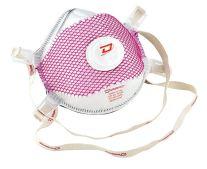
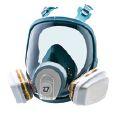
? What Company produces a Respirator with the Most Benefits No one except DSI !
Curved nose clip for a better comfort and fit Clear valve cover for easy inspection
Straps welded on wings, no deformation of respirator when adjusted
Nose and face seal closed cell foam for more comfort and fit
Drop down easy to perform Unique Butterfly valve, reduce resistance to exhalation
Adjustable strap on all models
Available version for welders
Complete variety from N95 to P100
Call your nearest distributor for more information and a trial
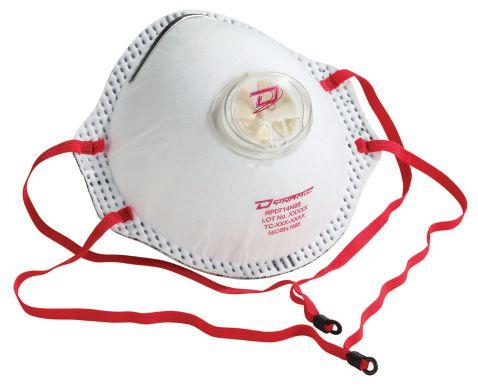
Straps are sonically weld, no staples Adjustable strap made of elastic cloth material for more comfort


relatively inexpensive,” the TSB release reads. “If vessel crews do not have access to medical equipment such as an AED... there is a risk that shipboard personnel will not receive adequate medical treatment.”
REPORTS CALL FOR IMPROVEMENT
HALIFAX – Although Nova Scotia has made long-term progress over the last ten years in reducing the effects of workplace injuries on families, the province continues to face current challenges. That is the conclusion of two recent reports from the Workers’ Compensation Board of Nova Scotia (WCB).
The WCB released the 2019 Q1 Report to the Community and its 2018 Annual Report on August 8, according to a press release from the Board. During the first three months of this year, the reports note, there was a notable increase in both the number of days lost to workplace injury and the average duration of a claim in Nova Scotia. There was also a small increase in the number of time-loss injuries, in part because of an icy winter that resulted in more slips, trips, and falls.
“It’s taking longer to achieve returnto-work when workers are hurt on the job,” says WCB CEO Stuart MacLean. “One reason for that is that the face of workplace injury is changing. Claims today are often more complex. The population is older, and the injury itself is often not straightforward and much more likely to be a mix of physical injury and mental-health considerations.”
In its research, the WCB increased the index that it used to measure average claim duration, from 127 days at the end of last year to 128. The duration was only 120 days in the same quarter in 2018.
Although the time-loss injury rate in Nova Scotia hit a historical low of 1.72 time-loss injuries per 100 WCBcovered workers at the end of last year, the rate rose to 1.77 in the first quarter of 2019. In addition, there was a significant increase in claims for work-related psychological injuries, a possible result of new presumptive legislation for post-traumatic stress
disorder in front-line and emergencyresponse workers.
From January to March of this year, there were eight work-related fatalities in Nova Scotia, the WCB says. Two of those deaths were caused by traumatic injuries, while six resulted from occupational disease or health conditions.
The WCB reports also reveal that the most common type of workplace injury over the first quarter of 2019 in the province was muscle-strain injury from lifting; there were 872 of these injuries reported from January to March. Over the same period, the WCB paid out $63 million in claims, and it received a total of 1,517 time-loss claims.
HEAD INJURY KILLS WORKER
STEPHENVILLE – A man has died as a result of a head injury from a scissorlift accident at the College of the North Atlantic in Stephenville, Newfoundland.
Gerard Drover’s death on September 1 was publicly mourned in an online post by Marty Gregory – president of Paradise, Newfoundland contracting firm RothLochston – who was Drover’s friend and first cousin.
According to Gregory, Drover was working on the campus for a local painting company that was sub-contracted through a company based in Quebec.
“Gerard was operating a scissor lift when he came in contact with an overhead industrial fan,” Gregory writes. “He was wearing all his personal protective equipment. Obviously, there was

a lockout/tagout isolation breach. The investigation is ongoing.”
Gregory calls the incident “senseless and preventable” in the post, which appeared on the RothLochston website on September 4.
Local news reports state that Drover was 55 years old and that the actual accident occurred on August 28, four days before he succumbed to his injuries. In addition, the RCMP are reportedly investigating the incident with the chief medical examiner of Newfoundland and Labrador.
Gregory remembers Drover as “a man of many talents,” including music, sound technology, painting and plastering, as well as “an excellent co-worker and a kind, gentle soul.”
In the online statement, Gregory also calls out to employers and workers to live up to their responsibilities in maintaining safe workplaces.
“It is the EMPLOYER’S/OWNER’S ultimate responsibility to ensure a safe workplace for all. A responsibility I take very seriously,” writes Gregory, adding that supervisors and managers play a vital role “to relay, in an objective manner, the employees[’] concerns to management and ensure that work does not proceed until all risks are mitigated.”
To workers, he advises: “It is, ALWAYS, ok [sic] to ask a question or to seek clarification, and certainly your right to refuse an unsafe work assignment. Do not work alone, EVER. Getting the job done isn’t as important as your personal safety.
Follow us on Twitter @OHSCanada
So, what’s on your mind?
Ever wonder what other oh&s types are thinking about? Find out by making our website poll at www.ohscanada.com a regular stop.

DISPATCHES
Workers at higher injury risk during first year on the job
by Jeff Cottrill
Anew systematic review by the Institute for Work & Health (IWH) in Toronto has confirmed that workers are at a higher risk of acute injuries during their first year on the job, regardless of their ages. The IWH’s research was less conclusive, though, about new workers and the risk of musculoskeletal disorders (MSD).
According to the Summer 2019 issue of the IWH publication At Work, published on July 30, the review is the latest effort by the organization to determine correlation between workplace safety and job tenure.
“One of the things this systematic review made clear is that researchers and OHS stakeholders need to be specific about how they define ‘new worker’,” says IWH scientist Dr. Curtis Breslin, who led the research team, as quoted in the At Work article. It is also important to be specific about the types of injuries being cited when looking at the relationship between newness and injury, he adds.
The research team searched peerreviewed literature for articles on job tenure and injury risk published from 1995 and January of last year. Breslin’s team found 128 relevant studies that met their criteria, then narrowed them down to 51 mediumor high-quality studies. Each was a quantitative study about paid workers, examined the workers’ length of time on the job, and used a method to take into account variables that might affect injury risk.
Even these 51 articles went by varying definitions of “new workers”, according to the IWH. “We went with people commonly understand to be newness,” says Breslin. His team concentrated in 12 higher-quality studies that defined a new worker as one who had started a job no more than a year before.
Four of these studies concluded that new workers had a substantially higher risk of acute work injury, while two others did not support that finding, according to the IWH. The remaining six studies, all of which focused in MSDs, were inconclusive.
Breslin says that the results do not dispute the common
notion that workers are three times more likely to be injured during the first month on the job than after the first year. But further research is necessary to learn the underlying reasons for the link between injury and newness, he adds.
“Is it because new workers lack familiarity with the setting, because they lack the skills to do the job or to wear personal protection properly, or because they don’t feel empowered to speak up or ask questions?” he asks. “Or is it because they’re the ones doing the more hazardous jobs?
“We actually don’t have a good understanding of the extent to which [new] workers are exposed to hazards.”
The IWH review was published online in Occupational and Environmental Medicine in May.
Feds investing to combat sexual harassment
The federal Department of Justice has announced plans to invest nearly $5.3 million into four Toronto-based organizations that are addressing sexual harassment in the workplace.
David Lametti, Canada’s Attorney General and Minister of Justice, announced the initiative on September 4, according to a Department news release. The government will put this money into the Canadian Women’s Foundation, Chiefs of Ontario, the Human Rights Legal Support Centre and the Public Legal Education Association of Canada. Part of the government’s 2018 pledge to commit $50 million over five years to addressing sexual harassment, the move aims to boost public awareness of workplace harassment and to increase access to legal information and advice for victims.
“When sexual harassment occurs, it not only impacts the health and well being of those who experience it, but also affects their job performance and career advancement,” says Lametti in a press statement.
“I am proud that the Government of Canada will support these organizations and their initiatives to address workplace sexual harassment to help put an end to it.”
The Public Legal Education Association and the Canadian Women’s Foundation are undertaking projects that are national in scope, while the other two organizations are tackling locally based projects, the Department clarifies in the release.
“As it stands today, it is far too challenging to understand laws, reporting systems and how to access justice,” says Canadian Women’s Foundation president and CEO Paulette Senior in a press statement. “Plus navigating that in a workplace environment can compound one’s fears about potential job loss if they speak out.
“With this project, we are honoured to... take steps towards eliminating sexual harassment in the workplace.”
In addition, Lametti announced another $423,157 over
five years to go towards the Sexual Assault Support Centre of Waterloo Region in Kitchener, Ontario, to help increase the business community’s awareness of workplace sexual harassment with information and resources.
“Canadians deserve a workplace that is safe and respectful,” says Lametti, adding that the Sexual Assault Support Centre “will provide local businesses, employees and employers with the necessary resources to effectively address workplace sexual harassment.”
Nineteen per cent of Canadian women and 13 per cent of Canadian men have reported workplace harassment, according to Statistics Canada.
Work-related burial coverage increases in NL
The government of Newfoundland and Labrador announced on August 26 that it had increased maximum burial coverage for deaths resulting from work-related injuries or illnesses – from $5,000 to $10,000.
This amendment to the Workplace Health, Safety and Compensation Regulations had already been announced in the Newfoundland and Labrador Gazette on August 16, according to a press release from WorkplaceNL, the province’s occupational health and safety authority. The increase is retroactive for all occupational fatalities that have taken place on or after January 1 of this year.
“The impact of a workplace fatality is felt by family, friends and co-workers and resonates with all Newfoundlanders and Labradorians,” Service NL Minister Sherry Gambin-Walsh says in a press statement.
“Our continued goal is to protect the health and safety of employees in all workplaces,” she adds, “so such tragedies are preventable.”
The change is expected to reduce the financial burden on mourning families, while bringing coverage for burial expenses from occupational injuries or illnesses in line with the national average, the release notes. WorkplaceNL plans to contact the families or estates of those who have paid burial expenses since the beginning of the year, to check whether they qualify for retroactive payments. The organization will automatically consider new claims for burial expenses for the increased amount. Both retroactive and new payments will depend on the cost of the burial or memorial.
WorkplaceNL and the oh&s division of Service NL are currently collaborating on a five-year workplace injuryprevention strategy, which is aiming to develop a stronger safety culture in the province.
Newfoundland and Labrador sees an average of 25 occupational fatalities per year, according to WorkplaceNL. The majority of these are from diseases resulting from previous exposure to harmful substances.


Relatives
of injured workers receive scholarships
Anew national scholarship program aims to help students affected by workplace tragedy to pursue higher education, and four Canadians are benefiting this year.
Jointly awarded by the Board of Canadian Registered Safety Professionals (BCRSP) and support organization Threads of Life, these scholarships are going to Dion Durant of Nova Scotia, Stacy Gaylord of Saskatchewan, Haley Harroun of Alberta, and Brodie Bergman of Prince Edward Island.
A press release from Threads of Life states that the program intends to offer support for family members of deceased workers to attend college or university, as occupational tragedy affects families emotionally and economically. The scholarships recognize academic achievement, community involvement, and need.
“We had a number of very strong applications, and our decision was not easy,” says Threads of Life executive director Shirley Hickman in a press statement.
“We hope that receiving this scholarship will make the path a little smoother for these four people, who are trying to cope with the effects of tragedy and make their way in the world.”
BCRSP chair Monica Szabo calls the scholarship program “a great opportunity for our organization to support those whose lives have been impacted by a workplace tragedy in their pursuit of higher education.”
The scholarships will be awarded annually, according to Threads of Life, which is based in London, Ontario. Applications for the 2020 awards will open early next year.
Based in Mississauga, Ontario, the BCRSP is a public-interest, nonprofit association that sets certification standards for oh&s professionals
Jeff Cottrill is the acting editor of ohs canada Follow us on Twitter @OHSCanada

FEUD FARM
BY DONALEE MOULTON
Nearly four years ago, Alberta finally caught up to the rest of the country when it came to safety coverage for farm workers. But a new provincial government wants to scrap controversial legislation and replace it with what it deems as more flexible options.
Farm safety is a contentious issue in Alberta. Disagreements hit a fever pitch in 2015, when Rachel Notley’s NDP government made it clear that new legislation would be passed, compelling farmers and ranchers with paid employers to be covered under workers’ compensation. Now, Jason Kenney’s United Conservative Party (UCP), elected earlier this year, has made it equally clear that the legislation will be repealed — and very soon.
The Enhanced Protection for Farm and Ranch Workers Act led to protests in the streets, and the promise of further consultation, before it even went into effect. But Notley was undeterred. “The people who have lost a limb,” she said at the time, “the individuals who have lost their mobility, the families who have lost a loved one — their suffering demands that we do more as a society to prevent future losses. I cannot and will not, in good conscience, ignore the lessons of their losses.”
The (UCP) may agree with the sentiment, but not the law as it currently stands. “Alberta farmers need common-sense rules that promote farm safety — not process, not red tape,” responded Alberta’s current Minister of Agriculture and Forestry, Devin Dreeshen. “We’re going to repeal Bill 6.”
The line, it appears, has been drawn. It’s unclear on many fronts what the contention is about, but farmers are clearly divided. The NDP’s legislation, most of which came into effect on January 1, 2016, brought about four key changes to Alberta’s agricultural landscape. It made farms and ranches subject to occupational health and safety legislation, and for those with paid employees, it required workers’ compensation insurance coverage. It also included farm and ranches in employment-standards and labour-relations legislation.
According to Notley at the time the legislation was enacted, the bill “provides for a general duty of care by a farmer, in relation to paid farm work, for a paid farmworkers’ right to refuse unsafe work and for a paid farmworker’s right to compensation in the event of injury or death.”
DIFFERENT STROKES
For many in the agriculture sector, the contentious legislation did what it set out to do. Glenn Norman, a farmer in Kneehill, Alberta and a member of the National Farmers Union, a direct-membership organization comprising Canadian farm families, says it has improved conditions. “It’s made people more aware and really assisted with safety.
“I just can’t believe anyone would want to change this,” he says.
Eric Musekamp, founder and president of the Farmworkers Union of Alberta in Bow Island, is equally surprised and frustrated by the proposed repeal. “Occupational health and safety legislation works,” he says. “It saves life and limbs — and it protects employers.”
The latter, Musekamp believes, may be part of the reason for the dissention: farmers are unaware of the benefits workers’ compensation accrues them as employers. “They think occupational health and safety is a pain in the neck and the WCB is the same as private insurers.”
Confusion has been a cornerstone of Bill 6 since the NDP
raised the prospect of legislation almost five years ago. In an open letter to Albertans, Notley made it a point to state not only what the then-new legislation would do, but what it would not do. She identified misconceptions in an effort to reassure farmers and their families. These included the fact that Bill 6 would not prevent neighbours from volunteering to help each other out and did not require children to register with the WCB.
Musekamp believes many farmers in the province also chafe at being treated like other sectors and having their world enshrined in legislation. “It’s the mentality,” he says, noting that farmers often have the attitude, “‘Don’t tell me what to do. You don’t know anything about farming.’”
Whatever the reasons for the dissent, Jason Kenney, leader of the United Conservative Party in Alberta, heard the vitriol. Depending on who’s telling the story, Kenney either recognized an opportunity to pour salt in an open wound or rushed to meet the demands of the province’s farmers and ranchers. Or both. During the election campaign earlier this year, Kenney contended that as a result of the NDP legislation, farmers were being hit with financial losses and endless red tape. He promised to do away with Bill 6 and replace it with the Farm Freedom and Safety Act, which will be passed into law later this year.
EXEMPTIONS FOR SMALL FARMS
Part of Kenney’s reason for putting the farm safety act to

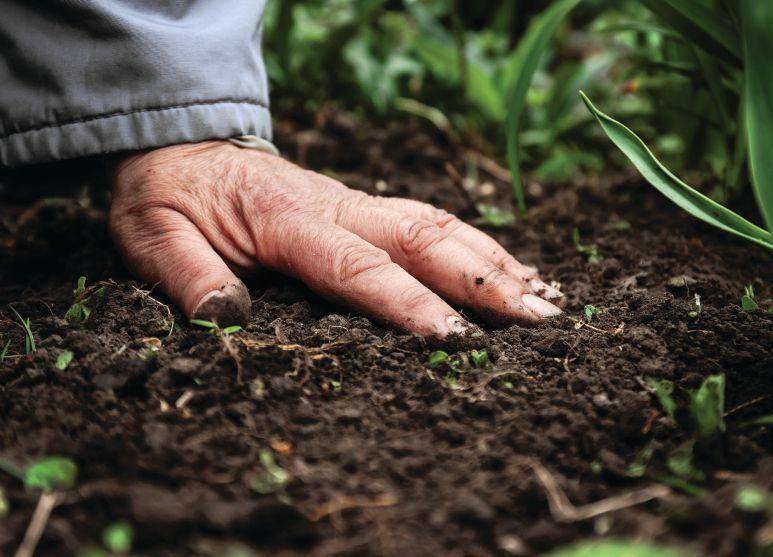
rest is, in fact, the dissent that it has caused. During the campaign, the future Premier noted, “Despite widespread concerns, the Notley government chose to force Bill 6 through the Legislature before consulting most of the people most seriously impacted. The NDP put the cart before the horse and, as a result, lost all public trust with farm and ranch families. To rebuild that trust, there is no acceptable alternative but scrapping the bill.”
In its stead, Kenney said his government’s new legislation would require employers to maintain workplace insurance for farm workers, but allow employers to choose whether to purchase insurance from the market or from the WCB as long as basic standards of coverage are met.
As well, small farms would be exempted from employment and much greater flexibility would be required in meeting employment standards for farmers and ranchers, a unique breed of employer.
Kenney promised that the UCP government would immediately launch comprehensive consultations with farmers, ranchers, agriculture workers and others on how best to balance the needs of farmers and ranchers to run a business and protect workers. He has lived up to that promise.
In July, the government announced that the minister of agriculture and forestry would undertake a summer consultation tour. As well, an online survey was launched for members of the public wishing to have input into the issue. According to the government’s press release announcing the consultation, the Alberta provincial government was seeking input on five key platforms:
• recognizing that a farm is unlike other businesses and that farmers and ranchers require flexibility in meeting workplace standards;
• requiring employers to have workplace insurance, but allowing a choice of market insurance or the Workers’ Compensation Board (WCB), if basic coverage standards are met;
• exempting small farms from employment-standards legislation, similar to the situation in New Brunswick;
• promoting education and best practices to improve farm safety; and
• minimizing red tape and reducing the regulatory burden on farmers and ranchers, while still ensuring that basic safety standards are being followed.
“By consulting with farmers and ranchers before developing new legislation, we can work to balance the unique economic pressures of farming with the need for common-sense rules and a flexible farm safety and employment system,” says Carrie Sancartier, assistant communications director with Alberta Agriculture and Forestry in Edmonton.
THE FOUR KEY THEMES
Consultations were still under way as this article was being readied for press, but four key themes had already emerged, according to Sancartier. These include the need for a commonsense approach to farm workplace legislation (an oft-repeated refrain) as well as the importance of farm safety awareness and education to the industry. Participants also called for any changes to legislation to consider the seasonality of this sector. As well, many farmers and ranchers want flexibility and reiterated the call for a choice between the WCB and private insurance options.
Norman wasn’t impressed or reassured by the consultations he attended. “They were absolute gong shows,” he says. “Most of the people speaking weren’t even farmers.”
One of the buzzwords that crop up continuously in the ongoing debate over farm safety in Alberta is “flexibility”. The nature of the business, according to Sancartier, demands: “We recognize that a farm is unlike other businesses, and that farmers and ranchers require flexibility in meeting workplace standards.”
For Norman, “flexibility” is code for “not wanting to do it.” By making farmers and ranchers a world unto themselves, special (i.e., flexible) rules and regulations are required. Norman isn’t buying it. He points to the issue of weather as a prime example. Farmers are weather-dependent, a factor repeatedly emphasized to demonstrate the uniqueness of the sector. But many other businesses are also weather-dependent, and they are covered by oh&s legislation. “There is not a benefit to [farmers] to be outside these standards,” says Norman.
Much of the brouhaha could be resolved with less rhetoric and more reality. But numbers are hard to come by, and the numbers that are available are often contradictory. In some cases, the link to safety may be tenuous. Kenney, for example, noted linked labour shortages to the farm safety legislation in his electioneering. “The NDP’s ideologically driven agenda, including Bill 6, is undermining Alberta’s agriculture and agri-food industry. Between the start of 2015 and the end of 2018, employment in Alberta’s agriculture sector has fallen by 19 per cent – that’s 11,300 jobs that no longer exist,” he says. “Alberta farm receipts for the first nine months of 2018 were down by nearly six per cent from the previous year.”
Musekamp contends that the job losses are not unique to Alberta and, without Bill 6, they could get worse. Employees, he says, do not want to work in an industry without strong safety standards. He points to the landscape that existed prior to the NDP’s
ACTING UP
In her “Open Letter to Albertans”, then-premier Rachel Notley attempted to quieten the furor surrounding the Enhanced Protection for Farm and Ranch Workers Act by emphasizing seven things the 2015 legislation would not do. Specifically, she noted, it would not:
• Interfere with families’ ability to teach their children about farming and pass on their way of life;
• Prevent neighbours from volunteering to help each other out;
• Regulate or interfere with children’s ability to participate in doing chores around the farm;
• Interfere with farm kids’ ability to learn about agriculture and grow within the 4-H system in any way;
• Require farmers to register their children with the WCB;
• Regulate how farmers operate their households; or
• Interfere with recreational activities on farms.
legislation: “Under Bill 17, there was no limit on the number of hours or days that can be worked continuously. That has created the exodus.”
One thing is certain: Canada’s agriculture community is facing a serious labour shortage. According to Agriculture 2025: How the Sector’s Labour
Challenges Will Shape Its Future, prepared by the Canadian Agriculture Human Resource Council, 26,400 jobs went unfilled in the sector in 2014, which amounted to $1.5 billion in lost revenues, or 2.7 per cent of product sales.
The 57-page report predicts that the Congratulations to the following OHS professionals who have recently been granted the Canadian Registered Safety Professional (CRSP)® Professionnel en sécurité
Ryan Garteig CRSP
Monty Gillard CRSP
Jason Goossens CRSP
Jason Goudie CRSP
Anick Goudreau CRSP
James Groves CRSP
Arlene Guthrie CRSP
Amy Ha CRSP
Erik Hakansson CRSP
Cruickshank CRSP
D’Anjou CRSP
Deis CRSP
Den Duyf CRSP
Densmore CRSP
Desormeau CRSP
Dhillon CRSP Mandy Donaldson CRSP
Doonanco CRSP
Muhsen Dorias CRSP
Christopher Drake CRSP
Simon D’Silva CRSP
Luce-Helene Duguay CRSP
Nicole Dunsmore CRSP
Ryan Durand CRSP
Scott Falshaw CRSP
Amy Faulhafer CRSP
Stephanie Alexis Ferguson CRSP
Gabriel Filion CRSP
Aimee Finnson CRSP
James Fleming CRSP
David Flohr CRSP
Daniel Forma CRSP
Christian Fournier CRSP
Anthony Fuerth CRSP
Scott Fuller CRSP
Robert Gabriele CRSP
Karen Dianne Tracy Gardiner CRSP
Alexander Harling CRSP
Richard Harris CRSP
Matthew Hartling CRSP
Kyle Heagle CRSP
Benjamin John Heath CRSP
Erin Heimbecker CRSP
Dustin Heisler CRSP
Ehsan Hemmativaghef CRSP
Daniel Hsieh CRSP
Ioan Ilina CRSP
Nosakhare Iseghayan CRSP
Perry Harold Jagdeo CRSP
Daniel Jelinski CRSP Joey Jesse CRSP Christine Johnston CRSP Brent Jones CRSP Christopher Jones CRSP Daniel Kashuba CRSP Tara Kelly CRSP Eddy Kibambe CRSP
Aaron Kincaid CRSP James Kittmer CRSP Garnet Klassen CRSP
Uldis Knox CRSP Pavel Kolupanov CRSP
Jeremy Laird CRSP
Jonathan LaMacchia CRSP
Jean Pierre Lauzon CRSP
Steven LeBlanc CRSP
Arlene Ledi-Thom CRSP
Seungho Lee CRSP
Michelle Leeper CRSP
Sherry Lesmeister CRSP
Nancy Letourneau CRSP
Spencer Levacque CRSP
Jing Li CRSP
Oxana Limareva CRSP
Michael Ling CRSP
James Lintern CRSP
Alexandra Lopes CRSP
Jessica Lund CRSP
Susan Claire Lyles CRSP
Denise Lynch CRSP
Jason Lysyk CRSP
Benjamin MacDonald CRSP
Alaisdair Mackinnon CRSP
Mathew MacLeod CRSP
William Madill CRSP
Niclas Manson CRSP
Nicholas Markowsky CRSP
Wes Mazur CRSP
Paul McAtamney CRSP
William McCleary CRSP
Travis McCue CRSP
Alistair McIntyre CRSP
Jared Memory CRSP
Adrien Melaine Miller CRSP
Shawn Molnar CRSP
Dennie T Morrison CRSP
Steven John Mousseau CRSP
Donald Murphy CRSP
Paula Murray CRSP
Teela Narsih CRSP
Lisa Nauta CRSP
Muhammad Naveed ur Rehman CRSP
Monique Madonna Norman CRSP
Michael Notte CRSP
Shelly Nowell CRSP
David Nuessler CRSP
James O Driscoll CRSP
Gaetan Olivier CRSP
Emily Ortis CRSP
Ronald Kent O’Sullivan CRSP
Phanie Ouimet CRSP
Michael Paquette CRSP
Wanda Pardy-Watkins CRSP
Kurtis Pealo CRSP
Tyler Pereverziff CRSP
Chad Peterson CRSP
April Dawn Pike CRSP
Brandon Prince CRSP
Katryna Pudlo CRSP
Roger Regehr CRSP
Roxanne Rempel CRSP
Frederick Reyes CRSP
Glenn Richardson CRSP
Julie Richmond CRSP
Jason Roarke CRSP
Randy Roberts CRSP
David Robson CRSP
Michael Roche CRSP
Leon Roegiest CRSP
Brittany Rose CRSP
Robert Roy CRSP
Shari Russell Opara CRSP
Whitney Rutherford CRSP
Vignesh Kumar Sadasivam CRSP
James Sasseville CRSP
Ankit Saxena CRSP
Umar Sayi CRSP
Stuart David Schellenberger CRSP
Darcy Schultz CRSP
Gary Scott CRSP
Kevin Doug Shanahan CRSP
Ruchir Sharma CRSP
Sharad Sharma CRSP
Aden Sheikh CRSP
Sally Sheldrake CRSP
Kelly Shepard CRSP
Steve Sheppard CRSP
Jatinderpal Sidhu CRSP
Smiegielski CRSP
Sokoya-Olayinka CRSP
Solanki CRSP
Somwaru CRSP
Sperling CRSP
sector’s labour gap will nearly double over ten years, reaching 113,800 people by 2025 — 27 per cent of the annual labour demand. The Council points out that labour shortages don’t just affect the sector today; they also limit its future growth by preventing or delaying expansion plans.
Statistically, it’s unclear if the NDP’s 2015 legislation improved safety for farmers in Alberta, in large part because of lack of data. Prior to Bill 6, farmers were not obligated to register with the WCB. “There were a number of employers who elected to purchase voluntary coverage prior to this legislative change, but… the majority of employers did not open their accounts until 2016,” notes WCB spokesperson Ben Dille.
The annual stats reflect this reality. In 2014, there were 1,659 farm employers registered with the WCB. In 2018, this figure was 4,355. In 2014, there were 329 claims (from a pool of 1,658 employers). Four years later, this number was 923 (out of 4,231 employers). That translates into a roughly 20 per cent claims rate in 2014 and 22 per cent in 2018.
The nature and type of injuries is diverse — often serious and fatal — and runs the gamut from sprains and strains to fractures, nerve damage, burns and occupational illnesses. “Farming is a high-risk occupation,” says Norman. “A lot of my neighbours have lost fingers, hands. They get crushed, have livestock injuries. They fall off things. There are tripping hazards. We are out there in the worst of conditions — even slipping on ice is a reality.”
AN UNCLEAR DESTINATION
There appears little doubt that the Enhanced Protection for Farm and Ranch Workers Act will be repealed, most likely this year, as promised by the United Conservative Party. What is unclear is what the new legislation, the already named Farm Freedom and Safety Act, will contain. It is unlikely, though, that WCB coverage will be compulsory.
The move away from such coverage is not unexpected. Before Bill 6 became
BEYOND SAFETY LEGISLATION
In addition to plans to pass the Farm Freedom and Safety Act this year, Jason Kenney’s UCP government has pledged to help farmers and others in the agricultural sector in a number of other ways, including the following:
• eliminating the carbon tax;
• cutting taxes on the agricultural sector through the Job Creation Tax Cut;
• slashing red tape on agribusiness by one-third through the UCP’s Red Tape Reduction Action Plan;
• removing inter-provincial trade barriers;
• ensuring that farmers, not government, set key agriculture research priorities; and
• undertaking a comprehensive review of risk-mitigation programs to ensure they are streamlined and delivering maximized benefits.
CHARTS FROM THE WCB:
Sprain or Strain Superficial Wound Open Wound
law, Alberta was the only province in the country that did not mandate such protection. Prior to 2016, farm workers were also excluded from basic employment standards, such as minimum wage, overtime, vacation pay and rest periods. They were legally prevented from unionizing. One of very few recourses open to paid farm hands injured on the job was suing
their employer, something that is prohibited under workers’ compensation. Eric Musekamp is worried that farmers may get the legislation they want — but will do so at their own peril. “Farmers may win the battle only to lose the war.”
Donalee Moulton is a writer in Halifax. Follow us on Twitter @OHSCanada

BEYOND ZERO
BY ALAN QUILLEY

Ihave been in the safety business for too long to remember. It is, however, not difficult to remember the continuing debate about leading indicators for safety excellence.
In the 1970s, we believed that there was a better way to evaluate safety besides counting injuries. It was a time when thinking about total loss control and counting losses of every kind started to feel clumsy and not very enlightening. In the 1980s, influential safety theorist Dan Petersen and others confirmed that there are reliable measures of safety outside of counting injuries, and we should
not take too much pride in the fact that we have not had one.
“Not everything that counts can be counted, and not everything that can be counted counts.”
In the 1990s, leading management thinker William Edwards Deming taught us that counting what we do was much more important than the outcome. We learned about the importance of fishbone diagrams, clearly demonstrating that inputs produce outputs. If we wanted to change the outcomes, we had to focus on the inputs, or what we were doing to create the outcomes.
In the last twenty years, most of us are convinced that measuring injuries reveals how lucky we have been, and not how stellar our safety-management

systems and behaviours have been. So why are governments and organizations still stuck on repeating what turns out to be almost a useless exercise in evaluating our ability to manage work-related risk?
Measuring safety by counting our failures is illogical, as this approach is based on the belief in human perfection — and humans are far from perfect. And having no injuries at all does not mean that we were safe. We have all had personal experiences when we have done something dangerous, but got away unscathed.
Similarly, a corporation can have zero injuries over a period of time by doing absolutely nothing to enhance the safety of the people working there. It could possibly have
created that result, or it could be just a matter being lucky. That alone makes counting injuries a very unreliable way of measuring the existence of safety at our workplaces.
As well, the concept of setting unachievable perfection goals as stretch objectives — or goals with a high and difficult level of success — is believed to be a source of frustration to organizations. As William Bruce Cameron says, “Not everything that counts can be counted, and not everything that can be counted counts.”
That being the case, it makes more sense to count what we do and see if there is a correlation between our actions and the ensuing results. This, for the most part, is how we measure and manage the production of our goods and services, so why would we not use the same approach to measure whether we are producing our goods and services in a safe way?
It is far more accurate to measure what a company does to create safety and see if they have accomplished it by looking at the evidence. Although measuring what we do to create safety is a lot more work than just waiting for an injury report to be submitted, this approach offers a lot more accuracy if done correctly.
LEADING INDICATORS
The safety profession has long engaged in discussions about what makes a good leading indicator. A leading indicator is an observable and recordable measure that measures prevention efforts prior to an injury. Typically, these indicators are proactive and offer both physical and behavioural evidence indicating that a desired safety outcome will occur.
A good example is the gas gauge in our vehicles: if we fill up our car with gas (a behavioural measure) and the indicator tells us it is full (a physical evidence), it is unlikely that our trip will be disrupted by running out of fuel. Waiting for gas to run out and counting the number of times to prove that we have managed our gasoline volumes seems a bit silly — just like counting workplace injuries as a lagging safety indicator does.
We have also learned the following over the years: i) Behaviours don’t lie; ii) How people think and feel about safety matters; and iii) Whether the physical nature of the workplace is where it needs to be.
The physical nature of your workplace — along with the behaviours and thoughts of the people in your company — can be measured and observed. The key is to ensure that we are clear about where we would like those things to be and how close to your vision are you.
In short, we need to measure and manage what we do to create safe behaviours that will produce a safe environment. If we look and listen carefully to what is actually happening around us, we will accomplish the goal of safety excellence, and there will be very few injuries, if any, to count. Now that is measuring — and counting — what counts.
Alan D. Quilley is president of Safety Results Ltd. in Sherwood Park, Alberta.
Follow us on Twitter @OHSCanada

A Second Skin
By Jean Lian
It is a layer of clothing that can literally save your skin. Fire-resistant (FR) apparel is a must not only for electrical and utility workers, but also those who work with chemicals, oil and gas and pulp and paper.
As with any PPE, one should not assume that a singlelayer of FR garment will provide adequate protection against all thermal hazards or is appropriate for all tasks. “It is important to conduct a thorough workplace risk assessment to determine the level of protection necessary for your garments,” says Greg Kelly, Western Canada Market Manager at Westex Inc. in Edmonton.
The selection of materials and fabrics for FR clothing is diverse. Fire-resistant fabrics can be broadly grouped into two types: inherent and treated. Inherent fabrics get its flame-resistant properties when the fibres are created without any chemical coating or treatment. Aramid fibres, which include Nomex and Kermel, are the most common type.
“Materials do not have to be a 100 per cent blend of inherent fabrics in order to be considered flame resistant, as they can be mixed with a low amount of cotton, nylon or spandex,” says Leslie Molin, market-segment manager for personal safety with Levitt Safety in Oakville. “By adding secondary fabrics, the comfort, durability, moisture management, breathability and stretch can be greatly improved.”
Treated fabrics, on the other hand, are typically made of 88 per cent cotton and 12 per cent nylon or polyester, which gives them the commonly used name of 88/12. “Cotton itself is flammable, so the fabric needs to go through a process where the fabric is treated or dipped with a flame-resistant chemical. This efficient, flame-resistant treatment produces the same flame-resistance protection as inherent fabrics.”
While FR clothing will self-extinguish or burn very slowly if it catches fire, that does not mean it is arc-rated to protect against an electrical arc, which is an explosive burst of heat and light caused by a sudden, uncontrolled current passing through the air.
An integral part of an electrical-safety program is performing a study to identify what the electrical hazards are. If there is a potential for an arc flash, it is important to determine how much incident energy, measured in calories, will be released if an arc flash occurs.
Arc-flash PPE is determined by a category rating or calculating the amount of energy that will be released in the arc flash, in calories per centimeter squared. A calorie is the amount of energy required to raise the temperature of one
gram of water by one degree Celsius at standard pressure.
“This information also allows you to set your arc-flash protection boundaries, which will tell you how far you need to be away from the source of an arc flash to avoid injuries if one should occur,” Molin says.
This analysis can be performed in-house by a company’s electrical safety committee or software programs that can calculate the values, or outsourced to an electrical specialist that can provide a complete hazard analysis.
“Most people think of an arc-flash suit or ‘bomb suit’ when they hear the term ‘arc flash PPE’,” Molin says. “But basic FR coveralls tend to have around six to eight calories of protection and are suitable for protecting against lower energy arc-flash risks. There are also arc-flash suits that offer up to 140 calories of protection, which is well beyond the often used category four level of protection at 40 calories.”
“Specifying the right arc-rated or FR fabric and garment design, in addition to conducting thorough workplace-risk assessments, can help to minimize injuries in the event of an arc flash or flash fire,” Kelly says.
Evaluating the manufacturer’s fabrics, performance in industry standards and quality support programs are also key to a successful FR program, he adds.
BEING SEEN
Apart from protecting against fire and arc flash, the need to be visible is also important for workers who operate in low light conditions or areas with vehicular and pedestrian traffic. For these workers, they will need reflective strips that can be attached onto their FR apparel.
For this purpose, 3M™ Scotchlite™ Reflective Material is designed to enhance the visibility of the person wearing FR clothing in occupational settings like oil and gas, utilities and mines where moving equipment and weather conditions can hamper visibility. “3M Scotchlite Reflective material help keep that person in the driver’s eye,” says Ruth Cockwill, high visibility apparel specialist with 3M Scotchlite Reflective Materials in 3M Canada in Edmonton.
The reflective strips can be sewn onto a garment or attached to it by applying heat. “Typically, it will go on something that is worn every day like a safety vest, a parka jacket, coverall and overalls,” she adds.
Like any PPE, a risk assessment needs to be done to identify which type of workers need reflective strips on their FR apparel. “Second, determine what regulations and standards apply,” Cockwill says. For instance, some workers might need arc-flash protection, while others benefit from pro-
tection against steam, hot liquids and flash fire, which is a sudden, intense fire caused by the ignition of a mixture of air and a dispersed flammable substance such as dust or combustible liquid or flammable gas.
Another selection criterion is how the garment is to be laundered. Arc-rated or FR garments can be professionally laundered through rental or leasing programs or washed at home. “The proper care for a garment depends on the laundering requirements of the fabric, so it is important to know the fabric in your garment and launder it according to the care instructions,” Kelly says. Many industrial laundries have services to monitor and maintain PPE, he adds.
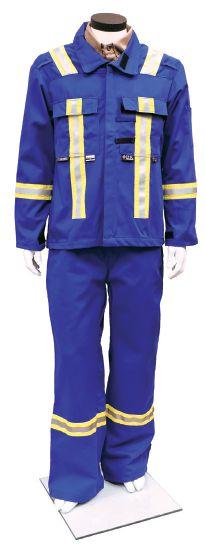
Kelly advises against removing laundry or garment labels, as these tags provide important laundry, standards and specifications that the wearer needs for future reference. “Don’t wear FR garments that are heavily soiled or contaminated. This may negatively impact the fabric’s flame-resistance properties,” he cautions.
UP TO STANDARD


High-quality fire-resistant apparel is available in Canada from such manufacturers as Levitt Safety, 3M, Westex and IFR Workwear.
locked into the fabric.”
There is also the perception that FR garments are hot and heavy. Molin points to great strides in fabric technology, which can engineer fabrics that are of lighter weight and more comfortable.
“The goal in designing FR garments is to develop the lightestweight fabric without compromising its protection or durability,” Molin says, citing Oberon’s ultralightweight arc-rated fabric systems that use a black outer-shell material, resulting in a higher arc rating without compromising the strength of the materials.
Another breakthrough product is the two-piece “Suit-All” Coverall from IFR Workwear. This product provides a custom fit, especially for women, through sizing pairing options. “These coveralls are not only more comfortable to wear in the field, but also safer,” Molin says.
One new development in the FR-apparel market is the inclusion of Conformity Assessment Standards as new requirements for FR arc-rated garments. In 2018, updated revisions of the NFPA 70E and CSA Z462 Workplace Electrical Safety Standards were published. These new standards include requirements for all suppliers and manufacturers to demonstrate their level of conformity to all applicable standards.
“The greatest unknown about FR arc-rated apparel is whether... the garment will perform as expected when exposed to a thermal hazard,” Molin says. “The only way anyone can validate a supplier or a manufacturer’s claim is to destroy their FR arc-rated garment in a testing laboratory.”
With the introduction of Conformity Assessment Standards, end users can adopt these new requirements as part of product specifications. “This change will require the supplier or manufacturer to provide a declaration of conformity, meaning they are now more accountable for the performance of their products,” Molin says. “The result should be an increased level of confidence in the FR arc-rated protection that employers procure and provide to their workers.”
Having the right protection product is important, but so is knowing how to use them properly. One of the common misconceptions surrounding FR apparel is that the FR qualities of a treated garment can be washed out. “This was the case in the past,” Molin says. “However with most treated garments on the market now, you have lifetime FR that is
One company that recently showcased its expanded line of performance FR fabrics at a safety conference and expo in New Orleans is Westex by Milliken. Westex® DH keeps workers cooler, drier and more comfortable by utilizing a unique woven blend structure to provide optimal moisture management and nearly four times more breathability than other FR fabric when tested against ASTM D737 protocol. The fabric is NFPA 2112 certified and provides NFPA 70E Category 2 protection.
“Engineered for the oil and gas and electrical industries, Westex® branded fabrics cover a multitude of jobsite hazards, including offering proven protection to help mitigate impacts of short-term thermal exposures like flash fire and arc flash,” says Tom Moore, national sales director for the Westex by Milliken. “The breadth of Westex fabric portfolio allows companies to customize their FR garment needs with key characteristics that are important to the wearer or the environment without compromising on safety.”
Common mistakes associated with the use of FR apparel include wearing the wrong fabric for the wrong task, not developing a management system for maintenance and the lack of education on how to wash FR apparel.
“If a worker needs to add a jacket or rainwear over an FR apparel, these garments need to be made from FR materials,” Molin advises. They also need to ensure that sleeves are not rolled up. Shirts, jackets and coveralls should also be closed fully at the neck, she adds.
Wearers should also inspect FR garments regularly for holes, rips, tears, thinning or permanent stains.
Jean Lian is the former editor of ohs canada Follow us on Twitter @OHSCanada

Silver & Gold
BEHIND THE WHEEL: Efforts to promote safe driving often focuses on avoiding distraction and staying sober when behind the wheel. Rightly so, as they are among the key causes of road accidents that are otherwise entirely preventable. But there is one other factor that can impair a person’s ability to drive: aging. Age-related physical and mental changes may affect the driving ability of older workers and put them at a greater risk of dying in the event of a motor vehicle crash. People aged 70 and older are more likely to crash than any other age group besides drivers age 25 and younger, according to 2010 statistics from the Insurance Institute for Highway Safety in Virginia. Drivers aged 55 and older have twice the risk of dying in a work-related crash than younger workers do, states 2011-2013 data from the United States’ Bureau of Labor Statistics Census of Fatal Occupational Injuries.
As longer lifespans push senior workers to continue working later into their twilight years, both employers and older employees who drive to work, or need to operate a vehicle as part of their jobs, have a responsibility to ensure the safety of senior employees behind the wheel.
MORE THAN A NUMBER: There are roughly 2.7 million drivers over the age of 65 on Canadian roads today. By 2040, there will be almost double the number of older drivers in Canada, according to the Canadian Association of Occupational Therapists (CAOT) in Nepean, Ontario. Age alone does not determine a person’s ability to remain a safe driver, but it can certainly affect an individual’s cognitive and physical abilities. The following are some activities that could be made more challenging for drivers who are currently getting on in years:
• Vision: You may begin to notice glare and find it more difficult to see in the dark, scan the environment or see things in your peripheral vision.
• Physical: You may feel stiff, weaker and experience pain or move more slowly.
• Cognition: You may have more difficulty remembering things, making decisions or doing activities when there are distractions.
• Reaction Time: You may find it more difficult to react quickly in different situations.
According to Canada Safety Council, headquartered in Ottawa, the main factors behind collisions involving older drivers are slow response, not seeing a sign, car, or pedestrian and interaction with other drivers. Medications can also make a driver more susceptible to any of these factors. Canadians over 65 years old take an average of nine medications daily, including prescription, over-the-counter and
herbal blends, according to the 1990 report Prescriptions for Health: Report of the Pharmaceutical Inquiry of Ontario, (The Lowy Commission Report), Toronto. The side effects of medications can include drowsiness, impaired motor function and confusion. Seniors who take painkillers containing codeine or propoxyphene may experience sedation and mild impairment. Even over-the-counter drugs like antihistamines can reduce driving ability through drowsiness and poor concentration.
RED FLAGS: Some age-related warning signs of unsafe driving that one can look out for include the following: losing one’s way more frequently; having less confidence in your driving skills; other drivers honking at you; missing stop signs or traffic lights; confusing gas and brake pedals; having problems with lane changes or merging; getting into minor accidents or traffic tickets; and family and friends refusing to get in the car with you.
If these warning signs reflect your situation, it may be time to change your driving strategies, have your driving evaluated or consider driving retirement — a time when you no longer feel safe to drive or you may be told that you can no longer drive.
Planning for driving retirement should begin before one stops driving. Devising a personal transportation plan would involve collecting information on local transportation options as well as checking out local or regional transporta-

tion service providers and transportation services offered by government or community services for older adults. One might also need to become familiar and comfortable with alternative transportation options, CAOT advises.
EMPLOYERS’ ROLE: We can’t prevent aging, but both employers and the aging worker can take specific steps to reduce their road risks and prevent vehicular accidents, says the United States’ federal agency The Centers for Disease Control and Prevention (CDC) in Atlanta. Employers can set and enforce comprehensive safety policies on motor-vehicle driving. Such a plan will manage travel among senior employees by considering factors that include whether the work can be done without driving, reducing the amount of driving mature workers do, setting work schedules that allow workers to obey speed limits and following rules such as hours-of-service regulations and banning texting or answering calls while driving. Encourage drivers to consult with their supervisors to adjust driving hours if they have trouble seeing at night or when the weather is bad, and allow drivers to decide the route and travel schedule ahead of time.
If the situation calls for it, assess an employee’s driving ability and restrict driving based on assessment of actual driving ability, rather than general health status or an arbitrary age limit. Make every effort to assign job duties that do not require driving if a worker’s ability to drive is affected temporarily or permanently.
EMPLOYEES’ ROLE: For mature workers, sometimes the biggest impediment to safe driving is not the effects of aging on their driving ability, but coming to terms with the fact that their age is starting to have a bearing on their ability to drive. Acknowledging that one is getting on in years is the first step. Once that has been achieved, taking steps to stay safe while driving for work is the is just a matter of taking the following actions recommended by HealthLink BC:
• Talk with your doctor about health problems that could get in the way of driving safely — for example, stiffness or joint pain that can make it hard to turn your head or the steering wheel.
• When in doubt, don’t go out.
• Avoid driving at night, on the freeway or in bad weather. Plan to drive on streets you know and take roads that let you avoid risky spots, like ramps and left turns.
• Have your eyes checked every one to two years if you are 65 or older, or sooner if you notice a change. Make sure your eyeglass prescription is accurate.
• Have your hearing checked regularly, and use a hearing aid if you need one.
• Avoid highways where speed makes it hard to judge distances. If you do drive on the freeway, stay in the right-hand lane where traffic moves more slowly and gives you more time to make safe driving decisions.
CDC also recommends using a driving self-assessment tool to evaluate your driving and talking with your supervisor if you havedifficulty with driving, as you may need to change your driving habits.
MEDICATION MATTERS: For mature employees who are on medications, they should check in with their doctor about potential effects of their medications on safe driving. Canada Safety Council offers the following tips for older drivers who are on medications:
• Take all medications according to the instructions;
• Make sure the combination of your medications does not impair your driving skills. If you have more than one doctor, make sure all of them know everything you are taking;
• Never mix medications, and never share them with another person;
• If the label says “Do not use while operating heavy machinery”, let someone else drive. With some medications, you may not be able to drive at all;
• Take a driver-improvement course to compensate for changes in hearing, vision, flexibility and reaction time brought about by age.
Follow us on Twitter @OHSCanada
HEALTHIER MINDS AND BODIES
BY RENSIA MELLES

Is exposure to a bad boss comparable to exposure to harmful chemicals in the workplace? The Canadian National Standard for Psychological Health and Safety says yes. The 2013 introduction of the Canadian National Standard for Psychological Health and Safety positioned Canada as a world leader in workplace mental health. This introduction heralded significant shifts in thinking about mental health in the workplace, putting it on par with physical health and safety. The workplace itself is seen as a potential source of poor mental health.
Organizations are encouraged to implement best practices for mental-health promotion and to mitigate or eliminate workplace risk factors in the same way they take responsibility for workplace risk to physical health. To date, mentalhealth practice in the workplace has focused on individual accountability and on providing access to individual mental-health resources. A second shift in thinking expands the definition of mental health beyond the mere absence of illness. This definition of health includes the ability to cope with normal life stresses, to experience joy and to participate in one’s community (including the work community).
ADAPTING THE REGULATIONS
The Standard is still a voluntary guideline for Canadians. But it is embedded in a climate of changing legislation. Common psychological risk factors such as bullying, violence and harassment in the workplace are now subject to labour and human-rights legislation in almost all Canadian provinces and territories. In 2008, the Bureau de Normalisation du Québec (BNQ) released the Healthy Enterprise Standard. Quebec is the first province to introduce a healthy-workplace standard providing guidance and norms for good organizational practice to foster healthy lifestyles, healthy workplaces and sustainable improvement.
A number of provinces have adapted, or are in the process of adapting, workers’ compensation regulations to include work-related mental health as eligible for compensation. Initially, this focused on awarding claims for post-traumatic stress disorder for first responders. Eligibility is starting to expand to include any workers exposed to trauma in the workplace. Ontario introduced Bill 127, acknowledging
mental injury due to chronic stress at work as a legitimate claim for workers’ compensation.
The 2013 Standard has garnered international attention. It offers a method and tools for implementing processes, protocols and policies to foster psychological health and safety (PH&S) as well as a deeply researched profile of the 13 features of PH&S in the workplace. The framework is particularly powerful because it is universally relevant to psychological health and can be filled in differently to reflect a unique industry/sector or national culture. For instance, workplace psychological stressors in mining will be different from the stressors related to working in retail. Similarly, respect and recognition are expressed differently in a Canadian cultural context than they are in a Japanese context.
MENTAL AND PHYSICAL HEALTH
Awareness of the connection between mental health and physical health has been growing in the media and with the general public. A steady stream of academic research has legitimized the understanding and concept of psychosomatic illness and the physical impact of stress. A recent study published in the International Journal of Environment Research and Public Health found that trust in the workplace, or lack thereof, was associated with other cardiovascular-disease risk factors, including high blood pressure, high cholesterol and diabetes.
Disability and health statistics show a co-morbidity as high as 50 per cent between physical illness and mental illness such as depression. Consider the psychological effects of breaking a leg. Challenges to independence, mobility, access to social networks and meeting family responsibilities can negatively affect mental health for workers.
Psychological concerns about trust and support in the workplace, as well as about reinjury and competence, can lead to reluctance to return to work from disability leave and unnecessarily lengthen time away from work.
DRIVERS FOR CHANGING ATTITUDES
The drivers for changing attitudes and employer accountability regarding mental health in Canada and worldwide are manifold. They are social, legislative and monetary.
Social drivers include the global movement to de-stigmatize mental illness and mental-health concerns, including celebrities speaking out about their mental-health issues and openness by Millennials about their mental health. Holistic recognition as human is becoming a key driver in the workplace, requiring human resources and management to shift to a human-centred approach. Corporate social responsibility has become a focus for both employees and customers.
In Canada, the legislation mentioned above, as well as successful court cases under human-rights legislation and tort law, have held employers accountable for foreseeable mental harm due to workplace behaviour. The Supreme Court of Canada has acknowledged both mental and physical injury as legitimate personal injury caused by employer neglect. This could conceivably be applied to employees suffering from burnout, which the World Health Organization recently classified as an occupational syndrome.
With the rising awareness and recognition of mental health comes an understanding of the economic impact of mental-health-related concerns on organizations and the economy. Mental health is the leading cause of disability and has a high cost to the Canadian and worldwide economy. The Mental Health Commission of Canada estimates the cost of psychological health problems to the Canadian economy to be $51 billion, and of that, $20 billion is due to work-related stresses. These numbers are compounded by the indirect and often overlooked costs of mental health complicating physical illness, the potential cost of recruiting replacement staff and the negative impact of increased workload for colleagues.
Investing in psychological health and safety reaps rewards. Socially responsible companies that invest in the health and well-being of their workers demonstrate a higher market valuation than those that do not, according to the January 2016 issue of the Journal of Occupational and Environmental Medicine.
THE CURRENT PRACTICE STATUS
Introduction of the Standard is credited with improving leader awareness and commitment to mental health, a higher likelihood of recognition of work-related psychological damages in court and for workers’ compensation, more willingness by employers to investigate complaints and making it easier for employees to talk to managers about mental-health concerns. Implementation remains a work in progress. In a 2017 survey, approximately 23.2 per cent of non-unionized and 26.3 per cent of unionized responders reported that their organization was actively involved in implementing the Standard or involved in ongoing efforts to maintain and improve key elements of the Standard
While the Standard both reflects and contributes to attitude change and increased awareness of psychological health in the workplace, its complexity and the time, energy and resource investment needed for compliance are reported as inhibiting its uptake. Investing in psychological health is still often perceived as a cost centre, rather than as a savings centre.
Yet there are undeniable signs that workplaces are recognizing their role in the mental health of their employees. Increasingly, organizations are providing mental-health awareness training to employees and managers and participating in mental-health awareness campaigns. Other signs of change include the introduction of awards such as the Aon Best Employer award and the Top 100 Employers project, which focus on workplace culture and care.
TIPS FOR IMPROVEMENT
A full adaptation of the Standard requires leadership commitment and dedicated resources. Gaining top-down support has proven a slow development. To remedy this, a clear business case needs to be built and, potentially, outside experts need to be involved.
In the meantime, it is very possible to take steps to improve psychological health and safety and build an internal business case to persuade leadership.
1. Take advantage of free online resources. Canada is fortunate with its array of free online, well-researched resources to utilize. This includes the Standard, available at www.csagroup.org/documents/codes-and-standards/publications/CAN_CSA-Z1003-13_BNQ_9700803_2013_EN.pdf. There are also surveys like “Guarding Minds at Work” (www.guardingmindsatwork.ca) and “20 Questions to Ask Leaders About Psychological Health and Safety” (www.workplacestrategiesformentalhealth. com/20-questions-for-leaders-about-workplace-psychological-health-and-safety), as well as tool kits like “Workplace strategies for mental health” (www.workplacestrategiesformentalhealth.com/about-the-centre) and other information and resources from the Mental Health Commission of Canada (www.mentalhealthcommission. ca/English) and the Canadian Mental Health Association (www.cmha.ca).
2. Leverage your existing resources. Review data from benefit providers for indicators of psychological health and safety and establishing benchmarks. Use training and information offered by EAP and benefit providers in a targeted manner, and bring established in-house interest groups on board (i.e. wellness committee).
3. Integrate focus on PH&S into day-to-day awareness. Raise questions and include PH&S considerations into adjusting protocols and policies. Piggyback on existing events and campaigns, such as World Mental Health Day. Model psychologically healthy behaviours such as self care, respect and empathy. Include mental health on meeting agendas.
Awareness of mental health in the workplace is here to stay. That genie cannot be put back into the bottle. Workplaces play a pivotal role in fostering psychological health. They are called on to take steps to leverage what they’ve got and strengthen areas where they are leaving workers.
Rensia Melles is the founder of Integral Workplace Health.
Follow us on Twitter @OHSCanada

TIME OUT
TROUBLE’S A BRUIN:
Things got a little hairy when a barbershop owner in Slave Lake, Alberta had an unexpected customer on August 21. According to the Canadian Press, the businessman left the door open to air out the shop – allowing a bear to stroll in. No one was injured, but the shop owner watched helplessly from outside as the animal destroyed his workstation and defecated on the floor. Fortunately, the bear spared the barber’s inventory of expensive clippers. Police eventually arrived to lure the animal back outside, but not before a crowd of bystanders stopped and took pictures.
WHAT A CAT-ASTROPHE:
Snapchat-style filters are annoying enough on social media, but they’re inappropriate for a press conference about a double homicide. Viewers of a July 19 Facebook livestream of a British Columbia RCMP conference were startled when the female officer at the podium suddenly sprouted whiskers and pink cat ears. The Huffington Post reported that an automatic setting on Facebook Live had been switched on, causing the police spokeswoman to go feline. Twitter response to the blunder was catty, and the RCMP re-recorded the conference without the filter.
MUSICAL MUTTS:
How many careers have training that includes a free, exclusive viewing of Billy Elliot: The Musical? Put “service dog” on the list. This summer, K-9 Country Inn Working Service Dogs treated a dozen pooches-in-training to a live performance of the popular show at the Stratford Festival in Stratford, Ontario. The purpose of the outing, according to an August 21 report by UPI, was actually to accustomize the pups to unusual lights and loud noises, enabling them to stay calm in large crowds. Another Stratford outing is planned for nine new students in October. No word on whether the doggies enjoyed the show, but they were all reportedly well behaved.
THOUGHTLESS THIEF: It’s convenient when bank robbers makes it easier for police to catch them. A robber in Cleveland did that on July 29, when he passed a note to a teller, demanding money, written on the back of a Bureau of Motor Vehicles form. The surprised employee saw the robber’s name and address on the form – and even referred to him by his first name while giving him the cash, according to Fox 8 News. Police identified the man through his name and his image on security cameras, and they immediately issued a warrant for his arrest.
EXTRA BAGGAGE:
Safety protocols on commercial flights are typically strict, but flight attendants on Southwest Airlines apparently get to bend the rules if it entertains the passengers. Recent online video footage from one woman shows a female attendant lying inside an overhead luggage compartment during a flight from Nashville to Philadelphia. A July 31 report in The Daily Mirror states that the woman
stayed up there for about ten minutes, and a statement from the airline said that she was just “having a bit of fun” with passengers. Southwest added that this was not normal procedure and that safety is its top priority.
WILD RIDE:
It’s not unusual to see motorized wheelchairs carrying customers through stores, but a golf cart? Shoppers and employees at a Walmart in Gibsonton, Florida were terrorized by a 56-year-old man charging through the store in such a vehicle on August 8. According to the Tampa Bay Times, the driver initially blocked the liquor-store entrance while demanding to see the manager; when police arrived, he suddenly raced for the main entrance, drove through the glass doors and crashed into a cash register. There were only minor injuries among customers, but the driver was sent to hospital before being arrested.
UNGRATEFUL
CRITTER: Not all heroes wear capes, and many don’t even get appreciation for their efforts. The Cambridge Police Department in Cambridge, Massachusetts posted a Facebook video of an officer rescuing a skunk that had gotten its head caught in a yogurt cup on the morning of August 19. The policeman pulled the cup off the animal – and was rewarded with a smelly spray in the face. The skunk was free and unharmed, but the officer had to take multiple showers, according to the video’s caption. In addition, the department’s fleet maintenance crew had to clean the smell from the cop’s car. No good deed goes unpunished.
NOT LOVIN’ IT: Ronald McDonald was nowhere to be seen, but one McDonald’s restaurant in the U.S. was full of Grimaces when a customer attacked the staff. The Daily Mail posted a video on August 26 of the woman throwing a Super Size tantrum because the ice cream machine was out of order, denying her a McFlurry. The customer and a cashier took turns yelling, cursing and hurling a large cup dispenser and other objects at each other over the counter. The woman came close to throwing another customer’s shopping bag, but relented when the customer begged her to give it back. Sounds like somebody needed a Happy Meal.
UNKIND CUT: We like to think that workplaces have become better aware of gender discrimination issues, but that isn’t always the case. Recently, a 21-year-old woman (who did not give her location) posted an anecdote on the online forum Reddit, detailing an awkward chat she’d had with her work supervisor. It turned out that co-workers had complained about her not shaving her legs one day, according to an August 21 report in the Daily Mirror. The supervisor considered slightly hirsute legs on female employees to be a “hygiene” issue that was against company policy, the woman claimed. Her inquiry as to whether the boss had to shave his legs too went unanswered.
Follow us on Twitter @OHSCanada