Two specialists in occupational-safety law share tips on how companies can prepare for an unannounced workplace inspection.
JEAN LIAN
On the Road
The horrific crash between a tractor trailer and a bus carrying a Saskatchewan junior hockey team on April 6 that claimed 16 lives shook Canada to the core. The accident was mind-boggling on many levels: the insanely high death toll for an accident that took place on a rural road; the majority of those killed were young people; and the fact that it happened when the Humboldt Broncos were travelling to Nipawin to play in the semifinal series of hockey — the national sport — struck a chord in the hearts of many Canadians.
For me, the tragedy has a personal ring to it. For one year, I lived in a small town called Meadow Lake in northwest Saskatchewan, way before Meadow Lake became a city in 2009 when its population crossed the 5,000 mark. In small and closely-knit communities where everybody knows everybody, an accident of this nature is decimating, and the loss reverberates throughout the entire community. My sojourn in Saskatchewan where the nearest Walmart is a two-hour drive away also gave me insight into the travails of driving on rural roads, which are beguiling and deadly all at once.
Top on the list is falling asleep behind the wheel. Driving in cities means constant stimulation in the forms of road signs, weaving traffic, neon lights and wailing sirens. The need to stay vigilant and respond quickly to evolving traffic conditions also mean that adrenaline keeps drivers in a sustained, heightened state of alert, making it that much harder to nod off. Rural roads, on the other hand, have unending plains that can have a soothing, lulling effect. Try driving through remote areas where cars are sparse and rolling hills remain unchanged for hours on end, and you will know what I mean. The eyelids start to feel heavy, the rate of breathing slows down and if measures are not taken to jolt one back into a full state of awakeness, torpor soon becomes slumber.
Fatigue aside, highway hypnosis — a state in which brain activity slows and does not register what the eye sees — can also set in with long drives. There is also the danger of wildlife crossing your path with little warning. Rural roads are often unlit, presenting the additional hazard of overdriving one’s headlights after the sun sets. Driving during dusk is no walk in the park either, especially when your route requires you to travel in the direction of the sun. With little buildings or trees in rural areas, the sun’s glare can make it hard to see stop signs and what is in the road ahead. Vehicles in rural areas also tend to travel at higher rates of speed than on city roads where traffic is heavier.
During one of those endless drives, I often wondered what would happen if my car had landed in a ditch in a remote area? Assuming that I was not injured seriously and was able to reach out to my cellphone to call 911, getting reception, which is at best spotty in rural areas, is like playing Russian roulette.
Investigators are still trying to figure out what caused the collision in Saskatchewan, but one thing is clear: rural driving may seem romantic, but they are decidedly deadlier than city roads. As summer beckons and plans for road trips and cottage getaways are being mapped out, I would like to urge travellers to keep the dangers of driving on rural roads top of mind. Have a safe summer.
PUBLISHER PETER BOXER 416-510-5102 pboxer@ohscanada.com
GROUP PUBLISHER PAUL GROSSINGER pgrossinger@annexbusinessmedia.com
COO TED MARKLE tmarkle@annexbusinessmedia.com
PRESIDENT & CEO MIKE FREDERICKS
EDITORIAL ADVISORY BOARD MEMBERS
DAVID IRETON, Safety Professional, Brampton, Ont.
AL JOHNSON, Vice President, Prevention Services WorkSafeBC, Richmond, B.C.
JANE LEMKE, Program Manager, OHN Certification Program, Mohawk College, Hamilton, Ont.
DON MITCHELL, Safety Consultant, Mississauga, Ont.
MICHELE PARENT, National Manager, Risk Management and Health and Wellness, Standard Life, Montreal, Que.
TERRY RYAN, Workers’ Compensation and Safety Consultant, TRC Group Inc., Mississauga, Ont.
DON SAYERS, Principal Consultant, Don Sayers & Associates, Hanwell, N.B.
DAVID SHANE, National Director, Health and Safety, Canada Post Corporation, Ottawa, Ont.
HENRY SKJERVEN, President, The Skjerven Cattle Company Ltd., Wynyard, Sask.
PETER STRAHLENDORF, Assistant Professor, School of Environmental Health,Ryerson Polytechnic University, Toronto, Ont.
JONATHAN TYSON, Association of Canadian Ergonomists/Association canadienne d’ergonomie, North Bay, Ont.
Printed in Canada
ISSN 0827-4576 (Print)
ISSN 1923-4279 (Digital)
PUBLICATION MAIL AGREEMENT #40065710
CIRCULATION
asingh@annexbusinessmedia.com
Tel: 416-510-5189
Fax: 416-510-6875 or 416-442-2191
Mail: 111 Gordon Baker Rd., Suite 400, Toronto ON M2H 3R1
SUBSCRIPTION RATES
Published six times per year – Jan/Feb, Mar/Apr, May/Jun, Jul/Aug, Sep/Oct, Nov/Dec
Canada $98/yr plus tax
USA $98/yr
Foreign $161.50
Occasionally, OHS Canada will mail information on behalf of industry related groups whose products and services we believe may be of interest to you. If you prefer not to receive this information, please contact our circulation department in any of the four ways listed above.
All advertising is subject to the publisher’s approval. Such approval does not imply any endorsement of the products or services advertised. Publisher reserves the right to refuse advertising that does not meet the standards of the publication.
$18 million
Amount less in premiums Manitoba employers paid to the workers’ compensation system in 2017, thanks to return-towork efforts, a revamped rate model and reduced job injuries and fatalities.
Source: Workers’ Compensation Board of Manitoba
88%
Percentage of employers in Saskatchewan that achieved Mission: Zero, an initiative launched in 2008 by WorkSafe Saskatchewan.
Source: Saskatchewan Workers’ Compensation Board
77%
Percentage of 410 nurses from 14 hospitals in Ontario who do not meet current physicalactivity guidelines.
Source: The University of Ottawa Heart Institute
1.6%
Percentage of safety improvement in Ontario’s workplaces from last year, as measured by a health and safety index.
Source: Workplace Safety and Insurance Board
1. Wildfire Prevention: British Columbia highlighted the importance of reducing wildfire risks around homes and in communities on Wildfire Community Preparedness Day on May 5. The FireSmart Homeowner’s Manual provides guidance on how to lower those risks. The list of recipients eligible to receive funding to support activities that reduce wildfire risk this year is also available on FireSmart Canada’s website.
Source: Forests, Lands, Natural Resource Operations and Rural Development
2. New Rules Kick In: Employers in Alberta can access updated information on new workplacesafety rules online. Three new workers’ rights will come into force on June 1: the right to know potential hazards, the right to refuse dangerous work and the right to participate in their health and safety. New rules will also protect workers from harassment and violence.
Source: Alberta Labour
3. New Appointments: The Manitoba government appointed two new public-interest representatives to the Worker’s Compensation Board of directors to replace members whose terms have expired. A new worker representative was also announced on May 1.
Source: Manitoba government
4. Pay Transparency: Ontario became the first province to increase transparency in hiring processes and give women more information when negotiating compensation that is equal to their male peers. With effect from January 1, 2019, job postings must include a salary range. Employers are barred from asking candidates’ past compensation; they are also required to track and report compensation gaps based on gender and other diversity characteristics.
Source: Ontario’s Ministry of Labour
5. Injury Rates: The 2017 lost-time incidence rate due to workplace injury or illness in Newfoundland and Labrador remained at an all-time low of 1.5 per 100 workers for the third consecutive year, which is among the lowest in Canada. There were 25 work-related fatalities, of which five were accidental and the remaining 20 were related to occupational disease.
PLANE-CRASH TOLL RELEASED
A passenger jet in Cuba that crashed shortly after takeoff from Havana on May 18 killed 112 people, according to the Cuban Health Ministry. The plane was operated by a Mexican charter company for state-owned airline Cubana when it abruptly crashed in Havana’s rural outskirts and burst into flames. The cause of the incident remains under investigation.
Source: The Associated Press
Source: WorkplaceNL
OH&S UPDATE
SAFETY LAPSES CITED
FEDERAL — Inadequate safety-watch training led to an injury at the Roberts Bank Yard in Delta, British Columbia more than a year ago, a Transportation Safety Board of Canada (TSB) report issued on May 14 concludes.
On December 18, 2016, a locomotive engineer and a conductor with Toronto Terminals Railway (TTR) were using a lead platform to shove 66 empty intermodal platforms onto the east leg track at the yard. The conductor was driving a vehicle beside the lead platform while giving instructions to the locomotive engineer who was positioned at the opposite end of the movement. At the same time, two track workers employed by a track maintenance contractor, PNR RailWorks, were clearing snow from a switch on the same track.
The conductor saw the PNR workers and activated the oscillating beacon on top of the vehicle to alert them to
the approaching lead platform. When no reaction from the PNR workers was observed, the conductor sounded the vehicle’s horn, but it was inoperative. The conductor instructed the locomotive engineer to stop the operation, but was unable to do so before the lead platform struck one of the track workers.
The investigation found that the attention needed to monitor the operation of moving platforms while driving a vehicle, combined with the expectation that the track workers would clear the track, likely contributed to the late call to stop the movement.
Deficiencies with the use of safetywatch protection, which requires one member of a track-work crew to be assigned with the sole task of continuously monitoring the work site for oncoming trains or other on-track equipment, was also cited. In this incident, neither of the track workers was solely performing safety-watch duties, nor have they been trained adequately in its use and lack a good understanding of how to apply
such protection. As the use of safety watch and the associated processes were not specifically audited, inadequate application of this form of track worker protection was not apparent.
Following the incident, Vancouverbased Technical Safety BC issued a safety advisory to notify all provincially certified railways operating in British Columbia of the risks associated with shoving equipment.
BCR Properties Ltd., owner of the Roberts Bank Yard, completed a risk assessment and incorporated protection measures into its safety-management system. The company also followed up with the contractor to ensure its employees receive training and certifications.
DAY OF MOURNING OBSERVED
WHITEHORSE — Yukoners came together at the Workers’ Memorial in Shipyards Park on April 28 to honour workers who were injured or killed on
MANDATORY FLIGHT-RECORDING SYSTEMS RECOMMENDED
FEDERAL — The Transportation Safety Board of Canada (TSB) recommends that lightweight flight-recording systems be made mandatory by commercial and private business operators that are not currently required to carry them. The recommendation was made in an investigative report into the fatal collision involving a privately-operated aircraft near Kelowna, British Columbia.
According to the report released on April 26, a Cessna Citation 500 operated by Norjet Inc. departed Kelowna Airport on a night instrument flight rules flight to Springbank Airport in Calgary with a pilot and three passengers on board on 13 October, 2016. Shortly after departure, the aircraft departed controlled flight, entered a steep descending turn to the right until it struck the ground, killing all on board. No emergency call was made.
As there were no flight-recording systems on board the aircraft, the TSB could not determine the cause of the accident. The most plausible scenario is that the pilot, who was likely dealing with a high workload associated with flying the aircraft alone, experienced spatial disorientation and departed from controlled flight shortly after takeoff. The investigation also determined that the pilot did not have the
recent night-flying experience required by Transport Canada (TC) for carrying passengers at night. Pilots without sufficient recent experience flying at night or by instruments are at a greater risk of loss of control accidents.
“We don’t like having to say ‘We don’t know’ when asked what caused an accident and why,” TSB chair Kathy Fox says in the statement. “This is why we are calling today for the mandatory installation of lightweight flight recording systems on commercial and private business aircraft not currently required to carry them.”
The Board also raised a concern with the way TC conducted oversight of private-business aviation in Canada. During the course of its investigation, the TSB found no record that the operator of this aircraft had ever been inspected by TC, which was unaware of safety deficiencies in its flight operations, such as the failure to obtain approval for single-pilot operation of the aircraft and the pilot’s lack of recent night-flying experience required to carry passengers at night.
Since this occurrence, TC has said that it will conduct targeted inspections of private business operators starting in April 2018.
the job. The ceremony in Whitehorse, in commemoration of Canada’s Day of Mourning, is hosted by the Yukon Federation of Labour (YFL) in partnership with Yukon Workers’ Compensation Health and Safety Board (YWCHSB).
Kurt Dieckmann, president and chief executive officer of the YWCHSB, says workers, employers and family members gathered to pay tribute to those who have died on the job. “This ceremony also calls us to reflect upon the vital role that occupational health and safety plays in protecting our lives and wellbeing at work,” Dieckmann adds.
“The Day of Mourning reminds us of the worst that can happen to workers in the course of doing their jobs,” YFL president Labour Justin Lemphers says. This year’s theme on violence and harassment draws attention to preventing the serious harm that is done by workplace violence and harassment, he adds.
Last year, almost 500 workers suffered a workplace injury that required time away from their jobs.
AGSAFE LAUNCHES NEW TOOL
LANGLEY — AgSafe launched a safety web tool to help British Columbia’s agriculture organizations determine if they are ready for a Certificate of Recognition (COR) program audit.
The Safety Ready COR Self-Assessment website, launched on May 14, comprises a questionnaire to be completed by the person responsible for overseeing the organization’s safetymanagement system. Based on the responses given, the tool provides feedback on the organization’s readiness for a COR review. The tool will also help calculate a firm’s potential WorkSafeBC incentive.
“There are three levels of readiness and depending on your organization’s situation, you may need assistance from an AgSafe advisor or consultant to become audit ready,” says Wendy Bennett, executive director of AgSafe in Langley. “This is a resource designed to
streamline the process and help employers become more familiar with what they need to do to reduce safety risks in their organization.”
Between 2013 and 2017, 641 agricultural workers were seriously injured and seven were killed in work-related incidents, according to WorkSafeBC’s 2016 annual report.
BOARD REVIEWS POLICY
RICHMOND — A report that reviewed British Columbia’s workers’-compensation policy, released by WorkSafeBC on April 25, stresses the importance of maintaining sufficient funding in the system to provide injured workers with the necessary supports and services.
WorkSafeBC commissioned the review in January and engaged an external consultant, Paul Petrie, to look at the Rehabilitation and Claims Services policies to determine whether amendments are needed to ensure a worker-centred
Congratulations to the following OHS professionals who have recently been granted the Canadian Registered Safety Professional (CRSP)® Professionnel en sécurité agréé du Canada (PSAC)® designation.
Khalid Abdullah CRSP
Karina Abe CRSP
Jennifer Abrantes CRSP
Muhammad Afzal CRSP
Comfort Eyojo Agada-Kiboigo CRSP
Robert Ahimbisibwe CRSP
Lars Asak CRSP
Kristopher Bailey CRSP
Tigran Bajgoric CRSP
Arun Balbahadur CRSP
Nicole Barnes CRSP
Jeremy Beal CRSP
Kristi Beck CRSP
Patrick Bellemare CRSP
Michael Bennett CRSP
Christopher Betsill CRSP
Jeffrey Blanchard CRSP
Jeremy Bondy CRSP
Lauren Bradshaw CRSP
Iqbal Brar CRSP
Kegan Briffa CRSP
Simon Brown CRSP
Stephen Bruchet CRSP
Michelle Buckley CRSP
Corey Buffett CRSP
Daniel Burg CRSP
Ivan Burton CRSP
Victoria Campbell CRSP
Denise Castle CRSP
Stephane Charron CRSP
Melanie Charuk CRSP
Hong Chen CRSP
Carole-Anne Chung CRSP
Paula Collins CRSP
Matthew Cook CRSP
Kristy Cork CRSP
Hugo Coulombe CRSP
Brittany Cross CRSP
Timothy Dale CRSP
Stewart Day CRSP
Bradley DeBoer CRSP
John-Allan Dodd CRSP
David Domingue CRSP
Lorelei Dumonceaux CRSP
Heidi Dunn CRSP
Peter Anthony Durrad CRSP
Ana Maria Duta CRSP
Adam Edwards CRSP
Devon Eggers CRSP
Grant Elligsen CRSP
Jesse Evanshen CRSP
Umukoro Ewhrudjakpor CRSP
James Flannery CRSP
Kevin Fortnum CRSP
Theresa Fralic CRSP
Pamela Frizzell CRSP
Jean-Pierre Fry CRSP
Francis Garcia CRSP
Danny Gauthier CRSP
Reg Gilmore CRSP
Trevor Goshko CRSP
Caitlin Gould CRSP
Qifu Gui CRSP
Deidra Helmig CRSP
Richard Hilton CRSP
Jennifer Hirschman CRSP
Jennifer Hopkin CRSP
Cameron Huxley CRSP
Nicolina Iannucci CRSP
Mohammadreza Joodaki CRSP
Sarah Josefson CRSP
Simon Kaplansky CRSP
Colin Kasa CRSP
Craig Kennedy CRSP
Renata Kennedy CRSP
Samy Kessi CRSP
Shari Lamarche-Lomon CRSP
Jacson Lau CRSP
Cheuk Lam Sharen Lee CRSP
Richard Lethbridge CRSP
Taylor Chase Linssen CRSP
Joanna Lotocka CRSP
Stephanie Lovricevic CRSP
Daryl Lowey CRSP
Oleg Lurye CRSP
Georgios Lymperopoulos CRSP
Peter Lyon CRSP
George Michael MacDonald CRSP
Ian MacDonald CRSP
Kristin Malowski CRSP
Adelia Marchese CRSP
Susan McCarthy CRSP
Megan McDonald CRSP
Lori-Lee McGrath CRSP
David Meadus CRSP
Melissa Michaud CRSP
Thomas Miller CRSP
Allen Monk CRSP
Somenath Mukherjee CRSP
Dean Murphy CRSP
Pamela Nernberg CRSP
Amber Newton CRSP
Jinell Nixon CRSP
Robert O’Brien CRSP
Gerald Oliver CRSP
Ken Omokhua CRSP
Colin O’Neill CRSP
Sean O’Neill CRSP
Siang Ong CRSP
Adam Palmer CRSP
Abby Parsons CRSP
Chris Patterson CRSP
David Patterson CRSP
Tracey Pelly CRSP
Zachary Perrier CRSP
Alan Peterson CRSP
Richard Poirier CRSP
Clancy Tim Power CRSP
Christopher Price CRSP
Vicki Priest CRSP
Erin Rakestraw CRSP
Mohanad Raslan CRSP
Penny Ratushniak CRSP
Ghazi Reda CRSP
Timothy Reteff CRSP
Candice Robertson-Shattler CRSP
Brent Rossington CRSP
Russell Rowe CRSP
Patrick Roy CRSP
John Russell CRSP
Anna Rybczynski CRSP
John Sagert CRSP
The BCRSP is a self-regulating, self-governing organization accredited by the Standards Council of Canada to ISO 17024 and certified by BSI Management Systems to ISO 9001.
Board of Canadian Registered Safety Professionals/Conseil canadien des professionnels en sécurité agréés 6700 Century Avenue, Suite 100, Mississauga, ON L5N 6A4 905-567-7198, 1-888-279-2777, www.bcrsp.ca
Youssef Sahraoui CRSP
Warren Sandham CRSP
Jared Saunders CRSP
Stacey Sedgwick CRSP
Kelly Shanks CRSP
Jaspal Singh CRSP
Mark Skinner CRSP
Michael Sloan CRSP
Paige Sorochan CRSP
Holly Squires CRSP
Djamal Stadnyk CRSP
Kelani Stam CRSP
Paul Stephens CRSP
Rose Stevens CRSP
Cheryl Tallas CRSP
Leonard Tarling CRSP
Ashley Teister CRSP
Claudine Tremblay CRSP
Christopher Tronsgard CRSP
Lauren van Lith CRSP
Morgan VanDerHoeven CRSP
Levi Vann CRSP
James Walker CRSP
Blair Weber CRSP
Joshua Wilson CRSP
Nicole Wintonyk CRSP
Jason Wong CRSP
Amanda Woytenko CRSP
Benjamin Wright CRSP
Haojiang Wu CRSP
Amber Yaskiw CRSP
Clara Yim CRSP
Kevin Zhang CRSP
approach. Recommendations made in the report, Restoring the Balance: A Worker-Centred Approach to Workers’ Compensation Policy, were based on consultation with more than 40 employer representatives and nine members of the BC Federation of Labour compensation committee.
One of the ways to restore the balance in policy is to incorporate in section 99 of the Workers’ Compensation Act the requirement to consider the merits and justice of each case and ensure adequate investigation of the facts and circumstances prior to making a decision. “This emphasis must not only be incorporated into the words of policy, it must also become an essential part of the Board’s case-management system,” Petrie writes. “Treating workers with dignity and respect is an integral part of a worker-centred approach and must be a hallmark of the Board’s interaction with workers.”
Other recommendations include the following: restoring injured workers to safe and productive employment as soon as medical evidence indicates that it is appropriate to do so; retaining the injured worker with the employer where the injury occurred to minimize the need to engage in complex and sometimes expensive retraining and re-employment supports associated with placing the injured worker with a new employer; and identifying policy options to prevent unnecessary appeals, which often delay return-to-work efforts.
“The Board has now received Mr. Petrie’s report and will be reviewing and considering the recommendations that have been made,” WorkSafeBC says.
π
YOUNG-WORKER SAFETY OBLIGATIONS HIGHLIGHTED
REGINA — Saskatchewan is reminding young workers to look into employment and safety rules before they apply for summer jobs.
In a statement issued on May 25, Labour Relations and Workplace Safety states that 14- and 15-year-old workers must complete their Young Worker Readiness Certificate Course (YWRCC) before entering the workforce. The course teaches young workers about their rights and responsibilities in the workplace, as well as the basics about employment standards and occupational health and safety.
“Although this information is useful for anyone, it is targeted towards young people getting ready to start their first job,” Labour Relations and Workplace Safety Minister Don Morgan says in the statement. “We want young workers to feel comfortable enough to ask questions when they don’t understand what is expected of them and refuse work they feel is unsafe.”
Young workers may apply for jobs and go for interviews before completing the course, but they cannot start work until they have provided their employer with a copy of their Certificate of Completion. Young workers must also provide written consent from their parent or guardian, and employers are required to keep certificates and parental consent on file. Young workers are only allowed to work limited hours during the school year. They are also not permitted to work in certain industries under occupational health and safety regulations.
More than 7,800 people received their Certificate of Completion between April 2017 and March 2018.
COMPANY FINED FOR UNPAID SALARIES
NIPAWIN — A company in Nipawin, Saskatchewan was fined $5,600 on April 13 for failing to pay wages.
Ridgewood Ranch Inc., operating as Ridgewood Construction, pleaded guilty to four violations under The Saskatchewan Employment Act in Estevan Provincial Court on April 9. All four violations relate to the failure to pay wages within 14 days of termination of employment.
Charges stem from complaints received by Employment Standards between February 10 and April 4, 2017. Employment Standards officers determined that the employees, who were owed a total of $13,534.48, have been paid in full.
MANITOBA INTRODUCES RETURN-TO-WORK AWARD
WINNIPEG — Manitoba launched the first ever award that recognizes business with the best return-to-work program, the Manitoba Workers’ Compensation Board (WCB) announced on April 29.
The Return-To-Work award is sponsored by the WCB, in collaboration with the Manitoba Chambers of Commerce, as part of their annual Manitoba Business Awards Gala scheduled to take place on October 26. Businesses that are keen to
apply can fill out a form and submit it to the Manitoba Chambers of Commerce by June 15.
PROGRAM HELPS MENTAL HEALTH
WINNIPEG — Manitoba launched an initiative that will see the province contribute $200,000 annually to the Employment with Supports program to promote employment as part of overall mental health for those who have experienced isolation from the workforce.
“Barriers to employment can negatively impact a person’s mental wellness and result in increased stress, anxiety and feelings of isolation,” Families Minister Scott Fielding says in a statement on May 11.
Working with the Canadian Mental Health Association (CMHA), the program will help employment and income-assistance (EIA) recipients with mental-health concerns find a job within six months of starting the program, assist individuals to complete a returnto-work action plan and match people with employers in the community.
“Employment is an essential part of social and emotional well-being, and is also part of recovery for many who have experienced mental-health concerns,” says Marion Cooper, executive director of CMHA, Manitoba and Winnipeg. “The goal is to assist people to gain competitive employment by working in partnership with them to develop a resume, prepare for interviews, learn interpersonal and interview skills, understand workplace expectations and maintain wellness on the job.”
FAIR-WAGE LAW PASSED
TORONTO — Ontario passed legislation on May 8 that will ensure employees in construction, building cleaning or security jobs under contracts with the government will be paid the fair, prevailing wage in those sectors.
The refreshed Fair Wage Policy apply to contracts with all government ministries and with specified government agencies and Crown corpora-
tions. It will cover building security and cleaning services in government-owned and occupied buildings as well as four construction sectors: roads; heavy engineering; sewers and water mains; and industrial, commercial and institutional.
The Government Contract Wages Act, 2018 allows the province to establish minimum rates of pay for workers under contract with the government in those jobs. The Act also provides several ways for employees to recover their
wages and includes an anti-reprisal mechanism. The legislation builds on measures the province has already implemented under the Fair Workplaces, Better Jobs Act, 2017 passed last fall to create more opportunity and security for workers.
“We are committed to building a fair and safe workplace for all Ontario workers and employers, and the Fair Wage Policy is a key part of that plan,” says labour minister Kevin Flynn.
PARAMEDIC STANDARD A FIRST
TORONTO — A new psychological health and safety standard for paramedic service organizations was released by Ontario Minister of Labour Kevin Flynn at the Halton Region Paramedic Headquarters on May 2.
The standard — a first for Canada — gives employers and paramedic workers sector-specific guidance for developing and maintaining psychologically healthy and safe workplaces.
The standard is commissioned by the Paramedic Association of Canada and developed by CSA Group with funding from Ontario’s Occupational Health, Safety and Prevention Innovation Program, according to a statement from the Mental Health Commission of Canada (MHCC). The CSA standard is built on leading best practices and research from the 2013 National Standard of Canada for Psychological Health and Safety in the Workplace, which was championed by MHCC.
“Today marks an important step in the journey of promoting psychological health and safety in the workplace, specifically for paramedic service organizations,” says Louise Bradley, president and chief executive officer of MHCC. To see the paramedic community adapt the MHCC standard to their specific needs “has been an absolute pleasure to witness and participate in,” Bradley adds.
Workers in paramedic services, which number more than 40,000 in Canada, experience some of the highest rates of mental illness in the country.
Occupational factors such as shift work, extended work days and periods of in-
tense psychological stress or trauma can affect their mental health. The diagnosis of mental disorders among public safety personnel is four times higher than the general population.
“In Canada, the paramedic service organization faces daunting issues related to mental health,” says Pierre Poirier, executive director of the Paramedic Association of Canada. “The voluntary National Standard recognizes a positive duty for both the individual and the organization.”
INJURED WORKERS GET SUPPORT
TORONTO — Ontario’s Workplace Safety and Insurance Board (WSIB) has teamed up with Mohawk College to create a pilot program to help injured workers find new work.
“Just over one in five people who come through the WSIB’s Return-toWork Program find themselves transitioning to a different type of job, maybe in an entirely new industry,” Evie DoCouto, WSIB vice president of return to work, says in a statement issued on May 8. “The WSIB helps people through retraining programs, but to break into the job market, a lot of employers are looking for hands-on experience.”
To address this situation, the program, made possible through a grant from the provincial government’s Career Ready Fund, will help injured workers who cannot return to their original occupation gain the experience they need to find new work through jobshadows and short-term placements, in addition to their in-school training.
“We already have an 89 per cent
success rate in our retraining and education programs, but that leaves 11 per cent of people who need our help to get the experience they may need to secure a good job,” DoCouto says.
Paul Armstrong, vice president of academics with Mohawk College in Hamilton, says the college will work with WSIB to create “meaningful and personalized experiential learning opportunities” that will lead to new and rewarding careers for return-to-work workers. The partnership will run through 2019 and cover students at both Mohawk College and Georgian College, which is also part of the WSIB’s Returnto-Work Program.
“This new opportunity with the WSIB will allow us to provide injured people with tailored learning opportunities so they can successfully pursue their careers with confidence,” says MaryLynn West-Moynes, president and chief executive officer of Georgian College in Barrie, Ontario.
PROVINCE FUNDS RESEARCH
TORONTO — Ontario’s Ministry of Labour announced a three-year funding for the Centre for Research in Occupational Safety and Health (CROSH) at Laurentian University to enhance workplace-safety research across Northern Ontario. CROSH is the only oh&s research centre for Northern Ontario that focuses on engaging workers and workplaces to identify solutions to health and safety challenges.
The funding will advance CROSH’s research priorities by engaging workers and industries in remote and rural
Northern Ontario communities, promoting a strong health and safety culture and helping small businesses get involved in CROSH’s scientific committees. The fund will also develop collaborative partnerships with industry and address top occupational hazards, according to an MOL statement issued on May 7.
“This funding will help Ontario continue to be one of the safest places to work in the world,” Ontario’s Minister of Labour Kevin Flynn says.
The province will provide approximately $290,000 in 2018-19 and $550,000 annually for the next two years to support CROSH’s core operations. Through the funding, CROSH will expand its research capacity and establish a Scientific Committee for Occupational Health and Wellness in the first year. The fund will also invest in research and educational projects focusing on oh&s system priorities through the Research Opportunities Program.
Glenn Thibeault, MPP for Sudbury, says the fund is “a major contributor to improved health and safety” not only in the North, but throughout Ontario and Canada.
STEEL COMPANY GETS PENALTY
STONEY CREEK — An Ontario company that processes steel products was fined $150,000 on May 3 after a worker was killed by a steel coil that fell off a production line.
According to a statement from the provincial labour ministry, the incident took place on July 21, 2016 when an employee of Janco Steel Ltd. in Stoney Creek was applying strapping to mults, or a group of steel coils that had been cut according to a customer’s specifications, on the slitting line.
The coils were secured on a coil car, but the coil car under the mults had been raised without first lowering the coil car’s hold-down arm, which is equipped with metal rings that slide into place to prevent the mults from tipping. As a result, the mult at the end of the arm was unstable and fell off the machine’s turnstile, crushing a worker.
The company pleaded guilty to failing to ensure that material, articles or things are lifted, carried or moved in such a way and with the necessary precautions so that it does not endanger any worker.
THREE MORE CANCERS COVERED
TORONTO — Ontario has extended the presumption for entitlement to benefits for firefighters by adding three cancers — cervical, ovarian and penile — to the list of cancers presumed to be work related.
Apart from giving firefighters and fire investigators greater access to healthcare and compensation, the expanded presumption means that the claims process for firefighters who have been diagnosed with cervical, ovarian or penile cancer will be expedited, and firefighters will not need to prove a causal link between these cancers and job exposure.
“This will give firefighters faster access to compensation
and other benefits, ultimately supporting positive recovery outcomes,” says chief prevention officer Ron Kelusky in a statement issued by Ontario’s Ministry of Labour on April 19.
Claims related to cervical, ovarian and penile cancers will be retroactive to January 1, 1960. This will apply to full-time, part-time and volunteer firefighters, firefighters employed by band councils and fire investigators.
FATALITY PROMPTS FINE
MONTREAL — Saputo Dairy Products
GP, a producer and distributor of dairy products headquartered in Montreal, was fined $150,000 on May 1 over a worker fatality at the company’s cheeseproduction facility in Trenton, Ontario.
On December 15, 2016, an experienced worker who was assigned to work as a drier operator in the parmesan department was loading and emptying the drier with various cheese blocks. The job requires placing 19-ki-
logram blocks of uncut cheese onto the drier conveyor so that they can be placed in the drier. Occasionally, the task requires cutting these blocks into smaller pieces with a large manuallyoperated rocker knife.
As workers have reported that the rocker knife was often difficult to use, one of the supervisors indicated to workers that they could use a machine called the 640 cutter where blocks of cheese are placed on the conveyor that cuts the cheese horizontally, before moving them through a guillotine-style cutter to further cut the blocks vertically.
The guillotine-style vertical cutter consists of a lower stationary bar and a moving upper bar that drops at the rate of two inches every second, taking 17 seconds to lower completely. At its lowest point, there is clearance of 2.5 inches between the bars. There is no guard at this pinch point, and no automated lockout or light-curtain barrier to prevent access to the pinch point.
On the day of the incident, the worker was found deceased in the closed
pinch point of the 640 cutter. There were no witnesses to explain how the worker, who was found kneeling on the end of the conveyor belt with hands on either side of the framework, came to be in that position.
As the pinch point created by the moving bar and the stationary bar should have been guarded to prevent access, Saputo was fined after pleading guilty to violating Section 25 of Ontario Regulation 851 (the Industrial Establishments Regulation).
SAFETY IN HOME CONSTRUCTION
SAINT JOHN — New Brunswick is reminding homeowners who are planning to renovate or construct their own residence that they have obligations to comply with the provincial Occupational Health and Safety Act.
The province’s oh&s Act and its regulations have specific requirements that may affect such projects, such as rules for working above three metres, work-
Protecting Drinking Water at the Source
ontario.ca/page/source-protection
Protecting municipal drinking water at its source is an important first step in Ontario’s drinking water safety net. Businesses do their part by using best management practices to handle, store and dispose of chemicals and waste. If your business is located in a drinking water vulnerable area – near a municipal well or surface water intake – then under the Clean Water Act you may be required to take extra steps to protect your community’s drinking water sources.
To find out whether policies apply, search the Source Protection Information Atlas at ontario.ca/page/source-protection.
With support provided by
ing alone and making proper protective equipment and first aid available.
A property owner has legal obligations to comply with the Act as a residence may be considered a workplace if a project is underway. “If an accident occurs, you could be found liable for failing to meet those obligations and may be sued for any injuries that occur,” the statement says.
Homeowners can ensure compliance with safety laws by hiring experienced and safety-conscious contractors, asking about training and proof of workers’ compensation coverage if there are three or more workers employed at any time, and ensuring that workers are insured by WorkSafeNB. Sub-contractors hired by the contractor should also be covered, the statement adds.
BOARD CONSULTS ON PTSD LAW
HALIFAX — Nova Scotia’s Workers’ Compensation Board (WCB) is inviting stakeholders to participate in discussions about regulations on providing the benefit of presumption for post-traumatic stress disorder (PTSD) among frontline and emergency-response workers.
According to a statement that WCB Nova Scotia issued on May 3, Nova Scotia’s Department of Labour and Advanced Education directed WCB Nova Scotia to lead the consultation process and identify the principles that could clarify the definitions of frontline and emergency-response occupations. The Board is also tasked to determine the professions that are best positioned to diagnose and treat PTSD in a workers’ compensation context and clarify the timelines for eligibility of presumption.
Last fall, the provincial government made changes to the Workers’ Compensation Act of Nova Scotia to provide the benefit of presumption to police, paid and volunteer firefighters, paramedics, nurses, provincial and federal correctional officers, continuing care assistants and emergency dispatchers with PTSD. The amendments will take effect in October to allow time for further stakeholder consultation. The sessions took place in Halifax and Sydney on May 23 and 30 respectively.
CHANGES TO WHMIS PUBLISHED
ST. JOHN’S — Amendments to the Workplace Hazardous Materials Information System (WHMIS) regulations have been published in the Newfoundland and Labrador Gazette. Workplaces that fall under provincial workplacesafety jurisdiction must comply fully with the new provincial WHMIS requirements by December 1, Service NL announced on May 9.
Across Canada, WHMIS legislation has been amended to adopt elements of the Globally Harmonized System of Classification and Labelling of Chemicals (GHS) used internationally. The new Canadian WHMIS regime is known as WHMIS 2015, and the changes include the following: controlled products are now called hazardous products; new classifications for hazardous chemicals; different and more hazard classes/categories; and supplier-label requirements include new pictograms for hazard classes and prescribed hazard statements and signal words.
Safety data sheets, which have a new, standardized format with prescribed information elements, need to be updated on an ongoing basis as new relevant information about a product becomes available. There is no longer a requirement to update a safety data sheet every three years.
“The amendments to the Workplace Hazardous Materials Information System Regulations will enhance chemical safety and also harmonize our regula-
tions with the federal hazardous products legislation and the WHMIS legislation of other provinces and territories,” says Sherry Gambin-Walsh, Minister of Service NL.
DOCKYARD FACES CHARGES
ST. JOHN’S — A dockyard in Newfoundland was charged for violating the Occupational Health and Safety Act and Regulations in relation to an incident that occurred in December 2016. The charges laid on May 4 stem from an investigation by the Occupational Health and Safety Division.
A ServiceNL statement says a worker at St. John’s Dockyard Ltd. was overcome by paint fumes during painting operations inside a ballast tank on a provincial ferry. The firm was charged with nine violations relating to the following alleged failures: maintain a safe workplace; implement oh&s and respiratory-protection program; ensure that necessary clothing and devices were used; personal protective equipment provided effective protection; respiratory-protection equipment was provided when necessary; appropriate tests for harmful fumes were made and recorded; a rescue worker had immediate access to appropriate breathing apparatus; and emergency-rescue procedures were established and followed for work in or near a confined space.
The first court appearance took place on May 30 in St. John’s. Follow us on Twitter @OHSCanada
So, what’s on your mind?
Ever wonder what other oh&s types are thinking about? Find out by making our website poll at www.ohscanada.com a regular stop.
DISPATCHES
Newcomers vulnerable in precarious first jobs
Newcomers to Canada often end up in precarious first jobs where they lack health and safety protection, according to a study published by the Institute for Work and Health (IWH) on February 13.
The research, conducted with the support of four settlement agencies in Ontario, is based on interviews with 22 key informants in the immigration and employment field and focus groups with some 110 immigrants and refugees who were working or looking for work at the time.
Difficulty finding work due to language barriers and the lack of Canadian experience and recognition of job seekers’ foreign credentials were cited as key challenges by almost all participating newcomers, regardless of their immigration stream. The other key finding is that the first jobs for nearly all participants were precarious, characterized by shortterm contracts, part-time hours and poor working conditions that lack protective equipment and involve strenuous physical labour. Many of these jobs were in manufacturing, food services or domestic work.
Most participants had accessed employment services, but many found their first jobs through community contacts, such as businesses run by other newcomers, which sometimes provided no health and safety training. Participants also indicate their reluctance to speak up about work conditions due to their personal connections with employers.
The challenge in accessing workplace-safety information is compounded by the fact that employment services focus primarily on resumé building, networking or cultural-competency training, but offer little information about employment standards and health and safety rights. As service providers often did not have the time or resources to offer comprehensive programing, job seekers could get such information only if they asked for it, and they were often referred to external websites that were either difficult to navigate or provide little help. In almost all cases, agencies’ services ended when a client found a job; follow-up on work outcomes and experiences was rare.
“We found that ohs-related programming provided by service providers tended to be one-offs,” says Dr. Basak Yanar, a research associate with IWH.
The study recommends that workplace-safety information be delivered more systematically, such as offering it as a regular part of language training and employment preparation or integrated into entry-level language classes so that it reaches newcomers even before they start looking for work. Identifying a champion at the system level, such as a policy body or ministry to coordinate workplace-safety programming for newcomers, would address the issue of diffused responsibility for providing this information. As well, settle-
ment organizations can serve as trusted resources for newcomers where they can raise issues and questions without worrying about job security, the study adds.
Stay safe, take the bus: Montreal research
Peop le who travel by car are four times more likely to be injured than those who travel by city bus, according to a new study led by the Université de Montréal Public Health Research Institute (IRSPUM). Buses are also safer for cyclists and pedestrians who take the same routes.
According to an IRSPUM statement issued on May 8, the study is the first to compare the effect of car and bus use on the safety of pedestrians and cyclists from 2001 to 2010. The study, which looked at the risk of injury along 10 of Montreal’s busiest bus routes, estimates that bus travel along these 10 routes saved 1,805 vehicle occupants, 156 cyclists and 476 pedestrians from injury.
Based on per kilometre travelled, results show that pedestrian injuries were four times higher for car trips, while cyclist injuries and fatal and severe injuries were five times more likely for cars. Seriously-injured people in cars were 28 times more than bus occupants. Cars killed 42 pedestrians and three cyclists, while buses claimed the lives of four pedestrians, the study finds.
Professionally trained drivers and the slower rate of speed in which buses are driven were cited as reasons why bus travel is safer than cars. Buses’ designated routes and its use of the right lane make them more predictable in traffic. As well, far fewer buses are needed to transport the same number of people.
A shift towards public transit in Montreal will help reduce the number of injuries, the study suggests. “The fundamental point is that pedestrians, cyclists and motor-vehicle occupants are mostly injured where the speeds are highest and where there are the most vehicles on the major arteries,” Patrick Morency, lead author and assistant clinical professor at IRSPUM, says in the statement.
Permanent structures to reduce speed and a shift towards public transit in Montreal will help reduce the number of injuries, Morency adds.
Study unveils the costs of occupational skin cancer
By Jean Lian
Five per cent of basal cell carcinoma (BCC) and nine per cent of squamous cell carcinoma (SCC) that were newly diagnosed in Canada in 2011 were caused by sun exposure at work, costing the Canadian economy a whopping $34.6 million, a study from Toronto’s Institute for Work and Health (IWH) published on April 25 concludes.
The study, The Economic Burden of Occupational NonMelanoma Skin Cancer Due to Solar Radiation, points to melanoma, BCC and SCC as the three most common forms of skin cancer that account for one-third of all cancers in the country. Non-melanoma skin cancers (NMSCs) like BCC and SCC are far more prevalent than melanoma. Estimates of the direct and indirect costs of newly diagnosed occupational NMSCs are $28.9 million, while intangible costs are approximated at $5.7 million.
While the risk of developing NMSCs is associated with several factors, ultraviolet (UV) radiation exposure has been cited as the main cause. CAREX Canada identified solar UV radiation as the second most prominent carcinogenic exposure in Canada.
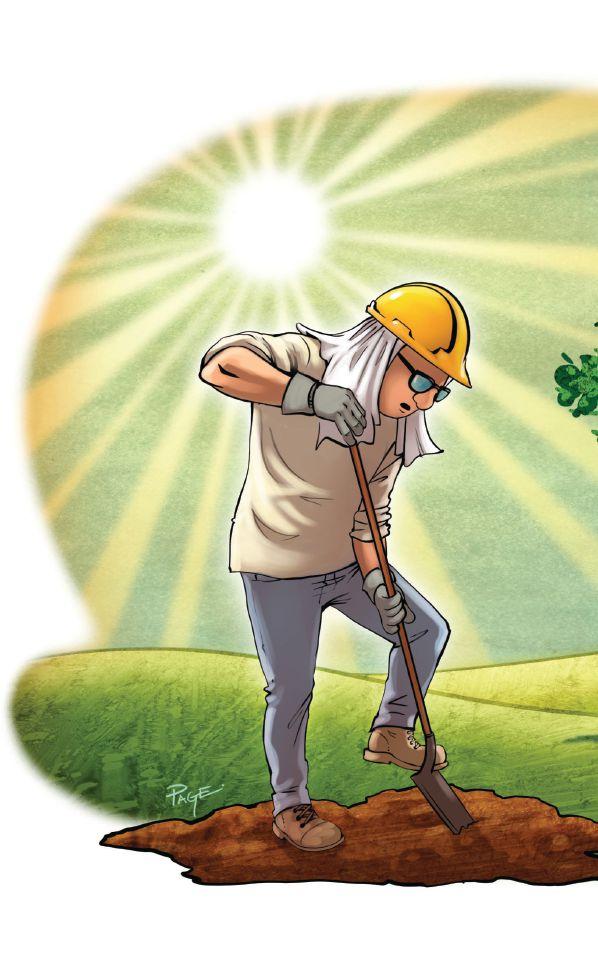
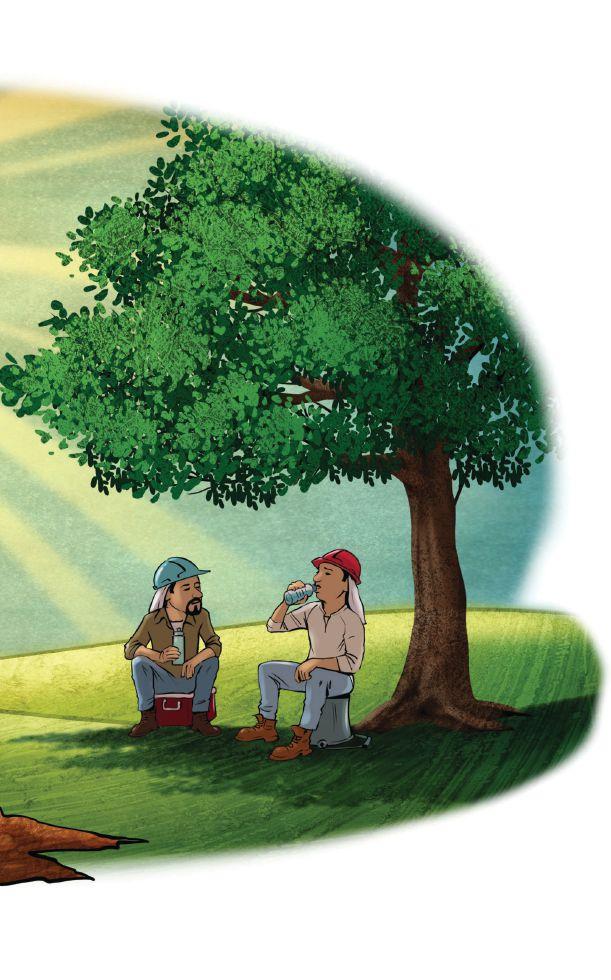
According to a 2015 study on the prevalence of exposure to solar UV radiation, more than 1.5 million Canadian workers are exposed to solar UV at work. Approximately 900,000 of them spend more than 75 per cent of their workdays outdoors. These workers who are exposed to a high level of solar UV — defined as spending six or more hours of their workday outdoors — include construction workers, farmers and landscapers.
“To our knowledge, this is the first study in which the economic burden of occupational NMSCs attributable to solar radiation exposure has been estimated in Canada or elsewhere,” the study states. It also captured a significant portion of the economic burden of NMSCs that is sometimes described as the “hidden part of the iceberg of costs” in occupational health and safety.
The National Institute of Occupational Safety and Health in Washington, D.C. recommends adjusting work schedules to accommodate rest breaks from the heat, postponing nonessential tasks and educating workers and supervisors to recognize heat illness as among the prevention measures.
Precautions needed when using sit-and-stand stations
Agrowing number of Canadian employees are using elevated desks or sit-and-stand stations, but the flexibility afforded by these types of workstations
need to be guided by knowledge on how to position one’s work desk properly, cautions Jennifer Kenny, an ergonomist with WorkSafeNB in Saint John.
“Proper ergonomic set-up is very important,” Kenny says. “With this power to control the height, you have the power to get it right, helping you increase mobility and circulation. But, if you get it wrong, you can possibly hurt yourself.”
More companies are also offering sit-and-stand workstations. The increasing demand for height-adjustable workstations means that prices for this type of workstation has come down dramatically over the years.
The greatest benefit offered by sit-and-stand workstations is variation in posture, as sitting in the same position for six hours a day can lead to poor circulation, constructed hip flexors and lower back pain. “We have a saying among ergonomists — your best position is your next position,” Kenny says in a statement issued on April 16. She highlights the importance of moving the body and adjusting one’s position to keep the joints loose and muscles mobile.
Another benefit of an increasingly mobile workplace is that employees can move easily from desk to desk. For example, employees who go to a regional office, which also has sit-and-stand stations, can set their desk properly to suit their stature and operational needs.
WorkSafeNB offers the following guidelines in its booklet on office ergonomics, available free online and through email request: start working at a standing desk for 10 to 20 minutes at a time before extending the duration to allow one to get used to the set-up; determine the proper height by relaxing one’s shoulders and bending the elbows to 90 degrees; and adjust the desk height to just below the forearms. To minimize leg fatigue, alternate or shift weight from leg to leg occasionally or use a gel mat and wear non-slip supportive shoes. In relation to sitting height, thighs should run parallel to the ground with hips and knees at 90 to 100 degrees. Feet should be placed firmly on the floor or footrest, and forearms should be supported at or just above the desk height.
Kenny also suggests taking movement and stretch breaks throughout the day, such as scheduling walking meetings, walking around the block when meeting a co-worker for a project update or going over to a colleague’s desk instead of communicating through email or the phone.
“While technology is great, it is good to step away from your computer and take a mental break too,” Kenny says. Follow us on Twitter @OHSCanada
Jean Lian is editor of ohs canada
ANTE theUpping
BY KELLY PUTTER
In response to the growing demand for safety professionals who can better support workplaces in the changing global economy, new eligibility requirements for Canadian Registered Safety Professional certification will take effect on July 1.
With change comes uncertainty, but also opportunity and the prospect for advancement. Many are hoping that the new eligibility criteria for the country’s top safety title — the Canadian Registered Safety Professional (CRSP) designation — will enhance the standing of Canada’s safety professionals.
As of July 1, applicants to the CRSP designation will require at least a four-year bachelor’s degree in any field, or a two-year diploma or certificate in occupational health and safety or a closely related field from a recognized academic institution. The two-year diploma or certificate must include a minimum of 900 hours or 60 credits. Applicants must also have at least four years of work experience in which workplace health and safety comprises at least half of their professional duties.
Prior to these changes, applicants needed only three years of work experience. A university degree was not required and a one-year diploma, instead of one with a two-year duration, would suffice. Dave Rebbitt, a safety consultant with Rarebit Consulting in Fort McMurray, sees the changes to the eligibility criteria for CRSP certification as “encouraging signs and a positive direction” that will improve safety across the board. “I think it is a good thing,” he says.
Canada’s safety profession is undergoing a transformation. The move by the Board of Canadian Registered Safety Professionals (BCRSP) to raise the bar for those seeking certification as occupational-safety professionals is adding fuel to the pace of change, according to Paul Carolan, a safety professional with the Government of Nunavut in Iqaluit.
“The new criteria that begins this July is another forward step,” Carolan says, “and brings our profession closer to other professions in terms of academic timelines.”
MAKING WAVES
The introduction of more stringent requirements relating to applicants’ education level and work experience is perhaps the most noteworthy change to the CRSP designation — changes that the Board believes will improve opportunities for safety professionals and bolster their recognition and influence in the industry.
According to BCRSP, colleges and universities are supportive of the changes and have indicated that they will respond to the new requirements with modifications to their program-development initiatives. The Board meets with educational institutions twice a year to keep them abreast of developments to the certification scheme so that institutions can respond and align their programs with the new requirements accordingly.
For Paul Andre, chair of the BCRSP, the new certification requirements reflect the changing landscape of the safety industry. “As a profession starts to gain some acceptance and be viewed as a profession, it will naturally evolve. And that is what’s happening here with this certification scheme.”
The new requirements will also bring Canadian-certified CRSP designates more in step with safety counterparts in other parts of the world. According to the BCRSP website, Canada is lagging behind countries like the United States, United Kingdom, Europe and Australia, which impose a higher standard of education and experience in their oh&s professional certification schemes.
“Raising the bar on the CRSP certification standard will further enable opportunities for mobility and transportability of credentials through Memorandum of Understanding (MOUs) with like-minded organizations,” the BCRSP website states.
One of the questions surrounding the new CRSP certification requirements is whether it will raise workplace-safety standards. As occupational-safety needs continue to morph, employers are looking for practitioners with the right skill sets, education and experience, and the Board is responding accordingly.
Registered Safety Technician (CRST) scheme. The difference between the two designations is that a CRSP designs, leads and manages an organization’s safety-management system, while a CRST is responsible for implementing those safety protocols.
The new CRST certification, announced last July, is among the latest development that BCRSP has implemented of late. Approval of the new certification was driven by the recognition that the “gold standard” designation of CRSP may not cater to the needs of all safety professionals.
Canada’s safety profession is undergoing a transformation.
“We are continually benchmarking internationally with like organizations to ensure the progression of the profession, and the changes to the certification scheme here in Canada is keeping pace with our partners from abroad,” Andre explains.
In addition to modifying CRSP certification requirements, the Board also seeks to provide employers with two types of safety professionals by introducing the Canadian
The development of this second certification scheme, which has less stringent criteria, started in 2016 with the formation of a Technician Certification Steering Committee. A focus group and validation study were subsequently held to confirm the competencies required of a CRST. The first intake of CRST applicants is expected to start later this year, and the first CRST examination will be scheduled for 2019.
“What we are trying to do is move the oh&s profession forward,” Andre says. “At the end of day, these improvements would support better outcomes for society as a whole with fewer fatalities and fewer people being hurt at work.”
LEFT HAND, RIGHT HAND
In Canada, dozens of professions like doctors, plumbers, accountants and engineers are regulated to protect public
health and safety. Regulated occupations are controlled by provincial, territorial or federal law and governed by a regulatory body. Practitioners of a regulated profession must obtain a certificate, licence or registration in order to use the reserved title for the occupation or obtain the exclusive right to practise the occupation.
About 20 per cent of jobs in Canada are in regulated occupations, according to information from the Canadian Information Centre for International Credentials in Toronto. Non-regulated occupations, on the other hand, refer to professions or trades for which there is no legal requirement or restriction on practice with regard to licences, certificates, or registration.
Canada’s safety profession is among the non-regulated professions, because the law does not regard it as a skilled trade. Another obstacle to the lack of regulation in this industry is the fact that there are 14 different acts governing workplace safety across the country, with each jurisdiction using two regulatory frameworks: one for the province in question and the other for federally regulated workplaces.
“Any kind of national safety initiative in Canada faces significant hurdles,” Rebbitt says. “It is difficult to get a national anything in safety. If you are working in Toronto, then you are regulated by the Ontario Health and Safety Act. Every province has its own quirks, and this makes it difficult for any national safety organization to be successful.”
Apart from the fact that none of the 14 jurisdictions recognize a safety personnel as a regulated professional, there is also no registrar system in place in any of these jurisdictions. The lack of a unified approach means that there is no national agreement on how to regulate the safety profession.
Carolan believes that this lack of clarity and cohesiveness manifests itself in various ways: the absence of regulatory harmonization and reform in matters pertaining to workplace health and safety; the lack of coordination in course content of post-secondary institutions, knowledge transfer and assessment methodologies; limited unity among safety membership or certificant organizations; and failure among industry partners to set basic Canadian standards.
Citing Australia and the European Union as shining examples of oh&s professionalism, Carolan says these countries have advocated for increased consistency and transparency among regulatory, educational and membership organizations. Canada’s safety profession, on the other hand, has too many significant competency gaps, with academia being one example.
Unlike other professions like law, medicine, accounting, engineering and science that have managed to move past these jurisdictional barriers and their respective national accreditation boards by working directly with educational institutions on content materials and expected levels of competency and capabilities upon completion of their academic training, there is currently no harmonization among the 10 provinces and three territories on more than 50 oh&s content available across Canada at the certificate, diploma, undergraduate or doctoral levels, since educational issues come under provincial jurisdiction.
“If you are a doctor, an engineer or an attorney, they all have consistency in their education requirements. The reason for this is that they have all developed a relationship, through regulation, with the professional body, such as the law society and accredited institutions that offer law courses,” Carolan explains. “The journey to become a safety professional is consistently inconsistent, so it is not good.”
EXPERIENCE MATTERS
Aside from the lack of consistency in oh&s academic programs for Canada’s top safety title, critics also take aim at the designation’s experience component. As a CRSP, Troy Winters, an Ottawa-based senior officer of health and safety for the Canadian Union of Public Employees, would prefer that requirement changes to the designation address applicants’ hands-on experience as opposed to the amount of time spent in a classroom. While he believes that more education does not hurt, practical skills are needed far more critically. For this to happen, Winters thinks that engagement with all relevant stakeholders needs to occur.
“This is critical as ultimately, it is the employers who will or will not hire this new wave of professionals,” Winters suggests. “Workers need to know that whatever is developed is actually working in their best interest, or there will be no confidence. And we need a strong, central organization to run and maintain the integrity of the whole system.” Issues like certification, initial and continuing education and ethi-
cal practice needs to be taken seriously, he adds.
Carolan believes that safety veterans across Canada are spot on with regards to their concern about the deficit in practical skills among budding oh&s professionals who have recently graduated from college and university programs. He stresses that students attending college or university must be able to perform key skills, such as report writing, conducting inspections, interviews, investigations and have the ability to present basic presentations, briefings and safety talks.
“The above tasks are the most frequently used skills that safety practitioners do daily at different levels, and yet we only test the knowledge component,” Carolan says. “Knowing and doing are two very distinct components within a competent professional. None of these skills are practically assessed to an agreed standard within Canada.”
Rebbitt estimates that there are approximately 35,000 workers in Canada who have health and safety responsibilities in their jobs, but only roughly 5,000 of them are CRSP certified. “CRSPs are really outnumbered in the workplace, and they have very poor market penetration in their target market,” he says.
And steps are being taken to improve the industry. Before the introduction of the CRST certification, the CRSP designation was the only option available, and its stringent requirements meant a huge barrier to entry.
“BCRSP offered little in the way of a career progression like some of the other agencies in other countries, where you can start as a trained supervisor and progress to a technician level or practitioner level before you get to the professional
level,” Rebbitt says.
With the introduction of the new CRST designation, safety professionals now have an entry level through which they can practise as a registered safety technician before making the jump to certification as a CRSP. “It encourages continuous learning and a progression instead of having just one level like BCRSP has had since 1976. That was a huge mountain to climb,” Rebbitt adds.
Another step forward is the announcement in February of the partnership between BCRSP and the Canadian Society of Safety Engineers (CSSE) to create a structure that would enhance collaboration between the two agencies and support the regulation of Canada’s safety profession. In this partnership, BCRSP will position itself as the certifying body while CSSE serves as the member-services organization providing education, professional development and resources. Areas of overlap between the two agencies will also be identified and streamlined.
“The resulting changes will sustain two autonomous organizations, which operate with greater role clarity under a unified, formal and comprehensive approach,” a joint statement from both agencies states. “This effort will eventually create a new distinct organization to oversee the accreditation of educational institutions offering oh&s certificate, diploma and degree programs.”
Rebbitt welcomes this development. So does Carolan, who has previously served on two national accreditation boards in Europe and is confident that this direction will generate momentum and result in “new levels of competencies and capabilities” among safety professionals.
With regards to how the changes in certification requirements affect existing current CRSPs, Andre says BCRSP will offer equivalent programs or courses for certified safety professionals to upgrade their credentials. He adds that the board is partnering with Ryerson University to offer a series of modules to those who do not meet the requirements. The modules, offered online free of charge, will be made available as of July.
Canada’s unique legislative landscape and its individuated approach towards workplace-safety regulation mean that there are differing opinions and fingers in the pie, Rebbitt suggests. But he stresses that overcoming these obstacles is the only way to galvanize the profession and raise industry standards.
“Sitting back and claiming leadership in the gold standard in certification is not likely to be successful, because if the BCRSP doesn’t evolve, it will be redundant,” Rebbitt says. “When you have a poor market penetration and continue not to do anything, you can be the next Kodak.”
in Canada. The core competencies elements were not clearly defined before.”
For Sylvia Boyce, Toronto-based health and safety coordinator with United Steelworkers union for Ontario and Atlantic Canada, the best health and safety knowledge and experience is acquired on the ground: through certification as a joint health and safety committee representative and working closely with the union and management to identify and eliminate occupational hazards. As for non-unionized workplaces, reaching out to workers themselves to understand the operational risks and constrains is key.
“The journey to become a safety professional is consistently inconsistent.”
Jeff Thorne, a training and consulting manager with Occupational Safety Group Inc. in London, Ontario, thinks that the higher CRSP-certification standards bode well for the industry. “By setting out these core competencies, it really defines what the expectation is of a safety professional
“They are the ones who know the workplace more than anybody, and their opinions should weigh,” Boyce says.
Unquestionably, Canada’s safety profession is poised for growth and change. “For any professional, the day you stop learning and bettering yourself is the day that you stop being a professional,” says Peter Sturm, a safety consultant in Toronto. “The profession and business world is moving at such a rapid and exponential rate of change. What a great time to be a safety professional.”
Follow us on Twitter @OHSCanada
Kelly Putter is a writer in Beamsville, Ontario.
There are many options available in fall protection, but knowing which product is best suited for your application can be difficult At MSA, we simplify that process We provide the most innovative equipment, matched with best-in- class safety solutions, to help protect even the most complex worksites.
To learn more about MSA’s complete line of safety solutions or request a FREE, no obligation safety evaluation, visit MSAsafety.com/safetyevaluation.
Surviving an
Inspection
By Jean Lian
The Ontario Ministry of Labour’s (MOL) 2018 inspection blitzes took place on April 1 and will run until March 21, 2019. The blitzes target specific areas in the following sectors: construction (working at heights, reversing equipment on construction projects); industrial (new and young workers, machine guarding, health and safety in warehouses and big-box retail); mining (conveyor guarding in mines and mining plants, mobile equipment); health care (violence prevention) and cross-sector initiatives (chemical handling, the Workplace Hazardous Materials Information System, ergonomics and musculoskeletal disorders).
Some people view workplace inspections as finding fault with businesses so that they can be prosecuted. “That is a little unfair,” Cynthia Sefton, partner with Aird & Berlis LLP in Toronto, said at Partners in Prevention health and safety conference and trade show held in Mississauga on May 2. While inspections often do result in prosecutions, “the main focus is really to help workers be safe.”
Each year, inspection blitzes protect workers’ rights under both the Occupational Health and Safety Act and the Employment Standards Act by focusing on sectors with a history of violations, employ vulnerable workers and have a rising number of employees, according to the MOL website. While the targeted industries are announced in advanced, the specific workplaces are not. Sefton says workplaces should know where they stand on the list because each year, the blitzes focus on different sectors, businesses and workers.
“It is not just about identifying contraventions, but also preventing non-compliance,” said co-presenter David Reiter, partner with Aird & Berlis LLP. Construction notices and high-risk businesses can also trigger an inspection. “It doesn’t have to be an accident. If an inspector shows up on
a blitz and finds a contravention,” Reiter explained, “you are still open to prosecution and charges.”
An inspection is not an investigation, although it can lead to one. “The inspector comes to see if there is compliance; the decision to investigate as a possible offence comes later,” Sefton said. But the fact that an inspection can potentially lead to an investigation does not mean that workplace parties can assert their rights by not talking to an inspector. “In fact, it is an offence to refuse to cooperate on an inspection, and that should be fairly etched in your mind.”
One of the key areas that an inspection focuses on is the internal responsibility system (IRS), which refers to the system in an organization where everyone has direct responsibility for health and safety as an essential part of his or her job. As Acts and regulations do not always prescribe specific steps to take for compliance, employers are responsible for determining such steps to ensure the health and safety of all employees. Each person takes initiative on oh&s issues to solve problems and make improvements on an ongoing basis, individually or co-operatively.
Under the IRS, business owners, employers, directors, supervisors and instructors all have specific obligations to make sure the workplace is as safe as possible. For premises that hire contractors, keeping proper documentation and records of workplace-safety training is key so that they can be retrieved easily upon request by an inspector. “If you can’t prove it, it didn’t happen. That is the bottom line,” Sefton said.
The failure to provide oh&s training records is one of the things that inspectors issue orders for, Reiter added.
Even for contractors that a company has worked with for a long time, “it is really important to have some system whereby the quality of what they do — not just from a performance perspective, but also a safety perspective — is
checked. And if there is a problem, it has to be brought to their attention,” Sefton said.
The same applies to temporary workers. “You have an obligation to be satisfied that [a temporary] worker has the same degree of skill and knowledge that your regular workers do if they are exposed to the same risks,” Sefton added, noting that some staffing agencies provide training to workers before assigning them to undertake certain types of work. “One way you can satisfy yourself is getting some proof from the agency that that person has had the appropriate training,” she advised, stressing that temporary workers need to be supervised more closely.
Inspectors have a lot of powers: they can interview workers; ask for certain testing to be performed; and issue orders to not use an equipment if it presents a hazard that can be immediately corrected. And it always pays to be respectful to an inspector.
risk industries, is to invite an inspector to a plant tour to help them understand the workplace prior to an inspection. “It is important to try and meet these “cops” before bad things happen, and they appreciate it because they may not understand your business as well as you do,” Sefton suggested. “If you can explain to them and give them some materials and show how it works, what systems you already have, it goes a long way to not being confrontational when they come either to inspect or investigate.”
“It is not just about identifying contraventions, but also preventing non-compliance.”
“There is no need to have a confrontational attitude. They have a job to do and they have to do it,” Sefton said.
One of the things that employers need to be mindful of is that people do not always interview well, “not because they don’t know what they are doing; but they don’t necessarily know how to articulate it,” Sefton cautioned. As such, employers should consider training staff on how to communicate with inspectors.
The other recommendation, particularly those in high-
For new workers, Reiter recommends the following preparations:
• Prepare an introduction package to be given to new workers on their first day of work and have them sign off on that;
• Assign a senior worker to serve as an official mentor for the new worker. The mentor should schedule documented interactions to ensure that a new worker is aware of the risks and their obligations;
• Organize interview sessions for new workers so that they can interact with joint health and safety committee members and understand workplace-safety issues;
• Have a supervisor take a new worker on inspections so that they understand what inspections look for; and
• Monitor and enforce compliance.
Follow us on Twitter @OHSCanada
Jean
Lian is editor of ohs canada.
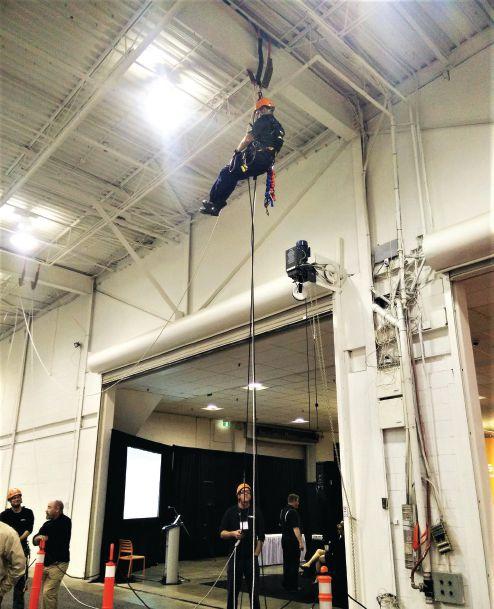
The High-Risk Pavilion at Partners in Prevention health and safety conference and expo featured work in hazardous areas like confined spaces and working at heights.
Meet Bruce the Safety Moose, health and safety ambassador of Partners in Prevention held in Mississauga, Ontario from May 1 to 2.
Responding to Spills
By Jean Lian
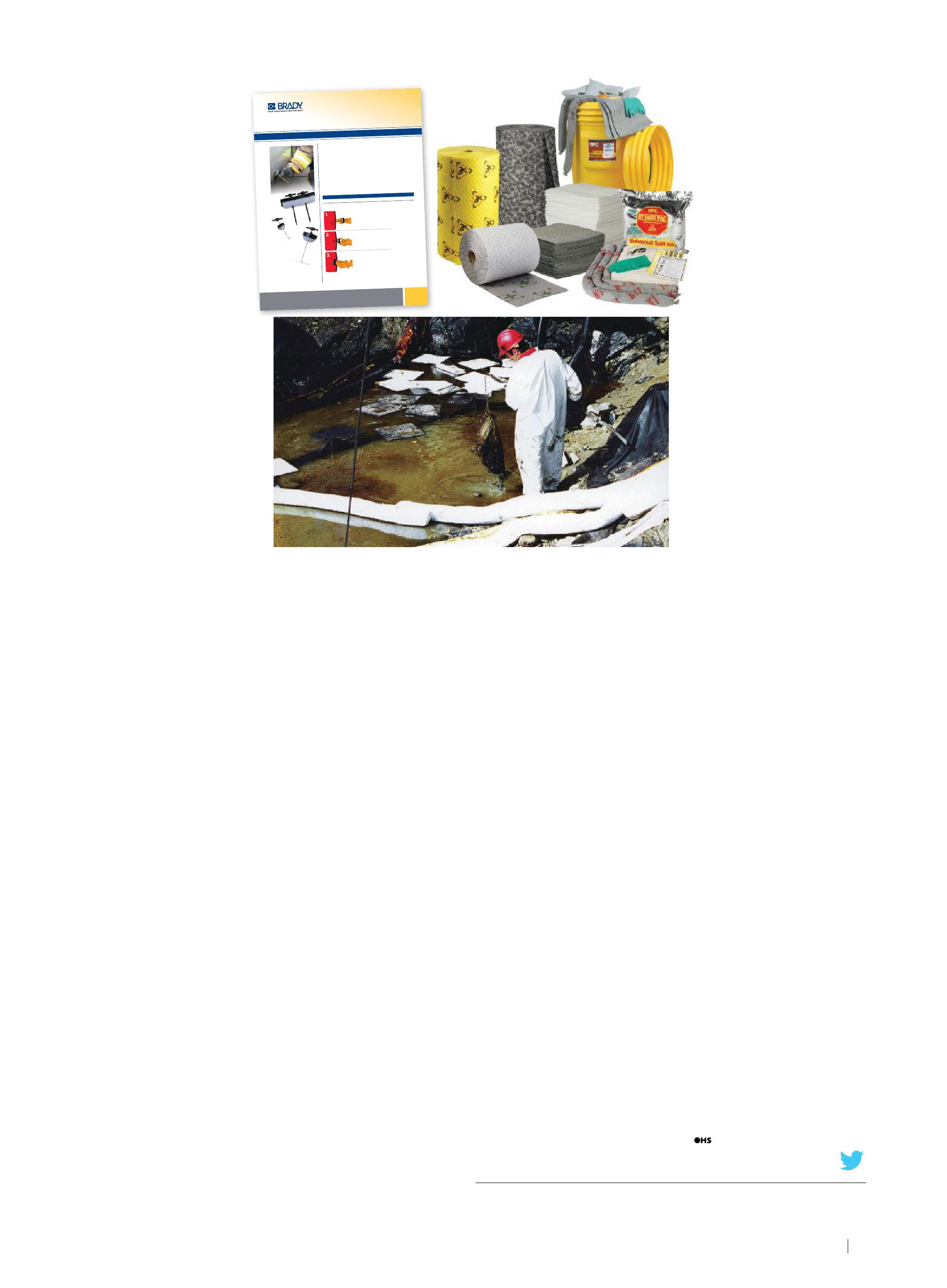
On February 24, two transport trucks in Toronto collided on highway 401, spilling diesel onto the road. In October 2017, a chemical spill at a recycling facility in the Greater Toronto Area saw the decontamination of more than 60 employees of Canada Fibers Ltd. These incidents speak to the diverse nature of hazardous materials releases that can occur in transportation and industrial facilities.
“There are 30,000 chemicals used commercially. Most of these can be subject to spills or accidental releases,” says Jamie Button, national sales manager for Solvent Products Corp, a division of Brady Canada in Toronto.
Button cites equipment failure, human error and corrosion as the top three reasons for spills in an industrial setting. With respect to transportation spills in Canada, just over half of those incidents involved oil or petroleum products.
“The products that are transported more frequently are the ones that are subject to spills. That is why you see such a high percentage of spills occurring are oil and petrol chemicals,” Button says.
the types of remediation products used and the protective equipment required. “There are literally thousands and thousands of different types of products that are available on the market,” says Jeremy Slater, regional sales manager for western Canada with Acklands Grainger in Vancouver.
The permeation factor for protective clothing dictates how long the apparel will shield the wearer before the released substance permeates the membrane of the protective layer. A caustic chemical would require the donning of a Class-B-rated suit that is fully encapsulated, “because you can’t come into contact or breathe any of the vapour associated with the product, or it would be immediately dangerous to life and health,” Slater adds.
The location of the spill can create additional challenges. A spill that occurs “indoor in a warehouse is obviously easier to clean up than something that is out in the environment, on rough water or it is cold,” Button says. Slater agrees, recommending a 10-step process that responders should follow:
“The principles of response are consistent: containment, protection and recovery.”
Western Canada Marine Response Corporation (WCMRC), which responds to petroleum-based spills on Canada’s West Coast, says the most common spills are diesel, bunker C and crude oil. Michael Lowry, WCMRC’s communications manager in Burnaby, British Columbia, says there are different types of equipment for different types of oils, but “the principles of response are consistent: containment, protection and recovery.”
Safety is a critical part when responding to spills of all types and sizes. “The initial information gathered about the spill will determine on a preliminary basis if it is safe to commence the response,” he adds.
Other considerations that Lowry cites include the availability of safety data sheets for the product spilled, the operating environment (which include weather and marine conditions), fire or explosion risk, the presence of harmful gases, slips, trips and falls and manual handling of equipment.
KNOW THY ENEMY
For any response plan to be effective, “you have to gauge your spill response to the type of chemicals you are dealing with,” Button says.
The nature of the substance released also determines
1. Risk assessment: Evaluate the type of material spilled and identify the source.
2. Protective Clothing: Wear the appropriate protective gear for the situation. If the source or the material is not identifiable, assume the worst.
3. Containment: Contain the liquid and seal drains.
4. Plug the source: Close valves, rotate punctured drums and plug leaks where it is possible and safe to do so.
5. Begin clean up: Use sorbents to absorb spilt liquids.
6. Contact authorities: Report the spill to the proper legal authorities and fill out all necessary reports.
7. Dispose used materials: As absorbent materials take on the characteristics of whatever they absorb, dispose used absorbents and spilt liquids in accordance with local laws.
8. Decontaminate: Clean all tools and reusable materials properly before reuse.
9. Restock materials: Replace absorbent materials and safety equipment used in any clean-up operation.
10. Review contingency plans and procedures: This should be conducted after each spill.
If the substance involves a hazardous material, it is a good idea to engage a trained professional to assist in the selection of proper remediation products and design or implement an effective spill-response plan. “It is not something to be taken on your own,” Slater cautions.
Acklands Grainger advises their clients on a spill-response program that is compliant with regulations and en-
sure the safety of workers and responders alike. A trained professional will examine the facility, focusing on areas where there are containerized liquids, drums, lines and hoses to determine if the substances are stored in reservoir tanks, controlled by valves or kept in high- or lowpressure containers.
The topography of the location in which a spill occurs or can occur is also relevant. Factors to look at include whether the release took place in an enclosed area or outdoor, are there berms involved, is the area sloped adequately, the ease of ingress and egress for responders and is there a need to prevent the fluid from going into drains or exiting the contained area and create a problem elsewhere.
A spill clean-up needs a gamut of remediation products that include hydrophobic oil booms and pads, oil drag nets (above), spill pads/rolls and socks and booms for containment (top right). Brady’s RuptureSeal™ (top left) plugs leaks in seconds.
One of the benefits of seeking professional help is access to a consolidated response plan that indicates the types and quantity of remediation products needed. “If you don’t know what you are doing, you will end up with too much stuff and not knowing what to use for which,” Slater suggests. “We can help you come up with that plan and how and where each of these items are used, and consolidate that down into a way that is not just cost effective, but also do the task it is meant to.”
One common oversight is the failure to restock remediation products after an incident. Slater says restocking remediation products is important, “because the next time it happens and you don’t have anything there, you are in trouble.”
EMERGING TRENDS
An emerging trend in spill response that Slater observes is the move towards preventing them from happening in the first place, or containing them if it has already occurred. One product that can make a difference is Brady Canada’s RuptureSeal™, which provides a stop-gap measure by sealing small-to-normal sized holes in seconds with a silicone plug fastened mechanically over the rupture. It is designed for quick deployment so that workers can vacate the scene as soon as possible.
Slater says RuptureSeal™ is commonly used by firefighters in incidents involving an oil tank or truck that has turned over and has a rupture on its side, spilling fluid onto the road. “This device comes in a couple of shapes and sizes, and you could insert it and pull it tight against the crack and seals it in seconds,” he explains. After the rupture has been
plugged, responders can focus on cleaning up the spill.
“Typically, what you are going to have is socks or booms to create a contained perimeter,” Button says. “Once they contain that, they can clean up by throwing a granular absorbent or spill-control pads down.”
Another trend is the shift in consumer preference towards granular absorbents that are natural and safe for the environment and workers from a respiratory standpoint. This trend is spurred in part by the United States’ Occupational Safety and Health Administration’s final rule issued in 2016, which limits exposure to respirable crystalline silica to curb lung cancer, silicosis, chronic obstructive pulmonary disease and kidney disease.
“We are seeing a larger push in OSHA to pass legislation with respect to silica content in granular absorbents,” Button says. Half of the market still uses granulated products, which can contain crystalline silica, a classified carcinogen, to clean up spills. Diatomaceous earth or clay, which is 80 to 90 percent silica, is one of the most common compositions of granulated absorbents. “Canadian employers have awareness of that legislation and want things that are more efficient with respect to cleaning up and environmentally friendly.”
Last March, Brady announced the release of its new SpillFix® Granular Absorbents, which is completely natural, produces no carcinogens or dust and has more than four times the absorption power of clay granular. This absorbent, which is made of 100% recycled material, is effective in absorbing hydrocarbons, water-based fluids and most chemicals. Apart from being lightweight and easy to deploy, it is also certified safe for landfills.
Brady offers a range of sorbents that include those that are universal, soaking up everything including water, and those that absorb oil or chemicals only. It also carries a product that is static resistant to prevent sparking.
After cleaning up a spill, companies need to decontaminate tools and equipment that have come into contact with the substance. “And that again comes back to the nature of the chemical spilled,” Slater says.
Jean Lian is editor of ohs canada
Beating the Heat
BRING IT ON: We have waited months for this. Doffing our heavy winter coats and relegating them to the farthest corner of the cupboard could not feel better as long daylight hours and balmy temperatures put the spring back in our gait. But before we throw a sun hat over our heads and walk out the door, making light of the adverse effects of sun exposure can be hazardous. For people who work long hours outdoor during the summer months, it is important to take precautions and know when to retreat from the heat.
THRESHOLD FOR HEAT: Heat stress occurs when body heat builds up due to exertion, environmental factors (like the temperature, humidity, air movement, radiation from the sun and proximity to hot surfaces or heat sources) and the clothing and equipment worn or used by a worker.
Jobs that carry the risk of heat stress include outdoor work in construction, road repair, forestry, agriculture and resource extraction. Indoor workers who are vulnerable to heat exposure include those operating in restaurant kitchens, foundries, steel mills, bakeries, laundries, smelters, glass factories and furnaces, according to the Centre for Canadian Occupational Health and Safety (CCOHS) in Hamilton, Ontario.
PERSONAL FACTORS: The human body feels comfortable when the air temperature is between 20°C and 27°C and a humidex that ranges from 35 to 60 per cent. In very hot environments, the internal body temperature can increase several degrees above the normal 37°C, overwhelming the body’s natural cooling systems and leading to serious and possibly fatal conditions, the CCOHS states.
Certain physical conditions and personal risk factors can reduce one’s ability to withstand high temperatures and put an individual at heightened risk of heat stress. Being overweight reduces the body’s efficiency at losing heat while the lack of physical fitness diminishes the body’s ability to cope with increased demands that heat puts on the body, says the Infrastructure Health and Safety Association in Mississauga, Ontario. As the sweat glands become less efficient with age, workers aged 40 and above may not cope as well in hot environments. Pre-existing conditions like heart disease or high blood pressure can also heighten heat-stress risk as cooling the body requires the heart to pump blood to the skin.
KNOWING THE SIGNS: Heat stress can pose secondary hazards like dropping tools while working at heights due to sweaty palms, or poor vision caused by the fogging of
eyeglasses. It also puts workers at risk for illnesses like heat cramps, heat syncope, heat exhaustion and heat stroke. The following are the symptoms of heat stress:
• Heat cramps: Sharp pains in the muscles due to the loss of salt from perspiration.
• Heat syncope: Dizziness, light-headedness and feeling faint or loss of consciousness due to low blood pressure.
• Heat exhaustion: This occurs when the body loses body water and salt through excessive sweating. Symptoms include heavy sweating, weakness, dizziness, visual disturbances, intense thirst, nausea, headache, vomiting, diarrhea, muscle cramps, breathlessness, palpitations, tingling and numbness of the hands and feet.
• Heat stroke and hyperpyrexia: This is the most serious of all heat illnesses that require immediate medical attention.
STAY COOL: While heat stress poses a serious health risk, it can be prevented easily by taking the following precautions as recommended by CCOHS:
• Acclimatize: Adapt your work and pace to the temperature and how you feel, as it can take up to two weeks for a person to build up tolerance to working in hot conditions.
• Take breaks: Take breaks to cool off in the shade or in an air-conditioned building or vehicle; reduce physical exertion if a shady or cool place is not readily available.
• Keep cool: Stay out of the sun as much as possible and schedule physically demanding tasks for the early morning or late afternoon hours when the sun is less intense.
• Stay hydrated: Drink one cup of water every 15 to 20 minutes, regardless of whether you are thirsty or not.
• Avoid alcohol and drugs: Consumption of these substances can worsen the effects of heat illness.
AN ALL-ROUND APPROACH:
Employers can implement engineering and administrative controls to decrease the risk of heat-related illnesses. For engineering controls, Ontario’s Ministry of Labour recommends reducing the physical demands of work through mechanical assistance like hoists and lift-tables, controlling the heat at the source by using insulating and reflective barriers, lowering the temperature and humidity through air cooling, increasing air movement with fans and providing air-conditioned rest areas.
In terms of work-practices, employers should assess the demands of all jobs and implement monitoring and control strategies in workplaces with a high environmental temperature. Apart from assigning additional workers or slowing down the pace of work, they should also train workers to recognize the symptoms of heat stress and establish a “buddy system” since people are not likely to notice their own symptoms. Last but not least, provide trained first-aid providers and have an emergency response plan in place.
According to a heat-stress awareness guide by Occupational Health Clinics for Ontario Workers Inc., a heat-stress prevention program need to establish the “triggers” to implement the plan. Criteria may include humidex reaching or exceeding 35 degrees Celsius, weather advisories issued by Environment Canada or the provincial agency and heat waves of three or more days with temperatures at or above 32 degrees Celsius. Generally, hot-weather plans should be in place from May 1 to September 30.
PROTECTIVE CLOTHING:
Protective clothing may be the last line of defence, but one that cannot be overlooked. Wearing clothes suitable for hot conditions can help the body cool down.
A common misconception is that taking off the shirt helps to bring down the body’s temperature. According to a WorkSafeBC document on preventing occupational heat stress, wearing a layer of light, loose-fitting clothing maintains the layer of air next to the skin and protects it from direct contact with the hotter air when the temperature in the environment is greater than the skin temperature, which is around 35 degrees Celsius.
Loose-fitting clothing made from fabrics like cotton and silk allows air to pass through and evaporate perspiration from the skin, facilitating the cool-down process. This is why people who live in hot desert climates cover themselves in light and loose clothing from head to toe.
Light-coloured clothing reflects the heat better than dark-coloured ones, and large-brimmed hats provide shade for the face. If hard hats are worn, attaching a light-coloured piece of cloth to the back and side rim of the hat shields the neck from the sun.
Follow us on Twitter @OHSCanada
Eye on Crane Safety
By Andrew Snook
For the first time in more than a decade, tower-crane professionals across British Columbia came together for the Tower Crane Industry Safety Conference, hosted by WorkSafeBC in Richmond on March 15.
Dan Strand, director of WorkSafeBC, underscores the importance of industry coming together for events such as this. “It has been 12 years since we have held a conference like this,” Strand said, adding that much has changed in the tower-crane industry since the last conference. “But what hasn’t changed is a need to keep people safe.”
Strand said everyone involved in the industry need to work together to address tower-crane safety issues. On average, there is a near-miss, reported or an actual incident every month in the province. “We have had 12 serious incidents in the past 12 months,” Strand said. “Behind these statistics are people, people that are at risk.”
CRANE-SAFETY INITIATIVE
Doug Younger, WorkSafeBC’s occupational safety officer, gave an overview of the board’s 2018-2020 crane-industry initiative. The agency’s tower-crane strategy is “to identify and eliminate specific tower-crane hazards and unsafe work practices that have the potential to cause serious injury, death or catastrophic equipment failure.”
need to improve our record.”
The majority of the incidents in British Columbia took place in the Vancouver area where most of the lifting work is taking place. Of the 250 incidents reported between 2008 and 2017, 126 occurred in Vancouver West and 14 in Vancouver East. Other cities in the province where a significant number of incidents have happened include Surrey (15), Victoria (14), Kelowna (13) and Courtenay (eight). Of the 12 incidents reported in the past 12 months — of which 11 were close calls —10 took place in the Lower Mainland, with the others occurring on Vancouver Island.
Younger also discussed WorkSafeBC’s various tower crane initiatives, which include the following: changes and updates relating to crane-operator certification; pre-erection and annual-inspection requirements to the CSA standard; rigging standard and rigger qualification; equipment zoning (slew-limiting devices); and below-the-hook lifting device design and documentation.
“What hasn’t changed is a need to keep people safe.”
Younger said the large number of serious incidents related to the operation of tower cranes spurred WorkSafeBC’s focus on tower cranes. In addition to the 12 tower-crane incidents that were reported in the province from 2017 to 2018, there have been 250 such incidents reported between 2008 and 2017 — the majority of which were caused by failures in crane and hoist equipment, contact with overhead conductors, tower cranes and concrete pumps and workers being struck by falling loads or rigging and other objects.
Younger suggested the actual number of incidents is likely to be higher than what has been reported, since WorkSafeBC may not be informed about all incidents, and its officers may not document every incident that takes place. Younger said he is amazed at how many close calls and near misses he has seen and that there have been no fatalities stemming from these incidents over the past decade. But what is certain is that these incidents had the potential for serious work injury or death, and all of them were avoidable.
“This industry cannot rely on luck,” Younger said. “We need to take a serious look and improve our safety stats; we
WHAT’S NEW
Fraser Cocks, executive director for the BC Association for Crane Safety, discussed the crane operator certification scheme. Cocks said there are currently 364 British Columbia-certified tower-crane operators in the province (235 active full scope and 129 active provisional), with an additional 86 certified crane operators with recognized credentials from other provinces working in British Columbia. Albertans make up the majority of those operators, accounting for 70 of 86 operators.
Cocks stressed the need to watch out for false credentials and that an operator having the necessary credentials is only one step towards ensuring safe operations. “You, as employers, are responsible for making sure your operators are qualified,” he said. Companies need to ensure that their operators are properly trained and fit to operate the cranes safely, including not arriving to work under the influence of substances that would inhibit their abilities to operate cranes safely.
Cocks also discussed the challenges that come with every province having its own types of certifications and the work that is being done at the federal level to align credentials for operators across the country.
New products for improving safety were also on display at the conference, including zoning devices and anti-collision technologies and cameras. Paul Roussel, manager for Opticrane in Vancouver, discussed some of the latest innova-
tions for improving safety operations for tower-crane operations. He believes the industry is moving in the right direction and adopting innovative technologies can enhance the safety of tower-crane operations.
“Technology is there is help us,” he said. “It can make our lives a lot easier.”
Bigfoot Crane Company’s Ryan Burton discussed tower crane preventive maintenance, best practices and the pros and cons of having a preventive-maintenance program. “The primary goal of preventative maintenance is to prevent the failures of equipment before they occur,” Burton said.
Advantages of preventive maintenance that Burton cited include cost-effectiveness in capital-intensive environments, the provision of flexibility for periodic adjustment of maintenance tasks, increase in the life cycle of components and reduction of equipment failures and downtime costs. Preventive maintenance programs are also estimated to yield 12 to 18 per cent of cost savings.
While preventive-maintenance programs can prevent catastrophic failures, they cannot eliminate that possibility altogether. As well, maintenance programs are more labour intensive and require maintenance management, such as stocking more parts and potentially replace parts that are still in good condition.
Additional presentations that took place at the conference included limits of approach to overhead electrical contractors, meeting CSA standards when modifying tower cranes and tower-crane inspections and requirements for British Columbia.
Follow us on Twitter @OHSCanada
Andrew Snook is editor of Rock to Road.
TIME OUT
OUTTING OUTTED: Eating an ice-cream can prompt a fine if the tasty treat is enjoyed by a bear. Discovery Wildlife Park in Alberta was penalized for driving Berkley the bear to Dairy Queen to get ice cream, in contravention of the Wildlife Act which required park owners to alert authorities before moving animals out of the zoo, The Canadian Press reported on May 8. The violation was uncovered after the park owners shared a video of the bear being fed ice-cream through a window, and they were charged under section 12(3) of the Wildlife Act. The omission to inform the authorities was an honest mistake and a first in the park’s 28year history, the park owners said.
MOTHERS’ GROOVE: There is no better day to fight for caregivers’ rights than on Mother’s Day. More than two dozen migrant caregivers held a flash mob in Vancouver, calling for permanent-resident status to be granted to caregivers upon their arrival, StarMetro Vancouver reported on May 13. The group, which included mothers from overseas who come to Canada to work as live-in caregivers, said the current program, which ties migrant workers’ permanentresidence application to a single employer, makes them vulnerable to exploitation. Recent changes to the system capped the annual number of permanent residencies available to foreign caregivers at 5,500 and included additional requirements. Looks like migrant caregivers would have to keep on grooving if they want Parliament Hill to bring about real changes to the system.
LATIN HEAT: The name of a new restaurant in Vancouver has prompted allegations of cultural appropriation and racism. The brouhaha revolved around a restaurant named Escobar, which is the last name of the deceased Colombian drug lord Pablo Escobar, who was responsible for thousands of murders and disappearances along with high-level corruption until his shooting death in 1993, StarMetro Vancouver reported on May 13. Colombians in Vancouver and abroad said the name borders on racism. Even the Columbian consulate weighed in on the matter by issuing a scathing public letter asking for the restaurant’s name to be changed. The restaurant’s executive chef said the owners are deeply apologetic if they have caused offence, but stood their ground in keeping the name, which is very common in Latin culture.
PAW PATROL: The swearing in of a kitten as the newest official member of the Troy Police Department in Michigan marked a new chapter in the force’s history by allowing a cat to take the law into its own paws. Pawfficer Donut, a rescue kitten that will work in the police department’s feline unit, raised her right paw as she was sworn in after an interview, The Associated Press reported on May 12. Pawfficer Donut will not only engage the public by showing the human side of law enforcers; she will also be used for therapeutic pur-
poses and public appearances. Donut replaced Badges, her predecessor who was relieved of her duties as it was suffering from feline leukaemia.
DRE VERSUS DRAI: A renowned rapper and a celebrity medical doctor were locking horns over their names. The multi-year deadlock came about when gynaecologist Dr. Drai wanted to trademark his name for his motivationalspeaking services and books. But the other Dr. Dre, known for his platinum-selling albums, objected on the grounds that it could cause confusion between the two brands, The Associated Press reported on May 10. The United States Patent and Trademark Office dismissed Dr. Dre’s challenge, ruling that consumers would be able to distinguish between Dr. Dre and Dr. Drai.
A DOG DAY: A meteorologist with an American television station in New Hampshire was doing a live weather report when a dog interrupted his forecast by walking in front of the green screen. The WMUR meteorologist was caught off guard by the canine moment, but he did not lose his wits as he said, “It’s not the dog days of summer just yet,” MSN News reported on May 7. Apparently, his co-anchor had brought her furry friend on set for one of her stories, but the dog had apparently slipped away without anyone noticing. The dogwalk was certainly not part of the line-up, but the incident did not ruffle any feathers.
YOU’VE GOT MAIL:
Want a pay raise? Simply redirect mails to your home. A former UPS worker was thinking out of the box when he rerouted mail meant for the company’s headquarters in Atlanta to his one-bedroom apartment in Chicago. And that’s not all — more than 10 cheques addressed to UPS, totalling more than $58,000, were deposited into the employee’s account, The Associated Press reported on May 10. The scam was uncovered after a security coordinator discovered the change in address. The 24-year-old employee, who faced charges, claimed that it was simply a mix up and that his identity might have been stolen. Nice try, dude.
HIGH-RISE HOGS:
When there is no space to expand horizontally, you go vertical. A private agricultural company in southern China is raising hogs in high-rise “hog hotels.” Due to management difficulties and public resistance to large, intensive farms, the company will raise as many as 30,000 sows on its 11-hectare site by the end of the year, Reuters reported on May 10. While hog hotels save energy and resources by using significantly less land than conventional industrial farms, this model has raised occupational health and safety concerns of infectious diseases spreading through such intensive operations. Time will tell if the novelty of urban farming is a trendsetter or the trigger of yet another epidemic.
Follow us on Twitter @OHSCanada
THE 2017 VOTES ARE IN.
# 1 Overall Pick by You
Gold -Ansell Microflex 93-260
Hand Protection:
Gold - Ansell Microflex 93-260
Silver – Ansell HyFlex 11-542
Eye Protection:
Gold - DSI Safety Inc. - Dyna-Shield Eyewear
Silver – DSI Safety Inc. Most Comfortable OTG Glasses
Gas Detection / Instrumentation:
Fall Arrest:
Gold Draeger X-am 125 Mark II Pump
A special “thanks” to all our readers and web visitors for their votes.
We poured over the votesOur 2017 OHS Canada Readers’ Choice Awards Winners are: Congratulations
Gold - DSI Safety Inc. – Specialized Fall Arrest Harnesses
Apparel:
Gold – Ansell AlphaTech™ HiViz™ Coverall 66-687
Silver – Lakeland MicroMax NS
First Aid:
Gold - DSI Safety Inc
– Personalized First Aid Kits
Education: Gold - University of New Brunswick
– Online OH&S Professional Development Programs
Head Protection:
Gold – DSI Safety Inc. – Full Graphic Safety Hard Hat
From reducing unintentional lockups,* to simplifying inspections, every detail of the new 3M™ DBI-SALA® Smart Lock Self-Retracting Lifelines is designed to help increase your productivity and convenience.