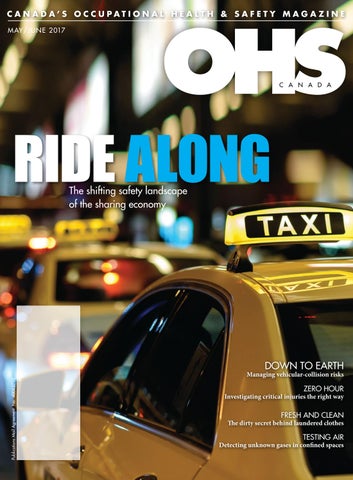
The shifting safety landscape of the sharing economy
DOWN TO EARTH
Managing vehicular-collision risks
ZERO HOUR
Investigating critical injuries the right way
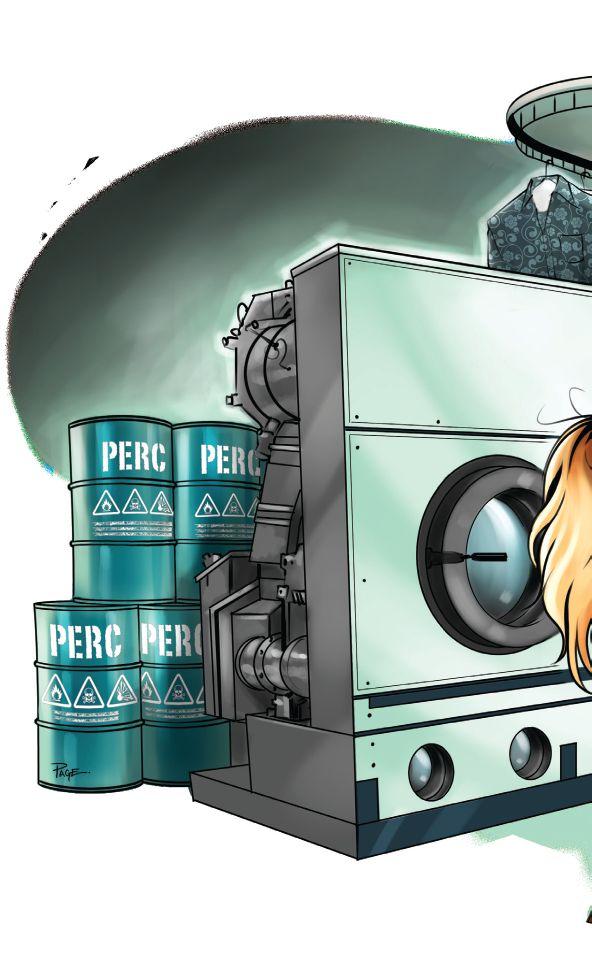
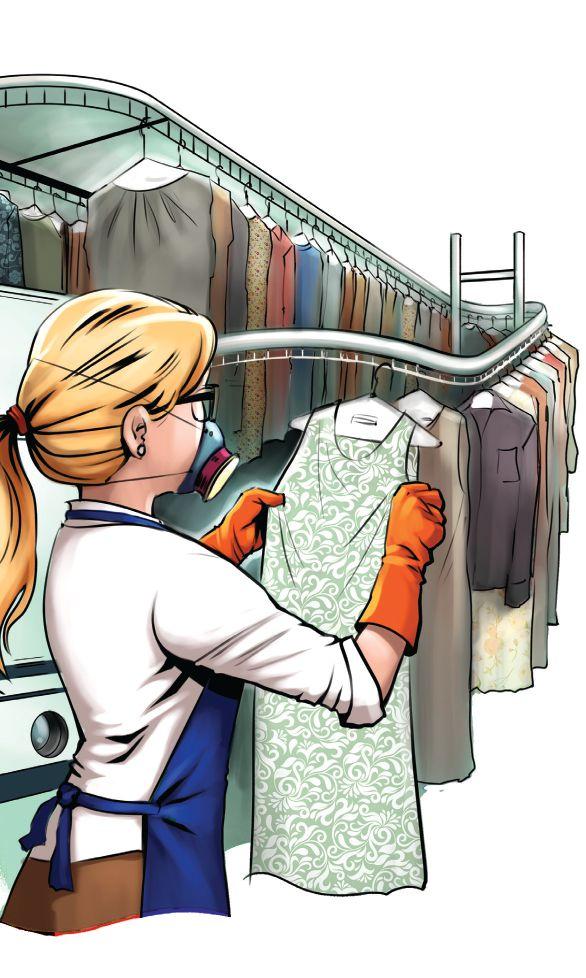
FRESH AND CLEAN
The dirty secret behind laundered clothes
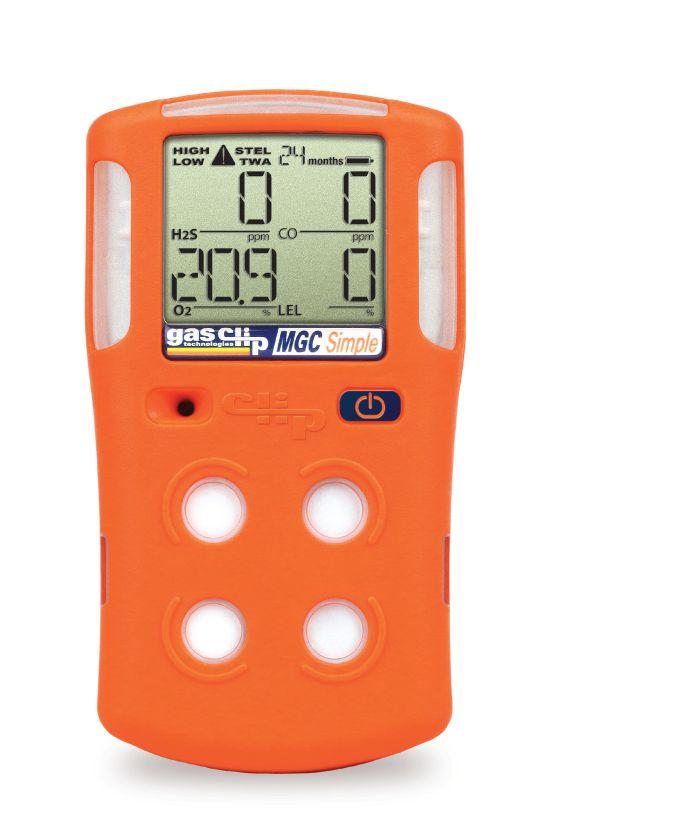
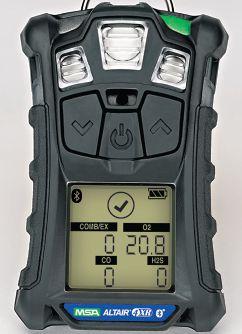
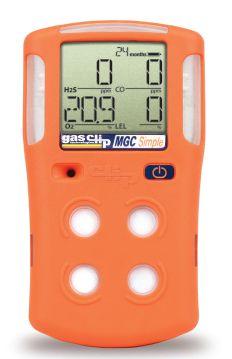
TESTING AIR
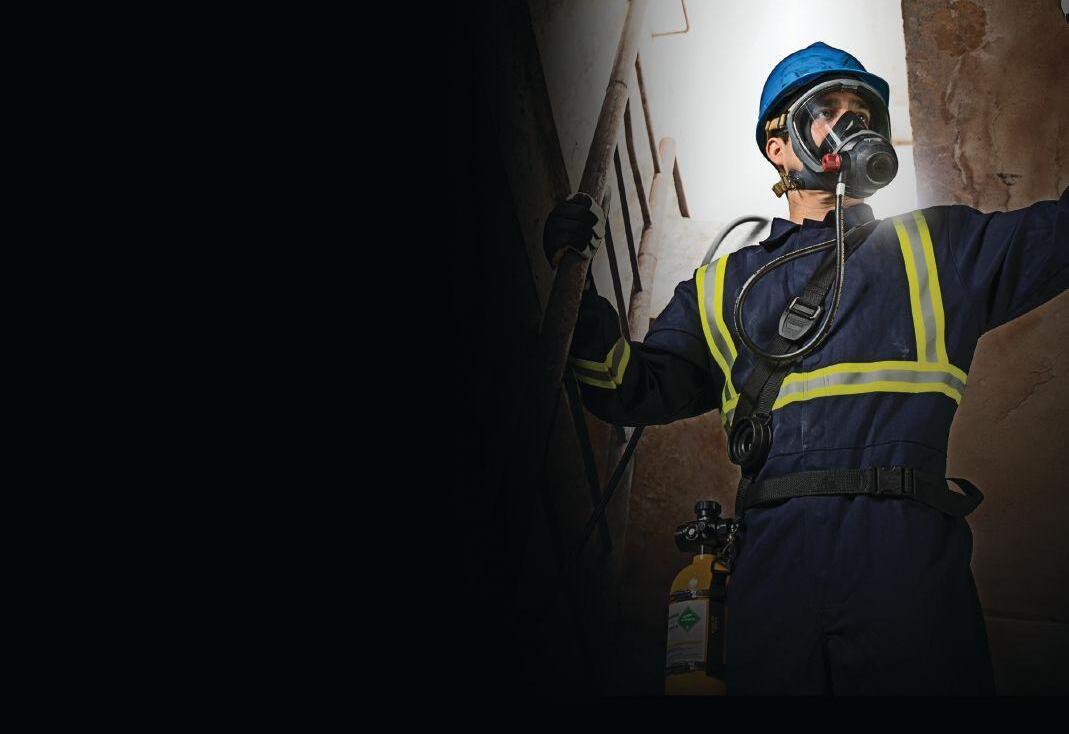
Detecting unknown gases in confined spaces
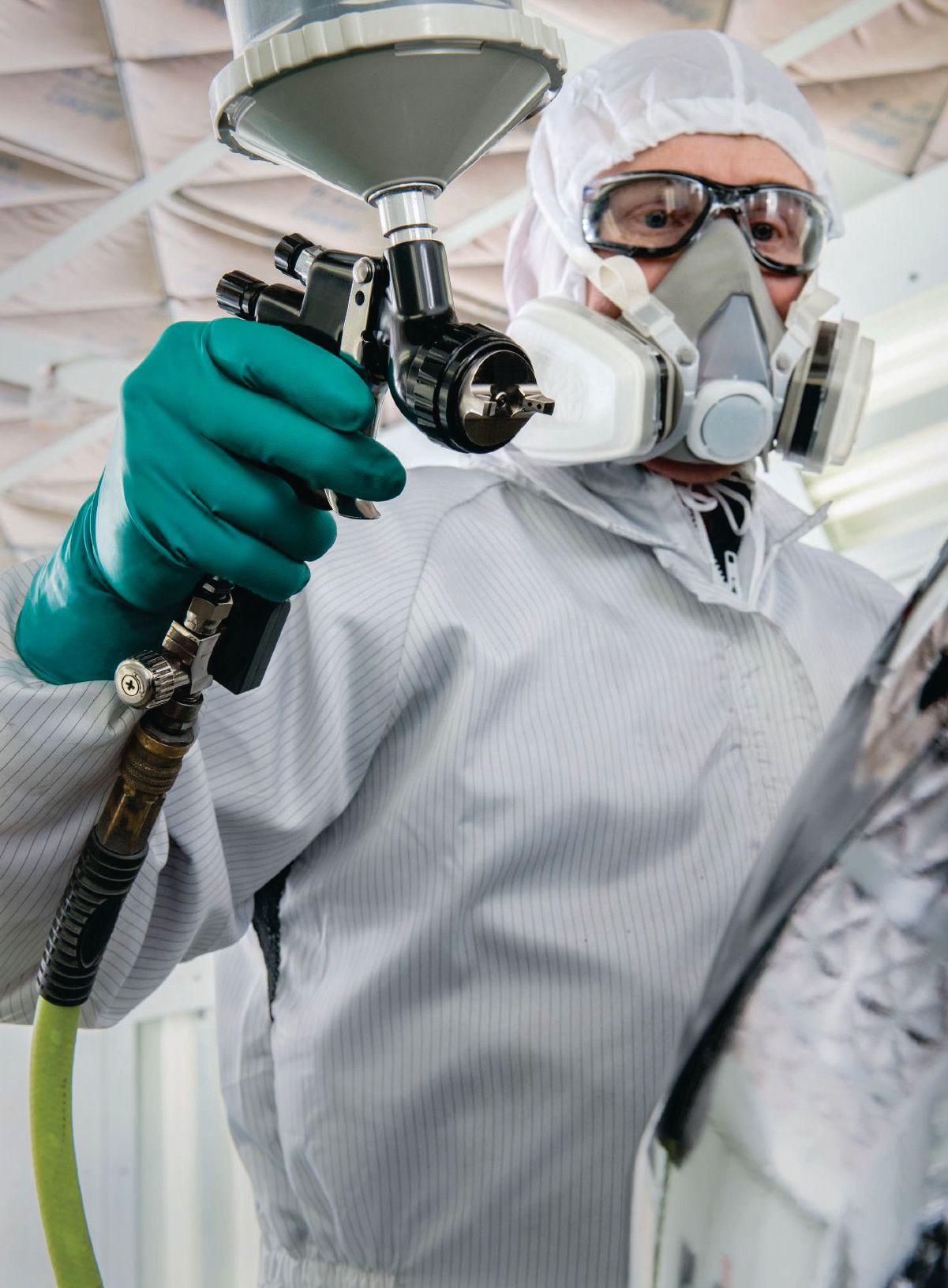
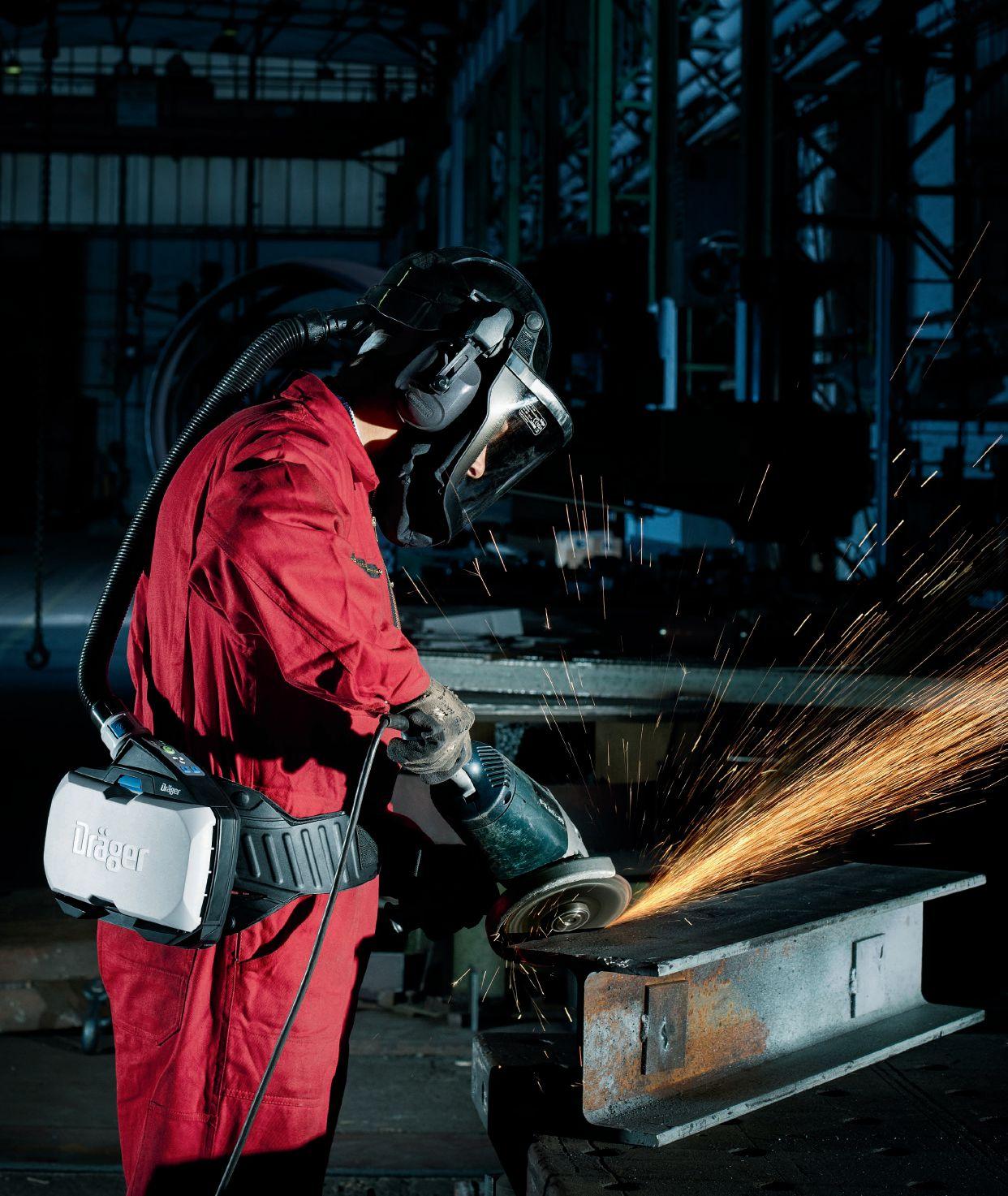
Where you see sparks, melting metal and fumes, you face a threat that’s more dangerous than anything that meets the eye. It’s called manganese. 3M helps keep you safe by applying advanced electrostatic media to respiratory protection solutions. All so you can stay focused on your craft.
See how we can help protect you from asbestos, silica, mould and manganese.
Online-platform-based businesses have created safety challenges that are evading regulatory oversight. How can legislation bridge
BY JEAN LIAN
Perils of the Road
Oil and gas workers face many hazards, but the gravest dangers may not stem from state-of-the-art technology, but from vehicular collisions on dirt roads.
BY JACOB STOLLER
Putting freshly laundered clothes on our backs is a good feeling, but some of the chemicals used in the dry-cleaning industry are toxic to workers’ health.
For those who work in confined spaces, instrumentation devices that can detect the presence of noxious gases are indispensable safety tools.
Freedom 65?
If you are thinking of spending your twilight years tending the garden upon reaching the age of 65, think again.
The retirement age in Canada is a moving goalpost, as increasing longevity means that more people are staying in the workforce longer.
The latest figures from Statistics Canada’s Labour Force Survey speak to that: in April, employment among people 55 and older increased by 24,000, while it declined by 20,000 among men aged 25 to 54. People 55 and older had the fastest rate of employment growth at 3.6 per cent, compared with other demographic groups. And in February, the Trudeau government’s economic advisory council recommended that Ottawa raise the age of retirement eligibility for old-age security and the Canada Pension Plan from the current 65 to 67.
As the trend of mature workers working well into their retirement age continues, employers who respond to this changing workplace demographic accordingly will be better positioned to optimize the benefits that older workers bring and mitigate the associated challenges.
While research shows that older workers have fewer accidents and injury rates compared to their younger counterparts, they are more seriously affected when accidents do occur and take more sick days. These events also increase the likelihood of their retirement. The types of injuries that older workers sustain can also be different from those of younger workers, who get more eye or hand injuries, while older workers report more back injuries, according to the Canadian Centre for Occupational Health and Safety in Hamilton, Ontario.
A 2014 report out of Brunel University in the United Kingdom offered some encouraging findings. Those who worked beyond the statutory pension age enjoyed better health, had more advantaged socioeconomic backgrounds and had higher levels of education. While cognitive decline with advancing years was associated with the older population, there was little evidence for such changes affecting the job performance or safety of workers above 60, although mixed outcomes were seen for driving safety. Neither did this cohort seem to be at risk from shift work or overtime if their total work hours did not exceed 60 per week. The main age-related discomfort reported was fatigue, which can largely be managed through keeping fit and working part-time.
Ontario’s Workplace Safety and Prevention Services identified several measures that could serve both employers and older workers well. Offering flexibility in work schedules can address the issue of fatigue and minimize commuting to work. Self-paced work and jobs that permit self-directed rest breaks and involve less repetitive tasks or sedentary work can also mitigate the potential for musculoskeletal or back injuries. Providing reasonable accommodations and returnto-work processes is also vital in facilitating a multi-generational workforce.
For many, retirement is the ultimate finishing line and a ticket to freedom. But under the right conditions, gainful employment beyond 65 can be satisfying and empowering by enabling continued, active engagement with society. It can also encourage positive aging and promote psychological well-being.
Vol. 33, No. 3 MAY/JUNE 2017
EDITOR JEAN LIAN 416-510-5115 jlian@ohscanada.com
EDITORIAL ASSISTANT JEFF COTTRILL 416-510-6897 jcottrill@ohscanada.com
ART DIRECTOR MARK RYAN
ACCOUNT COORDINATOR ALICE CHEN 416-510-5217 achen@annexweb.com
PUBLISHER PETER BOXER 416-510-5102 pboxer@ohscanada.com
GROUP PUBLISHER PAUL GROSSINGER pgrossinger@annexweb.com
COO TED MARKLE tmarkle@annexweb.com
PRESIDENT & CEO MIKE FREDERICKS
EDITORIAL ADVISORY BOARD MEMBERS
DAVID IRETON, Safety Professional, Brampton, Ont.
AL JOHNSON, Vice President, Prevention Services WorkSafeBC, Richmond, B.C.
JANE LEMKE, Program Manager, OHN Certification Program, Mohawk College, Hamilton, Ont.
DON MITCHELL, Safety Consultant, Mississauga, Ont.
MICHELE PARENT, National Manager, Risk Management and Health and Wellness, Standard Life, Montreal, Que.
TERRY RYAN, Workers’ Compensation and Safety Consultant, TRC Group Inc., Mississauga, Ont.
DON SAYERS, Principal Consultant, Don Sayers & Associates, Hanwell, N.B.
DAVID SHANE, National Director, Health and Safety, Canada Post Corporation, Ottawa, Ont.
HENRY SKJERVEN, President, The Skjerven Cattle Company Ltd., Wynyard, Sask.
PETER STRAHLENDORF, Assistant Professor, School of Environmental Health,Ryerson Polytechnic University, Toronto, Ont.
JONATHAN TYSON, Association of Canadian Ergonomists/Association canadienne d’ergonomie, North Bay, Ont.
Printed in Canada
ISSN 0827-4576 (Print)
ISSN 1923-4279 (Digital)
PUBLICATION MAIL AGREEMENT #40065710
CIRCULATION
email: asingh@annexbizmedia.com
Tel: 416-510-5189
Fax: 416-510-5170
Mail: 80 Valleybrook Drive, Toronto, ON M3B 2S9
SUBSCRIPTION RATES
Published six times per year – Jan/Feb, Mar/Apr, May/Jun, Jul/Aug, Sep/Oct, Nov/Dec
Canada $110.50/yr plus tax
USA $132.50/yr
Foreign $137.50
Occasionally, OHS Canada will mail information on behalf of industry related groups whose products and services we believe may be of interest to you. If you prefer not to receive this information, please contact our circulation departmenepartment in any of the four ways listed above.
All advertising is subject to the publisher’s approval. Such approval does not imply any endorsement of the products or services advertised. Publisher reserves the right to refuse advertising that does not meet the standards of the publication.
We acknowledge the financial support of the Government of Canada through the Canada Periodical Fund of the Department of Canadian Heritage.
$667,000
Amount the Alberta government is setting aside to fund 33 oh&s projects by non-profit organizations this year through the Occupational Health and Safety Innovation and Engagement Grants program.
Source: Alberta Ministry of Labour
106,000
The number of workers who have received training under Ontario’s Working at Heights program standard from 2015 to 2016.
Source: Ontario Ministry of Labour
Source: Government of British Columbia
1 Sticks, Not Carrots: Since June 1, British Columbia has been stepping up punitive actions against distracted driving, which has been cited as a leading factor in deaths on the province’s roads. The new penalties for distracted driving are calculated using the base fine of $368, combined with escalating Insurance Company of British Columbia driver penalty point premiums, which start at $175 for the first offence and climb for any additional offence within a 12-month period.
2 The Blue Light: The Saskatchewan government passed a bill on April 6 allowing tow trucks to have blue flashing lights in conjunction with amber lights to increase their visibility in unsafe weather conditions. The bill was a response to a March 7 incident in which a tow-truck operator was killed in a collision during a blizzard near the village of Gerald.
Source: Saskatchewan Government Insurance
758
Source: SAFE Work Manitoba
3 Mental Health Matters: SAFE Work Manitoba announced a new strategy on workplace psychological health in Winnipeg on May 2. The goal is to help employers apply the National Standard of Psychological Health and Safety in the Workplace by providing tools to prevent psychological injury to workers and include psychological health as part of workplace-safety culture.
4 New Safety Index: Ontario’s Workplace Safety and Insurance Board created a health and safety index to measure workplace safety in the province. The new index, announced on May 11, condenses five categories of data — prevention, worker empowerment, workplace culture, enforcement and injuries — into one overall measure ranking how safe workplaces are.
Source: Workplace Safety and Insurance Board
5 Silicosis Revelation: The Government of Newfoundland and Labrador has released the results of a medical audit that studied silica-dust exposure of 636 individuals who have worked at two mining properties in western Labrador. Of the 636 current and former workers, 35 exhibited signs of silicosis. Service N.L. met with the steering committee on June 1 to discuss the 11 recommendations made in the report.
Source: Government of Newfoundland and Labrador
TOUR BUS FALLS OFF CLIFF
The number of buildings to be covered under the British Columbia government’s plan to build an inventory of provincial government buildings constructed before 1990 and containing asbestos.
Source: WorkSafeBC
13
A tour bus travelling along a road bend from the coastal province of Izmir to the Marmaris tourist destination in Turkey tipped over and fell 15 metres down a cliff on May 13, killing at least 20 people and leaving 11 others in critical condition. Traffic was closed on the serpentine road, causing massive congestion.
Source: The Associated Press
The number of work-related deaths in Newfoundland and Labrador in 2016, down from 24 in 2015.
Source: WorkplaceNL
tough CHEMICAL PROTECTION
Meet the new glove that’s changing the face of chemical hand protection.
LETTERS
Recent issues of ohs canada and our website, www.ohscanada.com, have provided readers with plenty to chew on.
TEEN PLEADS GUILTY
A third teenager has pleaded guilty to beating two women at a youth centre near Winnipeg last year. (the canadian press, May 11, 2017)
The Young Offender Act is a joke, because the violent offenders don’t give a damn about anybody or anything. The Act needs to change to reflect the number of sociopaths and psychopaths who are now in this system.
M. Laderoute
MINING INCIDENT CLAIMS ONE
Vale says a miner died of injuries sustained while disposing waste materials at its central tailings area in Sudbury, Ontario. (the canadian press, April 10, 2017)
Vale, a Brazilian company, is doing the same as it does in Brazil. After the Mariana disaster, no one should employ Vale for anything. Safety is not in the minds of their upper management, but profits at any cost.
Gina
WORK REFUSAL SPURS LAYOFFS
A work refusal at Sterling Fuels Limited in Windsor, Ontario led to temporary layoffs. (canadian occupational health & safety news (cohsn), April 25, 2017)
I agree this is Safety 101. Good for the workers who stand up for themselves and the safety of others. All too often, we see workers putting themselves in harm’s way so as not to stand out or sub-
ject themselves to ridicule. This company should start reading the government rules; do they know how much they will lose when someone drowns? Use your employees to help come up with solutions; they are the heart of your company — not the CEOs.
Marilyn Currie
WHEN THE DUST SETTLES
A feature on McIntyre Powder was published in the March/April 2017 issue of ohs canada
What an excellent and well-written article on McIntyre Powder. I am not involved in any way, but your unbiased presentation of the facts from all sides is a refreshing change from everyday media and is to be commended. Keep up the good work.
Paul Clement Steelhawk Plate and Profile Ltd. Oshawa, Ontario
MINDING MINDFULNESS
An editorial on mindfulness and workplace safety was published in the March/ April 2017 issue of ohs canada
From my experience, I only have accidents when I am not paying close attention. What could prepare an individual more for real daily life than learning to pay close attention to the here and now and to make clear decisions based upon non-judgemental assessments? That is what mindfulness does. I have been teaching my psychotherapy clients mindfulness for the past 35 years. The results are consistently positive, no matter how old or young they are.
Dr. Carl Erikson
POLICY FOR POT USE
A Saskatchewan agency says businesses should have policies in place before Canada legalizes marijuana. (the canadian press, March 22, 2017)
The entire drug and alcohol testing methodology needs a revamp. If the intent is to identify and provide assistance to those with alcohol or drug dependencies/addictions, then the current model is okay. But if the intent is to improve workplace safety and/or eliminate impaired workers on the job site, the process is flawed.
An alcohol test today does nothing to curb or identify alcohol impairment on the specific day of work. A drug test today does not necessarily prevent a drug-impaired worker on the jobsite on a particular day. The only true yet intrusive and, at present, most likely way to address impairment is real-time testing everyday upon access to the worksite. This would be a massive expense and a huge legal or human-rights battle. So the most probable way is the continued model to give the impression that the issue is being addressed.
Adam
Companies that have a drug and alcohol policy in place will also have a testing policy for safety-sensitive jobs, deeming the person fit or unfit for duty. Marijuana is a drug any way you look at it. If people are using it for medicinal purposes, just like cold medication with side effects, this prohibits the worker from fully functioning at work in areas deemed safety-sensitive: working from heights, equipment operations including vehicles, house framing and virtually any job in a kitchen, every trade and probably even sedentary jobs will have a hazard.
The fact that it will be made legal still makes no difference. Alcohol is legal, and that is not allowed in the workplace, nor are people under the influ-
ence of alcohol allowed to be at work. Most people with bad-enough colds stay home if they are taking medication with side effects. Many people who have a pain or arthritis may be taking something over the counter like Tylenol. Do we as employers have to monitor each employee to ensure that they are within their limits on a daily or even hourly basis? Yes, we do have people that take other medications. However, mood- or mind-altering drugs pose a huge problem. If pain medication (medicinal marijuana) is the only way to function, perhaps they should not be at work at all.
Rosie Decnodder
I agree with Adam and Rosie Decnodder. Is there an effective testing method for marijuana? Employers will have to treat marijuana exactly how they address drug and alcohol issues. If employees are under the influence of whatever they are taking, they should not be at work, regardless if they are in a safety-sensitive position or not.
John F. Pellegrino
SLIP OF THE TONGUE
A review on a Liberal MP’s sexist comment to a Conservative MP is underway. (the canadian press, March 27, 2017)
What is sexist about “Where is your pole to slide down on”? It does sound like a fire-hall pole. Had he said, “Where is your stripper pole?” or possibly even just “Where is your pole?”, maybe one could make a case for it being sexist. However, pole dancing is no longer a “stripper” thing. Both my daughters have taken classes, and both are about as far away from being exotic dancers as one can get. Gyms are being set up for pole dancing.
However, I wasn’t there when the comment was made. What was the tone of the comment? How did the person it was directed at feel? Should one assume that being put in the same category as an exotic dancer is a negative thing? And why did the com-
menter associate the ring tone with a pole, whether it was an exotic-dancer pole or a fire-house pole?
Janice
PENALTY FOR HARASSMENT
A judge ruled that RCMP officers waged a seven-year campaign to discredit a sergeant after his unsuccessful bid to run for the federal Conservatives in 2005.
(the canadian press, March 2, 2017)
This story illustrates how the RCMP works internally and to what lengths they are willing to go to in tarnishing one officer’s career and reputation. For female officers, there was sexual harassment covering decades. Talk about “controlling”! What a blight on our national police force, who have waned in the public’s respect, pride and confidence. But probably worse is the impact that the top brass’s actions have had on those men and women who do their duty with integrity, professionalism, honesty, respect and accountability.
Judith Harrower
TROUBLE IN THE BIG HOUSE
A story on violence in Canada’s correctional institutions was published in ohs canada in January/February 2017.
Violence and drug use are up and growing at all correctional institutions. Advocates for inmates are demanding that institutions provide better care for inmates. For the inmate who actually wants help, this is a good idea. For career criminals (and there is a lot of them in these institutions), this is not an option unless you want to see these facilities burn to the ground.
Doing away with segregation is not an option for the major players in these facilities. There are many good ideas regarding prisons, but many are not practical for the safety and security of these institutions. There needs to be a national corrections strategy — not the current systems that allow changes by
every government of the day.
Mike Laderoute
A gang won’t tolerate “primate” behaviour within the formal club house and yet here in the very basic confinement instituted by the law, set out by the governing body, the basis of enforcement is stripped away, allowing the inmate to behave in a fashion akin to near anarchy.
J.
THE DARK SIDE
An editorial on suicides among military personnel was published in the January/ February 2017 issue of ohs canada
I found your article quite moving. It is hard to believe that military personnel, who so willingly put their lives on the line for their country, develop PTSD due to their experiences in the military and don’t get the help that they need once they return. You are right that there should be “a system to track the physical, mental and social well-being of post-deployment soldiers”. Why do you think this isn’t already in place?
Jennifer Guzman
INVESTIGATION UNDERWAY
The Transportation Safety Board investigated a plane that briefly left the runway while landing in Toronto. (the canadian press, February 27, 2017)
Cross wind will be the culprit. Low ceilings and strong winds were reported that night, together with pilot announcement of a bumpy approach ahead prior to landing.
Mohammad Syed Husain
Follow us on Twitter @OHSCanada
Would you like to share a comment?
Send an email to jlian@ohscanada.com. Letters may be edited for style, grammar and length.
LOSS OF CONTROL CITED
FEDERAL — A Transportation Safety Board of Canada (TSB) report has identified the loss of directional control as the cause of a helicopter crash near Sept-Îles, Quebec that killed two of the four passengers who had been assigned to inspect a salmon pass.
The incident occurred on September 2, 2015 as the Héli-Nord chopper was approaching a landing site at a river camp near the salmon pass, about 20 nautical miles north of SeptÎles, when the aircraft made a sudden clockwise turn and crashed into a rock.
According to the report, published on April 3, two passengers were killed and the pilot and two other passengers in the back seat were seriously injured. A fire was triggered in the helicopter’s emergency tailpipe, but people at the site extinguished the flames.
The TSB found that the helicopter’s weight and the flight regime had caused the loss of directional control, while the altitude — only a metre or two from the
ground — was too low for recovery. The aircraft rotated when the engine torque exceeded its limits. The pilot tried to counteract the rotation by reducing the torque while turning left. When this failed, the pilot increased the torque and tried to speed up the aircraft to increase the altitude, but this did not work either.
The investigation also found that the pilot had been inexperienced with a Bell 206B helicopter with a short tail rotor. This was why he could not recognize the loss of tail-rotor effectiveness, nor counteract it sufficiently.
As well, the passenger in the front seat was not wearing her seatbelt correctly at the time of impact, likely causing fatal abdominal injuries. Conversely, the pilot’s survival of the crash was likely because he was wearing head protection at the time, the TSB notes.
SUPERINTENDENT CHARGED
IQALUIT — The superintendent of public works for the City of Iqaluit faces three oh&s charges regarding an incident in
which another City worker was ran over by a garbage truck while working at the Iqaluit landfill on April 18, 2016.
The Workers’ Safety and Compensation Commission filed three charges against public-works superintendent Joseph Brown on April 11 for allegedly failing to take all reasonable precautions to keep employees safe and to ensure that supervisors had completed an approved regulatory familiarization program. The charges against Brown followed earlier charges against the City, supervisor Keith Baines and fellow employee Ben Kovic, Jr. for their roles in the incident, according to a statement from the Commission.
The case was scheduled to return to court in Iqaluit on May 1.
SCHOOL DISTRICT PENALIZED
VERNON — The Vernon School District was fined $628,034, following the renovation of property that turned out to have asbestos-containing materials in it. According to a statement that the
BETTER ENFORCEMENT OF WESTRAY LAW NEEDED: FEDS
FEDERAL — The federal government has pledged to make greater efforts to enforce the Westray Law — a provision in the Criminal Code regarding criminal prosecution for negligence after workplace fatalities.
The announcement, made in a joint statement from the Minister of Employment, Workforce Development and Labour and the Minister of Justice, was issued on April 27 — the day before the National Day of Mourning, which commemorates workers who have lost their lives on the job. It was also intended to commemorate the upcoming 25th anniversary of the Westray Mine explosion, which killed 26 miners in Plymouth, Nova Scotia on May 9, 1992.
“Millions of Canadians go to work every day, expecting to return home safely,” Patricia Hajdu and Jody Wilson-Raybould, Canada’s Labour and Justice Ministers, say. “Sadly, not all workplaces are safe. Thousands of Canadians are killed, injured, or suffer workplace-related illnesses every year on the job.”
Hajdu and Wilson-Raybould add that the government will work with the Canadian Labour Congress (CLC), employers and the provincial and territorial governments to apply the Westray Law more effectively and consistently. “We will do
more to ensure that labour inspectors and law-enforcement officials are properly trained,” the Ministers say, “and that they coordinate effectively to ensure that the possibility of a charge for criminal negligence resulting in a serious injury or death is not overlooked.” They will also promote the sharing of best practices in investigating workplace fatalities across federal, provincial and territorial jurisdictions.
Hajdu and Wilson-Raybould also cite the recent federal budget, which includes measures to update the Canada Labour Code to support workers more. “The new compliance and enforcement tools include new administrative monetary penalties and the authority to publicly name violators.”
Hassan Yussuff, the CLC president, calls the federal government’s pledge “an important victory for all workers in our country and a tribute to the Westray families and families of other fallen workers.” He adds that the next step will be to ensure coordination between governments.
“When criminal negligence results in injury or death of a worker — that needs to be treated as a crime, not an accident,” Yussuff says. “We are counting on governments at all levels to work together so we can prevent future Westrays.”
— By Jeff Cottrill
District issued on April 18, the renovation work was conducted in May 2016 on property leased by the school board as the future site of its Open Door Learning Centre. WorkSafeBC later determined that the District had failed to take sufficient precautions to prevent worker injury or illness and had not exercised due diligence in preventing exposure to asbestos or maintaining safe working conditions.
“The District is very disappointed in WorkSafeBC’s decision,” the statement says, calling the penalty “excessive” and noting that the landlord had not informed the school board that asbestoscontaining material was present. “The District has developed and implemented a comprehensive and fully compliant asbestos-management program… and has undertaken comprehensive asbestos training of its maintenance workers.”
The District adds that it has taken “all reasonable steps” to comply with all asbestos-hazard-mitigation requirements and will be working with its lawyers to review the fine.
HIGH HEELS NOT MANDATORY
VICTORIA — The British Columbia government has amended the province’s Occupational Health and Safety Regulation to ban mandatory high-heel shoes in workplaces.
According to a statement issued by the B.C. Ministry of Jobs, Tourism and Skills Training on April 7, the altered regulation requires that all employee footwear must be designed and built to allow the wearer to perform tasks safely. Employers and workers must consider such factors as evenness of terrain, abrasion, ankle protection, foot support, potential for crushing or musculoskeletal injury, puncture hazards and the dangers of slipping or tripping.
B.C. Premier Christy Clark says some workplaces still require women to wear high heels on the job. “Our government thinks this is wrong. That is why we are changing this regulation to stop this unsafe and discriminatory practice.”
Shirley Bond, the province’s Minister
of Jobs, Tourism and Skills Training and Minister Responsible for Labour, adds that the amendment will ”let employers know that the most critical part of an employee’s footwear is that it is safe.”
PALTRY FINE QUESTIONED
VANCOUVER — Following the conviction of a large Vancouver construction firm for a workplace fatality in 2015, the B.C. Federation of Labour (BCFED) is demanding an explanation as to why the fine was so small, particularly as the employer is a significant donor to the province’s governing Liberal Party.
The incident occurred in Kamloops, where construction worker Sean Alexander Donetz fell off a lifting device and sustained fatal injuries, according to a BCFED statement. The subsequent WorkSafeBC investigation determined that “high risk and repeated violation” on behalf of Donetz’ employer, a subsidiary of the Onni Group of Companies, had led to the incident. Onni was
Whether you’re climbing down in a manhole or cleaning out a storage tank, your safety means more than just the respirator you wear That’s why we’re more than just products We can evaluate your work environment and offer appropriate training and equipment so that you and your workers can get the job done safety and confidently
To learn more about MSA’s complete line of safety solutions or request a FREE, no obligation safety evaluation, visit MSAsafety.com/safetyevaluation.
sentenced to pay a fine of $48,719.50 in late March.
Irene Lanzinger, BCFED president, calls the sentence “a paltry fine for a safety violation that cost a worker his life” in a statement issued on April 4. In a letter sent to provincial Labour Minister Shirley Bond, Lanzinger questions why such a large company received such a small fine and why Onni was not charged with criminal negligence causing death.
“Government needs to do more to make employers face real consequences — including jail time — when their negligence and failure to keep workers safe on the job results in injury or death,” Lanzinger writes in the letter, pointing out that Onni “makes significant donations to the B.C. Liberal Party.”
TWO EMPLOYERS FACE CHARGES
FORESTBURG — The Alberta Ministry of Labour laid numerous charges against two companies for unrelated occupational health and safety offences.
River Valley Crushing Ltd was charged with six oh&s offences on April 21 over an incident at a Barrhead worksite. A worker was fixing the auger of a rock washer on October 8, 2015 when the system was energized, causing injuries.
Another firm, McNabb Construction Ltd., was charged on April 12 with 13 violations of oh&s law, eight of which contravened the provincial Occupational Health and Safety Code. These charges stem from a workplace fatality in Forestburg on
May 1, 2015, when an employee was crushed to death by a gravel-crushing cone liner suspended by a crane after an attachment point slipped. The victim had started working with McNabb only two days before the incident.
COMPANY, WORKER CITED FOR VIOLATIONS
WANHAM — Alberta’s Ministry of Labour pressed charges against a contracting company and one of the firm’s employees over an incident that seriously injured a worker on a Wanham construction site two years ago.
According to the Ministry website, a crew with Tri-Line Contracting Services Ltd. was replacing a cement manhole base on April 28, 2015, when the base slipped from a lift assembly and crushed a worker who was standing at the bottom of an excavation, causing multiple injuries.
Tri-Line was charged on April 24 with six violations of the province’s Occupational Health and Safety Code and one of the Occupational Health and Safety Act. In addition, Tri-Line worker Dale Gour is facing three charges, including failing to contain or restrain equipment or material that could endanger fellow workers while being moved and failing to protect other workers’ health and safety.
EMPLOYEE PLEADED GUILTY TO FRAUD
SASKATOON — A judge in Saskatoon sentenced a local man to community service after he pleaded guilty on May 3 to defrauding the Workers’ Compensation Board (WCB).
A statement from the Board says that the former labourer went back to work while still receiving workers’ compensation benefits and later reimbursed the fraudulent amount to the WCB. The man was sentenced to a one-year conditional discharge, as well as 30 hours of community service.
BUILDING FIRM RECEIVES PENALTY
SASKATOON — A company was fined $39,200 on April 25 over a worker injury more than a year ago.
An employee of Winnipeg-based Nu-Fab Building sustained a serious leg injury on December 7, 2015 when trusses fell off a trailer at a worksite in the Saskatoon area, according to a statement from the Saskatchewan Ministry of Labour Relations and Workplace Safety. The employer pleaded guilty to failing to train a worker in all matters necessary to protect his or her health and safety, resulting in a serious injury.
WINNIPEG — The University of Manitoba was convicted and fined $13,000 for its role in an employee injury sustained from a fall in 2014. From renewing your company vehicle registrations, to giving your employees the driver education they need to enhance their skills, we can help you keep your fleet safe on the road.
An additional charge against Nu-Fab was dropped.
MANITOBA UNIVERSITY FINED
According to a Workplace Safety and Health statement dated May 9, the incident occurred on August 19, 2014, when workers were about to lower a 1,000-kilogram spool of wire to the basement of the Power House Building at the institution’s Fort Garry campus. The workers removed two access panels from the first-storey floor and went to get the spool. While they were gone, another worker fell 4.4 metres through the opening to the basement floor and was seriously injured.
The University pleaded guilty on April 20 to failing to install a guardrail system to protect employees.
BULLYING SPURS RESIGNATIONS
RITCHOT — The rural municipality of Ritchot, Manitoba has been thrown into political disarray, following the resignation of its mayor and two councillors, who cited a hostile work environment as the reason for their departure.
Mayor Jackie Hunt resigned from her position on April 28, followed by two of Ritchot’s four councillors, Jeannot Robert and Ronald Mamchuk, on May 1. Hunt describes her decision to quit as
“heartbreaking” in a statement released on May 2.
“When a Council cannot function as a group, and when mediation does not work, and when name calling and belligerent behaviour become the norm, it is time to re-evaluate your spot at the table,” Hunt says. “There is currently no mechanism in The Municipal Act that allows for elected officials to be disciplined for behaviour that would not be tolerated in any other work environment. There is a Council Code of Conduct, but it allows only for censuring, which is ultimately a public slap on the wrist.”
Hunt hopes her resignation will spur a dialogue between the provincial and municipal governments about how to protect people who want to serve their communities. “If I stayed and did nothing, then I became complicit and accepting of the behaviour,” she notes. “We are trying to encourage people to run for public office, and we need to ensure they are protected from bullying and inappropriate behaviour.”
Mitch Duval, the chief administrative officer with the Municipality of Ritchot, confirms that he received three resignations. He has advised the provin-
cial government of the situation and is awaiting further information.
The bullying allegations reportedly involve Ritchot councillor Ernie Dumaine, who was accused of belligerent behaviour towards his colleagues in December 2011, when he was charged with threatening the life of Louis Rouire, a public-works foreman with the Municipality. Dumaine was fined $200 and ordered to apologize to his accuser.
HARASSMENT THRIVES: REPORT
OTTAWA — A new investigation report from the Civilian Review and Complaints Commission for the RCMP has concluded that harassment, sexual harassment, bullying and intimidation are still thriving within the national police force and that reform by the federal government is necessary to make lasting change.
Published on May 15, Report into Workplace Harassment in the RCMP states that the RCMP lacks both the will and the capacity to do what needs to be done to address occupational harassment and bullying.
“The time has come for the federal government to take responsibility to ef-
CITY COUNCIL DIVIDED ON SAFETY APPROACH
WINNIPEG — Months after the murder of Winnipeg bus driver Irvine Fraser by a rider, six city-council members are expressing dismay at how the municipality has responded — particularly in the lack of input from the union.
The councillors issued a collective statement on May 9, saying they were “shocked” to learn that the Winnipeg Public Service had not consulted with the Amalgamated Transit Union (ATU) Local 1505 on ways to improve passenger and employee safety. A City report on Winnipeg Transit (WT) safety practices was due before the end of May.
“Bus drivers have firsthand knowledge of issues and invaluable perspectives on how to improve safety,” councillor Jeff Browaty says. “How can any report that comes forward be meaningful, if the bus drivers aren’t even consulted?”
Browaty also accuses Mayor Brian Bowman of “not approaching this report with the seriousness it deserves” as assaults against bus drivers continue.
The six councillors have consulted with Local 1505 independently and offered a list of recommendations based on the members’ suggestions. These recommendations include having a formal transit security force that enacts a “safety first” policy and culture, instituting a zero-tolerance policy
for fare evaders and assaults, relieving drivers of the duty to enforce fare collection, establishing a Transit Community Advisory Board, launching a public awareness campaign on transit safety and revising the director of Transit’s job description with more focus on new safety protocols.
Local 1505 president John Callahan agrees with the councillors that a transit security force and advisory committee are needed. He adds that the current practice of drivers being made responsible for tackling fare evaders is a major issue. “The number-one reason for assaults is fare disputes,” Callahan says. According to a recent survey of its bus operators that the union conducted, roughly three-quarters of respondents were in favour of installing shields or barriers on buses to protect drivers. Another area of concern is unrealistic scheduling.
Local 1505 and the six councillors hired a transit consultant to advise on safety, Callahan reports. The consultant met with Bowman and the council on May 11 and led a workshop for drivers. The six councillors were planning to table a notice of motion highlighting their recommendations on transit safety at the council meeting on May 24.
— By Jeff Cottrill
fect substantive changes to the organization by modernizing and civilianizing key aspects of the RCMP’s administrative management and oversight,” Commission chairperson Ian McPhail, Q.C. states in the report. “Meaningful change will require sustained commitment from both the Minister of Public Safety and RCMP senior leadership, including instituting any necessary changes to the governance of the RCMP.”
In response to the report, federal Public Safety Minister Ralph Goodale issued a statement saying that Prime Minister Justin Trudeau had given him a mandate to ensure that the RCMP was free from sexual harassment and violence.
“The issues identified come at a great cost — to the victims’ health and well-being, to the reputation and credibility of the RCMP and to all Canadians,” Goodale says. “The recommendations will be carefully reviewed and will inform further action to ensure that the RCMP is a healthy and respectful workplace.”
The following are among the report’s findings: the RCMP has failed to initiate comprehensive measures to deal with harassment; decision makers often consider irrelevant factors; lack of screening for harassment complaints may increase conflict; decision makers usually apply incorrect legal tests with prejudicial considerations; and decision makers receive inadequate training for harassment cases.
As a result, McPhail offers ten recommendations to deal with the situation, including a new leadership culture, a modernized governance structure, clearer harassment-policy
DID YOU KNOW YOU CAN NOW CONTACT
DID YOU KNOW YOU CAN NOW CONTACT
TSI DIRECT IN CANADA?
TSI
DIRECT IN CANADA?
Questions about respirator t testing, work area monitoring and/or personal exposure monitoring within indoor and outdoor applications? We can help—contact
Questions about respirator t testing, work area monitoring and/or personal exposure monitoring within indoor and outdoor applications? We can help—contact
TSI direct in Canada about on-site product training, technical support, new product
TSI direct in Canada about on-site product training, technical support, new product purchases and more.
documents, a simplified definition of harassment for investigation purposes and independent administrative investigators to deal with harassment complaints.
MAKE VIOLENCE A PUNISHABLE OFFENCE: NURSES
TORONTO — Healthcare workers in Ontario used Nursing Week, which ran from May 8 to 14, as a platform to lobby for support for federal legislative changes that would make violence against nurses a punishable offence.
Two registered nurses spoke at the provincial legislature in Toronto on May 2, asking the provincial government to back a proposed amendment to the Criminal Code, according to a statement from the Canadian Union of Public Employees (CUPE). Sandra Hillcoat from Kitchener and Maggie Jewell from Lindsay shared the stories of healthcare professionals who have been seriously injured — sometimes permanently — following attacks by patients.
“We are asking for recognition for Nursing Week, in the form of a signal from Ontario’s provincial politicians, that the wave of violent assaults against nurses and healthcare staff is unacceptable,” Hillcoat says in a statement.
“Violence against healthcare staff is normalized by our employers as an accepted hazard of our work,” Jewell says. “Patients and their families take out their frustration over an increasingly under-resourced and stressed health system on healthcare staff.”
CUPE’s proposed legal change would apply to sections 264 and 266-269 of the Code. The amendment reads that judges who impose sentences for assaults against healthcare professionals should “consider as an aggravating circumstance the fact that the victim of the offence was, at the time of the commission of the offence, a healthcare worker engaged in the performance of his or her duty.”
A group of nurses with CUPE Local 1974 held a media conference on May 5 in Kingston, requesting that MPP Sophie Kiwala support the proposed amendment. About half of nurses in Ontario were assaulted in 2014, the union says.
FOOD PROCESSOR FINED FOR SERIOUS INJURY
KITCHENER — A food-processing firm was fined $55,000 on May 1 over a serious injury last year.
time promotion at www.tsi.com/canada-direct
Check out our limited time promotion at www.tsi.com/canada-direct
A court bulletin from the Ontario Ministry of Labour says a worker with Sunwest Food Processors Ltd. in Waterloo was using a machine to cut up meat on June 1, 2016, when it became evident that some of the meat had not been fully processed. The employee reached into the machine’s hopper, but the machine had not been locked out. Its rotor got activated and injured the worker with a steel blade.
The Ministry investigation concludes that the employer violated Subsection 25(1)(c) of the provincial Occupational Health and Safety Act by not ensuring that a motion that could injure a worker was stopped before a machine was adjusted, cleaned or repaired.
HAZARDOUS CONDITIONS CITED
OTTAWA — Overcrowding and poor sanitation are endangering the health and safety of workers constructing Ottawa’s light-rail-transit (LRT) tunnel system, according to the head of the Ottawa and District Labour Council (ODLC).
Following a CBC News online story from April 18, which quoted employees anonymously about the working conditions, ODLC president Sean McKenny claims that the workers have concerns around trips and falls, the clustering of people and overflowing porta-potties.
“They are not feeling as if any of their concerns are being taken seriously,” says McKenny, adding that the Ontario Ministry of Labour (MOL) issued more than 150 orders to Rideau Transit Group (RTG), the management company in charge of the LRT construction, over a period of six months. “There were 37 alone in one week.”
Calling the overall situation “dire,” McKenny adds that the porta-potties have become “so unkempt” that workers end up relieving themselves wherever they can in the tunnel, thereby having a detrimental effect on the air quality.
Kathryn Keyes, RTG communications director, stresses that RTG continues to comply with all industry standards in terms of incident management and notification. “All orders from the MOL are actioned expeditiously, and we work collaboratively with MOL inspectors towards acceptable resolution.”
McKenny says he met with the chief executive officer of RTG, the head of OC Transpo and John Manconi and the City of Ottawa’s general manager of transportation services in March to discuss oh&s issues. “We have agreed to continue to have discussions to try and ensure that there is a place where, in fact, the workers feel that they are safe.”
FACILITY FOUND NOT GUILTY
BROCKVILLE — A judge in Brockville, Ontario has acquitted the Royal Ottawa Health Care Group on four out of five oh&s charges arising from a patient’s attack on an employee of the Brockville Mental Health Centre (BMHC) in 2014.
The incident occurred on October 10 of that year, when mentally-ill resident Marlene Carter, who has a history of violent behaviour in the prison
system, stabbed registered nurse Debbie Vallentgoed in the neck and head repeatedly with a pen. On April 25, Justice Richard Knott found Royal Ottawa, which runs the facility, guilty on only one charge of failing to reassess for the risk of violence at the Brockville site and not guilty on four other charges, according to a statement from the Ontario Nurses’ Association (ONA).
A statement from BMHC says it is “pleased” with Justice Knott’s decision, particularly his perception that the organization had proper safety procedures, policies and training in place at the time of the incident. “Even before this incident happened, we have continued to improve on our policies and procedures,” says Dr. A.G. Ahmed, Royal Ottawa’s forensic associate chief.
Royal Ottawa’s interdisciplinary team holds a “safety huddle” every morning to assess and discuss safety risks. “We have developed a dynamic estimate of environmental safety,” Dr. Ahmed says. “We identify individuals that will respond to the specific needs of those patients or the environment. And finally, we continue to do our risk assessment on each patient.”
Not so content with the court’s deci-
CONSTRUCTION-SAFETY ACTION PLAN LAUNCHED
TORONTO — The Ontario Ministry of Labour has launched a new Construction Health and Safety Action Plan in a bid to reduce injuries, fatalities and illnesses in the construction industry, Labour Minister Kevin Flynn announced on May 11.
The plan, based on input from employers, workers and other stakeholders, outlines 16 recommendations to improve safety in the sector, according to a government statement.
“Construction deaths continue to be unacceptably high,” Flynn says. “We are committed to preventing tragedy, so construction workers can go home safe and sound at the end of each work day. To do this, we must all work together.”
Ontario Chief Prevention Officer George Gritziotis says the Action Plan will use “targeted enforcement, exploring opportunities to expand the application of tickets, enhanced worker awareness and training by building partnerships and ensuring effective outreach strategies” to ensure the safety of all construction workers in the province. “We are working towards full implementation,” Gritziotis adds.
A Ministry backgrounder states that the plan aims to achieve the following goals: provide easy access to oh&s information via Internet tools, applications and portals; raise awareness of construction hazards through multimedia cam-
paigns and enforcement blitzes; consider possibilities of raising fines for oh&s offences in the industry; examine solutions for fall prevention, such as roof anchors; instill construction safety in school curricula and training programs; develop an accreditation program for safety-conscious employers with the assistance of stakeholders; and fill in information gaps in health and safety resources for both employers and workers.
The Ministry has already accomplished several of the recommended goals, such as radio, Internet and transit-ad awareness campaigns about working at heights, training and inspection blitzes aimed at roofing projects and an advanced training program for construction supervisors in communicating safety information.
The Action Plan is a response to Premier Kathleen Wynne’s 2014-2015 mandate letter to Flynn, urging injury and illness prevention in the construction sector, the Ministry says.
Around 30 per cent of Ontario’s traumatic and disease fatalities related to work occur in the construction industry, the Ministry reports. As well, 36 per cent of traumatic fatalities in the province’s construction sector are due to falls from heights, the Workplace Safety and Insurance Board says.
— By Jeff Cottrill
sion is ONA. “I was shocked,” says Vicki McKenna, ONA’s first vice president. She adds that while violence is a significant problem in Ontario’s healthcare sector, the BMHC has a higher number of incidents in its history than most facilities do. Understaffing is a chronic issue at the facility, as is a lack of staff security and personal alarms. “They need to do those things and to take every measure possible to make sure that they have got a safe environment,” McKenna adds.
WORK REFUSAL LEADS TO LAYOFFS
WINDSOR — A recent work refusal at Sterling Fuels Limited in Windsor, Ontario caused the company to suspend work temporarily for most of the ship-offloading and -loading staff.
The incident occurred on April 5, when one employee refused to work on the dock because of work conditions perceived to be unsafe, according to Mike D’Agnolo, president of Unifor Local 444, the union that represents the workers. D’Agnolo specifies the reasons for the work refusals as improper eyewash stations, improper showers and not having a legitimate rescue plan in place if someone was to fall in the water.
Following the refusals, Sterling contacted the Ontario Ministry of Labour, which sent a health and safety officer to investigate the worksite shortly before Easter weekend. In the meantime, Sterling cancelled operations on the dock.
For D’Agnolo, much of the problem stems from what he sees as an insufficient rescue plan for workers who fall into the Detroit River. “We would like to see a rescue boat,” he says. “Some of the ships that we load and offload, their rescue boats are hanging over our dock, so they are not deployable.”
In the event that a worker falls into the water, a co-worker would have to dive in to rescue the worker in distress, thereby endangering both workers’ lives. And calling an external fire department to come to the rescue could take anywhere from 15 to 45 minutes, D’Agnolo explains.
Joel Gardner, Sterling’s corporate health, safety and environmental manager, acknowledges that the layoffs were connected to the work refusals. But Gardner claims that Sterling had been investing in improved safety over the last two years, including buying a new work boat for rescue purposes. The company has also invested about $250,000 in dock upgrades — in particular, platforms that have been expanded and reinforced, fall protection, emergency response, lifesaving rings, boat hooks and throw bags.
In March 2016, Local 444 members at Sterling refused to work, reportedly over a lack of proper protective equipment and training. But Gardner clarifies that the walkout resulted from “a new process” involving rail offloading. The incident led to an investigation from a health and safety officer and yielded compliance directions.
WCB URGES HEARING-PROTECTION USE
SAINT JOHN — New Brunswick’s workers’ compensation board is urging workers in the province to protect their hearing, as WorkSafeNB paid $15.4 million in workers’ compensation to workers who had been diagnosed with noiseinduced hearing loss in 2016.
WHMIS 2015 IS HERE!
O ering online WHMIS education for over 20 years Bilingual course content
e icient and cost e ective
In a statement dated May 16, the board says it has provided hearing aids and other services to more than 8,000 workers in the province since 2007. “Noise-induced hearing loss needs to be taken seriously,” WorkSafeNB acting president and chief executive officer Tim Petersen says in a statement.
WorkSafeNB is launching a campaign to encourage workers in noisy environments to wear hearing protection. Petersen says the board wants to raise awareness of the prevalence and seriousness of this occupational disease.
AMENDMENTS TO SAFETY ACT TAKE EFFECT
HALIFAX — Amendments to Nova Scotia’s Occupational Health and Safety Act, which were passed in April 2016, took effect on June 12, giving additional authority to the provincial government’s oh&s director to enforce safety laws with repeat offenders.
According to a statement from the province’s Department of Labour and Advanced Education, the Department will have the ability to issue stop-work orders to all of a repeat offender’s worksites, apply for a Supreme Court injunction to prohibit the offender from working in its sector and require
the employer to notify the government of future work activities and locations.
“Most employers operate safe workplaces, but there are some who repeatedly break serious safety laws and put people at risk of injury or death. We need to hold them more accountable,” Kelly Regan, Nova Scotia’s Minister of Labour and Advanced Education, says in a statement issued on April 26.
VALVE CAUSES AMMONIA LEAK
POWNAL — Three employees of a sports facility in the community of Pownal, Prince Edward Island were treated at a local hospital and released, following an ammonia leak on April 10.
Pownal Sports Centre employee Dave McDougall was working on a valve in the building when it failed and released the gas, according to Ronnie Drake, a part-time worker at the facility. “It is a normal procedure that he does all the time: he drains up oil off the ammonia, and anyhow, in doing so, the valve that he was using, it is under pressure. He just lets the valve go very lightly, and that valve was defaulted.”
Although McDougall was wearing respiratory protection at the time, he had to put on a Scott air pack as well before closing the valve, Drake adds.
Amber Nicholson, a senior communications officer with the Department, says the leak was the result of a mechanical failure of the oil-drain valve.
REASONS FOR COLLAPSE CITED
MUSKRAT FALLS — A report has identified poor design, inadequate wood material and insufficient risk assessment as factors that may have contributed to the collapse of a support structure at a construction site in Muskrat Falls, Newfoundland on May 29, 2016.
The incident occurred during Nalcor Energy’s ongoing construction of a hydroelectric generating facility in Labrador. A group of workers had nearly finished pouring concrete into a powerhouse draft tube when the framework collapsed, causing more than 500 cubic metres of concrete to spill. Seven workers fell into the concrete; one of
them was completely submerged, but a co-worker helped him to extract himself. There were no serious injuries.
On May 1, Nalcor released a report by aDB Structural Engineering, a Vancouver-based company that investigated the incident. The report concludes that one or more of the following scenarios caused the collapse: improper design of the shoring system; incorrect installation of the shoring system; inadequate fabrication of the shoring system; and/or the wood integrity of the formwork being compromised. The report also suggests inadequacies in the shoring tower’s design, in a tower leg’s lumber splices and in the framework installation that may have affected the shoring system’s loadcarrying capability.
“The collapse was fast, indicating that each section of the shoring was at or near ultimate capacity,” states the report, adding that the labour crew and supervisors failed to assess and identify the risks involved. “The lack of action in this case indicates a lack of competency, a lack of safety leadership, a complacent workforce or a combination of the aforementioned.”
A Nalcor statement issued on May 1 states that it has taken all appropriate corrective measures since. “Over the last year, this incident has had our full attention and the dedication of the Lower Churchill Project’s and Astaldi’s management teams in the investigation into the root cause,” Nalcor president and chief executive officer Stan Marshall says.
He adds that the company’s number-
one priority is the safety of workers and the public. “We encourage all workers and contractors to report any safety issues or concerns to us.”
HYDRO FIRM FACES CHARGES
ST. JOHN’S — The oh&s division of Service N.L. has charged Newfoundland and Labrador Hydro with six workplace-safety violations that seriously injured an employee two years ago.
According to a Service N.L. statement issued on April 12, the worker was burned while working on one of the station’s thermal-generating units in Holyrood on April 10, 2015.
The organization has since been charged with failing to provide a safe workplace, safe equipment and required instruction, training and supervision, as well as failing to ensure that workers followed safe work procedures, maintained safe working conditions with regular inspections, operated equipment according to manufacturers’ instructions and arranged work areas to allow workers, equipment and material to move around safely. Follow us on Twitter @OHSCanada
Many of the preceding items are based on stories from our sister publication, canadian occupational health & safety news, a weekly e-newsletter that provides detailed coverage of Canadian oh&s and workers’ compensation issues. For more information, please call (416) 4422122 or toll-free (800) 668-2374.
So, what’s on your mind?
Ever wonder what other oh&s types are thinking about? Find out by making our website poll at www.ohscanada.com a regular stop.
Transit, union clash over alleged pollution
By Jeff Cottrill
The union representing frontline employees of the Toronto Transit Commission (TTC) has released a video exposing alleged health risks that workers in subway tunnels face and highlighting the need for them to wear protective masks. The video was posted on the website of Amalgamated Transit Union Local 113 on May 16.
“For far too long, the TTC has ignored its workforce’s longstanding concerns about subway air pollution,” says a Local 113 statement, pointing to the significant health risks that subway workers are exposed to daily — sometimes up to 12 hours a day. “It is unacceptable for subway workers to sneeze and cough out filthy black dust after a shift.”
According to a recent Health Canada report, TTC subway tunnels contain a high level of air pollution. Published in the American Chemical Society journal, Environmental Science & Technology on April 25, Metro Commuter Exposures to Particulate Air Pollution and PM2.5-Associated Elements in Three Canadian Cities: The Urban Transportation Exposure Study concludes that air in the TTC subway system contains extremely high levels of PM2.5 , a particulate matter that includes high quantities of iron and may come from friction between train wheels and the subway track.
The study research was conducted in 2010 and 2011, in collaboration with the University of Toronto and McGill University. Kevin Morton, president of the Amalgamated Transit Union Local 113, calls the study revelations “22 years out of date,” elaborating that the union has known that the air is polluted since the TTC conducted an air-quality test in 1995.
Andy Byford, the TTC’s chief executive officer, says it is “most regrettable that a comparison to the air quality on the TTC was, in certain media articles, made to that of Beijing, one of the planet’s most polluted cities.” This has harmed the TTC’s reputation and caused “unnecessary alarm” for some TTC employees. Byford adds that the TTC has already committed to its own air-quality assessment and will begin that study later this year.
Jeff Cottrill is editorial assistant of ohs canada
Laughing the way to better relations with colleagues
By Jean Lian
It has been said that laughter is the best medicine; it may also be one of the keys to success at work.
A recent survey by staffing firm Accountemps found that 61 per cent of Canadian chief financial officers (CFOs) interviewed say an employee’s sense of humour is somewhat important for fitting into a company’s corporate culture, with 12 per cent ranking humour as “very important.” The results are based on the responses from more than 270 CFOs from a stratified random sample of companies in Canada.
“The report only confirmed what we believed,” he says, adding that the TTC received “preliminary findings” about the study results last November. “They never told us until I read it on the front page of the Toronto Star.”
Two TTC employees were sent home on April 27 after refusing to work in the subway tunnels without wearing respiratory masks, according to Morton. A statement from the TTC says the Ontario Ministry of Labour has ruled the air in the subway “not likely to endanger” employees or riders.
But Morton claims that the Ministry based its decision solely on the test results from 1995. “We have got people who have been diagnosed and died with more lung diseases and cancers than proportional,” he says about certain welding and blacksmithing workers. “A lot of our employees down there in the maintenance and transportation are being brought in for respiratory problems.”
“A light-hearted, fun work environment helps boost staff morale and cultivate positive relationships between colleagues,” Dianne Hunnam-Jones, Canadian president of Accountemps, says in a statement dated March 28. “Incorporating humour into the workplace encourages a more collaborative culture, which can improve overall productivity and engagement.”
For company matters that are more serious, delivering responses with the right tone and a little laugh can lighten up a tense moment. The appropriate and skillful use of humour can also build rapport with colleagues, Hunnam-Jones adds. For those who are trying to impress potential employers in a job interview, weaving in some wit into the exchange not only shows off their personality and demonstrates approachability; it also builds chemistry with the hiring manager.
As humour can cut both ways, using it properly and with good effect requires judgement and sensitivity. While a chuckle or two can help defuse stressful situations, cracking one-liners during a serious meeting can be interpreted as an unwelcome distraction or, worse, sexual harassment.
A good cautionary tale is that of Nicola Di Iorio, a Liberal MP in Toronto who is under review for saying an allegedly sexist remark. Iorio is accused of making a stripper-related joke about Conservative MP Dianne Watts while they were both at a committee meeting on March 8, which is Interna-
tional Women’s Day. Iorio reportedly asked, “Where is your pole to slide down on?” when he heard the colourful ring tone from Watts’ cell phone.
The survey advises employees to steer clear of inappropriate or negative remarks that could make someone feel uncomfortable. “If you are unsure of how your joke may be received, keep it to yourself,” the survey states.
Jean Lian is editor of ohs canada
Pilot association issues warning over budget cuts
By Jeff Cottrill
The Canadian Federal Pilots Association (CFPA) in Nepean, Ontario is sounding an alarm that Transport Canada (TC) budget cuts may lead to a major aviation accident in the near future.
The warning came on the heels of the release of a report by Abacus Data, revealing the survey results of 243 aviation inspectors from March 14 to 22. According to the report, 81 per cent of respondents believed that a “major aviation accident” was likely due to the current state of Canadian aviation safety. The same percentage felt that TC’s Safety Management Systems (SMS) — in which airlines manage their own safety with little oversight from outside — prevented inspectors from fixing safety problems, while 85 per cent said that they had little or no faith in SMS.
At a press conference in Ottawa on April 3, CFPA national chair Greg McConnell said TC’s aviation budget had decreased by 60 per cent since 2008. As a result, many working aviation inspectors have not flown aircraft in more than a year and do not even have valid licences.
“There has been a very slow migration away from traditional regulatory-type oversight, where we have moved to an SMS system being the only system,” McConnell says. “Inspectors end up reviewing reports that the airlines themselves create and then submit to Transport Canada.” Lack of mandatory training for inspectors and oversight has heightened safety risks for both employees and the public, he adds.
The Transportation Safety Board of Canada has issued more than 50 safety recommendations to TC to which the latter has not yet responded. “And some of these are ten to 20 years old,” McConnell reveals.
Sara Johnston, a TC media spokesperson, says safety management systems are intended to help transportation companies identify safety risks before they become bigger
problems, and they do not replace other safety regulations or regular inspection activities undertaken to ensure regulatory compliance. “Operators must still comply with all regulations and standards,” Johnston stresses.
While SMS works well in theory, McConnell says it cannot guarantee a strict safety culture. “You need to have regulatory oversight underneath, which entices or encourages air operators to do all the things the SMS is supposed to have done.” McConnell thinks the best option is to bring back the old level of oversight through audits and inspections.
Johnston clarifies that Canadian pilots still have to comply with several training and licencing requirements. “The exemption from in-aircraft training provides an alternative means of compliance in a way that maintains a high standard of aviation safety,” she says. “This practice conforms to international requirements and those of our partners.”
Cluttered and messy workspaces “annoying”
By Jean Lian
If you happen to have a messy desk at work, maybe it is high time to put some order into chaos. Half of Canadian senior managers interviewed by staffing firm OfficeTeam regard untidy workspaces as most distracting or annoying.
A statement from the firm dated March 23 said 28 per cent of those interviewed cited having too many knickknacks or decorations in workspaces as the most annoying to them, while 19 per cent of senior managers reported seeing an inappropriate or offensive item in an employee’s work area. How about having a workspace that is too clean or bare? Seven per cent of those polled find that annoying too.
“Your work area can be viewed as a reflection of you, and a messy desk or distasteful décor may leave people questioning your professionalism,” says Koula Vasilopoulos, a district president for OfficeTeam. “Keep any personalization simple and de-clutter regularly. A tidy space can lead to fewer distractions and a more comfortable and productive work environment for everyone.”
To create a workspace that leaves a good impression, try spending a few minutes every day reducing clutter. Keep it simple by having a few things that are inspiring or fun to look at is good, but bear in mind that items in a work area are not just meant for the occupier’s eyes only. As such, toss away political posters, risqué photos and anything that might be deemed too controversial.
Follow us on Twitter @OHSCanada
BYJEANLIAN
PEER PEER -TO-
Digital technology has given rise to new business models like Uber and Airbnb. But unlike traditional taxi companies and hotel chains, which are subject to workplacesafety laws, these new kids on the block have largely evaded the regulatory framework. How can legislation play catch-up and bridge the safety gap?
Ride-sharing companies like Uber and Lyft will soon give taxi companies in British Columbia a run for their money. The provincial government is introducing a series of improvements to make the taxi industry more competitive, as ride-sharing services will be allowed to operate in the province by the end of this year.
“British Columbians have told us that they want ridesharing services, and we are moving forward to make it happen,” Todd Stone, the province’s Minister of Transportation and Infrastructure, said in a statement on March 7.
Peter Fassbender, the B.C. Minister of Community, Sport and Cultural Development and Minister Responsible for TransLink, says that conversations with taxi companies and drivers over the past year have indicated a need to ensure fairness so that they can compete effectively with ride-sharing providers. “This is why we have worked so hard to develop these measures,” he says.
to access someone else’s goods or services for a particular period of time, regulators, industry and stakeholders from the affected sectors are still trying to get a handle on the implications that these types of economic activities have on occupational health and safety.
There have been frequent reports of Uber drivers assaulting passengers, but drivers themselves also face immense risk. Statistics Canada has placed taxi drivers alongside police officers as having the highest rates of being killed as a result of their occupation. Driving a taxi is a high-risk profession, and the hazards range from verbal abuse to physical attacks that have proven fatal in some cases.
The sharing economy presents a conundrum by changing the employeremployee model.
British Columbia’s move in paving the way for conventional cab companies to compete on a more level playing field with ride-sharing services speaks to a changing business landscape, brought about by advancing communications technology. The emergence of the sharing economy — in which private individuals share assets or services for free or a fee, typically via the Internet — is relatively new. Also known as the access economy, since consumers are paying
Consider the unprovoked stabbing of a Beck taxi driver by a passenger in Toronto on February 21, or 31-year-old Iqbal Singh Sharma, a cab driver with Regina Co-Op, who was stabbed multiple times in the neck, throat and chest by a male passenger last November.
“You have to understand that the drivers are alone in the vehicle with the individual,” says Marc André Way, president of the Canadian Taxi Association in Ottawa. Although there have been a couple of incidents in which drivers have been killed or badly hurt, Way says he does not believe that there is an increase in those types of assaults, as electronic payments have become the norm. “Drivers aren’t carrying as much cash as they used to,” he notes.
Congratulations to the following OHS professionals who have recently been granted the Canadian Registered Safety Professional (CRSP)® Professionnel en sécurité agréé du Canada (PSAC)® designation.
Michael Agar CRSP
Jaunty Aidamenbor CRSP
Alex Avdyushin CRSP
Macintosh Balacano CRSP
Lorne Baron CRSP
Calvin Barrett CRSP
Clarissa Bell CRSP
Corina Bohnet CRSP
Michael Bush CRSP
Douglas Carr CRSP
Tomorr Cerriku CRSP
Michele Chase CRSP
Theresa Clay CRSP
Roger Cook CRSP
Alison Cooper CRSP
Philip Cox CRSP
Roger Crowley CRSP
Andreas Dahle CRSP
Keith Dodd CRSP
Savonna Dombrosky CRSP
John Doucette CRSP
Dana Driver CRSP
Mike Fedun CRSP
Gordon Ferguson CRSP
Ryan Fredrich CRSP
Catherine Galay CRSP
Ivan Shawn Gale CRSP
Yvonne Gazzard CRSP
Charles Githens CRSP
Jose Francisco Gonzalez Alvarado CRSP
Robert Hamm CRSP
Barbara Heming CRSP
Amanda Ann Hjelmeland CRSP
Kurtis Holland CRSP
Jacqueline Howie CRSP
Shirley Huffman CRSP
Renee Jones CRSP
Arleen Kaur CRSP
Lawrence Lau CRSP
Kristyn LeBlanc CRSP
Karen Lunn CRSP
Christopher D. Makohn CRSP
William Mann CRSP
Natasha Mansfield CRSP
Allison Mardell CRSP
Jason McGonigle CRSP
Geoffrey Craig McPherson CRSP
Nadeem Memon CRSP
Kody Messenger CRSP
Elizabeth Milder CRSP
Derek Morgan CRSP
Jade Jaclyn Mugford CRSP
Herbert Murray CRSP
Michael Nesom CRSP
Christopher Neumann CRSP
Ruth O’Haire CRSP
Olumuyiwa Olawuyi CRSP
Lamidi Olanrewaju Oloye CRSP
Tyrone O’Toole CRSP
Kevin Parent CRSP
Bina Patel CRSP
David Paynter CRSP
Melanie Pekrul CRSP
Robert M. Petch CRSP
Dean Pilgrim CRSP
Michael Pirot CRSP
Michaela Postulka CRSP
Keyvan Rahbar CRSP
Amanda Randall CRSP
Shane Rogers CRSP
Alice Skrapec CRSP
Rae Sloan CRSP
Wayne Smart CRSP
Lindsey Smith CRSP
Alex Soley CRSP
Wayne Jonathan Stacey CRSP
Paul Steele CRSP
Christopher Surmacz CRSP
Melissa Tan CRSP
Eunice Tikum CRSP
Wendy Tobin CRSP
Totaram Dindial Tulshi CRSP
Jose Boris Veizaga CRSP
Jonathan Viergever CRSP
Kendra Walters CRSP
Zhaoming Wang CRSP
Marjorie Wilson CRSP
Victor Wong CRSP
William Woo CRSP
Tara Wright CRSP
Sherman Wu CRSP
Bekim Xhemaili CRSP
Philip Young CRSP
the Standards Council of Canada to ISO 17024 (Personnel Certification Body) and by BSI Management Systems to ISO 9001 (Quality Management System). Board of Canadian Registered Safety Professionals/Conseil canadien des professionnels en sécurité agréés 6700 Century Avenue, Suite 100, Mississauga, ON L5N 6A4 905-567-7198, 1-888-279-2777, www.bcrsp.ca
The Canadian Centre for Occupational Health and Safety in Hamilton, Ontario lists various factors that hike the risk of workplace violence, many of which apply to cab drivers: working with the public; handling money; providing a service; working alone; and having a mobile workplace that may take drivers to geographic locations like bars and isolated buildings or structures, where they are at higher risk of being victims of violent crime.
There is also the risk of road accidents. A driver’s personal automobile insurance policy may not cover collisions that occur when the vehicle is used to ferry paying passengers, and workers’ compensation does not apply if a driver is injured while operating a private taxi service.
REDEFINING ACCESS
Online-platform-based economic activities connect workers and consumers to a range of activities beyond car or ride provision and home sharing, as exemplified by Uber and Airbnb. According to “Sharing economy” or On-Demand Service Economy?, a survey of workers and consumers in the Greater Toronto Area that the Canadian Centre for Policy Alternatives (CCPA) released in April, other manifestations of the sharing economy include Cleanify (cleaning services mediated through online platforms), Doordash (app-facilitated food delivery), BlancRide (carpooling through mobile app), TaskRabbit (a web platform matching people who need chores done with freelance labour), Rover (an app that matches drivers with unused parking spaces) and Hoffice (the use of underutilized home spaces as offices).
From an oh&s perspective, the sharing economy presents a conundrum by changing the employer-employee model. Uber and Lyft position themselves as ride-matching services — not transportation companies — and drivers are independent contractors rather than employees. According to a disclaimer in Lyft’s terms of service listed on its website, the company is not a transportation carrier or a transportationservices provider, but a platform that connects a rider to a driver. “We have no control over the quality or safety of the transportation that occurs as a result of the services,” Lyft’s terms of service state.
Uber’s terms and conditions adopt a similar position: “Uber does not provide transportation or logistics services or function as a transportation carrier, and that all such transportation of logistics services are provided by independent third-party contractors who are not employed by Uber or any of its affiliates.”
But not everyone agrees that such disclaimers absolve
ride-sharing companies of their due responsibility towards worker and consumer safety. Norm Keith, partner with Toronto law firm Fasken Martineau DuMoulin LLP, believes that there is no occupational-safety exemption for companies like Uber.
“Anytime you have a new disruptive technology or idea, there is a little bit of uncertainty as to whether current laws apply. But the health and safety legislation in Ontario — and certainly across Canada — focuses on the relationship between a worker and workplace and who is the employer,”
Keith says, explaining that employer obligations are not necessarily predicated on an employment relationship or contract. “If there is any type of contractual relationship between Uber and its drivers, then I think they could be held responsible as an employer under the Occupational Health and Safety Act, even though they don’t have any traditional or common-law employment relationship.”
Trent Bancarz, public-affairs officer with the Alberta Ministry of Labour in Edmonton, agrees, pointing to a provincial regulation for Uber that came into effect last July 1, covering such areas as the need for drivers to have a certain level of licence and insurance coverage.
guidelines for Transportation Network Companies (TNCs) that ferry passengers on July 1, 2016. Some municipalities also have rules for TNCs using vehicle-for-hire bylaws. To operate legally, TNCs must comply with provincial requirements and any applicable bylaws in the communities in which they provide services.
The TNC’s requirements cover areas relating to insurance, licencing and police checks. Drivers of ride-for-hire services must have a Class 1, 2 or 4 operator’s licence, and a police information check must be obtained from the local law enforcement agency in the driver’s city or town of residence. They also need to provide proof of insurance coverage that specifically covers driving a transportation network automobile for a TNC, according to the Alberta government website.
“Anytime you have a new disruptive technology or idea, there is a little bit of uncertainty as to whether current laws apply.”
“The position we have adopted is that oh&s laws apply to Uber, Uber drivers and Airbnb folks,” Bancarz says. As soon as an Uber driver turns to a networking device to catch a fare, “your vehicle turns into a workplace, because you are providing a ride-for-hire. It is considered to be subject to oh&s laws.”
UPPING THE ANTE
As in British Columbia, the Alberta government implemented a regulatory framework that outlines rules and
Before the above measures to tighten regulatory oversight on ride-sharing services were announced, Alberta’s Superintendent of Insurance issued an advisory notice on ride-sharing services and the insurance risk they pose in the summer of 2015, after his office reviewed Uber’s insurance policies and found issues with regulatory compliance.
In a statement issued on July 27, 2015, the Ministry cautioned that drivers using Uber’s ride-sharing services likely believed that Uber’s supplemental insurance provided the necessary coverage, but that was not necessarily the case.
“Albertans are at risk of not having access to insurance protection and accident benefits under Alberta law if using Uber’s ride-sharing services and potentially other ride-sharing services as well,” the statement warned.
It advised vehicle owners and drivers offering ride-sharing services to contact their insurance brokers, agents or companies to ensure adequate coverage for themselves and
SHAPING UP
As British Columbia gears up for ride-sharing services and the intensified competition on the horizon, the province’s taxi industry is anticipating a swath of improvements that would boost its competitiveness.
According to a statement from British Columbia’s Ministry of Transportation and Infrastructure dated March 7, the province will invest up to $1 million to help the taxi industry develop an app with the capability of shared dispatch, so that members of the public can hail and pay for a taxi with a Smartphone in the same way that they would for a ridesharing service. The Insurance Corporation of British Columbia will invest up to $3.5 million to install crash-avoidance technology in all taxis, streamline the claims process and work with the cab industry to make their insurance more flexible and cost-effective. Depending on the number of kilometres driven, these savings could hover in the range of 25 per cent.
Other changes include working with municipal governments and the taxi industry to remove red tape in the system, retain the exclusive rights of taxis to be hired by phone, at a taxi stand or flagged down at the curb and address the current shortage of cabs to provide more choice, accessibility and opportunity for both consumers and drivers. The province will also work with municipalities and stakeholders to allow all drivers, including taxi operators, the same access to provide services across municipal boundaries.
The same safety standards will also apply to both taxis and ride-sharing providers. Class 4 licences will be phased out for taxi drivers. Taxi and ride-sharing companies will be responsible for maintaining records to prove that all drivers have unrestricted driver’s licences, are at least 19 years old and have passed criminal-record and safe-driving record checks and ensure that vehicles have passed regular mechanical inspections.
for the safety of others.
Ontario insurers and regulators have issued a similar warning. According to a report, Harnessing the Power of the Sharing Economy, that the Ontario Chamber of Commerce (OCC) released in 2015, a standard automobile policy in Ontario does not cover a driver when the vehicle is used as a taxi. While Uber has responded to the concerns of underinsurance by providing contingent insurance to cover drivers while transporting passengers, regulations and insurers have indicated that they cannot be certain about the extent to which Uber’s insurance policy protects drivers, as the ride-sharing company has not shared its policy publicly.
UNFAIR COMPETITION
Like cabbies, hotel operators are feeling the impact of the sharing economy. Tony Elenis, president and chief executive officer of the Ontario Restaurant Hotel and Motel Association (ORHMA) in Mississauga, Ontario, points to the inequity between traditional hotel operators and their onlineplatform-enabled counterparts.
“We employ people, contribute taxes and we follow a massive amount of regulations from all three levels of government,” Elenis says, referring to legislation such as the Innkeepers Act, which mandates liability insurance, and the Hotel Registration of Guests Act, which requires all individuals staying in a hotel to be registered.
“There is none of that in this sharing economy,” he notes. “If you are not registered, how does the fire department or authorities know what is going on when an emergency arises? Human trafficking is another issue; there are rentals being used for that now operating under the radar screen.”
Elenis clarifies that it is not the mom-and-pop operators, such as homeowners who rent out their abodes, that are the crux of the problem. “We are finding from independent reports that close to 40 per cent of Airbnb is commercialization, which is defined as the owner who owns two or more properties, and that is an issue.”
The situation is even more dire in downtown Toronto,
where as many as 23 per cent of Airbnb operators own three or more properties.
The ORHMA participated in several meetings, including one with the Ministry of Finance and the other with Toronto’s Executive Council, on the emerging accommodationsharing economy. In the deputation that Elenis made to Toronto’s Executive Council on October 26, 2016, the ORHMA challenged the commercialization and operation of multiple properties as an underground economy business.
“How can short-term rentals not observe health and safety rules while an extremely regulated hotel industry embraces health and safety for employees and guests as a top priority through rigorous staff education and training?” the deputation asks, citing statistics from the CCPA indicating that shared accommodation represents the minority of Airbnb rentals in Toronto. A whopping 83 per cent of rentals were for entire homes, with 35 per cent rented by hosts with multiple properties.
The deputation also challenges the term “sharing economy”, defining home sharing as a practice of sharing one’s primary residence. “If it is a secondary residence or a commercial property being rented, it is no longer considered home sharing. Related to this is the maximum number of nights per year that a space is rented out.”
Taxi drivers face a similar situation. According to a report from the Mowat Centre, a public-policy think tank with the University of Toronto, taxi drivers in Toronto are subject to roughly 40 pages of licencing requirements, including mandatory training, a minimum number of work hours to be driven per month, the precise number of stickers related to cyclist safety that must appear inside a cab and a limit on the ages of taxis. Similarly, Ontario’s hotel and motel industry is governed by 33 pieces of legislation.
PROS AND CONS
Among the pull factors that sharing-economy businesses offer are low start-up costs, independence and flexibility. Car owners can use their existing vehicles to earn some cash,
while homeowners can rent out their homes to help pay off the mortgage, essentially enabling them to become microentrepreneurs. But perks like independence and flexibility can cut both ways.
While a traditional company provides a support system in the form of a management team and local office, job and safety training, unionization in some cases and licencing requirements that ensure the protection of both the service provider and consumers using that service, none of these apply to sharing-economy workers, who are regarded as contractors or operate independently.
Take taxi drivers as an example. “With traditional companies, if you start from scratch, there is the management team that is local, there is the office that is local, there is a relationship between the dispatcher and the driver that exists,” Way illustrates. A taxi driver can liaise with a dispatcher at any time to get support in the event of an altercation, and a dispatcher can assist by alerting police or other drivers to render assistance to the driver in distress.
“You don’t see that on the other side,” Way says in reference to ride-sharing companies. “They are really just an electronic platform that is circumventing all of the traditional ways of dealing with taxi drivers which are beneficial to the taxi driver,” he adds. “You don’t have that support; you don’t have that relationship with the company. You are taking a chance.”
Licencing requirements provide taxi drivers another layer of protection. Not only do cab drivers and their vehicles have to be licenced with the municipalities in which they operate; each dispatch office also has to be licenced with the municipality and provide a description of the service that it offers.
“There are quite a few steps that ensure it is the proper car with the proper driver being assigned to the proper fare,” Way says. There are also levels of accountability within the companies, such as keeping logs of dispatch work assigned to drivers and the calls received, “so that in the event something happens, we can react very quickly.”
Add onto that the job and safety training that taxi companies provide for their drivers. “We train our drivers not to argue with someone. If it is a robbery, hand it over and don’t get into an altercation. In our training, we also educate them not to be lured out of the car in an area where you are not sure what is going to happen,” Way elaborates,.
He adds that many taxi drivers are also unionized. “We take great pride in taking care of our drivers.”
IN THE WORKS
The CCPA survey may shed some light on the workplacesafety challenges that the sharing economy presents. Of the 2,304 respondents surveyed, 20 per cent said dealing with the company that owns the platform is an issue. The survey describes the sharing economy as “one of the most precarious labour markets in the Greater Toronto Area” and that workers in this sector are considered independent contractors who are denied protections like minimum wage and overtime pay, which the Employment Standards Act provides. “The largest majority across all categories believe there is a need for more health and safety regulation (78 per cent), followed by business responsibilities (72 per cent) and worker protection (65 per cent),” the survey concludes.
Efforts to tackle these challenges are underway in Ontario. The OCC, in partnership with PricewaterhouseCoopers and CGI — a global IT consulting firm headquartered in Montreal — convened a forum on May 28, 2015 to discuss how to approach the regulatory challenges of the sharing economy. Among the recommendations was establishing a cross-jurisdictional taskforce with representation from government, thought leaders and industry to identify how to harness the opportunity of the sharing economy and the government’s role in addressing the challenges presented by this economy.
Since 2015, the Ontario government has been reviewing the changing nature of the workplace. According to information from the Ontario Ministry of Labour’s website as of February, an interim report has been released with a range of options to amend Ontario’s Labour Relations Act, 1995 and Employment Standards Act, 2000 to protect workers while supporting business in today’s economy. The review’s Special Advisors, Michael Mitchell and former Justice John Murray, are preparing a final report and recommendations.
While technological advances can be disruptive, they can also be harbingers of change. “Many of the current laws and regulations affecting industry were drafted before the rise of the digital technology, and as such, has become outdated,” the OCC report states. “The growth of the sharing economy should be used as a catalyst to create new ways of looking at regulatory regimes as a whole.”
For workers in the sharing economy, these changes might just be what is needed to make their workplaces safer.
Jean Lian is editor of ohs canada. (With files from Toronto writer Tony Palermo.)
Perils of the ROAD
By Jacob Stoller
The mention of work-related fatalities in the upstream oil and gas sector might conjure up images of burning platforms, explosions, precipitous climbs or falling objects. While these are all serious threats, the leading cause of fatalities in the sector is far more ordinary — accidents involving motor vehicles.
Vehicle accidents are definitely an issue in the upstream oil and gas industry,” says Paula Campkin, vice president of standards and industry initiatives and chief safety officer with safety organization Enform in Calgary. Enform provides safety programs, training and resources for companies operating in the oil and gas industry, which includes producers, drillers, service companies and pipeline companies.
“What is of concern is that over the last five years, fatalities from collisions make up a third of the occupational oil and gas fatalities in the industry.” That statistic includes 13 fatalities in Alberta during the stipulated period, she adds.
These numbers may seem surprising, considering that vehicular incidents are not among the top three causes of injury for Alberta, British Columbia and Saskatchewan, which are being struck by an object, overexertion and bodily reaction from the same level, which account for 44 per cent of injuries and illnesses in the upstream sector.
“When we do have a motor-vehicle incident, it usually is pretty severe,” Campkin says. “But for injuries, motor-vehicle incidents don’t rank at the top.”
Drilling down on fatal vehicle-related incidents is challenging, because there is no single data source that provides a complete picture. According to Campkin, who works closely with governments and other safety organizations, including those in the United States, to collect and share injury data and best practices for promoting safe workplaces, Enform relies on data from Workers’ Compensation Boards (WCB) in Alberta, British Columbia and Saskatchewan.
“We have agreements with those bodies, and we are able to data-mine and to figure out where injuries are happening,” she explains. “We take that data and work with our industry stakeholders, which includes our industry associations, our employers and the regulators, and we look at where can we put our efforts best to build programs, such as training or guidelines that best help the industry.”
While the data separate incidents that involve transportation and those that do not, the WCBs do not collect information on the actual root causes of such accidents. Consequently, Enform often determines trends by examining data on a case-by-case basis.
Other organizations in Canada that have also used WCB
data have arrived at the same conclusion that vehicular collision is a cause for concern in the industry. According to a 2010 report, Occupational Injuries and Diseases in Alberta, transportation accidents account for 9.8 per cent of losttime claims and six per cent of disabling injuries in Alberta’s oil and gas sector. During that same year, 31 per cent of all fatalities were caused by motor-vehicle incidents.
Findings south of the border paint a similar picture. According to the Bureau of Labor Statistics (BLS) in Washington, D.C., which keeps track of fatalities in the industry according to the type of event, transportation-related incidents made up 40 per cent of fatalities in the oil and gas extraction industry from 2003 to 2012.
According to Kyla Retzer, epidemiologist and safety expert for the National Institute for Occupational Safety and Health (NIOSH) in Washington, D.C., there are many parallels between Canada and the United States. “Our issues are quite similar when it comes to transport,” Retzer says. “We also have a lot of remote situations, and inclement weather can be a factor.”
Like Enform, NIOSH parses data on a case-by-case basis to uncover trends regarding root causes of vehicular collisions. Several interesting insights came from a NIOSH analysis of BLS micro data from 2003 to 2009, which were documented in Retzer’s presentation, Injuries in Oil and Gas Extraction and NIOSH Safety Initiatives, showing a breakdown of fatal incidents by vehicle type: 51.5 per cent involved pickup trucks, 26.7 per cent involved larger trucks and only 5.9 per cent involved conventional automobiles.
Another important takeaway from the study was that only 12 per cent of drivers wore seatbelts. As well, a surprising 38 per cent of cases reported not fastening their seatbelts, and the use of seatbelts in the remaining half of the cases were unknown.
CHALLENGES FOR DRIVERS
when you look at off-road, the statistics jump up.”
McFayden cites hydroplaning on muddy areas as one of the hazards. “Mud is actually worse than water,” he says.
Additional hazards include ruts, snow dust from other vehicles and steep slopes. “Sometimes, the destination is just a Legal Land Description, so you are not even going to a place on a map,” McFayden adds.
Even when the challenges are not unusual, the risks add up over long distances. “This industry drives a lot of miles on rural roads,” Retzer says, “with fewer safety features than what we would see on highways, such as rumble strips and good lighting.”
“Fatalities from collisions make up a third of the occupational oil and gas fatalities in the industry.”
Compared with other industries, oilfield drivers face unique challenges. “Of all the associations in this industry, our members have the most wheels on the ground,” says Mark Salkeld, president and chief executive officer of the Petroleum Services Association of Canada (PSAC) in Calgary.
This makes transportation safety a top priority for industry associations such as the PSAC. “Our people are facing everything from mud to miles and miles of black ice. The PSAC has an active transportation committee that focuses on these issues and aims to raise awareness with our members around motor-vehicle safety,” Salkeld adds.
According to Douglas McFayden, director of Injury Reduction and Training Department with the Alberta Motor Transport Association in Edmonton, many of the key challenges are encountered in the off-road portions of people’s journeys. “When I look at the statistics on incidents, a lot of them aren’t happening on the highways,” McFayden says. “The on-road and off-road portions are of concern, but
Many vehicle-related incidents also occur on jobsites, according to Calgary-based Kaz Matsumoto, emergency and safety services lead for Shock Trauma Air Rescue Service Foundation (STARS), a not-for-profit organization that provides emergency-response and safety-management services for the industry.
“What we are seeing more of is vehicle accidents on the worksite involving heavy machinery. Somebody will back into somebody because it is a big hauler, and humans are hard to see,” Matsumoto says.
NODDING OFF
Regardless of whether a worker is on or off the road, oilfield drivers have to deal with fatigue. Shiftwork is a fact of life in the industry, and as in many other industries, this can lead to danger as sleep-deprived individuals often operate vehicles in hazardous conditions.
According to information from the Alberta government, employment-standards legislation does not restrict the hours of work per day in the oil-well-servicing industry. In most cases, Alberta’s Employment Standards Code limits the work day to a maximum of 12 hours. Overtime usually begins after eight hours in a day or 44 hours in a week. There are some exceptions to these basic rules for certain industries, such as in oilwell servicing, in which there is no restriction on the hours per day, as long as employers and employees comply with safe-work practices under the workplace-safety act.
In addition to these standards, employers can apply for
special permits to extend work hours in a day and days of work. Each permit application is assessed on its own merit. There are a total of 88 permits currently in place in Alberta for work days exceeding 12 hours, covering a range of industries. Of those, 56 are in the resource sectors.
The duration of shift work is not the only variable that needs to be considered. Hours per week, recovery between shifts and the intensity of work all have to be taken into account. “Fatigue is a complex issue,” says Robert Waterhouse, senior staff advisor of industry development with Enform. “There are a whole bunch of questions that you have to ask about fatigue, whether it is motor-vehicle incidents or anything else.”
Waterhouse adds that questions that need to be asked include how long that worker was on shift or how many shifts the worker was on previously. Was this the last thing in a 12-day work cycle or the first? “There are these variables that you would have to capture,” he notes.
Two studies have indicated some of the potential risk areas. According to a 2004 study, The Impact of Overtime and Long Work Hours on Occupational Injuries and Illnesses: New Evidence from the United States, the risk of injury increases significantly for work beyond 60 hours per week and shifts exceeding 12 hours in a single day. Overtime schedules had the greatest incremental risk of injury, with overtime workers having a 61 per cent higher injury-hazard rate compared to workers in jobs without overtime, after controlling for age, gender, occupation, industry and region. “This finding is consistent with other studies that have identified overtime work as particularly hazardous,” the study concludes.
The number of hours worked is not the only issue. In the paper Fatigue as a Risk Factor for Being Injured in an Occupational Accident: Results from the Maastricht Cohort Study, researchers from Maastricht University in the Netherlands concluded that fatigue and the need for recovery were independent risk factors for being injured at work. “This means that in the pushback of occupational accidents, fatigue and, even more importantly, need for recovery need special attention,” the study states.
DRIVEN TO DISTRACTION
The problem of distracted driving has been widely publicized. In a 2011 study, the Alberta Transportation Department found that driver distraction accounted for 20 to 30 per cent of all collisions in the province. Even more alarming, the National Highway Traffic Safety Administration in Washington, D.C. concluded in 2009 that distraction was a factor in a whopping 84 per cent of fatal accidents in the United States.
Fatigue and distraction often go hand in hand. “We are concerned about both distracted driving and fatigue,” says Retzer, adding that more research in the areas of effective interventions for distracted driving and fatigue needs to be done. And there are many types of distraction, some of which may not be immediately obvious.
“We are not just talking about the kind of general distraction you get from cellphones, but also something called cognitive distraction,” which can occur after a stressful incident at work, Retzer explains. “It is about having to be thinking about other things other than the driving task at hand.”
While technology can create distractions, it can also help keep drivers safe. One of the most prevalent trends in the industry is the use of In Vehicle Monitoring Systems (IVMS) provided by vendors like Davis Measurement. The IVMS system uses Global Positioning System-enabled electronic devices to monitor, record and transmit information about vehicle location, speed, acceleration, braking, seatbelt use and whether the vehicle is staying within its lane. Davis has also introduced a product called SmartCap, which monitors vital signs such as heart rate and delivers warning alerts that indicate if a driver may be falling asleep behind the wheel.
STARS manages IVMS monitoring for a number of oil companies. The technology will assess if the driver is speeding, breaking too hard, idling too long or not wearing the seat belt. A voice will prompt the driver if the seatbelt is unfastened or if the vehicle is going at 10 km/h beyond the posted speed limit. And when the driver does not comply with the safety warnings, an alert notifies the employee’s supervisor or a monitoring organization like STARS. “We call this exception-base reporting,” Matsumoto says.
Monitoring can have a strong, positive impact on reducing dangerous practices, such as speeding, but it can also send the wrong message if its intent is not communicated properly. “These IVMS and technologies can really help companies support their road safety programs,” Retzer acknowledges. “But they also need to take the time to ensure that they are implemented in a thoughtful way, so drivers understand that the system is being used to help reinforce good driving behaviour, and not a tool for punishment.”
When used constructively, the information gathered from IVMS systems can lead to better policies overall and make employees safer. “If they find out that a person was speeding, they should find out why,” Retzer notes. “Are there operational pressures that are leading to him speeding? How can you help alleviate the need for him to speed so he doesn’t feel like he needs to do that? That is sort of the approach that needs to be used with IVMS, rather than just
finding out who the bad drivers are so you can cut them out of the workforce.”
JOURNEY MANAGEMENT
Another industry best practice that is seeing results is journey management. According to Enform’s Journey Management: A Program Development Guide, which is available free of charge on its website, journey management is a systematic strategy to reduce transportation-related risks within a company’s operations. The process is broader than creating a checklist for a particular trip. Factors such as whether the planned trip is necessary, non-driving alternatives like a conference call or an alternative mode of transportation, the preparedness of the driver, weather, road conditions and the hazards of night driving should be considered.
“You are assessing the risk associated with taking the trip,” Campkin explains. “Is there a better time of day to take the trip? Do you need to be taking it by yourself? Should you be travelling? Which route should you take? Who needs to know?”
The completion of a trip is followed by debriefing to support a continuous improvement process around safe transportation. When available, data from IVMS systems is used to supplement driver feedback.
In order to prevent incidents in which workers are struck by vehicles on a jobsite, Enform has published a set of guidelines for safe practices, including planning a path that avoids the need to drive in reverse. The guidelines also include a set of hand signals that a designated guide can use to communicate with the driver to slow down, turn or stop.
people think about safety. The course focuses on human behaviour and covers elements that include professional driving attitudes, safety procedures, vehicle inspection, off-highway driving, road conditions, hazard management and even road rage. “It is not just about teaching you how to operate a vehicle, but how people react and behave,” Campkin adds.
To raise awareness, Enform published a safety alert related to a fatal accident in 2015 that claimed three lives when a vehicle carrying three workers collided with another vehicle that had skidded out of control on an icy road. “This would probably be typical of the type of incident that would occur in our industry,” Campkin suggests.
Training is not just about employee driving habits. Managers who send their workers on trips need to take an active role as well. “The CEO in downtown Calgary can say, ‘Yes, we fully support health and safety,’ but for the frontline worker driving the truck in the field, the conduit really comes from the frontline supervisor,” Campkin says.
As such, supervisor training is a significant component. “The supervisors need to be trained and be competent on what they are doing and know their role in understanding what they are asking from their employees,” Campkin stresses. “Dispatchers need to understand their role as well and what they are asking drivers to do.”
Another industry best practice that is seeing results is journey management.
While vehicular collisions in the oil and gas sector remains a serious issue, Campkin believes that progress is being made. “The good news is that we are trending downwards for both fatalities and incidents,” he notes. “But we definitely want to continue to do better. ”
Another common occurrence in oilfield driving is vehicles getting stuck in ditches, mud or snow banks. According to Vern Sparkes, the founder of Calgary-based DitchHitch, which provides a system for the safe recovery of vehicles, the standard method of using chains and tow hooks can have fatal consequences. “When you are recovering a vehicle, most times, you have to back up and take a run at it,” Sparkes says. “This creates an effect called shock loading.” When a trailer hitch is used, for example, the shock effect can cause the ball to snap off and the spring effect from the towing strap can drive it through the windshield.
DitchHitch is an engineered system that connects to the chassis of the vehicle and employs a strap that will fail before any other component in the system, acting like a fuse. Several major producers have adopted the system company -wide, according to Sparkes.
MODIFYING BEHAVIOUR
In any safety intervention, changing the kind of behaviour that can cause incidents is the ultimate goal. Consequently, rules, policies and devices are useless unless people take them seriously. “All of the programs, training and guidelines go under the umbrella of creating a safety culture in the organization,” Campkin says.
Enform’s professional driver-training course, the Oilfield Driver Awareness Program, reflects the need to change how
Statistics from the United States are less encouraging. While a recent report showed a decrease in the number of transportation incidents, Retzer determines that this was due to a steep decline in helicopter and boat accidents and fewer workers in the field as a result of a recent industry slowdown. “If there is improvement in motor-vehicle fatality rates, overall, it is very, very slim,” Retzer says. “I still think we have a tremendous amount more to do.”
Another concern is that labour statistics from WCBs and the BLS do not necessarily include the off-duty portion of driving that may be required of employees, such as a long commute in a worker’s personal vehicle. Although some commutes are captured as on-duty — for example, when an employee picks up a company truck in a yard and drives out to a well site — informal studies show that the number of fatalities in required off-duty driving may be significantly higher than the on-duty numbers.
While better information on vehicular collisions is needed, true safety awareness influences a worker’s behaviour and how he works. If organizations in the industry can create and reinforce strong safety cultures, fatalities are likely to head south regardless of where and how incidents may have been caused in the past.
Follow us on Twitter @OHSCanada
Jacob Stoller is a writer in Toronto.
Investigating Critical Injuries
By Jean Lian
When a workplace injury happens in Ontario, the employer’s joint health and safety committee (JHSC) plays a key role in collecting information and conducting a preliminary investigation so that a report can be prepared and sent to the provincial labour ministry within 48 hours, in accordance with requirements in the Occupational Health and Safety Act (OSHA).
“It is really important to have an incident-investigation process,” says Lori Nicholas, territory manager for Workplace Safety and Prevention Services in Mississauga, Ontario. The former inspector with the Ministry of Labour (MOL) was speaking on critical-injury investigation at the Partners in Prevention conference and trade show in Mississauga on May 2. “When stuff like this happens, you are not thinking clearly.”
Regulation 834 of OHSA defines a critical injury as a serious injury that places life in jeopardy, results in unconsciousness, produces loss of blood, consists of burns to a major portion of the body or causes the loss of sight. While the fracture or amputation of one finger or toe does not constitute a critical injury, the fracture or amputation of more than one finger or toe is considered a critical injury if it is of a serious nature.
A critical injury must be reported to a designated person within the organization as soon as it occurs. Other immediate actions include providing medical care to the injured worker and securing the scene to make sure that the evidence is not disturbed.
A preliminary investigation should also begin as soon as possible, so that one can observe the conditions as they were at the time and identify witnesses. The JHSC must designate one or more members to investigate the incident, and the designated personnel have the right to inspect the place where the incident occurred, including any relevant machine or device, as long as they do not disturb the scene before the investigation by the labour ministry. All findings must be reported to the committee and a director.
circumstance of the occurrence; the bodily injury sustained; a description of the equipment involved; and the time and place of the incident.
The second step is planning the investigation details, such as determining the resources required, who will be involved in the investigation and the witnesses to be interviewed. This is followed by collecting data, which necessitates an assessment of the incident scene and the collection of information about the equipment, processes, materials or personnel that may have been involved. This may require looking at the brake monitors of a stamping press if it caused an amputation or recording the air pressure of a machine.
Collecting documentation, such as manufacturer’s specifications, material safety data sheets, a pre-start health and safety review and a training record, is also necessary.
“Manufacturer specifications are very important to the way we proactively manage safety at a facility, and I don’t think we use them quite enough,” Nicholas suggests.
After the required information has been collected, the fifth step is to analyze the data to identify the root causes, before communicating the findings to the MOL within 48 hours. Nicholas clarifies that this report does not require employers to indicate the measures that should be implemented to prevent future occurrences, but should contain facts about the incident and the circumstances under which they occur.
“Safety does not happen because you wish it to.”
“Remember, this is reported within 48 hours, and for those of you who had exposure to critical injuries, how many of those critical injuries were investigated, resolved and determined within 48 hours?” she asks. “You are just sending the information that is required by the MOL; your investigation will probably continue in most cases.”
THE HUMAN FACTOR
“During an investigation process, it is important to remember why you are investigating,” says Nicholas, stressing that the task should be driven by the need to find facts, not faults. She outlines the critical-injury investigation as a sixstep process, the first of which is collecting the following required information: the names and addresses of the employer, the worker who was killed or injured, all witnesses and the attending physician or surgeon (if any); the nature and
Nicholas points out that people who conduct critical-injury investigations are generally good at determining the facts, but do not go far enough in identifying the immediate causes or hazardous conditions that led to unsafe acts. According to Nicholas, 85 per cent of all losses stemming from workplace accidents are due to a lack of management control. “There is something that is preventing them from doing the job the way they need to, so that becomes really valuable information,” she suggests.
A workplace incident costs an employer in various ways: financial penalties stemming from oh&s charges and loss
of reputation and productivity. “This is all going to cost the company money anyway, so why not really determine what went wrong, so we can fix it?”
The best way to fix things is to conduct a thorough and effective investigation. Interviewing workers who have witnessed or been involved in a workplace critical injury is part of that process, and one that needs to be handled with sensitivity. Interviewers should be prepared to manage people who may exhibit post-traumatic stress symptoms spanning a gamut of reactions that includes shock, anger, anxiety, disbelief, fear, emotional numbness and uncontrolled emotions.
Post-traumatic stress symptoms are normal following a critical incident. Nicholas cites statistics that 30 per cent of people display mild, moderate and strong reactions respectively, and some may even require professional help. “Everybody deals with it differently,” Nicholas says.
Managing tenuous human emotions aside, it is also critical to schedule interviews within the first 24 hours after an incident has occurred to ensure that the information collected from such interviews is reliable, detailed and accurate. Witnesses should also be separated from one another to avoid contaminating information or influencing one another’s memory.
On the interviewer’s part, Nicholas stresses the importance of showing empathy and being respectful. The loca-
On the Floor
Partners in Prevention, Canada’s largest health and safety show, ran from May 2 to 3 in Toronto. The conference and trade show this year focused on the new workplace and its associated health and safety challenges.
tion selected for an interview should be kept neutral as far as possible. “Go somewhere where you know that person will feel comfortable,” Nicolas advises, citing a cafeteria as an example. “In unionized workplaces, you might have the union representative there.”
The interview process should also be objective and informal. Interviewers should conduct an interview without pre-conceived notions and avoid asking questions that elicit a yes or no answer. It is also helpful to pose questions in different ways to see if they elicit the same responses and verify those answers against documented evidence to determine if it supports the information.
“Don’t assume somebody is lying,” Nicholas cautions, explaining that contradictions and conflicts in witness statements are normal, as people interpret information differently and might have seen the event from different angles.
All information obtained should be recorded and verified with the interviewee, using photos, sketches and diagrams as appropriate or necessary, and review notes with the witness or use witness statements. Lastly, keep lines of communication open. “Safety does not happen because you wish it to. You actually have to take action,” she says.
Follow us on Twitter @OHSCanada
Jean Lian is editor of ohs canada
A participant tried to open a door lock with a pair of keys while wearing goggles simulating drug impairment.
The Healthy Living Pavilion featured massage therapy, cooking demonstrations and talks on how to improve health at work and at home.
The interactive Distracted Driving Pavilion featured an obstacle course through which participants, donning a pair of impairment goggles, drove in a go-cart.
Dirty Laundry
AGAINST THE LAW: Last year, the owner of a dry-cleaning shop in Edmonton received a conditional four-month prison sentence after he pleaded guilty to allowing employees to use tetrachloroethylene — also called perchloroethylene, or PERC for short — improperly. It marked the first time in Canada that someone had been jailed for using toxic chemicals in dry cleaning.
WHAT IS PERC?:
Tetrachloroethylene is a clear, colourless liquid made of carbon and chlorine elements, known for its ability to remove fat, grease, wax and oil from clothing fabric without damaging it. Although it has also been used in the automotive industry and metalworking to remove grease stains from metal, PERC has been most common as a cleaning agent in the dry-cleaning sector since the 1930s, when it replaced benzene, gasoline, kerosene and camphene as frequent stain removers, according to information from CAREX Canada, an organization in Burnaby, British Columbia that researches and tracks carcinogens.
The use of spotting agents containing PERC in dry cleaning is forbidden by the federal Tetrachloroethylene (Use in Dry Cleaning and Reporting Requirements) Regulations under the Canadian Environmental Protection Act. The law also prohibits direct PERC use “unless the tetrachloroethylene, waste water and residue are stored in closed containers at all times, except when access is required for operation or maintenance.” The sale of PERC to an owner or operator of a dry-cleaning machine is also illegal except in certain circumstances, such as when the machine has a refrigerated condenser that recovers tetrachloroethylene vapour from the drum.
CANCER CAUSER: The main problem with PERC exposure is that it may lead to cancer. The International Agency for Research on Cancer (IARC) in Lyon, France has classified the substance as “probably carcinogenic to humans.”
Research from the United States National Toxicology Program, headquartered in Research Triangle Park, North Carolina, has linked PERC to bladder cancer. Exposure to the liquid has also caused leukemia and kidney cancer in rats, as well as liver cancer in mice.
According to CAREX, PERC can cause burns and irritation to the skin, as well as depression of the central nervous system, damage to the kidney and liver and reproductive effects. Other known symptoms of exposure include dizziness, drowsiness, loss of coordination and mild memory loss.
BELOW THE LIMIT: The Canada Labour Code has set a national occupational exposure limit (OEL) for PERC at 25 parts per million (ppm), or 25 grams of PERC for every million grams of air, and a short-term exposure limit (15 minutes or less) of 100 ppm. Each of the ten provincial jurisdictions shares these OEL numbers, while Yukon, Nunavut and the Northwest Territories use an OEL of 100 ppm and a short-term exposure limit of 150 ppm.
Inhalation through airborne PERC is the most common means of exposure, but one can also absorb the substance through the skin, according to IARC. It is possible to determine if a person has been exposed to tetrachloroethylene with a breath test. Since the body stores PERC in fat while releasing it into the bloodstream gradually, heavy exposure is detectable for weeks afterward.
EXPOSURE BY NUMBERS: According to CAREX, about 15,000 people in Canada are exposed to PERC on the job. Roughly 61 per cent of those exposed workers are male, while 67 per cent of workers being exposed to the substance in the dry-cleaning industry are female.
Ontario and Quebec have the lion’s share of workers who are exposed to PERC at approximately 6,000 and 5,000 respectively. British Columbia and Alberta each have more than 1,000 being exposed, while Nova Scotia, Prince Edward Island and each of the territories have fewer than 50 each. Nationwide, more workers in printing and related sectors are exposed than in any other industry, although laundry and dry cleaning have the highest internal percentage of exposed workers at eight per cent.
PERC UP: The Occupational Safety and Health Administration (OSHA) in Washington, D.C. says that dry-cleaning workers are likely to be exposed to PERC while loading dirty clothes into a dry-cleaning machine, as air contaminated with the substance may escape from the machine when it is open. Exposure is also possible while removing clothes from the machine before the cycle is complete, cleaning lint or button traps, changing a solvent filter, maintaining water separators and handling or storing hazardous waste.
OSHA also advises dry-cleaners to beware of “fugitive emissions”, or PERC emissions that may come from leaks in machines, hoses, valves or ducts, as well as stray PERC that has not been captured in the machine’s vapour recovery. Secondary sources of PERC exposure include pressing clothes that have just been dry-cleaned and applying PERCbased spotting or waterproofing agents to fabrics.
TOP TIPS: To minimize exposure to PERC in dry cleaning, OSHA recommends using appropriate personal protective equipment, especially respirators with filters to keep organic vapours out. Wear chemical-resistant aprons while using transfer machines, as well as goggles, aprons and chemicalproof gloves during spotting. Respirators and gloves are necessary when cleaning spills. Other practices that OSHA recommends to reduce exposure include the following:
• do not load machines past their capacity;
• keep machine doors closed as much as possible, and do not open them during cycles or remove clothes prematurely;
• keep one’s face turned away when removing solvent-covered garments from washers;
• transfer PERC to a machine with a closed piping system;
• do not perform maintenance until the machine and solvent are cold;
• use PERC-free spotting agents; and
• have a plan in place for cleaning PERC spills.
OTHER ROUTES:
An April 2007 technical report from Dr. David McKeown, the City of Toronto’s former Medical Officer of Health, cites alternative means of dry cleaning that do not require PERC, although some have their own disadvantages. For example, using liquid carbon dioxide as a substitute may cause skin or eye irritation in workers, even frostbite, but has no negative environmental effects. Hydrocarbon solvents like propylene glycol may lead to eye, nose and throat irritation and headaches, while cyclic siloxanes — a silicone-based solvent — are another possible carcinogenic. On the other hand, “wet cleaning”, or water-based cleaning technology using detergent to make the water’s cleaning power more efficient, has little risk, apart from possible irritation from contact with detergent. This labour-intensive method is efficient in cleaning most fabrics.
Follow us on Twitter @OHSCanada
Protection with Detection
By Jeff Cottrill
Of all the physical hazards that can threaten workers, one of the most subtle and most difficult to detect and prevent is hazardous gases — many of which are invisible or odourless, like carbon monoxide (CO). For people who work in confined spaces and other environments that may have unknown gases, gas-detection devices are a must.
Gas-detection devices, also known as gas monitors or instrumentation devices, contain sensors that can monitor the presence of different types of gases. A device may contain only one sensor for a workspace with only one specific type of gas hazard, or it may contain multiple sensors if more than one type of gas may be around. The four most common gases that these devices are built to detect are CO, oxygen, hydrogen sulfide and gases with lower explosive limits.
While portable gas detectors are commonly used in confined spaces, these devices are also essential to refinery employees, those who work with hazardous chemicals or attend traffic accidents, train derailments and fuel spills, oil and gas workers and miners, as well as employees in power generation, fire services, emergency response and the military.
HAVE DEVICE, WILL TRAVEL
Gas monitors can come in portable or fixed formats. Portable monitors can be carried around by a mobile worker, while the latter can be mounted on the wall.
“Portable gas detection is going to be your single-gas and multi-gas detectors,” says Jason A. Fox, a segment market manager who focuses on portable monitors with MSA in Cranberry Township, Pennsylvania.
Because monitors have different kinds of sensors for different gases, an employer must conduct a risk assessment to determine the specific gases that workers might come across before deciding what kind to purchase. Dave Wagner, the director of applications engineering and product knowledge with Industrial Scientific Corporation in Pittsburgh, says job applications have to be considered, as well as which particular hazards are associated with which applications, to get the right sensors.
“Beyond that, they want to look at whether there are any other particular functions that they would like the gas detector to perform,” Wagner adds. Some devices have a simple design for personal protection only, while others have added capabilities, like a wireless function or a built-in radio, for example. These are most useful when a worker needs to be
remotely supervised while in a confined space.
It may be tempting for an employer to save money with a cheaper product, but price variance in gas detectors normally depends on the number of gases they detect, according to Jeremy Majors, a service manager with Gas Clip Technologies in Cedar Hill, Texas.
“A lot of it has to do with the sensors and the way that it is manufactured,” Majors says. A standard four-gas monitor may range in price from US$600 to $1,000, depending on the brand. “When you jump to the five-gas monitor, that will jump the price upwards of, say, $1,500 or so,” he adds.
More important than the price is the total cost of ownership, which many employers overlook, says Jason Morton, a product support manager with Dräger Safety Canada Ltd in Mississauga, Ontario. “A lot of places look at just the upfront or day-one cost,” Morton points out, “but don’t factor in how much it is actually going to cost them to maintain the equipment over its life.” Those costs could include sensor replacements and gas consumption for bump tests.
Other crucial factors to consider are how fast the device detects and measures the gas, or the actual response time of the sensors that are chosen, and whether the product meets the current CSA Group standard. Last year, CSA Group updated its Combustible Gas Detection Instruments standard, or C22.2 NO. 152-M1984 (R2016), which details the recommended practices for the construction, use and testing of both portable and fixed gas monitors.
BUMP IN THE ROAD
If a gas detector is not working properly, the worker will not know until it is too late. So a device needs to undergo a “bump test” before every use.
“A bump test is the only way for you to verify that the sensors are actually functioning correctly, by actually challenging them with gas,” Morton explains. “By applying a known concentration of gas, you can verify that the sensors respond to the gas and that they are measuring accurately. At the same time, you are also verifying that your alarms are triggering correctly at the right value and that all the different states are triggered.”
In addition to covering the full spectrum of portable gas monitors, Dräger sells bump-test stations, including simple, manually operated ones, as well as those that are electronic and can document test reports.
Morton warns that bump tests, as necessary as they are, tend to reduce the lifespan of many gas monitors. “Even though it is a mandatory requirement,” he says, “with some
of the manufacturers, their sensors are actually what we call ‘consuming sensors’. The more gas they see, the less life that they actually have.” So it is critical for a user to choose the correct concentration of gas for the bump check.
Gas detectors also have to undergo calibration regularly to make sure that they perform accurately. “Most manufacturers have anywhere between a 30-day to a three-month calibration interval, whereas most of our sensors are recommended every six months,” Morton says. “Some can go up to a year, and then of course, some we have can actually go up to two years between calibrations now.”
Calibration helps to ensure that an instrumentation device continues to perform properly for a long time, so while it can be helpful to get a detector that requires minimal calibration, it never hurts to double-check once in a while, Wagner advises.
“You want to make sure that the instrument is calibrated routinely and regularly,” he advises.
KINDER, GENTLER
The importance of being gentle with gas-detection devices cannot be underestimated. “It is a piece of sensitive electronic equipment,” Wagner says. That said, monitors are tough enough to withstand harsh work environments. In most cases, Wagner says, these devices can stand a pretty good beating, but that does not mean that one should beat on it as if it were a rental car.
ing on their sensors, but not just any gas that is around. Another popular misconception is that a gas detector does not work properly unless it is equipped with a pump, he adds.
BUILD A BETTER MONITOR
According to Fox, MSA leads the world’s market share in fixed gas detectors, but the company keeps itself on the cutting edge of the industry for all kinds of monitors with a facility that designs and manufactures its own sensors. “That has been an advancement and kind of an advantage that we have had in the market over the years,” he says. “We even build the machines that make our sensors with our inhouse engineering expertise.” Employing its own scientists to develop faster-responding sensors, MSA creates products that issue alerts faster and keep workers safer.
Available instrumentation products include MSA’s new ALTAIR YXR Multigas dectector (top), Dräger’s X-am® 2500 (bottom left) and the new MGC Simple from Gas Clip Technologies (bottom right).
If a gas detector has been dropped or knocked around a bit, it is a good idea to perform a bump test immediately to check that the sensors are still working properly. Gas-detection products should also be kept clean, and Morton recommends checking with the manufacturer on what cleaning agents to use. “Some of the sensors could be affected by solvents or alcohols,” he cautions. “Typically, it is just a mild soapy solution that you use.”
Majors advises users to check monitors for cleanliness before every use, since clogged sensors may not respond quickly enough to gas — if they respond at all. “You need to make sure that there is no dirt or debris or mud or crude oil or anything like that that is plugging the sensor holes or the sensor cavities,” he explains. “If there are, you definitely need to clean it and then bump-test it to verify that gas is able to get to the sensors.”
While gas monitors are essential to many jobs, they are not infallible. One common myth “is that the gas detector is a magic little box that somehow protects you from everything and puts a gas-resistance shield around you,” Wagner says. Detection devices will detect specific types of gases, depend-
One area in which the general gas-detection market has experimented in recent years is in wireless devices. A user can monitor someone else’s readings from a remote location, receive alerts that the person is having an alarm and dispatch help if needed, according to Fox.
Wireless gas monitors come in different formats, from a basic Bluetooth connection between an instrument and a Smartphone, to a radio connection between detectors to allow workers to communicate with each other instantaneously. Another benefit of a wireless monitor is that it ensures compliance: co-workers can tell instantly whether someone’s device is activated. “If you are wearing a gas detector and you don’t have it turned on, it is not going to help you live,” Fox says.
In recent years, Gas Clip has been developing gas detectors with sensors that can run for as long as 60 days or more continuously without having to be recharged. The company’s newest product, the Multi Gas Clip Simple (or MGC Simple), is a four-gas monitor that runs for two years right out of the box. “You never have to charge it, and you also don’t need to calibrate it for those two years,” Majors says. The standard MGC four-gas monitor that Gas Clip has been selling over the past four years has a one-year calibration cycle, “so we are just expanding on that.”
As Majors points out, extra bells and whistles on a detector are certain to raise its price. As such, it is wise to make sure that one is not paying extra for features that are not required in the work environment.
Follow us on Twitter @OHSCanada
Jeff Cottrill is editorial assistant of ohs canada.
Alberta Motor Association
www.ama.ab.ca
For ad, see page 12
Ansell
www.ansellcanada.ca
For ad, see page 7
Board of Canadian Registered Safety Professionals
www.bcrsp.ca
For ad, see page 21
Dräger
www.draeger.com
For ad, see page 39
Gas Clip Technologies
www.gascliptech.com
For ad, see page 35
Internet Based Learning
www.whmis.net
For ad, see page 16
MSA
www.msasafety.com
For ad, see page 11
TSI Inc.
www.tsi.com
For ad, see page 14
Workrite
www.workritefr.com
For ad, see page 5
3M
www.3Mcanada.ca
For ads, see pages 2 and 40
Latchways SRL offers a dependable means of fall protection and has been designed for use in a number of different environments enabling a hands-free fall protection solution. Utilizing modern engineering and innovative design, they are the most advanced, reliable selfretracting lanyards on the market today.
www.MSAsafety.com/latchways
MARCH/APRIL 2017
JANUARY/FEBRUARY 2017
TIME OUT
FIRE-RONIC: A deputy fire chief in Halifax was not sure if he was hearing things right on May 11, when a radio dispatch alerted him to a fire on one of his own department’s fire trucks. The Canadian Press reported that the 2003 Pierce was taking four firefighters to a medical call east of the city when it began to lose power and make noise. When the driver stopped, smoke filled the cab and flames shot from the truck. The firefighters used their equipment to contain the fire in the engine, but a second crew was needed to extinguish it. Some of the firefighters suffered minor smoke inhalation, but nothing that required medical attention. Interestingly, two Halifax fire stations have reportedly caught fire before too.
LEAVE IT TO BEAVER: We have heard of eager beavers, but angry beavers? Officers in Barrie, Ontario had their work cut out for them when a beaver decided to stage a standoff with the uniformed officers. According to the Barrie Examiner, the critter was blocking traffic on May 5 for no apparent reason. Police used batons and strategic tactical communication to chase the beaver away, but it returned later and blocked the road again. The officers put a box over the rodent and drove it away. No word on whether the animal is facing any charges, but the police eventually set it free.
MAGIC BUS: Maybe he could not afford a Greyhound ticket, but a 32-year-old man left police and the Toronto Transit Commission (TTC) flabbergasted after he stole a vacant bus and drove it to his neighbourhood in Whitby, Ontario on May 16. The suspect entered the bus at a holding facility in Scarborough and took it for a 35-kilometre joyride before abandoning it in a residential area, according to a Global News report. The puzzling part is how the bus-jacker started the bus, as TTC vehicles do not require ignition keys. The police arrested a suspect, who has been charged with theft and possession of stolen property.
HIGH TIMES: City workers have better things to do than replace street signs. But in Charlottetown, municipal crews have spent 20 years playing cat-and-mouse with people — presumably booze and pot lovers — who steal signs identifying Beer Street and High Street. A public-works manager told The Canadian Press on May 10 that the City has tried welding the signs to the posts, even banging them up to make them less attractive to thieves, but nothing works. And changing one name may be out of the question, due to historical significance: Beer Street is likely named after 1880s mayor Henry Beer.
BUGGING OUT: What occupational hazards do TV sports commentators face? For ESPN’s Michael Eaves, it is bugs. Eaves was live on the air in San Antonio, Texas on May 3, reporting on a basketball playoff game when he began choking on an insect that had somehow gotten in his
mouth. The footage, which is viewable on YouTube, shows Eaves struggling to maintain his professionalism and continue the segment, but colleague Lisa Kerney let him off the hook, calling for a water boy to get him a drink.
TRUMPED-UP CHARGE:
Sometimes, politics and work do not mix well. A high school in Johnstown, Colorado shut down for a day after a series of incidents that followed a Spanish class’ Cinco de Mayo celebration. The Huffington Post reported that the class had been hitting a piñata with photos of Donald Trump and Mexican President Enrique Peña Nieto. After a parent complained, the teacher was temporarily suspended with pay. But an alleged socialmedia threat against the school forced it to cancel classes on May 8 to allow police to investigate. It goes to show how holiday fun can go wrong.
THE HOTTIE GUARD: Presidential bodyguards are supposed to protect their bosses from danger, not make people swoon. But one of the members of the team guarding Moon Jae-in, the new South Korean president, may need a bodyguard of his own — to keep the ladies away. According to a Huffington Post report from May 13, the Internet has been in raptures over Choi Young-jae, whose square-jawed, movie-star handsomeness is stealing the presidential limelight and winning fangirls all over social media. But their romantic fantasies will have to stay dreams: Choi is married with two children. It is just as well, since it takes more than a pretty face to stop an assassination.
TUG OF WAR:
Call it fearless or foolish, but for a fisherman in Australia, the tools of a trade — in this case, a fishing net — is more valuable than his own life. This fisherman engaged in a tug-of-war with a great white shark that had grabbed hold of his fishing net off the coast of Port Pirie in South Australia. A video of the battle, which was posted online, shows the fisherman pulling on the net and punching the great white in the nose in a bid to get it to drop the net. The shark gave up and eventually swam away, UPI reported on May 18. The adrenaline rush that this gripping drama on the high seas provides does not pale in comparison to that offered by the movie Jaws.
LIFE OF PIE:
A corporate event at a hotel in Perth, Australia turned into an old-fashioned slapstick comedy when an airline chief executive was hit in the face with a pie. Alan Joyce, the head of Qantas Airways, was giving a speech at the business breakfast on May 9 when a man went onstage, struck Joyce with the pie and walked away, according to Reuters. Security guards apprehended the assailant. Joyce said he did not know why he had been targeted, nor was he able to identify the flavour of the pie. Maybe he will get lucky with chocolate cream next time.
Follow us on Twitter @OHSCanada
A digital gathering place for modern health and safety professionals.
Centuries ago, the Town Square formed a solid, central root within the community—a space to gather and share information to keep life and business moving. The Town Square still exists today, only now, the center of your professional community is available online with 3M Canada’s Personal Safety Division, Canada’s leader in personal protective equipment.
Experience science applied to life in 3M Canada’s Worker Health & Safety Town Square.