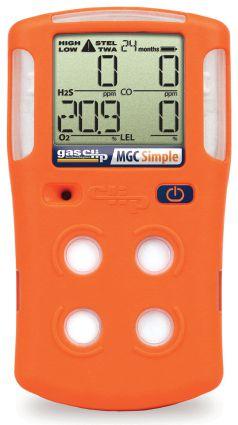
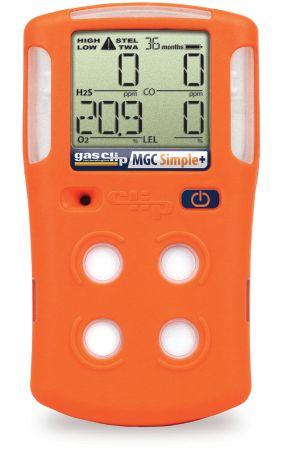
uTwo or three year run time with no charging or calibration
uDetect in oxygen deficient or oxygen enriched environments
uLEL sensor is immune to sensor poisoning
uFails to safe
uSimple, one button operation
uLogs data at one second intervals whenever gas is detected, records bump tests & events
u100% Quality control tested
uFull two or three year warranty
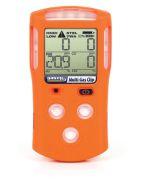
Multi Gas Clip
The portable multi gas detector that can run continuously for two months on one charge due to advanced infrared sensor technology. Detects combustible gases (LEL), H2S, CO and O2
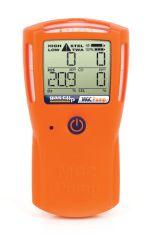
Multi Gas Clip Pump
Compact, light-weight, handheld/wearable multi gas detector with internal pump draws from 75 ft. & runs for an average of 52 hours on a single charge. Detects combustible gases (LEL), H2S, CO and O2
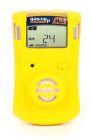
Single Gas Clip
Eliminate downtime with our ultra-reliable portable gas detector. Detects H2S, CO or O2.
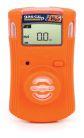
Single Gas Clip Plus
Hibernate mode offers extended life option when detector is not in use. Detects H2S or CO.
Compatible Docking Stations
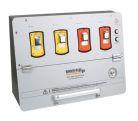
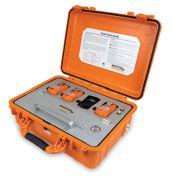
All-in-one, portable, durable four-bay dock stations quickly bump test, calibrate & log data for up to four detectors at once with the push of a button and one stream of gas saving time and gas. Charge once every six months. Perform 2000+ bump tests with one 116L gas cylinder.
Single Gas Clip Dock, Multi Gas Clip Dock, MGC Pump Clip Dock & MGC Simple Clip Dock
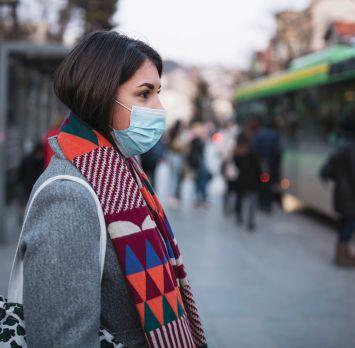
With the world facing increases in natural disasters and pandemic situations such as COVID-19, emergency preparedness is growing in importance.
MARCEL VANDER WIER
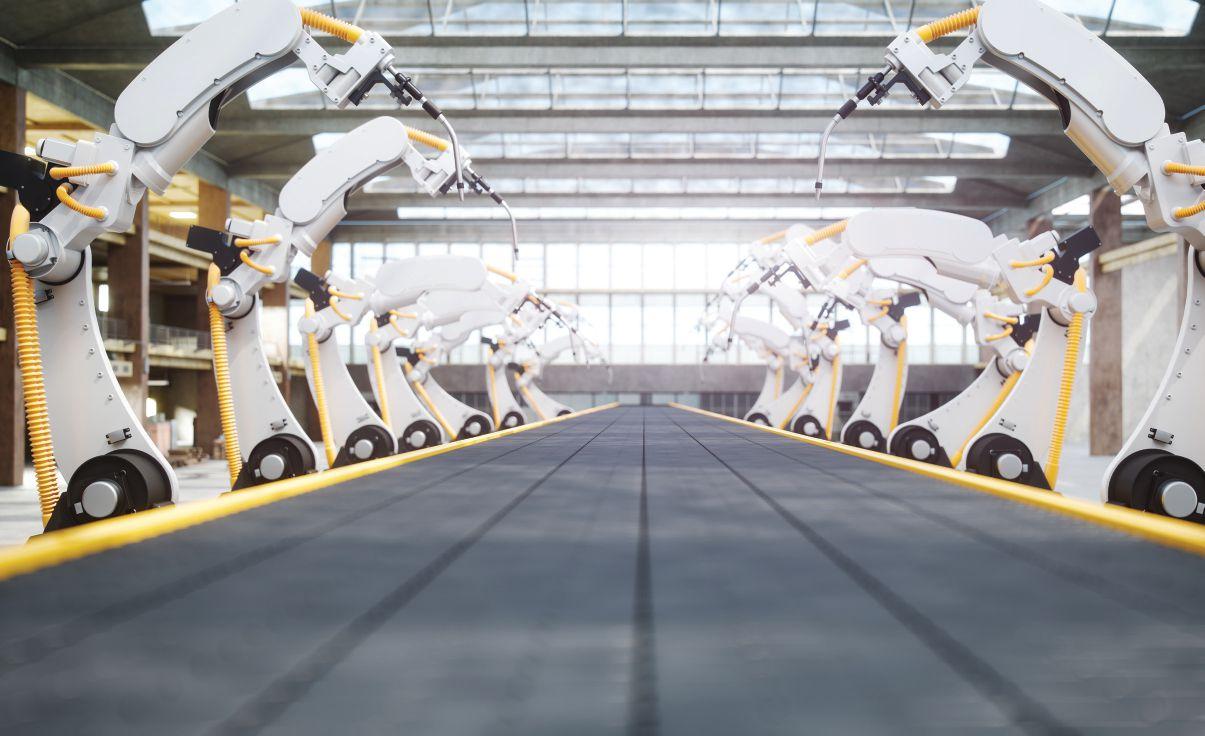
Workplaces have one foot in the future thanks to the now-normalized role that robotics have come to play in on-site labour operations.
BY JACK BURTON
With spring on the horizon, ClubLink is currently in the midst of hiring 3,900 seasonal workers and getting them up to speed on safety.
Eight industry professionals from across the country will be helping to shape
for the next two years.
up about her work to stop the
what employers can do to help.
full engagement of employees, resisting the temptation to jump to easy yet ineffective solutions is another common challenge employers face.
ALAN QUILLEY
Many leading companies are adopting the requirements of ISO 45001. For most, the resources required to undertake certification are beyond current reach.
DYLAN SHORT
Waking up to a brand-new world
Ihad tickets to the Toronto Maple Leafs game on March 12.
Lower bowl. Twenty-one rows up.
I’ll never forget that day, but it isn’t because of anything Auston Matthews did. No, that was the day everything stopped.
Shortly after 1 p.m. EST on March 12, the NHL suspended the hockey season in an effort to contain the spread of the coronavirus known as COVID-19, following in the footsteps of the NBA, which had already made its call the night before. Not long after, many of the world’s major sports leagues followed suit.
Ontario Premier Doug Ford went on to announce the closure of all public schools until April 6, and the chain reaction that followed saw places of worship, restaurants and other public spaces shut down in an effort to flatten the curve and protect society’s most vulnerable from COVID-19.
The Canadian border was closed. Flights were rerouted to major airports. Our nation’s leaders began holding daily press conferences to update citizens on the latest protective measures, including a state of emergency in Ontario. Quite frankly, it’s been eerie watching Toronto’s bustling streets go quiet.
As the editor of a national health and safety magazine, the past number of days have been a period of high anxiety and adrenaline. The news headlines have been non-stop and unrelenting, with the health and safety of citizens continuing to be priority No. 1.
I write this from my home office. CP24’s breaking news channel is humming quietly in the background, and every now and then I can hear my wife and fiveyear-old son shout with laughter as they kick off their March Break together. Using proper social distancing measures, we have been checking in on our senior neighbours. We’re all in this together.
There are many lessons employers and health and safety professionals can learn from this. Transparency, flexibility and timely, compassionate reactions to issues like coronavirus can do a great deal to instil confidence in your workforce.
Being prepared for pandemic situations before they occur is also of paramount importance — our cover story highlights the importance of emergency management procedure for employers.
Over the past few years, natural disasters have been on the rise, dramatically affecting the lives of Canadian workers. In St. John’s, it was a record-breaking winter storm that prompted its latest state of emergency in January, as 90-plus centimetres of snow fell within a 24-hour span, grinding the Newfoundland and Labrador economy to a halt.
In 2019, historic flooding was an issue in Ontario, Quebec and New Brunswick. Recent years have also seen major wildfire activity in western Canada, with the 2016 blaze in Fort McMurray drawing the lion’s share of coverage.
Today, coronavirus is the issue at hand. Our next emergency could look very different. We’ll get through this one together, but let’s all make sure we’re good and ready for the next state of emergency.
CIRCULATION MANAGER JAY DOSHI 416-442-5600 EXT 5124 jdoshi@annexbusinessmedia.com
NATIONAL SALES MANAGER ROSS ANDERSON 289-925-7565 randerson@annexbusinessmedia.com
GROUP PUBLISHER PAUL GROSSINGER pgrossinger@annexbusinessmedia.com
COO SCOTT JAMIESON sjamieson@annexbusinessmedia.com
Printed in Canada ISSN 0827-4576 (Print) ISSN 1923-4279 (Digital)
PUBLICATION MAIL AGREEMENT #40065710
CIRCULATION
Tel: 416-422-5600
Fax: 416-510-5140
Mail: 111 Gordon Baker Rd., Suite 400, Toronto ON M2H 3R1
SUBSCRIPTION RATES
Published six times per year – Jan/Feb, Mar/Apr, May/Jun, Jul/Aug, Sep/Oct, Nov/Dec
Canada $100/yr plus tax
USA $130/yr (100 USD)
Foreign $214/yr ($164.50 USD)
Occasionally, OHS Canada will mail information on behalf of industry related groups whose products and services we believe may be of interest to you. If you prefer not to receive this information, please contact our circulation department in any of the four ways listed above.
All advertising is subject to the publisher’s approval. Such approval does not imply any endorsement of the products or services advertised. Publisher reserves the right to refuse advertising that does not meet the standards of the publication.
EDITORIAL ADVISORY BOARD
Paula Campkin: chief safety officer at Energy Safety Canada in Calgary, Alta.
Marty Dol: president and founder of HASCO Health & Safety Canada in Toronto
Cindy Moser: director of communications for the Institute of Work & Health in Toronto
Natalie Oree: prevention consultant with SAFE Work Manitoba in Winnipeg
David Powers: director of HSE with Oxford Frozen Foods in Oxford, N.S.
Richard Quenneville: senior director of corporate services with T. Harris Environmental Management in Toronto
Maureen Shaw: lecturer and presenter in Victoria
Dylan Short: managing director of The Redlands Group in Oakville, Ont.
1. West Vancouver: This spring, 31 vehicles in the Blue Bus fleet will be fitted with operator shields — a transparent protective partition around the operator’s seat. Bus drivers have been subject to assaults by passengers for years, and shields were recommended following a safety review by WorkSafeBC.
Source: WestVancouver.ca
2. Prince George, B.C.: More than 70 tree planters anonymously reported incidents of sexual assault and harassment in B.C.’s remote tree planting camps. Several of their accounts were made public at the Western Forestry Contractors’ Association annual conference in January.
Source: CBC News
3. Saskatoon, Sask: Saskatoon city council is looking into updating a bylaw after a local senior was injured after tripping over an extension cord plugged into a vehicle. The electrical equipment bylaw hasn’t been reviewed since its creation in 1958. It currently states it’s legal to use an extension cord over a city sidewalk if plugged in and not left in a “haphazard” manner.
Source: Global News
4. Fredericton: Canada’s labour ministers gathered in New Brunswick on Feb. 6 to discuss workplace issues, including next steps for occupational health and safety standards harmonization. They also discussed federal labour standards and how to better support workers through initiatives such as international labour standards on violence and harassment at work.
Source: The Canadian Press
5. St. John’s: Minimum mandatory training for flagpersons in Newfoundland and Labrador will double as of April 1, while a new voluntary course for those who supervise or design traffic control plans at highway construction sites will also be launched. Three road construction workers have died on the job since 2011.
Source: CBC News
WHAT IS CORONAVIRUS (COVID-19)?
Coronaviruses are a large family of viruses that cause illness ranging from the common cold to more severe diseases. Some coronaviruses transmit between animals, some between animals and people, and others from people to people.
Source: Government of Canada
690
Number of confirmed cases of coronavirus in Canada as of March 18. As of that date, nine Canadians had died as a result of COVID-19.
Source: Government of Canada
$318,000
Fine incurred by the City of Abbotsford after two workers at a water treatment plant were exposed to chlorine gas last June. WorkSafeBC indicated the city repeatedly failed to guarantee worker safety at its water treatment facilities.
Source: Abbotsford News
48%
Amount of Canadian drivers who believe vehicle safety technologies pose a risk to road safety. Eighty per cent think there should be more education on how to use safety features in vehicles.
Source: Desjardins Group
$65,000
Fine incurred by 4 Way Metal Fabricators in Bolton, Ont., in February as a result of a 2018 incident in which a worker’s hand was injured when it became trapped under the ram of a punch press on an unguarded machine.
Source: Government of Ontario
Future of safety rests beyond compliance
By Marcel Vander Wier
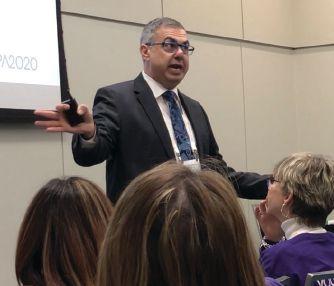
The dawn of a new decade means the future of safety is now the present, according to Michelangelo LaSelva, senior business developer with Workplace Safety and Prevention Services (WSPS) in Mississauga, Ont.
Presenting at HRPA 2020 in Toronto on Jan. 22, he said going forward, the best companies will push for safety measures that go beyond minimum standards set out in legislation.
Over the past two years, court judgments have revealed that an organization’s best defence is to implement proactive safety measures.
“You’ve got to go beyond what is just bare minimum,” said LaSelva.
He urged companies to enrol in the WSIB’s new Health and Safety Excellence program and pursue ISO 45001 accreditation as the gold standard for health and safety.
Building an accredited health and safety program requires time and money, but properly built, it could be a “life-
Michelangelo LaSelva of WSPS presents on the future of safety at HRPA in Toronto, on Jan. 22.
line,” said LaSelva, noting courts look favourably at employers who attempt to do everything reasonable.
Development of a standard safe operating procedure must be completed in partnership between HR and OHS, he said.
“It’s amazing how HR and health and safety are intertwined (now).”
Employing able supervisors is “key to your program,” said LaSelva, noting
TRUDEAU PROMISES $82 BILLION IN ECONOMIC SUPPORTS FOR COVID-19 FIGHT
OTTAWA (CP) — Prime Minister Justin Trudeau says the federal government will spend up to $82 billion to help every Canadian get through the COVID-19 pandemic.
“Public health should never hinge on financial considerations,” Trudeau said on March 18.
The unprecedented financial aid package will beef up Canada Child Benefit payments for families, provide a wage subsidy for small businesses to help them keep staff on the payroll during the slowdown, pause Canada Student Loan payments for six months and establish emergency benefits for people who don’t qualify for employment insurance.
The biggest single item is deferring tax payments until August, accounting for an estimated $55 billion.
Trudeau said the government is focused on making sure Canadians have the money they need to support their families, buy groceries and pay the rent.
“No matter who you are or what you do, you should be focused on your health,” Trudeau said.
that if a manager is not trained on the OHS act and associated regulations, that company is immediately below compliance.
As courts begin to levy charges against organizations, supervisors and workers, it is essential that supervisors understand company policy and procedure, he said.
“That’s today’s world. That supervisor is vital to your program.”
Recognition of impairment and potential human rights violations are also critical for management to be aware of, said LaSelva.
“Welcome to health and safety 2020,” he said. “This is the future. It is now.”
Ensuring your organization has an up-to-date health and safety compliance registry alongside a hazard identification and risk assessment is basic procedure, said LaSelva.
“Without these two, you do not have a solid health and safety program and you cannot defend yourself in the court of law.”
The prime minister was speaking to Canadians outside his home in Ottawa, where he has been in self-isolation for nearly a week because his wife, Sophie Gregoire Trudeau, tested positive for COVID-19 on March 13, after a trip to England.
Also on March 18, Trudeau and U.S. President Donald Trump announced the U.S.-Canada border will be temporarily closed to non-essential travel, but Trudeau said the critical supply chain between the two countries will continue.
Trudeau also thanked Canadians for helping each other.
“I know it’s a hard time but that’s exactly why we need to keep supporting each other,” Trudeau said. “People need to be able to self-isolate, need to be able to stay home, need to be able to care for their families.”
The government has stressed that Canada has a strong financial position that will allow it to absorb the costs. The $82 billion is equivalent to about three per cent of Canada’s gross domestic product.
Economic growth in Canada and around the world, already sluggish before the outbreak, has slowed to a crawl, with many economists predicting a global recession.
ONTARIO DECLARES STATE OF EMERGENCY
(CP) — Ontario health officials confirmed the province’s first death in a patient with COVID-19 on March 17, hours after Premier Doug Ford declared a state of emergency.
The 77-year-old man in the Muskoka region was a close contact of another positive case and wasn’t listed a confirmed case before he died; rather he was under investigation for the virus, said a spokesman for Health Minister Christine Elliott.
COVID-19 was discovered after his death, said Travis Kann. The investigation into the exact cause of death is ongoing.
“We are facing an unprecedented time in our history,” said Ford in a press conference declaring a state of emergency. “This is a decision that was not made lightly. COVID-19 constitutes a danger of major proportions.”
“We are taking this extraordinary measure because we must offer our full support and every power possible to help our health-care sector fight the spread of COVID-19. The health and well-being of every Ontarian must be our No. 1 priority.”
Ford says the order bans public events of over 50 people, including parades, events and services within places of worship until March 31.
Effective immediately, the province has ordered the closure of all facilities providing indoor recreation programs, all public libraries, all private schools, all licensed child-care centres, all theatres, cinemas and concert venues, and all bars and restaurants except to provide takeout food and delivery.
Ford says this is not a provincial shutdown and the majority businesses won’t be affected by the order.
Essential services such as grocery stores will continue to operate.
ALBERTA PROVIDES PAID JOB-PROTECTED LEAVE IN SELF-ISOLATION TIED TO CORONAVIRUS
EDMONTON (CP) — Alberta is changing labour laws to provide 14 days of paid leave for workers who self-isolate due to the novel coronavirus or who are caring for someone with COVID-19, the disease linked to it.
On March 13, Premier Jason Kenney said employees will not need doctor notes, nor will they have had to work for 90 days previously to qualify.
“Our priority is public safety and health, and we will make sure that no one has to choose between work and doing what is necessary to protect public health,” Kenney said.
“We don’t want Albertans impacted by COVID-19 to feel that they must go to work to sustain their income so they can pay their bills and take care of their families. This obviously would raise the risk of spreading the virus to co-workers and clients.”
He said officials are still working out details, but added: “I want to assure employers that we will ensure these actions will not be a further burden to your business.”
Kenney said he is also urging the federal government to further expand employment insurance benefits during the pandemic.
BUSINESSES RAMP UP COVID-19 PRECAUTIONS AMID WORKPLACE CASES
TORONTO (CP) — Businesses are significantly ramping up their efforts to stop the spread of a novel coronavirus, after a string of cases cropped up at Canadian workplaces in early March.
March 12 brought news that the Office of the Superintendent of Financial Institutions was asking its approximately 360 employees to “telework” after a staff member in its Ottawa office was sent for testing for the virus known as COVID-19.
Days before, a Kinross Gold employee in Toronto was also diagnosed with the virus, causing the mining company to close the office for a “thorough” disinfection and ask employees to work from home until at least March 20.
Royal Bank of Canada implemented similar measures last week for a floor of workers at their Meadowvale complex in Mississauga, Ont., after learning of a case at the facility.
But even companies yet to be impacted by the virus said they are ramping up their precautions.
Kevin Johnson, the chief executive at coffee chain Starbucks, sent a note to customers early on March 12, saying it had increased cleaning practices at its stores but was preparing to modify its Canadian and U.S. locations, if need be.
“We may adapt the store experience by limiting seating to improve social distancing, enable mobile order-only scenarios for pickup via the Starbucks App or delivery via Uber Eats, or in some cases only the drive thru will be open,” the note said.
“As a last resort, we will close a store if we feel it is in the best interest of our customers and partners, or if we are directed to do so by government authorities.”
Vancouver-based apparel retailer Mountain Equipment Co-op, meanwhile, told consumers in an email that it was pausing its rental program and the use of its in-store climbing and bouldering walls.
Over at Ottawa-based e-commerce company Shopify, employees were gearing up to work from home.
The company announced it would be taking its offices “remote first” starting March 16, after cancelling its annual Unite event scheduled for May in Toronto and halting events at its Los Angeles space for entrepreneurs.
“This was a hard decision but the right one,” Shopify CEO Tobi Lutke tweeted.
“Proximity is incredibly valuable for creative work. However, it’s possible for us to work together remotely and so we should.”
Shopify confirmed to The Canadian Press that it is also offering employees $1,000 to set up their work-from-home space.
Lutke noted that Shopify is “no stranger to remote work.” The company closed its offices previously for a onemonth period to “build empathy for the remote workers of Shopify.”
Most people diagnosed experience as mild or moderate symptoms, such as fever and cough, and the vast majority of those who contract the virus recover.
CANADIAN TRANSIT PROVIDERS TAKE MEASURES TO SAFEGUARD AGAINST COVID-19
(CP) — Some Canadian transit agencies are quietly taking steps to protect customers against the novel coronavirus that’s been sounding alarm bells around the world.
Several say they have stepped up efforts to clean vehicles and stations and switched to more aggressive anti-bacterial cleansers as a precaution.
As of March 3, one regional transit provider operating a heavily travelled bus and rail network in southern Ontario says it has already documented one instance of an infected passenger travelling on one of its vehicles.
Metrolinx spokeswoman Anne Marie Aikins says longlasting disinfectant spray was tested on one of its GO Transit trains recently, and is being rolled out to the entire network after a patient who tested positive for COVID-19 used one of its vehicles to travel home from the airport.
Aikins said the product primarily targets bacteria and mould rather than viruses, but the company views it as a sensible precaution.
“We think it’s just incumbent on us to do whatever we can to protect our staff and our customers,” she said.
Aikins said the presence of an infected passenger was not unexpected and could happen again as the outbreak runs its course, but the company is prepared.
Aikins said the bus on which the patient travelled has also been taken out of service for thorough decontamination. All other vehicles and terminals are being subjected to more regular cleaning, she said, adding hand sanitizer is also being made more widely available to passengers.
DENTISTS WORRIED ABOUT SHORTAGE OF MASKS IN LIGHT OF CORONAVIRUS OUTBREAK
(CP) — The Ontario Ministry of Health says it’s working with manufacturers of medical masks to address shortage concerns expressed by dentists in light of the new coronavirus outbreak, according to a memo sent to the provincial regulator for dentistry.
In the note sent to the Royal College of Dental Surgeons of Ontario in February, the ministry said it’s aware some orders of personal protective equipment, which dentists need to wear during any routine dental procedure, are backlogged, but added it was “following up to make sure critical shortages are addressed.”
There are a lot of people wearing masks who don’t need to wear masks, federal Health Minister Patty Hajdu said in a press conference.
“Canada does have a stockpile (of masks) for domestic use and we have enough supply as we understand the outbreak right now,” she said. “There are some rumblings around a supply chain shortage and we’re monitoring that very carefully.”
For a routine dental cleaning or a simple filling, a dentist and hygienist must wear gloves, a mask, a gown or protective clothing and protective eye wear.
BCRSP COLLABORATION PROJECT PUTS FOCUS ON ETHICS
A collaborative effort between the Board of Canadian Registered Safety Professionals (BCRSP) and the Australian Institute of Health and Safety (AIHS) has produced new material on ethics and professional practice.
The joint project concluded with the late-2019 release of a chapter on “Ethics and Professional Practice” for the OHS Body of Knowledge (OHS BoK).
The effort brought a richness to the outcome that could not have been achieved by a single country, said Pam Pryor, manager of the OHS BoK for AIHS.
According to the BCRSP, the chapter is a first for the profession and is much more than simply signing off on a code of ethics. Rather, the chapter focuses on the OHS professional as an “ethical professional,” stated a press release.
The chapter will be used by the BCRSP as reference material for examinations and will be promoted to certificants as a valuable resource to inform their ethical practice.
CORRECTION
Our January/February issue contained a photo of WSIB president Tom Teahan announcing the launch of its Health and Safety Excellence program. The launch took place in a Longo’s grocery store.
SHIPPING SUPPLY SPECIALISTS
OVER 2,700 SAFETY PRODUCTS IN STOCK
BEHIND THE SCENES | INTRODUCING OUR EDITORIAL ADVISORY BOARD
OHS Canada is pleased to introduce a refreshed editorial advisory board, consisting of eight industry professionals from across Canada. This group will provide perspective and input on the editorial direction of our magazine. They are not responsible for published content. Our diverse team includes members from coast to coast and we are thankful for their involvement with our brand.
BIO: Paula Campkin provides strategic leadership around development of standards and initiatives to drive improved safety performance in Canada’s oil and gas industry.
She is also the co-founder and inaugural chairperson of the Women in Occupational Health and Safety Society (WOHSS), an organization dedi-
BIO: With more than 12 years as a Certified Training and Development Professional (CTDP), Marty Dol has trained thousands of workers across a variety of industries.
As the demand for training increases, Marty has hired trainers to deliver his high-energy style of training. He has created hundreds of programs
One site or many, local or remote monitoring, the ALTAIR io360 Gas Detector e ortlessly scales to meet your needs, increasing safety on your jobsite and for your workers.
CINDY MOSER
Director of communications at the Institute for Work and Health (IWH) in Toronto
BIO: As head of the communications department at IWH, Cindy Moser helps ensure research evidence and tools are known to stakeholders and the public through newsletters, website, media relations, social media, videos and events.
Cindy was previously an editor of numerous publications — including OHS Canada She earned her BA (honours) in history at Trent University and has her Knowledge Translation Professional Certificate from the University of Toronto.
“I believe one of the critical ways to make progress in workplace health and safety is to build policies and practices that incorporate the best research available. That’s why impartial, evidence-based information needs to get into the hands of policy-makers, employers, workers, occupational health and safety professionals and others who can make a difference.”
NATALIE OREE
Prevention consultant – production at SAFE Work Manitoba in Winnipeg
BIO: Natalie Oree is a prevention consultant in Manitoba, providing guidance in the manufacturing, agriculture, forestry and mining sectors.
She has previously held health and safety positions with the province and the aerospace and educational sectors. Her 15 years of experience includes consulting, committee support, inspections and investigations, safety culture development, and injury and illness prevention training.
Natalie has a Bachelor of Science degree in environmental chemistry, is a Canadian Registered Safety Professional (CRSP) and a member of the Canadian Society of Safety Engineering (CSSE).
“What I believe is the most important about occupational health and safety is the effective implementation of a safety and health program, where the whole organization is committed to protecting the safety and health of its employees and everyone understands and takes responsibility for their role in the program.”
DAVID POWERS
Director of health, safety and environment at Oxford Frozen Foods in Oxford, N.S.
BIO: David Powers received his CRSP designation in 2005, became a member of the Canadian Society of Safety Engineering in 2007 and earned a master’s degree in occupational safety and health in 2015.
David is the vice-chair for the Nova Scotia chapter of the CSSE as well as board president of Farm Safety Nova Scotia.
From 2013 to 2018, David had the privilege of serving on the Item Writing Committee for the Board of Canadian Registered Safety Professionals, acting as chair for his last two years.
“I believe the training and mentoring of our next generation of safety professionals to be of critical importance. We need to be able to pass the torch effectively to equip our young and newer safety professionals to be able to face the challenges of the future!”
RICHARD
QUENNEVILLE
Senior director of corporate services at T. Harris Environmental Management in Toronto
BIO: Richard Quenneville, B.Sc. (Chem.), is a Certified Industrial Hygienist and a Registered Occupational Hygienist with over 30 years of experience in occupational hygiene and environment health and safety.
Before joining T. Harris Environmental Management, most of his work was in telecommunications, manufacturing and pharmaceutical industries in both union and non-union environments.
He is a recipient of the OHAO Hugh Nelson Award for excellence in occupational hygiene, president of the Canadian Registration Board of Occupational Hygienists and past-president for the Occupational Hygiene Association of Ontario.
“Occupational health and safety has to be an integral part of workplace design and not just an add-on to the business. Controlling occupational hazards is key to reducing occupational disease and injuries in the workplace and has to be planned by using certified professionals.”
MAUREEN SHAW Lecturer and presenter living in Victoria
BIO: Maureen Shaw has spent more than 35 years providing leadership in the evolution of health and safety at provincial, national and international levels. She is a thought leader and lecturer. She was designated the “Mother of Health and Safety” at her retirement as President/CEO of the Industrial Accident Prevention Association (IAPA) — now Workplace Safety and Prevention Services (WSPS) in Mississauga, Ont.
“As we look to the future, leadership from the C-suite will be the critical link to creating a culture of health and safety in our workplaces and our communities we live, work and play in.”
DYLAN SHORT Managing director at The Redlands Group in Oakville, Ont.
BIO: Dylan Short has more than 20 years of experience as a business owner, safety professional, board leader and international speaker. The Redlands Group provides client-focused solutions that meet companies’ health, safety and risk-assurance needs.
In 2016, he was awarded CSSE’s highest award — Safety Professional of the Year.
Dylan serves in a variety of volunteer roles, including with the Standards Council of Canada as a technical committee member with ISO 45001 Occupational Health and Safety Management Systems.
“The commitment to occupational health and safety is an organization’s promise to provide workplaces and work that does not injure or otherwise harm workers. The work of the OHS profession is to assist the organization in fulfilling this promise to workers.”
CAMH launches mental-health playbook
Workplace leaders looking for answers on mental health now have a new playbook, thanks to the Centre for Addiction and Mental Health (CAMH) in Toronto.
In partnership with the Bank of Montreal (BMO), CAMH launched The Workplace Mental Health Playbook for Business Leaders in January.
The playbook is meant to provide a path to more effective solutions and better outcomes for employees and businesses, including key recommendations and examples of best practices.
The playbook is available online as a free PDF and contains five key mental-health recommendations for Canadian business leaders:
• create a long-term, organization-wide mental-health strategy
• institute mandatory mental-health training for leadership
• develop tailored mental-health supports
• prioritize and optimize your return-to-work process checklist
• track your progress.
Thirty per cent of disability claims and 70 per cent of all disability costs across the country are due to mental illness, according to the Mental Health Commission of Canada.
And according to CAMH research, investing in workplace cognitive behavioural therapy programs can see a return of almost $2 for every dollar invested.
“After decades of working with organizations around the world to advance diversity and inclusion, I firmly believe that employee mental health is the most important issue facing workplaces today,” said Deborah Gillis, president and CEO of the CAMH Foundation.
“By stepping forward to not only address — but to champion — mental health in the workplace, business leaders have the opportunity to help ignite and unleash their employees’ full potential.”
The playbook was created with input from CAMH researchers, clinicians and business leaders.
“BMO is deeply committed to recognizing that mental health is health — in our workplace and beyond,” said Cameron Fowler, president of North American personal and business banking at BMO Financial Group. “We are proud to partner with CAMH on this global research and are focused on continuing to reduce stigma and increase action and awareness around workplace mental health.”
CAMH’s playbook also received support from CAA Insurance and DIALOG.
CAMH is Canada’s largest mental-health and addiction teaching hospital, as well as one of the world’s leading research centres in its field.
Survey: younger workers place higher value on mental-health services
Interest in virtual care for mental-health services is highest among Canadians ages 18-34, according to a 2019 survey of 1,501 workers by RBC Insurance.
More than half are likely to use the services to consult mental-health practitioners (53%) and for video/telephone counselling (51%).
And 78 per cent of millennial workers would perceive their employer more positively if their employer offered a virtual-care or telemedicine solution through its group benefits.
“Many working Canadians face time constraints when visiting health practitioners — constraints that include wait times to see specialists like psychologists and psychiatrists, the availability of a health-care practitioner and the ability to get time off work,” said Julie Gaudry, senior director of group insurance at RBC Insurance in Toronto.
“Younger Canadians are even more likely to face these types of obstacles, so by implementing innovative programs such as virtual care or telemedicine, employers can alleviate some of the challenges, which in turn can help increase employee health and morale.”
By using virtual mental-health care to help plan members and their families address their mental-health concerns earlier and faster, employers could prevent someone from becoming so unwell that they are no longer able to work, she added.
Virtual health-care options such as cognitive behavioural therapy or a mobile app are a good start, according to RBC Insurance.
Additionally, younger Canadians are more likely to report lower levels of well-being and mental health than older Canadians. Among 18-34 year-olds, 57 per cent say their mental health is good or excellent, compared to 79 per cent of those older than 55.
Study explores apple growers’ skin exposure to pesticides
Research by the IRSST (Institut de recherche RobertSauvé en santé et en sécurité du travail) in Montreal delves into apple growers’ skin exposure and their use of protective clothing while performing tasks such as mixing and spraying pesticides.
The report, Preventing Skin Exposure to Pesticides Among Apple Growers and Factors Influencing Use of Protective Clothing, included a literature review on personal protective equipment (PPE) alongside interviews with, and analysis of, growers’ spraying habits.
Analyses highlighted the significance of repeated routine microexposure situations, where exposure is of low intensity and short duration.
“Even though growers express concerns about the effects of pesticides on their health, they do not always adopt practices consistent with the labelling recommendations,” said the report.
The growers who participated in the study wore work clothes that included long sleeves and long pants, as well as protective clothing in most of the exposure situations analyzed. There was considerable variety in the safety gear worn and it was not always used as recommended on the pesticide labels, according to the report.
The findings pointed to a number of shortcomings with respect to protective clothing available in Quebec in terms of certification, labelling and recommendations for usage depending on exposure situations.
In conclusion, the study recommended that farm workers become involved in developing, testing and validating safety rules for pesticide exposure.
“If the agricultural community and public-health stakeholders join forces, it should be possible to design measures grounded in the realities of growers’ work and social dynamics,” the report said.
Survey: work stress continues to increase across North America
Work stress continues to be a major issue for employees across North America, according to a 2019 survey by Morneau Shepell.
Conducted this past summer, the survey of 8,000 workers in Canada, the United Kingdom and United States found that 45 per cent of employees believe mental demands of their current position have increased over the past 18 to 24 months, including concentration and problem solving to the need for creativity and adapting to change.
Across all geographies, employees ranked mental health as the top factor in their overall well-being, above physical and personal health. In Canada, 76 per cent of workers said the way in which their employer supports mental health was a key factor when deciding whether to stay with the company.
Yet despite mental health being cited as the main priority, employees in Canada and the U.S. ranked organizational support of physical-health issues above both mental and financial well-being.
“While there is no one-size-fits-all approach to mentalhealth support, we hope the research helps organizations understand the importance of well-being in the workplace, said Paula Allen, senior vice-president of research, analytics and innovation at Morneau Shepell in Toronto.
The need for mental-health support in the workplace is largely driven by the continued stress that Canadians experience in their personal lives and in the office, according to the survey.
Feeling out of place in the organization can have a significant impact on employees’ feelings of isolation — the state of feeling alone and without friends, support or help.
For employees indicating very poor mental health, 47 per cent indicated high isolation at work.
So, what’s on your mind?
Ever wonder what other OH&S types are thinking? Find out by making our website poll a regular stop.
Is your organization ready to implement technology in safety training?
CRISIS MODE
More than ever, employers need to be ready to deal with emergency management
BY MARCEL VANDER WIER
Wildfires, floods and blizzards have been wreaking havoc on workplaces across the country in recent years.
Most recently, coronavirus has taken a grip of the world with governments trying to contain the spread of COVID-19 by encouraging social distancing and work-fromhome policies.
Additionally, cities and towns across Canada continue to declare climate emergencies, following the lead of the House of Commons, who declared a national emergency in June of last year.
Employers are taking notice, according to Plamen Petkov, vice-president for Ontario and business resources at the Canadian Federation of Independent Business in Toronto.
“There is certainly an increased focus over the last few years on instances where there is more frequent fires, floods, other natural disasters that could be related to climate change,” he says.
“You cannot predict all of these things, but perhaps potentially you could prepare a little bit better in terms of how to respond to a specific incident.”
Sometimes all an employer can do is react, says Petkov, recalling the tornado that ripped through Goderich, Ont., in 2011.
But where preparations are possible, they should be made, he says.
“That adds some predictability in situations where things are not really predictable. You don’t know what kind of natural disaster you will be experiencing.”
Disaster preparedness
In small businesses, responsibilities for disaster preparedness and emergency response typically fall to the business owner, says Petkov.
“It is very difficult — especially for a small business owner — to compile all that information on their own,” he says.
In an effort to assist, CFIB has established a five-point plan to help workplaces deal with natural disasters such as fires, floods and earthquakes.
Steps include:
• assigning responsibility for managing a crisis
• identifying threats to your business
• reducing identified risks, when possible
• preparation of an emergency plan
• practising and testing the plan annually.
Prevention and preparation measures should be communicated to employees in advance when possible, says Petkov, noting that disaster response often becomes an employer’s No. 1 priority “after the fact.”
Business continuity strategies such as enabling staff to work remotely in case of a disaster is worthy of preparatory consideration, as are the effects an incident would have on client and government relationships, he says.
When it comes to climate change, the effect it is having on workers is still a “really new topic,” according to Ariane Adam-Poupart, specialized scientific advisor with Quebec’s public health institute in Montreal — Institut National de Santé Publicque du Quebec (INSPQ).
Climate-change hazards including heat waves, an
increase in UV radiation exposure and a bump in extreme climate events are rising in occurrences, she says, noting outdoor workers across sectors can expect to be impacted alongside employers through rising compensation claims for work-related injuries as a result of heat exposure.
Emergency management
Business continuity policy goes a step past typical emergency planning, according to Thushara Jayasooriya, technical OHS specialist at the Canadian Centre for Occupational Health and Safety in Hamilton, Ont.
“It ensures that personnel and assets are protected so that they are able to function quickly in the event of a disaster or an emergency,” she says.
Ensuring an emergency management plan is in place is a requirement for employers, says Jayasooriya.
“Employers must plan for a well-thought-out and wellorganized emergency response plan so that they can be ready for any emergency,” she says.
The four elements of an emergency management plan include:
• Prevention: policies and procedures to minimize the occurrence of emergencies
• Preparation: activities and procedures to make sure your organization is ready to effectively respond
• Response: the action to be taken when an emergency occurs
• Recovery: practices to resume to normal business operations.
“In all these situations, communication, training and periodic trials is a key component in the success of a program,
because they will help make sure the plan is executed well when the time comes,” says Jayasooriya.
Workplace risks will vary depending on geographic location and sector. Employers should consult with local emergency personnel and insurance agencies to ensure they know what to do in case of a situation, she says.
“It would help broaden the knowledge of both technological and natural hazards.”
Those with an OHS management system are “in a better position than other workplaces,” says Jayasooriya, noting these systems are updated regularly to encompass new environmental issues.
For employers with a system in place, the next best thing to do is follow Edwards Deming’s Plan-Do-Check-Act cycle towards continuous improvement.
“If you follow that approach, then you are covering all the elements of the process,” she says. “It enables the employer to identify and surface any potential issue early and also analyze and identify how it is impacting the workplace. Then they can prepare for mitigation and response plan, and finally monitor and review the process for further improvement.”
Constant documentation is also advised, as it strengthens the review process, according to Jayasooriya.
Employers should be considering climate change as they develop infrastructure and projects, and organize their workforce, says Adam-Poupart.
“To take that into account when we want to plan the work of our workers would be a good thing.”
Marcel Vander Wier is the editor of ohs canada
PREPARING FOR A PANDEMIC
The global spread of pandemics such as COVID-19 is another issue employers need to prepare for.
Employers have the same legal duties under occupational health and safety, employment standards and human rights legislation as they would with any other illness impacting employees.
Employers may also be subject to additional duties in the event that an outbreak of illness rises to the level of a public health emergency.
If they do not already, employers should have a comprehensive workplace pandemic plan tailored to the particular needs of their organization.
The plan should address four themes:
• Leadership: Ensure your organization is prepared to address the issue. Designate key employees who will manage the employer’s response to any pandemic. Make an actual plan to respond to the risk of a pandemic impacting the workplace.
• Communication: Identify where you will be able to find up-to-date and reliable information about a disease outbreak, including its current status, symptoms and prevention strategies, and where to receive medical care.
Develop a strategy for communicating the necessary information to employees in a format that is easily accessible from home.
• Risk management and containment: Consider workplace strategies for reducing the spread of illness, such as employee work-from-home strategies, staggering shift starts and breaks to reduce the number of people in the workplace at a time, and arranging work stations to maintain distance between individuals.
• Continuity: Consider how your business will be impacted by a pandemic. Staffing may be one of the biggest concerns. Predictions for absenteeism during a local outbreak vary by industry, but a general recommendation for employers is to plan for an absenteeism rate of between 20 to 25 per cent during a peak two-week period of an outbreak in a specific area, with lower absenteeism in the weeks before and after.
Through workplace pandemic plans, employers can play a role in preventing the everyday spread of illness by encouraging good health practices among employees.
Paul McLean is a partner with Mathews Dinsdale in Vancouver.
RISE ROBOTS OF THE
Technology increasingly assuming risks of most dangerous tasks
BY JACK BURTON
While we are still waiting on the arrival of flying cars and teleportation devices, workplaces around the world seem to already have one foot in the future thanks to the now-normalized — and increasingly-necessary — role that robotics have come to play in on-site labour operations.
Though their impact on the workplace is enough to show that robots have their place beyond the R2-D2s and Terminators of your DVD collection, the technology can still carry with it a reasonable amount of baggage in the minds of employees when it comes to the safety of their individual role and their workplace.
A more detailed glance at emerging robotics trends and technologies reveals a considerable amount of evidence that shows robotics, as it currently exists, is far from being a threat to human jobs or workplace safety.
In fact, robots are quickly emerging as one of the most impactful solutions to both issues.
Shrinking the danger zone
One common misconception is that robots exist to replace the worker.
While replacing human activity is a major factor in how robotics traditionally impacts workplace safety, this replacement is far from absolute or permanent. Rather, the replacement function of robots primarily focuses on removing the human factor from otherwise dangerous or fatal workplace tasks.
“Robotics gets a bad rap sometimes, in that it’s always thought that robotics and automation take away jobs,” according to Robert Vomiero, technical specialist in machine
and robot safety for Workplace Safety and Prevention Services (WSPS) in Mississauga, Ont.
“From a safety standpoint, I don’t think of it that way. I think of the implementation of robotics as a means for removing workers from doing those demanding and dangerous jobs that put them at risk.”
First and foremost, robotics exists as a buffer between workers and tasks that would otherwise put their well-being in danger, says Todd Mason-Darnell, marketing manager of services and safety for international firm Omron Robotics in Hoffman Estates, Ill.
“Instead of having the worker expose her life or limbs to the hazards of moving sheet metal in and out of a 300-ton stamping press, a robot can assume that ‘risk,’” he says. “By changing the operation to a ‘no-touch’ environment, you can dramatically improve the safety of your workers by reducing their exposure.”
“Replacing operators in these environments allows companies to reduce or maybe even eliminate workers’ longterm exposure (to high-risk environments and tasks),” says Mason-Darnell.
Benefits cross industry lines
The potential utility of labour-oriented robots — especially concerning safety benefits — has a far more wide-reaching impact across various industries than the uninitiated may realize.
It’s worth noting, however, that the need for safe and secure workplaces is universal, and with safety becoming an increasing design focus of robotics technology, the list of industries experiencing ergonomic benefits from robot
technology is only growing, says Vomiero.
“There are a lot of industries that could benefit from the implementation of robotics, but one area in my experience where I’m starting to see an increase in the use of robotics, that in the past didn’t exist, is in the food industry.”
Since robotics became a somewhat regular part of on-site operations in the food industry, workers are no longer “having to come into close proximity to the equipment which always poses a risk,” keeping them away from “a lot of the hazards associated with reaching into the equipment and having to access and readjust the product,” he says.
While their substitution in performing otherwise-dangerous human labour is an undeniable driver of workplace safety, the traditional industrial robot still comes with its share of limitations — the high power with which they perform creates a sharply increased risk factor in their immediate area of operation, thus requiring complete separation between the robots and any human operators or workers, says Vomeiro.
“Looking at larger industrial robots, they certainly pose a risk due to being intended to be able to perform highstrength tasks such as lifting heavy loads. So when traditional robots are in operation, there needs to be complete separation between the human and the robot.”
Collaborative robotics
What might appear as a limitation, however, is one that robotic technology has already developed cutting-edge technological solutions to, he says.
“Where the industry’s gone more recently, and the direction it’s been moving in, is the implementation of collaborative robots.”
Collaborative robotics is an emerging form of workplace robot technology that’s “designed to work with human operators thanks to technologies like force feedback, low-inertia servo motors, elastic actuators and collision detection technology that limit their power and force capabilities to levels suitable for contact,” according to Tina Hull, functional safety expert and product engineer at Omron.
Since “force and speed monitoring are the defining abilities of collaborative robots,” the need for complete separation between workers and technology traditionally required by larger, more high-impact industrial robots no longer exists, she says.
With a design philosophy focused on maximizing their ability to ergonomically inhabit otherwise-human workspaces through features such as compact sizes, lightweight frames and lower operation speeds, it’s not only worth looking at the new avenues of safety that collaborative robots have opened up since their invention in 1996, but also observing where these avenues appear to lead — to a more shared and hands-on relationship between robots and employees that is just as important.
While larger industrial-type robots have historically driven workplace safety by isolating employees from highrisk tasks, collaborative technologies diversify robotics’ influence on workplace safety through the opposite means, by
“Instead of having the worker expose her life or limbs to the hazards of moving sheet metal in and out of a 300ton stamping press, a robot can assume that ‘risk.’ By changing the operation to a ‘no-touch’ environment, you can dramatically improve the safety of your workers by reducing their exposure.”
– TODD MASON-DARNELL
integrating human and robot labour.
What collaborative robotics brings to workplace safety is a technological transition — a shift that transforms the workplace robot from a proxy into a peer.
Emerging from this new collaborative relationship between robots and workers isn’t only the possibility for safer workplaces, but safer (and smarter) workers.
Soroush Karimzadeh, CEO of Novarc, a robotics firm in Vancouver, highlighted his company’s development of a “collaborative robot which works with humans, allowing less-skilled welders not only to do the job that previously only senior welders could perform, but also perform welds with greater precision, accuracy and speed.”
In fact, the educational capabilities of collaborative robotics have been embraced by Novarc as a key solution to the welding industry’s growing employment crisis.
“Highly skilled welders are in demand,” he says, with the industry “facing a labour crisis predicted to escalate to a shortage of about 400,000 welders by 2024.”
Through the development and deployment of safe, lowimpact collaborative robots such as their spool welding robot, Novarc has provided “a welding technology that allows junior welders to easily and safely perform the caliber of work of experienced welders.”
The assistance and education provided by Novarc’s collaborative robots not only allows less-skilled employees to safely perform high-intensity work, but also frees up experienced employees to be assigned more demanding and highlevel tasks.
Jack Burton is a freelance writer in Toronto. www.ohscanada.com
PAR FOR THE COURSE
ClubLink shares strategies for training seasonal workers for work on golf courses across Ontario, and beyond.
BY MARCEL VANDER WIER
Each February, ClubLink begins its annual recruitment drive of 3,900 seasonal workers.
The management company in King City, Ont., is the largest owner-operator of golf courses in Canada — with a total of 40 locations in Ontario, Quebec and Florida.
Prior to each golf season, an influx of seasonal workers joins ClubLink’s 500 full-time staff to serve in the club’s kitchens, restaurants, turf and golf management crews.
“There’s always different roles and responsibilities with each of them,” says Julie Iantorno, ClubLink’s manager of employee and member experience.
Job fairs are typically held in March and hiring is completed in April, says Sarah Morrison, a human resources generalist at ClubLink headquarters.
Sixty per cent of seasonal workers are typically returnees. The majority are young workers, age 14 and up, she says. A smaller hiring backfill will take place in late August when many seasonal staffers return to school.
Of ClubLink’s five business drivers, safety is No. 1, says Iantorno. “At all levels of our communication, safety is one of the pillars… When we talk about sales, we talk about safety.”
“It’s really exciting for us, because it is always has been one of our strongest areas,” she says. “It is definitely taken seriously at the board level all the way down.”
Trust the process
ClubLink’s seasonal training process is conducted in three steps: online training, orientation day and first day of work.
The first step in training is compliance-based courses such as Workplace Hazardous Materials Information System (WHMIS) and is conducted through a learning management system (LMS). Every worker is expected to complete that material before their first day of work.
A new employee will complete about four hours of online training, while returning workers will have a smaller module, says Morrison.
“The online training is specified based on the employee’s profile. In our LMS system, we have departments. And based on what the manager will sign the employee up for, they’ll automatically be assigned the required modules,” she says. “They’ll be a mix of ClubLink-specific and generic modules.”
Training can be conducted on smartphones, ClubLinkprovided computers or on paper, said Morrison.
“We are a multigenerational workforce and everybody is different,” she says. “We do accommodate that to make sure that everyone can complete their training.”
Employee orientation days take place before the start of the golf season, with general rules, workplace culture and safety each being discussed. Following a group session, departments will split off and go through tours with their staffers, says Morrison. In-depth one-on-one training takes place on each employee’s first day of work.
Golf-course hazards
Working on a golf course comes with unique operational hazards, including golf balls, course slopes and operation of golf carts.
“Slopes is a big thing — on-course routing,” says Iantorno. “The whole idea of navigating a golf course… even the operation of golf carts, period.”
Unique course hazards including special weather forecasts, and specific course hazards are noted on health and safety boards in the clubhouse.
“Our turf workers will often be on the course at the same time that a golfer is and so we have to identify different blind spots or areas,” says Morrison.
Topical information on heat waves, wasps, poison oak and common injuries are discussed in daily team huddles and via distributed material.
“In our world, those different environmental things play a role,” says Iantorno. “So, we definitely communicate that with posters that they can put up on their joint health and safety committee (JHSC) boards.”
Annual blitzes by the Ontario labour ministry often zero in on golf courses, with a recent inspection focused on slopes, she says.
“There’s rules for every piece of equipment on where it can cut based on that slope, and how you should cut it.”
Equipment training sign-off is required, says Morrison.
“We created safe-operating procedures for a lot of our turf equipment and paired that with the in-person training so that there is that supplementary piece that an employee can quickly reference — just a two-page overview of the things that they’ve gone through the entire manual.”
Documented circle checks are required for turf staff operating machinery, says Iantorno.
“Every time they take out a mower or a piece of equipment, they would have a form daily that they would be required to check and sign. There’s accountability in both places there.”
“We make sure that people are checking everything as they need to before they go out — whether it’s safety switches or seat belts,” she says.
‘Hands-on approach’
Taking cues from Iantorno and Morrison, each ClubLink course works to implement an action plan on safety via a joint health and safety committee.
“We try to streamline everything that goes to our clubs and we communicate with them, because we’re not at every single property,” says Morrison. “We do get out to all of
them and take a look at everything. But we need their input just as much as they would ask for ours to make something better.”
“We take a hands-on approach,” says Iantorno. “We pretty much do the risk assessment and indicate to them what the hazards would be. And then we actually engage them in the process of ensuring that there’s controls in place.”
That includes determining the number of employees that require first-aid and CPR training, she says.
Safety is tied to the compensatory package of club managers and directors, and is determined by leading indicators.
“We do try to be as present as we can with all of our executives and management team,” says Morrison. “Anytime there are changes or we’re thinking about adjusting something, we’ll present it to them… and I know that that’s a way to keep them engaged and aware of what’s going on.”
Iantorno and Morrison tour the ClubLink properties, conducting self-audits to support management.
“Our big thing is we don’t want to discourage injury — we actually want incident reports,” says Iantorno. “We want people to write the smallest thing up. And even if no one gets hurt, we’re really big on letting us know so that we can still prevent what could have happened.”
According to WSIB Ontario, ClubLink’s injury rates have been consistently lower than the industry average for at least the last eight years.
Marcel Vander Wier is the editor of ohs canada
Health and Safety Training at
Safety should always be a priority.
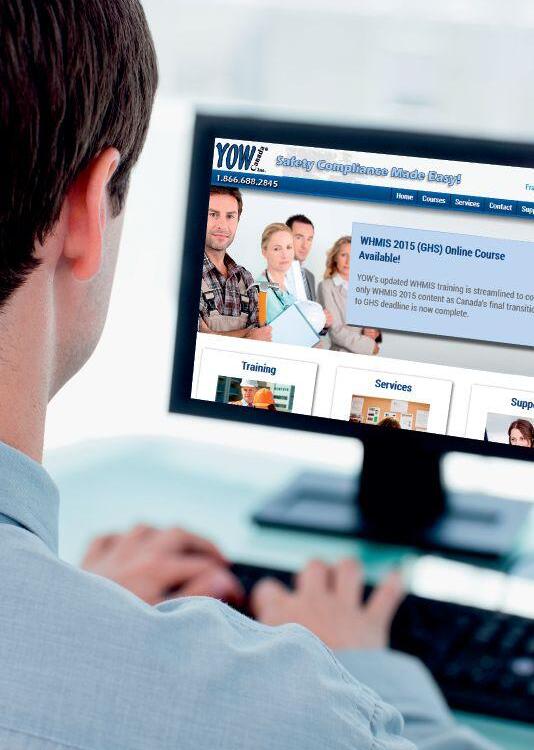
An award winning safety training provider, YOW Canada offers bilingual, customizable, online courses to help with compliance, including: Workplace Violence and Harassment WHMIS (GHS) 2015 and more
QA &
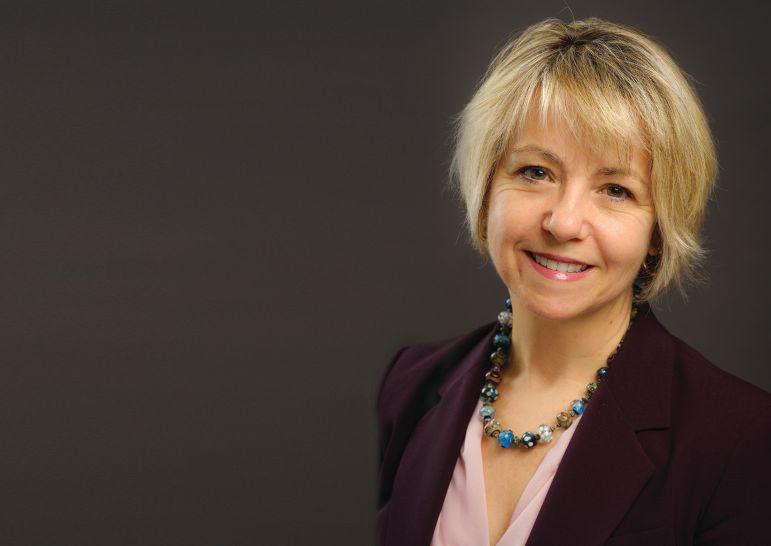
B.C. provincial health officer Bonnie Henry talks coronavirus
Over the past few months, health and safety deadlines across the globe have been dominated by the outbreak and spread of COVID-19.
In British Columbia, provincial health officer Dr. Bonnie Henry has been working hard to prevent the spread of the virus. On Feb. 13, OHS Canada caught up with Dr. Henry on her efforts. Responses have been edited for length and clarity.
OHS Canada: What role can employers play to help prevent the spread of infectious diseases in their workplaces?
Bonnie Henry: We’re in our coughcold-flu season, so the things that we do in various workplaces are the things that we need to do to prevent influenza, and that will help with this coronavirus as well. So those are things like being able to clean your hands regularly, having policies that allow people to work from home, or stay home if they’re not feeling well. And with this COVID-19 sort of hanging over us, those are the things that we need to think about a little bit more.
Other things that are really important are making sure that you cover your cough or sneeze when you’re in a workplace environment so they’re not spreading droplets around; that you have the ability to clean areas — especially high-touch areas — that people use all the time like the bathrooms and the elevators and the coffee area. You
might want to look at your cleaning processes and do it more frequently at this time of the year.
Should it start to spread more widely in other countries, between people and communities around the world, the impact could be quite dramatic. So, it’s a time now for us to start planning for how we could try and minimize the potential for these types of viruses to spread in workplaces. And generally, that means things like social distancing, so part of it could be working at home. Part of it could be people coming in on shifts. Now’s the time to start thinking about those things.
What can employees themselves be doing to prevent the spread of infectious disease?
BH: We all have a responsibility to try and do our part to prevent infections in others. Part of that is covering your mouth when you sneeze, cleaning your hands regularly, cleaning your workspace. Really importantly — especially right now when we’re dealing with this issue — is having a very low threshold for staying home and staying away from others if you’re feeling sick yourself. And I’d also say looking at your children carefully, making sure kids — especially young children who may not be attuned to their body and may not recognize when they’re starting to feel ill — we need to have a very low threshold right now for keeping them and keeping ourselves away from others if we’re feeling sick.
Do employees in specific industry sectors, such as health care or transportation face increased risk?
BH: Yes, definitely in the health-care sector. That’s one of the areas that we’ve been doing a lot of work on across Canada to prepare, but also to respond to people who need to be assessed right now. And we’ve tested hundreds of people across the country who have traveled primarily from the epicentre in China, but also other places where they may have had contact with somebody with coronavirus. If you are somebody yourself who has travelled and is sick, you need to put a mask on so that you’re not spreading your droplets to others when you go into the health-care sector.
For people who have face-to-face contact with others on a regular basis, and are shaking hands or interacting in schools, for example, really what you need to do in those situations is very much like we need to do when we’re at home. That’s frequent hand washing, covering your mouth when you cough, trying to stay away from others, being sure there’s things available for others to cough into — such as a tissue or into their sleeve, doing what you can do to clean your hands regularly because that’s one of the most common ways that we can get infected ourselves.
How much longer will Canada be on high alert?
BH: That is the big question. If it starts to spread more widely in other communities — particularly other countries around the world — how do we make sure we’re protecting our communities here in Canada? Our healthcare sector, so that we’re able to not only look after people with coronavirus, but also everybody else who has issues that need care?
Longer-term, we need to understand... what’s going to happen next influenza season? Will this come back and start causing problems again? So, there’s a lot of unknowns still and it’s going to be some time before we really have a good idea of what’s going to happen.
1Young and skilled professionals are driving the Canadian occupational health and safety profession forward, and we want to acknowledge the best and brightest. OHS Canada‘s Top 10 Under 40 recognizes the achievements of the newest generation of Canadian OH&S workers. Strong work ethic, leadership by example and dedication to health and safety will all be acknowledged. Join us as we celebrate the future of occupational health and safety in Canada.
WHO CAN BE NOMINATED?
Anyone in an occupational health and safety position with a Canadian company who is under the age of 40 as of Dec. 31, 2020.
• demonstrate a strong work ethic
• show leadership and initiative
• actively seek new opportunities for training and education
• be involved in industry associations, projects and/or initiatives
Recognizing the next generation of Canadian occupational health and safety professionals.
Deadline for OHS Canada’s Top 10 Under 40 is June 15, 2020
The Top 10 Under 40 will be featured in the July/August 2020 edition of OHS Canada.
Millennial desires reshape safety glasses market
Product enhancements focus on what workers want
By Marcel Vander Wier
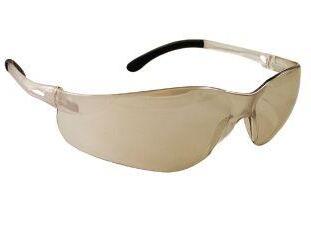
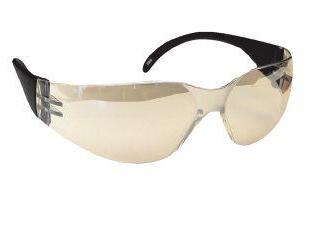
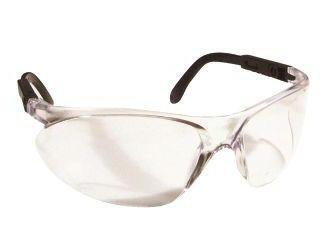
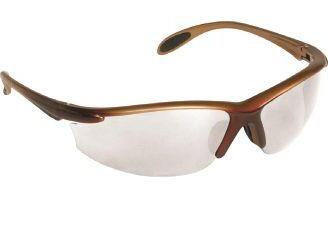
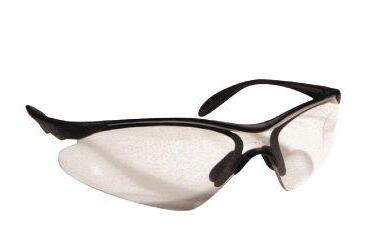
Anew generation of workers is putting its trademark stamp on eye protection — style is now king.
Safety glasses are taking the fashionable route, thanks to the demands of millennials, says Mino Alkawam, product manager with Protective Industrial Products Canada (PIP) in Laval, Que.
“They want something trendy,” he says. “They don’t want to go and put on the same eyewear that their fathers put on. They want something flashy; they want something with colours; they want something that is beautiful.”
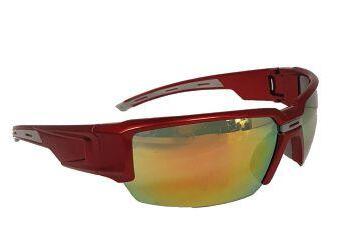
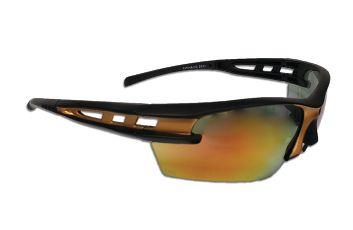
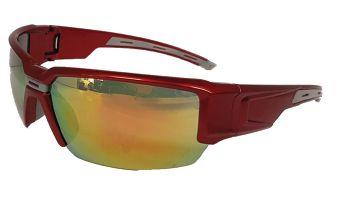
Safety sunglasses are a new addition to the PIP Canada production line — blue-mirror and gold-mirror options included. The lightweight Hummingbird line includes a smoke lens option with black temples and DynaShield coating — a polyurethane-based solution that lasts much longer than standard anti-fog solution.
And while millennials want protective eyewear that is relevant, an aging workforce is placing additional demands on the industry, according to Wanda Sanchez-Miller, senior product marketing manager with Honeywell Safety Products in Smithfield, R.I.
One size no longer fits all, she says.
“The need to fit the variety of different facial profiles has grown, and the need for something that is attractive, that is stylish… has become more and more of a need,” says Sanchez-Miller.
“Comfort is still really key. Fit is more important than ever because of the diverse facial profiles that we have out there. You want all of those things, but you want it also in something that you can wear on the job and off the job.”
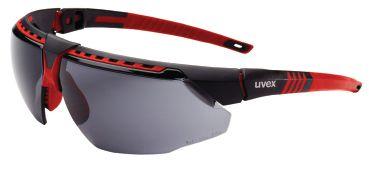
Honeywell’s Avatar brand was launched in 2017 to address this need. Attractive and lightweight, an angle-adjustable ratchet temple and wire-core temple allow users to properly fit the eyewear to their face, she says.
Avatar is also fitted with indirect venting and anti-fog coating to prevent steaming issues.
What workers want
Comfort and functionality remain high on the list when it comes to eyewear, says Bev Borst, advanced safety specialist with 3M in London, Ont.
“Safety eyewear needs to feel good while providing optimal protection,” she says. “Workers are looking for safety eyewear that they can comfortably wear for an entire shift.”
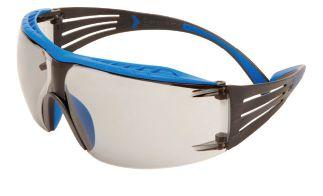
“Key features also include premium anti-fog coating, adjustability of nose pieces and eyewear temple arms. Another key attribute that is consistently requested is sealed eyewear to protect from flying debris.”
Safety glasses cosmetics and appearance have improved dramatically over the last few years. The “clunky” look of the past is gone in favour of “high-end, high-fashion sunglasses,” according to Claudio Dente, president of Dentec Safety Specialists in Newmarket, Ont.
All eyewear protection offered by Dentec offers both “tremendous cosmetics” and “incredible comfort,” he says.
And while style is the trend of the day, comfort and facial diversity opportunities available through ratcheting temple arms and lens-tilt options are also important, he says.
“At the end of the day, what you want is the safety glass to stay up high in position at the top of the nose bridge,” says Dente. “You do not want it sliding down.”
“We make sure it looks good, it’s comfortable, they fit great,” he says. “We have a variety of styles that if one won’t
accommodate the plant population, we have something else that they’ll be able to introduce to appease everybody’s comfort, looks and the requirement for a particular application.”
Future is foam-lined, OTG
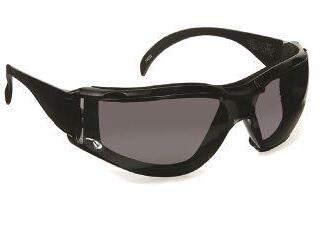
In 2019, goggles lined with foam gaskets grew in demand in an effort to block out airborne particles, says Alkawam.
“That’s something new,” he says. “If you go 10 years back, nobody really bought something like this.”
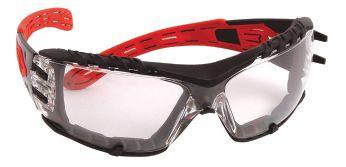
PIP Canada’s response to the shifting market was the Volcano Plus — rimless safety glasses with removable foam gaskets.
“That shows we’ve listened to customers,” says Alkawam. “We’ve seen how the trends are becoming in the market. We have to adjust.”
Many companies now require the usage of foam-line glasses due to a high number of eye injury incidents, says Dente.
Safety glasses with elastic straps that can mount to the temple arm such as the DustDevil or Sand Viper ensure the foam is secured and the fit is tight, he says.
The aging workforce will leave its own mark on eye protection in the years ahead, says Sanchez-Miller.
Going forward, more workers will require prescription eye glasses, which are inadequate as eye protection, she says.
“When you wear prescription glasses in a factory environment, that’s not protecting your eyes,” says Sanchez-Miller. “Prescription glasses are not necessarily safety glasses.”
To prepare for the expected surge in demand, Honeywell launched an OTG (over-the-glass) version of the Avatar, including three adjustments on the nose bridge to ensure proper fit, she says.
The weight-distribution design allows the Avatar OTG to fit comfortably over prescription glasses, while an antireflective coating works to reduce glare.
Common issues
Steam and scratch problems will always be present with workplace eyewear, as glasses are prone to take a beating — falling to the ground or being left in toolboxes, says Alkawam.
Manufacturers combat these issues by applying anti-fog and anti-scratch layers — the standard being one of each, he says.
More protective layers bring up the price of the eyewear, and can make or break a sale, says Alkawam.
“It’s unfortunate that still in Canada, with all the standards and the regulations that we have, that people still look upon buying safety products in general — and specifically eyewear — depending on price.”
“The reality is you get what you pay for,” he says. “An economic product is not going to give you the same comfort and fit that’s going to be best for the worker, in reference to a product that is double the price.”
A recent innovation by 3M is the Scotchgard anti-fog coating, says Borst.
The coating retains its effectiveness for at least 25 washings, allowing workers to wear this eyewear longer.
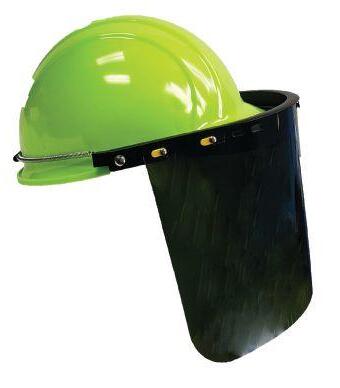
Face shields
Alongside goggles, face shields are also highly effective in terms of eye protection, says Dente.
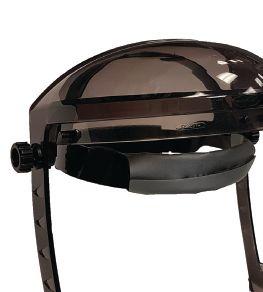
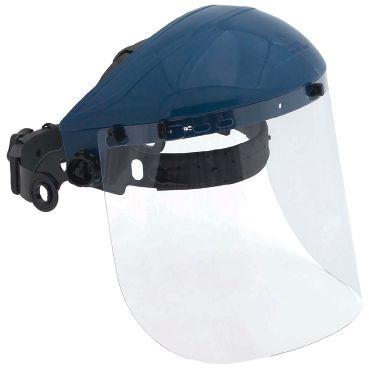
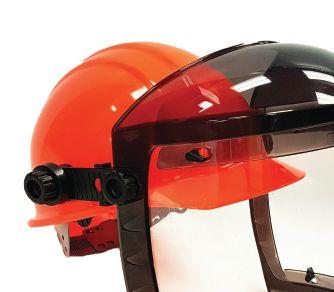
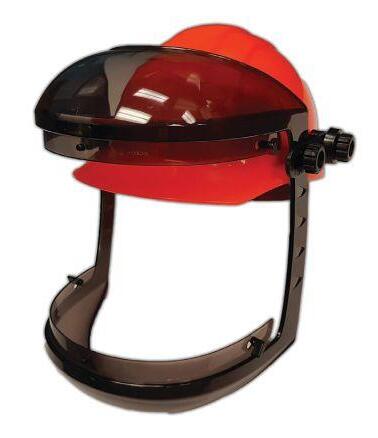
Face Tech is Dentec’s lat est offering for workers using a grinder. The new one-piece design protects the face fully from crown to chin, and includes polycarbonate sidebars which a visor mounts into, he says.
The gear protects against spray of debris and the impact of heavy objects in similar fash ion to a hockey helmet, says Dente.
“Our Face Tech face shield works as an integral system, meaning that the visor mounted in the face shield, mounted in the suspension, acts like a shock absorber.”
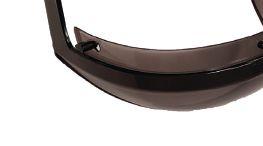
Without chin support, a heavy object could press a flat visor into the user’s face, with the potential of injury, he says.
The “unique curvature” of the chin support encapsulates the neck and throat area of the user, completely sealing against the collarbone while the user is looking down to grind a specific object.
Marcel
Vander Wier is the editor of ohs canada
Talk of time raiseschange alarm
Move to permanent daylight savings could result in permanent jet lag
By Meagan Gillmore
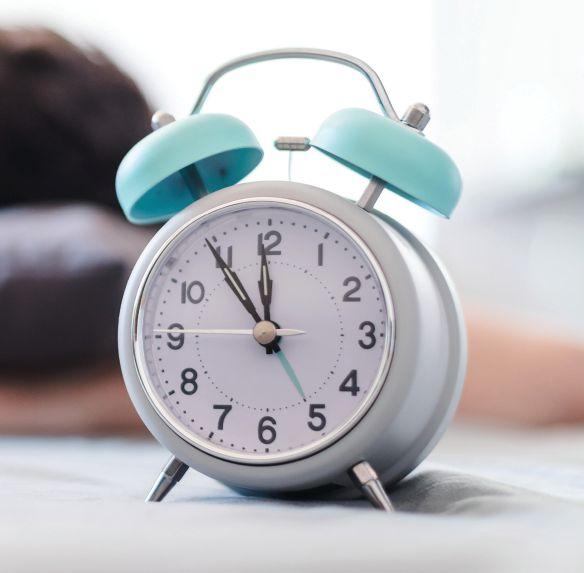
The clock is ticking on seasonal time changes.
On March 4, the Yukon government announced they will permanently adopt daylight savings time when the clocks spring ahead this year.
Last fall, British Columbia passed legislation that would allow the province to move to daylight savings time permanently. According to the province’s Ministry of the Attorney General, the change would happen “at a time that maintains alignments with (B.C.’s) neighbours,” and the premier has discussed this scenario with the governments of Washington, Oregon and California.
In December, the Alberta government completed a public survey asking citizens if they wanted to stay on daylight savings time permanently. Elsewhere, a private member’s bill was introduced in Ontario in February calling for yearround daylight savings time.
Currently, the majority of Canadian jurisdictions switch to daylight savings time in the spring.
However, most of Saskatchewan does not observe daylight savings time, nor do some regions in Quebec. Others want to follow suit. A 2019 private member’s bill urged the Manitoba government to end daylight savings time.
Risky changes
Time changes have long been associated with increased workplace accidents and decreased productivity.
“It doesn’t take much reduction in the quantity of sleep to get a significant impact in work performance,” says Joseph de Koninck, a professor emeritus of psychology at the University of Ottawa.
These changes can also hamper the overall economy.
Lisa Kramer, a professor of finance at the University of Toronto, has researched how stock markets decline on the first trading day after a time change. Kramer suspects this is because lack of sleep can increase anxiety.
“If investors are more anxious in the days following the time change, they might be more risk-averse, and this could lead to the types of changes that we see in the financial market,” she says.
While sleep experts support not changing clocks, they say
making daylight savings time permanent would harm workers because it limits the amount of morning exposure to sunlight.
“The mistake is that people think (the permanent time) should be daylight savings time,” says de Koninck, a former president of the Canadian Sleep Society.
Myths, dangers of daylight savings
A recent study from the University of Colorado shows the spring time change increased the risk of fatal car accidents by six per cent, and that most of those accidents happened in the morning.
“(Daylight savings time) doesn’t change how much light we get in a day,” says Myriam Juda, an adjunct psychology professor at Simon Fraser University in Burnaby, B.C., who co-authored an open letter warning the B.C. government about the health and safety dangers of permanent daylight savings time.
It only shifts when people are exposed to the sun’s regular patterns of light and dark, she says. The sun’s movements determine circadian rhythms and the biological clock.
After moving to daylight savings time, “our social schedule is advanced by a whole hour. However, our circadian clock is not advanced by a whole hour just because we’re moving our social schedules (forward),” says Juda. “We now have to get up a whole hour earlier, physiologically speaking.”
Concerns of jet lag
This creates a phenomenon called “social jet lag,” where an individual’s activities are out-of-sync with the body’s circadian rhythm.
For example, after daylight savings time, people are waking up and getting ready for work an hour earlier biologically. People can adjust to jet lag after travelling, but they never fully recover from permanent social jet lag, says Juda.
Travellers adjust to the dark-light cycle of the sun in their new location. But people don’t change location during a time change. “The discrepancy is still significant,” she says.
“When you switch to daylight time, it’s actually a little more insidious than losing an hour of sleep, because what we’re doing now is moving our social clock — our work clock — an hour earlier than when our body wants to get up,” according to Michael Antle, a psychology professor at the University of Calgary. “So, we have permanent jet lag. Our body is going to be permanently out-of-sync with our environment.”
“It doesn’t matter what governments pass for laws,” he says. “Your biology follows the environmental cues and it ignores the clock. But people still have to follow the clock.”
Governments have experimented with adjusting time changes in the past, “but what no one has experienced (in Canada) is permanent daylight time in the winter,” says Antle. “That’s going to be really hard to tolerate.”
Bending to time change
Going forward, more governments could consider permanently ending time changes.
For now, employers still have to create safe environments for workers. This begins by reminding workers of upcoming time changes, says Rebecca Ingram, a workers’ compensation consultant at BCL Consulting Group in Alberta.
“I think most people don’t think (the time change) impacts them at all because it happens on a weekend,” she says. “They see it happening on a weekend, so they think it’s isolated to the weekend. I don’t think most people think about how they’ll feel on Monday morning.”
Employers should avoid scheduling strenuous tasks for Monday morning, says Ingram. This includes not having important meetings or starting new construction projects. Trucking companies should give drivers more time, and not schedule many deliveries for that day.
“When there’s more deadlines, give them more leeway,” she says.
Start times should be flexible during the first days after a time change, “instead of unrealistically expecting everyone’s bodies just to snap into the new time,” says Kramer. “That’s just impractical. Our bodies don’t work that way.”
Juda, who is also a sleep and circadian consultant, recommends workers use a light box at work, or at home before they go to work. Light exposure helps people become more alert in the morning, and could improve work performance. She suggests workers begin this in the days before the spring time change.
“(Workers should) try to get as much bright light exposure in the morning. That is difficult after the spring transition,” she says. “The earlier you use (a light box) in the morning, the more effective it is.”
It’s best to use light boxes in the hour after waking, says Juda. The later in the morning workers use a light box, the longer they should use it.
Consider adjustment measures
Employers should also consider allowing naps during the workday. This is important year-round, according to de Koninck, who says his daily naps have had a “terrific” impact on his work.
Regular breaks help workers stay productive, he says. He compares it to exercise — just like it’s important to exercise different muscles for short amounts of time, it’s important to use different parts of the brain. This includes relaxing.
Employers should consider having reclining chairs so workers can have a short rest; while individuals’ needs vary, naps that are between 15 and 20 minutes are usually most effective, says de Koninck.
“If you have the opportunity to get into very deep sleep, especially if you’re sleep-deprived, then you have a hard time waking up,” he says. “It’s going to be counter-productive.”
Ultimately, maintaining safe and productive workplaces after a time change requires that employers understand their workers’ needs, says Ingram.
When they issue reminders about an upcoming time change, “it speaks to employers paying attention and caring about their employees.”
Meagan Gillmore is a freelance writer in Toronto.
Efficient doesn’t always mean effective
By Alan Quilley
In exploring a more logical approach to implementing safety management systems, I’ve discovered that beyond full engagement of employees, second on the Safety Logically tenets list is resisting the temptation to jump to easy yet ineffective solutions to the challenges we face.
Probably the most prevalent example of failure is the ever-present safety orientation video. I’ve seen this orientation tool so drastically misused that I’m almost of the mind that we should make them illegal. Typically, these well-intentioned videos have the goal of orienting new employees and contractors to a company’s safety requirements.
The first tenet that these videos violate is that they are (typically) totally passive by design. It’s one-way communication at its worst — lots of telling with almost no chance for questions or clarification by the viewer.
There is an expectation that brand-new employees — who may not even know where the washroom is — mentally absorb a long list of critical information. Far too often this critical information is blasted at them at breakneck speed by a fast-talking announcer rattling off everything from emergency procedures to confined-space entry permits.
It may look like an efficient way of touching bases with employees, but it’s totally ineffective. Retention of this type of delivered information can be expected to be zero.
Towards microlearning
What will be our present in our collective future is a much more evidenced-based microlearning technology where employees are motivated to learn at their own pace and are not passively, force-fed information. When designed well, microlearning is highly effective and certainly efficient.
But these orientation videos aren’t the only violation of the effective-and-efficient requirement to achieve safety excellence. Having virtually untrained managers and frontline supervisors manage safety in their areas of responsibility is bordering on insane. Like the safety orientation video, management training in OH&S responsibilities and skills often suffers the efficient but not effective test.
We often jump to solutions like executive-summary training, when in fact these leaders need intensive education and training on what it actually takes to implement world-class safety initiatives. Leaders need to be trained in the behaviours they need to implement to provide the demonstrated commitment actions that organizations demand of them.
“What you do speaks so loudly, I can’t hear what you say” has never rung truer than in our safety management efforts.
The tenets of Safety Logically
1. Do safety with people and not to people.
2. Don’t jump to a safety solution because it’s quick. Efficient and effective should be the desired outcome of any solution.
3. Use evidence to support what you do to enhance safety. You need data to make good decisions.
4. Measure what you do — not what doesn’t happen to you.
5. Stop relying on auditing! If you need an auditor to tell you what you are doing… you don’t know what you are doing.
6. Acknowledge efforts to create safety over those that just celebrate non-injury outcomes.
7. Recognize the need for the psychosocial aspects of your safety efforts.
8. Be patient. Change takes time — quick fixes rarely last.
9. Keep learning what works and let go of what doesn’t.
10. Stay connected and informed on what is new and what should be considered.
Use evidence appropriately
The third tenet on the Safety Logically list is interconnected to all of the others.
We must use whatever evidence that we can gather about our safety-creating efforts and created results to logically know what to continue doing and what to stop. It becomes all important to stop doing activities if they are not getting us the results we want.
Following the orientation example — how do you know that your orientation for new employees and contractors is working?
First, you could simply ask them to describe what they know about your requirements sometime after they have watched the video. Engage them in describing what they should do in a safety sensitive situation. If they actually know, they will be able to describe it. Asking them to pass a series of questions seconds after they have watched the video proves very little.
Similarly, one could ask the management team of their organization a series of questions about the process they should use in a safety situation to encourage future safe behaviours from their employees — and if they have used those steps in the last week. If you collect and analyze the information you gather in these two examples alone, you are miles ahead of those who don’t.
Safety Logically requires us not only to do new things. It also requires us to stop doing those things that bring us little or no return on our investments in effort.
Alan Quilley is the president of Safety Results in Sherwood Park, Alta.
TOWARDS ISO 45001
5 ways the standard can advance your safety program
By Dylan Short
Since its much-anticipated release in 2018, much has been written and debated regarding the new ISO 45001 Occupational Health and Safety Management Systems (OHSMS) standard.
Many leading global companies are adopting the requirements that their supply chain partners to be certified to the standard. But for most of us, the resources required to undertake certification of our OHSMS are beyond our current reach.
While certification may not be in the immediate plan, we can still study ISO 45001 and examine five key areas where we can evolve our current methods for managing safety.
Set the context
The first key element in ISO 45001 is clause 4.1 Understanding the organization and its context.
The organization is required to “determine external and internal issues … that affect the ability to achieve the intended (OH&S) outcomes.” Additionally, the organization is required to “determine the needs and expectations of other interested parties,” otherwise referred to as stakeholders.
Setting the context is a disciplined approach to evaluating all of the sources of impact on achieving the goals of the OHSMS. Proactively exploring the needs and experiences of workers, contractors, procurement and supply chain partners in addition to customers, the community and regulatory authorities, will allow for proactive identification of unaddressed areas in how we manage safety.
Take a risk-based approach
The second element is to take a risk-based approach to managing safety. Risk-based methodology involves a systematic approach to understanding the hazards present or anticipated and objectively assessing their impact on the intended outcomes of the OHSMS.
Taking a risk-based approach ensures the system addresses more than basic compliance requirements.
The process of hazard identification, eliminating hazards and assessing residual risk while applying a hierarchy of controls will deliver results proactively, instead of waiting for an incident to spark an emergency response.
Establish objectives, devise a plan
The next two key elements include having a process for establishing OH&S objectives and establishing a plan to achieve them. The standard requires the organization to “establish OH&S objectives … to maintain and continually improve the OH&S management system and OH&S performance.” (Clause 6.2.1)
The objectives will come from the previously discussed internal and external issues that are identified as hazards and a risk to OH&S performance.
The standard goes on to specify a number of requirements; however, the most helpful describe the process for planning to achieve the chosen objectives by identifying what will be done, what resources will be required, who is responsible, and more.
Like other business processes, the mechanism of establishing an objectively measurable plan to improve safety performance will allow the organization to understand where they currently are and allocate the resources to create the desired change.
Engage leadership
The final key to the success of ISO 45001 is also the area that many safety managers are most apprehensive about — management review of the OHSMS.
Clause 9.3 states: “Top management shall review the organization’s OH&S management system, at planned intervals, to ensure its continuing suitability, adequacy and effectiveness.”
As part of the responsibilities, the leaders who “direct and control an organization” are ultimately accountable for the results of the OHSMS.
To reiterate, most organizations are not in a position to pursue certification to the ISO 45001 standard.
However, we all can evolve our current methods for managing safety in our organizations by adopting its key elements.
Dylan Short is the managing director at The Redlands Group in Oakville, Ont. He is a member of the Canadian Mirror Committee that participated in the development of ISO 45001 Occupational Health and Safety Management Systems.
TURNING THE LIGHTS OUT ON BEDBUGS
ONTARIO — The Canadian government is looking for several pest-control contractors for inspection and treatment work in Ontario. The search comes on the heels of finding 31 federal buildings infested with bedbugs in 2019, according to the CBC. The vast majority of the buildings requiring treatment are in Ottawa, with others in Toronto, Hamilton and Waterloo. Bedbugs travel from place to place by stowing away on clothing or other personal objects. Three publicservice workers’ homes have also been inspected for bedbugs, and were found in one.
DELTA UNIFORMS A SOURCE OF IRRITATION
MINNEAPOLIS (AP) — Delta Air Lines plans to launch a new uniform program for its flight attendants amid complaints that the required uniforms have caused serious medical problems. Hundreds of Delta employees have sued Wisconsin-based clothing manufacturer Lands’ End, claiming the current uniforms are causing skin rashes, breathing difficulties and other medical problems. The current uniforms were unveiled in May 2018. Delta plans to launch the new uniforms in late 2021. In the interim, employees will be offered new uniform choices.
FIRE CHIEF IN THE HOT SEAT
CALGARY (CP) — A former Alberta fire chief, hailed by many as a hero for his role in battling the destructive Fort McMurray wildfire in 2016, has been accused of sexually harassing a female subordinate during previous jobs he had. Reported by CBC News, the allegations against Darby Allen date back to his stint in Calgary in 2002 and have not been proven in court. A 2018 statement filed in Alberta court by a former colleague indicated Allen repeatedly made sexually charged comments, groped her and became hostile when she made plans with other men. It also alleges he poked her in the back with his erect penis in her cubicle.
STRIPPED OF DUTIES, COP STRIPS DOWN
NEW HAMPSHIRE (AP) — The police chief of a New Hampshire town took it literally when he was stripped of his duties at a local board meeting, disrobing to his underwear and walking out into a snowstorm. Richard Lee had been
police chief in Croydon for 20 years. On Feb. 18, his position was eliminated as the town moved towards 100 per cent coverage by the New Hampshire State Police. Lee, who was at the meeting, was told to turn in the key to his cruiser, his guns and his uniform — immediately. He did so, and more.
VINTAGE GRENADE CAUSES PANIC
THUNDER BAY, Ont. (CP) — Police in Thunder Bay say a citizen who brought in a vintage grenade for disposal at the force’s headquarters caused a brief evacuation of its lobby on Feb. 27. They say a person brought in the grenade around 11 a.m., believing they were safely handing over the device to police. The Ontario Provincial Police’s explosives unit helped local officers contain the device. The lobby reopened around 1:15 p.m. Those in possession of dangerous materials should not move or transport them, but call police instead.
VALENTINE BOUQUETS – WITH A TWIST
BEIJING (AP) — Chinese lovers found a unique way to display their love for one another this year. Valentine’s Day bouquets came equipped with hand sanitizer at one flower shop in an effort to fight the coronavirus outbreak. Aside from sanitizers, Mary Jane Villegas’s shop also packaged protective face masks, soap, toothpaste and a bottle of alcohol amidst the flowers — at a slightly increased cost. “We don’t know if the people we mingle with are sick,” she said. “We want to live longer; that is why I made this.”
EUROPEAN ‘KISS’ GREETING POSES DILEMMA
MILAN (AP) — Friendly kissing in the time of coronavirus has become a fresh dilemma, especially in southern Europe. And more-reserved northerners are grappling with whether to forgo the hallowed handshake. Angelo Borrelli, Italy’s special commissioner for coronavirus, has suggested that his countrymen’s demonstrative nature could be contributing to the spread of the virus. “We have a collective social life that is very florid, very expansive,” he said. “We have lots of contact; we shake hands; we kiss each other; we hug each other.”
Follow us on Twitter @OHSCanada
Adjustable airflow to control your comfort
Optional task light specifically designed for welding
Say farewell to compromises.
Adjust your welding helmet, not yourself. Based on extensive input from welders who need to grind frequently, the 3M™ Speedglas™ Heavy-Duty Welding Helmet G5-01 is created to be adaptable.