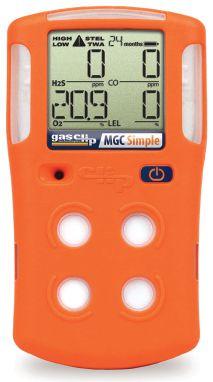
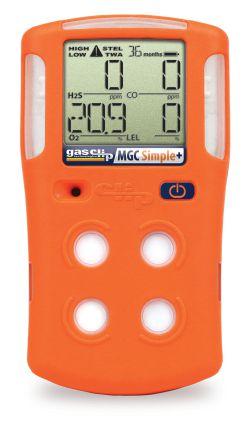
uTwo or three year run time with no charging or calibration
uDetect in oxygen deficient or oxygen enriched environments
uLEL sensor is immune to sensor poisoning
uFails to safe
uSimple, one button operation
uLogs data at one second intervals whenever gas is detected
u100% Quality control tested
uFull two or three year warranty
Multi Gas Clip
The portable multi gas detector that can run continuously for two months on one charge due to advanced infrared sensor technology. Detects combustible gases (LEL), H2S, CO and O2.
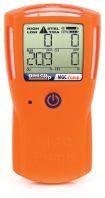
Multi Gas Clip Pump
Compact, light-weight, handheld/wearable multi gas detector with internal pump draws from 75 ft. & runs for an average of 52 hours on a single charge. Detects combustible gases (LEL), H2S, CO and O2
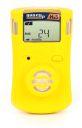
Single Gas Clip
Eliminate downtime with our ultra-reliable portable gas detector. Detects H2S, CO or O2
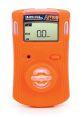
Single Gas Clip Plus
Hibernate mode offers extended life option when detector is not in use. Detects H2S or CO.
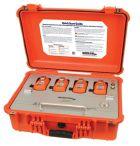
Compatible Docking Stations
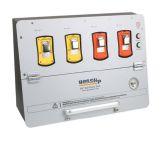
Portable, durable 4-bay dock stations
quickly bump test, calibrate & log data for up to four detectors at once with the push of a button.
Single Gas Clip Dock, Multi Gas Clip Dock, MGC Pump Clip Dock & MGC Simple Clip Dock
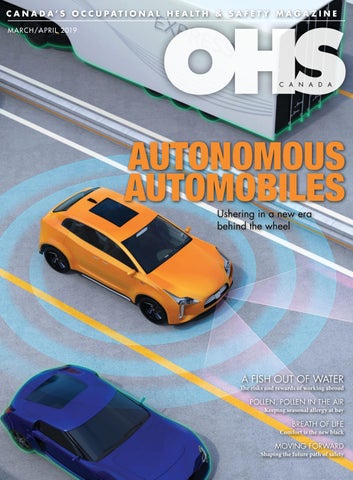
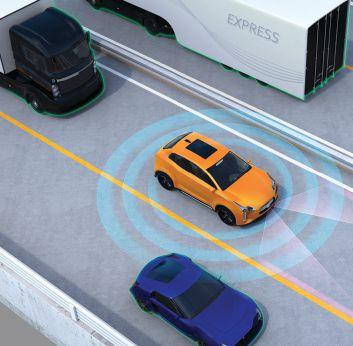
Autonomous technology is changing the way we drive and the dynamics between drivers and their vehicles. Can the technology also enhance transportation safety?
BY DONALEE MOULTON
Overseas work assignments give employees an opportunity to broaden their horizons, but Canadians who work abroad also face a spectrum of risks.
BY JEAN LIAN
JEAN LIAN
ALAN QUILLEY
EDITORIAL
A Pain in the Hand
As the editor of a magazine who covers workplace accidents, I have always been grateful to the fact that my job involves so little hazards. Compared to a long-haul trucker who battles fatigue, an engineer working at a construction site or a healthcare provider who faces the risk of workplace violence, my job could not be safer. No risk of broken limbs, fall from heights or exposure to toxic gases.
CIRCULATION MANAGER JAY DOSHI 416-442-5600 EXT 5124 jdoshi@annexbusinessmedia.com
The slow onset of musculoskeletal disorders is what makes it so insidious.
Naturally, I feel invincible and safe until I started experiencing a weakness and nagging pain on my right forearm two years ago. When the pain did not go away, I sought medical attention and was diagnosed with tennis elbow. As a righthander, I attributed the cause of my condition to overexerting my right arm from doing various household chores, like wielding a broom. But I recently started experiencing a similar weakness and pain in my left forearm as well, which made me realize that the cause is unlikely to be the occasional manoeuvering of a vacuum cleaner. It is an activity that is beguilingly light duty, something that I do not even think about when I am doing it and repeated over a very long time.
Then, a light bulb went off in my head: the culprit is typing. Like the Colorado River that carved the majestic Grand Canyon over aeons, a decade of engaging in intensive word-processing work has given me a pair of tennis elbows — and chronic to boot.
People who work on computers for prolonged periods are at risk of developing upper-limb musculoskeletal disorders (MSDs) stemming from cocked wrists, frequent clicking of the mouse and overusing the forearms’ tendons and muscles.
The slow onset of MSDs is what makes it so insidious. Often, we do not realize that we are engaging in bad posture or overexerting some part of our body until pain or soreness hits. By that time, we are not talking about prevention, but looking at a cure.
The observance of International Repetitive Strain Injury (RSI) Awareness Day on February 28 has never held a personal ring to me until now. Working at a computer may not present a life-threatening hazard, but it can certainly bring about an RSI that can compromise a person’s physical functionality.
Instead of calling it a tennis elbow, it is high time to use an alternative term — Computer Elbow — to describe elbow pain in people who do not play tennis. This would avoid the potential misperception of tennis elbow as a sports-related condition and help people to be more mindful of their computer posture and the volume of word-processing work they do.
Pain is a necessary condition of life to trigger avoidance and ensure self preservation. For me, pain has served its purpose: I have taken corrective actions to heal the pain by doing stretching exercises for the hand, massaging the forearm and adopting a more neutral hand posture while I clack away on the keyboard.
PUBLISHER PETER BOXER 416-510-5102 pboxer@ohscanada.com
GROUP PUBLISHER PAUL GROSSINGER pgrossinger@annexbusinessmedia.com
PRESIDENT & CEO MIKE FREDERICKS
EDITORIAL ADVISORY BOARD MEMBERS
DAVID IRETON, Safety Professional, Brampton, Ont.
AL JOHNSON, Vice President, Prevention Services WorkSafeBC, Richmond, B.C.
JANE LEMKE, Program Manager, OHN Certification Program, Mohawk College, Hamilton, Ont.
DON MITCHELL, Safety Consultant, Mississauga, Ont.
MICHELE PARENT, National Manager, Risk Management and Health and Wellness, Standard Life, Montreal, Que.
TERRY RYAN, Workers’ Compensation and Safety Consultant, TRC Group Inc., Mississauga, Ont.
DON SAYERS, Principal Consultant, Don Sayers & Associates, Hanwell, N.B.
DAVID SHANE, National Director, Health and Safety, Canada Post Corporation, Ottawa, Ont.
HENRY SKJERVEN, President, The Skjerven Cattle Company Ltd., Wynyard, Sask.
PETER STRAHLENDORF, Assistant Professor, School of Occupational and Public Health,Ryerson Polytechnic University, Toronto, Ont.
JONATHAN TYSON, Association of Canadian Ergonomists/Association canadienne d’ergonomie, North Bay, Ont.
Printed in Canada
ISSN 0827-4576 (Print)
ISSN 1923-4279 (Digital)
PUBLICATION MAIL AGREEMENT #40065710
CIRCULATION
asingh@annexbusinessmedia.com
Tel: 416-510-5189
Fax: 416-510-6875 or 416-442-2191
Mail: 111 Gordon Baker Rd., Suite 400, Toronto ON M2H 3R1
SUBSCRIPTION RATES
Published six times per year – Jan/Feb, Mar/Apr, May/Jun, Jul/Aug, Sep/Oct, Nov/Dec Canada $100/yr plus tax USA $100/yr
Foreign $164.50
Occasionally, OHS Canada will mail information on behalf of industry related groups whose products and services we believe may be of interest to you. If you prefer not to receive this information, please contact our circulation department in any of the four ways listed above.
Amount invested over five years to develop safety tools, training and resources to promote farm safety in Manitoba.
Source: Manitoba Government
110
Number of pipeline occurrences reported to the Transportation Safety Board of Canada (TSB) in 2018, down from 127 in 2017 and the five-year average of 119.
Source: TSB
15%
Percentage of people who experience winter blues in Canada.
Source: Canadian Mental Health Association
7
The number of people who died from falls in Ontario’s construction sector in 2017.
Source: Ontario’s Ministry of Labour
1. Explosion Risk: WorkSafeBC highlighted on its website explosion risks posed by food trucks on March 6, following a recent food-truck explosion in Oregon. As food trucks primarily use propane to fuel cooking and other equipment, explosions can occur when propane leakage from equipment or a fuel tank builds up in a truck, resulting in an ignition.
Source: WorkSafeBC
2. Wildfire Permit: Fire permits are required for any burning (except campfires) in Alberta’s Forest Protection Area as of March 1. Fire permits let firefighters know where planned burning is being done and help prevent false calls.
Source: Government of Alberta
3. Farm-Safety Contest: SAFE Work Manitoba’s annual drawing contest for Manitobans aged six to 12 runs until April 19. Contestants who submit a drawn picture showing how to find a safer way when faced with one of four common farm hazards — livestock, grain, farm equipment and chemicals — stand a chance to win an iPad.
Source: SAFE Work Manitoba
4. A Helping Hand: Employers who sign up for Ontario’s Workplace Safety and Insurance Board’s (WSIB) voluntary programs and services will get a helping hand on building healthy and safe workplaces through evaluators who will develop an action plan to bridge safety gaps. Companies who join the Safety Groups Program by March 29 can earn a shared rebate for safety improvements.
Source: WSIB
5. Awareness Survey: WorkplaceNL is conducting a survey on workplace-safety awareness in partnership with the Newfoundland and Labrador Statistics Agency and the Department of Finance. Findings of the survey will be used to develop programs to address gaps in health and safety education.
Source: Newfoundland and Labrador Government
MASSIVE EXPLOSION AT PESTICIDE PLANT
An explosion at a pesticide plant in Jiangsu province, China on March 21 killed at least 64 and seriously injured 94 people. It also raised fears of toxic substances spreading in the air and water as firefighters battled an inferno through the night. The blast caused a tremor equivalent to a magnitude of 2.2, and an disclosed number of company employees were detained after the blast.
Source: The New York Times 360°
OH&S UPDATE
TSB RELEASES STATISTICS
FEDERAL — Preliminary transportationoccurrence statistics for 2018 that the Transportation Safety Board of Canada (TSB) released on March 6 showed encouraging trends in air transportation, while marine and rail transportation had mixed results.
The 201 aviation accidents — defined as an occurrence resulting in a serious injury or fatality or when a mode of transportation sustains structural failure or is missing — reported to the TSB in 2018 was substantially lower than the five-year average of 249. A significant drop in flight-training accidents following a 2017 peak has brought commercial-operator accidents to a total of 66 in 2018, compared to 97 last year and to the five-year average of 80.
As for the 860 reported aviation incidents reported in 2018, the number is a substantial decrease compared to the
previous year of 939, but higher than the five-year average of 797.
The number of marine accidents in 2018 hover at 283 — just above the 2017 total of 279 and below the fiveyear average of 287. Although the number of fishing vessels involved in accidents was lower than the previous year, 12 of the 15 fatal marine accidents and 17 of the 22 marine fatalities were related to commercial fishing.
“Clearly, more needs to be done to improve safety in this industry,” a TSB statement says. “Commercial fishing safety will remain on the TSB Watchlist of key safety issues until more positive change is accomplished.”
Marine incidents saw a six per cent increase to 936 in 2018 and a 22 per cent hike from the five-year average of 768. More than two-thirds of reportable incidents were related to total failure of machinery or technical system.
The railway transportation had
BOARD TARGETS HIGH-RISK SECTORS
RICHMOND — WorkSafeBC’s high-risk strategy for 2019 will focus on construction, forestry and manufacturing.
In a statement issued on March 7, the safety board says its high-risk strategies target the four industry sectors of construction, forestry, health care and manufacturing where there is a high risk of serious injury and a significant contribution to the serious-injury rate.
For the construction industry, WorkSafeBC will step up enforcement efforts on fall-protection-system anchors used in the residential wood-frame construction industry. “There are too many falls from roofs or scaffolds, so we are increasing our efforts on those employers in framing or residential forming and steep slope roofing,” says Dan Strand, director of prevention field services with WorkSafeBC in Richmond, British Columbia.
Work-site inspections will also focus on the oh&s responsibilities of prime contractors to ensure that they have established and maintained a system that comply with fallprotection regulatory requirements. The board will also work with stakeholders to encourage communication and proactive response to evolving emerging risks. “What we are trying to do here is make construction sites safer and reduce the number of injuries,” Strand adds.
For the forestry sector, additional focus will be placed on phase congestion — an industry-wide problem that has
1,170 reported railway accidents — a seven per cent increase over 2017 and a 13 per cent rise from the five-year average of 1035. Most of the increase relates to non-main-track derailments of five or fewer cars. The 57 rail-related fatalities reported in 2018 were 19 fewer than the previous year and well below the five-year average of 74.
The TSB will release its final statistical reports for 2018 in spring.
BROKEN AXLE LED TO DERAILMENT
FEDERAL — A broken axle on a freight car led to the derailment of a Canadian National Railway (CN) train in British Columbia last year.
According to a Transportation Safety Board of Canada (TSB) report released on February 21, a CN freight train experienced a train-initiated emergency brake application near New Hazelton,
resulted in serious injuries and fatalities. Forestry operators often carry out multiple harvesting phases within a single operating area where many contractors work at the same time. Without proper planning, these areas can become overcrowded and lead to unsafe conditions. “Poor planning and scheduling, as well as inadequate communication among workers, employers and contractors, are often contributing factors in these incidents,” Strand says.
Through inspections of forestry operations, officers will ensure that employers understand the risks associated with phase congestion. To help identify those risks, officers have developed a questionnaire, which WorkSafeBC will make available to employers, for use during inspections.
Slips, trips and falls will be the focus for the manufacturing sector where slippery surfaces are a key cause of injuries. “Contributing factors to injuries are often seasonal, — such as slippery surfaces after rain or snow — or are indirectly related to the manufacturing process,” Strand says. “We are tackling complacency around these avoidable incidents by educating employers and workers through inspections and providing effective resources.”
Those efforts will be reinforced in 2019 with the development of an employer resource and two marketing campaigns to address slips, trips and falls and winter-related risks, the statement adds.
British Columbia on 19 January, 2018. An inspection determined that 27 gondola cars loaded with coal had derailed, spilling some of the product into the waterway. There were no injuries, and no dangerous goods were involved.
Subsequent investigation found that the 52nd car in the train had sustained a broken axle due to fatigue cracking in the journal fillet radius — the area between where the wheel and wheel bearing is mounted on the axle — leading to the derailment. While the exact cause of the fatigue cracking could not be determined, fatigue cracks are known to result from abnormal cyclic loading due to several reasons.
Axle fatigue cracks in the journal fillet radius are not detectable during routine safety inspections, as this part of the axle is concealed by wheel-bearing components. Visual inspection is only possible during wheel and bearing replacement, or during axle reconditioning. Without alternate strategies to identify fatigue cracks or to predict the likelihood of fatigue cracks developing,
problematic axles might not be removed from service in a timely manner, hence increasing the risk of broken-axle derailments, the report states.
LACK OF EXPERIENCE CITED
FEDERAL — Insufficient recent experience in instrument flights, particularly in night flights involving unfavourable weather conditions, was cited as a risk factor in a helicopter crash last year.
A privately operated Robinson R44 Raven I helicopter departed SaintGeorges de Beauce, Quebec with one pilot and two passengers on board on a night visual flight rules (VFR) flight to Saint-Alexis-de-Montcalm, Quebec on the evening of February 1, 2018. Less than an hour after the flight commenced, the Canadian Mission Control Centre received a distress signal from the helicopter’s emergency locator transmitter. At about 9.30 p.m., the destroyed helicopter was found in a field in Saint-Joachim-de-Courval near Drum-
mondville. All onboard were killed.
According to the report that the Transportation Safety Board of Canada released on February 18, unfavourable weather conditions caused the pilot to lose visual references to the ground, resulting in spatial disorientation and loss of control of the helicopter. Although the pilot held a valid pilot licence and a night rating, it was likely that he did not have the necessary skills to handle a significant reduction in visual references to the ground given his training and limited night-flight experience.
The investigation also highlighted risk factors associated with night VFR flights. If pilots are not required by the Canadian Aviation Regulations (CARs) to maintain their instrument-flying skills in order to use the privileges of a night rating, there is a risk that they will be unable to recognize spatial disorientation and react appropriately.
If CARs do not require pilots who conduct night VFR flights to undergo recurrent assessments in the form of dual instrument flights with a qualified
THX Jane
instructor, pilots may not be able to maintain control of the aircraft or regain control in time in the event of a loss of visual references, the report adds.
BRITISH COLUMBIA UNVEILS BUILDERS’ CODE
VICTORIA — British Columbia launched Builders Code on March 8 to address the province-wide issue of skilled-labour shortage by reducing harassment, bullying and hazing on construction sites.
The Builders’ Code — led by the BC Construction Association (BCCA) in collaboration with internal and external stakeholders — expands the definition of construction safety beyond physical hazards to include stress or distraction caused by discrimination, bullying, hazing or harassment. It also defines what constitutes an acceptable work site and provides employers with tools, training and resources to promote safe and productive work-site behaviour.
“Worksite behaviour is not a women’s issue, it is a business issue,” says BCCA president Chris Atchison.
The program includes a “10x10” goal is to have tradeswomen make up 10 per cent of the province’s skilled workforce by 2028, which will translate to adding 9,500 women into the skilled trades in the province’s construction industry and bridge the projected skills gap of 7,900 workers.
Although women, youth and other equity-seeking groups
are entering construction trades at a higher rate than in the past, retention rates remain low. First-year retention rates for women apprentices were estimated at less than 50 per cent, compared to 70 per cent for men.
“WorkSafeBC is pleased to support the Builders Code’s objective of giving contractors the tools they need to address inappropriate work site behavior in order to improve worksite safety and reduce the likelihood of workplace incidents across British Columbia,” says Brian Erickson, WorkSafeBC’s interim president and chief executive officer. “Employers, supervisors and workers all share the responsibility to prevent workplace bullying and harassment.”
The Builders Code pilot will highlight the business and safety implications of work-site behaviour and provide employers with the tools they need to improve retention. Employers can access no-cost posters and policies, training and advice from experts with experience in human-resources management, including mediation and conflict resolution.
“Hazing, bullying and harassment of any employee or co-worker is unacceptable,” says said Paul Hill, president of Houle Electric Ltd, one of the first companies in British Columbia to sign the Code’s work-site pledge.
DEADLINE EXTENDED FOR COMMERCIAL DRIVERS
EDMONTON — The deadline for Alberta farm workers to comply with new training requirements for commercial drivers has been extended until March 1, 2020.
According to a statement issued on February 27, the province is introducing a Mandatory Entry Level Training (MELT) program for drivers seeking a Class 1 or Class 2 driver’s licence to improve road safety. This new requirement , which does not apply to drivers who have already obtained a Class 1 or Class 2 driver’s licence on or before October 10, 2018, was scheduled to take effect on March 1.
Following consultation with the agriculture industry, the government has extended the deadline for farmers and farm workers to accommodate the demands of the 2019 farming season. While the new entry-level training program is encouraged, it will not be mandatory for farm workers seeking to obtain a Class 1 licence during the 2019 farming season.
Eligible farm workers may apply to Alberta Transportation for the MELT deadline extension between March 15 and November 30. Applicants must identify themselves as farmers or farm workers. Once this status is confirmed and the application approved, drivers will be authorized to take the pre-MELT knowledge and road tests for a Class 1 licence. Successful applicants must obtain their Class 1 licence by November 30.
NEW REST STOPS ON HIGHWAYS
EDMONTON — Three new highway rest stops along heavily travelled corridors in Alberta will give drivers more places to pull over, rest and inspect their vehicles.
The rest stops are part of the province’s overall approach
to promote traffic safety. The safety rest stops will be located at QEII Southbound at Wolf Creek just north of Lacombe, westbound on the Yellowhead highway west of highway 43 and eastbound on the Yellowhead highway, west of highway 43.
“Rest stops allow our commercial carriers to rest so they are not fatigued behind the wheel,” Brian Mason, Alberta’s Minister of Transportation, says in a statement on March 6.
“They are also a good place for all of us to pull over and stretch our legs before getting back on the road.”
The province is also supporting development of a new private-sector rest stop near Bowden, the statement adds.
REPORT YIELDS RECOMMENDATIONS
REGINA — The Saskatchewan Coroners Service made six recommendations following the completion of its investigation into the fatal collision involving a coach bus carrying juniorhockey players from Humboldt Broncos and a semi-tractor trailer on a rural highway on April 6, 2018. The report, released on February 25, recommended the following:
• Ministry of Highways and Infrastructure review their policy on the installation of traffic-control devices and signs at, and in advance of, the intersection by taking sight lines and expected speed and volume of traffic into consideration;
• The Saskatchewan Highway Patrol review their policy and operating procedures to ensure stricter compliance with
regulations and standards for commercial-vehicle drivers;
• The Saskatchewan Coroners Service create and train staff with respect to a mass-fatality plan that includes reviewing policy and standard operating procedures with respect to identifying the deceased;
• Saskatchewan Government Insurance should work with the trucking industry to implement standardized and possibly mandatory training for truck drivers;
• Saskatchewan Health Authority to review policy and standard operating procedures with respect to the identification of persons coming into their care resulting from a masscasualty or fatality event; and
• Transport Canada continues to support the development of regulations that enhance national safety codes with respect to driver training and electronic logging devices, and create regulations mandating the installation of seat belts in highway public transport buses.
The chief coroner has determined no inquest will be held.
SENTENCE SHOWS NEED FOR EMERGENCY EYEWASH
THOMPSON — The Workplace Safety and Health branch of Manitoba Growth, Enterprise and Trade is reminding employers to ensure appropriate emergency washing facilities are present in the workplace after a mining company was fined $124,000 on February 12 for failing to provide ready access
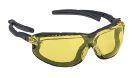
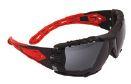
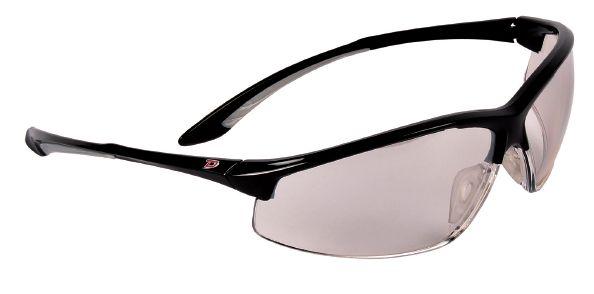
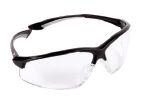
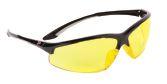
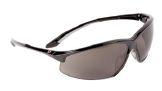
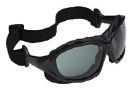
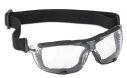
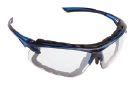
Looking for More Comfort & Fit DSI has it!
Very lightweight – less than 1 oz
9.5 base curve lens for better coverage
Exclusive anti-fog coating
Double injection temple arms and soft nose-piece to prevent slipping in hot and humid environments
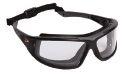
Dyna Shield Dyna Shield
Contemporary dual-lens design with half-frame
Available in Clear, Amber, Smoke and I/O Mirror lenses
Fits a wide variety of different faces
to emergency-eyewash equipment.
The fine stemmed from an incident on April 30, 2016 when Vale Canada Limited workers were grouting cables at the T3 Mine in Thompson. The workers, who stood on an elevated scissor deck, were pumping liquid grout into holes through a pressurized polyethylene hose when grout entered one of the worker’s eyes. With no emergency washing facilities nearby, the grout remained in the worker’s eye for an extended period of time, resulting in a permanent eye injury.
Vale Canada pleaded guilty to failing to ensure emergency-eyewash equipment was readily available to workers while working in close proximity to the CG-542 Rock Bolt and Cable Grouter.
HEALTH FACILITIES UNDER REVIEW
WINNIPEG — Manitoba is reviewing security programs, services and systems at key healthcare facilities in the province to ensure that they are safe for patients, visitors and staff, Health, Seniors and Active Living Minister Cameron Friesen announced on March 11.
There are currently no provincial standards to guide requirements in healthcare facilities, resulting in vary-
ing levels of security presence and staff training from facility to facility. As such, the review will report on the inconsistent levels of staffing and training standards in place at these facilities and create a plan to ensure the continued safety of both employees and visitors.
The review, which will evaluate and benchmark facilities to similar sites across the country, will include interviews with security staff at each site and assess policies and data in various areas, including current security programs and processes, staff duties, contingency and response plans and security orientation and training plans. Reviewers will also look at physical security systems.
Facilities outside of Winnipeg that may be part of the review include Brandon, Dauphin, Swan River, Thompson, Flin Flon, The Pas, Selkirk, Pine Falls, Boundary Trails Health Centre, Portage la Prairie, Steinbach and Eden Mental Health Centre in Winkler.
WORKER STRUCK IN SCRAPYARD
WINDSOR — A steel-recycling company in Windsor, Ontario was fined $55,000 on March 22 over a worker injury in 2017.
The incident occurred on May 1,
COMPANY SENTENCED OVER INCIDENT
PETERBOROUGH — A Nova Scotia company registered to operate in Ontario was fined $130,000 on March 4 over a worker injury at its plant in Peterborough, Ontario.
According to Ontario’s Ministry of Labour, Ventra Group Company retained a contractor to provide industrial cleaning services at its Peterborough plant that manufactures injection-moulded plastic vehicle components.
An employee of the cleaning service was cleaning the area around various injection-moulding machines alone on September 30, 2017. The worker tried to clean a robot cage at the injection-moulding machine which has two robots inside the cage to pick, trim and place vehicle bumpers from the injection-moulding machine onto a conveyor.
Although the door to the robot cage was interlocked to shut both robots down upon opening the door, the interlock did not shut down the parts conveyor, which continued running. The worker entered the robot cage to clean the inside of the machine before exiting through the door to clean an area outside the cage near the conveyor.
Upon seeing some spent plastic pellets under the con-
2017 at K-Scrap Resources Ltd.’s facility, which was divided into work areas serviced internally by vehicle pathways, a railroad track and a locomotive. A worker was working in the tube torching cell area where steel pipe tubes were being cut to smaller lengths.
The area is outlined with pre-cast concrete blocks fitted with steel racking that has notches to stop tubes from moving once they are placed into the area for processing. The area borders the employer’s rail track, and a crane is used to move the tubes into the area.
Once a tube has been placed, the worker enters the area and uses a cutting torch to cut the tube into appropriate lengths for removal by the crane. As the worker was cutting the tubes, a railcar that was being pushed on the rail track by the locomotive struck the ends of two tubes protruding from the area into the path of the railcar.
The first tube that was struck by the locomotive caused the other end of the tube to sweep across the ground, and the second tube that was struck swept across the ground in a similar motion, knocking down the worker.
A subsequent investigation by Ontario’s Ministry of Labour determined that K-Scrap did not take the reasonable precaution of erecting barrier or similar
veyor, the worker reached between existing guards on the conveyor to sweep the pellets with one hand. To access the area of the moving drive shaft, the worker squeezed through a small gap. But a rotating drive shaft, which was not visible to a person standing beside the conveyor, caught the worker’s hair and resulted in a critical injury.
According to the investigation, Ventra performs regular pre-start engineering reviews on its equipment as required by Occupational Health and Safety Act regulations and has retained an engineer to examine the robots for compliance with applicable regulations and standards. The engineer recommended additional guarding on top of the conveyor, which Ventra followed. The existing guards at the side of the conveyor near the tail pulley allowed, with some difficulty, access through the small gap to the area underneath the conveyor and the drive shaft.
The company pleaded guilty for failing to ensure that the exposed moving part of a machine or equipment is guarded or equipped with a device to prevent access to the moving part.
devices and visible indicators to ensure that a tube and other material were not located in the path of the railcar. The company pleaded guilty and was sentenced in Windsor court with an additional 25-per-cent victim surcharge.
PERMANENT INJURY SPURS FINE
WINDSOR — An Ontario company was fined $60,000 on March 21 over an incident more than a year ago.
The incident took place at CS Wind Canada Inc’s facility in Windsor, Ontario on October 30, 2017. As part of the facility’s shutdown process, a worker was disassembling flanges, or wind tower sections formed of large metal rings, to dispose them as scrap metal.
The worker placed one side of each flange on a stand and used an acetylene gas torch to make cuts at the raised area. During the cutting process, a piece of flange turned inward and fell on the worker, resulting in a severe injury. An investigation by Ontario’s Ministry of
Labour found that CS Wind had not provided workers with information and instruction with respect to a safe procedure for cutting wind-tower sections.
This is the second conviction for the company, which was previously convicted on August 18, 2016 for failing to take every precaution reasonable in the circumstances for the protection of a worker. In that incident, the company was fined $60,000 after a worker suffered multiple injuries from the movement of components of a wind tower that was under construction.
TWO FIRMS PLEAD GUILTY
TORONTO — Two companies were fined $200,000 on February 25 over a fatal incident in which a freight elevator door fell on a worker two years ago.
The incident took place on November 15, 2016 at a building in downtown Toronto, owned by Toronto Standards Condominium Corporation (TSCC) 1730. Events at the property
are operated by Events at One King West Ltd., also owned by TSCC 1703.
According to Ontario’s Ministry of Labour, the building has a manually operated freight elevator. On both sides of the elevator car itself is a door that operates similarly to a manual garage door by pulling a strap from the car’s ceiling to the floor.
On that day, a worker employed by Events was transporting holiday decorations on the freight elevator, which stopped short of the third floor. The trapped worker was able to open the front car door and pull himself out of the elevator. Upon re-entering the elevator, that worker noticed a black stage cord attached to the front car door got caught on the upper portion of the second floor landing door. The worker began to pull the upper portion of the landing door up with the elevator car.
At the same time, another worker employed by Events returned to the elevator to see if anything still needed to be unloaded when he observed that the top panel of the landing door had
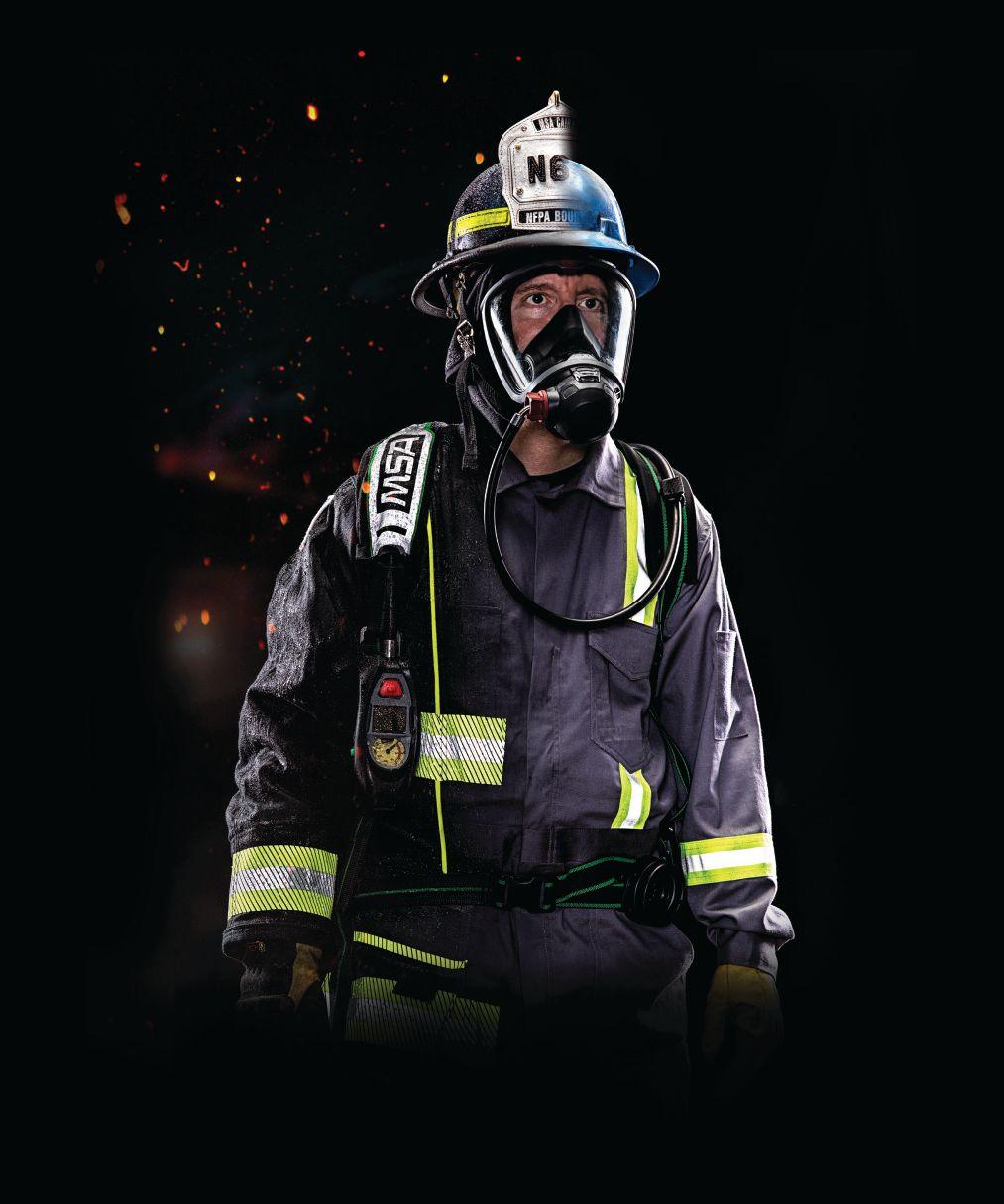
Groundbreaking technology. Superior mobility and comfort. Find out more about the SCBA and supplied-air respirators built for firefighters and preferred by industrial workers across the country. Check out our complete line at us.msasafety.com/g1 industrial
opened. The Events worker looked into the hoistway opening created by the landing door being pulled apart. The black stage cord then snapped and the upper portion of the landing door crashed down onto the worker, causing a fatal blunt impact injury.
The investigation revealed that the black stage cord was a replacement for the original strap, which had been broken about two weeks before the incident. Events pleaded guilty to failing to ensure that the freight elevator was maintained in good condition, while TSSC 1703 violated safety regulations by permitting the elevator to be operated without ensuring that necessary repairs were made, rendering it unsafe.
CONVICTED FOR FAILURE TO PAY WAGES
MISSISSAUGA — Convictions over the failure to pay wages were upheld against an Ontario employer on March 5.
The charges stem from an original conviction on June 6, 2017 when Peter David Sinisa Sese, who operates Academic Montessori and a summer camp in Mississauga, owed $700 and $12,000 to 43 camp counsellors and Montessori teachers dating back to 2014. At the time, a $20,000 fine and a 30-day jail sentence were imposed, and the businesses ceased to operate before the first trial, the Ministry of Labour reports. Sesek appealed the conviction.
The employer violated the order to pay wages from March
2015 to March 2019 and was found guilty. Sesek was also convicted under the Consumer Protection Act for failing to refund $3,968 owed to parents of children who paid to attend the Montessori school, but could not after the school closed. Sesek was fined $1,000 for that offence.
The combined total of wages to be paid, fines, refunds and victim surcharges amount to over $204,000. Following an appeal and a re-trial, Sesek was ordered to pay a total amount of $140,490.
LUMBER SUPPLIER GETS PENALTY
MISSISSAUGA — A lumber company in Mississauga, Ontario was fined $75,000 on March 11 over a worker injury three years ago.
The incident took place on September 29, 2015 at a residence in Vaughan where a worker was unloading large beams of lumber from a delivery truck. The worker climbed onto the truck bed and removed the strapping used to secure the beams as he tried to push them off the side of the truck. While doing so, the worker lost balance and fell 2.3 metres from the truck to the driveway along with two beams and sustained critical injuries.
An investigation by the Ministry of Labour revealed that the worker had received some training on how to deliver lumber to residential sites and construction projects, but had not been given adequate information or instruction on how to safely unload beams longer than 22 feet. As a result, the worker climbed on the truck and unloaded the beams by hand, which was an unsafe method of unloading.
The company pleaded guilty to failing to inform, instruct and supervise workers to ensure their health and safety.
MIXED REPORT ON RETURN TO WORK
HALIFAX — Nova Scotians are getting injured at work less often, but they are taking longer to return to work when they do get injured. This is the key finding of the Workers’ Compensation Board (WCB) of Nova Scotia’s Report to the Community for the third quarter of 2018, released on February 25.
The length of an average claim — or how long injured workers spend off the job — and the total number of days lost to workplace injury are both increasing, according to the report. The index used to measure average claim duration increased to 124 days from 117 days at the end of 2017, compared to 115 days in the same quarter of last year. The statistics are based on numbers related to time off the job due to injury that the WCB keeps track of.
Time-loss injuries saw a slight drop to 1,476 from July 1 to September 30, 2018 from 1,500 in the same period in 2017. The time-loss injury rate declined to 1.72 per 100 WCB-covered workers from 1.76 at the end of 2017.
As of the end of September, there were 12 acute fatalities due to traumatic work-related incidents and 17 chronic fatalities resulting from occupational diseases or deaths stemming
from health-related conditions like heart attacks.
“Over the last decade, we have built true momentum when it comes to workplace safety in Nova Scotia, and we know that work never ends,” WCB Nova Scotia CEO Stuart MacLean says. “We also know we are facing challenges like an aging workforce and more complex injuries than we have ever seen,” he adds.
The WCB continues to visit workplaces, conduct education and awareness campaigns and work with safety associations to promote occupational health and safety.
WCB Nova Scotia is replacing its old claims and assessment systems with new technology to provide better tools and speed up processes for employers, workers and service providers. “With more efficient systems and our other service upgrades, workers and employers will have more time to focus on prevention and return to work,” MacLean says.
ENTANGLEMENT HIGHLIGHTED
CHARLOTTETOWN — The Workers Compensation Board (WCB) of Prince Edward Island is raising safety awareness around Power Take Off (PTO) drive equipment during the Canadian Agricultural Safety Week, which ran from March 10 to 16.
The board urged farmers to inspect PTO guards and ensure that they are in place and working properly before the farming season hits its peak. Equipment entanglement is one of the leading causes of farm injuries and fatalities. According to the Canadian Agricultural Safety Association, 61 deaths on Canadian farms from 2003 to 2012 were caused by entanglement due to exposed bolts, universal joints, burrs or other projections on rotating components that grab clothing.
“WCB is committed to helping PEI farmers and their workers stay safe at work especially around farming equipment,” says WCB’s chief executive officer Luanne Gallant. “Implementing regular equipment safety checks into your safety program is essential to reducing the risk of injury.”
WCB chair Stuart Affleck says building a culture of safe and healthy workplaces begins with a conversation. “Frequent safety meetings and asking workers for feedback will help keep safety at the forefront on every farm,” he adds.
The WCB has safety resources available on its website for farm employers and workers, including a hazard alert on PTO and the precautions that should be taken. Safety measures include checking all components of the PTO guarding system regularly for nicks or damage, ensuring all sections of the PTO driveline and universal joints are fully shielded, avoiding operating equipment with damaged or missing PTO guards and staying clear of rotating PTO drivelines.
SPEEDING A RISK IN WORK ZONES
ST. JOHN’S — Nearly half of the vehicles violated the speed limit in construction zones, according to a report on a pilot project that examined the effectiveness of camera technologies in construction zones released on March 7.
Radar and laser camera technologies from three contractors were selected for testing at a range of highway and roadside construction sites. Cameras indicate that vehicles passing through the testing zones were travelling at an average speed of 73 kilometres per hour in 50 kilometre-per-hour zones, with some vehicles travelling in excess of 110 kilometres per hour.
“This report confirms what we have been hearing from crews working on our roads,” Minister of Transportation and Works Steve Crocker says. “While we will continue our work to update provincial legislation to bring safety cameras into use, I encourage all motorists to please slow down, watch for crews and obey all signs.”
Minster of Service NL Sherry Gambin-Walsh says the province amended the Highway Traffic Act in 2016 to allow the registered owner of a vehicle to be charged for speeding in a construction zone. “We urge drivers to follow all posted speed limits when traveling through construction zones. It is extremely important for drivers to follow the speed limits, as there are both people and machinery in very close proximity to moving traffic and we want to ensure safety for all our road users.”
“The presence of workers, often in close proximity to live traffic, presents a unique road safety challenge in work zones,” says Jim Organ, executive director of Heavy Civil Association of Newfoundland and Labrador. “Industry believes that speed reduction initiatives such as camera technologies provide another tool to help deter excessive speed in construction zones.”
The pilot project is complete, and the Department of Transportation and Works will now work with Service NL and the Department of Justice and Public Safety to determine how these technologies can be used for enforcement purpose, the statement adds.
Follow us on Twitter @OHSCanada
So, what’s on your mind?
Ever wonder what other oh&s types are thinking about? Find out by making our website poll at www.ohscanada.com a regular stop.
Time of workout influences circadian rhythm: study
By Jean Lian
For people who do shift work or gets sent on overseas assignment, exercising at certain times of the day can enhance the adjustment of their disrupted circadian rhythm, according to a study by Arizona State University in Tempe, published in February.
“We know that it [exercise] can affect the internal clock, but there was never a clear understanding of what time of day exercise causes delays and when exercise advances the body clock,” says Shawn Youngstedt, professor at the University’s College of Nursing and Health Innovation.
“Without knowing this information, it is more difficult to help people who have body-clock disturbances,” he adds.
The study examined how exercise at eight different times of the day or night in 101 subjects advances or delays the body clock. It found that the best times of the day to work out to achieve the desired adjustment are as follows:
• Exercising at 7 a.m. or between 1 and 4 p.m. advances the body clock and helps to start activities earlier the next day;
• Exercising between 7 and 10 p.m. delayed the body clock and helps to shift peak performance later the next day; and
• Exercising between 1 and 4 a.m. or at 10 a.m. had little effect on the body clock.
Professor Youngstedt says shift work and jet lag are common disruptors. According to the study, about one-fifth of the world’s population are shift workers and millions of air travellers suffer from jet lag annually. Occupations that involve shift work include those in healthcare, transportation, mining, enforcement, first response and customs and immigration. Social jet lag, which is associated with sleeping later and longer on weekends, is also becoming more prevalent.
“Having a light on, even a cellphone light at night can delay the body clock, making it harder to get up in the morning,” he adds. These disruptors often lead to sleep disturbance, impaired alertness and a heightened risk of accidents in the short term.
Health risks aside, Toronto’s Institute for Work and Health reports strong evidence that night, evening, rotating and irregular shifts are associated with an increased risk of occupational injury stemming from fatigue and less supervision and co-worker support during non-daytime shifts.
To minimize the toll of shift work, the Canadian Centre for Occupational Health and Safety in Hamilton, Ontario
advises employers to avoid creating permanent night shifts and minimize quick shift changes, long work shifts and overtime. Shiftworkers should maintain regular eating patterns with well balanced meals and sleep on a set schedule.
Substance abuse the top risk in Ontario
sawmills
Substance abuse was identified as the top danger that Ontario’s sawmill workers face, according to a report on substance use in Ontario sawmills that Workplace Safety North (WSN) released on February 12.
The finding was the outcome of a two-year process involving a volunteer group of 15 representatives from management, labour, government and non-profit organizations who assessed safety risks in the province’s sawmill industry. More than 80 cited risks were reviewed by the group in a one-day workshop held at WSN, a sector-based health and safety association in North Bay, Ontario. Only workers and managers in the sawmill industry were allowed to vote on the industry’s top safety risk.
“Both workers and managers agreed: the number one risk in sawmills is substance abuse,” says Dr. Sujoy Dey, corporate risk officer at Ontario’s Ministry of Labour. Substances include not only alcohol and recreational drugs, but also prescription drugs like pain medication.
Other risks that made it to the top 10 include training issues, improper lock out or guarding of equipment, age (inexperienced new or young workers), distraction, slips, trips, and falls, occupational disease, stress, working at heights and getting caught in or crushed by mobile equipment.
According to the report, working under the influence of alcohol or drugs is a longstanding safety concern. “An interesting outcome of the workshop was that the number one risk was not on Workplace Safety North’s radar as a priority concern,” says Tom Welton, WSN’s industrial director.
He adds that WSN historically uses statistics from the Workplace Safety and Insurance Board to get a clear picture of occupational injuries and trends. “The risk-assessment workshop provided direct feedback from industry experts about their perception of the workplace. By using leading rather than lagging indicators, WSN can be more proactive.”
The workshop also determined the following top 10 causal factors for substance use at work: lack of preventive tools like policies, procedures, testing and communication; ineffective communication on this topic; no current consensus from governing bodies on safe limits for consuming cannabis or prescription drugs; personal-factor variability on substance use; lack of policies and clarity, effectiveness and communication; lack of management support on this issue; inadequate quality training for supervisors regarding
cannabis and human-rights legislation; variation of tetrahydrocannabinol content and drug interaction; social acceptance; and lack of data on how substance use affects workplace incidents.
To address these challenges, effective policies need to be developed, and supervisors need to be trained on recognizing and dealing with impairment. Other measures include doing an inventory of safety-sensitive job tasks and creating a leadership program for management and supervisors on effective communication.
Avoiding selfie elbows and texting thumbs
Overuse of smartphones and tablets are giving rise to more repetitive stress injuries (RSI) like texting thumb and selfie elbow, according to the University of Texas Southwestern Medical Center in Dallas.
Texting thumb is inflammation of the tendon sheath that can lead to long-term pain and disability affecting the tendon of the long flexor muscle of the thumb, while a selfie elbow can occur when an individual compromises good posture to get the best angle when taking selfies. Frequent engagement in awkward postures from excessive selfie-taking can also strain forearm muscles.
An average person sends more than 40 emails daily and spends dozens of additional hours per week texting, according to a statement from the university issued on February 18. As a result, specialists are seeing more and more RSIs.
“With all overuse injuries, rest is the most important part of recovery,” says Dr. Renee Enriquez, an assistant professor with the Department Physical Medicine and Rehabilitation at the University. So is limiting the time participating in these activities. Frequent texters are also encouraged to use their non-dominant hand or another digit to avoid getting a text thumb. “The benefit of switching things is that it will strengthen your brain and improve your dexterity,” he adds.
There is also “text neck”, or neck pain and damage sustained from looking down at one’s cell phone, tablet or other wireless devices too frequently and for too long, placing stress on the spine and altering the neck’s natural curve.
Researchers from Khon Kaen University in Thailand video-recorded 30 smartphone users who spend up to eight
hours a day on their phones. Using a Rapid Upper Limb Assessment tool to assess the ergonomic impact of using desktop computers and laptops, researchers found that the average score for the participants was six, compared to an acceptable score of between one and two. The results identified issues with unsuitable neck, trunk and leg postures which lead to musculoskeletal disorders.
As technology continues to advance, so will gadgets to facilitate easier use. “Selfie sticks, however much the nuisance, are a great way to avoid overuse injuries in the upper extremities,” Dr. Enriquez says.
New occupational disease website launched
Anew website on understanding and preventing occupational diseases was launched by the Occupational Health Clinics for Ontario Workers (OHCOW) and the Canadian Centre for Occupational Health and Safety (CCOHS).
“The site provides a source for evidenced-based information to address the hazards of occupational disease and drive prevention,” Toronto-based Michael Roche, OHCOW’s chief executive officer, says in a statement on February 14.
The website, Prevent Occupational Disease, is an online repository of current and credible occupational disease resources from Canada and around the world. The resources relate to the science and mechanics of prevention as well as common hazards and their identification, exposure assessment and control. It also identifies specific occupations and industries where the risk of developing occupational disease is higher, including internationally-recognized occupational diseases like cancer, musculoskeletal disorders and respiratory and skin diseases.
Ron Kelusky, assistant deputy minister and chief prevention officer with Ontario’s Ministry of Labour, says occupational disease, which results from exposure to chemical, biological and physical agents in the workplace, is a critical issue in the province.
According to the Association of Workers’ Compensation Boards of Canada, there were 592 occupational disease deaths in Canada compared to 312 traumatic fatalities in 2016, and the rate is increasing in most provinces.
“This website is an excellent step in raising awareness and fostering change by gathering trusted resources and tools in an accessible location to educate and assist workplaces in their prevention efforts,” Kelusky says.
Jean Lian is editor of ohs canada
Follow us on Twitter @OHSCanada
IN THE DRIVER’S SEAT
BY DONALEE MOULTON
The oft-heard phrase “drive safe” is poised to take on a whole new meaning in a world of autonomous vehicles. Experts are unanimous that when mere mortals are no longer behind the wheel, roads will be safer.
Safety increases in opposite proportion to human involvement,” says Doug Annett, the director of operations at Skid Control School, a driving school in Oakville, Ontario,
Steven Waslander, a professor at the University of Toronto and a leading expert in control systems for aerial and terrestrial robotics, points out that 94 per cent of accidents are caused by human error and most accidents can be linked to drivers who are distracted, drowsy and/or drunk. “Since computers don’t suffer the same attention issues, they will not make these kinds of mistakes,” he says.
A 2015 report from the Conference Board of Canada, the Van Horne Institute and Canadian Automated Vehicles Centre of Excellence (CAVCOE) concluded that self-driving vehicles could play a significant role in preventing 1,600 of the current 2,000 annual road fatalities in this country.
In addition to removing distraction, drowsiness and
drunkenness from the accident equation, fully-automated vehicles also add another layer of protection, notes Barrie Kirk, executive director of CAVCOE in Ottawa. “Self-driving cars have a whole bunch of computers that do a 360-degree scan around the car about 30 times a second. No human can come close to that.”
Autonomous cars also alert drivers to potential hazards. “There is onboard technology that can sense and predict hazards of which the driver may be unaware and either warn the driver or intervene in the driving task. In this way, it can assist the driver to avoid obstacles and prevent crashes,” says Ian Noy, a human-factors consultant in Fort Myers, Florida. Although fully automated vehicles are still very much a thing of the future — likely decades from now — auto experts predict the day will come when drivers become redundant. The Society of Automotive Engineers (SAE) International have identified six levels of driving automation:
Level 0 requires full participation of the driver, while Level 5 requires no human involvement at all. In between the two polar levels are increasing involvement by machine and decreasing involvement by warm-blooded drivers.
“Safety improves with higher levels of autonomy, assuming the technology is reliable under a wide range of conditions and secure. However, levels 1 to 4 all require a driver to at least monitor the driving and be prepared to take over control,” says Noy, a former director of standards research and development at Transport Canada.
Annette thinks that the real breakthrough in safety is yet to come. “Currently, autonomous vehicles rely on sensors and satellite communication to detect or map their way around. The [fifth generation] world will enable communication between vehicles and the environment,” he says.
That means instead of the car detecting a stop sign and reacting to it the way a human would, the stop sign will tell the car to stop, or vehicle-to-vehicle communication will seek right-of-way compliance.
THE ROAD TO AUTOMATION
Most drivers are already comfortable with some measure of automation in their vehicles. “We have been living at Level 1 for almost a decade. Self-parking functions and adaptive cruise control are examples. Level 2 embraces integrated braking and lane keeping, but is unable to make lane changes,” Annett explains. “Some manufacturers would like us to think their cars are at Level 3,” he adds, “but for government regulation prohibiting the full release of their capability.”
Ontario, for example, is gradually introducing automated vehicles to its network of highways and city streets. In 2016, it launched a 10-year pilot program to test automated vehicles. On January 1, 2019, the program moved to a new phase: automated vehicles equipped with SAE Level 3 technology can now be driven on Ontario roads and are no longer restricted to registered pilot participants. Level 3 vehicles can make informed decisions, but a human driver is still required.
headquartered in London, England, forecasts that eight million consumer vehicles shipping in 2025 will feature SAE Level 3 and 4 technologies. There will also be vehicles manufactured with SAE Level 5 technology, but it is unlikely to be widely embraced by government as there are reservations about introducing autonomous vehicles too soon or too comprehensively. In part, that hesitancy is linked to safety: autonomous vehicles are not immune to accidents.
In 2015, a self-driving car tested by Google in Mountain View, California was involved in the first crash to injure someone. In this case, Lexus sports utility vehicles were rear-ended, and employees suffered whiplash and back pain. The following year, the first apparent death was reported in China after a Tesla Model S sedan crashed into another vehicle without reportedly braking first.
A number of factors were potentially at play in accidents involving autonomous vehicles. First, drivers’ over-reliance on the technology is the most serious safety issue, says Noy. Termed behavioural adaptation, it refers to drivers relying on fallible technology and not paying attention to the road, or pushing the safety boundary beyond reasonable limits.
Behavioural adaptation may have been at play in wellpublicized collisions involving autonomous vehicles at some level, but other factors are also noteworthy. “Existing technology depends on simple infrastructure components like painted road markings, which when covered with snow, can blind sensors,” Annett notes. “As complexity increases, system failure presents real danger. Who hasn’t had a problem with Wi-Fi?”
“Safety increases in opposite proportion to human involvement.”
Hacking or power disruptions can also affect transportation, he adds. “Proponents of automation are confident that systems will be protected, but it is impossible to predict outcomes,” Noy suggests.
BRIDGING THE GAP
ABI Research, an international market advisory firm
Today’s self-driving cars suffer from their own set of limitations due to their lack of understanding of the world, according to Waslander, who leads the University of Toronto’s Toronto Robotics and Artificial Intelligence Laboratory.
ON THE LEVEL
The Society of Automotive Engineers International has developed a universal classification system to define automation levels for motor vehicles. The six levels of automation are as follows:
Level 0 — No Automation: Vehicles have no automated features at all.
Level 1 — Driver Assistance: Cars and trucks have intelligent features that add a layer of safety and comfort, but a human driver is required for all critical functions.
Level 2 — Partial Automation: At least two automated tasks are managed by the vehicle, but a driver must remain engaged in the driving task.
Level 3 — Conditional Automation: The vehicle be-
comes a co-pilot. It manages most safety-critical driving functions, but the driver must be ready to take control of the vehicle at all times.
Level 4 — High Automation: The vehicle is capable of performing all driving functions under certain conditions, but the driver has the option to control the vehicle.
Level 5 — Full Automation: The vehicle is completely driverless. Full-time automated driving in all conditions is available without the need for a human driver.
“They don’t really understand how people think and what they will do next, or what every object out there might be, or if a reflection is a real obstacle or not,” Waslander says.
There are many such challenges relating to perception and prediction in autonomous vehicles that today’s efforts in building self-driving vehicles are centered around, finding as many such challenges as possible and designing modifications to algorithms to account for them.
“We are not there yet,” Waslander says. “The best selfdriving cars drove 12,500 miles without intervention from a human driver — about equivalent to a year of human driving,” he notes. “Humans tend to make it 450,000 miles between accidents on average.”
Waslander also points out that self-driving cars are conservative by nature, which can be problematic on the road, especially in the current era and foreseeable future when self-driving and human-driven cars share the road.
“Autonomous cars do not behave like human drivers,” he says. “They are more cautious, more uncertain in their assessment and prediction of future actions, harder to communicate with through eye contact or small motions. Much more needs to be understood on how to make autonomous cars more capable of working with humans on the roads.”
The interactions between automated and manual vehicles sharing the same road-network system is fraught with problems, especially in urban or complex environments, Noy acknowledges. “An enormous amount of manoeuvring on the road today is based on driver eye contact and behaviour expectations. Human drivers will have considerable difficulty understanding robotic drivers’ intentions and vice versa. This can lead to serious conflicts,” he adds.
At present, the discussion around selfdriving cars and safety remains, at best, an educated guess. “There is no hard data to prove this. It is a philosophical discussion at present,” says Roger Francis, director of energy, environment and transportation with the Conference Board of Canada in Calgary. Still, he notes, “it is hard to understand how removing human error could make things worse from a safety perspective.”
A DOMINO EFFECT
ficer Travis Kalanick said he wants the company’s fleet to be driverless in 2030. That goal is unlikely to be on the wish list today as Uber suspended its self-driving car program after a pedestrian was killed by a test car in Arizona last year. Nevertheless, the move to autonomous vehicles is only going to grow, Kirk suggests.
In its white paper entitled Automated Vehicles in Canada, the Canadian Council of Motor Transport Administrators (CCMTA) in Ottawa concludes that the anticipated deployment of automated commercial trucks will change freight transportation as we know it today. “With their wide-scale adoption, the automated truck will impact everything from the commercial driver’s ‘job description’ to how warehouses, receiving docks and logistics parks are designed and operated,” the CCMTA states.
Among the advantages associated with the deployment of automated heavy trucks are improved safety and precision. Automated controls and automated vehicles equipped with safety software would help drivers manage blind spots, monitor vehicle activity around the truck, make decisions about when to turn brakes on and keep drivers in lanes if they begin to drift, the CCMTA points out. Automated controls can also help protect a driver who is distracted. The vehicle equipped with automotive technology allow for precision in delivery and safety, enabling faster speeds while maintaining a short distance between vehicles.
“Autonomous cars do not behave like human drivers.”
Solving driver fatigue is a major safety-management issue, and autonomous technology can come in useful by providing relief to longhaul drivers. “It is anticipated that self-driving vehicles will give drivers rest time during long hauls, and this could significantly reduce driver fatigue,” according to the CCMTA white paper.
“The most grueling long-haul shifts stretch as long as 11 hours federally, and fatigue is a leading factor in the 4,000 annual deaths (U.S.) that result from large truck collisions. The self-driving truck can reduce driver fatigue and limit driver error and distractions.”
The advent of autonomous vehicles will certainly make things different, and that difference will likely span most sectors. Some of these changes will be small and sequential but will ultimately have a major impact, while others will be significant from the start.
Corporate fleets, for example, will benefit from reductions in small, nuisance collisions, such as those that occur in parking lots. “Even current technology can assist here, but remains above the price point for many company car fleets,” Annett says. “True autonomous mobility will allow useful work to be done while being transported to the next appointment. Long-haul truck fleets should see benefits from the reduction of fatigue-related collisions.”
In 2015, Uber Technologies Inc.’s then chief executive of-
Autonomous technology can also help protect young drivers as traffic accidents are one of the leading causes of death for young people, Kirk notes. Fewer injuries and deaths mean more down time in emergency rooms, where medical staff are often called on to deal with the aftermath of accidents.
The vehicle-ownership profile is also expected to change for most people as vehicle ownership gives way to ride transport. “Ford has said the market for rides will be twice as large as the market for cars,” Kirk notes. “The first fullyautomated cars will be driverless taxis,” which will make their first appearance in 2022 in city centres that have been well mapped, he adds.
MAKING WAVES
Job displacement and job creation will also accompany the move to more and fully autonomous cars. The Conference Board of Canada estimates that the rollout of connected, autonomous, shared and electric, or CASE vehicles in short,
can result in a loss of more than 48,000 jobs in Canada’s automotive aftermarket alone.
In 2017, the automotive aftermarket — which includes everything after a vehicle leaves the dealer’s lot, such as parts and accessories merchants, repair and maintenance shops and gasoline stations — employed close to 400,000 people and generated an estimated $27.6 billion in economic activity. A move towards CASE vehicles can result in a loss of $7 billion in gross domestic product and $5.4 billion in labour income in the aftermarket by 2051, according to a Conference Board of Canada report, A CASE of Disruption: Economic Impacts to the Canadian Automotive Aftermarket.
“There will be some displacement,” Francis says. “Some occupations will be phased out, but there is significant opportunity to reskill people.”
Mechanics, for instance, will need to be retrained. Police officers and paramedics will spend less time dealing with accident incidents and injuries. For law enforcement, this free time may be subsequently consumed by becoming involved in preventing the cyber-hacking of vehicles — a real safety threat in the age of autonomous cars.
In February, Synopsys, Inc., a California-based software company, and SAE International, a global association of engineers and related technical experts, released Securing the Modern Vehicle: A Study of Automotive Industry Cybersecurity Practices. The report highlights critical cybersecurity
challenges and deficiencies affecting many organizations in the automotive industry.
The study found that 84 per cent of automotive professionals have concerns that their organizations’ cybersecurity practices are not keeping pace with evolving technologies and 30 per cent of organizations do not have an established cybersecurity program or team. About two-thirds of those polled test less than half of the automotive technology they develop for security vulnerabilities, while 62 per cent say they lack the necessary cybersecurity skills in product development.
The move to more fully automated vehicles will have an impact on the economy as well. A 2015 study from the Conference Board of Canada, Automated Vehicles: The Coming of the Next Disruptive Technology, estimates that the economic benefits of self-driving cars for Canada could add up to more than $65 billion per year. The breakdown of cost savings are as follow: fewer collisions ($37.4 billion); saving drivers’ time ($20 billion); fuel cost savings ($2.6 billion); and reduced traffic congestion ($5 billion).
In view of all the factors cited above, the impact of autonomous cars is potentially unprecedented. “There is a ripple effect,” Kirk says. “The arrival of the driverless car will change everything.”
donalee Moulton is a writer in Halifax.
Follow us on Twitter @OHSCanada
Health and Safety Training at
OUT OF THE COMFORT ZONE
BY JEAN LIAN
Recent high-profile incidents involving Canadians working overseas who were killed or got caught in a political firestorm have brought the issue of expatriate safety into sharp focus.
Kirk Woodman, a Nova Scotian, arrived in northern Burkina Faso on January 10 to work at an exploration site owned by Progress Minerals, a Canadian-based company. On January 15, the mining executive was abducted by a dozen gunmen on the mining site located near the border with Niger — an area that is under growing threat from armed jihadists. His bullet-riddled body was later found about 100 kilometres away from the site where he worked.
A month before the killing of the mining executive in Burkina Faso, two Canadians were arrested in China stemming from the political spat involving China, the United States of America and Canada over the arrest of Huawei Technologies executive Meng Wanzhou on fraud charges.
tioned abroad to have a heightened awareness of localized change across the world.
“There have always been risks to expatriates,” Melles says. “The risk has always been — and continues to be — highest in countries where the population lives in poverty, where there is limited rule of law and political instability.”
Being a victim of crime rather than terrorism or disaster is by far the biggest risk to expatriates, according to surveys and research. “Expatriates are considered a wealthy target, and they are often gullible and uninformed,” Melles says. “This is particularly the case for expatriates who come from countries that are governed by a rule of law, where contractual agreements are considered binding and where principle trumps relationship,” she adds, citing North America and western Europe as examples.
“The rule of law we enjoy here is not necessarily enjoyed in every other jurisdiction.”
From rogue elements to political sparring, the two incidents highlighted the vulnerability of Canadians who live or work abroad, which number around 2.8 million, according to a 2010 report by the Asia Pacific Foundation of Canada. Many occupations send their workers abroad for varying periods of stay. These occupations include engineers, medical professionals, teachers of English as a second language, military personnel and miners.
Some industries like mining might be at higher risk if their activities are politically controversial or unpopular, notes Rensia Melles, founder of consulting firm Integral Workplace Health in Toronto. This risk could also extend to local employees working for the mining company.
Another at-risk profession is journalism. “Journalists were often considered neutral and not targeted. Over time, the press card does not seem to provide the same protection it has in the past,” Melles suggests.
Despite the media spotlight on the fatality in Burkina Faso and the detention of two Canadians in China, these two episodes are not indicative of overall danger to Canadians abroad, says Mike Sherrard, co-founder of law firm Sherrard Kuzz LLP in Toronto. But he advises Canadians who are sta-
The risk associated with working overseas is contextual and depends largely on the jurisdiction that an employee is going into. The length of stay can also influence the risk level.
“A commonality of risk changing from a short-term stay to a long-term stay is potentially apathy,” Sherrard notes. This typically occurs among people who have been in a foreign country for a while and start to be complacent about their security since nothing untoward has happened to them thus far. “We know frankly that apathy is what gets a lot of us into trouble,” he adds.
The type of expatriate package can make a difference too. International work experience is increasingly considered a requirement for career advancement, Melles says. But unlike historical expatriates who go overseas at the behest of their employers, employees today are increasingly initiating international relocation themselves. Self-initiated expatriates may be at higher risk since they are often on local pay scale and just embarking on their careers. As such, they are more likely to live on a budget and reside in areas with a higher crime rate.
“Employees who take the initiative to seek international employment themselves need to inform themselves and recognize that international relocation is not a decision that can be made lightly,” Melles cautions.
Gender is another risk factor. Female expatriates face more
challenges when it comes to the risk of violence or rape, reduced mobility and getting around safely in public.
“The employer and employee need to have some candid discussion about this, be well informed and make appropriate decisions about relocation and potential measures to enhance safety and allow for mobility,” Melles advises.
PLAN, PLAN, PLAN
For Canadians who work or plan to work abroad, they should consider the following risks:
• Becoming a victim of crime or a scam (which is by far the highest risk);
• Environmental risks to health (for example driving hazards and climate-related dangers like air pollution);
• Becoming victim of terrorism or civil unrest; and
• Committing a crime or breach of rules, especially when living in countries with more restrictive social mores, and foreigners could get into situations in which they offend local taboos and customs.
Like any occupational hazard, Sherrard recommends doing a proactive risk assessment to identify the dangers of the locale that employees are going into and ensure they have sufficient resources at their disposal should they run into trouble. Such an assessment would involve looking at the World Health Organization’s notices and bulletins with respect to health hazards and requirements like vaccinations, the availability of medical care in the event of an illness or accident and the logistical support needed to access medical care from a remote work sit.
“You have to think through as many practical issues as possible. If I give you a cellphone, will you be in an area where there is an actual ability to use that cell phone?” Sherrard questions.
Another potential security concern is when an expatriate employee lands in the airport of the host country. If arrangements have been made for them to be picked up by a designated person, they need to have a way to verify that the person picking them up has indeed been authorized to do so.
“The rule of law we enjoy here is not necessarily enjoyed in every other jurisdiction that you might go into,” Sherrard suggests. “I think it is that assumption that is dangerous.”
Often, expatriates who are on local payroll will be subject to local labour laws. “Canadian citizens don’t take the law with them just by being Canadian,” Melles says. But if the Canadian company facilitates relocation and the expatriate assignment, “they could potentially be held accountable for ignoring foreseeable harm to the employee and not taking appropriate action to protect the person.”
As such, employers do have obligations to ensure worker safety prior to sending them overseas. “Employers have to go in and do risk assessments at the start,” Sherrard says.
KNOW THYSELF
According to Melles, an employer’s responsibility in relation to sending their staff on overseas assignments is ensuring both their physical and psychological safety. The physicalsafety aspect involves identifying and mitigating risks by re-
viewing the host country for things like crime, corruption, health risks, climate, political climate and risks for foreigners who run afoul of the law.
The psychological aspect focuses on preparing the employee mentally to the potential risks. This would involve a transparent discussion about what the employer will offer to protect the employee and his or her family and what is expected from the employee to prevent risk.
Screening employees for traits, skills and resilience that will facilitate their success in light of the anticipated risks is also a good measure. “Sending someone to Amsterdam will present different challenges and risks than sending them to Chad or Russia,” Melles illustrates.
Employees themselves also have an obligation to safeguard their own well-being. “They cannot afford to be naïve about risks, nor can they be naïve about their own ability to avoid risk. They must heed security warnings and be prepared to adapt their behaviour accordingly,” Melles says.
It will serve employees well to consider their own resilience, flexibility, openness, adaptability, cultural bias and ability to build social connections. “They need to consider if their motivation to go is strong enough to hold when they run into challenges. If they are relocating with a family, they need to be unified in their decision and consider vulnerabilities of each family member,” Melles adds.
Having a good understanding of one’s cultural bias and the cultural values, attitudes and behaviours they will encounter in their day to day professional interactions in the host country is also important. She recommends employers to provide psychological support to workers and facilitate the building of a supportive community of expatriates within the organization through local contacts or peers.
Employers can enlist local experts to do risk assessments on the ground and strategize ways to reduce expatriate risk. Getting references to verify that these local agencies are credible and possess the local knowledge in terms of workplace health and safety is essential, Sherrard advises.
For companies with a high volume of employees moving to work in other countries, doing a pre-assignment orientation is a common practice. “It is those companies that are just starting to look at global opportunities, they might not yet have those resources,” Sherrard suggests.
Experienced expatriates who are in the location or have lived there in the past can serve as good resources to provide insight on life on the ground. All Canadians who work and live abroad should register with their embassy or consulate when they arrive in, or when travelling outside of, the host country. But the best precaution is being mindful at all times and be respectful of local customs and values.
“Always bear in mind that you are a guest and keep an eye on the larger context. Build positive and respectful relationships with local peers and workers, and don’t lose sight of the broader context,” Melles says. Last but not least, “they should consider their exit strategy before heading out.”
Jean
Lian is editor of ohs canada
Follow us on Twitter @OHSCanada
When Spring Blooms
POLLEN SEASON: Spring has sprung. Flowers start to bloom, and the white landscape begins to assume a gentle hue of green as leaves sprout on barren trees. But spring is also a season that triggers allergies. According to Asthma Canada, about 20 per cent of Canadians suffer from seasonal allergies. Springtime allergy involves symptoms that can range from mild to highly uncomfortable. These symptoms can disrupt work and affect productivity.
TELL-TALE SIGNS: Seasonal allergies occur at the same time every year. Hay fever, also known as allergic rhinitis, is the most common form of seasonal allergy caused by allergens in the environment like ragweed, grass or tree pollen. When these allergens come in contact with the body, they attach themselves to histamine-loaded mast cells found in the lining of the nose, lungs, skin and intestinal tract.
As the body considers these allergens foreign particles, the immune system releases large quantities of histamine and other chemicals from mast cells to combat the invading allergens, producing the following symptoms:
• Itchy, watery eyes and nose;
• Sneezing;
• Temporary loss of smell;
• Headache and fatigue;
• Dark circles under the eyes; and
• Sore throat or coughing.
TOLL ON WORK: Allergic symptoms affect workplace productivity in two ways. According to The Asthma and Allergy Foundation of America (AAFA), seasonal allergy symptoms can disrupt sleep, resulting in fatigue the following day and hampering one’s cognitive ability. The sneezing, nasal congestion and irritability also present a constant interruption at work. For those who take antihistamines to reduce the symptoms, the drowsiness from using these medications further dents productivity.
One of the challenges with seasonal allergy is that this chronic condition is often underdiagnosed and undertreated. As the name implies, allergies are seasonal in most cases, although some people experience it year round. Warmer temperatures due to climate change are creating more pollen in the air, resulting in stronger airborne allergens and more allergy symptoms, notes information from AAFA.
Rising temperatures is also lengthening the allergy season. As pollen comes from trees, grass and weeds, allergies occurring in spring from late April to May are typically caused by tree pollen. Allergies that surface in summer
from late May to mid-July are due to grass and weed pollen, while weed pollen is responsible for allergies in fall, Asthma Canada states.
WHAT YOU CAN DO: As seasonal allergies are often caused by exposure to pollen, HealthLink BC recommends the following protective measures:
• Keep office and car windows closed;
• Limit the time spent outside when pollen counts are high during midday, afternoon and on windy days;
• Wear a pollen or dust mask when outdoors;
• Rinse the eyes with cool water or saline eye drops to remove clinging pollen after coming indoors; and
• Shower and change clothes after working outside.
The following home-treatment measures may help relieve the symptoms of seasonal allergies:
• Clean the inside of your nose with salt water, use a va-
pourizer or humidifier in the office and take hot showers to help clear a stuffy nose;
• Apply petroleum jelly on the sore area of the nose if it is red and raw from rubbing;
• Use a decongestant or steroid nasal spray to sooth red, itchy and watery eyes;
• Take a non-sedating over-the-counter antihistamine if necessary; and
• Consult a doctor if symptoms continue.
THE GREAT OUTDOORS: For those who work outdoors and have a history of suffering from seasonal allergy, spring and summer can be a particularly testing time. Outdoor jobs include landscaping, construction, forestry, mining and agriculture. The American College of Allergy, Asthma and Immunology in Illinois recommends susceptible workers to keep an eye on the predicted pollen counts, particularly if they expect to be outdoors for a long period of time. For gardeners, landscapers and tree fellers who work around plants, wearing a dust mask is a good preventive measure.
A MATTER OF TYPE: Pollen may be a prime suspect in triggering seasonal allergies, but it is only part of the story. Considering that there are many types of pollen from different kinds of trees, grass and weeds, a high overall pollen count does not necessarily indicate a strong concentration of the specific pollen that an individual may be allergic to. Similarly, a low pollen count does not indicate a lower risk of seasonal allergy if the active pollen happens to be the one that triggers your allergy. An allergist can pinpoint the specific pollen that brings on your symptoms and determine which medications work best for your set of triggers.
HOUSEKEEPING
HELPS: Keeping your workstation clean can help to reduce allergens from being brought back into the office from outside. Cleaning and vacuuming the carpet and wiping your desk with a wet cloth prevent dust, irritants or allergens from being made airborne.
Fresh flowers and plants may brighten up your workstation, but they can be a source of allergens. For those who are susceptible to seasonal allergies, avoid putting potted plants and flowers in or around where you spend the better part of your work day. If your colleagues have potted plants on their desks that you might be sensitive to, have a conversation with them and see if they can move them further away from you or to an area with lower traffic. Employers can create a work environment with better indoor air by using a portable filter to help remove pollen from the air, or install high-efficiency filters in the air system, AAFA recommends.
ACCOMMODATION: In some cases, employers might be required to accommodate workers who suffer from seasonal allergies. For work in indoor or sedentary environments, a reasonable accommodation would involve modifying or adjusting a job, the environment in which the job is undertaken or the way things are usually done.
According to a document by Cornell University in Ithaca, New York, accommodating an allergic employee would involve reducing exposure by providing specific protection, such as the use of disposable masks.
Exposure can also be mitigated through engineering controls, such as better or more efficient use of ventilation to dilute or remove exposure. Air-cleaning equipment can also be used to reduce the air concentration of a potential allergen in the work area of a sensitive employee. Exposure may be reduced by scheduling changes that do not place the sensitive worker in a work area at the same time that a potential allergen is being used.
Follow us on Twitter @OHSCanada
Breathing with Comfort
By Jean Lian
The latest edition of the CSA Standard Z94.4-18 Selection, Use and Care of Respirators, published last fall, saw the introduction of several significant changes. One of them is making the wearer’s comfort a key factor when selecting respirators and doing fit testing.
“While attention to comfort as a part of respirator selection is certainly not a new concept, this edition of the standard now introduces mandatory comfort assessment conditions and criteria,” says Stacey Blundell, senior health and safety application specialist with 3M’s personal safety division in Montreal. “If a worker is more comfortable while wearing a respirator, they are more likely to wear it ,” she says, resulting in increased compliance.
The 2018 standard also clarified several aspects in the workplace respiratory-protection program relating to the following: the supervisor’s role in a respiratory-protection program; the process of using hazard and risk assessments as the basis for selecting respirators; requirements for initial and subsequent periodic training; handling respiratory-interference concerns like facial hair, dentures and facial jewelry that can disrupt a proper seal; and the timing of health assessments needed prior to fit testing.
Scenarios for bioaerosol-exposure have also expanded significantly, including new annexes to provide guidance on measuring bioaerosols and determining exposure limits.
“We put a lot of emphasis on this biohazard aerosols, which was not well covered in the previous standard,” says Sylvain Lefebvre, vice president of eastern Canada sales and respiratory product manager with DSI Safety Inc. in Laval, Quebec. Lefebvre sits on the CSA board that rewrote standards for the fifth edition of CAN/CSA-Z94.4: Selection, Use and Care of Respirators, which sets out requirements for administering an effective respiratory-protection program. Some of the changes focused on fit testing.
“A lot of people are doing fit-testing, but the standard was not giving the right information to everybody to perform a fit-test properly,” Lefebvre says. A proper fit test is critical as that forms the basis for choosing a respirator that suits an individual’s unique facial structure. “No one has the same shape of nose or cheek,” he adds. “We try to tweak that section to be more informative to people and make sure the person or fit-tester understands his role and what he is supposed to do to meet the CSA standard.”
There are two types of respirator fit tests: a qualitative fit test is a pass/fail test method that relies on the subject’s abil-
ity to detect a challenge agent such as bitter or sweet aerosols, irritant smoke, or banana oil. If the respirator wearer detects an odour, irritation, or taste while they are wearing the respirator, the test has failed.
A quantitative fit test uses an instrument to assess the amount of leakage into the respirator and calculate a numeric fit factor. Both types of tests, which must be conducted by a competent instructor, should be repeated periodically as required by the provincial or federal authority.
“As a best practice, it should be [done] annually,” Blundell says, or whenever there is a change in the work environment, the type of respirator used, weight loss or gain on the user’s part and when the user experiences significant discomfort or inability to successfully complete a seal check.
It is not uncommon for individuals to skip their fittesting appointments, or see supervisors refuse to let their employees attend fit-testing appointments because they are “too busy”, says Dr. Ken Jenkins, national medical director of Horizon Occupational Health Solutions in St. John’s, Newfoundland. “Respirators are like cars — they break down if they are not maintained well,” he says. “I can’t urge you enough to make sure that those who work for or with you maintain respirators appropriately and get fit testing done on a scheduled basis.”
That said, some user attitudes die hard. Common misconceptions include not needing to wear a respirator, disliking the look or feel of a respirator and a one-size-fits-all assumption, Dr. Jenkins notes. “I still see patients in my occupational medicine practice who are suffering from entirely preventable work-related lung disease.”
COMFORT PROTECTS
As with any personal protective equipment (PPE), it is important to strike a balance between comfort and protection. Respirators today offer a wide degree of adjustability, features and styles, but if workers are not trained on how to use them properly, “they won’t be able to take advantage of those additional features, many of which focus on comfort,” Blundell says.
3M’s reusable respirator lineup includes comfort features on both its half and full facepiece models. The 3M™ Rugged Comfort Quick Latch Half Facepiece Reusable Respirator is designed with a texturized silicone faceseal for a soft but secure fit, as well as the 3M™ Cool FlowTM Exhalation Valve, which makes breathing easier. The quick latch mechanism makes it easy to drop down the respirator from the user’s face without moving the headstraps, which is a pop-
Fall Protection For Tools
Gravity defied.
Dropping tools has consequences. Take gravity out of the equation with 3M™ DBI-SALA® Fall Protection for Tools.
ular feature for those who wear hard hats, faceshields or eyewear.
For a full facepiece option, the 3M™ Ultimate FX Full Facepiece Reusable Respirator is designed with a wide lens incorporated with ScotchgardTM Paint and Stain Protector to provide excellent visibility, a silicone faceseal, six-point strap harness with head cradle, Cool FlowTM Valve for easy breathing and a passive speaking diagram for improved communication.
Lefebvre advises standardizing respirators to the same brand, as using a repertoire of respirators by different manufacturers would give rise to the challenge of keeping an inventory comprising different types of cartridges and parts. The United States’ National Institute of Occupational Safety and Health (NIOSH) requires manufacturers to make cartridges that fit only their brand of respirators to prevent misuse.
“Imagine the poor buyer who has to carry three types of cartridges and inventory and a bunch of parts. It is very difficult for the safety officer to maintain the inventory level of the product to support the people wearing respirators,” Lefebvre says.
DSI Safety Inc. launched a new line of disposable respirators (top), while 3M’s disposable Aura™ Particulate Respirator, 9211+ (bottom) reduces exposure to airborne dusts and smoke particles.
DSI is launching a new line of NIOSH-approved disposable respirators, with straps that can be adjusted to alleviate tension around the head and neck to meet the proper comfort zone. The disposable respirators come in various designs, including an original cup-style design and a flat-foldpanel design that is easy to carry and individually wrapped.
Some model comes with a layer of charcoal bed to absorb organic vapour, acid gas or ozone when used in welding applications. “Our clear cover valve is also pretty unique,” Lefebvre adds. “A user can inspect and make sure the butterfly valve is in good condition before use.”
DSI also offers the NIOSH-approved Deluxe P95 Disposable Respirators for use in environments with oil-based
aerosols. The respirator’s adjustable straps and closed cell foam facepiece seal offer maximum fit and comfort, while providing odour relief from of organic vapours, acid gases and ozone. The exhalation valve also directs exhaled breath downward and lessens the buildup of carbon dioxide.
DSI is finalizing the design of its halfmask cartridge. “We hope to be ready to launch our half-mask cartridge and full face in September or October,” Lefebvre says.
EVOLVING TRENDS
One trend Blundell observed is that more men are sporting beards in the last few years, and beards are also getting longer. The CSA standard stipulates that employees with facial hair must not be permitted to wear tight-fitting respirators if it interferes with the seal or respirator function. For employees who prefer to keep their facial hair intact, they have the option of using certain loose-fitting respirators.
One of the disposable respirators that 3M carries is the 3M™ Aura™ Particulate Respirator, 9211+, which features a three-panel disposable flatfold respirator with soft inner material to control airflow to reduce eyewear fogging. The proprietary Cool Flow™ Valve reduces heat buildup inside the respirator, while braided headbands keep the respirator securely in place and minimize the pulling of hair. The curved, low-profile design also conforms well to nose and eye contours, allowing more room for eyewear.
Lefebvre points out that air-purifying respirators and disposable masks remain a big part of the market. “A half-mask with cartridge and a disposable is less expensive than buying a powered air-purifying respirator at $1,000 apiece,” he says.
Another trend is the emergence of more frequent and severe wildfires in Western Canada. “When we talk about wildfire, we are talking about smoke and a lot of different
TELL-TALE SIGNS
Among the best known toxic workplace gases are carbon monoxide, chlorine and phosgene. Although carbon monoxide is odourless and the smell of phosgene gas — a major industrial chemical used to make plastics and pesticides — may not be detectable at low concentrations, Dr. Ken Jenkins, national medical director of Horizon Occupational Health Solutions in St. John’s, Newfoundland, cites the following warning signs when these gases are present:
• Carbon monoxide, which can be lethal, typically causes headaches, dizziness, breathlessness, nausea, collapse and/or loss of consciousness.
• Chlorine gas causes acute damage in the upper and lower respiratory tract. Its symptoms include difficulty breathing, coughing, sneezing, nose and throat irritation, nausea, vomiting and/or a headache.
• Phosgene gas can cause irritation of the lungs and the delayed onset failure of the heart and lungs. Symptoms
of exposure include coughing, burning sensation in the throat and eyes, watery eyes, blurred vision, shortness of breath and/or nausea and vomiting.
If a co-worker experiences any of these symptoms, get into fresh air and call for medical response immediately. If the person vomits, turn the head to the side to prevent choking and administer cardiopulmonary resuscitation if the person shows no signs of life. Get someone to gather information about the poison to send along with the ambulance.
particulates in the ambient air,” Lefebvre says.
Although disposable masks that start with N95 or P95 may stop particulates, some particulates contain toxic vapour that could permeate the respirator. “You basically need to go with a cartridge respirator so the cartridge will absorb the vapour, and the filter on these cartridges are available with both types of filter elements,” Lefebvre explains.
3M has published two technical bulletins on the use of respiratory protection and PPE during wildfires and cleanup efforts. “For people who are not fighting the fire or away from fire ground, they are able to use respirators that are commonly used in the industry today,” Blundell says.
Disposable respirators such as the Aura™ Particulate Respirator, 9211+ may reduce exposure to airborne dusts and smoke particles, Blundell adds. For those who fight wildfires, the National Fire Protection Association in Massachusetts has published a standard on respirators for wildland firefighting operations.
For protection against toxic gases, vapours and particulates in a firefighting environment, 3M’s Air-Pak™ X3 Pro self-contained breathing apparatus (SCBA) is built on a foundation of redundant safety features that offer comfort, ease of cleaning as well as connectivity. The shoulder harness is designed to minimize pressure points and reduce fatigue, while the natural articulation of the waist pad promotes greater range of motion and transfers weight to the hips for a more balanced load. In addition, the Air-Pak X3
Pro SCBA supports wireless connectivity between the firefighter and Incident Command.
Hygiene is an important factor when it comes to maintaining respirators since these equipment are exposed to contaminants, especially when a user coughs or sneezes into it. “You may get your cough back in two weeks if you didn’t really clean your respirator,” Lefebvre cautions.
He recommends disassembling a respirator and using a disinfectant to wash it thoroughly at least once a week. As well, always do a visual inspection of the respirator before wearing it and before storing it away at the end of the day as some key protective parts, such as the inhalation valve, might have sustained damage through use.
For those who work in environments with hazardous gases, Dr. Jenkins recommends workers to be acutely aware of all hazardous materials they work with or can be exposed to. In addition to assessing the risks in their work sites, they should also familiarize themselves with terminologies like Exposure Limits (ELs), Threshold Limit Values (TLVs) and Immediately Dangerous to Life and Health (IDLH).
“Being a part of the safety effort includes knowing as much as you can about your work and allows you to ask pertinent questions about the work you are being asked to do,” Dr. Jenkins says.
Jean Lian is editor of ohs canada
Follow us on Twitter @OHSCanada
?
What Company produces a Respirator with the Most Benefits
No one except DSI !
Straps welded on wings, no deformation of respirator when adjusted
Straps are sonically weld, no staples
Nose and face seal closed cell foam for more comfort and fit
Drop down easy to perform
Adjustable strap on all models
Available version for welders
Complete variety from N95 to P100
Call your nearest distributor for more information and a trial
Curved nose clip for a better comfort and fit Clear valve cover for easy inspection
Unique Butterfly valve, reduce resistance to exhalation
Adjustable strap made of elastic cloth material for more comfort
Watch the new Dyna-Pure Series Half Mask & Fullface Mask coming soon!
The Future of Safety
By Alan Quilley
In my first article published in the January/ February issue of OHS Canada, I suggested that we look at workplace-safety management as a two-sided coin, both sides being of equal value. One side is the hard facts, the science and the latest research on what needs to be done to ensure worker safety, and the other side of the coin is the art of how to actually get human beings and systems work together to make our workplaces safe. In my experience, getting humans to comply is far more complex than just purchasing a new gizmo to improve safety.
To give an overview of the progress in workplace safety made over the years, Herbert William Heinrich, an American industrial safety pioneer from the 1930s, suggested in the early days of oh&s management that there are four methods to prevent accidents: engineering revisions, persuasion and appeal, personnel adjustment and discipline. This became the basis for the focus on the three E’s of safety: engineering, education and enforcement.
The three Es describe an approach in which engineering solutions make a workplace physically safe, education ensures that employees know what to do through establishing safety rules while enforcement is making sure that they follow those rules.
Act” model of continuous improvement of processes. This systematic approach, developed by American engineer Dr. William Edwards Deming, involves testing possible solutions, assessing the results and implementing solutions that work. Employees not only had legal responsibilities, but also three rights: the right to know about occupational dangers, the right to refuse unsafe work and most importantly, the right to participate in safety management.
WHAT NOW?
We are now in the new millennium, backed by a warehouse of historical approaches, all of which led to limited accomplishment of our goal to make workplaces safe and healthy. The art of safety can now be best described as a patchwork of classic and modern management approaches, melded with our advanced understanding of human thinking, motivation and behaviour.
Safety management is best done with people and not to people.
First attempts at making a workplace safe focuses on employee unsafe acts, eliminating unsafe acts through instruction or education and disciplining non-compliant employees to discourage such behaviour. Safety-management systems, or a systematic approach to managing safety through organizational structures, accountabilities, policies and procedures, became the main focus of safety-management thinking in the 70s’. The “root cause” or the system that allowed the unsafe act and/or condition to exist was not only the prevailing “art” of the day, but was written into most early safety-related legislation.
The United States and Canada made federal and state or provincial laws that focused on the need for shared responsibilities by both management and employees when it comes to safety. Employers were expected to demonstrate due diligence through establishing safety-management systems and involving employees through joint workplace health and safety committees.
The 80s’ and 90s’ saw the further development of our understanding of systems through the “Plan Do Check
We have the new challenge of multi-generational differences in our workplaces and a sincere desire to develop fair, respectful and inclusive workplaces that truly embraces employees’ rights to participate. The dynamics of our current workplaces have never been experienced before, and there is no clear science that will help us decide what is the best course of action.
We will continue to experiment with what we know works, while trying to avoid repeating our failures. The fundamentals of human needs have not changed since we first industrialized our workplaces. What is changing dramatically is the amount of inclusion demanded by humans in their workplace decisions.
It is sometimes uncomfortable and, at times, it seems like things are out of control without the clear, historical hierarchy of decision making established in the early 1900s. The chief executive officer today no longer has all the answers and decision-making power (at least in successful organizations). Experiments in relegating control to put systems “in-control” have proven to work very well.
Safety management is best done with people and not to people. We must develop our own safety culture by using the knowledge learned from the past and exercising a healthy curiosity of what can be created with our people. We need to embrace the approach that tells us not to let things happen to us, but we need to make things happen.
Follow us on Twitter @OHSCanada
Alan D. Quilley is president of Safety Results Ltd. in Alberta.
Recent issues of ohs canada and our website, www.ohscanada.com, have provided readers with plenty to chew on.
A CAUTIONARY MESSAGE
A judge issued a prison sentence to a Halifax businessman who exploited foreign workers. (the canadian press, March 5, 2019)
What we need is to abolish the temporary foreign workers’ program entirely. As long as there is a domestic unemployment rate, it makes more sense to bring someone from one part of the country to another than to import “human capital.”
George
SEAT BELTS ON BUSES URGED
The Saskatchewan coroner’s service report on the Humboldt Broncos crash calls for mandatory seat belts on buses. (the canadian press, March 1, 2019)
Not only highway buses should have belts, but also school buses that generally run in cities should be outfitted with belts. They are also rented for out-of-town road trips. Drivers should be trained on how to announce the importance of wearing the belt, even though all may not wear them.
A light front-end collision or sudden stop would be enough for my fiveyear-old to be ejected off her seat. This is 2019, and all are used to wearing a belt. That is the first thing you do when getting into a vehicle — young and old.
Tim
RETHINKING FIRE SAFETY
The deaths of seven children in a Hali-
fax house fire could lead to changes to the country’s building code. (the canadian press, February 27, 2019)
When engineered wood products were introduced, they were supposed to be made with fire-resistant adhesives, weren’t they? Was a CSA standard never published covering fire resistance?
George Beckingham
GET MOVING
The health risks arising from sedentary lifestyles have reached an epidemic level. (overtime, February 7, 2019)
I’d be interested to know if the study on standing desks in schools eliminated confounding variables such as socioeconomic status. It seems that underfunded public schools would be much less likely to have the capital to purchase standing desks. Did the study contrast the results only with seated students in similar classes and schools?
George Beckingham
JAIL DEATH RE-INVESTIGATED
Ontario Provincial Police have reopened the case of a man who died in a jail cell after interacting with correctional services staff. (the canadian press, Jaunary 23, 2019)
I don’t know if anybody reading this has ever had to try to control a violent schizophrenic individual. I have had to do this over my 40 years in corrections. The amount of energy and time that is required is beyond the comprehension of any normal nine-to-five person. The physical violence that these people have been known to demonstrate is again sometimes beyond the comprehension of normal people.
I am not justifying anything, but there is always numerous sides to all these unfortunate situations, like why was he there in the first place? He possibly should have been in a psychiatric facility where proper medication could have been initiated to prevent a violent reaction that happened.
The courts seem to think there is no viable option for these people, but send them to jails where it has been well documented that jails are not a best-casescenario for these people. They cannot be with regular inmates for the safety of all concerned, including themselves as other inmates would most definitely want them off their unit and do what needs to be done. Perhaps a secure psychiatric facility, like we had years ago, would be best. Something has to be done as this unfortunately will not be the last of this scenario.
Michael Laderoute
REPORT UNVEILS FINDINGS
Black people in Toronto are more likely to be injured or killed in interactions with city police, says an Ontario Human Rights Commission report. (the canadian press, December 11, 2018)
Unfortunately, the Ontario Human Rights Commission report only addresses the surface issue. It fails to address the root causes of the deviance issues, which are caused by a litany of social factors beyond the control of police agencies.
Chaplain Bruce Lacillade
Follow us on Twitter @OHSCanada
Would you like to share a comment? Send an email to jlian@ohscanada.com. Letters may be edited for style, grammar and length.
TIME OUT
STUCK IN ASPHALT: A paving job in Montreal made news when a photo of an orange cone paved right into the surface of the sidewalk with asphalt on a street east of downtown Montreal was published in Global News on March 3. A spokesperson from the Montreal mayor’s office explained that the paving job was a temporary fix for a pipe issue that cannot be permanently repaired during the winter months. The spokesperson added that the cone was there for “safety reasons”. The cone-stuck-in-asphalt really should not raise any eyebrows, considering that the city has already sparked online ridicule back in 2017 when a contractor paved around a car parked on René-Lévesque Boulevard — instead of towing it.
WRONG LINE: Call this a classic kill-two-birds-withone-stone scenario. A woman in Barrie, Ontario who called 911 by mistake while installing a new phone has led to her own arrest after police discovered that the 43-year-old woman was wanted by police for an unspecified offence. Interestingly, police also nabbed a man from Chatsworth Township, Ontario thanks to the same 911 call, as the man allegedly violated parole conditions by being at the woman’s home, The Canadian Press reported on March 6. Sweet justice.
TIT FOR TAT: Grade schoolers who engage in sandbox fights might throw sand at one another, but when two big countries fight, canola becomes a weapon of choice. China has revoked one of Canada’s largest grain processors’ permit to export canola to China, alleging that canola imports from Canada were tainted with pests or bacteria. The move was largely seen as a reprisal over the diplomatic dispute between the two countries stemming from the controversial extradition of Meng Wanzhou, a top executive of technology giant Huawei, CBC News reported on March 6. When big boys fight, they hit where it hurts most.
MOOSE TRUCE:
A “moosarandum of understanding” signed between Canada and Norway have laid to rest a dispute between the two countries over which nation is home to the largest moose statue in the world. Moose Jaw’s 9.8-metre Mac the Moose was ousted from its throne as the largest moose statue in the world by the 10-metre moose statue in Storelgen, Norway. But the Saskatchewan city will soon reclaim its lost title as alterations to make Mac the world’s tallest moose again is underway, thanks to a $25,000 donation from Moosehead Breweries, CBC News reported on March 6. Meanwhile, the two mayors have made peace, with the Norwegian politician teaching the premier a “moose dance” that was captured on video.
CONTROVERSIAL SEXDUCATION:
Sex is probably the hardest subjects to teach ever in view of the recent furore over a tip line that the Ontario government created when it released an interim health and physical education
curriculum for elementary schools in August 2018. The interim curriculum, which is based on the 1998 version, replaced the sex-education curriculum brought in by the previous Liberal government in 2015. According to a CBC News report on March 7, some parents allege professional misconduct on the part of educators who teach about samesex marriage, sexting and masturbation — topics that fall under the 2015 curriculum. As of last September, the Ministry of Education received roughly 25,000 submissions, although most of these involved curriculum concerns rather than allegations against specific teachers.
PET-LECTION: A small town in Vermont has taken diversity in the workplace to a whole new level when it elected a three-year-old Nubian goat as the first honorary pet mayor of the town of Fair Haven. The nanny goat was chosen by townspeople for the one-year post at the community’s Town Meeting Day. The goat, who faced contenders from 15 other pet candidates that included dogs, cats and a gerbil, was open to all town residents, Associated Press reported on March 7. During its tenure as mayor, the goat is expected to attend local events, such as marching in the Memorial Day parade wearing a custom-made sash.
MISTAKEN VISION: A Connecticut man was fighting a distracted-driving ticket issued by traffic cops last April, claiming that he was eating a hash brown while on his way to work, but the cops mistook the hash brown for a cellphone. The man had so far spent $1,000 in legal fees fighting the $300 ticket, Toronto Sun reported on March 3. For some people, justice means more than cold hard cash.
AUGUST 32: If you want to forge a driver’s licence, at least get the date right. A driver who was caught speeding in Dortmund, Germany waded into deeper waters when he showed traffic cops a Polish licence with the date August 32, 2017, Associated Press reported on March 7. As the German officers determined that no such date exist in the Polish calendar either, they digged deeper and found that the car the man was driving had been decommissioned months ago. The man faces prosecution for speeding and suspected forgery.
FARMER ON SKATES: A Spanish farmer creatively combines work and play without leaving his cowshed located in a remote mountain village in northern Spain. After tending to his cows all day, the farmer simply swept the hay off the floor and transform himself into a freestyle roller skater, Reuters reported on March 6. The only audience to his backflips: gentle-eyed cows who never booed, but mooed. The farmer, who takes part in regional freestyle competitions before human audiences and has won medals in championships, credits his skating skills to the practices on the cattle farm.
Follow us on Twitter @OHSCanada
HARASSMENT AT WORK SYMPOSIUM
WHO SHOULD ATTEND:
• Senior Safety-management executives
• Professionals in managerial/safety supervisory roles
• Human-resource planners
• Joint health and safety committee leaders
WHAT YOU WILL LEARN:
• What constitutes workplace harassment
• Develop an effective workplaceharassment policy
• Demonstrate due diligence and compliance
• Best practices on investigating complaints
• Balance investigation with confidentiality obligations and other legal considerations
• Create a respectful work culture
CREATING A CULTURE OF RESPECT & PROFESSIONALISM
High-profile allegations of occupational harassment continue to disrupt organizations in which allegations of misconduct, sexual or otherwise, have surfaced. They have also raised concerns about compliance and prevention among employers. OHS Canada symposium series continues with Harassment at Work: Creating a Culture of Respect & Professionalism
From reducing unintentional lockups,* to simplifying inspections, every detail of the new 3M™ DBI-SALA® Smart Lock Self-Retracting Lifelines is designed to help increase your productivity and convenience.