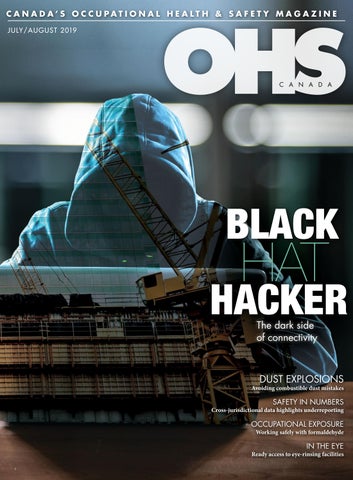

BLACK HAT HACKER
The dark side of connectivity
DUST EXPLOSIONS
Avoiding combustible dust mistakes
SAFETY IN NUMBERS
Cross-jurisdictional data highlights underreporting
OCCUPATIONAL EXPOSURE
Working safely with formaldehyde IN THE EYE
Ready access to eye-rinsing facilities
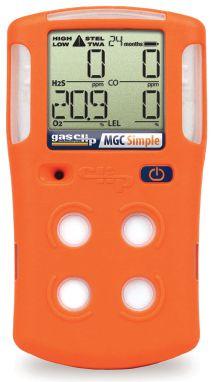
Detect combustible gases (LEL), hydrogen sulfide (H2S), carbon monoxide (CO) and oxygen (O2)
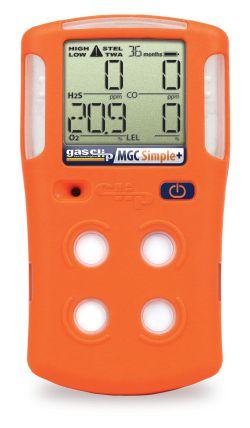
MGC Simple & MGC Simple Plus
uTwo or three year run time with no charging or calibration
uDetect in oxygen deficient or oxygen enriched environments
uLEL sensor is immune to sensor poisoning
uFails to safe
uSimple, one button operation
uLogs data at one second intervals whenever gas is detected
u100% Quality control tested
uFull two or three year warranty
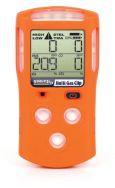
Multi Gas Clip
The portable multi gas detector that can run continuously for two months on one charge due to advanced infrared sensor technology. Detects combustible gases (LEL), H2S, CO and O2.
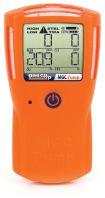
Multi Gas Clip Pump
Compact, light-weight, handheld/wearable multi gas detector with internal pump draws from 75 ft. & runs for an average of 52 hours on a single charge. Detects combustible gases (LEL), H2S, CO and O2
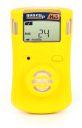

Single Gas Clip
Eliminate downtime with our ultra-reliable portable gas detector. Detects H2S, CO or O2
Single Gas Clip Plus
Hibernate mode offers extended life option when detector is not in use. Detects H2S or CO.
Compatible Docking Stations
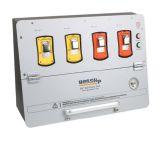
Portable, durable 4-bay dock stations
quickly bump test, calibrate & log data for up to four detectors at once with the push of a button.
Single Gas Clip Dock, Multi Gas Clip Dock, MGC Pump Clip Dock & MGC Simple Clip Dock



In the Internet of Things where everything is connected, technologies that were previously not vulnerable to hacking — like cranes — are now fair game. BY
ANDREW SNOOK
Avoiding Combustible-Dust Mistakes
Well-intentioned companies that try their best to manage explosive dusts often make mistakes that render their hazard-mitigation ineffective — even costly.
JEAN LIAN
Preventing Self Harm
managing occupational safety and mental health,
industries.
JEAN LIAN

The Next Lap
2019 marks my 12th year covering occupational health and safety news for OHS Canada. During the past decade or so, I have learned much not just about the art of writing and editing. I have also gained an understanding of the breadth and complexity of workplace-safety issues and how the human factor interacts with it.
One of the most rewarding aspects of my work as an oh&s journalist is to have people open up to me and share their personal experiences with work accidents.

There is no closure; only acceptance.
The severe physical injury or personal loss might have occurred many years ago, but the people who went through these experiences still recall vividly the events that led up to the incident. Time, it seems, has little effect on erasing the indelible mark that the trauma had imprinted on their minds and hearts. In other words, people move on, but they never forget.
I have also talked to fathers who lost their sons or daughters, widows whose soulmates were killed at work and employees who struggled with survivor guilt for living to tell the tale of a job-related accident while their colleagues did not.
One common thread that connects these people is that there is no closure; only acceptance — acceptance that they cannot turn back the clock and bring their loved one back, or replay the sequence of events so that things can be done right and prevent the mishap from occurring in the first place.
For some people, acceptance is not enough. They have transformed their pain into a calling by becoming safety advocates so that others would not have to go through what they did. Shining examples of people who have turned their grief into a driving force to bring about public good include the following: Rob Ellis, founder of MySafeWork, whose son was killed on his second day on the job; safety and motivational speaker Kina Repp who was maimed while taking on a summer job at an Alaskan fish cannery; and Janice Martell, founder of the McIntyre Powder Project. Martell, whose father was one of many miners who had inhaled finely ground aluminum dust known as McIntyre Powder that was administered to miners in northern Ontario between 1943 and 1979 to protect them against silicosis, created a registry for these exposed miners.
Oh&s reporting is a responsibility that I have always taken seriously. My job is not only to educate and inform; it is also to probe and ask questions. People who relive their pain by sharing their stories of personal loss with me seek answers that will hopefully help them make sense of what has happened. They want their stories to be told. For some, they want justice to be served.
Occupational safety is more than just compliance. Behind each statistic is a human face and numerous disrupted lives that will never be the same again. One quote that I will always remember came from a father who lost his son to a job accident. He described the loss as an open wound in his heart over which scar tissue forms through time. Every time he touches that wound, he knows his son is there.
As I move on to the next challenge in my career, I want to thank all my readers and people who have given me the honour of telling their stories, many of which have touched my heart.
Jean Lian

Vol. 35, No. 4
JULY/AUGUST 2019
EDITOR JEAN LIAN 416-510-5115 jlian@ohscanada.com
MEDIA DESIGNER MARK RYAN
ACCOUNT COORDINATOR CHERYL FISHER 416-510-5194 cfisher@annexbusinessmedia.com
CIRCULATION MANAGER JAY DOSHI 416-442-5600 EXT 5124 jdoshi@annexbusinessmedia.com
PUBLISHER PETER BOXER 416-510-5102 pboxer@ohscanada.com
GROUP PUBLISHER PAUL GROSSINGER pgrossinger@annexbusinessmedia.com
COO SCOTT JAMIESON sjamieson@annexbusinessmedia.com
EDITORIAL ADVISORY BOARD MEMBERS
DAVID IRETON, Safety Professional, Brampton, Ont.
AL JOHNSON, Vice President, Prevention Services WorkSafeBC, Richmond, B.C.
JANE LEMKE, Program Manager, OHN Certification Program, Mohawk College, Hamilton, Ont.
DON MITCHELL, Safety Consultant, Mississauga, Ont.
MICHELE PARENT, National Manager, Risk Management and Health and Wellness, Standard Life, Montreal, Que.
TERRY RYAN, Workers’ Compensation and Safety Consultant, TRC Group Inc., Mississauga, Ont.
DON SAYERS, Principal Consultant, Don Sayers & Associates, Hanwell, N.B.
DAVID SHANE, National Director, Health and Safety, Canada Post Corporation, Ottawa, Ont.
HENRY SKJERVEN, President, The Skjerven Cattle Company Ltd., Wynyard, Sask.
PETER STRAHLENDORF, Assistant Professor, School of Occupational and Public Health,Ryerson Polytechnic University, Toronto, Ont.
JONATHAN TYSON, Association of Canadian Ergonomists/Association canadienne d’ergonomie, North Bay, Ont.
Printed in Canada
ISSN 0827-4576 (Print)
ISSN 1923-4279 (Digital)
PUBLICATION MAIL AGREEMENT #40065710
CIRCULATION
asingh@annexbusinessmedia.com
Tel: 416-510-5189
Fax: 416-510-6875 or 416-442-2191
Mail: 111 Gordon Baker Rd., Suite 400, Toronto ON M2H 3R1
SUBSCRIPTION RATES
Published six times per year – Jan/Feb, Mar/Apr, May/Jun, Jul/Aug, Sep/Oct, Nov/Dec
Canada $100/yr plus tax
USA $100/yr
Foreign $164.50
Occasionally, OHS Canada will mail information on behalf of industry related groups whose products and services we believe may be of interest to you. If you prefer not to receive this information, please contact our circulation department in any of the four ways listed above.
Annex Privacy Office privacy@annexbusinessmedia.com
Tel: 800-668-2374
No part of the editorial content of this publication may be reprinted without the publisher’s written permission © 2019 Annex Publishing & Printing Inc. All rights reserved. Opinions expressed in this magazine are not necessarily those of the editor or the publisher. No liability is assumed for errors or omissions. All advertising is subject to the publisher’s approval. Such approval does not imply any endorsement of the products or services advertised. Publisher reserves the right to refuse advertising that does not meet the standards of the publication.

$677,500
Fine issued to construction companies and supervisors on June 12 after a worker was fatally struck by ice while working in an excavation in Ottawa in 2016.
Source: Ontario Ministry of Labour

7,675
Number of orders issued in more than 2,300 field visits by Ontario inspectors in 2018.
Source: Ontario Ministry of Labour

92.6%
Percentage of school buses in Newfoundland and Labrador that passed mandatory annual inspections conducted by ServiceNL in spring.
Source: ServiceNL
56
The number of young people aged between 15 and 24 who died from a work-related injury in Ontario from 2009 to 2018.
Source: Workplace Safety and Insurance Board

1. Winners Unveiled: The Workers’ Safety and Compensation Commission (WSCC) announced winners of the 62nd Annual Mine Rescue Competition on June 1 in Yellowknife. Gahcho Kué Diamond Mine (De Beers Canada Inc.) won the Overall Surface trophy, and Diavik Diamond Mine (Rio Tinto Ltd.) clinched the Overall Underground trophy at the two-day competition, which saw six teams demonstrate mine surface and underground-response and rescue skills.
Source: WSCC
2. Farm-kids Safety: AgSafe, British Columbia’s agricultural workplace health and safety association, held a one-day Progressive Agriculture Safety Day (PASC) on June 14 for 140 grade four and five students at Sardis Elementary School in Chilliwack. PASC is an international program providing education, training and resources to make farm, ranch and rural life safer for children and their communities.
Source: AgSafe
3. Safe-Work Campaign: The Workplace Safety and Insurance Board (WSIB) in Toronto launched a new #PracticeSafeWork campaign aimed at young people starting summer jobs or entering the Ontario workforce for the first time. The campaign creates safety awareness among young workers and offers information on young-worker safety on its website, www.practicesafework.ca
Source: WSIB
4. To The Rescue: Nova Scotia’s wildfire fighters answered the call to help fight wildfires in Ontario by sending a 21-person crew of wildfire fighters, who left Halifax for Thunder Bay on July 5. The crew is expected to be on the fireline for several weeks.
Source: Nova Scotia Government
5. New Appointment: The Workers’ Compensation Board of Prince Edward Island (WCB PEI) welcomed its new chief executive officer on June 21. Following the retirement of Luanne Gallant in April 2019, Cheryl Paynter will take over as the WCB’s chief executive officer.
EXPLOSION LEVELS RESTAURANT
Source: WCB of Prince Edward Island
An explosion destroyed a KFC restaurant in Eden, North Carolina on July 11. There were no injuries as no one was in the restaurant when the explosion occurred at 1 a.m. The cause of the explosion, which caused the building to collapse and scattered debris on the road, is being investigated.
Source: Associated Press
360°

OH&S UPDATE
CAUSES FOR INCIDENT CITED
FEDERAL — Short staffing and deviation from standard procedures by air traffic controllers led to the loss of separation between an Air Transat Airbus A310 and a Cessna 421 light twin-engine aircraft near the Montreal/Pierre Elliott Trudeau International Airport last May. This is the conclusion made by the Transportation of Safety Board of Canada (TSB) report released on July 10.
On 16 May, 2018, both aircraft were inbound to land at Montreal-Pierre Elliott Trudeau International Airport. The Airbus was coming from the west and was to fly north of the airport and land on Runway 24R, while the Cessna was inbound from the northeast and scheduled to land on Runway 24L.
A loss of separation between the two aircraft occurred when both aircraft were about 18 nautical miles northeast of the airport. At the closest point, the two aircraft came within 152 metres vertically and 1.7 nautical miles laterally of each other. Normally, the
aircraft should be separated by at least 305 metres vertically or three nautical miles laterally.
Although seven controllers and a shift supervisor would have been scheduled to work that evening, absences and illness reduced that number to three controllers and a supervisor. As a result, six sectors of airspace normally divided among the controllers had to be combined and controlled by just three, which increased each area of responsibility, workload and complexity.
The TSB’s investigation also found that with the Cessna approaching from a sector to the northeast, control responsibility for it was not transferred to the next sector according to standard procedure. A controller-in-training responsible for the receiving sector was initially unaware of the presence or intentions of the Cessna until it entered his airspace. As a result, he did not have an opportunity to develop a plan to deal with the converging traffic.
As well, the instructor, who was both
CONSULTATION ON TRAINING UNDERWAY
VICTORIA — Consultations to help develop British Columbia’s mandatory entry-level training for Class 1 commercial driver’s licences will begin this summer, as the province beefs up training to bolster trucking safety.
“Safety on our highways is our top priority, and advancing the skill development of new commercial drivers would make roads even safer for everyone,” Claire Trevena, Minister of Transportation and Infrastructure in Victoria, says in a statement on July 4. “That is why we are exploring what a practical and consistent mandatory training program for new commercial truck drivers could look like in B.C.”
The province will gather input from the trucking and driver-training industries and other stakeholders to see how a Class 1 driver training program can be aligned with recently introduced entry-level Class 1 driver training standards in other Canadian jurisdictions.
Consultations will also look at how a provincial program could incorporate the entry-level training guidelines that is currently under development by the Canadian Council of Motor Transportation Administrators for inclusion in Canada’s National Safety Code standard.
“Everyone has a stake in ensuring that new commercial
the shift supervisor and responsible for the trainee, was distracted by other tasks and was unable to monitor the developing situation accurately. The controller-in-training later noticed the Cessna on the display, and the required separation was re-established. Both aircraft landed without incident.
X-RAY RISK RAISES CONCERNS
CHILLIWACK — An emerging health risk could impact the manufacturing industry as the growth of X-ray technologies continue without effective programs to control radiation risk.
This is the warning that the Manufacturing Safety Alliance of BC and Radiation Safety Institute of Canada (RSIC) jointly issued on July 9, following an exploratory review to understand the prevalence of X-ray radiation risk and control within the manufacturing sector.
“Education, proper risk-assessment tools and effective controls are neces-
drivers have a minimum body of skills and knowledge before they begin operating some of the largest and heaviest vehicles on B.C. roads,” says Mike Farnworth, Minister of Public Safety and Solicitor General in Victoria.
The Association has recommended that the province considers minimum standards for entry-level training for Class 1 drivers, and that this focused consultation is designed to help define and set effective standards, Farnworth notes.
“The BC Trucking Association welcomes today’s announcement by the provincial government to begin consultation on this critical issue,” says Dave Earle, president and chief executive of BC Trucking Association in Langley.
“Development of a commercial driver training standard has been a key priority for our industry for many years,” Earle says. “Our shared goal is to ensure that drivers entering the industry meet enhanced training standards, improving road safety outcomes for all road users.”
Consultations on Class 1 mandatory entry-level training will be led by the Ministry of Transportation and Infrastructure, with support from ICBC and the Ministry of Public Safety and Solicitor General.
sary to mitigate these risks,” says Steve Horvath, RSIC’s chief executive officer.
An online radiation awareness course and interactive survey were conducted to determine the level of understanding about risks associated with radiation. Completed surveys indicate that there are few well-developed radiation-safety programs in place.
Larry White, a training and resource development specialist who has been working on the project for the Alliance, says what surprised him most in the survey results was how few people know about the risks of radiation even when they are working with it almost every day, and that there is an overall lack of awareness around proper safety protocols. Radiation is often a part of weld inspections, internal inspections, fill inspections and non-destructive testing. “Exposure over time can really harm people” White cautions.
The RSIC and the Alliance signed a memorandum of understanding to work together to provide radiation education
and support to organizations with radiation risks.
X-ray and radiation sources are prevalent in manufacturing and other sectors such as farming, forestry, saw mills, pulp and paper, construction, pharmaceuticals and chemical processing.
Horvath says the collaboration between the two agencies has resulted in practical solutions for employers in the province to avoid potential health risks associated with new and developing Xray source technologies.
“The hope is that it will help fill a void, help to improve radiation safety in the workplace and reduce radiationrelated injuries,” White adds.
REPORTING SYSTEM IN FORCE
VANCOUVER — In the wake of the global measles outbreaks, reporting immunization status among school-age children will be mandatory in British Columbia starting in the new school year.
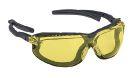
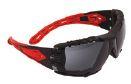
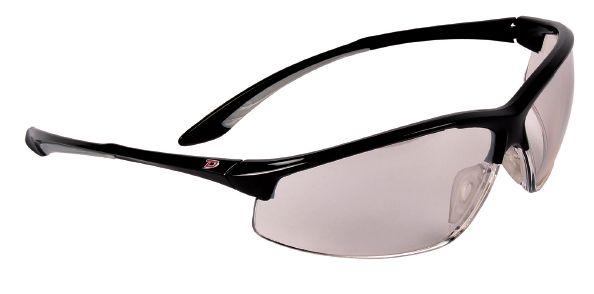
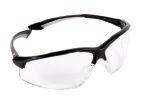
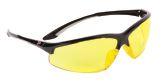
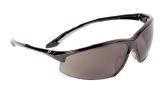
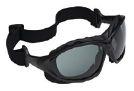
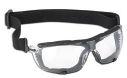
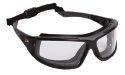
Looking for More Comfort & Fit DSI has it!
Very lightweight – less than 1 oz
9.5 base curve lens for better coverage
Exclusive anti-fog coating
Double injection temple arms and soft nose-piece to prevent slipping in hot and humid environments
Dyna Shield
Contemporary dual-lens design with half-frame
Available in Clear, Amber, Smoke and I/O Mirror lenses
Fits a wide variety of different faces




The Vaccination Status Reporting Regulation will require parents and guardians in British Columbia to provide public-health units with immunization records for students enrolled in the provincial school system, according to a provincial government statement.
“This mandatory reporting of the immunization status of students will ensure the public health system is prepared in the event of an outbreak,” Adrian Dix, Minister of Health said on July 5.
Parents or guardians of children with an incomplete or missing record will be contacted by public health to provide their child’s immunization information. With up-to-date records, public health can reach out to families with children who are behind on their immunizations and provide an opportunity to catch them up, or discuss any concerns with parents, the statement adds.
“Improving the rates of immunization of children and youth is critically important for student safety and healthy schools across B.C,” says Minister of



Dyna Shield
Education Rob Fleming.
For students from kindergarten to Grade 12 who are currently in the provincial immunization registry, public-health officials will review school-enrolment records in late August and into October to match them against immunization records. For the first year of reporting, the goal is to help parents get their children up to date on immunizations by the end of the school year.
Apart from presenting a public-health hazard, the measles outbreak is also an occupational risk to those who work in the transportation, education and health sectors. If a worker is at risk of being exposed to measles, the employer must develop and implement an exposure-control plan to identify at-risk workers, according to WorkSafeBC.
Preventive controls include providing measles vaccination to workers, enforce proper hand-hygiene practices, disinfecting work surfaces and using personal protective equipment.
FLOTATION DEVICE MADE MANDATORY
RICHMOND — Wearing a personal flotation device (PFD) or a lifejacket is now mandatory for all crew members who work on the deck of a commercial fishing vessel to improve worker safety.
This requirement was the result of amendments that WorkSafeBC made to Part 24 of the Occupational Health and Safety (OHS) Regulation, which regulates diving, fishing and other marine operations.
The amendments, which took effect on June 3, regulate specific conditions under which crew members are required to wear PFDs on commercial fishing vessels. Previously, crew members on a fishing vessel need to don a PFD only when working under conditions that involved a risk of drowning.
“Commercial fishing is one of the most dangerous occupations in British Columbia, and drowning is the leading cause of death among B.C. fishermen,” Patrick Olsen, manager of prevention field services for WorkSafeBC, said in a statement on June 19. “Wearing a PFD reduces the risk of drowning and has been proven to save lives.”
Between 2007 and 2018, there were 24 work-related deaths in the commercial fishing industry, 15 of which are related to drowning.
The amendments are consistent with recommendations made by the Transportation Safety Board after the fatal capsizing of the fishing vessel Caledonian near Tofino, British Columbia in September 2015. Three crew members were killed. The lone survivor was the only crew member wearing a PFD.
“No matter what your role is on the vessel, crew safety affects everyone,” Olsen says.
CONSULTATIONS ON AGRICULTURAL SAFETY BEGIN
EDMONTON — Consultations to repeal farm workplace legislation, or Bill 6, has begun as Alberta paves the way to introduce the Farm Freedom and Safety Act.
Devin Dreeshen, Minister of Agriculture and Forestry, will undertake a consultation tour to meet farmers, ranchers and organizations across the province over summer. According to the provincial government, the previous government’s Bill 6 was passed with limited public input and in the face of strong opposition from farmers.
“Alberta farmers need common-sense rules that promote farm safety — not process, not red tape,” Dreeshen said in a statement on July 12. “We are going to repeal Bill 6, and I plan to meet with farmers this summer to develop the legislation to replace it.”
The government will seek input on flexibility in meeting workplace standards, allowing a choice of workplace insurance in the market or the Workers’ Compensation Board if basic coverage standards are met, exempting small farms from employment standards legislation, promoting education and best practices to improve farm safety and minimizing red tape while ensuring basic safety standards.
The online survey will run until August 31.
DEADLINE EXTENDED FOR FARM, SCHOOL DRIVERS
EDMONTON — Alberta is extending the deadline for farmers and school bus drivers to meet training requirements as new commercial drivers under the Mandatory Entry-Level Training (MELT) requirements for drivers seeking Class 1 and Class 2 commercial licences, which the province introduced on March 1.
Farmers and farm workers can apply for an extension to meet the training and testing requirements for a Class 1 driver’s licence before March 1, 2021. New school bus drivers will have until July 31, 2020 to meet the requirements for a Class 2 driver’s licence.
The extension is in response to school bus drivers and farming industries, which have indicated that they needed more time to adjust to MELT requirements considering the highly flexible and seasonal industries in which they work, Ric McIver, Minister of Transportation says.
“Our government is committed to taking steps to work with farmers and school bus drivers to ensure we have a robust driver-training system in place that works for industry, without compromising safety. This extension ensures these key industries can continue their work without disruption, particularly during the busy back-to-school and harvest seasons,” he adds.
RISE IN VIOLENCE PREVENTABLE: PROVINCE
REGINA — Workplace injuries caused by violence rose 16 per cent in 2018 in Saskatchewan. Some of these injuries could have been prevented if employers and workers had paid attention to and acted on the warning signs of aggressive behavior, according to a WorkSafe Saskatchewan statement on June 25.
In order to spot the potential for violence at work, it is important to know that workplace violence encompasses any
situation in which an employee is abused, assaulted, threatened or harassed by a co-worker, supervisor, client, patient or a member of the general public. It includes physical attacks such as hitting, biting and pushing and verbal and psychological abuse like demeaning remarks and intimidation.
While it can be hard to predict when an individual may turn violent, signs of high stress levels can indicate if an individual many become aggressive. The Canadian Centre for Occupational Health and Safety (CCOHS) in Hamilton, Ontario says warning signs include crying, sulking or temper tantrums; excessive absenteeism or lack of punctuality, disrespect for authority, refusal to acknowledge job-performance problems, swearing or emotional language, blaming others for mistakes and complaints of unfair personal treatment.
Body language and non-verbal cues that could signal when a person may become violent include sweating, signs of extreme fatigue, pacing or repetitive movements, clenched jaws or fists and violation of personal space like getting too close, the CCOHS notes.
Knowing what violence is also necessitates an understanding of what it is not. The Saskatchewan government says workplace harassment should not be confused with ordinary work disagreements and does not include daily management or supervisory decisions over work assignments, job assessments and evaluations, workplace inspections, implementation of appropriate dress codes and disciplinary actions.
If someone at a workplace shows one or more warning sign for violence, share your concerns with your supervisor, human resources department or a counsellor with your employee assistance program, the statement advises. An employer’s written violence-prevention policy, if there is one, is a good place to find out how complaints are investigated and resolved.
FATALITY PROMPTS FINE
TOTTEHNHAM — A worker fatality led to a $160,000 fine issued on July 18 to a Japanese engineering firm.
The fatality occurred at a construction project located in a manufacturing facility in Tottenham, Ontario, according to a statement from the Ministry of Labour.
On August 30, 2017, two workers employed by Access Limited were installing a new metal stamping press and feeder. It was determined that it would be safer to do so overnight when the equipment was not being operated by technicians.
The power to the press machine was turned off, but a piece of equipment known as a destacker feeder remained powered. On that night, one of the workers briefly left the work area to observe the other worker performing diagnostic testing at the destacker feeder control panel.
Upon returning, the worker discovered the co-worker’s body in front of a part of the destacker feeder known as the DB bucket car — a small, mechanized cart that travels along rails. There is fencing surrounding the loading area for the bucket car, which has an opening to allow the car to














The working world has never experienced such dynamic change. As the world’s No. 1 trade show for the sector, A+A offers the best possible overview of developments in occupational health and safety. Around 1,900 exhibitors from more than 60 countries contribute their products, solutions and ideas to making work safer, healthier and more efficient. Because: PEOPLE MATTER






leave the loading area to the unloading area. The body was pinned between the edge of the bucket car and the frame of the fencing surrounding the bucket car opening. There were no witnesses to the incident.
A Ministry of Labour investigation determined that the likely cause of the fatality was that the bucket car had started and moved along the rail towards the opening of the fence while the worker, who was performing diagnostic tests on the stamping press and feeder, was within the fenced area. As a result, the worker was pinned within the equipment, causing fatal injuries. The investigation also found that safety interlock circuits installed around the bucket car had been overridden.
The company pleaded guilty to failing to take reasonable precautions to prevent the starting of the bucket car where a worker may be endangered by such movement.
INSPECTION BLITZ TARGETS YOUNG WORKERS
LONDON — The Ontario government has launched targeted inspections focusing on the safety of students who take up jobs in summer. The inspections follow months of outreach to businesses by the Ministry of Labour to educate and help them create safe workplaces.
“New workers are three times more likely to be injured during their first month on the job,” Minister of Labour Monte

McNaughton said in a statement issued on July 15. “That is why we are doing this. Families should expect that when their sons and daughters go to work each day, they will come home safely.”
Inspectors will focus on workplaces that are newly registered with the Workplace Safety and Insurance Board and have not had a proactive health and safety visit in the last five years. Retail, restaurant, food, beverage, hospitality and recreational services will be the focus of inspections.
The blitz will run until August 30.
FIRM PENALIZED OVER JOB-RELATED DEATH
TORONTO — A Toronto company that provides concrete for the construction industry was fined $130,000 on July 9 over a worker fatality.
On January 16, 2017, the worker was operating a concrete pump owned by Torrent Shotcrete Canada Ltd. at a residential building in Toronto that was under construction. At the end of a pumping period, the hopper had to be cleaned so that residual concrete would not harden.
The worker, who was cleaning out the hopper using a power chisel, fell into the hopper as the concrete auger was running. There was no eyewitness to the incident, and it was not known how the worker fell into the hopper.
According to Ontario’s Ministry of Labour, on the top of the hopper was a grate that prevented access to the auger. The hopper was equipped with a sensor to stop the movement of the auger upon the opening of the grate. The sensor would allow power to the auger as long as it was in contact with a metal piece that was attached to the grate.
A Ministry investigation found that the sensor on the hopper in question had been rendered inoperative by a metal washer that had been taped onto it, which would cause the sensor to allow power to the auger even when the grate was open. The wiring for the sensor had also been altered to falsely indicate that the safety grate was closed, allowing uninterrupted power to the auger when the grate was open, even though the sensor not been disabled by the taped washer.
The company pleaded guilty to failing to ensure a grate sensor on a concrete hopper was not rendered inoperative.
LAW AGAINST VIOLENCE NEEDED: UNION
TORONTO — Canada’s largest transit union is calling for federal legislation to protect transit operators in the wake of a brutal assault against a bus driver in Hamilton, Ontario.
“As he has done for the past 30 years, an ATU operator working for GO Transit pulled up to a bus stop, except this time a passenger unleashed a barrage of punches and kicks on him, resulting in hospitalization. Twenty-two other passengers had to witness this traumatic assault,” says ATU Canada President John Di Nino.
The operator sustained a head injury in the incident, which occurred in broad daylight on July 9 in a busy, urban centre
in Hamilton. The perpetrator, who was arrested, stayed at the scene and taunted the operator after the assault. A suspect was taken into custody.
Di Nino says concerted effort from all levels of the national government is needed to put violence-prevention measures in place. He also calls for a Canadian version of the Transit Worker and Pedestrian Safety Act — a bill in the United States that is making its way through the Congress with the help of the international union.
The bill calls for assault-mitigation infrastructure, de-escalation training, a national database to track assaults and modification to bus specifications to address blind spots and ergonomic issues.
Di Nino says a similar bill is needed in Canada to identify the risk of violence on transit systems and approve measures to mitigate this occupational hazard. He made references to violent incidents against transit operators in the last four years, including a fatal stabbing in Winnipeg and Edmonton, as well as more than 4,000 sexual assaults against passengers.
He also highlights the link between fare disputes and violence against operators. In many cases, arguments over fares escalate into violent altercations.
“It is a national crisis that Ottawa should be addressing through a national transit strategy with dedicated operational funding and a national database of operator and pedestrian assaults,” Di Nino says. “Politicians go to work and expect to leave their office alive at the end of the day; transit professionals do not have that luxury. Ottawa must take action now.”
CONSTRUCTION COMPANY FINED
OTTAWA — A construction firm in Ottawa was fined $60,000 on July 3 over a worker fatality at a townhouse site.
MC Oakvillage GP Inc. was the constructor of a project of about 200 townhouse units in Oakville, Ontario. On February 21, 2018, a worker was installing aluminum siding on the second-floor balcony on one of the units that was under construction.
There was a single, two-inch by four-inch piece of wood installed horizontally at the open edge of the balcony at a height of approximately 1.2 metres from the balcony floor.
The worker, who was descending the ladder, grabbed on to the wooden piece, which gave way. As a result, the worker lost balance and fell over the side of the balcony, sustaining a fatal injury.
An investigation by Ontario’s Ministry of Labour revealed that the wooden piece was not nailed or securely fastened in place. Guardrails on the balcony were installed with a “compression fit” approach using a 2x4 wedged between two brick posts to avoid damaging the brick columns.
There was no engineering for the design of the rails to assess what load they could support. Neither was there other guardrail in place to protect workers from falling.
The company pleaded guilty to failing to use a guardrail system to protect workers who are exposed to a fall of more than three metres.
FALLING CONCRETE CLAIMS ONE
TORONTO — A construction company was fined $200,000 on June 26 over an incident in which falling concrete claimed a worker’s life.
The incident took place on March 27, 2017. J.N.D. Erectors Limited, a subcontractor on the site, was tasked with erecting panels of preset concrete onto the exterior wall of the building. The panels were transported via a flat-bed truck, and a crane and hoist were used to lift the panels from the truck.
The panels were supported by two A-frames bolted to the truck, with transport chains securing two panels to each other. A worker unhooked the chains from one panel, and the first panel was hoisted away by crane. While the worker was preparing the second panel weighing 6,000 pounds, it shifted and toppled onto the worker, causing fatal injuries.
A structural engineer with Ontario’s Ministry of Labour stated in a report that the toppling could have been avoided if the panel had been secured at all times.
The company was found guilty of failing to ensure that material or equipment at a project shall be stored and moved in a manner that does not endanger a worker.
WARNING ISSUED ON MISLEADING CALLS
SAINT JOHN — WorkSafeNB is urging employers to exercise caution as some firms are making misleading and sometimes, aggressive sales calls to employers in the province.
These calls suggest that their employees must be trained immediately because of the new legislation on workplace violence and harassment, as well as on the Workplace Hazardous Materials Information System (WHMIS). The caller also stated that a business may be shut down if they do not incorporate this training.
“These organizations are not working on behalf of WorkSafeNB,” the government office clarified in a statement on July 8. “If you are contacted by an agency or person offering to provide training, you should know that you have options available, and you should explore those options to ensure that you find the best and most cost-effective training for your workplace,” the statement added.
An amendment to General Regulation 91-191 of the Occupational Health and Safety Act addressing workplace violence and harassment came into effect April 1. Changes to the WHMIS regulation have been in effect since June 2014.
WorkSafeNB reminds employers that WHMIS training, which can be provided by any qualified person or agency, must meet the regulation’s minimum requirements.
PROVINCE SUPPORTS HOME-CARE SAFETY
HALIFAX —Nova Scotia is investing $1.86 million to support the purchase of safety equipment and education opportunities
for home support workers, the provincial government announced on July 18.
Health and Wellness Minister Randy Delorey says these investments provide staff with the tools they need to do their jobs more safely.
An investment of $1.36 million will support education and training opportunities through groups like the Health Care Human Resource Sector Council and LearnSphere and non-violent crisis intervention training for nurses, while $500,000 dollars will be used to buy equipment, including slider sheets and transfer belts to help home-support workers move clients more safely to prevent job-related injuries.
“This is a welcome investment in the health system,” Jeff Densmore, regional executive director for the Victorian Order of Nurses (VON) in Nova Scotia, says in a statement. “Ensuring that VON nurses and Continuing Care Assistants are able to provide care without risking their own health is key to our ability to serve our clients well. We look forward to the improvements this will bring.”
Funding for the initiative came from Canada-Nova Scotia Home and Community Care and Mental Health and Addiction Services Funding Agreement.
HEAT-STRESS PREVENTION URGED
CHARLOTTETOWN — The Workers Compensation Board (WCB) of Prince Edward Island issued a heat stress reminder on July 5, urging employers to take precautions to protect workers.
“While there is no one-size-fits-all solution for all workers and workplaces, being aware of the risks of heat-related illness is an important first step,” Danny Miller, director of occupational health and safety in Charlottetown, said in a statement. “Employers need to recognize the risks and take reasonable steps to reduce them. Workers must be made aware of the risks and be encouraged to speak up when there is a heat or sunrelated concern.”
Heat stress refers to a variety of heatrelated disorders like heat exhaustion
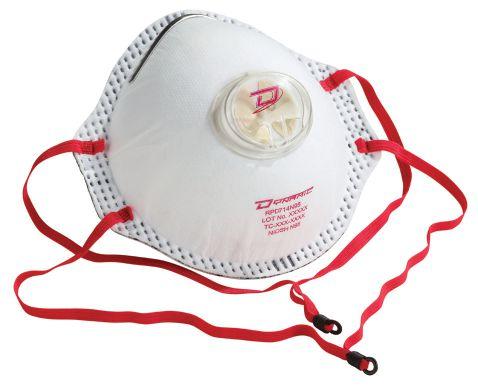
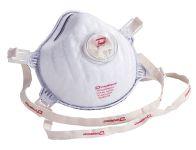
What Company produces a Respirator with the Most Benefits
Straps welded on wings, no deformation of respirator when adjusted
Straps are sonically weld, no staples
and heat stroke, which can be fatal. Symptoms include weakness, muscle pain, light-headedness, nausea and high body temperatures. Environmental hazards like exposure to heat, high humidity and limited air flow can also cause heat stress. Contributing factors include the worker’s hydration level, clothing and physical exertion.
Preventive steps to avoid heat stress include drinking plenty of water and limiting sun exposure between 11 a.m. and 4 p.m. when ultraviolet rays are at its highest. Applying sunscreen, having adequate ventilation in the workplace, taking breaks in the shade or an air conditioned space, ensuring workers safety by providing adequate supervision and using a buddy system to watch for signs of heat stress among co-workers are also recommended.
“If you experience the initial signs of heat stress, remove yourself from the environment, drink water, monitor the symptoms and advise someone in case you need further assistance or medical treatment,” the statement adds.
?
Curved nose clip for a better comfort and fit Clear valve cover for easy inspection
Adjustable strap on all models
Available version for welders
Complete variety from N95 to P100
Call your nearest distributor for more information and a trial
Nose and face seal closed cell foam for more comfort and fit Watch the new Dyna-Pure Series Half Mask & Fullface Mask coming soon!
Adjustable strap made of elastic cloth material for more comfort
Drop down easy to perform Unique Butterfly valve, reduce resistance to exhalation
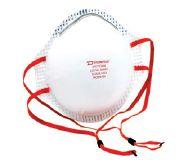
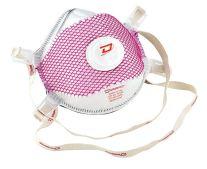
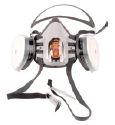
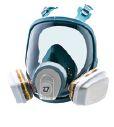
WCB EYES FISHING SAFETY
CHARLOTTETOWN — The Workers’ Compensation Board of Prince Edward Island (WCB PEI) launched an education and compliance initiative to boost fishing safety.
According to a statement on June 7, occupational health and safety officials will visit wharves to ensure that fishers are wearing their personal flotation devices (PFDs).
“The goal of the initiative is to protect fishers by ensuring their compliance with the OHS Act and Regulations and raising awareness of the importance of workplace safety,” Stuart Affleck, Chair of the WCB, said in a statement.
The Occupational Health and Safety Act considers a fishing vessel a workplace. Within the regulations under the Act, there are provisions set out to address worker and employer responsibilities where there is a risk of drowning.
“Because the results of not wearing a PFD can be devastating, it is important that we do all that we can to reduce the risk for those working on fishing vessels,” says Tory Kennedy, acting chief executive officer for the WCB. “We know that if there is a higher compliance with PEI’s safety legislation, the probability of workplace accidents is reduced.”
Fishing has the single highest fatality rate of any sector in the country. There have been a number of fatalities in the fishing industry on Prince Edward Island over the past few years, according to a 2017 study by the Globe and Mail.
PTSD PRESUMED WORK-RELATED
ST. JOHN’S — All workers in Newfoundland and Labrador who are covered by the workplace-injury system will be eligible for presumptive coverage for post-traumatic stress disorder (PTSD) occurring on or after July 1.
This change brings Newfoundland and Labrador in line with the movement taking place across the country to update workers’ compensation legislation that recognizes work-related mental health injuries.
“This progressive legislation will help
injured workers receive the assistance they need earlier, leading to better outcomes in improving the worker’s overall health and well-being,” Sherry GambinWalsh, Minister Responsible for WorkplaceNL said in a statement on June 25.
The legislation, which was proclaimed in December 2018, presumes workers to have developed their diagnosed PTSD as a result of a traumatic event or multiple events at work. The diagnosis must be made by a psychiatrist or registered psychologist using the most recent edition of the Diagnostic and Statistical Manual of Mental Disorders.
“There is widespread recognition that first responders are at risk of developing an operational stress injury, such as post-traumatic stress disorder, due to cumulative stress and/or single incident psychological trauma,” says Joseph A. Boland, Chief of Police, Royal Newfoundland Constabulary. “This new legislation will offer the assistance needed to help support the overall health and well-being of our employees.”
COMPANIES FACE CHARGES
ST. JOHN’S — A company in Newfoundland faces charges on June 18 over an incident that saw the partial amputation of a worker’s foot.
The charges stem from an investigation by the Occupational Health and Safety (OHS) Division of Service NL, following an incident in October 2017 at the wharf construction site at the harbour in St. John’s. RJG Construction Lim-

ited of St. John’s has been charged with nine safety violations.
The charges relate to the following alleged failures: provide and maintain a safe workplace; offer necessary information, instruction, training and supervision; ensure workers and particularly supervisors are made familiar with the hazards; make sure that safe work procedures are followed; ensure that work procedures promote the safe interaction of workers and their work environment; the use of a mobile crane met the requirements of CSA Z150; the oh&s program included written safe-work procedures appropriate to the hazards and work activity; implement its oh&s program; and ensure that material was placed in a secure manner that did not constitute a hazard to a worker.
In a separate incident, two companies and an individual have been charged over a fatal incident on June 19. Two employees sustained fatal injuries near Come by Chance when the transmission line that they were erecting between Bay d’Espoir and Western Avalon fell to the ground.
The employer, Forbes Bros. Ltd., has been charged with seven violations, while a supervisor was charged with one count over the alleged failure to ensure the health, safety and welfare of all workers under his supervision. The principal contractor, Newfoundland and Labrador Hydro, was charged with one count that alleges its failure to ensure that an employer and workers comply with oh&s regulations.
Follow us on Twitter @OHSCanada
So, what’s on your mind?
Ever wonder what other oh&s types are thinking about? Find out by making our website poll at www.ohscanada.com a regular stop.

Ridesharing causes spike in traffic deaths: study
By Jean Lian
Ride-hailing is associated with a three-per-cent increase in the number of motor-vehicle deaths and fatal accidents, according to the latest research from the University of Chicago Booth School of Business.
The rise in accidents appears to increase over time, and that rate has stayed steady through weekdays, weeknights, weekend days and weekend nights, according to a July 8 statement releasing the findings of the study, The Cost of Convenience: Ride-hailing and Traffic Fatalities.
The findings are based on staggered roll-out dates from Uber and Lyft. Researchers reviewed the eight quarters before and after ride-hailing was adopted in large cities in the United States from 2001 to 2016 by analyzing traffic volume, transportation choices and accidents rates.

While the number of roadway deaths in the United States stood at 32,885 in 2010 — the lowest level since 1949 — that number increased to more than 37,400 in 2016. The authors conclude that the introduction of ride-hailing services in 2011 accounts for roughly a three per cent hike in automobile deaths nationwide, which translates to 987 fatalities each year.
Reasons cited for ride-hailing’s contribution to the growth in traffic fatalities include more cars on the road, leading to more accidents, and injuries and deaths involving drivers, passengers, bikers and pedestrians. The most significant increase in accidents occurred in larger cities, which saw a rise in new-car registrations when ride-hailing was available. Bike and pedestrian fatalities from accidents involving cars also increased at a similar rate to all driving fatalities in cities that have introduced ride-hailing, the study notes.
Although ride-hailing offers benefits that include safe and affordable transportation options, more carpooling for riders and job opportunities, “the annual cost in human lives is non-trivial,” the study states.
Meanwhile in Canada, one province has made the first stride towards making ride-hailing a reality. Ride-hailing firms will be able to apply to operate in British Columbia as of September 3. “Our plan has made it possible for ridehailing companies to apply to enter the market this fall, with vehicles on the road later this year, while ensuring the safety
of passengers and promoting accessibility options in the industry,” Claire Trevena, Minister of Transportation and Infrastructure, said in a statement on July 8.
The Passenger Transportation Board (PTB) will start accepting applications in the fall to determine the supply, boundaries and fares charged to passengers. All regulations will be in force on September 16 to support full implementation of ride-hailing services after the board decides on the applications it receives.
Study links porn use and unethical behaviour
Viewing pornography can lead to unethical workplace behaviour like sexual harassment, suggests new research out of Brigham Young University in Provo, Utah.
The study’s findings attribute the link between pornography consumption and the rise in unethical behaviour to dehumanization, or a viewer’s propensity to objectify others or view them as less human.
“Pornography is often framed as an issue affecting only individuals and relationships outside of a business context,” study co-author Melissa Lewis-Western, the University’s professor of accountancy, said in a statement on June 25.
She argued that businesses function off the decisions people make. “If you have a societal phenomenon that a lot of people are participating in and it negatively impacts individuals’ decisions, that have the potential to impact organizational-level outcomes.”
The findings are based on data gathered from an experiment involving 200 participants and a nationally-representative survey of 1,000 other individuals. In the experiment, one group was tasked with recalling and recording their last experience viewing pornography. Meanwhile, members of the control group were asked to recall and record their most recent experience exercising. Both groups were then tasked to watch a boring, 10-minute video consisting of a blue background with a monotone voice speaking with subtitles.
Researchers found 21 per cent of those who had recalled their last experience viewing porn did not finish viewing the video but lied about it, compared to only eight per cent of those in the control group. This represented a statistically significant 163-per-cent increase in shirking work and lying for those who view pornography. Similar evidence was obtained from the survey, the statement notes.
As porn consumption gives rise to dehumanization, the incidence of sexual harassment or hostile work environments is likely to go up with increases in employee pornography consumption. “Organizations should be mindful of those risks,” says Nathan Mecham, study co-author and a
Ph.D. student at the University of Pittsburgh.
“If you have a larger portion of your employees that are consuming pornography at work, it is likely changing their behaviours, and those changes are likely negative,” LewisWestern cautions.
The study suggests that companies should take steps to reduce pornography consumption in the office. These measures include preventive controls, such as internet filters and blocking devices, and having policies and penalties to prohibit porn consumption at work.
“If your manager is regularly watching pornography at work, then our research suggests that the way you are treated is going to be different in negative ways,” Lewis-Western says.
Psychosocial factors shape mental health
Employees with higher levels of job control, social support and job security not only have a lower likelihood of mental illness, but also have a higher chance of having a flourishing mental health.
This is the findings of a study, Psychosocial Work Conditions and Mental Health: Examining Differences Across Mental Illness and Well-Being Outcomes published in June by Toronto’s Institute of Work and Health (IWH).
According to an IWH statement, previous studies have looked at the link between psychosocial work factors and poor mental health among workers, but little is known about work factors that support positive mental health.
The study, which examines the association between psychosocial work conditions and mental-health outcomes among a representative sample of Canadian workers, examined data from the 2012 Canadian Community Health Survey (CCHS) on mental health conducted by Statistics Canada of working-aged Canadians living in the ten provinces. The data comprises responses of more than 10,000 people aged 15 to 74 years who worked at least eight hours a week.
“A higher level of job control, social support and job security increased the odds of a worker being free of mental-health disorders by eight to 15 per cent,” the study concludes. “They also increased the odds of a worker reporting positive mental well-being by 10 to 14 per cent.”
Psychological work demands were not significantly linked to poor or positive mental health. These findings were similar for both men and women, once personal factors were taken into account. “Given that workplace interventions should aim to both prevent mental disorders and improve mental well-being, focusing on the psychosocial work environment may provide an opportunity to do both at the same time,” the researchers suggest.
Avoiding sting allergies when working outdoors
Summer is the busiest season for outdoor workers in construction, landscaping, logging and agriculture. But sharing outdoor spaces with nature and her critters also carries the risk of insect bites from an angry wasp.
Small, local reactions with a raised warm and red area that settles down over 24 hours are common, Morissa Ladinsky, associate professor at the University of Alabama‘s Birmingham’s Division of General Pediatrics and Adolescent Medicine, said in a statement on July 8. But more serious reactions like an increasingly large, warm and red welt progressing over one or two days or longer, accompanied by nausea or vomiting, could signify a mild, non-life-threatening allergy. “Wasp stings are infamous for this,” Ladinsky says. “Our bodies differ in the level of inflammatory mediators we release to get the tiny drop of toxin out of our system.”

For most cases, anti-inflammatory agents like topical calamine, Benadryl or hydrocortisone and oral ibuprofen should suffice. Homemade remedies, like applying a paste made of cornstarch and cold water, can also ease the pain.
Rare but serious life-threatening reactions include rapid swelling of the lips, eyes and ears, dizziness, presence of hives or welts on body areas far from the sting site, sensation of the throat closing in and difficulty breathing. Ladinsky says immediate medical attention is required for an individual experiencing these reactions.
An allergy visit along with EpiPen ownership will become necessary going forward, as an individual who is genetically predisposed to severe sting allergy requires one or more exposures to the venom before the body responds in a life-threatening way. As such, many people do not manifest anaphylaxis with a first or even second sting.
For those who work outdoors in summer, covering up by wearing light-coloured, loose clothing made of tightly woven materials like nylon or polyester, donning long-sleeved shirts tucked into long pants, wearing closed-toe shoes or boots and putting on a hat are good preventive measures. So is using an approved insect repellent, notes information from the Government of Canada’s website.
Jean Lian is editor of ohs canada
Follow us on Twitter @OHSCanada
THE WEAKEST LINK
BY ANDREW SNOOK
In the Internet of Things where everything is connected, compromised confidential data is not the only consequence of a breach in cybersecurity. Technologies that were previously not vulnerable to hacking — like cranes or industrial equipment — are now fair game.

Depending on who you ask, the hacking of technologies has taken place for more than a century. Some published articles date hacking all the way back to the days of manipulating switchboards for phone companies like Bell Telephone in the late 1800s, while others trace the origination of the term “hack” to the 1960s when members of the Massachusetts Institute of Technology’s Tech Model Railroad Club used to “hack” their train sets in an effort to modify them. No matter when you date it, the hacking of technologies has come a long way.
A case in point is an online video, posted earlier this year, of a tower crane’s radio frequency controller being hacked into and taken over in Italy by an ethical hacker to demonstrate cybersecurity weaknesses within the technology, with the permission of the company overseeing the jobsite.
As tower cranes typically work in high-density urban areas, hoisting tens of thousands of pounds of equipment up into the sky, the potential for physical and financial toll from hacking is high. But construction equipment is only one of many areas where cybersecurity breaches can create occupational health and safety risks.
“The minute you have networks, and the minute you are connected to the outside world through these networks, cybersecurity becomes an issue,” says Harry Sharma, director of innovation and technology with The Conference Board of Canada in Ottawa.
Thanks to the interconnectivity and digitization of the manufacturing and construction industries, hackers with malicious intent today have a wider pool of targets than ever before. “It can lead to a lot of physical damage as well

as potential financial damage, so the challenges are in both realms,” Sharma says.
For this reason, cybersecurity plays a more prominent role than before in workplace-safety planning. But what does cybersecurity mean in today’s ever-changing world?
Chris Dodunski, chief executive officer of CyberHunter Solutions in Toronto, defines cybersecurity as a blend of people, process and technology. “What you are doing is you are instructing people, or defining process, or configuring technology to protect the confidentiality, data integrity and digital availability of whatever it is you are protecting,” he explains. In short, cybersecurity is guarding confidentiality, integrity and availability, or what he calls the CIA Triangle.
Dodunski says every industry weighs its CIA Triangle differently, with varying focus on the each of the three as-
pects of this triangle. “If you are looking in the healthcare industry, obviously, confidentiality is very important. But so is the integrity of the information that you are looking at,” he says. In the case of the banking or commerce sectors, data availability would be of greater importance.
And how does this apply to workplace safety? Technologies that typically exist in industrial and manufacturing spaces are no exceptions since most things have gone digital these days.
“We are constantly modernizing and networking these environments in order to improve efficiency or to operationalize things from an automated workflow perspective,” Dodunski says. “We are connecting on these things that were previously never online and never part of the Internet, or never available to the Internet.”
That means technologies that were previously not vulnerable to hacking are now fair game. “If someone can get into your industrial control systems, then they can start tampering with safety controls — things like your monitoring systems or shutdown mechanisms, or whatever is happening inside that environment.”
It is the threat to workers’ physical safety that makes breaches at industrial plants and construction sites that much more dangerous and vulnerable. There are a variety of ways through which cybersecurity breaches can create risks for employees at these facilities. An example is environmental systems.
“People don’t realize a lot of what you see in terms of the thermostat, the lights, the communication system — it is all delivered through online technology. So while it creates incredible efficiency, it creates incredible risk,” suggests Katherine Thompson, chair of the Canadian Advanced Technology Alliance’s Cyber Council in Ottawa. The financial damage to a manufacturer and the risk to those who work in that environment is high if hackers manage to hack into the lighting system in a manufacturing plant that is very much climate controlled and take over that feature.
Or a hacker with a personal vendetta against mining companies who managed to shut off air-purification and ventilation systems in a mine, Dodunski illustrates.
WORLDS COLLIDING
The line between physical security and cybersecurity has been blurring as technologies continue to advance and break down barriers that once separated these two worlds.
“These have been independent silos,” Dodunski explains, citing the physical security guys who deal with cameras and door access, and cyber people who work with computers, networks and wireless access. “But companies are beginning to recognize the importance of merging these two worlds to improve the security of their organizations.”
These worlds are not the only ones that can no longer remain in silos. With so many systems now interconnected and digitized, the need for a company to merge workplace safety with cybersecurity planning is higher than ever before.
“Cybersecurity is the pivotal technology for both safety and security,” says cybersecurity expert Claudiu Popa, chief
executive officer of Datarisk Canada in Toronto. “Without cybersecurity, humans are at risk of data and privacy breaches, personal attacks and physical violence. Mechanical systems are electronically controlled and remotely inspected. There is no longer a line between the physical and the electronic when it comes to occupational health and safety risk management.”
Workplaces that have adopted remotely controllable technologies, video surveillance and the Internet of Things have effectively opened a ‘backdoor’ for malicious access and unauthorized activity, he adds.
THE HUMAN FACTOR

There are several theories out there in regards to best practices for cybersecurity hygiene, how often systems should be tested and the best answer to the risks presented by bring-your-owndevice (BYOD) practices in workplaces.
But one thing most experts agree on is that employees are still the most vulnerable point in most companies’ cybersecurity strategies. “The weakest link is people,” Thompson says. “Year after year after year, study after study shows us the biggest source of data breaches in an online incident is human error.”
“There is no longer a line between the physical and the electronic when it comes to oh&s risk management.”
Dodunski agrees, adding that his own company uses social engineering as one of the ways to test the level of cybersecurity in companies. The method involves leaving USB sticks with enticing tags like “Salary Increases” or “Honeymoon pics XXX’ around public areas on a campus like lobbies and bathrooms.
“Most people are curious enough to put a USB stick into their computer, their laptop, or whatever it is to see what’s on it. And in fact, the statistics are pretty high,” he reveals. And weaponized media is a big deal. “You plug in the wrong thing, and all of a sudden, you have got a compromise.”
In addition to weaponized media, email, weak passwords, improper configuration of your security stack and the web are still common ways for hackers to infiltrate companies’ networks. “The web is still a huge vector of attacks. So if you don’t have proper controls on how people use the web, just going to the wrong website can invite attackers into your organization,” Dodunski explains.
Although employees are often the targets of hackers looking for an easy way to access companies’ networks, corporate culture need to take on some of the blame when breaches occur. “Much has been said about cybersecurity hygiene, but without a corporate culture that enforces discipline and supports operational security, the best cybersecurity framework will have an effective lifespan numbered in weeks instead of years,” Popa says.
The challenge is often a lack understanding by employees of the roles they play in the cybersecurity of their company. “The problem is one of communication,” Popa says. “People have different expectations, and if you don’t communicate to them the degree to which they are accountable for what they do with their privileged access, they assume that it is somebody else’s job.”
Seemingly small actions can have a big impact on a company’s cybersecurity, says Brennen Schmidt, principal of ALEUS Technology Group in Regina, Saskatchewan. A Facebook quiz could mean an empty bank account. An employee who plugs into a router to work from home could be the very thing that a hacker uses to bring down the power grid of the company the employee works for.
“Putting up a fence at a job site won’t do much good if the threat is coming through online and out-of-sight channels. It is time to start putting the same level of effort on cybersecurity as companies do on their job sites,” Schmidt says.
Many companies invest in hardware like firewalls to protect a company’s computer network and security cards for staff to get in and out of a building, but overlook the importance of arming those people that use technologies with the understanding and knowledge of the role they play in terms of security and securing their environment.
“Cybersecurity is not just an IT issue,” Thompson says. “It involves the responsibility of operations or infrastructure; it is a full engagement.”
Computer practices that offer the most convenience also present the biggest risk. “Convenience, as I always say, is the opposite of security,” Popa says.
It is vital for companies to impress upon all their staff that security is everybody’s business. “If you are touching anything that is sensitive, that means you have privileged access to technology and resources,” Popa says. “You are a valued member of the company or the organization. As such, you are responsible for everything that you touch.”
MANAGING BYOD
The bring-your-own-device (BYOD) practice has always been a hot topic for debate. For Thompson, BYOD practices also create exponential risk to an organization.
“A lot of these devices coming in have downloaded various amounts of apps that are very easy for a hacker to exploit,” she explains. “If you look at the most secure environments in terms of national intelligence, national security, they do not allow any kind of BYOD device be within the walls of their organization.”
Just the camera feature on a phone can create incredible risk for an organization — taking pictures of surrounding infrastructure, the technology and confidential files. “There is a lot of power for good, and a lot of power for not so good, in a handheld device,” Thompson notes.
Dodunski says managing cyber risks is all about visibility. “You need to be watching how people interact with your data, how people interact with your digital resources, and you need to understand what’s normal and what’s abnormal. If you cannot see that a new device has been brought into the network and is starting to download every file off of your file share, then you are going to be in trouble,” he says. “But BYOD certainly makes it that much more difficult, because everything you are bringing in is potentially another threat actor.”
According to Popa, BYOD is typically an indicator of risk maturity in an organization. “An organization that has the right cybersecurity framework in place will be just as secure with or without BYOD,” he says. “An organization that does not have a proper framework in place will be very vulnerable by the adoption of bring-your-own-device practices, because if they don’t have controls to enforce proper practices, then every single device will be different, and every single device will be at a different threat factor.”
Popa stresses that the main safety check to address the risk of BYOD is to have a standardized framework of controls in place. Cyber-risk assessments need to be conducted as part of an effective cybersecurity program, but they should be broken up into phases to maximize their effectiveness.
“An organization-wide assessment is a lot to do at one time, and the value of a point-in-time assessment is limited, leaving large gaps for exposures to creep in during the year,” Popa explains. “Risk assessments should be performed monthly or quarterly and add up to a complete cycle of security, and privacy assessments completed every year.”
cilitate the process and take things from there,” he says. “It is no longer a confusing process, but a straightforward activity that should be adopted by all organizations.”
Schmidt stresses that communicating cybersecurity risks with the necessary team members is vital before a breach takes place. “It is best to get a crisis-response team in place ahead of a breach so everyone has an idea how they are to respond,” he suggests. “A failure to notify customers, regulators and other third parties could prove costly, especially if a breach involves information or activities which span multiple borders.”
Dodunski concurs that an incident response plan is necessary for every organization. “If you are taken down by ransomware, are you still going to be in business 30 days later? Are you prepared for that? Business-continuity planning, disaster response and incident-response planning is an essential piece to the overall cybersecurity program you have.”
Since November 1, 2018, most organizations are subject to The Personal Information Protection and Electronic Documents Act (PIPEDA), which requires organizations to report to the Privacy Commissioner of Canada any breaches of security safeguards involving personal information that pose a real risk of significant harm to individuals. They must also notify the affected individuals about those breaches and keep records of all breaches.
“Employees are still the weakest link in most companies’ cybersecurity strategies.”
Spreading cyber-risk assessments over the year also enables the respective processes of auditing policy enforcement and reviewing device configuration, security posture from an external perspective and detective controls to be rolled out month by month. “These are all distinct efforts that should not be carried out simultaneously, because it just ends up being a sweep of noise. And then suddenly, you are looking for the signal in that noise,” he says.
Popa advises companies to inform employees that cyberrisk assessments are being performed. “Don’t do it in a vacuum, and don’t do it independent of your workforce, because they are part of the organization.”
WHEN BREACHES OCCUR
In the event that a cybersecurity breach has occurred, Popa says all suspected incidents should be brought to the attention of an appointed risk manager within an organization.
“If it is identified as a data breach, the company’s cyberinsurance company will appoint a breach coach who will fa-
“It was a law that should have come 20 years before and, unfortunately, it came 10 years after it was enforced in the United States,” Popa says. “It is going to be very difficult to catch up.”
Canada has been seen as an oasis for hackers because of the ignorance and apathy, and the lack of capability around detecting breaches,” adds Popa, who attributes this primarily to a lack of incentives in detective controls. He cautions that Canadian companies that are not investing in security today will no longer be competitive tomorrow.
Educating employees on cyber risks and how their actions and online practices can make their company vulnerable to cyber attacks is an important element of a cybersecurity-awareness program. For such a program to be effective, “it needs to be applicable, interactive, accessible, enforced and maintained,” Popa says. “Its monitoring and enforcement must be distributed in nature so that everyone can participate in its health and effectiveness.”
He expects cybersecurity in Canada will eventually improve, but not without heading down the curve first, particularly over the next 18 months.
“I imagine some companies are just going to go out of business because they literally have not been planning for the kind of investment they need to make in cybersecurity,” Popa speculates. “But certainly, the next 18 months will present the inflection point in the risk maturity of Canadian businesses.”
Follow us on Twitter @OHSCanada
Andrew Snook is a writer in Toronto.
AVOIDING COMBUSTIBLE DUST MISTAKES
BY JEAN LIAN
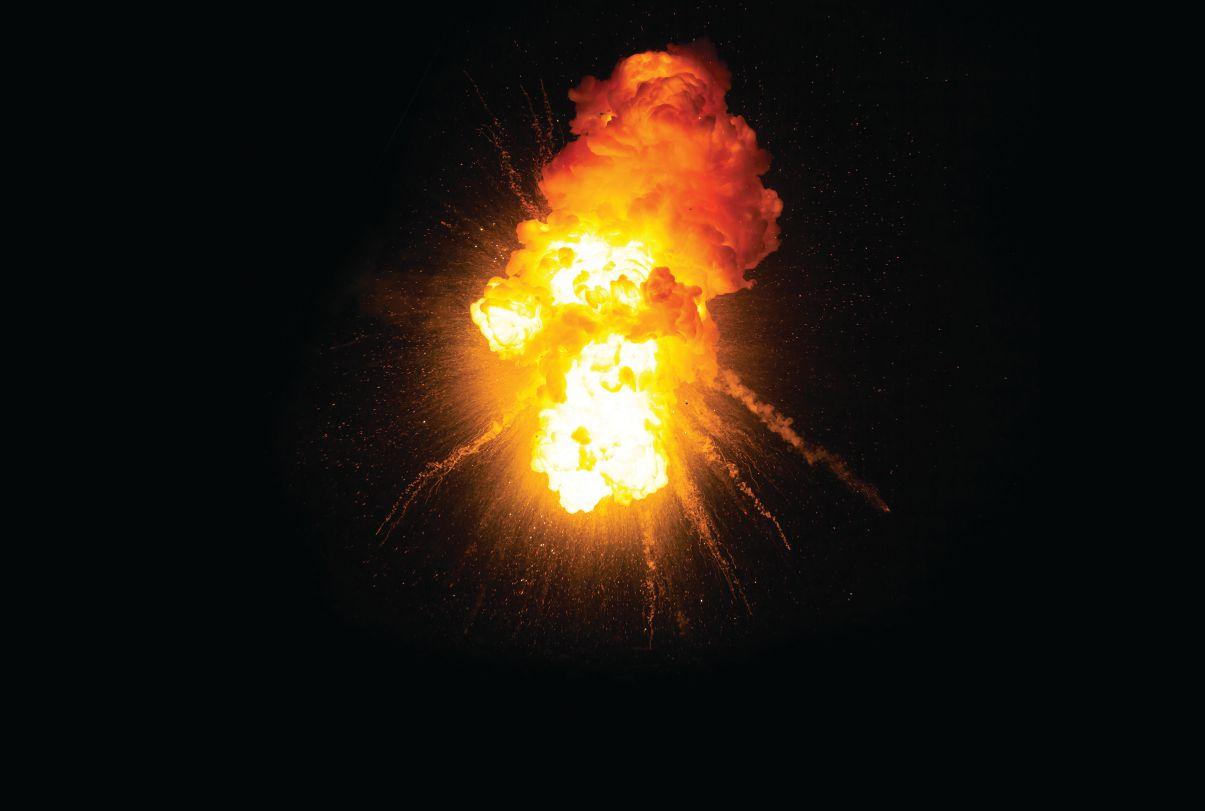
Combustible dust, which is a mixture of fine solid particles that are liable to catch fire or explode upon ignition when dispersed in the air, is a hazard common to many industries. Woodworking facilities, chemical manufacturing, food production, grain elevators and any facility that manufactures or processes sugar, flour and metal are workplaces where combustible dusts are present.
While well-intentioned companies try their best to manage explosive dusts in their facilities, many make mistakes that render their hazard-mitigation ineffective — even costly.
In 2018, there were 194 dust fires and explosions resulting in one fatality and 39 injuries in North America, compared to 145 dust fires and explosions resulting in six fatalities and 52 injuries in the previous year, according to Jason Reason, director of combustible dust services with SEAM Group in Indianapolis.
While conducting a dust-hazard analysis (DHA), implementing controls and documenting the effectiveness of the preventive measures taken is a good process to follow, “there are a lot of mistakes that occur,” says Reason, who spoke at Safety 2019 in New Orleans on June 10. “Most of the time, it is possible to avoid these mistakes.”
Some common combustible-dust mistakes are as follows:
IGNORANCE ABOUT DUST HAZARDS
The most common mistake is not knowing the hazards of the dust present in a workplace. “Wood dust is not wood dust; corn is not corn,” says Reason, adding that there are differ-
ences that affect their explosive properties. He showed a video of sparks emitted each time rain hit iron dust on a filter. “Dust is so small that when water hits it, it actually sparks. And this is just plain iron dust coming out of a steel shop.”
Testing is necessary to know if combustible dust is present and what type of dust it is, so that appropriate safety measures can be taken. “This is why knowing your dust becomes invaluable,” Reason says. “Whatever test data you have is going to affect the next step.”
NOT UNDERSTANDING A DUST-HAZARD ANALYSIS
According to Reason, many people do not understand what a DHA is. So what exactly is a DHA? “Let me tell you what it is not,” he says. “It is not dust testing,” which indicates whether combustible dust is present in a workplace, but does not tell you whether or not you have a hazard. “The DHA is going to tell you if you have a hazard.”
A DHA is a systematic review to identify and evaluate the potential fire, flash fire and explosion hazards associated with the presence of one or more combustible particulate solids in a process or facility. Reason describes a DHA as a road map to hazard mitigation and shows a company what it needs to do to mitigate the risk. An effective DHA will gather and review information, conduct onsite visits to observe processes, evaluate risks and safeguards, issue a report with detailed recommendations and provide a finalized report based on feedback and comments.
Elements of an effective DHA include looking at the fol-
lowing: sources of ignition and industrial ventilation systems; dust testing and dust reactivity; environmental health and safety programs and policies; housekeeping and cleaning methods; fire-protection, explosion-protection and prevention systems; preventive maintenance programs; emergency egress; and personal protective equipment.
A DHA that is done right can yield five to 10 times return on investment in the form of savings from unnecessary controls and sometimes increasing productivity, he adds.
UNDER- OR OVERTESTING
The other common mistake is not doing enough testing or overtesting. Testing may not be required where reliable inhouse, commodity-specific testing data or published data of well-characterized samples are available. But the absence of previous combustible-dust incidents cannot be used as a basis for deeming a dust to be non-combustible.
As there are easily a dozen types of dust tests out there, Reason advises companies that may have combustible-dust hazards on their premises to conduct a DHA from scratch.
“What you are trying to do is to figure what is the minimum number of tests you need to do and the minimum number of samples you need to take to do whatever it is you are trying to do,” he says.
THE IMPORTANCE OF A QUALIFIED PERSON
if an individual is qualified to perform a DHA: the experience the individual has that qualifies him or her to perform a DHA; how many DHAs he or she has performed; has the person performed a DHA for similar processes; can the person provide references from previous companies they have conducted DHAs for and provide a sample DHA report; and who will be performing the DHA, or will it be outsourced to a third party.
Asking the individual to describe the DHA process is also a good indicator of their knowledge and experience in this area. “Unfortunately, there is not a prescriptive way to do it. There is a lot of wiggle room in this,” Reason says.
It is also important to read the report that follows a DHA and determine whether it will address existing problems and if the recommendations can practicably be acted upon.
TESTING RAW MATERIALS
For facilities that mix raw materials, Reason offers a word of caution with regard to testing raw materials to determine the presence of combustible dusts and their explosive properties, because the dust that comes out of a mixer is very different from the individual properties of the raw materials that go into the mixer.
“It is possible to avoid these mistakes.”
A DHA must be performed or led by a qualified person who possesses a recognized degree, certificate, professional standing or skill and who by knowledge, training and experience has demonstrated the ability to deal with problems related to the subject matter, work or project.
Reason lists safety professionals, engineers, engineering firms and insurance carriers in his list of internal and external personnel who are not qualified to conduct a DHA.
“An unqualified individual will downgrade the existence or seriousness of a combustible-dust hazard. Either they may find it and not say much about it, or just flat out ignore it,” Reason says. An unqualified person may also recommend the implementation of unnecessary hazard-mitigation controls that drive up operating costs.
The following are good questions to ask to determine
“I have had facilities that spend $50,000 or a $100,000 testing raw materials and still did not get all the test data they need, because all those raw materials don’t end up in the dust collector — your mixer does. So you got to test those mixers, because there are no reliable data for those.”
When it comes to mitigating combustible-dust hazards, administrative controls (like housekeeping, training workers and preventive maintenance programs) rank above engineering controls as the former tends to be more costeffective. “They require a lot of babysitting to make sure they are implemented right, but from a cost perspective, they are a lot less,” Reason says of administrative controls.
“If those don’t work, that is when you want to go to engineering controls.”
Follow us on Twitter @OHSCanada
Jean Lian is editor of ohs canada
MEASURING COMBUSTIBLE DUSTS
Combustible-dust explosions often involve two explosions: primary and secondary. The primary dust explosion is the first explosion that occurs when dust suspension in a confined space is ignited and explodes. This first explosion will shake other dust that has accumulated which, when airborne, also ignites. A secondary dust explosion is often more destructive than the primary one. The following are measurements to determine the explosive properties of combustible dusts:
- Kst is a dust deflagration index that gives an indication of the severity of a dust explosion. The larger the Kst value, the more severe is the explosion.
- Maximal Pressure, or Pmax, defines the maximum explosion pressure of a cloud of dust under standardized conditions.
- Minimum Ignition Energy, measured in millijoule, refers to the minimum amount of energy required to initiate the combustion of a cloud of dust, vapour or gas. The lower the number, the more hazardous it is.
- Minimum Explosive Concentration measures how much dust need to be present to cause an explosion. The lower the number, the more hazardous it is.
PREVENTING SELF-HARM: THE NEXT FRONTIER
By Jean Lian
Suicide prevention is a workplace-safety issue, especially in male-dominated industries. This was the message that Cal Beyer, director of risk management with Lakeside Industries in Issaquah, Washington D.C., delivered during a session on suicide prevention as the next frontier in workplace safety at Safety 2019 on June 10.
“If any of you are working in predominantly male-dominated industries, you are a high-risk industry,” Beyer says. “The military still loses 20 veterans per day — these are veterans who return from active duty.”
The suicide rate in the construction industry in the United States is 53.3 per 100,000 people — four times the rate of 14 per 100,000 among the general population. If architects and engineers are added into the mix, that rate goes up to 85.5 per 100,000 employees, Beyer cited.
Some of the risk factors for suicides in the construction industry include an old school, “tough-guy” culture where stoicism is seen as a badge of manhood. Family separation and isolation from work travel, sleep disruption or deprivation due to shift work and seasonal layoffs at the end of project furloughs are also contributing factors.
Similarly in Canada, the construction industry has the highest rates of male suicides at 53.2 per 100,000 workers, according to data from the Centre for Suicide Prevention in Calgary. Installation, maintenance and repair workers trails behind the construction sector at 39.1 per 100,000 workers, followed by farmers, ranchers and other agricultural managers at 32.2 per 100,000 workers.
The Centre cites the following factors in occupations with high suicide rates: easy access to lethal means like guns and pesticides; exposure to chemicals that can cause mood or behaviour impairments; high workplace stress such as trauma and dangerous working conditions; job insecurity (think contract work); low wages; stressors related to gender imbalance (women working in male-dominated industries); isolation; and inconsistent work schedule.
White middle-aged males between 45 to 54 with less than a college education are at particular risk of suicide. “At age 40 to 55, too young to retire and no skills to work some-

where else, they feel trapped,” Beyer says, describing this profile as the “man-in-the-middle” phenomenon.
Access to lethal means aside, additional risk factors include injured workers suffering from chronic pain and working in a workplace that is toxic, high pressure or tolerant of alcohol and substance abuse.
“People who do take their lives by suicide don’t intend to die; they want the pain to stop,” Beyer says. “The truth is, suicide catches everyone’s attention. It is the actions that lead up to it that go unnoticed.”
Mental-health issues like suicide inclination needs to be addressed like any other safety issue. “It is like not letting your worker work from height without proper fall protection,” Beyer illustrates. “Often, it is the people who look most adjusted, who look like they are having the most fun, who are kind of projecting a different image.”
For Beyer, language matters. For example, the word “commit” is often used to describe people who harm or kill themselves. “‘Commit’ blames the victim for his illness that he is suffering in silence,” Beyer says. “We have to treat men-
tal ailments like we do physical ailments.”
Beyer debunks the myth that talking about suicide will give someone that idea. Rather, the reluctance to talk about suicide disempowers people from getting the help they need and prevent mental-health issues from being treated like any other safety issue.
“Reducing the stigma is teaching how to talk about it,” Beyer stresses. “It demonstrates care and believe it or not, that person has been hoping, wishing, praying that someone will notice that I am struggling.”
Washington School of Social Work in Seattle. It serves as a guide on how to reach out to and help people who have suicidal ideations:
• Look for warning signs like despair, giving away tools or personal belongings and talking about having lost a purpose in life.
“Don’t be afraid to use the ‘S’ word at work.”
Male-dominated industries like law enforcement, the military, construction, resource extraction and first-response industries with a high risk for suicide can take a proactive approach to address this risk by assessing vulnerabilities of their workforce, train supervisors to detect signs of self harm and evaluate employee-assistance programs for upstream interventions.
The acronym LEARN is a five-step, suicide-prevention tool developed by Forefront Suicide Prevention with the
• Empathize, listen and avoid making judgement.
• Ask directly about suicide. If that proves challenging, ask about self-harm.
• Remove access to weapons like firearms, knives and medication.
• Next level of care: Seek resources or help if necessary; stay with that person or call a crisis line.
“Don’t be afraid to use the ‘S’ word at work,” Beyer advises. “If we can ask someone if they are thinking about suicide, we could be the difference between life and death.”
Follow us on Twitter @OHSCanada
Jean Lian is editor of ohs canada.
Eye on Safety
By Jean Lian
The $124,000 fine issued to Vale Canada Limited in February for its failure to provide ready access to emergency-eyewash equipment that resulted in a worker’s permanent eye injury in 2016 is a cautionary tale of the importance of providing ready access to rinsing facilities in workplaces containing hazardous materials. It also demonstrates emergency-rinsing facilities as one of the frequently overlooked personal protective equipment (PPE).
Chemical-exposure injury is a major problem in Canadian workplaces, accounting for an average of 2,500 lost-time claims per year. “There are almost 50 fatalities every year in Canada as a result of short- and long-term exposure to aggressive chemicals in the workplace,” says David Wootten, Prevor Canadian product manager with Levitt-Safety Ltd. in Oakville, Ontario.
While the hope is that this equipment will never have to be used, Justin Dunn, sales product specialist and trainer with Haws Corporation in Sparks, Nevada, says facilities should operate like an emergency could happen at any moment.
not being met. “The end user has a one-in-four chance that the safety shower and eyewash will work safely if needed in an emergency,” he adds.
WITHIN REACH
As immediate flushing is critical to minimize the harm to an exposed worker, the accessibility and proper function of emergency eyewash stations and showers are critical. The ANSI Z358.1 standard, which helps to determine the design, installation and performance of emergency rinsing facilities, specifies 1.68 metres or 10 seconds as an acceptable distance from the hazard. “We suggest that the more dangerous the hazard is, the closer the equipment should be,” Dunn advises.
The quantity of rinsing facilities required in a workplace is determined by the number of potential victims that may need first aid in the area surrounding the hazard. For most hazards, a single combination shower is sufficient. “But if the contamination could affect more than one person in the vicinity, then multiple pieces of equipment should be considered,” Dunn adds.
Facilities should operate like an emergency could happen at any moment.
“Emergency equipment is often installed and forgotten,” Dunn says. “Training is rarely done to educate employees on how and when to use this equipment, due to personnel constraints or lack of education.”
Dunn cited Haws’ survey program, which examined data from thousands of sites and inspections of emergency eyewash stations and showers. Results show that 88 per cent of units are not compliant with ANSI Z358.1 due to a lack of regular testing, incorrect equipment for the type of hazard present and improper installation.
Flow rates and temperatures are frequently the issue. “Emergency safety showers and eyewashes are often discounted as a piece of safety equipment that is not used daily,” suggests Jason Atkinson, safety specialist with Acklands Grainger Inc. in Burnaby, British Columbia.
With that perception comes compliance challenges. Atkinson points out that tepid water was introduced into the ANSI standard in 2008 to ensure a minimum 15-minute irrigation. “Trying to meet this bench mark with cold water is impossible. Today, an estimated 60 per cent of the market has not complied with this requirement,” Atkinson adds.
As well, the weekly activation of a plumbed shower and eyewash station, along with an annual inspection to ensure that the safety appliance meets performance guidelines, is
For workplaces located in remote areas with limited or no water supply, many types of firstaid showers and eyewashes — most of which are self-contained emergency equipment — are available. This type of equipment is often portable, but can be permanent. A gravity-fed or air-charged tank that holds enough water for a 15-minute flush is optimal. According to Dunn, a bacteriostatic preservative is used in the water to ensure that the water is kept clean and usable for months on end.
For locations with temperatures that are too cold for normal eyewash stations, Haws offers specialized freeze-resistant equipment to prevent malfunctions, “but the testing requirements remain the same,” Dunn says.
For example, the Haws 7501T is a compact, portable tempered eyewash unit suited for remote locations without access to a continuous potable water source. The 34-litre gravity-fed eyewash station uses a heated, insulated blanket to provide ANSI-compliant tempered potable water in operating temperatures ranging between -30°C and 38°C. The unit features a high-density polyethylene tank that is approved by the United States’ Food and Drug Administration. Its light design and mounted bracket allows the unit to be easily relocated.
Maintenance is one aspect that is often overlooked when it comes to emergency eyewash stations and shower facilities. The ANSI standard requires that an emergency eye-
wash station be inspected weekly, while testing cleans out the water line between the equipment and the water supply to prevent the growth of hazardous bacteria in the pipes.
For self-contained equipment, only a visual test is required as activation will diminish the amount of water in the tank necessary to sustain a mandated minimal 15-minute flush.
Dunn says a self-contained eyewash station needs to be cleaned out regularly every 90 days to prevent bacteria growth in the tank.
Annual testing should be conducted to determine an eyewash unit’s overall performance. Designated workers should be trained on how to properly perform the weekly and annual testing and maintenance to ensure that both the shower and eyewash operate simultaneously and independently, eyewash sprays are installed at the proper height and the water is within the tepid range of 15.5°C to 37.7°C.
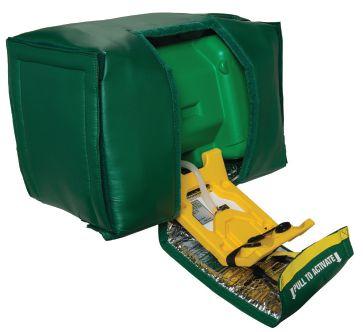
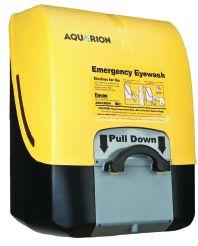
Acklands Grainger’s Aquarion eyewash station (bottom right) requires no external water source, while Haws’ model 7501T (top) is a gravity-fed, tempered portable eyewash suited for use in remote locations. Levitt-Safety’s diphoterine solution (bottom left) creates a reverse osmotic effect by pulling the absorbed corrosive back to the surface.
Alternatively, service providers like Haws Services can be hired to perform these tests. “By outsourcing a team to perform the necessary weekly and annual testing, it allows facility managers to focus on day-to-day operations with the confidence that their emergency equipment will work properly in case of an emergency,” Dunn adds.
Employees should also be trained on where emergency eyewashes and showers are located and how to use them. “Most often, we find that equipment isn’t performing because no one in the facility knows how it should perform,” Atkinson says.
ALTERNATIVE SOLUTION
Contact with human skin and eye tissue is one of the most common chemical risks. While water can reduce burn injuries on skin or eye tissue caused by strong acidic or caustic agents, flushing with water does not always prevent serious burns and permanent injuries from occurring.
While water is considered safe in removing acidic and basic chemicals from skin tissue and reducing the exothermic effects caused by strong acids through dilution, it is a passive rinse with limited backend effects, since water does not have binding effects on acidic or basic ions. Water also takes a long time to adjust an exposed individual’s physiological pH level back within the safe range of 5.5 to 9.0. The longer this transition takes, the greater the potential for injury and requirement for medical aid.
Water is by nature hypotonic, meaning that it has a natural flow diffusion that penetrates the chemical deeper into
tissue cells, exacerbating the pain and severity of the injury.
“This is why feel the pain intensify when water touches our skin or eye tissue,” Wootten explains.
Water dispensed from emergency showers and eyewash equipment is not sterile water. Often, it is not clean enough to be used on exposed burn tissue, especially eye tissue. As such, water can create a “squeegee” effect by dragging the chemical agent down the body and extending it over the area of the injury.
A more effective solution for decontaminating corrosive splashes to skin and eye tissue that Levitt-Safety offers is a solution with amphoteric, hypertonic and chelating actions that turn the passive backend effects of water into active effects to neutralize corrosive chemical splash and prevent serious burn injuries.
Amphoteric means it is equally effective on all acids, caustics and irritant group chemicals, while hypertonic prevents further diffusion of the chemical agent by drawing back to the tissue surface where rinsing takes place. Chelation, which means to grab or bind, restores an individual’s physiological pH value within seconds.
“When a chemical exposure injury occurs, time of contact and what we do during that time is critical to preventing serious long-term injuries and lost-time days,” Wootten says. If water is the only or closest method to decontaminate with, it must be used. “But we need to understand that there is a better method, and amphoteric solutions are superior for managing the injury and reducing costs associated with these types of injuries.”
In the event that eye exposure to corrosive materials has occurred, move the victim to the nearest safety shower or eyewash station immediately and start irrigating the face and/or body. A pair of Tyvek coveralls should be made available for use after irrigation since all contaminated clothing must be removed. If the victim’s sight has been compromised, the victim should call for help to seek assistance in locating an eyewash station. Emergency showers and eyewash stations must be marked with highly visible signs.
“It’s 2019 and time to rethink our approach to how we manage corrosive chemical injuries,” Wootten says. “Engineering away these risks, proper training and wearing the right PPE are critical to preventing serious injuries or illness caused by dangerous chemicals.”
Jean Lian is editor of ohs canada
Follow us on Twitter @OHSCanada

Formidable Formaldehyde
A HUMAN CARCINOGEN: Formaldehyde — a colourless, highly toxic and flammable gas at room temperature — is a toxic substance widely used in many industries. According to the National Institute of Occupational Safety and Health in Washington, D.C, formaldehyde is used in glues and resins, dyes, textiles, disinfectants, building materials, automobile parts, embalming and laboratories.
Workers who are at risk of exposure to formaldehyde include agricultural workers operating in confinement livestock production, employees who manufacture plastics, resins and foam insulation and beauticians who apply dyes and smoothing products, WorkSafeBC notes.
ADVERSE EFFECTS: Exposure to formaldehyde can irritate the skin, throat, lungs and eyes. Repeated exposure to formaldehyde can possibly lead to cancer. Exposure can occur through inhalation or absorption through the skin or eye as a liquid, according to information from the Canadian Association of University Teachers (CAUT) in Ottawa.
As a potential occupational carcinogen, ingesting formaldehyde causes corrosive burning of the mouth, throat and digestive tract with vomiting of tissue and blood. Ingested formaldehyde converts to formic acid, causing metabolic acidosis, liver and kidney damage, jaundice and swelling of body tissues. Convulsions, central nervous system depression and death can follow.
WORKING SAFELY: As with any hazardous substances, employers must take reasonable precautions and provide Workplace Hazardous Materials Information System (WHMIS) training specific to this chemical. A fact sheet on formaldehyde by CAUT lists the following precautions when working with formaldehyde:
• Adhere to Material Safety Data Sheet precautions and comply with applicable regulations;
• Avoid using formaldehyde near open flames, heat, hot surfaces, sparks and other ignition sources as the substance is extremely flammable;
• For large-scale work, consider installing leak and fire-detection equipment with a suitable, automatic fire-suppression system;
• Use non-sparking ventilation systems, approved explosion-proof equipment and intrinsically safe electrical systems in areas of use;
• Post “No Smoking” signs;
• Avoid contacting formaldehyde without protection;
• Use in well-ventilated areas and away from storage areas;
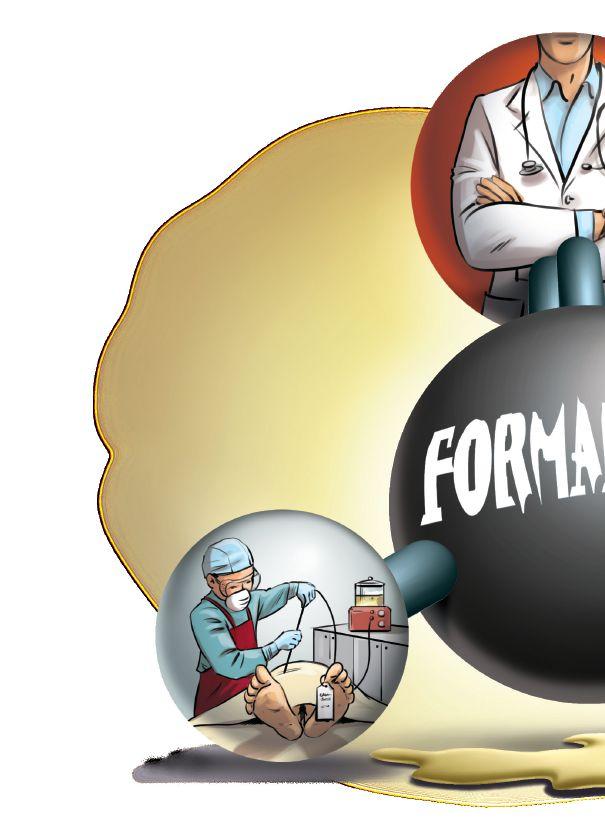
• Inspect containers for damage or leaks prior to handling;
• Label and inspect containers regularly, keeping containers tightly sealed when not in use;
• Make emergency equipment for fires, spills and leaks readily available;
• Report signs of illness immediately to supervisor; and
• Seek medical attention for all exposures.
HANDLING AND STORAGE:
Formaldehyde solutions must be stored in well-ventilated locations away from sunlight and ignition sources or flammable materials. Formaldehyde is also incompatible with strong acids, amines, ammonia, aniline, disulfides, gelatine, iodine, magnesite, phenol, tannins, copper, iron and silver salts, notes a prevention guide on formaldehyde in the workplace by the Institut de recherche Robert-Sauvé en santé et en sécurité du travail (IRRST) in Quebec. Workplaces where this substance is present are recommended to have respiratory protective equipment, a water source with a high flow rate, safety showers and eye showers available nearby.
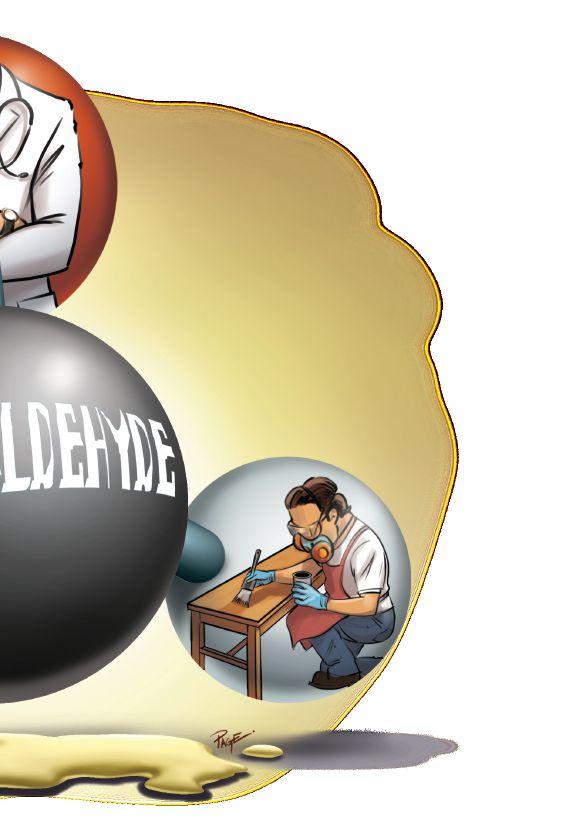
SUBSTITUTION METHODS: Depending on the application, substituting formaldehyde with other products should be considered whenever possible:
• In the manufacture of panels and other wood products where formaldehyde is used as glue, the use of resins without or at lower formaldehyde emission rates can be considered for particleboard and beams.
• In wood furniture varnishing, different types of coatings exist: cellulose nitrate, acrylic, ultraviolet drying, polyester, polyurethane and powder coatings. Several factors affect the choice, such as the type of furniture, the desired finish, cost of equipment replacement and current environmental regulations.
• Other commercial products in place of formaldehyde are available for use as a fixation agent in pathology, embalming fluid or crease-resistant finish for fabrics, although the data on these products’ performances are incomplete.
Apart from substitution, local ventilation is the preferred control method when the emission source is well identified
or contained and isolated. Local ventilation must also be available on any tasks that expose workers to short emissions, IRRST advises.
General or dilution ventilation, which is recommended where emission sources are diffused, dilutes pollutants by introducing a sufficient flow of outdoor air. Designing an efficient system requires a good understanding of air-flow patterns in the building, as well as consideration of flow rates and air flows like velocity, direction and temperature, which will vary with ambient conditions and can reduce dilution.
Engineering controls must be complemented by training. Employee information and training on the risks associated with formaldehyde, emission sources, the most polluting tasks, means of control and PPE are also key aspects of controlling exposure.
WHAT IF: Preventive steps should significantly reduce the risk of accidental exposure to formaldehyde. But if exposure has occurred, employees must evacuate the area immediately and isolate the hazard area. Use personal protective equipment (PPE) as required, ventilate the area and eliminate ignition sources, the Canadian Centre for Occupational Health and Safety in Hamilton, Ontario advises.
Do not touch spilled material and dike the spilled product to prevent runoff. Stop or reduce leak if it is safe to do so. Contain and soak up the spill with absorbent that does not react with the spilled product. Place the used absorbent into suitable, covered, labelled containers for disposal. Flush the spill area. Last but not least, report spills to local health, safety and environmental authorities as required.
FIRST AID: If an exposure has already occurred, the following first-aid measures are recommended by CAUT:
• Inhalation: Don appropriate PPE, remove the source of contamination or move the victim to an area with fresh air. If breathing is difficult, trained personnel should administer oxygen. Keep the victim quiet and still, and transport the victim to emergency facilities immediately.
• Skin: Wear protective chemical clothing if necessary before removing contaminated clothing, shoes and leather products. Flush exposed skin continuously with lukewarm, gently flowing water for at least 30 minutes. Send the victim to a hospital immediately.
• Eyes: Flush exposed eyes with lukewarm, gently flowing water for at least 30 minutes, holding the eyelid open. Transport to emergency facilities immediately.
• Ingestion: Rinse the victim’s mouth thoroughly with water and do not induce vomiting. If vomiting occurs, rinse the mouth with water. Seek immediate medical treatment. Follow us on Twitter @OHSCanada
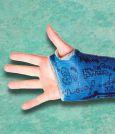
A Bird’s Eye View
By Jean Lian
Work-related causes claimed the lives of 951 workers in Canada in 2017. The Northwest Territories and Nunavut win the dubious honour of having the highest five-year average injury fatality rate of 7.7 per 100,000 workers. These are the findings of the 2019 Report on Work Fatality and Injury Rates in Canada released by the University of Regina in April.
Sean Tucker, Ph.D., associate professor of human resource management at the University of Regina’s faculty of business administration, looked into Saskatchewan’s workplace fatality rates in 2012 when the province saw a spike in job-related deaths. “I couldn’t find any publication with regard to this,” he recalls.
The 2019 report is based on injury and fatality data that provincial and territorial workers’ compensation boards (WCBs) submit to the Association of Workers’ Compensation Boards of Canada (AWCBC) every year. The report, which provides a jurisdictional comparison of job injury and fatality rates between 2012 and 2017, classifies occupational fatalities in two categories: those caused by job-related injuries; and workers who died from occupational diseases:
• Injury-related fatalities: Among provinces with more than 100,000 workers, Saskatchewan, Alberta and Newfoundland and Labrador have the highest five-year average injury fatality rate at 4.9, 3.7 and 3.1 per 100,000 workers respectively. A comparison of the average rate between 2012 to 2014 and 2015 to 2017 reveals that New Brunswick saw the greatest increase in injury fatality rate at 111 per cent, followed by Quebec at five per cent. Saskatchewan showed the greatest decline (-46 per cent), followed by Manitoba (-35 per cent) and Nova Scotia (-27 per cent).
in occupational-disease fatality rate. In contrast, Manitoba had the greatest percentage decrease, down 34 per cent, followed by Newfoundland and Labrador (-29 per cent) and Saskatchewan (-10 per cent).
As for injury rates, Manitoba had the highest five-year average injury rate (3 per 100), followed by British Columbia (2.23 per 100) and Saskatchewan (2.19 per 100) among provinces with more than 100,000 workers.
While the report offers a bird’s eye view of oh&s injuries and fatalities across the country, “there is a lag between when the fatalities and injuries occur and when the statistics are published on AWCBC website,” Dr. Tucker says.
The data from AWCBC are based on when a claim was accepted by a WCB, not when the incident occurred. The latest 2019 report captures data up to 2017. Provincial fatality statistics for 2018 will only be available in early 2020.
“Underreporting of injuries is rampant.”
Another limitation is underreporting for various reasons: the severity of injuries; claim suppression; the use of alternative insurance policies to cover an injured worker’s expenses; and fatalities that occur decades after work exposures. Estimates suggest that underreporting range anywhere between 30 and 40 per cent. “Underreporting of injuries is rampant,” says Bob Barnetson, Ph.D., professor of labour relations at the faculty of humanities and social sciences in Athabasca University in Athabasca, Alberta.
The lack of harmonization in reporting parameters is another factor, since regulation of workplace safety is not centrally driven, but falls under federal and provincial or territorial jurisdiction. Differences in industry mix and the size of the labour force, coupled with the use of workplaceaccommodation practices, further compound the differences in reporting.
• Occupational-disease fatalities: Newfoundland and Labrador had the highest five-year average occupational disease fatality rate of 8.2 deaths per 100,000 workers, followed by Nova Scotia at 4.8 deaths per 100,000.
Unlike injury-related fatality rates, which show a general downward trend, occupational-disease fatality rates vary among jurisdictions. A comparison of three-year average rates between 2012 to 2014 and 2015 to 2017 shows that Nova Scotia (18 per cent), Quebec (15 per cent) and Ontario (four per cent) saw the greatest percentage increase
Dr. Tucker thinks there is room for improvement in the timeliness and accuracy of cross-jurisdictional oh&s reporting. He suggests that AWCBC extract the most salient data and publish them in the early part of the following year. More detailed statistics, which may be of less interest to the public, can be released later in the year.
Alan Quilley, president and owner of Safety Results Ltd. in Sherwood Park, Alberta, thinks a fresh approach is needed. “Unless we do, you will be able to write this same report in ten years from now.”
Follow us on Twitter @OHSCanada
Jean Lian is editor of ohs canada.
Recent issues of ohs canada and our website, www.ohscanada.com, have provided readers with plenty to chew on.
THE BATTLE OVER VACCINES
An editorial on the measles outbreak in Canada was published in the May/June issue of ohs canada.
Vaccines are not one-size-fits-all. Many people are allergic to vaccine components, myself being one of those people. To punish students and withdraw education because they cannot vaccinate is very inequitable.
I suffered from meningitis after receiving the routine Hepatitis B vaccine in Grade six. I was hospitalized and could have died. Because I had such a serious reaction, I no longer vaccinate; my life is important. I would rather deal with a measles fever for five days than be hospitalized with meningitis again. Additionally, vaccines have been shown to cause all sort of health problems in over 150 published studies from a variety of different universities.
Alexandra
NURSE FIRED OVER FENTANYL
A nurse fired for stealing opiates in a Toronto hospital should get another chance at showing why she should get her job back, Divisional Court ruled. (the canadian Press, June 14, 2019)
The hospital was justified in firing this employee based on the facts. It may be reasonable to let the employee go to rehabilitation to get off of the addiction and possibly return to work under strict conditions once they are clean, but a drug addiction is not a disability as far as I am concerned. The drug addiction is self-administered by that
person, and they have a choice to not do it especially while on the job — the same as consuming alcohol before or during working hours.
People with a disability are born with it, or a disease such as multiple sclerosis that progresses gradually. Some people feel that addiction is a disease, but I do not agree with that either. Drug or alcohol addiction or abuse is neither a disability nor an excuse to do it.
Bob
Bob, there are several Supreme Court cases ruling drug dependency as a disability, and the employer must accommodate the worker. As for this case, it is interesting because she was let go by stealing, and her dependency made her do it.
Mike
FREE BUFFET “DISCRIMINATORY”
A buffet chain in Ontario offering free meals to Canadian citizens has been viewed by some as discriminatory. (the canadian Press, June 28, 2019)
I am really tired of hearing how people are not treated as per human rights. Let’s talk about how my parents were treated in the 50’s when they immigrated to Canada. Current immigrants and refugees are treated much better than my parents and other nationalities were in the 50’s, 60’s, etc.
I would be glad to talk about how my parents were treated back then versus how immigrants and refugees are today. If Mandarin wants to do something nice for Canadians, then let’s support them as opposed to punishing them. Enough is enough already.
Sam
Sheri Q.
FOREIGN WORKERS DEFRAUDED



This is getting just ridiculous. We are not the litigious United States, although it seems we are bent on trying. It is very easy — you either have your Canadian citizenship or you do not! People need to stop whining “not fair” and get on with being good citizens. Not everyone can have everything. As a country, I remember the caring we showed each other. Now, it seems that it is every person for himself or herself and the heck with anyone else. Very sad and disappointing.
Advocates hail a recent decision by the Tax Court of Canada that recognizes the rights of migrant workers without a valid work permit in Quebec to qualify for employment insurance. (the canadian Press, May 29, 2019)
It is false to say that they “qualify for employment insurance even if they don’t have a valid work permit.” The hours worked with the wrong employer will count towards calculating the benefits, but EI claimants have to have a valid work visa to be deemed available for full-time work. If their visa is open, or if it is still valid and they are ready to renew it with a different employer, then they may be eligible. But if they just do not have a valid visa, they are not eligible at all.
Paul

TIME OUT
AGAINST THE FLOW: It was no accident that stranded hundreds of cruise passengers near Accidental Beach in Edmonton. The cruise was heading back to the dock at Rafters’ Landing when the current became too swift going in the opposite direction of the boat, which could not proceed into Rafters’ Landing. Three fire rescue boats were dispatched, and crews evacuated nearly 300 people. As far as places to get stuck, being stranded on a cruise — with booze to boot — seems quite an experience.
FREEBIE FOR BREACH: This is not exactly the type of freebie that one looks forward to, but Desjardins Group is offering free, permanent data protection to all its members to sweeten the bitter aftertaste of a massive data breach in June that affected roughly 2.7 million people and 173,000 businesses, CBC News reported on July 15. Clients of the credit union who are victims of identity theft in the future will also have free access to lawyers specializing in identity theft and will be compensated for losses.
SAFE, OR NAY: Edmonton has given the phrase “having your say” a safety twist as the city launched a web tool that allows members of the public to identify where they feel unsafe. The new SafeCityYEG web-based map allow users of the online tool to drop a pin at any location in the city to identify places where they feel safe or unsafe, The Star reported on July 10. They are also presented with several options to indicate why they feel unsafe. The tool, which cost $40,000 to implement, is part of the city’s overall plan to curb gender-based violence. A month since its launch, more than 700 unique users have dropped pins on the map.
ROLLING TANKS: It was rolling tanks on a highway in Toronto when it was shut down for about an hour after five empty propane tanks fell off a truck on July 16. The tanks came from a truck that had propane tanks strapped to its flatbed before it spilled onto Highway 401, The Star reported on July 16. All lanes were blocked, and the Ministry of Transportation cleared the scene. The driver is expected to be charged with an insecure load offence.
CAKE MIX-UP: Throw in the ingredients of a southern accent and a cake order and what have you got? A cake mixup that got a Dairy Queen staff fired over an honest miscommunication. According to a July 12 report from USA Today, a woman placed an order with Dairy Queen in Milledgeville, Georgia for a birthday cake with a theme centred around the Disney hit, Moana. As the customer who placed the cake order came from Georgia and had a southern accent, “Moana” was misheard as “marijuana”. So the baker baked the cake according to the request, complete with a marijuana leaf and the picture of “My Little Pony” with bloodshot eyes. The amused client took a picture of the cake and posted it on social media out of jest, but it had the unintended effect
of getting the baker of the marijuana-themed cake fired. As Georgia is an “employment-at-will” state, the baker said she did not have much of a choice but to move on.
THE DEPARTED: Heads count — even if it is the head of the dead. A hearse driver in Las Vegas certainly thought that way as he counted the head of the corpse that he was transporting as a vehicle passenger and thus, a licence to use the highway’s carpool lane in Las Vegas. A highway trooper told the driver to get out of the carpool lane and let him off with just a warning, Toronto Sun reported on July 14. For the hearse driver whose morbid carpooling antic made news, the slogan “What happens in Vegas stays in Vegas” certainly did not apply.
FLYING WITH “GOD”:
The crew and passengers of a Delta Air Lines flight from Puerto Rico to New York had a harrowing experience on July 3 when an unruly passenger who claimed to be God behaved aggressively and forced the plane to return to the airport in San Juan. The 30-yearold male tried to enter the main cabin, but was subdued by passengers. The cockpit door remained closed and secured throughout the incident, Reuters reported.
ICE CREAM, ANYONE?: Giving ice-cream toppings a new spin and getting back at a competitor are all one and the same thing for a food-mart owner in Indian Shores, Florida who decided to ruin her rival’s popular ice-cream business with urine. Indian Shores Food Mart is located beside Lu Lu’s ice-cream shop, and both businesses share the same bathroom. According to a Toronto Sun report on July 10, the food-mart owner not only peed in the ice-cream machine, but also spat and wiped her snot into the ice-cream tubs at Lu Lu’s. The stomach-churning antics were captured on camera, with footage showing the food-mart owner using the shared bathroom multiple times over the course of June. Lu Lu’s had to throw out $2,000 worth of ruined products and give a thorough cleaning to their equipment. The food-mart owner was charged with criminal mischief and tampering with consumer products.
AIRPORT BRAIN: Flying can be a stressful experience, especially for those who are boarding a plane for the first time. This might just be what a woman at a Turkish airport felt when she shocked everyone by hopping onto a conveyor belt, thinking that it would take her directly to the plane. In a video that has since gone viral, the woman reportedly dropped off her bags at the check-in point and climbed onto the moving platform. She then stepped on to another belt and fell backwards in confusion. Airport staff assisted the woman out so she would not get whisked away to cargo, Toronto Sun reported on July 12. If only the baggage conveyor belt is a shortcut to the plane. Follow us on Twitter @OHSCanada