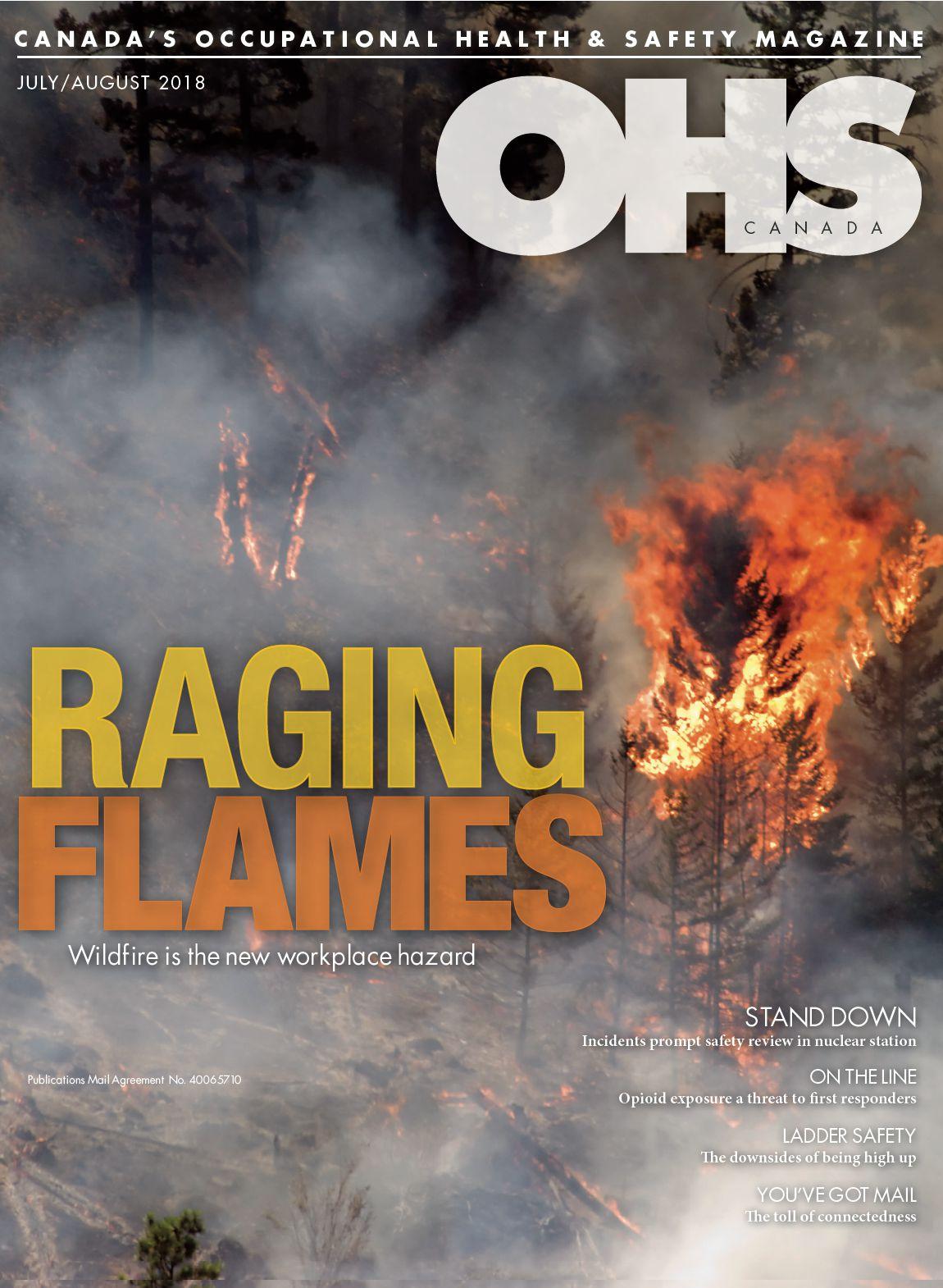
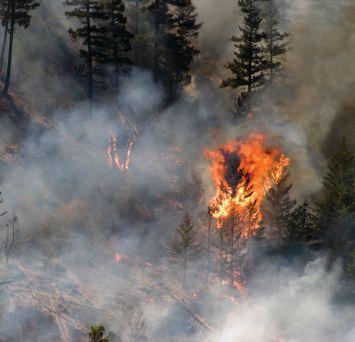
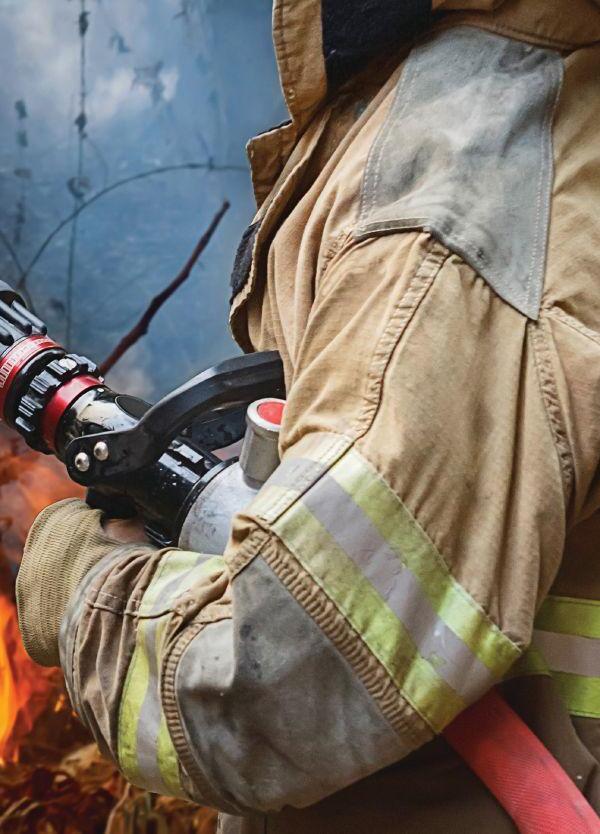
Wildfires pose a real threat to surrounding businesses and their workers. Employers need to be prepared to address health and safety issues associated with wildfires.
BY DONALEE MOULTON
Stand Down at Darlington
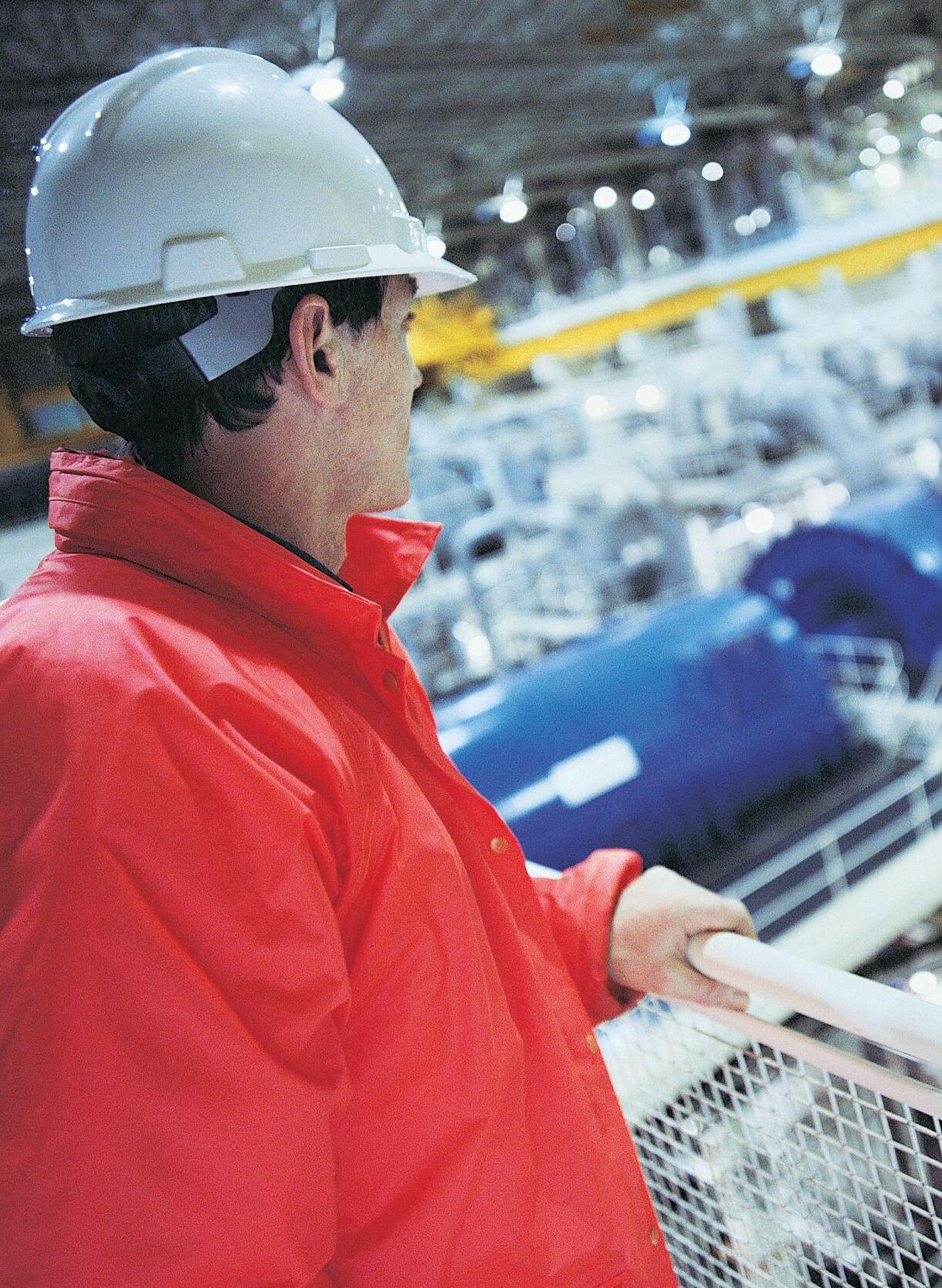
An inside look at what prompted the safety stand-down at Darlington Nuclear Generating Station Refurbishment Project following a string of near-miss incidents.
CYRUS GORDON
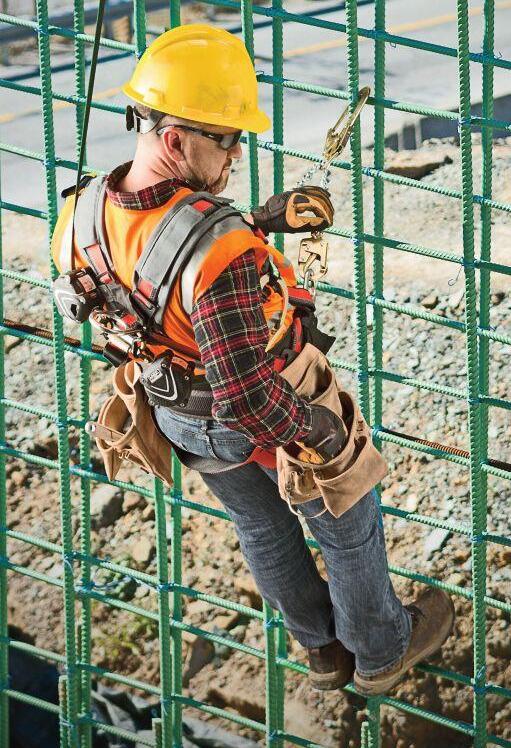
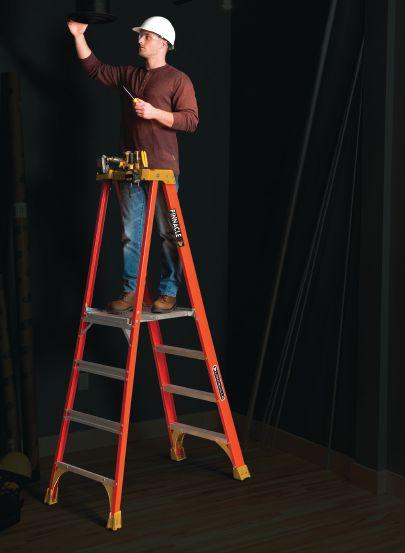
Ladders are used in many jobsites. Having the right ladder for the job is as important in ensuring safety as knowing how to use them correctly.
JEAN LIAN
The Art of Happiness
The suicides of Kate Spade and Anthony Bourdain have dominated headlines weeks after the news broke. Their suicides are confounding on two levels: firstly, these were two successful, wealthy and famous people. Secondly, it reminds us of how little we know about mental well-being. While medical knowledge has advanced by leaps and bounds over the last century, the mental-health field is playing catch up at best.
As the World Health Organization aptly puts it, “health is a state of complete physical, mental and social well-being and not merely the absence of disease or infirmity.” It goes on so share some sobering statistics about the global state of mental health: about 800,000 people commit suicide every year; around 20 per cent of the world’s children and adolescents have mental disorders or problems; and mental disorders are important risk factors for diseases and injury.
Mental-health issues know no borders; Canada is no exception. A joint survey by Morneau Sheppell and the Globe and Mail, released on July 5, found that Canadian employees report workplace stress as the primary cause of their mental-health problem. More than half (58 per cent) of respondents indicated that they had considered suicide to cope with mental illness.
The term “high-functioning depression” has become a popular layman’s term for dysthymia, or chronic mild depression. The Centre for Addiction and Mental Health’s information guide on depression describes dysthymia as a state of chronically low mood with some moderate symptoms of depression, which include poor appetite or overeating, fatigue, low self-esteem, poor concentration, difficulty making decisions and feelings of hopelessness. If two or more of these symptoms last for two or more years without the person having experienced a major depressive episode, a diagnosis of dysthymia may be made.
Mental hygiene, which refers to the practice of maintaining and restoring mental health through education, early treatment and public-health measures, is sorely lacking in modern existence. The awareness and due diligence that we demonstrate towards hand hygiene is not being shown to our minds. Seeking psychological help is often stigmatized and accompanied by a sense of shame, but we have no qualms taking sick leave to go to the doctor’s office for a cold.
Negative emotions and chronic stress have a way of manifesting themselves in a way that is detrimental to relationships. The first step to mental well-being is to recognize that the mind deserves no less care and attention than our bodies do. Just as we take pains to nourish, strengthen and keep our bodies in shape, the same needs to be done for our minds if we want to be healthy and happy.
Instead of reaching for the remote control or cellphone to engage in mindless distraction, carve out some time alone to process your emotions, thoughts and tension that have arisen over the course of a day. Do breathing exercise and give the mind a mental detox by focusing on the present. If you are struggling with personal issues or experiencing elevated levels of work stress, reach out to friends or seek professional counselling.
We all have within us the capacity to be happy, and we owe it to ourselves to take that very first step.
CIRCULATION MANAGER JAY DOSHI 416-442-5600 EXT 5124 jdoshi@annexbusinessmedia.com
PUBLISHER PETER BOXER 416-510-5102 pboxer@ohscanada.com
GROUP PUBLISHER PAUL GROSSINGER pgrossinger@annexbusinessmedia.com
PRESIDENT & CEO MIKE FREDERICKS
EDITORIAL ADVISORY BOARD MEMBERS
DAVID IRETON, Safety Professional, Brampton, Ont.
AL JOHNSON, Vice President, Prevention Services WorkSafeBC, Richmond, B.C.
JANE LEMKE, Program Manager, OHN Certification Program, Mohawk College, Hamilton, Ont.
DON MITCHELL, Safety Consultant, Mississauga, Ont.
MICHELE PARENT, National Manager, Risk Management and Health and Wellness, Standard Life, Montreal, Que.
TERRY RYAN, Workers’ Compensation and Safety Consultant, TRC Group Inc., Mississauga, Ont.
DON SAYERS, Principal Consultant, Don Sayers & Associates, Hanwell, N.B.
DAVID SHANE, National Director, Health and Safety, Canada Post Corporation, Ottawa, Ont.
HENRY SKJERVEN, President, The Skjerven Cattle Company Ltd., Wynyard, Sask.
PETER STRAHLENDORF, Assistant Professor, School of Environmental Health,Ryerson Polytechnic University, Toronto, Ont.
JONATHAN TYSON, Association of Canadian Ergonomists/Association canadienne d’ergonomie, North Bay, Ont.
Printed in Canada
ISSN 0827-4576 (Print)
ISSN 1923-4279 (Digital)
PUBLICATION MAIL AGREEMENT #40065710
CIRCULATION
asingh@annexbusinessmedia.com
Tel: 416-510-5189
Fax: 416-510-6875 or 416-442-2191
Mail: 111 Gordon Baker Rd., Suite 400, Toronto ON M2H 3R1
SUBSCRIPTION RATES
Published six times per year – Jan/Feb, Mar/Apr, May/Jun, Jul/Aug, Sep/Oct, Nov/Dec
Canada $98/yr plus tax
USA $98/yr
Foreign $161.50
Occasionally, OHS Canada will mail information on behalf of industry related groups whose products and services we believe may be of interest to you. If you prefer not to receive this information, please contact our circulation department in any of the four ways listed above.
All advertising is subject to the publisher’s approval. Such approval does not imply any endorsement of the products or services advertised. Publisher reserves the right to refuse advertising that does not meet the standards of the publication.
THE 2017 VOTES ARE IN.
# 1 Overall Pick by You
Gold -Ansell Microflex 93-260
Hand Protection:
Gold - Ansell Microflex 93-260
Silver – Ansell HyFlex 11-542
Eye Protection:
Gold - DSI Safety Inc. - Dyna-Shield Eyewear
Silver – DSI Safety Inc.
Most Comfortable OTG Glasses
Gas Detection / Instrumentation:
Fall Arrest:
Gold Draeger X-am 125 Mark II Pump
A special “thanks” to all our readers and web visitors for their votes.
We poured over the votesOur 2017 OHS Canada Readers’ Choice Awards Winners are: Congratulations
Gold - DSI Safety Inc. – Specialized Fall Arrest Harnesses
Apparel:
Gold – Ansell AlphaTech™ HiViz™ Coverall 66-687
Silver – Lakeland MicroMax NS
First Aid:
Gold - DSI Safety Inc
– Personalized First Aid Kits
Education:
Gold - University of New Brunswick
– Online OH&S Professional Development Programs
Head Protection:
Gold – DSI Safety Inc. – Full Graphic Safety Hard Hat
$125,000
Fine issued to a company in Concord, Ontario on July 23 over a fatal fall. A worker was ejected from the boom platform when the boom tipped over.
Source: Ontario Ministry of Labour
3,179
Number of injured young workers in Nova Scotia in 2017.
Source: Workers’ Compensation Board of Nova Scotia
Source: Yukon Workers’ Compensation Health and Safety Board
1. Assessment Rates: The Yukon Workers’ Compensation Health and Safety Board will announce 2019 assessment rates by August instead of the end of the year to help Yukon employers make business and financial plans.
2. New Limits Published: WorkSafeBC has identified substances with new or revised threshold limit values (TLVs), along with their existing occupational exposure limits (OELs), to the Table of Occupational Exposure Limits for Excluded Substances on July 3. The move follows the American Conference of Governmental Industrial Hygienists’ publication of a list of substances with new or revised TLVs. Existing OELs for these substances continue to be in effect until WorkSafeBC has consulted with stakeholders to decide if these changes will be adopted.
Source: WorkSafeBC
3. Help for Resettlement: Alberta is co-leading a federal pilot project to help military families that have been posted to Alberta settle into their new communities. The pilot project, set to launch this fall, plans school attendance for students coming from other provinces and work with doctors accepting new patients to reserve openings for transferring families.
Source: Government of Alberta
4. Partners in Safety: SAFE Work Manitoba sponsored St. John Ambulance to purchase trauma bags and new safety vests to make it easier to identify medical first responders. Both agencies also created a new award to recognize organizations that exemplify excellence in implementing first-aid programs.
Source: SAFE Work Manitoba
5. New App Topic: WorkSafeNB released a new topic on impairment on its Guide to OHS Legislation app on June 18, in response to occupational concerns over the legalization of cannabis. The new app topic addresses questions about impairment, including assessing impairment at work and employee responsibilities.
Source: WorkSafeNB
COLLAPSED DAM CAUSED FLOODING
Massive flooding from a South Korean-constructed hydroelectric dam in Laos left several people dead and hundreds missing. Part of the Xepian-Xe Nam Noy hydropower dam in southeast Laos collapsed on July 23, releasing large amounts of water that swept away houses, flooded villages and made more than 6,600 people homeless.
Source: The Associated Press
30
Number of accepted claims for work-related injuries caused by heat exhaustion and heat stroke in British Columbia in 2017.
Source: WorkSafeBC
September 1
The date when Alberta workers’ insurable earnings will no longer be capped. Workers injured on or after this date will be compensated at 90 per cent of their net earnings.
Source: Workers’ Compensation Board of Alberta
Recent issues of ohs canada and our website, www.ohscanada.com, have provided readers with plenty to chew on.
DAY OF MOURNING
The National Day of Mourning is a reminder that workplaces should be safe. (the canadian press, April 26, 2018)
My assistant, 24 years old and about to be married and start a family, was killed on the job in 1989 when he fell 2.5 stories off a ladder in the high-rise structural forming industry. I was also injured in a later accident and pensioned off. I suffer constantly, but am fortunate to still be here.
I find solace knowing that his death resulted in significant permanent changes to regulations regarding carrying items while climbing a ladder on the job site. His memory gives me strength on my worst days. Today, I pay my respects to all my comrades in pain and the families of those lost unnecessarily.
Dan Nielen
COMPLAINTS OVER COMMENTS
A Chilliwack school trustee faces a complaint for controversial comments about gender identity and sexual orientation. (the canadian press, April 17, 2018)
I may not agree with anything he says, but I defend his right to free speech.
Gina
DEADLY CRASH
Investigators are piecing together what caused a tractor trailer to collide with a hockey team bus in Saskatchewan. (the canadian press, April 8, 2018)
This is very regrettable. The tractor trailer ended up in the northwest corner of the intersection after the collision. The tractor trailer was travelling west before the collision at the intersection. It collided with the school bus, which was travelling north at the intersection. According to this news report, there was a stop sign before the intersection on the path of the tractor trailer where a stop was mandatory. This is the key factor here.
Mohammad Syed Husain
POLICY FOR POT
A committee tasked with helping the federal government develop a workplace policy on marijuana is split over drug testing for jobs. (the canadian press, March 17, 2018)
If an employee, contractor and any other person allowed in your workplace is impaired in any way, they should not be allowed to remain on your property. If they are not fit for work due to impairment by drugs, alcohol or prescription medication etc., for their safety as well as for all the others on site, they should be removed. Arrangements should be made for their safe transport home. As an employer, it is our responsibility to provide a safe workplace for everyone. This would be the right thing to do.
John F. Pellegrino
Employers who allow drug use during work hours expose all workers to the possible risk of fentanyl exposure from drugs contaminated by fentanyl or carfentanil. This is a heinous violation of the Occupational Health and Safety Act, period.
Frank Docherty
As a safety officer with a drug-andalcohol policy, I support the employer on the policy of zero tolerance of impairment while on the job. When marijuana becomes legal, it is no different than any other drug or alcohol. If you are impaired, you are a liability to the workplace. It is a fact that fatigue and over-the-counter drugs can be just as detrimental, so people should take a sick day and stay home.
If a person is using this substance for medicinal purposes and is impaired, they should not be at work regardless of job or position, because this medicinal purpose is not something that will change anytime soon except that usage will increase to accommodate their need. Until studies prove otherwise, policies should remain in effect to prevent injury, death and lawsuits.
Rosie Decnodder
BILL EYES WAGE GAP
Ontario plans to introduce legislation to narrow gender wage gap. (the canadian press, March 6, 2018)
It is about time. Individuals should be remunerated based on positions, positions should be earned based on skills, knowledge and experience... Also, the famous Sunshine List for public sector should be revised. Listing every single employee that earned over 100K put them at a disadvantage when negotiating salary.
Belkis Barrios
Senior project manager
Follow us on Twitter @OHSCanada
Would you like to share a comment? Send an email to jlian@ohscanada.com. Letters may be edited for style, grammar and length.
OH&S UPDATE
WARNING SYSTEM CITED
FEDERAL — An investigation report that the Transportation Safety Board of Canada (TSB) released on July 10 concluded the failure of the stern tube mechanical seal led to the flooding of a fishing vessel near Sept-Îles, Quebec.
At approximately 3.30 a.m. on 21 April 2017, the engine room of L.K.C flooded while the vessel with four crew members onboard was anchored 45 nautical miles east of Sept-Îles. The Canadian Coast Guard Ship Cap Rozier arrived on scene to pump out the water and towed the vessel to Sept-Îles. There were no injuries or pollution.
According to the report, the crew was unaware of the water ingress as the high bilge-water alarm sounded only in the unmanned engine room. Neither did the crew detect the water ingress at an earlier stage during an engine room inspection, as there was no consistent watchkeeping aboard the vessel while at anchor. As a result, water rose to a level that rendered the vessel’s bilge pumps inoperative.
Following the incident, the owner of L.K.C installed an additional warning device in the wheelhouse.
SEAT BELTS MANDATORY
FEDERAL — Seat belts will become mandatory on newly built medium and large highway buses starting from September 1, 2020.
“We have all heard the message to buckle up over the years, and I think it is time we brought this approach to highway buses too,” Minister of Transport Marc Garneau says in a statement on July 11. “By having seat belts on highway buses, we can help reduce injuries in severe collisions, such as rollovers, and improve safety for everyone.”
Medium and large buses are defined as those having a weight over 4,536 kg. Small buses (under 4,536 kg), with the exception of school buses, currently have lap and shoulder belts. The new requirements will not apply to school buses, which are already designed to protect school children in the event of
a crash. But school-bus operators can install them on a voluntary basis if they meet Transport Canada’s requirements. Transport Canada first proposed seat belt requirements in 2017. Industry and stakeholder feedback was considered in the new, final requirements.
FIRM, SUPERVISOR CHARGED
YELLOWKNIFE — The Workers’ Safety and Compensation Commission (WSCC) has filed five charges against a transport company and its supervisor for safety violations in connection with an incident on July 10, 2017 at a worksite on Highway 3, south of Yellowknife.
According to a WSCC statement issued on July 10, LSI Transport NWT Limited and its supervisor, Richard German, were charged with multiple counts under the Northwest Territories’ Safety Act and the Occupational Health and Safety Regulations
Contraventions include the failure to provide an effective safeguard to prevent a worker from coming into contact
RISKS OF LOW-ALTITUDE FLYING HIGHLIGHTED
FEDERAL — An investigation report that the Transportation Safety Board of Canada (TSB) released on July 5 into the fatal crash of an aircraft last year highlights the risks of low-altitude flying.
On 30 April 2017, a Piper PA-31 Navajo aircraft operated by Exact Air Inc. with two pilots on board was conducting its second survey flight of the day in an area 90 nautical miles northwest of Schefferville Airport, Quebec. These survey flights were conducted at 300 feet above ground level. During the return flight to Schefferville, the aircraft descended and was flying over terrain at an altitude between 100 and 40 feet above ground level when it struck power transmission wires and collided with terrain, killing both pilots.
The investigation found that sensation seeking, mental fatigue and an altered risk perception likely contributed to the pilot descending to an altitude of between 100 and 40 feet above ground level and maintaining this altitude until the collision. The pilots were also likely unaware that there were power wires 70 feet above the ground in their path. According to the report, Exact Air Inc. did not know
the pilots had frequently flown at very low altitudes while transiting between survey areas and the airport. The aircraft was not equipped with a lightweight flight-recording system, nor was it required to by regulation.
The TSB has recommended the mandatory installation of lightweight flight-recording systems by commercial operators and private operators that are currently not required to carry these systems. This will help companies ensure that pilots follow procedures and operational limits and provide investigators with the sequence of events prior to an incident.
The report also notes that current emergency locator transmitter (ELT) standards do not require a crashworthy antenna system. As a result, no ELT signal was detected following the incident because the antenna and antenna cable were damaged. The TSB called for rigorous ELT system crash survivability standards to improve the likelihood that ELT signals are received.
Following the occurrence, Exact Air Inc. conducted an awareness campaign and held meetings with staff regarding the causes of the accident and the risks associated with low-altitude flying.
with a dangerous moving part of a machine and ensure that supervisors and workers had completed an approved regulatory familiarization program and safety training respectively. The company was also accused of failing to install sufficient audible alarm systems on machinery with moving parts and ensure that the machine was locked out prior to doing maintenance work.
The first court appearance is scheduled for August 21 in Yellowknife.
CHANGES TO FIRST-AID TRAINING
RICHMOND — Requirements for occupational first-aid training are changing on July 1 to cover a broader spectrum of medical issues and align treatment protocols with Canadian and international best practices.
According to a statement from WorkSafeBC issued on June 5, current certification remains valid until the expiry date on the certificate. The new certificates, which have a different look, will be issued starting from July 1 for those who are renewing or taking training for the first time.
First-aid attendants have the option of taking supplementary training to upgrade their skills, but they will receive a new certificate only if they complete the new training program fully.
ACT UNDER REVIEW
RICHMOND — British Columbia is revising the Workers’ Compensation Act (WCA) to make it easier to understand.
A WorkSafeBC statement on June 27 says the proposed revisions, which will focus on the language and numbering of the Act and reorganize information so that specific laws are easier to find, will not alter the Act’s legal effect concerning workers’ compensation, occupational health and safety and employers’ assessment premiums.
The proposed revised Act has to be approved by the Select Standing Committee on Parliamentary Reform, Ethical Conduct, Standing Orders and Private Bills. If approved, the revised Act will take effect on March 1, 2019.
In preparation for the changes, WorkSafeBC is updating its key materials to ensure that they reflect the revised Act when it takes effect.
According to the provincial government, the Act has been revised many times over the years with new provisions added and some existing provisions repealed and replaced. These changes have affected the organization of the Act and made it difficult for readers to find the information they need. Many
existing provisions are old and not written in the modern standards for legislative drafting.
Under the Statute Revision Act, which establishes a mandate for the Chief Legislative Counsel of British Columbia to consolidate and reorganize the province’s Acts into more coherent and readable documents, the Legislative Counsel has identified the WCA as among those in need of revision.
PROVINCE MULLS INITIATIVES
EDMONTON — Alberta is launching consultations with key stakeholder groups to seek input on its plan to improve the training, testing and oversight of all drivers, particularly those in the commercial trucking industry.
Inputs are sought on three proposed initiatives: mandatory entry-level training for commercial drivers; pre-entry requirements for new commercial carriers; and modifying the road test model for all driver’s licence classes.
“The Alberta Motor Transport Association puts safety above all when it comes to the transportation industry,” Chris Nash, president of Alberta Motor Transport Association, says in a statement issued on July 10. “We believe minimum standard training is required for both new and existing commercial drivers and carriers to operate on Alberta’s roadways.
Specifics of the initiatives that are considered include introducing mandatory entry-level training for commercial drivers and enhanced road and knowledge tests for drivers seeking to obtain a Class 1 driver’s licence (tractor trailer), a Class 2 driver’s licence (bus) and an “S” endorsement (school bus).
Pre-entry requirements for new commercial carriers starting business in the province may be introduced to prove their compliance with national standards before receiving safety certification. Modifications to the Driver Examiner Road Test Model for all drivers are also in the pipeline, including the possibility of restoring driver examiners as government employees.
These changes come in the wake of a 2016 independent report, which identified issues in the industry, such as inconsistent road-test fees, poor service and improprieties. Consultations will be conducted throughout July.
INPUT SOUGHT ON IMPAIRMENT
REGINA — The Saskatchewan government is seeking feedback on how to keep workers safe from impairment when cannabis becomes legal.
Findings of the online survey on cannabis the provincial government conducted last fall revealed that the majority of respondents think additional steps need to be taken to keep workers safe.
“Being impaired at work is unacceptable, dangerous and illegal,” Labour Relations and Workplace Safety Minis-
ter Don Morgan says in a statement on July 6. “With the introduction of the Cannabis Act, we are examining current legislation and will be making changes to ensure the safety of all workers.”
Comments on how to address impairment at work through possible legislative changes to The Saskatchewan Employment Act and The Occupational Health and Safety Regulations, 1996 can be sent in by August 31.
TWO COMPANIES FINED
SASKATOON — A Saskatoon company was fined $80,000 for violations that led to a worker’s death in 2016.
The incident occurred on November 30, 2016 in Saskatoon after a worker was struck on the head by a sound panel when it gave way and slid off the deck of a trailer. Carmont Construction Ltd. pleaded guilty on July 12 for failing to make arrangements for the use, handling and transport of sound barrier panels in a way that protects workers.
In an unrelated incident, a company in Carlyle, Saskatchewan was fined $35,000 over a worker injury. Esterhazy Ford Sales Ltd. was operating in Esterhazy on August 4, 2017 when a
RULES TO BOOST FARM-WORKER PROTECTION
EDMONTON — Starting on December 1, waged, nonfamily farm and ranch workers will have similar rights and protections as other workers across Canada as technical rules to enhance farm safety become finalized.
“We have worked collaboratively with farmers, ranchers and workers to make changes that ensure workers in Alberta benefit from the same protections as workers in other provinces,” Christina Gray, Alberta’s Minister of Labour, says in a statement issued on June 27.
Prior to the Enhanced Protection for Farm and Ranch Workers Act, Alberta was the only province without comprehensive health and safety laws for farm and ranch workers. Since the government introduced changes to include farms and ranches in oh&s laws in 2016, more than 1,860 agriculture workers’ compensation claims were accepted.
“All workers have a right to return home safely each day. I am confident the new rules will ensure farm and ranch workers are better protected,” says Oneil Carlier, Minister of Agriculture and Forestry.
Calgary-based Devin Yeager, union labour relations officer with United Food and Commercial Workers, says
these changes are “a huge step forward” for Alberta’s agriculture workers.
The new rules were created through consultation with industry stakeholders over the past two years. Family members and volunteers will remain exempt from workplacesafety regulations. Neighbours can continue to provide support to neighbours, and kids can still do chores on the farm.
The AgCoalition created an independent health and safety organization called AgSafe to work alongside farmers and ranchers. “AgSafe’s goal is to help farmers and ranchers establish practical safety-management programs that are aligned with the scope of their operations,” says Kent Erickson, chair of AgSafe Alberta and member of the Alberta Wheat Commission.
The provincial government will provide $6 million over three years for a farm health and safety producer grant program. Set to launch this fall, it will provide up to $10,000 per recipient to help farmers and ranchers with waged, non-family workers implement health and safety practices and procedures. Support materials including booklets, webinars and updated web content will also be provided.
worker was trying to close the shop’s bay door which landed on his legs, fracturing them. The company pleaded guilty on July 10 to failing to ensure that the provision and maintenance of plant, systems of work and working environments do not endanger workers.
HARASSMENT REPORT RELEASED
WINNIPEG — Manitoba has released statistics on workplace harassment that occurred in the provincial government.
In 2017/2018, there were 20 sexual-harassment allegations, 105 bullying or harassment complaints and more than 350 cases involving other forms of misconduct. Of the 20 sexual-harassment cases, 12 were investigated and 35 per cent were found to be substantiated. As for bullying/harassment complaints, 76 per cent of the 105 complaints received were investigated and 60 per cent of the investigated cases were found to be substantiated, the report says.
“We made a promise to provide accountability to employees and members of the public, and we are following through on that commitment,” Premier Brian Pallister says in a statement on June 12. “We have been actively driving a number of initiatives to ensure there is a strong culture of inclusion, diversity and respect across government.”
On February 22, the premier announced new measures to ensure that government employees work in a respectful and harassment-free environment. These include significant internal changes to tracking and public-reporting requirements related to sexual-harassment disclosures. Annual public reporting on allegations raised by employees will provide numbers on the following: respondents to allegations, investigations conducted, substantiated and unsubstantiated allegations; and information related to the outcomes of investigations, including disciplinary measures.
Unlike the previous process in which the reporting of sexual-harassment incidents was voluntary and determined on a case-by-case basis, managers are now required to report to the Civil Service Commission any instance of sexual harassment that has been brought to their attention. Managers must also document sexual-harassment concerns raised and provide their plans, actions taken and timelines to resolve those concerns to reduce reliance on management discretion. More than 10,000 public servants and all government political staff have taken respectful-workplace training.
Law firm MLT Aikins has been engaged as the external expert to lead the review and make recommendations for improvement. It is expected to submit its final report this summer.
CAMPAIGN FOCUSES ON YOUNG EMPLOYEES
TORONTO — Ontario’s Workplace Safety Insurance Board (WSIB) kickstarted its annual workplace-safety campaign targeting young people entering the workforce in summer.
Encouraging empowerment and questioning that youthful sense of invincibility are the drivers behind the WSIB’s 2018
Practice Safe Work campaign, which runs from June 25 until August 12. The campaign includes a series of videos to underscore the message that even “model” employees can get hurt at work. “When talking to young people about safety in the workplace, combatting invincibility is critical,” says WSIB chair, Elizabeth Witmer.
The campaign encourages parents to discuss with their children their rights and responsibilities regarding workplace safety. It also provides a website, www.practicesafework.ca, that hosts information on the questions parents and kids can ask employers, what to do in the case of an injury and an overview of the three basic rights as laid out in The Occupational Health and Safety Act. The website also navigates to Compass, a WSIB tool that records the safety rating of any business in Ontario covered by the WSIB, so that parents can check out the safety records of their child’s employer.
Approximately 9,300 young people under 24 were injured at work during the summer months in 2017.
FATALITY PROMPTS PENALTY
CAMPBELLFORD — An Ontario company that collects and resells post-production plastic and other waste products was fined $100,000 on July 18 for the death of a young worker. The incident took place on January 16, 2017 when the worker employed by Mintech Marketing Inc. was using a pro-
pane torch to melt the frozen ground around the landing-gear legs of a transport trailer, according to a court bulletin from Ontario’s Ministry of Labour. The landing-gear legs, which support the trailer when it is not attached to a tractor unit, was stuck in the frozen ground.
At some point during the task, the lone worker moved from the driver side to the passenger side leg of the landing gear, placing the worker in a relatively narrow area between the trailer that was being worked on and another full trailer.
As the heat melted the ice that supported the landing-gear legs, the trailer fell forward and toward the passenger side where the worker was located and pinned him against the other trailer, resulting in fatal injuries. The company pleaded guilty to failing to ensure that the trailer in question was not placed or stored in such a way that it would not tip or fall.
OPERATOR, FIRM SENTENCED OVER INCIDENT
TORONTO — Two companies were fined on July 17 after a construction worker was run over by a reversing grader.
According to a statement from Ontario’s Ministry of Labour, the two companies involved in the incident are CRH Canada Group Inc. operating as Dufferin Construction Company in Longueil, Quebec and William James Price operating as Bill Price Grader Rentals in Stoney Creek, Ontario.
The incident occurred in Hamilton, Ontario when William James Price was contracted by CRH Canada Group Inc. to provide grading services for road reconstruction work. Price, which owns and operates the grader, required another worker to be in front of or behind the grader to provide the grader operator with information. Price was operating the grader in a forward direction, while the other worker was using a plate tamper to pack gravel, putting the worker behind the grader.
An investigation by the labour ministry found that although the grader was equipped with a back-up alarm when the grader was reversing, the alarm malfunctioned. The worker operating the tamper did not see or hear the approaching grader. As a result, the worker suffered multiple injuries after being ran over by the reversing grader.
CRH Canada Inc. was fined $90,000 after pleading guilty to failing to provide signs in conspicuous places to warn workers of the danger of reversing equipment, while Price was fined $5,000 for failing to ensure that all vehicles, machinery, tools and equipment were maintained in a condition that does not endanger a worker.
COMPANY FINED FOR ELECTRICAL SHOCK
SAULT STE. MARIE — A commercial real-estate services company in Toronto was fined $80,000 on June 25 over an incident in which a worker was shocked by electricity while changing a fluorescent lighting ballast.
On March 31, 2015, two mobile-maintenance technicians employed by CBRE Limited were tasked to change a ballast in a cafeteria in downtown Sault Ste. Marie. The technicians
went to the electrical room to lock out power to the electrical equipment in the area. One of the technicians who climbed up a ladder to get to the ballast located in the ceiling received an electrical shock and sustained critical injuries.
The company was fined on two counts for failing to provide information, instruction and supervision to a worker to ensure their health and safety and failing to ensure that the power supply to electrical installations, equipment or conductors has been disconnected, locked out of service and tagged before or while it is being done on or near live exposed parts of the installations, equipment or conductors.
BURN INJURY YIELDS PENALTY
BOLTON — A Bolton, Ontario company that manufactures truck bodies was fined $60,000 on June 25 over a worker injury last year.
The incident took place on March 11, 2017 at Multivans Inc.’s facility where a worker was assembling a steel support frame for the bottom of a truck body. The task involved cutting off two steel beams at an angle with a grinder. During the process of cutting, the worker’s clothes caught fire from the sparks produced from the hot work, injuring the worker.
A Ministry of Labour investigation determined that the company failed to provide the worker with proper fire-resistant apparel to be worn while performing hot work.
MINING-SERVICES COMPANY PLEADS GUILTY
TIMMINS — A Toronto-based company that provides services to the mining industry was fined $65,000 on June 28 over a worker injury in Timmins, Ontario.
On March 20, 2017, a worker was assigned to tape holes at the pit — a task that required measuring the length of drilled holes and reporting the measurements by radio to a co-worker to record the measurements. As the pit was considered a restricted zone due to the risk of ground instability, the worker performing the taping work must wear a body harness tethered to a vehicle parked near the pit for fall protection.
If the fall-protection equipment used did not involve a self-retracting line, a spotter was required to watch over the worker and keep the tethering line taut. In addition, the vehicle serving as the anchor was to be turned off and a master switch locked out or, if there was no master switch on the vehicle, it has to be locked and the keys given to the worker tied off to the vehicle.
On the day of the incident, a supervisor employed by Orica Canada Inc. arrived at the pit to act as a spotter, and his truck served as the fall-protection anchor. The supervisor was talking on the cell phone when the worker taping the holes approached his truck and indicated that he needed to be tied off to the vehicle as there were more holes to be taped.
The co-worker recording the measurements arrived shortly after and pulled his truck parallel to that of the supervisor’s. The co-worker, who was aware that the fall-arrest equipment
was clipped to the supervisor’s truck, clipped the fall-arrest equipment to the harness worn by the taping worker who returned to the pit. But there was no spotter, nor did he have the keys to the truck.
After the supervisor finished the phone conversation, he started to drive away. The taping worker, who was still tethered to the truck, was pulled out of the pit and dragged behind the truck until he became wedged under the second truck, sustaining critical injuries.
Orica Canada Inc. pleaded guilty to failing to provide information, instruction and supervision to a worker.
JUDGE APPOINTED FOR INQUIRY
HALIFAX — A provincial court judge has been appointed to preside over the inquiry into the deaths of Afghanistan veteran Lionel Desmond and his family.
Warren K. Zimmer was appointed by the Chief Judge of the Provincial Court to oversee the inquiry as per the province’s Fatality Investigations Act, a statement from the Courts of Nova Scotia announced on July 12. The Nova Scotia Public Prosecution Service has also appointed Allen Murray, Queen’s Counsel and Chief Crown Attorney in Antigonish, as the inquiry’s prosecutor.
Desmond, who was diagnosed with post-traumatic stress disorder after two tours in Afghanistan in 2007, shot himself and his mother, wife and 10-yearold daughter in Upper Big Tracadie, Nova Scotia in January 2017.
The fatality inquiry proceedings will be held in the Municipality of the District of Guysborough, near the community where the deaths occurred. The inquiry is expected to begin later this year.
AID TO FIGHT WILDFIRES
HALIFAX — Nova Scotia has sent a 20-person crew from the Department of Lands and Forestry to help fight forest fires in Ontario and Quebec.
The crew, which left Halifax for Sudbury on July 12, form five four-person initial attack crews to fight fires in Ontario. A safety officer travelled to Ontario to work with a team from Alberta
to help co-ordinate resources. The Atlantic province also sent four staff with expertise in coordinating resources and 50,000 feet of hose to Quebec to aid in firefighting efforts.
The Nova Scotia government says the assistance was requested through the Canadian Interagency Forest Fire Centre, as the province’s fire conditions allow for these resources to be shared.
CHANGES TO PTSD PRESUMPTION
CHARLOTTETOWN — The Workers’ Compensation Board of Prince Edward Island announced revisions to policies to reflect the presumptive legislation for post-traumatic stress disorder (PTSD) that came into effect on June 2.
The changes, announced on July 6, relate to the definition of PTSD and the time-frame limitations for filing claims. Trauma-related disorders will be deemed work-related if a worker has been exposed to a traumatic event during the course of employment, as specified in the Diagnostic and Statistical Manual of Mental Disorders (DSM) and diagnosed with PTSD by a psychiatrist or psychologist. The presumption for PTSD applies to claims occurred on or after June 2.
Claims that occur before that date will be adjudicated based on the criteria set out in the policy, Criteria for Entitlement for Psychological and Psychiatric Conditions not Covered under the Presumption for Trauma-and Stressor-Related Disorders.
An employee must submit a Worker’s Report within six months of the date of the exposure. Employers are required to send in an Employer’s Report of Accident to the WCB within three days of becoming aware of the incident.
Failure to do so on the employer’s part could result in the WCB adjudicating the claim based on the information on the file, or prompt a penalty of $100 for each day the information is not received, up to a total of $1,000 per claim.
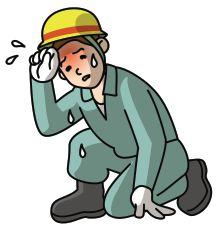
HEAT STRESS ALERT ISSUED
ST. JOHN’S — WorkplaceNL issued an alert on July 25, warning outdoor workers to take extra precautions when working outside as temperatures in many parts of the province are expected to reach into the high 20s, with humidex values in the mid to high 30s.
“These hot and humid temperatures increase the risk of heat stress, especially for those who work in commercial kitchens, laundries, and bakeries and the construction, road repair, and farming/agriculture industries,” a WorkplaceNL statement says.
Recommended precautions include drinking plenty of water, following a work-rest schedule, reducing strenuous activities during hot periods, taking rest breaks in cool areas, wearing sunscreen and using fans, exhaust systems or air conditioning systems to control the workplace temperature.
Follow us on Twitter @OHSCanada
So, what’s on your mind?
Ever wonder what other oh&s types are thinking about? Find out by making our website poll at www.ohscanada.com a regular stop.
Legal pot sparks safety concerns at job sites
By Jean Lian
Employers in Canada are no closer to getting answers to their safety concerns when recreational marijuana becomes legal in Canada on October 17. More than half (52 per cent) of Canadian organizations are concerned or very concerned about the implications that recreational pot will have on the workplace, according to a new report from the Conference Board of Canada in Ottawa.
“Workplace safety is consistently flagged as employers’ top concern with legalization, but the solution is not onesize-fits-all,” Bryan Benjamin, vice-president of organizational performance with The Conference Board of Canada in Ottawa, said in a statement on June 19. “Gauging and managing impairment, adapting workplace policies and ensuring employees are educated on what is allowed and what remains prohibited are all crucial components to a smooth transition to legalization.”
According to the report, Blazing the Trail: What the Legalization of Cannabis Means for Canadian Employers, top concerns include workplace safety, impairment and the increased use of cannabis both inside and outside the workplace. Employers have also expressed concern over testing for impairment, managing accommodation needs, costs of covering medical cannabis and issues related to productivity and employee performance.
But marijuana is just one of the substances that can cause impairment, according to Stephen Pike, a scaffolding instructor and founder of Toronto-based Access Institute. “Alcohol, prescription medications and illegal drugs have always been serious concerns for high-risk work activities,” which include working at heights, confined space entry, high-voltage electrical work and operating heavy equipment, Pike says.
The report recommends that employers consider the following: determine how stringent an organization should be when it comes to alcohol and drug testing and the potential discipline for impairment on the job; provide resources and supports for those who may be suffering from problematic cannabis use and addiction, including employee-assistance programs and access to confidential treatment; determine whether to allow limited consumption of cannabis during work-related social or networking events; and educate employees and managers on how to detect and manage problematic use, dependence and potential cannabis impairment.
Pike recommends that organizations “redouble their efforts” to identify and manage the risks of impairment in high-risk work activities before the legalization of pot kicks in. “The keys to success will be better risk assessment, worker education and support,” he adds.
Relevant questions to ask include whether a company has
identified, assessed and mitigated all the high-risk work activities it performs, are these risks being communicated to workers and are they being trained on the hazards of acute impairment and chronic drug/alcohol usage; and can employers provide access to employee-assistance services if workers want to limit or change their drug/alcohol use.
Mental-health efforts win hospital Order of Excellence
Toronto’s Michael Garron Hospital (MGH) became the first hospital to earn a Canada Order of Excellence for its national leadership in workplace mental health.
“There is a significant and urgent need to protect the psychological health and safety of our employees,” Phillip Kotanidis, chief human resources officer with MGH, says in a statement released on June 27. “Healthcare is a demanding environment, and patients need healthcare teams who are resilient and healthy.”
According to an issue brief on workplace mental health published by HealthCareCAN in June 2016, many healthcare workers report a wide range of health conditions linked to work-related stress, including depression, anxiety, substance abuse and even suicide.
More than 40 per cent of Canadian physicians and nurses report burnout and 14 per cent of general nurses have tested positive for post-traumatic stress disorder. Healthcare workers are 1.5 times more likely to be off work due to illness or disability than people in all other sectors.
“Health care practitioners in hospitals will sometimes experience events that can be quite traumatic,” says Sean Healey, a social worker at MGH. Healey has experienced firsthand the complex and emotionally-charged cases that healthcare providers manage on a daily basis.
“It is so important for the hospital to react quickly, to offer immediate debriefing sessions and onsite support. People don’t always feel comfortable coming forward, but when you create a culture without stigma, they can get the help they need to do their jobs safely and effectively,” he adds.
Since 2014, MGH has implemented 95 per cent of the recommendations within the Mental Health Commission of Canada’s (MHCC) National Standard of Canada for Psychological Health and Safety in the Workplace, a set of guidelines launched in 2013 to help employers promote mental health and prevent psychological harm at work. To date, 80 lead-
ers in MGH have completed a Queen’s University accredited mental-health program, while more than 912 new hires have attended emotional-intelligence training since 2014.
Apart from having facilitated more than 22 workshops on preventing harassment and bullying this year, MGH also implemented a new psychological health and safety scorecard that enables the hospital to track the effectiveness of planning and programming correlated to the 13 psychosocial factors outlined in the MHCC Standard and the basic psychological and self-fulfillment needs defined in Maslow’s Hierarchy.
The Toronto hospital will be presented the Canada Order of Excellence award in Toronto on November 6.
A tick-free summer for outdoor workers
With summer comes much-needed Vitamin D, but the season also brings with it the risk of exposure to ticks that are potentially infected with Lyme disease and putting outdoor workers at risk.
“The best way to avoid the risk of contracting Lyme disease is to prevent being bitten by a tick,” Paul Callanan, director of health protection with the Region of Peel’s Public Health in Ontario, says in a statement on June 25.
But not all ticks are carriers of Lyme disease, which is contracted only through the bite of a blacklegged tick commonly found in woodlands, tall grasses and bushes and thrive in wet environments. Symptoms, which include rash, fever, chills, headache and fatigue, can surface between three and 30 days.
Employees who work in certain outdoor areas are vulnerable to contracting Lyme disease. According to Ontario’s Ministry of Labour (MOL), at-risk occupations include employees in park and wildlife management, ground keepers, loggers, construction workers, farmers, fishers, camp counsellors, landscape workers, biologists, veterinarians, silviculture workers and tree planters.
Employers must determine if workers are at risk and ensure that they are aware of the hazard and know how to identify, prevent and treat a tick bite. Apart from providing personal protective equipment, supervisors also need to know what is required to protect workers from Lyme disease.
The MOL advises using an insect repellent and wearing a long sleeve shirt, long pants and a hat if contact with overhead vegetation cannot be avoided. Donning closed footwear and tucking the pants into the socks are recommended to minimize exposed skin. Light-coloured clothing is pre-
ferred as they make ticks more easily visible.
Workers should conduct a total-body inspection for ticks immediately after working outdoors, paying close attention to areas such as the scalp, ankles, armpits, groin, naval and behind the ears and knees. Taking a shower soon after being outdoors can wash off a tick that may not be attached through a bite. Equipment or gear used outdoors should be checked for the presence of ticks, and clothes should be placed in the dryer for one hour on high heat to kill any ticks.
Lack of planning caused runway collision: report
Inadequate flight planning led to the collision of an aircraft with runway lights after landing at an airport in Montreal, concludes an investigation report released by the Transportation Safety Board of Canada (TSB) on July 3.
On 15 May 2017, a United States-registered Bombardier Global Express aircraft was flying from New Jersey to Montreal with three crew members and one passenger on board. The aircraft was cleared to land on Runway 06L at St-Hubert Airport, which had been reduced in size due to construction work. The aircraft touched down partially outside of the confines of the reduced-width runway at about 11 p.m., striking seven temporary runway edge lights.
The pilot brought the aircraft back to the reduced-width runway centreline before coming to a stop 300 feet from the shortened runway end. There were no injuries, but the aircraft sustained substantial damage.
The investigation found that the crew’s flight planning did not adequately prepare them to ensure a safe landing. The flight crew believed that the entire width of the runway was available, despite notices to airmen, communication with the air-traffic controller and other information indicating the reduced runway size. The pilot also misinterpreted the runway side stripe marking along the left edge of the runway as the runway centerline.
As well, the approach briefing conducted by the flight crew had failed to include a review of the notices to airmen that were in effect at the airport, as required by the aircraft operator. This review could have made the crew aware of the reduced runway width prior to landing. If flight crews conduct incomplete approach briefings, there is a risk that information crucial for flight safety will be missed, the report notes.
Following the occurrence, St-Hubert Airport added a pop-up window on its website to give information on construction work and specified that flight crews must read the notices to airmen in effect at the airport. Flight crews could also download a diagram of the construction work.
Follow us on Twitter @OHSCanada
Jean Lian is editor of OHS CANADA
.
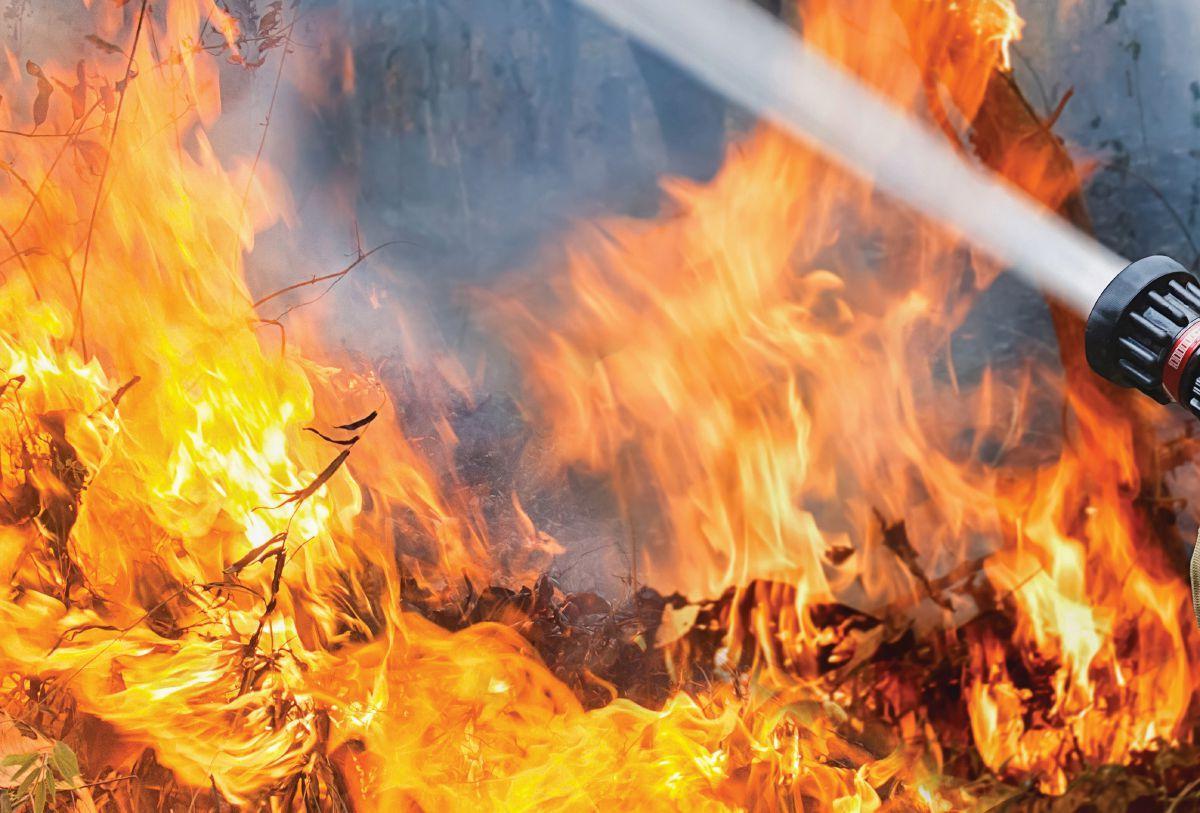
Canada, home to roughly nine per cent of the world’s forests, is where black bears, moose and other wildlife live out their natural lives. Outdoor enthusiasts kayak on both quiet rivers and raging rapids alike while parents and kids go on family outings, armed with everything from sleeping bags to marshmallows.
But it is also in this idyllic setting where a parched leaf lying in the summer sun ignites, or a careless camper who forgets to fully extinguish the last embers from breakfast can set off a raging wildfire that devastates communities.
In a country where woodlands comprise much of the landscape, the devastation caused by wildfires is well headlined: forests are destroyed, nearby communities are evacuated and businesses often have to shut down temporarily — perhaps even permanently. The extent of wildfire damage was recently quantified by two faculty members at MacEwan University in Edmonton: Dr. Rafat Alam and Dr. Shahidul Islam estimated that the physical, financial and social devastation wreaked by wildfires that consumed much of the community in and around Fort McMurray in 2016 to be in the vicinity of $8.86 billion and counting.
Early figures from the Insurance Bureau of Canada estimate that “the beast,” as the Fort McMurray wildfire was named, will exceed $3.5 billion — the most expensive natural disaster the insurance sector in this country has ever seen. The oil industry is reported to have lost more than $985 million in the wake of the natural disaster (ironically believed to have been caused by human error), while lo-
BY DONALEE MOULTON
cal businesses are estimated to have sustained net revenue losses of more than $54 million. One third of all property damage was commercial.
While companies cannot account for every desiccated twig or carelessly doused campfire, there are critical steps that they can take to prepare for wildfires and get back up and running once the final flames have been snuffed out. The first and most important step is arming themselves with information and insight on how to respond to such an event, says Robert Gray, a fire ecologist and owner of R.W. Gray Consulting Ltd., in Chilliwack, British Columbia.
“Knowledge is the key,” Gray says. “In the west, all businesses in rural areas are located in wildfire zones.”
The best precaution that employers can take to safeguard employees is to make them aware of the hazards associated with wildfire and keep them apprised of local fire conditions. “As we get closer to fire season, employees should understand the potential for wildfire and how best to react to a wildfire emergency,” he advises.
BEFORE IT RAGES
Kara McCurdy, a fire-prevention officer with the Nova Scotia Department of Natural Resources in Halifax and a structural firefighter trained to attack fires in individual buildings, says businesses, commercial companies and operators located in or near a forested or grassland environment need to understand the importance of preparing for and mitigating any risk involved in a wildfire.
“Companies can be affected by direct loss due to damaged or destroyed infrastructure. Liability and financial losses may also occur if a company or operator is found responsible for causing wildfires,” she says.
McCurdy recommends that companies start by determining the type and level of risk they face through conducting a risk assessment and consulting with fire-behaviour experts. Also required is a budget that will address specific risks such as managing fuel around the building, structural issues and landscape practices.
Proper perimeter care and maintenance can reduce the risk posed by a wildfire dramatically, notes Terry Canning, a volunteer firefighter in Brookfield, Nova Scotia and the province’s former emergency communications coordinator. “A tidy, well-trimmed, fire-resistant structure and property generally will survive a wildland fire,” Canning says.
Companies also need to talk about what they are doing and what needs to be done. Prepare Your Organization for a Wildfire Playbook, a publication developed by the United States’ Federal Emergency Management Agency’s PrepareAthon — a grassroots campaign to increase community preparedness and resilience for disasters — suggests that a “preparedness discussion” be included on staff-meeting agendas and as a lunch-and-learn session.
These conversations should also discuss the potential impact of wildfires, the terms — advisories, watches and warnings — that will be used to describe changing fire conditions and the organization’s emergency communications plans
and policies. It is also important to reinforce the five Ps of evacuation: people, prescriptions, papers, personal needs and priceless items.
Having an evacuation plan in place for staff is crucial and may be legally mandated. For example, occupational health and safety regulations in British Columbia require employers to have emergency preparedness and response procedures in place.
“This includes conducting a risk assessment in any workplace in which a need to rescue or evacuate workers may arise,” says Patrick Davie, manager of prevention field services at WorkSafeBC in Kamloops.
Evacuation plans must specify where employees will gather, include contact lists and pinpoint the location of a back-up centre if the business provides an essential service. Companies can enhance their emergency-response capability by providing local fire and emergency services with a detailed map of the premises both inside and outside the structure and identifying onsite hazards. It is also important to ensure that the roadways and bridges leading to the worksite are rated for heavy equipment.
Having a plan is the first step; ensuring that the plan is effective is the second. The PrepareAthon playbook calls on companies to hold a tabletop exercise that leads participants through a simulated disaster scenario and prompts them to examine their plans, policies and procedures without disrupting the work environment. According to the 21-page guide, the tabletop exercise “is an opportunity to identify and resolve problems, improve workplace safety and bolster your organization’s continuity of operations.”
Businesses also need to ensure that they are legally compliant with the Occupational Health and Safety Act, which sets out employers’ obligation to protect workers from health and safety hazards on the job. And that includes taking every precaution reasonable in the circumstances to protect workers from wildfires.
“Generally speaking, each province and territory is responsible for the well-being of those employed in their respective jurisdictions and for managing disasters, like wildfires, in cooperation with local authorities,” says Karine Martel, spokesperson for Public Safety Canada in Ottawa.
At the federal level, she adds, Employment and Social Development Canada’s Labour Program is responsible for protecting the rights and well-being of workers and employers. Federally regulated businesses and industries must also abide by the Canada Labour Code and the Canada Occupational Health and Safety Regulations.
As global warming continues and summers are getting hotter, preparing for a wildfire needs to become rooted in the way of doing business.
“When adding to your current business, renovating or building new, you should consider building construction material and purchase flame-resistant products, landscaping materials that are fire-resistant, access to the structure by emergency personnel, proximity of structure to forest stand, water supply, and making sure your business has a clearly defined civic number,” McCurdy recommends.
IN THE HEART OF THE FIRE
Once the fires are burning, businesses need to stay tuned to updates and follow the directions of first responders and emergency measures promptly. If the situation warrants halting operations, employers must evacuate employees and ensure that they are looking after their personal property and homes if it is safe to do so, Canning says. For employees who are off shift, “a courtesy would be to attempt to ensure they are aware of any pending risk,” he adds.
Health concerns will also be paramount during this time, as inhaling smoke can cause irritation of the eyes, nose and throat as well as cause headaches and exacerbate allergies, Davie cautions. For healthy workers who are exposed to smoke for a short period of time, symptoms are likely to be temporary and will resolve when the smoke clears.
“For workers with lung diseases or other chronic diseases, symptoms can be more serious, including shortness of breath, persistent coughing, wheezing and increased mucous production,” he adds.
Heat stress is a potential health problem. “If your body heats up faster than it can cool itself, you experience heat stress. This can lead to serious heat disorders and potential injury,” Davie says. Warning signs include excessive sweating, dizziness and nausea.
measures include closing all windows and doors before exiting and making sure that any propane, natural gas and other flammable materials are turned off or secured. Shutting down interior ventilation systems will also reduce the transfer of fire embers through vents.
A designated fire warden to communicate muster locations and ensure staff are evacuated is recommended as well. Getting employees to back into parking spots also makes it quicker and easier to get out if an evacuation notice has been issued. If applicable, exterior lawn-sprinkler systems should be activated to aid fire efforts and protect the property.
As global warming continues and summers are getting hotter, preparing for a wildfire needs to become rooted in the way of doing
business.
Employers may be told that they can return to the workplace before a fire has been fully doused. This is known as the mop-up phase, which begins when a fire has been contained and an initial attack of the blaze is no longer required. During this phase, the greatest risks are falling material, (including rocks and trees), ash pits, burned out stumps full of hot ash and smoke exposure, Gray says. “Situational awareness is the single greatest way to deal with these safety issues.”
For staff who work outside, smoke exposure is a real hazard. Employers should reduce the amount of time spent outdoors and keep windows closed for those who work indoors. Decreasing physical activity for outdoor workers is also helpful, and it may be necessary to use respiratory protection if there are moderate to high levels of smoke.
Those who work primarily in vehicles need to keep vents and windows closed and, if available, operate the air conditioning in “recirculate” mode, Davie advises. “Workers should also open the windows occasionally in areas with good air quality to prevent carbon dioxide from building up inside the vehicles.”
There are some things that employees and managers can do to reduce the risk of structural loss in the event that an evacuation order has been issued, McCurdy says. These
Mop-up on interface fires, which refer to fires in areas where urban structures and human development meet the wilderness, also present hazards like emissions from the combustion of homes and businesses. “As the summer heats up, if your business is located near such areas, plan for the potential impact on your business,” Davie advises.
“Safety precautions here need to include breathing apparatus and knowledge of specific hazards,” Gray adds.
In terms of the workplace structure, Davie points out that businesses need to ensure that any fire-damaged building is structurally sound and that no asbestos materials have been disturbed. Other considerations include whether services like power and gas have been restored, are they safe to use and if it is safe for employees to access the facility.
DOWN THE ROAD
Wildfires are a hazard that applies not only to workplaces located near forests out west. In a letter that Gray and two colleagues sent to the British Columbia Premier and Minister
FIGHTING WILDFIRES
Fighting wildfires is not just gruelling, but dangerous too. Emergency workers often face the same hazards as other forestry workers and more, according to WorkSafeBC. This includes risks associated with areas undergoing development, which can expose firefighting or emergency workers to mobile equipment like excavators or skidders, building trails and moving felled timber.
Dangers also include potential exposure to manual and mechanical tree felling and the burnt trees that remain standing but may not be structurally sound, cautions Patrick Davie, manager of prevention field services with WorkSafeBC. “British Columbia is the only province that
requires formalized danger-tree assessments prior to work being conducted near suspect trees,” he notes.
As steep and unstable ground can result in slipping and tripping hazards, changing conditions make it imperative that emergency-response plans be kept current and effective. Conditions like smoke exposure, heat stress and low visibility can also increase risks, particularly for workers who drive vehicles.
“Many workers on fire lines are new and/or young workers, and it is equally important to ensure that they are adequately trained, supervised and coordinated on these potentially multi-employer work sites,” Davie adds.
of Forest, Lands and Natural Resource Operations and Rural Development last year, the experts stressed the extreme wildfire season that British Columbia experienced in 2017 was not an isolated event.
“It represents the new normal and is part of a global trend of increasing megafires with tremendous social, ecological and economic costs,” the letter notes. “As 2017 — the pinnacle of exceptional fire years — has proven, forests and communities in B.C. are not resilient to wildfire and adaptation is urgently needed. The status quo approach of addressing wildfire threat in B.C. is not working.”
Since Canada started tracking wildfires in the 1970s, the overall number of fires has declined, thanks to better communication, says Richard Carr, a fire research analyst with the Northern Forestry Centre in Edmonton. But approximately 8,000 wildfires still occur each year across Canada. While the number of wildfires has dropped in the last four decades, the area burned has increased. “Global warming is having an effect,” Carr suggests.
Ironically, as we manage fires better and prevent some fires from happening in the first place, a denser forest with thicker growth and underbrush develops, which leads to more intense fires, Carr notes.
If wildfires are a potential threat to your business, employers can enhance their emergency preparedness by asking the following questions listed in WorkSafeBC’s wildfire evacuation-planning checklist:
The extreme wildfire season that British Columbia experienced in 2017 was not an isolated event.
Climate-change models are predicting a significant increase in both the annual area burned as well as the intensity and severity of fires. “Much of this has to do with changes to precipitation patterns, increased temperature and longer fire seasons,” Gray explains.
• Do you have reliable two-way communication equipment available to ensure workers can be reached at all times?
• Do you keep an up-to-date list of all workers and have it easily available and know the location of all of your workers at all times? (They might include camp cooks, mechanics and people travelling to and from town.)
• Do workers know what to bring with them and what to leave behind?
• What vehicles are used in an evacuation and what are the driving arrangements? A designated seat is needed for each person.
• After an evacuation, how will you account for everyone, and what is your communication plan? Follow us on Twitter @OHSCanada
Donalee Moulton is a writer in Halifax.
Complex Wor ksites. Simplified S olutions.
There are many options available in fall protec tion, but knowing which produc t is best suited for your application can be difficult. At MSA, we simplify that process by providing innovative equipment, matched with best-in- class safety solutions, to help protec t even the most complex worksites
To learn more about MSA’s complete line of safety solutions or request a FREE, no obligation safety evaluation, visit MSAsafety.com/safetyevaluation.
STAND DOWN
AT DARLINGTON
BY CYRUS GORDON
On a cold afternoon on November 30, 2017, hundreds of highly skilled workers at one of the most technologically advanced construction projects in Canada received the news: the decision had been made to press the pause button on Ontario Power Generation Inc.’s (OPG) Darlington Nuclear Generating Station Refurbishment Project.
The $12.8 billion Darlington Refurbishment Project (DRP), located 70 kilometres east of Toronto, is the largest clean-energy project in the country. After decades of generating power that produces about one-fifth of Ontario’s electricity, the Darlington Nuclear Generating Station is undergoing a mid-life refurbishment starting in October 2016. The refurbishment project, scheduled for completion in 2026, involves the shutdown, disassembly and reconstruction of the station’s four reactor units over 10 years.
For many of the project’s team members who are employed by a Joint Venture partnership between contractors Aecon and SNC Lavalin, the DRP is a once-in-a-lifetime opportunity. Each element of the project is a major undertaking in itself: refurbishing the reactor components and turbine generator; building and designing a waste-processing building where removed reactor components are processed for disposal; and building other ancillary infrastructure projects.
The complex construction work aside, the ability of OPG, the Joint Venture and other contractors to manage 4,000 workers on site will determine if the DRP will be a success.
Under the company’s reporting culture, any OPG employee or contractor worker can report risky actions, hazardous conditions or any other safety concerns directly to the supervisor or submit a Station Condition Record, which is then investigated. At the refurbishment project, reported concerns or incidents are reviewed by OPG’s president and chief executive officer Jeff Lyash, who tracks progress and can even monitor work using a live webcam from his office.
A WORRYING TREND
In the 13 months since work on refurbishing Unit 2 started, there had been 13 incidents on the site. A review of incident reports revealed that many of them involved people working at heights, scaffold barricades being removed and tools and other materials being dropped. Some of the incidents were relatively minor, while others had the potential to cause harm.
“We began to see a pattern that we didn’t like. No injuries, just incidents that we would characterize as at-risk,” Lyash says.
The safety stand down was not a legislatively driven decision; it was “the right decision.”
By November 2017 and a year into the project, the team was starting to see a number of successes. The parts-removal phase of the project for reactor Unit 2, which was the first unit to be refurbished, was on schedule. The project was on budget, which is no easy feat in the worldwide nuclear industry where cost overruns and delays often overshadow the engineering achievements of the Canadian-built CANDU reactor units and the critical role they play in Ontario’s electrical grid.
While the project was running on time and on budget, a series of incidents raised the concern that safety was not always evident on the project. In one such incident, hoisted materials were inadvertently released 11 feet to the next level of the site.
By provincial standards, the overall safety performance at the DRP was good. At that point, workers had clocked 10 million-man hours without a lost-time injury and an accident rate 90 per cent less than the industry average. The health and safety reporting system of OPG encourages staff to watch for indicators that signal the organization’s safety culture has declined.
Scott Nisbet, a Durham-based health and safety field services senior manager with OPG, says these indicators prompt proactive responses to unsafe behaviours by putting prevention measures in place. “We treated all of these incidents as if they were actual events. This is a hallmark of our safety program.”
Nisbet points out that OPG and the Joint Venture could have ignored many of these events if the DRP and contractors had focused only on adhering to a budget or schedule. “It would have been easy to stand back and say that there have been four or five one-off events, but all these incidents made the project leaders take a hard look at the project’s safety culture.”
Greg Jackson, Aecon’s vice president of environment, health and safety in Toronto, agrees. “None of the incidents resulted in a serious injury. However, they involved people making split-second decisions that could have had serious consequences. By tracking leading indicators, we heighten the safety mindset and prevent future safety issues.”
Working in a nuclear environment requires heightened diligence, focus, attention to detail and error-free activities. To ensure that everyone working on the refurbishment project meets these standards, OPG built the Darlington Energy Complex — a state-of-the-art facility that includes a life-size mock-up of the reactor face.
“Basically, everyone working on the Refurbishment has to be trained on the mock-up before operating a tool in the actual plant,” Nisbet explains. That means a job is done multiple times in a learning environment before it is completed in the station. “The idea is that if you focus on safety and quality at the start, the scheduling will take care of itself.”
Nisbet believes the occurrence of these incidents meant that the safety plans drawn out in the early stages of refurbishment were not being followed. “We spend a lot time planning work in the nuclear sector. We need to meticulously stick to that plan, and if we find ourselves getting things done without following the plan, that is when we run into potential safety issues.”
Corrective actions that were taken initially included communicating safe-work expectations, focused crew discussions and updating engineering controls. Safety pro-
grams ensure the steps taken are driving necessary behaviour changes at all levels of the project.
But when the collective efforts were not driving the required behaviours, how does an organization go about reinforcing the safety message to thousands of employees working on a construction project the scale of the DRP? By implementing a safety stand down, which involves workers putting down their tools and taking a break from work so that employers and workers can refocus on oh&s issues.
A stand down might be warranted to address safety incidents like those recorded at the DRP, or to alert workers to hazards related to a new work operation or a new stage in a project. A stand down can take several forms, such as a pre-shift review to discuss work assignments for the day, or a large-scale event, such as the National Fall-Safety StandDown organized by the United States Occupational Safety and Health Administration to draw attention to fall-related accidents in the construction sector. No matter the size or form, a stand down is an effective way to bring about an open discussion with employees about safety topics and demonstrates a company’s commitment to safety.
As Aecon is the contractor managing refurbishment construction operations, Cliff Eubanks, project director of the Joint Venture DRP, decided it was necessary to recalibrate to the required safety attitudes and behaviours. As a result, project leaders sent a message to inform trades staff about the stand down and the need to reflect on the importance of working safely and return with a “renewed personal commitment” to safe-work practices.
HITTING THE BRAKES
Shutting down the DRP was not an easy decision. While it is not uncommon for projects to take a stand down, doing so on a project of this magnitude and size is expensive and disruptive to the schedule and productivity in the short term. But the senior leadership was confident that the costs of stand down would pay off through improved safety performance.
Responding to safety incidents like those at the DRP is a responsibility shared by both contractors and the constructor. Addressing the general safety trends falls under an em-
ployer’s general duty to take every precaution reasonable to protect their workers, identify hazards and plan and control worker exposure to hazards. As the constructor, OPG is responsible for ensuring that procedures specified in the Occupational Health and Safety Act are carried out during the project.
According to Nisbet, stand downs are a common practice in OPG’s nuclear stations. “We always have safety stand downs prior to going into an outage. We want people to stop and refocus before getting into a big chunk of work.”
It is also a way to respond to low-level events that were happening at the Darlington Refurbishment by bringing workers’ attention to established plans, he adds.
For the contractors and OPG, the safety stand down was not a legislatively driven decision; it was “the right decision,” Jackson says.
Although OPG’s approval for the stand down was not required, OPG supported the move. “Taking corrective actions to prevent recurrent safety incidents is part of due diligence. We expect our contract partners to take the actions necessary to be able to perform the work to meet both our expectations and the industry’s expectations,” Nisbet says.
The scope of the stand down went beyond correcting safety incidents at Darlington; it also applied to workers at Darlington’s sister plant, Pickering Nuclear Generation Station. One of the objectives of the stand down was to improve leadership and communication skills among those with supervisory responsibilities, which number around 300 employees, so key messages would cascade down to the rank and file. They include general foreman, superintendents and members of the project-management team.
The workforce at the DRP is very fluid, with workers coming and going, based on the work that needs to be done. The supervision and management structure, on the other hand, is more stable and thus, more influential in effecting culture and behaviour change. By focusing on supervisory staff, OPG hoped that it will help the company and its contractors understand what was happening on the project floor and develop a plan to move forward.
“We had learned from our safety indicators that coaching skills needed to be improved to ensure appropriate project management and supervision,” Nisbet explains. “We needed to take the opportunity to collaborate and learn from each other: OPG coaching vendors, vendors coaching OPG, employee-to-employee coaching, managers coaching supervisors and vice-versa.”
A workshop involving managers and supervisors took place on the day after the announcement of the stand down in an effort to establish an understanding of the safety standards and a commitment by managers and supervisors on improving safety performance. The discussion gave OPG and contractors the opportunity to gather feedback on obstacles to improve performance.
Supervisory teams came up with more than 400 recommendations on critical safety-leadership behaviours that could contribute to improved safety outcomes. Suggestions included more effective communication, enhanced field ob-
servation and the need for coaching and other types of support on the worksite.
Implementing the stand down was an important step, but equally important was making sure that what was learned during the stand down resulted in improved and sustainable safe-work practices when operations resumed. All ideas from the workshop were gathered and grouped into common commitment statements, which were read to the entire supervisory and management team and agreed upon at the end of the workshop. Before re-initiating the DRP, all supervisors and managers had to sign a commitment to those common statements.
At the leadership level, a safety change-management plan was created to strategically manage all DRP projects going forward. According to Jackson, a Safety Leadership Council comprising representatives from Aecon and SNC Lavalin and from across all project functions conducts safety-performance reviews every week. “It helps us to stay focused on improving performance,” he says.
DOWN THE ROAD
Months later, the stand down seems to have paid off. Nisbet points out that OPG and the Joint Venture are on track for a 70 per cent improvement in reported incidents over the previous year. But he also cautions that the DRP is in a different stage of the project now.
“We still have to monitor for new hazards and work operations. Additional oversight on critical work is required to make sure that we are meeting standards,” Nisbet says.
The stand down provided OPG with valuable information going forward. “All of the safety engineering and administrative controls we implemented for Unit 2 will be used as prerequisites for the next unit,” Nisbet adds.
The stand down is also likely to pay off in other ways. “If you take the time to get those behaviours right, in the long run you are more productive,” Lyash says. “People tend to think about these projects in the abstract, but these projects are people. You have to care about the people that are doing it and their safety and their health.”
Perhaps the biggest payback is the acknowledgement by Ontario’s former Labour Minister Kevin Flynn at the Ministry of Labour Prevention Office event in March, where he cited OPG and the Joint Venture’s response to the safety performance at the DRP as an example for other companies.
“They saw some incidents happening on that job,” Minister Flynn said. “Despite being under that microscope, they had the courage to shut the job down. That tells you what sort of organization OPG is.”
Follow us on Twitter @OHSCanada
Cyrus Gordon is with corporate affairs at Ontario Power Generation.
Announcement - Board of Canadian Registered Safety Professionals 2018-19 Executive Officers
Kevin Dawson, Board Chair, is currently the principal consultant at Omnius Consulting in Halifax, Nova Scotia. Prior to forming Omnius, he was the Manager, Safety & Health at Nalcor Energy. Kevin holds an B.Eng. (Mech) and a MBA from Memorial University of Newfoundland. Kevin is a member of the Canadian Society of Safety Engineering (CSSE) and has served as the CSSE Avalon Chapter Chair. He is also a past Chair of the Newfoundland and Labrador Construction Safety Association. Kevin has been a Canadian Registered Safety Professional (CRSP)® since 1998.
Monica A. Szabo, Board Vice Chair, has over 25 years of experience in occupational hygiene, health and safety, and is a senior leader who has built a reputation for developing progressive and results-oriented health and safety solutions for the broader public sector. Monica is currently the Corporate Safety Manager at the WSIB and prior to that held the position of Executive Director at PSHSA. In addition to holding a CRSP, Monica is a Registered Occupational Hygienist (ROH), a Certified Occupational Health and Safety Technologist (OHST) and a Certified Municipal Manager (CMM III). Monica has been a Canadian Registered Safety Professional (CRSP)® since 1993.
Paul Andre, Board Past Chair, is President and CEO of Workplace Safety North (WSN) based out of North Bay, Ontario. Paul has held a number of senior positions including Vice-President of Prevention Services for WSN and Senior Advisor to the Prevention Office of the Ministry of Labour. Paul holds a forestry technician and technologist diploma from Sir Sandford Fleming College and a certificate in Occupational Health and Safety from Ryerson University. Paul has been a Canadian Registered Safety Professional (CRSP)® since 1996.
David Johnston, Board Secretary-Treasurer, is an environmental, health and safety professional with over 35 years’ experience. He is currently employed by Toronto Hydro as the Director, Environment, Health and Safety. David has worked throughout Canada and the United States in a variety of industries and is recognized for leading organizations to safety excellence. In addition, he is a tireless volunteer contributing to the advancement of safety and the profession through serving on multiple committees, associations and boards. In 2013, he was selected as Canada’s Safety Leader of the Year. David has been a Canadian Registered Safety Professional (CRSP)® since 1999.
In addition to the Executive Committee, the 2018-19 Governing Board includes newly elected Governors Mark Fernandes, MBA, CRSP, Marianne Matichuk, CRSP, CHSC, COHS, CNM, Dave Rebbitt, MBA, CRSP, CHSC, CET, CD and Sandra Stephens, LLB, LLM (Public Member), and returning Governors include Tareq Al-Zabet, PhD, CRSP, Robin Angel, BSc, MSc, CRSP, Paul Belair, MBA, CRSP, Dale Shafer, MBA, CRSP, and the Executive Director is Nicola J. Wright, BA (Hons), CAE.
The Board of Canadian Registered Safety Professionals (BCRSP) is a federally incorporated self-regulating, self-governing, ISO 17024 accredited and ISO 9001 certified organization established in 1976. The Board governs its certificants in order that the public interest may be served and protected.
Board of Canadian Registered Safety Professionals Conseil Canadien Des Professionnels En Sécurité Agréés
www.bcrsp.ca info@bcrsp.ca
Stepping Up
By Jean Lian
Aladder is one of the most widely used equipment. Regardless of whether one is replacing a light bulb at home, giving the office a fresh coat of paint or working in an industrial setting like a warehouse or a retail store, a ladder always comes in handy.
But ladders have been associated with many fall accidents, most of which involve strains and sprains, according to Lauren McFarlane, president of Act First Safety, a company in Scarborough, Ontario that provides workplace-safety training. “Seventy-five per cent of accidents from working at any height happen at between six and 10 feet,” McFarlane says. “A lot of people just grab the first piece of equipment they see, and it is a ladder.”
There are different types of ladders. “No one ladder is suitable for all purposes. There is a variety of different styles, materials and grades to choose from, depending on the application,” says Mike Dunlop, sales and marketing manager (Canada) with Louisville Ladder Corp. in Aurora, Ontario. Users should select ladders according to the style, size, grade and material based on the task at hand, Dunlop adds.
A MATTER OF TYPE
ladder safely, but trip over a hammer after descending from a ladder.
Ladders come in five duty ratings, which indicate the maximum safe-load capacity a ladder can bear, including the weight of a fully-clothed person and any tools and materials carried up the ladder. The classifications are as follow: Light-duty ladders with a load capacity of not more than 200 lbs (typically used in households); medium-duty for 225 lbs (used by tradesman and on farms); and heavy-duty ladders for loads up to 250 lbs for construction and industrial use. Heavy-duty ladders are further subdivided into Grade 1A and 1AA: the former has a load capacity of up to 300 lbs while the latter can withstand up to 375 lbs.
It is important to check a ladder’s duty rating to ensure that it can support the weight of workers and that it meets CSA Group’s standards, McFarlane stresses.
“Ladders have been associated with many fall accidents.”
There are essentially two types of ladders: self-supporting ladders like step and platform ladders can stand on their own, while non-self-supporting ones need to lean against something — an extension ladder being one example.
Self-supporting ladders are good for working at low and medium heights, while those that are not self-supporting are typically used to access greater heights, explains James Norris, president of Allright Ladder and Scaffold Company in Vancouver.
“You need to know the working heights of the individual to determine what size of ladder you require. On top of that, you need to know what is it you are working around or near,” advises Norris, pointing to conductive ladders made of aluminum and those that are non-conductive, such as wood or fibreglass. “If there are elements that conduct electricity, you don’t want to be working around electrical wiring near aluminum ladders,” he cautions.
Another hazard associated with ladder use is tripping. McFarlane recommends keeping debris away from the bottom of a ladder as it is not uncommon for users to get up a
The type of ladder and the tasks and height at which a ladder will be used must also be taken into consideration.
“We see that is a big mistake in a lot of workplaces — not getting the right height,” McFarlane says of ladder selection.
A risk assessment of the work area for surrounding hazards like electrical wires, tools lying on the floor and ground conditions like the presence of rain, gravel, slope or mud is also key, as these conditions can influence the safety dynamic of the job site.
ON THE RIGHT FOOTING
Ladders may look simple and straightforward to use, but many misunderstandings surround this piece of equipment.
“The biggest misconception is they are safe, anyone can use them and nothing can go wrong, because we use them so often,” McFarlane says. She adds to the list choosing the wrong ladder for the type of work at hand and the perception that ladder use does not require training.
Another common misconception is that users can stand on the first two rungs of a stepladder. “Lots of people think that they can go up to the top of the ladder,” Norris says, pointing out that the highest step one can go is the second step down. “Even though that step is there, it has a label on it that says, ‘Don’t stand on or above this point.’”
So why put that step there if users are not supposed to stand on or above the top two rungs of a stepladder? “It is the way the ladder has been constructed and engineered,” Norris says. “We are looking at how we can re-engineer a few products to take that step out of there, so there is not
even the thought on anyone’s mind they should be climbing up higher than the second step down from the top.”
When scaling a ladder, always keep a person’s centre of gravity between the side rails, as the probability of the ladder tipping over increases in tandem with every shift in the centre of gravity. “The moment you start leaning, the higher you go, the more impact that is going to have,” Norris says of a fall caused by leaning.
A ladder should always be inspected prior to each use, and parts should be maintained in good working order, Dunlop advises. If the ladder is bent or damaged, it should be replaced promptly.
Louisville’s Pinnacle FXP1700 line (left) boasts a spacious platform and a load capacity built for heavy lifting, while Allright’s F490 series platform ladder (right) offers new features that allow users to work continuously without feeling fatigued.
Planning ahead is always a good practice. “Ask questions about what is the job or tasks I have to do, what is my best way to access the area and which ladder should I use,” McFarlane says.
When a person is on a ladder, maintain three points of contact and secure the ladder at the top and bottom. If a ladder is fixed to a building, make sure that it is fixed securely as the cement around the connection points can wear and fall out over time, causing the ladder to be unstable.
which boasts a more spacious platform and a load capacity that can handle heavy lifting, in addition to extended handrails that come up to belt height for added comfort.
“Make sure you are wearing personal protective equipment if working 10 feet or more, or when three points of contact is not achievable,” McFarlane adds. Cordoning off the space around a ladder is also recommended if it is used in areas with high vehicular or pedestrian traffic. “Follow the rules of the work site you are working on,” she says.
ON TRENDS
Norris observes that consumers are moving towards ladders made of fibreglass. “Fibreglass used to be very expensive, but the cost of fibreglass has come down significantly,” Norris says. Advances in product development have also seen this heavy material become significantly lighter.
McFarlane observes that people are increasingly looking at alternatives to ladders. “We are seeing less and less ladder use,” she says. “More workers are using scaffolding and elevating work platforms, and that is definitely a trend.”
In some circumstances, alternative access equipment enable users to perform a job more safely than ladders can. “If you are going to be working at a height and be there for some time, the recommendation is to build a scaffolding around
For people whose jobs require them to use ladders frequently, it is important to understand how manners of use can lead to accidents, Norris says. Allright Ladder’s F490 series platform ladder is designed with a couple of new features, such as a three-foot high guardrail that replaces the industry standard two-foot guardrail, which enhances safety by raising the guardrail just above the knee to the hip level. It also features non-conductive fibreglass rails, a moulded plastic guardrail, double-rivet construction and heavy-duty moulded plastic feet.
“It reduces fatigue compared to working on a traditional stepladder, and allows the worker to use both hands to complete the task,” Norris adds. “In this particular model, we have lengthened the guardrail so that it provides support at about hip level versus traditional work platforms that have guardrails closer to the knee.”
Misusing ladders can lead to falls and musculoskeletal disorders, but with training and knowing how to use a ladder properly, safety does not need to take a back seat.
Follow us on Twitter @OHSCanada
Jean Lian is editor of ohs canada.
The Cost of Connectedness
NEXT BIG THING?: The mobile connectivity that smartphones offer is no longer good enough. Now, the need for seamless and unencumbered connectivity has given rise to augmented-reality eye glasses that double up as a wearable computer. Also known as smart glasses, these computerized eyeglasses display information to the user by superimposing information onto a field of view through an optical headmounted display, or embedded wireless glasses with transparent heads-up display that can reflect projected digital images, allowing the user to see through it.
This latest high-tech product has raised the bar in the race among technology companies to make digital gadgets wearable. But these devices, which symbolize and magnify our obsession with connectivity, has also given rise to a new mental condition: digital stress.
NEW-AGE STRESS: The term “digital stress” broadly refers to stress arising from information overload and the inability to disconnect from the virtual world. It also includes duress caused by negative interactions in emails, texts, social media, chat rooms and forums. While the cognitive demands presented by constant connectivity and the negative interactions stemming from virtual communication may be different sides of a coin, both takes a toll on our mental and physical well-being with the potential to result in burnout, fatigue, depression and anxiety.
According to part two of the American Psychological Association’s report, Stress in America™: Coping with Change released on February 23, 2017, excessive use of technology and social media has given rise to the term “constant checker”, which refers to people who check their email, texts and social media accounts constantly. On average, the survey finds that stress runs higher for constant checkers than for those who do not engage with technology as frequently.
DIGITAL DISRUPTION: Addiction to digital devices seems to be a global phenomenon. Based on the findings of a survey of 2,000 working adults across industries in the United Kingdom released in January 2016, many people have developed “bad habits” when managing emails. Nearly half of those surveyed have emails automatically sent to their mobile devices, and 62 per cent left their emails on all day.
These two practices, along with checking emails early in the morning and late at night, were all linked to higher levels of stress and pressure. The study also found a correlation between perceived email pressure and interference with personal life, such as bringing work or a bad mood home.
The toll inflicted by our inability to disengage from our
digital devices is corroborated by findings of a 2012 study out of the University of Gothenburg in Sweden. Researchers conducted four different studies to examine how the use of computers and mobile phones affect the mental health of young adults.
These studies, which included questionnaires for 4,100 people aged 20 to 24 and interviews with 32 young people identified as heavy users of information and communication technology, revealed that intensive use of mobile phones and computers can be linked to stress, sleep disorders and depressive symptoms.
USE RESPONSIBLY: Technology is amoral; but the people who use it are not. The advent of digital technology, which has and will continue to shape our lives, has certainly brought about benefits and conveniences in the way we communicate and work.
Users have a responsibility to use digital devices responsibly and in a way that is not detrimental to their mental and social well-being. The American Psychological Association
in Washington, D.C. recommends the following guidelines on using technology in healthy ways:
• Do not use phones behind the wheel: Driving when distracted is just as dangerous as driving when impaired. When you are in the car, turn off notifications and place your phone out of reach.
• Defend your sleep: Numerous studies have shown that smartphone use at night can interfere with the quality of sleep through cognitive stimulation, and the blue light emitted by the screens of technological devices can affect the production of a sleep-related hormone called melatonin. As such, avoid late-night use of mobile devices and using your phone as an alarm clock.
• Be selective about notifications: Make realistic decisions about what notifications are necessary before setting the phone to beep whenever a new email or social media notification comes in. In a 2016 study entitled Silence Your Phones, psychologists at the University of British Colum-
bia found that smartphone users who turn off notifications reported lower levels of inattention and hyperactivity.
• Manage expectations: Let your supervisor or colleagues know in advance if you do not plan to check text messages during your workday or while on vacation to maximize the benefits of disconnecting without having to deal with frustrated co-workers.
• Be present: Give priority to face-to-face interactions and live in the present moment. When you are with friends and family, silence your phone and put it out of reach.
• Take time to recharge: Set aside some time each day to disconnect and recharge.
ENABLER
OR
DISABLER?:
The modern workplace that we know today is different from traditional offices before digital technology came along. According to a Deloitte Touche report, Digital Workplace and Culture: How Digital Technologies are Changing the Workforce and How Enterprises Can Adapt and Evolve, digitization has enhanced productivity through increasing the pace of work and communication. It has also created a more mobile and agile workforce, enabled working from remote and facilitated companies to collaborate more globally.
That said, technology is a double-edged sword. In order to safeguard employees’ personal lives from excessive intrusion by digital devices, the Deloitte Touche report makes the following recommendations:
• Build your culture to support digital: Companies can gain a competitive advantage by having a strong workplace culture that supports digital implementation, without which a company runs the risk of productivity loss, employee frustration and retention problems. It is also essential to reintegrate human interaction into the digital workflow and encourage person-to-person interactions.
• Treat employees like customers: A supportive digital culture allows team members to feel connected and included even if they are spread out across the globe. It would also designate “off” times, both physically and virtually, to prevent burnout caused by digital encroachment into employees’ personal spheres.
• Be open to innovation: Corporations need to offer some flexibility in order to adopt digital platforms and strategies. Be open to creative employee solutions and set the stage for innovation by breaking down barriers. Give employees the opportunity to venture out of their standard career paths by providing a more open work environment with increased information transparency. Follow us on Twitter @OHSCanada
Tackling Opioid-Exposure Risks
By Jean Lian
First responders are bearing the brunt of the opioid-addiction crisis when attending calls. The unpredictable work environments in which emergency-response personnel, paramedics, law enforcers and crime-scene investigators operate compound the challenge of adopting measures that protect them from opioid exposure.
“People talk a lot about engineering safety into a workplace; that is not an option for us. We never have home-field advantage; we never know where we are going,” said Adam Thiel, fire commissioner for the City of Philadelphia.
Thiel was one of four speakers who spoke about opioid addiction as an unprecedented public-health crisis and the need to mitigate opioid exposure risks to first responders at the American Industrial Hygiene Conference and Exposition in Philadelphia on May 22.
“Our job as hygienists is to think as far upstream about prevention as far as possible,” said Dr. Steven Lacey, Ph.D., associate professor and chair at Indiana University Fairbanks School of Public Health in Indianapolis, who moderated the session.
Just what exactly are opioids, and what makes them so deadly? According to Dr. John Howard, director of the National Institute for Occupational Safety and Health in Washington. D.C., opioids are grouped into three sub-classes: opiates; semisynthetics; and pure synthetics. Opiates refer to the naturally occurring alkaloid compounds found in the poppy plant. The other two categories refer to opioid analgesic medications that are artificially derived from naturally occurring opiates and opium alkaloids. Semi-synthetic opioids include hydrocodone, hydromorphone, oxycodone and oxymorphone, while fully-synthetic opioids like methadone and fentanyl are synthesized from other chemicals and molecules that do not come from alkaloids found in opium.
that pain is the fifth vital sign after respiration, pulse rate, blood pressure and body temperature. He added that physicians were told that opioids were not addictive, “and that was not true.”
“This opioid crisis is affecting all our workplaces.”
According to a June 2016 paper published in the Cleveland Clinic Journal of Medicine, some drug manufacturers in the early 2000s funded publications and physician presentations to encourage the expanded use of opioids and other medications for pain control. In 2000, the Joint Commission published a book — required as part of doctors’ continuing education seminars — citing studies claiming “there is no evidence that addiction is a significant issue when persons are given opioids for pain control.”
The aggressive marketing of opioids on the part of the pharmaceutical industry led to a significant increase in the availability of opioid analgesics in the medicine cabinets in people’s homes. “At the same time, we start to see vast increases in the production heroine in Mexico,” said Kemp Chester, associate director of the White House’s Office of National Drug Control Policy in Washington, D.C.
Opioids bind to receptors on cells located in many areas of the brain, especially parts that regulate breathing and heart rate. Symptoms of an opioid overdose include slow or arrested breathing, abnormal heart rhythm that can lead to cardiac arrest, brain damage from lack of oxygen and impaired swallowing. “That is the main toxicity of opioids, or what we call a classic opioid death,” Dr. Howard explains.
The opioid epidemic has been a crisis in the making for decades. The genesis of the opioid epidemic dates back to the revolution in pain management over the last 20 years. According to Dr. Howard, physicians in the 90s were taught
The opioid crisis also raises complex issues, which include the role of occupational injuries in the opioid-addiction crisis, how injured workers are being treated for chronic pain, the workers’ compensation system and existing workplace policies in checking and curbing opioid misuse and mechanisms to ensure fitness for duty among injured and returnto-work employees.
A COMMON THREAT
Donna Heidel, treasurer for the American Industrial Hygiene Association in Falls Church, Virginia, said industrial hygienists and first responders must recognize that the na-
ture of the work of first responders often involve nonroutine operations.
“There is very limited information when they are responding,” Heidel said. “Due to that unpredictable nature, the urgency of which it needs to be performed and the toxicity of chemical agents, including fentanyl, industrial hygienists really need to have a detailed understanding of the work tasks that must be performed by each responding crew so it can develop effective control procedures, including work-practice controls and respiratory protective equipment.”
It is also important to look beyond the first-responder community to encompass the entire chain of professionals who might come into contact with opioids, such as healthcare workers, crime-laboratory technicians, morticians, coroners, funeral directors, custom and patrol border agents.
“We need to recognize that this opioid crisis is affecting all our workplaces,” Heidel said.
Dr. Howard points to mucous-membrane contact as the number-one method of transmission for first responders. Heidel cites disturbing contaminated clothing as another route of exposure. As such, she underscored the importance of providing first responders with personal protective equipment (PPE) and training for donning and doffing PPE properly. Detailed opioid-exposure scenarios need to be obtained to develop specific protective measures, she adds.
In cases where a large quantity of opioids is involved, such as the presence of fentanyl uncovered in a raid, “we are treating those like hazmat incidents and going the entire distance,” Thiel said.
Follow us on Twitter @OHSCanada
For ad, see page 23
For ad, see page 2
For ad, see page 9
For ad, see page 19 Uline www.uline.ca
For ad, see page 11 3M
www.3Mcanada.ca
For ad, see page 32
MARCH/APRIL 2018
Jean Lian is editor of ohs canada
TIME OUT
UPSIDE
DOWN: Unionized employees in liquor stores in Quebec are making their displeasure over stalled contract negotiations heard — and seen — by turning wine labels around. Employees at an outlet in downtown Montreal turned around all the bottles of wine and liquor on the shelves, while another store in the Saguenay region had the price tags turned upside down and along with it, shoppers’ heads if they want to see how much the alcohol cost, The Canadian Press reported on July 11. A spokesperson from Quebec Liquor Corp. said the corporation tolerates pressure tactics up to a certain point and ordered one store, which had too many protest slogans on its windows, to get their windows cleaned and sent the bill to the union.
DRINK
AND
DRIVE:
For a female patient in Montreal, taking a backseat in an ambulance was not quite her thing. The patient, who appeared intoxicated when she was being transported to a treatment centre, became agitated halfway through the trip. The ambulance driver stopped the vehicle to help the paramedic in the back, leaving the keys in the ignition. The woman freed herself from the stretcher before jumping into the vehicle’s cab and sped away while the workers were outside the ambulance, The Canadian Press reported on July 25. She was stopped by police less than a kilometre into her joyride after hitting several vehicles. No one was hurt in the incident.
NO HOLE UNCIRCLED: We have heard about the mysterious crop circles, but pothole circles? A 70-year-old man in Summerford, Newfoundland has earned the moniker, “Pothole Man” as a result of his mission to keep motorists safe by circling potholes in orange paint, The Canadian Press reported on July 10. The provincial Transport Department, which deemed the Pothole Man’s crusade as a potential safety risk, said road repairs in the area will be carried out over the next three years on a priority basis. But that is not stopping Pothole Man from bringing potholes to the attention of motorists with paint, nor passing motorists from lending him a hand by doling out cans of paint.
KNOCK, KNOCK: Police officers who were in a cruiser had an unexpected guest when a bear peeped into the windows before climbing onto the vehicle’s hood. The officers encountered the bear on Route 167 in the area of the Ashuapmushuan game reserve in Quebec, UPI reported on July 6. The officers tried to coax the bear away from the road, but were unsuccessful until a trucker used his vehicle’s horn to scare the wild animal away.
SPOOKED
BY
POOP:
Security-camera footage of a bizarre burglary that a doggy daycare business in Winnipeg shared online has raised questions — and laughter — about what the two hapless suspects were thinking when they drove a van to the store in Winnipeg. One of the men
grabbed a large plastic garbage can and was about to load it onto the back of the van when he dropped the can on the floor, jumped into the driver’s seat and drove off, UPI reported on July 5. His partner in crime, who was heading back to the van holding a broken sign, was knocked over by the open passenger-side door as the van was driven away. The second suspect, who appeared fazed but otherwise unharmed, fled on foot. If they had wanted a free garbage can, at least find one that is not full of dog excrement.
SLIP UP OVER ANTI-SLIP:
The owners of a popular dinner cruise ship in Virginia were sued by a customer over a fall that he claimed was caused by no-skid flooring that had worked too well. The 66-year-old plaintiff from New York, who reportedly sought $375,000 in damages, blamed his slip up in June 2016 on the no-skid flooring that the cruise ship had used on a part of the ship where cruisers play the game cornhole, or bean bag toss, The Associated Press reported on July 8. The cruise ship owners have filed a reply denying that their flooring presents a risk.
NO ESCAPE:
A burglar who broke into an escape-room business in Vancouver, Washington found himself trapped as he had damaged the back door while breaking in. The burglar ended up playing the game in real life, as the escaperoom requires players to solve puzzles in order to escape from the room in the allotted time. Unable to free himself from the facility, the man called 911 for help and concocted a story about breaking into the business to call for help as his home had been broken into, UPI reported on July 11. The burglar got out of the building before police arrived, but he was apprehended later and charged with burglary.
HIGH AT HEIGHTS:
An inebriated man in Birmingham, England brought his intoxication to new heights when he climbed up a lamppost and had to be rescued by firefighters after getting stuck at the top for around an hour, Sky News reported on July 2. Firefighters used a ladder and a hydraulic platform to rescue the man who was treated for hand injury.
TROUBLED WATERS:
Two employees of a technology firm got into hot water for canoeing around their flooded office park in the Chinese city of Chengdu, which was reeling from recent torrential rains. The two workers had a week’s salary deducted and were told to hand over their vessels following their water-based shenanigans, Global Times reported on July 12. The company told employees to work from home after the city issued a red alert due to massive flooding. The notice, which had since gone viral, explicitly forbade workers from swimming, boating and “playing in the water.” Netizens said the punishment was too harsh, but the company’s founder said the fine was not enforced and blamed the poorly-worded notice on inexperienced staff.
Follow us on Twitter @OHSCanada
™ The heart and / Icon, “Heart&Stroke” and “Life. We don’t want you to miss it” are trademarks of the Heart and Stroke
Life’s best moments aren’t the big ones. They’re the billions of little ones. The simple ones we miss the most after they’re taken from us. And then it’s too late. That’s why we love life. And that’s why we’re doing everything possible to make sure you don’t miss it.
See how at heartandstroke.ca
When you see sparks, melting metal and fumes, you may face threats that are more dangerous than meets the eye. One is called manganese. 3M can help keep you safe by applying advanced electrostatic media to respiratory protection solutions. All so you can stay focused on your craft.
See how we can help protect you from respiratory hazards.