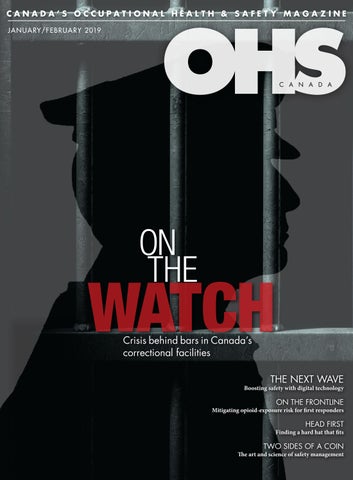
Crisis behind bars in Canada’s correctional facilities
THE NEXT WAVE
Boosting safety with digital technology ON THE FRONTLINE
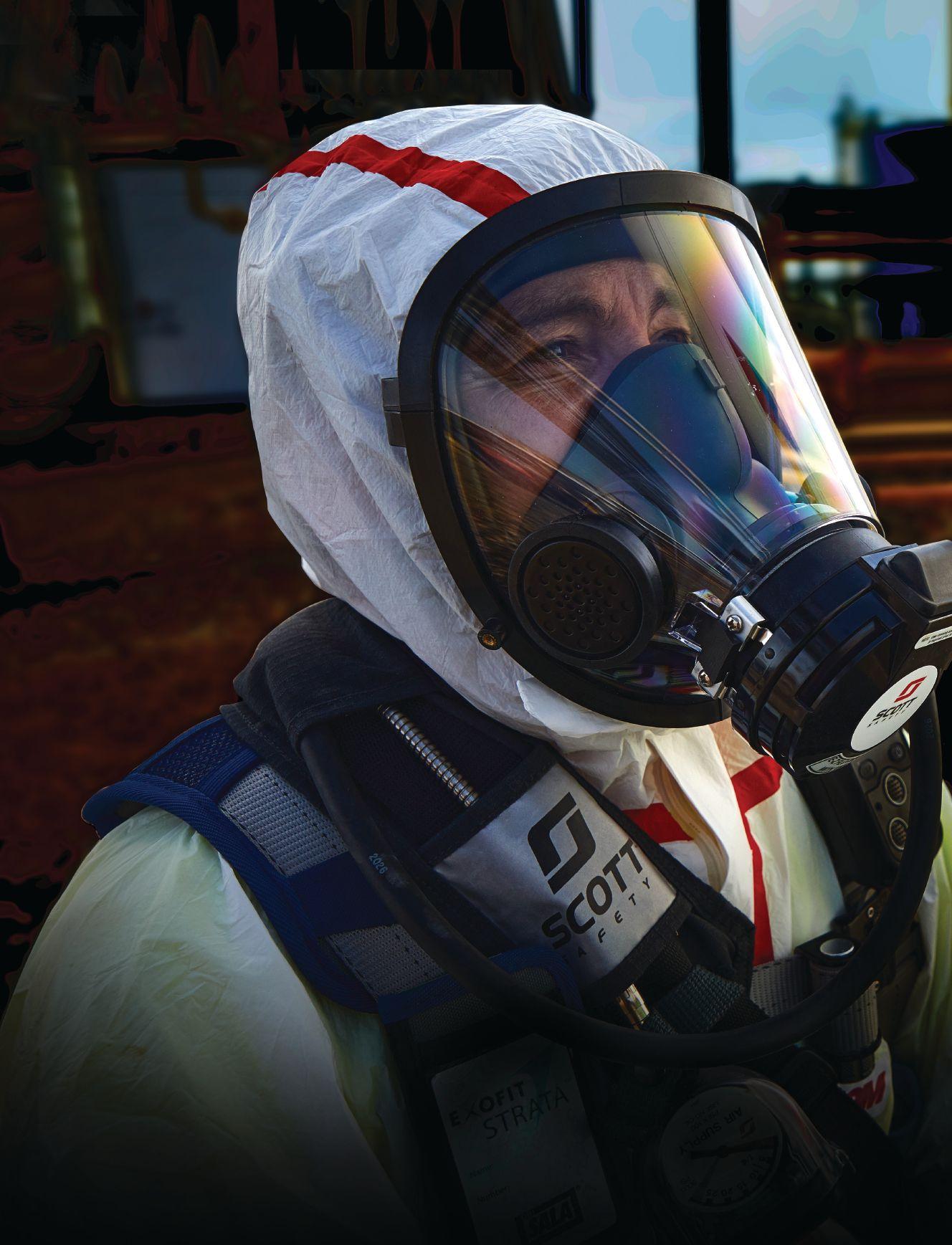
Mitigating opioid-exposure risk for first responders HEAD FIRST
Finding a hard hat that fits TWO SIDES OF A COIN The art and science of safety management
Overcrowding and understaffing are longstanding issues in Canada’s correctional facilities. Are these challenges also exacerbating violence behind bars?
By Danny Kucharsky
Safety Goes Digital
Technology can help companies manage safety more effectively as digitization and the changing workforce demographics continue to shape the oh&s landscape.
By Jean Lian
As opioid use and misuse becomes more prevalent, first responders need greater protection against the increasing risk of occupational exposure to substances.
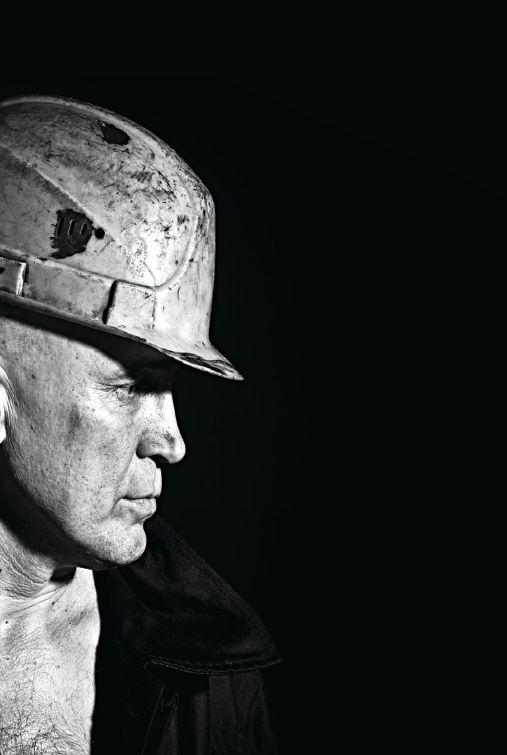
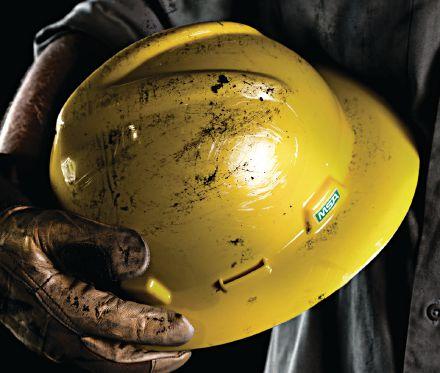
saying “if the hat fits” applies to those whose jobs require head protection. Finding a hard hat that fits requires the consideration of various factors.
Jean Lian
of
Alan Quilley
HARRY CONNICK
The Age of Disruption
The massive flight disruption in London’s Gatwick airport due to drone sightings during the busy Christmas season underscored the new reality of how safety — both public and occupational — can be held hostage by random acts perpetuated by irresponsible individuals.
Disruptions, which prevent a system, process or an event from continuing as usual or expected, entail an element of surprise and frustration. In today’s occupational health and safety landscape, disruptions are often subversive, have potentially large ramifications and are primarily driven by technological innovation, demographic shifts and climate change.
Examples of workplace-safety disruption driven by these three forces include the following: cyberattacks (resulting in unauthorized access of data, services and control networks); the emergence of artificial intelligence (such as robots and selfdriving vehicles that resolve — and create — new safety concerns); the transition from Babyboomer to the Millennial workforce; and threats from climate change (think wildfires and the increasing need to factor emergency preparedness and planning as part of a safety-management plan). There is also a psychological dimension to disruptions: distraction aside, digital technology has led to the rise of flexible workplaces that blur the line between work and home. It has also given workplace conflict a new profile: online harassment or bullying.
On the whole, the changes occurring on the oh&s front have created a general climate of rapid transformation and uncertainty. But disruption is not all bad: it is also an impetus to effect a tangential change and prompt a rethink of how we approach workplace safety.
Digital technology can capture and present safety data in a more accessible and user-friendly way, giving rise to enhanced data analysis and new safety metrics that can better identify areas for improvement and spawn new ways of preventing injuries and fatalities. Artificial intelligence allows the delegation of hazardous work from humans to robots, eliminating risk altogether. Digital technology has given rise to remote work and decreased the need to commute to work, while global warming will continue to fuel the innovation of green technology, with the electric car being a recent example.
We have a lot to learn moving forward, but one thing is clear: we are living in the Age of Disruption where change happens often and quickly. In this Era of Flux, we need to constantly learn and relearn. Regulatory changes will become more frequent as lawmakers play catch up to address emerging issues brought about by technological advances. Compliance, enforcement and prevention will continue to be pillars of workplace-safety management as laid out in the hierarchy of hazard controls, which is a five-step, inverted-diamond process of elimination, substitution, engineering and administrative controls and personal protective equipment. But safety professionals of the future will increasingly be expected to adopt a more proactive stance and serve not just as guardians of workplace safety, but also change managers.
The disruption curve will only become steeper with time. There is no turning back, and our only option is to ride the wave — or be engulfed by it.
CIRCULATION MANAGER JAY DOSHI 416-442-5600 EXT 5124 jdoshi@annexbusinessmedia.com
PUBLISHER PETER BOXER 416-510-5102 pboxer@ohscanada.com
GROUP PUBLISHER PAUL GROSSINGER pgrossinger@annexbusinessmedia.com
PRESIDENT & CEO MIKE FREDERICKS
EDITORIAL ADVISORY BOARD MEMBERS
DAVID IRETON, Safety Professional, Brampton, Ont.
AL JOHNSON, Vice President, Prevention Services WorkSafeBC, Richmond, B.C.
JANE LEMKE, Program Manager, OHN Certification Program, Mohawk College, Hamilton, Ont.
DON MITCHELL, Safety Consultant, Mississauga, Ont.
MICHELE PARENT, National Manager, Risk Management and Health and Wellness, Standard Life, Montreal, Que.
TERRY RYAN, Workers’ Compensation and Safety Consultant, TRC Group Inc., Mississauga, Ont.
DON SAYERS, Principal Consultant, Don Sayers & Associates, Hanwell, N.B.
DAVID SHANE, National Director, Health and Safety, Canada Post Corporation, Ottawa, Ont.
HENRY SKJERVEN, President, The Skjerven Cattle Company Ltd., Wynyard, Sask.
PETER STRAHLENDORF, Assistant Professor, School of Occupational and Public Health,Ryerson Polytechnic University, Toronto, Ont.
JONATHAN TYSON, Association of Canadian Ergonomists/Association canadienne d’ergonomie, North Bay, Ont.
Printed in Canada
ISSN 0827-4576 (Print)
ISSN 1923-4279 (Digital)
PUBLICATION MAIL AGREEMENT #40065710
CIRCULATION
asingh@annexbusinessmedia.com
Tel: 416-510-5189
Fax: 416-510-6875 or 416-442-2191
Mail: 111 Gordon Baker Rd., Suite 400, Toronto ON M2H 3R1
SUBSCRIPTION RATES
Published six times per year – Jan/Feb, Mar/Apr, May/Jun, Jul/Aug, Sep/Oct, Nov/Dec Canada $100/yr plus tax
USA $100/yr
Foreign $164.50
Occasionally, OHS Canada will mail information on behalf of industry related groups whose products and services we believe may be of interest to you. If you prefer not to receive this information, please contact our circulation department in any of the four ways listed above.
Rebate distributed to eligible Yukon employers in 2018 for the fourth year.
Source: Yukon Workers’ Compensation Health and Safety Board
$120,000
Fined meted out to an Ontario company on December 14, 2018 over a 2017 worker injury inflicted by a steel pipe.
Source: Ontario Ministry of Labour
25%
Percentage of workplace deaths caused by asbestosrelated diseases in Saskatchewan over the last decade.
Source: WorkSafe Saskatchewan
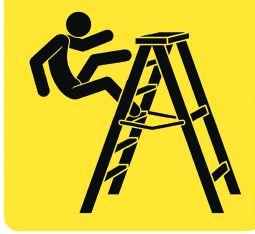
7
Number of workers who died in falls from ladders between 2013 and 2017 across all industries in British Columbia.
Source: WorkSafeBC
1. New Workers’ Advisor: The Northwest Territories Minister Responsible for the Workers’ Safety and Compensation Commission (WSCC) announced the appointment of Maia Lepage as the new Worker’s Advisor for the Northwest Territories and Nunavut on January 7. Lepage will support and assist injured workers and their family members during her three-year term as an injured-workers’ advocate.
Source: WSCC
2. Policy Updates: WorkSafeBC’s board of directors approved amendments to Prevention Manual policies regarding Part 24: Diving, Fishing and Other Marine Operations of the Occupational Health and Safety Regulation on December 13, 2018. Eighteen policies were approved for deletion effective March 1, 2019.
Source: WorkSafeBC
3. Boost to EMS: Emergency-medical services (EMS) in Alberta will get a boost with the provision of new ambulances and more than 100 additional paramedics to alleviate pressures on emergency rooms and support frontline workers as part of the five-point EMS action plan announced on December 7, 2018. Other measures include investing $1 million to support the mental health of EMS workers.
Source: Alberta Government
4. Partners in Mental Health: The Saskatchewan Workers’ Compensation Board (WCB) and the University of Fredericton signed a partnership agreement on December 3 to create psychologically healthy workplaces by increasing employers’ access to training and resources.
Source: The Saskatchewan WCB
5. Course Launched: WorkplaceNL launched its new Young Worker Occupational Health and Safety Course on December 10 in St. John’s, Newfoundland. The course helps young workers understand occupational health and safety principles and practices.
CANADIAN EXECUTIVE KILLED ABROAD
Source: WorkplaceNL
A Canadian mining executive from Halifax was found dead after he was kidnapped by a dozen gunmen at a mining site owned by Vancouver-based Progress Minerals Inc. in Burkina Faso. It appeared that the gunmen had stolen valuables, including money, cell phones and computers.
Source: The Canadian Press
OH&S UPDATE
UNDETECTED CRACKS CITED
FEDERAL — Undetected cracks in a column weld led to a 2017 hi-rail crane boom failure that injured a worker in Brandon, Manitoba.
According to an investigation report that the Transportation Safety Board of Canada (TSB) released on January 8, the incident occurred on September 2, 2017 when a work crew of Canadian Pacific Railway (CP) Engineering Services was using a truck-mounted boom crane to unload tie plates in Brandon Yard. During a lift operation, the crane column failed. The crane boom dropped, throwing the crane operator — who was sitting in an elevated basket secured to the crane’s column — onto the track about 12 feet below, resulting in serious injuries.
The investigation found multiple fatigue cracks that had originated near a weld on the interior of the crane column and had propagated outward through
the rear and side column walls. The impact from a 2015 collision with a train had likely initiated those cracks.
The seatbelt and seat-locking mechanism in the crane operator’s basket were also inoperative, resulting in the operator being thrown out of the seat when the crane column failed. CP’s daily crane-inspection checklist included a requirement to check all safety devices for proper operation, but some of the safety features on the crane operator’s seat and basket were inoperative at the time of the incident, suggesting that they had not been inspected.
Following the occurrence, CP inspected all boom cranes and revised its crane-inspection procedures to include the crane operator’s seat.
RULES FOR CONSTRUCTION ZONES
EDMONTON — Contractors in Alberta are now required to cover speed-reduction signage in a construction zone
when workers are not present and if there are no safety concerns.
Other measures to make construction zones safer for public-road workers include limiting the distance of highway-lane closures in most cases to a maximum of three kilometres, ensuring consistency of signs leading to construction zones and creating longer transition zones for slowing down.
“One of the major complaints we hear every year is that reduced speed limits are enforced when it is obvious no work is occurring at the construction site,” Minister of Transportation Brian Mason says in a statement on January 15. “These changes will make sure our construction workers are safe as they build our roadways while also helping commuters spend less time in traffic.”
Other requirements include more consistent use of road-construction signage, more gradual speed reductions through construction zones and deploy electronic speed displays and rumble strips more frequently to slow traffic.
REPORT IDENTIFIES FATIGUE AS A KEY FACTOR
FEDERAL — The need to manage the risk of fatigue in the marine industry effectively was cited as a key factor in the Transportation Safety Board’s (TSB) of Canada’s investigation into an incident that occurred in July 2017 when a tug boat made bottom contact while transiting the Princess Royal Channel south of Kitimat, British Columbia.
On 9 July 2017, the tug Ocean Monarch with three crew members on board made bottom contact while towing a loaded cement barge. No pollution or injuries were reported, but the tug’s hull, starboard propeller and nozzle were damaged, according to the report released on January 10. After a damage assessment and actions taken to prevent fuel from leaking, the tug resumed its voyage to Kitimat, British Columbia using the port engine before returning to Fraser River and a shipyard in Vancouver for repairs.
The investigation determined that the mate, who was alone on watchkeeping duties, fell asleep while the tug and barge transited on autopilot through the channel’s confined waters. The mate had been on duty for at least eight hours at the time of the incident. The master and deckhand were asleep below deck, and all navigational alarms were disabled. The mate fell asleep likely as a result of acute fatigue from previous night shifts, chronic sleep disruptions, circa-
dian rhythm de-synchronization and the low, monotonous workload in the wheelhouse.
The investigation also found that the tug’s operator did not have strategies in place to mitigate crew fatigue, despite a previous incident in 2011 when fatigue played a role. Given the tug’s 24-7 operations, a three-member crew made it challenging, and at times impossible, to maintain two people on the bridge every night while also ensuring the crew was sufficiently rested. If an operator does not have a fatigue-management plan and is not required to have one, there is a risk that crews will work while fatigued, increasing the likelihood of an error that leads to an occurrence, the report concludes.
Following this investigation, the operator installed a navigational watch alarm on the bridge of the tug and ordered all alarms to be enabled and monitored at all times. New safe-operating procedures were developed and implemented on the vessel. The Pacific Pilotage Authority revoked the pilotage waiver for the master and required him to become informed of the waiver requirements before reinstating his waiver.
Fatigue management is on the TSB 2018 Watchlist as a multimodal issue, the statement adds.
STANDARDS CHANGE IN EFFECT
EDMONTON — Changes to Alberta’s youth-employment standards that took effect on January 1, 2019 mean that youth aged 12 and under can seek employment only in artistic endeavours like film, stage or television productions if they have parental or guardian consent and a government-issued permit.
The new standards apply only when there is an employment relationship in which employers make mandatory deductions or provide benefits like vacation pay. They do not apply to volunteer activities or casual work such as babysitting, lawn-mowing, snowshovelling or farm and ranch work.
The provincial government consulted with more than 100 individuals and organizations when updating the standards. “By providing clarity on the standards for employing youth under age 13, the updated legislation will ensure stronger protection for children, while still offering them the choice to gain valuable life experience through their first jobs,” says Minister of Labour Christina Gray. Employers must provide proper training and supervision to young employees and inform parents or guardians of any workplace risks.
TWO FIRMS FINED FOR INCIDENT
WEYBURN — Two out-of-province companies were fined on January 15 after pleading guilty to an incident on March 19, 2017 near Stoughton, Saskatchewan where a worker’s forearm became entangled in the moving gear of a power tong.
Western Energy Services Corp., operating as Horizon Drilling, of Calgary, pleaded guilty to failing to ensure that all work at a place of employment is sufficiently and competently supervised, resulting in a serious injury to a worker. The company was fined a total of $100,000.
Great Western Tong Services (1987) Ltd. of Virden, Manitoba, pleaded guilty to failing to provide an effective safeguard where a worker
may contact a dangerous moving part of a machine. The company was fined $25,000 plus a $10,000 surcharge.
VIOLATION PROMPTS CHARGES
SASKATOON — A Saskatoon company was fined $80,000 on December 10 for contravening Occupational Health and Safety regulations.
Charges resulted from an incident
that occurred on August 18, 2016 in Saskatoon where a worker suffered serious injuries to his arm and pelvis when the scissor lift that he was operating was struck by an overhead crane, knocking the lift to the ground.
Prairie Crane Inc. pleaded guilty to failing to ensure that a worker has been trained and has sufficient experience to perform the work safely, or is under close and competent supervision. One additional charge was withdrawn.
SIX NEW CANCERS COVERED
REGINA — Saskatchewan firefighters will be eligible for presumptive coverage for six new cancers following the announcement of amendments to The Workers’ Compensation Act, 2013 on December 4.
Firefighters can now file workers’compensation claim for prostate, skin, breast, cervical and ovarian cancer, as well as multiple myeloma under the occupational-disease presumption. The newly-added cancers also recognize the changing demographics among firefighters, with half the new cancers added primarily or only impacting women.
Labour Relations and Workplace Safety Minister Don Morgan says firefighters face great risks in their line of work. “They also face the potential of dealing with occupational diseases related to their chosen profession.”
Applicants will need to provide a diagnosis and other required information from a medical professional to support their claim for compensation.
INSPECTIONS STREAMLINED
WINNIPEG — Manitoba has streamlined the process for grain-dryer inspections in an effort to reduce red tape and improve the inspection and approval process. Grain dryers must be inspect-
ed and certified to ensure they are set up safely before they can be used.
“When producers find they need to dry the grain in their bins, it is important to be able to move quickly and accommodate a large number of requests that may come in at the same time,” Growth, Enterprise and Trade Minister Blaine Pedersen, minister responsible for the Office of the Fire Commissioner (OFC), says in a statement on January 22. “We recognize the importance of responding in a timely fashion, and the OFC has taken strides to improve the inspection and approval process for grain dryers.”
The OFC has established a central booking process, co-ordinated with Manitoba Hydro, to streamline the scheduling of inspections. It has also expanded the availability of inspectors to include evenings and weekends throughout the harvest season, and a 24-hour inspection hotline was made available from August 15 to December 31.
Producers must ensure the installation is completed in compliance with the manufacturers installation instructions and Canadian Standards Association code requirements, and all checks are completed prior to the inspection to avoid unnecessary delays.
Harmonizing installation requirements with Saskatchewan will also reduce confusion as equipment suppliers and installers often serve clients in both provinces. The OFC and SaskEnergy are working closely to align the approv-
RIDE-SHARING RULES GET GREEN LIGHT
REGINA — Ride-sharing regulations that took effect on December 14, 2018 has opened the door for companies to operate in Saskatchewan if they follow requirements set out by the municipality in which they operate. Minister Responsible for SGI Joe Hargrave said Saskatchewan Government Insurance (SGI) has developed a provincial framework “that strikes a good balance between public demand and safety,” following extensive consultation with stakeholders.
Ride-share drivers will have the option to use a commercial class licence (Class 1-4) or a Class 5 licence if they meet certain conditions. All drivers transporting passengers for hire must pass annual criminal record checks and have their vehicles inspected annually. If opting for a Class 5 licence, only drivers who meet certain additional conditions — including having a safe driving record — will be allowed to work as a ride-share driver.
al process and installation requirements such as venting, dryer and fuel tank protection and general installation code requirements, Pedersen adds.
RCMP CREATES ADVISORY BOARD
OTTAWA — Work to establish an Interim Management Advisory Board will start immediately, following RCMP’s acceptance of the recommendation by the RCMP Civilian Review and Complaints Commission (CRCC) and former auditor general Sheila Fraser that the creation of the advisory board is key to improving the police force’s workplace-harassment policies and procedures.
“The creation of the Board is a critical step to help us modernize our RCMP,” RCMP Commissioner Brenda Lucki announced on January 16. “The Board’s expert advice will provide new, valuable perspectives to help us make decisions that support our end goal: a modern, effective, healthy and inclusive organization,” she added.
Prior to and since the recommendations by CRCC and Fraser, Lucki says RCMP made effort to create a more respectful workplace by implementing measures that include setting up a centralized office to coordinate harassment complaints, developing a mental-health strategy and action plan and making change initiatives included in the MerloDavidson settlement agreement.
Requirements for ride-share drivers using a Class 5 licence must be an experienced driver, have at least two years of post-Graduated Driver Licensing driving experience in Canada or a reciprocal jurisdiction and have a satisfactory driver history of less than 12 points under the Driver Improvement Program in the last two years with no impaired driving-related suspensions in the last 10 years.
Taxi and limousine drivers will have the same driver’s licence options as ride-share drivers and are allowed to operate under a Class 4 licence, or a Class 5 licence if they meet the above requirements. Ride-share companies will be required to hold at least $1 million liability coverage for all affiliated drivers and vehicles.
Mothers Against Drunk Driving Canada’s regional manager Michelle Okere says provincial rules create “a framework for an industry that will provide more safe rides.”
ROOFING FIRM FINED OVER FIRE
OTTAWA — Ontario’s Ministry of Labour issued an $80,000 fine to a roofing company in Ottawa on January 7 after a worker suffered critical injuries on a rooftop balcony.
Ottawa Permanent Roofing was installing a new roof on a two-storey residential home and a second-storey balcony on July 5, 2017, Ontario’s Ministry of Labour reports. The adhesive glue used to install the balcony membrane caught fire while three workers were present. Two of the workers caught fire, while the third employee sustained serious burns to the arms, legs and torso.
An investigation revealed that there was no fire extinguisher on the balcony, written emergency procedures for the project were not in place and workers did not have an adequate means of egress from the balcony during an emergency.
Following an ex parte trial in which no one appeared in court on behalf of the defendant, the firm was fined for failing to establish written procedures for employees to follow in the event of an emergency, making at least one fire extinguisher readily accessible at a project and providing an adequate means of egress for workers to evacuate in an emergency.
COMPANY SENTENCED FOR FATALITY
OAKVILLE — An Ontario company that provides washing services to industrial vehicles was fined $105,000 on December 20 over a worker fatality in January 2017.
The incident took place in Prokleen Washing Services Inc.’s facility in Oakville where two workers were washing a customer’s tank container carrying nitrogen without having to enter the tank. One of the workers left the site briefly and returned to find the other worker unconscious in the tank. Emergency medical services could not revive the worker. The coroner determined the cause of death to be inert gas asphyxiation. Nitrogen displaces oxygen and can be an asphyxiation hazard in an enclosed space.
The Ministry of Labour’s investigation found that the company’s written plan did not adequately identify certain workplace hazards. In particular, an access point of a customer’s container was not equipped with warning signs on the oxygen-depleted atmosphere of the tank.
The company pleaded guilty to failing to ensure an adequate written plan, including procedures for the control of hazards identified in the assessment, has been developed and implemented by a competent person for the confined space.
WSIB RE-EXAMINES PAST CLAIMS
TORONTO — The Workplace Safety and Insurance Board (WSIB) in Toronto will review more than 300 claims filed by rubber workers in the Kitchener Waterloo area since 2002 that had not previously been allowed.
Between 2002 and 2017, WSIB received claims for a
variety of illnesses and cancers from employees who worked with several companies in the rubber industry in that area.
“I am very deeply concerned by recent reports about the very serious health issues facing people who worked in the rubber industry in our community,” WSIB chair Elizabeth Witmer says in a statement on December 10. “I have asked for a review to ensure we are applying the latest science and evidence to make decisions about these claims.”
The review of both cancer and non-cancer related claims will focus on some types of cancer where updated scientific research supports linkages between specific levels of chemical exposures and specific illnesses. It will also examine claims where a greater understanding of the intensity of exposure and/or number of agents exposed to may affect the decision.
REVIEW LAUNCHED TO DEVELOP BEST PRACTICES
TORONTO — Ontario has named a world-renowned expert to lead a review on occupational cancer to develop best practices when assessing compensation claims.
Dr. Paul Demers, a senior scientist of prevention, screening and cancer control with Cancer Care Ontario, has been tasked to conduct the review and report back to the Ministry of Labour by the end of the year. Dr. Demers is also director of the Occupational Cancer Research Centre in Ontario and professor at the University of Toronto Dalla Lana School of Public Health.
OVER 825 GLOVES IN STOCK
“I am very happy to lead this review,” Dr. Demers says. “There is a growing awareness that workplace chemicals and radiation are an important cause of cancer. While recognition of individual cases can be challenging, it is important that we move forward using the best and most up-to-date scientific evidence.”
According to a statement from Ontario’s Ministry of Labour issued on January 25, the review will show how scientific evidence can be used to determine whether a cancer is work related, recommend best practices in other jurisdictions that Ontario should consider adopting and offer criteria that the Ministry of Labour should consider when developing legislative policy. The review and recommendations will also guide the Workplace Safety and Insurance Board (WSIB) as it reviews occupational-disease claims.
The government has also launched an Occupational Disease and Illness Prevention Strategy. The ministry is working with the WSIB and its health and safety association partners to develop a strategy that will further understanding of occupational disease and hazardous substances, strengthen workplace protections, build awareness about occupationalillness prevention and establish partnerships to help improve the management of occupational illness in the province.
“Occupational disease and illness is a very complex issue. The review will give us a clearer picture of how workplace exposures can lead to occupational cancer and help inform our new prevention strategy to further protect Ontario
workers,” says Ron Kelusky, Ontario’s Chief Prevention Officer.
More Ontario workers die from occupational diseases than workplace incidents. In 2017, 146 workers died from work-related illness while 81 died from traumatic injuries.
BAKERY FINED FOR WORKER INJURY
CONCORD — A bakery in Toronto was fined $65,000 on December 14 over an incident in which a worker was critically injured after being caught in a conveyor belt at Weston Bakeries Ltd.’s facility in Concord, Ontario.
On July 20, 2017, the worker was monitoring dough divider lines to ensure that the dough is formed to the correct weight when dough built up at the transition between the divider conveyor and the former conveyor. The worker used an air-line to blow the dough bits off the conveyor belt but was unable to remove the excess dough, Ontario’s Ministry of Labour reports. While trying to brush off the dough, the worker got caught between the transition area of the two conveyor belts and was unable to reach the emergency pull cord. The local fire rescue service had to take the conveyor line structure apart to free the worker.
Although there was normally a guard that would have prevented this from occurring, the guard had been removed and was placed on the floor beside the divider line. The company pleaded guilty to failing to ensure that equipment, materials and protective devices are maintained in good condition.
WAITING PERIOD FOR COMPENSATION ELIMINATED
SAINT JOHN — Injured workers in New Brunswick no longer have to wait three days from filing their claim to be eligible for compensation as new legislation repealed the unpaid three-day waiting period. The change will be effected in two stages: the initial elimination of one unpaid day will take effect on July 1, 2019, and the complete elimination of the unpaid waiting period will take place by July 1, 2021.
“Eliminating the unpaid waiting period will provide wage loss benefits to all workers from the day following an accident,” says Haley Flaro, acting board chairperson. “This benefit improvement will directly impact New Brunswick’s most vulnerable injured workers who might not have access to sick leave benefits during this time frame.”
The legislative changes will also affect employer rates: 2019 average assessment rate, previously announced as $2.92 per $100 of payroll, is being reduced to $2.65. WorkSafeNB’s actuaries have reviewed the impact of the new legislation and have determined that a $94-million reduction in certain liabilities will be realized immediately, resulting in a lower rate for 2019.
“These legislative changes will help stabilize the rapid increases in costs that have been passed on to New Brunswick employers in recent years, allowing for a more predictable cost environment,” Flaro explains.
PANEL GIVES RECOMMENDATIONS
HALIFAX — Increasing staff to address manpower shortages and enhancing access to health professionals were among the five recommendations and 22 action items that the minister’s expert advisory panel on long-term care delivered on January 15 to improve the quality of long-term care in Nova Scotia over the next two years.
The recommendations, which focus on improving the skills mix and transitions of care between health-care facilities and overall system performance, were made following extensive consultations with 375 stakeholders. Three systemic themes — complexity, culture and fragmentation — surfaced consistently during consultations. Pressures on the system, including complex and highneed admissions, high rates of chronic disease and dementia and humanresources challenges in recruiting and retaining staff, contributed significant strain to the system.
Across the province, nursing-home staff were regularly short staffed, leading to additional work responsibilities and high rates of stress and illness. Unfilled vacancies and difficulties attracting new talent need to be addressed in the short term, the panel recommends.
“We recognize there is work to do, including addressing the stigma around long-term care that undermines good work that is happening,” says Cheryl Smith, a panel member and long-term care nurse practitioner in Amherst. “We believe the recommendations in this report will help to improve the quality of care and increase the confidence of residents, families, staff and the public.”
AMENDMENTS TOOK EFFECT
CHARLOTTETOWN — Prince Edward Island firefighters and fire inspectors will have presumptive coverage for specific types of cancer and heart injuries as a result of amendments to the Workers Compensation Act that took effect on January 1. Eligible firefighters include fire inspectors and full-time, part-time and volunteer firefighters who are mem-
bers of a fire department or brigade.
“This coverage will offer much needed care to many firefighters who may encounter serious health problems resulting from the valuable work they did to protect their communities,” says Stuart Affleck, chair of the Workers’ Compensation Board. “The legislative and regulatory changes ensure that if a firefighter or fire inspector develops specific diseases or heart injury, it will be presumed that it is work related.”
Presumptive coverage is based on the following principles: specified injuries or diseases are presumed to be work-related; presumption apply to firefighters who experience a heart injury (such as a heart attack, cardiac arrest or arrhythmia) within 24 hours of responding to an emergency; and presumption apply to specific types of cancers provided the firefighter had been exposed to the hazards of a fire over the minimum cumulative period of employment, which range anywhere from five to 25 years, depending on the type of cancer.
Presumption for primary site lung cancer applies only if the firefighter has been a non-smoker for 10 consecutive years prior to the initial diagnosis.
NEW RULES TACKLE VIOLENCE
ST. JOHN’S — New oh&s regulations, including provisions to address occupational harassment and worker-on-worker violence and strengthen violence prevention, will come into force on January 1, 2020.
The expanded regulations mean that incidents regarding worker-on-worker violence will now be captured. Employers are required to apply and comply with a harassment-prevention plan accessible to all employees and provide employees with a secure and confidential means to file a complaint. There also needs to be a clear manner in which the complaint is investigated, and training for both the employer and employees on harassment prevention needs to be provided, the statement adds.
“I’m pleased today to announce the enforcement of regulations that support harassment and violence-free workplaces,” says Minister of Service NL Sherry Gambin-Walsh. She was joined by Minister Responsible for the Status of Women Carol Anne Haley and WorkplaceNL chief executive officer Dennis Hogan when making the announcement.
“Everyone has the right to a work in an environment free from violence and harassment. Supportive workplaces are essential in the creation of a province that is fully free of violence and harassment,” Haley says.
Hogan encourages workplaces to participate in WorkplaceNL’s webinars or workshops and contact their health and safety advisors who conduct risk assessments and update their oh&s programs before January 1, 2020. “This is another important step forward in building a strong safety culture in our province, so that we can prevent physical and mental health work-related injuries,” he adds.
Follow us on Twitter @OHSCanada
So, what’s on your mind?
Ever wonder what other oh&s types are thinking about? Find out by making our website poll at www.ohscanada.com a regular stop.
New requirements for commercial drivers
By Jean Lian
Starting March 15, drivers seeking a Class 1 commercial licence to drive semi trucks in Saskatchewan must undergo a minimum of 121.5 hours of training. As well, Class 1 road tests will be undertaken with examiners from Saskatchewan Government Insurance (SGI) only.
These new requirements are part of Saskatchewan’s efforts to improve standards for training curriculum and driver testing for semi drivers since mid-2017, says Minister Responsible for SGI Joe Hargrave. “Our ongoing consultations with other provinces have helped address gaps and inconsistencies when commercial drivers cross provincial borders. Stronger training requirements in Saskatchewan and across Canada will help make our province’s and our nation’s roads safer,” he adds.
The new curriculum includes instruction in a classroom, in the yard and behind the wheel. Training will focus on priority curriculum areas, and driver’s tests will be aligned to the curriculum. Training schools will receive instruction and training on the new curriculum, and the people who deliver training will be held to higher standards.
“The industry is on-board with strengthened training requirements,” Saskatchewan Trucking Association Executive director Susan Ewart says. “Our industry also has a responsibility to make sure commercial semi drivers have the knowledge and skills to do their job, ensuring the safety of everyone on the road.”
The provincial government continues to consult with the agricultural industry on the impact of potential mandatory training requirements for their sector, given that these vehicles generally travel less frequently, shorter distances and through less densely populated areas.
Effective March 15, anyone who wish to drive a semi used in farming operations will need to obtain an “F” endorsement on their existing driver’s licence and will be restricted to operating within Saskatchewan’s borders. The “F” endorsement will not be required if they already have a Class 1 licence, or have taken the mandatory training.
A 12-month safety-monitoring program has also been introduced for all new semi drivers. In addition to the exist-
ing monitoring for all drivers, SGI will monitor semi drivers more stringently for a year after testing so that remedial action can be taken if safety concerns arise.
Bullying affects bystanders too, study finds
Arecent study out of Wakayama Medical Univeristy in Japan found that bullying increases other employees’ psychological distress and plans to quit their job — even though they are not being bullied.
Findings by the research team led by Dr. Kanami Tsuno, Ph.D. of Wakayama Medical University was released on January 14. The study explored the contextual effect of workplace bullying by using baseline and one-year followup responses from more than 2,000 Japanese civil servants. Workers completed a questionnaire on bullying at work, rating the frequency of items such as spreading gossip and rumours or persistent criticism of their work.
Survey results indicate that individual reports of being bullied at work were linked to increased psychological distress like depression at one-year follow-up. Bullied workers also had higher ratings on a scale assessing their intention to leave their jobs. But these effects of individual-level bullying were no longer significant after adjusting for bullying on the division and department levels. Division-level bullying had a greater impact on both psychological distress and intention to leave, compared to individual exposure to bullying.
This contextual effect suggests that “bullying is not simply an interpersonal issue, but is an organizational dynamic that impacts on all workers, even those who are not personally victimized,” Dr. Tsuno says. “The presence of workplace bullying is an indicator that calls for intervention by employers and occupational health staff.”
According to Canada Safety Council, the first step is to understand the bully to determine the best way of selfdefence. For example, subtle bullies torment their targets with passive-aggressive techniques, while an abusive bully hounds a target employee and are more likely to engage in public humiliation. The second step is to identify the type of bullying: is the toxic behaviour perpetuated through unrealistic job demands and criticisms, creating an inconsistent or unfair work environment, withholding credit where it is due or other abusive behaviour?
It is important that the employee document in detail the instances of bullying and come up with a plan to resolve the bullying, whether that be seeking assistance from senior management or third-party mediation, confront the bully in a professional setting, solicit witness statements or follow internal complain processes.
Smartphone app can detect opioid overdose
The rising incidence of opioid overdoses has prompted researchers at the University of Washington (UoW) to develop a cellphone app that is capable of detecting an opioid overdose.
The app, called Second Chance, detects overdose-related symptoms accurately about 90 percent of the time and can track someone’s breathing from up to three feet away, according to the team’s results published on January 9 in the journal, Science Translational Medicine.
“The idea is that people can use the app during opioid use so that if they overdose, the phone can potentially connect them to a friend or emergency services to provide naloxone,” says co-corresponding author Shyam Gollakota, an associate professor in the UoW’s Paul G. Allen School of Computer Science and Engineering.
The research team created an algorithm capable of detecting overdoses by monitoring how an individual’s breathing changes before and after opioid use. The app sends inaudible sound waves from the smartphone to people’s chests and monitors the way the sound waves return to the phone to look for specific breathing patterns.
“We are looking for two main precursors to opioid overdose: when a person stops breathing, or when a person’s breathing rate is seven breaths per minute or lower,” says co-corresponding author Dr. Jacob Sunshine, an assistant professor of anesthesiology and pain medicine at the UoW School of Medicine. Less than eight breaths per minute is a common cut-off point used in a hospital that would trigger healthcare personnel to go to the bedside and make sure a patient is alright, he adds.
To access real-world data to design and test the algorithm behind the app, the researchers partnered with Insite, a supervised drug consumption site in Vancouver. In addition to monitoring breathing pattern, the app also assesses how people move by looking for characteristic motions that might be indicative of an opioid overdose, such as when an individual’s head slumps or nods off.
“We are experiencing an unprecedented epidemic of deaths from opioid use, and it is unfortunate because these overdoses are completely reversible phenomena if they are detected in time,” Sunshine says. “We hope that by keeping people safer, they can eventually access long-term treatment.”
According to statistics from the federal government, Canada saw 2,066 opioid-related deaths in the first half of
2018. This translates into more than 9,000 opioid-related deaths between January 2016 and June 2018.
The researchers, who are applying for approval from the United States’ Food and Drug Administration, have plans to commercialize this technology, the statement adds.
Comply with de-icing rules: report recommends
The Transportation Safety Board of Canada (TSB) is calling for adequate aircraft de-icing equipment and greater compliance with de-icing regulations at remote northern airports in a report released on December 14.
The recommendations, which aim at preventing flight crews operating in remote northern areas of Canada from taking off with ice, snow and frost contamination on aircraft, stem from TSB’s investigation into an aircraft’s collision with terrain in Fond-du-Lac, Saskatchewan in December 2017.
According to the report, the crew took off from Fond-duLac with ice contamination on the aircraft’s critical surfaces. The operator had some de-icing equipment in the terminal building, but it was not adequate for de-icing a West Wind Aviation ATR-42. Ice or snow on critical surfaces such as wings, stabilizers and propellers could result in aerodynamic degradation and lead to difficulty controlling an aircraft.
To assess whether similar circumstances to this occurrence existed in the wider Canadian industry, the TSB surveyed pilots at 83 Canadian operators that fly out of remote northern airports. Preliminary analysis of the data shows that pilots frequently take off with contaminated critical surfaces and that aircraft de-icing equipment is often inadequate at remote northern airports.
“The lack of adequate de-icing equipment at remote northern Canadian airports and the frequency of flights taking off with contaminated critical surfaces constitute a widespread, recurrent issue that exposes passengers and flight crews to unnecessary risk,” says TSB chair Kathy Fox.
The report recommends that the Department of Transport collaborate with air operators and airport authorities to identify locations where there is inadequate de-icing and anti-icing equipment and take urgent action to ensure that the proper equipment is available to reduce the likelihood of aircraft taking off with contaminated critical surfaces.
“It is time that Transport Canada and the aviation industry give people the tools they need to adequately de-ice aircraft,” Fox says. “There also needs to be better compliance with the regulations prohibiting takeoffs with ice, snow and frost contamination.”
Jean Lian is editor of ohs canada Follow us on Twitter @OHSCanada
BEHIND
BARS
BY DANNY KUCHARSKY
An increase in reported inmate-on-staff violence in Ontario’s correctional institutions has led to the release of a report by the province’s independent corrections adviser in December 2018, offering 42 recommendations aimed at making jails safer. But correctional violence is not unique to Ontario — it is a nationwide problem.
Last year, correctional staff in British Columbia decided that enough was enough after an inmate’s unprovoked assault on a correctional officer at Fraser Regional Correctional Centre. The British Columbia Government and Service Employees Union (BCGEU) held a rally outside Fraser Regional Correctional Centre in Maple Ridge on February 23, 2018 to publicize their concerns about staffing issues and inmate violence.
“That was just one of many assaults (we saw) in 2018” at 10 jails across the province, Dean Purdy, BCGEU’s vicepresident and chair of the Corrections and Sheriff Services Component, says of the assault that triggered the rally.
Purdy says the rally highlighted the fact that British Columbia has the highest inmate-to-staff ratio in Canada — up to 40 inmates per staffer at Fraser and reaching 72 to one at
two other prisons in the province. Prior to 2002, there was a cap of one staff member per 20 inmates. “Any time it went over 20 inmates, we received a second officer for security and safety reasons. That went away in 2002.”
He attributes increasing violence in the province’s penitentiaries to staffing shortage, which stems from difficulty in recruiting and retaining correctional officers, poor wages and working conditions and the prevailing perception of a correctional-services job as a stepping stone to a career in policing. Although final numbers for 2018 are not available yet, British Columbia is poised to have its highest number of assaults on correctional officers in five years, topping the 115 in 2017. “I’d put the job of a correctional officer up against any as the most dangerous, the most stressful and all around the most difficult job,” Purdy says.
Other provinces are seeing similar numbers to that of British Columbia: reported inmate-on-staff violent incidents in Ontario rose substantially from 793 in 2016 to 1,389 in 2017, according to an August 2018 interim report, Institutional Violence in Ontario released by Ontario Ministry of Community Safety and Correctional Services. Changes to Ontario’s segregation policy, including limiting the use of segregation as a disciplinary tool, has contributed to increased inmate-on-staff violence, the interim report noted. In 2016, Ontario placed a limit of 15 consecutive days on disciplinary segregation — a move that has been implemented across the country.
CONTENTION OVER SEGREGATION
On the federal level, Public Safety Minister Ralph Goodale proposed several changes to the Corrections and Conditional Release Act last October. Bill C-83 eliminated solitary confinement and changed how federal inmates are separated from the general prison population. The current disciplinary segregation system will be replaced by the Structured Intervention Units (SIUs), which allow the separation of inmates from the general inmate population if they cannot live safely among other prisoners.
Esther Mailhot, communications advisor with the communications and engagement sector at Correctional Service Canada (CSC) in Ottawa, says SIUs will give inmates who cannot be managed in the mainstream-inmate population “access to targeted and structured interventions and programming.” SIUs will also address specific risks, such as offenders with mental-health needs, to facilitate their reintegration into the mainstream inmate population. The result, she says, will be “better correctional outcomes with reduced incidents.”
“Many of the people who have drawn months and years in segregation are the ones who are the most vulnerable, who are scared, who are fearful of being hurt by inmates who are violent. So it’s not the violent ones who are ending up in the long-term segregation units,” Chappelle says.
But that does not mean he thinks segregation should be removed. “Have there been places where solitary has been used by default and far too often? Absolutely. Can it be removed? Can a hard cap be put into place across the board? I don’t believe ever. For the safety of other inmates, staff members, that’s paramount.”
Purdy also supports the use of segregation when necessary. “There have to be consequences for the actions of inmates. We want to make sure that when inmates break the rules, they are held accountable.”
For Godin, the growing concern of violence against staff in federal prisons is fueled by various factors. Although federal jails are not overcrowded, there is a problem with “extremely difficult, unmanageable violent inmates.” As well, staff members are off work at several institutions — many for reasons related to injury on duty — creating a bit of a staffing crisis and putting additional strain on manpower.
According to CSC, there were 117 minor or moderate physical assaults that did not result in death, major or serious bodily harm on staff and 97 minor or moderate assaults on staff involving bodily fluids or waste in federal institutions in 2016-2017.
“It is a very challenging time in our correctional system in Canada.”
But not everyone is onboard with changes to the segregation policy. Jason Godin, Ottawa-based national president of the Union of Canadian Correctional Officers, which represents about 8,200 federal officers, links the decline in the use of segregation to more violent incidents against correctional staff. “They can hide behind their mental health issues, and they know there is little consequences for their actions.”
To deal with violence effectively, “we need to take a look at what we are going to use to replace disciplinary segregation for behavioural problems and what kind of sanctions we can use to control [inmates] to safely assure that they are not assaulting staff or other inmate. For us, Bill C-83 is very, very concerning,” Godin adds.
Lee Chappelle, president of Prison Consulting Services Canada in Toronto, is neither a believer in abolishing segregation nor putting a 15-day cap on the practice. He acknowledges that segregation has always been challenging and that a significant portion of segregation was done not for disciplinary reasons, but for administrative purpose. Disciplinary segregation, also known as disassociation, is applied when violent incidents occur, such as when an inmate assaults someone.
The CSC projects the number of assaulton-staff incidents for 2017 is likely to be 32 per cent higher than the previous fiscal year, which coincides with an expected 15 per cent decrease in segregation bed use during the same period. Segregation bed use has decreased annually since 2014-2015, while assaults on staff remained relatively consistent between 20142015 and 2016-2017. For CSC’s fiscal year, which runs from April 2017 to March 31, 2018, the corresponding numbers were 165 and 131.
According to CSC, employee safety is a fundamental priority. “Correctional professionals operate in an environment where safety and security control measures have been designed” to mitigate risks, Mailhot says. These measures include prevention strategies, training, personal protective equipment, infrastructure, engineering and controlled-response protocols, she adds.
A CHANGING LANDSCAPE
The landscape of correctional institutions in Canada has undergone significant shifts over the decades. According to Chappelle, violence and workplace-safety conditions in Canadian prisons were poor until the 1970s. In that decade, the situation was so dire that there were hostage-taking incidents involving guards at Kingston Penitentiary in Ontario. In the early 1980s, the adoption of the Charter of Rights and Freedoms led to “probably the most enlightened period of corrections in Canada” that lasted until the end of the 1990s. The emphasis was placed on a rehabilitative model
that included a “fairly effective” move to hire women as correctional officers in men’s prisons.
But under the tough-on-crime polices of the Harper government in the first decade of the new millennium, work projects were shut down, and programming budgets and prisoner pay were slashed. Incentives for good behaviour were removed, and prisons became more violent and toxic. A “nothing-left-to-lose mentality” took hold in prisons, making the job harder for correctional officers.
“It is a very challenging time in our correctional system in Canada,” Chappelle says. When correctional staff work in an environment where inmates spit on or throw urine on them, “it is not hard to lose your objectivity, become desensitized and start viewing this more like this is a war zone.”
The demographics of the prison population is also changing. Chappelle points out that the bulk of people who were in prisons three to four decades ago were jailed for crimes like robbery, break-and-enter and murder. “That has dropped considerably for a lot of reasons,” he notes, citing the use of technology like security alarms and surveillance cameras. “Now, we have a lot of sex offenders, Internet crimes, and the makeup of our populations has changed as a result.”
Jennifer Metcalfe is the executive director of Prisoners’ Legal Services at the West Coast Prison Justice Society in Vancouver. The agency provides legal services to federal and provincial prisoners in British Columbia. Metcalfe thinks the right approach to resolve correctional violence is through inmates’ hearts. “There needs to be more focus on staff culture and treating prisoners with dignity and fairness so they don’t feel angry and want to retaliate when they feel like they have been treated unfairly.”
Metcalfe says she receives complaints that staff sometimes use excessive force or abusive language on inmates. “We need staff to be role models for positive behaviour, so just making people angry and resentful is not going to reduce violence.”
in scheduling newly-arrived inmates to see a health professional and getting the medication they need, resulting in violent incidents during the interim.
“If that is addressed upon arrival, you will prevent violence by having a schizophrenic getting his medication the day he arrives as opposed to months later when things have gone to hell and back,” Chappelle cites as an example. “Identifying issues upon arrival, in my opinion, is very important.”
Godin decries the fact that while correctional officers run the risk of exposure to bodily fluids, Canada still does not have a Blood Samples Act — a law that will require inmates who engage in bodily-fluid attacks on correctional officers to undergo blood tests to determine if victims may contract a blood-borne disease.
According to Purdy, 95 per cent of violent incidents in jails are committed by three to five per cent of inmates. To reduce the perpetuation of violent acts against correctional staff, he suggests housing violent inmates in separate living units and supervised indirectly by two officers — meaning that staff would not be directly exposed to inmates and can supervise and conduct head counts from closed areas.
“They would still be privy to all the amenities and privileges the regular general population and protective custody inmates receive — the time out, the recreation, all of that — but they are housed separately and they are dealt with differently. We see that as a viable alternative,” Purdy adds.
THE DYNAMICS OF SAFETY
“Working in prisons takes a toll; it’s pretty bleak.”
She adds that many inmates in British Columbia’s prisons are experiencing more frequent lockdowns, in which they are held alone in their cells for 23 or more hours per day. This form of solitary confinement results in psychological symptoms like self-harm, suicide, depression, anger and anxiety that can lead to violence. “A lot of this is coming from the failure to address the mental-health issues that prisoners suffer from,” Metcalfe suggests.
Purdy says more inmates with mental-health issues are being seen, in large part due to the closure of several mentalhealth facilities in British Columbia. “We are really the default mental-health facilities. We are not equipped for that.”
Given that many inmates with mental-health issues are provided little in the way of treatment, “it is not an easy job” for corrections officers, Chappelle says. “You couldn’t pay me enough to work in one of those places.”
Chappelle believes that implementing an electronic health-records system in correctional facilities is a key element to improving work conditions and safety. With the current paper-health-records system, there is often a delay
For Metcalfe, not enough emphasis is put on alternatives to solitary confinement, such as dynamic security, as a way to reduce violence. While physical-security arrangements (like locks, cells, alarms, fences and gates) and procedural security (think patrolling) are essential features of any penitentiary, dynamic security refers to correctional staff who develop positive relationships with inmates and have an awareness of what is going on in the prison, engage in fair treatment and demonstrate a sense of “well-being” among prisoners by making sure they engage in constructive activities that contribute to their future reintegration into society. A 2015 handbook on dynamic security and prison intelligence by the United Nations Office on Drugs and Crime states that dynamic security is increasingly being adopted globally.
“Dynamic security enables staff to gauge the climate of the institution, notice changes in behaviour that may prevent an incident and develop a level of trust and confidence which can facilitate the sharing of intelligence information to staff by offenders,” says Mailhot, who sees dynamic security as an important component of preventing incidents in federal institutions.
Correctional staff who manage and identify security threat groups like gangs, organized crime members and the associates of these groups undertake “a complex and dynamic endeavour.” She says CSC prevents violence through several measures, including gathering intelligence and preventing the entry of drugs and other contraband through
metal detectors, X-ray machines, drug dogs, ion scanners, perimeter-intrusion devices and fence-detection systems.
Another contributing factor to tensions in prisons is the pay rates for inmates. CORCAN is CSC’s key rehabilitation program that offers on-the-job employment training to offenders in federal correctional institutions to help them develop essential employment skills. Prisoners who work within a CORCAN program are paid a daily maximum of $6.90, but only a small percentage of inmates get that rate. The federal government started deducting 30 per cent from inmates’ pay rate in 2013, in addition to removing incentive pay for working with CORCAN, to save costs.
Metcalfe notes that pay rates have not been increased since they were introduced in 1981. At canteens, prisoners have to pay for essentials like painkillers or additional foodstuffs. “If people had more access to those kinds of necessities, there would be less underground trade going on in the prisons, and I think that would increase safety.”
Chapelle thinks increasing prisoners’ wages would be an easy fix. “An approach that makes prison life harsh and deprives inmates of opportunities to rehabilitate does nothing to promote public safety.”
TACKLING MENTAL TRAUMA
Post-traumatic stress disorder (PTSD) is also a real occupational hazard for correctional officers. A 2016 report by the Department of Public Safety found 36 per cent of men working as officers in Canadian federal penitentiaries report being affected by PTSD.
Last year, a study conducted by the Sleep and Performance Research Center and College of Nursing at Washington State University in Spokane found that correctional employees experience some of the highest rates of mental illness, sleep disorders and physical health issues of all workers in the United States. About one-fifth or 19 per cent of prison workers reported PTSD symptoms — six times higher than that found in the general population and slightly above what previous studies have discovered among police officers (18 per cent), or veterans from America’s most recent wars, which hovers between 11 and 20 per cent.
Chappelle observed that the guards who do the best are those who do not personalize and take every day and each person individually. “But there are many who fall into the trap of resentment, bitterness and frustration,” he says. “Working in prisons takes a toll; it’s pretty bleak.”
The Union of Canadian Correctional Officers lobbied successfully for the introduction of presumptive legislation for PTSD in every province except Quebec and New Brunswick. Amendments to the Workers’ Compensation Act that British Columbia Labour Minister Harry Bains announced on April 11 saw the addition of PTSD and other mental injuries to a list of presumptive conditions. This means that frontline workers like first responders, sheriffs and correctional officers will no longer be required to prove their mental injury is work related when filing a claim with WorkSafe BC. “That was a big win for us,” Purdy says.
According to Godin, the federal government has invested
$2 million into mental-health research for correctional officers. The goal is to get officers treated as quickly as possible and back to work. “We see some good work being done.”
But a time lag remains between the moment when officers witness a traumatic event while on duty and accessing professional help. Under British Columbia’s Employee Family and Assistance Program, there are no bona fide psychologists dedicated to help officers immediately, Purdy says. Corrections officers are at risk of developing PTSD if they do not get immediate help following an acute stress event.
“We want to get out in front of that and get the help that is required, similar to what police and firefighters have in place,” Purdy says.
Mailhot acknowledges that correctional staff may witness stressful and traumatic events, including death and violence and, consequently, may be vulnerable to developing certain mental health issues, including PTSD, but several support programs are in place.
Employees who are involved in critical incidents are identified by management and offered support through the local Critical Incident Stress Management (CISM) program, which is a joint labour-management initiative. CISM teams comprise mental-health professionals, chaplains and peers from various disciplines who provide assistance and followup services when an incident that meets policy guidelines occurs. As well, CSC has a new mental-health education training module called the Road to Mental Readiness, which is adapted from the Mental Health Commission of Canada for use by first responders.
While correctional officers’ mandate is the security of the institution, Chapelle believes that rehabilitation is at the core of any correctional institution. “The mandate for corrections has always been care, custody and control,” Godin says. But the control part has become the forefront, and the care has become secondary. “I think we have lost our way.”
Follow us on Twitter @OHSCanada
Danny Kucharsky is a writer in Montreal.
DIGITALSafety Goes
By Jean Lian
Companies need to adopt technology to boost safety performance as the digital revolution and the shift in workforce demographics continue to change the face of workplace safety.
London, United Kingdom-based Matthew Elson, chief executive officer and owner of an oh&s solution called SHE Software, identified the rise of the Millennials as a major factor. “Millennials have a fundamentally different approach to the workplace,” said Elson, who spoke at a session of the National Safety Council Congress and Expo in Houston on October 22, 2018. “First of all, they expect to be engaged; they expect meaning in their work.”
Digitization has also altered work processes. “Long gone are the days when everybody sat behind a desk or a production line. We have got an enormous variety of tasks, processes and activities we need to manage,” Elson added.
Workplaces are increasingly expected to be nimble when responding to changes and doing more with less. Elson believed that technology need to be more embedded in an organization’s day-to-day activities to lower the administrative burden, increase engagement and change the perception of health and safety as a compliance matter led primarily by experts. “In short, the traditional approach to managing health and safety is inefficient; it doesn’t engage our people.”
SHIFTING TRENDS
Over the last few decades, several developments drove notable improvements in occupational health and safety. “The advent of the safety-management system was one of the first big things that enabled the change in our organizations,” said Peter Sullivan, senior manager with Accenture in Houston, who spoke at another session at the Expo. He also cited the adoption of personal protective equipment and the revolution in behavioural safety as key drivers.
“We haven’t been able to achieve that net level of rate improvement performance,” said Sullivan, who attributed the plateau in safety performance as a reflection of traditional measurements of oh&s data not catching up with the new reality. Standard lagging indicators and rates of injury and fatality for the past five years having been flatlining across industries. “One of the major things that also contributes to why we reach a plateau in that performance is that we are still relying on traditional methods of engaging our employees, and those are not going to be effective moving forward.”
One of the reasons for that is the change in workforce de-
mographics: it is projected that 75 per cent of the workforce is going to be made up of the Millennial generation by 2025. “That generation brings with them a completely different set of expectations for what their work experience should be.”
At the same time, the workforce is undergoing a transition as new leaders take over from retiring babyboomer leaders, creating an “interesting spot” where new leaders need to transfer the knowledge and experience of exiting babyboomer leaders and make it relevant to the Millennials filling the workforce, Sullivan explained.
Elson believed that technology can play a role in rejuvenating things on the health and safety front by keeping information succinct and relevant. “For an environmental health and safety management system to be effective, it needs to be accessible and relevant,” Elson said. “Technology means we can easily access relevant information, signposting relevant documents, making documents available on mobile devices.”
Using digital technology to facilitate better data management can also help organizations make informed decisions of where their operational risks lie. “It is not just data based on safety incidents,” Sullivan said, but includes data on maintenance, reliability and asset operation. “That improved access to data is definitely going to help fuel where you are going and what is your targeted risk.”
Another change is the integration of technology investments across the value chain. “Our business functions have been operating in silos, and that is a limiting factor in how we operate and how we can go out and achieve that next level of performance,” Sullivan said. “Gone are those days of the silo-operating mentality.”
According to Sullivan, surveys of C suites in industries around the world revealed that more than 80 per cent of executives plan to make digital-technology investments, and a whopping 60 to 80 per cent of those executives have indicated the safety function as a benefiting group of those investments. “They expect safety to be a part of why they are investing in that technology,” Sullivan said. “Now is the time we start to think about taking actions to make those investments and looking across your organization to see where those opportunities lie.”
Knowing what technology investments other arms of the business are making can prove fruitful. “Chances are there are other groups within your organization that are already having this conversation and making those investments, and it is easy for you to jump on what they are doing and how you can apply that technology to your needs,” Sullivan advised.
Integration also means the days of customized local applications are dead. The infrastructure on which these applications operate are no longer supported by technology.
“The days of those local-point source, heavily customized applications are gone because there are too much costs associated with maintaining those applications,” Sullivan said. “You want to think configuration.”
The longer a firm takes to separate from the legacy, standalone customized software, the more difficult the process becomes. “Decoupling is going to be a significant effort, and making that shift and changes associated with that is also going to be more challenging,” Sullivan cautioned.
Adam Cooper, managing director of Accenture who is a co-presenter at the session, highlighted the concept of technical debt.
risks that present the most impact is a start; so is taking into consideration how employees use technology and involving them in the design and testing process.
“When you are selecting technology and starting to engage that design process, you got to get your users involved,” Sullivan advised. This helps to avoid the common mistake of approaching health and safety from the perspective of compliance when adopting digital technology to meet workplace-safety needs.
“The traditional approach to managing health and safety is inefficient.”
“Every day you don’t invest or upgrade your technology and try to modernize the tools that you use to run your business, you incur more debt, and it gets harder and harder to get out from under all of these local applications,” Cooper cautioned. “You can’t lower the cost of compliance if you are continuing to increase your cost of operations as a result of outdated technology.”
So how can organizations adopt digital technology to manage safety more effectively? Identifying operational
Elson observed that many organizations design health and safety systems with compliance in mind first and foremost. “We end up with a focus on maintaining a complete set of documentation as opposed to how it is going to be used. We end up with dense, wordy documents in filing cabinet.”
The next step is defining the metrics and leading indicators that suit an organization’s operating model — a task that requires understanding an organization’s operations and its data. “That is how you can reshape your performance and understanding where your risks are, so that you can achieve that next level of performance,” Sullivan said.
Follow us on Twitter @OHSCanada
Jean Lian is editor of ohs canada
Congratulations to the following OHS professionals who have recently been granted the Canadian Registered Safety Professional (CRSP)® Professionnel en sécurité agréé du Canada (PSAC)® designation.
Nadia Afara CRSP
Farhan Ali CRSP
Timmy Dean David Ambrus CRSP
Nicholas Aulmann CRSP
Kimberly Baker CRSP
Sean Bargent CRSP
Alyssa Barnes CRSP
Jan Barnewall CRSP
Jessica Barua CRSP
Martine Beaulieu-Mayer CRSP
Manpreet Bhatti CRSP
Leanne Billard CRSP
Jason Blahun CRSP
Jonathan Bock CRSP
Mazen Bou Diab CRSP
Rosalee Brodie CRSP
Grayson Brown CRSP
Brendan Buckle CRSP
Alex Callejon CRSP
Alexa Cartwright CRSP
Colleen Caufield CRSP
Ding Geng Chai CRSP
Ivan Cheuk CRSP
Molly Chisholm CRSP
David Chony CRSP
Michelle Christensen-Toews CRSP
Gwen Clarida CRSP
Cynthia Amrita Cole CRSP
Mathew Cooper CRSP
Reagan Coppicus CRSP
Donald Crawford CRSP
Robin Creelman CRSP
Daniel Crema CRSP
Christopher Michael Croft CRSP
Mark Currie CRSP
Marc Daigle CRSP
Breanden Daniels CRSP
Colette Delmaire CRSP
Scott Donaldson CRSP
Jeremy Dunlop CRSP
Cameron Hugh Edgar CRSP
Christopher Ellard CRSP
Leslie Ewasko CRSP
Erin Fairservice CRSP
Josephine Sai Leng Fan CRSP
Moradeke Farounbi CRSP
Lindsay Fenton CRSP
Jeffrey Fish CRSP
Kevin Frey CRSP
Vickie Gagne CRSP
Craig Gilder CRSP
Micheal Joseph Gilligan CRSP
Kyle Gordon CRSP
Nicole Gorman CRSP
Alan Gottenbos CRSP
John Wolfe Gottschalk CRSP
Shane Greene CRSP
Manveer Grewal CRSP
Angela Grubber CRSP
Rhonda Gruetzner CRSP
Michel Guney CRSP
Jocelyn Hall CRSP
Nina Hansen CRSP
Susan Harahap CRSP
James Hedrick CRSP
Dennis Heigh CRSP
Jason Holland CRSP
Brian Hollett CRSP
Christine Huggatt CRSP
Heidi Jamieson CRSP
Ashley Jensen CRSP
Christopher Johnston CRSP
Randall Johnston CRSP
Vanessa Johnston CRSP
Karim Kafafy CRSP
Alexandra Kargutkar CRSP
Jason Kearley CRSP
Katrina Kerschner CRSP
Sze Ming (Kitty) Ki CRSP
Andrew Kidd CRSP
Tia Kjartanson CRSP
Jessie Kunce CRSP
Andy Lau CRSP
Khian Lau CRSP
Curtis Ledger CRSP
Tara Leis CRSP
Spiros Lenis CRSP
Brittany D Leonard CRSP
Ronald Wayne Letawsky CRSP
Della Levesque CRSP
Marc Lieder CRSP
Orrin Little CRSP
Ryan Mallard CRSP
Ashleigh Marchl CRSP
Douglas Sheldon McKee CRSP
Robert McLean CRSP
Robert McNamara CRSP
Josephine Michelle Mendoza CRSP
Stephen Menduk CRSP
Wesley Meyerink CRSP
Jonathon Miller CRSP
Ashley Mortlock CRSP
Derek Murphy CRSP
Vincent Cheg Nche CRSP
Katrina Nicholson CRSP
Lisa O’Sullivan CRSP
Gynelle Pakulak CRSP
Robert Paniccia CRSP
Dylan Parks CRSP
Yessy Penny CRSP
RJ Petersen CRSP
Jerry Reid CRSP
Mehboob Reza CRSP
Monica Rosevear CRSP
Martin Rowland CRSP
Matthew Santucci CRSP
Lori Savory CRSP
Daniel Schmick CRSP
John Scouten CRSP
Cameron Selmer CRSP
The BCRSP is a self-regulating, self-governing organization certified by BSI Management Systems to ISO 9001. The CRSP certification is accredited by the Standards Council of Canada to ISO 17024.
Board of Canadian Registered Safety Professionals/Conseil canadien des professionnels en sécurité agréés 6700 Century Avenue, Suite 100, Mississauga, ON L5N 6A4 905-567-7198, 1-888-279-2777, www.bcrsp.ca
Travis Sheppard CRSP
Travis Siroski CRSP
Leonard Skilnick CRSP
Tegan Slot CRSP
Lara Smith CRSP
Eric St-Hilaire CRSP
Reshma Sukdhoe CRSP
Kendall Sumka CRSP
Lana Tanner CRSP
Edward Tayag CRSP
Joshua Taylor CRSP
Amy Tetz CRSP
Mahrshi Thakor CRSP
Shane Todd CRSP
Luciano Totino CRSP
Susan Trac CRSP
Lee Twa CRSP
Nicole Urban CRSP
Tony Waite CRSP
Kaylee Waldner CRSP
R. Lisa Waugh CRSP
Benjamin Wenger CRSP
Keith Winship CRSP
Jason Wong CRSP
Oscar Fobasso Yemelong CRSP
Jamie Young CRSP
Preventing Opioid Exposure
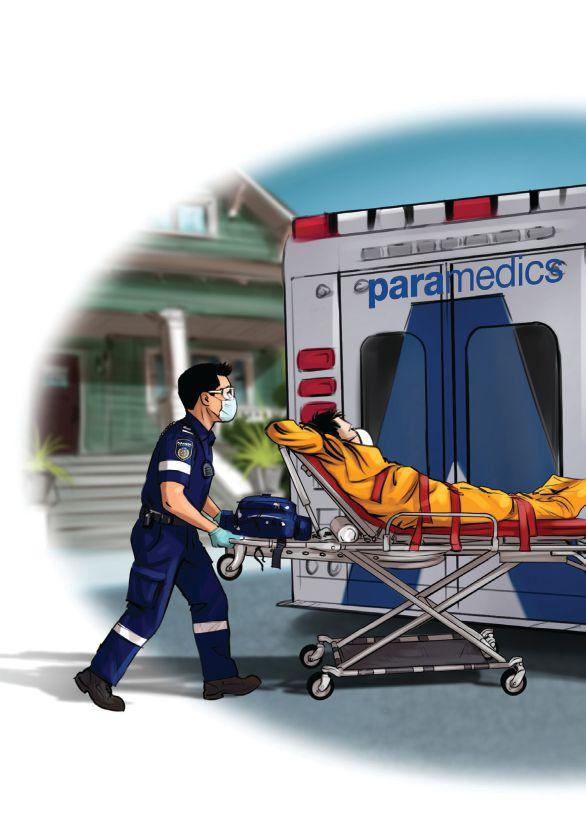
ON THE FRONTLINE: As opioid use and misuse becomes more prevalent, the risk of exposure to opioids among first responders like police officers, paramedics and healthcare workers is increasing. Employees may find themselves or their co-workers being exposed to opioids while on the job, or encounter more situations that may require them to administer naloxone kits as a form of first aid. Taking precautionary measures is the only protection they have in situations where they have little control.
RISING TIDE: The hike in drug-related overdoses and deaths that prompted provincial health officer Dr. Perry Kendall to declare a public health emergency in 2016 shows no signs of abating. According to the report, Reducing Harms: Recognizing and Responding to Opioid Overdoses in Your Organization released by the Canadian Mental Health Association in June 2018, 865 people in Ontario died from opioid overdose in 2016 — a 19 per cent increase since 2015. This number continues to rise; preliminary 2017 data shows that Ontario has already exceeded the 2016 number of opioid-related fatalities, with an estimated 1,200 people dying of overdose. There are approximately 2,500 opioid-related deaths across Canada in 2016.
ANSWER TO PAIN: Opioids, which are a class of psychoactive drugs used for managing pain, include codeine, fentanyl, morphine, oxycodone, hydromorphone and medical heroin, according to the Canadian Centre of Occupational Health and Safety in Hamilton, Ontario (CCOHS). Of particular concern is a prescribed drug called fentanyl, which is 100 times more powerful than morphine and 50 times more toxic than heroin. Odourless and tasteless, a mere two milligrams of pure fentanyl — the size of about four grains of salt — can kill an average adult, CCOHS states.
DIRECT OR INCIDENTAL: Exposure to opioids can be direct or incidental. Direct exposure occurs when a worker’s job requires the handling of drugs, such as those who work in the medical, policing and security fields.
Incidental exposure takes place when employees who are not tasked to handle drugs as part of their work come into contact with opioids through activities such as cleaning, inspecting and handling materials associated with opioids like needles. Workers who are vulnerable to incidental exposure risks include inspectors, public-health officers and cleaning staff in community facilities, states information from the Canadian Union of Public Employees (CUPE) in Ottawa.
The effects of opioid exposure may include euphoria, a false sense of well-being, confusion, sedation, drowsiness, light-headedness, nausea and vomiting, constipation, respiratory depression or arrest and death.
LOW OR HIGH: According to CCOHS, there are two levels of risks when handling opioids: the first involves low-risk situations in which the drugs are in tablet form and weigh less than one gram. First responders in such situations should remain cautious when handling any suspected drug, wear properly fitting personal protective equipment (PPE) and refrain from tasting, feeling or smelling suspected drugs.
For scenarios with a moderate risk level where drugs are found in quantities bigger than one gram, the precautions cited above apply. In addition, they should always work with a second person when handling suspected drugs.
As first responders often have limited information about the situation they are going into, CCOHS recommends the
following safe-work procedures when responding to calls in which hazardous drugs are suspected:
• Assess for hazards and risks before performing activities;
• Do not touch or handle any unknown product;
• Notify a supervisor where possible;
• Move away from the area;
• Do not allow the product to become airborne;
• Do not eat, drink, smoke, or use the bathroom while working in an area with known or suspected fentanyl;
• Do not touch your eyes, mouth, or nose after touching any surface that may be contaminated with fentanyl; and
• Know how to recognize signs of opioid intoxication.
Additional measures to manage opioid-exposure risks, developed by three former health regions that now form part of the Saskatchewan Health Authority, were cited in a document released in January 2018:
• EMS personnel should refrain from entering areas where large volumes of product or suspected product are found until the area has been contained by a hazmat team;
• Nitrile gloves and industry-standard eye protection are adequate PPE for providing care to a patient with an overdose or potential overdose condition. In situations where there is a potential for airborne suspension of powdered opioids, a properly fitted N95 or P100 respirator should be worn;
• Respirators, gowns, goggles and gloves should be worn in any enclosed area with visible product present;
• All exposure incidents must be reported to supervisory staff for follow up and monitoring; and
• Using additional PPE based on frontline provider assessment is supported; frontline providers must always meet the minimum level of PPE recommended.
If exposure has already occurred, the response measures to be taken will depend on the manner of exposure. For dermal contact, wash with soap and water. Do not use hand sanitizer or bleach to clean contaminated skin as hand sanitizers may contain alcohol, which may increase the absorption of fentanyl through the skin, CCOHS states. Remove contaminated clothing or rinse it off and notify a co-worker. Monitor closely for any signs of opioid exposure.
EDUCATION: As with any occupational safety matters, employers must develop exposure-prevention and control plans in consultation with potentially affected employees, their representatives or their health and safety committees and include reporting mechanisms for both potential and actual exposures. Plans should consider a range of PPE that includes respiratory protection, gloves, eye protection, protective clothing and naloxone kits, CUPE adds.
An information sheet from the Alberta government on protecting workers from exposure to synthetic opioids cites the following elements that the plan should address:
• Identify workers at risk of exposure;
• Explain the hazards to workers;
• Identify the training and PPE required;
• Ensure that workers who perform jobs where synthetic opioids can reasonably be anticipated should be trained on conducting an onsite-hazard assessment; and
• Trained workers should demonstrate an understanding of how to recognize the different forms of synthetic opioids, the potential exposure routes, the signs and symptoms of exposure, first-aid response needed, when and how to seek medical help and when to use PPE and their limitations.
Follow us on Twitter @OHSCanada
Safety from the Crown
By Jean Lian
The saying “if the hat fits” certainly applies to employees whose jobs require them to wear a hard hat for the better part of the day.
“Every user here in Canada is required to use a CSAcertified hard hat except in certain provinces,” says Laval, Quebec-based Mino Alkhawam, product manager of head, eye and face protection, hearing protection and traffic safety products with DSI Safety Inc.
CSA standards categorize hard hats in two groups: Type 1 hard hats protect the wearer from impact to and penetration of the crown, while Type 2 hard hats shield against lateral and crown impact. Conducting a risk analysis to assess the hazards faced is the first step to determining whether a Type 1 or Type 2 hard hat is required. After that has been ascertained, user preference and comfort need to be taken into account.
Alkhawam says two types of suspension are used in hard hats: a pin-lock suspension enables adjustment with pins and holes at the back of the hat, while the ratchet system allows for sizing by turning the ratchet left or right like a knob. The hard hats that DSI Safety offer allow adjustment on the suspension in height for added comfort.
“If there is padding in the front or back,” Alkhawam adds, “that is where the comfort level increases depending on the model that they are using.”
Like DSI Safety, MSA also offers a variety of hard hats, the most popular being its V-Gard line. According to the company website, the MSA V-Gard Helmet with its distinctive trademark “V” design, which has been a mainstay on the toughest worksites for many years, has sold well over 100 million pieces since its introduction.
The V-Gard helmet’s polyethylene shell provides superior impact protection while self-adjusting crown straps ensure a comfortable fit. Available in various colours and sizes, the V-Gard series is suited for use in sectors that include construction, oil and gas, utilities, mining, confined spaces, welding and those who work at heights.
POTENTIAL SIDE EFFECTS
Some of the common complaints associated with wearing hard hats is its weight. “The difference in weight between one model and another is a few grams; that doesn’t mean the person will not feel it,” Alkhawam says, especially when it is worn over an eight-hour work day. But for people who may already be suffering from neck pain, he advises them to
consult their doctors to determine if they should use a hard hat and the maximum weight they should put on the head per day.
Some users also experience hard-hat-induced headache caused by compression and heaviness. According to Mayo Clinic, external-compression headaches can occur when helmets, goggles or certain headwear worn for an extended period of time exert continuous pressure on the forehead or scalp. To prevent external-compression headaches, avoid unnecessary headwear. If protective headwear is absolutely necessary, ensure that the headwear fits properly and is positioned correctly. The Mayo Clinic advises users to try various styles and sizes to find the most comfortable options.
But hard-hat induced headache should not be confused with the sensation of wearing a hard hat for the first time. “If somebody has not used a hard hat and puts it on for the first time, there is always an adaptation period,” Alkhawam says. The length of the adaptation period depends on the individual and how receptive that person is to that change. “Mostly a few days of adaptation is enough,” he suggests.
As hard hats are worn all day in some of the toughest environments, MSA focuses not only on durability, but also comfort. “Through these efforts, we have engineered the Fas-Trac III suspension system,” says Kimberly Smith, who is part of MSA’s marketing communications team in Cranberry Township, Pennsylvania. Some of the areas that MSA focuses on when creating this suspension include reducing pinch points and hair pull, increasing adjustability for a custom fit, heightening nape-strap comfort and ensuring a secure fit to reduce or eliminate hard-hat-induced headaches.
CHANGING SEASONS
Seasonal change can present challenges for workers who wear hard hats. In the dog days of summer, users may be tempted to remove their hard hats to cool their heads while those who work outdoors during winter may wear a tocque under a hard hat that could affect the fit.
According to Smith, many adjustments can be made to head protection to accommodate seasonal changes. “For areas where heat stress is a concern, we offer a vented hard hat to let heat escape while providing air flow through the helmet, sun shades and sun shields to help protect the user’s face and neck and [provide] moisture-wicking sweatbands,” Smith says. For the winter, MSA offers winter liners to provide warmth and protection under the helmet.
MSA’s Topgard helmets, which are designed for use in environments with a wide range of elevated temperatures
and wherever dielectric protection is needed, retain limited resistance to top impact or penetration, while the Skullgard Protective Cap offers protection in hot and high-risk industries like steel mills. Skullgard helmets have also been tested to radiant heat loads producing temperatures up to, but not exceeding, 350 Fahrenheit.
Alkhawam observes a trend in which ventilator hats are increasingly used in warm areas, especially in the southern part of the United States like Texas, Arizona and California. Ventilator hats have small holes on a hard hat’s crown to release the hot air trapped inside.
While there is no hard hat that is specifically designed for Canadian winters, accessories like winter liners can be worn on the head and connected to the hard hat’s suspension to protect the wearer against high wind and cold. Instead of their own tocques, Alkhawam encourages users to wear liners designed by manufacturer.
One of Dynamic Safety International Inc.’s best-selling hard hat is from the Mont-Blanc family (top) that comes with four-point nylon suspension and pin-lock adjustment. MSA’s hard hat (bottom) focuses on comfort and durability since these protective hats are worn for long periods of time in trying work environments.
“CSA has specifically mentioned in their standard that baseball caps, tocques, hoodies should not be used underneath the hard hat,” he cautions.
For Smith, a bandana, hood or skullcap should not affect an MSA helmet’s impact properties as long as it is worn smoothly on top of the head. But caution should be taken to avoid bunching up of material, which can cause pressure points and affect the helmet’s ability to protect as designed.
“A ratchet suspension and/or chinstrap should be used to help ensure the best possible fit,” she advises.
NEXT BIG THING?
Conventional hard hats as we know them protect workers in the event of a fall or from falling objects. But an Australian startup may be shaking things up a bit. eHatsystems, a company from Down Under formed in October 2013, is launching a hard hat that does more than just protect a worker’s head; it also offers live-streaming capabilities and a mobile networking infrastructure that provides immediate assistance to ground staff — and with hands-free communication to boot.
The eHat is basically a smart hat with built-in video camera, light, headphones, microphone and electronics connected to a central location via a smartphone or Wi-fi. A field employee wearing an eHat can engage in conference
calls with the company’s experts who receive live feeds of site activities, give advice and see that the eHat user completes tasks properly. This high-tech hard hat is suited for use in industries in which workers work alone or remotely away from available experts. Examples of these industries that can benefit from using the eHat include agriculture, construction, mining, oil and gas, telecommunications and utilities.
By offering wearers the ability to communicate with voice commands, “a worker can be free to work while gaining instructions or just talking while on the job. That’s the future of the workforce in the age of IT,” says Terry Lancaster, inventor and founder of eHat Systems in Victoria, Australia.
Although the eHat is still in the product-development stage, “we are currently talking to manufacturers in China, having just about completed the design aspects,” Lancaster says. The cost of an eHat is estimated to be in the range of $1,200 to buy or lease, plus a subscription of $200 per year per unit.
Lancaster says he hopes to have the product ready for a trial run in Canada sometime in the third quarter of 2019.
DOS AND DON’TS
A hard hat is built to protect, but there are certain things that one should avoid doing to a hard hat so as not to compromise its protective function.
According to an information sheet on head protection from the Infrastructure Health and Safety Association in Mississauga, Ontario, never paint a hard hat or spray it with insect repellent as that can damage the material. Avoid storing a hard hat in a car’s rear window as intense sunlight can make it age more quickly. Hard hats are not made to last forever; find out the useful life of a hard hat by contacting the manufacturer or reading the manufacturer’s instructions.
“Ensure that the user reads and follows all the instructions and warnings included with the hard hat,” Smith says. Inspect a hard hat regularly and look for cracks or damage to the suspension, making sure that components are in functional order. Discolouration could be an indication that the plastic of a hard hat is getting soft, Alkhawam says. A bump cap is a good accessory to have for workers who go under machinery or between pipes and run the risk of
bumping their head, he adds.
The suspension of a hard hat, which holds the shell away from the head and acts as a shock absorber, is a key component. The Canadian Centre for Occupational Health and Safety (CCOHS) in Hamilton, Ontario, advises users not to put anything between the suspension and the shell since there must be a clearance inside the headwear to absorb shock in the event of a blow to the head. Users should ensure that the suspension is in good condition by checking for cracked or torn adjustment slots, frayed material or other signs of wear.
They should also inspect suspension lugs carefully as long periods of use can damage the suspension. Replace the suspension if it has torn or broken threads as perspiration, hair oil, hair spray and dirt can speed up the deterioration of suspension material.
Some encouraging signs that Alkhawam has observed is the increasing demand for safety equipment in the general market, and that includes hard hats. “A hard hat used to be categorized only for the construction industry,” says Alkhawam, who has been in the industry for 18 years.
Today, hard hats are used across industries, and he credits this to education and heightened awareness. “Workers are realizing that they need to use safety equipment all the time,” he says. “That is the big change in the market.”
Follow us on Twitter @OHSCanada
Jean Lian is editor of ohs canada
Board of Canadian Registered Safety Professionals www.bcrsp.ca
For ad, see page 19
Dentec Safety
www.dentecsafety.com
For ad, see page 10
Draeger www.draeger.com
For ad, see page 2
Impacto
www.impacto.ca
For ad, see page 7
MSA
www.masasafety.com
For ad, see page 24
Uline www.uline.ca
For ad, see page 9
3M www.3Mcanada.ca
For ad, see page 28
BUILT FOR YOUR SAFETY
Two Sides of a Coin
By Alan Quilley
It is 2019, and the pace of change in workplace-safety management continues at breakneck speed. Managing workplace safety today is both a science and an art: the science being the hard evidence, technology and engineering behind safety management, such as designing protective equipment like a respirator, while the art is influencing human behaviour, like getting people to wear respirators.
THE SCIENCE
When it comes to technology, an Internet search on any safety topic will yield more information than you can read in a lifetime. The challenge is to sieve through the plethora of evidence-based information from the overwhelming noise of non-evidence-based information.
A typical risk-management evaluation incorporates time-tested approaches to assess information that presents itself as a solution. These approaches are so important that they are listed in the Board of Canadian Registered Safety Professionals’ examination blueprints for their CRSP and CRST designations. Safety professionals should consider the following when determining whether the information they are looking at is reliable and credible:
• Weight of Evidence: Evidence about the existence and magnitude of a risk is scientifically defensible; available evidence is of sufficient strength, coherence and consistency to support the conclusion.
• Sound Science: The sound-science principle emphasizes the need to collect high quality and complete scientific information before a risk decision is made. Sound science and the precautionary principle are often seen to be in direct opposition to each other, although a reasonable middle ground can usually be achieved if stakeholders are willing to modify their positions. Sound science can be found in independently published peer-reviewed studies from reputable sources.
• Precautionary Principle: Where available scientific evidence is incomplete or contradictory, the precautionary principle moves decision-makers toward timely preventive action whenever a serious or irreversible safety or health hazard is believed to exist as a significant possibility.
• ALARA Principle: ALARA, which stands for “As Low As Reasonably Achievable”, occupies a broad middle ground between the mutually opposing constraints of sound science and the precautionary principle. An acceptable risk would
conceivably be ensured by adopting reasonably achievable control measures that balance risks and benefits.
• Reasonable Relationship: This approach proposes that the costs of control for environmental or occupational hazards should bear a reasonable relationship with the corresponding reduction in health risks that are likely to be achieved. There is little expectation that one would spend millions of dollars to solve a problem worth a few pennies.
The ALARA and reasonable relationship approaches are well established in Canadian oh&s law and appears often as a requirement for us to do what is “reasonably practical” to ensure the health and safety of ourselves and others.
In oh&s management systems, we need to gather the best information about the risks faced and how we use the hierarchy of controls to manage those risks. Thereafter, we need to engage the other side of the art-and-science coin, which is getting humans to implement those controls.
THE ART
When considering the art of safety management, the focus shifts from just knowing the steps to take to actually implementing the solution. The ABC’s of human behaviour, which is a basic model for modern behavioural psychology, now becomes the fundamental approach. This does not mean that we abandon the science; rather, we enhance the science by using the art — getting people to help each other — to make our workplaces safe.
The three alphabets of the ABC model stand for Activators, Behaviour and Consequences. An activator is a person, place or thing that precedes a behaviour. We need to manage those directions to ensure that everyone in an organization knows the part they play. Behaviour is any observable and measurable act by a person; we need to ensure that the behaviour matches the intention. Consequences refer to the events or outcomes that follow those behaviours.
The internal responsibility system, which makes everyone in a workplace responsible for his or her own safety and that of their co-workers, is well established in the Canadian DNA of diligent oh&s management. Producing binders filled with workplace-safety policies and procedures are not enough; we also need to ensure that humans demonstrate safe behaviours. To get real results, we need to manage both sides of the coin and not let one take over the other.
Follow us on Twitter @OHSCanada
Alan D. Quilley is the president of Safety Results Ltd. in Sherwood Park, Alberta.
TIME OUT
WILD GOOSE CHASE:
A Canada goose seems to have given up its flight to seek warmer pastures down south and instead, opted to settle down in a car wash in Manitoba. Staff with the Wildlife Haven Rehabilitation Centre in Winnipeg have been trying to catch the bird that has taken up permanent residence in a snowbank outside the Shell gas station but to no avail, The Canadian Press reported on January 14. The goose seemed to be doing just fine as of press time, getting water from puddles, seeds and crumbs thrown by people who send their cars in — and not to mention blasts of warm air when vehicles exit the car wash.
LEGGY SUBWAY:
Dozens of pantless riders in Toronto gave a new spin to the #MeToo movement when they shed their lower outer gear in solidarity with their bottomless brethren in 50 cities around the globe in observation of the 17th anniversary of the worldwide No Pants Subway Ride on January 13. Regardless of whether it was purple socks with matching panties or army camouflage gear paired with underwear of every conceivable colour, pattern and texture, the anti-pants riders set off from their meeting place at Toronto’s Eaton Centre and hit the Dundas subway stop where they danced and encouraged others to join the movement, Toronto Sun reported.
TOO
CREEPY:
A routine police patrol of an alley in downtown Ladner, British Columbia prompted a heartstopping pause when officers uncovered a grisly find — until they looked closer. Several mannequin heads peeping out of a dumpster that was slightly ajar — one with scraggly dark hair hanging from the lid beside a metal chain — led to a quick investigation. The probe was called off when the body parts were found to belong to mannequins, The Canadian Press reported on January 12. There were several clothing stores and hair salons in the vicinity, but no DNA test was conducted on the mannequins to trace the shop from where they came.
SWEET CLEANUP: It was not a cleanup of the usual kind for workers who were tasked to clear up the westbound lanes of a highway near Flagstaff, Arizona. A tanker truck carrying some 3,500 gallons of liquid chocolate got into an accident, spilling its sweet cargo onto the road and creating a river of chocolate, UPI reported on January 14. A similar spillage occurred in Germany last December when nearly one tonne of liquid chocolate flowed through a chocolate factory’s gate and onto a road, solidifying into a 33-squarefoot choco-pancake in December. Yummy.
MILK OF CONTENTION: For an ex-employee of Kentucky Fried Chicken, it is not spilled milk that she is crying over, but breast milk that could have been. The former fast-food-chain worker is suing two Delaware franchises over accusations that they made it difficult for her to
pump breast milk during work, leading to her inability to breastfeed. The worker claimed that she was often unable to pump at work while windows, unlocked doors and cameras deprived her of privacy when she was able to pump. The lawsuit accused the employer of “willful, intentional, and unlawful gender-based harassment and discrimination”, Associated Press reported on January 10. A jury is set to see the case next month.
HIT AND RUN:
A hit-and-run took place about one kilometre from the Consumer Electronics Show in Las Vegas — except that the parties involved were non-humans. According to a UPI report on January 10, a Russian robotics company said one of its autonomous Promobots was at the side of a driveway on the eve of the technology trade show. Cars passed by the robot without incident, until a self-driving Tesla Model S collided with the robot and drove away. The robot sustained permanent damage and was destroyed. Looks like self-driving technology has some ways to go.
BREAKING FATBERG: Workers in Sidmouth, England had their work cut out for them when they had to break up a fatberg, which is a mass of hardened fat, oil and baby wipes measuring some 64 meters long. The congealed mammoth of non-biodegradable matter has been clogging up the sewer systems in England since 2010, Ottawa Sun reported on January 13. The number of tourists who visit Sidmouth annually enjoy a healthy amount of deep-fried fish and chips, which put a strain on the sewer system from the influx of grease. It is all about the diet, even when it comes to fatberg.
ARACHNOPHOBIA: Australia’s dubious reputation of having one of the world’s highest spider-to-human ratios has led to an altercation between a man and a spider that prompted police response. Passersby of a house in Wanneroo, north of Perth, heard a man yelling, “Why don’t you die?” along with the sound of a screaming child, the West Australian reported on January 2. Police, who were alerted over fears of a violent domestic disturbance, arrived at the scene to find that the man, who had a serious fear of spiders, did indeed harbour intentions to inflict bodily harm — on an eight-legged intruder.
THE STOWAWAY: “A Great Way to Fly”, the marketing slogan of Singapore Airlines, might have worked a little too well. Business-class travellers on one of the world’s most successful airline were shocked when a loose mynah bird showed up near the end of a 14-hour flight from Singapore to London. Cabin crew was able to capture the bird and turned it over to quarantine authorities at Heathrow Airport in London, UPI reported on January 15. The bird was believed to have found its way onto the plane when it was parked on the tarmac in Singapore. What a way to fly indeed. Follow us on Twitter @OHSCanada
HARASSMENT AT WORK SYMPOSIUM
WHO SHOULD ATTEND:
• Senior Safety-management executives
• Professionals in managerial/safety supervisory roles
• Human-resource planners
• Joint health and safety committee leaders
WHAT YOU WILL LEARN:
• What constitutes workplace harassment
• Develop an effective workplaceharassment policy
• Demonstrate due diligence and compliance
• Best practices on investigating complaints
• Balance investigation with confidentiality obligations and other legal considerations
• Create a respectful work culture
CREATING A CULTURE OF RESPECT & PROFESSIONALISM
High-profile allegations of occupational harassment continue to disrupt organizations in which allegations of misconduct, sexual or otherwise, have surfaced. They have also raised concerns about compliance and prevention among employers. OHS Canada symposium series continues with Harassment at Work: Creating a Culture of Respect & Professionalism