A guide to the solutions and services shaping the oh&s market
LOADING BAY FALL PROTECTION PREVENTIONS
forklift – that industrial truck used to carry heavy loads around in warehouses, or construction sites, may just be the hardest working piece of equipment you have.
Loading bay fall protection preventions
Weighing close to 9,000 lbs and can travel up to 18 mph, it cuts down time and effort needed to lift, carry, and transport material across work sites with little to no effort.
The forklift – that industrial truck used to carry heavy loads around in warehouses, or construction sites, may just be the hardest working piece of equipment you have. Weighing close to 9,000 lbs and can travel up to 18 mph, it cuts down time and effort needed to lift, carry, and transport material across work sites with little to no effort. However, these vehicles have the potential to be dangerous hazards. According to the National Safety Council forklift accidents have affected 888,220 people between 2011 and 2019. Accidents such as workers being hit, struck, pinned by a forklift, forklift rollover, or personal falls from a forklift are just some of the incidents that have happened.
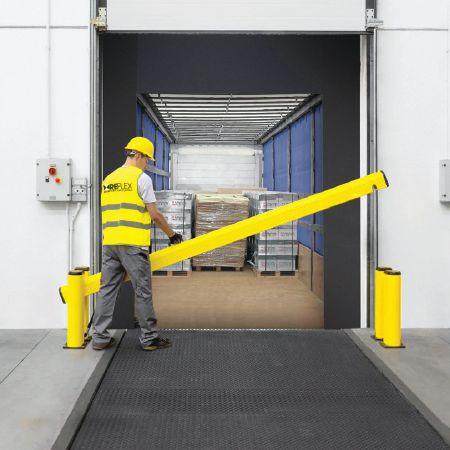
They help in preventing possible slipping, falling, and flipping of moving material or handling equipment near open and unmanned loading docks. In case of impact, this product will absorb the impact and then return to it original state.
However, these vehicles have the potential to be dangerous hazards. According to the National Safety Council forklift accidents have affected 888,220 people between 2011 2019. Accidents such as workers being hit, struck, pinned by a forklift, forklift rollover, or personal falls from a forklift are just some of the incidents that have happened.
LOADING AND UNLOADING AREAS
Loading and unloading areas
Workers are exposed to a range of high-risk hazards at the shipping and receiving areas of a workplace including loading docks. Most loading docks are 46 – 52” above grade, and workers often think that the unprotected dock area is safe because the dock door is “always closed” when the dock is not in use - even on hot summers days. That is not always the case. An unprotected dock can allow a forklift to accidently go over the edge. An accident like this can have catastrophic consequences. Loading docks with unprotected leading edges are dangerous – period.
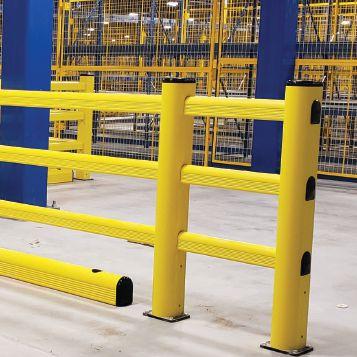
These solutions also protect closed doors and rolling shutters. They are made of high-tech polymer which is flexible, ultra-resistant and resist scratching. REFLEX distributes energy along the entire length of the protection system that flexes and then returns to its original shape – REsistant and FLEXible. This material is highly visibility in working areas and provides a solid, nonintrusive solution to loading dock door protection. The Loading Bay Protections lifting help system, prevents the risk of the gate falling or the abrupt closing when it is has been lifted or opened. To see how the Loading Bay Protections works CLICK HERE.
Workers are exposed to a range of high-risk hazards at the shipping and receiving of a workplace including loading docks. Most loading docks are 46 – 52” above and workers often think that the unprotected dock area is safe because the dock “always closed” when the dock is not in use - even on hot summers days. That is always the case. An unprotected dock can allow a forklift to accidently go over the An accident like this can have catastrophic consequences. Loading docks with unprotected leading edges are dangerous – period.
Safety solutions from ontario bollards
workplaces safe with the REFLEX LOADING BAY PROTECTION:
Make workplaces safe with the REFLEX LOADING BAY PROTECTION:
Everyday, hard working people step foot onto the worksite and as their employer you have an obligation for their safety. With this in mind, we at Ontario Bollards have solutions to increase the safety of your shipping and receiving areas. Our in-depth site survey enables us to recommend the best solutions for your facility. Our expert installation crew are highly trained and skilled in all aspects of our
For more information on safety solutions contact Ontario Bollards at info@ontariobollards.com or by phone at 1-844-891-8559.
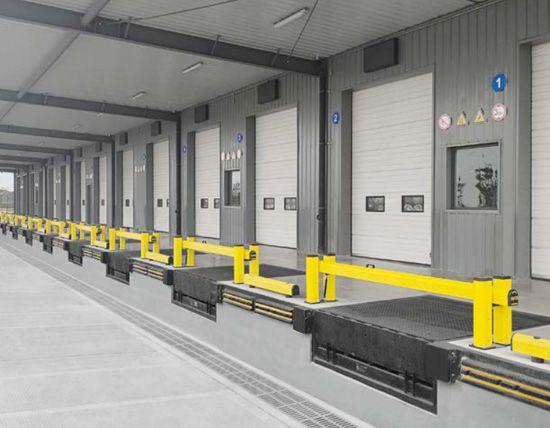
REFLEX Loading bay protections from Ontario Bollards are impact absorbing solutions are installed at the dock door openings. They help in preventing possible slipping, and flipping of moving material or handling equipment near open and unmanned loading docks. In case of impact, this product will absorb the impact and then return to it
REFLEX Loading bay protections from Ontario Bollards are impact absorbing solutions which are installed at the dock door openings.
Innovative Protective Barrier System
Reflex Polymer Safety Barriers
Link to logo: htps://olfahandtools.canto.com/b/NPCL5
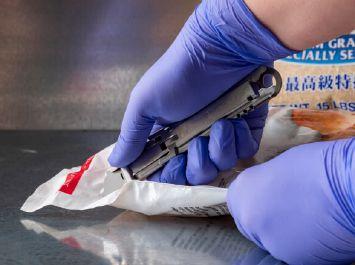
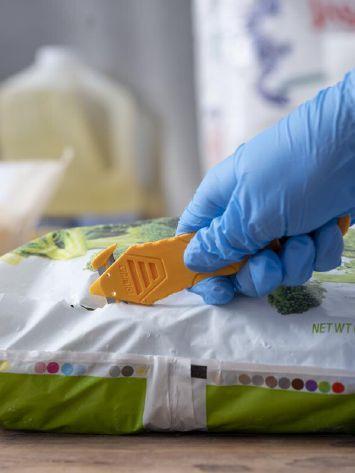
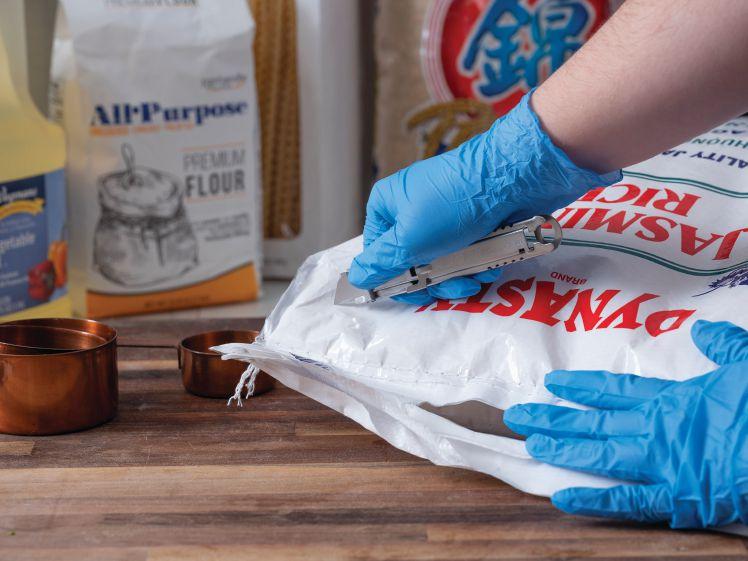
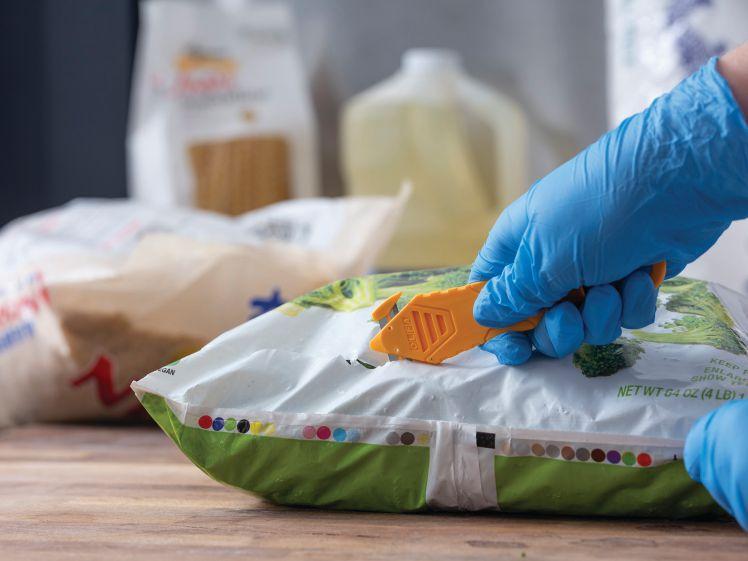
understand why it is important for us to make, and restaurants to use, NSF certfed tools and products. However, with the spread of Covid-19, tools that are certfed for easy sanitaton have become a large focus of Safety Professionals. For safety knives to be cleaned and sanitzed efectvely, they should be constructed of materials that do not deteriorate or rust when exposed to cleaning solutons. Two OLFA safety knives are NSF certfed and the ability to sanitze these knives make them the perfect choice to slow the spread of Covid-19 . These safety knives feature open channel designs and are made with materials that are non-toxic, durable, and resistant to corrosion, including stainless steel blades. They can easily be sanitzed afer each shif to ensure worker safety and health.
The Importance of NSF Certification During COVID
Link to logo: htps://olfahandtools.canto.com/b/NPCL5
Link to photo: htps://olfahandtools.canto.com/b/V3IT7
Link to photo: htps://olfahandtools.canto.com/b/V3IT7
By Cassie Donnelly
Hand protection and cleanliness have always been important to Safety Professionals, but with the pandemic developments of the last few years, cleanliness and knife sanitation have become a new focus to prevent the spread of Covid-19. Knives that were once primarily used in food preparation because of their NSF Certification are now being used throughout the manufacturing and distribution world to help combat the spread of germs.
below seven steps:
Link to photo: htps://olfahandtools.canto.com/b/MASO0
• Application and information submission
• Product evaluation
Link to photo: htps://olfahandtools.canto.com/b/SG6QS
• Product testing in lab
• Manufacturing facility inspection, production confirmation and product sampling
• Test results review and acceptance
Cassie Donnelly Bio
• Contract signed and products listed
• Annual plant inspection and retesting
Link to photo: htps://olfahandtools.canto.com/b/MASO0
The National Sanitation Foundation (NSF) is an independent, global organization formed in 1944 to help protect and improve global human health. Manufacturers, regulators, and consumers look to the organization to facilitate the development of public health standards and provide certifications that help protect food, water, consumer products, and the environment. The NSF has a standards team that facilitates the development of public health standards, and a service team that test, audit, and certify products and services (NSF Certification). According to the NSF, “NSF testing, auditing and certification services assure suppliers, retailers, regulators, and consumers that an independent organization has reviewed a product or system to comply with specific standards for safety, quality, sustainability or performance.”
Companies seek NSF certification for many reasons, but the top three reasons according to NSF are to:
• Demonstrate compliance with national or international standards and regulations
• Demonstrate independent validation and verification of their commitment to safety and quality
• Increase credibility and acceptance with retailers, consumers, and regulators
Most products that receive the certification bear the NSF mark on their packaging to help buyers make educated purchases. The certification comes after comprehensive formulation and material reviews as well as testing and facility inspections. Each NSF certification process is specific to the product, process or service being certified and the type of certification, but generally follows the
There are many different industries that have products and tools that are NSF certified, including automotive, aerospace, building and construction, water and food, and health. At OLFA® North America, our products need to bear the NSF mark for the food processing and food service industries. We understand why it is important for us to make, and restaurants to use, NSF certified tools and products.
Cassie Donnelly is the Sr. Brand Manager for OLFA® making tools that improve how people cut materials inimitable level of sharpness but are also practcal to the constructon industry and understands the challenges enjoys helping consumers stock their toolboxes with contact Cassie at www.olfahandtools.com or connect
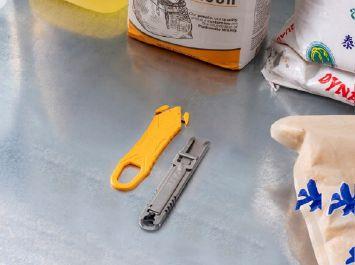
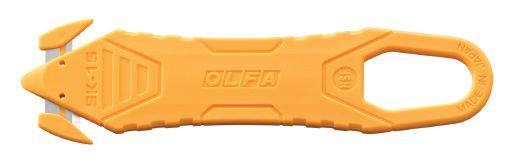
However, with the spread of Covid-19, tools that are certified for easy sanitation have become a large focus of Safety Professionals. For safety knives to be cleaned and sanitized effectively, they should be constructed of materials that do not deteriorate or rust when exposed to cleaning solutions. Two OLFA safety knives are NSF certified and the ability to sanitize these knives make them the perfect choice to slow the spread of Covid-19. These safety knives feature open channel designs and are made with materials that are non-toxic, durable, and resistant to corrosion, including stainless steel blades. They can easily be sanitized after each shift to ensure worker safety and health.
Cassie Donnelly is the Sr. Brand Manager for OLFA® North America. OLFA® has been committed to making tools that improve how people cut materials by developing products that not only attain an inimitable level of sharpness but are also practical to use. Cassie has over twenty years of experience in the construction industry and understands the challenges of choosing the right tools for the jobsite and enjoys helping consumers stock their toolboxes with the most effective products for the job. You can contact Cassie at www.olfahandtools.com or connect with her on LinkedIn.
SAFETY
• 100% Stainless-steel design is easy to clean and sanitize
• Flush vents allow for thorough cleaning
• Rounded-tip blade eliminates punchtures and risk of contamination from broken tips
• Easy to clean and sanitize • Durable fiberglass-reinforced handle • Premium stainless-steel blade for unmatched sharpness
Things to know before choosing impact-resistant hand protection for your team
What part of the hands are most vulnerable to impact injuries?
The most common impactrelated hand injuries occur to the back of the hand. Since impact-resistant material is stiffer than typical glove material, impact protection is typically placed only on the back of the hand. This helps keep hands safer without making it harder for workers to complete everyday tasks.
What makes a glove impact-resistant?
To protect against impact injuries, safety gloves need to:
1) Create distance between the impact and the hand through thickness
2) Shorten the duration of the impact through elasticity
How much impact protection do safety gloves provide?
The best way to understand how well safety gloves will protect against impact injuries is to:
1) Learn the safety industry’s standards for impact ratings as outlined below
2) Only use gloves that meet these standards in thirdparty testing
The American National Standards Institute (ANSI) and the International Safety Equipment Association (ISEA) created a standardized rating system, commonly known as ANSI/ISEA 138. This rating system classifies impact protection under three standard levels (Level 1, Level 2, Level 3).
Performance level is measured in kilonewtons (kN) of force transferred to the hand during impact. The less force that is transferred to the hand when an impact occurs, the higher the impact protection rating as shown in the chart below.
How do you know if a glove meets the ANSI/ISEA 138 standard?
For any glove claiming an ANSI/ISEA 138 classification, there must be a clearly visible symbol on the glove as pictured here. Look for these rating icons when reviewing glove information. These symbols must also appear on the glove itself. When in doubt, ask your supplier to provide third-party impact testing results to prove the gloves meet impact protection claims.
Need help finding impact-resistant gloves that meet the industry standards? Try a free sample of these popular gloves made with DuPont™ Kevlar® fiber
Light Impact Protection | Level 1
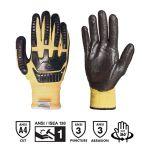
To protect against minor impact hazards, gloves classified as ANSI Level 1 are a good choice. Our Dexterity® SKFGFNVB gloves offer Level 1 impact resistance and their lining made with DuPont™ Kevlar® fiber provides 360° cut protection.
REQUEST FREE SAMPLE =
Medium Impact Protection | Level 2
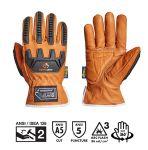
For mid-level impact protection, gloves like our Endura® 378GKGVB provide ANSI Level 2 impact resistance. In addition, these gloves provide arc flash protection and 360° cut resistance thanks to their lining made with DuPont™ Kevlar® fiber.
REQUEST FREE SAMPLE =
Heavy Impact Protection | Level 3
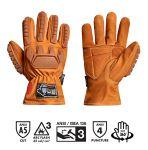
For maximum impact protection against the most serious impact hazards, it’s best to use gloves classified as Level 3 like our Endura® 378GKG4P. These gloves were among the first in the industry to achieve a Level 3 impact resistance rating. They also provide arc flash protection and 360° cut resistance thanks to a lining made with DuPont™ Kevlar® fiber.
REQUEST FREE SAMPLE =
Engineered elastic material shortens duration of the impact
Creating distance between impact and hand
Back of hand impact protection
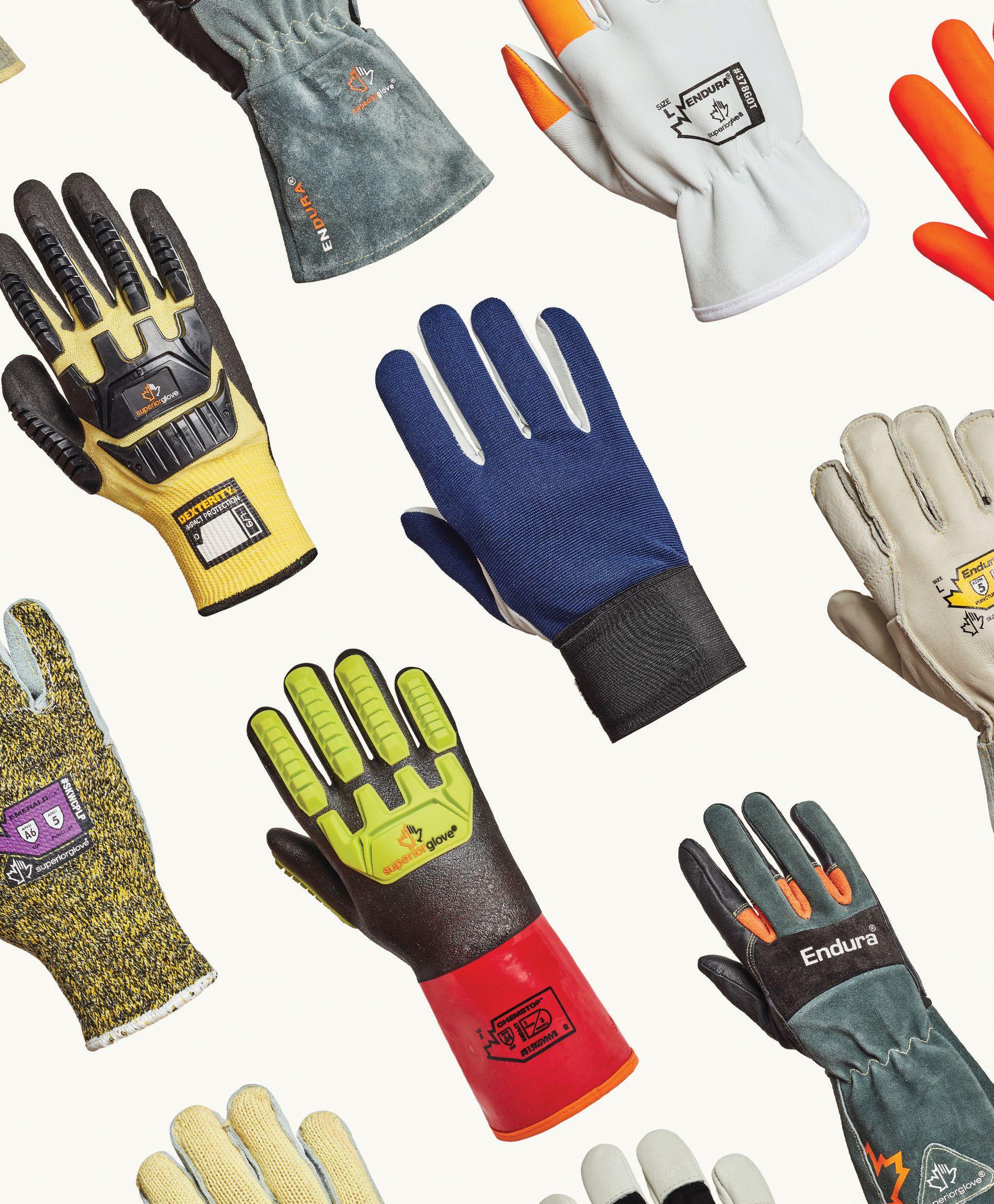
Hand Protection for Every Hazard
Roles, rules and responsibilities of workplace health and safety
Maintaining and promoting health and safety in the workplace is important throughout the employee journey.
Whether they’re a new worker or a seasoned professional, training (and retraining) is a key factor that can help staff stay safe while on the job.
In addition to providing training, employers must abide by a number of occupational health and safety responsibilities. Many of these elements, worker rights and employer responsibilities are similar across jurisdictions in Canada.
However, the specifics around occupational health and safety legislation and how these laws are enforced can vary from one jurisdiction to another.
Although rules and regulations vary, these three rights apply to all workers in Canada:
• The right to know about health and safety matters.
• The right to participate in decisions that could affect their health and safety.
• The right to refuse work that could affect their health and safety, and that of others.
Workers also have health and safety responsibilities.
They must work in compliance with occupational health and safety
OUR CHECKLIST
legislation, and use personal protective equipment and clothing as directed by the employer.
Employees also have a duty to work in a safe manner, use the prescribed safety equipment, and report workplace hazards and dangers to their supervisor or employer.
To carry out their responsibilities, workers need to know what these are, and that’s where managers, supervisors and employers come in.
Managers and supervisors act on behalf of their employer.
Therefore, they’re required by law to take every reasonable precaution to protect their workers, and they must ensure that workers are performing their jobs safely and are following occupational health and safety legislation.
This means that workers need to be trained on potential and actual hazards associated with their job, provided with written instructions on the measures and procedures taken to protect them, and use all appropriate personal protective equipment and devices.
Here are some ways you can implement health and safety measures at work:
Implement and communicate a policy
A health and safety program is a requirement in any workplace, and having a written policy is key to its success.
Think of a policy as a plan of action. It indicates the degree of the employer’s commitment to health and safety and should reflect the special needs of your workplace.
The policy should also be explained and understood by any and every worker and provided in written form in the language of staff. It should be positive in tone (for example, focus on what the worker should do, rather than what they should not), and periodically reviewed to evaluate its effectiveness.
The policy should be signed by leadership, and include items and statements such as the employer’s duty to give health and safety education and training to all employees, the development and maintenance of health and safety roles and procedures, and planned programs that support the commitment to workers’ health.
It should make clear that cooperation on the part of all employees is vital to the success of the health and safety policy, and should be actively incorporated into the workplace and regular workplace duties and actions.
To start, it’s important to make sure all employees are aware of and understand the policy. Workplaces can achieve this by incorporating it as part of employees’ job descriptions, and then reinforcing the commitment to health and safety by holding regular safety talks, posting
signs at the workplace, by writing articles about the policy in company newsletters, posting on the internal website, and sending emails.
Create a committee
Most workplaces are legally required to have a health and safety committee or representative.
Among other things, the role of a health and safety committee or representative is to recognize and evaluate workplace hazards and participate in the development and implementation of programs to protect the employees’ safety and health.
They will respond to employee concerns and suggestions about safety and health and can create and promote programs to improve employee training and education.
Consult the most up-to-date applicable legislation in your province or territory to find out the requirements for your workplace.
Implement control measures
To help identify hazards in your workplace, perform risk assessments of specific job tasks.
During this process, it is important to consult with the health and safety committee or representative, workers that perform the tasks being evaluated, and supervisors.
Once the hazards and risks have been identified, determine the appropriate control measures to pro -
tect workers.
When selecting control measures, consider the hierarchy of controls, which includes elimination/substitution controls, engineering controls, administrative controls, and personal protective equipment.
Risk assessments will also help identify the specific training needs of your workers.
Provide ongoing training
The process of training workers can help keep everyone safe on the jobsite.
While training is incredibly important for new staff, keep in mind that workers who are returning after an absence or are taking on new roles or responsibilities need to go through this process, too.
When training, be sure to cover topics like worker rights and responsibilities, your organization’s specific safety rules and policies, and who to ask for help.
Tour each work area in the facility to review potential hazards and safe work practices.
Don’t forget to also review emergency and evacuation procedures and the locations of first aid kits, fire extinguishers, emergency exits, and fire alarm pull boxes.
Worker safety isn’t just one tip, tool, or training process. It’s a journey.
Have all employees complete an emergency notification form which can be submitted to human resources or their supervisor. Provide staff with a contact list of the health and safety committee members or representatives.
Employees should also know how to participate in the health and safety process, like how to report hazards. Depending on the nature of work and the potential hazards (for example: working at heights, confined spaces, mobile equipment), specific training may be required.
Consult the applicable legislation in your province or territory to ensure your workers are provided with the necessary training.
What about WHMIS?
If you mention health and safety, you
might think of WHMIS, which stands for Workplace Hazardous Materials Information System.
WHMIS is a comprehensive system that provides health and safety information on hazardous products that are intended for use, handling, or storage in Canadian workplaces.
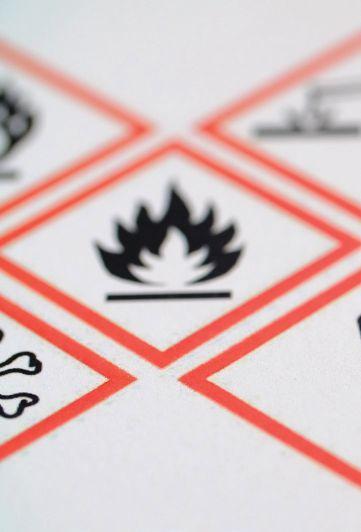
The main components of WHMIS include hazard identification and product classification, labelling, safety data sheets, and worker education and training.
Not sure if you need to include WHMIS in your staff training? You do if you have hazardous products in your workplace.
All Canadian jurisdictions require that employers develop, implement, and maintain a worker WHMIS education and training program.
Include mental health as part of safety and health
Although workplaces have traditionally looked at workplace health from a strictly occupational health and safety perspective, mental health should be integrated in your OH&S policy.
Research has shown that employees who feel they have psychological support have greater job attachment, satisfaction, involvement, and performance, and more positive work moods.
To help keep your employees psychologically safe, make mental health a priority.
Promote work-life balance and encourage staff to take their earned breaks.
Show compassion and understand that priorities come up outside of work.
Check in with employees. Even a simple “How are you?” can go a long way.
The Canadian Centre for Occupational Health and Safety (CCOHS) promotes the total well-being — physical, psychosocial, and mental health — of workers in Canada by providing information, advice, education, and management systems and solutions that support the prevention of injury and illness.
What ’ s next for safety training?
By Jack Burton
One of the pandemic-era workplace’s defining features has been a renewed focus on occupational health and safety, and following from this transformed role in the workplace are numerous changes regarding how health and safety are taught.
Whether through emerging ways of learning, new policies or regulations on training, or refreshed perspectives and topics being taught, the majority of changes that OH&S education is currently undergoing centre around a significant shift in attitudes toward safety in the workplace, and the role that it plays under the conditions of the COVID-19 pandemic.
The primary focus of this shift in perspective, according to Jan Chappel, senior technical specialist at the Canadian Centre for Occupational Health and Safety (CCOHS) in Hamilton, Ont., is characterized by a move toward the idea of safety as a more active and embedded part of the company culture and day-to-day operations of the workplace — as opposed to a series of background certifications and regulations.
“Training on everyday aspects became much more important,” Chappel said of this shift.
‘Everyday’
mental health
One area affected by this move toward a more “everyday” philosophy has been the area of mental health and psychological safety.
COVID-19 has really offered an opportunity for how it is taught and
treated to evolve, noted Chappel.
“What I’ve been noticing is a shift away from focusing just on the awareness of mental health issues, and more towards figuring out how to help prevent it, or at least make it something that is more of an everyday conversation,” she said.
A major benefit that stems from the changing values around mental health discussion and education in the workplace, Chappel added, is the possibility that this openness creates for employees to “get the help that they need without worrying about stigma and repercussions for (speaking up).”
When approaching mental health education in the workplace as an everyday conversation, she
“The pandemic resulted in a clear paradigm shift to virtual learning; training could continue, remote teams could be connected, and the value of learning did not have to be undermined.”
– James Kruck, OSG
recommended centring this discourse around establishing clear boundaries and expectations, especially as COVID-19 and remote work continue to blur the lines around work-home life.
“It’s about fostering a culture about knowing when a person is available and what expectations are, and that goes to both management and workers.”
E-learning: training by choice
An effect of the mass migration to remote and digital workplaces has
been a reframing of e-learning and electronic modules into a necessary solution of contemporary OH&S training, though the demands of this new role means approaching online learning tools as more than just a novelty or convenience.
“The pandemic resulted in a clear paradigm shift to virtual learning; training could continue, remote teams could be connected, and the value of learning did not have to be undermined,” said James Kruck, curriculum manager at OSG, a health and safety training provider based out of London, Ont.
“That being said, this shift in delivery method necessitated some new thinking around the product.”
Central to this new line of thinking is an approach that considers the trainee’s needs, perspective, and decision-making capabilities; which Kruck sees as being satisfied by “selfpaced” e-learning programs and digital solutions that emphasize employees’ control over qualities such as the structure and content of their individual training.
With self-directed learning tools, “not only do you ensure the content is more relevant, but you can save time by skipping subjects that aren’t applicable to the participant’s workplace or role.”
The option for these programs to provide training relevant to the specific needs and experiences of each individual does not only foster efficiency, but also creates the space for employees to feel seen.
“Learners don’t often come to you as blank slates, ready to just soak up every lesson you deliver; instead, they come with their own experiences that have shaped what they
MARKET
understand and how they see the world,” said Kruck.
“They want training that acknowledges that reality.”
Simulation in the spotlight
The current wave of changes in safety training is driven not just by new attitudes, such as those around mental health and trainee choice, but entirely new and emerging technologies.
Montreal’s CM Labs, which specializes in the development of simulation-based training, finds themselves at the forefront of this shift.
Over the past two decades, CM Labs have developed simulator training technology for the construction, forestry, and port industries that not only teaches trainees how to navigate high stress or potentially dangerous
scenarios in the workplace, but allows them to make mistakes while doing so, without any material — or human — costs.
“There’s really a sense that simulation is a technology whose time has come,” said David Clark, CM Labs’ senior product marketing manager.
The growing skilled labour shortage, along with the arrival of more tech-savvy generations into the workforce, are the two primary factors behind the current spotlight on this solution, he said.
A safe investment
With significant changes across the field of occupational safety education, adaptation and access may be issues of concern, especially for workplaces feeling the financial pinch of the pandemic.
One resource helping employers navigate these changes can be noted at the provincial level, through Ontario’s Small Business Health and Safety Training Program.
The province revealed in July that through this program, they are investing $10.5 million dollars over the next three years in an effort to make safety training freely accessible for over 60,000 small businesses across the province.
Through the program, health and safety representatives from small businesses can enrol in an e-learning course on industryspecific safety protocols, with the program covering registration costs and compensating representatives with up to $150 for their time away from work.
The accessibility granted by
such programs is certainly beneficial in spreading safety habits across workplaces, but Lewis Smith, manager of national projects at the Canada Safety Council in Ottawa, believes that these types of legislative initiatives also have a positive impact by showcasing workplace safety as something worth investing in and taking seriously.
“Safety is a field in which proactivity and investment are needed, but also one which is too often prioritized less due to a lack of immediately visible revenues,” he said. “Free courses, such as this one, eliminate a perceived barrier to entry, and allow for more widespread uptake.”