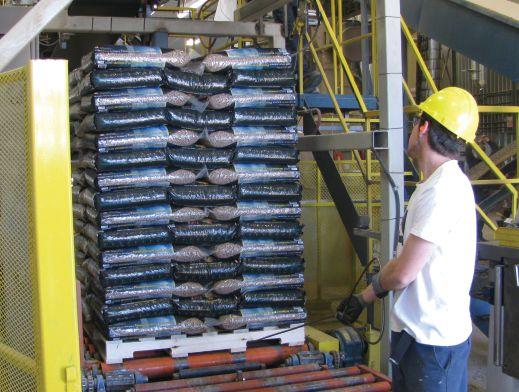
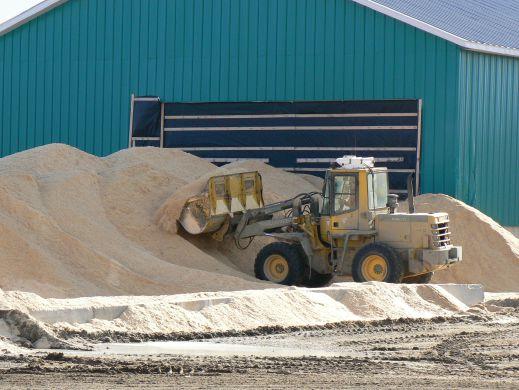
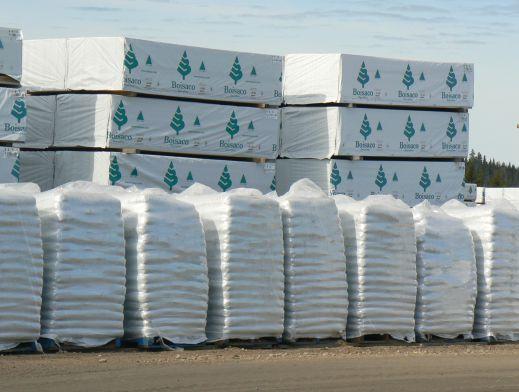
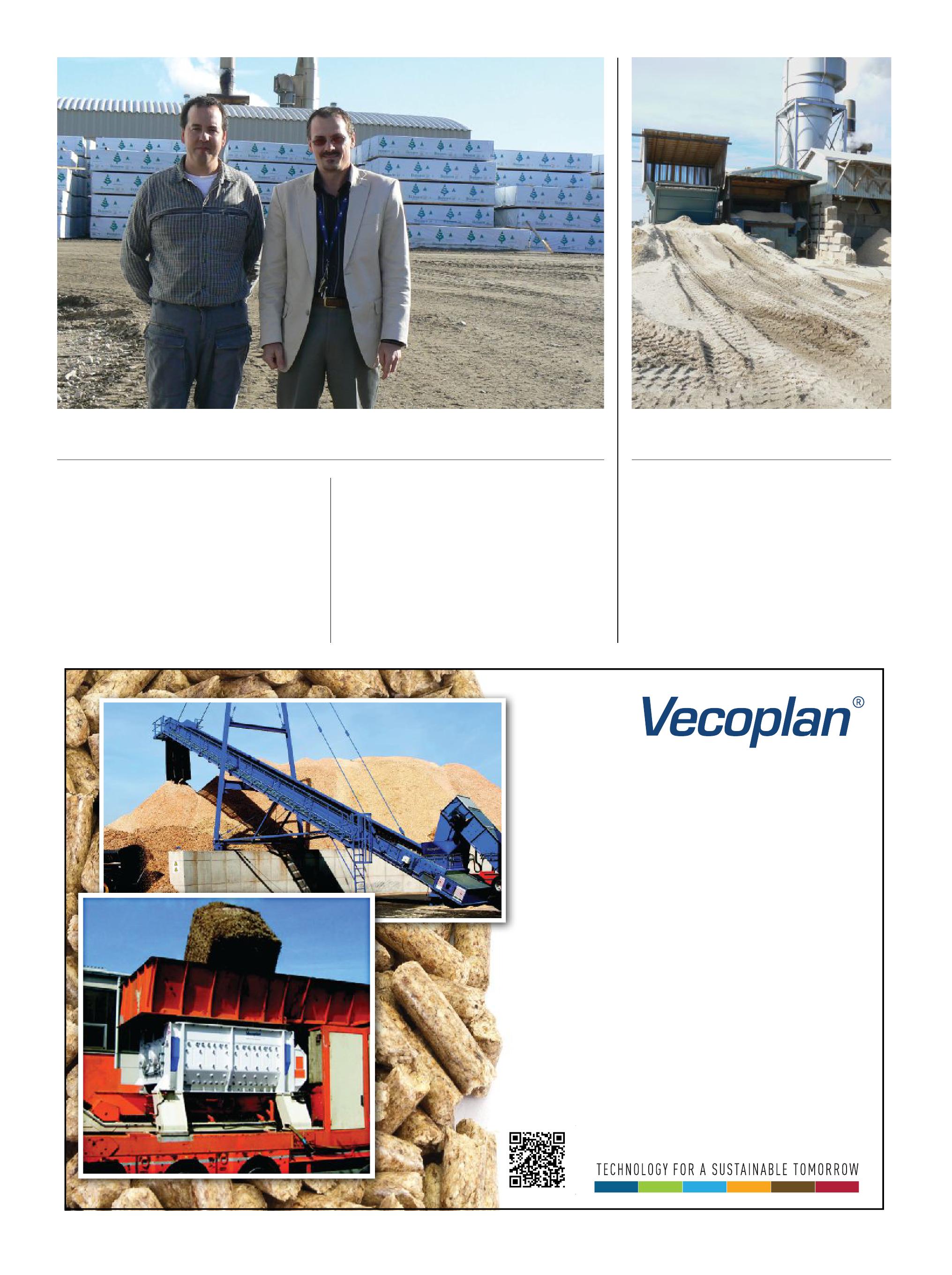
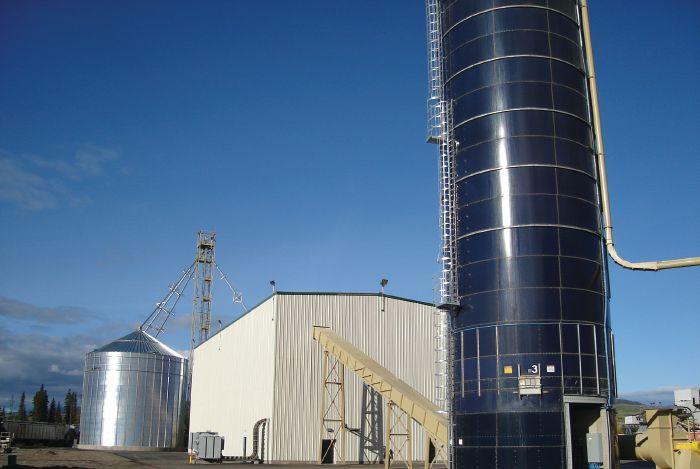
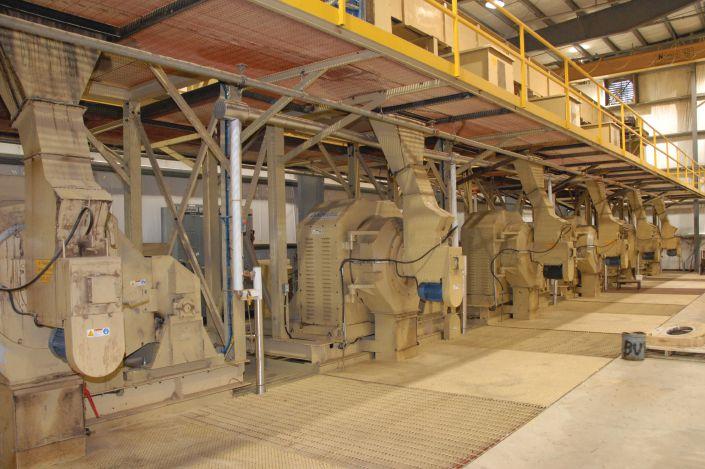
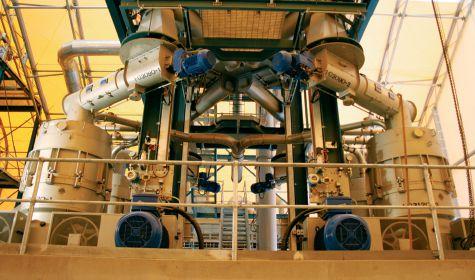
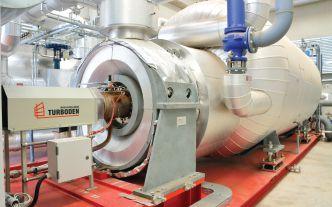
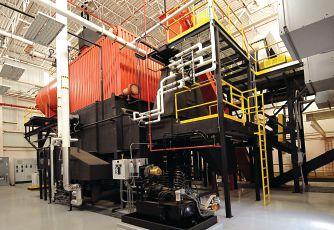
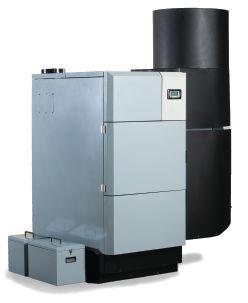
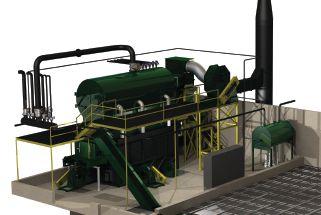
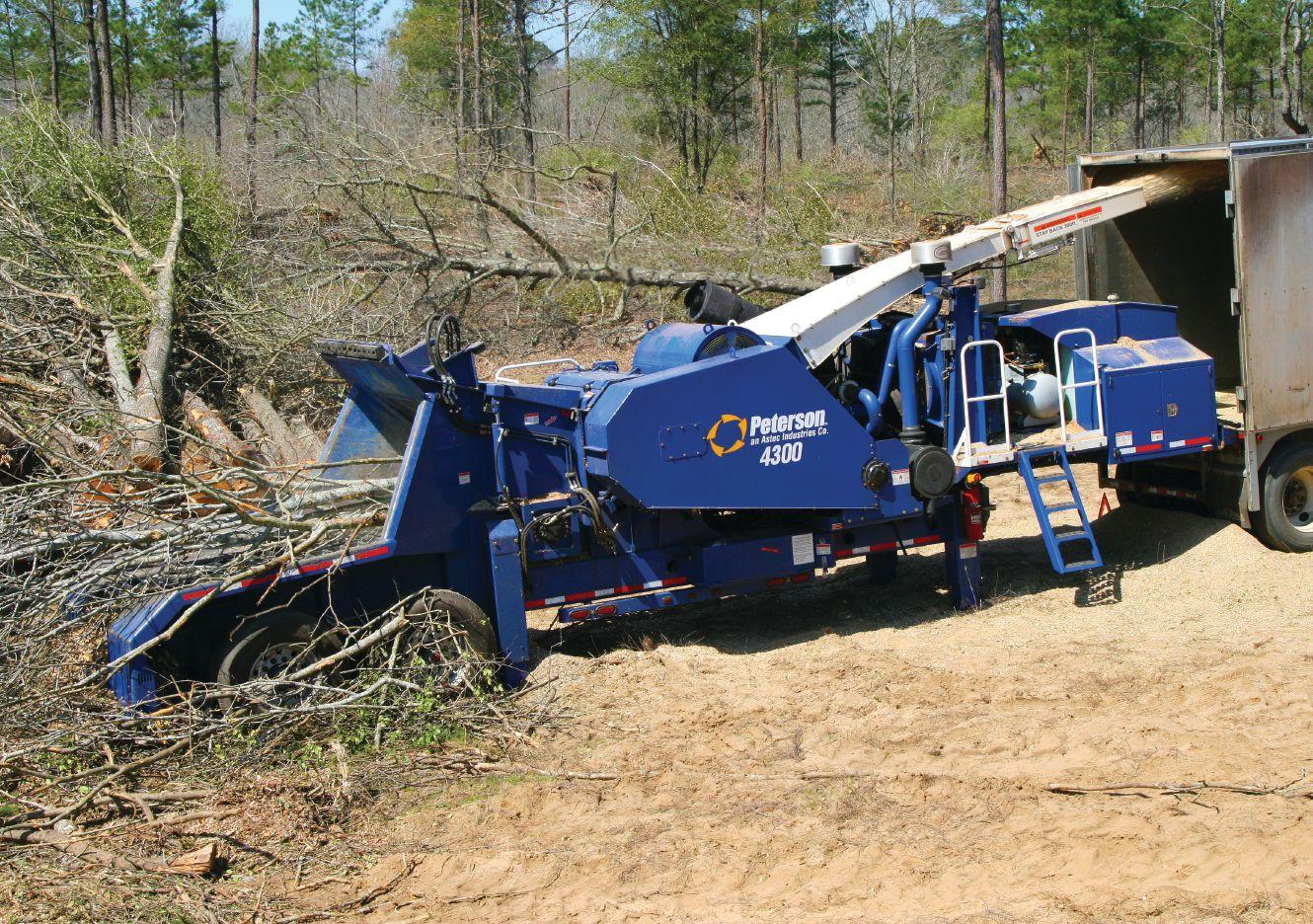
Which Rotochopper grinder is right for your wood fiber processing needs? Visit us online or give us a call to learn more.
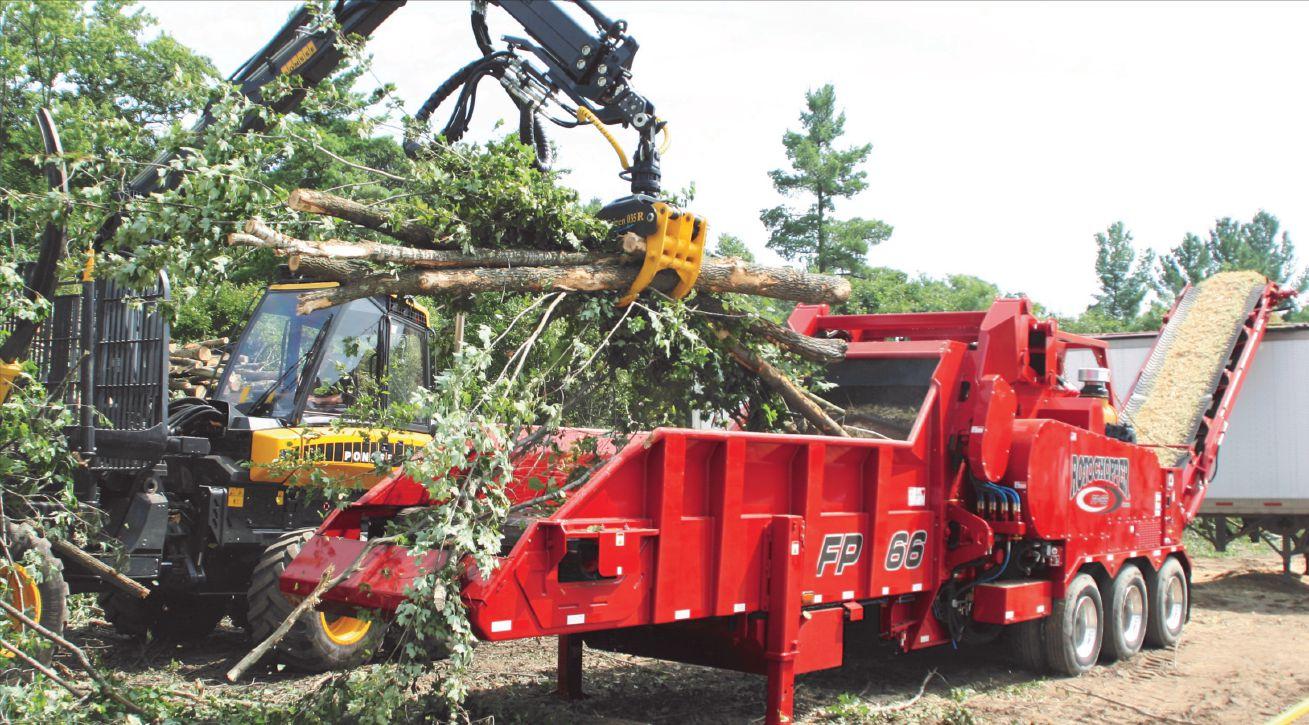
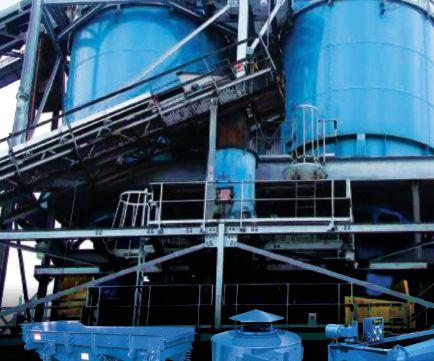
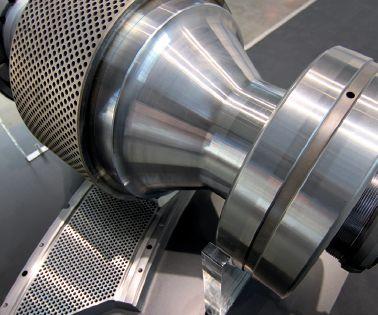
Rotochopper wood grinders offer unmatched versatility and particle size control, so you get high quality biomass fuel from a wide range of raw materials.
Whole trees
Sorted C & D
Pallets & crates
Forestry slash
Railroad ties
Wood chips
Slabwood
And thanks to exclusive features designed to maximize efficiency and uptime, you get the results you need at the lowest cost per ton.
Rotochopper
CANADIAN BIOMASS
18 Doubling Down
Pinnacle Renewable Energy Group is betting a new port facility will boost its wood pellet export capacity.
23 Perfect Pairing
Alberta’s Biorefining Conversions Network works with industry to create new bioproducts.
25 From Slime to Dollar Signs?
Algae have potential, but there are uniquely Canadian challenges to overcome.
28 Growing the Domestic Market
Biomass appliance makers note that growing the domestic market means converting one customer at a time. A company in Maine is doing just that.
Europe’s Pellet Basket
Continued demand from Europe has Canadian pellet producers optimistic as they ramp up capacity.
the good news for Canadian wood pellet producers keeps on coming.
From rosy predictions by industry analysts to announcements of new production coming online, the future of the industry looks bright indeed.
Wood pellet exports from North America to Europe were up by over 70% in the third quarter of 2012, year-over-year, according to one report, which also revealed that pellet exports from the two primary pellet-producing regions in North America, the U.S. South and British Columbia, continued to increase in the third quarter of 2012.
In the Maritimes, Viridis Energy announced its Scotia Atlantic Biomass plant will begin shipping to Europe this fall, with the 25,000-metric-tonne shipload expected to leave the Port of Halifax in September. The company says the plant has the capacity to produce up to 10,000 tonnes per month, so the plan is to send a shipload about every three months.
On the west coast, pellet pioneer Pinnacle is getting ready to open its Westview Terminal in Prince Rupert, B.C., around the same time. The $42-million facility will be able to accommodate Panamax class vessels up to 75,000 deadweight tonnes (DWT) with a loading rate of up to 2,000 tonnes per hour.
“Our goal over the next three to five years is to more than double the size of the company from our current capacity of 1.2 million tonnes,” Pinnacle president and COO Leroy Reitsma told Canadian Biomass in an exclusive interview (page 18).
Canadian pellet production will also get a boost as sawmills continue to ramp up to meet
growing lumber demands in the U.S., with more low-cost sawmill residuals available.
The good news continues across the Atlantic to the U.K., where RWE recently received approval for plans to keep its Tilbury Power Station operating for another 12 years. After modifications are made, the plant will consume around 2.7 million tonnes of pellets, with an estimated 60% of that total coming from Canada.
The three major European pellet import countries remain the U.K., the Netherlands and Belgium. Industry experts attribute the expected increase to the mandate set by the European Union in 2010 to hit a target of more than 20% renewable energy usage by 2020. Right now, most European countries are using less than 10%.
“Europe is basically leading the world in terms of the green and energy movements and that’s because they don’t have their own energy forms, like oil or natural gas. So they’ve been under a lot of pressure because they are so dependent on foreign oil,” industry analyst Gerry Van Leeuwen said in a recent Globe and Mail article (another boost to the industry) about the wood pellet industry in Canada.
As more facilities convert to co-firing as a way of reaching government targets, Canadian wood pellet producers will continue to smile and ask, “How much do you need?” •
John Tenpenny, Editor jtenpenny@annexweb.com
Volume 6 No. 2
Editor - John Tenpenny (905) 713-4351 jtenpenny@annexweb.com
Associate Editor - Andrew Macklin (519) 429-5181 amacklin@annexweb.com
Subscription Rates: Canada - 1 Yr $49.50; 2 Yr $87.50; 3 Yr $118.50 Single Copy - $9.00 (Canadian prices do not include applicable taxes) USA – 1 Yr $60 US; Foreign – 1 Yr $77 US
Occasionally, Canadian Biomass magazine will mail information on behalf of industryrelated groups whose products and services we believe may be of interest to you. If you prefer not to receive this information, please contact our circulation department in any of the four ways listed above.
The solution to the world’s carbon challenge seems daunting; as the world grows, so does the demand for fossil fuels. The time to act is now. The CCEMC Grand Challenge is an Alberta initiative to find and support bold ideas from around the world that will make significant reductions in greenhouse gas emissions. We’re committing up to CAD$35 million in funding for the most innovative technology that will convert CO2 emissions into new carbon-based products and markets. Find more information and submit your proposal at ccemcgrandchallenge.com
BioMASS update
BIO-COAL PROJECT GETS $1M SHOT IN THE ARM
There is a $20 billion global market for biocoal and Diacarbon Energy intends to be a part of it, thanks to a $1-million investment from Sustainable Development Technology Canada (SDTC).
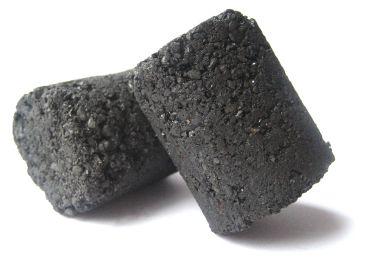
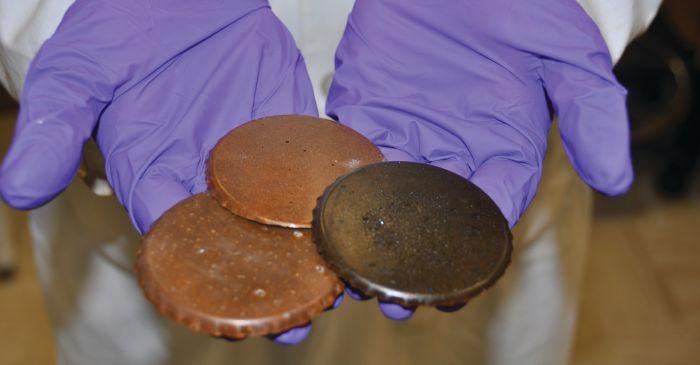
The Burnaby, British Columbia-based company, in partnership with Lafarge Canada, Seabird Island First Nations and Jake’s Construction, will develop a commercial demonstration production facility for its waste biomass to bio-coal process. Bio-coal is mechanically and physically equivalent to coal, but is considered carbon neutral and is produced using waste feedstock and other waste biomass.
“This investment will allow us to scale up our biofuel project to provide a technological demonstration for the production of bio-coal using a self-sustaining indirect heating approach,” said Diacarbon Energy president Jerry Ericsson. “Essentially we are working to convert Canada’s waste biomass into clean energy on a larger scale –
something that will contribute to a healthier environment and Canadian economy.”
Diacarbon Energy’s thermal biomass refinery (TBR) is a system that uses a thermochemical process to convert biomass into bio-coal, bio-oil and syngas. Bio-coal yields more energy than the wood pellets commonly used as a coal alternative, making it ideal for heat and power producers, which include cement facilities, combined heat and power (CHP) and district heating applications as well as coal-fired power generators.
WPAC 2013 CONFERENCE TO HIT VANCOUVER
Pellet producers and industry colleagues are in for a treat this November, as the Wood Pellet Association of Canada (WPAC) will host its expanded AGM in Vancouver. The event, held November 18-20 in scenic downtown Vancouver, will grow on the format adapted for WPAC’s last AGM held in Quebec City in late November 2012. It will include a pre-conference tour of bioenergy facilities, an ice breaker reception, a one-day conference focused on the pellet export market, and the WPAC AGM itself.
For the first time it will also include a small number of value-priced table-top exhibit opportunities (priority will be given to WPAC associate members), as well as a few sponsorship opportunities. Details on these will be announced in early April. To be added to the event’s email contact list contact Ross Anderson (randerson@annexweb.com). As the official media partner of WPAC, Canadian Biomass will work with the association to develop and promote the event through both its domestic and international audiences.
“We’re excited to see our industry grow, and with it our annual meeting,” says WPAC executive director Gordon Murray. “It will be a gathering of all the key players in the Canadian wood pellet sector, with a focus on growing our traditional and new export markets.”
Visit www.canadianbiomassmagazine.ca for updates.
IN BRIEF...
n HALIFAX, NS
According to Viridis Energy, its Scotia Atlantic Biomass plant is expected make its first shipment of wood pellets to Europe by September. When the wood-pellet plant is fully staffed and at full production, there will be 20 to 25 people on the job, many of them former employees of the failed Enligna Canada operation at the same site. As wood pellets are produced this summer, they will be trucked for storage to the Port of Halifax, with the first 25,000-metric-tonne shipload expected to head to Europe in September. The plant has capacity to produce up to 10,000 tonnes per month, or a shipload about every three months.
n LAVAL, QC
Airex Energy announced it has received $2.7 million in funding for the construction of a biomass torrefaction demonstration plant. With support from Sustainable Development Technology Canada (SDTC), Airex Energy will complete the two tonne/hour biomass torrefaction demonstration plant by the end of 2013. Airex’s CarbonFX torrefaction technology removes moisture and volatile organic compounds from woody and agricultural biomass in order to produce a dry, blackened material known as bio-coal. The demonstration plant will be developed in partnership with Comact Equipment Inc.
n THUNDER BAY, ON
Ontario Power Generation says it’s taking a closer look at whether the Mission Island Generating Station could be converted to burn biomass. Last year, the utility suspended work on converting the Thunder Bay plant from coal to natural gas. The province will stop using coal-fired plants next year. Chris Fralick, plant manager for Ontario Power Generation’s Northwest Thermal, which runs the plants in Thunder Bay and Atikokan, said they are looking at other options.
We’re big on a brighter future
Worldwide energy consumption is expected to increase by 50% over the next 20 years. Today, renewable energy is a fast-growing industry that is constantly evolving to meet the demand. At RSA, we provide leading insurance and risk management solutions for our Canadian bioenergy, biomass and bio-product clients. As a global leader with over 30 years’ experience in renewable energy, we are committed to a sustainable future.
By combining our specific industry knowledge with local expertise and understanding, we deliver robust commercial insurance solutions across RSA’s Global Network. As one of the largest general insurers in Canada, RSA offers leading propositions and a strong commitment to our customer and broker partners.
i f you’re big on a brighter future, partner W ith r Sa in S uranC e .
With over 300 years of experience, RSA is an established “A+” rated* insurer offering a complete suite of tailored insurance solutions, from personal and small business to complex and multinational risks. We are the country’s third-largest insurer, working through a network of independent brokers across Canada.
Pellet Awakening
Re-evaluating the potential for the wood pellet heat market in Canada.
By Gordon Murray
ihave to confess that I have been working under a huge misconception about the potential for wood pellets in the Canadian residential, commercial and institutional heat markets. I have just assumed that since natural gas was cheap and convenient, wood pellets could only occupy a niche market in the few areas of Canada not covered by our country’s natural gas network. I could not have been more wrong.
I spent some time analyzing data from Statistics Canada and the Hearth, Patio and Barbeque Association of Canada (HPBA) and have found some very interesting facts:
• Only 47% of Canadian homes, businesses, and institutions use natural gas for heat and hot water. The other 53% use heating oil, electricity, propane, and wood, consuming 1,033 petajoules of energy annually. Assuming an average pellet appliance efficiency of 80%, this is the equivalent of 75 million tonnes of wood pellets every year.
• Energy used by the residential sector is about the same as that used in the commercial/institutional sector.
• Just 6% of Canadian homes use wood as their primary heat source, and of those, the split is 95% firewood and 5% wood pellets. That means that wood pellets are used as the primary source of heat in just 0.3% of Canadian homes. Each of those homes uses an average of 3.9 tonnes of pellets annually for a total of just 175,500 tonnes annually. A single plant can easily produce that many pellets.
• Although wood pellets are more expensive than natural gas, they are substantially cheaper than heating oil or electricity, which are presently the two most popular non-gas sources of energy for heat and hot water (Table 1). Pellets become even cheaper as volumes grow due to improved economies of scale and switching to bulk from bagged product.
3
In addition to their attractiveness as a low-cost fuel, there are other advantages to using wood pellets to provide energy for heat and hot water:
• Wood pellets are a renewable carbon-neutral fuel. Using wood pellets would help the Government of Canada meet its goal of reducing GHG emissions by 17% by 2020 from 2005 levels.
• It would provide jobs in rural areas and keep money circulating close to where the pellets are used.
• Modern wood pellet appliances are every bit as convenient as gas furnaces. Pellets are stored in bulk and auto-fed into the appliance as needed. Temperature is set thermostatically, just the same with a gas or oil furnace. Generally appliances only need to be maintained about twice a year and pellet ash is removed automatically.
• We would be able to use pellets here at home rather than having to rely almost solely on exports to the European power sector. Using pellets for heat is far more efficient than using pellets to create electricity (typically 80% versus 35% efficiency).
• As the domestic market grows, bulk deliveries would replace bags. A combination of increased volume together with reduced handling and packaging would lower pellet costs substantially.
• It would free up oil and electricity for other higher-value purposes.
Further research shows that Canada’s potential wood pellet heating market, assuming that all non-natural gas heat and hot water in the residential and commercial/institutional sectors is converted to wood pellets, is 75,957,000 tonnes. While it is unrealistic to assume a 100% share of the non-gas market for wood pellets, a 3% share is likely achievable. And 3% of the non-gas heat market amounts to 2,279,000 tonnes of wood pellets each year – a total value of nearly $570 million.
If you consider that Austria, Germany and Italy together are just a fraction of the size of Canada and that their combined pellet heat markets total about four million tonnes, it is not hard to imagine that we could achieve a heat market of 2.3 million tonnes of wood pellets here in Canada.
In my next column, I will discuss the steps needed to reach this target. •
Gordon Murray is executive director of the Wood Pellet Association of Canada. He encourages all those who want to support and benefit from the growth of the Canadian wood pellet industry to join. Gordon welcomes all comments and can be contacted by telephone at 250-837-8821 or by e-mail at gord@pellet.org.
Table 1: Relative Costs of Heating Fuels – Using Energy Prices from Ontario
FPAC at 100
OA proud past and a promising future: we’re 100 years and growing.
By David Lindsay
ne hundred years ago in March 1913, a meeting was held in the King Edward Hotel in Toronto to establish an organization aimed at “the consideration of matters of general interest to the pulp and paper industry, the promotion of its welfare and the social intercourse among the members of the Association.”
And so, the Canadian Pulp and Paper Association was born, an organization that lives on under its new name, the Forest Products Association of Canada (FPAC). Back then membership for companies was just $25 a year and the salaries for the three staff added up to a grand total of $440. The
The evolution of the forest products industry can be seen as a veritable hewer of Canadian history. First the timber trade and then the pulp and paper industry brought investment and immigration to Canada; these industries fostered economic development and transformed the landscape by encouraging the building of town and villages and the opening of roads and railways; they had a broader reach into every region of Canada than any other industry, past or present. The pulp and paper industry was for about 75 years of the 20th century the largest employer, the largest exporter and overall the largest contributor to the Canadian economy.
To reach our product goal, mills are diversifying, transforming and moving beyond their traditional production of lumber, pulp and paper to a new suite of value-added products.
nascent CPPA actually had a challenging first year. But soon the association found its footing and grew into one of the most respected industry associations in Canada, as it remains so today.
All this year, FPAC will be celebrating its 100th anniversary by reflecting back on the proud past of an industry that helped shape the Canada we know today. Of course, the origins of the sector in Canada predate the association. The Canadian forest industry first flourished after Napoleon Bonaparte brought in the Continental Blockade in 1806 aimed at cutting off its archenemy Great Britain from its traditional suppliers― forcing Britain to turn to its colonies for timber.
But as we celebrate the proud past of the industry, it is also a time to reinforce our belief in the positive future of the Canadian forest sector, something that will be rooted in the new bioeconomy.
That’s why FPAC believes in Vision2020, a program that sets ambitious goals for the industry in the area of people, performance and products. We aim to replenish the workforce with at least 60,000 new recruits and have recently launched a new recruitment tool, thegreenestworkforce.ca; we want to further burnish our green credentials with another 35% reduction in our environmental footprint; and finally, the industry is aiming to produce another $20 billion in economic activity from new products and markets.
To reach our product goal, mills in Canada are diversifying, transforming and moving beyond their traditional produc-
tion of lumber, pulp and paper to a new suite of value-added products. For example, FPAC has just released a Construction Value Pathway study that shows the Canadian forest products industry is well positioned to capitalize on key opportunities in a global construction industry now worth about $8 trillion dollars and growing by about 8% a year. These figures could include prefabrication and customized engineered wood systems.
It will also be crucial to take advantage of the rapid growth of the bioeconomy by producing a broad range of products in the area of bioenergy, biochemicals and bioproducts. In addition, the forest products industry is seeking out new partnerships with others interested in the innovative use of wood fibre, including the chemical, plastics, auto and biotech industries.
Many of the employees we are hoping to recruit under our Vision2020 goal of 60,000 new workers are not the kind of hires we made 100 years ago. Yes, we still need millwrights and foresters, but as the new forest products industry becomes a leader in the bioeconomy, it will also require the likes of innovators and chemists and international sales staff.
There has already been a lot of reinventing, redeveloping and re-engineering of the Canadian forest products industry and that transformation is now accelerating. So this year, we are proud to remember our glorious past and our considerable contribution to the Canadian economies of the 19th and 20th centuries. But it’s also time to focus our eyes firmly on the future in order to reach our potential in the 21st century – a future where the Canadian forest products industry will be a dynamic player in the global bioeconomy. •
David Lindsay is president and CEO of the Forest Products Association of Canada.
Dusting Off PrOFitS
Pellet manufacturing creates an integrated value-added outlet for this unique Quebec lumber manufacturer.
By Myriam Gauthier
fitiming is everything, then launching a pellet complex at the height of the forestry crisis may have been a mistake. Yet four years later, lumber manufacturer Boisaco’s pellet plant continues operations.
Since 2009, this sawmill in Sacré-Coeur, Quebec, in the North Shore region, has run its Granulco pellet division (granules is the French word for pellet). Faced with record low lumber pricing, the company has gone through tough times, but its leaders have never ceased to believe that the full use of byproducts from wood remains a promising market.
“Not so long ago, 10 to 15 years, sawdust from mills around here was buried as waste,” says Boisaco president Steeve St-Gelais. “Now, it is a commodity that can create jobs and a profitable business. “
Some of the mill shavings and chips were already used by sister companies Ripco and Sacopan, for the manufacture of equestrian bedding and embossed door panels. These remanufacturers were launched on the Boisaco industrial site in the early 2000s as an indication of the company’s intention of making full use of its fibre resource to maximize revenue and employment. The company has annual revenues of more than $60 million.
It was that spirit that saw Granulco added to the complex in December 2009, providing a local outlet for sawdust from the 110-million-board-foot sawmill. Granulco has an annual production capacity of 20,000 to 40,000 tonnes aimed at the domestic and commercial pellet stove market as well as equestrian bedding.
According to Granulco president Bastien Deschênes, producing value-added products is now a matter of survival for Quebec’s forest sector: “It is no longer a choice, it is an obligation,” he says. “The forestry crisis has been very difficult for the North Shore region: only four of the original 12 lumber producers have survived. I am convinced that Boisaco would not have passed through the crisis if it had not already diversified its operations.”
CO-OPERATIVE VALUES
Granulco was formed by six original investors: The Essipit Innu First Nation, the Sacré-Coeur investment company Investra, the
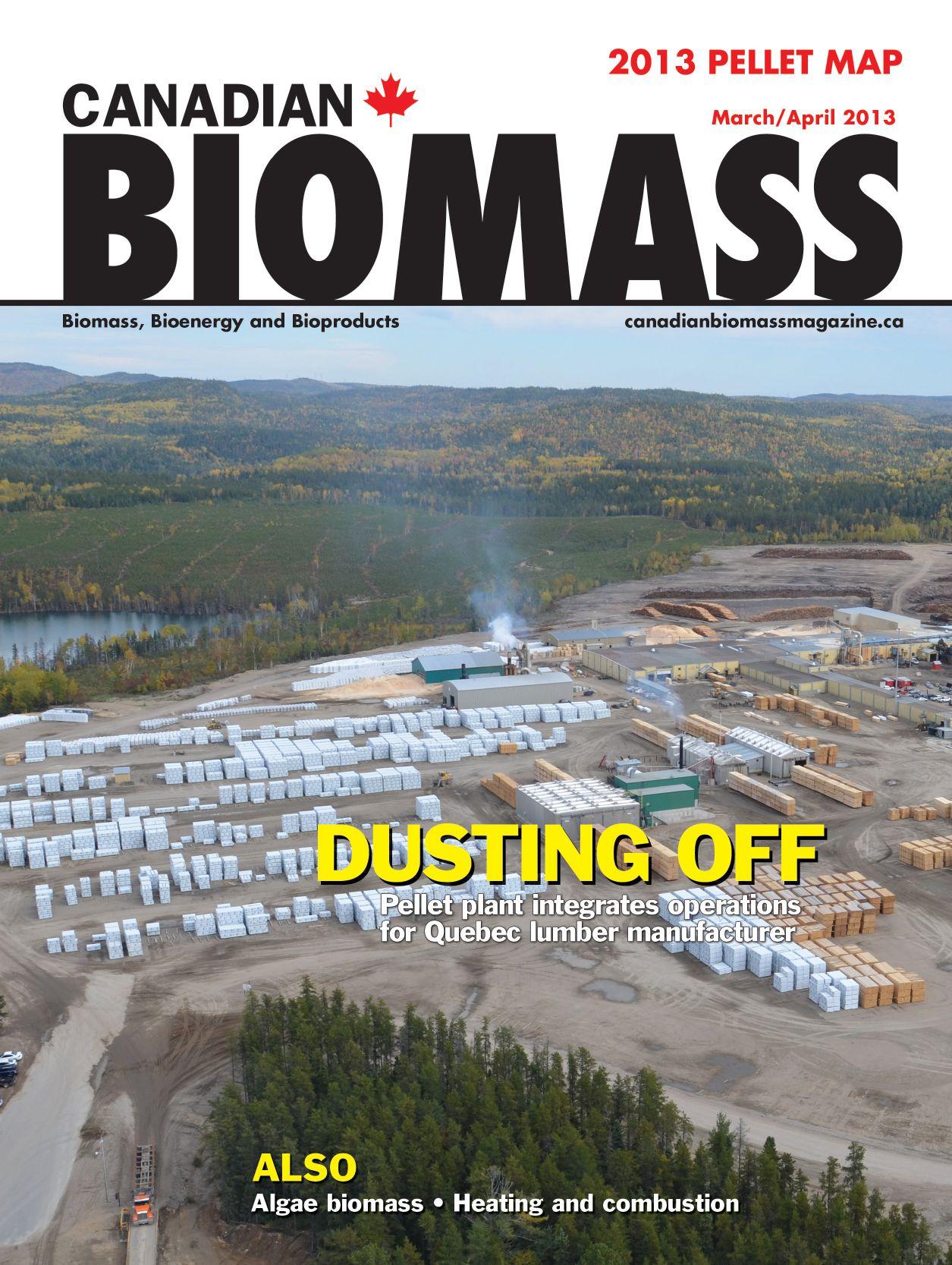
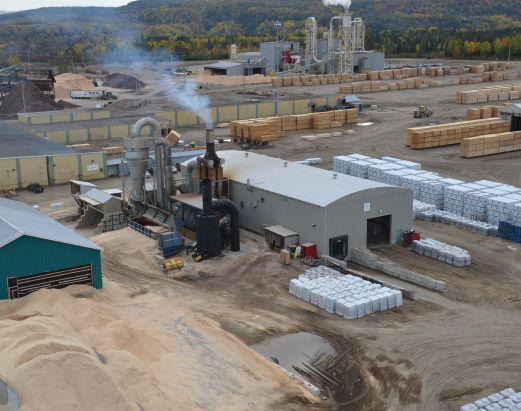
LEFT MAIN: The Granulco pellet plant was added to the Boisaco industrial site in December 2009 to provide an outlet for the mill’s sawdust and employment for 13.
INSET: The pellets are made from almost 100% softwood sawdust (black spruce, fir, pine).
Photos: Granulco
Sacre-Coeur Economic Development Corporation, Boisaco, the Sacre Coeur Workers Cooperative (Unisaco), and the SainteMarguerite Forestry Workers Cooperative (Cofor).
Unisaco and Cofor are majority co-operative shareholders of Boisaco itself, a co-operative that includes the mill staff. “The mill is not a co-operative, but is managed under a co-operative model,” St-Gelais explains. “In fact the workers formed the two co-operatives in 1985, which in turn revived the sawmill after it experienced three successive bankruptcies. That is how Boisaco was formed.”
Co-operative values also guided Granulco management during the construction of the pellet plant, says Deschênes. “We have the means to invest in mechanization, but because of our model, we prefer to encourage job creation through investment,” the seasoned businessman explains. “Our goal is to contribute to the economy of
the region, not to enrich a single shareholder.”
Granulco hired 13 full-time staff to start, and could hire more if pellet demand increases. For now, Granulco annually produces 20,000 tonnes of pellets, its minimum production capacity.
Construction of the 8,000-square-foot plant occurred over a period of a few months. The principal equipment and technolgy suppliers were Gaston Richard (milling and pellet production equipment), RX Industries (dust control), Honco (building) and FABMEC (production equipment). The team also visited other pellet plants before the work began. “You could say our expertise in this area is recent,” quips Deschênes. “We visited biomass plants in the Prairies and elsewhere to get an idea of how to proceed.”
Raw fibre is supplied by the adjacent sawmill, and fed through a Double Diamond Farms 12x40-foot triple-pass rotary dryer rebuilt
Granulco currently targets the domestic heat market, bagging about one million 40-pound bags annually.
Photos: Granulco
by the mill’s maintenance staff. Fibre is then processed in a Bliss E44095-TF dry hammermill ahead of two pellet lines. The mill runs a Bliss B200B-120 as well as an Andritz 125-horsepower mill. Pellets are cooled via a Bliss 8-130-6A tower ahead of a Taylor bagging system and Polyroboteck stacker.
Once the equipment was installed, ramp-up took a few months, and changes were made throughout the process. Particular attention was also paid to health and safety given the reputation of pellet plants when it comes to fire.
“The accumulation of dry wood dust can turn the plant into a tinderbox,” Deschênes notes. The presence of sawdust in the air can cause an explosion at the slightest spark. “It is for this reason, among others, the rotary sawdust dryer among other equipment is outside.
We also have an array of spark and fire protection equipment.”
In fact, the design includes a full spark detection and suppression system from Hansentek.
CHALLENGE
In 2008, the demand for pellets grew in Quebec, before falling in 2009 during the depth of the forestry crisis and under the effects of the general global economic recession.
“2008 was the frenzy before the crisis, and then we had to go through a series of cycles in difficult markets,” Deschênes recalls. “Before the crisis, the price of a 40-pound bag of pellets approached $5. Now, with a gradual recovery, the bags sell in the $4 range.”
The drop in demand led to a temporary suspension of operations
DUST COLLECTOR FIRES WITH THE AN6400 SPARK DETECTION AND EXTINGUISHING SYSTEM
MODULARLY EXPANDIBLE
Expandable up to 64 zones
Each zone has its own processor
Easy to expand and connect POWERFUL
Water flow verification
Functional sensitivity test on each detector FLEXIBLE
Select programmable options on a zone by zone basis
All events and memory stamped with time and date
The plant uses 5% sawdust from yellow and white birch provided by Bersaco, a nearby sawmill and pallet components factory.
Wood pallets with bags of Granulco pellets. The pellet industry has considerable market development work to do in hydro-rich Quebec.
Photos: Myriam Gauthier
for a few months during the winter of 2011. Some employees were transferred to Boisaco during this period. Yet Granulco survived. “There is no doubt these rough markets have delayed our plans. In many ways we are lucky, as we have some clear synergies between the sites, such as the electricity and water infrastructure, for example, “says Deschênes.
MARkET ECO-ENERGy
Granulco is for the moment chiefly in the domestic heat market: the factory produces annually about one million bags of pellets for stoves. The pellets are made from softwood sawdust (black spruce, fir, pine) from the Boisaco sawmill. The plant also uses at times 5% of white and yellow birch sawdust provided by Bersaco, a sawmill and
pallet component supplier on another Boisaco industrial site in the municipality of Grandes-Bergeronnes.
Aspen sawdust also from Bersaco is set aside, and since 2012 is used as fuel for the plant’s boiler. “The compression of aspen sawdust is more difficult, since there is not much lignin in this species, so we decided to use it otherwise to avoid waste,” says Deschênes.
Processing Systems for Bioenergy Liberating Untapped Energy
A worldwide leader in size reduction technology for bioenergy, Vecoplan works with individual customers to design, engineer, manufacture and implement technologically advanced, material specific, and application specific shredding, ferrous and non-ferrous removal, size and density separation, screening and classification technologies and extremely efficient conveyor and bulk material handling, metering, storage and unloading technologies.
Contact Vecoplan today to learn more about our existing systems or to arrange a visit to one, or several, of our installations.
Phone: (336) 252-4774
Bastien Deschênes (left), president of Granulco, and Steeve St-Gelais, president of Boisaco, say co-operative values guided construction of the pellet plant.
Aspen sawdust from Bersaco does not bind well, and so it is used as fuel for the burner.
Photos: Myriam Gauthier
Competing with Quebec’s famously low hydro prices is not easy. Granulco markets to a clientele attracted by the social and environmental benefits of using a local, low-carbon forest waste product, as well as those seeking the ambience created by a wood stove. The financial argument is also put forward where it makes sense, says sales manager Jean-François Bouchard.
“Biomass heating is a much cheaper alternative than heating oil,” he notes. “On this point, Europe is 20 years ahead of Quebec. Trucks go from house to house to fill pellet tanks. We are far from reaching that point here, because of the low price of electricity in Quebec, because the product has yet to be known.”
That may slowly be changing, as various high-profile pellet heat projects involving apartment blocks in Quebec City and ski chalets at Le Massif begin to garner press.
According to data provided by the Director General of Forest Energy of the Quebec Federation of Forestry Cooperatives, Eugene Gagné, pellet heating costs $0.0675/ kWh, taking into account the current price of bags on the market at the end of January 2013. Heating with pellets is about 50% cheaper than oil heating ($0.1286/kWh), and in the same ball park as heating with electricity ($0.0751/kWh).
The bagged heating product, which represents approximately 90% of the plant’s production, is distributed throughout Quebec in some retail stores. Currently, Granulco is not exporting to the U.S. market.
The company also says exports to Europe may be in its future. “In Quebec, there is a need for pellets for heating in winter, but in summer, when the plant continues to operate, we may export to France, Belgium and Italy, for example, as a good means to sell our stocks,” says Jean-François Bouchard.
The plant also produces equestrian bedding sold in bags of 40 pounds and distributed by Royal Litter, which represents approximately 10% of Granulco’s sales. The product is made from resin, using the same method as that used to produce pellets for stoves. Litter pellets are crushed, however, which can increase their absorptive capacity, making them increase in size by five times when wet. After use, the litter can be spread on fields as fertilizer by farmers.
BULk POTENTIAL
Granulco also occasionally sells pellets in bulk, a sector that the company wants to develop in the coming years, its president explains. “In the medium term, the next three years, we plan on increasing our bulk business,” says Deschênes. “It requires some changes in equipment, but there is a potential institutional side, hospitals and schools, for example, who need to replace aging equipment which often operates with oil, but the process is always longer with the public sector,” he adds.
The private sector, especially within the agricultural sector, is also being closely studied by Granulco, as are the province’s many maple sugar shacks, which increasingly use pellet-fuelled equipment for the energy-intensive sap processing. •
This article originally appeared in Opérations forestieres et de scierie, a sister publication to Canadian Biomass, and was translated by Scott Jamieson.
Dependable pneumatic and mechanical boiler fuel feed systems by Jeffrery Rader, a brand of TerraSource™ Global, combine the best of our storage, reclaim, conveying and feeding equipment. We work closely with our customers to ensure that our designs meet the storage, metering and feed rate requirements of the boiler, whether it’s feeding 100% biomass or co-firing biomass with coal.
Doubling Down
Pinnacle Renewable Energy Group is betting a new port facility will boost its wood pellet export capacity.
By John Tenpenny
Making
sure no stone has been left unturned before moving on to the next project is sound business practice and at Pinnacle Renewable Energy Group it is a strategy for future expansion as wood pellet demand – globally and domestically – continues to grow.
For Leroy Reitsma, Pinnacle’s president and COO, the company’s growth has been based on its ability to handle a full spectrum of wood for production and being able to get its product to the export market as production capacity has grown from less than 100,000 tonnes in 2004 to more than 1.2 million tonnes today.
The company was founded by Rob and
Jim Swaan in 1988 as Pinnacle Feed and Pellet, with its first plant in Quesnel, B.C. Expansion began in the early part of the 2000s, when, according to Reitsma, some the of European power companies started to view wood pellets as a potential displacement for coal. Beginning in 2004, Pinnacle constructed or acquired five more facilities.
“Our goal over the next three to five years is to more than double the size of the company from our current capacity of 1.2 million tonnes,” Reitsma tells Canadian Biomass, sitting in the lobby of a Prince George hotel earlier this year. “To achieve this there’s going to be some expansion of current facilities and some new builds that are associated with that.”
TERMINAL PROJECT
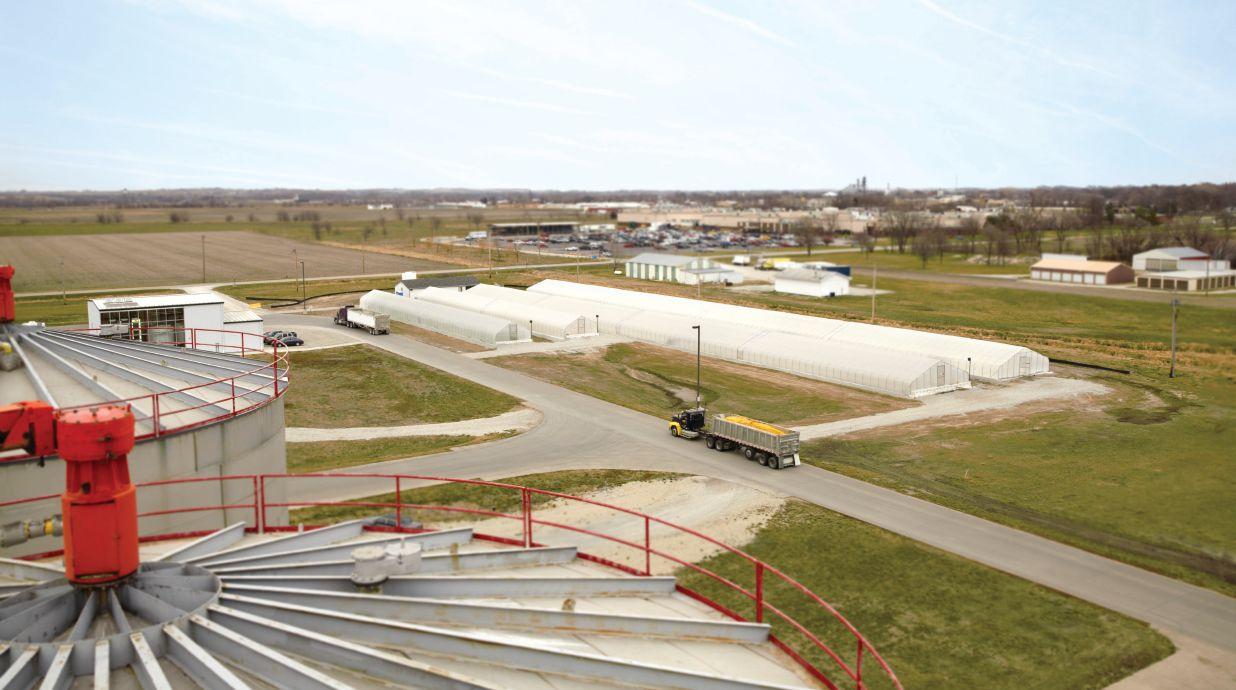
While no specifics were forthcoming about those plans, Reitsma was happy to share the latest on Pinnacle’s current construction project – Westview Terminal – a $42-million wood pellet receiving, storage and shipping facility nearing completion in Prince Rupert.
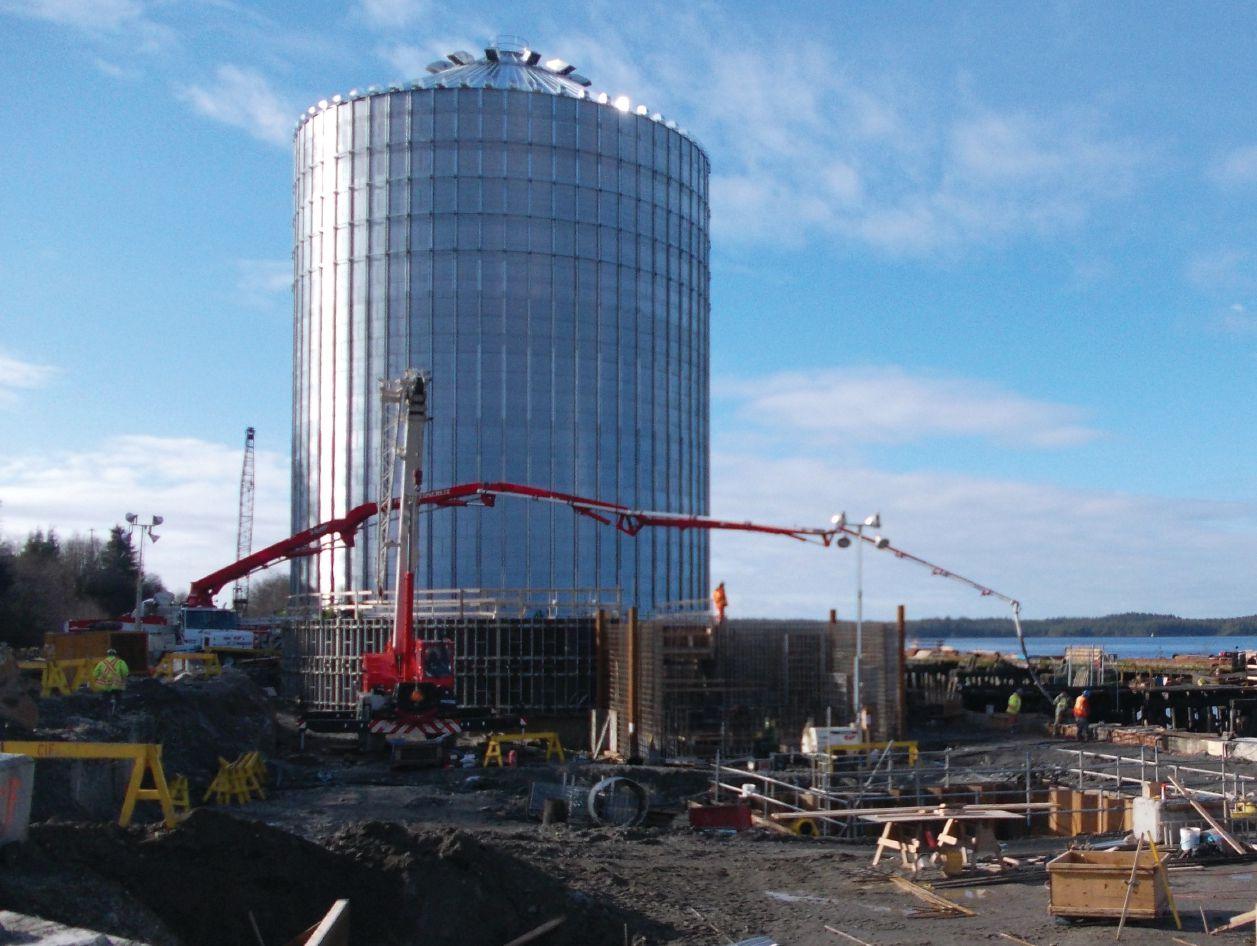
“We’re still on track to put volume through there by the fall,” says Reitsma, noting the first silo went up in early January.
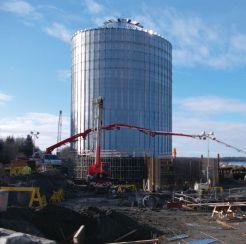
The project includes construction of private rail storage tracks, wood pellet receiving and unloading buildings, installation of a conveyor and ship loader system and up to seven silos with a capacity of 85,000 tonnes. The state-of-the-art facility
will be able to unload up to ten rail cars per hour or approximately 1,000 tonnes and will be able to accommodate Panamax class vessels up to 75,000 deadweight tonnes (DWT) with a loading rate of up to 2,000 tonnes per hour.
With the development of Westview, the interface between both rail and port and port and ship will be greatly improved. “In the future when our train shows up there’s no getting into a queue; it’s our train gets unloaded now. And now when our ship comes in, it’s not waiting in the harbour for someone else’s to finish,” says Reitsma.
Having this logistical strength, he says,
MAIN: When completed, Pinnacle’s Westview Terminal in Prince Rupert, B.C., will include up to seven silos with a capacity of 85,000 tonnes and will be able to accommodate Panamax class vessels up to 75,000 deadweight tonnes (DWT).
RIGHT: Pinnacle’s Williams Lake plant was upgraded in 2008, going from two wood pelletizing machines to five and adding a drying system.
Pinnacle Production
QUESNEL
Opened 1998
Capacity: 90,000 metric tonnes per year (mt/a)
WILLIAMS LAkE
Opened 2004
Capacity: 200,000 mt/a
ARMSTRONG
Acquired 2007
Capacity: 60,000 mt/a
makes it possible for Pinnacle to focus on growth opportunities in the production chain to feed the port that would otherwise be uneconomical. “This is where we will grow.”
Westview was critical in allowing the company to make the economics of increased volumes work for them.
TORREFACTION TIME
For Reitsma, getting the logistics right also paves the way for Pinnacle’s investment in densification. Or put another way, now that the low-hanging fruit of logistics has been picked, the higher-hanging fruit of torrefaction can be considered.
“Once you’ve optimized the logistics system in terms of both the configuration and velocity of assets, then you can start to look at fine-tuning it by further enhancing the energy value of the product,” he explains.
“We’re going to spend some fairly
MEAdOWBROOk
Opened 2008
Capacity: 220,000 mt/a
BURNS LAkE
Opened 2011
Capactiy: 400,000 mt/a
HOUSTON PELLET INC.
Opened 2006
(Partnership with Canfor and Moricetown First Nation)
Capacity: 220,000 mt/a
significant time and energy and money on energy densification.”
But this area doesn’t come without some major challenges, including technology and cost.
“In my mind there are some concerns around the safety aspects of getting the technology to a commercial scale, and making sure that you don’t have any issues with fire in the process,” says Reitsma. As well, making the process cost effective, so that “you don’t have people with doctoral degrees running the plants,” is another consideration.
The next step, according to Reitsma, is finding a customer who will actually pay for the extra costs of the product.
“What I’m finding is that when we talk to the major players in the marketplace, the response is simply along the lines of stating that any incremental benefit of energy densification needs to be offset by reductions
in those costs incurred by the producer to deliver the product. Generally, further energy densification is regarded as a neat trick, but not something that adds value to the bottom line of electricity producers, which can’t otherwise be achieved through capital
investment at the power station.”
For example, he says, for one of Pinnacle’s customers that intends to consume eight million tonnes per year of wood pellets, the choice between an ongoing $10-per-tonne price increase versus a one-time investment to
build the storage and the handling capability to handle the cheaper fuel is an easy decision.
However, if a power generator has other, more capital intensive, restrictions in the power station, they might, he says, be prepared to put the dollars on the table if pellet producers could help fill the need with something that has a little more energy density.
“Then you look at what is the capital tradeoff between trying to modify that capability of the boiler versus changing the fuel,” says Reitsma.
“Today there is no one in the market who is jumping forward to pay more money for the delivery of a torrefied product.”
Thus Pinnacle is going to proceed cautiously, but at the same time, keep in mind what the potential of torrefaction might be.
“We might find a totally different way, where all of a sudden the economics make sense.”
FIBRE SOURCE
Making wood pellets from different sources was and continues to be a big part of Pinnacle’s success and growth.
“There’s a tying together of multiple
In partnership with Canfor Corporation and the Moricetown First Nation, Houston Pellet Inc. collects sawdust from the sawmill, which is dried and added to shavings in storage silos.
factors in any growth story and for us I think the biggest part of our story is that we were able to develop a process whereby we could handle a full spectrum of wood,” says Reitsma.
“We had to evolve first into being able to dry sawdust and make a good pellet out of that and then we learned how to handle bark and treetops and various other things.
“Then, as a result of the sawmill industry downturn in 2009, we had plant capacity in excess of the fibre supply. As a result, we went about trying to diversify our ability to process material, while still making sure that we produced a high-quality product.”
Alongside of a rebalancing of capacity in the sawmill sector reside the implications of the mountain pine beetle, which has presented both another challenge and another opportunity for Pinnacle to diversify and grow, says Reitsma.
“In any growth strategy, you need an expanding market and an ability to acquire both the raw materials and the logistical tools to meet the markets price demands. In British Columbia we’re quite fortunate to have the makings of the required combination.”
Pinnacle’s Meadowbrook plant’s production process features six Andritz Sprout pelletizers that process the wood fibre into quarter-inch pellets.
CERTIFIEd PROdUCT
When it comes to product certification, Pinnacle has been and continues to be at the forefront in meeting the sustainability requirements of the European export market.
“Pinnacle’s recent contribution has been
to take the standards and then find a way to make a wood pellet out of the full spectrum of wood that would comply with the standard. This builds on the work that was done in the early 2000s by the Swaan brothers, including John (who later took
on a leadership role in the Wood Pellet Association of Canada), to pioneer the standards for bulk fuel supply from Western Canada to Europe,” explains Reitsma.
The company was also the beneficiary of operating within a well-developed forest industry in British Columbia where many of the certification standards were already part of the province’s forest practice codes. This is enabling Pinnacle to lead in sustainability requirements. “We are very fortunate to have well-developed and entrenched sustainability practices built into the forest industry in B.C.,” says Reitsma.
In fact, Reitsma is confident that the beneficial situation relative to other jurisdictions, where there isn’t the same level of forest stewardship planning and sustainability management, will allow the company to adapt its practices to be in alignment with pending European legislation objectives.
What Reitsma believes wood pellet producers will face in terms of new legislation from Europe will come in the form of creating a better chain of custody.
This will pose challenges, specifically at port facilities, where producers aggregate with other suppliers. “In the future, I can see the continuance of port access being contingent on the substantiation of sustainability requirements,” comments Reitsma.
In the early days of the industry, he says, there were different standards from different European power companies – each with its own version of what sustainability meant.
With a common standard, certain European ports may require that all pellets on a ship be certified under one sustainability requirement, which means all producers will have to meet the standard in order to acquire voyage on a particular ship.
“When we look outside of B.C., we can see jurisdictions where highly diverse land ownership will create chain of custody challenges for producers,” says Reitsma.
“Once that export market is ready and available, I think you’ll see quite an increase in gas prices again.”
ASIAN ExPORTS
While Europe continues to be the biggest export market for Pinnacle, Reitsma predicts considerable growth in Asia, particularly from Japan and South Korea, as their energy strategies focus more on the future versus the immediate term.
However, it’s a market that Reitsma says needs to mature, especially in the area of how transactions are done.
“Some [Asian buyers] are viewing the wood pellet market as an emerging com-
Air System Experts
modity that has sufficient market liquidity to support a trading approach to the acquisition of product. However, because the production side of this business is in its early stages of coming into being, there’s not really an ability to get large volumes without a longer-term relationship between the producer and the consumer.”
The mindset in Asia is still a coal and oil-buying one and the shift to a non-commodity purchasing transaction hasn’t yet taken place.
“I think we’ll find a balance between the two schools of thought, but there certainly needs to be some adjustments in the process before it can really start to advance,” says Reitsma.
GAS EFFECTS
Domestically, Reitsma sees a pair of opportunities for Pinnacle, both involving natural gas.
“There are opportunities for us in markets where people are not on the natural gas grid today where we can offset diesel consumption or some other higher-cost fuel.”
Reitsma also believes one outcome of proposed pipelines being developed to export natural gas that isn’t widely discussed, is that it’s going to have a long-term domestic price escalation effect.
“Once that export market is ready and available, I think you’ll see quite an increase in gas prices again,” he says. “And that’s going to spur on the ability to sell more [pellets] here in B.C. as an offset to escalating natural gas costs, much as we did four years ago, before the advent of shale gas technology.”
Regardless, the export market is still Pinnacle’s focus, even more so with the improvements the company has made on the logistics side.
As for the overall focus of the company, it has changed little over the years. Reitsma says it’s still about making a good product and getting it to where it needs to go.
“What makes this business viable, for us in particular, is the fact that we have a great forest resource, people that are excited about growing a successful business and a very good market. Once we understood how we could make a product out of our fibre resources, we’ve turned our attention over the past few years to optimizing the logistics of getting this product to market.”
Safety Quality Value
Perfect Pairing
Alberta’s Biorefining Conversions Network works with industry to create new bioproducts.
By Andrew Macklin
TheGovernment of Alberta continues to invest in the future of the province’s bioeconomy thanks to the ongoing success of the Biorefining Conversions Network. Based out of the University of Alberta in Edmonton, the BCN is pairing academic researchers with corporate partners to create new bioproducts from waste materials created through industrial processes.
Earlier in the last decade, the province of Alberta made a commitment to increase its investment in research and development of the province’s bioeconomy. Over that time, the various funding agencies put out several related RFPs for new ideas for research and development in the bioeconomy that would produce tangible results. But the processes never returned optimized results as often proposals submitted were redundant or did not maximize collaborative efficiencies. The flood of academics seeking corporate matching financing requests also tended to strain the relationships with a business sector that was looking for bio-based solutions, and also pitted academic colleagues against one another in the fight to secure the funding.
It was around that same time that David Bressler was approached to be involved with the initiative. Bressler, who was working as an Associate Professor in an agriculture/forestry faculty with a cross appointment to Alberta Agriculture and Rural Development, was asked to put together a strategic approach to coordinating biomass conversion opportunities for the University of Alberta.
“They wanted me to focus on working with industry, companies like Genencor and Novozymes,” says Bressler, the executive director for the Biorefining Conversions Network. “They wanted me to find ways of engaging the research capacity and training capabilities of the university sys-
One area of research at the Biorefining Conversions Network involves the study of the conversion of specified risk materials (SRM) into value-added protein-based bioproducts such as plastic.
tem to develop economically sustainable products and technologies for industry.”
In 2007, Bressler sat down with funding partners from across Alberta to discuss best practices for getting industry and academia to work together. The meetings held with the corporate partners were the first steps towards the creation of the Biorefining Conversions Network. By 2009, the Biorefining Conversions Network 1.0 was operational, with $3 million in initial funding provided by Alberta Innovates Biosolutions.
The formation of the Biorefining Conversions Network created academic partnerships with industry. An industrial partner presents a need, a research and development team is formed, and work is begun to tackle the issues and put together resources. The only hitch was that funding had to be fully committed across the three-year mandate at launch in order to qualify, which was a stipulation resulting from the Alberta grant system. The $3 million in BCN funding actually leveraged $7.5 million, with 14 projects funded directly, and an additional seven from the non-core finances.
The focus of the BCN projects fall under four classifications:
• Biomass Pre-processing
• Biological Conversions
• Chemical Conversions
• Thermal Conversions
The 17 projects launched through the BCN all focused on the production of commercially viable technologies. The expected end result is products and technologies, developed in the BCN framework, which can then be patented and moved towards commercial use.
BUILdING PARTNERSHIPS
The goals of the Biorefining Conversions Network were established not just to create applicable technologies based on the needs of its corporate partners. The network is also looking outside of its own borders, assessing new technologies in other provinces and countries, as well as linking with other research and development centres across Canada. It has involved multinational corporate partners on several research and development projects, including Sanimax Inc., Weyerhaeuser,
The Woodbridge Group and Syngenta Crop Protection Canada Inc.
The establishment of a board of directors has also helped to create a closer link to the industries that the BCN is working for. There are representatives on the board from the carbon-capture, forestry and oilsands industries, all of which are involved with BCN’s research and development.
The development of the board helped to create a new mandate during the transition from BCN 1.0 to BCN 2.0. The transition, which occurred in March of 2012, came as a result of the expiration of the initial program investment. For BCN 2.0, the financial commitment to the BCN was increased from $3 million to $4 million, with money now available annually. That change will help programs progress annually, with no need to commit all of the money for the project up front. That, in turn, has provided better stabilization in the funding model for the research itself.
The new mandate has also included the creation of program clusters. These clusters involve links to global organizations, as well as the creation of an industry-focused
• 560 TV Lines
• 2 9, 4 3, 6, 8, 12, 16 mm lenses
• All Weather, Extreme Environment
• Heavy Gauge Di-Cast Metal Alloy & Titanium Components
• Tri-Axial Mounting System
• Waterproof, IP68 Rating
•
• Vibration Resistant
applied business network. The purpose of each network is to interpret needs and assessment between business and academia, to introduce new relationships between business and academics, and to provide clearer lines of communication between the partners in order to protect the confidentiality of each ongoing project.
“The creation of these clusters is allowing industry to get in on the ground level of the research that is being done,” says Bressler. “For example, in the forestry cluster, industry representatives are being consulted for the creation real byproducts from the raw waste materials being produced. Forestry companies have asked for commercially viable solutions for these products, rather than be expected to provide reduced price feedstock for a third party to use to make money from.”
Because of the way the cluster has been created, there is an opportunity for open dialogue between the industry and the academics working on research and development. Those partnerships allow for a symbiotic relationship, one where both parties receive financial gain from the cre-
ation of bioproducts.
The creation of commercially viable bioproducts has already begun to come to fruition thanks to the work of the BCN. Because of research done by BCN a lipid pyrolysis company, producing hydrocarbon without the use of hydrogen and/or a catalyst, is currently in the works. The company has been made possible by the teams currently working on thermal conversion projects. In addition to the work involving lipid materials, Bressler says, 20L/hour pilot plant for the production of high-value fuels is also under construction.
As research and development continues, new partnerships are being formed that could lead to new bioproducts for industries in Canada. Corporate partners continue to consult with the BCN for the development for new bioproducts that have immediate use within their sector, not just products that can be sold on the market. •
From Slime to Dollar Signs?
Algae have potential, but there are challenges to overcome.
By Stefanie Wallace
Thebiomass world has high hopes for algae, and rightfully so: some of the thousands of strains of the slimy substance have great potential to become a sustainable source of biomass and the next big biofuel. But with great potential comes great challenge, and there is still much work and research to be done before algae can be called the next panacea and renewable resource.
Algae can be categorized into two main types: macroalgae, more commonly known as seaweed, and microalgae, the microscopic organisms that live in water. Light, carbon dioxide and nutrients are necessary for algae growth, which happens via photosynthesis. Algal cultivation methods vary, with primary means of growth including an open pond, a photobioreactor, and a hybrid method.
The open pond method works best in hot, sunny climates, as bad weather can stunt algae growth. However, in an open
pond, algae are at risk of contamination from bacteria, and the water must be kept at a certain temperature, which could be challenging to maintain. A photobioreactor is a closed system that prevents bacterial contamination, and generally grows algae quicker than an open pond.
CARBON NEUTRAL
Regardless of how they are cultivated, algae require light and carbon dioxide to successfully grow. Because of this, carbon conversion projects have shown promise to become sustainable ways of growing algal biomass. “All of the different species of algae love to scrub; they love to clean pollutants and toxins out of the air and from water,” says Sean O’Hanlon, an American algae enthusiast and the founder and CEO
of the American Biofuels Council. With carbon dioxide molecules clinging to algae instead of being released into the atmosphere, this can be a great way to reduce greenhouse gas emissions.
Once grown, the algae must be separated from the water before oils from the algae can be extracted and converted into biofuel. The residual biomass left has a number of uses, including fertilizer, biochar and animal feed. What’s more, O’Hanlon adds, algae are essentially carbon neutral. When burned, the algae will emit carbon, but they absorb much more carbon while they grow: roughly two pounds of carbon dioxide are required to produce one pound of algae. “No matter how much algae you produce, and how much you burn, you aren’t going to burn more than you’re using,”
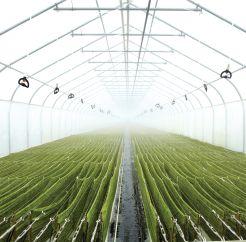
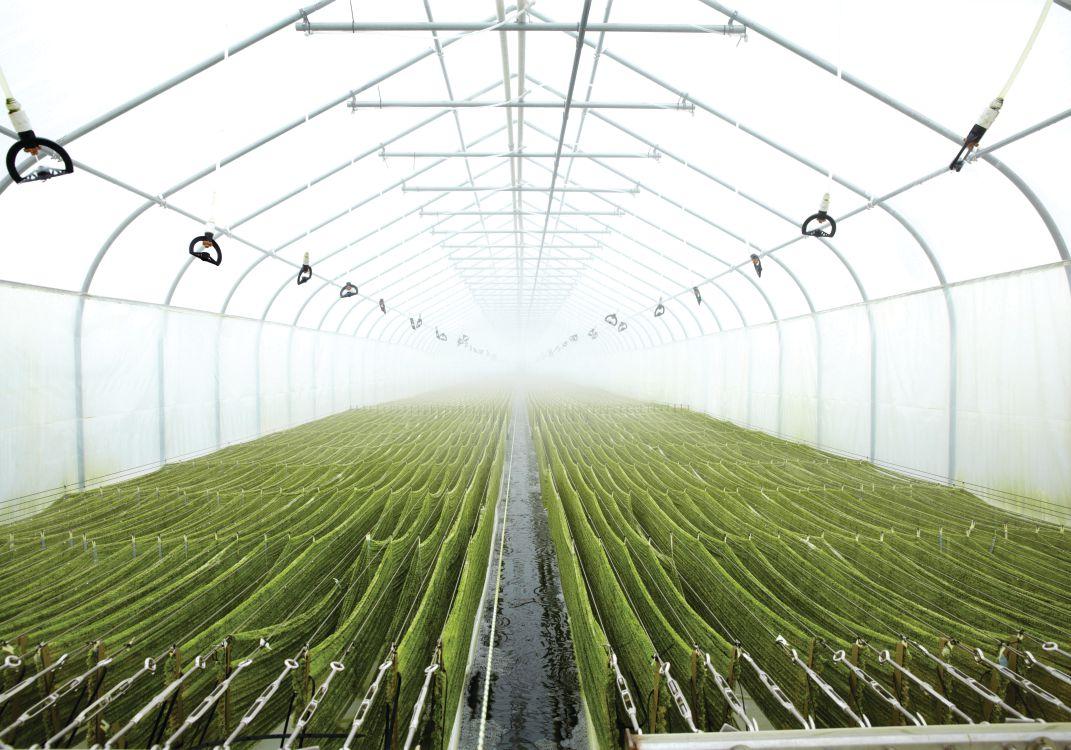
ABOVE: Algae growing in one of BioProcess Algae’s Grower Harvesters. The company’s CEO says this technology is similar to a crop-based system.
Photo:
he says. This factor makes the process especially appealing to companies who are trying to reduce their carbon footprint.
Companies such as Pond Biofuels, based in Toronto, have capitalized on industrial smokestacks to feed carbon dioxide directly into a photobioreactor to grow algae. Pond Biofuels did not respond to multiple interview requests, but the CBC reported in December that Pond Biofuels has partnered with U.S. Steel in Nanticoke, Ont., in addition to a previous partnership with St Marys Cement in St. Marys, Ont. By tapping into the companies’ smokestacks, Steve Martin, the CEO of Pond Biofuels, says both U.S. Steel and St. Marys Cement are helping keep greenhouse gas emissions out of the atmosphere while producing biomass and biofuel.
Even with the carbon dioxide component covered, light can be a major obstacle to large-scale commercialization, especially in Canada where the climate isn’t ideal to grow algae. Artificial light can be an option to supplement natural sunlight, but could this hinder sustainability?
ALGAE-FOCUSEd RESEARCH
Enter the researchers. Dr. David Levin is a researcher at BioFuelNet, a network of researchers from 25 Canadian universities, partnering with industry and government, and focused on developing processes to
create next-generation biofuels from biomass. Levin, based in Winnipeg, leads the prairie platform in Manitoba, which focuses on microbial conversion of biomass to next-generation biofuels, primarily drop-in fuels that have chemical properties similar to petroleum-derived fuels.
There are eight researchers working on algae-related projects within BioFuelNet, with research focusing on areas such as using plant hormones to stimulate algae growth, determining how to stimulate cells to grow at a higher density (thus stimulating higher production of oil), finding novel ways to extract oil from the cells and finding cold-adapted strains of algae that produce lots of biomass at lower temperatures. Levin summarizes the reasoning behind the research simply: “We’re doing algae work largely because everyone else in the world is focused on algae.”
Levin recognizes algae’s potential doesn’t come without major challenges, particularly climate. “You can’t grow algae in outdoor ponds in the winter in Canada,” he says. “So how do you grow it in a photobioreactor indoors, where you can control the temperature and the light and still have high levels of productivity in terms of biomass, and high levels of production of the product of interest – the oils?”
A northern climate isn’t idea for algae growth, but one company has found a way
to work around the weather. Based out of Portsmouth, R.I., BioProcess Algae has developed a hybrid production system called Grower Harvester technology. Tim Burns, the CEO of BioProcess Algae, describes the crop-based technology as an industrialized greenhouse bioreactor that grows algae without water. The company is working on carbon utilization projects in Ohio and Pennsylvania, and has been running a demonstration plant at Green Plains Renewable Energy, an ethanol facility in Shenandoah, Iowa, since October 2009. The bioreactor taps into Green Plains’ fermentation process and waste heat to feed into the Grower Harvesters. On a one-acre area, Burns says, the reactors house about 40 times the surface area of open ponds growing algae in Hawaii. The reactors are seeded, similar to planting, and carbon dioxide waste heat is introduced.
Because the Grower Harvesters are phototrophic systems, sunlight is necessary, and Burns recognizes that steady sunlight during an Iowa winter isn’t a given. He doesn’t believe in using artificial light: “Artificial light creates more carbon dioxide than could ever be removed,” Burns says. Further, the economics don’t support supplementing with artificial light, as the cost of lighting outweighs the return. “You’d have to be in exotic products with small niche markets; nutraceuticals, for instance.”
BioProcess Algae’s Grower Harvester algae bioreactors at the Green Plains Renewable Energy ethanol plant in Shenandoah, Iowa, were inoculated last October and are fully operational and producing algae.
Photos: BioProcess Algae/Green Plains Renewable Energy
Instead, BioProcess Algae works with whatever sunlight it has, and adapts its expectations – and processes – to meet reality. Harvesting happens more often in the summer, every day or every second day. In the winter, harvesting occurs every five to seven days. “Because you have different Grower Harvesters, it almost becomes a continued system,” Burns says. “Each day you might be harvesting a different row or reactor.” With monocultures like soybean and corn, only one crop season is present, and a summer heatwave or the onset of disease presents challenges. “With algae you can plant and replant and put a new strain in and grow a different crop.”
COMMERCIALIzATION ANd INTEGRATION
In terms of commercialization, the protein market is the main focus of BioProcess Algae, but Burns says producing biofuel is a longterm goal. “In the United States, they’re moving ahead with commercialization in a big way,” Levin of BioFuelNet says, referring to such companies as Solazyme (based in California) and Sapphire Energy (working out of California and New Mexico), who are growing large quantities of algae for large-scale algae jet fuel projects for commercial and military uses.
On a smaller, local scale, Levin sees disconnect in terms of the need for fuels and the value of fuel as a product, compared to the value of other algae-related products. “Everything depends on the price of oil,” Levin says. “When oil is at $80 per barrel, alternative
energies aren’t very competitive. When the price jumps to $120 per barrel, all bets are off – there might be a market for algae biofuel. It’s a difficult thing to resolve until the demand is much higher and you can compete. Right now, it’s not very competitive.”
Levin says the market will also depend on economic incentives. “If there’s a carbon cap-and-trade, then carbon capture and displacement of fossil fuel combustion becomes economically important. But it’s not likely that we’ll have this in Canada, so these projects become more focused on greenhouse gas reduction.”
In Levin’s eyes, algae’s real potential is in integration – a system that incorporates several end uses from algae will be most profitable. “The idea of just growing algae and making one product is not going to be economically viable. You need to have high-value products to offset the low-value products.”
Meantime, it’s safe to say the push for algae biofuel isn’t letting up any time soon. Researchers will continue to search for a coldhardy strain, and companies will continue to develop carbon conversion projects. But in a way, Levin’s perspective sums up algae’s long-term potential: where light and carbon dioxide are necessary for algae’s growth, a demand for the product is necessary for its commercial success.
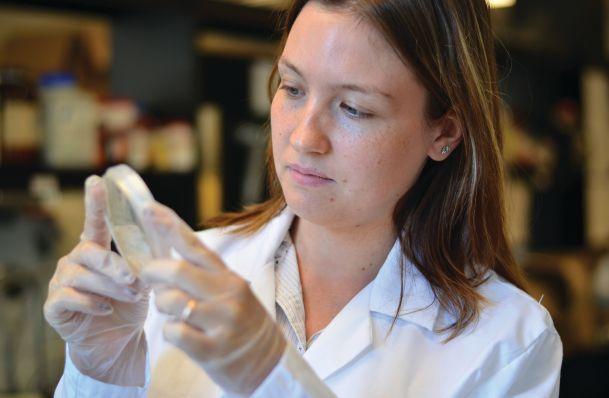
Researchers at BioFuelNet are working to find a cold-hardy strain of algae that is easier to grow in northern climates.
Researchers at BioFuelNet are working on different algae-related projects, including finding cold-adapted strains of algae that produce lots of biomass at lower temperatures.
Photo (Right): BioFuelNet
Growing the Domestic Market
Biomass appliance makers note that growing the domestic market means converting one home, business or municipality at a time. A company in Maine is doing just that.
By Scott Jamieson
Youcan’t expect many homeowners or business managers to convert to pellet heating until you get them thinking about it like any other central heating option.
That was the take-away message of Maine Energy Systems’ Dr. William Strauss at the Canadian Wood Pellet Heat Conference, held in Quebec City Feb. 27-March 1. Hosted by the Wood Pellet Association of Canada and Q-WEB, the three-day event wrapped up with a look at successful case studies. The darling of the crowd was MES.
The progressive renewable heating company out of Bethel, Maine, has invested considerable time and money in creating a viable pellet heating market, and now counts over 650 clients on its regular bulk delivery route. It services both single-family dwellings and commercial/municipal buildings. Dr. Strauss, who is also president of bioenergy consulting company Future Metrics, shared some other key take-aways for creating pellet and appliance market demand:
• Growing this market is as much about changing mindsets as having the right appliances and delivery systems in place (although they are also key). The company runs both professional print and TV ads regularly to convey that cozy feeling to consumers. See some spots at http://www.canadianbiomassmagazine.ca/content/view/4005/57/.
• As domestic energy suppliers, we’re in the consumer sector, so act like it. Advertise, employ a sales staff, and offer financing that’s hard to resist.
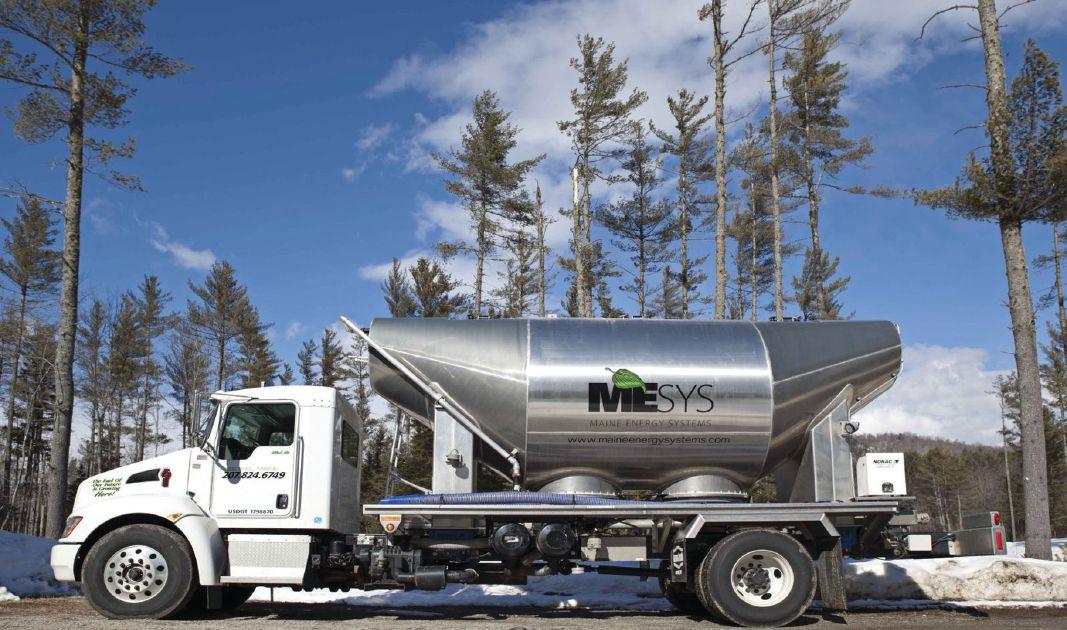
• Invest in proper pneumatic delivery systems – don’t use a modified or jobber system that will deliver dust. “You have to invest in a proper pneumatic delivery truck with the first client – that’s not an attractive use of capital, but it is essential,” Strauss notes. MES’ two purpose-built trucks (one pictured above) are running full out to manage the com-
pany’s clients, and the company is looking at adding a third.
• New England is a vast potential market, with upwards of 10 million homes off the natural gas grid. Forget being green: this is about consumers saving green by converting from oil, propane or electric. MES markets the economics of bioenergy.
• Take ownership of the entire value chain if possible, including training your service/install network, to convince homeowners pellets are a safe, reliable, easy option. MES runs workshops monthly and has created a certified network of 600 installers.
• Pellet durability is key for home/business delivery. Work with pellet manufacturers to get the right pellet. Some form of mandatory quality certification is essential to industry growth.
• Your heating alternative should be as easy to own and operate as an oil furnace. MES uses Austrian boilers that include thermostat controls, auto-feeding, bulk delivery and storage, clean ash removal just a few times per year (with e-mail reminder), and very low emissions (comparable to modern oil boilers).
• Much of the talk around bioenergy involves transport fuels and power generation. The reality is that heat is a significant energy use in the northern United States and all of Canada. We need to ensure policy makers get that too.
• Creating a new market is hard work that takes time and money, but someone has to do it.
Several of the conference speakers and audience members raised concerns regarding ease of appliance use, improper installation, pellet delivery and public knowledge. It seems MES has many of the solutions in action. For more reports from the conference, visit Web Exclusives at www.canadianbiomassmagazine.ca. •
Biomass Boiler Buyers Guide
NExTERRA SySTEMS CORP.
www.nexterra.ca
Nexterra is a leading provider of plant-scale energy from renewable waste systems that
generates energy and fuels for a range of customers, including district energy providers, industrial process plants and independent power producers. Nexterra systems integrate seamlessly with customer operations, providing both environmental and operational advantages, including high reliability and class-leading emissions performance. These systems convert local, renewable waste feedstocks into clean burning “syngas” that can be used as a substitute for natural gas and other fossil fuels in a range of applications. In addition to continuously improving its core gasification technologies, Nexterra has developed a syngas cleaning and conditioning system that produces engine-grade syngas. This enables the gas to be directly fired into an industrial internal combustion engine. Nexterra is also conducting research on the potential for high-value fuels and chemicals from syngas.
LOCATION BIOÉNERGIE INC.
www.locationbioenergie.com
Location Bioénergie provides biomass-fired boiler systems for rental. They range from 1.5 to 9 MW, with water-tube or fire-tube boilers (low or high pressure) for process or heating. The fleet of mobile units of different power meets the various needs of commercial, industrial or institutional clients. The company’s solution allows its clients to meet a temporary increase in the demand for hot water or steam. It is also the best solution to keep producing or heating during a shutdown of an existing boiler.
kMW ENERGy
www.kmwenergy.com
KMW Energy Inc. has more than 130 installations worldwide and the expertise to design and engineer customized bioenergy systems to meet your thermal heat and electric energy needs today and in the future. Our bioenergy systems are built to suit a wide range of applications including sawmills, remanufacturing facilities, hospitals, schools, pulp and paper mills, power utility plants, cogeneration facilities, district heating, and greenhouses, utilizing a variety of wood, agricultural or municipal solid wastes. KMW’s proprietary moving
grate combustion system is the most fuelefficient system available and translates into dramatic saving for your organization. KMW Energy Inc. is a full-service company. We can take your project from concept to completion; fuel testing, feasibility studies,
system design, component fabrication and installation. KMW takes responsibility for the entire biomass system, from fuel handling, to hot water, thermal oil or steam boilers through to automatic ash disposal and on to turbines and generators.
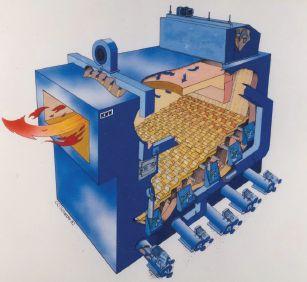
Ideal Combustion offers biomass gasification combustion technology with horizontal reciprocating grate furnaces in the range of 150 kW to 30 MW thermal and cogeneration capacity from 1 to 5 MW electric. The systems are suited for greenhouses, schools, hospitals, sawmills, and more. They accept any type of fuel, and up to 60% moisture content. The systems feature hydraulic ram biomass feeders for trouble-free operation, double combustion chambers, automatic boiler tube cleaning and ash removal systems, and fully computerized controls with VFD. Little headroom space is required. The systems use biomass gasification technology for cleaner combustion gases, and have high overall efficiency due to the cleanness of the exchanger. The systems are compatible with any type of heat exchanger, including steam, hot water, thermal fluid, and hot air.
VIESSMANN MANUFACTURING
COMPANy INC
www.viessmann.ca
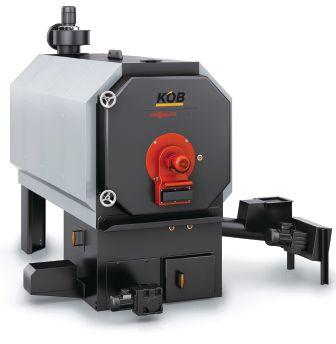
Clean burning and efficient, Viessmann biomass boilers offer state-of-the art safety equipment and fully automatic operation in an efficient, environmentally friendly solution suited to a broad range of commercial and industrial applications. Viessmann Pyrot (512 to 1843 MBH) and Pyrotec (1330 to 4268 MBH) wood-fired boilers feature advanced combustion technology to match the quality of modern gas combustion while generating comparable CO and NOX emissions. When outfitted with Viessmann digital modulating output controls, these boilers achieve an excellent efficiency up to 85%, making them ideal for integration with renewable energy systems that may also incorporate Viessmann gas/ oil-fired boilers (for peak loads/biomass boiler backup), solar systems and DHW storage tanks. All Viessmann wood-fired boilers are built to ASME, Section IV requirements and have been tested to CSA/ UL Safety Standards.
HURST BOILER ANd WELdING CO., INC.
www.hurstboiler.com
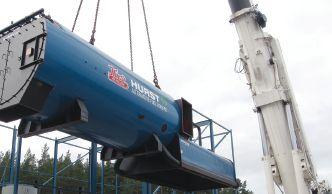
Hurst Boiler Co. specializes in the manufacturing of modular biomass boiler systems with outputs ranging from 28 kW to 52 MW thermal. Boiler vessel designs (CRN registered) include firebox, vertical tubeless, hybrid water/ fire-tube, and water-tube. Operating pressures range from 15 to 900 psi, with steam superheat available. Modular biomass thermal to electric cogeneration systems are offered in 250 kWe, 500 kWe, 1 MWe, 3 MWe and 5 MWe packages. Hurst manufactures seven different types of biomass stoker/gasifiers, which have used almost 2,000 different types of biomass fuels over the last 40 years. Hurst has grown with more than 350 employees, becoming an experienced, reliable, and stable biomass thermal system supplier.
PRATT & WHITNEy www.pw.utc.com
Krann offers biomass boiler systems in 1 to 20 MW range for both hot water and steam, powered by Krann gasification furnaces. Typically, no filters are needed for flue gases handling because of the low emission levels. These systems can be used to generate electrical power through either the steam turbine or the ORC module. Fuels used include hog fuel, shavings and recycled wood waste, with moisture content up to 60%. Applications for the systems include sawmills, greenhouses, drying facilities, municipal buildings and hospitals. Systems are turnkey, fully automated from fuel storage to exhaust.
is committed to providing clean, efficient and reliable power within the renewable energy market. Pratt & Whitney PWPS’ Organic Rankine Cycle (ORC) power plants provide heat to electric power generation for biomass, geothermal, heat recovery, and concentrated solar applications. Our biomass ORC systems for cogeneration allow simple and highly efficient production generation of electric power and heat with sizes ranging from 1 kW to 10 MW. PWPS’ ORC products include benefits such as 24/7/365 remote control and monitoring, 195°F to 660°F (90°C to 350°C) temperature range, and standardized components and assembly processes.
WELLONS
www.wellonsfei.ca/www.wellons.ca
Wellons, Wellons Canada and Wellons FEI are all part of the Wellons group of companies, supplying the North American market with wood fired energy systems and dry kilns for the past 40 years. Wellons FEI supplies energy systems using a stepped grate technology with a fully automatic ash extraction system. Capacity of the systems we build is appropriately sized for medium- and large-sized district heating systems such as hospitals or a university campus. Applications include process
Pratt & Whitney Power Systems (PWPS), a division of United Technologies (UTC),
kRANN
and space heating using hot water, steam or thermal fluid. Wellons offers woodbased cogeneration solutions as well, and some of its units can and have been used as hot gas generators to send energy to rotary dryers in order to dry wood fibre for pellet plants.
WOOd ENERGy SOLUTIONS
www.woodenergysolutions.co.uk
A new range of pellet boilers has arrived on the Canadian market from Irish manufacturer WES (Wood Energy Solutions). E-COMPACT pellet boilers offer advanced boiler technology, which allows the installer to use the existing infrastructure to heat the property in a cost-effective and comfortable manner. WES offers a “best in class” automated pellet boiler that requires minimal maintenance each month. The E-COMPACT boilers are more than 90% efficient. Boilers range in outputs from 28 up to 250 kilowatts, so they are suitable for small dwellings to large commercial buildings. All E-COMPACT boilers sold in Canada are manufactured to ASME Code and are UL/CSA certified. E-COMPACT pellet boilers are available in Canada through Compact Appliances Inc., Sackville, New Brunswick, and J&R Mechanical in Yellowknife, Northwest Territories.
COMBUSTION ExPERT INC. www.combustionexpert.com
For over 15 years, Combustion Expert Inc. has manufactured biomass-fired boiler systems from 200 kW to 30 MW and greater. It designs fully automated systems that use any type of woody biomass as fuel, from pellets to barks with 55% moisture content and more. Whatever the needs are, hybrid boiler, water-tube or fire-tube boiler, low or high pressure, Combustion Expert creates a custom unit for every client., including industrial, commercial and institutional.
EVENTS BOARD
STOLBERG ENGINEERING LTD.
May 6-10, 2013 • Ligna 2013 Hanover, Germany www.ligna.de/home
JUNE 3-7, 2013 • European Biomass Conference Copenhagen, Denmark www.conference-biomass.com
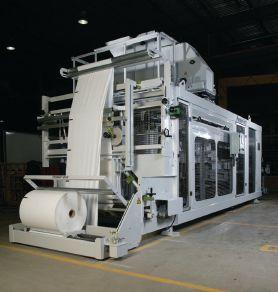
The FFS Series Horizontal Form Fill and Seal (FFS) Bagging Machines from Premier Tech Chronos are fully automatic systems which make their own bags from rolls of pre-printed, center-folded polyethylene film (U film). They are intended to package a wide range of loose fill materials such as wood pellets in bags ranging from 4.5 to 100 quarts (5 to 110 liters). It is equipped with a pneumatic closing mechanism on bag top drive belts providing many operating advantages such as greater safety, easy access to sealer components and over fill bag detection. It is a proven technology providing constant production rates of up to 35 bags per minute. There is only one control panel for all electrical components. Premier Tech Chronos offers a wide range of bag options: top patch handle, bottom patch handle, bottom patch, die cut handle, etc. These form fill and seal baggers can be integrated upstream from either a weighing or a volumetric feeding system, and downstream from conveying and palletizing systems.
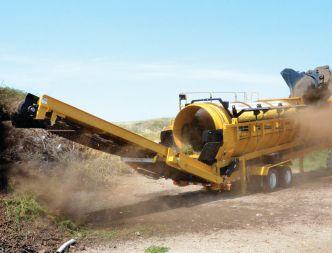
WILDCAT TROMMEL SCREEN
Vermeer introduced a newly enhanced trommel screen that puts more control in the hands of the operator and more power to produce a quality end product. The TR521 trommel screen by Wildcat, a Vermeer Company, is now available with a Tier 4i engine and additional features designed to process mulch, compost and pre-screen green waste material with high moisture content. Operation is intuitive with the Vermeer ACS control system. The TR521 can be controlled through either the Vermeer DP10 display, which is mounted on the machine’s control panel, or with a handheld transceiver remote. This allows the operator to have complete control of the trommel whether standing nearby or operating from the loader. A new feature on the TR521 is quick-change screens, which are designed for quicker and simpler screen changes. This is especially important when processing a wide range of materials that require different screen sizes.
Green Growth
GThe global wood pellet market outlook looks bright for Canadian producers.
By Gerry Van Leeuwen
lobal markets for wood pellets are projected to grow by 200 to 300% from 2012 to 2020 – from 16 million tonnes to 40-50 million tonnes.
Forecasts indicate that Europe will remain the major market for wood pellets – at about 25-30 million tonnes in 2020 compared to 12 million tonnes in 2010. An important market change expected during the next eight years is the huge consumption growth forecast for the Asian market – from less than one million tonnes in 2010 to about 15 million tonnes in 2020.
As global wood pellet production increases, it is becoming clear that low-cost pellet production regions are becoming the major pellet exporters. The question of which low-cost production regions will evolve to supply the growing markets will depend to a great extent on the global competitiveness of the two major cost components of every pellet manufacturing plant: delivered raw material cost and transportation costs to market.
EUROPEAN MARkET dEVELOPMENT
Growth of the European Union wood pellet market is the result of a number of government mandated energy targets, such as the EU’s “clean energy” policy adopted in 2005 that set a 20% reduction in greenhouse gas (GHG) emissions and a minimum of 20% renewable energy consumption by 2020. U.K. targets for 15% of total energy consumption to be produced from renewable energy forms by 2020 and a mandate that 35% of electricity supply must be renewable, have also helped spur exports.
U.S. MARkET dEVELOPMENT
Until five or six years ago, U.S. pellet demand was limited to residential and institutional heating markets in mainly the U.S. North East. In the last few years, a rapidly expanding wood pellet industry has sprung
up in the U.S. South to fill growing European industrial demand from a relatively cheap and abundant wood supply source combined with the advantage of low shipping costs.
Growing wood pellet production capacity in the U.S. South made the U.S. the largest wood pellet exporting country in the world in 2012, when U.S. exports exceeded Canadian exports for the first time. U.S. export volumes are forecast to nearly quadruple by 2015.
CANAdIAN MARkET dEVELOPMENT
In Canada, 65% of the country’s pellet production capacity is located in Western Canada (mainly British Columbia) and 35% is located in Eastern Canada (mainly Quebec and New Brunswick). The B.C. mills are mainly focused on overseas exports (about 85% of shipments). Eastern Canadian pellet mills mainly sell their production in bags in Eastern Canadian and U.S. Northeast wholesale/distributor markets. Just three of 21 plants in Eastern Canada exported pellets overseas in 2010.
In 2011, Canadian offshore exports equaled about 60% of total pellet production. Offshore exports from both Western and Eastern Canada are forecast to continue to grow, though not at the explosive rate being witnessed in the U.S. South.
SOUTH kOREA MARkET dEVELOPMENT
Although South Korea is a small country, it is the world’s 10th largest energy consumer, fifth largest oil importer, and second largest coal importer. It currently produces about 65% of its electricity from fossil fuels. South Korea has become serious about reducing greenhouse gas emissions and has committed to a 30% reduction in CO2 emissions from 2010 levels by 2020. In addition, the Korean government has introduced renewable portfolio standards that require coal-
fired power generators to begin producing a minimum of 2% renewable energy by 2012, increasing by 0.5%/year until 2020, at which time they will be required to produce a minimum of 10% renewable energy. It is expected that at least 60% of renewable energy will come from wood biomass, leaving about 40% for other sources.
JAPAN MARkET dEVELOPMENT
Since the Fukushima nuclear accident in 2011, the Japanese government has been reviewing the country’s energy and resource development policies. The policy direction that the government is indicating it will follow during the next 10 to 20 years includes obligating utilities to use renewable energy; increasing non-fossil fuel energy utilization to 50% and increasing the zero GHG emission power supply from 34 to 70% by 2030.
CHINA MARkET dEVELOPMENT
Although very few specific renewable energy policies have been announced by the Chinese government so far, China’s 12th five-year p lan allocates 4.75 billion RMB (US$750 million) in direct subsidies, incentives and tax exemptions to build 200 green energy demonstration projects by 2015. In addition, China has set a biomass energy production goal equivalent to 50 million tonnes of coal by 2012.
Although the five-year plan does not indicate specific types of green energy projects to be undertaken, it is assumed that China will move to include significant volumes of wood pellets in the production of biomass energy to replace coal. China has set the development of sophisticated, nextgeneration biomass energy plants as the key part of its renewable energy plan.•
Gerry Van Leeuwen is vice-president at International Wood Markets Group.