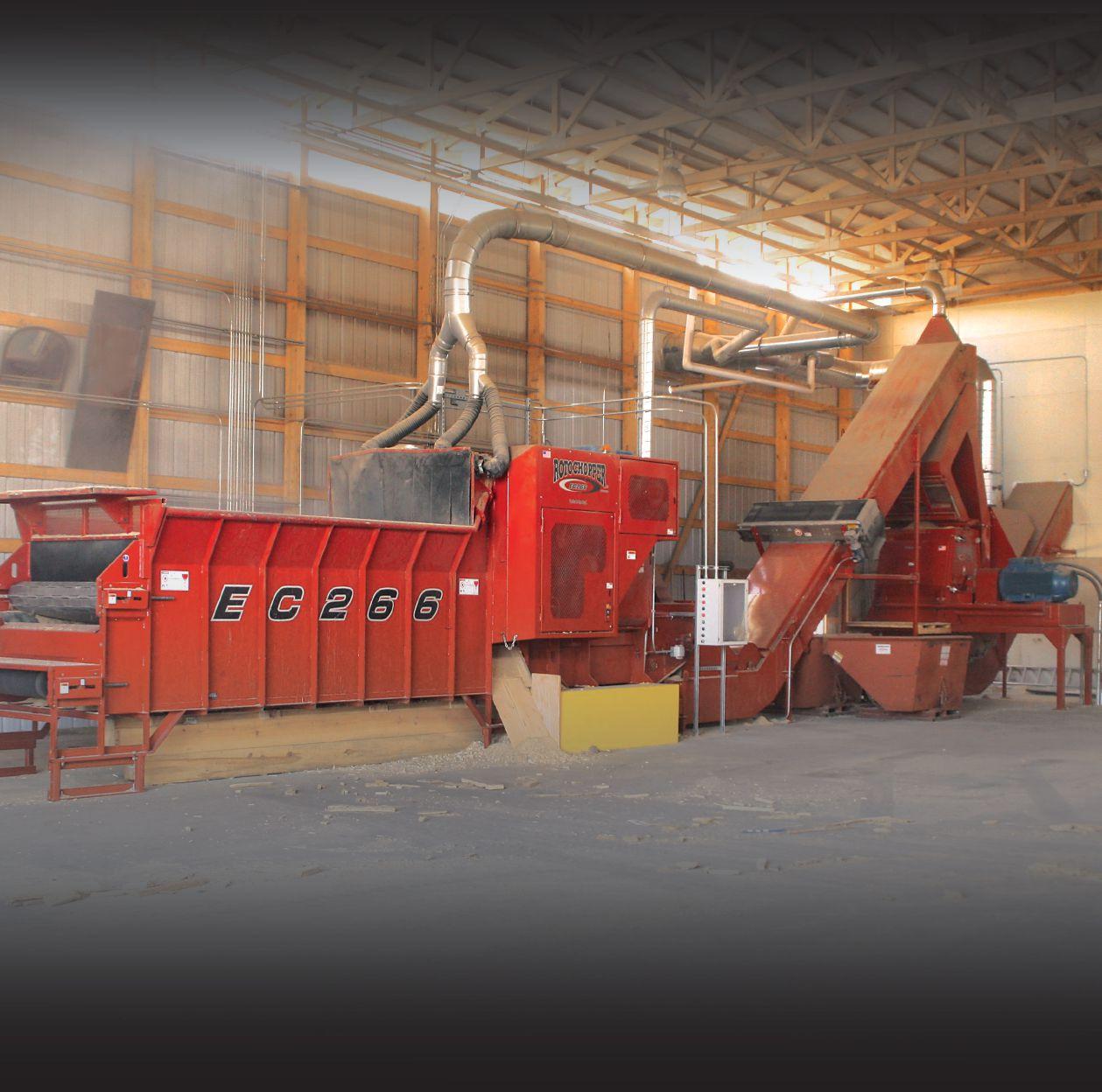
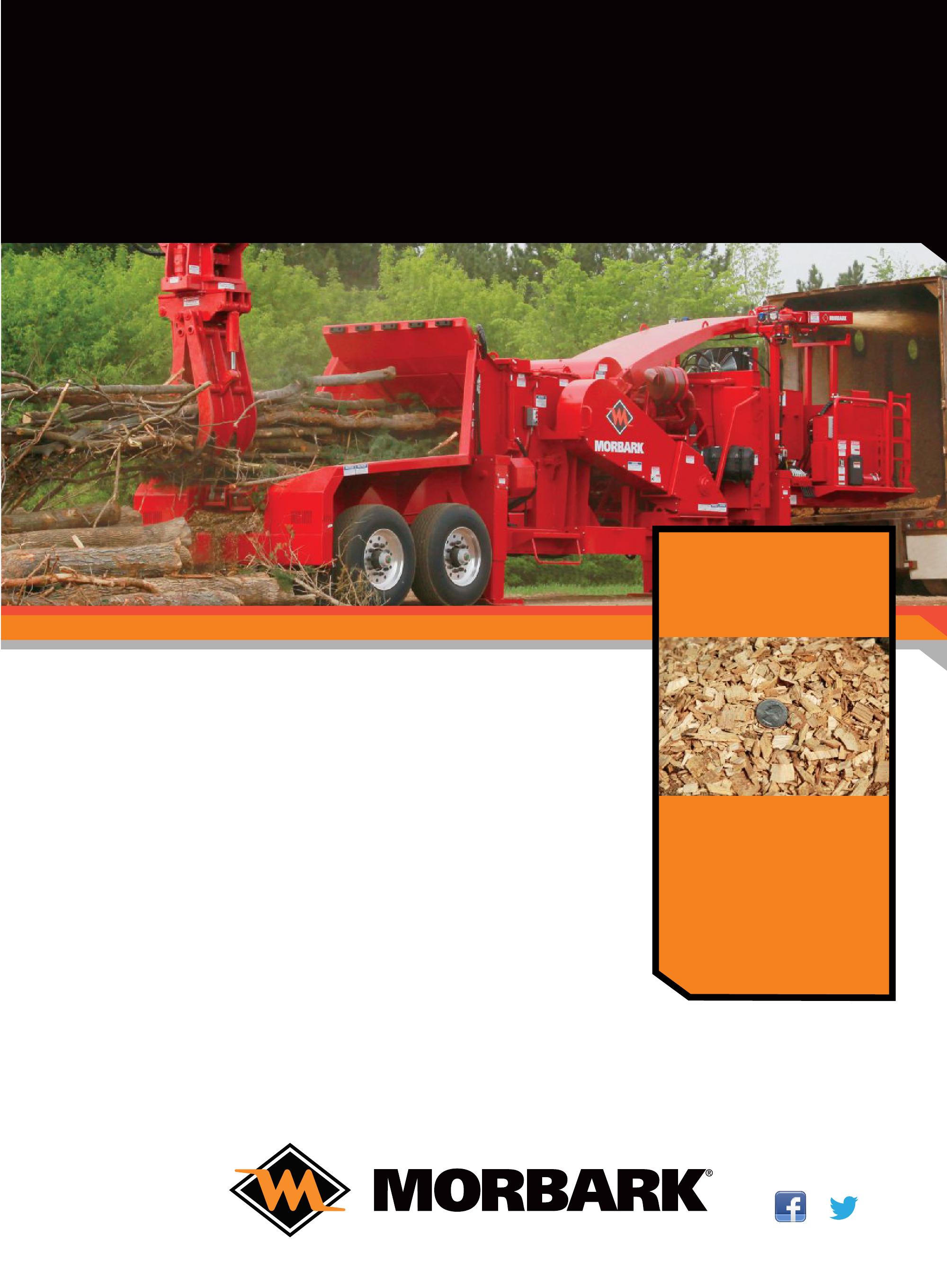
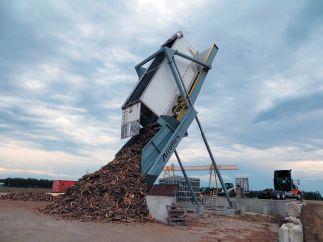
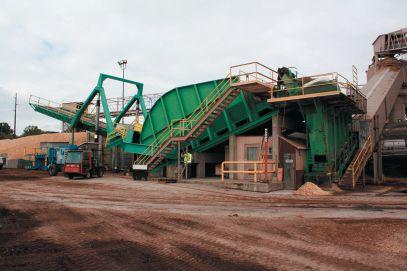
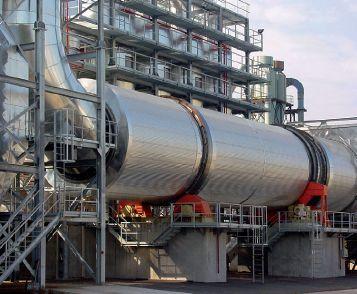
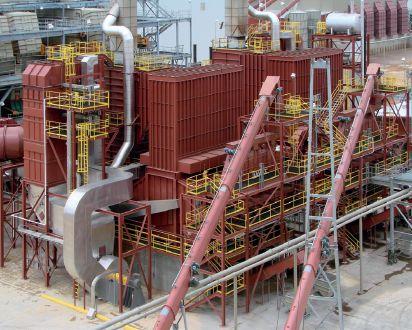
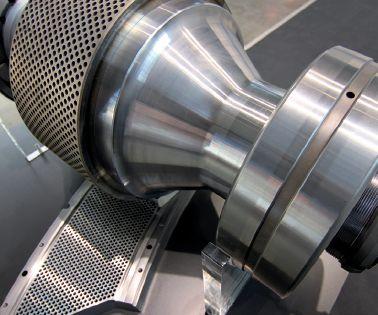
Rotochopper multi-stage grinding systems offer singlepass simplicity for producing animal bedding and short fiber fuels. Wood waste goes into the primary grinder and comes out of the in-line hammermill at finished specifications—no additional handling or hassle. How
• Unmatched particle size control
• Lowest cost per cubic ton
In-Line Hammermill
CANADIAN BIOMASS
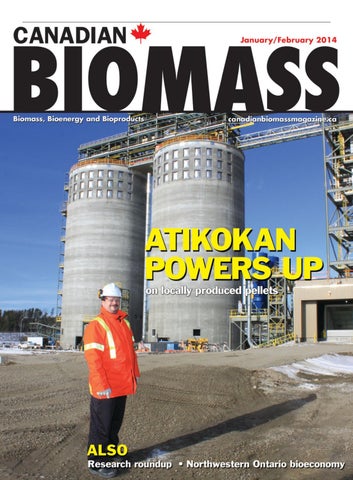
14 Localized power sets Atikokan buzzing
With the OPG Atikokan switch from coal to biomass, reverberations are felt throughout the community.
18 Waste not, want not
The bioeconomy is heating up in Northwestern Ontario as the temperature drops.
25 Leading the industry forward
Taking a look at practical biomass projects across the country that are helping the industry make strides.
28 CRFA summit recap
The biofuel industry is looking for stability.
“Access to Crown land, access to fibre, building codes, air emissions – there’s a whole slew of anti-wood regulations out there.”
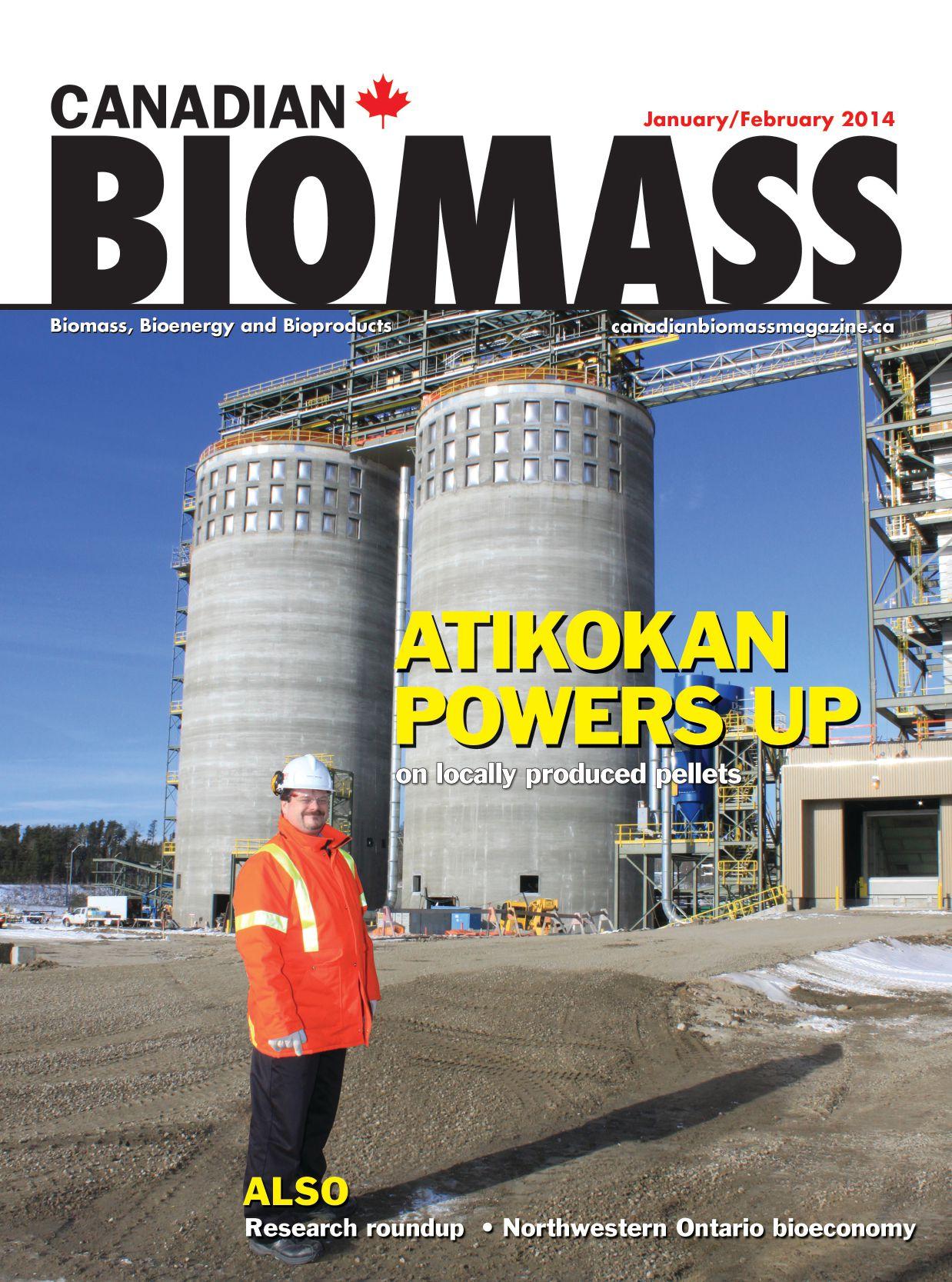
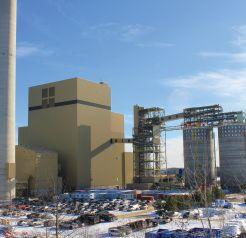
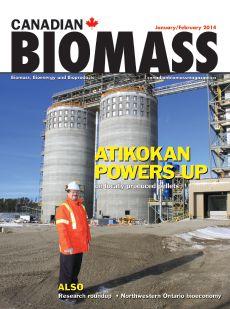
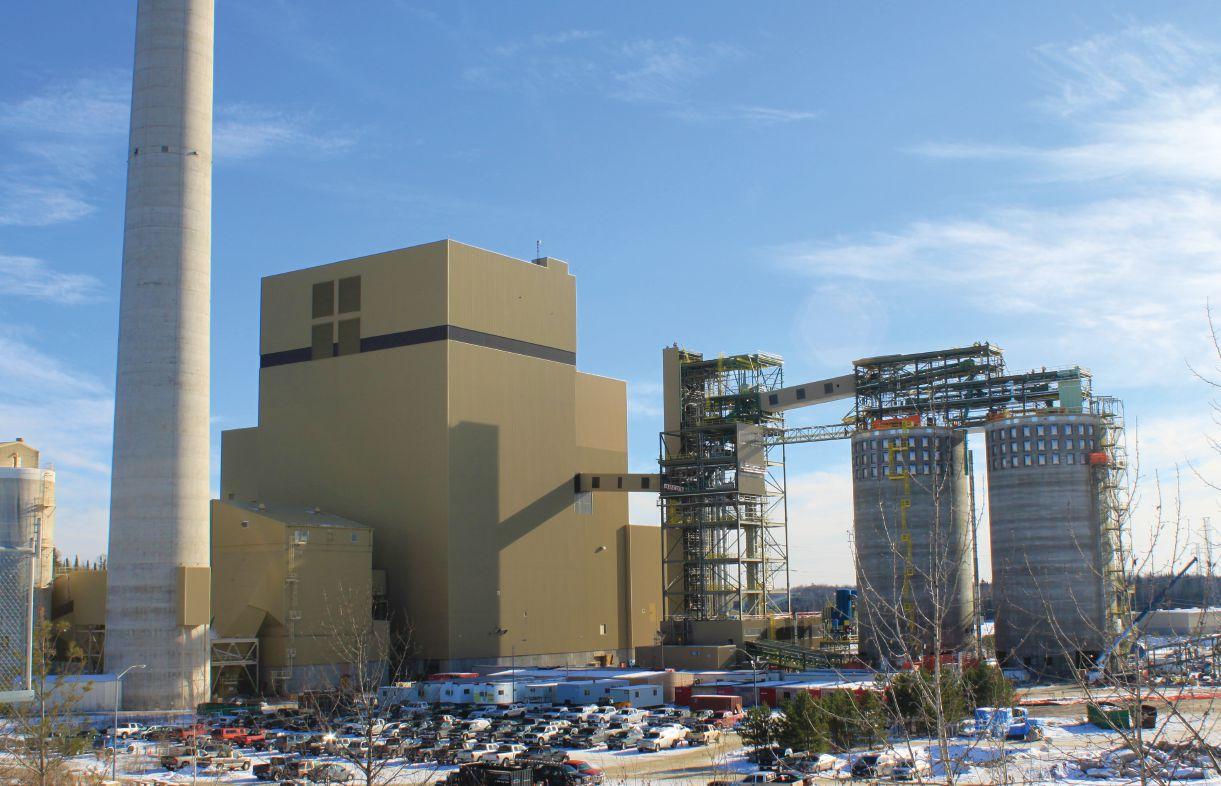
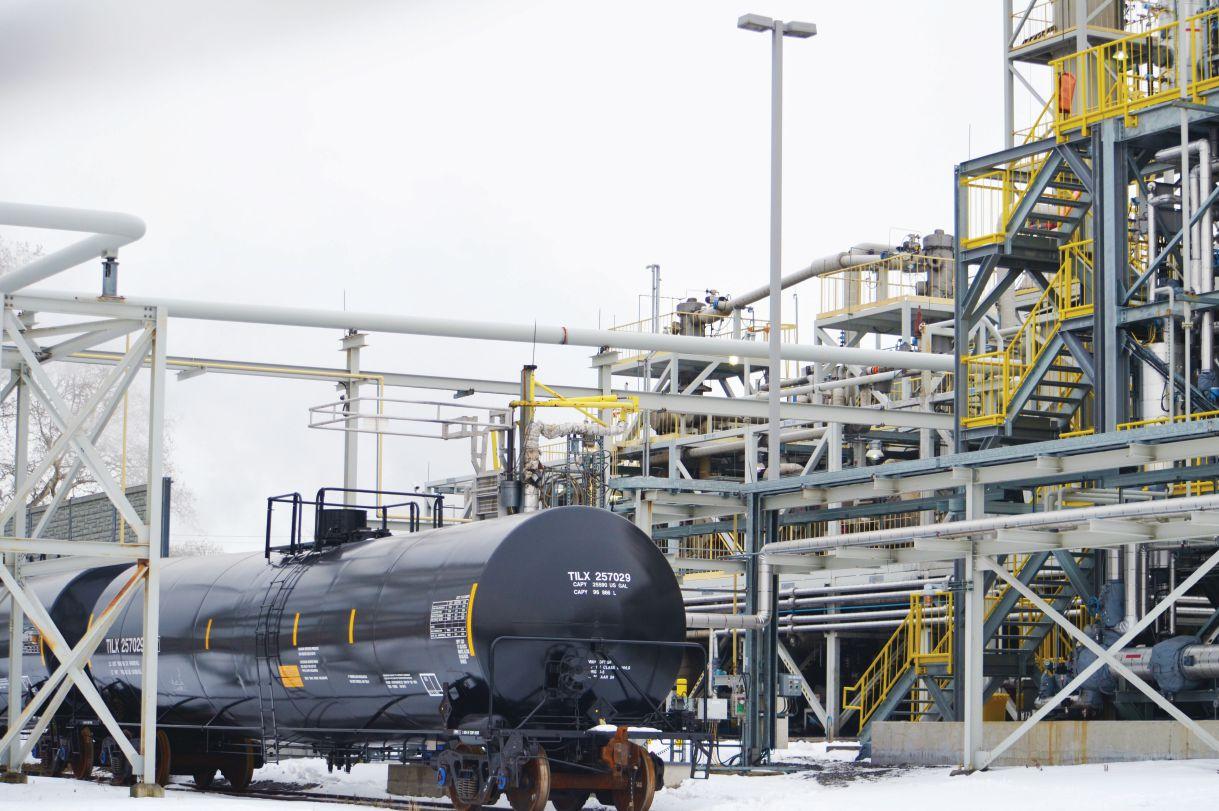
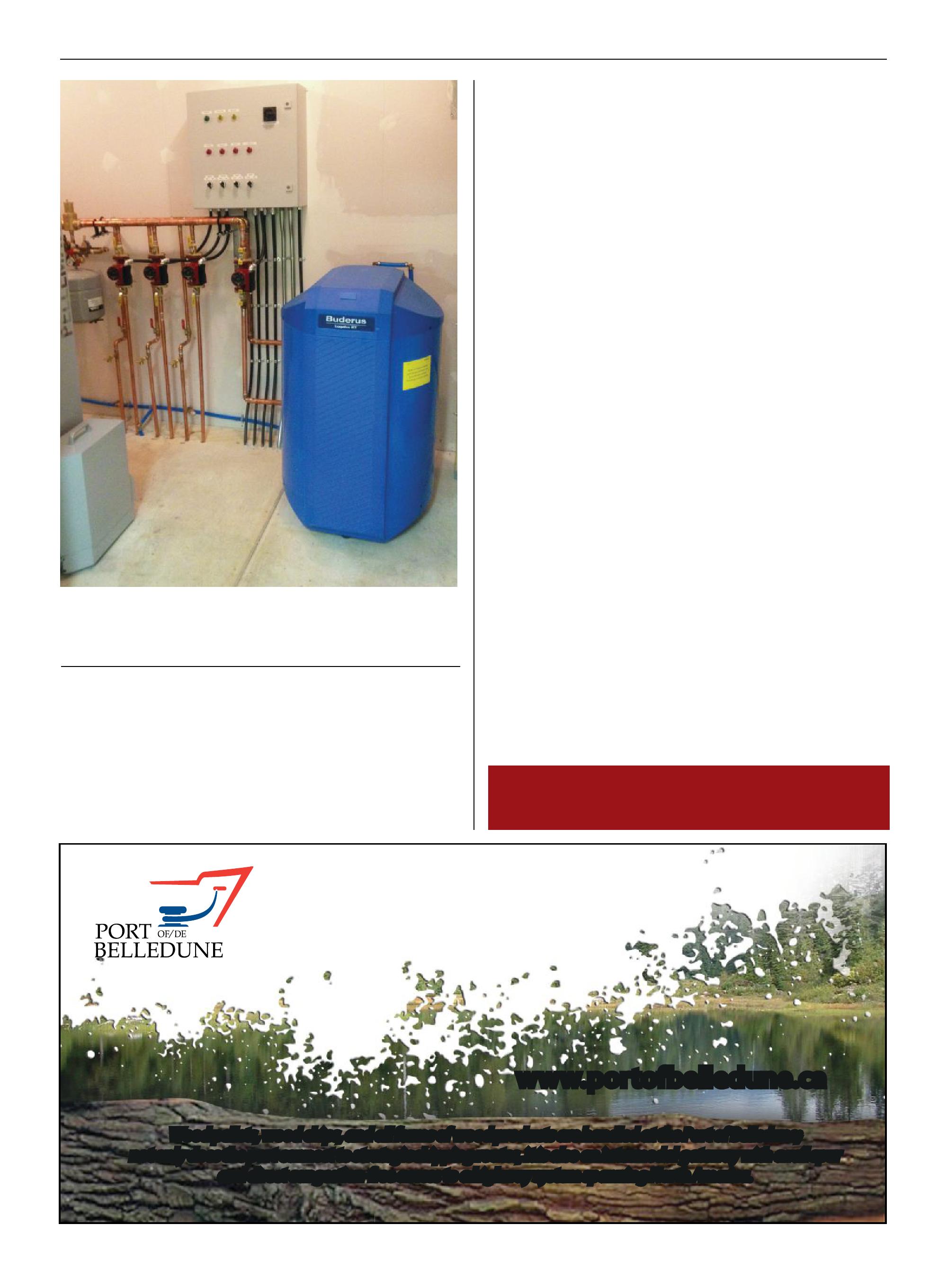
The Atikokan Generating Station embarked on a first-of-its-kind conversion to biomass when the provincial government announced that it would no longer use coal for energy production. Photo by Amie Silverwood/ Canadian Biomass. Full story on page 14.
BECAUSE SIZE & QUALITY MATTER.
The demand for biomass energy is growing. Size and quality are important to the power plants
Bandit whole tree chippers are known for producing high quality chips. Bandit chippers can produce a microchip 1/4”, 3/4” standard or 1-1/2” maxichip. Our unique card breakers remove oversized pieces, providing you with the exact chip you need, every time. Combined with Bandit’s legendary ruggedness and unstoppable production, it’s no surprise these machiens are #1 in the woods.
So let Bandit take you to the top of the biomass market: call your local Bandit representative to schedule a demonstration today!
Beast® Horizontal Grinders
oPlenty of pellets
Northwestern Ontario has biomass to burn.
n a recent trip to Thunder Bay, Canadian Biomass had the opportunity to meet with several people involved in the emerging bioeconomy in Northwestern Ontario. This is a fertile wood basket in the centre of the boreal forest. Much of the economy is fed by the forest and though the recent downturn in the forest industry has meant sawmill closures, pulp and paper mills shutting down and skilled employees looking to other industries for work, it was great to see the industry is ramping back up at a healthy pace.
There’s great news in the region for the biomass industry as well. Atikokan’s power plant has fired up a few test runs and will be fully functional in the middle of this year and the news has recently been announced that the Thunder Bay coal plant will undergo a transformation to burn advanced biomass (see page 14 for details).
Why not? It makes a lot of sense for the region to use residual forest waste to power the facilities. The pellets come from sawmill waste or from trees that would otherwise be burned or left in the forest. Transportation isn’t an issue since the pellets can be made from local sources and trucked the short distance to the power plant. As other sawmills reopen, there will be more waste that can be collected and put to good use.
Canada’s own Atikokan Generating Station is the largest biomass-fuelled power station in North America. OPG (formerly HydroOne) has been looking at biomass as a potential fuel since the 1970s. It partnered with a number of universities and the province invested $4
million to look at heat, procurement and supply chain issues, mercury emission modelling, and test runs. The plant is set up to potentially do test runs – sending 30 tonnes of biomass directly from the truck into the boilers for observation and research.
When Canadian Biomass visited the facility, Brent Boyko, the Director of Business Development for Atikokan Generating Station, said it has been drawing a lot of attention from interested parties throughout North America. He has hosted a number of tours and he’s open to hosting many more going forward.
Deep in the forest of Northwestern Ontario, forest waste products can be converted into a fuel for power generation. There are many communities throughout Canada that would benefit from a similar system but sawmill residue isn’t the only waste product we have to burn. Wheat shorts, left over after the farmer has harvested the grain, can be pelletized, producing additional revenue for farmers without impacting food crops. We have an abundance of biomass from coast to coast to coast.
The trick is to seize the opportunity in our waste and to heat up discussions at home because the best way to reduce GHG emissions is to create our own fuels close to the facilities that will be burning them.
(Canadian prices do not include applicable taxes) USA – 1 Yr $60 US; Foreign – 1 Yr $77 US
Occasionally, Canadian Biomass magazine will mail information on behalf of industry-related groups whose products and services we believe may be of interest to you. If you prefer not to receive this information, please contact our circulation department in any of the four ways listed above.
FPInnovatIons, Kruger to buIld cellulosIc FIlament Plant
FPInnovations and Kruger Inc. have announced a joint project to implement the world’s first five-ton/day cellulose filament demonstration plant at Kruger’s Trois-Rivières paper mill.
Highly innovative wood-fibre based biomaterials, cellulose filaments (CF), are expected to have an immediate impact on Canada’s forest industry due to their capacity to be integrated into other materials and to their high strength, light weight and flexibility. CF will be used in a wide range of applications as a lightweight-strengthening additive to produce lower-cost commercial pulps, papers, packaging, tissues and towels. Looking to the future, CF may be combined with many materials to create high-value products ranging from flexible packaging and films to structural and non-structural panels in building construction.
The demonstration plant in Trois-Rivières, combined with a concurrent national research program involving FPInnovations and industry, provides a strategic advantage for the production and marketing of this transformative biomaterial. The plant will operate on a simple and efficient chemical-free process developed by FPInnovations that uses only mechanical/refining energy and wood fibres with minimal impact. This, in addition to the fact that the plant can be built with robust and industrially available equipment, will facilitate scale-up to a commercial stage, thus conveying a unique advantage to Canadian companies.
agreement In Place For terrace Pellet Plant
Pinnacle Renewable Energy Inc. and Coast Tsimshian Resources (CTR) have reached an agreement for the development of a pellet plant in Terrace, B.C.
The agreement will see both parties work towards construction of a fibre procurement plant and a joint pellet plant. The location of the plant has yet to be determined.
The Lax Kw’alaams Band, which also owns the largest tree farm licence in the region, owns CTR.
nexterra sIgns contract wIth mwh For u.K. Power Project
Nexterra Systems Corp. has signed a contract with MWH to supply a biomass gasification system for the Birmingham Bio Power Ltd. (BBPL) renewable energy power plant in Tyseley, U.K.
This is Nexterra’s first project in the U.K. after successfully delivering seven commercial plants in Canada and the United States. Export Development Canada (EDC), Canada’s export credit agency, has provided support for this first U.K. project.
The Nexterra gasification system is a cornerstone of the £47.8-million project that will use 67,000 tonnes/year of locally sourced class A to C recovered wood diverted from landfills to produce steam that will be converted into electricity through a steam turbine and generator system. The plant will supply enough electricity to power 17,000 homes and is expected to reduce greenhouse gas emissions (CO2e) by 107,000 tonnes/annum.
Nexterra will design and supply the complete biomass gasification-to-steam generation system from feedstock handling to emission controls, including four gasifiers, a high pressure boiler, and a flue gas treatment system. The Nexterra system qualifies as an Advanced Conversion Technology (ACT) under U.K. legislation, meaning that the power generated by the project will receive the highest band of Renewables Obligation Certificates (ROCs).
vIrIdIs merchants secures FIrst transactIon
Viridis Merchants Inc. has structured its first transaction, just one month after the announcement was made regarding the formation of the new division of Viridis Energy Inc.
Viridis Merchants has secured approximately 30,000 tons of wood pellets from a southeast U.S. producer, representing approximately 30 per cent of the manufacturer’s capacity, to be delivered over the next 12 months to customers in Europe. Viridis Merchants is serving as a principal in the trade, providing additional services to the producer. The first shipment has left port and is headed to the residential market in Europe. This transaction will generate approximately $8 million in annual revenue for Viridis, which will be realized after each recurring monthly shipment, and will be immediately additive to earnings.
elementa to build demonstration facility in ssM
Elementa Group Inc. has reached an agreement through the Ontario Power Authority (OPA) for the construction of a 10MW waste-to-energy demonstration facility in Sault Ste. Marie.
The company will use 12,500 tonnes of municipal waste annually for the production of energy. The energy will be sold to the provincial power grid as part of a
20-year contract between Elementa and the OPA. The energy produced is expected to be enough for about 10,000 homes.
The facility will use a non-incinerating gasification process for the production of energy from the waste materials. Elementa also expects to produce some biofuels at the Sault Ste. Marie site.
Maximize Profits with the Morbark® MicroChipper 95% ½" Minus
Create micro-chips vital to the pellet mill market with the new Morbark® Whole Tree MicroChipper.
• Productive – Morbark’s exclusive enhanced Advantage 3™ drum creates uniform micro-chips, while the mechanically driven chip accelerator fully loads your truck.
• Practical – The operator-friendly, slide-in forestry grate system reduces oversized chips for a consistent, high-quality end product.
• Profitable – With an average fuel consumption of 2.25 tons of micro-chips produced per gallon of fuel used, the Morbark 40/36 MicroChipper allows you to reduce costs and maximize profits.
In customer tests, up to 95% of the micro-chips produced passed through a ½" grate, and an average of 65% passed through a ¼" grate.
The Morbark® MicroChipper is a new addition to our full line of heavy-duty Whole Tree Chippers from the leader in the industry. Learn more about our machines and our extensive product support network at www.morbark.com
U.K. energy Act receives royal assent
tElectricity market reform to provide huge boost to wood pellet industry.
By Gordon Murray
he U.K. Energy Act received royal assent from the Queen on Dec. 18, 2013. This was the culmination of a long process, which began as a government consultation in December 2010. The consultation led to a White Paper on Electricity Market Reform in July 2011, which in turn became the draft Energy Bill. The Energy Bill was introduced to Parliament in November 2012, and after much debate, finally became law in December 2013.
Of particular interest to wood pellet producers is that the Act provides for Electricity Market Reform (EMR). The government is required to publish an EMR Delivery Plan every five years and the first such plan was delivered on Dec. 19, 2013, just one day after Act became law.
The government’s EMR objectives are: (1) to ensure a secure electricity supply through sufficient capacity to meet any demand, a diverse portfolio of generation technologies and a reduced reliance on fossil fuels; (2) to ensure sufficient investment in sustainable low-carbon technologies to provide the necessary support and stable revenues to decarbonize electricity generation; and (3) to do so in a way which maximizes benefits and minimizes costs to the U.K. economy and to taxpayers and consumers.
The government will meet its EMR objectives by using two mechanisms: Contracts for Difference (CfDs) and the Capacity Market. These mechanisms will be supported by:
• A tax on fossil fuels used to generate electricity;
• Limiting CO2 emissions from fossil fuel power stations;
• Incentivizing electricity demand
reduction; and
• Supporting market liquidity and access to market for independent renewable generators.
ContraCts for DifferenCe
CfDs will support low-carbon generation by giving eligible generators increased price certainty through a long-term contract. A CfD will largely remove exposure to volatile wholesale prices during the CfD period, reducing investment risk. Generators will receive revenue from selling their electricity into the market as usual and will also receive a top-up to a pre agreed “strike price.” If the market price is greater than the strike price, the generator must pay back the difference. CfDs will operate alongside the Renew-
ables Obligation (RO), which is the existing support scheme for large-scale renewable generation. The strike prices for initial EMR period have been set so that they are broadly comparable to the levels of support available under the RO, adjusted to account for the greater revenue certainty and shorter contract length provided by a CfD. In aggregate, consumers pay less under the CfD than under the RO as CfDs will reduce the risks faced by generators and improve the stability of their revenues.
There will be a transition period until March 31, 2017, during which the RO and CfD will both be open for applications from new renewable generating capacity. On March 31, 2017, the RO will close to new capacity and the CfD will be
the sole support mechanism for new-generation applications. Accredited RO capacity will continue to be supported for a further 20 years, expiring in 2037.
Table 1 shows the strike prices and expected deployment by 2020 for the various renewable technologies. Wood pellets are currently used exclusively in the biomass conversion category, which is projected to be between 1.7 and 3.4 gigawatts of capacity by 2020 or about 7.6 per cent of the supported renewable technologies. Since Drax Power has already converted one boiler with 0.6 GW capacity and has announced intentions to convert two more for a total of 1.8 GW capacity, this leaves another 1.6 GW for other generators – presumably RWE Lynemouth and Eggborough Power. If all the capacity is converted as planned, this will mean an annual demand for some 13 million tonnes of wood pellets in the U.K. by 2020, up from about 2 million tonnes in 2013. Notably, at a strike price of £105/MWh, biomass conversions are less expensive than both offshore wind (at £155) and large-scale photovoltaic (at
£120), both of which are expected to have more deployed capacity than biomass conversions.
the CaPaCity market
The Capacity Market is designed to protect consumers against the risk of supply shortages and electricity price spikes. Each year, beginning in 2014, an auction will be held by the National Grid (U.K.’s system operator) for a delivery year four years hence. The four-year lead time is deemed to be the amount of time needed to plan and construct new generating capacity. Participation is also open to existing generators.
where Do we go from here?
On Dec. 4, 2013, the U.K. Department of Energy and Climate Change (DECC) sent draft investment contacts to Drax Power for the conversion of two additional 600 MW power units, to Eggborough Power for three 500 MW units, and to RWE Lynemouth Power for one 400 MW unit. Then, in an unusual move, on Dec. 19, 2013, DECC released a list of “provi-
sionally affordable projects” omitting Eggborough Power from the list. Eggborough, with their local MP – Nigel Adams – are trying to understand this omission and to convince the energy minister to change the government’s decision.
So at the moment, it appears that only the two Drax units and one Lynemouth unit are set to go ahead with Eggborough being doubtful. Nevertheless, between Drax and RWE Lynemouth, conversion of three power units would represent about six or seven million tonnes of new wood pellet capacity annually. If Eggborough is able to work through its latest setback, conversion of its three units could account for another six million tonnes of wood pellets annually. We need to continue to offer our support to Eggborough. •
Gordon Murray is executive director of the Wood Pellet Association of Canada. He encourages all those who want to support and benefit from the growth of the Canadian wood pellet industry to join. Gordon welcomes all comments and can be contacted by telephone at 250-837-8821 or by e-mail at gord@pellet.org.
The Largest Biomass Conference in North America
March 24-26, 2014 Orlando, FL
www.biomassconference.com
Canadian Biomass Magazine readers receive a discount on full conference registration rates
100% of the exhibitors positively rated the quality of the entire conference
96% of exhibitors made valuable contacts
94% of exhibitors would recommend this conference
“I will go again next year & I will get more sales directly from contacts made at this conference.”
– Justin C. Miller, Scott Equipment
“Great show to attend. Excellent opportunity to network with industry execs and professionals as well as catch up on industry topics and developments.”
– Matt Weidner, Weidcom
“This is a ‘must attend’ event if you are developing biomass to energy projects. All the burning issues were covered in the conference and the important equipment providers have an expo booth.”
– Guillermina Perez del Castillo, Abengoa
Growing a Canadian bio-economy network
The Bio-Economy Network (BEN) will focus on the entire bio-economy.
By Fernando Preto
the New Year is traditionally a time for reflections on the past year and resolutions for the years ahead. The past year was an exciting one for the bio-economy with advances across the board. Some notable projects from 2013 include:
• Enerkem began commissioning at the world first full-scale municipal waste-to-biofuels and chemicals facility in Edmonton;
• Nexterra, a global leader in energy-from-waste gasification systems, announced a new turnkey biomass gasification system for a Birmingham Bio Power Ltd. 10 MWe facility in the United Kingdom;
• Conifex secured project financing for its 36 MWe bioenergy power project in Mackenzie, B.C.;
• Iogen began construction of a commercial-scale facility, based on its world-leading enzyme technology, in Piracicaba, São Paulo.
These Canadian companies along with many others in areas such as pyrolysis and torrefaction are taking to the world stage and showing that Canadians are leaders in developing the bio-economy. We no longer need to look overseas for the latest and greatest. The best technologies are here, the vast biomass resources are here and with the right strategy we can develop a world-leading bio-economy here, in
Canada. A rapidly expanding bio-economy will make significant contributions to reducing greenhouse gas emissions and through operational synergies strengthen Canada’s primary industries while diversifying the Canadian economy as a whole.
During the past year, CanBio hosted a number of workshops focused on the bio-economy: “Biomass to Biofuels and Bio-chemicals” in Sarnia, Ont.; “Canada’s Prairie Bio-economy” in Saskatoon, Sask., and, in conjunction with our AGM, a conference with the theme of “Creating Business in the Bio-economy” in Gatineau, Que. The latter conference hosted speakers on project financing and attracting investment as well as the latest technologies and research, and perhaps most significantly, an executive panel representing other leading associations in the bio-economy.
These speakers highlighted not only the vast potential of the bio-economy but also the need for a common voice to speak with government, at all levels, in developing a new strategy for Canada. This desire led these associations, including CanBio, to form the Bio-Economy Network (BEN). BEN is a cross-sectoral industry forum that represents 800 member companies, sustains over two million jobs nationally and generates over $266 billion in total annual revenue. BEN members share a strong belief that the global bio-economy – based upon renewable feedstocks – represents an exciting opportunity to boost Canadian
jobs and future economic growth.
There are many drivers to a successful bio-economy, and Canada is well positioned to take advantage of world-class technologies, an abundance of sustainable feedstock and a robust banking/investment climate. The United States and the European Union have already released their own bio-economy strategies in response to accelerating growth in global bio-based markets. Timely development of a made-in-Canada strategy is critical to ensure Canada is a world leader in this new and exciting marketplace. This is the goal of BEN and its members.
The past year has seen a major shift at CanBio, created in 2002 as the Canadian Bioenergy Association, with a renewed focus on the entire bio-economy. This does not mean that we have abandoned bioenergy. In fact we recognize bioenergy as the foundation/bedrock of most bio-economy initiatives – we like to say we are in on the ground floor.
We invite you to join us, become an active member of CanBio and help us drive the strategy to create the new bio-economy. To that end CanBio has revamped its approach and the values we endeavour to deliver to our members: networking, information and growth.
Our new membership drive is underway – look for it and consider joining our community. •
Fernando Preto is the executive director of CanBio
John Campbell Managing Director Rollcast Energy
Alicia Cramer President Westervelt Renewable Energy
Bill Gaston Principal Wood Resource Recovery
Steven Hall Senior Project Manager ReEnergy Holdings
Rick Holley CEO Plum Creek Timber Huey Long Senior Principal Mountain Creek Group
Malcolm Swanson President ASTEC
Seth Walker Bioenergy Economist RISI
Localized power sets Atikokan buzzing
With the OPG Atikokan switch from coal to biomass, reverberations are felt throughout the community.
By Amie Silverwood
inthe canoeing capital of Canada, the previously quiet town of Atikokan in Northwestern Ontario, residents are waking up to the bustling clang of construction and economic progress. This winter, the local hotel is booked, restaurants are busy and the whole town is buzzing with activity. The local generating station was the last of Ontario’s coal-fired stations built in 1985, and with the provincial government’s announcement that it would no longer use coal for energy production, the Atikokan Generating Station embarked on a first-of-itskind conversion to biomass.
The conversion has brought new life to the small community with 300 construction jobs as the facility went through a major overhaul to accommodate the new wood pellet feedstock. With this conversion, a new wood pellet plant is being built in town bringing plenty of work for contractors in the nearby boreal forest. Economic spinoffs reach further than the construction workers and tree harvesters: the generating station has stopped buying coal from Saskatchewan and shifted to local
forest byproducts. The local pellet mills will provide additional revenue to sawmills and contribute to a more robust forest industry as a whole.
The station requires 90,000 tonnes of pellets that will be supplied by Rentech (it purchased the Atikokan Renewable Fuels facility and the OPG contract to supply 45,000 tonnes) and Resolute Forest Products (45,000 tonnes).
“Had this facility not gone forward, we wouldn’t have had Atikokan Renewable Fuels building a facility and Resolute building a facility in Thunder Bay to supply it. Those contracts dominoed with Rentech’s Wawa move and the contract to supply Drax as well. They’ve gone full-steam into pellet production because of one contract with us,” explains Brent Boyko, the director of business development for
The Atikokan Generating Station will fire up a few test runs early in the year with the first shipments coming from Rentech in the summer and Resolute Forest Products beginning to supply pellets in the fall.
Atikokan Generating Station.
When Atikokan Generating Station first became serious about burning wood pellets in 2008, there were no local pellet manufacturers and very little local knowledge on the topic. But with some funding, researchers looked into whether there was enough wood to supply the power station, the cost of bringing in the new fuel and what it would require to convert. Test runs were done with different fuels, including wheat shorts and different kinds of pellets that were brought in from B.C.
Initial results were positive and trials progressed incrementally until a fire broke out in December 2008. The facility wasn’t running at the time and there were no injuries but it put a hold on the biomass conversion program to allow the team to regroup and understand the elements that contributed to the explosion. It was important to build in the necessary safety features to prevent similar incidents down the road.
“You need to respect it’s a fuel. Treat it accordingly and have procedures and mitigation devices in place,” says Boyko. “You want something with a high heat content and low moisture so it’s a catch-22. You want it to burn but you want it to burn in the boiler.”
When driving up to the updated facility, the most noticeable change is what appears to be two windowed silos connected to the building by a bridge. But these silos are more high-tech than the average grain silo.
“We’ve incorporated the best practices from around the world for wood pellet storage,” Boyko explains. The material handling equipment was designed by Aecon to both preserve the integrity of the pellets and keep them from heating up.
They will arrive at the generating station by truck from either
thunder bay gets the green lIght to test advanced bIomass
though power generation from wood pellets is still uncommon in the region, progress is coming. OPG has recently decided to do a trial with advanced biomass – either torrefied pellets or steam-treated biomass – in the Thunder Bay coal burning generation station. Since this project is in the experimental phase, being one of the first power plants in the world to replace coal with advanced biomass as its fuel, the goal is to produce about two per cent of the generator’s previous capacity or 15,000 tonnes a year for five years.
“The driver (at Thunder Bay) is to go with a low capital conversion cost that will meet the market needs when we are mandated to be off coal in 2014,” says Brent Boyko, director of business development for Atikokan Generating Station.
The advantage of the new generation of biomass is that they don’t take on moisture so they can be kept outdoors – making them easier to store. “They’re as coal-like as you can get with an engineered advanced biomass fuel.”
OPG has put a lot of focus on health and safety elements of the conversion, monitoring the temperature of the pellets throughout the facility. The Atikokan Generating Station is approaching nine years without a loss-time accident.
Resolute’s Thunder Bay mill or the new Rentech Atikokan pellet mill. Resolute will make its pellets from sawmill residue and Rentech will use hardwood and other residual fibre.
“We’re in a mixed forest and traditionally there hasn’t been a lot of demand for the hardwoods in the Northwest so it’s been a bit of a conundrum for the harvesters,” says Boyko. “They have to take all the wood down to reforest it so there’s been a real inability to market that fibre previously.”
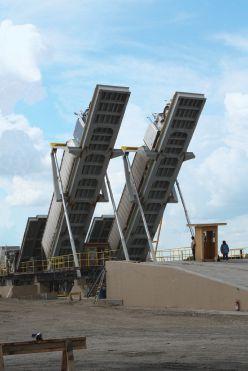
The self-unloading trucks will back onto a ramp, dump the pellets into a hopper and into a bucket elevator that gently delivers them into the silo. It will take about 15 minutes to unload a truck and they will be receiving 10 trucks a day at 35 tonnes each, five days a week.
“We felt we needed to preserve the integrity of the pellet as much as possible.” According to Boyko, the use of self-unloading trucks is a non-aggressive type of handling that keeps the pellet from breaking down during the transfer from the pellet mill to the generating station. “You’re coming from a short haul so there’s not a lot of double handling. It’s not getting beat up in a rail car that’s travelling thousands of kilometres.”
The feed conveyor gently drops the pellets onto a helical coil that runs down the length of the silo. “As the pellets come in, they slide down and it’s almost like a children’s slide,” he says.
Gravity feeds them into the hopper at the bottom of the silos where their temperature is closely monitored. Aeration is built in: blowers can cool the pellets if they begin to self-heat with the option of suppressing any thermal events with nitrogen, if necessary. The idea is to keep the majority of the pellets in the silos that have been specially designed for dry storage, only transferring a small amount of fuel at a time into the bottom of the old coal bunkers within the plant. Safety always being top of mind, the coal bunkers have all been modified for fire suppression if they become too hot. Isolation valves can trap the fuel from above and below.
Now that the pellets are required for fuel, they must be de-pelletized. Boyko explains that the pulverizers previously used to pound the coal were modified for turning the pellets back into sawdust since they
We have an experienced team at everystageofaproject. We provide design, manufacturing,installation for all your dust collection andairconveying needs.
The fibre for the pellets and the pellets themselves are produced within 200 kilometres of the facility.
require less force than the very hard coal.
“All the modifications have been done with extensive benchmarking and research by Hitachi. They supplied the technology that informed the design changes,” he says.
Previously, five pulverizers acted like oversized mortars and pestles to grind the coal to dust, but the pellets require only one pass through the pulverizers to be returned to their native sawdust form so four were removed and replaced with explosive suppression.
Wood pellets have a low moisture content versus the 10 per cent
found in coal so the pre-drying stage was eliminated from the process. Doosan Power Systems supplied the burners. They were able to replace the coal burners and slot into the same openings on the boiler and the system was fit with new igniters and scanners.
“The main focus of the project was making sure we got the right science and technology and the right folks out there that are doing this well.” Boyko says his team visited biomass generation stations in Europe to become familiar with the process, the challenges and best practices. “This is a first for OPG and will be the largest in North America so we wanted to make sure we did our homework and got the right partners.”
Now that the upgrades are almost complete, Boyko expects to be bringing in some pre-test fuel early this year. This will involve running pellets down the completed silos, around the bucket elevator, through the process and perhaps through the pulverizers. Rentech will be ready to supply in the middle of 2014 with Resolute adding its pellets in the fall.
In the meantime, Boyko is rightfully proud of OPG’s accomplishments in Atikokan and he’s happy to share his knowledge with others. “This facility is drawing a lot of attention,” he boasts. “We’ve conducted a number of tours and we anticipate hosting a lot more going forward simply because we’ll be the largest in North America.” •
Waste not, want not
The bioeconomy is heating up in Northwestern Ontario as the temperature drops.
By Amie Silverwood
Asthe largest urban centre between Winnipeg and Sudbury, Thunder Bay has two post-secondary institutions that are deeply invested in developing the region’s potential for making heat from wood. The region’s geography, climate and economy feed the faculties’ obsession with the forest’s bounty. The problems they’re working to solve could strengthen local economies, provide heat and electricity to northern communities, and bring jobs and training to those in remote communities. However, their work is butting up against regional politics, risk-weary industries and a public that doesn’t understand the potential in the piles of wasted wood on the roadsides.
On the northern shores of Lake Superior, Thunder Bay is a regional centre that serves as a hub to very remote communities scattered throughout Northwestern Ontario. Many of these communities are completely isolated and can only be reached by air or via ice roads in winter. Crippled by unemployment and highly dependent on trucks to bring in heating oil or propane for electricity generation, these villages sit within a vast, rich forest that could provide heat, electricity, jobs and more if they’re able to tap into the opportunity.
Canadian Biomass sat down with a group of researchers from Confederation College and Lakehead University in Thunder Bay to discuss the headway being made in the region and how their research can relieve pressures on remote communities. We also had the opportunity to tag along with Resolute Forest Products to see how researchers have collaborated with local industry to make a more resilient bioeconomy.
finDing a use for waste wooD
Anyone who works in forestry in the region knows about the piles of debris made up of tree tops, small branches and other material that is unwanted at the sawmill or pulp and paper mills. But knowing exactly how much material there is, the best use for it and what kind of environmental impact would result from its removal is important for companies like Resolute.
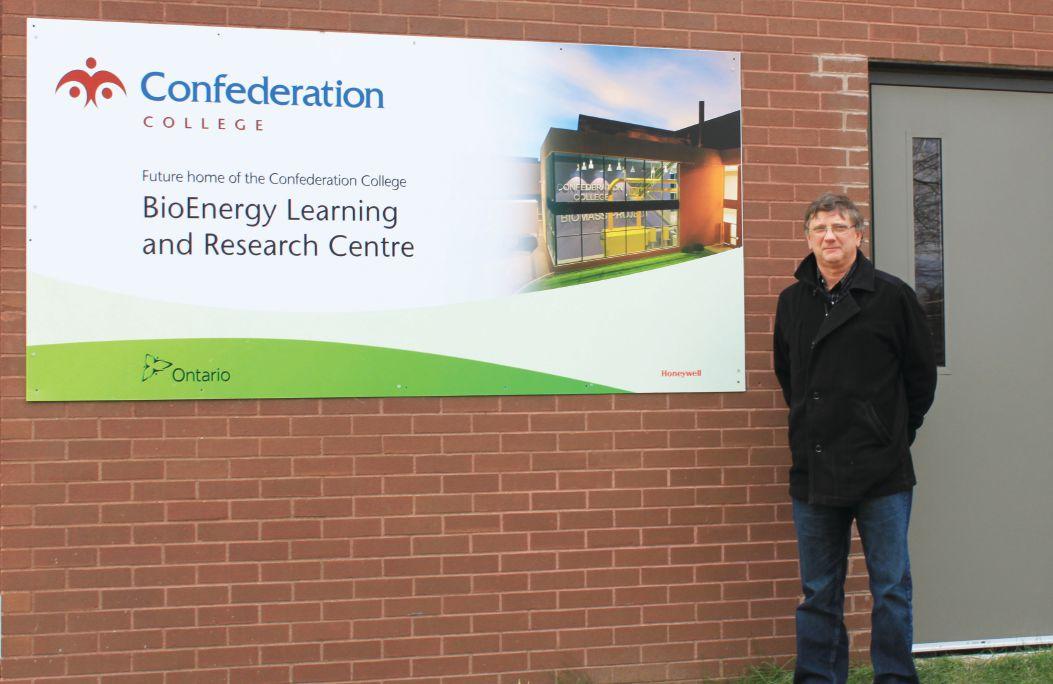
Brian Kurikka stands beside the BioEnergy Learning and Research Centre. It will be used by students, faculty, researchers and anyone interested in biomass heating as a demonstration and training facility. Froling and Evergreen bioheat (Froling’s Canadian Distributor) can train in Thunder Bay rather than sending its people to Austria.
Resolute has recently converted a boiler at its pulp and paper mill to this waste material to generate electricity: powering the plant and selling it back onto the local power grid. It has also reached an agreement with Atikokan Power Generation to supply 45,000 tonnes of pellets annually. But before a company like Resolute can make the capital investments required to diversify its operations in this manner, it must be confident that it has access to enough material to feed the investment.
“To have Lakehead University and Confederation College here for us is a huge benefit,” explains Martin Kaiser of Resolute Forest Products. “They helped us particularly in the early stages when we were doing things like trying to prove how much biomass was out there. They did a lot of work that was really valuable on the fuel qualities, characteristics of bark, the different components of tree species and different species for burning.”
biomass to burn
When a logging contractor harvests a stand of trees, he or she cannot pick and choose only the most valuable sawlogs; the forest must be managed according to regulations designed to help it regenerate without altering the mix of tree species therein.
“The boreal forest regenerates by disturbance,” says Brian Kurikka of Confederation College. “Naturally that was fire. If you’re going to suppress fires, you’ve got to harvest it. If you leave the birch standing, they’ll die in an exposed cutover. And then it doesn’t regenerate very well. If you harvest it, new growth starts.”
Birch trees currently don’t have a lot of value in Northwestern Ontario due to their size and quality. Generally they are chipped and used for biomass but many stands of trees wouldn’t be cut at all because of the species mixture and distance from the pulp mill – there wouldn’t be enough merchantable wood to make the harvesting of it profitable. Finding a value in the unwanted wood makes for a healthier industry all around.
Colin Kelly, Director of Applied Research at Confederation College, is looking at the value chain of the forest. “There’s as much biomass out there that was never harvested or left at the roadside or in the bush as the province harvests for commercial purposes. So a lot of people define that as the opportunity: there’s millions of cubic metres of fibre that could be used for something but isn’t.”
Instead of burning the slash piles at the roadside (an unpopular management system) or returning it to the bush (a labour-intensive job), Kelly suggests taking the biomass from the leftover tree trunks and large branches and leaving only the small branches and leaves that contain 90 per cent of the tree’s nutrients. With the small
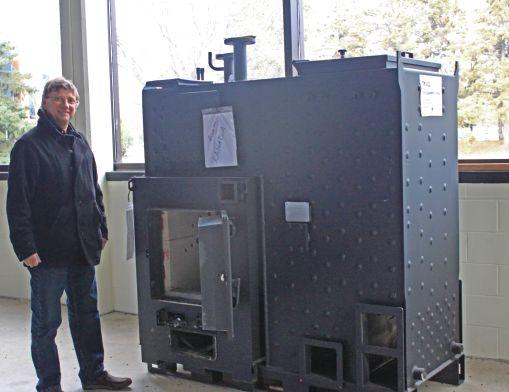
Brian Kurikka displays the new 150-kilowatt research boiler that will be housed in the BioEnergy Learning and Research Centre at Confederation College.
branches and leaves left to replenish the soil, the forest has everything it needs to regenerate while the biomass can be used to heat homes or generate electricity.
Because of the region’s long heating season, the potential for district heating is huge. The college serves a lot of remote communities that rely on heating oil or propane to be trucked in with the profits going to the large petroleum multinationals. Converting to district heat would keep the money in the community, develop transferable skills among the unemployed and have the environmental benefits of dramatically reduced emissions.
“What’s been holding it back, from our perspective, is regulatory environment,” says Kelly. “Access to Crown land, access to fibre, building and industrial codes, air emissions – there’s just a whole slew of anti-wood regulations out there because the regulations were designed in Southern Ontario with no idea what the impacts would be in Northern Ontario.”
When the college decided to install biomass-fuelled heating units, the approval process was arduous – it would have been much easier to install diesel generators since all diesel generators on the market have been preapproved. “We want to get the biomass industry to that point. If you go buy a commercially prepared biomass heating unit, you don’t have to worry about an air emissions permit, why would you? It’s cleaner than a diesel unit!”
In remote regions, complex systems don’t work because they’d require access to an engineer for maintenance. Any system adopted in a northern community should not require special training to run and
maintain. These simple heating systems exist and can take up to 30 per cent of the load off the electrical systems that are currently at their limits during the peak season – winter.
Kurikka recommends woodchip-fired district heating in forest-based communities – a system that can be more economical than pellets though not as efficient because chips have a higher moisture content than pellets. But chippers are common, easier to operate and don’t require a large capital investment, unlike pelletizers, and the fuel supply opportunity remains in the community.
The resources are plenty, research has been done to support the sustainability of producing heat and electricity from waste wood and the economic case is clear. The hurdles that remain are primarily based on public perception but with Ontario Power Generation, Resolute Forest Products and Confederation College moving forward with biomass projects, the tide is turning.•
Confederation College is in the process of building a learning and research centre that will be able to test different wood fuels, boilers and emissions, and act as a training facility. It includes a solar wall that will preheat the intake air for the boilers to further enhance efficiency. Two 500-kilowatt Froling boilers will be heating the 400,000-square-foot main building on campus while also providing information for researchers interested in biomass heat for an institutional application, a small community or a large warehouse.
A smaller 150-kilowatt unit will be dedicated for teaching, demonstration and research. It will have a stand-alone fuel system designed for hopper containers that can be sent to fetch various test fuels. The stand will be placed on load cells that can monitor how much fuel is used in real time.
The building is large and roomy to accommodate students and faculty and will be used to demonstrate and train on biomass heating equipment ranging from 500-kilowatt institutional sized units to small residential housing units.
The storage room will include a walking floor that will move the material up to fall into the trench where it will be fed into the boilers. At peak load, the storage room will include a three day’s supply of wood chips with a moisture content in the 35 per cent range. The chips will be supplied by an urban forestry company that chips wood from Thunder Bay trees at a local wood diversion yard.
The student lab will include primary equipment to check biomass moisture content and sizing for basic tests and advanced boiler and emissions monitoring equipment.
Pipeline to prosperity
Biox provides biodiesel to neighbouring Shell distribution centre.
By Andrew Macklin
Livin G
in the United Kingdom and Germany in the 1990s gave Tim Haig an appreciation of the need for renewable energy here in North America. Haig was setting up wind farms, and, by the time he returned to Canada, he was convinced that Canadians needed to develop our own renewable energy resources.
His first job back in the country led him to meet Kevin Norton and introduced him to the idea of biodiesel production here in Canada. Realizing the potential benefit for Canada’s energy market, Haig and Norton teamed up to develop the technology at the bench-lab scale. After being introduced to a fledgling technology being developed at the University of Toronto in 1999, and with a bench-lab-scale technology operational, Haig, Norton and an Angel investor officially incorporated Biox.
By way of testing the efficacy of the chemistry at a larger scale than that of the bench lab, Biox built a one million litre per year pilot plant in Oakville in 2001. With the pilot plant running successfully, Haig and Norton sought a permanent location in the Golden Horseshoe region of Ontario. By the end of 2004 they
had successfully negotiated a deal to lease from the Hamilton Port Authority a four-acre site in the industrial section of Hamilton Harbour, the site where they are located today.
One of the challenges posed by the Hamilton Harbour property was that the land was a brownfield site in need of reclamation. The company had to clean the site of all contaminants, a process that took nearly a year, in order to establish a clean soil baseline and mitigate the liabilities of past contamination. The company began construction of its first commercial-scale facility in 2005. Construction and commissioning were completed in March 2007 with a targeted production of 67 million litres per year.
t he b iox P ro C ess
What sets the Biox process apart from others is its proprietary co-solvent technology, which allows for the use of virtually any lipid-based feedstock including free fatty acids while achieving
One of the primary benefits of being located at Hamilton Harbour is the strong road, rail and marine infrastructure, which gives Biox multiple options for moving biodiesel to its customers.
TIMBER PRODUCTS INSPECTION
A recent partnership has allowed Biox to build a pipeline to the Shell Distribution Terminal next door, providing “the most effective and efficient method to deliver biodiesel into the distillate pool for distribution and consumption.”
the same high conversion yields.
What makes the process so economical is its ability to recapture 99.997 per cent of the co-solvent during the distillation process and then reuse it. As a result, the co-solvent is not consumed, but simply becomes a capital cost that needs to be topped up on occasion based on the volume of production. The result is an economical process, but also a process that works effectively with multiple feedstocks.
“We have a technology that can process any of the primary feedstocks with the same results,” explains Scott Lewis, vice-president of business development and sales for Biox. “That means that we get the same efficiencies in yield and get the same quality of biodiesel if we’re using animal fats, recovered cooking oils, seed oils or corn oil from ethanol plants.”
Accessing the entire feedstock market requires Biox to be nimble in its purchasing habits to achieve the best economics, but that is part of everyday business for the company.
“If we’re going to get the same results then we recognize that the feedstock market is going to be constantly evolving,” says Lewis. “For example, in the beginning, corn oil from ethanol plants was not available. We have always believed that, once the biodiesel industry evolved into a credible and consistent purchaser of various fats and oils, new markets of supply would
become available.”
An increase in suitable new feedstock could help the bottom line for multi-feedstock biodiesel producers like Biox, who can continue to buy materials based only on lower overall cost.
“We don’t know what the most appropriate feedstock will be five years from now,” says Lewis. “Will it be algae? Jattropha? Sustainable palm oil? Commercial-scale availability and cost will be the important issues for us. In order to stay competitive, we will always look to bottom feed on the available feedstocks and those feedstocks will continue to constantly change and evolve.”
l o C ation be C omes im P ortant
The element that doesn’t change is consumption, which is why Biox feels it is poised to continue as a strong player in the biodiesel market. Approximately one-third of Canada’s distillate products are consumed in Ontario. Located in the heart of the Golden Horseshoe, just a 45 minute drive from downtown Toronto, Biox is in the heart of Canada’s largest consumption market.
“The concentration of people, the need to move commercial goods, that’s going to happen where there’s density,” explains Lewis. “The people aren’t going to move. In fact, the density will only increase.”
The current location, sandwiched between large industrial complexes in the Port of Hamilton, has paid dividends for Biox. Its neighbour to the west is one of Shell’s largest distribution hubs in Ontario. After years of shipping most of its biodiesel
south to the U.S., with the commencing of a federal biofuels mandate and potentially an Ontario Renewable Diesel Mandate starting in 2014, Shell decided to partner with Biox on the construction of a pipeline connecting the Biox plant to the Shell Distribution Terminal located right next door. That project was completed in August 2013 and is the most effective and efficient method to deliver biodiesel into the distillate pool for distribution and consumption.
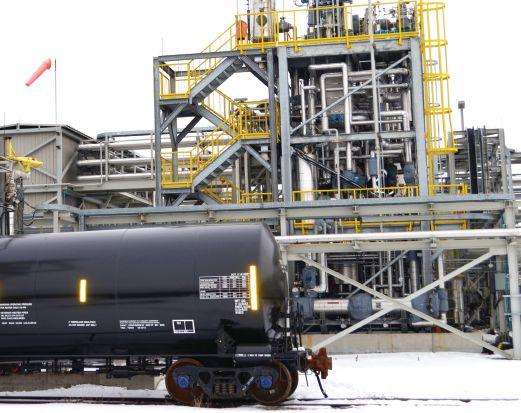
This new pipeline, which Biox believes is the first of its kind in North America, allows Biox to pump biodiesel directly into Shell’s distribution centre.
“The next bastion of margin in the biodiesel market will be logistics costs,” according to Lewis. “This pipeline provides seamless in-line blending of biodiesel. It will eliminate any issues related to blending and handling, which have proven to cause problems in the past.”
By using seamless in-line blending technologies, petroleum companies are able to ensure that the resultant blend will be of the highest quality and mitigate the potential for operating issues in transportation. That is something that the petroleum industry has been asking for as it seeks a more efficient and effective system for incorporating biodiesel into its fuels. That can help both industries move away from splash blending and move towards proper blending facilities.
But the Hamilton location provides more than just access to petroleum distribution centres. The Port of Hamilton has solid rail, road and marine infrastructure, making it ideal for reaching
Do you want to install pipe by welding,brazing or soldering it? Or do you want to install pipe by uncoiling it?
Rhinoflex flexible pre-insulated piping has taken over the market for 4" and smaller pre-insulated pipe.It is a high quality product that has the lowest installed cost of any pre-insulated pipe.There are more than 300 miles of flexible pre-insulated pipe installed in the U.S.with more than 3,000 miles installed worldwide over the last 25 years!
Rovanco s Rhinoflex pre-insulated flexible piping is manufactured with either a PEX or Polyethylene (PE) carrier pipe and comes in the longest continuous lengths available in the marketplace.These long lengths result in few or no underground joints.This saves you up to 60% in labor costs — yielding a total installed savings of 25 to 40%!
Rovanco s Thousands of Miles of experience coupled with the tens of thousands of successful piping systems Rovanco has installed worldwide,assures you will get the correct product for your specific piping systems.
Contact Rovanco for a quote. The high price of copper has made Rhinoflex even more competitive.
Contact: CHAD GODEAUX,Product Specialist Rhinoflex Pre-Insulated Piping Systems Phone:(815) 741-6700 Fax:(815) 741-4229
E-Mail:chad@rovanco.com
Rovanco Piping Systems 20535 S.E.Frontage Rd. Joliet,IL 60431 www.rovanco.com
YOUR BULK BAG WOOD PELLET SPECIALIST
Custom bulk bag printing and fabric colours available
Anti-static bulk bags
Remote discharge Baffle style U-panel or circular construction
Custom fit loops Food grade production & certification
customers in a variety of markets. Also, Hamilton is a regular delivery point for goods via both railways and roads. Because of this, there are opportunities for negotiating better rates for shipments and increased opportunities for logistics efficiencies.
There is also greater regional access to multiple feedstocks. Large quantities of cooking oils, collected from restaurants throughout the Toronto-Hamilton corridor, are available for purchase by biodiesel manufacturers. There are also opportunities for purchasing local corn oil from some of the larger ethanol producers in the region including IGPC Ethanol’s Aylmer facility and GreenField Ethanol’s Chatham-based plant.
w hat’s next?
With a sustainable operation producing a solid volume of biodiesel on a manageable footprint of land, Biox’s operation is running strong. However, there are a few obstacles that are preventing the company from getting to where it wants to be in Canada’s biodiesel market.
First, there is the issue of the small plot of land that Biox currently resides on. The four-acre property and lack of available surrounding land leaves no room for expansion in any direction. Any plans for the expansion of the company would have to come in the form of a new location.
That new location is only likely to be needed if the province of Ontario finally adopts a long-awaited legislation increasing the use of biodiesel in the province.
Lewis points out that there is strong political will to introduce a renewable and low carbon mandate in Ontario, but it is something that all parties would like to get the credit for introducing into law. A low carbon mandate would likely allow Biox to sell all of its product domestically, which is exactly what the company would like to do.
Until that legislation comes, Biox will continue to work with its partners to provide quality biodiesel for both domestic and foreign customers.
Its situation on a small footprint of land just four acres in size does not provide Biox with an opportunity for future expansion at its current location.
Leading the industry forward
Taking a look at practical biomass projects across the country that are helping the industry make strides.
By Treena Hein
ACRoss
the country, biomass research is moving forward at a strong pace. Most provinces now have extension personnel and research projects relating to a variety of topics, and some have one or more dedicated research centres, where cutting-edge technology and ideas can be tested and developed. This support for the bio-energy industry is important, says Dr. Fernando Preto, executive director of the Canadian Bioenergy Association. “These projects help move the sector forward, supporting the private sector to continue to innovate and build Canada’s reputation as a bio-energy leader.”
One of these projects, in Alberta, will help drive development of new biomass products by connecting developers with those who can supply feedstock. Through Alberta Innovates (an agency described as a new “collaboration system for innovation”), the final touches are being put on the Bio-Resource Information Management System (BRIMS). This easy-to-use, web-based resource will identify all potential available sources of forestry and agriculture biomass in the province, in support of stimulating the development of new bioindustrial projects that depend on a reliable source of raw materials.
Alberta Innovates is also supporting research into how wood
pulp fibre can be incorporated into plastic suitable for moulding into automotive parts. In partnership with the former Alberta Forest Research Institute and other players, a new facility in Alberta will soon be generating parts for vehicle interiors made of wood and agricultural fibre.
Also in the arena of composites, a sister agency called “Alberta Innovates Technology Futures” (AITF) has just launched a $5.5-million Nanocrystalline Cellulose (NCC) pilot plant. The Edmonton facility was opened in September 2013. Made from plant material, NCC has properties that include electro-magnetic response and, at the nano-scale, a large surface area. One ounce of NCC added to a pound of plastic makes a composite material up to 3,000 times stronger than the plastic alone. The pilot facility will produce up to 100 kilograms of NCC a week at the quality researchers need to fully explore its potential. Beyond using NCC in automotive components and packaging, other products that can be developed from this forest
Alberta Agriculture and Rural Development supports many ongoing biomass projects. One of note involves the fractionation of cereal grains and pulses to separate proteins and starches. Fractions not used in food products have a variety of uses in the production of ethanol, plastics, films and cosmetics.
industry-derived material include paints, health care products and energy extraction devices.
With support from AITF, hemp is now being used to make insulating, breathable building materials which meet or exceed the functional properties of current building materials and insulation. Hemp is also being investigated for use in plastic composites. In addition, AITF is supporting Quebec-based firm Logistik Unicorp (a manufacturer of uniforms for police and emergency services personnel) to test AITF-grown hemp as a textile fibre. The agency, in conjunction with the Alberta Biomaterials Development Centre, is also helping Alberta-based firm Stemia establish North America’s first hemp fibre processing plant near Lethbridge.
Alberta Agriculture and Rural Development (AARD) supports many ongoing biomass projects. One of note involves the fractionation of cereal grains and pulses to separate proteins and starches. Fractions not used in food products have a variety of uses in the production of ethanol, plastics, films and cosmetics, says AARD Program Manager Carol Sauchuk. Another project, called “Waste Reduction and Utilization,” involves matching Alberta companies with agricultural byproducts in higher-value applications such as energy, fertilizers and materials. This initiative has recently included the testing of oat hulls (a byproduct of the milling process) for energy applications, and valueadded applications for biodigestates (manure biodigester residuals).
british Columbia
FPInnovations is involved in forestry and biomass research projects in several regions of Canada. In B.C. (although the company is doing similar work in Quebec as well), staff is currently looking into how to establish better bioenergy supply chains. For example, the integration of chippers is being investigated to help boost chips as a use for biomass alongside products like hog fuel and pellets. Dr. Dominik Roser, an FPInnovations research leader in the company’s forestry feedstock division, says this project is very important as there is a large disconnect between current B.C. wood chip production and the market demand in Europe. The company is also looking at how harvest residues can be used in pellet production.
In addition, Roser and his colleagues are also looking into how to remove salt contamination from B.C. logs that have floated in sea water. He notes that residues from these logs have the potential to be used for pyrolysis, pellets, hog fuel and more if the salt can be removed.
ontario
One biomass research project of note funded by the Agricultural Adaptation Council and recently implemented by the Ontario Federation of Agriculture (OFA) was focused on developing an innovative agricultural biomass value chain. OFA spokesperson Charlie Lalonde says this project enabled farmers to much better understand how to process straw and other materials to fill the needs of existing biomass companies, such as ethanol and pellet manufacturers, and how to best process materials for future use, perhaps in automobile manufacturing, biochemical production and more. The project, in turn, also allowed companies to better understand what biomass materials Ontario farms have to offer. A second specific technological study looked at how farmers should be positioned to enter the pyrolysis (biochar) market. Lalonde says this project found that mobile on-farm charring looks to be the best bet.
The Biomass Innovation Centre at Nipissing University in
In a recent study conducted by the Canadian BioEnergy Centre (CBEC) at UNB, a 56 kW state-of-the-art pellet-fired hot water heating system was installed at a local rural New Brunswick recreational hall and monitored over a one-year period.
North Bay provides technical and business support to small and medium-sized firms in northern Ontario at very attractive rates. It allows these businesses, many of which don’t have the resources to be able to conduct pre-feasibility/baseline studies to determine if an idea is worth investigating further. The Centre has also just finished “A Roadmap for Biomass Industry Development in the Blue Sky Region of Ontario,” which identifies opportunities, product options and more.
maritimes
At the Canadian BioEnergy Centre at the University of New Brunswick in Fredericton, many biomass projects are on the go. One involves a practical look at growing Canada’s domestic pellet heating market through assessing how much can be saved through using new European heating systems. A 56 kW state-of-the-art pellet-fired hot water heating system was installed at a rural New Brunswick recreational hall and monitored over one year. The hall had been heated by oil and electricity previously. The study results show that with the new pellet system, annual savings of between $1,500 and 2,000 per year could be expected, with further savings of about $800 per year once bulk delivery of pellets becomes available in the area.
The study also found that system has excess capacity and can be easily expanded. Creating a small local district heating system and selling hot water to adjacent buildings would create a new revenue stream and further savings. In the larger picture, the study found that if only five per cent of the oil or electrically heated buildings in Canada were converted to pellet-fired systems, this would translate into 1.4 million tonnes of new pellet demand, 1400 jobs and $378 million into the Canadian economy. The Canadian BioEnergy Centre will also complete a three-year study to evaluate the potential of using coppice as a biofuel in the Maritimes in March 2014.
Innovacorp is Nova Scotia’s early-stage venture capital organization. The Innovacorp Demonstration Centre (IDC), just getting up and running near Liverpool, is said to be unlike any facility in Canada. This facility will allow innovators and researchers to do large-scale tests on products before bringing them to market. The 88-acre industrial site offers thermomechanical (Tmp) lines, a chip handling system, liquid storage tanks, environmental effluent system and more.
The Centre will also offer access to the raw materials needed to demonstrate and develop bio-resource technologies. The province’s Crown-owned land in the western region is now 1.5 million acres. IDC will have access to allocations from these lands, and a significant fibre supply is also available from the private woodlot owners in the region. •
Wood pellets, wood chips, and all forms of wood products are handled at the Por t of Belledune; not only does the por t connect to strategic shipping routes, it is also an intermodal gateway with a rail spur and direct congestion-free access to a highway system spanning Nor th America. w w
CRFA summit recap
The biofuel industry is looking for stability.
By Amie Silverwood
Weneed stability. That was the overlying message at the Canadian Renewable Fuels Summit in Montreal in early December, a conference that was critical of recent regulatory changes in the industry.
“We have seen significant uncertainty in the market in the United States [this year],” recalled Scott Thurlow, president of the Canadian Renewable Fuels Association, at his opening address of the 2013 summit. “We have seen ridiculous ILUC proposals get serious consideration from legislators in Europe.”
Thurlow went on to stress that Canada is not isolated from the threats faced in neighbouring countries: “There is a hodgepodge of regulatory proposals flying around the country – and whether it is the federal government or their provincial brethren – we need to ensure that our fuels are part of the solution, and that our producers benefit from the CO2 reduction they facilitate.”
Stability through consistent government policies is what the industry requires, according to several of the speakers. Len Bykowski, president of Mascoma Alberta, complained that Canadian policies aren’t aggressive enough. They need to include the biosector and have a long-term plan towards an energy mix that includes biofuels.
“Be consistent” was his message to regulators. The industry must know where the
government will be over the long term so companies can make viable plans. The changing messages and incentives the governments offer make it difficult to invest in new technologies, he said.
Bykowski said it’s the industry’s role to educate civil servants on the available technology but the industry is being held back fighting the well-funded oil industry and its media attacks. He recommended the industry take a leadership role in Canada. “Carve our own pathway and get our own government aligned to move forward here.”
The need to rebrand is another topic that was top of mind at the sessions. Daniel Oh, president and CEO of Renewable Energy Group, explained that the media is still preoccupied with the food versus fuel issue. He said the industry should clarify that it is not using food stocks and that global hunger is a distribution issue, not a bioenergy issue. In fact, biodiesel can help stabilize the food supply by bringing more profit to farmers.
“Biodiesel pays more for the leftover fats and oils from meat and meal production, which encourages farmers and ranchers to produce more,” said Oh. “We’ll always have veg oil going into biodiesel, that’s fine,” but inedible corn oil, animal fats and recycled oils are the primary feedstocks of the industry.
The food versus fuel argument never
gained much weight in Canada. “There’s no better spotlight than truth,” said the CRFA’s Scott Thurlow to explain the issue’s lack of legs within our borders. Agricultural yields are going up so we’re able to make more food on the same land. Canadians are eating less meat so there is plenty of corn left over that isn’t required to feed livestock.
Biofuel producers make more than just fuel as opportunities to diversify are explored. Gord Surgeoner of Ontario Agri-food Technologies, describes waste as an opportunity waiting for a solution. If managed properly, the waste that comes from the production of ethanol supports food production as well. The waste CO2 is being used with great success in greenhouses to grow tomatoes. The corn is fractionized into corn oil, high-protein corn germ and even snacks that can bring in a much higher return than ethanol.
“The key driver in food price is energy,” explained Malcolm West, CFO of GreenField Ethanol, returning to the concern that biofuel brings up the price of food. “Without our industry, the agriculture industry would be in for a world of hurt.” West is looking for a shift in focus. “Corn yields are increasing and the use of corn for energy is not a bad thing.”
Follow Canadian Biomass on Twitter for up-to-the-minute conference highlights. For more information, go to www.canadianbiomassmagazine.ca. •
2ND INTERNATIONAL VDI CONFERENCE 2014
Grid Injection & Vehicle Fuel
Renowned speakers will present their results on the following topics:
• EU Legislation, cross border trading and economic aspects in Europe
• Booming markets and developments in existing ones
• New concepts for flexible plant operation and grid-injection
• Biomethane as a vehicle fuel
• Technological developments: Power-to-Gas and Gasification
Date and venue: March, 18–19, 2014 Frankfurt, Germany
Conference Chair: Dr. Mattias Svensson
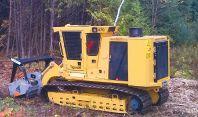
TiGERCAT uNVEilS ThE NEW 470 MulChER
Tigercat has added a new model to its expanding line of mulcher carriers. The new 470 mulcher is equipped with the Tigercat FPT C87 Tier 4i 245 kW (328 hp) engine. It is narrow and agile with extremely low ground pressure, rated at 20,9 kPa (3 psi). The 470 is best suited to tough terrain and sensitive sites.
The 470 is equipped with an efficient, high capacity cooling system with a variable speed fan and automatic reversing cycle, a dedicated attachment pump and an efficient closed loop track drive system. Inside the cab, the operator has ergonomic electronic joystick steering with CRF (counter-rotate function) for turning on a dime at the touch of a button. The heavy-duty steel engine enclosure and precleaner guard eliminates the requirement for a rear canopy. All structural components are designed for full-time forest duty.
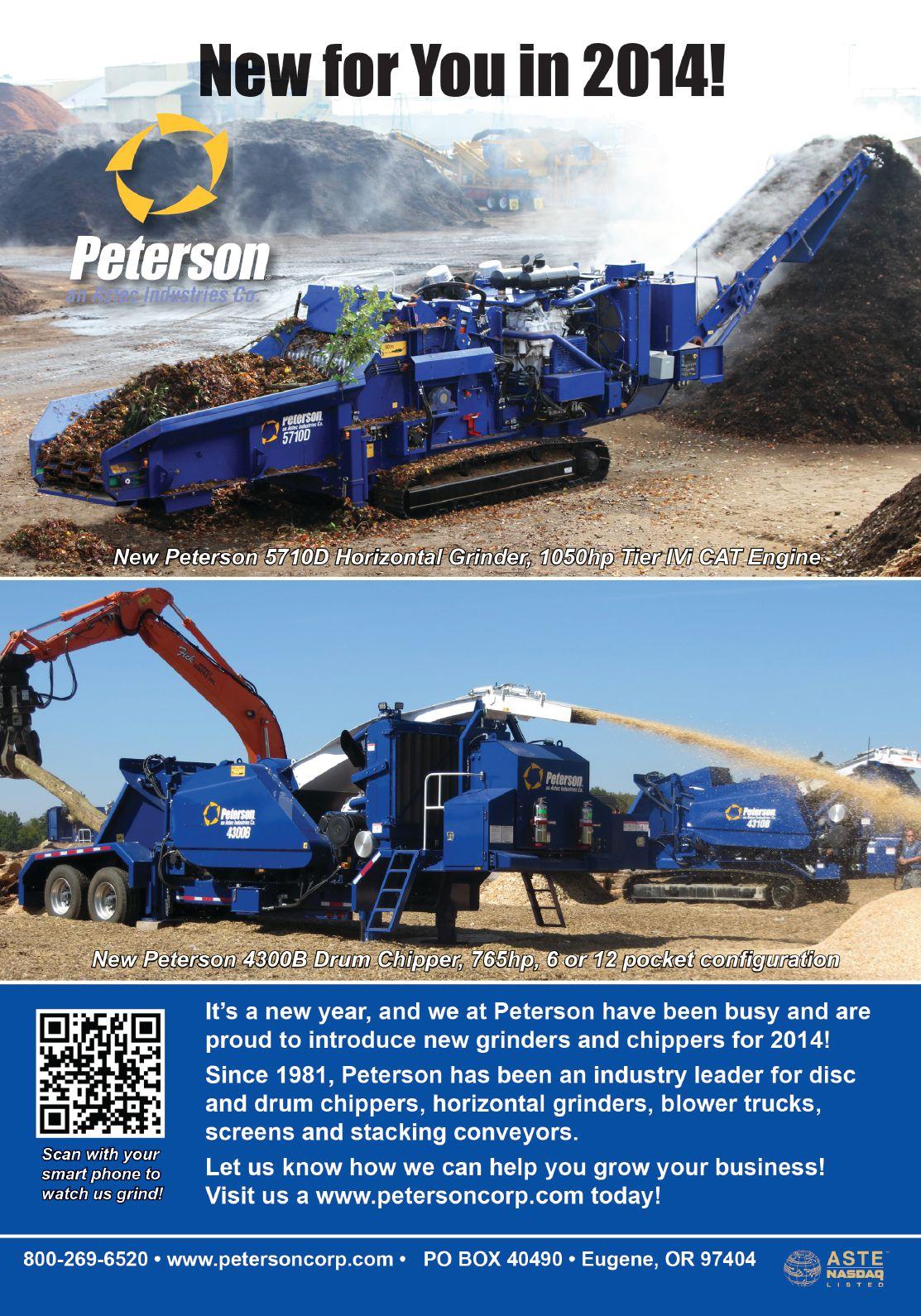
PETERSoN iNTRoDuCES ThE 5710D hoRizoNTAl GRiNDER
Peterson has released the new 5710D horizontal grinder, powered by a Tier 4i Caterpillar C27 1050 hp engine.
At 88,500 lb. (40,150 kg) the 5710D was designed for operations that require frequent moves between jobs without a special permit. An optional transportation dolly allows the Peterson 5710D to be easily moved and set up for operation within minutes.
With a feed opening of 60 x 40 in. (152 x 102 mm) combined with Peterson’s high lift feed roll; the 5710D can readily reduce a wide range of material including stumps.
The 5710D utilizes Peterson’s Impact Release System that can be set in the detent mode to provide consistent product sizing or switched to the floating anvil mode for a
AD inDeX
primary reduction where accurate sizing is less critical. The floating anvil mode provides a high production primary reduction with more protection from contaminated feedstocks and reduced fuel consumption.
CARD bREAkER SySTEM AVAilAblE foR bANDiT DRuM ChiPPERS
Bandit Industries now offers a Card Breaker System for hand-fed and whole tree drumstyle chippers. The Card Breaker works similar to a screening system, restricting oversized material from exiting the machine. The system is optional for most Bandit drum-style chippers, creating an even higher quality wood chip that is well suited for use in expanding biomass energy markets.
“Chips of relatively uniform size and shape are much preferred for use in biomass fuel wood applications,” said Jason Morey, Bandit Industries sales manager. “By creating a better chip, our customers can have a better product to sell on the biomass fuel market.”
Bandit’s Card Breaker doesn’t subtract from Bandit chippers’ throwing power – in fact, it benefits from it. Chips leave the drum at a high speed, with larger-sized chips hitting the Card Breaker installed in the discharge. This breaks the chips down further, resulting in a more uniform chip ready for biofuel applications. The Card Breaker System functions without the need for additional chip accelerating devices, and overall machine production is unaffected.
EVENTS BOARD
March 3-4, 2014 • GROWING THE MARGINS CONFERENCE London, Ontario http://www.gtmconference.ca
March 24-26, 2014 • INTERNATIONAL BIOMASS CONFERENCE AND ExPO Orlando, Florida http://BiomassConference.com
industry standard for Sawmills, Pulp/Paper Mills, Panelboard Plants and Wood Biomass Refineries
• Vibration Resistant
• 560 TV Lines
• Waterproof, IP68 Rating
• 700 TV Line
• 2 9, 4 3, 6, 8, 12, 16 mm lenses
• 2.9, 3.6, 4.3, 6, 8, 12, 16 mm lenses
• All Weather, Extreme Environment
• All Weather, Extreme Environment
• Heavy Gauge Di-Cast Metal Alloy & Titanium Components
• Heavy Gauge Di-Cast Metal Alloy & Titanium Components
• Tri-Axial Mounting System
• –60°C to +60°C
• Tri-Axial Mounting System
• –76°F to +140°F
• –60°C to +60°C and –76°F to +140°F
• Waterproof, IP68 Rating
• Vibration Resistant
Can’t see the forest for the trees?
CHow about the biomass for the wood?
By Patricia Hanney
anada’s renewable fuel targets have been in place since 2010. The transition from first-generation feedstocks to more advanced options highlights forest biomass as a promising option; however, the lack of clarity at the federal, provincial and local levels could hamper this development and create unforeseen problems.
As we have yet to identify a scientifically proven method to assess the sustainability of biofuel production from the range of biomass options out there, it makes it
lumbia, the largest domestic exporter of forest products, has been slower to address the sustainability concerns of harvesting (B.C. accounted for 34.8 per cent of forest product exports in 2010).
Harmonized regulation could create a level playing field that would help to reduce uncertainty for wood pellet and biomass producers.
harder for decision and policy makers to design and implement coherent guidelines for bioenergy feedstock production. Attempts have been made to understand how to go about assessing impacts of biofuels production through Comprehensive Environmental Assessment, which takes into account the whole supply chain and accompanying stakeholders. Guidelines designed for the removal of woody biomass are implemented at the provincial level, and apply to public but not private forested lands. The maritime provinces of New Brunswick and Nova Scotia have made the most notable contributions to biomass removal guidelines. British Co-
As expectations and demands for forest residues are set to increase, both wood pellet and biomass producers would benefit from the creation of legislation that assesses risk factors and offers clear guidelines. Crown lands make up the majority of Canadian forests (93 per cent), with less than 0.2 per cent being harvested each year. The annual allowable cut (AAC) from the forest is governed at the provincial level. Certification initiatives, on the other hand, are voluntary, market-driven schemes that implement standards through a set of guiding principles with numerous criteria and indicators. They ensure that sustainability standards have been met throughout the supply chain with the use of chain-of-custody, which acts as a tracking mechanism for forest products as they leave the site. A sustainability label is then awarded when these standards have been met, rendering the product “certified.” Right now, over 150 million hectares of Canadian forest are certified under one of following programs: The Canadian Standards Association, the Forest Stewardship Council and the Sustainable Forestry Initiative. The challenge for Canada is to find a way to ensure that
these various certification schemes can be harmonized and consistent, with standards that are applicable at local, national and international levels.
Without harmonized regulation, it’s very difficult to make optimal decisions on environmental impact, sustainable development, and life-cycle assessment; understanding the environmental performance of forestry-based biofuels across each stage of the supply chain is next to impossible, and a range of negative environmental consequences on soil, water, and air quality, as well as biodiversity, could occur. If progress is to be made within the parameters of existing forestry certification initiatives and provincial guidelines, attention must be directed at the harvesting and operation management patterns at the local and regional levels. Harmonized regulation could standardize the process of biomass removal, creating a level playing field that would help to reduce uncertainty for wood pellet and biomass producers.
Ideally, a set of legislated guidelines would enable industry to follow clear requirements in line with developments of the European Renewable Energy Directive. As the forest industry continues to develop this valuable opportunity, Canada needs to ensure that we give forest-derived biomass the regulation it needs to thrive. •
Biomass feedstocks are undeniably one of the most important considerations for the emerging bioeconomy. Patricia Hanney and Dr. Terry McIntyre’s research at Concordia University, Montreal, looks at the environmental sustainability of biomass options and policy developments for advanced biofuels.