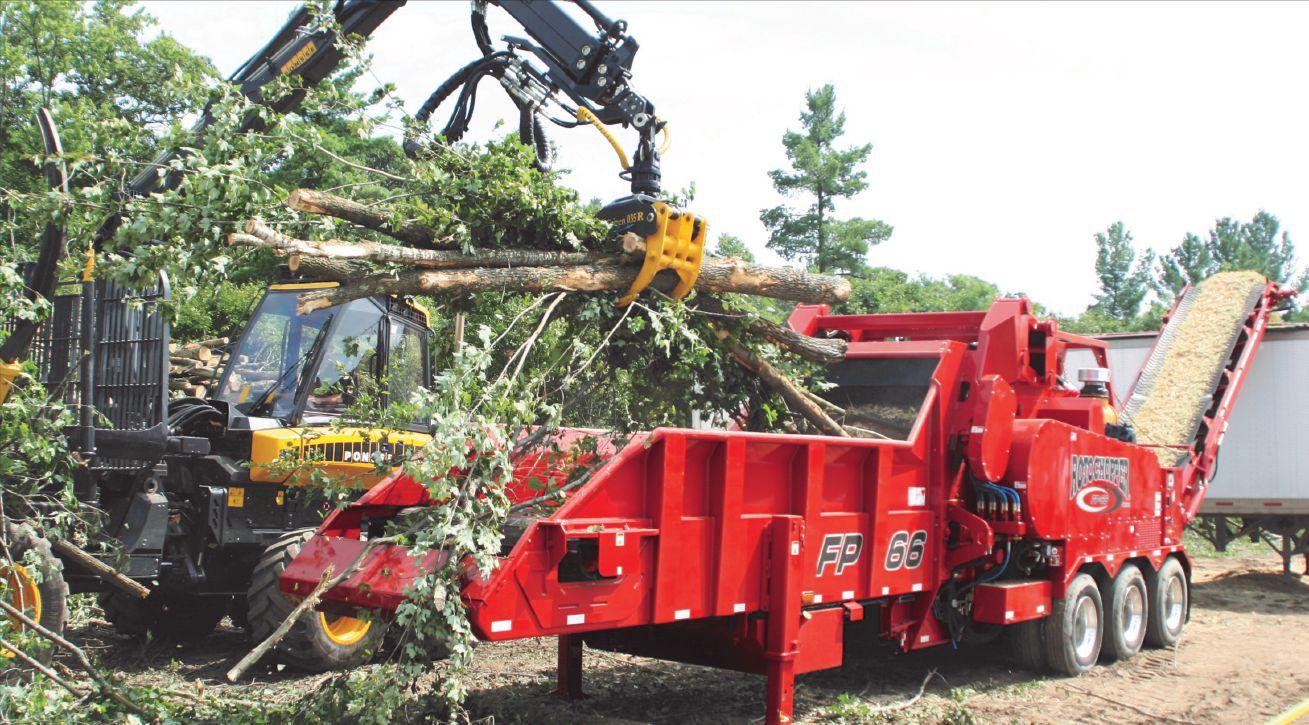
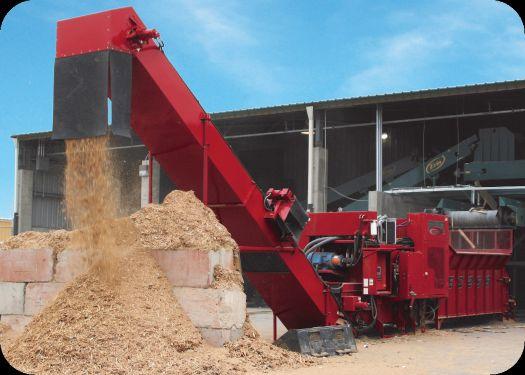
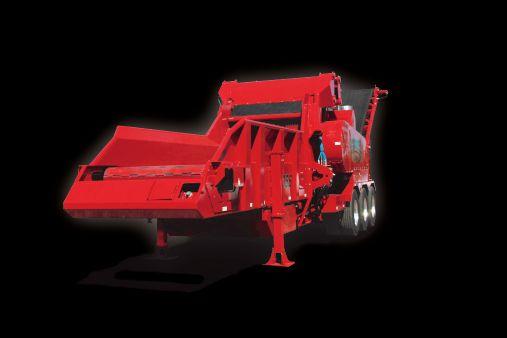
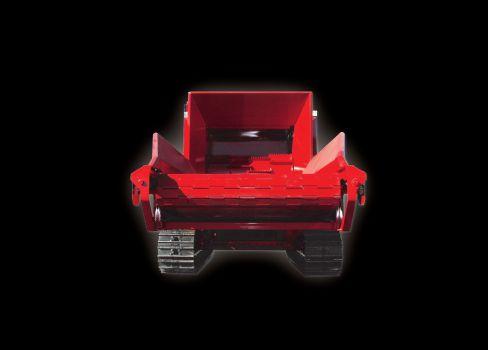
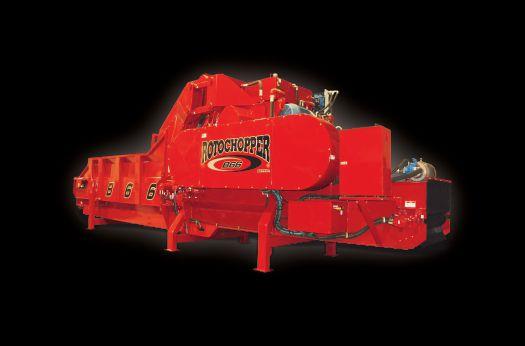
Which Rotochopper grinder is right for your wood fiber processing needs? Visit us online or give us a call to learn more.
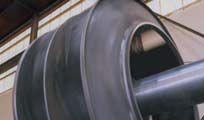
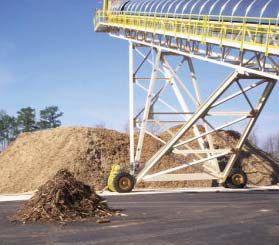
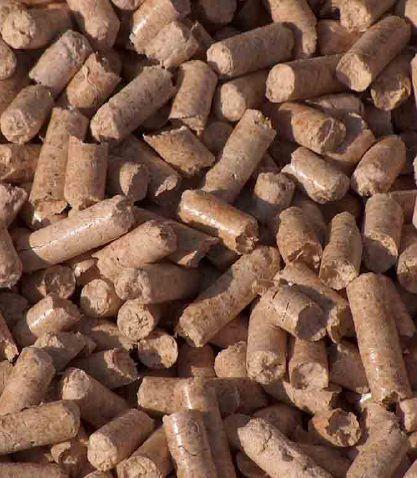
Rotochopper wood grinders offer unmatched versatility and particle size control, so you get high quality biomass fuel from a wide range of raw materials.
Whole trees
Sorted C & D
Pallets & crates
Forestry slash
Railroad ties
Wood chips
Slabwood
And thanks to exclusive features designed to maximize efficiency and uptime, you get the results you need at the lowest cost per ton.
Rotochopper Grinders Electric
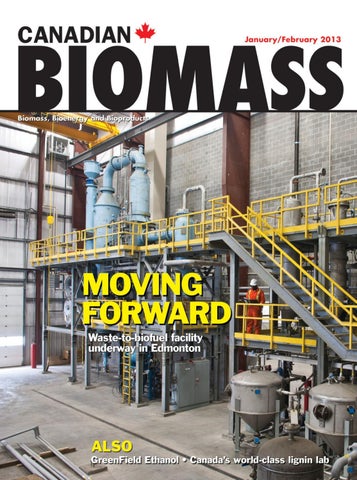
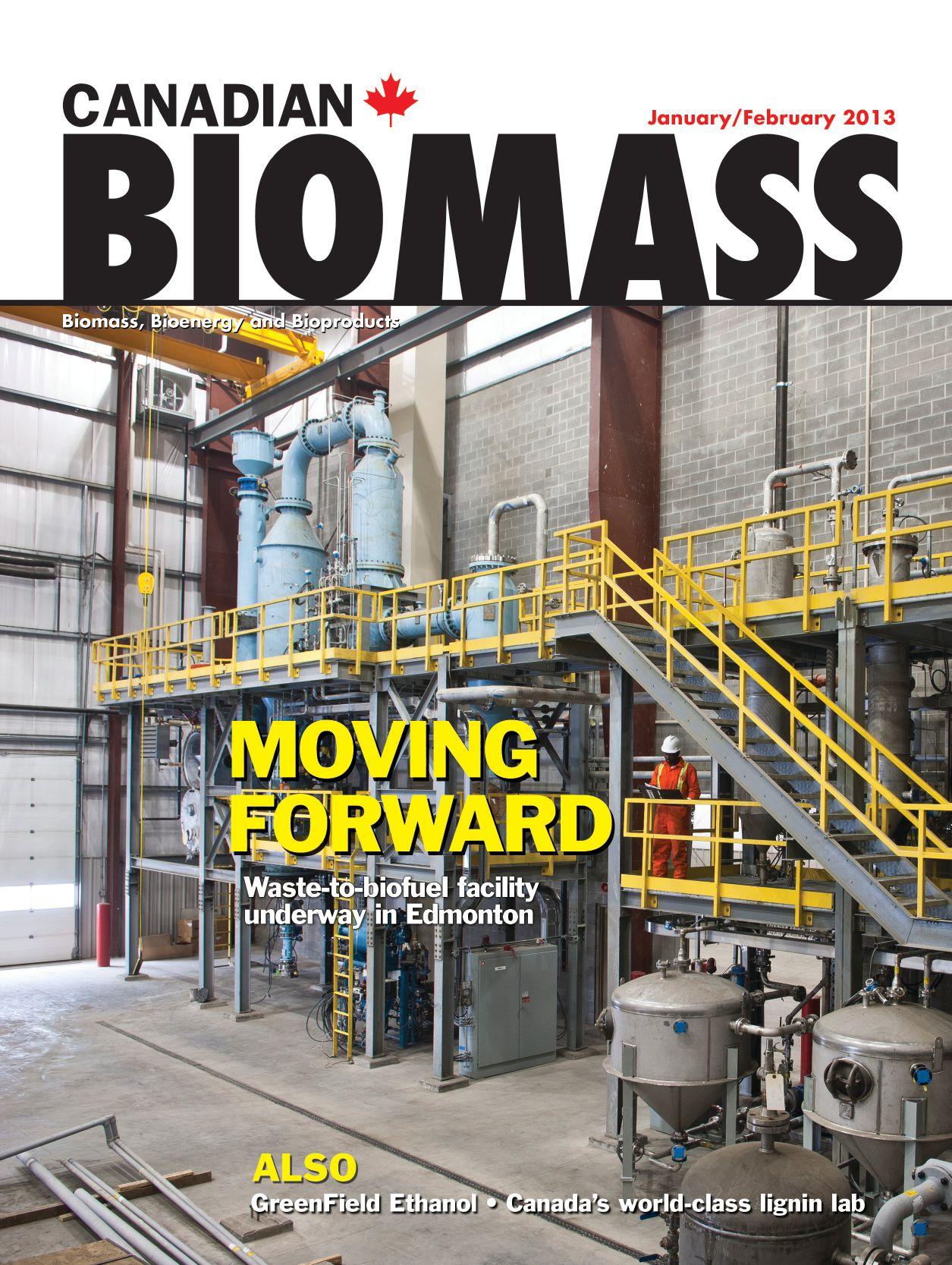
CANADIAN BIOMASS
12 Dry Run
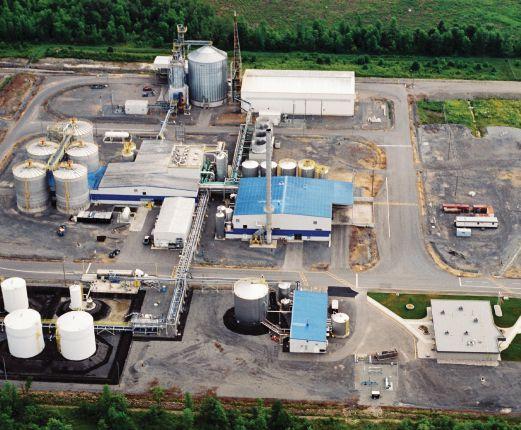
Greenfield Ethanol boasts state-of-the-art facilities and is touting a breakthrough in the commercialization of cellulosic ethanol.
18 Turning Waste into Fuel
Enerkem’s new Edmonton facility produces cellulosic ethanol from waste.
21 Learning About Lignin
New FPInnovations lab pushes research forward.
24 EU Market to Explode
Attendees at the WPAC 2012 AGM in Quebec heard some promising export forecasts.
26 Need for Low-carbon Fuels
Getting renewable fuels on the political agenda this year will be a tough order.
“It’s
Becoming a Biorefinery
A new project is helping an ethanol producer to recycle waste.
What we are doing is changing this ethanol plant into what we call a biorefinery.”
That was GreenField Ethanol chairman and founder Ken Field commenting on the recent announcement of a first-of-itskind greenhouse in North America that will make use of surplus heat and carbon dioxide supplied by GreenField’s Chatham facility.
According to GreenField Ethanol’s vice president of business development Barry Wortzman, it’s a kind of synergy the industry is moving towards, especially considering each tonne of corn used in the ethanol process produces a third of that weight as carbon dioxide.
“A biorefinery is where nothing gets wasted. You’re not venting anything into the atmosphere – you’re using your CO2 for another application.”
The $65-million project on Bloomfield Road, across from the plant, will see 22.5 acres of greenhouse owned by Cedarline Greenhouses producing up to 21 million kilograms of tomatoes annually. The first crop will be planted next July. The second phase will see up to 90 acres of greenhouse over the next 10 years.
The partnership will help to significantly reduce the greenhouse’s energy footprint by lowering heating costs by 40% while increasing tomato production by 5%, according to Greg Devries, owner of Cedarline.
Devries said tapping into GreenField’s waste heat and carbon dioxide should also allow the greenhouses to be operable yearround, rather than being idled during the winter because of high heating costs.
GreenField will update the technology at
the plant, which currently doesn’t include waste heat recovery or a thermal oxidizer. The new technology will condense stack heat through a series of exchanger systems, allowing the ethanol plant to supply hot water to the greenhouse. The water will then be returned to the ethanol plant through an expanded cooling water loop.
The company is also installing technology that will allow it to develop a new co-product from the ethanol process – namely, corn oil.
“We’ve incorporated a known technology at our Chatham plant that will allow us to remove the corn oil from the kernel before fermentation and to either make a biodiesel ourselves or sell it to biodiesel manufacturers,” said Wortzman.
“Many plants in North America are now incorporating this technology because it’s another opportunity to generate a coproduct revenue stream from a single kernel of corn.”
In an effort to reduce energy costs at its Quebec ethanol plant in Varennes, GreenField is currently developing an anaerobic digester that will be located on site and receive organic waste from local South Shore communities. The waste-to-energy system will produce biogas that will be used to offset some of the natural gas consumed at the facility. •
John Tenpenny, Editor jtenpenny@annexweb.com
Volume 6 No. 1
Editor - John Tenpenny (905) 713-4351 jtenpenny@annexweb.com
Associate Editor - Andrew Macklin (519) 429-5181 amacklin@annexweb.com
Tim Shaddick - tootall1@shaw.ca Ph: (604) 264-1158 Fax: (604) 264-1367
Media Designer - Gerry Wiebe
Canadian Biomass is published six times a year: February, April, June, August, October, and December.
Published and printed by Annex Publishing & Printing Inc.
Printed in Canada ISSN 2290-3097
Circulation
Carol Nixon e-mail: cnixon@annexweb.com P.O. Box 51058
Pincourt, QC J7V 9T3
Single Copy - $9.00
(Canadian prices do not include applicable taxes) USA – 1 Yr $60 US; Foreign – 1 Yr $77 US
Occasionally, Canadian Biomass magazine will mail information on behalf of industry-related groups whose products and services we believe may be of interest to you. If you prefer not to receive this information, please contact our circulation department in any of the four ways listed above.
All advertising is subject to the publisher’s approval. Such approval does not imply any endorsement of the products or services advertised. Publisher reserves the right to refuse advertising that does not meet the standards of the publication.
www.canadianbiomassmagazine.ca
update BioMASS
Biofuel flight test reveals reduced emissions
Results from the world’s first flight powered by 100% biofuel that met petroleum fuel specifications without blending revealed a 50% reduction in emissions and reduced fuel consumption.
The results, released by the National Research Council of Canada (NRC), show that ReadiJet, produced by ARA and Chevron Lummus Global from Agrisoma’s Resonance feedstock and in partnership with the U.S. Air Force Research Laboratory (AFRL), reduced emissions and provided better fuel efficiency than petroleum aviation fuel.
NRC flew the first civil jet powered by 100% unblended biofuel on Oct. 29, 2012, achieving a milestone for the aviation industry. The Falcon 20 flew with both engines on ARA/CLG’s ReadiJet biofuel at 30,000 feet, similar to regular commercial aircraft altitude. A second aircraft, the T-33, tailed the Falcon in flight and collected emissions data.
Information collected in-flight and analyzed by a team of National Research Council experts revealed a 50% reduction in aerosol emissions when using ReadiJet biofuel compared to conventional fuel. Additional tests from the static engine show a significant reduction in particles (up to 25%) and in black carbon emissions (up to 49%) compared to conventional fuel. These tests also show comparable engine performance, but an improvement of 1.5% in specific fuel consumption during the steady state operations. The jet’s engines required no modification as the biofuel tested in-flight meets the specification test property limits of petroleum-based fuels. Petroleum will also contribute to a cleaner environment with significantly lower aerosol, particle, and black carbon emissions.
in Brief...
n HALIFAX, NS
Emera Inc. announced an agreement with the government of Nova Scotia to acquire Brooklyn Energy, a biomass electrical co-generation facility, for $25 million. Brooklyn Energy is a 30 MW nameplate facility that produces 173,000 MW hours a year. The plant has a long-term power purchase agreement (PPA) with Nova Scotia Power. The province has agreed to work with Crown Forest licensees on fibre supply and to provide a supply of wood fibre from Crown lands should it be required.
n
HAY RIVER, NWT
Brad Mapes, a local businessman, has finally received territorial government approval to embark on a wood pellet mill project. Located on a 130acre patch of land four kilometres north of Enterprise, the mill should be completed by next summer, with plans to start selling pellets by 2014. Roughly 50% of the product will be exported south to Alberta and other regions, with some potential options overseas. Mapes says the plant would start producing 60,000 cubic tonnes a year, increasing to 100,000 cubic tonnes in three to four years.
n GATINEAU, QC
Plasco Energy Group Inc. announced that it will build a 150,000 tonnes per year waste conversion facility in Ottawa.
The facility will be built to the Plasco Conversion System (PCS) design and will incorporate three proprietary Integrated Converting and Refining System (ICARS) modules. Effective throughput of the facility will be 130,000 tonnes per year. Under the contract announced by Ottawa, the City will supply 109,500 tonnes per year of Ottawa’s municipal solid waste and has a right of first refusal to supply the balance of plant capacity. The first 20 years are firm, with four five-year extensions at the option of the City. Construction is expected to commence in the second half of 2013
and commercial operation is planned for the first half of 2015.
The City has leased to Plasco for nominal cost the site for the facility and will pay a tipping fee of $83.25 for each tonne processed, escalating annually at the rate of increase in the Consumer Price Index. Ottawa makes no other financial contribution and will have no other risk or obligation.
The City estimates that the deal will extend the life of Ottawa’s existing landfill by at least 28 years, saving the City approximately $250 million in future landfill capital costs.
Read Scott Jamieson’s take on the conversion project in our Final Thoughts colunm on page 30.
The federal government is proposing an amendment to the Renewable Fuels Regulations that would see a permanent national exemption from the 2% renewable content requirement in home heating oil, as well as a sixmonth extension to the exemption from the 2% renewable content requirement for diesel fuel for Canada’s Maritime Provinces. The Renewable Fuels Regulations, first published in September 2010, also require an average of 5% renewable content in gasoline. The permanent exemption for Newfoundland and Labrador from the requirement for 2% renewable content in diesel remains unchanged.
Economy of Agribiomass
Forum focuses on Ontario’s opportunities for development of an agribiomass economy.
By Andrew Macklin
Thefinancial reality of agricultural biomass was at the centre of discussions that took place at the Agricultural Biomass Business Forum, a forum held under the auspices of the Project to Commercialize Agricultural Biomass for Combustion Energy being undertaken by the Ontario Ministry of Agriculture, Food and Rural Affairs.
Officials from all three levels of government, as well as stakeholders from across the agriculture and biomass industries, took part in the discussions aimed at gaining a greater appreciation for the financial reality of agriculture biomass and its growth in the province of Ontario.
Much of the discussion related to the findings of the recently released report by OMAFRA called Assessment of Business Case for Purpose-Grown Biomass in Ontario. The 44-page report presents current estimates for each stage of production of a variety of biomass crops in Ontario, with particular emphasis paid to miscanthus, switchgrass and sorghum. The figures included cost of production, transportation and storage, and compared the final values to other current energy sources available in Ontario.
The resulting valuation placed the agribiomass crops at a cost that was higher than that of coal and natural gas energy production, but at a competitive cost to propane, diesel and heating oils. That was a market that Aung Oo, lead author of the report, understands is a target for the agricultural biomass industry.
“Heating oil and propane replacement in northern and remote communities are seen as targets for biomass production,” said Oo, who works out of the Western University Research Park in Sarnia, Ontario. “According to our estimates, it would take three million tonnes of biomass per year to replace this.”
While that is a market that the wood pellet industry is also expected to compete for, opportunities are there for agribiomass to compete. Miscanthus, switchgrass, and sorghum pellets are currently higher-cost pellets to produce than wood pellets, but Oo sees potential for a more competitive financial model.
“The key to the agricultural biomass business model is improving the yield,” said Oo. “We need to be investing in those genetic improvements to improve the yield and provide a solid business case.”
While improved yields may be the answer for making a strong financial model for growing agribiomass crops, it doesn’t address a second fundamental issue moving forward: funding. With the initial investment needed for land acquisition, storage and handling, and machinery costs likely to be in the millions of dollars, finding funding sources for biomass operations remains an overwhelming stumbling block for most proposals.
According to a group of speakers from the finance industry that presented at the forum, there are ways to make investments happen. Funding models that rely on a variety of sources currently are the
best-case scenarios for those looking for startup funds. That entails looking at debt financing, equity funding and government grants in order to produce all of the funds needed for the agribiomass project. For investments based on crop yield, there is also the opportunity to apply for funds through the Federal Loan Guarantee Program. With 60 administrations across Canada, this program allows crop producers to receive up to $400,000 in preferential-rate loans that are repayable at point of sale. That program, according to Mark Earle of Agriculture and Agri-Food Canada, has already received several applications from Ontario and Nova Scotia growers of miscanthus, as well as an Ontario application for growing switchgrass.
But there are a few agribiomass growers who are already making financial sense of this complex marketplace. Dean Thiessen of New Energy Farms in Leamington, Ontario, specializes in growing perennial grasses like miscanthus, and owns the largest dedicated propagation facility in North America. Along with Ian Moncrieff of Canadian Biofuel, who uses postproduction white waste wood to make wood pellets at his Springford facility, the two entrepreneurs are making the current biomass financials work for them. Both of their businesses are seeing continued growth as new customer inquiries come in from several European markets. Because of those opportunities, the biomass fence sitters need to “fish or cut bait,” as Moncrieff put it during his presentation.
Moving forward, OMAFRA and other government stakeholders are continuing to push for subsidies and increased research and development to help strengthen the business case for the agribiomass industry in Ontario in an effort to make the province a biomass exporter in the future. •
From left to right: Ian Moncrieff of Canadian Biofuel, Dean Thiessen of New Energy Farms and Bob Seguin of the George Morris Centre were panellists during a session on the subject of Export Opportunities for Biomass Energy Products.
Destination UK
UK’s Tilbury Power Station may be a major buyer of Canadian wood pellets.
By Gordon Murray
In November 2011, a boatload of wood pellets left Vancouver bound for the United Kingdom. Four weeks later, pellets from that ship were among the first to be burned at the newly converted biomass power station at Tilbury, a small port town 40 kilometres east of London. Sandy Ferguson of BC Bioenergy Network and I visited Tilbury Power Station (TPS). Owned by RWE npower (RWE), TPS is the first major coal-fired power station in the world to be converted to run on 100% sustainably sourced wood pellets. With three power units totalling 750 MWe of capacity, TPS is the largest dedicated biomass plant in the world.
Operation of TPS on biomass rather than coal has resulted in greenhouse gas savings greater than 70% in comparison to coal. The conversion has also resulted in significantly lower emissions of NOx, SOx, dust and ash. In fact, the ash from wood pellets is coveted by farmers for use as fertilizer.
Upon our arrival at TPS, we were greeted by RWE representatives Nigel Staves, plant manager; Steve Bradley, project manager; Mark Flower, engineer; and Chrissie Martin, environmental consents manager. Our hosts were justifiably proud of their power station and most enthusiastic about its future.
TPS is located at an ideal site on the bank of the River Thames, tucked just a short distance upriver from the North Sea. There is a deep-water jetty capable of receiving Panamax class vessels, eliminating intermediate freight costs. Since TPS hasn’t any facilities for land storage of wood pellets, when pellets are unloaded from ships, they are conveyed directly into the boilers. Once one ship is unloaded, another ship must be ready to take its place immediately to prevent
the plant from running out of pellets and having to shut down. TPS can only operate for about six hours between shipments.
Pellets are unloaded from ship-holds using Vigan pneumatic ship unloaders, which are essentially gigantic vacuum cleaners that suck the pellets out of each ship-hold and deposit them onto conveyors that transport the pellets into the power plant.
From its opening as a biomass plant in December 2012 until its expected closure in July 2013, TPS is expected to use around 1.3 million tonnes of wood pellets.
RWE is now looking into the option of extending the life of TPS, enabling it to operate as a dedicated biomass power station for another dozen or so years to around 2027. The company has submitted planning applications for the modifications that are necessary to extend the life of the power station. If successful, the plant will be closed for 15 months while construction is carried out, and then come back on line in 2015. When completed, the plant will deliver performance and emissions levels as if it were a new plant.
Once completed, TPS will operate
with thermal efficiency above 37%. The plant will consume around 2.7 million tonnes of sustainably sourced, renewable wood pellets each year, which will be sourced 30% from RWE’s own 750,000 tonne-per-year pellet plant in Waycross, Georgia; 60% from Canada; and 10% from Europe.
Steve Bradley and Mark Flower explained the rationale behind pellet quality specifications. We learned the importance of small particle size due to the inability of coal mills to reduce particle size below what arrives in pellets. If particle size is too large in the boiler, then the particles will not fully combust, resulting in carbonization of the ash, thus poor fuel efficiency and difficulty in ash disposal. Pellet durability is also important because excessive dust is hazardous and is an explosion risk. Chlorine content is important because excess chlorine combines with hydrogen to create acid resulting in corrosion of the boilers. And nitrogen and sulphur levels are important as well, because if levels are too high, it leads to unacceptable emissions into the atmosphere.
Since that first shipment in November 2011, Canada’s pellet producers have shipped many more thousands of tonnes of pellets to Tilbury, thereby contributing to the greening of the UK’s power supply. We wish RWE all the best as the company works toward extending the life of Tilbury Power Station and Canada’s pellet producers look forward to sending many more boatloads in the future. •
Gordon Murray is executive director of the Wood Pellet Association of Canada. He encourages all those who want to support and benefit from the growth of the Canadian wood pellet industry to join. Gordon welcomes all comments and can be contacted by telephone at 250-8378821 or by e-mail at gord@pellet.org.
From left to right: Mark Flower, Gordon Murray, Sandy Ferguson and Chrissie Martin at Tilbury Power Station.
Feed and Production Continuous
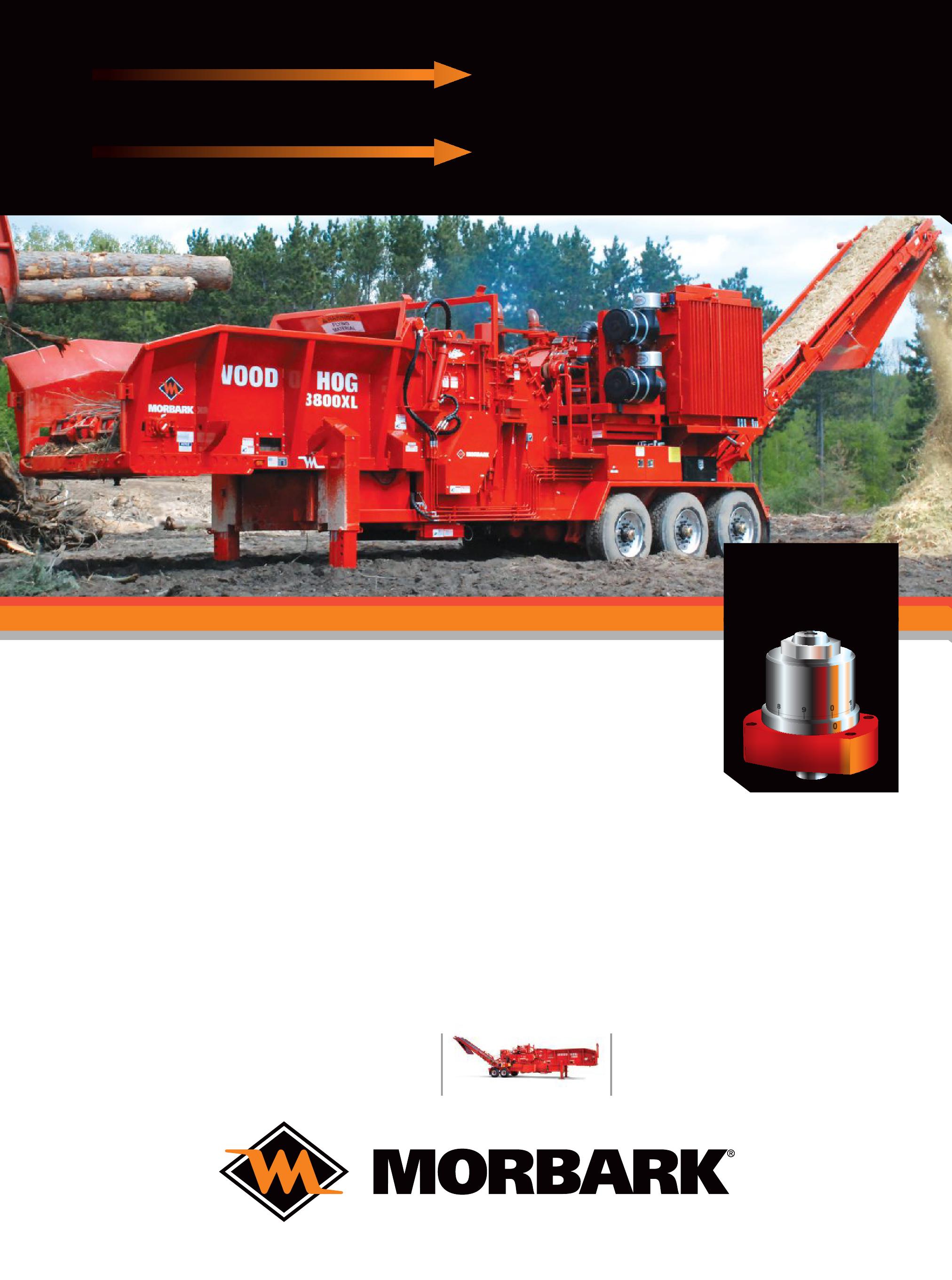
We’ve designed the new Morbark ® 3800XL Wood Hog to be the best horizontal grinder on the market. It will dramatically increase your production capacity and operating efficiency, so you can fill your pockets as fast as it fills your trucks.
• More Productive – A larger, more aggressive hammermill and independent drive motors on the feed-wheel and belt-chain result in a continuous feed with higher production, greater fuel efficiency, and a more consistent end product.
• More Convenient – The Morbark Integrated Control System allows you to maximize production and keep the belt full with just an occasional tweak of your thumb. And you can conveniently service the grates and hammers while standing up, with plenty of headroom and space to work.
• More Reliable – The 3800XL is protected from foreign objects by the best solution available: an externally adjustable breakaway torque limiter that releases instantly when overloaded without stalling the engine; this significantly reduces potential damage and decreases downtime.
The Morbark® 3800XL Wood Hog is part of a full line of heavy-duty industrial grinders from the leader in the industry. Learn more about our machines, extensive product support, and independent dealer network at www.morbark.com.
Big BEN
FUsing resource wealth to create a Canadian advantage in the global bioeconomy.
By Catherine Cobden
rom car parts to clothing to cosmetics, wood fibre is being turned into innovative new products and positioning the Canadian forest products industry to be a dynamic player in the growing bioeconomy. But the sector cannot transform and develop new bioenergy, biochemicals and bioproducts on its own.
That’s why the Forest Products Association of Canada (FPAC) first started the Biopathways Partnership Network aimed at exploring new business-to-business ventures to help exploit the economic opportunities of the emerging bio-age. It has brought together more than 250 organizations from the chemical, energy, pharmaceutical, auto, aerospace and plastics industries as well as other technology providers. The success of this network speaks to the eagerness for mutual co-operation in the biospace.
In addition, late last year FPAC joined with eight other industry groups to form the new Bio-economy Network or BEN, a crosssector forum supporting bio-industry. It brings together a diverse membership across the Canadian economy, including the Automotive Parts Manufacturers’ Association, BIOTECanada, the Canadian Bioenergy Association (CanBio), the Canadian Renewable Fuels Association, the Chemistry Industry Association of Canada, CropLife Canada, FPInnovations and the Sustainable Chemistry Alliance.
All together they represent 800 member companies, two million jobs and $266 billion of total annual revenue. BEN members share a strong belief that Canada can use its abundant renewable resources of forest and agriculture residues in innovative ways to feed the bioeconomy and create solid jobs and future economic growth.
And what is the bioeconomy? It unlocks the potential of Canada’s natural resources by embracing the manufacturing of a broad spectrum of products used in medical appli-
cations, diagnostics, foods, energy, chemicals and industrial materials from our forest and agricultural resources. In fact, the bioeconomy is already a huge and vibrant contributor to Canadian GDP ― about $87 billion a year with an annual growth rate over the past four years of 12%. More than a million Canadians are already working in bioeconomy related jobs.
The emerging global market for biobased products is nothing less than staggering. The Organization for Economic Co-operation and Development (OECD) estimates that the bioeconomy already represents one-third of the total world economy, with growth rates continuing to accelerate. Canada, with its plentiful resources, should certainly aim to get a healthy share of a global biomarket opportunity estimated at $200 billion by 2020.
Key trading partners and competitors have already developed comprehensive bioeconomy strategies. For example, the Obama administration in the United States in April 2012 released a National Bio-economy Blueprint that lays out strategic objectives to realize the full potential of the U.S. bioeconomy. The European Union has released Innovating for Sustainable Growth: A Bioeconomy for Europe, which highlights innovation for environmental sustainability. In comparison, Canada has been moving forward slowly but surely, but in individual silos without an overall strategic frame.
That’s where BEN comes in. Individual associations felt it was time to explore new business models and partnerships across sectors to enhance co-ordination, outreach and advocacy for a supportive policy environment in Canada. At the very least, this will mean improved information sharing, reduced duplication and other increased efficiencies.
BEN members are hoping to demonstrate an integrated vision of the bioeconomy
that will focus on the priority policy areas of investment climate; the regulatory environment, including standards; innovation; cross-sector collaborative partnerships; market diversification; and value added production.
The new group wants to enhance the profile of the interests and needs of the collective members in supporting the emergence of a national bioeconomy; it wants to provide a forum for government to meet engaged and co-ordinated participants; it seeks a supportive policy framework to drive sector innovation and competitiveness; and it wants to position Canada as a bio-investment destination within the global bioeconomy.
BEN represents notable progress in breaking down traditional “silos” and the lack of co-ordination between key players in bio-industry. As the industry organizations pledge tighter collaboration, BEN wants partners in the federal government to improve co-ordination across key departments as well. The key is to work together.
Our overall goal is ambitious – BEN seeks to work with our government partners to develop a comprehensive bioeconomy framework to unleash Canada’s natural resource advantages and serve new markets.
BEN would welcome other associations to join our cause, from the mining to the agriculture to the plastics industry. Together we can turn Canada into a true powerhouse in the global bioeconomy, generating green and innovative products from our natural resource wealth. •
Catherine Cobden is the executive vice-president of FPAC. Over her 10 years at FPAC, Catherine has steered the organization’s economic and regulatory programs aimed at improving the forest sector’s competitive position. She played a key role in developing the Canadian Forest Sector Transformation Strategy, shepherded the landmark Bio-pathways study and led the 2012 launch of the industry’s new Vision2020.
Dry Run
Using the dry mill process, GreenField Ethanol’s Johnstown facility produces more than 600,000 litres of ethanol each day.
By John Tenpenny
RENEWABLE
fuels have come a long way over the past 20 years as rising energy prices have increased the demand for clean alternatives to oil, such as ethanol. GreenField Ethanol has certainly seen it all in its journey to becoming Canada’s leading producer.
Begun in 1989, as Commercial Alcohols by Ken Field and a group of investors with a plant in Tiverton, Ont., producing industrial and beverage alcohol, the company opened Canada’s first large-scale fuel ethanol facility in Chatham in 1998 after signing an agreement with a major oil company.
In 2006, Commercial Alcohols was re-named GreenField Ethanol Inc. and over the next two years opened two more ethanol plants in Varennes, Que. (2007) and Johnstown, Ont. (2008).
GreenField produces over 600 million litres of ethanol a year, with 120 million litres being industrial and beverage alcohol. Its Chatham facility has one of only three dry mill continuous ethanol producing plants in North America. The facility is uniquely capable of alternating between fuel and industrial ethanol production. The Johnstown facility is the largest, producing more than 200 million litres each year and consuming 20 million bushels of locally (within 100 kilometres) grown corn.
Dry mill prOcess
Located along the shores of the St. Lawrence River between Kingston and Montreal, GreenField’s Johnstown facility utilizes a dry mill process designed and built by ICM Inc., a leading ethanol plant engineering firm in North America, which also built GreenField’s Varennes facility – the first ICM project in Canada.
In the dry mill process, the entire grain kernel is ground into flour using three Bliss hammermills and the starch in the flour is converted to ethanol during the fermentation process, creating carbon dioxide and dried distillers grain with solubles (DDGS), which are sold for use in making a protein-rich animal feedstock. Johnstown produces about 154,000 tonnes of DDGS per year.
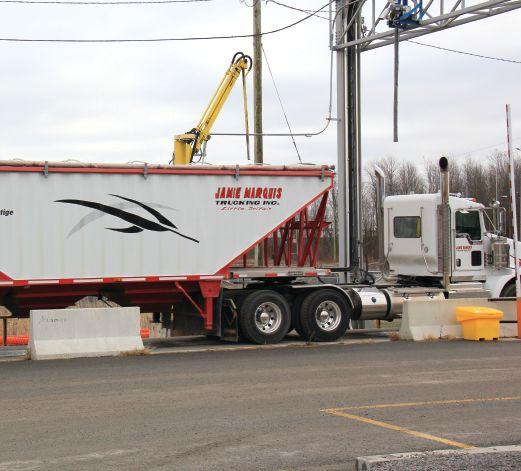
Operating 24 hours, seven days a week, with a staff of 51, Johnstown unloads trucks from 6 a.m. to 6 p.m. Every vehicle is weighed going in and coming out and a sample of each truckload is taken and tested for moisture content, mold and structure (whole kernel).
According to plant manager Darrell Veres, Johnstown has 7,000 kilograms of storage capacity for the corn before the grains are screened to remove debris, then ground into coarse flour in the hammer mill.
The next step is the cooking process, where the starch in the flour is physically and chemically prepared for fermentation.
The milled grain is mixed with process water, the pH is adjusted and an alphaamylase enzyme is added. The slurry is heated to 83°C or 30 to 45 minutes to reduce viscosity.
The slurry is then pumped using a Sulzer centrifugal pump through a pressurized jet cooker at 105°C and held for five minutes, before being cooled by
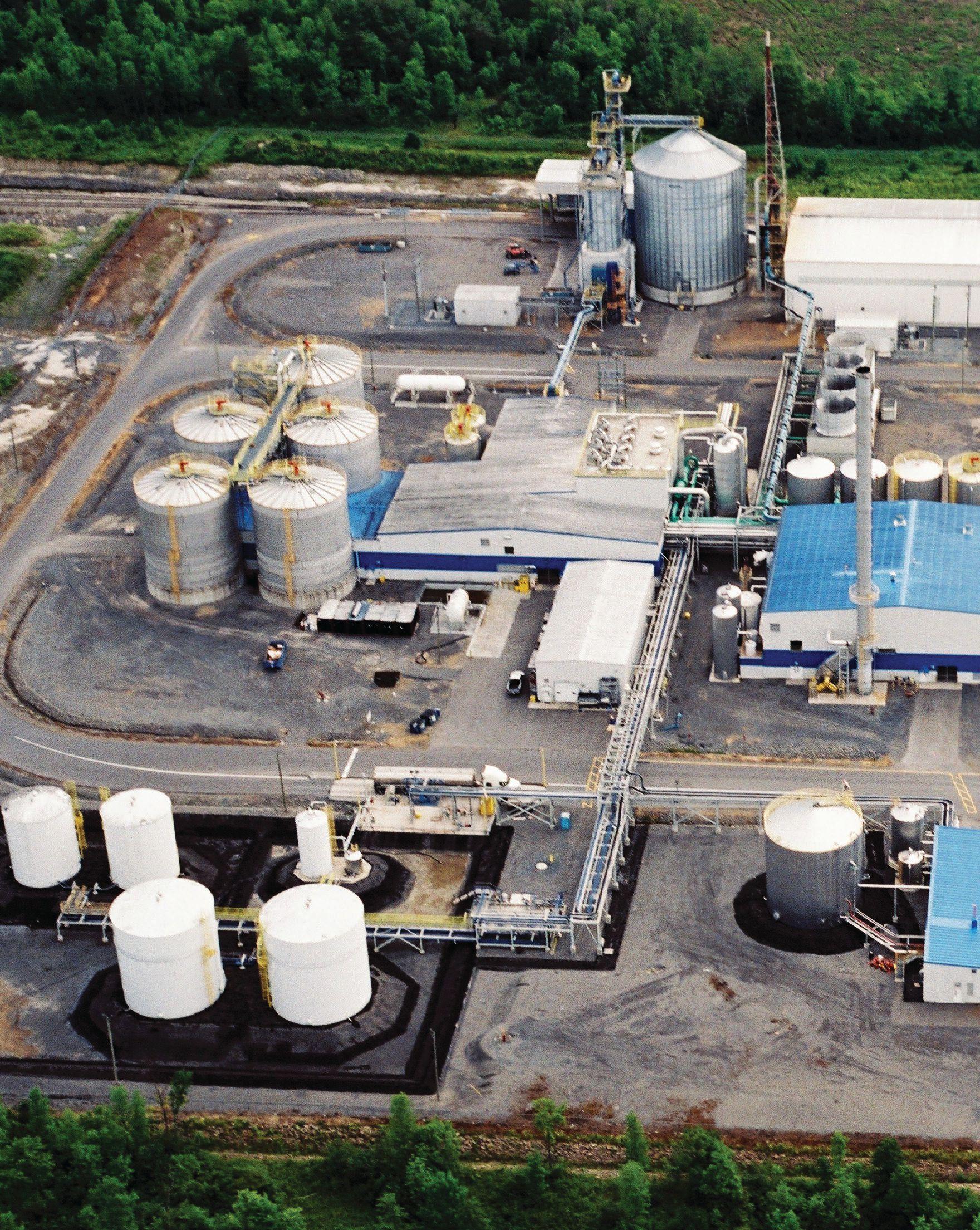
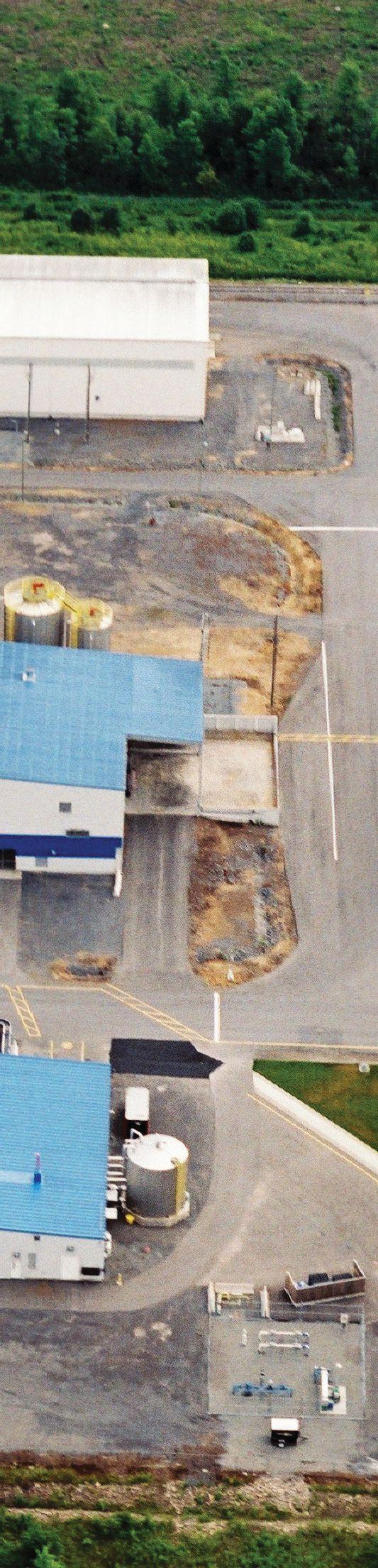
LEFT MAIN: GreenField’s Johnstown facility produces more than 200 million litres of ethanol each year and consumes 20 million bushels of locally grown corn.
INSET: Every truck is weighed going in to and coming out of Johnstown and a sample is taken and tested for moisture content, mould and structure (whole kernel).
an atmospheric or vacuum flash condenser. After cooling, the mixture is held for one to two hours at 85°C to give the alpha-amylase enzyme time to break down the starch into short chain dextrins. Following pH and temperature adjustment, a second enzyme, glucoamylase, is added as the mixture is pumped into one of four fermentation tanks with a capacity of 2.8 million litres each.
nitrogen, which is food for the yeast. The mash is then allowed to ferment for 50 to 60 hours, resulting in a mixture, known as “beer” that contains about 15% ethanol as well as the solids from the grain and added yeast. The Johnstown facility has a cleanin-place (CIP) system to kill off bacteria and the fermentation tanks are cleaned between fills.
The Johnstown plant has its own quality lab where three technicians test samples of the mash. Process operators do the majority of the analysis to monitor the onoing perfromance of the process.
The 190-proof ethanol is then pumped into the molecular sieve system. These specialized vessels contain molecular sieve beads made of ceramic that absorb water molecules from the process stream while ethanol molecules pass through unaffected. When the ethanol leaves the molecular sieves, it is greater than 99% ethanol by volume or 200 proof.
Once inside the fermentation tanks, glucoamylase enzyme breaks down the dextrins in the mash to form simple sugars. Yeast is added (30 kilograms for each tank) to convert the sugar to ethanol and carbon dioxide. Urea ammonia is also added for
The fermented mash is pumped into a multi-column distillation system where additional heat is added. The columns utilize the differences in the boiling points of ethanol and water to boil off and separate the ethanol. By the time the ethanol is ready to leave the distillation columns, it contains about 95% ethanol by volume (190 proof). The residue from this process, known as stillage, contains non-fermentable solids and water and is pumped out from the bottom of the columns into one of the four Flottweg centrifuges.
The 200-proof ethanol is pumped to on-site storage tanks where it is denatured or made unfit for human consumption – a legal requirement – and stored until it is ready to be pumped into fuel trucks and hauled away.
The stillage from the distillation system is pumped into centrifuges to separate the majority of the solid matter from the solution. This creates two products: a semi-solid product called wet cake, which is removed and conveyed to a pair of rotary dryers, where it is converted into low-moisture DDGS, and a mostly water process stream, called thin stillage, which is pumped to the evaporation system to be concentrated before being added to the dryers. •
The Next Generation of Ethanol
GreenField Ethanol believes it has a game-changer for the cellulosic ethanol process.
By John Tenpenny
WiThthe ethanol fuel industry in high gear, some are looking ahead to the next generation of biofuel and at GreenField that means cellulosic ethanol.
The company’s Cellulosic Ethanol Division was established in 2007 to pursue research into the commercialization of cellulosic ethanol production through the biochemical conversion of plant fibers.
Currently at the company’s Centre of Excellence in Engineering, Technology, Research and Development, in Chatham, a project is underway to trial on a continu-
ous basis its uniquely developed equipment, which Barry Wortzman, vice president of business development says will be a game-changer in the cellulosic ethanol process.
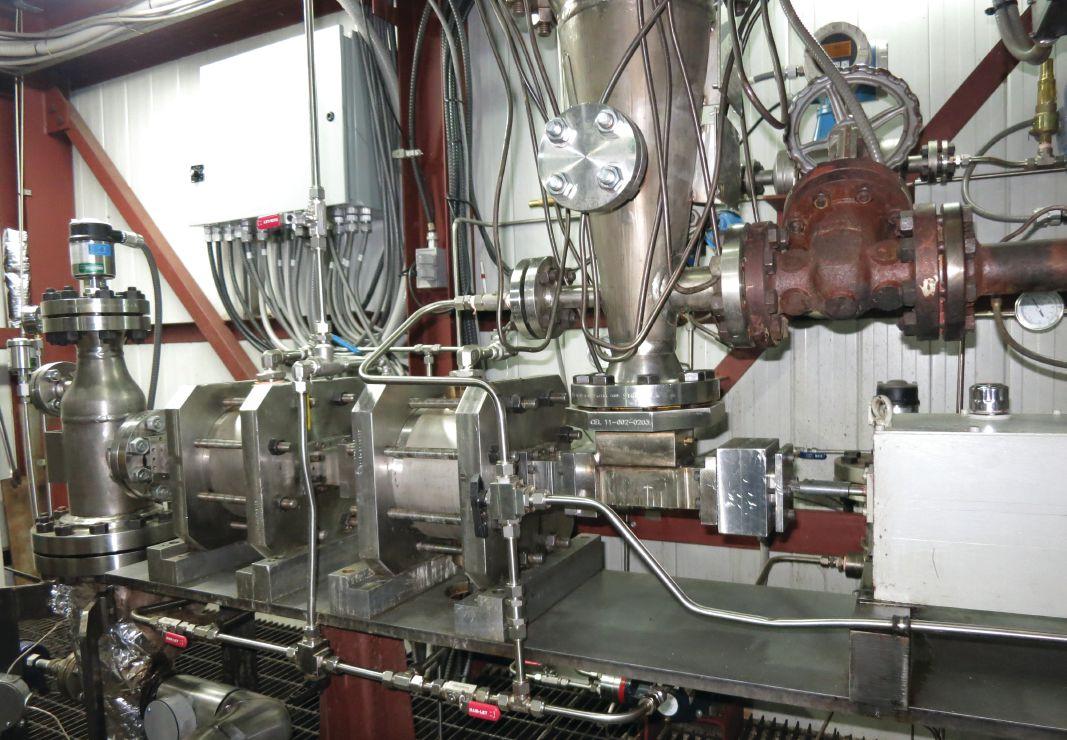
According to Wortzman, the pretreatment stage is key to any cellulosic ethanol process. At the core is a highly modified twin screw extruder, which Wortzman said can be used with various feedstocks, and is less than complex, more efficient and less costly than other pretreatment equipment alternatives.
“The result? We expect to achieve the best-in-class yield from both C5 and C6
sugars at a cost of about $2 a gallon,” he said.
GreenField’s strategy to commercialize cellulosic ethanol calls for the equipment to be validated for commercial scale-up
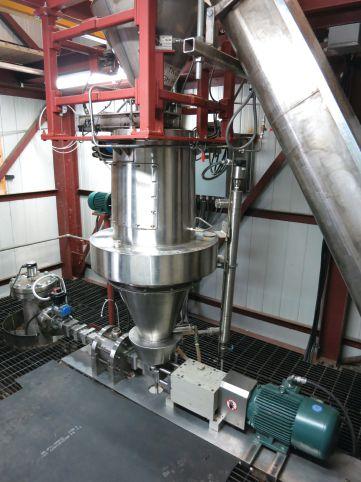
INSET: In the pretreatment process, extruder No. 1 conditions the incoming biomass by removing resins and toxins.
MAIN: Extruder No. 2 then completes the process by washing the cellulose and hemicellulose fractions, squeezing and separating the hemicellulose fraction from the cellulose fraction and contributing to the pretreatment cooking of the biomass to make the cellulose fraction more digestible.
by the end of the year, before the company begins engineering its first bolt-on cellulosic facility. Wortzman said GreenField expects to begin building its first bolt-on plant in 2014.
He also says the company is working on a sustainable biomass supply chain, focusing on a combination of cobs/stover and purpose-grown energy crops, that includes its own trial planting program.
pretreatment package
Why did the company focus on pretreatment? Because it’s the key to commercialization, says Wortzman.
“The objective is to recover the most C5 and C6 sugars, in their cleanest form, for optimal downstream hydrolysis and fermentation. Others focused on enzymes and yeasts, but we focused on pretreatment, became experts in this field and succeeded in what we believe is a superior pretreatment process.”
GreenField pioneered a two-stage process which involves cooking the biomass in two steps. The first is to liquefy, separate and recover the C5 sugars so they will not “inhibit” the second step, which is conducted under more extreme conditions to expose the cellulose fraction and recover highly digestible C6 sugars.
The extruder – actually there are two extruders in the process – was “modified” after GreenField attempted to use offthe-shelf machinery. “We tried to adapt it to our needs, but the costs proved prohibitive at a commercial scale, so we
Processing Systems for Bioenergy Liberating Untapped Energy
A worldwide leader in size reduction technology for bioenergy, Vecoplan works with individual customers to design, engineer, manufacture and implement technologically advanced, material specific, and application specific shredding, ferrous and non-ferrous removal, size and density separation, screening and classification technologies and extremely efficient conveyor and bulk material handling, metering, storage and unloading technologies.
Contact Vecoplan today to learn more about our existing systems or to arrange a visit to one, or several, of our installations.
Phone: (336) 252-4774
GreenField’s Centre of Excellence in Engineering, Technology, Research and Development, located in Chatham, opened in 2008.
developed our own pretreatment solution” says Wortzman.
The company has applied for a patent, which revealed the extruder technology to be “very unique,” according to Wortzman. The technology also has other industrial applications as a soidliquid separation device for dewatering, squeezing plant oils and separating trace oils using solvents, to name a few.
The extruder’s multi-function capability of washing and solid-liquid separation, as the biomass travels its length, is made possible by its specially designed and fabricated filter blocks.
In the pretreatment process, extruder No. 1 conditions the incoming biomass by removing resins and toxins. Extruder No. 2 then completes the process by washing the cellulose and hemicellulose fractions, squeezing and separating the hemicellulose fraction from the cellulose fraction and contributing to the pretreatment cooking of the biomass to make the cellulose fraction more digestible.
According to Wortzman, Green -
Field’s modified extruder requires fewer pieces of equipment compared to other commercial off-the-shelf equipment, helping to reduce capital costs and lowering operating costs by using less energy and lower enzyme and yeast loads.
b i O gas an D tO mat O es
While ethanol remains GreenField’s principal product, the company is looking for economic contributions from more than just DDGS.
“Now in the industry there has been an effort made to become biorefineries and to be better in terms of the co-products that you are able to generate out of that kernel of corn,” says Wortzman.
The company’s Chatham plant is doing just that – changing from an ethanol plant into a biorefinery – with the recent announcement of a project that will see a greenhouse operation use the facility’s CO2 to grow tomatoes.
“It’s literally us delivering CO2 across the fence, which they will use as the food to feed their tomatoes,” says Wortzman. “That’s a biorefinery – where nothing
gets wasted. You’re not venting anything into the atmosphere; you’re using your CO2 for another application.”
The Chatham plant is also developing new co-products from the manufacture of ethanol. “We’ve incorporated equipment that allow us to remove the corn oil after fermentation and to either ourselves make a biodiesel or sell to biodiesel manufacturers,” says Wortzman.
“Many plants in North America are now incorporating that technology because it’s another opportunity to generate a co-product revenue stream out of a single kernel of corn – nothing gets wasted.”
At GreenField’s Varennes facility in Quebec, the company is also developing an anaerobic digester on-site that will use organic waste from local South Shore communities to produce biogas that will displace a portion of the plant’s natural gas use, as well as partnering with Enerkem to incroporate its thermochemcial technology to produce cellulosic ethanol from municipal and indsutrial waste. •
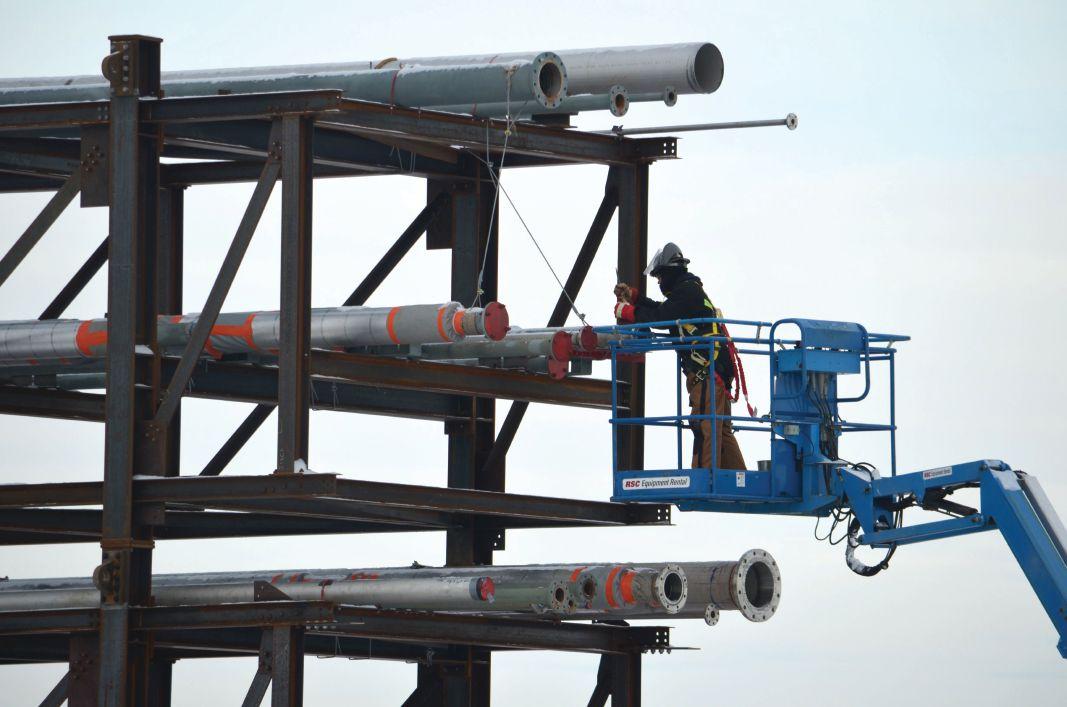
Construction of the gasifier is underway at Enerkem’s commercial plant in Edmonton.
Turning Waste into Fuel
Enerkem’s Edmonton facility produces cellulosic ethanol from waste.
By Andrew Macklin
Theproduction of biofuel from waste has taken a step forward in Canada, as the country’s first full-scale commercial plant for the production of cellulosic ethanol hits the construction phase. The proprietary thermochemical technology platform created by Enerkem is providing the City of Edmonton with another component for its world-class waste management facility.
The City of Edmonton has already established itself as a world leader in waste management. Before the Enerkem project began, the city was already diverting close to 60% of its municipal waste away from its landfill. Among its innovations, Edmonton has a paper recycling plant on the site of the waste management facility, and the recycled paper
products created are used as the paper stock for the municipality.
The $131-million project includes the feedstock prep facility, a commercial plant, and the Advanced Energy Research facility. The $100-million waste-to-biofuels commercial plant will be owned and operated by Enerkem; the remaining $31 million covers the cost of the Integrated Transfer and Processing Facility and the Advanced Energy Research Facility. These two facilities are owned and operated by the City of Edmonton.
The commercial biofuels plant will run all day, every day, in order to process the volume of residential and commercial waste that will be taken in. The resulting production volume is estimated at 4,500
litres of fuel grade cellulosic ethanol per hour, and approximately 38 million litres of cellulosic ethanol over the course of a year. That volume represents approximately 14% of the ethanol needed by the province of Alberta to meet Canada’s 5% ethanol blend requirements for fuel.
enerkem’s technOlOgy
Since 2000, Enerkem has been working on research and development projects that would allow the company to produce a commercial-size waste-to-biofuels plant. Headquartered in Montreal, the company, founded by the father and son team of Esteban and Vincent Chornet, has been working on validating its proprietary technology for the last decade. The end
result has been the creation of a financially sustainable solution for breaking down a variety of feedstocks and solid waste for the production of methanol and cellulosic ethanol. Enerkem currently has two facilities operational in Quebec, with a pilot plant in Sherbrooke and a commercial demonstration plant in Westbury. Two facilities similar to the Edmonton project are also in development, with one in Varennes, Quebec (in partnership with GreenField Ethanol) and the other in Pontotoc, Mississippi.
Enerkem’s four-step thermochemical process involves the preparation of feedstock, gasification of the feedstock, the cleaning and conditioning of syngas, and then catalytic synthesis.
“We produce chemical-grade syngas that is suitable for many applications,” explains David Lynch, general manager of research and development for Enerkem. “We then use commercially available catalysts to produce end products like methanol and cellulosic ethanol.”
Methanol can be used as the end product, providing a saleable product for the commercial market without going through
the secondary refinement stage. However, Enerkem is committed to the production of cellulosic ethanol at the facilities it has built.
The plant being constructed at the waste management facility in Edmonton is based on a standard plant design from Enerkem that consists of prefabricated modules. The six-acre plant site is strategically located between the demonstration plant and the feedstock preparation facility, and will have the foundation in place to double in size should future demand require the plant’s expansion.
refining the technOlOgy
The commercial-scale plant being built in Edmonton follows extensive testing and analysis done at the company’s demonstration and pilot plants in Quebec. The demonstration facility, located in Westbury, allowed Enerkem to confirm the process design of its proprietary technology for its deployment at its full-scale commercial plant in Edmonton. Today, the facility produces fuel-grade cellulosic ethanol from waste.
In addition to its commercial facility
BIOMASS SOLUTIONS TO POWER TOMORROW
under construction, Enerkem has delivered a smaller-scale system for the Advanced Energy Research Facility operated by the City of Edmonton on the same site. Built at a 5% scale of the commercial plant, the Advanced Energy Research Facility has the ability to process a broad range of waste and biomass feedstocks and to utilize the syngas produced to evaluate numerous down-stream technologies.
This plant is linked to a research lab found in the same facility, which has been performing a series of tests focused on the reduction of greenhouse gas emissions from waste and biomass sources. Analytical services for the commercial plant will also be managed through the lab.
The demonstration plant and lab also provides an opportunity to research other end products that could be produced. Gasification optimization was the initial role of the research facility, but with the methanol and ethanol creation processes refined, that focus has been broadened to look at applying the Enerkem technology to new and existing Alberta industries.
“The primary focus of the research
ProcessBarron has 30 years of experience in designing and fabricating biomass fuel, air & ash handling systems. ProcessBarron has the know-how to get the most out of your biomass systems.
facility, moving forward, will be to broaden the types of feedstocks that can be used,” says Lynch. “We want to research opportunities for using shredded materials from motor vehicles, different types of wood materials, as well as refinery waste.”
In addition to the use of new feedstocks, the team is also conducting extensive research looking into other beneficial uses for syngas.
“What else do you want to make from your syngas?” asks Lynch. “We are looking at how we might create dimethyl carbonate by injecting CO2 directly into the molecule, as well as the ability to create dimethyl-ether as a possible secondary end product. We also want to better understand when and how CO2 can offset the use of steam in the process. These are just a few of the possibilities that we will
be researching in the lab.”
It won’t just be researchers from Enerkem either. The lab is available to other researchers that are doing similar work to what is being done by Enerkem’s own staff. That opportunity will help not only to further Enerkem’s work, but also to build new research networks and partnerships both nationally and globally.
waste-tO -biOfuel
The commercial plant will begin producing methanol in 2013 and will then focus solely on the production of cellulosic ethanol, with the estimated 4,500 litres per hour target to be achieved as soon as the plant is fully operational in 2014. All processes of the plant will run 24 hours a day, in order to both process the supply of waste and to meet production targets.
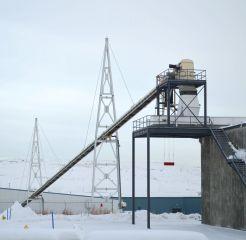
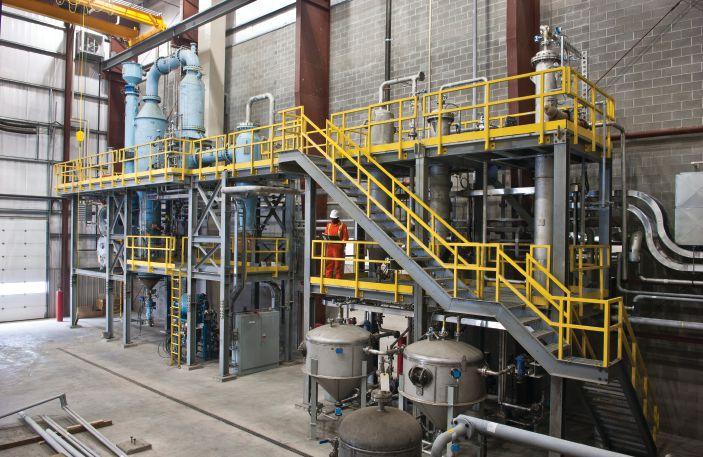
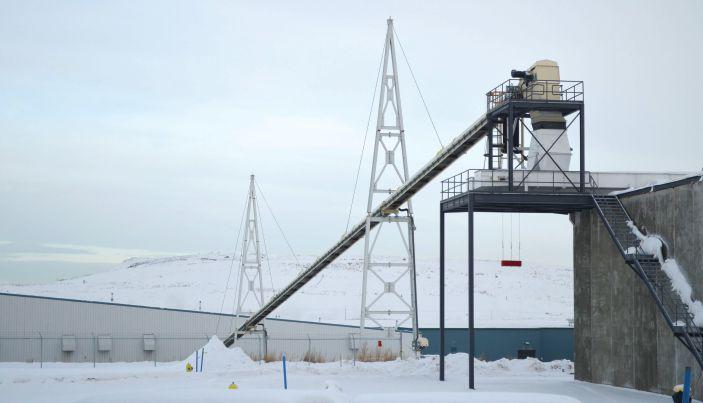
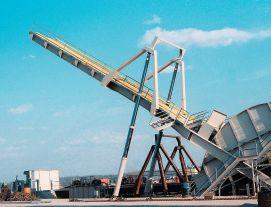
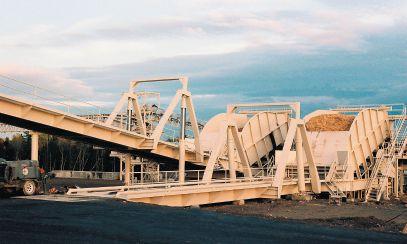
The process begins at the feedstock preparation facility, where the garbage is separated. Trash that can be recycled through other methods, such as compost, plastic containers and paper products, is removed from the waste. A high-powered magnet is also run through the materials to remove any metals from the process. The remaining waste is then processed through a shredder before it is placed on the conveyor system. The conveyor system runs several hundred feet from the preparation facility to the gasifier, with the conveyor’s incline supported by a pair of metal structures.
The chamber, which stores the waste before it enters the gasifier, provides continuous flow of the shredded waste to the gasifier where it is processed under low severity conditions. The 1-2 bar pressure used in the Enerkem gasifier is lower than what is found in a standard motor vehicle tire. The gasifier in the plant has a bubbling fluid bed which has an average temperature of less than 700°C. The bottom of the bed is filled with hot sand. Steam and a small amount of oxygen are blown through the hot sand, which then rapidly decomposes the feedstock. The resulting syngas is then cleaned and conditioned before being used for catalytic synthesis, resulting in cellulosic ethanol.
If the ethanol production in Edmonton meets the expected target of 38 million litres produced annually, the fuel produced at the facility will equal 14% of the province’s Renewable Fuel Standard (RFS) or 400,000 cars’ worth of ethanol additive. As of now, the ethanol used in Alberta’s gasoline is being imported from outside of the province. With 38 million litres produced in Alberta, that’s less fuel being used, and less money being spent, to import ethanol.
Overall, the project will help the City of Edmonton to continue to be recognized as a world leader in waste management. The diversion of waste for the creation of biofuel will allow the city to increase its landfill-diverted household waste from around 60% to approximately 90%, while also creating a needed resource for the province that was previously imported. With completion targeted for later this year for methanol production, this world-class facility will serve as a model for other communities across Canada that are looking for new ways to control waste and reduce their carbon footprint. •
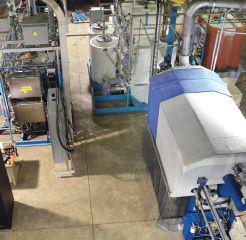
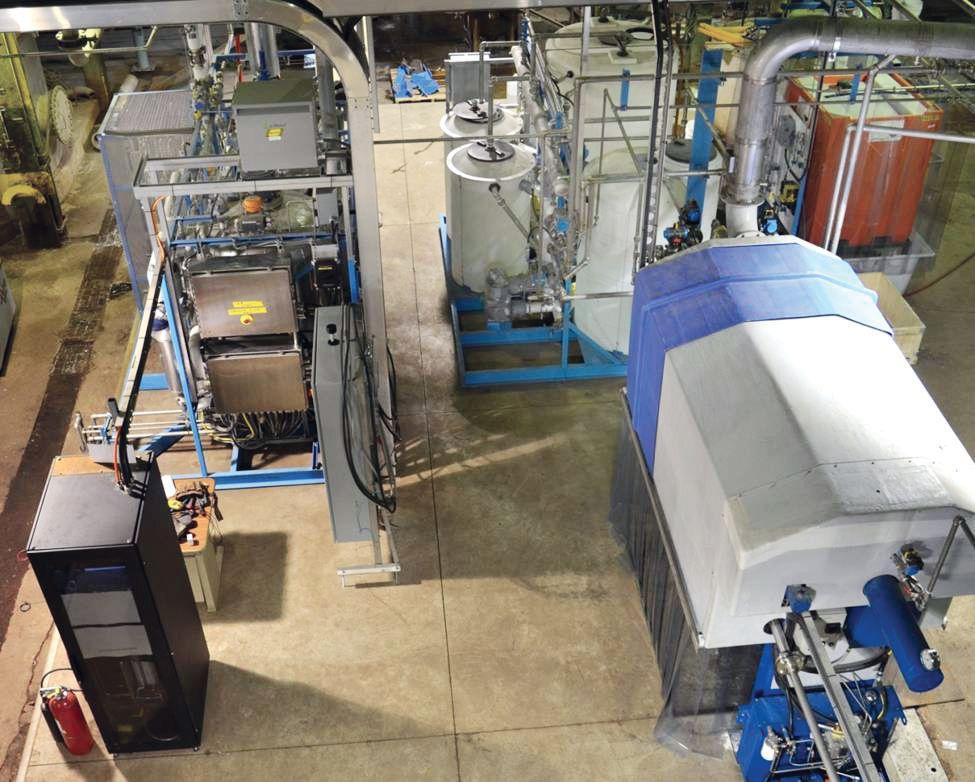
Inside the Advanced Energy Research Facility in Edmonton, work is being done to test syngas for secondary end products.
A conveyor system runs from the feedstock preparation facility to the gasifier chamber.
Photo: Enerkem
Learning About Lignin
New FPInnovations lab pushes research forward.
By Andrew Macklin
Thecontinued emergence of the Canadian bioeconomy has increased the need for homegrown solutions for pushing the agenda forward. As provinces work to expand opportunities for research and development for a variety of bioenergy solutions, the establishment of the Centre for Research and Innovation in the Bio-economy in Thunder Bay, Ontario, has provided the needed funding for a new lab that looks to learn more about the marketable value of lignin.
In June of 2011, CRIBE announced that it was providing $850,000 for the establishment of a world-class lignin lab and demonstration plant at the Resolute Forest
Products (RFP) mill site (formerly AbitibiBowater) in Thunder Bay. In addition, Natural Resources Canada provided $500,000 in funding for the project, which is being run by FPInnovations (FPI).
The demonstration plant is the first facility of its kind in North America. The plant has been directly integrated into the kraft mill process at RFP. Testing and evaluation of lignin is done in the FPInnovations lab onsite, with further testing and evaluation of lignin and its product applications at other FPI labs as well with various research and commercial partners.
Part of the work that needed to be done in advance of constructing the demonstra-
tion plant was to determine an effective system for lignin extraction based on the kraft mill process already in place at Resolute.
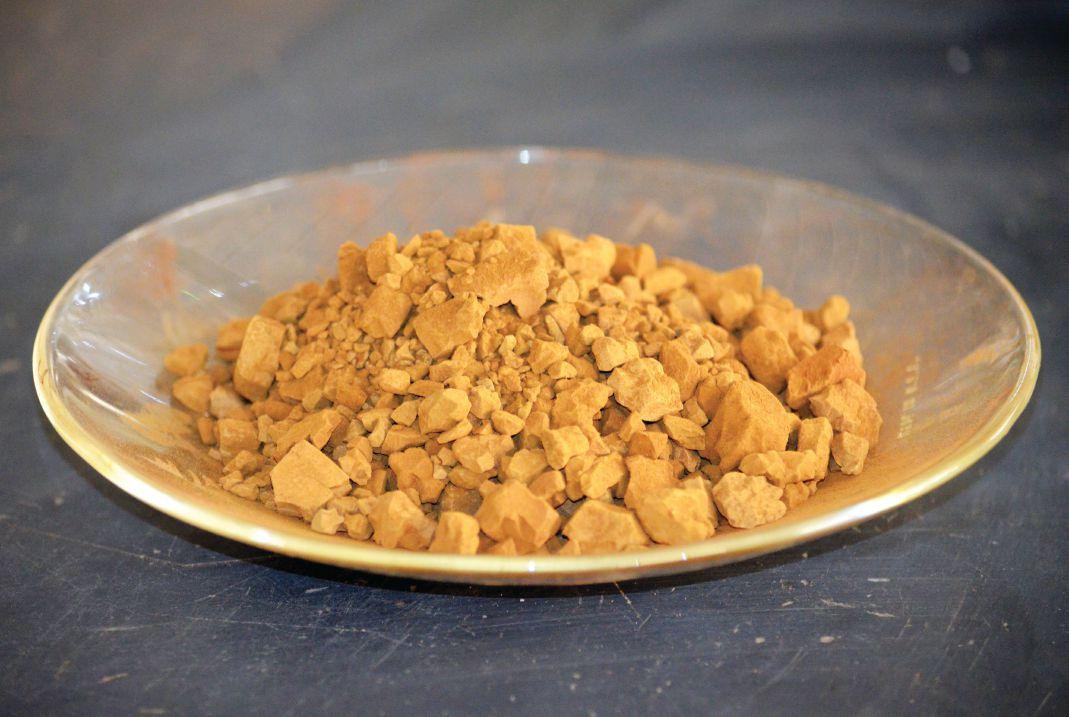
“In our process, the lignin precipitates from the black liquor as a solid when the black liquor is acidified,” said Kirsten Maki, associate research leader for the Bio-Economy Technology Centre. “The resulting slurry is sent to a filter press, where the lignin solids are trapped in the filter while the remaining black liquor passes through the filter media. The lignin is then squeezed, washed, and dried with pressurized air, and is discharged as a clean cake of lignin at around 60% solids. This cake can be dried further and then crushed, ground or
Photo: FPInnovations
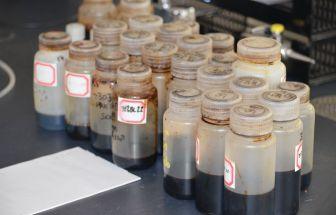
ABOVE: Black liquor samples are sent to the FPInnovations Lignin Lab from across Canada by companies looking to understand the best end-use for the product.
ABOVE MAIN: Lignin, once it has been extracted from a black liquor sample, undergoes a series of tests to determine what its best product application is.
pulverized, depending how fine a product is desired.”
One of the key reasons for linking the demonstration plant directly to the kraft mill process is the production of lignin to meet the growing demands of end users. The initial production capacity is 100 kilograms per day, which has already been met by Resolute.
As a result of the current lignin resources made available from the demonstration plant, over 25 organizations from across Canada, the United States and a handful of international partners have already received samples of the lignin for use in
product development.
“Our largest order to date, approximately two tonnes, went to a phenol formaldehyde resin manufacturer – the lignin can replace some of the phenol in the formulation,” said Maki. “The expectation is that resin will be among the first higher value/ higher volume uses of lignin derived from kraft black liquor (versus using lignin for its fuel value).”
cOllecting samples
Smaller samples of the lignin created at the demonstration plant are being used in the research conducted at the FPInnovations
® black liquor and lignin evaluation lab located on the same site. The large quantity available from the extraction process at RFP will allow for in-depth testing, helping to determine variations in lignin quality based on the type of wood and the process by which the lignin was extracted.
The lab and pilot plant also has the capacity for accepting black liquor and lignin samples from across Canada and around the world. Those samples are voluntarily sent by manufacturers looking to understand the characteristics of the lignin to determine the best end use for the product. Currently, lignin is being evaluated by companies across Canada as an alternative to petroleum-based chemicals used to make products such as carbon fibre, pharmaceuticals, resins, rubber additives, and thermoplastics. As researchers are able to provide thorough evaluations of lignin samples from a variety of wood species, these companies will be able to gain a greater understanding of the lignin they will need in order to produce the highest quality product. At the same time, researchers at the lab also gain that same knowledge, which will allow for the creation of an extensive database of information for comparing lignin samples from around the world.
The tests being run on the black liquor and lignin samples are being conducted by a four-member team of researchers from FPInnovations, and supported by
the work of graduate students and postdoctoral fellows. Thanks to a partnership between FPInnovations and the Lignoworks network, in co-operation with The Natural Sciences and Engineering Research Council of Canada, students from major universities across Canada have access to the lab to assist graduate-level research being done in relation to both the extraction process and lignin-based product development.
The research and development that will result from the work being done at the lab will provide significant benefits for the bioproducts industry in Canada. The constant, available supply of lignin will help the industry move from the production of ligninbased products at the laboratory sample level to a much larger scale. The evaluation of the demonstration plant’s performance will help FPInnovations, and its engineering partners at NORAM, understand the design requirements necessary to increase the scale of lignin production. Classifying, researching, and evaluating lignin from different extraction processes and wood samples will give producers a real understanding of the most effective end uses for those same lignin samples.
The world-class lab and demonstration plant at RFP in Thunder Bay, in partnership with FPInnovations, has the potential to provide the needed research and development to vault Canada to the forefront of the global bioproducts industry.
Air System Experts
EU Market to Explode
Attendees at the WPAC 2012 AGM in Quebec heard some promising export forecasts.
By Scott Jamieson
Whilethe 2012 AGM of the Wood Pellet Association of Canada in Quebec City started off with a tour of a domestic pellet heating facility, the key focus of the meeting was on trends in export energy markets, and what they mean for Canadian pellet producers.
The meeting started with a tour of the Cité Verte urban district heating project (See our cover story in Canadian Biomass Sept/Oct 2012 for the full report.) The tour was led by Claude Routhier, president of Poly-Energie and a driving force behind this project. The 800-unit apartment block and commercial centre is heated 100% by four Viessmann biomass boilers in a pilot project partly funded by Hydro Quebec and Natural Resources Canada. The goal is to create an example and working database for others to emulate. The company’s next project involves individual pellet heating systems in semi-detached ski lodge housing near Quebec City.
The conference kicked off with overviews of the Canadian and international wood pellet scene from WPAC executive director Gordon Murray. The European Union still represents 84% of global pellet consumption, with the United States responsible for
another 12%. Canada, despite our climate, accounts for just 1%. More importantly, the U.K. is now responsible for some 50% of North American exports, a number that both Murray and other experts at the AGM expect to see grow at a significant pace. On the domestic market, Murray expects
INTERNATIONAL VDI CONFERENCE 2013
BIOMETHANE
Upgrading and Utilization
Renowned speakers will present their results on the following topics:
• Policy, certification, trading and economic aspects of biomethane in Europe
• Established and emerging markets: Germany, Western Europe, Nordic Countries, Eastern Europe, Ukraine and Russia, China
• Biogas upgrading: Comparison of various technologies
• Grid-injection and vehicle fuel
• New developments: Bio-LNG, Power to Gas, Two-step-biogas-production
Date and venue: March 19–20, 2013 Frankfurt, Germany
great things from new federal coal-powered generating emission regulations. By capping emissions at 420 tonnes of CO2 per GHh starting in 2015 versus the current 1050 average, Murray expects a market of 5.5 million tonnes to develop by 2019. “We currently produce less than two million tonnes, so we are looking at almost tripling our production level just for the domestic market.”
Picking up where Murray left off, Arnold Dale of the Ekman Group returned to trends in the international pellet market. Ekman represents forest products producers worldwide, and has moved strongly into pellet markets in the past few years, including a 900,000-ton plant in Russia with plans to add another million tonnes.
While stressing the uncertainties of politically driven global power generating markets, Dale’s message was essentially one of significant growth opportunities, especially in the U.K. He expects some hiccups as coal power generators there move increasingly to biomass. Still, even with one or two plants converting at a time, he forecasts a switch involving roughly 2 GW.
“With each plant you are talking 2.3 million tonnes, and I can see a need for some 7.3 million tonnes by 2017 in the U.K. alone. The question is where will it come
Chairmen: Dr.-Ing. Bernd Krautkremer, Division Director Bioenergy System Technology, Dipl.-Ing. (FH) Michael Beil, Group Manager Gas Upgrading, Injection and Grids, both: Fraunhofer IWES, Kassel, Germany
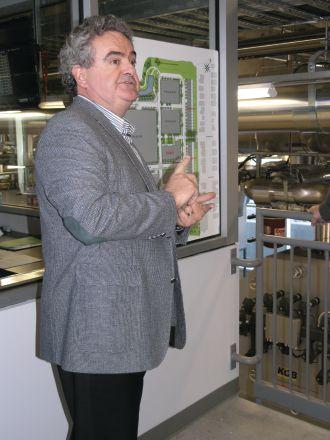
Claude Routhier, president of Poly-Energie, has been a driving force behind Quebec’s Cité Verte wood pellet heating project.
from?” Dale expects much to come from the U.S. south, South America and Russia. Yet there will be opportunities wherever logistics allow.
“With the demand we are expecting, and the pace at which it will happen, there will even be a market for the smaller players, the 50,000- to 200,000-tonne plants – the need will be that great.”
Dale also sees massive opportunity in the residential heat market across Europe, a market he feels more comfortable forecast-
• 560 TV Lines
• 2 9, 4 3, 6, 8, 12, 16 mm lenses
• All Weather, Extreme Environment
• Heavy Gauge Di-Cast Metal Alloy & Titanium Components
• Tri-Axial Mounting System
• Waterproof, IP68 Rating
•
• Vibration Resistant
Refineries
ing. Europeans currently consume some seven million tonnes of pellets to stay warm (a similar amount to industrial power consumers).
“The math is a little easier: You know how many pellet boilers were sold this year in Italy and Austria, for example. If 160,000 boilers were added in Italy this year, they will need 320,000 tonnes of bagged pellets next year to run them, and for the next decade as well.”
With the torrid pace of pellet stove sales
in countries like Italy, Austria and Spain, Dale predicts the current seven million tonnes of pellets to become 14 million by 2015, and a staggering 20 million by 2020. The consuming nations simply no longer have the forest industries to support that volume, a fact that should make hardcore industrial suppliers look at diversification.
“Even if you are currently in the industrial market, I suggest you start looking at the European domestic bagged market for a portion of your production.” •
Maximum production. Low operating cost. The Bühler RWPR-900 is the ideal pellet mill for your biomass applications. The RWPR was designed with massive roll bearings to withstand the extreme pressures of biomass pelleting. To ensure ease of operation the pellet mill is equipped with a simple V-belt drive system with minimal moving parts. This top of the line pellet mill provides an effective and effi cient pelleting solution. For more information please visit www.buhlergroup.com.
Maximum Production. Flexible controls optimize process
Low operating costs. Rollers, dies and other wear parts are designed for maximum performance and longevity to increase uptime and profi tability.
Safe operation. A combined overload shear pin and belt slip monitor protect the pellet mill from overloads or foreign material entering the die.
Need for Low-Carbon Fuels
Getting renewable fuels on the political agenda this year will be a tough order.
By Scott Jamieson
Over200 delegates gathered in December for the Ninth Annual Renewable Fuels Summit. The past year may have been rough on the sector, but overall a climate of urgency prevailed.
Hosted by the Canadian Renewable Fuels Association (CRFA), the event brings together biodiesel and ethanol producers from across Canada, as well as researchers, suppliers, and government officials. Outgoing chair Tim Haig opened the conference by congratulating so many sector leaders for attending after a tough year. Despite uncertain markets, poor growing conditions in the United
States, high corn prices, and the re-emergence of the food-versus-fuel debate that many had hoped was over, Haig pointed to the long-term opportunities laid bare by climate change meetings like the Doha Round underway at the same time.
“They show the need for low-carbon transport fuel solutions.”
pOlitical hurDles
They indeed show the need, but the question is who’s paying attention among Canada’s political class? According to keynote speaker Chantal Hébert, very few. As a longtime and award-winning political analyst and reporter with the Toronto Star,
Hébert is ideally placed to provide the biofuels sector with a roadmap of the current Canadian federal and provincial political landscape. She cautioned that it’s not an ideal time to accomplish much on the environmental or energy sustainability front.
“I think it’s fair to say that energy issues, including the environment, are the constitutional debate of our time. Yet unlike that issue, there are no larger goals, no clear national objectives, no competing visions. The federal government is not addressing the issue in any meaningful way, so they are leaving it to others to define the debate.”
Add to that the perception that the
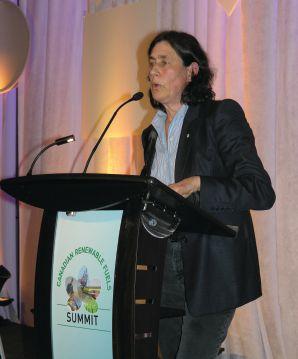
Chantal Hébert opened up the 2012 summit. “I think it’s fair to say that energy issues, including the environment, are the constitutional debate of our time.”
Harper government is seen as a simple agent of the oil sector, and governments in Ontario and Quebec that lack the clear mandate or fiscal flexibility to pursue ambitious energy reforms, and Hébert sees tough times ahead for interest groups trying to push renewable or alternative energy solutions.
“It will be tough to gain a voice in such a fractured political environment. The renewable fuel sector is not alone on that front, but it’s always wise to invest as much time with the opposition parties as the government, and in the current times that’s even more the case,” she suggested.
That political stalemate is all the more troubling given the message of luncheon keynote speaker Dr. Mark Jaccard of Simon Fraser University. He noted that the goal of limiting global temperature increases to 2°C or less is past; today we are looking more at limiting that increase to 4 or 6°C. Even still, that will require a much more aggressive commitment to reduce fossil fuel use than is currently the case today.
“If groups like this (CRFA) are waiting for high oil prices from scarcity of supply to drive the agenda of renewable fuels, it won’t happen. We need to reach peak emissions long before peak oil. Our problem is that with all the new supply options, there is too much fossil fuel supply, rather than not enough.” What that means from a policy and lobbying perspective is that the biofuels sector, among others, has to get a lot more aggressive in pushing its agenda, and in selling the need to the public.
strength in unity
Given that, a unified front would help. There appears to be work to do there as well. The paint was barely dry on the newly announced Bio-Economy Network (BEN) at the summit when cracks started appearing in the alliance. Just minutes into the launch presentation by Catherine Cobden, executive vice-president of the Forest Products Association of Canada (FPAC), tensions over access to such large-scale funding packages as the NextGen Biofuels Fund came to the forefront of the discussion. The fund is directed to processes that primarily produce biofuels, while the forest products sector may choose to follow processes that either do not have biofuels as a primary product, or do not make biofuels at all.
If the assembled bioeconomy associations had a common song sheet, it was all but lost mid way through question period. It’s fair to say that this was not the public launch the BEN organizers wanted.
Next year’s summit will be held in Montreal. For more info visit www.greenfuels.org. •
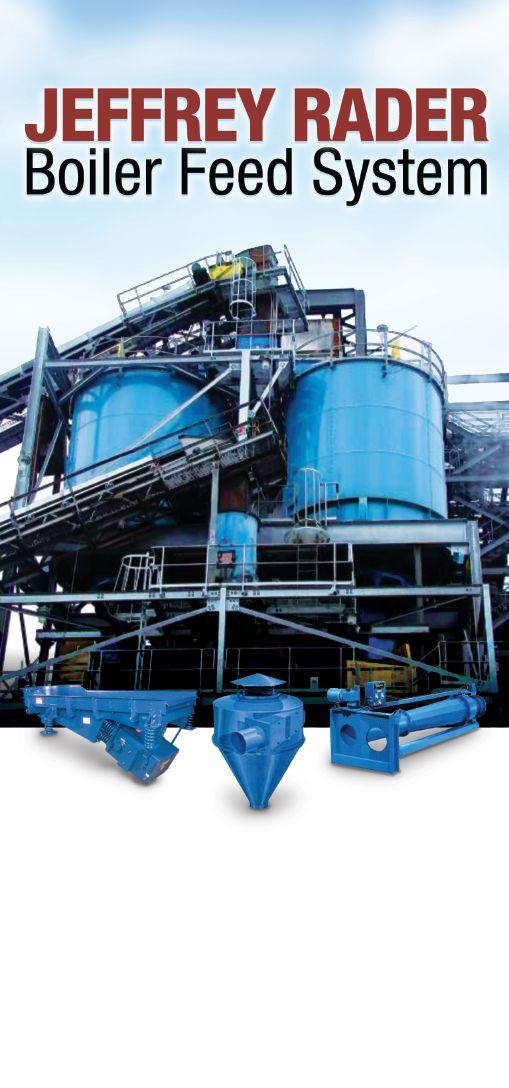
Pneumatic and mechanical boiler fuel feed systems by Jeffrery Rader, a brand of TerraSource™ Global, combine the best of our storage, reclaim, conveying and feeding equipment. We work closely with our customers to ensure that our designs meet the storage, metering and feed rate requirements of the boiler, whether it’s feeding 100% biomass or co-firing biomass with coal.
DuST SuPPRESSION FOR FINE PARTICLE CONTROL
The newly developed DustBoss DB-M is for operating conditions involving very fine dust particles, including slag dust or fly ash. The unit generates an umbrellashaped cloud of atomized droplets averaging 50200 micrometres in size, projecting the mist about nine metres under calm conditions. The powerful misting head is supplied standard with nine atomizing nozzles and mounted on a 15-foot boom, but the design was engineered for its ability to be customized for specific dust types, particle behaviours or operating environments. The new design features selectable flow settings and the company’s proprietary Variable Particle Sizing (VPS) technology to improve capture efficiency. Nozzles can be added, removed or resized as the application dictates. Just 10 pounds per square inch of water pressure is required from the supply hose when using the integrated booster pump, giving the DB-M an output as high as 24 gallons per minute at 200 pounds per square inch. An in-line 30 mesh filter stops any solids 600 micrometres and larger, and the manufacturer recommends that it be used at all times.
MARTIN ENGINEERING’S CONVEyOR BRuSh CLEANER
Martin Engineering has introduced a new powered brush cleaner for conveyor belt applications with a rotating design that removes material accumulation and dust in difficult applications. Well suited to belts that use raised elements (cleats, chevrons, ribs or lugs) to assist in carrying material, the Martin Brush Cleaner is an
economical solution that provides highperformance, energyefficient operation, even in conditions involving sticky materials or stringy fibres, as is the case with coal and biomass. The economical 230/460volt, three-phase electric motor provides successful cleaning with minimal power consumption. A one-horsepower motor powers the units for 18- to 42-inch belts, and a two-horsepower motor drives the cleaners for 48- to 96-inch belts. Two bristle pattern options are available to accommodate materials with a range of moisture contents. For both models, standard polypropylene bristles offer an operating temperature range of -20 F to 180 F (-29 C to 82 C), and optional bristles are available for higher temperatures.
E-COMPACT PELLET BOILERS ARRIVE IN CANADA
A new range of pellet boilers has arrived on the Canadian market from Irish manufacturer WES (Wood Energy Solutions). E-COMPACT pellet boilers offer advanced boiler technology, which allows the installer to use the existing infrastructure to heat the property in a cost-effective and comfortable manner. WES offers a “best in class” automated pellet boiler that requires minimal maintenance each month. The E-COMPACT boilers are more than 90% efficient. Boilers range in outputs from 28 up to 250 kilowatts, so they are suitable for small dwellings to large commercial buildings. All ECOMPACT boilers sold in Canada are manufactured to ASME Code and are UL/ CSA certified. E-COMPACT pellet boilers are available in Canada through Compact Appliances Inc., Sackville, New Brunswick, and J&R Mechanical in Yellowknife, Northwest Territories.
NEW VPM 250 PELLET MILL FROM VECOPLAN MIDWEST
With a production capacity of 200 pounds per hour, the VPM 250 Pellet Mill is designed specifically for small to medium commercial-scale pellet producers. The mill is designed for manufacturers with relatively small distribution areas, factories and other facilities producing pellets for their own use, start-up and pilot plants, as well as colleges and universities. The VPM 250 pelletizes hard woods, soft woods, wood scrap, agricultural byproducts, grasses, manures, virtually any type of biomass, paper, cardboard, and a wide range of other feedstocks. Fixed on a table, the VPM 250 is 37.75 inches long by 31.5 inches wide by 25.5 inches high and weighs 1,560 pounds. It comes equipped with 25-horsepower press, a twohorsepower mixer, and 0.5-horsepower feeder drive motors.
EVENTS BOARD
FEBRUARY 27-MARCH 1, 2013 • Canadian Wood Pellet Heating Conference Quebec City, Quebec www.pellet.org
MARCH 4-6, 2013 • Canadian Biogas Conference London, Ontario www.biogasconference.ca
APRIL 3-5, 2013 • Northeast Biomass Heating Expo Saratoga Springs, New York www.nebiomass.com
APRIL 8-10, 2013 • International Biomass Conference & Expo Minneapolis, Minnesota www.biomassconference.com
May 6-10, 2013 • Ligna 2013 Hanover, Germany www.ligna.de/home
OCan Ottawa pay for its garbage-to-power plant by avoiding a landfill expansion?
By Scott Jamieson
ttawa takes its garbage seriously. Anyone who lives there or visits often knows that. As either house guest or cafeteria diner, you get used to sorting garbage, with any manner of recycling being removed first, followed by an aggressive composting sort. When done right, as is the case at my brother’s place in suburban Stittsville, very little makes it into the actual garbage can. Now our nation’s capital has plans to divert even that away from methanespewing landfill.
“No one wants the next landfill anywhere near their neighbourhood. Nor does anyone around this table want to think about where they will find the quarter of a billion dollars to build it.” – Ottawa mayor Jim Watson
Plasco’s system gasifies the waste and refines the resulting gas using plasma technology. Clean, synthetic gas created from the waste fuels General Electric Jenbacher internal combustion engines. Together with a steam turbine driven by heat recovered from the process, these produce approximately 15 megawatts of net electricity that will be sold to the grid. Residual solids are refined using plasma to produce slag that the company says meets requirements for a range of applications, including construction aggregates and abrasives. Moisture in the waste is recovered, cleaned and made available for reuse in the community. In short, garbage in, anything but garbage out.
So what is the risk to the city?
erated. In essence, Ottawa is “renting” landfill space for $763,000 a month. Yet the city also sees substantial benefits, as Watson explains in his blog.
“The city will benefit by sharing in Plasco revenue, it will benefit by increasing the life of our landfill, and it will benefit directly through increased economic diversification. And let me tell you I have seen my share of divisive and never-ending debates about where to locate ‘the next landfill’ in our community.”
Ottawa also benefits by taking the high road when it comes to waste management, greenhouse gas reduction, and renewable energy development. Yet, there is a business case as well. NIMBY issues aside, by delaying the need to build a new landfill by up to 28 years, Ottawa avoids the estimated $250 million in capital required to do so.
In one of the boldest renewable energy moves in 2012, Ottawa mayor Jim Watson and the city’s council have signed a long-term waste supply contract with Plasco Energy Group. At first blush it appears to be a solid win-win move for company and community.
In explaining the city’s support for the project in a blog in late 2011, Watson did not mince words.
“No one wants the next landfill anywhere near their neighbourhood. Nor does anyone around this table want to think about where they will find the quarter of a billion dollars required to locate and build the next landfill facility in our city.”
Short term, there appears to be none. Plasco developed the technology and tested it at the commercial pilot scale without direct investment from the city. They will scale up to full commercial on a site leased from the City of Ottawa, consuming almost 110,000 tonnes of municipal solid waste annually, again without direct city investment. Should the project launch successfully as planned in 2015, the city will pay Plasco $83.25 per tonne of garbage used, indexed to inflation.
The high negative value of the feedstock is obviously a major factor in Plasco’s business model, providing the company with over $9 million annually before a single kilowatt of power is gen -
If Plasco’s and other technologies prove out (see Andrew Macklin’s cover story on Enerkem’s Edmonton plant on page 18), we can hope that this landfill expansion is postponed indefinitely. In that case, this bold move will have been paid for simply by avoiding the debt charges on a new landfill. •
Scott Jamieson is the founding editor and current editorial director of Canadian Biomass, and is based in Simcoe, Ont., where the smokestacks of one of Ontario’s last running coal-fired power plants can be seen on the horizon, and garbage is sadly still just garbage.
Turn
biomass into megawatts
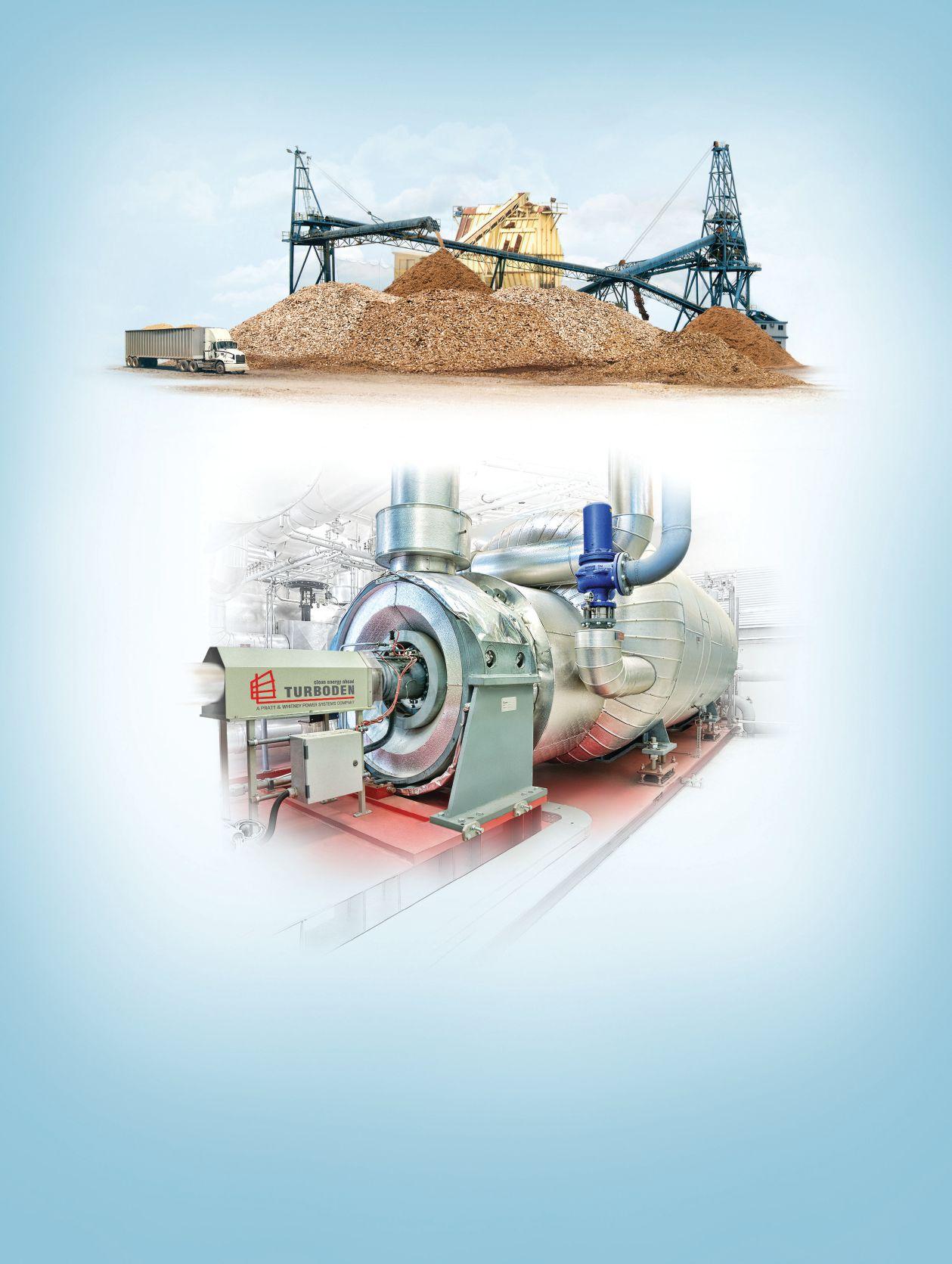
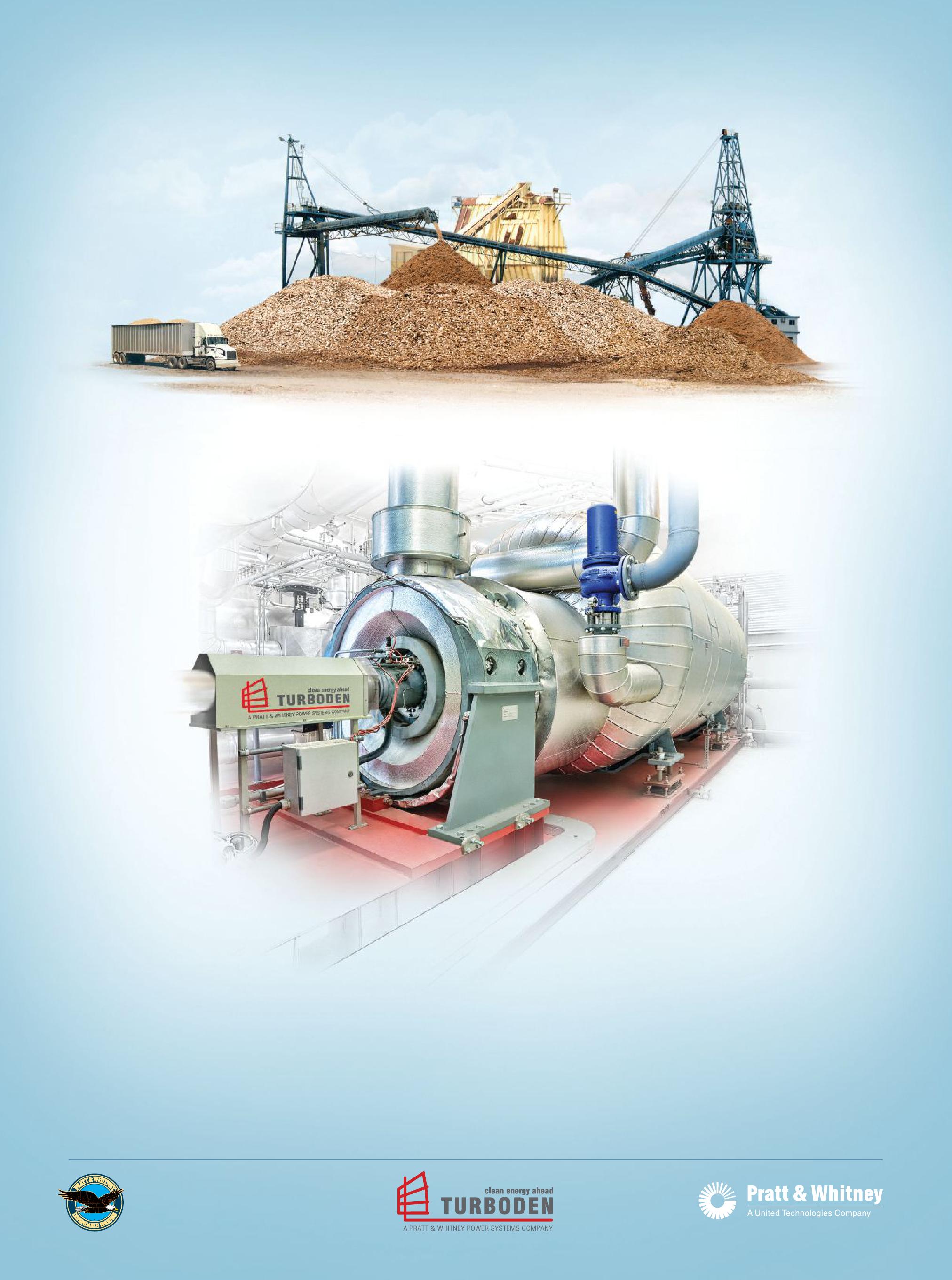
Don’t lose the megawatts trapped in your waste wood. Install our Organic Rankine Cycle (ORC) biomass system to convert logging and mill residues or insect-affected wood – virtually any high-organiccontent waste – into clean, renewable electricity. ORC units generating 1 to 10 megawatts can be easily integrated into your process. Find out how to turn biomass into megawatts, reduce your carbon footprint and bring savings to your bottom line. Visit www.turboden.com or call 1-866-769-3725 to learn more.
FEATURES OF BEAST® RECYCLERS:
PATENTED CUTTERMILL SYSTEM
AVAILABLE AS TRACK OR TOWABLE UNIT KNIFE SET-UP FOR CHIP PRODUCTION ALSO AVAILABLE WITH ELECTRIC MOTOR THROWER ATTACHMENT FOR END-LOADING
THE BEAST.
From the most uniform sawdust product, the most dimensional chips, to the most consistent ground material, nothing produces a higher quality wood fuel than the Beast! Call today to learn more about the machine and set-up that is right for your operation.
Experience for yourself the economic benefits that the Beast® can bring. No other grinder offers the versatility and range of end products like the Beast! The uniformity of the product is a result of the Beast’s unique patented cuttermill system, which allows you to cut, split, grind or chip material in a single pass. A more uniform product means lower fuel production costs! Drive one of our track Beasts to the material, and drive down your biomass fuel costs. With four models to choose from and engine options up to 1,200-horsepower, you can’t go wrong.
When it comes to the grind, don’t get left behind. Find out why Bandit horizontal grinders outperform the competition everytime.