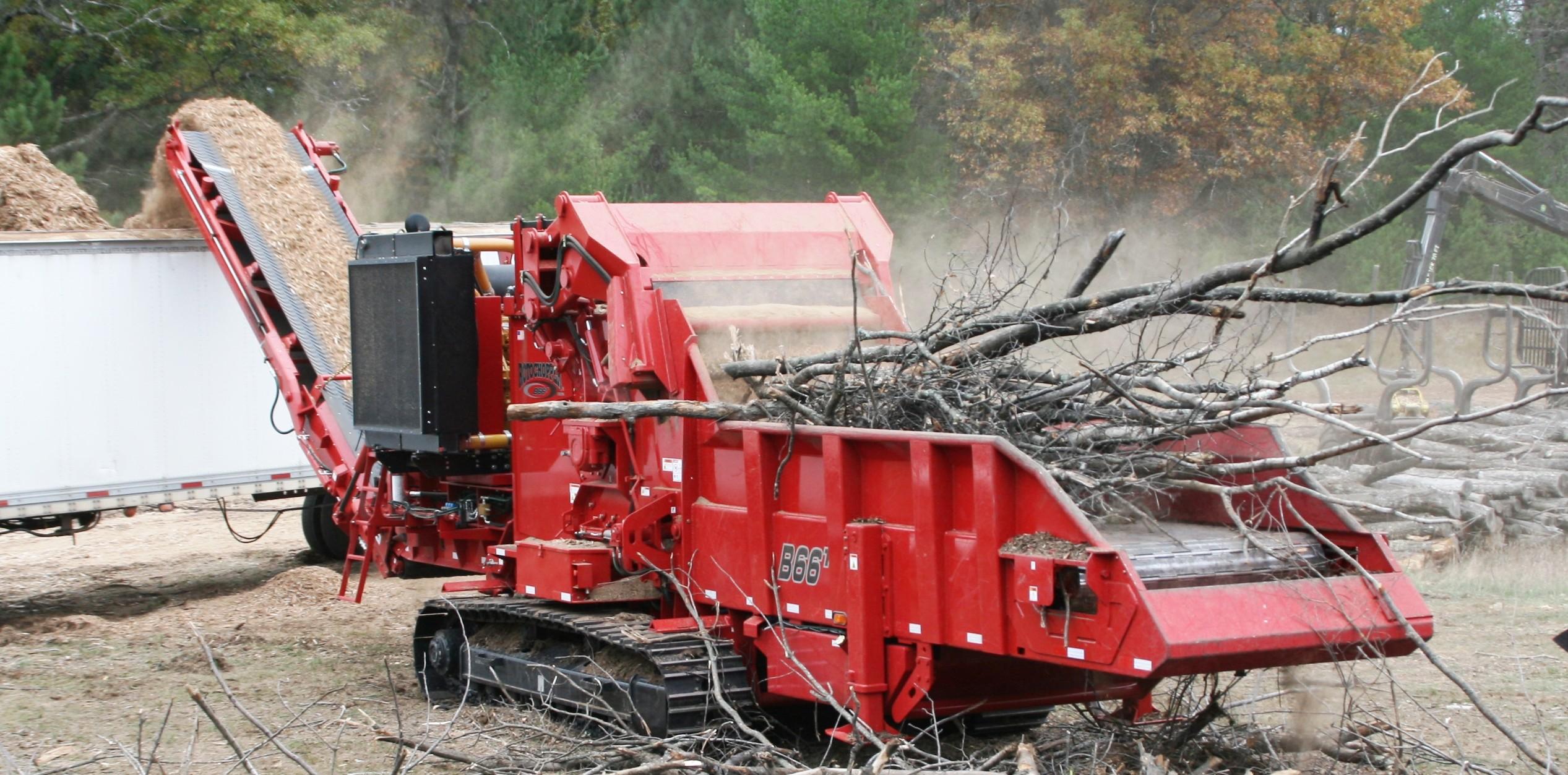
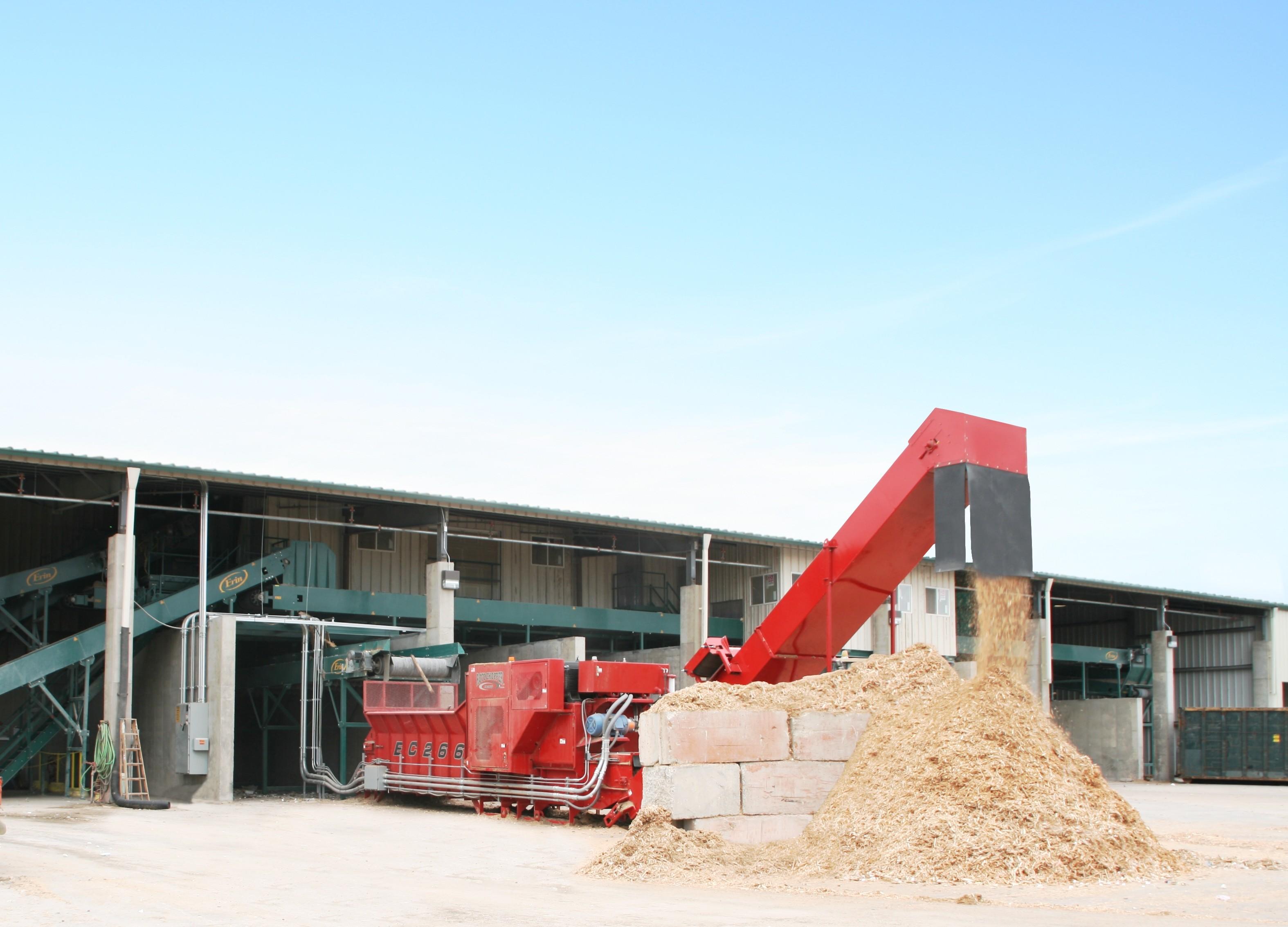
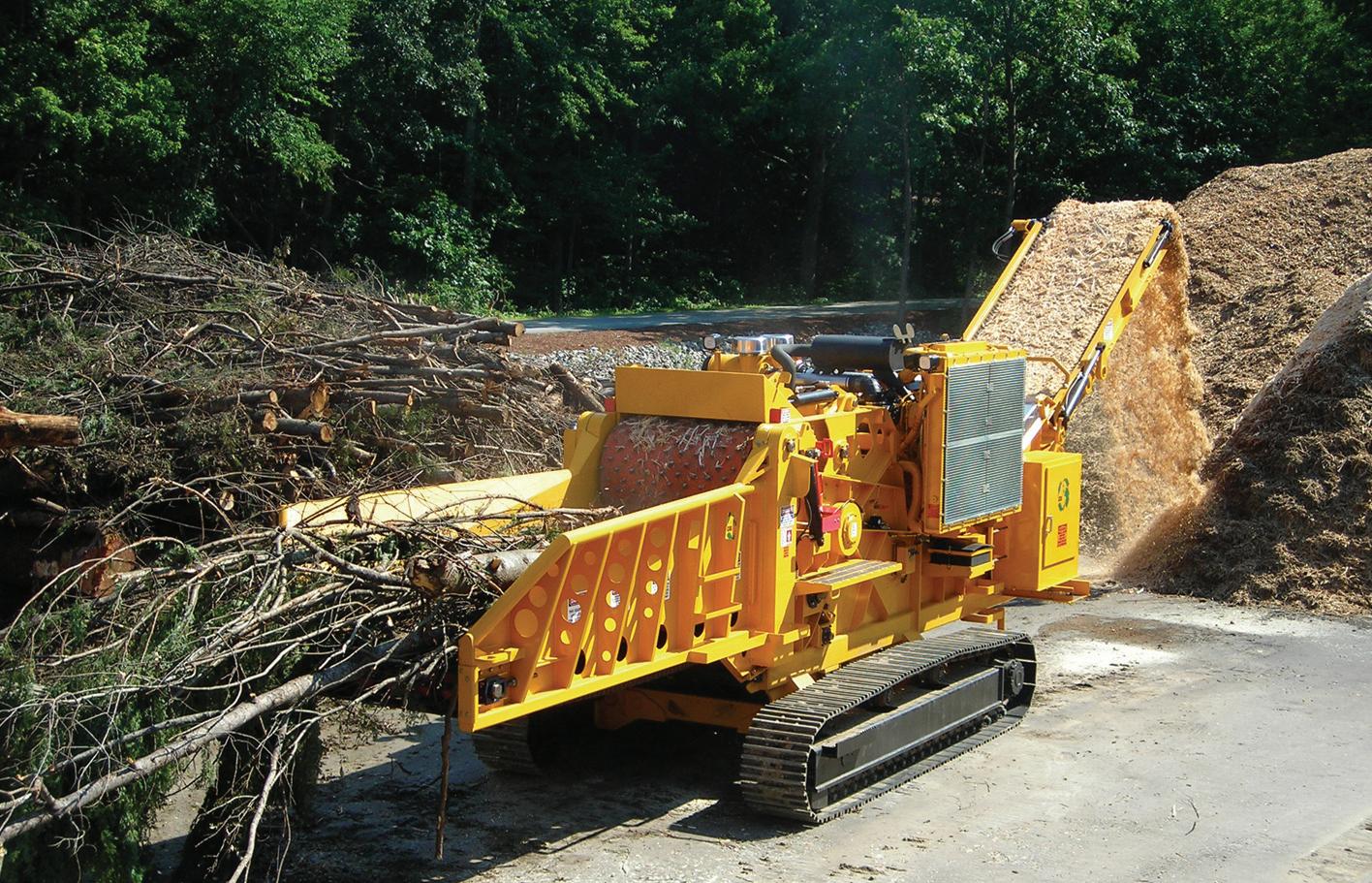
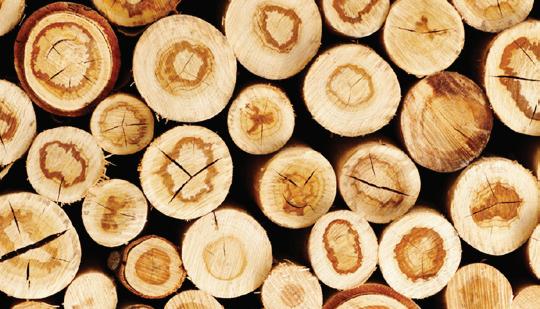
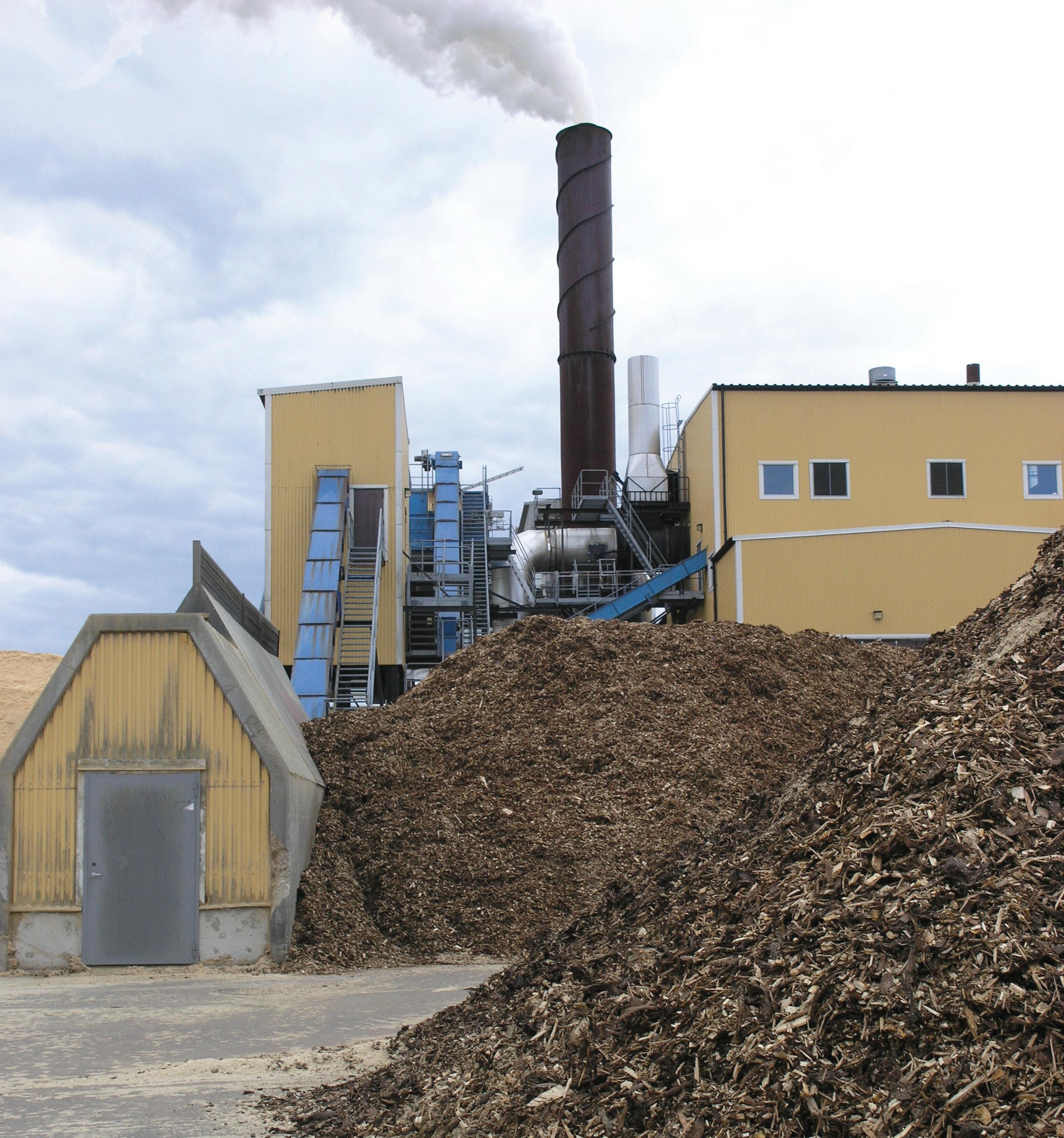
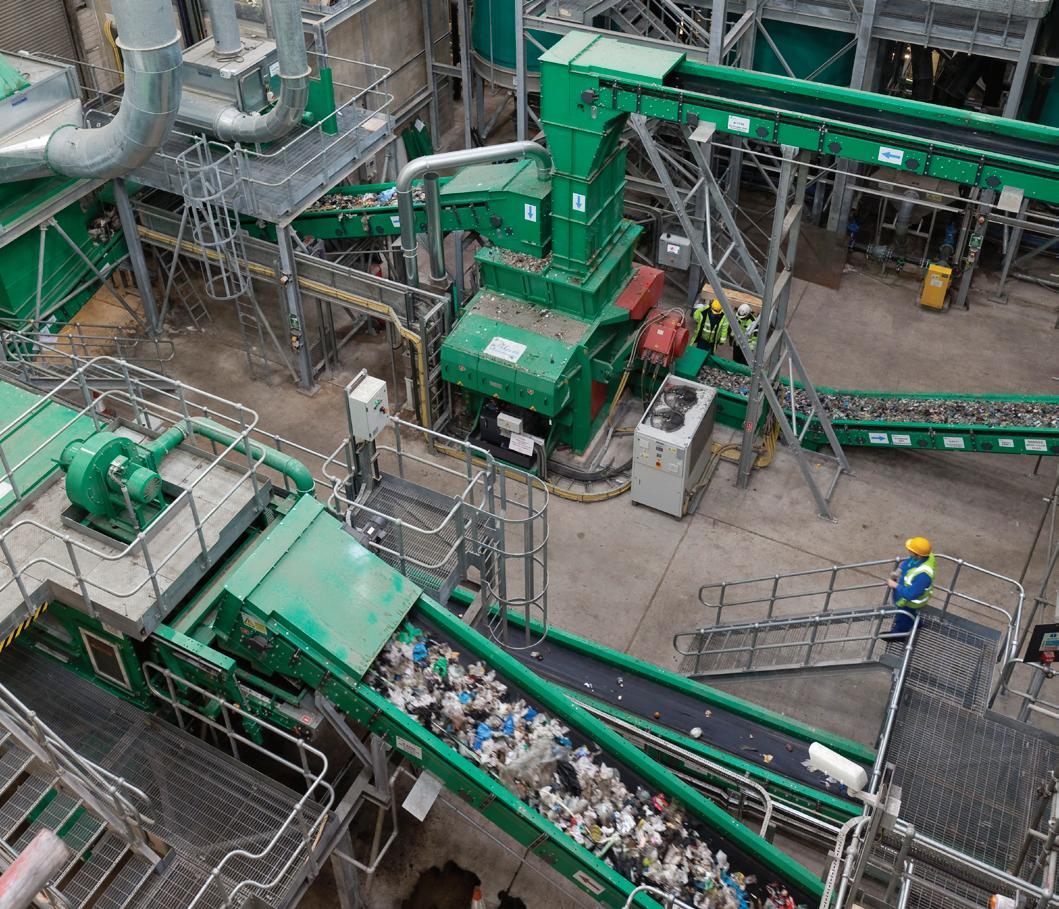
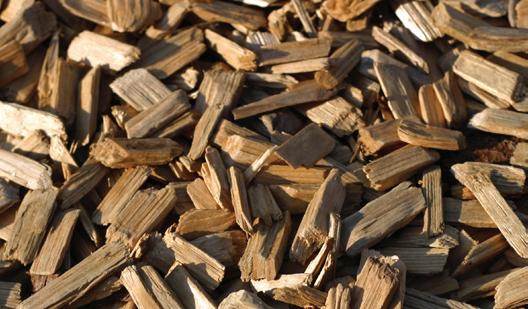
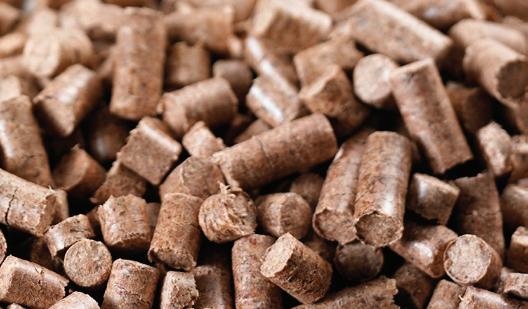
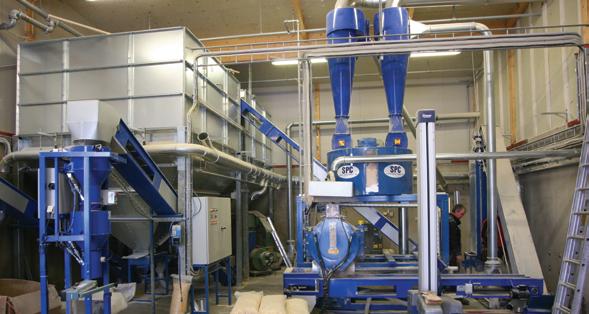
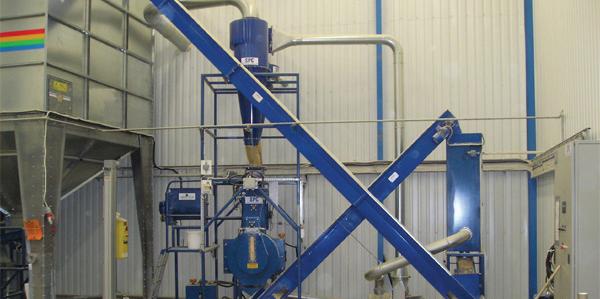
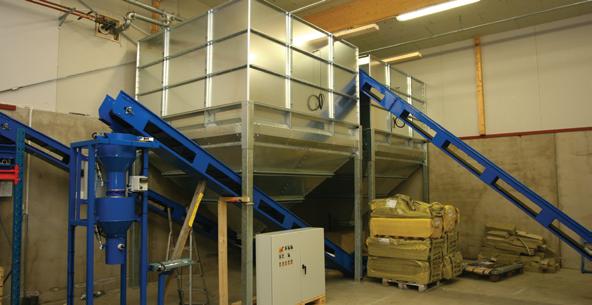
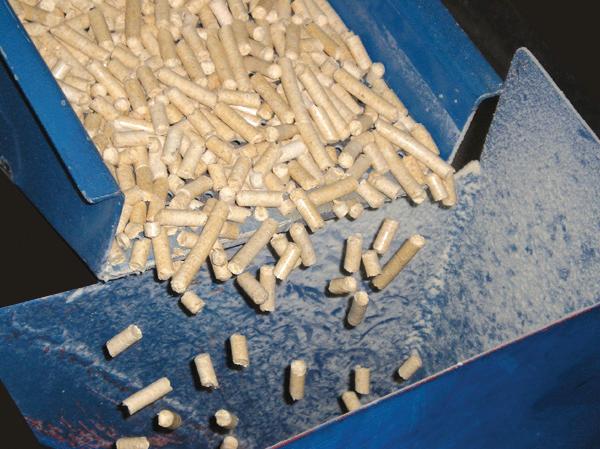
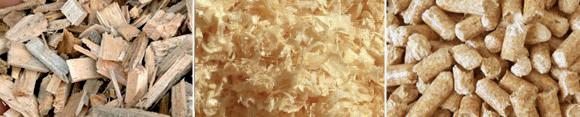
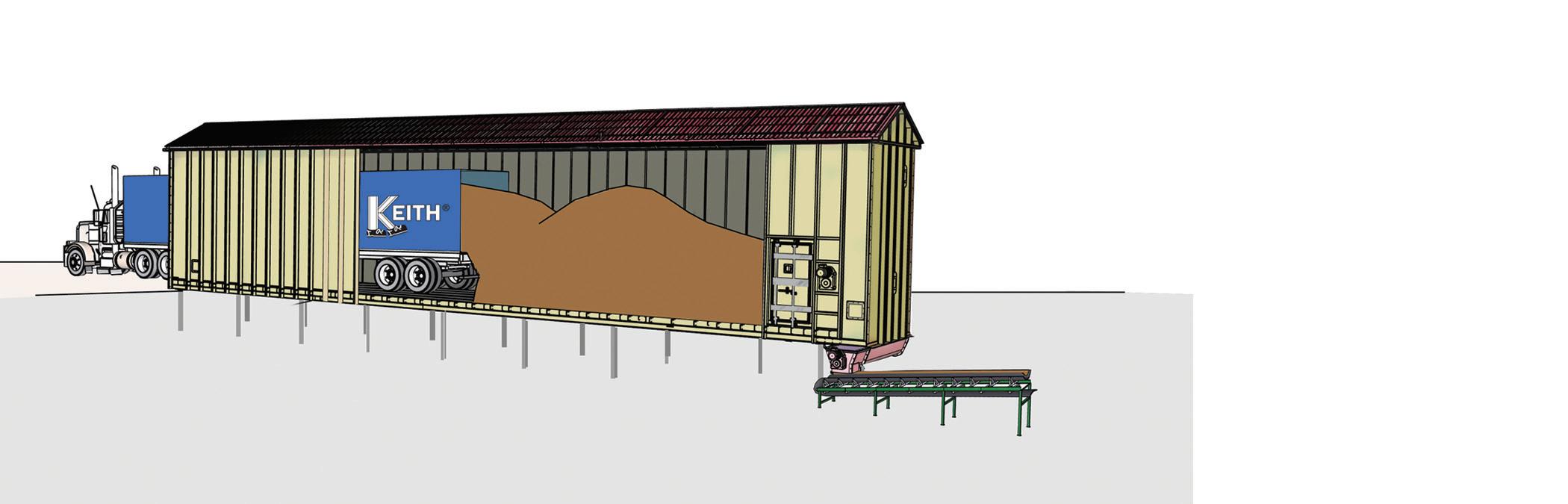
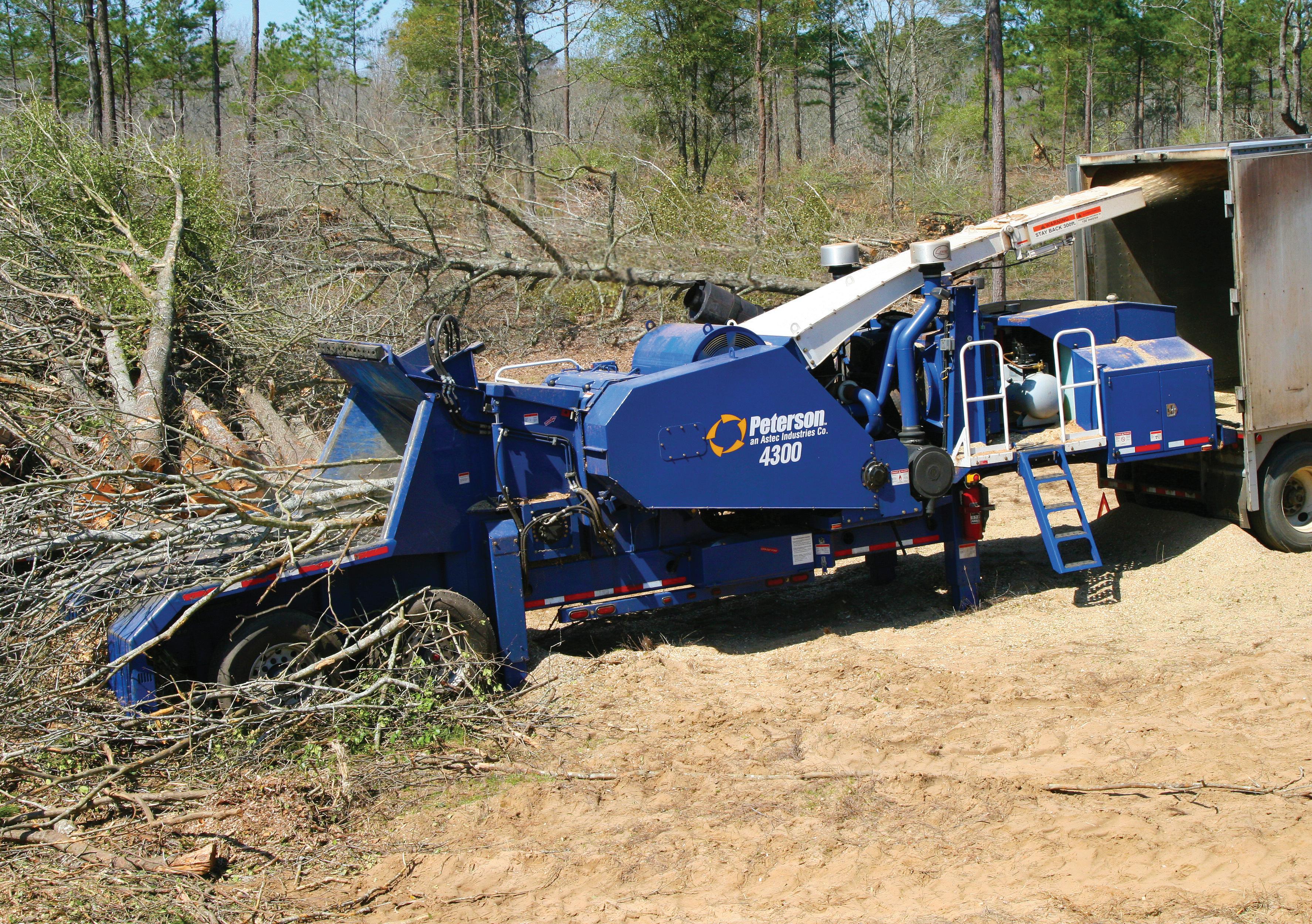
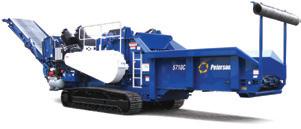
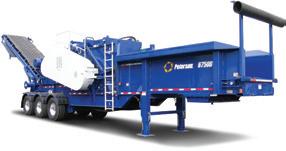
Maximize the value of your wood waste with the unmatched versatility and superior particle size control you get with Rotochopper.
How can Rotochopper grinding technology simplify your biomass processing operation?
Give us a call today to learn more.
CANADIAN BIOMASS
17 From Propane to Wood Residues
Greenhouses in Montreal have turned to biomass for their heating needs.
20
B.C. Coastal Biomass Underutilized
A contractor in Squamish, B.C., says that biomass needs a push to be fully realized.
29 Northeast’s Largest New NEWP Plant
A pellet plant in New York is doing things a little bit differently. 33 Biomass
to Burn, but No Markets
A conference in North Bay highlighted problems with the biomass industry in Ontario. 34 Sennebogen
Works Triple Duty
A producer of Portland cement in Quebec is attempting to use alternative fuel for its coal-fired kilns.
TMaking our Future
Bioenergy and bioproducts have an exciting future in Canada.
his issue of Canadian Biomass highlights both the boundless future and the frustrating present of the forestry biomass sector. The future holds the promise of bioproducts that will add value to everything we do in the forest products sector. However, the present demonstrates the harsh realities of trying to make a living creating the modern-day equivalent of firewood.
First, to our future.
Our cover story on nanocrystalline cellulose (NCC) is researched and written by new Canadian Biomass associate editor David Manly. David is a selfconfessed science junkie, and a recent graduate who was recently recognized for his blogging with Scientific American.
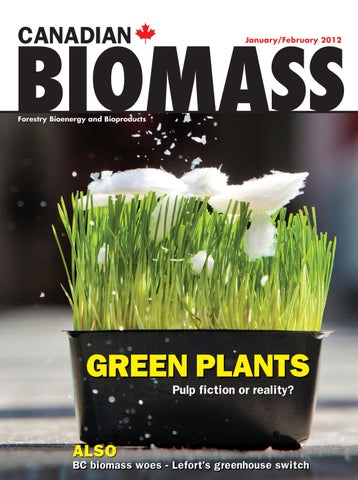
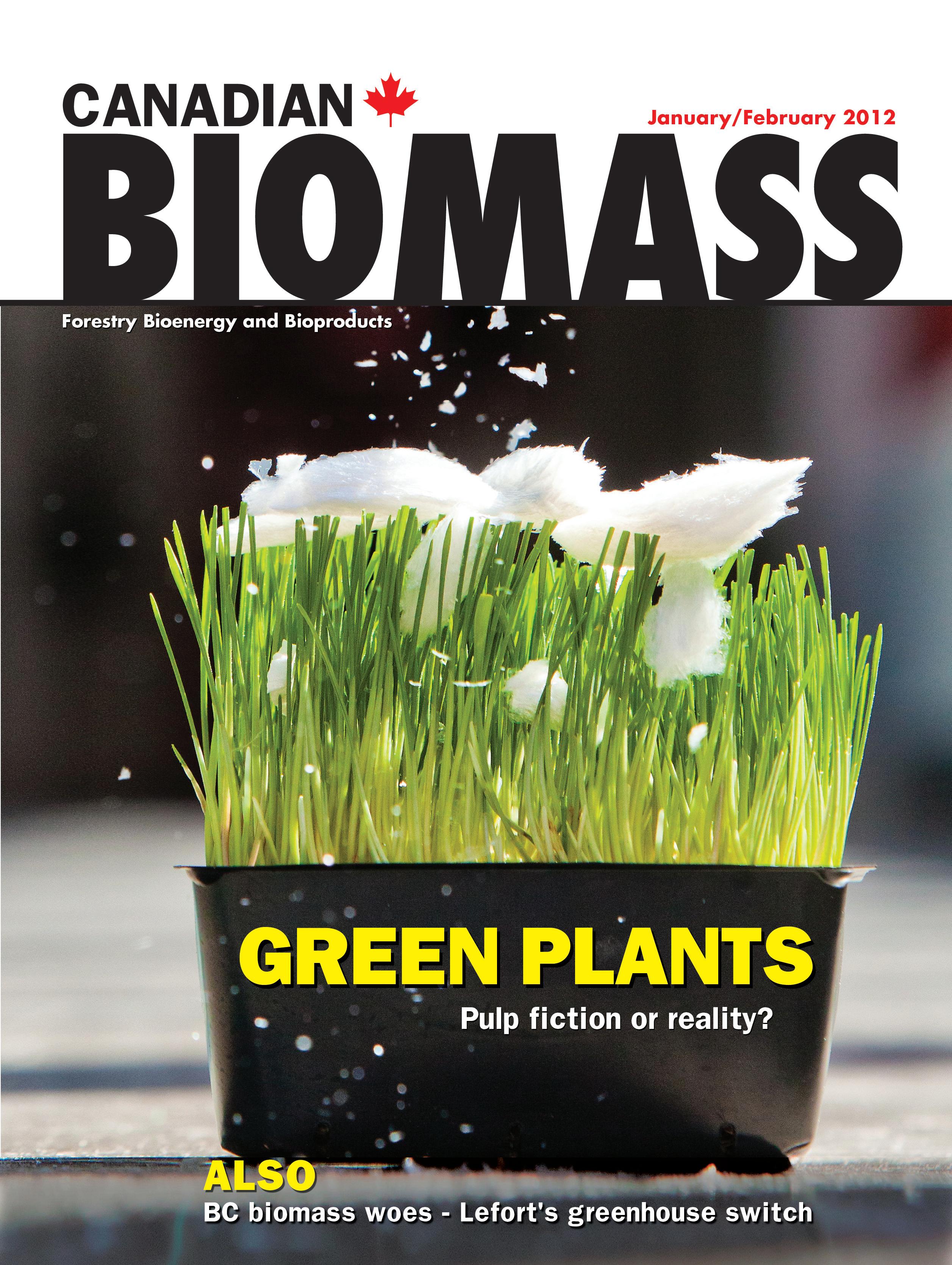
NCC is a potential wonder product –a renewable material from our abundant forests that can make other products lighter and stronger. It may look flaky in our cover shot, but is far from it.
There are currently three Canadian startups investing in the technology, including one in Quebec that is backed by pulp giant Domtar. That venture is ramping up commercial production, and will soon send product out for market testing.
This is forestry’s Holy Grail.
NCC, petro-chemical substitutes, value-added drop-in fuels and more are where we all hope to take this industry one day soon. In the meantime, we have to pay the bills.
That’s where the occasionally frustrating present comes in.
On page 20, veteran forestry scribe Jean Sorensen reports on BC biomass con-
tractor Dave McKay of Triack Resources. The crew is scraping out a living grinding low-value and waste wood for a fickle coastal biomass market. It’s hog fuel or landscaping material, and one source is as good as the next. Nor does anyone in charge seem to care whether this material is used or burned on site.
Read the article and McKay’s comments, and you’ll get a feel for how hard it can be to get by in a nascent market using an easily interchangeable fuel supply. It’s a volume game in this part of the value chain, and without a reliable fibre supply and loyal client base, survival is a struggle.
The end result is an underutilized resource. Environmentalists may worry about forests being stripped clean by a rampaging biomass sector, but like most of us with a grasp of current forest economics, McKay knows this concern is misplaced.
“We are not even using 5% of the (green) residual wood in our area; I am totally flabbergasted by the amount of fibre left behind,” he explains, noting that there is no local market willing to pay a minimal amount for delivering it.
The wide-eyed promise of tomorrow gives us hope to face the grinding challenges of today. Bridging the two will continue to challenge this industry. It will also continue to fill our pages, drive our website, and fuel our Tweets.
Stay tuned. •
CANADIAN BIOMASS
Volume 5 No. 1
Associate Editor - David Manly (519) 429-3966 ext 261 dmanly@annexweb.com
Group Publisher/Editorial Director- Scott Jamieson (519) 429-3966 ext 244 sjamieson@annexweb.com
Contributors - Gordon Murray, Mark Ryans, Dr. Gilles Dorris, C. Scott Miller
Jamieson, Editorial Director sjamieson@annexweb.com
Occasionally, Canadian Biomass magazine will mail information on behalf of industryrelated groups whose products and services we believe may be of interest to you. If you prefer not to receive this information, please contact our circulation department in any of the four ways listed above..
All advertising is subject to the publisher’s approval. Such approval does not imply any endorsement of the products or services advertised. Publisher reserves the right to refuse advertising that does not meet the standards of the publication.
www.canadianbiomassmagazine.com
BioMASS update
Over 200 abstracts submitted tO WOrld biOenergy
Jan. 26, 2012, Jönköping, SEWith months left until the World Bioenergy 2012 conference, preparations are already underway.
According to the conference website, they have received more than 200 abstracts covering all aspects of bioenergy development, says Lena Dahlman, responsible for conference planning at Svebio.
“The most inspiring aspect of the result of our call for papers is the wide geographical range of submissions. We have received abstracts from a record 39 countries, from all continents. India, China, Malaysia, Pakistan, Kenya, South Africa, Canada and Colombia are just some examples of
The World Bioenergy 2012 Conference and Exhibition takes place May 29–31, 2012, in Jönköping, Sweden.
countries represented. This shows that World Bioenergy is truly a global event, attracting interest from all parts of the world.”
For more information, please visit the conference website at: http://www.elmia.se/en/worldbioenergy/.
in brieF...
n Windsor, QC
The Honourable Joe Oliver, Minister of Natural Resources, delivered a keynote address celebrating the opening of the new CelluForce facility, the world’s first commercial-scale producer of nanocrystalline cellulose.
n ontario
The speaker line-up for this year’s Ontario Feed-in Tariff Forum has been announced with the province’s key
government and FIT policy administrators confirmed to speak on April 3-4 in Toronto.
n Uxbridge, on Most biodiesel production is making climate change worse not better, according to an article in Ecology & Society.
Biodiesel from palm oil plantations may be the world’s dirtiest fuel – far worse than burning diesel made from oil when the entire production life cycle is considered.
Canada’s forest biomass sector changes daily. Keep up at www.canadianbiomassmagazine.ca, through our weekly Bio-Blast enews, and on Twitter @canadianbiomass.
Biomass Processing Systems
Liberating Untapped Energy
Phone: (336) 252-4774
A worldwide leader in size reduction technology, Vecoplan works with individual customers to design, engineer, manufacture and implement technologically advanced, material specific, and application specific shredding, ferrous and nonferrous removal, size and density separation, screening and classification technologies and extremely efficient conveyor and bulk material handling, metering, storage and unloading technologies.
Contact Vecoplan today to learn more about our existing systems or to arrange a visit to one, or several, of our installations.
Going Small
Harvesting small trees could be big business for Canada.
By Mark Ryans
Small
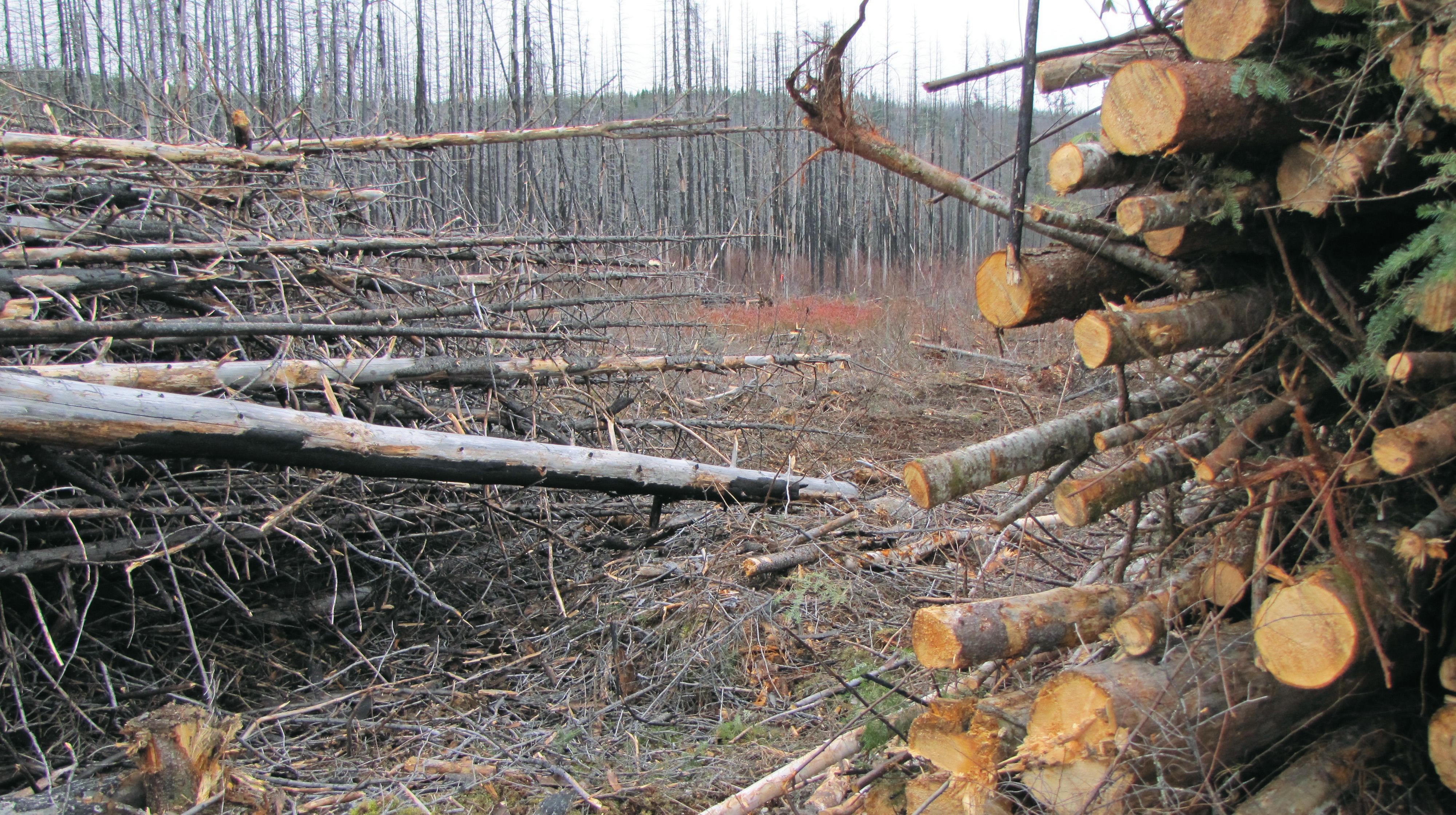
trees are oftenoverlooked sources of biomass in Canada that can be found in our forests and around communities. This potential biomass source – in the form of insect-killed and burnt stands, FireSmart treatments and early stand tending – are just waiting to be utilized. In the latter case, the wood from these trees could have been used for pulpwood, but with the disappearance of woodrooms and mills themselves, there is no longer a market. A developing bioenergy market could offer a win-win solution, while assisting in good forest management and improving our forests for the future.
In Europe, conventional harvest residues (tops and branches) are already heavily relied upon as a source of biomass with little room for expansion. With most EU countries, especially the Nordic ones, facing higher renewable energy targets by 2020, they have their sights on expanded use of small trees from thinnings.
Because small trees have been used for
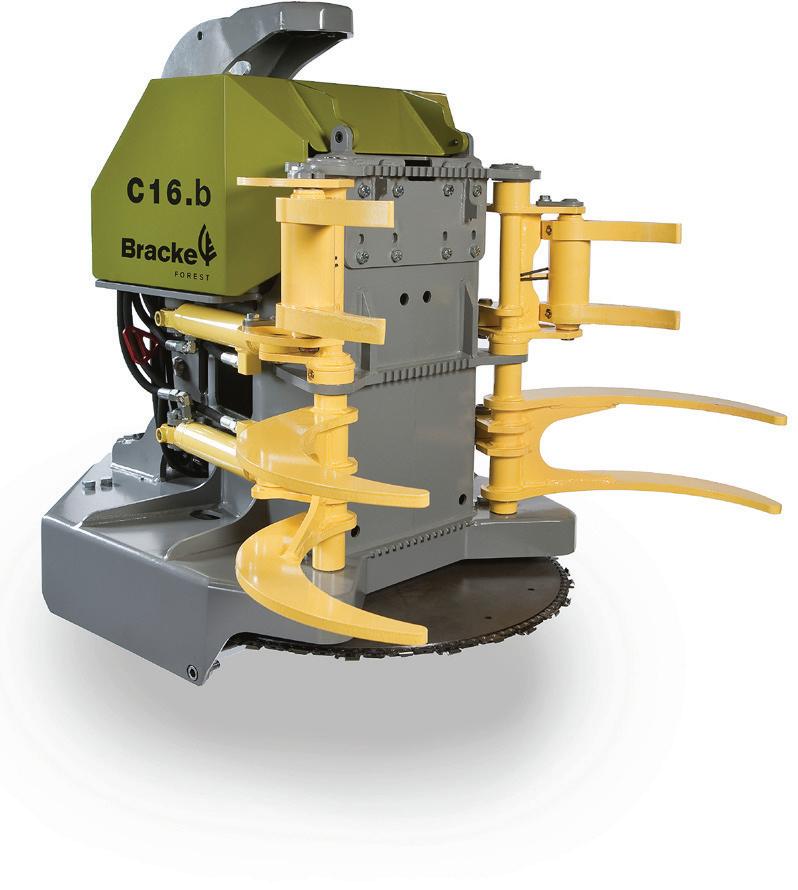
bioenergy for many years, techniques have already been developed for “energy wood” harvesting, resulting in a variety of felling heads on the market. Any European equipment show will have a dozen or more small heads on display. In FPInnovations’ database of harvesting equipment, we list over 30 makes and models.
Some conventional heads have been modified to serve a combination of treatments, retaining their delimbing capability (feed rollers and delimbing knives) but with a different cutting apparatus, for example, the chainsaw replaced by shears. These heads can produce both pulpwood and energy wood, depending upon pricing and stem size. Some can also do a rough delimbing job, thereby leaving smaller branches in the woods while capturing some of the biomass in the top. In most cases, however, the heads are designed for felling and bunching only. Because of the small stem diameter, and with no concern over butt shatter, a variety of simple felling mechanisms can be used. In some ways,
designs from almost 40 years ago are back in use, such as smaller-scale Drott shearhead or Forano BJ-20 feller-bunchers. Most have multi-stem handling features, and are affordable and easy to maintain.
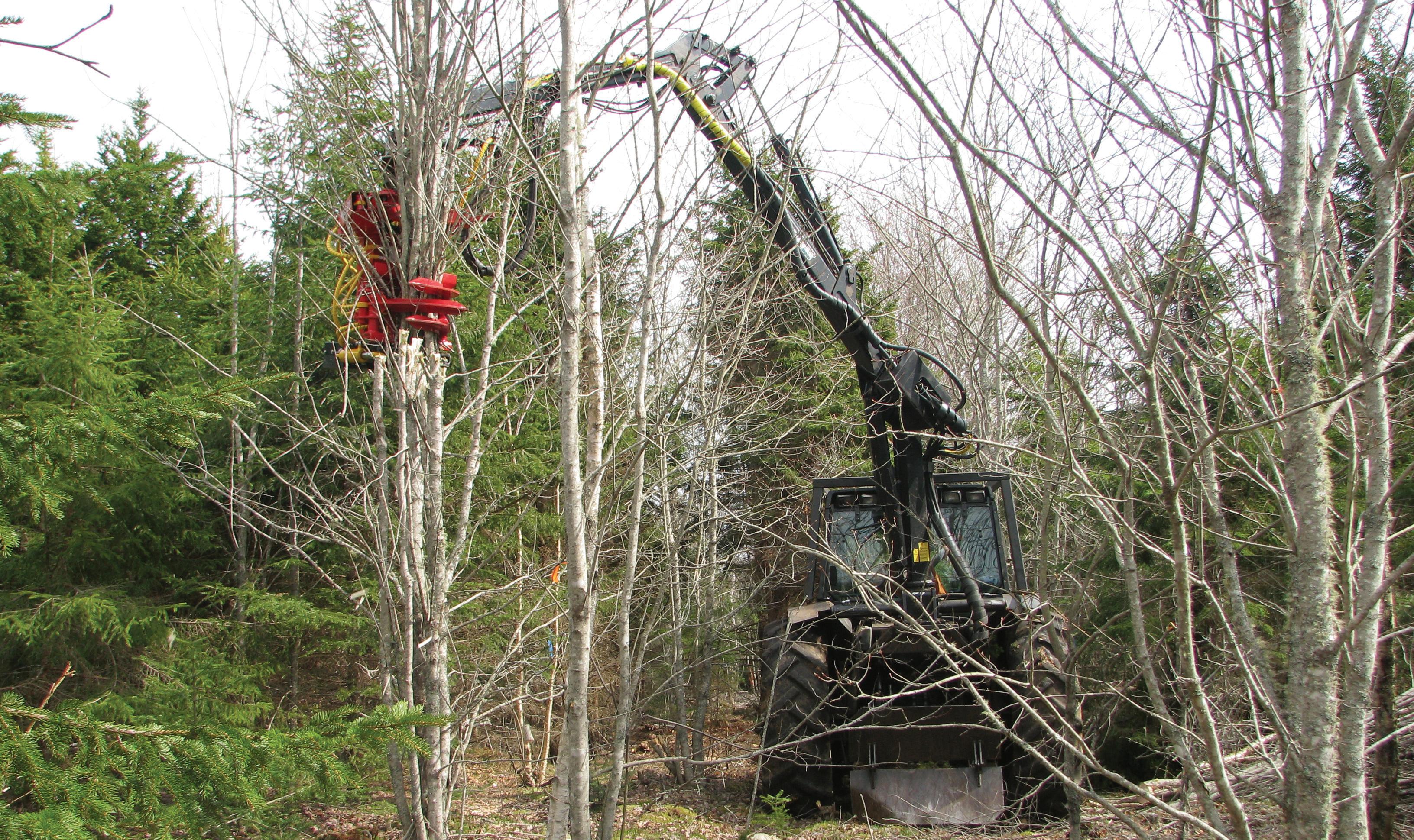
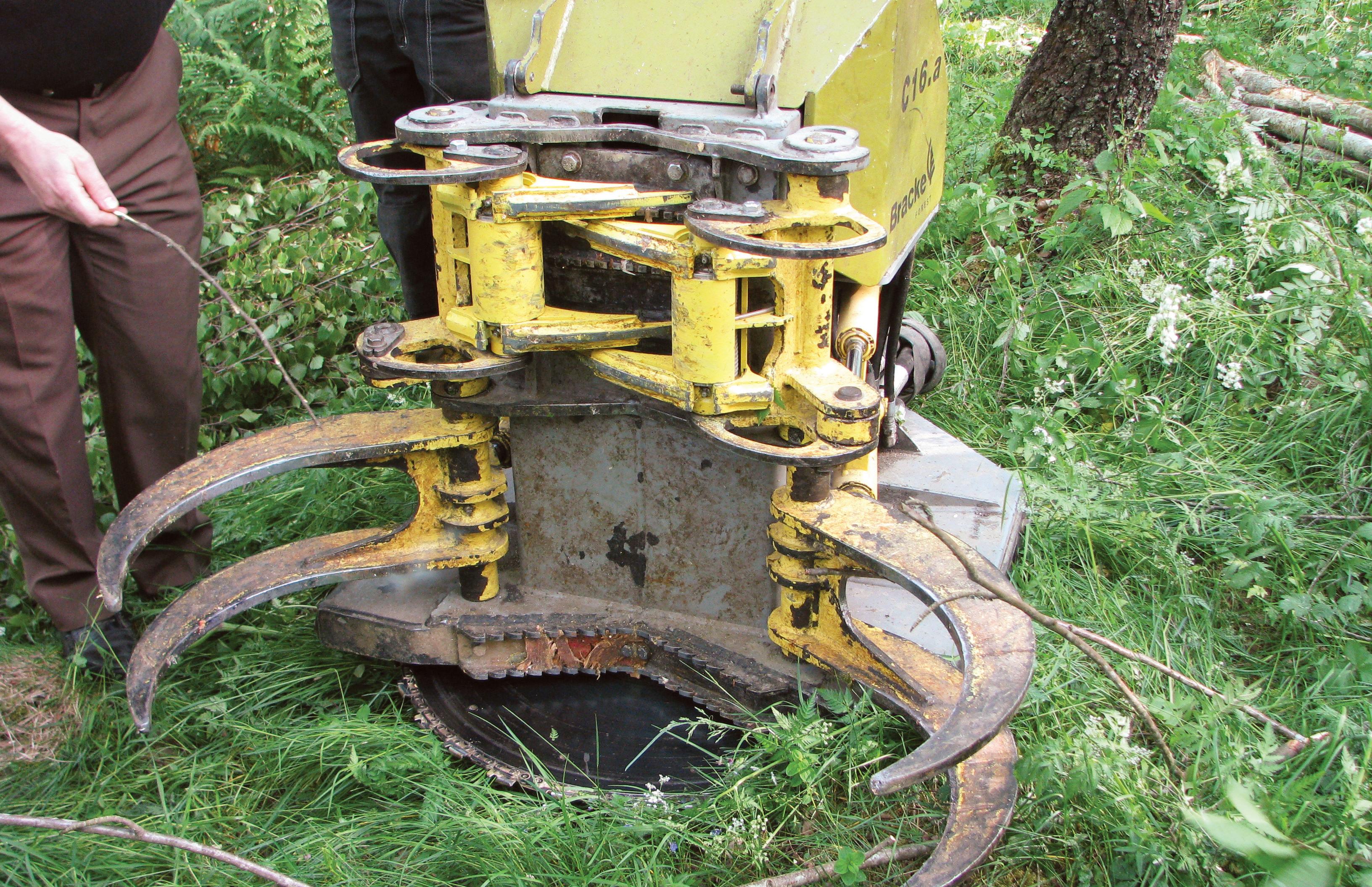
Brute force is the norm, but designs range from shears, sickle knives and guillotine knives to circular saws and chainsaws and a chainsaw on a circular disc (see photos). Energy heads have also been designed for mounting on a range of base machines, from conventional harvesters to forwarders (feller-forwarders), excavators and modified agricultural tractors. There is therefore a model for almost any pocketbook and user with any base machine for applications from clear felling to partial cutting.
In partial cut applications, the harvesting method is similar to stand thinning. Where energy wood and pulpwood are produced, there are separate piles of delimbed pulpwood and energy wood still limbed. In strict energy harvests, small trees are left in bunches along the trail. Taller trees are often felled in two stages: one cut halfway
Stands that have undergone FireSmart treatments can reduce fire risk by eliminating fuel sources and spacing tree crowns, and potentially be used as biomass.
up the tree, and another at the stump to facilitate handling and forwarding.
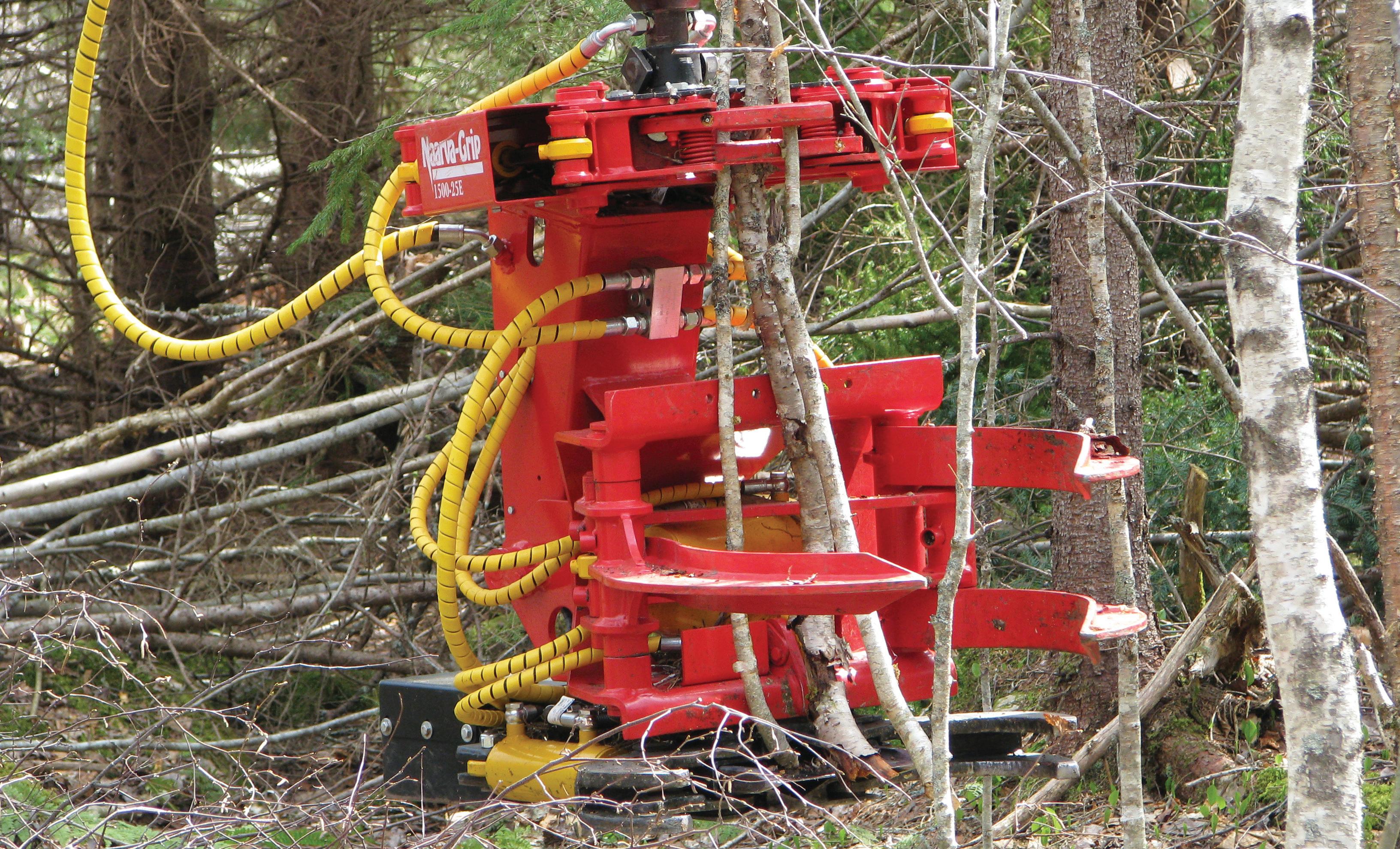
So the heads are available and the applications have been developed, but will we see their use anytime soon? At least three models have been introduced to Canada to date, including the Bracke C16, Naarva Grip and Ponsse EH25. Our experience has also been positive from a treatment point of view.
But, the rub is the cost of treatment.
Any logger knows that the felling cost is primarily dependent upon piece size, and the very small stems result in high felling costs, despite the low price of the heads, multi-stem handling and a lack of concern over stem quality. In Nordic countries, costs are also high, but the higher value of energy wood and subsidies for early stand interventions (for example, Finnish Sustainable Forestry Financing Act, Kemera program) make this biomass source viable. They also recognize the value of stand improvement treatments that support landowners and primary forest industry alike, and are willing to invest in the future.
So the economics are not here yet in Canada, but there should be potential if we combine treatments and programs and have a little more forward thinking. An example could be FireSmart treatments, although the programs are primarily based in western Canada. For those not familiar with FireSmart, the treatments are designed to reduce the fire risk by eliminating fuel sources and spacing tree crowns. Techniques include thinning and mulching, and sometimes removal of the biomass. The costs are also high, but if there were a home for the biomass, in a communitybased heat plant, for example, they could be shared and there would be some income for the energy wood. The other advantage of community-based projects is travel distance. The delivered cost of biomass should be the deciding factor, not just the felling cost, and the short travel distance can go a long way toward improving the economics.
There is huge potential for harvesting energy wood in Canada; we just need to have a collective and integrated approach, more community-based projects and some longer vision.
•
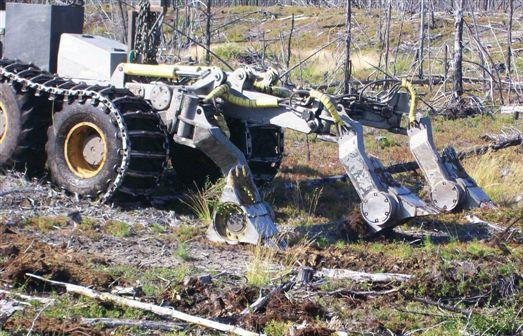
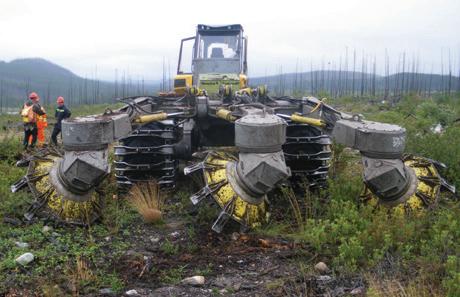
TOP: The Naarva Grip 1500 25-E feller-buncher uses a series of knives for a variety of tasks in wood harvesting, land clearing and thinning operations.
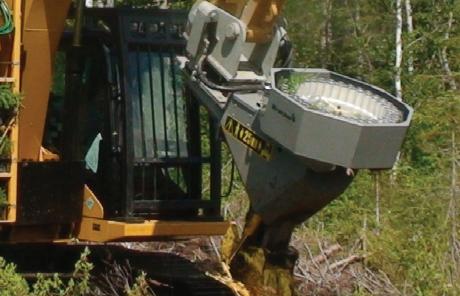
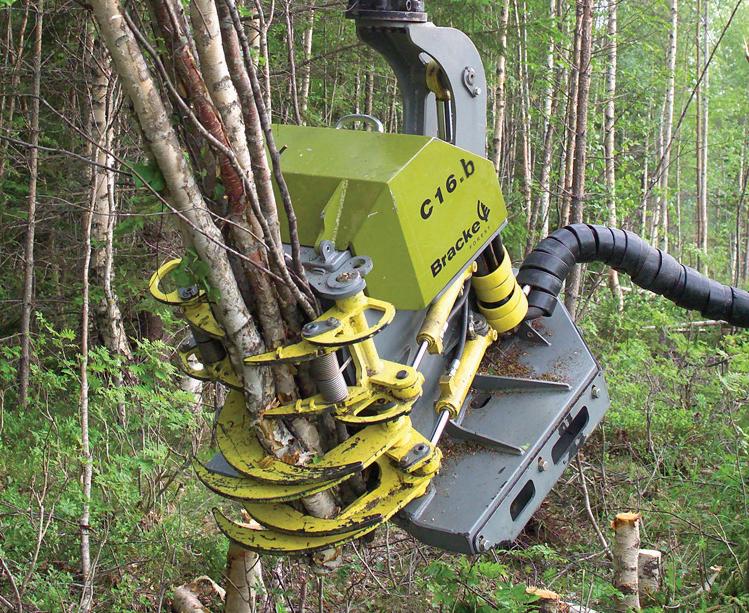
MIDDLE: The Bracke C16a cutting head uses a circular saw instead of knives to cut down and gather small trees for use as biomass.
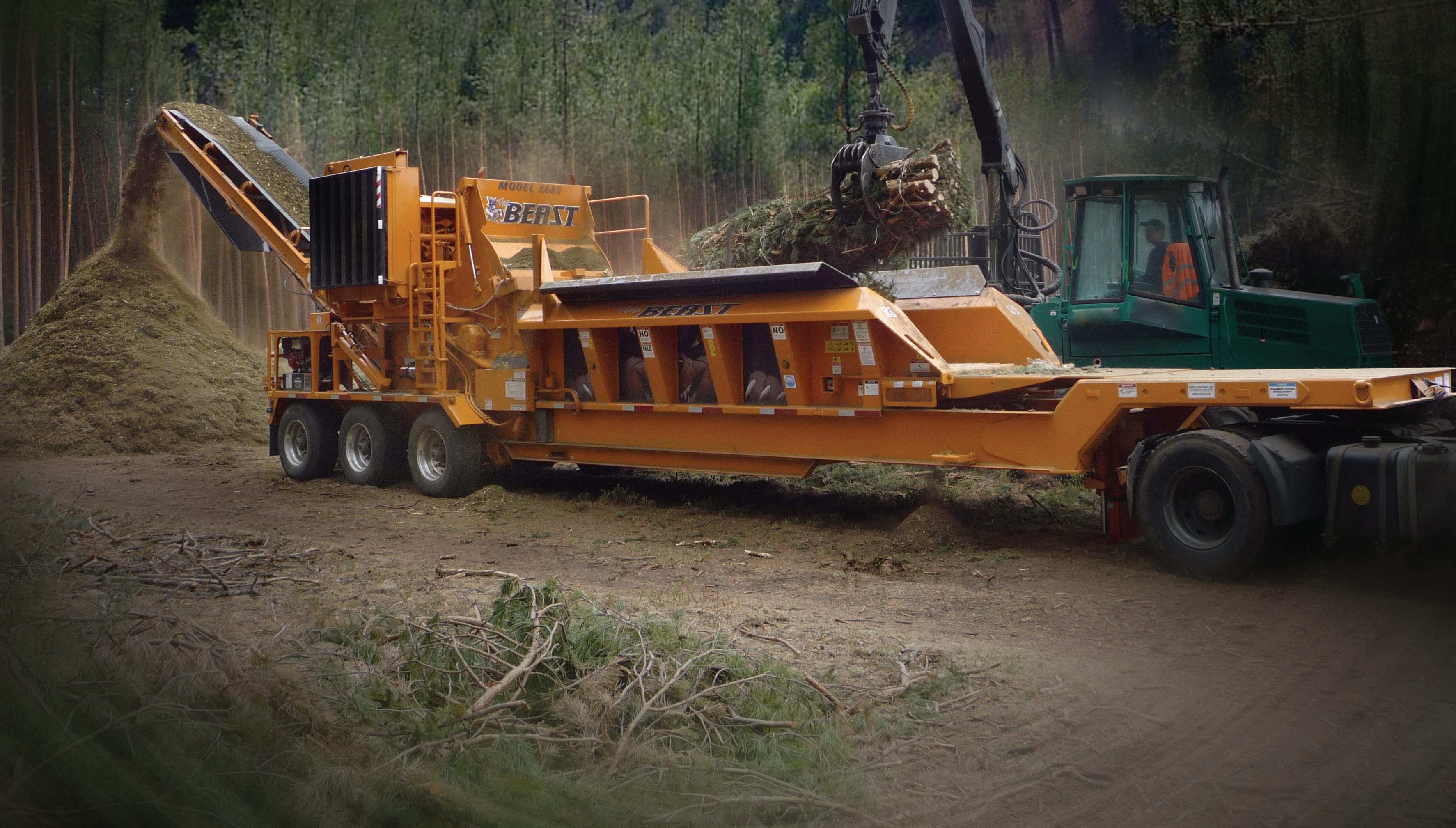
BOTTOM: Because small trees have been used for bioenergy for many years, techniques have already been developed for energy wood harvesting, resulting in a variety of felling heads hitting the market.
Pure Green
The discovery of a cellulose-derived product that is renewable, is lightweight and can add strength to products has taken the Canadian biomass industry by surprise.
By David Manly
R e S ea R che RS
are always looking for the next big thing: an innovation that can change the way something is done or add value to an already existing product. One of the biggest problems, however, is that making such a leap takes a long time.
One such discovery showing potential as it makes the rounds is nanocrystalline cellulose (NCC), which is obtained by milling cellulose from pulp and then using acid to dissolve the bonds that hold the chains of cellulose together. This process allows the crystallized regions within the chains to be separated out and concentrated for industrial and commercial use into slurry.
Once dried and refined, the white flakes of NCC, which range from 100 to 200 nanometres in length, resemble fallen snow and can be further processed for application in a variety of industries.
“It’s a nanofibre from wood, and has the capabilities of exploiting the strength of trees into other materials,” says Jean Moreau, president of CelluForce, a NCC development project between FPInnovations and Domtar Corporation located in Windsor, Quebec.
Of all NCC’s potential uses, one of the most attractive properties is that it can add a great deal of strength to any product. According to research done by CelluForce, NCC is purported to have greater tensile strength than stainless steel.
As well, Moreau says that there are four general product categories that NCC can improve:
• Iridescent films and barriers, such as pigments and packaging
• Coatings (such as paints and varnishes)
• Textiles
• Composites
Not only that, but since NCC is extracted from wood fibre, it is also renewable, recyclable and a source for sustainable development.
First in the WOrld
Canada is leading the pack in NCC research and application, with two projects in various stages of development: one in Quebec and the other in Alberta.
Attached to an old Domtar paper mill, CelluForce (www.celluforce.com/en/index.php) has built a demonstration plant in Windsor, Quebec, which was scheduled to begin operation in early January 2012. The goal of the plant is to “slowly ramp up production to the target capacity of one tonne per day of nanocellulose,” says Moreau.
According to Moreau, the approximately $46-million demonstration plant is funded via $10 million from the Quebec government through Domtar, $23 million from Natural Resources Canada
LEFT MAIN: Nanocrystalline cellulose dries into a small flaky powder; which looks like snow. INSET: Three stages of processing: wood chips, tree fibre pulp and nanocrystalline cellulose.
($21 million from FPInnovations and $2 million from Domtar), and an additional $11 million from Domtar and $2 million from FPInnovations.
In effect, both Domtar and FPInnovations have contributed $23 million each and share 50 % of the company.
The main goal of the plant is not to become a commercial operation, which Moreau says should be able to produce 25 tonnes of NCC per day, but to run market trials and show precisely what can be done with the product through collaborations with researchers and industry partners.
Moreau, a former chartered accountant and CFO of Domtar, believes that the applications of NCC are the wave of the future, as it is practically a perfect product.
“The crystals are bio-compatible, biocompostable, recyclable and renewable.”
in the West
Alberta Innovates – Technology Futures (http://albertatechfutures.ca/Home. aspx) is a research and innovation company spearheading the other Canadian NCC project.
Located in Edmonton, the $5.5-million pilot plant is funded by a $2-mil -
lion grant from the Alberta government’s Ministry of Advanced Education and Technology and a $2.5-million federal grant provided by Western Economic Diversification. Alberta Innovates –Technology Futures (AITF), provides the remaining $1 million. The plant is set to be completed in summer 2012 and begin operation shortly after.
Dr. Robert Jost, the lead researcher of the NCC program at AITF, says that the most unique property of NCC is that it does not behave like wood pulp or polymers, but something completely different, which gives it potential for use in various applications.
“The point of the pilot plant is to really expand the products we are working on, increase activity and build up commercial applications and product demand,” says Jost. “Our idea is to use NCC to improve product properties or be used as a substitute for cellulose.”
Since cellulose is a ubiquitous polymer that is found in a whole host of industries and products, everything from cosmetics to aerospace engineering, it has wide applications. And NCC, which is derived from cellulose, can be used in all
biO visiOn sets its sights On ncc
There is another player in the Canadian market for NCC, a Nova Scotia company known as Bio Vision Technology Inc.
Using biomass stream fractionalization and a proprietary process to release the NCC from the biomass, as opposed to acid, like AITF and CelluForce, Bio Vision has created carboxylated nanocrystalline cellulose known as “Nanocel.” The methods were developed in conjunction with the NRC Biotechnology Research Institute.
According to the company’s website, the biomass is weakened by high-pressure steam, causing the hemicellulose and lignin to be released. It is estimated that the pilot plant will be able to convert five tonnes of dry biomass per hour.
In a press release from the NRC in February 2011, Stephen Allen, the vice-president of technology, says that the final product is more uniform in shape than if produced using other methods.
“Carboxylated NCC is also easier to work with than the NCC made using sulphuric acid,” says Allen, “because it provides a chemical handle that you can use to attach other chemicals in order to produce tailor-made NCC suitable for various applications as a performance enhancer.”
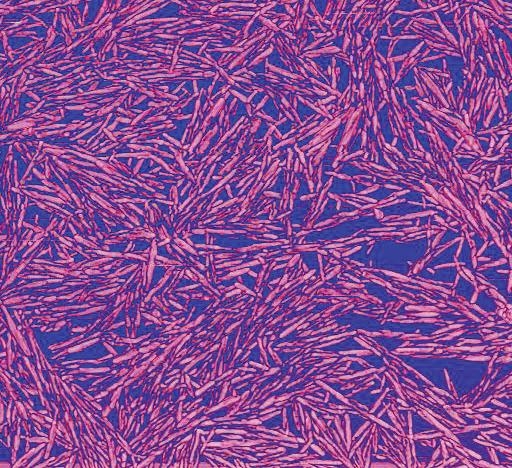
Nanocrystalline cellulose should have a diameter ranging from 5-8 nm with a length of 80-150 nm
the same products, as well as many more.
”Because of its unique properties, cellulose polymers have found their way into everything from salad dressings to toothpaste and other products we use every day, and people probably don’t even know they are ingesting or rubbing cellulose on their hands as a cream,” says Jost.
The potential for NCC goes even beyond that, with energy being a key area of development and research, according to Jost.
“Within AITF, we have a large petroleum division, that we are actively working with developing the use of NCC for some of their applications,” says Jost.
“In the oil industry, water is used heavily for energy extraction. We are investigating using NCC as an additive to maybe give a unique property that the industry does not have, or a reduction of another additive/chemical that is currently used. That could be either an environmental benefit or a cost-savings benefit.”
applicatiOns abOund
There are two types of applications for NCC, says Yaman Boluk, nanofibre chair in forest products at the University of Alberta, high-volume and low-volume.
“High-volume applications span composites, paints and other materials where the NCC can be incorporated (such as coatings), [but] low-volume applications are the bio-medical materials that are very expensive, such as tissue engineering, bonding, drug/gene delivery.”
Dr. Robert Jost is a researcher focusing on nanocrystalline cellulose with Alberta Innovates – Technology Futures. Continued
Photo:
Canada’s Biomaterial
FThe forest industry has struggled, but thanks to funding and innovative research strategies, investments are paying off.
By Dr. Gilles M. Dorris
or much of the past decade, the Canadian forest products industry struggled with closing mills and logging camps, as well as investments in the sector that were largely focused on cost-cutting. Faced with a somewhat dire outlook, the time had come for the industry to reinvent itself or chase at the heels of its global competitors.
The federal government supported the industry’s revitalization through programs such as Transformative Technologies, Investments in Forest Industry Transformation and the Pulp and Paper Green Transformation. The funding helped industry and organizations such as FPInnovations—among
were eventually able to refine the methods of extracting nanocrystals from wood pulp, and produce several grams of NCC from the nanocrystal fibres.
Recyclable, renewable, and non-toxic, NCC is an ultra- sophisticated material with unique optical, electrical, magnetic and strength properties. These unique properties give it limitless potential for use in commercial products, including high-durability paints and optically reflective films; improved paper, packaging and building products; advanced composite materials; and innovative bio-plastics for bone replacement and tooth repair.
“Recyclable, renewable, and non-toxic, NCC is an ultra- sophisticated material.”
the world’s largest private, not-for-profit forest research institutes—carry out new research aimed at developing innovative forest products, particularly in the bioenergy, biochemical and biomaterial domains. The support also provided us with the impetus to look for different ways to leverage the extensive knowledge and experience in fibre physics and processing that FPInnovations has developed over the past 30 years.
The investments are already paying off, as demonstrated by the world’s first commercial batches of nanocrystalline cellulose (NCC). Canadian research into cellulose nanocrystals, the precursors to NCC, began in the 1990s by Dr. Derek Gray, retired professor of McGill University and NSERC/ FPInnovations (under the name Paprican) Industrial Research Chair in Cellulose Properties and Utilization. Gray and his team
Under the leadership of Dr. Richard Berry, FPInnovations was able to scale up the laboratory production of NCC from 50 to 100 grams per week to kilograms. It then developed a business case for the world’s first NCC demonstration plant, which would be capable of producing one tonne of NCC per day.
In 2010, we entered into a joint-venture agreement with Domtar Inc. to develop an NCC demonstration plant in Windsor, Quebec, backed by significant financial contributions from both the federal and Quebec governments. Some 18 months later, our joint venture, known as CelluForce, has completed the construction phase and is producing its first batches of NCC. CelluForce’s plan for 2012 is to gradually increase production until it reaches a steady rhythm of 1,000 kilograms per day.
The global race to develop different forms of NCC and other cellulose structures is ongoing. CelluForce is currently in discussions with more than 65 clients worldwide and
it is anticipated that, as they produce more material, new applications will continue to emerge, such as textiles, plastics and specialized paints. And that’s just the beginning, as another NCC pilot plant is under construction in Edmonton.
For the industry, NCC has been a game changer on multiple fronts. In addition to the global recognition it has received, NCC has revitalized interest in the forest products industry across Canada. We are particularly excited to see the renewed interest in cellulose and wood chemistry among forest products communities and the student population.
Our goal is to continue working to develop new potential hopefuls within the cellulose portfolio. We are presently exploring the different structures made available by nature—from nano scale and beyond, such as nanofilaments and microfibrils—as well as the different chemicals that can be extracted from wood. From these compounds we can provide renewed forest products such as paper, tissue and packaging with the aim to improve the Canadian industry’s competitiveness. Exciting new product development will touch on plastics, composites and other chemical-based products.
The future for NCC and other cellulose structures as market-ready biomaterial products is bright, paving the way for greater Canadian competitiveness in the global bioeconomy and more novel and promising applications for Canadian forest biomass. •
Dr. Gilles M. Dorris is program manager, biomaterials, for FPInnovations. After receiving his PhD in polymer and surface science from McGill University, he joined FPInnovations (then Paprican), where he supervised several research projects on kraft liquors recovery, paper recycling, and papermaking. He is currently coordinating the Biomaterials Strategy, which includes NCC and two novel bioproducts.
From Propane to Wood Residues
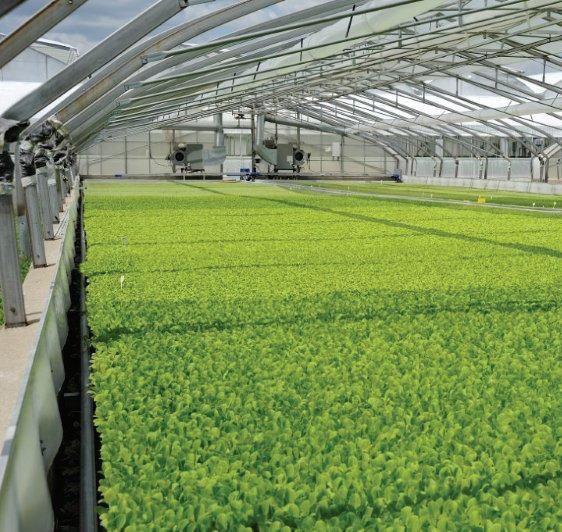
There are 140 greenhouses in Les Serres Lefort, and all of them have been converted from propane to biomass heat.
By Martine Frigon
manyprojects that involve a biomass heating system have been realized in Québec during the past few years: a hospital, such as the one located in Amqui, a school in Kamouraska, in the eastern part of the province, and even greenhouses, as is the case for Les Serres Lefort.
Located in Ste-Clothilde de Châteauguay on the southern shore of Montreal, only 25 kilometres from the New York border, Sylvain Lefort and his wife MarieJosée Lebire run a business specializing in the production of transplants. Operating 140 greenhouses on 6.5 hectares, the couple chose to move to biomass for their heating needs, and the conversion was not a small project.
The gigantic biomass system was up and running in October 2011, an investment totalling $7.8 million. Faced with the increase of fossil fuel energy costs, the Leforts decided to look beyond propane, the heating system they had already in place. “In greenhouse production, energy cost is one of the major factors we have to take into account”, said Sylvain Lefort. “In 2008, we started to look for alternatives and decided to move forward with forestry biomass.”
Many players were involved in the decision-making process, among them, Jean Gobeil, forest engineer and consultant in biomass heating systems. Having participated in two other similar conversions to a biomass system in the province, this retired professor from Université Laval is recognized as an expert in this field. “I have visited installations in France where a biomass system is used, and I must say
that we are just at the beginning; we have a lot to do yet in Québec in terms of conversion for renewable energy,” said Gobeil.
For the Leforts, Gobeil undertook a feasibility study. The project received a financial contribution of $5 million from the Bureau de l’efficacité et de l’innovation énergétique from the Québec Ministry of Natural Resources, to be used toward programs targeting the reduction of heavy oil consumption. Gobeil was also mandated to give his advice on the choice of manufacturer.
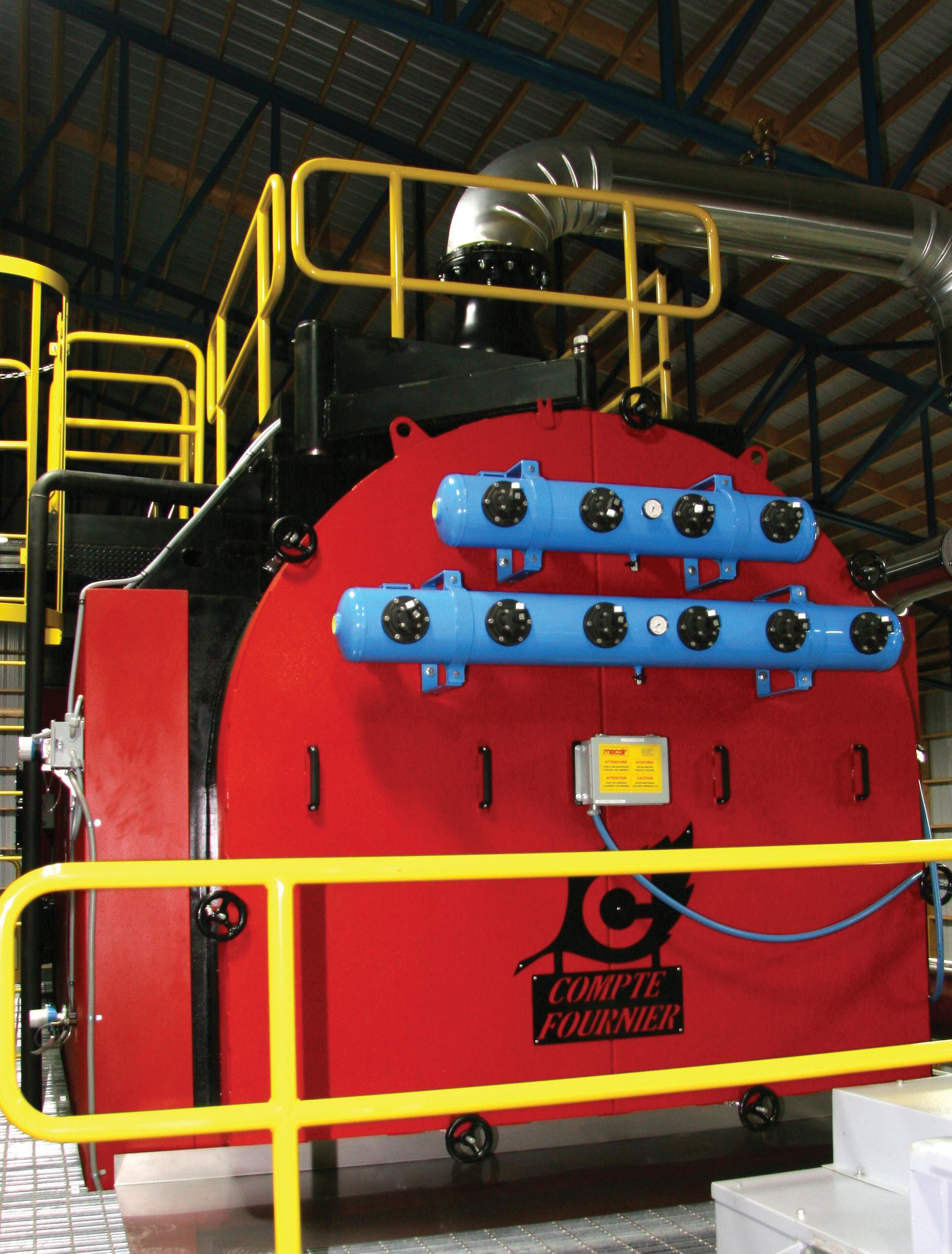
“For this project, we had six suppliers on the shortlist, and the technology developed by Compte-Fournier made up our minds,” he said. Construction began on the Leforts’ biomass heating system in March 2011.
Compte-Fournier is an association of two manufacturers: GroupeCompte-R, located in France, that has installed more than 1,500 medium- to high-power biomass plants throughout the world, and Industries Fournier, in Thetford Mines, Québec.
“Our boilers are used in hospitals, district heating networks, industries, greenhouses and even the London 2012 Olympic Games,” said Harold Roy, president of CompteFournier. “We are proud to have installed a system built here in Québec with technology from Europe.”
TWO BIG BOILERS
The biomass heating system chosen by Lefort has two boilers that weigh 100 tons each, an open buffer tank of 1.3 million litres and a hot water distribution system to heat its greenhouses, with thermal shields on the broad-span greenhouses.
Measuring 24 by 32 metres, the boilers
have a thermal power capacity of 12 megawatts (40 million BTU/h). Outside the building, a hot water storage tank called a hydro-accumulation boiler, made by Star Brite Manufacturing, can contain up to 1.3 million litres. Temperature and water level sensors, two diffusers and a corrosion inhibitor complete the stratification.
About 400,000 litres of hot water circulate into two kilometres of pipe installed in the greenhouses. In order to meet the needs of production, the climate management of the whole installation is managed using a computer program made by Priva.
“This biomass system will help reduce greenhouse gas emissions by up to 12,757 tons per year, compared to propane,” said Roy.
“We used up to 8 millions of litres of propane per year,” added Lefort. “We estimate that we will save 50% on our energy costs the first year, and get payback in three.”
The biomass is supplied by Bois Énergie3G, located in Sherbrooke, Québec, and stocked in a warehouse. Supplemented with hemlock residues, the biomass is brought to the boilers by four hydraulic
valve lifter pullers. “These wood residues have a humidity level of 35%, and the system will need five truckloads per day on average, which means 17 to 18 tons annually,” said Gobeil.
According to the manufacturer, the boilers can heat wood residues to a humidity level between 15 and 60%.
“Everything is in the combustion control,” he added.
prOducing FOr 250 Farmers
One of the only businesses that produce grafted plants in Canada, Les Serres Lefort provides transplants of broccolis, cauliflowers, tomatoes and celeries, among others, for 250 truck-farmer producers. This equates to nearly 65%of all produce offered in the Québec market.
During the last few years, the couple developed some new products, such as seedlings of vegetables, square soil blocks and hydroponic lettuce that lead to the production of seven million heads of Boston lettuce per year.
Les Serres Lefort is in operation almost 12 months a year and counts about 50
Material Handling for Woody Biomass
Les Serres Lefort provides transplants of broccolis, cauliflowers, tomatoes and celeries, among others, for 250 truck-farmer producers – that means nearly 65% of the produce offered in the Québec market.
employees, including an agronomist and a team of technicians. The Leforts can also depend on foreign employees during the peak season.
Since Sylvain Lefort started with two greenhouses in his backyard in 1981, things have really changed. But with daughter Julie in on the business, Les Serres Lefort will not. •
See our Biomass video at www.jeffreyrader.com/videoB
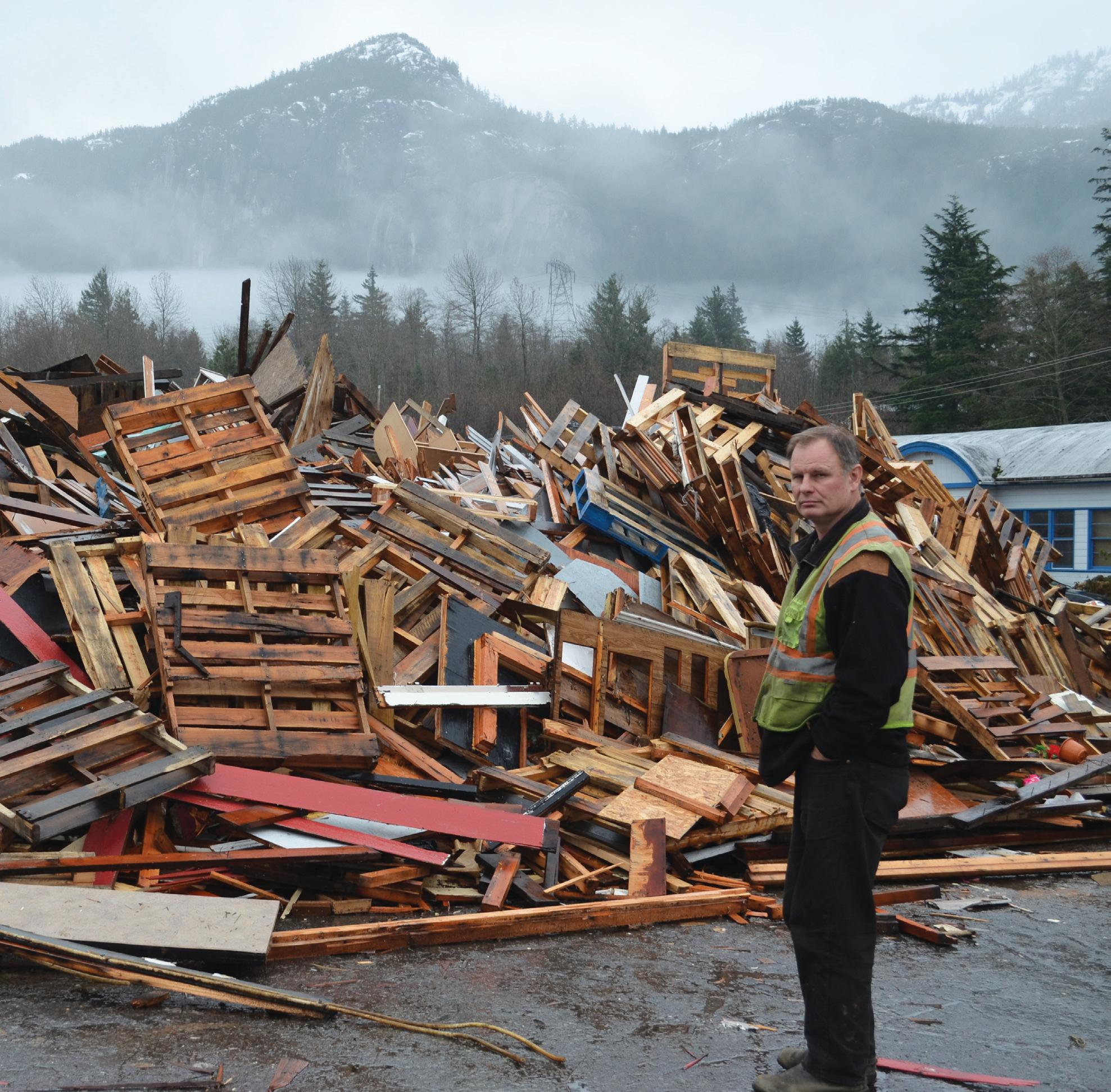
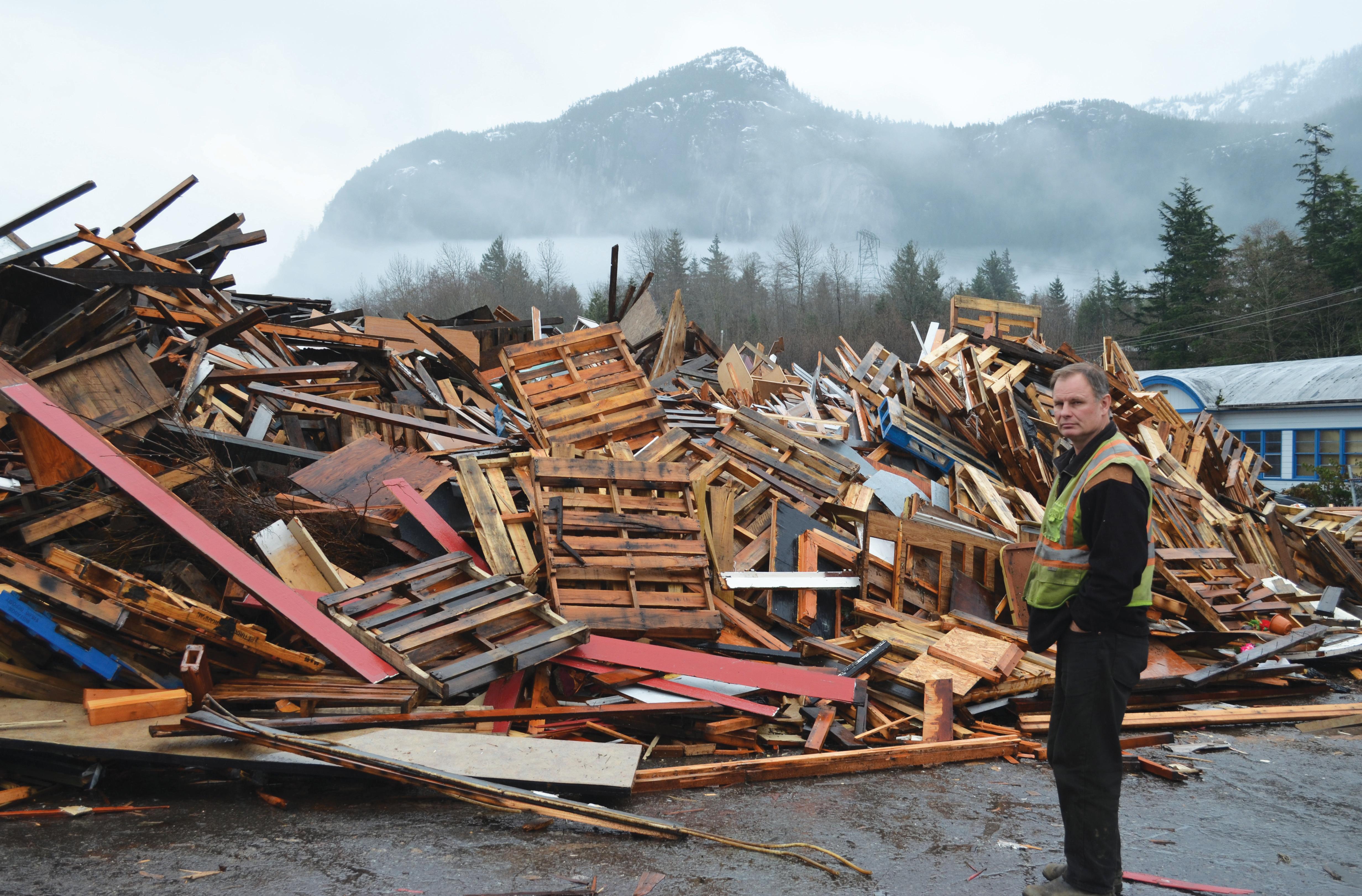
With no chance of a government push in the B.C. Interior, McKay has tried to grind waste wood such as pallets and other debris, but to no avail.
B.C. Coastal Biomass Underutilized
Meet Dave McKay, a contractor in Squamish, B.C., who believes small company biomass use in his province is in trouble.
By Jean Sorensen
BiomaSS
on the coast of British Columbia
is still underutilized and needs the push of municipal or provincial government to gain full use, says a Squamish, B.C., contractor.
“I can’t compete with the guy who wants to burn or bury wood,” says Dave McKay, president of Triack Resources of Squamish. He has been in the biomass industry for six years and watched the demand for the product fluctuate as logging residuals continue to be burned while building debris is buried in landfills.
McKay maintains that there are two
major problems facing the B.C. Coast biomass industry: First, there needs to be an incentive (legislative or otherwise) to cleaning up logging residuals at sites, and secondly, there needs to be greater diversification in the regional demand for biomass use.
“We are not even using 5% of the [green] residual wood in our area,” says McKay. The Squamish-Whistler corridor area has mainly mature timber and second growth timber stands, both of which yield high portions of biomass content.
While McKay has been harvesting woodlots on the logging side of his business, he says he is “totally flabbergasted” at
the amount of fibre left in the wood. “My harvest level is down to a 3.5-inch top,” he says.
But when McKay looks at the fibre that he rakes and grinds, “it is a 2:1 ratio greater than the log fibre harvest.”
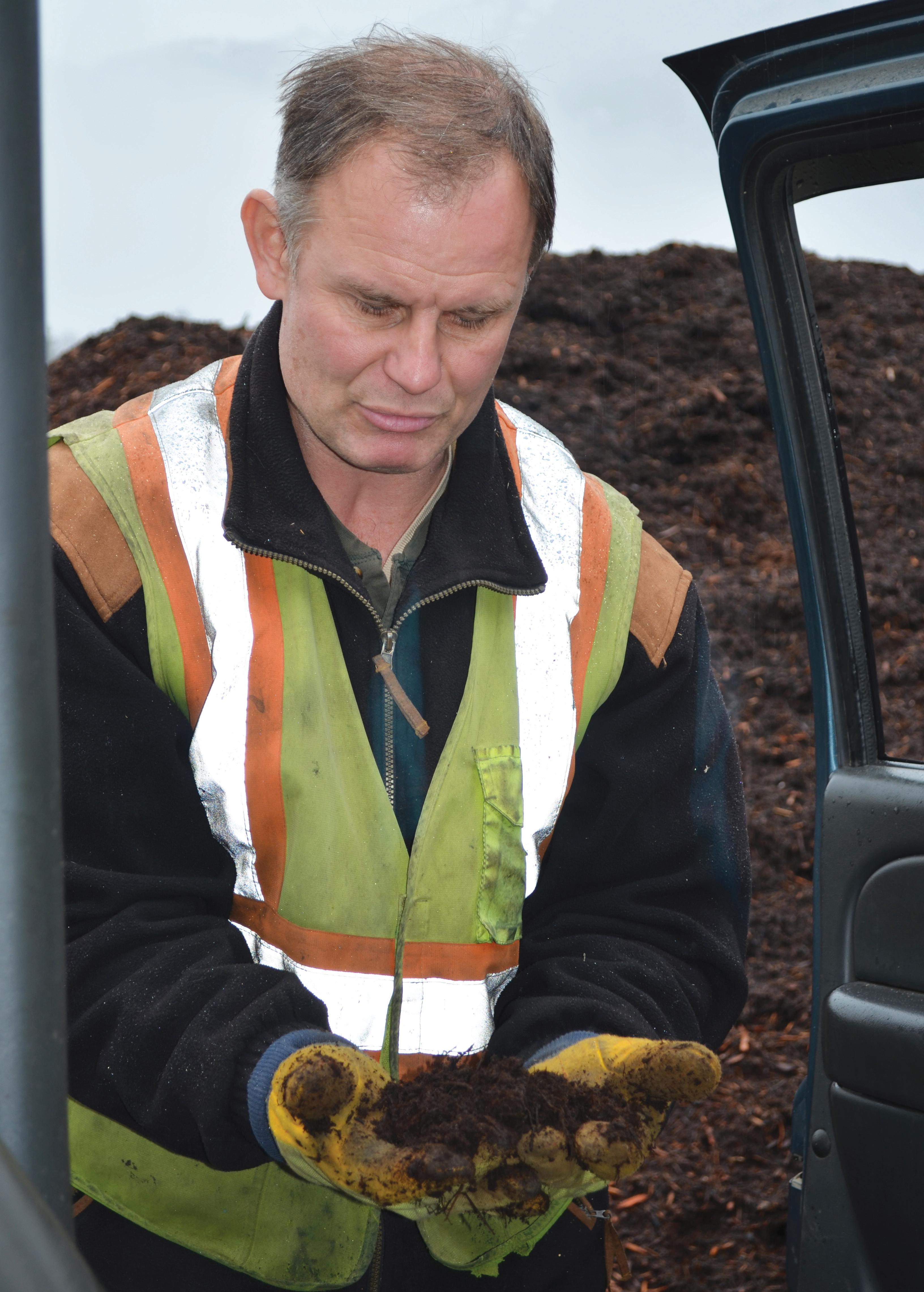
McKay has been keeping track of the residual waste removed from the woodlot, as the hogged material is shipped to the Whistler Composting Facility on a shortterm winter contract. The municipally owned operation mixes food scraps from the service industry and bio-solids from sewage treatment plants with wood fibre to make topsoil that is sold to landscapers and into the domestic market.
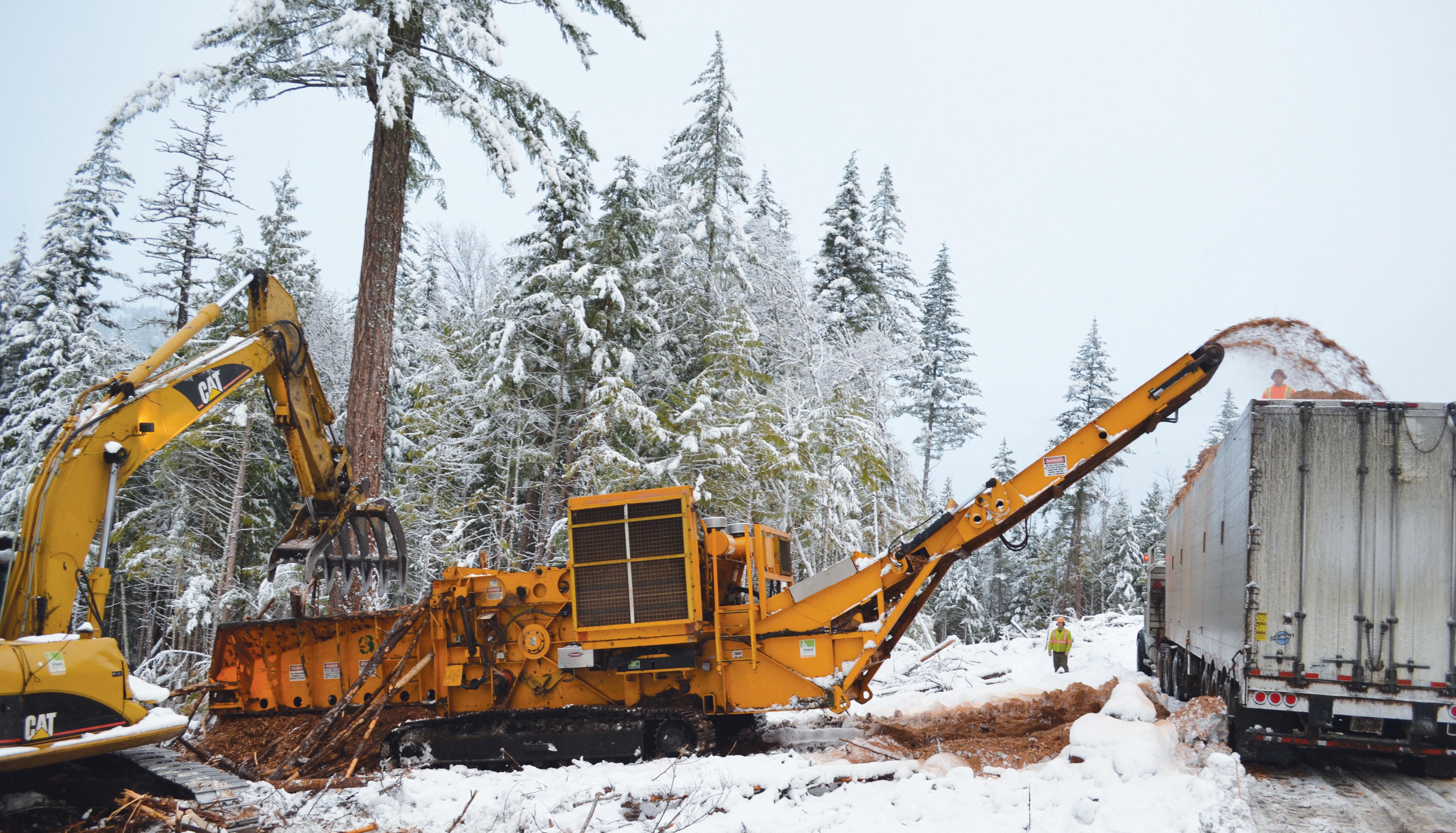
He cleans up logging residuals using a Caterpillar 324 loader with a large rake with widely spaced tines. The tines are able to rack the forest floor collecting material, but the spacing permits rocks to fall through. “That saves on the teeth of the grinder,” he says. He also uses the remote-controlled Continental Biomass Industries 6800D unit, a tracked machine that makes it easier to crawl off-road following the loader and also permits it to stay bush-side to load the trucks that must remain on the road, he says.
“It is really the Cadillac of the industry,” says McKay, adding that it is also able to grind material to different sizes. The composting facility requires a wood fibre material that is stringy and does not pack solid. It therefore allows air to feed the bacterial activity that converts the mixed materials to topsoil.
The grinder and loader take only half an hour to load Triack’s 16-metre walkingfloor trailer that holds over 98 cubic metres of material. The trailer is hauled by a Kenworth tri-axle drive tractor, which also hauls the logging bunk.
McKay maintains he is able to take so much debris off the forest floor that the
McKay believes that if there were more of an initiative to harvest biomass in British Columbia, there could be a significant reduction in the amount of slash burned.
woodlot will meet the BC Forest Service’s standards for fire suppression on site and negate the need to burn slash from logging in the area.
He believes that if forest companies were required through legislation to grind or chip residuals on site, there would be
more of a push to find outlets for biomass. “The ministry in B.C., though, is reluctant to pass on any extra costs to the forest industry today,” he said, understandable in today’s economy. But, he argues, there is another side to the cost equation.
British Columbia’s cost of fighting forest fires, especially those from logging slash and close to developed areas, should be compared to an incentive program that would encourage greater biomass utilization on the Coast. It is an equation that McKay says should be explored as climate change continues to impact the forests and fossil fuel costs continue to rise.
The Whistler Composite Facility is an example of how a regional push can develop more use from the residual wood that comes from construction, sawmill, demolition and logging industries in the Squamish-Whistler area. It also shows how recycling can use turn waste material into a marketable product.
The facility, owned by the Resort Municipality of Whistler (RMW) and operated by Carney’s Waste Systems, consists of two 70-metre-long controlled Wright Systems tunnels. Material is cured for two weeks to process into compost, resulting
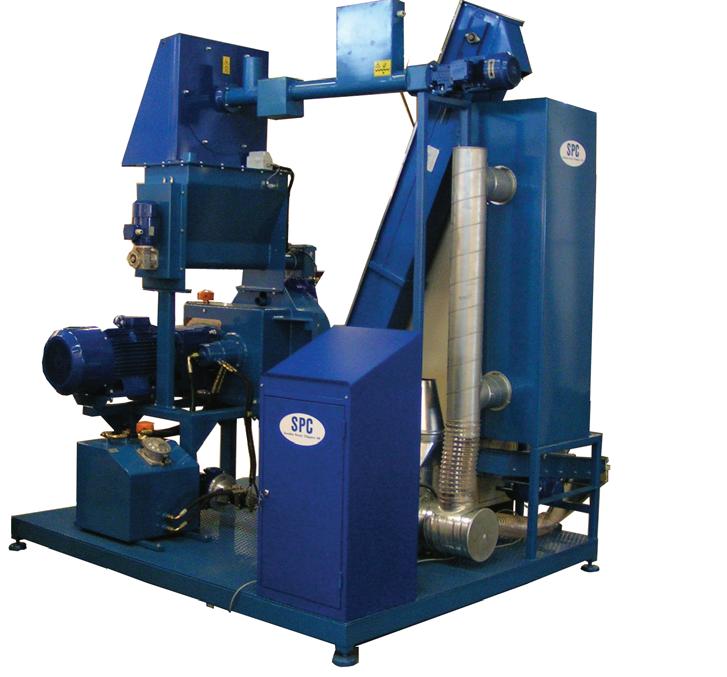
Silvana specializes in providing turn-key, small-scale pellet press solutions from SPC Sweden to fit your specific needs. Talk to us and start making more profit now!
Silvana Import Trading Inc.
in a Class A compost that is either sold as premium compost or mixed with sand and peat for use by the landscaping industry. The composted material has the potential to be dried and cured for an addition 30 to 60 days to produce biofuel for sale to commercial operations, but this is not being done, says Michael Day, RMW’s
manager of environmental services. Day says the RMW has done initial exploratory work in determining whether it would be efficient to utilize the end product in a pellet operation, but has run into two problems. First, in B.C., you cannot burn material that has biosolids in it. Secondly, the end cost of drying and pellet-
izing the material would be prohibitive in cost compared to more efficient systems, such as heat pumps, that may be installed in homes. However, according to Day, the cost dynamics could shift in five years when the municipality is finished paying for the tunnels.
Day says the topsoil side of the business has been growing; in 2009, 6,550 metric tonnes of treated material was processed, which yielded (when mixed with sand and other materials) 7,034 cubic metres. In 2010, 8,700 metric tonnes of material was generated to yield 10,704 cubic metres of topsoil, which was then sold into the landscaping industry. Day estimates that yields this year could exceed those of 2010.
Although the facility is considered unique, it provides only short-term employment for logging clean-up services such as McKay’s. The facility has its own electric Rawlings wood hog and can generate enough wood fibre from municipal and residual land clearing and pruning for its operation. In winter, however, the frozen material clumps, and the facility’s
The Continental Biomass Industries 6800D unit is a tracked machine that makes it easier to crawl off-road following the loader and also permits it to stay bush-side to load the trucks.
grinders are not able to handle it, says McKay. But, he can grind the biomass from his forest woodlot to keep the facility going all winter in just a few days.
McKay’s CBI grinder will soon move to a Richmond landfill, where he will be grinding waste wood for a company that makes topsoil. The work that exists in the Coast regions is fairly spotty, and for operators like McKay, it is not enough to foster growth.
But that was not always the case.
Triack was set to grind forest biomass for Howe Sound Pulp and Paper (HSPP) but the pulp mill’s older boiler suffered problems and was no longer able to handle the grit and dirt until a new unit was installed. In the meantime, it sought cleaner and drier feedstock from mountain pine beetle-damaged mill residuals and construction waste wood from the Lower Mainland.
Triack has now completed a new boiler upgrade, part of a $37-million federal Green Transformation Program funding, that improves the boiler efficiency. But in 2010, HSPP and BC Hydro signed an
agreement that allowed HSPP to feed power back into BC Hydro’s grid.
McKay says local suppliers like him lost out, as BC Hydro demanded longterm contracts to guarantee its supply in 2010. He says his company has gone from 30 employees, a barge-loading facility and several trucks down to just a
WoodMoisture Testers
truck, grinder and loader. He can’t sell to companies with contracts to HSPP, as they have an abundance of product. Other existing pulp mills are in an oversupply situation, having either curtailed production or, like Elk Falls in Campell River, closed out.
“The root cause of the problems in the
The grinder and loader take half an hour to load the trailer, which holds more than 98 cubic metres of material.
biomass industry today,” says McKay, “is the fault of no one.” Rather, he says, it is the lack of clear definition of where the provincial and municipal governments wish to drive biomass usage and the associated industries. “There is a lot of green wash,” he says, adding that, while intentions are good, they don’t always translate into sustainable solutions and job creation.
“We have had the highest rate of increase in employment insurance claims
in the province,” McKay points out. Over the past decade, the town has lost a few major employers: BC Rail, the Interfor sawmill, Western Forest Product’s Woodfibre mill, a major chemical plant, a bleach plant and various smaller sawmills.
McKay estimates that as many as 2,000 jobs have been lost in the forest industry, leaving the town with only a few remaining mills and logging operations. In fact, a 10% increase in em -
ployment insurance claims has been reported, which is the highest in B.C., although some of that increase was attributed to the falloff in construction due to the 2010 Olympic Games.
Two biomass sectors have benefited from a government push, according to McKay. Metro Vancouver, the regional district, made it a priority to keep construction material from the landfill, and B.C.’s government focused on construction meeting a LEED Gold standard, with points earned for recycling waste wood.
The other region benefiting has been the B.C. Interior, where sawmill and bush residuals are transported down to HSPP on the coast. In addition to that, large volumes of mountain pine beetle-damaged wood are being harvested and utilized in pellet mills and cogen facilities. District heating systems have also been established in the B.C. Interior and the University of Northern British Columbia is supplementing its heating system with biomass.
McKay says there is little evidence on the B.C. Coast that the same kind of push will occur. Triack has set up its headquarters at the old Interfor sawmill site, awaiting the completion of a site remediation. McKay has been attempting to grind waste wood such as pallets and other debris, but with no source for the hog fuel and only limited amounts that can go to composting, he’s stymied. His barge-loading ramp, which cost more than $200,000 to build, sits idle.
It raises the question of whether B.C. needs an inquiry into the biomass sector, searching for answers to issues such as municipal waste, biomass collection, utilization and fire suppression.
“Absolutely,” McKay believes. “We should be asking questions such as what is the net gain and who is getting the gain?”
He points out that the shelf life of mountain pine beetle wood is only 17 years, but what is really needed is longterm planning both in the Interior and the Coast to determine how to achieve sustainable utilization of biomass fibre. There also needs to be a hard look at what opportunities exist for smaller contractors compared to the larger operations.
“Otherwise, people like me, who have given it six years, are just not going to be here,” he says. •
PURE GREEN
Continued from page 14
Boluk is collaborating with AITF on the NCC pilot plant in Edmonton, and works on observing how NCC reacts with different chemicals/materials for potential application use. Through this, he can help develop commercial products and observe how specific conditions can affect the properties of NCC.
“The next step, once the pilot plant is operational, is to improve the process development,” says Boluk. “In the meantime, once the materials are available, there will be different applications projects with other companies and researchers.”
the dOWnside
With all the potential benefits that NCC can provide – strength, durability, security, iridescence and more – what is the downside?
According to Moreau, the biggest hurdles are getting the commercial programs up using available technology, and running and passing all the safety regulations with Health Canada, Environmental Pro-
tection Agency and Food and Drug Administration.
“And so far, all the tests reveal that it is as toxic as table salt.”
Once all that is completed, and NCC can be produced at a commercial scale, it will be on its way to developing a new fibre-based market in Canada and around the world. •
Once the NCC is extracted, it must be dried from the resultant slurry to make a usable product.
Closed End Funds
NThese alternatives to bank financing are an innovative way to finance pellet plants and other bioenergy projects.
By Gordon Murray
ow that you have a long-term offtake agreement and a secure fibre supply, all that remains is to build your plant. And that should be easy if you can just raise enough money, yet arranging sufficient financing can be difficult.
Traditional banks won’t lend for bioenergy projects because they don’t understand them, are averse to risk and won’t finance startups. They want to see at least three years’ worth of profitable financial statements before lending and often require project developers to put in as much of their own cash as they want to borrow
from the bank. They also usually require more security than the assets being financed, meaning that the borrower has to sign a personal guarantee and put up his/ her home for security.
an alternative tO Financing
Thanks to WPAC associate member Ulrich Hainzl KG a new alternative to bank financing is now available: the closed end fund (or CEF).
A CEF is like a mutual fund where the capital of hundreds or thousands of investors is pooled and invested in assets. But un-
“Canadian bioenergy project developers should seriously consider CEFs when deciding how to finance their projects.”
like a mutual fund, for each CEF, the amount of capital raised is limited to the amount required for each project, and the term of each project is finite. Once the capital has been raised, the fund is closed for the term of the project. The return on investment is derived from profits earned by the project plus the proceeds received when the project is sold at the end of the CEF’s term.
CEFs are used for investing in real estate, shipping, aircraft and many other related market segments, and a pellet plant would be an ideal project for CEF financing.
hbi gmbh
Founded 15 years ago and based in Hamburg, Germany, HBI GmbH is a financial services company and CEF specialist which has developed projects, mediated in negotiations and invested several billion euros for its clients.
Yvonne Büttner, one of the managing directors of HBI, said that the company primarily acts as a designing house for private and public placements. “We provide project developers and product providers with customized concepts for the realization of large investment projects, which we then accompany from the first thoughts at the “green table,” on to their implementation, to their operation and finally to the fund’s liquidation.”
HBI GmbH’s current ambition is to design funds to be invested in Canadian renewable energy projects and this presents a serious opportunity for Canadian pellet producers and other bioenergy-related project developers.
liFe cycle OF a Fund
Generally, there are six steps in the life cycle of a CEF:
A project developer prepares a convincing business plan demonstrating attractive
and safe returns and presents it to HBI. As long as it has a secure fibre supply, a longterm take-off agreement with investmentgrade counterparty and a highly qualified management team, the project is accepted.
The capital requirements – construction, start-up costs and working capital – are determined and the CEF is structured as a limited partnership with investors as the limited partners and the project developer as the general partner. The project developer is the outward face of the project, while the limited partners remain behind the scenes as the actual project owners. There are two different models:
a. The project developer acts as a longterm manager and operator of the plant and pays a fixed annual rent to the CEF for the duration of the CEF. The rent could be temporarily lowered until the project begins to make a profit, for example, after five years.
b. The CEF provides for the project developer to be paid a management fee, while the profits up to the hurdle rate are paid to the investors. Any profits ex-
ceeding the hurdle rate are generally split between the project developer and the investors and the CEF term is set, usually from six to 12 years. As well, the CEF may provide for the project developer to buy out the project at the end of the term for a predetermined amount, or for the project to be sold to a third party.
HBI seeks regulatory authorization to distribute shares, and markets the CEF shares to private investors, which takes between nine and 18 months.
The project is constructed, which must be assured by an EPCM (engineering, procurement and construction management) contract with an investment-grade counterparty. This ensures that the project will operate as intended and not go over budget.
The project developer operates the project for the term of the CEF, reporting to a board consisting of limited partners.
Finally, the project is sold at the end of the CEF term. The return on investment is derived from the profits generated during the CEF term, plus the proceeds received upon the final sale of the project.
EXCLUSIVE DISCOUNT
for Canadian Biomass Magazine Readers Use discount code CANB2012 at checkout
Canadian bioenergy project developers should seriously consider CEFs when deciding how to finance their projects. CEF financing is an attractive alternative to traditional bank financing, especially for talented management teams that have great projects, but lack sufficient financial resources to meet the banks’ security demands. •
Gordon Murray is executive director of the Wood Pellet Association of Canada. He encourages all those who want to support and benefit from the growth of the Canadian wood pellet industry to join. Gordon welcomes all comments and can be contacted by telephone at 250837-8821 or by e-mail at gord@pellet.org.
Canada’s Bioeconomy
The International Bioenergy Conference and Exhibition is Canada’s longest-running conference devoted to the global bioenergy sector and provides opportunities for bioenergy experts, existing businesses and organizations, and new entrants to explore leading-edge concepts and current applications in bioenergy.
Conference host city Prince George is located in British Columbia, a province that has a natural abundance of wood fibre and is the largest producing and exporting region in Canada for forest and bioenergy products. Prince George is a North American leader in bioenergy, whose businesses have a record of industrial achievement, entrepreneurial activity and leadership in bioenergy technology and forest fibre management. The BC Interior is the largest pellet-producing region in the world and the University of
Northern BC is a research intensive university connected by research networks to the innovation capacity of all BC universities, and by partnerships with businesses in the bioenergy industry.
The conference runs from June 13 to 15, 2012 at the Prince George Civic Centre.
The theme for this year’s conference is “Growing the Bioeconomy.” It will include a focus on timely topics affecting British Columbia and global bioenergy stakeholders, including:
• Forest Products and Bioenergy: Industries in Transition
• Around the World in Half a Day: Global Game Changers
• The Integrated Biorefinery
• Developments in the BC Bioeconomy
• Carbon: the International Experience
• Distributed Energy – Partners, Payback, and Potential
• Technologies for Today, Technologies for Tomorrow
The conference will once again feature an International Partnerships Forum and Business-to-Business meetings, bringing together businesses from Europe and Southeast Asia with their Canadian counterparts to engage in detailed discussions about potential and emerging business opportunities. A more detailed program is expected in early 2012. The Northern Bioenergy Partnership, Canfor Pulp Limited Partnership, University of Northern British Columbia, and Transtrata have already confirmed their participation as sponsors.
Look for more on the conference in future issues of Canadian Biomass, as well as online at www.canadianbiomassmagazine.com. •
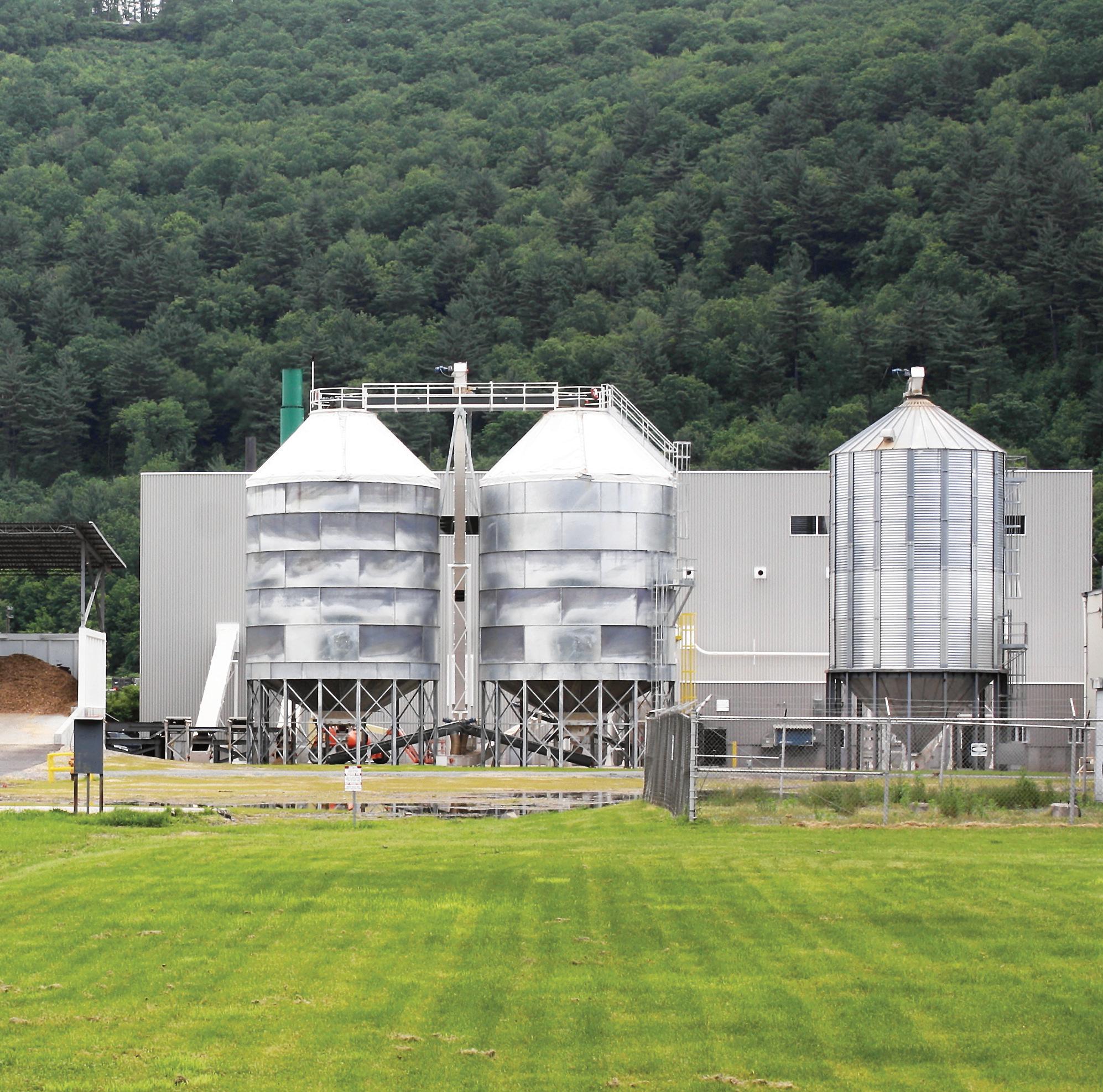
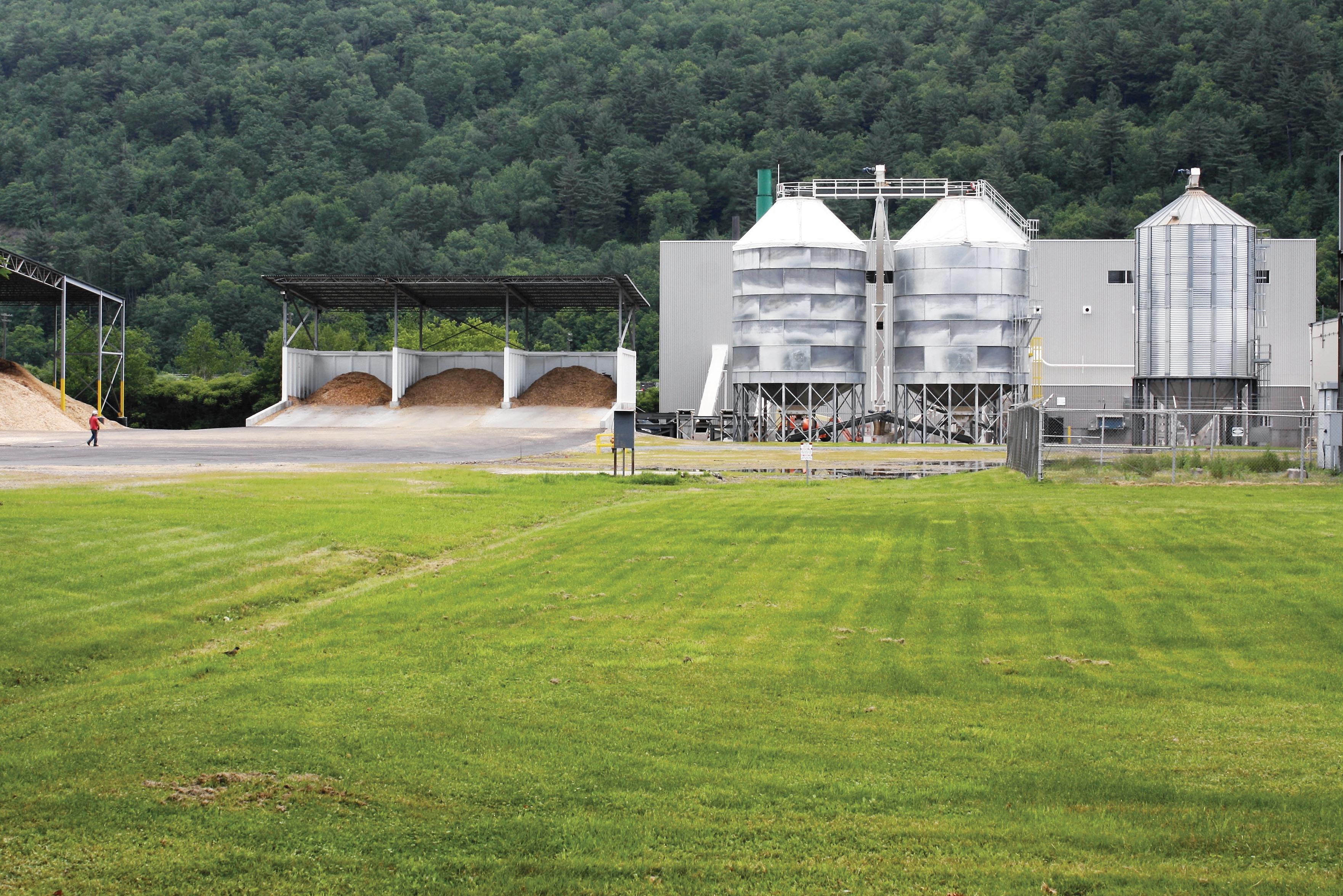
NEWP’s new plant near Deposit, New York, is the largest in the Northeast United States and is scheduled to produce 85,000 tons annually for the domestic wood fuel pellet market.
Northeast’s Largest New NEWP Plant
New innovations and technologies headline pellet plant.
By Dan Shell
StaRtup
continues smoothly at New England Wood Pellet’s (NEWP) new Deposit, New York, plant, which opened in early June. The plant is the largest in the Northeast United States and is scheduled to produce 85,000 tons annually for the domestic wood fuel pellet market. The facility is the third for NEWP and has expanded overall company production by roughly 50%.
“The project startup is going well,” said NEWP CEO Steve Walker, an almost 20year veteran of the pellet industry, in early July. “We’ve had multiple days running at full capacity, and we’re almost to 24/7 operating conditions right now.”
The $14.5-million plant is a big boost to the local community, operating on the site of a former Norbord Industries panel mill that NEWP purchased in November 2009 after it closed. More than $10 million in payroll, feedstock and supply purchases have been added to the local economy. The Deposit facility currently employs 16, and an estimated 100 additional jobs are supported in logging, trucking, supplier and pellet retailer activities.
Walker noted the new plant is “perfectly located to supply all of southern New York, eastern Pennsylvania and northern New Jersey. We’re making a major contribution to helping the region achieve greater energy independence by reducing reliance on imported and expensive heating oil and propane.”
He added that, although many plant operators try to locate facilities in an area with low wood costs, he takes a different approach and seeks a location in proximity to the nearest major markets. As a result, the plant procures material from many smaller sources, as opposed to a rural plant that may have a supply agreement with a large landowner. At the same time, transportation costs are lower. There’s only a finite amount of dollar value loaded onto a truck, and once transportation costs begin eating too heavily into margins, hauling distance must be limited, Walker said.
The new pellet plant is the fifth such project for Walker, who started NEWP in 1992. The company also operates pellet plants in Jaffrey, New Hampshire and Schuyler, New York.
At the Deposit plant, a compact design includes an MEC triple-pass dryer,
two 500 HP Bliss hammermills, three Andritz pellet mills (with provisions for a fourth) and an automated Hamer bagging line feeding to a Wulftec shrink wrap turntable. Fired by a Wellons burner, the dryer is oversized and allows lower drying temps that help reduce volatile organic compound (VOC) emissions. Other key components include a 14-metre Peerless truck dump, Carrier vibrating conveyors, BM&M screening systems, Kice baghouse, in-house designed cyclones, and AllenBradley PLCs and control systems.
saFe design
Engineering and building safety as part of plant design is a big emphasis for Walker, who said he believes in assuming incidents will happen but working as hard as possible to prevent them, and to mitigate damages if they do occur.
“We do all our explosion venting through the walls. It’s engineered in, and we go way above the code required and tend to overdo it,” he said. Walker also described the plant’s production building as “full of holes” from the conveyor penetrations and explosion venting systems.
The plant utilizes a Firefly spark detection system and complements that with
extensive heat monitoring throughout the plant. “We’re always monitoring, basically, anywhere you’re moving air, and also places like bearings and gearboxes. We use thermocouples throughout the plant,” Walker added.
Precaution is evident from front to back, from the screening system that removes and bypasses fines from the first hammermill and the lower operating temps on the dryer, to the custom dry storage silos with fabric tops feeding the pellet mills and the separate coolers for each mill.
The central control system is another example: Designed so one central Allen-
Bradley new-generation MCC PLC system operates and monitors every machine in the plant, the control system features proprietary NEWP operating software that incorporates years of pellet mill experience and acquired expertise.
“We have a lot of safety monitoring built into the control system that anticipates problems and seeks to avert them or better deal with them if they do occur,” he said.
He added that following up on maintenance and good housekeeping is critical to safety system performance. For example, explosion venting panels must be constantly monitored for material accumulation or icing in cold weather.
MILL FLOW
For feedstock, the plant seeks out chips with low or no bark content, though some mill residuals, such as sawdust, are accepted. The plant is designed to run on 100% green chips. “We built a pad for on-site chipping if needed,” Walker said, “but we’re trying to avoid that.”
Incoming trucks are self-unloaded or tipped using a Peerless truck dump, which empties onto a paved area that features a large 40,000-square-foot covered storage shed, and three-bay live bottom infeed system. Wheel loaders move and mix incoming raw material either to the storage area or straight to the infeed bays. One bay feeds material
TOP: The Deposit plant is the third for NEWP and boosts overall company output by roughly 50%.
ABOVE: The three-bay live bottom infeed system receives raw material and directs it to a Wellons step-grate burner for lower grade fuel or to the Carrier vibrating conveyor system, which feeds a Bliss 500 HP green hammermill.
to the Wellons step-grate burner, which can handle lower grade fuel, and the other two bays work together to create an even flow to the Carrier vibrating conveyor system, which feeds a Bliss 500 HP green hammermill.
Walker noted that the drive-in bays were designed for easy access and maintenance, and the moving floor system, designed in house was designed to handle icy material and still perform well.
The vibrating conveyor feeds a BM&M screening system preceding the green hammermill, which removes the finest material. Fines bypass the hammermill and are reblended before they reach the dryer, reducing wear on the hammermill and giving an added degree of fire protection.
The plant’s oversized MEC triple-pass dryer operates at 315 C, a temperature that greatly reduces VOCs, and features with six in-house designed, high-efficiency cyclones. After drying, raw material is processed again
through a dry end 500 HP Bliss hammermill for final sizing before pellet production. Raw material ready for pelletizing is routed to two custom live-bottom silos that feed the metering systems.
The plant’s three Andritz pellet mills each have their own custom raw material metering system above and separate coolers below, as well as separate cyclone systems, a safety feature that diffuses fire risk by separating hot pellets into three areas instead of one large cooling tower.
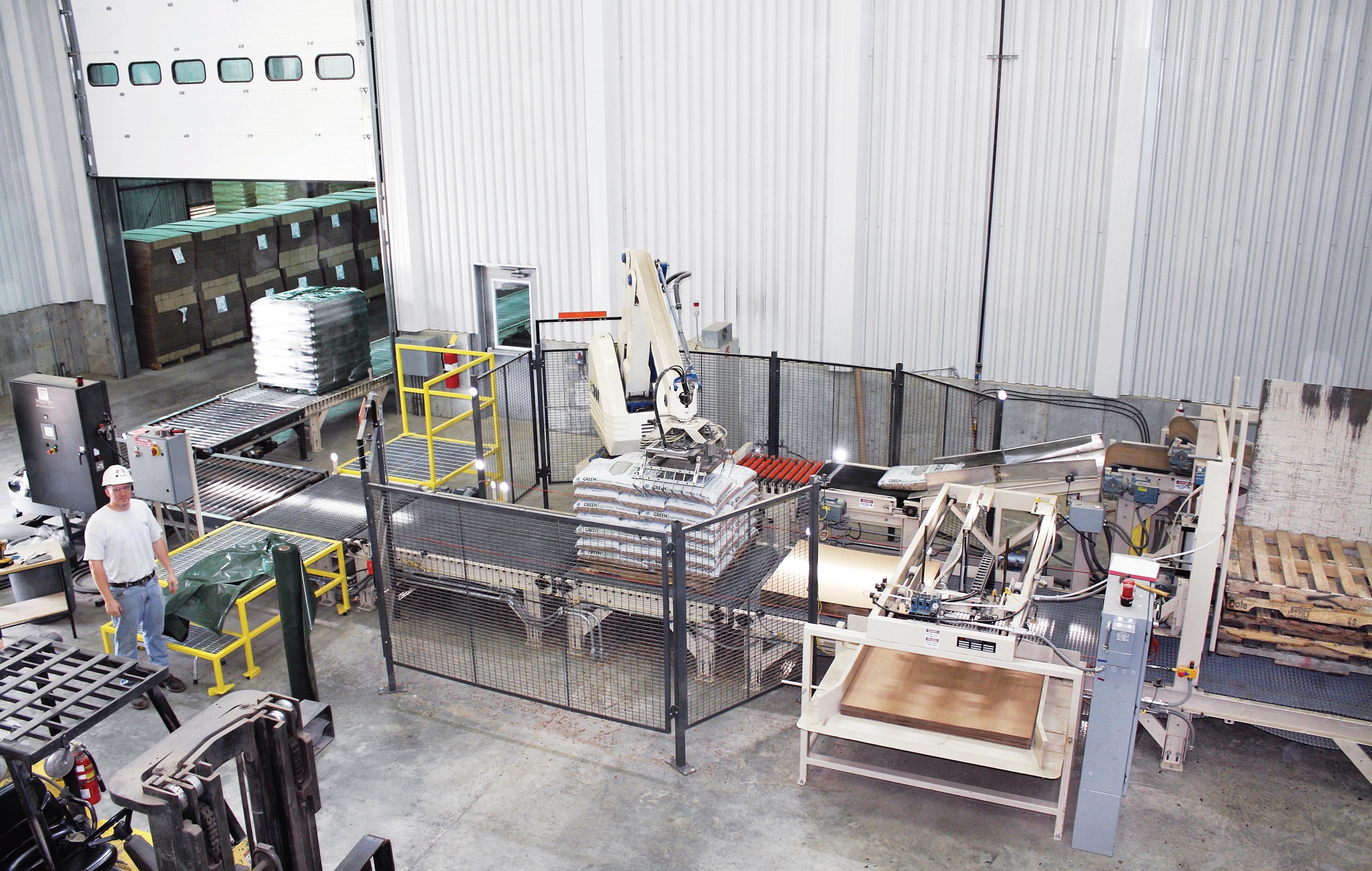
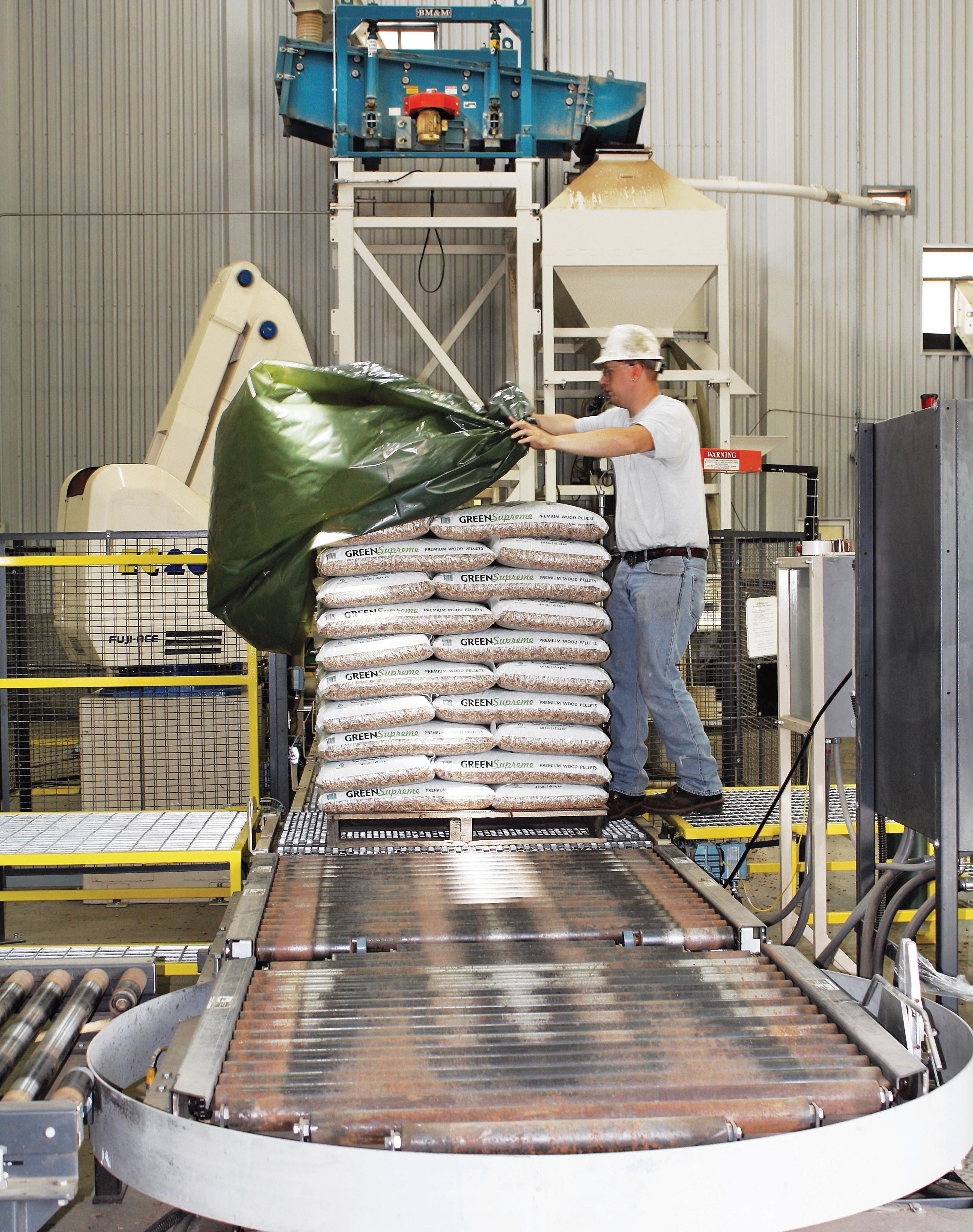
From the production area, pellets proceed to a Hamer automated bagging line and Wulftec shrink wrap turntable aided by a Fuji robot that takes each bag and places it on the pallet.
“We really like the robots,” Walker said regarding the fourth robot operated by NEWP across its three mills. “They’re very low maintenance and consume very little energy,” he adds, noting that the biggest
challenge in working with robots is designing the proper attachment for the end of the robot arm that’s actually handling the work piece. Performance, programmability and maintenance are otherwise virtually trouble-free.
The company continues to try to expand sales into commercial bulk fuel accounts.
The segment is growing more than bag fuel markets, but still remains a small part of NEWP’s overall business, Walker said.
One issue facing the domestic pellet industry is the evolution of heating systems and pellet utilizations to encompass homes, business boilers and furnace products that
work with central heating/air systems or other appliances.
“It’s a real bottleneck in our industry as far as efforts to make those systems available, because right now they are too expensive, and there are no real turnkey systems available,” Walker said. •
Titan Toughcam
industry standard for Sawmills, Pulp/Paper Mills, Panelboard Plants and Wood Biomass Refineries
• 480 TV Lines
• 2.9, 4.3, 6, 8, 12, 16 mm lenses
• All Weather, Extreme Environment
• Heavy Gauge Di-Cast Metal Alloy & Titanium components
• Tri-Axial Mounting System
• –50°C to +50°C
• –58°F to +122°F
• Waterproof, IP68 Rating
• Vibration Resistant
A Fuji robot that takes each bag and places it on the pallet aids the production area and is virtually trouble-free.
At the new plant, the back end features automatic Hamer bagging and a Wulftec shrink wrap turntable.
Biomass to Burn, but No Markets
At a recent conference in North Bay, researchers and industry professionals discussed how to support and solve the biomass issues facing Ontario.
By David Manly
inlate November 2011, representatives from all aspects of the biomass industry met in North Bay for a conference held by the Biomass Innovation Centre through Nipissing University.
The conference, entitled Harnessing Biomass II: Support for Northern Ontario Bioeconomy Initiatives, was a two-day event, comprising six different sessions focused on aspects of biomass and its management. Each session included five or six different talks given by an expert in the field. Highlights included talks on forestry development and funding descriptions of handling/processing equipment and a variety of case studies.
The first presenter of the conference, Warren Mabee of Queen’s University, set the tone when he spoke about the issues and opportunities involved in harnessing and increasing Ontario’s bioeconomy. The greatest challenge, highlighted by Mabee and repeated numerous times throughout that day, was that the biomass potential for Northern Ontario is massive. However, the issues do not lie with obtaining a biomass supply or its harvest, but with its processing and transportation.
According to Mabee, there are no big biomass projects because the money for each kilowatt-hour of electricity generated is not enough to cover the cost of their supply, construction and transportation. In order to make such a large-scale operation viable, the feed-in-tariff (FIT) rates used would have to almost double.
But, said Mabee, trends suggest that the FIT rates are going down, not up.
Numerous experts throughout the conference, including the Canadian Institute of
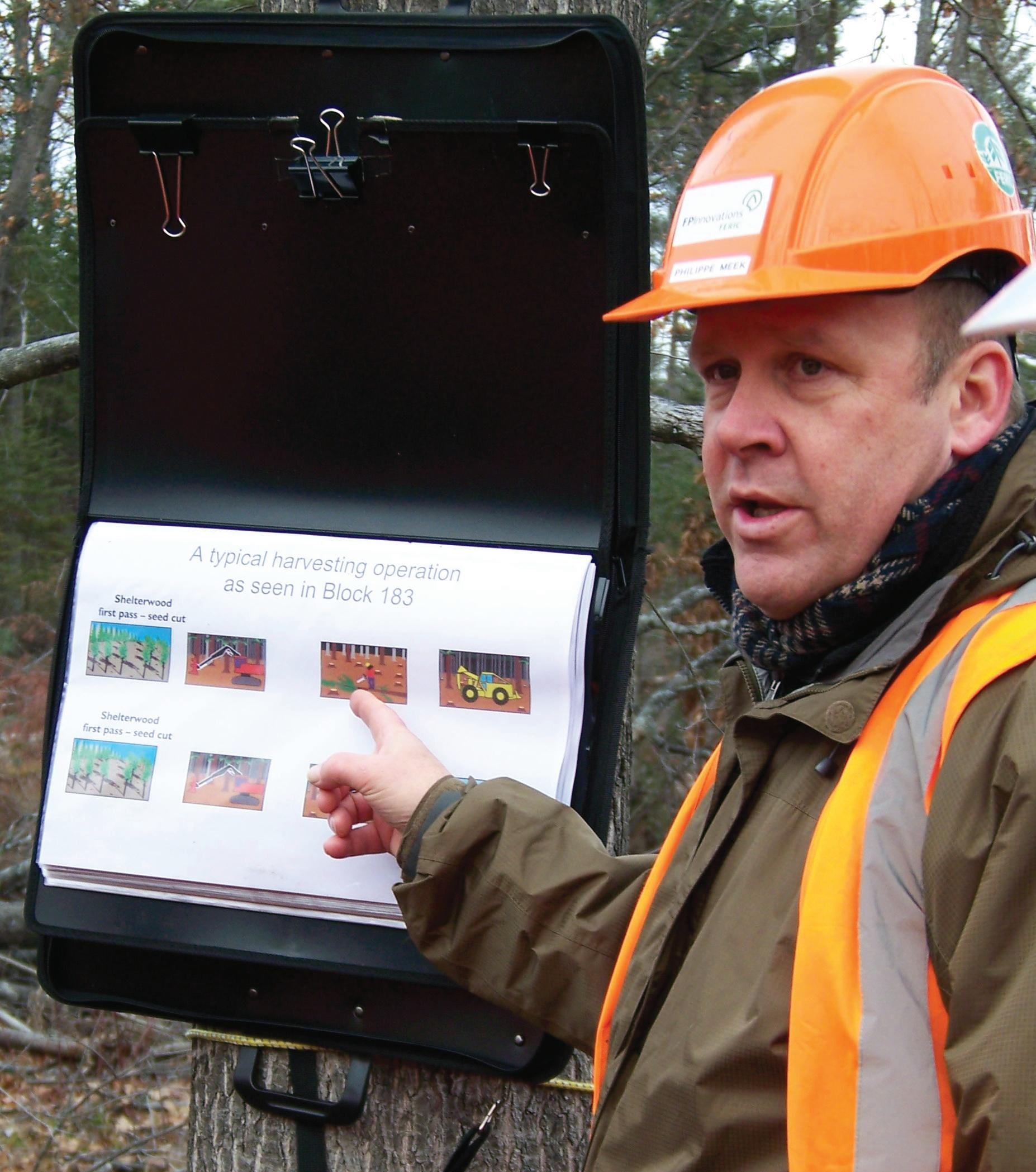
Philippe Meek from FPInnovations explained how harvesting biomass, saw logs and pulp was found to cost $3 less than simply harvesting logs and pulp.
Forestry’s John Pineau, Indrajit Majumdar from the Ministry of Natural Resources and Denis Cormier from FPInnovations, discussed the biomass situation in Ontario at length. But no consensus was reached.
The clearest demonstration that Ontario has biomass to burn but nowhere to put it occurred during the first afternoon, at field trip taken to an experimental Tembec harvesting operation, where large mounds of biomass had been sitting for months.
The experimental harvesting operation, Tembec Block 183, lies within the Nipissing forest and consists of a series of treatment plots where employees and loggers harvest wood to produce pulpwood, saw logs and biomass, and explore the different methods used to sustainably harvest them.
The biomass, as part of the experimental project, was harvested to see which was more cost-effective: tree length operations
(where trees are topped and de-limbed in the forest, while only the stem is brought to the landing for processing into saw logs and pulp) or full tree harvesting (where full trees, limbs and all, are moved to the landing then de-limbed and slashed to produce saw logs, pulp and biomass).
According to Al Stinson, a representative from the Ministry of Natural Resources, the results surprised everyone. They found that by topping in the landing and producing biomass in addition to logs and pulp, the process was $3 less than the standard harvesting method.
But, what can be done with the biomass?
“For $3 cheaper, you are getting three products instead of two,” said Stinson. “But the problem is, the biomass is here, ready to be taken, but we just don’t have somewhere for it to go.”
The Biomass Innovation Centre (http:// biomassinnovation.ca/) hosted the conference with support from the Canadian Ecology Centre Forestry Research Partnership, the Ontario Trillium Foundation and the NRC Industrial Research Assistance Program. •
Photo: Andrea Ellis Nsiah
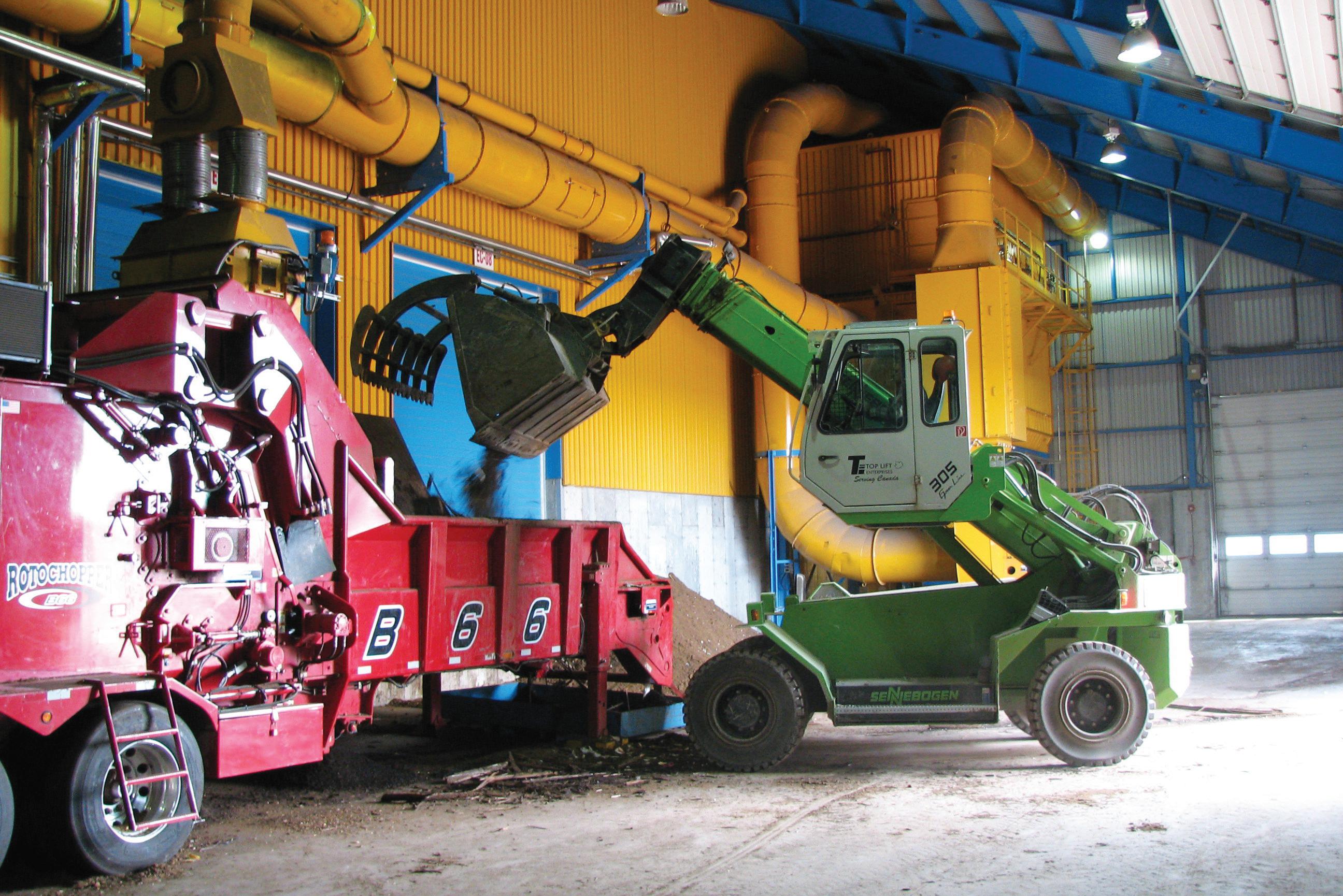
The hydraulic cab on the Sennebogen 305 Multihandler allows the operator to see right into the infeed conveyor.
Sennebogen Multihandler Works Triple Duty
The versatile Multihandler 305 uses its speed, reach and agility plus various quick-change attachments to serve as an energetic fuel loader for the facility’s shredder and kiln.
maintaining
a kiln temperature in excess of 1450ºC is a highly energetic process that results in a high cost for every cement manufacturing facility. At CQI (Ciment Québec Inc.) in Saint-Basile, one of the largest producers of Portland cement in Quebec, it is a priority to find a cheaper fuel alternative for its coal-fired kilns.
CQI recently launched a new alternative fuel project to convert a wide variety of rejected materials that could not otherwise be recycled into fuel. With a target of processing impressive volumes of material per year, a key step in the project’s design was to acquire economical methods to perform three material handling tasks on site: stockpiling the material, feeding it to the shredders and, when called upon, feeding the processed alternative fuel directly to the pyroprocess.
made FOr the jOb
“We designed the project with the Sennebogen 305 Multihandler in mind,” said Denis Gagnon, CQI maintenance and project director. “We evaluated and demo’d a number of telehandlers and loaders, but then we searched the Internet for other options. That’s when we found the Multihandler.”
According to Gagnon, the Sennebogen machine was the only choice that met all of his criteria for material handling duties, which include pushing, reaching, loading and lifting.
“We saw some telehandlers that attach a bucket for loading, but they are not built for prolonged duty in that role,” he explained. “The 305’s boom is comparatively more adapted to pushing/loading applications. It has the strength and agility to work as a loader as well as a telehandler.”
About 90% of the Multihandler’s time is devoted to loading the shredders, with the rest divided between stockpiling and moving materials around.
Fast multi-material handling
Versatility is the name of the game for a mixed materials operation like the CQI facility. Located about 50 kilometres outside Quebec City, Gagnon’s project relies on recycling yards throughout the region for materials that could provide sufficiently high BTUs for the furnace. The type and amount of material available for fuel depends on what the recyclers provide: from surplus papers and plastics, to scrap tires, asphalt shingles and wooden railway ties – they all go into the shredders.
To handle the different material types, the operator of the Multihandler typically switches between boom attachments a couple of times a day. The machine was originally equipped with a bucket and fork attachments, but a new grapple attachment has just been delivered. “Changing attachments is very quick,” Gagnon said. “It takes less time to switch than it takes to drive across the yard.”
The 305 Multihandler covers that ground pretty quickly, too. The machine can hit a top speed of 25 kilometres/hour and it can turn inside an outside radius of just 4.7 metres. The operator uses a single joystick control and can select from three steering modes (crab, all-wheel steering, front-wheel steering) to work quickly in confined areas.
Gagnon cited the elevating operator’s cab as a valuable feature of the Multihandler that continues to set it apart from the other telehandlers and loaders they investigated. “The top of the hopper is close to 7.5 metres above ground level,” he explains. “The highrise cab can elevate the operator up to a four-metre eye level, so he gets
a much better look at his work area. It’s a very comfortable cab, too, which helps because he is often in there for many hours every day!”
With its two-stage teleboom, the Multihandler can reach a lifting height of nine metres. The 102-horsepower machine has a rated lifting capacity of up to 4,990 kilograms (or 11,000 pounds).
achieving envirOnmental gOals
In operation since 1951, the Saint-Basile facility produces about 1,000,000 tons of cement per year, which it ships to customers throughout Quebec, Ontario, the Maritimes and the New England states. The company has earned an excellent reputation for its innovative methods of “greening” its operation with low emissions and high-energy efficiency. CQI was the first company in North America – third in the world – to install the “Ecofurnace,” an advanced solid fuel handling and burning circuit that can use alternative fuels cleanly.
At the time Gagnon was searching for a material handling solution, he was unfamiliar with the Sennebogen line. His Internet search led him to Top Lift, the local Sennebogen distributor that arranged for a demonstration, and Top Lift continues to provide onsite maintenance services for the Multihandler.
With the success of the system to date, Gagnon reports that CQI is considering the purchase of a second 305 Multihandler as soon as material volumes warrant it.
“It’s up to the recyclers,” he said. “If they can supply more material, we’re ready to replace more coal!” •
– Article submitted to Canadian Biomass by Sennebogen
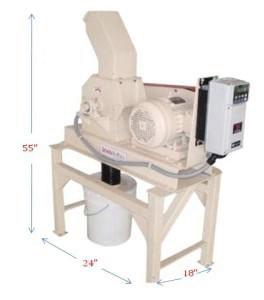
SChuTTE-BuFFALO’S LABORATORy SCALE hAMMERMILL
Sometimes, smaller is better, as is the case with the new Schutte Buffalo Lab Scale Hammermills.
The rugged, yet compact, gravity discharge Laboratory Scale Hammermill from Schutte-Buffalo Hammermill features the same durable construction and long-wearing components of production scale models.
Lightweight, low noise and suitable for small production, batch or pilot projects. The 6” and 8” wide laboratory scale mills are capable of processing a variety of materials to a granular or powder consistency with scalable results.
FECON INTRODuCES NEW MuLChING TRACTOR
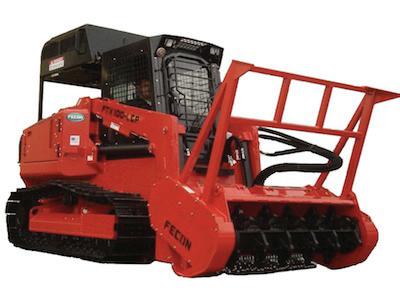
Fecon is proud to introduce the new FTX100 LGP mulching tractor. Equipped with a 99hp Kubota V3800 engines, this tractor provides impressive cutting power and traction capabilities for all job conditions. Though similar to the original FTX100 this machine boasts a heavier designed undercarriage. The FTX100 LGP offers both 16” and 20” track shoe options in single or triple grouser. These options allow the contractor to outfit the machine for rough terrain or soft ground conditions where a light footprint or reduced ground disturbance is important.
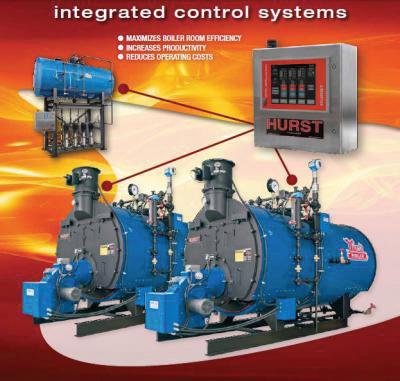
NEW INTEGRATED CONTROL SySTEM FROM huRST BOILER
A family-owned business serving the global market, Coolidge, Georgia-based Hurst Boiler & Welding Co. has developed a comprehensive line of highefficiency integrated boiler control systems featuring graphical visualization and information collection to facilitate easier and better operational management of boilers and supporting peripherals. Each integrated control system provides cutting-edge PLC control, variable frequency drives and HMI interfaces devices.
BIONITROGEN ANNOuNCES ChIEF
TEChNOLOGy OFFICER
BioNitrogen Corp., the developer of a revolutionary patent-pending technology for converting renewable biomass waste into high-nitrogen urea, is pleased to announce the appointment of Dr. Mario G. Beruvides, Ph.D., P.E., as Chief Technology Officer.
“Large facilities such as manufacturing, refining, schools and hospitals have multiple boilers for redundancy and turndown,” explained Jimmy Bruner, Hurst Boiler’s Control Systems Manager. “Our new, highly advanced integrated control systems are easy to use and provide many efficiency enhancements. Our trusted, reliable boiler now becomes a source of diagnostics and information to meet the needs of our customer. They want to know more about their energy usage, predictive maintenance and better analyze their utilities operations. The HURST integrated controls family gives them that opportunity.
In his role, Dr. Beruvides is responsible for defining and implementing the corporate strategy for attaining and maintaining technical excellence, and enhancing the yield of BioNitrogen’s technologies and products.“I am very motivated to join the BioNitrogen team.” comments Dr. Beruvides, “Our technologies and products have the ability to reshape the landscape of global food production which will impact billions of people every day, and improve over a dozen important environmental issues impacting our planet. I am proud to be part of this noble pursuit.”
DuST CONTROL TEChNOLOGy uNVEILS NEW SuPPRESSION RING
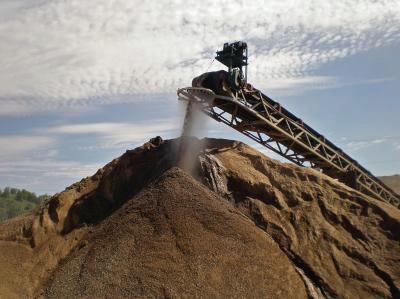
An innovative new dust suppression device has been introduced specifically for use at conveyor discharge points, designed to create a virtual curtain around the material flow for outstanding particle containment.
The DustBoss DB-R Ring from Dust Control Technology is engineered for industrial strength and longevity, built with a high-quality stainless steel ring outfitted with a network of atomizing nozzles that deliver millions of 50-200 micron droplets per minute. By surrounding the discharge flow on all sides, the DustBoss Ring provides simple, focused dust management that’s well suited to continuous duty, such as radial stackers.
LEMAR INDuSTRIES ACQuIRES RILEy EQuIPMENT
Moving forward in its plan for strategic growth and expansion, LeMar Industries has acquired leading material handling manufacturer Riley Equipment.
“With this move we take LeMar’s core product offerings to the next level with significant expansion benefiting customers immediately,” says Robert Martin, President. “Our partners can be confident in an enhanced experience marked by LeMar’s signature service and flexibility.”
The move expands and strengthens LeMar’s already robust product line to include bucket elevators, chain drag conveyors (horizontal, inclined, and vertical), screw conveyors, distributors and other related accessories.
World Sustainable Energy Days Wels, Austria www.wsed.at/en/service/home
World
Biofuels Markets
Rotterdam, The Netherlands www.worldbiofuelsmarkets.com
Biopower
Generation Rotterdam, The Netherlands www.greenpowerconferences.com/ EF/?sSubSystem=Prospectus&sEventC ode=BP1203NL&sSessionID=6fbbce 6a055fd7f878e
CEP Clean Energy & Passivehouse 2012 Stuttgart, Germany www.cep-expo.de/356.html
Managing the Woody Biomass Supply Chain –Impact on Your Business Seattle, Washington cm.wsu.edu/ehome/index. php?eventid=33245&
United Behind Bioenergy
IWith our addiction to oil growing every year, what can we do to become less dependent on fossil fuels?
By C. Scott Miller
t’s a shame that most of North America’s energy press from 2011 centred on the Canadian tar sands and Keystone XL pipeline project. Is this supposed to be a sustainable solution to the skyrocketing global demand for energy? Can we end our “so-called “oil addiction” by building more infrastructure?
No, buying a faster delivery system won’t help end our addiction. Quite the opposite—it will deepen it.
It is certainly an understandable political play for our continent, which is struggling to survive a global economic collapse that was spurred, in large part, by
gin. Fossil industry jobs are, in fact, temporary and will only serve to further entrench our dependence on oil and coal. The problem isn’t simply that we are dependent on fossil fuels, it’s that the dependence is getting stronger while worldwide demand for energy is rapidly increasing, particularly in Asia.
Meanwhile, the number of “clean” energy jobs in California has increased 36% between 1995 and 2008.
“Fossil industry jobs are, in fact, temporary and will only serve to further entrench our dependence.”
the last oil price spike. But what do lobbyists and politicians suggest we do for an encore, and what will be the potential consequences for future generations?
It is reasonable to ask: Should we restrain bioenergy deployment policies until economics are more favourable? This is the issue that arose during a fractious Proposition 23 campaign in California in 2010. The oil industry promoted the position that California’s landmark Global Warming Solutions Act (passed in 2006 and due to begin enforcement in 2012) would be too costly to implement. They claimed that the Low Carbon Fuel Standard (LCFS) emissions cap and trade provisions would lead to more expensive energy and cost industry jobs.
Opponents disagreed and defeated Proposition 23 by a whopping 23% mar-
The profusion of print and online publications like Canadian Biomass, Biofuels Digest, and BBI magazines, coupled with almost weekly industry conferences and webinars, gives strong testimony to the strength of our continent’s desire for tackling energy demands using bioenergy converted from low-value biomass.
There are many terrific examples of cross-border bioenergy collaboration that together make a compelling case for longterm sustainability:
• Plasco municipal waste-to-energy plasma technology from Ottawa is undergoing project development in Salinas, California.
• Montreal’s Enerkem green wasteto-biofuels process has been green-lighted for installation in Pontotoc, Mississippi.
• Pellet production from bug-infested wood in British Columbia, as well as fuel wood in Georgia, is destined for European bio-power projects.
• Torrefied wood conversion is being developed in Europe and the Carolinas so Alberta can one day
satisfy their aggressive Renewable Portfolio Standards through cofiring with coal.
These technologies are criticized as costly and too small-scale to make any substantial difference. Individual emerging technologies usually are small, but unless we invest in them now, we won’t have any scalable alternatives for later.
North America needs to conduct carbon accounting comparisons between biogenic solutions and the status quo fossil fuel paradigm that predict decade- and century-long consequences. We need to insist on holistic economic comparisons against the costs of doing nothing. We need stable energy policies that inspire investor confidence for funding the scale-up of emerging technologies.
Some of these deployments may fail but they will nevertheless move us closer to a sustainable energy future. •
C. Scott Miller, MBA, is a bioenergy marketing/communications consultant based in Los Angeles, California. He is president of the Victory Plant initiative for stimulating the buildout of promising biorefinery projects in North America. He works as a woody biomass aggregation consultant, social media strategist and member of the American Council on Renewable Energy. He can be reached through his company website at www.millerdewulf.com.
Final Thoughts runs at the back of every issue of Canadian Biomass, and provides a forum where individuals involved in the forest industry can discuss the topics most important to them. Each column will run a maximum of 650 words.
If you would like to contribute, please e-mail dmanly@annexweb.com.