18 In the shadow of war Hatcheries in war-torn European countries cope with uncertainty.
20 New catfish frontiers
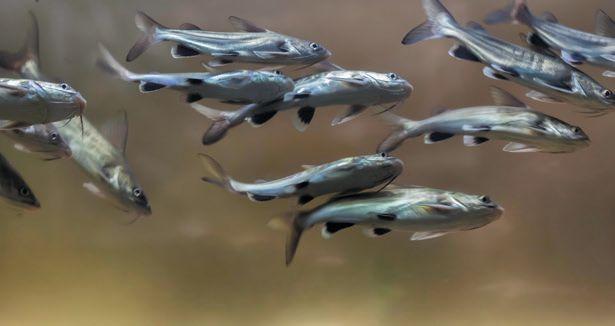
New catfish hybrid species in the Philippines wants to be the “poultry of aquaculture”
By Ruby Gonzalez
Smarter Sensors
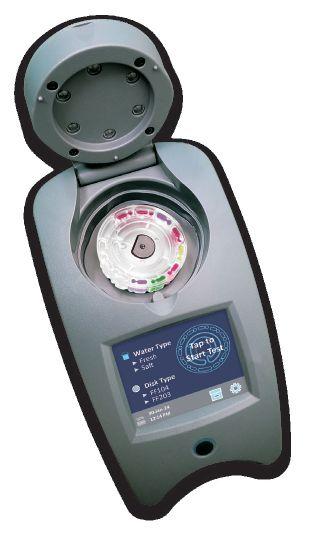
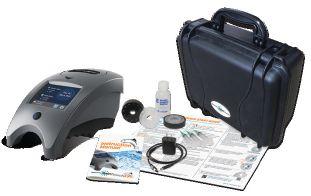
Industry-leading optical dissolved oxygen provides higher accuracy readings with less maintenance Seamless Integration
Modbus communication integrates directly to your PLC or data logger without additional software
Optional built-in conductivity automatically compensates for salinity — improving accuracy
Aquaculture 2025
From the Editor
BY JEAN KO DIN
New look, new chapter
After celebrating 25 years of this publication’s legacy, it was time for us to debut the new look! I admit that while we were putting together our anniversary special in the September/October issue, we were already planning our new design.
I think it was important for everyone on our team at Annex Business Media to use this historical milestone to bring Hatchery International into the next chapter of its life. Last issue, we explored the different looks and the different stages that took place within its lifetime. We honoured it and now, we get to usher the publication into its next 25 years.
At the same time, I also hope that the publication still feels like the one that our readers have come to know and love. I’m only one editor in a long line of editors that have made their mark in its pages, but I also know that it’s my turn to bring my best work on here.
Actually, I should say, it’s our turn. A redesign like this is a team effort. From our Editorial team, to our Sales team, to our Production designers, to our group publisher, our vice-presidents and our CEO, this was an “all hands on deck” type of project. Everyone on every level wanted to make sure that we were all doing our best work to serve an industry that has trusted us to reflect their work and their values back to them.
Any big changes like this can involve a lot of risk but I also think that the whole experience was done with a lot of care and passion. So, I want to take the time to thank everyone who agonized over every detail of this change.
A special thanks goes to our lead designer on this project, Curtis Martin. He brought a fresh new eye to our team that we really needed to challenge what we were used to. I think that as we continue to grow with his design, we’ll see all the ways that it will enhance the content that we work on.
Speaking of content, our team took a long, hard look at the substance of our publication as well.
I delved into our audience surveys, our newsletter statistics, our Google Analytics, and our social media data. I talked to our Editorial Advisory board and other trusted industry professionals. I pored through other aquaculture media outlets. I read articles on the future of the media business, in general. I even found some hatchery textbooks that were useful.
This is all for me to say that we want to be bold in how we bring this brand and this publication into 2025. In order to do that, I do what I do best and go to the research. I learn all that I can to make sure that the trust that our readers have placed in this publication to provide relevant and reliable information is not lost in our ambition to grow in experimentation. As we endeavour to try new things, we want to bring you, our reader community, with us. We want to always be listening to your interests and your priorities, so that we can make content (whether that be for print or online) that brings value to your everyday work.
A few weeks ago, I sought out mentorship with a few of my senior colleagues and they all encouraged me stay curious. I was challenged to look at where I had fallen short in my work and really dissect what I could learn for the next project. They taught me that even as I enter into my fifth year working in this industry, I have to be careful about being complacent. I cannot assume that I know what the audience is thinking or feeling at all times.
As you all know so well, you cannot let your personal biases inform your investigation. You must always go back to what the data is showing you.
If our team ever misses the mark, please don’t hesitate to reach out and give your two cents. As I always like to say, my inbox is always open at jkodin@annexbusinessmedia.com.
Hatchery International’s Editorial Advisory Board: Ryan Couture I Ron Hill I Alpa Pansuriya I Noelia Rodriguez I Jesse Trushenski
VOLUME 25, ISSUE 6 | NOVEMBER/DECEMBER 2024
Reader Service
Print and digital subscription inquiries or changes, please contact customer service
Angelita Potal
Tel: (416) 510-5113
Fax: (416) 510-6875
Email: apotal@annexbusinessmedia.com
Mail: 111 Gordon Baker Rd., Suite 400, Toronto, ON M2H 3R1
Media Designer Curtis Martin cmartin@annexbusinessmedia.com
Audience Development Manager Urszula Grzyb ugrzyb@annexbusinessmedia.com 416-510-5180
Group Publisher Anne Beswick abeswick@annexbusinessmedia.com 416-410-5248
CEO Scott Jamieson sjamieson@annexbusinessmedia.com
PUBLISHED BY ANNEX BUSINESS MEDIA 105 Donly Drive South, Simcoe, ON N3Y 4N5
Hatchery International is published six times a year by Annex Business Media. The authority for statements and claims made in Hatchery International is the responsibility of the contributors. Reference to named products or technologies does not imply endorsement by the publisher.
The advertising deadline for the Jan/Feb issue is Nov. 8. Don’t miss the opportunity to be part of this exciting aquaculture publication. For more information, or to reserve space in the next issue, call our advertising department at +1.250.474.3982 jthain@annexbusinessmedia.com
Next Editorial Deadline
The editorial deadline for the Jan/Feb issue is Oct. 28. Contact Jean Ko Din at jkodin@annexbusinessmedia.com for details. Material should be submitted electronically with prior arrangement with the editor.
Cameroon hatchery owners plead for financial support to edge out frozen fish imports
Fish hatchery owners in Cameroon have appealed for financial assistance from the government to help curb the country’s dependence on frozen fish imports.
Clinton Manchwe is part of a group of young Cameroonian aquaculture enthusiasts seeking to grab a larger share of the ever-growing market for fish in the nation of over 28 million people.
According to Manchwe, aquaculture in Cameroon is still in its infant stages and cannot produce even 20 per cent of the fish consumed across the country.
“In Cameroon, what is being produced is significantly still very small. We still import huge quantities of fish from outside in Nigeria, Senegal,” says Manchwe.
Spicy grilled fish served whole is one of the West African country’s de facto national dishes and preferred source of protein. The national average fish consumption was estimated at 15.4 kilograms per person, according to Food and Agriculture Organization of the United Nations statistics as of 2013.
About half of the 500,000 tonnes of fish consumed yearly is bought from abroad, mainly from neighbouring Nigeria and Senegal, while the rest is caught from the wild.
Manchwe attributes this to a lack of government support for fish hatchery owners to produce large quantities of fingerlings to
supply growout farmers.
“Currently in (the) Northern region, we have a challenge of high temperatures and water pH issues. We don’t have enough equipment to run (a) successful hatchery of fingerlings so that we can supply in large quantities to farmers. Our mortalities are very high,” he added.
He also blames low fish production on expensive fish feeds, which he says are low-quality.
“We don’t have large companies dealing in fish feed production here in the region, so the ones we have are being locally made and most times lack nutrient value making it difficult for fish to reach maturity stage easily,” he noted.
Manchwe wants his government to step in and help fish farmers reduce taxes on aquaculture inputs to make the business viable and attract investment.
Manchwe is a graduate of animal production technology from the University of Bamenda in Northern Cameroon. He specializes in aquaculture and owns a hatchery and fish farm in his hometown where he produces thousands of catfish fingerlings for sale and his stocking.
He says when he is not at his fish farm, he is in the villages to share his expertise with peers in his native village and elsewhere in the country. He trains students on how to breed fish at his company’s laboratory and helps them to set up fish farms.
- Bob Atwiine
WorldFish boosts Malawi fish hatcheries
The International Center for Living Aquatic Resources Management, also known as WorldFish, has boosted Malawian fish hatcheries with an assortment of fish hatchery equipment to help the country enhance its fish production.
This is part of the WorldFish implementation campaign aimed at promoting genetic improvement and aquaculture programs and regional hatchery support and training.
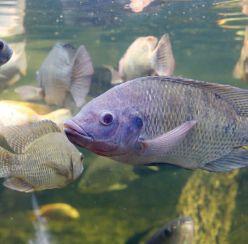
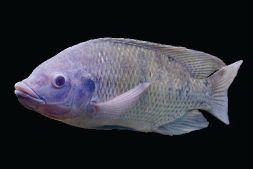
The equipment was handed over to Malawi’s National Aquaculture Centre which serves as the breeding nucleus for the Genetic Improvement Programmes aimed at enhancing the quality for Shire tilapia (Oreochromis shiranus) , an important fish species for Malawi and neighbouring countries.
Procured under the PROFISHBLUE project, the equipment included an industrial pressure washer, fish tanks, water heaters, Submergible water pumps, PVC pipes, and
gate valves amongst others.
Victor Siamudaala, the country director for Southern Africa at WorldFish, was part of a delegation delivering the equipment at Domasi, in the Zomba district. In his remarks, he emphasized that the equipment is aimed at assisting Malawi in the efforts to enhance the productivity of aquaculture sector.
Siamudaala said this initiative was intended to stimulate the Genetic Improvement Programme of indigenous tilapia fish species in the country and create employment as well as business opportunities throughout the entire aquaculture value chain for the region.
Joseph Magwira, the director of administration in the Ministry of Natural Resources and Climate Change for the Republic of Malawi, commended WorldFish for its consistent support to Southern African Development Community (SADC) member states, particularly Malawi, throughout the years in the pursuit of enhancing fish and aquaculture production.
Magwira said this initiative aligns with his country’s realisation of the goals of the Malawi Development Agenda 2063, which prioritises product diversification, value addition in export products, and overall competitiveness.
WorldFish is an implementing partner for PROFISHBLUE project which is being funded by the African Development Bank (AfDB) and is being implemented in seven South Africa Development Community members, namely; the Democratic Republic of Congo, Madagascar, Malawi, Mozambique, United Republic of Tanzania, Zambia and Zimbabwe.
- Bob Atwiine
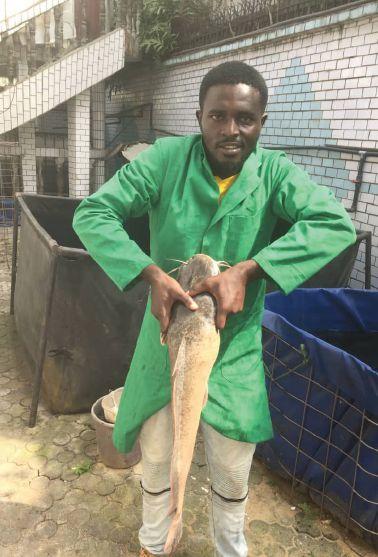
Clinton Manchwe at one of his clients’ indoor African catfish farm in Bamenda, Nothern Cameroon.
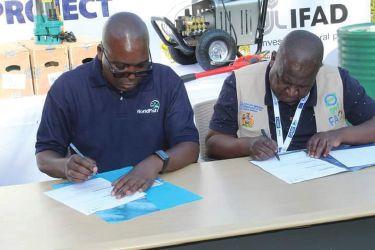
Victor Siamudaala, the country director for Southern Africa at WorldFish and Joseph Magwira, the director of administration in the Ministry of Natural Resources acknowledging delivery and receipt.
Scottish Sea Farms to increase smolt production with hatchery expansion
Scottish Sea Farms’ freshwater hatchery at Knock on Mull is getting an upgrade to improve operational efficiencies and deliver better outcomes for the fish.
The flowthrough facility is being upgraded with five new eight-metre growing tanks, replacing a series of smaller tanks, as part of a £550,000 (US$730,468) investment.
“The overarching principle, across the company’s three freshwater hatcheries, is to have larger, more robust animals going to sea. The average smolt size coming out of Knock used to be around 70 grams. However, over recent years, the team has more than doubled that,” said Rory Conn, head of freshwater at Scottish Sea Farms.
“This new investment will enable us to produce more smolts at the robust size we want –around 300,000 more annually – and in an increasingly cost-efficient and environmentally friendly way,” Conn added.
The upgrade is expected to be completed by the end of October with no loss of production during the works.
“It’s less energy efficient to heat water in a flowthrough facility like Knock than it is in a recirculating aquaculture system (RAS) facility such as Barcaldine, where water is used multiple times. So, rather than bring in eggs, which
require more heating through the hatching and first feeding stages, we’re moving towards bringing in small fish of around 3-5 grams, stocking our tanks with fry that have been reared in the very early stages at our other facilities,” said Ian Fraser, hatchery manager.
With fewer but bigger growing tanks to manage, the freshwater team will also have more time to devote to monitoring and caring for the fish within each tank, said Fraser, bringing further benefits in terms of welfare.
Currently, about five to 10 per cent of Scottish Sea Farms’ smolts are reared at Knock, before going to marine farms at a minimum weight of 140 grams.
Philippines sponsors six hatchery bills to boost aquaculture in the country
Philippine Sen. Cynthia Villar has backed six additional local fish hatchery bills to bolster the Philippines’ aquaculture sector and enhance food security.
During the senate session on Sept. 10, it was announced that the bills would help establish multi-species marine hatcheries and aquaculture centers in various municipalities across the Philippines.
“These hatchery projects are crucial in addressing the shortage of fish seedlings, a key element for the growth and sustainability of our aquaculture sector,” said Villar during her speech.
The additional hatchery bills are:
1. House Bill No. 3092 (Commit-
tee Report No. 194): Establishing a Multi-Species Marine Hatchery in the Municipality of Liloy, Zamboanga del Norte.
2. House Bill No. 6338 (Committee Report No. 196): Establishing a Multi-Species Marine Hatchery in the Municipality of Talacogon, Agusan del Sur.
3. House Bill No. 7499 (Committee Report No. 198): Establishing a Multi-Species Marine Hatchery in Zamboanga City.
4. House Bill No. 6337 (Committee Report No. 195): Establishing a Multi-Species Marine Hatchery in the Municipality of Baybay, Leyte.
5. House Bill No. 7296 (Committee Report No. 199): Establishing a Coastal Aquaculture Center to support and rehabilitate the Bureau of Fisheries and Aquatic Resources’ Northern Mindanao Brackish Water Aquaculture Fish Farm in Lala, Lanao del Norte.
6. House Bill No. 7300 (Committee Report No. 197): Establishing a Multi-Species Marine Hatchery in the Municipality of Minalabac, Camarines Sur.
Villar said bills are not just for the aquaculture industry but also for ensuring Filipinos access affordable and nutritious food. The bills are seen as a step toward alleviating poverty in rural areas and promoting economic development.
“With these measures, we are not just passing legislation; we are taking decisive steps to uplift rural communities and combat poverty,” Villar added.
The six hatchery bills are expected to contribute to the nation’s overall food security, particularly by increasing the supply of fish products and supporting local fisherfolk.
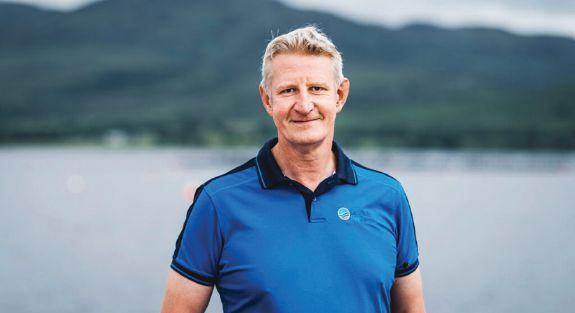
Rory Conn, head of freshwater at Scottish Sea Farms
Commercial yeast diet could increase disease resistance in
Atlantic salmon: new Onda, Citribel study
Aspergillus niger mycelium-derived β-glucan (Mycofence®) could enhance disease resistance in Atlantic salmon.
These findings were from a study conducted by Onda, a research organization formerly known as the Center for Aquaculture Technologies Canada, with Citribel, a Belgian citric acid & mycelium producer.
The study, by Fabio Zanuzzo and his team, compared the efficacy of Mycofence® against commercial yeast β-glucan in combating ulcerative diseases caused by Tenacibaculum maritimum and Moritella viscosa. It involved feeding Atlantic salmon with diets containing different levels of Mycofence® and commercial yeast β-glucan for five weeks. After which the fish underwent an immersion challenge with T. maritimum or M. viscosa
The study found that Mycofence® reduced the risk of death from a T. maritimum infection by 42.6 per cent compared to the control group. Mycofence® at 0.3 per cent reduced the risk of death from M. viscosa outbreak by 31 per cent compared to the control group. And it had a higher performance compared to commercial yeast β-glucan. There were no significant differences in weight and growth performance between the diet groups.
“These findings provide a promising alternative to commercial yeast β-glucan and can greatly benefit aquaculture practices,” Zanuzzo said.
The team analyzed the fish’s growth performance, mortality rates, lesion scores, hematology, and immune markers and observed that salmon fed with Mycofence® had a significantly higher survival rate compared to the control, while the fish fed with the commercial glucan derived from yeast had no difference from the control. The scientists observed that Mycofence® led to a marked up-regulation of the cr3 transcript expression, crucial for immune response and β-glucan recognition, showing the mechanisms driving enhanced disease resistance.
This study is one of the first in which Onda publishes under its new institute name, after separating from its former U.S. counterpart, The Center for Aquaculture Technologies.
New Hampshire researchers develop framework to assess effects of heat waves
University of New Hampshire (UNH) researchers are using simulations to create a new framework for assessing the deadly effects of marine heat waves.
Prolonged heat waves can have implications on marine ecosystems, but measuring
these impacts on marine life has been challenging as current methods do not integrate the physiological responses of these organisms across the many different intensities and lengths of heat waves.
“Traditional statistical methods fall short because they ignore the biological responses of organisms,” said Easton White, station scientist and assistant professor in the Department of Biological Sciences at UNH. “Our physiological framework, which we present in this paper, considers how marine organisms respond to both the intensity and duration of heat stress, offering a much clearer understanding of the lethal impacts of marine heatwaves.”
The results, published in the Journal of Animal Ecology, advance existing research and monitoring efforts by focusing on highlighting that the more frequent, short bursts of extreme heat can be just as harmful as longer heatwaves. The paper describes simulation models using three aquatic mollusk species exposed to varying degrees of heat tolerance. Their findings show that both short, intense heatwaves (acute events) and longer, milder heatwaves (chronic events) can be equally deadly to marine organisms.
White said this approach will help predict how these extreme events will affect marine ecosystems and develop strategies to mitigate their effects.
“By understanding the specific survival thresholds for different marine species, our research can provide insight into how various heatwave profiles impact marine life,” said Villeneuve, adding that this is key for developing more effective conservation and management strategies to protect vulnerable marine ecosystems.
“For instance, if a specific marine species is found to be highly susceptible to short, intense heatwaves, conservation measures might focus on creating refuges or cooler microhabitats
LONG-LASTING AQUACULTURE PUMPS
A researcher measures intertidal temperatures to better understand how oysters in New Hampshire’s Great Bay may experience heatwaves.
during these peak heat periods to help ensure their survival,” Villeneuve added.
Future research will focus on validating these models in a lab and better understanding how marine species acclimate to different heat conditions over varying periods.
ODFW reports unexpected mortality of chinook smolts at Beaver
Slough release site
A group of newly released hatchery fall Chinook salmon smolts have died at a release site in Beaver Slough, a tributary of the Coquille River.
The public discovered the dead fish after the Oregon Department of Fish and Wildlife (ODFW) released the 37,600 smolts.
According to a press release from ODFW, it couldn’t test the fish at its pathology lab because the fish had broken up into pieces; however, it suspects that dissolved oxygen levels in the water dropped quickly in a short time after stocking in September.
Charleston District fish biologist, Mike Gray, said losing any amount of hatchery Chinook smolts is unexpected.
“So much work goes into raising these fish to the smolt stage that it’s a disappointing loss to us, our volunteers and the Coquille Indian Tribe. The local community and anglers also highly value these fish,” Gray said.
This is the first year ODFW stocked hatchery smolts at Beaver Slough. Normally, these fish would be stocked and held for two weeks at an acclimation site on the Coquille River, but it was unavailable this year. At Beaver Slough, the smolts could move downstream into the Coquille River on their way to the ocean.
ODFW stocked 48,000 fall Chinook smolts directly into the Coquille River at the Coquille city boat ramp in September. Those fish can also freely move downstream and appear to have done so with no mortalities observed.
Another 74,500 hatchery fall Chinook smolts are acclimating in a pen in Ferry Creek and are scheduled to be released this week. Gray said an alternative to smolt stocking at Beaver Slough will be discussed in 2025.
Fresh macroalgae can replace 50% of feed for Pacific white shrimp, study says
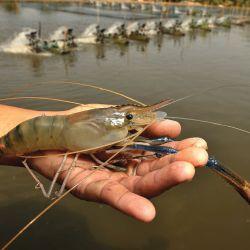
A study to investigate the effects of feeding Pacific white shrimp (P. vannamei) with fresh green macroalgae (Chaetomorpha clavata) has shown that replacing 50 per cent of the commercial feed with fresh algae did not affect the growth or mortality rates of shrimp.
Juvenile P. vannamei (4.36 grams ± 0.40) shrimp collected from farms in Santa Catarina, Brazil were transported to the Sustainable Aquaculture Laboratory, São Paulo State University (UNESP).
The animals were weighed and divided into two groups, with eight animals per treatment. Treatment one (control) were animals fed only with commercial feed and treatment two (feed + macroalgae) included animals fed 50 per cent commercial feed and 50 percent fresh C. clavata macroalgae cultured in the Laboratory of Algae and Aquatic Plants, UNESP.
Not only did it not affect the growth or mortality rates of P. vannamei shrimp, but it also did not lead to any notable changes in physiological parameters (metabolism, ammonia excretion, hepatosomatic index and energy budget).
“Based on these results, we propose that this substitution could be advantageous considering that it offers significant economic and environmental benefits because commercial feed is the most expensive production cost
in aquaculture operations,” wrote Emanuelle Pereira Borges et al.
The scientists observed that the mortality rates of control animals and those given a diet of commercial aquafeed and algae were statistically similar, although there was a tendency for the latter to have a higher rate, possibly due to the number of replicates.
In general, integrated cultivation of P. vannamei and algae can enhance shrimp survival and growth, while at the same time improving water quality.
“Although in our study we replaced 50 per cent of the commercial feed with fresh macroalgae, future studies should assess whether a lower replacement level would be more suitable for P. vannamei culture, since other researchers have reported that higher percentages of feed replacement with algae can have a negative effect on survival,” the
researchers stated in their report.
Although fundamental parameters for the cultivation of P. vannamei like survival, feeding, and growth were unaffected by the partial replacement of commercial feed with algae, other physiological data provide additional information on how the animals are using energy. Oxygen consumption, nitrogen excretion, hepatosomatic index, and energy budget are good indicators of the energy flow needed for growth, survival and reproduction.
The scientists believe substituting 50 per cent of the feed with this macroalgae is a potential alternative to supplement commercial aquafeeds. In addition to the economic benefit of reducing the amount of feed used during culture, it could also improve the quality of effluent water, thereby improving environmental sustainability and water quality.
Innovation Beyond Measure
Results Beyond Expectation
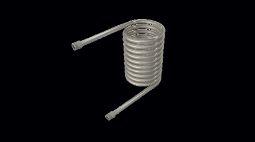
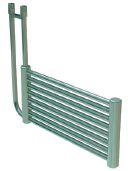
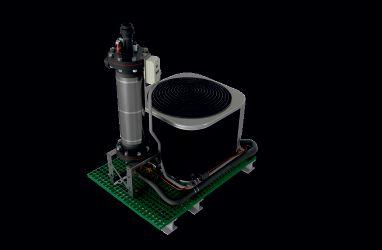
• 100% Titanium Heat Exchangers
• Hot & Cold Water Loop Systems
• Available with Tube Sheet, Helical Coil, or Plate
• Compact Designs
• Easy Installation
• Salt & Fresh Water Safe Chiller & Heat Pump Packages
Where Water Drives Innovation.
Research round-up
BY RUBY GONZALEZ
Improving shellfish seed production, recruitment and management
Everything starts with seeds in shellfish aquaculture. Studies in Bangladesh, the Netherlands, Brazil and Denmark provide updates on shellfish seed production and recruitment and larval rearing.
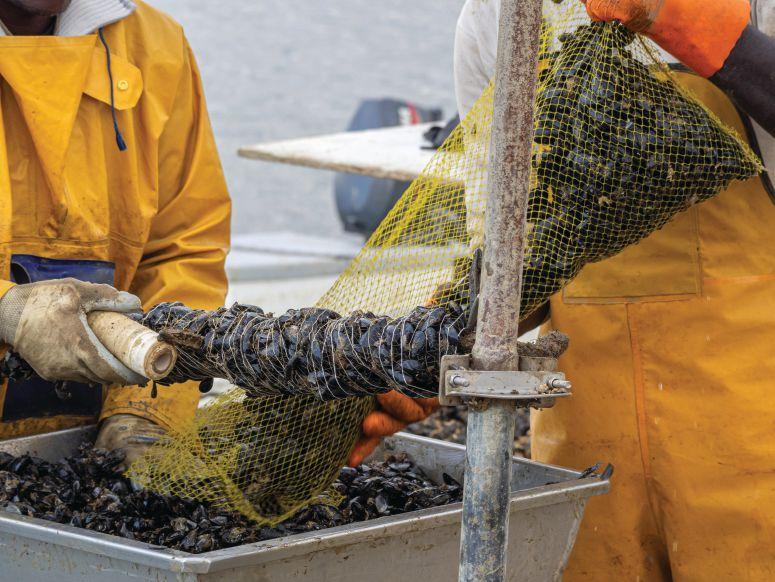
Since 2009, the Dutch mussel sector has been transitioning from wild seed fishery to suspended seed collectors.
Data analysis spanning from 2010 to 2022 showed that seed mussel collectors (SMC) do deliver.
“Our analysis of 12 years of production data shows that SMC (seed mussel collector) seed is a robust and annually more reliable alternative to wild capture fishery as a seed provisioning resource for mussel culture,” cited authors Wouter van Broekhoven et al. Collector systems using either ropes or nets as settlement substrate are placed in Oosterschelde Bay, the Wadden Sea, and the North Sea annually.
Data used in the study, “Transitioning from wild seed fishery to Seed Mussel Collectors (SMCs): Reviewing the efficiency of collectors for seed provisioning in mussel bottom culture,” came from mussel farmers using SMCs, who are required to report production statistics annually.
The transition process from wild source to alternative means of seed provision forms the initial phase in the covenant among the Dutch Ministry of Agriculture, Nature, and Food Quality, environmental NGOs and the mussel producers organization to eradicate the impact of wild seed fishery on the environment.
While SMCs are effective, these require much more labor compared to wild seed fishery. It has been estimated that using the systems cost five to six times higher.
Each of the SMC systems used has its advantage as well as disadvantage. “Ropes were found to provide a greater yield per unit area than nets, but nets are less labour-intensive to use.”
The exponential increase in labor cost “has forced a greater degree of cooperation between companies. Overall, the ongoing transition from wild capture fishery to SMCs has resulted in higher cost for seed provisioning, which has created a need for cost reduction to maintain a profitable operation.”
The study was published on Aquaculture Engineering.
Going natural
A pond in Bangladesh that mimicked the natural environment of mud crab ( S. olivicea) produced a sustainable hatchery with estimated survival rate of crablet higher than industry average.
“Natural mud crab breeding is easy and can be applicable in fields at low cost with significant survival rate,” cited authors Md. Abdul Hannan et al. The study (focused on natural breeding techniques that used mud crab broods collected from local rivers during breeding season. Conventional hatcheries, it was noted, usually source broodstock from deep seas or deep mangrove forests. Experiments were conducted using treatments of 24, 26 and 28 ppt salinity.
Cohorts under the 26 ppt salinity treatment had the shortest incubation period at 11 days; highest hatching rate at 91.34 ± 4.61 per cent; shortest hatching hours at 2.57 ± 0.21; and highest survival rate 10.53 ± 1.56 per cent of crablets.
The lowest performing cohorts were at 24 ppt salinity. Incubation period was 12.3 ± 1.53 days; hatching rate at 57.98 ± 1.38 per cent; hatching hours was 3.77 ± 0.25; and estimated survival rate of crablets was at 2.87
± 0.68 per cent.
Other treatments were at 24 ppt and 28 ppt.
“Salinity variation is one of the most important factors for mud crab breeding. Treatment at 26 ppt, considered as control, was the river salinity during breeding season in May 2022.
Broodstock were reared in black plastic containers until hatching and zoea was transferred to earthen pens immediately after hatching. Immediately after hatching, zoea was transferred to earthen pens, where it was reared until it developed into crablet.
The earthen pen design and lay-out was a major factor in the estimated high survival rate in crablet. It has been observed that cannibalism is one of the leading causes of mortality. “The earthen mangrove pens beds were covered with mud and salt tolerant grass that function as shelter to zoea and help to hide themselves inside the dense grass and help increase survival rate in natural habitat. Natural softy muddy bottom helps mud crabs to burrow easily and hide themselves,” they explained.
The study, “Natural breeding performance in different saline water pens, crablets
rearing and cannibalism in juvenile phase of mangrove mud crab (Scylla olivacea) in earthen mangrove pens,” was published on Desalination and Water Treatment.
Improved upweller
Researchers in Brazil developed a fluidized bed bottle nursery system in a closed aquaculture system (FBBN-CAS) that improves oyster seed size and growth in seeds of Crassostrea gasar and C. gigas in the nursery phase.
“The fluidized bed bottle nursery system in a closed aquaculture system designed for this study and flow used promote good conditions for seed development, where the seeds were constantly exposed to feed, observed by the microalgae concentration in the FBBN system before daily handling and by the constant biodeposits removed from the bottle observed in the outlet promoted by the seawater flow,” cited authors Simone Sühnel et al.
Compared to the downwelling system, FBBN-CAS promotes faster oyster growth.
The study, “Stocking Density and Diet of Two Oyster (Crassostrea gasar and Crassostrea gigas) Seeds in Fluidized Bed Bottle Nursery System,” was published on Fishes.
Stocking density experiment results with C. gasar could be aligned with the hatchery’s objective.
Stocking densities 2.2 per cent, 4.4 per cent 8.8 per cent of bottle occupation are feasible with C. gasar. It was noted that 8.8 percent bottle occupation produced the most number of seeds. 2.2 per cent, however, showed bigger animals.
“If the aim is to produce a higher seed number or the hatchery has small infrastructures, higher initial stocking densities can be used. However, if the proposal is to produce a higher seed size, a low 2.2 per cent of the bottle volume occupation) initial stocking density is recommended,” they said.
All tested diets did not affect oyster seed survival, but the diet composition affects seed growth and the better seed growth of C. gasar and C. gigas can be achieved with a bialgae diet with I. galbana and N. oculata
“Hatchery oyster seed production is a highly costly phase, and a fluidized nursery system can help reduce this cost and reduce seed production time,” it was stressed.
Formulated diets
A chokepoint in larval rearing of H. gammurus has been eased by a study in Denmark
stating formulated diets have no impact on larvae growth and survival.
Reliance on live feeds for H. gammarus larvae puts a constraint in growing the high-value lobster industry in Europe. The nutritional value is inconsistent and there are also logistical challenges.
“The study suggests successful formulated feed utilization by homarid larvae, even with alternative ingredients like BSF and SWM, offering a promising solution to reduce reliance on live feeds in lobster aquaculture,” authors Renata Goncalves et al. cited.
The study, “Impact of live feed substitution with formulated diets on the development, digestive capacity, biochemical composition, and rearing water quality of European lobster ( Homarus gammarus, L. ) larvae”, was published on Aquaculture.
Compared to the group fed with live Artemia nauplii, it was stressed that the group fed with formulated feeds didn’t exhibit significant effect on survival, development rate and growth.
Survival rate data indicated that “the formulated feeds used did not trigger any
compensation mechanism for nutritional deficiencies or low feed palatability, as evidenced by the absence of dietary effects on performance and survival.”
Mortality is often a result of cannibalism, which is caused by “a compensatory mechanism to address nutritional deficiencies and low feed palatability.”
Four diets were used in study: live Artemia nauplii; a control formulated feed; a formulated feed with 15 per cent of dietary protein replaced by insect meal; and a third formulated feed with 15 per cent of dietary protein supplied by shrimp waste meal.
“Our study has demonstrated the potential of extruded formulated feeds as a viable alternative to live feeds for H. gammarus, evidenced by comparable growth and survival rates,”
One of the concerns with artificial diets is the potential to affect quality of water, which could compromise lobster health and welfare, leading to increased mortality rates. In the study, while formulated diets compromised water quality, it did not impact larval growth and survival.
Ask the Expert
BY DAVID HUYBEN AND MYA GOWANLOCK, UNIVERSITY OF GUELPH
Prof. David Huyben is associate professor and co-director of the University of Guelph’s Aquaculture Centre. His research mainly focuses on better understanding the nutrition, microbiome and health of farmed fish. Mya Gowanlock is the S24 semester Undergraduate Research assistant (URA) for the Huyben Lab. She assists graduate students in the lab and is working on a literature review.
Gut bacteria of salmon are more influenced by diet than age
Atlantic salmon and rainbow trout are both coldwater fish in the salmon family and are two of the most farmed fish species in the world with almost four million tonnes produced (live weight), mainly in the Americas and Europe (FAO, 2020). Aquaculture companies around the world have invested a lot of funding to improve fish feed and breeding programs to produce fast-growing and healthy fish. However, improving their gut health, specifically their gut bacteria (gut microbiota), has not been well studied and could be an untapped resource to further improve the growth and health of fish.
The phrase “microbiota” refers to the collection of microorganisms such as bacteria, viruses, fungi, and protozoa that live in a specific habitat. The gut microbiota plays key roles in the development and function of nutrient metabolism and the immune system. Not only is the gut microbiota a hot topic for human nutrition with the recent expansion of probiotic and prebiotic supplements for humans, but the gut microbiota is also being studied as indicators of growth and gut health of animals, including fish.
Since the completion of the Human Genome and Microbiome Projects in 2003 and 2016, DNA sequencing technologies have rapidly improved and everyday research groups are capable of identifying billions of microbes in the gut of animals. However, the gut microbiota in these previous studies is influenced by different technical (DNA extraction kits), environmental (diet), and host factors (age), which makes the results difficult to compare across studies and to make conclusions.
Factors that influence the gut microbiota of salmon
There has been extensive research on the fish gut microbiota using new DNA sequencing technologies. Influences of diet were first investigated for rainbow trout and later for Atlantic salmon, followed by studies on genetics and health. There have been several associations between microbes found in the gut of fish and implications on growth and health. However, every study on the fish gut microbiota finds different communities of bacteria with huge shifts in the types of bacteria found. To reduce this variation, fish microbiota studies typically only address one factor, such as diet, although differences in the age and weight of fish, or the temperature and lighting of the rearing system across studies make it difficult to compare them.
A “meta-analysis” is the statistical combination of the results of multiple studies addressing a similar research
question. They are pivotal in summarizing existing research to guide future studies. The aim of our study was to conduct a meta-analysis on the gut microbiota of Atlantic salmon and rainbow trout to determine which technical, environmental, and host factors were the most influential and identify a core community of gut bacteria.
Methods
The Swedish Research Council for Sustainable Development awarded a grant to hire a PhD student, Shuowen Cao, in an international collaboration between the Swedish University of Agricultural Science, Uppsala, Sweden and the University of Guelph, Ont., Canada.
With supervision from Prof. Johan Dicksved and others at the University of Agricultural Science, Shuowen combed through hundreds of studies to find 19 key studies that had 783 high-quality samples from the gut microbiota of salmon and trout analyzed with next-generation sequencing. She applied several computer and statistical models using banks of computer servers in Sweden.
Results
The study showed that environmental factors, such as diet, had a stronger influence on the composition of gut bacteria in fish than host factors (fish weight/age). Trout and salmon-fed fishmeal-based diets had higher levels of Weissella bacteria while plant diets increased Mycoplasma . Small trout and salmon had higher levels of Mycoplasma and Staphylococcus while large trout and salmon had higher levels of Pseudomonas and Lactobacillus.
Other environmental factors like the rearing system, water flow rate, and daylight explained more variation in gut bacteria than most host factors, except for fish weight/age. However, water flow rate and daylight would change with the age of the fish since older fish (broodstock) would need fewer hours of light to feed and more seasonal changes than younger fish (fingerlings). Rearing systems influenced the gut composition where Pseudomonas bacteria were commonly found in flow-through systems (FTS) and Aeromonas was found in recirculating aquaculture systems (RAS).
Other host factors like intestinal region, feed conversion and growth influenced the gut bacteria, but less so. Technical factors like DNA extraction kits and sequencing regions had the highest impact of any factors. With more and more studies using similar methods, it is anticipated to be less of an issue in the future.
Host influenced gut bacteria more than the environment
Host-associated factors like initial weight and species had minor influences on beta diversity. Initial weight was the most important factor, accounting for 16.0 per cent of the variance, whereas specific growth rate (SGR), feed conversion ratio (FCR), and weight gain (WG) each accounted for less than 11.0 per cent. The digestive area and species had a significant impact on biodiversity. Although species accounted for less than 8.1 per cent of the variation, they did generate unique gut microbiota clustering in Atlantic salmon and rainbow trout.
We found that diversity was more influenced by hosts rather than environmental factors. Again, rearing system, water flow rate and daylight were the top environmental
WATCH RECORDINGS
WEBINAR SERIES
factors, although these were less influential than the host factors fish species and weight/ age. Overall, environmental factors have a bigger impact on the composition of gut microbiota of trout and salmon, while diversity was more impacted by host factors.
In summary, the results of this meta-analysis fill a large knowledge gap by demonstrating that technical methods must be standardized, and host and environmental factors must be considered when designing future studies focusing on the gut microbiota of salmon and trout.
DABIE selected for
> Premium quality, disease-free eyed eggs available all year round > Rainbow trout all female (diploid or triploid) and other salmonids We help you to
Minding the muck
Exploring trends in hatchery waste management
By Mari-Len De Guzman
From fertilizers and soil amendments to biogas and feed for alternative fish-feed, sludge from hatcheries and land-based fish farms are coming full circle, or semicircle, depending on whom one asks.
The increasingly stringent regulations on waste discharge from aquaculture operations are driving innovation and out-of-the-box solutions for sustainable fishwaste management. As more commercial and publicly run hatcheries transition to recirculating aquaculture systems (RAS), wastewater management becomes a critical component of fish health and welfare.
The volume of aquaculture production globally has continued on an upward trend in recent years. In fact, aquaculture production has surpassed capture fisheries in 2022, reaching a record-high of 130.9 million tons, 51 percent of which are aquatic animals, according to data from the United Nations Food and Agriculture Organization.
With great production comes a great amount of waste. And as such, effluent management has become one of the most critical parts of any hatchery or RAS operation.
“Sustainable and innovative waste management strategies are extremely important for the future of the land-based aquaculture industry,” says Abhinav Choudhury, environmental research engineer at The Conservation Fund’s Freshwater Institute (FI).
An environmental research engineer, Choudhury leads FWI’s waste to value program, which investigates technologies that improve the environmental impacts and economic viability of RAS. He also provides waste management and waste conversion expertise for external projects and industry partners.
A RAS facility producing 1,000 metric tons of fish annually is estimated to generate nearly 300 metric tons of dry sludge a year. On a wet weight basis, at around 10 per cent dry matter, that’s about 3,000 metric tons per year – and that is only from one RAS farm, Choudhury explains.
“Such a large volume of waste material with extremely high eutrophication potential cannot be dumped into the local water bodies or discharged into the sewer for the local wastewater treatment plant, especially if it contains salt from saline RAS facilities,” he says.
Univeristy of Maine’s Centre for Cooperative Aquaculture Research operates a RAS hatchery, which serves as a research lab and business incubator for testing new species and methods in various environments including freshwater, brackish water and salt water.
Hatcheries technically produce less waste than a fullfledged farm, as fry and smolt consume less feed than an adult fish. But they generate effluent, nevertheless, and hatcheries face the same challenges when it comes to processing or discharging waste.
Investigating alternatives
There are myriad solutions currently available to hatcheries for treating effluent. Whether in flowthrough systems, RAS or partial RAS, experts agree waste management requires an integrated approach that looks at the entire system from fish to feed to flow, not just at the dirty tail end of the cycle.
There are also emerging alternatives to waste management, one that applies the concepts of a circular economy. One innovation seemingly gaining traction are waste conversion technologies – turning effluent into commodities of value, such as fertilizers, soil amendments and bio-fuel.
“The whole idea of waste as a resource and the circular economy already exists in terrestrial animal farms and wastewater treatment facilities,” says Choudhury, whose
research is focused on anaerobic digestion and sludge composting. Anaerobic digestion transforms organic waste into methane-rich biogas in an oxygen-free environment. The biogas can then be used for energy generation in a boiler or generator.
Wastewater treatment facility DC Water in Washington, D.C. is among the first in North America to use anaerobic digester to process waste to generate renewable energy and create Class A quality commercial biosolid products used in urban gardens.
“We have investigated composting to convert the RAS sludge into a nutrient-rich fertilizer that may be a saleable product for a RAS farmer – and we have completed two pilot-scale studies on composting RAS sludge,” Choudhury says. FI is currently preparing to publish the results of these studies.
Although the results of using anaerobic digestion have been promising, there are still hurdles to overcome, Choudhury says. These challenges include low organic matter, high salt content in saline RAS sludge, high sulfur content (especially in saline RAS sludge), low carbon-to-nitrogen ratio, and high fat content.
Whether in flowthrough systems, RAS or partial RAS, experts agree waste management requires an integrated approach that looks at the entire system from fish to feed to flow, not just at the dirty tail end of the cycle.
“These issues generally reduce the amount of energy that can be recovered from the waste or, in some instances, completely inhibit the beneficial methane-producing microbes,” says Choudhury.
There are also ongoing research projects on recovering waste nutrients using microalgae and bacteria to create high-value oils, proteins and chemicals, he adds.
Circular systems
Within the aquaculture ecosystem, solutions to waste may also come in circular shapes, where waste is kept within a closed loop system to be used as feed or fuel to grow other species.
In an integrated multi-trophic aquaculture (IMTA) system, for example, where two or more species are farmed within the same integrated system, waste can be significantly reduced, if not eliminated.
“Companies that have grown small batches… up to eight tons of fish, out to market size, that might be suitable for IMTA,” says Steve Eddy, director of the University of Maine’s Centre for Cooperative Aquaculture Research (CCAR).
All good waste management strategies start with good engineering and systems design, which includes an optimized water treatment component within the hatchery system.
“Although the results of anaerobic digestion have been promising, there are still hurdles to overcome,” says researcher.
The centre operates a RAS hatchery, which serves as a research lab and business incubator for testing new species and methods in various environments including freshwater, brackish water and salt water. IMTA has been the subject of a number of research in recent years for its potential to significantly increase the sustainability and profitability of aquaculture.
The CCAR has been investigating IMTA since 2009. Eddy suggests, however, a standalone hatchery is not an ideal application for IMTA.
“The best you can do with an IMTA is create other crops and maybe reduce your dependence on the RAS and treat the water in a more natural way, or at least that’s the theory,” says Eddy.
In a perfect IMTA ecosystem, one species’ waste is another species’ treasure. In real-world applications, however, commercial-scale
IMTA continues to face significant challenges.
“As you add organisms into the system, now you’ve got species with different harvest cycles than the fish and from each other, different nutritional needs, different growing requirements, different tolerances of water quality, etcetera. You have to manage all of that in an integrated system, so it takes a lot more management and labor, so that adds on to the cost,” says Eddy.
One promising solution could be aquaponics, where fish is grown alongside plants in RAS, and a handful of companies are proving the business case for commercial-scale operations.
Superior Fresh in Wisconsin, U.S.A., grows Atlantic salmon and steelhead trout, and a variety of leafy greens in a decoupled aquaponics system. The company claims to have zero discharge from its production and processing systems.
“What you find with most aquaponics is they’re really greenhouse plant operations with a little fish system tacked on. There’s very few of them that have a significant income stream from the fish, or (where) a large share of the production comes from the fish. But they do exist,” Eddy says.
The University of Maine is currently building a teaching lab that will incorporate aquaponics into its curriculum, which is expected to commence within the year, Eddy says.
Producers like you for over 40 years
or contact us at egg.orders@groupeaqualande.com
Upstream to downstream
All good waste management strategies start with good engineering and systems design, which includes an optimized water treatment component within the hatchery system.
“A lot of people come at it from a sludge-first perspective, but they forget that the environmental permit is actually driven by the water. You rarely will see a permit that is around your sludge content; your permit is around how clean the water is,” explains Trevor Gent, director of engineered solutions at Denmark-based Alumichem, which provides water treatment solutions for industrial operations, including aquaculture.
Gent says while hatcheries traditionally do not generate as much waste as grow-out facilities, this might be changing as hatcheries are now growing bigger smolts on land to reduce their time on the ocean. This is also driven by an increasing number of hatcheries in Europe, particularly in Norway, transitioning to RAS.
Degassing vent pipes at the University of Maine’s research facility
also increases savings for the farmer, as feed expenses form the most significant fraction of operating costs for a RAS farm,” he says.
New technologies, such as artificial intelligence, are a game-changer for feed management and waste reduction.
AI-based technologies developed for aquaculture farms track and monitor feed consumption and wasted feed. These smart
enable more efficient feeding and reduce excess feed that contributes to waste generation.
“In the future, I expect that waste management technologies will become integral parts of RAS facilities from the design stage. I also think that the focus will shift from simple management to waste valorization to offset the high operating costs of RAS and increase the sustainability of the entire process,” Choudhury says.
Steve Eddy is director of the Centre of Cooperative Aquaculture Research at University of Maine.
In the shadow of war
Hatcheries in war-torn European countries cope with uncertainty.
The last few years can hardly be called easy for global aquaculture, as farmers have been wrestling with numerous challenges involving high energy costs and soaring feed prices. However, in some corners of the world, businesses are caught in the midst of armed conflicts, and at least some of them have to face far more severe problems.
As of early 2024, Ukrainian fishermen and fish farmers sustained losses close to US$35 million due to the ongoing war with Russia, a study by the Center for Food and Land Use Research of the Kyiv School of Economics showed. This figure is dwarfed by the total losses the Ukrainian food industry suffered, which analysts estimated to be a staggering US$80 billion.
Nearly 56.7 per cent of all losses are caused by damaged and destroyed machinery, while the rest is primarily comprised of lost production and income.
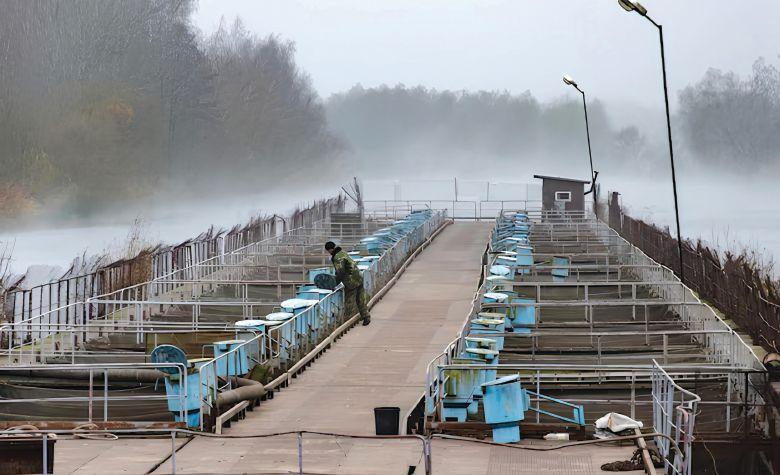
The estimations are far from final. Occasional reports indicate that dozens of farms, primarily of the pond type, ended up in the territories controlled by Russian troops. Quite a few were destroyed by the flood caused by the destruction of the Kakhovka dam, though usually, owners have little
knowledge of what happens to their assets in the territories from where the Ukrainian Army retreated.
According to the Rapid Damage and Needs Assessment program, drafted by the Ukrainian government and the World Bank, Ukraine needs around US$56 billion over the next decade to recover from the hostilities.
Before the onset of the war, Ukrainian aquaculture was largely in embryo. In 2022, Ukrainian fish farms’ output totalled 14,600 tonnes. Despite that, local officials express confidence that the sector has vast potential yet to be unlocked.
“Ukraine has a huge potential for aquacultural development. We have more than one million hectares of water - these are ponds and lakes, artificial reservoirs, a cascade of Dnieper reservoirs, estuaries, and other reservoirs. Almost every community has dozens of reservoirs, and this potential must be used,” Vitaliy Golovnya, deputy Ukrainian Agrarian Minister, claimed.
Russia lacks salmon
Aquaculture also suffers on the other side of the barricades, though in Russia main problems are not directly related to hostilities, but primarily is attributed to the impact of
sweeping Western sanctions.
The Russian salmon market is braced for an up to 50 per cent hike in wholesale prices as fish farmers wrestle against severe broodstock shortage, local press reported.
For instance, Russian restaurant chain Tanuki Family expects that by the end of the year, the Atlantic salmon price will reach Rub 4,800 (US$51.64) per kg, against Rub 3,200 (US$34.43) per kg in the middle of the year, Oleg Chakryan, a spokesperson for the company, said.
Chakryan cited information that the Tanuki Family got from its key suppliers, including the largest Russian Atlantic salmon manufacturer, Antarctica.
“There is a shortage of fry on the market. There is currently a battle for Murmansk salmon,” Alla Bondarenko, Tanuki Family general director, disclosed, adding that every company struggles to secure some product quantities for the next months.
Russia indeed experiences problems with Atlantic salmon broodstock, Galina Pavlovich, head of aquaculture with the Russian federal agency for fisheries Rosrybolovstvo, admitted.
Usually, Russian officials are reluctant that Western sanctions incur certain pain to the national economy. However, this
PHOTO: RUSSIAN SALMON
Due to global sanctions, Russia currently lacks salmon broodstock for its aquaculture farms.
time, the challenges are too obvious to deny. “Suppliers from Norway, Finland and other countries have reduced or stopped supplying fry to Russia altogether,” Pavlovich explained the reason behind the difficulties.
In 2023, only 4.5 million units of Atlantic salmon fry were imported from Norway to the neighbouring Murmansk region – roughly a third of the previous year’s figure.
The much-anticipated Russian import-replacement push has not had any visible impact on the market yet. The first batches of broodstock from Russian hatcheries commissioned in the previous couple of years were scheduled to hit the market only around May 2024.
In 2024, Inarctica plans to see the result of its import-replacement efforts and meet over a half of demand in broodstock in-house.
However, smaller market players lack the financial resources to build their own hatcheries, especially since the Central Bank has recently jacked up the key interest rate to 18 per cent, technically making commercial loans unaffordable.
Besides, market players indicate investors mulling plans to build hatcheries in Russia are extremely cautious, citing persistent uncertainty. So far, the Russian economy has been relatively successful in overcoming Western sanctions, but the long-term outlook remains largely vague, and it is no certainty how the economy will perform in the next few years.
Israel runs out of mullet
Similar turbulence has been seen in the Israeli market, where mullet nearly disappeared from the shelves during July.
Again, the problem was associated with a lack of imported broodstock, though several other factors were also at play.
Most of the mullets sold in Israel are grown in fish ponds from imported broodstock, a local news outlet, Ynet, reported. Since the
start of its military operation in the Gaza Strip, Israel saw temporary disruptions in the supply chain.
Besides, the hot summer has also resulted in less mullet being sourced in the local waters.
In response to the shortage, the Israeli Agriculture and Food Security Ministry encouraged building and expanding hatcheries for mullet fry production as an alternative to collecting mullet from the sea and the estuaries of the streams or importing them from abroad.
“This creates operational flexibility and should ensure a more continuous supply even in the hot summer months in the coming year,” the ministry stated.
The ministry emphasized that other fish species are not in short supply. However, Israel imports roughly 93 per cent of fish to meet domestic demand, which the ministry attributed to extremely low import duty. Local farmers believe the government policy of allowing cheap fish imports from other countries to come to Israel hurts them, possibly more than the ongoing war in the Gaza Strip.
The final deadline for paper submission is Friday November 1, 2024. Registration is now open!
Conference information: Shari Beals at shari.r.beals@odfw.oregon.gov
Trade show/Vendor information: Dan Green at daniel.g.green@odfw.oregon.gov
Hotels: Check registration page for options
For any other questions, contact Scott Patterson at scott.d.patterson@odfw.oregon.gov
NOW https://fishculture.fisheries.org/northwest-fish-culture-concepts/upcoming-nwfcc-workshop/
Ukrainian farms suffer losses due to the the war with Russia.
New catfish frontiers
New catfish hybrid species in the Philippines wants to be the “poultry of aquaculture”
By Ruby Gonzalez
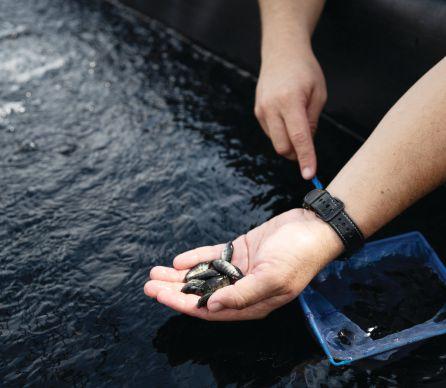
The evolution of catfish re-started in the Philippines with Hito Central Philippines’ launch of the hybrid, Hityan, “a more culture-friendly catfish strain,” in Q1 2024.
Owner Joel Sims told Hatchery International that the catfish industry in the Philippines was long over-due for diversification.
“Hityan, a hybrid of three Clarias species, is an attempt to solve this, and create a genetically-fresh line of broodstock for our Filipino catfish growers.”
This is a hit
Hityan is actually a pun and it is spot on. Hito is the Tagalog word for catfish, and “‘yan” for “this”. Put together, it could be a slang for “This is a catfish”.
And there is another take. Take “hit” as the English word for a “blockbuster”, combine with “‘yan” and you come up with the Taglish for “This is a hit”.
Sims is optimistic for the hybrid’s future. After all, he has addressed a number of downsides associated with catfish when developing the strain.
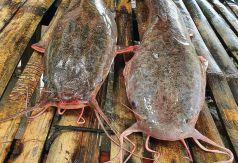
At the start of the research, Hito Central considered the traits that needed to be changed in the African catfish that have developed and/or been emphasized over time due to inbreeding, intensified cannibalism, weaker resistance to pathogens, and the presence of a large, flat head,” he explained.
The head traits decrease the meat-to-trash ratio, making it unfavorable for the end consumer.
There is decreased incidence of cannibalism in Hityan. High stocking density from 50 to 500 pcs/ sqm makes it ideal for intensive tank system culture.
With the fast growth rate, animal can reach a minimum of three pieces/ kg in 90 days. The stocking density is 100 pieces/ sqm.
The body-head ratio is at 75:25, translating
to more edible part.
It is tastier than the African catfish.
As Hityan is feed-fed, there is no room for doubts about the nature of its diet. As such, Sims refers to it as the “clean catfish”.
Hito Central sells fingerlings to contract growers and the feed-fed policy is strictly enforced. “It is not fed with double-dead meat,” he emphasized.
The clean catfish pitch is further backed its probiotic-supported environment. “We use BioBase, a probiotic that we developed. It increases natural food in ponds and removes harmful infectants. Hityan is grown free from antibiotics,” he said.
If ever there is one, then catfish is a polarizing fish in the Philippines. Either you eat it or you don’t. It is the “ick” factor. Catfish is a voracious species that eats just about anything thrown its way. For a very cheap source of protein, some growers are said to use double-dead meat as feeds. This comes from an animal that has died of a disease.
As a good indication that Hito central is
making strides in cleaning the image of catfish in the Philippines, Hityan is being served in restaurant buffets around the Philippines and demand is growing.
Three becomes one
Sims wants Hityan to be a model or benchmark of a sustainable species that will ensure food security. Among the challenges in getting there is the growers’ “cheap-cheap” mentality, which cuts corners, especially when it comes to feeds. “Feed millers, through their technical sales crew, would be of great help,” he said.
It took Sims and his son, Xyrus, two and a half years to develop and launch the desired hybrid in February 2024.
Traits associated with inbreeding out of the way, they considered the traits of a possible species that can be hybridized with C. gariepinus that can help genetically smooth out or even erase undesirable traits.
“The native catfish species (Clarias macrocephalus) seems to be a perfect candidate, as
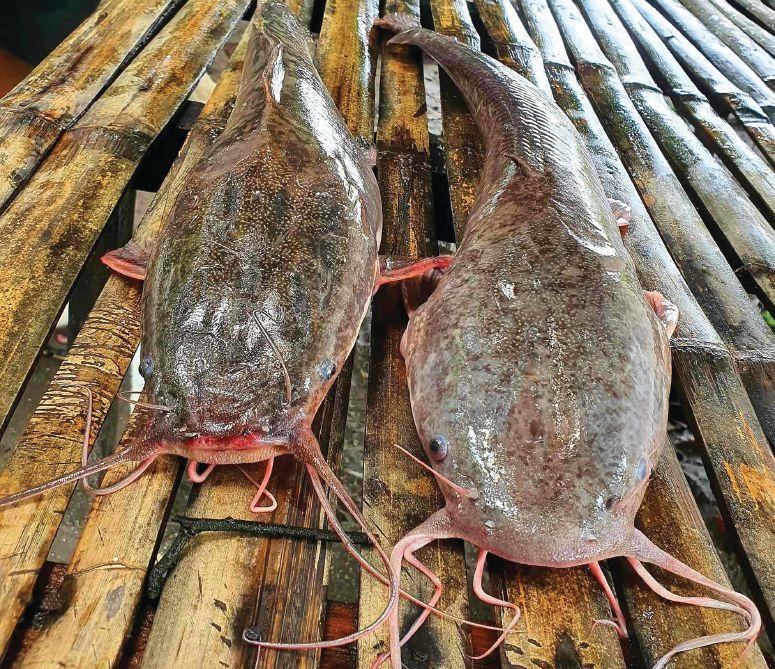
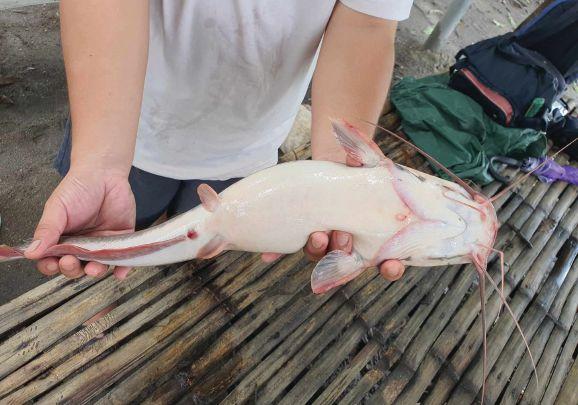
New market offering. Hito Central Philippines sells Hityan fingerlings to contract growers. Market-sized fish are sold and distributed to restaurants all over the Philippines.
well as Clarias batrachus (Thai catfish), as they both possess a smaller and more fusiform head, a smaller tendency toward cannibalism, and especially for C. batrachus, a lesser tendency for pathogen infection. C. macrocephalus, however, possessed venomous pectoral fins, and both said species have a much slower growth rate than C. gariepinus.”
Next task was considering the hatchery performance of the hybridization of all three species with each other in terms for fertilization rate.
Last step was considering the performance of the resulting fry – and subsequently, fingerlings – in a nursery environment, until growout. They also considered any environmental factors such as invasiveness and proper handling.
During the research, he said the most successful procedure that yielded the best performance was first hybridizing C. gariepinus with C. macrocephalus, then having the resulting offspring hybridize with C. batrachus. “This yielded a catfish that virtually muted all of the negative traits, i.e. cannibalism, venomous pectoral fin, slow growth rate, large head, weak nursery and performance/survival.”
The resulting breed of catfish is not a simple hybrid, he stressed, like, say, a donkey, which is sterile and unable to reproduce. “This is a new species which can reproduce on its own. We are now thinking of registering this ‘new species’ as C. simsus,” he deadpanned.
Hito Central has a maiden year projected production of 1.5 million to 2 million fingerlings.
Feed nutrition
As a proactive approach to possible environmental impacts, they are limiting Hityan fingerling supply to contract growers. Hito Central buys the market-size fish from them, which they supply to restaurants.
“In terms of demand, as compared to the ubiquitous African catfish, our contract growers are capable of producing up to 10 tons cumulative catfish per month, and we are expanding our list of contract growers.”
There is still a lot of room for growth in the catfish industry in the Philippines. Year 2023 catfish production in Central Luzon, where Hito Central hatcheries are located, was about five megatons. This, he said, is marginal compared to the country’s top stocks, milkfish and tilapia.
He recommended a multi-pronged approach to elevating the industry’s ranking.
The practice of feeding catfish the same feeds for milkfish and tilapia has to change. “Feed formulation and feed line must be established because the catfish do not grow properly using lower protein-rated milkfish and tilapia feeds,” he said.
Genetic diversification steps such as Hityan need to be taken in order to keep the broodstock suitable and never inbred.
Media has a role in correcting misconceptions about catfish, especially the African catfish.
The consumer needs to learn to widen their fish options. “Filipinos must learn and innovate how to include the catfish in dishes in their daily lives,” he said. To support the increase in demand, a catfish processing industry has to be established, he added.
Sims was nominated to be the regional chairperson at the 1st National Catfish Congress that will be held in 2025. He had to concede, however, because of his busy schedule.
“I told them that my mission is already accomplished, i.e. recognizing catfish to become an industry that will provide affordable food for the Filipinos and if course, create employment,” he said.
Xyrus was elected to be the representative of Pampanga, one of the Hito Central’s locations.
Improving Hityan is an ongoing process. “We’re already doing genetic manipulation. The challenge is to make this the ‘poultry’ species of aquaculture. Now, broilers can be completed in 26 days. Hityan is already a hint that it can be done. Major support is needed in terms of having a seamless study in the infusion of feed nutrition.
Broodstock. Hityan, a hybrid of three Clarias species, provides a genetically-fresh line of broodstock for the Filipino catfish growers.
Feed for Thought
BY MAGIDA TABBARA
To leach or not to leach
Understanding the science for minimal nutrient leaching from aquafeed
Advances in research allowed for the optimization of the dietary requirements of a lot of commercially important cultured species, but a lot is still unknown and open for scientific investigation. But whenever we think about aquafeed, we tend to concentrate on the nutritional needs of the fish, overlooking the importance of good quality pellets for fish performance.
Technological advancements allowed feed manufacturing companies to delicately produce feed pellets of the desired size (length and diameter), with consistent cut and desired floatability or sink velocity.
However, in a lot of small-scale operations with limited resources, we notice that farmers still rely on “homemade” feed that does not necessarily meet the quality requirements to deliver those nutrients to the animals.
Bearing that in mind, farmers must weigh the advantages of saving in feed production costs at the expense of the fish yield at the end of the production season.
Background
Feed manufacture relies on the process of extrusion for high-quality feed pellet production. The process is based on using high temperatures and pressures to result in floating feed pellets that are stable in the water column.
The use of extrusion for feed production is multifaceted. It not only increases pellet durability and stability in water, but also improves the nutritional quality of the feed itself. Nowadays, a lot of feed is formulated to include more plant proteins from cereals or legumes. Such proteins are nutritious but include certain antinutritional factors or plant cell components that decrease the animals’ ability to digest them.
Luckily, extrusion helps to solve a lot of these problems. The application of high temperatures during feed manufacture helps to destroy a lot of the antinutritional factors and improves ingredient digestibility. However, extruding diets does not completely mitigate the leaching problem caused by poor quality pellets.
Feed manufacture
When producing feed, we need to account for handling and transportation at the end of the production chain and how that would affect nutrient delivery to the animals. If not extruded properly, consumers would end up with bags filled with dust and fine particles. Such undesired by-products constitute financial losses, especially since they can’t be fed to the animals. If that feed ends up being used, especially in dynamic culture systems such as open net pens, water movement will further deteriorate the pellets, and a lot of the nutrients will be lost. In other words, farmers would be letting their money go with the flow.
Standardized methods for determining the physical properties of aquafeed are yet to be established. Accordingly, a lot of common sense must be applied when
formulating and manufacturing the feed to result in minimal losses. With the need to incorporate sustainable and cost-effective feed ingredients, we need to bear in mind that certain protein sources play a role in improving pellet durability.
For instance, incorporation of camelina meal in the diet can seem appealing and more cost effective. But when investigated up close, we realize that incorporating soybean products can be more advantageous despite being a bit more costly. Isolated soy protein is a modified soybean product that when used, can help improve pellet durability.
Upon extrusion at high temperatures, protein to protein interactions take place, resulting in stronger bonds and more durable pellets. Despite it being a bit more costly than other plant protein sources, incorporation of isolated soy protein can be
Farmers must weight the advantages of saving in feed production costs at the expense of fish yield.
Magida Tabbara is a PhD candidate in Aquaculture at Auburn University with an emphasis on aquatic animal nutrition. She has over five years of experience in aquatic nutrition, feed formulations and feed manufacture, in addition to experience in scientific writing, technical writing, and journalism.
beneficial as it results in nutrient-dense and water-stable feed pellets.
Optimized management
Additionally, feed manufacture needs to come hand-in-hand with proper feed management. According to the literature, there seems to be a strong correlation between feed composition (in terms of protein density), leaching in form of total ammonia nitrogen, and the size of the feed pellets. According to a study by Piedecausa et al. (2010), the feed pellet size greatly influences its sinking velocity, especially if not properly extruded to float for long.
Protein composition, on the other hand, mostly affects how much ammonia will leach out, especially if prolonged for a long period of time. If feeding salmon in open nets where water movement will greatly impact feed quality in the water, we need to bear that in mind. A lot of salmon feed is formulated to contain high levels of protein.
Therefore, feed should be properly and timely administered to minimize stay in water, allowing the fish to benefit from most of the nutrients before leaching takes place. Careful feeding strategies should be followed, especially when feeding fish at younger age categories that require feed with even higher protein content.
Water-soluble
Another consideration to bear in mind is the unavoidable possibility of water-soluble nutrients leaching out. Water-soluble nutrients, such as vitamins or amino acids, can easily leach out of the feed, especially when it stays in the water column for prolonged periods.
Research has shown that vitamin leaching can result in up to three per cent financial loss from feed cost, but almost all of the biological benefits from adding them is lost. Luckily, mitigating such a problem is not only easy but also very reasonable and affordable.
According to the literature, incorporating up to six per cent of soybean oil in the feed formulation can help decrease leaching of such ingredients to less than 10 per cent. Such addition is beneficial in a multitude of ways. It not only alleviates the leaching problem, but also helps contribute to decreasing the expenses associated with feed composition.
Despite needing fish oil for its Omega-3 fatty acids, especially in salmonids and marine organisms, we can achieve the animals requirements by combining fish oil
and soybean oil. Such a combination helps decrease production expenses, helps in alleviating leaching and extends the shelf life of the feed through avoiding excess use of an expensive product that can oxidize quickly.
Feed for thought
Nutrient leaching from aquafeed is a problem with applicable solutions. Proper feed manufacture, along with good feeding management can help farmers make the best out of the feed they paid for. Sometimes we tend to think that the traditional and costly ingredients are the only way for us to get good quality feed. We need to remember that with some common sense, basic science, and keeping sustainability in mind, alternative ingredients can greatly help us. Our environment functions in a circular cycle. By choosing the adequate alternative ingredients, our new aquafeed will help the fish grow while decreasing the waste and discharges and conserving the environment.
S. (2014). A simple method for determination of relative leaching losses of water soluble components of fish feed. Aquaculture, 2014.
• Delgado, E., & Reyes-Jaquez, D. (2018). Extruded aquaculture feed: a review. Extrusion of metals, polymers and food products. InTechOpen, London, 145-163.
• Khater, E. S. G., Bahnasawy, A. H., & Ali, S. A. (2014). Physical and mechanical properties of fish feed pellets.
• Piedecausa, M. A., Aguado‐Giménez, F., García‐García, B., & Telfer, T. C. (2010). Total ammonia nitrogen leaching from feed pellets used in salmon aquaculture. Journal of Applied Ichthyology, 26(1), 16-20.
• Smith, I. P., Metcalfe, N. B., & Huntingford, F. A. (1995). The effects of food pellet dimensions on feeding responses by Atlantic salmon (Salmo salar L.) in a marine net pen. Aquaculture, 130(2-3), 167-175.
• Zettl, S., Cree, D., Soleimani, M., & Tabil, L. (2019). Mechanical properties of aquaculture feed pellets using plant-based proteins. Cogent Food & Agriculture, 5(1), 1656917.
Commercial Filtration Systems
Commercial Filtration Systems
Commercial Filtration Systems
Commercial Filtration Systems
Customized for your fish farm, hatchery or research operation!
Customized for your fish farm, hatchery or research operation!
Customized for your fish farm, hatchery or research operation!
Customized for your fish farm, hatchery or research operation!
Our Commercial LSS Packages are custom engineered to meet your specific needs.
Our Commercial LSS Packages are custom engineered to meet your specific needs.
Our Commercial LSS Packages are custom engineered to meet your specific needs.
Our Commercial LSS Packages are custom engineered to meet your specific needs.
• Marine and Freshwater
• Marine and Freshwater
• Marine and Freshwater
• Mechanical filtration
• Marine and Freshwater
• De-gassing towers
• De-gassing towers
• De-gassing towers
• Wide variety of flow rates
• Mechanical filtration
• Mechanical filtration
• Chemical filtration
• Chemical filtration
• Mechanical filtration
• Chemical filtration
• Ultraviolet disinfection
• Ultraviolet disinfection
• Wide variety of flow rates
• De-gassing towers
• Wide variety of flow rates
• Flow control valves
• Flow control valves
• Wide variety of flow rates
• Protein skimmers
• Chemical filtration
• Ultraviolet disinfection
• NEMA enclosed controls
• NEMA enclosed controls
• Protein skimmers
• Flow control valves
• Variable frequency-drive pumps
• Ultraviolet disinfection
• NEMA enclosed controls
• Bio-filter towers
• Bio-filter towers
• Bio-filter towers
• NEMA enclosed controls
All
• Bio-filter towers
• Protein skimmers
• Temperature management
• Variable frequency-drive pumps
• Temperature management
• Variable frequency-drive pumps
• Temperature management
All our systems are pre-plumbed and fully water tested prior to shipping. Call us today at 206.937.0392 www.AquaticEnterprises.com
All our systems are pre-plumbed and fully water tested prior to shipping. Call us today at 206.937.0392 www.AquaticEnterprises.com
Recirc in Action
BY ABHINAV CHOUDHURY, CHRISTINE LEPINE, AND CHRISTOPHER GOOD
Thickening RAS waste solids can enhance energy recovery through anaerobic digestion
Recirculating aquaculture system (RAS) technology can assist in the sustainable expansion of land-based aquaculture through production intensification, enhanced biosecurity, culture environment optimization, and effective waste capture.
Over 99 per cent of water can be treated and reused in RAS through mechanical and biological treatment processes, providing greater environmental control for farmed fish. However, high capital and operating expenses, energy use, and the disposal/treatment of concentrated solid waste (primarily fish fecal matter and uneaten feed) are some of the primary challenges facing the growing RAS industry.
Anaerobic digestion (AD) is a biological process often used to treat concentrated solid waste from agriculture and in wastewater treatment processes. The AD process produces biogas, a methane-rich product that can be used to generate heat and renewable electricity. Combining RAS and AD may allow farmers to offset operating and waste disposal costs by recovering energy from the
waste stream and creating a fertilizer byproduct.
Most RAS facilities have tank-side settlers and drum filters for solids capture. While the backwash from drum filters has concentrated waste solids, it is still considered dilute for the AD process. Typical backwash from drum filters contains 0.1- 0.2 per cent total solids (Sharrer et al., 2010), but anaerobic digestion in complete-mixed reactors requires 3-10 per cent total solids (USEPA, 2002). Increasing AD efficiency would require further dewatering of backwash from a RAS drum filter (Choudhury et al., 2022).
Research at The Conservation Fund’s Freshwater Institute (FI) aimed to quantify the increase in biogas production (and, in turn, methane) from AD with increasing total solids concentration in RAS waste. Full details of the study were published in the journal ‘Fermentation’ in the article “Methane and hydrogen sulfide production from the anaerobic digestion of fish sludge from recirculating aquaculture systems: effect of varying initial solid concentrations.”
Figure 1: Gravitational Thickening Settler at The Conservation Fund Freshwater Institute for thickening RAS waste solids.
The RAS waste solids (labelled FS) were collected from a gravity-thickening settler at FI (Figure 1) that can thicken drum filter backwash to nine per cent solids (Sharrer et al., 2010). At the time of the study, Atlantic salmon and rainbow trout at different life stages were cultured in freshwater at the facility. The FS was then mixed with de-ionized water to create three different solid concentration treatments (1.5 per cent FS, 2.5 per cent FS, and 3.5 per cent FS), but the total mass of organic matter was constant in all treatments.
The biogas from all three treatments contained more than 70 per cent methane during peak gas production, suggesting the presence of undigested fats in the waste. As the fat content in fish feed can reach 24 per cent for trout and 35 per cent for salmon, the presence of residual fats in the fecal matter and uneaten feed is highly likely.
When methane production was normalized on the basis of volatile solids (a proxy for organic matter), the 3.5 per cent FS treatment produced 23 per cent more methane than the 1.5 per cent FS treatment (519 mL/g VS versus 422 mL/g VS, respectively) (Figure 2). Previous research has shown that microbial activity may be lower at low solid concentrations even if the total amount
of organic matter is kept constant, thereby lowering methane yields from anaerobic digestion.
When the methane production was normalized on a waste wet weight basis, 3.5 per cent FS produced 200 per cent more methane than 1.5 per cent FS treatment, providing further evidence to support additional dewatering prior to AD. The study results also indicated that salmonid RAS waste solids can produce more methane from AD than animal manures and sewage sludges.
Based on the study results, 3.5 per cent FS produced 415 L of methane per kilogram of dry sludge (or 6.7 cubic feet methane/lb dry sludge, translating to 6,700 BTU/lb dry sludge). A simple economic analysis showed that a 1,000 MT farm raising salmonids could meet up to 10 per cent of its electricity needs from AD (or 28 per cent of heat + electricity needs). It is important to note that these results are valid for freshwater RAS waste, as salinity can significantly reduce methane production from AD.
A critical process parameter for AD is hydraulic retention time (HRT), or the average time the waste solids spend in the digester. A long HRT means more time is needed for methane production, thereby limiting the amount of waste that can be treated at a time. Due to those limitations, larger reactors may be needed to treat all the waste generated at the facility, leading to higher capital costs.
In this study, all treatments produced more than 90 per cent of the maximum methane production within 22 days, indicating that a 22-day HRT may be sufficient for a full-scale system. Typical full-scale AD systems treating other types of waste have HRTs of 20-30 days, which shows that RAS waste can be treated within a reasonable time period.
References
Sharrer, M.; Rishel, K.; Taylor, A.; Vinci, B.J.; Summerfelt, S.T. The Cost and Effectiveness of Solids Thickening Technologies for Treating Backwash and Recovering Nutrients from Intensive Aquaculture Systems. Bioresource Technology 2010, 101, 6630–6641.
AgSTAR Managing Manure with Biogas Recovery Systems Improved Performance at Competitive Costs; EPA, 2002.
Choudhury, A.; Lepine, C.; Witarsa, F.; Good, C. Anaerobic Digestion Challenges and Resource Recovery Opportunities from Land-Based Aquaculture Waste and Seafood Processing Byproducts: A Review. Bioresource Technology 2022, 354, 127144.
Figure 2. Cumulative methane production using fish sludge as the anaerobic digestion substrate at three different initial solid concentrations.
Showcase
HydroNeo and FAI partner to advance shrimp welfare and sustainability in Asia
Thailand-based aquaculture technology company, HydroNeo, has announced a new partnership with shrimp welfare experts, FAI, to sustainably and ethically produce shrimp.
As a result, FAI’s shrimp welfare assessment framework and technology have been integrated into HydroNeo’s digital farm management mobile application. The collaboration will provide shrimp farmers with comprehensive tools to monitor and enhance shrimp welfare.
Fabian Reusch, founder and CEO of HydroNeo said the company’s mobile farm management application was developed to help shrimp farmers, especially small-scale operators in Asia, to monitor important production factors such as water quality.
“Adding FAI’s shrimp welfare technology to our existing free Smart Farm management app was a logical next step. By improving shrimp welfare on farms, we’re not only helping farmers grow happier animals, but they’ll be healthier and perform better too. As well as meeting the evolving expectations of consumers regarding welfare practices when rearing shrimp, we’re also improving overall farm performance,” Reusch said.
FAI oversees a global welfare project aimed at enhancing the welfare and lives of fish and shrimp worldwide. As one of the biggest
ARCTIC CHARR OVA
shrimp-producing regions in the world, partnering with a prominent and well-established Thai-based farm support organization like HydroNeo was important to FAI.
“Through our partnership with HydroNeo, there’s huge scope to not only improve the lives of shrimp but also the performance and profitability of shrimp farmers in Asia,” said Marius Nicolini, FAI’s software product manager. “By using HydroNeo’s existing technology to help spread the awareness and use of our science-based welfare assessment framework, we’ll have a significant and positive impact on how shrimp are reared in the region.”
The collaboration with FAI is driven by a shared commitment to advancing shrimp farming practices and promoting enhanced animal welfare in Asian nations.
“Research has shown that because of reduced environmental stress and higher animal welfare, our farmers’ shrimp are more resilient to disease and have better growth potential – increasing productivity by 13 per cent,” said Reusch. “By providing tools to better monitor shrimp health in real-time, adopting preventive measures to avoid stress and disease and more focusing on welfare, we’re reflecting a more holistic and sustainable approach to aquaculture.”
HydroNeo will also promote FAI’s free online Shrimp Welfare Course, available through the FAI Academy website.
BioMar hosts young women in aquaculture as part of Mediterranean sustainability initiative
BioMar hosted a group of young women from across the Mediterranean and the Black Sea at its production facility in Spain, as part of the “III Programme on Sustainable Aquaculture Practices” to support women, who are at the heart of the Mediterranean’s successful aquaculture.
The initiative was organized by the General Fisheries Commission for the Mediterranean (GFCM) of the Food and Agriculture Organization of the United Nations (FAO), The Federation of European Aquaculture Producers (FEAP), and The Spanish Aquaculture Business Association (APROMAR.)
The GFCM has a 2030 Strategy for sustainable fisheries and aquaculture in the Mediterranean and the Black Sea, where it sees a fair and inclusive industry where women are fully supported.
This programme brings together young women to learn about the latest developments in aquaculture and gain hands-on experience with some experts in the field.
BioMar’s guests began their visit with a tour of our facility allowing the company to showcase how its formulations and technologies are helping the industry.
“One of the most inspiring parts of the day was hearing from Elena, a veterinarian,” said one of the attendees. Elena Planas, a veterinarian and BioMar colleague shared her journey as a woman in aquaculture, highlighting her challenges and triumphs.
By engaging directly with industry leaders, these young women gain valuable insights into best practices and the importance of women’s involvement in the sector.
Xelect welcomes new additions to breeding programme and scientific team
Xelect Genetics has hired two new staff, Rose Komugisha Basiita as a senior breeding programme manager and Danielle MacRae as a scientific officer.
Basiita joins the team from WorldFish, where she was leading research into genetic selection for various tilapia species, leading the design and management of aquaculture for a number of regional programmes. At Xelect, she will manage some of the company’s key breeding programmes, bringing some knowledge about advanced tilapia genetics.
MacRae has laboratory work experience, having helped run a key high throughput COVID testing team during the pandemic and providing QA audits for one of the world’s lead ing scientific testing companies. MacRae will support Xelect’s clients with rapid, high-quality genetic sequencing and laboratory services.
Xelect and Cromaris partnership yields record gains in bass and bream growth
A seven-year partnership between aquacul ture genetics company, Xelect and Mediter ranean bass and bream producer, Cromaris, has yielded record gains for bass and bream at Cromaris’ fully integrated operation Near Zadar, Croatia.
The two companies have collaborated to develop an advanced selective breeding programme that produces faster-growing fish that thrive in Cromaris’ unique conditions. The programme aims to use the latest genetic strategies to deliver major improvements in key traits every generation.
“In seabass, we have seen an improvement in growth of around 21 per cent from one gener ation to the next. In seabream, we have iden tified that nearly 70 per cent of the variation in harvest size between individual fish is due to genetics, which makes the Cromaris popula tion ideal for a high-return selective breeding programme. Running a successful advanced genetics programme is very much a team effort, and the high standards of husbandry and professionalism at Cromaris are key to deliver ing these kinds of gains,” said Marie Smedley, head of breeding programmes at Xelect.
“Managing this kind of comprehensive selection programme, while preserving stable hatchery production, can be challenging at times. After three generations of selected fish, we are already starting to see why this huge effort is worthwhile. With this powerful instru ment, Cromaris continues investing in premi
um product differentiation, while maintaining sustainable and socially responsible production operations,” said Lana Barić, hatchery manager at Cromaris.
SalmoGen names Nick King as new general manager to drive operations and growth
SalmoGen Company has appointed Nick King
operations and development activities.
King has a technical and management background from Skretting, Benchmark, and recently, Nordic Aquafarms. He has a broad experience that encompasses hatchery training, fish nutrition, farm permitting, and fish health.
SalmoGen is an Atlantic Salmon broodstock company developing egg supply for producers in North America and beyond and “Nick is a
its focus on broodstock development, production-related matters, and expansion of operations,” the company’s LinkedIn announcement stated.
“SalmoGen brings together an incredible supporting cast of collaborators. I plan to continue the path established by the board so that SalmoGen may reach its full potential in the coming years,” King said in the announcement from the company.
“I’ve said it before and I’ll say it again. I have benefited greatly from professional relationships and working side by side with some special people. I am deeply appreciative to all who have helped me get to this point in my career. This is a time to be excited for the future,” he added.
MiAlgae Secures £14M to scale its Omega-3 production
Bitoech company, MiAlgae, has secured £14 million (US$18 million) in funding to accelerate its operations and scale production.
The company grows microalgae by repurposing nutrient-rich by-products from whisky distillation, providing an eco-friendly source of Omega-3s. It has reached the commercial scale of its marine Omega-3 product, NaturAlgae, at its demonstrator site in Scotland which was launched in 2023.
MiAlgae is looking to develop an industrial-scale production facility in Scotland. The new site will enable full commercialization of NaturAlgae, meeting rising demand across the aquaculture, pet food, and human health sectors for sustainable Omega-3s. The funding will finance the new facility’s development, speed up further commercialization, and support team growth with strategic hires.
“This investment marks a significant milestone for MiAlgae,” said Douglas Martin, CEO of MiAlgae. “The success of our demonstrator site has validated our technology at scale, attracting serious international support. With this backing, we’re focused on building the infrastructure needed to meet the growing global demand for sustainable Omega-3s whilst continuing to advance innovation in biotechnology.”
New venture capital investors SWEN Blue Ocean, Clay Capital, and Rabo Ventures joined existing backers Equity Gap, Old College Capital, Social Investment Scotland (SIS) Ventures, Ananke Ventures, Ascension Ventures, and Scottish Enterprise.
“The Blue Ocean Fund targets startups tackling threats to our oceans such as overfishing, pollution, and climate change. MiAlgae’s innovative microalgae fermentation addresses the Omega-3 supply gap with a scalable, sustainable alternative to fish oil. The market is ready, and we’re excited about their potential impact,” said Christian Lim, managing director of SWEN Capital Partners.
Aquaculture consultant Øystein
Michael Falch joins ReelData for
Norwegian market
Fish-farming consultant, Øystein Michael Falch has joined land-based AI technology and software company ReelData as a sales and business development consultant for Norway.
Falch has more than 20 years of aquaculture experience, and a background in business development and finance. From Oct. 1, Falch will be working to attract new customers and commercialise opportunities for the ReelData suite of tools including AI camera-based feeding efficiency, biomass estimation and fish counting.
“We’re thrilled to have Øystein join the team as a contractor for the Norwegian market. We’ve had some fantastic success in multiple geographies in the past several months but a missing link for us has been a physical representation in Norway and someone with strong sales, networking and leadership skills. Øystein fills that role perfectly,” said Gareth Butterfield, commercial director for ReelData.
The new sales and business development consultant has worked internationally for both cold and warm water finfish producers and is skilled in spanning financial analysis, planning and modelling, and development of strategies and business plans in addition to core sales competencies.
“The team here at ReelData are looking forward to working with Øystein and building upon an already growing client base by expanding into Norway. We’ve had significant communication with Norwegian producers and there’s a lot of excitement about our technology. By bringing Øystein on board, Norwegian customers of ReelData have a reputed and respected local resource on which they can rely,” Gareth added.
Falch said working for a greater purpose, something beyond personal gain motivates him.
“I strongly believe that technology has the power to drive meaningful improvements,
and ReelData’s solutions offer real benefits for the aquaculture industry, including reducing environmental impact and lowering production costs. These are both essential to the sustainable growth of global aquaculture as we strive to feed a growing world population. That mission is what gets me excited every day,” Falch said.
“On top of that, I’ve been impressed by the talented team at ReelData, and I’m looking forward to being part of a group so dedicated to delivering exceptional products. I’m eager to join the journey and contribute to the company’s success.”
FAIVRE
Group announces first 10-inch stainless steel body pump, the Pescamotion 50
FAIVRE Group has announced its first 10-inch stainless steel body pump, Pescamotion 50.
The new pump is for transferring fish over long distances, loading trucks or feeding a large-capacity sorter.
“Thanks to its 250 mm diameter, the Pescamotion 50 is capable of working with salmonids of three-kilogram average weight and offers you large pumping capacities,” a press release from the company states.
FAIVRE Group claims the pump has an automatic priming system and its remote control makes it easier to use. It says its belt drive system reduces its maintenance costs.
Bionetix
touts new pump technology for bioaugmentation adjustments in cool weather wastewater treatment
Waste treatment company, Bionetix International, says companies need to reevaluate their bioaugmentation plan to prepare for cooler temperatures. Its rule of thumb is that when cooler temperatures arrive, add more bugs. Wastewater treatment is possible because of microorganisms that feed on organic waste
to get the nutrients and energy they need to grow and reproduce. Two key measurements of effluent quality are biochemical oxygen demand (BOD) and/or chemical oxygen demand (COD). The goal of wastewater treatment is to reduce BOD/COD by improving water quality. Adding extra microorganisms to speed up waste degradation is beneficial. This is called bioaugmentation and is important during cool weather when microbial metabolism slows down.
Different microbial blends can be used to boost BOD/COD reduction in lagoons, aerobic digesters, sequencing batch reactors, moving bed biofilm reactors and other secondary wastewater treatment systems during cool weather.
Bionetix says its product, BCL6000, is a good choice where automatic pumping is desired.
It’s said to contain two billion colony forming units per mL, free enzymes, nutrients, and an oxygen source to support healthy aerobic conditions and metabolism among the microbial population. The microorganisms in BCL6000 can continue to work as long as the wastewater temperature stays above 50-54 F (10-12 C).
Bionetix’s BCP50 contains bacteria in powder form that can be dosed based on daily flow rates, retention times, and other factors. It contains five billion colony forming units per gram of product is targeted to degrade proteins, fats, carbohydrates, and select hydrocarbons.
Bionetix says it’s a good candidate for replenishing microbial populations that are struggling to flourish in cooler temperatures. Finally, BCP655 is aimed at lagoon systems and can be used in wastewater that is at least 50 F (11 C) or warmer.
Want
Send you company news and press releases to jkodin@annexbusinessmedia.com to be considered in the next issue.
BY NICOLE KIRCHHOFF
Maintaining optimal water temperature during the winter months
Temperature is one of the primary water quality parameters monitored daily, if not more, by every aquaculturist.
Water temperature impacts metabolism and photosynthesis, dissolved oxygen and other gases, conductivity and salinity, compounds like ammonia toxicity, oxidation-reduction potential (ORP), pH, water density, and much more. This means water temperature is a critical factor for hatchery economics, impacting the growth, health, and behaviour of your target crop, as well as the chemical processes including nitrification bacteria in the larger aquatic system.
While we aren’t experts in thermodynamics, refrigeration, or heating trades, understanding the fundamentals could save a hatchery a lot of money and stress. With winter approaching here in the Northern Hemisphere, I am going to focus this article specifically on heating.
Temperature is a measure of the kinetic energy of the atoms and molecules of a substance (i.e. the amount of energy in individual water molecules). This energy can be transferred between substances by the flow of heat from high to low, one of the primary laws of thermodynamics.
Water must absorb four times as much energy as air to raise temperature by one degree. Therefore, heating water, as opposed to air, can be energy-intensive and expensive.
One of the primary ways hatcheries can provide a stable and optimal water temperature is by controlling air temperature in the culture space. If the air and water temperature are the same, there is no heat transfer, and everything stays stable.
In areas where the plants or animals prefer slightly warmer temperatures, this also is often not a huge problem. Most hatcheries also utilize recirculation aquaculture systems (RAS)
which include equipment that puts off heat and densely packed animals undergoing metabolism which also gives off heat. Coupled with the high heat capacity of water, water usually doesn’t swing too heavily between day or night or day to day, or at least doesn’t swing as much as air temperature can.
Issues arise when attempting to grow plants or animals in areas with air temperatures drastically warmer than optimal.
Dr. Nick Brown, CTO of Aquacare elaborates, “Many RAS facilities require little or no direct heat input due to the fact that there is a significant heating effect from the pumps, UV sterilizers, blowers, biofilters and the fish themselves. Money spent on insulation and heat recovery will usually pay for itself. Where facilities growing cold water species are located in warm climates, a large proportion of the total CapEx and OpEx will be spent on chilling.”
If a hatchery does not have adequate air temperature control in winter – for example, if a hatchery is in a greenhouse – there are many other ways to prevent heat from escaping the water.
First, consider limiting areas where heat can be transferred. Hatcheries can convert from flowthrough to higher recirculation in winter months. They can also limit exposed water surface area, limit water and air movement across the surface of the tanks, insulate tanks, the ground under the tanks, and pipes, etc.
Some hatcheries even construct temporary walls or utilize insulted tank covers in the months of the year when heat transfer can be the highest.
Second, heat exchangers can be installed to reduce the differential of water temperature moving through your system, therefore reducing the flow of heat out. Many hatcheries located in cool environments put heat exchangers on their cold incoming
Water temperature is a critical factor for hatchery economics, impacting growth, hearlth and behaviour of your target crop.
water before it enters their system. This decreases its capacity to rob heat from the whole system. Another example is the utilization of ground source heat pumps to harvest heat from the ground or aquafer water. Often, heat recovery can reduce heating demands by over 50 per cent.
Finally, if you cannot stop heat loss, the hatchery will have to consider adding heat. Heating water can cost one to two cents per gallon of water, yet there is a huge range of costs depending on how much water you need to heat, how much heat (i.e. temperature change) you need to provide, and the heating type you use. Electric, gas, and solar are common choices, with the feasibility and cost of each heating source highly impacted by your hatchery location. For example, many areas are cloudy in winter, therefore solar is not an option. Some hatcheries may be in remote locations where electricity is expensive and unreliable, especially in winter months. You may consider using a small space heater in conjunction with limiting air space to be heated, like temporary wall systems or tank covers.
If you decide to heat water directly, you must consider what the act of heating water will do to the gasses in that water, as many gasses change their saturation point depending on water temperature.
Again Dr. Brown elaborates, “In hatcheries, flows and therefore heating loads are smaller and it is often feasible to run on flowthrough or partial reuse. Whether running on RAS or flow through, direct water heating will increase total gas saturation until equilibrium is reached. Effective degassing strategies must be used to ensure that total gas saturation remains at </=101% as nitrogen supersaturation can cause health problems in larval fish and fry.”
Nicole Kirchhoff is the owner of Live Advantage Bait LLC (www.liveadvantagebait.com),
a wholesaler of warmwater marine fish, fingerlings, and eggs for bait fish and food fish growout, research, and restoration located in Florida, USA. Kirchhoff has