New filters solve mussel woes and boost paddlefish numbers
Staff at the US Fish and Wildlife Service’s Gavins Point National Fish Hatchery in South Dakota have finally got on top of a zebra mussel problem that’s been stalking them for well over a decade.
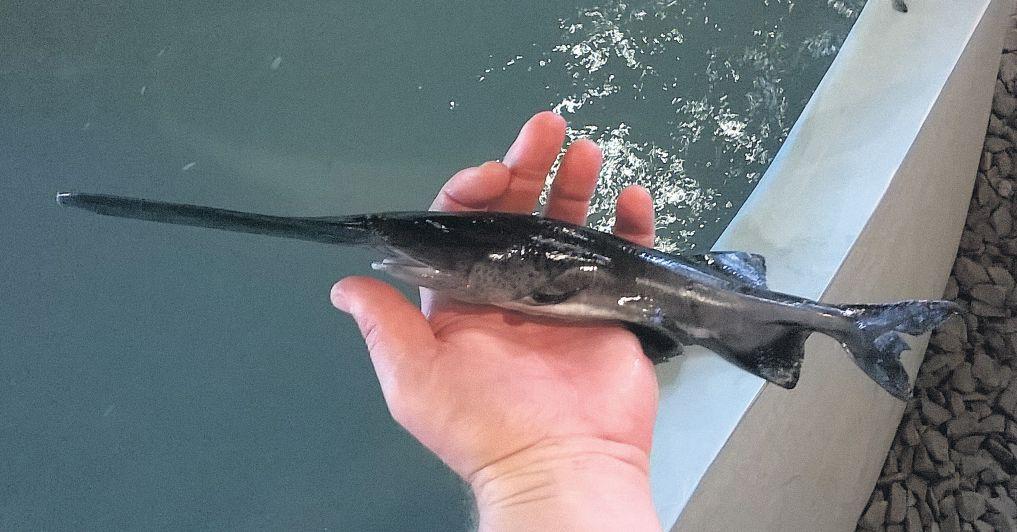
What’s more, this year they’re in the process of putting out more than 82,000 paddlefish juveniles, which is a record for the facility and far above the usual requested number of about 40,000 according to assistant manager Nick Starzl.
Management personnel at the unit note that the improved production is due in no small part to the new and upgraded equipment which has been put in,
including a couple of large drums filters that run in parallel, aimed at taking out anything under about 30 microns – including young zebra mussels.
The hatchery, which focuses on pallid sturgeon recovery, but also puts out other fish for stocking, has been fighting the invasive, equipment-clogging mussels all the way back to 2003 when they found the first suspect veliger in Lewis and Clark Lake.
That was when the staff set up a hazard analysis and critical control points (HACCP) plan and began treating the lake-intake water as positive for the pests.
Southern Advantage
Dunkeld Trout Hatcheries leverages its location in South Africa to supply off-season demand from the other side of the equator.
BY RUBY GONZALEZ
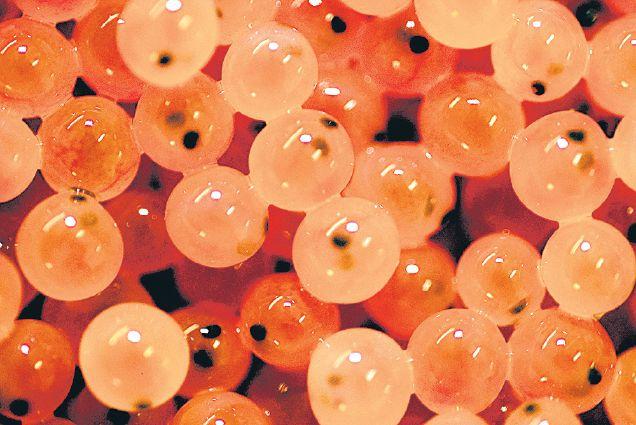
“We recognised a market shortage of highquality live trout eggs in the Northern Hemisphere summer months,” says Dunkeld CEO Roy Charsley “As rainbow trout are naturally a winter-spawning species, it was clear that we could produce a high-quality product from naturally spawning stock to supply the Northern Hemisphere.”
TWO YEARS IN THE MAKING
Wildfires cause evacuation at Oregon hatcheries
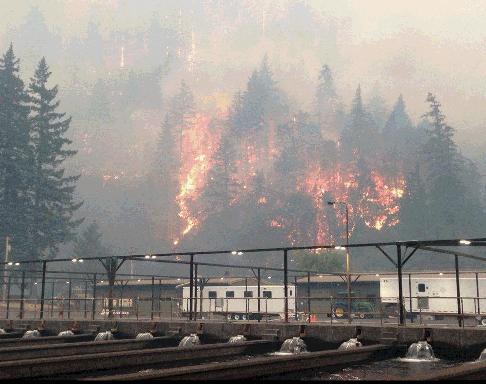
n addition to three hatcheries having to be temporarily evacuated in the vicinity of the Cascade Locks, there were other consequences for fish restoration programs and facility personnel during the Eagle Creek wildfire in Oregon last summer.
But fortunately, for the most part – although the situation still wasn’t fully resolved by the time this edition went to press – very little damage was done to the Bonneville, Oxbow and Cascade facilities, according to a spokesperson for the state Department of Fish and Wildlife (ODFW).
Scott Patterson told Hatchery International that although the fire was still burning in the general vicinity and so far had managed to consume some 33,000 acres, the three hatcheries were protected by fire lines and fire breaks, with water on hand as well.
Patterson said though that staff and their families, numbers of whom lived in houses on the grounds, were also threatened by the fire as it advanced to within a few hundred metres of the facilities in early September.
In the end, Patterson confirmed, only “essential” workers were allowed to be on the job at Bonneville
Publications Mail Agreement #PM40065710
RETURN UNDELIVERABLE CANADIAN ADDRESSES TO 80 Valleybrook Dr., Toronto, ON M3B 2S9
And with this goal firmly in mind, Dunkeld built a state-of-the-art hatchery to produce competitively priced off-season trout eggs for northern buyers.
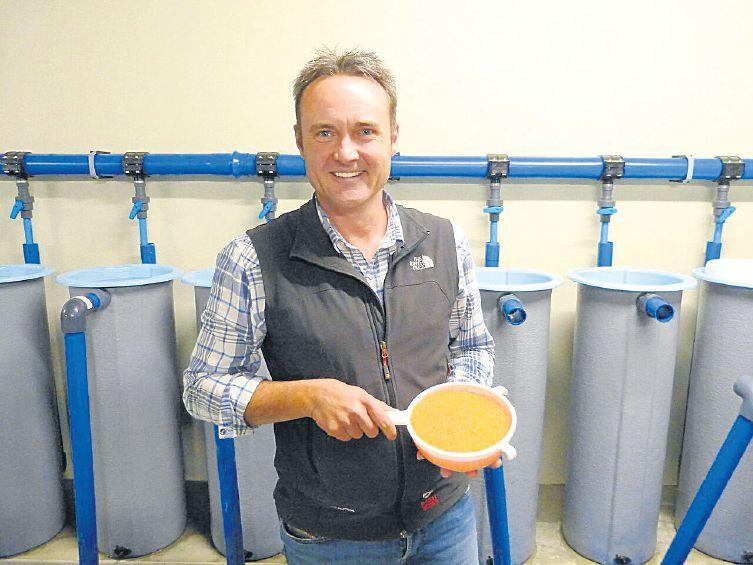
And now, two years since starting operations, Dunkeld has established itself at the largest certified-disease free rainbow trout breeder in the Southern Hemisphere. It maintains a broodstock inventory of 40,000 fish that produces 60 million ova a year. Globally, it is ranked “about number six”.
Coming up with high-quality product necessitated more than the usual amount of groundwork.
Year 2017 marks Dunkeld’s first full year of production. “It takes two years of biannual diseasetesting and routine surveillance before we could claim freedom from all the diseases the species is susceptible to and only then could we export our product and provide customers assurances of our status. Equally important to out-of-season availability, quality and performance, is confidence in the disease-free certification,” said Charsley,
continued on page 8 continued on page 6 continued on page 9
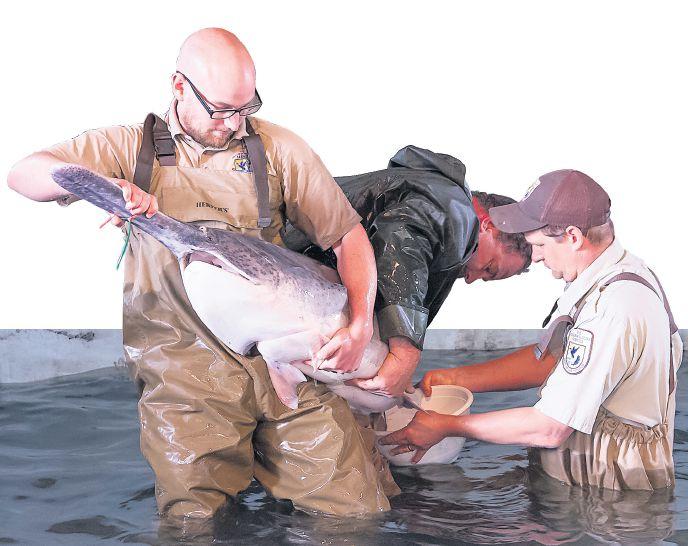
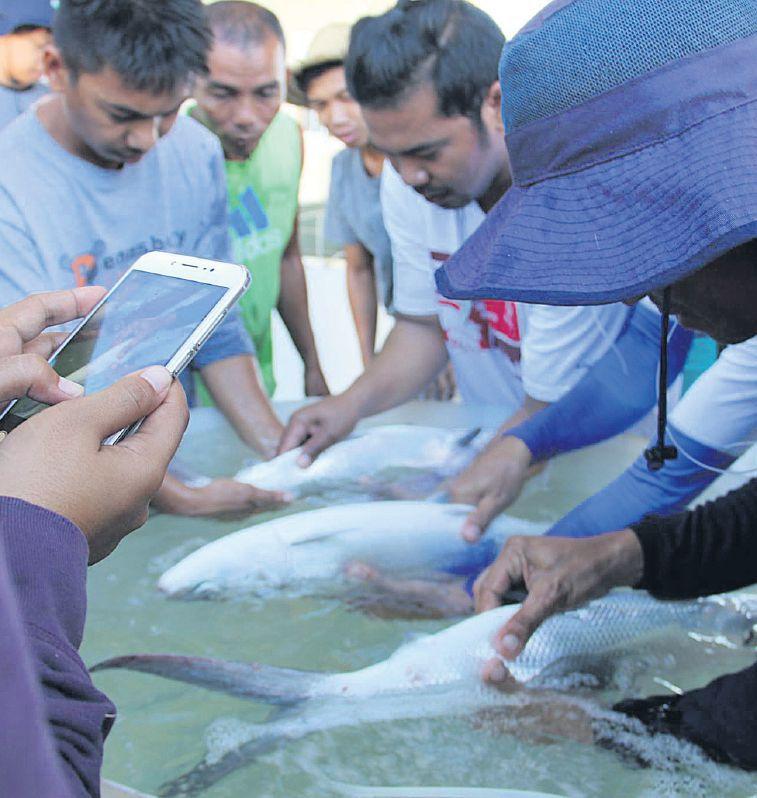
Hatchery staff spawn a paddlefish broodfish. The facility produced a record number of juveniles this year, due in large part to significant equipment upgrades at the site.
Dunkeld Trout Hatcheries is located in Africa’s trout farming capital, Dullstroom Highlands of the Mpumalanga province.
The Eagle Creek Fire as seen from the Cascade Locks Hatchery. Fall chinook were released early to save them from the fire and possible mudslides.
(Courtesy of Oregon Department of Fish and Wildlife)

YOUR PARTNER IN FISH HEALTH
Disease and poor health are some of the main constraints for sustainable aquaculture.
MSD Animal Health develops environmentally responsible products to maximize fish survival, growth and production efficiency for the major farmed fish species: salmon, tilapia, trout and other marine species.
Every day, in every corner of the world, progressive fish farmers turn to MSD Animal
Health. They ask about our full range of products for managing the most serious diseases in aquaculture. Even more, they come to us for integrated health solutions to help them become more profitable, competitive and sustainable.
For more details please contact your local MSD Animal Health representative or contact us at aqua@merck.com or visit us at www.aqua.merck-animal-health.com.
Copyright © 2016 Intervet International B.V., also known as MSD Animal Health. All rights reserved. This document contains information on veterinary products based on international registration dossiers and may refer to products that are either not available in your country or are marketed under a different trade name. In addition, the approved indications as well as safety and efficacy data for a specific product may be different depending on local regulations and approvals. For more information, read the product labeling that applies to your country or contact your local MSD Animal Health representative.
Volume 18, Issue 6 | NOVEMBER/DECEMBER 2017
Editor Peter Chettleburgh, peter@capamara.com
Science Editor David Scarratt, scarratt@ns.sympatico.ca
Regular Contributors Quentin Dodd, Diogo Thomaz, John Nickum, John Mosig, Erich Luening, Philip Nickerson, Matt Jones, Ruby Ganzalez
Advertising Manager Jeremy Thain, jthain@annexweb.com
Tel. +1-250-474-3982, Toll-Free (North America) 1-877-936-2266
Circulation Manager Barbara Adelt, badelt@annexbizmedia.com
Design & Production James S. Lewis, james@capamara.com
Group Publisher - Scott Jamieson sjamieson@annexweb.com
COO – Ted Markle, tmarkle@annexweb.com
President & CEO – Mike Fredericks

Subscriptions Angie Potal, apotal@annexbizmedia.com
Tel: 416-510-5113 • 1-800-668-2374 (CDN) • 1-800-387-0273 (US/FGN) Fax: 416-510-6875
Printed in Canada. Publications Mail Agreement #PM40065710 RETURN UNDELIVERABLE CANADIAN ADDRESSES TO: Hatchery International. CIRCULATION DEPT. 80 Valleybrook Dr., Toronto, ON M3B 2S9
ISSN 1922-4117
Next Ad Deadline
The advertising deadline for the Jan/Feb issue is Nov. 8th. Don’t miss the opportunity to be part of this exciting aquaculture publication. For more information, or to reserve space in the next issue, call our Advertising Department at +1.250.474.3982 jthain@annexweb.com
Next Editorial Deadline
The editorial deadline for the Jan/Feb issue is Nov. 8th. Contact the Editor, Peter Chettleburgh at +1.250.478.3973 for details. E-mail to peter@capamara.com. Material should be submitted electronically with prior arrangement with the editor.
NEWS BRIEFS
Congressional delegation fights for historic hatchery
United States’ Republican senators John Thune, Mike Rounds and Kristi Noem recently sent a letter to US Secretary of the Interior Ryan Zinke and the US Fish and Wildlife Service (FWS) requesting adequate staffing at the DC Booth Fish Hatchery Archives in Spearfish, South Dakota. Staffing levels at the archives have fallen drastically from seven federal full-time employees (FTEs) in 2013 to one FTE from 2014 to 2016. D.C. Booth is in need of additional FTEs to ensure it has adequate staffing to operate and maintain the facility and safeguard its visitors.
“The DC Booth Fish Hatchery is critically important to the Spearfish community, its economy, and its residents, as more than 160,000 people visit the hatchery each year,” the delegation wrote.
Rock lobsters the focus of Tasmanian partnership
A Tasmanian firm in the mariculture sector is partnering with the University of Tasmania to commercialise research into rock lobster production.
Until now the long and complex life cycle has made it impossible to produce the species in a commercially scalable hatchery.
Now, however, following ground-breaking research at the University of Tasmania’s Institute for Marine and Antarctic Studies (IMAS) this could be about to change. And the PFG Group Pty Ltd (PFG) – a Tasmanian plastics manufacturer - has invested in a University spinoff to secure the Australian licencing rights to the research.
University Deputy Vice-Chancellor (Research) Professor Brigid Heywood said: “It is emblematic for us that a Tasmanian firm, led by a University alumnus (PFG CEO Michael Sylvester) has agreed to help us realise what has been 15 plus years in the making.
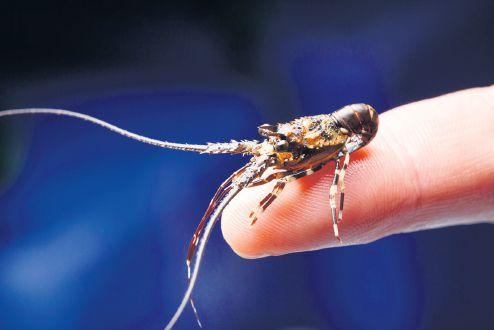
“This partnership paves the way for Tasmania to become the birthplace of a global industry for rock lobster aquaculture.”
In the next two years, scientists working at IMAS Taroona will focus on the optimisation of technology that will underpin commercial production. PFG’s commitment includes the construction in Tasmania of the world’s first commercial scale hatchery.
Photo courtesy IMAS



Alltech and Coppens open research centre
The Alltech-Coppens Aqua Centre in the Netherlands officially opened its doors in September following extensive refurbishment. A press release on the opening noted that the centre will focus its research on feed solutions for aqua producers around the world.
The centre received more than €600,000 in investment and will be home to an expanded team of aqua researchers dedicated to innovation and the development of new applications in aqua feed.
New hatchery and farm for Zambia
Zambia’s Luangwa Bridge Fish Farm Limited is reported to have set aside the equivalent of $480,000 (USD) to set up a large fish farm and hatchery facility that is expected to contribute substantially to national fish production.
The objective of the project, states the report, is to establish a facility that will produce fingerlings and supply fish to the local market.
The report is quoted as stating that the company will be breeding tilapia and African catfish fingerlings both for sale and for grow-out in the company’s farm ponds.



It’s a Wrap





-Non-Corrosive schedule 80 PVC reactor bodies are stronger and handle higher internal pressures compared to HDPE and Polypropylene. Schedule 80 reactor bodies are seawater safe and will not corrode in harsh environments, unlike stainles ssteel
-Single end glassware access makes for easy maintenance when replacing lamps and quartz sleeves
-Thermoplastic or Fiberglass NEMA 12 Power supply enclosures with Standard HMI control package or optional HMI Pro Series control package.



The photo (right) shows the new graphic vinyl wrap covering the U.S. Fish and Wildlife ServiceSouthwest Region’s fish distribution truck.
The images symbolize the breadth of fisheries conservation performed by hatcheries located across the Southwest United States. Some of the species raised by these facilities include alligator gar, paddlefish, endangered razorback sucker, Texas blind salamander, Apache trout from Arizona and Gila trout from New Mexico.

-Electronic ballasts matched to the performance of the specific lamp for optimal UV-C output and longest useful lamp life
-Standard Over Temperature Safety Cutoff Switch thermally protects reactor when water temperature reaches 120 Degrees F
-American made low pressure amalgam (ALH/
- AUH models) and high output (HLH/HUH models) lamps. These lamps are rated 80% efficient at the end of 12,000 hours.
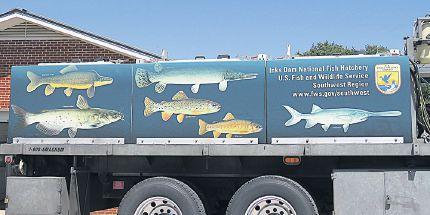
Anglers across the Southwest enjoy catching channel catfish that come from Inks Dam National Fish Hatchery in Texas. That’s also where this truck is housed. The rig puts on more than 15,000 miles a year getting fish where they need to be.
Egg producers form alliance
Danish trout egg producer, Troutex, and USA egg producer, Riverence, recently agreed to a strategic alliance. The news was announced at the United States Trout Farmers Association Trade Show, held in Twin Falls, Idaho, earlier this fall.
According to a press release from the two companies, they were drawn to one another through “a mutual, generational heritage in farming and agriculture.” Troutex was founded by a fourth-generation trout breeder/ farmer, and similarly, Riverence was co-founded by a fourth-generation cattle breeder/ rancher.
A joint approach to breeding will prove extremely beneficial for both companies, notes the release: “Riverence has shown remarkable results in its breeding program in a very
short amount of time, due to its highly experienced team of fish experts. Troutex has developed its own breeding program based on known methods from the mink and poultry industry, in cooperation with an expert in genetics.”
With multiple sites in the USA, Northern Ireland and Denmark, both dependability are increased, adds Riverence breeds steelhead, coho salmon, golden rainbow trout, and fresh water proven Atlantic salmon eggs. Troutex breeds fast-growing rainbow
small portion size to latematuring, large steelhead strains. Troutex sells eggs to more than 30 countries worldwide.
Fast growth blamed for deafness in farmed salmon
Following-up on research published last year, researchers at the University of Melbourne in Australia have determined that accelerated growth rates are responsible for deafness in farmed salmon.
ast year (See Hatchery International, July/August 2016) an Aussie research team showed that loss of hearing in farmed salmon is caused by an inner ear deformity, and they have now linked that deformity to the fish’s fast growth rate.
Otoliths are tiny crystals in a fish’s inner ear which detect sound, much like the ear bones in humans, so even a small change can cause significant hearing problems.
The deformation was first recorded in the 1960s, but this team was the first to show that it affects more than 95% of fully-grown hatchery-produced fish globally.
The cause of the otolith deformity was a 50-year mystery until now, said lead author Tormey Reimer from the School of Biosciences at the University of Melbourne.
“We looked at over 1000 otoliths from fish farmed in Norway, Chile, Scotland, Canada and Australia, and found that this deformity was extremely common, but only in farmed fish.” Ms Reimer said.
“Then we found that we could reduce the incidence of the deformity by reducing how fast a fish grew. The fastestgrowing fish were three times more likely to be afflicted than the slowest, even at the same age. Such a clear result was unprecedented.”
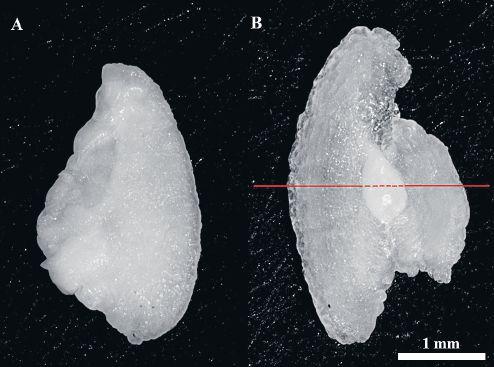
Normal otoliths are made of the mineral ‘aragonite’, but deformed otoliths are partly made of ‘vaterite’ which is lighter, larger and less stable. The team showed that fish afflicted with vaterite could lose up to 50% of their hearing.
The team found that vaterite was seemingly caused by a combination of genetics, diet and exposure to extended daylight, all of which differ between farmed and wild fish.
But there was one factor that linked them all: growth rate.
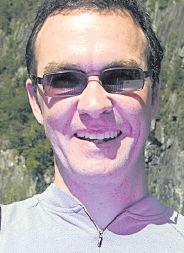
Study co-author, Dr Tim Dempster, says that the deformity is irreversible, and its effects only get worse with age.
“These results raise serious questions about the welfare of farmed fish. In many countries, farming practices must allow for the ‘Five Freedoms’, which are freedom from hunger or thirst; freedom from discomfort; freedom from pain, injury or disease; freedom to express (most) normal behaviour; and freedom from fear and distress,” said Dr Dempster from the University of Melbourne.
“Producing animals with deformities violates two of these freedoms: the freedom from disease, and the freedom to express normal behaviour. But fish farms are very noisy environments, so some hearing loss may reduce stress in hatcheries and sea cages. We still don’t know what this level of hearing loss means for production.”
The deformity could also explain why some conservation methods aren’t very effective. Between habitat destruction and overfishing, wild salmon are declining in many areas. One strategy used to boost stocks is to release millions of hatchery-reared juveniles into spawning rivers.
“The next step should work out if vaterite affects the survival rate of hatchery fish released into the wild. Stocking rivers with hearing-impaired fish may be throwing money and resources into the sea,” said study coauthor Professor Steve Swearer.
Ms Reimer adds that since vaterite is irreversible once it’s begun, the key to control is prevention.
“Future research may find ways to prevent the
deformity without compromising growth rate,” she says.
“Our results provide hope of a solution. The close link with growth rate means that the prevalence of the earbone deformity is within the control of hatchery managers. Producing slower growing fish for release into the wild may increase their chances of survival in the long run.”
The research was led by the University of Melbourne and is published in the Journal of Experimental Biology
Study co-author Dr Tim Dempster says that the deformity is irreversible, and its effects will only get worse with age.

Sagittal otoliths from a juvenile Atlantic salmon, with scale bar = 1 mm (bottom right). The left otolith is entirely aragonite, while the right otolith is approximately 90% vaterite by planar area.
Credit: University of Melbourne
Something fishy in Ukraine hatcheries
Russian MP calls for more control over private facilities
everal private hatcheries appeared in the center of a major corruption scandal in Kherson Oblast, Eastern Ukraine, where regional MP Valisy Zelenchuk claimed they have been plundering government grants allocated to restore fish stocks in the Ukraine’s main rivers.
According to a report in the regional media, Fakti , each hatchery in the Ukraine receives a grant of about UAH 15 million (US$600,000), against guarantees to release up to 1.5 million fingerlings in local rivers during the year.
A Russian official claims that many of the country’s re-stocking hatcheries operate at only a small portion of their designed production capacities, in some cases below 20-30%.
However, as noted in his investigation, Zelenchuk alleged that the hatcheries release either smaller fry, or far fewer fingerlings, then stipulated in a contract with the state.
As the result, Zelenchuk estimated that in total, every year up to UAH 500 million (US$19 million), of the budget money allocated to restore populations of fish in Ukraine waterways is being stolen.
According to Zelenchuk the situation has existed in Kherson Oblast at least 4-5 years, and the amount of money, which has been plundered during this period by a group of people he described as “the fish mafia” is really hard to estimate.
On top of this, the hatcheries operate at only a small portion of their designed production capacities, in some cases below 20-30%.
One of the possible solutions could be establishment of an independent law enforcement agency, or fish patrol, which would deal with corruption in the fish industry, Zelenchuk stated. The relevant bill is current under consideration by government.
Wildfires continued from cover
Dam, and that didn’t include the ODFW fish counters. At one point the dam was the only way some people from a couple of the units were able to get in or out of the facilities.
Patterson said the fire burned dangerously close to the units, so close in fact that in more than one case firefighters were able to take water from the raceways to attack the fire.
Fire suppressant had to be put on various homes and other buildings at various points; and the sites were used as staging and firefighting centres.
At one point, he said, the fire burned intake boards at Cascade Locks, and debris from the fire-fight plugged the intake at the Bonneville Dam unit.
And finally, with Columbia River fish managers and anglers desperately trying to monitor critically low runs of steelhead the situation reached a stage at Bonneville that it was decided to release some 600,000 Pacific chinook salmon juveniles early, so that there would be enough water left for the remaining stock.
All of those fish would have been about 10cms long, Patterson said, with roughly 400,000 of them due to go out in early October and the rest slated to be released in February.
Patterson said that for the most part the hatchery managers were allowed to
stay on at the hatchery sites to aid the firefighters. He said though that the situation got so tense at Cascade that the manager was ordered out – for perhaps a day.
Following the Eagle Creek Wildfire the Oregon Department of Fish and Wildlife (ODFW )announced it was moving ahead with the emergency evacuation of about 1.65 million Pacific coho salmon and some 132,000 spring chinook salmon, all less than a year old, from the Cascade Hatchery in the Columbia River Gorge.
ODFW personnel made the truckout decision out of heightened fear that forecast rain in the vicinity could trigger increased landslides on the loosened and exposed soil in the valley above that hatchery.
The worry was that a mudslide or a debris flow from a downpour could block and overwhelm the intake-system screens at the unit, basically shutting off the vital flow of water and oxygen to the young fish.
With this in mind the department sent them to various other hatcheries in Oregon and Washington.
- Quentin Dodd

Community engagement
the focus of new hatchery
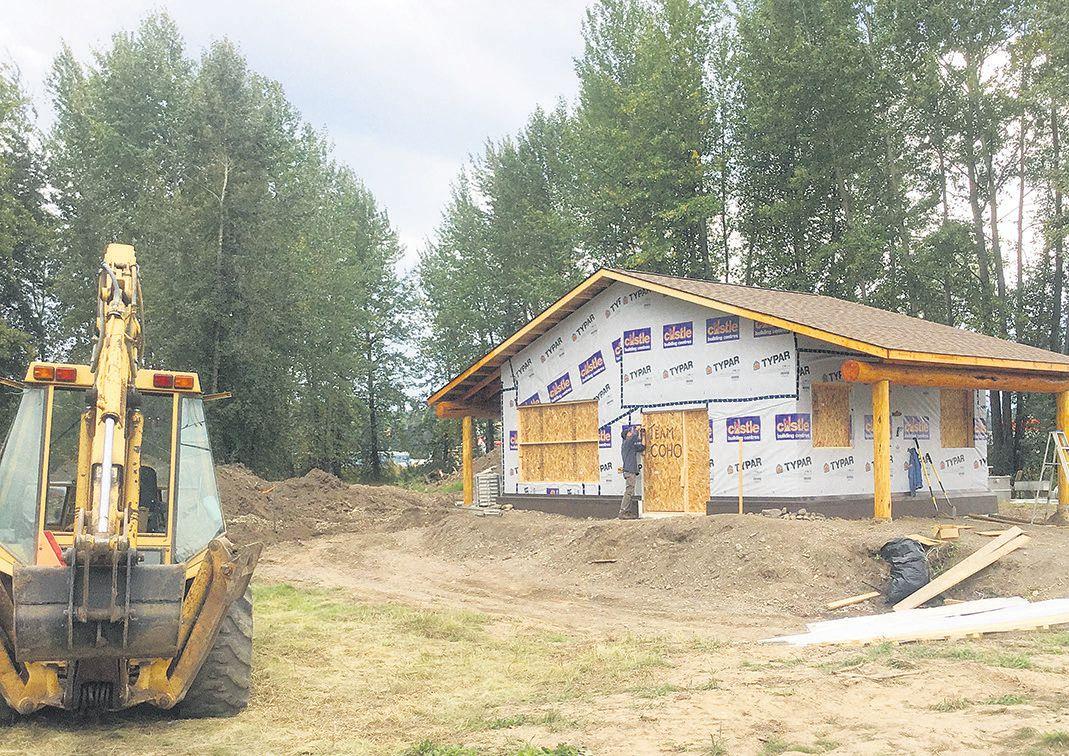
The Bulkley River, a tributary of the Skeena River in British Columbia, Canada, will be getting a modest boost in salmon production through construction of a new hatchery.
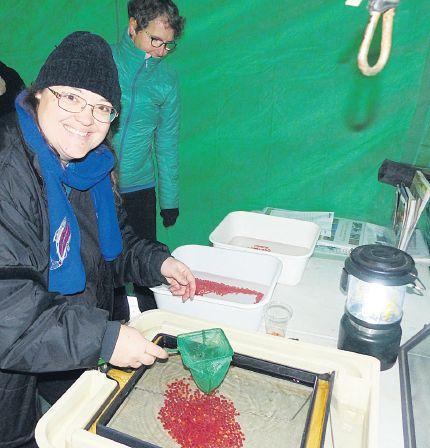
The project is organized by the Christian-centred A Rocha Canada, an international conservation and community-engagement organization, The organization’s representative in the local township of Houston is Cindy Verbeek. She has been helping the Upper Bulkley River Stream-keepers, local contractors, and a growing list of volunteers construct the facility.
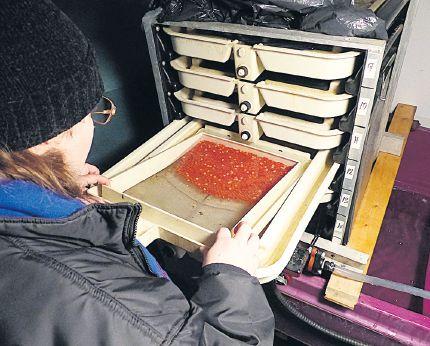
Verbeek said it’s a pilot project that began almost two years ago and saw the release of 4400 coho fry (Oncorhynchus kisutch) into the Upper Bulkley earlier this year. A that time a group of volunteers built a small pilot-scale hatchery and bred two female coho and four males taken from the river. The fish yielded about 6,000 fertilized eggs for incubation in Heath trays.
The new unit, which was scheduled to open towards the end of September, measures six metres by nine, and has all the necessary amenities. It will be limited to produce a small number of fry this year but will be able to accommodate much larger numbers of eggs and the equipment to hatch and rear them in the future.


Phase two of the project involves expanding the facility, allowing for the creation of the nature centre and environmental education centre.
The main object, Verbeek said, will be community engagement that addresses the needs of the fish in the Upper Bulkley River. Houston residents are very much attuned to salmon as part of their central culture
Verbeek outlined a list of problem faced by the seriously-depleted salmon stocks in the watershed These including a former silver, extensive logging, the installation of a railroad line that affects parts of the main stem, and ongoing problems with cattle farming that runs to the river’s edge.
- Quentin Dodd





A Rocha Canada project coordinator Cindy Verbeek working with volunteers and picking salmon eggs at pilot hatchery in Houston, BC.
New hatchery under construction earlier this fall.

For the first time it is now possible to access Cryogenetics’ patented solutions for cryopreservation of fish milt in SquarePack® at your facility.
Cryo-Lab for SquarePack® includes everything you need for:
• Quality Control
• Dilution and filling
• Cryopreservation
• Storage
• Software for production and inventory management
• Fertilization
• Access to our unique knowledgebase and procedures for best practice
• Consumables
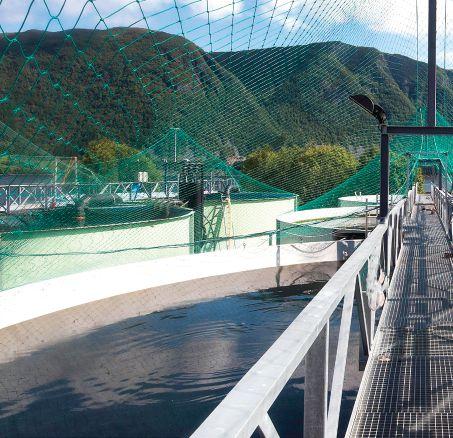
Gavins Point National Fish Hatchery
They also started using filter socks on the ponds and on drum filters for the sturgeon and endangered-species buildings. And they began a chemical treatment on their fish prior to stocking, to ensure no zebra mussels went along with them.
The facility also switched over to only hauling stock-out fish using well water and not surface water for distribution trips.
But with the first adult zebra mussel found in the lake in 2004, they knew they were going to have millions of the pesky creatures headed their way, and they needed to seek enough money from hatchery funders to filter all intake water from the lake.
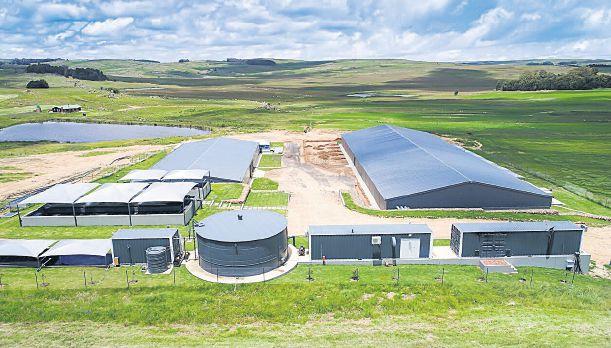
So, at a total cost of around $700,000 to the South Dakota Fish and Wildlife Service, the filter building, all the underground piping and two 30-micron filters were finished and installed last winter.
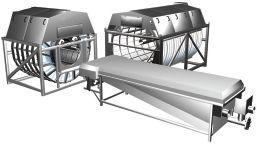
The two rotary drum filters installed measure about 3.5metres long and almost two metres in diameter. Each is capable of handling roughly 2000 gallons of lake water a minute.
Almost equally helpful, added Starzl, is the new pond-aeration equipment, which he believes is largely responsible for the unusually strong production the unit has seen in paddlefish.
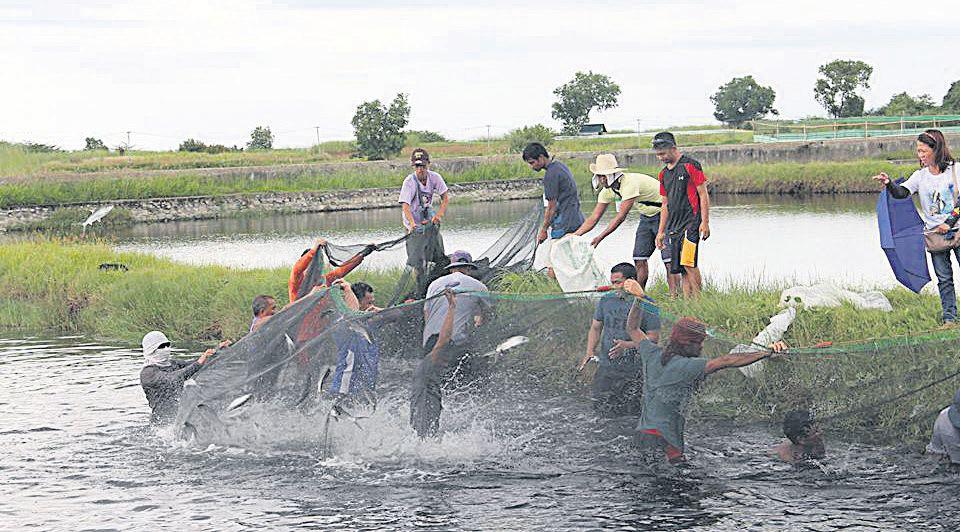
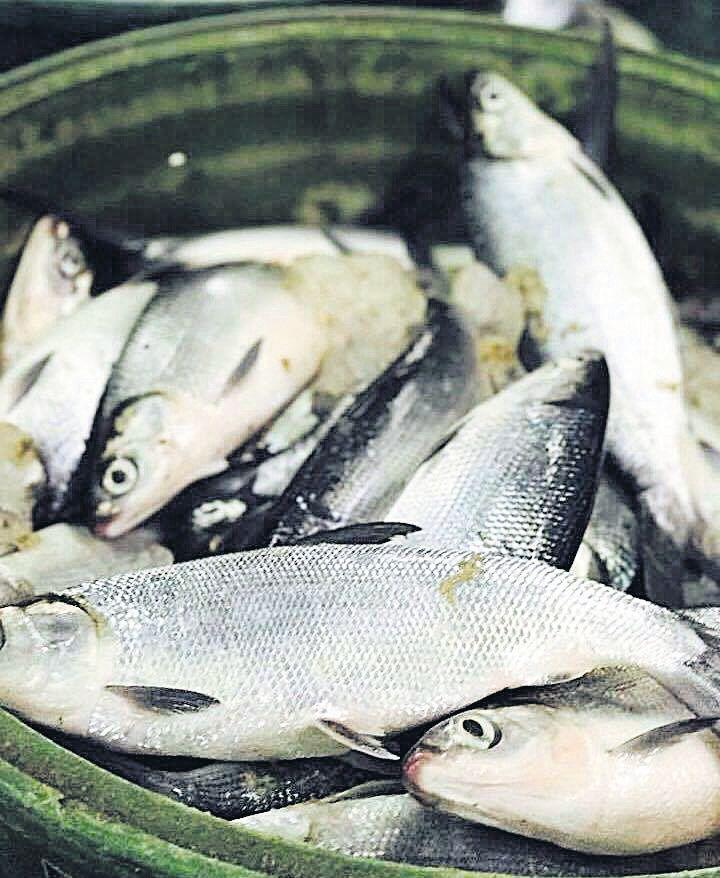
Starzl said the hatchery staff tagged 90,000 paddlefish for stocking-out this year, prior to putting them into earthen holding ponds. Usually they lose about 8% of the fish to predation and bacterial infection, so that would still mean over 82,000 25-cm juveniles going out at about three months of age.
“In addition to the new aeration equipment, we refined some of the early-culture tanks to focus on proper densities for the fish,” Starzl said. “We also focussed on getting the bacterial load down to a minimum in the earthen ponds. So I think all that made a difference (to boost production).”
continued from cover
Stanzl said he doesn’t think the new system will totally eliminate mussels getting into the new 24inch intake pipe from the lake, but
he indicated that the overall system upgrade at Gavins Point has been largely very positive.
- Quentin Dodd
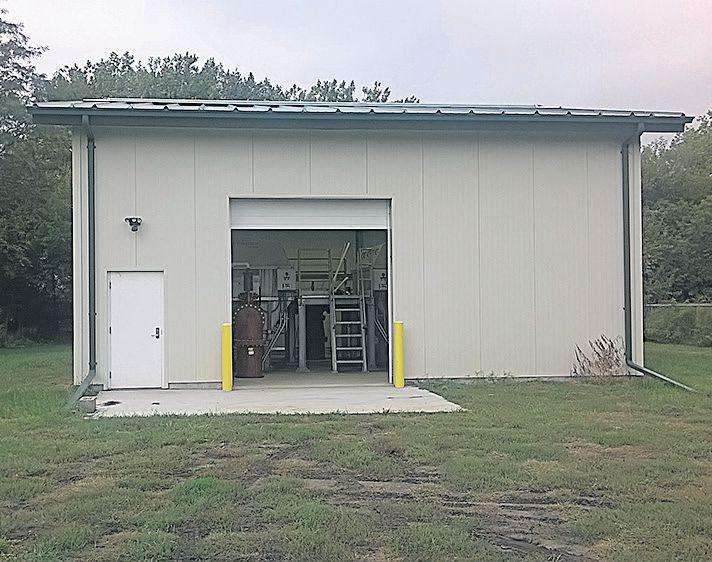
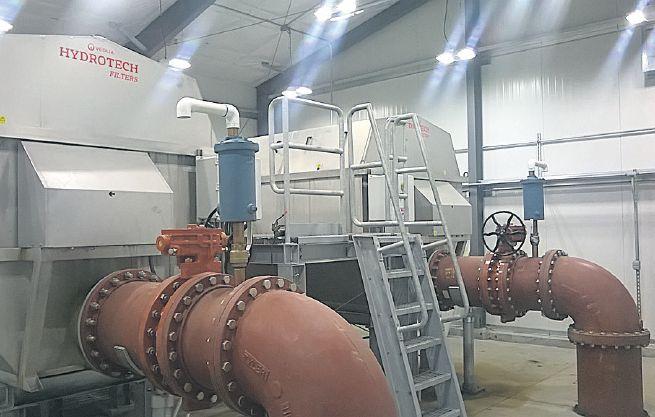
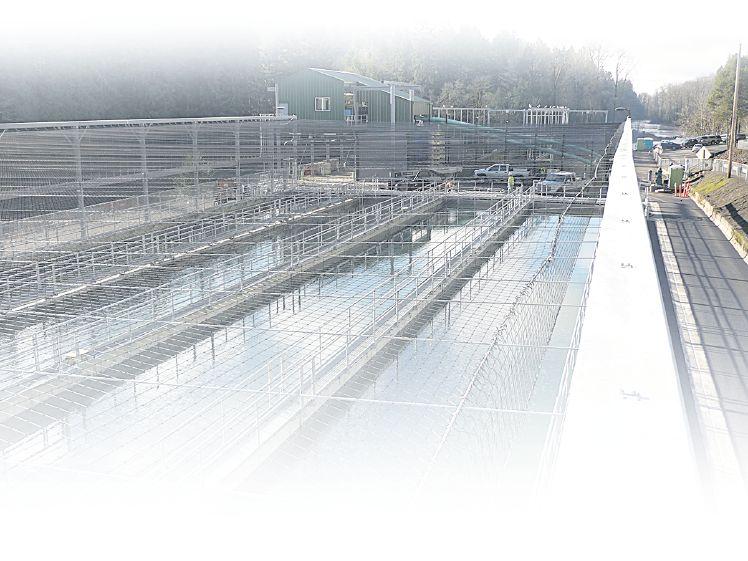
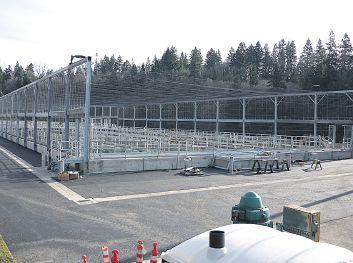
The filter building, all the underground piping and two Hydrotech drum filters were installed last winter. Each filter is capable of handling roughly 2000 gallons of lake water a minute.
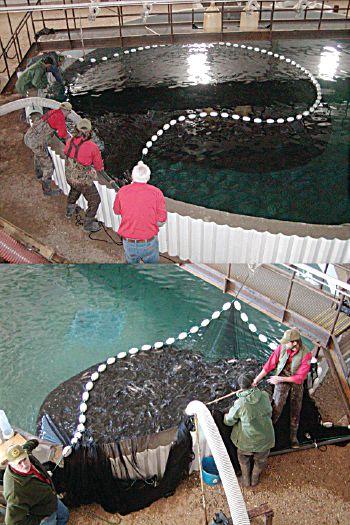
Hatchery staff tagged 90,000 juvenile paddlefish for stocking-out this year
COVER
Southern Advantage
who has over 20 years of trout production experience in both the Southern and Northern Hemispheres.
“Dunkeld is certified as free from all recognised trout pathogens and the certification meets the highest standards required by OIE, DEFRA (UK) and the EU. Health certification can be provided as required by individual countries,” he said.
The Dunkeld Hatchery health and certification program is monitored by Dr. David Huchzermeyer, who is supported by the South African Government Veterinary Services. Virology, bacteriology and parasitology samples are tested at the Onderstepoort OIE-approved Veterinary Institute. They are also in the process of completing GLOBAL GAP, BAP and ASC accreditation.
NORTHERN HEMISPHERE
“The next phase is the development of a Northern Hemisphere production facility so that our customers can obtain the same reliability and proven product all year round,” Charsley said. “We are also in the process of developing a large RAS facility for the production of trout for the table markets. South Africa remains a net importer of trout so we aim to sustainably contribute towards this.”
Ninety-five percent of the ova output is exported. Iran, Russia, Georgia, Romania, Turkey and Bulgaria are considered “large markets”. There are likewise shipments to the United Kingdom and Kenya and smaller market shares in Western Europe.
In South Africa they face some competition, he said, “The primary difference between Dunkeld and the other two producers is that we are dedicated to the production of live ova. The other producers are primarily fish producers that also produce eggs in the winter months.”
Asked about the hatching rate of Dunkeld trout ova and the industry average, Charsley said, “It’s a complicated question. I would think the industry standard guarantees a 90% hatch-out rate and we guarantee 95%. But we often find that it varies from country to country and farmer to farmer, with some efficient farmers achieving 99% and emerging
continued from cover
farmers only achieving 85%. However, to maximize our customers’ potential, we help guide them through the process to ensure the best possible results.”
BIGGEST CHALLENGE
Looking back to when they were setting up the company, he cited the biggest challenge was the procurement of state-ofart-equipment.
“South Africa is far behind in terms of RAS systems as the industry is still in its infancy so we had to go abroad to source and purchase most of our equipment. With a volatile exchange rate and a rather weak currency this made it challenging.
The other challenges included importing high quality fish feed as the South African products are not really designed for recirculating systems and, as Dunkeld owns the largest freshwaterrecirculated aquaculture establishment in South Africa, it needed a reliable feed partner. Due to legislation it was a challenge to obtain the correct permits to import feed. Fortunately, this is now all in place, Charsley said.
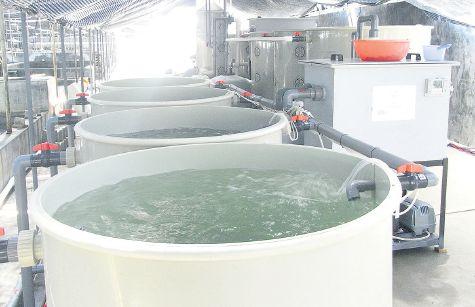
Dunkeld is located in Africa’s trout capital, Dullstroom Highlands of the Mpumalanga province. The facilities have 46 100,000 liter-capacity broodstock tanks, a nursery, a grow-out facility, and a hatchery. All these are fully insulated buildings. Each building represents separate epidemiological units and each system has its own filtration, biological filtration and water supply. Dunkeld currently recirculates, filters, sterilizes, degases, temperature controls and oxygenates ~72,000 cubic meters per day.
The location enables them to source water directly from “pristine underground water with no agriculture, aquaculture, residence or industry in the catchment area.
Charsley and his team attend all the major aquaculture shows and visit customers around the world. Most of Dunkeld’s market visibility, though, is generated by the social media, including the web. “There is also an amazing amount of word-of-mouth about us,” he said.
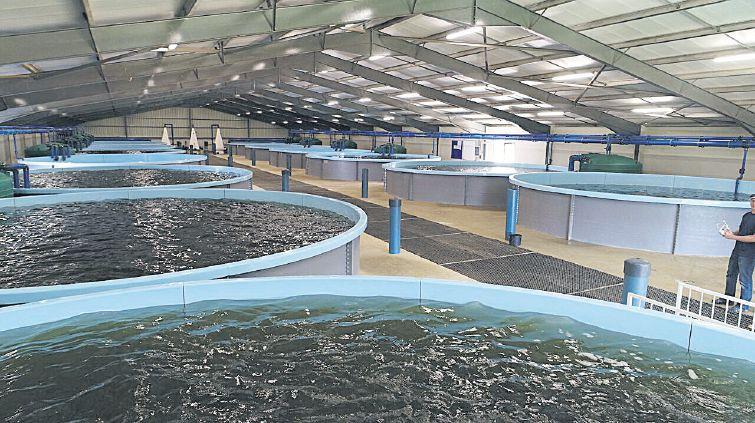
Above: The hatchery has 46 x 100,000 liter-capacity broodstock tanks.
Right: The state-of-the-art hatchery produces 60 million trout ova a year.
Below: CEO Roy Charsley with Dunkeld’s trout ova. Dunkeld is the Southern Hemisphere’s leading supplier of disease-free trout eggs.

(19-22 of February, Las Vegas, Nevada)

PROFILE
Akkeshi Oyster Hatchery -
Bringing Back Japan’s Oysters
Japan has long been recognized as a leader in oyster culture, with farming dating back to the 16th century. Following a loss of native oysters in Hokkaido during the 1980s, a hatchery on this northernmost island in Japan has been playing a key role in the cultivation and supply of this popular bivalve.
BY BONNIE WAYCOTT
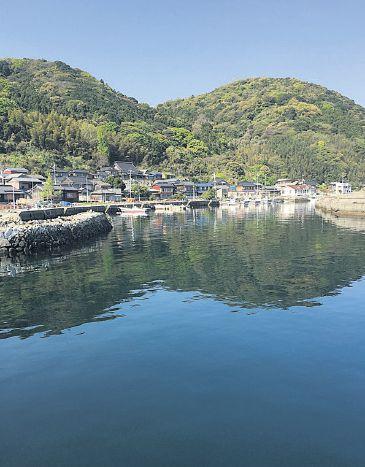
ne of Japan’s premier oyster culturing areas is Akkeshi Lake and Bay, located on the east coast of Hokkaido, Japan’s most northern island. Surrounded by ocean and fertile land, conditions for breeding oysters are pristine.
Lake Akkeshi is fed by the Bekanbeushi River and connects to Akkeshi Bay, an area of seawater that’s full of natural plankton. Fresh river water containing nutrients feeds the bay as it travels from the mountains and marshlands, while the cold subarctic Oyashio current flows past in the Pacific, slowing the oysters’ growth and allowing them to absorb nutrients for longer.
Using the difference in temperature and nutrients of seawater and freshwater, oyster farmers can also control the growth of their oysters to ship them fresh year-round. Thanks to these conditions, Akkeshi Lake and Bay are well known in Japan for their plump and juicy oysters with a naturally rich flavour. However, when a huge amount of them died around 1983, the need for a stable supply of spat became all the more crucial.
“Oysters are a signature product in Akkeshi so something had to be done,” said Satoru Takeyama of Akkeshi Oyster Hatchery, which opened at Akkeshi Bay in 1999. “Akkeshi has been a natural habitat for oysters since ancient times. In the early days natural oyster beds were very productive, and we don’t know why so many oysters died in the 1980s but luckily we were able to open our hatchery and start again. Given the popularity of oysters here, it’s important that we provide spat from local populations on a regular basis.”
OYSTER REARING
Conditioning broodstock is essential in the provision of larvae for culture. Those at Akkeshi Oyster Hatchery are reared and conditioned from December in two rearing tanks until they are ready to spawn. This usually requires about eight weeks from late winter to early spring. Around February, the fully mature gametes are collected and prepared for fertilization.
Newly hatched larvae are reared in ten tanks. When the larvae become spat and develop an eyespot and foot they are placed in another ten tanks that are 400L each. Recycled shell pieces are used to provide a substrate for them to settle on, so that single-seed oysters can be produced. As they grow, they are cultured in baskets in Akkeshi Bay.
“Our broodstock are chosen because they are suitable for the cold Akkeshi climate,” said Takeyama. “From them we gather between 40 and 60 million eggs per production cycle. We have two to three such cycles each year. The eggs are around 50μm when we gather them. Of course, we examine them microscopically to determine their appearance and ensure that they are in good condition. When gathering the eggs, it is also extremely important to avoid contamination with other microorganisms.”
Seawater is collected from near the hatchery and used in all the tanks. A sand filtration system is in place to ensure that the source water is treated to prevent entry of foreign material, while a UV disinfection system kills any bacteria. The hatchery also takes care to ensure that its biosecurity measures involve no chemicals.
ON-SITE FEED PRODUCTION
In addition to rearing oysters, the hatchery must also grow algae as a food source and has established a mass culture system of 32 tanks that are 500L each. When the spat reach a maximum size of 60μm, they are fed regularly until they develop to the fully shelled D veliger stage. They then feed on two types of diatom, from the D veliger stage until they reach around 5mm and are big enough for shipping.
“Once the oysters have grown enough, usually to around 5mm, they are harvested for sale and shipped to on-growing facilities in mesh bags,” said Takeyama. “Looking through the whole process, the production cycles and algae cultivation
Akkeshi Bay is located on the east coast of Hokkaido, Japan's most northern island.
are both working well. Our job now is to maintain these conditions.”
CONTINUAL IMPROVEMENTS
Akkeshi Oyster Hatchery employs five staff members throughout the year and two temporary workers who come to the hatchery during peak season. Four are responsible for oyster rearing and three are in charge of algae cultivation. Takeyama believes that their roles are vital to the hatchery’s success.
“Because we are rearing living things, it is crucial that the staff are always there and that they are able to come to the hatchery during weekends,” said Takeyama. “They have a lot of work to do, so we have to be flexible and adjust their work hours accordingly.”
There are also other areas to be aware of: According to Takeyama, the skills and techniques to produce oysters and cultivate algae must be passed on to the next generation if the hatchery is to continue operating in future. Cutting costs will also be key, for example by shortening the production cycle and developing more efficient ways to cultivate algae. Faced with these tasks, Takeyama is optimistic and it seems that the future of the hatchery is in good hands.
“We also need to maintain the genetic health of the broodstock we use and ensure that their genetic lineage continues,” said Takeyama.
“Yes, there is a lot to think about, but I know we can do it.”
Below
Below

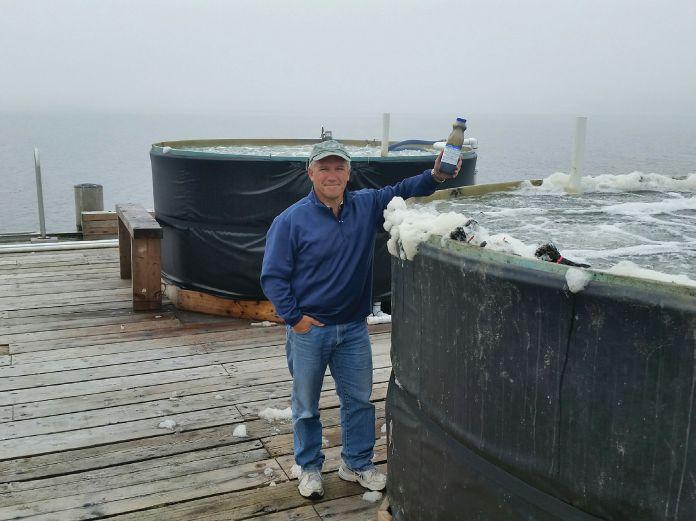
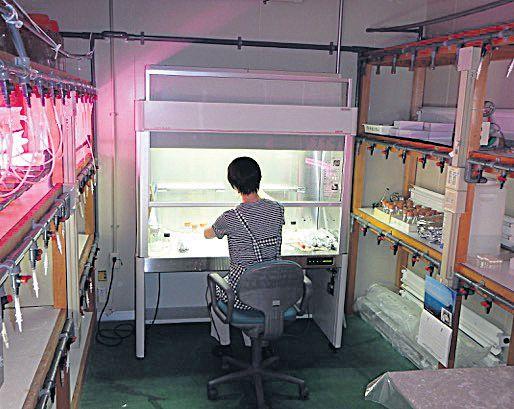
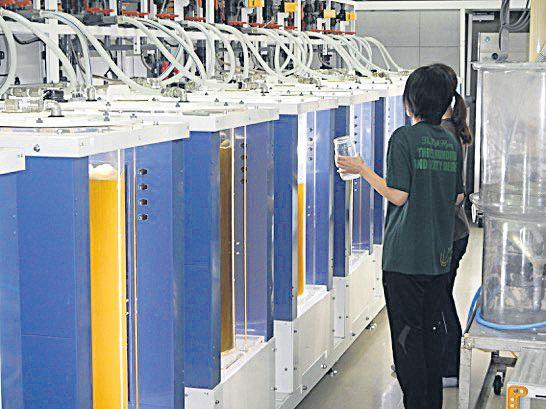



Photos courtesy Akkeshi Oyster Hatchery and Tokyo Kakijyo.
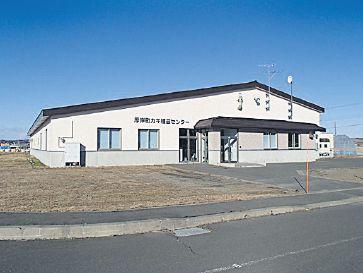
Above: Akkeshi Oyster Hatchery.
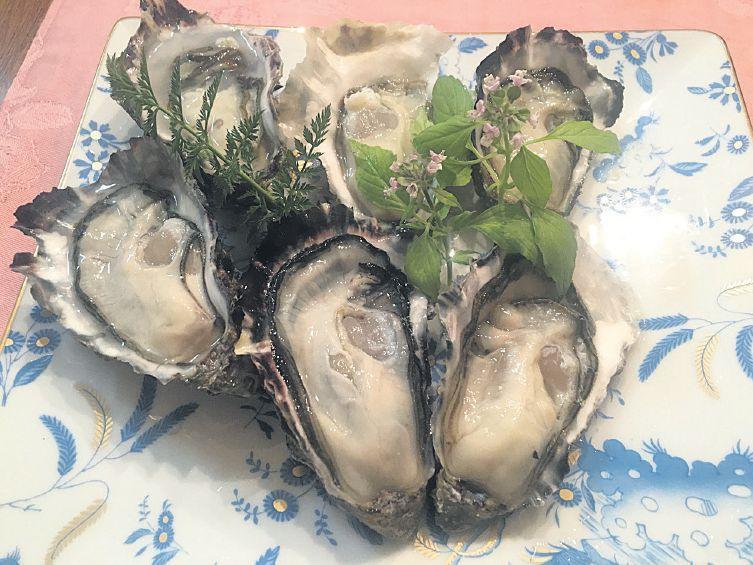
Right Akkeshi oysters ready to eat.
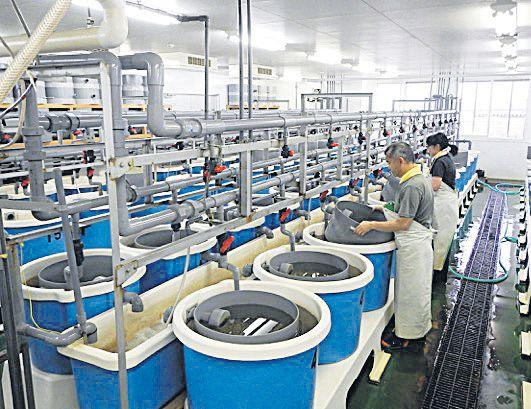
left: Seawater rearing tanks.
centre: Meticulous checks help staff avoid contamination.
Below right: Staff check algae cultivation tanks.
THE BUSINESS OF HATCHERIES
Knowledge transfer in the hatchery sector
Finfish and shrimp hatcheries deal with some of the most complicated life-cycle phases of any farmed organism and this poses a challenge that can only be successfully met with the right knowledge and experience.
ven for species such as salmon or catfish which have large eggs or a nutritious yolk sac the fry are extremely sensitive to environmental and pathological pressures. Succeeding in overcoming these stages with high survival and low deformities remains a challenge that requires know-how and the correct technologies.
The range of knowledge required goes from understanding water chemistry to biological requirements, nutrition, immunology, engineering of pumps, filters, tanks and pipes as well as having effective people management, project management and many other management skills.
Added to this we have constant information coming from universities and
other research institutions and innovation in feeds and equipment that the supply sector outputs on a continuous basis.
SOURCES OF KNOWLEDGE
Although aquaculture is an ancient form of animal production until a few decades ago most farmers relied primarily on the natural production of fry to grow their crops. The first species where industrial production became possible through planned supply of fry were species such as trout, salmon, carp, tilapia or catfish, all having relatively simple spawning and larval rearing procedures. Although research institutions played a role in the improvement of fry production
By Diogo Thomaz
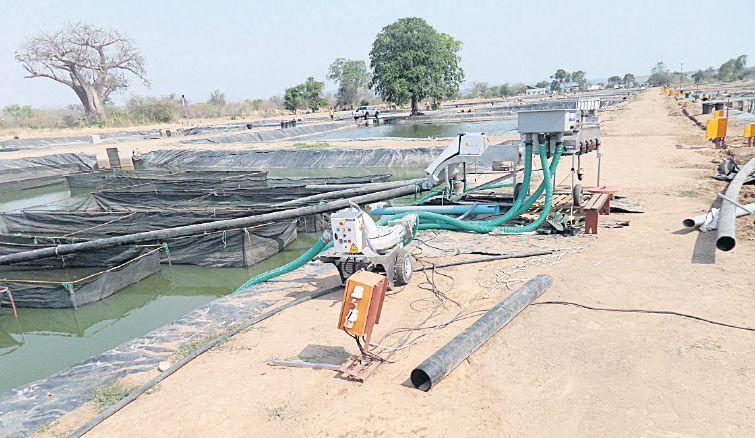
Although tilapia is a relatively easy species to reproduce and raise, this tilapia hatchery in Zambia faces many hurdles in terms of access to the latest production equipment such as graders and counters. Even if they can buy equipment, the know-how needed for the most efficient operation is not easily accessible and is often very expensive to purchase. Suppliers of feed and equipment could use internet-based technologies to improve support levels for distant customers.
for these species it was empirical work from pioneers that generated much of the knowledge required to get this industry off the ground.
With its development and growth, problems such as the need to select for faster growth and more resistant strains, or the increasing threat from disease and stress-related pathologies, required research institutions and private organizations such
as feed and pharmaceutical companies to step up with new information and new products that improved productivity in hatcheries.
From the get-go marine fish and shrimp larvae were more reliant on knowledge generated from research institutions although hatchery technicians were responsible for many of the protocols used today, especially when it comes to large-
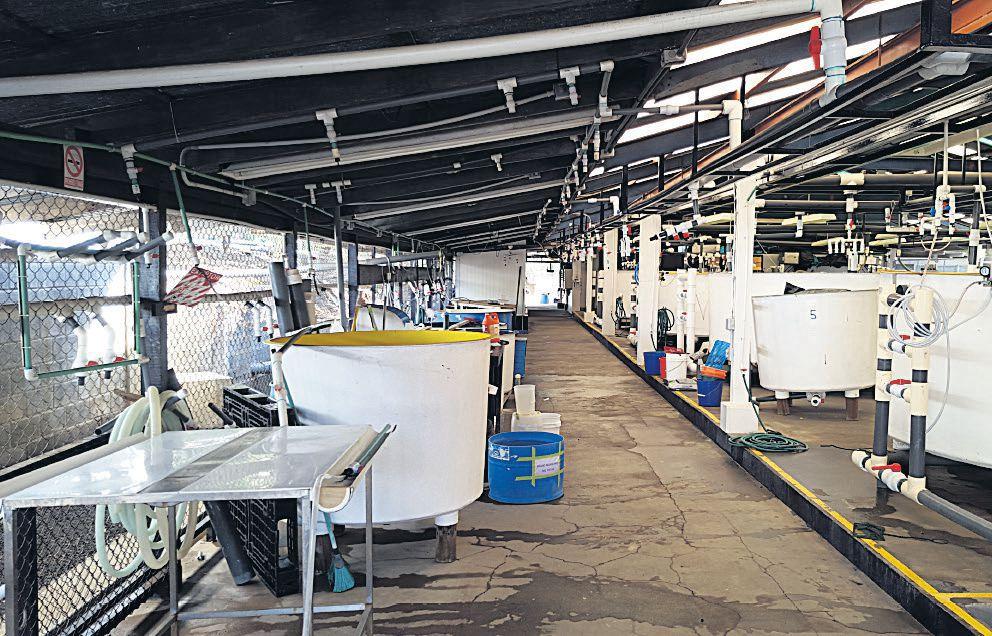
Consultants and senior staff from far away are often hired by hatcheries such as this one in Central America, to transfer technology and know-how into newly set-up hatcheries, especially when they are not close to sources of aquaculture expertise. This process should, however, be well managed by the hatchery as there is always the risk that the knowledge is applied but not passed on and retained in the hatchery, disappearing when the expert leaves.
scale production hatcheries. Here also the industry and especially nutrition companies have had a key role in the development of formulas and manufacturing technologies that allow for diets to be easily digested by very young larvae.
TRANSFERRING KNOWLEDGE
Having identified where hatchery production knowledge is created it is clear that there needs to be channels that transfer this knowledge to the hatcheries and specifically to managers and technicians producing fry and PLs.
Traditionally this transfer was made through technical and higher level academic institutions in the form of courses, degrees and post-graduates specializing in aquaculture and this is still an important channel, but it does not reach the vast majority of hatchery professionals.
Another important point of contact are visits from technical staff working for feed, equipment and pharma companies. These people often represent the main source of information about the latest technologies and developments in hatchery rearing. The training and information they provide for their customers is not only a good sales’ strategy but is also what keeps many hatchery staff up-to-date on the best production practices and technologies.
This transfer of knowledge is often made in meetings during aquaculture exhibitions but more frequently during customer visits. Some companies also produce extensive production manuals for hatcheries.
In today’s world, there are opportunities to transfer production know-how using technologies such as distance-learning courses, web or mobile-based training videos and other internet-related materials. Some universities are already using these technologies, but still only as part of their formal degrees.
IS THIS A REAL ISSUE?
When you contact hatcheries around the world it’s easy to spot the unbalanced distribution of information on sometimes even the simplest aspects of production, such as stocking densities or feeding frequencies.
Many hatchery managers in isolated areas must rely on their own ingenuity and experience obtained through trial and error. Regions such as the Mediterranean have accumulated great expertise regarding larval rearing of marine species that could have helped cod hatcheries when they started in northern Europe or marine species today being produced in Asia, but this knowledge took many years to travel even short distances, at large cost to those who pioneer new species…
Knowledge transfer is therefore a true problem in our industry and, I believe, an enormous opportunity for individuals and organizations to explore, be it as a business or simply the desire to improve aquaculture across the globe.
Diogo Thomaz, PhD, MBA, is a Technical and Business Consultant for the aquaculture industry, based in Athens, Greece. After 15 years as R&D project manager and other industry positions he now leads Aquanetix (www.aquanetix. co.uk), a data management and reporting service for the global aquaculture industry. He also heads RealSales Ltd (www. realsales.eu) a sales consultancy company that helps businesses expand their opportunities in export markets. He can be contacted by email on diogo@aquanetix.co.uk
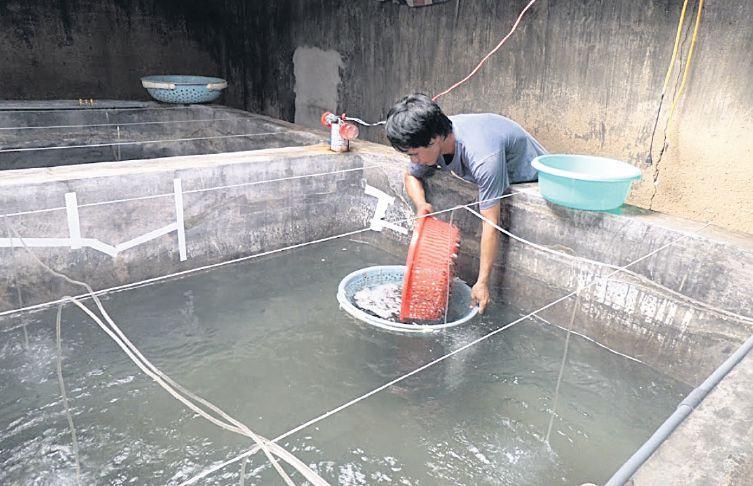
This small hatchery in Vietnam uses the same expensive, high-tech weaning diets we see in many Mediterranean industrial hatcheries, but the staff was unsure about their use and of the impact of each diet on issues like deformities or survival of their larval batches. Quickly it became clear that the attitude of many suppliers in this region was one of selling products but not really supporting technicians. This may be linked to the many, small and isolated hatcheries spread over these territories, but if the product reaches the customer companies should make sure that support also reaches the user.
With 80 Years of Aquaculture Filtration Expertise, it’s time we talked.
• Sand Filters • Bead Filters • Bio-Filters
• Degas Towers • Fractionators • Pumps
• UV Sterilizers • Ozone Systems
• Heating and Cooling • FRP Fabrications
• Instrumentation and Controls • Valves
• Regenerative Blower

T:
www.sivatsi.com
Kiwi researchers test concrete condos for juvenile paua
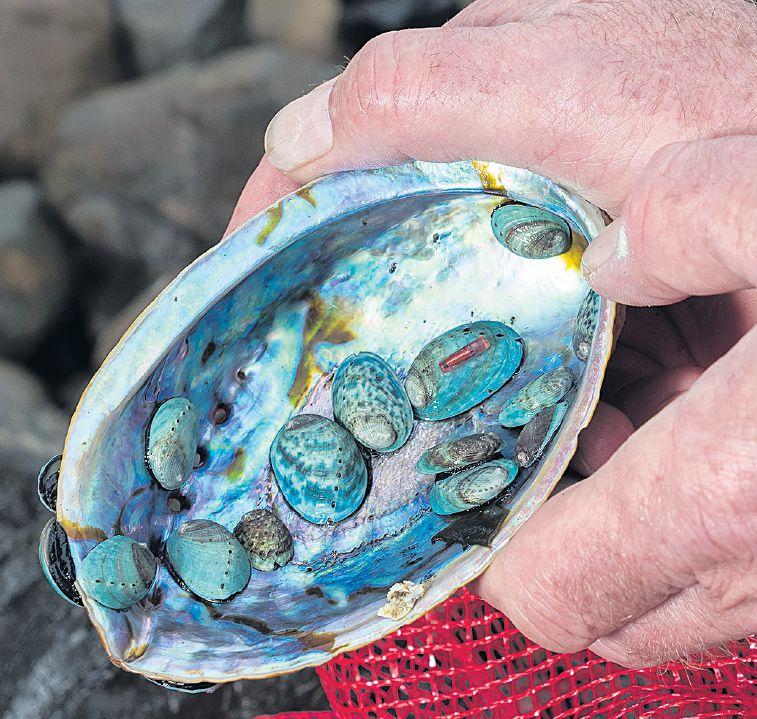
When a major earthquake hit the Kaikoura region of New Zealand’s northeastern South Island last November it lifted an extensive section of the area’s intertidal zone by as much as five metres, leaving enormous numbers of the area’s paua abalone (Haliotis iris) high and dry. Efforts to get them back underwater before they died were largely unsuccessful. But National Institute of Water and Atmospheric Research (NIWA) scientist Reyn Naylor is working with the local Paua Industry Council and members of the paua
for optimal density, and paua stocking- and survival rates.
Paua mature at somewhere between three and five years old, Naylor said, when they leave their shelters to come out and breed, at a size of about 125mm, which is the legal harvest size. So NIWA will monitor survival rate the 50 or so 30mm juvenile shellfish released with each block prior to recruitment into the fishery and ultimately the breeding population.
If this works well they’ll put out another 12 blocks in the Kaikoura area,
More efficient modular and flexible stacking systems
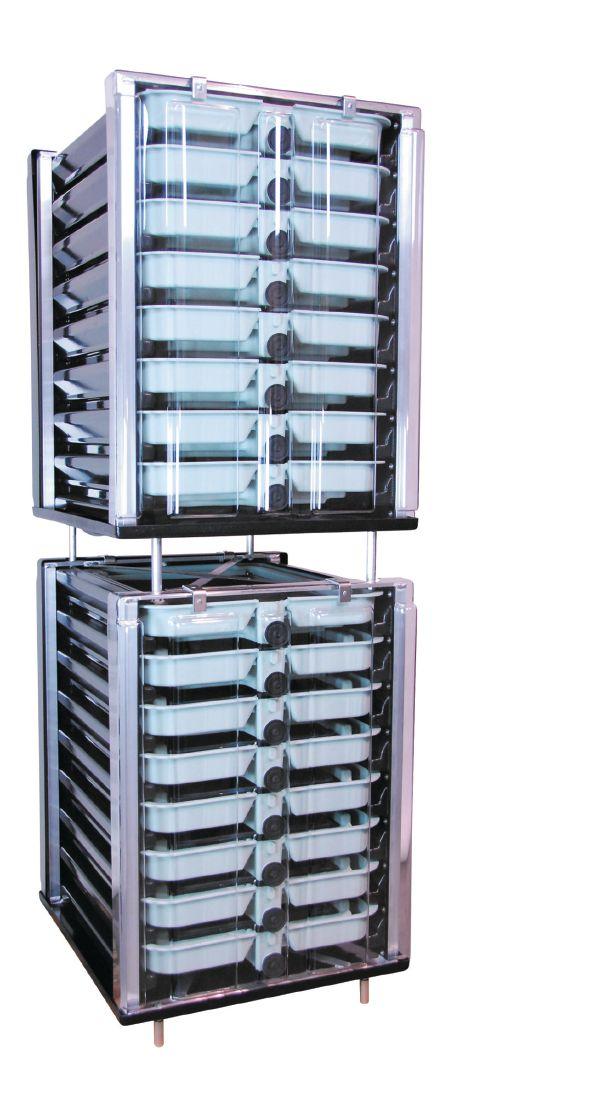
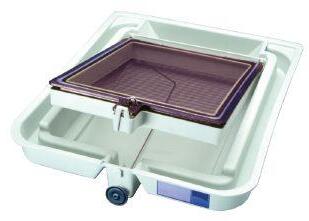
Better survival rates Easy isolation options Maximize manpower, floor space and water supply Vertical systems can be stacked in 4-, 8-, 12- or 16-tray configurations
Photo: Dave Allen
Juvenile paua.
Philippine broodstock program aims to improve quality and quantity of milkfish fry
he Philippines’ perennial shortage of milkfish fry may find its resolution in the National Broodstock Development Program (NBDP), an initiative of the Department of Agriculture – Bureau of Fisheries and Aquatic Resources through the National Fisheries Research and Development Institute (NFRDI).
“A broodstock development program is considered one of the limiting factors faced by many industry stakeholders. This may be addressed with the help of the government by establishing a broodstock development facility which will cater to the needs of interested stakeholders for their broodstock requirements by operating a breeding and hatchery facility,” Francisco Santos, OICChief at the Aquaculture R&D Division of the NFRDI, told Hatchery International.
“With the increased number of hatcheries operating in the locality, producing and obtaining juveniles for aquaculture use is seen to have greater feasibility and economic viability,” Santos said.
NBDP, which has been approved but not yet signed, covers the stock inventory of existing breeders, hatchery facilities
and manpower, selection and upgrading of broodstock, development of breeders, screening and identification of program recipients, upgrading of knowledge and skills through training and technical staff.
“While milkfish is important, its production has been hindered by various problems. Among the most critical of these is the limited supply of fry,” he said.
Based on 2015 figures, the milkfish requirements of the Philippines was estimated at 2.5 billion fry. Private and government hatcheries supplied only one billion. The rest were either imported, mostly from Indonesia, or were wild fry.
Local milkfish fry are priced at about $0.01 per piece and those imported from Indonesia are 50% cheaper. He said that factors such as high costs of labor and power drive Philippine pricing.
One of the components of the NBDP is broodstock dispersal to eligible private hatcheries.
But what will be the incentive of Philippine hatcheries when there is a market which has access to imported cheap fry, even if quality is sometimes compromised?

LARVIVA ProStar t™ is the only ear ly weaning diet with Bactocell®, an unique probiotic developed by Lallemand and approved by the European Commission for its documented effect in reducing the occur rence of vertebral deformities in fish larvae and fry.
Milkfish broodstock harvest and sex identification during training program provided by the Asian Fisheries Academy in Pangasinan, Philippines.
Credit: Asian Fisheries Academy
“The broodstock dispersal cuts down their expenses. They wouldn’t have to wait for five years, the time it could take for the broodstock to spawn. They pay back the government in eggs and fry,” he explained. The beneficiaries give back 10% of the total eggs and 5% of total fry produced.
The law of supply and demand also comes into play.
“With an increase in the number of hatcheries comes the increase in fry production; it will bring down the cost of Philippine milkfish fry,”said Dr. Joseph Rayos, fishery biologist at NFRDI.
The Bureau of Fisheries and Aquatic Resources, through NFRDI, continues to invest and support the milkfish broodstock-hatchery R&D program. “The
national government provides funding to R&D efforts addressing its remaining technical constraints, in a similar manner to how Canada has been supporting salmon R&D,” Santos said.
R&D activities are currently being conducted for various aquaculture activities. With regard to government finfish hatchery-reared species and fingerling production, several facilities have already been established to develop sub-sectors, such as those of the NBDP, he added.
Milkfish is the Philippines’ top aquaculture product. Other major species farmed are tilapia, seaweed and shrimp.
-Ruby Gonzalez
Since 1958, Faivre has been developing and manufacturing high quality equipments for the aquaculture industry
Live stock management
Fish pumps - Fish graders - Fish counters












management




Left: Harvest time in a fishpond in Pangasinan, Philippines. Lack of local fry supply is putting a cap on production.
Credit: Asian Fisheries Academy
Below: Ready for the market. Milkfish is the Philippines’ top aquaculture product.
Credit: Rene Santamaria
New Zealand’s Cawthron Institute
team of
Cawthron
BY BEN NORMAND
hose who have lived in New Zealand can tell you that Kiwis excel at devising new ideas to work in their unique environment. There are few places where this excellence is demonstrated more regularly than at the Cawthron Institute.
Located in Nelson, on the northern shore of the South Island, the Cawthron Institute was founded in 1919 following a large bequest from Thomas Cawthron. This bequest was born of a belief that science was to play an integral role in the development of the burgeoning western nation.
FOCUS ON GROWTH AND PRESERVATION
Since inception, the scientists of Cawthron have, “focused firmly on research that contributes to the economic growth of New Zealand and the preservation of its special environment.” Initially this research was focused on exploring agricultural questions, but they branched into forestry as the value of New Zealand timber rose in international markets. Today, their scientific pursuits are centred on protecting New Zealand’s marine and freshwater environments via a focus on dairy, seafood and aquaculture research. The success of these pursuits has allowed Cawthron to become the country’s largest independent science organization.
Their current position as the national leader in aquaculture research has led them to partner with private companies on a variety of projects. In keeping with Thomas Cawthron’s intentions, the science coming out of these partnerships helps the burgeoning aquaculture
industry to flourish by reducing uncertainty and improving efficiency.
To Serean Adams, Aquaculture Group Manager, these partnerships mean that companies are, “in control of their own destinies.” The most successful of these partnership stories to date is that of the development of the SpatNZ Greenshell™ Mussel hatchery, now located in the Cawthron Aquaculture Park.
GREENSHELL SUCCESS STORY
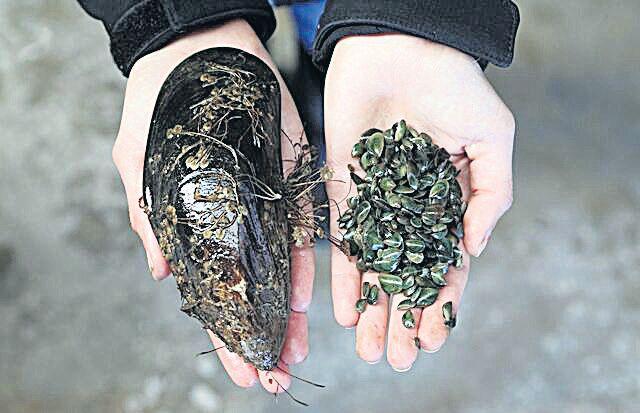
For decades, New Zealand Greenshell Mussel growers relied exclusively on wild-caught spat. Any farmer can tell you about the problems associated with this practice. From international markets that prefer the colour of the female mussel, rendering half your stock less valuable, to the real risk of losing 100% of your spat during transport, wild-caught spat offers the farmers very little certainty. In 1993, this problem caught the eye of senior scientist Dr. Henry Kaspar, who wondered why the industry must use unreliably wild spat whereas, “other farming practices had been selectively breeding for desirable traits for centuries.”
With an increasing international demand for this national delicacy, the government offered Cawthron over $10 million to pursue the technology needed to build a Greenshell Mussel hatchery. The intention of the project was to provide more certainty for growers, so that they in turn invest the resources needed to help the industry reach its full potential. By 2002, they had successfully reared Greenshell mussels in hatchery conditions, giving the team more confidence in the commercial potential of their research.
INNOVATIVE TECHNOLOGIES
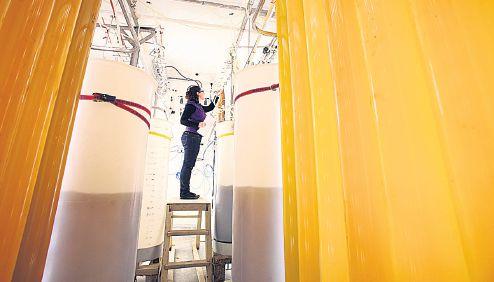
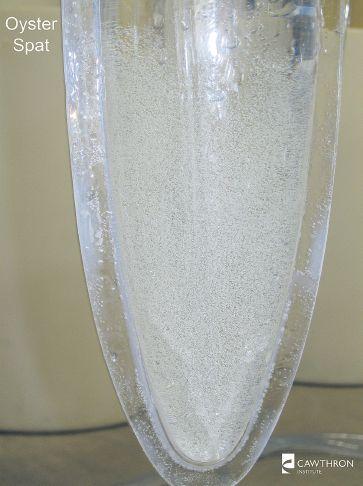
An example of the many innovative technologies to come out of this research was the invention of the Cawthron Ultra-Density Larval (CUDL) Rearing Tank. In this system, up to a million mussel larvae are introduced into a 2.5 litre oval-cylindrical tank. A constant stream of water carefully mixed with phytoplankton grown onsite pumps through the tank, and a fine mesh prevents the larvae from being washed away. The ability to control constant feeding rates and the increased capacity for larval density results in dramatic increases in efficiency and
AQUATIC
• EPA registered broad spectrum disinfectant and virucide* • Maximum 10 minute contact time
• For use in cleaning and disinfecting environmental surfaces associated with aquaculture
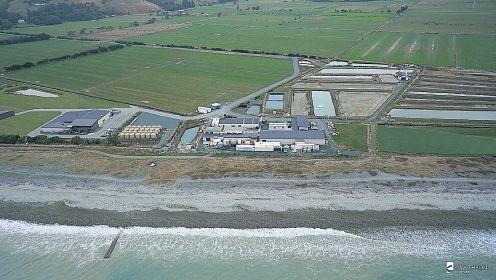


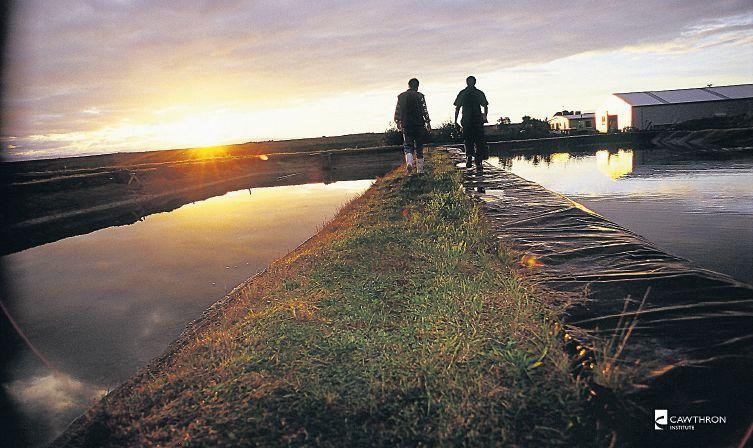
An aerial view of the Cawthron Aquaculture Park near Nelson, New Zealand (Cawthron Institute).
A worker tends to the algae tanks (Tim Cuff).
The New Zealand Greenshell™ Mussel. Like all mussels, colouring can vary. Pictured here is a large adult and many spat (Cawthron Institute).
reliability, beyond other rearing units tried.
The CUDL Rearing Tank and other technology has now been implemented on a commercial scale at the SpatNZ Mussel Hatchery. The hatchery is located on land leased within the Cawthron Aqauculture Park. A joint partnership between Sanford, one of the country’s largest Greenshell producers, and the central government, SpatNZ is, “pioneering natural, selective breeding of Greenshell mussels so our growers have the spat they need to grow the best mussels in the world.”
The first of the mussels hatched at SpatNZ to be harvested began coming off the lines in April 2017. They aim to be producing the spat required for 30,000 tons of market-size mussels by 2019. Serean Adams confirms they are on track to do so.
TACKLING OA
Having, in a sense, passed the mantle of Greenshell spat rearing on to industry, Cawthron has forged ahead into tackling another upcoming issue for mussel growers: ocean acidification (OA). Greenshell mussel broodstock were taken from the Marlborough Sounds and spawned specifically to create new family lines. Descendants from each line were then exposed to varying acidic environments and currently normal environments. Their condition was then monitored until the D-stage. Mussels are most vulnerable to environmental acidification at this stage as it is when they are required to grow their shell most quickly.
Dr. Norman Ragg, a shellfish researcher with Cawthron and team leader in these trials, said, “Preliminary analysis of our trial data suggests different families have varying resilience to ocean acidification during the fragile early life stages. This means there’s genetic potential within the New Zealand mussel populations to adapt to rapid acidity changes.”
NEW SPECIES DEVELOPMENT
In another industrial partnership, the Cawthron Institute is working with Waikawa Fishing Company, the University of Auckland and Zebra-Tech to develop best practices for rearing larval and juvenile New Zealand Scampi. From this, they hope to help foster a new aquaculture sector.
In 2016, the Institute announced that, in a world first, researchers had successfully hatched eggs from wild-caught Scampi and reared them to early adulthood in their
hatchery. Prior to this, only the first larval stage had been recorded, back in 1976, and so this program has offered scientists a view into the early life stages of the Scampi for the first time.
Kevin Heasman, a team leader on the Scampi Project, was quoted as saying, “We’ve got a long, long way to go, but compared to two years ago, we’ve already come a long way. Some people work a species for years and never get past the larvae stage, and we got the larvae through in the first year. While there is a lot more work to do, we’re very excited about the potential for this species.”
SHELLFISH AND SALMON
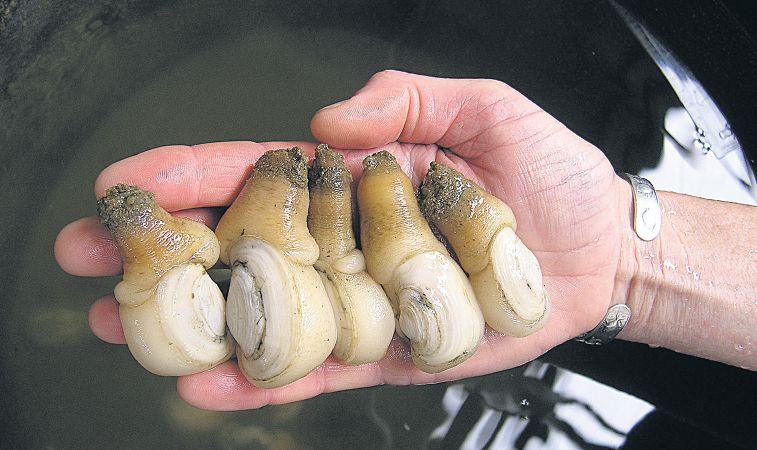
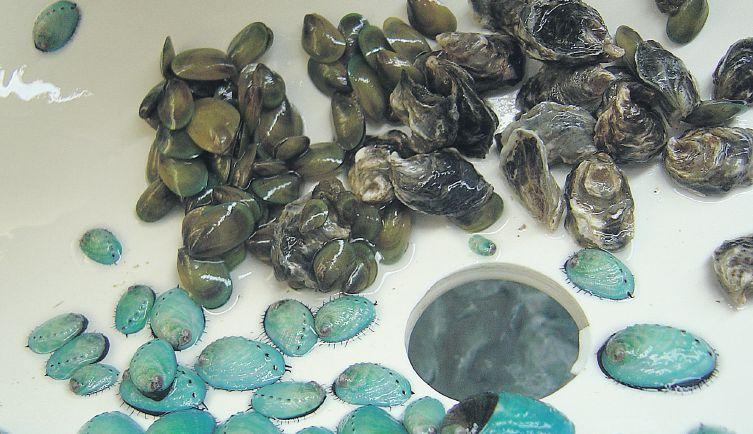
The Cawthron Institute is also currently rearing Pacific Oysters, Geoducks and is working on an extensive, nationwide study in partnership with New Zealand King Salmon, and other industry partners, to improve the feed conversion ratio (FCR) of King Salmon by developing a speciesspecific diet for use on grow-out sites.
With roots deep in industry-leading research, a world-class team of researchers, and a drive to continuously work to protect the nation’s aquatic resources, the Cawthron Institute is poised to remain one of the most important research institutes in the country.
For more information go to www.cawthron.org.nz.





The CUDLS system in action, housing Pacific oyster spat (Cawthron Institute).
Workers tend to the algae ponds that help supply the Cawthron Aquaculture Park (Cawthron Institute).
The Institute is working with a number of species including geoduck (above), scampi,salmon, mussels, oysters and paua.
Exhibition: Visit our stand at in Munich 14-18 May 2018, Hall A2, Stand 208
Recirculating
Aeration and degassing systems
Wastewater treatment plants for industrial and domestic sewage
Bioscrubbers and cooling towers
EXPO-NET Danmark A/S
Georg Jensens Vej 5, DK-9800 Hjørring, Denmark
Email: plast@expo-net.dk www.bio-blok.com - www.expo-net.com


The BIO-BLOK ® filter media is a Danish manufactured and patented product.

•
•
•
Michigan plans to augment lake sturgeon stocks
Lake sturgeon (Acipenser fulvescens) was all-but extirpated in the late 19th and early 20th centuries by logging, dams and commercial over-fishing. Now, however, it may make a comeback in parts of Michigan, thanks to a hatcherybased stocking program.
Speaking this summer, shortly after the department released 193 three-monthold lake sturgeon into the Tittabawassee River, Jim Baker, manager of the Michigan Department of Natural Resources Southern Lake Huron Management Unit, said they are hoping the species will take well to the location and stay there.
•
The eventual intent is to reintroduce lake sturgeon into the state’s Saginaw River watershed. This is the first time the department has reintroduced the species to that area, but said that success would not likely be known until about 2040, when the slow-growing, slow-maturing fish start breeding. The hope is to see sturgeon re-
establish themselves in the Great Lakes ecosystem.
Baker said that the fish survive well once they’ve grown to 6-7inches long (1518cm), but smaller fish are vulnerable to predation, thus limiting overall recruitment. But staff researchers now estimate that up to 50% of fish released at at that size will survive to the following year, and have a better survival rate after that.
The sturgeon restocking effort into the Saginaw river is one of several lakesturgeon programs across the state, including the Black River, and Black, Mullett and Burt Lakes. The fish released into the Saginaw were surplus production for that part of the program.
The department now has several partners helping with funding, including Michigan State University, the local power company, and a program called Sturgeon For Tomorrow.


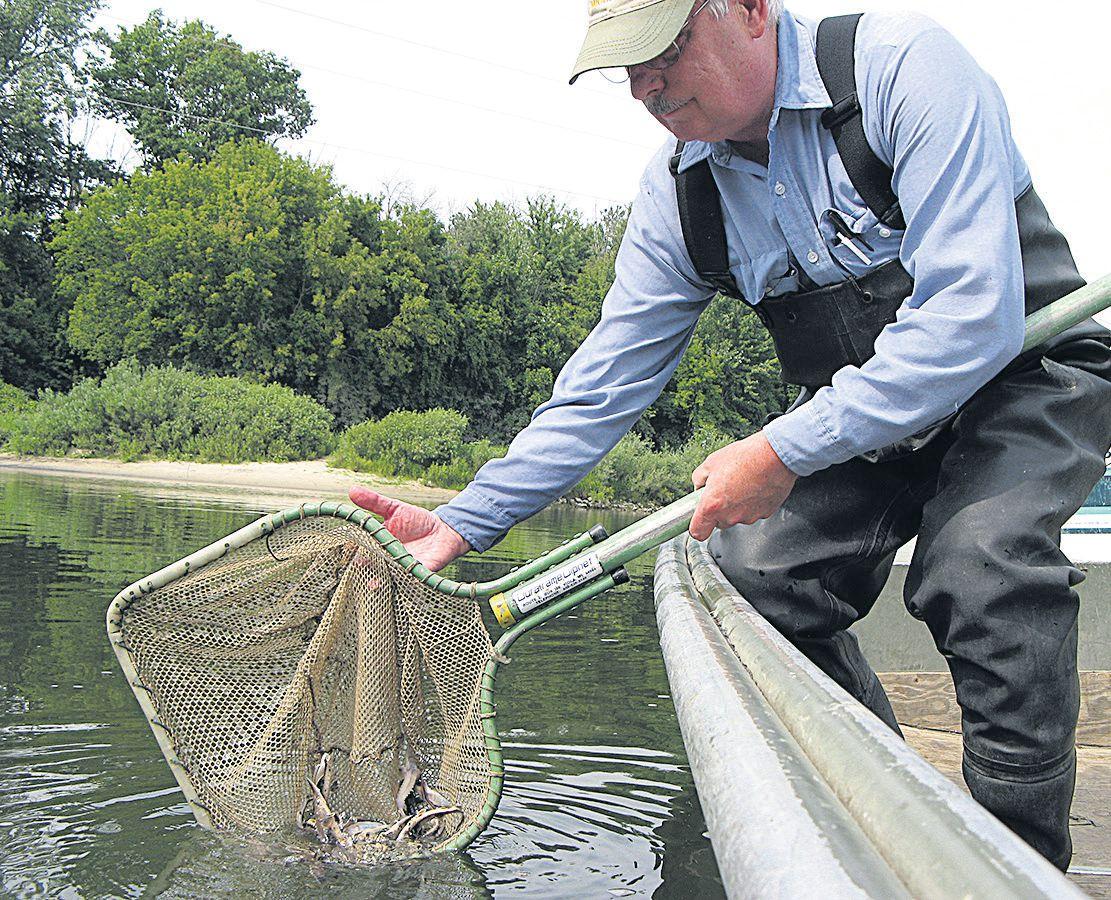
The juvenile lake sturgeon seen here were recently stocked in the Tittabawassee River as part of rehabilitation efforts in Michigan.
Enhancement hatchery battles gov’t over flow rates
As this issue of Hatchery International went to press low water flows and rising temperatures were putting fish at risk at the Chapman Creek Hatchery in Sechelt, British Columbia. And, according to Dave Burnett, executive director of the Sunshine Coast Salmonid Enhancement Society (SCSES), the group was at odds with the British Columbia Ministry of Forests, Lands, Natural Resource Operations and Rural Development (FLNRO) over concerns about low water flows.
SCSES is a not-for-profit organization focused on stocking coho and other salmon in the area. According to their licence, the hatchery is not authorized to divert water from the creek if the flow rate is at, or below, 200 litres per second. The flow rate is moderated by a diversion run by the Sunshine Coast Regional District which had not authorized increasing the flow rate.
“All the data is there saying, please, we need more water,” said Burnett. “The flows are really bad. You’re killing the fish that are in the creek.”
“The Water Sustainability Act lists Chapman Creek as a sensitive stream because of its valuable fish populations,” said a spokesperson for the government agency. “Streams with such a designation are intended to receive enhanced environmental protection. The priority in managing the streamflow is to protect the population of naturally spawning salmon in the creek and its tributaries.”
Burnett countered that there wouldn’t be fish in the creek if it wasn’t for the SCSES’s efforts and that without an increased flow rate, they would be forced to release roughly 80,000 fry prematurely. FLNRO reps encouraged the SCSES to seek out alternative water sources, however there were few options given the limited financial resources of the organization.
“There is no alternate water supply for us,” says Burnett. “A recirculating system would cost an arm and a leg. And it’s a volunteer organization.”
- Matt Jones
Plans for hatchery withdrawn
Canada’s Cooke Aquaculture recently withdrew its option to purchase 25 acres of land in the Granville Beach area of Nova Scotia, a province on the country’s eastern seaboard. Company spokesperson Nell Halse, wrote in an email to Hatchery International: “We have not given up looking for a location for a hatchery in Nova Scotia. We just eliminated the property in Granville Ferry because it did not meet our requirements.”
Halse is reported in the Annapolis County Spectator as saying that tests “determined that the land is not suitable,”
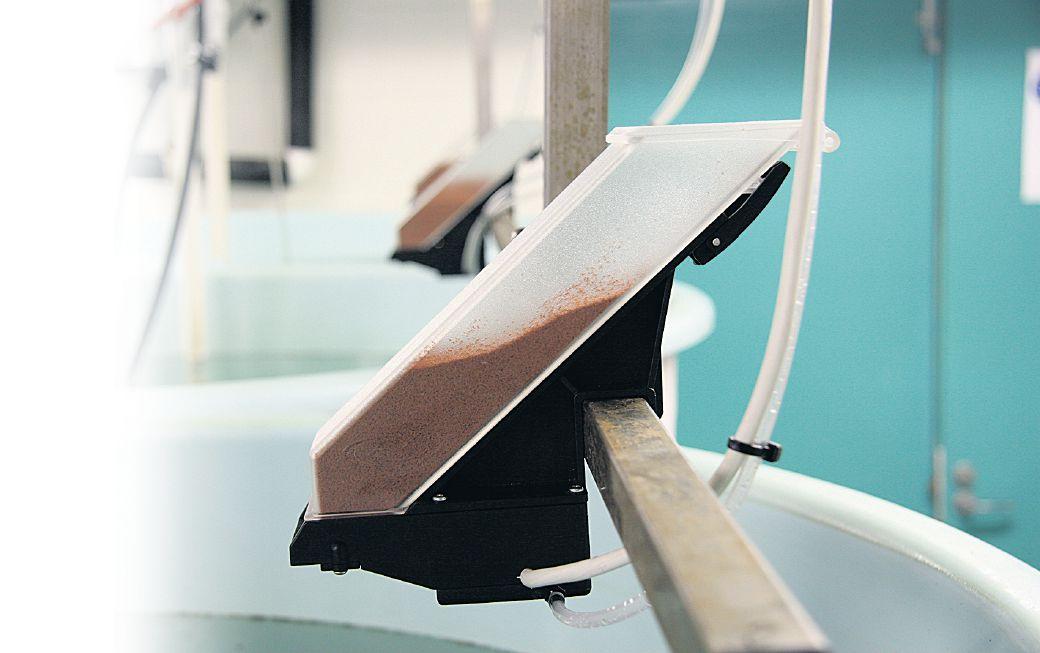
HATCHERY FEEDING SYSTEM
Purpose-designed complete feeding system for any hatchery.
The system caters for ALL feeds, live, liquid and dry, from Algae, rotifers, Artemia to microdiets and weaning diets.
Fitted with a computerized, touch screen controller, the system is extremely flexible with feeding schedules and feed amounts (as low as 50mg per feeding event).
so the location is no longer under consideration. There had also been some local opposition to the project: Last summer when word spread that Cooke had accepted an offer to purchase the property in order to build a fish hatchery a local Rate Payers Association was quick to express its opposition.
Cooke officials reportedly offered to get together with the community group to discuss possible plans for the property.
“We….have no idea why anyone would oppose a project before knowing anything about it,” Halse is cited as saying. “No decision has been made and, if we did want to build here, we would have to comply with all the relevant environmental regulations and we would want to meet with the community before construction.”
- Quentin Dodd


For more information: Dr Sagiv Kolkovski, Department of Fisheries Western Australia Tel: +61-8-9203-0220 • Email: skolkovski@fish.wa.gov.au • Skype: sagiv29

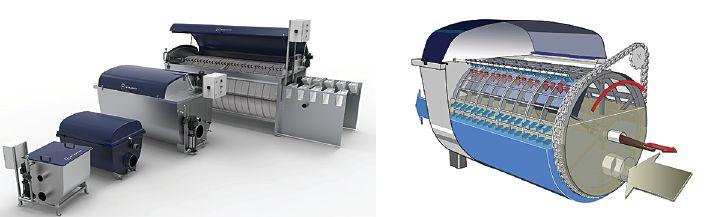
WMT DRUMFILTER
Innovative design delivers improved structural integrity, reduced weight and increased submergence. These innovations reduce investment and ownership cost.
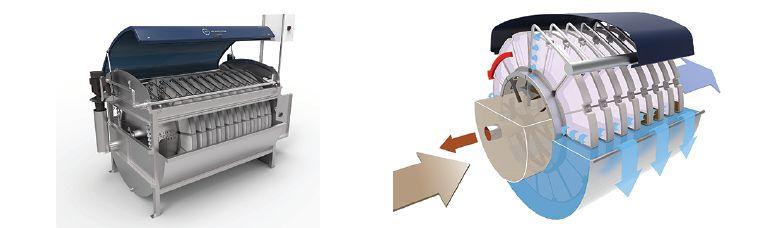
WMT DISCFILTER
Compact modular microscreen for high ows and ne lter openings.
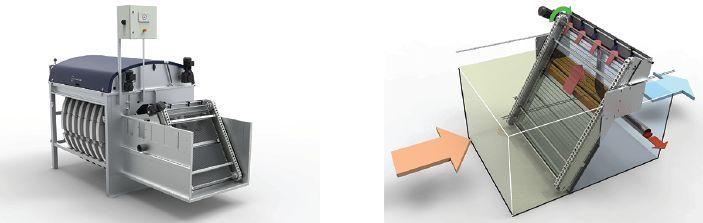
WMT INCLINED SCREEN ideal from RAS applications
Roughing lter installed upstream or Drum lter or Disc lter.
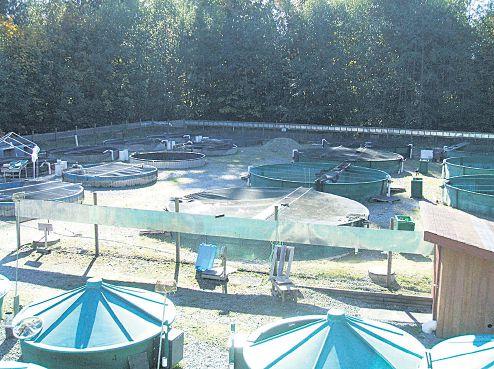
Circular tanks at Chapman Creek Hatchery.
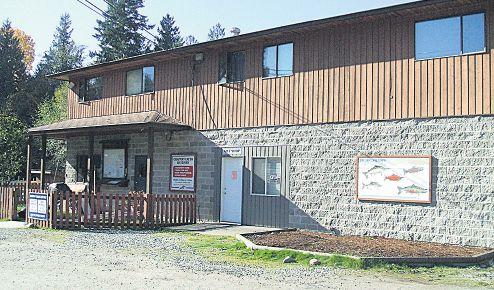
Chapman Creek Hatchery.
NEW SPECIES
Almaco jack the focus of research at Florida hatchery
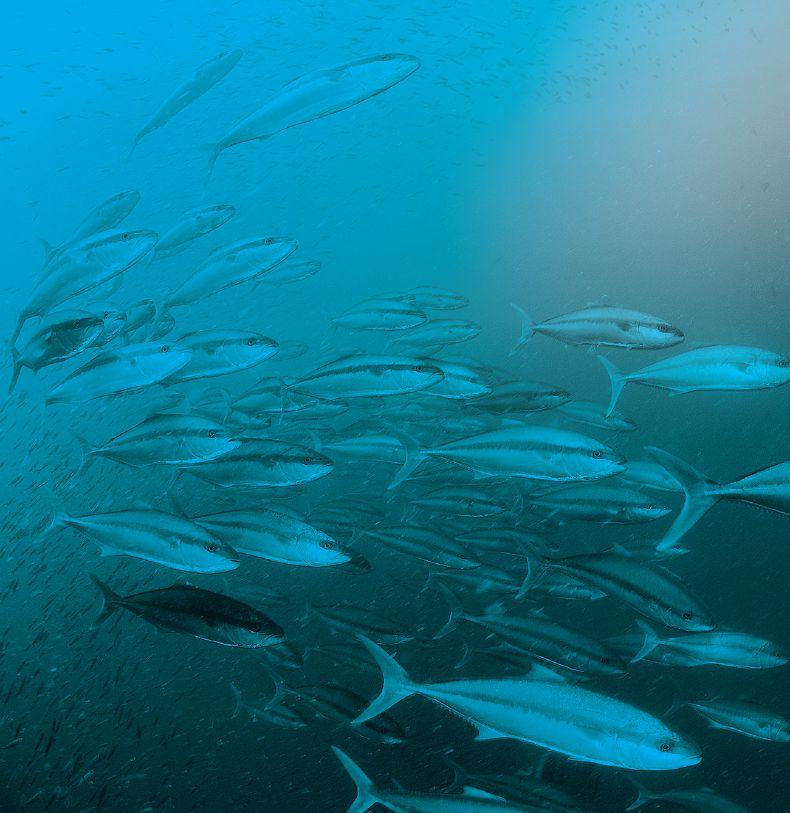
Scientists with Florida’s Mote Marine Laboratory recently launched a study into how to breed and farm Almaco jack (Seriola rivoliana), a fish that may be a rising candidate for aquaculture production in the Gulf of Mexico.
The project, which is being funded by the NOAA’s Sea Grant Aquaculture Research Program, is targeted at creating hatchery technology to support the development and expansion of offshore aquaculture in the Gulf.
Dr. Kevan Main, senior scientist and program manager of Mote’s Aquaculture Research Park, said the Almaco jack or Bar jack, as it’s alternately called in the Gulf, has world-wide distribution and is known in some parts by a variety of other names, such as the Kona kampachi, Hawaiian yellowtail, Longfin Yellowtail, and Almaco amberjack.
Although aquaculturally attractive for various reasons, there are also challenges to culturing the Almaco jack, says Main.
“The main bottlenecks associated with commercial production of Almaco jack include susceptibility to parasitic and bacterial pathogens, and an inconsistent supply of juveniles resulting from poor spawn quality and low hatchery survival,” she said.
“Our research is focusing on improving captive maturation, spawning, health management and larval rearing for this species. Our goal is to build on previous research and commercial efforts and develop hatchery techniques for Almaco jack in the Gulf of Mexico.”
Earlier this fall personnel at Mote Aquaculture Research Park took their first samples and started gathering detailed information from Gulf Almaco jacks now housed in the institute’s water-recirculating facilities at the Mote site in eastern Sarasota County.
Main said that scientists from Mote collected stock from the Gulf last spring using an offshore recreational fishing boat. The Almaco jacks were found around 90 miles offshore from St. Petersburg at depths ranging from 55 to 67 metres.
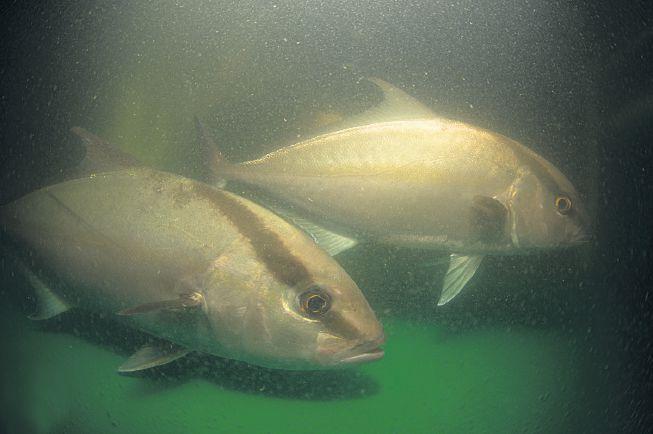
And Main said there’s clearly much to learn about producing Gulf Almaco jack juveniles in hatchery and nursery facilities.
She said the Gulf strain appears to be much easier to spawn than other marine fishes, where it is often necessary to induce spawning with hormonal implants.
At Mote, she said, the stock began spawning spontaneously two weeks after completion of the quarantine period.
“We hadn’t planned to do our first sampling of the broodstock until September, but much to our surprise, the broodstock began spawning,” Main said, adding that by the time of the interview both broodstock populations had been spawning for the past three weeks.
The goal of the project is to provide essential knowledge for the aquaculture industry to help it produce healthy rapid-growing juveniles in land-based facilities, for supply to offshore growout cages in the Gulf.
Last January the US’s National Oceanic and Atmospheric Administration (NOAA) announced the Fishery Management Plan for Regulating Offshore Marine Aquaculture in the Gulf of Mexico.
It’s hoped by industry that it will allow as many as 20 aquaculture operations to be permitted and put into operation offshore in the Gulf over the coming 10 years.
- Quentin Dodd
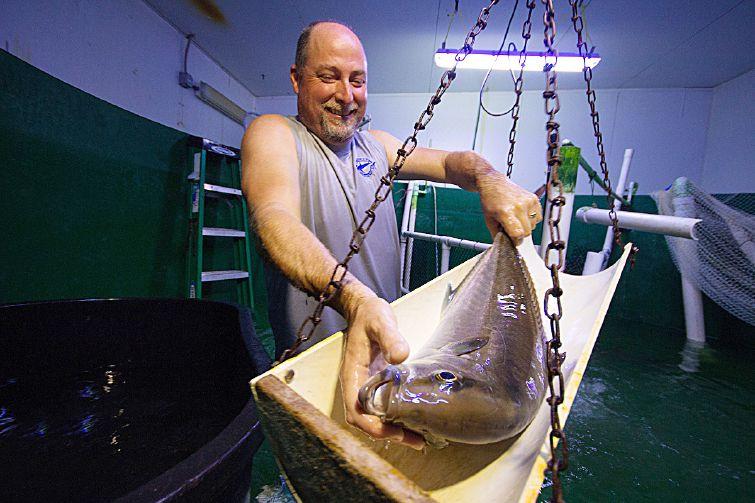
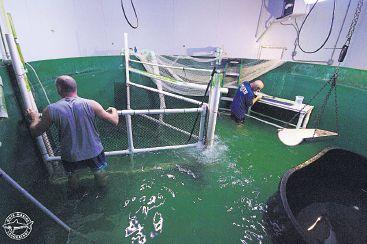
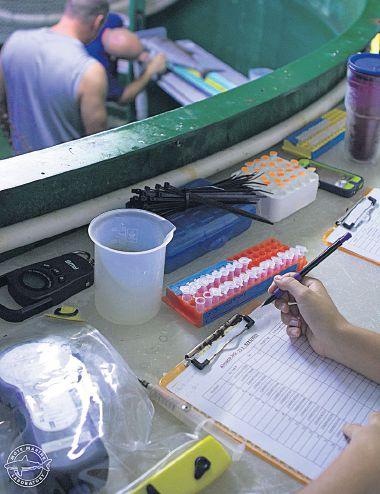
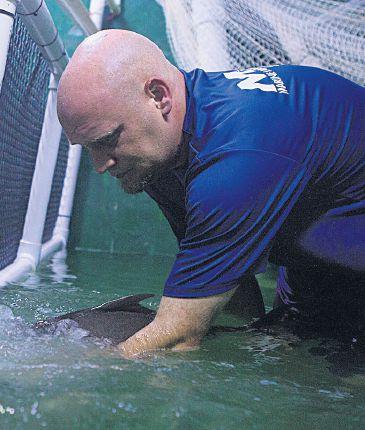
Above: Weighing an almaco jack.
Left: Almaco jack underwater. Below: sampling in the broodstock tanks.
Above: Reviving fish after sampling. Left: Recording sampling data.
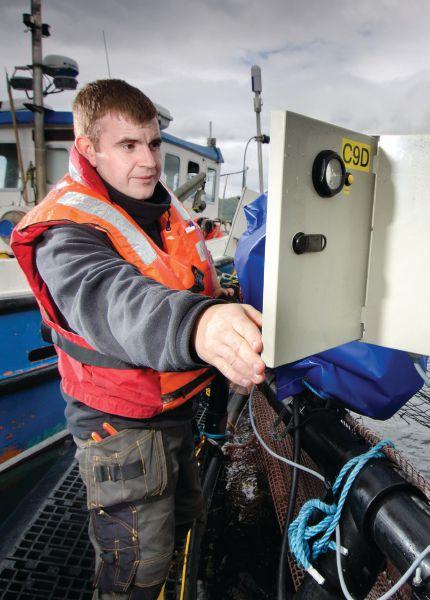


BIOMASS DAILY A REVOLUTION IN BIOMASS MEASUREMENT
With a Vaki Biomass Daily frame placed permanently in each cage, fish are continually measured with pinpoint accuracy. For every site and every cage, the daily overview of average weight, size distribution, condition-factor and growth is available 24/7. Pentair AES has assembled a team of experts with diverse backgrounds in aquaculture, with decades of research and commercial industry application experience. Accurate information, real time data and reliable overview. Trust in a team that’s here to help you—ASK US!
Proactive feeding with
Vitalis
2.5
and PL diets for broodstock
and shrimp larvae. Can feed prevent disease?
Global warming is affecting the oceans’ ecosystems as well as disrupting their physical and chemical parameters. One of those parameters most affected is water temperature, which has risen by 2-3 degrees Celsius above the historical average (The Advocate, Global Aquaculture Alliance). As ocean temperatures rise, so too does the risk of Vibrio spp. outbreaks.
Another recognized effect is the increased acidification of seawater, where the pH has decreased from 8.0 to 7.7 in some cases (Effects of ocean acidification on early life-history stages of the intertidal porcelain crab Petrolisthes cinctipes)
Lina Ceballos-Osuna1, Hayley A. Carter 1, Nathan A. Miller 1 and Jonathon H. Stillman 1, 2, *1 Romberg Tiburon Center, San Francisco State University, 3150 Paradise Drive, Tiburon, CA 94920, USA and 2 Department of Integrative Biology, University of California, Berkeley, Valley Life Sciences Building no. 3140, Berkeley, CA 94720-3140, USA) This represents a significant evolutional stress for those marine species that depend on the bioavailability of calcium carbonate in seawater.
To counter the negative effects of these environmental changes on shrimp, Skretting has incorporated an immune pack into its Vitalis 2.5 and PL diets, comprising precise combinations of functional ingredients such as organic acids, plant extracts, vitamins, minerals and antioxidatives that are proven to work in synergy with the immune systems of shrimp. This helps the animals to better cope with external stressors and modulates specific genes of the immune system. Group immunity results from the feeds’ physical characteristics such as acidity and feces binding, which in synergy maintain better water quality in the culture tanks.
Let’s see the shrimp’s immune system in Figure 1 below:
External factors that affect the shrimp immune system:
1. Water Quality; Chemical and Physical parameters
2. Bacterial communities in the water. Influenced by the feed.
Internal Factors that affect the shrimp immune systems:
1. Feed Quality
2. Gut Micro-fauna produced by the feed
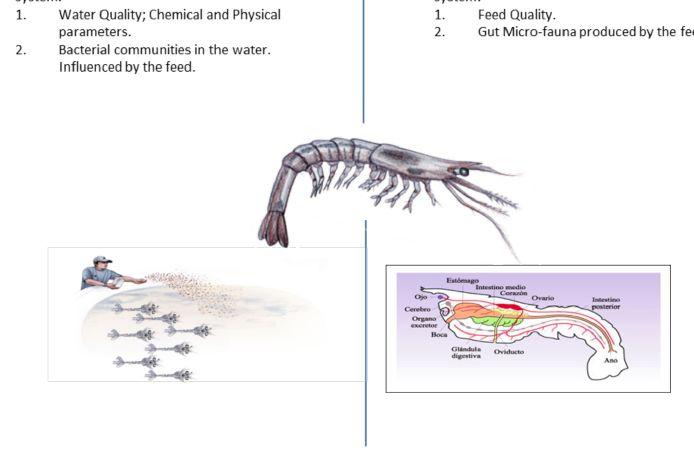
Shrimp live in aquatic environments that directly affect their immune systems (see Fig. 2 below). Other important factors influencing the immune system include what the shrimp eats and anything that penetrates its exoskeleton. This is why feed plays such an important role in the immune system, as the feed is not only ingested by the shrimp but also influences the microbial communities in the water through the feed particles that remain present in the water.
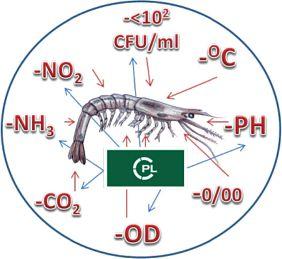
Figure 2. Feed effect in the culture tank and the shrimp
Let’s see how the feed affects the culture water and shrimp in the tanks:
Figure 2 illustrates that the feed not only influences the nutrition of the shrimp, it also has a synergistic effect on the water parameters and microbial ecosystem of the culture tanks.
The immune package that is integrated into the feed looks to:
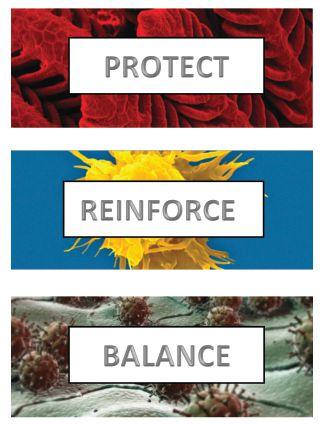
• Exoskeleton • Gills • Gut
• Immune System • Act as Antioxidant
Cellular Regeneration
Bacteria
Virus
Fungus
Results in commercial hatcheries show that survival is higher with shrimp that are fed Skretting diets.
Skretting diets: Vitalis 2.5 in maturation and PL in larval rearing In most cases, shrimp fed with Skretting diets had a better survival and better growth – providing a greater likelihood of optimizing success in the hatcheries.
Vitalis 2.5
This product is designed to replace a percentage of fresh feeds in the shrimp maturation departments. Vitalis 2.5 can replace up to 80% of fresh diets. Replacing fresh diets that are disease vectors reduces the risk of the broodstock becoming infected and passing disease on to its progeny. This ensures that the first stage of shrimp production is healthy. Vitalis 2.5 is used in quarantine areas before the broodstock enter maturation as well as in the maturation areas.
Figure 1. The shrimp immune system
Vitalis 2.5 used in quarantine:
Cases: Vitalis 2.5 used in the quarantine section of broodstock production
This first case used broodstock that was raised in a low salinity environment, less than 5ppt. Once broodstock are taken to the quarantine area they are acclimated to full strength seawater, which is 35ppt. This presents a stressful situation for the broodstock and in some cases, mortality occurs. The size and specifications of the case are presented below:
Specifications Units
Number of tanks 5 tanks
Water exchange 100%
# Broodstock/tank 400 broodstock
Time in quarantine 10 days
Diet Vitalis 2.5 4% of the total Biomass Vitalis 2.5
Diet traditional 11% total biomass of pellet + 3% squid
Results: Diet Survival Vitalis 2.5 85%
Broodstock fed with Vitalis 2.5 showed better survival than the group fed with the traditional diet. Development was also greater in the Vitalis 2.5-fed animals. This confirmed that the immune package in Vitalis 2.5 provided support for the osmotic balance of the animals fed with the Skretting diet, enabling them to better handle the osmotic stress resulting from the change in salinity.
Further trials are taking place to demonstrate that animals fed with Vitalis 2.5 handle transportation stress much better than those fed with traditional diets. The results will be presented shortly.
PL diet
At present, most of the larval rearing departments of the world are being challenged by more pathogenic bacteria being present in ocean water as well as the increasing bacterial resistance to prophylactic treatments. It is common practice to use a “mix” or “cocktail” of larval diets in the larval departments. We have seen that including a larger percentage of PL diets used in such mixes improves the survival rate of shrimp larvae. This is thanks to the immune pack and the good assimilation of the nutrients present in the diet.
Case 1: Larvae culture
In this case, we observed different inclusion rates of feeds in the mix fed to larvae. With a greater percentage of PL diet, the survival rate increased, as did the overall health of the post larva produced.
Case 2: Larvae Culture
The same results were observed in this second case.
Case 3: Same results in raceways, stocking animals that are 300 post larva/gram.
It is important to highlight that in most cases the tanks fed with Skretting diets had their feeding protocols adjusted, as a reduced amount of Skretting feed obtained better results. This is due to the high nutritional profile of the Skretting diets, which make it more bioavailable to shrimp larvae as well as making the feeding regime more cost-effective.
Cost analysis of case 3:
In this exercise, there was a 20% more profit than with the traditional diet.
For more details on protocol or case studies, please contact Aedrian Ortiz Johnson, Technical Support Manager for Skretting Marine Hatchery Feeds at aedrian.ortiz@skretting.com or Eamonn O’Brien, Product Manager for Skretting Marine Hatchery Feeds at eamonn.obrien@skretting.com.
Clean Plate System
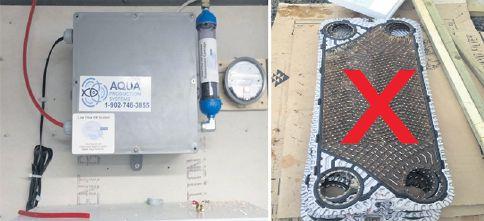
• No more having to take heat exchanger apart every month
• Removes need for chlorination treatments
• Saves considerable energy
• Prevents exchangers from getting dirty due to biofouling
Call (902)-746-3855 for pricing and availability!
www.AquaProduction.ca

DEVELOPMENT
New hatchery to improve food security in northeast Haiti
he Artibonite, north, northeast and northwest departments of Haiti are being provided with their own hatchery for the intensive production of fish fry, according to an announcement from Haitilibre. The hatchery will have an annual production capacity of some 200,000 tilapia fry per year.
The facility, located in the municipality of Ferrier in the area of Lagon aux Boeufs, is being funded by the European Union.
The project comes under the island’s “Improvement of food security in the northeast of Haiti” program, and is described as “co-piloted” by the United Nations’ Food and Agriculture Organization (FAO), along with the Ministry of Agriculture, but notably through the Northeast Departmental Agricultural Directorate.
Targeted with boosting the national aquaculture value chain in the northern area, the facility will roughly double the average production capacity from 25 to 50kg/year, for each of the 140 or so aquaculturists in the Champs Ecoles Paysans (CEP) area.
Of the 200,000 fry that will be produced each year, 50% are to be used by a community aquaculture operator on the Lagon
aux Bœufs. A quarter will be used to stock the small lakes overseen by the Ministry of Agriculture in the North, and the remaining quarter will be reserved for sale to aquaculturists in the northeast and elsewhere.
Creation of the hatchery has been welcomed by Eric Auguste, the Northeastern Department’s Director of Agriculture.
Auguste said from an economic point of view, it’s a great opportunity that will seed the region with juvenile fish for grow-out, and will generate additional revenue for fishers and aquaculturists alike. It will also be used to stock the hillside lakes built by the ministry. CEP Area Aquaculture Facilitator Paul Andy Joseph explained that before the hatchery came into existence, people in the area could get growout fry from Port-au-Prince, but that usually proved unprofitable because of the high mortality rates often associated with the conditions under which the fish were transported and the length of time it took.
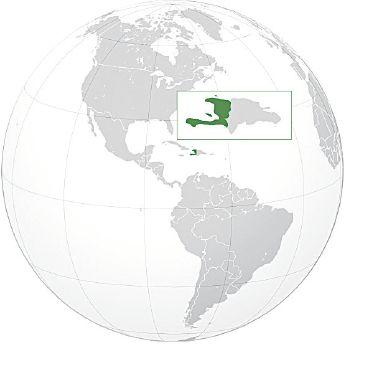
“Now we have great hope that with this infrastructure, the spawners will produce fry on the spot, which will significantly reduce the mortality rate and increase our production capacity.”

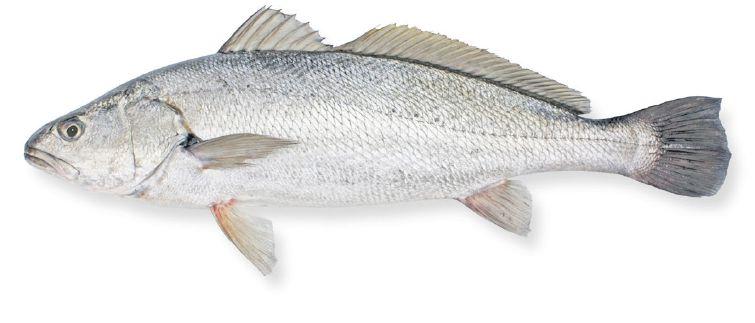
Dusky kob larvae benefit from early weaning to artificial diet
Researchers in South Africa found that survival rates of dusky kob larvae (Argyrosomus japonicas) increased under a feeding regime that weaned them to an artificial diet earlier than the current standard.
Weaning larvae from Artemia began at 16 days post-hatch, four days shorter than the current standard of 20 days.
Earlier studies by other authors cited that reduced amount of the natural food fed to the larvae would negatively impact larval growth rate. The study’s main objective was to improve survival and growth rates.
In addition to improving survival rates, the new feeding regime also reduced labor costs associated with the lengthy period of feed cultivation.
“One of the biggest limiting factors in marine finfish aquaculture is the low survival rate of early-stage larvae. Most mortalities can be ascribed to the poor nutritional value of live feeds, sibling cannibalism, and various stressors that result in swim bladder hyperinflation and/ or starvation during the larval stage,” said authors Thomas O. Keet et al in the
New state-owned sturgeon hatchery for Russia
A first in modern era
Aabstract Larval-rearing techniques for dusky kob (Argyrosomus japonicas) with a specific focus on a novel feeding regime.
Three trials were conducted, they said, each one having five replicate tanks subjected to the new feeding regime and five replicate tanks subjected to the standard feeding regime used in RSA in a fully randomized design. Water quality variables were measured daily. Samples of fish from each tank were collected every two days for the duration of the trial.
“Morphometric data, obtained in all three trials during this experiment showed no significant difference in growth rate between treatments,” it was cited. The data came from measurements of standard length, body depth and eye diameter.
“Survival rate did not differ significantly between treatments in any of the three trials.”
The research team is with the Department of Ichthyology and Fisheries Science at Rhodes University in South Africa. The study was presented at the World Aquaculture conference held last June in South Africa.
-Ruby Gonzalez
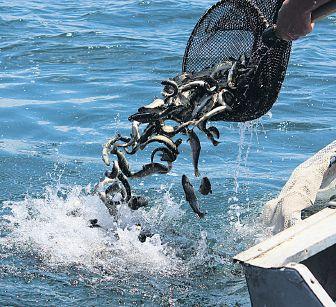
new sturgeon hatchery has been launched in Samara Oblast, Russia. It is the first state-owned facility of the type built in modern times, according to Ilya Shestakov, chairman of the Russian Federal Fisheries Agency (Rosrybolovstvo). The name of the new hatchery is Vozrozhdenie and it will provide fish to restock local waterways, including the Volga River.
The launching of the new state-owned hatchery in Samara Oblast is the first step in a program aimed at modernizing restocking facilities in Russia.
At the moment, there are 106 hatcheries on the Rosrybolovstvo’s balance sheet, and each of them was built in the Soviet era, said Shestakov.
The new hatchery is designed to produce 2 million sterlet (Acipenser ruthenus) fingerlings and 3.6 million pike fingerlings per year, for release into regional rivers.
According to local reports the situation has became extremely dire for fish populations in recent years, due in large part to poaching which has caused sterlet numbers to drop to the lowest levels ever.
One of the main purposes of the new hatchery is to restore both sterlet and pike populations in the Volga, Europe’s longest river, where the fish are also suffering from pollution by wastewater from local industrial facilities.
At the same time, Shestakov noted, the launching of the new state-owned hatchery in Samara Oblast is only a first step in an upcoming program aimed at modernization of restocking capacities. In coming years the state authorities plan to commission hatcheries in other regions and the main emphasis will be on sterlet.
-Vladislav Vorotnikov
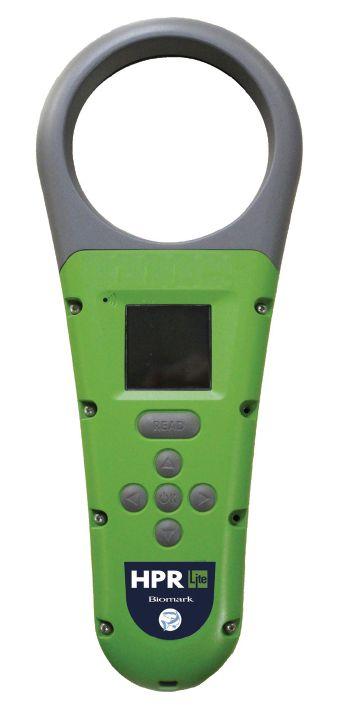
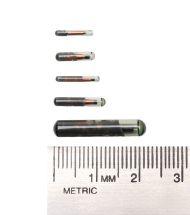
The first aquaculture specific waterproof RFID reader.
• Easy to Use
• Rugged
• Bluetooth™
• Lightweight
• Reads Most Tags
Pre-loaded PIT Tag System
PIT Tags and Readers
• Tissue sampling unit for streamlined genetic sample collection
• Tag Management Software
• Custom PIT Reading Systems
• Onsite-tagging Services, Training and Technical Workshops MENTION THIS AD FOR FREE SHIPPING UP TO $75.00 USD
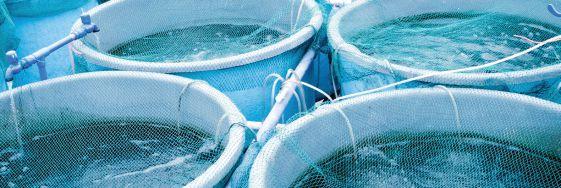
Mature Dusky Cob
FISH TRANSPORT TANKS
We
•
•
• Removable bulkhead fittings; threaded or bolt-on available
• Large hatch openings for easy access
• All SS hardware for long life, including SS toggle clamps
View our gallery of completed fish transport tanks at www.reiffman.com

Call us today with your requirements! Toll Free 1-800-835-1081 or 509-525-1081
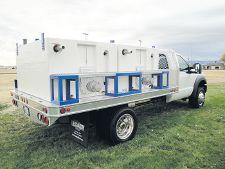
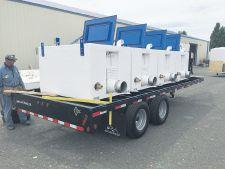
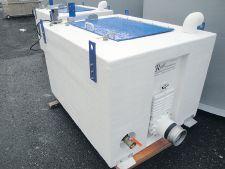


● O2 control with optical sensor, intelligent feeder control and many more functions
● Data, status and alarming on smartphone, tablet or PC
● Ideal for ponds, raceways and recirculation systems
SENECT GmbH & Co. KG, An 44 - No. 11, D-76829 Landau / Germany phone: +49 - 6341 - 95 95 210, email: info@senect.de
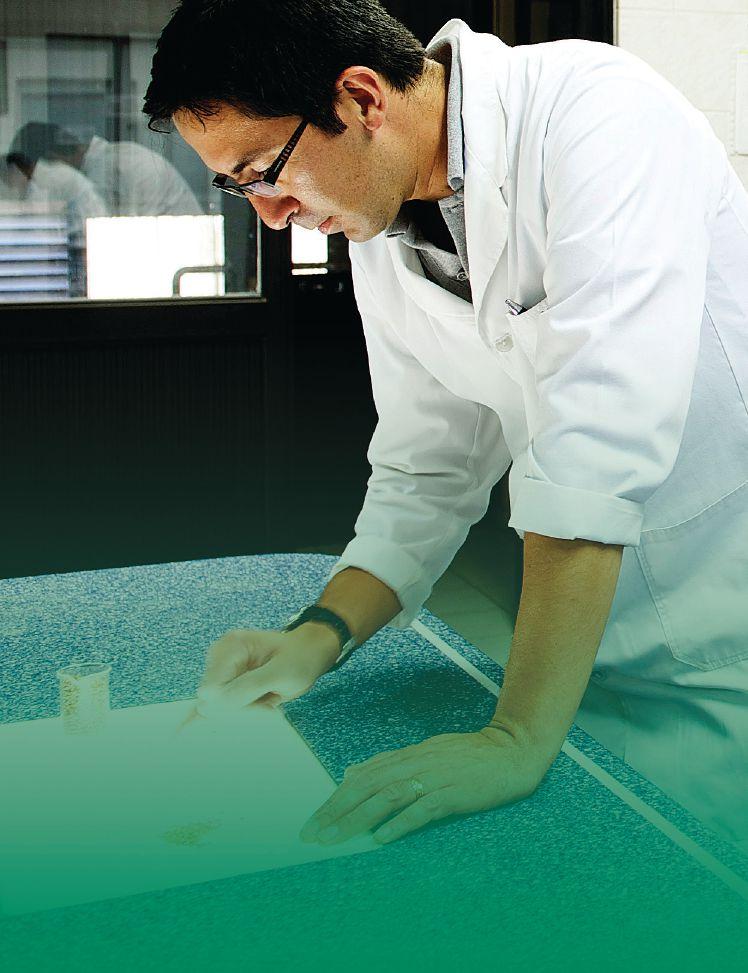
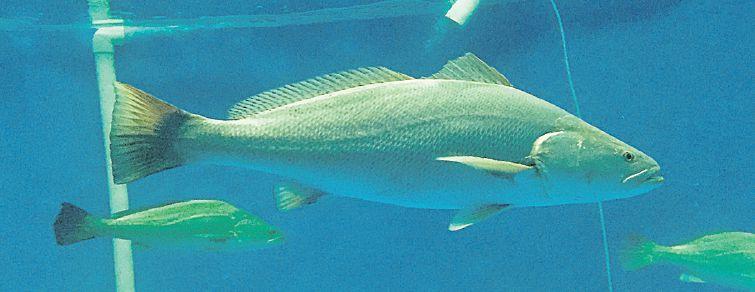
Saving the totoaba for fun and profit
llegal fishing of one of Mexico’s best recognized fish, triggered in no small part by Chinese demand for maws (swim bladders), has sent the iconic totoaba (Totoaba macdonaldi) to the edge of extinction in that region.
So low are their numbers that the totoaba, which is native to the nation’s Sea of Cortez, is formally registered as critically endangered.
But there is still reason to hope that the species may not cross over into total extinction, thanks to a small handful of hatcheries working to both preserve it and move it into commercial production.
Helping in that precarious battle is Pablo Konietzko, general manager of Earth Ocean Farms (EOF) in La Paz, Mexico.
Konietzko notes that the fish is relatively easy to breed, as well as being quite a fast grower.
Known to live for up to 30 years in the wild, the totoaba can grow up to two metres in length with a weight of up to 135kgs.
Earth Ocean Farms has permits in place to legally sell totoaba in the Mexican marketplace and Konietzko says that the fish takes just a year to grow from 10-gram fry to be harvested at 2 to 4kgs each.
EOF notes that although it’s harvesting totoaba for the food market, it’s participating in what is being described as a “budding” restocking program in Mexico.



TOTOABA IN THE HATCHERY
The totoaba hatchery facilities at EOF consist of broodstock husbandry, spawning, and larval culture sections, culminating with the production of fingerlings for commercial stocking in submerged ocean netpens.
Konietzko said each of those early steps has specific systems and protocols which have to carried out with considerable care and attention to achieve success.
Because of their size, the totoaba broodstock are held in large circular tanks with well-designed water-recirc and treatment systems to supply superior water quality and prevent potential pathogens.
The broodstock are fed with natural and prepared feeds to supply the complex nutrient mix required for their health, maturation and egg production. The last is triggered by matching water temperature and hatchery light with the natural temperature and sunlight patterns the fish would have encountered in their yearly migrations if left in the wild.
As the iconic Mexican sports fish teeters on the edge of extinction a handful of hatcheries work to preserve it for both recreational and commercial purposes
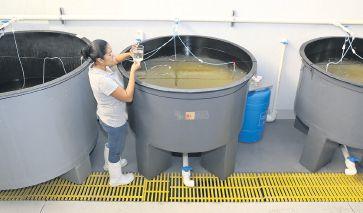
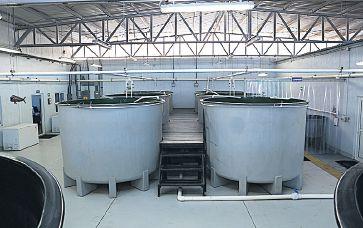
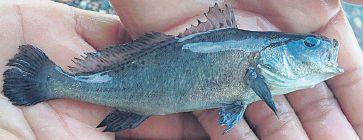
When the fish spawn, the eggs float to the surface and are harvested with skimmers and concentrated into collectors.
Since totoaba tend to group-spawn at night, the collector devices can have millions of eggs in them when hatchery technicians arrive for work the next morning. Transferred into hatching tanks, the eggs usually take 24 hours to hatch at a temperature of 23 degrees Celsius.
Once that happens, the larvae are transferred to rearing tanks to be fed a diet of rotifers and artemia, which are cultured separately, then enriched, and fed to the larvae multiple times per day.
Konietzko said totoaba (totoaba macdonaldi) aquaculture owes a good deal to a ground-breaking program created some 20 years ago by the Mexican government at the Autonomous University of Baja California (UABC) in Ensenada, which developed procedures for broodstock capture, maturation, larval rearing and juvenile growout.
That was followed several years ago by a second program at the Center for Reproduction of Marine Species of the State of Sonora (CREMES) in Bahia Kino.
-
Quentin Dodd
Totoaba broodstock.
Tanks at Pablo's hatchery.
Tanks at the totoaba hatchery.
Juvenile totoaba.
BETTER FEEDING
Researchers compare alternative feeds for larval sturgeon
BY ERICH LUENING
hile comparing feeds for lake sturgeon larvae, researchers in the United States tested alternative and less expensive feeds than the customary live Artemia.
Some formulated diets have been made for sturgeon, but the authors of the study believe those tend to be expensive or speciesspecific, often putting sturgeon hatchery managers in a pinch.
“The majority of hatcheries feed Artemia (brine shrimp) to larval sturgeon,” said Shaley Valentine, a researcher in Utah State University’s Department of Watershed Sciences. “Brine shrimp is not a natural food source and it’s quite time consuming and expensive to feed to the larvae. In addition, the [brine] hatches can vary in quality. The nutritional inconsistency and expenses make larval feeding difficult.”
The study, “Effects of Alternative Food Types on Body Size and Survival of Hatchery-Reared Lake Sturgeon Larvae,” tested three food types—Live Artemia, frozen and thawed Artemia, and then trout crumble diet, looking to discover which alternatives worked at least equally as well as live Artemia.
“A lot of hatcheries may run on a tight budget, so looking at ways to reduce cost of feeding while rearing healthy sturgeon for production purposes is often necessary,” Valentine explained. “Our results did not show that alternative feeds that could either save time or expenses produced healthy sturgeon. Even though brine shrimp are expensive and labor intensive to produce for feeding, they may be worthwhile to produce and feed for healthy larvae to grow.”
The research team conducted their work at a stream-side hatchery in the US state of Michigan.
“The Black River Streamside Rearing Facility is unique in that it is a relatively large stationary streamside hatchery,” Valentine said. “The hatchery has two main rooms for production purposes: the incubation room and the main floor. The larvae were reared in the incubation room with the majority of our other larvae for production purposes.”
In addition, the brine shrimp were hatched in hatching cones in the incubation room as well, making it convenient for efficient larval sturgeon rearing.
STUDY FINDINGS
Sturgeon larvae fed either live Artemia or frozen Artemia saw better growth and mortality rates compared with the trout crumble feed alternative which saw less growth and higher mortality rates in its feed test.
Valentine said she was taken aback by the findings.
“It was surprising that larvae that were fed frozen Artemia experienced such low growth and those that were fed trout diet had such low survival and growth,” she said. “Both frozen Artemia and trout diet are sometimes fed to larval sturgeon at hatcheries, but our results suggested that these two food types are counterproductive for production goals of healthy fish.”
However, Valentine wants to followup this study with other research looking at other alternative food sources and also explore the timing and scheduling of introducing alternative feeds to sturgeon larvae.
“The timing of a transition to an alternative food type and the actual type of food itself may be critical for larvae. In a hatchery setting, typically lake sturgeon larvae are transitioned from brine shrimp to another more nutritious food such as bloodworms once the larvae have reached a certain size,” she explained in an email. “Follow-up research would look at the timing of transitioning (what age and size the larvae are) and the types of food transitioned to including frozen invertebrates or formulated feeds. In this sense we could look at the interaction between time of transition and type of food offered.”
For now, live brine shrimp appear to be the best feed for lake sturgeon larvae. Valentine said that there have been studies with Beluga and Asian Sturgeon that may provide new alternatives that she and her team could use in future research.
The universities involved were Utah State University and Michigan State University.
The Michigan Department of Natural Resources, Fisheries Division also assisted in the research. Dr. Kim Scribner oversaw the project.
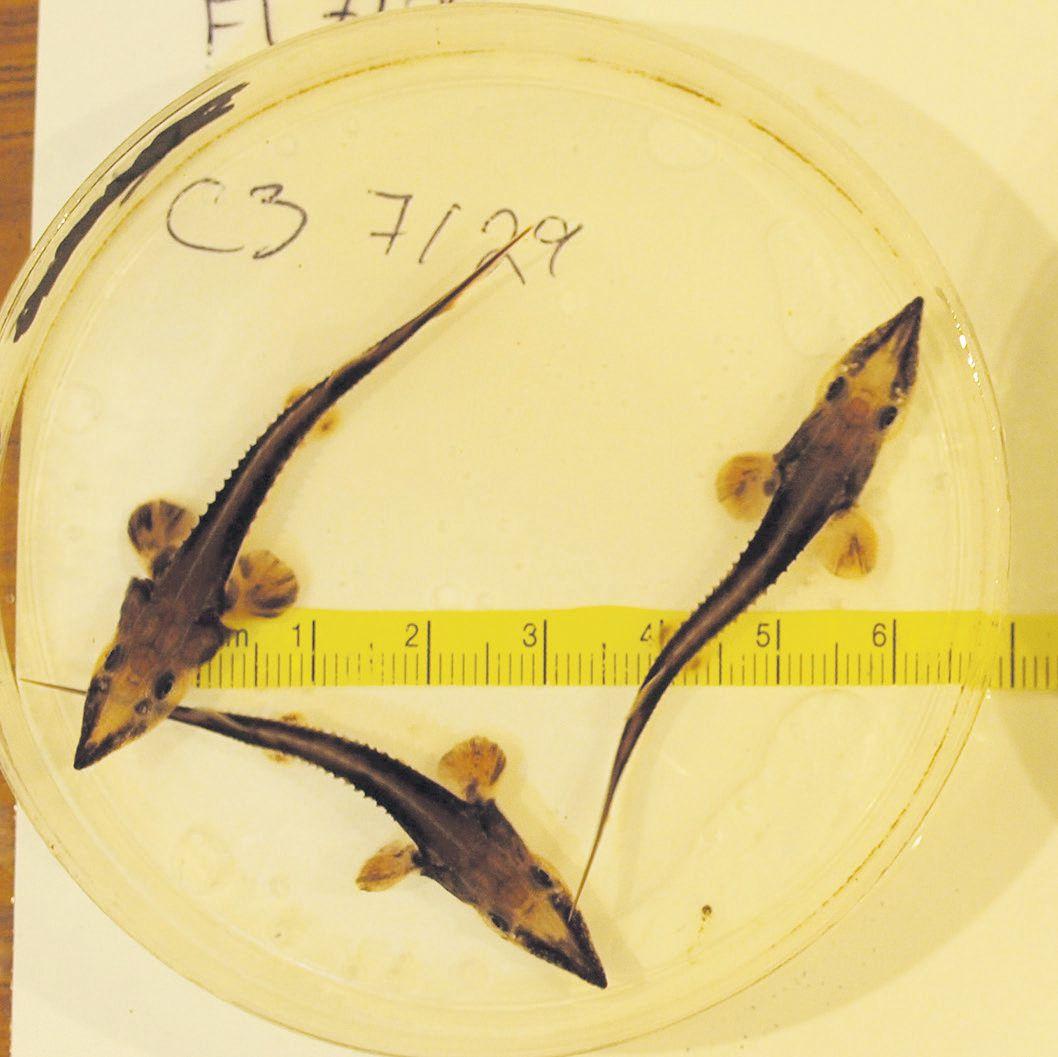
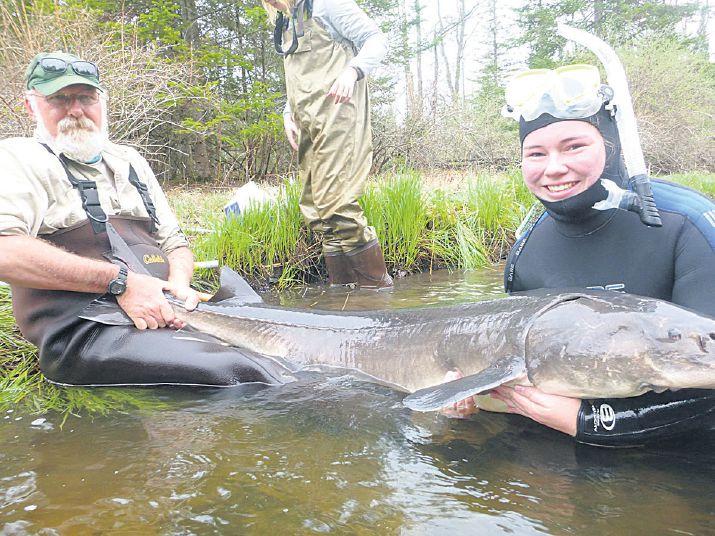
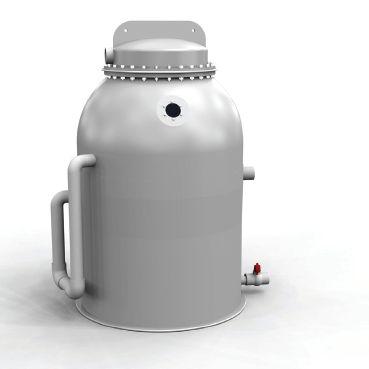
Pictured above are 35 day-old sturgeon that were fed live brine shrimp throughout the entire study.
Dr. Kim Scribner (left) and Shaley Valentine conduct adult survey during which Valentine collected gametes for the research project.
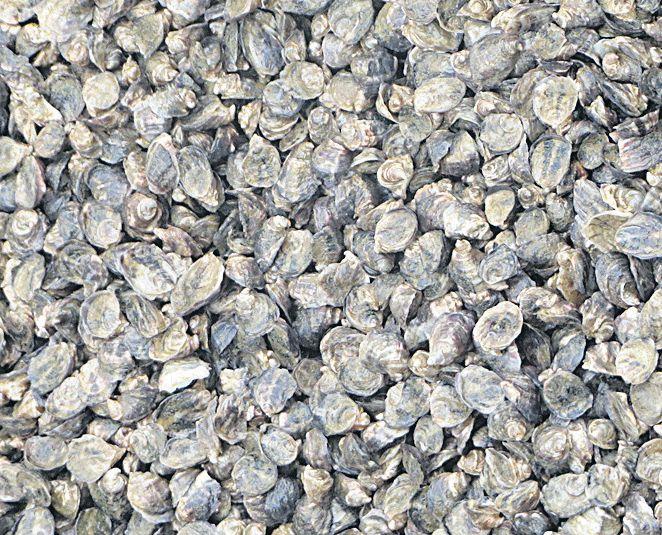
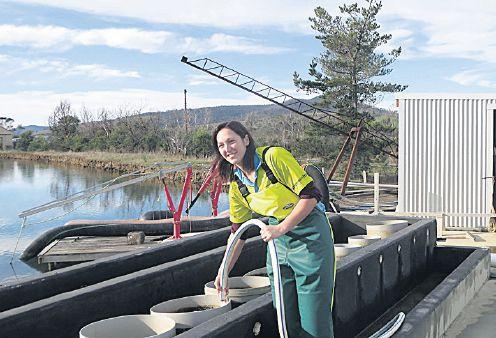
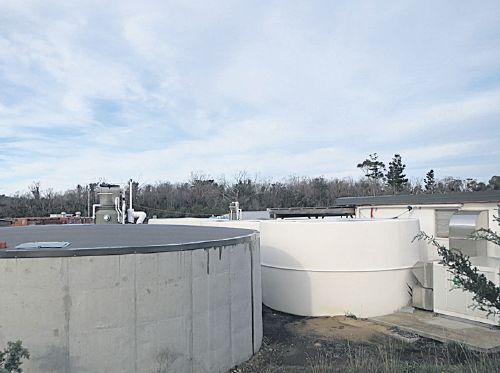
Cameron of Tasmania
Careful planning aids recovery from POMS for this innovative Australian shellfish hatchery
BY JOHN MOSIG
ameron of Tasmania is an oyster farming pioneer, having started in 1971as a family business growing Pacific oysters (Crassostrea gigas) at Dunalley in south-eastern Tasmania.
By 1979 Cameron’s had built and operated the first commercial oyster hatchery in the Southern Hemisphere and in 1980 the company commenced development of the first commercial production system in Australia for the growing of oysters in deep water.
The Cameron hatchery is now a major supplier of Pacific oyster spat to Tasmanian - and mainland growers along the eastern seaboard and in South Australia (SA). It is a fully integrated operation and is renowned for its advanced spat and high quality live oysters.
Hit hard by the 2013 Tasmanian bushfires, they are now rebuilding their stocks after devastation caused by the Pacific Oyster Mortality Syndrome (POMS) virus.

Ellen Cameron is the granddaughter of the dynasty’s founder, Ian Cameron. She manages the company’s nursery sectors and is involved with the hatchery program, which is managed by her uncle, Graeme Cameron.
“The POMS outbreak has had a dramatic impact on the Australian Pacific oyster industry.” she said. “Although the South Australian industry hasn’t been affected directly, it relies on Tasmania for its seedstock. We supply around 70% of their spat. Now that we’re quarantined here in Tassie, the South Australia growers rely on the output of two small local hatcheries. We’ve been spending a bit of time with them; the industry over there will be wiped out if we can’t help them ramp up production in a short time frame. We have established a new hatchery in South Australia, out of Point Boston, in partnership with Yumbah Aquaculture.”
NoSpot
– White spot syndrome virus/EMS/AHPND – Increased survival rate and weight gain – Improved feed conversion ratio
Microalgae
NannoPrime and IsoPrime – Freeze dried Nannochloropsis & Isochrysis – Marine fish GWT, mollusc, shrimp hatcheries – Absolute pathogen free – Single cell dispersion, no sedimentation



algae.proviron.com info@proviron.com / www.proviron.com
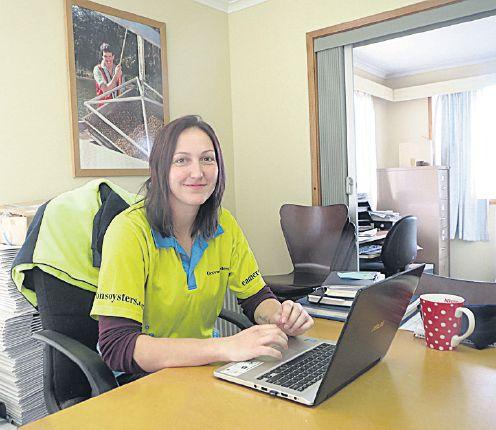
THREE SECTIONS
The Dunalley facility is divided into three sections. The first two —hatchery and crèche — are indoors and linked to a re-circulating system. Water is pumped ashore, filtered through sand - and 1 micron filters, fractionated then passed through a UV irradiation system. The nursery is set up with concrete raceways and fed through an upwelling water system from fertilized algae production ponds. A duplicated system, twice the size, has been established at the company’s Newman’s Creek property.
Once the oysters selected for the breeding program have been conditioned, the water temperature is raised to 20°C and the female gametes are drawn off with a pipette and mixed with the genetic material from the males. After 14 days the larvae show signs of settling and undergo a treatment process developed at the hatchery, which ensures the larvae metamorphose in the water column instead of looking for something to attach to, and minimises deformities. The spat are then grown out in the quarantined crèche until they reach approximately 2mm, at which point they are transferred to the on-growing nursery raceways located besides the algae production ponds.
HARDY SEEDSTOCK
The quarantined nursery system enables the company to grow the spat out to 8-12mm. While this may take 12-18 months, it gives their customers an advanced and
Water conditioning tanks at the hatchery. The heads of the foam fractionators can be seen above the tanks.
Ready to go out to the leases; a batch of 8-10mm oyster spat.
The daily wash down —oysters are washed every day to clean out the holding tanks, and give the growing oysters a bit of a ‘stir’. The plankton pond and pumping system are in the background.
Ellen Cameron keeps tabs on hatchery operations. The photo behind her is of her late father Michael, who was Managing Director and played a major part in the development of both the company and the Tasmanian oyster industry.
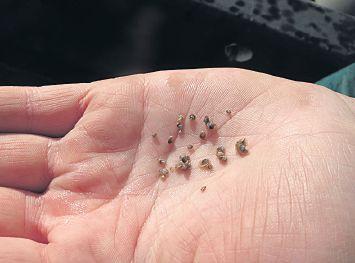
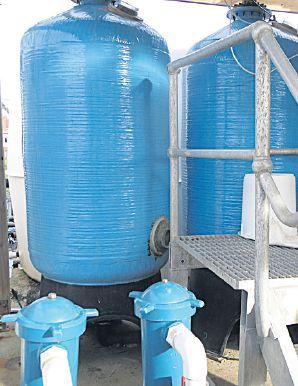
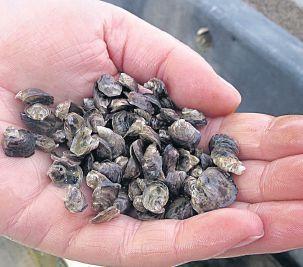
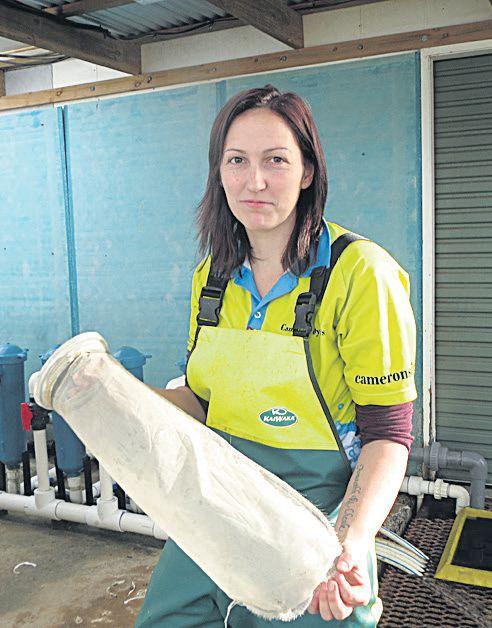
hardier seedstock, and reduces the time on the open water leases to 12-18 months.
During the warmer months, the spat in the nursery raceways are handled every second day to trim any loose edges, keep their shape uniform and harden them up. Ellen said that if oysters put on shell too quickly, they get fragile and can’t handle the shock of transfer to the leases. During the winter, when the oysters are slower growing and less robust, handling is reduced to once a week, or less, depending on the severity of the conditions.
In the hatchery and the crèche, the larvae and spat are fed a cultivated diet using only selected algal species. In the nursery, food comes from the adjoining algal ponds, the species make-up of which is determined by manipulating the fertilizer regimes fed to them.
ADJUSTED SPAWNING
The Camerons have been producing a single cell oyster for the last four years. Triploid oysters don’t appear to have a measurable growth advantage over diploid stock, but because they don’t spawn during the warmer months, they are in prime condition during the crucial summer seafood marketing period.
With the climate controlled hatchery/ crèche capability, spawning can be carried out to suit the client’s stocking needs, which fall into two periods: in late summer/early autumn, when the water is still warm enough to get some growth before winter; and when the water starts to warm up in the spring.
Broodstock have always been selected for particular traits: low mortality, high meat-to-shell ratio, and even shell size and shape. Post POMS, broodstock selection has incorporated lines that have shown the most POMS resistance. Broodstock is selected from the survivors that, when fully
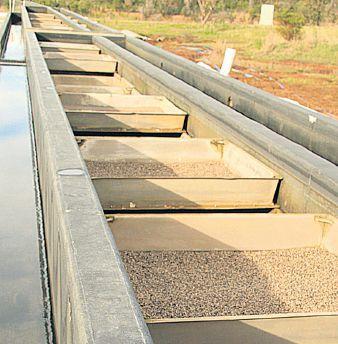
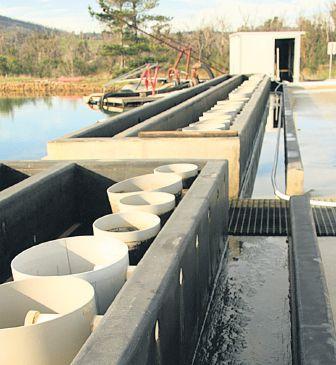
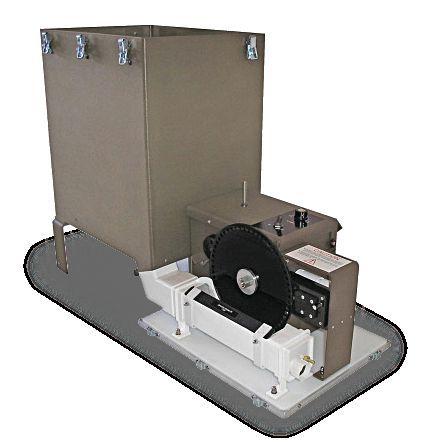
challenged, have proven their immunity.
“On the Blackmans Bay leases, out of 6.5 million oysters, we lost 5.8 million,” Ellen said. “There was a clear age correlation. Stock older than 12 months did a lot better. Survivability ranged from 50 to 70%. Those survivors gave us a base for future spawning lines.”
MIXED RESULTS
With broodstock bred for POMSresistance coming from Australian Seafood Industries, and a lot of industry input, the Camerons see a good chance they’ll be on top of the situation within a couple of seasons. However, Ellen was cautious: “Very mixed results so far, still too early to see much change in genetic resistance.”
As this is the only land-based hatchery/ crèche in Australia, Hatchery International asked if — due to the vulnerability of open–water farming to the threats from POMS — flow through systems were an option for the industry, Ellen said the issue was cost. “It’s okay for hatcheries and crèches, but to feed larger animals the cost becomes prohibitive. As they double in size their food requirement can more than triple. With a three year lead time for a return, it’s just not economical.”
Nor can the reality of climate change be ignored. Normally, water temperatures on the intertidal leases don’t reach 20˚C before January, and late January at that. Not only are water temperatures climbing above 20˚C, the air temperatures are correspondingly warmer.
“That’s why our breeding program is so crucial to the survival of the industry,” said Ellen.
For further information contact Ellen Cameron at: admin@cameronsoysters.com.

From this ………
…. to this in 12 months!
The flow across the oysters is continuous; tides are simulated by having dry out periods where the raceways are emptied of water completely for a few hours every day.
The raceway trays full of oyster spat during their daily ‘inter-tidal’ dry out period.
Ellen with one of the 1-micron filter bags.
The sand- and bag filters that ensure the hatchery water is as free of organics in suspension as is mechanically possible.
HELPFUL HATCHERY HINTS
Editor’s note: Hatchery International recently received a contribution from Dan Magneson, Assistant Hatchery Manager at Quilcene National Fish Hatchery (NFH) in Washington State. In it he, and his colleague Paul Kaiser, described several issues that they have had to deal with in the day-to-day operation of the Quilcene facility, and the solutions that had been devised. There was clearly more than what could be accommodated in a typical “Hatchery profile”, so we decided to describe them in a series of short articles over the next few issues. We’ll call them “Helpful Hatchery Hints”, or perhaps “Why didn’t I think of that”. It may stimulate others to share their solutions to old and new problems
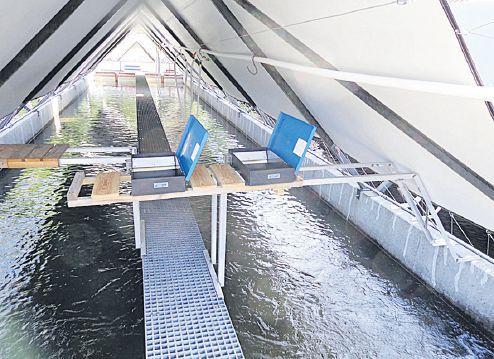
Belt-feeder stands
t Quilcene National Fish Hatchery in Washington state coho (Oncorhynchus kisutch) fry are transferred at swim-up directly from the incubators into 8’ x 80’ raceways. Staff use belt feeders to feed the fry starter feed. The feeders provide a constant supply of feed without staff having to feed the fish by hand. Two pairs of feeders are used, one pair at the head of the raceway and one about half way down.
The feeder stands are made from 1.5 inch (37mm) aluminum angle and consist of two rails 1 foot (30cm) apart. One side of the stand is bolted onto the edge of the
Quilcene
National Fish Hatchery
The Quilcene National Fish Hatchery lies in a narrow valley on the east side of Washington’s Olympic Peninsula at the confluence of the Big Quilcene River and Penny Creek. It covers slightly over 47 acres, and the main facilities include 39 raceways, each 8-feet (2.6m) wide and 80-feet (26.4m) long. Water is drawn from three intake structures (two on the Big Quilcene River and one on Penny Creek). There is a pre-settling pond, a pollution abatement pond, a hatchery building containing the office, conference room, break room, and tank room, an isolation/quarantine building, and a shop building all located on the west bank of the Big Quilcene River.
The hatchery is operated by the Fish and Wildlife Service of the US Department of the Interior and has been in continuous operation since 1911. It raises coho salmon for on-station release, and provides eggs and fingerlings for local tribal programs.
grip-strut walkway and the other (outboard) side rests on top of the raceway wall. The stands are 30 inches (75cm) tall above the grip-strut walkway which facilitates cleaning and filling the feeders without having to bend over or kneel. Since the hatchery has “A” frame shade structures on its raceways the feeder stand legs on the outboard (raceway wall) side are angled to fit under the A-frame shades that are fitted over the raceways.
The paired feeders are fastened to sleds made out of 1.5 inch (37mm) square lumber so that they can be slid back over the walkway for easy cleaning and filling with feed. Crossbars under the sleds prevent them from falling off the rails when in the cleaning/filling position. Two shelves on top of each sled hold the feed buckets when filling the feeders.
The feeder stands are easily removed by loosening two bolts when hand feeding starts.
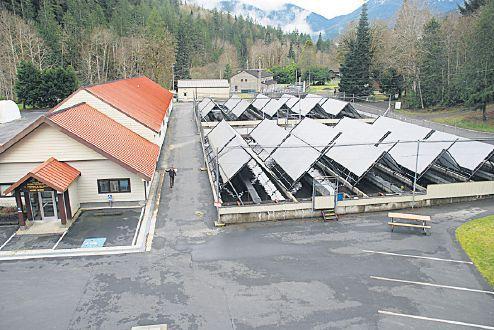
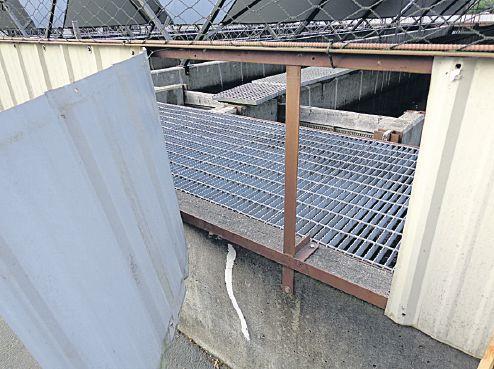
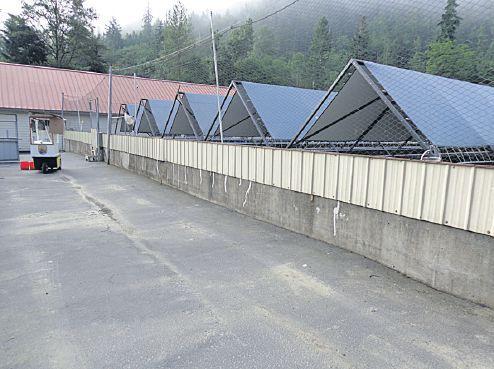
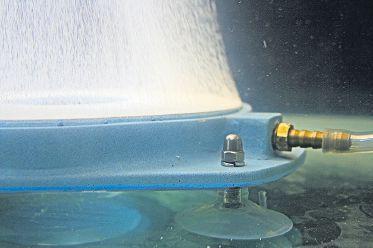
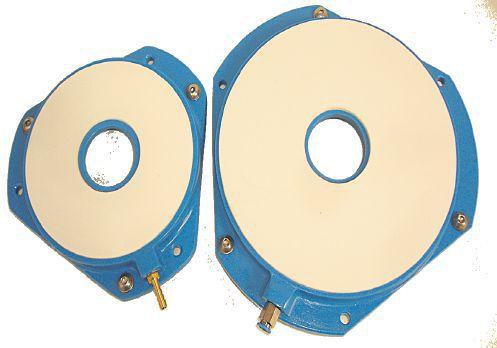
Ultimate otter barrier
he Quilcene National Fish Hatchery “had” an otter problem. Originally, the four banks of 8 x 80 raceways were surrounded by 2 x 2inch (50x 50mm) poly bird netting with a chain along the bottom to keep it on the ground.
Telltale wet marks on the raceway walls showed where otters would push under the chain weight or chew through the netting to get into the ponds during the night. Hatchery staff tried multiple strands of electric fence which worked for a while, but in time the otters became habituated to the shock and pushed through the wires regardless. And otters can easily climb over chain link fencing.
The hatchery’s solution was a physical barrier too high for an otter to jump over and too smooth to climb. This was done by fabricating a metal framework on top of the raceway walls and attaching steel roofing to making a wall at least four feet high around each bank of raceways.
Steel support brackets made from 3/16 inch (4.7mm) by 1.5 x 1.5 inch (37x37mm) steel angle iron, and 3/16 by 1.5 inch flat stock were bolted to the face and top of the raceway wall using concrete anchors and 3/8 inch (9mm) stainless steel bolts in pre-drilled holes. These
General view of the fence after installation.
The Quilcene National Fish Hatchery showing the main hatchery building with one of the 8x80ft raceway clusters, the bird netting, the shade structures and the steel fence in both short and tall installations and also on a gate.
Paired feeder units located halfway down one of the 80 ft raceways, with the sled in the open, servicing position.
Detail of the supporting brackets for the sheet steel fence, including the re-bar holding down the bird netting.
support brackets were located every 10 feet (3.0m) around the perimeter of the each deck of raceways. Corner brackets were bolted onto the top and both faces of the raceway to offer support in both directions. Lengths of 3/16 thick by 1.5 x 1.5 inch angle iron bolted to the top and bottom faces of the brackets connected them together and made a framework to which the metal roofing was fastened. The upper edge of the top rail faces outward thus covering the sharp edges of the sheet metal roofing. The bottom rail was notched and bolted onto the brackets along the top of the raceway wall with the angle pointed inwards. This eliminated any foothold for otters where the metal roofing met the raceway wall.
The sheet metal panels were clamped into place on the framework, drilled and fastened with ¼ inch stainless bolts every foot, to the top and bottom rails, with the ribs oriented vertically so as to eliminate any footholds on the face of the wall. The roofing material comes in 3-foot (90cm) wide panels and was ordered precut to the required lengths. It can be cut with tin snips or a metal-cutting blade in a circular saw, but it is easier to order precut to length. It can also be ordered in many colors. We matched ours to the siding on the hatchery building. We also covered the lower four feet of all chain link fence gates that offered access to the raceways, and covered or removed any gaps or footholds. Once the metal fencing was installed the bird netting was cut to the height of the top of the metal fence. Twenty foot (6.0m)






lengths of 3/8 inch (9mm) rebar was woven through the lower loops of the bird netting and attached to the top rail of the metal fence with cable ties.
The beauty of the sheet metal fence located atop a concrete surface is that the otters cannot dig or force their way underneath it. Being vertical, it doesn’t accumulate snow and get torn down, but it’s recommended to plow snow away from the fence so as not to create a ramp for otters (or mink or weasels) to exploit. Otters climb quite well and if you have things they could use as a ladder, you might want to make the otter-proof fence taller in those areas. Otters may have shorts legs but their long bodies give them a good reach. Make sure they can only make contact with slick, vertical, grip-free surfaces, and that there are no vulnerable areas they can push or dig their way through at the bottom.
Conditions at each hatchery are sitespecific and you will have to decide if this exclusion fence or some adaptation of it will work at your site. The fence has worked well at Quilcene, and staff there have had had no otters raid its raceways since installing it even though they have been seen in the river and running across the hatchery grounds. Maybe this type of fence will work for you. Good luck!
The preceding article was provided by Paul Kaiser (Fish Culturist) and Dan Magneson (Assistant Hatchery Manager) at Quilcene NFH. For more information contact Dan at: dan_magneson@fws.gov.
PIT TAGS & SCANNERS
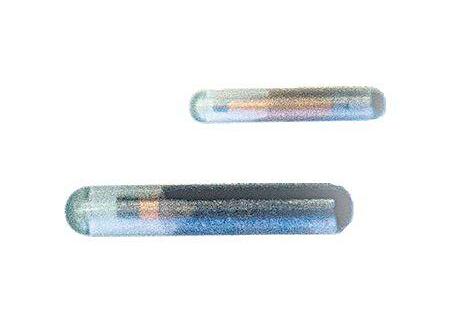
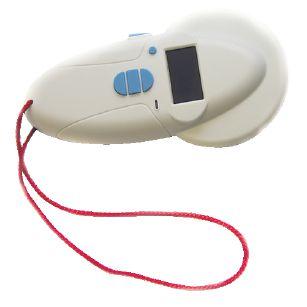
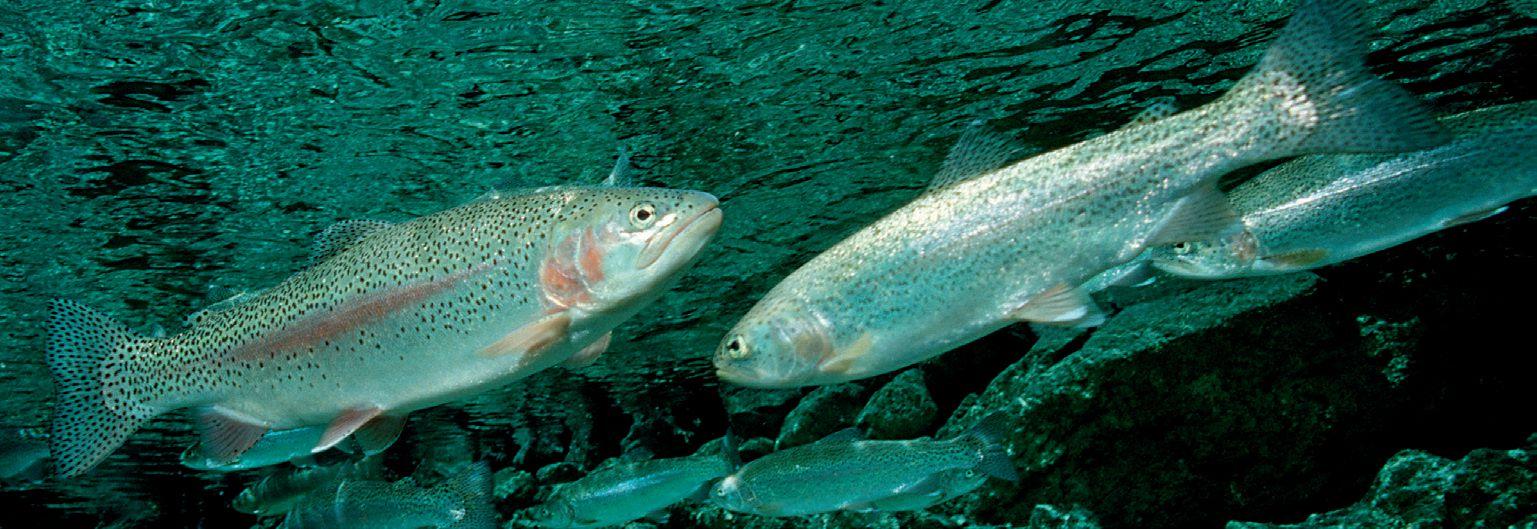









The Abegweit Fish Hatchery
A base for biodiversity and stock enhancement on Prince Edward Island
BY D.J. SCARRATT
he Abegweit First Nation is a small Mi’kmaq band that was established in 1972. It comprises three small, separate reserves (Morell, Rocky Point, and Scotchfort) in eastern Prince Edward Island, Canada, The Abegweit band separated from the somewhat larger and relatively distant Lennox Island First Nation in order to have greater autonomy.
Native people have lived on Prince Edward Island for upwards of thirteen thousand years, and their modern descendants maintain their ancient tradition of respect for and protection of the Island’s natural resources for current and future generations. Band members take great pride in their community and involve “our youth, our harvesters, our elders, and our leadership.”
Some five years ago the Prince Edward Island Department of Agriculture and Forestry called for expressions of interest in producing native brook trout (Salvelinus fontinalis) and Atlantic salmon (Salmo salar) for restocking Island streams. The Abegweit First Nation responded and reached an agreement with the province for the production of fish for recreational restocking efforts. A hatchery was built on the Scotchfort reserve in 2012, and has been producing fish successfully ever since. The hatchery supports and collaborates with a number of successful programs beyond recreational fishing on PEI (which generates approximately $10 million annually), and First Nation treaty rites for ceremonial purposes.
HATCHERY INFRASTRUCTURE
The main hatchery building is of a metal “Quonset” design and measures roughly 60 x 30 ft. (18.2 x 36.4m). It was assembled on site by First Nation members. At
present the building holds four 10 ft (3.0m) fiberglass Swede tanks (square but with rounded corners — made by Duratech in Nova Scotia); two 7ft (2.1m) and three 4ft (1.2m) circulars. These will be augmented by four more 10ft Swede tanks located outdoors in the near future.
Eggs are incubated in Heath trays, (10,000 per tray) and there is sufficient capacity to meet existing contract agreements, with considerable space to spare for other programs. Current contracts call for 10,000 brook trout for release each fall as 5-6g juveniles in each of four streams, 4000 “derby” fish for public fishing events that are held from time to time at different locations on the Island, and a minimum of 50,000 salmon for release as first-feeding fry in a number of island streams.
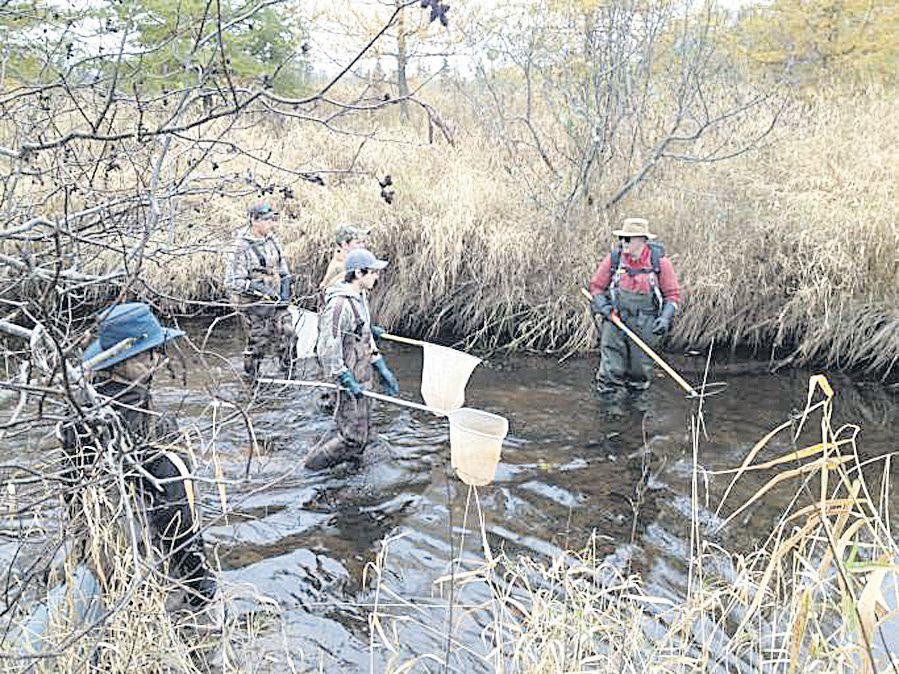
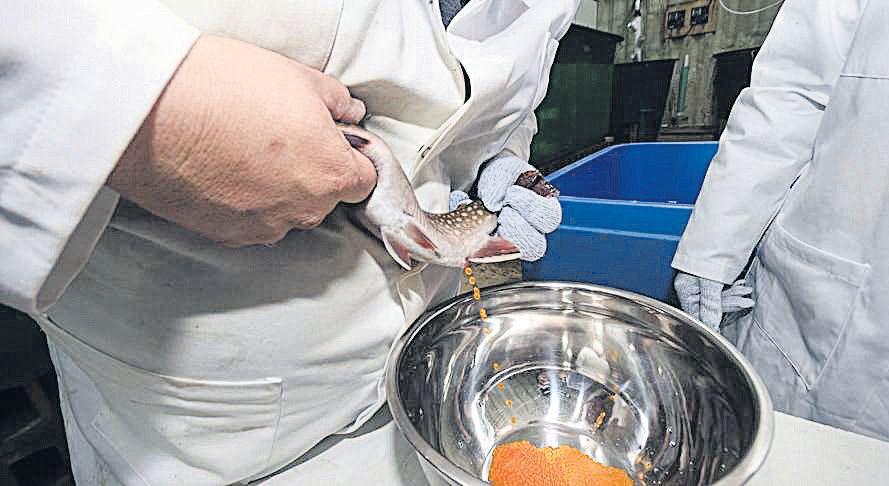
Water is drawn from two wells on the property and only requires de-gassing using a cascade system to strip nitrogen (to avoid gas-bubble disease) and add oxygen prior to use. Maximum sustainable flow is estimated at 650 l/min, but current demand is more in the order of 200 l/min. Incoming water temperature remains more or less constant at 8–8.5°C year-round. For salmon production, the water is cooled to 2°C which is more representative of spring-time conditions.
• Alloyed polyethylene
• UV stabilized
• Resist puncture and tears for a more secure system
• Lightweight and easy to handle
• Cold crack tested to -60°F for continuous performance
• Custom
and
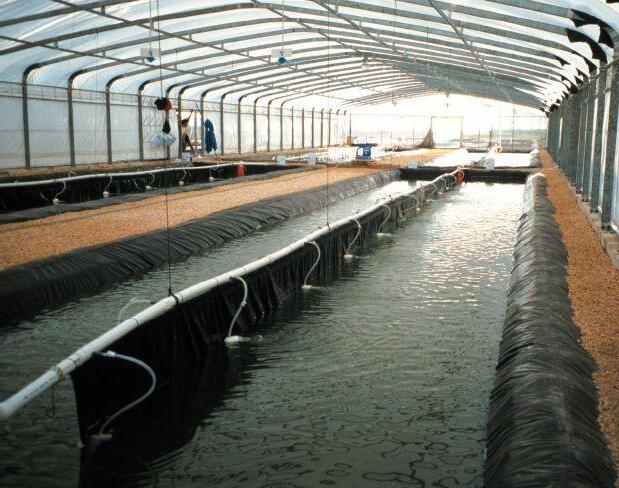
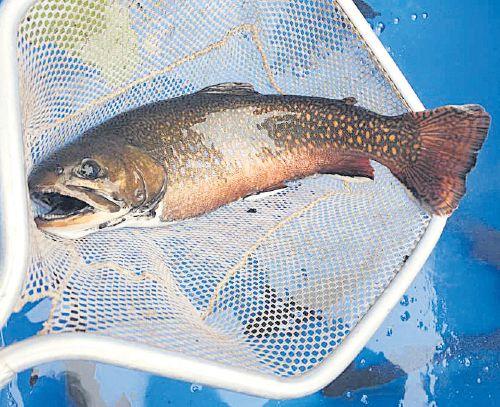
PLANS FOR RAS
The current system is “flow-through”, but plans are in place to convert to recirculation prior to broodstock collection later in 2017. This will allow the effluent to be redirected to an aquaponics greenhouse for the future production of vegetables for local consumption, and traditional medicinal herbs. The water stripped of its nutrient content by the plants will be returned to the fish tanks.
Broodstock are collected from river systems around the Island in late October, brought to the hatchery for spawning, then released back to their respective rivers. There is no attempt to use hormones to synchronize spawning since experience has shown the optimum time to collect fish from the different streams. Progeny are released to their parental rivers: salmon are released as first feeding fry in the spring; trout are released in the fall at a size of 5-6g.
Stripping brook trout eggs.
Youth participating in broodstock collection. Brook trout and salmon broodstock are collected from Island streams in October.
Brook trout brood-fish.
All photos courtesy of the Abegweit First Nation
Unique salmon population
One recent and exciting development has been the discovery of a unique Atlantic salmon population that may contain genes of the original PEI populations. A salmon DNA study conducted by Laval University in Quebec, analyzed 9,142 tissue samples from Atlantic salmon collected at 149 sampling locations in the eastern United States and Canada in 2012, including five rivers in PEI. The preliminary results revealed that while Atlantic salmon populations in the eastern Atlantic region could be grouped into 29 regional strains there are Atlantic salmon from two eastern PEI Rivers, North Lake Creek and Cross Creek, that displayed a separate DNA marker cluster and could be considered “unique”. The Conservation Society has initiated a project called the “PEI Genetically Distinct Salmon Population Evaluation, Habitat Assessment, Rehabilitation and Conservation Project” and has been granted $44,000 in funding from the Atlantic Salmon Conservation Foundation over the past two years for further study.
The project’s goal is to monitor these genetically distinct populations and develop strategies for their appropriate management, protection and conservation.
The hatchery is designed with energy conservation in mind. Piezo-electric solar panels are mounted on the roof, and the electricity generated (up to 9 kW) satisfies about 30% of the overall demand. Tanks are illuminated with supplemental LED lighting following a natural daylight regime. The focus is on producing high quality fish rather than on large numbers.
Design capacity of the system is to produce approximately 50,000 brook trout and 100,000 Atlantic salmon for restocking, although these numbers have been exceeded: 60,000 brook trout and 120,000 salmon fry were released in 2016
STREAM ENHANCEMENT
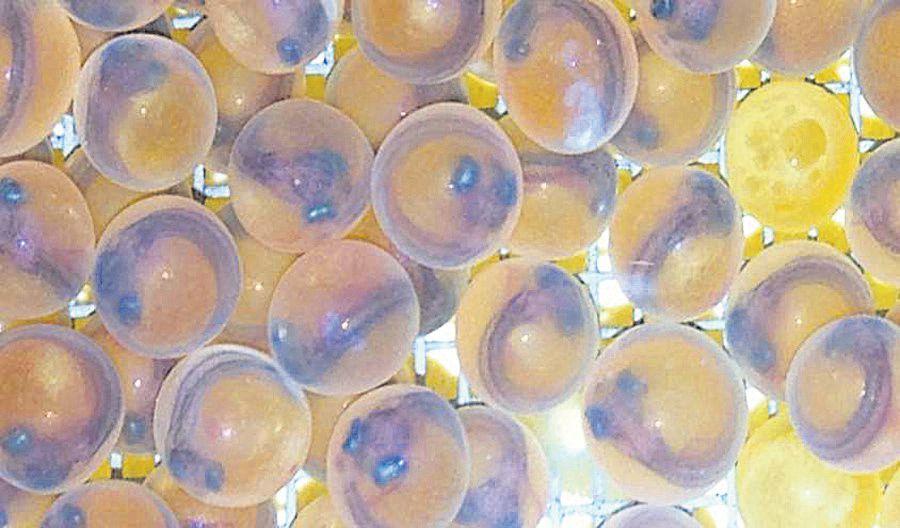
Eyed eggs just prior to hatching.
I am indebted to Hatchery Manager Scott Taylor for his collaboration in the preparation of this profile and for sourcing the photographs, and to Roger and Rebecca Hersom-Petersen for correcting some of the details. For more information contact Scott at: cstaylor@abegweit.ca.
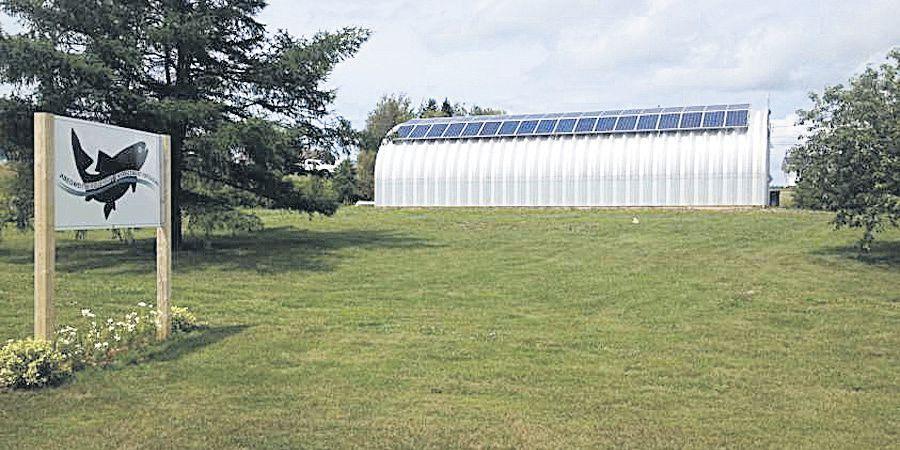
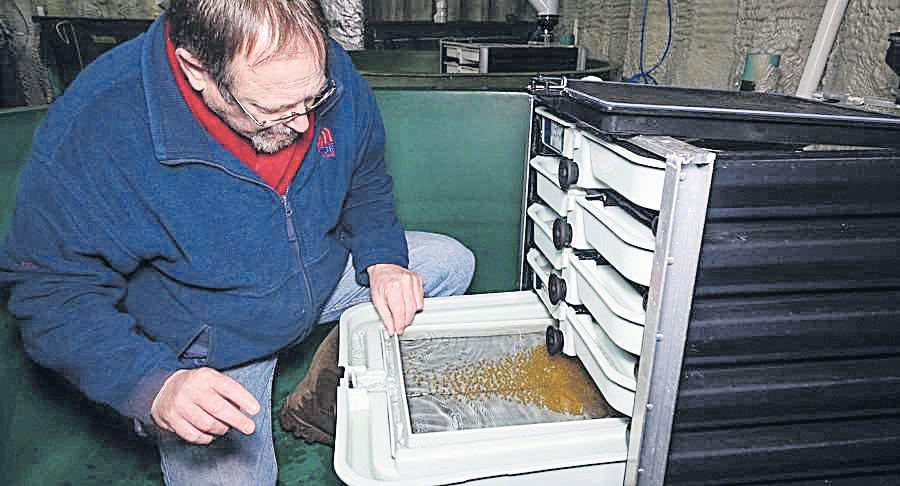
The Abegweit Biodiversity Enhancement Hatchery, to give it its full title, is one of three initiatives of the Abegweit Conservation Society. Related Society initiatives are the Abegweit stream enhancement, and forestry programs. Over the past 10 years the stream enhancement program has pursued a number of initiatives such as the removal of beaver dams, shoreline clean-up, instream improvements to increase water flow and lower summertime water temperatures, besides collaborating with the collection of broodstock and the release of fish back into their native streams. This has included collaboration with a number of dedicated conservation groups for work on individual streams and rivers, including research and monitoring for evaluating stream habitat improvement activities and the effects of climate change.
The hatchery coordinates the PEI Fish Friends Program, an educational program originally developed by the Atlantic Salmon Federation. The ABEH provides aquariums for a number of schools across the island that are maintained by teachers and their students. Each school receives 150 eyed salmon eggs that are first incubated in the hatchery, and the hatchlings fed and cared for and later released by the students into local streams, usually in June when water temperatures are rising and the kids are still in school. Students are encouraged to learn about the fish and appreciate their sensitivity to environment degradation, poaching and habitat destruction, and the importance of recreational fisheries to society. Eight Island schools participated in 2014; 12 in 2015; and 17 in 2016, so the
- DJS
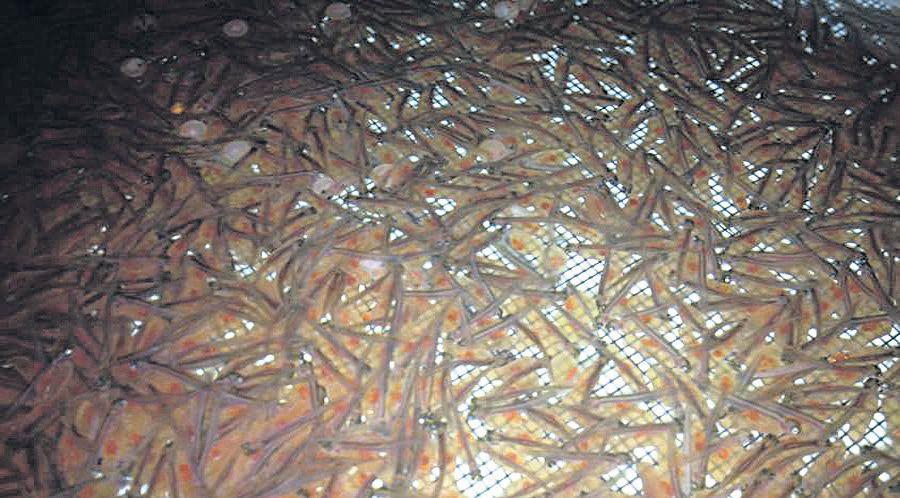
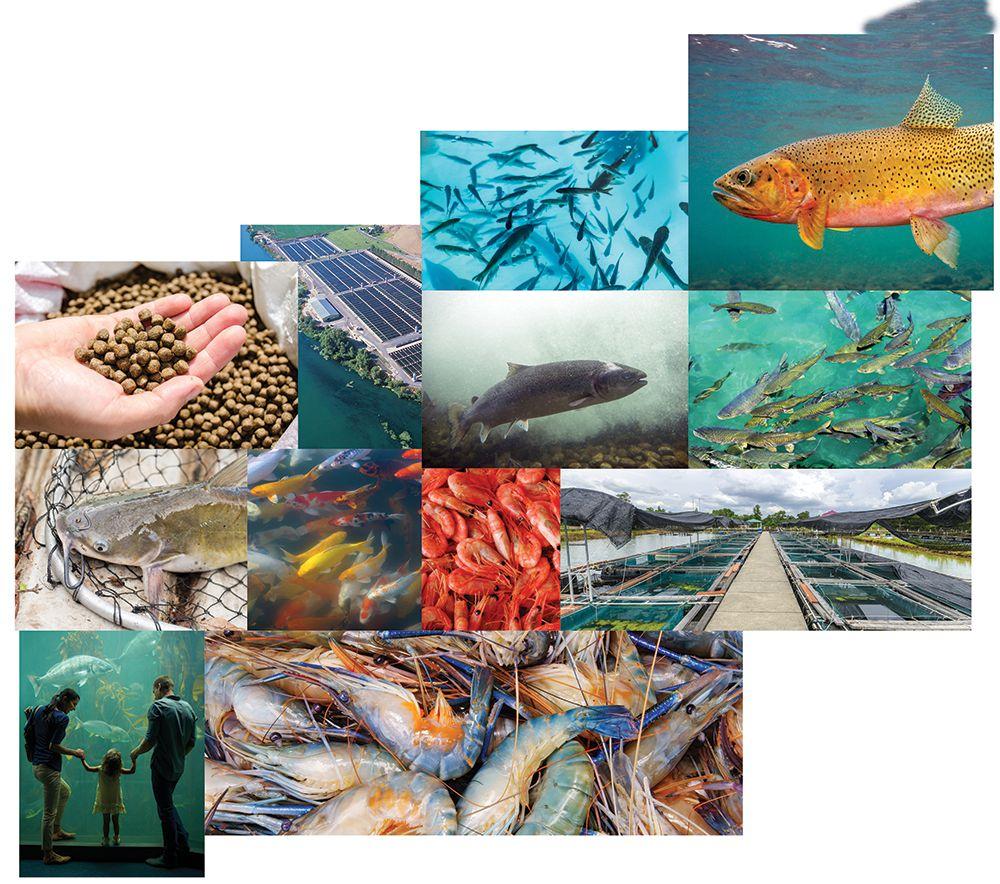

Salmon sac fry just prior to first feeding and release.
Hatchery manager Scott Taylor examines incubating eggs.
The Abegweit biodiversity enhancement hatchery located in Scotchfort, Prince Edward Island.
Copepods

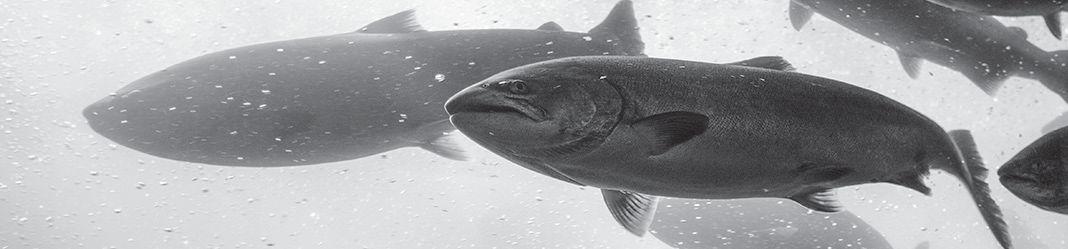
Globally Trusted UV Experience
Proven bio-security; over 35 years, 380 installations, more than 740 million gallons per day
Lifetime Disinfection Performance Guarantee Aquafine Genuine parts program provides this peace of mind
Long-term Industry Commitment
Collaboratively advancing UV research in aquaculture aquafineuv.com
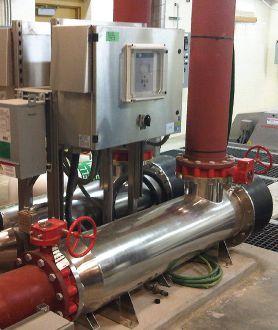
WATER TREATMENT
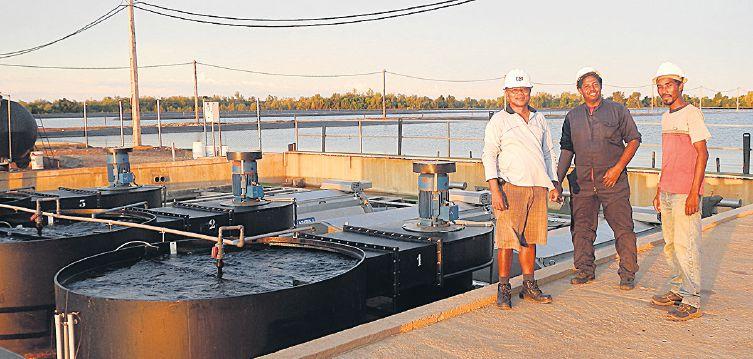
Shrimp hatcheries get water warning from French specialist
BY COLIN LEY
lose attention to water usage and management has a major role to play in the current development of shrimp aquaculture around the world says French water treatment specialist, Didier Leclercq.
CCEO and founder of Acui-t, based in Saint-Nolff, he told an international audience of farmers and researchers at SPACE 2017 in Rennes, France that the shrimp industry risked ‘throwing money away’ during the creation of new hatcheries unless such projects included provision for good water treatment processes.



“New generation shrimp farms obviously need to have good broodstock and strong broodstock management systems as the core base of their operations, but they also need to address water treatment requirements as a matter of priority,” he told delegates to SPACE, a 100,000-visitor, allspecies livestock event which has added aquaculture into its schedule over the last two years.
sanitary fence against invasive pathogens and competitors”.
“Shrimp farming has suffered from environmental and disease issues in recent times, of course, but is now recovering thanks partly to the introduction of better water management, ozone disinfection, biosecurity and improved management practices in general,” he added.
“In addition to helping shrimp farmers address their treatment requirements, I also believe there are benefits to be gained from controlling the quantity of water which is being used inside some hatchery systems. Clearly, if you can use less water without suffering any reduction in performance then there will be less water to disinfect and keep clean. This is bound to have a beneficial impact on production costs.”
“Unless you place your good shrimp broodstock behind safe water treatments you will eventually find yourself throwing money in the bucket,” he said. “This is because without good water management in these new units you will eventually be caught out by disease issues.”
With an increasing number of traditional shrimp businesses being now ready to ‘quit’ their dependence on harvesting wild stock supplies in favour of establishing their own broodstock, M. Leclercq warned that a failure by such units to address water treatment requirements would leave them exposed to potential disease issues in the future.
Citing examples of ongoing Acui-T projects in Vietnam, Saudi Arabia and Australia, M. Leclercq was especially positive concerning the turn-round in business performance achieved by a relatively isolated hatchery in Madagascar.
“This unit was producing 5000 tonnes in 2010 under a traditional process, prior to being hit by white spot disease,” he said, “at which point it faced the very real risk of going right down to zero tonnes. They are now back up to 6000 tonnes, however, having put the right technology in place, they are using fewer hectares for production and are more profitable than they were before.
“While it’s a small unit in global terms, it’s a good example of what can be achieved with the right approach.
“Shrimp farming has come from a very weak technological background but is now entering a completely new phase of its development. As a result, there are a lot of ideas being advanced by my company and others. As always, only the best solutions will survive 10 years from now.



“There are many treatment solutions already available for this, as already applied successfully for other aquaculture species, and it’s important that the modern development of shrimp farming embraces these techniques,” he said.
A pioneer himself in the use of ozone in aquaculture, working in partnership with Ozonia, M. Leclercq is currently helping to introduce ozone treatment systems to shrimp farms and hatcheries in several countries, specifically to create a “strong
“Having worked in intensive fish farming for 35 years, half of which was devoted to the development of turbot production, I am confident that we can also make a contribution to the equivalent development of shrimp farming. The sector, at this stage, still has a lot to learn, however.”
Parallel 900m3/hr ozone treatment lines at a shrimp farm in Madagascar.
Didier Leclercq
More complexity leads to better results for US hatchery
BY ERICH LUENING
Last year staff at McNenny State Fish Hatchery in Spearfish, South Dakota installed vertically oriented aluminum rods to provide structurally complex environments in their trout tanks. This year they added small colored balls to the mix. Both projects yielded positive results.
In the project last year (Hatchery International, Sept/Oct, 2016) Mike Barnes and his team studied the growth and condition of juvenile rainbow trout reared in circular tanks containing nine vertically oriented round aluminum rods (structurally complex) compared with that of trout reared in tanks with no rods (control).
In their latest effort they reportedly included brightly colored plastic balls to provide additional complexity to the environment in the rearing tanks. At the end of the rearing period, Barnes told the Black Hills Pioneer they got better results than ever.
Photos by Michael Hilmes
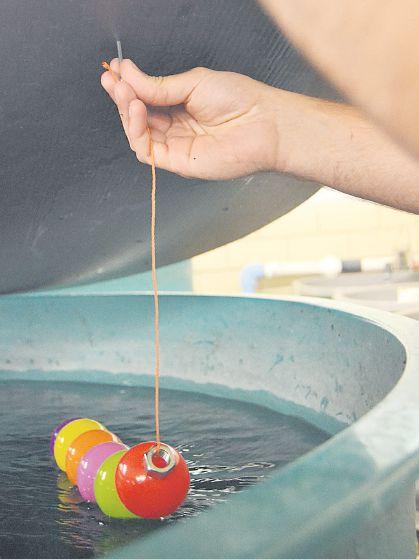
“As expected; we got 120 pounds in a covered tank, 150-160 pounds in the tanks with aluminum rods, but the tanks with the balls, for the first time in my 28 years out here, we had tanks with over 200 pounds of fish, which is totally unprecedented,” he told the newspaper.
The potential impact of structural complexity on the rearing performance of juvenile fish has largely been ignored, but Barnes’ team has looked at whether it would benefit trout during the early lifecycle stage in the same way that
What makes the McNenny Hatchery research unique, he explained in the 2016 Hatchery International article, is that it focuses purely on the hatchery rearing aspects of a structure that didn’t interfere with normal hatchery practices (i.e. no more work for hatchery staff).
With the recent plastic ball study Barnes said they found a relatively inexpensive way to improve trout hatchery production which less man hours for his team.
The cost per tank to improve fish
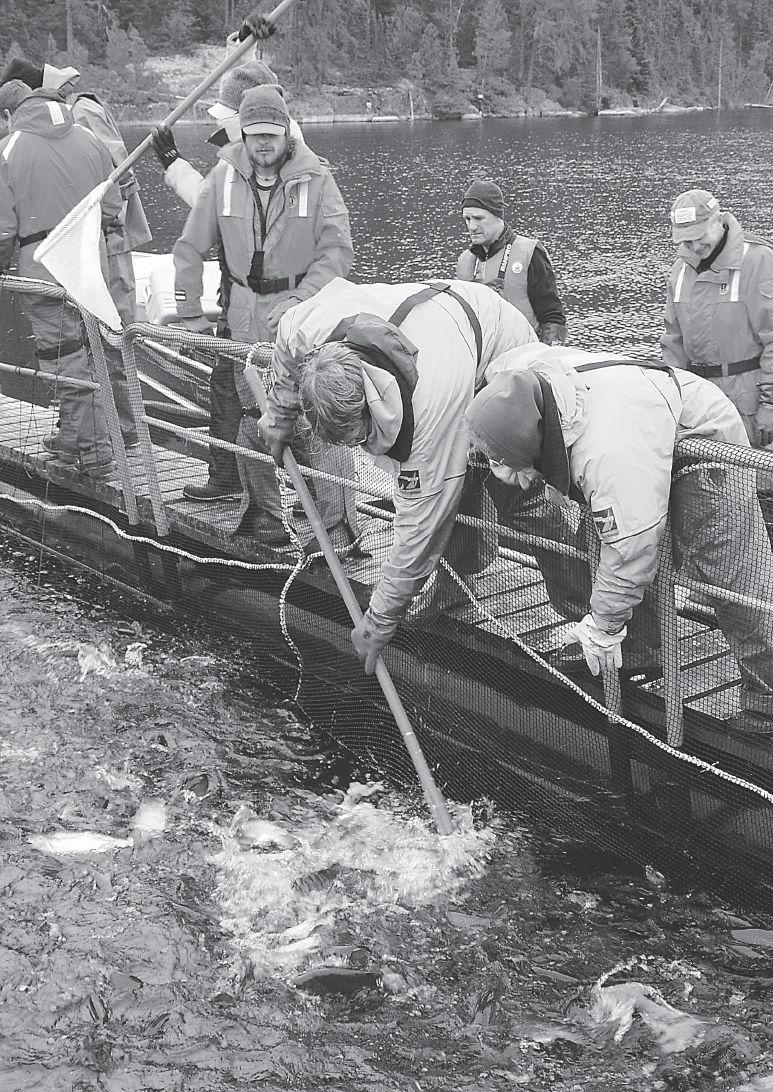
- Permanent PVC concrete form
- Maintenance free
- No paint or membrane required
- Low transportation costs
- PVC respects drinkable water requirements
- R-value insulation option to reduce energy costs.


Our COMPLETE LINE OF AERATORS delivers much needed oxygen for fresh and salt water fish in ponds, lakes, and during transport. Their proven dependability results in better production, reduced loss, and improved growth rate for your fish.

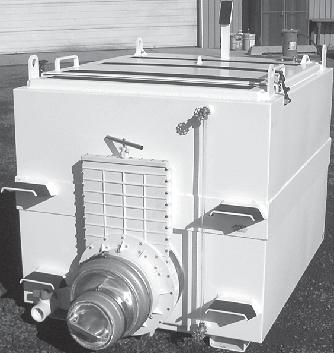
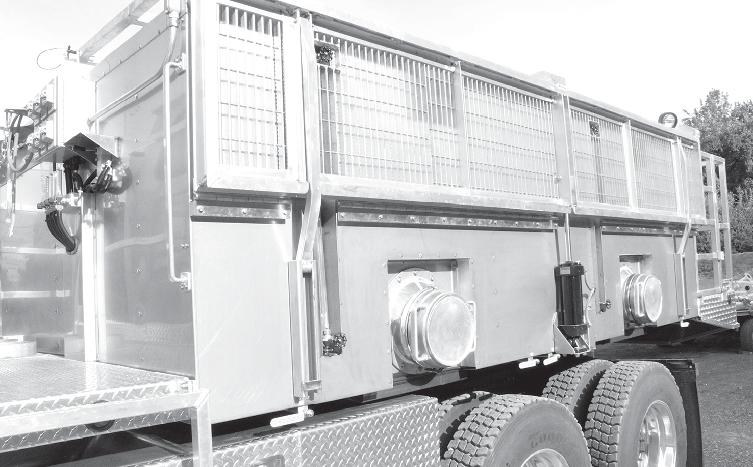
Brightly coloured plastic balls add complexity to the rearing tanks.
US groups collaborate on tripletail development for land-based production
cientists with the University of Southern Mississippi and staff at the Perciformes Group, based in Rockport, Texas, plan to focus on developing facilities and appropriate protocols for breeding and developing premium-quality tripletail (Lobotes surinamensis) for the retail and restaurant markets.
The Perciformes Group said in recent interview that it plans to expand its diverse product offerings with Tripletail in an effort to meet climbing demand for some specific markets. Perciformes director of research and development Chris Manley is quoted as saying he and his colleagues are “very excited” about the upcoming collaboration with USM’s Gulf Coast Research Laboratory (GCRL) in Ocean Springs MS.
The university program will be led by associate professor Dr. Eric Saillant from the School of Ocean Science and Technology. Saillant and his team will work toward the development of hatchery protocols for controlling reproduction and culture of Tripletail to grow them to market size. The project will also generate genetic and genomic tools for domesticating the species. Saillant has previously worked with a variety of marine species, including red snapper (Lutjanus campechanus), Atlantic croaker (Micropogonias undulatus), hybrid striped bass ((Morone saxatilis x M. chrysops) and the European seabass (Dicentrarchus labrax). Dr. Kelly Lucas, director of USM’s Thad Cochran Marine Aquaculture Center, is reported as saying that
the university had advanced in its aquaculture work to the point that it was now “poised to partner with the industry to address research that will advance sustainable aquaculture on land and in coastal and marine environments.”
Perciformes Group has already established itself in developing innovative economical and sustainable aquaculture practices, and its sister company, Global Blue Technologies, has developed a large, zero discharge, water-recirculating shrimp farm in south Texas. The company is also reporting success culturing sablefish (Anoplopoma fimbria), a much-sought-after fish which commands high market prices from seafood restaurants and consumers. The company says its research and development facility, located on the GBT campus in Texas, also employs recirculating aquaculture technology that has demonstrated higher-thanforecast survival rates.
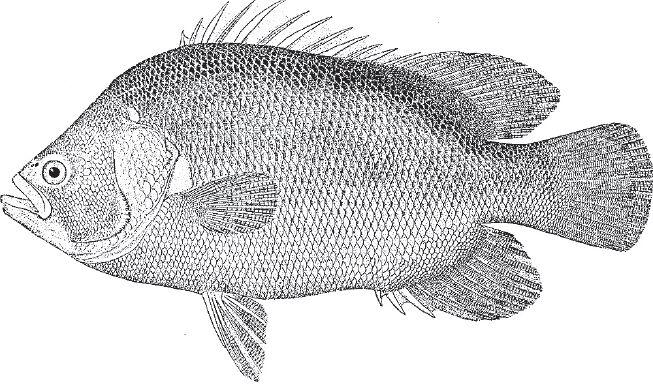
Perciformes president and CEO Dr. Timothy T. Aberson used the announcement of the joint research project to report that following the company’s success with sablefish, it has secured a site in Eureka, California, where it will build a commercial facility, designed to produce some 200,000 pounds of sablefish a year using the same zero-discharge design used in Texas.

Researchers test conditioning diets on broodstock clams
he hatchery-breeding of bivalve molluscs requires that careful attention be paid to the conditioning of broodstock, where clearly the nature of the conditioning diet will be important. Not all phytoplanktonic species that may be used are effective, and some may in fact be contra-indicated.
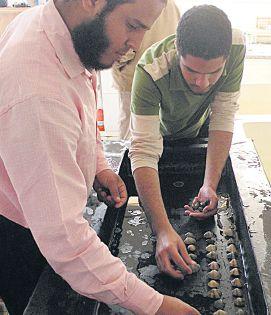
Dr. Eman ElWazzan, from the Egyptian National Institute of Oceanography and Fisheries (NAIF) in Alexandria, has reported on research by her Master’s student, Ahmed S. Abbas, on the effect of different micro-algal diets on the gonadic maturation of the carpet shell clam (Tapes decussatus), a species that has potential for culture in Egypt.
Under El-Wazzan’s guidance, Abbas and his colleagues used the algal species Chaetoceros calcitrans (Cc), Nannochloropsis oculata (No), and Tetraselmis suecica (Ts) to prepare seven different diet regimes: three mono-specific diets (Cc; No; Ts); three bispecific diets (Cc + No; Cc + Ts; and Ts + No in a 1:1 dry weight ratio); and one tri-specific diet (Cc + Ts + No; again in a 1:1:1 dry weight ratio).

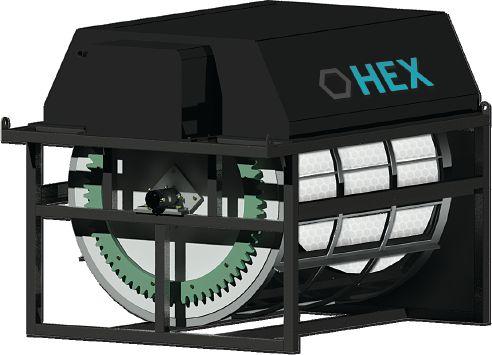

- Quentin Dodd
The maturation rates of clams fed the test diets were compared to those of unfed controls. The results showed that all the animals except the controls attained at least some gonadic maturation, but with different rates that reflected the different diets used.
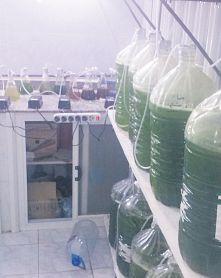
Algae room at the Invertebrates Aquaculture Laboratory, National Institute of Oceanography and Fisheries (NIOF),

After 48 days of conditioning, the clams fed Cc or Cc + Ts diets developed the most, and reached the partial spawning phase with the largest spawning proportion (62.5% of sampled clams for both diets). They were followed by clams fed the Ts diet, with 50% spawning after 48 days of conditioning.
The first two diets led to spontaneous mass spawning after 47 days of conditioning, and clams on these three diets showed the highest weight gain and condition index values. N. oculata alone, or in mixed diets, yielded the lowest levels of gonadal maturation during the conditioning period. The unfed treatment showed the lowest values among all parameters examined. They lost weight and showed no sign of sexual maturation.
The results indicate that Chaetoceros calcitrans alone or mixed with Tetraselmis suecica can be recommended for Tapes decussatus broodstock conditioning in Egyptian hatcheries.
For more information contact Dr. El-Wazzan at: emanelwazzan@yahoo.com
Clam set-up on the spawning table for induced spawning trials conducted by Masters students, Ahmed S. Abbas (left) with the assistance of Mohamed Kamal.
All photos courtesy Dr. Eman El-Wazzan
Egypt.
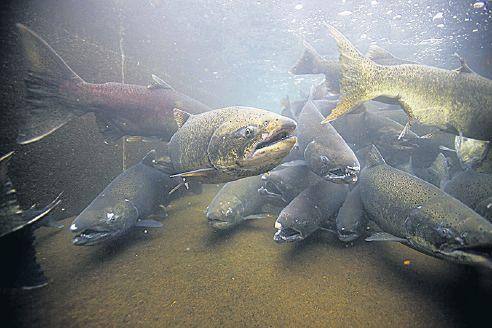
Canadian research helps characterize salmon’s ability to adapt to climate change
ild Chinook salmon play a significant role in commercial, recreational and First Nations wild harvests in western Canada. These harvests, however, have been decreasing due to warming waters and shifting population ranges - both results of climate change. Since the 1990s, declines in Pacific salmon populations have led to a reduction the total value of the commercial catch in BC from $263M to $24M.
With climate change scientists claim that salmon are becoming mismatched to their existing environment. They note that there is a pressing need to identify what genes will help salmon adapt to climate change in the future.
A BC-based research organization, Genome BC, is investing in research to identify whether and how salmon populations are undergoing genetic adaptation to environmental changes (‘evolutionary rescue’). This information will help predict the fate of salmon species under alternative climate scenarios.
“The idea is to hunt for adaptive genetic variation in an important fish with the help of a convenient model fish, in this case three-spine stickleback,” says Dr. Dolph Schluter, a Professor in the Department of Zoology at the University of British Columbia. “The two species have the same genes and the same long north-south distribution along the west coast, so we plan to compare changes in their genomes across latitudes.”
The team will use genomic tools and analysis of the stickleback to develop an inventory of adaptive genetic variation in wild Chinook salmon. This work will establish a much-needed baseline for tracking past and future genetic changes in Chinook salmon and other salmonid species. Their findings will be disseminated to end users and the data will be shared publically.
“This atlas has great potential to aid genomeassisted improvement of salmon strains in BC and is the first instance using this adaptive genetic approach,” says Dr. Catalina Lopez-Correa, Chief Scientific Officer and Vice President, Sectors at Genome BC. “This investment will be extremely useful to commercial salmon producers to improve broodstocks and the baseline data will provide the foundation for future research and monitoring. It will also highlight the role genomics has in understanding how species adapt to a changing climate.”
This project, valued at close to $250,000 is funded through Genome BC’s Sector Innovation Program.
Genome British Columbia leads genomics innovation on Canada’s West Coast and facilitates the integration of genomics into society. It invests in research, entrepreneurship and commercialization in life sciences to address challenges in key sectors such as health, forestry, fisheries, aquaculture, agri-food, energy, mining and environment.
Noni and kariyat bioextracts improve immunity of tilapia fingerlings
wo herbal bio-extracts, known to enhance the immunity system of humans, have been found to have the same effect on Nile tilapia fingerlings.
A study, Effect of herbal bioextract on survival rate of Nile tilapia fingerlings injected with Aeromonas hydrophila, was conducted by Dr. Pattareeya Ponza et al, who are with the Program of Fisheries Science, Department of Agricultural Science, Faculty of Agriculture, Natural Resource and Environment, Naresuan University in Phitsanulok province, Thailand.
“For this study, kariyat, (Andrographis paniculata), and noni, (Morinda citrifolia L.), bio-extracts were mixed to commercial feed and fed to tilapia fingerlings, one gram each, for 60 days. Results showed that growth of fish fed with kariyat and noni were better than fish in the control group which didn’t have bio-extracts.
“When challenged with a pathogen, fish in the control group showed higher mortality than the fish fed with bioextracts. So, this may suggest that application of the bioextracts would be beneficial to fish’s health,” Ponza told Hatchery International.
She presented the study at Aquaculture Asia-Pacific 2017 held in Kuala Lumpur during July.
Noni contains the phytochemical, scopoletin, which has anti-bacterial activity, anti-inflammatory effects and regulates blood pressure. Kariyat contains andrographolide, a phytochemical compound which has anti-cancer properties.
To extract scopoletin from the noni, Ponza used a method of fermenting it with molasses and water for 30 days. Kariyat was processed in the same way.
She said herbs with potent anti-parasitic or antibacterial effects could be used not only as bio-extracts but
also in the form of powder, aqueous extraction, such as hot water extraction, or ethanol or methanol extraction. She noted, though, “Optimization of these methods needs to be investigated prior to use since some could be harmful to fish.”
With the consumers’ growing consciousness about the safety and quality of food from farm to table, the reduction of chemical and drug usage during the grow-out period of livestock and fish is always good news.
Ponza’s study also has another practical facet: “In my study, both herbs were used as bio-extracts applied to commercial pelleted feed as it was practical for farmers and there was the availability of herbs.
“It was done to promote fish health in a growing system, where using antibiotics or chemicals are limited. It is a practical method for small-scale farmers or an organic farm,” she noted.
-Ruby Gonzalez










Kariyat and Noni fruit (right) abound in Thailand. Photo credit: Dr. Pattareeya Ponza
Worm biofilter complements high-tech RAS at Chilean hatchery
One of the most high-tech RAS in the Chilean salmon sector, Cermaq’s Santa Juana hatchery combines high efficiency with environmental savvy. Worm composting is just part of the process.
BY CHRISTIAN PÉREZ MALLEA
hile ‘Río Pescado’ is the oldest freshwater site belonging to Cermaq Chile (see Hatchery International, Volume 18 Issue 4), ‘Santa Juana’ is one of the company’s newest salmon RAS in the country.
Launched in 2007, this farm formerly belonged to Salmones Humboldt and is located in Cancura, near the river ‘Rahue’, about 100km north of Puerto Montt. Twenty-seven people work in this RAS.
The facility is part of Cermaq since Mitsubishi Corp purchased both Salmones Humboldt and the Cermaq Group in the past decade and merged them in December 2016. ‘Santa Juana’ is currently slated to produce Atlantic salmon smolts.
THE FACILITY
On its premises this smolt farm has 10 Comphatch hatching units; thirty 8m3 tanks for hatched-fry and first feeding; fifteen 30m3 tanks for juveniles; and twenty 250m3 tanks for smolts.
All those units combined require about 40 liters of new water per second, which means that 98% of the total is recirculated. Meanwhile, the water intake comes from two wells located within the 5ha site (~12 acres), which are independent from the river ‘Rahue’.
The RAS was provided by Billund of Denmark. In the treatment system, after water leaves the fish tank, it passes through Hydrotech drum filters, submerged biofilters, degassing (trickling) units, oxygenation cones (downflow bubble contactor) and a UV filter, before finally returning to the tanks.
Feed is supplied using Arvo-Tec’s feeding system for each tank, while O2 and temperature are monitored using Billund technology.
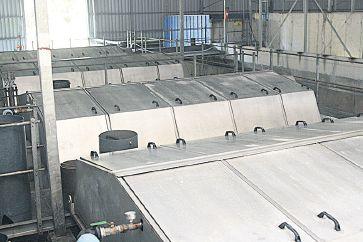
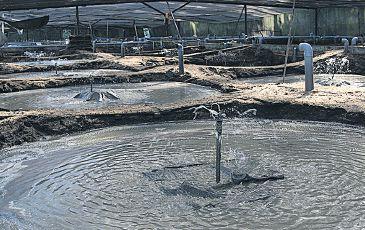
SMOLT PRODUCTION
‘Santa Juana’ has a maximum production capacity of six million smolts per year in four batches. It receives eyedeggs from other Cermaq Chile hatcheries in the region.
There is sorting and removal of fish with deformities and runts at first feeding. Then there is grading when fish reach 1.5g and one or even two additional gradings before 15g.
At 60-90g vaccination procedures start. Currently, the company uses a pentavalent injectable vaccine (against ISA, SRS, Vibrio, IPN and Furunculosis).
The fish are ready for transfer to seawater at 150g.
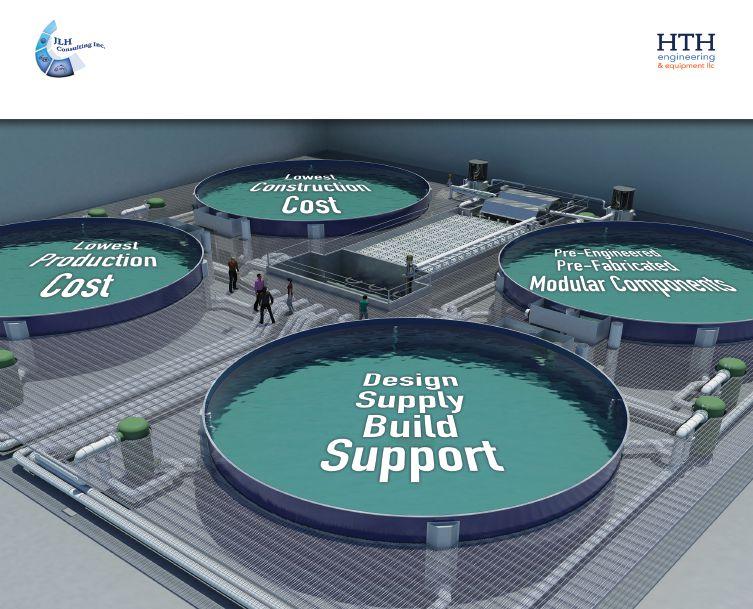
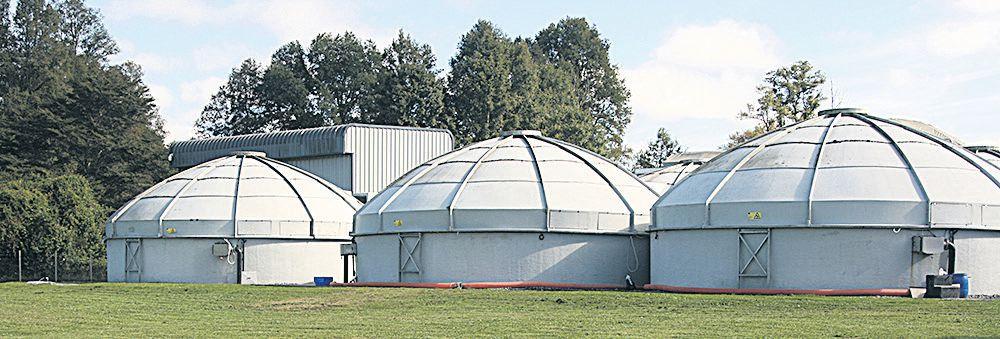
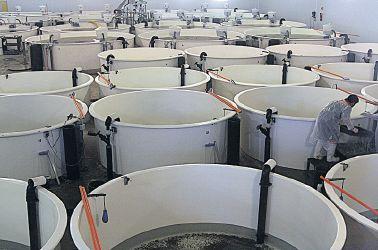
HIGH PERFORMANCE
According to several producer and supplier companies, this is reportedly a good productive performing salmon RAS, so we asked the farm manager of the facility, Jorge Vega, to describe the secret of his success. He explained that there are three key elements: production program, preventive maintenance and human resources.
Worm composting
Given that there are no specific regulations for RAS residues in the country most sludge from freshwater sites ends up at landfill sites authorized under current legislation.
Despite the absence of regulations, Cermaq Chile collects all waste accumulated on the filters at ‘Santa Juana’ and moves them to a worm composting area which has been in operation since 2009. There the sludge is transformed into fertilizer.
Jorge Vega said that all solids produced by this salmon RAS are removed by backwash through the mechanical filters, collected and sent to a treatment plant that uses a biofilter of worms (so called ‘Tohá System’ developed by PhD José Tohá Castelló in the ‘90s).
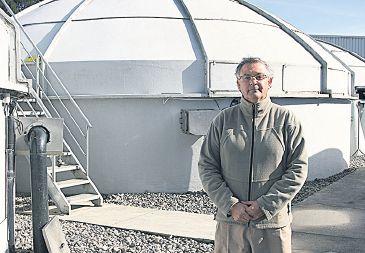
“We need a good production program, which manages the maximum potential of the farm and schedules the fish inputs and outputs; a proper design and a good preventive maintenance program, so that there are no major flaws; and a group of experienced professionals and operators, who constitute the greatest value of this fish farm”, he said.
the solution on the surface of the worm biofilter by means of sprinklers. This process is performed several times a day automatically, depending on the presence of solids in the water. The Tohá system consists of a large concrete structure like a swimming pool, with a geotextile tissue and a layer of sawdust in top which fills all the interspaces. This is the habitat of worms, although there are nitrifying bacteria and other populations too, allowing the digestion of solids from the farm and converting them into soil.
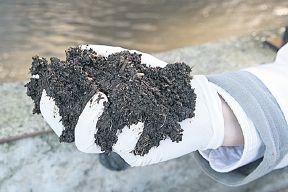
The resulting product has no chemicals or binders. Water that falls on the surface percolates to the bottom while solids remain trapped between the layers of sawdust. Then, water flows into a settling pond, to retain remaining sawdust and probably some worms in the system.
“Currently, “Our production is used in the gardens of our facility and to create green areas in another freshwater site.”
Solids produced in the system are extracted by the mechanical filters and sent by a backwash system to a pond. There, these solids are pumped into a homogenizing pond, where particle size is reduced using air, making a rough solution more or less homogeneous. Once this process is completed, water is pumped into the Tohá system.
This treatment system is divided into several sections: First, pumps distribute
The water removed from the system more than meets the Chilean environmental standards.
“Once every year the material retained is collected and distributed to the gardens and used in the creation of new green areas in our facilities. This process is tremendously important since this facility was designed to reduce impacts on receiving water bodies and to be an environmentally friendly fish farm,” said facility manager Jorge Vega.
Resulting substrate from the worms biofilter. This material is collected once every year and used as fertilizer.
Smoltification tanks at Santa Juana.
Tanks for first-feeding and juveniles. Fish are fed using Arvo-Tec’s feeding systems.
Jorge Vega, farm manager of the Santa Juana RAS.
Mechanical filters in the water treatment area.
Sprinklers spraying water into the sawdust at the worm composting unit.
RAS Revisited - A Cautionary Tale
ecirculation aquaculture systems expert, Ivar Warrer-Hansen, a senior advisor with Inter Aqua Advance A/S in Denmark, is convinced that some recent incidents in Europe indicate that the design of some saltwater RAS may be flawed.
Warrer-Hansen told Hatchery International that in most RAS the design includes facilities for solids or sludge removal followed by a biological filter that removes ammonia/ammonium. It is, of course, crucial to have a good solid waste or sludge removal system as possible, particularly for sensitive species such as salmon.
He stressed the importance of having a solids-removal system that will reduce the organic loading on the biofilter as much as possible. That’s to ensure good conditions for the nitrifying bacteria to do their work: it is ammonia/ ammonium—not organic matter—that’s the target compound in the RAS biofilter. Particle removal is needed to ensure water clarity and most RAS use drum filters designed and constructed to do that efficiently.
However, it is now becoming clear, he says, that sulphate reducing bacteria (SRBs) can cause serious problems in saltwater RASs even in non-anoxic conditions. Hitherto it was thought that the water had to be pretty much totally deprived of oxygen for SRBs to occur.
However, Warrer-Hansen noted that some biofilter designs also function as particle removers: the so-called submerged stationary - or fixed-bed filters. These, he says, attempt to have the biofilter perform two functions: solids removal and nitrification; and despite use of the term “particle removal”, such filters do not actually remove solids particles from the system. They entrap and store them until the filter is backwashed. And even then, not all of the accumulated sedimentary material may be removed.
“These types of filter are indeed very good at entrapping solids,” says Warrer-Hansen, adding that, paradoxically, entrapment and concentration are the very problem he sees with them. If there is sludge accumulation, it’s difficult to avoid pockets with low oxygen concentrations that can become breeding grounds for sludge-dependent bacteria and undesirable bacteriological processes.
“If one needs further sludge treatment, he said, there are safer ways of doing it.” Instead of having dual-purpose filters the processes should be kept separate – that way there is a better chance of controlling them.
What can happen in a bio-filter that is compromised by pockets of sludge accumulation with lowered oxygen concentrations is the creation of breeding grounds for a number of sludge-dependent bacteria and undesirable bacteriological processes. These include incomplete denitrification - incomplete in that the conditions aren’t completely anaerobic, and there is a reversal of nitrate back to nitrite. Other facultative bacterial activity under low oxygen levels may result in the formation of methane.
These processes might not be obvious or even noticeable initially, but over time they can build up and can reduce fish growth rates, as well as hamper normal biofilter performance.
But salt-water recirculating systems have a further problem in that salt-water contains naturally occurring sulphates, at concentrations around 2,700mg/litre. Even the slightest accumulation of sludge in a saltwater RAS seriously increases the risk of sulphate reducing bacteria (SRB) activity.
According to Warrer-Hansen, most SRBs are anaerobes that thrive in organic substrates such as sludge. However, they can divide under aerobic conditions too … up to 40% O2 saturation or more, and can thrive in both mildly aerobic as well as anaerobic sludges. As a result they are robust and difficult to control. With bacterial sulphate reduction hydrogen sulphide will be formed:
SO4-2 + 2C (organic) + 2H2O + (via SRB) => H2S + 2HCO-3
Hydrogen sulphide may not always kill fish but it will inhibit growth, even at concentrations below analytical detection levels, (0.025 mg/l with gas
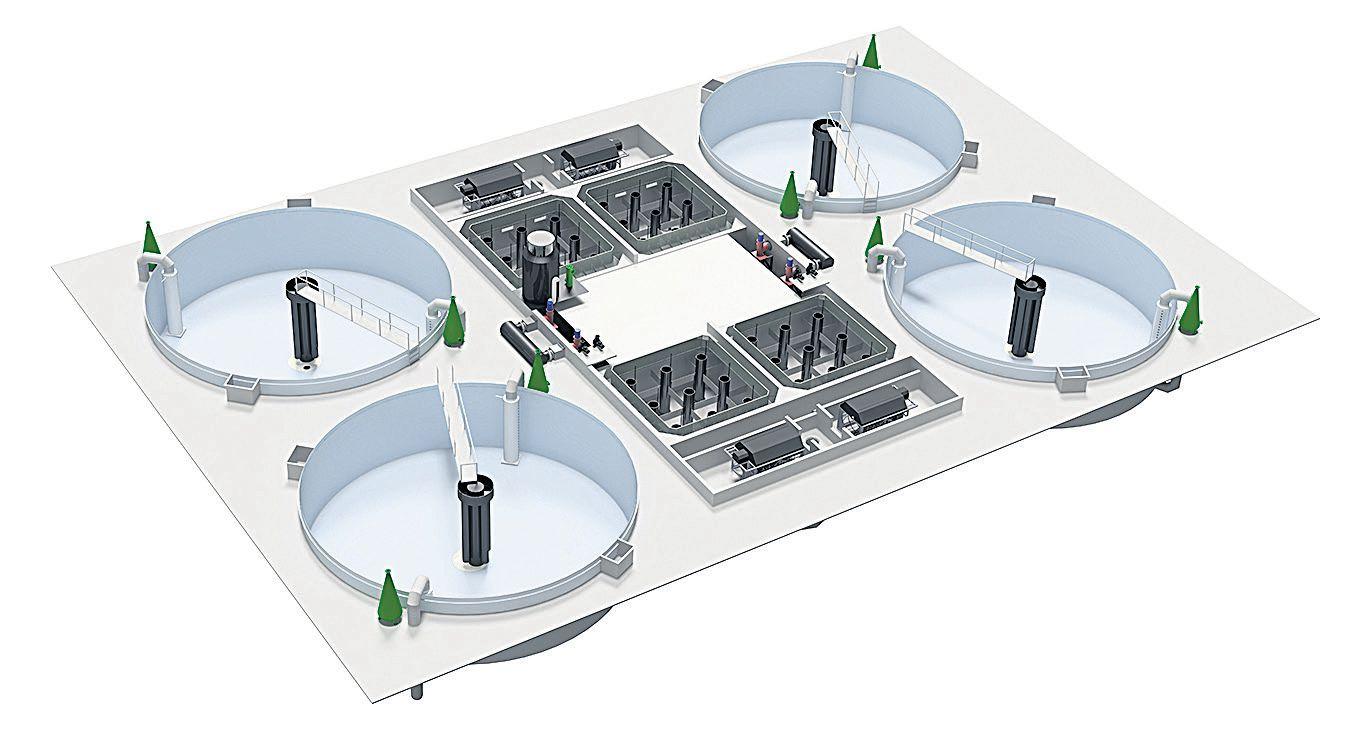
chromatography) so it may not be possible to identify the reason for reduced fish growth or unexplained mortality. H2S may well be responsible for several unexplained incidents in saltwater RAS.
According to Warrer-Hansen, SRB activity will also hamper the nitrification capacity of the bio-filter over time. SRB are robust and will easily displace nitrifying bacteria. Moreover, biofilters operate at ammonia concentrations that limit nitrification, and some species (e.g. salmon smolts) are grown at temperatures far below nitrifying bacteria’s optimum. To challenge a bio-filter further with SRB activity must be avoided, ergo plan for separate particle- and bio-filters, and minimise the risk of sludge build-up in the system
In several parts of Europe in the last year alone WarrerHansen said he’d seen about four instances (supported by water-quality data) of entire RAS-grown fish stocks wiped out by poor water-quality problems due, he says, to dual-purpose bio-filter concepts where both purposes were compromised.
So he believes some rethinking has to be done with future salt-water RAS, and maybe some retrofitting of existing ones to remove fixed-bed filters. Such retro fitting is likely to be costly but might well pay off with improved fish growth and health.
“One must bear in mind,” he said “that in an aquaculture situation, we are operating at ammonia levels that already are limiting for nitrification. With salmon smolts we are further operating at temperatures far below nitrifying bacteria’s preference…To further challenge a biofilter with SRB activity must be avoided.”
Warrer-Hansen acknowledges that his stance on the subject could be seen as controversial and self-serving since he himself works with a company that supplies moving bed biological reactors (MBBRs). However, there is ample evidence, he says, to support the fact that the problems in question do not occur with systems that do not accumulate sludge.
- Quentin Dodd

Post-smolt on-land recirc system.

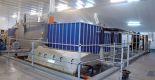
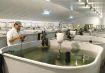

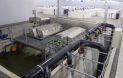
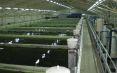
Billund Aquaculture • Montanavej 2
DK-7190 Billund • Denmark
Phone +45 75 33 87 20
E-mail:office@billund-aqua.dk



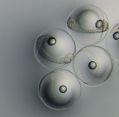





Manufacturers of the Van Gaalen Fish Egg Sorter Since 1984
VMG Industries Inc.
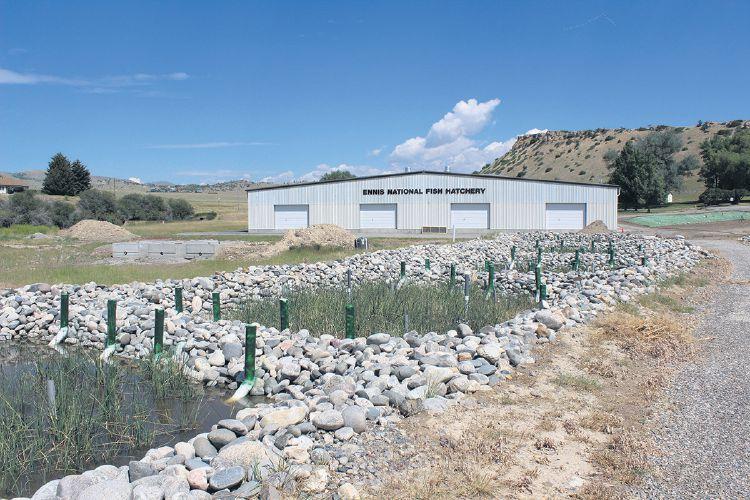
Artificial wetland aids Montana hatchery
The Van Gaalen Fish Egg Sorter uses the most current technology to bring you an egg sorter that offers: variable egg sizes, speed, accuracy, egg counts, safety and versatility.
VMG Industries Inc.
2972 Bellmeade Way
Longmont, CO 80503 USA
T: 303.682.8890 F: 303.682.8892 www.vmgindustries.com
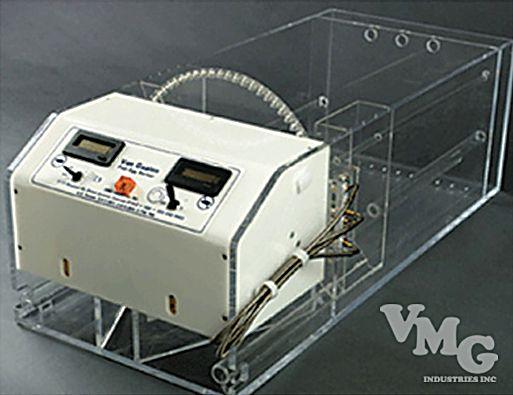
Vertical flow system provides superior performance
BY MATT JONES
partnership between Montana State University (MSU) and the US Fish and Wildlife Service has allowed the Ennis National Fish Hatchery in Ennis, Montana, to meet state standards for water treatment with the use of a vertical flow artificial wetland. Project leader Dr. Connie Keeler, says the artificial wetland is an attractive alternative to traditional mechanical removal systems.
“I believe that when it’s completely functional, we will be able to meet those water quality standards for the next 15-20 years,” says Dr. Keeler.
When examining potential solutions, it was discovered that there was a local expert – MSU’s Dr. Otto Stein, who had been working with experimental wetland systems since the early 2000s. He says that vertical flow systems such as the one at the Ennis Hatchery allow artificial wetlands to perform to the same level you would expect of a more expensive mechanical system, or a horizontal flow wetland.
“The big advantage of doing a vertical flow system is that the system is not perpetually saturated,” says Dr. Stein. “You put a dose of water on it and it trickles vertically and then it becomes unsaturated after that dose comes through. You wait
“They can run year round in extremely cold environments. Ennis is probably as cold as it’s going to get; there’s probably 60 days where the temperature is below freezing day and night. We ran it all last winter and never had any problems.”
– Dr. Otto Stein, Department of Civil Engineering, Montana State University
a period of time and put another dose on. Because it’s not saturated, it’s much more aerobic and you get much faster reaction rates for all the microbial actions that break up the contaminants in there.”
MSU PhD candidate Chris Allen worked with Stein to design and implement the wetland, including a pilot study conducted to ensure continued operation in cold weather. He compares the vertical wetland to a coffee filter, collecting the solids on the surface, as opposed to settling in the bottom as in horizontal wetlands.
“We reduce the amount of oxygen that the microbes need for subsequent treatments, which allows us to get superior treatment without a large footprint,” says Allen.
The vertical flow artificial wetland at the Ennis National Fish Hatchery in Ennis, Montana.
SHOWCASE Custom Holding Systems
New oxygen generator from Oxymat
xymat A/S of Denmark recently introduced a new low pressure PSA (LPSA) oxygen generator which the company claims “has the lowest power consumption on the market.”
An Oxymat press release notes that the new line of generators will provide customers with the same gas quality, “at a dramatically reduced power requirement, as low as 0.55 kWh per produced kg of oxygen at 2,7 bar(g) outlet pressure and purities up to 95%.”
The materials used in its construction are stainless steel and sandblasted powdercoated black steel.
Some other features include:
• Stainless steel pipe sets and valves;
• Modular fabrication which can be expanded if capacity demands change;

• Outlet pressure from 2.7 to 6 .0 bar(g) at purities up to 95% and power consumption from 0.55 kW/h oxygen. For more information go to: www.oxymat.com
AquaGen acquires majority interest in AquaSearch
arlier this year AquaGen AS of Trondheim, Norway entered into an agreement to purchase 51% of the shares in the Danish-based breeding company AquaSearch Ova ApS, one of the world’s leading suppliers of genetics for portion-size trout.
AquaSearch Ova, established in 2006, is a global player in breeding and egg production of trout. From its headquarters in Billund, the company has developed a product portfolio with production and distribution from six broodstock farms in Denmark.
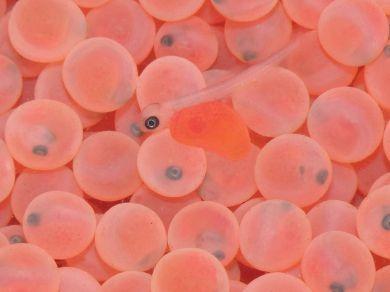
“Our association with AquaSearch Ova represents an important strategic milestone for AquaGen,” said Odd Magne Rødseth, Chairman of AquaGen. “With this we get a new platform for growth and value creation, helping AquaGen maintain and strengthen its commitment to trout breeding.”
“This transaction is very positive for the trout industry, because it helps to provide advanced technology and research resources to more trout farmers around the world,” said Torben Nielsen, CEO of AquaSearch Ova. “I’m glad that AquaSearch Ova will be part of a group that has a long-term commitment to developing and distributing trout genetics.”
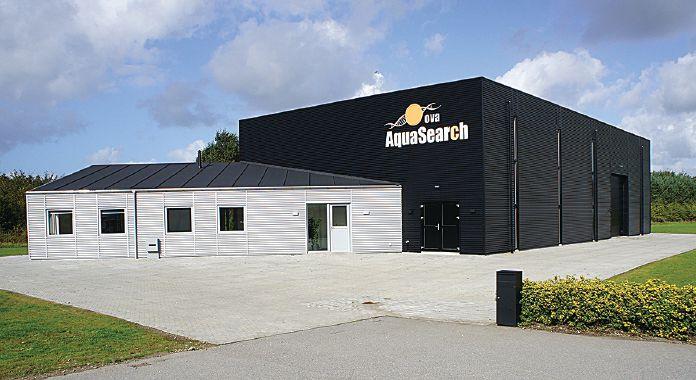
•
•
•
•

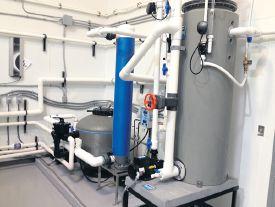



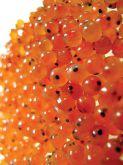

SHOWCASE
Customizable underwater light
AS Products of Vancouver, BC recently introduced the SeeBrite™ Tri-LED aquaculture light.
According to IAS the SeeBrite Tri-LED light fixtures use full spectrum LEDS with specific focus on blue and green wavelengths for optimum radiant light distance in the water column, along with white light to provide a full spectrum of 425-750 nm to maximize light distribution.
“With a managed photoperiod schedule SeeBrite Tri-LED will supress maturation and promote growth,” notes the company.
“All SeeBrite™ LED light fixtures offer gradual ramp-up to full brightness as required to avoid shocking fish. And for those that demand more light control, notes the company, such as for RAS or hatchery applications, there is the SeeBrite L100 Light Controller to
optimize light intensity for specific farm requirements.”
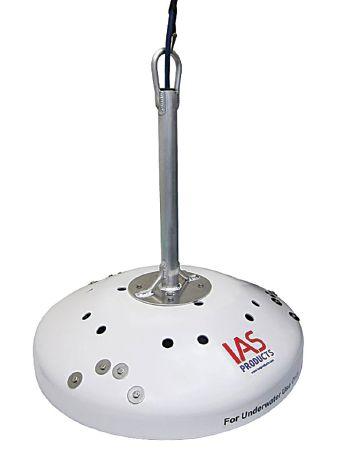
IAS notes that the SeeBrite Tri-LED light is designed to provide a simple means of setting light coverage by independently rotating each of three SeeBrite LED light housings within the fixture. “Adjust any one, or all of the light housings to create a narrow focus or wide disbursed zone of downward facing light.”
SeeBrite LED lights are customizable for a range of light color spectrums for specific farm and hatchery requirements to address water turbidity and light scatter. For more information go to www.iasproducts.com
Benchmark subsidiary renews agreement for Great Salt Lake artemia
Late last summer Benchmark Holdings announced that its wholly owned subsidiary, INVE Aquaculture Holding BV (INVE), had successfully renewed its sales and marketing agreement with the Great Salt Lake Brine Shrimp Cooperative, Inc (GSL COOP) of Utah in the United States.
Under this agreement, the Benchmark group maintains its rights to distribute a substantial share of the GSL COOP’s harvest of artemia from Great Salt Lake.
Historically, artemia supplied under the sales and marketing agreement has represented approximately 60% of INVE’s total artemia sales, and generated revenues of over £30m in 2016. The renewal of the sales and marketing agreement secures the company long-term access to Great Salt Lake artemia.
Alongside continuation of the sales and marketing agreement, INVE says that it has entered into a distribution agreement with the GSL COOP for INVE’s current and future artemia-related products
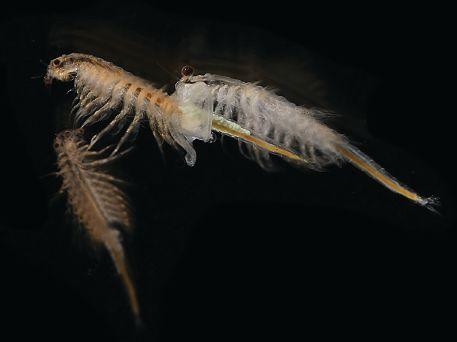
INVE noted that it is developing a range of “breakthrough” artemiarelated feed products, which are on track to be launched in early 2020.
“The distribution agreement with the GSL COOP provides Benchmark with access to additional distribution channels and customers for INVE’s artemia-related products, and will contribute to growth in sales from 2020 onwards,” notes a press release from Benchmark.
Both the sales and marketing agreement and the distribution agreement have an initial 10 year term.
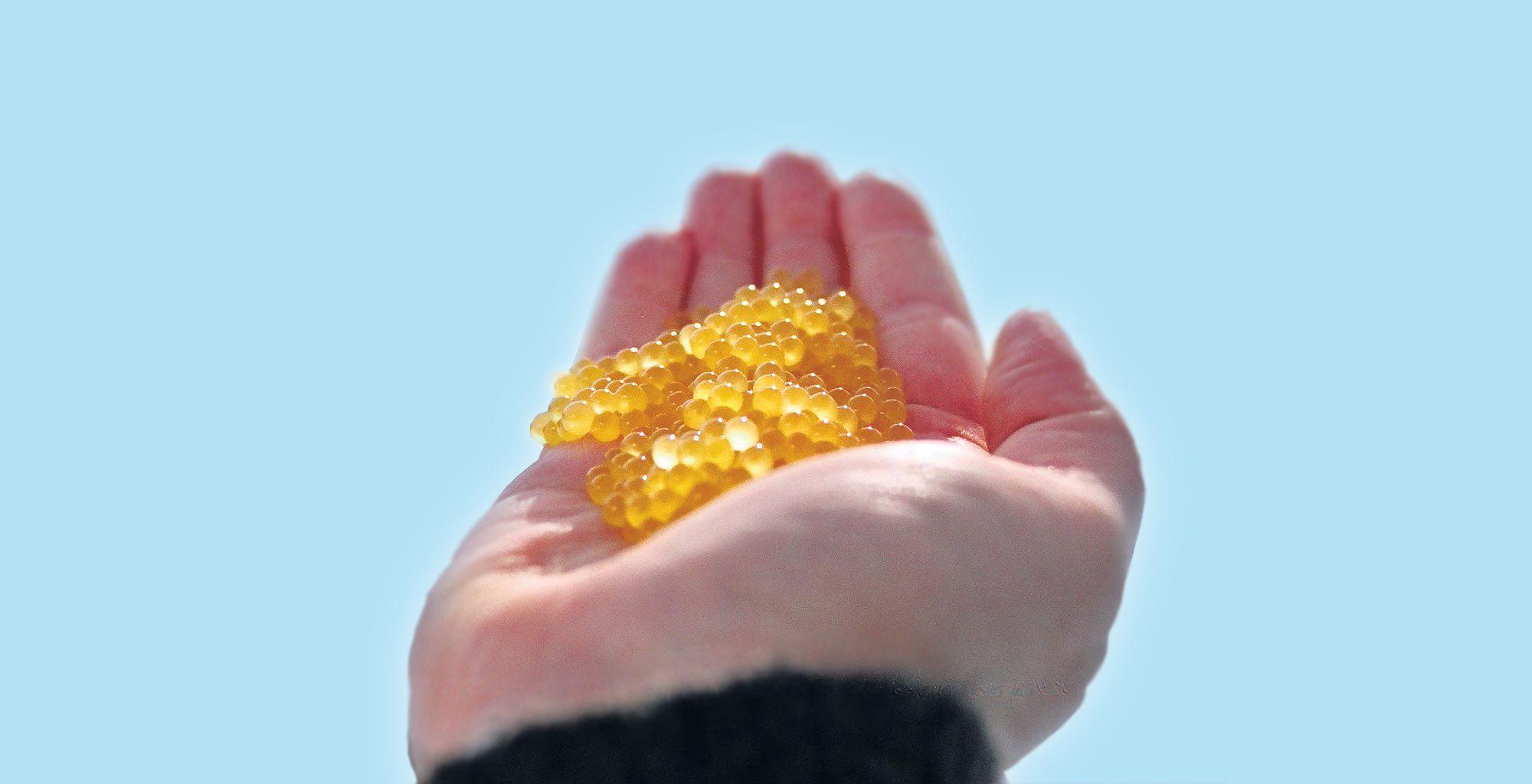
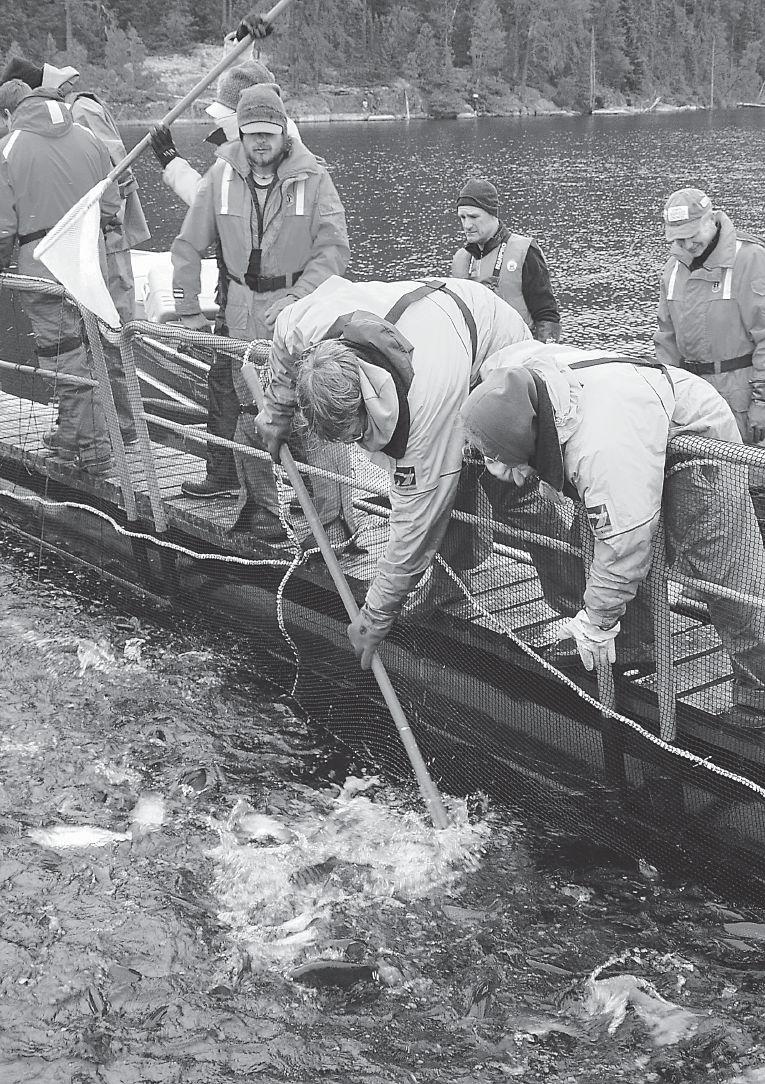

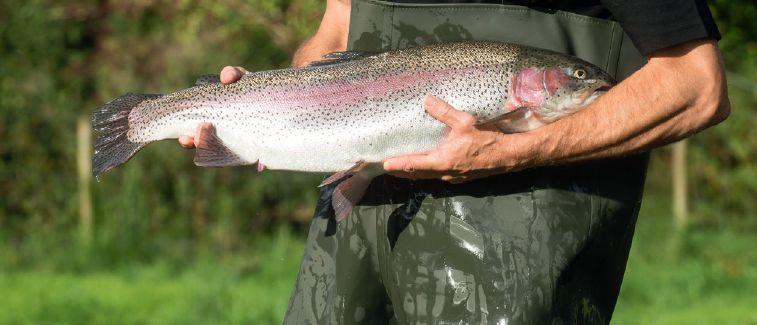
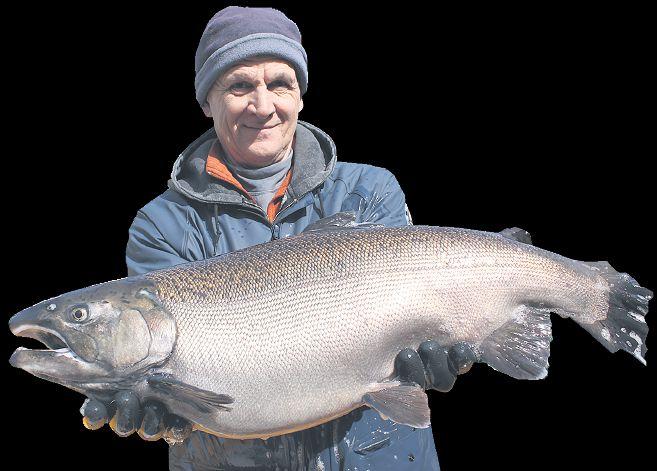
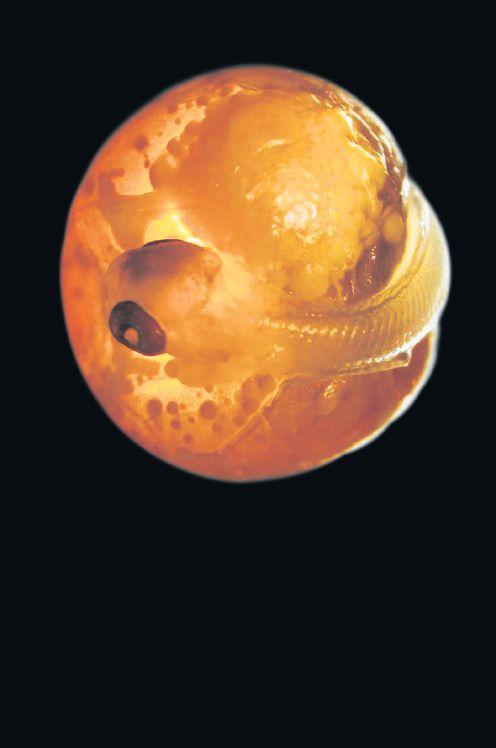

Aquaculture America 2018
SHOWCASE
New tag reader from Biomark
The HPR Lite is the latest tag reader from Idaho-based Biomark.
According to Biomark, the lightweight, handheld radio frequency identification (RFID) unit has been designed specifically for use in fish and wildlife research applications.
The company notes that it’s used the knowledge gained through development and years of customer feedback and company experience, to design and manufacture this reader from the ground up, making it “one of the ultimate field handheld readers available today.”

Some features of the HPR Lite include a waterproof housing; universal tag detection; memory for up to 50,000 tag reads; internal lithium ion battery pack; back-lit high-contrast screen; beep and vibrate on tag read; and Bluetooth and Micro USB for communication to PCs. For more information go to: www.biomark.com




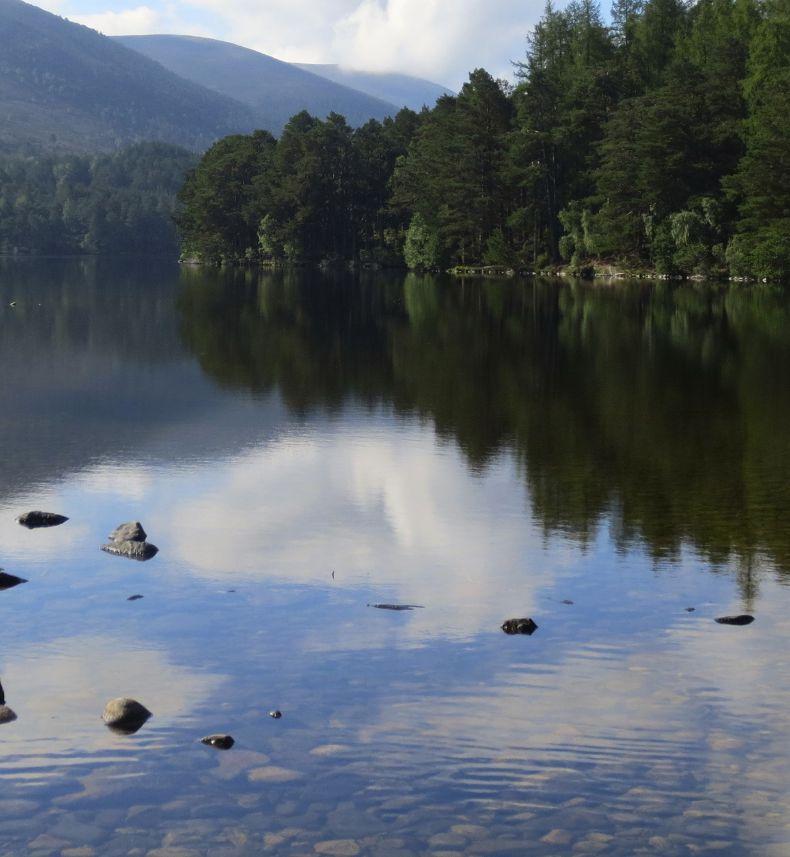
No other UK event provides aquaculture professionals with such direct access to suppliers from all over the globe representing all aspects of the aquaculture industry.
Over two days Aquaculture UK offers a valuable opportunity to network,
Fresh look at media
KSK-Aqua of Denmark has developed a new design of bio media for biological filtering in recirc systems. According to KSK Aqua, the new “saddle chips” have some significant advantages, including ease of purification during rinsing in fixed bed filters and self-purifying in moving bed filters.
The company also notes that in tests at a Danish trout farm with fixed bed filters the new media improved water transparency and were approximately 40% faster to clean using significantly less water than standard filters. For more information go to: www.ksk-aqua.dk
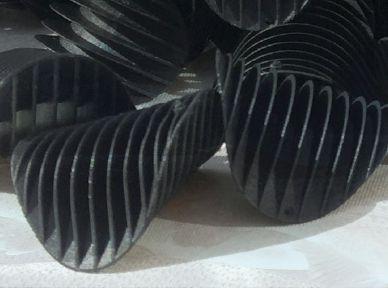
EVENTS CALENDAR
NOVEMBER
November 14 – 17, Latin American & Caribbean Aquaculture 2017, Mazatlan, Mexico November 29-30, Aquaculture Innovation Workshop, Vancouver, BC, www.conservationfund.org
DECEMBER
December 5-7, 68th Annual Northwest Fish Culture Concepts, Redding, CA, http://fishculture.fisheries.org/northwestfish-culture-concepts/upcoming-nwfccworkshop/
68th Annual NWFCC
December 5-7, 2017, Red Lion Hotel, Redding, California “Conservation, Mitigation, Recreation”
Hosted by the California Department of Fish and Wildlife, this year’s NWFCC will take place at the Red Lion Hotel, on Hilltop Drive, in Redding, California.
Conference Information
Michael Ficele: 707-945-1237 / Dr. Mark Clifford 530-918-9450
Hotel information: 530-221-8700


http://fishculture.fisheries.org/northwest-fish-culture-concepts/

Hosted by: California Aquaculture Association