Rethinking water quality management strategies in the face of climate change
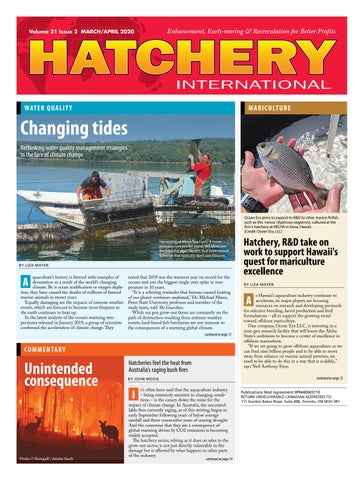
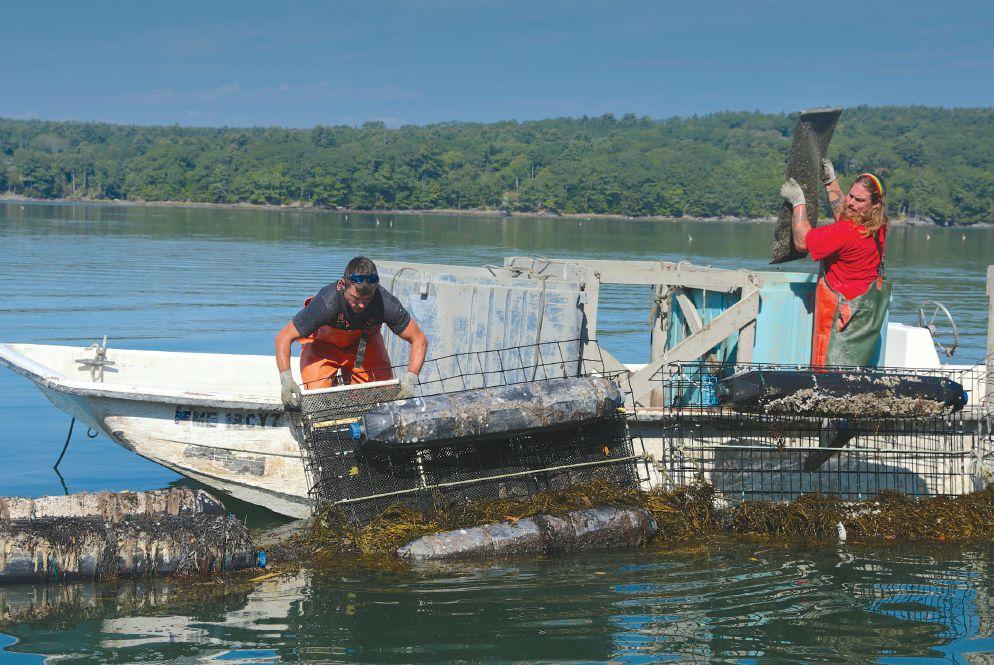
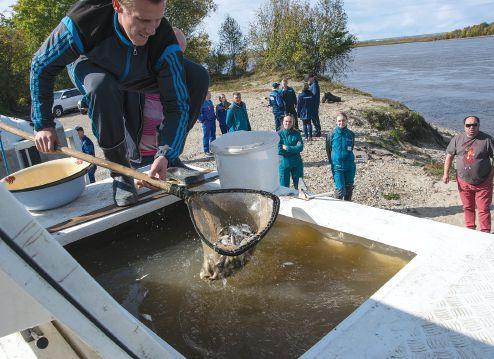
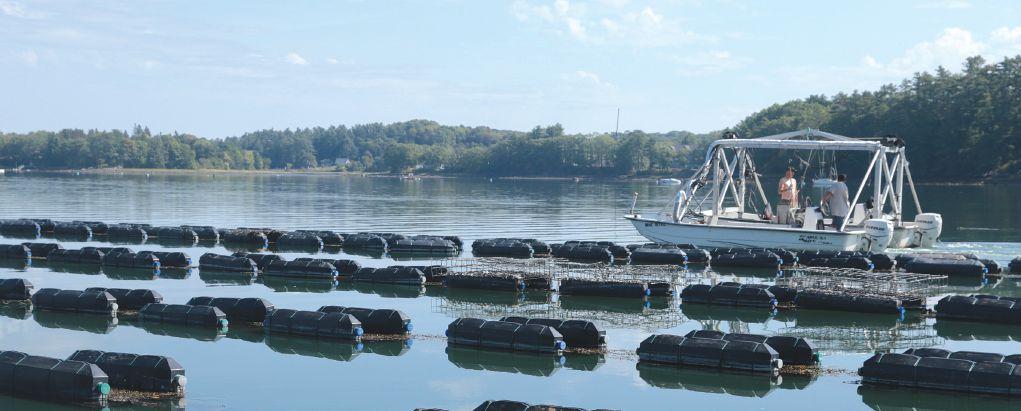
Harvesting at Mook Sea Farm. A more pressing concern for owner Bill Mook are the harmful algal blooms that have closed fisheries that typically don’t see closures.
BY LIZA MAYER
Aquaculture’s history is littered with examples of devastation as a result of the world’s changing climate. Be it ocean acidification or oxygen depletion, they have caused the deaths of millions of farmed marine animals in recent years.
Equally damaging are the impacts of extreme weather events, which are forecast to become more frequent as the earth continues to heat up.
In the latest analysis of the ocean’s warming temperatures released in January 2019, a group of scientists confirmed the acceleration of climate change. They
Unintended consequence
noted that 2019 was the warmest year on record for the oceans and saw the biggest single-year spike in temperature in 10 years.
“It is a sobering reminder that human-caused heating of our planet continues unabated,” Dr. Michael Mann, Penn State University professor and member of the study team, told The Guardian.
While sea pen grow-out farms are constantly on the path of destruction resulting from extreme weather events, land-based fish hatcheries are not immune to the consequences of a warming global climate.
continued on page 12
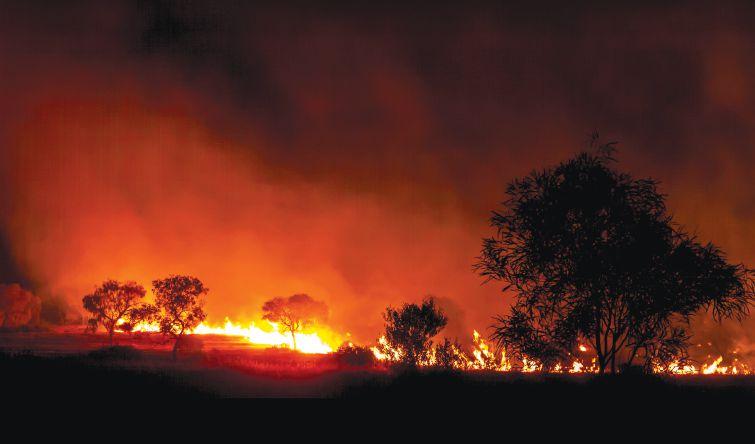
Hatcheries feel the heat from Australia’s raging bush fires
BY JOHN MOSIG
t’s often been said that the aquaculture industry – being extremely sensitive to changing conditions – is the canary down the mine for the impact of climate change. In Australia, the uncontrollable fires currently raging, as of this writing, began in early September following years of below average rainfall and three consecutive years of searing drought. And the consensus that they are a consequence of global warming driven by CO2 emissions is becoming widely accepted.
The hatchery sector, relying as it does on sales to the grow-out sector, is not just directly vulnerable to fire damage but is affected by what happens in other parts of the industry.
continued on page 14
Hatchery, R&D take on work to support Hawaii's quest for mariculture excellence
BY LIZA MAYER
As Hawaii’s aquaculture industry continues to accelerate, its major players are focusing resources on research and developing protocols for selective breeding, larval production and feed formulations – all to support the growing trend toward offshore mariculture.
One company, Ocean Era LLC, is investing in a next-gen research facility that will boost the Aloha State’s ambitions to become a center of excellence in offshore mariculture.
“If we are going to grow offshore aquaculture so we can feed nine billion people and to be able to move away from reliance on marine animal proteins, we need to be able to do this in a way that is scalable,” says Neil Anthony Sims.
continued on
Publications Mail Agreement #PM40065710 RETURN UNDELIVERABLE CANADIAN ADDRESSES TO 111 Gordon Baker Road, Suite 400, Toronto, ON M2H 3R1
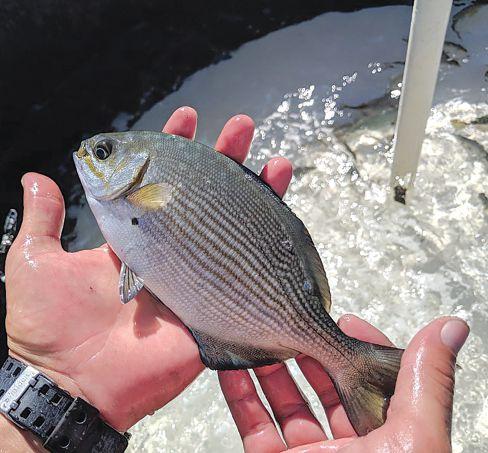
Ocean Era plans to expand its R&D to other marine finfish, such as this 'nenue' (Kyphosus vaigiensis), cultured at the firm's hatchery at NELHA in Kona, Hawaii. (Credit: Ocean Era, LLC)
Skretting’s RCX feed range for Atlantic salmon grown in RAS has a number of advantages over traditional feeds. RCX reduces the risk for producers through optimising the digestibility of the feeds, reduces the impact of indirect waste into the systems by improving faecal stability, and ensures consistent structural integrity through certi ed factory auditing. Contact your local Skretting sales representative for more information. ng’s RCX feed range for Atlantic salmon grown in RAS h has a number of Skrettin
www.skretting.com
BY MARI-LEN DE GUZMAN
Editor Mari-Len De Guzman, mdeguzman@annexbusinessmedia.com
Associate Editor Jean Ko Din, jkodin@annexbusinessmedia.com
Regular Contributors Eugene Gerden, Ruby Gonzalez, Ron Hill, Matt Jones, John Mosig, Vladislav Vorotnikov
Advertising Manager Jeremy Thain, jthain@annexbusinessmedia.com Tel. +1-250-474-3982, Toll-Free (North America) 1-877-936-2266
Audience Development Manager Urszula Grzyb ugrzyb@annexbusinessmedia.com • Tel: 416-510-5180 Fax: 416-510-6875 or 416-442-2191
Production Svetlana Avrutin, savrutin@annexbusinessmedia.com
Group Publisher Todd Humber, thumber@annexbusinessmedia.com
COO Scott Jamieson, sjamieson@annexbusinessmedia.com PUBLISHED BY ANNEX BUSINESS MEDIA 105 Donly Drive South, Simcoe, ON N3Y 4N5
Hatchery International is published six times a year by Annex Business Media.
The authority for statements and claims made in Hatchery International is the responsibility of the contributors. Reference to named products or technologies does not imply endorsement by the publisher.
A subscription to Hatchery International (six issues) is $37.00 within Canada, $48.00 CAD within North America and $62.00 CAD outside North America. To subscribe visit our website at www.hatcheryinternational.com
Circulation Costumer Service
Email: ugrzyb@annexbusinessmedia.com
Tel: 416 510 5180 • Fax: 416-510-6875 or 416-442-2191
Mail: 111 Gordon Baker Road, Suite 400 Toronto, ON M2H 3R1 Printed in Canada. Publications Mail Agreement #PM40065710
The advertising deadline for the May/June issue is March 10th. Don’t miss the opportunity to be part of this exciting aquaculture publication. For more information, or to reserve space in the next issue, call our Advertising Department at +1.250.474.3982 jthain@annexbusinessmedia.com
Next Editorial Deadline
The editorial deadline for the May/June issue is March 10th. Contact Mari-Len De Guzman at mdeguzman@annexbusinessmedia.com for details. Material should be submitted electronically with prior arrangement with the editor.
Shape
he world is on fire.
TAs I write this, Australian firefighters are still struggling to contain the ravaging bush fires that have engulfed nearly 25 million acres on the eastern part of this continent.
The Amazon rainforest suffered more than 74,000 fires just last year alone – it’s the highest number of fires in that region in a given year since 2013, when scientists began recording fires in the Amazon.
Although the lowest on record since 2011, California’s wildfire season in 2019 still claimed some 270,000 acres.
As a consequence of climate change, widespread drought across the world is contributing to these havoc-wreaking fires. In August 2019, the New York Times reported data from the World Resources Institute that indicated 17 countries around the world, including India, Brazil and South Africa, are currently under extreme high-water stress, which means they are using up nearly all the water they have. By 2030, the number of cities in the extremely high-stress category is expected to reach 45 and affect nearly 470 million people, the New York Times report said. It’s not hard to deduce that aquaculture will not be immune to the consequences of these global phenomena. Water is an integral part of this industry, and it’s not an infinite resource. Some hatcheries that rely heavily on the availability of groundwater for its fish rearing activities are starting to feel the impact of climate change on their operations. Changes in water quality and even the availability of water are becoming a concern.
The case for partial or full recirculating aquaculture technologies is increasingly evident. Reduce, re-use, recycle – that’s the mantra of conservationists. In the context of
sustainable aquaculture this three Rs should be the goal. The industry can benefit from R&D that explores the most efficient way to use and re-use precious water resources in aquaculture facilities. This includes aquaculture wastewater.
I’m excited for the prospects of aquaponics and its ability to use water in its full potential – not just for full grow-out RAS operations, but for hatcheries and smolt production as well. Developing systems that not only recycle water for aquaculture but turn wastewater into natural nutrients for plants is just spectacular. Aquaponics can help address the increasing global food demand for a world population that is expected to reach nearly 10 billion by 2050. It can help supply a growing demand for sustainable protein while, at the same time, increase plant and vegetable production.
Organizations must also think about the entire supply chain and product lifecycle to claim true sustainability. Utilizing little to no antibiotics, using less or recyclable materials for product packaging, employing energy efficient or renewable resources to power its production facilities, reducing carbon footprint – these are all part of corporate social responsibility and sustainability efforts.
There is a business case for investing in sustainable food production systems. But there’s also the human case for preserving and revitalizing the world’s natural resources, cleaning up the environment and creating brighter prospects for future generations. The aquaculture industry can be at the forefront of these global sustainability efforts.
Have you got a story tip or a hatchery operation with a great story to tell? Send me an email at mdeguzman@annexbusinessmedia.com.
Scottish Sea Farms’ Barcaldine hatchery moves first smolts
The first batch of smolts out of Scottish Sea Farms’ new hatchery in Barcaldine, Scotland, have been transferred safely to the company’s sea pens, a press announcement from Scottish Sea Farms said.
The £55-million (US$72.3 million) Barcaldine Hatchery is now nearing its official opening – likely by spring 2020 – after a two-year construction period. The first batch of eggs arrived at the hatchery last January. The RAS-grown smolts weighed an average of 160 grams, which is more than double the size of smolts Scottish Sea Farms produced previously using traditional hatchery methods.
Scottish Sea Farms’ freshwater manager Pål Tangvik said producing the first batch of smolts at the new hatchery was a major milestone for the company.
“The new hatchery has given us greater control over key factors, including water quality, oxygen levels, temperature, light and speed of flow, meaning we have been able to ensure the best growing environment for the salmon.”
The result, he said, is bigger, more robust smolts that are better able to withstand the natural challenges of the marine environment. The bigger smolts also means shorter time spent at sea – by up to two months – reducing their exposure to the challenges of the ocean environment and increase their survival rates.
The 17,500-square-meter facility, which includes four incubation units and four hatcheries, promises to be every bit as transformational with regards to environmental performance, the company said.
Russian Aquaculture builds smolt facility for self-sufficiency
Russia’s biggest fish farming company, Russian Aquaculture, will begin building its new smolt plant in Murmansk Oblast on the northern part of Russia, aiming to become fully self-sufficient in broodstock for Atlantic salmon (Salmo salar) production.
Russian Aquaculture has been importing around four million smolts per year from Norway to supply its farms in Northern Russia, all while recognizing the need for self-sufficiency on broodstock to cut its production costs.
In 2017, Russian Aquaculture purchased Norwegian hatcheries Olden Oppdrettsanlegg AS and Villa Smolt. One of the reasons for those acquisitions was to acquire the hatcheries’ technologies that could then be replicated in Russia, the company said.
The company is investing Rub2.5 billion (US$40 million) to build the new smolt production facility in Murmansk Oblast. Once completed, the facility will be able to produce up to five million smolts per year.
In 2018, Russian Aquaculture invested Rub900 million (US$14 million) to modernize the Villa Smolt hatchery and boost annual production to five million smolts – bringing the company’s total annual smolt production capacity to about 10 million.
This would be just enough to meet local demand for Atlantic salmon, according to Ilya Sosnov, general director of Russian Aquaculture. The company hired Norway-based AKVA Group to build the new hatchery.
In 2019, Russian Aquaculture projected a market share of up to 20 percent of all sales on the Russian red fish market, producing between 18,000 and 20,000 tonnes of salmon. By 2025, this figure is projected to potentially increase to 35,000 tonnes. Russian economists estimated that by growing from 10 to 12 million smolts per year at its own hatcheries, Russian Aquaculture’s annual sales could reach up to Rub14 billion (US$220 million).
Hatchery upgrades in New York’s $3B eco-focused funding plan
Fish and shellfish hatcheries in the state of New York, U.S.A., stand to benefit from a US$3-billion program announced by New York Governor Andrew Cuomo aimed at addressing critical environmental and climate challenges
In his 2020 State of the State addressed, Cuomo announced several funding proposals under the “Restore Mother Nature Environmental Bond Act,” which the state’s administration has called the “nation’s most aggressive program for habitat restoration and flood control.”
In his speech, Cuomo proposed funding to “reduce flood risk and revitalize critical fish and wildlife habitats by connecting streams and waterways, right-sizing culverts and dams, restoring freshwater and tidal wetlands, reclaiming natural floodplains, restocking shellfish populations and upgrading fish hatcheries, preserving open space, conserving more forest areas, replanting more trees, reducing contamination from agricultural and storm water runoff, and expanding renewable energy,” the Adirondack Almanack reported.
– Vladislav Vorotnikov
Russian Aquaculture operates its fish farm and processing facility in northern Russia.
New York Governor Andrew Cuomo
Missouri hatchery
fishing
program bags Governor’s Award
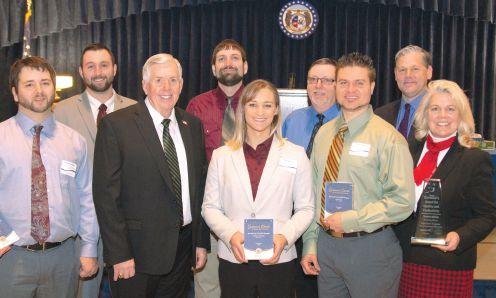
The Missouri Department of Conservation’s Roaring River Fish Hatchery, near Cassville, Missouri, USA, has received the Governor’s Award for Quality and Productivity for its “unique” fishing initiative called the First Hole Program, winning in the Innovation category.
Roaring River staff started the First Hole Program to give veterans, children, the elderly, and those with disabilities a chance to discover nature through fishing. It provided those who don’t typically fish the opportunity to do so. Roaring River is the only facility in Missouri to offer such a program.
“Our Roaring River team helps thousands of new anglers discover nature each year through this special and unique offering,” said MDC Roaring River hatchery manager Paul Spurgeon. Participants are taught fishing basics at the first of 33 fishing holes that comprise Roaring River State Park’s trout fishing area.
“The ‘First Hole' is located immediately below the fish hatchery, so it’s an ideal place to fish for first-time anglers because the trout congregate in the pool of water,” explained Spurgeon.
The daily trout tag and fishing permits for First Hole Program participants are waived. All equipment, including poles, bait and nets, are provided free of charge. Participants can work on casting, line tying, baiting, and safe fish handling with the instruction of Roaring River staff and volunteers. Anglers can even keep up to four trout they catch.
“I am so proud of this MDC team for their innovation in connecting people of all ages and abilities with the outdoors,” said MDC director Sara Parker Pauley. “This is the heart of our conservation story and success in Missouri – that we are all on the same team working together to push conservation forward and connect people with nature.”
The First Hole Program reaches more than 4,000 people annually. Participants as far away as Kansas City, St. Louis, and Springfield travel to Cassville to wet a line and discover the joy of trout fishing.
Study looks at effects of lack of diversity in Chinook salmon releases
BY MATT JONES
Astudy examining Chinook salmon releases in the Salish Sea has found that the sizes of salmon released, and the times of year they are released, have become increasingly uniform over the last five decades. And this lack of diversity could have potential consequences on salmon health and on other species that live in this body of water shared by the United States and Canada, according to a recent study.
The primary author of the study, Benjamin Nelson, is a Seattle-based consultant and PhD candidate at the University of British Columbia in Canada.
“The most interesting result that we found was that the diversity of hatchery Chinook salmon that are released from hatcheries in the Salish Sea has declined quite a bit since the 1970s,” said Nelson. “In the ’70s, hatcheries tended to release Chinook salmon throughout a very wide range of release times. They used to release fish from February through August and they used to release them a quite a few different sizes, all the way from fry to fully smolted young salmon.”
The study has shown that since the 1970s, hatchery practices in the area have homogenized. They now tend to release most of their fish within a two- or three-week window in May and that they release fish that are very similar in size.
Nelson said this is not necessarily a bad thing. However, having this loss of diversity could have consequences in the long-term. Harbor seals, for example, are known to be fairly intelligent. It’s not farfetched, Nelson said, to believe that they could be learning where and when large hatchery releases occur. A smaller number of predators could really be
taking advantage of high-density releases of hatchery fish.
On the other hand, large “pulses” of hatchery fish could swamp predators and provide a buffer on predation of wild fish. That is why Nelson is calling for further research and collaboration between scientists and hatcheries, in order to determine the full extent and nature of these impacts.
“We control so few aspects of the large marine ecosystem and hatcheries are one of the few things that we can control with a fair degree of precision in terms of how salmon interact with the ecosystem,” he said. “We really have the chance to be proactive in designing experiments to actually get at some of these questions.”
Early efforts toward that type of collaboration are already in the works, said Nelson. Seattle-based nonprofit Long Live The Kings is working on bringing parties together to find opportunities for collaboration and information sharing.
The study was originally focused on the much-publicized challenges facing killer whales in the Salish Sea. With much speculation on how prey availability may have impacted their numbers, Nelson wanted to examine the populations of the whales’ primary prey – Chinook salmon.
“It was originally supposed to be a broad look at Chinook salmon populations along the entire West coast,” he said. “But since so many people are interested in the Salish sea populations of Chinook salmon, we chose to start there for the potential implications for killer whales, but also because there are hundreds of Chinook salmon hatcheries in the Salish Sea. It’s pretty unique.”
Mowi’s Ocean Matters lumpfish harvest reaches 2 million
Lumpfish producer Ocean Matters finished off 2019 with the harvest of its two-millionth fish, according to a statement from Mowi, which owns Ocean Matters.
This record-breaking harvest is a milestone for the company as no other producer in the UK has ever harvested that many lumpfish, Mowi said.
“This is an incredible milestone and I’m really proud of the team that made it happen, all their hard work and dedication made this possible. The sustainable production of lumpfish plays a significant role in the welfare of our salmon farmed across Scotland. We look forward to another great year in 2020,” Daniel Phillips, Ocean Matters cleanerfish production manager said.
Mowi Scotland purchased Anglesey, North Wales-based Ocean Matters in April 2019, signifying an important milestone to Mowi’s cleanerfish program. The species aid in managing sea lice on farm-raised Atlantic salmon.
Ocean Matters is the largest producer of lumpfish
(Cyclopterus lumpus) in the UK. Its land-based facility, located on the coast of Wales, was designed specifically for the purpose of breeding and raising lumpfish, the company stated on its website.
“Fresh seawater is brought into our aquaculture facilities daily from local waters where it is tested, treated and continually monitored to assure an ideal growing environment, creating superior growing parameters that promote robust health and maximum survivability through both deployment and lifecycle. Due to our extensive filtration systems and clean technologies the out-going water is clean and seamlessly reintroduced back into local waterways with no effect on the environment, surrounding life or native species,” Ocean Matters explained on its site.
in corrosionresistant propeller pumps, closely adapted to the needs of the individual customer. www.lykkegaard-as.com
MDC director Sara Parker Pauley (far right) poses with Governor Mike Parson (3rd from left), Drew Erdmann with the Missouri Office of Administration (2nd from right), and the staff of Roaring River Fish Hatchery after receiving their Award for Innovation for the hatchery’s unique fishing program.
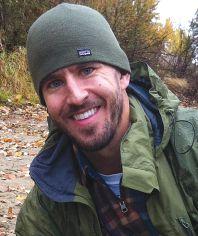
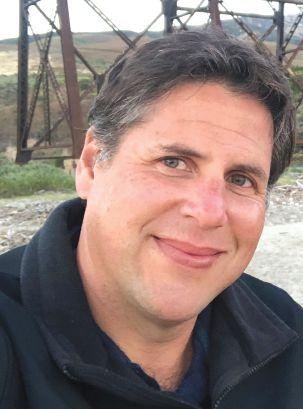
Benjamin Nelson
Dan Rose and Aled Edwards of Ocean Matters showing off one of their lumpfish harvests
Mudsnails cause problems for Arizona hatchery
BY MATT JONES
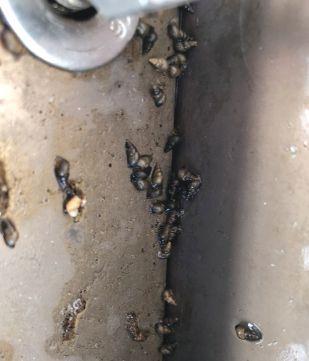
The Arizona Game and Fish Department has ceased deliveries of trout from the Page Springs Fish Hatchery after discovering invasive New Zealand mudsnails (Potamopyrgus antipodarum, NZMS) in two rearing units.
Currently, there are no clear answers for how the invasive species came into the hatchery or how they will be dealt with. Statewide hatchery program manager, Geoffrey Rabinovich, is working with department staff to investigate the situation.
“Through Environmental DNA (e-DNA) testing, department staff believe local wildlife may have introduced the mudsnails from nearby Oak Creek to two raceways on Bank B at Page Springs Hatchery,” said Rabinovich. “Although at this time no adults have been collected in Oak Creek, a few samples of e-DNA from different locations on Oak Creek have tested positive for NZMS.”
The Page Springs Hatchery is the largest troutproducing facility in the state, producing an average of 216,000 lbs. of trout per year, approximately 57 percent of stocked trout in the state and a $185.3-million boon to the state economy.
Rainbow trout stocking was suspended in October, with the hope of preventing NZMS from spreading to non-infested waters. The Game and Fish Department is attempting to make up for the shortfall by purchasing fish for the winter stocking program.
While the hatchery has modified its standard operating procedures in an attempt to work around the NZMS, Rabinovich said to their knowledge there is no treatment available to eliminate NZMS from the rearing unit.
“We are experimenting with a product used for other invasive species. Preliminary results are encouraging. We are waiting for final results from our research team to finalize the analysis. We modified our stocking standard operating procedures and implemented new steps for fish harvest, which involves holding the fish longer before stocking.”
Hoping to prevent further infestations, Rabinovich said they are enhancing biosecurity protocols and evaluating an investment in infrastructure that could further bolster biosecurity.
have been encouraging.
“We are hoping that with all these steps and an effective treatment, we can minimize new introductions in the future.”
New Zealand mudsnails are found in nearly every aquatic habitat in New Zealand and its surrounding islands. Over the past 150 years, these mudsnails have spread across three continents, including three different clones in the United States.
They were first found in Arizona in 2002 below Lake Powell and have moved downstream through the Grand Canyon and into Lake Mead and Lake Mohave since then. In 2008, they were found at the Willow Beach National Fish Hatchery.
Because this invasive species reproduces quickly and has no natural predators, the proliferation of its population can disrupt the food chain.
Russian billionaire to invest in fish hatchery
BY EUGENE GERDEN
Russian billionaire Ara Agalarov is entering the aquaculture and hatchery business. Known for his luxury retail empire in Russia, Agalarov looks to expand his portfolio with the purchase of aquaculture enterprise, Lotoshinsky fish factory. The announcement of this new business venture came from recent statements made by representatives of the businessman and some Russian aquaculture analysts.
The fish factory was purchased at RUB130 million (US$2 million) – a big sum for the Russian aquaculture industry, which has valued the facility as significantly lower than those of other local fish producing sector.
The Lotoshinsky fish factory, located in the Volokolamsk district of the Moscow region, was founded during Soviet times and was one of the major producers of crucian carp and trout during the 1980s. In 2010, the plant declared bankruptcy, which resulted in the suspension of its operations.
According to a spokesman of Agalarov, the businessman plans to invest at least RUB200 million (US$3.24 million) to restart the enterprise. It is expected most of these
The invasive New Zealand mudsnail has been discovered in Arizona’s Page Springs Hatchery, forcing the Game and Fish Department to purchase trout for stocking from out-of-state sources.
State hatchery program manager Geoffrey Rabinovich says they are unaware of any prescribed treatment for the New Zealand mudsnail, but early results from testing with products used for other invasive species
funds will be allocated for growing fry for its needs. At the same time, part of the breeding material will be imported.
At the initial stage, the company will focus on growing trout and carp, with the possibility of expanding to other species in the coming years.
The company plans to sell most of its future produce in the European part of Russia which traditionally experiences a shortage of fresh fish. Most of the fish supply in that region are caught in the far east part of the country, and takes seven to 10 days to be delivered to the central part of Russia.
The Russian government has welcomed Agalarov’s latest project, believing that its successful implementation will help address the shortage of breeding materials in the Russian aquaculture industry.
Ilya Shestakov, head of the Russian federal fisheries agency (Rosrybolovstvo), said that despite several investment projects that have been implemented in the domestic industry in recent years, the Russian aquaculture industry continues to be heavily dependent on imports of fish breeding material.
The agency is looking to support a number of facilities (including those of Agalarov’s), specializing on the production of fish breeding material that will be commissioned across Russia.
So far, plans for building large-scale facilities to grow smolt have been announced for the Russian Northern regions, such as the Murmansk region and Karelia. The projects will be implemented by local investors.
In addition, Shestakov said Russia plans to accelerate research and development activities in fish hatchery. The government has already approved the establishment of three research centers that will specialize on the growing and breeding of fry, to be located in the Karelia, Siberia and one of the southern regions of the country.
According to data from Rosrybolovstvo, the annual volume of production of fish breeding material in Russia is currently in the range of 30,000 to 33,000 tonnes.
New York hatchery to receive $5 million in upgrades
New York state governor Andrew Cuomo has pledged US$5 million to upgrade Salmon River Hatchery’s aging infrastructure this year. New York Game and Wildlife superintendent of fish culture Jim Daley said the priority is to replace the 40-year-old hatchery’s fish ladder.
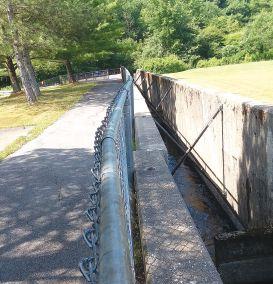
“There’s a fish ladder that comes up from the tributary that the salmon use to get into the hatchery intake. That structure is kind of collapsing on itself. So we’re hoping to replace that by next year,” Daley said in December. “That’s going to be a big-ticket item, probably over a million dollars alone.”
He hopes to complete this project by the end of summer 2020 but the majority of the schedule for the specific renovations is still being established.
“The other problem is that the hatchery is situated on a tributary to Lake Ontario, which is good for salmon returning to the hatchery, however, we have a really poor supply of good, cold, clean water, which is critical for raising trout,” said Daley. The wells the hatchery currently draws from are plagued with iron bacteria, so a lot of money is spent on maintaining and cleaning those wells. One of the biggest infrastructure projects will be improving on those wells and looking for additional sources of well water, and the possible addition of water reuse systems.
Daley said the renovations will mostly be focused on allowing the hatchery to do better at what it currently does, rather than increasing the number of fish they stock.
“We’re hoping to have healthier fish and less reliance on chemical and fish treatments,” he said.
Economic studies show that Salmon River alone generates an estimated $27 million from angling activities.
– Matt Jones
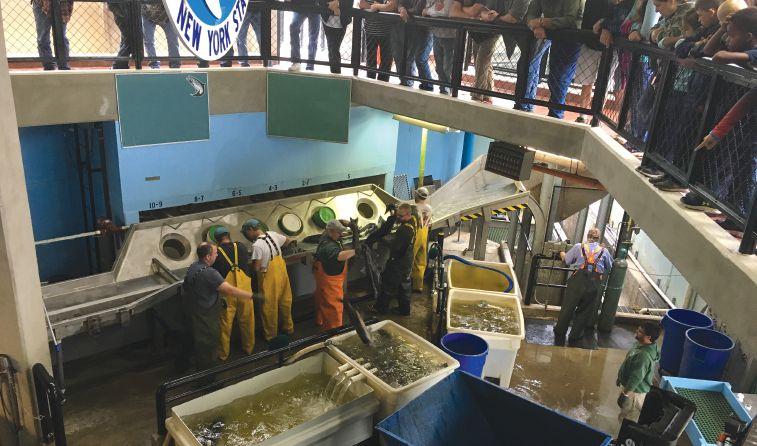
Visitors to the Salmon River Hatchery get a look at the spawning room during egg take.
The hatchery receives roughly 50,000 visitors per year.
Currently supported by a temporary bracing, this fish ladder will be one of the first replacements undertaken at the hatchery.
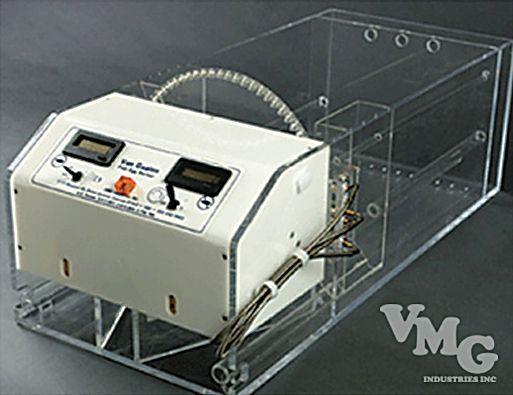
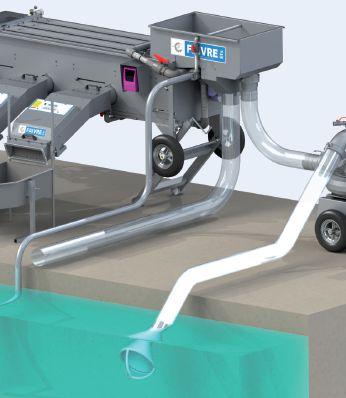
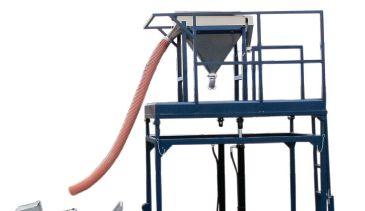
The Van Gaalen Fish Egg Sorter uses the most current technology to
PES presents cheaper, quicker alternative for catfish sedation: study
BY RUBY GONZALEZ
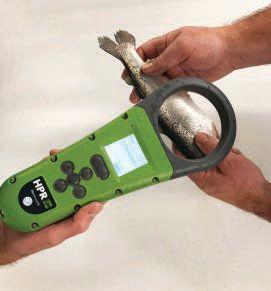
AUS study has identified the portable electrosedation system (PES) as an alternative method of sedating channel catfish (Ictalurus punctatus) broodstock. It does not increase stress, takes only a few seconds to use and costs exponentially less.
The usual method of anaesthetizing female channel catfish broodstock uses Tricaine methanesulfonate (MS-222), the only FDA-approved anesthetic extensively used in all facets of catfish aquaculture.
“The most important aspect of this study was the comparison effect of PES and MS222 on spawning, hatch and fry per pound of body weight in the female channel catfish. For these three parameters, there were no differences between MS-222 and PES,” said authors Dr. Anita Kelly of Auburn University-Alabama Fish Farming Center, and Dr. Nagaraj Chatakondi of the USDA-ARS Warmwater Aquaculture Research Unit in their research article, “Anaesthetizing Female Channel Catfish Brooders using a Portable Electrosedation System,” published in the North American Journal of Aquaculture.
They said the findings are important for commercial catfish aquaculture because of costsavings and the potential to replace MS-222 with PES, which does not require FDA approval.
A commercially available PES equipment costs around $10,000, equivalent to a two to three-year usage of MS-222 in a typical catfish hatchery, Chatakondi said.
Since there is no maintenance or expendable costs for routine use, it would cost less than a penny per broodfish. For an effective sedation at 200 ppm, MS-222 is estimated to cost $4.56 per use or about $0.30 to 0.50 per broodfish.
Chatakondi cited the other advantages of using PES over MS-222. “It is quick – it only takes a few seconds – and effective method to sedate channel catfish. It can be tailored to any of the six stages of sedation and various exposure periods for field applications.”
The reduction in stress response during sedation, along with improved handling conditions during transportation, handling and stocking, will reduce post-spawning mortalities of broodfish in catfish hatcheries.
He continued, “It has no adverse effect on reproductive traits for routine hatchery use. No chemical is up taken by fish or disposal during PES sedation process, resulting in no withdrawal period prior to be released for human consumption.”
PES is equipped with enhanced safety features to immobilize fish with six factory settings and various exposure periods suitable for field applications, hatcheries and boats.
The best PES setting for keeping the fish sedated through the egg-stripping process is at 100 volts, 25 percent duty cycle at 30 Hz, and shocking the fish for four seconds.
One of the drawbacks of MS-222, they said, is the difficulty in administering precise dose under commercial conditions because of variables such as size and level of fish robustness.
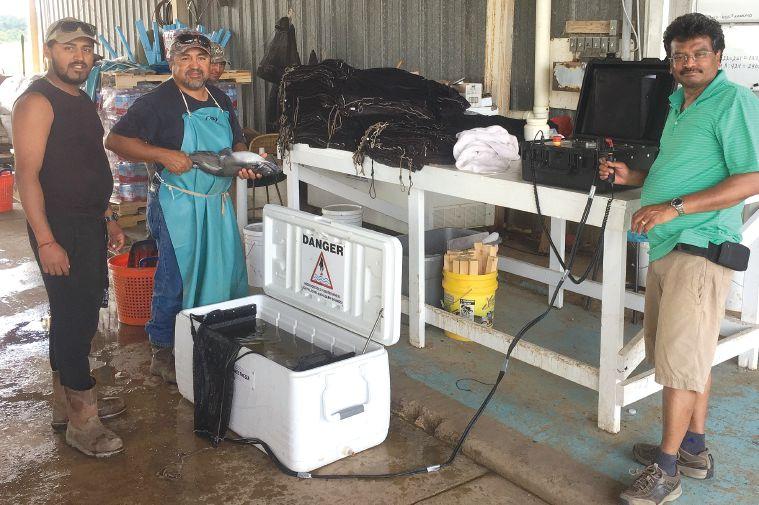
Sedating ovulating channel catfish brooder with a portable electrosedation system (PES) in a hybrid catfish hatchery in McGehee, Arkansas, USA (Credit: Dr. Nagaraj Chatakondi)
Sakhalin hatcheries on track to break production record
In 2020, hatcheries in the Sakhalin Island is targeting to release one billion fry to regional rivers which, if achieved would be an all-time record, the regional government said.
Sakhalin – a small island on the Russian Far East in the North Pacific region – is the country’s most important fishing center. Sakhalin accounts for 25 percent of the national fish catch. In 2018, local fisheries caught 720,000 tonnes of fish.
The hatcheries of the Sakhalin Island are growing primarily chum salmon (Oncorhynchus keta), because it is well known that this fish returns to the place where it was born – unlike the humpback salmon (Oncorhunchus gorbusha), which could go for spawning 900 kilometers away, commented Andrey Kovalenko, chairman of the fish industry department of the Sakhalin government.
The ultimate target of the ecological campaign is to fill the waters of the Sakhalin Island with salmon, which have been gradually declining over the past few years, Kovalenko said. In line with this, the regional government is offering the biggest state aid package among all Russian regions to investors willing to build a new hatchery, Kovalenko added.
In particular, Sakhalin authorities are reimbursing the investment cost of building the relevant infrastructure, including automotive roads, and connection to the common electricity grid to support this initiative. There are
also direct subsidies to the hatcheries on equipment purchasing, Kovalenko said. Those efforts are already seeing some results, with broodstock from the regional hatcheries in certain areas already forming up to 90 percent of the salmon population, Kovalenko said.
There are no certain targets on how much salmon broodstock the regional hatcheries may produce, but based on already announced investment projects in this field, production could ramp up 20 to 30 percent from the current level, the regional authorities estimated.
– Vladislav Vorotnikov
Tilapia broodstock with TiLV likely to produce infected seeds: study
roducing Lake Virus (TiLV)-free tilapia (Oreochromis niloticus) seeds starts with using TiLV-free broodstock, according to a study from Thailand, which recommended a grassroots approach for hatcheries.
PThe study of Ha Thanh Donga et al suggested that TiLV can be transmitted vertically.
The study, “Experimental infection reveals transmission of tilapia lake virus (TiLV) from tilapia broodstock to their reproductive organs and fertilized eggs,” was published in Aquaculture. The study team consisted of researchers from Suan Sunandha Rajabhat University, Mahidol University, National Science and Technology Development Agency and Chulalongkorn University, all located in Thailand, and Worldfish in Bangladesh and Malaysia.
“This study suggests that TiLV caused systemic infection in tilapia broodstock and that the virus is capable to circulate into the reproductive organs of both male and female via the blood circulatory system,” the authors said. TiLV was injected intramuscularly into broodstock during the experiment.
The infected female fish produced infected eggs which, when fertilized with sperm from infected male broodstock, resulted in infected fertilized eggs.
“Therefore, to produce TiLV-free seeds, we highly recommend using TiLV-free broodstock for seed production,” the authors concluded.
TiLV is an emerging virus associated with mass mortalities in farmed and wild tilapia in different parts of the world. It has previously been observed in an environment with infected fish and clinically healthy fish, confirming horizontal and waterborne transmission.
The preliminary investigation indicated that there was a proportion of apparently healthy tilapia broodstock that tested positive for TiLV. In the experiment, researchers used an under-lethal dose that allowed broodstock to survive from infection and produce no clinical signs.
“This might explain the absence of typical syncytial hepatitis pathology in the infected broodstock that were apparently healthy at Day 6 postinfection,” the study said.
Due to limitations in the investigation, it is not known whether the infected fertilized eggs would develop to fry and fingerlings, and if the virus would still be infectious through their development stages.
-Ruby Gonzalez
Government authorities in Sakhalin are offering incentives for companies to invest in building hatcheries for release to regional rivers to restore salmon population.
Hatcheries in Sakhalin have set a record-breaking goal of releasing one billion chum salmon fry into the rivers this year.
Silver lining for overfished Philippines freshwater favourite
Filipino researchers develop new hatchery protocols that could help the small but tasty silver therapon regain its luster
BY NESTOR ARELLANO
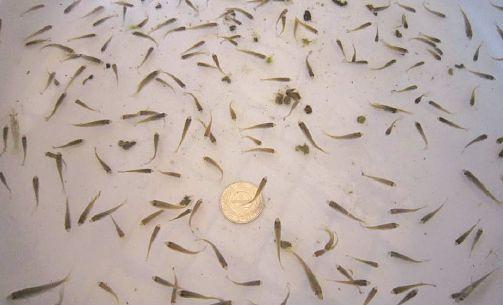
At first blush, you might not think much of the Leiopotherapon plumbeus or silver therapon. A fully grown silver therapon measures not more than 16cm in length. Yet, this tiny freshwater species, which is related to the Australian silver perch, ranks high among the preferred table fare of Filipino families. The trouble is the fish, locally known as ayungin, might be a victim of its own popularity with fears that it is rapidly being fished to extinction.
Fortunately, researchers at the Aquaculture Department (AQD) of the South Asian Fisheries Development Centre (SEAFDEC) have developed a new hatchery technique that they believe could halt the decline of the silver therapon’s population.
The silver therapon is endemic to Laguna Bay, the Philippines’ largest lake. The species has also been introduced to two volcanic lakes in the country.
“The ayungin is popular among Filipinos because it is the tastiest among all native freshwater fish species. It is usually grilled or prepared as part of a tangy soup with tamarind or guava,” says Dr. Frolan Aya of SEAFDEC. “Not many people know that it is the favourite fish of the Philippine national hero, Dr. Jose Rizal.”
Intense fishing pressure, rapid deterioration of lake water quality, and the introduction of invasive alien species have caused the alarming decline of the wild silver therapon stock over the years.
“Not much of its biology is known until to date, even as its habitat has become increasingly degraded over the years,” says Dr. Maria Garcia, from the University of the Philippines’ Biology Faculty. “The continuing threat of global warming and habitat loss has made it imperative to conserve the country’s rich faunal diversity, which includes the silver therapon.”
According to the Philippine Statistics Authority, silver therapon catch in the country has declined from 4,765 metric tons in 2002 to only 1,408 metric tons in 2018. The dwindling supply has resulted in skyrocketing prices of the species in local markets.
For instance, a kilo of silver therapon can command as much as US$16 – roughly half the daily wage of the average Filipino worker.
SEEDS OF INSPIRATION
Aya says he developed an interest in the biology of the silver therapon because he saw a great need for collecting useful data about the fish.
If such information could be gathered, it could be used to develop a full-scale and operational hatchery technique for aquaculture and the means to conserve and manage the silver therapon population.
“The importance of the development of the breeding and larval rearing methods for the native fish ayungin can be gauged from the fact that this has been the subject of years of research not only of SEAFDEC/AQD but also of the University of the Philippines in Los Banos, which pioneered the work with government funds,” according to one of Aya’s colleagues, Dr. Maria Rowena Romana-Eguia.
Romana-Eguia is a scientist and the program leader of SEAFDEC/AQD’s Quality Seed for Sustainable Aquaculture Program as well as the commodity team leader for freshwater species.
Unlike other local species such as the tilapia and milkfish, the silver therapon has long been considered not ideal for aquaculture.
It was through the scientific efforts of SEAFDEC and U.P. Los Banos researchers that the technology of induced spawning and hatchery rearing of the silver therapon were achieved, says Romana-Eguia.
DINNER TABLE STAPLE
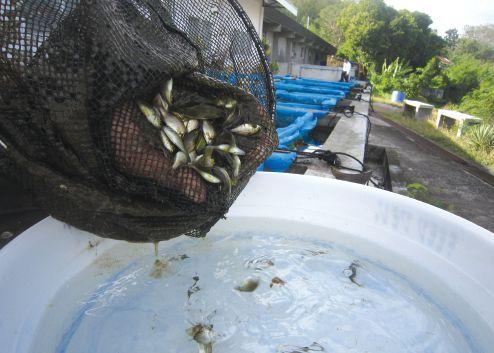
Dr. Frolan Aya (left) feeding silver therapon reared at a hatchery managed by researchers at the University of the Philippines Los Banos. Locally known as ayungin, the silver therapon is a popular staple among Filipino families. The hatchery technique developed by Aya and his team could mean a resurgence of this well-loved seafood.
“Our fish farmers, particularly those in lakeshore towns where these fish are caught (and are soon to be farmed and sold) shall benefit entirely from the technology as this species is preferred by local consumers despite its high market price,” according to Romana-Eguia.
PRODUCTION PROTOCOL
The hatchery technique developed by Aya, was granted a patent by the Intellectual Property Office of the Philippines on Oct. 17, 2019.
The study, conducted by Aya and his co-authors, Vicar Stella N. Nillasca, Mark Nell C. Corpuz, and Luis Maria B. Garcia, highlights the successful larval rearing of silver therapon in land-based, outdoor, concrete tanks.
The tanks they used to rear the silver therapon larvae are 4m x 1m x 1m in dimension. The team did not use a recirculating aquaculture system. However, water loss through evaporation was replaced every week and the tanks were aerated regularly to maintain acceptable levels of water quality.
density of food items or due to high stocking density of larvae.
To improve the availability of natural food for the larvae, fertilization of the rearing water in the outdoor tanks stocked with larvae at two densities (0.4 and 0.6 larvae l-1) was performed. Larval growth and survival were improved at a stocking density of 0.4 larvae l-1.
Larvae reared in tanks containing ambient lake water grew well. However, Aya’s team found that survival rates significantly improved when leaves of the Terminalia catappa, locally known as talisay, were added to the water during the first two weeks of larval rearing.
Talisay leaves are rich in tannins and a host of organic compounds that condition the water and improve the sur-
vival and health of various aquatic species.
The hatchery protocol, just like other technologies developed by SEAFDEC/AQD, will be available for free to fish farmers interested to venture into silver therapon culture. The protocol can also support the Philippine government’s program to rejuvenate freshwater fish populations that have declined.
Aya will continue to refine the technology for seed production and rearing of silver therapon. A manual on the biology and hatchery rearing of silver therapon is already in the works.
“It is also my plan to do the commercial production as well as the development of nursery and grow-out technology for this important fishery resource,” says Aya.
Wide range of health & nutritional products for aquaculture Vaccines | Medications | Feed Additives
Phibro Aqua brings the expertise in aquaculture production and operation, fish health management, disease diagnosis & vaccination
The team documented embryonic development, yolk resorption rate, the onset of feed and morphological characteristics of the species. The team also examined the diet composition, feeding preferences and mouth morphology of early-stage silver therapon reared in the tanks.
The researchers confirmed that the silver therapon has attributes that make it suitable for aquaculture. For instance, the species showed signs of readiness to spawn in captive conditions. The silver therapon attains sexual maturity even at a total length of 50 to 80mm. The fish also has the potential to reproduce year-round in tanks.
According to Aya, artificial breeding of silver therapon requires the use of commercially available human chorionic gonadotropin (hCG) hormone and ovaprim to induce spawning of brood fish (a ratio of one female to two males is used).
Salmon gonadotropin-releasing hormone (SGnRHa) may also be used as a spawning agent.
The hormone-treated brood fish are then transferred to spawning tanks at an ambient water temperature of 27 to 28 C. Spawned eggs (0.43 to 0.61mm in diameter) are collected using a scoop net. The eggs are allowed to hatch in a mildly aerated plastic basin.
TALISAY LEAVES AND SURVIVAL RATES
Larvae reared in outdoor tanks with natural food (grown two weeks beforehand) reached juvenile stage 40 days after hatching, suggesting the presence of some suitable live food organisms in pre-conditioned rearing water.
However, larval survival rates were low (11.58 ± 6.56 percent at a stocking density of 0.9 larvae l-1). This was linked to the
HEALTHY
DESIGN | EQUIPMENT | SOLUTIONS
COVER Changing tides
WATER QUALITY
Water quality management is especially crucial at hatcheries, where fish are at their most vulnerable stage. As if the constant pressure of ensuring water quality is at optimal levels for larval development is not enough, the climate change variable that’s changing the nature of water sources is adding to the complexity.
Arlen Taylor, director of operations at Cedar Crest Farms in Hanover, Ontario, Canada, is seeing watersheds “changing a lot.”
“We’re seeing aquifers changing, we’re seeing heavy metal content changing all the time. The oxygen requirements, the level of water or the availability of water is going down across the board in all of our sources for our five hatcheries.”
A family-owned and operated aquaculture farm, Cedar Crest has been producing rainbow trout (Oncorhynchus mykiss) since 1995. More than six million fingerlings come out of its five hatcheries annually, making it the largest supplier in Ontario.
“Water quality is the pillar of everything we do,” Taylor adds. “Our hatcheries all have different water-quality parameters, some of them better than others. But we treat water as the living thing that she is and working with what the water can also do. You can’t use the same kinds of equipment on different water sources and expect the same results. They differ depending on the water body that you’re using.”
WATER QUALITY 101
Terry McCarthy, general manager of Boston, Massachusetts-based Innovasea Land Systems, sees the ocean’s changing conditions as a driver of innovation.
“The population is growing. The water resources are relatively finite. The manner in which we conserve water and employ water-treatment technologies is going to become more and more critical,” he says.
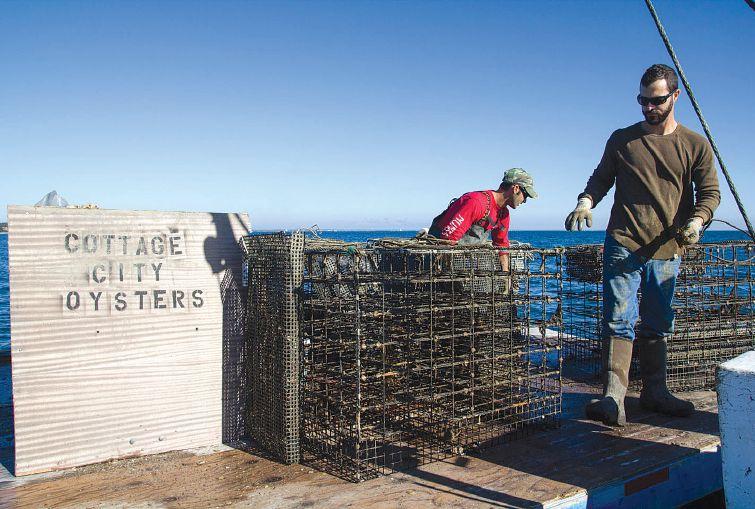
“As the water warms, the gulf streams and the currents are going to change,” adds Dan Martino, co-owner of Cottage City Oysters on Martha’s Vineyard in Massachusetts.
“We’re in the ocean, so that’s something that’s going to predominantly lay on us more and more. We’re going to have to figure out how to deal with that.”
Water-quality parameters all depend on the species one is farming. According to George Nardi, vice-president of Aquaculture Services at Innovasea: “The
water quality requirements for shrimp are different for fish as they are different for molluscan shellfish (such as oysters). Good water quality for one cultured species, such as shrimp, would be considered poor for a species like European sea bass (Dicentrarchus labrax). So, knowing the water quality that one needs is rule number one.”
Knowing how to control water quality is rule rumber two, he adds. But he stressed that one must have the knowledge and tools to do so.
“Knowledge means knowing the acceptable range for each parameter, such as salinity, dissolved oxygen and pH. Control means the ability to keep it within the acceptable range for the fish to thrive as they feed, respire and grow.
“That requires the removal of waste products, such as feces and carbon dioxide (CO2), through the filtration of solids from the culture water; control or addition of oxygen; stripping the water of unacceptable high levels of CO2 and nitrogen gas; and perhaps control of pH through the addition of buffers.”
WATER TREATMENT
In oyster hatcheries, water treatment emerged over the last couple of decades due to the need to make sure it’s not too acidic for the oyster larvae.
At Mook Sea Farm, owner Bill Mook started buffering the water in his hatcheries in the Damariscotta River in Midcoast Maine, “after ocean acidification reared its ugly head” in 2007 and killed millions of oyster larvae in the Pacific Northwest.
“Alan Barton (production manager of Oregon-based Whiskey Creek Shellfish Hatchery) came to Maine a year or two after [the crisis] and talked to a lot of people here, describing what they had gone through and what they figured out. This kind of gave us a little bit of a heads up but not before we lost about half of our production that year,” Mook says.
Buffering the water has proven inexpensive and effective for farmers in dealing with acidic water – for now.
“Our concern with ocean acidification now is at what point is it going to create a problem for us with oysters that are no longer larvae and have gone out of the hatchery? And I think that’s really an open question,” he says.
Brothers Greg and Dan Martino, owners of Cottage City Oysters on Martha’s Vineyard in Massachusetts, say growing seeds bigger in nurseries may be in the future for oyster farmers like them. (Credit: Cottage City Oysters)
Brothers and farm co-owners Dan and Greg Martino believe that adapting an oyster management practice that Bill Mook implemented at his farm years ago might provide the answer. Mook’s practice is akin to what is now trending among Atlantic salmon farmers – hybrid RAS – where farmers are growing smolts bigger on land-based facilities so they spend less time in ocean cages.
In 2004, Mook developed a process for growing microalgae using fermentation technology instead of the traditional commercial hatchery technology that uses light. The proprietary process has proven to be more energy-efficient and cost-effective, he says.
“[The process] allows us to grow a lot more algae for a lot cheaper, and gives us the potential to cost effectively grow seeds bigger on land,” Mook says.
Planting bigger oyster seeds means they spend “less time in the gear and we’re able to harvest them sooner, run more oysters to our gear and the farm is overall more productive,” he says. Mook’s incentive was to maximize the farm’s efficiency and the number of yield per acre per time on the farm’s leases. But he acknowledged that all these environmental changes that are taking place are “additional motivation” to grow seed bigger on land.
The Martino Brothers think that Mook’s process will be the future of oyster farming if conditions continue to deteriorate. “That will be a sad day but that may be true,” says Mook.
For now, what keeps Mook awake at night are the harmful algal blooms that have closed fisheries that typically don’t see closures. “It makes us very nervous. How climate change is impacting the observed increase in algal blooms is not well understood but my prediction is that there is a link. That’s certainly one thing that we’re keeping a close eye on.”
Mook Sea
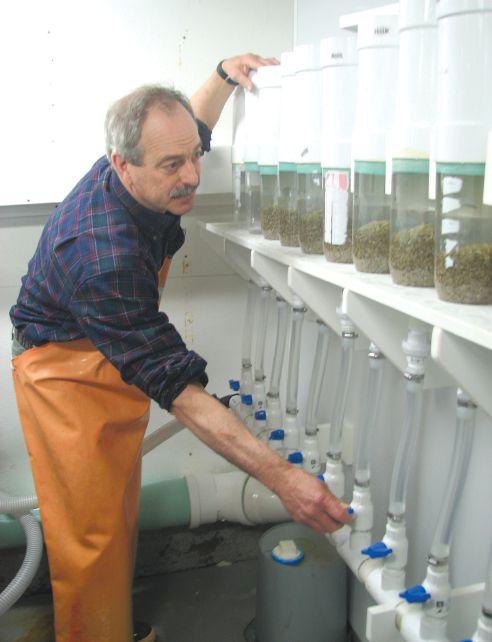
Owner Bill Mook checks on juvenile oysters growing at Mook Sea Farm’s facility. The environmental changes that are taking place are an additional motivation for Mook Sea Farm to grow seed bigger on land (Credit: Mook Sea Farm)
Unintended consequence COMMENTARY
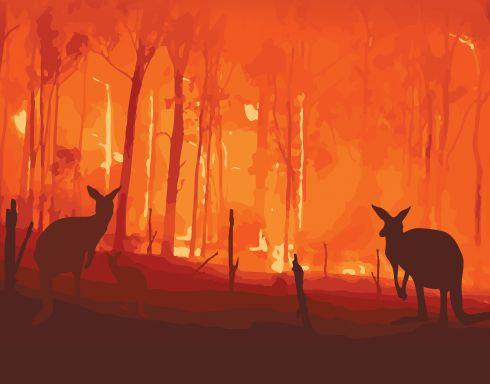
No state has been spared and it seems like the whole country is ablaze. Even more worrying is that the fires have reached an intensity never before witnessed by experienced firefighters – creating their own weather patterns, which drive embers and fireballs well in advance of the fire front, isolating firefighters and townships. The dry conditions have left even tropical rainforests vulnerable. At the time of this writing, 11,000,000 hectares have been scorched, 30 lives lost, nearly 3,000 homes destroyed, more than 3,000 farm buildings and transport, power delivery and communications infrastructure have been left in tatters. If a retreating army wanted to deny an invader any advantage whatsoever, this is what it would look like.
To put it in perspective, the fires have destroyed an area larger than Iceland, Hungary and Cuba. As individual fires join up to create mega-blazes, the fire perimeter stretches over thousands of kilometres and only heavy rain will stop its unrelenting spread.
Smoke has been blown across vast areas and has reached the stratosphere where, driven by the jet stream, it has already circled the globe. Major population areas, such as Melbourne and Sydney, have been disrupted where smoke and particulate matter readings have been the worst on the planet. On the fire grounds themselves, thousands have been evacuated and settlements abandoned to their fate as a lurid tsunami of flame and smoke sweep towards them.
It has left Australia, and indeed the world, with a frightening picture of what the future holds, unless a concerted effort to reduce the build-up of greenhouse gases in the atmosphere is undertaken as a matter of urgency. As it is, these fires have emitted nearly as much CO2 as Australia’s annual output; this is without taking into account the harm and ultimate cost from other toxic chemicals, such as asbestos released from old building material and from fire retardants.
To this point, Australian aquaculture has been miraculously spared from any direct damage, though, some shellfish farms have had to suspend harvesting due to polluted water, and smoke haze has reduced photosynthesis at a time of the year when open hatchery systems are relying on phytoplankton blooms to drive fry pond production.
The traditional fire season in Australia runs until early March; this season, without major rain events, could stretch into April. Victoria’s rainbow trout sector is particularly vulnerable and is just recovering from the Black Saturday fires of 2009 that burned out 450,000 hectares, killed 173 people and sent another 400 to hospital with injuries and burns.
It’s the medium- and long-term implications of these unprecedented bushfires to the aquaculture industry, and the hatchery sector in particular, that are of the greatest concern. Those concerns are both environmental and economic.
Since 1958, Faivre has been developing and manufacturing high quality equipments for the aquaculture industry
Fish pumps - Fish graders - Fish counters
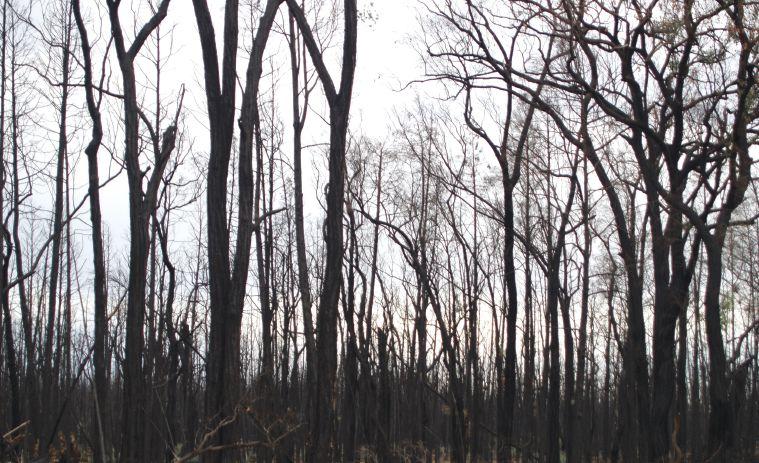
Continued period of drought and record-breaking high temperatures have dried up Australia’s lush, green forests serving as fuel for the raging bush fires that have enveloped the country since December.
The mega fire has burned through 100,000 sq. km. of land throughout the country. (Photo credit: John Mosig)
While the fires are still raging, the full cost of the reconstruction would only be a guess, but on top of lost earning capacity, it’s going to draw a huge amount of spending power out of the economy. Although a big part of the area scorched is in remote forestry regions, it encompasses the snowfields, the shady mountain glens and the seaside, as well as prime productive land. Some areas that were attractive because of their quaint 19th century ambience will never be rebuilt. It is not yet known the damage to the soil structure the inferno has caused, but without doubt, tourism and agriculture will suffer.
Seafood sits at the top end of the household budget as far as cost is concerned and any economic downturn will not help sales. Naturally, this will flow on down to hatcheries. From an environmental standpoint, the damage will take decades to repair itself, even if that is possible. Presuming the change in climatic conditions that allowed these fires to take hold and rage in the first place are here to stay, there’s conjecture as to whether these ancient forests can regenerate themselves to their former role as catchment water purifiers.
The consequences of this to the whole of the aquaculture sector are too vast to quantify, other than to point out the impact it will have on water quality in the freshwater and estuarine sectors. For example, the absence of mature riparian vegetation since 2009 in the Victorian uplands has seen a significant rise in summer water temperature peaks on the surviving trout farms.
Further north, in tropical and subtropical New South Wales and Queensland, where the bulk of Australia’s barramundi and prawns are farmed, the damage hasn’t been as widespread and the arrival of wet season rains have put an end to the fire danger for the moment. However, should similar conditions return next season, as is widely predicted, the risk to water quality and temperatures will become major issues.
The winners from all this have been the hatcheries that have shifted their operations to indoor recirculation operations. This has been widespread in the oyster and mussel sectors of Victoria, South Australia and Tasmania. The vast majority of the barramundi seedstock are now produced in RAS hatcheries using conditioned broodstock. The sophisticated Atlantic salmon industry in Tasmania has taken similar precautions to secure smolt supplies.
Another aspect of the widespread fires, and for that matter, the greater intensity of the tropical cyclones and other storm events, is boosting interest in RAS. The farm or hatchery doesn’t even have to be in the direct path of the destructive force; its operational viability can be disrupted by isolation. On the other hand, RAS facilities can be established in an industrial estate in an urban environment where services are more secure and outages promptly restored.
There is no doubt that aquaculture stakeholders in other parts of the world will be watching the fires in Australia, as well as those in the Arctic Circle and the Amazon Basin, and taking similar steps to future-proof their viability.
Russia’s Nikolsk Hatchery sticks to its roots
Oldest hatchery in the country keeping light on despite challenges
BY VLADISLAV VOROTNIKOV
Novgorod-based Nikolsk Hatchery is the oldest hatchery in Russia and one of the oldest in Europe. The facility is traditionally considered as a cornerstone of Russian fish farming science and a great-grandparent of all hatcheries in the country. These days the hatchery is working hard to keep up with the times, according to Elena Stepanova, director of the Nikolsk hatchery.
The history of the hatchery is tightly linked to a rich Russian landowner named Vrassky, who began an experiment on his property in the Novgorod Oblast, 300 miles from St. Petersburg, breeding eelpout (Lota lota), trout (Salmo gairdneri) and perch (Perca fluviatilis L.) back in the 1850s.
After several years of studies Vrassky discovered the socalled “dry method” for fertilizing eggs of river perch with the sperm of the species. Discovering that his method –now known in Russia as the Vrassky method – works in a similar way for all fish species, he obtained a grant from the government of the Russian Empire to build the first hatchery in the country designed to hold over two million eggs of different species, including young bream (Gustera blicca bjoerkna) and carp (Cyprinus carpio).
Vrassky died in 1863 at the age of 33, only three years after launching his hatchery. The hatchery went through ups and downs the following years, but it continued operations up until World War II, when it was completely destroyed. The hatchery was rebuilt in 1946 and never stopped operating since.
BROODSTOCK IN DEMAND
“Today, we produce broodstock, to be more specific youngof-the-year fish. We are catching them from our ponds every year in October. Their average length is 15 cm, and the average weight is 15 grams. We are selling this broodstock to fish farmers for stocking purposes,” says Stepanova.
With the Russian government’s policy for compensation stocking, in which companies with operations that have a negative impact on the environment – such as when building pipelines, bridges and roads – must engage in stocking fish species in nearby lakes and rivers. Most of the fish reared at the Nikolsk hatchery are sold to these companies, Stepanova adds.
“In every single case, [the government agencies] estimate what damage they [these companies] have to compensate for. They then turn to companies like ours, and we stock state-owned ponds for them,” she explains.
The government policy in this area is well-designed. In every single case, the compensation stocking is taking place under scientific supervision. For every river and lake, calculations are being made about what fish species they lack and stock them accordingly.
“Our broodstock is being used in Leningrad, Pskov, Smolensk, Vologod and Novgorod regions,” Stepanova says. Despite these significant efforts, however, the environmental situation in the Russian northwest keeps getting worse.
“Without the stocking campaigns I don’t even know how much fish we would have in our waters. There are numerous different factors behind that, including climate issues. The other problem is uncontrolled amateur fishery. There are so many people wanting to have fish free of charge, they are not limited by anything, and nobody knows how much they can catch at the end of the day,” she notes.
Stepanova adds the fishermen usually use trolling – a method of fishing where or more fishing lines with lures or bait fish are slowly dragged through the water behind a moving boat. “These fishermen are catching everything, including the fish just passing through the first spawning. It hurts, because we see that our work appears to be fruitless.”
VRASSKY LEGACY
Nikolsk hatchery is managing its broodstock using the method developed by Vrassky more than 150 years ago –although the technology has been refined over time.
“We use dry method for fertilizing eggs. We fertilize eggs from our own breeding stock and hatching them. If we talk about species spawning in autumn, than the hatching takes five months, commonly from November and until the end of April. And if we talk about the species spawning in spring, then the time of hatching is limited to only three to 10 days. These are species like pike (Esox), sander (Stizostedion) and carp,” Stepanova explains.
“We are doing hatching in the hatchery workshop in the Weiss apparatuses; we have a day-and-night duty. This is very important, because we could not allow the water flows to stop, because in that case the caviar would die. It must remain in this fluidized state with the water constantly passing by,” she adds.
Nikolsk hatchery is trying to rely on its own broodstock whenever possible, but the company runs 50 ponds covering 102 hectares, so sourcing eggs from outside the hatchery is necessary at times.
Nikolsk Hatchery breeds perch in Novgorod Oblast
As the oldest hatchery in Russia, Nikolsk Hatchery traces its roots to a rich land owner named Vrassky, who pioneered the “dry method” of fertilizing eggs of river perch.
Nikolsk hatchery is also one of the few companies that are allowed by the Russian ecological authorities to catch fish in the country’s rivers during the spawning season.
“We are collecting reproductive products from wild fish, including milt and caviar, fertilize with dry method, getting caviar and then proceeding to hatching. We may sell young-of-the-year fish or fish fry,” Stepanova says.
The hatchery is running cascade ponds and a special attention is put into feeding, according to Stepanova.
“We do not use any artificial feed, opting for natural feeding. All fish fry up to five grams are being fed with zooplankton, and only then they are transferred to some specialized feeding. Phytivorous fish species are transferred to vegetable diet, while predatory fish eat ones of their kinds,” Stepanova explained.
Nikolsk hatchery stimulates the growth of zooplankton in a natural way, using airdry grass, manure, wood sticks and so on. To feed predatory fish the company uses fry of carp or crucian (Carassius carassius).
Although, the hatchery is breeding many fish species – with the ability to produce twice the amount it used to prodice – and is located in a well-populated European part of the country, weak demand remains a problem for the hatchery.
“If we are talking about fish fry, we produce around five million units of whitefish (Coregonidae) per year, plus five million units of pike and one million units of sander. When it comes to young-ofthe-year fish, we produce 150,000 units
of whitefish per year, as well as around 100,000 units of sander, and some other fish in smaller quantities,” Stepanova says.
BUSINESS OPPORTUNITIES
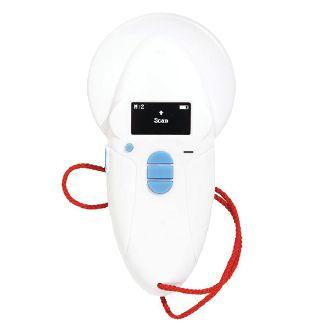
PIT TAGS & SCANNERS
There is no doubt that the Russian aquaculture industry is on the rise and the hatchery sector has a great future, according to Stepanova.
“Of course, we are not working with the species that are in the highest demand among the Russian fish farmers, which are trout or sturgeon (Acipenser), but nevertheless we have also something to offer to fish farmers – for example, carp,” Stepanova says.
There are many new fish farms being built in the country. Some farmers rent existing ponds, while others purchase land with open pits to fill them with water and begin breeding fish – this way of opening a fish farm has become rather popular in Russia in the last few years, Stepanova says.
“All farms need broodstock. Those growing predator fish purchase some fry as feed. We also see a growing demand for eelpout, because this fish has an ability to clean some water bodies,” she adds.
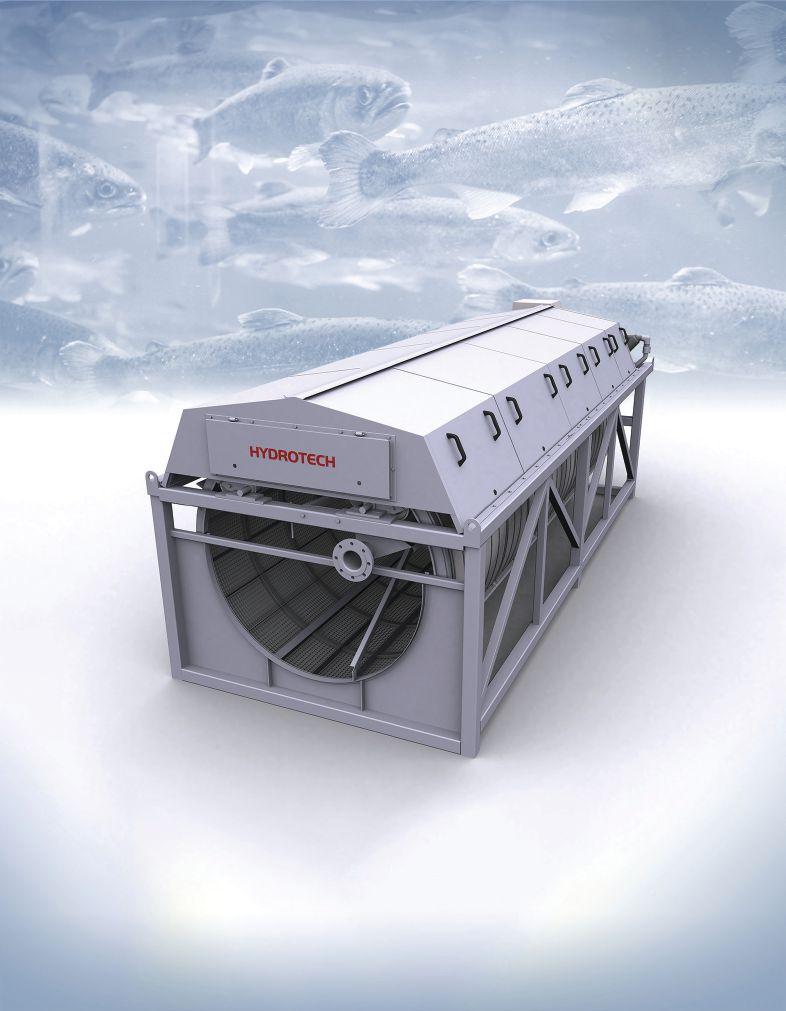
HYDROTECH FILTERS
RFID Readers with Bluetooth PIT Tags 2x13mm & 2x8mm, other sizes available T4S 2013
T4A 2416
Commercial Filtration Systems
HIGHLIGHTS NWFCC 2019
Fish oil alternatives is the future of feed
BY JEAN KO DIN
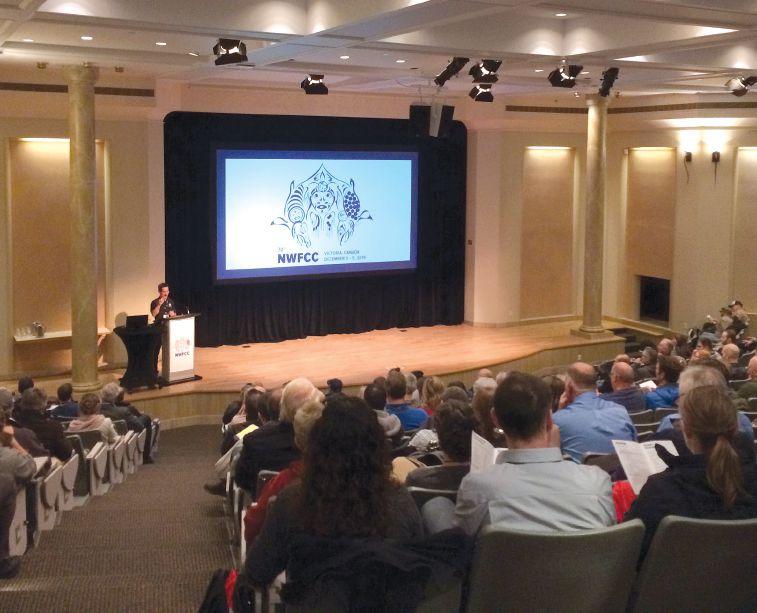
The Northwest Fish Culture Concepts workshop was hosted by the Freshwater Fisheries Society of BC in Victoria, B.C. from Dec. 3-5, 2019. The annual meeting welcomed 350 hatchery professionals from across North America to share new ideas and insights about the industry.
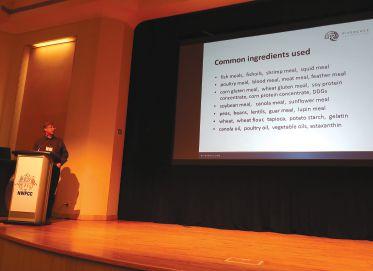
Fish oil alternatives are the next frontier of new fish feed ingredients, said Jason Mann, director of nutrition at Riverence and Enaqua Farms.
Mann spoke at the 70th annual Northwest Fish Culture Concepts conference on Dec. 4 to talk about new ingredient innovations for fish feed. He told an audience of about 350 hatchery professionals at the Victoria Conference Centre that when talking about new ingredients and alternatives for fish feed, the industry tends to focus on fish meal and not fish oil.
“Fish oil is actually a bigger worry, historically, and now it has become a bottleneck in our industry,” he said. “It is critical in how feed is processed, how its ground, how oil is added, where it’s added.”
Both marine ingredients are finite. Only about 700,000 to 800,000 metric tonnes of fish oil are being produced worldwide every year. Around five million metric tonnes of fish meal is being produced annually and Mann said these numbers will remain flat because there is only so much available for the whole industry to share.
“Ingredient demand is growing by the rate of aquaculture which is about three to six percent, depending on the year, so we really need this innovation in ingredients to
continue these new sources of protein and oils,” said Mann.
Major aquaculture companies are investing a lot of money into developing other sources of Omega-3 fatty acids in fish feed, said Mann. He gave a few examples, like Veramaris, which was recently recognized for winning the F3 Fish Oil Challenge in October 2019 with its “fish-free” algal oil. Mann also highlighted Cargill’s Omega-3 canola oil called Latitude, which is derived from plants being raised in Montana. Corbion has also developed a microalgae oil called AlgaPrime in its Brazil facilities.
“There’s research behind each one of these products,” said Mann. “The downside is that these new oil alternatives are about three to four times more expensive than fish oil because of the economy of scale.”
“New oil innovations are really needed because we’ve tended to focus a lot on proteins for 30 years,” he added. “The oils are just now happening but what we also need now is growth in the market for domestic production… The economy of scale is important to support these suppliers.”
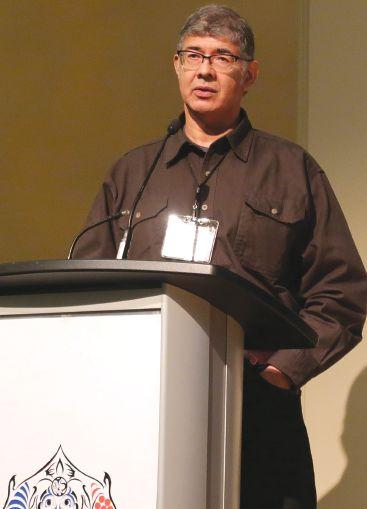
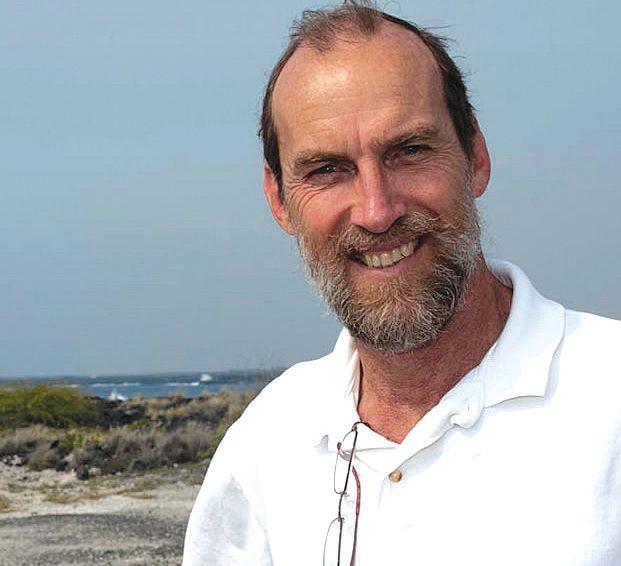
Jason Mann
Chinook raised in partial RAS outshines raceway-grown counterparts
BY JEAN KO DIN
Chinook salmon smolts reared in a partial reuse aquaculture system (PRAS) are meeting and sometimes outperforming their counterparts reared in traditional flow-through raceways in Washington State.
Senior fisheries biologist Catherine Willard from Chelan County Public Utility District led a presentation on the team’s findings at the 70th Northwest Fish Culture Concepts Annual Meeting and Workshops in Victoria, B.C., Canada. She shared the stage with Josh Murauskas of Four Peaks Environmental to talk about what they learned raising 500,001 summer Chinook yearling smolts at the Eastbank Fish Hatchery.
water supply system. The Eastbank Aquifer provides water to businesses and residents within the greater Wenatchee Valley. Projecting increases in demand from the regional water supply system due to community growth, Chelan PUD evaluated options for water conservation at its Eastbank Hatchery.
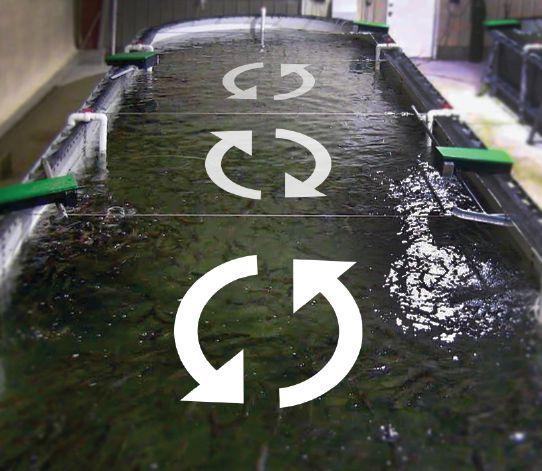
The pilot program for the PRAS was first implemented in 2008. They quickly realized the operational benefits of using identical flow and density indices that use only a quarter of the amount of water used in traditional flow-through raceways.
When they first started tracking the coded wire tags (CWT) and the passive integrated transponder (PIT) of the fish in PRAS and their “SUPER” raceways, the one question Murauskas said they wanted to answer is if the PRAS system was going to perform in the same way, if not better.
“Every single year, and not only in this program but in other programs we looked at, it’s a slam dunk,” he said. Murauskas showed graphs that indicated PRAS fish had consistently faster travel times downstream than the raceway fish. In five of the past seven years, PRAS fish have also seen better survival rates than their raceway counterparts. In the Chelan River, data showed a 20-percent increase in survival rates of juvenile summer Chinook.
Aside from the improved water conservation and quality, the cylindrical shape of the vessels make a huge difference, said Willard. It’s as if the fish reared in the PRAS are raised on a full exercise program – like being on a treadmill.
“It’s about one half to two body lengths per second that you’re seeing the fish in the reuse (PRAS),” added Murauskas. “And they’re also distributed a lot throughout the water column, as opposed to a raceway. In a raceway, it’s maybe about half a body length per second.”
Chelan Public Utility District’s (PUD) Eastbank Hatchery pumps its groundwater from the Columbia-Rivercharged Eastbank Aquifer, which is shared with the regional
The water quality was also consistently better because of the consistent hydraulic flow that distributes the dissolved oxygen throughout the circular vessel. Willard said waste capture of suspended sediments in the water is also “emphatically improved.” Staff labor is significantly reduced because of the tanks’ self-cleaning attributes.
“It was just a pilot for just a few years,” said Ian Adams, hatchery maintenance and operations coordinator at Chelan PUD. “The intention was to actually just tear it down. It was so successful that we left it.”
Adams helped implement the PRAS in which 120,000 summer Chinook are being early reared. The other 380,000 smolt are reared in the “super” raceways. He said the advantage of PRAS, instead of a fully recirculating aquaculture system, is that there is a lot more risk involved in reusing 100 percent of the water.
“We’re bringing in roughly 20 percent of make-up water which is balanced with the appropriate alkalinity, the appropriate D.O. (dissolved oxygen), so we already have this guarantee of nice water coming in,” Adams explained to Hatchery International. “When you do 100 percent recirc, you’re relying on all that infrastructure to keep functioning to keep that water quality at the appropriate balance.”
Based on their findings at Chelan PUD, Willard said the PRAS system comes highly recommended.
“If you’re building a new hatchery, there is no other vessel. You should do circular vessels and if you can, do reuse because you use less water,” she said.
Catherine Willard
Hatching public support
BY MATT JONES
The idea of holding a promotional campaign or an event at your hatchery could sound like more trouble than it’s worth – putting a bunch of money and time into an effort that may not produce significant, tangible benefits. But, for many hatcheries, while the increased tourism dollars are a positive, the real benefits can be intangible, such as increased awareness and understanding of the importance of your operations by the public at large.
Complete feeding solutions for aquatic hatcheries
• Microdiets
• Weaning Diets
• Micro Algae
• Live Feeds
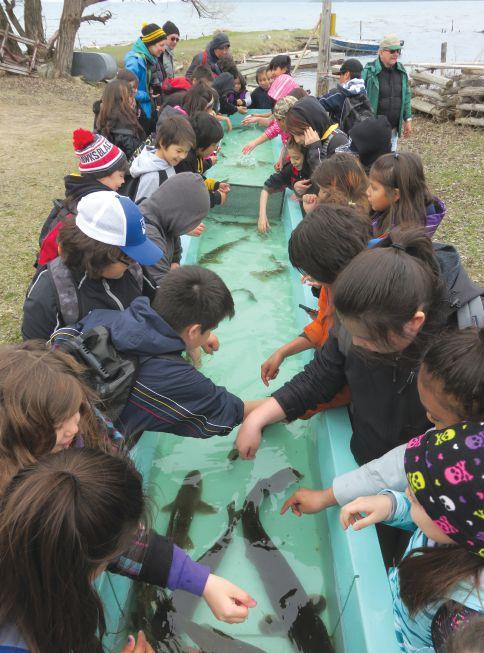
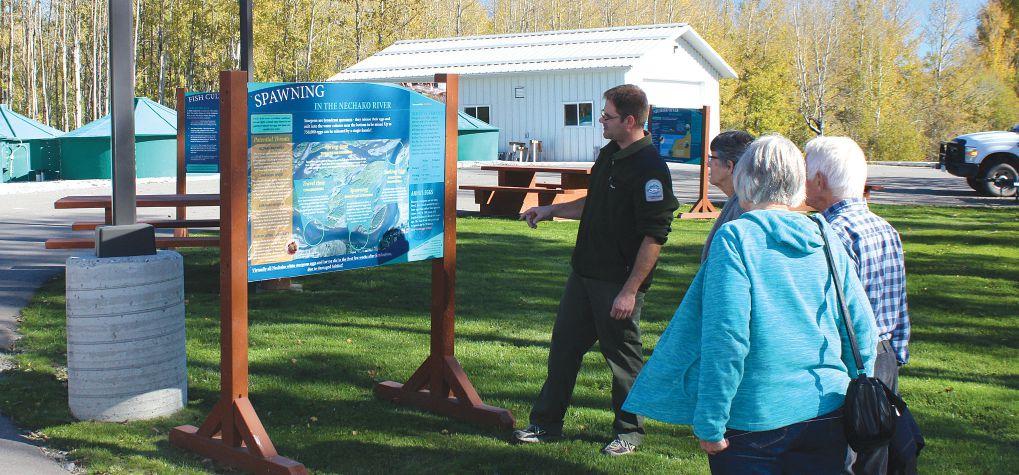
The hatchery at the Nechako White Sturgeon Conservation Center in Vanderhoof, British Columbia, Canada, was created in 2014 through a partnership with federal, provincial and municipal governments, and mining company Rio Tinto as a stop gap measure to address recruitment failure in Nechako White Sturgeon (Acipenser transmontanus) populations. Hatchery manager Mike Manky says further funding from Rio Tinto to hire summer students in 2017 allowed them to regularly hold tours at the hatchery, leading to a drastic increase in visitors.
“We noticed right from when we first opened that people wanted to come see these fish and we weren’t able to provide as many tours as we would like,” says Manky. “[Being able to hold regular tours] provides a framework for us to be able to showcase these fish and let people experience them and tell the fish’s story. Prior to 2017, we had less than 500 visitors a year, sometimes quite a bit less than that. Now we’re up to 3,000 per summer.”
In addition to holding guided tours, the hatchery features a variety of different features for visitors, including interpretive signs with historical and biological information, and other displays showing the massive size that the fish can grow to.
“A lot of people say, ‘I can’t believe these fish are in the river here, I had no idea and I don’t think I’m going swimming in the river again,’” says Manky with a laugh.
The effort in preparing all these informational displays and forming the partnership to fund the tours is well worth it, says Manky. The intangible benefits can be invaluable.
“The idea of having a lot of tourists come to your facility can be a little bit scary to hatchery staff or managers, but the payoff and having that support from visitors that buy into what you’re doing is priceless and very rewarding,” says Manky. “Especially young people, that’s something that brings me a lot of joy, seeing the excitement. I’ve actually seen young people in our community that were exposed to fish culture at this facility and have gone on to start careers in marine biology or fish culture. That’s pretty exciting to see and rewarding.”
PUBLIC EDUCATION
On the topic of sturgeon, in 2018, Hatchery International spoke with representatives from Wisconsin’s Wild Rose Fish Hatchery about their efforts to promote their work with ancient lake sturgeon (Acipenser fulvescens) with a detailed display and a lecture series. Supervisor Jesse Landwehr says that while the ‘year of sturgeon’ was a onetime effort to promote the new displays, the hatchery has continued its efforts to promote the work.
Visitors on an educational tour at the Bass Lake Creek Hatchery get an up-close and personal look at hatchery operations.
“The idea of having a lot of tourists come to your facility can be a little bit scary to hatchery staff or managers, but the payoff and having that support from visitors that buy into what you’re doing is priceless and very rewarding.”
– Mike Manky, hatchery manager, Nechako White Sturgeon Conservation Center
“We’ve always found a lot of success showcasing the natural cycles of rearing fish and the natural spawning runs and the big splashy things the public likes to see,” says Landwehr. “We’re on Lake Michigan and every year we do an annual open house to kick off the trout and salmon run. Those, over time, have become events that the public have become accustomed to and want to see. On the first Saturday in October at our Kewaunee facility on Lake Michigan, we’ll get over a thousand people that’ll come through for an open house. It gives us an inroad to educate the public as to what we do and why we do it.”
NOT YOUR ORDINARY HATCHERY STAFF
Back in British Columbia, the Allco Fish Hatchery in Maple Ridge has a unique feature – the Department of Fisheries and Oceans’ salmon enhancement facility has a work crew comprised of inmates from the nearby Fraser Regional Correctional Centre. While the inmates working at the hatchery are all pre-screened, low-security, non-violent offenders, this does require some logistic consideration for public events.
“We have events that we do throughout the year which are not necessarily open to the public,” says Sophie Sparrow, environmental projects and communications for the Alouette River Management Society (ARMS), a non-profit environmental organization that act as the public face of the hatchery. “More of an RSVP, we need to know who’s coming and how many people.”
The one day a year that they will allow the general public to freely enter the hatchery is their annual Rivers Day celebrations, which last year incorporated a celebration of the 40th anniversary of the hatchery. On Rivers Day, the hatchery will see upwards of 750 visitors who can enjoy a multitude of environmental and educational exhibitions, live music, food trucks, and a variety of children’s activities. During Rivers Day and other visits to the hatchery, the inmates will move to an indoor workhouse to not interact with the public.
“I would say that’s more so for the inmate’s safety than the other way around,” says Sparrow. “These inmates are here on very minor charges.”
Sparrow says these community events, along with ARMS’ promotional efforts in the community itself are essential. The hatchery is away from the downtown area
and not on a public transit road. Rivers Day, and ARMS’ community engagement efforts, bolster ARMS’ volunteer numbers, who perform valuable duties such as counting fish in the rivers and monitoring egg laying.
“That one day a year can transform into people getting involved through volunteering or becoming a member or donating or spreading our message onto other people who maybe didn’t even know that ARMS exists in the community,” says Sparrow.
SCHOOL TRIPS
On Manitoulin Island, in Ontario, Canada, the Bass Lake Creek Walleye Hatchery is the site of an annual educational event hosted by the Little Current Fish and Game Club in partnership with the Manitoulin Streams Improvement Association (MSIA). The event sees almost 100 students from area schools learn first-hand about stocking efforts at the jar-hatchery.
“It started with a couple of schools, but now I think we’re up to about six schools that have been attending,” says Manitoulin Streams project coordinator Seija Deschenes. “We’re increasing their knowledge base of what is happening in the community to improve the fisheries and creating the next generation of stewards of the land. Getting the kids potentially involved and interested in this field of work. We’re hoping to create the next generation of volunteers that may come out and help give back to the land and the community.”
Tourism is a key economic driver for the island in every season but Winter, says Deschenes. As such, there are a variety of water-based attractions, from fishing derbies to tourist activities at the government-run Blue Jay Creek Hatchery.
“We have lots of resorts and cottages that are rented here, a lot of people from Southern Ontario will come up to the island,” says Deschenes. “That’s part of their relaxation, they come to get away from the big city and be surrounded by water and a lot of activities revolve around being out and being able to enjoy it.”
Nechako White Sturgeon Conservation Center hatchery manager Mike Manky gives a tour of the facilities.
One of the events hosted by the Manitoulin Streams Improvement Association is a brook trout eyed egg event, where volunteers and school groups put brook trout eggs into Norton’s Creek.
Staff at the Nechako White Sturgeon Conservation center show samples of tags, preserved eggs, and show visitors how a sturgeon would be spawned at the facility.
MARICULTURE
Hatchery, R&D take on work to support Hawaii's quest for mariculture excellence
Ocean Era is the new name for the company formerly known as Kampachi Farms LLC, a research company in Kona, Hawaii, established over 10 years ago by Sims and Michael Bullock. The company was a spin-off from Kona Blue Water Farms, which had been instrumental in developing Hawaiian kampachi (Seriola rivoliana) as a new aquaculture species back in 2004 to 2009.
Ocean Era is working to advance research and guidance in support of offshore aquaculture, a nascent but promising sector which offers the “largest potential gains for food production,” according to a new scientific paper called, “The Future of Food from the Sea.”
The facility will focus on a range of research projects, including improving kampachi diet formulations, selective breeding, cultivation of herbivorous reef fish, and offshore farming of algae for food, feed and biofuel use.
But instead of just focusing on research for the expansion of Seriola rivoliana production, the company plans to expand to other marine finfish, “particularly herbivorous marine fish that eat seaweed, and also expand to offshore seaweed production,” Sims told Hatchery International
The “repositioning” of Kampachi Farms and its renaming to Ocean Era will be officially announced at Aquaculture America 2020 in Honolulu in February.
INITIATIVES
Sims says his team is working to identify the genetic markers that allow enhanced selective breeding of Seriola rivoliana for increased growth rate and reduced deformities.
“There’s a whole suite of markers that are involved but we’ve identified those that are most significant particularly for accelerated growth on diets that include predominantly soy protein concentrate,” he says.
They will also continue their work on formulating fish feed that reduces reliance on fishmeal and fish oils, which the aforementioned scientific paper has described as key to sustainably expanding finfish and shrimp mariculture.
The team is collaborating with fish physiologist Dr. Rick Barrows and with the organizers of the F3 Fish-Free Challenge, a competition in which contestants are invited to produce aquafeed that does not contain marine-animal meal or oil.
The initiative, funded by the Saltonstall-Kennedy Grant Program, expects to announce in the spring the result of trials on feeds that use a mix of Veramaris oil (an alternative source of Omega-3 derived from marine algae) and a blend of canola oil and other agricultural oils.
“We have had very good results with a pet-grade poultry meal – that’s feed grade, not food grade – combined with a trace mineral mix that replicates the trace minerals out of spirulina. That would be a highly competitive diet for
Kampachi (Seriola rivoliana) in the earlier Velella Beta-test offshore of Kona, Hawaii (Credit: Ocean Era, LLC/Jeff Milisen)
Ocean Era LLC co-founder Neil Anthony Sims says the Hawaiian community’s recognition of the value of mariculture has made the state a pioneer in the sector.
(Credit: Ocean Era, LLC)
kampachi that would be completely free of any reliance on marine-sourced proteins or oils,” says Sims.
With fishmeal currently priced between $1,600 and $1,800 a tonne, the development of a pet-grade poultry meal (currently priced $1,050 a tonne) will offer farmers a “significantly less expensive but more importantly, a more scalable” nutrition solution, Sims says.
Tank-cultured Halymenia, ‘sea-grapes’ (Caulerpa) and ‘ogo’ (Gracilaria) grown at the experimental algae culture facility at NELHA, in Kona, Hawaii. Ocean Era LLC is extending its scope of work to include offshore farming of algae for food, feed and biofuels.
He notes that preliminary taste trials have been encouraging. “We know that the taste of the kampachi is critical to the farmers and to the customers. There’s no significant difference between the taste of the fish that were fed the zero-fishmeal diet and those that have been fed a regular fishmeal diet.”
Todd Madsen, president of Blue Ocean Mariculture, based in Kona, Hawaii, lauds the initiatives. He says these efforts will “reduce pressure on constrained forage fishery resources, and make our feeds less expensive.”
“Of course, those goals have to be balanced with the nutritional and growth performance of the feed,” he adds.
HAWAIIAN SUCCESS STORY
Kona-based Blue Ocean Mariculture is the first offshore open-ocean farm in the United States and has been commercially farming kampachi or Almaco jack (Seriola rivoliana) since 2009. The company was the first to establish an integrated hatchery for Hawaiian kampachi, successfully developing and commercializing it as a farmed species.
“Getting the larval production going was a process of learning what the correct protocols were for this particular fish. We had to figure out the nutritional profile for the larval fish, such as the number of days to feed rotifers versus the number of days to feed artemia, for instance. We’ve done that over the past few years through various research and just understanding what’s unique about this fish and this location,” says company president Todd Madsen.
Today, Blue Ocean maintains about 100 brood fish sourced from local waters. “That’s an important point. Seriola rivoliana is indigenous to Hawaiian waters. We don’t want to import any species,” Madsen says.
Stabilizing the protocols for larval production has been a game changer for the company.
“They are now more routine, repeatable and simplified. We’ve become more efficient in larval yields and the production of the fish from a cost perspective,” he says.
“We’re probably the largest warm water hatchery in the US,” Madsen continues. “We produce 30 billion rotifers over a 20-day cohort window that we’re operating in. In 2019, we produced over 150 million viable eggs and on the nursery side, we probably put to sea about a million fish.”
The focus now is to scale up the business. This entails adding three “Seastation” cages (each measuring 8,000 cubic meters and housing 130,000 fish) to its current five.
“We should be able to do about 2,000 tonnes a year, but that’s also because we’re doing selective breeding so the fish are growing faster and therefore spending less time in the water. The expansion will complete the currently permitted farm site,” Madsen says.
TASTE OF THE ISLAND
Sims believes the broad recognition in the Hawaiian community and at the political and regulatory level of the importance of expanding offshore aquaculture has made the island state the first mover in offshore aquaculture.
“I think that in Hawaii there is a deep appreciation of the importance of seafood because it is an island state. But even though it is an island state we are dependent on importing most of our seafood and that is clearly not a model that we want to continue to scale. We want to be able produce more of our own seafood,” he says.
The Natural Energy Laboratory of Hawaii Authority (NELHA), an incubator facility that fosters early stage research and supports them to grow into commercial operations, exemplifies the state’s commitment to the industry, Sims adds.
aquaculture, and offshore farming in particular.
“To close the seafood gap more aquaculture production will be needed. We also believe that a lot of the growth will come from warm water species, not just Atlantic salmon, and we think that a lot of those warm water species, of course, are going to be produced in high-energy sites,” he says.
“Whether it’s potential for hurricanes or the potential for strong oceanic water currents, we need to learn how to farm in those types of high-energy locations, and Hawaii is very much a high-energy location with strong water currents and susceptible to hurricanes.”
Juveniles are grown in the hatchery and transferred offshore to five fully-enclosed net pens (Credit: Blue Ocean Mariculture)
Tank-cultured ‘sea-grapes’ (Caulerpa) grown at the experimental algae culture facility at NELHA, in Kona, Hawaii (Credit: Ocean Era, LLC)
Technician feeds herring to kampachi brood fish at Blue Ocean's hatchery in Kona, Hawaii. (Credit: Blue Ocean Mariculture)
Sorting through aquaculture’s big data problem Q&A EVAN HALL, CEO, WITTAYA AQUA
BY JEAN KO DIN
Aquaculture has a big data problem.
Wittaya Aqua CEO Evan Hall says too many facilities are still relying on pen and paper, or disorganized Excel spreadsheets, to log their daily operations. It could be a local shrimp farm in Southeast Asia or a multimillion-dollar facility in Chile, Hall believes his Toronto-based tech startup can be the solution to making the industy a little more data savvy.
After graduating Queen’s University in 2011 with a degree in Environmental Science and Biology, Hall began his career as a fish biologist in Ontario, Canada. He went back to Queen’s to get a Master of Business Administration (MBA) in 2016 and decided to ask around about opportunities in Canada’s startup community.
This brought him to collaborate with animal science and nutrition specialist Dr. Dominique Bureau from the University of Guelph. They bonded over their experience poring
over log books and scrolling through mismatched data points and together, they decided to found Wittaya Aqua in December 2017.
Hall talked with Hatchery International about his company’s mission to streamline the data management process for aquaculture farms, large and small. He shares the company’s vision for its cloud-based farm management tool, AquaOp, to help fish farms, feed companies, hatcheries and processing plants develop a more optimized production workflow.
Hatchery International: How did your experience as a fisheries biologist bring you to co-found a tech startup?
Evan Hall: I sat down with Dom (Bureau) and he was telling me how fish farms, multimillion-dollar operations, record their data down on whiteboards or they’re writing it on the back of a notepad, and maybe they’re using Excel to do some data analysis and figure out how to improve their farm operations. And that story completely connected with me. As a field biologist, most of my time was copying field notes into Excel so I could actually do stuff.
So, we talked to trout farms. We talked to tilapia farms, shrimp farms, salmon farms and really distilled what are the commonalities between those farms. What are they all trying to do? They’re feeding them, they might be moving them around, splitting them based on their size, applying maybe antibiotics or water quality stabilizers.
So we decided to focus on just allowing them to track all the different things that they are doing, allowing the software to be modular and customizable, applicable to virtually any species. And that product finally went to market in late 2019, supporting our consulting business.
HI: Originally, AquaOp tool and your consulting services were geared towards grow-out operations that raise fish for the commercial market but now hatcheries are becoming interested in your platform, as well. How are your hatchery clients different?
EH: So right now, it’s still kind of early in the journey, but we’re looking at reporting on which strains, which genetics, which lot or cohort of fry or eggs, tracking the DNA parentage. And then typically, the other main difference in hatcheries is that there’s usually more than one life stage present at any given point in time whereas on a grow-out farm, there’s really just one life stage of animal. We’re just making sure that we can incorporate those smaller aspects without breaking the whole system. So far, so good. The early response has been overwhelmingly positive so that’s encouraging and we’re only really about six weeks into our journey into the hatchery sector.
Wittaya Aqua CEO Evan Hall spent some time talking with aquaculture farms to find out where the gaps are regarding data management in aquaculture operations.
HI: In big bold letters, your website states that, “Aquaculture has a big data problem.” Can you explain what you mean by that?
EH: So, there are a couple things. The first problem is that a lot of farms aren’t necessarily collecting as much data as they could or should be. The more data, the more insider information that you have as to what’s going on in your operation.
The second tier of problems is each farm, pretty much, without fail, is collecting data in different formats. We see this all the time in our consulting business, just trying to figure out the method behind the madness of a spreadsheet – what’s being collected and how it’s being organized – and it doesn’t allow you to even compare apples to apples.
The third tier, this higher level one that is one of our key focuses, is now that you have that data, what do you do with it? How do you use it to improve your operations and help you make decisions that will yield in reduced feed conversion ratios, healthier animals, more animals to market and all that kind of fun stuff.
And that’s predictive analytics, machine learning analytics and artificial intelligence. Those are tools that most farms don’t have at their disposal. So we make that as easy as possible for any kind of farm to be able to access.
HI: For much of the aquaculture industry around the world, there seems to be a technology gap from farm to farm. Where some farms can harness advanced technology like remote-operated drones and artificial intelligence, others, as you mentioned, are writing notes on whiteboards and backs of notepads. What is Wittaya Aqua’s role in bridging that gap for the industry?
EH: Our approach has been to be hardware agnostic. I mean that we’re software only and we don’t require you to buy fancy equipment. So, if you’re using your Litmus test strips, you can record that. That doesn’t matter to us. Or if you’re using a data logger, you can record that, as well. We’re starting to approach a few equipment providers, so that farms that are using hardware, we can allow that
data to populate on our application without them having to actually do anything. But right now, it’s kind of on a case-by-case basis.
Our primary philosophy is there’s a lot we can do to help a farm without collecting an enormous amount of data and without changing their workflow a ton. And then, over time, as we continue to collect more data and work with other partners on the hardware side of things, we can start doing more and more and more.
In terms of number of farms, the majority of smaller, older farms aren’t even recording anything and that’s not really our target customer currently. There’s definitely a knowledge gap and a large part of education needs to be done there. Over time, and working with different non-governmental groups and things like that, the industry will get there. But currently, for us, we kind of need for the client to at least be capturing data in some way, shape or form for us to be helpful. Because then we can show how our system fits within that or how it can offer alternative or supportive insight.
FEEDING & NUTRITION
Feed challenges threaten aquaculture gains in Sub-Saharan Africa
BY NESTOR ARELLANO
Ahost of challenges including government red tape, high taxes, and supply issues are preventing fish farmers in Sub-Saharan African countries to get their hands on badly needed fish feed, according to several reports and studies.
The situation threatens to stymie if not stall the progress of aquaculture in the region. Sub-Saharan Africa accounted for 1.7 million metric tonnes (MT) of the world’s 76.6 million MT of fish production in 2015. A full-blown feed shortage would be bad news in 2020 for the region’s growing population.
For example, aquaculture in Tanzania is practiced by both farmer groups and private individuals. There are efforts to push programs geared towards developing a sustainable, competitive and more efficient fisheries and aquaculture industry that improves the livelihood of stakeholders while boosting the national economy and preserving the environment.
However, “Access to feeds faces the challenges of shortage, quality, and high cost,” according to a report prepared by the Aquaculture Association of Tanzania (AAT).
The report mentioned other issues such as policy and regulatory reforms, zoning, conservation, and access to fingerlings. But it pointed out that lack of access to fish feed was jacking up the cost of production for fish farmers.
“Currently, there are no big feed production factories in the country and small feed producers do not offer quality feed,” the report said. “Domestic production has been reported to be discouraged by the high tax barrier that raise the cost of production.”
The result is that farmers are often forced to resort to imported feeds that cost more.
The report recommended that local feed production should be supported in order to produce quality feed at competitive prices.
Expansion of the aquaculture industry in the region will increase demand for feeds, according to a 2015 report by Prof. Emmanuel Kaunda of the Lilongwe University of Agriculture and Natural Resources (LUANAR)-Bunda Campus in Malawi.
“Currently the aquaculture sector relies on farm-made feeds while feed manufactured by the formal industry accounts for less than 20 percent in most of the countries except in Egypt, Nigeria, Ghana, Mauritius, Zimbabwe, Zambia, Malawi, Uganda, and other fast-growing aquaculture countries,” the report said. “Feed which constitutes more than 60 percent of production costs is mostly from farm-based manufacturing systems and is of low quality.”
African countries are capable of producing aquafeeds on commercial-scale through on-farm production by informal manufacturers, he said.
“There are also some formal producers of aquafeeds for instance in Egypt, Cameroon, Ghana, Uganda, and Malawi,” he said. “Pelleted fish feed are produced in few countries mostly in Egypt, Nigeria, and South Africa, largely manufactured by animal feed industry on request, however, it is expensive for most small-scale commercial operators to make a profit in their enterprise.”
He recommends that governments and stakeholders strengthen their knowledge base to better understand supply trends and factors such as feeds, stocking materials and management skills.
The report said that the feed challenge could be an opportunity for businesses and governments to develop new technologies and practices for the industry.
For instance, in Egypt, chicken manure is used to improve pond productivity. Commercial feed production in the country is now increasing.
Uganda has a feed policy and a bill to ensure safety to consumers and good feed quality, the report said. A total of 80,000 tonnes of fish feed per annum is produced.
Yeast diet inclusion a boost for smoltifying Atlantic salmon
BY RUBY GONZALEZ
Ayeast-based diet could be helpful in enhancing the Atlantic salmon’s ability to endure the challenges of transitioning from freshwater (FW) to seawater (SW), according to a new study from Norway.
Atlantic salmon’s transition from freshwater to seawater is a critical stage when the fish is more susceptible to stress, physical damage and infectious diseases, which leads to high mortality rates.
According to the study, “Yeast as a protein source during smoltification of Atlantic salmon (Salmo salar L.), enhances performance and modulates health,” a 25-percent-inclusion of Candida utilis yeast diet for Atlantic salmon pre- and post-SW transfer improved weight gain and feed intake, triggered a lower secretion of cytokines in distal intestines, and decreased the expression of its genes. This percentage of Candida utilis yeast was used to evaluate yeast as a protein source with functional properties and not only as an additive.
“Yeast successfully modified immunosuppressive responses related to SW acclimation,” said authors Christian Salhmann et al, who are from the University of Norwegian Life Sciences in Norway and the Pontifical Catholic University of Valparaiso in Chile.
Disease control strategies currently implemented by the aquaculture industry include the use of chemotherapeutics, vaccination and selective breeding programs. “These measures may decrease smoltification stress, but additional action is required to increase salmon smolt robustness during SW transfer. The use of functional ingredients in fish feeds and adapted feeding protocols are a possible solution to these challenges,” they said.
The 56-day experiment used four dietary treatments: control diet in FW and SW; control diet in FW and a yeast-based diet in SW; yeast-based diet in FW and SW; and yeast-based diet in FW and a control diet in SW.
“Our results showed that fish fed the yeast diet throughout the FW and SW period achieved higher feed intake and higher growth rate than fish fed the control diet,” they cited. Throughout the experiment period, these groups also had a higher feed intake. The authors said the increased palatability of the yeast in the diet could be the reason. “Yeast possesses feed enhancing properties, including nucleotides and glutamate, which has proven to be taste enhancers in fish.”
Previous studies have documented the positive effects of yeast or its components for salmonids. But yeast strain, processing technology and inclusion level can lead to varying effects on the immune system.
“Overall, the study suggests that yeast is a high-quality protein source with beneficial health properties in diets for smoltifying Atlantic salmon,” they said. The study was published in Aquaculture.
Nutreco enters cell-based seafood venture
Nutreco has announced a strategic partnership with cell-based seafood start-up BlueNalu. This announcement follows earlier news about Nutreco’s collaboration with cell-based meat start-up Mosa Meat. These partnerships amplify Nutreco’s commitment to “feeding the future” with science-based innovations that advance sustainability across the value chain, the company said.
“Nutreco and its customers share critical challenges when it comes to delivering on Nutreco’s mission of feeding the future,” a statement from Nutreco said. The food and feed industry must meet a growing demand for high-quality protein. This demand is driven by a growing population – estimated to rise to almost 10 billion by 2050 – but also by more affluent consumers demanding more diversified diets – including protein, it added.
“Our strategic partnerships are all designed to ensure Nutreco plays its part in ensuring there is enough sustainable food to feed the growing population,” Nutreco CEO, Rob Koremans said. “Mosa Meat and BlueNalu are developing very exciting technology that could potentially transform the way in which our industry feeds the future and we are thrilled to contribute to these developments. A future opportunity for Nutreco may include becoming an ingredient supplier to the cell-based protein industry.”
Mosa Meat is a Netherlands-based company developing real, non-GMO meat grown directly from cells – also known as cultivated meat, cultured meat and cell-based meat.
BlueNalu is pioneering “cellular aquaculture,” in which living cells are isolated from fish tissue, placed into culture media for proliferation, and then assembled into fresh and frozen seafood products, according to the company’s website.
The partnerships with BlueNalu and Mosa Meat are made through Nutreco’s strategic innovation and investment team, NuFrontiers, and build on the research, ingredient sourcing and protein expertise of Nutreco companies, Skretting and Trouw Nutrition.
Lack of sufficient feed manufacturing facilities contribute to increasing demand for quality feed among fish farmers in Sub-Saharan Africa. (Photo credit: Aquaculture Association of Tanzania)
The tools used every day for fish culture tasks are extremely important to the welfare of the fish and the efficiency of workers. Which tools you choose for your tanks depends on the tank setup and the needs of the fish stock.
For the best biosecurity, each tank should have its own set of mort nets – instead of sharing between tanks. This is likewise true with other tools that are practical to be tank-specific.
Even though tools are tank-specific, it is important that they should still be disinfected regularly. Fish culture tools have a notoriously high upkeep. Many tools used for fish culture, notably mort nets, are custom made or repurposed into improvised tools from common off-theshelf items. Actions such as mort picking, fish capture and tank cleaning put a lot of wear on tools causing frequent breakage, as do the fish themselves. Broken tools can be very ineffective in getting the job done, but are also hard on the fish. Thus, they should be removed from service and fixed as soon as possible.
Whatever materials you choose for your tool construction, they should be easy to disinfect, such as plastic and aluminum. Fibrous materials, like netter, should be soaked in disinfectant regularly.
MORT NETS AND CAPTURE NETS
Mort nets, most of all, frustrate facility technicians; least appealing of all is working on
the nets that touch the dead fish. Because of their often-improvised nature, the wear-andtear of everyday use on mort nets requires their constant upkeep.
Each tank must have its own mort net for the sake of biosecurity, which means there can be a significant number of tools to take care of. Worse than fish getting through the holes are fish getting stuck in the hole and suffering or dying. Time must be spent to repair mort, capture and seine nets. Unfortunately, this job can often be overlooked. Make sure to make the needed repairs sooner before the next use. All too often, staff setup for a fish move or other event only to find out once they have started the task that their dip nets are in disrepair. This then leads to workers scrambling to find “the good net” just so the task at hand
can begin. Holes should be repaired immediately, or nets should be taken out of service. Seine nets should be unrolled and inspected for holes before going into use.
BROOMS, BRUSHES AND FISH MOVERS
Brooms and brushes are essential tools to help with daily tasks. Pool brushes and floor brooms are great tools for cleaning the walls, floors and tank screen. A long stiff bristle with a good handle is key to applying enough force to get screens properly cleaned.
Another helpful tool for screen cleaning – and one that can be improvised – is
the spray wand. Usually made of PVC, the spray wand is a hose extension with a nozzle that allows a jet of highpressure water to be sprayed through the screen at close range. This jet of water helps remove fouling under the screen, in the sump and in the piping.
Fish movers are an essential tool for clearing fish away from an area in the tank where you need to see or do something, without touching the fish. By pushing the broom through the water in a stabbing motion and stopping short of the fish, a pulse of water hits the fish spooking them from the target area, without contacting the fish.
Some household tools that can be used in the hatchery include: pike pole, strong magnet, toilet brush on a pole, water sampler on a pole, pool skimmer
Nofima scientist seeks ‘ideal tank’ for RAS
BY NESTOR ARELLANO
Achieving optimal water flow are critical in recirculating aquaculture system (RAS) tanks to ensure that ideal conditions and factors necessary for fish health are present in land-based, closed containment environments.
However, designing the ideal tank can be a very expensive and labour-intensive experimental process.
This is where computer modeling can help, according to a recent blog posted on the website of Norway-based fisheries research institute, Nofima.
Nofima is the host institution of CtrlAQUA, a research centre focused on studying innovation in land-based aquaculture systems.
Khurram Shahzad of CtrlAQUA is currently investigating how water currents behave in small and large tanks. The objective of his research is to determine how to improve water flow through computational fluid dynamics and simulations.
“The main purpose of my calculations is to help the industry to develop optimal fish farming tanks that provide the fish with adequate swimming conditions and ensure that oxygen and feed is distributed evenly in order to avoid ‘dead zones,’” said Shahzad. “Facilitating the right hydrodynamics in the tanks will mean reduced energy consumption and improved salmon welfare in land-based farming.”
Shahzad believes that if done right, RAS tanks can be self-cleaning.
The aquaculture industry is progressively moving towards larger land-based RAS and semi-closed containment systems, he said. The larger the tanks, the more complex the system. With complexity comes a higher degree of water turbulence which impacts distribution of gasses, feed and fish.
Turbulence are produced by tank inlet orientations, inlet (nozzles) and outlet positioning and internal structures.
“The designing of those inlet columns plays a vital role for achieving a more uniform mixing and flow pattern across the tank,” according to Shahzad’s research, “minor change in inlet column will impact the whole system by removing velocity dead zones plus tank selfcleaning is improved, respectively.”
With computational fluid dynamics (CFD) modeling, researchers can “predict” tank water flow and water velocity. Using computer simulation, researchers can test for hydro dynamics that are most beneficial for fish welfare without having to build actual tanks.
“CFD can help with designing optimal systems and is far cheaper than building before physical testing,” said Shahzad.
Nordic Aqua fights bogus claims
Nordic Aquafarms (NAF) is pushing back on what it calls “misleading” claims made by opponents of the company’s planned land-based fish farm near Little River in Belfast, Maine.
The Belfast Planning Board has been holding several public hearings on NAF’s plans. A meeting this Wednesday is supposed to be the last one before the board prepares to consider the aquaculture firm’s applications for permits for its salmon farm.
Last week, a local organization expressed its concerns that the fish farms’ carbon footprint will negatively impact the area’s natural environment.
“A local group of opponents in Maine has made continued efforts to argue against landbased aquaculture in Maine, despite strong support from reputable environmental organizations, the general public and local and state politicians,” the press statement released by Nordic Aquafarm early Wednesday morning said. “Their claim that land-based seafood farms will render Maine unable to reach stated carbon emission targets are based on incomplete and misleading information.”
The company reasoned out that switching to locally farmed fish will reduce the need for airfreighted fish.
“The US imports vast amounts of fresh seafood, including salmon, by airfreight. Compared to these airfreighted products, NAF provides a product with almost onethird of the CO2 footprint,” the company said. “Local catch has the lowest carbon profile, but supply is not even close to meeting demand in the US. Thus, carbon reversal is achieved by displacing airfreighted products.”
The company also said that a Chinese study referenced by opponents of the project are not valid for land-based production in Maine and the proposed facility of NAF.
The referenced study has:
• Much higher carbon footprint per kWh due to the energy mix with a high share of coal
• Much higher energy use per pound of fish than NAF has in Maine
• Much longer transport distances for eggs and feed in China
• Much higher feed factor than is best practice today for RAS
• A life-time assumption for the facility that is much lower than modern RAS facilities today
The company also said that its opponents are assuming that NAF will use 900,000 gallons of diesel fuel per year. However, the company said its permit applications are made out to account for worst-case scenarios and that its expected diesel consumption is less than 150,000 gallons per year. NAF also intends to use biofuels for its Maine facility to reduce emissions.
The company also said that a typical salmon serving of 4 oz from the NAF production in Maine has a CO2e (carbon equivalents) footprint of approximately 1.40 lbs. CO2e based on lifecycle analysis. A locally produced and distributed landbased salmon product has about the same CO2e footprint as chicken. In comparison, a similar portion of beef is approximately 6.1 lbs. CO2e.
“The local opposition is vastly overstating the carbon footprint from land-based seafood in Maine based on faulty assumptions and misleading conclusions. On the contrary, Nordic Aquafarms’ proposed facility illustrates that Maine is in a position to provide much more carbon-efficient conditions for land-based aquaculture than many other locations,” said Marianne Naess, executive vice-president for commercial at NAF.
Denitrifying woodchip bioreactors for wastewater treatment
Results of recent research from The Conservation Fund Freshwater Institute
BY CHRISTINE LEPINE, LAURA CHRISTIANSON, GREGORY MCISAAC AND STEVEN SUMMERFELT
Recirculating aquaculture systems (RAS) accumulate high concentrations of nitratenitrogen (NO3-N) from deliberate and vital nitrification and waste solids dewatering processes, yet the industry lacks cost-effective treatment options for these dissolved waste streams.
Nitrate remediation is essential to RAS facilities that are regulated by nutrient discharge limitations and will be instrumental in maintaining sustainable industry expansion. Recent investigations have suggested that denitrifying woodchip bioreactors, a biologically driven NO3-N remediation technology developed for agricultural systems – where woodchips supply both carbon substrate and surface area for attachment of denitrifying bacteria – may also be applicable for the treatment of aquaculture discharge (Fig. 1).
The bioreactor, an engineered trench filled with inexpensive and easily accessible woodchips, is highly efficient at passively converting nitrate into chemically unreactive atmospheric gas through the denitrification (nitrate reduction) process. Naturally occurring bacteria, called denitrifiers, encounter anoxic conditions within the system, and as oxygen becomes unavailable, they shift from aerobic to anaerobic respiration. As nitrate-laden water filters through the woodchips, it makes contact with the bacteria which utilize the available nitrates instead of oxygen. A stepwise redox reaction continually oxidizes nitrogen species through intermediate forms – nitrate nitrite nitric oxide nitrous oxide di-nitrogen gas – ultimately leaving farmers with remediated water.
WASTEWATER TREATMENT WITH BIOREACTORS
The Conservation Fund Freshwater Institute (FI), based in Shepherdstown, WV, USA, previously demonstrated that pilot-scale woodchip bioreactors were capable of reducing initial NO3-N concentrations in RAS wastewater (70-80 mg/L NO3-N) by 45-99 percent, dependent on retention time. However, observations from these experiments demonstrated certain challenges for adapting this technology for the aquaculture industry. Treatment of wastewater, high oxygen demand (e.g., carbonaceous biochemical oxygen demand or chemical oxygen demand) and waste solids, may cause premature bioreactor failure. For example, bioreactor clogging was apparent as particulate matter and bacterial growth infilled pore spaces between the woodchips near inflow sites, altering flow hydraulics, and potentially reducing nitrate removal efficiencies.
Several aquaculture facilities have recently installed bioreactors, although there is still much to be learned about bioreactor design and management. The successful application of bioreactors at a commercial scale is dependent on continued research for adapting and optimizing bioreactor design for aquacultural use. FI recently evaluated an engineering design modification, in the form of alternate inflow structures, to improve bioreactor performance and reduce system clogging.
INFLOW DISTRIBUTION MANIFOLD COMPARISON
A recently published “open access” article in Aquacultural Engineering detailed research evaluating bioreactor’s inflow distribution manifold design. Four pilot-scale bioreactors (L x W x D; 3.8 x 0.76 x 0.76 m) with control and experimental manifolds were operated for 784 days, with each manifold design replicated in two bioreactors. The manifold designs, a conventional single straight tee distribution manifold (Fig. 2a, control) and a multiple-header consisting of six times the potential inflow sites (Fig. 2b, experimental), represented both standard-use and an exaggerated design to ascertain if manifold style can influence or extend bioreactor performance by reducing inflow clogging.
For the initial 630 days of operation, the manifold design did not significantly impact bioreactor treatment of wastewater (i.e., bioreactor inflow) produced under FI’s typical operating conditions. Regardless of manifold design, nitrate removal efficiency ranged from 60 ± 1.6 to 80 ± 1.2 percent, dependent on inflow water temperature, while total suspended solids removal efficiency was steady at 92 ± 0.5 percent.
Towards the end of the second year of operation (starting around day 637), the multiple manifold began to outperform the single manifold, with an approximately 11 percent and 12 percent increase in nitrate and suspended solids removal efficiency, respectively. This change in bioreactor performance coincided with a change in inflow water quality, as the bioreactors experienced a period of elevated total ammonia nitrogen, chemical oxygen demand, and total suspended solids in the wastewater. The water quality change occurred during a period of atypical operating conditions at FI, resulting in a longer holding time in settling cones and supernatant holding tanks and increased mineralization of the wastewater before it entered the bioreactors. Differences in manifold performance could not be attributed to inflow water quality, as both manifold designs were subjected to the same change.
Neither bioreactor design reached a failure point, i.e., where plugging in a bioreactor would cause the water level to rise above the bed of woodchips, after two years of operation (784 days), indicating aquaculture wastewater treatment in woodchip bioreactors is viable longer than previously evaluated. Both designs kept bioreactors operating without excessive clogging over the extended study period, demonstrating < 4 cm of water head loss was produced across each reactor and approximately 17-25g removal of NO3-N m-3 d-1 (from treating 49-52 mg NO3-N/L inflow) during their second year of operation. The multiple manifold design may extend the bioreactor lifespan, but further study is needed to determine the failure point for each manifold style as well as alternative bioreactor designs.
Isometric cross-sectional views of the pilotscale single (a: control) and multiple (b: treatment) distribution manifold designs used for the treatment of aquaculture wastewater (Image courtesy of The Conservation Fund Freshwater Institute)
Note: For a list of references cited in this article, please email the editor mdeguzman@annexbusinessmedia.com
FIGURE 1
FIGURE 2
Denitrifying woodchip bioreactor application at a recirculating aquaculture facility (Image courtesy of The Conservation Fund Freshwater Institute)
Aquatic ED now offers FIAP products
Aquatic Equipment and Design Inc. is the newest distributor of FIAP GmbH products in North America.
Aquatic ED now stocks repair parts for the original FIAP belt feeders, as well as the new Pro Series belt feeders, from the German aquaculture supplier. It will also stock parabolic screen filters and other FIAP products in its Floridabased warehouse.
“It is critical that the supply chain is not interrupted as ongoing changes are happening within the supply industry, and we understand that clearly,” Aquatic ED president Amy Stone said in a statement. “We will contiue to add to our line-up.” www.aquaticed.com
Plant-based shrimp feed promotes healthy gut
Every three to five years, the shrimp industry is decimated by disease.
After speaking to shrimp farmers and learning more about the shrimp indsutry, Cargill’s Aqua Product line lead, Evan Bell, decided to go back to his team to develop a new shrimp feed ingredient for their customers.
Last October, Cargill announced Motiv at the Aqua Expo 2019 in Ecuador. Motiv is a new bioactive protein feed ingredient by Cargill to help reduce stress and minimize disease impact on shrimp.
This fermented feed is plant-based and promises to create a healthier gut environment for shrimp which will result in improved nutrient uptake and feed conversion.
“When you really challenge those shrimp with disease, we saw in some cases those shrimp survive the disease which oftentimes would cause 90 percent shrimp mortality,” said Keith Mertz, feed research and development leader,
about Cargill’s field trials. “The shrimp we were having in our systems would have 30 to 40 percent survivability.”
Bell said another advantage of Motiv is the enhanced color for the shrimp, which drives a premium in the marketplace.
“This uptake of nutrition is allowing the shrimp to express more color,” he said.
www.motivshrimp.com
MSD has a new vaccine to help fight Streptococcis in Latin America
Streptococcal infections have caused significant economic loss in the aquaculture industry, especially in Latin America.
Biopharmaceutical company MSD Animal Health has launched AQUAVAC Strep Sa-Si to protect against streptococcosis in tilapia and other susceptible fish species. The vaccine has demonstrated onset immunity from one week after vaccination up to 12 weeks in lab trials and up to six months in field trials, the company said.
AQUAVAC Strep Sa-Si will be launched in Honduras and will be available throughout the Latin American region following regulatory approvals in the local governments.
“MSD Animal Health continues to demonstrate its commitment to supporting the tilapia producers and the health and welfare of the fish they are raising,” said Kasha Cox, MSD’s global lead aquaculture. “AQUAVAC Strep Sa-Si will benefit tilapia health and tilapia producers throughout Latin America.”
Streptococcosis is a neurological bacterial disease that affects warm water fish in salt and freshwater environments.
New genotyping tool for shrimp
The Center of Aquaculture Technologies takes genotyping to the next level with almost 50,000 genome-wide single nucleotide polymorphisms (SNPs) in one applicable tool.
AQUAarray HD (vannamei) incorporates the latest advancements in shrimp genetic marker information with the analytical expertise of the Center’s team of genetics experts to provide users with solutions for shrimp breeding.
This genotyping tool was developped in collaboration with Neogen, an aquaculture genome analysis service based in Lincoln, Nevada, USA, and Edmonton, Alberta, Canada.
Outbreaks typically occur in tropical regions when fish have been exposed to stresses like increased water temperature and overcrowding for a long period of time.
The disease is transmitted from fish to fish and also from the environment to the fish. It can cause abnormal behaviour like lethargy, bent bodies and disorientation from infection within the central nervous system.
Sick fish often have eye lesions and abscesses on the inferior jaw. Skin hemorrhages is another external sign of the disease, typically seen around the mouth or at the base of the fins. In severe infections, adhesions of the internal organs together with the peritonial cavity walls are common.
AQUAVAC Strep Sa-Si promises zero-day withdrawal period and can be used at any time before harvest. The vaccine is the latest to join a range of MSD products to protect against Streptococcosis, including AQUAVAC Strep Sa and AQUAVAC Strep Sa1. www.msd-animal-health.com
AQUAarray HD includes 6,500 published proven SNPs for genome-wide association study and genomic selection. It has 43,474 high-quality SNPs from various geographic regions, and 60 putative functional SNPs for ammonia tolerance, growth and disease resistance. The SNPs are strategically spaced across the mapped shrimp genome.
The Centre’s new genotyping tool can help shrimp hatcheries track parentage, assess genetic diversity, marker assisted selection, traceability and many other applications. www.aquatechcenter.com
SHOWCASE
EWOS launches premium starter feed line
Cargill’s EWOS feed supplier has launched a new line of starter feed products.
The newest addition to the line is the EWOS Micro Premium High Energy feed. This formulation claims to be “a new twist on an old classic” designed for all-around performance for growth and feed conversion efficiency.
EWOS Natura Premium range is formulated with a combination of marine ingredients and alternative ingredients especially geared for Pink and Chum salmon enhancement.
Replacing the EWOS Micro range is the newly improved Micro Nature Premium. The starter feed uses fish meals and fish oils for maximized growth and survival.
All three products are formulated with EWOS’s Dermic formula for skin and scale integrity, gut health and overall health. All feed types are also available as Crumble 0, Crumble 1, Crumble 2 and the 1.2 milimetre pellet. www.cargill.com
UMITRON and CP Food join forces for shrimp sustainability
UMITRON is looking to revamp shrimp aquaculture using artificial intelligence.
The Singapore-based company has partnered with the world’s largest shrimp business enterprise, Charoan Pokphans Foods Company (CP Food), to develop its sustainable model for shrimp aquaculture.
UMITRON looks to integrate its suite of services with CP Food’s integrated agro-industrial and food businesses across Thailand. The objective is to improve grow efficiency, improve quality of work and biosecurity, while reducing waste feeding.
UMITRON exhibited its latest products at Aquaculture Europe 2019 in Berlin, Germany last October. The UMITRON CELL is an automated smart feeder that collects data to optimize the feeding process while being remotely managed through a cloud-based application on a mobile device. UMITRON FAI is the world’s first real-time,
ocean-based fish appetite detection system that monitors across multiple cage units to optimise feeding time.
CP Food operates integrated agro-industrial and food businesses across Thailand, including swine, broiler, layer, duck, shrimp and fish. It also runs food retail outlets. www.umitron.com
Aquasoja launches new juvenile fish feed
Aquasoja launched its latest NEOGOLD range of feeds for pre-ongrowing of fish production.
The NEOGOLD line is nutritionally-adapted to cater to different life stages of juvenile fish. All diets are made with high-quality marine ingredients, as well as health- and growth-oriented ingredients meant to stimulate the immune system and improve growth performance, the company said.
NEOGOLD also aims to help fish fight off endopathogens and ectoparasites. It promises to enhance liver metabolism and fat digestion, by using “highly digestible” ingredients that improve hepatic function. It also helps protect against oxidative stress.
The new feed line promotes a holistic approach that will result in higher feed intake and better survival rates, according to Aquasoja, a subsidiary brand within Sorgal and Soja de Portugal Group. www.aquasoja.pt
AQUAarray HD (vannamei)
TECH SPECS:
• Includes 6,500 published SNPs proven for GWAS and Genomic Selection
• 43,474 high-quality and informative SNPs from varied geographic regions
• SNPs are strategically spaced across the mapped shrimp genome
• 60 putative functional SNPs for ammonia tolerance, growth, and disease resistance
Containing over 50,000 informative genome-wide single nucleotide polymorphisms (SNPs), the AQU A array HD (vannamei) incorporates the latest advancements in shrimp genetic marker information in one universally applicable tool.
PROVIDING RESULTS YOU CAN USE
This innovative genotyping tool, combined with our analytical expertise in genetics, can provide you with comprehensive solutions for your shrimp breeding needs.
Other services targeting the shrimp production industry include diagnostic testing and tank-based health and nutrition product testing.
APPLICATIONS:
• Parentage Assignment
• Assessments of genetic diversity, inbreeding, and population structure
• Traceability
• Marker Assisted Selection (putative trait associated SNPs included on the chip)
• Genome Wide Association Studies (GWAS) for new trait associated markers
• Genomic Selection
Contact us for more information on how the AQUA array line of products can be used for your next project. www.aquatechcenter.com info@aquatechcenter.com (+1) 858-450-2972 POWERED BY
All-New HydroHatch Incubation System
Increased Survival Rate with Significantly Reduced Water Consumption
The all-new HydroHatch Incubation System from MariSource gives hatcheries increased efficiency. With recirculation, germicidal UV filter and a titanium heat exchanger, the HydroHatch delivers increased survival rate and significantly reduces water consumption.
Features and Benefits:
65 gallon sediment and recirculation tank
Requires only 150 gallons to completely fill the unit and reservoir
Easily able to increase the dissolved oxygen content of the water
230 volt 30 amp control panel
Insulated titanium heat exchanger
Precise temperature control
Comes standard with four 8-stack incubators
Additional four 8-stack incubator option available
The new HydroHatch Incubation System is ideal for Salmon, Trout, Steelhead, Perch, Channel Cat Fish, Walleye, Eels, Shrimp and Muscles.
EVENTS CALENDAR
MARCH
March 10 -12
AgraME Dubai, UAE www.agramiddleeast.com
March 15 – 17
Seafood Expo North America Boston, Massachusetts, USA www.seafoodexpo.com/north-america
MARCH
March 30 - 31
38th Annual Salmonid Restoration Conference Santa Cruz, CA, USA www.calsalmon.org
March 30 -31
12th Global Summit on Aquaculture and Fisheries Hong Kong, China www.aquaculture.global-summit.com
March 31 – April 3
38th Annual Salmonid Restoration Conference Santa Cruz, California, USA www.calsalmon.org
APRIL
April 21 – 23
Seafood Expo Global Brussels, Belgium www.seafoodexpo.com/global
April 30 – May 1
Aquaculture Innovation Workshop New York, USA www.conservationfund.org
RAStech 2020 • Nov. 16-17, 2020
The Westin Hilton Head Island Resort South Carolina, USA www.ras-tec.com
CONNECTING YOU TO FISH HATCHERY MANAGERS AND PROFESSIONALS WORLDWIDE
Visit www.hatcheryinternational.com to subscribe for FREE
Aquaculture Without Frontiers (AwF) is a Charitable Incorporated Organisation (CIO) that promotes and supports responsible and sustainable aquaculture and the alleviation of poverty by improving livelihoods in developing countries.
High
High
Availability:
High
Low
Certified specific disease free all female, triploids and mixed sex material available year-round.
For fast growing, no second winter maturing all female material, please request background information and documentation.