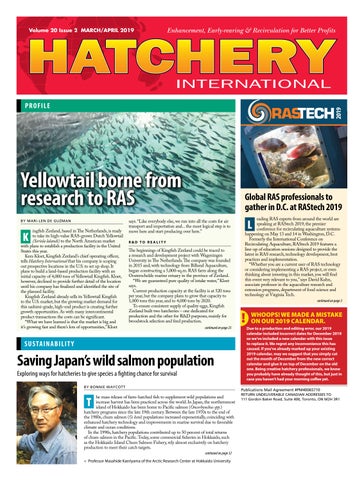
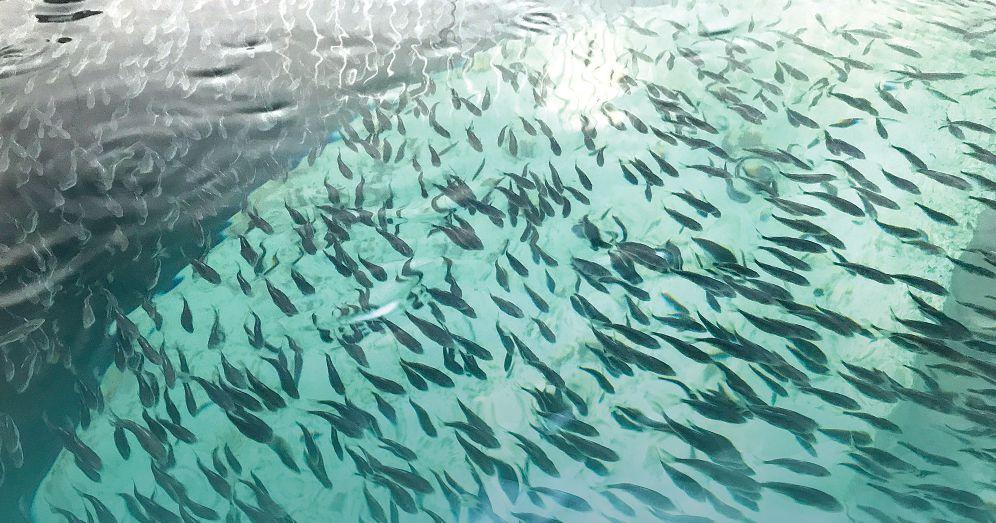
Yellowtail borne from research to RAS
BY MARI-LEN DE GUZMAN
Kingfish Zeeland, based in The Netherlands, is ready to take its high-value RAS-grown Dutch Yellowtail (Seriola lalandi) to the North American market with plans to establish a production facility in the United States this year.
Kees Kloet, Kingfish Zeeland’s chief operating officer, tells Hatchery International that his company is scoping out prospective locations in the U.S. to set up shop. It plans to build a land-based production facility with an initial capacity of 4,000 tons of Yellowtail Kingfish. Kloet, however, declined to provide further detail of the location until his company has finalized and identified the site of the planned facility.
Kingfish Zeeland already sells its Yellowtail Kingfish to the U.S. market, but the growing market demand for this sashimi-grade, high-end product is creating further growth opportunities. As with many intercontinental product transactions the costs can be significant.
“What we have learned is that the market is big and it’s growing fast and there’s lots of opportunities,” Kloet
says. “Like everybody else, we run into all the costs for air transport and importation and... the most logical step is to move here and start producing over here.”
R&D TO REALITY
The beginnings of Kingfish Zeeland could be traced to a research and development project with Wageningen University in The Netherlands. The company was founded in 2015 and, with technology from Billund Aquaculture, began constructing a 5,000-sq.m. RAS farm along the Oosterschelde marine estuary in the province of Zeeland.
“We are guaranteed pure quality of intake water,” Kloet says.
Current production capacity at the facility is at 520 tons per year, but the company plans to grow that capacity to 1,000 tons this year, and to 4,000 tons by 2020.
To ensure consistent supply of quality eggs, Kingfish Zeeland built two hatcheries – one dedicated for production and the other for R&D purposes, mainly for broodstock selection and feed production.
continued on page 25
Saving Japan’s wild salmon population
Exploring ways for hatcheries to give species a fighting chance for survival
BY BONNIE WAYCOTT
The mass release of farm-hatched fish to supplement wild populations and increase harvest has been practiced across the world. In Japan, the northernmost island of Hokkaido has been home to Pacific salmon (Oncorhynchus spp.) hatchery programs since the late 19th century. Between the late 1970s to the end of the 1980s, chum salmon (O. keta) populations increased exponentially, coinciding with enhanced hatchery technology and improvements in marine survival due to favorable climate and ocean conditions.
In the 1990s, hatchery populations contributed up to 50 percent of total returns of chum salmon in the Pacific. Today, some commercial fisheries in Hokkaido, such as the Hokkaido Island Chum Salmon Fishery, rely almost exclusively on hatchery production to meet their catch targets.
Global RAS professionals to gather in D.C. at RAStech 2019
eading RAS experts from around the world are speaking at RAStech 2019, the premier conference for recirculating aquaculture systems happening on May 13 and 14 in Washington, D.C.
LFormerly the International Conference on Recirculating Aquaculture, RAStech 2019 features a line-up of education sessions designed to provide the latest in RAS research, technology development, best practices and implementation.
“Whether you are a current user of RAS technology or considering implementing a RAS project, or even thinking about investing in this market, you will find this event very relevant to you,” says David Kuhn, associate professor in the aquaculture research and extension programs, department of food science and technology at Virginia Tech.
continued on page 3
WHOOPS! WE MADE A MISTAKE ON OUR 2019 CALENDAR. !
Due to a production and editing error, our 2019 calendar included incorrect dates for December 2019 so we've included a new calendar with this issue to replace it. We regret any inconvenience this has caused. If you’ve already marked up your existing 2019 calendar, may we suggest that you simply cut out the month of December from the new correct calendar and glue it on top of December on the old one. Being creative hatchery professionals, we know you probably have already thought of this, but just in case you haven’t had your morning coffee yet.
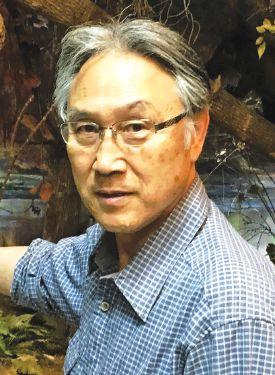
< Professor Masahide Kaeriyama of the Arctic Research Center at Hokkaido University

•





VOLUME 20, ISSUE 2 | MARCH/APRIL 2019
Editor Mari-Len De Guzman, mdeguzman@annexbusinessmedia.com
Associate Editor Tamar Atik, tatik@annexbusinessmedia.com
Regular Contributors Matt Jones, Ruby Gonzalez, Bonnie Waycott, Tom Walker, Vladislav Vorotnikov, Ron Hill, Colin Ley
Advertising Manager Jeremy Thain, jthain@annexbusinessmedia.com
Tel. +1-250-474-3982, Toll-Free (North America) 1-877-936-2266
Circulation Manager Barbara Adelt, badelt@annexbusinessmedia.com
Tel: 416-442-5600 ext. 3546
Production Svetlana Avrutin, savrutin@annexbusinessmedia.com
Group Publisher - Scott Jamieson, sjamieson@annexbusinessmedia.com
President & CEO – Mike Fredericks
PUBLISHED BY ANNEX BUSINESS MEDIA 105 Donly Drive South, Simcoe, ON N3Y 4N5
Hatchery International is published six times a year by Annex Business Media The authority for statements and claims made in Hatchery International is the responsibility of the contributors. Reference to named products or technologies does not imply endorsement by the publisher.
A subscription to Hatchery International (six issues) is $37.00 within Canada, $37.00 US within North America and $47.50 US outside North America. To subscribe visit our website at www.hatcheryinternational.com
Subscriptions Angie Potal, apotal@annexbusinessmedia.com
Tel: 416-410-5113 • Fax: 416-510-6875 or 416-442-2191
Printed in Canada. Publications Mail Agreement #PM40065710 RETURN UNDELIVERABLE CANADIAN ADDRESSES TO: Hatchery International. CIRCULATION DEPT.
111 Gordon Baker Rd., Suite 400, Toronto, ON M2H 3R1
Annex Privacy Officer Privacy@annexbusinessmedia.com
Tel: 800-668-2374
ISSN 1922-4117
Next Ad Deadline
The advertising deadline for the May/June issue is March 10th. Don’t miss the opportunity to be part of this exciting aquaculture publication. For more information, or to reserve space in the next issue, call our Advertising Department at +1.250.474.3982 jthain@annexbusinessmedia.com
Next Editorial Deadline
The editorial deadline for the May/June issue is March 10th. Contact the Editor, Mari-Len De Guzman at mdeguzman@annexbusinessmedia. com for details. Material should be submitted electronically with prior arrangement with the editor.
NEWS BRIEFS
POLICY
Canadian government makes move to improve aquaculture industry
The Canadian government announced a number of initiatives in late 2018 to improve the country’s aquaculture sector and further protect threatened wild salmon populations.
A key initiative includes a study on the alternative technologies for aquaculture, including land and sea-based closed containment technology. The study will help determine gaps that limit commercial readiness and help to inform future technology development efforts, according to a release, and will be conducted in partnership with Sustainable Development Technology Canada and the Province of British Columbia.
Another key focus is moving towards an area-based approach to aquaculture management – to ensure that environmental, social and economic factors are taken into consideration when identifying potential areas for aquaculture development – including considerations relating to migration pathways for wild salmon. The British Columbia Salmon Restoration and Innovation Fund will also be receiving more than $100 million in federal funding over six years, with provincial funding still to be announced.
Another key initiative is developing a framework for aquaculture risk management, based on the precautionary approach, which will ensure the sustainable management of aquaculture, and will be the overarching framework for future policies.
The government also plans to create a single comprehensive set of regulations – the General Aquaculture Regulations – which it says will bring more clarity for industry, stakeholders and the Canadian public about how aquaculture is managed for responsible growth in Canada.
"The Government of Canada is committed to making
aquaculture more effective, efficient and environmentally sustainable,” stated Jonathan Wilkinson, Minister of Fisheries, Oceans and the Canadian Coast Guard. “Together, with Indigenous, environmental and industry partners, we will lead the way towards a more prosperous and sustainable aquaculture industry."
The initiatives follow a meeting of the Canadian Council for Fisheries and Aquaculture Ministers in St. John's, Newfoundland, where ministers agreed to the development of a federal Aquaculture Act.
Environmental advocacy group SeaChoice has come out in support of this new initiative.
A new Aquaculture Act should properly price the ecosystem services that open-net pen aquaculture takes from the ocean, SeaChoice said in a release.
“Appropriate and escalating licensing fees can be used to spur investment in cleaner technology,” says Shannon Arnold, SeaChoice representative from the Ecology Action Centre.
RAStech is jointly hosted by Annex Business Media, publishers of Hatchery International and RAStech magazine, and Virginia Tech. Oxygen Solutions and Veolia Water Technologies are the platinum sponsors.
“We are working with different associations and organizations in the aquaculture industry to develop the education sessions and ensure that we continue to provide a high-quality education conference for our attendees,” Kuhn added.
Innovation is vital to the growth and success of recirculating aquaculture systems.
RAStech 2019 features education sessions that highlight the latest innovations and case studies in RAS engineering, aquaponics, fish health management,
biosecurity, and energy management. Plus, some great sessions on raising marine species in RAS environments, RAS feeds management and much more.
The event also features a tradeshow of the latest in RAS products and services, providing attendees a first-hand look at new technologies that can help boost their RAS projects.
With two full days of learning and networking, RAStech 2019 is one international aquaculture conference you cannot miss. Save big on hotel and registration by signing up before the early bird deadline of March 8th. Registration is limited to just 250 attendees, so don’t delay.
continued from cover
David Kuhn
NEWS UPDATES
Oregon research shows no negative impact from hatchery steelhead on wild populations
BY MATT JONES
New research out of Oregon, U.S.A, has found no negative impacts on wild steelhead (Oncorhynchus mykiss) populations from interactions with hatchery fish in the upper Clackamas River.
The American Fisheries Society published a scientific review headed by Fisheries Scientist Ian Courter of Mt. Hood
Environmental, who studied 59 years of summer hatchery and winter wild steelhead runs.
Courter’s research utilized a detailed and accurate dataset where fish were individually enumerated at the North Fork Dam. By analyzing abundance data, he was able to quantify various environmental impacts
on wild steelhead production, but did not find any significant negative impacts from interactions with hatchery steelhead.
“What we found was there was actually a slight positive association between hatchery fish abundance and natural fish abundance,” says Courter. “That’s counter to what the conventional theory might be about hatchery fish effects. It wasn’t really strong, but it was definitely on the positive side. We suspect that’s because both hatchery and natural origin fish share a common environment – it’s not really surprising that they would both be going up and down together somewhat.”
That conventional theory about negative impacts from interactions between wild and hatchery populations was the basis for the closure of the summer steelhead program in 1999. And, Courter notes, the theoretical basis for the idea that there would be negative impacts from those interactions is solid – there have been a number of studies that have demonstrated differences between the two types of fish, but it is not yet well known whether that actually results in a negative impact on wild fish production.
“It seems to us there’s somewhat of a one-sized perspective on this and a poor grasp on some of the differences between hatchery programs that have substantial impacts on whether one should assume that the hatchery fish has a negative effect or not,” says Courter. “For example, if you integrate your broodstock with natural origin fish, then the genetic risk to the domestication factor that could potentially be translated to the natural origin population goes way down. The type of program being implemented is extremely important and needs to be part of the explanation of why in one instance you may observe a negative impact from hatchery fish and in another you don’t. It’s not a one-size fits all conclusion.”
As for how these findings should be handled or whether the stocking program should be re-instated, Courter declines to comment on that aspect. As a scientist, his aim is to ensure the best information is available – nothing more.
“I don’t have an agenda to see hatchery programs restarted in the Clackamas
or anything like that. My aim is just to continue this line of research and identify more opportunities to evaluate the impacts of hatchery fish. Policy makers at the state agencies and policy makers will decide what the most appropriate next step is.”
Courter cautions against using their findings to form broad assumptions about hatchery and wild interactions in general. However, he does hope that their findings in the Clackamas will inspire further research into other water bodies in other jurisdictions.
“As I dove into this topic, I was struck by the lack of direct evidence for negative effects at the population scale. If you begin to understand that and not get drawn into the policy debate, but focus on what is the real material evidence for a direct negative impact from hatchery fish, that would be important because it will drive how the folks that are engaged in hatchery fish production perceive the available science. It’s important because it’s going to drive research going forward which is going to drive management decisions. That will dictate how important hatcheries are in the future.”
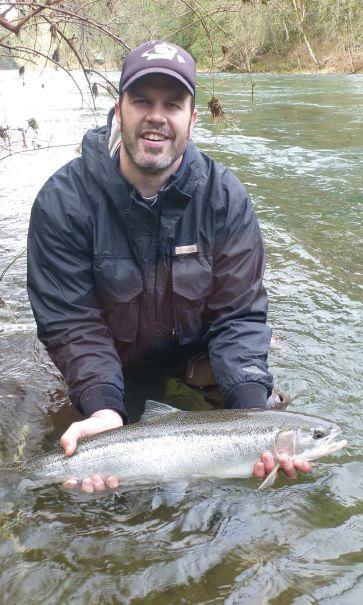
Fisheries scientist Ian Courter holds a winter steelhead in Oregon’s Sandy River. The researcher found no evidence of negative impacts on wild productions from interaction with hatchery steelhead. In fact, the research found a small positive association.
NEWS UPDATES
Nordic Aquafarms company Sashimi Royal becomes ASC-certified
A sister company to Nordic Aquafarms Inc., which is planning to build a world-class, land-based salmon farm in Belfast, Maine, in the U.S. has received certification from Aquaculture Stewardship Council (ASC) as a sustainable and quality seafood producer.
Sashimi Royal of Hanstholm, Denmark is the largest, land-based facility in the EU that produces Yellowtail Kingfish, a delicate and much sought-after seafood product.




Aquaculture Awards judging panel announced
As the announcement of the winners of the 2019 Aquaculture Awards draws near, award organizers have revealed the composition of the judging panel.
The award judges include: Alex Adrian, aquaculture operations manager of Crown Estate Scotland; Martin Gill, head of aquaculture and fisheries at Lloyds Register; Rob Fletcher, senior editor of The Fish Site; Nicki Holmyard, head of corporate communications for Offshore Shellfish Ltd; Professor Dave Little, head of research at the Institute of Aquaculture at the University of Stirling; and event organiser Susan Tinch.
“ASC certification is the gold standard for fish farming and represents a major commitment to best practices and sustainability,” said Erik Heim, president of Nordic Aquafarms Inc., the U.S. subsidiary of Nordic Aquafarms. “We also will seek ASC certification for our U.S. operations, which means we will adhere to the highest standards in the industry and be subject to audits from independent, third-party quality assurance organizations."
Sashimi Royal received its ASC certification on Dec. 13, 2018, after an extensive audit process that verified sustainable practices to minimize impact on the environment, stringent limits on the use of antibiotics and chemicals, measures to prevent fish escape, sustainable feed sourcing, and more. Sashimi Royal’s certification was overseen by DNV GL, a global quality assurance and risk management company.
The Aquaculture Stewardship Council is an independent, international, non-profit organization that promotes the best environmental and social choices when buying seafood and manages the world’s leading certification and labelling program for responsible aquaculture. According to its website, ASC’s mission is “to transform aquaculture towards environmental sustainability and social responsibility using efficient market mechanisms that create value across the chain.”
“As we proceed with the development of our land-based facility in Maine, the community and all of our stakeholders can be assured that this important certification achieved by Sashimi Royal is just the first step in a commitment to environmental sustainability and accountability that exists throughout our company,” Heim said.
The awards will be presented on May 29 at a formal event in Edinburgh, Scotland. They “showcase the great innovators and most exciting developments taking place in the world’s fastest growing protein production sector,” Aquaculture UK stated in a release.
The awards are open to anyone involved in aquaculture and feature categories on applied research, animal welfare, international impact and more. The judges have been selected for their “breadth of knowledge of the international aquaculture sector and includes well-known figures from industry and academia,” the release stated.
When examining the individual entries, the judges will consider the criteria identified for each category. Following consideration of all entries, the judging panel will identify shortlists for each category, from which the winners will be selected, Aquaculture UK stated.
Award nominations are open to both commercial and research sectors from around the world.
The shortlist of candidates will be announced in early April. This will be followed by the awards presentation dinner to be held at Dynamic Earth, Edinburgh, on May 29.




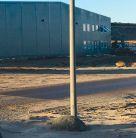
Sashimi Royal facility in Denmark (Photo: Nordic Aquafarms)
NEWS UPDATES
Nostril navigation
Researchers from Oregon, U.S.A., help Chinook salmon find way home
BY MATT JONES
In an effort to find ways to prevent hatchery fish from straying, Oregon State University researcher Maryam Kamran has been working with the Oregon Hatchery Research Center to study salmon responses to various scent stimuli. In recent years, Chinook salmon (Oncorhynchus tshawytscha) in the area are not homing as well as they once were, Kamran says.

“With salmon homing, they go out to the ocean and they come back after a few years and they come back to their natal tributary – where they were born and that’s where they mate,” says Kamran. “They only get one chance to do this and so they have to get it right. Research has shown that more and more fish weren’t coming back to the areas that they were supposed to.”
When returning home, the scent of the natal tributary is very important in the homing process.
Technically known as olfactory imprinting, familiar scents can act as a landmark to help guide the salmon, which Kamran compares to billboards or road signs. Her research project focused specifically on the Elk River Hatchery, which has had significant problems with straying in the past.
a template for similar efforts in other jurisdictions.
Kamran and her collaborators have been testing artificial odors which could be used at the hatchery to give a distinct odor which the fish will recognize – one which would be safe for release into the water, cost effective, able to persist in the environment, and can be detected by a salmon’s nose. An important distinction, she notes, is that the odor must not be an attractive or aversive odor. The goal is to find an odor which does not induce a behavioral response – which could impact other species – but rather one that can simply be detected. They are also testing to find the best timing for the use of effective imprinting.
“Primarily, the most robust response we saw were with a combination of amino acids,” says Kamran.
The information gathering and testing phases of the research are nearly complete. Their research is specific to the conditions in the Elk River, however, Kamran hopes their model could be used as a template for similar research projects in other areas.
“It will be specific to what’s already in the water there in terms of the chemical cues available, the species, the run timings – all these different things will have to be factored in.”
Renovations aim to update Sterling Springs Fish Hatchery’s aging infrastructure BY
GEOFFREY RABINOVICH
The Sterling Springs Fish Hatchery (SSH) in Sedona, Arizona, U.S.A., is currently undergoing a US$3.3. million dollar rehabilitation to modernize its facilities. Construction commenced in early December 2018 and expected to be completed by June 2019.
SSH is the smallest facility owned and operated by the Arizona Game and Fish Department hatchery program. This hatchery has a very important role in the hatchery program. Each year SSH produces and supplies hundreds of thousands of trout fingerlings to Page Springs Hatchery – the largest trout hatchery in Arizona – to be raised to catchable size prior to being stocked.
This renovation project was identified in the State of Arizona Fish Hatchery Report. The hatchery management is grateful that the commissioners, the Governor’s office
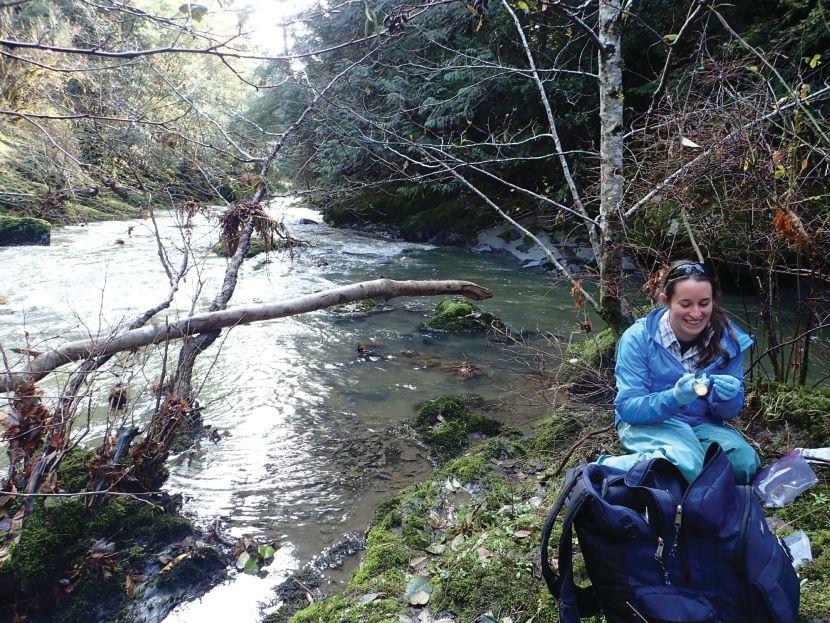
Oregon State University researcher Maryam Kamran is leading a research effort to find scents that could be used to help salmon find their way back home to their native tributaries. She hopes the research will provide
< Field station for collected water samples from Elk and Sixes river help determine what was in the water (dissolved organic carbon, dissolved organic matter- amino acids etc.)
Amanda Pollock, faculty research assistant, collects Amino Acid samples.
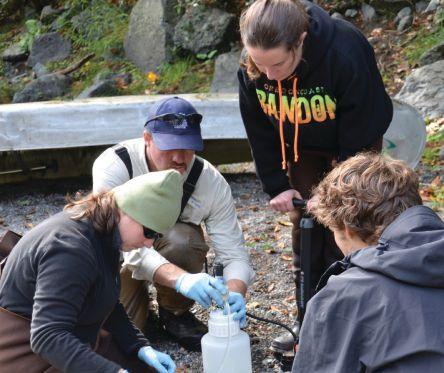
< Michelle Scalan (far left), faculty research assistant at Oregon State University and Dr. Marc Johnson (back, left) filtering water samples using a bicycle pump, while Amanda Pollock (standing), faculty research assistant at OSU, and Dr. Singer (right) look on.
and the Arizona Game and Fish Department executive staff recognize the importance of the fish hatcheries for the state of Arizona.
It is all about ensuring that successful hatchery operations at Sterling Springs continue for years to come. Hatcheries play a vital role in maintaining the quality of sport fishing in Arizona. Planning for the future is necessary to maintain and increase current production in order to meet current and future demands of sport fish in the state. According to the Economic Impact of Fishing in Arizona, annual recreational sport fishing produces US$1.47 billion in economic benefits for the state of Arizona.
RENOVATIONS
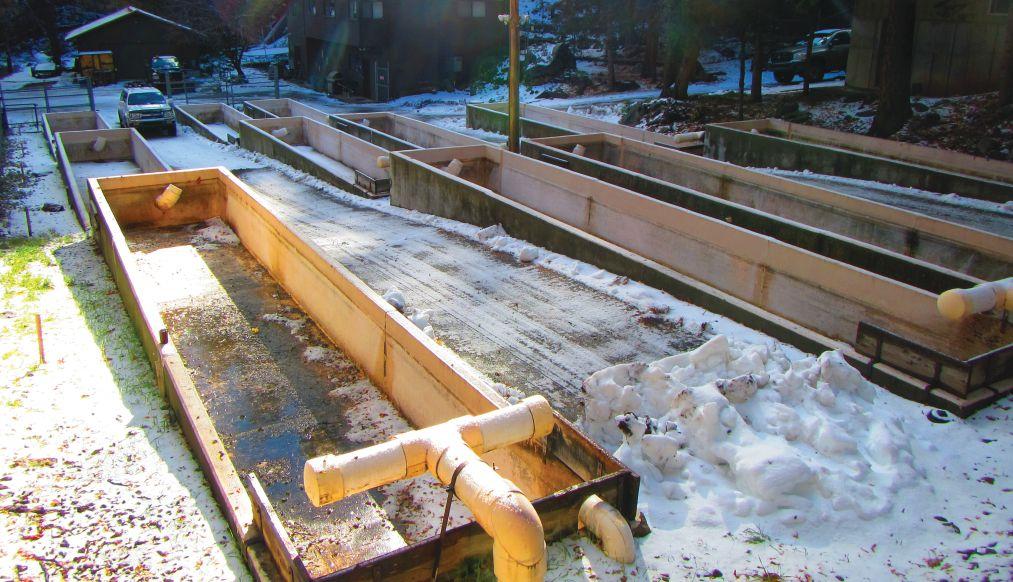
Sterling Springs Hatchery is having some problems. The current infrastructure is aging. Some of the piping is over 70 years old. Most of the infrastructure have been in use since 1971, and some of the piping, valves and concrete raceways are in dire need of replacement.
The pipe delivery is full of holes from corrosion. The raceways are falling apart. With decreasing water supplies, it is going to become necessary to be able to operate the hatchery with less water.
We are hoping that with a more secured water source and cleared inflow pipes coming from the springs, we may possibly have an increase in water flow which would help with production. The current pipes are a steel welded eightinch and six-inch boiler pipe that is approximately more than 70 years old. It is rusted out in spots and definitely leaking, allowing foreign materials into the incoming water flows.
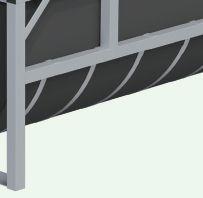
The nearly US$3.3 million project will involve the reha bilitation of the water inflow pipes leading to the hatchery, as well as various spring/control boxes along the pipelines. In addition, the outside concrete raceways and water pipe lines will be replaced. The project includes a cover canopy and fence around raceways, a new storage building and a partial recirculation system among other improvements.
This pipe will be lined with a cured-in-place pipe liner to keep from disturbing the wilderness setting in which the pipes are laid.
Because of low water flow of approximately 240 gallons/ minute, we will not be able to use circular tanks. We also evaluated the use of dual drain circular tanks, but with the limitation of water and the small area of the facility, it was not feasible to use circular tanks without incurring an as tronomical cost in recirculation equipment and operations.
The hatchery will continue to use 11 rectangular concrete raceways, which will hold 6,358 cubic feet each.
FUTURE PLANS
Once the project is completed, SSH hopes to be able to continue with a stable, healthy production that the hatchery has already been noted for, which is approximately 700,000 to 900,000 fingerlings per year. On average 850,000 rainbow trout and approximately 70,000 browns are raised at SSH per year.
Rainbow trout eggs will continue to be sourced from the Ennis National Fish Hatchery in Montana and Troutlodge in Washinton state.
The hatchery hopes to raise Gila trout and Apache trout in the future as well, which they plan to source from
the Mora National Fish Hatchery in New Mexico and Williams Creek National Fish Hatchery in White River, Arizona, respectively.
The sport fisherman in the local area will likely notice the impact of the rehabilitation project. The SSH has made arrangements with its other facilities to temporarily cover Sterling Springs Hatchery production.
Geoffrey Rabinovich is the statewide hatchery program manager for the Arizona Game and Fish Department, in Arizona, U.S.A.
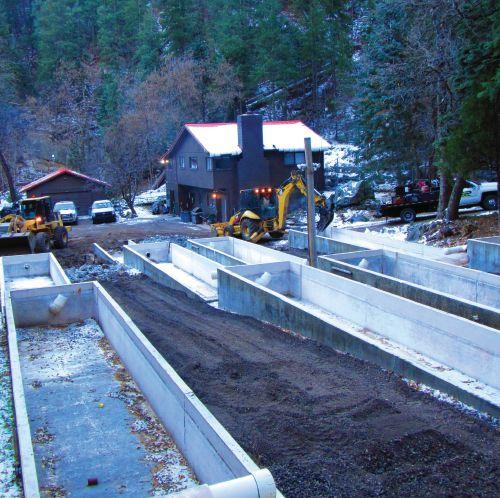
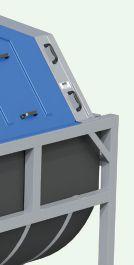
Planning for the future, the SSH renovation will include the installation of a partial recirculation system that will help the facility during the heavy production months. The recirculation system will consist of a sump at the bottom of the facility near the outflow, where the hatchery effluent water will run through a drum filter and UV light. The water will then be pumped back to the top of the facility to an aeration tower to later to be diverted to the raceways that need the extra flow for cleaning or production.
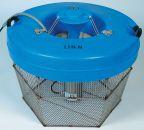
LINN.eu
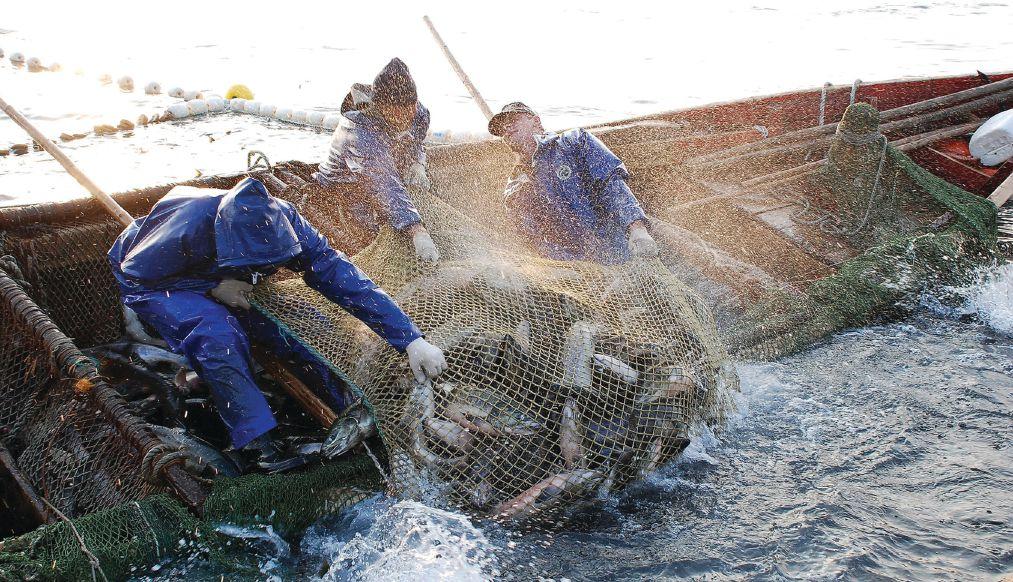
New hatchery under construction in Sakhalin, Russia
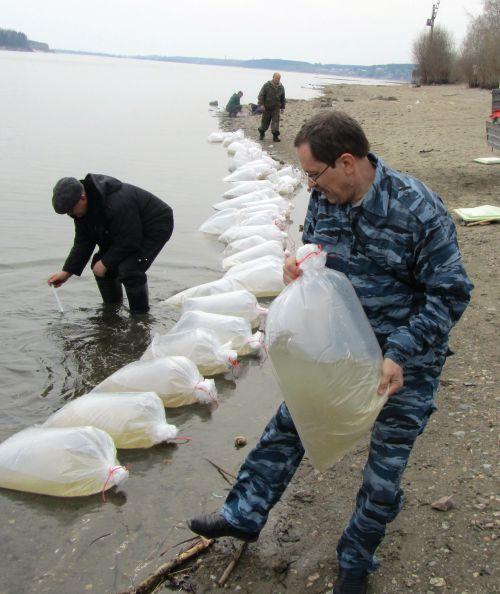
Russian company Salmo Plus has started building a new hatchery to produce Siberian salmon (Oncorhynchus keta) fry, the company said in a statement. With the overall investment cost of Rub380 million (US$6 million), the hatchery will be producing 73 million fry per year beginning in 2020.
The fish will be released in the local waters to be caught several years after, said Stanislav Fyodorov, general director of Salmo Plus.
Under the common approach investors establish a complete reproduction cycle at a hatchery of that kind, which means that all production stages from egg incubation up to release of the fry to the water are taking place within one production unit, according to Fyodorov. Salmo Plus will transfer fry almost immediately after hatching to “the breeding ground” – the artificial reservoirs near the spawning rivers. This approach reduces the investments necessary to
build a hatchery and also takes down the production costs, Fyodorov estimated.
“We expect to release the fish Siberian salmon into the local waters in 2020. The full-grown fish will return only in 2023. This means that the company will have to operate with almost zero revenue for several years. The residency in the Vladivostok free port, with tax and other preferences associated with it, will help the company to endure in this most complicated period of its development,” Fyodorov said.
Sakhalin hatcheries release fish fry to catch full-grown fish several years later.
Sakhalin has seen the volume of salmon production reducing in the past few years.
The residency in the Vladivostok free port is an operational regime that the local government in the Russian Far East grant to some investors whose projects are considered to be important for the local economy. This regime involves numerous tax breaks and several other bonuses.
With 73 million units of fry released to the local rivers, it was estimated that 3,000 tonnes of full-grown fish could return. Giving the current prices for Siberian salmon on the local market, Salmo Plus believes the payback period on the project will be limited to eight years.
Alexey Belik, deputy chairman of the Sakhalin Island government, commented
that the Siberian salmon produced by Salmo Plus in future could be found all over Russia. Belik continued that the fishing industry is very important for Sakhalin, and its further development requires new projects in the reproduction area.
In 2017, the fisheries of the Sakhalin caught 27,000 tonnes of humpback salmon (Oncorhunchus gorbusha). This was one of the lowest figures in the past few decades. The local scientists repeatedly claim that population of salmon species in the local waters have been constantly falling due to continuous poaching and several other factors.
- Vladislav Vorotnikov
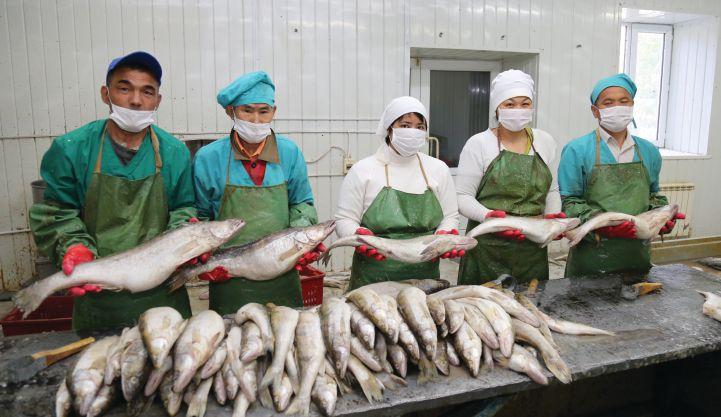
Uzbekistan allows duty-free broodstock imports
New measures aim to develop local aquaculture industry
Aquaculture producers in Uzbekistan are getting some relief with the announcement by President Shavkat Mirziyoyev of tax-free broodstock import over the next two years. This measure is part of a large-scale development program for the domestic aquaculture industry and to support the fish farming sector until it is completely self-sufficient on broodstock.
Mirziyoyev has also temporarily cancelled import duties on equipment and feed for the aquaculture industry. Uzbekistan currently does not produce any equipment for the aquaculture industry. This measure would support the construction of new hatcheries in the country, the explanatory note to the bill said.
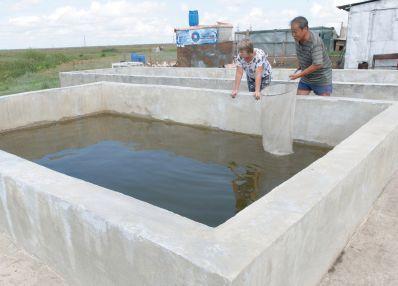
In 2018, seven hatcheries were built in Uzbekistan with total production capacity of 350 million units of fish fry. In 2019, 10 new hatcheries are slated to be built with total production capacity of 530 million units, the government forecasted. It is expected that Uzbekistan would become self-sufficient on broodstock by 2023.
The new hatcheries could be an impetus for the development of aquaculture in Uzbekistan. In 2018, the country produced 150,000 tonnes of fish. This year, the figure is projected to grow to 201,500 tonnes. The Uzbekistan government plans to allocate US$50 million for new aquaculture projects in the next two years, plus grant additional US$15 million per year to support the operation of existing farms.
In addition, all fish farms with actual production above 50 tonnes per year would be exempted from all taxes and fees for three years. The ultimate goal is to establish a complete aquaculture industry in the country, with hatcheries, fish farms and fish processing capabilities, the national government said in a statement.
In 2018, the Uzbekistan government said five new hatcheries are slated to be built in the next three years through joint ventures between Uzbekistan companies and foreign investors, including from the European Union.
- Vladislav Vorotnikov
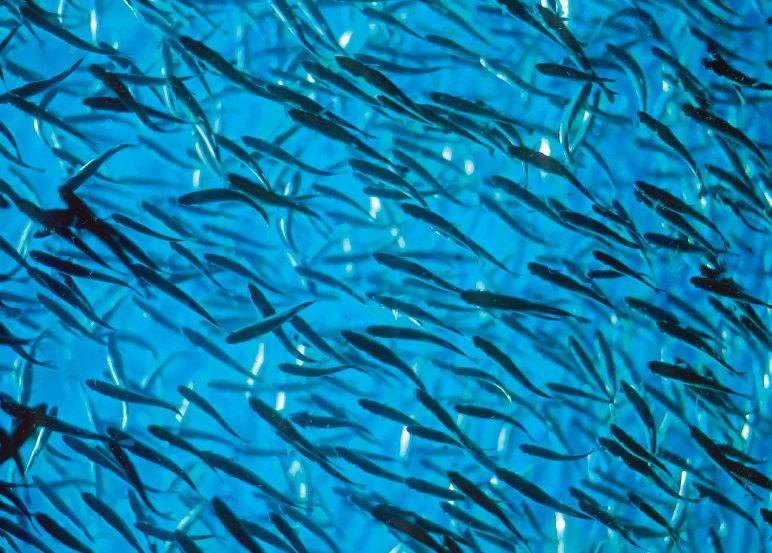
All-New HydroHatch Incubation System
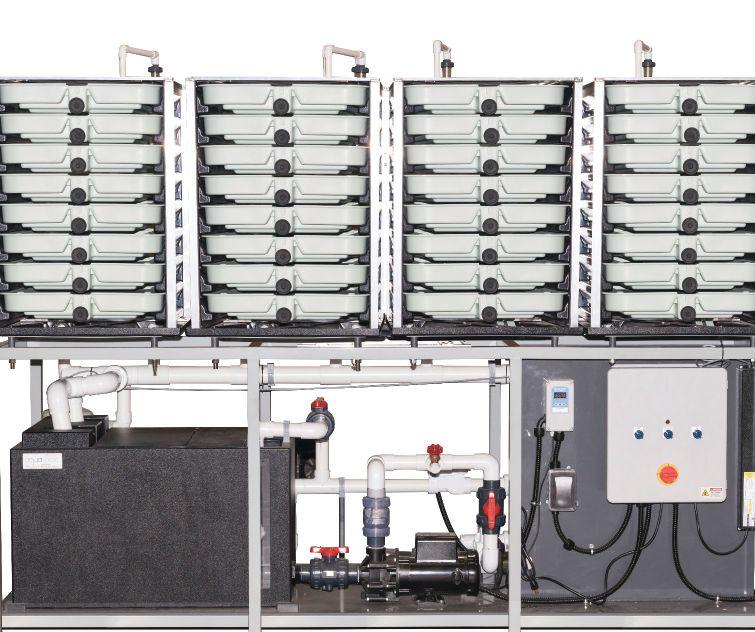
Increased Survival Rate with Significantly Reduced Water Consumption
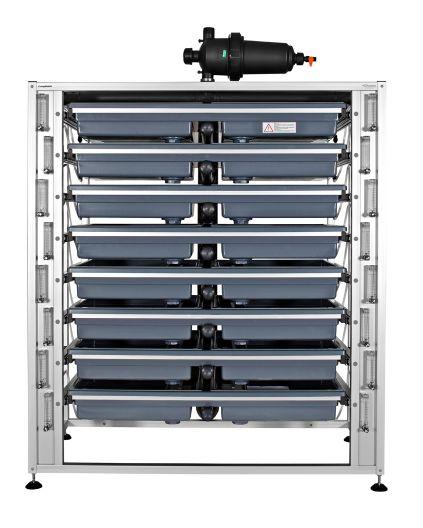
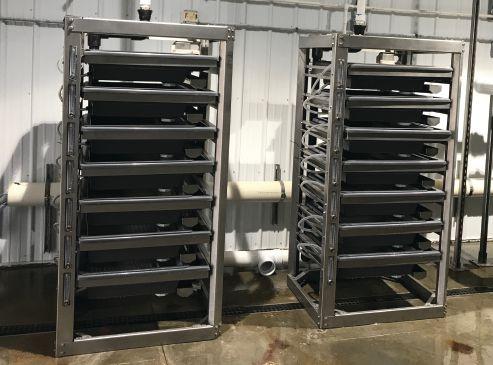
The all-new HydroHatch Incubation System from MariSource gives hatcheries increased efficiency. With recirculation, germicidal UV filter and a titanium heat exchanger, the HydroHatch delivers increased survival rate and significantly reduces water consumption.
Features and Benefits:
65 gallon sediment and recirculation tank
Requires only 150 gallons to completely fill the unit and reservoir
High-quality, long-life quartz germicidal UV filter
Complete isolation of eggs
Easily able to increase the dissolved oxygen content of the water
230 volt 30 amp control panel
Insulated titanium heat exchanger
Precise temperature control
Comes standard with four 8-stack incubators
Additional four 8-stack incubator option available
The new HydroHatch Incubation System is ideal for Salmon, Trout, Steelhead, Perch, Channel Cat Fish, Walleye, Eels, Shrimp and Muscles.
Uzbekizstan plans to expand the domestic aquaculture industry in the coming years.
Uzbekistan fish farmers get some financial relief
NEWS GLOBAL
Aquaculture boom increasing demand for broodstock in Crimeria
BY VLADISLAV
The demand for broodstock is on the rise in Crimea in light of efforts by Russian authorities to develop the local aquaculture industry and to mitigate the negative impact on the environment resulting from the construction of the Crimean Bridge.
The aquaculture industry in Crimea is experiencing a real investment boom, with production volume increasing from 800 tonnes in 2016 to 1,799 tonnes in 2017. There are dozens of new aquaculture projects on the pipeline, according to a statement published in the Russian Gazette, the official publication of the Russian government.
In 2017, local authorities granted Rub30 million (US$500,000) to reimburse part of the investment costs on new projects, as well as to subsidize the cost of acquiring broodstock for the local aquaculture producers.
The development of fisheries and aquaculture are among the top priorities in the economic growth policy for Sevastopol, the capital of Crimea, said Natalia Goncharuyk, chairman of the agricultural department of the Sevastopol government. Currently, local farms are importing most of the broodstock from the Russian southern regions – Krasnodar Krai and Stavropol Krai.
AQUACULTURE CHALLENGES
In total, there are 30 aquaculture farms in Crimea, and 60 percent of all production is European carp (Cyprinus carpio), silver carp (Hypophthalmichthys) and Chinese carp (Ctenopharyngodon idella). The lack of fresh water is the biggest challenge for the local aquaculture industry.
After the Russian annexation of Crimea during the 2014 Crimean crisis, Ukrainian authorities cut the volume of water flowing into Crimea through the North Crimean canal, citing a huge outstanding debt on water supplies owed by the peninsula. The North Crimean canal was the main source of fresh water supply for Crimea and the region has been experiencing shortage of fresh water in the past few years.
Despite the problem, some foreign investors are considering some fish farming projects in Crimea. A big project,
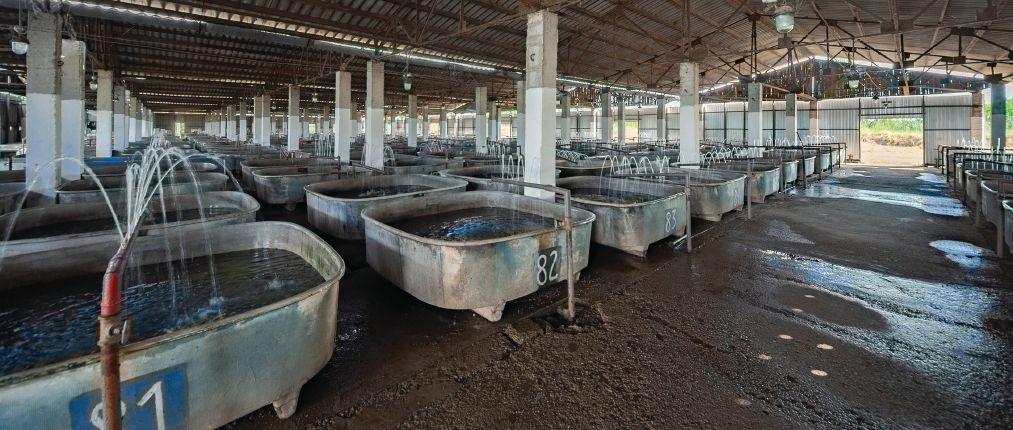
Better aquaculture management rewards Malaysia’s fish farmers
New study identifies most important factors influencing livelihood of small-scale fish farmers in Malaysia
Ain particular is currently under consideration by a Chinese company, according to Sergey Aksenov, the head of the Crimean government. So far, no additional information about this company or the project has been provided.
Over the past four years, non-Russian companies were refraining from investing in Crimea because the peninsula has been subjected to international sanctions by the U.S. and the European Union, which includes prohibitions to conduct any business on the territory.
CRIMEAN BRIDGE ISSUE
The additional demand for broodstock in Crimea is also associated with the implementation of the Crimean Bridge’s ecological program. Under the program, 500,000
recent study finds that brackish-water fish farmers in Malaysia earn more than freshwater fish farmers.
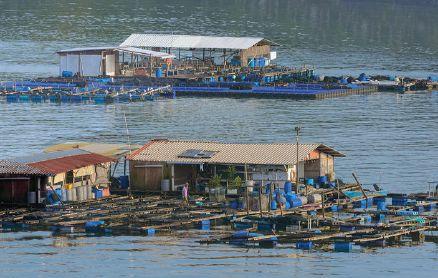
Small-scale fish farmers in Malaysia earn 2.5 times more farming in brackishwater, compared to freshwater, according to a study in the Pertanika Journal of Social Sciences & Humanities
Aquaculture is a common source of income in Malaysia and Roslina Kamaruddin, a researcher from Universiti Utara Malaysia, wanted to understand why some fish farmers are more successful than others.
Kamaruddin queried 216 small-scale freshwater and brackish-water pond fish farmers from the state of Kedah about their assets, such as education and investment capital, fishing strategies, and household income.
Overall, higher education level and experience, as well as higher investment and operating costs positively correlated with higher levels of best management practices and household income.
Russian sturgeon (Acipenser gueldenstaedti) fingerlings were released into the local waters in 2018, and 500,000 more are slated to be released in 2019. There is a possibility that this program could be expanded in the future.
Ukraine environmentalists have been repeatedly claiming that the recently constructed Crimean Bridge, which is spanning the peninsula with mainland Russia, negatively affects the population of some fish species in the Kerch Strait and Azov Sea – although no research in this regard has been made so far. Russian authorities argue that the sound barrier installed across the bridge protects fish from sound impact.
The Crimean Bridge ecological program is needed to restore the population of the Russian sturgeon that was affected by poaching, authorities said.
The highest incomes were among brackish-water fish farmers – in part because brackish-water species generate higher profits, but also because brackish-water farmers are more likely to use best management practices than freshwater farmers, the study said. Brackish-water species require intensive care, so farmers use best management practices, such as pond preparation and fish health management, to help ensure high survival rate and best quality produce.
“Good management is crucial for sustainable aquaculture and this study showed that fish farmers need more training and financial support to implement best practices,” Kamaruddin said. While brackish-water species generate more profit, they also require high investment, operating costs and technical knowledge. More brackish-water farmers are financed by banks and agencies, whereas freshwater farmers are more likely to use personal financial resources. Freshwater fish farmers often supplement their income with other sources, such as agriculture.
Not all aspects are better for brackish-water farmers, however. The study shows they experience higher levels of stress, worry and anxiety when their underwater farms were adversely affected. In addition, brackish-water farms had a higher impact on the environment as they used more fertilisers and antibiotics.
Measures to boost education, training and financial investment should be prioritized to improve fish farmers’ livelihood, the study noted. For example, credit institutions could provide credits or loans which cater to small-scale farmers. Training for best aquaculture practices should also be readily available.
Other policies could include differentiating between aquaculture products from farms with good management versus poor management, or penalizing farmers who do not follow best practice standards.
Several hatcheries work in Crimea to produce fish fry for local needs.
Russian authorities give money to hatcheries to produce fish fry to be released in Crimea.
Ecological campaign in Crimea may be expanded soon.
VOROTNIKOV
Philippines BFAR eyes country's first yellowfin tuna farming project
BY RUBY GONZALEZ
The Philippine Bureau of Fisheries and Aquatic Resources (BFAR) is pushing for the country’s first yellowfin tuna (Thunnus albacares) farming. It will be a private-public partnership, with the BFAR and Japan International Cooperative Agency (JICA) as catalysts.
Juvenile yellowfin tuna will be gathered from the municipal waters, located within 15 kilometers from the shoreline, and then fattened in 30- to 50-meter-diameter submersible sea cages in open waters, BFAR Regional Director Juan Albaladejo told Hatchery International.
Sites have been identified in Eastern and Northern Samar provinces, located some 840 kilometers southeast of Manila. The waters face the Pacific Ocean and are along the path of tuna, where they chase and feed on pelagic fish.
There are several ways to gather juvenile tuna. Citing a method practised in Australia, Albaladejo said, “They usually collect them using seine net, enclose them and drag the net to their marine cages. The dragging usually takes around 24 to 48 hours.
“But for our purpose, where the yellowfin tuna is within the municipal waters, we plan to use a fish-aggregating device (FAD), called payao, and use a ring net to
enclose the fish and drag the net to our marine cages in the vicinity.”
Payao is a Philippine traditional FAD – a floating and anchored bamboo raft. Because it provides shelter, it attracts freeschooling tuna and small pelagics.
“For transferring to a marine cage, just like in Australia, both the transport net and cage have openings that you could tie together,” he said. The fish would then be herded from the transport net to the cage.
He stressed that he needed to establish the feasibility of these ideas during his scheduled talks with experts in Japan.
Shortly after his interview with HI, Albaladejo went to Japan to meet Nitto Seimo executives in Kyushu to finalize project details.
Nitto Seimo has been identified as the provider of technology and submersible cages. Philippine company Feedmix Specialist has also indicated interest. Another Philippine company, Inca Plastics Philippines might also come in.
Nitto Seimo has a substantial global market share in knotless nets and demonstrated its success in tuna farming.
Albaladejo said the most critical part of the tuna farming process is transporting the juvenile, explaining that it could turn
fatal if they get into contact with the net.
In this project’s case, it is an advantage, then, that the length of time required to transport the juvenile is relatively short.
Citing the Japanese method, he said juvenile yellowfin tuna is gathered at 20 kilos and then fattened up for five to six months. “The good thing here is that since they are in cages with regular feeding, they will develop fat that is marbled with meat, just like Kobe beef,” he said.
The daily fish feed would be 10 percent of the body weight.
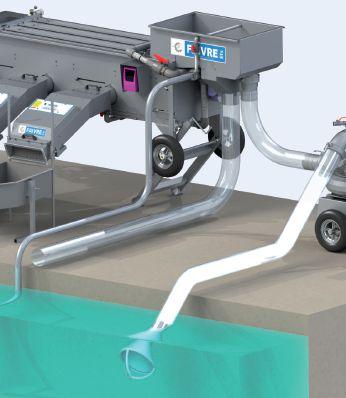
Since 1958, Faivre has been developing and manufacturing high quality equipments for the aquaculture industry
In Samar, a kilo of yellowfin tuna sells at P250 a kilo. He said the cultured variety could command double the price. Circular fish cages are ideal for tuna because its gives them a perception of endless space. The grow-out cages would be positioned five kilometers, at the most, from the shoreline. The location is along the Philippine Trench. Since they face the opens seas, the provinces often get battered by strong waves, winds and typhoons. Submersible fish cages could make the fish farming operations typhoon-resistant, he said.














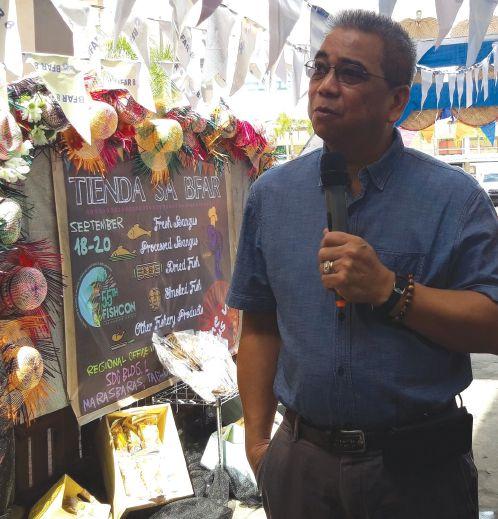
BFAR Regional Director Juan Albaladejo. (Photos: BFAR Region 8)
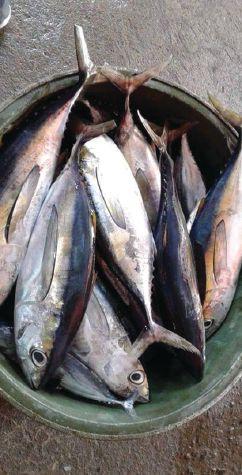
Juvenile tuna bound for the market. The plan is to catch them live for farming.
Multispecies hatchery opens in India
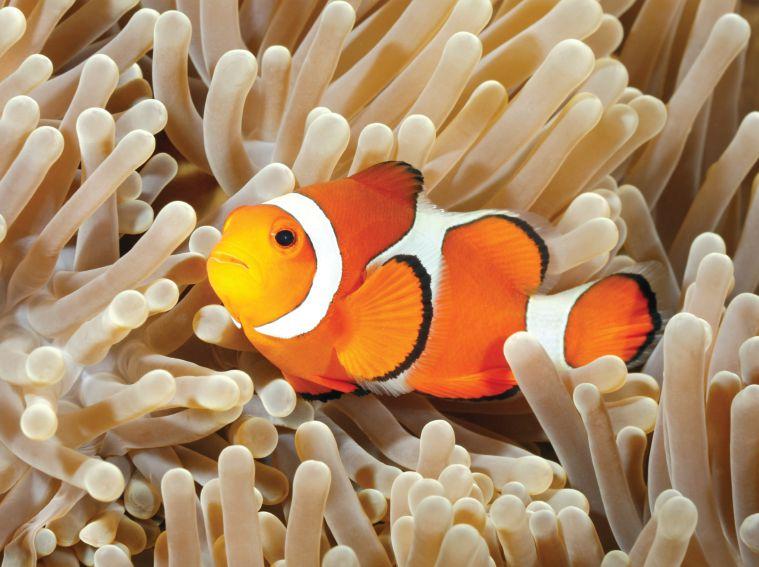
India has launched two hatcheries in the latter half of 2018, which will serve to help support the industry in a variety of fashions.
In December, the Marine Products Export Development Authority opened a multispecies hatchery in the state of Kerala, which will also serve neighboring states Karnataka and Tamil Nadu.
At capacity, the hatchery will produce 20 million post-larval black tiger shrimp (Penaeus monodon), as well as over a million fin fish fingerlings and significant numbers of mud crablets (Scylla serrata). The facility’s fin fish offerings will include cobia (Rachycentron canadum), Asian sea bass (Lates calcarifer), silver pompano (Trachinotus blochii) and tilapia (Oreochromis niloticus).
India’s The Hindu newspaper reports that the facility will feature significant bio-security measures, including a quarantine facility, an effluent treatment system and the use of a high-density polythene lining on nurseries meant for diversified fish and shellfish species. The article also notes that the facility’s proximity to an international airport will add the benefit of faster transportation of seeds.
Around the same time, the State Mangrove Cell in Mumbai launched a hatchery for grooming clownfish (Amphiprioninae Pomacentridae) at a coastal and marine biodiversity center in Airoli. The hatchery houses 57 tanks, with almost half of those holding broodstock pairs. The remaining tanks are used for acclimatization of sea anemones.
“Since the Mumbai creek water requires repeated filtration as compared to the sea water of Alibaugh, therefore the decision was taken,” chief conservator of forests N. Vasudevan told the Free Press Journal about why the facility sources water from various locations on the Mandva coast. “Scientists of the National Bureau of Fish Genetic Resources has suggested to use the water of Mandva as it has a better water quality suitable for the hatchery. The recommendation was made based on the research and sample testing done by their scientists.”
When the clownfish pairs produce babies, they will be distributed to beneficiaries representing nearly 50 villages on the Konkan coastal belt. The aim of the hatchery is to provide a foray into the ornamental fish industry.
-Matt Jones
Peruvian community to benefit from $2M funding boost for local trout farming
Singapore and Japan-based aquaculture technology company Umitron has been approved for a US$2 million project funding to improve aquaculture productivity in Lake Titicaca, Peru.
The project, in partnership with rainbow trout producer Piscis and Peruvian credit union Abaco, is being funded by IDB Lab, the innovation laboratory of the InterAmerican Development Bank (IDB) Group. The goal is to improve the local trout farming industry’s economic and environmental sustainability.
“Right now, a lot of trout is being sold locally in Peru or Bolivia,” Andy Davison, product manager of Umitron in Tokyo, tells Hatchery International. “Piscis, our partner in this project, is exporting to many different foreign markets and this side of the business has the potential to grow and bring more money into the local economy around Lake Titicaca.”
The local Peruvian industry is growing, with 100,000 tons of production in 2016 projected to grow to 221,000 tons by 2030. This follows the trend of a growing aquaculture industry in Latin America and the Caribbean, where The Food and Agriculture Organization of the United Nations (FAO) estimates that fish production through aquaculture will grow from 2.7 million tons in 2016 to 4.0 million tons in 2030.
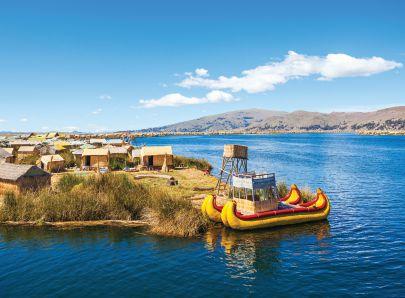
IDB first approached Umitron to gauge its interest in collaborating on a project in Latin America and connected the company with Piscis. After a couple of trips to Japan and Peru, the collaboration took form. Umitron’s feeding technology using artificial intelligence (AI) reduces the need for farmers to visit each individual cage every day for feeding and observation. Instead, fish can be remotely monitored and fed. The automated feeder also has the capability to reduce overfeeding and improve overall feed use efficiency.
In addition to making grow-out cage feeding more efficient, Umitron is also looking at how its system can be adapted to feed fish during all life stages, including in the hatchery, Davison explains.
“In general, we are interested in using data analytics, machine learning, and IoT technology to solve bottlenecks and problems for all parts of the aquaculture industry,” he said adding, “If hatchery operators have suggestions for how connected devices, data gathering, or data analytics can help their operations, we would love to hear from them.”
Through a variety of technology tests and training with local producers, the end goal for the project is to implement real-time data-driven aquaculture feeding technology for farmers in both Peru and eventually all of Latin America.
This project is the first step in Umitron’s long term plans to support and develop technology for Latin American aquaculture producers. Through impact investment, Umitron is looking for similar public private partnerships where they can assist aquaculture producers to increase their ability to deliver high-quality, sustainably grown products in both Latin America and abroad, the company said.
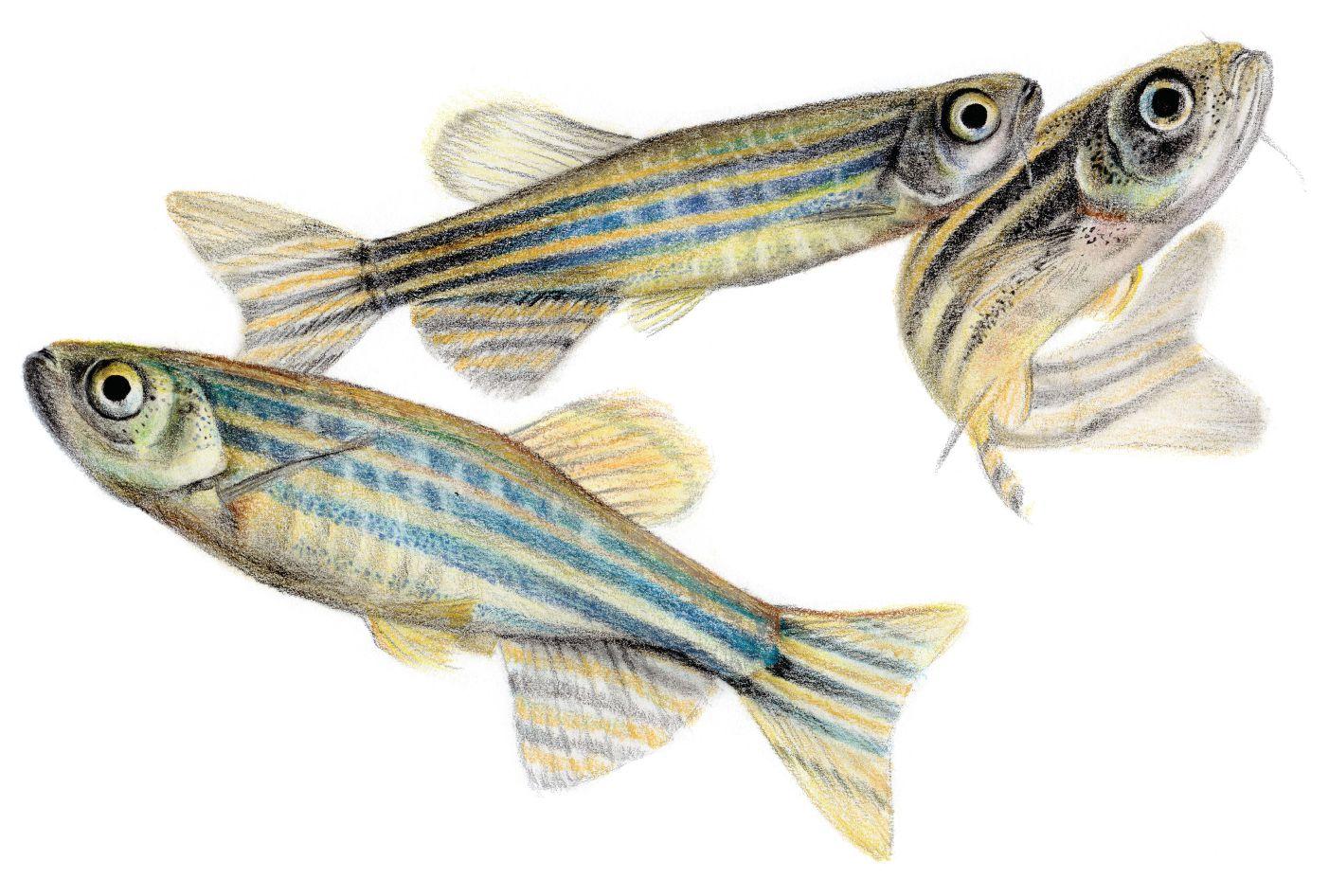
The complete nutrition for all lifestages of zebrafish
GEMMA Micro is a unique, patented diet that offers complete nutrition for every lifestage of zebrafish. Integration of GEMMA Micro to the zebrafish feeding regime requires no Artemia and can reduce feed frequency to only one feeding event per day for adult fish. Smaller pellet sizes allow for earlier transition to microdiet from live feed.
www.skretting.us

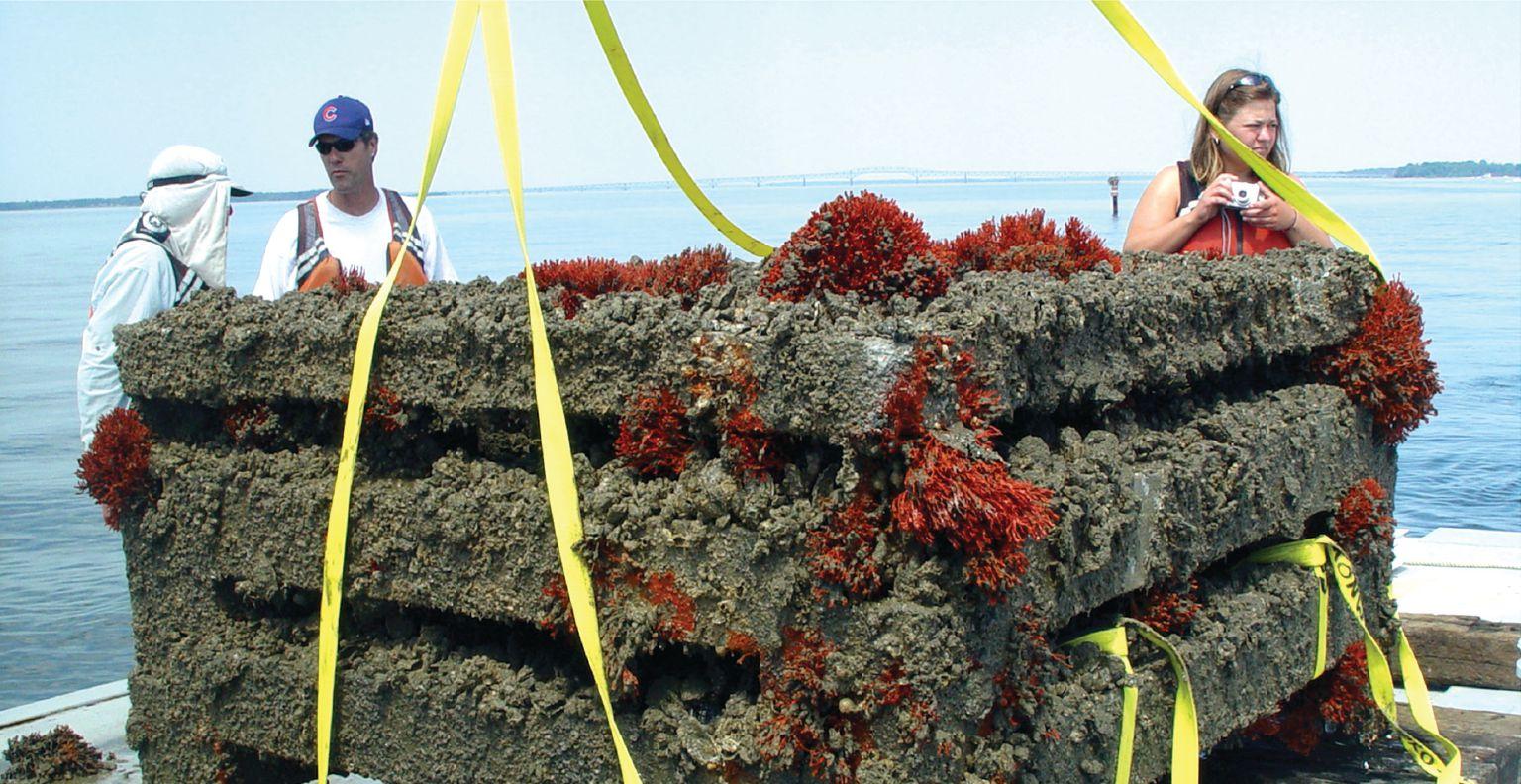
Top three modules of the modular reef that were sampled and immediately returned to the same location. From
Location, modular reef design show promising results for shellfish restoration efforts
The success of an eastern oyster (Crassostrea virginica) and hooked mussel (Ischadium recurvum) restoration effort in Chesapeake Bay has been credited to the “complex architectural design of a concrete modular reef” and its location.
Made of rebar-reinforced concrete, the artificial reef was composed of five modules stacked on each other. Each module had a total surface area of 75 square meters. It was designed by Ret. Capt. Robert Jensen with the intention of providing suitable substrate of eastern oyster in a highflow, low-siltation habitat.
“This modular reef is one of the most successful artificial reefs for eastern oyster and hooked mussel restoration, and details features that are conducive for successful settlement, growth and survival in subtidal habitats,” said authors Romuald N. Lipcius and Russell P. Burke, who are affiliated with the Virginia Institute of Marine Science, College of William & Mary.
It was deployed subtidally at a seven-meter depth near the mouth of the Rappahannock River, a western-shore tributary of Chesapeake Bay, where strong currents delivered food and larvae.
“The key findings of our study, which we believe is one of the most thorough evaluations of subtidal artificial oyster reefs, relate to reef features that are most conducive for successful settlement, growth and survival of the eastern oyster and hooked mussel in subtidal habitats,” the authors cited.
The five-year study documented “density, abundance, biomass and size structure of the eastern oyster and hooked mussel as a function of various features of the artificial reef, which can serve as a model for the use, performance and monitoring of artificial reefs in restoration efforts.”
The densities translated to 1,085 oysters and 8,617 mussels per square meter river bottom, which researchers said are the highest recorded for artificial oyster reefs.
Size structure of oysters reflected four year classes. About 40 percent of the oysters were spats and the re-

maining were reproductive age.
The study was completed in May 2005. A research article was published in October 2018 in PLOS ONE.
“Oyster densities of spat and adults on the modular reef were comparable to those on the most successful restored shell reefs for the eastern oyster, which averaged 683 adults and 344 spat m-2, and higher than those on other successful restoration shell reefs for eastern oyster,” the authors said.
The densities were also comparable to or higher than those on natural, unharvested subtidal reefs in Louisiana and Texas.
The modular reef’s design proved an “extremely effective structure” for restoring eastern oyster and hooked mussel populations because it “provided suitable habitat for another suspension-feeding bivalve, thereby augmenting ecosystem services of the reef.”
More on the density, they said, “We also suggest that mussel density was highest on the top face, not only due to the strong currents, but also due to the protection afforded by crevices within oyster clusters.”
left: Captain R. Jensen, R. Lipcius, and K. Knick. (Photo credit: L. Latane)
BY RUBY GONZALEZ
Muscles for Philippines mussel industry
BY RUBY GONZALEZ
he Philippine government bats to address the challenges impeding the growth of the Philippine mussel industry with the Mussel Industry Strategic S&T Program.
TUnder this initiative by the Philippines Council for Agriculture, Aquatic, and Natural Resources Research and Development of the Department of Science and Technology (PCAARRD- DOST), hatchery and nursery protocols/techniques were introduced to delve into concerns such as low production of mussels and insufficient and unstable seed stock.
“The mussel industry in the Philippines is still dependent on collection of wild spats,” Dr. Carlos Baylon, a professor at the University of the Philippines – Visayas (UPV) and the chair of the First Philippine Mussel Conference, told Hatchery International. “The supply from the wild should be supported by production from the hatchery.”
The Philippines produces green mussel (Perna viridis) Along with P. canaliculus, green mussels account for 10 percent of global mussel production. The rest are blue mussels, Mytilus edulis and M. galloprovincialis
Spat supply is affected by both human activities and nature.
“The deterioration of the culture/spawning sites are due to anthropogenic perturbations, occurrence of natural calamities – flood, landslide, typhoon – and inadequate number of mussel broodstock left in the traditional mussel growing areas due to overharvesting,” said Dr. Mary Jane Amar, a mussel expert at UPV.
Mussel production in the country uses stake and longline methods.
“According to the PCAARRD-funded Ex-Ante analysis for the mussel spat requirement, the country needs about 679 million and 151 million spats per year for the stake and longline method, respectively,” Amar said.
This was estimated based on the 900-hectare area available for culture.
To work on these issues, including spat production and quality, UP-Visayas launched in 2014 the Mussel Hatchery and Nursery Program with funding support from the PCAARRD- DOST.
Year 2014 coincided with the second consecutive year of dip in Philippine mussel production. From 25,660 metric tons in 2012, production in 2014 fell to 18,762 metric tons. The fall continued until 2015 before bouncing back in 2016. In 2017, production was 19,209 metric tons.
At the congress, held in October 2018, Amar presented the program results.
In the abstract, she cited, “This is a recent work on the development of larval rearing techniques for the green mussel, P. viridis in the country. P. viridis larval survival from D-hinged to pediveliger stage was about 50 percent, and from D-hinged to early spat stage (1mm) was 4.4 per-
cent. In the nursery phase, survival from early spat to spat (1cm) was 94 percent,” she said.
The hatchery-produced P. viridis spats were transported to different culture sites as far as the northern tip of the Philippines located some 1,250 km from the site, and attained high survival of up to 100 percent.
Aside from reliable and quality spat, farmer behavior
and technology are also holding back industry productivity, industry leaders told The Daily Guardian on the sidelines of the congress.
DOST Sec. Fortunato dela Peña said the “non-entrepreneurial character deters higher productivity.”
Baylon cited “very primitive methods” still being used by the farmers.













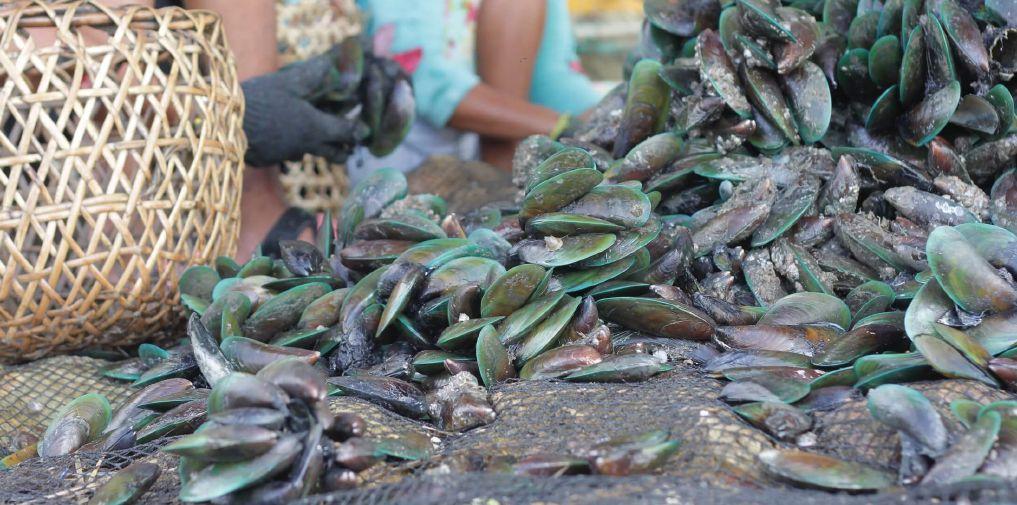
Green mussel harvest (Photos: Mussels Philippines)
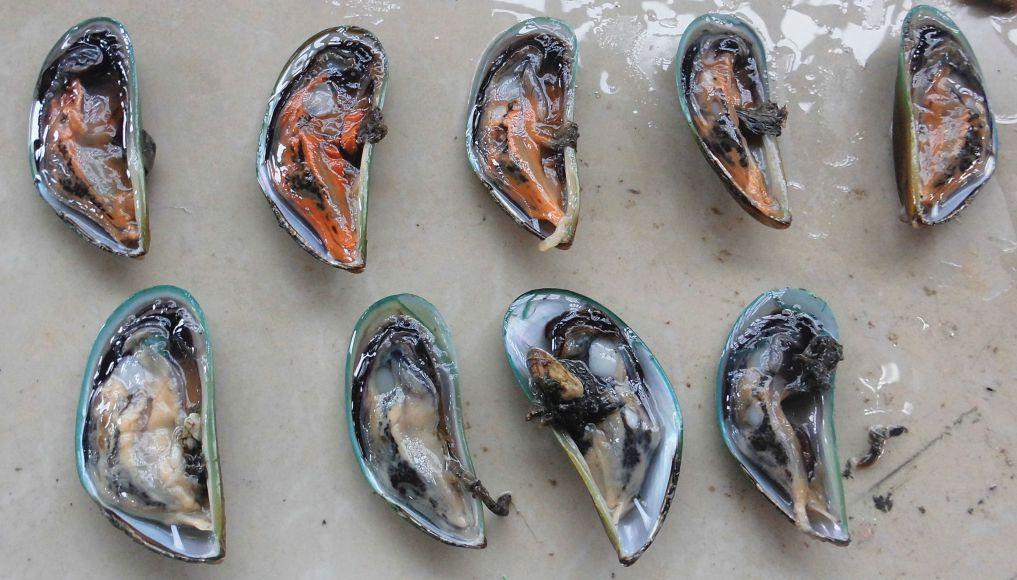
Breeders from the wild at the hatchery developed by the University of the Philippines – Visayas
Slow and steady

Sturgeon breeding success continues for ‘crazy’ German pioneer






BY COLIN LEY
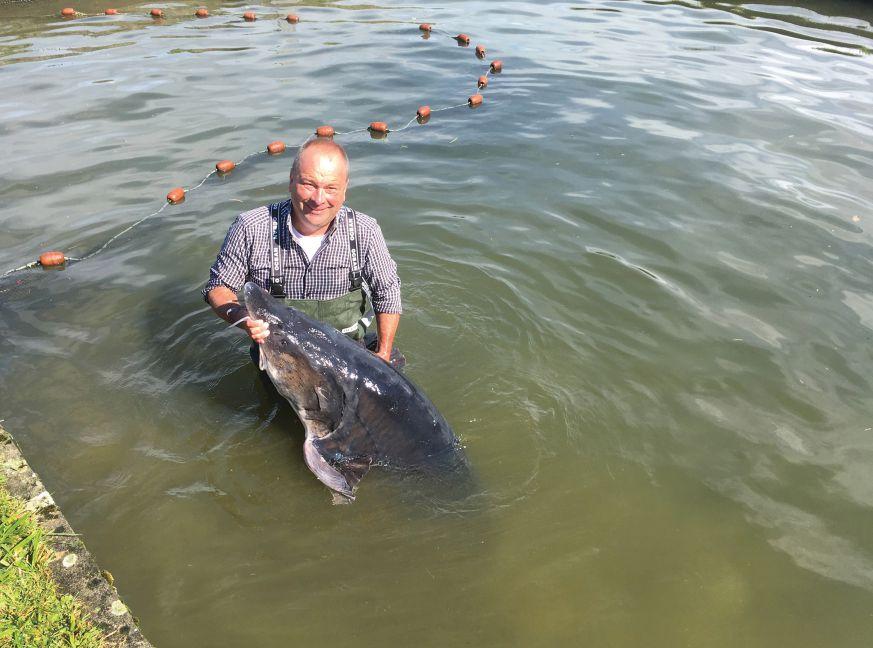
Brothers Peter and Udo Gross have been farming sturgeon (Acipenseridae) at their Fischtucht Rhönforelle farm in central Germany for 29 years, working their way through an initial cost-only decade before settling into a pattern of progressive production which continues today.
Currently working with eight different sturgeon species, five of which are reproducing nicely while the other three remain ‘in development’ in breeding terms, the brothers’ sturgeon adventure has never been boring or, for that matter, particularly easy. It has, however, always been exciting and rewarding, at least after the first 10 years of investment was completed.
ROOTS
Fischtucht Rhönforelle, which is a flow-through freshwater pond located near Gersfeld, in the heart of the country’s Rhön region, has been in the family since 1882 when it was established by the present owners’ greatgrandfather, Eligeus Gross.
He initially used the farm to produce brown trout, a fish which at the time were considered a delicacy in Germany, creating a demand for his product which he transported to customers by horse and cart in water-filled barrels. Although the business has kept pace with changing production and market demands over the years, the sale of trout for consumption remained the core of the business throughout its first 100 years.
That was before Peter, aged 20 at the time, returned in 1990 from a period of fish farming experience in the U.S.A., which included a brief work placement with a major trout producer in Idaho.
What really grabbed his attention, however, wasn’t the potential of farming trout for a living but the more exciting appeal of raising sturgeon, which he also saw during his time in Idaho.
The ultimate aim was to produce caviar, a goal which was finally achieved last year, 28 years after Peter’s return from the U.S. His sturgeon story is much bigger, however, than just the production of 10 kilograms of homeproduced Rhönforelle caviar in 2018.
BUSINESS BUILDING
For the last 19 years, in fact, Peter and Udo have slowly but steadily developed a sturgeon breeding operation, based on five different breed species, from which they produce one million eggs a year for sale to customers around the world. They also supply sturgeon fingerlings to on-growers throughout Germany.
Before starting to earn money from sturgeon, however, the brothers had to endure 10 years of investment and learning, alongside a large amount of breeding trial and error.
“That first decade was really all about costs and not much about income,” says Peter, whose enthusiasm for the idea of breeding sturgeon in the harsh winter conditions of the Rhön region somehow got him through the difficulties of the start-up period.
“The main reaction I got when I arrived back from the USA talking about sturgeon was that I was crazy to even think about farming the species in Germany,” he says. “It wasn’t much better a few months later when I met representatives of a major Soviet Union company, Sofrybflot, who were promoting their high-quality caviar at Germany’s massive ANUGA food trade fair, held in Cologne.
“When I told them I wanted to buy fertilized sturgeon eggs from them, not caviar, they said it wasn’t really their thing but if I wanted to travel to Russia to see their farming operation, I was welcome. Two months later, along with a good friend, I drove to their farm in Konakowo, which is about 200 kilometres from Moscow to take a look.”
Actually, it was a bit more than a look, as Peter and his companion, ar-















Some of the earlier sturgeon broodstock at the Fischtucht Rhönforelle farm are nearly 30 years old and weigh up to 150 kg.
rived with a pick-up, fully equipped with empty fish tank and a full oxygen cylinder. Having already negotiated the legal requirements to enable him to return to Germany with live fish, his Russian hosts eventually responded by providing him with a starting consignment of 1,000 fingerlings. Pre-sale discussions took about two days but when he left Russia, it was with a full fish tank and an ondemand oxygen cylinder.
“This was quite a breakthrough,” Peter says. “We became one of the fish farms in West Germany (as it was until 1990) to be allowed to bring live sturgeon into the country. Egg imports into the EU from the former Soviet Union had been possible before then, arriving in France in the 1980s, for example, but not live fish.”
SLOWLY BUT SURELY
Having established that live sturgeon and fertilized eggs could be moved safely and legally from Russia to their Fischtucht Rhönforelle location, Peter and Udo turned their focus on how to make their breeding operation successful.
“One of the first things we had to do was to introduce heat into our former trout hatchery to create the warmer water which sturgeon require to achieve acceptable growth rates,” says Peter.
“During those first years we depended wholly on obtaining new supplies from Russia, although we didn’t travel to collect live fish any more, being happy to progress with imported fertilized eggs.”
With sturgeon females taking anything between nine and 14 years to reach sexual maturity, and then only spawning once every two to three years, the start-up period for the new unit was inevitably slow. As a result, it was the year 2000 before Fischtucht Rhönforelle was ready to start producing its own eggs.
“Although it was a long 10 years of development to go through, the good news is that our sturgeon operation, when it began, was successful,” says Peter. “Unfortunately, having convinced my father that farming the species was a good idea, we initially found ourselves in 1991 and 1992 with 20,000 fingerlings but with nobody wanting to buy them.
“There was no idea among other fish farmers at the time that rearing sturgeon might be a good idea. There seemed to be plenty of caviar available from traditional wild sources to keep the market happy.
“Later, around 1996 - 1998, sturgeon started to appear on the endangered species list, prompting many people to start thinking about the potential of producing caviar from farmed sturgeon. So, while our first years were very hard, the work we’d done from 1990 to 1998 paid off in that we were ready and able to provide high quality fertilized eggs to many customers when demand began to build.”
After a strong growth and income period for the farm, driven largely by the knock-on effect on the world market of China’s sturgeon investments, Peter and Udo’s business today is based on a solid home-grown broodstock base, with some of their earliest fish now nearing 30 years of age and weighing up to 150 kg.
While the fertilized egg market isn’t as dramatic as it was 20 years ago, the brothers are still selling successfully into several European countries, exporting to South and North America, plus sending smaller consignments to Vietnam, Kazakhstan and one or two other countries.
“While the original aim, back in 1990, was to produce caviar, we’re very happy with where we are with our sturgeon breeding enterprise today,” says Peter. “Our breeding program
developed naturally in tune with the cold winter climate in which we have to operate, leading us to concentrate on fertilized egg production and the raising of fingerlings.
“Having started from scratch with our own young fish and relatively small stock numbers, it didn’t make sense for us to kill any of our fish in order to harvest caviar, as would have been necessary under German regulations. Producers here aren’t allowed to use ovulated eggs for caviar. It’s allowed in other countries but not here, which is why we’re still only producing a very small amount of caviar from our stock.
“Alongside this, however, we have a strong breeding base for sturgeon in Germany, 29 years after being told it crazy to attempt such a thing.”



COMPETENCE INNOVATIVE PROFESSIONAL



Fischtucht Rhönforelle has been steadily developing a sturgeon breeding program for nearly two decades.
like to use, and get feedback from our fish culturists,” says Boucher. “We wanted to collect some data so we have some information to say, ‘Ok, after a couple of seasons trying it, here’s what we can expect out the other end.’”
FIRST TRIAL
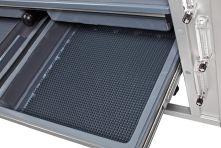
The first test used the Norwegian designed Alvestad Easy Hatch substrate mat. “I like this one because the bottom is perforated. You are going to be getting good gas flow and water exchange,” says Boucher. “I like that it’s rigid, but also the space between the fingers for our relatively small egg size was good.”
The hatchery built a quadrant shelf to fit in a threefoot, 1,200-liter combi tank and lined the bottom with the substrate mat. The control was a stack of standard heath trays.
Some 5,600 spawned eggs were reared in an up-welling MacDonalds style jar until they were eyed. Half went into the substrate shelf and half into heath stacks. Both were reared at 10 degrees Celsius on the same well water and in the same facility.
“This was all done at production densities right on the production floor with the fish culturalist helping,” Boucher explains. “That to me was the most meaningful way to do this, so we did actually see what we can expect in a real honest to goodness situation.”
“Then we had to sample them,” says Boucher. “We wanted to know if there were any growth gains? Are we going to be saving any time?”
The team defined performance by looking at growth in both length and weight. They wanted to know size at ponding (first feeding) and the time it takes to get to half-gram and time to one gram. They also looked at survival rates.
During incubation, the fish were sampled every three days, 90 fish per treatment, looking at length and weight. Once they were ponded, samples were taken every week. “We proved these fish out all the way to one gram,” adds Boucher.
At ponding, substrate fish were 12 percent larger, says Boucher. “That is significant because these fish are at 10 degrees and have only been rearing in the substrate about 20 days.”
“We also observed, but did not quantify, that the substrate fish appeared to be moving a lot less,” Boucher adds. “And the substrate fish really showed good emergence behavior. Both sample groups were ponded into combi tanks. Size difference continued to increase throughout the evaluation, with those fish from the substrate continuing to grow larger. Fish from the substrate group reached a half gram 10 days earlier than the control group, notes Boucher. “Remember they had the same temperature, same loading density, same feed rate. We even checked that velocity and oxygen was controlled for,” he adds. “So, what we are seeing here is definitely the effect of the substrate.”
“We saw that we got fish to one gram 14 days earlier,” says Boucher. It was 54 days after they came out of the substrate.
SECOND TRIAL
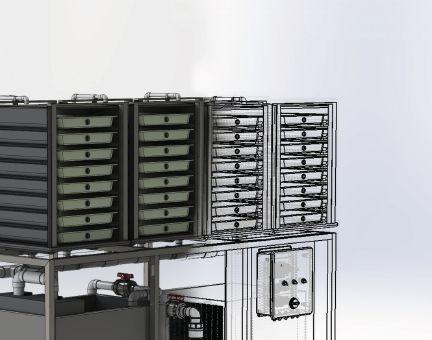
Boucher says they do most of the incubation in heath stacks. They wanted to adapt the substrate into the rearing trays. Substrate mats were cut to fit and adhered into the heath stack. “We just removed the bottom PVC screen and it held together really well.”
This was a much smaller version of the first trial. It was conducted only until the eggs would have been ponded. “The goal was to say, ‘OK, we got pretty good results from the first trial. Are these trays going to hold together? Are they going to be effective,’” Boucher recalls. “And would we be interested in using these again?”
The eggs were again reared to eye stage in up-welling jars and loaded in equal density into three substrate modified trays and three regular heath trays again at 10 degrees. Trays were alternated in the stack. Fungus was controlled by a parasite S drip system.
“Again, we got 12 percent larger fish at ponding,” says Boucher. “It was interesting seeing pretty consistent results.” The alevin also appeared to move less in the substrate. Fungus in the trays was negligible.
There were no difference in losses in either of the tests, Boucher says.
“We know from the literature that complexity in early rearing is a really good thing,” says Boucher. “Even this early in early rearing, complexity leads to increases in brain volume and increases in swimming performance.”
Using substrate in early rearing raises larger fish in less time. “What we are talking about is a higher quality product at the end.”
PRODUCT DEVELOPMENT
Incubation systems provider MariSource confirms they installed the substrate that Boucher used in their rearing trays and are now working on a permanent solution. “We
are working to design it so that we can injection mold the substrate into the bottom of the tray all in one piece,” says Mike Fudge MariSource sales manager.
Fudge says the substrate would replace the PVC mesh screen that is currently used to line the bottom of the trays. “Those screens have to be cleaned very carefully,” he points out. “They also have to be replaced every couple of years.”
The injection molded unit could be cleaned with a pressure washer. While it will come at a price premium, it will save on the PVC screen maintenance.
It enables the up-welling and flow-through design of the tray to continue to function. “It’s a good concept, it makes the eggs feel like they are in the bottom of a river bed,” says Fudge. “And you are getting a much better fish at the end.”









HATCHERY FEEDING SYSTEM (HFS)
Complete feeding solutions for aquatic hatcheries




• Microdiets
• Weaning Diets
• Micro Algae
• Live Feeds































Collaboration boosts South American breeding programs
BY COLIN LEY




















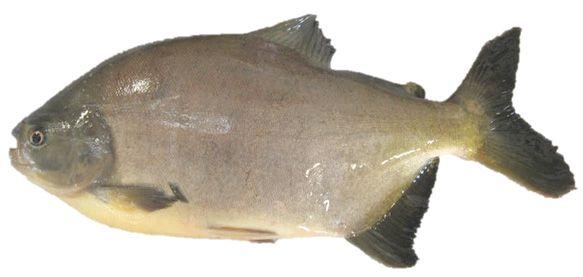
Ross Houston, and his genetics group, with the aim of helping to develop a new set of breeding tools for use in the improvement of native fish species in Brazil.
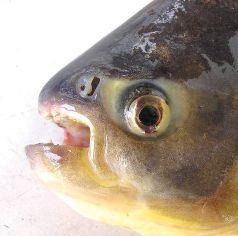
The key focus of the collaboration was Piaractus mesopotamicus, a Brazilian freshwater species which is popularly known in South America as ‘Pacu,’ a name best translated as ‘fast eater fish'.
One of the most important freshwater species in the region, mainly because of its size, reaching up to 40 inches long and weighing up to 40 lbs., Pacu has become a victim of over-fishing in recent years. This has, in turn, prompted an increased requirement for aquaculture to supply animal protein to the population in a sustainable and profitable way, and to play a part in helping to restore species numbers.
Due to a lack of biological information relating to Pacu, coupled with little understanding of the species’ susceptibility to bacteria under stressful conditions and immunity factors when cultured in intensive production systems, farming Pacu has so far resulted in high mortality rates. This was largely due to bacterial diseases, such as aeromoniosis.
BETTER GENES
Almost as important as the mortality issue, the task of farming Pacu successfully also involved the marked use of antibiotics or bactericides, a requirement which it’s hoped the genetic improvement of the species can reduce.
Filho’s time at Roslin was spent seeking to apply the genetics knowledge and expertise, already developed by Houston and his group, to the farming problems surrounding Pacu. A particular focus was on applying modern genomic tools to the species, especially as they relate to resistance against bacterial infections.
These tools, which were already developed and well understood at Roslin, relate to how to acquire genomic knowledge about the immune system of an individual species and how to apply such immunity factors within future breeding programs.
To address the circumstances surrounding Pacu, in particular, the joint Brazil/Scotland study was designed to genetically characterize the species according to its resistance to the bacteria Aeromonas hydrophila.
This involved the characterization of immune system genes of both susceptible and resistant individuals which were challenged with A. hydrophila infection. Work was also done to identify regions of the Pacu’s genome associated with resistance to A. hydrophila, also known as QTL (Quantitative Trait Locus) analysis.
This was the context in which Filho worked with Roslin’s Dr. Carolina Peñaloza, Dr. Diego Robledo and Dr. Alejandro Gutierrez, seeking to generate a genomic profile of the host response to A. hydrophila infection in Pacu. The ultimate aim was to establish genetic markers for use in the development of future breeding programs which specifically tackle disease issues surrounding the species.
This was the first research of its type to be performed on a Brazilian native fish species and, as such, could become the cornerstone for the development of genomic resources for other South American species, potentially leading to the integration of genomic tools to improve selective breeding across Brazilian aquaculture.
“The accomplishment of our analyses will generate results that can be applied in the development of Brazilian native species production,” said Filho. “This is particularly the case in issues related to fish mortality in aquaculture.”
Houston was similarly positive, adding that the collaboration has helped Roslin's genetics group to develop a set of genomic tools and techniques that could potentially be used to study the genetics of new aquaculture species.
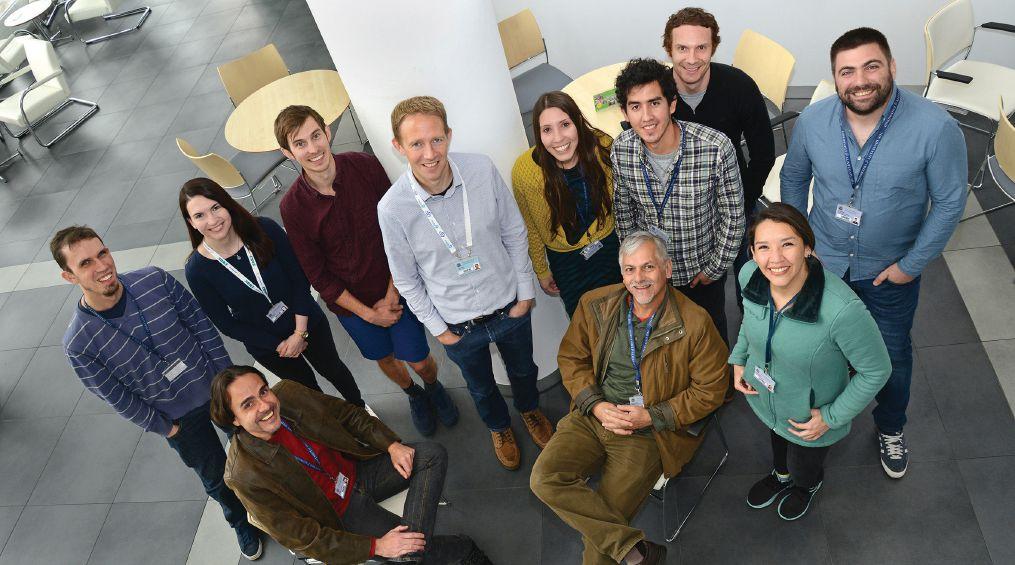
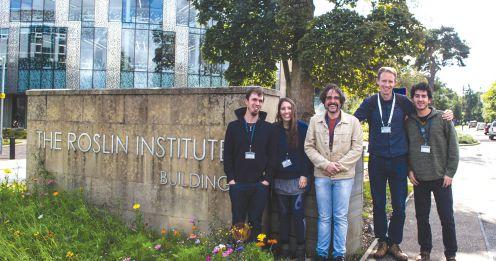
Vito Mastrochirico (left, seated) and Ross Houston (center, standing) with the research team at Roslin Institute in Edinburgh, Scotland.
Changing the conversation
Conference highlights successes in land-based farming, sustainable production systems
BY MARI-LEN DE GUZMAN
MIAMI, Fla. – It's time for the aquaculture industry to realize its potential for sustainable food production to answer the growing demand for food of an increasing world population.
This was the overarching message from some of aquaculture's most avid advocates in the food industry during the two-day Aquaculture Innovation Workshop (AIW) in Miami, Florida, U.S.A., hosted by The Conservation Fund's Freshwater Institute.
"Seafood bears the albatross of being guilty before proven innocent," said executive chef and sustainability advocate Barton Seaver, in his keynote address at the AIW. He points out the lack of public education about aquaculture and the bad reputation the industry has endured over the years, do not do justice to the potential of aquaculture to help solve the world's food supply challenges in a more sustainable way.
Barton commends the innovations transpiring in the aquaculture industry, particularly the movement toward more sustainable seafood farming practices, saying this needs to be front and centre in public messaging.
"We are sitting in a room where a new food production system is being invented; it's technology, it's innovation... it can happen in cities, it can happen in the ocean, it's hip," Barton said of recent innovations in sustainable aquaculture production systems.
Barton, who founded Coastal Culinary Academy in
Portland, Maine, U.S.A., also called for more content around seafood in culinary education, saying chefs and cooks are not being educated enough on seafood and aquaculture. With statistics indicating that two out of three meals a day are eaten outside the home, Barton says chefs are the "perfect pathway by which we accomplish our goal of increasing seafood use across demographics."
"We should portray seafood and its production as a principal catalyst by which we create food systems designed to make people thrive, and aquaculture is the key to this," he added. "My challenge to you is to envision seafood not as a product category but as a frontier for sustainability; our means to fix people and fix food systems."
today's seafood products are not being sold in a way that speaks to the consumers and responds to their needs.
"First, it needs to taste good. All of the potential of aquaculture is unrealized if people don't eat it," Claudia said.
PRICE OF SUSTAINABILITY
Pricing for sustainably farmed seafood is also a challenge if the industry were to promote increased consumption of seafood. Seafood farmed in land-based production systems or in ways that reduce its environmental footprint has a premium attached to it and that, according to Claudia, can spell the difference in consumers' buying choices.
One food industry executive echoed Barton's call for the aquaculture industry to take control of the messaging around seafood and seafood production.
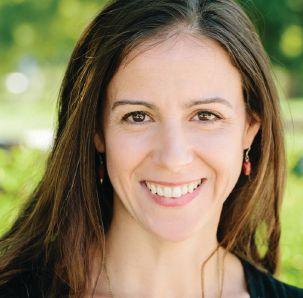
"(Seafood does) not have an awareness problem in the U.S., at least; it's a product and placement problem," said Jacqueline Claudia, CEO and founder of frozen seafood brand Love The Wild. "Most people, when they go to the grocery store, don't even go to the seafood section."
Love The Wild promotes sustainably farmed seafood through its off-the-shelf packaged products. Claudia says
"We need to be competitive (with pricing). Unless we can really address the cost of growing fish we are going to have a really nice niche business, but we are not really here to create a niche business," Claudia said.
She added, "I understand putting a premium on price of seafood, but premiums have got to go away. We have to be competitive with other animal proteins."
Perhaps, this might be happening soon. Industry observers believe as companies with sustainable systems increase production capacity overtime, premium pricing will go away. Producing Atlantic salmon on land at higher volumes, for example, might help with the pricing challenge.


Jacqueline Claudia, CEO, Love The Wild
All eyes in the industry are on Atlantic Sapphire, as the company ramps up construction of a massive landbased, RAS salmon farm in Miami, Florida (see page 23).
The project is being done in three phases, with phase one bringing the company's production capacity to 10,000 metric tons by third quarter of 2020, and will scale to more than 60,000 metric tons by 2026.
"We are bringing the farm to the U.S. consumers, eliminating air freight requirements," said Jose Prado, chief financial officer at Atlantic Sapphire, in his presentation at the AIW. "Atlantic Sapphire's vision is to evaporate the need for airplanes (in transporting fish to market)."
Although it is the biggest, so far, in expected volume production, Atlantic Sapphire isn't the only company investing in land-based salmon production that are gaining momentum. Superior Fresh, which uses aquaponics to grow Atlantic salmon and leafy green vegetables, was the first to grow Atlantic salmon in a RAS environment in the U.S. hitting the market last July. It currently grows 100 metric tons of salmon (which it plans to expand to 500 metric tons) and 1,000 metric tons of leafy greens.
"The capital expenditure is very high for Atlantic salmon, but with two businesses together (greens and fish), we make it work," said Steven Summerfelt, Superior Fresh chief science officer. "We didn't want to do a 5,000-tonne salmon farm... we are a green leaf company with a serving of salmon on the side."
Swiss Alpine Fish, the only Atlantic salmon producer in Switzerland, grows its fish on land using the RAS2020 technology and aims to produce 600 metric tons of salmon in freshwater. Matorka, the biggest land-based salmonid farm in Iceland, is currently harvesting 20 metric tons of Artic Charr per week and will start harvesting salmon trout in 2019. It aims to produce 3,000 metric tons of fish by 2020 and double production capacity by 2023, according to the company's CEO Arni Einarsson. Idealfish, in
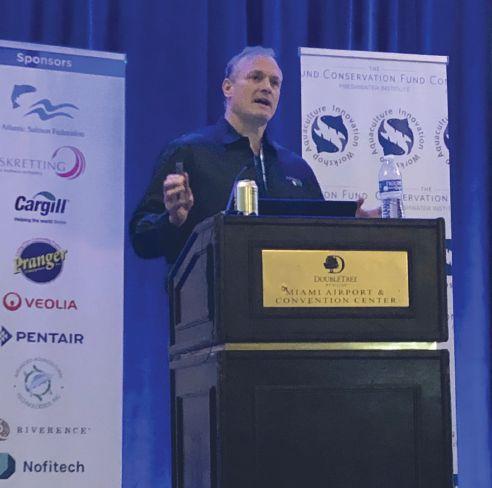
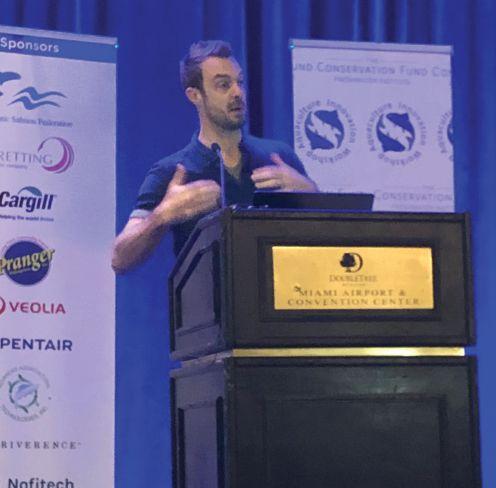
Waterbury, Connecticut, U.S.A., produces 150 metric tons of branzino or European seabass (Dicentrarchus labrax) per year in a RAS environment. Kingfish Zeeland, producer of Yellowtail Kingfish (Seriola lalandi) in the Netherlands, has reached 80 percent of its projected land-based production capacity of 520 metric tons per year. The company is currently exploring potential sites for a land-based production facility in the U.S. to bring its product to the North American market (see story on page 1).
According to Tone Bjorstad Hanstad, equity research analyst for seafood with DNB Markets, an investment bank in Norway, there are more than 30 land-based aquaculture projects currently underway and 350,000 metric
tons of fish in production as of November 2018. Improvements in RAS technology is contributing to the growing number of land-based projects, she added.
The growth of sustainable aquaculture production systems across the world has investors taking a new interest in aquaculture, said Monica Jain, founder and executive director of Fish 2.0, a network of investors and entrepreneurs aimed at growing the sustainable seafood sector.
"Innovation and disruption are at the heart of why the field is growing and why interest in private investors is growing for aquaculture," Jain said.
With over 250 attendees, the AIW 2018 took place in Miami, Florida, Dec. 4 to 5, 2018.
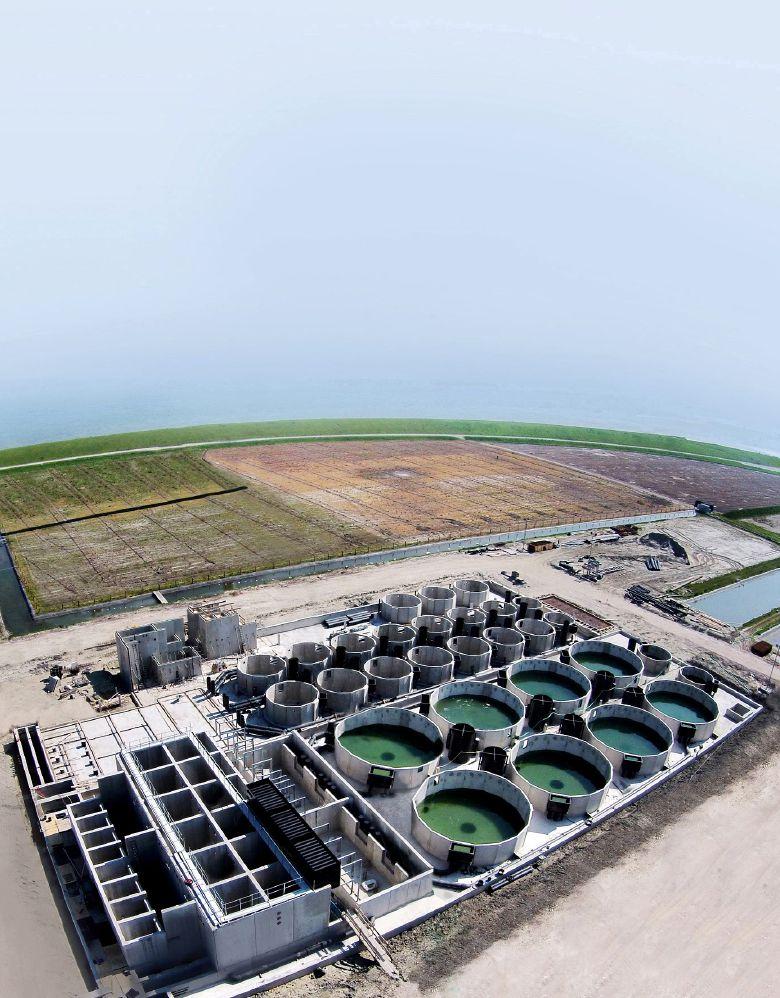
Delivering sustainable solutions for seawater RAS
Yellowtail land-based grow-out facility. Kingfish Zeeland, The Netherlands.
Steve Summerfelt, chief science officer, Superior Fresh
Sustainability advocate and executive chef Barton Seaver delivers a compelling keynote at AIW 2018 in Miami, Florida.
HATCHERY HACKS
Dealing with DATA
Conquer your data collection challenges with these best practices
BY RON HILL
If you manage a site or facility, you have inevitably been frustrated and/or struggled with data collection.
Data that’s collected at aquaculture facilities is diverse – from feed and mortality numbers, to system statuses and water quality data. Despite the seemingly simple concept of collecting and recording data, it is often very poorly executed. Missing data, illegible numbers or handwriting, and tattered sheets are often the norm. Pick up a data binder by the spine and half the pages will spill out. When the data is entered into the inventory control program, frustration often ensues, trying to go back and decide what these numbers are, or should have been. It’s easy to simply blame employees for bad collection and ineptitude, but often the real culprit is inconsistent or inadequate training, and poor data sheets. Look at the data sheets at your farm right now and see how many spots need to be updated.
TAKE CONTROL OF THE DATA
The key to getting control of your data collection is organization. To take back control of your data collection, consider these important steps:
• Data collected and recorded must be organized into forms and updated to include changes to the system.
• Consumables, kits and data collection points should be clearly labeled to match data sheets.
• Employees need to be properly trained to recognize, collect or produce data from the source, as well as properly fill out the datasheets.
QUALITY DATA SHEETS
The quality of your data sheet is reflected in the quality of your data. Here are some Dos and Don’ts when it comes to your data sheets.
• overcomplicate or oversaturate the data sheets with marginally important data.
• collect data that has no purpose whatsoever.
• create confusion by failing to update data sheets, especially for new employees who often end up hunting for data points that don’t exist but are still on the data sheet.
DO
• ensure data sheets that are straightforward and updated regularly, and contain all relevant data used or tracked.
• have a clear label for each entry point on the sheet. Match the labels from the data collected to avoid confusion and prevent data from being entered in the wrong location.
• keep data sheets up-to-date by empowering an employee to oversee and update the paperwork, remove obsolete entries and go through all collected data to make sure the data sheets match the labeling.
TRAINING
Data collection training is best done by having a new worker shadow a veteran employee for several days, so data collection points and methods can be reinforced through repetition. For complicated data sheets like transfers, grading sheets or feed data sheets where math must be done, have new or inexperienced employees fill out the data sheets and review them with the supervisor or shadowing employee. Notes and comments should be stressed to employees to give much needed context. Data collection training usually ends when the new employee can properly record the data on their own, but to get the most out of data collectors, advanced collection should be taught.
Advanced data collection is teaching employees how to look at and report on changes in your data, and should always be stressed to new and old employees. Too often, employees can get robotic about data collection and simply record the data without thinking: “This is the number I have come up with, it goes in the box, next number, next box.” It must be stressed to workers that the numbers do mean something and noticing changes that occur in numbers and data day-to-day is of the utmost importance. A drop in the daily oxygen pressure indicates there is more oxygen demand or less supply – there is a reason for this. Less feed was eaten in several tanks today – there is a reason for this. Changes in the data indicate things that need to be thought about and investigated, and employees need to know to bring up changes to supervisors even if they can’t interpret it. Turns out there was an oxygen hose dislodged causing a pressure drop. The dislodged hose caused the oxygen to decline in several tanks turning the fish off feed. It is best to teach workers advanced data collection as soon as possible, as the worker gains experience and understanding of the system, their independence will increase and their ability to solve problems on their own will make them much more valuable.
SHARING THE ANALYSIS
As a manager or supervisor, one can reinforce the importance of data collection by showing or displaying the analysed data to the staff. The staff is often very interested in mortality rates and growth rate, or feeding improvement. Show the staff how the improvements or changes made have improved the farm. Show them how mortality rates are lower this season because of the new filtration system. A lot of time doesn’t need to be spent this way, but it’s important for employees to see how the data they collect are being used by the management and feel they are connected to it.
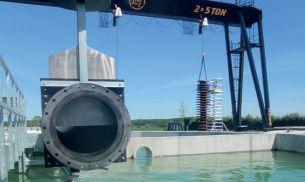
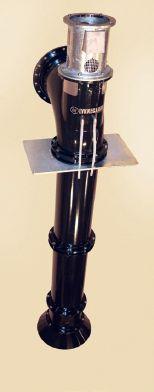
PROFILE
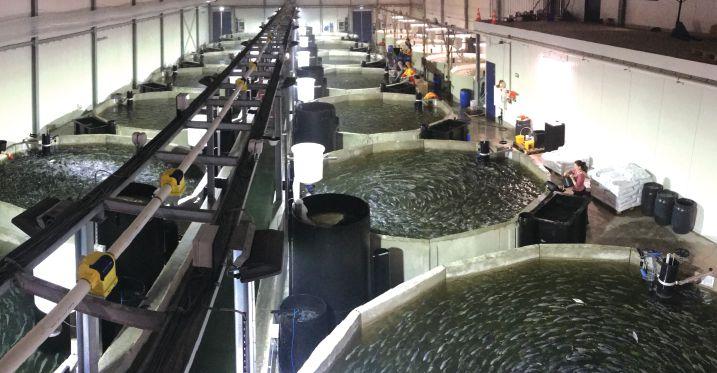
“The hatcheries were built so we can have more control over our products,” Kloet says. He said there are only a few companies producing Yellowtail Kingfish eggs worldwide, and only one is producing on a commercial level.
“If you rely on one supplier, it’s quite a big risk,” he adds. The hatcheries allow the company to maintain a year-round supply of juveniles for continuous production.
The eggs at the production hatchery are naturally spawned, induced by light and temperature. Several groups of spawners are maintained and eggs are produced every four days. Egg production is all year round, Kloet says.
Broodstock selection program is conducted in cooperation with Wageningen University, Kloet says. The fish are acquired from different parts of the world to ensure maximum genetic diversity, and strains are selected based on which performs best in a RAS environment.
Water temperature in the RAS system is maintained at 23 degrees Celsius, and salinity is 30 ppt.
The RAS system includes mechanical filtration, lift pumps, degasser, biofiltration, skimmer and PP heat exchangers. There are 12 square medium head oxygenators (MHO) and 32 round MHO tanks. BUSINESS CASE
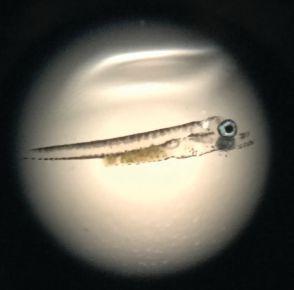
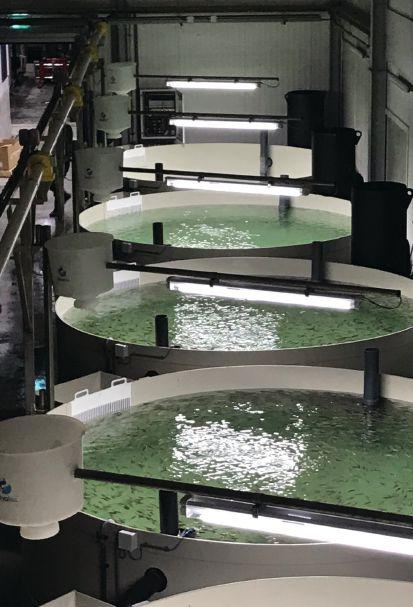
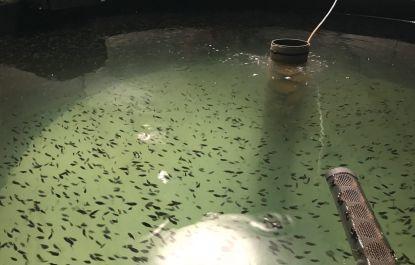
All indications are pointing to a profitable venture when Kingfish Zeeland decided to take its product to market.
“More and more, people are finding out the versatility of the fish,” Kloet points out. “It’s a high-end market and the market is growing faster.”
The Yellowtail has a faster growth cycle, taking only about a year to grow to 3 kilograms – approximately half the time it takes to grow salmon. Japan currently produces around 80 percent of this species worldwide. Both the European and North American markets are proving to be a growth area for this species.
Kloet identifies some of the characteristics of the Yellowtail that make it great for farming: they thrive in high-density environment; shows no aggression or cannibalism; they are robust and resilient to handling. However, they are also a demanding group and requires specific nutritional and husbandry protocols.
The biggest challenge for Kingfish Zeeland has been in the feed quality. The company began with 100 per cent organic feed, creating the formula for the feed and having them produced.
“There were some issues with product quality, so we have now moved toward roughly 60 percent non-organic feed and 40 percent organic feeds. It’s a continuing development. We work with a number of suppliers to try to move into a specific formula for Kingfish,” Kloet says.
Kingfish Zeeland has achieved certification under both the Aquaculture Stewardship Council and Best Aquaculture Practices, according to Kloet. The production facility also gained BRC Global Standard for Food Safety certification.
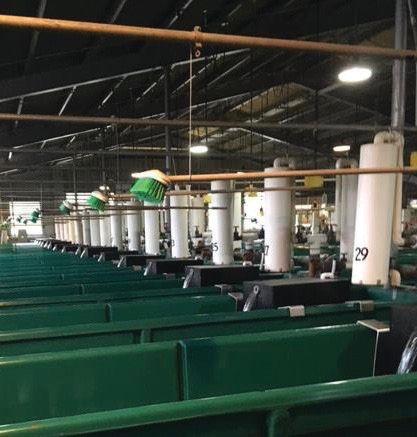


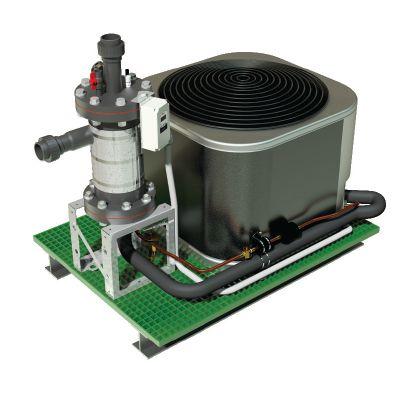


WANTED: Alternative protein
The steady growth of aquaculture production is creating supply and sustainability challenges for fish meal sourced from capture fisheries, driving feed suppliers to explore other sources of protein for their feeds. The scientific community is responding.
As global aquaculture production continues to increase, demand is surpassing supply of fishmeal from capture fisheries. Researchers are now looking at plant-based alternatives to meet the growing demand for protein feeds.
A study in South Dakota, U.S.A., is investigating how alternative protein inclusion ratio may impact the response of fish forced to exercise.
In Dietary Bioprocessed Soybean Meal Does Not Affect the Growth of Exercised Juvenile Rainbow Trout (Oncorhynchus mykiss), Voorhees et al cited, “In addition to diet, exercise has been shown to affect fish rearing performance.
"When fish are fed to satiation, exercise produces improved growth and feed conversion ratios. However, if feed is limited, growth can be impaired at higher velocities. The interaction between dietary composition and exercise has not been investigated.”
BIOPROCESSED SOYBEAN MEAL
According to the study, bioprocessed soybean meal (BSM) can replace at least 85 percent of fishmeal in juvenile rainbow trout, even if the fish are exercised.
Until the publication of this study in October 2018 in Animal Nutrition, there had been no published information on how the replacement of fishmeal with plant-based proteins may impact the response of fish forced to exercise by being subjected to higher water velocities.
Despite soybean being one of the leading plant-based protein alternatives to fishmeal, its meal inclusion in carnivorous fish aquafeeds has been limited. It contains anti-nutritional factors that hinder fish digestion and has high carbohydrate levels, which are harmful for carnivorous fish.
“By reducing anti-nutritional factors found in soybean meal and improving nutrient digestibility, bioprocessed soybean meal can replace a large amount of the fishmeal currently used in aquafeeds,” corresponding author, Dr. Mike Barnes of the Department of Game, Fish and Parks, McNenny State Fish Hatchery, South Dakota, told Hatchery International.

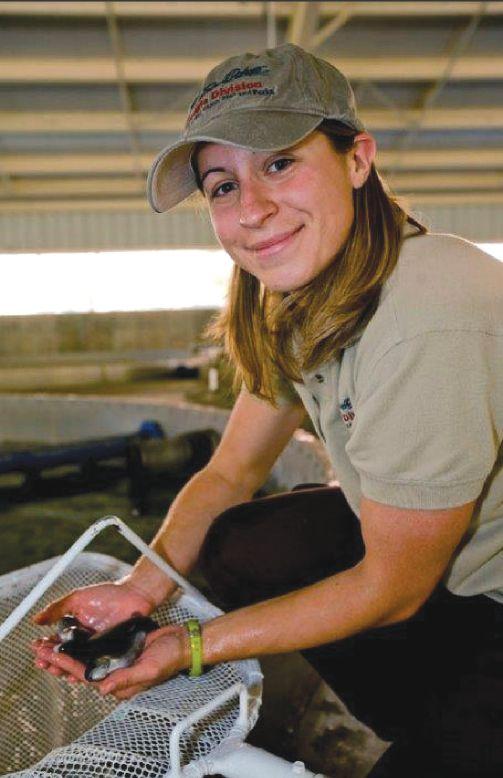
CONSERVATION
“By sparing fishmeal, the use of bioprocessed soybean meal can help in the conservation of marine food webs and animal populations.”
He explained that soybean meal's anti-nutritional factors can be decreased, if not eliminated by applying heat, alcohol extraction or bioprocessing such as fermentation.





Jill Voorhees, Department of Game, Fish and Parks, McNenny State Fish Hatchery, South Dakota, USA. (Photo: Markus Erk)
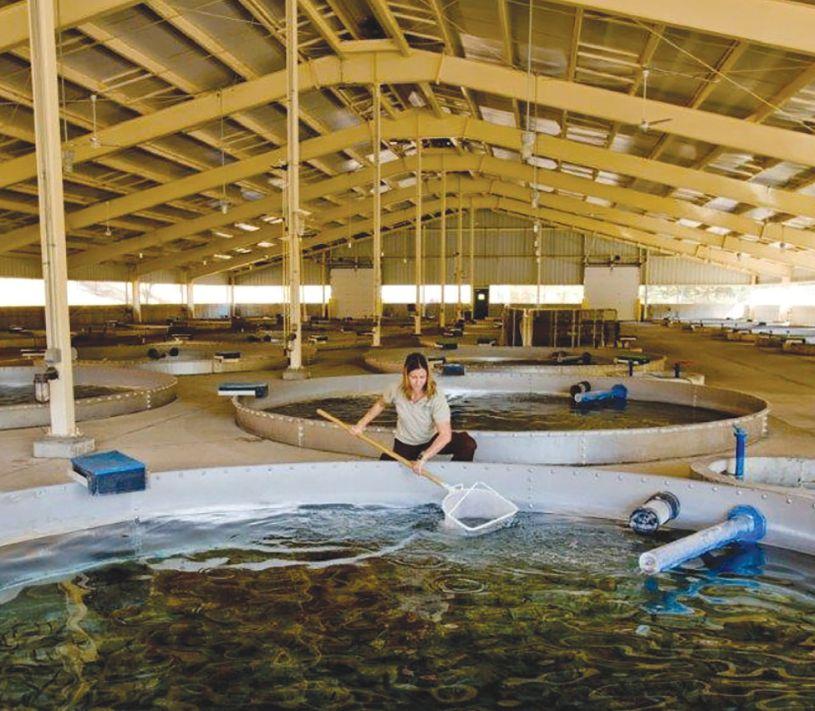
Researchers said bioprocessed soybean meal can replace at least 85 percent of fishmeal in juvenile rainbow trout, even if the fish are exercised.
In terms of costing, how much could be saved by using BSM as a fishmeal replacement?
“This is a difficult question to answer because prices are continually changing, but in general, high-quality bioprocessed soybean meals are currently cost-competitive with fishmeal and will become even more so as processing efficiencies improve.
“In addition, soybean meal markets are generally more stable than those for fishmeal,” he said.
BRINGING DOWN COST
Halfway around the world in Africa, research is focusing on the cost-efficiency that alternative protein could bring.
In Cameroon, E. Miégoué et al from the University of Dschang conducted evaluated the effect of substituting fishmeal with Lima bean flour on growth performance, survival rate and feed cost of African catfish Clariasgariepinus. They recommended a 75 percent ration.
The cost of imported feeds is high. Locally, certain ingredients are unavailable, with fishmeal as the most expensive ingredient, which led the authors to look for total or partial alternative plant-based protein.
They looked into the potential of Lima bean, one of the least-used legumes in Cameroon, because it has an amino acid profile similar to that of common beans.
With focus on costs, the authors said incorporating 75 percent ration of Lima bean flour into the feed increases the growth performance of African catfish and reduces the cost of food production.
The experiment was conducted on catfish fry with Lima bean percentage rations of 0, 25, 50, 75 and 100.
“By sparing fishmeal, the use of bioprocessed soybean meal can help in the conservation of marine food webs and animal populations."
PERFORMANCE
Weight gain, average daily gain and specific growth rate of fish fed containing different levels of Lima bean meal were significantly comparable to that of fish receiving the control diet, with the exception of fish fed with the 100 percent ration diet.
The highest survival rate was recorded with the group fed with the 50 percent ration. It also demonstrated the best characteristics.
Looking at the bottom line, though, the feed containing 75 percent Lima bean flour is the most “bio-economically efficient.”
Results showed the survival rate of Clariasgariepinus fry was not significantly affected by the substitution rate.
Survival rates varied from about 94 to 98 percent, indicating there was no significant impact from different Lima bean flour substitution ratios.
The study also hopes to spark interest among agricultural farmers to culture Lima bean, which has been overlooked due to scant awareness of its nutritional potential.
“This research work has been initiated with the global objective of contributing to the development of alternative sources of protein in the diet of fish,” the authors said.
- Permanent PVC concrete form
- Maintenance free
- No paint or membrane required
- Low transportation costs
- PVC respects drinkable water requirements
- R-value insulation option to reduce energy costs.
DC INTERNATIONAL
75 De Vaudreuil, Boucherville, Quebec Canada J4B 1K7 - Ph: +1 (450) 449-6400 www.dc-inter.com dctank@dc-inter.com

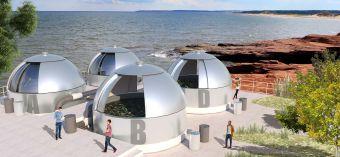
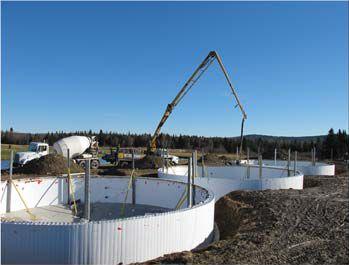
DESIGN | EQUIPMENT |
We are your source for professional aquatic and aquaculture products and services.
Our hands-on experience allows us to offer practical solutions to your situation, big or small. We have years of experience in retrofit and new construction and understand your needs.
Contact us today to learn more!

Phone: +1 407 995 6490 Web: AquaticED.com
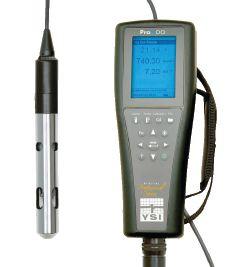

(Photo credit: Markus Erk)
FEEDING & NUTRITION
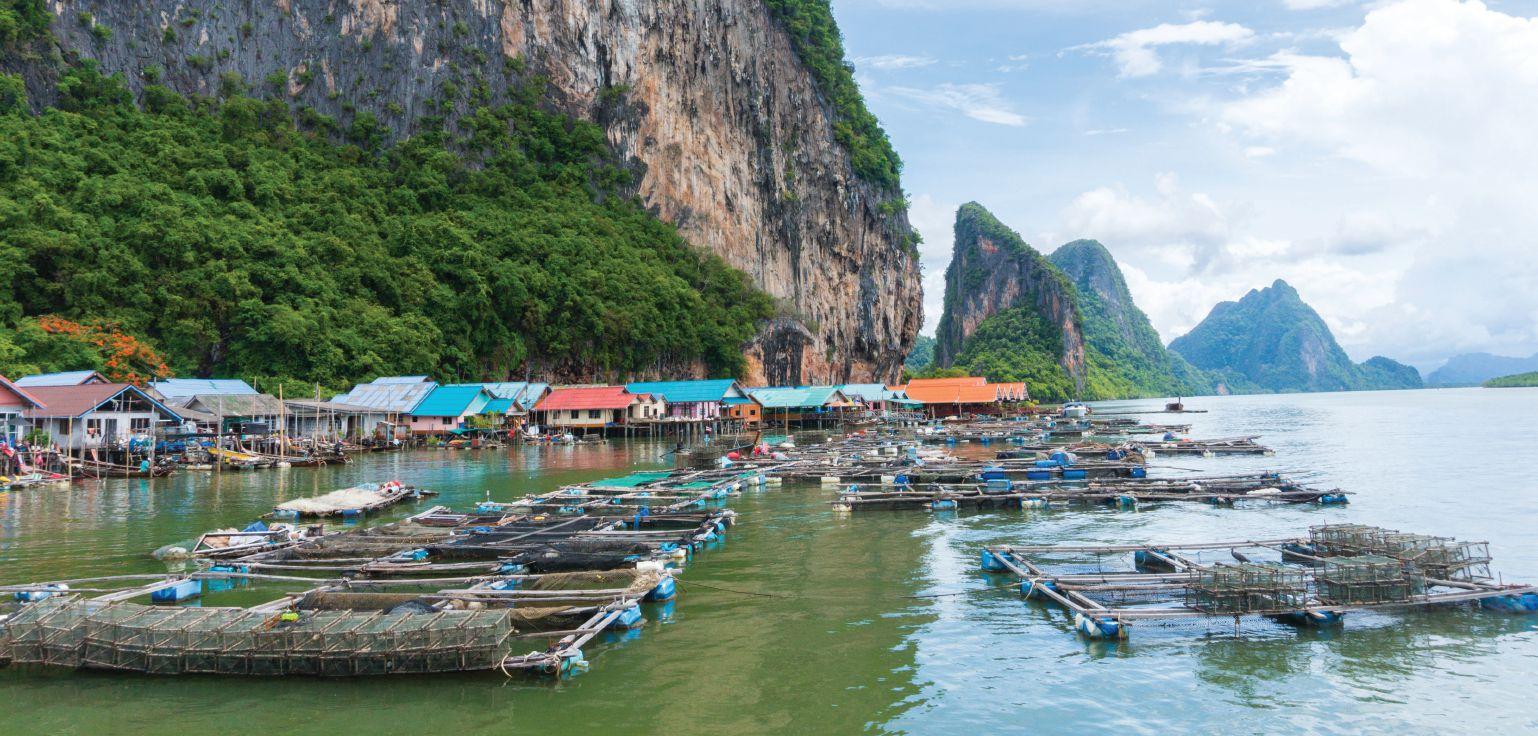

Feeding the Asian aquaculture industry
How CP Foods helped Thailand’s shrimp farmers modernize and build sustainable production
BY TOM WALKER
Robins MacIntosh, senior vice-president of Charoen Pokphand Foods (CP Foods) in Thailand, talked about building shrimp aquaculture in Thailand, as his plenary address at the Aqua 2018 conference in Montpelllier, France.
“CP was founded on the principles of innovating technology to produce food more efficiently, of improving the livelihoods of Asian people and of providing healthy, delicious and affordable foods for the world,” says MacIntosh.
CP’s growth in shrimp aquaculture mirrors those principles. The story begins in 1986 when, having decided to venture into shrimp aquaculture, the company built their first feed mill.
“If we look at the (shrimp) world in 1986 there were only 200,080 tonnes being produced,” says MacIntosh. The company business plan was primarily to make local farmers successful, he explains. “So along with that first feed mill in ’86, they developed an R&D center that had nutrition labs, microbiology labs, pathology labs and demonstration farms, to show Thai farmers how the modern technology would work.”
The company hired technical people to go out and work directly with farmers with these new feeds. In 1988, they began publishing the shrimp newsletter in all the local languages.
“The newsletter gives famers up-to-date information on what was the best techniques for farming at the time,” says MacIntosh.
“But CP didn’t do this alone,” MacIntosh points out. A strong Department of Fisheries works with farmers and industry to help them improve, he says. There are also strong business associations so that feed mills, food processors and farm groups have someone looking out for their interests. And a strong university system creates a brain trust for the industry.
“We get farmers and farm managers, company managers and scientists from the universities,” notes MacIntosh. “And it is the research labs that often add the extra component to keep us at world-class levels.”
“But the true signal of a great company is one that can overcome difficulties,” says MacIntosh. “There is not a culture at the scale we run, that does not have difficulties.”
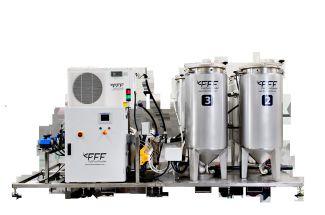

CHALLENGES
In 1985-86 white spot virus hit Thailand shrimp farms and CP evolved PCR technologies to screen broodstocks and to screen PLs. “That put controls on the white spot problem,” says MacIntosh.
In 2000, the indigenous Black Tiger shrimp (Penaeus monodon) that were cultured in Thailand stopped growing. “FCRs (feed conversion ratios) went up and farmers were going broke,” says MacIntosh.
“When I left Thailand in 1990 the average size coming out of ponds was 30 grams,” says MacIntosh. “When I came back to work for CP in 2000, they were 17 grams. You also found a thriving antibiotic business, farms and shrimp were sick.”
“I knew it was the same thing I had seen in South America,” says MacIntosh. “The wild populations they had brought into farms had become infected with sub lethal viruses.”
The solution, he says, would have been to develop a specific pathogen-free (SPF) monodon, something that would take seven or eight years.
“So we brought in the SPF vannamei (Litopenaeus vannamei) in 2002,” says MacIntosh. It wasn’t the first time vannamei had been brought into Asia, he notes. “But previous tries had failed because although the SPF came in, there was no manual to show the farmers how to do it. CP brought the complete package to the farmer.”
The hatcheries in Thailand in early 2000s were not very bio secure, MacIntosh explains. “We had to redesign the hatcheries to make an SPF hatchery, with modularization, new algal systems and most important, closed maturation for domesticated stock,” he says. “The maturation facilities used clean feeds and kept the stock clean so the post larvae going to the farmer were as clean as the broodstock I brought in.”
Hawaii was the nearest source of SPF broodstock, says McIntosh. “It’s a relatively long ways away and we could only get small amounts at a time. We had to develop our own SPF breeding program in Thailand.”
“We set up a nucleus breeding program and we put a genetics program on top of it because CP Foods had learned long before, with other livestock, that genetics and broodstock would
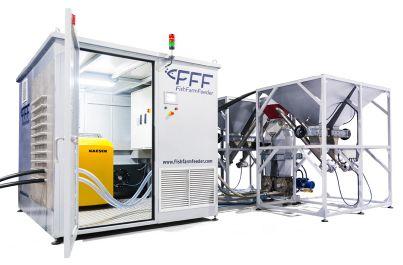
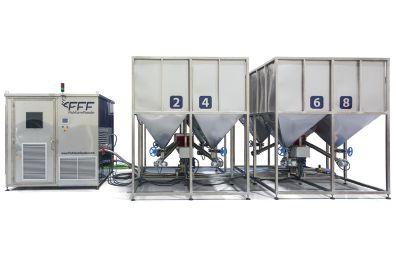
Small shrimp farm in Phang Nga Bay, Thailand (Photo: Adobe stock)
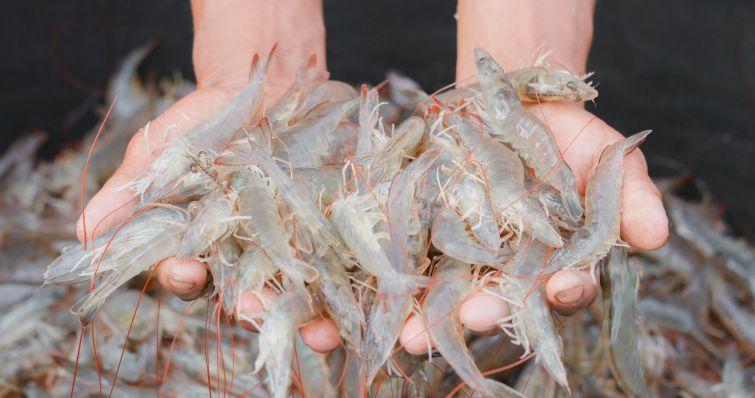
be the base of any success that we would have.”
“We developed a program that runs 3,000 families a year and we have a pedigree,” says MacIntosh. “Every shrimp that came into the program, from the founders at the very beginning to today, we have a complete record on.”
“Even though we may spend $10-$12 million a year in operating the genetics program, if we look at the billions of dollars in return from this program, it has been a cheap investment,” says MacIntosh.
Initially, he says it took 145 days to grow a 28- to 30-gram white shrimp from PL 10. “Today we can do it in 60 days,” says MacIntosh. “I have some lines that will do it in 40 days.”
With that faster growth rate, the cost came down, MacIntosh notes, but there was also concerns with robustness and survival.
“A dead shrimp doesn’t grow,” he emphasises. “So, we have also genetically created TSV tolerance and tolerance to the EMS toxins, and we are working on the tolerance to the white spot virus.”
The farms also had to be redesigned. The existing farms were open systems, with a low horse power paddle wheel for the monodon, he says.
“One of the first things the farmers learned is that vannamei don’t die,” says MacIntosh. “In 2000, they were used to only 30 percent survival with monodon so they might overstock two or three times.”
“Farmers had to learn that with this new shrimp you are going to get high survival and we needed to increase the aeration,” MacIntosh points out. “But the most important thing we did was close the farms, so they were not exchanging to the environment and put in sludge ponds to collect waste.”
“We thought we were doing pretty good.” In fact, in 2010, MacIntosh recalls giving a presentation that indicated they have become sustainable.
“But then in 2012, EMS hit and we were not sustainable,” MacIntosh says. “We had to study this new issue because the old bio security didn’t work.”
Research at the University of Arizona supported the company’s own work and they developed a toilet to remove sludge, molts and excess feed almost instantaneously, he explains. “In doing so, the bacteria levels never got to the level to kill,” says MacIntosh.
Smaller ponds helped the toilets work better, and increased aeration helped the high performing stock stay healthy.
“We also looked at the genetic aspect and found there is heritability to the toxin tolerance so we started an aggressive program to breed tolerance into the stocks,” says MacIntosh. “Today we have an 85 or 90 percent tolerance level and we really do not see EMS or AHPND in Thailand.”
“And this is what we are now calling sustainable intensification,” says MacIntosh. “We can create more shrimp on a smaller footprint.”
PROGRESS
In 2000, Thailand produced about 250,000 tonnes of monodon on up to 75,000 hectares of ponds. Today, they use less than 10,000 hectares of culture ponds to produce the 320,000 to 350,000 tonnes of shrimp, says MacIntosh.
“Next on this path of evolution, we are working to build indoor shrimp farms,” says MacIntosh. “It just allows us more control.”
CP has played a major role in introducing white shrimp technology to countries such as China, Indonesia, Vietnam, Malaysia, India and the Philippines, says MacIntosh.
“It was the work we did in teaching farmers how to do it right and bringing in the correct stocks that has created the large increase in world shrimp today.
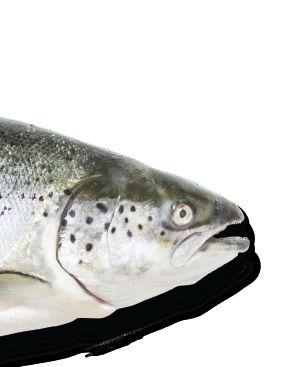
“We find other countries coming to Thailand to learn as well. Being in Thailand has been great because I don’t have to go anywhere to meet the experts. They come to Thailand, so its been a great central place to locate as a shrimp person,” MacIntosh says.

IT ALL STARTS WITH THE HATCHERY
Following his plenary at Aqua Europe, Robins MacIntosh, senior vice-president, shrimp production and shrimp technology CP Foods in Thailand, sat down with Hatchery International to talk about the role of shrimp hatcheries in the company’s success.
“Hatcheries are the key,” says MacIntosh. “You have to have a clean PL (post larvae), so we developed a policy of zero tolerance.” MacIntosh explains if post larval shrimp at CP foods had any indication of EMS bacteria or EHP it was not sold to farmers. “That was really the turning point for getting those diseases out of Thailand as well as now in Vietnam.”
MacIntosh says keeping a disease-free hatchery is a lot of work. “Many hatcheries really don’t understand how tough this is,” he says. “But the key is at the maturation stage, that is where the EMS enters the hatchery most often.”
The source of the problem is pond reared broodstock, MacIntosh says. “The broodstock often times are carrying EMS bacteria,” says MacIntosh. It’s not systemic, he says, but it’s on the shell.
“If you get an animal out of a pond in an EMS area it’s going to bring EMS in,” he points out. “If it goes into the maturation area, then it goes into the nuclei, it goes into the PLs and it goes into the farm.”
“If you buy one of my animals that has no EMS no EHP, the mistake that is often made is they buy a cheap polychaete maturation feed,” he says. “Or they add a local polychaete they get on their beach. And if it’s an EMS area, it will bring in disease.”
Adding polychaetes to a maturation feed for broodstock produces lots of eggs, MacIntosh admits, “but it’s also destroying the health of your system if they are diseased eggs.”
You don’t need an island to be biosecure, says MacIntosh. An inland island will do. You need to create a disease-free boundary with total biosecurity and a surveillance program.
“We have an island, but it’s surrounded by rice, not ocean,” MacIntosh explains. “I haven’t let any animals in since 2004. So they come out, but nothing goes in and we are very careful. There is not fresh anything in there, and we support it with on-going PCR (polymerase chain reaction) testing.”
Everyone wants to talk about the genetics, MacIntosh adds, but they can be overplayed. “Shrimp that are bred to grow quickly need to be in a healthy body or they don’t grow at all and it is a wasted effort,” he points out. “When they made the first SPF animals in Hawaii and likewise in Ecuador before genetic improvement, they showed 20 percent greater performance, and it was all health.”


FEEDING & NUTRITION
Pizzeria by-product for juvenile tilapia in Brazil
Nile tilapia reared in biofloc systems and fed with pizza by-product could provide economic benefits to farms, a study conducted in Brazil cited.
“According to economic analysis and performance data, it is possible to successfully include up to 20 percent of pizzeria by-product meal in diets for Nile tilapia reared in biofloc systems,” said Sousa et al in a study conducted on juvenile Nile tilapia.
“A 40 percent inclusion of pizzeria byproduct might exhibit a strategic economic benefit to the farms that also commercialize fingerlings,” they said.
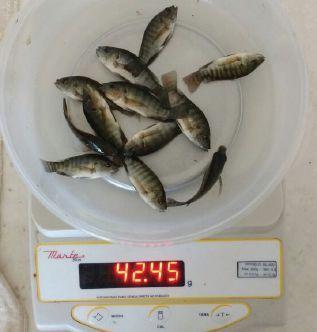
The by-product was considered because of ease of availability and nutritional properties, research team member, Dr. Mauricio Emerenciano told Hatchery International.
Emerenciano is an animal scientist and professorresearcher at the Santa Catarina State University in Brazil.
“Also, commercial diets for tilapia normally possess higher levels of crude protein as compared to their requirements,” he added, citing several studies.
The experiment used pizza borders and unconsumed pizzas that were free of condiments and food substances that could negatively influence the culture system containing juvenile tilapia.
The volume of available raw material makes the by-product formulation more suitable for low-scale application.

Farmers also have to be very careful with any inclusion or changes in diet formulation. “As we all know, cultured animals need a certain amount of balanced nutrients to be ingested every day and changes in diet formulation can cause more problems rather than solve it. The inclusion will depend on the production system applied,” he said.
“Our study, performed in biofloc systems, demonstrated that the replacement can be done up to 20 percent without losses. When you plan to use it in the formulation, special attention needs to be done during diet processing and manufacturing – for example, small extruder, avoiding problems on diet leaching and damage on water quality. If pelletized, as in our study, a binder should be used,” he said.
It is important for the farmers to have a close relationship with the aquafeed company and fish nutritionist, said research team member Dr. Artur Rombenso, a research scientist of fish nutrition who was with the Autonomous University of Baja California in Mexico at the time of the study.
“This aquaculture nutrition specialist would be able to properly adjust the formulation based on the nutritional composition of the local pizzeria by-product and the points highlighted by Mauricio,” Rombenso said.
- Ruby Gonzalez

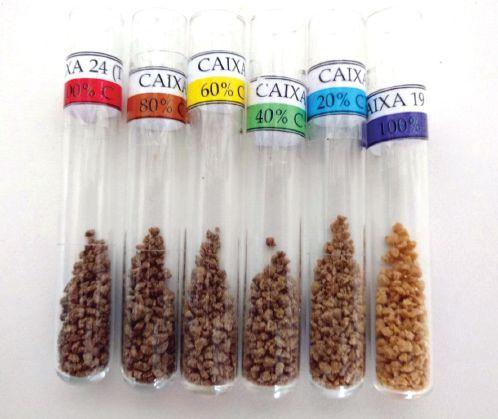
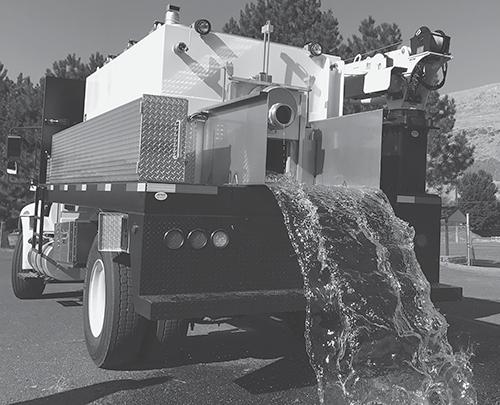
Weigh-in of juvenile Nile Tilapia (Photo: Alison Alves de Sousa)
Pizzeria by-product formulation. The by-product was dried in an oven for 48 hours and after dehydration it was milled. A commercial diet with 28 percent crude protein was grinded to enable the production of the experimental diets. Both inputs were sieved in a mesh before pelleting.
The experiment was conducted in biofloc systems. (Photo: Alison Alves de Sousa)
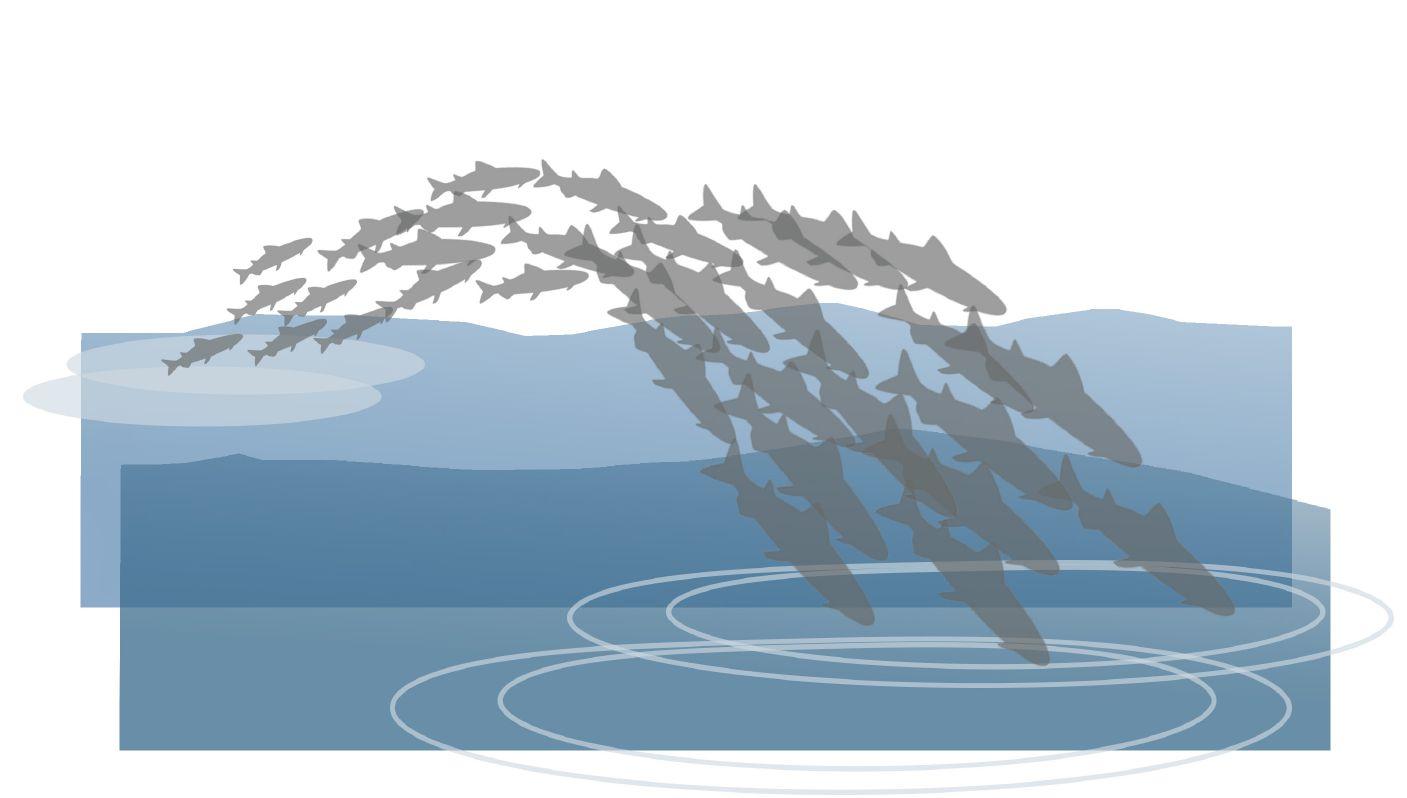
Set your smolt up for life
The period after release into saltwater is critical in the salmonid life cycle, and feed uptake and efficacy during this period has major consequences for the final harvest. The benefits of the Supreme range of feeds developed by Skretting are consistent and well documented.
Feeding your fish Supreme enables them to cope better during this transition, and results in a better FCR, improved feed uptake after transfer, more robust and resilient fish, less size variation and the potential for earlier harvest and increased production.
For more information, contact your local Skretting representative.

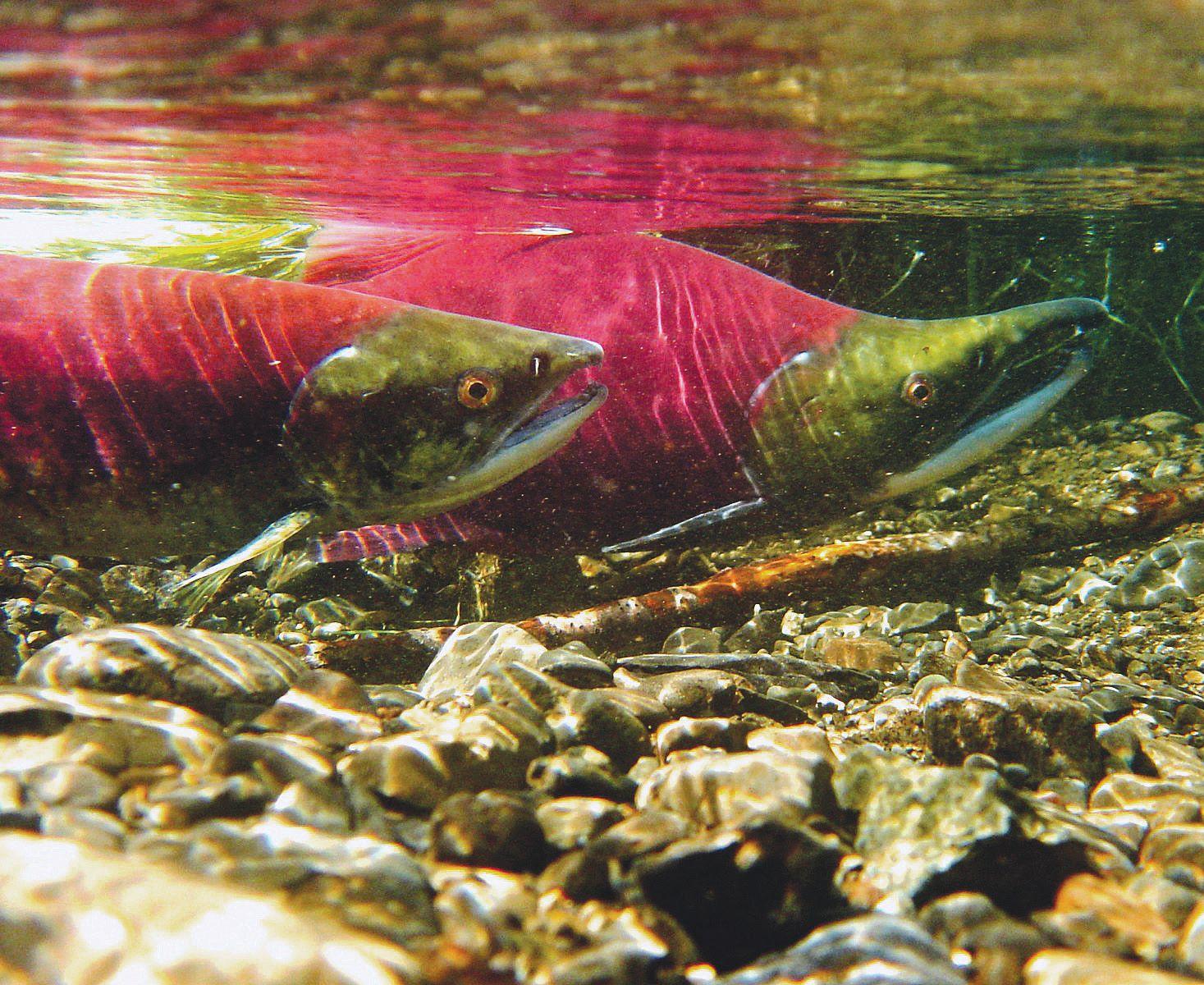
Masahide Kaeriyama of the
is exploring ways on how hatcheries in Japan can effectively supplement wild salmon population. Since the late 19th century hatchery programs have been a partner in helping restore the wild population of Pacific salmon. (Photo: Masahide Kaeriyama)

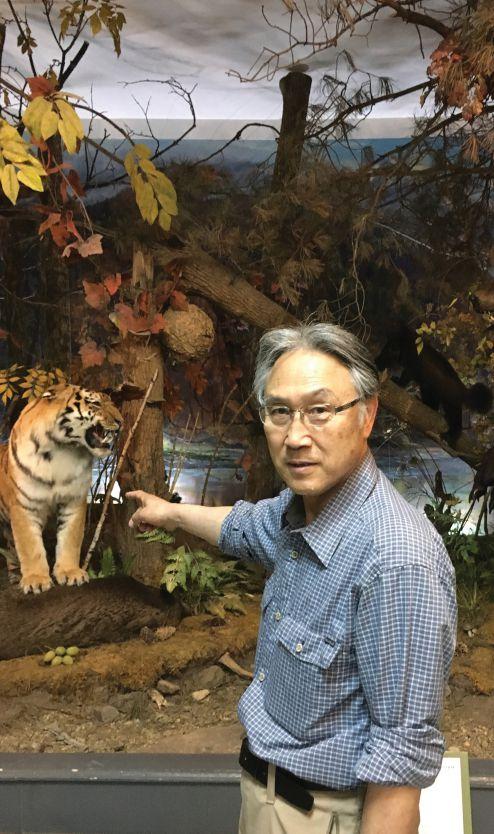
Saving Japan’s wild salmon population
In light of overfishing, climate change and environmental degradation such as destruction to forests and river ecosystems, many native wild salmon populations in Hokkaido have decreased considerably. If Mother Nature wasn't going to bring these populations back, efforts would be required to restore them, for example through hatchery programs.



RISKS AND BENEFITS
Hatcheries carry potential risks for natural populations, but they also provide potential benefits. For example, river channelization under Japan's hatchery programs in the 1970s led to habitat loss and the degradation of wild populations. River migration impediments, such as weirs and broodstock take by hatcheries also produced negative effects.











In addition, the same number of parents may be able to produce more offspring in a hatchery than in the wild, but the interaction between wild and hatchery-produced fish has more subtle risks, such as intraspecific interaction and competition.
Scientists have also known that hatchery-reared salmon differ from their wild ancestors, with lower geneticendemism than their counterparts in the wild, lower fitness and less adaptability at sea.
With fixed, optimal water temperatures and plenty of feed available, hatcheries have played prominent parts in the management strategies for Pacific salmon. However, hatchery fish may have difficulty adapting to changes in a natural environment, and are likely to be out-performed by wild fish. Factors such as these have generated a good deal of debate surrounding hatcheries.
"Generally, the ecological stability of wild salmon populations is better than hatchery populations," says Emeritus Professor Masahide Kaeriyama of the Arctic Research Center at Hokkaido University. "Wild populations also tend to be distributed in areas of the ocean with high productivity. But in the case of Japanese chum salmon in particular, the genetic endemism of individual populations in rivers has been lost because of past hatchery releases and egg transplantation among rivers, and we've seen problems in the capacity of such populations to respond to environmental changes."
"However," he continues, "there has been a lot of
Professor
Arctic Research Center at Hokkaido University
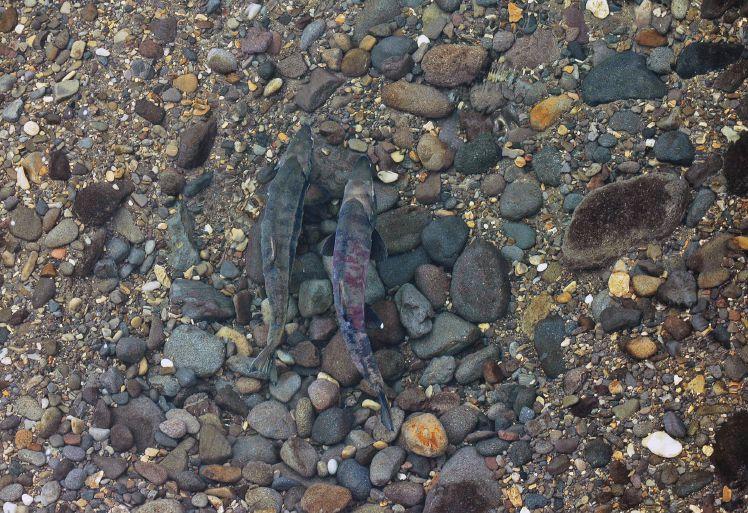
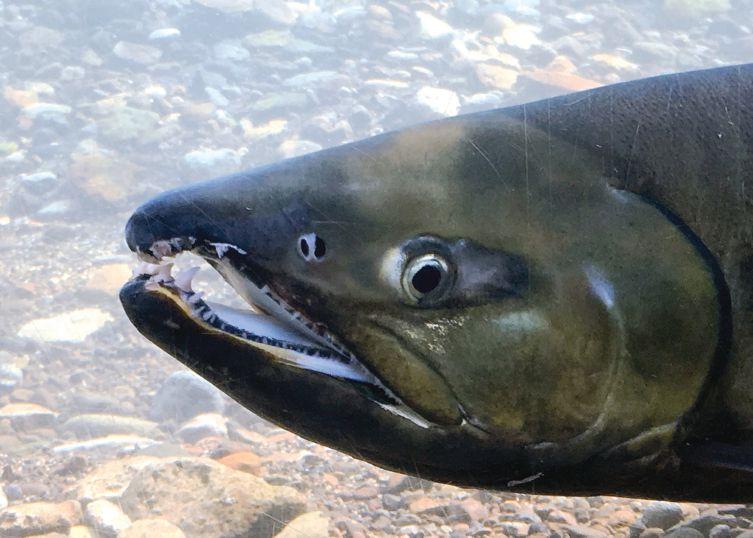
destruction to river ecosystems in Japan, and because Japan is a small island nation, there are very few large rivers for salmon to reproduce in. This means that we can't rely only on wild salmon populations as a fisheries resource. From the viewpoint of protecting such resources as a food source, hatchery programs cannot be ignored."
SUSTAINABLE
DEVELOPMENT
Developing a management framework and further understanding the biological interactions between wild and hatchery-produced species are crucial tasks if the sustainable use and conservation of Pacific salmon are to be achieved, says Kaeriyama. In the case of chum salmon, he says, one important way of ensuring the species' future development is to establish appropriate management zones in rivers, i.e. hatchery program zones and wild population zones.
"Salmon are usually captured near the mouths of rivers, but it may be possible to shift this location to the outlet of hatchery facilities upstream. In this way, wild populations can travel to spawning grounds in the upper reaches of a river," he said.
"Another idea is to ensure that hatcheries are not built along the tributary of a river where wild populations may be reproducing, or make sure hatchery-produced juveniles are not released in that particular area, to separate wild and hatchery salmon populations and protect genetic diversity and endemism."
Another key question is whether hatchery programs can help in a sustainable way. Kaeriyama believes that the answer depends on the state of climate change and global warming in the future. However, restoring river ecosystems in which fish can live is crucial, so implementing an ecosystem-based approach, in line with precautionary and adaptive management principles for a more sustainable form of conservation, will be critical going forward.
"If global warming is going to accelerate even more than it is today, then salmon reproduction in the wild or in a hatchery could become very difficult by around 2100," he said.
"But if we can keep the marine environment as it is now, it may be possible to protect both wild and hatchery-produced Pacific salmon. The key lies in salmon river restoration, appropriate management zones and the conservation of wild populations. Those are all basic requirements."
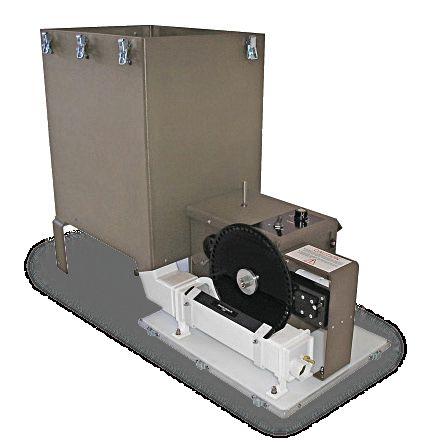


GRADE THE FAST AND EASY WAY
Our portable fish graders have adjustable bars so you avoid juggling multiple baskets, racks or removable bars. And, fish pass through these larger bars with little chance of gill damage. Choose the 30 or 50 settings model for use in either fresh or salt water. Save time and grade like a pro.
our aerators and feeder too!
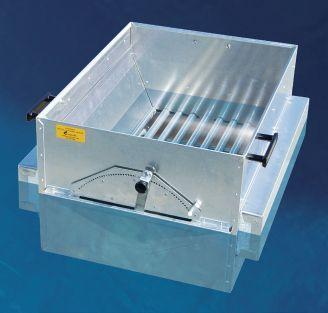

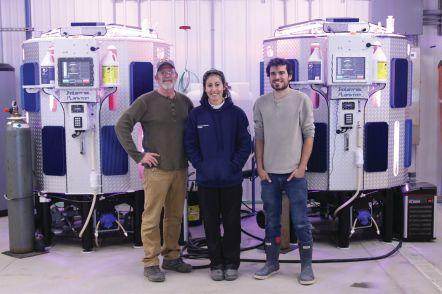
In search of the right mix
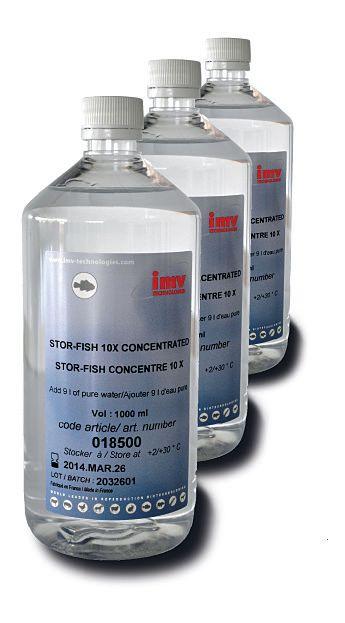
Is there a standardized approach to design as a way to reduce the costs and improve efficiency?
BY MICHAEL BEN TIMMONS
Hello readers and I hope we all have great experiences in this new year 2019. I think some of these exciting experiences will be centered around recirculating aquaculture system (RAS) technology and farms.
RAS is definitely seeing more usage and is becoming a central component to most of the new startups and expansions of aquaculture around the world. Simply put, the availability of sites with enough high quality water to support significant production are rare and basically non-existent. For the last 20 years, I’ve often heard that what the aquaculture industry needs, and in particular the RAS industry, is a ‘standardized’ design. Yes, it was argued, we just need this magical standard design and then we will see widespread adaptation of RAS. Humph. Hogwash. Fake news.

In my last column, I talked about how the American automobile industry had 485 companies competing in the market place with what they thought was the ‘best’ product or design. We all know that almost all of them did not survive, and it was the market that defined ‘best’. We are at a similar position today. There are multiple companies out there selling what they think is the ‘best’ design. All these designs address the same objective which is to provide a water environment that results in a product being produced profitably. As such, all these designs have common components, e.g., biofilters, solids removal, gas conditioning. But the designs employed to achieve this objective still have immense variability. For example, there still is no consensus on what the ‘best’ biofilter is or how the rearing vessels should be designed, e.g., raceways, round tanks, etc.
I have a confession: I think I have the answer. Note that all inventors always think they have just invented the next best mouse trap. Only time will tell and it will again be market forces that will make this determination. Having said that, let me also bring up a theory I have which I call, momentum of design (MOD). MOD is the fact that once a design has been accepted by industry, it is very difficult to depart from this design. For example, fish were originally raised in raceways and it took forever to move the industry to accept round tanks. Even after round tanks became the norm, industry was still trying to make raceways work and that mostly centered around the inability of raceways to self-clean.
Raceways were really great for other management features, e.g., ability to crowd and harvest fish, foot print efficiency, ease for people managing them. We tried all sorts of design modifications to make a raceway clean effectively, most notably the Burrows Raceway design. A Burrows raceway is basically a conventional raceway, but a center divider wall is inserted so that the tank flow travels in a plug flow direction down and back and around the center divider.
A recent article by Stockton et al. (2016) provides a good overall description of a Burrows raceway and compares it to a new design called the mixed cell raceway (see “Comparison of hydraulics and particle removal efficiencies in a mixed cell raceway and Burrows pond rearing system.”
Aquacultural Engineering 74, 52-61 by Kelly A. Stockton, Christine M. Moffitt, Barnaby J. Watten and Brian J. Vinci; https://doi.org/10.1016/j.aquaeng.2016.04.005).
I have personally been designing, testing and building mixed cell raceways (MCRs) for the last several years. We first implemented one of the designs at a Native American facility in Maine. This MCR has been operational since 2012. More recently, a 700 ton/yr facility was implemented in China (same design team and supply team).
As we all know, academics love to study things and we did just that. Our research was published last year where we simulated using CFD analytics of various configurations and
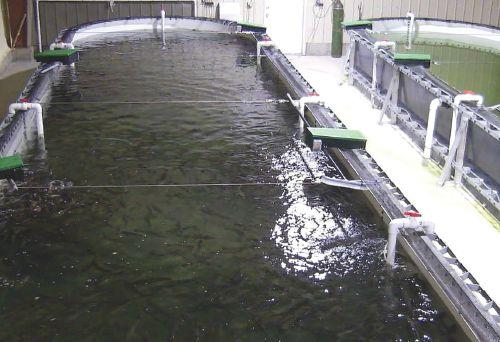
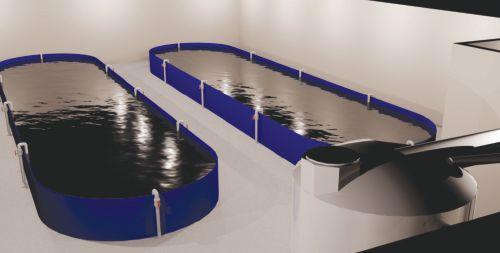
operating conditions to maximize the effectiveness of the MCR design (see Chun, C., Vinci, B.J., Timmons, M.B., 2018. “Computation fluid dynamics characterization of a novel mixed cell raceway.” Aquaculture Engineering 81, 1932; https://doi.org/10.1016/j.aquaeng.2018.02.002). I can report that the China facility (operational for ~18 months) and the Maine facility have and are operating quite nicely. Will the MCR design become the standardized design that we’ve all been hoping for or will one of the designs used in the other large-scale farms being built recently become the standard? Who knows?
I can say confidently that we are closer than ever to RAS designs that are going to allow RAS farms to supply the majority of our seafood in the future. And this brings me back to my earlier point of MOD (momentum of design).
The current industry based around net-pen design for salmon production has evolved into a mature industry over the last 40 years. All that previous capital investment creates a MOD that will not just go away. Only time and proven economic superiority in alternative designs will cause this change. But if I were a betting man, I would not be betting on net pens lasting for additional decades as the dominant form of large-scale production systems. RAS has too many advantages.
Maybe more on that in my next column. Comments are welcome, email me at mbt3@cornell.edu. And hey, if you or someone on your team needs to build up their expertise on RAS, my university is offering a newly created distance course, see www.eCornell.com/fish. The Aquacultural Engineering Society is also now offering certification in RAS design, see www.aesweb.org or contact me for details on this as well.
Happy fishing!

Michael Ben Timmons is a professor in the Department of Biological and Environmental Engineering at Cornell University in Ithaca, New York. He teaches information related to the production of aquaculture products with emphasis on sustainable and environmentally friendly engineering technologies. Email him at mbt3@cornell.edu.
Mixed Cell Raceway (design by JLH Consulting and equipment supplied by Aquacare Environment Inc.)

Russian investors to build US$28.7M Atlantic salmon farm
Agroup of investors in Russia are getting on the RAS bandwagon with the planned construction of a land-based Atlantic salmon production facility in the Vologda Oblast.
The project, estimated to cost €25 million (US$28.7 million), will include a hatchery, nursery and full grow-out systems, as well as management and operational zones, according to a news release. The facility is projected to produce 2,500 tons of market-size Atlantic salmon.
"We are excited to embark on this unique project and confident in its success,” said Alexander Churkin, one of the investors on the project. “We have recognized the immense need for locally-produced, high-quality fish, free of antibiotics and other substances.”
The project will use RAS technology from Israel-based AquaMaof Aquaculture Technologies Ltd. and is expected to be completed by end of this year. Churkin said the decision to choose AquaMaof came after a “meticulous due-diligence process” examining several companies that provide a turn-key RAS solution for salmon grow-out.
“We are extremely honoured to be selected by a group of esteemed local investors, after a thorough evaluation process, that carefully assessed several available RAS technologies," David Hazut, CEO of AquaMaof, said. "We take great pride in supporting our customers in their mission to offer fresh, healthy, locally-produced salmon to the local population, that today consumes mostly frozen imported fish."
The contract between the Russian investors and AquaMaof was signed last October. Under the agreement, AquaMaof will take on the design and construction of the RAS facility.
“AquaMaof’s advanced Minimal Liquid Discharge (MLD) technology utilizes proprietary water recycling techniques. At the core of the company's RAS technology is efficient power consumption, dramatically reducing costs of energy. No antibiotics and no chemicals in the process allow for the production of healthy, natural product,” the company said in a statement.
It added, “Biosecurity is paramount, and complete environmental control ensures that fish are grown in an environment which promotes their highest health and welfare status. With a robust design and construction, the facility requires minimal maintenance, while optimized feeding modes and advanced feeding management system enables reduction of the feed conversion ratio and operational costs.”
AquaMaof will also provide advice on fish nutrition, stocking, production parameters and system maintenance. Staff training to ensure they are able to operate the facility independently on an on-going basis will also be undertaken, AquaMaof said.
Project proponents expect the facility to be ready for its first batch of eggs by the fourth quarter of 2019.


The Van Gaalen Fish Egg Sorter uses the most current technology to bring you an egg sorter that offers: variable egg sizes, speed, accuracy, egg counts, safety and versatility.
VMG Industries Inc. 2972 Bellmeade Way Longmont, CO 80503 USA T: 303.682.8890 F: 303.682.8892 www.vmgindustries.com
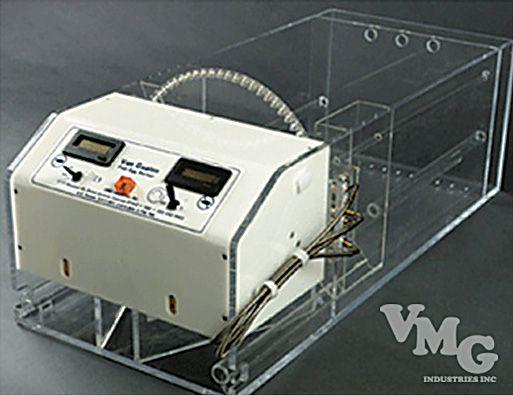
FISH TRANSPORT TANKS
• Unapparelled strength
• Large hatch openings for easy access
• Designed for use with fresh and salt water

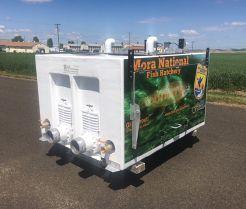
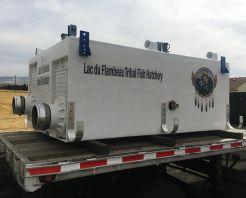



AquaMaof co-owns Global Fish, a 600 ton RAS production facility near Warsaw, Poland, which incorporates AquaMaof RAS technology to produce smolt and market-size Atlantic Salmon, and operates as a R&D and training center.
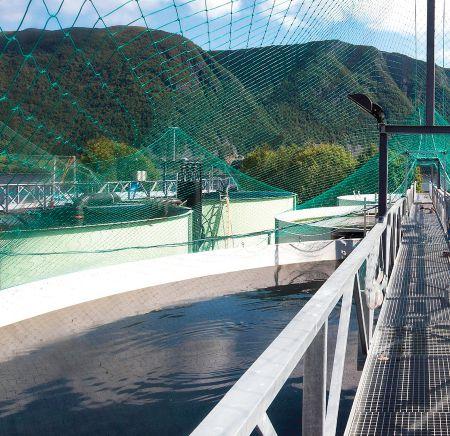
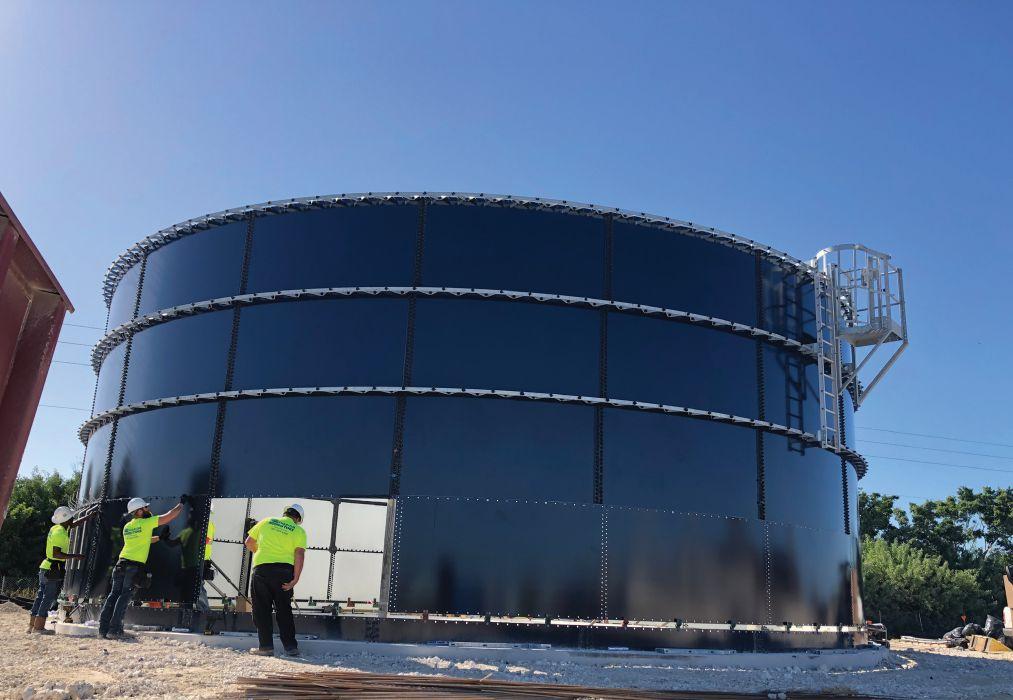

Miami turns blue

An
update on Atlantic Sapphire’s mega project to construct a massive land-based salmon farm in the U.S.
BY MARI-LEN DE GUZMAN
Amidst the heavy construction activities in and around Atlantic Sapphire’s Bluehouse project in Miami, Florida, U.S.A., somewhere in the vicinity, at least 800,000 Atlantic salmon eggs are safely tucked away inside its biosecure hatchery, getting ready to make their debut as the first batch of commercial grade fish to be produced at the Miami Bluehouse.
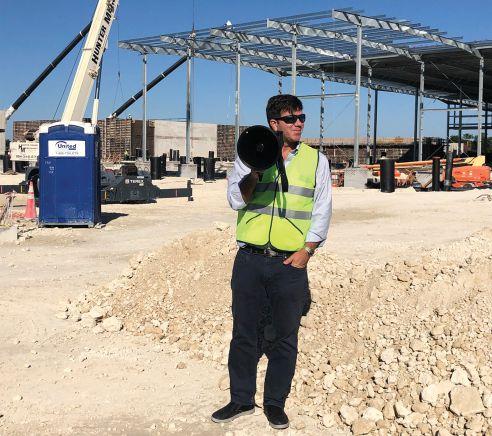
Atlantic Sapphire CFO Jose Prado takes attendees of the Aquaculture Innovation Workshop in Miami on a tour of what will become Atlantic Sapphire’s Bluehouse land-based salmon farm, providing an update on the progress of the construction project.
Phase one of Atlantic Sapphire’s ambitious 80-acre land-based aquaculture complex is currently halfway through construction and is expected to harvest its first batch of market-ready salmon by third quarter of 2020.
“Atlantic Sapphire’s vision is to evaporate the need for airplane (in transporting fish to market),” the Norwegian company’s chief financial officer, Jose Prado, tells attendees of the Aquaculture Innovation Workshop in December.
Providing an update on the progress of the Miami Bluehouse construction project, Prado says following the arrival of the initial batch off eggs – the first 400,000 arrived in late November – the company will be introducing new batches of eggs every seven to 10 weeks. The eggs are sourced from StofnFiskur from Iceland and some are also coming from Norway, Prado says.
“Depending on our final average harvest size, we will have over four million fish in the facility at steady state in approximately two years, those fish will be from eggs to four to five kilos,” the Atlantic Sapphire executive says.
LESSONS FROM DENMARK
The Bluehouse Miami project is drawing from experiences at Atlantic Sapphire’s Bluehouse farm in Hvide Sande, Denmark, which served as the company’s commercial pilot facility. Based on its Denmark experience, the highest mortality rate transpired in the first month at 10 per cent. The losses began to minimize as the process progresses, and is now at two per cent, Prado explains.
“The things we are learning from commissioning in Denmark is proving valuable for the project in the U.S.,” Prado explains.
The Miami Bluehouse project will be completed in three phases. Phase one is expected to be completed in 2020 with production capacity of approximately 10,000 tons. This will double to 20,000 tons per year by phase two, and up to 60,000 tons when the project is fully completed by 2026.
Atlantic Sapphire expects to produce around 9,500-tons of head-on gutted fish per year for phase one of the Miami production facility, translating to about 22 million lbs. of salmon annually, Prado says.
“The biggest factor in determining how many fish we will harvest out of 100 eggs is how many we grade out of the system. We are constantly grading, particularly in freshwater stage, and we are grading more fish than we are seeing in mortality.”
By the time phase one is complete, the Miami Bluehouse will house a total of eight independent water systems throughout the production system, six of which are dedicated for the grow-out section, with six tanks per water system, for a total of 36 large grow-out tanks, Prado says.
WATER INFRASTRUCTURE
The Miami Bluehouse is located in Homestead, Florida, about an hour outside of Miami, about 15 miles away from the ocean. The facility makes use of the Miami aquifers for its groundwater infrastructure.
The 3200-ft injection well can dispose of 19.3 million gallons a day, according to Eric Meyer, the operations director at Miami Bluehouse. Wastewater is absorbed by the boulder zone, slowly flowing west to east.
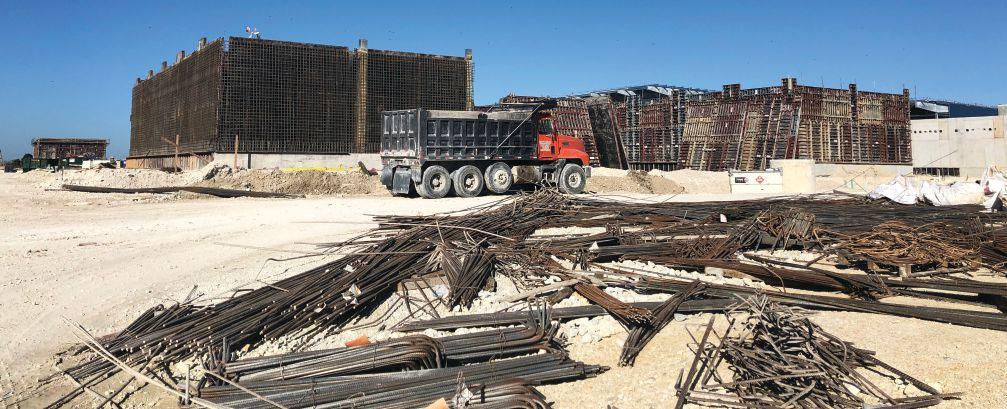
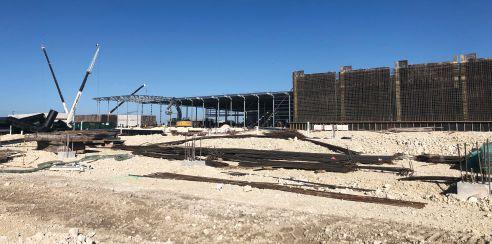
“Eventually, thousands of years from now, it percolates in the middle of the Atlantic as saltwater. That is why we are here, because of our ability to dispose of wastewater at this scale,” Meyer says.
A monitor well is also installed, which allows the Miami Bluehouse to continue operations while complying with Florida state requirement to conduct water testing every five years. The testing usually requires the injection well to be shut down while tests are being done – which can be costly.
“What we do as an alternate is we constructed our monitor well, we can take testing and sampling from there. It’s good for the state but it’s also good for us because we want to take care of our (water source),” Meyer explains.
A 10,000-gallon hydro pneumatic tank is also constructed, which will serve as a pressurized water reservoir for the facility.
Degassifiers are used to strip the hydrogen sulfide (H2S) from the water before it is introduced into the farm. H2S runs about three parts per million in the Florida aquifer wells. There is also trace amounts in the Biscayne aquifer, according to Meyer.
“We can supply freshwater, brackish water, seawater quality, groundwater – and then we have a disposal zone, 3,000 feet down into a saline aquifer to dispose of our aquaculture wastewater."
The infrastructure is built to allow cooling of intake water from 26 centigrate to between 14 and 15 degrees. Eggs in the hatchery live in 4-degree-centigrade water temperature.
A significant investment has been made on the farm’s humidity and other environment control systems. There is an enormous amount of energy required to constantly cool the water, says Prado. He estimates the farm would be consuming 8 kw per hour per kilo of fish produced. That’s two kw per hour more than Denmark’s consumption, taking into consideration the “Miami factor”, Prado says. The cooling system is composed of closed loop cooling water wells, where the warm water will run through. Each production well will deliver more than 2,000 gallons a minute.
“As we continue deeper, we are going through roughly a thousand feet of confinement and we are going to penetrate the Floridian aquifer system,” explains Meyer. “We are producing from the UF-1 well, which is our upper Floridian well, located in the southwest corner of the property and has a water quality of about 3 ppt salinity.”
The UF-1 well will be used in conjunction with the MF-4 well – the middle Floridian aquifer well – which has water quality similar to seawater. “Between those two wells, we are going to be able to blend the water and send it into the farm for our farm operations,” Meyer adds.
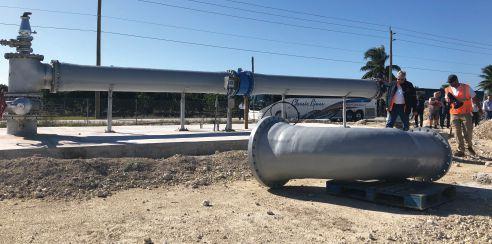
RISKS AND MITIGATION
The eight independent water systems operating throughout the Miami Bluehouse facility is part of Atlantic Sapphire’s efforts to mitigate and minimize risks. After full completion of the project by 2026, the facility will house 65 independent water systems.
“Scale counts in mitigating risks,” Prado says. Risks for sea lice is also non-existent in this land-based aquaculture facility.
Prado also assures the construction plans for the Miami Bluehouse project has addressed risks for hurricane and other natural disasters. “The general contractor has decades of experience in constructing year-round and their hurricane preparedness plans are very detailed and embraced.”
The company’s investments on back-up generators, for example, will allow the facility to operate up to four days on back-up power.
Being 15 miles from the coast, Prado says there is virtually no risk of flooding from hurricanes. “I was here after Hurricane Irma last year… everything around us was bone dry.”
The company recognizes the risk for strong winds, however, so made considerable investments to “harden the building for hurricane-proof construction,” to a category 2 range, Prado says.
SOCIO-ECONOMIC IMPACT
Prado also touts the economic implications of its US$350 million construction project – approximately US$154 million in direct investments for the construction project in phase one alone.
“It is viewed across the stakeholders as responsible economic development,” Prado notes. Phase one is expected to create 100 to 150 jobs within the facility. The project is also expected to create up to 2,600 indirect jobs according to an independent economic analysis, the Atlantic Sapphire executive adds.
“We have a world-class team of architects and engineers, construction professionals,” Prado says. “At 90,000 tons build out, we will be impacting up to 21,000 jobs with a GDP impact of approximately a billion dollars.”
The Miami Bluehouse plans to open its facility to the public to showcase its state-of-the-art farming system. The second floor will include a public walkway platform where visitors can look down into the tanks, Prado says.
“Imagine the general public and the school children walking through the facility and getting a direct experience on how we are operating.”
Aller Aqua partners with insect factory to test fish feeds
Christiansfeld, Denmark-based fish feed producer Aller Aqua has joined a partnership with insect protein producing company Enorm BioFactory to create Denmark’s first industrial insect production.
The project aims to produce 30 tons of insects daily in four years from now.
The project has been granted 15.9 million Danish krones from the Ministry of Environment and Food Denmark, which totals approximately US$2.4 million.
One of the outputs from the project will be insect meal, and Aller Aqua’s role will be to help develop and test products suitable for trout farming, the company states. Should this succeed, insect meal could also be tested as an ingredient for feed for salmon and tilapia.
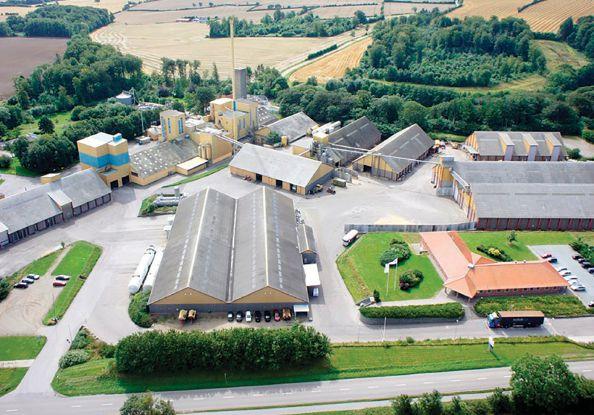
“Insect meal has the potential to be a valuable raw material in fish feed not only due to its high protein content,” explains Dr. Hanno Slawski, group research and development director for Aller Aqua. “Several trials have been carried out with the inclusion of insect meal to replace or partially replace fish meal in fish feed with promising results, but further research is needed before commercial application.”
He says research and trials will be carried out at Aller Aqua Research in Büsum, Germany.
Besides producing insect meal for inclusion in fish feed, Enorm BioFactory will also produce both insect meal and oil for use in pork and poultry production, and eventually human consumption.
In addition, the project focuses on achieving a no-waste-production with optimal usage of all nutrients and resources, the company said.
With a production capacity of more than 300,000 tons, Aller Aqua’s fish feed production spans across 60 countries from factories in Denmark, Poland, Germany, Egypt, China and Zambia.
New oxygen generating system in compact package
Scalable oxygen-generating systems manufacturer for glass blowers in North America High Volume Oxygen (HVO) has announced the production of a new, small-scale system dubbed the “HVO 2-Go.” The company previously only sold models that included a storage tank. The small form factor of the new “2-Go” produces 10 to 60 LPM and enables it to be delivered anywhere in the continental USA for a shipping cost of about $100.
“We are thrilled to have a new low-cost system that opens up the market for small-to-medium-sized applications,” says owner and president of HVO, Marc Kornbluh. “Because of its low price tag and low

shipping cost, the 2-Go is ideal for many aquaculture, hydroponics, glass, and veterinary applications that wouldn’t be financially feasible with other solutions.”
The HVO 2-Go starts at $2,900. An oxygen-rated storage tank and one or more oxygen concentrators are not included but are available from HVO.
Touting custom-designed circuit boards that are available with an onboard ultrasonic oxygen sensor, HVO systems are available with the Seeing Eye “Internet of Things” (IoT) service, which stores operational metrics in the cloud, allows real-time graphs to be viewed, and sends notifications via email and SMS.
New West Coast sales manager at Pentair
In December 2018, Stephanie King started as the new sales representative for western North America with Pentair Aquatic Ecosystems.
Based out of the new Pentair office in Campbell River, B.C., Canada, she will be the point of contact for Pentair sales in British Columbia, Alberta, Alaska, Washington, Oregon, California and Idaho.
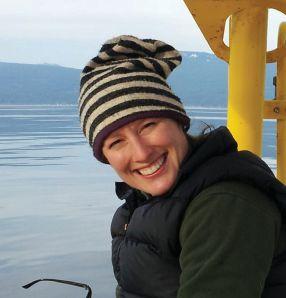
Prior to joining Pentair, King spent 16 years running a small consulting business on Vancouver Island. Her focus has been on water quality monitoring in the marine environment, including work with harmful algae bloom detection, an integrated multi-tropic aquaculture facility in Kyuquot Sound, and a large-scale macroalgae ranching program in the Gulf of Mexico. She has also been involved with the coordination of several marine science-based initiatives such as Fisheries and Oceans Canada’s (DFO) State of the Pacific Ocean reporting and an international remote sensing organization called PORSEC.
With an extensive background in scientific research and an emphasis on developing methodologies for monitoring, King brings a unique perspective to this new role with Pentair. In her off time, you can find her on her bike, skis, or boat, or camping with her kids.
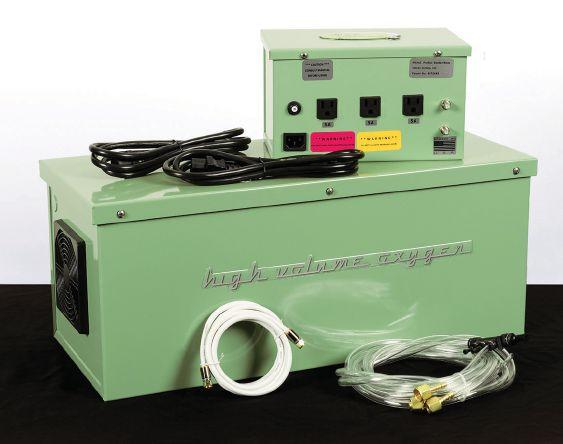
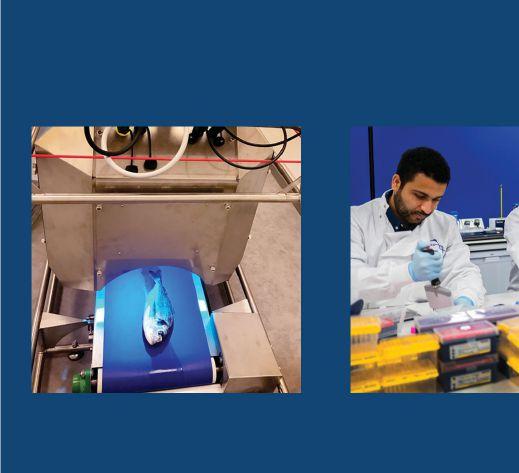




Photo: Aller Aqua
BioMar Group to build new line for extruded shrimp feed in Ecuador

Henrik Aarestrup, vice-president
Aquaculture industry feed supplier BioMar Group has decided to invest in additional capacity at its shrimp feed factory in Ecuador. The new extrusion line will add approximately 40,000 tons capacity and is expected to be ready in early 2020, just one year after the latest capacity expansion which is due in early 2019, the company stated in a release.
of emerging markets at BioMar Group.
(Photo: BioMar Group)
“We have experienced a strong growth in Ecuador since the acquisition of Alimentsa in 2017 and we currently operate at our capacity limit,” stated Henrik Aarestrup, vicepresident of emerging markets in the BioMar Group. “For our customers the new line will mean increased flexibility and increased choice, as it will significantly expand our capacity for extruded and value-added feed solutions.”
Shrimp production in Ecuador has been growing with double digits in 2018 placing Ecuador as the third largest shrimp producer in the world.
“The Ecuadorian shrimp sector will continue to grow in the coming years, however at a somewhat slower pace than in 2018, where we have seen an exceptionally high growth,” Aarestrup said in the release. “Ecuador has a competitive edge when it comes to producing shrimp in a responsible manner with high focus on both sustainability and product quality. Recent initiatives like the launch of the Sustainable Shrimp Partnership will further enhance this position.”
The investment is part of BioMar’s strategic plan for the shrimp business, which also includes a recently inaugurated research and trial unit in connection with the plant in Ecuador.
Phibro Animal Health acquires fish vaccine business KoVax
Phibro Animal Health Corporation has acquired KoVax Ltd., an Israel-based developer and manufacturer of vaccines for the global aquaculture market.
The acquisition expands Phibro’s portfolio of aquaculture products.
KoVax’s research and development joins Phibro’s biological R&D team, and will focus on developing a pipeline of innovative vaccines for the aquaculture market, according to a release. Phibro’s first commercial aquaculture vaccine is KoVax’s “KV3” vaccine, which helps prevent Koi Herpes Virus, a highly contagious disease that can cause significant mortality in common carp farms.
“The acquisition of KoVax’s strong vaccine portfolio, including KV3 and products currently in development, will empower Phibro to provide our customers with customized solutions to meet their unique challenges,” said Phibro’s vice-president of Aquaculture, Dr. Raanan Ariav.
“I am extremely proud that the years of hard work and creativity our team has brought to developing aquaculture vaccines is recognized by a leading animal health company like Phibro,” said Orit Kotler, who co-founded KoVax with her husband Yaniv. “I am very confident that my team will quickly find themselves at home within the Phibro organization and thrilled with the opportunities to expand the pace and range of their development work. This is a win for aquaculture innovation and fish health.”
trū Shrimp to build new production site in South Dakota, U.S.A.
The Trū Shrimp company is planning to build its first shrimp production facility in Madison, South Dakota, USA. Trū Shrimp’s advanced technology is designed to raise shrimp in a near natural and disease-free environment.
Construction is expected to break ground this summer in Madison’s Lakeview Industrial Park, with the exact timeline pending the completion of permitting and financing.
“We are excited to be working with the City of Madison and the Lake Area Improvement Corporation in bringing safe and sustainable shrimp to the U.S., consumer,” says Michael Ziebell, Trū Shrimp’s president and CEO.
“The growing aquaculture industry, led by Trū Shrimp, is not only a great fit for Madison, but also a natural fit for our state’s agricultural heritage,” says South Dakota Governor, Dennis Daugaard.
Trū Shrimp’s technology changes the way shrimp are raised, free of chemicals and antibiotics, the company says. It calls its facilities “Harbors” to reflect these new processes and says this new approach will revolutionize the way seafood companies meet the demands of their customers. Trū Shrimp says its processes enable shrimp to grow in shallow water that is cleaned and reused.
Luverne, Minnesota, was previously identified as the site for Trū Shrimp’s first Harbor. However, there are open items related to the Luverne site that need to be addressed before Trū Shrimp can proceed. “It is a matter of timing,” says Ziebell, “our timeline for capital financing and construction in 2019 does not allow adequate time to resolve the items in Luverne. Locating the first Harbor in Madison not only meets the critical components of our business model, but our timeline as well.”
PIT TAGS & SCANNERS


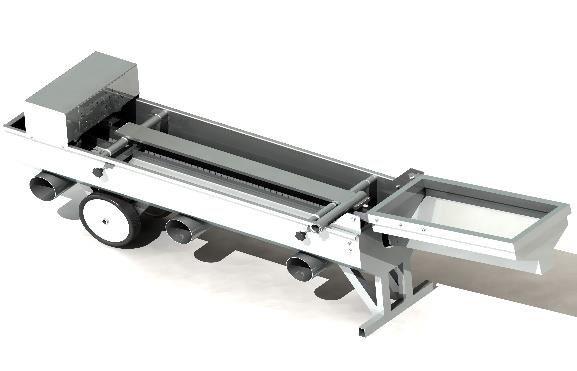

• Bio-filter towers

• De-gassing towers
• Wide variety of flow rates
• Flow control valves
• Protein skimmers
• Variable frequency-drive pumps
• Temperature management
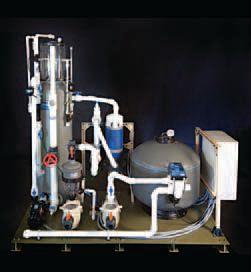
SEEDSTOCK DIRECTORY




POWER! GIRL
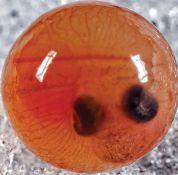
Our
Our
The secret behind
Experiencing early maturation of Atlantic Salmon?
Experiencing problems with early maturation of Atlantic Salmon?
StofnFiskur’s
StofnFiskur’s All-female product consists of a 100% female population, meaning that you no longer need to worry about early maturation of the males.
Having
Having problems with early maturation of females too? Then our
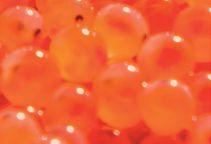

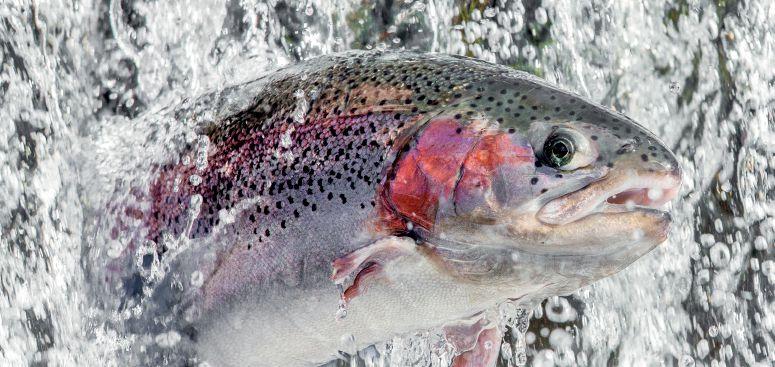


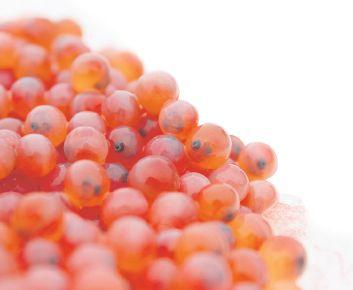
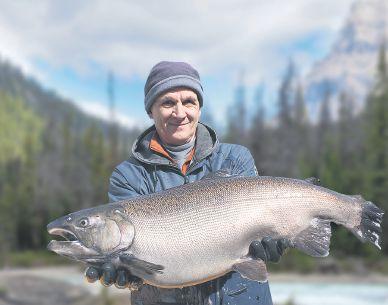
High
High
Availability:
High
Low

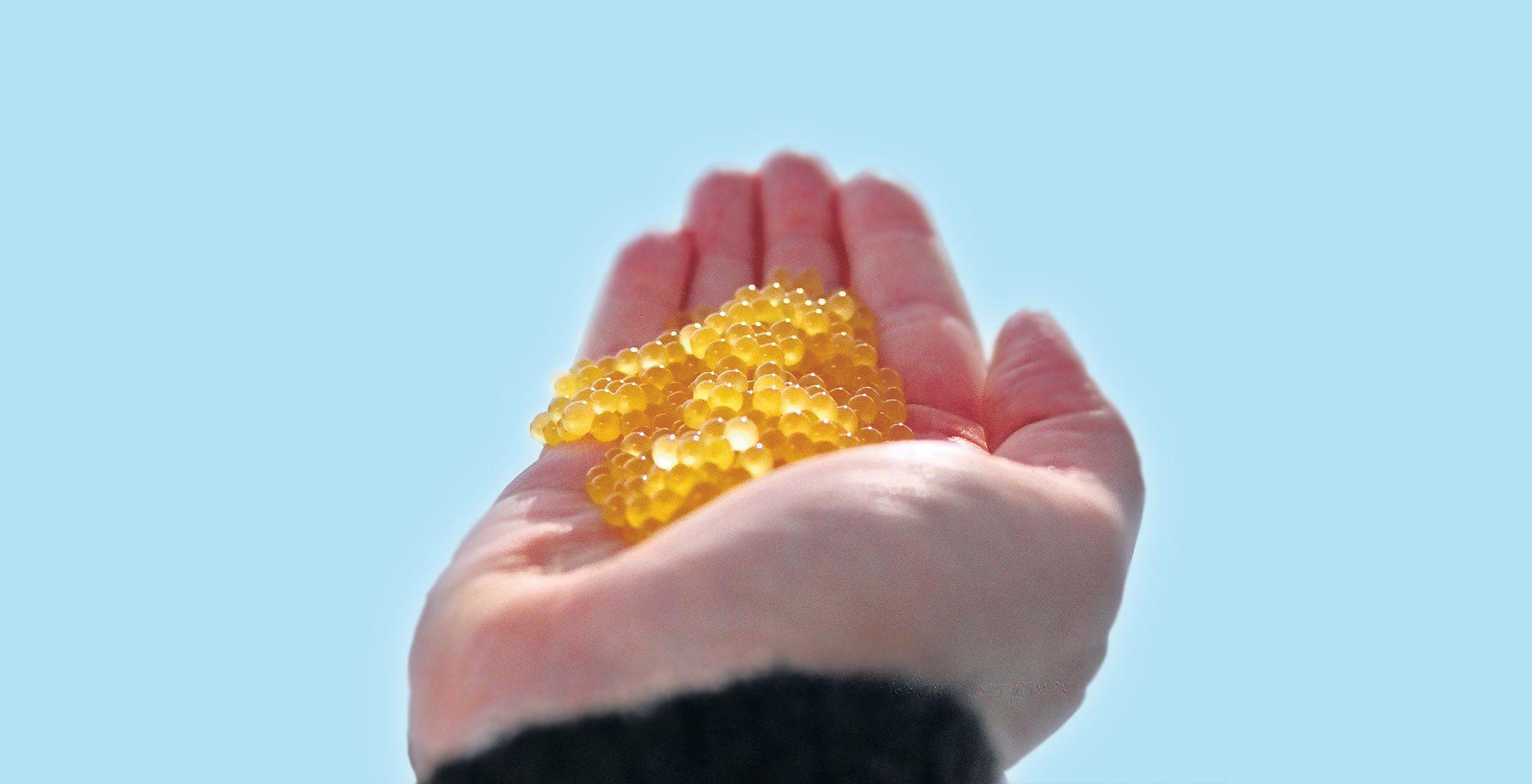

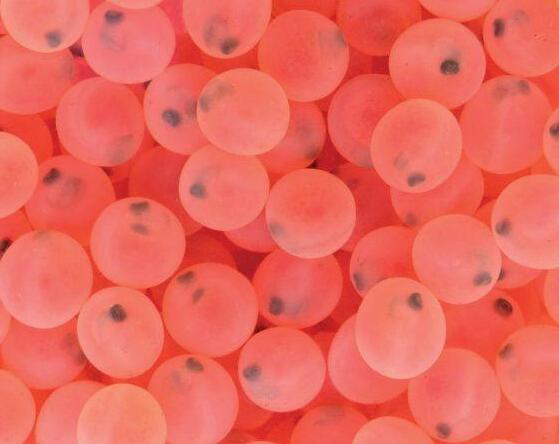
Aquaculture
EVENTS CALENDAR
MARCH
March 5 – 7
AgraME
www.agramiddleeast.com
March 7 – 11
Aquaculture 2019 – New Orleans, Lousiana, U.S.A. www.was.org
March 17 – 19
Seafood Expo North America – Boston, Massachusettes, U.S.A. www.seafoodexpo.com/north-america







A clear solution to the hidden threats of BKD
Producing high quality fish in freshwater requires a great deal of time, care and consideration. Widespread and often undetected presence of Bacterial Kidney Disease (BKD) poses a threat to your investment. Chronic and long-lasting, BKD infection commonly leads to higher background mortality and lower performance. Renogen® is a vaccine specifically designed to aid in the prevention of BKD and reduce the need for later treatment, leading to healthier fish at a lower production cost.



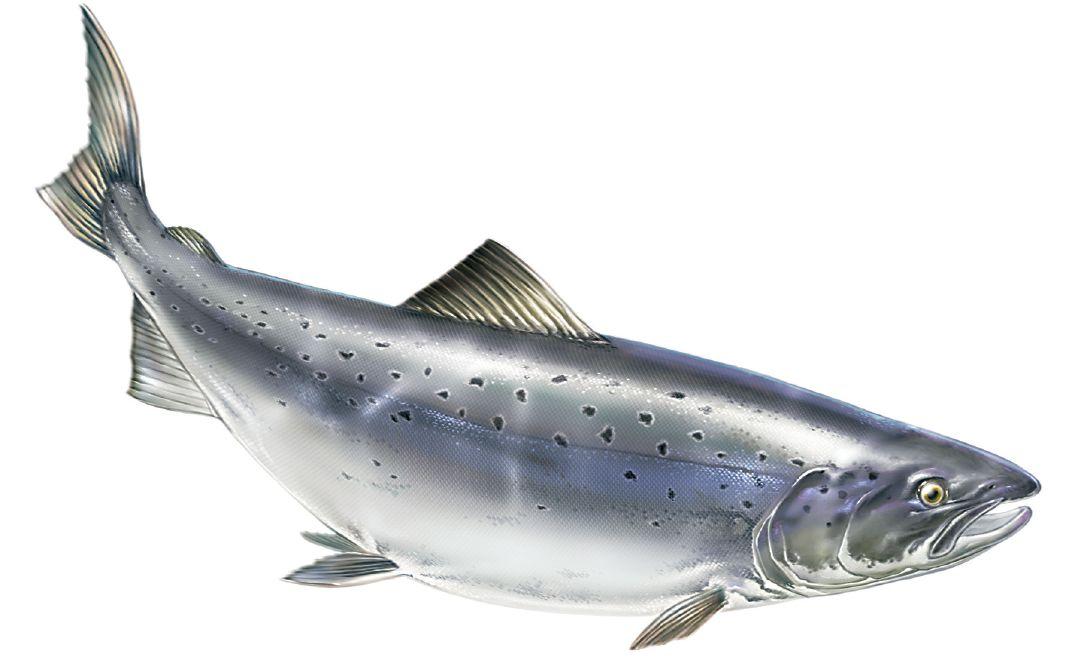
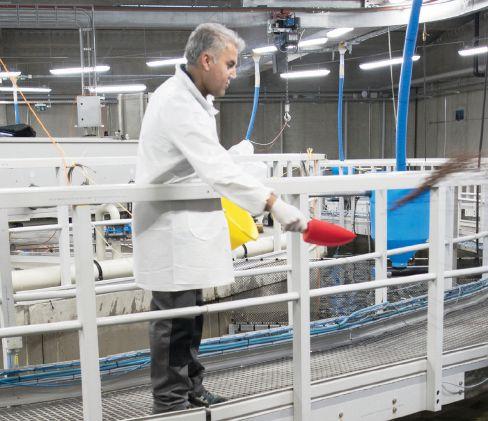
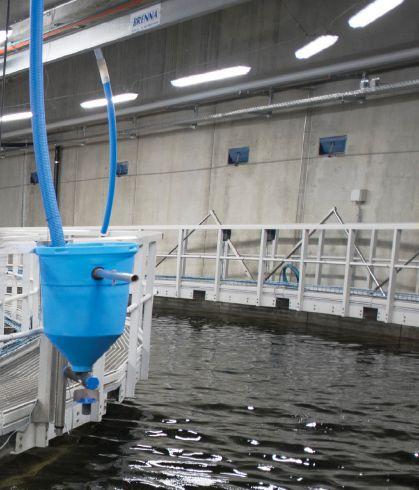
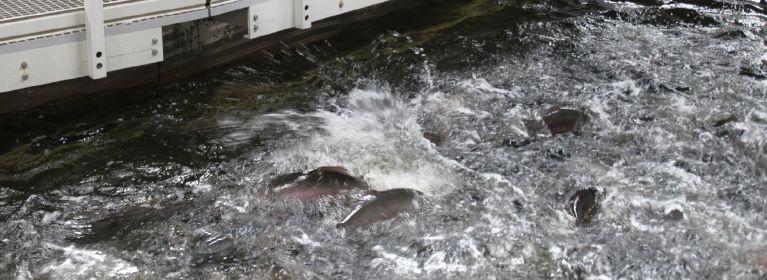

Optimal aquatic environment for fish health and improved product quality
The RAS2020 creates a highly-controlled environment that supports healthy fish growth. The patented design allows fish to swim naturally against the current and reduces handling. This decreases fish stress, improves growth rates, and ensures a quality final product.
We are ready to help you. Our team of global aquaculture experts will help you maximize fish quality and production yield, while delivering a cost-effective and environmentally responsible solution.

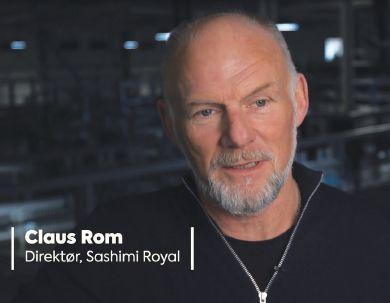


Tel +1-800-337-0777 water.info@veolia.com